Home Blog Page 946

1999 Constitution: How Abdulsalami Abubakar used Nikki Tobi, Auwalu Yadudu to defraud Nigerians – Uma Eleazu (1)

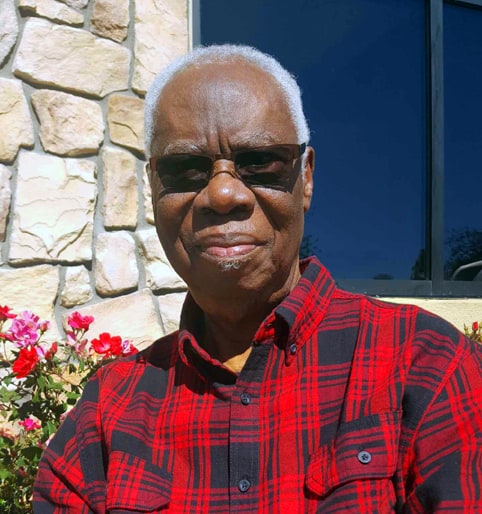
Dr. Uma Eleazu

Many Nigerians have complained that the 1999 Constitution does not reflect the will of the Nigerian people.

But what most people do not know is the extent General Abdulsalami Abubakar, the then head of state, went in shortchanging fellow citizens.

Dr. Uma Eleazu, the 91-year-old economist, political scientist, administrator par excellence, who served in the 1978 Constitution Drafting Committee (CDC) set up by General Olusegun Obasanjo to midwife the 1979 Constitution and was also a member of the Constituent Assembly, knows all the intrigues that culminated in the “big fraud.”

In a two-hour interview on June 17, he told IKECHUKWU AMAECHI how Abdulsalami, who set up the Constitutional Debate Coordinating Committee with a mandate to take the General Sani Abacha draft constitution to various geo-political zones and let people say whether they liked it or not, ignored all the inputs made by Nigerians. He sent them on a wild goose chase, even when he had a plan which he perfectly executed with Justice Nikki Tobi and Professor Auwalu Yadudu.

In this first instalment of the two-tranche interview, he talked about his regrets at 91 and how politicians used money to corrupt the General Ibrahim Babangida transition process.

On June 16, you celebrated your 91st birthday. In a country where life expectancy hovers around the 50s, what is the secret behind the longevity?

I will not say that I have any particular secret except to say that I believe it is all by the grace of God. There are people God loves and wants them to do something in this world to achieve His own purpose. He, therefore, keeps such people longer in the world.

Beyond God’s design, is there anything in your lifestyle that may have contributed?

I also think there is something hereditary in it. My father lived up to 90. My mother died at 102. So, it may be in our gene to live long. I eat almost everything I want to eat. I don’t have any particular regime of what I eat. When I was younger, I used to exercise. I played tennis. I don’t swim but I walk. I used to run but somebody told me that walking is better than running when I crossed 70 years.

So, I get up and walk around. Even last year when I was 90, they said I should just keep on with walking. And I said okay, so I am now Johnny Walker (laughs).

So, walking is one of the ways you keep yourself going. And mentally, one also has to keep working. Be alert in your mind. Try and read books and write if you are somebody who has the flair to write. That is the way that you keep your mind working. So, both mind and body work together.

I just don’t worry about anything in particular. I take the admonition, don’t worry, to heart. Why worry about food, dress, about beating the other man or building a bigger house? I try to live moderately. I don’t bother myself too much.

And you know, the more you try to live a Christian life, you will find out that it is in fact very simple. You don’t even envy other people over what they have. You try as much as possible not to get angry over inconsequential things. I hardly get angry but if I do, it dissipates and by the end of the day, I have forgotten it.

So, how do you feel at 91?

I feel strong except for the joint pains. Also, getting up now is much slower and if I drink too much liquid, then I will go to the loo a number of times and if I don’t go very fast, it can start coming out by itself. Otherwise, you understand your body and you know how to pace yourself in everything that you do.

What was growing up like in those days?

People of my age grew up in Nigeria when almost everybody was upwardly mobile. In other words, there was in the air stories about the brave new world that Nnamdi Azikiwe was talking about when he came back to Nigeria and started talking about renascent Africa. And at that point, I wanted to study and be like him.

Every parent wanted his child to be like Azikiwe, to go overseas and study and come back. The whole Eastern region where I grew up was changing. So, we had such romantic idea about how Nigeria was going to be. People were struggling to be better in education, in everything. At the same time in the East we had every village organizing to make sure if they don’t have money as families to send people overseas to study, then the town unions can do it.

Prof. Eme Awa, who was chairman of NEC, was sent to the U.S. to study by the Ohafia Improvement Union. There were three of them like that. People contributed money to send them abroad to study. My father contributed so that somebody from Ohafia will go to America. And many town unions did that.

That is why, no matter what, I don’t miss going to my town union meeting because the town unions are the real purveyors of development in Igboland. They built secondary schools instead of depending on the missions alone. Ohafia High School was built by the town union. It was just an age of improvement in Alaigbo.

Then other parts of Nigeria started seeing what was going on and started organizing themselves. People wanted to be part of the change that was taking place in the world. It was just the immediate years after the Second World War and soldiers who went to India to fight came back with their own ideas about the world out there.

I remember one of our boys who was in the Middle East came and said they were in Egypt and my mother shouted that it was a lie. She asked if he was talking about the same Egypt in the Bible because as far as she was concerned, the Egypt in the Bible must be somewhere in heaven or the outer space. So, how can an Ohafia man claim that he was in Egypt?

That was the milieu in which we grew up, went to school, and then started studying to make ourselves better.

How was education then?

I studied mainly from home. After my two-year teachers’ training after Standard Six, every other thing – O’Level and A’Level – was from home.

There was only one mission secondary school for the Church of Scotland available for people in Ohafia and that was the Hope Waddell in Calabar and there was also the Methodist College in Uzoakoli. Although I passed entrance to Government College Umuahia, my father said I won’t go there, that they were godless. He said it was either Methodist College in Uzoakoli or Hope Waddell in Calabar. So, I got stuck. I didn’t go to secondary school.

The only other way was to go to a teacher training college. You spend two years there, then you come out and teach for about two years, go back and do another two years to get what they call Higher Elementary Certificate, which can now qualify you to teach up to Standard Six and if you are lucky, you will go for training for one more year to become senior teacher.

Senior teachers could teach only one subject in secondary school but I couldn’t wait for all that. After the first two years, I started taking oversea tuition to study at home. First of all, I took my London Matriculation. Anyone who wanted to go to the university, you must take that examination. It is like JAMB but it was set in London. And you have to have School Certificate to be able to take London Matriculation.

Since I didn’t go to secondary school, it was trouble for me. But luckily in 1953, they abolished London Matriculation and substituted it with what they called General Certificate of Education (GCE), still set in London but administered all through West Africa. That time, whether you were in Gold Coast (Ghana), Sierra Leone, Nigeria, it was the same thing. So, the same day you are taking the examination in Umuahia or Lagos will be the same day in Accra or Freetown and it was monitored by white men.

So, when they changed to GCE, they said anyone can sit for the examination. So, a pass in GCE Ordinary Level was equivalent to school certificate. So, I sat down, read my subjects, presented myself and cleared the examination. That was in 1954. And thereafter, I entered for the Higher School Certificate. I entered for four A’Level subjects. And the following June, I took the four subjects.

When I went for the examination, I met some of my tutors. And they said, Uma, what are you doing here? I said I also came for the examination. When the result came out, one of my tutors got one subject at A’Level, and failed the other subjects. And the other one didn’t even get any O’Level but I had all four subjects at A’Level – English, Economics History, Geography and British Constitution. Three weeks after, I received a slip from London University that exempted me from the inter-BSC. That means I could proceed to the final degree and they said it would be fine if I wanted to study from home.

You know, in those days, some people stayed at home and studied for Bachelor’s degree. Professor Chike Obi studied from home. But my brother said I should come to Lagos because I ought to go to England.

What was parenting like in those days? How did your parents influence what you became?

My father was a Catechist in the Methodist Church. You know in the hierarchy of the church, the Catechist is at the lowest rung. When he got what was called promotion, he was made a circuit rider. After helping to establish three or four churches, on Monday he is in one village teaching Catechism, on Tuesday, he goes to another and by the end of the week, he has gone round his circuit. So, I grew up in a mission environment and started studying the Bible and knowing about Jesus at a very tender age. My father was very strict, making sure that we kept to what the Bible says. You can even be flogged if you came to church late.

My parents watched out to make sure that all the children passed Standard Six. They said they didn’t have the opportunity to get that high in school. My mother didn’t even go to school at all. She was taught how to read the Bible by missionaries because her mother had twins and instead of allowing them to kill the twins, they had killed one and she snatched the remaining and ran to the missionaries in our village where the white women were. They received them – mother and child. So, they grew up under missionaries. So, my father married from among the mission girls.

When they came to Ohafia, there was no Igbo reading material. So, the book they used was in Efik . In the 1940s, 80 per cent of all the people in my village can speak Efik because that was the reading material most people started with. People like my parents knew when the Bible was being translated into Igbo.

So, when you go through such a straightjacket discipline, it doesn’t leave you.

Looking back, are there things that if given the opportunity to live your life all over again, you would have done differently?

There are things one would have liked to do differently. Let’s begin with family. I would have preferred marrying early and getting done with the issue of having children and bringing them up. When I got married, most members of my age grade were already married and people thought it was late for me.

What age are we talking about here?

I married at 32 and that was when I started raising a family and at the same time, I was doing my Ph.D. in the United States. So, I had my hands full – family problems, civil war in Nigeria and so on. However, one managed to go through it all.

I would have preferred to be on the ground during the civil war because most of those I knew, those who grew up with me, were soldiers on the Biafran side. But, although I couldn’t come back home for a number of reasons, still, working with the Joint Church Aid (JCA), I busied myself with raising money and food for the Biafran children who were starving. JCA were the people who ferried the food we could gather across to Biafra.

In my academic life, when I came back and was sucked into the system, I wish I had gone back to the university to teach. I was already in the university system in the U.S. but back home, I moved from working for the military government under General Olusegun Obasanjo to working for the Manufacturers Association.

I thought I was helping to build a country, contributing my quota in any place that I found myself so that Nigeria will become what it ought to be. But looking back now, all the efforts that we made, some of them are not even remembered. They only made impact at the time that they were started but the way the country has run, I now wish I had just gone back to the university and live my life as an academic.

Any regrets?

When I came back to Nigeria, I helped to set up what was called the ombudsman – Public Complaints Commission – with Professor Ladipo Adamolekun from Ife. We set it up and then I was invited to come and head the National Policy Development Centre in the Cabinet Office. They called it the Think Tank. And from there, towards the end of the military regime when they were handing over to civilian government, they moved us to Jos.

I started the National Institute for Policy and Strategic Studies (NIPSS) in Kuru but for some reason, one day I was just in my office, and somebody arrived and told me that he had been appointed Director-General of the Institute and that I was supposed to hand over to him and restrict myself to the role of Director of Research.

That jolted me. With all the arrangements that I had made because when we moved in, the 1979 elections had just been concluded and most of those who were coming into the National Assembly had not understood the American system which we had adopted.

In the Think Tank, we decided that we were going to have series of seminars. So, I went back to the U.S., talked to people in the State Department, people that I knew and we organized those who would come to hold seminars for the new lawmakers. So, when they said we should go to Kuru, I thought ok, when we get there, they will all be coming for these seminars so that they will know how the presidential system of government works.

So, when they appointed somebody else, I left. I regret leaving, I should have stayed back. But being a young man, I was angry. In the first two weeks, we disagreed as to what the institute ought to be doing. And it just seemed to me that the man didn’t understand what strategic studies and policies were all about. So, I left. I didn’t even resign, I just walked away. I regret that.

I mean, looking back now, I should have at least continued in order to accomplish what we had planned for the people going into government, which was to train them to understand the new system because I served in the Constitution Drafting Committee and from there we went to the Constituent Assembly, and literally, I wrote the section on the Executive in the 1979 Constitution except the bit under the Directive Principles which Prof. Ben Nwabueze wrote almost single-handedly.

We were all working like that as young men, setting up something new. But when this happened, I left. Looking back, I should have stayed and continue with the programme we had mapped out even under somebody else.

So, where did you go to after leaving NIPSS?

I left and the Manufacturers Association of Nigeria (MAN) approached me and then I saw it as an opportunity to do the reverse of what I was doing so that I can now advise the private sector on how to relate to the government in the presidential system. So, I became the policy adviser of MAN. From there, we started what is today known as organized private sector. Then it was just a triumvirate of us – one Prof Ayo Ogunseye from Ibadan who was heading the NACCIMA, Barrister Chike Okogwu at the NECA and I was in MAN. That was the organized private sector.

So, all the big companies were members of MAN or NACCIMA. I did that until General Muhammadu Buhari came in on December 31, 1983 and sacked President Shehu Shagari and the National Assembly, which meant that all those ideas of creating a new system based on the presidential system of government, American style, couldn’t work.

Again, I dropped everything and left. I was always moving. It was at that point that the UNDP invited me to help other African countries to develop their own private sector and I moved to East Africa. I went to Kenya, Tanzania, Uganda and Swaziland.

How then did your relationship with the military begin? Did they discover you or you discovered them after your return from the US?

When I returned, I went back to the University of Nigeria, Nsukka. And there was disagreement on salary. I was Associate Professor in the U.S. and when I came back, Prof Kodilinye, who was Vice Chancellor, made a rule that all those coming back from the U.S. had to start where they were before they left. It has been ten years since I left and he wanted me to go back to Lecturer 2, which was my position before I left in 1965. So, I refused to stay there. This was now 1974 and while in the U.S., I finished a doctorate degree, started working, got promoted based on my writings.

I said okay, I was ready to wait, let them go and do their own assessment but I couldn’t come down from Associate Professor to Lecturer 2. I waited for about three months, nothing happened and I left and went to the Institute of Management and Technology (IMT) Enugu and developed the business side of the Institute with Dr. Chijioke, who was then the Rector and I was the Dean of Studies.

While we were there, Ukpabi Asika was still the Administrator of East Central State and both of us were working under the same person for our doctorate degrees at University of California, Los Angeles (UCLA). So, he invited me and said, you and public administration, there is something worrying these military chaps, he said they wanted to set up something where civilians can go and make complaints because people were getting tired of military rule. He said he told them that they should have an ombudsman all over the place.

So, they told him to form a small committee and develop the framework. That was how I was sucked into government. They brought me and later Prof Adamolekun and Patrick Cole who was Senior Assistant Secretary then at the Cabinet Office as the committee secretary and also Sunday Adewusi, who was then Deputy Inspector General of Police.

We travelled round the Scandinavian countries where they had the ombudsman. But while we were at it, the coup that removed General Yakubu Gowon took place. So, Murtala Muhammed who took over power asked us to return. We did and I went back to my job in Enugu.

But after some time, they said we should still produce a report since we had travelled abroad to understudy the system. So, Adamolekun and I came down and with Patrick Cole, we wrote the report and they promulgated a decree establishing the Public Complaints Commission in Nigeria.

Alhaji Maitama Sule was appointed the Chief Public Complaints Commissioner. So, how do you run the office? They fell back on me and Adamolekun to help him develop his office. While we were doing that, Adamolekun got a Fellowship and left. So, I sat down with Maitama Sule, worked with him, set up his office and what he should do based on what we saw in Sweden, Denmark and Norway.

After that, I went back to Enugu but they wanted me to be the Secretary and I refused. Apparently, Maitama Sule went to Murtala Muhammed and specifically asked for me. So, I was invited back and that was my first and last time of seeing Murtala.

I came and he said he had seen the report, which he said was beautiful. He found it difficult to pronounce ombudsman. He said Alhaji told him that I did a very good job and that they wanted me to be the Secretary to the Commission. I said, no sir, I am a teacher and that is what I want to do.

And he said, “No, no, what is your salary there?” I told him I was on Level 14 and he said, okay, we will give you Level 16 but I told him it was not a matter of money.

He said okay and I left. Two weeks after, he was assassinated. So, everything was in a state of flux until they stabilized with Obasanjo as the new head of state. Because they had been thinking of having this policy centre, they said when they were discussing it, Murtala said he knew of one person who could do the job and that was me.

We didn’t know each other from Adam. It was just that encounter and he felt I was the person they should make the head of the National Policy Center. After he died, they fished me out again from Enugu to come and head the National Policy Development Centre.

Obasanjo wrote about what we did under him in that his book, “Not My Will.” You can read what he said there. I don’t boast. It is not my style.

You were once a presidential aspirant. At what point did you decide to go into partisan politics?

Again, one was looking at how to help this country. I did so many other things during the military regimes and I had got enough experience to run the country. I was in the team that wrote the original Social Democratic Party (SDP) manifesto from which I developed my own personal manifesto.

I had looked at other leaders of the world, so I thought I should go into politics. And I didn’t want any other thing except to be president so that I will be able to do exactly what I think this country required.

I wrote it, distributed it and then when we went for campaign, I saw what Nigerian politics was. The way it was played in the First and Second Republics and during the Babangida transition period. I didn’t like it.

What did you see?

It was already becoming a money affair. If you don’t have money, you cannot be in politics. They use all kinds of underhand means, including devilish means to ensure that the good candidates don’t emerge. Money bags had taken over and bribery was the only way you could progress. I addressed voters both in Abia State and Jos. I said if you compel me to go and borrow money and share to you so that you will vote for me, those that will give me that money will hold me by the jugular when I win. But that didn’t wash. They just wanted me to bring money, otherwise they won’t vote for you.

The last night before we went to Jos, when they were still waiting for me to bring money, I think I had a greater number in the camp – they used to call it cage. You cage your delegates in one place so that the other people won’t have access to them. Everybody was on my side until the money issue came up. I told them that I had already said I was there to serve because, that if I get up there, I would make sure that their interest was covered.

Somebody, for instance, was asking me for money so that his wife can go to market, but I said, whatever I give you lasts only one market day or one week at most, whereas if the problem is solved on a longer term, his children can go to school without paying school fees. They can go to hospital paying little or nothing. They can have good roads and they can even go to the bank and get a loan to run their businesses. I told them that those were the kind of things we had to do. They didn’t want to hear that. So, when I didn’t give money, by 2 am, some people left my camp in Umuahia and went to Arthur Nzeribe’s camp in Oguta because they had gotten information that Nzeribe was giving N5,000 per person on behalf of one Samek and this Samek didn’t go to school.

But I still won and they followed me to Jos. In Jos, Babagana Kingibe was giving N25,000 per delegate and MKO Abiola topped it to N30,000. So, all the 110 delegates that followed me from Abia came and said, Oga, we know you don’t like this kind of thing but we have to see other aspirants. I said okay, do whatever you like.

As a student of politics, I wanted to see what was actually going on and money was moving from hotel to hotel. Abiola was giving N30,000 per delegate and there were over 3,000 delegates in Jos. So, you can imagine the amount of money he spent and, of course, he won. But don’t forget that this was still the primary election. So, he won and all of us left Jos. I was so sad. I said money politics was going to destroy this country. Abiola took my personal manifesto, read it and said it was beautiful and asked if I would want to work with him if he won and I said of course, it was our party. I told him that all I wanted was the good of Nigeria. So, he became our flag bearer and you know what happened thereafter.

After the election was annulled, did you just disappear from the political scene?

General Abdulsalami Abubakar again invited me to be part of the Constitutional Debate Coordinating Committee. That was what he called it and he appointed Justice Nikki Tobi the chairman.

We arrived in Abuja and asked what debate we were going to coordinate. It was then we realized that what he meant was that we should take the Abacha draft constitution to various geo-political zones and let people say whether they liked it or not.

So, they gave two weeks. I read through it that day but how would people debate a document they had not seen? They said they had given copies to some people. I was sent to the South-South. In Port Harcourt, those who were in the Abacha Constituent Assembly had the document. In the South-South, their major issue was what was going to be the derivation. They said they wanted resource control. They wanted us to go back to the situation where each zone will control its resources and make contributions to the centre. They also said they wanted parliamentary system of government where both government and opposition will stay in the same house and debate. They didn’t want presidential system.

And we came back with our reports from all over the country. But nobody looked at those reports. The next week, Nikki Tobi said they would take charge of everything and he called one Auwalu Yadudu, a university lecturer from Sokoto and they doctored the Abacha version of the constitution and reissued it as an attachment to a decree. That is what the 1999 Constitution is all about. All the recommendations that people made from the various places, I didn’t see any of them reflected in the document.

So, we didn’t write the 1999 Constitution and we are not part of the “We, the People” mentioned there.

Do you then agree with those who say that the 1999 Constitution is a fraudulent document?

Yes, I agree because not only did Abdulsalami not use the outcome of the debate that he mandated us to do, two people – Nikki Tobi and Yadudu – simply doctored the constitution. That is not how to make a constitution. It would even have been better if in the decree they made, they had said, we will now submit this document to an open debate or call a Constituent Assembly like in the 1979 Constitution to debate it. They could have formed a Constituent Assembly to debate that draft that Abdulsalami attached to that decree. That is when most of the things there would have been sorted out. But they didn’t do that. They just said we have given you a new constitution. It is a fraud.

What is the way out of the quagmire? Do you agree with those who say since a National Assembly is in place, they should do the necessary amendments or go for outright constitutional conference which outcome will be subjected to a referendum?

My view is that a lot of money has been spent since that time. The Jonathan 2014 Constitutional Conference produced a report which many parts of Nigeria contributed to. In my view, the National Assembly should have dug up that report and look at the conclusions. To say that they want to amend this same constitution that everybody is saying they don’t want is a waste of time unless they are going to amend the constitution out of existence, that is, by the time they finish and bring it back, it will be a fresh, new document.

I also think that the National Assembly made a mistake by sending senators to their constituents. In a memo I sent to Ike Ekweremadu and Enyinnaya Abaribe, the senator from my state, I suggested that what we can do now is for the National Assembly to recognize the zones we have been working with in the constitution. So, they take either Section 4 or Section 5 and say instead of the corporate Nigeria divided into 36 states, it will be corporate Nigeria divided into six geo-political zones, each of them comprising of states and the states will be enumerated under their respective zones.

When you now recognize the zones in the constitution, then the next stage will be to ask the senators and members of the House of Representatives to go back to their constituencies according to the senatorial zones plus the members of the state assemblies and they will sit together in a conference. Then they will pick from non-politicians an equal number to ask how do we want to govern ourselves?

After that, they will come back to the state level and have a report of what Abia people, for instance, want. From the state, you go to the regional level and ask what the five states in the Southeast region want. Then we report back at the national level. It still has to need a conference where all these things will be harmonized and you need a technical committee made up mainly of lawyers and may be political scientists, to craft the document, the same way we did between 1978 and 1979.

Credit:The Niche

Ghana’s 560km rail to cost for $2bn — same as 156km Lagos-Ibadan

China Railways Construction Corporation (CRCC) has offered to rehabilitate and construct a 560-kilometre standard gauge railway line for Ghana at $2 billion.

Advertisement
This costs just $500 million more than the 156-kilometre Lagos-Ibadan railway line being constructed by the China Civil Engineering Construction Corporation (CCECC) — although Ghana’s project more than THRICE the size of Nigeria’s.

This project is different from the one earlier reported by TheCable — the 340km standard gauge railway to be constructed by Ghanaian-European Railway Consortium (GERC) for $2.2 billion.

The proposed railway line will run through designated stations, including the terminals at Aflao and Elubo, when completed.

Advertisement
In addition to the construction, the Ghanaian government plans to establish assembly plants in at least two regions for the building of locomotive coaches and wagons that would constitute the rolling stock for Ghana Railways in the future.

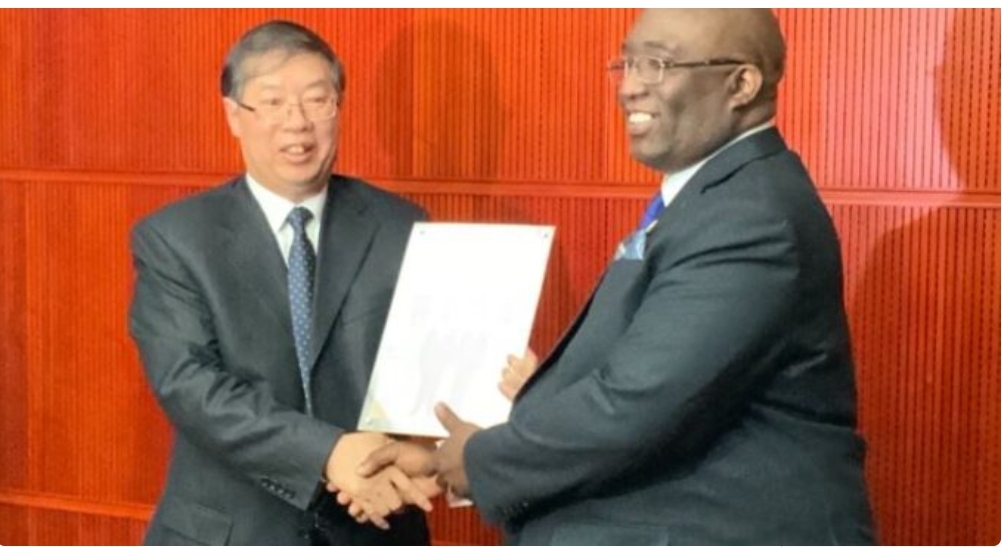
Joe Ghartey, Ghana’s minister of railway development, Dou Yisuo, representing CRCC, and Henry Djaba Jnr, the managing director of Lakeland Group of Companies, who are the local content partners of CRCC, signed the memorandum of understanding on March 21.

The Ghanaian government will not be funding the railway projects as the funding will be arranged by CRCC.

Advertisement
Also, Sinochem, an oil company in China, will provide up to $3 billion as funding of railway construction projects throughout the country, backed by crude oil futures.

Ghartey recently visited Nigeria on the invitation of Rotimi Amaechi, the former minister of transportation, to inspect and assess the railway construction projects that the Chinese Conglomerate has completed and that are currently being undertaken in Nigeria.

Credit:TheCable

Buhariplomacy of Abductions and Killing Nigeria Softly: from Diplomatic Bagaging to Invasion Diplomacy


INTERNATIONAL Bola A. Akinterinwa

PMB is governing Nigeria as a military dictator, often forgetting that he was elected, and therefore compelled to always seek the understanding of democratic implications of whatever policy decisions he takes in international relations. His attitudinal disposition in Nigeria’s foreign policy is what we have always called buhariplomacy and this dates back to 1984 when he was a military Head of State, following his ousting of elected President of Nigeria, Alhaji Shehu Shagari, on 31 December 1983.

PMB identified Alhaji Umaru Abdulrahman Dikko, who was Minister of Transport under Alhaji Shehu Shagari, as having stolen one billion US dollars (625 million pounds Sterling). Umaru Dikko fled to the United Kingdom to escape arrest, but PMB also decided to engage the policy hot pursuit in arresting him. In doing this, he engaged the services of some Israelis, in particular, an Israeli anaesthetist, Alexander Barak, who was a former Mossad agent, to lead the kidnap team. The team included a Nigerian intelligence officer, Major Mohammed Yusufu and two other Israeli nationals, Felix Abitbol and Dr Lev-Arie Shapiro, who had the responsibility to inject Alhaji Dikko with an anaesthetic.

The diplomatic kidnapping took place during summer time in 1984 when Umaru Dikko was walking out of his front door in an upmarket neighbourhood of Bayswater in London. He was crated like a material commodity and taken to the Stansted Airport where the Nigeria Airways aircraft 707 was waiting for him as a special diplomatic baggage. For various reasons, including the refusal of the Nigeria High Commission to respect some basic protocolar processes, one young Customs officer, Charles Morrow, suspected a foul play with the type of baggages brought to be exported. There was one baggage containing Umaru Dikko and there was another one containing the anaesthetist/kidnapper who were meant to ensure that Dikko did not die en route. Charles Morrow’s call to the British Foreign Ministry drew public attention to the diplomatic baggaging, which succeeded in its preparation but failed in its diplomatic handling. Thus, since 1984, Buhariplomacy has been largely predicated on a manu militari approach in addressing national questions. In 2021, buhariplomacy has shifted from abduction by manu militari to abduction by invasion diplomacy. The cases of Mazi Nnamdi Kanu and Sunday Igboho are exemplary and their international dimensions are not far-fetched.

Invasion Diplomacy

Nnamdi Kanu is a shorter name for Nwanenyi Nnamdi Ngozichukwu Okwu-Kanu. It is the name of the leader of the Indigenous People of Biafra (IPOB), who was born in Afaraukwu in Abia State on 25 September, 1967 and by so doing, he is an indigene of not only Abia State by ius sanguinis and ius soli, but also a bonafide citizen of Nigeria per excellence. More important, Mazi Kanu is apparently an acquiesced true leader of the Igbo ethnic group in Nigeria. This observation is made against the background of his May 29, 2021 instruction to all Igbo people in the South East to stay in-door on that day and this was religiously adhered to, in spite of having not been elected as their leader. The political class in the South East appear to be against him but the people are in his support.

Sunday Igboho is the Yoruba equivalent of Nnamdi Kanu. He is an advocate of Oduduwa Republic, and what is said about Mazi Kanu is also true of Sunday Igboho who is championing Yoruba agenda for self-determination along with Professor Stephen Adebanji Akintoye, an accomplished historian of Yoruba history, who has been going about Oduduwa Republic through a peaceful agitation. Both Kanu and Igboho are championing secession from corporate Nigeria and PMB sees them as terrorists who should be neutralised to ensure indivisibility and indissolubility of Nigeria. However, but most unfortunately, they have a large following. People easily comply with their directives.

For example, compliance with Kanu’s instruction and the people’s support for Sunday Igboho can be explained in two ways: need to avoid violent attacks or support for the Biafran Republic agenda, on the one hand, and strong belief in the exemplary leadership of and commitment to Yoruba autonomy, on the other hand. As regards fear of being hurt or killed in the prevailing situation of insecurity in the country, the compliance is nothing more than imbibing the cautionary principle of ‘prevention is better than cure.’ In other words, it may not be because the Igbo people necessarily believe in the secessionist agenda that Nnamdi Kanu is championing. The adherence is therefore for self-survival.

Concerning the Biafran project, the compliance can, lato sensu, be truly a resultant of Nnamdi Kanu’s directive, meaning that the Igbo people seriously believe in Nnamdi Kanu’s Biafran struggle. By implication, an attack on, or any arrest of, Nnamdi Kanu is also necessarily seen as an attack on and arrest of all those who believe in his cause. It is within this frame of thinking that the re-arrest of Nnamdi Kanu has many international dimensions: situation of arrest, location and modality of arrest, nationality and diplomatic protection, fair trial, etc.

As for Sunday Igboho, when his people were recklessly killed by Fulani herdsmen with impunity, he defended his people in Ibarapa to the delight of his people, hence his acquiescence as an unelected leader. His agenda for Oduduwa Republic is also and generally supported at home and abroad by Yoruba in the Diaspora. Thus, the re-arrest and the invasion of Sunday Igboho is, stricto sensu, not for the aforesaid individuals, but a direct assault on the right of self-projection, self-determination, right of association and of opposition, and most disturbingly, the right of people they represent, all of which threaten national unity.

The re-arrest of Nnamdi Kanu and invasion of Sunday Igboho’s residence are catalytic agents of disintegration of Nigeria. They raise issues of major concerns for the more powerful countries of the world, as well as for many leading students of Nigerian politics. He was first arrested on 14 October 2015 on the basis of an 11-count charge, largely predicated on terrorism and treasonable offences. Charges were brought against him in the court in June 2016 but was admitted to bail on 25 April, 2017 in the sum of One hundred million naira and three sureties in like sum, and one of the sureties must be a Senator of the Federal Republic of Nigeria. Senator Enyinnaya Abaribe served as his surety. Nnamdi Kanu jumped bail when he felt that he was to be killed by government soldiers, a situation which led to the court’s decision not only to revoke the bail in March 2019, but also to issue a bench warrant on him in November 2019. However, last week Tuesday, 29 June, he was presented to the Nigerian public as having been re-arrested and made ready to continue with his trial. How was he arrested or intercepted or abducted this time? Buhariplomacy will sooner than later tell.

Regarding the invasion of Igboho’s house, the Department of State Services (DSS) gave a press briefing on a joint security operation on 1st July, 2021 on the attack. Many people were killed in the house, some people were arrested, while one DSS officer was wounded. As noted in the DSS press statement, ‘the gun duel which lasted for an hour offered Igboho the chance to escape. Sunday Igboho is now on the run. Igboho may run as far as he can. He may hide as long as he wants. He might have attacked security operatives as his strength carried him. But this will be the end of his shenanigans. Soon, he will not have a hiding place. His strength will surely fail. And the law will catch up with him. The law may be slow but it will be steady.’

As good and promising this statement can be, the critical challenge is how to address the people’s support for him. An attack on him is an attack on the people and their support. This is one major reason why re-arresting and invading serve as catalytic agents of national disintegration and why PMB will need to make haste slowly in ensuring national security that destroys and disunites.

The International Dimensions

The global dimensions are necessarily an offshoot of the domestic aspects. At the domestic level, opinion about the re-arrest and re-arraignment of Nnamdi Kanu and invasion of Igboho’s house is not only mixed but unnecessarily reflects a North-South divide. The Southerners are signalling the need for caution as they doubt any likely fairness in the trial. Northerners are praising the re-arrest and insisting on referendum on the future of the South East as part of Nigeria. And true, the invasion of Igboho’s house was brutal, people were killed, but he escaped being arrested. In spite of the invasion, the Yoruba insisted that their rally scheduled for Saturday, 3rd July, 2021 in support of the struggle for self-determination, would still be held contrary to government’s ban. This is a situation of order versus counter order amounting to disorder.

First, questions are being raised as to how the Federal Government and its security agencies were able to swiftly ‘intercept’ Nnamdi Kanu and the same Government has not been able to intercept any of those terrorising Nigeria for more than ten years. In the thinking of observers, President Muhammadu Buhari has partisan interests when it comes to northern questions, especially when Fulani matters are at stake. On the contrary, when the issues deal with Igbo questions, his attitude always speaks different volumes. This attitudinal animosity vis-a-vis self-determinists cannot but generate international concerns and reactions.

Secondly, while Ohanaeze Ndigbo Worldwide ‘calls for calm and cautions Igbos to desist from any form of protests and processions that will bring more catastrophe for south eastern Nigeria,’ the leader of the Yoruba Afenifere, Pa Ayo Adebanjo, simply noted that Nigerians are awaiting the charges for which Nnamdi Kanu will be charged. Put differently, he does not subscribe to the official 11-count charge levied against him by the Federal Government: terrorism, treasonable felony, management of an unlawful group, defamatory publications, possession of illegal firearms, improper importation of goods, instigating violence in the southeast, etc.

In the words of Chief Adebanjo, ‘we await what he will be charged for. They cannot kill him. He will be defended. It is an unfortunate thing that he was caught after being granted an asylum. He is a freedom fighter. The British government ought not to have sent him back because he is a freedom fighter. The same thing they did for Anthony Enahoro and he was extradited back to Nigeria, while we were in asylum in Ghana.’ This observation also raises one important international aspect, which is non-reliability of the British government which ‘ought not to have sent him back’ because he is a freedom fighter. This is one major angle that also has the potential to attract global intervention in the trial of the case.

In fact, the position of the Niger Delta Congress is particularly noteworthy: ‘we most importantly take note of the time and resources that have been expended to arrest and extradite Nnamdi Kanu who was miles away from Nigeria; this is while Islamic terror groups are freely attacking military and civilian targets, having large open air meetings, and. forming terror pacts against the rest of the country within the boundaries of Nigeria – with even more freedom than so-called free citizens can boast of in sections of this country.’ This is an indictment of the PMB administration that can be easily capitalised upon by the international community if and when Nigeria’s international responsibility is raised.

And true enough again, the Acting Spokesperson of the Niger Delta Congress, Ovunda C. Eni, put it more bluntly thus: ‘it begs the question of why the people of Southern Nigeria are always the target when important socio-political conversations are brought up, in a bid to muddy the waters of the discourse. We remember vividly similar treatment meted out to Obafemi Awolowo immediately after independence, and to Ken Saro Wiwa, which eventually led to his extrajudicial murder by the government in 1995’ (vide the NDC Statement no. NDC/PS/011/2021 of June 30, 2021. With this recollection of historical facts to suggest the poor attitude of government in cases like this, PMB must begin to factor into his strategic calculations the implications of the international dimensions

Thirdly, namdi Kanu is a Nigerian by ius sanguinis but has also acquired British nationality. The first implication of this is that, in the event of need for his diplomatic protection under private international law, there cannot but be competing nationality protection at the level of Nigeria and Britain, and by so doing, raising which nationality should be more effective and applicable, for instance, in the context of responsibility and prosecution. This point is interesting from the perspective of his arrest and re-arrest.

More significantly, the mere fact that Nnamdi Kanu jumped bail necessarily makes him a fugitive. But perhaps most importantly, the jumping of bail was compelled by the fear of impending aggression by government security agents. How do we then explain a situation in which one is granted a court bail and the government is still disregarding the rights and privileges inherent in the bail? And true enough, a bail may not be synonymous with total freedom. It often has a conditionality. His father’s house was attacked and many people were reportedly killed in the process.

This means that the issue of jumping bail has to be understood in context. In fact, when government’s prosecuting counsel told the court that Mazi Kanu not only jumped bail but also fled out of the country, Mazi Kanu’s reply was swift: ‘My Lord, my house was invaded and people were killed. I would have been killed too if I had not hidden myself. That was why I have been unable to attend court. I would have been killed the way others were killed when my house was invaded.’

Even though he gave this explanation in defence of the allegation of jumping bail, another issue in the reply is the implication of extra-judicial killings by Government agents: how were others killed? If a matter is before a competent court, why should there be government invasion or intimidation of the accused? These are questions that cannot but warrant international attention.

Fourthly, information on the true place of arrest is not known. The Government of Nigeria claims Ethiopia, while Kenya and France have also been pointed to. The Government of Kenya has been reported to have denied any involvement in the matter and has reportedly pointed to his being abducted in Kenya. The Kenyan government is said to be very bitter about how a British citizen could have been abducted on its territory and does not want its country to be internationally perceived as unsafe. Whatever is the case, whoever remembers the abduction and crating of Alhaji Umaru Dikko as a ‘diplomatic baggage,’ to be flown as a cargo to Nigeria in 1984 by PMB, who even feigned complete ignorance of the affair, will not be surprised about possible abduction of Nnamdi Kanu.

Fifthly, the on-going court trial of Mazi Kanu also has its international aspects, especially in terms of the extent of integrity of the court in truly upholding the rule of law and ensuring fairness and justice. Explained differently, should the eleven offences levied against the IPOB leader be considered as falling under terrorist offences as claimed by the Federal Government of Nigeria, or as falling under the struggle for self-determination, in which case the international human rights sympathisers may be compelled to take side with Nnamdi Kanu?

Sixthly, there is the aspect of media coverage of the ongoing trial. When the Attorney-General and Minister of Justice, Abubakar Malami, granted a press interview on the re-arrest of Nnamdi Kanu, he did not accept any press questioning. In fact, his arraignment in the law court and how he was taken out of the court was not known to the press. Press coverage, as required in Section 22 of the 1999 Constitution of Nigeria as amended, as well as the interest of the international community, any taint on freedom of the press, or on the independence of the judiciary, etc, has the great potential to generate global interest at all time in the conduct of the trial.

Credit:THISDAYLIVE

The British, Nigeria and the ‘Mistake of 1914’, By Eric Teniola


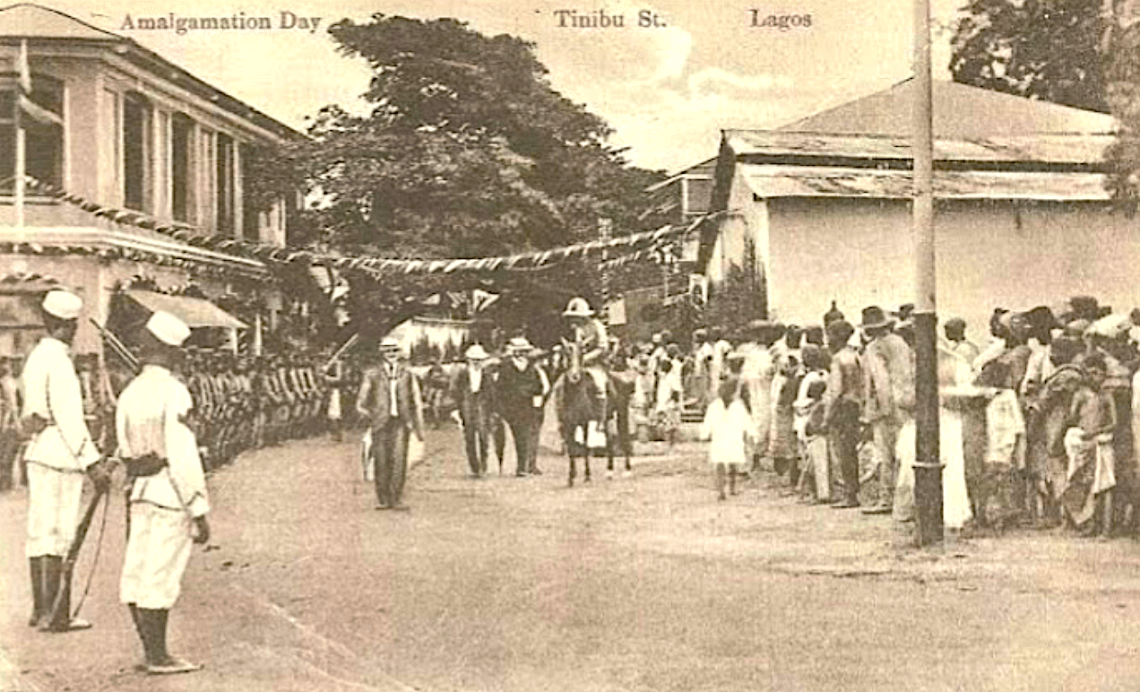
I have just finished reading a book What Britain Did To Nigeria by Max Siollun, who is an authority on issues that affects Nigeria. Mr Siollun has written several books on the country, including Soldiers of Fortune: Nigeria Politics from Buhari to Babangida and Nigeria’s Soldiers of Fortune: The Abacha and Obasanjo Years. Expectedly his latest book, What Britain Did To Nigeria is very educative and informative. The 390-page book is published by C. Hurst & Co.(Publishers) Ltd. One of the articles in the book, which caught my serious attention is, ‘The mistake of 1914.’ This article summarises what one should know about Nigeria on the amalgamation that took place in 1914. Mr Siollun declared that, “Perhaps no question makes Nigerians disagree as much as why Britain created their country. Nigerians looking for deeper meaning for their country’s existence may be disappointed to find that there was none. Nigeria’s existence is little more than the outcome of balancing the colonial accounting books. In 1900 Britain created two countries with similar-sounding names. These were the protectorates of Northern Nigeria and Southern Nigeria. For 14 years these two countries were separately governed by different high commissioners. Lugard was Britain’s first high commissioner for Northern Nigeria and Sir Ralph Moor was his counterpart in Southern Nigeria. The two colonies had different colonial personnel, legal systems, land tenure laws, educational policies and systems of governance. Their eventual amalgamation on 1 January 1914 was not sudden. It was the culmination of a process that, as we have seen, began 16 years earlier with the recommendation of the Niger Committee. Although Lugard is credited as being the architect of Nigeria’s amalgamation, the process started long before he became Northern Nigeria’s high commissioner or the governor-general of the combined Nigeria in 1914.

‘These jolly laughing trading black men’

Some British accounts of the differences between the people in the two Nigerians mentioned (with the usual poor anthropological insight of that era) that ‘the inhabitants of Northern Nigeria are very different from the coast Negroes [Southern Nigeria]’ and flippantly described Northerners as ‘black-faced Mohammedan Arabs with an admixture of negro strain’ and Southerners as ‘these jolly laughing trading black men’. Although this is a very simplistic summary, others offered a more realistic assessment. Sir George Goldie, who advocated the amalgamation of Southern Nigeria and Northern Nigeria, admitted that the two countries were ‘as widely separated government, customs, and general ideas about life, both world and the next, as England is from China’. Since Britain was aware of the sharp differences between the two Nigerias, why it decide to amalgamate them anyway?

Just as British entry into Nigeria was motivated by economic reasons, so was its amalgamation into one country. The duplication of finances and personnel in running two separate colonies in the same area was an impediment to administrative efficiency. The need for British colonies to be self-financing made amalgamation a priority. Since Northern Nigeria had no coastline and was landlocked, it did not receive customs duties, as Southern Nigeria did. This disadvantage was exacerbated because Northern Nigeria imported goods from Southern Nigeria, duty-free, and its costs for transporting its goods to Southern Nigeria for export were also high. Since Southern Nigeria received customs duties and Northern Nigeria did not, a small percentage of customs revenue from the former was sent to the latter. Yet this was not enough to offset Britain’s cost of administering Northern Nigeria. The area (Northern Nigeria) had been running on a budget deficit for ten years, during which time its revenue was not enough to meet even half its cost of administration. As a result, the British Treasury paid grants-in-aid to Northern Nigeria (totalling over £4 million) in the 14 years of its existence. These were non-refundable payments, rather than loans, and were in addition to the £865,000 that the Treasury paid to the Royal Niger Company as compensation for the revocation of its charter. Such dependency on the Treasury could not continue. Lugard tried to raise revenue by imposing taxation on Northern Nigeria but it was not enough. As early as 1904, he argued that: “Northern Nigeria is as yet largely dependent on a grant in aid… I feel myself that economy can only be effected by the realisation of Mr Chamberlain’s original scheme of amalgamating Northern and Southern Nigeria and Lagos into one single administration. It is only in this way that Northern Nigeria, which is the hinterland of the other two, can be properly developed, and economies introduced into the triple machinery which at present exists. The country, which is all one and indivisible, can thus be developed on identical lines, with a common trend of policy in all essential matters.”

‘The material prosperity had been extraordinary’

Lugard’s advocacy of amalgamation, ten years before it actually happened, was not surprising. As Northern Nigeria’s High Commissioner, he faced the problems of the colony’s dependency on grants from the Treasury and the need to find alternative revenue sources. Amalgamating the two Nigerias into one country would not only solve these problems for him, but carried with it a potential promotion, in that he would become the governor of the newly amalgamated country. For Lugard, the solution to his problems lay in Southern Nigeria. He observed: “Southern Nigeria, on the other hand, presented a picture which was in almost all points the exact converse of that in the north. Here the material prosperity had been extraordinary. The revenue had almost doubled itself in a period of five years. The surplus balance exceeded a million and a half. The trade of the interior had greatly developed by the construction of a splendid system of roads, and by the opening to navigation of waterways hitherto choked with vegetation… And so while Northern Nigeria was devoting itself building up a system of Native Administration and laboriously raising a revenue by direct taxation, Southern Nigeria had found itself engrossed in material development.

Before southern Nigerians pounce with glee (as they often do) about this evidence of northern economic dependency on the south, one must pause and reflect that amalgamation was a British decision, not a northern one. Northern Nigeria had no more say in amalgamation than Southern Nigeria did (and probably, if given a choice, would have objected to it). One of the north’s leaders did, after all, later refer to amalgamation as ‘the mistake of 1914’.

‘Effect an alliance with a Southern lady of means’

The economic disparity between the two Nigerias made their amalgamation inevitable. In a light-hearted after-dinner speech to the Colonial Service Club in 1913, the secretary of state for the colonies, Lord Lewis Harcourt, used a metaphor to describe the impending amalgamation: “We have released Northern Nigeria from the leading strings (of the) (British) Treasury. The promising and well-conducted youth allowance ‘on his own’ and is about to effect an alliance with a Southern lady of means. I have issued the special licence and Sir Frederick will perform the ceremony… May the union be and the couple constant!

‘An enthusiastic practicing paedophile’

In 1913, Lugard named the prominent south-eastern Nigeria city, Port Harcourt after Lord Harcourt. Details of a man’s personal life should not ordinarily occupy much space in a history book about two nations. However, the continued prominence of Harcourt’s name in contemporary Nigeria justifies an exception. Harcourt ostensibly led an ordinary family life. His wife was the wealthy American heiress, Mary Burns, who was a member of the Morgan banking family dynasty and the niece of the banker John Pierpont Morgan (founder of JP Morgan Bank). However, Harcourt (or ‘Loulou’, as he was known) ‘was an enthusiastic practising paedophile’, who abused both young boys and girls.

Owing to his status, Harcourt’s paedophilia was largely unknown to the public, and knowledge of it was restricted to the elite circles in which he moved. Harcourt abused the son and daughter of his friend Viscount Esher (Reginald Brett). Esher’s teenage daughter, Dorothy, was so traumatised after Harcourt tried to sexually assault her that she avoided romantic relationships with men for most of her adult life. Harcourt’s predilection for preying on children was so well known that boys at Eton School (where he was a fellow) were warned not to be alone with him.

Harcourt also tried to sexually assault a young boy named Edward James during a party at his country estate. The boy reported the assault to his mother, who mentioned it to others.

Harcourt was found dead early the next year after taking an overdose of sedatives.

The most extraordinary aspect of Nigeria’s amalgamation was how little thought the British colonial administrators gave to its long-term consequences. The architects of both the 1914 amalgamation and the Niger Committee’s report of 1898 had no guiding vision or objective. Not only did the colonial government fail to contemplate the north-south differences, but they
paid little attention to how much British rule had amplified the pre-existing differences between the two regions. The introduction of Christian missionaries in the south had caused a revolutionary change to the region’s religious life and created a Western-educated cadre that was anxious for independence, while the north had little interest in rushing into a union with a southern region that was so radically different in religious and social ethos. British rule had also changed the north by introducing a Christian convert population into the region on the outskirts of the Muslim emirates. The British did not consider stabilising the country by dividing it into territorial units consistent with ethno-linguistic zones. In 1898, the Niger Committee had recommended dividing Southern Nigeria into eastern and western regions. Yet, for unspecified reasons, it did recommend a similar subdivision of Northern Nigeria. The colonial government belatedly carried out the Niger Committee’s recommendation when it split Southern Nigeria into the Western and Eastern Regions in 1939, yet it left Northern Nigeria intact and undivided. As a result, Northern Nigeria ended up than twice as large as the two southern regions combined. Creating a country where one region was geographically larger, and had more people, than all the other region became a constant point of contention.

The 1914 amalgamation and the fault lines between the north and south remain among the most contentious issues in modern Nigeria. More than 106 years after amalgamation, the wisdom of this step is still being debated in Nigeria, and the country continues to grapple with how to deal with the divisions between north and south and the mutual paranoia they often have about each other. The most spectacular eruptions of instability in Nigeria have emerged on a north-south basis: the military coups of 1966, the civil war of 1967-70, the annulment of the presidential election of June 12, 1993 and the ensuing political crisis it generated, and the crisis over Sharia law in the early 2000s. Each of these controversies has polarised the country along north-south lines. The civil war, which commenced after the south-east seceded, represented one of many attempts to repeal the 1914 amalgamation (the north also threatened secession in 1953 and 1966). It is perhaps unsurprising that conflict would arise in this manner. It was difficult to build patriotism and emotional loyalty to a country created by a foreign invader and inhabited by people whose prior loyalties had never extended beyond their family, village or kingdom.

The lack of British foresight regarding the enormous upheaval that amalgamation would cause is astonishing. For over twenty- five years prior to the merger, British administrators had year after year mentioned the massive cultural, political and religious differences between the north and south. Yet they insisted on amalgamation simply to fix an accounting problem. Even if amalgamation was a necessity for colonial administrative convenience, one wonders why it was not reversed or reconfigured when it became apparent that the unified Nigeria would one day become an independent self-governing country. With no overriding ideological principle behind Nigeria’s creation, it has been left to Nigeria’s post-colonial governments to find ways to rationalise the 1914 amalgamation. Nigeria’s territorial evolution has followed two opposing trends during its colonial and post-colonial eras. The colonial era was characterised by territorial amalgamation, and followed by the country’s fragmentation into smaller and smaller territorial units during the post-colonial era. Starting from 1967, post-independence Nigerian governments started unravelling Britain’s territorial consolidation by fracturing both the north and south into smaller states, which are currently 36 in number. It is to Nigeria’s credit that it has developed its own home-grown innovations to reduce tension between the north and south, such as an affirmative action quota system and the alternation of the presidency between northern and southern holders.

Perhaps it is pious to expect a colonial government to have contemplated the long-term consequences of its decisions on the people of the colony. As demonstrated again and again in prior chapters, the colonial government’s priority was not to create a new nation with a common ethos. The priority of Colonial Office officials was to minimize the financial burden to the British taxpayer, reduce bureaucratic duplication and maximise revenue. In that regard it succeeded from British perspective. In that regard it succeeded from Britain’s perspective. Nigeria was just a page in a colonial accounting ledger”.

Restructuring: The Road Not Taken (1)

By Tony Eluemunor

Why would a cancer-stricken man beg a doctor to treat only a sore on his toe, if he is not suicidal? I didn’t know whether to laugh or cry when government spokesmen gloated that it had taken our security agencies two whole years of strenuous and coordinated effort to ensnare and grab Nnamdi Kanu. 

I was horrorstruck. Did it take that much effort to “get” Kanu, a man whose whereabouts was always advertised as he lived on Facebook and Youtube? It was likely the loud and foul-mouthed braggart did not even know he was being trailed. I want to believe he was totally confident that his British Passport was enough talisman for him. 

Just when many Nigerians were still trying to make a meaning out of that arrest, the security agencies sent another shock wave across the country. See it this way; Nigerians were still debating the security merits in targeting Kanu for two years when the Boko Haram chief, Shekau, and bandits terrorised Nigerian, kidnapping even school children yet they did not appear so targeted, when security agents called on Sunday Igboho, one bloody night. Yes, bandits decorated by guns swinging from their shoulders had been received by, and posed for pictures with, government officials. A religious cleric had made a small career out of speaking the minds of the bandits and helped to negotiate for the release of hostages. Yet, none was pursued and brought to book in a commando style. 

Actually, a serious concern arose when recently a spate of horrendous blood-letting and torching of Police stations, Prison yards and other government buildings began to happen in the South-Eastern states. If it was not stopped, policemen and policewomen would have abandoned their work and the result would have been pure bedlam, as a part of the country would have become a lawless zone. Yet, it is difficult to convince Nigerians that the same seriousness that was displayed in confronting the security challenge in the South East was also employed in combating the greater scourges called bandits and Boko Haram. And what about the other scourge; killer herders? 

Yet, in paying a deadly visit to Sunday Igboho, the DSS tried to kill an ant with a sledge hammer. Would it have been cowardice on the part of the operatives who called on his house to have retreated when a gunfight ensued? Could it not have been prudent of them to attempt to arrest him without endangering multiple lives? I say this because in the end, Igboho was not arrested … yet, some people, Nigerians all, died. 

My real point is this; Kanu and Igboho came about because of the road Nigeria refused to take; restructuring. The complaints had been coming thickly that a dangerous trend of killings were being perpetrated by killer herders, but nobody appeared to take it seriously. Instead the powers that be spent valuable years talking about Cattle Routes or Cattle grazing Reserves. We disdained State and Community Police outfits to address the new problems. Some states moved to stop the scourge by banning open grazing so that wayward herders would stop encroaching on farms. But it appeared the police has refused to enforce the bans – notwithstanding whether some state assemblies duly passed bills that made the bans into state laws. That was how Chief Sunday (Igboho) Adeyemo emerged; he offered to defend himself and his community. 

May it not be over looked that we came to this impasse simply because Nigeria has refused to restructure. It appears that the more Nigerians have been asking for restructuring the more President Buhari has waxed stronger in his belief that restructuring is not needed. Please, don’t get me wrong; if we had been restructuring since 1999 when civil rule returned, it would have gone a long way by now. But former President Olusegun Obasanjo, the late Umaru Yar’Adua and Dr. Goodluck Jonathan all failed to restructure. Even when some three South-South satte governors championed it, we demonised them (I will visit that next Sunday). Yet the need was not only there, it had been brought to fore as far back as 1953 in London. Please see the excerpt from the UK Parliament Hansard. 

It is a pity that the call for Nigeria’s restructuring (in all ramifications) has given rise to a Mazi Nnamdi Kanu and his arrest. I fear we may not learn the right lessons from this sordid episode. Chinua Achebe decried the fact that Nigerians have often refused to learn the needed lessons in the preface to his first collection of essays, Morning yet on Creation Day. He said that when many Nigerians were asked about the lessons the Nigerian Civil War taught them, their answers were often “puerile”: war does not pay. Achebe wrote the Preface in 1975, five years after that war. 

Achebe said that many preferred not to even broach the topic – in a self-defeatist self-censorship. And the real Achebe spirit came to the fore when he said: “I will prefer to be accused of nastiness than join in the national pastime of consigning events of just a few years ago into prehistory”. It was also in that Preface that Achebe said that experience is not whatever event that might happened to man. He said that much could happen to a stone without making the stone any wiser and so experience comes from the lessons learnt from an event. And Barbara Tuchman added in her much-praised book, The March of Folly; The Mistakes of Governments from Troy to Vietnam, that if wisdom is the application of intelligence on experience to make astute, proficient and wholesome judgment, then many leaders have frustrated wisdom. 

Did the Federal Government frustrate wisdom when it first arrested Kanu? Many swear it did because an inconsequential man who was actually dwelling on the fringes of serious talks was thrust onto centre-stage. Before him one Chudi Uwazurike spear-headed an Igbo agitation. Most importantly, Uwazuruike was wedded to non-violence. That was before the military Operation this and Operation that, including Operation Egwueke (Python Dance), and it was even said that the military visited Kalu’s residence in a show of force. That was totally unnecessary for by then Kanu’s army was nothing but the words spewing from his loquacious mouth. 

ABARIBE ON BIAFRA, KANU AND NIGERIA:

Enyinnaya Abaribe, the brilliant and brave senator who signed the bail for Nnamdi Kanu’s release delivered perhaps the most perceptive and wisest speech on Igbos and Nigeria last week in Mississippi, US. Every Igbo who cares about the present and the future of our people should read it. It’s a bit long but the effort is worth it. Please see below:

“What I will say here today may come as a surprise to many of you. For those that I will rub the wrong way, I apologize in advance.

However, “NDIGBO si na owu onye nke mmadu na ghu ya ahu na agbata ukwu”. If I fail to say the truth about the existential challenges that we face today in our country Nigeria, and how we believe we should face them, then I would not be true to myself and to you who sent me to represent you in the red chamber.

From the Past to Today.
1970
We can situate our position today following the end of the civil war in 1970. Igbo’s in 1970 were impoverished having lost an estimated 3m Igbo souls in the war, with a ruined and destroyed landscape and infrastructure. Every Igbo man/woman with savings in the banks before the outbreak of hostilities were pauperized as the military government decreed that one would only get 20 pounds notwithstanding the amount you had. The indigenization decree was passed in 1972 and no Igbo could participate since all had been reduced to penury.
2017
Today the Igbo have the largest pool of educated Nigerians. In 2007, Imo State had more subscribers to the JAMB UTME exams than the 19 Northern States put together. In 2017, 56% of of NYSC members are from the South East. Our feat in education means that we now have the army to win the war of competition in a market driven economy. Since 1999, the south east states have been the best in all exams.
The largest group of direct domestic investors in Nigeria are from the south east. Igbo investments in property in Abuja alone probably has more than any other ethnic group. We are the most travelled in Nigeria. In all parts of Nigeria after the indigenous population, Igbo’s are the next largest group. We are the largest propertied class of all ethnic groups in Nigeria and despite all this confusion, we have grown the most economically since the inception of the current democracy in Nigeria. We have the richest and largest pool of Nigeria diaspora population.
Taking an example of Lagos state, Ndigbo form a large proportion of the economy of the state. We created the following from nothing;
Computer Village in Ikeja.
Ladipo Spare Parts market.
Alaba Electronic Market.
Balogun Int’l Market.
Balogun (Trade Fair) International Market
Aspamda market in Festac.
Orile Market for house fittings & appliances etc
All second hand clothing markets in Lagos. About 4 markets
The combined turnover daily of these markets run into billions daily. Lagos state benefits by collecting taxes and now its economy contributes 56% of all VAT collected in Nigeria.
Above scenario is replicated in most big cities in Nigeria. Go to Kano, Port Harcourt, Benin City, Kaduna, Sokoto, not to talk of Abuja. Ndigbo are very large players in the economy of all parts of Nigeria.
I will return to this.
The ALLURE of BIAFRA
So the question is, given all the advantages that we as Ndigbo have in Nigeria, why the clamour by our youths and others for a separate state of Biafra?
The present agitation in the SouthEast for a sovereign state of Biafra seems very tempting under the prevailing circumstance given the manifest sectional approach to governance at the center. To some especially the youth and the disadvantaged it is the way to go and when viewed critically you cannot help but to agree with the agitators. Of a truth there is an obvious feeling of alienation within the Nigerian state today. But has this always been the case? Apart from the civil war and the pernicious policies of the military regimes, we have not fared badly during civil rule until presently.
Given that following the civil war, there seemed to have been a glass ceiling in certain professions in Nigeria where it looked as if Igbo should not aspire to. In the police, military etc. But we can posit this as the lingering effects of the war where the victor in a war finds it very difficult to fully integrate the other part they fought with into all areas. In the US for example, i understand that it took a very long time for someone from the southern part of the US several decades after the civil war which they lost to break the stranglehold of the north for the presidency of the US. (Correct me if I’m wrong).
But come to think of it, Dr Alex Ekwueme became the Vice President of Nigeria barely 9 years after the civil war. The glass ceiling was on its way to being broken! The military interregnum from 1993 led by the same Muhammadu Buhari put a hold on this. In the US, Germany, Japan and other climes deliberate policies were used by governments to build stronger ties among groups and opposing tendencies. This helped to forge a bond within their nations. Nigeria seemed to think that a policy of benign neglect will resolve our problems. Of course it didn’t and that’s why we are seeing a resurgence of separatist agitation going on all over the country.
Fast forward to the civil rule era starting from 1999. Nobody would accuse Presidents Obasanjo, late Yar’adua, or Jonathan of what seemed like sectionalism as state policy. A look at the pattern of appointments by President Obasanjo evinced the fact of an all inclusive government from all parts of the country. Same as President Yar’adua. President Jonathan took it a step further by appointing the first Igbo chief of army staff, first Igbo secretary to the federal government, coordinating minister for the economy etc.
In fact, one of the criticisms we face today in Nigeria is to explain why should this agitation for separation be under President Buhari when it was not done under the previous administration? However, that criticism is not true. Recall that under President Obasanjo and Yar’adua there was Massob which was managed much better than today.
However, you will recall that when this government came into place, President Buhari went to the US where he made a most unfortunate statement that was widely condemned at that time. He reportedly said that he doesn’t need to bother about the 5% that didn’t vote for him but will rather concern himself with the 97% that voted for him.
I had at the time the statement was made raised concern that such declaration from an elected President sounds discriminatory and may create the impression that our elected President Buhari is sending a message to those who didn’t vote for him that he will be partial in his decision making.
Unfortunately, it seems also that the people who are in and around the president didn’t advise him properly. They left him to make appointments and take decisions that gave the impression that there are some parts of the country that are not supposed to be part of Nigeria. Little wonder that our youths feeling left out and not having anything to give them hope in Nigeria, started believing that a separate country would be better. But I say it is NOT. I will come to this later.
I recall that in November of 2016, after seeing how things were going, the South East caucus of the Senate sought for and got an appointment with the President Buhari. Our discussion centered on the south East perception of not being part of this administration thereby giving rise to our people feeling disconnected from the government. We pointed out that it should be a cause for concern if a major part of the country is not represented in the security architecture of the country in addition to other critical sectors from the inception of the administration. We were promised that our concerns would be looked into. Sadly, this was not done till today.
Our country Nigeria is supposed to be for inclusion; for making sure that everyone makes his or her input into its affairs. Allowing such fairness and equity to prevail in a plural society like ours will make us a bigger and better nation. Today that is not the case. Either as a deliberate act as it seems or a willful omission geared towards achieving a pre-determined goal, Ndigbo have been pushed to the fringes of the Nigerian Union in so many ways by the present government. The unfortunate scenario is enough for one to ask the hypothetical question….why am I here?
WHAT ALTERNATIVES
As much as the music of separatism stirs the soul, one must ask the question; Is relapsing into a sovereign state of Biafra the optimum option or is it a restructuring of the state such that all the federating units would have greater autonomy in the mould of a near quasi self determination the better option?
When these two options are posed; a sovereign state of Biafra or restructured Nigeria, the position of most Nigerians as of today is for the latter.
Apart from the problem of even determining the boundaries of the state of Biafra and the multifarious and multifaceted problems a simplistic solution such as Biafra poses, perhaps it makes more sense for those who have tasted war to be a little more discerning when matters affecting their race comes up in Nigeria. Nigerians have been known to come together to use the Igbo head to break coconuts (apologies to late Abiola).
Despite the problems that befell the Yoruba race following the annulment of the June 12 elections, they didn’t seek to break out out of Nigeria despite some of them calling for an Oduduwa country. They simply used the sympathies of other Nigerians to create an economic haven for themselves which has led to massive relocation of industries by all Nigerians to Lagos and Ogun States. They also got the Presidency of Nigeria.
Our brothers from the Niger Delta have not sought to go away either. They also got the Presidency of Nigeria. However we seem to be in the unfortunate position of seeming to drag the Niger Delta into a Biafra unwanted by them.
The agitation for Biafra and how it was being prosecuted by IPOB has rather elicited hate and disdain for our people from other ethnic groups notwithstanding that they may have been nursing such tendencies.
The agitation as championed by IPOB somehow gave muscle to traditional traducers of Ndigbo to spew out hate and envious vituperations. This was exemplified by the October 1st quit notice given to Igbos to leave the North by the so-called Arewa youths which persons are yet to be arrested for hate speech and breaching the law. They claimed to be responding to our own hate speeches etc. Indeed, other people seem to want to see us fall into the trap for them to use us to solve their own problems with Nigeria.
That notwithstanding, we as political leaders from the South East were unequivocal in asserting that that the rights of Ndigbo to peaceful and democratic engagements must be respected. On this score we made it clear that no amount of threat will cow Ndigbo from consistently demanding for an equitable, fair and just society within the Nigerian State. We also cautioned our youths on their vituperative calls and employed the Igbo concept of “bu uzo chu fuo Ufu, tutu ta wa Okuko uta”! This of course was misunderstood by other Nigerians as support rather than constructive engagement.
WHY NOT BIAFRA?
We believe that the best way to go given our situation today is to look before we leap. We must not be pushed to abandon our huge contribution to the modern Nigerian state. As we pointed out in the beginning of this paper, Ndigbo have been the single ethnic group that have welded the country Nigeria together given our way of life as sojourners everywhere in Nigeria, West Africa, Africa and the world. I dare say that we make up to 50% or more of Nigerians in the US.
The question is why would we look to confine ourselves to a small landlocked entity when we have the whole of Nigeria to cavort in?
I have deliberately left out of this discussion the practical impossibility of even getting our brothers from the Niger Delta to go with us in this quest. Not to talk of the Idoma or the Kogi that we insist are part of us.
One thing seems to elude our people when these questions are posed. We look at the determination of the present government to treat us dismissively and feel that it is well nigh an impossible task to get our wish for a just society but we fail to look at the historical evidence before us.
When the 97% vs 5% controversy erupted, I told our people that my people the Ngwa says that “Ohu afor abughi ndu ebighi ebi”. Governments come and go. PDP government lost election and quit the stage for this APC government. Who says they cannot also lose? Why are we then acting as if it’s the end of the world? The maximum any government can stay is two term totaling 8yrs. “Obughi ndu ebighi ebi”!

Restructuring is an idea whose time has come and it will happen.
Biafra should be a last option, only after every other avenue to realize a restructured Nigeria where every component part is allowed a measure of autonomy and self determination fails.
Let me state here that if the dominant views in Nigeria is for restructuring, then that should be the minimum that Ndigbo should demand, so that every component part of this country can substantially harness its resources and develop at its own pace.

Do not forget that the breached Aburi accord was about restructuring and today this call has garnered overwhelming momentum even from quarters that hitherto opposed it. Just recently former President Ibrahim Babangida, former Vice President Atiku Abubakar and lately Asiwaju Bola Tinubu and a host of others have joined the fray. Restructuring has become a singsong which we must explore vigorously. Even the ruling APC has set up a committee led by Governor el-Rufai to bring about a considered view on it. Forget the fact that it was part of their manifesto. The fact is that the discussion is on, as it should be.
I recall that in August, the Igbo political elite, Ohaneze, Governors, National Assembly Caucus met in Enugu and affirmed that the terms of our marriage in Nigeria is stifling to everybody and therefore we must have another look at it.
That position has not changed but has in fact been reinforced by the agreement by other parts of Nigeria that it is time to look at the matter as evidenced by the South West Political Summit where they endorsed restructuring back to the 1963 constitution.
To me the strident calls by IPOB for a referendum should be seen as a legitimate demand to compel the state to see the urgency of having a second look at our marriage, with the ultimate aim of enthroning equity and fairness, where our people will no longer be treated as second class citizens in Nigeria.
Though the methods may be misconstrued, the true colour of the agitation would have come out had there been a concerted effort at dialogue. The agitations gives fillip to the Igbo idiom…”Ma Opara emeghi nkpotu, agaghi ilughi ya Nwanyi “.

Our people are saying this union is stifling us, and we are making a lot of noise so we can find a solution.
The solution I think can be found in a restructured Nigeria. The beauty of it is that while we can enjoy near wholesale autonomy, our people as itinerant business people could have an unrestrained space in a larger market provided by a united Nigeria.

We should not be swayed by what we think is the attraction of an exclusive opportunity to be provided by a sovereign Biafra. No. That would box us into a tiny corner which has its own challenges which would prove overwhelming as time goes on. This is a topic for another day.

DIASPORA IGBOS AND US.
One of the problems those of us who attempt to show a direction to our people at home is the near universal disdain that some of our brother Ndigbo in Diaspora have for our leaders and elected representatives at home.
Nowhere is it more apposite than in this matter of Biafra agitation. While some of our brothers/sisters here in the comfort of their homes seems to urge our youths through their utterances and actions to use unconstitutional means and disparage other ethnic groups that which actions seems to alienate us from our neighbors and the Nigerian State, we the leaders at home have been been left with the task of intervening in such a manner to dissuade the government from deploying the coercive instruments of state against the agitators. The aim was to stop bloodshed and waste of human lives. We have lost enough from the civil war. Those egging our youths on from here do not seem to appreciate this fact.

Most distressing is the labeling of those who disagree with their positions as “cowards, saboteurs, Hausa slaves etc”. This tends to discourage those who genuinely strive to lead our people through a very distressing period in our history as a nation.
Nnia Nwodo as President of Ohaneze has been vilified for taking a stand for restructuring in Nigeria for Ndigbo, a position agreed by all of us in the earlier summit I referenced.
Governors come in for bashing everyday.
As for us legislators, we have been called all sorts of names such as ‘legislooters’ etc.

Yet, when it came to taking a stand at ground zero, to bail Kanu; to reject the Fed Govt ascribing Terrorism to IPOB, we are the people doing so and we never hesitated to say that agitation in every clime is constitutional. We take the bullets from other ethnic groups and the government for standing firm and demanding that Nigerians should be left to talk to each other about the best way forward without preconditions.
We would use this opportunity plead with our internet warriors who stay here in their comfort zone here that our Igbo say, “ma Opara nzuzu adighi nwuo, Opara ma izu aga beghi ibichi ezi”.

SOME FINAL THOUGHTS
Why are we not Investing at Home
Lack of Infrastructure. Should we continue to blame the Fed Govt for the dilapidated infrastructures in Ala Igbo? What of our home governments in Igbo States? Sam Mbakwe of blessed memory did not wait for the Fed Govt before undertaking massive rebuilding of old IMO State. We think that we have not given our best to our people with the little we got. Insecurity. Nowhere have we hurt ourselves and investment in Ala Igbo than in the insecurity pervading all parts of our homeland. Of course the latest imbroglio in Abia especially in Aba and Umuahia has worsened matters. We run the risk of undoing all the efforts made in promoting ‘made in Aba’ that we had embarked on as a catalyst for growth in Ala Igbo. Industries have relocated from Ala Igbo to other parts of Nigeria especially Lagos and Ogun States because of the very serious insecurity such as kidnappining and armed robbery faced by those who invest at home. We cannot be looking for investors and yet make our place not conducive to investment. Unemployment is the single biggest problem we have in Ala Igbo today. Before this time due to our domestic investments and industry, this was not a very big problem but due to the dis-investment going on today in Ala Igbo today we are faced with a existential problem in our hand. Diaspora Igbo’s have to assist us to also invest at home despite the problems and reduce the unemployment in Ala Igbo. Once we get Ala Igbo right the frustrations that fuel the agitation in ala Igbo will be dampened. What we have playing out in the world today is a knowledge economy. Oil is going out of fashion. As I pointed out earlier, we are poised through out educational exploits in Nigeria to dominate the economy of tomorrow. Why would we turn a blind eye to this emerging scenario?In ending let me quote what the great son of Igbo land, the great Zik of Africa said about himself….”despite the mythic heights to which he was raised, Azikiwe was nothing if not pragmatic, a realist, always conscious of his limits and ever eager to extract all that was possible from that limited horizon”. May we be guided by such humble thoughts as we seek a better Nigeria for us all. What we should look for is a BIAFRA of the MIND like some have suggested in order to play our role in the emerging Nigeria that will come.

SECESSIONISTS VS. KILLER FULANI HERDSMEN

BY SAM AMADI

Those comparing the Nigerian state’s treatment of secessionist and killer Fulani herdsmen and bandits are missing a key point.

Bandits and herdsmen kill citizens but not directly the state. Secessionists attack the Nigerian state or its hegemonists.

The Nigerian state does not take seriously the lives of its citizens. But it fights violently to protect its existence and oppressive character. The Nigerian state needs total re-conception if it will promote citizenship and freedom. As it is today, the Nigerian state is anti-citizenship and anti-freedom.

This is why I am a supporter of high-energy, radical politics that reconstitutes the foundations. Call it restructuring or reconstruction.

Nasir El Rufai Secretly Withdraws Son From Public School

Governor Nasir El-Rufai has secretly withdrawn his son, Abubakar Al-Sadiq from Kaduna Capital School after what many observers described as “political and media stunt” to give the impression that he is like any commoner.

 While the enrolment of Al-Sadiq in the public school was greeted by massive commendation from all walks of life, the removal of the son was not made public, a development seen by many as “betrayal of public trust and confidence.”

It is not clear why the governor made a U-turn as some commentators said it could be due to the widespread abduction by kidnappers in public schools especially in Kaduna and neighbouring states, or pressure from family, or lack or doubts on the capacity of the government school to groom his son as what obtains in private schools.

People living around the school said they were disappointed that the governor had withdrawn his son few months after the child joined the children of poor and middle class citizens in the state to learn under one roof.

Many thought that the enrolment of his son would be a turning point for the public schools in Kaduna State.

Abubakar Al-Sadiq El-Rufai was seen seven months later mingling with friends in Kaduna Capital School

“I am grossly disappointed because the whole enrolment episode looked deceptive,” said Ibrahim Yaro, a resident of Kaduna.

“Leaders should keep respect their words and the promises they take. After the governor has removed his son from the public school, he is now busy increasing fees and sacking teachers…I really don’t understand where he is heading to. Someone should talk to him, please,” he said.

There was no immediate response from the Kaduna state government.

The enrollment day

When Malam El-Rufai strode like a colossus in the company of his wife, Ummi, into Kaduna Capital School in 2019 and enrolled their six-year-old son, Al-Sadiq El-Rufai, in fulfilment of his campaign promise to send his son to a public school, many Nigerians had perceived his action as bold and exemplary and a people-oriented governor that was on track to revolutionize public education in the state.

They viewed it as a validation that he was not only a man of his words, but the messiah that would return the lost glory of public schools in Kaduna State and give them an edge over private schools.

The Kaduna Capital School is reputed as one of northern Nigeria’s oldest government schools.

Seven months later when Daily Trust Saturday visited the school, it gathered that the young El-Rufai, then a student of Primary 2B, had made new friends and adapted to the environment and his teachers. A security guard had been attached to him, while other security guards were strategically positioned around the school premises to provide security.

At that time, the presence of Al-Sadiq El-Rufai in the school gave many parents whose children attend public schools hope that public schools are also good for their children. They had also thought that there were better days ahead for public schools in the state.

However, Daily Trust gathered that the governor has ‘secretly’ withdrawn his son from the school and enrolled him in an undisclosed school, leaving residents’ tongues wagging over his action.

Our correspondent also learnt that the boy was withdrawn shortly after the COVID-19 pandemic lockdown which eventuated in closure of schools. But when the lockdown was lifted and students returned to school, Al-Sadiq did not return.

Some residents who expressed disgust at the abrupt withdrawal of the boy from the school, with diverse figments of imagination which border on insecurity and poor facilities, told Daily Trust that his action was not only a propaganda to score a political point and betrayal of people’s trust but also a breach of accountability on his part and administration.

A human rights activist and Executive Director, Resource Centre for Human Rights and Civic Education (CHRICED), Dr Ibrahim M. Zikirullahi, described the governor’s action as a betrayal of public trust and failure of his government.

“The governor must also not forget that as the leader of the state, he is a father figure to all the other children in the public school system especially those that don’t have alternative.

“To simply take his own child out of the school system for whatever reasons, while the children of the poor and vulnerable ordinary citizen are left to face those same challenges, does not show transparency and accountability,” Zikirullahi said.

He said while he could not speculate on the reason for the withdrawal,  the action in itself was a serious indication of lack of confidence in the public education system.

He added that like every other good parent, the governor was apparently trying to shield his son from being affected by challenges about which he has privileged information as the helmsman of the state.

He added that if the governor had derived political capital and received adulation for publicly enrolling his son in the school system, the people of Kaduna State deserve an explanation which would enable them make decisions concerning their own children too.

“If the challenge which informed the withdrawal of the governor’s son has to do with security, the question is that, are the children of other citizens less deserving of protection? Are their parents not entitled to information to help decide the fate of their own kids?”

The CHRICED boss said that if the challenge had to do with the standard of education, one would expect that the right step would be to find ways to fix the problem and that it is defeatist to simply take the child out of the system.

“The appropriate thing to do is to judiciously use public resources to address the issues of standard and quality, which have made public education unattractive for many citizens,” he said.

He added that Governor El-Rufai’s action amounted to questioning his own legacy on education for him to surreptitiously withdraw his son.

In 2019, the governor assured that the enrolment of his son in a public school would encourage other members of his cabinet as well as privileged individuals to toe his path as further example to make public schools more attractive and competitive than private schools.

The governor also assured of his readiness to fix public schools and raise their standards which would render private schools a mere luxury.

‘The boy is no longer with us’

During our correspondent’s visit to the school when the boy’s withdrawal was confirmed, one of the teachers said: “We used to see him when he was newly enrolled in the school last year, but we no longer saw him after the COVID-19 lockdown was lifted late last year and we don’t know why.”

The acting Vice Principal of the school, Jafaru Abdu, however,  said that he was not authorized to speak with journalists on any issue.

Conceived a little over 60 years ago by the first and only Premier of Northern Nigeria, Sir Ahmadu Bello, the Kaduna Capital School was established to provide top quality primary education for the children of top-ranking government officials from northern Nigeria while their parents attended to matters of governance in Lagos.

However, the fortunes of the school dwindled and El-Rufai’s controversial reform in the education sector backed by his decision to enrol his own child in a public school was seen as the turning point for public education in the state.

Insinuations of insecurity as reason for the withdrawal of the boy can be confirmed by the school’s poor infrastructure.  Our correspondent observed that though there are new blocks of classrooms and other structures in the school, the perimeter fence has since been pulled down to make way for a standard double lane in the Malali area which is waiting to be tarred. With the parameter fence from behind the school also down, residents say it could be the reason the governor moved his son to another for fear of insecurity.

Our correspondent observed pupils playing football while strangers freely took advantage of the lack of fence to gain access to the school.

The state government has kept mum over the governor’s decision to renege on his promise by withdrawing his son from the school.

Several calls to the governor’s Special Adviser on Media and Communication, Muyiwa Adekeye, to confirm the withdraw the child from the school were to no avail as he neither pick his calls nor reply the several text messages sent to him.

Kaduna State had witnessed school invasions by kidnappers who abducted students and demanded huge sums of money as ransom.

El-Rufai had earlier made a controversial statements that he would never pay ransom even if any of his children got abducted by kidnappers.

“Perhaps, that is the reason he withdrew his son from the school,” said a parent who expressed disappointment that the governor had failed in his promise.

“Our own children go to public schools and we expect that the government uses the power vested in them by the Nigerian constitution to protect them. But our leaders are selfish and would not put their own children in harm’s way,” she said.

Comrade Murtala Abubakar, a Kaduna resident, said that he was not surprised that the governor withdrew his son from the school saying the enrolment in the first place was purely political.

“The governor had to be pressured to even fulfil the promise he made during his political campaign. If you remember, the school had to undergo a renovation just for it to meet a particular standard before the boy was enrolled. But later on, we discovered that the boy was no longer going to the school,” he said.

Abubakar said that now that El-Rufai had made his point and won the hearts of the people, it was disappointing that he had secretly turned around to withdraw his son without any logical explanation to residents.

Another resident, Comrade Rilwan Abdullahi described the enrolment of the governor’s son as deceitful. He added that his decision to enrol the boy in public school was a propaganda to enjoy political support.

“It is high time the masses came to their senses. They shouldn’t allow politicians take them for granted by using such a strategy to get their support and in the end, dump them. It’s also high time political elites stopped playing with the masses’ emotions,” Abdullahi said.

Source : Daily Trust 

Nnamdi Kanu: Kenya sucked into drama as family, UK demand answers

The British government is seeking clarification on the circumstances under which Nigeria extradited Nnamdi Kanu, a dual citizen of both countries, over crimes related to his secessionist movement, even as his family insists Kenya played a role in his capture.

Mr Kanu, whom the Nigerian government labelled a fugitive, was brought to court in Nigeria on Wednesday after officials claimed they had arrested him in London.  

But the British government now says that the 53-year-old leader of the Indigenous People of Biafra (IPOB) was not captured from UK soil.

“He was not arrested in or extradited from the UK. We are seeking clarification about the circumstances of the arrest from the Nigerian government,” a spokesman told Nation.Africa on Thursday.

Nigeria’s attorney-general and minister of justice, Abubakar Malami, told Nigerians that Kanu’s arrest was planned and executed by the Nigerian security and intelligence agencies. It was coordinated by the Nigeria Intelligence Agency (NIA).

‘Arrested in Kenya’

Meanwhile, his younger brother, Kingsley Kanu, broke the family’s silence on Wednesday night by alleging that his brother was arrested in Kenya. 

“My brother has been subject to extraordinary rendition by Kenya and Nigeria. They have violated the most basic principles of the rule of law. Extraordinary rendition is one of the most serious crimes states can commit. Both Nigeria and Kenya must be held to account. I demand justice for my brother, Nnamdi Kanu,” he said, but did not share evidence to back up his claim.

Kenya has not officially commented on the claim, but an official at the Foreign Affairs ministry in Nairobi suggested the government will check whether he may have travelled to Kenya using a different passport and name.

Biafra

The IPOB is a proscribed organisation in Nigeria but has since 2014 been fighting to establish a sovereign state of Biafra, whose dream in the 1960s had caused a deadly civil war in the country. 

The IPOB agitation has brought back memories of when South East Nigeria was first declared the Biafra republic and led to a three-year civil war, between 1967 and 1970, in which three million people died.

Kanu, who also founded the militia group Eastern Security Network (ESN), fled to London in 2017 after jumping bail while standing trial for treason and was rearrested and brought back to Nigeria on June 26 this year and arraigned in the Federal High Court in Abuja on June 29.

The British government said its Foreign, Commonwealth and Development Office was ready to provide consular assistance to Kanu as it expected the trial of the Biafran separatist to follow due process. 

His lawyer, Ifeanyi Ejiofor, has formally applied to Nigeria’s secretive police squad, the Department of State Service (DSS), to allow him access to his client. 

“The British High Commission in Nigeria must insist upon my brother’s immediate release. They must guarantee his safety and security. Nnamdi Kanu must be returned home to the UK to his wife and his sons who live here. The Foreign Secretary, Dominic Raab, must make clear to the Nigerian authorities that they will not tolerate the unlawful detention of British citizens and that the UK Government condemns the Nigerians and Kenyans for undermining the rule of law,” his brother said. 

Justice Binta Nyako of the Federal High Court in Abuja on June 29 ordered that Kanu be remanded in the custody of the Department of State Services until the case could be heard.

Kanu was first arrested on October 14, 2015 and arraigned on 11 counts of terrorism, treasonable felony, managing an unlawful society, publication of defamatory matter, illegal possession of firearms and improper importation of goods, among others.

A judge at the Federal High Court in Abuja revoked Kanu’s bail that was granted him on health grounds and issued a bench warrant for his arrest on the same date over his failure to appear in court for a hearing.

He has, upon jumping bail, been accused of engaging in subversive activities that included inciting violence through television, radio and online broadcasts against Nigeria and the Nigerian state and institutions.

Kanu was also accused of instigating violence especially in southeastern Nigeria that resulted in the loss of lives and property of civilians, military, paramilitary, police forces and destruction of civil institutions and symbols of authorities.

The arrest of Kanu is similar to that of the high-profile politician, the late Umaru Dikko, who was abducted in London and put in a crate for repatriation to Nigeria in 1984 before an intelligence report prompted British police to look for him, finding him in the crate in the luggage compartment of a Nigerian Airways plane at Heathrow airport.

The politician was minister of transport in the Second Republic and fled to the UK when then Gen Muhammadu Buhari overthrew civilian President Shehu Shagari.

Credit:Nation

The El-Rufai Challenge

By Chidi Odinkalu

I want to take El-rufai up on his challenge to anyone to tell him the central leader of bandits.

El-rufai said bandits and terrorists are different from IPOB.

First, what El-Rufai said.

A report on 2 July 2021 quoted the Governor of Kaduna State, Nasir El-Rufai, as having said the way bandits and Boko Haram terrorists operate is different from that of the proscribed Indigenous People of Biafra led by Nnamdi Kanu.

Speaking to BBC Pidgin, El-Rufai stated that bandits are not calling for the break up of Nigeria but are just carrying out their activities as a form of business.

He said unlike IPOB which is led by Nnamdi Kanu, bandits have no centralised leadership.

The governor said, “I was very happy (when Nnamdi Kanu was arrested) because, first he jumped bail, jeopardising his sureties.

“Secondly, a person that challenges the sovereignty and the authority of a state and incites violence; he refers to his own country as a zoo.

“This should be a message to all these separatists challenging the authority of the Nigerian State to be very careful.”

Asked if Boko Haram and bandits should be treated with the same swiftness that led to Kanu’s arrest, El-Rufai said, “No! No! No! No! People are comparing apples to oranges.

“Nnamdi Kanu is the leader of IPOB, a proscribed organisation. He is identifiable, in constant communication and everyone knows where he is.

“Let’s take Boko Haram for instance. Shekau was in hiding and for the past 10 years and the military had been waging a war to get him.

“It is not like Shekau was in Saudi Arabia, sitting in one place, tweeting about the break up of Nigeria or asking Boko Haram to go and kill Helen and Nasir el-Rufai.

“Nnamdi Kanu is in one place while Shekau is waging guerrilla warfare. The insurgency is still going on and the Federal Government is not giving up.

“Regarding bandits, they are not centralised under one leadership. Who is the head of the bandits? Who is the equivalent of Nmandi Kanu with banditry?

“Bandits are just collections of independent criminals. It is a business for them. It is not a case of Nigeria must break up.

“I want to challenge anyone to tell me the central leader of bandits in the same position as Kanu.”
………………………………………………..

My response to El-Rufai

I want to take El-rufai up on his challenge to anyone to tell him the central leader of bandits.

First, El-Rufai should be the one telling us about the leadership of the bandits. He has paid ransome to them – even by his own admission. He is among those who have said some of these herdsmen bandits and terrorists are not Nigerians. So, he knows them.

Some other State governors in Northern Nigeria as well as notable religious leaders in the North have also been paying ransome, visiting and taking photographs with bandits in the forests.

Leaders of Miyetti Allah have on different occasions taken responsibility for terrorist attacks on communities and claimed they were retaliating past wrong done to them. Miyetti Allah has a recognisable leadership structure. But President Buhari, who is a grand patron of this terrorist group, has not rebuked them, let alone order their arrest for their violent crimes.

The federal government and some Northern governors have also been granting amnesty to so-called repentant Boko Haram terrorists, ‘rehabilitated’ them, organised grand graduation ceremonies for them and recruited some of them into our armed forces.

These bandits and terrorists cannot be faceless. You don’t visit, negotiate and pose for photographs with, and pay ransom to faceless criminals and terrorists. These politicians like El-Rufai and the religious leaders who relate with the bandits know them. They defend, visit and pay ransom to them. They know the business they do with them and are in a better position to tell us about their central leadership.

El-Rufai’s distinction between IPOB and bandits and his attempt to create the impression that bandits and terrorists are not know and therefore cannot be arrested is preposterous, fraudulent, deceitful, misleading and hipocricritical.

IPOB, even with their excesses, are not worse than the bandits and terrorists whom El-Rufai and many Northern political and religious leaders are cavorting with.

Okey.

TIPS