Home Blog Page 945

The World Gave Me An Ovation In Chimamanda Ngozi Adichie’s Shadow

By Gloria Ogo

I wrote Reflections on the man Nnamdi Kanu not because I was the most courageous or fearless of writers. I wrote the piece because after so long on the plight of the people, someone had to step forward and break the silence. Someone had to prick consciences, and repeat forgotten truths.

For there is an extent one keeps mute, then silence becomes a norm. It becomes a weapon. Hence a tag repeated often will eventually become the new truth.

So I questioned myself, how can an entire tribe become a breed of terrorists or is a narrative dependent on the hand wielding the pen?

And because we live in an era of validations and endorsements, none expected this new voice in the wilderness to be Gloria ogo. The audacity of the piece, the dare, the strike at societal conscience, this new call to reason could only come from a person with authority. So the media erroneously gave my voice to Chimamanda Ngozi Adichie.

This raised questions in me. A certain doubt. Was my name not good enough? Could my piece be so worthy, and yet the person who wrote it be so unworthy to be quoted?

Observers argued it was an honest mistake, that Adichie and I sounded alike. Some called my piece ‘the voice of Jacob in the body of Esau’. A lot of people asked me to be happy either way. That at least the message (of much importance) was spreading like wild fire, whether with my name quoted alongside it or that of a more popular colleague.

I agree.

The relevance of an article is not necessarily its authorship, but of content and the value it conveys. Yet my worry was beyond a yearning for popularity or fame. It was rather a matter of principle. That things are done right and correctly. That a writer, even if unknown, be given due acknowledgement for her toil in a matter of such sensitivity. For courage and bravery, a tap on the appropriate back was not too much to ask for.

I will not forget to THANK friends who worked tirelessly to correct this misinformation about my identity as the original writer of the piece. My story will remain incomplete without you all. Without the power of collective solidarity.


I want to speak of another type of courage, another type of humility and graciousness. This podium goes to Chimamanda Ngozi Adichie.

Like a big sister, she went an extra mile not only in denying authorship, but in mentioning the rightful author’s name. She momentarily stepped aside from the spotlight and gave me a spot to shine on her wall, a slice of the acknowledgement that was denied me. She did not have to do that. But she did.

She has done what is right and appropriate.


According to his lawyer Ifeanyi Ejiofor, a scan of Nnamdi Kanu’ s heart showed that the heart has enlarged by 13% due to the beating meted to him by the Kenyan authority before beckoning on their Nigerian counterpart to take over.

And to this, a fact remains inarguable. That Nigerians have accepted global gross disrespect and inhumane treatement as a standard towards their being.

It is even okay for the Chinese running companies in Nigeria to beat us on our own soil.

It is okay for the Chiniese to beat us to stupor on their own soil.

But I digress.

We have accepted the status quo of being sub-human as proper. Otherwise one should have asked, Nnamdi was beaten for what purpose?

But before I retreat behind the shield of silence, one thing is clear. That my reflections remain valid as long as a man remains innocent until proven guilty.

Till a verdict is read, let us be a people of deeper thoughts. Of not just a reawakening, but of decisions not to sell consciences

But most especially our votes in future elections.

Gloria Ogo
2021

What would life be like as a minority in Kanu’s Biafra? By Reno Omokri

Recently, my perspective on Nigeria changed. I have never supported any separatist or secessionist agenda. However, I have supported and defended the right of any Nigerian to express himself and associate freely. It does not matter to me where such a person comes from.

When the Buhari administration moved against Ibrahim Zakzaky and the Shiites, I was the first person (not one of the first) to defend them. After defending them publicly myself, I called the then President of the Christian Association of Nigeria, and begged him to issue a statement calling for an end to the killings of Shiites. He told me that though it was an Islamic affair, nevertheless, because of his fondness for me, he would speak in support, and he did.

I have similarly championed the causes of oppressed persons or people from every part of Nigeria. As much as is humanly possible, I have refused to be partial in my advocacy.

In the last three years, I have visited 40 nations on my own dime and time, for the cause of #FreeLeahSharibu, seeking freedom for a Christian girl from Borno. I have not collected a dime from anyone and of anyone knows anyone who has given me a penny, then they should publicly expose me.

Before Nnamdi Kanu was arrested, I did not know who he was. I just defended his right to freedom of expression and association. Various Igbo leaders called me privately to thank me. It would be wrong to mention their names, because of the challenges of the moment.

When Kanu was rearrested, I called a British government official and got the facts. I was the first (not one of the first. The first) to reveal that he was arrested in Kenya, and not in The UK. After I released this information, the media ran with it.

Yesterday, a former Presidential candidate sent me a tape of Nnamdi Kanu dissolving the UK branch of IPOB and tongue lashing the members of IPOB UK. He told them to hand over IPOB money in their possession. He then said that he suspected that the British Secret service was running IPOB UK.

I was shocked and refused to believe what I heard, until this ex Presidential candidate from the South pointed me to an IPOB channel where this same audio was broadcast.

So I published it on my page. I did not add or edit or alter the voice. I released it as is.

Given that that broadcast was released earlier this year (I was told it was first broadcast in March if 2021, though I am not 100% sure) and Nnamdi Kanu was arrested so soon after (in June), I asked if that altercation could have led to Kanu being betrayed by his members in the UK.

The result was that various persons, who claimed to be members of Indigenous Peoples of Biafra descended on my page and insulted me, attacked me and accused me of collecting money from Buhari. (Would Buhari even give me money? If Buhari will give me anything, it is more likely to be a letter bomb).

They said Nnamdi Kanu can insult anyone he liked and I should leave him alone.

A certain Northerner, who has been on my page attacking me for what he had previously called my “love for the Igbo”, now asked a question. He said ‘so you people have forgotten when this man was fighting for you so soon’?

And so I went into deep thought.

If Nnamdi Kanu eventually gets Biafra and I am a minority in that Biafra, what would be my fate? Would I be able to express myself? Would I have the freedoms for which I myself have been fighting for Nnamdi Kanu to get for the last five years? Would I be able to hold sensitive positions?

I am not Yoruba, but because of me, these members of IPOB insulted the Yoruba (why do people always think I am Yoruba?). I was called ‘ewu Yoruba’. Somebody even threatened to kill me if I ever stepped into Onitsha (thesame Onitsha where I donated money and raised millions for victims of the 2019 Onitsha Market Fire?).

These people in their hundreds descended on me with a consistent refrain, that Mazi Nnamdi Kanu is the supreme leader of the Igbos and he could insult his members if he chose and no one could question him.

And that prompted a paradigm shift in my consciousness. If you have been following the dailies, you would have read one or two stories planted by the Buhari administration in the papers of how they have been tracing Kanu and monitoring his movements for two years.

The stories claimed that they were able to get to him through members of the Eastern Security Network that they had captured. Then a few days ago, they released a video testimony of one captured ESN member, by name Emeoyiri Uzorma Benjamin, that has now gone viral, in which the young man claimed that Kanu had given them instructions to kill policemen and soldiers, as well as their fellow Igbos.

He sensationally claimed that Kanu instructed them to bury one of his lieutenants, Nwaokike Kayinayo Andy, AKA Ikonso with 2000 human heads. Even more sensationally, he alleged that Mr. Kanu gave directives to them to kill young girls, who they used for fetish charms.

Now, it is not possible to say it this fellow is telling the truth, or half truths or lies. However, from his testimony, or account of the inside workings of IPOB/ESN, and the broadcasts which I listened to, and which is also available on some IPOB social media accounts, we see that Nnamdi Kanu had almost total authority over IPOB.

But my experience with Mr. Kanu’s supporters made me have a rethink. With the way they treat him as though he is infallible, could it not be more likely that there was nobody within the organisation bold enough to advise Mr. Kanu not to travel to Kenya, because to do so, or to counter him in any way, would have brought upon such a person weighty consequences.

And then I began thinking about the ‘dot in a circle’ statement by General Buhari. I had criticised Buhari for making that comment. It is most irresponsible of him to have described the Igbo as such. It showed his malevolent mindset towards some citizens of his own country, and he should apologise.

However, on further introspection, I began to cast my mind to statements Nnamdi Kanu had made in his many broadcasts which I only watched just yesterday.

He unacceptably insults Black people as being less intelligent than other races (how can a Black person say such things? Is that not self hatred?). He attacks Yoruba churches, pastors and media (what is a Yoruba church? Honestly, I had never heard of a Yoruba church until I heard that word from Kanu. I thought all churches belonged to God through Christ).

You can imagine if you are Yoruba and sympathetic to the plight of the Igbo, and you listen to all the bile from Kanu about your ethnic nationality, how would you look if you continue to defend him to your kinsmen?

Then you listen to some of the even more outrageous things he has said about Northerners (Igbos, your enemy is Buhari. Your enemies are not the Hausa or Fulani. Don’t mix up the two). I cannot even repeat them here.

Looking back to those broadcasts, it looks to me that it is Nnamdi Kanu himself who made IPOB (not the Igbos as Buhari claims) a dot in a circle.

He made no attempts to be persuasive. He did not even try to win hearts. He made no pretence of anything but contempt to anyone who was not part of his Biafra. Even though I had always thought that Odili, Amaechi and Wike and their people in Rivers state are Igbos, I now understand, but do not agree with Wike’s claims that they are not Igbos.

Who would want to be a minority in a country ruled by Kanu? Tufiakwa! You speak your mind and you may be shot on the spot!

To be honest, I had never listened to these broadcasts by Nnamdi Kanu until they were brought to my attention by this Southern Presidential candidate. I was clueless about their existence. In fact, I felt a bit naive. I felt like a fool!

Anyone who has been following me for the last six years would have known how much of my time and money I have devoted to defending, advocating for and promoting the cause of the Igbos.

However, having watched for the first time these videos where Nnamdi Kanu called Black people wicked (I am Black, but I don’t think I am wicked), and where he described Igbos who refuse to support IPOB as evil, I am flummoxed!

However, the one that shocked me the most was his statement that (and this is an exact quote), “If you are attending a Yoruba church, you should be ashamed of yourself. Anyone who attends a church headed by a Yoruba pastor is an idiot. A complete fool. An imbecile. I have no time for them. They are worse than Boko Haram. They are very, very foolish. If your pastor is Yoruba, you are not fit to be a human being.”

And the funniest thing is that the pastor who provoked him into making that statement is from Auchi. He is not even Yoruba. No wonder they think I am Yoruba. To these lot, anyone Southerner West of the Niger is Yoruba. They have a majority mindset that is not minority friendly AT ALL.

Even more disturbing is that this Auchi pastor, who Nnamdi Kanu calls Yoruba, and used to generalise all Yoruba pastors, was summoned by DSS in December of 2016, and asked to explain why he did a video calling for Kanu’s release. Who fights those who fights for them?

How did I miss these broadcasts? Have I been too focused on Buhari to the extent that I was blindsided? Is this the fellow I have been defending?

I am a minority. My late father was a minority. He went to Sokoto as a Youth Corp Member in 1975, and became Nigeria’s youngest Director of Public Prosecution and Nigeria’s youngest judge (at the time), and was elevated to the Court of Appeal, all from old Sokoto. Would that be possible in Kanu’s Biafra?

And when he was interviewed in 2020 by Dr. Damages (I did not even know until the same Southern former Presidential candidate sent me the video), and given an opportunity to denounce his previous statements against the Yoruba, Nnamdi Kanu doubled down on it and said as follows:

“Most of the difficulties we have been having have always come from these Yoruba pastors.”

Then he went on to say in that same 2020 interview as follows:

“Yoruba Pentecostalism is the reason why Fulanis are invading us today.”

Where is the connection between Pentecostal churches and killer herdsmen?

I was stunned. This video was recorded last year. How come I never saw it. I checked on YouTube and only 27,000 people had seen it.

How can I be against Isa Pantami for saying “We are all happy whenever unbelievers are being killed” and then tolerate these statements from Nnamdi Kanu?

If I do, it will make me a hypocrite. And while I mistakenly may sometimes be hypocritical, I will not be deliberately hypocritical.

Everything I have said here is the truth. It is on video and audio. If you do not like what I have written, then jejely unfollow me. We are obviously not on the same wavelength and I am not about to change in order to make you like me.

Reno Omokri is a gospeller. Deep Thinker. #1 Bestselling author of Facts Versus Fiction: The True Story of the Jonathan Years. Avid traveller. Hollywood Magazine Film Festival Humanitarian of the Year, 2019.

Beyond Nnamdi Kanu’s arrest, By Emeka Omeihe

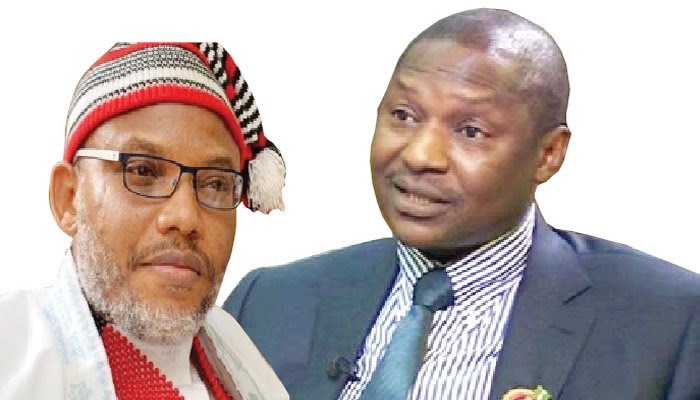
•Nnamdi Kanu (left) and AGF Abubakar Malami

The arrest and repatriation of Nnamdi Kanu, leader of the proscribed Indigenous People of Biafra IPOB, was for obvious reasons the biggest story of last week. And it will continue to dominate the media space especially given sketchy information on the circumstance, place of arrest and the agenda of the dramatis personae.
Attorney-General of the Federation, Abubakar Malami opened the gate for all manner of speculations while breaking the news when he said Kanu was ‘intercepted’ by security and intelligence agencies in collaboration with their foreign counterparts without details on where and how it happened. Not unexpectedly, the social media went into frenzy with all manner of speculations and reports purportedly issued by some organizations on the development. The nature of those conjectures and the indecent haste they emerged on the public scene could not but raise doubts as to who was behind them and what they were intended to achieve.
One of those stories claimed Kanu was lured by a lady and arrested in a hotel room. Coming in the wake of the murder of the Chief Executive Officer of Super TV Michael Ataga, the purport of that association was not hidden. But one thing that gave out that story was that it hit the media space even before many people got to know of the arrest proper. So when were the stories written and where did the faceless authors get their facts?
The other was a statement purportedly issued by Ohaneze Ndigbo on the same arrest. The issues traded as well as the timing also raised doubts as to whether that body could react in such a hurry when the situation was still hazy. And to compound the situation, the purported statement was neither attributed to any of those authorized to speak on behalf of the Ohaneze nor was the source disclosed. They all struck as fake news designed to achieve some pre-determined agenda.
It was not surprising that some other national media organizations came out the next day with reports that Kanu was arrested when he went to solicit support from some foreign countries. There was also the dimension that he went to collect funds promised him by an unnamed group for the prosecution of the self-determination agenda of the IPOB. But all these remain within the realm of conjecture in the face of the reluctance or refusal by the federal government to make such details public.
Information minister, Lai Mohammed at a press conference last Thursday, made references to raging speculations on how Kanu was arrested and the country of the arrest but still left the matter hanging. The government prefers to hold the circumstances of that interception to its chest apparently to avoid stirring up another round of controversy. But the minister made it clear that security and intelligence agencies had been on the trail of the IPOB leader for more than two years.
That says something about some of the speculations. One thing that remains certain however is that Kanu was arrested outside the United Kingdom. It is also certain that he was captured in circumstances that were rather unconventional.
That however, is beside the point. The issue is what to make of the arrest now Kanu is within the custody of the Nigerian government. Already, the government is beating its chest celebrating the success of the arrest. Even as Mohammed failed to avail the county with details of the arrest, he was quick to describe it as “one of the most classic operations of its type in the world” That may as well be. He also said there would be fair trial for the IPOB leader.
In the weeks ahead, we expect a long drawn legal battle as the government moves to prove beyond reasonable doubt many of the weighty allegations levied against the suspect. The trial which is expected to be open is bound to be very revealing and emotional given the issues in contention. And in an issue of this nature, the options are clear. It is either Kanu is convicted on some or all of the charges and sentenced or he is freed on all of them and set free.

The judicial process will determine all the allegations against the IPOB leader and deliver judgment on all of them. That is in line with the statutory duties of the judiciary. It also goes with the assumption that diligent prosecution and conclusion of the case constitutes both the necessary and sufficient conditions for a lasting closure to all the issues to the IPOB agitation.
The latter does not quite add up because it rests on the assumption that systemic inequity which fuels the agitation for self-determination in that part of the country is all about Kanu and the offences he allegedly committed. And his arrest, trial and possible sentence will see an end to the agitation. That is an oversimplification of a very complex issue. Not with the large following he has both outside and within the country. Not with the substance of some of his messages that strike a common chord with the existential realities of those it was meant for.
In verity, his language of discourse, sometimes laden with insults and abuses may have alienated him from some segments of the Nigerian population. He may also strike as a bad messenger. But aspects of his message find great appeal on those they were intended for because of the systemic dysfunctions constantly assailing this country. That message will continue to find audience as long as our leaders exploit the imperfections of our federal order to serve interests of parochial and clannish hue.
The clamor for justice, equity, a common sense of belonging and a governance framework that enables all citizens to realize their full potentials have nothing to do with the fate of Kanu and it is not tied to it. The solution lies in honest and realistic resolution of all issues that overtime accentuate centrifugal tendencies. Even then, the proscribed IPOB is just one out of the groups on the same agenda. Kanu may be commanding a larger following but he is by no means, the character that raised consciousness on the suffocating systemic injustice that serve as the oxygen for the agitations.
Ralph Uwazuruike that originally founded the Movement for the Actualization of the Sovereign State of Biafra MASSOB has since been edged out of the organization. He now leads the Biafra Independent Movement BIM. There is also Biafra Zionist Movement BZM led by Benjamin Onwuka that was involved in a foiled attempt to hoist their flag and seize the Enugu state Government. Unlike the IPOB, these three other groups are not under proscription. Sadly, in the military campaigns against the IPOB in the south east for alleged attacks on government facilities and killing of security personnel, that reality was not factored in. The attendant stigmatization and profiling reduced every Igbo especially the youth to potential IPOB members. With that mindset, allegations of extra-judicial killings, detention, incarceration and sundry rights abuses were freely traded.
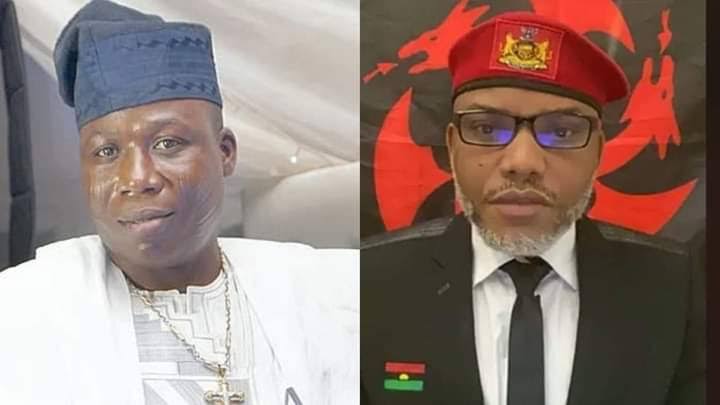
The fate of Kanu cannot offer solutions to the rising agitations for self-determination either in the south east or across the country. He is not the only arrowhead of such campaigns either in the south east or the south west that has more than 24 of such groups according to Lagos state police commissioner of police, Hakeem Odumosu. Neither has the arrest of Kanu stopped the group from agitations and showing solidarity with the O’odua self-determination groups in the current travails of one of their leaders, Sunday Igboho.
The judicial angle to Kanu’s case is relevant. But more relevant and more enduring is the political dimension to issues that propel groups to lose confidence in the capacity of the federal order to serve their collective interests. It should be of utmost concern that more than 60 after independence, primordial units are still in ferocious competition with the central authority for the loyalty of the citizens.
The thing to do is to engage the constituents and find lasting solutions to the challenges that erected a wedge on the country’s road to constructing a just and equitable federal order. Engage the agitators and the nationalities to move the country forward. Paul Robeson comes handy when he said “the answer to injustice is not to silence the critic but to end the injustice”

Igboho & Our Jounalists in Eye of the storm

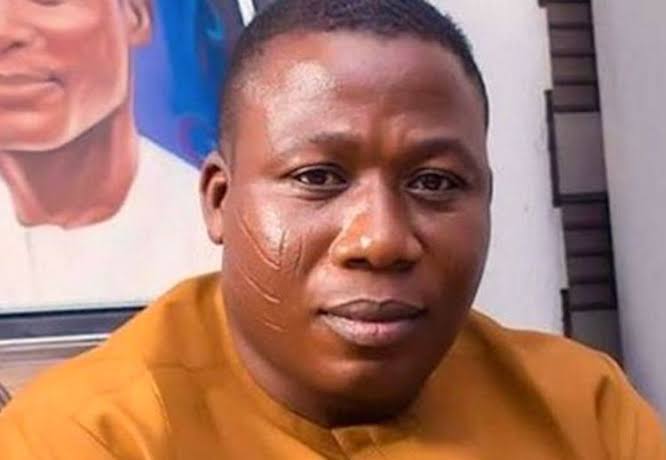
Sunday Igboho

. . . Gadding between Cobweb Laws and gliding into Dictatorship

By Tunji Ajayi

I still hold on tenaciously to my view as averred in “Of Journalists and Their Wives” (Nigerian Tribune, March 22, 2005) I plead for an excerpt: “I have always felt that those who deserve pity most, especially in this country of oddities called Nigeria, are journalists’ wives. Yes, they deserve our pity. And if you ask me if I would ever give my daughter’s hand to a journalist on the altar, I will conveniently say no without blinking an eye. Though, I developed deep passion for journalism and creative writing right from my childhood days and I wonder if I know how to do any other thing better than writing. Thus, I am not oblivious of what efforts it takes to be a writer or a journalist . . . . Like every journalist who has two main albatrosses to contend with; my case is no exception. The first was the psychological head pain (not mere headache) which all journalists often suffer, albeit in silence. Yes, journalists and writers often suffer in deep silence. Until a journalist sits down quietly in the confine of his room to pen down on the paper his variegated ideas, thoughts and feelings, his psychological head pain does not subside. He goes about with pen and pieces of paper in his pocket to scribble down ideas and thoughts as they emerge in his ubiquitous mind, lest amnesia drift them away before they are transmuted into newspaper stories.”

“On the other hand, the asphyxiating conditions in his environment, especially in a strange country like Nigeria, often mutilate his psyche, dehumanize his person, pummel his thoughts, thus forcing him to become disconcerted, and burning with ideas. This consequently often compels him to unburden his troubled mind by ‘offloading’ his worries in the form of writing and writing almost on daily basis for his audience. The demands of his job and his personal reservations often make his darling wife vulnerable to a world of loneliness.”

Yes! The suffocating conditions of Nigeria are yet to subside even 16 years after the piece was written. The conditions get worse by the day. And so, in a bid to perform the sacred duties of “surveying the environment; correcting parts of the environment; and transmitting culture”, as postulated by the erudite communication theorist, Harold Lasswell; a Nigerian journalist is faced with a choice between staying and enjoying his family life in his comfort zone, or performing his sacred duties of “nosing for news” and keeping abreast of contemporary issues in his environment to inform, educate, entertain and titillate his audience. Indeed, when a nation is embroiled in perennial social, economic and political problems like ours, its media and the journalists suffer head pains daily; far worse than headaches. A little more excerpt from the Nigerian Tribune piece to buttress my viewpoint further: “I appreciated the problems confronting the journalist’s wife more when a colleague of mine moved into a vacant apartment upstairs in our building. No night ever passed without hearing the stampede and the noise from the newly-wedded couple engaging in physical combat. And each time we the neighbors walked in to help settle the quarrel, we often asked the reason for their actions. But half-clad in their cover clothes tied to their waists, the quarrelsome couple quite often would merely stare at us while panting profusely, struggling to recuperate.

The night quibbling continued for several months, until one day when I reasoned that perhaps they would prefer disclosure of their problems to me in privacy. Thus, I went into their apartment and quickly shut the door behind me, apparently to prevent other professional peace-makers from gaining entry. I demanded to know why they so much developed notoriety for night quibbling and petty scuffling which always disturbed the hitherto peaceful and serene state of the neighborhood. The man, this time, summoned up his manly courage: . . . “She always turned recluse; merely moving up and down the apartment, hissing profusely on my head while writing my news-stories and struggling to meet the deadline.” The visibly annoyed and irritated husband complained; looking more belligerent. But how does that breed so serious regular night fights, one may wonder! I refused to be hoodwinked. This time, the aggrieved wife quickly interjected, while stammering in a croaky and quaking voice: “. . . em . . . em . . . em . . . Your friend hardly tou… tou… tou… touches me… … …” If a word should be enough for the wise, anyone should be able to fill up the wide gap of unspoken words! I then understood the reason for their regular night quarrels. That is one of the ordeals of the journalist’s wife. Like every woman, she needed love, commitment and undivided attention from her husband; whose daily excruciating tasks and tough schedules hardly permitted him to shower on a newly wedded woman. The husband thus derelicted in giving much-expected deep love, which often strengthens the bond of marital union. Yes. We should all pity the journalist’s wife who is engaged to an ever-busy man fully committed to the dictate of his sacred duties, all in order to make his society a better place for all. That explains why most journalists and writers’ wives hardly wear true smiles; but hollow and artificial mien.”

Ask our journalists’ wives whether they have enough attention from their husbands in the present Nigeria scenario, and they tell you sorry stories of their woes. What news to report without offending an irascible government that is now hurriedly introducing bills under the guise of regulating social media and media practice for improved performance is another issue. In Nigeria of today, each day comes with its own flurry of awry and bizarre news stories. Genocide in large scale . . . Attacks on military barracks by bandits with unbridled impudence . . . Kidnap of travelers on the roads and citizens in their homes . . . Kidnap of students in their hostels and campuses. . . Kidnap inside Churches and Mosques . . . Armed banditry on farmlands . . . Twitter suspension . . . Campaign for cannabis growing etc. On a radio program recently, I had to plead for help from scholars to tell me the definition of a failed state, since I heard our government’s spokespersons arguing that it is an exaggeration to describe Nigeria as a failed state. What really is a failed state? I know an interregnum is a period during which a nation has no ruler and which hardly occurs in any nation’s history, unless there is “a force majeure”, viz; natural calamities over which a nation has no control, otherwise called “acts of God”. It is often a situation when a nation becomes a wild jungle where dastardly acts are committed with impunity; just like the flurry of disasters currently engulfing a hitherto peaceful country called Nigeria, and threatening to put it in total doldrums. Unfortunately, most politicians with their intrigues and passion for pleasure without conscience believe only in dangerous politicking. In stating the seven blunders that often plague a nation into disaster, the great astute politician and statesman Mahatma Gandhi mentioned pleasure without conscience, and politics without principles as key factors.

In “Igboho’s Unbridled Altruism – Filling The Void in Lethargic Governance” (Ohio Wesleyan University Press, January 29, 2021), I argued that Igboho’s narrative emerged in our history and political lexicon due to government’s lethargy in performing her sacred responsibilities of provision of security and welfare for the people. Ditto for many other non-state actors agitating and demonstrating on the streets due to lack of security provision and social justice for them and their people.

Whereas there is no security anywhere in the country any longer, the government’s sacred duty to protect lives of citizens is a constitutional responsibility as sworn to on oath by the executive president and commander in chief of the armed forces. Indeed, security provision is the whole essence of the government in any nation; otherwise the society becomes a wild jungle. To prevent this, the government has an incontrovertible right, full responsibility and unfettered power to apprehend any suspected person or a group engaging in any act of lawlessness or suspected to perpetrate lawlessness in the country no matter how highly placed. The story of Igboho’s emergence on our political landscape needs no recap again. But it suffices to say that he came to fill a void in a sleeping and lethargic governance.

Call Sunday Igboho any name, many will not bother. But one fact is clear. Many were being killed on their farms, on the streets, and inside their homes with recklessness. Women were being maimed and raped by AK-47 gun-toting herdsmen. Huge ransoms were being eked out by kidnappers from hapless and helpless citizens on daily basis. Sunday Igboho could no longer bear the endless vacillation and subterfuge often encapsulated in “we are on top of the situation” suffocating cliché from the government; while his kinsmen are being slaughtered on the streets on daily basis. Consequently, Igboho and his supporters abandoned their comfort zones and went into the thick bush and the secret closets to drive out the menace of herdsmen to stop the harassment and killings, while the police and government security agencies looked sideways engaging in their quixotic antics of vain promises. Like the Roman Emperor, Marcus Aurelius Antoninus said in his Meditations: “A wrongdoer is often a man who has left something undone; and not always one who has done something.” If the government that swore an oath to provide security for the people continually, but consistently failed to live up to the oath of office, what then prevents individuals to secure their lives and properties? Why does the society even have to put their hopes and succor on the shoulders of the society’s Sunday Igbohos, Nnamdi Kanus, Asari Dokubos, Omoyele Sowores, Tompolos, et al.? Why does a nation have so much a horde of separatist agitators? Indeed, the European Union in 2017 through her Ambassador to Nigeria, Mr. Ketil Karlson pointedly advised Nigerian government that “without inclusive growth and opportunities, separatist agitations will continue.” He also advocated for “equal opportunities for all persons.” This remains an incontrovertible fact. Why do we see the emergence of IPOB, Biafra, Oduduwa Republic agitators etc.? Where people cohabit, there should be polarity of opinions. And where there is polarity of opinions, there should be agitations for better actualization of dreams and values. Like Albert Camus, the French philosopher and novelist once wrote in “The Rebel”: “Absolute freedom mocks at justice.” But Camus quickly added: “Absolute justice denies freedom.” Consequently, any nation without her own rebels with diverse opinions and thinking may never grow.

Since Igboho picked up the gauntlets, his properties have been attacked twice – first time it was torched; while he was almost physically mauled down on the Lagos-Ibadan expressway by “unknown gun men”. Where laws go numb, tyranny reigns. Light arms have found ways into our society and are being freely used by vandals to maim and kill the innocent citizens while the government only laments and appears prostrate. Like the Roman statesman, Marcus Tullius Cicero would say: “Laws are dumb in the midst of arms.” The first human law is self protection. Again at the wee hours of July 1, 2021 around 1:34 a.m., Igboho’s Residence in Ibadan was reportedly raided by the joint team of security operatives based on the intelligence report by the DSS that he had allegedly stockpiled arms in the property. The team reportedly came under heavy gunfire by nine men, suspected to be Igboho’s guards, during which time two of his guards were reportedly gunned down while the rest were subdued and arrested.

However, while the speed at which the DSS carried out their duties apparently shows their capacity to respond to national affairs; it is noteworthy that herdsmen, bandits, kidnappers still go about their nefarious activities till today without being apprehended. Where are state security operatives when kidnappers with guns and sophisticated ammunitions go into school hostels and kidnap innocent students almost on weekly basis? Like the DSS did on Sunday Igboho, how many non-state actors’ houses have been so raided especially in the northern part of the country and apprehended till now?

Here lies another more worrisome jigsaw puzzle. When a vandal uses a reputable person’s name consistently to commit crimes; and that reputable person keeps silent without acting decisively to save his personal reputation, it is assumed in law that the supposedly “reputable” person is “vicariously liable” and culpable enough to suffer same punishment for the crime committed by such vandal; having been reasonably seen to be done on his behalf. If the argument is valid, it is disturbing to see that the kidnappers, bandits and Boko Haram insurgents and the Federal government’s official security details now use the same uniform, especially the camouflage. Consequently, it becomes difficult to differentiate the latter from genuine government security officers on the road while in traffic or anywhere. With the spate of insecurity now everywhere in Nigeria, how does a person freely allow access into his home especially by 1:34 a.m. and take them for government security force, just because the visitors wear military camouflage? Why are there profuse calls now, even by many state governments on their citizens to protect themselves against unprovoked attacks if the government hadn’t become so incapacitated and had failed dismally in performing her sacred responsibilities? This is to the extent that few weeks back, the Minister of Defense, Major General Bashir Magashi (rtd.) was advocating that we all should go and learn the art of self defense now. One more jigsaw puzzle is this: If the first law is personal self defense in the face of unprovoked attack, and that for admissibility in law, a person whose life is being attacked has liberty to defend himself reasonably with equal measure as being used by his assailant. Thus, should a man being threatened and attacked with AK-47 rifles be deemed to have reasonably defended himself with a mere rod or a machete? Assuming the allegation of Igboho having arms in his house is true, what is expected to be found in the house of a man whose family is being consistently attacked by criminals and marauders with AK-47 rifles and other dangerous weapons while the government keeps promising to “handle the matters” and be “on top of the situation”? Do we expect to find Sticks, Table knives, and Tooth picks to defend a man being threatened with sophisticated arms? Should punishments for criminalities like banditry, human slaughtering, maiming, raping and kidnapping by some group of people in one part of a country be so tenuous or almost non-existent; while non-state agitators and those seeking justice and freedom in other parts of the country be utterly criminalized; hounded and threatened with severe punishments?

Borrowing from Francis Bacon, the English philosopher’s Apothegm; where a nation operates the laws that are like cobwebs, whereby only the small flies were caught and made to suffer severe punishments, while the great flies broke through and untouched; having peace in such a society may continue to be a mirage. As a nation sings a musical refrain for peace and unity, it is also axiomatic to chant the chorus of justice. Verbum Satis Sapienti

+COURTESY: Ohio Wesleyan University Press, USA.


*Tunji Ajayi, a creative writer, author, biographer and audiovisual documentary producer writes from LC-Studio Communications, Nigeria (+2348033203115, +2348162124412)

The NBA On Crush Igboho, Nnamdi Kanu And The Rule Of Law

By Prof. Babafemi A. Badejo

I had once expressed the view that the Nigerian Bar Association (NBA), an organization I am a member of, needs to do more in the struggle against corruption in Nigeria. I had posited an inverse relationship between the rule of law and corruption and expressed the view that the NBA was not doing enough in fighting corruption. http://yintabstrategyconsults.com/the-nba-corruption-and-the-rule-of-law/.

And now, the First Vice-President of the NBA recently made a statement that articulates a militaristic upholding of the Nigerian 1999 Constitution. https://thenigerialawyer.com/constitution-requires-buhari-to-crush-kanu-igboho-says-nba-1st-vice-president-aikpokpo-martins/. His constitutionalism overlooks the failure of the state to provide security as expected under that same constitution. The NBA First Vice-President by his oversight on constitutionalism makes the NBA be in cahoot with our beautiful Governor who reportedly sees kidnapping for ransome with killing, maiming and raping as collateral in the process, as “business” and superior to those asking for the division of Nigeria. So many issues are thrown up for consideration by the purported statement of the NBA’s First V-P.

Thanks for the statement by Olumide Akpata, the NBA President who recognized the fact that peaceful protests “do not deserve to be “crushed”. It equally points to the fact that the 1999 constitution is not cast in stone in as much as Nigeria remains a signatory to the UN Charter amongst others.

More importantly for me, the fact that the 1999 Constitution recognizes procedure for amendment puts the human beings in every epoch above Article 2 or any other Article since they can seek amendment. Elsewhere, I have articulated the realization of a confederal Nigeria as others want restructuring.

How many Constitutions has Nigeria had in the last 60 years of its existence. The Independence Constitution gave way to the Republican Constitution in response to political demands under a civilian government before the 1979, 1989 and 1999 Constitutions were foisted by military regimes. How can a people realise constitutional changes or change of constitutions if they cannot peacefully canvass for their objectives? It’s not a crime to peacefully canvass for constitutional changes with the objective of dividing Nigeria peacefully. Should a purportedly “democratic” government even headed by a military General not have pacific settlement approaches to popular demands for self-determination by many Nigerian nationalities?

I don’t want to join “my bandit” is better than yours types of arguments. Certainly, Sunday Adeyemo a.k.a Sunday Igboho is not a bandit or terrorist like the ones Sheikh Gumi has been romancing with as he presses for federalized ransomes to be budgeted beyond the current subsidies being paid to terrorists.

But even then, does Sunday Igboho deserve the type of multi-security apparatuses invasion that he faced last week for any reason when he has killed no one but only disarmed killer Herdsmen that the world has recognized as terrorists who were killing his relations? Should he be castrated or face extra-judicial killing or as NBA V-P says: “crushed” for calling for a peaceful rally in support of self-determination for a Yoruba nation? Is the overnight attack on Igboho the type of Nigeria that the NBA stands for? Are human lives important for the NBA and its human rights section that I believe the First Vice-President leads? Aside from properties allegedly destroyed, the FGN and Igboho are agreed that people were killed at Igboho’s residence during the failed attempt to arrest Sunday Adeyemo. Extrajudicial killings of citizens is now supported by the NBA? Are there procedures we, as members of the NBA, should stand for on arrests and searches of homes?

Should the brigandage in the whisking Nnamdi Kanu back to Nigeria be endorsed by the NBA? Are there procedures for extradition as opposed to rendition? Should the NBA dance in favour of violations of international law and still claim to the world that it exists to promote the rule of law?

The NBA has “promoting rule of law” as the cornerstone of its existence. It’s the raison d’etre. So, I disagree with the NBA President that the NBA First Vice-President has a personal capacity to express such militaristic modes of expression like “crush” citizens as if we are in a militocracy. Of course, he has a right to articulate his views as any other Nigerian but definitely not to expressly undermine the rule of law as a way to uphold the Constitution of Nigeria and he still remains the First Vice-President of the NBA.

The NBA should clearly stand up for the rule of law and ask its First Vice-President to leave office for his statement even if on his Facebook page. Statements on Facebook are public and different from dinner table talks. The NBA leadership owes all of us the duty of accountability and need to separate us from a First V-P who thinks and articulates the need to, in this day and age, “crush” citizens even before their days in Court. It is my hope that the NBA will stand up and not confirm that an organization gets the type of leadership it deserves.

Prof. Babafemi A. Badejo
Chrisland University, Abeokuta, Nigeria.

Prelude To My Riposte To Mr. Aikpokpo-Martins’ Advocacy To “Crush” All Agitations For Self-Determination In Nigeria.

By Sylvester Udemezue

I read a published commentary credited to Mr. Aikpokpo-Martins, 1st Vice President of the Nigerian Bar Association (NBA) and National Chairman of NBA’s Human Rights Committee, but who made it clear he was speaking in his personal (not official) capacity. I believe him that he spoke in his personal capacity and I urge all to learn to separate the office from the person, sometimes. As a Nigerian citizen, Mr. Aikpokpo-Martins’ freedom of expression is guaranteed by section 39 of the Constitution of the Federal Republic of Nigeria, 1999. George Washington said, “If freedom of speech is taken away, then dumb and silent we may be led, like sheep to the slaughter”. In his work, as expressed in the “Silence Dogood” Benjamin Franklin wrote, “Whoever would overthrow the liberty of a nation must begin by subduing the freeness of speech.” I may disagree with what Mr. Aikpokpo-Martins has said, but I will defend to death his right to say it.

Mr. Aikpokpo-Martins’ commentary as published on June 02, 2021, in the Thenigerialawyer and on June 03, 2021 in the Nation Newspapers, is titled, “Constitution Requires Buhari To Crush Kanu, Igboho, Says NBA 1st Vice President, Aikpokpo-Martins”.

In the article, Mr. Aikpokpo-Martins argued, among other things, that (1). There’s is no room under Nigerian law for agitations for Self-Determination, and that (2). the Nigerian President who swore to defend the Nigerian Constitution is required by the same Constitution to “crush” all and any such agitations for Self-Determination.

With due respect, Mr. Aikpokpo-Martins’ said opinion has NO support in the extant law, both of Nigeria and Internationally.
First, agitations for Self-Determination are allowed under Nigerian law (see article 20, African Charter on Human and People’s Rights (Ratification and Enforcement) Act Cap A9, LFN, 2004, and even the Constitution (as I shall show shorty in my riposte to my Learned friend)
Further, contrary to Mr. Aikpokpo-Martins’ erroneous view, the Nigerian Constitution does not encourage Presidential “Crushing” of Agitations for Self-Determination.

For the avoidance of doubts, my position recognizes a clear difference between genuine agitations for Self-Determination and perpetration of criminality under the guise of such agitation. It befuddles reasonable imagination, benumbs civilized senses and beclouds sound legal principles and reasoning, for my brother and great learned friend, Mr. Aikpokpo-Martins, to openly encourage the “crushing” of all promoters of agitations for Self-Determination, without making efforts to distinguish the latter from the former.

Mr Aikpokpo-Martins’ published opinion deserves a well-reasoned rejoinder to put things in proper perspectives; yet, it’s important to remind my friend that his use of “crush” which is itself unconstitutional, encourages criminality and lawlessness in a constitutional democratic experimentation said to be founded on rule of law; any action, whether by the president or by such agitators, that is not authorized by the constitution is either lawless or criminal. There’s no aspect of the Constitution that gives a blanket stamp of support to any Presidential “crushing” of such agitators.

Deployment of lawlessness (which “crush” implies) to deal with agitations for Self-Determination is itself criminal, not being legally justifiable, unless the agitators are waging a war against the state or are trying to topple existing state institutions by lawless means. My brother’s opinion loses its logical flavour when he gave a blanket endorsement to presidential “crushing” of all agitations for Self-Determination, without any distinction.

Anyway, I can see why the respected learned friend easily fell into such error; he believes, quite erroneously, that the mere fact of agitating for Self-Determination is inherently unconstitutional, being, as he said (also erroneously), inconsistent with the aspect of the constitution that describes Nigeria as an “indivisible country”.

I wholeheartedly support the unity of Nigeria; this has been my position. But, talking law, with due respect, who told Mr. Aikpokpo-Martins that Nigeria can’t be legally divided if it choses to so do? Such an argument (as advanced by Mr. Aikpokpo-Martins) shouldn’t come from a lawyer because there’s in the Constitution, a section 9 that spells out processes and procedures for Constitution amendment. An amendment could be for anything — including to divide Nigeria, if the constituents want that. What’s unconstitutional in achieving a division through such constitutional means? What’s unconstitutional if such a constitutional amendment process is informed by agitations for self determination? How then does it make any sense for anyone to argue that agitations (all agitations without any exception) for self-determination are unconstitutional and accordingly deserving of presidential “crushing”?

If all manner of agitations for Self-Determination are unconstitutional, and deserving of the “crush” attitude, then, likewise, I respectfully submit, all calls, suggestions, and propositions for an amendment to the constitution to include in the constitution, anything not previously therein-contained is illegal, unconstitutional and no less eligible to be crushed.

Finally, I have questions for my friend: Presidents swear to defend the constitution, no doubt!

Apart from fighting any deviation from the constitution, a second aspect of “defending the constitution” is (and Mr Aikpokpo-Martins failed to address this aspect) for presidents to ensure their own (Presidential) actions are strictly in tune with provisions of the constitution. Now, a question, how does a president get crushed, or, should a president get crushed, where his actions go against the constitution? Another question, could these presidents (by all their actions that we see) be said to be truly defending the constitution? Or, put differently, do they defend the constitution in the interest of all Nigerians without any discrimination or segregation? Why didn’t Mr. Aikpokpo-Martins look at this aspect of defending the constitution? Or are Presidents above the law?

In summary, Mr. Aikpokpo-Martins’ commentary failed to interrogate material issues; this, I suggest, accounts for the fundamental error Into which his opinion fell. Genuine agitations for Self-Determination (until it engages in criminality) is in the same category as calls to amend the constitution. If my learned friend had looked deeper, and investigated further (he should have engaged in diligent research which is the hallmark of lawyering), he would have seen there is no difference at all, between the two.

A lawyer, in advancing public legal analytical opinions, ought to be holistic, broadbased and disinterested, and not advancing legal arguments as if (s)he is issuing/making political statements calculated to serve or nourish vested interests or targeted at promoting inequity, illegality and unconstitutionality, or to cover up or justify victimization, oppression and suppression in a country where equity, fairness, equality, freedom and oneness ought to be on the front seat. A lawyer’s argument should be based on law, not founded upon prejudicial predilections. With due respect, Mr. Aikpokpo-Martins’ opinion is an expression of prejudices, merely dressed up to parade itself as a legal opinion. There’s need to respond to Mr. Aikpokpo-Martins, in order to set the law straight and correct Mr Aikpokpo-Martins’ gravely flawed, fundamentally unfounded and obviously unconstitutional “legal” opinion. Arguments like such advanced by my Learned friend, are among reasons why many a modern-era thinkers classify Nigeria as backward-looking, retrogressive-thinking, which shouldn’t be!
My reaction to Mr. Aikpokpo-Martins which comes in four parts, is titled, “Meaning And Legality and Solution to Agitations For Self-Determination In Nigeria Amid Mr. Aikpokpo-Martins’ “Crush” Advocacy”

(1) Part 1 (introduction) discusses the meaning of Self-Determination and Foundation of Self-Determination in Nigerian and International Law. (2) Part 2 discusses constitutionality or otherwise, and dimensions of Self-Determination in Nigeria, as well as causes, symptoms and effects/implications of such agitations on the Nigerian Federation and it’s unity, stability and progress. (3) Part 3, while critically analyzing Mr. Aikpokpo-Martins’ Call on the Nigerian President to “Crush” all agitations/agitators for Self-Determination in Nigeria, discusses and recommends what I believe are reasonable, fair and legally justifiable ways of handling such agitations. (4) Part 4 is expository in nature, merely chronicling the historical dimensions of agitations for self-determination in Nigeria and why such agitations keep occurring and reoccurring. This final part suggests what Nigeria must do to permanently forestall or minimize such agitations and keep Nigeria united, stable and prospering.

Watch out for part 1 which is introductory.

Respectfully,
Sylvester Udemezue
(UDEMS)

Book On The Dynamics of Mediation, Negotiation & Arbitration In A Globalized World [Order Your Copy]

Written By Professor C.J. Amasike, Ph.D; F.DRI; F.CIArb; M.ADRg; FIPA; FCTI

Credit:thenigerialawyer

Igboho, Kanu, Kimathi and betrayals on the Kenyan soil, By Festus Adedayo

•Sunday Igboho and Nnamdi Kanu

Buhari is deepening a typecast that he is creating an amoral and self-centred leadership.

Most likely because of the international implications of incriminating Kenya again, judging by its ignoble pedigree as a land of serial betrayals, the Buhari government has kept sealed lips on the identity of the African nation that played Judas in the Kanu roulette. Nor does it want to go into details of the gangster operation that landed the Biafran struggle activist on Nigerian soil.

The allegation that Kenya was where Nnamdi Kanu, leader of the Indigenous People of Biafra (IPOB) was arrested and extradited to Nigeria had better not be true. Kenya? While Nigeria has stubbornly but ostensibly hidden the identity of its accomplice nation in the crude and gangsterish abduction saga, the United Kingdom, whose nationality Kanu holds, through Dean Hurlock, Head of Communications at the British High Commission in Nigeria, swiftly denied that the event took place on its soil.

Kenya’s High Commissioner, Wilfred Machage, attempted to go the U.K. route by disclaiming his country’s involvement in the messy saga. Kanu’s brother, Emmanuel, however put a lie to the Kenyan government’s claim. “Whilst visiting Kenya, Nnamdi Kanu was detained and handed over to the Nigerian authorities who then flew him to Nigeria,” he has said matter-of-factly. Kenya’s Director General of Immigration Services, Alexander Muteshi, further problematised the mess. Dismissing claims of Kenya’s complicity, he hinted that Kanu might probably have entered the country illegally. “I can’t know that,” Muteshi was quoted to have said by the Kenyan Nation newspaper, maintaining that, “I am not in the picture of his presence in the country. I am only able to tell if somebody entered the country legally.” Did Kenya use Kanu’s incognito entry into the country as alibi to trade him away to his assailants?

The Kenyan chapter of the Human Rights Watch (HRW) also pointed at the Kenyan authorities’ penchant for the flagrant violation of the international rights of asylum seekers on the soil of Kenya and the aiding of their illegal deportation in circumstances that are dangerous and life-threatening. “Kenyan authorities have a responsibility for what happens within their borders, and should investigate the possibility of complicity of its officials in this flagrant disregard for due process,” Otsieno Namwaya, HRW’s East African Director said.

If indeed Kenya, a country which got its independence from Britain on December 12, 1963, mainly due to the revolutionary activities of Kimathi wa Waciuri, better known as Dedan Kimathi Waciuri, could offer to betray another ‘freedom fighter’ on an African soil, then it rekindles an old narrative of betrayal, which began 63 years ago. After Kimathi, Kenya’s notoriety for playing Judas has deepened tremendously. It is notorious for disregarding international laws on extradition, clandestinely betraying harangued persons who run to its land for safety.

While the Kenyan government denied complicity, as it is doing in the present Kanu case, attention riveted on it as where the nephew of Fethullah Gulen, the exiled Turkey cleric, Selahaddin, was abducted and parceled to Turkey, in cahoots with Turkey’s National Intelligence Organisation (MIT). Accused of belonging to an outlawed organisation like Kanu’s IPOB, while Kenya denied colluding with Turkey for the dastardly act, Selahaddin’s wife, Serriye, a teacher in Kenya, said confidently that her husband, a Kenyan registered asylum seeker, who also held a permanent US residency, suddenly went missing on the streets of Nairobi on May 31, only to appear in handcuffs in Turkey.

Kimathi was one of the few brave Africans who dared to look the colonialists in the eyes, and who led an armed struggle against them in the 1950s. He just couldn’t stomach Britain’s colonial yoke on his Kikuyu people, and in standing against the British, Kimathi became precursor of the angst and anger of a Kanu, who also could not stand the long decades of injustice against his Igbo people. Perpetrated by a combination of the Hausa/Fulani and pliable minions in other parts of the country, the mantra of “no victor, no vanquished” after the Nigerian civil war was obviously a lame shibboleth aimed at hoodwinking unsuspecting fools.

Kimathi was labeled terrorist by the British colonial government. He joined and later led the Mau Mau movement, a ferociously militant Kikuyu, Embu and Meru army, which initially began as the Land and Freedom Army (KLFA). KLFA’s mission was to reclaim lands which British settlers had appropriated from indigenes without compensation. Like Kanu, from the moment his rebellion became public knowledge, an obsessive hunt was made to bring him to book. He however fled into the forest. With a bounty of £500 placed on his head, just like the N100 million placed on Kanu’s head, Kimathi lived in the forest for almost four years. Nevertheless, on October 21, 1956, a British colonial officer, lan Henderson, assisted by intelligence gathered from ex-Mau Mau fighters, tracked Kimathi to his hideout in the Tehu forest, shot him in the leg and Kimathi was eventually captured by Ndirangu Mau, a fellow Kenyan-born askari who fought on the side of Britain. Just as the Muhammadu Buhari government celebrates the capture of Kanu like a titivated little urchin, so did Britain do about Kimathi. Armed with the picture of an hitherto invincible Kimathi now lying prostrate on a stretcher with no cloth on, his heavily dreadlocked head packed like a wig, Britain mass-circulated leaflets of this picture, numbering over 120,000 copies, so as to demoralise fighters in the Mau Mau war. As Britain went tipsy with joy, the Kikuyu people were sad and livid.

Kimathi was subsequently charged with the possession of a .38 assault gun and a court of an all-black jury of Kenyans, presided over by Justice O’Connor, sentenced him to death. He was subsequently hung in the early hours of February 18, 1957 at the Kamiti Maximum Security Prison, aged 37. Kimathi was buried in an unmarked grave concealed for 62 years thereafter, until October 25, 2019. His last word to his wife, Mukami, was, “I have no doubt in my mind that the British are determined to execute me. I have committed no crime. My only crime is that I am a Kenyan revolutionary who led a liberation army… Now If I must leave you and my family I have nothing to regret about. My blood will water the tree of Independence.”

In 1999, Nairobi similarly delivered then 50-year old Abdullah Ocalan, a Kurdish political prisoner, who founded the militant Kurdistan Workers Party (PKK) to the Turkish National Intelligence Agency (MIT). Turkey soon sentenced him to death.

By abducting Kanu, most likely the Umaru Dikko-way, Buhari not only went into his Mengistu Haile Mariam pouch to bring out an old trick he had once deployed in 1984. His legmen have been rationalising it on the social media, citing despotic Paul Kagame’s cavalier acknowledgment on a live Rwanda state television call-in programme that his government lured home from Dubai his major critic, Paul Rusesabagina, insinuating that it was a “flawless” operation.

So, as it did to Kimathi, Ocalan and Selahaddin Gulen, Kenya has again parceled Kanu to the Nigerian lions. Separated by decades in time, the personalities involved and the climes of their operations, Kimathi and Kanu were bonded by what they believed was the struggle for their people. But there has been the character flaw of their being arbitrary in dealing with the same people they claim to protect. While Kanu unconscionably reeled out filthy curses and gutter gruff, history says Kimathi crudely beat his people while wielding his notorious double-barreled shotgun. Initially misled into believing that his stay-at-home order in Igboland in May failed in Enugu, Kanu had raved and cursed ndi Enugu, saying he was not surprised at their sissy action, as many Enugu sons and daughters, according to him, were sired by accursed Hausa soldiers during the Civil War! Kimathi too, renowned for his crudity, compelled Kikuyu fighters to swear to oaths of allegiance and solidarity to his movement. You broke the oath to your sorrow.

Most likely because of the international implications of incriminating Kenya again, judging by its ignoble pedigree as a land of serial betrayals, the Buhari government has kept sealed lips on the identity of the African nation that played Judas in the Kanu roulette. Nor does it want to go into details of the gangster operation that landed the Biafran struggle activist on Nigerian soil. Doing so would have typecast, as a familiar route, Buhari’s impatience with civility.

Kanu’s abduction is apparently a successful rehashing of a failed old script. On a summer day in London, 1984, Buhari’s military regime had utilised same method. In dalliance with an alleged Israeli former Mossad agent, Alexander Barak, a plot to kidnap and repatriate exiled Shehu Shagari’s Minister of Transport, Umaru Dikko, from his Bayswater home to Nigeria was hatched. The despotic military government had accused Dikko of embezzling £625 million of Nigerian money. Abducted, drugged and handcuffed by Major Mohammed Yusufu, a Nigerian intelligence officer, and two Israelis, Felix Abitbol and Dr Lev-Arie Shapiro, Dikko was crated in a transit van and taken to the Stansted airport as a cargo designated as diplomatic, making it ordinarily immune to being searched. At Stansted, Dikko’s abductors awaited a Nigerian Airways plane to ferry the then unconscious ex-minister back to Nigeria. The abduction was however foiled by a young customs officer named Charles David Morrow, who was spurred into action by an alarm raised by Dikko’s secretary, who had witnessed the Bayswater kidnap from a window pane. While U.K. jailed the three Israelis, world attention turned to Nigeria’s military authorities as being infernally despotic, necessitating the breaking of diplomatic relations between Nigeria and the U.K.

Although there is no account of a deep relationship between him and any Igbo since the civil war, archivists refer to Buhari’s 2003 and 2007 presidential election dalliance with Chuba Okadigbo and Ume Ezeoke, both hailing from Oyi and Nnewi in Anambra State respectively, as instances of his hand of fellowship across the Niger. Buhari has, however, never hidden his disdain for the Igbo – the five per cent people. From his venal vituperations against them since he became president in 2015 to the scant appointments he gave them, it may not be very difficult to see how he rates these people.

By abducting Kanu, most likely the Umaru Dikko-way, Buhari not only went into his Mengistu Haile Mariam pouch to bring out an old trick he had once deployed in 1984. His legmen have been rationalising it on the social media, citing despotic Paul Kagame’s cavalier acknowledgment on a live Rwanda state television call-in programme that his government lured home from Dubai his major critic, Paul Rusesabagina, insinuating that it was a “flawless” operation. Rusesabagina’s sin, like Kanu’s, was his headship of the opposition Rwanda Movement for Democratic Change, a coalition with an armed wing called the National Liberation Front, which Kagame, a notorious despot, has variously accused of attacking Rwanda.

Kagame said, “There was no kidnap. He got here on the basis of what he believed and wanted to do. It was actually flawless. It’s like if you fed somebody with a false story that fits well in his narrative of what he wants to be and he follows it and then finds himself in a place like that.” In another interview being circulated, Kagame had asked his interviewer what was wrong in intercepting an outlaw and bringing him to face the law at home. Rusesabagina attracted the kudos of the world through the narrative of how he saved 1,268 Rwandans during the 1994 genocide. For this bravery, he was given a Presidential Medal of Freedom by President George W. Bush in 2005. After living in Rwanda for two years after the genocide, he escaped to Tanzania with the help of the Rwandan Patriotic Front and in 1996, applied for asylum in Belgium and migrated to Brussels with his family. His claim was that his life was being threatened. Not long after, he moved over to San Antonio, in Texas, United States of America. Arriving in Dubai on a flight from Chicago, like Kanu, Rusesabagina suddenly vamoosed shortly after his arrival in the UAE and appeared a few days later in Kigali, manacled and now being charged for terrorism, arson and murder. But, how come Buhari’s lickspittles, who crave Kagame’s despotism, don’t seek to clone his developmental revolution in Rwanda?

We are yet to see the Buhari fawners cite the Belarus example as justification for his government’s interception of Kanu. Belarus’ authoritarian president, Alexander Lukashenko, had personally ordered an MiG-29 fighter jet to accompany a Ryanair plane that had opposition leader Raman Pratasevich on board as he traveled from Athens, Greece, to Vilnius, Lithuania, to the Minsk airport. Claiming that there was a bomb threat on the plane, Lukashenko, in what was seen as an hijack operation by government, had Pratasevich arrested at the airport, upon landing. Pratasevich had fled to Poland and set up the Telegram messaging app called Nexta channel, with which major protests against Lukashenko was organised.

I am not Igbo and so have nothing to do with and gain from Kanu’s Biafran ideology. Sunday Igboho’s ways are not mine too. But when your neighbour repeatedly inserts his forefinger into your mouth, you must dig your teeth into it. Khalifa Nasir el-Rufai was on a BBC interview last week. He said of Kanu’s travails and why Boko Haram and bandits won’t get his treatment: “I was very happy (at the arrest) because, first he jumped bail, jeopardising his sureties… challenges the sovereignty and the authority of a state and incites violence; he refers to his own country as a zoo. This should be a message to all these separatists challenging the authority of the Nigerian State to be very careful.”

One of the after-effects of Buhari’s deployment of gruff against the South-East and to harangue Sunday Igboho in the South-West, rather than dialoguing with the people, is that he is aggravating the problem of his perception as a hater of anyone not of his region and religion… Buhari mollycoddled Abubakar Shekau for years, until he was killed by ISWAP… These two, Janus faces of Buhari deepen a typecast that he is creating an amoral and self-centered leadership.

In El-Rufai’s pint-sized logic, IPOB is more dangerous to Nigeria than Boko Haram. “People are comparing apples to oranges. Nnamdi Kanu is the leader of IPOB, a proscribed organisation… Shekau was in hiding and for the past 10 years and the military had been waging a war to get him. It is not like Shekau was in Saudi Arabia, sitting in one place, tweeting about the breakup of Nigeria or asking Boko Haram to go and kill Helen and Nasir el-Rufai… Regarding bandits, they are not centralised under one leadership. Who is the head of the bandits? Who is the equivalent of Nnamdi Kanu with banditry? Bandits are just collections of independent criminals. It is a business for them. It is not a case of Nigeria must break up.” Imagine! It is that same skewed, obtuse logic that has made Buhari to concentrate with hyper energy at mowing down a criminal organisation that has, comparatively, killed about 60 people, while he begs blood-thirsty terrorists who have murdered thousands of Nigerians, including soldiers.

The Nigerian government introduced a new word to the lexicon of international outlawry when Lai Mohammed, its Minister of Information, claimed that Kanu had been “intercepted.” What does it mean to be intercepted? By the rendering of lexicography, it must mean being disrupted from the normal channel of one’s flow. So, was Kanu disrupted from his flow by the Nigerian government? Mohammed even introduced a very porous and vain logic to the address, seeking empathy for the government’s vacuous course, by trying to implicate Kanu’s sartorial worth in his outlawry. Who asks Lai Mohammed the origin and worth of his agbada, apparently financed by the money of Nigerians? What does reference to Kanu’s sartorial makeup hope to achieve?

Bearing every imprimatur of extraordinary rendition, a grievous crime in international relations with huge diplomatic implications, both Nigeria and Kenya cannot be allowed to go scot free in this bilateral roguish abduction. There are existing structures of international diplomacy which sane countries of the world adopt in the extradition of fugitives. Twice under Buhari, violence and gruff have been deployed as answer to the deportation of fugitives.

The international community must stop the Nigerian state from its continued embarrassment to the international system. Kanu fled from Nigeria when, upon being granted bail by a competent Nigerian court, soldiers stormed his father’s house and killed people in the process. Only a mummy would wait for the soldiers to make a corpse of him. He fled for his life and in the process, became a fugitive. Nigeria cannot thus make itself impervious to questionability, a trend that most states of the world, including advanced democracies, are being subjected to. Citizens have to question and interrogate the state. When citizens thus interrogate the state, as Kanu did crudely, there are often two answers from runners of the state, either dialogue with them or deploy force in what is called a just war, which has to be fought according to the rules of international relations. Since the days of the Italian theorist, Antonio Gramsci, states have ceased to use coercion as the answer to interrogation by its citizens. When you deploy force, you escalate existing problems. The history of separatist agitations and insurgency, as shown by Boko Haram founder, Mohammed Yusuff, shows that the problems always fester. Buhari has shown that he is not a reconciliatory leader but one fascinated by manacles and the hubris of violence as recompense for infractions.

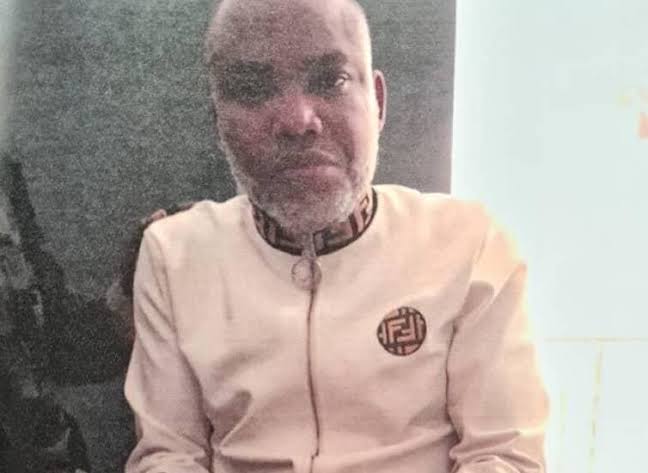
Nigeria’s latest disregard for international law is not about Kanu. It is about the sanity and sanctity of rules of law. Those who know have observed that upon being brought to court, Kanu looked drugged, wry and vacant, pointing at the possibility of violence having been administered on him, while being captured and crated to Nigeria. I personally cannot stand Kanu’s incivility but a despot who confessed to have morphed into a democrat cannot be allowed to swivel back into his vomit without sanction.

One of the after-effects of Buhari’s deployment of gruff against the South-East and to harangue Sunday Igboho in the South-West, rather than dialoguing with the people, is that he is aggravating the problem of his perception as a hater of anyone not of his region and religion. While he sent his agents to ransack, kill and violate Igboho’s house in Ibadan, soldiers were also out killing Igbo in the East, on one side. On the other side, bandits who kill hundreds in the North-West are busy taking selfies with governors and Buhari’s anointed amicus curiae, Sheikh Gumi. Buhari mollycoddled Abubakar Shekau for years, until he was killed by ISWAP. Buhari does not dialogue with anyone questioning the Nigerian state from the South. He is nevertheless not averse to discussing with bandits. These two, Janus faces of Buhari deepen a typecast that he is creating an amoral and self-centered leadership. He is also building a mob anthill, which will ensure that the disenchanted people of the West and those in the East would ultimately forge a common front of rebellion against him and the Nigerian state.

As Buhari is embroiled in all these, I want to remind him that if a petulant and impatient child angrily slaps the sword-leaf that the Yoruba call labe labe, he will provoke a gush of blood. Buhari is provoking a gush of blood with his recalcitrant fixation on routing Southern rebels and leaving out Northern malefactors. Abacha did worse than he is doing in slapping the labelabe multiple times, and today the goggled despot occupies the debris of world history.

Invariably, Buhari should help himself and all of us to have peace by promoting peace. His violence-for-violence policy can only metastasise the cancer of violence. Neither Kanu nor Igboho represents what we should or have always had as leaders. They are too limited mentally to be our prototype of leaders. Regrettably, both are busy filling the gullies dug in the South by Buhari’s erosion of quality leadership and his unjust promotion of his Fulani people at the expense of merit. If IPOB members were ten before Buhari’s obstinate fixation on militarily dissembling Biafran advocates, today, on account of his stiff-neckedness, IPOB believers must have risen to fifty, escalated by his unjust policies. Dialogue would have deflated their ranks to two. The tiime to de-escalate the tension is now.

•Festus Adedayo is an Ibadan-based journalist.

Reflections on the man Nnamdi Kanu, By Gloria Ogo

Nnamdi Kanu

Yesterday I announced that I would unveal my thoughts regarding the IPOB leader Nnamdi Kanu. Several people reached out, advising me to be neutral and steer clear of political discourse. They meant well for a young female writer with a reputation to protect, an image to project, and the care not to cause offense.

I almost yielded but changed my mind this morning.

The Igbos are the same people about whom I wrote my current published work, In Blood and War, a book set in the then troubled Biafra.

On principle, I consider it unethical to make money off retelling the struggle of this tribe, and in the same breath be silent about their same struggle.

It is beneath morality for a writer to choose to speak only when it favours him or her. To retreat to silence in order not to ‘taint’ reputation.

To speak on this particular issue, of the man called Nnamdi Kanu, does not tribalize me or my works of literature. Especially as this remains an age-long fear of most writers; the fear of offending, a fear of stepping on toes, of banishment by a displeased societal sect, and even possible ostracism.

I speak because the making of a villain or hero often depends on who tells the story. Representation matters, when perspective becomes the thin line between an activist or a terrorist.

WHO IS NNAMDI KANU?

Nnamdi Okwu Kanu is a Nigerian Biafra political activist, and leader of the Indigenous People of Biafra IPOB.

In a move to create an independent state for the people of old Eastern Region of Nigeria through an independent referendum, Kanu founded IPOB in 2014.

He began his activism for the freedom of Biafra as director of Radio Biafra in 2009, and anchor of Biafra awareness under Ralph Uwazuruike, leader of the Movement for the Actualisation of Sovereign State of Biafra (MASSOB).

NNAMDI on Referendum, and SECESSION

According to Article 2 of the nation’s constitution, Nigeria is one indivisible and indissoluble sovereign state to be known by the name of the ‘Federal Republic of Nigeria’.

Our law does not recognise the right of a state to break away from the union. The only way to legally grant such an option is through an amendment to the law.

Hence, Nnamdi Kanu’s call for a referendum.

Same constitution only addresses two scenarios where a referendum is recognised – state boundary adjustment and the recall of a member of the National Assembly.

Headstrong on this path, Nnamdi Kanu ran into trouble with the Nigerian government and was first arraigned over allegations of terrorism, money laundering, treason, others, on October 14, 2015.

Later granted bail in 2017, he fled Nigeria in September after the military invaded his home in Afara-Ukwu, near Umuahia, Abia State, in the southeast of Nigeria. A move that prompted the Nigerian government to secure a court order proscribing IPOB as a terrorist group.

Nnamdi Kanu’s whereabouts remained unknown until his recent arrest a few days ago. He and his co-defendant are currently facing treasonable felony charges at the Federal High Court in Abuja, Nigeria’s capital. He also faces charges on unlawful possession of firearms and management of an unlawful society. The presiding judge adjourned the case to July 26, 2021.

Last week, while parceling one of my books to a buyer, a young boy of about 20 years old was making a call beside me.

At the end of his call, I understood four things:

  1. He was negotiating to pay 200k to obtain a form that will identify him as a Niger Delta militant.
  2. This young man was not a militant.
  3. Incriminating himself and mortgaging his future through filling out such form would enable him get his share of the amnesty dished out by the Federal government monthly.
  4. Our government negotiates with terrorists.

Since the arrest of the IPOB leader, my feed has been agog with posts casting aspersions on his person. Of which majority are made by Igbos, falling over themselves in a frenzy to denounce Nnamdi Kanu.

Meanwhile, a regular Hausa man is yet to put aside his Suya trade, cast on ashes and put on sackcloth, and then come on social media to endlessly bemoan the menance of Boko Haram in the country.

My ear still itches, awaiting the day a regular Yoruba man would take a chill off a peppery dish to criticize Obj. for not being the messiah we had hoped for. No, he is their brother. They must not speak bad of him.

Neither are the Ijaws pausing the oil bunkering trade in the rivers long enough to come online and rant about distancing themselves from militancy in the Niger Delta region.

I am yet to see any of these tribes measure the size of their phallus by how hard they throw their kinsman under the bus.

But not your average Igbo man.

No. Not the average Igbo man with itchy fingers, who masturbates off lambasting Nnamdi. The Igbo man must belong. He must trend. It is fashionable.

The Igbos are a bit too extra on this table.

GUILTY OR NOT GUILTY?
————————————–

Still on the call for secession, on the 2nd of June 2021, the President of the Federal Republic of Nigeria made the below ‘heartwarming endearment’ to the Igbos on Twitter :

“Those of us in the fields for 30 months, who went through the war, will treat them in the language they understand.”

The above threat from the house of the presidency stinks of beating a child and asking him not to cry.

No one in their right mind departs a good home, one that is working.

Shouldn’t the real question then be . . . why do these people so badly want to stay apart from the rest of the nation?

First demonize a people, call their outcry terrorism, then their injustice becomes acceptable, their oppression becomes deserving.

Guilty or not guilty?

Nnamdi’s methodology may be rad, but his intentions are understandable. And for that, I will not throw him under the bus. Unbridled passion, passion without diplomacy, is all I see.

SOBER REFLECTIONS


In the words of Peter Tosh, everyone is crying out for peace and none for justice.

YOU MAY LIKE
Mgid
Mgid

Three Signs That A Stroke Is Near And There Are Heart Problems
Cardiovax

Stable Blood Pressure Till Old Age. Take 2 Minutes To Read
Cardiovax

If You Find Such Papillomas, Be Careful!
Detoxic

Everyone Who Suffers From Back Pain Read This
Arthrazex
I ponder in idle musings:

Whether Nnamdi is a terrorist, depends on what you mean by a terrorist. Yesterday it was Sowore. Then the youths at the Lekki tollgate. Today Nnamdi. Or could it be that this country only understands you better when you act mad?

On nitty-gritty, we might have become a nation that picks and chooses the brand of terrorists deserving of amnesty. Perhaps the class with guns and doing the most harm are more deserving on the VIP list. That is the only way the massacre of the armless IPOB youths can make sense.

One day, in a saner clime abounding in freedom of speech, I will laud the beautiful corruption of a beloved country called Nigeria

Reflections on the man Nnamdi Kanu; By Chimamanda Ngozi Adichie

Yesterday I announced that I would unveal my thoughts regarding the IPOB leader Nnamdi Kanu. Several people reached out, advising me to be neutral and steer clear of political discourse. They meant well for a young female writer with a reputation to protect, an image to project, and the care not to cause offense.

I almost yielded but changed my mind this morning.

The Igbos are the same people about whom I wrote my current published work, In Blood and War, a book set in the then troubled Biafra.

On principle, I consider it unethical to make money off retelling the struggle of this tribe, and in the same breath be silent about their same struggle.

It is beneath morality for a writer to choose to speak only when it favours him or her. To retreat to silence in order not to ‘taint’ reputation.

To speak on this particular issue, of the man called Nnamdi Kanu, does not tribalize me or my works of literature. Especially as this remains an age-long fear of most writers; the fear of offending, a fear of stepping on toes, of banishment by a displeased societal sect, and even possible ostracism.

I speak because the making of a villain or hero often depends on who tells the story. Representation matters, when perspective becomes the thin line between an activist or a terrorist.

WHO IS NNAMDI KANU?

Nnamdi Okwu Kanu is a Nigerian Biafra political activist, and leader of the Indigenous People of Biafra IPOB.

In a move to create an independent state for the people of old Eastern Region of Nigeria through an independent referendum, Kanu founded IPOB in 2014.

He began his activism for the freedom of Biafra as director of Radio Biafra in 2009, and anchor of Biafra awareness under Ralph Uwazuruike, leader of the Movement for the Actualisation of Sovereign State of Biafra (MASSOB).

NNAMDI on Referendum, and SECESSION

According to Article 2 of the nation’s constitution, Nigeria is one indivisible and indissoluble sovereign state to be known by the name of the ‘Federal Republic of Nigeria’.

Our law does not recognise the right of a state to break away from the union. The only way to legally grant such an option is through an amendment to the law.

Hence, Nnamdi Kanu’s call for a referendum.

Same constitution only addresses two scenarios where a referendum is recognised – state boundary adjustment and the recall of a member of the National Assembly.

Headstrong on this path, Nnamdi Kanu ran into trouble with the Nigerian government and was first arraigned over allegations of terrorism, money laundering, treason, others, on October 14, 2015.

Later granted bail in 2017, he fled Nigeria in September after the military invaded his home in Afara-Ukwu, near Umuahia, Abia State, in the southeast of Nigeria. A move that prompted the Nigerian government to secure a court order proscribing IPOB as a terrorist group.

Nnamdi Kanu’s whereabouts remained unknown until his recent arrest a few days ago. He and his co-defendant are currently facing treasonable felony charges at the Federal High Court in Abuja, Nigeria’s capital. He also faces charges on unlawful possession of firearms and management of an unlawful society. The presiding judge adjourned the case to July 26, 2021.

Last week, while parceling one of my books to a buyer, a young boy of about 20 years old was making a call beside me.

At the end of his call, I understood four things:

  1. He was negotiating to pay 200k to obtain a form that will identify him as a Niger Delta militant.
  2. This young man was not a militant.
  3. Incriminating himself and mortgaging his future through filling out such form would enable him get his share of the amnesty dished out by the Federal government monthly.
  4. Our government negotiates with terrorists.

Since the arrest of the IPOB leader, my feed has been agog with posts casting aspersions on his person. Of which majority are made by Igbos, falling over themselves in a frenzy to denounce Nnamdi Kanu.

Meanwhile, a regular Hausa man is yet to put aside his Suya trade, cast on ashes and put on sackcloth, and then come on social media to endlessly bemoan the menance of Boko Haram in the country.

My ear still itches, awaiting the day a regular Yoruba man would take a chill off a peppery dish to criticize Obj. for not being the messiah we had hoped for. No, he is their brother. They must not speak bad of him.

Neither are the Ijaws pausing the oil bunkering trade in the rivers long enough to come online and rant about distancing themselves from militancy in the Niger Delta region.

I am yet to see any of these tribes measure the size of their phallus by how hard they throw their kinsman under the bus.

But not your average Igbo man.

No. Not the average Igbo man with itchy fingers, who masturbates off lambasting Nnamdi. The Igbo man must belong. He must trend. It is fashionable.

The Igbos are a bit too extra on this table.

GUILTY OR NOT GUILTY?

Still on the call for secession, on the 2nd of June 2021, the President of the Federal Republic of Nigeria made the below ‘heartwarming endearment’ to the Igbos on Twitter :

“Those of us in the fields for 30 months, who went through the war, will treat them in the language they understand.”

The above threat from the house of the presidency stinks of beating a child and asking him not to cry.

No one in their right mind departs a good home, one that is working.

Shouldn’t the real question then be . . . why do these people so badly want to stay apart from the rest of the nation?

First demonize a people, call their outcry terrorism, then their injustice becomes acceptable, their oppression becomes deserving.

Guilty or not guilty?

Nnamdi’s methodology may be rad, but his intentions are understandable. And for that, I will not throw him under the bus. Unbridled passion, passion without diplomacy, is all I see.

SOBER REFLECTIONS

In the words of Peter Tosh, everyone is crying out for peace and none for justice.

I ponder in idle musings:

Whether Nnamdi is a terrorist, depends on what you mean by a terrorist. Yesterday it was Sowore. Then the youths at the Lekki tollgate. Today Nnamdi. Or could it be that this country only understands you better when you act mad?

On nitty-gritty, we might have become a nation that picks and chooses the brand of terrorists deserving of amnesty. Perhaps the class with guns and doing the most harm are more deserving on the VIP list. That is the only way the massacre of the armless IPOB youths can make sense.

One day, in a saner clime abounding in freedom of speech, I will laud the beautiful corruption of a beloved country called Nigeria

Till then, we will watch the brave made into examples, and shiver at the spectacle, until fear seals our lips and sends us tumbling back into the tunnel of silence.


ON THE REARREST OF NNAMDI KANU

By Benson Onuoha

I will try as much as I can to look at this issue not as an Igbo but as a human. The rearrest of Nnamdi Kanu has caused so much grief to many people who believe he’s fighting for a just course; to those who believe his method is wrong although he’s fighting a just course rejoice; to some others who look at it from the prism of he’s an Igbo man take sides with the FG; to some Igbos too who believe Nigeria is salvageable, they are on the side of the FG.

There’s no how I will write this without offending people but I don’t mind.

I see a government that pushed Kanu to the wall with all their strength to proscribe him.

The problem I have with Nigerians mostly is that they tell stories without looking at CAUSE and EFFECT. They tell the effects and leave the cause maybe due to deep hatred for a people or group.

When a child cries home and says he was beaten, the first question every sensible parents would ask is what did you do.

Here, we tell stories from part 2 or 3, leaving part 1.

We leave the CAUSE and focus more on the EFFECTS. How can we handle the effects without addressing the real cause.

In the year 1999 when Aba became a zone for serious armed robbery attacks, a group rose up and formed a vigilante group called BAKASI. BAKASI later took over the entire eastern region to reduce or even stopped armed robbery. Who formed this group? Some group of shoemakers who felt they needed to do something since the government couldn’t protect them from armed robbery. Meanwhile I need to remind all that BAKASI was armed too because you can’t stand against armed robbers who are armed with sticks.

How many have watched the videos or witnessed where Fulani headers butchered farmers or villagers in hundreds and FG and even state government act like nothing happened. I don’t want to talk about rapes and crops destroyed. I listened to Nnamdi Kanu say ESN is here to fight against Fulani headers who kill, rape and maim our people in our villages under the watch of FG. This is equivalent to what those group of shoemakers saw in 1999 and formed BAKASI. Move around the north, there are several vigilante groups approved.

Should southern Nigeria continue to be ransacked and killed by headers under the watch of FG for how long. And the state governments seem unconcerned provided the government houses are secured. No one keeps quiet for too long when people who should protect you act ignorant deliberately.

Let’s go ahead on how Nigerians tell stories from part 2 or 3. They said Kanu jumped bail. They refused to tell the part 1 by asking themselves why did FG send troops to go and kill a man that had a case in the court with them. None is talking about it, but he jumped bail.

They say Ipob has now picked arms, but they refused to tell the part one of the story of how many Ipob protesters that were shot dead at different times and in different locations. In democratic setting is where police and the military shoot people for just protesting, and many of us are okay with that.

When people revolt against suppressions, and intimidations, they become terrorists. They must keep calm and continue to suffer losses of lives and property, to continue to have their wives and daughters raped for peace to reign. Should I call people like Georges-Jacques Danton who was at the forefront of French revolution a revolutionist or a terrorist. Wasn’t Danton armed with his group when they ended mornachy in France?

Which terrorist is free to move around to places like Israel, UK, US, and even to the UN? Which terrorist does that? That’s how much of a terrorist Kanu is. Who is deceiving who in this country? Off which UK is admitting that the terrorist Kanu is their citizen. Nigerians are very funny people.

Kanu is inciting violence in the country. Let me tell all of us who want to be parochial in this matter that what are inciting violence in the country are unemployment rate, hunger, show of force to people crying foul, and the entire backwardness in all sectors of the country. When a government weaponized hunger, injustices and unemployment, people anywhere, no matter the race must ready to die either by getting involved in crimes or rising against the government. Humans are sensitive to stimuli.

Should I call our president a terrorist for all the insults he rained on Jonathan. Insults are part of democracy if it will make a government think and change their ways. How many times did Yaradua or Jonathan use show of force on protesters?

I want to actually know the crimes of Kanu more. I heard it’s propaganda and lies. Let me assume it’s true. But it’s obvious that it’s only blind people who don’t know that propaganda and selective honesty are parts of activism. Why do we have a strategy called SELECTIVE HONESTY please. Didn’t APC use propaganda and lies to take over power from pdp. Nationalists understand the needs of selective honesty when the needs arise. Everyone understands you must cherrypick points and use it to your own favour in fighting for freedom. Freedom fighters go through the history of their predecessors to know how best to go about it depending on which part of the world you are from.

Should we support it when the government uses the police and the military to kill anyone who doesn’t support the government, to many people who claim they love humanity, it’s better that way. We have many chairing it up and feel glad, even rejoice the forces that should protect us are used extra-judicially.

Look at what happened in Ogoni during IBB regime, after IBB visited Ogoni-land and watched Ogoni people supported Saro Wiwa read the script for Ogoni freedom. The following day, there was heavy military presence in Ogoni-land, Saro Wiwa was abducted, many men were shot dead, young ladies were raped and lots of people were rendered homeless. Shockingly there were people who said IBB did the right thing. Never will you see a Nigerian call the police or military terrorists when they boldly do extra-judicial killings in wantons. NEVER! We can’t because we align with the side of our stomach infrastructure, tribalism, bigotry or prejudice or even the same selective honesty and propaganda accuse Kanu of.

If Nigeria has been fair to South South to start with, why did we have the sagas of Saro Wiwa, and Adaka Boro. Why people like Asari Dokubo, and Tompolo; why Militants or Avengers.

Looking at Southeast, why Uwazuruike and Mossob.
I guess Kanu’s major problem with FG is refusing to be bribed to drop this agitation like some did. What case do you have with a man that you held against court order for two years, then later also went to kill him with troops.
People who rejoice over Kanu’s abduction, to them Kanu who is the primary reasons for all problems in Nigeria has been kidnapped, should know that Kanu’s agitation came for similar reasons that others agitated in the past.

Here, it’s either an activist is bribed or imprisoned or even killed in some cases. No two ways about it. But I pray we toll the path of fair hearing, and justice without delays this time, not the usual way of Nigeria method on activism or activists.

This is not just a matter of Kanu because people stronger and more powerful than Kanu shall still arise in future if this issue is not properly handled.

© Benson Onuoha

July 4th, 2021.

Great_Minds ( REALITY GROUP )

The cats in Igboho’s house, By Lasisi Olagunju

Sunday Igboho

IT was in Hubert Ogunde’s ‘Jayesinmi’ that we last saw witches transforming into cats – black cat, red cat. I never knew witchery and witchcraft have found their way into the curricula of our security academies until the recent Igboho night experience. Media reports said Sunday Igboho had cats as pets and those were victims of the deep state’s bullet treatment he got last Thursday. As men and women bled, cats and kittens fell too. We read that operatives were there, they missed their prey but saw and killed a big cat and arrested the small ones. “They took away the cats as if the man turned to a cat,” a report quoted an eyewitness. One of the agents reportedly believed their elusive prize was hiding behind the skins of the feline. So our 21st century security people could really hold it that man can turn animal in moments of danger?

The report said it was a Yoruba officer who pointed out the cats as objects of interest. Not surprised. Animals inhabit a special place in the Yoruba man’s spirituality. They have for them meaningful names complete with panegyrics. Listen to elders and appraise their pets’ praise-names, their oriki. There are pets with bitter kola eyeballs (olojuorogbo); there are those with cheeks of kolanut (ele’eke obi). There are animals who tiro their eyelashes; there are the mysterious ones with tribal marks. Still, there are powerful, special ones who collect dowry without offering a daughter’s hand in marriage. Like the names, reasons why people keep pets vary and are very many too, some peculiar.

The Broadcasting Corporation of Oyọ State (BCOS) used to have a television drama series with the title ‘Bàtà Wàhálà’ (Shoes of Trouble). It is the story of a polygamous house of commotion where every member keeps a pet as a weapon of domestic war. Adesola Olateju’s 2005 ‘The Yoruba Animal Metaphors’ reminds us of that family: “One of them names her dog ‘lilo ni ó lo’ (go-she-must), another one names her cat ‘Ewà ńbi won ninú’ (beauty- nauseates-them) and another names her goat ‘Jé nri ‘lé gbé’ (leave-me-and let-me remain), while the eldest wife names her dog ‘Sùúrù lérè’ (patience is rewarding). Their husband also has a goat he names ‘Méé l’Olorun-wi’ (God-approves-of marrying-many-wives).” -p.317. We read that Sunday Igboho kept his own cats as security against rodents troubling his household. In other words, the carnivores were in the house to teach rats lessons in the language they understood. The whole setup sounds like a metaphoric warning to destructive intruders to keep off. Unfortunately, reporters who covered the midnight press conference of the SSS did not ask questions on the cats: Were they truly arrested? If they were, where are they and what are their offence(s)? What are their colours so that we ask what spirits live in them?

If I ever meet Igboho one-on-one, I will ask him what names he gave his cats – and his favourite colours. Maybe that will tell us a little about him and the unknown part of his ways.

The Irish warn us to “beware of people who dislike cats” – like the 14th century Europe which killed thousands of cats (plus sometimes their owners) because of the Black Death pandemic which killed a third of its population. But it turned out that they killed the wrong foe. “Such a shame they didn’t realise the cats could kill the rats carrying the plague,” said Icy Sedgwick in her ‘Cats in Folklore.’ My own people love cats; that is why they look at their present helpless condition and say pithily that “when the cat is out, the house becomes that of the mouse.”

It is significant that the cat imagery came out of the smokes of the Igboho night escape. Cats have the enviable reputation of escaping precarious situations unscathed. They shame death; they routinely cheat death. They are experts at hard landing. They never land on their backs no matter the height of their fall. An expert said cats are also built to “flatten their bodies and squeeze through impossibly tight spaces.” Does that tell you something about the man from Igboho and how he escaped the security surprise? American journalist and writer, John Grogan said “cats will outsmart dogs every time.”

Beyond the cats, we should not be tired of asking questions and demanding answers. Why is it difficult for the Nigerian state to sit back and ask itself the reason people like Igboho have crowds and street support? Why was there no Igboho throughout the day before yesterday when Umaru Musa Yar’Adua, a Fulani from Buhari’s Katsina State, was president of Nigeria? Are Igboho’s Yoruba agitation activities that bad to justify the very wicked treatment he and his cats and his household got from the state last Thursday? Or is he just being taught a lesson for being too stubborn and foolhardy? Was it plain luck or potent amulets that saved him? He is the only one with the right answer to the last question. But, observe cats when they come face to face with threats; they respond in three ways: they either fight or freeze or flee. They came for Igboho, he escaped – and people died. His enemies taunt him and call him Arikuyeri (he who sees death and dodges). But Igbo people say only a tree sees the enemy coming to cut it down and waits. Chinua Achebe says it is praiseworthy to be brave and fearless. He notes, however, that sometimes, it is better to be a coward. Achebe adds most profoundly that “we often stand in the compound of a coward to point at the ruins where a brave man used to live.” But my people also say that he who fears death will never sit on his father’s throne. So? A perfect case of courage dilemma.

The same way this government mismanaged our diversity, it has mismanaged the agitation for a more equitable Nigeria. Many calm people who were not with Igboho now sympathise with him – and the government should be worried. Making an Igboho out of everybody is what the state has done. Everyone, outside those who benefit from the dysfunctional present, has sat up. People are now more aware that they live in a very wicked Nigeria where region and religion determine what is right and what is wrong. They see that what the state is doing to the southern strongmen who are taking it on is to melt their steel. And positions are getting hardened. My people counsel that if this fire is stubborn, feed water to it. And what happens when even water proves heady? You take it to the home of drought. Everyone is now meeting fire with water; water with drought. We saw this exactly in the ignored warnings and the eunuch show-of-force that birthed Saturday’s Yoruba Nation rally in Lagos. The more the threat, the stronger the resolve to challenge it.

Words are potent determiners of peace and war. They can draw kola nuts from the pocket of the pleased; they can also provoke bullets from the barrel of the insulted. You heard Governor Nasir El-Rufai of Kaduna State last week when he said bandits or Boko Haram terrorists could not be given same treatment as Nnamdi Kanu, leader of the Indigenous People of Biafra (IPOB)? It was his response to critics’ challenge that the APC Federal Government should not be pampering northern terrorists while pummeling southern agitators.

In an interview with BBC Pidgin, El-Rufai said those demanding swift attacks on bandits as has been done to Kanu and his IPOB were wrong. He spoke as if northern bandits and terrorists are ghosts without tractable tracts. El-Rufai said: “No! No! No! No! People are comparing apples to oranges. Nnamdi Kanu is the leader of IPOB, a proscribed organisation. He is identifiable, in constant communication and everyone knows where he is. Let’s take Boko Haram for instance. Shekau was in hiding and for the past 10 years and the military had been waging a war to get him. It is not like Shekau was in Saudi Arabia, sitting in one place, tweeting about the break-up of Nigeria or asking Boko Haram to go and kill Helen and Nasir el-Rufai. Nnamdi Kanu is in one place while Shekau is waging guerrilla warfare. The insurgency is still going on and the Federal Government is not giving up. Regarding bandits, they are not centralised under one leadership. Who is the head of the bandits? Who is the equivalent of Nnamdi Kanu with banditry? Bandits are just collections of independent criminals. It is a business for them. It is not a case of Nigeria must break up. I want to challenge anyone to tell me the central leader of bandits in the same position as Kanu.” Now, how more insensitive can people be and how many more Nnamdi Kanu and Sunday Igboho has this arrogance of sectional power created?

But really, how did we get here? Democracy kills; there is poison in its medicine. When it dawns on you that democracy kills, you become confused, you ask if really there is anything called salvation in governance, and if salvation exists, where lies it? Once upon a time, Fire said he wanted his father’s throne. The people had mercy on him. He got the stool but used it to raze down the town. He was sacked. Then Sun came out, weeping and begging and saying that it was his turn to claim his father’s crown. The people queued behind him and he got it. And with that crown, he is destroying everything, everybody, everywhere, the people and their future.

I hope this government – the president, his cabal, everybody – know that the usually ‘well-behaved’ south west has spinned out of control. The Abuja people think they are too far away to suffer the vibrations of the threats in town. They may be right. The walls around them are too impregnable for the rabble to breach. But we, people of my class, are the low-hanging fruits. Notwithstanding our own existential struggles as victims of an unfair system, we are the endangered sub-set of the elite band. A poor journalist where I work had a personal experience during the EndSARS crisis. He drove his rickety car into protesters who thoroughly harassed him for wearing “a well-ironed shirt.” He managed to get out of the net, came to the office scared and shaken. That is why we are, and we must, and will continue shouting and demanding that all wrongs be righted now before it is too late – if it is not too late already.

TIPS