When the Nigerian Law School was founded 59 years ago, it was meant to provide legal training that is academic and vocational, both of which are essential to the quality of our justice delivery system.
From 1962 when eight students were admitted for a three-month course at the Nigerian Law School, Lagos, till date, over 100,000 men and women who passed through the six campuses of Nigerian Law school have been called to the Nigerian Bar. Presently, about 6,000 new lawyers are turned out every year. But the question is, does the number match the quality produced?
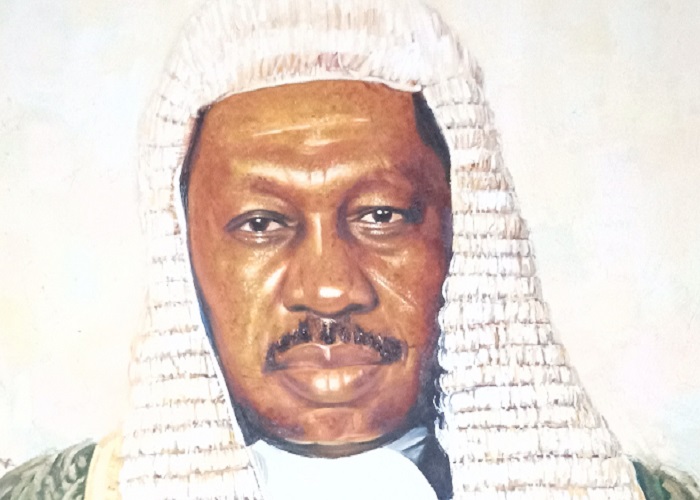
In one of our January interviews, Hon. Justice Umaru F. Abdullahi, a former President, Court of Appeal and one time Chairman, Body of Benchers cried out that the legal profession in this country is in danger. His Lordship in that interview said:
“Let me start from the beginning about the perception of the generality of Nigerians about Nigerian lawyers. There is this perception that the standard of practice has gone down, and you can hear this from even lawyers themselves. Discipline has become a shadow of itself from what it used to be.”
Hon. Justice Abdullahi continued: “Some attributed the issue to the large number of people that study law as a profession. Some say it’s not necessarily the large number, because there are countries that are producing a lot of lawyers but their standards still remain high, and their standard of discipline also remains intact. So, maybe it is a reflection of our society itself. But can the law profession afford to fold into the circle of the general indiscipline that pervades the society? Isn’t a lawyer supposed to lead the way that people should follow? Should the lawyer melt into the society and adopt all the maladies that the society is grappling with? I think not.”
Taking a swipe at universities which are the entry point, his lordship added: “Now, if the universities are lowering their standards and limiting the number of brilliant students from studying law, right from that stage, there is going to be a problem. If you lower standards or give preference to some people who have not met the standard, then you are beginning to mess the system up. And the profession will be the loser at the end of the day.”
Could this be part of the problems the country is facing today in the justice delivery sector? In litigation for instance, the lawyer’s role and ability is most visible. As has been said, the quality of judicial decisions and the coherence of the reasoning underlying a judgment depend on the quality of argument presented to the court and upon the ability of the judge. All these depend on the quality of legal education.
As it stands, lack of adequate funding is the bane of legal training and education in Nigeria. Sadly, the country’s educational sector is in dire straits. A Senior Advocate of Nigeria and professor of law, Prof. Fabian Ajogwu, noted that allocation for education, including legal education, in the last 20 years has been appalling. He observed that Nigerian lawyers are trained under some of the worst conditions of learning.
While delivering a lecture titled: ‘’Rethinking legal education in Nigeria to meet the needs of the 21st Century’’, Ajogwu remarked that sound education is a prerequisite for honouring the trust lawyers hold as legal practitioners.
According to the learned professor: “The world is a global village and our economy as well as its needs, are ever-changing. Legal practitioners play an important role in ensuring the sanctity of the world; hence, they must be trained to meet global economic complexities as they arise. Nigeria’s legal education must be revamped to reflect these 21st-century complexities.”
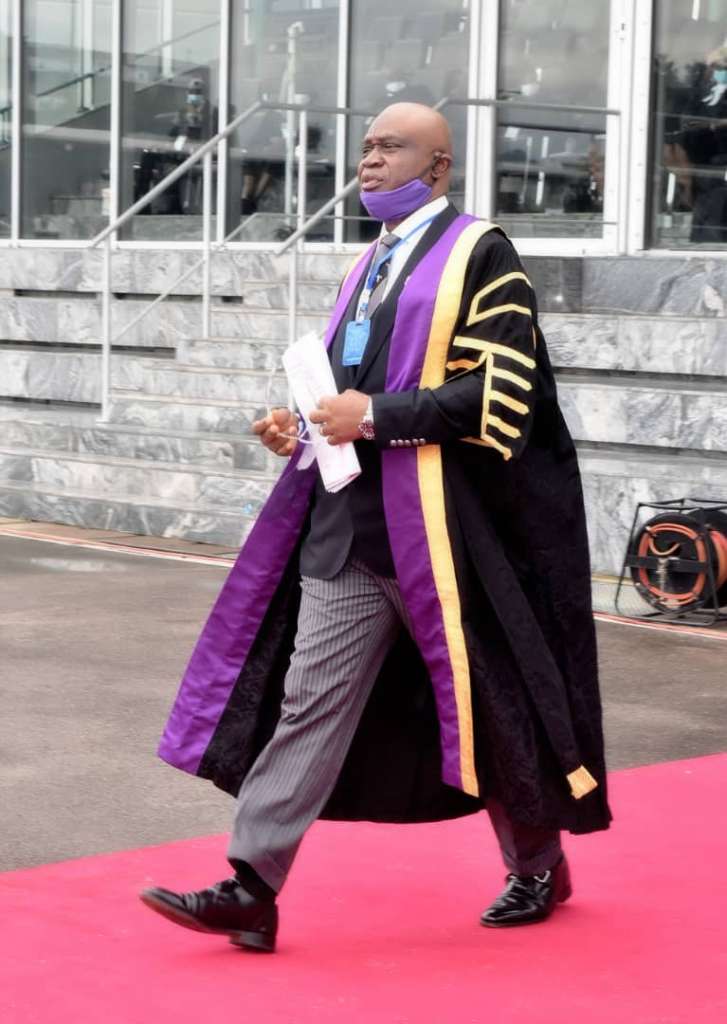
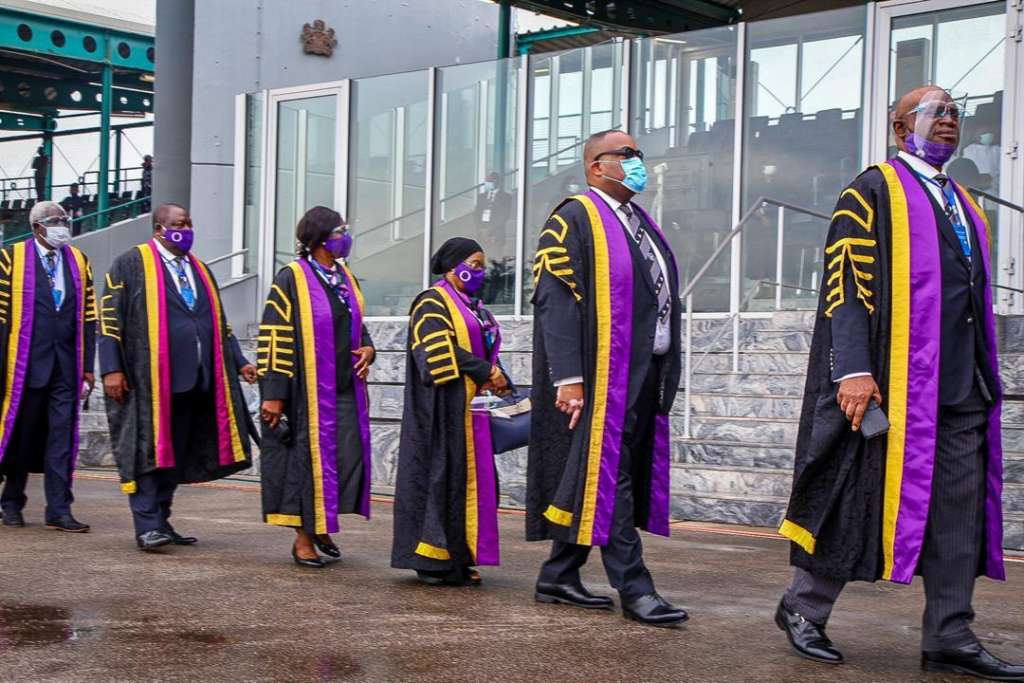
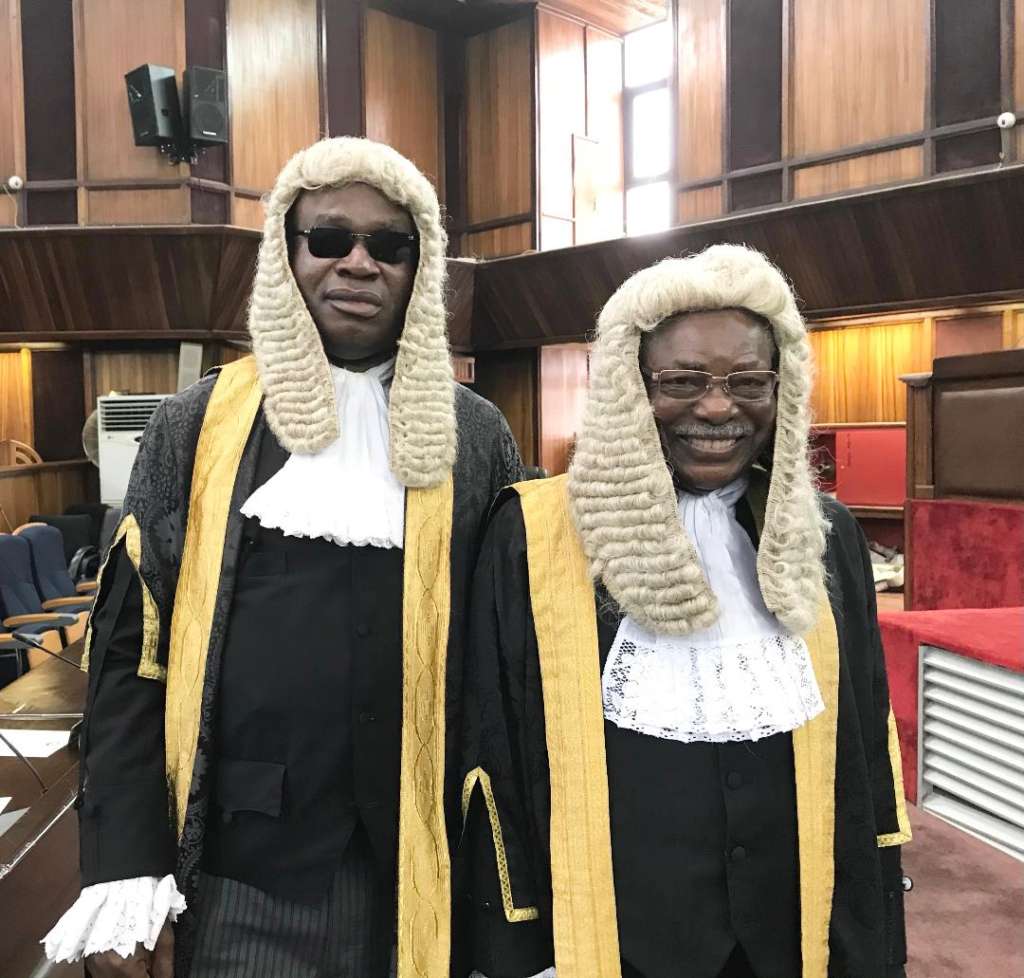
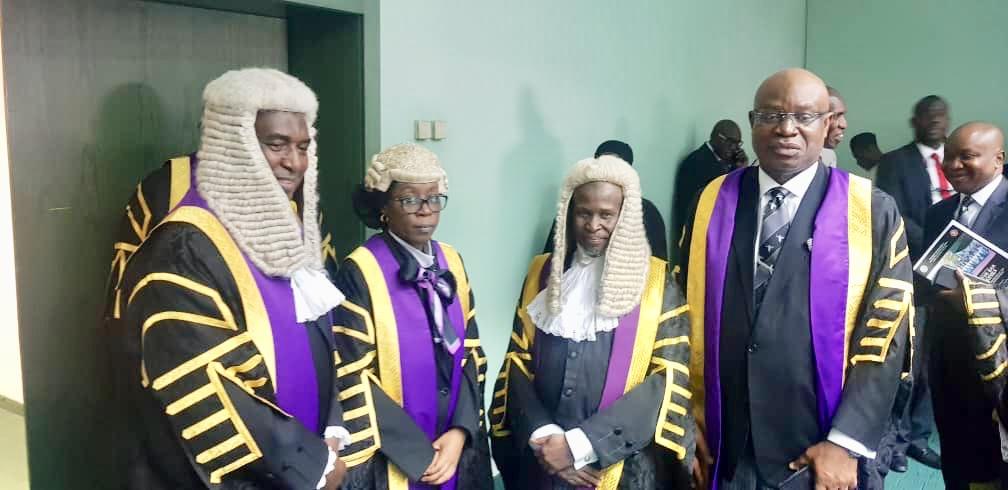
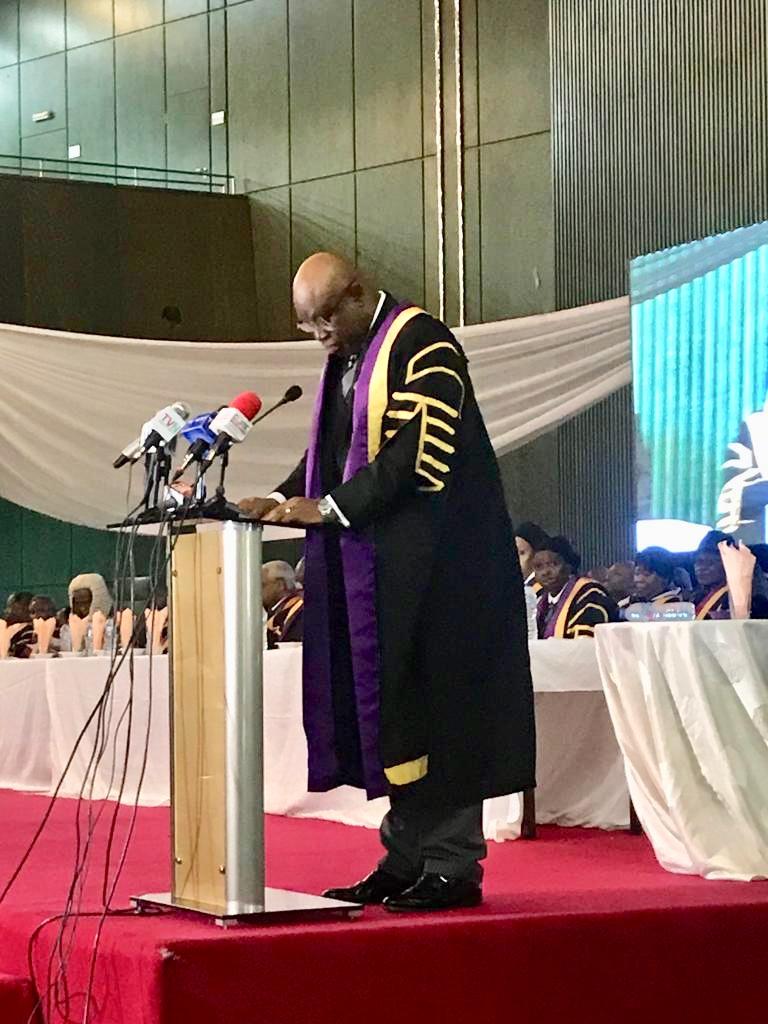
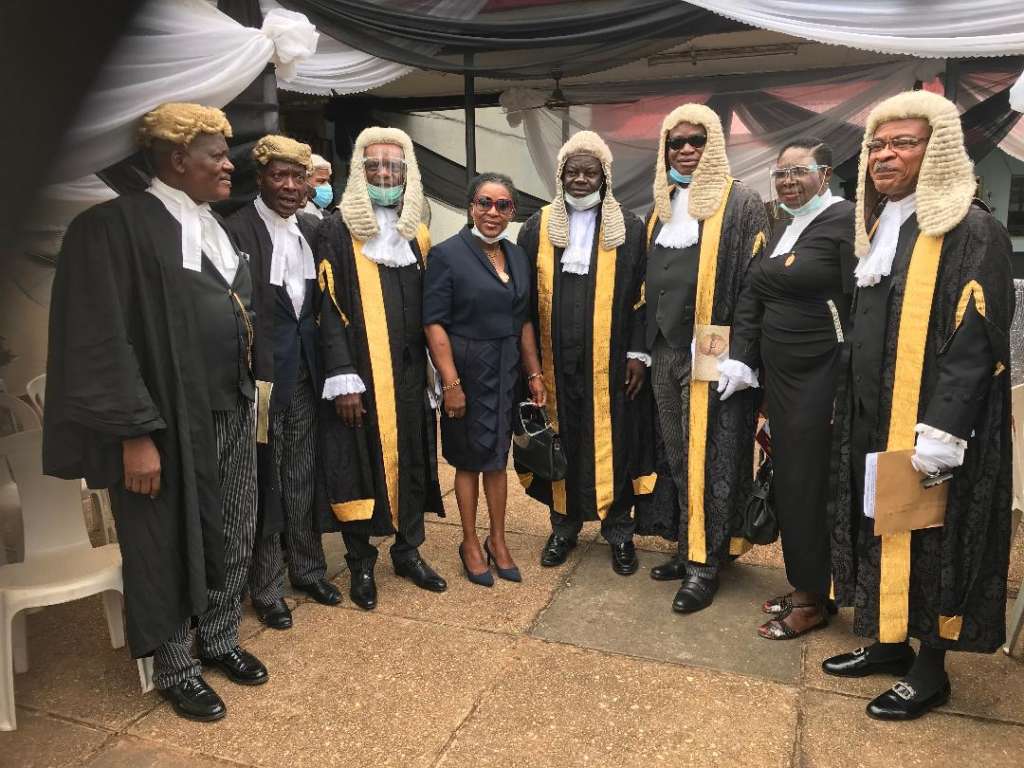
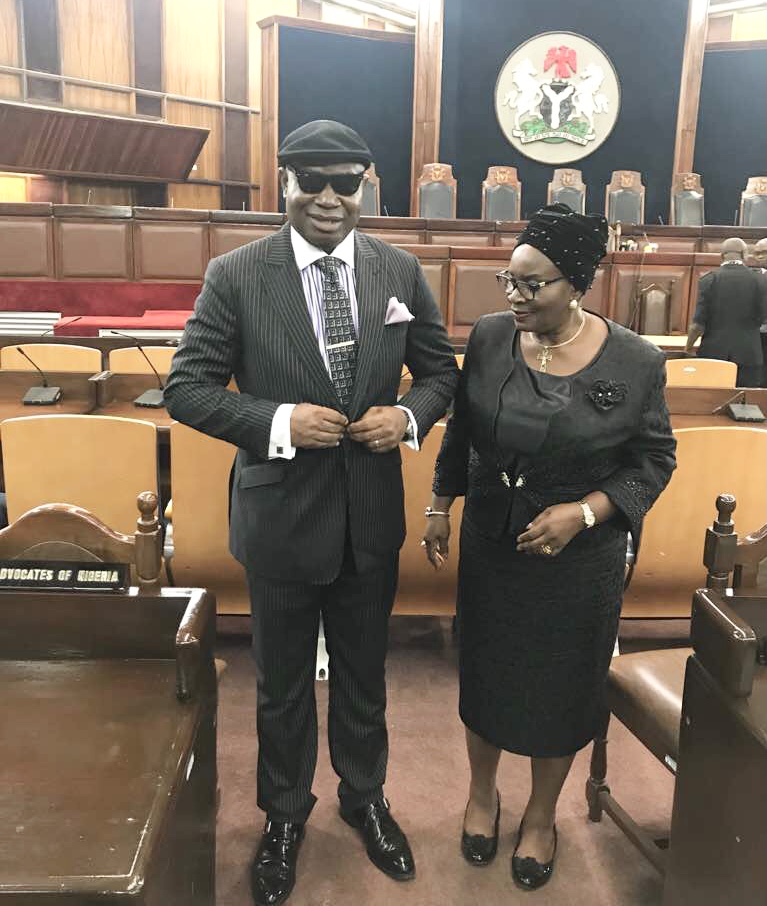
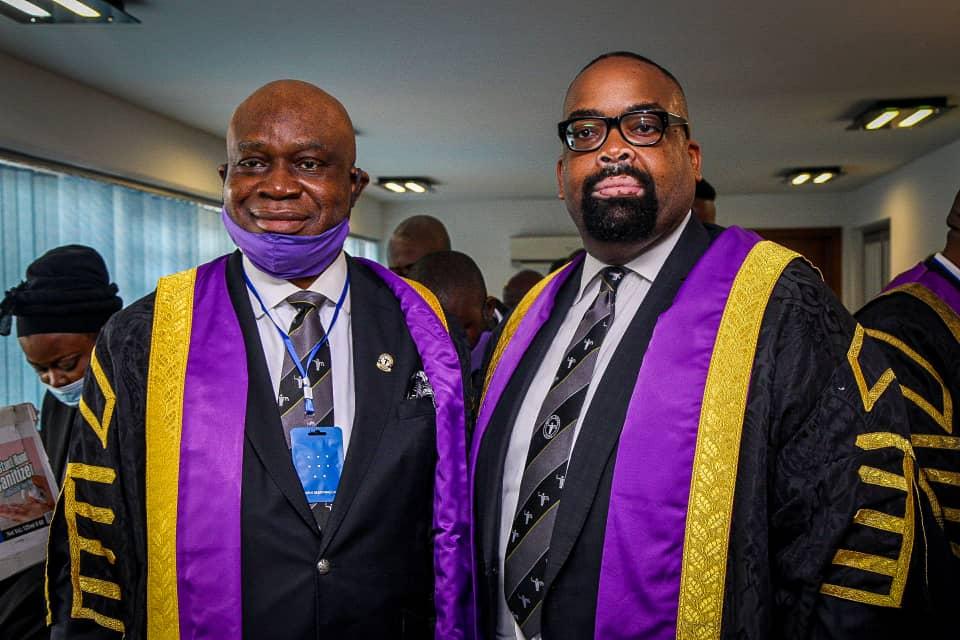
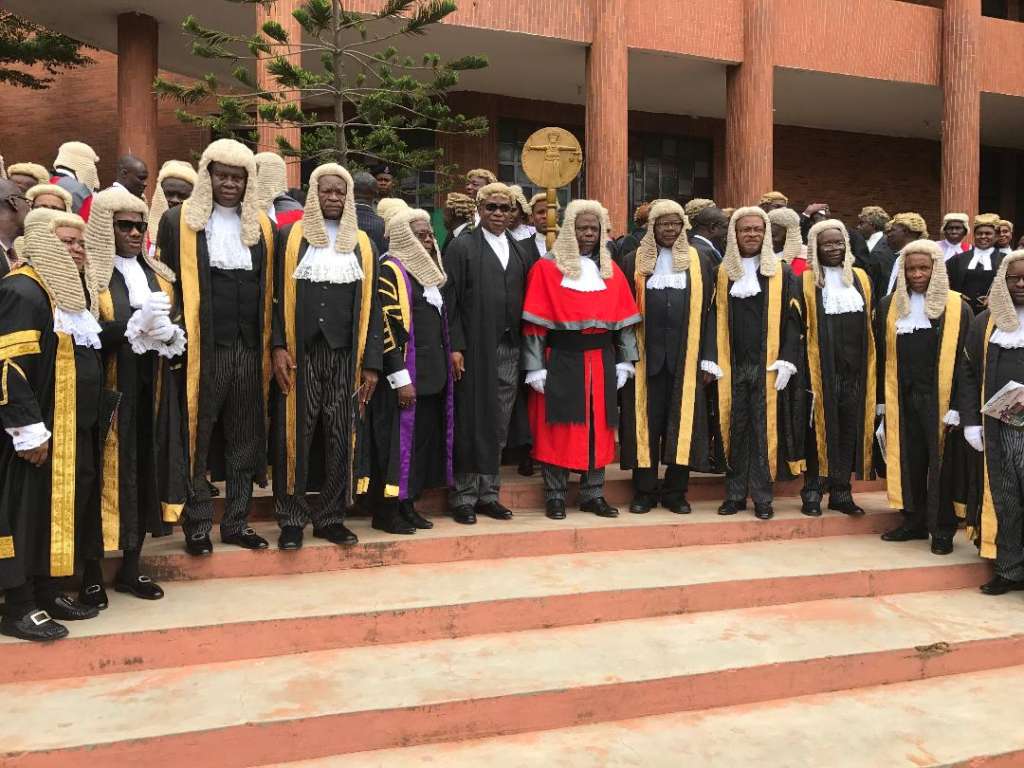
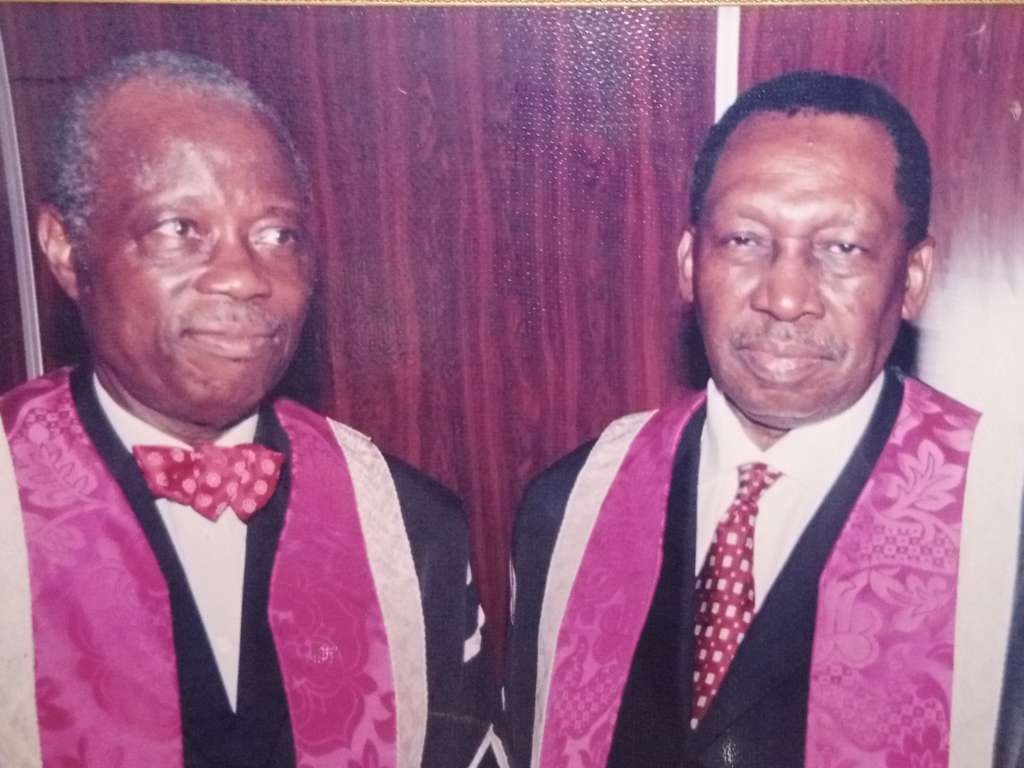
Benchers@Call to Bar ceremony at Eagle Square Abuja, 2020
Nigerian Law School campuses are affected by huge infrastructural deficit. No doubt, this impacts negatively on students’ ability to focus and assimilate learning. Students from different campuses complain about poor facilities. From leaking lecture halls in the main campus at Abuja to other campuses where lamentations abound over the terrible state of even bathrooms and blocked toilets; not to mention that sometimes five adults are cramped in rooms with tiny bunks and no wardrobes. Spice that up with poor water supply and a legion of others.
And yes, we are in agreement with Idem Udosen Jacob who observed that, when students are taught in an environment where they have no access to basic amenities, they inevitably spend more time attending to issues well outside the ambit of what he is taught in school.
“The effect such poor facilities have on Nigerian Law students,” he stressed, “can be better imagined when one considers how well they perform when they travel abroad for further studies. It is obvious that Nigerian Law students are held back from fully developing their potentials by poor facilities.”
But with the Nigerian Law School receiving a mere 1.6 billion naira per year to run its six campuses, one can only wonder at the manner of miracle it is expected to perform with that little.
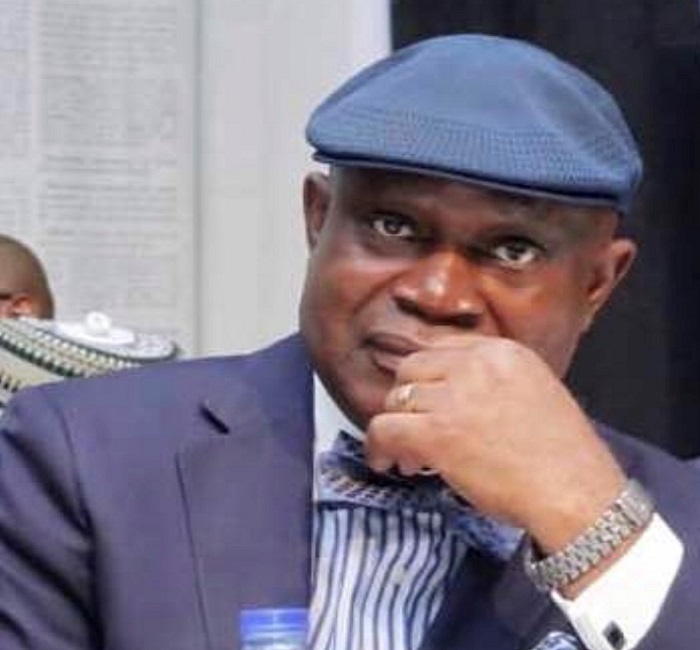
As he marks his 60th birthday on July 11, 2021, Chief Emeka Ngige, SAN, Chairman, Council of Legal Education has pledged to dedicate the remaining two years of his tenure to mobilise support towards infrastructure development in Nigeria Law Schools.
“The subvention received from the government is very poor so I want to create awareness with my 60th birthday. I will use the occasion to appeal to my brothers in the inner bar to donate facilities for the law school. Abuja and Enugu campuses for instance have constructed medical centres but they have not been completed because they don’t have money. I need stakeholders to see what can be done in the development of the law school.
“Not necessarily to donate money; but they need books, mattresses, ACs, chairs, CCTV cameras. I am using the opportunity of my birthday to appeal to the stakeholders in the legal profession to come to the aid of the Nigerian law school because this is my main focus for the next two years I would be in the headship of the council.”
We join the Learned Silk in our prayers as we wish him a happy 60th birthday and the fulfillment of his dreams.
Chief Nnaemeka Ngige, SAN, has a calm and even-tempered mien, with eyes that are gentle, yet probing and introspective. And yet, his ultra-calm exterior conceals a highly extroverted and gregarious nature. Many are more familiar with that focused and very determined side. Driven by an unwavering sprit, Chief Ngige determined long ago to make a mark in his chosen profession. That he did and much more. No surprises there for one whose father taught the value of hard work and aspiring beyond preconceived limits.
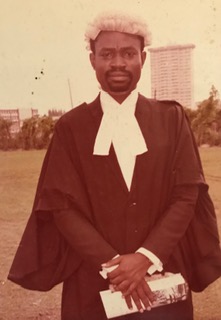
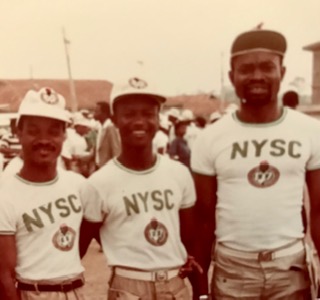
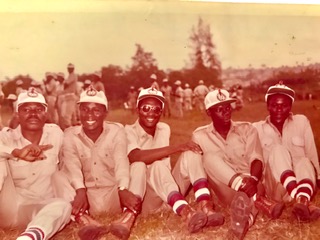
As a Youth Corps member in 1986, he was a prosecutor for the Nigerian Police Force, State CID, Akure, Ondo State. Between 1995 and 1999 he was also a prosecutor at the Failed Bank Tribunals in Enugu and Lagos. Today with offices in Abuja, Lagos and a correspondence office in Awka, Chief Emeka Ngige, Notary Public, Senor Advocate of Nigeria, Chairman Council of Legal Education, Member Body of Benchers, Non-Executive Director-Air Peace Ltd, Member, Legal Practitioners Privileges Committee has left his imprint on the annals of legal profession in Nigeria.
In this interview with Lillian Okenwa, the Learned Senior Advocate who turned 60 years on July 11, 2021 shared his thoughts on the state of legal practice and legal education in Nigeria, while calling on stakeholders to give attention to the infrastructural deficit at the Nigerian Law School campuses across the country. He also related tales about some courtroom drama in the early days.
His desire was to study Law or Mass Communications. But the attraction for law was stronger as his immediate elder sister, MaryRose Nwadike nee Ngige, who greatly influenced him was then a law undergraduate at the University of Ife. Besides, he would inherit her textbooks and other materials. But there were other motivations too.
With mentor, counsellor, teacher, ‘Coacher’ and immediate elder sister, Attorney MaryRose Nwadike@Maryland, USA
In his younger days, Hon. Justice Phillip Nnaemeka Agu, a retired Justice of the Supreme Court now of blessed memory was a popular lawyer and politician in Coal City where he grew up. When his father named him ‘Nnaemeka’, people started calling him ‘Nnaemeka Agu’, which stuck like a nickname. Then seeing that Nnaemeka Agu the famous lawyer became Attorney General and Commissioner of Justice, in the old East Central State and later High Court Judge, the young Nnaemeka Ngige became strengthened in his resolve to study law. In 1980 he was admitted to study law at the great citadel of learning, University of Nigeria Nsukka, Enugu Campus (UNEC) and in 1985 he was called to the Nigerian Bar.
Under the watchful eyes of Chief G.N. Uwechue, SAN, Principal Partner G.N. Uwechue & Co, Barristers & Solicitors & Notaries Public in 1986, he honed his legal skills and eventually struck out to commence solo practice after 5 years of tutelage. And long before Chief Gani Fawhinmi, SAN introduced Index to his law reports, Ngige would photocopy the covers of each part of Nigerian Weekly Law Reports and keep them in a file. He only needed to look up any topic he’s researching to get the relevant authorities.
“What Gani was using for Index is an accumulation of what is contained on the covers Nigerian Weekly Law Report and the extract. If it’s Evidence I’m researching on for instance, I will go to my Index file and search for the authorities. And I knew most of the cases by heart. If someone cites an authority, search and confirm if the authority is relevant or whether he was misquoting the authority. Today, we have moved on as my laptop contains three electronic law reports; Nigerian Weekly Law Report, Law Pavilion and Electronic Law Companion. I can stay in my remote village at Alor, and write a brief of argument without looking for any law report or statute book in hard copies. Anywhere you are, you can do your work. Besides, our profession requires a lot of reading. One needs to be updated because every day the law is changing either by new decisions, new legislations or change of case law.”
Indeed from the daysofmanual typewriters, landline telephones, and fax machines, legal practice in Nigeria has evolved from tedious in 1986 when Emeka Ngige began legal practice to information blitz at the click of a button. But he would tell you that ethics at the Bar and on the Bench were taken more seriously in “the good old days.” He insists that the glory of the profession when judges and lawyers conducted themselves with utmost integrity and professionalism must be restored. Calling for an overhaul of the regulatory provision for sanction of lawyers as contained in the Legal Practitioners Act (LPA), he stressed that the system as it is will yield little or no results. He provided some insights.
With boss and mentor, Owelle George Uwechue, SAN
“The procedure is that you write a petition to the NBA and they consider whether there is a case to answer or not, i.e. a prima facie case. If they check and hear from the person petitioned against, and there is prima facie case established, the accused legal practitioner will be arraigned before the Legal Practitioners Disciplinary Committee (LPDC) and the matter would drag on and on for maybe 2 years, 3 to 4 years before it is determined. In the process the petitioners lose interest or are pressurised or intimidated into withdrawing the petition. Some petitioners because of logistic challenges could not travel to Abuja, the venue of hearing. They are unable to fly all the way from Warri or travel by road from Maiduguri to come and testify in Abuja. I have been canvassing that if we fail to reform the process of disciplining lawyers, then the impunity will continue. Even when I ran for NBA Presidency in 2012, I harped on this matter as part of my manifesto.”
What then is the solution and how can it be reformed? He was asked.
Decentralise LPDC, retired Justices should head panels
“The LPDC should be decentralised”, he insists. “When you amend the Legal Practitioners Act (LPA) allow several panels of LPDC to sit in Lagos, Port Harcourt, Abuja and Kano so that they can handle cases from different parts of the country. Instead of the petitioners coming to Abuja and are told there is no quorum, they can go to the committees in their nearest zones.
With Deacon Dele Adesina and Prof Taiwo Osipitan SANs
“Another suggestion I made is that the LPDC should be constituted of retired judicial officers. Presently the LPDC comprises of heads of courts that are very busy. You have in their membership President Court of Appeal, Chief Judges (CJs) of either the Federal High Court, Federal Capital Territory or of some States High Courts, Attorneys General of some states and some Senior Advocates who are life benchers. All these people are very busy. No head of court has time to leave administrative duties in his state to come to Abuja and handle petitions against legal practitioners. As far as they are concerned it is secondary to their responsibilities or schedules. That’s why it’s always almost impossible to form a quorum or some members that participated at the first hearing would not be around for the next sitting. So you have inconsistent panels hearing matters against the lawyers.
“As a result, most of the appeals by legal practitioners who have been sanctioned are allowed. Their grounds of appeal on lack of fair hearing that one of panellists who sat in his matter maybe on the day for adoption of written addresses didn’t participate when one of the witnesses testified will succeed. When the appeal succeeds and court for instance rules that the matter starts de novo, where will you find the witnesses who had earlier testified? So I canvassed that retired justices of the Supreme Court or Court of Appeal, most of who are still healthy should head these disciplinary panels for two year or three years and another set takes over. They are retirees and have plenty of time. It will be hard for heads of courts to leave their membership of National Judicial Council (NJC,) National Judicial Institute (NJI), Federal or State Judicial Service Commission, Body of Benchers (BOB) and a host of administrative matters to be trying erring lawyers. Don’t forget they still sit as judges in their various courts. They simply don’t have the time.
Ngige with CJN Hon Justice Ibrahim Tanko Muhammad, former Secretary of Body of Benchers, Mrs Halima Turaki and DG Nigeria Law School, Prof Isa Hayatu Chiroma, SAN at a Call to Bar ceremony 2019
“But all these suggestions were not accepted. Some of our colleagues have argued the retired judges are too tired and weak but I still maintain that many of them are very healthy for the assignment. For instance Hon. Justice George Adesola Oguntade when he retired at 70 in 2010 was so healthy that you will think he was just 60. Ditto for Hon. Justice Kumai Akaahs who retired in 2019. If all these great minds are brought in to handle petitions there will be consistent quorum or panelling and speedy determination of most the petitions. When lawyers see that petitions are now dealt with swiftly, they will sit up. Indiscipline and impunity will go down.”
Yet these suggestions will require amending the LPA with stakeholders including NBA initiating amendments at the National Assembly. Already, Body of Benchers has sent a reviewed LPA to the National Assembly but the points Ngige raised were not included. He offered more explanations.
“They said it’s a matter of detail and that when the BOB wants to constitute a disciplinary panel to hear petitions, they can pick any of the Life Benchers. So we are stuck with one panel hearing petitions against almost over one hundred thousand lawyers in the country. We are supposed to have different panels like you have high courts divisions. Let panel one sit in Abuja, one in Lagos, Ibadan, Enugu, Kano and Port Harcourt. Most of the petitions against lawyers are frivolous. Some are serious but as they say, the earlier you determine a matter the better for the profession.”
Ngige and the late Hon. Justice Dahiru Musdapher, CJN
On indiscipline among judicial officers, he disclosed that while NJC is reviewing the process ameliorating the subject, the presumption is: “Judges are deemed to have done the right thing until the contrary is proved.” On account of that he said: “Most of the petitions against judges are dismissed. What I discovered is that the only case they pay attention to are those that exceeded 90 days in delivering judgment. They don’t spare judges who breach Section 294(1) of the Constitution.Concerning other weighty allegations, it depends on the way the petition is presented and the defence presented by the judges. There are many worrisome aspects but I won’t go into details now.”
Toughest moments in legal practice
Ngige revealed that his toughest moments in legal practice was during the 32 months legal battle in the celebrated Peter Obi .v. Chris Ngige election petition. The rspondents called about 392 witnesses while Peter Obi as petitioner called about 45. At that time, hearing in election petitions was almost endless. It was after this case that clamours for a time frame for hearing election petitions arose. The case of Buhari v. Obasanjo that came in the wake of 2003 presidential elections was another matter that took unduly long. It lasted for about 18 months drawing public outcry because Obasanjo was virtually concluding his second year of office when Buhari’s petition was concluded in the Supreme Court. The decision also informed the recommendation of Uwais’ Electoral Reform Committee on Electoral Reforms that there should be timeline for initiating, hearing and determination of election matters.
With the late Hon Justice Idris Kutigi CJN
“Obi v. Ngige was my toughest case as I had to leave my young family in Lagos and came to stay in Anambra for almost three years. Then there was an attempt to kidnap me in my hotel room. A man came to Choice Hotel where I was lodging and the reception called to inform me that I had a guest. This was around 8.00 or 9.00 am. I requested to speak with the so called guest who told me he’s Sam Nwanti from American FBI. I asked him his mission in Nigeria as FBI does not operate in Nigeria and he said had a warrant to arrest me. I then invited him to my room. Before then I called the Deputy Commissioner of Police, Sale Tanko, in charge of the Area Command in Awka who was lodging in the hotel and informed him of the development. The DCP swiftly got his men and they hid in a part of the room.
“When the gentleman came in, I asked him again what the arrest was for and he said I’ll find out when we get to the place he was taking me. At that point, the Policemen came out and arrested him. He was subsequently charged before the Magistrate Court in Awka. They recovered a taser and a fake FBI Identity Card on him. There were many other threats to my life and other challenges but in all, I thank God that I came out of the case alive.”
Most rewarding cases
The most rewarding period he could easily recall was during the 1996 Failed Bank Tribunal cases.
“The prosecutors were being paid about N250, 000 per case. Later it was raised to about N700, 000. At that time it was a big money. By the time you finish the case, you will present your transport, feeding, and lodging expenses, you will get a refund. It was a lot of money in those days. Besides, we were in the news making the headlines and it was attracting other briefs. When people see you appearing against a legal giant like Chief Rotimi Williams, SAN and other top lawyers, the perception is that you have reached the level where they could entrust you with their own briefs.”
How I was nearly handcuffed by a Court Martial
Between 1996 and 1997, we were at the Armed Forces General Court Martial, defending some Air force men who were alleged to have misappropriated about 60 Million Naira from the finance section of Nigerian Air force in Lagos. We had Group Captains and Squadron leaders as accused persons. The Chairman of the panel was somebody called Air Commodore Akwiti. I’m not sure if he was a Commodore or Vice Marshall then but he was very strict and too hard as the Chairman of the General Court Martial. He would not tolerate any Preliminary Objections from Defense Counsel. Once he had delivered a ruling, you must obey without complaint as they do in the military. In this particular case – Nigerian Air Force vs some Air Force Officers, we discovered that the instrument which set up the Court Martial, i.e. the Convening Order or C.O as they call it, was flawed. The instrument was meant to be properly issued by a competent officer of the Nigerian Army or the Air Force of a rank above the persons to be court-martialled but we discovered that the person who issued this particular CO was below the rank of the people that were being tried and the dates were also conflicting.
With brother SANs in Lagos
In a General Court Martial, the chairman and all the members need not be lawyers because they are trying their peers in the military. But the Prosecutor, Defence Counsel and Judge Advocate who advises them on knotty legal issues, must be legal practitioners.. When there are legal issues the Judge Advocate advises the panel.
On the day of our client’s arraignment, I was given the case file as Mr. Clement Akpamgbo, SAN who was to lead me was otherwise engaged. I held his brief and told the Court Martial that we have a Preliminary Objection to the charge; that the accused person (our client) would not take his plea because the court martial was not properly constituted. The Chairman will have none of it and warned me – ‘This is the last time you will raise a Preliminary Objection in this Court Martial.’ I thought it was a joke
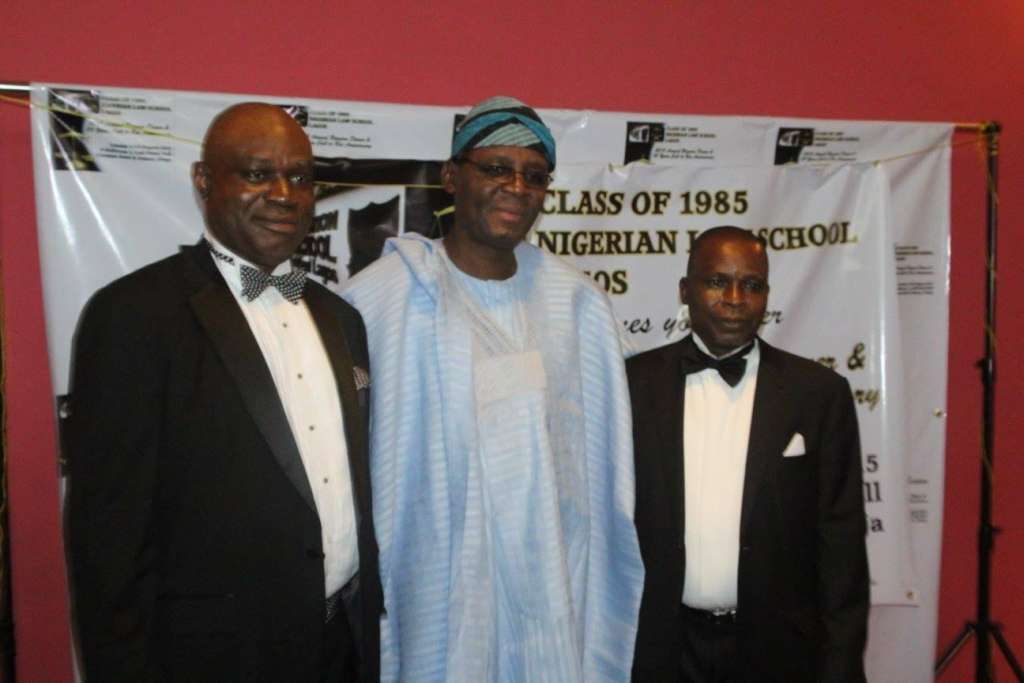
A cross section of Class of 85 members @Special Court session for the late Hon Justice Jude Okeke in Onitsha High Court
We allowed the accused to take his plea and at the address stage, I raised once again the issue of jurisdiction, that the General Court Martial had not been properly constituted as there was an incompetent CO. As I was marshaling out my reasons, the Chairman interjected stating something like: ‘Mr Ngige I told you this issue must not be raised again and you raised it. Please take him out of this Court and handcuff him until he purges himself of the contempt of court.’ He directed that I should be handcuffed and taken away from the tribunal for being contemptuous of his standing order
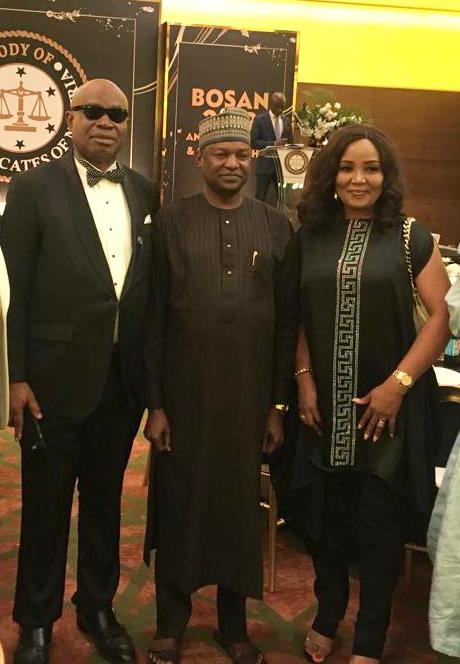
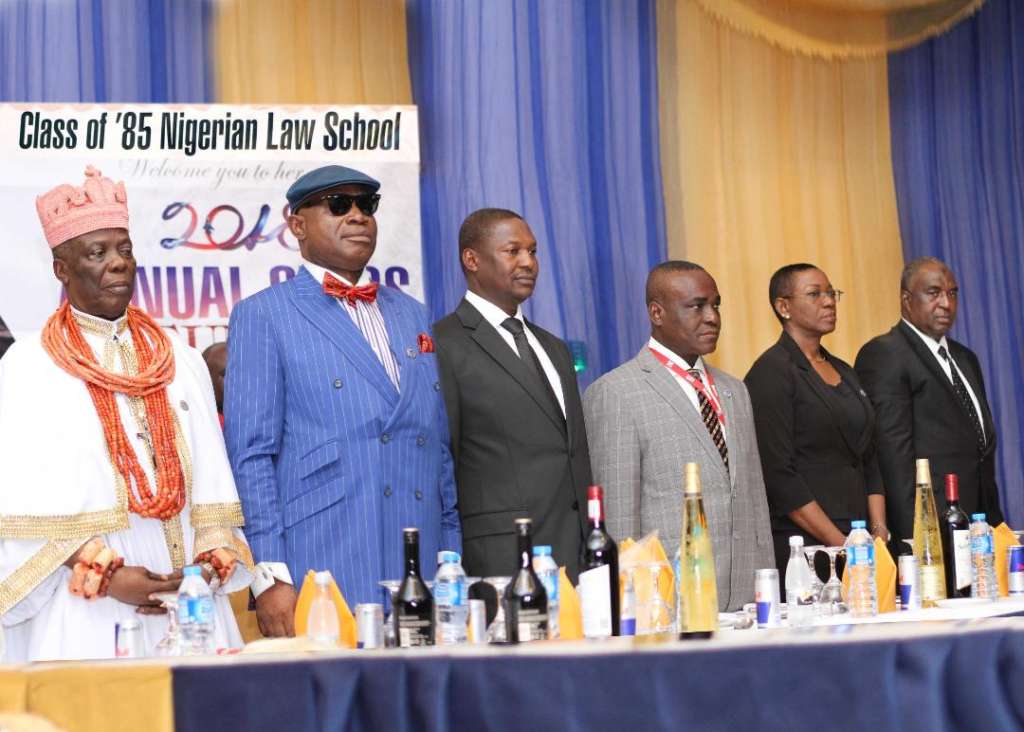
The Ngiges with the Hon Attorney General of the Federation, Abubakar Malami, SAN@BOSAN Dinner
He didn’t even allow the judge advocate (who later became a Military Governor in Benue State) to advice on whether I was precluded from raising a jurisdictional point at address stage. As he was not given a chance to advice, the judge advocate sat down and was smiling. When the officers brought the handcuff and made to take me away, other lawyers present started pleading on my behalf. I was left alone but at the end of the trial, they sentenced my client and other Air Force men to various terms of imprisonment. Through another team of lawyers, they appealed against their conviction and were subsequently acquitted on grounds of lack of fair hearing.
The hostile witness
Between 2003 and 2004 when we were conducting the Obi v. Ngige case, some of the witnesses fielded by the petitioner were giving the same pattern of evidence. They testified there was no election in some polling units and that some people shot in the air, ballot boxes were snatched and the next day somebody was declared winner. Along the line one of their witnesses turned against them. I was not part of the plot but the witness came to testify and stated how he was allegedly tutored to give false testimony. After this incident, our opponents decided to revenge and so got one of our own witnesses to say he’s been tutored. Immediately we noticed where he was heading, we quickly applied that he be declared a hostile witness.
That was the first time in my professional practice that I saw a witness turn against his lawyer. Generally, you must have had a session with your witness to prepare him on how to answer questions and address the court. You tell him to speak slowly because the judge would be writing in long hand and not to be angry when a lawyer is asking questions. As soon as this particular witness entered the witness box, we asked the usual introductory questions- name, address, occupation. Thereafter he turned round to say the election he was called to defend was not free and fair; so we knew that he must have been approached by the other side. Quickly we applied for him to be declared a hostile witness. We drew his attention to an earlier document where he stated that the election was free and fair, drew his attention to the relevant paragraphs, turned to the Chairman of the tribunal, Hon Justice G.M. Nabaruma and his members, and said: ‘My lords we apply under the relevant section of the Evidence Act for this witness to be declared a hostile witness’. The petitioners opposed the application and the Tribunal in its ruling declared the witness a hostile witness, and so everything he said became irrelevant to the person who called him and to the other side.
The rare privilege of appearing against Chief Rotimi Williams, SAN
In 1997 at the Failed Banks Tribunal, Enugu in the case of FRN v. Disun Odebode, I appeared against the revered Chief Rotimi Williams, SAN. He was representing the accused person and I was the prosecutor. That was where I got the confidence to apply for the Inner Bar because at the end of that case, his client was convicted and jailed. When we came out of the court hall, Chief Williams shook hands with me privately and said: ‘Mr. Ngige the future will be great for you. Keep it up.’
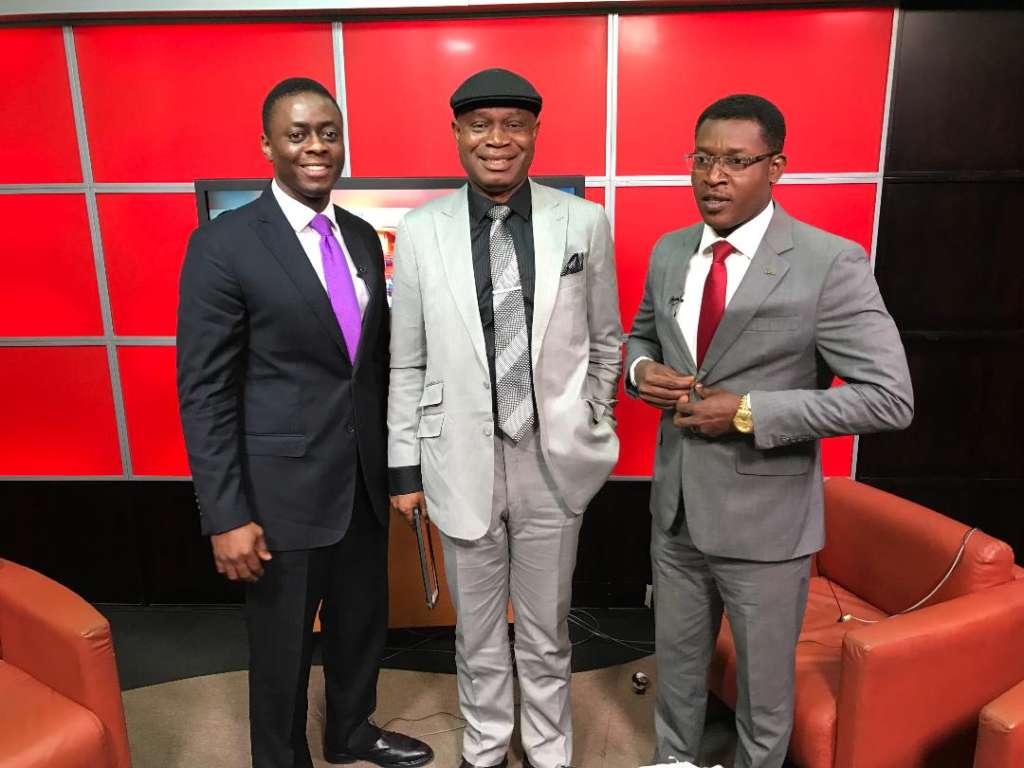
After an appearance at ChannelsTv with Chamberlain Uso and Gimba Umar
Thereafter whenever we met in court and Chief Williams sat in the front row as a SAN, he would beckon on me and say, ‘Mr Ngige come and sit with me.’ I would hesitate and say sir, I am not a SAN. He would reply: ‘Equity regards as done that which ought to be done’ meaning I should be regarded as an SAN. In that same court, some lawyers, including his juniors who were not SANs at that time would be seated at the back with some perching on side stools. That was the type of encouragement I had which propelled me to apply for elevation to the Inner Bar.
Gani Fawehinmi, SAN
In one of the Femi Adekanye cases, I represented NDIC. They were so many of them at that time. In one of them, Chief Gani Fawehinmi appeared against me. When we finished the case, Chief Gani like Chief Williams called me, shook hands with me and said Keep it up.’ We won the case.
Subsequently, I was also prosecuting another Adekanye matter with Mr. Fidelis Nwadialo, and appearing against us were Chief Richard Akinjide, SAN, Professor Taiwo Osipitan, SAN, and Prof Yemi Osinbajo, SAN, the incumbent Vice President who represented six other accused persons. It was a tough case and was presided over by Late Hon Justice Mike Edokpayi.
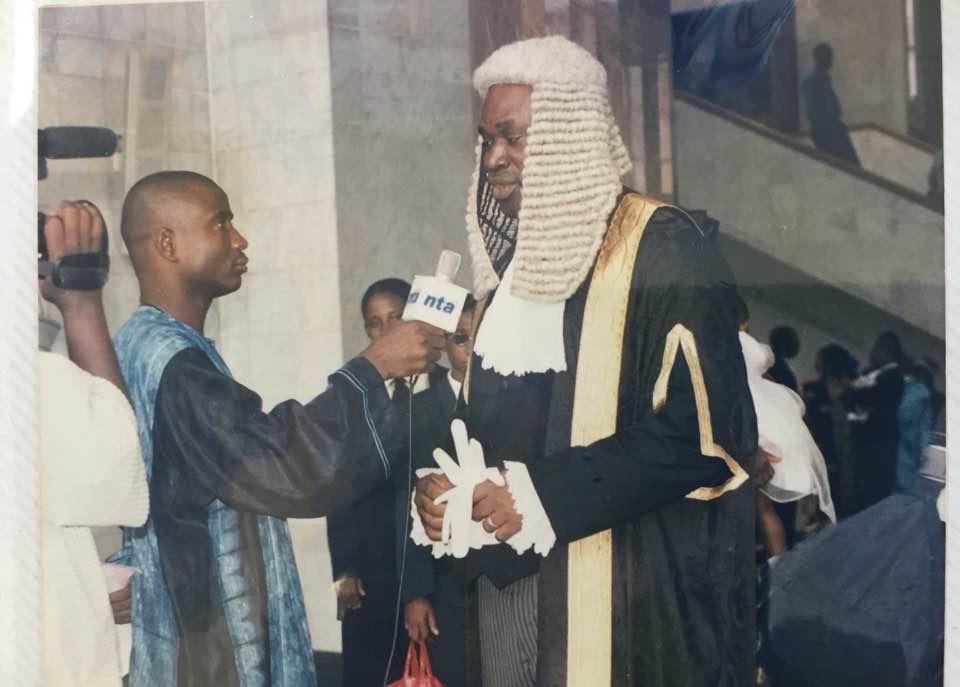
Granting an interview to Dr Taiwo Olatoke of NTA after our elevation to the Inner Bar in 2002
“Unfortunately we couldn’t finish before the return to civilian rule in 1999. The accused persons were playing delay tactics until the tribunals were wound up; and the matter was transferred to the Federal High Court. They learnt from me and I learnt from them too. They knew that I was not a soft nut to crack. We learnt a lot from these experiences because one thing about law practice is that every day you are in court, you will be learning new things whether good or bad.”
Growing up
Last child of the family, his father was a carpenter while his mother sold charcoal and firewood. But the old man believed in education and invested in it. He was a carpenter with PWD- Post Works Department of those days. Having mixed with civil servants in Enugu and worked in their homes, he appreciated the advantages of his children getting education. Beyond that, Chief Pius Ngige (Akunnia) taught his children the value of hard work by example.
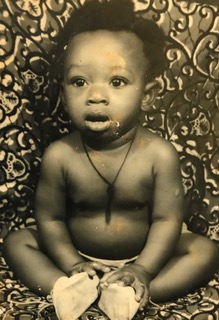
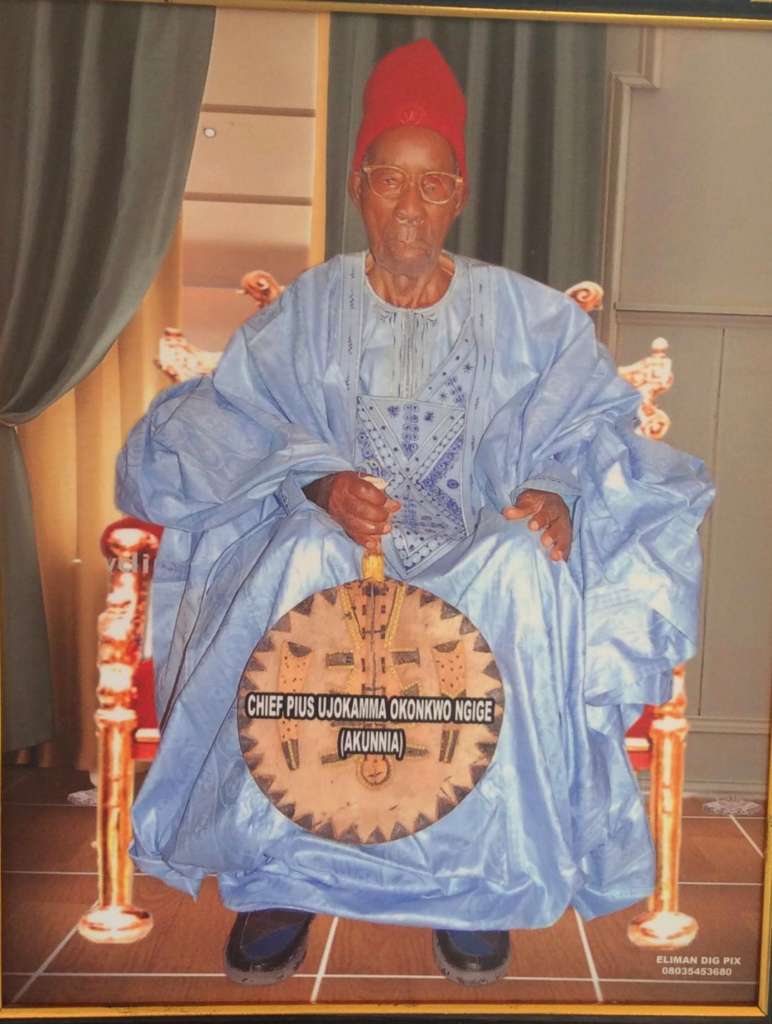
Baby Nnaemeka Ngige in 1961Dad, Chief Pius Okonkwo Ngige ( Akunnia)Mum , Madam Priscilla Ngige
Never resting, he was always trying his hands on something. In spite of his social status, he got allocation from the government and eventually built a residential home in Coal Camp Enugu. “He built a 3 bedroom Boys Quarters first and the main building he later completed,” Emeka Ngige recalled. “That’s why I believe you can achieve anything you set your mind on to achieve. He was going to the homes of expatriates and other ‘senior service’ persons to work and he learnt about the value of education. All of us in my family are graduates. My mother’s brother, our uncle was a Civil Engineer and so she also wanted her children to go to school.”
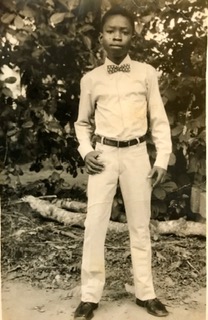
Young NnaemekaBoys to men
The Learned Silk spoke more about his family and childhood: “We were originally seven. We lost our eldest sister about 28 years ago. She died in her late 50s then. She was the first graduate in our family. She first went to Alvan Ikoku College of Education, Owerri for her NCE. Thereafter she went to UNN to get her BA in Education and was teaching in a Secondary School in Enugu. She passed on in 1992.
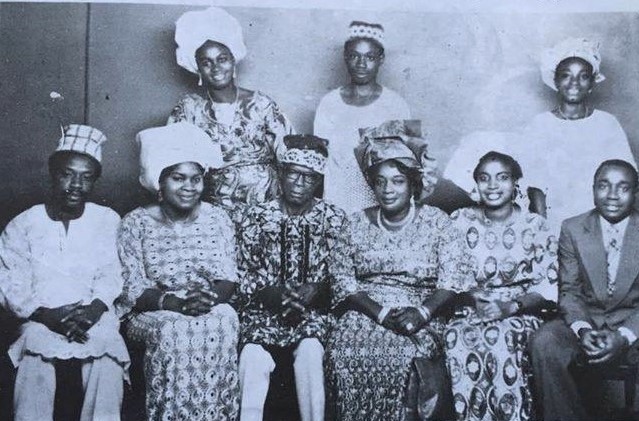
Family photograph taken in 1976-sitting from left-Brother Chris, sister Berne, our dad, Pa Pius and mum, Ezinwanne Priscilla, sister Joe-Joe and brother Eddy . Standing-sister Felicia, Nnaemeka and sister MaryRose
Like other kids who grew up in Enugu, I was part of the youth masquerade that entertained people during festivities. We gyrated from our Coal Camp area to Uwani and to Asata. I had my primary school at St. Patrick’s Primary School, Ogbete in Enugu. Secondary school education was in my village at St. John’s Secondary School, Alor.
The school still ranks as one of the best schools run by the missionaries till date in Anambra State.I was the Labour Prefect and I graduated with Division One in 1979.”
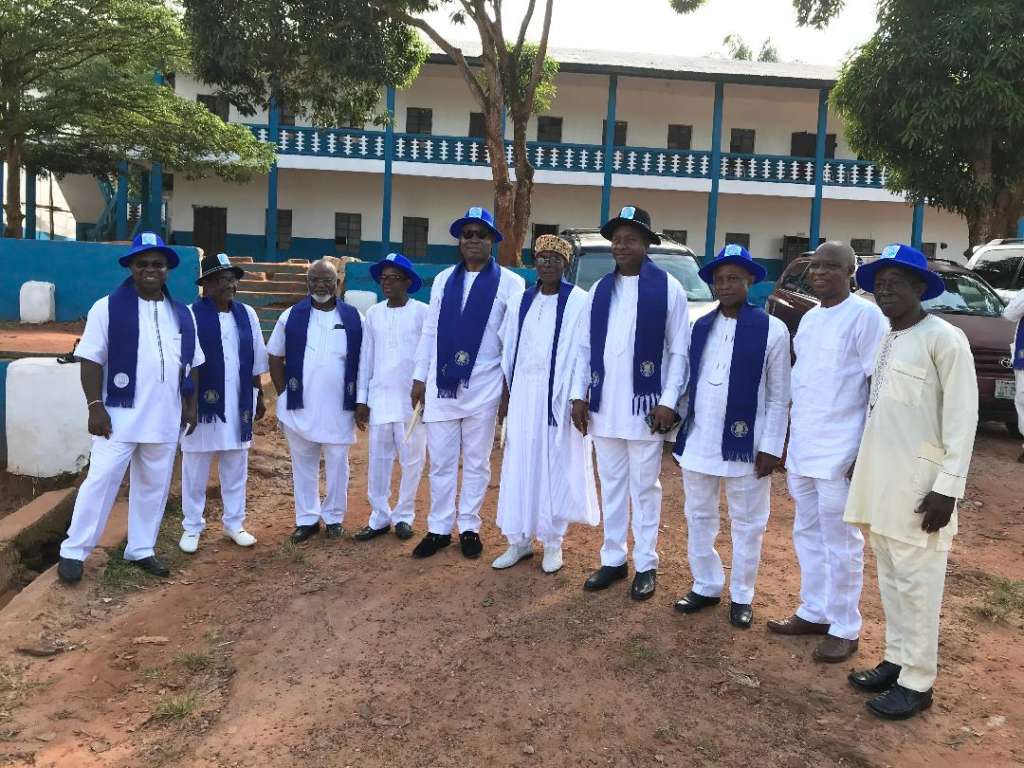
With fellow old boys of St John’s Secondary School Alor@Diamond Jubilee celebration
The Palmwine Drinkers Klub
Undergraduate school did not happen immediately as he was not successful with the all mighty JAMB at first attempt; hence his stint as a Clerical Officer with Federal Ministry of Employment, Labour and Productivity in Enugu. But a year after, he was admitted to study law at UNEC.
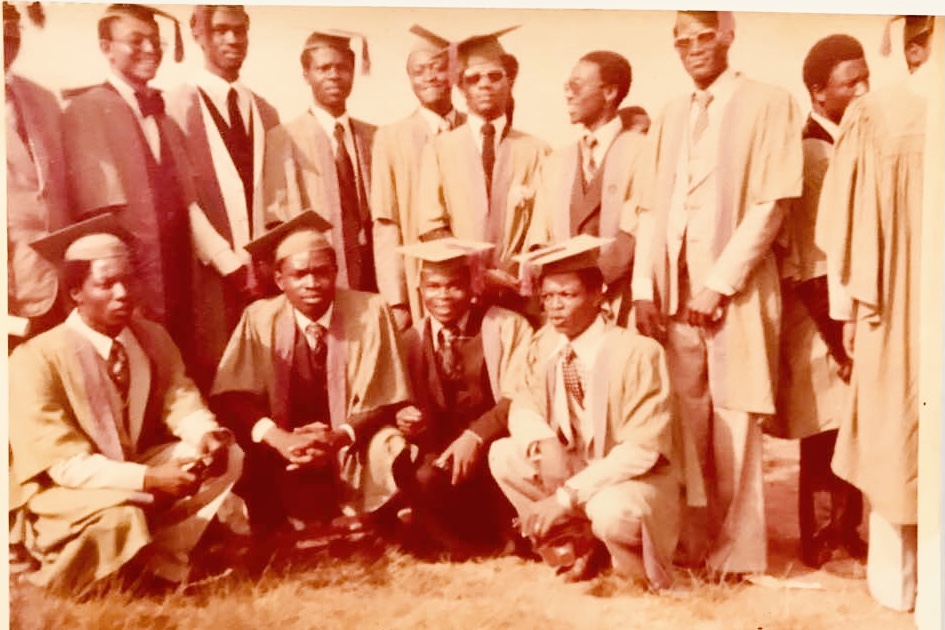
Matriculation at UNEC in 1980With CID Maduabum at UNEC
“I enjoyed every inch of my stay there. I was a member of Palm Wine Drinkers Club or Kegites. We were the noise makers in the University.
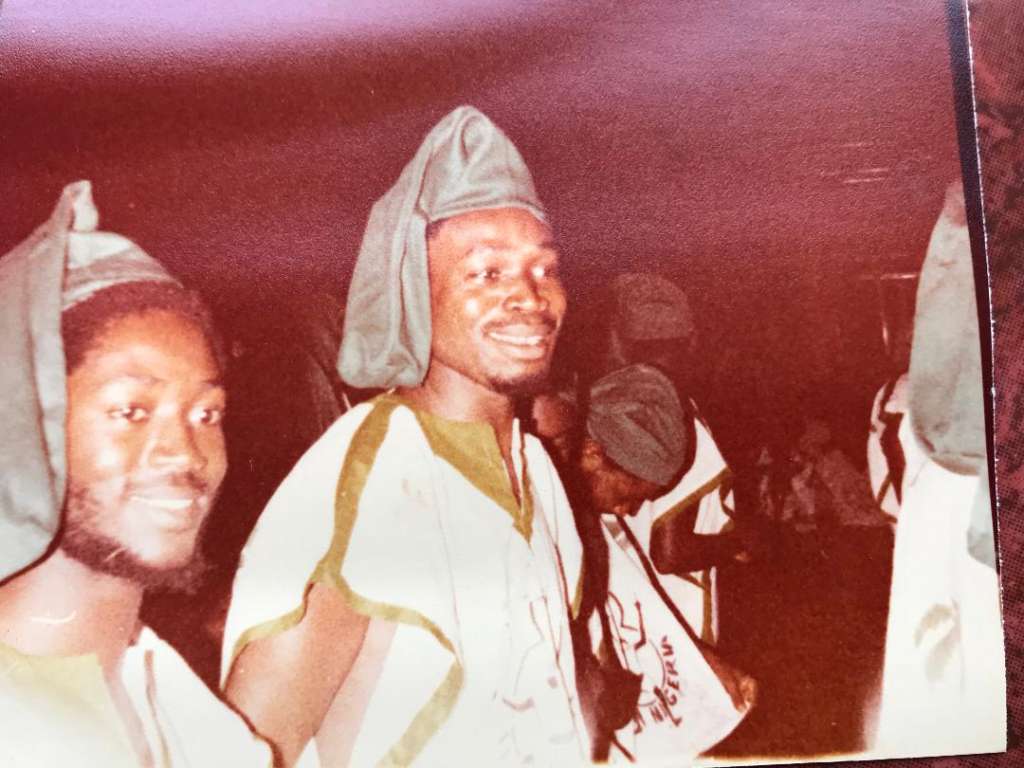
Member Palm wine drinkers club University of Nigeria, Enugu Campus
I also participated in the school politics. I was part of the Student Union Senate and also belonged to many other clubs like Rotaract Club, the students’ version of Rotary, Grand Ivy League Club and others.”
Lawyers in my family
Described as a brilliant lawyer by her brother, Mrs. Mary-Rose Ozoemena Nwadike nee Ngige, immediate elder sister of Emeka Ngige was the first lawyer in the family. This former Magistrate with Anambra State Judiciary got married to a gentleman based in Maryland, USA and relocated in 1990. There she got her license as an attorney in the states of Maryland, Washington DC and New York. She was earlier called to the Nigerian Bar in 1982 and had her LLM from University of Lagos (UNILAG). “As I mentioned before, she is one of my mentors and counsellors,” Ngige said.
With elder sister Lady Berne Nwachukwu, Pro Chancellor, Federal
Next is their eldest sister, Chief (Mrs.) Bernedette Nwachukwu. A former Matron at University of Nigeria Teaching Hospital (UNTH), Enugu, she did part time law at UNEC while working in the hospital and she made a 2.1 in her degree exam. After a brief legal practice in Enugu, she relocated to England and continued her nursing profession while at the same time also doing her LLM at University College of London. Called to the Bar in 1987, she is currently the Pro Chancellor and Chairman Governing Council, University of Uyo.
Infrastructural decay at Nigerian Law School
Chief Ngige said he is dedicating his 60th birthday to create awareness among stakeholders about the dire infrastructural state of Nigerian Law School (NLS) campuses. “The facilities have gone down. The best facility we had was the Lagos campus which was set up in 1963. They were in Igbosere but later moved to Victoria Island. Most of the structures were built at the end of the civil war. The auditorium was built when we were about to be called to bar in 1985. Then they moved to Abuja and inherited a Centre for Democratic Studies facilities in Bwari. The buildings are in terrible shape today. I have done two years as Chairman of the Council so I am dedicating the next 2 years of my tenure to see what impact I could make in infrastructural development. The subvention received from the government is very paltry. The Nigerian Law School gets about N1.6 billion for capital expenditure in a year for all the 6 campuses but how much would go round? So you will have to praise the Director General and his Deputy Directors General who are managing with the little funds they receive to keep the School afloat.
With DG Nigerian Law School, Prof Chiroma SAN, and Perm Sec. Federal Ministry of Justice,, Dayo Apata, SAN , Dr Garba Tetengi, SAN , min and Mr Steve Nwoke
“I will use the occasion of my birthday to appeal to my brothers at the Inner Bar to donate in cash and in kind to the Nigerian Law School. Till date Abuja and Enugu are yet to equip their medical centres because they don’t have the funds to buy the equipment. With the challenges we are facing now, Covid-19 and other challenges, there’s urgent need to get the medical centres functional. The medical centres which were built around 2009 or 2008 are grossly inadequate for the growing students population.
With Mr President, Olumide Akpata, President of NBA@Call to Bar ceremony
“And I’m not necessary calling for cash donations but the School needs text books, mattresses, beds, chairs, Air conditioners, CCTV cameras in all the lecture halls and hostels. Apart from security reasons, the CCTV cameras would be needed for monitoring of students taking examinations.
With past DG NLS, Mr Lanre Onadeko, SAN and our Leader, Class of 85 Prince Lateef Fagbemi, SAN
“The Council is just the policy decision making organ of the Nigerian Law School, different from the management. We are involved in changes in curriculum, recruitment, discipline of staff and accreditation of new faculties of law. The Council is not involved in the day to day management of the school.”
Increase in First Class Law Graduates from Nigerian Law School
“In my time two people made first class but then we were only 1,200. Now we have 6000 students. In our days there was no internet. Once you missed lectures, you’ve missed out unless you copy from your colleague’s notes. We laboriously took lecture notes but now the students have computers. They can play back the lectures they received over and over. Learning process is much easier now.
With leader and mentor Prof Ben Nwabueze, SAN along Chief Chiji Okoli SAN and Chuka Ikwuazom, SAN
“The generation of children we have now are fast learners. We were not taught half of what my children are being taught in Corona School, Lagos for instance. So the foundation is there for them to explore and achieve the highest score in any examination. They have been prepared intellectually. In our days, some of us who were brilliant were just good at cramming the notes. But now it has gone beyond cramming; they give you a case scenario that you must provide legal advice.
L-R: Epiphany Azinge, SAN, Ngige, SAN in 1993
“If you check closely, many of those with first class are still doing well abroad. If you follow or track some of them, you will see that they are now in Harvard, Oxford, Cambridge and other Ivy League institutions for their post graduate education. They have gone far! Those who didn’t travel out have been head-hunted by the big law firms here. So I don’t believe that he standard has gone down as being claimed by some stakeholders.
With Adewunmi Ogunsanya, SAN, Ms Sharon Ikeazor and Chief Chuks Ekomaru, SAN@Class of NLS Reunion 2017
If someone scores 70% and you give him 50% I don’t think it’s fair. It’s a different environment now with Google and other search engines where you will get answers to every inquiry in a jiffy. In our own time before you get any information you have to search from one book to another.”
How he would like to be remembered
Chief Emeka Ngige would like to be remembered as a Barman per excellence, a firm believer in one Nigeria and as someone who contributed to the growth of the legal education in the country.
With Chief Charles Edosomwan SAN and Hon Justice OA Otisi, JCA@NBA Annual Conference 2019
“I remain grateful to Governor Nyesom Wike who in my own tenure as the Chairman of the Council of Legal Education by God’s grace commenced the building of Port Harcourt Campus of the Law School. The Federal Government has since given approval for its commencement. For me there is no honour more than this. The governor has promised to complete the project in six or eight months’ time which is well within our tenure. It will be a thing of joy for that project to be commissioned under my watch.
At the swearing of Hon Justice Obiora Egwuatu as a judge of Federal High Court
So in all we pray for the gift of life, good health, unity, progress, for prosperity and cessation of insecurity in our fatherland.”
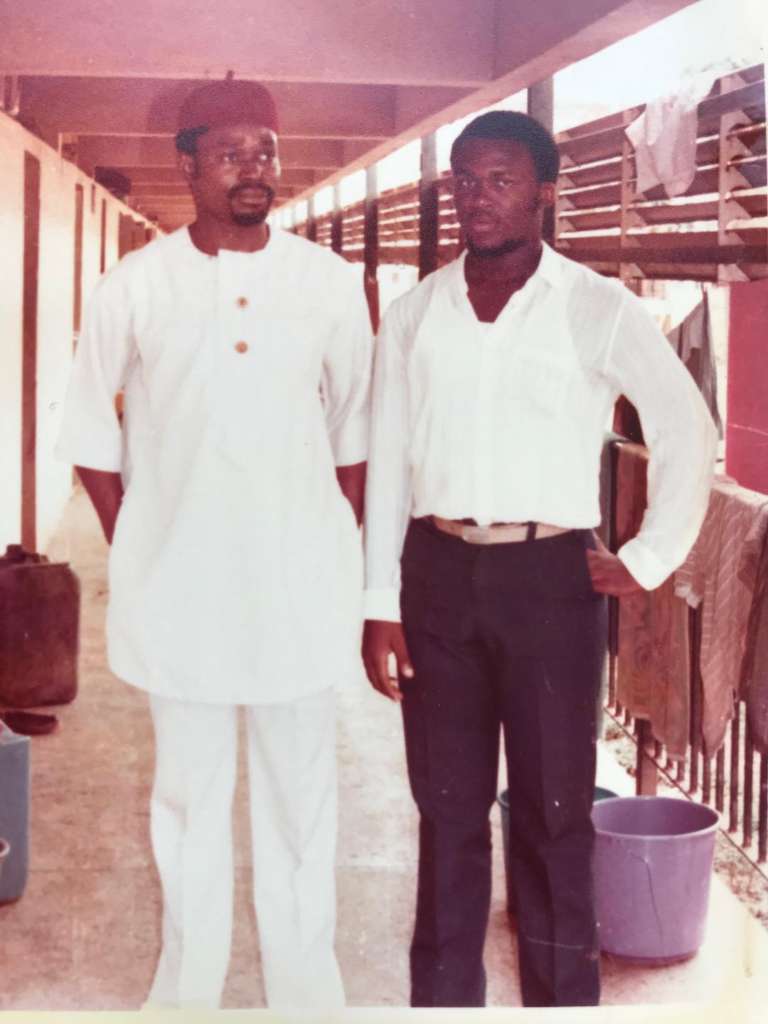
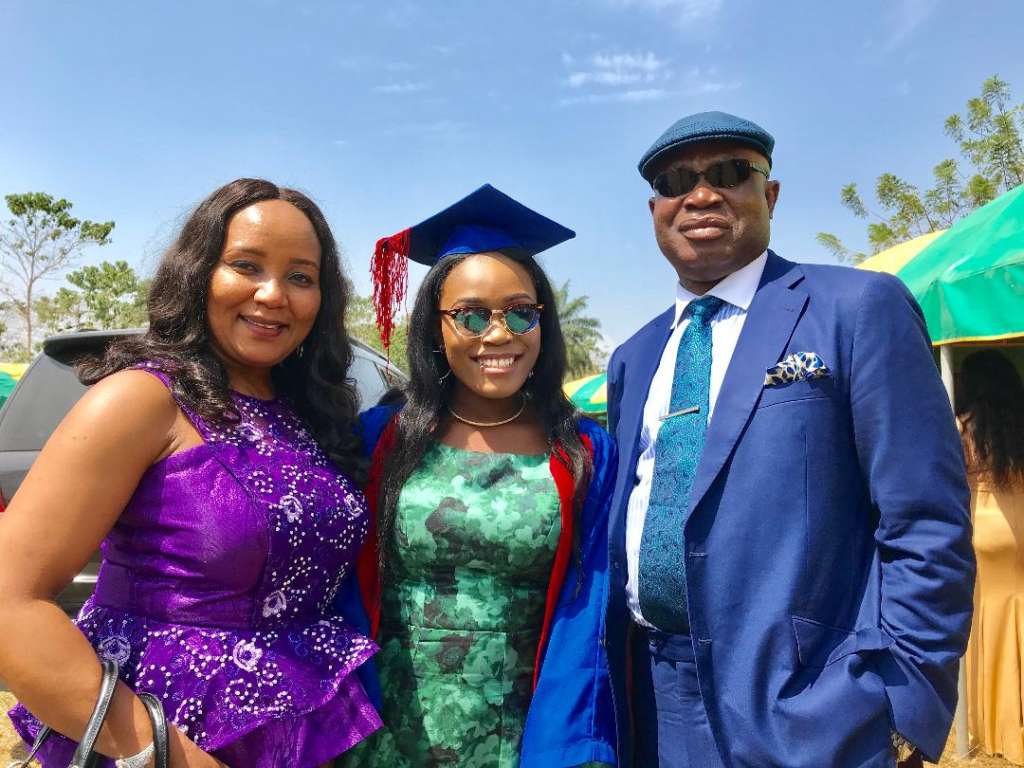
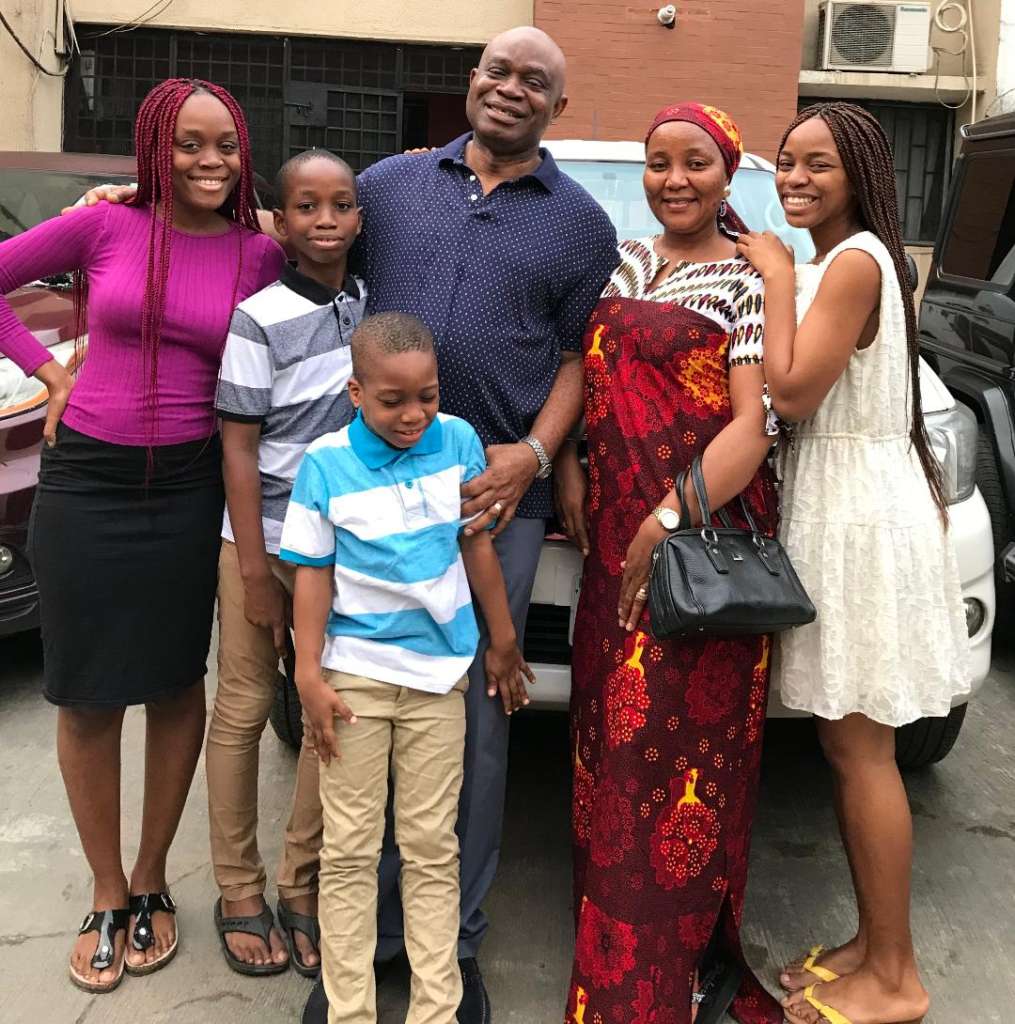
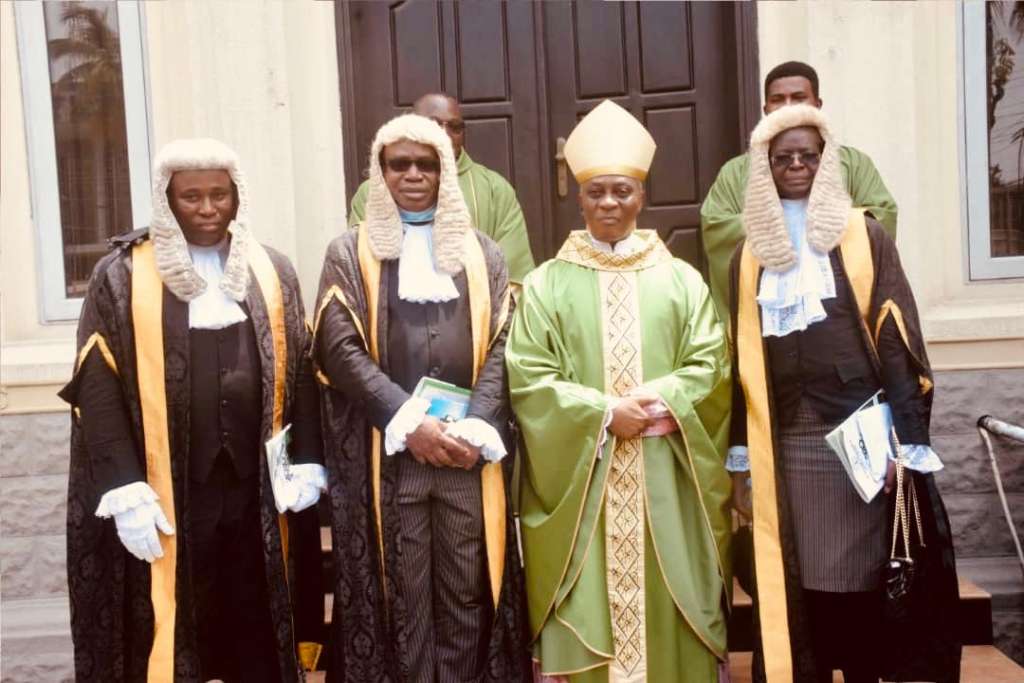
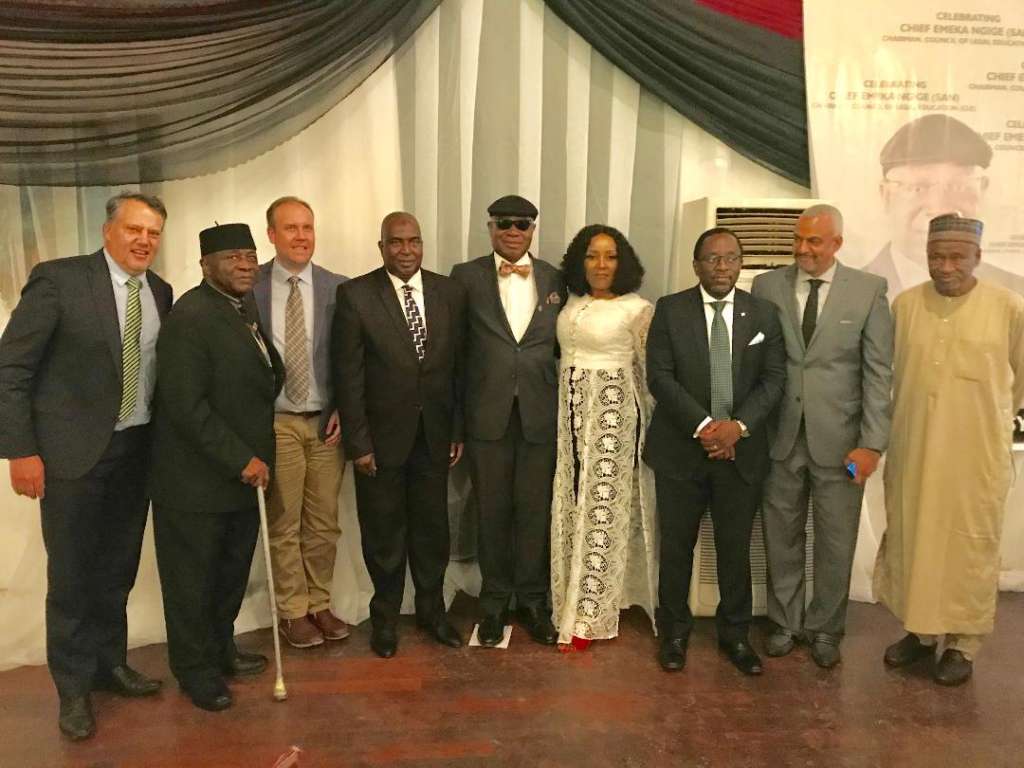
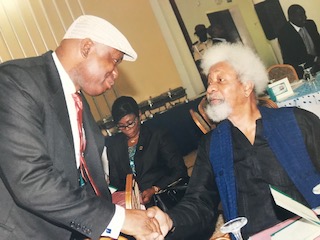
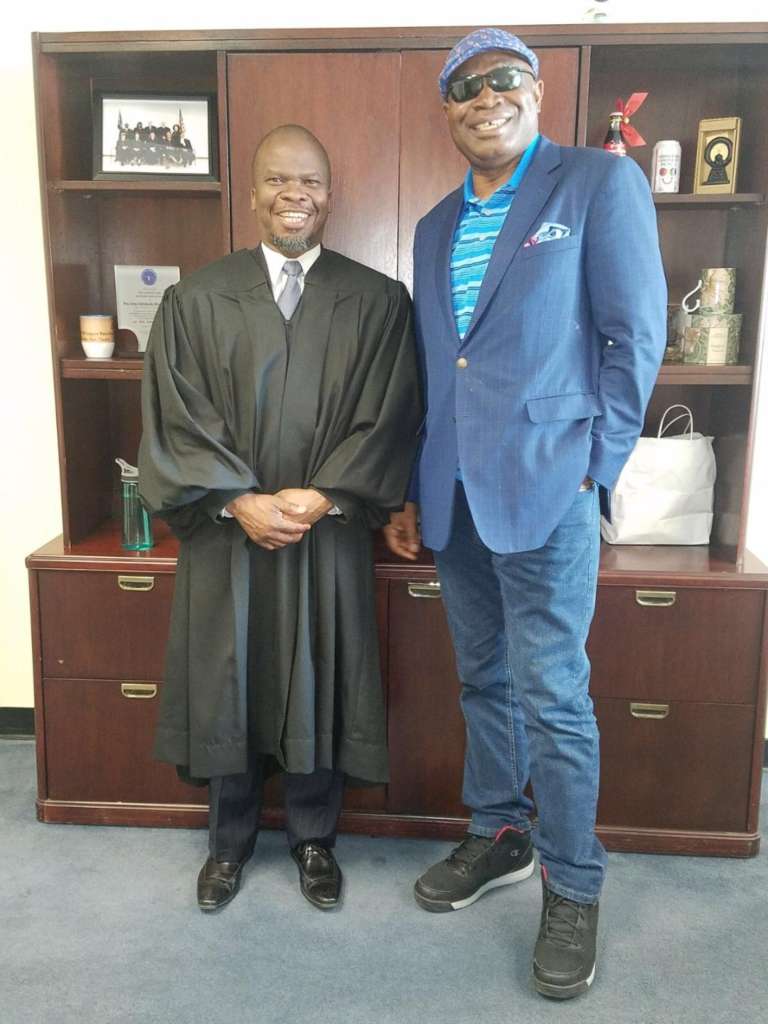
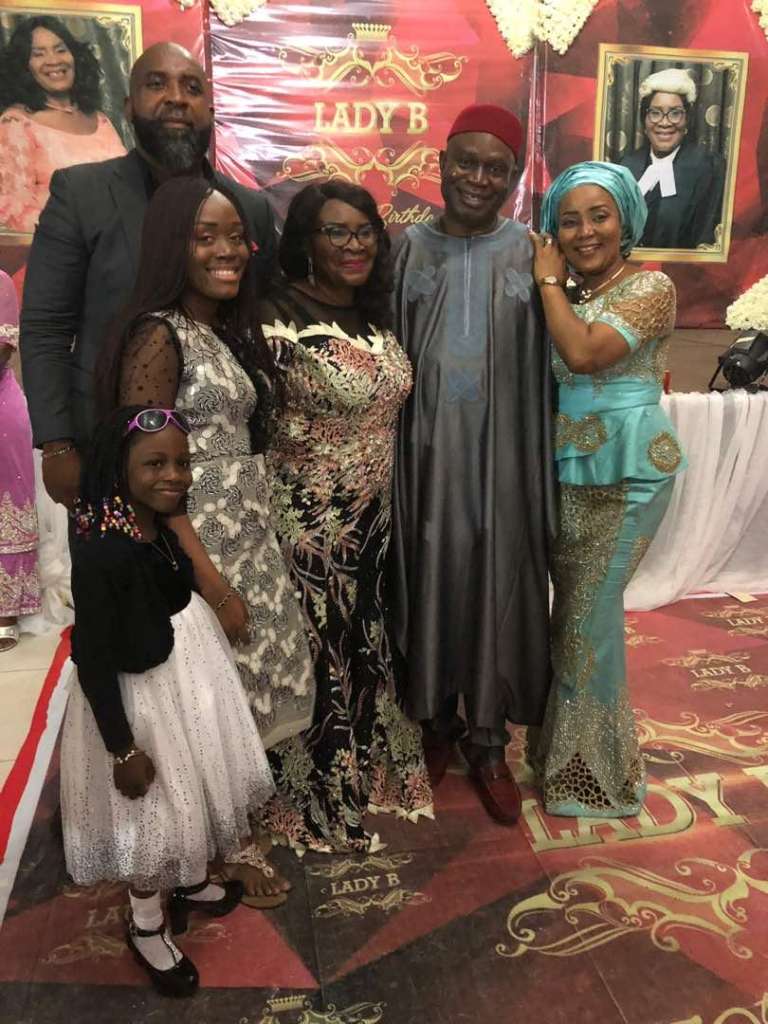
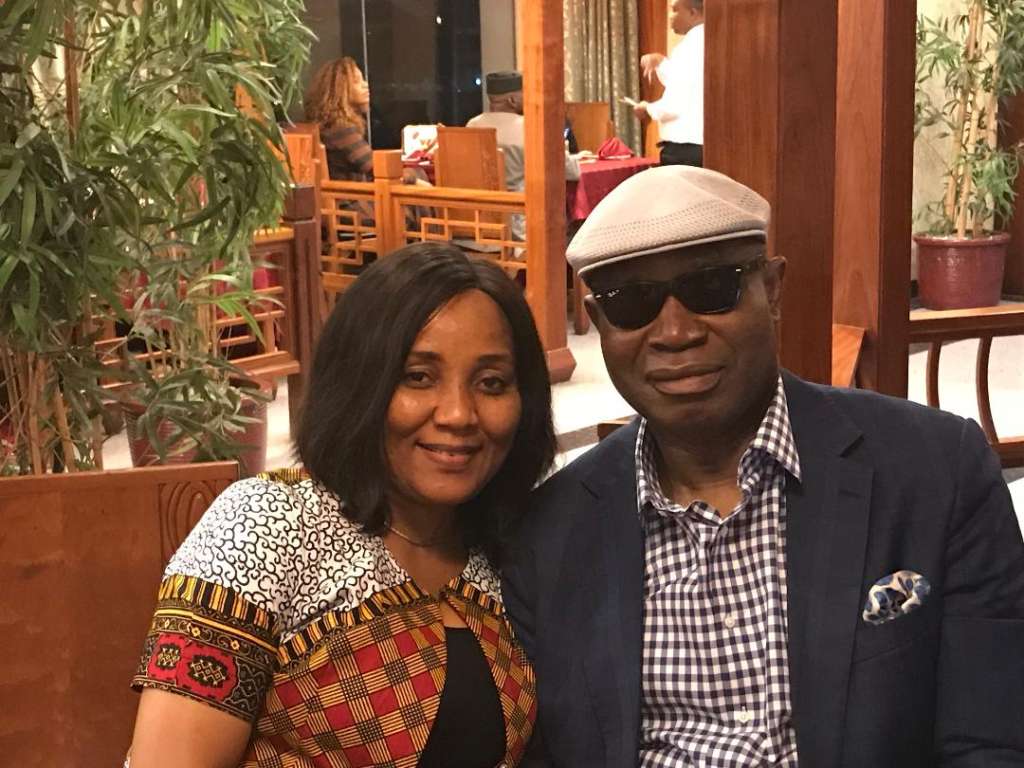
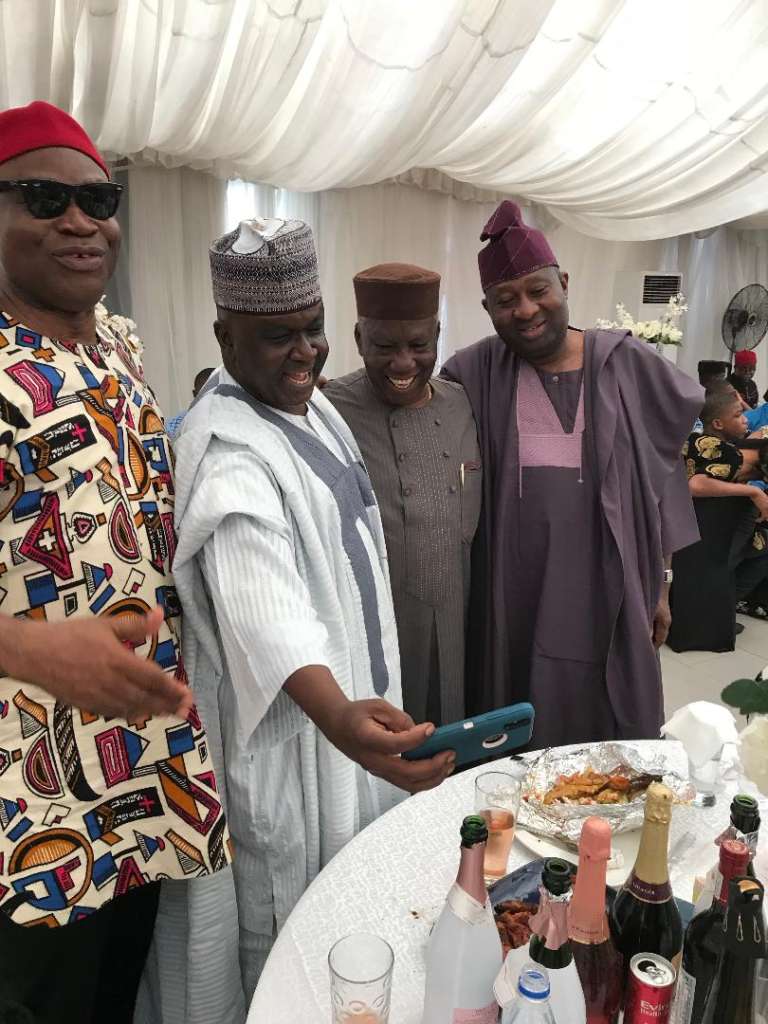
<!– /* Font Definitions */ @font-face {font-family:”Arial Unicode MS”; panose-1:2 11 6 4 2 2 2 2 2 4; mso-font-charset:128; mso-generic-font-family:swiss; mso-font-pitch:variable; mso-font-signature:-134238209 -371195905 63 0 4129279 0;} @font-face {font-family:”\@Arial Unicode MS”; panose-1:2 11 6 4 2 2 2 2 2 4; mso-font-charset:128; mso-generic-font-family:swiss; mso-font-pitch:variable; mso-font-signature:-134238209 -371195905 63 0 4129279 0;} /* Style Definitions */ p.MsoNormal, li.MsoNormal, div.MsoNormal {mso-style-unhide:no; mso-style-parent:””; margin:0cm; margin-bottom:.0001pt; mso-pagination:widow-orphan; font-size:12.0pt; font-family:”Times New Roman”,”serif”; mso-fareast-font-family:”Arial Unicode MS”; border:none; mso-ansi-language:EN-US; mso-fareast-language:EN-US;} .MsoChpDefault {mso-style-type:export-only; mso-default-props:yes; font-size:10.0pt; mso-ansi-font-size:10.0pt; mso-bidi-font-size:10.0pt; mso-fareast-font-family:”Arial Unicode MS”; border:none;} .MsoPapDefault {mso-style-type:export-only;} @page WordSection1 {size:612.0pt 792.0pt; margin:72.0pt 72.0pt 72.0pt 72.0pt; mso-header-margin:36.0pt; mso-footer-margin:36.0pt; mso-paper-source:0;} div.WordSection1 {page:WordSection1;} –> NYSC Akure Ondo StateAt the matriculation ceremony of our first daughter Chioma@ABUADDonald Nnaemeka Ngige and Chinualumogu AnthonyMary NgigeFamily photo after morning mass July 2019Group photograph Airpeace Board of DirectorsWith His Grace Arcbishop Adewale Martins and other brothers @NACL new legal year mass 2020Ngige, wife and special guests that attended a reception in honour as Chairman Council of Legal EducationWith Nobel Laureate, Prof Wole Soyinka@an eventWith elder statesman and Adazie of Obosi, Chief Emeka Anyaoku CFRThe Ngiges with Ms Funke Aboyade SAN at an eventWith dad Chief Pius Ngige and elder brother, Chief Eddy Ngige, during Ozo taking ceremony 2006With siblings, cousins and their wives@ Houston USAWith sister Lady B and cousin, Emeka OkaforWith call mate and friend -Judge Adetokunbo Fasanya @ Family Court Manhattan New YorkWith Hon AGF and other members of Class of 1985 NLS, Abuja reunion 2018Birds of a feather! Ikemba with Chief Aduroja SAN and Wale Adesokan,SANWith immediate boss, Mr Seyi Sowemimo SAN, Secretary Body of SANs at one of its quarterly meetingsWith wife, sister, nephew and niecesWife, Ogoo Ngige and husbandWith the Chief Judge of Anambra State , Umeadi CJ ( as he then was) at new legal ceremony at AwkaEmeka Ngige, Ricky Tarfa SAN, Zik Obi and the late Segun OdubelaThe NgigesWith Mrs Adenola and Mike Ozekhome SAN
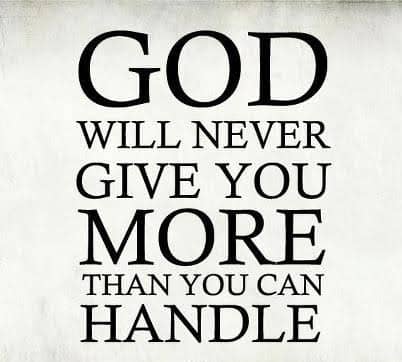
The temptations in your life are no different from what others experience. And God is faithful. He will not allow the temptation to be more than you can stand. When you are tempted, he will show you a way out so that you can endure” – 1Cor.10:13, NLT
“Lord, this is too much for one man, I can’t handle it”. “Why me, Lord, and why now?” Ever felt like this or heard someone lamenting this way?
The challenges and pressures of life can bring us to such moments of despair. Only a proper glimpse of God’s love and grace can bring us the right answers and needed comfort.
The trials we face are measured, God tags them our capacity to bear*. His grace is always commensurate with our challenges. And our Father times them just right, accept to His will and purpose – 2Cor.12:19; 1Pet.5:10
So, whenever the tides and storms of life come raging, we must remember that, in His love, mercy and faithfulness, our Lord God allows trials for our good and in the measure we can handle.
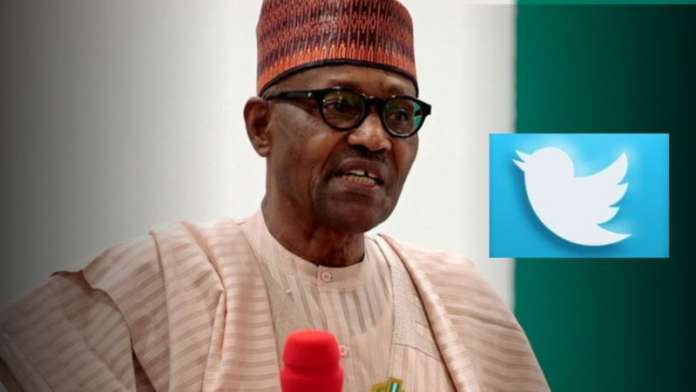
Over time, President Muhammadu Buhari has proved to Nigerians that he does not just rule with a high dose of mediocrity, but does not understand the gravitas and importance of national issues, thereby leading him to doing the wrong things at the wrong time, or not doing anything at all.
Such crappy leadership has become his signature moves. He did it during his malevolent rule as the Military Head of State between 1983 and 1985; and till today, his mediocrity reigns supreme. The current Twitter ban exemplifies the President’s misplacement of priorities.
On Saturday, June 5, 2021, the Buhari-led government put an indefinite ban on Twitter after the social media platform deleted tweets made by President Buhari where he warned the Igbo people of a reoccurrence of the 1967 Biafran if the spate of violence and insecurity ravaging the South-Eastern Nigeria, a geo-political zone mostly populated by the Igbo, is not terminated.
Buhari held the the recently arrested Nnamdi Kanu, leader of the proscribed the Indigenous Peoples of Biafra, IPOB, as responsible for the senseless violence in the region.
Unfortunately, the Twitter ban is a wrong decision taken at the worst possible time in our nation’s history. Twitter has more benefits to Nigerians than disadvantages, and now the Nigerian government has begun to experience the negative effects of this ban.
To start with, Twitter is a significant booster to the Nigerian economy as millions of Nigerians gain income through it. Many Nigerians who have businesses that offer catering services, car sales, cloth sales, etc., have been hit hard by the ban, as the platform is where they meet their customers with ease.
Fintech companies such as Piggyvest and Interswitch, which use Twitter to communicate to customers, are at a big loss. There is also a popular trend in Nigeria where popular Twitter users, called “influencers” are paid by brands to promote their goods and services and earn a decent living.
Currently, some of them can now be categorised as jobless. All these will lead to increase in the already high unemployment rate and choking inflation in the country.
Netblocks, an online service that tracks Internet governance estimated that Nigeria lost N2 billion (Naira) in the first 24 hours of the ban, and the country continues to lose $250,000 every hour since the start of the ban. These are bad numbers and unhealthy for a struggling economy like ours.
Hence, it is advisable that government should jettison its pride and lift the ban as soon as possible, if the economic activities are to get better in the interest of all and sundry. Apart from being an economic driver of a sort, Twitter also has a sentimental value.
It is like utopia to some Nigerians, as the microblogging site is a place where people who have been cheated by the system can laugh and forget about their woes by simply reading a few funny tweets. It is where football fans can have the biggest laughs by bantering with one another.
Let’s even imagine for a minute that Twitter is harmful to Nigerians. Are there not more important national issues and challenges that need this level of energy and focus by the government? Unemployment, exchange rate, inflation, and the rising debt size are far more paramount issues to tackle than looking for a way to settle the rift between the President and Twitter. This is not to mention the intractable security challenges of kidnapping and armed banditry.
Now let’s take a look at the comparison of the handling of issues when President Goodluck Jonathan left power and how they are now. Unemployment rate in the previous government was 8.2%, now it is 33%, the Dollar to Naira rate was at 198, now it is over 450. Price of petrol was 87 naira, now it is 162 Naira.
The worst of all is the inflation rate has risen by almost 10℅ since the last administration left power. To put the icing on this very depressing looking cake, according to Nigeria’s Debt Management Office, DMO, her public debt sits at over $86 billion.
It is also interesting to know that not enough efforts have been made to make those issues become things of the past. However, when it comes to banning Twitter, the Buhari-led government can boast of having more work rate than French Footballer, Ngolo Kante. The ironic thing is that the President has not still placed a ban on the open grazing of cows, even though it has led to the deaths of many Nigerians, WHAT A CARING PRESIDENT!
The current Twitter ban and the Decree 4 of 1984, which was enacted by Buhari and is considered as one of the most repressive laws in Nigeria’s history, have confirmed three things. Firstly, Buhari is the same yesterday, today and forever. Secondly, a former Head of State should not be allowed to rule Nigeria as they are averse to freedom. Thirdly, this administration is very hypocritical as the same Twitter that served as a massive tool for it in both of its triumphs in the last presidential elections has become a tool to be banned.
Conclusively, I hope that the ban is lifted, but I must still stress that President Buhari should have never been voted into power, as his military background and history of tyranny in office could not be wished away so easily.
I urge Nigerians to continue to find legal means of voicing out their complaints so that the government can work on them. We also need to persevere as these are the last two years of this administration and hopefully, they are better than the previous six.
Most importantly, we must critically analyse future presidential candidates so that we would not make the mistake of voting for a President who lacks articulation, and is described by the vast majority as “lifeless”.
The media naturally should serve only the public interest. What determines ‘’public interest’’ may be amorphous, but safety and security are principal elements of communal interest. The security of the nation and its people can be said to be a staple of shared interests. Therefore, national interest is a subset of public interest. To serve the public interest is to preserve the nation’s interest and security.
Nigeria’s constitution delineates the place of the media in the country. Section 22, chapter 2 of the canon says: ‘’The press, radio, television and other agencies of the mass media shall at all times be free to uphold the fundamental objectives contained in this chapter and uphold the responsibility and accountability of the government to the people.’’
Also, section 24 says: ‘’It shall be the duty of every citizen to – (a) abide by this constitution, respect its ideals and its institutions, the national flag, the national anthem, the national pledge, and legitimate authorities; (b) help to enhance the power, prestige and good name of Nigeria, defend Nigeria…’’
It is clear here that as media practitioners and citizens our duty is to the country and its people – ‘’holding the government to account and enhancing the power, prestige and good name of Nigeria’’.
Service to Nigeria is not a favour or obeisance to the government. Government will come and go, but Nigeria remains. Service to Nigeria is a duty to its people. Love for country is not lust for government, and loyalty to country is not servitude to government. Are we really doing our bounden duty as citizens and as seekers and keepers of the truth?
The Nigerian media is one that is somewhat politically governed. Some media organisations are owned by politically-exposed persons who are in different political parties. These media organisations are sometimes deployed to fight political battles, compromising the sanctity of information. Whose interest will these agencies naturally serve, their patron’s or Nigeria’s? This is the dilemma.
I shudder when I hear the statements of some political leaders and self-canonised activists – utterances belched from the bowels of prejudice and malice. But I am distressed when I find these blighted comments, which are capable of inciting violence, on the front pages or top corners of news publications. Everyone deserves to be heard, but can we modulate the outcome and concomitants of a potentially combustible statement? Is not judicious to control it from the source?
I recall the statements of Sunday Igboho which set off attacks on the Fulani in Igangan, Oyo state. These statements were given prominence in the media and Igboho was reported as an ‘’activist and youth leader’’ by a section of the media, ignoring his antecedents, and the precedent of his actions.
I understand the argument that the comments would have rippled on social media, regardless of whether it was published by the popular media. But the media as an agency of truth adds legitimacy to whatever is said. By reporting ‘’hate speech’’, the media cannot insulate itself from the collateral impact of bigotry.
Personally, I am of the view that voices of discord and anarchy should be muted. In the West, people who make homophobic, racist and sexist comments are de-platformed – shut out of the media. But why do we here give our platforms to anarchists and bigots?
Also, there seems to be a preponderance of negative news. This is understandable considering its “market value’’. But as John Momoh, Channels TV CEO, advised in a paper he delivered at the National Defence College in 2016: “The media should avoid getting carried away by overstating negative news while under reporting positive developments’’.
In all, we cannot have a peaceful and secure country if we are remiss in our responsibility as gatekeepers. That Nigeria is still a going venture is largely because of the commitment of the media to the country’s unity.
We need to bond our voices as professionals for a united and progressive country. The military force cannot defeat insecurity without the ‘’national force’’ – which comprises the civil population. As Barack Obama said: “We cannot continue to rely on our military in order to achieve the national security objectives that we have set. We have got to have civilian national security force that is just as powerful, just as strong.’’ Nigeria’s unity is under threat as well its peace. It is the responsibility of every citizen to defend it.
It is in commitment to my purpose and belief that I have convened an ideological group, ‘Journalists for United Nigeria (JUN)’; a think-factory for idealists who trust in the possibilities of a greater Nigeria. Nigeria can be better.
At this tempestuous moment, citizens need to rise up and pull our nose-diving country from a plunge to certain death. With great power, comes great responsibility.
Nigeria is ours to salvage.
More Nigerian journalists and citizens are welcome to join me on this cause.
By Chief Mike Ozekhome, SAN, OFR, FCIArb., LL.M, Ph.D, LL.D
INTRODUCTION
Sunday Adeyemo, better known as Sunday Igboho, a Yoruba rights activist has declared he will not be intimidated by the recent fresh attempt by the Department of State Services (DSS) to arrest him. He said any attempt to arrest him on Yorubaland will fail woefully. Nnamdi Kanu still in DSS custody, is as defiant as ever. He insists he has committed no offence known to law. But, Boko Haram and ISWAP reign supreme. Two faces of a government’s contradictions!
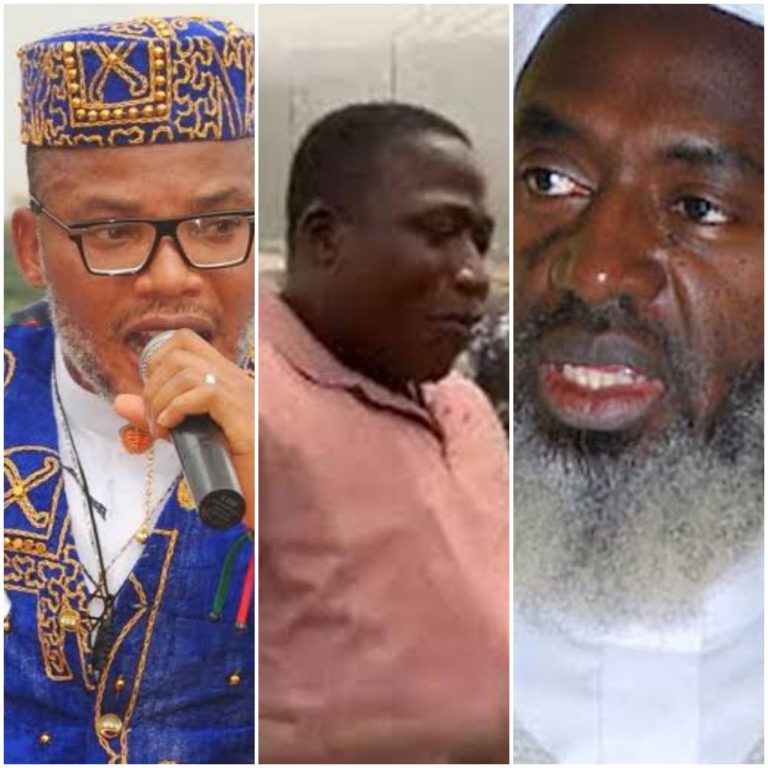
Igboho, a self-determination warlord agitating for the South-West region, had been in the news for serving quit notice on killer Fulani herdsmen terrorising some parts of the South-West, killing, maiming, raping and spreading terror like fertilizer on plants. Mr Igboho said he was never invited before the attempt to arrest him. He does not understand why he was being targeted. He advised the Federal Government to focus on capturing Boko Haram leader, Abubakar Shekau, and inviting Islamic cleric, Sheikh Ahmad Gumi, who has recently been meeting with bandits. Gumi negotiates ransome with terrorists! By the way, as we speak, over 120 kids of Bethel Baptist School are held in captivity by AK-47-wielding armed bandits in Kaduna. For those who do not know, Kaduna is the home to some of the most critical military institutions and installations in Nigeria. How they operate freely and seamlessly under the close watch of these National Security apparatchik should worry Nigerians. Wait for the egregious news: the bandits have now demanded from parents of the kidnapped school children, provision of food for the feeding of their children! According to one Madugu, they demanded for 20 bags of local rice; 10 bags of imported rice; 20 bags of beans; 10 cartons of maggi cubes; 10 kegs of vegetable oil; and 2 bags of salt! Can you imagine that?
Earlier, in April, 2021, Governor Abubakar Sani Bello of Niger state had confirmed that terrorists had displaced 3000 residents, seized wives; and hoisted flags of sovereignty in Kaure and Shiroro LGAd, just 140 kilometers to Abuja, the Nigerian seat of power. Only few days ago, armed bandits killed 52 in Kaduna and Zamfara. Before then, Boko Haram/ISWAP had announced to a bewildered Nation (not shocked, because we have since become unshockable) that they have appointed a Governor for parts of Borno state, by name Abba-Kaka. While accepting the undoubted leadership of Abu Musa Al Barnawi (son of Mohammed Yusuf, Boko Haram founder), the group named Abba-Kaka as Governor of Tumbumma, with jurisdiction over Marte, Abadam, Kukawa, Magumeri and other areas of the Lake Chad region. It is said that the APC Governor, Babagana Zulum, now controls 22 LGA’s, while the ISWAP controls 5 LGSs. Good gracious!
Setting up a full blown government with normal structures of a government within a sovereign Nigeria, the group was said to have appointed a separate leader, Baba Isa, to oversee taxation and revenue on fishing and farming activities. He was posted to Kangar in Abadam to relieve Abu Abdallah. Farmers and traders are to pay N5,000 monthly; while fishermen will now pay N2,000 per bag of fish, amongst others. Wait for it: the Interim Council introduced Mobile Courts and some polices to harmonise all insurgents groups and activities under the leadership of ISIS. Indeed, the group set up a Judiciary and appointed Ibn Umar as Chief Prosecutor. Abu Umama becomes the Amir of Tudun Wulgo, while Muhammed Maina is Commander of Sabon Tumbu.
Yet, in the midst of this apparent descent into a failed state where non-state actors have subdued a legitimate and elected government, the same Government (through its spokesperson, SSA to President Buhari on Media and Publicity, Garba Shehu), is “celebrating” and “congratulating” itself for its alleged “recent successes of security and intelligence agencies”? Do you know what these successes are? One, being handed over on a platter of gold, IPOB leader, Nnamdi Kanu, who had actually been literally kidnapped by Kenyan authorities. Two, the invasion in a most crude and Gestapo-like fashion, the quiet and peaceful house of Sunday Igboho, the Yoruba self-determination leader, whom the government termed a “militant ethnic sessionist”.
Then, the same spokesman boasted that any AK-47 wielding persons should be dealt with, since “assault weapons are not tools of peace loving people and as such, regardless of who they are and where they are from, the security Agencies should treat them all the same”.
Mr shehu, Nigerians have heard you loud and clear. Let charity begin at home. Let your government, with the same dexterity and alacrity, now go after the Boko Haram/ISWAP, who are not only carrying AK-47 riffles, but have actually challenged your government’s legitimacy and sovereignty, by setting up an alternate government in some parts of Nigeria. This government must stop pursuing butterflies while Nigeria’s entire edifice is on fire. It is incredible to behold this government beating its chest over the DSS’s crude invasion of the house of a citizen (as they did Supreme Court Judges on October 8, 2016). They did this without any prior notice, invitation, or bench warrant; killed some people in the process; and wasted some pussy cats. They even believed the biggest one amongst the cats must be Igboho, who had supernaturally “transformed” into the cat. For that reason, the cat, rather than being killed like others, was captured alive, arrested and detained. What a funny government! Nigerians are still waiting to know the outcome of the cat’s “interrogation” after DSS’s “investigations”! How did we have this free fall into a despicable state of nadir?
The last time I checked, none of the rallies so far organized by Sunday Igboho in his campaign for the Yoruba nation has ever turned violent. Nor has he been implicated in illegal activities.
Section 39(1) of the 1999 Constitution provides that “every person shall be entitled to freedom of expression, including freedom to hold opinions and to receive; impart information without interference”. Section 40 provides “every person shall be entitled to assemble freely and associate with other persons”. This government swore to defend the Constitution.
Nnamdi Kanu on the other hand, had escaped abroad from Nigeria when his house in Afaraukwu, umuahia, Abia State, was savagely invaded by men of the Nigerian Army on September 14, 2017, killing many defenceless and unarmed citizens suspected to be IPOB sympathisers. He was then on court’s bail over allegations of treasonable felony. The Army’s tendentious defence was that it was on a military exercise in the South East, tagged “Operation Python Dance 2”. This python appears only to selectively “dance” in the South East, South West and Middle Belt. Criminal elements and even the 3rd and 4th declared most dangerous terrorist groups in the world (ISWAP and Boko Haram) are exempted from this dance. What a country!
“The act of a combined team of soldiers, DSS and Police, numbering about 40 attempting to arrest and detain Sunday Adeniyi Adeyemo Igboho was too much in the form of a kidnap attempt. Igboho was said to have been waylaid along Ibadan/Lagos Expressway whilst on his way to see Pa Ayo Adebanjo in Lagos. It was totally and absolutely unnecessary. A government exists to protect its citizens, not to terrorise them. If the government believed that Sunday Igboho had committed an offence, the best route would have been to simply send him an invitation to report to a Police station for interrogation.
“If the security agents felt there were any internal security issues or breach of the law, they should have invited him to the DSS or Police office. It became therefore totally absurd that a whole security armada like soldiers, the Police and the DSS will waylay an innocent Nigerian citizen in a commando-like manner and attempt to abduct him. At least, Nigerians have not been told he has committed an offence, or what offence, if any.
“What if Sunday Igboho and his handlers had felt they were being kidnapped and responded with a shootout? There would have been unnecessary mayhem and loss of lives because of the indecent and incongruous manner and way the attempted arrest was carried out.
“What the government does not still seem to understand is that because it has failed to give security and welfare to the Nigerian people as provided for in Section 14 of the 1999 Constitution, ethnic nationalism is fast rising in a way that ethnic groups and the various nationalities in the Nigerian contraption have begun to feel that they need to go the extra mile to protect themselves from ravaging insecurity. That is why I always ask, who is advising this government?
“The present ravaging insecurity is what led to the emergence of Amotekun, in the South West and the Eastern Security Network in the South East. There have also mushroomed various local policing militias across the country. It is the failure of the government to provide security that is at the root cause of these defensive measures.
“Someone needs to drum it to the ears of this government that the young man with a tattooed face that proudly displays his tribal marks is no longer an ordinary “small boy” representing himself alone. He has become a metaphor for the Yoruba struggle for self-determination. At least, if you are not giving us self-determination, do not kill us in our homes and farms, the young man seems to be yearning on behalf of the Yoruba race.
“Sunday Igboho is no longer ordinary. He is the equivalent of IPOB’s Nnamdi Kanu for the Igbos. He came out from nowhere to become the voice of the voiceless. He wears the new face of the Yoruba struggle for emancipation. The earlier this government understands this, the better for everybody…”
“This government is too jerky. It embraces too much fire brigade approach to issues. That is the danger in it. The government must know that if they had killed Sunday Igboho yesterday, may be with a stray bullet, or by mistake, or deliberately, I don’t think Nigeria would have been having a nice weekend today.
The government should understand this. Let them understand that there is anger, despondency. There is fear across the country; fear of death, fear of fear. So, they (the DSS and the Police) should never attempt to do what they did yesterday (Friday) so as not to trigger unnecessary national hoopla, national insurrection, national commotion, and national brouhaha. I have said my own.”
AND THIS
CRACK YOUR RIBS
“Na lack of trust make us de write exam… if not u teach and ask do I understand, I said yes so wetin carry exam come again” – Anonymous.
“If you’re living in Nigeria and your BP is normal, you’re not normal” – Anonymous.
THOUGHT FOR THE WEEK
“It was once said that the moral test of government is how that government treats those who are in the dawn of life, the children; those who are in the twilight of life, the elderly; and those who are in the shadows of life, the sick, the needy and the handicapped.” (Hubert H. Humphrey).
LAST LINE
God bless my numerous global readers for always keeping fate with the Sunday Sermon on the Mount of the Nigerian Project, by humble me, Chief Mike Ozekhome, SAN, OFR, FCIArb., LL.M, Ph.D, LL.D. kindly, come with me to next week’s exciting dissertation.
Southern governors last week rose from their second-ever meeting with a communique sounding more like one by Niger Delta militants in their heydays. While some of their conclusions are in the national interest, some smack of arm twisting and blackmail.
For instance, their position on the removal of electronic transmission of election results from the electoral act is spot on. For us to further develop our democracy, one area that needs upgrading is our electoral system, especially in the method of voting, counting, transmission, collation, and even announcement of election results. Agreed, ours is a nation that a myriad of problems hampers its elections. Chief among them is epileptic power supply, poor communications network, poor road network, etc., however, by having the resolve to get our elections right, we will develop the will to straighten out all these aberrations.
Another plus is their re-affirmation and commitment to the unity of Nigeria “on the pillars of equity, fairness, justice, progress and peaceful co-existence between and amongst its people.”
However, a contradiction is in their calling for a commitment to the politics of equity and fairness but in the same breath “unanimously” demanding that “the presidency of Nigeria rotates between Southern and Northern Nigeria and resolved that the next president of Nigeria should emerge from the Southern Region.”
The problem with the southern governors has much to do with their hurry to appease brigands. It is not much to do with the importance of having a stable nation. They fear hoodlums who call for anarchy have taken people away from them. To fight to snatch back their followership, they have to swim with the tide. And that means fighting the imaginary northern enemy with Fulani as the fall guy.
The danger here is that to jump in front of a rowdy, unreasoning crowd that has fallen in love with conspiracy theories and prefers to believe the mischievous, you must feed them more sinister lies since what fuels their existence are falsehoods.
So, to achieve that, the governors have to out-kanu Kanu and outshine Igboho in their recruitment methods, and that demands the ‘kanunisation’ and ‘igbohonisation’ of their worldview. They are only smart by half, falling short of calling for secession but giving conditions for remaining in the union. They cannot support secession because their authority is courtesy of Nigeria.
But southern governors became governors not through demanding for it but through a free choice exercised by the electorate. Supposedly, anyway. To now turn around and “demand” to be given the presidency points at their democratic credentials or the lack of it.
They have jettisoned the “equity, fairness and justice” they mouthed on the altar of feeding the insatiable greed of those they want to bring back to their beck and call. From 1999 to 2023, the South has presided over Nigeria for 14 years and the North for 10. By this, who is now showing to the world that they were “born to rule”?
Perhaps new to the game of regional governors gathering and so, playing catch-up, they are in a hurry to stamp their presence and let their people believe they are in the game. But they lost it at the starting line and may need to go back to the drawing board.
A major problem the South has is how it underestimates the North. Their minders have led a majority of them to believe that the northerner is an unschooled moron who only progresses through connections. Despite northerners that became billionaires by dint of hard work, intellectuals that have pushed the frontiers of scholarship, leaders that have provided impeccable administrations to great applause and politicians that rose like the colossus to dominate their environments, the average southerner still gets bamboozled – and envious – by the way the northerner dictates what goes where.
But a pertinent question to ask is, why do people kick against federal character yet want a position zoned, rotated or surrendered to them? If they are as intelligent and educated as they think they are, then they should know that politics is all about bridge-building, consensus and give and take.
However, in their confusion, despite their belief in the superiority of their intelligence, they take Nnamdi Kanu and Sunday Igboho as heroes. Some even believe they are comparable to Sheikh Gumi. A Methodist Bishop ridiculously said that he will stand by Kanu as long as “northerners stand by Pantami and Gumi”. A known southern columnist, too, wrote on how Kanu and Igboho were arrested while Gumi “had a slap on the wrist.”
What they refuse to accept is the fact that Kanu is a terrorist in the class of Shekau. A fugitive from justice having jumped bail while standing trial in a court of competent jurisdiction. He instigated people to kill through electronic messages the way Shekau did. He calls for the Balkanisation of the country. Perhaps being a second-class British citizen, he sees Nigeria as a “zoo” and Nigerians as animals. His gullible followers, Nigerians through and through, accept being animals in a country that is a zoo.
Maybe because most of his followers are those frustrated with their lives, they find solace in living in utopia. They claim they are Jews. Laughable as it was, with no historical or biological evidence to support the phantasmagoric claim, they do not know nor do they seek to know the history of the Ethiopian Jews. The Ethiopian Jews, who are immigrants and descendants of the immigrants from Beta Israel, called the Falashas (Falash Mura), trace their history back to 325 CE when Ezana became the emperor of Axum.
And even with this rich and ancient history, the real Jews did a DNA test to confirm their Jewishness. They studied samples from Falasha Jews and Ethiopians with the Y-chromosome-specific DNA probe to screen for TaqI restriction polymorphisms and haplotypes. Two haplotypes (V and XI) are the most widespread in Falashas and Ethiopians, representing about 70% of the total number of haplotypes in Ethiopia. Because in the Falasha population the Jewish haplotypes VII and VIII are not present, they concluded the Falasha people descended from ancient inhabitants of Ethiopia who converted to Judaism. Therefore, they do not have the same rights as the real Jews in Israel.
So, just because you wake up in a state of hallucination, start wearing the Jewish kippah or yarmulke (also called kappel or skullcap), drape over your shoulders their tallit and hold their tzitzit (rosary) and call yourself a Jew does not make you one just as speaking through the nose and decking yourself in a three-piece suit does not make you a white man. Claiming to be them and calling your country a zoo will not also make Netanyahu come to your aid when caught by nemesis. He does not even know you exist. The world sees you for what you are: a madman. No wonder one of his incoherent phrases that his demented followers love parroting is “mad people everywhere”, not knowing it is about them.
The major difference between northern governors and southern governors is that at no time have northern governors supported Boko Haram insurgents. But the southern governors are always beholden to rabble-rousers from among their dregs.
We cannot compare Kanu to Gumi because at no time did Gumi take up arms against the state or instigate anyone to kill anybody. While Gumi goes into the strongholds of bandits, calling on them to renounce banditry, Igboho took it upon himself to uproot people from their bases on spurious excuses.
For too long have we allowed sentiments to guide our utterances and actions. It is a favourable time to treat the other person without undue regard to his tribe, region or religion but based on their humanity.
We all know who we are and where we came from. Like it or not, Nigeria is our country and we have no other. None of us here can go wherever our fancy tells us we came from and get accepted as a citizen. But come to think of it, are we not all one when we go back to Adam and Eve? Let us join hands with one another, speak the truth, see the good in each other and take our country a notch higher. We owe it as a duty to bequeath to our children and the children of their children a better and more peaceful nation than we have now.
I would like to return to my September, 2019 piece titled, ‘Why Buhari is Man of the Decade’ to strengthen my argument today that our President, Muhammadu Buhari deserves more respect than we have accorded him so far. I think the legend from Daura deserves to be publicly acknowledged and respected, especially by garrulous politicians and dealers from the southern parts who call themselves leaders.
Specifically, the taciturn and lanky General should be honoured and enrolled in a ‘Hall of Fame’ as a ‘Significant Servant of His People’. In contrast, all the Civil Society Organisations (CSOs) and the Office of the Citizen should at the same time honour and enroll all southern politicians, notably the federal legislators from the South, in a ‘Hall of Shame’ for ‘Sleeping on Duty, Absenteeism, Gross Dereliction of Responsibility to their people’.
Before the young ones start asking about the context of the south, I mean all national assembly representatives from southwest, south-south, southeast states who didn’t know when the controversial Petroleum Industry Bill (PIB) was re-drafted to contain what the organic oil-bearing communities from the south are angry about.
There are some basic questions they need to answer to their people. The first question is: how many of them actually participated in drafting the toxic PIB? How many of them indeed read through the draft before the passage? Did they see the obnoxious insertions and keep quiet? Why did they (all southern legislators) wait till the vote on passage before raising their unclean hands for division? Let’s keep other questions so that we can discuss the expediency of giving honour to whom honour is due: our president who told us on May 29, 2015: ‘I belong to nobody…’
You will recall my serial titled, ‘Why Buhari Is Man of the Decade’ beginning from September 15, 2018, in which I had then stated clearly that most of us denied our president, Buhari some credi t he richly deserved. I wrote partly then:
‘…I mean that the taciturn, lanky General and President of the most populous black nation on earth at this time deserves some respect even as some of us wailers keep saying he didn’t go to school. Buhari just like Winston Churchill, who was to be later recognised as an incomparable, world-class orator, didn’t go far in acquiring many higher certificates of knowledge. But I think our leader should be respected as an oracle at this juncture. As I was saying here, orators speak the minds of the people while oracles speak the minds of the gods and when they say to even the orators, ‘do this’, it is done…
It seems to me here that most of all educated people, especially in the southern parts of the country assume we are very educated as professors and members of the power elite. We are orators. We are wealthy and loquacious professionals. We are senior advocates, veteran journalists, erudite analysts, world-class scholars and all. But it now seems to me that we actually lack understanding of the times. It appears to me that despite our scholarship, we lack wisdom to frame winning strategy (I didn’t say development strategy). You have to win first to do that. In our crass ignorance, we went to town and court to proclaim everywhere that ‘Buhari is clueless. Buhari is uneducated. Buhari has fake school certificates. Buhari is braindead. Buhari can’t speak good English clearly….’
I had then added this construct: As I make progress in my pilgrimage (apology to John Bunyan) to meet with my creator someday, I have been making inquiries on how to finish well and strong. So, I am beginning to understand that the best (spiritual) gift a man can get from the God of all grace is discernment. And that is why it has been revealed to mankind that ‘where there is no vision, the people perish’. And this background has shaped my conviction that most of us have perished in our expectations for lack of understanding of the man Buhari who can vaunt today that: ‘I came to Nigeria’s political beat, saw and conquered while even the most educated citizens dozed off’. Are we awake?
In Buhari-APC’s Nigeria, despite the complex and delicate diversity, the heads of all the three arms of government hail from the North East and North West and they are all Muslims. Where were the APC leaders from the South when the powers in Abuja moved against the only Christian, the then CJN, Justice Walter Onnoghen and removed him without recourse to constitutional provisions on how he could be removed? Before the 2019 presidential election, what did the vice president, (Chrsitian) from the South, and a professor of law of evidence tell the president and his men, notably, the Attorney-General of the Federation, the chairman of the Code of Conduct Bureau, Code of Conduct Tribunal, the prosecutor from Kano and indeed APC leaders about the implications of removing the Chief Justice of Nigeria, the only Christian in the three arms of government through an Administrative Tribunal headed by a non-judicial officer who is also from the north and a Muslim? What effort can we recall that the APC leaders from the South intensify to forestall the grave implications of the perception that will drive power sharing politics/#project 2023 that there is a northern hidden plan nurtured by Islamisation, which is already threatening peace and stability of Nigeria?
More important, we need to ask APC and PDP leaders from the South some questions – on the consequences of their politicking since Buhari assumed office in 2015. We need some introspection too on where the rains began to beat us. What we now see didn’t begin yesterday. First, where were the APC politicians from the south when our leader we call ‘clueless’ Buhari began to implement what we now see as ‘northernisation and Islamisation strategy? I don’t believe in Fulanisation conspiracy theory as Farooq Kperogi already addressed the fallacy of that classification (most of the appointees we call Fulani are not, after all). Where were our representatives from the South on the platform of APC hibernating when the ‘uneducated’ Buhari’ filled all the security, intelligence and defence positions with officers mostly from the core north, (West and East)? Have the APC party chiefs from the South ever asked the president and his men why the National Security Adviser, (NSA), the Defence Minister, the DG, DSS, DG, NIA, IGP, Police Affairs Minister, Chief of Army Staff, Chief of Naval Staff, are all from the North East and North West and none from the North Central where Christians are dominant?
Do the southern leaders on the platform of the APC ever ask the presidency why the heads of ministries and agencies of most critical sectors such as Education, Aviation, Ports/Maritime agencies, EFCC, NFIU, hail from the North and are all Muslims? Have they ever considered the implications of the fact that all heads of Customs, Immigration and Prisons (Correctional Centres) hail from far North and are all Muslims? Where were the leaders of the APC from the South when the Senate President who hails from Yobe State nominated another Yobe citizen to head the National Assembly Service Commission? Why didn’t members of the same Assembly from the South shout, Mr. President of the Senate, there is a federal character in the constitution? Why didn’t they ask for the portion for their people? When the Attorney General of the Federation who hails from Kebbi state nominated an officer from Kebbi state to be EFCC Chairman recently, how many senators from the South raised questions that apart from ICPC, all other anti-corruption agencies, Code of Conduct Bureau, Code of Conduct Tribunal, EFCC, NFIU are all headed by officers from the North West and North East alone and they are all Muslims? How many representatives from the three regions of the South have asked questions about the implications of excluding Christians, specifically from most critical institutions in Nigeria? Why haven’t the APC leaders from the South asked some party leaders who are close to the president to inform him that he (the president) has remarkably alienated the South and Christians from the government of Nigeria and thus driven the country to the brink? Do these leaders know that no matter how good some officers have been, the circumstances of their appointments will continue to be a source of alienation and feeling of self-determination?
Where are the original leaders of APC from the South who threw their weight behind the victory of President Buhari in 2015? Why haven’t they met our leader quietly about the implications of Citizen Leah Sharibu’s continued suffering in the custody of the wicked ones in an unknown forest- for the fourth year running?
What about the remaining Chibok girls? Besides, did anyone ever remind our leaders that people are also whispering about the fact that the two Nigerian principal diplomats at the United Nations, the Deputy Secretary General of the United Nations and Nigeria’s Permanent Representative at the United Nations hail from the same core North and are Muslims? Here is the thing, it is bad that the Buhari presidency has driven even some Muslims from the North including Dangiwa Umar, former Governor of Kaduna state (from the Caliphate) to be talking of how our president has mismanaged our delicate but beautiful diversity. But then, we are in a democracy, where the right to express our dissatisfaction can’t be legislated against. Yes, it is good that we are making some noise about what the National Assembly and the presidency have made of the Petroleum Industry Bill (PIB). It also makes a good reading to complain about how Buhari has mismanaged our diversity and all that. But it is quite relevant too to ask our leaders from the South efforts they have made to prevent the clear and present danger all of us are facing. For me, I would like to leave president Buhari alone. He will be hailed in the end by his own people as a ‘Man of the Century’. I want to ask our representatives from the South in Abuja where they were when things began to fall apart. Again, where were they when the PIB was being tampered with? The answers to these vital questions should not blow in the wind.
At 36 he was already on the High Court Bench. At 41 he was at the Federal Court of Appeal, as it was then called. By the time he turned 43 he’d made it to the Supreme Court and earned the nickname “baby of the court.” He would eventually serve for 27 years, out of which he was Chief Justice of Nigeria for 11 years. Having attained the statutory retirement age of 70 for appellate court judges with a little over 33 years in judicial office, His Lordship retired June 12, 2006. For one whose dream was to become a judge at 45 and probably retire from the High Court at 65, Hon. Justice Muhammadu Lawal Uwais is indeed a child of destiny.
Following his elevation to the Supreme Court on August 15, 1979, along with the late Attorney General of the Federation, Hon. Justice Augustine Nnamani under General Olusegun Obasanjo, then military Head of State, his first case was the popular 12 two third case between the late Chief Obafemi Awolowo and Alhaji Shehu Shagari. Still very fresh at the court, Uwais was invited by the then Chief Justice of Nigeria, Hon. Justice Atanda Fatai-Williams to join the panel that decided the appeal which today is a cause célèbre. This was because Justice George S. Sowemimo who later became a CJN himself declined to be part of the panel. His excuse was that he convicted Awolowo in the 1960’s in the then Western Region.
Born on June 12, 1936 in Zaria, Kaduna State, Justice Uwais will be remembered for making many remarkable imprints on the court and indeed, Nigeria’s judicial system. His court amongst many notable judgments will be remembered for expanding the political landscape by allowing registration of new political parties by the Independent National Electoral Commission (INEC) in November 2002.
Though modest in listing his successes in office, Uwais disclosed that he introduced the special sitting of the court in September to mark the beginning of the legal year and have new Senior Advocates sworn in. In 1998, convinced the Head of State, General Abdulsalami Abubakar, to appoint more Justices of the Supreme Court and for the first time since the 1979 Constitution came into operation, the Court got its full complement of 16 Justices. He also introduced three terms for the Court in the legal year, during which arrangements of panels change.
On June 12, 2021, His Lordship turned 85 and eulogies have continued to pour in.
First to pay his tribute was 87 yearsold Hon. Justice Uthman Mohammed, JSC, Rtd. He spoke over the phone from Argungu in Kebbi State.
We have been together since 1961 when we were training to get admission into University of London. He was in the second course. I was in the third course. It was arranged by Northern Nigerian government to train northerners to become lawyers. They got 12 batches each and got lecturers from University of London who came and tutored us at the Institute of Administration, Zaria, now Ahmadu Bello University, Zaria, on getting the requirements for admission into London University.
Our group stayed with Justice Uwais’ group for about three months. Not long after, they completed their training and went to London. Afterwards we followed. We went to law school in London where we were tutored for final examinations of the bar. We were at Gibson College of Law which tutored us also on passing the final exams. He passed in 1963 or 1964. I passed in 1965. There was no Nigerian Law School at the time he returned to Nigeria but they had a short training of Nigerian statutes and laws. Then he joined Ministry of Justice as a Barrister.
He was a state counsel and he was there up to the time they needed High Court judges in Kaduna State by then the military had taken over and he was appointed a High Court judge in Kaduna State. He was there 1967 or 1968 (I cannot remember the exact date) he was also going to Bauchi and sitting there in the North Eastern judiciary. He was then recruited in 1977 when the government established the Federal Court of Appeal to serve as an intermediary between the supreme Court and the High Court He was in the second batch recruited into the Federal Court of Appeal. I later joined him in 1979 and when it was the time of the North to produce a Justice of the Supreme Court, Uwais was the most senior.
I joined him later in the Supreme Court when Justice Mohammed Bello was CJN and when he retired Uwais took over. But I have been close to Uwais for a long time and our families have been together. Very nice gentleman, quiet and unassuming character, straight forward and very learned in his way of writing judgment
He lives a very simple life with his family and would not accept to be in the upper class always. You will see his wives particularly the younger one Maryam always attending events and so on. Uwais is a very simple person. A quiet man; I’ve known him for quite a long time.
Hon. Justice Mahmud Mohammed, Rtd., a former Chief Justice of Nigeria
He made a lot of impact on me. He brought me up in the legal profession. He was a High Court Judge in the old Northern Nigeria and sometimes sits in Maiduguri. I started my practice before him in 1971 with the current Emir of Ilorin, HRH Sulu Gambari. We were together in Maiduguri, so I was appearing before His Lordship. He brought me up in the legal profession. I remember a time, when I and the late Justice B. ABa‘aba, former Justice of the Court Appeal appeared before him. I was Ba‘aba’s senior but he was the one prosecuting and I kept interrupting and butting in. At a point Justice Uwais said, ‘look Mahmud, who is prosecuting this case, is it you or Ba-aba? I said, no my lord, it is Ba-aba who is prosecuting the case. He then said: ‘Ok sit down and let him do his case.’ Honestly, Justice Uwais is a great Justice. When I was in the Court of Appeal, we worked very closely. If you go through the law reports of Nigeria, I don’t think, any Judge has the number of Judgments he has in this country. His judgments are all over in the law reports.
He is a great Jurist. When I came to the Supreme Court, we also worked very closely. I was on his panel so many times and I wrote lead judgments while he presided. He is a jurist whose role will leave very big foot prints on the sands of Nigerian Judiciary; there is no doubt about that. He is one of my mentors in the Judiciary. I respect him a great deal as most of us do, because he’s a leading chief from this side of the country.
Hon. Justice Suleiman Galadima, JSC, Rtd.
I lack words to describe the character and disposition of His Lordship the former Chief Justice of Nigeria. He is a mentor to so many of us who were judges in the High Court, Court of Appeal, Customary Court of Appeal and the Supreme Court.
I owe him a lot of gratitude and I am so grateful to him. He encouraged me when I was Chief Judge of Nassarawa State to join the Court of Appeal when a vacancy arose. I was very reluctant but, he pulled me out. He insisted I joined the Court of Appeal; that there was nothing remaining for me to do at the High Court in Nassarawa State after being there for two years. So I pulled out and joined the court in 1998. He actually called to tell me there’s a vacancy at the Court of Appeal and the slot is for Nasarawa state. He is a father to so many of us. I am so happy for him turning 85 and I pray he turns 100.
Hon. Justice Umaru F. Abdullaji, Rtd., a former President of the Court of Appeal
Justice Uwais was there so much in my life as a lawyer, particularly when we were serving in the Ministry of Justice at Kaduna. He was such a wonderful fellow. So caring and very learned. I remember vividly the kind of training they gave us in the Ministry. We were all in the same block. Some were upstairs. Some were down stairs. In those good old days, when cases come, we normally go through the files and advice. When there are serious cases in case files from the police, we look at the facts and advise first. Then when we need additional evidence, we send for the officer who endorsed the letter. We then give him directives to go and cross check this and cross check that. Pay attention to this section, pay attention to that. After we have collected all the information, we decide whether there is going to be a prosecution or not. In those days Police don’t go prosecuting cases, particularly in the High Courts. During that time of Uwais as Principal State Counsel it was a policy that every State Counsel should be aware of the facts of all the cases that are in the ministry, so we hold conference almost weekly.
As Principal State Counsel he will sit with us and listen as you express your opinion on any particular case. After everybody has expressed his opinion, he will come in last with his experience, his knowledge and add more. So after the conference, everybody will be prepared and any of the state counsel can pick any case file any day and go to court to prosecute. What this meant was that we don’t need to assign any particular state counsel to a case in the event he’s not available when the matter comes up. Anybody from the ministry can pick up the case file and go to the court confidently and proceed with it. That was the grand thing that we all benefitted from.
With Uwais we had to work hard. We had to know what we were doing. There are no excuses with him. In those days we used to go for the Assizes. The High Court will go to Katsina, Zaria, Kafanchan to other out stations for Assizes. The Judges of the High Court will be there, Police will be there, the State Council will be there, the investigators will be there, everyone will be there. The case will be heard fully with no problems. At the time I left the Ministry for the Judiciary as a magistrate I met other set of people that were also very good people. Justice SMA Belgore, late Justice Shehu Mohammed. We received very solid training, both as legal officers and as Junior Judicial officers. But I think the foundation that was laid in the Ministry of Justice, was done by Justice Uwais. Quite a number of us worked with him then. The late Dahiru Musdapher, Justice I A. Salami, Justice Alooma Mukhtar we were all there. She was at the Legal Drafting department but on the same block. Most of us came up successfully because we had solid foundation laid down by our seniors. Justice Uwais was an architect of those success.
Hon. Justices Uwais, Umaru Abdullahi, S.M.A Belgore and Mamman Nasir
As President Court of Appeal when he was CJN, we had a very cordial relationship and there was mutual respect for each other. That was the most important part of it. Mutual respect. He was a great Jurist, a great prosecutor, and when he went to the High Court, he proved himself. He is very eloquent, very compassionate, and independent also. He is a respecter of the law and knows the law. Anybody appearing before him those days must know what he is doing.
One cannot fail to see the quality he exhibited as a Jurist and anyone following his footsteps will hardly go wrong.
Hon. Justice Zainab Adamu Bulkachuwa, Rtd., a former President, Court of Appeal.
As a young lawyer, when I was called to the bar and was posted to the Ministry of Justice Kaduna State, we were hearing their names and were impressed because we looked up to them as our role models. Himself, Justice Bello, Justice Belgore, Justice Umaru Abdullahi whom I happened to have met at an early age and then Justice Dahiru Musdapher. We looked up to them as role models. But then I came into close contact with him after I was appointed as a judge. I think that was 1988 when we attended the All Nigerian Judges Conference. It was the end of 1988. Dada my last child was a baby and I had just lost my husband. I was taking her and Nana (second daughter) everywhere. Justice Belgore and Justice Uwais would say I should keep Dada with them, that she was their classmate and I would leave her with them. I looked up to them as my elder brothers; those I could go to with my problems. When I joined the Federal Judiciary as a judge from Gombe State where I was the Chief Judge I was impressed with the way he handled the judiciary and members of the NJC.
When I was sworn in to the Court of Appeal, he was the CJN then. But they were of high pedestal from us, so we simply tried to emulate them, and rely on their judgments. His wife Maryam is like a sister to me. Her mother was someone I could go to at any time and she is married to the Dasuki family who were very close friends with my late husband. I also know the first wife Hajiya Saratu through one of my registrars when I was a magistrate in Zaria.
Hon. Justice Danlami Senchi, JCA, a former Chief Registrar, Supreme Court of Nigeria
If I should comment on Justice Uwais as a person, I think it will take us years. Since I started my career in the judiciary, I have never worked with a person that impacted me as he did. I learnt a lot from him, and he has also put me through a lot of things. Uwais is a complete gentleman; very straight forward and down to earth. A man that has feelings for others. An honest man. A very sincere and faithful person who has the fear of God. In all his official functions, which I believe I am in a position to speak about as his former Chief Registrar, he acts in accordance with his oath of office, in accordance with due process, in accordance with the law. If you don’t want to get into trouble with him, then do things in accordance with due process. Uwais will never ask you to do anything not in accordance with due process. So when you are looking for justice and you appear before the gentle man, believe you me, you can go and sleep. For some of us that are still serving today, a lot of his judgments have impacted on our decisions.
He never interferes with the discharge of anybody’s responsibilities and that is one thing that I learned from his form his leadership. When he delivers a judgment, we know that is the law. Indeed when you read the decision, you will know it is the law talking. So, I can say Nigeria and indeed the legal profession in Nigeria have been enriched by his knowledge through his judgments. It is impacting positively on the society today.
In terms of transparency and accountability on even simple allowances like duty tour allowances, if I take N20, 000 to him, he will ask me: ‘How did you arrive at this N20, 000?’ And believe you me, if I can’t explain I am in trouble. When we’re checking into a hotel during our trips, he will insist on queuing up like any other person. He does not believe in this paraphernalia of people following him, like protocol and policemen and what have you during trips. No, no, no! Only his orderly and I think his escort were about 3 policemen, then his driver. He doesn’t use siren at all. If you add a day to and a day after to his duty tour allowance, because of various reasons that night rise, he will object strongly.
Even when he was CJN, he sits every day. He sits, presides and writes judgments. There is no way you can mention the Nigerian judiciary without mentioning Justice Uwais. Certainly the history will be incomplete. I wish him well. I wish him long life. I wish him more years and more years and maybe I should say, I look forward to Uwais at 100. We will continue living on his legacies. We will continue to follow his footsteps. He’s a father.
Asiwaju Adegboyega Awomolo, SAN
His contributions are innumerable in constitutional law, and civil rights. He was particularly concerned with application and civil rights. He was a man versatile in so many things. Talk about building construction, contract, medical negligence , name it and he was very comfortable with it.
We thank God that he had the capacity, the intellectual ability to put down in his judgements words on marble. He was able to establish the Independence of the judiciary as CJN. He never compromised that or the separation of powers.
As a jurist, he is one that is respected internationally. Few of us who have had the privilege of going to few countries of the world, South Africa, Canada where Nigerian judgments are read, know how well our judicial officers are respected because they are well grounded in law and their disposition to constitutional law in the commonwealth. When you go to Kenya, Uganda, India, Pakistan, Australia, New Zealand and almost all the commonwealth countries we have had the privilege of visiting for conferences including Singapore, they have great regards for our judgement and it is because people like M.L. Uwais laid the foundation for international respectability. While he is alive we must celebrate him and I join the good people of this country to celebrate him, he is a gentleman per excellence.
There were times allegations of corruption were levelled against him but he handled it with a great deal of maturity and benevolence because according to him he had nothing to hide. When those who accused him were brought to us at the Legal Practitioners Disciplinary Committee (LPDC), it became apparent they were relying on beer parlour gossip. They had nothing to defend the allegations. When politicians were defending those allegations, it was as if heavens would fall. But my Lord Justice Uwais handled it maturely.
I have great regards for him for upholding the integrity and dignity of the Judiciary. When he was the Chief Justice he carried himself with so much dignity, so much respectability. Many of us were young and would keep a distance whenever he came for the bar conference in those days. But as I grew at the bar, I got to know that he is a compassionate father. His judgments are not mere academic rhetoric but a true understanding of the law, appreciation of the societal values and norms.
When his bosom friend Alhaji Abdullahi Ibrahim, SAN was alive, they came visiting in my house about 5 years ago. My wife and I were shocked. We were having lunch and weren’t sure they’d like what we were eating but they graciously joined us and ate. It was one of the greatest gifts he gave to me.
Alhaji Abdullahi Ibrahim and Justice Uwais
A man of many parts, he is passionate about the growth of young lawyers. When I became an SAN in 1992, he was in the Supreme Court and was one of those that first congratulated me. I was the Attorney General and Commissioner for Justice of Osun state then.
One thing he hated most in his career was fraud and corruption, and so he would never spare any case that manifestly showed corruption and fraud either by counsel or parties. So in a way I have good memories of him and will continue to have. He laid a solid foundation for high integrity in that court. Many of the things you see these days happening would never happened in the time of Uwais. One of the greatest disservices is the raiding of the houses of judicial officers by officers of the executive without hearing from the Chief Justice. It was a great disrespect to the judiciary. Their houses were raided in the night as criminals and charged to court without recourse to the NJC.
The level of disrespect happening now and some of the things happening to the judiciary now would never have happened in M. L Uwais’ time as CJN. I am sure if such things happened in his time he would have resigned in protest and I pray it never happen again. These days you have politicians talking carelessly about judgments of the Supreme Court. Some even had the effrontery to tell the Supreme Court to interpret its own judgment. That never happened in his time. Forever we will remember him and his children will enjoy his goodwill.
My lord is also very humorous. If he noticed a lawyer fidgeting he would throw a joke and everybody including his brother justices would relax so that you will gather yourself as a lawyer. I am happy that I was a lawyer during his time as CJN and I am happy as an SAN, I appeared before him several times. We celebrate him.
He is a lucky man with strong women who have supported him. I thank those good women in the life of M.L. Uwais for caring for him and being in his life. I pray he lives up to 90 and beyond. My mother died at 96, so if he beats my mother’s record it will be to the Glory of God.
Dr. Olisa Agbakoba, SAN
Big congratulations to His Lordship the Honourable Mr. Justice Uwais at the special age of 85 years. The longest serving Chief Justice of Nigeria and a gentleman per excellence!!!! We will for long admire the Uwais Court for its integrity independence and courage. It will for long remain a Beacon of what the third arm of Government ought to be.
Chief Emeka Ngige, SAN
I am proud and privileged to have appeared before Hon. Justice M. L Uwais. I also interacted with him when he was at the Supreme Court before he became the CJN and later as a former CJN. As a judicial officer I will say he is one of the best we had. He is very kind and erudite in his judgements.
In the many judgements he gave and the concurrent judgments, you will see the intellect in him to ensure justice was given. Not justice given for the sake of it, or being technical. He gives judgement that will satisfy the essence of the matter in litigation. During the 2003 election case of Buhari vs. Obasanjo for instance, where General Muhammed Buhari the presidential candidate of ANPP fought all the way from the tribunal to the Supreme Court. When you read that judgment even though Buhari lost, there are many principles of law that were enunciated in the case, like Notice to Produce. If you serve and a person failed to produce, Uwais said you can go by way of committal. It was in that decision that you can go after the person who fails to produce the document like INEC for example. It was not there before.
ChiefEmeka Ngige, SAN, Mrs. Maryam Uwais and Justice Uwais
There was also the issue of burden to proof in election petition. Even though he said the person alleging (the petitioner) has the burden to prove that the election was not conducted because of the provision in the Electoral Act. He said it was an uphill task for the petitioner to upset the return made by INEC.
So when you read that decision as a politician, litigator or as election petition practitioner you will decide whether to go with the petition or you’re not going. It was a judgement that filled an entire law report. A lot of principles were enunciated. That case became one of the most often cited authorities in the matters of election and it was on account of that when Yar’Adua came into power and Uwais has retired, he appointed him as chairman of Election Reform Committee to suggest ways and means of reforming our electoral process.
Yar’adua acknowledged that the 2007 election was far from been free and fair and justice Uwais in his report found that the election conducted by Prof. Maurice Iwu was the worse election since 1952 or thereabout. You will see that even after his retirement he continued to be of service. If his suggestions and recommendations had been implemented by either Yaradua or Jonathan I believe that the electoral process would have been much better now.
On the human aspect, he was a very patient judge, very understanding and very mature in his approach. Somebody came to court to make allegations against him so as to lure him into embarking on committal proceedings and he referred the matter to the Inspector General of Police to investigate all the allegations made. Some people were trying to instigate him to stumble but he was able to get out of the trap. There are so many areas that one can say he has been a blessing to the Nigerian Judiciary.
Uwais and Judge Bola Ajibola, SAN
Under his regime he reformed the processes of appointing Senior Advocates. Before all you need was to fill the form and say that you have 20,000 books and you have 100 lawyers and nobody will investigate. Under Uwais an advert was placed in the newspapers in 2004 urging members of the public, bar and bench to air their views on ways and means of reforming the process of appointing senior advocates. It was after receiving those views that the inspection of law offices and all the claims made in the form by the applicant started.
I think history will be kind to him and I am happy he is celebrating his 85th birthday. We as lawyers owe him a very big birthday celebration. Nobody would allege with any proof that Uwais was a corrupt judicial officer. He was upright. We wish him a happy birthday in good health.
I must state that it was during his regime that I became an SAN and almost all the Justices of the Supreme Court recommended me.
Talking about the man, his humility, his humanity, I remember either in 2001 or so when his confidential secretary, Mr Sunday Awonusi was gunned down by unknown assailants somewhere near the central mosque. We all travelled for his burial in Ogun State and you could see the human side of his Lordship. He was uncontrollably weeping and had to be comforted by people around. That was how I got close to him and knew he was a kind man that never forgets his subordinates or colleagues. Most of the ceremonies of his colleagues in those days he would attend in person with his amiable wife. Though we don’t see him as often anymore because of the Covid, we wish him many more happy returns in good health and we will continue to pray for him that God in His infinite mercies will continue to give him peace of mind.
Chief Ogwu James Onoja, SAN
One of the things that strike you about him is his humility. A very humble man, in spite of all his achievements. He is someone we look up to as a mentor in and out of the legal profession. One of the greatest jurists we have in this country; a jurist we all look up to. This is a man that came into the Supreme Court at a very young age and he was there for 27 years. He was Chief Justice of Nigeria for 11 years. His administrative acumen is what has led to the development of this Supreme Court. He contributed greatly to the legal profession in those years as you can see in his judgements and even after his retirement you can see his impact in our political and social lives in the form of the Uwais Report where he was the chairman of the 22 man panel selected to anchor electoral reforms in Nigeria.
If the recommendations of his panel were implemented, we would not be having the political issues we have now; the stunted development we are having now. We would have seen a lot of development and the agitation we are having now of people planning to break away would not be there. If the report had been implemented, most of the issues on political injustice we are having now would have been dealt with. And the report adequately captured all these issues. The role of the INEC, the Police, the Army and even proposed constitutional amendment. If you look at the Uwais’ Report you will see that it was a work of people of integrity. Highly intelligent people and he was the architect behind it.
And when you talk of his humility, when I moved to this office he came personally and visited me with the late friend Alhaji Abdullahi, SAN and he prayed for me. He is a mentor and I look up to him. I pray their labour will not be in vain.
Bilkisu Abdulmalik Abdulrasheed, Pioneer Executive Secretary, Federal Judicial Service Commission (FJSC)
I was the pioneer Secretary of the Federal Judicial Service Commission from 1999 until I retired after 35 years of service in 2017. At the same time I also acted as the pioneer secretary of the National Judicial Council from 1999 to 2002 before I handed over to the substantive secretary, Alhaji Danladi Haliru.
His Lordship Justice Mohammed Lawal Uwais GCON was my first chairman and the CJN at that time, so I served under him from 1999 to about 2006. But I have known him long before then. He happens to be my close friend’s husband. Maryam Uwais. It was actually through him I joined the Federal Judiciary. I was working with the Kano State government. He encouraged me to move to Abuja and I have no regrets in doing that as it has made a difference to my life and I will forever remain grateful to them; him and his wife who is my friend and sister.
My experience was like the murky waters because it was something new. The NJC was the creation of the 1999 Constitution and they had the Federal Judicial Service Committee before the Commission. When I came in, his lordship was the best guide, mentor and the best boss and leader any one could ask for. He made my work much easier and was extremely patient with me because it was like I was groping in the dark. But he gave me the confidence and made me believe that it was possible to achieve what we wanted to achieve. He was a pusher. He won’t allow you to rest, and made sure you are on your toes but he gave so much encouragement. At that I had like twenty something members of staff who were novices working under me; some given to me from the Supreme Court. He was always there. Even times when I was down, I couldn’t have asked for a better person to work with and whatever the Commission is today after God is him because he laid a solid foundation.
When I later handed over the NJC to my successor Alhaji Danladi he also did a wonderful job and we worked together to ensure that the place was a success. We needed to hand over to others that would do better and even when we left, others did well too. From what we hear today the place is a success. So right from the first Chairman, Justice Uwais down to Justice Onnoghen who was there when I left, they were all fantastic.
Danladi Halilu, Former Executive Secretary, National Judicial Commission (NJC)
I was with him from July 2002 to 12 June 2006 because he retired 12th June 2006. All my life if I had any superior officer who mentored me, he is one person that I will single out as an administrator per excellence and not just a judicial officer.
He never for one day took me as his own staff but treated me as a son throughout. Anybody who knows Baba Uwais would tell you he is one who is very meticulous, very hardworking, efficient and diabolically intelligent without any contradiction. I would say this anywhere any day. The country is lucky to have him because from his myriad of experience he was such a wonderful judicial officer.
He was one boss that will give you protection before any other person but between you and him he can even cane you. But before any other person he would protect you and he would later put you through. If you make any mistake in the course of your work he would scold you, but outside his office he would not allow even a fly to touch you. He would give you that protection.
He was such a wonderful boss and father. That is why since his exit from office there was no time that I had the opportunity to see him that I would not see him. Even up till the time that my dad died we would go and pay our Sallah compliments and respects to him apart from my personal visits to him.
By his nature he is very blunt. When I was to construct the secretariat of the NJC I went to him three to four times but he refused. He said Danladi, unless I am not the CJN, I would not give you approval. Stay where you are at the secretariat of the NJC was in the FJSC building. When he was retired I got approval to construct the secretariat of the NJC and on the day of the commissioning he said all credits goes to this young man because I didn’t give him the approval.
Blunt and as Frank as he is, he didn’t give himself the credit that he was the one that gave me the approval. All those that worked under him will confirm this to you; he knows the job not just as a judicial officer but when it comes to administration you would wonder if he studied public administration. Even when it comes to law you will wonder if there is no university he didn’t attend. And even when it comes to being meticulous, he’s impeccable. I am not flattering him. That’s baba for you. He is down to earth and doesn’t like anybody who is lazy otherwise you cannot work with him.
If the Buhari government had deployed the same dogged commitment, policing expertise, capabilities and material resources which it had deployed in re-arresting Nnamdi Kanu and now chasing after Sunday Igboho in apprehending and prosecuting the Fulani killer herdsmen, Nigeria would have been a better country to live in today. Last week Benue State Governor Samuel Ortom re-echoed the same sentiment when he said, “if the federal government has demonstrated capacity to arrest Nnamdi Kanu, they should also exhibit the same zeal, will and decision to arrest the Fulani herdsmen that are terrorizing our state and the country. Let that be done, they are living here with us. If Nnamdi Kanu can be arrested from a foreign land, I believe that if the federal government can exhibit the same will, they will arrest Fulani herdsmen, especially Miyetti Allah who have owned up to the killings in Benue state and have continued to terrorize our land”..
Governor Ortom, undoubtedly, is right. The Fulani killer herdsmen, as you are well aware, have been committing unspeakable atrocities in Nigeria and getting away with them since President Buhari came to power. Apart from killing, maiming and raping their victims to death, the killer herders in conspiracy with their cohorts from Niger Republic have been violating Nigeria’s territorial sovereignty- destroying, encumbering and confiscating farmlands across Nigeria. This has resulted in the scarcity of foodstuffs and soaring prices of foodstuffs in Nigeria. Beating his chest in the euphoria of triumph, Lai Mohammed boasts that it took the Federal Government two years to closely trail and re-arrest Nnamdi Kanu. Which means that over the last two years the Buhari government has been trailing Nnamdi Kanu instead of ridding Nigeria of the most dangerous criminalities and atrocities of the Boko Haram insurgents, dare-devil bandits and Fulani herdsmen murderers. If the Buhari government has become an expert in arresting “enemies” abroad, why hasn’t rescued Miss Leah Sharibu, conscience of the nation and the only Christian girl still held by Islamic overlords for refusing to denounce her Christian faith and embrace Islam.
In contrast, Kaduna State Governor Nasir el-Rufia argues that the arrest of Nnamdi Kanu takes priority over the war against Boko Haram insurgents, bandits and Fulani herdsmen murderers because Nnamdi Kanu is a visible and central leader who was based broad and calling for dissolution of Nigeria. With the greatest respect, I have never heard a more illogical reasoning. It completely lacks merit. It is bunkum only fit for the dustbin. Boko Haram, Fulani Herdsmen and Miyetti Allah all have centralised visible leaders. Why has the Buhari government refused to arrest their respective leaders and charge them for murder? In any case, assuming Boko Haram, bandits and Fulani murder herdsmen have no identifiable leaders, which is denied, what stops the Buhari government from defeating them. What about Miyetti Allah with identifiable leaders which has openly been admitting responsibility for killing many Nigerians? If Nnamdi Kanu is calling for the dissolution of Nigeria as Governor Rufai submits, the Fulani killer herdsmen are committing the worst crime- forcefully displacing Nigerians from their ancestral lands and forcefully occupying them. The latter is the worst tragedy that can befall a people.
For six years the AK-47-carrying Fulani herdsmen and their cohorts from Niger Republic have persistently and pathologically been murdering, maiming, kidnapping and raping their Nigerians victims. They arrest women and children hostage as well as confiscate the farmlands of farmers which in actual fact is a violation of Nigeria’s territorial integrity. Overwhelmed in their forlorn frustration and anguish in the face of the aforesaid crimes, the people had pleaded and pleaded with the Buhari government to declare that the AK-47-weiling Fulani herdsmen are terrorists. But President Buhari has refused to do so. Instead of declaring the Fulani herdsmen killers as terrorists, the Buhari government simply acquiesced in their massacre of Nigerian citizens. In the aftermath of the massacre of about 200 villagers in Riyom, Barkin Ladi and Jos South local government areas of Plateau State in June 2018, Miyetti Allah quickly issued a statement accepting responsibility for the massacre. It admitted that it carried out the massacre in retaliation for alleged Fulani herdsmen who had been killed in the area. According to the Chairman of the North Central zone of Miyetti Allah Danladi Ciroma, “These attacks are retaliatory …Fulani herdsmen have lost about 300 cows in the last few weeks — 94 cows were rustled by armed Berom youth in Fan village, another 36 cows were killed by Berom youth. In addition to that, 174 cattle were rustled and the criminals disappeared with them to Mangu [Local Government]…Since these cows were not found, no one should expect peace in the areas”. Till date the Buhari government has refused to arrest or interrogate Ciroma for declaring war on Nigeria. Neither has the government deemed it fit to declare Miyetti Allah a terrorist organization for inciting the public, waging war against Nigeria and for fanning the embers of disunity in Nigeria.
I hold no brief or sympathy for any Nnamdi Kanu or Sunday Igboho. It is trite criminal law that criminal suspects such as Nnamdi Kanu and Sunday Igboho upon reasonable suspicion and evidence that they had committed offence or offences known to law, could, pursuant to the rule of law, be arrested and charged to court and punished if found guilty upon proof beyond reasonable doubt. I wholly subscribe to this trite law. However it is detestable and repugnant to good conscience to operate two criminal justice systems in Nigeria- one for the privileged which allows the Fulani killer herdsmen, Miyetti Allah sponsors and bandit killers to escape arrest, prosecution and punishment, and, the second criminal justice system for the non-privileged and infidels aimed at persecuting and prosecuting the Nnamdi Kanus and Sunday Igbohos of this world. No month passes in Nigeria without the Fulani herdsmen killers invading a Nigerian community and killing, maiming and sacking the residents of the community. On May 30 2021 the Fulani killer herdsmen, in large numbers, invaded three border communities of Benue State, killing and inflicting gunshot and machete injuries on the residents. On or around May 29 2021 no fewer than 42 persons were reportedly killed by the Fulani herdsmen in separate attacks in Katsina Ala and Gwer West local councils of Benue State. And in June 2021 not less than 10 persons were reportedly killed by the Fulani herdsmen killers Igangan, in Ibarapa North Local Government Area of Oyo State. What is the response of President Buhari to these recent killings? Acquiescence. Silence.
This is unacceptable. This is the time to arrest the Fulani herdsmen killers and bring them justice. Sad that the Fulani herdsmen killers have killed thousands upon thousands of innocent Nigerians in the last six years but unfortunately so single Fulani herdsmen murderer has been arrested let alone prosecuted in the law court. The Buhari government should stop harbouring criminals. Nobody is above the law of the land. All criminals are equal before the law. The Fulani herdsmen murderers should not be treated as sacred cows while other criminal suspects are treated as escape goats. What is good for the goose is equally good for the gander.
Our site uses cookies. By clicking “Accept All Cookies”, you direct Law and Society Magazine to store cookies on your device and disclose information in accordance with our Cookie Statement: cookie policyACCEPTREJECT
Privacy & Cookies Policy
Privacy Overview
This website uses cookies to improve your experience while you navigate through the website. Out of these cookies, the cookies that are categorized as necessary are stored on your browser as they are essential for the working of basic functionalities of the website. We also use third-party cookies that help us analyze and understand how you use this website. These cookies will be stored in your browser only with your consent. You also have the option to opt-out of these cookies. But opting out of some of these cookies may have an effect on your browsing experience.
Necessary cookies are absolutely essential for the website to function properly. This category only includes cookies that ensures basic functionalities and security features of the website. These cookies do not store any personal information.
Any cookies that may not be particularly necessary for the website to function and is used specifically to collect user personal data via analytics, ads, other embedded contents are termed as non-necessary cookies. It is mandatory to procure user consent prior to running these cookies on your website.