Home Blog Page 940

When Must Online Businesses and Entities Pay Tax in Nigeria?

by Onyekachi Umah, Esq., LL.M, ACIArb(UK)

“When Must Online Businesses and Entities Pay Tax in Nigeria?” Daily Law Tips (Tip 814) by Onyekachi Umah, Esq., LL.M, ACIArb(UK)

Introduction:

Laws are made for societies and like the societies, they grow with time. As at 1993, most Nigerians in Nigeria could not imagine purchasing a toothpaste, renting an apartment and ordering wraps of moi-moi (beans pudding) via online. While most online activities were accepted by Nigerians as mere social fun or remote fraud for the youth, many of such activities have now made more Millionaires in Nigeria than any government enterprise. Governments, organizations and even the self-rated sanctimonious religious center now seek online resources even on the “children platforms” like they tagged it; “Facebook”, “WhatsApp” and the Instagram.

The commencement path and the operation pattern of most online businesses have caused many to wonder; “Should Businesses and Online Entities Pay Tax in Nigeria?” and “When Online Businesses and Entities Must Pay Tax in Nigeria?”. This work answers the questions within the provisions of Nigerian laws. It considers Tax in Nigeria: the Concept and Brief History; Human Beings, Corporate Beings and Taxes in Nigeria; and the Online Businesses, Online Entities and Taxes in Nigeria. It also discussed the place of formal (organised) and informal (unorganised) sectors, registered and unregistered businesses and entities in Nigeria, viz-a-viz payment of tax, for revenues generated via online and digital platforms. Parts of the Constitution of Nigeria, the Personal Income Tax Act, the Companies Income Tax Act, the Finance Act, were considered.

Tax in Nigeria: the Concept and Brief History.

Contextually, TAX is a statutorily recognized fee/dues demanded by government from all or some persons as an obligation to government. Tax is created and demanded by government through a written law, also tax must be certain and predictable. The collecting agent of a tax must be the person appointed and authorized by law and the person to pay tax must be expressly listed as well as the government account to receive the paid tax. Government cannot demand tax that is unknown to law.

Historically, Tax is not alien to the pre-Nigeria communities, especially the communities in the present-day Northern Nigeria. The position in the communities that were in the then Southern Nigeria was a bit different, as evidenced by the Aba Women’ Riot. In 1929, the women of Aba (in the present day in Abia State) protested the head count of women, children and livestock by the colonial masters (western thieves), that was set to usher in tax on women, having successfully imposed tax on men, earlier in 1928. The plan of Captain J. Cook met the opposition of Women from communities in Igbo land and unfortunately, the British invaders and looters murdered 51 Igbo women and a man. So, tax has been in Nigeria for long and will not cease anytime soon.

In the present-day Nigeria, taxes are been levied and enforced by the Federal Government of Nigeria, the State Governments and the Local Governments, within their respective legislative powers. Like the Edo State Local Governments Uniform and Harmonised Levies, Rates, Fees and Charges Law, 2017.Powers to impose tax and issues to be taxed are generally provided for in the Constitution of Nigeria. Furthermore, federal laws, state laws and local government bye-laws have gone further to forge elaborate legal frameworks for taxes in Nigeria. This work will only consider the federal laws on tax, due to their overriding and covering powers over all persons and entities in all parts of Nigeria.

Human Beings, Corporate Beings and Taxes in Nigeria:

One of the most popular taxes in Nigeria is the Personal Income Tax and then followed by the Company Income Tax. The Nigerian laws recognize human beings/persons and corporate beings/persons (Companies, Corporate bodies, Associations, Societies, Charities, Not-For-Profit and Non-Governmental Organizations). As such, both human beings and corporate beings are allowed by Nigerian laws to own properties, monies, and to sue and be sued by any person. To this extent, taxes focus on human beings and corporate beings as the owners of the factors of productions and the generators of wealth to pay tax to government.

Generally, in Nigeria, any person, business and entity can be formal (registered with government) or informal (not registered with government). For example, the informal sector has a lot of persons, entities and businesses in Nigeria that make millions of Naira but are not captured by any government, so they do not pay tax and perform other obligations. On the other hand, are the human beings and corporate beings that have registered with government to allow government to track and regulate them, as well as collect taxes (although, most governments in Nigeria are too corrupt and indiscipline to perform such duties). Registration with government often starts with the incorporation and registration of Business Names, Companies, Associations, Societies, Charities, Not-For-Profit and Non-Governmental Organizations at the Corporate Affairs Commission (CAC) and the issuance of Tax Identification Numbers (TIN).

Whether formal or informal, all persons (human beings and corporate beings) in Nigeria and even outside Nigeria that make money by any form or style in Nigeria must pay tax to the government of Nigeria. Yes, this is the position of the federal law; Personal Income Tax Act, 1993 and the Companies Income Tax Act, 1977. Section 2(b)(iv) of the Personal Income Tax Act provides that “(iv) a person resident outside Nigeria who derives income or profit from Nigeria” must pay tax to Nigeria. Expectedly, section 2(b)(i) – (iv) provides that all persons resident in Nigeria must pay tax to Nigeria. Then, section 9 of the Companies Income Tax Act mandates companies to pay tax on the income to the Federal Government of Nigeria. However, there are few tax exemptions to some of business and entities in Nigeria.

To this extent, human beings and corporate beings that make income or profit in any part of Nigeria, whether there are registered or not, in Nigeria or outside Nigeria, so far as they make money in Nigeria, must pay tax to Nigeria. So, any human being, firm, group, Business Name, Company, Association, Society, Charity, Not-For-Profit or Non-Governmental Organization (whether registered or not) that makes money (income or profit) from Nigeria is mandated by the federal laws to pay tax to the Nigerian government.

Online Businesses, Online Entities and Taxes in Nigeria:

The online space in Nigeria is also full of formal and informal operators; it is a true reflection of the unregulated Nigeria and her challenges. It is even easier to start up an online business or social enterprise than to start up such offline. They are more businesses that operate only online that those that operate offline. Also, more offline businesses are starting to operate online, generating revenue in both spheres; offline and online. The boom of online businesses in Nigeria is not unrelated with the lack of adequate regulations and the poor enforcement of regulations on online operators.

Online businesses and entities in Nigeria are either registered in Nigeria or not registered in Nigeria. There is also the class that is not registered at all in any country. However, the good, the bad and the ugly entities, all operate in the largely ungoverned internet/online space of Nigeria, making monies from persons in Nigeria, with or without having their offices in Nigeria. For example, the popular brands; Facebook Inc., Amazon.com Inc., Twitter Inc., and Alibaba Group are foreign companies that are not registered in Nigeria but sell their services to persons in Nigeria. They make huge revenue from the uncounted (or may be uncountable due to weak institutions) population of Nigeria. Also, there are unimaginable numbers of online businesses owned by Nigerians in Nigeria and in diaspora that make huge revenue from Nigeria. Shouldn’t all online and digital business that make money from Nigeria pay tax to Nigeria, whether they make such money in shrines, bus stops, internet or social media platforms?

Building on the above remark on section 2 of the Personal Income Tax Act and sections 9 of the Companies Income Tax Act, it is important to point out that section 6 of the Personal Income Tax Act and section 13 of the Companies Income Tax Act envisaged the situation where businesses, persons and entities outside Nigeria may make money from Nigeria without operating in Nigeria. In such circumstances, the federal laws place statutory obligations on such entities in any part of the globe. Businesses and entities (including online or digital enterprises) making money from Nigeria must pay tax to Nigerian government for the money made from Nigeria. The part of the monies (income and profit) of such entity that is not made from Nigeria is excluded from the tax to be paid to Nigeria.

Well, contrary to public opinions, most Nigerian laws do not need to be amended for them to apply to online businesses and entities that make revenue in Nigeria. For example, the provisions of the Personal Income Tax Act and the Companies Income Tax Act are clear, that any person that makes money (profit or income) in Nigeria should pay tax to Nigeria on the money made from Nigeria. It is not limited to making money through physical offices, representatives and operational bases in Nigeria, it clearly covers all forms and styles (including online businesses) so far as the ventures are lawful. To this extent, all online businesses and entities that make revenue from persons in Nigeria (whether such entities are registered or not in Nigeria, whether they have office or representatives in Nigeria or not) are by law mandated to pay tax in Nigeria on the money made from Nigeria.

Conclusion:

Tax is one key mechanism for generating revenue for government, to enable government perform its obligations to citizens. Hence, payment of tax is an obligation of citizens and the failure to pay tax could lead to imprisonment and other penalties. However, many have argued that the payment of tax to a corrupt government promotes the embezzlement and undue redistribution of wealth, like is seen in Nigeria. Well, above all, the realities of Nigeria will not supersede the laws of Nigeria, rather the Nigerian legislatures must ensure that the laws of Nigeria align with the realities of Nigeria, until then, tax laws and other laws must be obeyed at all times.

In line with the provisions of the Personal Income Tax Act, Companies Income Tax Act and the Finance Act, all persons, businesses and entities in any part of the world that make revenue (profit/income) in Nigeria must pay tax to Nigeria. So, all offline and online businesses and entities in any part of the world that make monies from Nigeria or persons in Nigeria are to pay tax to the government of Nigeria. As such, the Government of Nigeria (through its tax collectors; the Federal Inland Revenue Services) could engage online businesses and entities on the Nigerian space, for payment of Personal Income Tax or Companies Income Tax, among others.

My authorities, are:

Sections 1, 2, 3, 4, 5, 6, 7, 318 and 319 and the Schedules to the Constitution of the Federal Republic of Nigeria, 1999.
Sections 1, 2, 6 of the Personal Income Tax Act, 1993.
Sections 9, 13, 23, 105 and 106 of the Companies Income Tax Act, 1977.
Sections 13, 25, 80 and 81of the Finance Act, 2020. Click to download a free copy of the Finance Act 2020 via https://learnnigerianlaws.com/free-copy-of-the-finance-act-2020/
The judgment of the Court of Appeal (on whether a foreign company is liable to pay company income tax and withholding tax in Nigeria on the profits derived from its contract with Nigerian Company) in the case of SAIPEM CONTRACTING NIGERIA LIMITED & ORS v. FEDERAL INLAND REVENUE SERVICE & ORS (2018) LPELR-45118(CA).
The judgment of the Court of Appeal (onwhether a foreign company is liable to pay value added tax over goods and services supplied to consumers in Nigeria) in the case of SAIPEM CONTRACTING NIGERIA LIMITED & ORS v. FEDERAL INLAND REVENUE SERVICE & ORS (2018) LPELR-45118(CA).
Adaobi Onyeakagbu, “The real story behind the Aba women’s riot and the list of people that died” (Pulse.ng, 7 June 2021) https://www.pulse.ng/lifestyle/food-travel/the-real-story-behind-the-aba-womens-riot-and-the-list-of-people-that-died/605kbl1accessed 12 July 2021.
Onyekachi Umah, “NIGERIANS MUST PAY TAX ON INCOMES MADE ABROAD FROM ANY SOURCE AND FAILURE TO DO SO IS AN OFFENCE” (LearnNigerianLaws.com, 11 October 2011) https://learnnigerianlaws.com/nigerians-must-pay-tax-on-incomes-made-abroad-from-any-source-and-failure-to-do-so-is-an-offence-daily-law-tips-tip-433-by-onyekachi-umah-esq-llm-aciarb-uk/ accessed 12 July 2021.
Onyekachi Umah, “CAN TAX OFFICE UNILATERALLY IMPOSE PERCENTAGES OF TURNOVER AS ANY PERSON’S INCOME TAX” (LearnNigerianLaws.com, 19 September 2019) https://learnnigerianlaws.com/can-tax-office-unilaterally-impose-percentages-of-turnover-as-any-person-s-income-tax-daily-law-tips-tip-417-by-onyekachi-umah-esq-llm-aciarb-uk/ accessed 12 July 2021.
Onyekachi Umah, “WHEN CAN A VILLAGE/COMMUNITY IN NIGERIA BE CHARGED PERSONAL INCOME TAX” (LearnNigerianLaws.com, 13 September 2019) https://learnnigerianlaws.com/when-can-a-village-community-in-nigeria-be-charged-personal-income-tax-daily-law-tips-tip-414-by-onyekachi-umah-esq-llm-aciarb-uk/ accessed 12 July 2021.
Onyekachi Umah, “BUSINESSES AND COMPANIES IN NIGERIA CANNOT PAY PERSONAL INCOME TAX” (LearnNigerianLaws.com, 10 September 2019) https://learnnigerianlaws.com/businesses-and-companies-in-nigeria-cannot-pay-personal-income-tax-daily-law-tips-tip-411-by-onyekachi-umah-esq-llm-aciarb-uk/ accessed 12 July 2021.
Onyekachi Umah, “WHEN CAN A FAMILY BE CHARGED PERSONAL INCOME TAX” (LearnNigerianLaws.com, 29 August 2019) https://learnnigerianlaws.com/when-can-a-family-be-charged-personal-income-tax-daily-law-tips-tip-403-by-onyekachi-umah-esq-llm-aciarb-uk/ accessed 12 July 2021.
Onyekachi Umah, “WHEN CAN PROPERTY OF A DECEASED PERSON PAY PERSONAL INCOME TAX” (LearnNigerianLws.com, 23 August 2019) https://learnnigerianlaws.com/when-can-property-of-a-deceased-person-pay-personal-income-tax-daily-law-tips-tip-398-by-onyekachi-umah-esq-llm-aciarb-uk/ accessed 12 July 2021.
Onyekachi Umah, “BUSINESS NAMES IN NIGERIA CANNOT PAY PERSONAL INCOME TAX” (LearnNigerianLaws.com, 20 August 2019) https://learnnigerianlaws.com/business-names-in-nigeria-cannot-pay-personal-income-tax-daily-law-tips-tip-396-by-onyekachi-umah-esq-llm-aciarb-uk/ accessed 12 July 2021.
Onyekachi Umah, “DEADLINES FOR PAYMENT OF PERSONAL INCOME TAX BY SELF EMPLOYED PERSONS AND EMPLOYEES” (LearnNigerianLaws.com, 6 August 2019) https://learnnigerianlaws.com/deadlines-for-payment-of-personal-income-tax-by-self-employed-persons-and-employees-daily-law-tips-tip-388-by-onyekachi-umah-esq-llm-aciarb-uk/ accessed 12 July 2021.
Onyekachi Umah, “WHEN PERSONS RESIDING ABROAD MUST PAY PERSONAL INCOME TAX TO NIGERIA” (LearnNigerianLaws.com, 31 July 2019) https://learnnigerianlaws.com/when-persons-residing-abroad-must-pay-personal-income-tax-to-nigeria-daily-law-tips-tip-384-by-onyekachi-umah-esq-llm-aciarb-uk/ accessed 12 July 2021
Onyekachi Umah, “DURATION FOR ISSUANCE OF TAX CLEARANCE CERTIFICATE IN NIGERIA” (LearnNigerianLaws.com, 30 July 2021) https://learnnigerianlaws.com/duration-for-issuance-of-tax-clearance-certificate-in-nigeria-daily-law-tips-tip-383-by-onyekachi-umah-esq-llm-aciarb-uk/ accessed 12 July 2021.
Onyekachi Umah, “THINGS YOU CANNOT DO IN NIGERIA WITHOUT A TAX CLEARANCE CERTIFICATE” (LearnNigerianLaws.com, 17 July 2019) https://learnnigerianlaws.com/things-you-cannot-do-in-nigeria-without-a-tax-clearance-certificate-daily-law-tips-tip-373-by-onyekachi-umah-esq-llm-aciarb-uk/ accessed 12 July 2021
Onyekachi Umah, “PUNISHMENT FOR FAILURE TO PAY PENALTY FOR NON-PAYMENT OF PERSONAL INCOME TAX” (LearnNigerianLaws.com, 8 May 2019) https://learnnigerianlaws.com/punishment-for-failure-to-pay-penalty-for-non-payment-of-personal-income-tax-daily-law-tips-tip-326-by-onyekachi-umah-esq-llm-aciarb-uk/ accessed 12 July 2019
Onyekachi Umah, “PENALTY FOR NON-PAYMENT OF PERSONAL INCOME TAX” (LearnNigerianLaws.com, 2 may 2019) https://learnnigerianlaws.com/penalty-for-non-payment-of-personal-income-tax-daily-law-tips-tip-322-by-onyekachi-umah-esq-llm-aciarb-uk/ accessed 12 July 2021
Onyekachi Umah, “NO PERSON/FIRM CAN COLLECT TAX/LEVY ON BEHALF OF ANY GOVERNMENT IN ANY PART NIGERIA” (LearnNigerianLaws.com, 2 march 2019) https://learnnigerianlaws.com/daily-law-tips-by-onyekachi-umah-esq-tip-279-no-person-firm-can-collect-tax-levy-on-behalf-of-any-government-in-any-part-nigeria/ accessed 12 July 2021.
Onyekachi Umah, “EDUCATION TAX MUST BE PAID YEARLY BY EVERY COMPANY IN NIGERIA” (LearnNigerianLaws.com, 20 November 2018) https://learnnigerianlaws.com/daily-law-tips-by-onyekachi-umah-esq-tip-231-education-tax-must-be-paid-yearly-by-every-company-in-nigeria/ accessed 12 July 2021
Onyekachi Umah, “Monthly Deadline For Filling Returns On Value Added Tax (VAT)” (LearnNigerianLaws.com, 2 August 2018) https://learnnigerianlaws.com/daily-law-tips-by-onyekachi-umah-esq-tip-155-monthly-deadline-for-filling-returns-on-value-added-tax-vat/ accessed 12 July 2021
Onyekachi Umah, “Value Added Tax (VAT); Who Pays and Who Collects” (LearnNigerianLaws.com, 13 July 2018) https://learnnigerianlaws.com/daily-law-tips-by-onyekachi-umah-esq-tip-141-value-added-tax-vat-who-pays-and-who-collects/ accessed 12 July 2021
Onyekachi Umah, “Is there a Reduction of Levy for Imported Cars and Trucks?” (LearnNigerianLaws.com, 22 March 2021) https://learnnigerianlaws.com/is-there-a-reduction-of-levy-for-imported-cars-and-trucks/ accessed 12 July 2021
Onyekachi Umah, “Does the New Finance Act Exempt Companies from CAC Annual Returns?” (LearnNigerianLaws.com, 17 March 2021) https://learnnigerianlaws.com/does-the-new-finance-act-exempt-companies-from-cac-annual-returns/ 12 July 2021
Onyekachi Umah, “RADIO, TELEVISION AND COMMUNICATION MAST LICENSE FEE BY LOCAL GOVERNMENTS IN NIGERIA” (LearnNigerianLaws.com, 5 March 2020) https://learnnigerianlaws.com/radio-television-and-communication-mast-license-fee-by-local-governments-in-nigeria-daily-law-tips-tip-519-by-onyekachi-umah-esq-llm-aciarbuk/ accessed 12 July 2021
Onyekachi Umah, “LATEST DEVELOPMENTS ON LIQUOR LICENSES IN KARU LGA, NASARAWA STATE” (LearnNigerianLaws.com, 28 February 2020) https://learnnigerianlaws.com/latest-developments-on-liquor-licenses-in-karu-lga-nasarawa-state-daily-law-tips-tip-515-by-onyekachi-umah-esq-llm-aciarbuk/ accessed 12 July 2021
Onyekachi Umah, “LIST AND DETAILS OF APPROVED LOCAL GOVERNMENT LEVIES, RATES, FEES AND CHARGES FOR EDO STATE” (LearnNigerianLaws.com, 27 September 2019) https://learnnigerianlaws.com/list-and-details-of-approved-local-government-levies-rates-fees-and-charges-for-edo-state-daily-law-tips-tip-423-by-onyekachi-umah-esq-llm-aciarb-uk-2/ accessed 12 July 2021
Onyekachi Umah, “STATE GOVERNMENTS CANNOT COLLECT TENEMENT RATES IN NIGERIA” (LearnNigerianLaws.com, 6 March 2019) https://learnnigerianlaws.com/daily-law-tips-by-onyekachi-umah-esq-tip-282-state-governments-cannot-collect-tenement-rates-in-nigeria/ accessed 12 July 2021
Onyekachi Umah, “Is It Legal For Government Or Any Group To Charge You For Drilling Borehole On Your Land” (LearnNigerianLaws.com, 29 November 2018) https://learnnigerianlaws.com/is-it-legal-for-government-or-any-group-to-charge-you-for-drilling-borehole-on-your-land/ accessed 12 July 2021
Onyekachi Umah, “Right To Demand and Know How Much Government and Government Officers Spend In Nigeria” (LearnNigerianLaws.com, 29 August 2018) https://learnnigerianlaws.com/daily-law-tips-by-onyekachi-umah-esq-tip-172-right-to-demand-and-know-how-much-government-and-government-officers-spend-in-nigeria/ accessed 12 July 2021
Onyekachi Umah, “Goods That Are Exempted From VAT Payment In Nigeria” (LearnNigerianLaws.com, 16 August 2018) https://learnnigerianlaws.com/daily-law-tips-by-onyekachi-umah-esq-tip-164-goods-that-are-exempted-from-vat-payment-in-nigeria/ accessed 12 July 2021
Onyekachi Umah, “What is Ground Rent, Who Should Pay and Who Should Collect It?” (LearnNigerianLaws.com, 26 June 2018) https://learnnigerianlaws.com/what-is-ground-rent-who-should-pay-and-who-should-collect-it/ accessed 12 July 2021
Onyekachi Umah, “What is Tenement Rate, Who Should Pay and Who Collects” (LearnNigerianLaws.com, 21 June 2018) https://learnnigerianlaws.com/daily-law-tips-by-onyekachi-umah-esq-tip-125-what-is-tenement-rate-who-should-pay-and-who-collects/ accessed 12 July 2021.
Onyekachi Umah, “Payment of Annual Development Levy by Abuja Residents” (LearnNigerianLaws.com, 8 April 2018) https://learnnigerianlaws.com/payment-of-annual-development-levy-by-abuja-residents accessed 12 July 2021.
Photo credit: tweakyourbiz.com
Sabi Law Projects:

SabiLaw

DailyLawTips

SabiBusinessLaw

SabiElectionLaws

SabiHumanRights

SabiLawOnTheBeatFm

SabiLawLectureSeries

CriminalJusticeMonday

SabiLawVideoChallenge

Speak with the writer, ask questions or make inquiries on this topic or any other via [email protected], [email protected] or +2348037665878 (whatsapp). To receive free Daily Law Tips, join our free WhatsApp group via https://chat.whatsapp.com/L7h4f1exItZ38FeuhXG4WNor Telegram group, via the below link: https://t.me/LearnNigerianLaws

To keep up to date on all free legal awareness projects of Sabi Law Foundation, follow us via

Facebook Page:@LearnNigerianLaws,

Instagram:@LearnNigerianLaws,

Twitter: @LearnNigeriaLaw,

YouTube: Learn Nigerian Laws,

WhatsApp Groups via (https://chat.whatsapp.com/L7h4f1exItZ38FeuhXG4WN),

Telegram Group: (https://t.me/LearnNigerianLaws),

Facebook group: (https://www.facebook.com/groups/129824937650907/?ref=share)

or visit our website: (www.LearnNigerianLaws.com )

Please share this publication for free till it gets to those that need it most. Save a Nigerian today! NOTE: Sharing, modifying or publishing this publication without giving credit to the author or Sabi Law Foundation is a criminal breach of copyright and will be prosecuted. This publication is the writer’s view not a legal advice and does not create any form of relationship. You may reach the writer for more information.

This publication is powered by www.LearnNigerianLaws.com {A Free Law Awareness Program of Sabi Law Foundation, supported by the law firm of Bezaleel Chambers International (BCI).} Sabi Law Foundation is a Not-For-Profit and Non-Governmental Legal Awareness Organization based in Nigeria. For sponsorship and partnership, contact: [email protected], [email protected] or +234 903 913 1200.

Nigeria Customs of death, By Lasisi Olagunju

Grand ancestor of Nollywood, Ayinla Olumegbon’s ‘Wole Wole Arufin’ (The Lawless Sanitary Inspector) was very popular in the 1970s. The story was about a sanitary inspector who was consistent in searching soup and water pots for infractions. His method and diligence regularly paid off – he made arrests which also fetched him fat bribes. But every wise wine tapper knows which palm tree to climb and which one to avoid like death. This inspector enjoyed his job and the benefits so much that he forgot himself. One day, the hard-working enforcer of cleanliness peeped into an old woman’s pot and contracted insanity. He sang to his death. I recommend that play to whoever runs the Nigeria Customs Service and its invasive night operations.

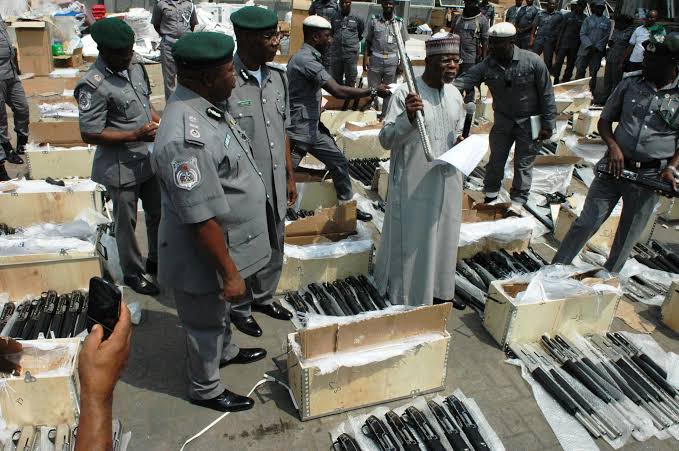
Acting, in some way, is prophecy. I recollected the lawless sanitary inspector story at the weekend when I got details of an attack on a part of Oyo State by some uniformed gunmen. It happened in notorious Ibarapa which recently gave Mr. Sunday Igboho his ‘global’ fame. That area in Oyo State is used to attacks by pastoralist criminals who kidnapped, killed and melted away. Some months ago, a mix of very firm local and official measures broke the cycle of attacks there from killer herdsmen. The poor people were just settling down to peace when late on Friday, the area had another harvest of death. Three persons, including an Amotekun commander, were reportedly shot dead by a rampaging band of uniformed gunmen in fast moving vans. Amidst shocks, cries and counting of heads and limbs by the locals, the Nigeria Customs Service came out many hours later to take responsibility for the terror. The Customs said its officers, backed by soldiers, fired the fatal shots. One of the Customs spokespersons said the incident happened around 8:00 p.m. on Friday and that it was an operation against rice smugglers and their contraband. He said the “officers who are operatives of the Zone A, Federal Operations Unit, sighted eight trucks carrying smuggled foreign parboiled rice.” He said the smugglers’ “drivers and armed accompanying passengers launched attacks on the officers” and that one of the attackers was shot and disarmed while the others retreated with their smuggled wares. The Customs spoke of no death from its shots but vowed that the service would “never relent or be intimidated by unwarranted attacks by criminal elements unlawfully bearing arms and unleashing same on officers on legitimate duties.”

Nigeria’s federal agencies have some very interesting defining features. One is that they are arrogant, clumsy and rude. Another is that they are shameless – they lack shame in exhibiting their cluelessness. Officers and men of our Customs Service are paid to guard our borders against unwanted goods. But that service and its men compete diligently with the Nigeria Police on metropolitan highways and in searching bedrooms and water pots for what they refused to stop at the borders. The borders have forever remained leaky even while closed. Customs officers are paid to ensure that the gates are shut to unwanted wares; yet, things happen. And when things happen, the ‘sanitary inspectors’ invade homes and warehouses in search of what they allowed in. I do not know of any other country on earth that leaves its borders porous and then fights smuggling of foreign goods in the hinterlands.

Nigerians are fighting wars of survival on many fronts. The Ibarapa area is too terrorised by privileged killers and pampered abductors to sleep without opening both eyes. They are too oppressed to receive with flutes and drumbeats yet another set of official attackers. When you push even a sheep to the wall, it will gird its clumsy robe and charge back. Except you were war-baiting, you won’t go to Ibarapa, Oyo State this tetchy times ostensibly hunting rice smugglers – and at night. But the Customs were there firing from all their cylinders and shattering the night for the death-weary villagers. It did not matter to the gunmen that the scenes of the shootings, Ibarapa’s Igangan, Igboora and Ayete are not border towns. The officers who did it were not even from the Oyo State command. They are an invading force called “Federal Operations unit” headed by a certain DC Usman Yahaya. Yet, from wherever they came, like the owl they are, they said they ‘sighted,’ that night, eight trucks of smuggled rice in a place hundreds of kilometers to the nearest international border. The distance from that place to Benin Republic is 204 kilometers. Check. If you like, ask the invaders what their real missions were. So, after the shooting and the killing, where are the “eight trucks of foreign parboiled rice”? The Customs service already answered that. It said the smugglers “retreated with their smuggled wares.” Retreated to where? To Benin Republic?


There is an old joke about a customs officer asking a traveller to please open his suitcase. “But I don’t have a suitcase,” the traveller told him. And the customs officer retorted: “It does not matter. The order is one for everyone.” Why did people have to die because of rice, foreign or local? One of those reportedly killed by the Customs men was an Amotekun operative on a motorcycle. Was he also a rice smuggler? The real loser in all this is Nigeria. In that man’s death and in the others’ death, and in the official excuse for their death, Nigeria has given their children and their other relations reasons to forever hate the country.

Did it have to happen? No. It should not have happened if we had a properly run federation. The gunmen stormed Ibarapa and misbehaved because Nigeria empowered them to kill even the innocent – and they knew it. At the last meeting of southern governors, they impressed it on the Federal Government to ask its security agencies to stop invading states on ‘special operations’ without, at least, informing governors, the chief security officers of the states. Now, with this latest from the Customs, what better way to tell the governors that their words carry no weight and therefore cannot be law? The truth is governors are as oppressed as their people. It is worse in the south of Nigeria. And it is not funny. I have heard some southern voices demanding why stories as Ibarapa’s are not heard from the North. They also ask: When was the last time the Customs raided ‘trucks’ and warehouses in Katsina, in Sokoto, in Gusau, in Kano and in Kaduna? Or the North is smuggling-free?

It doesn’t rain in Nigeria, it pours. As Customs officers killed in Ibarapa, Oyo, soldiers were doing their own shooting and killing in Ladipo Market in Lagos last week. And in Abuja, decency and credibility of elections were fatally wounded by those afraid of electronic transmission of vote scores. And those who did all these are not tired of doing more – even with open celebrations. You remember the deputy speaker of the House of Representatives, Ahmed Idris Wase? He was that man who, one day in March this year, presided over the sitting of the House and stopped Hon Mark Terseer Gbillah from Benue State from presenting a petition on behalf of a group of Nigerians in the diaspora over herdsmen’s atrocious activities in Benue. Wase would not take that petition because the Nigerians who wrote and signed it were not Nigerians resident in the country. The same Wase last week presided over the final debates on and passage of the amendment bill on the Electoral Act. From the same Wase’s office, a message went out at the weekend celebrating the North’s uncommon blessings on the passage of that bill and the Petroleum Industry Bill. One of his aides, as reported by The Punch, wrote to lawmakers from the North: “On behalf of the Deputy Speaker, Rt. Hon. Ahmed Idris Wase and the Northern Caucus leader, Hon. Musa Sarki Adar, I am directed to write and formally congratulate and appreciate all the northern caucuses for standing firm through their wisdom and strength to ensure the Northern interest in both PIB and Electoral Act is adequately placed in a position of advantage. There is no doubt a house united will forever get whatever it wants, giving [sic] the advantage we have in size…”

A friend who read the above asked how southern lawmakers looked after reading the message. I told her if she expected them to lose face, she was wrong because they would not lose what they lacked. She asked again why they acted so disgracefully in capitulation to the North – especially on the PIB. Is it money? I volunteered no answer – because I had none.

One question I hear daily in Nigeria is: How did we get here and where do we go from here? Each time I hear that, I ask myself: Who is going to answer that question for these people? Can anyone beg a normal person to come and become a slave? American literary and social critic, Mark Caldwell, in January 2015 published his ‘A Short History of Rudeness.’ A reviewer describes the 302-page book as “a history of the demise of manners.” He says further that the book “charts the progress of an epidemic of rudeness.” There is a “death of civility” in power relations in Nigeria. A ceaseless rain of crude insults pours on the South from the North – and on the entire nation from the skies of Abuja. Yet, the people have no coherent answer or answers to the downpour. The rain won’t stop before the looming flood of Armageddon. Caldwell insists his own society is a confused one; a country that does not know what it wants; a little hypocrisy here, some confusion there. He wrote: “We want to be free, but we long for restraint. We insist on openness – and cringe when we get it; we strain at trivial offences and swallow camels of iniquity.” Caldwell wrote as if the place he had in mind was Nigeria – a castrated colony of phlegm eaters.

I will return to Catholic Church where I belong – Mother of 13-year-old girl killed by suspected ritualists in Delta laments after arrest of pastor

Mrs. Queendalene Nwafor, the mother of the 13-year-old girl, who was allegedly killed by suspected ritualists in Delta State, has sought God’s vengeance over the death of her beloved daughter. 

It will be recalled that Miracle Nwafor was brutally murdered and dumped behind School of Nursing, Boji Boji Agbor, two months ago. Her heart was ripped open and other vital organs removed. 

A yet-to-be-identified pastor and one other have been arrested in connection with the murder. Read previous report HERE

I will return to Catholic Church where I belong - Mother of 13-year-old girl killed by suspected ritualists in Delta laments after arrest of pastor

In an interview with Ika Weekly Newspaper, the petty trader who hails from Ebonyi State, appealed to the Government, Non-Governmental Organizations, spirited and well-meaning individuals for financial assistance to aid her to bury her daughter.

The widow said the death of her daughter was through the church, saying that as a poor widow, she does not have sponsorship to continue with the case and for that has withdrawn the case and handed it over to God for justification.

Mrs. Nwafor noted that money speaketh and that she does not have what it takes, lamenting that mortuary bills are piling up as days go by and imagined where her help will come from.

She said from May to date, she has been feeding solely with the help of sympathizers, adding that she has not been able to return to her petty business.

She further appealed for financial assistance so that she can bury her child and start a new beginning.

“I confirmed that the pastor has a hand in the murder of my daughter. Before now, people were saying it, but I told them to mind their utterance about a man of God. Because of the touching powerful message of salvation he preaches and again he seems to me like one who cannot hurt a fly for that these reasons, I doubted everyone not knowing that some could be wolves in sheep’s clothing.” she said. 

“To an extent, some people started accusing me of having sexual affair with the man of God, now everything is clear to me and l am seen it myself. I have learned the greatest lesson of my life in one-man church business, after this, I will return back to Catholic Church where I belong because if I were still there, this would not have happened to me.” she added.

Speaking earlier after the incident, she said on that fateful day (Wednesday, May 19) after making lunch, Miracle left home for midweek fellowship as usual at Jehovah Shammah Fire and Miracle Ministry, Alihame, noting that she relocated from Alihame barely a month and some weeks. 

“My daughter just clocked 13th years on the 2nd of April, this year. The only places she goes to, is the Church, school (Alihame Mixed Secondary School Alihame, Agbor) and sometimes she help hawk bananas and pineapples.

“That day, I waited for her to return but to no avail. I became worried, I called her cell phone, surprisingly, and the voice of a young boy answered and said he picked the phone behind School of Nursing, Agbor.

“I called my Pastor; he drove to my house that night with one of our Church members who said he dropped Miracle off at the same spot a boy claimed to have picked her phone at the close of fellowship.

“We went round that night, but no trace. I could not go to sleep. The next morning, pastor came; we all went looking for her. When we got to the back of Agbor Correction Center, we saw blood flowing down to School of Nursing, where we saw her body laid in a bush. She was stabbed in the heart, her heart and kidney removed and one of her arms  was broken.”

She disclosed that the father of Miracle, Mr. Nwafor died a year after she was born, appropriately twelve years ago, saying that the little girl has been her help. She said together they put food on their table.

PS: Mrs. Queendalene Nwafor can be contacted through this phone number 07066624746.

I will return to Catholic Church where I belong - Mother of 13-year-old girl killed by suspected ritualists in Delta laments after arrest of pastor

(Lindaikejisblog)

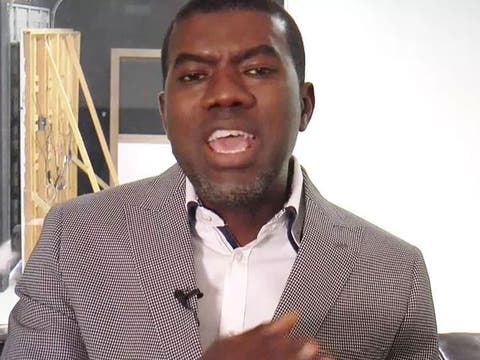
We have to do away with culture of expensive burials for the dead, culture is dynamic and shouldn’t be static – Reno Omokri (video)

Former Presidential spokesperson, Reno Omokri has stated that there is need for Nigerians to do away with culture of expensive burials for the dead.

Omokri in a video he shared on Instagram, recounted how Saudi Arabia’s King Abdullah was buried in an unmarked grave even though he was one of the wealthiest men in the world at the time of his death.

The former Presidential spokesperson who also expressed his admiration for Islam, stated that the religion’s belief of humans being equal at birth and in death should be copied.

He went on to say that he is not speaking from a place of jealousy following all that has happened in the last few days, but from a place of love as he is also successful. Omokri further noted that culture should be dynamic and not static.

Watch the video below………….

(Lindaikejisblog)

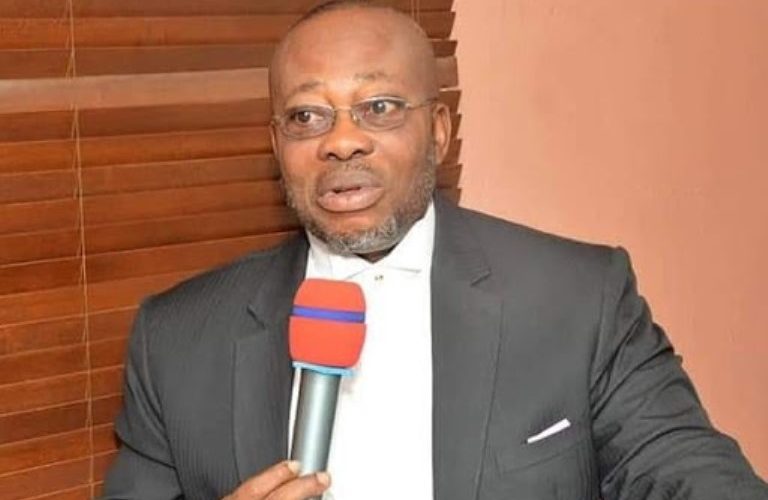
E-Results: ‘Law makers as law breakers,’ By Monday Ubani

In this article, DR. MONDAY UBANI, Chairman of the Nigerian Bar Association Section on Public Interest and Development Law (NBA-SPIDEL) reviews ongoing efforts by the National Assembly to amend the Electoral Act and accuses the lawmakers of “legislative rascality”

The furore in the national assembly over the recent amendment of the electoral bill has not escaped the attention of millions of Nigerians who have been following the said exercise with religious interest.

The process of recruitment of leadership in Nigeria has been a big problem with the country having a fair share of mis-governance as unintended consequence flowing from unfair electoral process over the years. You cannot plant maize and reap mango says an African proverb.

The affliction of bad leadership stems from defective electoral process that is devoid of any iota of fairness. We are beset with electoral manipulations, ballot snatching, result-falsifications and all manner of electoral frauds from desperate politicians and their thugs who pervert the process to ascend to power.

The consequence is that those who emerge and occupy political positions in Nigeria do so fraudulently without any mandate fairly donated by the people, thereby breaching the fundamental term of the famed social contract theory propounded by early philosophers that led to formation of modern society.

For us as a nation, life just like in the beginning, has remained short, nasty and brutish despite being on the historical side of modernity. Is any one in doubt in Nigeria that our leadership has deliberately kept the country retarded, visionless and crisis-ridden since independence? Why, you may ask.

The answer is not far-fetched, you cannot give what you do not have. Leaders who know nothing about governance and the attendant responsibilities attached to it, unfortunately find themselves in corridors of power and have not failed to dish out mediocrity as their valuable asset.

All critical infrastructures are in total decay while our Institutional services are non-existent.

While pursuing my first degree in University of Nigeria, Nsukka I saw British, Americans and some African brothers in my respected Alma Mata either for their first degrees or pursuing their post graduate studies.
As at today, you will not see any of our African brothers or sisters in our universities let alone other students from other continents. Again the reasons are not far-fetched and does not require any elaboration.

The truth remains that we have had enough share of misgovernance, lack of development or progress due to inept leadership and the recruitment process is clearly implicated.

Stakeholders and patriots have diagnosed Nigeria’s sad historical trajectory and agreed amongst other solutions that we need to holistically tinker with our electoral legal framework which needs realignment with modern realities and international best practices.

One of these desired broad electoral reforms involves the deployment of technology in our electoral process.

It is shameful that Nigeria with her size, resources and sophistication are even starting late on this, because other nations smaller in size, resource, sophistication have deployed this system years ago and here we are in the year 2021 debating whether we should deploy technology in the transmission of our electoral results.

I feel humiliated by such scenario playing out in the hallowed Chambers of our National Assembly. Who does that, if I may ask.

The macabre dance over this started in the National Assembly with confirmed allegation that the Bill which passed third reading under the chairmanship of Senator Kabiru Gaya of INEC Committee has been altered to block electronic transfer of election results.

The Senate President called Nigerians every printable names for daring to challenge the alleged alterations. They had to restore the electronic transfer clause, and I am sure, it was done grudgingly.

During the clause-by-clause consideration of the bill, their treachery could not be hidden any longer as one Senator Sabi Abdullahi, Deputy Senate Whip proposed that the Nigerian Communications Commission(NCC) must certify that national coverage is adequate and secure while the National Assembly must approve before the Independent National Electoral Commission (INEC) can transmit election results.

This was promptly countered by Albert Bassey, Senator representing Akwa Ibom North-East who insisted that the initial proposal which provides in Section 50(3) that:

“The Commission may transmit results of elections by electronic means where and when practicable” should stay.

After division of the whole house in plenary, the result was 52 in favour of subjecting INEC to undue interference in the performance of their mandatory duty of organising elections in Nigerian by Nigerian Communication Communication and the National Assembly contrary to the express provision of the constitution, while 28 Senators voted for the retention of the original clause that gives INEC discretionary power in carrying out its constitutional responsibility in transmission of results.

The situation in the House of Representatives was not different but more dramatic as the man who presided over the plenary did not hide his disdain to observance of the very rules that guide proceedings in the House. The Deputy Speaker, Hon Ahmed Wase to say the least is a big minus to democracy who does not believe in adherence to rules and procedures of the House. He and his majority leader, Alhassan Ado-Doguwa are in the world of their own. By their attitude they own Nigeria, House of Representatives and everything in it, to say the least.

WHY THIS AMENDMENT SHOULD NOT SEE THE LIGHT OF THE DAY.
What the National Assembly members did by passing a bill that clearly violates the constitution they swore to uphold is the biggest embarrassment of the century. It is more shocking and depressing to see those who claim to be lawyers amongst them running around all over the place to defend the absurd illegality. Who did this to us as a nation?
How did we get here, many are asking.

A cursory look at the provisions of the constitution will give each observer a clearer view of the sordid absurdity in the passage of the bill by the National Assembly on the 16th of July, 2021.

Section 78 of the 1999 constitution as Amended provides:-
“The registration of voters AND CONDUCT of elections shall be subject to the DIRECTION AND SUPERVISION OF INDEPENDENT NATIONAL ELECTORAL COMMISION,(INEC).

The same constitution in the Third Schedule, Part 1, F, S.15 provides that: “INEC has power TO ORGANIZE, UNDERTAKE, AND SUPERVISE ALL ELECTIONS”. The constitution further provides that in carrying out the aforementioned responsibilities, “INEC operations SHALL not be SUBJECT TO THE DIRECTION OF ANYBODY OR AUTHORITY”.

The question then, is the so called affirmation of network coverage and its security by NCC and approval of the National Assembly(a party to an election) not an undue interference to INEC’s power to transmit the result of an election which falls squarely under their constitutional power?
How did the members of the National Assembly see their role in approving the issue of network coverage as proper under our constitutional democracy when the role assigned by the constitution to them is LEGISLATION and not EXECUTION of the laws they enact?

I shudder to think that our legislators who are law makers have turned themselves into law breakers.

Prior to now, INEC without any legislative backing have successfully conducted elections with card readers and have transmitted results electronically in several constituencies in Nigeria without any of these “alarmist drawbacks” being trumpeted by these backward-thinking legislators that voted for that provocative amendment. Why are these set of legislators in the 9th Assembly trying to set the hand of our clock backwards? What have come over them?

Nigerians insist and I join them in insisting that INEC be given a fair and less restrictive legal framework to carry out their constitutional duties of organising, undertaking and supervising elections in Nigeria.

The present manipulative treachery to keep us stranded as a nation in our electoral improvements will be resisted with our last strength and we have the final hope placed on the third arm of the government( the judiciary) should these set of legislators persist in their doomed journey of interfering on our progressive electoral journey as a nation.

Nigeria has two years to ensure 100 per cent network coverage in the whole country, after all, the Nation is alleged to have voted over 4 billion naira recently to monitor Nigerians on social media platforms. I see no reason why we cannot vote more billions of naira for development of our key telecommunication infrastructure that will restore our dignity as the biggest country in African continent. #SayNoToLegislativeRascality.

Dr Monday Onyekachi Ubani,
Chairman, NBA-Section on Public Interest and Development Law (SPIDEL).

Are we getting caught up in an age of fools? By John Ogunlela.

“What astonishes me is that in all these stealing, our people have not the faintest idea of how to use money.

I am getting scared we are caught up in an age of fools.

What does the Nigerian do with money?

He buys things.

Then he buys power and more power.

He traumatizes his community with his wealth, he makes the poor feel their poverty and the average person bemoan his averageness.

Then he builds things:

Some big towers here and there which becomes the talking points of lesser idiots whose place in life is to praise those structures even as they hope to build same someday.

He then gets honoured by religious homes devoted to Mammon where he gets praised by the worshipers of the idol there who promise the money man life hereafter for a slice of his goodies.

Then he dies in hopes that people will be talking about him.
Soon he is forgotten like other fools.

Why do we Nigerians find it hard to understand the use and meaning of big money and are stuck on this selfish, this perverted notion of wealth?

All you get is, the man came to that party in a big jeep, he has an aircraft, oh, two.

He has an estate in Maitama or Lekki, he built up a street in London.

Then he unleashed that money to buy up consciences and to stamp down truth.

His shopping list will include judges and policemen.

He funds his political party and he is rewarded with even more money which he recycles the same old way.

Why is our idea of wealth so narrow and underdeveloped?!

The challenge is not money, it is a lack of the knowledge of what actually to do with it.

Where people have wisdom, they understand that once possessions go beyond a home and two cars with ample retirement fund, the use of money is to build your community and to build your nation.

You invest wealth in people, beginning with your own children and those in your extended family who can be raised.

Isn’t it wonderful that not a single man or woman among these people who have spirited away billions of Naira has thought of establishing a factory manufacturing cellphones in Nigeria?

None has thought he should put together something to address such a huge market and potential for homegrown development?

They can’t come together and say, ‘Lets solve the electricity problem’.

None has said, I want to make a dent on the housing challenge.
I will go into affordable housing and build new cities’.

None has said, ‘Most of our universities have a shortage of hostel accommodation. I’d like to address that’ and put in two billion per school.

It is a proof of lack of sense, a proof of scandalous stupidity that with all those billions, there is no impact on society and people are mostly unemployed and there are no spectacular undertakings to fire the imagination of the younger ones.

Why haven’t these guys come together and built the second and third Niger bridge and the 4th Mainland bridge in Lagos?

Why can’t they make their money work for the society and push people forward?

What’s the use of money that doesn’t serve society but only buys little things like cars and airplanes, just toys to flatter the little ego of the owner?

It is foolish to think this limited way, and even more foolish to admire and applaud such people.

It is like drinking from a gutter.

I hope we can start to discuss money in terms of impact, not consumption.

And when I say impact, I don’t mean those demeaning things politicians do when they give out okadas and wheeled barrows to mock the poverty of their people.

I mean real impact.

Let’s solve the electricity problem.

Let some rich persons decide to fix the 48km road linking Ado Ekiti and Akure.

Let someone say, I want to train 500 corpers through an Oracle certification course and drop a cheque.

Someone should fund the development of the Nigerian automobile in a university or two with N4 billion.

Another should rise and rebuild all the houses in his village and connect them all to a potable water source.

Lets have some devotion to our country, to our people and put an end to this barbarism.

Let’s make ourselves great on earth!”

Now is not the time to talk of separation, By Hassan Gimba

The calls for Nigeria to dissolve into its various parts have never been this high. The call is more strident in the Southern part of the country. In the South East, the Indigenous People of Biafra (IPOB) is calling for autonomy of the zone, populated by the Igbo. In the South West, there are also such calls. The North, too, is not left out as many stakeholders align with those who think it is not worth remaining in a union with those who no longer want it.

In the South, especially the east, the agitation is so widespread and gaining momentum that it is threatening to get out of hand. The general feeling there is that of people seeking freedom from bondage. Unfortunately, southern agitation is fueled by propaganda which the government could not counter. The skewed information dished out is becoming the truth in the minds of those targeted, those meant to be convinced.

Perhaps miffed by the avalanche of the propaganda, all mischievously and deliberately slanted to achieve certain goals, the North reacted. A section of its elders met and stated that the southeast should be allowed to go. That the north, and indeed Nigeria, is not willing to fight anymore to keep anyone in the federation.

A major aberration is that those who cry about being victims are in reality those who victimise. However, they craftily make it look like they are at the receiving end or there is a grand conspiracy to end their existence on earth. In other parts of the country, they move freely and engage in their activities without harassment from any quarter. In their area, certain people are not as free and they live on borrowed time.

But we have come a long way as a nation. No one should force anyone to remain in Nigeria as a Nigerian. We have to remain together as one in our collective interest. To borrow from a popular cliché, united we will stand, divided we shall all fall.

I have some time ago written that even if Nigeria would balkanise, now is the wrong time, for all our sakes. The best time would have been 1966 and, perhaps by now, we would all have been independent nationalities, each with its peculiar problems and prospects. But now, none of the six geopolitical zones can survive outside Nigeria. Bandits, insurgents, militants and would overwhelm us all. Even the Igbo nation cannot stand on its own if left alone to the arrogance and demagoguery of its anointed secessionist leader.

Even though the Boko Haram insurgency appears to be getting to an end, the truth is if turmoil overtakes Nigeria, the chances that the insurgents will roll out their “caliphate” and become the lords of the north-east are high.

The north-west and north-central probably may go to the bandits and herdsmen who could easily be tempted to join hands with Boko Haram–if they are not under their control already.


The south-east may likely witness fights between groups clamouring for dominance. The group with the most arms and daredevil members may triumph after protracted warfare. Militants will rule the coasts and each group may have its fiefdom. Perhaps the only zone that may move on as a nation-state after a little turmoil may be the south-west. It has a political leadership and is economically better organised. Its youth can respect the elders as well.

The northern elders know the uncertainties and dangers associated with the dissolution of Nigeria now. Despite its bravado, the discerning from the south-east also knows that the upheavals to be witnessed in their zone with Nigeria’s dissolution is better imagined than witnessed.

With all the brave faces being shown by the Igbo living in the North, they know that living in the North is far better than going back to the East. At the height of the Boko Haram killings in Borno and Yobe, two states at the epicenter of the insurgency, many of them that fled back home, returned almost immediately afterwards. The stories they gave of their experiences were horrific. Those of them living at home are mostly the ones bent on seeing that those outside return. Envy? Well, only they and their God know.

With the current situation of Nigeria, it is wise for all parties to sheathe their swords and extend the hand of concord, friendship, and understanding to one another.

Most of those shouting for dissolution are those who have lost out and think they cannot compete favourably with others within the united nation. So they believe they can be lords of the manor at a part.

Let us build the country, make it peaceful and secure. The average Nigerian may not give a hoot who the president will be as long as there will be fairness and justice; and as long as he can provide for his family the necessities of life. This is at the root of the problem.

The masses of people do not hate one another. In the communities where they cohabit, they often live in peace and respect for one another. It is the political class that tries to cause division among Nigerians to profit from the fracas that result. For they know that once the suspicion and contrived conflict among the various peoples that make up this potentially great nation are pushed aside, the people will band together to understand who their common enemies are – those who have systematically appropriated the vast resources of this country for themselves, their families and few associates.

And while they gorge themselves on the people’s commonwealth, seeking to perpetuate their unfair privilege, the masses wallow in the most dehumanizing living conditions one can imagine.

The agitations being witnessed may spread to engulf the country as those ostracised from a reasonable distribution of our country’s wealth for decades will be up in arms, unleashing their frustrations on all of us. If not addressed properly, and when the masses get a uniting leadership, the pull at the country’s seams will increase and thus threaten its very existence.

But the bulk of Nigerians know we are better off together. Even in the East where the call for dissolution has been long and in the West where it just began, most of the intelligent class do not subscribe to a dismemberment; they want a governance arrangement that they feel can stand a better chance of improving the general well-being of all than what is currently on offer.

The Three Enemies of Nigeria

One of my favourite Igbo proverbs says: “What a dog saw and started barking ferociously is the same thing a goat saw and merely grunted.” As young as I am, I have seen so much in this country that when people are barking over a thing, I just sigh. Yet we are reacting to the same stimulus. Inside me, I retort: “What else do we expect? How can we sow the wind and not expect to reap the whirlwind?” I have painstakingly studied the history of Nigeria. I have lived through 13 administrations, old enough in 11 of them to be able to distinguish between my right and left hands. I have researched into key issues per time, per administration. I have observed the trajectory.

Nigeria seems to be permanently on auto replay. So, all I do these days is sigh when people scream.

For instance, as far back as 14 years ago, I foresaw and wrote about a looming pubic disorder and insecurity fuelled by inequality and corruption — although I must confess that not in my wildest imagination could I have predicted the widespread carnage we are living with today. But you cannot have a country where over 70 per cent of its people have been living below the poverty line for decades and think there would be no explosion at some point. You cannot have a country with borders as porous as a sieve, plus security agencies that are insanely corrupt and ill-equipped, and think anarchy would not descend on us someday. You cannot have a political system built around rentier mentality and primordial sentiments and assume that Nigeria would be all fine. No way.

Economic hardship, ethnic rivalry, religious crisis, political tension, violence and insecurity have been part of our make-up for ages. From administration to administration. From president to president. Some issues are perennial, others seasonal. They only take different coloration and intensity per administration. In my undergraduate days, I used to easily get excited to jump on the bandwagon to blame our problems on one person or one part of the country. There is hardly anything people are campaigning for today that I did not parrot in the past — based on popular but jaundiced opinion. With introspection, I have become less emotional and more dispassionate in looking at the Nigerian malaise. We have been changing leaders and parties, but Nigeria remains largely the same. Why?

As we begin to discuss the 2023 elections, I can see excitement in the air yet again, propelled by permutations.

We are going to get a new president, new governors, new ministers, new commissioners, new agency heads, new board members, name it. We love new things. We renew our hopes at election times, expecting some change in our fortunes.

But it’s the expectations that kill us. In an article I wrote before the 2019 general election, entitled ‘Hurting on the Inside’, I argued that Nigerians have become adept at falling in love with politicians every election year — but the heartbreak never seems to stop. Yet, in the voice of Peter Tosh, the Nigerian will say: “I gotto pick myself up/Dust myself off/Start all over again.” Hope can be quite stubborn — and pretty stupid.

We all have our positions and perspectives on why Nigeria is like this. Some would argue that it is because there is no “true” federalism or regionalism that students are learning chemistry without chemicals in many government secondary schools in the south-west. Some are of the opinion that it is because there is no Republic of Biafra that many state hospitals do not have beds and drugs in the south-east. Some are convinced that it is because there is no “resource control” that the NDDC has literally burnt $50 billion in 20 years. Up north, many believe that it is because there is no full Sharia that they are abjectly poor and neglected. Some will even say that it is because of fornication and adultery — not poor sanitation and unclean water — that they suffer yearly outbreaks of cholera.

My views are slightly different. Anyone familiar with my writings in the last 18 years know that I have persistently pursued a different line of argument on the Nigerian condition. Today, I will focus on the three “enemies” of Nigeria that I have often identified as the enablers of the country’s underdevelopment. These are (1) our concept of political leadership (2) our concept of followership (3) our concept of development. Our concepts are based on warped mindsets, some of which we inherited. If these mindsets don’t change, Nigeria will never change. A scripture says: “As a man thinks in his heart, so he is.” Our minds have been conditioned to interact with Nigeria in particular ways. These mindsets control how we see and do things. We badly need to restructure our minds.

Let’s start with our concept of political leadership. One, a typical Nigerian leader — and I use “typical” as the rule rather than the exception — does not have a vision. I rephrase: they do not have a positive mental picture of where they want the country, state, council, ministry or agency to be under their watch. I apply this to presidents, governors, council bosses, councillors, legislators, judges, ministers, permanent secretaries, members of governing boards and councils, commissioners, executive chairpersons, DGs, etc. Politics, the type that leads to development, is built upon an implementable “vision of society”. The leader is always thinking: where are we? Where are we going? Why are we still here? How can we get out of here? How far can we go in four years?

Without having a reasonable “vision of society”, the leader has already failed. It is like playing football without goalposts: you are just having fun and burning calories. That, unfortunately, is what leadership in Nigeria is mostly about: having fun. The moment some step into leadership positions, their vision is Dubai today, China tomorrow. They think leadership is the licence for comfort. They focus on building castles as government houses; riding the latest models of 4WDs in kilometre-long convoys, protected by battalions of police officers; acquiring or chartering private jets for personal well-being; and travelling abroad out to treat sore throat. All in the midst of ponging poverty right under their noses! In the end, we blame God or some constitution for our underdevelopment.

For so many, leadership is all about the perks of power. Narcissism. Everybody worships at their feet. There is a retinue of aides attending to their needs. They are unchallengeable — they are imperial majesties. There are some ministries and agencies where specific elevators are dedicated to the ministers and DGs. If the elevator for the staff is broken, what a pity. Even if the ministers and DGs are not around for a whole month, their lifts remain unused while the staff will continue to use the staircase. Warped! If you are a leader and your understanding of priorities is built around personal comfort and the perks of power, be assured that you are a pathetic problem to this society. Quote me: any country where leadership is not focused on a “vision of society” is going nowhere.

Let’s now move on to the concept of followership. While I unapologetically hold leadership responsible for the underdevelopment of Nigeria, I never lose sight of how followers have enabled and nurtured this disability. We turn our leaders to demi-gods and cash cows, and that means we do not question or scrutinise them as we should.

Rather, we see them relishing in the comfort of power and crave to partake in the unholy communion. We position ourselves to be co-opted. We either defend or attack our leaders on the basis of bias and overlook their performance. We stink of hate and prejudice. The intellectual concubines of the divisive elite are so blinded by ethnic and religious biases that all they busy themselves with is how to plant and nurture half-truths and fallacies.

We, the followers, perennially enable inept leadership and then turn around to complain that Nigeria is not making progress. Many would argue that the leadership selection process is already polluted because voters are induced at election times. That is definitely part of the problem, but I would still make the point that it should not stop the pursuit of a development agenda if indeed the candidate has what it takes to deliver the goods. If you are not competent, you are not competent, no matter how you got into power. Worse still, we the followers often think our job stops at voting leaders into office. We do not think of a development agenda that we should pursue. We do not think our failure to hold our leaders accountable is a key contribution to our underdevelopment.

Finally, what really is our concept of development as a people? I often break human development into tiny pieces:

access to education, health care, safe water, sanitation, electricity, roads and security, as well as gender equity. Therefore, when I say Nigeria is underdeveloped, what I am really talking about are the inequalities inflicted on all of us across the 36 states, FCT and 774 councils. My conscience will not allow me to say only Muslims or only Christians are affected by the insecurity and violence in the land, or that only one ethnic group is suffering from the lack of access to food, shelter and clothing. Tragically, since almost all issues are framed along ethnic, regional and religious lines in Nigeria, we cannot even begin to discuss or promote a proper development agenda.

I do not downplay our ethno-religious issues — I would be daft to do that. But every country in the world battles internal divisions: it could be race, creed, ideology, religion, ethnicity, anything. The human society is inherently given to rivalry and division. No nation is exempt. Even the family unit, bond by blood, is not conflict-free, much less a multi-ethnic country. The problem is not conflict but the management of it. I often argue that the political mismanagement of Nigeria’s diversity is a major setback for our development. We need justice and peace across board. But I am more persuaded that we can never rise until we get our concepts of leadership, followership and development right. And leadership will have to play the biggest role in breaking the shackles.

The Nigerian leadership factory has always malfunctioned. We are ruled in the main by a predatory elite across the regions. They are content with using power to benefit themselves and a few others, not to uplift the society. They are enabled by a parochial intelligentsia feasting on the crumbs. They are idolised by the downtrodden who have been fed with divisive poisons all their lives. Even if we balkanise Nigeria and these mindsets are not fixed, it will only multiply our troubles. Our latter end will be worse than the former. It is a mental problem. I have not seen any indication yet that we are about to produce leaders with a new mentality in 2023. And I still have not seen anything on the part of the followers that points to a new mindset as well. Yet we are expecting to see a new Nigeria.

AND FOUR OTHER THINGS

SCHOOLBOY ERROR

Mrs Lauretta Onochie’s nomination as an INEC national electoral commissioner was opposed because she is a member of the All Progressives Congress (APC) — but the senate said it rejected her on the basis of federal character. Delta state, where she comes from, already has a national commissioner. Now, this is serious. When President Buhari was nominating her, was he not aware that Delta already has a commissioner? Can one state have two of the 12 slots for national commissioners? How did that pass scrutiny before her name was sent? There are just too many things about this government that expose its quality of thinking and decision making. Appalling.

TAKING EXEMPTION

When a court ruled recently that Mrs Kemi Adeosun, former minister of finance, did not have to do national service because she was “technically” not a Nigerian when she graduated in 1989, the headlines said “court clears Adeosun over NYSC saga”. She even issued a statement promising to take legal action to “clear” her name — a veiled threat at Premium Times, the news website that investigated the saga. I am somewhat confused. The allegation against Adeosun was forgery — not citizenship — and she admitted guilt in her resignation letter. What exactly is this “court clears Adeosun” narrative about? And, please, what exactly will she sue any newspaper for? Bewildering.

DANGER SIGNAL

The house of representatives on Thursday asked DStv to reduce its subscription fees following recommendations from an ad–hoc committee. The Nigerian government itself has increased petrol prices, raised electricity tariffs and hiked the toll and parking fees at airports. The exchange rate has fallen from N305/$ to N410/$ (remember broadcast rights are paid for in dollars). Prices of garri, palm oil and yam, along with transport costs, have hit the roof — all of which have eroded the real income of Nigerians. However, the critical issue for our dear lawmakers is the subscription fee of a luxury product like DStv. Meanwhile, the lawmakers have not reduced their own allowances. Joke.

SOUND OF SILENCE

Role models don’t come better than Lanre Fasasi aka Sound Sultan, who unfortunately died last week after a battle with lymphoma, the extremely aggressive cancer of the white blood cell. I actually wept when the news broke. A Nigerian patriot to his bones and a responsible husband and father, the multi-talented artist and satirist was never named in any scandal. He never engaged in media wars. He was just a cool guy, whose personality and art I admired greatly. It is also so unfortunate that the basketball aficionado was not alive to witness the incredible victory of D’Tigers of Nigeria over the world’s greatest team, the Dream Team of USA, in an Olympics warm-up. Life!

Nigerian Law School`s Upgraded Yenagoa And Brand-New Port-Harcourt Campuses: A Trending Transfiguration From A Quintessential Quartet

By Sylvester Udemezue

(an exulted law teacher’s acclamatory antiphon)

It is wonderful what great strides can be made when there is a resolute purpose behind them. Great Mother Teresa of blessed memory had said, “I alone cannot change the world, but I can cast a stone across the water to create many ripples”. Efficiency is doing the thing right; effectiveness is doing the right thing. One good voice can change a room (as Barrack Obama has said), but one piece of good, impactful action can change a lot more. So the point is not to become a leader, but to become an effective leader, to use yourself completely – all your skills, gifts and energies – in order to make your vision manifest, withholding nothing. This is why John C. Maxwell had to warn that leadership was not about accumulation, possession and parading of titles, positions, or flow charts, but about one life influencing another people positively.

In other words, as John Quincy Adams put it, if your actions inspire others to dream more, learn more, do more and become more, you are a leader”. Leadership is the capacity to translate vision into reality. To this end, shouldn’t we in all honesty say that Governor Nyeson Wike of River State is a leader properly so called, as in strictu sensu? (a discussion for another day). Meanwhile, as I write, now, the Flag-Off Ceremony is ongoing in Port Harcourt, Rivers State, Nigeria, in fulfilment of Governor Wike’s promise of a “Brand-New-NLS-Campus-in-Port-Harcourt-within-six-months”. Mr. Wike (lawyer and Life Bencher) had made this ground-breaking promise a few months ago during a ground-breaking ceremony for other ground-breaking projects in Yenagoa Campus, projects powered by the same Wike. You may wish to take a look at how fast these things have happened:

(1). June 05, 2021: “Wike commits N5bn to infrastructure development at Law School, Yenagoa” (guardian.ng);

(2). June 04, 2021: “Wike Seeks Approval For Law School Campus In Port Harcourt” (Thethenigerialawyer.com);

(3). June 23: 2021: “FG Approves Establishment Of Law School In Rivers” (dailytrust.com)

(4). June 27, 2021: Rivers endorses establishment of Law School campus in P/Harcourt (thenationonlineng.net.);

(5). June 25, 2021: Nigerian Law School Port Harcourt To Be Ready In Six Months―Governor Wike (tribuneonlineng.com)

(6). July 17, 2021: Wike flags off construction of Nigeria Law School, Port Harcourt Campus today (www.sunnewsonline.com);

Does anyone have any reason to not believe that the “will-be-ready-in-six-months” promise is something feasible? Please Even those who have not seen will believe that there are leaders but all leaders are not equally gifted; that Nyesom Wike is extraordinary, and that his eaxtraordinary leadership style has become the most pronounced in the manner he is helping to transform the face of legal education in the country called Nigeria.

You can now see (like writer Danielle Steel) how fast good things happen when the right people come along. We think results should happen right away, and the body begins changing so fast. When you’re doing it right, you just have to keep at it and keep up with a balanced program. Isn`t this what we are witnessing in Governor Wike? How then does anyone who is a living witness to these things, still agree with writer Tassa Desalada’s out-moded declaration that “Good things don’t happen very fast. They need to build, little by little, over a long period of time”? Has Governor Wike not demonstrated beyond doubts with the Nigerian Law School, that good, beautiful things can happen and very fast too?

Chris Gardner’s formula for leadership progression is simple: Walk that walk and go forward all the time. Don’t just talk that talk, walk it and go forward. Also, the walk didn’t have to be long strides; baby steps are counted too. Go forward”. Governor Wike has taken the NLS from where it used to be, into to a place far ahead! Will other Nigerian leaders follow suit by copying his shining example? It was only yesterday that the Yenagoa Campus of the NLS had only one Hall/hostel of residence (and some little annexes) for its over 400 students. It was only yesterday when the Nigerian Law School had only six Campuses spread across Nigeria. Then, suddenly, today, with Wike’s N5 billion commitment to transforming the Yenagoa Campus and his promise of developing and handing over a brand-new Port Harcourt Campus, the story becomes entirely different. And from the handwriting I can see on the wall, these are not just the “Nigerian-style” political promises; they are credible happenings and fast too, right before our own eyes. Thus, I would rather pitch my tent with John Lenahan whose own declaration was positive and that “I have found that important moments in life… happen so fast you don’t even remember them”.

However, the fact that positive changes do happen (as Wike has proven) is one important thing; there is this other equally important aspect, which is found in the words of Jane Goodall: to “Realize that [positive] change – whilst we want it to happen fast – is usually the result of a great deal of work” — great work by those who do the work, and by those who make things happen by breaking the ground for the work to be done. This is where the now Trending Triumphant Trio comes in and this why they deserve some acclamatory remarks. Chief Emeka Ngige, SAN, the Chairman Council of legal Education (CLE), the parent body of the Nigeria Law School (NLS); Prof Isa Hayatu Chiroma, SAN, the Director-General and CEO of the Nigerian Law School; and then Mr. Dave Efevwerhan, Ph.D, the Deputy Director-General of the Nigerian Law School, Yenagoa Campus. Good leaders are known and remembered by history only for the number of innovations, investments and developments they bequeath upon or attract to, the institutions they respectively represent. This is what I think these three great men have in common. They each understands that good leaders are not known or made by the number of their subjects they tramp down, trample upon or cause to tremble in trepidation. This trio understands that an investment in education yields the greatest dividends. Their predecessors were there when for over 10 years, the Yenagoa Campus had to put up with holding classroom lectures for about 400 students in a 300-capacity lecture hall. Their predecessors were there when over 300 students remained housed continually in only one residential hostel built to take no more than 300 students. It was not until the entry of this Innovative Trio into the CLE-NLS leadership scene, that the hitherto regrettably downtrodden, needlessly underprivileged, and ironically less-privileged Yenagoa Campus began experiencing the light of advancement in terms of infrastructure and more; so much so that as I write, today (July 17, 2021) a 1,500-capacity students’ lecture auditorium is being planned to be commissioned in the next 6 months in the Yenagoa Campus. In addition, the Campus would by that same time, be able to boast of being able to accommodate well over 1200 students within the campus in what may turn out to be some of the most modern of halls of residence for students.

And then, do you think that the Wike innovation that has given the NLS an additional Campus to accommodate a great number more of the teeming population of applicants to the Bar training program in Nigeria, happened over night? In my earlier commentary, I had stated, as Albert Einstein, that “Nothing happens until something moves”. So, tell me whether we should not spare a minute or two to applaud this foresighted trio that has made the Wike magic a stark reality. The Silky duo of Chief Emeka Ngige and Prof Isa Chiroma and the erudite Doctor of Laws, Dave Efevwerhan. If these three did not make a pragmatic move to activate the magic, would the magic wand be possible, at least for now? If Wike didn’t come to Yenagoa Campus to flag off, in a ground-breaking ceremony, the construction of the 1500-seater auditorium and the 900-bed hostels, would the idea of, and the discussions about, a brand-new Campus in Port Harcourt had happened? Before you answer, permit me to answer no. Accordingly, even as we praise Governor Wike for these fast-moving Nyesom projects in Yenagoa and Port Harcourt, should we not also be applauding the smart-thinking leadership team that has attracted these giant strides to the Law School and in whose time and under whose watch these marvelous happenings are now before our eyes?

Like I have said above, a commitment of N5 billion by a no-dull-moment Governor is the magic wand to make all these happen in the next six months. Chai! And someone would sit somewhere to say that quality leadership is not possible in Nigeria, while some others argue that the beautiful ones are not yet borne. By the beautiful ones, we look forward to seeing public officer-holders who are able to bequeath to us innovative rulership and pragmatic, purposeful leadership. If what Governor Wike is showing is not a shining example of such beauty, then tell me how else the beauty may be said to have come upon us. Mr. Wike sees a problem, appreciates the need to solve the problem, feels the urge to be the solution he desires and then has the guts to implement the urge, for the good of present and future generations! Governor Wike who, as I have said earlier, understands that being willing is not enough; we must do. A man of action, he does not wait to believe before acting, he acts as he breathes, knowing that the true test of a real leader lies in pragmatic, impactful action. What else is good leadership made of? How else is pragmatism in leadership exhibited? And what is beauty itself?

Magic wand Wike, I thank you ooo. But you know we cannot thank you enough; happily, I remember what a hallowed place you’ve booked for yourself in the history books and in the hearts of stakeholders in legal education and the legal profession in Nigeria, in whose hearts you would live forever. Then enters DG Prof Chiroma SAN (a Silky-SAN-Intellectual) who has taken legal education further with these unprecedented happenings. And the silky Chief Emeka Ngige, who has devoted his tenure to working, not for himself, but for the advancement of the institution he chairs. Then there is the Dr Efevwherhan who heads the Yenagoa Campus that has heralded a brand-new Port Harcourt Campus. All in all, I solicit three Gbosas and a standing ovation for this Trending Trio for the Triumphant entry of these gigantic projects; these three leaders are the human blessing-carriers that have attracted these huge blessings into this hitherto forgotten Yenagoa Campus, with a brand-new addition, the Port Harcourt Campus, borne of a ground-breaking promise made at a ground-breaking ceremony for ground-breaking projects! When you add Action Governor Wike to the Trending trio, you have a Quintessential Quartet that is worthy of our commendation. Gbosa! Gbosa!! Gbosa!!! Gbosa!!!! Long live Nigeria! Long live the Nigerian Law School! Long live the Quintessential Quartet!

Dated this 17th day of July, 2021
Respectfully,
Sylvester Udemezue (udems)

  1. [email protected].

Time To Encourage Southern Governors

By Dele Momodu

Fellow Nigerians, let me make a quick confession. If you had asked me some ten years ago about the issue of zoning in Nigerian politics, I would have told you pronto that it is not necessary. The reason was simple and straightforward. I didn’t care where the Presidents and others came from as long as they are visionary, competent, fair to all, and so on. Sadly, even at that, Nigerians don’t really expect too much from their leaders. They just want most Nigerians to be provided with the basic necessities of life at a cost affordable to even the poorest people. They want good medical facilities, basic education, stable and constant electricity, potable water and good roads. That is not too much to ask any government or leader in this 21st century. Notwithstanding this short and eminently achievable bucket list, our leaders have woefully failed to meet these lowliest of aspirations of their people. It was mainly for this reason that I felt merit was to be preferred to sectional, tribal or ethnic sentiments in the choice of a veritable, reliable and dutiful, fair-minded leader for our great country.

Ethnicity was not a big issue in 2015 when many voters in Southwest supported Major General Muhammadu Buhari against a Southern President, Dr Goodluck Jonathan, a minority in Nigerian parlance. Many people felt that they were tired of the reckless profligacy and incredible corruption that pervaded the land under the Jonathan administration, and it seemed nobody could be worse. We just wanted to try someone else, who incidentally had been packaged in a grandiloquent manner by many frustrated people, including myself.

If you had asked me before 2015 if I would ever think of tolerating those who are now campaigning or agitating for Biafra or Yoruba Nation, my answer would also have been a resounding No. Anyone who knows me well would readily attest to the fact that I’m completely detribalised. I do not care where you come from, your religion or political affiliation. Does this mean I have suddenly changed and now love my country less? The answer again is No.

I love my country dearly. Otherwise, I will not be working so hard to raise money and end up distributing it to the needy from all States of Nigeria and the Federal Capital Territory. It means I still have my love for humanity intact. However, I can no longer, in good conscience, disparage those who have lost faith in the entity called Nigeria. I believe that they now have good reason to be greatly disillusioned about the continued unity and affiliation for this commonwealth of nationalities called Nigeria Our dear beloved country has changed so drastically in the last six years. Even if we’ve always had our ethnic and religious tension in Nigeria, President Buhari’s government has raised it to intolerable levels, even for unionists like me. The truth is that it has never been so bad in terms of ethnic discontent, even fury in the country. This has been buoyed by the unending spate of insecurity in the country which has become hostage to terrorists and bandits. The lines between insecurity and sectional and tribal interests and conflicts have become so blurred that they have practically fused and morphed into one. The sole reason for this is the manner in which the President has been handling the crisis, both of confidence in his administration and of fairness in the distribution of the nation’s resources across all regions and sections. And every effort on the parts of like-minded nationalists, including myself, to appeal to Buhari to calm down, reassess and revaluate his strategy and change our speed towards perdition has failed so far.

If the President did not believe our warnings and admonition before now, I hope he would seriously consider the recent stance of the Southern governors, most recently articulated in their latest meeting in Ikeja, Lagos State, and turn back from this disastrous and perilous journey. If it was a journey which he was undertaking with a few cronies and lackeys, we would not be bothered or concerned at all. That would be their folly. However, we will not allow him to blindly lead us to doomsday and doom for our country because that is where we are inexorably headed. The Southern Governors have seen the handwriting on the wall. They have risen in unison to demand that the brakes be applied, if they have not totally failed, as now seems to be the case. Some of these Governors, mercifully, are members of the ruling party, APC defectors and all. A good number of them support President Buhari fanatically and unrepentantly. That is their choice. Have they had enough? Must they be pushed to this wall and indeed, into this inelastic wall? If they can append their signatures to the communique issued at the end of their Lagos meeting, the President should no longer be under any illusion that things are all right as they stand now. The President must take heed. Things are dire, and especially so, if his acolytes are willing to break ranks in order to let him know that the end is nigh, and they do not want to be partakers of the evil that will overcome the land if action is not taken soon. The communique is worth reproducing here.

Southern Governors’ Communiqué

The Southern Governors Forum at the end of the meeting held on Monday, 5th July, 2021 reviewed the situation in the Country and focused on the current security situation, constitutional amendment, Petroleum Industry Bill (PIB).

Rising from the meeting, the Forum agreed on the following:

  1. Re-affirmed their commitment to the unity of Nigeria on the pillars of equity, fairness, justice, progress, and peaceful co-existence between and amongst its people.
  2. The Forum reiterates its commitment to the politics of equity, fairness and unanimously agrees that the Presidency of Nigeria be rotated between Southern and Northern Nigeria and resolved that the next president of Nigeria should emerge from the Southern Region.
  3. Security:
    a) The Forum reviewed the security situation in the country and commends security operatives for their relentless efforts in restoring security and safety and commiserates with families and loved ones of those who have fallen in the line of duty;
    b) Re-emphasised the need for State Police;
    c) Resolved that if for any reason security institutions need to undertake an operation in any State, the Chief Security Officer of the State must be duly informed;
    d) The forum frowns at selective criminal administration of Justice and resolved that arrests should be made within the ambit of the Law and fundamental human rights;
    e) Set a timeline of Wednesday, 1st September, 2021 for the promulgation of the anti open grazing law in all member States; and
    f) Resolved that Funds deducted from the Federation Account for the Nigeria Police Security Trust Fund should be distributed among the States and Federal Government to combat security challenges.
  4. Petroleum Industry Bill (PIB) Law:
    a) The Forum commends the National Assembly for the progress made in the passage of the PIB;
    b) The Forum rejects the proposed 3% and support the 5% share of the oil revenue to the host community as recommended by the House of Representatives;
    c) The forum also rejects the proposed 30% share of profit for the exploration of oil and gas in the basins;
    d) However, the forum rejects the ownership structure of the proposed Nigeria National Petroleum Company Limited (NNPC). The Forum disagrees that the company be vested in the Federal Ministry of Finance but should be held in trust by Nigeria Sovereign Investment Authority (NSIA) since all tiers of Government have stakes in that vehicle.
  5. In order to consolidate our democracy and strengthen the Electoral process, the Southern Governors’ Forum reject the removal of the Electronic transmission of the election result from the electoral act; and also rejects the confirmation of exclusive jurisdiction in pre-election matters on the Federal High Court.
  6. The Forum unanimously chose Lagos State as its permanent secretariat and appreciated the Governor of Lagos State for the wonderful hosting of this meeting while commending him for his good work in the State.
    It is the President who has made it practically necessary for the Southern Governors to insist on Zoning and Rotation for the Presidency. This was a tacit understanding by all concerned. That it has become something to be openly stated and established in a Communique such as this tells us that nothing is well with the present state of the Union. I am beginning to tilt heavily towards such zoning if only because I believe it is a probable panacea to dousing the tremendous tensions and fear which now pervades the country. I am inclined to believe, as some do, that this is the only way to restore parity and fairness in the polity between the North and South, even if it is only in the short term. As our youths develop and progress, I have no doubt that they will extricate themselves from the pitfalls and morass of depression and disaster that we their parents and grandfathers have led them into and jeopardised their future with.

To be very honest, the President has not been very fair to his cult of supporters in the South. He has seriously turned them into an endangered species. The Vice President, Professor Yemi Osinbajo, for example, has virtually become a punchbag of some youths on social media because of his unswerving loyalty to the President, even in the face of daunting challenges. I personally see nothing wrong in this approach. He is part of a Team and as a man of integrity he cannot openly disavow the team leader even if privately he voices his concerns and shares his dissatisfaction and disaffection with the direction of the team. Those who know the Vice President well appreciate that he is a loyal and faithful person. He is however not a stupid or witless person either. He has a strong will and presence of character. Similarly, Asiwaju Bola Ahmed Tinubu, is being savagely attacked for bringing Buhari back to power. He had his reasons then, and they seemed sound at the time. If Buhari has been transformed into some sort of monster today, it is certainly not Tinubu’s doing. Members of the National Assembly and even Ministers have not been spared at all. Royal fathers are also under attack. How can the President be seen to be marginalizing the South while over pampering members of his own tribe is the question on every tongue? The situation of Governors who are supporting Buhari in the South is much worse. They have become the butts of jokes amongst their people who see them as being too squeamishly docile to protect their people. It is for this reason that the Southern Governors appear to have decided to take a stand and demonstrate that insisting on fairness and justice does not equate to perfidy or treachery.

I know of so many people who were vehemently opposed to the agitation of Mazi Nnamdi Kanu and Chief Sunday Igboho Adeyemo but who have suddenly become their fans. Some are saying Kanu would not have jumped bail if his life was not threatened by the overzealous military that unlawfully invaded his homestead and wasted many lives in cold blood. The jury is still out about the legality or otherwise of his forced return to Nigeria, but what is clear is that his cult and legendary status has increased stratospherically! Had the government followed the normal process of rule of Law, the matter would have been sorted and settled. Same goes for Sunday Igboho who has never been seen with firearms and who is doing no more than seeking protection for his people. But for God, he may have died two weeks ago during the dastardly, illegal attack on his home by those who used the guise of being law enforcement agents to carry out their cowardly, nefarious activities.

Why is the Federal Government going all out to annihilate these two men without going after the bandits and terrorists assaulting and attacking the length and breadth of our country with the same velocity and ferocity?
I believe the inherent injustice of the treatment meted to these two freedom fighters compared to the marauders from the North is what has now emboldened the Governors to react like freeborn men. No one likes to be called or treated as a slave.

The meeting of the Southern Governors, and the fighting words and belligerent tone of their communique, is a serious warning to an overbearing presidency, and a usually condescending North that the much-touted restructuring has come on its own and has come with full force. If the North reacts with the usual braggadocio, it may lose many key allies and thus shoot itself in the foot.

The North knows its grip on power is as a result of having willing allies in the South and Middlebelt. This is why Buhari could not win elections until he secured the support of some States in the South. Those days of bullying the South into submission by a presumed and false assertion of numerical strength may have finally expired… The end of the tunnel is approaching fast and we are moving away from darkness as a new dawn approaches. The light is about to be lit!

TIPS