Home Blog Page 939

Sunday Igboho And The Malala Yousafzai Spirit

Prof. Babafemi A. Badejo

I am an admirer of Malala Yousafzai, the young Pashtun girl who was literally shot into fame, allegedly by the Taliban. Since fate got me to write my Ph.D dissertation, submitted to UCLA, on Pakistan, I have always had a soft spot for the country. I spent about six months of field trip in the country in 1981 and it was a beautiful learning experience.

Malala was shot for daring to continue going to school when the Taliban had decreed an end to schooling by the girl-child. The gunman had thought he ended Malala’s life for it to serve as lesson to others. But British repaired Malala to the extent that one can hardly notice the damage. Malala lived to continue her education in Britain and became the youngest recipient of the Nobel Peace Prize that she won with Kailash Satyarthi in 2014.

So much has been written about her and there are many quotes of her’s. I once listened to Malala on audio talking about how her mum rebuked her as she pressed Malala to cover her face because men are looking at her and Malala quipped to the effect that she also wanted to look at the men. Described as the “bravest girl in the world” by Christiane Amanpour in a CNN interview, her response to a question has become a compelling CNN promo: Christiane Amanpour had noted that she still has huge dreams in spite of being shot to which she responded: “They only shot a body but they cannot shoot my dreams.”

Sunday Adeyemo, a.k.a Sunday Igboho, was arrested in Cotonou on July 19, 2021, ostensibly by security agents acting on the request of Nigeria. Like the stunningly beautiful Yoruba heroine, Moremi, saved Ile-Ife from its tormentors in Yoruba folklore, Sunday Igboho decided to save his people at Igangan from Fulani herders who were being led by a so-called Sarkin Fulani. The reportedly gun-wielding herdsmen had been kidnapping, maiming, raping and collecting ransom that Sarkin Fulani of Igangan reportedly used to facilitate.

Sunday Igboho organized his people and disarmed the tormentors and put them on the run. The so-called Sarkin Fulani of Igangan confessed in an interview that the name of Sunday Igboho instils fear into him. Like Malala did on the Taliban, Sunday Igboho exposed to his people that there was no reason to be afraid of a bully. Sunday Igboho, overnight, acquired the status of the bravest Yoruba man even if the Yoruba traditional authorities went quiet as if nothing happened.

Prior to the disarming the Sarkin Igangan, Sunday Igboho had been a local agitator for the realization of an independent Yoruba nation. On October 1, 2020, a rally in support of the self-determination position was avoided by many, including those who were expected to lead the peaceful rally. But Sunday Igboho showed up and led a small number of people. Sunday Igboho’s extraordinary achievement at Igangan rubbed on some of the so-called Yoruba leaders who, all of a sudden, started to join Professor Banji Akintoye to speak up on Yoruba self-determination.

The voice of Yoruba fat cats who wanted restructuring were being drowned. Even compromise positions like a confederal Nigeria that I continue to advocate as superior to both the current militarized centralist federation of Nigeria and an independent Oduduwa Republic was pushed back. The rallies being called by the bravest Yoruba man were being attended by many. He drew large crowds that did not provoke disorder. Political, religious and traditional authorities were not enthused but started to notice the popular warmth towards Sunday Igboho.

Sunday Igboho was a grass-root mobilizer for bigger politicians like former Governor Rasheed Ladoja. He lacked finesse. So, he spoke as he saw it. He condemned and even cursed many Yoruba leaders irrespective of whether they were revered traditional, political or religious authorities. This was costly.
Aside from the Federal Government of Nigeria (FGN), many wanted Sunday Igboho dead. Though he is not a saint as most of us are not, he definitely was bad for the lucrative business of courting the FGN to keep or acquire access to the steady looting of national patrimony and other forms of corruption.

It was no surprise that the FGN deployed all sorts of security capacities at the beginning of July 2021 to, once and for all, “crush” Sunday Igboho in an overnight attack. The jury is still out on the constitutionality of this attack that violated many aspects of the rule of law. Two of the people reportedly preparing for a peaceful rally in Lagos were killed as others were arrested and remain in detention. But Sunday Igboho escaped. This escape further boosted the myth around the bravest Yoruba man. He was eventually arrested in Cotonou, Benin Republic on Monday July 19, 2021.

It is still not clear as to if he would be freed to continue his journey or extradited. Even if he is exile, extradited, jailed or killed, the solace would have been in the quote from Malala Yousafzai. The FGN can only shoot a body or jail a person. They cannot shoot his/her dreams. Moremi had to be captured before returning to save Ile-Ife, the spiritual headquarters of the Yoruba people. Madiba Mandela’s dreams continued to burn beyond his incarceration. The Yoruba sage, Obafemi Awolowo who was incarcerated till he was released to be Deputy to General Yakubu Gowon showed leadership.

The need to jettison the 1999 Constitution is clear. Exile, incarceration or killing Igboho can no longer change that. The Governors from the South of Nigeria have already caught the bug for change even if there are differences on what the aftermath should look like. Furthermore, the Yoruba Governors are showing more assertiveness over lands that were constitutionally granted to them to hold in public trust in their respective states.

For instance, Yoruba Governors threw all caution to the wind and joined other Southern states’ Governors to issue the Asaba declaration on May 11, 2021, that has 11 points of concern for the continued corporate existence of Nigeria. Affirming their commitment to a just, fair, equitable one Nigeria in peaceful co-existence, the Governors pointed to the incursions of armed herders, criminals and bandits into Southern Nigeria threatening food security, the meeting resolved that open grazing of cattle be banned and such ban be implemented across Southern Nigeria by ensuring a stop to the movement of cattle to the South on the hoof and instead urged the Federal Government to invest on modern livestock management systems. Perhaps very politically crucial were recommendations (v) and (vi) that:

“agreed that the progress of the nation requires that urgent and bold steps be taken to restructure the Nigerian Federation leading to the evolution of state police, review of revenue allocation formula in favour of the sub-national governments and creation of other institutions which legitimately advance our commitment to and practice of true federalism;
recommended that in view of widespread agitations among our various peoples for greater inclusiveness in existing governance arrangements, the Federal Government should convoke a national dialogue as a matter of urgency;”

The Southern Governors rounded up their communique by expressing concern on the spate of insecurity plaguing the nation and called on the President to address the nation in boosting popular confidence.

The Asaba Declaration was very popular in Southern Nigeria. The positive spirit was reiterated at a follow-up meeting of the Governors in Lagos on July 5, 2021, when a deadline for legislations on banning of open grazing of cattle should be in place in all the Southern states. This position from the follow-up meeting was in spite of the President of Nigeria, the President of the Senate of Nigeria and the Attorney-General of the Federation leading the chorus from Northern Nigeria to denounce the position of the 17 Governors from the South.

It is high time that the meeting of the 17 Governors from the South of Nigeria be thrown open to embrace other devolutionist Governors all over Nigeria, but especially from the North-Central geopolitical zone. The Benue state Governor should be readily welcomed into the devolutionist meetings. I would not call them progressive governors because they are not, since none of them is controlling corruption by, for instance, transparently making open how they are spending the security votes allocated to their respective states.
For me, demands for restructuring of the polity must be preceded by the restructuring of Nigerian values away from the current emphasis on materialism at the expense of integrity and character. The issue is not whether a President is from the South of Nigeria in 2023 as the Governors from the South of Nigeria demanded at their Lagos meeting. It is to realise a critical mass of ungreedy National and State Assembly members in conjunction with a visionary leader who is an epitome of integrity with great selfless serving spirit. The emphasis being on the people as opposed to a few friends to be enriched as national patrimony continues to be looted.

Sunday Igboho’s dream of a just, fair, equitable treatment for his people is already kindled and it cannot be killed through incarceration or elimination. In fact, the FGN is unwittingly making Sunday Igboho a martyr when he should not have been one among a sophisticated and highly educated people. But since the Yoruba lack self-less visionary leaders, there is room for an activist like Sunday Igboho.

Should Sunday Igboho be released by the Republic of Benin authorities, he would thank his stars that he would only be in exile. And if he is extradited and jailed but not killed, he would need to be strong and accept that only few Yoruba leaders will speak up and stand by him. The sizable Yoruba diaspora would help Sunday Igboho’s heroic leadership. He should expect that his millions of supporters at home would be relatively unorganized and actively disorganized by the greedy Yoruba bad leaders of whatever category. But the tide is already turning.

Babafemi A. Badejo, former Deputy Special Representative of the UN Secretary-General for Somalia is currently a Professor of Political Science and International Relations at Chrisland University, Abeokuta, Nigeria.

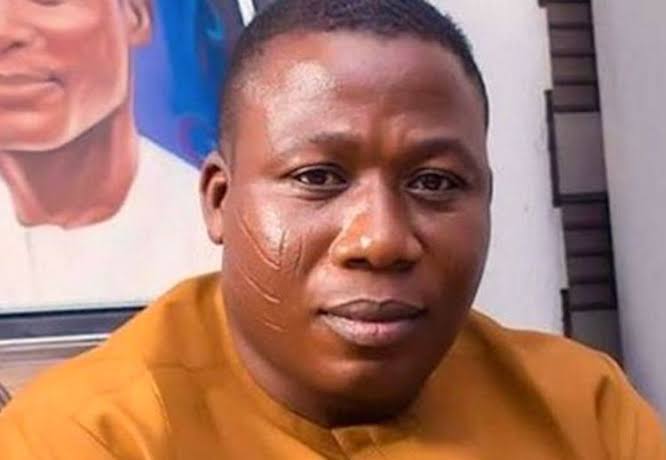
Igboho: German wife creates hurdle for Nigeria, Benin Republic as diplomatic battle rages on over extradition

Sunday Igboho

The government of Benin Republic is in quandary as it weighs options to resolve the issue of Sunday Igboho, Convener of Yoruba Nation movement arrested on Monday night while at the Cotonou airport trying to catch a flight to Germany.
This is because Igboho’s wife, Mrs Ropo Adeyemo is German and this has drawn the attention of Germany authorities. She was arrested along with Igboho.

The arrest by the security forces in Benin Republic happened about three weeks after the Department of State Services (DSS) declared Igboho wanted for allegedly stockpiling arms, an allegation he has since denied.

Recall that Nigeria’s federal government had placed Igboho on the stop-list in order to facilitate his arrest and directed the security agencies to apprehend him when found.


The Federal Government’s directive against Igboho was contained in a letter by the Nigeria Immigration Service dated July 9, 2021, addressed to the Director-General, DSS, the Inspector General of Police (IGP) and the DG, National Intelligence Agency (NIA).

However, reports revealed that diplomatic and legal intrigues have opened over Igboho’s arrest and extradition.

The involvement of his wife in the arrest got the German government to intervene in the matter.

It was also gathered that Igboho’s lawyers, led by Yomi Aliu (SAN), have moved to Benin Republic where they have contracted Beninese lawyers in readiness for a legal battle to prevent the agitator’s extradition to Nigeria.

It was learnt, that the Beninese authorities are willing to hand Igboho over to Nigeria because of the warm diplomatic relationship between the two countries and to facilitate free trade along the border with Nigeria.

A top source said: “There has been suspense over extradition of Igboho because of diplomatic intrigues. The involvement of a German citizen has added a new dimension to the arrest of Igboho. Germany is insisting on a fair procedure. Most Western nations are backing Germany.

“If Germany has its way, Igboho’s extradition has to be subjected to a thorough legal process. It is claiming that Igboho must undergo a free and transparent judicial process in Benin Republic. The Federal Government is insisting that the INTERPOL statute must be respected and the suspect should be handed over immediately.”

Based on his watch-list, the Federal Government wanted Igboho extradited to Nigeria in line with the laws governing INTERPOL.

“Igboho’s lawyer Aliu and some Beninese lawyers would join in the legal and diplomatic matters, including the Extradition Treaty of 1984 by Togo, Nigeria, Ghana and Republic of Benin.

“Benin Republic, a former French colony, is weighing options to either bow to pressure from Germany or accede to Nigeria’s request by complying with INTERPOL protocols.

“When it comes to the economy of a country, no one will joke with it. You can appreciate the diplomatic web on Igboho. Benin Republic is trying to manage the situation.” (Adapted from CenturyPost)

UNBELIEVABLE! Our Landlord Says He Fathered My Second Baby, Insists On Naming Him — Husband Cries Out

An Ibadan-based truck driver, Azeez Hakeem, on Tuesday, told an Ile-Tuntun Customary Court in Ibadan that his wife, Mufuli, was fond of sleeping with their landlord.

Hakeem, who lives at Popo Yemoja area of Ibadan, stated this while reacting to his wife’s allegation of battery before the president of the court, Henry Agbaje.

He said that while Mufuli was pregnant with their second child, their landlord claimed the pregnancy as his.

“After the child was born, he came to my parents’ house, insisting on being the one to name the child.

“We resolved this issue, but she still didn’t desist from her promiscuous attitude.

“She’s usually not concerned about the children’s dinner, as she returns home very late, with the excuse of going to pray in the mosque.

“Even after she left the house, I still rented her another apartment and took care of the kids,” he said.

Hakeem told the court that his younger brother once called him on phone to inform him of his wife’s newfound lover.

“I confirmed this to be true when I went to her house, but I did nothing about it,” he said.

Earlier, the plaintiff had informed the court that her husband was in the habit of beating her, even in front of the children.

Mufuli claimed that the serial beating forced her to leave her matrimonial home.

“I refused to leave him against the advice of our family members and friends, choosing rather to endure the battery because I didn’t want to remarry.

“However, when the beating became unbearable, I left the house in 2016. I started dating another man last year, and when he found out, he came to beat him up,” she told the court.

NANS reports that the president of the court advised the couple to resolve their differences for the sake of their children.

https://youtube.com/watch?v=ErdMEXlQzfg%3Fautoplay%3D1%26controls%3D1

Obi Cubana and the Oba Burial

By REUBEN ABATI

The sociology of death and funerals is an important aspect of the African cosmogony. Parents pray that their children should outlive them in order to give them a befitting burial. They liken this to the same manner when fire dies out in the hearth, it is replaced by ashes, and when a banana tree withers, a sapling sprouts in its place. When Africans die, it is believed that they have merely travelled to another realm, and become ancestors, and hence, a funeral ceremony is a send-forth event. The death of a young person however, is considered a tragedy. This is why such obituaries are prefaced with the solemn declaration that “The wicked have done their worst”, “We love you but the Lord loves you more” or “A Painful Exit.” The tone of the elegy at a funeral is thus a function of the circumstances of the death, or the religious inclination of the family as in “With Total Submission to the Will of God…”, “Inna Lillahi wa inna Ilayhi Raji’un”. Age is indeed a factor. If the dead lived up to an old, ripe age, you are likely to see such announcements as “A Glorious Exit”, “With Gratitude for a Life Well Spent” or “Ä Celebration of Life”.

Among the Yoruba of the South West, the death of an old man or woman is described as “oku eba”, that is – a transition that is worth celebrating, with generous dollops of cassava paste. Other groups in the country also have varying patterns of burying their dead. Among Muslims generally, the burial of the dead is carried out swiftly in line with Islamic injunctions. The simplicity of Muslim burials, the solemnity and dignity of it, is incomparable to anything else I have seen, even if Muslims in the South West of Nigeria, still find an excuse to throw lavish parties that have more to do with the culture of the people, rather than the religion. One dictionary describes the Yoruba as the “fun-loving people of the South West Nigeria.” But in general, the manner of burials, the scope of the rites, the scale and tone, is a reflection of cultural norms and dominant values, at both community and individual levels across Nigeria. What is noteworthy is how the loss of a beloved family member could suddenly end up as a celebration, and the explanation for that is as complicated and diverse as the Nigerian society itself.

In this regard, something happened last week, in Oba, Anambra State, Nigeria: the funeral of the mother of a man popularly known as Obi Cubana, which would seem to be a metaphor for the collapse of values in Nigeria generally, the effect of poverty – spiritual, mental and physical – and how that pushes the people to desperate ends. The burial of Cubana’s mum may be seen as a form of celebration, she died at 75, but it was a lavish send-forth that was terribly obscene. The town of Oba has certainly never witnessed anything like that. Not even in the entire Anambra state has anyone organised anything so loud and extravagant. This was not a celebration of life. It was a celebration of Money. Obi Cubana’s mother died in November 2020. It took him more than seven months to plan the burial and when he decided that it was time for the dead to be sent forth, his obvious intention was to organise the mother of all burials, such that even the living would envy the dead and wish to die. The only problem is that not many Nigerians would rather die knowing that it is not every one that would ever get that kind of burial. Oba is ordinarily a quiet town of nine villages, located between the commercial town of Onitsha and the industrial town of Nnewi. During the civil war, it was the last frontier of the Biafran Army. But that community will now be remembered for a long time, for the burial of the mother of a certain Obi Cubana. The role played by the social media, and by Cubana’s friends is remarkable: how a country lost its moral centre and has produced a generation of new Nigerians who worship money, ego, kudi. The excitement generated among young Nigerians who could not make it to Oba but who followed the event on social media and became excited, is a measure of the extent of the crisis that Nigeria faces.

By Friday, the spectacle had begun to unfold. Social media managers of the burial who apparently had been engaged to do so – they are called influencers – told us and showed pictures, about the Obi Cubana Festival of Money. The first of the videos that I saw was that of a young man throwing Naira notes around, on the streets as if he was distributing candies to children. The notes were in packs, crisp new notes, and as each bundle was thrown at the crowd, people fell over themselves and rushed to pick up pieces. This was like a John the Baptist display. Many of Cubana’s friends and guests would soon arrive, and before they did, many of them posted on Instagram, the stacks of money they were going to spend. Cartons of Naira notes. In one post, a group of women were shown swimming in a pool, others were hanging around, scantily dressed, all looking like they had adjusted their biological features. That is now standard practice among a category of Nigerian women. They do a breast job, acquire a surgical, traffic-stopping butt, and they all look alike, fully bleached to their knuckles, with fake hair, strange eyelashes that protrude like pins, and of course foreign accents that have a combination of every dialect from Wales to mid-West America.

The boys by the pool threw money into the water and the girls scrambled to grab their share of the offering. This was the pattern throughout the burial. Naira notes, sorry bundles of Naira, were thrown about, sprayed, pasted so recklessly you would think this was a future Olympics Game, in which the athletes were preparing for a Gold Medal. Obi Cubana himself was at the centre of it all. One lady, simply identified as Livy was shown in one video throwing so many bales of money at Cubana that he exclaimed that he would need a Chest X-Ray! The way money was being thrown like pieces of cement blocks, I also thought that an ambulance should have been on standby. “Killed by money at Cubana’s mother’s burial” would have been an appropriate headline in the circumstance. The public was later informed that Obi Cubana got about 300 million Naira as contributions by his friends to bury his mother. He also received over 100 rams, and 400 cows, 46 out of that was supplied by one guy called Cubana Priest who not only announced the donation but also said that was just a tip of the iceberg.

Cubana himself did not disappoint. He wore a diamond pendant that was valued at N50 million. His mother’s casket, specially imported from wherever was said to have been about N40 million. This celebration of money was so unbelievable, the burial became a matter for social media punditry and the creation of emojis. Some people said it was certain Obi Cubana’s mother was already in Heaven as a saint, sitting on the right-hand side of the Almighty. Nobody has been to Heaven to confirm that, so we have no proof. Others said with the volume of money spent at the funeral, the Nigerian government should henceforth approach Obi Cubana for a loan and stop disturbing China, IMF and the World Bank. Other observers were worried about the source of the money that was being thrown around like confetti. Nigerian banks would also readily tell you that they don’t have new notes. They give out dirty notes to their customers. But there were more crisp, mint notes in circulation at Oba over the weekend than in the entire Nigerian banking system. And the notes were abused.

The Central Bank Act of Nigeria – Sections 5, 21 (4-5) prescribe penalties for the abuse of the country ‘s national currency. The law forbids the sale, purchase, and the plunking of the Naira, and prescribes penalties: six months imprisonment or a fine of N50, 000 or both. The penalties are so light, I don’t think they mean anything to Cubana and his friends or their likes. And why should that bother them anyway when the Oba funeral was attended by the same law enforcement officers who should know that it is an offence to abuse the Naira (truth is: policemen joined others to collect the notes that dropped on the floor), and there were lawmakers and prominent politicians in attendance too. In fact, nobody should be surprised if Cubana ends up as a Governor or Senator tomorrow. He has effectively used his mother’s burial to prove a point: that he has cash and the courage to spend it. Nigerians worship money. And that was why throughout the weekend: the popular saying was: who no dey Oba, na wahala him get? Women were turned into objects and debased. Whoever had not seen his girlfriend or wife was advised to go to Oba in Anambra State. And there was a particular video of one lady who collected up to three big bags of money, by just picking money from the floor like a mendicant! Nollywood stars fell over themselves to be seen and heard. One respected actor even got so carried away he began to act like an Area Boy on Instagram. I won’t mention his name because he is a man I like very much. Money is a Devil in Nigeria. It turns even the most enlightened into clowns.

At Obi Cubana’s mother’s burial, so-called celebrities, some of these characters who describe themselves as brands (whatever that means!) became ushers, bodyguards, “all-right-sirs” and videographers. Obi Cubana has every right to bury his mother the way he wants. But who is he? How did he make his money? How much tax does he pay to the Nigerian government? The Oba burial is over now, but the only thing anybody will remember is the Bacchanal orgy of money. I am not sure half of the people at the event even know who Cubana’s mother was. What kind of person was she? How did she relate within the community? Did she even ever see, handle, spend, a bundle of crisp Naira notes in her lifetime? Who are Obi Cubana’s family members? Does he even have siblings or extended family members? They were all blanked out! Members of the Oba community were advertised as crumb eaters. They struggled to grab the Naira notes that were thrown into the air. They stared at the money-miss-road invaders from a distance. When it was all over and the waka-come-Cubana crowd left, they struggled over the left-over crumbs of cow-meat barbecue. They were effectively reminded of their poverty.

Obi Cubana would probably not visit that community again until he needs to organise another show-off. Would it not have been better if he built a hospital in his mother’s memory? Or a school? Or a church? And then the people will remember her, and not how her son and his friends put money to shame at her funeral. And who are these friends? The kind of names that have been mentioned sound unfamiliar to me: E-Money, Internet Money, Pablo Cubana, Escoba, Jowizaza, Livy, Cubana Priest. Is the Nigerian Immigration Service, in charge of aliens and expatriates, the Nigerian Identity Management Commission (NIMC) in charge of National Identity Registration and the Ministry of Internal Affairs, in charge of Homeland Security, aware of the presence of these people inside Nigeria? Who are they? And why do they spend money like that? Not even Elon Musk, Jeff Bezos, Bill Gates, or Warren Buffet will throw money around like that!

The burial of Otunba Mike Adenuga’s mother in 2005 has been compared to that of Cubana’s mother’s burial, and certainly Otunba Adenuga should feel maligned. It is an unintelligent comparison. The point that has been made is that when Adenuga was burying his mother he donated a cow to every street in Ijebu-Igbo, his home town. Yeah. But there were no drunkards throwing bales of money on the streets or cleavage-bearing women, bleached from head to toe, with artificial physiognomy and a mass of excessive protoplasm, promenading here and there, with shameless, bedmatic display. Last weekend, we saw a new definition of womanhood in Oba.

My point is about taste, class and values, not melodrama, or the right of persons to live as they wish. And here, I also draw attention to the burial about the same time of the mother of the former Managing Director of Access Bank, Aigboje Aig-Imoukhuede, which took place in Lagos at the Tafawa Balewa Square. The contrast is striking but I bring it up because it also says something about Nigeria: the emergence of two polarized publics, both of seemingly strong weight and whose difference lies is the inherited future of our children because of the way Nigerian leaders have failed the people. The burial of Apostle Mrs Aig Imoukhuede was a dignified, classy event attended by the Nigerian establishment from politics to business and civil society. It was the celebration of a woman who achieved distinction in her own right and whose accomplishments in that regard were properly show-cased. The funeral was not about her first son, the banker, investor, philanthropist, friend of every important figure. It was, most appropriately, a celebration of her life. Nobody had any need to throw money around. Even if Mrs Imoukhuede was a trader at Oyingbo market, there would have been no need to turn her funeral into a festival of money. And yet the richest and most influential Nigerians with the strongest pedigree were there. One weekend, two burials, different tales! I leave it to you to stretch the comparison. I have made my point: Nigeria is in trouble. Young Nigerians, products of a failed leadership, worship money and fakery. The gentrified class train their children in the best schools abroad, but those same children will return to a country that would have been taken over by the Oba crowd who are sadly, the future of Nigeria. Obi Cubana, and Aig Imoukhuede, our commiserations.

Again, the EFCC Lacks Power Over Lawyers Bank Accounts.

by Onyekachi Umah, Esq., LL.M, ACIArb(UK)

Again, the EFCC Lacks Power Over Lawyers Bank Accounts. Daily Law Tips (Tip 815) by Onyekachi Umah, Esq., LL.M, ACIArb(UK)

Introduction:

It is no news that Nigerians are greatly talented and that some have invested their talents in financial crimes. To better combat the rise in economic and financial crimes in Nigeria, the Federal Government of Nigeria instituted the Economic and Financial Crimes Commission (EFCC). Aside the creation of institutions, the Federal Government also enacted robust legislatures to fight financial crimes across Nigeria.

Since fraudulent persons in Nigeria launder money through bank accounts of or transactions involving some religious centers, Not-For-Profits organizations, property and estate firms, travels, luxury and life style companies, legal practitioners, stock brokers and others, supervising such accounts have become inevitable. Hence, there are federal laws (Money Laundering (Prohibition) Act 2011 and the Terrorism (Prevention) Act 2011) that allow EFCC to supervise such bank accounts. However, legal practitioners have frowned at parts of such laws (particularly the Money Laundering (Prohibition) Act 2011) and labeled it; a violation of earlier existing federal laws (the Evidence Act and the Constitution of Nigeria) and the Client-Attorney Relationship.

Legal practitioners in Nigeria (through the professional body; the Nigerian Bar Association) challenged the Federal Government of Nigeria in courts, contesting that a lawyer’s bank should not be supervised. Judgment was given in favour of legal practitioners at the High Court and at the Court of Appeal. However, recently, on 14 May 2021, the Court of Appeal had another opportunity to rule on this issue, in a case between FEDERAL REPUBLIC OF NIGERIA and CHIEF MIKE OZEKHOME (SAN).

This work reiterates the recent position of the Court of Appeal on whether the EFCC truly lacks power over the bank accounts of lawyers (ie, Client accounts kept by lawyers). It analyzes the interactions between the EFCC, the SCMUL and the Legal Practitioners in Nigeria. It attempts to x-ray the cold war between legal practitioners in Nigeria and the EFCC, due to the clash between the Money Laundering (Prohibition) Act 2011 and the Evidence Act, 2011. It summarizes the three (3) judgments of the Nigerian Courts on whether the Money Laundering (Prohibition) Act 2011 applies to Lawyers. It concludes with an actionable advice to the EFCC on ways to stop and prevent financial crimes involving lawyers and their clients.

The EFCC, the SCMUL and the Legal Practitioners in Nigeria:

The Money Laundering (Prohibition) Act 2011, among other things, prohibits cash transactions and mandates Suspicious Transaction Reports to be sent to the EFCC. While the Terrorism (Prevention) Act 2011, prevents acts of terrorism and by a later amendment in 2013, empowers all law enforcement agencies in Nigeria to fight terrorism and adopt measures to prevent terrorism in Nigeria.

Special Control Unit against Money Laundering (SCUML) Certificate is a vital tool for opening and operating a bank account, for many businesses and professionals in Nigeria. This is handled by several law enforcement agencies, regulators and stakeholders, including the Economic and Financial Crimes Commission (EFCC). Read more on this via; Legality of SCUML (EFCC) Certificate.

By the provisions of the Money Laundering (Prohibition) Act 2011, any Designated Non-Financial Institutions (DNFI) that is involved in cash transactions is to provide declaration of its activities to the Federal Ministry of Finance. By that law, Designated Non-Financial Institutions (DNFI) are dealers in Jewelry, cars and luxury goods, chartered accountants, audit firms, tax consultants, clearing and settlement companies, legal practitioners, hotels, casinos, supermarkets, or such other businesses as the Federal Ministry of Commerce or appropriate regulatory authorities may from time to time designate. Read more on this via; Persons That Must Obtain SCUML (EFCC) Certificate.

Hence, by the express provisions of the Money Laundering (Prohibition) Act, the federal law listed legal practitioners as professionals that need to obtain SCUML Certificate (EFCC Clearance) before running a bank account for their legal practice in Nigeria. This means that the EFCC and other concerned law enforcement agencies can access information about clients of legal practitioners through the bank accounts of legal practitioners, when legal practitioners obtain SCUML for their bank accounts. This will in turn aid the agency in curbing and prevent financial crimes that may involve lawyers and their clients.

However, the Evidence Act in Nigeria (a federal law that regulates the administration of evidence in courts) protects the communication between legal practitioners and their clients. Such communications are deemed to be privileged and to be made on the trust that they will not to be accessed or made available to a third party (like, the EFCC and other law enforcement agencies), except in special circumstances. Also, the communication between a legal practitioner and his client (the Client-Lawyer Relationship) is arguably part of the fundamental human rights of a client; “the Right to Private and Family Life”. Yes, the private communication of a client and his attorney should not be violated, except with an order of court. For more on this read; Lawyers No Longer Need SCUML (EFCC) Certificate.

The Nigerian Courts on the Money Laundering (Prohibition) Act 2011and the Lawyers:

Obviously, there is a clash of federal laws between the Money Laundering (Prohibition) Act 2011 and the Evidence Act, 2011. While, the EFCC relies on the Money Laundering (Prohibition) Act to lawfully supervise bank accounts of lawyers and to demand that lawyers use SCMUL for their bank accounts, Lawyers rely on the Evidence Act (and arguably the Constitution of Nigeria) to lawfully demand that the EFCC and all other persons stay away from their Client-Attorney Relationships and their bank accounts.

Until there is a legislative amendment of any of the concerned federal laws, both lawyers and the EFCC will not relent in their lawful crusades. In the meantime, the Judiciary has been approached severally by both parties (Lawyers and the Government/EFCC) to interpret the conflicting laws; the Money Laundering (Prohibition) Act 2011 and the Evidence Act 2011.

The first judicial attempt to resolve the clash was in the case filed by the Nigerian Bar Association against the Attorney General of the Federation and the Central Bank of Nigeria, at the Federal High Court, in the case the Registered Trustees of Nigerian Bar Association V. AGF & CBN (Suit No: HC/BS/173/2014). The Court upheld the argument of the Nigerian Bar Association that bank accounts of lawyers for their legal practice cannot be supervised, so as to avoid breaching the Client-Attorney relationship. Read more via; A Lawyer’s Bank Account is Exempted from EFCC, SCUML, NFIU and Police Registration/Clearance.

As expected, being unsatisfied with the judgment of the Federal High Court, the Attorney General of the Federation (AGF) appealed the judgment at the Court of Appeal in the case of CBN V. NBA & AGF (Appeal No: CA/A/202/2015). The Court of Appeal being the second most superior court, entertained the matter and ruled in favour of the Nigerian Bar Association. The Court of Appeal upheld the judgment of the Federal High Court, that the bank accounts of legal practitioners for their practice cannot be accessed by third parties, to avoid a violation of communications between clients and their lawyers. Well, as at the time of this publication, no person has challenged the said judgment of the Court of Appeal at the Supreme Court (even the statutory period for such appeal has elapsed). Hence, it is safe to conclude that all person in Nigeria have accepted the judgment of the Court of Appeal on the issue and that the judgment is the final on the issue for now.

Recently on 14 May 2021, in a different matter, the Court of Appeal had another opportunity to rule on the issue of whether lawyers are bound to obtain SCMUL and are to subject their bank accounts to the EFCC, in line with the Money Laundering (Prohibition) Act. This was in the case of the Federal Republic of Nigeria V. Chief Mike Ozekhome, SAN (Appeal No. CA/L/174/19). Still again, the Court of Appeal repeated itself by emphasizing its earlier position on the issue and stressed that lawyers are not bound by section 10 of the Money Laundering (Prohibition) Act. And as such, lawyers are not mandated to obtain SCMUL and have their banks accounts accessible by the EFCC and any other third party, so as to avoid breach any communication between a lawyer and his client. Again, the EFCC Lacks Power Over Lawyers Bank Accounts.

Conclusion:

Nigeria is designed to be lawful nation, governed by laws and not by the wishes or dictates of any person. So, no matter how good an idea may be, such an idea will not bind Nigerians, until it is passed into law. And, when there is a gap in law, the Courts (the Judiciary) are prayed to interpret the laws and where necessary, the lawmakers (the Legislature) are lobbied to amend the laws. The Federal Government (the Executive) and its agencies (the EFCC, DSS, ICPC, Police and others) are to execute laws as made by the Legislature and as interpreted by the Judiciary.

Legal practitioners are not above any law in Nigeria, rather they have more laws to obey (professional codes and the Legal Practitioners’ Act, among others). Clients of legal practitioners are not above any law in Nigeria, both legal practitioners and their clients are not saints either. However, the communications between a lawyer and his client are golden and must be respected by all, except in special circumstances. The communication between client and lawyer includes; email, telephones, bank payments, cash exchanges and others. No person needs to supervise such communication, since there are made in trust and protected by law. Clients will not feel safe to engage lawyers to prosecute their cases and perform duties for on their behalf, where their communications with their lawyers are not protected. Such distrust will collapse the legal profession, close the courts and beget anarchy and the dislodgement of rule of law.

The growing financial crimes in Nigeria and the undeniable role of professionals (including lawyers) in aiding such crimes are in public domain. Yes, there are lawyers that are unethical and that will aid clients and persons in perpetrating crimes. The reports from the Legal Practitioners Disciplinary Committee are clear proofs of this assertion. Hence, the federal institution tasked to curb and prevent financial crimes (the EFCC) seriously desires to keep a tab on lawyers and their operations, in order to easily prevent and fish out unethical lawyers that collude with their clients to perpetrate economic and financial crimes. However, this desire seems jeopardized, since it will unduly and unlawfully expose and breach the communications that are protected under laws and the Client-Attorney Relationships.

However, the EFCC and other law enforcement agencies are not without some lawful options that will enable them stop and prevent financial crimes, especially ones where lawyers and their clients conspire. It only requires a better assessment of the Constitution of Nigeria, the Evidence Act, the Legal Practitioner’s Rules of Professional Conduct and a slight twitch of the operational strategy of the EFCC. At all times, let all persons (including, lawyers and their clients) that are involved in economic and financial crimes be found and be forced to face the law. After all, if crime takes over Nigeria, there will be no lawyers and courts for the legal profession.

My authorities, are:

Sections 1, 2, 5, 6, 10, 25 and 26 of the Money Laundering (Prohibition) Act 2011
Section 1, 40 and 41 of the Terrorism (Prevention) Act, 2011
Section 1, 4, 14, 14 and 20 of the Terrorism (Prevention) (Amendment) Act, 2013
Sections of 192 and 195 of Evidence Act
Rule 19(1) of the Rules of Professional Conduct for Legal Practitioners 2007
The Central Bank of Nigeria (Anti Money Laundering and Combating of Financing of Terrorism for Banks and Other Financial Institutions in Nigeria) Regulation 2013.
The Nigeria Securities and Exchange Commission (SEC) and National Insurance Commission (NAICOM) AML/CFT Regulations for their respective operators.
Regulations 1, 2, 4, 33 and 34 of the Federal Ministry of Industry, Trade and Investment (Designation of Non-Financial Institutions and Other Related Matters) Regulations, 2013
Regulations 1, 2, 3, and 4 of the Federal Ministry of Industry, Trade and Investment (Designation of Non-Financial Institutions and Other Related Matters) Regulations, 2016
The Terrorism Prevention (Freezing of International Terrorists Funds and Other Related Measures) Regulations, 2013.
The National (Money Laundering & Terrorist Financing) Risk Assessment Forum, “NIGERIA ANTI MONEY LAUNDERING AND COMBATING THE FINANCING OF TERRORISM NATIONAL STRATEGY 2018 – 2020” (SCUML, 2018) https://www.scuml.org/wp-content/uploads/2019/08/NIGERIA-AMLCFT-NATIONAL-STARTEGY-DOCUMENT.pdf accessed 16 July 2021
The judgment of the Court of Appeal in the case of CBN V. NBA & AGF (Appeal No: CA/A/202/2015).
The judgment of the Court of Appeal in the case of Federal Republic of Nigeria V. Chief Mike Ozekhome, SAN (Appeal No. CA/L/174/19)
The judgement of the Federal High Court in the case of Registered Trustees of Nigerian Bar Association V. AGF & CBN (Suit No: FHC/BS/173/2014).
The Nation, “Court Restraints Fed Govt, CBN SCUML from Enforcing Money Laundering Act on Legal Practitioners” (The Nation, 23 December 2014) https://thenationonlineng.net/court-restraints-fed-govt-cbn-scuml-enforcing-money-laundering-act-legal-practitioners/ accessed 16 July 2021
Toyin Nwiido, Interview with Ogwemoh Sylva, SAN (Commercial Law Development Services, July 2018) http://www.clds-ng.com/wp-content/uploads/2018/07/CLDS-Newsletter_July-2018_b.pdf accessed 16 July 2021
Davidson Iriekpen, “Appeal Court Voids EFCC’s Seizure of Ozekhome’s Professional Fees” (ThisDay, 25 May 2021) https://www.thisdaylive.com/index.php/2021/05/25/appeal-court-voids-efccs-seizure-of-ozekhomes-professional-fees/ accessed 16 July 2021.
Onyekachi Umah, “Legality of the “EFCC Order” on Bank Employees Declaration of Assets” (ThisDay, 6 April 2021) https://www.thisdaylive.com/index.php/2021/04/06/legality-of-the-efcc-order-on-bank-employees-declaration-of-assets/amp/ accessed 7 April 2021.
Onyekachi Umah, “The Minimum Financial Threshold for EFCC Cases.” (LearnNigerianLaws.com, 1 September 2020) https://learnnigerianlaws.com/the-minimum-financial-threshold-for-efcc-cases/ accessed 16 July 2021
Onyekachi Umah, “The Central Bank of Nigeria Notices on Cryptocurrencies; a Ban or a Banger?” (LearnNigerianLaws.com, 9 February 2021) https://learnnigerianlaws.com/the-central-bank-of-nigeria-notices-on-cryptocurrencies-a-ban-or-a-banger/ accessed 17 February 2021
Onyekachi Umah, “Unlawfulness of the EFCC Order on Bankers Declaration of Assets” (LearnNigerianLaws.com, 8 April 2021) https://learnnigerianlaws.com/unlawfulness-of-the-efcc-order-on-bankers-declaration-of-assets/ accessed 12 April 2021
Onyekachi Umah, “Debunking Myths Relating to Bankers Declaration of Assets Law” (LearnNigerianLaws.com, 12 April 2021) https://learnnigerianlaws.com/debunking-myths-relating-to-bankers-declaration-of-assets-law/ accessed 20 April 2021
Onyekachi Umah, “Nigerians That Are Prohibited From Having Foreign Bank Accounts” (LearnNigerianLaws.com, 25 November 2020) https://learnnigerianlaws.com/nigerians-that-are-prohibited-from-having-foreign-bank-accounts/ accessed 16 July 2021
Onyekachi Umah, “The Supreme Court Has Warned Efcc And Police Against Recovering Debts And Investigating Disputes From Civil Transactions.” (LearnNigerianLaws.com, 26 October 2019) https://learnnigerianlaws.com/the-supreme-court-has-warned-efcc-and-police-against-recovering-debts-and-investigating-disputes-from-civil-transactions-daily-law-tips-tip-444-by-onyekachi-umah-esq-llm-aciarb-uk/ accessed 16 July 2021
Photo credit: Sentinel

Sabi Law Projects:

SabiLaw

DailyLawTips

SabiBusinessLaw

SabiElectionLaws

SabiHumanRights

SabiLawOnTheBeatFm

SabiLawLectureSeries

CriminalJusticeMonday

SabiLawVideoChallenge

Speak with the writer, ask questions or make inquiries on this topic or any other via [email protected], [email protected] or +2348037665878 (whatsapp). To receive free Daily Law Tips, join our free WhatsApp group via https://chat.whatsapp.com/L7h4f1exItZ38FeuhXG4WNor Telegram group, via the below link: https://t.me/LearnNigerianLaws

To keep up to date on all free legal awareness projects of Sabi Law Foundation, follow us via

Facebook Page:@LearnNigerianLaws,

Instagram:@LearnNigerianLaws,

Twitter: @LearnNigeriaLaw,

YouTube: Learn Nigerian Laws,

WhatsApp Groups via (https://chat.whatsapp.com/L7h4f1exItZ38FeuhXG4WN),

Telegram Group: (https://t.me/LearnNigerianLaws),

Facebook group: (https://www.facebook.com/groups/129824937650907/?ref=share)

or visit our website: (www.LearnNigerianLaws.com )

Please share this publication for free till it gets to those that need it most. Save a Nigerian today! NOTE: Sharing, modifying or publishing this publication without giving credit to the author or Sabi Law Foundation is a criminal breach of copyright and will be prosecuted. This publication is the writer’s view not a legal advice and does not create any form of relationship. You may reach the writer for more information.

This publication is powered by www.LearnNigerianLaws.com {A Free Law Awareness Program of Sabi Law Foundation, supported by the law firm of Bezaleel Chambers International (BCI).} Sabi Law Foundation is a Not-For-Profit and Non-Governmental Legal Awareness Organization based in Nigeria. For sponsorship and partnership, contact: [email protected], [email protected] or +234 903 913 1200.

The Courts’ Annual Vacation

By Ebun-Olu Adegboruwa, SAN

Towards or by the end of July, 2021, most courts in Nigeria will be on break, to observe the usual ritual of the annual long vacation. All over the country, superior courts of record, from the High Court to the Supreme Court, will be closed, starting from July to September or August to October, as the case may be.

This is covered by most Rules of the Courts, that of Lagos State being Order 49 Rule 4 (d), which defines “… the long vacation being the period beginning by the middle of July and ending on a day not later than 42 working days as the chief judge may by notification in a public notice appoint.” Although most judges will be on official vacation, some courts will remain open to attend to very urgent cases, especially criminal cases that may involve custody. I don’t want this year’s vacation to be the usual annual ritual of formal absence from duty, which is the reason for this piece. Good enough, other sectors have since embraced this policy as the National Assembly proceeded on its recess last week to resume in September.

THE JUDGES

They are human beings with flesh and blood, they need sleep as the rest of us do, they go to the market, they wash their clothes, they have families to attend to and some still have children in school, to cater for. The record from the Law School shows that there are many more female lawyers graduating every year and this has been extended to the Bench where, for instance in Lagos State, female judges outnumber their male counterparts. The judges have to sit in court everyday, from 9am to about 4pm, some of them writing in long hands. Let me use Lagos State where I practice as a case study. I know of a judge who became sick only by reason of not experiencing sunlight, having to leave home very early to beat the traffic, go into court and sit on cases all day, and then close very late, by which time the sun has set already. I do not want to go into personal details, but the truth is that a lot of the judges nurse varying degrees of ailments, on account of the hazardous nature of their job, sitting in one position all day, all week and for months on end. The judges read and study volumes of record of proceedings and written addresses, they analyse cases, prepare and deliver rulings and judgments, on them all. So, the long vacation is then built into the courts’ calendar to give room for rest.

For the Judges, it should not just be about rest and fun, but also personal introspection. How have we fared so far? Are we just delivering judgments without justice? Has it just been all of technicalities bereft of substance? Have we now improved the law more than the way we met it? What is the efficiency scorecard? And the utility value of the efforts? My Lords must take stocks and be self accountable. We must improve ourselves to improve public perception, which is presently very low, though largely instigated and influenced by powers outside the courts, for other motives. Can we take part of this time to reflect upon our cases more deeply? Do the judgments that we churn out everyday, satisfy the expectations of our people concerning justice? Or are we just working to the answer in satisfaction of NJC quarterly returns? In which particular area of law have we made an appreciable difference? What innovation have we brought to the judicial table, the whole of this year? My Lords, Bairaman J.S.C. did not cite any authority in the landmark case of Madukolu v Nkemdilim, which has become the Bible of jurisdiction, since 1962. Is that the way we want to leave it, just to be quoting and adopting previous decisions, without any substantial impact or improvement?

What about the health factor? Can we take out time to do a comprehensive medical check up? Since early diagnosis is key to recovery, why not just walk into the lab and check! Judicial work is both mental and physical and very tasking and energy sapping. Can you still cope? In what area can we improve on knowledge? Technology is taking over virtually all aspects of human existence. Are you compliant? Can anything be done in this regard? How can we use technology to improve justice administration? In some courts now, judges direct their registrars to compile a database of all lawyers who have cases in their courts, in order to open effective channels of communication, through emails, whatsapp, etc. What courses are we attending, to improve justice delivery? After all these My Lords, please do family, family and family. They are the ones that you truly have, so please use this time to bond with them. Don’t ever leave them behind from those jollification trips this time around. Please create time to bond with your people.

May I also take out time to talk to the heads of the courts? Can we plan our conferences such that some of them will fall within the long vacation and save litigants and lawyers the trouble of adjournments of cases during busy sessions? This time should also be deployed effectively to renovate the chambers of the judges, to change their carpets, tiles, furniture, computers and other tools of business. Let us make the working environment conducive and friendly. Let us attend to the dilapidated courtrooms, some of which are as hot as the oven, without any ventilation for fresh air. It is most embarrassing that there are no public conveniences in most of the courts. Yet, we bring lawyers and litigants to remain in one entity for about eight hours without any facility for their welfare. Let the entire court compound be cleaned and fumigated, the lawns and gardens properly dressed, the entire courts repainted to wear a new look for the coming legal year. Afterall, Nigerians recently fought for financial autonomy for the judiciary to be in charge of their finances, and we have since jerked up the filing fees and penalties, the costs have gone up and probate fees have all become prohibitive. So, why should things still remain the same when we are paying through our noses? And most courts have no Bar Centre, where lawyers can take pepper soup and sip drinks. Why? Should it all be about arguments and advocacy?

Now is the issue of welfare packages for judicial officers and judicial staff. You cannot fight corruption with poorly paid people. So, we need to review the salary of judges and the judicial staff. They are just too poor and abysmal. Indeed, beyond the prestige of office (which does not really exist anymore), judges are suffering, with some worrisome cases of judges driving themselves to work!

THE LAWYERS

Properly speaking, the long vacation is more for the lawyers, who joggle between different courts, all year round. It is the same lawyer, who appears before the Magistrate’s Court, the High Court, the Federal High Court, the National Industrial Court, Election Petitions Tribunal, Tax Appeal Tribunal, SEC Tribunal, Sharia Court, the Court of Appeal and the Supreme Court, round the clock, as all these courts have different times and schedules. But for the long vacation, by July ending, most active lawyers are already fatigued and experiencing decline in productivity. So, what does the lawyer do with the long vacation? Chief Gani Fawehinmi, SAN, once told me that in his practice days, he uses the long vacation to read the entire practice books, such as Evidence Act, Rules of Court, Criminal Procedure Laws and such other common practice books and journals that are daily tools in the courtroom. Between now and the time of the Annual Bar Conference, take a course in computer studies, in arbitration, in business or other law related matters.

Then review your cases, altogether, to tackle all pending assignments. Take stock of the past one year. How has it been? Beyond the fat briefs, how many pro bono cases have you attended to? What about the members of staff, are you deliberately owing them arrears of salary and now planning to travel abroad with your family for holiday? Haba! What is the general impact of your practice on society at large?

Will you now in good conscience, stop misleading/extorting your clients in the name of bribing judges, when you don’t even have any communication channel with My Lord at all? Can you get back to making this legal profession truly noble, by practicing it in the best tradition that we inherited from our leaders of old? Can you embrace civility and decorum in the conduct of cases, to be transparently honest and tell your client the true position of the law, so that if he/she is the wrong party, he/she can make things right, instead of frivolous applications to prolong the case?

Alternative dispute resolution is fast gaining grounds, as a veritable means of conflict management and every lawyer should embrace it and commend it to their clients. It is faster, better and even cheaper. And then you must plan for the NBA-AGC along with your colleagues from your office. Forget about the politics, the NBA is indeed a useful organ for all lawyers, in many ways and we should endeavour to be part of all activities of the Bar. What about your health? Have not heard of or read about lawyers who just slump and die? In taking and absorbing other peoples’ stress, how do you yourself offload? Having done all these, then now is the long vacation proper. You must shut down completely, away from cases, clients and briefs, even telephones.

The body must be allowed to refresh itself. If God who created us could find time to rest, then you have no excuse at all. You don’t have to travel abroad if you cannot afford it or if other priorities would not permit for now. Take madam and the children to some secluded places, even in Nigeria here, and just have fun, at least for a week or two. Don’t be part of the statistics of lawyers who collapse in court, in the midst of arguments of cases. Please take a break so that you do not break.

Above all these, government must take deliberate steps to create the enabling environment for justice to thrive, for the practice of law to blossom, through improvement in facilities and infrastructure, obedience to orders of court, respect for the rule of law and human rights and indeed a determination to eliminate all forms of impunity in all spheres of our human existence. Happy vacation.

Yorubas, Buhari and an agitation that won’t have even been; By Samuel O. Ajayi

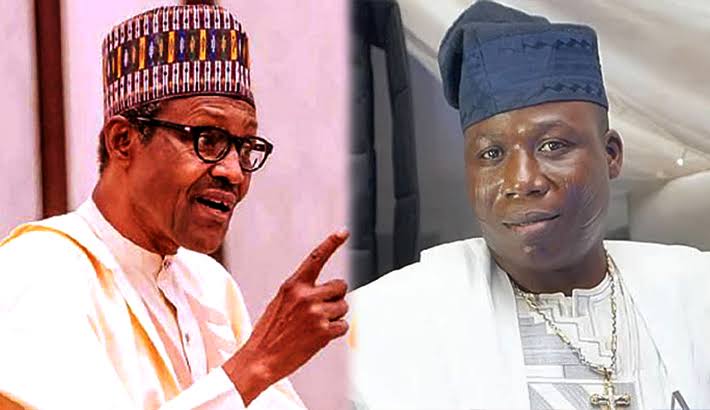
•President Muhammadu Buhari and Sunday Igboho, Convener, Yoruba Nation

Privately and publicly, people have been asking why I remain skeptical about the Oduduwa Republic agitation and I always take people back to the emergence and consolidation of the Buhari regime.

We Yorubas made Buhari president. Igbos never pretended that they didn’t want him.

And we called them names. A major monarch in the South-west asked them to do and drown in the lagoon.

We clapped.

In promoting and defending Buhari, we nearly ruined the reputation, and to some extent, lives of fellow Yorubas who didn’t join the bandwagon then.

I don’t want to recollect the kind of unprintable names my compatriots called me.

After Buhari emerged and we saw the disaster unfolding under his Presidency, I expected my people to rise up and live up to our reputation as a principled race.

But we didn’t.

No one SUSTAINED and HELPED the Buhari regime to become the monster that it is today than its Yoruba defenders and supporters!

When, in June 2015, there was this claim that TAM of Port-Harcourt refinery was done under TWO weeks, we raised alarm that this was not possible.

This is what someone said:

“It was not possible under the thieves that you supported. But by mere body language of Buhari, things are falling into place. Just watch.”


In July 2015, after 48 houses were returned to Timpreye Sylva (who paid for Buhari’s nomination form) by the EFCC, I raised alarm that Buhari’s anti-corruption, was nothing but a ruse.

They descended on me.

“You have to get over your loss. It is too early to stop crying. We know free money has stopped; so we expect corruption to fight back.”

When his appointments were becoming glaringly lopsided, we also raised alarm.

Hear them again:

“He can only appoint those he can trust and work with. You are pained because there is no free money again. Get over your loss.”

When (Vice President Yemi) Osibajo and (Asiwaju Bola) Tinubu openly repudiated the agitation for restructuring and true federalism and we reminded them that this had been Yoruba’s position since Babangida days, they snapped at us:

” Why didn’t you raise the issue of restructuring under your clueless Jonathan?”

When herdsmen were trying to start the menace they constitute in the South-west today, one Buharist from Ekiti State said to me:

“Egbon, stop making noise. Buhari has nothing to do with this. Let our governors rise up and stop playing politics. Buhari will not give them any special money.”

Under Jonathan, Tinubu and his party convinced Yorubas to boycott the 2014 Political and Constitutional Conference in Abuja.

Let the present agitators go and check the recommendations of that Conference.

If Yorubas had not made it their duty to be the chief defenders on Buhari, we would have PROBABLY put this man on his toes from day one and FORCE him to behave.

And you know what?

There may even not be need for any Oduduwa Republic agitation!

But when you create a Frankenstein Monster, learn to live with its consequences…

•Source: Facebook

The siege on Kaduna and an Emir’s travels.

Ayo Olukotun

“The Emir of Kajuru, 30 minutes drive from Kaduna and 12 of his family members were forcefully kidnapped last night. The bandits operated freely for one hour. In my Kaduna state nowadays, it’s no more about who is safe, but who is the next victim.”

Senator Shehu Sani, The Punch, Monday, July 11, 2021.

Kaduna is or used to be an urban planner’s delight combining the laid-back and leisurely aspects of suburbia with the features of a well laid-out city providing spare room for orderly expansion. It was the political and social bastion of the Kaduna mafia, an interconnected group of influential business, bureaucratic and political leaders who called the shots not only in northern Nigeria but well beyond it. Sadly, even tragically, as Senator Shehu Sani described it in the opening quote, Kaduna and its environs are now at the mercy of a republic of bandits inching perilously close to the jugular of that once aesthetically-arresting city.

For the better part of this year, the Kaduna state has witnessed spectacular raids on schools, institutions of tertiary education as well as prominent individuals, the latest of which is the Emir of Kajuru, who, along with his throne and family members were captured and forcibly moved to a kidnapper’s den. The 85-year-old emir was released a day or two later but the bandits cruelly held on to his dependants demanding a ransom of 200 million naira as price for securing their release. Grievously but characteristically, there was no police presence throughout the duration of the nocturnal seizure of Kajuru, notwithstanding the fact that it warehouses a local government secretariat and is a mere half-an-hour drive from the Kaduna metropolis which boasts established police and military presence.

This columnist has returned again and again to the topic of insecurity, not least because it holds the key to economic and social growth, political stability, the prospects of the 2023 elections, and indeed the very survival of the country and its tormented citizens. The Emir’s capture and ordeal are metaphors of a state in the throes of demystification and anguish, its law enforcement apparatus hollowed out and unable or incapable of averting worst case scenarios until they have transpired with momentous consequences. The 85-year-old emir, Alhaji Alhassan Adamu, reportedly wept after his release; it is likely that he wept more for a country so intimately violated and yet unable to offer any resistance even at the highest echelons of political and traditional power. It is unlikely that the emir had lived through such a period of turmoil and arrogant incompetence.

Doubtless, we have always known that the police are undermanned, underequipped and easily overwhelmed by hostile forces. When some weeks back, for example, bandits attacked the Bethel Baptist Secondary School in Kaduna and made away with 121 students, the feeble resistance offered by security agents was easily repelled leading to the death of two policemen, a disturbing memento of inefficiency and shortage of human and material resources. In the same connection, there was this report published in The Punch on Sunday (July 11, 2021) about the breakdown of equipment meant for tracking the whereabouts of kidnappers and locating their dens. The equipment had broken down for several months because of the lack of system upgrade, and apparently, nobody had exercised the sense of urgency required to fix such strategic ammunition in the fight against spreading banditry and high-profile kidnapping.

Ordinarily, beefing up the institutional capacity, fighting teeth and logistical backup of law enforcement should have been part of a state-building project for a visionary political elite. What we get however, are a torrent of words, promises, boastfulness wrapped up in vain assurances in the midst of deepening quagmire. If there is any time to rise to the occasion of a fast degenerating circumstance, it is now.

OSUN STATE UNIVERSITY’S VC’S RACE: REPEATING THE LASU CRISIS

Osun State University, arguably one of our best state-owned higher institutions, has done well for itself in the last five years spanning the tenures of Professor Labode Popoola, Vice-Chancellor; Council Chairman, Yusuf Ali, SAN; and Chancellor, Folorunsho Alakija. To show for their industry, the student population has expanded phenomenally while the institution has transited from an off-campus status to residential standing both in its main and satellite campuses. Admirably, infrastructural development has soared providing for staff and students a more conducive environment for learning and research. This beneficial uptake notwithstanding, there are danger signals flashing a miasma in the ongoing attempt to appoint a new vice-chancellor for the university, a successor to Popoola.

A recent advert for the position of vice-chancellor departs from the norm and the standard of such publications in a number of ways that have not just raised eyebrows but led to insinuations that the conditions stipulated may have been tailor-made to preclude the majority of professors and include a candidate in waiting. Over-stipulating the qualifications of the next vice-chancellor, the advert demands that such a person should have published a minimum of “fifty research (journal) articles with at least 20 of the articles published in high-impact journals as defined by Thomson Reuters, ISI and Web of Science”. As if those were not exclusive enough and ostentatiously peaked above the ken of the majority of academics, the advert went on to demand that the candidates must have published “at least ten research articles in the last three years in high-impact journals as defined by Thomson Reuters, ISI and Web of Science”.

This columnist’s recent experience in serving as a member of the Special Visitation Panel to Lagos State University on the choice of a vice-chancellor made me sensitive to the possibility of pre-selection of candidates through the skewing of criteria advertised for the post. It all begins this way but if not arrested easily snowballs into an unmanageable crisis.

Perusing a similar advert by the University of Ibadan and the one by Osun State University which brought in the incumbent, those conditions mentioned above are remarkably absent from them. The problem is that the advert is over-determined and renders as initial conditions what should have been the assignment of the Joint Committee of Council and Senate acting as a screening panel to separate excellent applicants from also-rans. What this means is that the majority of prospective candidates who do not meet these extraordinary barometers would be prevented from applying with the field left open for possibly favoured candidates who fit the bill.

Beyond that, the advert raises the question whether the work of the vice-chancellor who presides over academic and nonacademic staff is the same as that of an outstanding research director who is expected to stay at the cutting-edge of high-impact scientific publications. This may be an ideal of a kind in years to come, but the current state of academic infrastructure in Nigerian universities makes it, at least for now, an obstacle course and an impossible ideal.

At any rate, why erect hurdles which discriminate against those in the humanities and social sciences as requirements for applications? To avoid another full-blown crisis, it is advised that the current highfalutin advert be withdrawn and be replaced by a more usual one which will spread the dragnet more widely. For effect, the visitor to the university as well as the council should take interest in the matter before it degenerates.

Professor Ayo Olukotun is a director at the Oba (Dr.) S. K. Adetona Institute of Governance Studies, Olabisi Onabanjo University, Ago Iwoye.

There Was A National Assembly

The Ninth Assembly has been carrying on its duties in a way that frustrates true democracy. It has so prostrated itself as the Executive’s foot mat that all it would leave for Nigerians is just a legacy of cowardice.

And like the ruling party itself, it has hypocritically been praising itself to high heavens. Sometimes, one would just wish that the All Progressives Congress would just change that middle word in its name, call itself anything it would choose as long as it is not “progressives”.

Has anybody in the top echelon of the Senate and the House of Representatives asked themselves whether their passage of the Petroleum Industry Bill (PIB) and the Electoral Act would strengthen the bonds that bind the various sections of Nigeria together or would they further slash into pierces those weather-beaten bonds? Will they make Nigeria a better place?

ABUJA DOCTOR REVEALS THE UNIQUE WAY TO PERMANENTLY CURE WEAK ERECTION, SMALL AND SHAMEFUL MANHOOD AND INFERTILITY ISSUES WITHOUT SIDE-EFFECTS WITHIN A SHORT PERIOD. CLICK NOW TO SEE!
Whatever happened to the independent national legislature that many of their predecessors struggled mightily to build? Just a few years ago, the Dr. Bukola Saraki-led Senate was as independent as it should be. And the Dogara-led House of Representatives was worthy of the records the House of Representatives had set when the Lion of the National Assembly, Ghali Umar Na’Abba occupied the seat of the Speaker of the House of Representatives.

Perhaps, I should begin by giving you an example.

On 16th July 2021, the House of Representatives hosted the Nigerian Communications Commission in its chambers to answer some questions. This was subsequent to the House Resolution of 15th July, that the NCC should appear before it to brief/guide the entire house on the reality of Electronic Transmission of Election Results.

I saw on a WhatsApp forum a version of what transpired when the NCC officials showed up. It was purportedly a verbatim report of what the Chairman, House Committee on Communications, Hon. Prince Akem Adeniyi Adeyemi himself wrote. I cannot vouch for the veracity of the report, so, I will treat it with great circumspection, and so I will ask, is it true that…. Hon. Adeyemi wrote words to this effect?

“I asked the NCC two questions to open the floor and guide us accordingly

Question 1: Could the NCC provide the House with the detailed analysis of coverage of the entire nation in this regard?

Question 2: Does the NCC have the technology to avert hacking of the electronic transmission of results by hackers?

Answer 1: Based on NCC and INEC (Independent National Electoral Commission) exercises of the entire 120, 000 polling units in Nigeria in 2018, 50% of Nigeria is covered with 2G/3G network, while 40% of Nigeria is covered with 2G network only and 10% is not covered at all.

Electronic transmission of results could only occur via 3G network. Hence only 50% of Nigeria is where electronic transmission can take place.

Answer 2: Developed countries are battling with hackers. Therefore, NCC cannot guarantee non-hacking of the system.

These, however, guided the House of Representatives accordingly, and we took a safe decision to reject the amendment”.

Sincerely, I hope that Hon. Prince Akeem Adeniyi Adeyemi did not write the words credited to him and that a good for nothing impersonator dreamed up those question and answers and the comments that followed.

I say this because I would not in a million years bring myself to imagine that Nigeria would ever witness such a day, when a member of the House of Representatives, let alone a Chairman of a Committee would so advertise his queasy service o his fatherland.

This bill had been in the National Assembly for years. It has been debated for a long time. The Committee had deliberated on it before it would have been brought to the main floor of the Committee of the whole for the final decision on it before it would progress to the level of harmonization with the Senate.

So, that should not and would not have been the time to ask the NCC or telephone industry experts the questions so pertinent to the bill that they should have been asked at the very beginning of the Committee’s deliberations.

So, if the Communications Committee was just getting such answers on the day the Committee of the whole House sat to cast the final votes, what input did the House Committee on Communications make into the bill? Exactly what had the Committee been deliberating on?

Sincerely, had the House of Representatives been a private enterprise owned by Prince Adeyemi and a worker in his company, who had been paid for months to, among other projects, help amend an Electoral Act for the company, did not bother to find the answers to some burring questions that should help the company take the right decisions on which its getting the right Chief Executive officers depend?

Instead, if that staff would begin to ask such questions on the final decision making day, won’t he sack the laggardly and slacker staff? Or would he in all sincerity give him an award for waiting till the dying minutes when the company was closing shop after many months’ countdown?

And just for the sake of argument, what if the NCC’s representative misinformed the house in any way? What if the person lied? How was the House Communications Committee Chairman to know if the NCC representative was talking arrant nonsense or the truth, the whole truth and nothing but the truth? Has he cross-check such claims? Or is there no need for such?

It is even a cause for worse shame that the second answer from the NCC’s representative was given any weight by the House of Representative. Who on Earth does not know that computer hackers do exist and that they can hack into even a central bank’ account? Yet, have closed every bank on planet Earth?

It is globally known that the US election which threw up Donald Trump as President has remained controversial because of the accusations that it was hacked. And Russia has been at the end of the United States of America’s finger pointing. Yet, five years later, didn’t the US conduct another election in the same way it did when Trump won? And didn’t Trump lose this time around?

I’m surprised that a Chairman of a House of Representatives Committee on Communications could have asked such an inane question. His inquiries should have gone to a totally opposite direction; what to do to minimise hacking of the INEC electoral communication system, especially its result uploading system. If the House of Representatives was so scared stiff of the possibility of hacking, why would it allow INEC to have anything at all to do with computers in its entire voting and result collating system?

I pray that the level of keenness of spirit to duty Prince Adeyemi has exhibited is not exactly the sign of how dead things are in the present Communications Committee of House of Representatives or of that House itself, or of the National Assembly, even.

Ah, why would memory so torment me? It is sheer torture just remembering the zest with which a former Chairman of that same Committee had approached his duties. Thank God that Nigeria had Hon. Nduka Irabor in that duty post when Nigeria was welcoming the GSM companies and technology into the country.

Chief Irabor went at the task before him with the total commitment that he could sum up; and he fought stoutly for the common Nigerian. Had last Friday’s interaction between the House of Reps and the NCC taken place by 2001, 2002 or 2003, Irabor would not have been asking the sort of useless questions his successor asked.

Irabor would have already obtained some answers that would make electronic transmission of results feasible in Nigeria. Or are we saying that no African or Latin American or even Third World country transmits election results electronically?

In those heady days of GSM’s entry into Nigeria, Irabor made it plain that his Committee was committed to the good of the citizenry and was ready to defend the people from the hands of an administration that was colluding with the GSM companies. The Presidency made it look like those companies were doing Nigeria some charitable work by setting up shop on our shores. And once Nigerians knew they could trust him, those with some experience and competence in telephony issues started bombarding him with information and a road map to an effective and cheap telephony system for Nigeria.

Of course, Irabor was not alone. He had the support of the Speaker of the House of Representatives, Ghali Na’Abba. At the time when the National Assembly enjoyed its greatest independence, the late Chuba Okadigbo was Senate President. With Na’Abba, they kept President Obasanjo on his toes. Even during the session that ended in 2015, the National Assembly was still independent – thanks to Senate President Bukola Saraki and Speaker Yakubu Dogara.

Now, the National Assembly has become a branch of the presidency. Whenever the President sends a request for an approval for a loan, he gets it automatically. Senate confirmation hearings are predictable for it is almost a charade – except for a Ms Lauretta Onochie who could have been taught a lesson that there must be a limit to lusciousness.

There was once a National Assembly in Nigeria; vibrant, independent, assiduous and concerned for the needs of the ordinary citizen. Now, it is just an outpost of the APC political party. Yet, it is pertinent to point out that when Okadigbo and Na’Abba turned the heat against former President Obasanjo the most, just to keep him in check, the National Assembly was overwhelmingly of the Peoples Democratic Party (PDP) members.

It was a PDP controlled National Assembly that tossed out Obasanjo’s veto of the NDDC bill by a two-thirds majority vote against a PDP President. And it was a PDP controlled Senate, under Senate President Ken Nnamani, that threw out the Third Term bill that should have benefitted Obasanjo, a PDP President.

Such a National Assembly has since been buried. And history will remember the NASS leaders under whose watch this happened. There was a National Assembly! What exists now in its place is a shameful imitation.

Judicial Recklessness & Limits Of “As The Court Pleases”: Legal Issues Arising From The Jigawa-FHC-Inspired Disqualification Of Prof. Soludo

By Sylvester C. Udemezue

Because of the pride of place the judiciary occupies in society, the courts of law have come to be applauded as the temple of justice, the last hope of the common man, a bastion of hope for sustenance of true democracy, rule of law and due administration of justice, the impartial arbiter, et cetera. This is because of public belief and confidence in the disposition and ability of the courts to dispense justice with utmost impartiality, notwithstanding whose ox is gored and ensure that in all cases, justice is not only done, but is seen clearly to be done. Judicial and other officers involved in the administration of justice must therefore engage and be seen to engage only in conducts and pronouncements that inspire, promote and sustain, rather retard, public confidence and respect.

Bearing this in mind, I now ask, what manner of recklessness is this displayed by the learned trial judge of the FHC Jigawa, in the Soludo/APGA case in re the upcoming Anambra Governorship elections? Is this not the type of scenario that could ground a disciplinary procedure against a sitting judge to serve as a deterrent to other Please, don’t tell me that “as the court pleases” should apply here!

And I do not think the learned Judge’s privileges or immunity extends to absolve him from blame in the present instance.

ThisDay Newspaper of July 17, 2021 had reported as follows: “Citing obedience to court rulings, the Independent National Electoral Commission, (INEC), yesterday dropped Prof. Chukwuma Soludo of the All Progressives Grand Alliance (APGA), and Valentine Ozigbo of the Peoples Democratic Party (PDP) from the unveiled list of candidates for the November 6 Governorship Election in Anambra State.In the originating summons, a chieftain of the party, Okoye Nwabuogo, is seeking an order of court setting aside the election and nomination of Soludo as the party’s candidate for the November election.The suit dated July 6, 2021, and filed the same day by counsel to the plaintiff, Okoro Nkemakolam, is further seeking an order restraining Soludo from parading himself as the validly or duly elected candidate of the party for the said election.Listed as defendants in the pre-election suit, are APGA, Prof Charles Soludo and INEC. While urging the court to invalidate and set aside the entire primary election of the party held on June 23, the plaintiff is equally seeking an order of injunction restraining INEC, listed as 3rd defendant, from accepting the name of or recognising Prof Soludo (the 2nd Defendant), as the candidate of APGA (the 1st defendant), for the Anambra State gubernatorial election scheduled to hold on November 6, 2021”. (https://www.google.com/amp/s/www.thisdaylive.com/index.php/2021/07/17/anambra-election-inec-excludes-soludo-ozigbo-apga-kicks/amp/)

2️⃣ If all obvious necessary parties were not joined to the suit, the judge in the interest of justice, should have, before making any order against any person, ensured/ordered that all obvious necessary parties must be joined and duly served with all court processes, for an effectual, effective, and just determination of the suit? Order 9 Rule 5 of the FHC (Civil Procedure) Rules, 2019: “Any person may be joined as defendant against whom the right to any relief is alleged to exist, whether jointly, severally or in the alternative. Judgment may be given against one or more of the defendants as may be found to be liable, according to their respective liabilities, without any amendment”.

Although by virtue of Order 9 Rule 14.(1) of the FHC Rules, ”No proceeding shall be defeated by reason of misjoinder or non-joinder of parties, and a judge may deal with the matter controversy so far as regards the rights and interest of the parties actually before him”, yet, Order 9 Rule 14.(3) provides that a judge may at any stage of the proceedings order that the name of any party be added, who ought to have been joined or whose presence before the Court is necessary to effectually and completely adjudicate upon and settle the questions involved in the proceedings. Upon adding such a party, the judge should order that “every party whose name is added as defendant shall be served with the originating processes or notice in the manner prescribed in these Rules or in such manner as may be prescribed by a judge and the proceedings against such person shall be deemed to have begun on the service of such originating processes or notice”_. Order 9 Rule 14 (5) FHC Civil Procedure Rules 2019). By Order 9 Rule 16, Where a defendant is added or substituted the originating processes shall be amended accordingly and the plaintiff shall unless otherwise ordered by a judge file an amended originating process and cause the new defendant to be served in the same manner as the original defendant.

The necessary parties in this suit include the winner of the APGA primary election whose name had been submitted to the INEC s the part’s flag bearer for the November 2021 gubernatorial elections in Anambra State, the political party itself (APGA) and the electoral umpire (INEC). If the suit was asking the FHC to recognize a faction of APGA as the authentic faction, then the FHC judge ought to have ordered all court processes to be served on all other factions or factional chairmen (if any) of the same political party and on INEC and the declared winner of the primary elections.

However, if Soludo and his segment of APGA were already parties to the suit, then because of the nature of this case, the court should never have issued an order disqualifying Soludo or recognizing the other faction, without first (1). Ordering service of the processes on all the defendants and also hearing from them. This is because there was actually no emergency. Even if Soludo goes ahead to contest and win, he could still be sacked if it turns out he ought to not be the rightfully candidate of APGA. See Peter Obi V. Independent National Electoral Commission & Ors (S.C. 123/2007 ) [2007] NGSC 180 (13 July 2007). See also AMAECHI v. INEC & ORS (2008) LPELR-446(SC); Amaechi v. INEC III (2007) 18 NWLR (Pt. 1065) 170. So, why the rush by the Federal High Court to issue an order disqualifying a party it had not heard from? How could a Court grant an order recognizing a particular person (a factional chairman of a political party) as the authentic chairman of that party without hearing from the factional chairmen of the same party? That’s pure judicial recklessness that shouldn’t be tolerated in a civilized system if we want our fledgling democracy to grow to maturity and stability.

With due respect, the trial judge was wrong to have entertained a suit seeking to disqualify a political party’s candidate or to have substituted with another person’s name, the name of the declared winner of a primary election whose name has already been submitted to the electoral umpire by the political party, without hearing from the said disqualified candidate or substituted aspirant before the court order . Such is awkward, against the rule of law and natural justice. The Jigawa FHC shouldn’t have removed Soludo behind his back and replacing his name with another’s! Does our law permit a man’s hair to be shaved behind his back? Why did the judge allow such an awkward procedure? Prof Soludo and his segment of APGA were a necessary parties to the suit and no order should have been given without hearing from those two.

Anyway, this is the era of judicial rascality and recklessness! The other day, precisely on July 07, 2021, without joining the National Youth Service Corps (NYSC) itself, which was a necessary party and without whose presence the issues for determination in that suit couldn’t reasonably be said to have been determined with finality, another FHC had entertained and delivered judgment in a suit seeking to determine the fate of Mrs Kemi Adeosun over the latter’s NYSC evasion scandal. Further, earlier in the first quarter of 2019, the CCT Chairman for Nigeria had granted an ex parte order directing FG to suspend Nigeria’s CJN from office.

Note: ▪️a). The CCT ordinarily has no power to entertain such an application or to grant such an order. Hence, with due respect, the order was ultra vires and therefore illegal, and should have been treated as null and of no effect. Yet, thay was the order the FG relied upon to suspend Hon Justice Onnoghen from office.▪️b). According to unrefuted reports, no lawyer had moved the said ex Parte Motion before the CCT Chairman. ▪️c). There was no report of any public hearing of the motion ex parte. Yet, all other restraining orders of the competent Federal High Court (FHC ) were ignored in preference for the illegal, surreptitious and suspicious order of the CCT Chairman.

Anyway, as it stands, the order of the FHC, Jigawa, suspicious and laughable as it may be, must be obeyed by the INEC, the order being that of a competent court of law. This is in line with the directive of the Supreme Court that an order of a competent court remains binding and effective unless and until set aside or overruled by the same or a coordinate Court, or otherwise reversed by a higher or repealed by a legislation. See Military Governor of Lagos State v Emeka Odumegwu-Ojukwu (1986-LCER-3600-SC); (1986) JELR 51747 (SC); (1986) 2 NWLR (PT 18) 621, It is for this reason that Sir Oliver Wendell Holmes Jnr had declared in his book, “The Path Of The Law” thus: “The prophecies of what the courts will do in fact, and nothing more pretentious, are what I mean by the law“ (see http://www.constitution.org/lrev/owh/path_law.htm).

WHAT’S THE WAY OUT FOR PARTIES NOT DENIED A FAIR HEARING? OR ADVERSELY AFFECTED BY THE JIGAWA FHC ORDER?

For the reasons I have given above, the case is not res judicata. The Jigawa FHC judgment or order obviously adversely affects the interest of both Prof Soludo and the Victor Oye-led APGA. Both and each are entitled to have that court order set aside in order for both and each to be afforded an opportunity of being heard as required by section 36(1) of the Constitution of the Federal Republic of Nigeria, 1999 which provides as follows: “36.(1) In the determination of his civil rights and obligations, including any question or determination by or against any government or authority, a person shall be entitled to a fair hearing within a reasonable time by a court or other tribunal established by law and constituted in such manner as to secure its independence and impartiality”.

◼️Are Soludo and the Victor Oye-led APGA entitled to join the suit for purposes of protecting their own interests? If they’re not already joined, then the answer is a resounding YES. They’re necessary parties who ought to have been joined from Day One. Their non jointer is fatal to application of res judicata, estoppel band natural justice. Neither of them is estoppel from reopening or joining the case. See Ladoja’s (HON. MUYIWA V HON. ADELEKE) (SC 272/2006)[2007] NGSC 30; (2007) 1 All N.L.R. 65.

◼️The next question is, would they (Soludo and APGA) succeed in having the disqualifying FHC order set aside? My respectful answer is, “most probably”, based on breach of Soludo’s and APGA’s right to a fair hearing in line with section 36(1) afore-cited. When the court or any authority is required to observe the principle of natural justice in passing an order but fails to do so, the general judicial opinion is that the order is void. See also R. University of Cambridge ex parte Dr. Bentley (1723) 1 Str. 757. See also Ridge v. Baldwin (1964) A.C. 40 where the court held the decision of the authority void on the ground of the breach of the rule of fair hearing. The principle of natural justice must be observed irrespective of the reason, whether the purpose would be served or not. See Maneka Gandhi v. Union of India AIR 1978 SC 597. For this purpose, please see also BBthe following Nigerian cases: Baba v Civil Aviation (1991) 7 SCNJ, Pt. 1, 1; Ogundoyin v Adeyemi (2001) 13 NWLR, Pt. 730, 403; Kotoye v CBN (1989) 1 NWLR (Pt. 98), 419 at 444; Bamgboye v University of Ilorin (1999) 6 SCNJ 295 at 331; Salu v Egeibon (1994) 6 SCNJ 223 at 234; and Kim v State (1992) 4 SCNJ 81.The simplest connotation of the requirement of Fair hearing is that every affected/interested party must be given unhindered opportunity to present his case before a court, tribunal, or body that will dispassionately determine his right, failing which any order made against him is liable to be set aside. See Newswatch Communication Ltd v Atta (2006) 2 NWLR, Pt. 993, 144 at 181 – 182; Ekpeto v Wanogho

(2004) 18 NWLR, Pt. 905, 394. If we take care of rule of law, rule of law will take care of us. No court of law had the right to do whatever it likes unless what it likes is liked by the law!

Respectfully,
Sylvester C. Udemezue (udems). 08109024556.
[email protected]. (18/July/2021)

TIPS