Home Blog Page 938

[PHOTOS] Chief J-K Gadzama SAN, Unwinds With Members Of The Eastern Bar Forum [EBF]

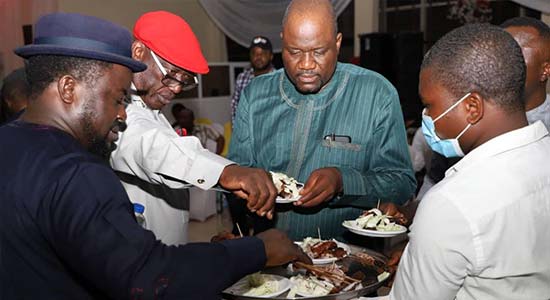
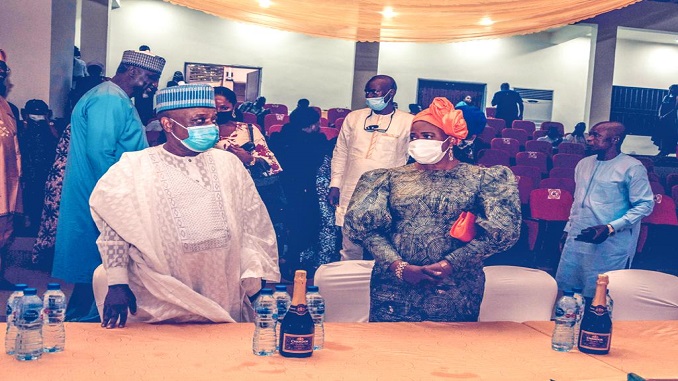
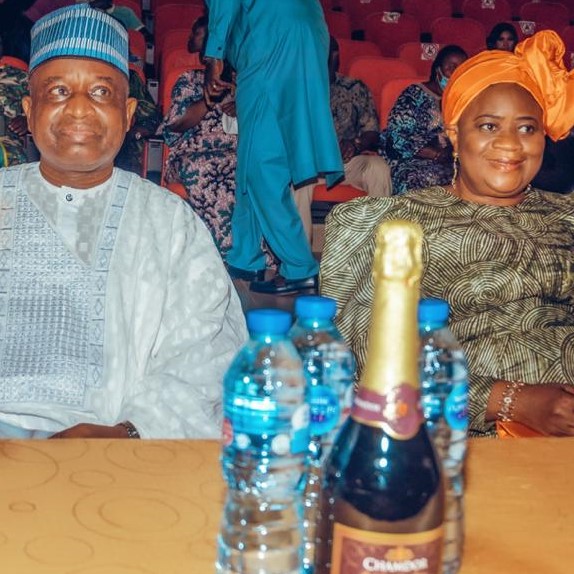
The Eastern Bar Forum (EBF) quarterly meeting/council election was preceded with a welcome cocktail & pull-out party which was held yesterday, 23rd, July 2021.

The welcome cocktail was held at the Enugu State Judiciary Auditorium, High Court, Enugu while the pull-out party was held at the Cathedral.

Chief Gadzama, SAN (Okwuluora of Ukpo) was in attendance to identify and unwind with members of the EBF. Other dignitaries at the events include the former Governors of the Forum, the Chief Judge of Enugu State, Hon. Justice Priscilla Ngozi Emehelu, the General Secretary of the Nigerian Bar Association, Mrs Joyce Oduah, and the Chairman of the NBA-SPIDEL, Mr. Monday Onyekachi Ubani who were all seen having an enjoyable time.

The social events offered attendees the opportunity to network, interact, relax, party and catch up with old friends and colleagues.

The general meeting of the Forum is scheduled to commence by 11 am today, Saturday, 24th July, 2021.

Credit:thenigerialawyer

Pendulum: Is The President Aware That Time Is Going?

By Dele Momodu

Fellow Nigerians, I sometimes wonder what the President and his acolytes are thinking. Are they aware they have less than two years to hand over power or they have other plans hidden from the rest of us? If not, why are they busy fighting imaginary enemies and at the same time pampering real enemies? And doing so on many fronts too? I read somewhere that a good General never fights on many fronts, simultaneously! Ask the Germans who discovered this folly to their utmost amazement and defeat during World War II. Sadly, what I’m seeing with Major General Muhammadu Buhari is different, as the General seems to have forgotten this basic lesson of military strategy. He has too many battles on his hands, and it is obvious his troops are already overstretched and battle weary. They, and their General, deserve our pity. Or maybe time will prove us wrong, which I doubt.

By now, the President should be consolidating on his pet projects. He should be seen pursuing terrorists and bandits to the pits of hell. He should be reconciling and healing the badly bruised and fragmented nation. He should be winding down slowly and steadily in readiness for his final retirement from public office. A South South Governor is already doing that in Rivers State, by unleashing a plethora of legacy projects which everyone can see. What would be the point of President Buhari wasting eight years in power fighting wars of attrition and winning none?

As I have advised several Presidents in the past, when tomorrow comes, all those goading President Buhari on and telling him he’s the greatest Nigerian leader ever will quickly vamoose, and he would be left with his family to lick the wounds of a lost transient power. I repeat, nothing lasts forever. Even if the President succeeds in imposing a Presidential candidate on Nigeria, he would be shocked by what will soon happen. The new leader will urgently depart from Buhari’s path of paranoia by carving a new image for himself. We have seen it before and I will be shocked and horrified if the President has already forgotten his own history.

Just in case many of his vociferous supporters no longer remember, let me tickle their memories. When the military government of Major General Muhammadu Buhari was sacked and replaced by Ibrahim Badamasi Babangida in 1985, it took only days to dismantle the gargantuan house of commotion Buhari and Babatunde Idiagbon had erected. Governments are never remembered or glorified for how many wars they fought but for how much prosperity was recorded in an atmosphere of tranquillity. This is almost getting too late and almost impossible for this government to achieve in less than two years from now. By this time next year, the President will begin to see the true colours of humans, especially our politicians. In another two years, there will be no one to fly to Daura in order to pay Sallah homage to him. Such is the sad reality of life.

If the President feels all those criticizing him are enemies who hate him, he will soon know they are his best friends. The crocodiles and chameleons will soon surface in real time. If I were the President, I will seize this moment to correct my mistakes. It would be nice to avail himself of the story of Nelson Mandela and how he became the world’s greatest statesman. It is about his ability to forgive, even if he couldn’t forget certain injuries as a mere mortal. It is not too late for Buhari to make amends, even if I have been told endlessly that Buhari can never change his unyielding and unbending ways of life. The President must be told the things he has done wrong, for the record, no matter his position on the matters.

One. His government has further deepened the divisions in Nigeria. Never since the last civil war have we come so dangerously close to the precipice of another monumental battle for the survival of our country. We are now stupidly and gravely divided along ethnic and religious lines, and both are too volatile to continue to watch without being checked. History will never forgive any leader that fails to arrest our supersonic speed towards perdition.

Two. The President has not been fair to the Constitution he swore on oath to enforce and protect. If he did, most of the challenges confronting us today would not have emerged to haunt us. When a President feels he can fight everyone and win everything, he endangers everybody. Let me be brutally frank, whatever problems there are in the South East and South West today were actually unleashed by President Muhammadu Buhari. The worst perfidy is the over pampering of the Fulani herdsmen and the absence of empathy on the part of the President for the hapless victims of terrorism and banditry. It is not too late to apologize to the affected people and compensate them in whatever form possible.

The people of the North Central, especially Benue and Plateau in particular, deserve sincere apologies and restitution from the President. They have suffered too much from the attacks of Fulani herdsmen. There is no doubt in my mind that whenever Buhari hands over power, most of these terrorists will vanish from Nigeria. The “swaggerlicious” posturing they parade today is as a result of the protection they enjoy from having a Fulani champion and defender of the faith as President. They would have since been sent packing by a non-Fulani President. Ghana is a veritable example. The herdsmen in Ghana dare not invade farmlands not to talk of raping women and killing their husbands. This is one of the reasons I foresee and predict chaos if another Fulani President is promoted and produced so soon after the katakata of this Buhari Presidency. This government has failed woefully and abysmally to protect the different sensibilities that pervade the regions of Nigeria.

Three. The President has refused to listen to the voices of reasons across the length and breadth of Nigeria. He should please know that no man has a monopoly of wisdom. If the President is not trusting the Lagos Press, he should please read Daily Trust as regularly as possible. It is one newspaper that has done very well by reflecting the mood of the country. Every part of this country is haemorrhaging and bleeding fast and uncontrollably. Hitherto silent, even taciturn doves, have become freakish hawks. Everyone is crying and baying for blood. Mr President should speedily find the video of the Sallah day message of The Emir of Muri. His voice reflected a deep sense of frustration at the unwarranted killing of his people by Fulani bandits. He even gave a 30-day ultimatum that if the killing does not stop, his people will kill all Fulani in sight. Is this not the kind of desperation that gave birth to the Sunday Igbohos and Nnamdi Kanus who believe separation of their people from the rabid perpetrators of this wanton killings and destruction is the answer?

In June alone, it was reported by Daily Trust that over 1,000 lives were wasted in Nigeria while Zamfara, Kebbi and Niger States topped the charts! North West had 416 deaths, North Central 218 deaths, North East 188 deaths, South East 117 deaths, South West 74 deaths and South South 18 deaths, all from violent attacks!!

Four. While all these killings are ongoing, President Muhammadu Buhari and his sidekicks, seems not to know how to describe the terrorists who have been on rampage. I read a very brilliant article by my dear Brother, Femi Adesina, the President’s Special Adviser, Media, yesterday about the bad guys of Nigeria and I saw how he cleverly refused to mention terrorism as the biggest menace in the country today. CNN in a recent documentary left no one in doubt of our position in the comity of terrorist nations. Nigeria is in one of the top unenviable placements.

We now have an unfortunate country where one terrorist leader called Turji boastfully confessed that he has murdered our soldiers on several occasions and assures us that his location is known but that he is untouchable. When his father was arrested, he said he retaliated by kidnapping 150 innocent people in Shinkafi Local Government and pronto, his father was released to assuage him. Yet, the goons of Buhari invaded the home of Sunday Igboho Adeyemo and even killed two innocent people in cold blood, abducted members of his family, and Sunday himself escaped by the whiskers. Yet, most Yoruba leaders went foolishly and wimpishly quiet like victims of mass hypnotism. The Sunday Igboho drama continues to unfold as the Government seeks to bring him back from the Republic of Benin to face whatever trumped up charges can be manufactured against him by our overzealous security forces. Still, our Yoruba politicians hardly seem able to rouse themselves from their stupor. They are like a punch-drunk boxer who is so dazed by the pummelling that has been received that he can no longer comprehend anything on his unsteady feet. The President must call his goons to order. They cannot continue to assault innocent citizens whilst leaving dreaded bandits and terrorists to wreak havoc on the polity.

This cannot continue…
Reno Omokri Responds to Pendulum
Dear Egbon Dele Momodu,
In your Pendulum column of Saturday, July 17, 2021, you wrote as follows:
“Many people felt that they were tired of the reckless profligacy and incredible corruption that pervaded the land under the Jonathan administration.”

The above statement is a historical revision and is not supported by facts.
There was no “reckless profligacy and incredible corruption” under former President Jonathan.
The only international institution accepted by the world as an objective arbiter on measuring corruption is Transparency International.

You may recall that under then President Jonathan, Nigeria made her best ever improvement on the annual Transparency International Corruption Perception Index till date, in 2014, moving from 144 the previous year, to 136, an 8-point improvement.

No other administration before then achieved that feat, and no other government afterwards has repeated it.
You may also recall that on February 1, 2021, Transparency International’s most recent Corruption Perception Index revealed that Nigeria is more corrupt today than it was under the previous administration, having moved 13 places backwards in the CPI, from 136 in 2014 to 149 in 2021 (our worst performance ever).

You will therefore agree with me that your assessment of the situation under former President Jonathan is faulty, especially when you take into effect that that administration eliminated the corruption in the fertiliser procurement regime, introduced the cashless policy and the Bank Verification Number to reduce opportunities for corruption, and eased out two ministers over conflict of interest, as well as probing the petroleum sector in a bid to rid it off the fraudulent subsidy regime.

Transparency International is a non-governmental organisation based in Germany and has no affiliation with either the government of former President Jonathan, or his political party. It is therefore prudent to accept their findings as an unbiased and non-partisan body.

I do hope you would publish this to give your readers a more accurate picture of the period of our national life in question.
Thank you and may God bless you.

Reno My Observations
I only wish to insist that I stand by my comment to which Reno has responded. At the time of Buhari’s emergence for a record fourth attempt at the Presidency, the Jonathan administration was viewed as being reckless, profligate and very corrupt by Nigerians. It was a matter of perception and nothing to do with me. That the Jonathan government moved up eight places in Transparency International’s Index, from 144 to 136, is nothing to be proud of. Indeed, it is a shame given that there were only 180 countries adjudged in the world. The fact that it may have been perceived internationally as being less corrupt than previous Governments does not mean that it was any less corrupt than the Nigerian citizens themselves thought the Government to be.
I am sorry, my dear Brother Reno, that unfortunate impression gave power to Muhammadu Buhari on a platter…

Religious Places: A Difference between Certicate of Registration and Certificate of a Licensed Place of Worship.

Religious Places: A Difference between Certicate of Registration and Certificate of a Licensed Place of Worship.

 DAILY LAW TIPS by Onyekachi Umah, Esq. (Tip 44)

A certificate of a License Place of Worship with regards to powers to wed people is not same as a Certificate of registration of a church/worship place. The first is issued by Ministry of Internal Affairs while the later is issued by Corporate Affairs Commission (CAC).

See section 6 of Marriage Act.

#DailyLawTips
#LearnNigerianLaws
#SabiLaw

To receive our Daily Law Tips for free follow our Facebook page, Twitter or Instagram via “LearnNigerianLaws”

Powered by www.LearnNigerianLaws.com

The Yoruba have won their agitation, by Fredrick Nwabufo

Sunday Igboho

The Yoruba are an exceptional people; precocious, tactful, urbane and temperate. They are about the most sophisticated of the ethnic groups in Nigeria. They know when to pounce, when to retreat, and when to negotiate. For the Yoruba, it is about the collective. It is always about the whole. Group interest does not succumb to the sway of individual ambition. They live by the winsome ‘’kparapo philosophy’’, and the ‘’omoluabi element’’ is never musty.

Let me detour.

A united Nigeria remains the most operational means of preserving and protecting the variegated interests of those within the territory. While the ‘’big three’’ — Igbo, Hausa and Yoruba – jostle for sectional dividends, they forget that there are other groups — the presumed minority ethnic nationalities — in the phylum. Nigeria has over 250 ethnic nationalities, but are the supposed small lot lesser citizens? Should the interest of the ‘’big three’’ be the governing aspiration and grail of other groupings in the taxonomy?

Have we asked what the Affade in Yobe state; the Afizere in Plateau state; Afo (Eloyi) in Nasarawa state; the Baushi in Niger state; the Boki in Cross River, the Annang in Akwa Ibom, and many other classes under the Nigerian family tree want? Some apostles of secessionism have even conscripted these ethnic nationalities into their abstract territories by fait — without considering their peculiarities.

The arrogance of the Igbo, the Yoruba and the Hausa is largely responsible for the parlous state of the country. Nigeria should not rise and fall on ‘’this big three’’. Nigeria is bigger and stronger than any of this group on which the country currently pivots. A united Nigeria guarantees freedom – to exist — for the small ethnic genus.

As I have always said, a united Nigeria remains a viable venture for all.

End of detour.

I have followed the agitations for self-determination by the peoples of southern Nigeria, and my interest is piqued by the crusading techniques of the agitators from the south-west. Even in potentially combustible situations, they have managed to arrest their emotions and keep their demons in the abyss.

Although they took their agitation to the streets a number of times, they have always been circumspect about when to retreat and not go off the deep end. Tact is a weapon the Yoruba deploy masterfully in knotty situations. Instead of going ‘’all-head-in’’, they step back and dispatch the greatest ammunition in the armoury of human civilisation. Tact does it for the Yoruba.

On Thursday, the Ilana Omo Oodua, the group crusading for an independent Yoruba nation led by Banji Akintoye, released a manual to guide its members in their cause for self-determination. They declared: ‘’NO TO VIOLENT STRUGGLE’’. This declaration comes in the heat of the arrest and detention of Sunday Igboho, the firebrand agitator, in Benin Republic.

Here is a demonstration of great percipience by the Yoruba nation agitators: “We, Yoruba, lead in the choice of the peaceful and law-abiding path to our goal of a separate country of our own. And we the servants of the Yoruba nation in this struggle faithfully operate, and will always faithfully operate, with methods of peaceful organisation, peaceful demands, peaceful propaganda, peaceful protests, peaceful legal actions, peaceful political persuasion, and peaceful negotiation. We will push for negotiating tables, and never push for street brawls or any other kind of conflicts. And if we find, among our people, any nationalist activist person or group that is inclined towards violence, we will encourage them to turn instead to peaceful and law-abiding means.

‘’After careful studies of the records of separatist movements in our world, we are persuaded that the peaceful approach is more likely to succeed. Various nationalist agitations in various countries of the world have, in the course of the past century, employed violent means at various times while striving to achieve their nationalist goals. Yoruba groups engaged in serving the Yoruba nation need to note carefully that none of these uses of violent or terroristic methods achieved their purpose of self-determination or autonomy for their nations; all they succeeded in doing was to generate confrontations and wars with the governments of their countries.’’

By denouncing violence and emphasising peaceful methods for achieving self-determination, the Yoruba nation agitators have judiciously submitted to Nigeria’s laws while not obviating their agenda. It also wins them more sympathy. This is in contrast to the approach of their sibling crusaders in the Lower Niger Area who unleashed violence on security agents and citizens, threatening critics, destroying property, and ended up turning their region into Aleppo in Syria.

Violence achieves nothing but death, broken bones and spilled blood.

Self-determination is a universal right, but taking up arms to kill citizens and security agents of government is terrorism.

Really, in all the agitations across divides, the endgame is not to secede. The 2023 presidential election is the Venus flytrap with nectar attracting all kinds of creatures. I believe by that time these agitations will taper off. The agitations are ‘’precious material’’ for political negotiations. The Yoruba are playing their cards right.

Tact has won this ‘’agitation’’ for the Yoruba.

Justice for murdered Igbo traders

The killer soldiers must be brought to book, writes Sonnie Ekwowusi

Last week, precisely on the 13th of July 2021, some Nigerian soldiers in a shameless display of putrid military barbarism, swooped on the defenceless Igbo spare parts dealers at the popular Ladipo Market, Mushin Lagos and pointedly shot five Igbo traders there dead on the spot on the unfancied allegation that they (soldiers) bought a fake car engine from one of the traders at the Market a year ago and had come to the Market to have it replaced. While the soldiers were mowing down the traders they were spontaneously and intermittently shouting, “now that you want to go as Biafrans we will kill you before you go”. Eye-witnesses corroborating accounts unanimously affirm that as soon the visibly-angry and trigger-happy soldiers arrived at the ever-busy Ladipo Market, they jumped out of their vehicle and started complaining aloud that the engine which they bought from the market a year ago was a fake engine and therefore needed to be replaced. The next thing they did to the rude shock of everybody at the Market at that material time was to open fire on the defenceless traders and kill five of them on the spot including the PRO of the Ladipo Market fondly known and addressed by his trader colleagues as “scatter”. No provocation prompted the murder. No exchange of words between the traders and the killer soldiers prior to the murder.

Addressing the visibly-befuddled traders and sympathizers who had gathered together shortly after the dastardly murder, a spokesman of the traders was heard lamenting in tears, “Please, all who are on Social Media, or, wherever you are, all over the world, hear me. This is Ladipo, Mushin, Lagos, where the Igbo traders sell motor spare parts. The soldiers came here on the allegation that the engine they bought from one of us last year should be replaced, and then, before we knew it, they started shooting sporadically at us saying that now that we want Biafra we shall go to Biafra with our own blood. We have wronged nobody…we are just ordinary traders peacefully carrying out our lawful trade inside the Market when the soldiers descended on us and started killing us. We are not in government. They are in government and we said they should keep the government but that notwithstanding they have come here today in search of us to kill us for nothing…we have wronged nobody. Now that they have done this to us, the battle line is drawn; in a short time we will meet the Fulani soldiers in the battle ground”

This barbaric murder is unacceptable. It is one murder to many. It is a despicable murder that cries to high heaven for justice. The Ladipo Market murder is not the first of its kind neither shall it be the last. The Nigerian soldiers under the watch of President Buhari have consistently been killing unarmed innocent civilians and Buhari does nothing to curtail the carnage let alone stop it entirely. Therefore beyond condemnation, this murder should be avenged with justice. Look, allow me tell you one truth which you may find interesting. No peace without justice because peace grows in the crannies of justice. Those who think otherwise are gravely mistaken. Fiat justicia ruat coelom. Justice being taken away, said St. Augustine, all are nothing but open robberies. This is why Justice Chukwudifu Oputa (of the blessed memory) once stated, “Injustice breeds intolerance, violence and social disorder in the same way justice brings along with it the blessings of peace and mutual understanding. There will be no peace in a society where justice is denied or defeated. Where there is wrong it is only justice that can right the wrong and thus restore the balance”.

Oputa was right. You cannot hypocritically be going about and preaching “One Nigeria” when you are always killing the same people and marginalizing the same people. It is nauseating that the Nigerian soldiers who should be killing Boko Haram insurgents, bandits, gun-men, hired assassins and kidnappers are turning round to be killing unarmed innocent civilians. Prior to the murder last week, the traders did not insult the soldiers. They did not refuse to replace the alleged fake car engine as demanded by the soldiers. No altercation or quarrel between the soldiers and traders prior to the murder. So, why open fire on unarmed and defenceless traders without any provocation? But even if the traders insulted the soldiers or refused to replace the alleged fake car engine still the soldiers were not justified in opening fire on the traders. In all civilized societies, all manner of disagreements are settled through due process of the law. Recourse to violence, self-help or any form of brutality or extra judicial means in settling personal quarrels or disputes is not only an invitation to mayhem or breach of public peace, but evidence that we are still occupying the lowest rung of the ladder of human civilization. Whatever allegations the killer soldiers leveled against the traders last week should have been resolved through due process without murdering the traders.

More importantly, why the “Biafra” profiling? Why fan the ember of secession and in the process kill innocent traders? At the risk of repetition, eeverything in Nigeria has fallen apart under this Buhari government. A few days ago the American Congress lampooned President Buhari for enthroning what it dubbed the Fulani ethno-religious supremacy in Nigeria. Let me repeat this here once more, we have come to a point of no return in Nigeria. Those who doubt this are still living in a fool’s paradise. Why should a group of soldiers storm a market and open fire on innocent defenceless civilians whom they contemptuously label “Biafrians”? You will recall that a few months ago the Chair of the Code of Conduct Tribunal (CCT) Danladi Umar (when will this man be sacked ?) was caught fighting in public under the pretext that the small boys whom he was fighting against were “Biafrans”. Can you see how low we have sunk in this country?. A judge descending so low to be fighting small boys whom he branded as “Biafrans” in public for that matter. Therefore it is high time Nigerians came together and agreed on concrete terms on how to live together as one people under one nation. It is either we restructure or we perish. We must give Nigeria a second birth. Old things must pass away. We need a born-again Nigeria. As I was saying here a few Wednesdays ago, “it is obvious that the Nigerian people are looking for an opportunity to discuss how they want to live together as a people in one country. Call that opportunity anything; the fact remains that the Nigerian people are looking for an opportunity or a forum to express their views about the goings on in the country. Whether we like it or not, this meeting of minds of the people of Nigeria shall come to pass one day. It is not possible to force people with pent-up grouses about the injustices meted out against them to live together without giving them an outlet or opportunity to express their anger and views.

As regards the Igbo traders gruesomely murdered by the soldiers last week, the authorities must quickly wade into this matter and immediately order the arrest of the killer soldiers and bring them to justice. Maintaining ominous silence on the murder or a denial of it or distortion of it will likely engender reprisal killings leading to more spilling of blood. No matter the hatred spewed out against the Igbos, the rules forbid murdering defenceless and harmless traders who were peacefully doing their business in the market. If we claim that we are practising Presidential democracy then we must allow the rule of law to reigns supreme in Nigeria. Under the rule of law, the judiciary occupies a unique place as a bastion of justice. Such regard for the rule of law, in contrast to the rule of force, is the bedrock upon which our country ought to lay claim to civilization.

Alighting From Moving Vehicle

OBSCURELEGALFACTS BY AROME ABU

In Nigeria, it is an offence to enter or alight from a moving vehicle.

PENALTY
Fine of N3,000 or imprisonment for 6 months or both.

See Reg 187 of the National Road Traffic (Amendment) Regulation.PO

Arome Abu is the Managing Partner of TCLP.

CAVEAT: Note that this information is provided for general enlightenment purposes and is not intended to be any form of legal advice.

AFF: Leading The Journey to corruption’s purgatory, By Ololade Bamidele

This corruption crusade is at the crucial jucture of a needed change in mindset, towards social transformation.

This critical gap in relating the burden with the cause, through a very popular process of engagement, is possibly the one of the most significant value additions that the Akin Fadeyi Foundation (AFF) has brought to bear on the series of anti-corruption advocacies it has engaged in, over the past half a decade.

If there appears to be a key reason why many efforts at containing corruption in Nigeria have had less than optimal impacts, this seems largely apparent in the nature of the methodology usually adopted, which customarily tends to operate in a top to bottom mode. Whether in terms of the creation of policies and institutions that seek to corral the people into a notion of restraint, or the manners in which the endeavours are ‘sold’ to citizens, there has always been that palpable lag between the design and its outcomes.

A better proven approach has been one inclined to reach out to the people in a bottom to top manner, persuading and convincing in the evidence it shows up, on the need for societal change, both in the perceptions about the problem and its associated behaviours. This becomes particularly instructive, for instance, when the costs and impacts of corruption are highlighted in terms of how they affect and disrupt our daily lives; depicting the strong link between the material opulence of political office holders and the lack of drugs or personnel in our hospitals. Or how the votes we have collected tokens for are connected to why public education has to be without classrooms, textbooks or other learning aids.

This critical gap in relating the burden with the cause, through a very popular process of engagement, is possibly the one of the most significant value additions that the Akin Fadeyi Foundation (AFF) has brought to bear on the series of anti-corruption advocacies it has engaged in, over the past half a decade. It creates easily relatable vignettes of modern living (either though the one-minute drama skits, the radio or TV narratives) that not only needle, incite reconsideration of the acts of corruption and then personal contrition/behavioural catharsis, but become composites of encounters that impel a sense of ‘ownership’ of the transformative experience in its audience.

This methodology, hinged to an effective behaviour change advocacy has been highly successful in the way it connects very easily to people in their local and private spaces, were it takes the anti-corruption message to them, utilising a host of popular figures in the Nigerian entertainment industry – actors, actresses, and show business personalities – as arrowheads of information, and change agents. Akin Fadeyi Foundation took the battle for behavioural change to the individual level; directly to the ‘I’ who needs to change across multiple locations, in order to build a critical mass for social change. This approach gained enormous traction in the past three years, with the support given to the engagement by the MacArthur Foundation.

And, the numbers are quite staggering, if not exhilarating – reaching an estimated 100 million people with its anti-corruption messages across various nodes of the national and international broadcast media; from television to radio and then the social media! A vital segment of the demographic of outreach comprised youths of the working age (between the ages of 15 and 35), extending up to 70 million overall, and considered a principal target of the messaging.

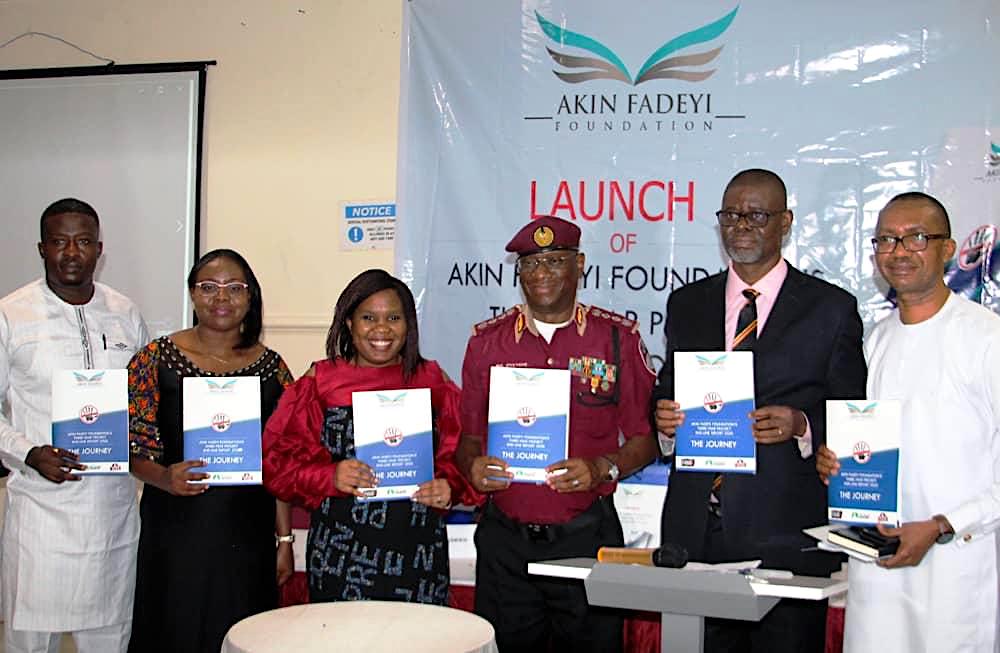
In the recent report of the Foundation, presented publicly on July 13, “The Journey” embarked upon by AFF in the past five+ years, even while essentially chronicling the high moment of the past three years, unveiled the extent, alongside impact of the Foundation’s anti-corruption programming, principally through the audio-visual campaign tagged, “Corruption: Not In My Country”.

Through this intervention, the offering had included the production of 60 Corruption Not-In-My-Country drama skits, coupled with 21 episodes of the “Never Again” radio drama, and nine episodes of the “Badt Guys” – a television series that ran for nine weeks. And, the building of a technology platform for the reporting of corruption, the FlagIt app, which has more so gotten its remit expanded to enable the documentation of sexual crimes in society. Still, there was the additional capacity building held on the sensitisation against corruption for
over 500 students, in the Federal Capital Territory (FCT), Abuja.

The Akin Fadeyi Foundation crusade against corruption is of very critical relevance to Nigeria at this historical juncture that the menace has risen to unprecedented or exospheric levels, and in which citizens not already enmeshed in the social ill are merely time-bidders, waiting for their opportunities for participation. Hence, the highly crucial need for the change in mindset as a collective responsibility…

Equally terrifying are the numbers that the Akin Fadeyi Foundation’s public advocacy drive has been warring against. Corruption has become one of the most insidious facts of Nigeria’s post-Independence existence, accounting for the trajectory of arrested development of a country of great human and material resources that has constantly punched far beneath its weight, due to the relentless haemorrhaging of these resources. As such, it has not only evinced some of the worst indices on the Human Development Index, also in 2012, Nigeria is said to have lost over $400 billion to corruption since Independence in 1960. At this point, almost a decade after, the figure is projected to have gone north of $500 billion.

The depth of the burden of corruption in the country has revealed in its constantly being rated as one of the worst manifestations of the social ill in the world, ranking 144th out of 180 countries measured by Transparency International (TI)’s Corruption Perception Index.

Much of the incidence of poverty – ranging from its more benign hues to its extreme form of expression – and immiseration are as much the indication of pervasive corruption in the country, as they are the outcomes of poor policy and planning, with the former reinforcing the latter, and vice-versa, in a continuous concentric interplay. In the present, the fallouts of this is revealed in the over 10 million out-of-school children in the country, which is the highest in the world; a poverty headcount rate of 40 per cent, having over 90 per cent of citizens locked up in dirt scarcity – 60 per cent of who are women. Also, while more than 40 million women of childbearing age neither have access to proper healthcare nor adequate nutrition, this has led to health issues in childbirth, and more than 10 per cent of the global maternal mortality, among similar gory statistics.

No doubt, corruption is one of the great social menaces of the times we live in, with its global cost being put at no less than $2.6 trillion or five per cent of the global GDP, according to the World Economic Forum (WEF). Because states and governments have been stripped of their capacity for social provisioning due to the deleterious ravages of corruption, this has yielded space to conflict, terrorism and cognate forms of instability, occurring in tandem with the illicit traffic in drugs, arms and people, etc.

The Akin Fadeyi Foundation crusade against corruption is of very critical relevance to Nigeria at this historical juncture that the menace has risen to unprecedented or exospheric levels, and in which citizens not already enmeshed in the social ill are merely time-bidders, waiting for their opportunities for participation. Hence, the highly crucial need for the change in mindset as a collective responsibility, towards the transformation of society.

An important part of the AFF public advocacy strategy was the mobilisation of what it describes as a “citizen-led societal transformation” activated through a Corruption Prevention Approach and the tackling of corruption in the department and agencies of government through a Corruption Fighting Approach. The latter necessitated a major engagement with public institutions such as the Nigeria Police Force, the Federal Roads Safety Commission (a central agency for the operation of its technological anti-corruption platform, the FlagIt app), the Independent Corrupt Practices and Other Related Offences Commission, Nigerian Immigration Service, and ministries, departments and agencies of government, etc.

It was deeply pleasing to learn that the AFF avails itself of some of the best practices in the social enterprise, such as its subscription to the Gender Equality and Social Inclusion (GESI) protocol – which actively enables the affirmation of women, children, person with disabilities and other marginalised groups – in its processes and operations. It claims the intentionality of this approach in its work, hence the different sensitivities it brings to bear on its programming and projects.

As a very modern outlook to the attainment of social change, invariably resolving in advancement, it is remarkably how the Akin Fadeyi Foundation strongly considers the issue of collaboration and partnerships, in which the collectively achieved is sturdier and more resilient than the individual parts.

In this regard, the audio-visual advocacy materials it produces are carefully scripted to avoid language that could trigger gender bias, while the cast and crew of its productions ensure gender and social inclusion, and the Foundation has up to 55 per cent of female representation in its team. For AFF, “building a gender-inclusive workplace does not end with hiring more women or emphasizing pay equity, we have also built a system that supports and encourages women-led teams.”

As a very modern outlook to the attainment of social change, invariably resolving in advancement, it is remarkably how the Akin Fadeyi Foundation strongly considers the issue of collaboration and partnerships, in which the collectively achieved is sturdier and more resilient than its individual parts. According to the AFF report, this operated on a number of levels, both lateral and vertically to achieve all it has done so far with the “Corruption: Not In Country” project.


In this regard, there were the different partnerships with private and public sector institutions, also including the National Orientation Agency, the Federal Ministries of Women Affairs and Health, the Public Complaints Department of the Nigerian Police Force; and equally, the Afe Babalola and Elizade Universities. Being largely media-driven, the AFF-driven public advocacy programme benefitted from collaborations with organisations such as Nigerian Television Authority (NTA), Federal Radio Corporation of Nigeria (FRCN), Television Continental (TVC), RSTV Port Harcourt and Channels Television, etc., who were not only believers in but major propagators of the message. Moreover, the skits were aired on CNN, Africa Magic Epic, Africa Magic Family, Super Sports 3, and Mnet Movies digital television channels. Among the national newspapers, there were active partnerships across the legacy and online press, from Vanguard, to Daily Sun, Premium Times and The Cable, each affirming and reinforcing the unique social change advocacy of the AFF messaging.

Yet, with all the important milestones traversed in the “Corruption: Not In My Country” programme, the AFF report intimates on a number of challenges encountered all through the interlinked series of projects, from the difficulty in securing the ‘buy in’ and collaboration of governmental stakeholders, to other levels of institutional pushbacks, coupled with the shortness of timelines, in relation to the delivery of better outcomes.

Significantly, there were associated risks, especially with the deployment of the FlagIt app in going after criminally minded citizens who sought to wreak havoc through their unusual corrupt dealings, including the sextortion of fellow citizens. Added to this was the repeated head butting with the Nigerian Police, whose corruption-infestation evolved in routine lawlessness against citizens, which occasionally resulted in unwarranted deaths. Still, all this was presented as a journey that was as remarkable in its trajectories, as it was nerve-wracking.

In the Akin Fadeyi Foundation’s “The Journey” report, what could possibly be deemed as the most reverberative of acclaims was given to the support of the MacArthur Foundation to the “Corruption: Not In My Country” project. This had packed a huge punch that gave major fillip to the earlier instances of funding by organisations like the European Development Fund, in its concert with UNODC and UNDP, through with much of the illustrious work being reviewed were made possible. Hence, the resounding chorus of gratitude was offered by AFF, not only to the On Nigeria programme of the MacArthur Foundation, but also to its seasoned leadership, comprising such change administrators like Dr Kole Shettima, Erin Sines, Dayo Olaide, Amina Salihu, and their other noteworthy colleagues.

With the uncommon industry exhibited by AFF in its social crusade against the monster of corruption in the past three years, it becomes easier – with a deepening of this process – to dream of a future in which most Nigerians will be able to say, with all sense of conviction, that: “Corruption: Not in my country!”

Ololade Bamidele is the Secretary of the Editorial Board of PREMIUM TIMES.

Maikyau FC: Appeal Court President joins fun and glitz at Abuja Lawyers’ league dinner

By Rahila Dauda

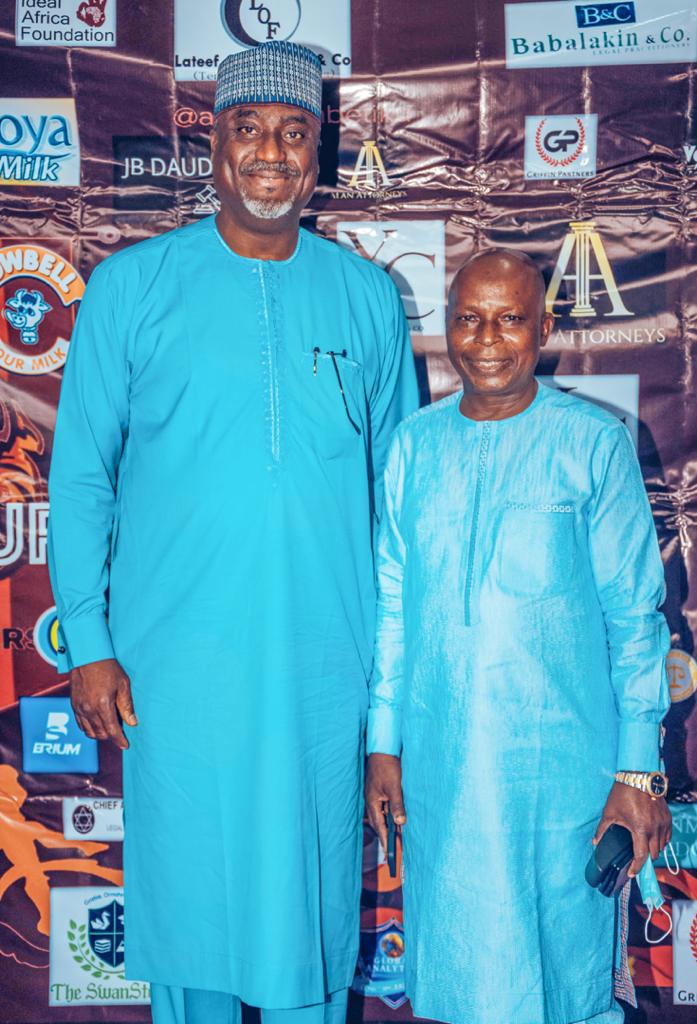
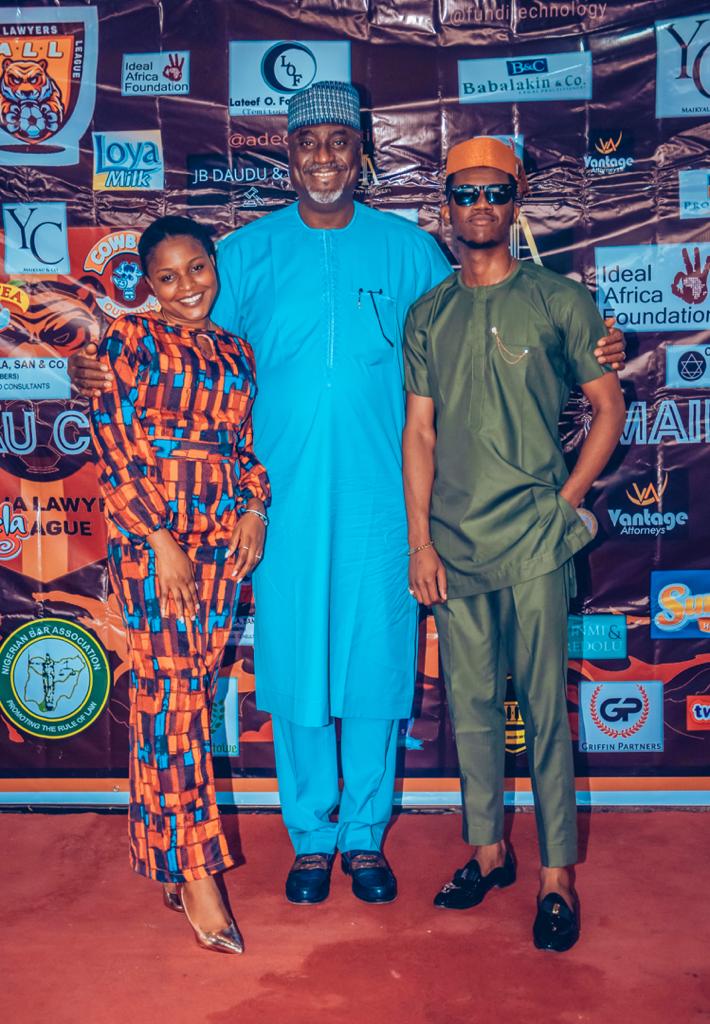
Nigeria’s Court of Appeal President (PCA), Hon. Justice Monica Dongbam-Mensam joined the cream of Abuja’s legal practitioners at the glitzy Abuja Lawyers’ league dinner and award night held on the 10th of July at NBA House in Abuja.

Justice Dongbam-Mensam who urged the organisers to make judiciary part of the league in a subsequent edition also handed out awards to deserving players in the tournament.

L-R: Justices Sadiq Umar and Dongbam Mensem

The 5th edition of the league concluded with Maikyau FC emerging victorious in the third place match with Chris Uche FC. The final match was between GLA and Afe Babalola FC. GLA FC clinched the cup.

Chairman of the day Prince Lateef Fagbemi, SAN in his remarks expressed appreciation to the organisers and encouraged them to remain unrelenting.

Maikyau, SAN and Lateef Fagbemi, SAN

Y. C Maikyau, SAN on his part emphasized on harmonized collaborations between senior lawyers and junior lawyers adding that both should not see their relationship as competition but an avenue to enhance growth. He equally assured the PCA that the judiciary will be carried along in subsequent editions.

Chief organizer of the Abuja Lawyers League, Olujimi Olujide Poko, assured that the next editions will keep getting better.

Those present at the event include Country Vice- President of FIDA Nigeria, Rhoda Prevail Tyoden, Ruth Zikachat-Badung and former chairman of NBA Abuja, Desmond Yamah.

The following awards were handed out:

1.  Young player of the tournament: OSUNLETI VALENTINE (RASHFORD) (AFE BABALOLA FC)

2.  Most improved player: CHINEDU NWOGU (CHRIS UCHE FC)

3.  Golden glove: CHINEDU NWOGU (CHRIS UCHE FC)

4.  Team of the Tournament: MAIKYAU FC

5.  Manager of the Tournament: CHINEDU NNADI (MAIKYAU FC)

6.  Most valuable player: DALHATU MAMMAN SAFIYANU (CHRIS UCHE FC)

There is no explanation for any form of abuse – Rosemary Chikwendu

By Lillian Okenwa

A former Chair of the Crimes against Women Sub-Committee of the International Bar Association (IBA). Three time officer of the Access to Justice and Legal Aid Committee of the IBA. Lawyer, Mediator, Arbitrator, Negotiator and Counsellor., Rosemary Chikwendu is Founding Partner of Chikwendu & Chikwendu & Co Legal Practitioners, Mediators & Arbitrators, Chief Executive Officer of My Take Initiative a Human rights based NGO, Mary Evergreen Foundation & Peace Building Systems Development Consult.

She is Alternate Chairperson of the Dispute Resolution Committee of Nigerian Bar Association (NBA) Abuja Branch, a Fellow of the Institute of Chartered Mediators and Conciliators Nigeria (ICMC), a certified Mediation Trainer of the Institute where she has just been re-elected Chair of the Abuja Branch. Amongst many other caps she wears, Rosemary Chikwendu former Eastern Nigeria Coordinator, Women in Law and Development in Africa Nigeria, member UN NGO Commission on the Status of Women Committee is a Life Member, International Federation of Women Lawyers (FIDA).  She spoke with Lillian Okenwa.

How would you assess the evolution of legal practice between when you were called to the bar and present?

The only thing that is constant in life is change. I will say that Law practice has evolved over the years in Nigeria. The internet and computers have totally changed the dynamics of how everything is done, and law practice is not an exception.  Law reports, precedents and all that is needed are now on the internet. All you need is to subscribe to LegalPedia and the rest of them. 

This was not so 30 something years ago.  Then you must visit a library, read precedent books, search the law reports with the correct citation of a case, read the whole case, before you can deduce what it is all about.

Again law practice in Nigeria has been diversified. Lawyers are now  sharpening their skills and concentrating in their area of specialization. Before, if you are not in litigation, you are regarded as unserious. But today a lot of big law firms do very little or no litigation.

Why did you study law?

Law found me. I did not find law. In our time, you study one of the big names that you have the capacity to, and for an arts student like me, law was the natural choice.

Having carved a niche in the ADR sector, could you tell us how Arbitration and Mediation have altered the legal landscape in Nigeria?

Arbitration and Mediation are both part of the Alternative Dispute Resolution (ADR) mechanisms. ADR is any other alternative way of settling disputes other than litigation. While we are working hard at making people imbibe ADR, litigation remains the major means of settling disputes in Nigeria. It is also important to note that there are matters that can only be resolved via litigation.

I will say that the effect of ADR in dispute resolution in Nigeria is yet to be wildly felt. It behoves on us ADR practitioners to spread the message to others. When people know the advantages, I am sure that they will prefer the use of ADR. Some of the advantages they have over litigation, particularly Mediation is that it is a voluntary process, it saves time, it is cheap, it maintains relationships, it is party driven and is hinged on the principle of self-determination. As a result, parties to a dispute are more willing to commit to the outcome.

Though Arbitration is a type of ADR, it appears to have some similarities with Litigation.

Litigation and Arbitration are really closely related but for a few differences.

They both involve adjudication and a third party in both determines a case based on evidence, legal reasoning and arguments. This is to say that in litigation and Arbitration, you go through the technicalities of tendering evidence and proving your case and just as you are subject to the rules of the courts in litigation, you are subject to the rules of the seat of the arbitration.

Arbitration has its advantages though. They include that parties get to choose the Arbitrator/s, the seat of the arbitration, it is a private process, and it is a quicker process.

While the judgement of a court from litigation is appealable, an arbitral award is not.

Tell us about some of the courses offered in ICMC.

ICMC offers a lot of courses. Apart from the basic Certification & Accreditation courses, the Train the Trainer and the Fellowship courses, it offers other specialialezed causes in different areas, such as Family Mediation, Workplace Mediation, Online Dispute Resolution, Psychology of Mediation, Mediation Advocacy and so on.

Can lawyers without training in Arbitration represent clients in an arbitral proceeding?

In the first place, who will leave trained arbitrators to seek for you? In the past, retired Judges were the main set of people used as arbitrators, but now the dynamics are changing. With a lot of trained arbitrators, some who are Senior Advocates of Nigeria and Retired Judges, where will the arbitration work come to the lawyer from?

Do you suppose that a time is coming when Arbitration and Mediation will replace litigation?

The day will never come. Arbitration and Mediation can never replace litigation. Litigation will always remain the principal means of settling disputes.

Mind you Arbitration deals mainly with trade union and commercial disputes and Mediation, civil disputes. Criminal cases and Matrimonial cases will always go to the courts for litigation.

Speaking about Gender Based Violence (GBV), there is an increase despite the publicity given the subject by the social media.

I run a human rights based Non-Governmental Organisation (NGO), My Take Initiative. Our main focus is defending the human rights and Creating Safe Spaces for Women Children and the Vulnerable. Our major focus is on educating people in this demography on their rights, the laws that are available to protect their rights and creating safe spaces for them to checkmate these rights abuses.

Indeed gender based violence and indeed all forms of violence have assumed an astronomical height. When Violence Against persons (prohibition) (VAPP) Act 2015 came out and we all saw how the definition of rape was broadened, genital female mutilation and other forms of violence addressed and punishments for these increased, one would have thought that there will be a decrease, in the number of incidents, but no. The opposite have turned out to be the case. A lot of sensitization is needed to make people aware of their rights and remedies available to them.

What could be the reason for the spike?

There is no explanation for any form of abuse. While you cannot control people’s behaviour, every human being, can and must control their reaction.

How do you juggle your frenetic schedule?

It takes planning and people to have a balanced life. Once the different facets of your life are planned and compartmentalized, you engage like-minded people to assist in each facet, things will be made easy and everybody will be happy.

Has there been a time a time your leadership journey when you became overwhelmed?

Overwhelmed is not really the right word. I will prefer to use the word challenging. I believe that being part of my extended family Sister Association has been most challenging, due to the dynamics. As you know it takes committed and understanding followers to emerge as a good leader. I will always say that if you can succeed in family politics, then you can succeed in any level of politics.

What motivates you? How do you keep on in the face of various challenges?

I will like to say that my biggest motivation is my faith.  Hebrew 11:1 – “Faith is the substance of things hoped for, the evidence of things not seen.” Mathew 19:26 – “With God all things are possible.”

What advice do you have for young lawyers?

My advice to them is to identify their area of passion early and focus on it.

If you didn’t study law, what would it have been?

I am generally good with my hands, and my eyes take in a lot of details. So I will probably be doing something creative with my hands, while brokering peace in between.

TIPS