Home Blog Page 937

The honest Emir of Muri, By Lasisi Olagunju

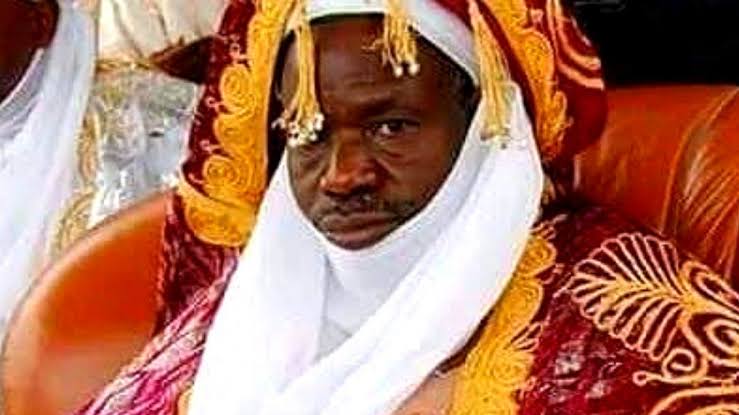
Deep, dark secrets are snakes; they shed old skins to torment their keepers. So it is true that some Nigerians received non-Nigerian Fulani outlaws into our forests? The Emir of Muri in Taraba State, Alhaji Abbas Tafida, spilled the beans last week. He threatened bandits identified by him as foreign Fulani Bororo with death if they didn’t leave his forests in 30 days. They were his guests, he said. Now, he is angry because his guests have betrayed his confidence by killing his people and abducting some for ransom. He is particularly annoyed that they rape and “commit adultery” with women and girls of his emirate. The bandits, their children, their brothers and their sisters – all – would be killed if they didn’t leave in 30 days, he thundered. I heard gasps all around me, even in the Villa, when the emir’s video, gripping with lightning and thunder, went viral.

The emirate of Muri is not a virgin when howls of controversy are the issue. It is hewn out of the hard rock of war and threats. Historians describe it as a Fulani jihad state founded in 1817. It was a French protectorate from 1892 to 1893; it became a province of the British protectorate in 1901. On August 12, 1986, Muri became very prominent in contemporary Nigerian history when its powerful emir was deposed. That emir, Alhaji Umaru Abba Tukur became too strong for Colonel Yohanna Madaki, the soldier in charge of his then state, Gongola. He was sensationally sacked, placed under house arrest in Yola for 32 days and then banished to a town called Mubi where he was detained for 161 days. He was released on February 16, 1987, a very angry, sad man. Ex-emir Tukur did not go gently into the night. He became a storm terrific enough to sweep his nemesis, the military governor, out of Gongola to Benue State. Then, his case went from the High Court to the Supreme Court, then back to the High Court and all the way to the Supreme Court again. It was his death that stilled the tempests. That is the Fulani stuff. Whether president or emir or herdsman or whatever, he is stern; the law to which all heads must bow.

When you hear a Fulani emir issuing an open threat against a band of Fulani in Buhari’s 2021 Nigeria, please pay attention to detail. The current emir of Muri who succeeded the deposed Tukur has also shown the sterner stuff his caste is made of. Last week, he chose the moment immediately after Eid-el-Kabir prayers to issue a death threat against his Fulani kinsmen from wherever who live in his forest. He said, shaking: “Our brothers, the nomadic herdsmen (Bororo) from neighbouring countries, you came to us to allow you stay in our forest. We allowed you because you are our brothers. When you came we welcomed you. We regarded you as fellow Muslims. But the question you must answer is are you Muslims? This is a question we are waiting for you to answer. We deserve to know if you are Muslims. If you are one of us (Muslims) and you decide to stay in the forest, only to kidnap us one by one for ransom, you should stop it because your attitude is not acceptable to Allah. But if you are not Muslims, I want to tell you, like we fought the infidels before, we are ready to fight you with all our strength. So I have given you (Bororo) 30 days to leave my emirate. If we see any one of you after the expiration of my ultimatum, we will kill him. I am calling on my subjects to know that and be ready to fight or else I will draw the line. We kill him without asking him what he came to do or ask his name or where he comes from. If we are going to be all killed let it be. If we will all die, let it be. We will not allow bastards to come and kidnap our wives, take them to the forest and rape them or commit adultery with them. In one of the villages, we have the report of a District Head who is conniving with these criminals. He was arrested and granted bail by the police and the people are watching him. I think such a leader is not supposed to be living among us. Are you crazy to allow such a person to continue to live among you? Listen to me, henceforth any person who is found to be conniving with these criminals, we will go and kill his mother, and other siblings. For the police, we respect you to do your duty. If you arrest any kidnapper and set him free we are not going to accept that. Our armed youths will be directed to go after the kidnappers. There is no way we cannot be free in our homes; and worse, we cannot sleep with our two eyes closed. I am calling on Ardos (leaders of Fulani) to stop these barbaric acts in my emirate because you all know who are carrying out these criminal activities. I want to reiterate that any kidnapper that is set free by the security will not be spared. All those responsible for maintaining peace in my domain should come together to end the menace or we know what to do. Peace be upon you.”


The emir spoke well like a leader who cared for his people. He deserves an applause. But he knows so much and has volunteered so much. First, he described the bandits as his “brothers from neighbouring countries”; We should thank him for saying this. Then he confessed that the illegal aliens came, sought permission to stay in the forests and were allowed because they were his ‘brothers’ who were regarded as ‘fellow Muslims.’ The very generous emir asked the abductors and murderers of his people, and rapists of women and girls of his domain if they truly were Muslims. If they were, he said they “should stop” doing that which they were doing to his people – staying in the forest, “only to kidnap (his people) one by one for ransom.” The emir paused and, just like that, offered them amnesty. Sins would be forgiven if they were proved to be his ‘brothers’ sharing same faith with his people. I can’t understand that part. Are we talking crime or clan here; or region and religion? Then he pitched his pains and in a shrill voice he announced that if the terrorists were not Muslims which he thought they were, he would do to them what his past did to “the infidels” of the past. “We are ready to fight you with all our strength,” he promised and added a subsequent threat which was direct and daring. “So I have given you (Fulani Bororo) 30 days to leave my emirate. If we see any one of you after the expiration of my ultimatum, we will kill him.” There are three words the emir used that show how sure-footed he is. He mentioned ‘forest,’ gave ‘ultimatum’ and threatened to ‘kill.’ Only a Fulani would choose those words to threaten Fulani terrorists of today and not go on exile.

He is not the first to use those words for the Fulani; but he is the first to speak the words without consequences. You remember that in January this year, Governor Rotimi Akeredolu of Ondo State met with leaders of Hausa/Fulani and Ebira communities in the state on the very bad state of the state’s security. He told his audience that the unfortunate incidents were “traceable to the activities of some bad elements masquerading as herdsmen.” He said “these felons have turned our forest reserves into hideouts for keeping victims of kidnapping, negotiating for ransom and carrying out other criminal activities.” He reminded his guests that as the Chief Law and Security Officer of the state, it was his constitutional obligation to do everything lawful to protect the lives and property of all residents of the state. He, thereafter, ordered that all forest reserves in the state were “to be vacated by herdsmen within the next seven days.” That was on Monday 18th January, 2021. Those in Abuja who swore to protect all of us from evil and harm and who had the powers to back the governor chose the tribal route. They dared the governor to chase away their ‘brothers.’ They asked the bandits to stay put in the forest reserves of Ondo. They said it was their right to live in the bush and commit crimes.

Look, if you are accused of stealing a goat, should you be found entertaining your neighbours with goat meat? The Fulani have become the subject and the predicate in all (in)security sentences in Nigeria. Every kidnapper is first suspected to be Fulani until the contrary is proved. Now we have an emirate bleeding because it complicitly accepted foreign Fulani into our country, possibly against what the law says. It is good to be good to guests at one’s door. In the past, the footfalls of guests and visitors were medicine; they healed and soothed the afflicted. Was that why the emir and his Muri people embedded terrorist alien Fulani in their forests? Now, they should know that some visitors are afflictions and no one admits all guests and lives in peace thereafter. The message in your leaving your front door open is that you welcome all guests. The emirate of Muri tested the depth of the bandits’ ocean with both feet. It is too late now for Emir Tafida and his poor people to shoo off the consuming surge.

Tafida’s revelations indict the government. They indict the security forces who went to sleep as aliens violated the integrity of our territory. The Nigeria Immigration Service boldly states on its website that its core mandates include the control of persons entering or leaving Nigeria; issuance of travel documents to bona fide Nigerians in and outside Nigeria; issuance of residence permits to foreigners in Nigeria; border surveillance and patrol and enforcement of laws and regulations with which it had been directly charged. So, which of these powers has been used to ward off evil from entering Nigeria and occupying our forests and cities? Even after the expose from the emir, why has the government not ordered the Immigration to swoop on the forests of Muri to smoke out the smuggled bandits the same way our Customs break into southern stalls and warehouses for imported rice?

The emir can weep and be angry. I don’t think that changes anything. Tiger is ‘beautiful death with a spotted robe.’ But he suffered loss and mourning because he opened his front door to ugly evil Tortoise who wore the garment of friendship. The Fulani terrorists in the forest are stronger than the emir’s city threats. They won’t leave in 30 days or even in 30 months. They will kill more, rape more women and kidnap more orphans for ransom. And those who would kill them off would need more than what our security forces parade. They are the king’s goats; they can eat any yam without fear. They have immunity against sanction. But it is good that the complainant this time is not a bereaved father in Oke Ogun, Oyo State or a governor from the South, or a Middle Belt king whose females have just been raped in his very presence. This is one of Nigeria’s owners mourning its dank darkness; its dusk. The terrorist chicken is back home to roost.

Nigeria: ‘Democracy’ without democrats

Ikechukwu Amaechi

By Ikechukwu Amaechi

As I watched the drama over the Electoral Act (Amendment) Bill 2021 in the two chambers of the National Assembly last week, I remembered President John Fitzgerald Kennedy’s 1956 award-winning biographical book – Profiles in Courage.

The book, which won the Pulitzer Prize for Biography in 1957, was a celebration of senatorial courage – acts of bravery and integrity by eight United States senators, who defied the opinions of their party and constituents to do what they felt was right even when they suffered severe criticism and losses in popularity because of their actions.

On Thursday, July 15, when the Bill was called up, I prayed that the lawmakers would step up to the table of courage by voting to promote public good. But I was not hopeful. And I was not disappointed.

At stake was the very soul of the country’s democracy. How can the electoral process be made more transparent and credible so that the outcome of elections will be a true reflection of the will of the electorate?

All well-meaning Nigerians, including the electoral umpire, Independent National Electoral Commission (INEC), unanimously agree that electronic transmission of election results will significantly reduce electoral banditry and raise the credibility bar. It will broaden the democratic space by burnishing the process. In this digital age, it is the only way to go.

To be fair, federal lawmakers were on board initially when a harmonised report of the Committee on INEC of both chambers agreed on electronic transmission of results. But before the report could be brought back to the National Assembly for final consideration and passage, some lawmakers, mostly All Progressives Congress (APC) senators, remebered the infamous admonition often attributed to the ccommunist tyrant and former Soviet leader, Josef Stalin, that “those who cast the votes decide nothing, those who count the votes decide everything.”

Nigerian politicians don’t care who votes. That does not matter. They are more interested in who counts and tallies the votes. That is why they go after Returning Officers with sacks of money and if necessary cudgels.

What happened in the National Assembly last week has raised a fundamental question.

If INEC is insisting, as indeed majority of Nigerians, that it has the capacity to transmit result real time from all parts of the country and that the use of technology will greatly help in deepening Nigeria’s democracy, why is the National Assembly kicking against that?

The INEC National Commissioner and Chairman Information and Voter Education Committee, Festus Okoye, is on record as saying that the Commission has the capacity to transmit election results electronically.

Besides, he said on Sunday: “The Joint Technical Committee constituted by the Commission (INEC), the Nigerian Communications Commission (NCC) and telecommunication operators met on March 9, 2018, and the consensus was that the requirements for the electronic transfer of results proposed by INEC is practicable. The meeting, therefore, agreed that the solution that INEC wants to deploy is possible.”

Since then, the Commission has improved its operations, perfecting the use of technology in carrying out its functions in order to reduce to the barest minimum the human element.

Okoye acknowledged that, “The Commission uploads Form EC8A, being polling unit results to a central viewing portal. Since 2020, the Commission has been uploading these results from different parts of the country …. The Commission has uploaded results from polling units in Southern Ijaw with its difficult riverine terrain.

“The Commission uploaded results from conflict areas. The Commission uploaded results from all geopolitical zones. Presently, the Commission has obtained the GPS coordinates of all the 176,846 polling units in the country and expanded voter access to the polling units.”

So, if INEC has been doing this successfully, what then is the beef of the NASS?

Section 78 of the 1999 Constitution provides that the registration of voters and the conduct of elections shall be subject to the direction and supervision of INEC and the Third Schedule, Part 1, F, S.15, says that INEC has the power to organise, undertake and supervise all elections.

So, how can the National Assembly, particularly the Senate, arrogate to itself the nonexistent power that the NCC, with its approval, would determine whether INEC could transmit results electronically or not?

If the mode of election and transmission of results are critical elements of INEC’s duties granted by the 1999 Constitution, how can the NASS whimsically strip it of those undertakings?

What struck me most was the pattern of voting.

When the Senate Minority Leader, Enyinnaya Abaribe, called for a division after Senate President Ahmad Lawan sought duplicitous voice vote, 28 senators – all of them PDP members, most of them from the South – voted for electronic transmission; 52 senators – all of them APC members, most of them from the North – voted against; 28 were absent.

Of the 28 absentees, ten are PDP members, 17 are APC members and the only member of the Young Progressive Party (YPP), Senator Ifeanyi Uba.

The question that has concentrated the minds of many since last Thursday is why did the senators vote the way they did?

On the face value, it would seem that the opposition to the electronic transmission of results was a Northern conspiracy informed by 2023 political calculations. A leaked WhapsApp message by Mr. Aminu Malle, Chief of Staff to the Deputy Speaker of the House of Representatives, Idris Wase – an unapologetic Northern irredentist – to members of his caucus, supports that claim.

“On behalf of the Deputy Speaker, Rt. Hon. Ahmed Idris Wase, and the Northern Caucus leader, Hon. Musa Sarki Adar, I am directed to write and formally congratulate and appreciate all the northern caucuses for standing firm through their wisdom and strength to ensure the Northern interest in both PIB and Electoral Act is adequately placed in a position of advantage,” Malle wrote.

How can free, fair and credible elections be against Northern interest? What then is Northern interest? Is Northern interest in conflict with Southern interest? Who protests Nigerian interest?

But the argument is not a straight line. Southern senators on the platform of APC also voted to “promote Northern interest.”

Senator Orji Uzor Kalu, former governor of Abia State and Senate Chief Whip, said there is no internet in his hometown – Igbere. That is not true. But even if he was honest, and he believes in credible elections, shouldn’t he be asking how the internet facilities could be upgraded between now and the time of election?

Some pretend to be taken aback by the fact that Senator Oluremi Tinubu, wife of the self-acclaimed doyen of progressive politics in Nigeria, Asiwaju Bola Tinubu, voted against a process that would enhance the credibility of elections.

But that is laughable. Have they forgotten the events in Okota and other parts of Lagos with a preponderance of Igbo voters during the 2019 elections – how thugs were mobilised by APC chieftains to snatch ballot boxes, brutalise innocent voters and destroy ballot papers presumed to have been cast for the opposition Peoples Democratic Party in the presidential election? Progressivism is a convenient cliché but it means nothing to the Tinubu political clan.

So, what happened on the floor of the Senate was an APC coup against democracy. It may have been engineered by Northern power oligarchs, but their Southern counterparts who figured out, and rightly so, that a political process devoid of rigging will spell doom for them latched on the Northern anti-electronic transmission coattail.

The rejection of the electronic transmission of results is an indication that the APC has no intention of conducting credible elections in 2023. And it is sad that this is a legacy Buhari wants to bequeath to the country.

For a man who continues to whine about how he was rigged out of power three times until technology came to his rescue in 2015, one would have thought that even if Buhari accomplishes nothing else, he would have done everything to ensure that the robust use of technology in improving the country’s electoral fortunes becomes a fait accompli.

But that, obviously, is out of character.     

Truth be told, there are no democrats on parade here. Anyone who claims otherwise is living a lie. Those we eulogise as democrats and progressives are nothing more than pseudo-democrats with autocratic reflex.  

What the APC-controlled National Assembly did last week may be crazy and senseless as former INEC Chairman, Prof. Attahiru Jega, fumed, but it was not a happenstance.

If we all agree that unless we fix our politics and the leadership recruitment process, governance will always go to the dogs, and if we all agree that without free, fair and credible polls, governance issues can never be sorted out, federal lawmakers should be working hard to enhance the credibility of the electoral process rather than diminish it, which is the end result of manual transmission of election result.

But to hope that this crop of political leaders will do the needful by ensuring credible polls in 2023 is to stretch the limits of optimism. That is crass naivety because this is a “democracy” without democrats – an oxymoron.

Africa’s Women Day

Do you know that Africa’s Women Day has been in existence since 1962?

Do you also know that Africa is a continent filled with untold stories of female heroes?

Do you know that before America had its first vice president (after 244 years of independence), Africa already had 26 Female presidents and Prime ministers?

Do you know that Africa had its first Prime Minister (Honourable Elisabeth Domitien, from 1975-1976) before Britain had Margret Thatcher?

Do you know that from 1975 to today, Africa has had 40 Female Presidents, Vices, Prime Ministers and Deputies and 1 Chairwoman of the African Union Commission?

Do you know that as we speak, Africa has 2 Female presidents (Ethiopia and Tanzania), 3 Vice Presidents (Liberia, Zambia and Uganda), 3 Female Prime Ministers (Namibia, Togo and Gabon) and 1 Deputy Prime Minister (Namibia) in office?

This and much more is what we are focusing on with this event!

The theme of this event is; “The political legacy of African women from 1975-2021”

We are delighted to have you join us on this historical day to celebrate the 59th Africa’s Women Day!

Registration is free, so we invite you to bring your family, friends, colleagues and social media community to register, and celebrate with us!

Date: July 31st 2021

Time: 15:00 -18:00 CAT/CET (GMT+2)

The virtual event broadcasting platform is Zoom.

With your registration, you will be receiving exciting and “must-know” updates including an updated list of speakers and the final program

Our updates are designed to help you learn more, not just about the event but also about the incredible women we are spotlight and also important facts about our African history.

Amongst Our Guest Speakers are:

H.E. President Samba-Panza, (First Female President of the Central African Republic)

H. E. Joyce Banda, (First Female President of the Republic of Malawi)

The event moderator will be Ms Maya Kayakawa – Senior Presenter at BBC Africa

While waiting for July 31st, you can do the following to help us raise more awareness on the legacy of African women. Below are some simple and effortless things you can do:

  1. Register and the share registration link with your networks
  2. Register a friend/family member everyday
  3. Buy event merch and also help us share our online shop with your networks
  4.  Join us on our social media platforms for daily updates;

Email us:
[email protected]  

Like Our Facebook Page:
https://www.facebook.com/Africa-Women-Day-100215589006561   

Join Us On Clubhouse:
https://www.clubhouse.com/club/africa-women-day  

Follow Us On Instagram (@africaswomenday):
https://instagram.com/africaswomenday?utm_medium=copy_link 

Follow Us On Twitter: Africa’s Women Day @africaswomenda1

Buy Event promotion material here:
https://bit.ly/3i7Fhsn  

Help us raise more awareness by sharing our website and using our Hashtags
www.africaswomenday.africa 

AfricasWomenDay #AfricanUnion

📌SHARE ! 📌SHARE ! 📌SHARE !

Register Now to secure your seat at the African Union’s “Africa’s Women Day” today!

Registration link

https://lu.ma/africawomenday2021

Healing Nigeria in the spirit of Adha, By Hassan Gimba

Last week, Muslims the world over celebrated the eid-ul-adha or the “big eid” or “big Sallah”. We are, however, more interested in its meaning, implications and bearing on us as a nation. We need to look at spiritual milestones, hoping to find the seemingly elusive panacea for our ills.

Eid means feast, festival or celebration, while Adha loosely means “sacrifice” (animal sacrifice), “offering” or “oblation”. It so got its name because it commemorates Prophet Ibrahim’s (AS) devotion to Allah (SWT) and his readiness to sacrifice Ismail, his son, for His love.

The Qur’anic story has it that Ibrahim (AS) experienced a dream in which God ordered him to sacrifice his beloved son, Ismail (AS). At first, he was sceptical and believed it was the trickery of the cursed devil. After experiencing the dream the following night, he then understood that it was a message and a command from Allah (SWT). Without hesitation, he prepared his son for the sacrifice. Ibrahim (AS) loved his son dearly, yet this was no obstruction to honouring his duty as instructed by Allah (SWT) and thus proving his full submission to Allah (SWT).

Ibrahim (AS) took his son to the top of Mount Arafat, and in his hands, he had a knife and a rope. Upon arrival, he mentioned the dream to his son Ismail (AS) and made him aware that Allah (SWT) has decreed for him to be a sacrifice and, in obedience, his son Ismail (AS) accepted what God commanded of him. Ismail (AS) asked that his hands and legs be tied to avoid struggling during the sacrifice and that his father should blindfold himself to avoid witnessing his suffering. Ismail was aware of his father’s love towards him and knew that this would be difficult to witness.

However, as Ibrahim (AS) began performing the sacrifice, Allah (SWT) replaced Ismail with a ram and Ismail (AS) was saved unharmed. Allah (SWT) tested Ibrahim (AS) to see his dedication in his submission (Islam) to his creator. In his willingness to obey Allah’s (SWT) commands, Ibrahim (AS) successfully passed the test and the act of the sacrifice serves as a reminder of Prophet Ibrahim’s dedication and devotion to serving Allah (SWT) obediently. Therefore, eid-ul-adha means the festival of sacrifice.

The lesson here is that of sacrifice for a better you. We mostly look at the sacrifice from the point of slaughtering a ram for its meat. Even at that, Islam recommends one to get a healthy, mature and meaty sacrificial lamb that will be a beauty to the eye. Looked at deeply, the sacrifice should translate to sacrificing what one loves in exchange for gaining spiritual upliftment.


Any man uplifted spiritually will spread the love around. He will not be where there will be an injustice. He will not be a party to corrupt activities. Above all, that man will not be where another human being is being harmed. Humanity will be safe with him. If the Nigerian Muslims who took part in the eid-ul-adha all take in the spirit behind the event, our country will be better than it is now.

It is a sacrifice in self-immolation that can only be compared to the myth of the Thornbird in the fictional book, Thorn Birds, a 1977 bestseller by Colleen McCullough. She set the story in Drogheda, a town that does not exist in Australia. In the front matter of the book, the myth is set out thus: There is a legend about a bird which sings just once in its life, more sweetly than any other creature on the face of the earth. From the moment it leaves the nest, it searches for a thorn tree and does not rest until it has found one. Then, singing among the savage branches, it impales itself upon the longest, sharpest spine. And, dying, it rises above its agony to out-carol the lark and the nightingale. One superlative song, existence the price. But the whole world stills to listen, and God in His heaven smiles. For the best is only bought at the cost of great pain… Or so says the legend.

The spirit of eid ul Adha teaches us to sacrifice ourselves for God. Ismail (AS) was part of Ibrahim (AS), do not forget. By sacrificing his son, he was sacrificing himself as well.

Nigeria, now more than ever in its history, needs countrymen who are ready to sacrifice for its existence. We should frown at a situation where leaders will call on us to change while they indulge in the perfidies associated with our leaders of old.

It is not fair, nor is it right, for leaders to ask followers to tighten their belts while they punch more holes in theirs to accommodate their ever bulging bellies.

It is also not indicative of leaders with the spirit of sacrifice when they take their children to the best schools around while the public schools are a little better than pigsties.

The spirit of sacrifice is no doubt lacking in the leader who, together with his family, can have access to the best medicare, while a bigger chunk of the people does not have access to basic healthcare facilities.

How can a good Muslim’s conscience not disturb him when he buys good exam results or bribes for his child to get a well-paying job? Why should a good Muslim be happy when he collects money to pass a student or to give him a job?

We are talking of Muslims as citizens because we are referring to an Islamic event that just happened.

But come to think of it, Christianity attaches great importance and symbolism to sacrifices as well. Theirs is even directly and practically connotative of the denial of comfort. Their form of sacrifice focuses on the bodies of its members as a living sacrifice.

And I believe all Christians understand Christ’s death on the cross to be a necessary atonement for the sins of humankind. And if it was so, why should a Christian run away from discomforting himself for God to be happy with him?

In reality, all those who make up a nation must sacrifice for the nation to be great. All religions teach us to sacrifice and all our tribes have stories of legends who sacrificed their happiness for that tribe to survive.

The problem with Nigeria, as my friend Barrister Okoroafor Vincent always insists, is not the North as some southerners would want us to believe or the South as some northerners would insist. He believes it is not even Hausa, Igbo, Yoruba, Ijaw or Tiv, etc. He is also adamant that it is neither Islam nor Christianity. The problem with Nigeria, he opines, is individual selfishness and self-centeredness that border on ‘it is our turn to chop’ and the myopia in putting the self first before the nation. And all people from the tribes have that tendency which is exhibited by adherents of both religions.

The lawyer says if we can put Nigeria first as our collective interest, then we would have a great nation. I cannot agree more.

‘Father, teach us to number our days…’

MARTINS OLOJA

Inside Stuff With MARTINS OLOJA

‘So teach us to number our days, that we may apply our hearts unto wisdom’ (Psalm 90:12)

This prayer of Moses, which has always been a daily guide to me, hit me like a thunderbolt again at the weekend at a remarkable funeral service where we celebrated the life and times of a good woman who had gone to be with her Creator.

At a farewell service on Friday, the Amazing Grace Pentecostal Church, Palmgrove, Lagos and the Esajere/Egbu families celebrated the remarkable life of Pastor Silvia Ekwutosi, Esajere, (Nee Egbu) the wife of ‘The Guardian’s former Group Political Editor, Mr. Akpo Esajere. She flew away on May 7, 2021. Until her death, she was the Sales and Distribution Manager of ‘The Sun’ (newspapers).

In a good federation where university autonomy is university autonomy, Mr. Esajere, a legendary political journalist, would have been a professor of practice (of political reporting). He has been both prominent and significant as a political reporter and editor. He has been ill for some time too. May the God of all comfort, continue to strengthen him and his children.

The General Overseer of the Church, Bishop (Mrs) Chioma Grace Dauji who was holding back tears in her message on the life and times of their music director, kept harping on the classic prayer of Moses ‘Oh God, help us to number our days, that we may apply our hearts unto wisdom’. I sat there in a corner reflecting on the significance of that prayer point in the message for all of us, managers, all our leaders at all levels – at such a time as this. Yes, As Michael W. Smith, a significant artiste put it, we need such ancient words, holy words, long preserved, for our walk in this world. Smith puts it much better when he counsels that such ancient words… ‘…resound with God’s own heart and Oh, let such Ancient words impart…’ He says, they are Words of Life, words of Hope, which give us strength, help us cope in this world, where we roam, ancient words will guide us Home. Smith reminds us that, ‘Ancient words ever true, changing me, and changing you…He says, we should ‘…come with open hearts… let the ancient words impart…’

I have therefore come with an open heart with these ancient words, which the farewell service for Pastor Silva Esajere stirred up in me at the weekend. We all need the ancient words for our walks, which have become unsteady in this perilous world, in our country where suddenly journalism, a constitutional duty is being criminalised, where electronic voting has become illegal in a world that the digital technologies rule at the speed of thought.

We need the Word of Life, Messages of Hope, in this place where suddenly you can’t travel by road, and you can’t afford insufferable air-flight charges. Don’t we need help from above when our children are no longer safe in schools in a country that is suffering from the scourge and shame of millions of out-of-school children and the authorities are seeking to criminalise payment of ransom? We certainly need the fervent prayer of Moses that our Creator should teach us to number our days that we may apply our hearts unto wisdom at this time. And here is how:
Life is filled with limitless opportunities even in Nigeria here despite our lamentation but the big question is what we do with them? Do we let them slip by giving up and saying, “Maybe next time: there is always another day”? Or, do we seize them? We may not have as much time as we think, anymore, especially now that the ‘writing on the wall’ of what our leaders want to do with us in 2023 is clear, fortunately.

“Teach Us To Number Our Days” Meaning

Greg Laurie, a cleric of the Baptist denomination in the United States who quotes John Gill’s exposition of the Bible teaches us the beautiful meaning: “Not merely to count ‘our days’, how many they are, in an arithmetical way; there is no need of divine teachings for that… nor is this to be understood of calculating or reckoning of time to come – no man can count the number of days he has to live. The number of his days, months, and years, is with the Lord but is hidden from him…But rather the meaning of the petition is, that God would teach us to number our days, as if the present one was the last. For we cannot boast of tomorrow, we know not but this day, or night, our souls may be required of us. But the sense is, that God would teach us seriously to meditate on, and consider of, the shortness of our days. That they are but as a shadow…and to observe how unprofitably we have spent them, which may put us upon redeeming time, and also to take notice of the goodness of God, that has followed us all our days, which may lead us to repentance, and engage us in the fear of God.”

“That We May Apply Our Hearts To Wisdom” Meaning

Again, John Gills commentary explains wonderfully the what and why behind applying your heart to wisdom – “to seek the way of salvation by Christ – to seek to Christ, the wisdom of God, (for it to fear the Lord, which is the beginning of wisdom) and to walk circumspectly, not as fools, but as wise…For unless a man is taught of God, and by his Spirit convinced of sin, righteousness, and judgment, he will never be concerned, in good earnest, about a future state. Nor inquire the way of salvation, nor heartily apply to Christ for it: he may number his days, and consider the shortness of them, and apply his heart to folly, and not wisdom.”

Dr. Leslie Weatherhead, another cleric calculated the average length of a life using the hours of one day to illustrate the importance of recognizing the value of time. He concluded that if your age is 15, the time is 10:25 a.m. If your age is 20, the time is 11:34. If your age is 25, the time is 12:42 p.m. If you’re 30, the time is 1:51. If you’re 35, the time is 3:00. If you’re 40 the time is 4:08. At age 45, the time is 5:15. If you’re 50, the time is 6:25. By age 55, the time is 7:24. If you’re 60, the time is 8:42. If you’re 65, the time is 9:51. And if you you’re 70 the time is 11 p.m.

And another word of life contained in a letter Big Brother Paul wrote to the Ephesians (5:15) says, “So be careful how you live. Don’t live like fools, but like those who are wise” (NLT).
That supplication of Elder Moses ‘Teach us to number our days…’ is a call for us to live our short, fleeting lives wholly for the mission and glory of our Creator. These days, especially in Africa’s most populous and richest country, it is too easy to be distracted by the cares of this world—such that we forget where our priorities should be. Our leaders who depend on public purse for survival hardly think about the public good’s game. They don’t know anything about national priorities. They take care of all theirs, anyway.

We need to know as the ancient word teaches us that because life is short, we must number our days and stick to our God-given priorities in life. Even Christian leaders seem to have forgotten their priorities embedded in the marching orders— “Go, therefore, and make disciples of all nations…”— yet we quickly lose sight of that mission. Often, Satan tempts us not with direct disobedience but with the mindless tools of distraction and loss of focus. All he needs to do to win is to get us distracted from our mission. How many Christians have once been passionate about the mission of making disciples but were distracted by the cares of our culture as Andrew Paul Ward, an ABWE missionary to Togo, West Africa once noted?

Our culture encourages us daily to go deep in debt to earn a degree, drive a nice car, wear nice clothes, and live in a nice house. How easy is it for us to grow increasingly distracted by the everyday cares of life, about which our Lord told us not to worry?

We are now all distracted as we go after our personal priorities. The priority of the whole North should basically be mass literacy as most of the children are out of school. Those in schools (in northern Nigeria) now are being abducted by those their leaders have failed to educate. The northern leaders see winning national elections for their lust as their priority. They are now wielding the number they get from the uneducated and ignorant ones as the number (voters) they always need to win elections without electronic voting. That can’t last forever. It is like truth in a grave: it won’t stay there!

The priority of the South West too should be to be the light of the world of Nigeria in terms of quality in education, the world’s known weapon of country and global competitiveness. The Yoruba nation is to be a house on a hill that can’t be hidden in terms of campaign for democracy and good governance for development. Sadly, Western Nigeria is now a place where most states just boast of many state universities whose teachers are hardly paid monthly salaries, a tragedy not foretold. The South West has become a place where most of its federal legislators who merely put on Pa Obafemi Awolowo’s cap, are voting against electronic transmission of results. Oh, Herbert Ogunde, author of ‘Yoruba Ronu’ (Yoruba Think Deep) where is thy grave?

Doubtless, we need God the almighty now to enable our leaders at all levels to reflect on the ancient word and prayer, Father, teach us to number our days, so we can apply our hearts unto wisdom that even James 4:14 the woman of God of Amazing Grace Church quoted to us on Friday: ‘whereas you do not know what will happen tomorrow. For what is your life? It is even a vapour that appears for a little time and then vanishes away’.

Do our leaders who don’t care about public opinion anymore, who do what they like with even public funds remember that they too may not live to see tomorrow?

So, God, teach us all to know the significance of numbering our days that we may apply our hearts to wisdom!

MY JOURNEY: A PERSONAL STORY

By Kingsley Moghalu

As a young man out of the University of Nigeria, Nsukka (Enugu Campus) in the mid-80s, I consciously sought and acquired experience that would position me for leadership on the world stage and in my country. First I did my National Youth Service Corps (NYSC) assignment as a Legal Officer at Shell Nigeria HQ in Lagos.

First class global multinational. Dominant in Nigeria’s petroleum industry. I worked hard as a “Corper” and was kept very professionally busy by my supervisors Dr. V.O. Achimu the Company Secretary and Head of Legal, and Mrs. Efe Omole, a senior corporate lawyer in Shell. Then I joined Newswatch, founded by Nigeria’s most influential journalists of that era, the quartet Dele Giwa, Ray Ekpu, Dan Agbese, and Yakubu Mohammed, as its general counsel. In media, ’twas THE PLACE.

To further internationalize my CV, and doubling as a lawyer/journalist, I became a special correspondent for influential foreign newspapers and magazines of the era such as South magazine, Christian Science Monitor, and Africa News (today’s AllAfrica Global Media). But I wanted, as I put it on my CV as my goal, “a career of distinction in international affairs”. Possibly in the Nigerian Foreign Service, following the footsteps of my now-deceased dad, but preferably in an international organization like the United Nations, Commonwealth Secretariat, or in the Organization of African Unity (now African Union ). That meant, at the very least, getting a master’s degree. From where? I thought it through, and had been advised by my own research and by mentors that one of the best moves for such a career was to obtain a master’s from the prestigious Fletcher School of Law and Diplomacy at Tufts University in Massachusetts, USA.

I applied while working at Newswatch. I was admitted in 1990, but could not afford the $25,000 tuition fee. But I was determined. I deferred the admission by one year, and started looking for money. All the rich businessmen I approached turned me down.

Frustrated, I wrote to Prof. Bolaji Akinyemi, immediate past Foreign Minister of Nigeria in the Ibrahim Babangida government. Akinyemi was an alumnus of The Fletcher School, having obtained his master’s degree there in 1966 and then gone on to Oxford University for his Ph.D.

He replied and gave me an appointment to see him (no email then, everything was by snail mail! so all this took several days!). I met him in his office then on Victoria Island, introduced myself and submitted my CV. He read it with interest, and was impressed.

“Well, young man”, he said, “I don’t have the kind of money that will enable me pay your fees, but I’m impressed you were admitted to The Fletcher School. I will write to the school and recommend you for some sort of support and let’s see how they respond”. I was relieved.

This “Big Man” did not know the struggling young man from Adam, but had given me audience and was actually trying to help. “God, I am in your hands” I prayed silently. He asked me to come back & take a copy of the letter he wrote. I did. In two short, powerfully constructed paragraphs of his letter addressed to Professor Jeswald Salacuse, Dean of The Fletcher School at the time, Akinyemi introduced me as “a future leader in Africa”, and said my impressive CV at the young age of 27 was an indicator of this assessment in his view. He then asked the school to consider me for financial support to enrol.

Two months later I received a letter from Fletcher awarding me the Joan Gillespie Fellowship for identified future leaders from India, Nigeria and Algeria. Now to get a visa and leave. Ray Ekpu, my boss at Newswatch, and Dr. Yemi Ogunbiyi, Managing Director of The Guardian at the time, introduced me to the United States Embassy in Nigeria. The American Embassy was impressed with my admission to The Fletcher School , a training ground for many American and world leaders in diplomacy, politics, business, military and security affairs. The embassy asked me to send over my passport but not bother to come physically to their office in Victoria Island, Lagos. They stamped my student visa and on top of it, awarded me a travel grant that covered my air travel ticket to the US!

When I arrived at Tufts University, the world opened up. I worked hard to excel academically and survive financially, serving two professors as their research assistant and somewhat envious of the American students from wealthy homes who had credit cards given them by their parents and did not need to work.

From The Fletcher School I joined the UN, my dream career. I started as a junior Associate Officer and rose to the rank of Director and later served on a special assignment at the political rank of Under-Secretary-General. From conflict resolution and nation building assignments in Cambodia, at UN Headquarters in New York on the Angola, Rwanda and Somalia Desks under the supervision of Kofi Annan, back to the field in Croatia and later as Legal Adviser and Spokesman of the International Tribunal for Rwanda in Arusha, Tanzania, and then to the World Health Organization (WHO) in Geneva, Switzerland as Head of the Global Partnerships and Resource Mobilization Team at the $20 billion Global Fund in which I also played risk management roles, it was a versatile, satisfying and successful career.

In 2006 while I was based in Geneva with WHO, Secretary-General Kofi Annan appointed me a member of the high-level Redesign Panel on the UN Internal Justice System. Working at UN HQ in New York for six months with Mary Gaudron , our chairperson and an Australian Supreme Court Justice, Louise Otis, Canadian Appeals Court Judge, eminent Egyptian international lawyer Professor Ahmed El-Kosheri, and Diego Garcia Sayan, former Foreign Minister of Peru, we overhauled the internal dispute resolution (between staff and management), accountability and transparency framework governing the world body’s 60,000 staff around the world as a core component of management reform. The UN General Assembly ratified our recommendations and voted them into UN administrative law. It was a watershed moment in the history of internal UN governance.

While in Geneva, I enrolled in January 2004 as a part-time PH.D. candidate in International Relations at the London School of Economics (LSE). I wrote my 500-page doctoral dissertation in 12 months, shattering all previous records at the university, and graduated in October 2005 with a doctoral degree. In December 2008 I resigned from the UN after nearly 17 years and founded Sogato Strategies, a risk management consultancy in Geneva serving global multinationals seeking business opportunities in Africa.

This enjoyable experience of self-employment was suspended when I was appointed Deputy
Governor of the Central Bank of Nigeria by President Umaru Yar’Adua of blessed memory, on the recommendation of then Governor Sanusi Lamido Sanusi, and confirmed by the Senate. The CBN was, and is a very powerful and consequential institution. This development, however, was a disruption of my earlier plans. But it was, I came to believe later, divinely ordered for reasons only God knows fully. It came out of a seemingly “by-chance” encounter with Sanusi at the World Economic Forum meeting in Cape Town, South Africa, where he proposed the idea, entirely of his own volition and unsolicited, of my returning home to Nigeria to serve as his deputy and head the CBN’s Financial System Stability (FSS) Directorate that would implement the extensive reform in the banking sector that he had in mind. (Sanusi was just roughly a week into his confirmation by the Senate as the CBN Governor at this time). He later ran his decision to recommend me to Yar’Adua by Dr. Ngozi Okonjo-Iweala, then Managing Director of the World Bank, and she gave her strong agreement with it.

When I reported for duty at the CBN on November 6, 2009 after the Senate confirmed my appointment a week earlier on October 27 (my appointment had been announced in August by Segun Adeniyi, Spokesman for President Yar’Adua) I found several letters of congratulation waiting for me. One of the ones that meant the most to me was one from Prof. Akinyemi. “Dear Deputy Governor”, he wrote, “Need I say anything more? Congratulations”. That was it. Two sentences, harking back to our meeting and his intervention 19 years earlier in 1990.

I am proud to have served my country in such an important leadership role where I made contributions that reformed our financial sector and payments system, including the development and introduction of the Bank Verification Number (BVN). In the CBN Monetary Policy Committee, we progressively brought inflation down to a single-digit 8% by 2014.

After a five year tenure at the CBN, I was appointed a Professor on the faculty of The Fletcher School and taught the course Emerging Africa in the World Economy for two academic years. This was by courtesy of another helping hand: Admiral (Dr.) James Stavridis (Rtd), Dean of The Fletcher School and former Supreme Allied Commander of the North Atlantic Treaty Organization (NATO), the military alliance of the Great Powers of the western world, who himself is also a Fletcher alum. It was an honor to have gone to school there; to be appointed a professor at this top global graduate school of international affairs was a double honor.

But while teaching at Tufts University from 2015-2017, my mind turned to the increasing poverty and insecurity at home in Nigeria. I began asking myself why I was in Boston developing the human capital of citizens of the United States, Japan, France, Canada, Ghana, Switzerland, etc when my country was clearly adrift. I made the decision to return home to run for President in 2019. The rest is recent history.

The morale of this story for young people is this: think beyond mere success to impact and consequence in whatever you do. Work hard, and be very strategic. I always aimed for the best of institutions in my career and did not settle for less. I know, the world today is very different, but it offers even more opportunities, and success has become more democratized with the age of the internet, globalization, and high technology. But the same principles apply.

All of this, and much else, are what I bring to my current aspiration: I want to help build a nation that will give our youth great opportunities in the 21st century. We are all God’s children too, entitled to a place in the sun. Africa, and Nigeria, will truly rise one day! It’s always darkest before dawn. #Ends

Ifekaego Nnewi
July 24, 2021

Taxation Of Digital Companies – How Feasible?

By Kate Ehizogie

On the 10th of June, 2021, the Federal Government of Nigeria placed a ban on the Twitter platform and subsequently ordered that all operators of digital platforms be licensed by registering with the Corporate Affairs Commission and other regulatory bodies in order for these operators to be brought within the tax net. The Minister of Information, Lai Mohammed reiterated that all Over The Top companies (OTT) otherwise known as ‘‘Digital Companies’’ be licensed going forward and brought within the tax bracket and regulatory laws.

Earlier on,the Federal Government had enacted the Finance Act 2020 on 13 January, 2020 introducing various changes to principal tax legislations in Nigeria, among which are the commencement of a new regime of Companies Income Tax for non-resident companies (“NRCs“) providing digital services and products to persons in Nigeria, and the imposition of Value Added Tax (“VAT“) on intangible supplies.

LEGAL BASIS FOR DIGITAL TAXATION UNDER THE FINANCE ACT

Under Nigerian law, the income of companies are subject to the Companies Income Tax Act (“CITA“) where such income accrues in, is derived from, brought into,or is received in Nigeria[1].Section13(2) of the Act provides the basis for assessing the element of derivation for corporate income tax on the profits of an NRC in Nigeria.Prior to the enactment of the Finance Act, the profits of an NRC from any trade or businness were only deemed to be derived from Nigeria and assessable to company income tax as follows[2]:

  • if the company has a fixed base in Nigeria to the extent that the profit is attributable to the fixed base[3]; or
  • if it does not have a fixed base in Nigeria but habitually operate a trade or business through a person in Nigeria authorized to conclude contracts on its behalf or on behalf of some other companies controlled by it or which have controlling interest in it or habitually maintains a stock of goods or merchandise in Nigeria from which deliveries are regularly made by a person on behalf of the company to the extent that the profit is attributable to business or trade or activities carried on through that person; or
  • Derives profits from that trade or business or activities which involves a single contract for surveys, deliveries, installations
  • or construction; or
  • Where the trade or business or activities is between the company and another person controlled by it or which has a controlling interest in it and
  • conditions are made or imposed between that company and such persons in their commercial or financial relations which in the opinion of the FIRS is deemed to be artificial or fictitious, so much of the profit adjusted by the Board to reflect arm’s length transaction.

The above provisions of the CITA limited the taxation of business profits of NRCs to only occasions where the NRC:

  • has a fixed base in Nigeria(which requires some element of physical presence); or
  • concludes contracts through a dependent agent in Nigeria; or
  • engage in turn-key projects in Nigeria; or
  • carries on trade or business with persons who have controlling interests in the NRC, and the conditions made or imposed between the NRC and such persons in their commercial or financial relations are deemed to be artificial or fictitious by the FIRS.

This regime did not contemplate the taxation of income derived by NRCs from digital services or products offered to persons resident in Nigeria. As you can see, an interpretation of the above does not include foreign companies operating in the Nigerian digital space in the tax bracket but this has now been provided for by the Finance Act of 2019[4].

Thus, Section 4 of the Finance Act, amended the provisions of Section 13 of CITA by providing that companies involved in digital, electronic or online business in Nigeria, and having significant economic presence in Nigeria is liable to tax. Currently,the power to determine what constitues significant economic presence in Nigeria under the Act lies with the Minister of Finance as provided in the Act.

INTRODUCTION OF SIGNIFICANT ECONOMIC PRESENCE (SEP)

The amendment of Section 13(2) of CITA introduced the principle of international digital taxation “Significant Economic Presence” (“SEP“).

Firstly, pursuant to the Act, an NRC’s profits would now be subject to company income tax in Nigeria where : “it transmits, emits or receives signals, sounds, messages, images or data of any kind by cable, radio, electromagnetic systems or any other electronic or wireless apparatus to Nigeria in respect of any activity, including electronic commerce, application store, high frequency trading, electronic data storage, online adverts, participative network platform, online payments and so on, to the extent that the company has significant economic presence in Nigeria and profit can be attributable to such activity[5]“.  

Secondly, If the trade or business comprises the furnishing of technical, management, consultancy or professional services outside of Nigeria to a person resident in Nigeria to the extent that the company has significant economic presence in Nigeria:

Provided that the withholding tax applicable to income under this paragraph shall be the final tax on the income of a non- resident recipient who does not otherwise fall within the scope of subsection 2 (ae)’’

Flowing from the above, the Order provided the matters that would constitute a SEP for foreign companies doing business, or providing services to customers in Nigeria as a foreign company shall have a SEP in Nigeria in any accounting year, where it

  1. derives N25 million annual gross turnover or its equivalent in other currencies from any or combination of the following digital activities:
  2. streaming or downloading services of digital contents, including but not limited to movies, videos, music, applications, games and e-books to any person in Nigeria; or
    1. transmission of data collected about Nigerian users which has been generated from such users’ activities on a digital interface including website or mobile applications; or
  • provision of goods or services other than those under sub-paragraph 5 of the Order, directly or indirectly through a digital platform to Nigeria; or
  1. provision of intermediation services through a digital platform, website or other online applications that link suppliers and customers in Nigeria.

However, an NRC is not considered to have significant economic presence where it makes payment to employees, under an employment contract; for teaching in an education institution or for teaching by an educational institution; by a foreign fixed base of a Nigerian company.

SEP as an emerging principle in international tax law was formulated by the Organisation for Economic Cooperation and Development (“OECD“) Base Erosion and Profit Shifting (“BEPS“) Action Plan as part of its attempts to bring the rapidly multiplying digital businesses of multinationals within the jurisdiction of EU country tax nets.

A definition of SEP and characteristics of the principle were outlined in the OECD Action 1 – 2015 Final Report on Addressing the Tax Challenges of the Digital Economy (the “OECD Report“). SEP was proposed as an option to create a “taxable presence in a country when a non-resident enterprise has a significant economic presence in a country on the basis of factors that evidence a purposeful and sustained interaction with the economy of that country via technology and other tools. These factors would be combined with a factor based on the revenue derived from remote transactions into the country, in order to ensure that only cases of significant economic presence are covered, limit compliance costs of the taxpayers, and provide certainty for cross border activities6.”

The implementation of SEP would thus depend on key factor(s) as the basis for assessing the minimum requirements for an NRC to have SEP in Nigeria. The OECD Report offers different possible factors, including a revenue-based factor, digital-based factors, user-based factors, or combinations of the three. For example:

  • Revenue-based factor: A revenue-based factor for SEP would be predicated on using the revenues generated from customers in Nigeria to establish the nexus for SEP. Revenue on its own is not a sufficient factor but can be used as the basic factor in combination with other factors.Thus,collecting bodies and tax administrating bodies will need to collaborate with users through technological tools in ascertaining the numerous transactions on digital platforms so as to ascertain the revenue generated and means of exchange of data or payment.
  • Digital-based factor: A digital-based factor for SEP involves using a company’s digital presence as a means of determining SEP. This entails using characteristics such as a local domain name in that country (i.e. company.ng), a local digital platform (local websites, websites translated to the language of that country, local terms of service for customers, etc.) and local payment options (i.e. prices calculated in Nigerian Naira with relevant local taxes inclusive), which indicate an NRC having a digital basis for seamless transactions with local consumers.
  • User-based factor: A user-based factor for SEP entails using an enterprise’s user base and related data as indicators of sustained economic interaction. This could be calculated through using indicators such as monthly active users (calculated on a 30-day basis), regular online contract executions (i.e.customers agreeing to online Terms of Service), amount of data collected, etc.

The above factors notwithstanding, certain difficulties may arise in implementing them or any combination of them in Nigeria. For instance, revenue-based factors require the

  1. 6. Chapter VII, OECD Action 1, 2015 Final Report on Addressing the Tax Challenges of the Digital Economy, para. 277, p.
  2. Available at: https://www.oecd.org/tax/addressingthetaxchallengesofthedigitaleconomyaction12015finalreport9789264241046en.htm

tax authority to have specific information on the computation of the NRC’s profits. It may be difficult for the Federal Inland Revenue Service (“FIRS“)[6] to have access to the financial statements of an NRC in order to ascertain the extent of profits attributable to digital transactions in Nigeria.

Digital or user-based factors offer similar challenges and may depend on the NRC submitting user data or other relevant information to the tax authority. Further, jurisdictional questions may arise (i.e. does SEP apply to digital consumers in Nigeria or Nigerian consumers regardless of location? How would such consumers be traced or tracked by the tax authority?)[7].

VALUE ADDED TAX

The Finance Act expands the scope of VAT to capture supplies of goods and services in the digital economy[8]. Furthermore, the Finance Act provides that supply of goods anywhere would be subject to VAT in Nigeria, provided that the beneficial owner of the rights in or over the goods is a taxable person in Nigeria and the goods or right thereof is situated, registered or exercisable in Nigeria[9]. The implication of the above is to the effect that where an NRC supplies digital goods to or for the benefit of persons in Nigeria, such transactions would be subject to VAT[10].

There have also been amendments to VAT provisions in order to ensure registration by NRCs for VAT in Nigeria, as well as for accounting of VAT on invoices issued by NRCs to Nigerian consumers. Based on the provisions of the Finance Act, NRCs will be required to register for VAT purposes and include the VAT tax payable on its invoices to Nigerian consumers. Where an NRC fails to remit the applicable VAT, the Finance Act requires the recipient of the invoice in Nigeria to self-account for VAT and remit the tax12. It is important to note that failure to comply with the new provisions may subject offenders to increased penalties for non-registration[11] and non-remittance of VAT.[12]

THE FOLLOWING ARE THUS RECOMMENDED IN ORDER TO TACKLE THE ABOVE CHALLENGES:

  • information technology expertise would be needed for successful adoption of any these factors.The collecting agents of FIRS would need to collaborate with the digital payment platforms in order to ascertain the quantum of revenue generated;or
  • deduction, witholding of a percentage of tax (WHT) at source which shall be borne by the user upon various payments, purchases, products or services advertised, streamed or sold online by these companies who would other wise not provide their financial information; or
  • the application of an equalization levy as a direct tax which is withheld at the time of payment by the service recipient on digital transactions; or
  • income made from the Nigerian digital economy by an NRC operating from a country that has Double Taxation Treaty (DTT) will be taxed in accordance with the provisions of the DTT. This means that by virtue of the DTT the income made by an NRC would ordinarily be subject to tax based on the arrangement in the DTT if it were a permanent estabhlishment in Nigeria.
  • where further complexities arise as to the effective administration of these guides, the Order provides that the Minister of Finance shall make further guidelines by way of intervention in that regard.

However, it is worthy of note that regardless of the challenges that may be associated with defining and adopting a SEP principle in Nigeria tax legislation, the EU, UK, France, Italy and a host of other countries have successfully introduced Digital Services Tax as a flat rate on digital businesses depending on the activities and revenue threshold generated[13].

CONCLUSION

Going by the amendments of the Finance Act, digital companies (NRCs) operating in the Nigerian digital economy are now captured within the income tax bracketand particularly multinationals (such as Google, Amazon or Apple) which offer various digital goods and products to persons in Nigeria are now to have companies income tax obligations in Nigeria under the new regime. This means where an NRC’s profits are derived from digital transmissions, ecommerce, app stores, trading, storage, ads, network platforms, etc. to the extent that such NRC has a SEP in Nigeria and attributes profits to such activities, then the NRC would be liable to pay company income tax in Nigeria on the part of its profits attributable to Nigeria.

Correspondingly, the FIRS would need to deploy every innovation and technological tool in tackling the seeming challenges, and as well consider how it can leverage the OECD’s work on model rules for reporting by operators in the digital economy with a view to having access to high quality data on the digital economy as it relates to Nigeria.

Written By Kate Ehizogie, a commercial lawyer with the firm of E.A. Otokhina & Co.

[1] Section 9 of Companies Income Tax Act (CITA), Cap C21, LFN 2004 (as amended).

[2] .Section 13 (2) of CITA.

[3] . Shell Int’l Petroleum B.V v. F.B.I.R (2004) 3 NWLR (Pt. 859) p. 46 at 63, paras E-H wherein it was held that a”fixed base” implies that the place must be easily identifiable and must possess some degree of permanence. It includes: (i) facilities such as a factory, an office, a branch, a mine, gas or oil well etc; (ii) activities such as building, construction, assembly, or installation; and (iii) furnishing of services in connection with the activities mentioned above; the case of Addax Petroleum Services Ltd v Federal Inland Revenue Service (2013) 9 TLRN 126 is also notable  in this regard.

[4] .Finance Act 2019 Official Gazzete_20200205121125-Nigeria.

[5] .Section 4(a)(ii) of the Finance Act (amendment of section 13).

[6] .The federal agency saddled with the responsibility for accessing, collecting and accounting for company income tax and other revenues accruing to the Federal Government of Nigeria.

[7] .Dipo Komolafe and Okabonye Chukwuanyi -The Impact of Finance Act on Digital Taxation in Nigeria.Available at: https://www.mondaq.com/nigeria/tax-authorities/903148/the-impact-of-the-finance-act-on-digital-taxation-innigeria

[8] .Section 46 of the Finance Act.

[9] .Section 33 of the Finance Act.

[10] .Olayemi Anyanechi and Victor Oluwajobi-Taxing the Nigerian Digital Economy.Available at:

https://seftonfross.com/wp-content/uploads/2020/11/TAXING-THE-NIGERIAN-DIGITAL-ECONOMY.pdf 12.Section 37 of the Finance Act.

[11] .Section 35 of the Finance Act

[12] .Section 40 of the Finance Act.

[13] .Bird & Bird LLP. Digital Services Tax: Overview of the progress of implementation by EU Member States.Available at: https://www.lexology.com/library/detail.aspx?g=b2f512f23244– 4a4f880e1bae4ff85ed9

Obi Cubana: Emenike Anigbogu Responds To Reuben Abati’s Dog Whistle


=======•===••••====
Oh nooooo!
Shaking my head…
Though my mood lately do not gravitate towards public exchanges, but this incitement of the government against Cubana Group by Mr. Reuben Abati in the name of journalism is stomach-churning and too difficult to tolerate, especially when it is directed against a home boy.

A hit job, at best. Nothing but an anti-Igbo dog whistle purposely put out to set off EFCC and other regulatory agencies on a young man whose crime against the author is simply being a successful Igbo. A scattershot of innuendoes and skewered opinions strung together with fabrics of hate, tribal lies, and naked bias, shamelessly displayed with no intention of any attempt at substantiations, be it perfunctory or pretended. The good news is that the author’s xenophobic obsessions against Igbos, which is long known, caused him to stumble woefully and fell flat on his face, exposing his benighted craft to render hate as a journalistic piece.

Too bad

There is no doubt that hate is the primary motivator. For Reuben Abati to be brazenly unpretentious in his rants against a young man whose actions, accomplishments, and vision epitomize everything good about a decent human heart, thinking that he would pass it as journalism or punditry, sent a wave of cold chills down my spine, causing me once more to pause and wonder the level of low that has become of Nigeria’s vacuous and tasteless journalism that is extremely loyal to tribal affinity and straitjacketed in rootless ambition to achieve sectional supremacy. Sadly, journalism in Nigeria is bereft of investigational skill and boldfaced on its lack of peripheral vision when it comes to news reporting and analysis by the so-called Nigerian fourth-estate professionals. News and analysis of events, economics, religion, political, and others are filtered with tribal lenses by press corps members.

At the same time, I am not surprised. Actually, Mr. Abati did not disappoint. The guy is a tribal irredentist, no matter how he tried to cloak himself with a garb of journalism. He is a reprobate ethnocentric xenophobe with an untamed rabidity when it comes to Igbo hating. The guy hates Igbos; everything Igbo irritates him. He is one who takes great comfort in the traumas and pains of Igbo, which, oftentimes, he instigates. Turning off oxygen supplies to the entire Igbo race and anything or place affiliated with Igbo is his fantasy. But even at that, Mr. Abati would still not have peace. An untamed hater with no cause, Reuben Abati.

This Mr. Abati’s piece was brought to my notice by one of many friends who are enthusiastic followers of Cubana, even all the way from Ghana. These guys forward me every bit of Obi Cubana’s news they can lay hands on as soon it hits the internet wires. Truly, I would not have read this particular piece if not that I saw Reuben Abati’s name as the author. Lately, I am plagued by information overloads syndrome. Anything long text, I dislike. Hence, I am not on Facebook, et al.

Knowing Mr. Abati and his feral hatred of Igbos, I quickly paused to read his lengthy satire against a well-accomplished young man, an Oba son. “Hell no,” I exclaimed under the breath of surging anger; “this crap cannot go un-replied,” I vowed, unable to believe that Mr. Abati can be such enviously unkind to a young man he never met or knows nothing about and old enough to be his dad. Mr. Abati never met anyone from Obi Cubana’s family, his siblings, his late mother, or has been to his town, Oba. Even his State, Anambra, Mr. Abati’s hit piece demonstrated a depraved myopic activism that is bankrupt of any investigational knowledge of the State itself, the people, or its governance. It is a piece drenched in outright lies, uncooked punditry, and willful fabrications, deliberately concocted to deliver mischievous government reactions, create family bad blood within Cubana’s cum Iyiegbu clan, incite government hostilities against the young man and his business, as well as instigate government harassments of Cubana Group — associates and interests. Part of Mr. Abati’s goal is to elicit adverse public scrutiny and derogatory feedbacks. Today, I am hearing Anambra State police invitation of Cubana Group Chairman for questions bothering on “Naira Abuse.” Remember, none of such police invite was served to Adenuga after his own show. All these by Mr. Abati were skillfully done to whip up government attack on Cubana Group, hoping that the move may dust up enough smear to taint the soaring eagle. “We will keep rising…” optimistically stated Obinna Iyiegbu himself in a short video clip sent to me by a friend in Accra, Ghana.

Mr. Abati tried to compare Cubana’s mom burial to that of another burial event done by AIG Imokhuede, a Lagos “bigman”. The bigman hosted the burial of his mom in Lagos, according to Mr. Abati’s account, the same day Mrs. Iyiegbu’s funeral was held. This mismatched comparison demonstrated Mr. Abati’s abject ignorance of the two personalities’ social and class dynamics, which, no doubt, are far from each other as North Pole is from South Pole. While the Lagos aristocrat is class-centric – only sees and associates with folks of his likes and class, Obi Cubana by itself is a surging tsunamic social force that has become a gigantic showbiz ecosystem, built to the top from ashes and dusts. I certainly do not believe that Obi Cubana himself or any of his associates have beforehand a clear estimation or understanding of the height they have been thrusted into either by providence or by happenstance.

Cubana redefined the meaning of “Nigerian bignamism” from being a lone Lord surrounded by coterie of bootlickers, hungry and beggarly bag-carriers, and pliant desperadoes. To Cubana, bigman means creating your own class and to keep expanding it by constantly creating new wealth and “new bigmen” around you while treating all of them as peers rather than serfs. In his BBC interview, he stated: “I no dey call dem boys, I treat them as men…”

Reuben Abati must live with and must make peace with this bad news: Obi Cubana is a phenomenon that has come to become, borrowing from KO’s bank of colorful coinages. Nobody saw it coming but he is here. Cubana Group is the new paradigm – the gold standard for measuring class and tastes in all aspects of black Africa’s social, entertainment, and hospitality networks. There is so much demand for Cubana as I write. Here in Boston, I am currently under a mounting pressure by the Nigerian New England Stakeholders to bring Obi Cubana and his entire gang to Boston, even when I keep telling folks that I do not know the guy or have heard of him until recently. Obi Cubana has shamed today’s “bigmen” and made them look so poor, unschooled, and ignorantly selfish, if not completely disliked. AIG Imokhuede, more than likely is a billionaire, may have had his world made for him by family or rich relatives and his path paved with no bumps; but young Cubana, who started from the lowest rung of the ladder — “selling mama put” — created his own space from the scratch and chatted his path with the help of providence. Interestingly, unlike AIG Imokhuode who from Mr. Abati’s account courted his class and kissed up to the very top, Cubana not only created his class, he transformed it and also pulled along others he met on his way and around him to every height he achieved. The best part is that Obi Cubana believes that everyone can be rich; hence he continues to pull many from ashes and dusts to riches. Guess what, the guy is still climbing; and he has not stopped pulling multitude along to every new height he makes. “We will keep growing…” stubbornly insisted Obi Cubana during an inflight ceremony with associates marking the group’s departure from Oba to their base.

One question Mr. Abati may have not asked himself is how many millionaires has AIG Imokhuede made of folks in his world? Probably none, may be few; but Obi Cubana is like a billionaires minting machine. The guy keeps minting billionaires, millionaires he can no longer count. The knowledge of this is certainly what eluded Mr. Abati or deliberately avoided, which explains this exhibition of obnoxious level of foulmouthed ignorance against a young man who has proven himself both in business and philanthropy. Abati should ask AIG Imokhuede how long he looked for a job after finishing college? No lapse, most likely, I may say. Obi Cubana could not find job after his Youth Service. “I look for job, no job; shared a 12-by-12 feet room with friends, sell mama put…” said Obi Cubana. Two different personalities whose pedigrees bear no resemblance. Why Mr. Abati?

Nonetheless, I will add that I enjoyed everything I read or saw so far about Cubana except for one video clip that depicted him in desperate search for “one particular cow.” That was a bad act. I will add another piece of advice: Obi should timely engage himself with some niche corporate and management courses in renowned world institutions – Harvard Corporate MBA, I will suggest. His communication deserves some tempering, even when he feels like saying it the way he feels. He should tow the communication skills of folks like Jeff Bezos – world richest man — who was asked why folks like him will be spending billions (his own money) in space junketing when the money could better be used to combat climate change. Bezos did not tried to be defiant by saying: it is my money I can do whatever I want with it. Instead, he was diplomatic in his response. “We can do both…” he stated while thanking the questioner. Our boy Obi should be tacful in answering these questions; he should adapt himself to giving prudent answers and even skirt around these gotcha questions. This will help him handle the barrage of gotchas the likes of Mr. Abati will continue to throw at him. This guy has excelled beyond the reach of his detractors, Cubana’s actions and speeches will undoubtedly be overly scrutinized going forward.

Emenike Anigbogu

“Nigeria needs law banning public officials’ children from schooling abroad –ASUU President, Osodeke”

People have been hoodwinked by religion. Covenant University graduated 1,000 plus students and 201 of them had first class, which is over 15 per cent. Is that possible in any university in the world, even in the best university in the world? The answer is no!

And why did it happen in Covenant University? It is a question that every Nigerian needs to discuss as a country. The National Assembly should discuss it; the NUC should discuss it because it is a shame on the Nigerian university system that we are churning out first class from universities with very small populations. The University of Ibadan had convocation with more than 15,000 students and less than a 100 had first class; that is a standard university, which today is one of the best universities in the country. Go to ABU in Zaria, UNN, OAU, Ile-Ife, look at what they bring out as first class.

First Class, like I said, is extraordinary excellence and you cannot have 15 per cent of students in one class being extraordinarily excellent.

In those days when we marked WASSCE, when you finished marking, you had to draw a graph to show the scores, that graph would tell you whether the result is correct or not. But today what do you have? More first class than third class, which is a shame and the whole world is laughing at us.

Credit:PUNCH

The Liabilities Of Hotel Managers Under The EFCC ACT AND NDLEA ACT

Stanley Maduabuchi Ofoegbu Esq

When an Act or a law creates or establishes a body, such Act or law also specifies its functions. The Act or law provides for the way and manner at which those functions are to be exercised and carried out. Where by an omission, the Act or law is silent on way and manner the body is to exercise its powers, regard may be made to other forms of subsidiary legislation that has similar or same objectives with the established body having in mind the major essence for the passage of the bill from the outset.

Where the Act or law specifies the powers, functions and or duties of the body including the manner at which the body is to carry out the said functions, the Constitution of the Federal Republic of Nigeria shall be the litmus paper for determining the validity and efficacy of such Act or law including all that the Act or law provides for Relying on the above background, the question with reference to the subject matter being looked at is;

What is the liability or liabilities of hotel managers under the Economic and Financial Crime Commission Act 2004 and the National Drug Law Enforcement Agency Act?
Put in another sense, to what extent are hoteliers liable to be prosecuted for offences under the EFCC and NDLEA ACT with respect to the management of hotels as business entity?

Recently, news had it that officers from the Economic and Financial Crime Commission (EFCC) and the National Drug Law Enforcement Agency (NDLEA) have developed and formed the habit of visiting hotels without prior information and as well, terrorizing not only the management of the hotels, but her customers who use their facilities for lodgment and other business activities.

While this move negates the ideal principle of democracy and the rule of law, it is gradually becoming a norm and if care is not taken, these established bodies will one day attempt effecting arrest in heaven without due process (God save their soul that day)
The NDLEA Act and the EFCC Act are both legislations enacted by the National Assembly of Nigeria. While the former is meant to enforce laws against the cultivation, processing, sale, trafficking and use of hard drugs and to empower the agency to investigate and prosecutes persons suspected of dealing in drugs and other related matters, the later deals with the responsibility of coordinating the various institutions involved in the fight against money laundering and enforcement of all laws dealing with economic and financial crimes in Nigeria.

While section 3 of the NDLEA Act provides for the overall functions of the agency, section 11 of the Act provides for what constitutes offences under the Act. Section 12 of the Act which is presumably the section mostly relied upon by the officers of the agency to terrorize hoteliers, provides as follows;

‘’Any person, who being the occupier or is concerned in the management of any premises, unlawfully permits or causes the premises to be used for the purpose of storing, concealing, processing or dealing in the drug popularly known as cocaine, LSD, heroine or any other similar drug shall be guilty of an offence under this Act and liable on conviction to be sentenced to imprisonment for a term not exceeding 25 years’’

A careful reading of the above section shows that a hotel manager has some duties to be performed under the Act and same which attracts sanction where there is failure to perform. But, can it be said that a hotel manager is liable under the Act simply because someone who used the hotel facility by way of lodging or similar act was arrested in the hotel facility or premise?

No doubt, this is the major reason hoteliers are recently being terrorized by men of the NDLEA unit. The truth is that, the mere fact that a person was found and arrested from a hotel room or anywhere within the premises of the hotel does not in any way make the hotel manager or members of her staff liable under section 12 of the Act or any other provision in the Act. For a hotel manager or worker in the hotel to be held accountable under the above section, any of the following must be established to have existed

1.It must be shown that the hotel manager knows from the outset that the customer(user/lodger) deals on drugs or that other facts exist such that a reasonable and prudent man ought to know that the lodger deals on cocaine or prohibited drugs.
2.It must be shown that the hotel manager or her staff conspired with the arrested party to commit the offence either for personal or economic gain.
3.It must be shown that the hotel manager or her staff actually possess the knowledge of a crime being committed but failed or neglect to report to the appropriate bodies irrespective of his or her motive.

However, despite the clear letters of the law, it is necessary that hoteliers take some steps in the conduct of their business to avoid unnecessary invitation and harassment by the men of the NDLEA. Some of the necessary steps includes;

1.Retaining the services of a legal practitioner who is vast with the knowledge and workings of the law on contract or retainership basis who will always respond to legal matters arising among others. This is very indispensable as the works of the lawyer in such entity is eminently unavoidable.

2.Have a checklist of acts that are prohibited within the premises including the hotel rooms. The checklist should be drafted inform of an agreement to be signed by the lodger or inserted in the document where the full identity of the lodger is to be written so that as the lodger append his signature, it will be presumed that he had read and understand the content before signing. This will go a long way in proving the innocence of entire management of the hotel in the absence of other incriminating factors.

3.The hotel management can decide to produce all rules regulating the use of her premises in a handbook to be kept in a conspicuous side of the room and inform all users of the premises about the existence of such rules before letting them part with their money as their own side of the consideration. On this, a duty would have been created on the receptionist to inquire if the customer lodger or user is literate to read otherwise, the duty falls on the receptionist or anyone designated with such duties to read and interpret same to the customer.

  1. It may also be a good practice to write in a conspicuous space of the wall or fence of the hotel that the use of illicit drugs are not allowed in the premise. But then, not all persons have the time to start reading inscriptions on the wall and even if such persons have the time, there is every tendency that payment would have been made and some time already spent using the facility. Hence, this may not necessarily move to prove innocence when the rewarder will strike.

The above, are not necessarily the provisions of any enactment however, they will go a long way in protecting the image and business of hotel owners if practiced. The above is tied to the fact that though a hotelier has no power to search the bags and pockets of her customers, the law still impose a duty on the hotel management not to permit their facility to be used as a haven for perpetration of crimes by criminals. The above also applies to all persons involved in the business of hospitality (hospitality industries) Accordingly, men of the NDLEA should desist from harassing and intimidating hotel owners simply because their customers were caught violating the provisions of the Act. It is not the duty of hotel owners to enforce the provisions of the Act. The duty bestowed on them as hospitality providers, is same that is bestowed on every other Nigerian to wit;

  1. Duty to avoid committing crime
  2. Duty to take reasonable steps not to aid or abet crime
  3. Duty to report suspicious acts to the necessary agencies among others.
    Since it is not the intention of the law to arrest or harass hoteliers unnecessarily, what then is the position of the law with regards to one who lodges in a hotel with cocaine and or other illicit drugs without the knowledge of the hotel management?

Section 41 of the Act empowers any police, custom officer or officers of the agency to enter into any premise or building to conduct search including seizure of all prohibited items found therein without any form of warrant being issued.

Question
Will the above provision not amount to a violation of the right to personal privacy as provided for in the constitution? The answer is simple. No law will be adjudged contrary to the Constitution when it is reasonably enacted in accordance with democratic principles meant to save guard lives and property. The Constitution, provides exceptions to the application of fundamental rights. This means that members or officers of the NDLEA need no special request from any one neither need to inform the hotel managers of their visits to their facilities before carrying out any form of search or arrest as provided for in the Act.

Question
What happens if in the process of search and arrest, the properties of the hotel are destroyed?
The law is firmly settled that a man who is performing his statutory duties cannot be liable for acts that occur during such exercise provided he was reasonable in carrying out his duties. An officer effecting a search or an arrest under section 41 of the Act will be liable in damages in a civil suit if he fails to use reasonable force in carrying out his duties that resulted in the damage of the properties of the hotel. The hotel management can institute an action for trespass ab initio besides other cause of action in tort. The damage will even be aggravated if after the search that resulted in damage of the properties of a hotel, nothing incriminating was found and circumstances are such that a reasonable and prudent man ought not to have embarked on such futility called search. A good lawyer knows what to do.

Can section 41 of the Act that empowers any officer to search and arrest without warrant also be applicable to officers and men of the EFCC?

Section 6 of the Economic and Financial Crime Commission Act 2004 provides for the function of the commission. No section in the Act empowers the EFCC to break into any hotel or facility in the name of searching or arresting someone who is lodged in a hotel without warrant. While the duties of the hotel managers include but not limited to reporting cases of suspected financial crimes to the EFCC, the duty of the commission (EFCC) is to investigate and effect arrest where necessary after a reasonable disclosure that an offence has been committed. It duties does not include going to a hotel at wee hours like thieves and armed robbers all in the name of fishing for evidence. That alone is a gross abuse of the powers donated to it by the Act. Such exercise, is dastardly reprehensible in a democratic setting like ours. It is totally against the tenets of the Constitution of Nigeria to attack someone who is sleeping or catching his fun in the night all in the name of fishing for evidence. This is absurd and present the officers of the commission as gross and highly incompetent. This nonsense, should be checked otherwise even the ‘Oga at the top’ will one day be making love with his wife in the mid night and boom, EFCC will land in the name of looking for yahoo boys and girls.

No doubt, the affected hotels including the affected persons or any person who will be affected from such dastard act, has a good cause of action, we should all rise up against impunity and save Nigeria from collapsing and exploding for she is already sitting on a gun powder.

In all, we should endeavor at all-time to seek for the services of a sound legal practitioners as a way of curtailing the unfortunate excesses of some of the security agencies in Nigeria. The security agents should as well seek legal opinion from sound legal practitioners from time to time on proper and permissible legal ways of discharging their statutory duties. Zealousness without the rule of law is stupidity married with ignorance.

Stanley Maduabuchi Ofoegbu Esq, 08068515340, [email protected]
Abuja.

TIPS