Home Blog Page 933

Free Copy of the Judgment: AFDIN Ventures LTD & ORS V. Chairman, Abuja Municipal Area Council

by Onyekachi Umah, Esq., LL.M, ACIArb(UK)

Generation of revenue by government often comes with the demand and collection of taxes, levies and penalties. In Abuja, the Federal Capital Territory, governments of the Area Councils are bent on increasing internally generated revenues. While many residents in Abuja (including, legal practitioners and tax experts) question the authority of the Abuja Municipal Area Council (AMAC) to

make Bye-Laws, to demand and to collect taxes, levies and penalties in Abuja, the Court of Appeal had on 12 May 2014, resolved the issue.  The Court of Appeal, upheld the decision of the High Court of the Federal Capital Territory and ruled that the AMAC has legal authority to demand and collect taxes, levies and penalties in Abuja. This is the position of the law on this issue.

Click to download free copy of the judgment of the Court of Appeal in the case of AFDIN VENTURES LTD & ORS V. CHAIRMAN, ABUJA MUNICIPAL AREA COUNCIL.

https://learnnigerianlaws.com/sabi-law-on-the-beat-fm-now-airing/embed/#?secret=ePEyOh1WM8

Click to download free copy of the judgment of the Court of Appeal in the case of AFDIN VENTURES LTD & ORS V. CHAIRMAN, ABUJA MUNICIPAL AREA COUNCIL.

Sabi Law Projects:

#SabiLaw

#DailyLawTips

#SabiBusinessLaw

#SabiElectionLaws

#SabiHumanRights

#SabiLawOnTheBeatFm

#SabiLawLectureSeries

#CriminalJusticeMonday

#SabiLawVideoChallenge

To receive free Daily Law Tips, join our free WhatsApp group via https://chat.whatsapp.com/L7h4f1exItZ38FeuhXG4WN or Telegram group, via the below link: https://t.me/LearnNigerianLaws

To keep up to date on all free legal awareness projects of Sabi Law Foundation, follow us via

Facebook Page:@LearnNigerianLaws,

Instagram:@LearnNigerianLaws,

Twitter: @LearnNigeriaLaw,  

YouTube: Learn Nigerian Laws

WhatsApp Groups via (https://chat.whatsapp.com/L7h4f1exItZ38FeuhXG4WN),

Telegram Group: (https://t.me/LearnNigerianLaws),

Facebook group: (https://www.facebook.com/groups/129824937650907/?ref=share)

or visit our website: (www.LearnNigerianLaws.com)

Please share this publication for free till it gets to those that need it most. Save a Nigerian today! NOTE: Sharing, modifying or publishing this publication without giving credit to the author or Sabi Law Foundation is a criminal breach of copyright and will be prosecuted. This publication is the writer’s view not a legal advice and does not create any form of relationship. You may reach the writer for more information.

This publication is powered by www.LearnNigerianLaws.com {A Free Law Awareness Program of Sabi Law Foundation, supported by the law firm of Bezaleel Chambers International (BCI).} Sabi Law Foundation is a Not-For-Profit and Non-Governmental Legal Awareness Organization based in Nigeria. For sponsorship and partnership, contact: [email protected], [email protected] or +234 903 913 1200.

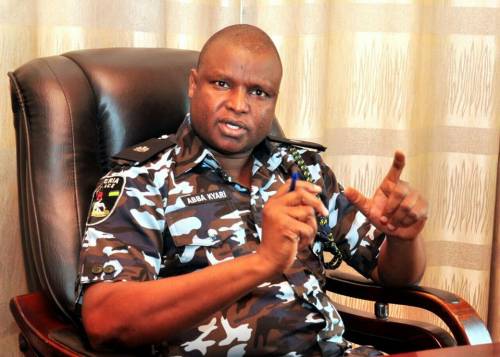
To detain Chibuzo Abba Kyari collected N8m from Hushpuppi – FBI

Credit: kanyidaily.

The embattled super cop and Deputy Commissioner of Police, Abba Kyari, according to the Federal Bureau of Investigation received the sum of $20,600, about N8 million from money laundering suspect, Abass Ramon, aka Hushpuppi, to arrest and detain a “co-conspirator,” Chibuzo Kelly Vincent.

The United States District Court for the Central District of California in a February 12, 2021 document alleged Hushpuppi contracted the services of Kyari after Chibuzo allegedly threatened to expose an alleged $1.1m fraud committed against a Qatari businessman.

“Kyari provided the account information for a bank account at a Nigerian bank, Zenith Bank, in the name of a person other than Kyari himself,” Page 59, item 145 of the document stated.

FBI Special Agent, Andrew John Innocenti, made the allegation in the ‘Criminal Complaint By Telephone Or Other Reliable Electronic Means’ filed before the United States District Court for the Central District of California.

Detailing the events leading to the alleged payment, the document stated, “On January 16, 2020, Abbas sent a message to Kyari on WhatsApp, and then placed five calls to another phone number (+2348060733588) that was listed as ‘Abba Kyari.’ Call records show that the last three of the calls were answered and that one of the calls lasted more than two minutes.

“Shortly after that, Abbas received a message from Kyari, confirming ‘We would pick him today or tomorrow.’ Abbas wrote, ‘I will take care of the team also after they pick him up.’ Kyari confirmed ‘Yes ooo.’”

The document averred that, based on the conversation described in paragraphs 143 to 145, Abbas planned to pay the Nigeria Police Force officers who arrested Chibuzo for that service.

It alleged that “This was not the only time that Abbas arranged payments with Kyari”, adding, “On May 20, 2020, Abbas sent Kyari transaction receipts for two transactions from accounts at Nigerian banks (GTBank and Zenith Bank) of a person Abbas knew in the U.A.E.— a person also arrested with Abbas in Abbas’ apartment in the U.A.E. by Dubai Police on June 9, 2020 — to the Nigerian bank accounts of another person in Nigeria.

“The amounts on the transaction receipts totalled 8 million Nigerian Naira, which was approximately $20,600 based on publicly available exchange rate information.”

The FBI document noted that, “Attempting to reason with Abbas, on January 18, 2020, Chibuzo recounted for Abbas all the assistance he had provided in the scheme to victimize the victim Businessperson, including creating the “power of attorney” document, devising a story to tell the victim Businessperson, and facilitating the creation of the “telephone banking” number and fake Wells Fargo website.

“On January 20, 2020, Kyari sent to Abbas a biographical, identifying information for Chibuzo, along with a photograph of him. In a conversation immediately following, Abbas confirmed, ‘that is him sir.’

“Kyari stated, ‘We have arrested the guy. He is in my cell now. This is his picture after we arrested him today.”

According to the document, Kyari then sent the biographical information about, and photograph of Chibuzo to Abbas, using two different WhatsApp numbers — the second of which Kyari said was his “private number.”

“From that point on, Kyari and Abbas primarily discussed the arrest and detention of Chibuzo through WhatsApp on this ‘private number,’” the document stated further.

“After receiving the photograph of Chibuzo, Abbas stated, ‘I want him to go through serious beating of his life.’ Kyari responded, ‘Hahahaha,’ and Abbas replied, ‘Seriously sir.’

“Kyari then asked for details about what Chibuzo did on audio, which Kyari said was ‘So that we will know what to do.’

“In response to Kyari’s question about what Chibuzo had done to Abbas, Abbas sent Kyari an audio message, which is transcribed here, describing how Chibuzo had tried to steal away a fraud victim (i.e., “the job”) from him:

What he did is, I have one job. The job want to pay me 500, umm, 75,000 dollars [i.e., $575,000]. He went to message the job behind me because I told him to help me make one document for me to give the job. Then he went—he has a—I gave him the details.

Then he went to message the job behind my back and try to divert the money and in this process, he tell the job because of the documents he gave me that I gave the job, he tell the job, ‘These document they sent to you before. These people are fake. This money—is me who can help you to get it. Come to me le—bring this money you want to pay these people to me. I’m the only one who can help you,’ and all these things to divert the job for himself.

“After listening to the message, Kyari wrote, “Ok I understand. But he has not succeeded.” Abbas claimed Chibuzo had taken some money, and provided Kyari with two screenshots, one of which contained the phone number 3054405586 (the phone number Chibuzo used to contact the Victim Businessperson).

“Abbas then told Kyari, ‘Now the [Victim Businessperson] was skeptic to pay me the money cos he keep attacking the [Victim Businessperson] from his end. Now I can handle the [Victim Businessperson] correctly.”

The document further alleged that “Abbas further told Kyari that he wanted to pay money to send Chibuzo to jail for a long time, stating, ‘Please sir, I want to spend money to send this boy to jail, let him go for a very long time.’

“Kyari responded, “Ok bro, I understand; I will discuss with my team who arrested him . . . And handling the case We will do something about it.’

“Abbas responded, ‘Let me know how I can send money to the team sir. Let them deal with him like armed robber.’ Kyari responded, ‘OK I will send their account details to u.’”

“Abbas further wrote, ‘He betray me and try to take food out my mouth, this is great punishable sin,’ and Kyari responded, ‘Yeah bro.’

“Abbas then continued, ‘I want him to suffer for many years.’ Kyari responded, ‘Hahahaha! Hahahaha.’”

The document alleged that, “Approximately six minutes later, Kyari provided the account information for a bank account at a Nigerian bank, Zenith Bank, in the name of a person other than Kyari himself.

“Abbas responded, ‘Ok sir, tomorrow by noon,’ indicating that he would make the payment to Kyari’s team by the next day.

“Approximately a month later, on February 19, 2020, Kyari sent a message to Abbas, saying, ‘Hello hush with [sic] need to talk about the subject under detention with me.’

“Abbas asked, ‘Should I call u on this number sir?’ to which Kyari replied ‘Yes call me.’

“The following day, Kyari sent Abbas multiple photographs of Chibuzo to Abbas, including close-up photographs showing a rash or skin disease on Chibuzo’s torso and arms.

“Abbas responded, ‘I don pity am, make them leave am from Tuesday.’ Kyari wrote, ‘Ok bro, they just brought him from hospital. The fever and the rashes is giving him serious wahala. He got the disease from other suspects in the cell.’

“Abbas responded, ‘I see am, I no too pity am. That’s what people like him deserve, but I go forgive am for God sake.’

“Abbas then said, ‘No problem sir from Tuesday he can go,” apparently giving Kyari his blessing to release Chibuzo from custody.

“Kyari responded, ‘Ok bro. We will also keep his phone and other gadgets for some weeks.’ Abbas responded, “Yes those ones they should not give him again, those ones are gone . . . Make he no see those ones again for life.’

“Kyari responded, ‘Yes he will not see it again,” indicating that he would accede to Abbas’ request.”

Kyari has been suspended by the Police Service Commission as Head of the Intelligence Response Team based on the recommendation of the Inspector-General of Police, Usman Baba. A panel has also been established to probe the matter.

However, Rights Activist and constitutional lawyer ,Chief Mike Ozekhome, SAN, told Arise News on Monday, that the FBI cannot arrest Kyari in Nigeria without going through an extradition process.

Ozekhome said, “When America demanded Abba Kyari, I heard people say the FBI can now arrest Abba Kyari. No, you can’t do that. Nigeria is a sovereign country, for crying out loud, no matter how down in the doldrums we’ve become.

“The FBI can’t simply come here and pick up Abba Kyari. You must go through the extradition process as established in the Extradition Act of the laws of the Federal Republic of Nigeria 2004. You’ve to look at Sections 2, 4, 5, 6, 7, 8 and 9 of the extradition act.

“Going through extradition, the Attorney General of the country has a crucial role to play under the Extradition Act, he and a magistrate, or under Section 251 of the constitution, a judge of a federal high court.

“The country requesting for extradition, like the US, must make a formal request through its consular or representative in Nigeria that we want this man in our country.”


Invest in your children

‘Though your beginning was small, yet your latter end would increase abundantly.’
Job 8:7 NKJV

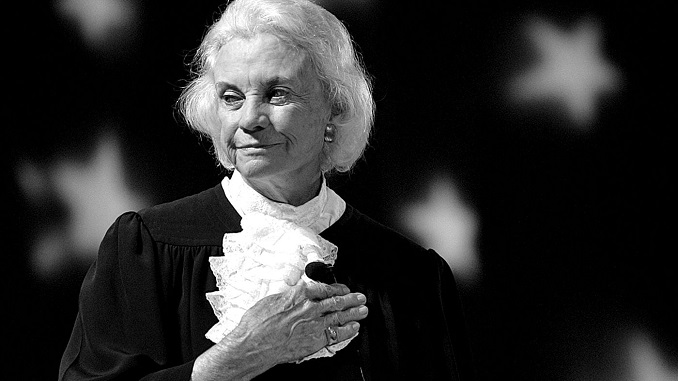
The Lazy B ranch sits on two hundred and sixty square miles. Most of it is scrub brush, and it’s been in the Day family since 1881. When Harry and Ada Mae Day had their first child, a baby daughter, they travelled two hundred miles to a hospital for the delivery and brought her home to a difficult life.

The four-room adobe house had no running water or electricity, and there was no school within driving distance. You would think with such limited resources, the little girl’s future might be limited. But Harry and Ada Mae were determined their children would have the best education possible.

They subscribed to metropolitan newspapers and magazines, and read to their child hour after hour. When her daughter was four years old, Ada Mae began her on the Calvert method of home-schooling and later saw that she went to the best boarding schools possible. One summer they took their children on a car trip to visit all the state capitals in America west of the Mississippi River.

When young Sandra was ready for college, she went to Stanford University, then on to law school, and eventually she became the first woman justice to sit on the Supreme Court of the United States of America. So the word for today is – invest in your children. And be willing to start small, otherwise you won’t start at all. Instead of dwelling on what you don’t have, use what God’s given you and He will bless it. Stand on this Scripture for your children: ‘Though your beginning was small, yet your latter end would increase abundantly.’

Bible in a Year: Job 3-4, Romans 14

The Word for Today

Become willing to change

Credit: pexels.com

‘Oh, that they were wise, that they understood this, that they would consider their latter end!’
Deuteronomy 32:29 NKJV

Unless you’re willing to change, in a few years from now you’ll be exactly the same as you are today, except you’ll be older, with less time and fewer options.

The Bible says, ‘Oh, that they were wise, that they understood this, that they would consider their latter end.’ How do you become willing to change? Recognise that change will happen whether you like it or not. If you do that, you’ll be prepared. One author writes: ‘The only thing certain about tomorrow is that it will be different from today.

If you doubt that, consider this: My grandfather had a farm, my parents had a garden, and I’ve got a can opener! It’s a different world than it was twenty years ago, and it will be different in another twenty. But the good news is that the world changes so fast that you couldn’t stay wrong all the time if you tried!’ The difference in who you are today and who you’ll be twenty-five years from now depends largely on three things: the books you read, the relationships you build, and the time you spend with God.

Do you want to be wise? The Bible says, ‘The Lord gives wisdom; from His mouth come knowledge and understanding’ (Proverbs 2:6 NKJV). Do you want to be happy? ‘Happy is the man who finds wisdom, and the man who gains understanding’ (Proverbs 3:13 NKJV).

Do you want to feel fulfilled in life? ‘Be steadfast, immovable, always abounding in the work of the Lord, knowing that your labour is not in vain in the Lord’ (1 Corinthians 15:58 NKJV).

Bible in a Year: Job 5-7, Romans 15:1-13

The Word for Today

Don’t meddle in other people’s business

Credit: pexels.com

‘Some of you are…meddling in other people’s business.’
2 Thessalonians 3:11 NLT

Scan any tabloid or watch any TV talk show and you’ll discover that ‘meddling’ has become a multibillion-pound business. But it’s not the kind of business a follower of Christ should be in. And while mothers-in-law sometimes have a reputation for being meddlers, they haven’t cornered the market.

Men, relatives, co-workers, and well-meaning friends also tend to interfere. Unlike gossips, meddlers like to elicit personal information directly from their subjects. ‘How can you afford such an expensive car?’ ‘What size is that outfit you’re wearing?’ ‘How much did you pay for your house?’ ‘How long can you afford to be off work?’ Often these kinds of questions serve no purpose other than to satisfy a shallow mind. Yes, some people genuinely want to help, or even pray about your situation – but not meddlers.

So learn to keep your inquisitiveness within the bounds of what’s appropriate. Solomon said, ‘He who passes by and meddles in a quarrel not his own is like one who takes a dog by the ears’ (Proverbs 26:17 NKJV). A dog’s ears are among the most sensitive areas of its body. And if you pull them, the dog may bite you.

Likewise, when you stick your nose where it doesn’t belong, it may get bitten off. God classifies meddling as a sin – right up there with murder and stealing: ‘If you suffer, however, it must not be for murder, stealing, making trouble, or prying into other people’s affairs’ (1 Peter 4:15 NLT). A wise person quipped that the reason people who mind their own business are so successful is because they have so little competition. So don’t meddle!

Bible in a Year: Job 17-19, 1 Corinthians 2

The Word for Today

Mariam Oyiza Aliyu on rising above physical abuse, dedicated work with violated minors, and the rape epidemic in the North East

“A girl I recently rescued was threatened at knife point by an old man. When it was found out that she is pregnant, everybody in the community came out to beat, insult and castigate her. She is just 12.”   – Mariam Oyiza Aliyu

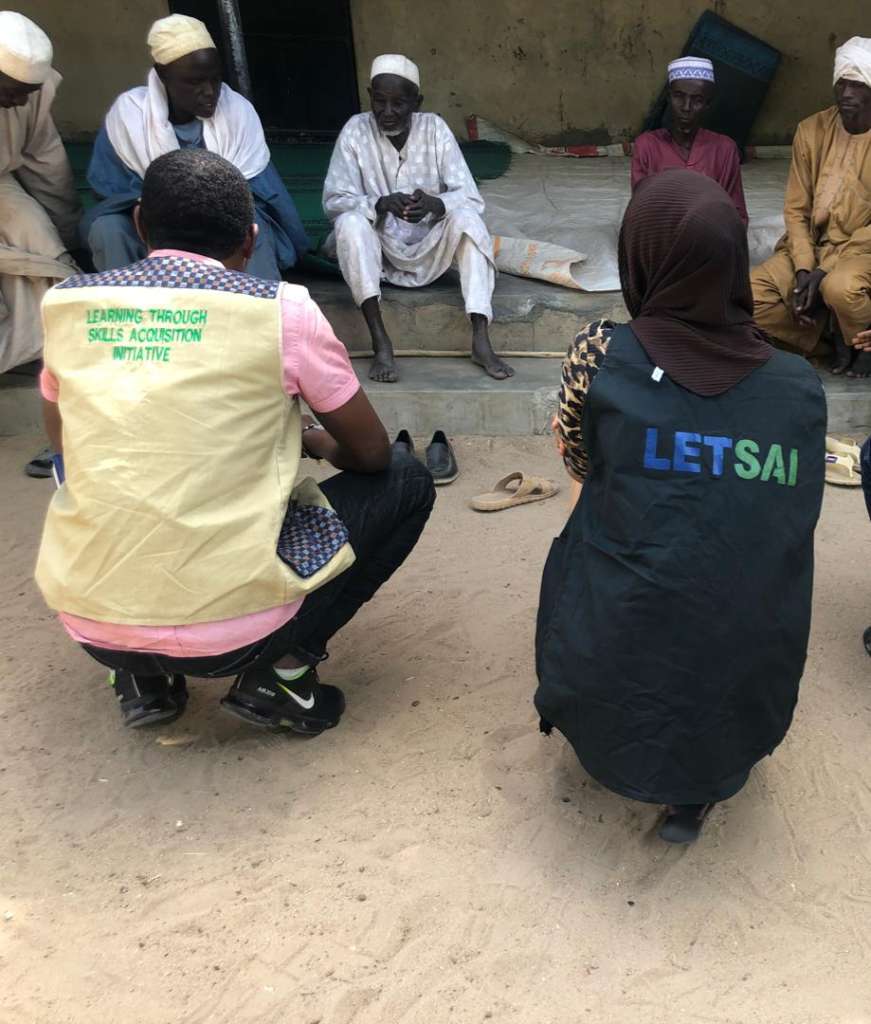
Bullied, emotionally and physically abused from preteen years until she left secondary school in 2011, Mariam Oyiza Aliyu has since turned her adversity into triumphs. From cruel relations to a female English teacher that verbally and physically assaulted her from junior to senior secondary school, in her home state Kogi, Oyiza endured all with a resolve that contrary to her teacher’s refrain – “you will never amount to anything”, greatness awaits her. Today, this University of Maiduguri graduate of Medical Radiography with 32 different hand skills to her credit sits as CEO of Learning through Skills Acquisition Initiative (LETSAI) a youth led, women focused non- profit organization established in June 2015. LETSAI has provided immense succour to young female victims of rape and sundry abuse in the North Eastern part of Nigeria. Indeed Oyiza Aliyu has defied all odds and she’s still soaring. She spoke with Lillian Okenwa

Raised by a single mum having lost her father at an early age, Oyiza Aliyu’s earlylife’s experiences strengthened her voice against Gender Based Violence (GBV). And when her mum who had been the rock and only support died while she was barely into her undergraduate years, Oyiza resolved to honour her memory.

“Seeing the way my mum suffered, I made a vow when she died to try as much as I can to make her proud. She had a terminal illness but hid it from us. She didn’t want me and my brother to be distressed because of her illness knowing our lives have been difficult. But just when things were about to get better for us she died.”

Oyiza and team mate on an advocacy visit in Konduga local government of Borno state

Always on call like a doctor either attending to some victim who had just been violated or holding strategy meetings on how best to meet the ever increasing demands of her very indigent clients, Oyiza who acquired most of her numerous hands-skills from her late mother has deployed it to the benefit of her organisation and many others. Unfortunately, her mother didn’t live long to the enjoy fruits of her labour. Oyiza and team mate on an advocacy visit in konduga local government of Borno state

“You know my mom was a multi-skilled person, Oyiza reminisced. “At a point she started doing so many things. She was making soap, making dresses and selling. She could weave the Ebira, Kogi State type of Aso Oke and she taught me how to do to do it. Also, she knows how to weave hair. That was how she was able to raise us. While she was doing all that, we were learning too. Both I and my brother, we grew up like that. We made pillow cases. I remember I could sew clothes right from when I was like 11 or 12 years. I could do so many other things like leather bags, shoe pads, shoes, macramé knitting, crocheting, both manually and with machine, and many others. I got other talents while I was in school and I added to the ones I had.

“I learnt mostly from YouTube. I was never taught by any other person, because like I told you, I am a loner, always on my own. I cannot go out or flow with people to train me due to my experience in the past. It really affected me. Even when I was in the university I was not close to any of my lecturers. I was always scared of that abuse. Abuse is something frightening. Up till now that I am an adult, I still feel the effects it had on me. I’m still not completely comfortable with hanging around people.”

On how she got trained to lead her organization, Oyiza provided some details.

I have actually volunteered to work with some local organizations rendering sundry services in Bornu State. While I was doing that, I was selling and buying. One day I met this woman talking about NGO work and how people are going there to learn skills and all that, so I told her that I also have a charity organization but that I don’t have any money to fund it. As at that time, I had this idea that I want to do something to remember my mum, so she suggested that I go and volunteer with this organization so I can gain experience and know how things are being done. The first organization I worked with was named GZI. Then the second one I volunteered with was Future Prowess, Zanna Mustapha that became a very prominent man. I volunteered to work with them for a while, and then, one day I got this call requesting for a trainer to train people on macramé bag making. I said this is good. I know how to make bags; leather bags, different kinds of bags.

Macramé bag

I still have like four different samples of the macramé bags. I kept them as samples for other organization that might need them. So many people don’t know macramé. I was the one that introduced it to the North East. In fact, most part of Nigeria that does macramé is through me because I was the first person to do it. I did it for UNCR at that time, and UNCR kind of duplicated it. So most of those persons I trained at UNCR, UNCR used them to train other people in other locations. That was how it went round, though so many people are still not doing it. If you are lazy, you can’t do it because it takes like four days straight to finish one bag. It’s hand woven from the start to the end.

She gave some insight on challenges faced by rescued girls that were forcibly married to Boko Haram members.

These girls were previously abducted by Boko haram and married off. Now they’ve been brought back, when they go to their community, they get chastised. People chase them away. People don’t show them love. They’re told things like: “You’re the wife of the man that killed my son. You know all those kind of talk. Though they’re victims, people don’t see them as that. It gets to a point where they become kind of rebellious. That is why the relationship is difficult. Even though I have a little bit of opportunity to counsel them and work together with them, I still feel like, it’s better we keep them as confidential as possible, because they are really struggling. The community is not accepting them, that’s number one. Secondly, they have not been completely de-radicalized. So right now, they are in a different community protected by soldiers. Counsellors, psychologists, medical health people go there to work with them. Doctors work with them there. UNICEF too. But they are not allowed to leave that place or mingle with people until they are completely de-radicalized. Sometimes, they get very violent. It will take years to get them stabilized.

These are girls that were raped consistently all through captivity. They feel nobody loves or cares but if you bring them closer, it can give them some sense of trust and belonging. One of the girls, a16 year old was raped by four Boko Haram men and she kind of got attached to them. She was raped consistently for like a year. She has a child, but the child is with the Boko Haram. She doesn’t even know if the child is alive. It is not easy.

Do you see any end in sight for Boko Haram and banditry? Her response: “No, I can’t see any end.”

Oyiza’s organisation is also providing service for over 130 survivors of rape and GBV in communities in Borno state.

When we say survivors, it is mostly survivors of GBV, though it encompasses other areas but some of them have been raped, some of them have been molested. For some it’s intimate partner violence, for others it’s harassment. We have a method of identifying survivors, so when we get reports about incidents, we identify their needs.

There are different types of specialized services for different survivors. Like you know, UNICEF is providing Education. They are in different communities. You know, when there is insurgence in a particular place, there’s tendency for all these vices to skyrocket. GBV will rise. For instance in Konduga community, we have 75 survivors and in Pulka, we have 60 survivors. Pulka is not a local government. It’s just one community in Gwoza. So if you try to do case management, or where we identify survivors from the whole of that community, we might have up to 500 or even more. My organization provides economic empowerment but we bring GBV and case management into our activity. Protection of women and girls and anything that has to do with gender issues, we work on that.

We do mental health and support as well. We provide counselling for people that have been raped, that have been abused. We also train them in skills and then empower them. Sometimes link them with micro-finance banks, but most times, what I do is give them start up kits. If I have small money, I will form a Co-operative.  I will open a shop for all the cooperatives, and then, I will be visiting to monitor and see how they manage it. That’s what I do. Visiting, monitoring, to see how the projects are going. Some other organizations will come in with a different approach. My own criteria for selection of beneficiaries to my projects is first of all, survivors, vulnerable women and girls.

And Oyiza agrees that rape is now an epidemic.

I think the insurgence induced this. Initially, it was not like this. It is really getting out of hand. The current cases I’m getting these days are about old men of 63/65years raping girls of 13 /14; even 11 to 12 years old girls. These are internally displaced persons living in a host community. Old men within some communities now threaten little girls. A girl I recently rescued was threatened at knife point by an old man. When it was found out that she is pregnant, everybody in the whole community was coming to beat, insult and castigate her. She is just 12.

But castigate her for what?

They were angry she didn’t talk about it and she was four months pregnant when they found out. That for her not to talk about it meant she was enjoying it. I now said, this man threatened her at knife point. If it is you, what will you do? Are you going to talk? At her age, if this happened to you, will you be able to talk? This was the argument. I talked and talked but eventually had to remove the girl from there. Right now, we’ve relocated the entire family from that place. In fact, this is the third family I am doing this for. Normally, what we do is we provide counselling, but in extreme cases like this girl’s I just had to do something. She is so small. She’s 12 and she’s 4 months pregnant.

Why relocate the entire family?

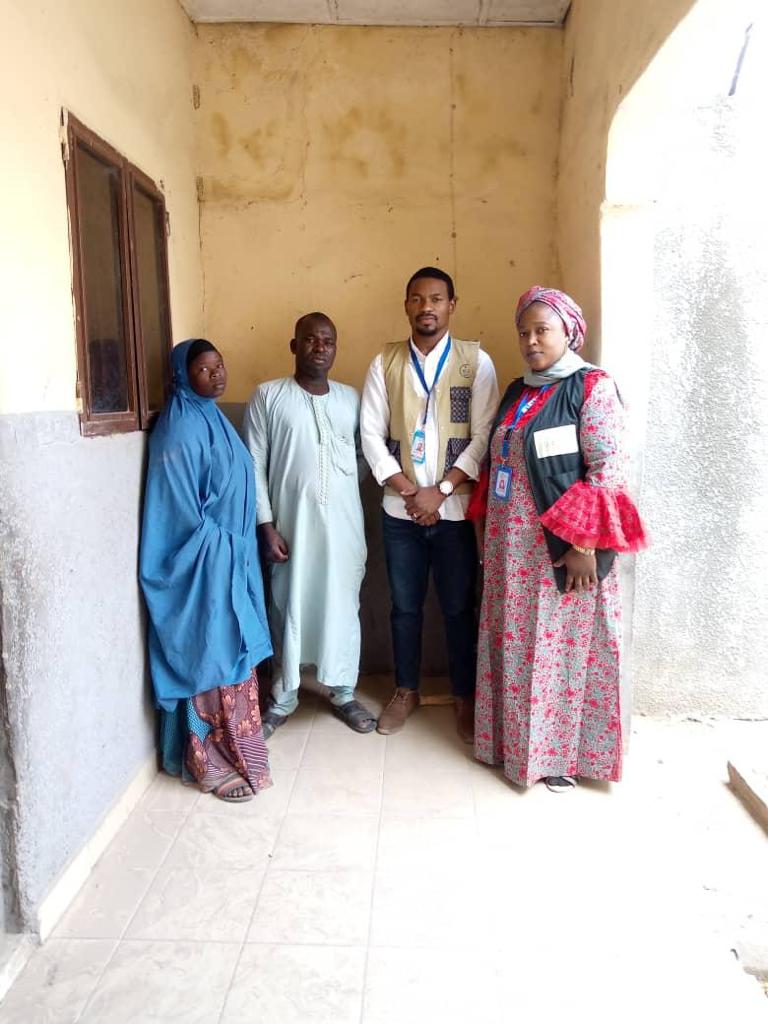
Sister and father of survivor and LETSAI staff in their new home

It is not possible for me to relocate only her. She’s a child. She can’t take care of herself and the funny thing is how they were staying. They were like seven or eight family members in a tiny room. They are IDPs but they were staying in a host community. The situation was really terrible. There’s another host community I know as porous as this particular one. The name of the area is Ganari. I’ve gotten cases there that it is frustrating. It is just something else. After relocating them, we were able to get them three rooms. They are the only ones staying in that house. I paid for two years for house for them. I was only able to get a job for the father, as a security man. They pay him extra money so he can get enough money to pay for the third year.

How do you coordinate rescues?

I have first respondents in all the communities. Our emergency numbers are there. When these issues happen, all they need to do is call the number. When the number is called, my first responder will pick and locate the place. After locating the place, if the case is a tough one, we can quickly send the victim to a clinic, and then we call our lawyer and police to follow up the case. While we are doing clinical management, we add case management to it.

Cybercrime: Challenge of the Nigerian youth in the digital age, By Rotimi Onadipe

Cybercrime is a crime perpetrated through electronic communication network, particularly the internet. This menace is very rampant among youths within the age of 14 to 21 and it has done incalculable damage to the image of Nigeria. Cybercrime can be perpetrated through many ways e.g. phone calls, internet calls, sending of scam emails containing “get rich quick” proposals to entice unsuspecting victims, etc.

The most common type of cybercrime is perpetrated through email. In most cases, it comes in form of marriage proposal, unclaimed fund, donation, lottery, help, bonanza, bank transaction notification or credit alert etc. Some of the youths send as many as 20,000 of such scam emails everyday while others send more to increase their chance of getting their targets.

Youths are proverbially referred to as leaders of tomorrow but how can they be true leaders when they engage in various types of cyber crime at their early age?

It is very sad that family members of most cyber criminals are very happy with their illegal activities. Due to the economic situation of the country, most parents of cyber criminals pretend as if nothing is wrong with what their children are doing because of the benefits they derive from their ill-gotten wealth. Their excuse is that the high rate of unemployment and poverty in Nigeria lead their children into the illegal activities.

Some parents invite clerics, family members and neighbours to celebrate with them and hold special prayer sessions for their children who have made huge sums of money through internet fraud. Others go further to prepare charms for their children so as to escape justice if they get arrested or they are taken to court for trial. Some parents even justify the unlawful acts by saying “they are reaping the fruits of parent-hood”.

This menace has done incalculable damage to the image of Nigeria and many countries around the world. A study by a research organisation discovered that Nigerian scams cost the British economy at least £150m a year. The fact of this matter is that the cost to society goes beyond just losing money. Some victims had attempted suicide, many homes have broken and a lot of businesses ruined.

Further findings also revealed that some countries lose at least $36m a year to Nigerian scammers. Another research by Cybersecurity Ventures states that cybercrime will cost the global economy $6.1 trillion annually by 2021.

However, cyber crime is not limited to men, some ladies are also into the illegal act. They usually start by sending their nude pictures to unsuspecting victims after which they develop this to Advance Fee Fraud, all in the name of unemployment and poverty.

The mind-boggling question: Is cyber crime the solution to unemployment and poverty in Nigeria? The answer is of course “NO.”

Here are some safety tips that we can adopt to reduce cybercrime among Nigerian youths in today’s digital age:

  1. We should all have a total change of heart by having the fear of God in our heart and believing that one day we will meet our creator to give account of how we spent our life.
  2. Religious and non-governmental organisations should always organise programmes to sensitise the youths and the society at large on the need to have the fear of God in their heart.
  3. Parents should not indulge their children who come home with different items they did not procure for them. They should investigate how they got the items.
  4. Parents should always pray for their children and counsel them to be contented with what they have.
  5. Government and non-governmental organisations should encourage the youths in their talents through skill acquisition programmes.
  6. Nigerian youths should be optimistic about the situation of the country. They should shun the belief that “Nigeria can never get better”.
  7. Government should address the problems of poverty and unemployment by creating more jobs and providing soft loans to unemployed youths.
  8. The youths should also realise that cyber crime has repercussion which could destroy their future.
  9. Government and non-governmental organisations should always create awareness campaigns at all levels to sensitise the entire public on the dangers attributed to cyber crime and the preventive measures.
  10. The sim card registration programme set up by the National Communication Commission (NCC) had really helped a lot in reducing the rate of cyber crime in Nigeria. More programs of this nature should be introduced by the government.

•Onadipe can be reached via email: [email protected]

Stressing The Court In Plea Bargain Agreement; How To Avoid

By Stanley Maduabuchi Ofoegbu Esq

As the world population increases, so does the rate of crimes. Day after day, different kinds of crimes are birthed by different persons who are criminally minded. With the increase in industrialization, urbanization, and technology coupled with the high rate of unemployment in Nigeria, the rate of crime cannot help but increase since crime can only be committed by human beings and not animals.

As a way of dealing with various crimes being perpetrated by criminals on daily basis, means are being developed to curtail not just the crime rates, but to also reduce the workload on courts to ensure that justice is served or at least, scratched to an extent. As a way of bringing justice faster in criminal jurisprudence, the plea bargain concept was developed as a tool for the criminal justice system in Nigeria.

In many parts of the world today, a plea bargain is one of the tools employed in criminal justice system. It reduces the workload of courts and helps to preserve and conserve the time and resources of the state.

Question

What then is a plea bargain and plea bargain agreement?

A plea bargain is a negotiated agreement between a prosecutor and a criminal defendant whereby the defendant pleads guilty to a lesser offence or to one of multiple charges in exchange for concessions by the prosecutor, usually, a more lenient sentence or the dismissal of the charges. See Garner, B, Black’s Law Dictionary,9th edition, U.S.A. Thomson Reuters,2009) p.1270. Plea bargain agreement on the other hand, is an agreement in writing signed by both the prosecutor and the defendant which is usually filed in court stating the intention of the parties to enter into a plea bargain upon the fulfillment of a certain conditions.

Question

Who are the parties in a plea bargain agreement and process?

The parties in a plea bargain agreement includes the prosecutor, the defendant and his lawyer and in some case, the victim of the crime. For the entire process, the courts forms part of the class.

INITIATION OF THE PROCESS

The plea bargain agreement may be initiated by any of the parties that is, the prosecution or the defendant. In most cases, the initiation is done by the defendant. The plea bargain is commenced by an invitation letter to the other party stating his intention to enter into a plea bargain agreement. It is synonymous with the offer and acceptance in contract. Where the offer is from the defendant, the letter is better prepared by his lawyer to the head of the prosecution team. Where for instance, the case is a matter involving the Economic and Financial Crime Commission EFCC, the letter from the lawyer is to be sent to the head of the legal unit or any other unit designated for such purpose. The letter is usually detailed stating the full name of the defendant, the offence for which the defendant is charged, the fact that the defendant was arrested and willing to offer some concession and the fact that he has or is willing to plead guilty to the offence. The said letter is appropriate and better if drafted using the law office letter head of the defendant’s lawyer. The letter is usually an application and so, it must come inform of an application to the prosecution as the case may be. The letter is also signed by the lawyer to the defendant and may be accompanied by the seal of the lawyer.

Upon the receipt of the invitation letter by the prosecution as the case may be, another letter called the TERMS AND CONDITION letter is sent. Where the initiation was made by the defendant, the terms and condition letter is usually from the prosecution upon acceptance to enter into a plea bargain discussion with the defendant and his lawyer. The letter is to contain certain information including the fact that the whole discussion will be confidential among other information. However, in some cases, the prosecution may not necessarily write formally to the defendant lawyer. The prosecutor may orally accept the offer to enter in to the plea bargain arrangement and call for discussion which is usually done face to face with the defendant and his lawyer.

Upon the conclusion of the plea bargain discussion, comes the plea bargain agreement proper

Question

What is the role of the defense lawyer in plea bargain agreements?

Usually, it is the defendant who will go into prison or suffer other kinds of punishment if the plea bargain agreement fails and the defendant is found guilty of the offence. Accordingly, it is the duty of the defense lawyer to do the following the moment the plea bargain discussion is over.

1.To teach the defendant how to plea in court upon arraignment. This is because plea bargain agreement or arrangement ought to be entered voluntarily. Where in the process of arraignment, the defendant pleads not guilty, the plea bargain agreement and all that has happened collapse immediately. The court is to discountenance the agreement as not being entered voluntarily. Hence, the defense counsel is duty-bound to teach the defendant on the appropriate plea to enable the plea bargain agreement to sail through.

The defense counsel is also duty-bound to ensure that the plea bargain agreement is captured with the exact words showing the intention and agreement of the parties. Though the agreement is to be drafted by the prosecution, the defense counsel owes his client the defendant duty to go through the agreement prepared by the prosecution before it is sent for filing by the prosecution. By so doing, the defense counsel will be able fine tune, add or request that some items or paragraph be removed to bring it with the sole intention of his client. It is highly unprofessional for the prosecution to proceed for filing of the plea bargain agreement without the defense counsel perusing the document for all parties are supposed to be on same page.
3.Both the defense and the prosecution are to ensure that the whole agreement is not ambiguous and difficult to decipher as that will amount to laboring the court. Where it is agreed that upon conviction, the court should impose fine instead of terms of imprisonment, the defense should ensure that only the provision for fine is contained in the plea bargain agreement. The exact fine should also be stated in clear letters. This is because where the agreement provides for both fine and terms of imprisonment for the court to choose from, the court may decide to exercise its discretion and send the convict to prison even when going to prison was never the intention of the parties. Also, where the prosecution fails to specify the amount to be imposed as a fine, the court may proceed to impose a fine higher than what the parties were contemplating. To avoid stressing the court, it is best for the defense and the prosecution to specify in clear terms what they agreed upon. Though the court also possesses the power to vary or deviate from the agreement, it is safer for the defense and his client to ensure that the exact intention is written down.

Upon filing of the plea bargain agreement, the defendant must ensure that he gets a copy of the filed agreement in his own file. This is because, circumstances might arise where the court after arraignment will refer the defendant to read up or explain a particular paragraph in the plea bargain agreement for clarity purposes. When this happens and the defense counsel who is usually seated on the other side of the row, will have no other option but to reach out to the prosecution for a copy just to respond to the court thereby wasting judicial time and the time of others lawyers. Issues of this nature arises when an empty agreement is filed in court as a plea bargain agreement. A plea bargain agreement is empty when all the prosecution and the defense counsel did is nothing but to state that the court shall exercise its discretion in giving the defendant a favorable sentence without providing the court with a single base or guide. Such agreement stresses the court as the court will have no other option but to call on the defense to address it on the plea bargain agreement which is supposed to be in writing and in clear terms. This is bad and may not favour the defendant as expected. Below is a personal experience weeks ago in one of the High courts in Abuja.
‘’A senior colleague called me at about 7pm in one of the past Sundays in July 2021. He requested that I stand in for him in a criminal matter coming up for arraignment the next day. According to him, it was a hearing on a plea bargain agreement and so I have only but a little role to play in the whole proceeding as the agreement had already being filed. I demanded for the case file and a copy of the plea bargain agreement to study same before going to the court so I can at least have a gist of what the whole case was all about. Surprisingly, he had no copy of the agreement and no case file for the case. Funny as it appeared, he also said that he was yet to see the draft agreement made and filed by the prosecution. I didn’t bother much as I was thinking that all things no doubt, were in order. The next day, I was already in court as early as 8 a.m so I can meet with the prosecution and get the necessary documents. To my greatest surprise, the plea bargain agreement prepared and filed by the prosecution was as good as empty. Beside the necessary provisions of the Administration of Criminal Justice Act 2015 section 270(7) to be précised, no other information was contained in the agreement. The only information therein was to the effect that the court shall exercise its discretion in sentencing of the defendant and nothing more. Upon going through the plea bargain agreement, I realized that I have a great task to perform as against my initial plan. Quickly, I summed up what I was going to tell the court and how persuasive it should be considering the fact that there is nothing before the court. Upon arraignment, the court glanced through the plea bargain agreement after the prosecution had opened its case. Immediately, the court turned its attention towards me and asked;

S.M. Ofoegbu, can you read out the content of the plea bargain agreement filed? I can’t see anything in the one before me. It has no guideline, no template, no specification as to what was agreed. I stood up and responded to my Lord saying thigs that ought to have been written down in clear terms. Despite my persuasion, the court insisted that my address ought to have been documented in clear terms. The court also suggested that the case be adjourned to enable a better filing of the agreement. Seeing that this adjournment will work hardship on my client, I prevailed on the court to proceed with the case citing reasons why the agreement appeared the way it was. Though the court eventually agreed with me, convicted and sentenced the defendant in accordance with my oral address, it was a difficult decision for the court to make. It was indeed an experience I would not like to have again’’

The point remains that plea bargain agreement is the fulcrum of the whole story and drama. If it is poorly drafted, the client suffers it the most.

How Suspension Of Nigerian Police Chief, Abba Kyari Vindicated IPOB – Nnamdi Kanu’s Disciple

According to a report by SaharaReporters, Simon Ekpa, a disciple of Nnamdi Kanu, leader of the Indigenous People of Biafra (IPOB), has said Nigeria breeds criminals.

Ekpa, a Finland-based member of IPOB, who was disengaged from Radio Biafra as a broadcaster, stated this on his Twitter page while reacting to the suspension by the Nigerian Police Force of the embattled Deputy Commissioner of Police, Abba Kyari.

Ekpa said Kyari’s suspension confirmed his earlier statement that Nigeria breeds criminals.

Kyari, who is the Head of the Inspector General of Police Intelligence Response Team (IRT), was suspended over his links with a self-confessed internet fraudster, Ramon Abass, popularly known as Hushpuppi.

The United States’ Federal Bureau of Investigation (FBI) had linked Kyari to Hushpuppi during their investigation.

The FBI had alleged that Hushpuppi bribed Kyari to jail an errant gang member over a fraudulent deal worth millions of dollars.

Following the revelation, the Inspector-General of Police, Usman Alkali recommended Kyari’s suspension pending the outcome of investigations to the Police Service Commission and he was suspended.

Ekpa wrote, “We have been vindicated again! Nigeria breeds criminals. The recommendation of the IGP to ‘suspend’ criminal Abba Kyari is another confirmation that they are all criminals.

“What is suspension? They didn’t know how bad the situation was until they watched our exposition. Face with tears of joy @PoliceNG.”

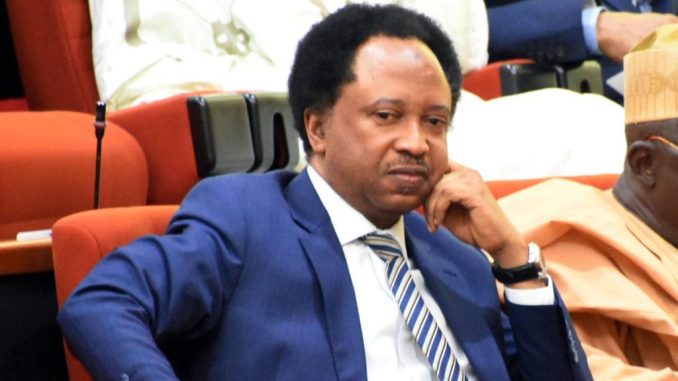
Nnamdi Kanu, Sunday Igboho, Abba Kyari: ‘Nigeria is a zigzag republic’ – Shehu Sani

Shehu Sani, a former lawmaker, has described Nigeria as a “Zigzag Republic”.

The former lawmaker in a post on his official social media pages on Sunday blasted Nigerians for been tribalistic on their approaches to issues that bother on the entire country.

Senator Sani who spoke said that Nigerians give special treatment to some individuals based on ethnicity.

According to Shehu, some Nigerians who rejoiced over the recent extradition of the embattled leader of the proscribed Indigenous People of Biafra, Mazi Nnamdi Kanu, are now working to sabotage the extradition of the Nigerian Inspector General of Police’s Intelligence Response Team (IGP-IRT) Commander and Deputy Commissioner of Police, Abba Kyari.


Abba Kyari is currently embattled over his alleged link to a suspected internet and cybercrime fraudster, Ramon Abass, popularly known as Hushpuppi.

He may be extradited to the United States upon the conclusion of investigations concerning his involvement.

Recall that the United States Federal Bureau of Investigation, FBI, had linked Kyari to Hushpuppi during an investigation.

Those who were angered by the extradition of Nnamdi Kanu from an undisclosed country recently, are now rejoicing over Kyari’s predicament.

Shehu Sani wrote, “You are happy Kanu is extradited but you don’t want Kyari extradited. You want Kyari extradited but you hated the extradition of Kanu. You want Igboho to be extradited but you are opposed to the extradition of Kyari.

“You don’t want Kanu extradited but you want Igboho extradited.

THE ZIGZAG REPUBLIC”.

TIPS