Home Blog Page 932

Why the Court of Appeal Decision in Moses v. Ecobank & Anor does not open the flood gates for actions on failed ATM transactions

By Oliver Omoredia

In the past days, significant attention has been given to the decision of the Court of Appeal in the case of Moses Jwan v. ECOBANK Nigeria Plc & Anor [2021]10 NWLR pt.449. Much of the attention on the case has been drawn from the obiter dictum per Aliyu JCA on the point that ” The ATM card issued by a bank being akin to a cheque, must be honoured on request once there is enough funds in the customer’s account, and failure to do that means the bank is in breach of the duty of care owed to its customer”. Unsurprisingly, that statement in the judgement has been circulated as judicial authority on the point that bank customers can sue Banks when they encounter frustrations in the use of ATMs. This write-up however considers that inference to be a stretch of the very narrow authority that is established in the case of Moses Jwan v. ECOBANK & Anor. The write-up considers the true basis for the decision in the case, why the Banks were held liable and the mitigating steps which commercial banks can take to avoid opening the flood gates of litigations in light of the above authority.

FACTS OF THE CASE

The Appellant was the customer of Ecobank (the 1st respondent) who issued him with an ATM card. He used the ATM card in the ATM of UBA (the 2nd Respondent) to withdraw the sum of N10,000. The machine continuously made the sound of counting money notes then showed that the transaction was successful, but he did not get any money from the machine even though was debited the amount with the bank charges.

He complained to the officers of Ecobank and UBA but it did not yield any positive result. Ecobank insisted that its record showed that he was paid the money by the ATM. He therefore commenced an action claiming the sum of N10,000, special damages of N100,020 and general damages of N500,000.

Local Guides Connect - Re: ATM Machines in Europe - don't be ripped off -  Local Guides Connect

The Appellant claimed that the events could not have occurred without negligence on the part of the Respondents and he therefore pleaded Res Ipsa Loquitur (that the facts speak for themselves).

The trial Court decided against the Appellant on the basis that he failed to establish that the Respondents were negligent. The Court also held that the Res Ipsa doctrine was not applicable.

Dissatisfied with the decision the Appellant appealed to the Court of Appeal.

ARGUMENT OF COUNSEL AT THE COURT OF APPEAL

In summary the Appellant’s Counsel argued that the Learned trial Judge was wrong when he admitted the photocopy of the 2nd respondent’s ATM journal which the Respondents claimed recorded the ATM transaction as successful, because the original of the journal was not produced and there was no proper foundation laid either in its pleadings or in the evidence for the court to admit the photocopy. He said the document failed to meet the requirements of Section 82 and 84 of the Evidence Act.

He further argued that while the onus of proof in civil cases is generally on the Plaintiff, Section 133(1) of the Evidence Act raises a presumption from the pleadings in favour of the Plaintiff and the Defendant has the task of discharging the initial burden of proof. He therefore argued that the event was something the Plaintiff could not explain and that was a situation which could not have happened in the ordinary course of things without some negligence from the Respondents. That was why he relied on the doctrine of res ipsa loquitur in his pleadings. Therefore, the Respondents had the duty to severally or jointly demonstrate by evidence that what occurred was an accident and not based on their negligence and that this should have been the starting point of the case.

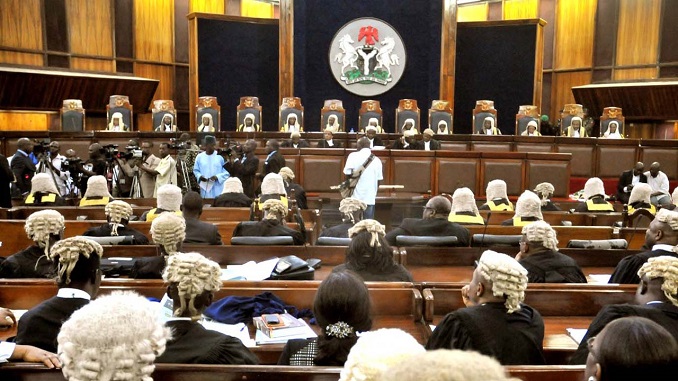
Importantly, the Respondents did not produce the image captured by the ATM machine showing if the Appellant indeed took his money after the alleged successful transaction and the two Respondents’ witnesses admitted that it was possible for a customer’s account to be debited without the customer being paid. Therefore, evidence of debit was not evidence of a successful transaction.

The 1st Respondent however argued that the appellant failed to prove that he was not paid the money from the ATM. They relied on the statement of account of the Appellant which showed that the Appellant was indeed paid and also relied on the Bank’s journal showing the success of the transaction. The 1st Respondent contended that doctrine of res ipsa loquitur as a cause of action was not available to the Appellant who has failed to prove the material facts of his claims of negligence. The 2nd Respondent also similarly argued that the Appellant had failed to plead and prove the particulars of negligence alleged.

Determination of the Appeal

On whether the Banker’s journal was inadmissible for lack of proper foundation for the admission of photocopy and the absence of certification as a computer-generated evidence, the Court disagreed with the Appellant and held that the document was admissible on the basis of its relevance. According to the Court “the trial Judge was right to be guided by relevancy of the document to the fact in issue, at the point of tendering the exhibit 19, especially in view of the testimony of the DW2 that he saw the original document from which exhibit 19 as a copy was made and in view of the provisions of section 89(h) and 90(e) of the Evidence Act. The fact in issue before the trial court was whether or not the appellant was paid the sum of N10,000 he requested from the ATM of the 2nd respondent, and exhibit 19 is said to contain the record of that transaction. It was therefore relevant and admissible in evidence”.

However, while the Learned Justices of the Court of Appeal held that the document was admissible, they however held that the trial court ought not to have attached much probative value to the exhibit because it was faded and could not be easily read. According to the Court:

“DW2 clearly testified that exhibit 19 is “faded away”. When something is said to have faded away, it cannot be seen, because the ordinary dictionary meaning of ‘faded’ is disappeared. It is therefore a mystery how the same witness who said the exhibit he was tendering had faded away could still “read” the document contrary to his claim. It is not logical to read a document that has faded away, even if one has microscopic eyes, which no human possesses.

Regrettably, the learned trial Judge did not consider this crucial piece of evidence regarding the legibility of exhibit 19, which was clearly stated by the witness through whom it was admitted in evidence. It is my view that a document that has faded away, cannot be ascribed any probative value. It is worthless piece of paper and it is hereby expunged from the record of appeal”

Opinion

With due respect to the Learned Justices of the Court of Appeal, it is difficult to see how Exhibit 19 was held by the Court to have been properly admitted, but expunged because the trial court gave significant probative value to the said evidence. One would expect that it is evidence which is found to have been inadmissible and improperly admitted by the trial court that should be expunged from the records of court. See. ORISA v. STATE (2018) LPELR-43896(SC) and MAGAJI v. OGELE (2012) LPELR-9476(CA). Hence, the Learned Justices of the Court of Appeal could have determined that the Exhibit could not attract significant probative value, without expunging same from the record. It is trite that worthless documents cannot have any important influence on the result of a case. See: Kraus Bright-v. Ordani (supra): Onochie v. Odogwu (supra) at page 65.” Per ABDU ABOKI, JCA (Pp 27 – 27 Paras E – F) See also UNITY BANK PLC v. IDEMUDIA (2016) LPELR-40823(CA).

On whether the doctrine of Res Ipsa Loquitur was applicable, the Court held that the Appellant was entitled to plead Res Ipsa Loquitur. According to the Court:

The testimony of the DW1 showed that the 1st respondent did not doubt the complaint of the Appellant, since there were times that such occurrences occur. It is also apparent that the only investigation it carried out or relied upon is the statement of account of the appellant (exhibit 18) that recorded the transaction as successful. However as posited by the learned appellant’s counsel and I totally agree with him, the recording of the transaction as successful by both the ATM and his bank account was not in issue before the trial court. What was in issue and indeed the complaint of the appellant both before the trial court and in this appeal was that his account was debited without the requested cash paid to him and he did not know how that could happen without the negligence of the respondents. Therefore, the 1st respondent’s reliance on the statement of account as its investigation to show that the transaction was successful was a non-starter.

What was required to discharge the presumption of negligence against the 1st respondent or its officers is an explanation of how that could have happened without its negligence or failure of duty of care owed to the appellant. This is especially so because its witness DW1 admitted that there are situations where the ATMs debit a customer’s account without paying him the cash requested, which was what the appellant complained of. Indeed, the evidence of the 1st respondent only supported and strengthened the case of the appellant of negligence against it. The effect of this is that the1st respondent did not rebut the presumption of negligence against it in this case.

The Court therefore found in favour of the Appellant and granted the reliefs sought.

CONCLUSION

As seen from the above, the Court did not find against the Respondent Banks because an ATM card is like a cheque which must be honoured when the account holder has sufficient credit. No! That was an obiter raised by the Learned Justice of the Court of Appeal.  The decision was more in line with social justice, which imputes a fiduciary responsibility on the bank towards its customers. Indeed, the Banks failed woefully in the lackluster treatment of the complaint of their customer, and it was that wrong that the Court sought to remedy!

Therefore, it is not every failed transaction that can be basis for claim of damages on the above authority. To come within this decision the following must be established:

  1. The transaction must have failed without explanation. Hence, where an ATM machine shows an error message like “User or Switch inoperative” or other error messages, a claim cannot be brought in reliance on the above authority.
  2. The transaction failure must have not been rectified within reasonable time. Hence, where the account is debited and the money is reversed within a few days, the above authority will not be basis for action.
  3. The officers of the Bank must have not rendered reasonable explanation and remedy after a reasonable time.

On the part of the Banks, the authority is also incisive on the need to preserve evidence of transactions at ATM machines in order to verify claims of this nature. Image of the Customer taking his cash from the machine was all that was required to establish the claim of the Respondents. In totality, the case is a good authority which will doubtlessly help the Nigerian Banking System live up to a higher standard than what currently obtains.

MONDAY LINES

‘Mamman Daura seeks competence’

By Lasisi Olagunju

(Published in the Nigerian Tribune on Monday 3 August, 2020)

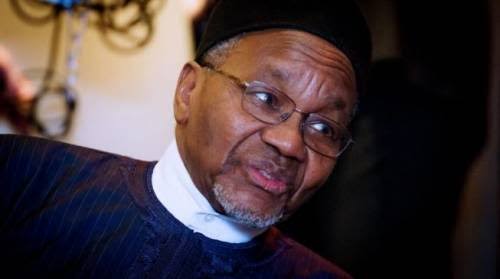
Leader of the ‘unseen’ persons ruling us, Alhaji Mamman Daura, spoke last week. He said enough of turn-by-turn presidency for Nigeria. He decreed that North-South rotation of the presidency of Nigeria should be dead; from 2023, the most competent among contenders would be put in the Presidential Villa. The Afenifere reacted sharply; the North is silent; the Ohanaeze spoke hard. Leaders of the Niger Delta also kicked against Daura’s executive order banning zoning of the presidency. But what can their puny noise do to a people who built their confidence on solid rock? When a man whose lips rarely move decides to speak out, you had better drop all you are doing and listen carefully. The man who spoke is not known to be a flippant person. He spoke as the mouthpiece of a mysterious clan of northern electoral deciders. Ignore the fuddling statement from Muhammadu Buhari that Mamman’s statement was his personal opinion. The eighty-something-year-old man didn’t speak for himself. He spoke for the opaque, predatory system he represents which has benefitted from the opposite of competence all through our national history.

The Northern Peoples Congress (NPC) produced the Federal Government that succeeded the British. It started almost immediately to lower standards in virtually all areas so that the North could lead. That was where Nigeria got its knock-kneed, unbalanced load it forever carries. The case of the army, as recorded in the biography of Nigeria’s first minister of defence, Alhaji Muhammadu Ribadu, is particularly galling. The Balewa government said it “found it difficult and frustrating to find sufficient Nigerian officers the army needed” and therefore “ordered the lowering of the academic admission standard.” Under the British, potential officers “had to have four credits, including English, in the School Certificate Examination,” the Balewa government “lowered this to four passes.” It “still found it difficult to fill the quota of certain areas” and ordered “further lowering to a Teachers Grade 11 Certificate or Royal Society of Arts Stage 11 Examination.” The “maximum age of entry was raised from 22 years to 25 – just to make it possible for areas where schooling started late to make it…” The ‘reforms’ made it possible for certain recruits to go train at Mons, OCS, Aldershot, England “and be back in Nigeria as a second lieutenant within sixteen months after leaving secondary school” (See ‘The Power of Powers: A biography of The Late Alhaji Muhammadu Ribadu’ on page 37). The tragedy of these records is that they were put in that book as part of the achievements of the Balewa government. There are records too of rapidly promoted persons in some state civil service transferred to federal service to senior positions. Products of this standard-lowering policy later seized Nigeria in 1966 and have remained in power since. They ruled yesterday; they are in power today. They are the ones now teaching us the merit of ‘competence’ over zoning.

There was an audacious organisation called Kaduna Mafia. The rump of that old order is what we call the cabal today. The Mafia was a band of well-read, ultra-conservative Hausa/Fulani/Kanuri elite. It was founded to advance Lugard’s agenda and make southern Nigeria a helpless colony of the North. We heard so much of these persons and their group in the years from the 1970s to the very early 1990s. We were told (and we knew) that these were not ordinary men. They worked very hard and thought deeply and pushed hard enough to arrive at today’s near absolute northern vice-hold on Nigeria. In December 2009 when a key member of that clan, Ibrahim Tahir, died, Mamman Daura wrote a very beautiful piece he entitled ‘Ibrahim Tahir: An Appreciation.’ The tribute almost said the unknown about the Mafia and its nocturnal ways. He revealed that after the civil war, “there was an intellectual core of young Northerners who influenced the direction of the country’s policy.” These people, he wrote, “were drawn from all disciplines.” He gave their names: “Adamu Fika, Adamu Ciroma, Iya Abubakar, Gidado Idris, Mahmud Tukur, Umaru Dikko, Tunji Oyinloye, Salihi Ilyasu, Datti Ahmad, Jibril Aminu, Mike Angulu, Ibrahim Tahir, Rilwan Lukman, Suleiman Kumo, Yaya Abubakar, Abubakar Koko, Baba Gana Kingibe and Paul Belabo.” He forgot to name himself, Ahmed Joda, Umaru Muttalab, Ibrahim Damcida, Hamza Rafindadi Zayyad, Sani Daura, Ismaila Isa Funtua and Mohammed Rafindadi as members. He did not also remember their military strategists led by Generals Shehu Musa Yar’Adua, Muhammadu Buhari and Abba Kyari (not the one who was in the Villa and died recently. This Kyari was military governor of North-Central State between 1967 and 1974). But Mamman remembered to describe all these people as “men who were passionate about their country and contributed to the betterment of their region and their country,” men who would start “a meeting at 8pm and go on till 4 or 5am”…and “reconvene at 9am,” keeping this up for straight four or five days. They were that hardheaded and focused on their goal of keeping Nigeria forever as a worthy bequest from their fathers to their own children. An author said the Kaduna Mafia operated “almost at the same level with the CIA. The CIA could plant something on the most unusual places; they could get the most unusual people to do certain things for them.”

They talk less; they think and plan more. They never let even their friends into the bedroom of their thoughts and that was why the stunned called them a Mafia. The Kaduna Mafia and its successor cabal had/has a blueprint, an agenda which they pass from regime to regime. They win over and use or destroy whoever stands in their way. And they appear to have finally succeeded now — especially with the absolutist Hausa/Fulani/
Kanuri-centric government we have had since 2015.

Many of the original Mafia members are late now; one died last month but just before he (Isa Funtua) died, a video of him saying something close to what Mamman Daura said last week circulated in the social media. Perhaps because it did not trend enough, the big masquerade, Mamman, had to repackage and relaunch the missile through their good, old BBC Hausa Service. Their presidency on saturday weighed in with its own part, seeking to confuse the stupid with claims that Mamman’s Hausa was mis-translated. It did not tell us who did the ‘bad’ translation; it did not give us the correct version of what he said. It did not tell us why the well-read man chose to speak Hausa and not English that would need no translation and which the whole country understands. Or is Hausa the language of competence?

If you heard what Mamman Daura said last week, just know that he spoke on behalf of the living and the dead on the Mafia list above. What he said wasn’t a hollow homily. It was a deliberate proclamation, a call to ‘war.’ The ‘competence’ he mentioned was a euphemism for feudal sit-tight in the presidential seat. The die is cast, the North is ready for the next level in its engagement with the South; it is not letting go of the presidency in 2023. It is now an advocate of merit in presidential contests.

For the past five years, the North has ruled Nigeria like a colony. There has never been any such unpretentiously sectional government at our centre since independence. Everything that is held in common is put in the northern warehouse, hoarded for its regional benefit. The attitude down south is that Buhari’s ‘northern’ government is ‘sùúrù to l’ójó’ (patience that is timed). Because the very long years are about to end – and they must end – the executioner is now afraid of all swords, real and imagined. He wants to change the rules of engagement so that his parochial business can continue as usual. It doesn’t work like that. My people say the stingy is red-eyed twice — when he eats his food alone and when his neighbours eat theirs.

The North is now talking about competence after using incompetence to hold down the other parts. Mamman Daura did not define what he meant by ‘competence.’ I would have clapped for that suggestion but history has a way of warning humanity about rule makers who have never obeyed any of their own rules. Let me, however, counsel against abusing Mamman. The wise should rather think and counter his mafia’s plans to have its cake after eating it. If you are not happy about what he said, tell your own small and large intestines to think deep and plan well on how to be free from the net of the fowler. For instance, why should we be talking competence only about the top job? Someone said a sound society evolves from a bottom-top approach. Can we start talking ‘merit’ and ‘competence’ from the basics by scrapping our obnoxious quota system today ahead of 2023? Can Mamman Daura and President Buhari and their clan lead in insisting on merit in school admissions, enlistment into the forces, work placements and promotion in the federal service?

‘Mamman Daura seeks competence’ was the headline of a newspaper story last week. My people say he who would clothe another must first be seen clothed. A naked king decreeing that his successor must have a thousand babanriga needs a mirror for self-assessment. Every person who has been a beneficiary or an enabler of the institutionalisation of mediocre culture in Nigeria is not qualified to talk about competence or merit in 2020 for 2023 and forever. Daura’s strategic leak was an insult that must be sent back to the sender.

Validity of Marriages Conducted Abroad.

by Onyekachi Umah, Esq., LL.M, ACIArb(UK)

Any marriage conducted outside Nigeria between a Nigerian and a Non-Nigerian before a Marriage Officer in his office is VALID in Nigeria.

My authorities:

section 49 of Marriage Act.
Onyekachi Umah, “Custody of Children of Traditional Marriages and the “Chichidodo” (LearnNigerianLaws.com, 18 February 2021) https://learnnigerianlaws.com/custody-of-children-of-traditional-marriages-and-the-chichidodo/ accessed 11 March 2021.
Onyekachi Umah, “How To Be Legally Married” (LearnNigerianLaws.com, 6 March 2016) https://learnnigerianlaws.com/how-to-be-legally-married/ accessed 11 March 2021
Onyekachi Umah, “English Marriages Outside Marriage Registries and Churches Are Valid” (LearnNigerianLaws.com, 28 September 2020) https://learnnigerianlaws.com/english-marriages-outside-marriage-registries-and-churches-are-valid/ accessed 11 March 2021.
Onyekachi Umah, “When Can Churches Dissolve Marriages?” (LearnNigerianLaws.com, 25 August 2020) https://learnnigerianlaws.com/when-can-churches-dissolve-marriages/ accessed 11 March 2021
Onyekachi Umah, “3 Steps to a Valid English/Court Marriage” (LearnNigerianLaws.com, 21 August 2020) https://learnnigerianlaws.com/3-steps-to-a-valid-english-court-marriage/ accessed 11 March 2021
Onyekachi Umah, “Minimum Number of Guests for Marriages in Nigeria” (LearnNigerianLaws.com, 14 August 2020) https://learnnigerianlaws.com/minimum-number-of-guests-for-marriages/ accessed 11 March 2021
Onyekachi Umah, “Forget Hollywood & Nollywood: In Nigeria, Marriages Cannot End By Signing Of Divorce Papers.” (LearnNigerianLaws.com, 23 July 2020) https://learnnigerianlaws.com/forget-hollywood-nollywood-in-nigeria-marriages-cannot-end-by-signing-of-divorce-papers-daily-law-tips-tip-616-by-onyekachi-umah-esq-ll-m-aciarbuk/ accessed 17 February 2021.
Onyekachi Umah, “How To Prove Traditional Marriage In Nigeria” (LearnNigerianLaws.com, 20 May 2020) https://learnnigerianlaws.com/how-to-prove-traditional-marriage-in-nigeria-daily-law-tips-tip-573-by-onyekachi-umah-esq-llm-aciarbuk/ accessed 17 February 2021
Onyekachi Umah, “Customary Marriages In Nigeria Are To Be Registered In Court.” (LearnNigerianLaws.com, 13 September 2018) https://learnnigerianlaws.com/daily-law-tips-by-onyekachi-umah-esq-tip-183-customary-marriages-in-nigeria-are-to-be-registered-in-court/ accessed 17 February 2021.
Onyekachi Umah, “Custody of a Child In Customary Marriage: How and To Whom?” (LearnNigerianLaws.com, 29 September 2021) https://learnnigerianlaws.com/custody-of-a-child-in-customary-marriage-how-and-to-whom/ accessed 17 February 2021
Onyekachi Umah, “Factors That Court Consider Before Granting Custody Of Child To Any Person.” (LearnNigerianLaws.com, 3 March 2020) https://learnnigerianlaws.com/factors-that-court-consider-before-granting-custody-of-child-to-any-person-daily-law-tips-tip-517-by-onyekachi-umah-esq-llm-aciarbuk/ accessed 17 February 2021
Onyekachi Umah, “Forced Marriage Is An Offence In Nigeria” (LearnNigerianLaws.com, 21 October 2020) https://learnnigerianlaws.com/forced-marriage-is-an-offence-in-nigeria/ accessed 11 March 2021
Onyekachi Umah, “Child Marriage/Abuse Is A Crime (Rape): An Exposé On Laws Prohibiting Child Marriage” (LearnNigerianLaws.com, 22 June 2020) https://learnnigerianlaws.com/child-marriage-abuse-is-a-crime-rape-an-expose-on-laws-prohibiting-child-marriage-daily-law-tips-tip-593-by-onyekachi-umah-esq-llm-aciarbuk/ accessed 11 March 2021
Onyekachi Umah, “Customs That Allow Marriages Between Women Or With Dead Persons; The Position Of The Law” (LearnNigerianLaws.com, 13 March 2020) https://learnnigerianlaws.com/position-of-law-on-the-customs-that-allow-marriage-between-women-or-with-dead-persons-daily-law-tips-tip-525-by-onyekachi-umah-esq-llm-aciarbuk/ accessed 11 March 2021
Onyekachi Umah, “Approved Time For Valid Weddings (Marriages) In Nigeria” (LearnNigerianLaws.com, 26 June 2019) https://learnnigerianlaws.com/approved-time-for-valid-weddings-marriages-in-nigeria-daily-law-tips-tip-359-by-onyekachi-umah-esq-llm-aciarb-uk/ accessed 11 March 2021
Onyekachi Umah, “Valid English Marriage Cannot Start From Church/Mosque” (LearnNigerianLaws.com, 9 May 2019) https://learnnigerianlaws.com/valid-english-marriage-cannot-start-from-church-mosque-daily-law-tips-tip-327-by-onyekachi-umah-esq-llm-aciarb-uk/ accessed 11 March 2021
Onyekachi Umah, “Start Point Of Valid English Marriage In Nigeria” (LearnNigerianLaws.com, 6 July 2018) https://learnnigerianlaws.com/daily-law-tips-by-onyekachi-umah-esq-tip-136-start-point-of-valid-english-marriage-in-nigeria/ accessed 11 March 20201
Onyekachi Umah, “Legality of Varying Cost of English Marriages Across Nigeria” (LearnNigerianLaws.com, 4 July 2018) https://learnnigerianlaws.com/daily-law-tips-by-onyekachi-umah-esq-tip-134-legality-of-varying-cost-of-english-marriages-across-nigeria/ accessed 11 March 2021
Onyekachi Umah, “Use of Fake Name by a Spouse Invalidates Marriage in Nigeria” (LearnNigerianLaws.com, 29 June 2018) https://learnnigerianlaws.com/daily-law-tips-by-onyekachi-umah-esq-tip-131-use-of-fake-name-by-a-spouse-invalidates-marriage-in-nigeria/ accessed 11 March 2021
Onyekachi Umah, “Validity of Marriages Conducted in Ikeja, Abuja and other Federal Marriage Registries in Nigeria” (LearnNigerianLaws.com, 21 May 2018) https://learnnigerianlaws.com/daily-law-tips-by-onyekachi-umah-esq-tip-105-validity-of-marriages-conducted-in-ikeja-abuja-and-other-federal-marriage-registries-in-nigeria/ accessed 11 March 2021
Onyekachi Umah, “Can A Wife Without A Male Child Inherit Her Husband’s Property?” (LearnNigerianLaws.com, 28 October 2020) https://learnnigerianlaws.com/can-a-wife-without-a-male-child-inherit-her-husbands-property/ accessed 11 March 2021
Onyekachi Umah, “Punishment For Clergies That Wed People Without License” (LearnNigerianLaws.com, 11 September 2020) https://learnnigerianlaws.com/punishment-for-clergies-that-wed-people-couples-without-license/ accessed 11 March 2021
Onyekachi Umah, “Drug Test of Ladies before Wedding is Unlawful” (LearnNigerianLaws.com, 28 August 2020) https://learnnigerianlaws.com/drug-test-of-ladies-before-wedding-is-unlawful/ accessed 11 March 2021
Onyekachi Umah, “A Clergy Cannot Wed People In A Different Church From His” (LearnNigerianLaws.com, July 27 2020) https://learnnigerianlaws.com/a-clergy-cannot-wed-people-in-a-different-church-from-his-daily-law-tips-tip-618-by-onyekachi-umah-esq-ll-m-aciarbuk/ accessed 11 March 2021.
Onyekachi Umah, “Married Women And The Need For Husband’s Consent For International Passport” (LearnNigerianLaws.com, 16 April 2020) https://learnnigerianlaws.com/married-women-and-the-need-for-husbands-consent-for-international-passport-daily-law-tips-tip-549-by-onyekachi-umah-esq-llm-aciarbuk/ accessed 11 March 2021
Onyekachi Umah, “Factors that Court Consider Before Granting Custody of Child to Any Person” (LearnNigerianLaws.com, 3 March 2020) https://learnnigerianlaws.com/factors-that-court-consider-before-granting-custody-of-child-to-any-person-daily-law-tips-tip-517-by-onyekachi-umah-esq-llm-aciarbuk/ accessed 11 March 2021
Onyekachi Umah, “The Right Court For Divorce In Nigeria” (LearnNigerianLaws.com, 24 April 2018) https://learnnigerianlaws.com/daily-law-tips-by-onyekachi-umah-esq-tip-87-the-right-court-for-divorce-in-nigeria/ accessed 11 March 2021
Onyekachi Umah, “Refusal to Make Love Is a Ground for Divorce” (LearnNigerianLaws.com, 16 April 2018) https://learnnigerianlaws.com/refusal-to-make-love-is-a-ground-for-divorce/ accessed 11 March 2021
Onyekachi Umah, “Abolished Anti-Women Custom of Onitsha People of Anambra State, Nigeria” (LearnNigerianLaws, 10 March 2020) accessed 2 October 2020
Onyekachi Umah, “Abolished Anti-Women Custom of Yoruba People of Nigeria”, (LearnNigerianLaws.com, 11 March 2020) accessed 2 October 2020.
Onyekachi Umah, “How To Stop Your Husband/Wife From Marrying Another Person” (LearnNigerianLaws.com, 18 July 2019) https://learnnigerianlaws.com/how-to-stop-your-husband-wife-from-marrying-another-person-daily-law-tips-tip-375-by-onyekachi-umah-esq-llm-aciarb-uk/ accessed 11 March 2021
Onyekachi Umah, “Leaving Your Spouse To Marry Another Person is a Criminal Offence” (LearnNigerianLaws.com, 3 May 2018) https://learnnigerianlaws.com/daily-law-tips-by-onyekachi-umah-esq-tip-93-leaving-your-spouse-to-marry-another-person-is-a-criminal-offence/ accessed 11 March 2021
Onyekachi Umah, “Female Genital Mutilation/Cutting/Elongation, Breasts Ironing And Forced Marriage Are Now Criminal Offences In Nigeria” (Daily Law Tips [443]) accessed 12 October 2020.
Onyekachi Umah, “Abandonment Of Wife/Husband, Children Or Dependants Is A Crime” (LearnNigerianLaws.com, 3 December 2019) https://learnnigerianlaws.com/abandonment-of-wife-husband-children-or-dependants-is-a-crime-daily-law-tips-tip-470-by-onyekachi-umah-esq-llm-aciarb-uk/ accessed 20 April 2021
Onyekachi Umah, “Emotional, Verbal And Psychological Abuse Is Now Criminal Offences” (LearnNigerianLaws.com, 3 September 2019) https://learnnigerianlaws.com/emotional-verbal-and-psychological-abuse-is-now-criminal-offence/ accessed 28 April 2021
Onyekachi Umah, “Forcing Wife to Stop Work is Now A Crime” (LearnNigerianLaws.com, 21 April 2021) https://learnnigerianlaws.com/forcing-wife-to-stop-work-is-now-a-crime/https://learnnigerianlaws.com/forcing-wife-to-stop-work-is-now-a-crime/ accessed 26 April 2021
Onyekachi Umah, “It Is Now An Offence To Force Wife/Husband To Stop Working” (LearnNigerianLaws.com, 28 May 2019) https://learnnigerianlaws.com/it-is-now-an-offence-to-force-wife-husband-to-stop-working-daily-law-tips-tip-340-by-onyekachi-umah-esq-llm-aciarb-uk/ accessed 20 April 2021
Onyekachi Umah, “Seizing or Destroying the Property of a Spouse is a Crime” (LearnNigerianLaws.com, 2 March 2021) https://learnnigerianlaws.com/seizing-or-destroying-the-property-of-a-spouse-is-a-crime/ accessed 20 April 2021
Onyekachi Umah, “Can a Married Woman Inherit Her Parents’ Property?”, (LearnNigerianLaws.com, 27 March 2020) accessed 20 April 2021
Onyekachi Umah, “Abolished Anti-Women Custom of Onitsha People of Anambra State, Nigeria” (LearnNigerianLaws, 10 March 2020) accessed 20 April 2021
Onyekachi Umah, “Citizen By Marriage Is Discriminatory and Against Nigerian Women”, (LearnNigerianLaws.com, 14 September 2020) accessed 20 April 2021
Onyekachi Umah, “Abolished Anti-Women Custom of Yoruba People of Nigeria”, (LearnNigerianLaws.com, 11 March 2020) accessed 20 April 2021
Onyekachi Umah, “Can a Married Woman Inherit Her Parents Property?” (LearnNigerianLaws.com, 27 March 2020) accessed 20 April 2021
Onyekachi Umah, “It Is An Offence To Chase Out Wife/Husband From A Home Or Even Attempt To Do So” (LearnNigerianLaws.com, 17 May 2019) https://learnnigerianlaws.com/it-is-an-offence-to-chase-out-wife-husband-from-a-home-or-even-attempt-to-do-so-daily-law-tips-tip-333-by-onyekachi-umah-esq-llm-aciarb-uk/ accessed 20 April 2021
Onyekachi Umah, “Can Court Dismiss Divorce Case Because Husband Impregnated Wife?” (LearnNigerianLaws.com, 12 March 2021) https://learnnigerianlaws.com/can-court-dismiss-divorce-case-because-husband-impregnated-wife/ accessed 14 May 2021
Onyekachi Umah, “Every Child has Right to a Rest and Play” (LearnNigerianLaws.com, 27 May 2021) https://learnnigerianlaws.com/every-child-has-a-right-to-rest-and-play/ accessed 30 May 2021
Onyekachi Umah, “Child Marriage/Abuse Is A Crime (Rape): An Exposé On Laws Prohibiting Child Marriage” (LearnNigerianLaws.com, 22 June 2020) accessed 20 April 2021
Onyekachi Umah, “Forced Marriage Is An Offence In Nigeria.” (LearnNigerianLaws.com, 21 October 2020) https://learnnigerianlaws.com/forced-marriage-is-an-offence-in-nigeria/ accessed 20 April 2021
Onyekachi Umah, “An Alternative to Courts for Human Rights Cases” (LearnNigerianLaws.com, 14 May 2021) https://learnnigerianlaws.com/an-alternative-to-courts-for-human-rights-cases/ accessed 23 May 2021.
Onyekachi Umah, “Stripping Suspects Naked is Torture and it’s a Crime” (LearnNigerianLaws.com, 16 February 2021) accessed 27 October 2020
Onyekachi Umah, “Details of State Offices of National Human Rights Commission” (LearnNigerianLaws.com, 27 October 2020) https://learnnigerianlaws.com/details-of-state-offices-of-national-human-rights-commission/ accessed 14 May 2021
Onyekachi Umah, “Who Takes Over the Property After Divorce?” (LearnNigerianLaws.com, 18 May 2021) https://learnnigerianlaws.com/who-takes-over-the-property-after-divorce/ accessed 21 June 2021
Onyeachi Umh, “Who Takes Over the Properties of Unmarried Lovers After a Breakup?” (LearnNigerianLaws.com, 3 June 2021) https://learnnigerianlaws.com/who-takes-over-the-properties-of-unmarried-lovers-after-a-breakup/ accessed 21 June 2021
Onyekachi Umah, “11 States That Do Not Protect Children In Nigeria” (LearnNigerianLaws.com, 31 May 2021) https://learnnigerianlaws.com/11-states-that-do-not-protect-children-in-nigeria/ accessed 21 June 2021.
Photo Credit: al. Com

Sabi Law Projects:

SabiLaw

DailyLawTips

SabiBusinessLaw

SabiElectionLaws

SabiHumanRights

SabiLawOnTheBeatFm

SabiLawLectureSeries

CriminalJusticeMonday

SabiLawVideoChallenge

Speak with the writer, ask questions or make inquiries on this topic or any other via [email protected], [email protected] or +2348037665878 (whatsapp). To receive free Daily Law Tips, join our free WhatsApp group via https://chat.whatsapp.com/L7h4f1exItZ38FeuhXG4WN or Telegram group, via the below link: https://t.me/LearnNigerianLaws

To keep up to date on all free legal awareness projects of Sabi Law Foundation, follow us via

Facebook Page:@LearnNigerianLaws,

Instagram:@LearnNigerianLaws,

Twitter: @LearnNigeriaLaw,

YouTube: Learn Nigerian Laws,

WhatsApp Groups via (https://chat.whatsapp.com/L7h4f1exItZ38FeuhXG4WN),

Telegram Group: (https://t.me/LearnNigerianLaws),

Facebook group: (https://www.facebook.com/groups/129824937650907/?ref=share)

or visit our website: (www.LearnNigerianLaws.com)

Please share this publication for free till it gets to those that need it most. Save a Nigerian today! NOTE: Sharing, modifying or publishing this publication without giving credit to the author or Sabi Law Foundation is a criminal breach of copyright and will be prosecuted. This publication is the writer’s view not a legal advice and does not create any form of relationship. You may reach the writer for more information.

Chibok Girls: Mary Katambi, others and the value of quality education

By Lillian Okenwa

By April 14, 2014 when Boko Haram terrorists abducted 276 girls aged between 12 and 17 from Government Girls Secondary School, Chibok in Borno state, North East of Nigeria, they were preparing to write the Senior School Certificate Examination (SSCE). What many found hard to believe however, was that not one of them could speak English. It is not certain whether the girls who are still in captivity can communicate in English language but none of the 107 girls that were either released by the group or those who escaped could at that time acquit themselves as persons about to write School Certificate Exams.

The question then was – how were they going to write the exams? The examination is conducted in English so how were they going to write it?

Aside from the distress which greeted the abduction, the fact that kids who were almost graduating from High School could barely communicate in the official language of interaction in the country is indeed worrisome. It goes to show the level of premium most leaders in the Northern part of the country place on education. Over the years standards have been lowered in National Examinations for students in Northern states to the point of ludicrity.

The National Common Entrance Cut Off Mark For Unity Schools 2020/2021 provides that a child from Anambra state for instance must score 139; while candidates from Yobe state require – 2 for males and 27 for female to secure admission into Unity Schools. The standard is even lower for males. Similar standards are also in place for admission into tertiary institutions. The argument throughout the years has been that these states are educationally backward and need to catch up. But if in 2021 a child who scored 2 is given the same opportunity as one who worked hard enough to nail 139, then something is terribly wrong. Why a whole region would deliberately allow the faulty assumption that its children are educationally challenged begs for explanation.

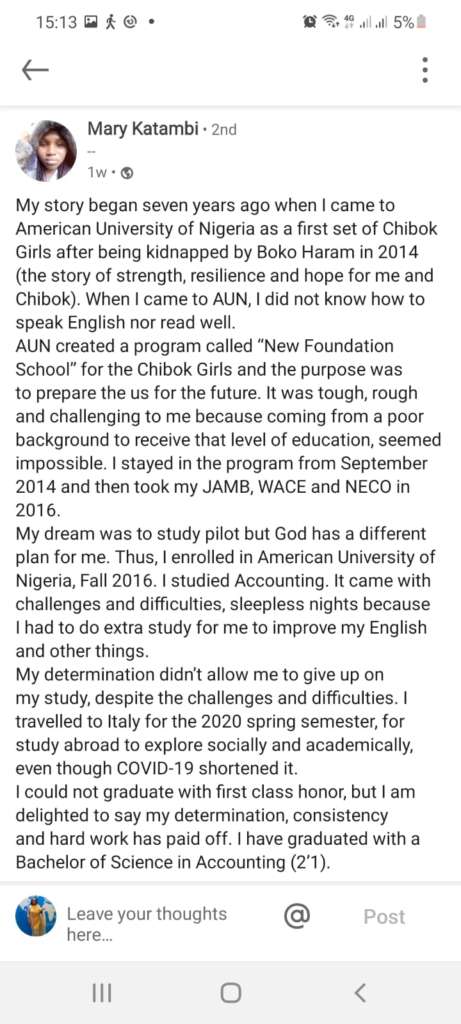
The absurdity of this notion and the fallacy that kids from the north are not academically smart once again shone through a couple of days ago when Mary Katambi, who escaped Boko Haram captivity in 2014, told her story. Mary’s story is a clear testimony that under the right circumstance, students will learn. A girl who was educationally challenged by all standards got admitted to a university which created a special programme for people like her and in two years she aced her School Certificate Exams and went on a few years later to graduate from the American University of Nigeria (AUN) with a 2.1 degree in accounting.  There was no need to pretend she was good enough to compete with other students. There was no need to lower the standards for her. All that was required was groom her and she caught up. Today she’s better off. She can hold her head high.

Mary’s intriguing story began seven years ago when she came to AUN as one of the first set of Chibok Girls after being kidnapped by Boko Haram in 2014.

“I could not graduate with first-class honours, but I am delighted to say my determination, consistency and hard work has paid off. I have graduated with a Bachelor of Science in Accounting (2’1).

“When I came to AUN, I did not know how to speak English nor read well. AUN created a program called ‘New Foundation School’ for the Chibok Girls and the purpose was to prepare us for the future. It was tough, rough and challenging to me because coming from a poor background to receive that level of education, seemed impossible. I stayed in the program from September 2014 and then took my JAMB, WAEC and NECO in 2016,” Mary wrote on her Linkedin page.

This image has an empty alt attribute; its file name is Mary-Katambis-post-461x1024.jpg

On April 30, Joy Bishara and Lydia Pogu, also ex-students of Government Girls Secondary School, Chibok graduated from Southeastern University in the United States. They were among the 276 girls kidnapped in the first mass student abduction witnessed in Nigeria. The duo escaped captivity by jumping off the truck while they were being ferried away by their abductors. Bishara graduated with a degree in social work, while Pogu earned a degree in legal studies.  

Surely Nigeria’s leaders know what to do. Why they have chosen to play dumb beats imagination.

Govt In Power Without Power

By Ebun-Olu Adegboruwa, SAN

Statutory Obligation:

“The security and welfare of the people shall be the primary purpose of government.”

– Section 14 (2) (b) of the Constitution of the Federal Republic of Nigeria, as amended.

Political Promise:

“INFRASTRUCTURE: APC WILL:

Generate, transmit and distribute from current 5,000 – 6,000 MW to at least 20,000 MV of electricity within four years and increasing to 50,000 MW with a view of achieving 24/7 uninterrupted power supply within ten years, whilst simultaneously ensuring development of sustainable/renewable energy.”

– Manifesto of the All Progressive Congress (APC), submitted to the people of Nigeria in the wake of the 2015 general elections.

Power generation is the main issue in regard to the socio-economic development of any nation. In Nigeria however, successive governments have deployed it for political gains, knowing the importance that Nigerians attach to it. For instance, I have never experienced electricity supply in my home town since I was born, as we are not connected to the national grid at all. Indeed, the entire Ondo South Senatorial District was disconnected from the grid about twelve years ago even though attempts are underway to reconnect. Several towns and villages are like my home town, locked out of any form of development at all, yet we are classified as oil producing. Last week, the national grid collapsed for the umpteenth time. I placed an order for the replacement of a generator and got an invoice of about N5m, just for a 30-KVA version. To change the inverter batteries would also cost a fortune. This is the sordid tale of most Nigerians.

The impression that our leaders in power have conveyed to us is that it is practically impossible to have stable and permanent power supply; that we don’t have the resources to build the needed energy plants that will meet the needs of all Nigerians; that we must accept generators as second nature, if we must function and survive, as a people. Churches, Mosques, banks, schools, small businesses, factories, government ministries and departments, police stations, the courts and even PHCN itself, all depend on generators. Indeed, a story was once told that a President was set to commission a newly built power plant and a generator had to be hired to power the commissioning ceremony. It is that bad.

Electricity is listed in the Exclusive Legislative List of the Constitution, the implication of which is that only the federal government can deal with issues related to power, although it has since been discovered that off-grid developments are not covered by this exclusive design. Over the years, it has been the sole business of the federal government, to legislate on, regulate and provide electricity, with the debilitating effect of poor management, bureaucratic bottlenecks, corruption, incompetence and sheer greed, all holding that powerful sector down. We have been told several tales of billions of dollars pumped into the power sector, with little or no results, making Nigerians to conclude that there must be some demons and principalities, holding the power sector by the jugular. And it is one out of the many nuts that this administration has not been able to crack.

The average experience of those depending upon public power supply is that of total frustration, resulting from absence of any supply at all, irregular supply, low voltage, high voltage, load shedding, constant blackouts, extortion by members of staff of the companies involved and naked corruption. This has in turn led many to believe that there is some sort of collusion between the regulators, transmitters and the distributors of power, with generator importers and marketers, with diesel marketers and suppliers, with candle manufacturing companies and the importers of rechargeable solutions generally, to milk us dry.

Having cornered all exclusive rights over the power sector, the expectation was that the federal government would do all in its power to satisfy the demands of the citizens in respect of power consumption. All over the land, power cables and conductors line the space, some disjointed, some expired, some others so very weak that they cannot even transmit the available power. In some tragic cases, these exposed cables have fallen upon innocent passersby, leading to instant electrocution.

To get electricity to the consumer, there has to be a transformer, to which power will be transmitted and thereafter distributed to individual consumers. These transformers are in most cases archaic, dysfunctional and unable to bear the load of the electricity consumers. So, what happens in most cases is that the fuses plugged to these transformers get blown up due to excess load, whilst some get stolen outrightly, leading to blackout. In some other cases when the fuses don’t work optimally, there is then the problem of low or high voltage, which impacts upon and damage valuables, at times leading to fire incidents resulting in several deaths. The law regulating the power sector grants absolute immunity to the players.

To survive these frustrations, you have to develop an alternative means of power supply on your own, the commonest of which is the generator. The generator has to be powered through fuel or diesel and it has to be maintained constantly, to serve you. The generator comes with its own health hazards, such as noise pollution, dangerous fumes, which has led to the death of several persons. The sum total of the Nigerian experience then is that the generator has become the main source of power supply, whilst public supply is more of the standby option. The generator is all over the country, in small units of “I better pass my neighbor”or the bigger diesel units. You need a huge financial capacity to maintain the generators. Nigeria being a tropical region with our very hot temperature, you will most probably need an air conditioner to survive in our climate, which takes a fortune to sustain through the generator.

The absence of basic infrastructure fuels corruption and is a disincentive for selfless service, as our leaders in office, having tasted the allure of stable power supply through generators funded with the commonwealth, would want to perpetuate their lives of luxury when out of office, and so they use this as an excuse to dip into the public treasury to amass enough resources to help them secure and sustain basic infrastructure when out of office, all of which are out of the reach of the common man. Stable power supply is critical to life and existence, it is vital to economic growth and development and it is the foundation upon which all other development initiatives can blossom. We just cannot survive without power.

It was this terrible scenario that the APC promised to change when it was canvassing for votes in 2015, but now, six years in office, all we get is one story after another, leading to the usual blame game of failure of past regimes. From the manifesto of the APC, the federal government was to generate at least 5,000 MW of electricity yearly, with equal capacity to transmit and distribute it. Whilst commissioning traffic lights in Lekki Phase 1 in Lagos on 12thNovember, 2014, Mr. Babatunde Fashola, SAN, as Governor of Lagos State then, had asserted that any serious government will fix the power problem in six months. In clearly a matter of fate, Fashola was subsequently appointed minister in charge of power, after the 2015 elections. He could not fix it in four years. He had power but could not deliver power.

Not long ago, Egypt, an African country not as endowed as Nigeria, commissioned Siemens in 2016, to build a power plant that could generate 14.4 gigawatts of electricity and this was completed and commissioned in July 2018. The cost was a paltry $7.2b, less than half the money purportedly spent on electricity in Nigeria for eight years. We were later informed that Nigeria had engaged the same Siemens to transform the power sector but nothing has changed.

From all the foregoing therefore, I have reason now to believe that our leaders use epileptic power supply as an instrument of oppression, to frustrate Nigerians, to halt their development initiatives, to collapse their industries and investments, to the extent that they would have no other alternative than to surrender to the programmes and policies of the ruling government, however wicked and obnoxious they may be and thereby weaken the base of any possible opposition, invariably leading to dictatorship, totalitarianism and despotism.

Part of the solution to the power problems is to decongest the exclusive list of the Constitution and allow States, Local Governments, corporate entities and other players to intervene in the power sector chain. This is part of the restructuring that Nigerians yearn for and it is certainly not rocket science at all. Government should divest itself from active involvement in the power sector beyond regulation. This should be the major focus of this administration, in the light of the manifold benefits accruing from stable power supply. Beyond this however, consumers should embrace the reality of the economic implications of stable power. We cannot do the same thing and expect different results. The amount we all spend on diesel or fuel far outweighs the tariff increase that we are so scared of. In some estates in Lagos for instance, it has been the case of willing buyer willing supplier, by which arrangement some homes and offices do enjoy about 22 hours supply on a daily basis. So, we need to find some balance between a stable power supply and a realistic tariff regime.

In addition to this is the need for the power distribution companies to brace up for some revolutionary methods, such as massive investment in infrastructure, especially transformers. There has to be a change somehow, which translates such investment into substantial improvement in the power distribution chain. All that the average Nigerian wants is stable and efficient power supply. If Nigeria is supplying power to Niger Republic, then there can be no excuse whatsoever for failure at home, other than the fact that it may be a conspiracy against the masses of our people. The Buhari administration must crack this seemingly hard nut, urgently.

The campaign now for all Nigerians should be that of Power for Power. If you cannot provide POWER (electricity) to better our lives and develop ourselves, then you are not entitled to POWER (governance) to better your pockets. It is as simple as that. We have shown enough patience waiting for the promise of 2015. We are now tired of excuses and want value for our votes.

Life without Christ is Crisis

How FGN’S shrewed move to avoid a compromised N9.7B judgment debt was blocked by the Supreme Court

By Stephen Azubuike

Many a time, the Federal Government of Nigeria (FGN), through some of its agencies, enter into several kinds of contracts. However, through what sometimes appear to be floppy policies, politics, negligence, corrupt practices or mere mischief, the FGN gets involved in unnecessary and avoidable contract breaches. Consequently, the Government is held liable in damages. The case of Minaj Holdings Ltd v. Comptroller-General, Nigerian Custom Service & Ors [2021] 8 NWLR (Pt. 1777) 118 presents us with a classic example.

The Story

By a letter dated 11 June 2008, Minaj Holdings Ltd (“The Appellant” or “Minaj”) was given Presidential approval to import 500,000 metric tonnes of bagged cement into Nigeria. Based on the letter of approval, the Appellant applied for and obtained letters of credit from some banks running into billions of Naira.

About 80,000 tonnes of bagged cement arrived in Nigeria in four shipments. Three of the ships were allowed to berth. Others were being expected. Suddenly, the Federal Minister of Finance (“3rd Respondent) issued instructions to the Comptroller-General, Nigerian Custom Service (“1st Respondent”) to stop the importation of cement into Nigeria. Of course, this could not have happened without some water going under the bridge. The directive of the Federal Minister of Finance also prevented other ships with the remaining bagged cement from berthing.

Entreaties to the Finance Minister to lift the embargo fell on deaf ears. Even the appeal by the Attorney General of the Federation (“2nd Respondent”) to the Finance Minister was turned down.

Minaj heads to court

Frustrated, the Appellant filed an action at the Federal High Court against the Respondents (including the Federal Minister of Commerce and Industry, 4th Respondent) and obtained an order directing the Respondents to allow the ships with the bagged cement to berth and their cargo discharged.

Curiously, the Respondents did not obey the court order, notwithstanding a directive from the Acting President at the time, Dr. Goodluck Jonathan in March 2010.

The cargo was badly damaged and became toxic products. As a result of the actions of the Respondents, the Appellant became heavily indebted to its banks. To recoup its losses, the company claimed damages.

The Court was sympathetic to the cause of the Appellant, and finding no defence whatsoever to the actions of the Respondents, the Court awarded damages in favour of the Appellant to the tune of over N7.6 Billion and $9.2 Million and also injunctive reliefs. This was on 8 January 2013.

Appeal to the Court of Appeal and the Compromise Agreement

The Respondents appealed to the Court of Appeal. The appeal was fixed for hearing. Before the date of the hearing, the FGN decided to pursue an amicable settlement. The Federal Government led a high-powered delegation consisting of representatives from the Ministeries involved. Series of meetings were held. Eventually, the parties arrived at an agreement which effectively compromised or varied the Judgment of the trial Court being appealed against. The Parties agreed that the Appellant would be paid about N9.7 Billion (i.e. about N6.131 Billion and $8.746 Million) in full and final settlement. The Federal Ministry of Finance by letters dated 23 June 2015 and 6 July 2015 communicated the approval to the Appellant. Unfortunately, the Respondents still failed to pay.

Few months to the date slated for the hearing of the appeal, the 2nd Respondent paid the Appellant N15 Million as part-payment of the compromised judgment sum. The Appellant filed an Affidavit in this regarding acknowledging and attesting to the receipt of the part-payment.

From the blues, a Director in the Federal Ministry of Finance deposed to a counter-affidavit on behalf of all the Respondents contesting that the N15 Million part-payment was made in error and that the Appellant had concealed the pendency of the appeal at the Court of Appeal from the Respondents. This is despite the fact that it was the Respondents who appealed to the Court of Appeal.

At the hearing of the appeal, the Appellant informed the Court of the compromise agreement. The Court of Appeal still went ahead to hear the appeal and set aside the judgment of the trial Court. In the Judgment delivered on 16 June 2017, the Court of Appeal was of the position that the Appellant could have filed a preliminary objection to the hearing of the appeal.

Appeal to the Supreme Court

Dissatisfied, Minaj appealed to the Supreme Court. The issue turned on whether the Court of Appeal had jurisdiction to determine the appeal in the face of the agreement which effectively compromised or varied the judgment of the trial Court.

On 15 January 2021, the Supreme Court unanimously held that the Court of Appeal was wrong to discountenance the compromise agreement because the Appellant did not file a preliminary objection against the hearing of the appeal.

Rhodes-Vivour, JSC (now retired) did not disappoint. In delivering the leading opinion, the learned Jurist held (at page 144 of the report):

The Court of Appeal fell into grave error when it was informed that the parties had agreed to compromise the judgment of the trial Court, and still went ahead to hear the appeal, despite affidavit evidence and exhibits which showed that a compromise agreement had in fact been entered by the parties. It must be made abundantly clear that once the parties compromised the judgment, the right to appeal is extinguished. With the compromise agreement, the Court of Appeal no longer had jurisdiction to entertain the appeal. The compromise agreement as agreed by the parties as full and final settlement of their dispute must be enforced.

Conclusion

The Supreme Court is highly commended for rising to the occasion. A few disturbing lessons are there. First, the Respondents (especially the 3rd Respondent) being agencies of the FGN appeared to have believed that they were above the law. They did not only flout an order of Court, they also refused to comply with the directive of the then Acting President of Nigeria. The Federal Minister of Finance at the time had lots of question to answer. 

Second, it is also baffling that after letters communicating the approval of the compromise agreement were signed and issued to the Appellant, a Director from the same Federal Ministry of Finance would have the temerity to swear to a counter-affidavit challenging the agreement and the N15 Million paid. The so called Director claimed that the Appellant did not reveal the existence of the pending appeal at the Court of Appeal. Meanwhile, that was an appeal filed by the Respondents. The absurdity in the argument is that the Appellant was being accused of concealing an appeal it did not file. At the Court of Appeal, the Appellant was the Respondent, while the FGN agencies involved were the Appellants. There appear to have been either clear lack of proper coordination in the management of the entire affair or pure mischief. Who instructed the Director to swear to the affidavit? There ought to be consequences. 

Thankfully, the Supreme Court refused to tolerate the excesses of the Respondents.

Finally, the principle has been further established that once a subsequent agreement is reached which varies or compromises a judgment, no appeal should be entertained on that judgment. There must be an end to litigation. Such compromise agreement should reasonably signal that end.

This article was first published on June 27, 2021 by https://stephenlegal.ng/how-fgns-shrewd-move-to-avoid-a-compromised-n9-7b-judgment-debt-was-blocked-by-the-supreme-court/

AUTHOR: STEPHEN AZUBUIKE is lawyer with expertise in Commercial Dispute Resolution and Technology Law practice. He is a Partner at Infusion Lawyers. He has successfully argued cases from the High Courts of various jurisdictions to the Appellate Courts on behalf of financial institutions, other corporate bodies and multinationals. He has worked with a number of startup tech companies. He tweets @siazubuike.

US Indictment: Ways Abba Kyari confirms he has plenty of questions to answer

By Stephen Azubuike

The Federal Bureau of Investigation (FBI) in the United States recently dropped a bombshell as they made frightening revelations which sought to connect Nigeria’s Deputy Commissioner of Police, Abba Kyari, with criminal conspiracy associated with internet fraudster, Ramon Abbas (Hushpuppi) and his gang.

The FBI’s revelations were as contained in an affidavit presented before the United States District Court by FBI, Special Agent, Andrew John Innocenti.

We are all familiar with the story of Hushpuppi and how he has already pleaded guilty to some of the charges leveled against him in the US. We are also familiar with Nigeria’s celebrity supercop, Abba Kyari, who leads the Inspector General of Police’s Intelligence Response Team (IGP-IRT) in the Nigerian Police Force.

However, what has left everyone astonished is FBI’s story on how Kyari and Hushpuppi were allegedly entangled in a boy/boss relationship. Kyari and Hushpuppi appeared to be rotating roles; at some point, you can hardly tell who the boss was or who was the “boy”. But the most damning revelation relates to how Kyari allegedly used his office to advance the interest of Hushpuppi by arresting Hushpuppi’s gang member, Vincent Chibuzo, who was said to have attempted to divert Hushpuppi’s “job” (fraud victim). In the Affidavit, the FBI explained that Kyari allegedly received the information, understood it, asked no further questions, and swung into action by arresting the said Chibuzo to the pleasure of Hushpuppi. An average Nigerian familiar with some of the atrocities of many bad eggs in the Nigeria Police Force would have no difficulty understanding that it’s quite easy to use the Police to achieve any unholy objective once you pay the price.

In a swfit reaction, Abba Kyari dismissed the weighty allegations with a wave of narrative that appears to ridicule the intelligence of even an idiot. Below is the summary of Kyari’s response found under his verified Facebook profile –

1. Hushpuppi called Kyari’s office 2 years ago.
2. The call was to lodge a complaint regarding an alleged threat by someone to kill Hushpuppi’s family.
3. Kyari and his team traced and arrested the suspect and after investigations, they realized the allegation of threat to life was false.
4. The true story Kyari found was that Hushpuppi and the “suspect” were simply having money issues. The suspect was granted bail.
5. Nobody demanded or received Kobo from Hushpuppi. (But even the dead in Nigeria knows that if you don’t pay the Police, absolutely nothing will be done concerning your complaint or case).
6. Kyari stated that after realizing that Hushpuppi raised a false alarm, he still connected Hushpuppi LATER or thereafter to a cloth merchant for Native Clothes & Caps and used his office to help Hushpuppi take delivery of the clothes.
7. Kyari claims his hands are clean.
8. He considers the indictment of the FBI as fake, false and the documents presented as doctored. He hurriedly maintains there’s no evidence against him.

Kyari appears to have introduced another idiom to replace the famous one known as “Cock and Bull story”. It seams we now have “Agbada (Native Clothes) and Caps story” to depict a piece of unbelievable and implausible narrative. 

Anybody familiar with criminal investigation knows that Abba Kyari has lots of questions to answer in order to clear himself. At least, Kyari has confirmed he was in contact with Hushpuppi and that he arrested a suspect on the instigation of Hushpuppi. Kyari confirms he found Hushpuppi and the suspect were having money issues. These are just tiny strings that already show some connection with the revelations of the US FBI. The US FBI is not David Hundeyin or Fisayo Soyombo, Nigeria’s respected investigative Journalists, whom Nigerian Forces disrespect at will.

The Nigeria Police Force collaborates with the US FBI in combating crimes especially crimes of international dimensions. Instead of using Facebook to deny the allegations, Kyari should approach the FBI without any delay to clear his name and preserve the integrity of his office and that of the Nigeria Police Force. Ultimately, Kyari needs to preserve the integrity of President Buhari and that of Nigeria as a whole.

The material aspects of the FBI’s indictment contained in the Affidavit needs to be properly addressed. It is dishonourable to proceed in the ridiculous fashion that Kyari adopted using his Facebook account. Thankfully, the Nigeria Police Force has issued a statement indicating that they are on top of the situation. The Police should not waste much time and resources. The most decent thing to do is to use presidential jet to move Kyari to the US. Respect for his fundamental rights is guaranteed. Nobody will torture him to obtain confession. He will have access to legal representation of his choice. All he will be required to do is to answer questions. He will have the opportunity to see Hushpuppi and confirm if he loved the Natives (Agbada) and Caps made for him.

If President Buhari fails to hand over Kyari to the FBI for interrogation, Nigeria will become an international emblem of disgrace!

This article was first published on July 30, 2021 by https://stephenlegal.ng/us-indictment-ways-abba-kyari-confirms-he-has-plenty-questions-to-answer/

AUTHOR: STEPHEN AZUBUIKE is lawyer with expertise in Commercial Dispute Resolution and Technology Law practice. He is a Partner at Infusion Lawyers. He has successfully argued cases from the High Courts of various jurisdictions to the Appellate Courts on behalf of financial institutions, other corporate bodies and multinationals. He has worked with a number of startup tech companies. He tweets @siazubuike.

Africa’s most populous city is battling floods and rising seas. It may soon be unlivable, experts warn

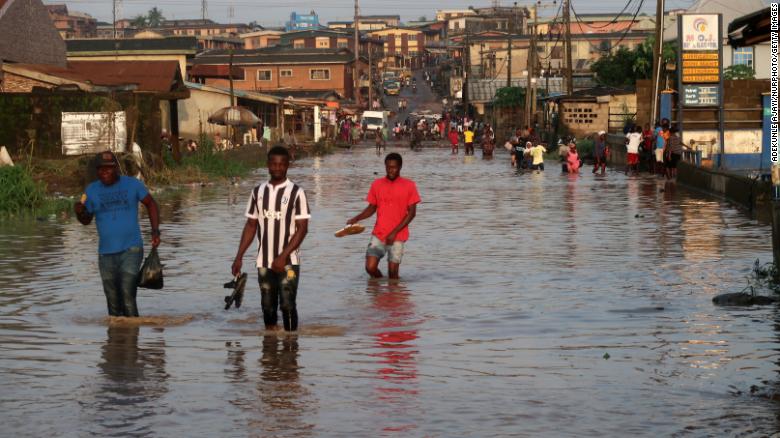
Lagos, Nigeria (CNN)Cars and houses submerged in water, commuters wading through buses knee-high in floods, and homeowners counting the cost of destroyed properties.Welcome to Lagos during rainy season.Residents of Nigeria, Africa’s most populous nation, are used to the yearly floods that engulf the coastal city during the months of March to November. In mid-July, however, the major business district of Lagos Island experienced one of its worst floods in recent years.

“It was very bad, and unusual,” Eselebor Oseluonamhen, 32 told CNN.

“I drove out of my house … I didn’t realize it had rained so much … There was heavy traffic on my route because of the flood. The more we went, the higher the water level. The water kept rising until it covered the bumper of my car … then there was water flowing inside my car,” Oseluonamhen, who runs a media firm on the Lagos mainland, recalled.

Every year!!!! Same same in Lagos!!
Nothing is ever done about flooding but to tell citizens to move…..
Pls keep your saloon cars at home o.
Even SUVs dey swim 🏊‍♂️ pic.twitter.com/bN31UuLOzK— Kate Henshaw (@HenshawKate) July 16, 2021

Photos and videos posted to social media showed dozens of vehicles inundated with water after torrential rain. The floods paralyze economic activity, at an estimated cost of around $4 billion per year.Home to more than 24 million people, Lagos, a low-lying city on Nigeria’s Atlantic coast, may become uninhabitable by the end of this century as sea levels rise due to climate change, scientific projections suggest.The problem is exacerbated by “inadequate and poorly maintained drainage systems and uncontrolled urban growth,” among others, according to a study led by the Institute of Development Studies.

I bring you update from Lagos island.😂😂😂
Swim your way home and be safe.#Lekki#Lagos pic.twitter.com/gtwOjpqktP— Jae😘 (@BelindaIjeoma) July 16, 2021

Nigeria’s hydrological agency NIHSA has predicted more catastrophic flooding in September, usually the peak of the rainy season.

Eroding coastline

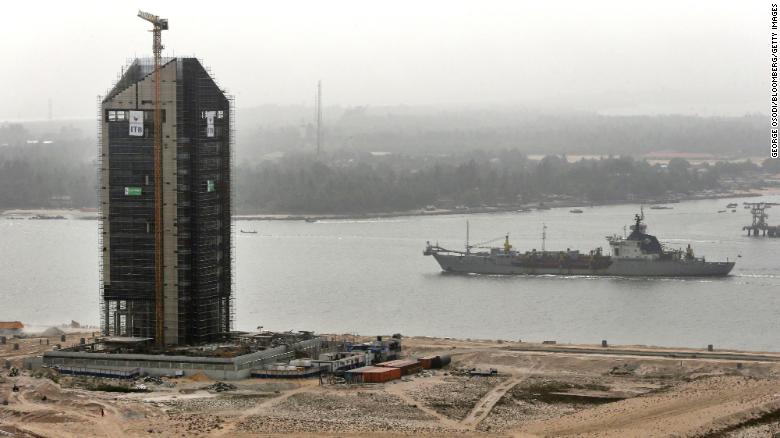
Lagos is partly built on the mainland and a string of islands.It is grappling with an eroding coastline that makes the city vulnerable to flooding, which Nigerian environmentalist Seyifunmi Adebote says is attributable to global warming and “human-induced action over a prolonged period.”Sand mining for construction is a major contributor to shoreline erosion in Lagos, environmental experts have said.Manzo Ezekiel, a spokesman for Nigeria’s emergency management agency (NEMA), told CNN that the riverbank of Lagos’ Victoria Island is already being “washed away … particularly in the V.I area of Lagos.” “There’s this problem of the river bank being washed away. The increase in water level is eating into the land,” Ezekiel added.In Victoria Island, an affluent Lagos neighborhood — an entirely new coastal city christened ‘Eko Atlantic’ — is being built on land reclaimed from the Atlantic Ocean, and will be protected from rising waters by an 8-kilometer-long wall made from concrete blocks, developers say.A cargo ship passes along a waterway during construction at the Eko Atlantic city site in February 2016.A cargo ship passes along a waterway during construction at the Eko Atlantic city site in February 2016.While the ambitious project could contribute to reducing housing shortages in other parts of the city, Ezekiel fears that “reclaiming land from the sea will put pressure on other coastal areas.”Other critics have argued that adjacent areas not protected by the wall will be left vulnerable to tidal surges. CNN has contacted Eko Atlantic for comment.

Coastal cities at risk of being submerged

Low-lying coastal cities in some parts of the world may be permanently submerged by 2100, one study’s findings showed. The study published by research group Climate Central stated that affected areas could sink below the high-tide line if sea levels continue to rise.

As a result of heat-trapping pollution from human activities, rising sea levels could within three decades push chronic floods higher than land currently home to 300 million people,” the study said. “By 2100, areas now home to 200 million people could fall permanently below the high tide line,” it added.Global sea levels have been predicted to rise more than 6 feet (2 meters) by the end of this century.This leaves Lagos, which experts say is less than two meters above sea, in a precarious state, given that a chunk of Nigeria’s coastline is low-lying. In a study from 2012, the UK’s University of Plymouth found that a sea-level rise of just 3 to 9 feet (about 1 to 3 meters) “will have a catastrophic effect on the human activities” in Nigerian coastal environments.Adebote told CNN that Lagos’ fate “would depend on how we prioritize this science prediction and what corresponding actions we take as a response.” “It is only a matter of time before nature pushes back and this could be a disaster,” he added.

Nigeria deadly floods

Perennial flooding in Nigeria’s coastal areas has left many dead and scores displaced. According to NEMA data, more than 2 million people were directly affected by flooding in 2020.At least 69 people lost their lives in flood disasters last year. In 2019, more than 200,000 people were affected by floods with 158 fatalities.”Every year we witness flooding in Nigeria. It is a problem that climate change has brought and we are living with it,” Ezekiel told CNN.A man in Lagos wades through the aftermath of a heavy downpour in 2012.A man in Lagos wades through the aftermath of a heavy downpour in 2012.Beyond Lagos’ vulnerability to climate change, poor drainage systems and clogged street gutters in large swathes of the city are believed to have escalated its flooding challenges.”As much as climate change plays a part in rising sea levels, what you can see in this video is predominantly a drainage system issue,” a social media user tweeted while reacting to a video of the recent flooding in Lagos.However, as flooding rages in some areas, low-income neighborhoods constructed on reclaimed wetlands have to contend with sinking buildings.
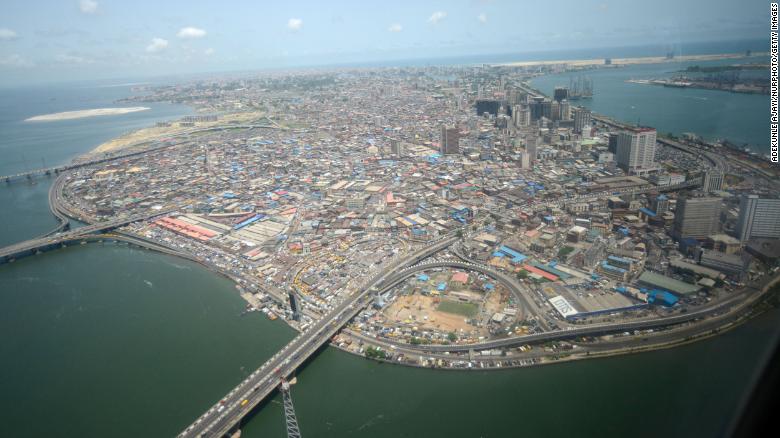
Keeping Lagos afloat

Adebote told CNN that for Lagos to stay afloat in the face of floods and rising sea levels, it must adapt to climate change.”We need to look at our infrastructures — drainage systems, waste management facilities, housing structures … How resilient and adaptive are these infrastructures in the face of environmental pressures and when put side-by-side with our growing population?” he said.An aerial view of Lagos Island in Lagos, the commercial capital of Nigeria, in April 2016.An aerial view of Lagos Island in Lagos, the commercial capital of Nigeria, in April 2016.Authorities in Lagos have since commenced the clearing of the state’s water channels to mitigate perennial flooding.Nigeria’s President Muhammadu Buhari has also expressed the country’s willingness to partner with global allies in tackling climate change.“We look forward working with President [Joe] Biden and Vice President [Kamala] Harris. We have great hope and optimism for the strengthening of existing cordial relationships, working together to tackle global terrorism, climate change, poverty, and to improve economic ties and trade,” Buhari wrote in a January tweet.But Adebote remarks that government responses to climate action “have been largely poor.”

“There is a lot that must be done and will take consistent and deliberate actions on the parts of various stakeholders for Nigeria to properly take climate actions, especially in adapting to the impacts that are already threatening our livelihood,” he added.An environmental activist, Olumide Idowu, urged government authorities to partner with the private sector in order to boost funds to tackle the issues.”Government should look at private sector partnerships in order for them to drive climate finance to solve the flooding issues,” Idowu told CNN.

Nigeria’s economy has struggled in recent years, shrinking financing for climate change and other critical sectors. Authorities are nonetheless still pledging to ramp up the country’s climate change response.Last month, Nigeria’s Ministry of Environment announced a presidential approval for a revamped national policy on climate change, aimed at addressing “most, if not all, of the challenges posed by climate change and climate vulnerability in the country,” a spokesman for the ministry wrote in Twitter post.

(Credit:CNN)

Adekuoroye Climbs to World No. 1 After Winning Sixth African Title

ALGER, Algeria (February 7) — Odunayo ADEKUOROYE (NGR) and Blessing OBORUDUDU (NGR) improved on their top-three world rankings, as Nigerian women nabbed six African gold medals on Saturday night. 

Adekuoroye won her sixth consecutive African championship crown and overthrew Risako KAWAI (JPN) for the world’s top-ranking at 57kg. Kawai will have an opportunity to regain the top spot later this month at the Asian Championships.

Adekuoroye started the year ranked third in the world at 57kg. She jumped then-second-ranked RONG Ningning (CHN) in last month’s rankings with a gold-medal finish at the Matteo Pellicone. She brought 43 points and a second ranking to Algeria and used her 18-point gold medal to move one-point ahead of Kawai, the reigning three-time world champion and 2016 Olympic champion. (Kawai will compete in the Asian Championships with an opportunity to regain her top rankings).

Adekuoroye went 4-0 on Saturday and outscored her opponents 31-0. She picked up her most notable wins against No. 12 (@ 59kg) Eman EBRAHIM (EGY). She pinned Ebrahim in the opening round and defeated her 10-0 in the Nordic bracket finals.

Blessing OBORUDUDU (NGR) passed Jenny FRANSSON (SWE) for the No. 2 ranking at 68kg after winning African gold on Saturday night. (Photo: United World Wrestling)

Fellow Nigerian Blessing Oborududu won gold on Saturday and moved ahead of Jenny FRANSSON (SWE) in the 68kg world rankings.

Oborududu brought her African gold-medal tally to ten and surpassed Fransson for the No. 2 spot in the 68kg women’s wrestling rankings. Oborududu’s title on Saturday was worth 18 points, moving her eight points ahead of the Swedish wrestler, who won’t compete at next week’s European Championships.

Oborududu tallied four blowout wins on Saturday. She ended each match early, scoring four technical superiority victories while outscoring her opponents 40-0.

Nigeria overpowered the women’s wrestling portion of the competition and won the team title with their ten finalists and six champions. Nigeria finished with 230 points, which was 64 points ahead of second-place Tunisia (166 points), and 66 points ahead of third-place Egypt (164 points). 

Nigeria’s Women’s Wrestling Champions: 
50kg – Miesinnei GENESIS (NGR) 
55kg – Esther KOLAWOLE (NGR) 
57kg – Odunayo ADEKUOROYE (NGR)
59kg – Bisola MAKANJUOLA (NGR)
65kg – Hannah Amuchechi RUEBEN (NGR)
68kg – Blessing OBORUDUDU (NGR)

Mohamed ELSAYED (EGY) is ranked third in the world at 67kg after his gold-medal performance in Algeria. (Photo: United World Wretling)

Greco-Roman 

El Sayed and Mohamed Improve Top-Five Rankings with African Golds 
Mohamed ELSAYED (EGY) and Abdellatif MOHAMED (EGY) improved on their top-five rankings with African golds and head into the final Ranking Series event eyeing a top-four seed at the Olympic Games. 

El Sayed won the 67kg gold medal and earned 18 Ranking Series points, moving into the third spot of the rankings before the European Championships kick-off. He has 33 points and trails top-ranked Ismael BORRERO MOLINA (CUB) by nine points.

El Sayed, who qualified Egypt for the Olympic Games with a fifth-place finish in Nur-Sultan, entered the African Championships ranked fifth in the world at 67kg and was five points from leaping into the top-three of the rankings. His summit to the top of the African podium for the fourth time in his last five tries pushed him into the top-three of the rankings with one Ranking Series event left before the Olympic Games. 

The two-time U23 world champion won all four of his matches on Saturday. He outscored his opponents 27-0 en route to the 67kg gold medal. 

Abdellatif MOHAMED (EGY) snuck past Oscar PINO HINDES (CUB) for the No. 2 spot at 130kg with his African title-winning effort on Saturday.  (Photo: Gabor Martin)


Abdellatif Mohamed was the second Egyptian who improved his top-five ranking with a gold-medal performance in Algeria. 

Mohamed, who still needs to qualify Egypt for the Olympic Games at 130kg, entered the African Championships ranked third in the world with 30 Ranking Series points. He climbed to the second-ranking and gained a ten-point lead over Cuba’s Oscar PINO HINDES (CUB). 

Mohamed collected three wins on his road to gold on Saturday. He demolished his trio of opponents, scoring a fall and two technical superiority victories.

Host Nation Algeria Claims Six Golds 
The host nation, Algeria, claimed six Greco-Roman gold medals at the African Championships and won the team title with 220 points. They finished 15 points ahead of second-place Egypt (205 points), and 73 points ahead of third-place Tunisia (147 points). 

Algeria’s Greco-Roman Champions:
55kg – Abdelkarim FERGAT (ALG)
63kg – Abdeldjebar DJEBBARI (ALG)
77kg – Abd OUAKALI (ALG)
82kg – Chawki DOULACHE (ALG) 
87kg – Bachir SID AZARA (ALG)
97kg – Adem BOUDJEMLINE (ALG)

RESULTS 

Women’s Wrestling

50kg 
GOLD – Miesinnei GENESIS (NGR) df. Nada MOHAMED (EGY), via fall 
BRONZE – Ibtissem DOUDOU (ALG) df. Debora Valeria TURE (GBS), via fall 
BRONZE – Sarra HAMDI (TUN) df. Fatiha SAHMANI (MAR), 10-0 

53kg 
GOLD – Joseph ESSOMBE TIAKO (CMR) df. Bose SAMUEL (NGR), 4-1
BRONZE – Kholod AHMED (EGY) df. Kheira YAHIAOUI (ALG), via injury default

55kg
GOLD – Esther Omolayo KOLAWOLE (NGR)
SILVER – Dorssaf GHARSSI (TUN)
BRONZE – Faten AHMED (EGY)

57kg 
GOLD – Odunayo Folasade ADEKUOROYE (NGR) df. Eman Essam Guda EBRAHIM (EGY), 10-0 
BRONZE – Siwar BOUSETTA (TUN) df. Cheima CHEBILA (ALG), 11-4

59kg
GOLD – Bisola MAKANJUOLA (NGR) 
SILVER – Fatma Ramadan Gomaa Ahmed ELKELINY (EGY) 
BRONZE – Khouloud EL OUNI (TUN)

62kg
GOLD – Marwa AMRI (TUN) df. Aminat Oluwafunmilayo ADENIYI (NGR), via fall
BRONZE – Berthe Emilienne ETANE NGOLLE (CMR) df. Wissal EL GNAOUI (MAR), via fall

65kg 
GOLD – Hannah RUEBEN (NGR) 
SILVER – Amel HAMMICHE (ALG) 
BRONZE – Lilia MEJRI (TUN)

68kg 
GOLD – Blessing OBORUDUDU (NGR) 
SILVER – Anta SAMBOU (SEN) 
BRONZE – Rihem AYARI (TUN) 

72kg
GOLD – Zaineb SGHAIER (TUN)
SILVER – Sunmisola Idowu BALOGUN (NGR) 
BRONZE – Sunmisola Idowu BALOGUN (EGY) 

76kg
GOLD – Samar HAMZA (EGY) df. Blessing Joy ONYEBUCHI (NGR), via fall 
BRONZE – Yvette ZIE (BUR) vs. Nour JELJELI (TUN), via fall 

Greco-Roman

55kg
GOLD – Abdelkarim FERGAT (ALG) 
SILVER –  Romio Ricardo GOLIATH (NAM)
BRONZE – Youssef Mohamed Harbi THABET (EGY) 

60kg
GOLD – Haithem MAHMOUD (EGY)
SILVER – Abdennour LAOUNI (ALG)
BRONZE – Abderrazak ROUINBI (MAR)

63kg 
GOLD – Abdeldjebar DJEBBARI (ALG) 
SILVER – Mostafa MOHAMED (EGY) 
BRONZE – Hamed Moustapha TCHOUFON (RSA) 

67kg
GOLD – Mohamed ELSAYED (EGY) 
SILVER – Ishak GHAIOU (ALG)
BRONZE – Radhwen TARHOUNI (TUN)

72kg 
GOLD – Lamjed MAAFI (TUN) 
SILVER – Abouhalima Mohamed Elsaid ABOUHALIMA (EGY) 
BRONZE – Tarek Aziz BENAISSA (ALG) 

77kg 
GOLD – Abd Elkrim OUAKALI (ALG) df. Wael Hamdy Mohamed ABDELRAHMAN (EGY), 11-5 
BRONZE – Mohamed Aziz LANDOLSI (TUN) df. 2-1 Aziz BOUALEM (MAR), 2-1 

82kg 
GOLD – Chawki DOULACHE (ALG) 
SILVER – Ghaith HANNACHI (TUN)
BRONZE – Mohamed SELIM (EGY) 

87kg 
GOLD – Bachir SID AZARA (ALG) df. Mohamed Moustafa Ahmed Abdall METWALLY (EGY), 9-0
BRONZE – Mohamed FAIQ (MAR) df. Mohamed Skander MISSAOUI (TUN), via fall

97kg
GOLD – Adem BOUDJEMLINE (ALG) df. Haikel ACHOURI (TUN), 9-0 
BRONZE – Noureldin HASSAN (EGY) df. Choucri ATAFI (MAR), via injury default 

130kg
GOLD – Abdellatif MOHAMED (EGY) 
SILVER – Amine GUENNICHI (TUN)
BRONZE – Hichem KOUCHIT (ALG)

(uww.org)

Nigerian student shocked to see friend’s body in anatomy class

In our series of letters from African writers, Nigerian journalist and novelist Adaobi Tricia Nwaubani writes about the disturbing reality behind some of the “unclaimed” bodies sent to the country’s medical schools.

Short presentational grey line

Medical student Enya Egbe fled his anatomy class crying after being disturbed by the corpse he was asked to work on.

This was not the squeamish response of a naïve young man.

The 26-year-old still vividly recalls that Thursday afternoon seven years ago at Nigeria’s University of Calabar, converging with fellow students around three tables with a cadaver laid out on each.

Minutes later, he screamed and ran.

The body his group had been about to dissect was that of Divine, his friend of more than seven years.

“We used to go clubbing together,” he told me. “There were two bullet holes on the right side of his chest.”

Oyifo Ana was one of the many students who ran out after Mr Egbe and found him weeping outside.

“Most of the cadavers we used in school had bullets in them. I felt so bad when I realised that some of the people may not be real criminals,” Ms Ana said.

She added that early one morning she had seen a police van loaded with bloodied bodies at their medical school, which had a mortuary attached to it.

Mr Egbe sent a message to Divine’s family who, it turned out, had been going to different police stations in search of their relative after he and three friends were arrested by security agents on their way back from a night out.

The family eventually managed to reclaim his body.

A protester holds up a scarf with the same colours as the Nigerian national flag during a live concert at the Lekki toll gate in Lagos, on October 15, 2020, during a demonstration to protest against police brutality and scrapping of Special Anti-Robbery Squad (SARS).
image captionNigerians last year staged massive protests to condemn police brutality

Mr Egbe’s shocking discovery highlighted both the lack of corpses available in Nigeria for medical students and what can happen to victims of police violence.

Between the 16th and 19th Centuries, different laws in the UK granted the bodies of executed criminals to medical schools – a punishment that also advanced the cause of science.

In Nigeria, a current law hands “unclaimed bodies” in government mortuaries to medical schools. The state can also appropriate bodies of executed criminals, though the last execution took place in 2007.

More than 90% of the cadavers used in Nigerian medical schools are “criminals killed by shooting”, according to 2011 research in the medical journal Clinical Anatomy.

In reality, this means they were suspects shot dead by security forces. Their estimated ages are between 20 and 40 years, 95% are male, and three out of four are from the lower socio-economic class. There are zero body donations.

“Nothing has changed 10 years later,” said Emeka Anyanwu, a professor of anatomy at the University of Nigeria, who co-authored the study.

‘Ambulance duty’

Last year, the Nigerian government set up judicial panels of inquiry in different states to investigate allegations of police brutality.

This was in response to the #EndSars protests sparked by the viral video of yet another young man allegedly shot dead by the police’s Special Anti-Robbery Squad (Sars) in the southern state of Delta.

Many of those testifying before the panels have spoken of relatives arrested by security agents and never seen again.

The police have in most cases defended themselves by saying that those missing were armed robbers killed in an exchange of gunfire, while police spokesman Frank Mba told me he was not aware of any case where the police had dumped bodies with anatomy labs or mortuaries.

A protester gestures as he holds a placard at a live concert at the Lekki toll gate in Lagos, on October 15, 2020, during a demonstration to protest against police brutality and scrapping of Special Anti-Robbery Squad (SARS

In written testimony presented to the judicial panel in Enugu state, 36-year-old trader Cheta Nnamani said he had assisted security agents to get rid of the bodies of those they had tortured or executed during his four months in the custody of Sars in 2009.

He said that one night, he was asked to load three corpses into a van, a task known in detention parlance as “ambulance duty”.

The police then chained him inside and drove to the nearby University of Nigeria Teaching Hospital (UNTH), where Mr Nnamani offloaded the bodies. They were taken away by a mortuary attendant.

Mr Nnamani told me that he was later threatened with the same fate.

In the south-eastern town of Owerri, the privately-owned Aladinma Hospital Mortuary stopped accepting bodies of alleged criminals because the police rarely provided identification or notified relatives of the deceased.

This used to leave the mortuary stuck with the maintenance costs of the unclaimed bodies until every few years the government eventually granted permission for mass burials.

“Sometimes, the police try to strong-arm us into accepting bodies but we insist that they take them to a government hospital,” said Ugonna Amamasi, the administrator of the mortuary

“Private mortuaries are not authorised to donate bodies to medical schools but government mortuaries can,” he added.

Relatives left in the dark

A senior lawyer, Fred Onuobia, said relatives were entitled to collect the bodies of lawfully executed criminals.

“If no-one shows up after a certain length of time, the bodies are sent to teaching hospitals,” the advocate said.

But the situation is worse with extrajudicial killings, as relatives never get to know about the deaths or are unable to locate the bodies, he said.AdaobiBBCDivine’s family managed to get some of the officers involved in his killing sacked”Adaobi Tricia Nwaubani
Nigerian novelist

It was only by chance after all that the family of Mr Egbe’s friend, Divine, was able to give him a proper burial.

Nigeria’s association of anatomists is now lobbying for a change in the law that will ensure mortuaries obtain full historical records of bodies donated to schools, and also family consent.

It will also set out ways to encourage people to donate their bodies to medical science.

“There will be a lot of education and a lot of advocacy so people can see that if I donate my body, it will be for the good of the society,” said the association’s head, Olugbenga Ayannuga.

As for Mr Egbe, he was so traumatised by seeing his friend’s body that he abandoned his studies for weeks, imagining Divine standing by the door each time he tried to enter the anatomy room.

He ended up graduating a year after his classmates, and now works in a hospital lab in Delta state.

Divine’s family managed to get some of the officers involved in his killing sacked – scant justice but still more than that experienced by many other Nigerians whose loved ones were the victims of police violence and may also have ended up in medical schools around the country.

Credit:BBC

TIPS