Home Blog Page 934

Is It Constitutional For Political Parties In Nigeria To Appoint Caretaker Committees To Run Their Affairs?

By Jibrin Samuel Okutepa SAN

1.0. In this write up I shall attempt to examine the constitutionality of appointments of caretaker committees to run the affairs of political parties in Nigeria. Yesterday the Supreme Court of Nigeria in the Appeal filed by Mr Eyitayo Jegede SAN vs Oluwarotimi Akeredolu SAN, this constitutional issue came up. There was a split decision. The majority decision of 4 to 3 was based on the failure to join the Chairman of the caretaker committee of APC.

2.0. I am not going into the merit or demerit of that decision. As far as I am concerned the decision of the majority did not answer the question of the legality or constitutionality of caretaker committees heading and running political parties in Nigeria. My main concern in this write up is to examine the constitutionality of the propensities of Nigerian politicians or political class, in appointing caretaker or in devolving elected officers of political parties and appointing caretaker committees to run these political parties in Nigeria. Under the laws of Nigeria political parties must undergo series of processes before it can be registered and licensed to operate as political parties in Nigeria.

3.0. In this case section 222 of the 1999 constitution as amended provides that: No association by whatever name called shall function as a party, unless – (a)the names and addresses of its national officers are registered with the Independent National Electoral Commission; (b) the membership of the association is open to every citizen of Nigeria irrespective of his place of origin, circumstance of birth, sex, religion or ethnic grouping; (c)a copy of its constitution is registered in the principal office of the Independent National Electoral Commission in such form as may be prescribed by the Independent National Electoral Commission; (d) any alteration in its registered constitution is also registered in the principal office of the Independent National Electoral Commission within thirty days of the making of such alteration; (e)the name of the association, its symbol or logo does not contain any ethnic or religious connotation or give the appearance that the activities of the association are confined to a part only of the geographical area of Nigeria; and (f)the headquarters of the association is situated in the Federal Capital Territory, Abuja.

4.0. The same constitution of the Federal Republic of Nigeria provides what the Constitutions and Rules of political parties shall contain. Again, let us look at what the Constitution of Nigeria provides in section 223 thereof.

5.0. Section 223. (1)(a) and (b) and (2)(a) and (b) of the 1999 constitution provide that: The constitution and rules of a political party shall- (a)provide for the periodical election on a democratic basis of the principal officers and members of the executive committee or other governing body of the political party; and (b)ensure that the members of the executive committee or other governing body of the political party reflect the federal character of Nigeria. (2) For the purposes of this section –

6.0. (a)the election of the officers or members of the executive committee of a political party shall be deemed to be periodical only if it is made at regular intervals not exceeding four years. (b)the members of the executive committee or other governing body of the political character of Nigeria only if the members thereof belong to different states not being less in number than two-thirds of all the states of the Federation and the Federal Capital Territory, Abuja.

7.0. From the provisions of the constitution as seen hereof, it is the intention of the draftsman of our constitution that political parties in Nigeria must have constitutions and Rules that provide for the periodical election on a democratic basis of the principal officers and members of the executive committee or other governing body of the political party; and the election of the officers or members of the executive committee of a political party shall be deemed to be periodical only if it is made at regular intervals not exceeding four years.

8.0. It is on the basis of the foregoing constitutional provisions that the Electoral Act 2010 as amended provided in section 85 thereof as follows: 85. (1) A registered political party shall give the Commission at least 21 days notice of any convention, congress, conference or meeting convened for the purpose of electing members of its executive committees, other governing bodies or nominating candidates for any of the elective offices specified under this Act. (2) The Commission may, with or without prior notice to the political party attend and observe any convention, congress, conference or meeting which is convened by a political party for the purpose of -(a)electing members of its executive committees or other governing bodies; (b)nominating candidates for an election at any level; and (c)approving a merger with any other registered political party.

9.0. To clear any lingering doubts that our laws and constitution do not have room for appointment of caretaker committees for Nigerian political parties, section 85 (3) of the Electoral Act 2010 as amended is so clear and emphatic. It provides that: The election of members of the executive committee or other governing body of a political party, including the election to fill a vacant position in any of these bodies, shall be conducted in a democratic manner and allowing for all members of the party or duly elected delegates to vote in support of a candidate of their choice.

10.0. When a community reading and construction of the clear provisions of sections 222 and 223 of the 1999 constitution of the Federal Republic of Nigeria as amended read together with section 85 of the Electoral Act 2010 as amended are taken, the irresistible conclusion which any reasonable lawyer or jurist whose version is not beclouded with partisan and primordial consideration will reach will be that both the constitution and the Electoral Act 2010 as amended do not allow appointments of caretaker committees to run the affairs of political parties in Nigeria. It is unlawful and unconstitutional for political parties registered by INEC to rule their affairs by caretaker committees in Nigeria.

11.0. Indeed where vacancy occurs, it must be filed by elections through democratic means where the will of the members of the political parties are expressed by the choice they make. This is because the Electoral Act provides for the election of members of the executive committee or other governing body of a political party, including the election to fill a vacant position in any of these bodies, shall be conducted in a democratic manner and allowing for all members of the party or duly elected delegates to vote in support of a candidate of their choice.

12.0. The Electoral Act makes it clear that election on a democratic basis of the principal officers and members of the executive committee or other governing body of the political party; and the election of the officers or members of the executive committee of a political party shall be deemed to be periodical only if it is made at regular intervals not exceeding four years.

13.0. From the constitutional provisions and the Electoral Act cited hereof, it will, be clearly idle and wayward arguments to contend that undemocratic appointments of caretaker committees to run the affairs of political parties in Nigeria is legal and constitution as being submitted by some legal minds. The Supreme Court has on a number of occasions frown at and declared appointments of caretaker committees to run local governments in Nigeria not only as illegal but unconstitutional and breach of section 7 of the 1999 Constitution as amended. Before citing the cases in which the Supreme Court came hard on appointments of caretakers it will be necessary to set out the provisions of section 7(1) of the 1999 constitution as amended.

14.0. Section 7 (1) of the 1999 constitution reads: The system of local government by democratically elected local government councils is under this Constitution guaranteed; and accordingly, the Government of every State shall, subject to section 8 of this Constitution, ensure their existence under a Law which provides for the establishment, structure, composition, finance and functions of such councils.

15.0. What has been the attitudes of the Supreme Court for appointments of caretaker committees for local Governments in Nigeria. Let me just cite one of these cases. In the case of Governor Ekiti State & Ors vs. Prince Sanmi Olubunmo & Ors (2016) LPELR-48040(SC) the question before the Supreme Court was whether Section 23B of the Ekiti State Local Government Administration (Amendment) Law, 2001 granting power to the Governor of Ekiti State to remove democratically-elected Chairmen of Local Government Councils and replace them with caretaker committees is inconsistent with Section 7 of the Constitution of the Federal Republic of Nigeria, 1999 16.0. His lordship Hon Justice Nweze, JSC at PP. 26-39, paras. F-A) made these lengthy profound statements of the law which provides complete answers to the question of caretaker Committees to rule political parties when the Constitution and Electoral Act says leaderships selection shall be through democratic means. This is what Nweze JSC said: I will in this judgment, confine myself to the constitutional issue whether the provisions of Sections 23B(I) and (II) of the Ekiti State Local Government Administration (Amendment) Law, 2001 are inconsistent with Section 7 (1) of the Constitution and, if so, whether the lower Court, rightly nullified them? Now, Section 7(1) provides thus: The system of Local Government by democratically-elected Local Government Council is under this Constitution guaranteed; and accordingly, the Government of every State shall subject to Section 8 of this Constitution, ensure their existence under a Law which provides for the establishment, structure, composition, finance and functions of such councils. Unarguably, the Ekiti State House of Assembly derived its powers for enacting its said Local Government Law from the above constitutional provision. Indeed, at page 49 of the brief, counsel for the appellants conceded that the “Ekiti State House of Assembly, pursuant to the provisions of Sections 4(6) and 7(1) of the Constitution of the Federal Republic of Nigeria (as amended) enacted the Local Government Administration Law Cap. L11, Laws of Ekiti State.”

In the said Law, sundry matters relating to the establishment of Local Government Councils are provided for in Sections 2-5. In particular, Section 5 consecrates a tenure of three years for the offices therein. The cassus belli in this matter which culminated to this appeal was however, Section 23B of the Ekiti Local Government Administration (Amendment) Law, 2001, which provided for the Governor’s power of dissolution in these terms: 1. Provided always that the Governor is by this law empowered to dissolve Local Government Councils for over-riding public interest subject to the two-thirds majority approval of members of the House of Assembly; 2. Such dissolution shall not exceed a period of twelve calendar months wherein the Governor shall have power to appoint a seven-member caretaker committee out of which a Chairman shall be appointed pending the conduct of election to occupy the office of the Chairman.

Somewhat, most curiously, the Honourable Attorney-General of Ekiti State, for the appellants, in what appears to be an unwarranted sacrilege on the canons of constitutional interpretation, submitted that: “…if the draftsmen wanted the Local Government to be independent of the States, they would have included it under Section 2(2) of the Constitution and the draftsmen would have empowered the House of Assembly to legislate on the existence, structure among others. It will be incongruous if a Court interpret the provision of Section 23B viz-a-viz Section 7 of the Constitution and now come to the conclusion that it contradicts or is inconsistent with the Constitution. The House of Assembly is the Alpha and Omega as far as the issue of Local Government is concerned and any law validly made by them to regulate and control the Local Government ought not be questioned by Court because the Constitution donated such wide powers to the House of Assembly”. (Paragraph 10.10, page 50 of the brief; italics supplied for emphasis). With respect to the Honourable Attorney-General, this submission is an unbridled affront to the Constitution of the Federal Republic of Nigeria, 1999 (as amended).

It is, indubitably an elementary proposition that the said Constitution is the supreme law of the land, Section 1(1) thereof; N.U.E.E v. B.P.E (2010) All FWLR (Pt. 525) 201, (2010) 7 NWLR (Pt. 1194) 538; Nigerian Army v. Yakubu (2013) All FWLR (Pt. 677) 592, (2013) 8 NWLR (Pt. 1355) 1; Udenwa v. Uzodinma (2013) All FWLR (Pt. 674) 1, (2013) 5 NWLR (Pt. 1346) 94; Amadi v. INEC (2012) All FWLR (Pt. 621) 1415, (2013) 4 NWLR (Pt. 1346) 595; Attorney-General, Federation v. Attorney-General, Lagos (2013) 16 NWLR (Pt. 1380) 249, (2014) All FWLR (Pt. 740) 1296. From the very ipssissima verba of Section 1, Sub-sections (1) and (3) of the Constitution, it is evident that it is the fons et origo, that is, the provenance, from which all sub-constitutional norms derive their source and sustenance; Attorney-General, Abia State v. Attorney-General, Federation (2007) 1 CCLR 104; Attorney-General, Lagos State v. Attorney-General, Federation (2013) 12 NWLR (Pt. 833) 1, (2014) All FWLR (Pt. 740) 1296; INEC v. Musa & Ors. (2003) All FWLR (Pt. 145) 729, (2003) 8 ANLR 322. Even as a simple logical postulate, since all other laws owe their source to the Constitution, it (the Constitution) would not brook any sort of competition with them. As such, not in the event of any conflict, it operates proprio vigore to invalidate them to the extent of their inconsistency, Section 1(3) of the Constitution of the Federal Republic of Nigeria, 1999. The authorities on this point are just too numerous to delay us here. All the same, I shall refer to one or two of them; F.R.N. v. Osahon & Ors. (2005) LPELR-3174 (SC) 27-28, (2006) All FWLR (Pt. 312) 1975; E-A; Kalu v. Odili (1992) 5 NWLR (Pt. 240) 130; N.U.E.E. v. B.P.E. (2010) All FWLR (Pt. 525) 201, (2010) 7 NWLR (Pt. 1194) 538; Nigerian Army v. Yakubu (2013) All FWLR (Pt. 677) 592, (2013) 8 NWLR (Pt. 1355) 1; Udenwa v. Uzodinma (2013) All FWLR (Pt. 674) 1, (2013) 5 NWLR (Pt. 1346) 94; Amadi v. INEC (2012) All FWLR (Pt. 621) 1415, (2013) 4 NWLR (Pt. 1346) 595; Attorney-General, Federation v. Attorney-General, Lagos (2013)16 NWLR (Pt. 1380) 249, (2014) All FWLR (Pt. 740) 1296. My lords, it would seem evident that counsel for the appellants, the Honourable Attorney-General underrated the trenchat provisions of Section 7. For our immediate purpose, I will reproduce the relevant provisions: “The system of Local Government by democratically-elected Local Government Council is under this Constitution guaranteed; and accordingly, the Government of every State shall subject to Section 8 of this Constitution, ensure their existence under a Law which provides for the establishment, structure, composition, finance and functions of such councils”.

Having thus guaranteed the system of Local Government by democratically-elected Local Government Councils, the Constitution confers a toga of sacro-sanctity on the elections of such officials whose electoral mandates derive from the will of the people freely-exercised through the democratic process. Put differently, the intendment of the Constitution is to vouchsafe the inviolability of the sacred mandate which the electorate, at that level, democratically-donated to them; Eze & Ors. v. Governor, Abia State & Ors. (2014) 14 NWLR (Pt. 1426) 192. In the apt and eloquent postulation of the Court of Appeal in Attorney-General, Benue State v. Umar (2008) 1 NWLR (Pt. 1068) 311 at 354-358, which I approvingly adopt in this judgment: “Elections like in any other country should be held sacrosanct. Representatives of the people through an election (at whatever level) cannot just be removed or their Councils dissolved at the pleasure of other elected office holders. Democracy is growing or should grow in this country and with it, the attendant pitfalls and hiccups. However, the Courts are poised to chaperon the many contenders through the straight and narrow of democracy…” Simply put, therefore, the election of such officials into their offices and their tenure are clothed with constitutional force. They cannot, therefore, be abridged without breaching the Constitution from which they derive their force. The only permissible exception, where a State Governor could truncate the lifespan of a Local Government Council which evolved through the democratic process of elections, is “for over-riding public interest” in a period of emergency. As my lord, Aka’ahs JCA (as he then was) put it most, admirably, in Attorney-General, Plateau State v. Goyol (2007) 16 NWLR (Pt. 1059) at page 94 [views I entirely agree with]: “The Governor swore to preserve, protect and defend the Constitution and not to mutilate it. Although the House of Assembly has power to make laws, (it) has no powers to make any law by giving the Governor power to truncate a democratically-elected Local Government Council. The penchant by State Governors in dissolving Local Government Councils is clearly undemocratic. It is only when a state of emergency has been declared that can warrant the suspension of democratic institutions on the polity. See also, Akinpelu v. Attorney-General Oyo State (1982) 2 FNR 248; Akpan v. Umar (2002) 7 NWLR (Pt. 767) 701, 732, paragraph G-H”. In effect, where such is the situation, as even nature itself abhors any vacuum, the Governor would be entitled to empanel a caretaker committee. Anything outside that is an unwarranted affront to the Constitution, Eze and Ors v. Governor, Abia State and Ors. (supra). Unarguably, the Ekiti State Local Government Administration Law, Cap. L11, Laws of Ekiti State was enacted in furtherance of the constitutionally mandated obligation in Section 7 to “ensure their existence under a law which provides for the establishment, structure, composition…” The said law provided for the establishment of Local Government Councils in Ekiti State and consecrated a tenure of three years for the elected officials. ?There can be no doubt, as argued by the appellant’s counsel, that the Ekiti State House of Assembly is empowered to make laws for Ekiti State. However, the snag here is that, in enacting Section 23B of the Ekiti State Local Government Administration (Amendment) Law, 2001 which empowered the first appellant to abridge the tenure of office of the respondents, it overreached itself. In other words, Section 23B (supra) is violative of, and in conflict with, Section 7(1) of the Constitution (supra). Hence, it is bound to suffer the fate of all laws which are in conflict with the Constitution, Section 1(3) thereof Nigerian Army v. Yakubu (supra). By employing the mandatory auxilliary verb “shall”, the draftperson of Section 7(1) (supra), surely intended to impose [and, actually, imposed] an obligation on the States to ensure the continued existence of Local Government Councils which are democratically-elected. In my view, the use of the auxilliary verb “shall” in the said section connotes a command; an imperative requirement: a constitutional direction which yields no room for discretion; Tanko v. Caleb (1999) 8 NWLR (Pt. 616) 606; Abimbola v. Aderoju (1999) 5 NWLR (Pt. 801) 100; Adewumi v. Attorney-General, Ekiti State (2002) FWLR (Pt. 92) 1835, (2002) 2 NWLR (Pt. 751) 474; Amadi v. NNPC (2000) All FWLR (Pt. 9) 1527, (2000) 10 NWLR (Pt. 674) 76. The implication therefore is that Section 23B (supra), which was not intended to “ensure the existence of” such democratically-elected Councils, but to snap their continued existence by their substitution with caretaker committee, was enacted in clear breach of the supreme provisions of Section 7(1) of the Constitution (supra). To that extent, it (Section 23B, supra) cannot co-habit with Section 7(1) of the Constitution (supra) and must, in consequence, be invalidated, Eze and Ors. v. Governor, Abia State and Ors. (supra) and the Court of Appeal’s decisions in Attorney-General, Plateau State v. Goyol (supra); Attorney-General, Benue State v. Umar (supra) which I approvingly, adopt in this judgment. As shown above, such is the potency of the constitutional provisions that they operate proprio vigore to invalidate inconsistent laws to the extent of inconsistency, Section 1(3) of the Constitution (supra); FRN v. Osahon and Ors. (2005) LPELR- 3174 (SC) 27 – 28, (2006) All FWLR (Pt. 312) 1975, paragraph E-A; Kalu v. Odili (1992) 5 NWLR (Pt. 240) 130; N.U.E.E. v. B.P.E. (supra); Amadi v. INEC (supra); Attorney-General, Federation v. Attorney-General, Lagos State (supra). The reason is simple. By his oath of office, the Governor swore to protect, and not to supplant the Constitution. Hence, any action of his which has the capacity of undermining the self-same Constitution (as in the instant case where the first appellant, purportedly dissolved the tenure of the respondents and replaced them with caretaker committees), is tantamount to executive recklessness which would not be condoned; Eze and Ors. v. Governor, Abia State and Ors. (supra); Attorney-General, Plateau State v. Goyol (supra). The net effect of it all is that I find considerable merit in the contention of the counsel for the respondents in this regard. As shown above, he had argued that in exercising its law-making authority, the House must act within the ambits and limits of the Constitution. To that extent, therefore, the laws of the House of Assembly which are inconsistent with constitutional provisions are bound to be nullified. ?Instructively, as counsel for the respondents pointed out, the appellants neither deposed to any fact of any emergency nor to any over-riding public interest that would have warranted their action, citing page 118 of the record. As my lord, Aka’ahs JCA (as he then was) held in Attorney-General, Plateau State v. Goyol (2007) 16 NWLR (Pt. 1059) 94, the only permissible situation that could have justified the interference with the life-span of an elected council was absent; Eze v. Governor, Abia State (2010) 15 NWLR (Pt. 1216) 324, 350; 361-363. I therefore hold that having been elected for a tenure of three years under the Ekiti State Local Government Administration Law Cap. L11, the respondents could only “be removed from office if found to be in breach of the rules governing the office…” Eze v. Governor, Abia State (supra), 215- 216 or by proof that it was in the overriding public interest. That was not shown in this case. Accordingly, I agree with the lower Court’s decision nullifying Section 23B (supra) for being inconsistent with the mandatory provisions of Section 7(1) of the Constitution (supra). In consequence, I resolve this issue against the appellant and in favour of the respondent, Eze and Ors. v. Governor, Abia of State and Ors. (supra); Attorney-General, Plateau State v. Goyol (supra); Attorney-General, Benue State v. Umar (supra).

17.0. For me until our judiciary is prepared to hold the political class responsible and teach them good sense in judgments on how to operate under the rule of law and imbibe the finest democratic principles in their sub-conscious and direct politicians to allow the will of the people to prevail in the running and in the selections of officers of political parties and or those who should lead political parties in Nigeria, political class and parties will always engage in political insubordination and constitutional iniquities of grave proportions. And this is why militarization of democracy continues to be the orders of the days in Nigeria democratic journey.

18.0. This is my stake on this matter. We profess to operate the rule of law, but in reality, we operate the rule of convenience and not the rule of law. No one respects the law. The executive does not, the legislature does not and indeed, it sad to say but the reality is that even the judiciary too appears not to respect the law. Time will not permit me to demonstrate this but search your souls and consciences and you will appreciate the points being made here. In order words, in Nigeria because there are no consequences for misconduct or misbehaviour, everyone appears to worship what is wrong instead of doing what is right. The consequences of all of these are staring every one of us on the face. And that is why in our so-called democracy, Impunity of grave propositions is our daily fare and no one is ready to discipline political misbehaviour.

After paying N65m kidnappers are still keeping our children’ – Agony of parents of abducted Bethel Baptist College pupils

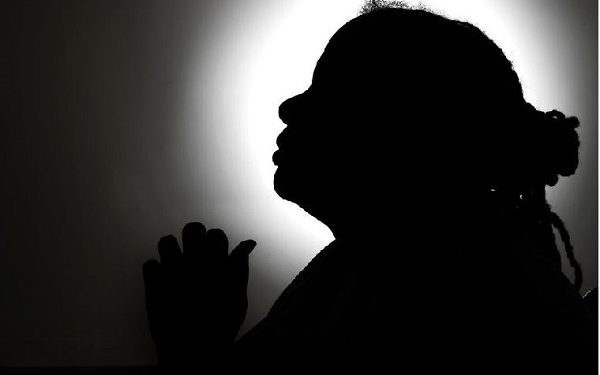
Since the Chibok Girls kidnap in Borno State in 2014 by the dreaded Boko Haram insurgent group, it seems kidnapping of young people in schools has become the latest money-spinner among rogue groups. But how do parents deal with the emotion of raising and paying huge ransom money and yet not get their children back? Gboyega Alaka sought answers from visibly distraught and terrified parents.

Talk of a showdown in which the other man holds all the aces. That, exactly, is the predicament of parents of the 121 kidnapped Bethel Baptist College, Kaduna pupils.

Even after the parents, most of whom are average income earners, had struggled and contributed huge sums of money – a particular parent said N500,000 each – and pulled together a whopping N65million, which was allegedly delivered to the kidnappers, only 28 pupils were released, pushing parents of the majority yet-to-be-released pupils into further disillusion.

It is perhaps for this reason that most of the parents contacted by The Nation to speak on this unfortunate saga have practically opted out or become literally taciturn the moment issues of the kidnap were broached.

While some opted not to speak on the pretext that their children were still in captivity, others outrightly said they had been warned not to speak to the media by the Bethel Baptist College management. Not that anyone would blame them for their positions; the matter remains sensitive, and as one of them put it, “I would not want to put my child’s life in jeopardy. These men (kidnappers) are not human.”

Colleagues, schoolmates, helped me raise ransom money

However, a parent, Justina McCarthy (not real name), who spoke to The Nation, said: “Each parent was asked to pay N500,000 and we paid. But to our greatest dismay, only 28 of the 121 children were released. We gave them the money in bulk, why should our children be released in bits?”

Speaking with the tone of a visibly distraught mother, McCarthy, who pleaded anonymity, said her child is one of those who are still being withheld and that it has not been easy coping with the situation.

“Any time it rained, what comes to our mind is ‘We don’t know what these children are passing through right now. We are in the house and at least have the luxury of using blankets, but what do these kids have to cover themselves from the cold out there in the bush?’ Honestly, we’re calling on the president of this country to do something and come to the aid of these children fast, so that they can be released. They are all parents who know the joy and pain of having children and what it feels like to have their children out there in the cold amongst these people.

“Honestly, I haven’t been able to sleep in the last three weeks since this thing happened. I can’t even eat. Imagine the trauma the parents are passing through. It’s not funny at all. In fact you need to see me. Most of the clothes I could no longer wear, it is now that I am able to put them on.”

Asked if it was the kidnappers who asked the parents to contribute N500,000 each, McCarthy said, “We don’t know. The Baptist Conference communicated it to us. I think they were initially asking for N189million. We don’t know how much they arrived at, but we as parents, were asked to contribute N500,000 each. The pain for those of us whose children are still out there with the bandits is that we paid and only 28 were released. What happens to the rest? It will be one full month this weekend that the kids have been with them. They were taken away at exactly 2am on July 5.”

Try It Tonight – Pain In Your Joints Will Vanish Once And For All
ArthroNeo
Worse, she said no parent has been able to speak with their children. “They only communicate with the school and the officials of the Baptist Conference.”

On whether the kidnappers have given any reason for not releasing the other children, McCarthy again said, “We don’t know. Honestly, I’m just coming back from the school now, but the management of the Baptist conference are just asking parents to be calm. How can one be calm under this kind of situation? There is no way anyone can be calm with their children out there in the bush.”

On how she raised the N500,000 ransom money she paid, McCarthy said that is another story entirely.

“I tell you, that is another story entirely. I was able to raise the money through contributions from my colleagues from University (name withheld), my association in my base; so many people teamed up and raised the money through their nose, so that I could achieve the target money and secure the release of this child; and now they decided to collect the money and still hold onto majority of them, including my daughter. Now how fair is that?”

All said and done, McCarthy only has words of appeal for the kidnappers: “They should temper justice with mercy. These children are innocent. Please, I beg them to release them to their parents.”

•Parents of the kidnapped pupils
As for the government, she said: “I cannot say I am disappointed in the government per se, but honestly, I want the government to sit these people down and ask what exactly their grouses are, so that they can at least be met or resolved and peace can be restored to Nigeria.”

Worthy of note all through this conversation was McCarthy’s constant appeal to conceal her identity or anything that will give her or her daughter’s identity away in this publication, saying, “The kidnappers have a lot of informants going around and the moment they zero down on any child, they may pick on that child and torment him/her.”

Trusting God

MacDonald (not real name) is another Bethel Baptist College parent, whose child is still in captivity.

He would neither confirm nor refute the fact that parents were made to contribute N500,000 but volunteered that “it has been very pathetic. We’ve been praying and trusting God that they would be released. It has been a horrible experience having your children out there.

Asked if he was actually able to raise the N500,000 as required by the school authority, MacDonald said, “I don’t think you’re correct there. Baptist Conference only asked us to support them. And of course I did what I could.”

At this point, he seemed to suddenly become aware he was talking too much and literally became taciturn, refusing to give any further details. And then he said, “I am very sorry, we’ve been forbidden to talk to the press until our children are back.”

Another parent, one of the lucky ones, who admitted that her child has been released and back with her, however, said she was not willing to make any comment on the matter; while another, who said he was just getting back home from the hospital with his just released child, said he would not be able to grant any interview at the moment, citing doctor’s advice. (The Nation)

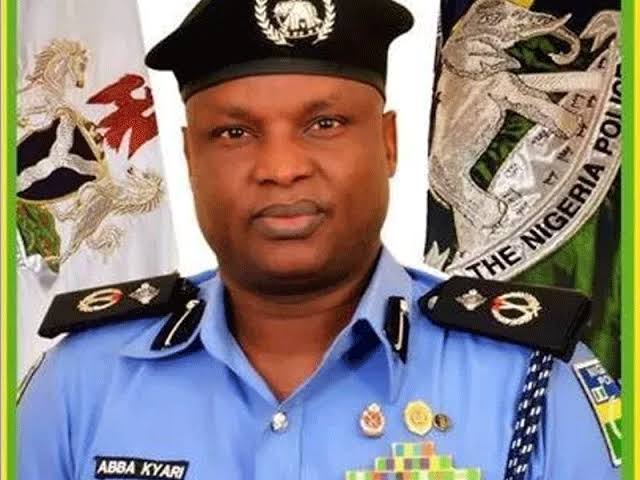
Abba Kyari and his red flags of vulgar exhibitionism, By Farooq Kperogi

Although there is no art to decipher the cunning of crooked cops, DCP Abba Kyari gave us many red flags to cause us to be suspicious of his policing, but many people ignored it. I, for one, have an abiding suspicion of people who are given to gratuitous self-congratulation and ostentation, who are aggressively self-promotional, and who perpetually have a need to invite the public to witness their good deeds.

I think excessive showiness often betrays an inner emptiness at best and an artful concealment of untoward impulses and deeds at worst. This sentiment is encapsulated in such enduring pieces of folk wisdom as “Empty vessels make the most noise,” “Still waters run deep,” etc.

This isn’t universally true, of course. Some genuinely ethical and kind people may be outwardly flashy and given to offensive displays of self-importance. And some businesses thrive on vulgar outward displays, so people who are in these kinds of businesses can’t help but be showy out of a professional imperative.

But policing is no show business. Governance isn’t, either. Nor is morality. And so on. For the most part, it is my experience that people who are overly exhibitionistic in the performance of morality and of such run-of-the-mill duties as policing and governance are often shady and use exhibitionism to conceal their shadiness.

Although he has been accused of being a brutal SARS operative in Lagos, Abba Kyari clearly has his good sides. I have read many accounts of his kindness to total strangers, of his pan-Nigerian cosmopolitanism, and of his dogged sleuthing that resolved knotty criminal cases. His admirable detective work attracted notice and approbation. But then he got intoxicated by praise and attention, and made it his life’s calling to hanker after the limelight— in a job that should be done in the sedate quietude of the background.

He routinely invites cameras and press people to record him doing his job. One of the absurd extremes of his exhibitionism, for me, was when he invited journalists, videographers, and photographers to show him looking for kidnappers in the bushes. Of course, he apprehended no kidnapper because those crafty monsters of depravity aren’t imbecilic sitting ducks waiting for Abba Kyari to capture them on camera. He just wanted to showboat.

And he got a lot of reputational mileage from this dumb stunt. I didn’t see any groundswell of discursive repudiation against a famed sleuth hound ignoring detective work that is central to the fight against kidnapping and instead staging a fatuous media show.

What is worse, the man who earned a reputation as a ruthless annihilator of criminals started to openly cavort with people that, at the very least, he should be suspicious of. He has been photographed with people whose source of wealth is questionable and whose conspicuous consumption should put them on his investigatory radar.

Now we know why. FBI’s charge sheet against Ramon “Hushpuppi” Abbas revealed phone chats that Kyari and Abbas exchanged in which Abbas instructed Kyari to arrest Abbas’ rival in internet fraud. It is reasonable to draw the conclusion that the wealthy but dodgy people Kyari frolics with use him as a cudgel against their enemies and rivals.

The FBI’s affidavit implicating Abba Kyari in Hushpuppi’s fraud captures this sentiment. It reads: “Kyari is a highly decorated deputy commissioner of the Nigeria Police Force who is alleged to have arranged for Vincent [Abbas’ rival in crime] to be arrested and jailed at Abbas’ behest, and then sent Abbas photographs of Vincent after his arrest.

“Kyari also allegedly sent Abbas bank account details for an account into which Abbas could deposit payment for Vincent’s arrest and imprisonment.”

In other words, Kyari was probably initially a good cop whose excellent work earned him plaudits from his superiors, plausive publicity from the news media, and veneration from a grateful public. Then he gradually started to seek out the news media, insert himself into public consciousness, and promote opportunistically self-serving narratives about his unparalleled detective machismo with a predetermined motive to profit from it.

He parlayed his popularity and carefully cultivated larger-than-life media image into “big-men-protection” security gigs. He obviously not only protects “big men”; he also torments their less connected rivals and victims for financial gain, as the FBI’s court documents indicate.

But the fact that he flaunts his association with flashy, questionable characters without fear of consequences from his superiors suggests that he is not alone. He obviously has powerful backers in the police establishment who also benefit materially from his ethically stained exploits.

Given how morally rotten the institution of the police is in Nigeria—and the rampant crab mentality in its ranks—the fact that the only “consequence”Kyari has faced for his unconventional, publicity-seeking, show-and-tell policing and open cavorting with suspicious personages is a meteoric climb up the promotional ladder is an indication that the police establishment is in on what he does.

Unfortunately for the police establishment, Kyari’s transgressions have now transcended the bounds of Nigeria and can’t be dismissed with the same blithe impunity with which previous indiscretions were treated. For instance, on October 28, 2020, TheCable reported that a Lagos businessman by the name of Afeez Mojeed accused Abba Kyari of defrauding him of up to 41 million naira.

In a petition to the judicial panel set up by the Lagos State Government to address abuses by SARS, Mojeed alleged that Kyari and his SARS team forcefully broke into his home in 2014, accused him of being an internet fraudster, seized 280,000 naira from his wardrobe, another 50,000 from his car, which they took away and never returned, detained him for 14 days, and later charged him to court but never showed up or brought any witness against him, forcing the court to strike out the internet fraud charge against him.

Mojeed also alleged that Kyari forced him to reveal the password to some of his bank cards, sign checks, and electronically transfer money to designated bank accounts, which added up to tens of millions. When Mojeed’s lawyer reached out to Kyari to resolve the matter, the petition alleged, Kyari told the lawyer that Mojeed was an internet fraudster, and that he proposed a deal with the lawyer to help him get another 15 million naira from one of Mojeed’sbank accounts. Kyari allegedly offered the lawyer a 5-million-naira reward as compensation for his cooperation, but the lawyer declined the offer.

Neither the EFCC nor the ICPC even acknowledged, much less acted on, Mojeed’s petition for a redress of what he said was gross injustice against him by Kyari. And Kyari didn’t even find it worth his while to respond to TheCable’s request to hear his own side of the story.

So, clearly, Kyari is habituated to immunity from the consequences of his transgressions and indiscretions. That happens only when you have powerful backers. But it’s different this time around. You don’t mess with the FBI and get away with it.

Court documents quote the FBI to have pointedly said Abba Kyari, “together with others known and unknown to the Grand Jury, knowingly conspired to commit wire fraud, in violation of Title 18, United States Code, Section 1343.” This leaves no room for rigmarole. I think the game is over for the ‘super cop.’

I also think the Nigerian society should take some blame for nurturing personas like Abba Kyari. Our insatiable but often unmet hunger for heroes predisposes us to be susceptible to frauds masquerading as saviours. We can avoid this if we take as a rule of thumb the idea that most people who have a compulsive need to be overly showy and self-congratulatory about a virtue or a deed often have something to hide.

Abba Kyari: Who shot the Sheriff down? By Festus Adedayo

In the Preface to my book entitled Ayinla Omowura: Life and Times of an Apala Legend, (2020) I equated stardom and zenith of social ladder with the purport of a Yoruba wise-saying which says, epo ni mo ru, oniyangi, ma ba t’emi je. This literally translates to mean, anyone who shoulders a heavy gallon of palm oil should avoid the destructive tendency of the stone-laced ground he walks upon. I deployed the above to explain the premature death of Omowura, one of Yoruba’s most evocative traditional African musicians, who was killed 41 years ago, at the apogee of his life attainment, in a barroom squabble in Abeokuta, Ogun State. Omowura’s fall, I said, was due to “his inability to positively evaluate the porcelain-like delicate but huge image he carried on his shoulders” because, if he did, “he most probably would have walked less in the neighbourhood of the oniyangi, which eventually ensured his (fatal) stumbling.”

Mortal fall of high-caliber persons, as above, was rekindled last week when an American Central District of California Court fingered, among four others, a highly celebrated Nigerian Sheriff, Deputy Commissioner of Police, Abba Kyari, in a fraud ring. Antihero of the grisly drama was a man who has now pleaded guilty to a $1.1million money laundering fraud, Ramon Abass, alias Hushpuppi. After the California judge unsealed the docket which revealed details of Kyari’s alleged involvement in the mess, tongues have wagged endlessly on how this celebrated cop could unconscionably get himself involved in the mess. Among other revelations was Hushpuppi’s alleged instruction to Kyari to detain a fellow felon of Hushpuppi’s so as to allow the latter perfect a fraud binge.
Kyari’s reaction to this allegation is even messier, senseless and at best, tepid. It reveals that, in their thirst for heroes and the peremptory and rigour-less manner such heroism is arrived at, Nigerians may have backed the wrong horse in Kyari. On the part of the top cop, it may also have revealed that tactlessness is the beast that kills the dream of many a high-flying celebrity.

The more Kyari denies involvement in this cesspit, the more his hitherto cocaine-white police uniform is soiled with smelly excrement. To Kyari, the FBI may have fished out alien crocs from a river far unknown to him in the very sophisticated manner it conducted the forensic sourcing for evidence it hoists against him. So when Kyari spurted out the bunkum of some clothes he claimed Hushpuppi asked him to procure on his behalf as the only magnet that glues them together, he most probably underrated the investigative prowess of the American security. Conceding to him that this claim wasn’t an afterthought, how naïve could Kyari have been not to know that his acceptance of this exchange spells out a self-indictment which even the Police Act labels as soliciting. How does he rationalise the Dubai tryst where he and the fraud felon allegedly had a pecuniary romance?

Kyari seized the klieg as a responsible, responsive and hardworking police officer. He swam ashore in a murky and brackish Nigerian police river that is notorious for its unpleasant nauseating smell. Nigerians, assailed by a dearth of heroes, singled Kyari out as example of the pitfalls in generalising the police force as a nest littered with bad elements. The first shock came with the police officer’s self profile as one obsessed with the fripperies of life. His social media pages are said to be littered with material acquisitions which projected him as entangled with sugary icings of life. The final nail rammed into the coffin of his profiling was his appearance at the obscene showcase of apparently unearned wealth of the gangs present at Obi Cubana’s mother’s burial in Oba, Anambra State a few weeks ago. Shell shocked, Nigerians began to realise that Kyari was most probably a creation of their lack of thoroughness in estimation of heroes.

At a more universal level, Kyari’s latest link with criminal elements may be a further confirmation that every man has a prize and is capable of falling face flat in the face of their prized medal. Kyari, the tough cop, had fallen before his own prize. It reminds me of James Hadley Chase’s Have This One On Me, one of the British-born author’s Mark Girland series. This novel is the story of Girland, known to be a worthless, pleasure-loving secret agent whose major and identifiable distinct weakness was the pleasure of money and women. If we dig deeper into his off-the-klieg life, we may shudder to realise that our hero may jolly well be an epicurean, another Girland, who hid behind the protective veneer provided by the police force and whose fall was a matter of when. Their oniyangi is always the trio of alcohol, women and money. Which was Kyari’s?

Many high net-worth individuals, oblivious of or mindless of the purport of the destructive powers of the oniyangi, have fallen fatally because they underrated its destructive ability. In 1974, three highly prized Yoruba, at the crest of their life engagements too, fell from fame to infamy, simply because they disdained the wisdom hidden in this nugget. In a reversed order of their fame, they fell. They were: Mr. Shitta-Bey, legal adviser in the employ of the Federal Government, two Generals in the Nigerian Army, Brigadier Sotomi, a.k.a. Showboy and the biggest fish, Nigeria’s civil war hero, Brigadier Benjamin Adekunle. Adekunle, celebrated officer of the Third Marine Commando, who went by the sobriquet, the Black Scorpion, for his gallantry in fighting the Biafran war, was dreaded and revered for his gallantry at the war front.

During this time in the life of Nigeria, the middle name of the government ran by General Yakubu Gowon, Nigeria’s Head of State, was corruption. Though he was generally viewed as incorrupt due to his austere lifestyle, like President Muhammadu Buhari, he was swamped all over by perceptibly corrupt people. His governors owned properties and assets that were far higher than their incomes. Indeed, it was estimated that, on the average, the governors owned commercial properties and farming estates of at least eight houses each, an amount that averaged between N49,000 to N120,000 by 1975 when Murtala Mohammed took over. To stave off this public perception, Gowon promulgated the Investigation of Assets Decree No. 37 of 1968, as well as frenetically engaging in the process of arresting the Toads of War, a la Eddie Iroh, that is, the post-war inexplicable wealth of Nigerian soldiers, mostly accumulated during the three-year civil war. In achieving this, in 1973, Gowon appointed Alhaji Kam Salem to head the “X-Squad,” a fraud investigation arm of the police which unearthed many scandals within the force.

Same July of this same 1974, buffeted on all fronts by the press, Gowon had to harangue his fellow middle-belter, Federal Communications Commissioner, Joseph Tarka, to resign from his position after Godwin Daboh, allegedly in concert with Paul Unongo, accused Tarka of mind-blowing corruption. Tarka’s resignation was child’s play placed side by side his snide comments which indicated far more humongous corruption in the Gowon government. Tarka had said in a Daily Times newspaper interview, which revealed that he resigned under pressure, that “If I resign, it will set off a chain of reactions of various events, the end of which nobody could foretell.” This was followed by an affidavit sworn to on August 31, 1974 at the Jos High Court by then one Mr. Aper Aku who was a known protégé of Tarka. The affidavit contained accusations against Benue-Plateau Governor, Police Commissioner Joseph Gomwalk, of corruption. Gowon, in a state visit to China, publicly exonerated Gomwalk but public uproar against this police big gun seemed to have just begun afresh. He was eventually later executed by firing squad for his involvement in the 1976 Lt. Col Buka Suka Dimka coup against Murtala Mohammed.

Gowon retired both Brigadiers Adekunle and Sotomi but Shitta-Bey, who was dismissed by the Public Service Commission, headed for the court. Shitta-Bey won at the High Court, lost on appeal but the Supreme Court, in a judgment delivered by Justice Chukwuwenuike Idigbe, in Shitta-Bey v Federal Public Service Commission (1981) 1 S.C 40, found discrepancies in his sack and returned him to the service.

So many other Oniyangi episodes have been recorded in recent history. While President Bill Clinton was almost removed from office by his own Oniyangi, White House intern, Monica Lewinsky, then Bendel State of Nigeria’s Deputy Superintendent of Police, Ize Iyamu, was consumed by a romance with robbery kingpins, Monday Osunbor and Lawrence Anini, the latter having confessed that Iyamu, who was later executed by firing squad, traded the police armoury with them in their robbery operations. Jennifer Madike, the society lady of the early-1990s also acted as the Olorunkoya of Police Commissioner Fidelis Oyakhilome. At the cusp of a stellar career as the NDLEA chairman, Madike alleged an affair with Oyakhilome, which took his job.

Without prejudice to how the Kyari matter goes, one fundamental lesson to be learnt from it is that the DCP courted this huge public ignominy due to his inability to realise the ancient sense in the requirement for social comportment by persons who occupy his kind of office. Judges, magistrates, investigators and persons whose opinions matter in society are expected to, aside their qualifications and experience, weaponise the act of taciturnity in their personal armoury, as well as wear an asocial garb. What do I mean by this? This set of people should be seen seldom, eschew every tissue of greed for material acquisition and avoid being social butterflies at owambe occasions. These are dragnets that drag achievers to the gallows. They should also avoid the company of wayward characters. Those among them who are epicureans will sooner than later enter the dragnet because, in social and political history, these elements are always their graveyards. Kyari is perhaps learning this too late.

Good enough that the police top hierarchy is said to be investigating this matter, preparatory to extraditing Kyari to America to answer the charges preferred against him. The news said to have been attributed to an online news medium that Kyari reportedly threatened exploring the Samson option of collapsing the whole police house if he was extradited had better not be true. If it is, it will be bringing back afresh memories of Tarka’s statement cited earlier in the corruption allegation against him. So who said history is dead?

More importantly, the world awaits the reaction of the Nigerian government, headed by Muhammadu Buhari, Kyari’s cousin, whose maternal tribe is Kanuri, Borno State, to this US indictment of the top cop. General Gowon had similarly tried to stave off the splurge of corruption indictments splattered on his Middle Belt kin while he was Head of State. Head or tail, Abba Kyari, the redoubtable and affable police officer, can never be the same cop again.

Abba Kyari: Who, what shot the Sheriff?

My hands are clean’ — DCP Abba Kyari denies Hushpuppi bribe allegation

In the Preface to my book entitled Ayinla Omowura: Life and Times of an Apala Legend, (2020) I equated stardom and zenith of social ladder with the purport of a Yoruba wise-saying which says, epo ni mo ru, oniyangi, ma ba t’emi je. This literally translates to mean, anyone who shoulders a heavy gallon of palm oil should avoid the destructive tendency of the stone-laced ground he walks upon. I deployed the above to explain the premature death of Omowura, one of Yoruba’s most evocative traditional African musicians, who was killed 41 years ago, at the apogee of his life attainment, in a barroom squabble in Abeokuta, Ogun State. Omowura’s fall, I said, was due to “his inability to positively evaluate the porcelain-like delicate but huge image he carried on his shoulders” because, if he did, “he most probably would have walked less in the neighbourhood of the oniyangi, which eventually ensured his (fatal) stumbling.”

In the Preface to my book entitled Ayinla Omowura: Life and Times of an Apala Legend, (2020) I equated stardom and zenith of social ladder with the purport of a Yoruba wise-saying which says, epo ni mo ru, oniyangi, ma ba t’emi je. This literally translates to mean, anyone who shoulders a heavy gallon of palm oil should avoid the destructive tendency of the stone-laced ground he walks upon. I deployed the above to explain the premature death of Omowura, one of Yoruba’s most evocative traditional African musicians, who was killed 41 years ago, at the apogee of his life attainment, in a barroom squabble in Abeokuta, Ogun State. Omowura’s fall, I said, was due to “his inability to positively evaluate the porcelain-like delicate but huge image he carried on his shoulders” because, if he did, “he most probably would have walked less in the neighbourhood of the oniyangi, which eventually ensured his (fatal) stumbling.”

Mortal fall of high-caliber persons, as above, was rekindled last week when an American Central District of California Court fingered, among four others, a highly celebrated Nigerian Sheriff, Deputy Commissioner of Police, Abba Kyari, in a fraud ring. Antihero of the grisly drama was a man who has now pleaded guilty to a $1.1million money laundering fraud, Ramon Abass, alias Huspuppi. After the California judge unsealed the docket which revealed details of Kyari’s alleged involvement in the mess, tongues have wagged endlessly on how this celebrated cop could unconscionably get himself involved in the mess. Among other revelations was Kyari’s alleged instruction to Abass to detain a fellow felon of Huspuppi’s so as to allow the latter perfect a fraud binge. Kyari’s reactions to this allegation are even messier, senseless and at best, tepid. They reveal that, in their thirst for heroes and the peremptory and rigour-less manner such heroism is arrived at, Nigerians may have backed the wrong horse in Kyari. On the part of the top cop, it may also have revealed that tactlessness is the beast that kills the dream of many a high-flying celebrity.

The more Kyari denies involvement in this cesspit, the more his hitherto cocaine-white police uniform is soiled with smelly excrement. To Kyari, the FBI may have fished out alien crocs from a river far unknown to him in the very sophisticated manner it conducted the forensic sourcing for evidence it hoists against him. So when Kyari spurted out the bunkum of some clothes he claimed Huspuppi asked him to procure on his behalf as the only magnet that glues them together, he most probably underrated the investigative prowess of the American security. Conceding to him that this claim wasn’t an afterthought, how naïve could Kyari have been not to know that his acceptance of this exchange spells out a self-indictment which even the Police Act labels as soliciting. How does he rationalize the Dubai tryst where he and the fraud felon allegedly had a pecuniary romance?

Kyari seized the klieg as a responsible, responsive and hardworking police officer. He swam ashore in a murky and brackish Nigerian police river that is notorious for its unpleasant nauseating smell. Nigerians, assailed by a dearth of heroes, singled Kyari out as example of the pitfalls in generalizing the police force as a nest littered with bad elements. The first shock came with the police officer’s self profile as one obsessed with the fripperies of life. His social media pages are said to be littered with material acquisitions which projected him as entangled with sugary icings of life. The final nail rammed into the coffin of his profiling was his appearance at the obscene showcase of apparently unearned wealth of the gangs present at Obi Cubana’s mother’s burial in Oba, Anambra State a few weeks ago. Shell shocked, Nigerians began to realize that Kyari was most probably a creation of their lack of thoroughness in estimation of heroes.

At a more universal level, Kyari’s latest link with criminal elements may be a further confirmation that every man has a prize and is capable of falling face flat in the face of their prized medal. Kyari, the tough cop, had fallen before his own prize. It reminds me of James Hadley Chase’s Have This One On Me, one of the British-born author’s Mark Girland series. This novel is the story of Girland, known to be a worthless, pleasure-loving secret agent whose major and identifiable distinct weakness was the pleasure of money and women. If we dig deeper into his off-the-klieg life, we may shudder to realize that our hero may jolly well be an epicurean, another Girland, who hid behind the protective veneer provided by the police force and whose fall was a matter of when. Their oniyangi is always the trio of alcohol, women and money. Which was Kyari’s?

Many high net-worth individuals, oblivious of or mindless of the purport of the destructive powers of the oniyangi, have fallen fatally because they underrated its destructive ability. In 1974, three highly prized Yoruba, at the crest of their life engagements too, fell from fame to infamy, simply because they disdained the wisdom hidden in this nugget. In a reversed order of their fame, they fell. They were: Mr. Shitta-Bey, Legal Adviser in the employ of the Federal Government, two Generals in the Nigerian Army, Brigadier Sotomi, a.k.a. Showboy and the biggest fish, Nigeria’s civil war hero, Brigadier Benjamin Adekunle. Adekunle, celebrated officer of the Third Marine Commandos, who went by the sobriquet, the Black Scorpion for his gallantry in fighting the Biafran war, was dreaded and revered for his gallantry at the war front.

These three had a mutual Oniyangi in a Lagos socialite and celebrity, 33-year old Iyabo Olorunkoya. Arrested on October 15, 1973 in the United Kingdom for importing 78 kilogrammes of marijuana, Olorunkoya, upon being questioned by the Metropolitan Police, immediately began to sing like a canary. She revealed that the three were her accomplices in the drug business. While she alleged that Adekunle and Sokoya had personally driven her to the airport with the contraband on her way out of Nigeria, salacious details of her relationship with the two were soon to festoon newspaper’s front pages. Her dalliance with Shitta-Bey was discovered by investigators in a letter he sent to her and which was found in her custody at the time of her arrest that simply read, “send details as soon as you arrive in London.’’

During this time in the life of Nigeria, the middle name of the government ran by General Yakubu Gowon, Nigeria’s Head of State, was corruption. Though he was generally viewed as incorrupt due to his austere lifestyle, like President Muhammadu Buhari, he was swamped all over by perceptibly corrupt people. His governors owned properties and assets that were far higher than their incomes. Indeed, it was estimated that, on the average, the governors owned commercial properties and farming estates of at least eight houses each, an amount that averaged between N49,000 to N120,000 by 1975 when Murtala Mohammed took over. To stave off this public perception, Gowon promulgated the Investigation of Assets Decree No. 37 of 1968, as well as frenetically engaging in the process of arresting the Toads of War, a la Eddie Iroh, that is, the post-war inexplicable wealth of Nigerian soldiers, mostly accumulated during the three-year civil war. In achieving this, in 1973, Gowon appointed Alhaji Kam Salem to head the “X-Squad,” a fraud investigation arm of the police which unearthed many scandals within the force.

Same July of this same 1974, buffeted on all fronts by the press, Gowon had to harangue his fellow middle-belter, Federal Communications Commissioner, Joseph Tarka, to resign from his position after Godwin Daboh, allegedly in concert with Paul Unongo, accused Tarka of mind-blowing corruption. Tarka’s resignation was child’s play placed side by side his snide comments which indicated far more humongous corruption in the Gowon government. Tarka had said in a Daily Times newspaper interview, which revealed that he resigned under pressure, that “If I resign, it will set off a chain of reactions of various events, the end of which nobody could foretell.” This was followed by an affidavit sworn to on August 31, 1974 at the Jos High Court by then one Mr. Aper Aku who was a known protégé of Tarka. The affidavit contained accusations against Benue-Plateau Governor, Police Commissioner Joseph Gomwalk, of corruption. Gowon, in a state visit to China, publicly exonerated Gomwalk but public uproar against this police big gun seemed to have just begun afresh. He was eventually later executed by firing squad for his involvement in the 1976 Lt. Col Buka Suka Dimka coup against Murtala Mohammed.

Gowon retired both Brigadiers Adekunle and Sotomi but Shitta-Bey, who was dismissed by the Public Service Commission, headed for the court. Shitta-Bey won at the High Court, lost on appeal but the Supreme Court, in a judgment delivered by Justice Chukwuwenuike Idigbe, in Shitta-Bey v Federal Public Service Commission (1981) 1 S.C 40, found discrepancies in his sack and returned him to the service.

So many other Oniyangi episodes have been recorded in recent history. While President Bill Clinton was almost removed from office by his own Oniyangi, White House intern, Monica Lewinsky, then Bendel State of Nigeria’s Deputy Superintendent of Police, Ize Iyamu, was consumed by a romance with robbery kingpins, Monday Osunbor and Lawrence Anini, the latter having confessed that Iyamu, who was later executed by firing squad, traded the police armoury with them in their robbery operations. Jennifer Maduike, the society lady of the early-1990s also acted as the Olorunkoya of Police Commissioner Fidelis Oyakhilome. At the cusp of a stellar career as the NDLEA chairman, Maduike alleged an affair with Oyakhilome, which took his job.

Without prejudice to how the Kyari matter goes, one fundamental lesson to be learnt from it is that the DCP courted this huge public ignominy due to his inability to realize the ancient sense in the requirement for social comportment by persons who occupy his kind of office. Judges, magistrates, investigators and persons whose opinions matter in society are expected to, aside their qualifications and experience, weaponize the act of taciturnity in their personal armoury, as well as wear an asocial garb. What do I mean by this? This set of people should be seen seldom, eschew every tissue of greed for material acquisition and avoid being social butterflies at owambe occasions. These are dragnets that drag achievers to the gallows. They should also avoid the company of wayward characters. Those among them who are epicureans will sooner than later enter the dragnet because, in social and political history, these elements are always their graveyards. Kyari is perhaps learning this too late.

Good enough that the police top hierarchy is said to be investigating this matter, preparatory to extraditing Kyari to America to answer the charges preferred against him. The news said to have been attributed to an online news medium that Kyari reportedly threatened exploring the Samson option of collapsing the whole police house if he was extradited had better not be true. If it is, it will be bringing back afresh memories of Tarka’s statement cited earlier in the corruption allegation against him. So who said history is dead?

More importantly, the world awaits the reaction of the Nigerian government, headed by Buhari, Kyari’s cousin, whose maternal tribe is Kanuri, Borno state, to this US indictment of the top cop. General Gowon had similarly tried to stave off the splurge of corruption indictments splattered on his Middle Belt kin while he was Head of State. Head or tail, Abba Kyari, the redoubtable and affable police officer, can never be the same cop again.

Mala Buni and those the gods want to destroy

Sometimes, the writer could wear the apparel of Nostradamus. In a May 2, 2021 piece I entitled, Buni and APC’S 40 years in power grandstanding, I sounded a note of warning that unless Yobe State Governor and All Progressives Congress (APC’s) Interim National Chairman, Mai Mala Buni, excused himself from the atypical dual office he holds, his party could be digging its own grave. Since he came on board the party in June, 2020, riding on the crest of a welter of condemnations against erstwhile party chairman, Adams Oshiomhole, whose garrulousness had assumed unbearable notoriety in the party, Buni has worn on his lapel the oddity of his dual offices.

I wrote in the said piece: “Buni’s choice unsettled so many party bigwigs. The main cause for worry was why a sitting governor would be chosen to superintend over the affairs of a party which had so many worthy party faithful to man that position. Since then, the implication of Buni being in office for the overarching party interest has been subjected to acute grilling. Even the PDP called on the Yobe governor to resign his dual positions as governor and APC’s Interim National Chairman, citing a pronouncement of the Supreme Court which labeled the leadership of the party “irresponsible and reckless.

“Two major states have fallen in the Supreme Court as a result of technical discrepancies. While Zamfara State’s APC, on May 24, 2019, fell to the intra-party dispute in the party, Bayelsa was to follow suit later. On the Zamfara issue, the court had held, among others, that the APC did not hold valid primaries preparatory to the 2019 general election. It thus voided the APC’s erstwhile victory in the 2019 governorship election, while making a consequential order which directed the party which had the second highest scores in the election to step into the office. In Bayelsa as well, the Supreme Court, on February 13, voided the APC victory just a day to the governor’s swearing in.

“With the casualty that the APC has been facing, rather than a boastfulness of its staying in power for the next 40 years, what the party ought to have safeguarded was its continued hold in its 19 controlled states, which is under serious threats. Methinks that putting its house in order by showing Buni the door should have been the most pressing decision on the card of the ruling party. Recently, APC escaped being axed by the whiskers when the election petitions tribunal sitting in Ondo State said it had no jurisdiction to remove its elected governor. This should be a wake-up call for the party. If the tribunal had granted the prayers of the PDP, by implication, every action – and they are plenty, including the recent registration exercise – taken by the APC since Buni became caretaker chairman would have been voided, thus ending Buni’s peacock claim of the party being in government for the next 40 years. Unless it wakes up from its self-inflicted slumber, shows Buni the gate and reorganizes itself, a stitch in time may not be able to save the boastful APC from the catastrophe to come.”

The judgment of the Supreme Court last week which the APC government in Ondo State won by the whiskers, in a suit instituted by the PDP’s Eyitayo Jegede and the hoopla that has surrounded it, are perfect indications of the arrogance of power that threw Buni up and same that is sustaining him in the office, in a party that is apparently filled with perhaps even more capable persons. Already, the Anambra APC candidacy for the governorship election is dangling on the precipice, imperiled as well by the arrogance of Buni being the nominator. Even with the cacophony of calls for him to relinquish the chairmanship or be relieved of it by learned lawyers who are also APC faithful, Buni and his travelers in the same accursed boat have obstinately held on to this prone-to-snap twine. I pray this won’t be a case of who the gods would destroy that they first make mad. In my own inflection, those the gods want to destroy, they first take away their ears.

Operation Enduring Freedom: Passion not tanks is how you win wars, By Osmund Agbo

“Reason is, and ought only to be, a slave of the passions, and can never pretend to any other office than to serve and obey them.” – David Hume

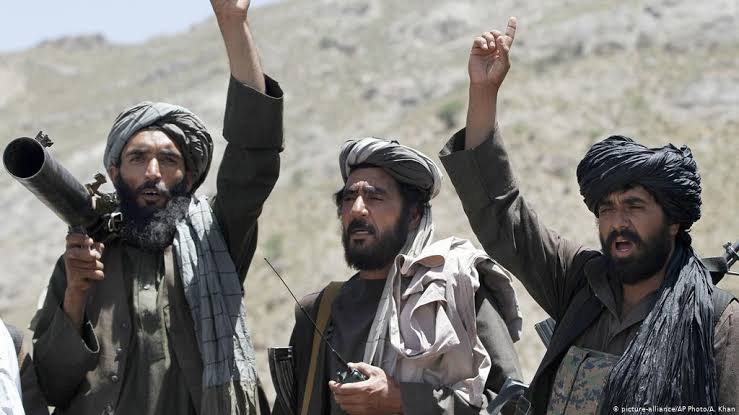
Nestled between the peaks of the Hindu Kush mountains and located at about an hour north of Kabul, is the Bagram Air Base. An impregnable fortress and home to America’s largest military base in Afghanistan. At the peak of the US military campaign against Taliban insurgents, the place looked like a little America tucked in the belly of the rugged terrain of the Afghan desert. The Base was a beehive, complete with American fast-food franchises like Popeye and Burger King.

For twenty solid years since 2001, Bagram Air Base was the place US servicemen and their Afghan counterparts trained and plotted to take on the most daring mission against the Talibans, levelling out mountains and destroying caves. One faithful morning early this month, however, Afghan soldiers woke up to find that their old friends had left in the dead of the night, without even saying goodbye. According to a CNN report, among the equipment left behind were more than 700 vehicles including, “Humvees, pickup trucks and 4x4s, some still littered with half-eaten American snacks like Oreos and partially consumed soda bottles.”

The last US troops left the base on Friday, July 2nd with President Biden promising a complete withdrawal of all US troops in Afghanistan by the end of August 2021. He plans to leave only a small contingent of soldiers to guard the American embassy in Kabul. The most powerful country on earth after deploying the most sophisticated military force the world has ever known and spending close to a trillion dollars, parked up and left hurriedly. At last came the sad realisation that the war in Afghanistan was simply not winnable. What happened? Well, Russians were the first to learn this, the hard way after fighting the Talibans in a 10-year war that dragged between December, 1979 – February, 1989.

The US fired the first shot of Operation Enduring Freedom on 7 October 2001 and with a coalition of over 40 countries in tow, unleashed unparalleled firepower that sent the one-eyed Mullah Omar, the Taliban ruler of Afghanistan and Commander of the Faithful with his lieutenants parking. It was a move meant to oust the Talibans, whom they said were harboring Osama Bin Laden and other key al-Qaeda elements that masterminded the 9/11 terror attacks on American soil. The war, however, dragged on year after year such that even after President Barack Obama announced the end of Operation Enduring Freedom in Afghanistan after 13 years, on 28 December 2014, Taliban insurgents continued to mount strong resistance, albeit in a guerrilla fashion.

As with every war, things tend to get messy. There were blackmails and intrigues in high places. Pakistan, a country that was supposed to work alongside the US in the war, turned it into a cash cow and showed no interest in helping the US bring the war to an end. It was later discovered that Osama Bin Laden, the most wanted Al Qaeda operative, was hiding in plain sight and lived close to the Pakistani Military Academy in Abbottabad. The relationship between the two countries deteriorated so bad that Americans were conducting raids inside Pakistani soil with the nation’s government blindsided. As the war dragged on, Americans in the homeland started getting tired and inpatient as dead bodies of young men were brought home, wrapped in caskets from oversees. Congress also began to question the government’s war strategies and how long to keep the troops in a foreign soil.


Between 2010 to 2012, the cost of the war in Afghanistan grew to almost $100bn a year. That was the time when more than 100,000 American soldiers were stationed there. As the number of troops were drawn down, the cost got a little lower but never less than $40bn a year.

According to a report made available to Congress by a senior Pentagon official, when you add the total spending from October 2001 until September 2019, including payout to Pakistan to support the war effort, the total amount was $822bn. This is much lower than what was reported in a study looking at war spending, commissioned by Brown University in 2019 where the number was $978bn, though it included the budget for 2020 fiscal year.

To put things in perspective, the National Assembly approved the Nigerian government’s 2021 budget of 13.6 trillion naira ($35.66 billion). That means that the US at some point was spending an equivalent of three times the Nigerian budget every year fighting a war in a country with a population the size, just a little bigger than southwest Nigeria.

In terms of human toll, since the war against the Taliban began in 2001, US forces have suffered more than 2,300 deaths and around 20,660 soldiers injured in action. Of course, Afghan casualty was much worse.

I did not wake up this morning feeling like a Plato, Socrates, Archimedes or determined to wax philosophical. But I am forced into deep introspection as to how a rag-tag and poorly-funded army was able to defeat two biggest super powers. It turns out that passion anchored in a deep belief, could survive even a nuclear attack. Even though prosecuting a warped and toxic ideology, the Talibans are convinced beyond doubt that they are on the correct path ordained by their creator and so very determined to resist any power that could derail them in that mission.

They were chased out of power, carpet bombed, killed and utterly dismembered. Their leadership was decapitated, and yet, they persisted, waited it out and prevailed in the end. Again. You could say that there is still a secular Afghan government in place at the time of this writing but the mere fact that we got to a point where the US is now negotiating with the Talibans, was in and of itself a huge victory for the group. In war, your enemy is only willing to negotiate when victory is not within sight.

Have you ever wondered why citizen-driven (not military coup) revolutions akin to the Arab Springs often fail to materialise in Africa, even when the continent plays host to the largest contingent of political criminals than elsewhere? A Nigerian will look at how #EndSARS protesters got shot and decides that it makes more sense to sit back and watch others take the lead. Somehow, he came to believe that Nigeria’s salvation lies with everyone else but himself. Of course, he knows that such revolution is necessary but what is lacking, is the passion to follow through.

Katharina Paxman, a professor of philosophy at the University of Western Ontario, believes that all actions, reasonable or unreasonable, are dictated by passion. Her belief draws heavily from the work of David Hume, a Scottish philosopher of the 18th century. In one of her presentations titled ‘Reason and the Passionate Mind’ she augured that, “Reason can’t tell us what to prefer, it is only once we have a propensity or aversion towards something that we can use reason to direct our action, and this requires passion.”

Many centuries ago, there wouldn’t have been anything sane or logical about conjecturing a 3-ton man-made bird with a huge payload floating 30,000 feet above sea level, yet on 17 December 1903, Wilbur and Orville Wright flew their first powered flight in the beach town of Kitty Hawk, North Carolina. Today man has not only conquered the skies and the cosmos, but has ventured into the outer space, pushing the frontiers of science close to the realm only reserved for gods. That is the power of passion.

Between reason and passion, it is difficult to make a case of superiority of one over another. Reason is overly cautious, weighs the pros and cons of an intended action which is truly required of a rational mind. However, it often subjects the mind to analysis paralysis. Passion on the other hand runs on steroid, pushing one to overcome the inertia of inaction, but on the other hand, could operate well beyond the boundaries of rational thoughts. Passion when unattended to, is like a flame that could burn to its own destruction. That was almost the case with the Talibans.

In her book, “Hume, Passion, and Action”, Elizabeth Radcliffe contends that Hume is right to suggest that passion and reason are not mutually exclusive. They both are necessary to ignite people’s motivation. As it turns out, however, passion not tanks is how wars are won and lost.

•Dr. Agbo, a public affairs analyst is the coordinator of African Centre for Transparency and Convener of Save Nigeria Project. Email: [email protected]

Free Copy of the Bye-Laws of Abuja Municipal Area Council (AMAC) 2015

by Onyekachi Umah, Esq., LL.M, ACIArb(UK)

Abuja is the Capital city of Nigeria, it is located in the Federal Capital Territory (FCT). The Federal Capital Territory has six (6) Areas Councils; Abaji, Abuja, Bwari, Gwagwalada, Kuje and Kwali. The Abuja Municipal Area Council (AMAC) is the most developed of all the Area Councils, it houses most of the government institutions, embassies, multi-nationals and businesses; including the Presidential Villa, the National Assembly and the Supreme Court of Nigeria.

The  ABUJA MUNICIPAL AREA COUNCIL (AMAC) BYE LAWS 2015 covers the following issues and Bye-Laws:

  1. Enabling Law, Application, Functions of the Area Council and Establishment of the Area Council Departments 
  2. Registration ofMarriages, Births and Deaths Bye-Law 
  3. Motor Parks (Commercial Vehicles Picking-Up Passengers) Bye-Law 
  4. Environmental Sanitation and Prohibition of Indiscriminate Dumping of Refuse Silts and Other Environmental Health Offences Bye-Law 
  5. Control ofAdvertisement, Bye- Law 
  6. Regulation of Mobile Advertisement Bye-Law 
  7. Stacking of Building Materials/Construction Permit Bye-Law 
  8. Loading/Off-loading Parking and Control of Traffic Bye-Law 
  9. Cutting of Road Tar Bye-Law 
  10. Movement and Keeping of Dogs Bye-Law 
  11. House—Numbering/Street Naming Regulation Bye-Law 
  12. Registration ofDry Cleaning and Laundry Houses Bye-Law 
  13. Market Regulation Bye-Law 
  14. Trade Licence, Private Lockup Shop and Allied Matters Bye-Law 
  15. Radio and Television Bye- Law 
  16. Tricycle (Keke) Motorcycle Commercial Uses (Regulation and Control) Bye-Law 
  17. Foodstuff and Regulated Premises Bye-Law 
  18. Hotel, Guest Inn, Restaurants/ Eating Houses, Bake Houses, Dairies Aerated Water Manufactures, Food Preserving Establishment and Places of Sales of Food to the Public and Other Related Matters Bye-Law 
  19. Public Toilet Bye-Law 
  20. Pest Control Bye-Law 
  21. Contractors Bye-Law 
  22. Tenement Rate Collection Bye-Law 
  23. Private Sector Participation Refuse Operations (PSPRO) Bye-Law 
  24. Liquor Licencing Bye-Law

Expectedly, the management of the Abuja Municipal Area Council is ahead in revenue generation. It has enormous laws (Bye-Laws) enabling it to increase internally generated revenue by demanding and collecting taxies and levies from residents and business in Abuja. On 2 January 2012, the the ABUJA MUNICIPAL AREA COUNCIL (AMAC) BYE LAWS which took effect from on same day but was published on the National Gazette on 9 September 2015. The proper citation of the law is  ABUJA MUNICIPAL AREA COUNCIL (AMAC) BYE LAWS 2012 since it was made in 2012 but it is popularly known with its year (2015) of being published on the Gazette as ABUJA MUNICIPAL AREA COUNCIL (AMAC) BYE LAWS 2015. This is important since most of the Demand Notices from the AMAC often refer to the Bye-Law as the Click to download: ABUJA MUNICIPAL AREA COUNCIL (AMAC) BYE LAWS 2015.

Click to download: ABUJA MUNICIPAL AREA COUNCIL (AMAC) BYE LAWS 2015

Like any other State Government or Local Government in Nigeria, there are persons that inflate taxes and levies by unlawfully “padding” (increasing), inflating and altering figures and prices of taxes and levies. Hence, having a GENUINE copy of the Bye-Laws of Abuja Municipal Area Council (AMAC) 2015 is a safe way to live and do business in Abuja.

It is the duty of persons in Abuja to pay taxes and levies, however, to pay ONLY genuine and correct taxes. You have the right to demand for a written Demand Notice from any Government Tax Officer or agent that demands for tax or levy. Always, compare the demanded tax on the written Demand Notice with the taxes and levies stipulated by law and then contact your lawyer. Do not let the threat of being summoned to any court or any law enforcement agency to distract or disturb you. Courts will not jail or close your business/premises, without first listening to you and your lawyer. No court will order you to pay a fake tax or “padded” tax.

Sabi Law Projects:

#SabiLaw

#DailyLawTips

#SabiBusinessLaw

#SabiElectionLaws

#SabiHumanRights

#SabiLawOnTheBeatFm

#SabiLawLectureSeries

#CriminalJusticeMonday

#SabiLawVideoChallenge

To receive free Daily Law Tips, join our free WhatsApp group via https://chat.whatsapp.com/L7h4f1exItZ38FeuhXG4WN or Telegram group, via the below link: https://t.me/LearnNigerianLaws

To keep up to date on all free legal awareness projects of Sabi Law Foundation, follow us via

Facebook Page:@LearnNigerianLaws,

Instagram:@LearnNigerianLaws,

Twitter: @LearnNigeriaLaw,  

YouTube: Learn Nigerian Laws

WhatsApp Groups via (https://chat.whatsapp.com/L7h4f1exItZ38FeuhXG4WN),

Telegram Group: (https://t.me/LearnNigerianLaws),

Facebook group: (https://www.facebook.com/groups/129824937650907/?ref=share)

or visit our website: (www.LearnNigerianLaws.com)

Please share this publication for free till it gets to those that need it most. Save a Nigerian today! NOTE: Sharing, modifying or publishing this publication without giving credit to the author or Sabi Law Foundation is a criminal breach of copyright and will be prosecuted. This publication is the writer’s view not a legal advice and does not create any form of relationship. You may reach the writer for more information.

This publication is powered by www.LearnNigerianLaws.com {A Free Law Awareness Program of Sabi Law Foundation, supported by the law firm of Bezaleel Chambers International (BCI).} Sabi Law Foundation is a Not-For-Profit and Non-Governmental Legal Awareness Organization based in Nigeria. For sponsorship and partnership, contact: [email protected], [email protected] or +234 903 913 1200.

Abba Kyari and his red flags of vulgar exhibitionism, By Farooq Kperogi

Although there is no art to decipher the cunning of crooked cops, DCP Abba Kyari gave us many red flags to cause us to be suspicious of his policing, but many people ignored it. I, for one, have an abiding suspicion of people who are given to gratuitous self-congratulation and ostentation, who are aggressively self-promotional, and who perpetually have a need to invite the public to witness their good deeds.

I think excessive showiness often betrays an inner emptiness at best and an artful concealment of untoward impulses and deeds at worst. This sentiment is encapsulated in such enduring pieces of folk wisdom as “Empty vessels make the most noise,” “Still waters run deep,” etc.

This isn’t universally true, of course. Some genuinely ethical and kind people may be outwardly flashy and given to offensive displays of self-importance. And some businesses thrive on vulgar outward displays, so people who are in these kinds of businesses can’t help but be showy out of a professional imperative.

But policing is no show business. Governance isn’t, either. Nor is morality. And so on. For the most part, it is my experience that people who are overly exhibitionistic in the performance of morality and of such run-of-the-mill duties as policing and governance are often shady and use exhibitionism to conceal their shadiness.

Although he has been accused of being a brutal SARS operative in Lagos, Abba Kyari clearly has his good sides. I have read many accounts of his kindness to total strangers, of his pan-Nigerian cosmopolitanism, and of his dogged sleuthing that resolved knotty criminal cases. His admirable detective work attracted notice and approbation. But then he got intoxicated by praise and attention, and made it his life’s calling to hanker after the limelight— in a job that should be done in the sedate quietude of the background.

He routinely invites cameras and press people to record him doing his job. One of the absurd extremes of his exhibitionism, for me, was when he invited journalists, videographers, and photographers to show him looking for kidnappers in the bushes. Of course, he apprehended no kidnapper because those crafty monsters of depravity aren’t imbecilic sitting ducks waiting for Abba Kyari to capture them on camera. He just wanted to showboat.

And he got a lot of reputational mileage from this dumb stunt. I didn’t see any groundswell of discursive repudiation against a famed sleuth hound ignoring detective work that is central to the fight against kidnapping and instead staging a fatuous media show.

What is worse, the man who earned a reputation as a ruthless annihilator of criminals started to openly cavort with people that, at the very least, he should be suspicious of. He has been photographed with people whose source of wealth is questionable and whose conspicuous consumption should put them on his investigatory radar.

Now we know why. FBI’s charge sheet against Ramon “Hushpuppi” Abbas revealed phone chats that Kyari and Abbas exchanged in which Abbas instructed Kyari to arrest Abbas’ rival in internet fraud. It is reasonable to draw the conclusion that the wealthy but dodgy people Kyari frolics with use him as a cudgel against their enemies and rivals.

The FBI’s affidavit implicating Abba Kyari in Hushpuppi’s fraud captures this sentiment. It reads: “Kyari is a highly decorated deputy commissioner of the Nigeria Police Force who is alleged to have arranged for Vincent [Abbas’ rival in crime] to be arrested and jailed at Abbas’ behest, and then sent Abbas photographs of Vincent after his arrest.

“Kyari also allegedly sent Abbas bank account details for an account into which Abbas could deposit payment for Vincent’s arrest and imprisonment.”

In other words, Kyari was probably initially a good cop whose excellent work earned him plaudits from his superiors, plausive publicity from the news media, and veneration from a grateful public. Then he gradually started to seek out the news media, insert himself into public consciousness, and promote opportunistically self-serving narratives about his unparalleled detective machismo with a predetermined motive to profit from it.

He parlayed his popularity and carefully cultivated larger-than-life media image into “big-men-protection” security gigs. He obviously not only protects “big men”; he also torments their less connected rivals and victims for financial gain, as the FBI’s court documents indicate.

But the fact that he flaunts his association with flashy, questionable characters without fear of consequences from his superiors suggests that he is not alone. He obviously has powerful backers in the police establishment who also benefit materially from his ethically stained exploits.

Given how morally rotten the institution of the police is in Nigeria—and the rampant crab mentality in its ranks—the fact that the only “consequence”Kyari has faced for his unconventional, publicity-seeking, show-and-tell policing and open cavorting with suspicious personages is a meteoric climb up the promotional ladder is an indication that the police establishment is in on what he does.

Unfortunately for the police establishment, Kyari’s transgressions have now transcended the bounds of Nigeria and can’t be dismissed with the same blithe impunity with which previous indiscretions were treated. For instance, on October 28, 2020, TheCable reported that a Lagos businessman by the name of Afeez Mojeed accused Abba Kyari of defrauding him of up to 41 million naira.

In a petition to the judicial panel set up by the Lagos State Government to address abuses by SARS, Mojeed alleged that Kyari and his SARS team forcefully broke into his home in 2014, accused him of being an internet fraudster, seized 280,000 naira from his wardrobe, another 50,000 from his car, which they took away and never returned, detained him for 14 days, and later charged him to court but never showed up or brought any witness against him, forcing the court to strike out the internet fraud charge against him.

Mojeed also alleged that Kyari forced him to reveal the password to some of his bank cards, sign checks, and electronically transfer money to designated bank accounts, which added up to tens of millions. When Mojeed’s lawyer reached out to Kyari to resolve the matter, the petition alleged, Kyari told the lawyer that Mojeed was an internet fraudster, and that he proposed a deal with the lawyer to help him get another 15 million naira from one of Mojeed’sbank accounts. Kyari allegedly offered the lawyer a 5-million-naira reward as compensation for his cooperation, but the lawyer declined the offer.

Neither the EFCC nor the ICPC even acknowledged, much less acted on, Mojeed’s petition for a redress of what he said was gross injustice against him by Kyari. And Kyari didn’t even find it worth his while to respond to TheCable’s request to hear his own side of the story.

So, clearly, Kyari is habituated to immunity from the consequences of his transgressions and indiscretions. That happens only when you have powerful backers. But it’s different this time around. You don’t mess with the FBI and get away with it.

Court documents quote the FBI to have pointedly said Abba Kyari, “together with others known and unknown to the Grand Jury, knowingly conspired to commit wire fraud, in violation of Title 18, United States Code, Section 1343.” This leaves no room for rigmarole. I think the game is over for the ‘super cop.’

I also think the Nigerian society should take some blame for nurturing personas like Abba Kyari. Our insatiable but often unmet hunger for heroes predisposes us to be susceptible to frauds masquerading as saviours. We can avoid this if we take as a rule of thumb the idea that most people who have a compulsive need to be overly showy and self-congratulatory about a virtue or a deed often have something to hide.

The Banana peel under APC’s ricketty chair:

The body traps that lie ahead

By Chief Mike A.A. Ozekhome, SAN, OFR, Ph.D.

INTRODUCTION

The APC has ruled Nigeria for over 6 years. It has failed in all indices of governance. The three core areas on which President Muhammadu Buhari campaigned as its candidate, have been honoured more in breach than in observance. They are economy, security and corruption. Each pigeon hole oozes with the putrefaction of non-performance and abysmal failure.

Nigeria is worse off today under the APC than she was in 2015. Not a few Nigerians pray every day that the Party should be booted out of power with the urgency of yesterday. Some Nigerians have since mounted a calendar, counting how many days more Buhari has to remain in office before vacating same upon effluxion of his mandatory 2 terms tenure of 4 years each. Just 668 days. Only 668 days for Buhari to leave power; many celebrate. They count days. Some count weeks; some others, months. A beleaguered Nigerian wrote to me that he is only counting hours (16, 032 hours). Another added humorously that he prefers to count minutes (961,920 minutes)! Such is the disillusionments and regrets of the APC- Buhari administration.

The realization that Buhari under Nigeria’s constitutional organogram cannot have a third term gladdens many hearts, giving them a ray of hope; some light at the end of Nigeria’s dingy asphyxiating and strangulating tunnel. But, Nigerians do not know how to go about ensuring that another Emperor Buhari does not come back. They fear there would be no free and fair elections in 2023. What with Senate’s unpatriotic and undemocratic rejection of electronic transmission of votes, and the House of Representatives’ double-speak on it! Not few Nigerians believe that the outright rejection of electronic voting is preparatory to APC’s readiness to massively rig the 2023 elections, knowing it has performed below average in service and democratic dividends-delivery. So, Nigerians belly-ache. They gnash teeth.

However, Nigerians may now heave a sigh of relieve. Unwittingly. From the most unexpected source: the Supreme Court. There are many ways to kill a stubborn rat that enters a calabash without breaking the calabash itself. The cheapest opportunity is the current banana peel that sits like an emancipator under the APC’s rickety and crincky chair of nepotism, sectionalism, prebendalism, cronynism, apaque3ness in governance and poverty spread.

THE SUPREME’S JUDGMENT

It is the Wednesday, July 28, 2021, Supreme Court judgment in the Eyitayo Jegede V. Oluwarotimi Akeredolu (Appeal Nos: SC/448/21; SC/501/21; SC/508/21; and SC/509/21. The judgment was a very narrow 4 – 3 split decision in favour of Akeredolu. What a narrow escape! Aketi needs to go to Church for special thanksgiving.

The candidate of the Peoples Democratic Party (PDP) in the Ondo election, Eyitayo Jegede, SAN, and his party, the PDP, had challenged the competence of Akeredolu, SAN’s nomination/sponsorship for the election by the APC, contending that the letter conveying his nomination/sponsorship to the Independent National Electoral Commission (INEC) was incompetent, having been signed by Buni and others. They specifically urged the Court to determine whether Buni as a sitting Governor of Yobe State, could simultaneously double as the National Caretaker Committee Chairman of the APC (NCCC) to sign the nomination of Akeredolu, SAN, for the said governorship election.

They contended that by the provisions of Section 183 of the 1999 Constitution and Article 17 (4) of the APC constitution, Buni had acted unlawfully by being the Yobe Governor and serving as APC’s NCCC Chairman, all at the same time. They contended that because of this vice, the nomination/sponsorship letter Buni signed for the APC, notifying INEC of the candidacy of Akeredolu and Lucky Aiydatiwa (as APC’s Governorship and Deputy Governorship candidates) was void. They then urged the apex court to void the July, 16, 2021 judgment of the Court of Appeal, Akure Division, which had validated Akeredolu’s election.

THE MAJORITY DECISION

In his lead majority split judgment, Justice Emmanuel Akomaye Agim held that, since Jegede and the PDP made Buni the centre of their allegations of constitutional breaches, he ought to have been made a party in the case to enable him defend himself in line with the doctrine of fair hearing.

The Supreme Court proceeded to uphold the earlier judgment of the Court of Appeal, to the effect that the petition filed by Jegede and his party to the election tribunal was incompetent because they failed to join Buni as a party.

Justice Agim held: “The appeal was based on the ground that Mai Mala Buni, the Chairman of the NCCC of the second respondent (APC), was holding office as the Governor of Yobe State, contrary to the provisions of Section 183 of the Constitution of the Federal Republic of Nigeria (1999).

“All the issues raised, revolved around Mala Buni. But, Mala Buni, who is at the centre of the dispute was not made party to the petition. It is obvious that the determination of the said issues will affect him.

“Therefore, the court below was right to have held that he was a necessary party to this suit. Failure to join him renders the determination of the matter impossible. To proceed to do so would have violated the fair trial of the case.

“Therefore, we affirm the lower court’s decision that the petitioner was incompetent.

“There is no dispute that the third and fourth respondents (Akeredolu and Aiyedatiwa) were nominated by the second respondent (APC) as its candidates for the election; that the second respondent submitted their names to the first respondent (INEC) as its candidates, in accordance with Section 31(1) of the Electoral Act.

“They were therefore sponsored by the second in accordance with Section 177(c) of the Constitution (1999). It is not in dispute that Mai Mala Buni is acting as the National Chairman of the second respondent,” he said.

Justice Agim therefore held that the decision to allow Buni act as its National Committee Chairman (in the interim) was made by the APC, despite the provisions of Article 17 (4 of its Constitution, thereby making the decision internal to the party.

He added: “The second respondent (APC) allowed him (Buni) to be its Chairman in the interim inspite of Article 17 of its constitution.

The vires of this decision of the party is non-justiciable. This appeal fails and it is hereby dismissed,” he held.

THE MINORITY DECISION

The minority judgment differed in all material particular from this majority opinion.

In the lead minority judgment, Justice Mary Peter-Odili (who also presided on the panel) upheld Jegede’s appeal and dismissed the cross-appeals by INEC), APC, Akeredolu and Aiyedatiwa; just as the same majority Justices had also done.

Justice Odili was of the firm view that since the APC, for which Buni acted, was already a party in the case, there was no need to include him as a party.

She added that having allowed Buni to act on its behalf in signing the nomination/sponsorship letter of its candidates in Ondo despite the clear provisions of section 183 of the 1999 Constitution and Article 17(4) of the APC Constitution, the party should live by the consequences of its lawlessness.

“I do not agree with the majority judgment,” she dilated emphatically, noting that the APC, by Article 17(4) of its Constitution has provided for how its affairs should be managed and what offices its members should occupy at a time.

“This Article draws strength from Section 183 of the 1999 Constitution. Therefore when the second respondent (APC) put up a person not qualified to author its nomination by virtue of the provision of Article 17(4) of its Constitution and Section 183 of the 1999 Constitution to do so, that document has no validity, and thereby void,” she said.

She noted that the implication was that the nomination and candidacy of Akeredolu and his Deputy was a complete nullity and that the person, who ought to be declared winner of the election” is the first appellant (Jegede), who has the majority of valid votes.”

Justice Peter-Odili further held that it was unlawful and amounted to a violation of Article 17(4) of the APC Constitution and section 183 of the 1999 Constitution for Buni to be serving as the National Chairman of the APC and the Governor of Yobe State at the same time.

Justices Ejembi Eko and Mohammed Saulawa concurred with Justice Peter-Odili in upholding the appeal and dismissing the cross-appeals filed by INEC, APC, Akeredolu and Aiyedatiwa.

LEGAL ANALYSIS

THE LAW

Section 183 of the 1999 Constitution provides as follows:

‘‘The Governor shall not, during the period when he holds office, hold any other executive office or paid employment in any capacity whatsoever’’.

If there was any doubt as to the dangerous implications of this section in Buni acting as the APC National Caretaker Committee Chairman, section 17 (iv) of the APC Constitution is quite clear and unambiguous on this. It provides that “No official of the party shall at the same time hold any Government position in any Government institution”.

Thus, while the 1999 Constitution views Buni’s appointment from the position of Governor (Executive) to the party, the APC Constitution takes the reverse view of Buni’s appointment from the APC to the Governor (Executive). So, head or tail, position APC is in trouble.

CANONS OF STATUTORY INTERPRETATION

Canons of statutory interpretation are clear to the effect that when a statute is enacted in clear words, such words should be given their natural, usual and ordinary meaning in their interpretation. This shows the intent of the Legislature. See Ikpaezu V. Ogah & Ors (2016) LPELR-40845 (CA); Ofodile & Anor V. Aliozo & Ors (2021) LPELR-54159 (CA); Gana V. SDP & Ors (2019) LPELR-47153 (SC); Skye Bank V. Iwu (2017) LPELR-42595 (SC).

The Supreme Court majority judgment did not disagree with the fact that Mai Mala Buni as Governor of Yobe State was not competent to function as National Chairman of a political party (APC) and nominate a candidate for election through the INEC. Its view (and this must be respected) is based mostly on the rather technical stance (also earlier adopted by the Court of Appeal), that the non-joinder of Buni as a party in the suit was fatal to the PDP and Jegede’s appeal. Was it really? How, when the APC, which sponsored Buni, and for whom Buni at all material times acted as an agent was already a party to the suit? I do not and cannot understand this. Or, do you? The law is trite that you do not need to go after an agent (Buni) where there is a disclosed principal (APC). Such a disclosed principal is solely liable for its agent’s authorized actions, as the agent is not personally liable. See Okafor V. Ezenwa (2002) 13 NWLR (Pt. 784) 319; Osigwe V. PSPLS Management Consortium Ltd (2009) 3 NWLR (Pt 1128) 378.

EXTRAPOLATIONS FROM THE SUPREME COURT’S JUDGMENT

The simple conclusion is that if Buni had been joined as a party in the suit, the story would have been different, as the APC would have lost Ondo State to the PDP. Pronto! It is that simple. Indeed, it is rare to see such a close shave of 4-3 split judgment by the Supreme Court. Minority decisions are usually more rigorous and better researched as they seek to swim against the tide of the majority opinion that may be tyrannical.

The Supreme Court’s judgment has simply furiously (perhaps, inadvertently), weaponised all those that would be aggrieved by the APC’s forthcoming Congresses and other elections. They only need to go to court to challenge the competence of the Buni-led NCCC to organise the forthcoming Congresses and National Convention. Thus from bottom to top, the APC’s amorphous structures made up of disparate tendencies have been irretrievably damaged, nay, destroyed. All Congresses, meetings, conventions and elections that henceforth have the imprimatur of Governor Mai Mala Buni are subject to being quashed by the court at the instance of any aggrieved party member. Indeed, all actions so far taken by the Buni-led NCCC in that capacity can be quashed by any aggrieved member of the APC. Such a member has locus standi if he can show his membership card. Here comes the banana peel! APC will slip. And the fall will be thunderous. And Nigerians will applaud. God, how mighty thou Art!

A Twist in the Abba Kyari’s anti corruption tale

There is a book written by Jeffrey Archer, the popular British author. The book is called “A Twist In The Tale”. It is a book of short stories and was published in 1988. It contains twelve short stories. One of the short stories is titled “Clean Sweep Ignatius”.

The short story is about corruption in Nigeria. The central character in the story is one fictitious Nigerian politician called Ignatius Agarbi who had served as a Finance Minister of Nigeria. Because of his perceived incorruptible nature the President appointed him an ambassador plenipotentiary to go round the world to recover all Nigerian stolen loots.

He begins a sweep on corruption and makes a name for himself. He is extremely honest, even insisting that his family vacations be billed to himself and not to his ministry. He is entrusted by his President to find out how many Nigerians have stashed their bribes in Switzerland.

He arrives at the Swiss Bank with a briefcase. Despite his greatest persuasion, the Swiss refuse to break their code of privacy. In the end, Ignatius places a gun to the head of the Swiss banker and threatens to kill him. Still the banker refuses to divulge any confidential information.

Ignatius, who is actually extremely corrupt, was only checking to find out if the Swiss Banks would actually reveal the name of an account holder. Delighted with their secrecy, Ignatius invests nearly $5 million in cash which he has skimmed during his period as Finance Minister.

Therefore whenever any Nigerian anti corruption czar kisses the dust, just like the current case of Abba Kyari, I remember this short story by Jeffrey Archer. At the end, there must be a twist in the Nigerian anti corruption tale.

Stanley Chidozie Imo, Esq. is the immediate past 1st Vice President of the Nigerian Bar Association.

TIPS