Home Blog Page 928

Video: Egbujiobi Inspires!

By Lillian Okenwa

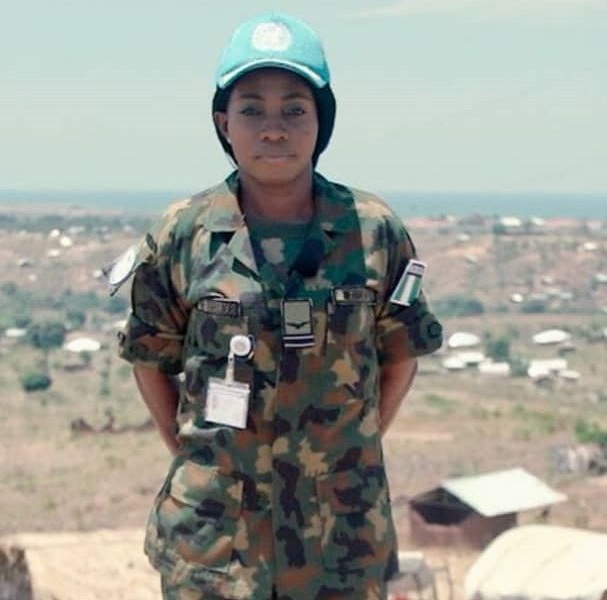
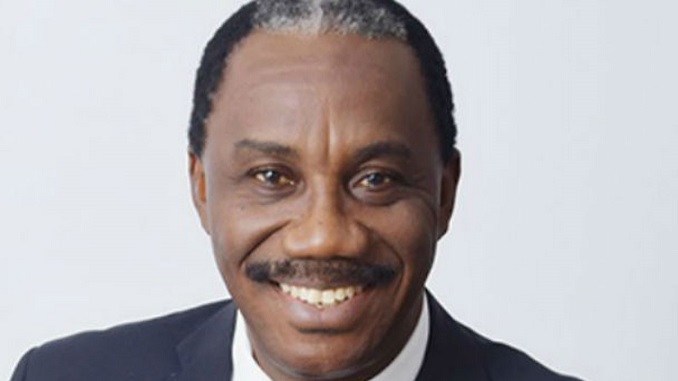
The Economic Times in an article observed that: “The phenomenon of adequate income in the household to meet most expenses and manage some savings, has led to one noticeable change—more women are choosing not go to work, if they can afford to.” But Anthonia Egbujiobi insists that every woman should work. You just never know she says.

“An empowered woman will never be at the mercy of anyone,” she averred. Reminiscing over dad’s death, she revealed that when he passed, her mum remained strong for them. Her mother who recently turned 60 on July 10th retired from the Ministry of Education, was into different kinds of businesses, to ensure they got the life they were used to. Anthonia’s siblings went to Private Universities (Igbinedion and Madonna). Her mum made it happen. “I have a sister who is a medical doctor. She was in year one when our dad died. People were not there for us. My mum was the only one. I saw it. I have first-hand information, so I can talk about it.”

NIN Registration: Is Nigeria counting the gains of ban on SIM card sales?

By Lillian Okenwa

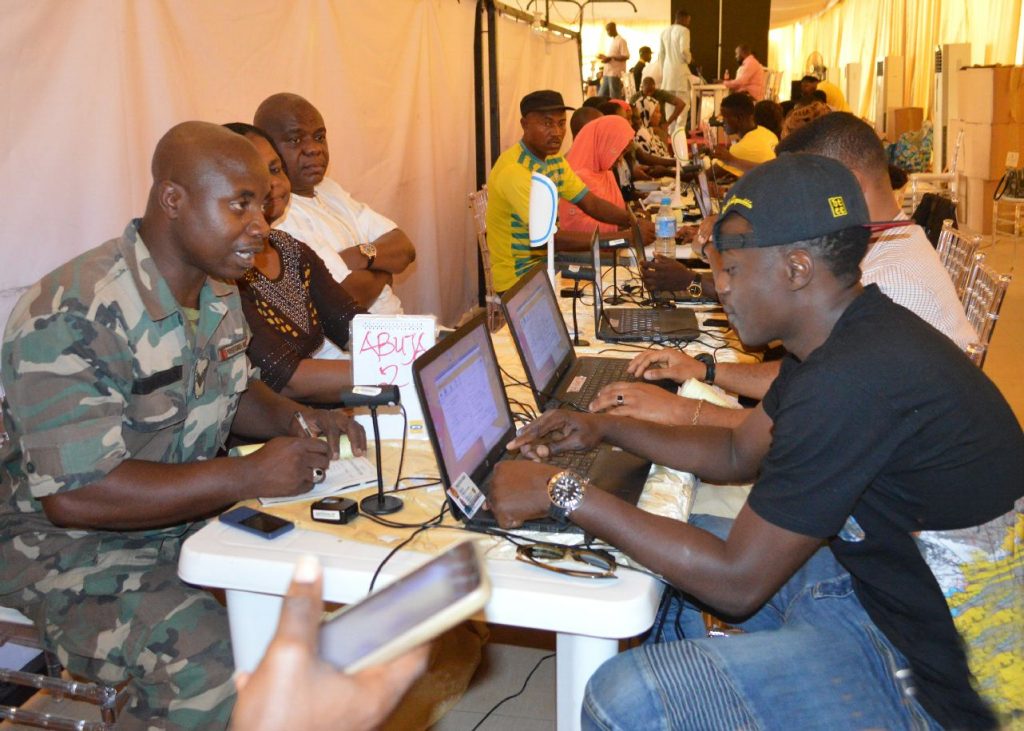
After much hassle to get a not too busy National Identity Number (NIN) registration centre, Phyllis Edward walked into the Abuja office of Etisalat at CEDDI Plaza, Central Business District that afternoon. The National Identity Management Commission (NIMC) had graciously positioned a centre at the plaza and in less than an hour, the exercise was completed as there wasn’t much crowd. But, instead of generating her NIN, the young man who attended to her said she already had one! “Madam, this is double registration oooh! You already have a National Identity Number”, he announced. Shocked and knowing that at no time did she ever do the registration and considering the multifarious troubles she had undergone to get registered before learning about this centre, she asked the attendant how that could have happened. After some inquiries, the feedback was that her bank had generated a NIN for her using her Bank Verification Number (BVN).

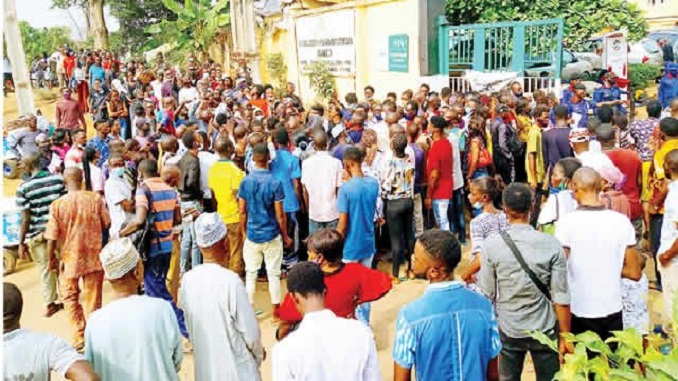
Phyllis’ case is not peculiar. A number of people have shared similar stories of struggling to get a NIN to avoid their phones being disconnected only to discover they already have one generated by their banks using their BVN. Many Nigerians will recall the drama and high pressure involved with BVN registration in 2015. Several will also recall the widespread relief in December 2020 when days after Federal Government’s announcement that non possession of NIN will occasion disconnection of telephone lines by December 31, 2020 a soothing message began to trend on social media to the effect that NIN could be generated from BVN using a certain code. Not long after, NIMC issued a statement which warned that Bank generated NINs was invalid. The rush to beat the December deadline and the crowd which thronged various registration points amidst Covid-19 brouhaha was unimaginable. At the end of the day, registration was extended over and over again.

Telcos lost more subscribers in April despite NCC lifting the SIM card ban

Presently, NIN-SIM verification deadline has been moved to October 31 2021. What then was the rush all about? Since NIN could be generated through BVN, why did NIMC discredit it initially? Would it not have made the entire process less tedious and harrowing? Till date a number of NIN registration centres are crowded. It was clear from the outset that it is impossible to register over 200 million Nigerians within the initial two weeks and later one month deadline. Today it has become apparent that with a little more patience on federal government’s part, Nigerians would not have been put through the ordeal of being crowded together in one place at different locations all over the country when the whole world was facing a pandemic and observing the rules of social distancing. The unnecessary risk of lives is incomprehensible; not to talk about the extreme pressure and stress getting the registration done required.

Again, many are still unable to connect the link between registration, disconnection of phone lines and discontinuance of SIM card sales. Though sale of SIM cards has resumed after months of suspension, the process of doing a welcome back for lost or stolen SIMs is still arduous in some telecommunication companies. Worse still is the regime that organisations and groups have to undergo very long procedures to obtain corporate or multiple numbers.

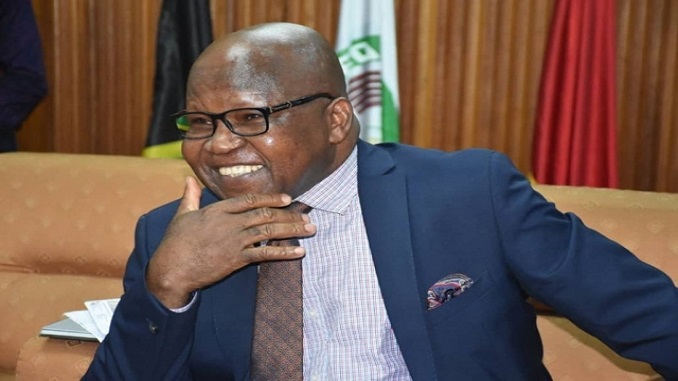
What purpose has this process served? If anything telecom companies have lost more money. Individuals, groups and organisations have been negatively impacted by the entire process. Even more irritating is the fact that government could actually extend this registration to October 2021 as it has presently done. Stephen Azubuike a partner at Infusion Lawyers nailed it. “The sincerely, the way some of our government agencies pilot their affairs and implement their programmes and policies leave much to be desired. On the lips of an average Nigerian, you would hear that the government likes to ‘punish people.’ That seems to be the modus operandi of the government. They seem to always come up with implementation procedures that put the masses under avoidable stress and problems.”  

Stephen Azubuike - Partner - Infusion Lawyers | LinkedIn
Stephen Azubuike

It is noteworthy that as at May 3, 2021, GSM Telcos had lost over N1.1 billion to SIM Card registration ban. Likewise, data from the Nigerian Communications Commission (NCC) revealed that between December 2020 and April 2021, Nigeria lost over 15.5 million subscribers.

Inconsistencies

In 2019, the National Pension Commission (PENCOM) directed all retirees under the RSA (Retirement Savings Account (RSA) holders) to undergo recapture exercise to link their Bank Verification Numbers (BVN) and NIN to all their accounts. Then sometime in May 2020, the Director General of NIMC announced that the commission had harmonized about 14 million BVN and the NINs. By December 15, 2020, when the infamous proclamation was made giving Nigerians two weeks to register or lose their telephone lines harried citizens scampered about to beat the December 31, 2020 deadline. What happened to earlier announced harmonisation?

Counting the losses

Technext.ng reported that on examining the financial implication of the ban based on the industry Average Revenue Per User (ARPU) of N1,420 for 2020, the 4.2 million subscribers lost between December and January would have contributed a total of about N6 billion to telecom operators in January. ARPU obtained from the Association of Telecommunications Companies of Nigeria (ATCON) is defined as the total revenue divided by the number of subscribers. It is a measure used primarily by consumer communications, digital media, and networking companies.

GSM Telcos lose N1.1 billion to SIM Card registration ban | Nairametrics

According to Technext.ng: “For the two-month period since the beginning of the ban, the total calculated loss rose above N10 billion. This means that the combined total of 7.6 million subscribers lost between December 2020 and January 2021 adds up to about N10.8 billion in revenue.”

Meanwhile, it has been revealed that Telcos lost more subscribers in April after NCC lifted the sim card ban. The continued downward spiral according a report by Technext.ng alluded to the fact that some subscribers could not retrieve their sims even with the ban being lifted. The report pointed out that the new requirements for buying and retrieving sims which include a valid National Identification Number is still a major hindrance for many.

Debisi Araba, former Africa Region Director at the International Center for Tropical Agriculture, a public policy and strategy specialist in an article published by The Africa Report observed that “government will have us believe that it is trying to encourage citizen compliance for a process with challenges that are more related to a fundamental lack of harmonisation, scale, capacity and infrastructure than they are to citizen compliance.”

Debisi Araba

NIN and the legacy of inequality

Speaking on NIN and the legacy of inequality, Araba further posited that: “The existing inequality across the country will amplify the impact of this decision. When the initial two-week deadline was given, my 85 year-old aunt, who can barely walk and spends most of her days making phone calls to her children across the world, panicked and was willing to go into a NIN office for registration, despite the risk due to Covid-19 and her restricted mobility. For her, the possibility of having her two phone lines blocked would not only mean isolation from her family but also reflected the lack of inclusionary approaches when thinking about strategies to enable compliance. 

“Beyond the elderly, Nigeria, like much of Africa, has seen a boom in mobile phone penetration and has come to rely on it in everyday life. An example is the driver or the roadside vegetable stall operator in Lagos, whose wife and children live in a rural area in Nigeria, and rely on their remittances and regular phone calls for survival and maintaining social networks. For them, the impact of disconnection will be most severe.”

Nigerians groan over inability to replace lost SIM cards

In the wake of the directive to discontinue sale and replacement of lost SIM cards, many groaned. People who had the misfortune of losing their phones were neither able to retrieve their lines nor purchase a new one. Somebody in some kind of emergency who loses a phone, whose bank account for instance is being tampered with or has been tampered with, cannot call the bank. A visitor to Nigeria that desired to purchase a SIM card would be unable to.

Sometime in February 2021, Dije Mohammad arrived Mararaba late Thursday morning having boarded a night bus from Port Harcourt where she works. Dije was visiting her sister and it was her first visit to Abuja. Though Mararaba a densely populated suburb famed for its high crime rate is in Nasarawa state, many consider it as a part of Abuja since it shares very close borders with the capital city.

Dije’s sister had instructed that once she gets to a particular bus stop, she should call and give the mobile phone to a motorbike rider so that she (Dije’s sister) could give him directions on how to locate her street. Following her sister’s directives, she disembarked at the designated bus stop and was soon approached by one of the numerous the bike riders. Quickly, she called her sister and passed the phone over to a bike man. The next seconds seemed like a movie. The man collected her phone and zoomed off in a blur. Confused and stranded, Dije asked passers-by for the nearest mobile telecoms office hoping to have her SIM replaced. Then she remembered the government’s directive on SIM replacements and purchase.

On the other hand, Sani Hussein was filled frustration and bitterness after an agonising experience at a telco office to replace a lost SIM. After signing a register around 9.00am, he was given card number 48. Up till about 4:30pm, only 26 people had been attended to. It was apparent Hussein would not be attended to on that day.

He left and returned early the next day but still had to wait. When it eventually got to his turn, Hussein was asked to provide an affidavit and police report to show that his phone and the SIM card were stolen. He did. Then he was required to provide his NIN. That he didn’t have, but there was a NIN desk in there, so he thought that wouldn’t be an issue. Alas, the server that links the telecom provider’s internet service to the NIMC was down. Another waiting game ensured and he eventually left. The server was still down on day three when Hussein came back.

Standing outside another telecom service providers’ office and not too far from its gate was an umbrella. Sitting under its shade, three young men with an iPad whispered to every passer-by. “Is it welcome back?” They’d ask. If the answer is positive, they would enumerate the problems likely to be encountered inside the telco’s office, then offer assistance at a fee hundred percent more than the service providers charge. If you’re willing to pay, they offer you a seat, and do all the capturing. And many were willing to pay and avoid all the delays. Then they ask if you have an affidavit. If you don’t have one, they would tell you to take a passport photograph, pointing to where another accomplice was stationed. You pay for the affidavit and passport; and before you say, “Jack”, all the documents are ready. Thereafter, the welcome back process starts.

But the entire process appears to have links with someone working with the telcos. After getting your details, the information is transmitted to an insider who would later call them to say that it’s been done. A new SIM is brought out and you are asked to go and start using the SIM in two hours. However, perhaps due to their speed to attend to many customers, some SIMS were not properly “welcomed back” and one has start all over the next day.

No awareness creation till sudden deadline of December 31, 2020

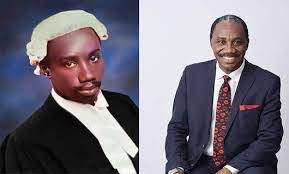
Prof. Paul Idornigie, a Senior Advocate of Nigeria noted that rather than an abrupt decision, the registration should have been gradual and continuous.

This image has an empty alt attribute; its file name is Idornigie-1.jpg
Prof. Paul Idornigie, SAN

“I have asked myself, if we do not have NIN, say by the end of July, what would have happened? Would Nigeria have collapsed? Would Nigeria have ceased to exist? Why was that deadline given, why? What is the consequence? I think it should have been more of education. Make us realize it is important to register, not the unreasonable deadlines. NIMC has branches in all the states so they should have been funded enough from start to create more centres for registration or engage more consultants and private entities. That’s the way to go.”

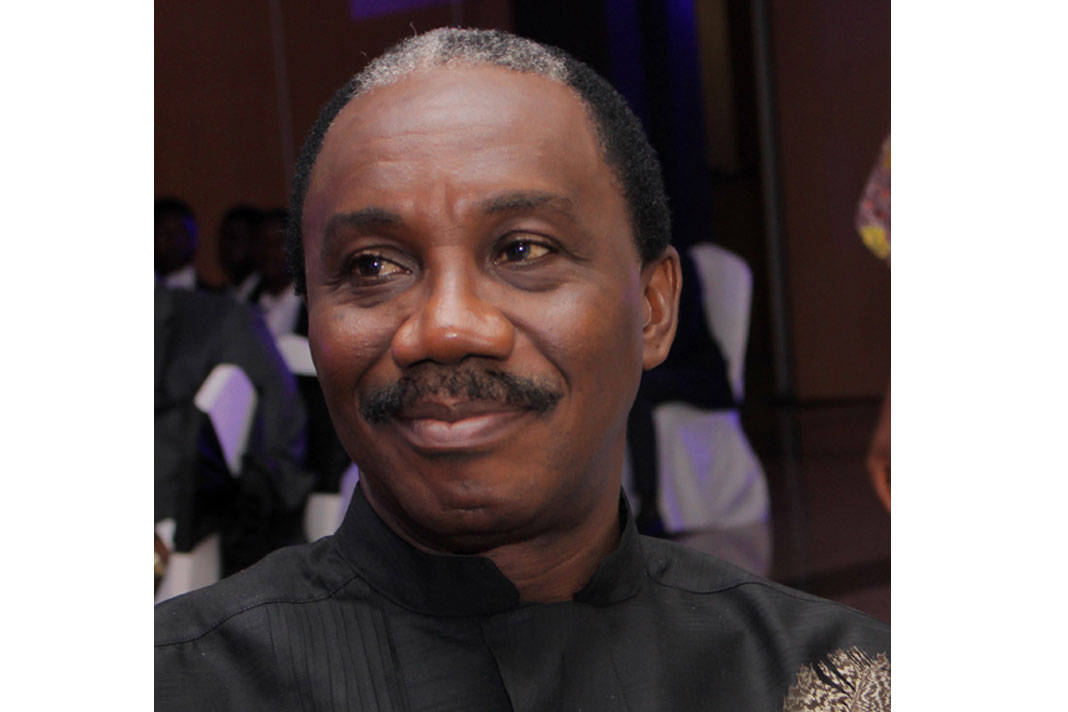
Onyekachi Umah a Legal Awareness Expert shared his observations. “The problem we’re having is that the institutions we have refused to work. A father and a mother for instance have the responsibility to register a baby once it is born. The question is – in how many hospitals do we have the NIMC (National Identity Management Commission) posts in? If you’re giving birth to a child in a hospital let’s say in Abuja for instance, there should be a NIMC post there. The NIMC post there allows the father or the mother of the child to enrol and obtain a NIN (National Identification Number). Let’s say it’s not convenient at that point. When this child is brought for postnatal care, you register him or her. The law gives 18 months grace to stay without registering a child. The point is -almost every parent in Nigeria is in violation of the NIMC Act without knowing it. The law provides that every parent must register his or her child at birth.

Onyekachi umah
Onyekachi Umah

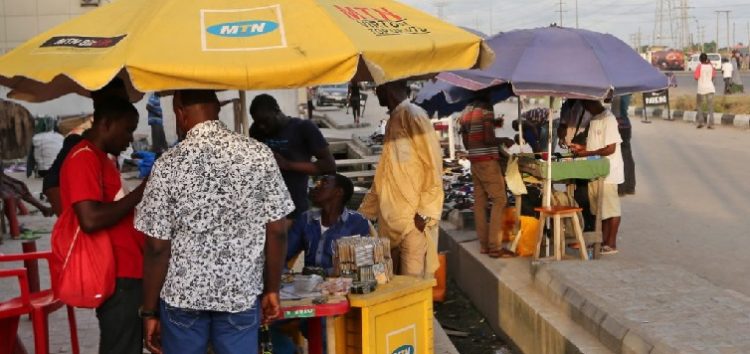
“Look at the telecommunications companies for instance. Prior to the directive to discontinue SIM registration, if you want to buy an MTN SIM card and get registered, you simply walk down the street. Before you walk a hundred yards, you’ll see their umbrella. So why don’t we have that? I recently misplaced my debit card and went to the bank to get a replacement. It didn’t take 30 minutes and another card had been printed for me. It is same with every commercial bank. You can walk into any of their branches and have your debit card replaced in minutes if you request for it. When I did my NIN registration, what I was given was a temporary card not the real thing. I was told that the actual National Identity Card will be ready at a future date.”

Telcos Yet to Resume Sale/Registration of Sim Cards 1 Week After Ban was  Lifted

Despite assurances, that he would give a feedback, Kayode Adegoke, Head of Corporate Communications at NIMC did not respond to our questions on these matters after several calls and reminders. The questions were sent to his whatsApp line at his request.

Unbelievable: How Nigeria Police obtained confessional statement through bloodshed

By Stephen Azubuike

Dondos v. State [2021] 9 NWLR (Pt. 1780) 24 SC

Sirajo Muhammed Dondos was charged with the offence of armed robbery. The only evidence available was his confessional statement which he argued was involuntary. Nevertheless, the High Court convicted and sentenced him. The Court of Appeal affirmed. On 29 January 2021, the Supreme Court overruled the two lower courts and set Dondos free.

The apex Court held that once the making of a confessional statement was caused by inducement, threat, promise or torture, it will be held irrelevant and the court cannot rely on it.

Therefore, the reason furnished by the Supreme Court for setting Dondos free was that indeed his confessional statement was involuntary as it was obtained through bloodshed. There was unchallenged evidence from Dondos and another cell inmate attesting to the oppressive manner the alleged confession was extracted from him. Dondos was shot on the hand and leg by the Investigative Police Officer (IPO) which made him unconscious. Thereafter, he was surrounded by six (6) policemen (including the IPO) who severally shot and killed one other suspect in the cell – one Mannir, to demonstrate to Dondos that they meant business. Traumatized, Dondos signed the confessional statement presented to him.

The Supreme Court had no difficulty setting Dondos free because the alleged confessional statement was found to be involuntary having been obtained in the most brutally dehumanizing and oppressive way; and in a manner consistent with improper and detestable wickedness.

Eko, JSC made a brave pronouncement (at page 57 of the report):

In the perverse Judgment of the trial Court, affirmed by the Court of Appeal (the lower Court), the trial Judge did not, albeit properly, evaluate the material evidence of the Appellant (the DW3) corroborated by the DW5 [a cell inmate]. On these material pieces of evidence that the prosecution failed to cross-examine the DW3 and DW5 and/or discredit them, there were ample evidence that Exhibit B [the confessional statement] was obtained in a manner consistent with very “improper and detestable wickedness.” Like Pontius Pilate, the two courts below decided to look the other way and unfortunately endorsed the most detestable and reprehensible police brutality…

Eko, JSC called for the immediate investigation and possible prosecution of all the police officers responsible for the brutality of Dondos and the extra-judicial killing of Mannir. According to the Learned Jurist (at page 59 of the report):

The decision is not complete unless an order is made directing the relevant prosecutorial authorities to immediately investigate, and prosecute if necessary, the circumstances of the brutality to the Appellant by the PW1 [IPO]. All the police officers responsible for the alleged shooting and killing of one Mannir in the police cell shall also be brought to book. The Counsel for the Respondent, Emeka Obegolu, Esq., is hereby directed to convey the duly certified copies of this Judgment to the Inspector General of Police and the relevant State authorities including the Attorney-General and Commissioner of Police of the State. The Appellant’s Counsel, Dr. Adekunle Oladapo Otitoju shall collaborate with the Respondent’s Counsel to ensure that the Order is effectively carried out.

The Nigerian Bar Association may also need to follow up with the Supreme Court’s Order. So too, other well-meaning organizations fighting for the preservation and advancement of human rights. Enough is enough!

This article was first published on July 9, 2021 by https://stephenlegal.ng/unbelievable-how-nigeria-police-obtained-confessional-statement-through-bloodshed/

AUTHOR: STEPHEN AZUBUIKE is lawyer with expertise in Commercial Dispute Resolution and Technology Law practice. He is a Partner at Infusion Lawyers. He has successfully argued cases from the High Courts of various jurisdictions to the Appellate Courts on behalf of financial institutions, other corporate bodies and multinationals. He has worked with a number of startup tech companies. He tweets @siazubuike.

Throw them all out!

‘Putting them all outside, He took…His own companions, and entered the room.’
Mark 5:40 NASB

When you’re trusting God for a miracle, nothing will drag you down faster than unbelief. Plus, it’s impossible to know what God is doing based on how things look on the surface. ‘Faith is the substance of things hoped for, the evidence of things not seen’ (Hebrews 11:1 KJV). So in order to stay strong, it’s important to fill your mind with the right things: ‘the best, not the worst;…things to praise’ (Philippians 4:8 MSG).

One pastor writes: ‘There were times Jesus didn’t allow unbelief around Him, like when He raised Jairus’ daughter from the dead. When He heard the little girl had died, Jesus told her father, “Do not be afraid…only believe” (Mark 5:36 NASB)…You can believe, or you can be afraid. You can’t do both; and people who truly believe bypass human reasoning. When Jesus dealt with the spirit of death that day, there was no room for contaminated faith.

So when He went to Jairus’ house, “He allowed no one to accompany Him, except Peter, James and John” (v. 37). He took those who believed in miracles, and when “they came to the house…and…saw…people loudly weeping…He said…‘Why make a commotion…The child has not died, but is asleep.’ They began laughing at Him.

But putting them all outside, He took…the child’s father and mother and His own companions, and entered the room where the child was…Taking [her] by the hand, He said…‘Little girl…get up!’ Immediately the girl got up and began to walk”’ (vv. 37-42 NASB). Humanly speaking, your situation may look impossible, but when you throw out the naysayers and the doubters and believe what God says, you’ll get results.

Bible in a Year: Job 8-10, Romans 15:14-33

The Word for Today

Failing in order to succeed

‘Have you caught any fish?’
John 21:5 NLT

Sometimes God uses failure to get our attention and draw us closer to Him. In John 21 the disciples ‘went out in the boat, but…caught nothing all night. At dawn Jesus was standing on the beach, but the disciples couldn’t see who he was. He called out, “Fellows, have you caught any fish?” “No,” they replied. Then he said, “Throw out your net on the right-hand side of the boat, and you’ll get some!” So they did, and they couldn’t haul in the net because there were so many fish in it. Then the disciple Jesus loved said to Peter, “It’s the Lord!”’ (vv. 3-7).

Notice three things:

1) Jesus can do what you can’t do. As long as you think you can handle things on your own, He will let you try. As long as what worked for you in the past is still working, you won’t reach for His help. It’s only when you run out of answers you discover: ‘“You will not succeed by your own strength or…power, but by my Spirit,” says the Lord’ (Zechariah 4:6 NCV).

2) God can do more than you can do. He told the disciples, ‘Throw out your net on the right-hand side of the boat, and you’ll get some!’ It didn’t sound right, but by obeying Him they entered a level of blessing and abundance they never dreamed possible.

3) God wants a relationship with you. After eating breakfast with the disciples, Jesus told Peter, ‘Take care of my sheep’ (see John 21:17). Now fishermen don’t take care of sheep – shepherds do! So what just happened? Jesus introduced Peter to his true calling – and He will do the same for you!

Bible in a Year: Job 34-35, 1 Corinthians 8

The Word for Today

Gun smoke from the east

By Tunde Olusunle

I’ve become more circumspect, lately, in my choice of labels for our leaders, past and present. I was going to begin this piece by referring to the regime of Nigeria’s last but one uniformed leader, General Sani Abacha as one of untold tyranny, unequalled dictatorship, unrivalled despotism. Abacha, however, has been succeeded by some of his former colleagues, out of uniform, supposedly guided by the Constitution of the Federal Republic of Nigeria, whose actions would diminish the crimes and misdemeanors of the “goggled one.” Where an elected leadership presides over an administration denominated by glaring favoritism, circumscribed by astounding nepotism, hallmarked by indefensible sectarianism, unparalleled lawlessness and astounding disregard for the rule of law, it becomes imperative to check for appropriate parallels and parameters to describe the regime. When the actions or inactions of the rulership, challenges the very foundations of national unity, interrogates our security, dilates our communal stability, questions our hitherto fragile cohesion and integration, and impinges on our carefully managed fault lines, we have to be restrained in deploying a one-size-fits-all profiling for every dispensation.

At the height of the reign of terror foisted on on our land during the regime of Sani Abacha, a few names were unwittingly incorporated into local folklore, on account of their Hitleresque, maybe Aminian enterprise in that regime, unparalleled in the sociopolitical history of Nigeria. A certain Hamza Al-Mustapha, a Major in the Nigerian Army, who was Chief Security Officer, CSO, to Abacha, reportedly, represented everything that was mischievous, dreaded and fearsome in that administration. His name was indeed a recurring decimal at the Human Rights Violation Investigation Commission, also known as the “Oputa Panel,” constituted by administration of former President Olusegun Obasanjo, in 1999. The initiative to attempt to heal the wounds of the nation’s chequered past, especially the period between 1984 and 1999, when Nigeria was under the rule of four successive military dispensations.

Al-Mustapha was not a Member of the Provisional Ruling Council, PRC, the highest decision-making organ of that government, nor was he a member of the Federal Executive Council, FEC. He was not a Military Administrator in any of the states, nor did he head any government department or agency. But the recurrent heckling of the press characterised by malevolent, vicious and violent attacks on media houses; the brutal attempts to rein in pressmen which culminated in the abduction and killing of some journalists; the pursuit and intimidation of real and perceived enemies of the Abacha government including even some government officials, however, implanted the name and visage of Al-Mustapha on the public consciousness. Those familiar with the reign of Idi Amin Dada, the self-styled Field Marshal who was President of Uganda from 1971 to 1979, will readily recall Amin’s hit man, the monster called Isaac Maliyamungu. Maliyamungu’s principal schedule, was the brutal suppression, even extermination of enemies of his boss, real and perceived, across the country.

Under Abacha, groupings and associations like the National Democratic Coalition, NADECO, which was constituted by a broad spectrum of democrats to bring pressure to bear on Abacha to step down for the winner of the June 12, 1993 presidential election, were constantly harassed and harangued by Abacha’s henchmen. They were so pursued, because they held opinions contrary to that of the administration. Al-Mustapha was allegedly the face of that Abacha terror machine, which visited sorrow, tears and blood on hapless Nigerians, to borrow a line from the lyrics of one of the songs of the inimitable Fela Anikulapo Kuti.

While Al-Mustapha was generally considered the face behind the mask calling the shots from the fortressed comfort of Aso Rock, another name which assumed national notoriety was a certain Barnabas Jabila Mshelia, nicknamed Sergeant Rogers. Rogers was said to be Al Mustapha’s man Friday. He stalked the streets of Nigeria, ever baying for the blood of the innocent as propitiation for the god who sent him on errands, and pretty regularly too.

Memories of the daredevil antics of Lawrence Anini and his second-in-command, Monday Osunbor, who terrorised Benin City, the serial capital of Midwest, Bendel and later Edo State back in 1986, were in the recesses of our collective memory, when Rogers rudely reminded us of that unsavoury past. Anini was the prototype Robin Hood, who robbed banks, shot at people, but was curiously benevolent, as he sprayed currency notes on the streets during his getaways. Eleven policemen and nine other lives were lost to Anini and his daredevil acolytes on his deathly enterprise. His driving skills were out of this world, his marksmanship, impeccable. He was a national nuisance whose bloodletting endeavours not only caught the attention of Ibrahim Babangida, Nigeria’s President at the time, but virtually cost a sitting Inspector General of Police, Etim Inyang, his job. He was succeeded by Ibrahim Gambo Jimeta, who continued the manhunt for the evasive, even elusive Anini.

Shina Rambo, another outlaw who specialised in snatching exotic automobiles on Lagos roads, was the major successor act to Anini in the business of banditry. Rambo, whose real names are Olusegun Adeshina Adisa Kuye, reigned during the early 1990s and is credited with atrocities akin to the exploits of Anini. At the height of his criminal fame and jurisprudence, Rambo reportedly robbed 40 choice cars in Lagos in one single day, and drove in a convoy, with utmost triumphalism, through Nigeria’s borders with Benin Republic, to his hideout in Nigeria’s Western neighbour. He was alleged to have had a pact with the border police, which made them look the other way, whenever he was at work.

In those testy days during the regime of Sani Abacha, the fear of Sergeant Rogers, a member and chief marksman of the dreaded strike force one of the security contraptions under Al-Mustapha, was the beginning of wisdom. Rogers himself volunteered at the “Oputa Panel,” that he was the officer in-charge of logistics of the deadly unit and custodian of a broad array of arms and ammunition. He and his comrades in that mortal preoccupation, underwent very special anti-terrorism programme, where they were trained by Israeli instructors. According to Rogers, the second-in-command in the strike force was a certain Ibrahim Umar, a lieutenant, while Mohammed Abdul, better known by the alias Katako was one of Rogers’ several accomplices on their various missions. Rogers and his colleagues hunted down their preys on the streets of Lagos, in operations reminiscent of scenes in an action movie. If such potential victims holed themselves up in their homes, they were traced, tracked down and hacked down.

The world woke on June 20, 1994, to news of the assassination the previous night, of Muftau Adegoke Babatunde Elegbede, who had held several positions of prominence, under successive military administrations. Elegbede, a Vice Admiral, was murdered in cold blood, along the Gbagada/Oworonshoki expressway in Lagos. His assailants gave him no chance of survival as he was reportedly hit by more than 70 bullets from automatic rifles.

October 6, 1995, the Ikeja, Lagos residence of elder statesman, Alfred Rewane, was invaded, and the old man eliminated. Rewane, a very successful businessman, was a major financier of NADECO, the major anti-Abacha pressure group and fingers naturally pointed in the direction of Abacha’s goons. Alex Ibru, a former Minister in the Abacha government, was the next target on February 2, 1996. Ibru who was in-charge of internal affairs between 1993 and 1995 in that administration, was yet another Nigerian of note, who was hunted. His newspaper, The Guardian, was perceived as antithetical to the Abacha regime. Indeed, the newspaper was earlier shut down for two months, between August and October of 1994. The car in which Ibru was riding was generously perforated with bullets. Ibru and Femi Kusa, an Editor of The Guardian at the time, were so badly wounded, that they had to be flown to England for treatment.

Four months later on June 4, 1996, Kudirat Abiola, wife of Moshood Kasimawo Olawale Abiola, winner of the June 12, 1993 presidential election, was mowed down on the streets of Lagos. Kudirat, 44 years of age at the time, was very vociferous about the return of her husband’s presidential mandate, stolen by Abacha, to him. She was also unrelenting in her clamour for his release from incarceration. Olu Onagoruwa, a senior advocate of Nigeria, SAN, and former minister of justice in the very same Abacha government, lost his son, Oluwatoyin, also a lawyer. Suspected marksmen of that regime, trailed him a week before Christmas in 1996 and shot at him just as he was driving into his father’s home. This is not forgetting the attempt on the life of elder statesman Abraham Adesanya, on January 14, 1997, shortly after he left his office. About 40 bullets were reportedly expended in that operation on the senior citizen.

This is not precluding journalists who were either killed by Abacha’s errand boys, like Bagauda Kaltho, or those who were framed up and imprisoned, notably Kunle Ajibade, Chris Anyanwu, Ben Charles-Obi, George Mbah, Onome Osifo-Whiskey and Babafemi Ojudu. Moshood Fayemiwo, publisher of Razor magazine, was kidnapped in broad daylight in Benin Republic February 1997 and kept incommunicado for seven months, till September of that year. Wole Soyinka, Anthony Enahoro, Bola Ahmed Tinubu, and a number of opponents of the Abacha despotism, voted with their feet, while others like Gani Fawehinmi, Femi Falana, Olisa Agbakoba, sustained pressure on that regime from within.

According to Rogers, the instruction to him and his colleagues from their bosses, was that those on the hit list, were enemies of Nigeria who wanted to break up the country. Rogers opined during his appearance at the Human Rights Violations Commission hearing, that Jibril Bala Yakubu, an army colonel in the Abacha government, was one of his bosses on the project to dispense with enemies of that milieu. Rogers said they were regularly assured, that they were heroes who were contributing to the sustenance of the oneness and unity of the country and indeed, to national stability.

Sergeant Habila Barnabas Mshelia, at the last check, is consigned to a wheelchair because of a life threatening accident he was involved in years back. He is also reported to have become a new born Christian. In recent weeks and months, however, there has been something of a resurgence of Rogers-style killings, in parts of the country, with specific reference to the South East. From Imo to Enugu to Anambra, reports of brutal murders in the full view of cities and communities, in broad daylight, have become a recurring decimal, reminding us of those dreaded Abacha days. Ahmed Gulak, a former adviser to former President Goodluck Jonathan, was on Sunday May 30, 2021, shot dead on his way from Owerri the Imo State capital, to catch a flight at the Owerri airport. He was reportedly ambushed around Umueze Obiangwu, in Ngor-Okpala local government area, en route the airport. Reports indicate Gulak was asked out of his car, questioned about his identity and shot at point blank range.

Barely 24 hours after Gulak, a retired High Court, Stanley Nnaji, was double-crossed by gunmen in Enugu, capital of Enugu State and shot dead. He was dragged out of his Mercedes Benz SUV, beside the Enugu Diagnostics Centre right in the Enugu city centre and shot several times. There were insinuations that Nnaji in 2006, gave an order to the Inspector General of Police at the time, Tafa Balogun, to remove Chris Ngige, who was governor of Anambra State at the time, from office. Chris Uba, a stalwart of the Peoples’ Democratic Party, PDP like Ngige, presented a document signed by Ngige, before the Anambra State gubernatorial polls of 2003, to quit office after the election. Uba had allegedly sponsored Ngige’s election. And he had gotten Ngige to sign to give up the position thereafter. Following Nnaji’s adjudication on the matter, Ngige was forcefully ejected from office.

On July 7, 2021, Sam Ndubuisi, a professor and chief executive officer of Scientific Equipment Development Institute, SEDI, a parastatal of the Federal Ministry of Science and Technology, was shot dead again on the streets of Enugu. He was returning from office after work on the fateful day, when gunmen took him out in the most gruesome manner, in an incident which consumed his police orderly and traumatised his daughter, who was riding with him. The sports utility vehicle he was in, was riddled with bullets. Three days before this incident, Ifeanyi Okeke, Chief Executive Officer-designate of AutoEase Organisation, was murdered in the presence of his seven year old son, in the same Enugu.

Phillip Udala, billionaire businessman, was on Tuesday July 13, 2021, murdered across the road from Enugu, in Eke-Agu, Idemili North local government area, of Anambra State. Udala, the youthful proprietor of “Udala Football Club, in the state, died in the most bestial manner. The vehicles conveying him, the manager of his club, Godsent Eriobu and three police escorts, were burnt beyond recognition. The South East, suddenly, so sadly suddenly, has metamorphosed into a novel “Wild, Wild East.”

Interestingly, just like Rogers and his affiliates never took a pin from the scenes of the crimes they committed, there have been no reports of theft from any of those that were murdered in recent weeks. Which means the killings were premeditated.
So what could be the motivation?

While the killings masterminded by agents of the Abacha government were overtly political, the reasons for the recent killings in the South East, remain a riddle. No arrests have been made by the security agencies thus far, in any of the instances highlighted above, thus for now. There are no leads to any of the murders. The motive for each incident remains a matter of speculation and conjecture in public discourse. Why would anyone in Imo State, want to annihilate an Ahmed Gulak, who hailed from faraway Adamawa State? What offence would a former professor at the Enugu State University of Technology, ESUT, Samuel Ndubuisi, Managing Director of an innocuous agency under the Federal Ministry of Science and Technology, have committed against anyone, from his otherwise obscure parastatal? Why would Phillip Udala, a young entrepreneur who was reinvesting into his home base, having established a football club among other investments, be so unimaginably barbecued on a sunny afternoon in his own state?

The security conundrum in the South East at this time, requires the most imaginative of investigative skills from our security agencies. That these killings occur in the full glare of people in built up parts of the various states which are usually better policed than other areas, is a matter for serious interrogation. What happened to the intra-city and inter-state patrols by the police? What has become of information sharing between security operatives, between local governments, and between states? Is it that states in the South East and elsewhere in the country are understaffed? Is it a question of inadequacy of vehicles or equipment? Is it a matter of lack of motivation? Is the police in short supply of quality manpower in the mould of Abba Kyari, the super-cop with the feared reputation of an effective crime buster? Is the police high command identifying and grooming young crime fighters within its ranks to take up the challenge of delivering a perspicacious and efficient police to address the dynamics of our security conundrum. The trend we have witnessed especially from the South East in recent times must not be allowed to persist.

Answers to some of these posers may lie in the patronising attention the federal government has accorded the police, over the years. A copy of the 2021 Supplementary Budget recently submitted to the National Assembly by President Muhammadu Buhari, for instance, clearly demonstrates how grossly underfunded the Nigeria Police is. Whereas the supplementary request seeks N239 Billion for the Nigeria Air Force, the Ministry of Police Affairs is to get N8.5 Billion. Police Formations and Command are to receive N22.5 Billion. Put together, both the Police Affairs Ministry and the Nigeria Police Force, NPF, are to get a total of N31 Billion. The Army according to the same document, is to receive N207 Billion, while the Nigerian Navy will get N157 Billion.

With this manner of miserly, measly and condescending fiscal provision to the Police, the force cannot conjure magic or miracles in crime prevention and fighting. Yet, we must place on record, that much as they are not acknowledged, police personnel from various units in the Force, notably the “Counter Terrorism Unit,” CTU and the “Mobile Police Force,” popularly known as Mopol, are also on the frontlines, augmenting the efforts of the military. This should recommend the Police Force, for commensurate funding and encouragement, like the military Services.

As at January 2018, the personnel strength of the Force was over 300,000. There were 12 zones; 37 state commands including the federal capital territory, FCT; 128 area commands; 1,388 divisional commands; 1,579 police stations and 3,756 police posts. Three years down the line, these figures have skyrocketed with at least half a dozen more zonal commands joining the statistics. The number of vehicles in the fleet of the Police as at 2018, was 11,191, while the Force also had 3,115 motorcycles. They need to be fuelled and maintained.

A senior police officer once recalled his altercation with a Commissioner of Police, CP, who was his immediate superior, over operational matters. The said officer had advised the CP, that managing the territory under their jurisdiction, will be improved, if broken down vehicles in the command were repaired and overhauled, to facilitate the operational mobility of the police personnel, under their command. Some of the automobiles simply required tyres, fuel pumps, radiators and similar minor components. He also suggested that the daily allowances of men on surveillance and patrol duties, should be paid to boost the morale of the men.

To the chagrin of this officer who was a Deputy Commissioner of Police, DCP, at the time, the CP countered and said: “My primary obligation here is to Force Headquarters. And they know what I’m doing here.” The DCP backed down and even sought a transfer from that command to forestall further clashes with his boss. But the CP covertly confirmed suspicions in the public domain, about untoward practices in the Force, which constitute a major clog in the wheels of efficiency in the Service.

It should come to us all as a surprise, that senior police officers promoted to the ranks of Assistant Inspector General, AIG and Commissioner of Police, CP, in the last one year, have no official vehicles. Many of such officers ride to work in their personal cars, while some of them heading zones and state commands, simply commandeer police pick-up vans and convert to official use. There are indications that following the appointment of the incumbent Inspector General of Police, IGP, Usman Alkali Baba, orders might have been placed for vehicles of various categories for allocation to senior officers, to enhance their productivity. Former police IGP, Ibrahim Kpotun Idris told Members of the House of Representatives Committee on Police Affairs at a meeting with the parliamentarians in January 2018, that the Force will need to be infused with a minimum of N1Trillion per year, over a period of time to enable it deliver on its core mandate of securing lives and property.

The minimum expectation of Nigerians is that its police and sister security services, should ensure that people can sleep with two eyes closed, go to work and return home safe, drive leisurely to visit family and friends and be able to return home in one piece. They should be able to shop, stop and have a drink or buy a snack, and return safe and sound to their abodes. They should be able to go to their farms without being molested by herdsmen and their cattle rummaging through their farmsteads, even while they are at the mercy of the gun-wielding marauders. They should be able to drive to the next town or community, without the fear of encountering bandits, or becoming objects of ransome bargain in the hands of unscrupulous kidnappers.

Olusunle, PhD, is a member of the Nigerian Guild of Editors.

How To Lawfully Adopt A Child In Nigeria

Daily Law Tips (Tip 820) by Onyekachi Umah, Esq., LL.M, ACIArb (UK)

Introduction:

Yes, not all child adoptions are lawful. Adopting a child without adherence to the law is kidnapping and child trafficking, and all persons involved are to be prosecuted in court by the National Agency for the Prohibition of Trafficking in Persons (NAPTIP) or other law enforcement agencies. There are many reasons for a child to be adopted (taken in and cared for) by persons that are not his/her biological parents. From the desire to have a child, the need to care for a lonely child, to the desire to obtain extra pay from the employer and to commence migration; adoption is common in Nigeria. Whatever the reasons for child adoption, there cannot be a lawful adoption without strict adherence to the lawful processes and procedures for adoption in Nigeria.https://googleads.g.doubleclick.net/pagead/ads?client=ca-pub-2023028789149162&output=html&h=200&slotname=5559997686&adk=1006833542&adf=3434989645&pi=t.ma~as.5559997686&w=200&lmt=1628696803&psa=1&format=200×200&url=https%3A%2F%2Fthenigerialawyer.com%2Fhow-to-lawfully-adopt-a-child-in-nigeria%2F&flash=0&wgl=1&adsid=ChEI8OrNiAYQ2Ka4iuLm1JqdARI9AJWYyx8EcnNw1fXxoe1JdWfmre7f3_Bbpwpd_QM9t-yleWiH8G0V7NzB-eHsG9-pjchcV96DHiY5TsoYwQ&uach=WyJBbmRyb2lkIiwiOC4xLjAiLCIiLCJTTS1QNTg1IiwiOTEuMC40NDcyLjEyMCIsW10sbnVsbCxudWxsLG51bGxd&tt_state=W3siaXNzdWVyT3JpZ2luIjoiaHR0cHM6Ly9hdHRlc3RhdGlvbi5hbmRyb2lkLmNvbSIsInN0YXRlIjo3fV0.&dt=1628708462343&bpp=7&bdt=9257&idt=7&shv=r20210809&mjsv=m202108100101&ptt=9&saldr=aa&abxe=1&cookie=ID%3D7edf8f54cd33016f-227276dd6cc90035%3AT%3D1626263892%3ART%3D1626263892%3AS%3DALNI_MbxguwTRXTEHQ_O1iuvN1S11IsD7Q&prev_fmts=800×280%2C0x0%2C468x60&nras=1&correlator=2752070231772&frm=20&pv=1&ga_vid=560194971.1626263889&ga_sid=1628708457&ga_hid=1510392457&ga_fc=0&u_tz=60&u_his=1&u_java=0&u_h=1280&u_w=800&u_ah=1280&u_aw=800&u_cd=24&u_nplug=0&u_nmime=0&adx=30&ady=2290&biw=800&bih=1160&scr_x=0&scr_y=0&eid=20211866%2C21067496&oid=3&psts=AGkb-H8XRIxK7QOVTl3uYWp1wNQ8XKhbCZjcerVrSgpRZBc4ywRuMnarYFuPd04huiJInnx7x18o1HSRiNA&pvsid=1823659768979427&pem=527&eae=0&fc=896&brdim=0%2C0%2C0%2C0%2C800%2C0%2C800%2C1160%2C800%2C1160&vis=1&rsz=%7C%7CleEbr%7C&abl=CS&pfx=0&fu=0&bc=31&jar=2021-08-11-06&ifi=5&uci=a!5&btvi=1&fsb=1&xpc=C88dygktXM&p=https%3A//thenigerialawyer.com&dtd=27

Religion, tradition, customs, and private arrangements are among the many issues that affect the adoption of children in Nigeria. However, the Child’s Right Act and the Child’s Right Laws across states in Nigeria ensure the adoption of a child in Nigeria is done lawfully and legally. Hence, a child in Nigeria cannot be lawfully adopted through mere religious, traditional, customary or communal processes, rather through the lawful and legal processes created by law for the best interest of the child. Adopting a child through religious, traditional, customary or communal processes and private arrangements often leaves adopters, adopted children and their parents without any legal authority, aside from possible cases of child trafficking.

This work focuses on the practical steps for the lawful adoption of a child in Nigeria. It reveals in brief how to lawfully adopt a child in Nigeria. The steps, processes and procedures discussed in this work are as practiced in Abuja, the Federal Capital Territory (and they are similar to what is obtainable across States in Nigeria). It is important to note that there are states without a Child Rights Law and that such states have also refused to be bound by the federal law (the Child’s Right Act), hence lawful child adoption in such states is outside the processes discussed in this work. Click to read about the states that have no Child’s Right Law (11 States That Do Not Protect Children In Nigeria); via this link: https://learnnigerianlaws.com/11-states-that-do-not-protect-children-in-nigeria/

Steps to Lawfully Adopt a Child: 

  1. Engage a legal practitioner who has experience in child adoption. The lawyer will guide you and represent you in court and in the concerned government offices. The lawyer will also protect you from fake government officials and fake fees. It is advisable to give power of attorney to a lawyer to enable the lawyer to fast-track the entire processes and work closely with the concerned government offices.
  2. Get the necessary forms and requirements from the District Family Court Division. The form (Request for Adoption/Fostering in FCT) has unique varying numbers, so copies of the form are not acceptable.
  3. Complete the form (Request for Adoption/Fostering in FCT). The Form will request for the following information: the Name of adopter, Date of birth, Occupation, Marital Status, Religion, Highest Education, Purpose of adoption, details of the child sought to be adopted (Age, Health and Education), Official address of the adopter, Residential address of the adopter, Telephone Number, Preferred age of the child sought to be adopted (adoptee), Duration of adoption, Whether the Adoptee will be considered in a WILL, Description of culture on adoption, Passport Photograph and any other information that may assist the adoption process.
  4. The Completed Form (Request for Adoption/Fostering in FCT) must be accompanied by the following documents;
  5. A hand-written application for Adoption/Fostering
  6. Two recent passport-size photographs
  7. Photocopy of Birth Certificate or Age declaration
  8. Marriage certificate (for married Parents)
  9. Medical Certificate of fitness (Original Copy)
  10. Letter of consent(s)
  11. Evidence of indigenouship (from LGA or state Liaison Office)
  12. Evidence of income
  13. Three referees
  14. Court Affidavit (if any)
  1. Submit the form (Request for Adoption/Fostering in FCT) and the accompanying documents at the FCT Social Development Secretariat, located at Area 3, Abuja, FCT.
  2. The application will be transferred to the Director, Gender Development Department (Child Welfare Division) who will organize a physical inspection of the applicant’s address. The address may be in any part of Nigeria. The Applicant here is the person (persons) seeking to adopt a child.
  3. The Director (Child Welfare Division) will also have separate interviews with the Applicant (the person/persons seeking to adopt a child), the Adoptee (the child sought to be adopted) and the parents of the Adoptee.
  4. After the inspection of the address and the interviews, if the reports are satisfactory, the application will be transferred to the Legal Department and a lawyer in the department will be appointed by the department to move an application for adoption before the District Family Court (often sitting at the popular Magistrate Courts).
  5. A date will be assigned for the hearing of the application in the court which will require the presence of the Applicant, the Adoptee (child), and the Parents of the adoptee for examinations by the constituted panel (Pane of two [2] Child Assessors and the Magistrate). The lawyer to the Applicant will represent the applicant, the adoptee and the parents of the adoptee.
  6. During the court hearing, the court and the Child Assessors will question the applicant, the adoptee and the parents of the adoptee. The commonest question is the purpose of the adoption and familiarity/connection between the applicant and the parents of the Adoptee, all in the best interest of the Adoptee.
  7. If the application becomes successful, an order of court will be enrolled and issued to the Applicant who must sign an undertaking before the court.
  8. The order of the court is a certificate and proof of adoption.
  9. There are often several payments involved in the entire child adoption process (both receipted and unreceipted payments).

Conclusion:

Child adoption is lawful act in Nigeria, when done lawfully and legally. Adopting a child without adhering to the provisions of the law may be kidnapping, human trafficking and a mere waste of time. The procedures discussed above are the lawful processes for the adoption of a child in Abuja, the Federal Capital Territory and very similar with that of other parts of Nigeria.

Actionable Advice: Even where there is a child adoption according to religious, traditional, customary or communal processes or private arrangements, also add a lawful child adoption to it. Engage a lawyer for a lawful child adoption and avoid being arrested for kidnapping and child trafficking.

My authorities are:

  1. Section 1, 2, 3, 4, 5, 6, 33 to 45, 318 and 319 of the Constitution of the Federal Republic of Nigeria, 1999.
  2. Sections 1, 2, 3, 4 to 277 and 278 of the Child’s Right Act and the Child Rights Laws in states in Nigeria
  1. Sections 1 to 82 and 83 of the Trafficking In Persons (Prohibition) Enforcement and Administration Act, 2015
  2. Onyekachi Umah, “11 States That Do Not Protect Children In Nigeria” < https://learnnigerianlaws.com/11-states-that-do-not-protect-children-in-nigeria/> accessed 10 August 2021
  3. Onyekachi Umah, “Every Child has Right to a Rest and Play” (LearnNigerianLaws.com, 27 May 2021) <https://learnnigerianlaws.com/every-child-has-a-right-to-rest-and-play/> accessed 30 May 2021
  4. Onyekachi Umah, “Child Marriage/Abuse Is A Crime (Rape): An Exposé On Laws Prohibiting Child Marriage” (LearnNigerianLaws.com, 22 June 2020) <https://learnnigerianlaws.com/child-marriage-abuse-is-a-crime-rape-an-expose-on-laws-prohibiting-child-marriage-daily-law-tips-tip-593-by-onyekachi-umah-esq-llm-aciarbuk/ > accessed 20 April 2021
  5. Onyekachi Umah, “Forced Marriage Is An Offence In Nigeria.” (LearnNigerianLaws.com, 21 October 2020) <https://learnnigerianlaws.com/forced-marriage-is-an-offence-in-nigeria/> accessed 20 April 2021
  6. Onyekachi Umah, “An Alternative to Courts for Human Rights Cases” (LearnNigerianLaws.com, 14 May 2021) <https://learnnigerianlaws.com/an-alternative-to-courts-for-human-rights-cases/> accessed 23 May 2021.
  7. Onyekachi Umah, “Stripping Suspects Naked is Torture and it’s a Crime” (LearnNigerianLaws.com, 16 February 2021) <https:// 1 National Human Rights Commission, ‘State Offices” (NHRC) <http://www.nhrc.gov.ng/index.php/regional-offices#zamfara > accessed 27 October 2020
  8. Onyekachi Umah, “Details of State Offices of National Human Rights Commission” (LearnNigerianLaws.com, 27 October 2020) <https://learnnigerianlaws.com/details-of-state-offices-of-national-human-rights-commission/> accessed 14 May 2021
  9. Onyekachi Umah, “Does The President/Governors Have Powers To Lockdown Any Part Of Nigeria Or Restrict Human Rights?” (LearnNigerianLaws.com, 1 October 2020) <https://learnnigerianlaws.com/does-the-president-governors-have-powers-to-lockdown-any-part-of-nigeria-or-restrict-human-rights-daily-law-tips-tip-537-by-onyekachi-umah-esq-llm-aciarbuk/ > accessed 14 May 2021
  10. Onyekachi Umah, “Human Rights That Can Never Be Restricted Even In War, Pandemic or State of Emergency (Daily Law Tips [Tip 539]) <https://learnnigerianlaws.com/human-rights-that-can-never-be-restricted-even-in-war-pandemic-or-state-of-emergency-daily-law-tips-tip-539-by-onyekachi-umah-esq-llm-aciarbuk/> accessed 14 May 2021
  11. Onyekachi Umah, “States & Areas Offices of Public Complaints Commission” (LearnNigerianLaws.com, 20 November 2020) <https://learnnigerianlaws.com/states-areas-offices-of-public-complaints-commission/> accessed 14 May 2021
  12. Onyekachi Umah, “Complaints That The Public Complaints Commission Can Handle” (com, 30 October 2020) <https://learnnigerianlaws.com/complaints-that-the-public-complaints-commission-can-handle/> accessed 14 May 2021
  13. Stephen Ubimago, ‘Legal Aid Council: Facing Challenge Of Relevance Amid Poor Funding’ (Independent, 27 October 2020) <https://www.independent.ng/legal-aid-council-facing-challenge-of-relevance-amid-poor-funding/ > accessed 14 May 2021
  14. Onyekachi Umah, “Abandonment Of Wife/Husband, Children Or Dependants Is A Crime” (LearnNigerianLaws.com, 3 December 2019) <https://learnnigerianlaws.com/abandonment-of-wife-husband-children-or-dependants-is-a-crime-daily-law-tips-tip-470-by-onyekachi-umah-esq-llm-aciarb-uk/> accessed 20 April 2021
  15. Onyekachi Umah, “How Lagos State Is Legislatively Ahead Of Other States” (LearnNigerianLaws.com, 30 September 2020 <https://learnnigerianlaws.com/how-lagos-state-is-legislatively-ahead-of-other-states/ > accessed 20 April  2021
  16. Onyekachi Umah, “The First Virtual Court Hearing Was In Borno State And Not In Lagos State.” (LearnNigerianLaws.com, 1 June 2020) <https://learnnigerianlaws.com/the-first-virtual-court-hearing-was-in-borno-state-and-not-in-lagos-state-daily-law-tips-tip-579-by-onyekachi-umah-esq-llm-aciarbuk/ > accessed 20 April 2021
  17. Onyekachi Umah, “Emotional, Verbal And Psychological Abuse Is Now Criminal Offences” (LearnNigerianLaws.com, 3 September 2019) <https://learnnigerianlaws.com/emotional-verbal-and-psychological-abuse-is-now-criminal-offence/> accessed 28 April 2021
  18. Onyekachi Umah, “Forcing Wife to Stop Work is Now A Crime” (LearnNigerianLaws.com, 21 April 2021) <https://learnnigerianlaws.com/forcing-wife-to-stop-work-is-now-a-crime/https://learnnigerianlaws.com/forcing-wife-to-stop-work-is-now-a-crime/> accessed 26 April 2021
  19. Onyekachi Umah, “It Is Now An Offence To Force Wife/Husband To Stop Working” (LearnNigerianLaws.com, 28 May 2019) <https://learnnigerianlaws.com/it-is-now-an-offence-to-force-wife-husband-to-stop-working-daily-law-tips-tip-340-by-onyekachi-umah-esq-llm-aciarb-uk/> accessed 20 April 2021
  20. Onyekachi Umah, “Seizing or Destroying the Property of a Spouse is a Crime” (LearnNigerianLaws.com, 2 March 2021) <https://learnnigerianlaws.com/seizing-or-destroying-the-property-of-a-spouse-is-a-crime/> accessed 20 April 2021
  21. Onyekachi Umah, “Hiding/Concealing Domestic Violence Is A Crime” (LearnNigerianLaws.com, 11 December 2020) <https://learnnigerianlaws.com/hiding-concealing-domestic-violence-is-a-crime/> accessed 20 April 2021
  22. Onyekachi Umah, “Domestic Violence Is A Crime Not A Family Dispute” (LearnNigerianLaws.com, 10 December 2020) <https://learnnigerianlaws.com/domestic-violence-is-a-crime-not-a-family-dispute/ > accessed 20 April 2021
  23. Onyekachi Umah, “Why Lagos State Needs A VAPP/SGBV Law” (LearnNigerianLaws.com, 26 January 2021) <https://learnnigerianlaws.com/why-lagos-state-needs-a-vapp-sgbv-law/> accessed 20 April 2021
  24. Onyekachi Umah, “Lagos State Has No VAPP/SGBV Law !” (LearnNigerianLaws.com, 8 December 2020) <https://learnnigerianlaws.com/lagos-state-has-no-vapp-sgbv-law/> accessed 20 April 2021
  25. Onyekachi Umah, “An Access To Criminal Laws In Nigeria” (LearnNigerianLaws.com, 4 December 2020) <https://learnnigerianlaws.com/an-access-to-criminal-laws-in-nigeria/ > accessed 20 April 2021
  26. Onyekachi Umah, “8 New Things About Rape Laws In Nigeria” (LearnNigerianLaws.com, 3 December 2020) <https://learnnigerianlaws.com/8-new-things-about-rape-laws-in-nigeria/ > accessed 20 April 2021
  27. Onyekachi Umah, “ChannelsTv Interviews Onyekachi Umah on Rape and the Laws.” (LearnNigerianLaws.com, 20 November 2020) <https://learnnigerianlaws.com/channelstv-interviews-onyekachi-umah-on-rape-and-the-laws/ > accessed 20 April 2021
  28. Onyekachi Umah, “Can A Woman Be Charged With Rape” (LearnNigerianLaws.com, 24 June 2020) <https://learnnigerianlaws.com/can-a-woman-be-charged-with-rape-daily-law-tips-tip-595-by-onyekachi-umah-esq-ll-m-aciarbuk/ > accessed 20 April 2021
  29. Onyekachi Umah, “Can A Husband Rape His Wife” (LearnNigerianLaws.com, 19 June 2020) <https://learnnigerianlaws.com/can-a-husband-rape-his-wife-daily-law-tips-tip-592-by-onyekachi-umah-esq-llm-aciarbuk/ > accessed 20 April 2021
  30. Onyekachi Umah, “When Is Seduction Or Indecent Dressing A Justification For Rape In Nigeria?” (LearnNigerianLaws.com, 18 June 2020) <https://learnnigerianlaws.com/when-is-seduction-or-indecent-dressing-a-justification-for-rape-in-nigeria-daily-law-tips-tip-591-by-onyekachi-umah-esq-llm-aciarbuk/ > accessed 20 April 2021
  31. Onyekachi Umah, “New Punishment For Rape In Nigeria” (LearnNigerianLaws.com, 23 June 2020) <https://learnnigerianlaws.com/new-punishment-for-rape-in-nigeria-daily-law-tips-tip-594-by-onyekachi-umah-esq-llm-aciarbuk/ > accessed 20 April 2021
  32. Onyekachi Umah, “Rape Cannot Be Settled Out Of Court (No Room For Pay-Off/Forgiveness/Withdrawal Of Complaints” (LearnNigerianLaws.com,26 June 2020) <https://learnnigerianlaws.com/rape-cannot-be-settled-out-of-court-no-room-for-pay-off-forgiveness-withdrawal-of-complaints-daily-law-tips-tip-596-by-onyekachi-umah-esq-llm-aciarbuk/ > accessed 20 April 2021
  33. Onyekachi Umah, “A Female Too, Can BE Guilty Of Rape” (LearnNigerianLaws.com, 13 December 2018) <https://learnnigerianlaws.com/daily-law-tips-by-onyekachi-umah-esq-tip-248-a-female-too-can-be-guilty-of-rape-in-nigeria/ > accessed 20 April 2021
  34. Onyekachi Umah, “Ages At Which Sexual Intercourse With Consent Will Amount To Rape” (LearnNigerianLaws.com, 20 February 2020) <https://learnnigerianlaws.com/ages-at-which-sexual-intercourse-with-consent-will-amount-to-rape-daily-law-tips-tip-509-by-onyekachi-umah-esq-llm-aciarbuk/> accessed 20 April 2021
  35. Onyekachi Umah, “How To Prove Rape In Nigeria).” (LearnNigerianLaws.com, 2 July 2019) <https://learnnigerianlaws.com/how-to-prove-rape-in-nigeria-daily-law-tips-tip-363-by-onyekachi-umah-esq-llm-aciarb-uk/ > accessed 20 April 2021
  36. Onyekachi Umah, “Can a Married Woman Inherit Her Parents’ Property?”, (LearnNigerianLaws.com, 27 March 2020) <https://learnnigerianlaws.com/can-a-married-woman-inherit-her-parents-property-daily-law-tips-tip-535-by-onyekachi-umah-esq-llm-aciarbuk/ > accessed 20 April 2021
  37. Onyekachi Umah, “Female Genital Mutilation/Cutting/Elongation, Breasts Ironing And Forced Marriage Are Now Criminal Offences In Nigeria” (Daily Law Tips [443]) <https://learnnigerianlaws.com/female-genital-mutilation-cutting-elongation-breasts-ironing-and-forced-marriage-are-now-criminal-offences-in-nigeria-daily-law-tips-tip-443-by-onyekachi-umah-esq-llm-aciarb-uk/ > accessed 20 April 2021
  38. Onyekachi Umah, “Harmful Widowhood Practices (Traditions) Are Illegal In Nigeria” (Daily Law Tips [Tip 589]) <https://learnnigerianlaws.com/harmful-widowhood-practices-traditions-are-illegal-in-nigeria-daily-law-tips-tip-589-by-onyekachi-umah-esq-llm-aciarbuk/ > accessed 20 April 2021
  39. Onyekachi Umah, “Forceful Isolation/Separation Of Family Members/Friends Is Now An Offence In Nigeria” (Daily Law Tips [356]) <https://learnnigerianlaws.com/forceful-isolation-separation-of-family-members-friends-is-now-an-offence-in-nigeria-daily-law-tips-tip-356-by-onyekachi-umah-esq-llm-aciarb-uk/ > accessed 120 April 2021
  40. Onyekachi Umah, “Abolished Anti-Women Custom of Onitsha People of Anambra State, Nigeria” (LearnNigerianLaws, 10 March 2020) <https://learnnigerianlaws.com/abolished-anti-women-custom-of-onitsha-people-of-anambra-state-nigeria-daily-law-tips-tip-522-by-onyekachi-umah-esq-llm-aciarbuk/ > accessed 20 April 2021
  41. Onyekachi Umah, “Citizen By Marriage Is Discriminatory and Against Nigerian Women”, (LearnNigerianLaws.com, 14 September 2020) <https://learnnigerianlaws.com/citizen-by-marriage-is-discriminatory-and-against-nigerian-women/ > accessed 20 April 2021
  42. Onyekachi Umah, “Abolished Anti-Women Custom of Yoruba People of Nigeria”, (LearnNigerianLaws.com, 11 March 2020) <https://learnnigerianlaws.com/abolished-anti-women-custom-of-yoruba-people-of-nigeria-daily-law-tips-tip-523-by-onyekachi-umah-esq-llm-aciarbuk/ > accessed 20 April 2021
  43. Onyekachi Umah, “Can a Married Woman Inherit Her Parents Property?” (LearnNigerianLaws.com, 27 March 2020) <https://learnnigerianlaws.com/can-a-married-woman-inherit-her-parents-property-daily-law-tips-tip-535-by-onyekachi-umah-esq-llm-aciarbuk/ > accessed 20 April 2021
  44. Onyekachi Umah, “Approval For Marriage Of Female Officers/Staff Is Unconstitutional and Discriminatory”, (LearnNigerianLaws.com, 23 September 2020) <https://learnnigerianlaws.com/approval-for-marriage-of-female-officers-staff-is-unconstitutional-and-discriminatory/ > accessed 20 April 2021
  45. Onyekachi Umah, “It Is An Offence To Chase Out Wife/Husband From A Home Or Even Attempt To Do So” (LearnNigerianLaws.com, 17 May 2019) <https://learnnigerianlaws.com/it-is-an-offence-to-chase-out-wife-husband-from-a-home-or-even-attempt-to-do-so-daily-law-tips-tip-333-by-onyekachi-umah-esq-llm-aciarb-uk/> accessed 20 April 2021
  46. Onyekachi Umah, “Examining Brutalization of House Helps in Nigeria. (An Exposé on Anti-Cruel Labour Laws in Nigeria)” (LearnNigerianLaws.com, 3 August 2020) <https://learnnigerianlaws.com/examining-brutalization-of-house-helps-in-nigeria-an-expose-on-anti-cruel-labour-laws-in-nigeria-daily-law-tips-tip-623-by-onyekachi-umah-esq-ll-m-aciarbuk/> accessed 27 April 2021

We Were Caged Like Animals By Nigeria’s Department Of State Services For 20 Days— Israeli Filmmakers Recount Experiences In Video Clip

The filmmakers reportedly spent 20 days in detention without being charged to court by the Nigerian government.

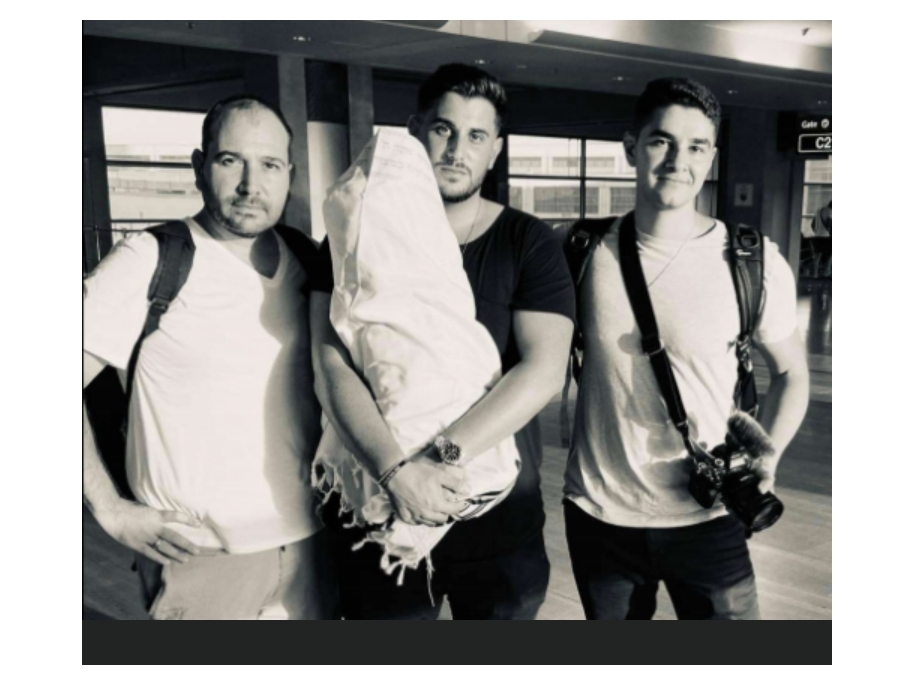
The three Israeli filmmakers arrested by the Department of State Services (DSS), Rochman Rudy, Noam Leibman and French-Israeli journalist, David Benaym have narrated the torture they experienced while in detention. 

They disclosed their experiences in a short video clip tagged ‘Caged: 20 days captive in Nigeria’ as they alleged inhumane treatment by operatives of Nigeria’s secret police. 

The trio, who were arrested on allegations that they supported the activities of the Indigenous People of Biafra (IPOB), said they made the video to explain their purpose in Nigeria.

They were arrested at Ogidi village, Idemili North Local Government Area of Anambra State while shooting a documentary titled, “We Were Never Lost”, which explores Jewish communities in African countries such as Kenya, Madagascar, Uganda, and Nigeria.

The filmmakers reportedly spent 20 days in detention without being charged to court by the Nigerian government. 

A post attached to the video on Rudy’s instagram handle read, “’We were never lost’ team journeyed to Nigeria to film an episode of their documentary series exploring the stories, struggles and aspirations of the Igbo Jews, but while there, the team got abducted by the Nigerian government and were held in cages for weeks. 

“Here is the full account of what actually happened: ‘Our experience has only given us, even more, drive to uncover and share the stories of disconnected communities of Jews around the world.

“We experienced weeks of what Igbo Jews face every day and if our suffering has led to mainstream Jews waking up to the reality of their Igbo family, then we are proud of the sacrifice we had to pay.”

They continued, “The ‘we were never lost’ documentary series is a series that is set to tell the stories, struggles and aspirations of lesser-known or disconnected Jews in the world. 

“Our first season is to take place in Africa we were in Nigeria to film our first episode and unfortunately after two days, we were illegally held by the Nigerian government security service and we were in cages for three weeks. We’re here to set the records straight of what we went through and what actually happened.

“First, you may need a bit of context to understand who the Igbos are and why we went to Nigeria in the first place. The Igbo people are people with a rich history, diversity and a lot of cultures and have other similar experiences that other Jewish communities have around the world.

“Whether it is through persecution or overcoming challenges, they are believed to be descendants of the tribe of Israel specifically of Gad. There is a large community within the Igbo population that has either preserved elements of their Jewish culture, their Jewish heritage or has come back to their Jewish culture or heritage and some of them have their second generation born and all they know is being Jewish and we were coming to Nigeria to document specifically their stories, where they have come from, their experience, their history, aspirations, culture, do they want to remain in Nigeria? Do they want to come back to Israel?”

They shared a video of some Igbo Jews celebrating the Torah of Hashem. 

“Starting from the beginning, we arrived in Nigeria and spent the two days filming in a village called Ogidi, an amazing community that welcomed us with open arms, cooked us food and introduced us to their way of living their Jewish life, the way they were praying every single morning. 

“Even though we had only two days, we got to experience how charismatic, intelligent and hard-working and knowledgeable in Torah this community is. 

”At the end of our second video filming, we were notified that a video was going viral that they used images of us and we can see that they had completely fabricated the stories calling us MASSAD agents, associating us with a movement that is seeking to liberate Biafra and fight against the Nigerian government which of course we had nothing to do with.

“These bloggers had seen we were bringing Sefer Torah as a gift to the community and preceded to make a fake claim assuming we were connected to the separatist movement and that when the Torah arrives, it is a sign of the movement. This claim doesn’t even make sense because there are already several Sefer Torah’s throughout the region. 

“The DSS decided to get involved. The DSS is the interior defence of Nigeria. They came to our hotel on Friday morning with about 10 heavily armed men in black ski masks and told us we had to come with them, they took our phones, our passports and they took our freedom for the following 20 days.

“Of course, we were coming in with no bad intentions and we were innocent the entire time. We didn’t think much of it. We thought we would be there for about an hour, questions which showed them what we are about and what we were planning to do and we’d be able to continue with our project. 

“Eventually, they took us one on one and started interrogating us in ways that they were just accusing us, we had nothing to hide so we told them the truth and we told them our project had nothing to do with separatist movements. 

“It’s Friday night and we have realised at this point that we will not be able to get out and do Shabbath and everyone’s sleeping at the weekend so we did the Kiddush over a grape that we found and the multi over some crackers that we had and this is how we spent our first Shabbath in Nigeria. 

“We know we have embassies of three very powerful countries willing to fight for us but this is not the case for Nigerians who were arrested.”

Creative director, Kavana Films, Leibman said, ”There was a non-Igbo man initially taken into custody with us and when he asked them not to yell at us, the interrogators threatened him by saying, ‘I can make you disappear’. This is the kind of abuse of power we witnessed first-hand and the realisation that there is no accountability for the injustice.”

Benaym added, “24 hours later, about 7 am after sleeping on the floor, we were pushed into a van, they did not want to tell us where we would be, they just said ‘get in the car’, they drove at a very fast, almost trying to intimidate people by driving in their directions to make them afraid. A lot of them were afraid for their lives. We had no clue if the world knew that we were taken. We could not communicate with anyone.”

Leibman said, “After nine hours of non-stop dangerous driving, we were taken to their quarters in Abuja to a cage holding cell.” 

Rudy added: ”When we say cage, we mean, literally a cage, it was a circular room that you can take three, four steps in each direction.”

Leibman continued, “And then we asked our captors, are we under arrest, they said no. Are we being detained, they said no so we said we refuse to willingly enter the cage. For about 20 minutes they were stood around not knowing what to do because they had no authority to put their hands on us. Eventually, a senior officer comes in screaming that they were embarrassing him and orders them to physically throw us in the cage.”

They continued, “First five nights, we didn’t have a seat, it was dark, hot, no furniture, no beds, we were forced to sleep on the tiled floor, we were sweating, there were bugs, urine. The cage looked like what you could imagine in Hollywood movies.

”In the morning, when the sunlight illuminated the room, we saw writings all over the room from previous prisoners, the words written there were, ‘Dear God, allow me to experience happiness one more time in my life’. And another one saying, ‘Please remember me when I disappear’. 

“We could see writings on the walls of the people that were counting the days. There were days we didn’t shower, we were eating only bread and crackers, they basically treated us like animals. We became the story and that was absolutely not the intention.

“We didn’t know anything going on in the world, we didn’t have any means of communication. We didn’t understand why we were there.

”Finally, after five days there, the Israeli Embassy Ambassador came and one of the Consulate from the American Embassy. 

“We were able to know that the outside world understood what our situation was, they told us they were doing everything that they could to get us out of there. They managed to speak with the people keeping us, the DSS officials and agreed to bring food from Chabad, a Jewish organisation; that was the first time we had a real meal.

“And we were finally allowed to shower and when I say shower, we go into a bathroom with the bucket that they used to either clean themselves because there was no tissue paper or to actually clean the bathroom itself by pouring it on the floor and taking this bucket, we will fill it up with cold water from the sink and dump it on our heads and that is how we showered there for the three weeks that we were being held.”

Benaym revealed, “I take medications daily and if I don’t, my life could be in immediate danger, especially in the kind of situations we were being held in. Medications, all of our equipment and luggage were left in the hotel 900 km away and days without my medication could be extremely dangerous and we kept on telling them that it was essential that I got my medication and they wouldn’t listen.”

His colleague said, “The DSS doctor scribbled down the name of the medication and told us, ‘don’t worry, we will find some’ and we were explaining to him that it is a unique prescription customised for him and it is very expensive, you will not find it in Nigeria, if you don’t take this seriously, you are going to have the death of a foreign citizen on your hands and the response was ‘calm down, don’t worry’. 

”He was very afraid that he might catch something so he was taken by the French Embassy and he was also hospitalised and finally able to get his medications.”

”I was sent back every single morning for days to get questioned. The fact that I had to go back inside knowing the way we were treated over there,” Benaym said. 

Rudy said, “Me and Noab continued in the room and after that we were sent to another cage that was slightly bigger but we had another two cellmates with us, they were accused of doing a terror attack in Abuja, bombing in 2014 and purchasing weapons illegally. 

“We don’t know these people, they could try to harm us, they could try to do something so the first week, we even walked around carrying scissors, we put it in our pockets to make sure that in case one of them or both of them were to attack us, at least we had something. 

”This is kind of like the day to day life they went through, we didn’t know anything going on in the world, we didn’t have any means of communication, we didn’t understand why we were there, several times we asked each other how did we got there, accused of some things, not even charged or arrested so we don’t even have human rights lawyers in horrendous conditions.”

Leibman said, ”We knew that Nigeria’s own laws states that when someone is brought in as a suspect, the DSS has 48 hours to release them. They interviewed us for hours on end. Took written and video recording statements, hacked our phones, did literally everything they could to try to find one shred of evidence they could use against us for an arrest. 

”Before the trip, we understood that the government is not friendly to the Biafra Movement but we couldn’t imagine how they were unable to differentiate between those who were involved in the IPOB separatist movement and Igbos who just want to live a thorough-based Jewish Igbo lifestyle. In the end, we didn’t receive our freedom for three weeks.

”Almost the entirety of this time, we sit in a blank room doing nothing, no form of mental stimulation, no reading material, no news, nothing other than being trapped and disgusted in a room not knowing when this would end. We didn’t know if people were actually fighting for us, we didn’t know if we would get a lawyer if something would happen to us. We lived in a fear of the unknown.”

Benaym added: “I’m a journalist and one of the most important rule is ‘never become the story’ here we became the story and that was absolutely not our intention.”

Leibman noted, ”We were not able to make the film we set out to create; the opportunity was robbed from us and we will never be allowed into Nigeria but if you know anything about the Jewish people, we are not ones to give up on our aspirations, this has only increased our motivations to share the stories of the Igbos and our project will continue.”
View this post on Instagram

A post shared by Rudy Rochman רודי רושמן (@rudy_israel)

Benaym said, “This is exactly the occasion to go back to what our purpose is, talk about the Igbo Jews of Nigeria and all the other communities we are going to explore for ‘We were never lost.’

“We like the world to understand that we focus solely on the Jewish community and we hope that the Nigerian government understands that if they are fighting against movements seeking to separate from Nigeria, they shouldn’t be targeting every single Jew and every single Igbo in Nigeria. 

“The Igbo Jews welcomed us with open arms and we will always remember this.”

(SaharaReporters)

My mum, my coach, my hero

By Lillian Okenwa

A former Deputy Director General of the Nigerian Law School, Enugu campus, he’s a Senior Advocate of Nigeria. His wife is a Judge of the Federal High Court though he did not set out to marry a judge. Actually he met a beautiful student who looked like a younger version of his mum and decided she was the one. No surprises there, for his mum was not only his best friend but his hero. And so when he met her younger lookalike, there was no turning back.  His enthusiasm for law is also shared by his younger brother Chudi Ojukwu, a Senior Lecturer at the Nigerian Law School. Meanwhile, three out of his five children are lawyers although only one joined the profession. The other two veered completely off. One is a filmmaker while the other who acquired culinary skills from France is showcasing her skills a Chef.

He met her as a student but they got married after her call to the Bar. She was his student at then Imo State University. But what was the point of interest? “To a great extent she looks like my mother. That was my first sign but we found out that we share other values like orderliness, honesty, decency. In fact when we got married people thought she was my mother’s daughter.”

The couple started off as young people with different ambitions. He wanted to be a teacher and that was settled while in his third year at the University of Ife, now Obafemi Awolowo University, Ife. Unlike other young people that were unsure of what they wanted, he set out after the National Youth Service scheme to accept only employment in that area. Consequently, he commenced his teaching career at the Imo State University, which later became Abia State University at 25.

Ernest Maduauchi Ojukwu (SAN) | The Guardian Nigeria News - Nigeria and  World News — Features — The Guardian Nigeria News – Nigeria and World News

Many would wonder how a young man could be so focused and self-assured at a time his age mates were preoccupied with more frivolous pursuits. The secret however is his relationship with his mother.  Prof. Ojukwu calls her his biggest heroine and influence. My mum was my coach, hero, my star,” he professed.

“I found out after she died that most of the things I was doing to impact humanity I was doing for her. Most of the things I was doing were for her. After her death I lost my ability to work hard for a couple of years. I had to restart. I didn’t know why I needed to work hard anymore. That was the impact she had on my life. I mean she was honest and she set goals. She was tough as a woman and she could challenge anybody in any environment. She was very intelligent. By the way she only did primary school but ended up as a headmistress of primary school and supervisor.

Nigeria at 57: Lawyers Should Reflect As We Celebrate Nigeria–Prof Ernest  Ojukwu, SAN | Prof Ernest Ojukwu, SAN

“Actually, she later did two years Teacher Training school at Ovim Girls, now a secondary school. It used to be a primary and a boarding school. She went there on a white man scholarship. In 1959 she wrote a novel: ‘In Search of a Father.’ In fact my third child has taken after her. She studied architecture at University of Nigeria, Nsukka, but she is into full time fiction writing as her profession. She has a second book now. So she formed me. In all aspects of my thinking and career and she influenced me very much.”

The Teacher’s biggest motivation in life is to make a difference in peoples lives.

“I actually like to make a difference in people’s lives and community’s life. If I change somebody’s understanding, from ignorance to knowledge or from knowledge to improved knowledge, that is my biggest success and I enjoy it. That is why they call me Teacher. The day a young lawyer for instance walked into my office and I succeeded in teaching him how to write an address on an envelope I was happy. As simple as it appears, many people don’t know there is a rule on how to write an address on an envelope. It should always be in the middle. The young lawyer wrote from the right hand side on a big envelope and after interrogating, I found out he could not write an address on an envelope. I had to make sure he got it after I had condemned about three envelopes. By the fourth one, he got it and I congratulated him. You could see that he was cheerful. That made my whole day a success.

“When I was a Deputy Director General at Law School, I had a seven year old lawyer who applied to be an adjunct teacher. He wrote a formal letter to me and put my address on the right hand side of the letter. When I pointed the position of the address out to him, he could not identify that that was a problem. So I had to bring a plain sheet of paper and we spent the next 45 minutes learning how to write a formal letter (laughs). So when I succeed in changing such roadmap for a person I feel fulfilled.”

Abuja raids: Stop arresting women in manner that discriminates against gender – Court tells IGP, Civil Defence, Abuja Environmental Protection Board

A Federal High Court in Abuja has warned against arresting women in such circumstances and manner that discriminates on the basis of gender.

Ruling in favour of six women who were harassed and abused during raids by the Abuja Environmental Protection Board (AEPB), police and other law enforcement agents in April 2019 the court in an injunction restrained the Police, Nigeria Security and Civil Defence Corps and AEPB from persisting in such arrests.  

After over two years of trial, Justice Evelyn Maha of the Federal High Court in her judgment on August 5th, 2021 held that the arrest of the applicants without cause, the beating, molestation and dehumanising treatment, detention of the applicants and their barring from accessing legal representation was a violation of the applicants’ rights as guaranteed under the Constitution of the Federal Republic of Nigeria.

Maha who awarded about ₦4 million in damages against Abuja Environmental Protection Board (AEPB), the Nigerian Security and Civil Defence Corps, the Inspector General of Police and Inspector Thomas Nzemekwe AKA ‘Yellow’ in favour of the six applicants held that AEPB was presumptuous in its role and acted ultra vires, beyond its scope and powers regarding the raids.

The six women, through a team of lawyers comprising of Deji Ajare, Mojirayo Ogunlana-Nkanga, Bamidele Jacobs, Jennifer Ogbogu, Miriam Orika, Chigoziem Onugha, Martins Obono Augusta Yaakugh led by Sterling Law Centre, filed public interest suits seeking to enforce their fundamental human rights to personal liberty and freedom of movement, right to personal dignity, freedom from torture, freedom of association and freedom from discrimination. The suits were filed with support from Lawyers Alert and the Open Society Initiative for West Africa.

Credit: Pulse ng

On April 26, 2019,  a mob of over 100 male state actors invaded clubs, hotels, supermarkets and other centres of business in Abuja to round up women under the guise of arresting sex workers. It was alleged that the invasion was commissioned by one Hajiya Safiya Umar, the Acting Secretary Social Development Secretariat of the FCT, a woman saddled with protecting persons within the FCT, particularly women and children.

The unfortunate event, a recurring decimal for women in the FCT, became known as the ‘Abuja Raids.’ These women, targeted because of their gender, suffered sexual violations, physical and mental torture while in detention at Utako Police Station.

Inspector Thomas Nzemeke, also known as ‘Yellow’, physically assaulted a mother of a two-month-old baby, a woman menstruating was denied access to sanitary towels, and the women were stashed in most unsanitary conditions. They were denied bail and legal representation between the 26th and 29th of April 2019, infringing on their human rights. Cnsequently, in line with the mandate of the National Human Rights Commission (NHRC), a Special Investigative Panel on Sexual and Gender-Based Violence in Nigeria on the incidents in Abuja and other parts of the country was constituted.

A statement signed by 58 Civil Society groups and activists including Amnesty International Nigeria, Open Society Initiative for West Africa, Alliances for Africa, Bring Back Our Girls (BBOG), Nigerian Feminist Forum  and others on behalf of additional rights groups described the judgment as Victory for Women and Human Rights. 

“This judgement is significant as it asserts the human rights of every person against gender-based violence, especially by state actors, which is a persisting, well-documented fact. The judgment regarding the discriminatory arrest of people based on their gender, particularly the arrest of women in the streets and other places, becomes a reference point for protecting women’s rights now and in the future.”

Executive Secretary of the National Human Rights Commission (NHRC) Mr. Tony Ojukwu said: “History has once more been made in Abuja in the landmark court judgements on the notorious raids of women and girls in the streets of Abuja by the Abuja Environmental Protection Board and other law enforcement agents. The landmark judgement has vvindicated the position of civil society groups and the Commission.’

Credit: Pulse ng

Ojukwu expressed hopes that the judgement will serve as a wakeup call for law enforcement agents to desist from further inhuman raids and activities in such a way that violates the human rights of citizens – as such will be resisted and challenged in the courts of the land.

Freedom of movement is guaranteed by the Constitution of the Federal Republic of Nigeria and can only be restricted in exceptional circumstances clearly defined by law. The court’s declaration that the actions of the AEPB, was unlawful and had abrogated powers to itself and acted beyond its brief under its establishing Act is poignant. Significantly, the court made an order of perpetual injunction against the AEPB and other respondents from further carrying out raids without an order of a court.  

Similarly, Dr Ivana Radacic a member of the Working Group on Discrimination against Women and Girls welcomes the decision of the Federal Court. Not only does the judgement recognise violations of the rights of the claimants and awards them the damages, it also prohibits the relevant enforcement authorities from arresting women in such circumstances and in the manner that discriminates on the basis of gender, thus having a broad impact. The judgment represents an important step in challenging impunity for violations of the rights of sex workers, prevalent in many societies, and recognising discriminatory impact of criminalisation of prostitution on women.

Listed as respondents in this case are:

  1. The Minister of the FCT
  2. Federal Capital Territory Administration
  3. Federal Capital Development Agency
  4. Hajiya Safiya Umar, Acting Secretary Social Development Secretariat of the FCT
  5. Abuja Metropolitan Management Council
  6. Abuja Environmental Protection Board
  7. Hassan Abubakar H.O.D Abuja Environmental Protection Board
  8. Eze Enya, Abuja Environmental Protection Board
  9. Nigeria Security and Civil Defence Corp
  10. Inspector-General of Police
  11. Attorney General of the Federation
  12. Thomas Nzemekwe AKA ‘Yellow’
  13. Idayat Akanni Olaide (Chief Magistrate 1)

TIPS