Home Blog Page 926

Why the Southern Strategy is in Northern Nigeria’s best Interest, By Osmund Agbo

In America’s political lexicon, the phrase Southern Strategy bears a very ugly connotation and smacks of scorched-earth politics devoid of conscience. It was an electoral tactic employed by the Republican Party during the Jim Crow years, to increase support among white voters by appealing to racism against African-Americans. This is not to be confused with it’s usage in the Nigerian context of this essay to describe the coming together of Southern Governors to champion the cause of the people they swore to represent.

If there is any silver lining to the ugly situation of Nigeria teetering on the brinks, it’s the long overdue opportunity it presented for the Nigerian South to come together and face their demons. Of course the medicine is pretty bitter but there is no doubt that the patient needed it. For our Arewa compatriots, unless one is under the belief that the business of nation building is a zero-some game, everyone should welcome the idea of a regional subgroup working to strengthen its alliances.

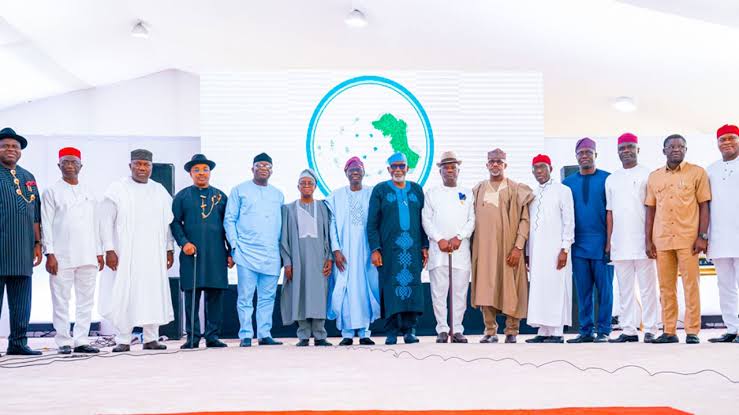
Not long ago, 17 governors representing all the states that make up Southern Nigeria, met in Asaba to discuss the way forward for a nation at war with itself. They deliberated on how to contain the burgeoning threats that armed bandits, killer herdsmen and marauding foreign savages pose to their region. Of note is that similar warning had been made by other eminent Nigerians on the danger of open grazing and the ugly consequences of continuing on that antiquated practice in the twenty-first century.

The governors had since followed up with a second meeting in Lagos on July 5th, where they issued a communiqué on a garden variety of issues ranging from a call to rotate the presidency to the south as well sounding a note of warning on the dangers of selective incrimination. They also rejected the provisions of the Petroleum Industry bill(PIB) that proposed 3% (favour 5% recommended by the House of Representatives) share of the oil revenue to the host community as well as the recommendation to set aside 30% share of profit for the exploration of oil and gas in the basins.

It’s worth remembering that although the proposed law was silent on what constitute the frontier basins, a statement by the President in 2019 clearly identified the Chad Basin, Gongola Basin, Sokoto Basin, Bida Basin, Benue Trough, amongst others as the frontier basins. Any surprise that the new PIB had been harrumphed by stakeholders in southern Nigeria and it’s provision described as “unjust, satanic and provocative” by the Pan-Niger Delta Forum?

Those are same of the issues that have attracted a lot of attention across the board for such a long time, yet it did not prevent Attorney General Abubakar Malami and a section of the northern elite from crying blue murder when the governors decided that the time to take a stand is now.

You wouldn’t think that the North that has from time immemorial, enjoyed the benefits of unity between her cultural mosaic would be so rattled because of an attempt by her southern neighbour to do exactly the same. They are the one with robust, operational and fully engaged socio-political groups, the likes of the Northern Governor’s forum, Arewa Consultative Forum, to mention but a few. Nigeria is so predictable to the extent that any move by one section of the country is often misinterpreted to be against the interest of the other. Truth be told, the north is not the only group with that toxic mindset.

When former President Goodluck Jonathan was making some heavy investments in education by building 165 Almajiri schools in the North, some especially in the South didn’t see it for what it is, an attempt to save Nigeria from itself. A good number of hare-brained politicians argued that by trying to bridge the knowledge gap between the north and south, the former president was unwittingly handing over epistemic power to the north, the only advantage they believe the Nigerian South has enjoyed. They reasoned that as long as politics is concerned, the South has always played the second fiddle and so it’s uncharitable and counterintuitive to arm your “enemy” with more weapon to attack you.


The augment on the surface seems reasonable but you only need to scratch that surface to find that beneath it, is an asinine and self-defeating mindset. It defies the simple logic that personal success will not insulate you from the dangers facing your society. You cannot be sleeping in your house with both eyes closed when your neighbour is walking around on an empty stomach, rummaging for a morsel of bread to eat. If this doesn’t make sense to you, then you must not understand that stifling the ideology and tackling the socio-economic factors that birthed Boko Haram is in the best interest of all Nigerians, north and south.

What has been the case all these while is that in the face of monumental security challenges facing the south and Nigeria in general, the governors have felt helpless and forlorn. Almost all of them are frustrated that they are designated the chief security officer of their individual states and yet, the police hierarchy look up to Abuja for direction and guidance in the face of the slightest security challenge. Out of desperation and in order to ward off backlash from their subjects, they concocted all kinds of ad hoc security arrangements.

Granted that Nigeria’s practice of pseudo-federalism continues to pose a huge administrative challenge, many of our state governors, however, went completely “AWOL” in discharging their constitutional duty. The few situations they love to bare their fangs, are in the fight against Local Government autonomy as well as protecting the independence of the legislative branch in the States under their jurisdiction. In fact, the famous constitutional lawyer, Mr. Femi Falana(SAN) argued that out of ignorance, the governors have given up their power/privileges and are just starting to wake up from a self-induced coma.

In a recent interview granted to Channels TV, the legal colossus explained that the Commissioner of Police in each state of the Nigerian federation is under the control of the governors and should take directive from him, in line with the constitutional provision that designates them as the chief security officer of each state. He cited the case of the Attorney-General of Anambra State versus the Attorney-General of the Federation when former Governor Chris Ngige was abducted with the connivance of a police chief. The Supreme Court had ruled in favour of the governor. He also talked about the case of the Inspector-General of Police versus All Nigeria Peoples Party (ANPP), where the court also ruled that governor of a state and not the police chief has the final say on whether or not rallies, demonstrations, and public meetings should hold in any part of the state. In the later case, it is important to note that the Police is not even mentioned in the Public Order Act.

Every state in Nigeria has a security council where the governor is the chair and members include the Commissioner of Police, Director of State Security Services (DSS) and all the Military Commanders in that state. There is also the Nigerian Police Council, a 39-member body, headed by the President as the chairman whereas the 36 state governors are members, as well as the Inspector General of the police and the chairman of the Police service commission.

And so, in all these, Mr. Falana pointed out that the governors are not as incapacitated as they want to make us believe. A big part of the problem is that many of them are not aware of the power made available to them by the constitution and so are quick to cede such power to the Federal Government. The constitutional provisions that were clearly explained by the learned gentlemen is at the heart of the recent reinvigoration of the Southern Governors who now seem poised to take their destiny into their own hands. They are so sick and tired of straddling the fence, while their individual states burn to the ground.

These series of meetings initiated by the Southern Governors is a deft move with a potential to stem a vicious tide in a region that has become a hotbed of separatist movements. By coming together to improve on the political and economic fortune of the people, the state chief executives are attempting to infuse hope into the forlorn of the South, telling them that Nigeria too will work for them.

Contrary to all the grandstanding, polemics and myths being bandied around, no tribal group or region will have it so easy in a fractured Nigeria. At least not in the short run. The situation will become even more dire for the areas buffeted by Boko Haram and under a constant assault by armed bandits for years. Not to mention that the same region even before now, found itself trailing far behind in almost all developmental indices there is. That said, the only way Nigeria can survive and prosper is when we start to build stories where every individual, tribe or religion wins. An exhortation need not be delivered to stress that point.

•Dr. Agbo, a public affairs analyst is the coordinator of African Center for Transparency and Convener of Save Nigeria Project. Email: [email protected]

Change Of Vehicle Color Prohibited

OBSCURELEGALFACTS BY AROME ABU

In Nigeria, where the colour of a vehicle is to be changed, the owner must apply for approval from the Vehicle Inspection Office (VIO).

Where the colour of a vehicle is changed without due approval, the licence of such a vehicle shall become invalid and the owner of the vehicle shall be liable on conviction to a fine of N3,000.00 or to imprisonment for a term of 6 months or both

See Reg 13 of the National Road Traffic (Amendment) Regulation.

Arome Abu is the Managing Partner of TCLP.

CAVEAT: Note that this information is provided for general enlightenment purposes and is not intended to be any form of legal advice.

Obscure Legal Facts is an exclusive daily publication of THE COUNSEL L-P.
H.3 16A POW MAFEMI CRESCENT, Utako, Abuja, Fct
abuarome@[email protected]
www.thecounsellp.com
+234 803 262 2359
+234 708 1156 539
Twitter: @TheCounselLP

Pendulum : Lessons From My 2011 Presidential Bid

By Dele Momodu

Fellow Nigerians, I’m happy to be back again with my political analysis but I must instantly warn that I have yet another negative prediction to make and it is very simple; Nigeria is not likely to select and elect a brilliant and competent President in 2023, if the country remains intact. I am no longer sure that Nigeria will remain one peaceful and indivisible country by then, particularly if things continue the way they are, and this administration is engendering, fostering and festering the cracks and divisions. I know that many people would argue that the problems of Nigeria are not about one man or woman, and so electing a brilliant and competent President is not a sine qua non for our existence and development. However, I wish to disagree vehemently. The incurable optimists and jejune analysts are likely to tell you that our challenges are institutional and not personal but that is not wholly true, as I will explain in a jiffy.

It is my personal belief, gained from empirical evidence, that every problem and solution begin and end with the leader at the very top, especially strong leaders like President Muhammadu Buhari who is virtually the law unto himself, and unto us. The Buhari government has so much influence on other arms of government such that it can get away with almost anything, either positive or negative. Despite the much-vaunted constitutional separation of powers, an autocratic and dictatorial personality like this will always ride roughshod over all the safeguards and maintain that it is either his way or the highway! Unfortunately, true to its antecedents, this omnipotent government of Buhari has blatantly refused to deploy this humongous power to the good and progressive use and advantage of Nigeria and Nigerians.
The day Nigerians succeed in electing a very capable President, that would be it as far as I am concerned. So, what are the impediments militating against electing that ideal President, who I will stress once again need not be a saint?

One, I’m not sure Nigerians actually know the attributes of a good leader. I’m almost certain if we see a genuine Messiah, we’ll be busy arguing till he disappears forever into oblivion. Some will say he must be a saint. That’s what led us to Buhari who we clothed in the toga of an Angel and apotheosised for good measure. Others will say, he must come from one particular region or religion. Many will say that he is too young and inexperienced, or that he has no money. The saddest part would be that most of the youths clamouring for a leader of their own would never form a consensus about who from their generation they should back. Instead, they would all hanker after the same position and, thus, dissipate their energy and chances. It is so tragic. Let me take this opportunity to go down memory lane and use my 2011 Presidential bid as a case study.

When I offered myself in 2011, many people I knew said “Dele must be kidding! Does he think the Nigerian Presidency is like the Ovation magazine he runs? How much has he got to spend?” But they were right and wrong. Though I did not have government experience, it is not a compulsory prerequisite to being a President in Nigeria or elsewhere else. The truth is that in a country like Nigeria one wonders what experience our leaders have to proffer the people. For the most part it is the same experience in failure, corruption, incompetence and ineptitude. Examples abound in other countries about those persons who became Presidents without being career politicians. They had distinguished themselves in other spheres of human endeavours and were naturally imbued with leadership skills. Barrack Obama was virtually a rookie in politics when he tried his luck as American President. Donald Trump was much worse, having never been a politician at all but more of a reality star who had used the opportunity to turn around his ailing businesses. He became extremely controversial from the outset of his political campaign but he was able to defeat some of the biggest political machines in America.

I was largely influenced by Obama. I was convinced I had the educational background, business experience and acumen to manage resources, backed by global contacts and exposure. I believed in myself, as Abiola constantly preached to us both in business and politics, and I felt that I had the carriage and charisma, the temperament, the tolerance and detribalized natture, the caring attitude, the courage, the vision, the resilience and tenacity to take on the daunting challenge and goals I had set for myself. I had no doubt that I had the capacity to lead a multi-ethnic and multi-religious nation such as ours. Beyond these attributes, I was ready to do what most of our leaders don’t worry about doing, establish a clear ideology and philosophy for my movement. A country as poor and impoverished as Nigeria must operate on the principles of welfarism. No country can practice rabid capitalism without capital, and certainly not without thinking of catering for the greater will-being and welfare of the teeming masses. Nigeria is too poverty-stricken and afflicted by mass ignorance to continue to run an outlandishly profligate variant of democracy, that is even alien to those who introduced us to democratic concepts and ideals. A reasonable, effective and efficient leader must urgently and reasonably work with other stakeholders to restructure the country politically, economically and socially.

I made strenuous efforts to link up with some members of the British Labour Party in London. They were going to collaborate with us on welfare policies, especially in the areas of poverty alleviation, education, national health insurance, housing, transport and agriculture. Unfortunately, the Labour Party back home in Nigeria had no proper links to the labour unions. It was labour in nomenclature only and did not really tap into the stupendous assets that the labour unions in Nigeria have to offer in terms of numbers, organisation and economic might.

The Labour Parties of the UK and Nigeria were identical in appellation but that is where the similarity ended. The Parties were certainly not at tandem or similar in principle or policy. Indeed, the Nigerian Labour Party was at best a creature of circumstances and happenstances. I got frustrated and headed to what I always like to describe as GANI FAWEHINMI’s party, the National Conscience Party. It is sad and unfortunate that Nigeria is governed without any clear technical template. Every leader rules ruthlessly and whimsically. Booby-traps are meticulously and rigorously laid for perceived enemies of government. It is a kind of relay race in which batons of wickedness, ignorance, mediocrity and backwardness are exchanged remorselessly and ceaselessly. Of course, my result was utterly predictable in such a caricature of democratic will and principle.

Two, the uninformed electorates. Most Nigerians don’t know how terrible the situation is. You only need to travel to some remote parts of the country to see and understand the magnitude of the problem. The poorest of the poor turn out to be the worst fanatics of these inept and visionless leaders. They accept and savour whatever crumbs are thrown at them periodically from the lofty heights that the charlatans have manipulated themselves into. Since a man who’s down fears no fall and feels nothing good can ever happen to him, the lumpen proletariat can’t see anything wrong with the pittance being given to them to sell their respective souls and future.
Three, the media as the fourth estate of the realm is also culpable in this grand conspiracy against good candidates. My experience was extraordinary. I discovered the unbelievable. Journalists actually look down on themselves. We seem to lack self-esteem. Despite my personal successes (I’m not being immodest) and global brand, my colleagues were not ready to promote me as a credible alternative to the other contestants. They were happy to push others onto the front page but not one of their own. I made uncountable media rounds and visits, leaving nothing to chance, but met brick walls in most newsrooms, which was my natural constituency.

Till today, I struggle to fathom the rationale for their attitude. Some say that it was simple envy or jealousy. Others suggest that it is a trait synonymous with the oppressed who cannot see beyond their noses and slavishly and sycophantically follow their oppressor. Unknown to most of my friends, if a Dele Momodu was not qualified to lead Nigeria, it may be an impossibility for any of them to climb that Herculean height even within their profession. Perhaps, many of them lacked a sense of history. Many of our Nationalists had one form of journalism stint or the other, Herbert Macauley, Nnamdi Azikiwe, Obafemi Awolowo, Anthony Enahoro, Ernest Okoli, Samuel Ladoke Akintola and even Ooni Sir Adesoji Aderemi whose newspaper was the forerunner to the Nigerian Tribune of today and others. So, I often wondered when journalists became dregs of the society that they can no longer aspire to the greatness that their predecessors attained.

Four, The Godfathers in Nigeria hardly consider non career politicians. They usually go for hard core politicians and military chieftains who are actually probably better politicians without a civilian garb. After watching, and later reading, former President Ibrahim Badamasi Babangida’s interview last week, I pray members of the privilegentsia will be willing and ready to throw their weight behind global champions instead of the usual lacklustre candidates. Nigeria is too richly blessed to continue to throw up those who have not achieved much at home and abroad. I know some people who don’t know how Nigeria works may want to dismiss The Godfathers as inconsequential, I won’t join them. They may not be able to give you votes in general elections but they have the capacity to determine the candidates at the top party levels. In effect they direct the voter’s mind and choice by placing only their own candidates as the alternatives from which the people are to choose. To me, that is the ultimate voting card. The joker in the pack!

There are many vested interests in who becomes the next President of Nigeria.. The ex-military Generals are right at the top of the pyramid. You can’t ignore the incumbent President Muhammadu Buhari, former military Generals Yakubu Gowon, Olusegun Obasanjo (the longest serving leader), Mohammed Inuwa Wushishi, Theophilus Danjuma, Abdulsalami Abubakar, Aliyu Mohammed Gusau, Alani Ipoola Akinrinade, David Jemibewon, and others. There are also very influential and powerful traditional rulers including the Sultan, the Ooni, The Alaafin, Emirs, Obas, Obis and Amayanabos amongst others. It is a testament to the power and influence of the traditional rulers that government falls back to them at the first hint of major crisis including, insecurity and social upheaval. The Captains of Industry would always want someone who can protect their business interests. They are very critical to the emergence of candidates of both leading political parties. Candidates need tonnes of cash and Nigeria is not yet a country where you can rely on regular folks making substantial donations. In this category, no candidate no matter how saintly can ignore the Dangotes, Adenugas, Elumelus, Rabius, Ovias, Otedolas, Alakijas, Adebutus, Otedolas, Sayyu Dantatas, Okoyas, Bola Shagayas, and many of the big personages and companies operating in Nigeria. Religious Organisations are not left out. Apart from generating mega bucks, they wield enormous influence on their members. They include the Imams, the Adeboyes, Oyedepos, Olukoyas, Kumuyis, Esther Ajayis, Tunde Bakares, Paul Adefarasins, Tony Rapus, Agu Irukwus, and so many others. Remember, politics is a game of numbers, so they are all adding up.

Five, you must factor in INEC, the armed forces, secret services, judiciary. I can confidently confirm that none of them is truly independent. Finally, I venture to say that as a matter of fact, the hoodlums, thugs and miscreants have become incredibly influential in Nigeria, powerfully emboldened by our desperate and despicable politicians. Depending on the government of the day, the security forces are not able to arrest anyone when the gangsters go on rampage.

Six, our celebrities, social media influencers and bloggers are expected to influence who to vote for, but they often prefer to support the government of the day, stay aloof or even go for awoof from the highest bidder. It is such a shame how superstars waste their incredible popularity on useless candidates.

Seven, the big Brothers are lurking around somewhere. These are the foreign powers who are in Africa to mint money and exploit resources where possible and available. Don’t let anyone fool you that their interest is altruistic or in any way noble. They like most people are in it for what they can grab! No matter how much they sermonise about Democracy, the economic interests of their countries remain paramount and irrevocable. They will never support a hot-headed candidate who will rock the boat. They are more potent than all our leaders put together. Ignore them at your own peril.

There is so much to write but little space. I shall be back…

When Will SERVICOM Focus On NIN And Passport Processing?

By Raheemat Adeniran

Ihad an unwholesome experience registering for the compulsory National Identification Number (NIN) scheme, encountering overzealousness of persons in positions of authorities, and a general apathy towards the status quo common among the citizenry. I was discriminated against on the basis of religion and struggled to be enrolled. I also escaped entrenched extortion rooted in the delivery of basic services, often perpetuated by fellow Nigerians who tend to cash in on delivery of essential services to fellow Nigerians in dire need of such services.

My journey towards enrolling for the NIN dates back to 2014 when I filled the online form required as pre-enrollment for the registration ahead of biometrics data capturing at any National Identity Management Commission (NIMC) registration center. Unfortunately I was unable to do the biometrics data capturing due to long queues of booked participants I often met each time I went to my most accessible designated NIMC centre located at the Lagos State University main campus, Ojo, Lagos.

So when the Communications and Digital Economy Minister, Dr. Isa Pantami, suddenly announced a deadline for linking all active mobile lines, I simply dismissed it as an empty threat knowing it will be impossible to achieve within the very short period given. I relaxed, expecting the worst case scenario should they make good their promise. I was simply not prepared to spend a whole day at any of the centres, with the attendant risk of the COVID-19 pandemic. I just could not afford to spend my precious time on such ‘frivolities’ with my challenging lifestyle of managing a career as an academic with family commitments, while shuttling between two states, Lagos and Osun, just to maintain some form of balance.

Then came an unusual call on a Saturday from a customer relations agent of one of the major telecommunication companies in Nigeria, Globacom (Glo) from the Osogbo centre, inquiring to know why I failed to subscribe for data the previous month. We chatted for a while on that. Just before ending the conversation, I casually asked if Glo was still registering people for the NIN at its offices. He answered in affirmative and encouraged me to come to the office the following the week to get it done. Since I was in Osun state at that time and billed to stay there for the following week, I decided to try it out.

I arrived the Gloworld outlet at Osogbo around 12 noon on Tuesday, June 15, 2021and was excited at the limited number of people on queue for the NIN registration. In less than 30 mins, I was already next-in-line to the capturing desk. Just then, the capturing officer turned to me to inform me that I will have to show my ear for the biometrics capturing exercise, else I will not be attended to. I am a Muslim woman who wears the Hijab as a religious obligation and showing off my ear was a not an option for me. I insisted that he must be mistaken as such denial is against international best practices which allows the use of such head coverings on religious grounds.

But he was adamant. He confirmed that as his usual practice and that anyone who unwilling to comply usually leave unattended. Shame. I ended up creating a scene insisting I speak to his superior officer. But he would not budge, claiming the buck stops at his desk when it comes to data capturing at the center. I eventually had to leave that day as no one would agree to my stance. They simply could not understand the drama “just to show my ear”. But they were wrong; evaluating my defiance from their narrowed and bias perspective. My insistence is simply a fight for societal inclusion for Muslim women. I should not be discriminated upon and denied essential services on the bases of my religion.

As I left the office I called a friend who has ties with hijab advocacy groups to help report the discrimination I just experienced. She later linked me up with a senior official at Glo who called me two days later, on Thrusday, June 17, to inquire about the incident. He apologised for my treatment at the center and promised that the issue will be resolved. The Manager of the Gloworld outlet at Osogbo also called to apologise and assured that I could visit the centre to get the registration done. He noted he was not around on the day of my first visit as he would have resolved the issue in my favour. I agreed to go the following day.

As a further precaution, I did some little research and found a NIMC Harmonization and Implementation Committee document online on Biometrics Standards and Specifications which clearly specify that “Partial covering of head, without covering the face from forehead are allowed due to religious reasons”. The clause permitting head covering is contained in page 16 of the document under subsection 8.7 on “accessories” under Section 8 titled “Enrollment of face image”.

I was eventually captured by the same man who blatantly refused claiming the system has been programmed to reject any face image captured without the ear. He simply arrogated the power to interpret the guidelines thus denying others like myself the opportunity to get captured at the centre. Although the manager assured that he has since been briefed to desist from such practice, I still witnessed him asking two women in hijabs to show their ears for the face capturing before my turn.

Then came the next drama regarding the collection of the NIN slip. I was at the centre again on July 17 with the hand written slip containing my name and a serial number to trace my NIN. I met two men by the entrance calling out names from similar slips and returning the slips to their respective owners with a N200 note. I was curious. I learnt the names being called were for those whose NIN were yet to be generated. There were reports of some who had done the data capturing since May but whose NIN were yet to be generated.

Afterwards, one of the men started collecting the slip again from ‘the new comers’, and people simply handed him their slips with a N200 note. On getting to me, I requested to know what the money was meant for, and he simply said it was “for checking” if the NIN had been generated for collection. I told him I would not pay. He said that was the pre-condition for collection, but that if the NIN has not been generated the money will be refunded so I could check back another day.

I did not need any soothsayer to confirm that it was illegal. Armed with the contact of the outlet Manager, I called him up and introduced myself. He was quick to intervene. He called me in and collected the slip from me. Within seconds my NIMC slip, with the generated NIN, was handed over to me. He apologised again noting that the men were wrong to have insisted on the N200 as a pre-condition to getting the slip. He said he just learnt that the N200 naira being collected was lamination fee for the slip and confirmed that they should not have insisted on the payment since it was optional. I left the main hall to meet the others within the open space in the compound who were aware of my refusal to pay.

They were surprised I had collected the slip and simply attributed it to my “knowing someone” within. I told them they could have challenged the decision to pay but they confirmed that they had no choice than to pay the requested N200 “checking fee” and another N200 for lamination when the slip is ready for collection, making a total of N400. I called the attention of the outlet manager to the anomaly but he insisted the men claimed they only collect the N200 for the lamination. I chose not to argue further. Whether N200 or N400, it still did not negate the fact that those men at the gate chose to cash-in on the situation as is typical of many such situations when people require essential services. And as usual, people simply complied without argument, just to get the required services. It is high time many Nigerians started to challenge the status quo and ask basic questions. Though, we may not always get our way, we may at least get the attention of relevant authorities to the plight of the ordinary man.

I once evaded such exploitation when I applied for a renewal of my international passport in 2017. I had recently read two Premium Times reports on passport racketeering at the Nigerian Immigration Services (NIS) passport offices nationwide; with the agency’s official response urging people to directly apply for their international passports on the NIS website and make the approved payments online.
The officers were stunned at the NIS passport office in Ibadan which I had visited to submit the filled application form. It was evident I was in for a long ordeal. But an official complaint my husband lodged on the agency official Facebook page fact-tracked the application process.

I ended up paying less than N20,000 for my current international passport while a colleague paid N40,000 for the same offering. You just begin to wonder if SERVICOM, the agency mandated to ensure excellent service delivery in the public sector, is still in place and conscious of service-rendering agencies susceptible to extortion? One expects thatthe Presidential Advisory Committee Against Corruption (PACAC) or the Independent Corrupt Practices Commission, will marshal all possible support for SERVICOM to combat corrupt practices in public service delivery rather than concentrate on arresting and arraigning due process violators alone.

Although making these complaints might just be a drop in the ocean, it could contribute towards changing the narrative on officialdom within the country. As evident in my experience with the international passport application, I ended up being a sort of “VIP” and was promptly attended to on the directive of then Passport Control Officer (PCO) at the NIS Ibadan centre based on order from Abuja. Hence, it became a sort of ‘just treat their files and let them go with their wahala(meddlesome) while we carry on with business as usual’. I only pray my next passport renewal will still not suffer similar ordeal. I however belief that if more people are aware of their basic rights, and raise their concerns with relevant authorities, we can gradually begin to change the narrative towards a better service delivery in this country.

Adeniran is a journalism lectuere at Lagos State University, School of Communication.

Chevron Retires CMD Over Divorce Mess

 The Chief Medical Director of oil giant, Chevron Nigeria Ltd, Dr Rotimi Babalola is to proceeded on retirement over a divorce scandal with his wife, Adediwura Adebukola.

This as a Lagos State High Court restrained him from evicting her from their matrimonial home.

Dr Babalola retirement letter came on Thursday August 12, 2021 when the news of his divorce suit before the court became public. He was earlier billed to retire thia year when he would have clocked 60 years.

Justice Olukayode Ogunjobi specifically barred Dr. Babalola by himself his servants, privies, or workmen from entering, trespassing, or otherwise disturbing the possession of the building at N0 8, service Crescent, Cooperative Villa, Badore, Ajah, Lagos pending the hearing and determination of the Motion on Notice filed in the divorce petition filed by his wife.

The judge granted the order after hearing arguments canvassed by the petitioner’s counsel, Adeleke Agbola, who pleaded for accelerated grant of the injunction in view of the insistence of the Chevron CMD to unlawfully evict his wife from the matrimonial home.

The motion on notice was adjourned to September 20, 2021 when the Lagos State High Court will resume from its annual vacation.

Mrs. Babalola had earlier filled the petition before Lagos State High Court in Suit No: LD/9231WD/2021 when all the attempts by counsel to her husband, Olusola Idowu SAN of Olusola Idowu & Co., and her counsel Adeleke Agbola of Cheakley Chambers to make the husband embrace peaceful settlement failed to yield any result. (cknnigeria)

5 lies about Buhari that won’t go away, By Farooq Kperogi

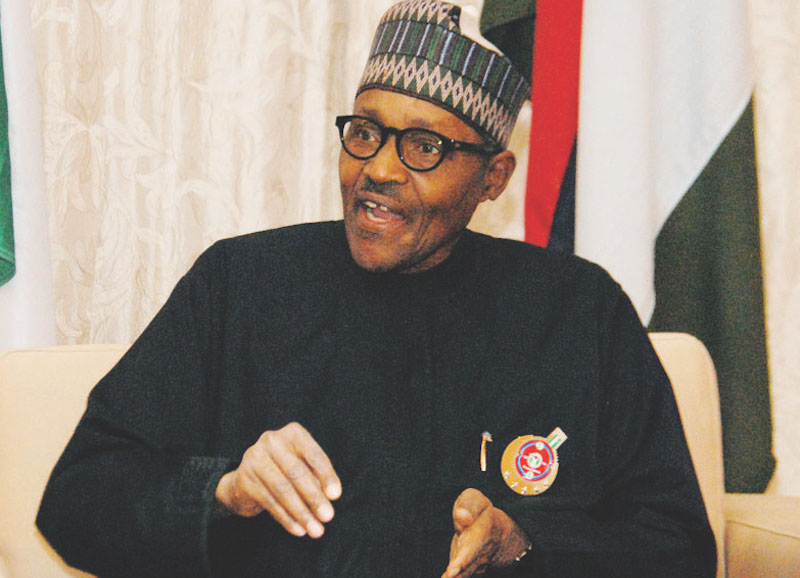
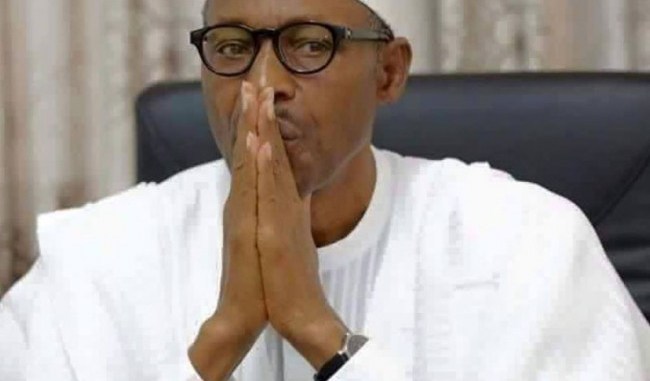
•President Muhammadu Buhari

Muhammadu Buhari is a magnet for both extravagantly flattering myths and stubborn falsehoods. Here are the top five:

Muhammadu Buhari’s very name is wrapped in a curious omission. In most parts of the world, people’s last names are usually either their family name or their father’s first name. Not for Buhari.
Muhammadu (which his teachers spelled as “Mohamed” when he was in secondary school) is his first given name and Buhari is his middle name, not his surname. He was named after prolific ninth-century Persian Hadith compiler by the name of Muhammad al-Bukhari who was born in a city called Bukhara in what is now Uzbekistan.

Bukhari isn’t a personal given name; it’s a demonym, that is, a name given to people who come from a particular place, such as Nigerian, Briton, American, Lagosian, New Yorker, etc. Bukhari simply means a native of the city of Bukhara in Uzbekistan, a West Asian nation that used to be a part of the Union of Soviet Socialist Republics (USSR).

In Muslim and Middle Eastern linguistic traditions, the letter “i” is usually added to the end of the names of villages, towns, cities, and countries to form demonyms. That’s why someone from Pakistan is called a Pakistani, someone from Israel is called an Israeli, and someone from the UAE is called an Emirati, and so on. If the demonym of Bukhara were to be given in Hausa, it would be Danbuhara. In Yoruba, it would be Omobuhara. In my native Baatonu, it would be Buharagi. (My last name, Kperogi, is a demonym, and it means someone from Kperu, the short form of my hometown’s name, Senru Kperu, but which Yoruba people call Okuta).

So how did Muhammadu Buhari come to be known by his names? Because of the immense reverence that Muhammad al-Bukhari enjoys among Sunni Muslims, Muslims have historically honoured him by naming their children after him, so instead of just calling them Bukhari (which they may literally not be since they may not be natives of Bukhara in Uzbekistan), they typically combine the man’s first and last names: Muhammad Bukhari.

Most Nigerian languages, including Hausa, don’t have the phoneme “kh,” which sounds almost exactly like the sound you produce when you are discharging mucus from your throat. The closest phonemic approximation of that sound is “h,” which explains why “Bukhari” is rendered as “Buhari” in many African languages.

Our Muhammadu Buhari doesn’t bear his father’s name even though he is so proud of his paternal ancestry that he gratuitously flaunts it. For instance, in his October 18, 1961 “Application to sit for RNA Qualifying Examination,” he called attention to his ethnic identity even when it wasn’t warranted. “I have the honour to apply for regular service in the Royal Nigeria Army. My name is Muhammadu Buhari and I am a Fulani. I am eighteen years old and I am in Form Six at the Provincial Secondary School Katsina,” he wrote.

Buhari’s father who gave him the Fulani bloodline he brandishes (his mother is Kanuri) was called Adamu Bafallaje (or Bafalle in Hausa). In fact, Buhari’s older brother who died in a car crash in the late 1980s and whose Buhari-lookalike son, Fatuhu Muhammad, represents the Daura/Sandamu/MaiAdua federal constituency in the House of Representatives was called Mamman Danbafalle. (Danbafalle means son of Bafalle in Hausa, and Mamman is the Hausa domestication of Muhammad. It’s common in Muslim families to have many siblings named Muhammad, but they’re often differentiated with their middle names).


If you ask most Nigerians where Buhari is from, they will most likely say he’s from Daura. But he is not. His hometown, by which I mean the town where he was born and where his father lived and died, is called Dumurkul. It’s a sleepy roadside village in Katsina’s Maiadua Local Government Area, which is about three kilometers from Daura and about five kilometers from the last village in the Niger-Nigeria border.
A March 16, 2019 Daily Trust report on the village said Dumurkul is a Fulfulde word, which means ‘settlement for herders’, “especially for those who stay for at least a year.” After his father’s death when he was little, Buhari lived with his mother’s Kanuri relatives in Daura and adopted the town as his hometown.

But he hasn’t severed his umbilical cord from Dumurkul. During this year’s Sallah festivities in July, he was knighted (or “turbaned”) as the Hakimi (or district head) of Dumurkul even though the village wasn’t officially a district.

In order to reconcile the contradiction of making someone a district head of a non-existent district, on July 27, 2021, Buhari’s village was mysteriously upgraded to a “district” and taken out of Koza District of which it was a village after “an emergency plenary to consider the request from Governor Aminu Bello Masari” was convened!

The notion that Buhari is ascetic is another lie that has refused to go away. Ascetics practice such self-denying habits as sartorial modesty, resisting lascivious temptations, shunning epicurean indulgences like drinking and smoking, etc. But Buhari has always been a flamboyant dresser like most everyday people.
In Dele Sobowale’s book titled Letting a Thousand Flowers Bloom (Ibrahim B. Babangida 1985 –1992), Buhari’s past notoriety for unrestrained libidinal impulses was described this way: “He must have been some sort of a sexual athlete. One officer who served with him in two stations had this to say: ‘You can leave your money, bottle of hot drinks or packets of cigarettes with Buhari, go away for several months and return and find nothing would be missing. But leave your girlfriend or sister with him and you might return to find her pregnant.’ That might be an exaggeration but he had that reputation.”

As the reader can see, even in describing his sexual indiscretions, this quote couldn’t help but perpetuate the lie that Buhari didn’t smoke or drink. There are public photos of Buhari smoking.

That Buhari is a brutal, uncompromising, ethically untainted truth teller is another enduring lie about him that appears to be nourished by his taciturnity. But he has told many big lies in the open. As a military dictator in the mid-1980s, he said Nigeria was the only country we had and that we should all stay in it to salvage it, but by his own admission he had never trusted the Nigerian healthcare system to take care of his health since 1977. He had always gone to London for his medical needs and is in London as I write this.
In 2014, he lied that he was too poor to afford his own presidential nomination form and had to take a loan from a bank. A few months later, however, in a ridiculously opaque, half-hearted asset declaration, his spokesperson said Buhari had “not less than 30 million naira” in his account (even N100 billion naira is “not less than 30 million naira”!) without explaining how someone who couldn’t afford a N25 million-naira nomination form in October 2014 suddenly had “not less than 30 million” when he took over power in May 2015.

Also recall that at the time he claimed to be too poor to afford his nomination form, several of his children were studying at UK universities whose tuition costs add up to tens of millions of naira.

Plus, as Petroleum Minister in 1977, he couldn’t account for $2.8 billion, which the legendary Fela sang about. And a probe of PTF, which he headed, showed that he squandered N135 billion. Newswatch’s report of the probe revealed that N500 million mysteriously disappeared from the coffers of the agency. It also showed that Buhari used N800 million on his “personal estate” and used N28 billion to buy “expired HIV/AIDS kits.”

It is now widely believed that Buhari has no school certificate, but he does, and it isn’t fake. One of Buhari’s surviving classmates in Katsina (who, by the way, doesn’t like him) swore that Buhari did take and pass his West African School Certificate. Although I had no reason to question the authenticity of his claim, the late Abba Kyari caused Cambridge Assessment, which administered the WASC exam in Nigeria in 1961, to release Buhari’s result.
He had 5 credits in the following subjects: English (C5), History (A3), Geography (C6), Hausa (C5) and Health Science (C6). He also had a P7 in English Literature. His grade in Mathematics didn’t show in his certificate because got an F9. That was a great result for the time—and even now. He could have gone to the university with the result if he wasn’t in a hurry to enroll in the military while he was awaiting his WASC exam result.

Trade Unions in Nigeria

A trade union is an organized association of workers or employers from related fields – trades, profession or industry, who come together for the purpose of protecting its members against exploitation by their employers or supervisory or regulatory bodies, and ensuring the maintenance and improvement of their collective interests. Such collective interests include, but not limited to, their wages, working terms and conditions, their rights, policies relating to health and safety, maternity and work, gender related issues, sexual harassment, forced labour, and minimum wage amongst many others. Trade union is also referred to as labour Union.

Trade Unions in Nigeria

In solving problems, two or more people are always better than one, and great things in business are faster achieved by joint effort. This can best be described as the very purpose of a trade union. The elected union executives act as the mouthpiece of members within a particular trade, industry, company or profession. The trade union acts as an intermediary between employees (its members) and their employers (this could be government parastatals or private institutions/organizations).

There are lots of trade unions in Nigeria, which have been grouped under two broad umbrellas: the Nigeria Labour Congress (NLC) and the Trade Union Congress (TUC). An example of such is the National Union of Road Transport Workers (NURTW), Nigerian Union of Teachers (NUT), Academic Staff Union of Universities (ASUU), Judiciary Staff Union of Nigeria (JUSUN), e.t.c.

The main applicable laws regulating Trade Unions in Nigeria are; the Labour Act (Cap L1 LFN, 2004), the Trade Union Act, (Cap T14, 2004), and the Trade Disputes Act (Cap. 432 LFN 1990).

The Labour Act is the primary legislation which deals with the relationship between an employer and its employees. Going by the provisions of the Act, the Act is not applicable to all classes of employees in Nigeria. It only covers employees engaged under a contract of manual labour or clerical work in the private and public sectors, as the Act describes them as workers. It doesn’t cover persons whose roles are administrative, executive, technical or professional in nature, these group of employees are called “Non-workers) and the terms and conditions of their employment are generally guided by their employment contract.

The Trades Disputes Act on the other hand provides for dispute settlement, arbitration, and conciliation. It also establishes the National Industrial Court with jurisdiction over trade dispute matters. The main issues that form the subject of the Act are freedom of association, collective bargaining and industrial relations

Trade Unions in Nigeria

BENEFITS OF TRADE UNION

  1. It helps build teamwork spirit among workers: Every trade union has its set goals and objectives which are aimed at benefiting its members. These goals and objectives can only be achieved when all hands are on deck with all members fighting the same course collectively. Trade union therefore calls for the collective efforts of every member, brings them together, and spurs the teamwork spirit in them.
  2. It fosters unity among persons working in related fields and across board, notwithstanding whether or not they work in the same organization
  3. It brings about innovation: Trade unions serve as a platform where persons from the same field, occupation or profession meet and interrelate. They are able to share ideas, and proffer solutions to common problems encountered in their course of duty, thereby making their profession of greater value to them and the society at large.
  4. Trade union also serves as a means of checkmating incidences of poor working practices and non-compliance with labour standards in work places. It is a good medium through which workers can report such incidences without any fear.
  5. It promotes equal opportunities at work place, by addressing every form of discriminating policies.
  6. Being important players in the Labour world, trade unions are usually abreast of latest news, policies and regulations that affect their members and employers. They therefore helps their members to stay up to date with these news.
  7. Trade unions bring about high productivity of workers by negotiating between them and their employers on the several issues that border on workers’ welfare, such as:
  • Health and hazard insurance
  • Minimum wage
  • Working hours, rest hours and annual holiday
  • Sick leave
  • Maternity
  • Protection from discrimination
  • Safety and welfare
  • Termination of employment

Persons in a trade, profession or industry can come together and register a union with the necessary regulatory bodies, as they have a constitutionally guaranteed freedom of association. To register a union or association, or to know more about registering one, you may click here to contact us.

Credit:alukoadeyemiandassociateslawfirm

source https://alukoadeyemiandassociateslawfirm.wordpress.com/2021/08/13/trade-unions-in-nigeria-series/

Banditry: Buhari Is A Weak Leader Without Focus And Direction – Alhaji Maikatako

Nigeria’s President Muhammadu Buhari has been lambasted for being a weak leader watching as citizens are killed at will by notorious bandits and terrorists.

This is the view expressed by a political analyst, Alhaji Usman Maikatako.

According to him, banditry has been on the increase in Nigeria because the government is the one sponsoring the bandits.

He argued that until the government at both the state and federal levels withdraw their support for the activities of the bandits, the security forces can only try but won’t be able to win the battle.

Making reference to the submission of former Military head of state, General Sani Abacha, Maikatako reiterated that if a crisis persists in a society for more than 24 hours, the government is involved.

“Then who is fooling who, is it the fools that are fooling the fools? But the truth must be told that the government is indirectly fuelling the banditry activities in the state,” he lamented.

“Quote me anywhere, if the government wants to end all these banditry activities in the country, it does not take days to end any crisis but the government is not willing.”

He said no bandit or criminal is more powerful than the government but the government needs to show a willingness to end banditry.

“The Federal Government continues sending military troops to the state claiming that it was solving the problems but to any mind, the problems of banditry rests in the hands of the government,” he observed.

Particularly, Maikatako declared that the government of President Muhammadu Buhari has failed Nigerians and brought shame to the country at different levels.

According to him, “The military would be laughing by now because democracy has failed woefully in Nigeria. The truth remains that there is no government in this country that has sucked blood more than President Buhari’s administration.”

“In Nigeria today everybody knows very well that the rich are getting richer while the poor are seriously getting poorer on a daily basis. If we have a responsible government then why should Nigerians be battling to even provide a square meal in a day,” he said.

He further described Buhari as weak leader who is not a serious person at all.

“Buhari is not handling issues as a military man but he is a weak leader without focus and direction,” Maikatako said.

“I did not vote for Buhari and will never vote for him until the end of my life because he is not a serious person,” he addd when asked whom he voted for in 2019.

The dictator in every Nigerian, by Fredrick Nwabufo

We all detest dictatorship when we are the victims of its reverberations, but when we wear the jackboots and are handing down orders, censures; singling shots, cutting down, attacking and destroying other people we palliate our actions. In most cases, we subsume our venture in tyranny as ‘’activism’’ – a term that has now become nebulous and an umbrella for highwaymen clutching the banner of civil advocacy.

There is a dictator in every Nigerian. We want to be heard, but we do not want to hear others. Even when we listen, it is not to understand but to muster ammunition for a belligerent response. The falcon does not hear the falconer. We have become so regimented in our cerebration that any view which does not follow a ‘’popular solitary narrative’’ is blitzed, and the messenger assailed ruthlessly.

It must be our way or the highway to hell. A straitjacket opinion dominates the landscape and all contrary perspectives sentenced to silence. If you dare to think different or say different, you are cancelled, ridiculed, vilified and slandered. In our world, everyone must be on the bandwagon of the solitary narrative. Is this not a tyranny of opinion? Are we not dictators?

I have become a staple for vicious internet hobgoblins. These imps find my unyielding stance on national issues vexatious. To them, it is uncharacteristic for someone from the south-east to speak in defence of Nigeria or take a position away from the prevailing socio-political doctrine. Their run-off-the-mill argument is that since I am Igbo, I must defend the Igbo – whether for good or for evil. But I cannot fit into that provincial receptacle. It is not me. My calling is for humanity regardless of tribe, religion or political persuasion.

When it is time to take a righteous stand for any group whether – Igbo, Hausa, Yoruba, Fulani, Igala, Ibibio, or Ijaw – I will proudly do so.  What affects one afflicts all of us.

Native mentation. This is our challenge — to see in tribal silos and do not to think beyond the tribe. We must evolve beyond this drawback. Armies of Nigerians from different sections of the country must rise up and defend Nigeria and Nigerians. We should not always retreat into ethnic shells and interpret national matters by sectional prejudice. We must stand in the beautiful middle dividing nonsenses.

My stint in activism enriched my knowledge of civil advocacies – and their ugly underbelly. The clouds are not always white and robins do not always sing. The Nigerian civil society space is one that is tainted and blackened by ego, rapaciousness, and sleaze. I participated in some advocacies in the past with a mind brimming with passion for Nigeria and a fist raised for a change in my country. I was naive. My dispassionate commitment to certain causes and conviction led me down the primrose path of deception. In my innocence, I assumed everyone raising a fist and parroting slogans had genuine intentions.

It was devastating for me when I realised some of these advocacies are well-oiled campaigns promoted by unclean characters. Most civil advocacies do not sprout organically. There is always a mighty hand behind the curtains pulling the marionettes.

There is also the all-knowing complex with the activism industry. ‘’Activists’’ appear to have the right prescriptions to Nigeria’s problems as well as the Midas touch to turn things around. They make pleasing noises; shout the loudest in the room, deliver wry but perfect one-liners, and seal every oration with powerful quotes from famous persons — all by rote. They know what to say in every situation. But many of these advocates from the Nigerian ‘’activism community’’ found themselves in government and became what they stood against in their days in the trenches – and instead of bringing change, they caused government to atrophy with a Sadim touch.

A once vibrant activist with a mouth full of hot words revealed his true plumage and betrayed his hypocrisy when he became state governor and then national chairman of a major political party. There are many like that in the activism community waiting for their turn at the table. And while they are waiting they must keep shouting until their mouth is fed.

While the ‘’activism community’’ claims to be at war with tyranny, it does not brook opposition. Members who do a volt-face or have a change of perspective are ‘’de-comraded’’ or dismissed as ‘’compromised’’. There is a dictatorship of opinion in the activism community. It must be ‘’attack, tear down, criticise and pull down’’. If you happen to point out the flickers of hope in the system, you are reduced to a quisling.

This does not obviate the place of genuine activists – those whose singular pursuit is to see a better Nigeria. Even in a crate of rotten eggs, we still have the unsoiled ones.

There is a dictator in every Nigerian. We hold those in government to scrutiny for alleged acts of tyranny while ignoring our own complicity. We should hear one another. If you insist only your way must stand, how are you different from Idi Amin? Dictatorship stirs resistance. When you come to people from a position of tyranny, naturally they will resist you.

This is a normal human reaction. No one wants to be dictated to, no one wants to be pushed around or made to feel like an indentured slave. We should hear one another.

8By Fredrick ‘Mr One Nigeria’ Nwabufo Twitter/Facebook/Instagram: @FredrickNwabufo

Analysts, insiders justify NNPC’s investment in Dangote Refinery, reel out facts behind figures

Against the backdrop of the outcry over the Federal Executive Council’s recent approval for the Nigerian National Petroleum Corporation, NNPC, to acquire 20 percent stake in the upcoming Dangote Refinery, industry analysts and insiders have reeled out some facts behind the figures to justify the investment decision.

As confirmed, the Federal Government through NNPC would invest $2.76 billion in the Dangote integrated energy project, which was billed to be completed in 2022.

Significantly, the approval came in the wake of NNPC’s plans to invest in some upcoming private refineries in the country.

The decision, as it were, is in line with the corporation’s commitment to guarantee national energy security.

Since the announcement of the investment, excited Nigerians have expressed divergent views.

Some think it is good investment while others think otherwise probably because they do not have sufficient information on what the Dangote refinery project is all about.

Analysts contend that the fact remains that the Dangote project has the largest single train
petroleum refinery in the world with the capacity to produce enough to meet Nigeria’s petrol needs and for export.

One of them said: “It can meet 100 per cent of the nation’s requirement with refined products, namely 57 million litres of petrol per day, 27 million litres of diesel per day, 11 million litres of Kerosene per day and nine million litres of aviation fuel per day.

“There will be surplus of each of these products for export, to signal a new dawn for Nigeria.”

Another stated that the investment in Dangote Refinery was a well-considered strategic move.”

The corporation had in May, this year, announced its intention to acquire an equity stake in the refinery, as well as in five other refineries that are in the development phase.

An insider in the NNPC said: “Firstly, the proposal to take a 20 percent stake in the Dangote Refinery is in line with a government directive stipulating the mandatory participation of the corporation in any privately owned refinery that exceeds 50,000 barrels per day capacity.

“Secondly, the corporate objective of the corporation is designed to grow the domestic refining capacity and improve petroleum products supply from local refineries.

“Thirdly, here is a sound justification in investing in a private sector driven project: A resource-dependent country as Nigeria cannot but show interest, and have a stake, in a business that borders on energy security and has fiscal security implications for the economy.”

The facts behind the figures showed that NNPC’s acquisition translates to 130,000 barrels per day (bpd) capacity from the brand new 650,000 bpd Dangote Refinery for $2.76 billion, Hollyfrontier is acquiring 97-year-old 115,000 bpd refinery from Sinclair Oil for $2.6 billion.

Also, the deal signed by Hollyfrontier and its affiliate, Holly Energy Partners is to acquire almost all of Sinclair Oil’s refining, renewable diesel and logistics assets for $2.6 billion.

This, as learnt, is not the same as the acquisition of the 20 per cent stake in Dangote Refinery by the NNPC.

“It is erroneous to assume that Hollyfrontier is buying 678,000 bpd refining capacity from Sinclair for $2.6 billion. Fact is: The combined business of Hollyfrontier and Sinclair will have a refining capacity of 678, 000 bpd after the acquisition. HollyFrontier already has refineries, and is only adding Sinclair’s two refineries, with a combined capacity of 115, 000 bpd to its portfolio,” an industry analyst said.

Above notwithstanding, of the 115,000 bpd capacity, the first refinery, with a capacity of 85,000 bpd, was built 97 years ago in 1924, while the second refinery with a capacity of 30,000 bpd, was built in 1992. The fact is that only two refineries are being purchased.

“It is therefore ‘unwise’ and unnecessary to compare a facility built 97 years ago with the modern, technology-driven Dangote Refinery,” the analyst said.

TIPS