Home Blog Page 924

Mohammed Fawehinmi: Gone Too Soon [Being A Special Tribute]

By Ebun-Olu Adegboruwa, SAN

He used to come then like a guest, not really involved in the day to day business of the Chambers, so we didn’t have the opportunity of a close encounter, whilst he studied law. He was also not much involved in the political side at the time. Unmistakably however, he had the same zeal, energy and strength as his father, if not more. Mohammed Fawehinmi was to all then like the young shall grow, who didn’t exhibit the silver spoon trait common with most first sons of the high and mighty. His father, the quintessential Chief Gani Fawehinmi, SAN, was a no nonsense man. He didn’t spare Mo (as we used to call him) or any other person indeed. Mo himself told us tales of how he tasted of the Bulala, times without number. But once he got into the Chambers, Mo was on fire! He exuded amazing energy, for research and discovery. He told me he wanted to start from scratch, so he would come to my table and ask if I had legal issues to research on. He was very intelligent, humble, energetic, given to diligence and legal discoveries. He was very easy to relate with so he readily flowed with everybody. And did we all like him! It was usual for lawyers to gather to mimic Chief and recall some of his memorable encounters, either with the security agencies or with the media. And Mo would join us, adding his own narratives from his personal moments with Chief, whilst one of us stood by to watch out for Chief, who normally stormed the lawyers’ hall unannounced.

From the background story that he narrated to us himself, Mo wanted to enlist in the Nigerian Army and had proceeded to obtain the form for enrolment at the Nigerian Defence Academy, which he filled with so much enthusiasm. In one of the columns in the form was a space for his father to sign, so he joyfully took the form to Chief to endorse his signature. I’m sure you can guess what followed. Chief was livid with anger and it took the quick intervention of senior lawyers working with him then to calm him down and save Mo, who sprinted away like a deer. Who would have believed it, that this 14 year old boy was dreaming of joining the coup plotters, whom his father had battled all his life. Who would take over one of the most successful law firms in Africa? Mo told us that he was thoroughly disciplined in the wee hours of the following morning. Mohammed was born in 1969 whilst Gani was in unlawful custody of the military at the Kaduna Prison, held under the draconian State Security (Detention of Persons) Decree No. 24 of 1967, promulgated by the military regime of General Yakubu Gowon. How could such a person aspire to join the military! Mo would later study English as his first degree before he proceeded to study law.

In all aspects of his life, Mo was a chip off the old block, in his strides, his character, his demeanour and even his passion. He didn’t so much believe in cutting corners, as he opted to go through the mills in the Chambers. He expressed his desire to be assigned to a senior lawyer for mentorship whilst going round the tables to pick one or two assignments for other lawyers. By fate, Mo was assigned to me and we worked together on a number of cases. A day to any court hearing, Mo would have prepared the case file for our preview, gathered the authorities to be relied upon and checked through to see if there were pending assignments. And you can be sure that he would always get to court before you. He indeed inspired me, as he gave no sign that he was the son of my boss. Mo had a very fertile mind, he was very probing and it took me time to get used to his many questions on legal issues arising from the cases that we handled together. One of those cases was the one instituted at the Federal High Court, Ikoyi, on behalf of fishermen against the massive oil spillage in Eket in 1998. He was so passionate about securing justice for the fishermen. In another case involving Madam Carol Effiong, whose only daughter connived with strangers to sell her mother’s house, Mo took over the case personally, vowing to ensure that justice prevailed on her side. Mo was a happy go lucky guy, very considerate of others and the plight of the downtrodden. On some occasions, he had intervened to secure legal representation for some category of persons who could not afford the cost of hiring lawyers. I enjoyed my time with him.

Mo was also a family man. He was always with Mubarak, more as a shield from Chief, who didn’t spare him at all, in his disciplinarian attitudes. When his younger sister, Basirat was at the Nigerian Law School, Mo would approach me to help organize tutorial classes for her, on Sundays and would even offer to sponsor my lunch. If I complained about my car he would offer to drive me to Victoria Island and would wait around in the hostel for me to finish my classes to take me back. Many years later, he jokingly told me that he thought I would’ve taken up the opportunity to make the usual proposals. Me! Propose to Chief’s daughter! It didn’t even cross my my to attempt such suicide mission, as anyone in my shoes would have considered it then. Thank God she came out in flying colours and later settled down with her heartthrob.

Mo was a detrabilised Nigerian. Initially when he joined us in the Chambers, we were all curious to know how he would fit into the various struggles of the Chief, on behalf of the masses, at the National Conscience Party platform and civil society generally. Apparently, Mo had his own revolutionary passion and he needed no persuasion on issues relating to good governance, due process of law, democracy and better life for the masses. Looking back now, I realize that Mo most probably stepped into the background whilst Chief held sway as the undisputed leader of the pro-democracy group in Nigeria, given all that Mo has accomplished after the demise of Chief. As a sign of his belief in one Nigeria, he was engaged to a lady from the South East, whom he wanted to marry and he was very serious about it. Mo would say it as it is and had no apology at all for anyone whose ox may be gored thereby. He was very frank and objective, always ready to be persuaded with superior reasoning different from his own.

The Life and Times of MO

Mohammed Fawehinmi was born on February 21, 1969, to Fawehinmi and his wife Alhaja Ganiyat. He attended Kotun Memorial Primary School, Surulere, Lagos, and had his secondary school education at Federal Government College, Sokoto. He was a 1991 graduate of Business Administration from the University of Lagos. He obtained an LL.B degree from the University of Buckingham, England and was called to the Nigerian Bar in 1998. He enlisted as counsel in Gani Fawehinmi Chambers, where he practiced until he closed down the Chambers in line with the instructions of Gani, upon the latter’s death. On September 23, 2003, Mohammed had a lone car accident that confined him to a wheelchair for the rest of his life. Until his death last Wednesday, he was Head, Mohammed Fawehinmi’s Chambers, Director, Nigerian Law Publications Ltd, Director, Books Industries Nigeria Ltd, and Director, Gani Fawehinmi Library and Gallery Ltd.

‘Eghin Mo’ was very tall and handsome to behold, always neatly attired and boyish in outlook. He was very eloquent, perfectly combining his knowledge and study of English language with the practice of law. His was a case of whom the cap fits, let him wear it. The admirable part of his life was the way in which he handled the accident, with personal determination and zeal not to be deterred or discouraged thereby. He was always ready to do his utmost for the public good, he filed cases in court to challenge unfavourable government policies and rose to defend the masses at all times. Mo never married, despite his strong desire to do so. He was about 32 when he had that accident and had an Igbo lady he wanted to marry. Even after the accident, she still wanted to stay with him, but he advised her to move on, fearing that she would not be able to cope with the demands of his new condition. He was dependent on others for his survival and didn’t want that burden on her. She went away disappointed. He never wanted to take advantage of anybody or use his condition for exploitation. That is vintage Mo.

Two years after Gani’s death on September 4, 2009, at 71 years, Mohammed, as head of the Chambers, wound up his father’s law firm as stipulated in his father’s will. He paid off and disengaged all the lawyers in the Chambers, including himself, with effect from January 15, 2009, to fulfil the instructions contained in the Will. He then established his own law firm. But the closure did not affect other staff of the chambers, and the other companies owned by his father. Many of them were engaged in the new Fawehinmi Library and Gallery located in the Nigerian Law Publication House at CBD, Alausa, Ikeja. His resolve spurred him on and he set up Mohammed Fawehinmi Chambers where he began a successful law practice. He also ensured the continuity of the annual Gani Fawehinmi Scholarship scheme to indigent students in higher institutions across the country.

His injury notwithstanding, Mo kept the fire of activism, nurtured while his father was alive, burning. He intervened in national issues and would appear at important events involving the struggle to liberate Nigeria from the hands of its oppressors and gate keepers. Mo was courageous, dedicated, knowledgeable and committed to the liberation of the Nigerian people from the shackle of injustice in all its ramifications. And that is the reason for this tribute. Mo didn’t die, just as Gani himself didn’t depart the revolutionary scene, notwithstanding his physical absence. Their voices still speak and will keep speaking truth to power, on behalf of the people of Nigeria, along with the voices of other heroes and martyrs of our revolutionary struggles. Mo, you have not died the death of aristocrats but rather you name is ingrained in the minds of the people that you stood and fought for, your legacies remain indelible in the annals of our democratic experiences and I know that at the right time, history will stand you out as one of those who came, who saw and who conquered. Rest in power, thou soldier of the masses.

“For to me to live is Christ, and to die is gain.” “If in this life only we have hope in Christ, we are of all men most miserable.” “…Death is swallowed up in victory. O death, where is thy sting? O grave, where is thy victory?”

lifewithoutChristiscrisis

NITDA Explains why Law Firms are ‘Licensed’ as Data Protection Compliance Organisations

The National Information Technology Development Agency (NITDA) has explaned why law firms are being licensed as Data Protection Compliance Organisations (DPCO).

This follows a LinkedIn post made by a concerned legal practitioner, Gbenga Odugbemi on the propriety of NITDA licensing law firms as Data Protection Compliance Organisations (DPCO) to provide data-privacy related services to the public.

Referenced post (Source: Gbenga Odugbemi/LinkedIn):NDPR

  • Law firms pay N50,000 for license

In Odugbemi’s opinion, this stifles the growth of data privacy in Nigeria.

In a swift response, NITDA said they regard highly the opinion of well-meaning individuals and organisations on the implementation of the mandate, hence there is a need for clarification for the benefit of the writer and other esteemed stakeholders.

A statement signed by the Head, Corporate Affairs and External Relations at NITDA, Mrs Hadiza Umar, reads:

“The right to privacy is a constitutional right guaranteed by section 37 of the Constitution of the Federal Republic of Nigeria, 1999 (as amended). However, it is factual and legal inaccuracy to equate the right of data privacy or indeed the provision of data privacy-related services, to the right to data protection. Data protection goes beyond protecting personal data privacy; it also involves the processes, systems and rules to ensure the confidentiality, integrity and availability of data.

“The Nigeria Data Protection Regulation (NDPR) does not seek to inhibit, restrict or curtail the rights of the legal practitioner as provided by the Legal Practitioners Act. The NDPR rather, has opened a new vista of opportunities for lawyers to expand their practice into the area of Data Protection. Lawyers have a right to conduct, take part in proceedings and file court and administrative processes relating to the enforcement or defence of the right to privacy. However, not every lawyer has the competence to conduct and file Annual Data Audit Report as prescribed by Article 4.1(5,6,7) of the NDPR.

“NITDA licensed law firms understand that they represent the Agency in the drive to entrench compliance and help data holding entities to bridge the historical and systemic gap in data protection compliance in Nigeria. Unlike the requirements legal practitioners must fulfil before appearing in the courts of law, the criteria for licensing as a DPCO, requires knowledge of data protection compliance and enforcement, which is not part of the residual knowledge of every lawyer.

“The opinion of the author that the DPCO scheme lacks precedent is a testimony to the innovation NITDA is bringing to its regulatory mandate. Moreover, as the evergreen Lord Denning said in the case of Parker v. Parker, ‘If we never do anything which has not been done before, we shall never get anywhere.’

“While lawyers retain their privilege to traditional privacy rights advocacy and enforcement in most other jurisdictions, NDPR further recognises and institutionalises the capacity of prepared legal practitioners to participate in the audit, training and compliance services for data controllers and processors. It is encouraging to note that Nigeria’s model has become subject of intense studies for adoption within and outside Africa”.

Umar further stated that NITDA is pleased that due to its licensing of DPCOs, training and awareness on data privacy protection has been widely entrenched, jobs are being created, bureaucratic bottlenecks have been eliminated in the bid to comply and the country is fast-tracking its progress towards digital economy maturity.

The National Information Technology Development Agency (NITDA) is the apex regulator for Information Technology in Nigeria under the auspices of the Federal Ministry of Communication and Digital Economy.

The Agency is empowered by Section 6(c) of the NITDA 2007 to develop guidelines for electronic governance and monitor the use of electronic data interchange and other forms of electronic communication transactions in Nigeria.

The Agency issued the NDPR in 2019 as Nigeria’s first comprehensive framework for the protection of personal data.

The NDPR provides the principles and framework for the protection and processing of personal data of Nigerians and residents.

Source: www.techeconomy.ng

Afghanistan: History will not judge the Biden presidency well. He lied to the American people

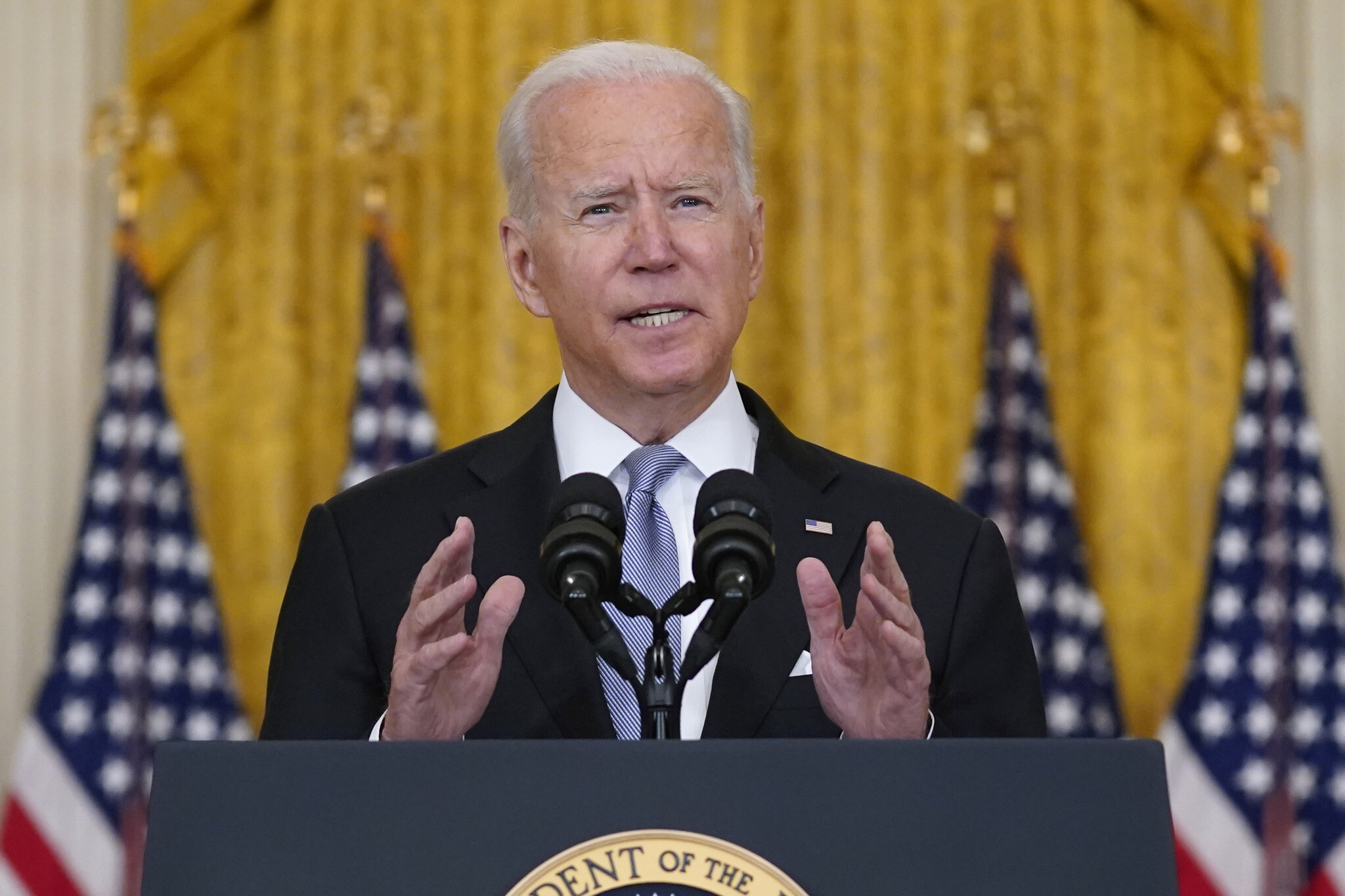
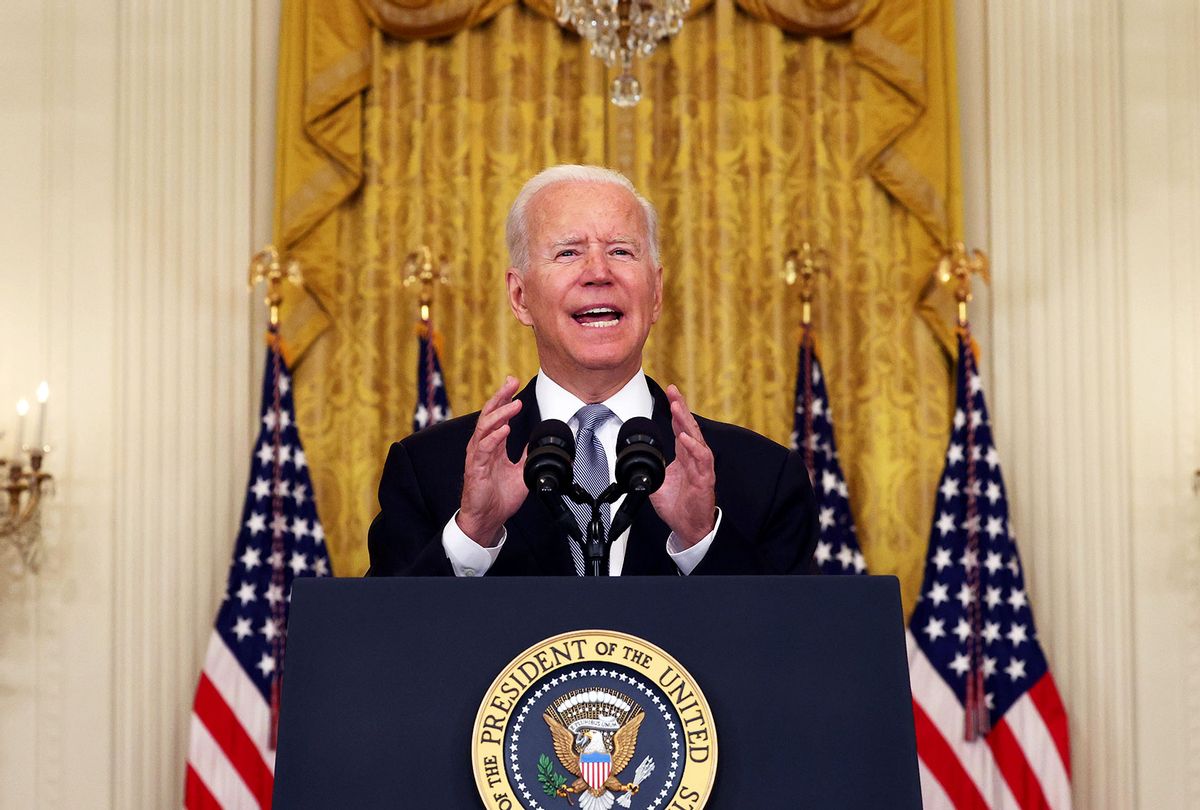
President Joe Biden speaks about Afghanistan from the East Room of the White House, Monday, Aug. 16, 2021, in Washington. (AP Photo/Evan Vucci)

When candidate Joe Biden was asked if he would bear some responsibility for the outcome of a U.S. withdrawal from Afghanistan if the Taliban took control of that country, he answered, “No, I don’t.”

“Do I bear responsibility? Zero responsibility,” Biden added during the CBS News interview in February 2020. “The responsibility I have is to protect America’s national self-interest.” On Monday, as president, Biden sought to explain his withdrawal of U.S. troops from Afghanistan, which was followed by the Taliban’s toppling of the U.S.-backed Afghan government with remarkable speed two weeks before the pullout was to be complete.

Events over the weekend and into Monday invited immediate comparisons to the fall of Saigon in 1975 and the later foreign policy failures of a one-term president, Jimmy Carter. The Taliban takeover marks a clear U.S. defeat in a two-decade war just before the 20-year anniversary of the 9/11 attacks on America that prompted an allied invasion of Afghanistan to punish the Islamist group, which had sheltered al-Qaeda terrorists and their leader, Osama bin Laden.

“History will not judge the Biden presidency kindly for this,” Bill Roggio, a senior fellow at the Foundation for Defense of Democracies and editor of the Long War Journal, told The Daily Signal.

“This makes child’s play out of any of Jimmy Carter’s failures. Carter mishandled a hostage situation,” Roggio said. “Biden took actions that led to the collapse of an ally that we had invested enormous blood and treasure in. This is a defeat for the U.S. and a defeat for the Afghan government.”

Including interest by 2050, the cost of the Afghanistan War could reach $6.5 trillion and 2,448 members of the U.S. military lost their lives in the conflict, according to an Associated Press analysis.

The latest death of an American soldier there came in February 2020.

Biden never was heavily invested in Afghanistan on principle, admitting to opposing President Barack Obama’s troop surge there while he served as vice president.

In the CBS News interview during the 2020 presidential campaign, Biden also said President Donald Trump had too many troops in Afghanistan.

“I think we should only have troops there to make sure that it’s impossible for … for ISIS or al-Qaeda to reestablish a foothold there to go from Afghanistan to the United States, to attack the United States,” Biden said.

Biden’s position has evolved somewhat.

During a Democratic presidential primary debate hosted by CNN in January 2020, Biden said: “I think it’s a mistake to pull out the small number of troops that are there now to deal with ISIS.”

In September 2020, Biden told the military publication Stars and Stripes: “I think we need special ops capacity to coordinate with our allies,” amounting to about “1,500 to 2,000” troops on the ground. In the same interview, Biden said: “These forever wars have to end.”

Also that September, asked whether he backed the Trump plan for an exit from Afghanistan, Biden told reporters: “Yes, I do. As long as he has a plan to figure out how he’s going to deal with ISIS.”

In his remarks Monday at the White House, Biden repeated that he “inherited a deal that President Trump negotiated with the Taliban.”

At the same time, he asserted, “I stand squarely behind my decision.”

Biden has announced the temporary deployment of 6,000 additional troops to help evacuate U.S. personnel from Afghanistan.

In his speech at the White House, the president said:

Those that argue we should stay: How many more generations of American fathers and sons would you have me send to fight Afghanistan’s civil war when Afghan troops will not? How many more lives—American lives—is it worth? How many endless rows of headstones at Arlington National Cemetery? I’m clear in my answer. I will not repeat the mistakes we made in the past.

A “forever war” and a rapid, irresponsible withdrawal is a false choice, said Jason Killmeyer, former chief of staff of global defense, security, and justice at Deloitte Consulting LLP.

Killmeyer said the Biden administration lacked a regional basing agreement for U.S. troops and untied the U.S. exit from a regional security agreement.

“Foreign policy disasters stick out in a different way for presidents and their legacies,” Killmeyer told The Daily Signal. “People will be writing books on this. There will be a play-by-play about the 72 hours at Camp David.”

Biden traveled Friday afternoon to the presidential retreat of Camp David in Maryland, returning to the White House to make his remarks only after the Taliban had captured Kabul, Afghanistan’s capital. He then returned to Camp David.

In February 2020, the Trump administration reached a deal with the Taliban for an end to the war based on whether the Islamist political and military group cooperated with international terrorists.

But Biden rarely claims to have his hands tied by other Trump policies, the Long War Journal’s Roggio said.

“The Biden administration is under no obligation to keep Trump agreements. This wasn’t a treaty,” Roggio said. “The president easily discarded Trump’s Iran policy and other policies. This is just a craven attempt to shelter himself from his own decision.”

At the same time, Roggio said, Trump clearly put a U.S. withdrawal in motion with the agreement with the Taliban. Whether Trump’s administration would have made changes is not knowable, he said.

“He may very well have made changes based on conditions. We can’t know. What we do know is that Trump put this in motion,” he said.

TV images of violence over the weekend resulting from the Biden policy mark a potential culmination of what Robert Gates, defense secretary under both George W. Bush and Barack Obama, once wrote of Biden: “I think he has been wrong on nearly every major foreign-policy and national-security issue over the past four decades.”

Vice President Kamala Harris recently said she played a major role in Biden’s decision to exit Afghanistan.

Sen. Sheldon Whitehouse, D-R.I., a liberal Biden supporter whose father was an ambassador to South Vietnam, was among those comparing the Taliban’s triumph to the fall of Saigon, South Vietnam’s capital.

At a July 8 press conference, in response to a question, Biden dismissed the comparison.

“The Taliban is not the south—the North Vietnamese army. They’re not—they’re not remotely comparable in terms of capability. There is going to be no circumstance where you see people being lifted off the roof of an embassy in the—of the United States from Afghanistan. It is not at all comparable,” Biden predicted.

The collapse of Afghanistan is on a scale with the U.S. failure in losing the Vietnam War and well surpasses any foreign policy failure of the Carter administration, said James Carafano, vice president for foreign policy and national security at The Heritage Foundation, the parent organization of The Daily Signal.

“We are not looking at rookie mistakes. This is a seasoned foreign policy team,” Carafano told The Daily Signal. “Carter had a lot of rookies and mistakes from people who had never worked in Washington before.”

It doesn’t hold up factually to blame the Trump administration’s conditions-based agreement, Carafano said. This was not a consequence of the Trump agreement, he said, and Biden ignored the advice of military and intelligence officials.

“Biden lied to the American people. He didn’t prepare for something that was predicted to happen if he took this course,” Carafano said. “He put the safety and security of Americans at risk and he humiliated everybody. This is literally a presidentially created crisis.”

NIGERIAN YOUTHS: ENTITLEMENT AND COMPLAINTS

By Prof. Bukola Oyeniyi.

Very challenging and inspirational stories, both for the young and old.

As a young man, I had it rough, especially since the introduction of the Structural Adjustment Program in 1985. After secondary school education, I could not go to a higher institution not because I did not do well in JAMB, but because of poverty. I became a full-time farmer and was fully engaged in farming between 1987 and 1993/94 academic session when I was admitted to the University of Ibadan. In between these years, I was a bus conductor in Lagos. Yes, Molue Conductor in Lagos. My brother, Pastor Adewale Oyeniyi is reading this and could testify to my stint as a Bus Conductor. We both were leaving with our niece, Monisola Owolabi, at Majidun Area of Ikorodu then. I bought JAMB form and went to the University of Ibadan straight from Molue Conducting.

Studying was not so much of a problem for me, but joggling it with part-time teaching, hawking bits and pieces made studying a hell. I did a little of bunkering at Ogunmakin and Sapade, buying mostly wheat and PVC from trailer drivers and reselling them at Eagle Flour, Alata Mills, Isale-Oyo Plastic Industry, etc. If you are in doubt, my classmates at the University of Ibadan are all reading this. Ask them.

During those lengthy ASSU strikes, I leagued with Mr. Segun Bolarinwa – Atuka bi eru, ko ri enibaja mo, o fa ogiri mora – and started a laundry business in Oyo Town. Who was our first client? Mama Ibukun – our big sister. We laundered some of her dress, packaged them and walked around Owode, with the packaged clothes in hand. Any silly observer would think we were posing around with those clothes. No. We were advertising our craft. At the height of it all, we laundered Alhaji Mufutau Adebayo and his numerous friends’ dresses, we worked with the Nigerian Baptist Convention and some of the big men and women in Oyo Town.

The business stopped immediately the strikes were called off and while Segun left for the Obafemi Awolowo University, I went back to the University of Ibadan.

I was assisted in both my 300 level and 400 level by two brothers – names withheld for security reasons. The assistance was short-lived as, we fell out after publishing Dr. Olatunji’s “Pendulum”. As it is the case with all big families, squabbles and avoidable mistakes ensured that my path would remain rocky.

I looked at graduation with hope, especially as it would be followed by NYSC, which would, at least, for one year, afford me the opportunity to earn a pittance. I was posted to Edo state and served in Benin City with Toyosi and Taiwo Olaniyan, my Paddy for Life.

After a brief sojourn at Ogbomoso, I relocated to Ibadan and got a job with Goshen, as Administrative Manager. I met Bernard Ijesunor Aigbe – my Kabiruuuuuuu – at Goshen. The position I occupied at Goshen was meant for a friend, Dr. Eberendu Chukwuneye Ngozi Eberendu – one of the most selfless human beings I have ever met. He let me have the job, noting that I had a family to care for. I did not complete the year before I fell out with my boss, Mrs. Marinho, for her lack of emphaty.

I resigned without any job in sight.

From my allowance at the NYSC, I bought a 2-stroke pumping machine with which I set-up a Car Wash in front of Expoyo, along Sango-UI road in Ibadan. Idowu Alade and Ariwoola Shefiq are witnesses. I combined this with my MA History program at the University of Ibadan. I was doing this, even when i became a PhD student.

One evening, I washed a guy’s car – name withheld for security reasons and returned to my room at Awolowo Hall, University of Ibadan. I met the same guy whose car I just washed, at the Porter’s Lodge later that evening. He looked at me furtively, trying to remember where he had known me.

“You just left my Car Wash”. I said to him.

The porters on duty told him I was a PhD student. The guy was shocked. He asked for my room number, and I gave him. He came later in the evening and told me how sad it was for him to realize that, even with my BA (Classics), MA (History), and PhD (History) (in-view), I could be washing cars. He was concerned about my self esteem, “doing that kind of job” not far from the university.

I laughed, saying: “Adebayo ma je’ un” (Adebayo (my son) Must Eat).

He asked if I could meet with his uncle, a certain professor of History, who needed a Research Assistant.

I was at Jadeas Trust the next morning and was interviewed by one old man with a terrible Ekiti accent. By the end of the interview, I got myself a position – Research Assistant to the emeritus professor of History, Professor J.F. Ade-Ajayi.

My salary was the same as any secondary school teacher then – just 14000 naira.

I returned to the Car Wash that weekend to gift the place to my most trusted worker – Ogun. He is still there at Expoyo. Go there and confirm, if you are in doubt.

I met one boy, Mr. Saheed Aderinto (now Professor Saheed Aderinto) at Jadeas Trust and we soon formed a partnership based on mutual interest in research. Most of my MA History classmates mocked me for taking up the job with Prof. Ade-Ajayi. They were concerned that whatever I wrote would be in the professor’s name and not mine.

Saheed, then a young, lively, and my most dedicated partner, turned everything into a joke – “Egbe Awa Ti A Go” (The Association of the Stupid Ones). We would laugh at ourselves over this. He would mock me, saying “Chairman Awa Ti A Go” – The Chairman of the Stupid Ones, while I would return the joke: “Sekitiri Awa Ti A Go” – Secretary of the Stupid Ones.

Within my first eight months, I was awarded a scholarship by Professor Ade-Ajayi to undertake my PhD under his supervision. I was gifted his old laptop, a printer, and my salary was also bumped to 15000 naira.

Saheed was beside himself that evening when I showed him the letter bearing those details.

“Baba mi, e ri pe Egbe wa yi daaa” – “My Senior, can you see that this our association is good?” He enthused in his characteristic Ibadan accent, as we gulped down bottles of 33 after a sumptuous bowl of Amala.

Professor Akinjide Osuntokun was with us for his sabbatical at Ibadan and taught us Historiography. He was impressed at my final examination’s script and announced that I had the best grade in the course. When we met again at Jadeas Trust, as he was Prof. JF Ade-Ajayi’s family friend, it was like a magnet and an iron. He took me under his wings, encouraging me to continue to focus on my study and develop myself while assisting the old professor with his research.

I joined the Redeemer’s University as a pioneer staff at the Department of History and Strategic Studies. Professor Osuntokun was the Dean, College of Humanities. I was at the threshold of defending my PhD then, so I was employed as a Lecturer Grade II.

Under Professor Osuntokun’s guidance, my colleagues and I designed the four-year BA History and International Relations program of the Department and secured NUC accreditation in a year that even the History Department at …… and …. in Southwest Nigeria were not accredited.

I left Redeemer’s in 2009 and joined Joseph Ayo Babalola University in 2010 where I singlehandedly designed the four-year BA History and International Relations program of the Department and later secured NUC accreditation.

Today, I read and heard graduates talking thrash about the “government not providing jobs”, “the system not conducive”, “past generations not doing this and that”, etc. as they shop for excuses for their failures.

Each time I read or hear anyone saying these, my heart bleeds for Nigeria.

I grew up in Oyo Town and had this very good friend, Rasaq Victor Olawuwo, while growing up. We cultivated the habit of reading. We had no mentors. We self-developed ourselves. There is no English author of old that you can name today that both of us would not tell you about their writings. We graduated from literature to philosophy, to religion and classics, science and technology.

We could not afford those books, so, we were constantly at the public libraries. Truth be told – I even stole some public library books while growing up. That is how much and how far we were ready to go in order to build up ourselves.

At L.A. Primary School, Bola in Oyo Town, I did ‘Biri-Sope” (only the deep can be called into the deep). I was a pupil then. At St Luke’s Idode, also in Oyo Town, I was a student and a farmer. At Durbar Grammar School, I had to travel 45 minutes every day to feed our chickens before going to school. I was, for many years, a farm laborer – alagbaro, and did all manners of work at the Eleekara Market.

When SAP did our family finances in, going to the farm everyday was not just to feed chickens, but also to make ‘lafun’. How do you think I smell on such days in school? If you think I am exaggerating, Prince Adeniyi Segilola and Mr. Bamidele Obaseki – my classmates at Durbar Grammar School, witnessed it all. They are also reading this and can controvert any of my claims.

Reading and hearing Nigerian youths write and speak with entitlement today breaks my heart. It is sad that Nigerians want to live under a capitalist and democratic economy but want socialist economic system in the manner of communist system on the sides. It is only in a communist state that government provides jobs. Not in a democracy. So, it is not the job of Nigerian government to provide you jobs. In fact, no one owes you anything. You owe it to yourself and, if you are not good at anything, blame yourself for your failure.

At both the Redeemer’s University and Joseph Ayo Babalola University, we placed advertisements on many occasions, looking for lecturers. At both institutions, we received lorry-loads of application from uncountable number of unemployable but certificated applicants.

While at Redeemer’s University, a young man who studied Computer Sciences at Olabisi Onabanjo University came to me to ask for assistance in fixing his computer. In addition to helping him in coupling a system from the scratch, I regularly attended to his other software needs. He read computer Science. He obtained a B. Sc. in Computer Science while all my degrees are in Humanities.

At the Redeemer’s University, I led a group of students to bid for a contract to provide the university with internet services through Wi-Fi. We were shortlisted and competed with five other companies from outside the university. We had a test run, each participant for one week, when we provided Wi-Fi services across the RCCG Camp at Mowe. Despite the fact that we came out the best, we were not given the contract because we were not a registered company.

I cited these two cases to illustrate a few important points. One, there are a million and one Nigerian youths who are multi-talented and great entrepreneurs. While at Redeemer’s, I met and dealt with many. I cultivated their friendships till date, not minding that they were my students. I don’t want to put them on the spot, otherwise I would have reeled out their names. Two, among so many of them, are PA to the Vice-President of Nigeria today. You would never hear or read any entitlement-seeking piece from them.

On the flip side, there are millions of other Nigerian youths who would thrash-talk all day long. They have education, but no cognitive skills. They are the ones that consider selling peanuts by the roadside, bus-conducting, gatekeeping, etc. as beneath them.

I have bored you enough, let me end by noting the following:

Today, I am a professor of African History, but like an onion, if you peel the layers, here are what you would find: a bricklayer water-fetcher, a farmer, a bunkerer, a Molue conductor, a dry-cleaner, a car-washer, a GSM phone operator, and a Research Assistant.

Ask anyone who know me, I relate with a bus conductor in the same way I relate with my fellow professors. I don’t even introduce myself as Dr. Oyeniyi. I respect cleaners, drivers, pepper sellers because I value what they do. I have a great pride in what they do. I have done all those before and knew that there is dignity in labour.

NOTE: typing on phone is killing, so, endure whatever error you find here with joy.

True Situation of Hostel Challenges in UNN

By Dr Okwun Omeaku

Attention of the management of the University of Nigeria has been drawn to trending online video and comments regarding the condition of students’ hostels on our campuses.

It is important to acknowledge that some of our hostels are not up to standard because of age. Many of them were built in the 60s and 70s and they have suffered lag in maintenance.

However, the current University administration, led by the Vice-Chancellor, Prof Charles Arizechukwu Igwe, FAS, has been making concrete efforts to give our students decent accommodation.

Renovation of the hostels has already started in phases. Toilet ends of Okpara hall were renovated during the COVID-19 lockdown. Okeke hall has also been renovated and in top form. Mbanefo hall, the largest male hostel, is currently under renovation.

To boost the capacity of our students’ accommodation, the administration entered into BOT agreement with Viagem Properties Limited to build hostel blocks of over 12000 bed spaces. The project is ongoing and the first phase will be commissioned by 2022.

The University is at the verge of finalizing an agreement for the reconstruction of Zik’s flat which is expected to add another 6000 bed spaces.

We urge our students and parents to be patient with the University administration. We are very committed to addressing the age-long hostel challenge.

We also call on our alumni, parents, organizations and good-spirited Nigerians to partner with us to fast track the renovation of the hostels.

Dr Omeaku is the Ag. Public Relations Officer, UNN

Encounter With ‘Mai-Ruwa’ Who Is Now A Lawyer

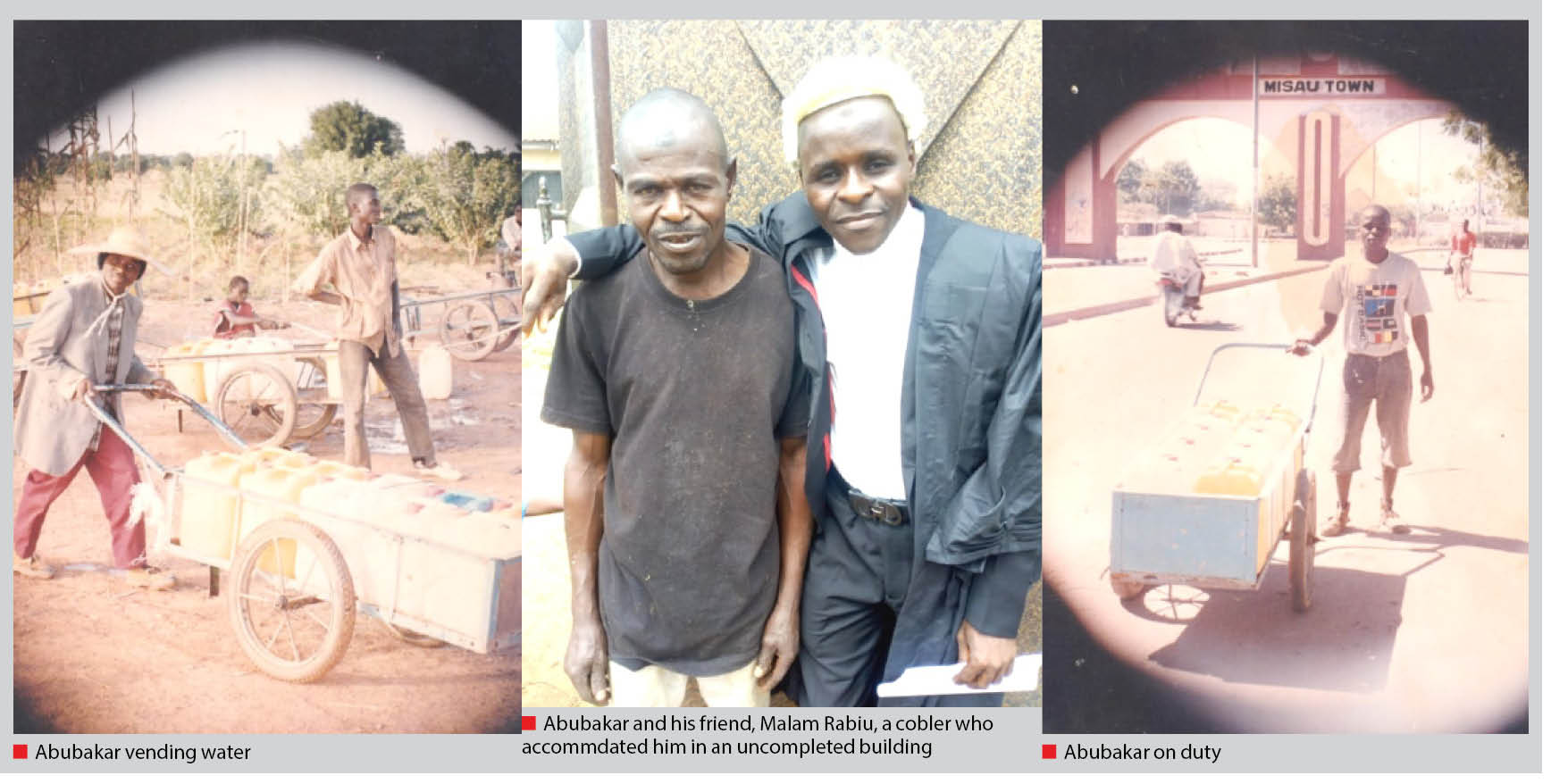
Ibrahim Abubakar, popularly known as ‘Mai Kayan Law,’ was finally called to the bar after his successful second attempt at the Abuja campus of the Nigeria Law School, Bwari. In this interview, he tells Daily Trust Saturday the story of how he sponsored his education through water vending.

You were a water vendor but now a lawyer. How did you achieve this feat?

My struggle started when I was in secondary school because I lost my father and life became difficult for the family. I hired a cart from a neighbour and started selling water. With the little money I was saving, I was able to help my mother and sponsored my secondary school education and diploma in Law. I wrote JAMB examinations three times and also sat for WAEC and NECO examinations for eight consecutive years from 2001 to 2008 before I was able to make credit in English Language.

How did you source money for the registrations?

Because I was determined to achieve my dream of becoming a lawyer, I had to sell all my belongings, including a copy of the Holy Quran that I inherited from my father. I also painstakingly went about my normal business as a water vendor. Interestingly, I got some help from one of my sisters and other well-meaning friends. So, I was able to survive the hardship before I could finish my diploma in Law from Bauchi State Polytechnic.

Were you into water vending even when you were in tertiary institution?

Yes, of course. It was because of the circumstances in which I found myself. I didn’t have anybody to sponsor my education. I had to do it because it was something I could do in the morning and make money before going for lectures or after closing in the evening.

Did you at any time feel shy of your school mates, especially the ladies?

No. I did not even hide the business from anybody. In fact, there was one of my course mates, a lady, whose father was my regular customer. Any time I entered their house with my cart, she used to turn her face as if she had never seen my face before. Whenever we met in the class later in the day, she would keep gossiping about me as if I was a beggar.

Did such attitude discourage you at any point?

No, I was never discouraged by anybody. That was due to my humility and the fact that I believed that I was nobody. I knew that I was only working to become somebody someday. I knew that the road isn’t smooth at all. I met many characters like her. Even, some of them were my relations who had concluded that I would never fulfill my ambition to become a lawyer because of my poor background. When I graduated from Bayero University, Kano, I also met many people who looked down on me because I sought their assistance to be able to secure registration fees for my admission into the Nigeria Law School. But I have forgiven them all.

Did you also sell water when you were in Bayero University?

No. I was selling lecture materials to my mates and other students in the Faculty of Law. There were some lecturers who understood my situation. So, they were assisting me with the materials which I used to photocopy and sell to be able to survive. Throughout my first year in Bayero University, I was sleeping in a mosque because I couldn’t afford the accommodation fee. Later on, I started squatting with some of my course mates.

Whenever the school was on break, I used to stay back in the school. That gave me the opportunity to register by proxy for students who were far away from Kano. They would send their registration numbers and fees to me, plus additional two or three thousand naira as an incentive to me. That was how I was making money to sponsor my studies at the university.

How was life at Law School Bwari, Abuja?

It was also tough because I failed the first attempt which was sponsored by some well-meaning Nigerians whose names I can not mention here. But the last one was sponsored by Mr Samuel Aruwan, the Kaduna State Commissioner for Internal Security and Home Affairs. Before I finally graduated I had slept in an uncompleted building and a mosque.

How do you feel now that you have fulfilled your dream of becoming a lawyer,?

First, I thank the Almighty Allah for giving me the wonderful opportunity to realize the dream. Secondly, I appreciate my mother for her support and understanding as well as many well-meaning friends and lecturers because without their support it wouldn’t have been possible.

So what is next now?

Well, the struggle has just started. I am now in a labour market. I thank God that I am a lawyer who studied Shari’a and Common Law. I am ready to give my best back to society.

Can you offer free counsel to the less privileged?

Yes, with all the hardships I have passed through in life, I think I will not be fair to myself if I fail to do that. At a point, when I said I wanted to become a lawyer, nobody believed in the dream except my mother who kept encouraging me. I said earlier, I had passed through many difficulties. That is the reasons I want to set up a foundation through which I would be able to offer free legal consultations to poor people.

What life lessons would you want the youth, especially those from poor backgrounds, to learn?

Obviously, my live is full of lessons to them. First, they should admit that poverty is not an excuse for someone to achieve his goal in life. Secondly, most youths of this generation are lazy and full of arrogance. These two evils are impediments to self resilience.(dailytrust)

Understanding the Rights of Landlords and Tenants in Nigeria

By Onyekachi Umah

Understanding the Rights of Landlords and Tenants in Nigeria. 

Click to download the full copy of this presentation/lecture

Onyekachi Umah presented a paper titled “Understanding the Rights of Landlords and Tenants in Nigeria” at the Staff Meeting of the Evidence Action, held at the Work and Connect, Jabi, Abuja; on 13 August 2021. The event was organized by the Management of Evidence Action.

First published on August 15, 2021 by https://learnnigerianlaws.com/understanding-the-rights-of-landlords-and-tenants-in-nigeria/

Full Speech: President Biden Addresses Nation On Afghanistan

As Afghans climb on to plane during takeoff in attempt to flee Taliban – video

Good afternoon.

I want to speak today to the unfolding situation in Afghanistan, the developments that have taken place in the last week and the steps we’re taking to address the rapidly evolving events.

My national security team and I have been closely monitoring the situation on the ground in Afghanistan and moving quickly to execute the plans we had put in place to respond to every contingency, including the rapid collapse we’re seeing now.

I’ll speak more in a moment about the specific steps we’re taking. But I want to remind everyone how we got here and what America’s interests are in Afghanistan.

We went to Afghanistan almost 20 years ago with clear goals: get those who attacked us on Sept. 11, 2001, and make sure Al Qaeda could not use Afghanistan as a base from which to attack us again. We did that. We severely degraded Al Qaeda and Afghanistan. We never gave up the hunt for Osama bin Laden and we got him.

That was a decade ago. Our mission in Afghanistan was never supposed to have been nation-building. It was never supposed to be creating a unified, centralized democracy. Our only vital national interest in Afghanistan remains today what it has always been: preventing a terrorist attack on the American homeland.

Afghans climb on to plane during takeoff in attempt to flee Taliban – video

I’ve argued for many years that our mission should be narrowly focused on counter terrorism, not counterinsurgency or nation-building. That’s why I opposed the surge when it was proposed in 2009 when I was vice president. And that’s why as president I’m adamant we focus on the threats we face today, in 2021, not yesterday’s threats.

Today a terrorist threat has metastasized well beyond Afghanistan. Al Shabab in Somalia, Al Qaeda in the Arabian Peninsula, Al Nusra in Syria, ISIS attempting to create a caliphate in Syria and Iraq and establishing affiliates in multiple countries in Africa and Asia. These threats warrant our attention and our resources. We conduct effective counter-terrorism missions against terrorist groups in multiple countries where we don’t have permanent military presence. If necessary, we’ll do the same in Afghanistan. We’ve developed counter-terrorism over-the-horizon capability that will allow us to keep our eyes firmly fixed on the direct threats to the United States in the region, and act quickly and decisively if needed.

When I came into office, I inherited a deal that President Trump negotiated with the Taliban. Under his agreement, U.S. forces would be out of Afghanistan by May 1, 2021, just a little over three months after I took office. U.S. forces had already drawn down during the Trump administration from roughly 15,500 American forces to 2,500 troops in country. And the Taliban was at its strongest militarily since 2001.

The choice I had to make as your president was either to follow through on that agreement or be prepared to go back to fighting the Taliban in the middle of the spring fighting season. There would have been no cease-fire after May 1. There was no agreement protecting our forces after May 1. There was no status quo of stability without American casualties after May 1. There was only a cold reality of either following through on the agreement to withdraw our forces or escalating the conflict and sending thousands more American troops back into combat in Afghanistan and lurching into the third decade of conflict.

I stand squarely behind my decision. After 20 years, I’ve learned the hard way that there was never a good time to withdraw U.S. forces. That’s why we’re still there. We were clear about the risks. We planned for every contingency. But I always promised the American people that I will be straight with you.

American troops can’t be fighting a war Afghan forces are not willing to fight -Biden The truth is, this did unfold more quickly than we had anticipated. So what’s happened? Afghanistan political leaders gave up and fled the country. The Afghan military collapsed, sometimes without trying to fight. If anything, the developments of the past week reinforced that ending U.S. military involvement in Afghanistan now was the right decision.American troops cannot and should not be fighting in a war and dying in a war that Afghan forces are not willing to fight for themselves. We spent over a trillion dollars. We trained and equipped an Afghan military force of some 300,000 strong. Incredibly well equipped. A force larger in size than the militaries of many of our NATO allies. We gave them every tool they could need. We paid their salaries, provided for the maintenance of their air force, something the Taliban doesn’t have. Taliban does not have an air force. We provided close air support. We gave them every chance to determine their own future. What we could not provide them was the will to fight for that future.

There are some very brave and capable Afghan special forces units and soldiers. But if Afghanistan is unable to mount any real resistance to the Taliban now, there is no chance that one year — one more year, five more years or 20 more years — that U.S. military boots on the ground would have made any difference.

Here’s what I believe to my core: It is wrong to order American troops to step up when Afghanistan’s own armed forces would not. The political leaders of Afghanistan were unable to come together for the good of their people, unable to negotiate for the future of their country when the chips were down. They would never have done so while U.S. troops remained in Afghanistan bearing the brunt of the fighting for them. And our true strategic competitors, China and Russia, would love nothing more than the United States to continue to funnel billions of dollars in resources and attention into stabilizing Afghanistan indefinitely.

When I hosted President Ghani and Chairman Abdullah at the White House in June, and again when I spoke by phone to Ghani in July, we had very frank conversations. We talked about how Afghanistan should prepare to fight their civil wars after the U.S. military departed. To clean up the corruption in government so the government could function for the Afghan people. We talked extensively about the need for Afghan leaders to unite politically. They failed to do any of that. I also urged them to engage in diplomacy, to seek a political settlement with the Taliban. This advice was flatly refused. Mr. Ghani insisted the Afghan forces would fight, but obviously he was wrong.

So I’m left again to ask of those who argue that we should stay: How many more generations of America’s daughters and sons would you have me send to fight Afghanistan’s civil war when Afghan troops will not? How many more lives, American lives, is it worth, how many endless rows of headstones at Arlington National Cemetery? I’m clear on my answer: I will not repeat the mistakes we’ve made in the past. The mistake of staying and fighting indefinitely in a conflict that is not in the national interest of the United States, of doubling down on a civil war in a foreign country, of attempting to remake a country through the endless military deployments of U.S. forces. Those are the mistakes we cannot continue to repeat because we have significant vital interest in the world that we cannot afford to ignore.

I also want to acknowledge how painful this is to so many of us. The scenes that we’re seeing in Afghanistan, they’re gut-wrenching, particularly for our veterans, our diplomats, humanitarian workers — for anyone who has spent time on the ground working to support the Afghan people. For those who have lost loved ones in Afghanistan, and for Americans who have fought and served our country in Afghanistan, this is deeply, deeply personal. It is for me as well.

I’ve worked on these issues as long as anyone. I’ve been throughout Afghanistan during this war, while the war was going on, from Kabul to Kandahar, to the Kunar Valley. I’ve travelled there on four different occasions. I’ve met with the people. I’ve spoken with the leaders. I spent time with our troops, and I came to understand firsthand what was and was not possible in Afghanistan. So now we’re focused on what is possible.We will continue to support the Afghan people. We will lead with our diplomacy, our international influence and our humanitarian aid. We’ll continue to push for regional diplomacy and engagement to prevent violence and instability. We’ll continue to speak out for the basic rights of the Afghan people, of women and girls, just as we speak out all over the world.

I’ve been clear, the human rights must be the centre of our foreign policy, not the periphery. But the way to do it is not through endless military deployments. It’s with our diplomacy, our economic tools and rallying the world to join us.

Let me lay out the current mission in Afghanistan: I was asked to authorize, and I did, 6,000 U.S. troops to deploy to Afghanistan for the purpose of assisting in the departure of U.S. and allied civilian personnel from Afghanistan, and to evacuate our Afghan allies and vulnerable Afghans to safety outside of Afghanistan. Our troops are working to secure the airfield and ensure continued operation on both the civilian and military flights. We’re taking over air traffic control. We have safely shut down our embassy and transferred our diplomats. Our diplomatic presence is now consolidated at the airport as well.

Over the coming days we intend to transport out thousands of American citizens who have been living and working in Afghanistan. We’ll also continue to support the safe departure of civilian personnel — the civilian personnel of our allies who are still serving in Afghanistan. Operation Allies Refuge, which I announced back in July, has already moved 2,000 Afghans who are eligible for special immigration visas and their families to the United States. In the coming days, the U.S. military will provide assistance to move more S.I.V.-eligible Afghans and their families out of Afghanistan.

We’re also expanding refugee access to cover other vulnerable Afghans who work for our embassy. U.S. nongovernmental organizations and Afghans who otherwise are a great risk in U.S. news agencies — I know there are concerns about why we did not begin evacuating Afghan civilians sooner. Part of the answer is some of the Afghans did not want to leave earlier, still hopeful for their country. And part of it because the Afghan government and its supporters discouraged us from organizing a mass exodus to avoid triggering, as they said, a crisis of confidence.

American troops are performing this mission as professionally and as effectively as they always do. But it is not without risks. As we carry out this departure, we have made it clear to the Taliban: If they attack our personnel or disrupt our operation, the U.S. presence will be swift, and the response will be swift and forceful. We will defend our people with devastating force if necessary. Our current military mission is short on time, limited in scope and focused in its objectives: Get our people and our allies as safely and quickly as possible. And once we have completed this mission, we will conclude our military withdrawal. We will end America’s longest war after 20 long years of bloodshed.

The events we’re seeing now are sadly proof that no amount of military force would ever deliver a stable, united, secure Afghanistan, as known in history as the graveyard of empires. What’s happening now could just as easily happen five years ago or 15 years in the future. We have to be honest, our mission in Afghanistan made many missteps over the past two decades.

I’m now the fourth American president to preside over war in Afghanistan. Two Democrats and two Republicans. I will not pass this responsibility on to a fifth president. I will not mislead the American people by claiming that just a little more time in Afghanistan will make all the difference. Nor will I shrink from my share of responsibility for where we are today and how we must move forward from here. I am president of the United States of America, and the buck stops with me.

I’m deeply saddened by the facts we now face. But I do not regret my decision to end America’s war-fighting in Afghanistan and maintain a laser focus on our counter terrorism mission, there and other parts of the world. Our mission to degrade the terrorist threat of Al Qaeda in Afghanistan and kill Osama bin Laden was a success. Our decades-long effort to overcome centuries of history and permanently change and remake Afghanistan was not, and I wrote and believed it never could be.

I cannot and will not ask our troops to fight on endlessly in another country’s civil war, taking casualties, suffering life-shattering injuries, leaving families broken by grief and loss. This is not in our national security interest. It is not what the American people want. It is not what our troops who have sacrificed so much over the past two decades deserve. I made a commitment to the American people when I ran for president that I would bring America’s military involvement in Afghanistan to an end. While it’s been hard and messy and, yes, far from perfect, I’ve honoured that commitment.

More importantly, I made a commitment to the brave men and women who serve this nation that I wasn’t going to ask them to continue to risk their lives in a military action that should’ve ended long ago. Our leader did that in Vietnam when I got here as a young man. I will not do it in Afghanistan.

I know my decision will be criticized. But I would rather take all that criticism than pass this decision on to another president of the United States, yet another one, a fifth one. Because it’s the right one, it’s the right decision for our people. The right one for our brave service members who risked their lives serving our nation. And it’s the right one for America.Thank you. May God protect our troops, our diplomats and all brave Americans serving in harm’s way.

To advance, you must overcome adversity

‘In everything and in every way we show that we truly are God’s servants.’
2 Corinthians 6:4 CEV

The Christian life comes with blessings – and battles. You can’t have one without the other. Paul describes it this way: ‘In everything and in every way we show that we truly are God’s servants. We have always been patient, though we have had a lot of trouble, suffering, and hard times.

We have been beaten, put in jail, and hurt in riots. We have worked hard and gone without sleep or food. But we have kept ourselves pure and have been understanding, patient, and kind. The Holy Spirit has been with us, and our love has been real. We have spoken the truth, and God’s power has worked in us. In all our struggles we have said and done only what is right.

Whether we were honoured or dishonoured or praised or cursed, we always told the truth about ourselves. But some people said we did not. We are unknown to others, but well known to you. We seem to be dying, and yet we are still alive. We have been punished, but never killed, and we are always happy, even in times of suffering. Although we are poor, we have made many people rich. And though we own nothing, everything is ours’ (vv. 4-10 CEV).

God will fight for you on your battlefield, take you through your storm, and turn your season of adversity into a season of advancement. When your faith is under fire it attracts His power and brings His grace into your situation. The Bible says, ‘Even Jesus learned obedience by the things He suffered’ (see Hebrews 5:8). So rejoice, you’re not losing – you’re gaining!

Bible in a Year: Proverbs 8-9, 1 Corinthians 13

The Word For Today

How Nigeria’s government determinedly throws billions down the drain By Lillian Okenwa

The record of previous TAM is not inspiring. Government has to tell us how it will be done differently to give confidence that this is not an opportunity to fund the next general elections.” Sam Amadi

“$1Billion can build a low capacity refinery from scratch to finish… The Nigerian government is being imprudent by investing over a billion dollars merely for a Turnaround Maintenance of an out-dated refinery.” Silas Joseph Onu

“If government has spent a cumulative $25bn in 25 years on the turnaround maintenance and rehabilitation of these drainpipes called refineries without anything to show for it, does it make economic sense to continue to throw scarce resources at them again?” Jide Ojo

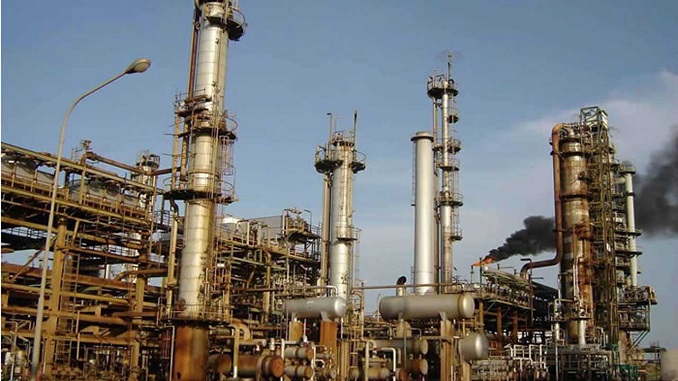
The Federal Executive Council (FEC) recently approved $1.5 billion (about N600 billion) for the rehabilitation of the Port Harcourt refinery. Approval has also been given for the rehabilitation of both Warri and Kaduna refineries to the tune of $1.484 billion. Meanwhile a 20 per cent minority stake in Dangote Petroleum and Petrochemical Refinery will be acquired for $2.76 billion.

The only challenge is that about N3.8 trillion has been poured into Nigeria’s four derelict petrochemical refineries without any result being recorded. Notwithstanding, that between 2015 and 2020, about N1.47trn was spent by the federal government in maintaining, revamping and running the four broken-down refineries to no avail, approval has been given for an additional N2.35trn to be spent on rehabilitating the same refineries. Talk about doing the same thing over and over and expecting different results.

Official reports by Nigerian National Petroleum Corporation (NNPC) disclosed the refineries lost N123.25bn between January and October 2019. While Kaduna Refining and Petrochemical Company (KRPC) posted a loss of N49.3bn, Port Harcourt Refining and Petrochemical Company (PHRC) along with Warri Refining and Petrochemical Company (WRPC) lost N36.7bn and N37.24bn, respectively.

N256.2bn debt threatens fuel importation - Vanguard News
Photo Credit: Vanguard News

While a large segment of Nigerians expressed outrage over the humongous waste, government appears to have turned deaf ears. But then, some experts made a case for the refineries’ refurbishment.

Dr. Sam Amadi, a former Chairman of the Nigerian Electricity Regulatory Commission (NERC) and Associate Professor at Baze University, Abuja said the idea of funding turnaround of the existing refineries may mean that government is walking back on its agenda of deregulating the sector and allowing private sector lead. He also questioned the justification for government’s plan to buy shares from Dangote when the billionaire has bragged of capacity to fully finance the project.

Expressing doubts over the venture, Dr. Amadi said: “The federal government’s recent action or proposed actions in the oil and gas sector suggests a high degree of lack of coherence and consistency in policy management. The record of previous TAM is not inspiring. Government has to tell us how it will be done differently to give confidence that this is not an opportunity to fund the next general elections.

Buhari running 'tooth-picking' govt, level of incompetence too costly – Oby  Ezekwesili | Ripples Nigeria

“The objective of the oil and gas sector reform is liberalization and privatization. There is there no basis for investment in the Dangote refinery. If the reason is to ensure energy security, then the government should have focused on how to make the price affordable not on buying shares which Dangote has capacity to raise through private market. It is a misplaced move that smacks of some windfall for Dangote. If government says it does not want to own refinery, why buy shares from Dangote when Dangote himself has boasted of capability to fully finance the project? This is neither wise of ethical. It is an inappropriate commingling of private and public finance.”

Abuja lawyer and Co-Convener, Open Bar Initiative, Silas Joseph Onu described the entire exercise as wasteful and insincere.

“Generally speaking, with modern technology, building a complex, hydrocracking, hyrdroskimming, catalytic cracking refinery, can cost anywhere between 5-15 billion USD depending on the capacity of barrel to be produced per day. The throughput (processing capacity) of this refinery should be between 250-500,000 barrels per day.  It is therefore, safe to say that even with $1Billion, a low capacity refinery can be built from scratch to finish. It follows that the Nigerian government is being imprudent by investing over a billion dollars merely for a Turnaround Maintenance of an out-dated refinery. This is akin to throwing the said maintenance money in a hole. It is totally wasteful and insincere.

“The investment in Dangote refinery is an indication that the government is actually not interested in making these national assets functional. Ordinarily, a private company should attract investment from the private sector and other individuals who believe in the said project. So, I don’t trust this government’s reasons for such a venture. In any case, before such an investment can be done legally. The National Assembly must appropriate for it and all the tiers of government must also be involved as the constitution of Federal Republic of Nigeria already stipulates how our national income is to be managed in the consolidated account. Therefore, who authorized NNPC to take our collective money and invest in a private business? This is impunity and I condemn it.”

TAM: Cesspool Of Corruption In Oil Sector – Independent Newspaper Nigeria

Stephen Azubuike a partner at Infusion Lawyers observed that it might be difficult to dissociate corruption from the enterprise. “Truth is, in one breath, one could reckon with the apparent effort of this Government regarding the refineries as perhaps, Government’s genuine attempt to revamp our refineries. But on more critical look, failure of the TAMs and Government posture seems like flogging a dead horse. Knowing what obtains in Nigeria in terms of the notoriety of corrupt practices, it is difficult to dissociate corruption from the base.”

Media Consultant and Public Affair Analyst, Tony Eluemunor posited that: “If the Buhari administration wanted to repair the refineries, it would have started immediately it came into power. Yes, Ibe Kachikwu, former Petroleum Minister wanted to repair the refineries but got sacked for his efforts. There is a reason behind this new effort. But it’s not so that they will refine crude petroleum. The reason has not been made public.”

Another Public Affairs Analyst, Jide Ojo shared his views. “The Federal Executive Council chaired by the President, Muhammadu Buhari on Wednesday, March 17, 2021, approved the sum of $1.5bn, about N575bn, for immediate commencement of rehabilitation work on the largest refining company in the country, the 32-year-old Port Harcourt Refinery. “The Guardian report of March 18, 2021 titled, ‘After $25bn on maintenance, FEC approves new $1.5bn for PH refinery’ offered some historical perspectives on the operations of the refineries in Nigeria. It said the Port Harcourt refinery, which began operation in 1989, remains the largest refining company in Nigeria, until the time the Dangote refinery in Lagos will be activated in 2022.

2019: Presidency clarifies Dangote's role in Buhari's campaign as  Nigerians, PDP react | Premium Times Nigeria

“At inception, it had a capacity to process 150,000 barrels of crude a day and was later upgraded to 210,000 barrels per day. The refinery has been repaired innumerable times, under various Turnaround Maintenance contracts that had gulped huge amounts. The report noted further that, ‘…Nigeria has spent about $25bn in turnaround maintenance of refineries in the past 25 years, the prevailing development is coming after promises by the administration that the government would no longer spend on the facility. Previous rehabilitations notwithstanding, the Nigerian National Petroleum Corporation audit report had last year revealed that three of the nation’s four refineries recorded N1.64 trillion cumulative losses in their 2014 to 2018 details.’   This is heart-rending!

“If the above information of gargantuan losses incurred by the refineries is true, does it make sense to pump another $1.5bn on the Port Harcourt refinery? If government has spent a cumulative $25bn in 25 years on the turnaround maintenance and rehabilitation of these drainpipes called refineries without anything to show for it, does it make economic sense to continue to throw scarce resources at them again? To my own mind, what the Federal Government has decided to do to the Port Harcourt refinery as well as others is completely nonsensical, illogical, uneconomical, and whimsical.

“Instead of pumping another $1.5bn to revitalise Port Harcourt refinery, what I think government should have done is to incentivise more private sector players to invest in the downstream sector of the petroleum industry so that healthy competition as was witnessed in the telecommunication sector will ensure that Nigerians are not ripped off but rather get value for their money. One of the ways government can encourage private investors into the oil and gas sector is to allow for cost reflective price. Guided deregulation or price fixing by government is patently counterproductive and the reason for payment of the fraudulent petrol subsidy. Luckily, the long awaited Petroleum Industry Bill has been passed by the National Assembly, though awaiting the president’s assent.”

Likewise, Lekan Ojo, a policy analyst submitted that government’s management of any resource had always been catastrophic. “More so, the Nigerian government has even been beyond grossly incompetent in management of things. This can easily be considered as billions down the drain,” he said.

President Buhari appoints Mele Kyari as new NNPC GMD
Mele Kolo Kyari, GMD NNPC

However, the Group managing Director of NNPC Mele Kolo Kyari insists that the public got it all wrong. “For the Dangote Refinery, we are not taking government’s money to buy it, which is the mistake people are making. We are borrowing on the back of the cash-flow of this business,” he said.

Moreover, Mr Muda Yusuf, an economist and immediate-past Director General of the Lagos Chamber of Commerce and Industry (LCCI), said the Dangote Refinery was of strategic national importance. “My views have always been that even though this is a private sector project, it makes both commercial and nationalistic sense for NNPC to express interest in it. This project has a good prospect to put an end to fuel importation and the associated leakages of public funds while also preserving our foreign exchange reserves.

“The proposal by NNPC to take 20 per cent equity stake in the Dangote Refinery is a move in the right direction. The reality is that the Dangote refinery is a project of significant and strategic national importance, even though it is promoted by the private sector. Taking a stake in the project also makes a great deal of business sense, especially given how far the project execution has gone and our heavy dependence on importation of petroleum products.

“It also makes both commercial and nationalistic sense for NNPC to express an interest in a project that has a good prospect to put an end to fuel importation and the associated leakages of public funds,” he said.

The LCCI DG further stated that the model being proposed with the Dangote refinery was similar in a way to the Nigeria Liquefied Natural Gas (NLNG) Limited’s model, which according to him, remains the best example of how government funds should be invested.

In the same vein, Mr. Wilson Opuwei, Chief Executive Officer, Dateline Energy Services Limited, said the approval was a step in the right direction for the country. According to Opuwei: “It makes sense for the NNPC to invest in ventures that will bring returns to the company. Every business needs good investments and this is what the NNPC is doing with the Dangote Refinery.”

TIPS