Home Blog Page 923

Notice To Quit: Has The Dictum In Pillars V. Desbordes (2021) Changed The Law?

By Chinedu Nwobodo

On Friday, 5th February 2021, the Supreme Court of Nigeria delivered a judgment in Pillars (Nig.) Ltd. v. Desbordes & Anor (2021) 12 NWLR (pt.1789) P.122.

The fact of the case relates to a contract of lease for a plot of land known as plot B, Sabiu Ajose Crescent, Surulere Lagos. The contract of lease was completed on 24/10/1977 when the respondents as lessors entered into a 26-year developer’s lease to erect a building within two years on or before 1979 on payment of annual rent payable in advance. The suit was initiated by the respondents as lessors in 1993 to recover the property due to non-compliance with leasing terms of erecting a building on the land.

The trial High Court and the Court of Appeal found that the appellant, the lessee, breached the terms of lease. Dissatisfied with the concurrent decisions, the appellant further appealed to the Supreme Court. The first issue and complaint was that the Court of Appeal was wrong to affirm the judgment of the trial court that the respondents pleaded and proved service of statutory “Notice of breach of covenant”, exhibit E.

Four issues were submitted by the appellant, but only the first issue for determination which borders on notice to quit will be considered in this article. The issue is:

“Whether the Court of Appeal was right in affirming the decision of the trial court that the respondents pleaded and proved service of statutory “Notice of Breach of Covenant” (exhibit E) and “Notice of Quit” (exhibit G) as required by law.”

This issue as it relates to notice to quit was struck out by his Lordship, Agim J.S.C. in his leading judgment when he held as follows:

“The issue No 1, which purports to derive from ground 1 of this appeal questioned whether the Court of Appeal was right in affirming the decision of the trial court that the respondents did plead and prove service of statutory notice of breach of covenant (exhibit E) and notice of quit (exhibit G) as required by law. The subject matter of the question in this issue is obviously different from the subject matter of the complain in ground 1 of this appeal. Therefore, it is wrong to say that the issue is related or derived from the said ground. An issue is derived from a ground where the subject matter of the issue is the same as the subject matter of the complain in the ground. As it is, no issue is distilled from ground 1 of this appeal. By not raising any issue for determination from it, the appellant abandoned the ground. It is hereby struck out. Let me also state here that to the extent that issue No. 1 questions the decision of the Court of Appeal concerning the notice to quit (exhibit G) it has no relationship with any of the grounds of this appeal.”

The law is well settled in a long line of cases overtime that any issue raised for determination in an appeal that is not based on or covered by any ground of the appeal is not valid for consideration and must be struck out. Modupe v. The State (1988) 9 SCNJ 1; (1988) 4 NWLR (Pt. 87) 130.

Notwithstanding that the issue relating to notice to quit was struck out in the leading judgment, his Lordship, Hon. Justice Ogunwumiju, J.S.C. who wrote a concurring judgment to the leading judgment still discussed the issue and pronounced on it as follows:

“The justice of this case is very clear. The appellant has held on to property regarding which it had breached the lease agreement from day one. It had continued to pursue spurious appeals through all hierarchy of courts to frustrate the judgment of the trial court delivered on 8/2/2000 about twenty years ago. After all, even if the initial notice to quit was irregular, the minute the writ of summons dated 13/5/1993 for repossession was served on the appellant, it served as adequate notice. The ruse of faulty notice used by tenants to perpetuate possession in a house or property which the landlord had slaved to build and relies on for means of sustenance cannot be sustained in any just society under the guise of adherence to any technical rule. Equity demands that wherever and whenever there is controversy on when or how notice of forfeiture or notice to quit is disputed by the parties, or even where there is irregularity in giving notice to quit, the filing of an action by the landlord to regain possession of the property has to be sufficient notice on the tenant that he is required to yield up possession. I am not saying here that statutory and proper notice to quit should not be given. Whatever form the periodic tenancy is whether weekly, monthly, quarterly, yearly etc., immediately a writ is filed to regain possession, their regularity of the notice if any is cured. Time to give notice should start to run from the date the writ is served. If for example, a yearly tenant, six months after the writ is served and so on. All the dance drama around the issue of the irregularity of the notice ends. The court would only be required to settle other issues if any between the parties. This appeal has absolutely no merit and it is hereby dismissed.”

Is the above dictum an academic exercise?

An academic issue or question is an issue, which does not require an answer or adjudication by a court of law because it is not necessary to the case on hand. It could be a hypothetical or moot question. An academic issue or question does not relate to the live issues in the litigation because it is spent, as it will not enure any right or benefit on the successful party. See Tanimola v. Survey & Mapping Geodata Ltd. (1995) 6 NWLR (Pt. 403) 617; Nwoboshi v. A.C.B. (1995) 6 NWLR (Pt. 404) 658; Ogbonna v. President, F.R.N. (1997) 5 NWLR (Pt. 504) 281; Ndulue v. Ibezim (2002) 12.

In the light of the foregoing, a pronouncement on an academic issue amounts to an academic exercise.

Distinguishing between periodic tenancy and fixed tenancy:

A lease or tenancy for a fixed term automatically determines when the fixed term expires. Quit notice is usually obviated in the case of a fixed tenancy since the term of expiration is normally known, unlike periodic tenancy that continues automatically from period to period until it is determined by a notice to quit. See Oteri Holdings Ltd. v. H.B. Co. Ltd. [2021] 1 NWLR29 (pt. 1756) p. 72.

In Abdulaziz v. Garba [2021] 3 NWLR (pt.1764) p. 395, it was held thus:

“A lease or tenancy for a fixed term automatically determines when the fixed term expires. Quit notice is usually obviated in the case of a fixed tenancy since the term of expiration is normally known; unlike periodic tenancies that continues automatically from period to period until it is determined by a notice to quit.”

In a lease or tenancy for a fixed term, all that a landlord is required to do to recover possession is to serve on the tenant seven days notice of owner’s intention to apply to Court to recover possession. See Ihenacho v. Uzuchukwu (1997) 2NWLR (Pt. 487) 257.

Statutory provisions on the length of notice:

The law is that where there is no stipulation as to the notice to be given by either party to determine the tenancy, the following shall apply- a week’s notice for a tenant at will; one (1) month’s notice for a monthly tenant; three (3) months notice for a quarterly tenant; three (3) months notice for a half-yearly tenant; and six months notice for a yearly tenant. See section 13 of Tenancy Law of Lagos State.

On the flip side, where there is a stipulation in the Tenancy Agreement on the length of notice, the same will apply.

The statement made by his Lordship, Hon. Justice Ogunwumiju, J.S.C. is sweeping in effect, as litigants (landlords) who have not complied with the requirements of the duly executed Agreements may consider this as an authority to remedy their mistakes or to obviate compliance with the express provisions of the law.

It is elementary law that where parties have entered into a contract or an agreement, they are bound by the provisions of the contract. This is because a party cannot ordinarily resile from a contract or agreement just because he later found that the conditions of the contract or agreement are not favourable to him. This is the whole essence of the doctrine of sanctity of contract or agreement. The Court is bound to construe the terms only in the event of an action arising therefore. See Mascot O. Okoronkwo v. Chima Orji (2019) LPELR-46515 (CA).

Hence, neither of the parties can alter the terms, unilaterally, nor can the Court add, alter or subtract or read into the contract terms, which the parties did not agree upon. The Court does not make agreement for the parties.

Conclusion:

On the totality of the above, the pronouncement of his Lordship, Hon. Justice Ogunwumiju, J.S.C., with utmost respect, cannot be said to be an authority that an irregular notice to quit is immaterial, or that filing of an action by the landlord to regain possession of the property can displace the requirement of a valid notice to quit.

CAVEAT: the opinions expressed above are my personal opinions, and do not represent the opinions of my employer.

Written by:

Chinedu Innocent Nwobodo (Wakki), 08165191968, [email protected]

Lagos State Tenancy Law 2011

Lagos State Tenancy Law 2011. 

Click to download: the Lagos State Tenancy Law 2011. 

The Lagos State Tenancy Law is the law that Regulates Rights and Obligations under Tenancy Agreements and the Relationships between the Landlords and Tenants in Lagos State, including the Procedure for the Recovery of Premises and for Connected Purposes.

Click to download: the Lagos State Tenancy Law 2011

The Lagos State Tenancy Law although made for Lagos State by the Lagos State Legislature, does not apply to Apapa, Ikeja GRA, Ikoyi and Victoria Island. Also, it does not apply to residential premises owned or operated by an educational institution for its staff and students; residential premises provided for emergency shelter; and residential premises in a public or private hospital or a mental health facility. 

Click to download: the Lagos State Tenancy Law 2011

Leaked NITDA review bill contains provisions that would choke Nigerian startups

For a while, there have been talks about revamping the outdated 2007 Act of Nigeria’s information and technology body, the National Information Technology Development Agency (NITDA).

The bill which established NITDA as the agency to oversee Nigeria’s technological transformation is quite outdated. This past decade, Nigeria has arguably become Africa’s most attractive destination for venture capital. It is also home to two unicorns (Flutterwave and Jumia) and billion-dollar fintech company Interswitch.

To keep up with the pace of innovation that has swept the country, NITDA tasked itself to review these laws and make them more beneficial for startups. Earlier this year, in March, the director-general Kashifu Inuwa Abdullahi proposed the realignment of the Act with “tenets and ideals of the fourth Industrial Revolution” and Nigeria’s Digital Economy Policy.

Monday, we might have caught a glimpse of what that amended bill looks like, and its details are rather concerning than friendly towards startups.

In summary, the bill states that NITDA wants tech companies operating in Nigeria to get a license, pay pre-tax profit levies, and sanction whoever (person or company) that operates contrary to the new Act’s provisions.

In 2019, the World Bank ranked Nigeria 131 out of 190 countries on its Doing Business Index, which measures the ease of doing business through a comparative assessment of regulatory environments.

Per the report, Nigeria was one of the top 10 countries with the most notable improvements during the review period of May 2018 to April 2019. Granted, the country made some improvements during this period but since last year, any talk of progression from the country has been on paper. In reality, businesses, especially those focusing on technology, have faced harsh regulations and policies detrimental to their growth.

After VCs spend millions Nigeria restricts ride-hail motorbike taxis

We witnessed how the operations of motorcycle-haling companies in Lagos were halted indefinitely in early 2020, forcing them to switch business models to survive. In March this year, the country’s apex bank barred people from trading cryptocurrency through banks; crypto startups haven’t looked the same despite using peer-to-peer methods. And more recently, the Twitter ban has affected small businesses in general and how tech startups communicate with customers.

What’s in the bill?

Section 6 of the amended bill details the powers accrued to NITDA. Some of them include the powers to fix licensing and authorization charges, collect fees and penalties and issue contravention notices and non-compliance with the Act.

The agency says it also reserves the right to “enter premises, inspect, seize, seal, detain and impose administrative sanctions on erring persons and companies who contravene any provision of the Act” subject to a court order.

In section 13, NITDA proposes establishing a fund (The National Information Technology Development Fund) to carry out the country’s digital economy objectives. How will this Fund be financed? Grants-in-aid, fees, accrued money under administrative payments, and levies charged from tech companies.

The bill declares that tech companies making an annual turnover of N100 million (~$200,000) will have to pay a levy of 1% of their profit before tax.

In section 20 of the leaked bill, NITDA says it will issue licenses and authorizations for tech companies regardless of their size. The licenses are classified into three — product, service provider, and platform provider. The bill provided no additional information about what these licenses entail and how startups qualify to get them.

However, the agency is more concerned about stating what will happen to individuals or companies that do not get these licenses or pay the 1% levy fee.

“Any person or body corporate who operates an information technology or digital economy service, product, or platform contrary to the provisions of this Act, commits an offense,” the agency said in the statement.

Individuals found guilty by the agency will be fined not less than N3 million (~$6,000) or placed into custody for a year or more. The bill states NITDA can also decide to charge such a person both the fine and imprisonment.

On the other hand, a fine of not less than N30 million (~$60,000) will be charged against corporate bodies. The ‘principal officers’ of the companies may also serve a prison sentence for two years or more.

And individuals or corporates that deny personnel from the agency to carry out duties under the Act will be fined not less than N3 million (~$6,000) and N30 million (~$60,000), respectively. Prison terms range from a year to two in this section for individuals and members within a corporate body.

Further offenses and penalties are mentioned later in the bill. For instance, any company which falls into the category of paying levies and does not pay after two months will be liable to a fine of 0.5% of the total amount to be paid every day after the default.

TechCrunch reached out to the agency for comment regarding the validity of the leaked bill but did not receive any response as of press time.

Startup bill v. NITDA Act

NITDA’s leaked amended bill is coming when the Nigerian tech ecosystem has rallied around to engage policymakers in the country to enact a Startup Bill.

The Startup Bill is geared toward creating an enabling environment for tech startups through co-created regulations with the Nigerian government. This month, the first draft will be made public towards a first reading in the country’s National Assembly in October.

Momentarily, uncertainty hovers around the stakeholders’ next steps following the content revealed in NITDA’s revised bill because the agency is supposed to play a major role in bringing the Startup Bill to fruition.

The leaked NITDA Amendment Bill also presents a whole new level of threat. It is heads and shoulders above what tech companies might have faced in recent memory. If passed, it will alter how they operate and drastically affect the ease of doing business.

Many have called for startup leaders and tech companies to lobby the legislators behind passing bills to law. However, the general sentiment is that lobbying is a dead-end for now.

Sources say motorcycle-hailing companies tried to lobby with important stakeholders before the Lagos state government banned them from operating on its roads. However, it still ended in a ban.

Despite being one of the pioneers of the Startup Bill, Iyinoluwa Aboyeji, co-founder of Andela and Flutterwave, also thinks lobbying might make for a futile effort.

In a tweet, he says Nigerian legislators are not “lobbyable,” and startups should prepare for the worst while hoping for the best. He also offered advice to Nigerian startups to start building for a global audience and incorporate their companies outside the country if necessary.

Yahoo.com

An Examination Of The Limitations To The Enforcement Of The Fundamental Human Rights Under The Nigerian Constitution

By Adeniyi Israel Adekunle

INTRODUCTION

All over the world, the concept of human rights has been deemed sacrosanct. Especially in democratically civilized countries in the world, human rights have been given serious legislative recognition and enforceability. Nigeria, as the giant of Africa, is not left behind in these global developments. Withal, the 1999 Constitution of the Federal Republic of Nigeria (hereinafter referred to as the Constitution), by virtue of its Chapter IV, has given life to the application of human rights in Nigeria. However, not only does Chapter IV of the Constitution provide for fundamental human rights, but also does it undermine same with certain limitations and derogations. In the face of the rising security challenges in our democracy, it has now become germane to consider the constitutional limitations of these fundamental rights.[1] The kernel of this paper examines the constitutional restrictions, derogations and limitations to the enforcement of the fundamental human rights in Nigeria.

FUNDAMENTAL HUMAN RIGHTS

Generally, Chapter IV of the Constitution has been regarded by constitutional law experts as one of the most important parts of the Constitution. This is because it contains some sacred provisions which guarantee the freedom, liberty and enjoyment of many basic privileges accruable to our status as humans. Eleven human rights are guaranteed by virtue of Chapter IV of the Constitution, particularly from sections 33-43. These rights are: right to life[2], right to dignity of human person[3], right to personal liberty[4], right to fair hearing[5], right to private and family life[6], right to freedom of thought, conscience and religion[7], right to freedom of expression and the press[8], right to peaceful assembly and association[9], right to freedom of movement[10], right to freedom from discrimination[11] and the right to acquire and own immovable property anywhere in Nigeria[12]. As beautiful and revivifying these rights are, some of these rights are however blighted with constitutional limitations and derogations, which affect their absolute safeguard. In other words, some of these rights are absolute, while some are limited by certain circumstances, as provided for in the constitution.

LIMITATIONS TO THE ENFORCEMENT OF THE FUNDAMENTAL HUMAN RIGHTS

Fortunately, and unfortunately, the fundamental human rights that are enshrined and constitutionally protected under Chapter IV of the Constitution are not absolute, as they are made subject to certain limitations and derogations. These limitations include:

  • JUSTIFIABLE LAWS

Section 45(1) of the Constitution provides that: “Nothing in sections 37, 38, 39, 40 and 41 of the constitution shall invalidate any law that is reasonably justifiable in a democratic society- in the interest of defense, public safety, public order, public morality or public health; or for the purpose of protecting the rights and freedoms of other persons”. From this constitutional provision, it is apt that the legislature can make laws, limiting certain rights in as much as those laws are reasonably justifiable for the purpose of the protecting the interests, stated in the above section 45. This position has been espoused in the case of Dokubo Asari v. Federal Republic of Nigeria[13] However, the foregoing provision does not imply that such law made by the legislature to limit those rights cannot be challenged in a court of law.[14] In other words, such law made by the legislature can be questioned by the court on the ground of its justifiability.[15]

  • LOCUS STANDI

Locus Standi is a Latin phrase, which means “place of standing”. In law, locus standi is the right or capacity of a person to institute an action in the court if his right has been infringed upon. Locus standi is a limitation to the enforcement of the fundamental human rights. Section 46(1) of the Constitution provides that: “Any person who alleges that any of the provisions of this Chapter has been, is being or likely to be contravened in any State in relation to him may apply to a High Court in that State for redress”. By the literal implication of this section, it is only a person whose right has been breached can seek enforcement or redress. However, the problem now arises in a case whereby a person has been murdered (that is, he has been deprived of his right to life under section 33 of the Constitution). The question will now be: who will sue for the redress of the violation of the deceased’s right to life since section 46(1) of the Constitution has exempted every other person except the person whose right has been infringed to enforce same? Thus, in such case, locus standi ordinarily limits the enforcement of the fundamental human rights.

  • PECULIAR CIRCUMSTANCES

This class of limitation has an avalanche of constitutional spines. For instance, section 33(1) of the Constitution, which provides for the right to life, has its peculiar limitations, as provided under section 33(2) of the same Constitution. That is, if a person dies by the act of another person during the following circumstances: defence against unlawful violence; defence of property; effecting a lawful arrest; prevention of escape from lawful custody; and suppressing a riot, insurrection or mutiny, such person will not be deemed to have been deprived of his right to life. This is because those circumstances are the limitations to the right to life, as provided for in section 33(2)(a)-(b) of the Constitution. Another instance is seen in section 35 of the Constitution, which provides for the right to personal liberty. Similarly, this right has been suffixed with exceptions. Thus, a person will not be said to have been deprived of his right to personal liberty in these circumstances: imprisonment in execution of court sentence; detainment upon failure to comply with court orders; lawful arrest upon reasonable suspicion; detainment in order to prevent commission of an offence; curtailment of the personal liberty of a child or young person for the purpose of his education; detention of person for the purpose of treatment of contagious disease; and prevention of a person from unlawfully entering into Nigeria.[16] These circumstances are lucid limitations to the right to personal liberty of person. Other peculiar circumstances can be seen in sections 34(2), 38(4), 39(3), 40, 41(2) and 44(2) of the Constitution.

CONCLUSION

Without a scintilla of ambiguity, the Constitution has lucidly slapped the sacred provisions of the Chapter IV – fundamental human rights – with certain limitations and derogations, which ostensibly affect the plain enforceability of these fundamental rights. This article has examined the enforceability status of the fundamental human rights, which have been enshrined in the 1999 Constitution. In the same vein, it can be deduced from the foregoing examination that indeed, some rights are absolute, while some are limited. For instance, by a community reading of the Chapter IV of the Constitution, one will discern that the absolute rights are: right to fair hearing, right to freedom from discrimination and the right to acquire and own immovable property anywhere in Nigeria. On the other hand, the limited rights are: right to life, right to dignity of human person, right to personal liberty, right to private and family life, right to freedom of thought, conscience and religion, right to freedom of expression and the press, right to peaceful assembly and association and the right to freedom of movement. In the same breadth, it is now imperative on the Nigerian legislature to review and amend some of these limitations, especially the one that justifies the violation of a person’s right to life during the process of effecting a lawful arrest or prevention of escape from lawful custody. This recommendation is owed to no other reason than the disquieting statistics of extra-judicial killings and human rights abuse by the Nigerian law enforcement agencies in the guise of the victim evading lawful arrest or escaping lawful custody. These constitutional limitations are assiduously milked by these law enforcement agencies to perpetuate in unlawful acts and abuse of power.

1 Professor Fabian Ajogwu, ‘Constitutional Provisions on Restriction and Derogation from Fundamental Rights (S.45 CFRN) and the Need for Balance’. A paper delivered at the Maiden Edition of the Annual Colloquium of the Law Office of Adegboyega Awomolo & Associates, held in honour of Chief A.S. Awomolow, SAN, FCIArb, FNIALS at the Abuja International Conference Centre, Abuja, on September 23, 2014.

2 Section 33 of the Constitution.

3 Section 34 of the Constitution.

4 Section 35 of the Constitution.

5 Section 36 of the Constitution.

6 Section 37 of the Constitution.

7 Section 38 of the Constitution.

8 Section 39 of the Constitution.

9 Section 40 of the Constitution.

10 Section 41 of the Constitution.

11 Section 42 of the Constitution.

12 Section 43 of the Constitution.

[13] [2007] NGSC 106. See also section 4(8) of the Constitution.

[14] See the case of Uwaifo v AG Bendel State (1982) 7 SC 124.

[15] See DPP v Chike Obi (1961) 1 ANLR 186.

[16] See section 35(1) (a)-(f) of the 1999 Constitution.

[Adeniyi Israel Adekunle is an undergraduate student of the Faculty of Law, University of Ilorin. He is also the Director of Litigation of the Equity Chambers, Faculty of Law, University of Ilorin. He can be reached via [email protected]  for commentaries and feedbacks on the article.]

EXCLUSIVE: Senators, Reps fight dirty over $10 million bribe to reject PIB’s 5% for host communities

Specifically, some lawmakers are seething over claims that Senate President Ahmad Lawan and Speaker Femi Gbajabiamiala received $2 million each in cash bribes to pass the historic law.

OYINDAMOLA OLUBAJO AND HILLARY ESSIEN • AUGUST 20, 2021

igerian lawmakers are bracing for a showdown with their principal officers after uncovering details of how they were grossly shortchanged in the distribution of a multimillion-dollar bribe for the passage of the new petroleum industry law, Peoples Gazette can report.

Five lawmakers, including three senators and two House members, corroborated to The Gazette following an initial tip-off that least $10 million was paid in cash to members of the National Assembly to help expedite passage of the bill despite widespread opposition to a clause that granted only three per cent of upstream oil companies’ operating income to host communities.

Specifically, the lawmakers are seething over what one of them described to The Gazette as “greedy misconduct” of Senate President Ahmad Lawan and Speaker Femi Gbajabiamiala, who were accused of taking $2 million each in cash bribes to ram the bill through despite protests from host communities.

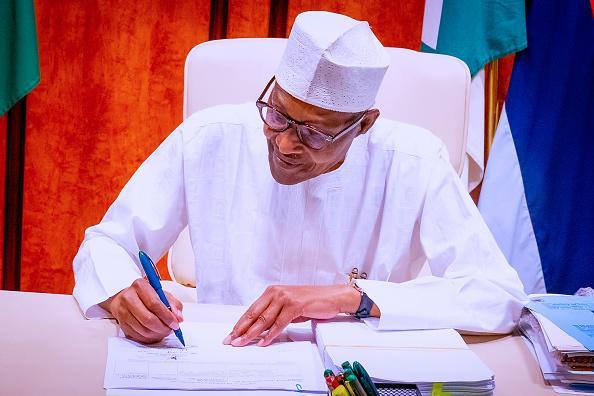
President Muhammadu Buhari

A Nigerian billionaire of far-reaching acclaim who has perhaps the largest contemporary stake in the oil and gas industry was said to have provided $2 million alone, while other firms and individuals in the oil and gas industry provided the remaining $8 million. The Gazette could not publicly identify the billionaire because our reporters have yet to obtain direct evidence linking him to the bribery.

“The Senate President received $2 million and the Speaker received $2 million,” a senator told The Gazette under anonymity to avoid charges of breach of privilege. “Their greedy misconduct was recently exposed to us and we will seriously take up the matter when we resume from the annual recess next month.”

“From what I can volunteer, many senators were given $20,000 before and after the PIB was passed, depending on their availability,” the senator said.

Another lawmaker furious about the affair admitted to The Gazette that he received $5,000, but said he didn’t know it was part of a multimillion-dollar payout to lawmakers to pass the bill.

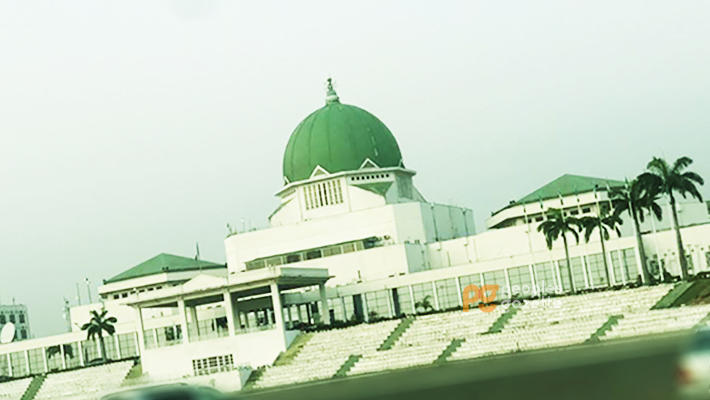
National Assembly Complex

“They gave me $5,000 and said it was for us to buy biscuits for our children for labouring day and night to get the bill to the stage of passage,” the lawmaker said under anonymity. “To God, I did not know that it was about $10 million that they received and some crooks calling themselves leaders got $2 million each for themselves.”

“We will protest the matter after our break because some people have to realise that they don’t have two heads and we have to fight for our rights and privileges as members of the National Assembly,” the lawmaker added. “Each one of us is representing a constituency and that makes us all equal because no one at the National Assembly is representing more than one constituency.”

Spokespeople for Messrs Lawan and Gbajabiamila did not return The Gazette’s requests for comments about the alleged bribery and the brewing disquiet over it.

$10 million largesse

Host communities, largely of the oil-rich Niger-Delta region, had complained that three per cent is insufficient against decades of environmental degradation and neglect inflicted on traditional settlers. The communities said they would accept at least 10 per cent, even though the administration initially proposed five per cent.

Oil spillage
Oil spillage

But the state-run NNPC and other operators dug their heels in, saying any sharing arrangement that allows more than three per cent to host communities will cut too deep into their revenue margins and alienate potential investors in the country’s wobbling oil sector.

But after the stalemate augured a string of rowdy and inconclusive sessions at the parliament, lawmakers last month finally passed the Petroleum Industry Bill that sought to unbundle the sector and restructure the NNPC as a commercial enterprise rather than a federal charter. President Muhammadu Buhari signed the bill into law this week despite the controversies surrounding the meagre three per cent equity stake for host communities.

The Gazette has now learnt that lawmakers accepted cash inducements to pass the bill, which was proposed by Mr Buhari-led executive cabinet. Lawmakers said the cash logistics was coordinated by state petroleum minister Timipre Sylva and Senator Albert Akpan (PDP-Akwa Ibom).

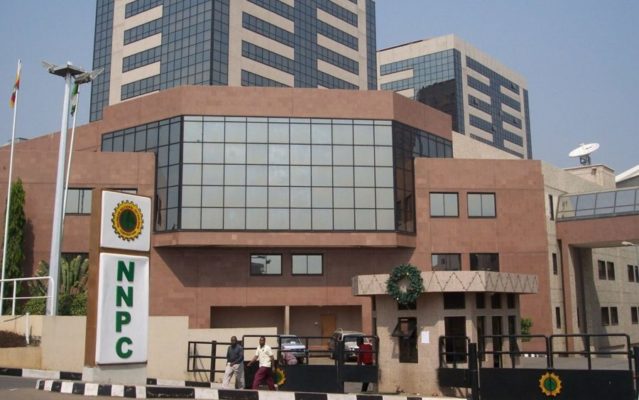
NNPC towers
NNPC towers, Abuja, Nigeria

A senator told The Gazette that Mr Akpan sent one of his aides to deliver $20,000 to him at his office.

“He (Mr Akpan) sent a woman from his office to give me $20,000,” the senator said. “They said the money came from people who have investments in the oil and gas and they wanted to appreciate us for our dedication in seeing the bill through after so many years of failed efforts.”

Lopsided formula

Messrs Sylva and Akpan did not return requests seeking comments from The Gazette.

Another lawmaker who confirmed knowledge of the bribery to The Gazette said it was a serious scandal waiting to explode because a lawmaker had already mentioned the matter in the House WhatsApp group weeks ago.

Bassey Akpan

“A lawmaker protested the sharing formula but no one responded or engaged him in the House WhatsApp group,” the lawmaker said. “So I fear that many colleagues are angry about the whole thing.”

A lawmaker said the disquiet could easily have been avoided had the leaders properly conducted themselves in handling the largesse.

“It is common across the world for lawmakers to be offered gratification,” the lawmaker said. “But it has to be equitably distributed so that no one feels cheated or left out.”

Nigerian lawmakers have for years faced allegations of taking bribes to pass bills or carry out general oversight activities. In the mid-2000s, bags full of cash were displayed on the floor of the parliament, allegedly offered by elements close to former President Olusegun Obasanjo to push the so-called third-term agenda. Mr Obasanjo denied the allegations. (Peoplesgazatte)

Mohammed Fawehinmi – When the branch falls from the Iroko tree

By Mike Ozekhome, SAN, PhD

We had joined Chief Gani Fawehinmi, SAN, SAM ( Gani ) to fondly call his son , *Mohammed , Mo.This was the pet name Gani had given to Mohammed. This was even as a little teenager in the early 80s. Mo was 52 when he died. His father, Gani the legend, had died at 71, on 5th September, 2009. Mo, his first son and the blossoming branch of Gani’s iroko tree fell, most painfully too soon, on August 11, 2021.

When I first joined the Chambers of iconic and unforgettable Gani in 1981 on part time basis, Mohammed was a little 12-year-old, giggling, starry-eyed boy in his nascent years in the secondary school. Initially, this was at 28, Sabiu Ajose Crescent, Surulere, Lagos. Later, Gani moved to his world-class Chambers and Library at Ajao, Anthony Village, Lagos, taking along his family to his new residence at Ademola Close, GRA, Ikeja, Lagos.

“Mo, come here and greet me”, I would order him. A chip off the old block in looks, carriage, gait and mannerisms, Mo would simply obey. It would then be his turn to ask, impetuously, “Uncle Ozek baba, what did you buy for me today ?”.
This was one of Gani (his father)’s pet names for me; the others being, “Mobile Dictionary” and “Mobile Library”. Anytime I hear someone call me any of these names today, I would easily know that such a person knew me as far back as the early 80’s when I literally burnt in the legal oven and furnace of fire that passed for irrepressible Gani’s Chambers. He was simply workaholic. No one who was not a workaholic fitted into the system.

Upon completion of his Kotun Memorial Primary School in Surulere, Lagos, and during his studies at the in Federal Government College, Sokoto, Mo, born to Alhaja Ganiat Fawehinmi (the Matriarch of the Gani family), dreamt of the Military. Military? Yes, you heard me correctly. He wanted to enlist in the then number one enemy of his father, the Nigerian Army.

For the records, Mo was born on February 21,1969, when Gani was firmly locked up in the military gulag, in one of his many detentions perpetrated by the very Military Mo now sought to embrace. Gani had been detained by the Yakubu Gowon military junta during the raving civil war in 1969, under the State Security (Detention of Persons) Decree No 24 of 1967. This was Gani’s first ever detention at the Kaduna Police Headquarters. The Gowonian military dictatorship was later to detain him three more times in Jos, Ilorin and Lagos. In all, Gani was detained a whopping 32 times; more than those of any other Nigerian, living or dead. The now 80-year-old Ibrahim Babaginda’s military junta took the diadem of detaining Gani a record 17 times out of his total 32 detentions. Gani’s house was searched 16 times; and his international passport confiscated 10 times!

Most ironically, IBB once said if there was one Nigerian he respected greatly, it was Gani. The other two, IBB said, were Professor Ayodele Awojobi and Dr Yusuf Bala Usman, both now late. Asked by newsmen why his government frequently detained Gani, IBB had quipped, with a cynical and curious sense of humour, “What kind of question is that? Every Nigerian President arrests Gani Fawehinmi. Why should my turn be different? It’s all in a day’s work. It’s just part of the job’s description.”

So, why would Mo, the first son and scion of Gani who had been shackled, manacled and detained 32 times severally at several dungeons across Nigeria by the same military, ranging from Ikoyi, Alagbon, Wuse, Abuja, Awolowo Road, Maiduguri, Kuje, Ikeja, to Inter-Centre detention outpost, Panti, Shangisha, Kaduna, Gashua, and Bauchi, want to flirt with the same military? Not just to flirt in sheer childlike romanticim, but to actually enlist into it? Gani could not understand this. He ruminated and agonized over it. He knew what he would do. He will not spare the rod. The strict disciplinarian that he was, Gani flogged Mo thoroughly with the cane.

Such was Gani’s no-love-lost relationship with successive military juntas that it was simply infra dig for any of his children to ever contemplate, even dream, of becoming a soldier. Mo had therefore touched the tiger’s tail when he enthusiastically obtained the form of Nigerian Defence Academy (NDA). With the innocence and naivety of a child, he took the form and ran to Gani, with unrestrained éclat and excitement. He wanted Gani to sign a space after he ( Mo ) had already filled it. Gani was livid with rage and went for Mo. The tiny, spritely Mo fled with the speed of an impala escaping from a hunter. He quickly scaled the fence to escape his father’s wrath. Four lawyers in Gani’s Chambers “rescued” “poor” Mo that day. Unknown to Mo, it was not yet uhuru for him. Satisfied that the NDA imbroglio had ended, Mo went to bed with the innocence of a child that he was. But, not for angry Gani who, still belly-aching and seathing with rage, had kept awake. At about 2:30 am in the wee hours of the morning, Gani stealthily sneaked into Mo’s room with a cane in his hand.He was determined to discipline this “stubborn boy” ,Mo, who wanted to join his ‘enemies’. And he did so corporally. He whipped Mo thoroughly by his buttocks.

Let us hear Mo himself speak to this encounter in an interview he granted to Punch in 2018:

“I wanted to become an Army General. I had three uncles in the Army. Two of them were Captains, while one was a Major. I loved the uniform and personality of military men; being like them was just what I wanted for myself.

“When I was 14, we were given forms in school for the Nigerian Defence Academy. I hurriedly filled mine and took it to my father to sign; I never knew I had courted trouble. Till he died, I don’t think he had ever been that angry.

“He said that I wanted to go and join the people that were throwing him in jail all the time. He said I wanted to join those who wanted to kill him. He said that it was better he killed me before I joined his enemies.

“It took four senior lawyers to hold him down that day. One of them was OAR Ogunde, a Senior Advocate; Mr. Tayo Oyetibo, Mike Phillips and one other person. I had to run away from the scene as fast as I could and managed to jump the fence before tearing the form.

“I thought he had forgotten about everything, but I was surprised when he woke me up with the cane at about 2.30am the next morning. He dealt with me thoroughly that day.”

Ever precocious and energetic in his lifetime, Mo had bubbled with the “sap of life like a yam tendril in the rainy season” (thank you, Chinua Achebe: “Things Fall Apart”). Mo’s effervescence and inquisitiveness were to lead him to cross Gani’s path yet again. He attempted driving Gani’s car at their GRA, Ikeja, Lagos residence, without his permission. Gani would take none of such youthful exuberance from a boy he believed was not experienced enough to drive a car. He pursued Mo with the speed of Ben Johnson. But, Mo, a much younger and energetic youth, reached for Usain Bolt’s talismanic bag of speed.He sped, weaved, bobbed, skipped, sped and floated like a bee ( Remember the undefeated heavyweight champion, George Foreman versus Mohammed Ali’ s ‘Rumble-in-the-Jungle’ boxing tournament in Kinshasa, Zaire, on October 30, 1974?) Something similar.Mo thus out-sped sweating Gani with the speed of lightning. An elderly woman who watched with keen interest from the sidelines could be heard screaming, “Chieeefuuuooo, e fili le ooo” (Chief ooo, please let him be). Both Gani and Mo were extremely boisterous and highly animated.

Mo, like his father, was bold, daring, fearless, courageous, and with an unflagging independent mindwdness. These account for why Mo went to read Business Administration at the University of Lagos, as against his father’s natural first preference – Law. However, upon more maturity and also partly to satisfy his father’s fond wishes and desires, Mo went to the UK to study Law at Buckingham University, England. This was why Mo studied Law as a second degree. Upon Gani’s prompting, Mo ( who had wanted to simply be an Administrator of businesses, returned to Nigeria and attended the Nigerian Law School, Lagos. He was called to the Bar in 1998 at 29.Mo immediately commenced Law practice in Gani’s sprawling law office. By 1998, I had already exited his father’s Chambers as Deputy Head of Chambers by 14 years (1985), to set up my private law practice. However, colleagues and Chambers’ mates of Mo attest to the fact that he was humble, gregarious, dedicated, extremely hardworking and always ready to learn. He respected his seniors greatly and took instructions from them seamlessly. He did not have the usual ego and airs of the youth in his peculiar situation of “this-is-my-father’s-Chambers-so-you-cannot-toss-me-around”. He was said to have obeyed all rules and regulations like any other lawyer in Gani’s Chambers.

Mo had thus settled down to a very fulfilling life of advocacy, with a fiancée he intended to marry, by his side. She was a young, pretty Igbo lady from the South East. After his car accident, Mo was said to have politely told her to go seek her fortune elsewhere, as he did not want a marriage anchored on sheer pity. This is because the young lady was determined to stay with Mo after fate had struck. It was on September 23, 2003, at about 9:48 pm. Mo had a ghastly motor accident that permanently broke his spinal cord. Along the airport road after the toll gate in Ikeja, Mo’s Mercedes E320, which he personally drove, had skidded off the road, defying all his attempts to apply the brakes. While the front air bag of his car pinned him to the seat, the side air bag shifted and broke his neck. He went numb. A passer-by Naval Officer stopped and rescued him from being burnt alive as the fuel in the car had started spilling all over.

In his words, Mo narrated how hospitals in Lagos, including the National Orthopaedic Hospital, Igbodi, did a poor job of surgical operations. Mo was subsequently flown to the UK where his surgeon decried his Nigeran hospitals treatment, saying he would easily have walked the following week after the accident if only the Doctors had quickly frozen the particular spot of the injury, with a particular spray that cost only N8,000 at that time. That is Nigeria for you.

Being physically wheelchair bound however did not lead to Mo’s disability in the true sense of the word. Mo wrote seceral articles and Law books; attended some court sessions; serially spoke truth to authority; and interrogated governmental actions and impunity. He even participated in some street protests such as the January, 2012 “Occupy Nigeria” fuel subsidy protests, where he was sprayed with tear gas alongside his indomitable mother, Ganiat. Like Gani, Mo believed in using law as an instrument of social engineering to liberate the hoi polloi masses and the teeming Frantz Fanon’s “Wretched of the Earth” in Nigeria.

Before his passage at 52 on August 11, 2021, Mo kept his father’s activist inferno blazing luminously. He even set up his own Mohammed Fawehinmi Chambers, as Gani had wound up his Chambers in his Will. However, Mo remained, through the same Will, a Director in the Nigerian Law Publications, and the Gani Fawehinmi’s Library and Gallery. Perhaps, one of Mo’s greatest attributes was keeping together in a peaceful and non-acrimonious manner, Gani’s legacies in a highly polygamous home. As the head of the Gani dynasty, he was level-headed, mature, tolerant, mediatory and non-discriminatory.

Mo, though dead, will be remembered as a young man who etched his name in the pantheon of heroes, notwithstanding his physical disability. He was nt intellectually, politically and socially disabled.Mo fought life. Mo fought vicissitudes. Mo fought tyranny and impunity. Mo fought accident and his spinal cord injury. But, Mo could not fight death. Because all of us shall eventually succumb to it. We all wear death like a second skin, following us like our shadow. But, death, thou art ashamed. Death, where is thy sting? Death, remember that you too shall die, to give way to eternity of life. Mo has died in body; but his dogged spirit lives on. The words of Mark Anthony about Brutus in William Shakespeare’s Julius Caesar (Act 5, Scene 5) perfectly befit Mo: “this was the noblest Roman of them all; His life was gentle and all the elements so mixed in him that nature could stand up and say to all the world, ‘this was a man’ ”.

May God grant Mama Ganiat and all Mo’s siblings, friends, admirers and the Gani clan of lawyers, the fortitude to bear this irreplaceable loss. Adieu Mohammed.Goodbye, Gani’s reliable branch. Sleep well in Alijanah Firdausi; Ameen.

An Afghan woman in Kabul: ‘Now I have to burn everything I achieved’

A university student tells of seeing all around her the ‘fearful faces of women and ugly faces of men who hate women’


Early on Sunday morning I was heading to university for a class when a group of women came running out from the women’s dormitory. I asked what had happened and one of them told me the police were evacuating them because the Taliban had arrived in Kabul, and they will beat women who do not have a burqa.

We all wanted to get home, but we couldn’t use public transport. The drivers would not let us in their cars because they did not want to take responsibility for transporting a woman. It was even worse for the women from the dormitory, who are from outside Kabul and were scared and confused about where they should go.

We all wanted to get home, but we couldn’t use public transport. The drivers would not let us in their cars because they did not want to take responsibility for transporting a woman. It was even worse for the women from the dormitory, who are from outside Kabul and were scared and confused about where they should go.

Meanwhile, the men standing around were making fun of girls and women, laughing at our terror. “Go and put on your chadari [burqa],” one called out. “It is your last days of being out on the streets,” said another. “I will marry four of you in one day,” said a third.


With the government offices closed down, my sister ran for miles across town to get home. “I shut down the PC that helped to serve my people and community for four years with a lot of pain,” she said. “I left my desk with tearful eyes and said goodbye to my colleagues. I knew it was the last day of my job.”

I have nearly completed two simultaneous degrees from two of the best universities in Afghanistan. I should have graduated in November from the American University of Afghanistan and Kabul University, but this morning everything flashed before my eyes.

I worked for so many days and nights to become the person I am today, and this morning when I reached home, the very first thing my sisters and I did was hide our IDs, diplomas and certificates. It was devastating. Why should we hide the things that we should be proud of? In Afghanistan now we are not allowed to be known as the people we are.

As a woman, I feel like I am the victim of this political war that men started. I felt like I can no longer laugh out loud, I can no longer listen to my favourite songs, I can no longer meet my friends in our favourite cafe, I can no longer wear my favourite yellow dress or pink lipstick. And I can no longer go to my job or finish the university degree that I worked for years to achieve.

I loved doing my nails. Today, as I was on my way home, I glanced at the beauty salon where I used to go for manicures. The shop front, which had been decorated with beautiful pictures of girls, had been whitewashed overnight.

All I could see around me were the fearful and scared faces of women and ugly faces of men who hate women, who do not like women to get educated, work and have freedom. Most devastating to me were the ones who looked happy and made fun of women. Instead of standing by our side, they stand with the Taliban and give them even more power.

Afghan women sacrificed a lot for the little freedom they had. As an orphan I weaved carpets just to get an education. I faced a lot of financial challenges, but I had a lot of plans for my future. I did not expect everything to end up like this.

Now it looks like I have to burn everything I achieved in 24 years of my life. Having any ID card or awards from the American University is risky now; even if we keep them, we are not able to use them. There are no jobs for us in Afghanistan.

When the provinces collapsed one after another, I was thinking of my beautiful girlish dreams. My sisters and I could not sleep all night, remembering the stories my mother used to tell us about the Taliban era and the way they treated women.

I did not expect that we would be deprived of all our basic rights again and travel back to 20 years ago. That after 20 years of fighting for our rights and freedom, we should be hunting for burqas and hiding our identity.

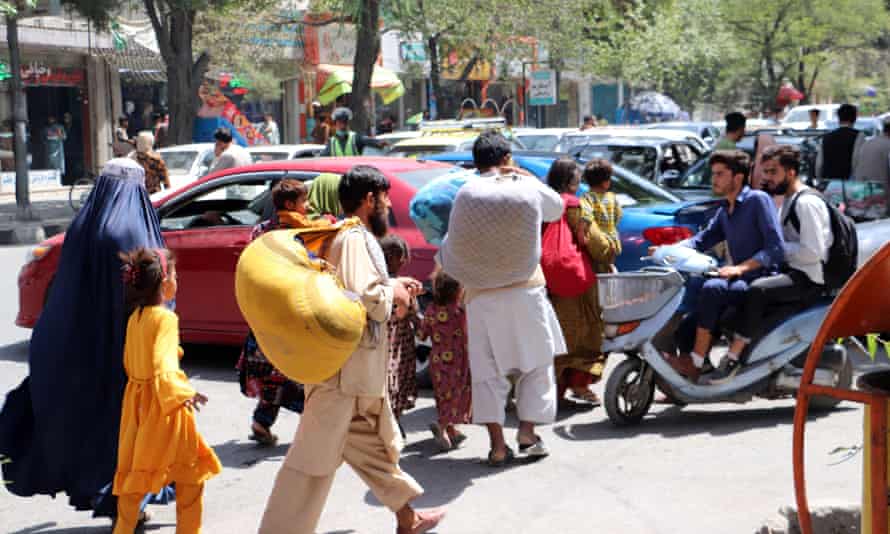
During the last months, as the Taliban took control in the provinces, hundreds of people fled their houses and came to Kabul to save their girls and wives. They are living in parks or the open air. I was part of a group of American University students that tried to help them by collecting donations of cash, food and other necessities and distributing it to them.

I could not stop my tears when I heard the stories of some families. One had lost their son in the war and didn’t have any money to pay the taxi fare to Kabul, so they gave their daughter-in-law away in exchange for transportation. How can the value of a woman be equal to the cost of a journey?

Then today, when I heard that the Taliban had reached Kabul, I felt I was going to be a slave. They can play with my life any way they want.

I also worked as a teacher at an English-language education centre. I cannot bear to think that I can no longer stand in front of the class, teaching them to sing their ABCs. Every time I remember that my beautiful little girl students should stop their education and stay at their home, my tears fall. (Theguardian)

Northern leaders have a duty to fix the North

Ikechukwu Amaechi

By Ikechukwu Amaechi

Whenever I hear Northern leaders lament over the parlous state of the region, I wonder what they have been thinking all these years. As the legendary novelist, Chinua Achebe, wrote in his 1986 magnum opus, Arrow of God, “the man that brings ant-infested faggots into his hut should not grumble when lizards begin to pay him a visit.”

For too long, Northern elites have been busy hauling home ant-infested firewood. It is, therefore, the height of hypocrisy when they pretend to be surprised that they have lizards as guests.


Are they just realizing that they are the reason why Northern Nigeria is the worst in all the three indices of human development, which Pakistani economist, Mahbub ul Haq, developed in 1990, namely, life expectancy, education, and per capita income?

The Human Development Index (HDI), which is a statistic composite index of life expectancy, education – years of schooling completed and expected years of schooling upon entering the education system – and per capita income indicators, which are used to rank countries into four tiers of human development of “very high, high, medium and low” are all precarious in the North.

So, when Nigeria is ranked as one of the countries in the world that occupies the lowest rung in human development, it is because of the abysmal position of Northern Nigeria on HDI.

Sadly, these wounds are self-inflicted, caused by a self-conflicted, predatory, ultra-selfish elite class, who are only interested in power for its sake.

Why do I say so?

They have dominated the political space in Nigeria since independence in 1960, using state power to corner national resources. Of the 36 states in Nigeria, the North has 19 and the Federal Capital Territory. Southern Nigeria has 17. In fact, while the Southeast was allocated five states, North West has seven. Nigeria has 774 local government areas. Kano State alone has 44.

Nigerian leaders of Northern extraction have also used their absolute control of political power, particularly in the years of the military, to manipulate census figures, thereby ensuring that the North has maximum advantage population-wise.

And then, they started making the authoritative allocation of our collective values using local governments, landmass and rigged population as yardsticks.

If power is a means to an end where the end is the promotion of common good, one would have thought that the North would be heaven on earth. And it should be where leaders are altruistic because, ideally, acquisition of power is like the start of a journey. The difference lies in the destination, which explains why power can be a revolution and remarkable success or lamentable destruction and failure.

The Northern elites chose the latter. Having acquired power over the years, they spent a ton of time trying to maintain and increase their power, perceiving it as an end in itself. That is what happens when leaders lose sight of the reasons they wanted power. They become conceited, haughty and vague. Philosophers are agreed on the fact that absentminded use of power can be dangerous.

That is exactly what happened to the North.

Today, despite the quantum of resources they control, and I daresay disproportionately, insecurity is endemic in the North, number of out-of-school-children in the region is perhaps the highest in the whole world.

When it is said that Nigeria is the poverty capital of the world, it is because of Northern Nigeria. Nigeria is the illiteracy capital of the world because of the North. Nigerians have the fifth worst average life expectancy of about 55 years in the world because of the North.

In July, the Nigeria Centre for Disease Control (NCDC) announced that 526 persons died from cholera even as 22,130 suspected cases of the disease were recorded in 18 states and the Federal Capital Territory (FCT) since the beginning of the cholera outbreak in 2021. Fifteen of the 18 states – Benue, Zamfara, Gombe, Kogi, Sokoto, Bauchi, Kano, Kaduna, Plateau, Kebbi, Niger, Nasarawa, Jigawa, Yobe, Kwara as well as the FCT – are all in the North.

The NCDC report also revealed that though there was a decrease in the number of new cases in the last two weeks of July, yet Bauchi with a total case of 2, 438, Kano 674, and Plateau 87 accounted for 91 per cent of the 3,519 cases reported in weeks 27th and 28th.

Those who were not killed by cholera are liquidated by terrorists. Those lucky to be alive are living in camps for internally displaced persons (IDPs).

Life in Northern Nigeria over the years, but most especially under President Muhammdu Buhari’s watch, typifies the Hobbesian “solitary, poor, nasty, brutish and short” state.

So offended was the veteran journalist and inimitable columnist, Dan Agbese, that he called out Northern leaders in his article titled, “Shame on northern Nigerians” in The Guardian on July 9, 2021.

“The region bleeds and has been bleeding from Boko Haram, bandits, Fulani herdsmen, kidnappers and sundry criminal elements,” Agbese, himself a Northerner from Benue State, wrote.

“There is no way one can put it less indelicately: it is a shame on our governments and our political leaders who sought the mandate of the people, not to lead them into the gutter or abandon them there but to make their lives meaningful to them. But here we are: while the good times roll for our political leaders, the rough times roll for the people; while the leaders are protected by a phalanx of security men and women, the people are at the mercy of criminals who profit from the cynical attitude of our leaders towards us.”

His concluding sentence aggregated the message: “Let the northerners rise now and save their region, its future and the future of their young people. And end the shame of weakness.”

Before now, they have prided themselves as the princes of Nigeria’s political space. They are the astute politicians, who are born to rule. Southerners, particularly Ndigbo, are ridiculed for their supposed lack of political dexterity.

As Agbese further noted, they object to power shifting to the South in 2023 and conveniently forget that their people are losers even as they hold the reins of power.

But it would appear that Northern leaders, hearkening to Agbese’s harsh admonition, are no longer content with playing the ostrich, having realised, it seems, the need to wake up and smell the coffee. Their utterances in recent times seem to suggest that they have realized that the problems, which they deliberately created, are not going to fix themselves.

Rather than blame the South for their self-inflicted woes, they are beginning to apportion blames appropriately to themselves. That is self-awakening and it is gratifying.

The herdsmen who are raping women, abducting students, killing and maiming innocent people are Fulani. And they need to be called out by their own people instead of giving quit notices and threatening fire and brimstone when other ethnic nationalities who could not understand why the North is tolerating and pampering such malcontents act in self-defense.

Completely flustered by the rising spate of kidnappings, killings, and attacks in Taraba State, the Emir of Muri, Abbas Tafida, a Fulani, on July 22, issued a 30-day ultimatum to Fulani terrorists to vacate forests in the state or be forced to do so.

“Our Fulani herdsmen in the forests, you came into this state and we accepted you, why then will you be coming to towns and villages to kidnap residents, even up to the extent of raping our women?

“Because of this unending menace, every Fulani herdsman in this state has been given 30 days ultimatum to vacate the forests. We are tired of having sleepless nights and the hunger alone in the land is enormous and we will not allow it to continue,” he said.

That was unprecedented. Before then, it was a sacrilege for the Fulani to call out one of their own no matter how heinous the conduct.

Then on Tuesday, August 17, Northern leaders that included the 1993 presidential candidate of the National Republican Convention (NRC), Bashir Tofa; former FCT minister, Dr. Aliyu Modibbo Umar; former Secretary to the Government of the Federation, Yayale Ahmed; former chairman of the Independent National Electoral Commission (INEC), Attahiru Jega; former Governor of Kaduna State, Ahmed Maikarfi; former Minister of Defence and National Chairman of the Peoples Democratic Party (PDP), Alhaji Haliru Bello; former Speaker of the House of Representatives, Umar Ghali Na’abba; former Minister of Interior and ex-Chief of Army Staff, Gen. Abdulrahman Dambazzau; former governors of Sokoto and Kwara States, Attahiru Bafarawa and Abdulfatah Ahmed; etc., met in Abuja to acknowledge the obvious: All is not well with the North.

For the first time, Northern leaders are genuinely concerned that the region is faced with existential threats of their own making. They are neither blaming Ndigbo – their bête noire – nor the Yoruba.

“We have no difficulty admitting all is not well with Northern Nigeria and we are taking primary or vicarious responsibility for the current state of affairs. We must all – leaders, followers and passive onlookers – accept our share of responsibility but beyond that, we must collectively resolve to take action and remedy what went wrong going forward,” Tofa, who spoke on behalf of the group, said.

He acknowledged that “the state of insecurity across Nigeria is worrisome, but the state of insecurity in Northern Nigeria has reached existential proportions, threatening to render the region hostile to civilized existence.”

The truth is that insecurity is not just threatening to render, it has already rendered most parts, if not the entire North hostile to civilized existence.

This Tofa-led parley will be the beginning of redemption for the North if the leaders are sincere.

The North remains the weakest link in Nigeria’s developmental chain. And it is a problem caused by the disingenuousness of its leaders and their perception of power. They must fix that for the sake of the region, in particular, and Nigeria, generally.

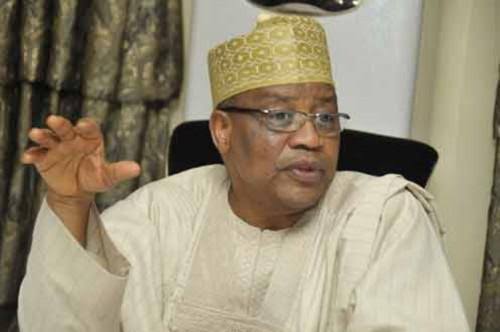
Whitewashing is a waste; history has already judged Babangida.


By Owei Lakemfa


IBRAHIM Badamosi Babangida, retired general and former military Head of State will turn 80 tomorrow, Tuesday, August 17. I congratulate him primarily because I also pray to grow old. But I do not pray that in my old age my children will organise gatherings where people will try to whitewash my deeds.

One of such occasions was the August 12, 2021 pre-birthday event. The summary of the endless speeches which were relayed live on television is that Babangida is a reliable, kind-hearted statesman who never neglects or betrays his friends. But that is not what the records show.

Yes, Babangida comes across as a comely, friendly, charming person, but so does the beautiful, cunning, crafty fox. Those gathering for the whitewash of Babangida know that Nigerians gave him the sobriquet Maradona. This was because like the famous Argentine footballer, Diego Maradona, who was a great dribbler and seller of dummies on the field, Babangida was dribbling Nigerians, selling them dummies, was quite crafty, deceitful and unreliable.

A great difference was that while the real Maradona never shifted the goal post during play, Babangida was always shifting the goal post whenever he thought a goal was to be scored against him. For instance, he promised to hand-over power to an elected civilian administration in 1990. When the date drew near, he shifted it to 1992, then January 1993, later to August 1993, and ended up not handing over power before he was disgraced out of office.

While claiming to be a champion of mass participation in decision-making, he declared a public debate on whether or not, the International Monetary Fund, IMF, loan and its conditionalities should be accepted. Nigerians in overwhelming numbers rejected both. On December 13, 1985, Babangida addressed the nation acknowledging the undeniable choice of Nigerians and even declared that “ …the path of honour and the essence of democratic patriotism lies in discontinuing the negotiations with the IMF for a support loan”.

Nigerians were ecstatic, but the cunning Babangida did the exact opposite by going to bed with the IMF and imposing its criminal conditionalities christened the Structural Adjustment Programme, SAP. When Nigerians protested against this imposition, patriots like the labour legends, Michael Imoudu and Wahab Goodluck and lawyer, Gani Fawehinmi were detained, many tertiary institutions shutdown and protesters were shot in the streets.

As to the claim that Babangida was loyal to friends, at least two of his close friends who believed that, were sent to early graves. One of them was Mamman Vatsa, his childhood friend, high school classmate at Government College, Bida, and a fellow general. In fact, Babangida signed Vatsa’s marriage register as his best man. Vatsa was accused of harbouring the thought of overthrowing Babangida, was tried in a military tribunal, tied to the stake on March 5, 1986 and executed.

Another Babangida close friend, Chief Moshood Abiola, won the June 12,1993 presidential election, fair and square. But Babangida annulled it and later claimed he did it to prevent a coup. Is that not treasonable felony? What a friend he had in Babangida! Abiola while fighting for his mandate was detained under the Abacha regime and eventually died.

At the Babangida whitewash last week, a former Director of Military Intelligence, DMI Haliru Akilu, a retired general, mentioned Babangida’s relocation of the capital from Lagos to Abuja as a monumental achievement adding: “This was a great decision that only leaders of IBB’s capacity can make.” I am not sure about this. Abuja was being built by previous governments and partially under Babangida. Not a few attribute Babangida’s December 12, 1991 relocation to Abuja as a fall out of the Orkar coup which exposed the vulnerability of the Dodan Barracks State House.

In fact, the haste and disorderly way the capital was relocated was like a man fleeing a city. For instance, many of those who had to relocate, had no offices. As for accommodation, it was in so short supply that many lived in their offices for years, while many desperate female public servants, some of them married, shared rooms with males lucky enough to secure accommodation. This is the origin of the popular ‘Abuja Marriage’ syndrome.

Businessman, Chief Emmanuel Iwuanyanwu, talked glowingly about Babangida as a dependable friend. Babangida, he claimed, made him leader of the Raw Materials Development Council, and stayed by his side for a whole day when he buried his father. But he only narrated one side of the story. The other is that the same Babangida sent armed security agents to traumatise journalists and staff of Iwuanyanwu’s Champion Newspapers and shutdown the publication without any warning or court order. It was simply the application of brutal force against a non-military institution.

The Babangida regime had no regard for fundamental human rights. People were detained without trial. At any given time, under that dictatorship, the cells and dungeons were packed full of patriots. When the pro-democracy protests broke out with demands for the de-annulment of the June 12 election, the regime sent out well kitted soldiers led personally by then Chief of Army Staff, General Sani Abacha to repress them. On July 6, 1993, a total of 118 protesters were shot dead on the streets of Lagos. Almost all were shot in the back which meant they were running away and not confronting their murderers. These are crimes against humanity for which the regime should be held accountable.

When the pro-state candidate, Takai Shamang, could not win the 1988 Nigeria Labour Congress, NLC elections, the Babangida regime banned the Congress under a nebulous ‘Economic Recovery’ decree. When senior staff of Nigeria Electricity Power Authority, NEPA, went on strike against the poor state of power infrastructure, the regime seized eleven of them and hauled them before a military tribunal demanding the death sentence. Eventually, the men were sentenced to life imprisonment for going on strike which is a right!

In 1986 after the police murdered four students of the Ahmadu Bello University, ABU, for protesting, the regime shutdown virtually all tertiary institutions in the country for protesting the murders. It also proscribed the National Association of Nigerian Students, NANS. The Babangida regime was a lawless one which not only ousted the jurisdiction of the courts in many decrees, but also did not obey court orders and rulings.

Those gathering around the country in a vain attempt to whitewash Babangida are just deceiving him and deceiving themselves; history has already judged him. The wise in Africa say even if a man is being deceived, he owes himself the duty not to deceive himself. If Babangida does not apologise for his atrocities against the Nigerian people, he should go to a quiet spot in his hilltop mansion to pray that God forgives him his sins.

Petroleum Industry Act is not a raw deal, By Aniebo Nwamu

My belief in the efficacy of market forces as the cure for voodoo economics remains unshaken. And so I welcome the Petroleum Industry Act (PIA) which came into effect this Monday. What irks me is its lateness in coming, and what I dread is its shoddy implementation. 

Twenty wasted years are enough proof of our lawmakers’ diligence. It was in the same year, 2001, that they set out to review the 1999 constitution which everyone agreed was riddled with flaws – it’s a constitution that lies in its very first sentence. Twenty years and several billions of naira after, the National Assembly is still “on top of the situation” or the situation is on top of the legislature.

But has the long wait really ended? Procrastination is the thief of time.  Even after the PIA’s enactment, minister of state for petroleum resources Timipre Sylva told us that fuel subsidy and the current pump price of petrol would stay “for now”. In other words, the government won’t obey its own law “for now”. A pronouncement by President Buhari on Wednesday wasn’t emphatic either. A nine-member steering committee led by Sylva has been given one year to work, suggesting that the new law may not be fully implemented until the panel concludes its work. So, the PIA may remain in the cooler — the law exists but its implementation has to wait. This is lawlessness.

Just like America’s misadventure in Afghanistan, Nigeria’s romance with “guided deregulation” of the oil and gas industry for 20 years may be ending badly for the country. We knew that fuel subsidy was not sustainable. We knew that state-owned refineries wouldn’t work efficiently. And we knew that public funds were being looted in the guise of subsidy and turnaround maintenance of refineries. Now we’ve been forced by threats of total economic collapse to do what we should have done 35years ago. How long shall we tolerate ineptitude?

Deregulation or liberalisation was a pillar of the Structural Adjustment Programme (SAP) introduced by the Gen. Ibrahim Babangida regime, but the policymakers chose to whitewash a fraud while killing Nigerians in instalments. Although the military leaders then told us they had rejected a loan of the International Monetary Fund (IMF), they accepted the global financial institution’s conditionalities through the backdoor. Corruption stepped in to distort SAP’s implementation. Yet, if the IMF prescriptions had been followed faithfully since 1986 when SAP was born, our water would have found its level well before the end of the 20th century. 

Here’s a good piece of news for the Niger Deltans and other Nigerians who have expressed discomfort with the PIA: it’s not what you think. Sylva was right when he said it’s better to have 3% of something than 100% of nothing. It’s not statistics that matter; what matters is delivery of tangible benefits. NNPC boss Mele Kyari, who speculated that with 3% the local oil-producing communities would share $500m (N250bn) each year, was simply dreaming – he’s counting his chicks before they’re hatched. So it’s better we wait for one year – or two years – to see what will trickle in. If foreign investors refused to come, who else would contribute the 3%? In Nigeria, pessimists are almost always right – few things give cause for optimism these days.

Before the start of World War II, U.S. President Franklin D. Roosevelt’s government implemented “The New Deal” to bail Americans out of the Great Depression. Nigeria’s “New Deal” is likely to emerge from the ashes of a raw deal. The PIA is not a raw deal perhaps. But I don’t see it regaining the “$50bn worth of investments” lost in the past decade to delays, as President Buhari declared on Wednesday, or supporting “the nation’s economic recovery and growth plan” until we achieve political stability as well as security of life and property.  

Nonetheless, I believe in market forces, the vagaries of demand and supply. In 1987 we thought all hell had been let loose as the dollar exchanged for N10. A few years later, it hit N22.  Nobody dreamed it would ever reach N160. But it did — and that was the rate at which the current government met it in 2015. I don’t know the rate today, but the rumour is that a dollar fetches more than N500. And I bet you won’t get the American currency with N1,000 by 2023, the exit year of this administration.

That shouldn’t evoke fear anyway. Things won’t get worse than they are now. There will be no apocalypse when a litre of petrol costs N300. Life will still go on if the pump price hits N500 or N700 per litre. So bring it on! What may change is people’s lifestyle. We’d be forced to travel less and use internet services more. Thanks to lockdowns during Covid-19, many meetings are now conducted online. Business executives don’t need to book flights from Lagos and other state capitals in order to attend meetings in Abuja or London or Dubai. And why have we stopped trekking short distances? The medics say it’s good for our health.

When fuel stations don’t get much patronage, they may reduce prices or even close shop. When we stop asking for dollars and pounds, their rates of exchange will change in favour of the naira. When there’s no demand for foreign goods, warehouses will fill up – and smugglers or genuine importers will consider changing their business models. When schools charge high fees, withdraw your kids and put them in schools that take much less. If imported food becomes too expensive, learn to eat village food or grow your own food or eat less. And learn to first satisfy needs before wants (luxurious items). Market forces? You can’t alter the course of nature.

Let’s stop worrying about events of the future, for water will always find its level. Most Nigerians are down already and need not fear any fall. We haven’t died since 1981 when unimaginable things started happening through “austerity measures”. Who knows, the tonic needed to jumpstart the economy may lie in implementation of legislations such as the PIA.

*Nwamu, a serial entrepreneur, writes from Abuja.

SMS/WhatsApp only: +234-8054100220 

Email: [email protected]

Website: www.eyeway.ng

TIPS