Home Blog Page 922

The dangers of ‘crypto-Christianity’

By Buti Sam Kputu

Our world has gone digital and virtual; business is largely done online. Even traditional bonds like marriage have moved online. How convenient!

Then came crypto currencies to replace hard currencies and coins, transactions are decentralized using cryptography, rather than by a central bank. We now customize even our medium of exchange.

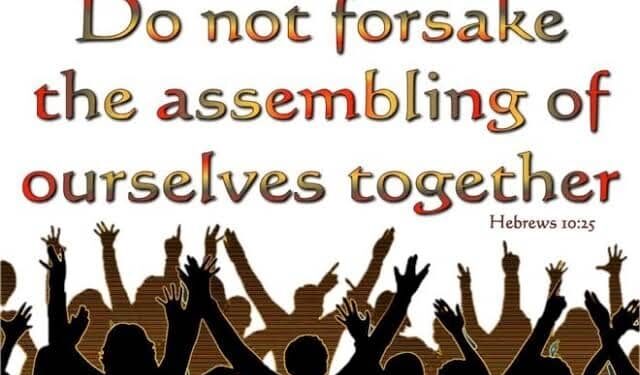
The COVID-19 pandemic accentuated this culture of a virtual world. Even Church meetings and fellowship have gone largely virtual, with good benefits but also a great danger, the danger of dropping out and losing the benefits of mutual encouragement and accountability. Our faith was designed to be a common faith, with checks and balances, not a virtual, crypto faith. Fellowship, online or on land, is critical.

“Let us not neglect meeting together, as some have made a habit, but let us encourage one another, and all
the more as you see the Day approaching
(Hebrews 10:25)

©Buti Sam KPUTU

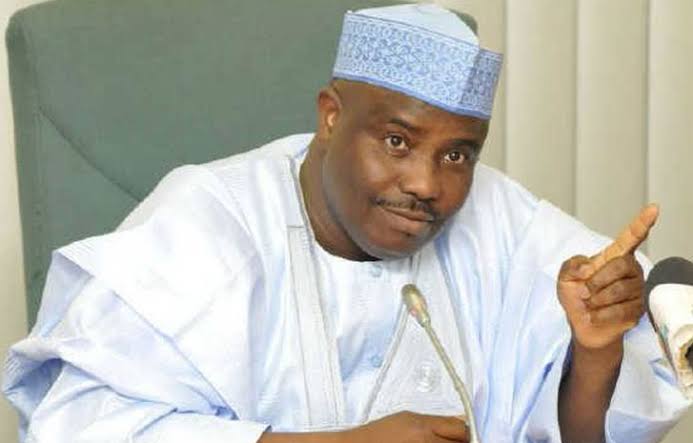
Tambuwal at Richard Akinnola’s birthday lecture: Nigeria needs a leader in tune with modern technology, not a parochial, provincial politician

“SECURITY CHALLENGES IN NIGERIA AND ITS IMPLICATIONS FOR SUSTAINABLE DEVELOPMENT” BEING A PAPER PRESENTED BY H.E. AMINU WAZIRI TAMBUWAL CFR, GOVERNOR OF SOKOTO STATE AT THE 63RD BIRTHDAY LECTURE IN HONOUR OF RICHARD AKINNOLA ON AUGUST 23, 2021 AT RADDISON BLU HOTEL, IKEJA, LAGOS.

Protocol:

  1. INTRODUCTION:
    It is with utmost pleasure that I stand before you in honour of one of Nigeria’s leading intellectuals, Journalist, author, Legal Practitioner and civil society Icon, Richard Akinnola, who turns 63 today.

I have been asked to present a paper of my choice, and following the mood of the nation, the near collapse of civil authority in the country, the recurring issue of national security is still in the front burner of national discourse. Consequently, my presentation is on “Security Challenges in Nigeria and its Implications for Sustainable Development”.

  1. THE CONCEPT OF SECURITY AND INSECURITY:
    Security envisages a situation where measures are taken to protect the lives, property and infrastructure of citizens and the State from hostile actions and activities. It is a state of affairs that enables citizens in the society to live their normal lives in tranquility and safety without undue interference, threats or harm.

Security is thus, protection against all forms of harm with respect to the physical, economic, psychological and the wellbeing of people in a given environment.

  1. DOCTRINAL FOUNDATIONS:
    “The security and welfare of the people is the primary purpose of government”, so says the Nigerian Constitution in its Fundamental Objectives and Directive Principles of State Policy (S.14(2)(b)).

Indeed this principle is of great antiquity and its purpose is a positive duty imposed on government at all levels to protect the people from violence and harm, while enhancing their welfare. It is usually expressed in the Latin maxim: SALUS POPULI SUPREMA LEX (“the safety of the people is the supreme law”). The principle envisages that any government that fails in this primary test of security and welfare of its citizens, loses the moral authority to govern. Such a government breaches and breaks the SOCIAL CONTRACT with the people and loses all legitimacy in the eyes of its citizens. Indeed, the reciprocal duties of the citizens to the government suffers a fundamental breach.

“It shall be the duty of every citizen to –
(a) abide by this Constitution, respect its ideals and its institutions, the National Flag, the National Anthem, the National Pledge, and legitimate authorities; . ..
(e) render assistance to appropriate and lawful agencies in the maintenance of law and order. (S. 24, CFRN)

Indeed the doctrinal foundations of this principle was explored at the Common Law and by other great philosophers such as, John Locke, Thomas Hobbes, Rousseau and Thomas Paine. Indeed, one of the Fathers of American constitutionalism, James Madison, had written that “the protection” of “the faculties of men” and of “the rights property” to which these faculties give rise “is the first object of government,”

Accordingly, the Constitution of the United States of America, 1787 which regulates the relationship between the federal and state governments and defines the sphere of influence of each tier of government contain provisions in support of the security responsibilities of government to the people.

The duty and responsibility imposed by S.14(2)(b) of the Constitution derives from the fact that sovereignty resides with the people, and all governmental powers and authority is derived from the people.

Indeed the Constitution says in S. 14.- “(1) The Federal Republic of Nigeria shall be a State based on the principles of democracy and social justice.
(2) It is hereby, accordingly, declared that –
(a) sovereignty belongs to the people of Nigeria from whom government through this Constitution derives all its powers and authority;
(b) the security and welfare of the people shall be the primary purpose of government; and
(c) the participation by the people in their government shall be ensured in accordance with the provisions of this Constitution”.

Thus in Oyelaran I. Olaro of Oro Vs Olayioye, the Court of Appeal said: “…any government worth its calling must live up to the mandate and aspirations of the electorate, the owner of sovereignty in a democratic dispensation such as ours… A government at any level in the Nigerian Federation will be found wanting in its social and constitutional duty if it fails to provide the needed clement atmosphere where peace, progress, harmony and security will reign supreme. No electorate will desire and relish in an environment fraught with rift, rancour, upheavals, chaos and insecurity which may snowball into anarchy. Indeed, I believe that the maxim, Salus populi est suprema lex , the welfare of the people is the paramount law, as an ideal which every government in the Nigerian Sovereign State must strive to achieve.”

  1. FACTORS RESPONSIBLE FOR SECURITY CHALLENGES IN NIGERIA:
    That security situation in virtually all parts of Nigeria poses a great challenge to policy makers is perhaps an understatement. The reasons are many:
    i. Government failure or collapse of governmental institutions.
    ii. Feeling of inequalities, marginalization, unfairness and injustice.
    iii. Ethnic prejudices
    iv. Religious conflicts
    v. Weak or inadequate security system
    vi. Lack of appropriate equipment and Technology to fight insurgency and crime.
    vii. Weak intelligence gathering mechanism
    viii. Loss of Nigeria’s value system and weakening of traditional authorities
    ix. Corruption
    x. Porous Borders, including the fallouts of the ECOWAS Treaty on Free Movement of persons.
    xi. Herders/farmers conflicts
    xii. Rural/Urban drift
    xiii. Cattle Rustling
    xiv. Unemployment/Poverty
    xv. Lack of access to education, Healthcare and welfare
    xvi. Inequitable distribution of resources
    xvii. Ransom payments for terrorism, banditry, and kidnapping etc
    xviii. Civil wars in neighbouring countries eg Libya, Congo etc
    xix. Influence of foreign terrorist groups like ISIS, ISWAP, Al Qaeda etc
    xx. Lack of good governance
    xxi. Weak and inept leadership unable to unite the country for common purpose.
    xxii. Parochial world view
    xxiii. Economic challenges as a result of hostile business environment, weak foreign direct investment and fear of harm to personnel of businesses and foreign companies and weak productive base of the economy.
    xxiv. Terrorism financing
  2. IMPLICATIONS OF INSECURITY FOR SUSTAINABLE DEVELOPMENT:
    Insecurity has been found to be a leading obstacle to sustainable development.

Sustainable development has been defined as “development which meets the need of the present without compromising the ability of future generations to meet their own needs” (Brundtland Commission, UN 2010).
Most indices of development as are now encapsulated in the UN Sustainable Development Goals (SDGs) such as ending poverty, ensuring food security, good health and well-being, inclusive and equitable education, gender equality and empowerment of women, availability and sustainable management of water, etc., are current national challenges. These have not been sufficiently achieved as far as we can see. The insecurity in Nigeria not only competes with actual development items for budgetary funding, it also distracts government from concentrating on strengthening our institutions, which in turn would ensure the attainment of these important Sustainable Development Goals. In the 2020 budget, 190.65 Billion Naira was allocated to security alone. A total of 212.32 Billion Naira have been allocated in the 2021 budget, an increment of 11.13%. Nigeria has one of the highest military budgets in Africa. The remote causes of insecurity must therefore be identified and tackled headlong if we are to succeed in our bid to achieve national growth, cohesion and development.

Development is one of the major goals of any government and it is unsustainable when the foundations are not strong enough to endure. The principle behind sustainability is to make life meaningful for all citizens.

Security and development are also related in the sense that being a public good, the imperative to maintain security competes with other public goods such as education, health and infrastructure for public funds. Expenditures on security are therefore an essential component of the development process. For instance, the use of resources to strengthen a country’s security system could have been useful in other relevant areas. Insecurity therefore, becomes a drain on state and national resources at the expense of development and peoples’ well being, thereby having adverse consequences on economic growth and development. Thus, in the absence of any real threats to security, expenditures on security can be reduced significantly, allowing national and state governments to channel more resources to other areas of need to improve the quality of life of the people. In addition, insecurity destroys existing infrastructure and also prevent an environment for the development of further infrastructure; and a safe environment for economic activities by individuals to give them economic empowerment that will enable households not only to cater for their present generations but also to provide for future generations.

One of the key underlying causes of insecurity is poverty. The BORGEN Magazine, a US based media house described Nigeria as ‘the poverty capital of the world’ in 2020. Similar indices such as the poverty rate of 40% published by the National Bureau of Statistics have also confirmed Nigeria’s unenviable position. The average Nigerian is poor, hungry, angry and frustrated. Unfortunately, Nigerians in this category outnumber others. This population in turn furnishes a feeling of disdain for the state and disenchantment towards governance and development programmes that involve the participation of the people, creating a nationwide camp of potential terrorists, criminals and bandits.

Unemployment is another cause of insecurity. Crime is sometimes the product of an idle man’s brain. Unfortunately, Nigeria has seen a sharp increase in unemployment rates in recent years. According to the National Bureau of Statistics, total unemployment rate jumped from 10.44% in 2015 to 33.3% in 2020. Bloomberg has ranked Nigeria as second in unemployment in the whole world in 2021. These are indeed embarrassing figures.

  1. SOLUTIONS TO SECURITY CHALLENGES:

Allow me to share with you some solutions I personally feel can help resolve our security challenges.

i. Appropriate Leadership: This is one of the most crucial requirements for vanquishing insecurity in our land. Chinua Achebe in his seminal work, THE TROUBLE WITH NIGERIA says: “The trouble with Nigeria is simply and squarely a failure of leadership,” . .“There’s nothing basically wrong with the Nigerian character. The Nigerian problem is the unwillingness or inability of its leaders to rise to the responsibility, to the challenge of personal example which are the hallmarks of true leadership,” he concluded.

Nigeria needs a leader that is versatile. One that has friends and associates across the length and breadth of this country.

A leader with a broad world view and not a parochial and provincial politician. We need an incorruptible leader who understands that the best way to fight corruption is by personal examples and also by the building of strong institutions that can withstand shocks and manipulations.

Nigeria needs a leader in tune with the times. Who is reasonably aware of the modern demands of technology in solving societal problems.

Yes, Nigeria needs a bridge builder. A compassionate leader, sensitive to the needs and aspirations of the poor and needy. A leader whose words count and can be counted on. Indeed, a leader with courage. An accountable leader who can be trusted to face the challenges of nationhood squarely without sentiments or pandering to interests that are inconsistent with national goals. A visionary leadership imbued with a sense of patriotism will go a long way in changing the narrative of insecurity in Nigeria. A leadership that is nationalistic and not tribalistic. A leadership that promotes national unity not disunity.

A leader required by Nigeria is one that will regard Nigeria as his constituency, not his state, tribe, religion or region. A leadership that inspires the nation to achieve greatness. A leadership that galvanises, mobilises and directs Nigerians on the path to sustainable peace, progress and development. Such a leader will not regard any part of the country as conquered people.

A leader with these qualities will reach out to all and sundry and ensure that insecurity ravaging the country is put to flight. There is no short cut or magic wand to curtail insecurity other than the deployment of relevant tools of good governance, proper technology, necessary military and police equipment, a well trained and properly remunerated manpower, and lowering of tensions in the country through enthronement of a government that serves all and not a section and group. A leader smart enough to realise the imperatives of restructuring our security and governance structure.

Finding such a leader is a task for all and I challenge you all today to find and support such a leader in 2023 so that Nigeria can begin the long walk back to peace, security and prosperity for all her citizens.

ii. Good Governance is yet another major panacea for curbing insecurity in Nigeria. This requires that Government at all levels must take deliberate steps to ensure good and accountable governance that focuses on the needs of the people.

iii. Socio-Economic Development factor is also key to peace and security.

Examples and researches have shown that with good governance and strong institutions, most people are less likely to become enemies of the state,or embrace,crime when they can see development and opportunities.

iv. Elimination of corruption and entrenchment of social and economic justice, is yet another. Corruption gives rise to both social and economic problems. It is one of the major causes of inequality and inequitable distribution of wealth among the people. This leads to dissatisfaction, frustration and consequently agitations that lead to insecurity.

The war against corruption must be fought with various tools.

When the PDP Government created the EFCC and ICPC from the Nigeria Police Force, it was envisaged to be an answer to the menace of corruption since the agencies were expected to concentrate their activities solely on fighting corruption and especially economic crimes.

A plethora of court cases ensued as to the constitutionality or otherwise of these agencies, which were designed to cover the field with respect to not just the Federal Government and its agencies but also the States and Local Governments. In Attorney General of Ondo State V Attorney General of the Federation (2002) it was argued that in a federation, an agency of the federal government should not investigate or prosecute officials and agencies of States and Local Governments. The Supreme Court upheld the constitutionality of these agencies, anchoring its decision on the provision contained in S.15(5) of the Fundamental Objectives and Directive Principles of State Policy which says that: “The State shall abolish all corrupt practices and abuse of power”. The apex Court further relied on item 60(a) of the Exclusive Legislative List of the Federal Government which gives Legislative Power to the National Assembly for: “the establishment and regulation of authorities for the federation or any part thereof – (a) to promote and enforce the observance of the Fundamental Objectives and Directive Principles contained in the Constitution”.

The point being made is that the Court bent over backwards to validate the ICPC Act as a policy decision to check the cankerworm of corruption which causes insecurity in the country. If money voted to acquire military or police hardware to fight the war on insurgency and general insecurity is stolen through corrupt practices, it has a decisive negative effect on the security situation in the country.

v. An ethical revolution involving fundamental shifts in our value system is also absolutely necessary to secure our country. A situation where ill-gotten wealth is celebrated by society leads to a culture of desperation and winning at all costs. This may lead the youths in particular to crime, such as kidnapping, banditry, armed robbery, cybercrimes and the like. A change in value system that rewards hard work, honesty, diligence and trustworthiness will lead to a better and crime free society.

vi. The Role of the Government:
To overcome insecurity, there is need for intelligence gathering and surveillance so that law enforcement agents could be proactive and reasonably predict potential crime with near perfect accuracy rather than being reactive. The menace of insecurity, no doubt, calls for a new approach that will be founded on credible intelligence gathering. Government must not only continue to improve the performance of the security personnel, it must, more than ever before, recognise the need to devote more attention to security intelligence, capacity building to meet global best practices.

vii. There is also the need to modernise the security agencies with training, intelligence sharing, advanced technology, logistics, motivation and change of orientation by security personnel. This effort will enhance the operational capabilities of the Nigerian security agencies, enabling them respond appropriately to internal security challenges and other threats. In addition, there should be a complete overhaul of the security institutions in the country to reflect international standards of best practices that aims at pre-empting these security breaches. There should be an institutionalised approach rather than the episodic and reactive response adopted by government in the aftermath of attacks.

viii. Synergy among Law enforcement and the role of the Judiciary:
The need for security coordination and cooperation across and among Security agencies is of paramount importance. Furthermore, the prosecuting Agencies of State and the Judiciary must prioritise issues of national security. Prosecutorial Malpractice, incompetence and inordinate delay in prosecution and adjudication weakens the fight against crime.

ix. The role of civil society: There is need to involve members of the civil society in security management. They play the roles of critics, catalysts and advocates. They raise public awareness of the excesses of the security agencies, human rights abuses and most times engage and hold Governments and stake holders to account.

x. The role of religious groups: Time has come for adherents of our main religions to deliberately ensure religious harmony and peaceful co-existence without which insecurity will continue to ravage the land.

xi. The role of Communities: The community is where most Nigerians reside. And crime must be fought at this level, if we are to achieve success. Traditional rulers and our old and time tested security mechanisms must be activated at the community level. To this extent, many State Governments have passed legislation requiring landlords and various community associations to adopt the KNOW THY NEIGHBOUR POLICIES. This ensures that any new stranger that enters a community is tracked and monitored.

  1. INTERROGATING NIGERIA’S SECURITY ARCHITECTURE:

To achieve our goals, it will be necessary to review our security architecture.

A. THE NIGERIA POLICE FORCE.
In a democracy, the Police Force is the major instrument for the security of lives and property. Thus the CFRN establishes the Nigeria Police Force in S.214. The Constitution provides that “no other Police Force shall be established for the federation or any part thereof”.

The Constitution vests the command of the Police force in the Inspector-General of Police, and not in the President, Commander in Chief of the Armed Forces. Mr. President has ultimate command only with respect to the Armed Forces.

With respect to the maintenance of Public Order and Public Security, both Mr. President and the Governors have roles to play with respect to their spheres of influence or territory. (S.215(3) & (4) CFRN.

S.215 (3) provides that: “The President or such other Minister of the Government of the Federation as he may authorise in that behalf may give to the Inspector-General of Police such lawful directions with respect to the maintenance and securing of public safety and public order as he may consider necessary, and the Inspector-General of Police shall comply with those directions or cause them to be complied with”.

(4) “Subject to the provisions of this section, the Governor of a State or such Commissioner of the Government of the State as he may authorise in that behalf, may give to the Commissioner of Police of that State such lawful directions with respect to the maintenance and securing of public safety and public order within the State as he may consider necessary, and the Commissioner of Police shall comply with those directions or cause them to be complied with Provided that before carrying out any such directions under the foregoing provisions of this subsection the Commissioner of Police may request that the matter be referred to the President or such Minister of the Government of the Federation as may be authorised in that behalf by the President for his directions”.

In the exercise of security powers, cooperation and not supremacy or flexing of muscles should be the watchword. Indeed where lives, property and wellbeing of Nigerians are in issue, there is really no room for partisanship or turf wars.

B. NIGERIA POLICE COUNCIL (NPC):
Unlike the 1979 Constitution, the 1999 Constitution re-establishes the Nigeria Police Council in the Third Schedule, Part 1, Item L of the Constitution.

Sections 27 and 28 of Item L provides:
” 27. The Nigeria Police Council shall comprise the following
members –
(a) the President who shall be the Chairman;
(b) the Governor of each state of the Federation;
(c) the Chairman of the Police Service Commission; and
(d) the Inspector-General of Police”

“28. The functions of the Nigeria Police Council shall include –
(a) the organisation and administration of the Nigeria Police Force and all other matters relating thereto (not being matters relating to the use and operational control of the Force or the appointment, disciplinary control and dismissal of members of the Force);
(b) the general supervision of the Nigeria Police Force; and
(c) advising the President on the appointment of the Inspector-General of police”.

Indeed the Nigeria Police Council has not been playing its constitutionally assigned role perfectly. The council has very wide powers and in a federation, the federating States could use their membership of the Council to drive reforms in the sector. Indeed the Nigeria Police Act, 2020, for the first time sought to operationalise the NPC.

However, the Constitution specifically exempts the NPC from operational duties of the Police Force as this is the sole responsibility of the I-G of Police. However, the NPC has supervisory authority over the entire Police Force.

It is also obligatory for Mr. President to consult the Nigeria Police Council before appointing or removing the IG of Police (S.216(2) Constitution of the Federal Republic of Nigeria (CFRN).

C. NIGERIA POLICE SERVICE COMMISSION:
The Third Schedule, Part 1, Item M – establishes the Police Service Commission as follows:

S. 29. “The Police Service Commission shall comprise the following members –
(a) a Chairman; and
(b) such number of other persons, not less than seven but not more than nine, as may be prescribed by an Act of the National Assembly”.

S. 30. “The Commission shall have power to –
(a) appoint persons to offices (other than the office of the Inspector-General of Police) in the Nigeria Police Force; and
(b) dismiss and exercise disciplinary control over persons holding any office referred to in subparagraph (a) of this paragraph”.

Other Security Agencies in Nigeria include:

D. THE STATE SECURITY SERVICE (DSS) whose functions include:
a. Protecting the country against various internal security threats.
b. Law enforcement
c. Counter-intelligence, counter terrorism and security surveillance duties
d. Protection of senior government officials

E. NATIONAL INTELLIGENCE AGENCY (NIA):
They are responsible for foreign intelligence and counter intelligence operations in Ngieria.

F . DEFENCE INTELLIGENCE AGENCY:
They are mainly responsible for obtaining military intelligence for the Nigerian Armed Forces and the Ministry of Defence.

G. NIGERIA SECURITY AND CIVIL DEFENCE CORPS (NSCDC) is a paramilitary and Security agency responsible for providing measures against attack or disaster against the nation and her citizens; Protection against pipelines and other national assets from vandalism, among others.

H. THE ARMED FORCES OF THE FEDERATION:
The Constitution establishes the Nigerian Armed Forces, comprising of an Army, Navy, Airforce and such other branches of the Armed Forces of the Federation as may be established by an Act of the National Assembly. S.217(1) CFRN). Their functions are provided for in S.217(2)(a)-(d), CFRN:
“(2) The Federation shall, subject to an Act of the National Assembly made in that behalf, equip and maintain the armed forces as may be considered adequate and effective for the purpose of –
(a) defending Nigeria from external aggression;
(b) maintaining its territorial integrity and securing its borders from violation on land, sea or air;
(c) suppressing insurrection and acting in aid of civil authorities to restore order when called upon to do so by the president, but subject to such conditions as may be prescribed by an Act of the National Assembly; and
(d) performing such other functions as may be prescribed by an Act of the National Assembly.”

It is Mr. President that has powers to determine the operational use of the Armed Forces of the Federation as the Commander in Chief of the Armed Forces. (S.218(1)).

This is however, subject to the powers of the National Assembly to make laws for the regulation of the powers exercisable by Mr. President as C-In-C.
It is only by virtue of S. 217(2)(c) earlier stated that the Military can get involved in normal policing in a democracy such as Nigeria’s. However, in Nigeria of today, the Military is deployed in virtually every State of the Federation on a permanent basis. This shows that Nigeria is effectively IN A PERMANENT STATE OF EMERGENCY, even though not formally declared.
There is a crying need therefore, to adequately equip and man the Nigeria Police Force to play its constitutionally assigned responsibilities.

It should be noted that there is only one Armed Forces set up for the Federation. No State has powers to set up any branch of the Armed Forces. It is an exclusive federal subject as shown by Item 17 (Defence) and Item 38 ( Military) in the Exclusive Legislative List.

I. NIGERIA IMMIGRATION SERVICE
ETC. They play a major role in securing our borders and checking the influx of illegal migration and emigration to and from Nigeria. The Federal Government should support the Service with adequate funding, skilled manpower, adequate technology and other necessary tools to perform their responsibilities, as their role is critical in securing the country.

J . The office of the NATIONAL SECURITY ADVISER (NSA) is also relevant for coordination of some security Agencies of government on behalf of Mr. President. I have contended elsewhere, and I so repeat here, that the office of the NSA should be elevated in the Constitution to Cabinet rank because of the nature of his duties. He shouldn’t be outranked by other Defence officials of state.

  1. THE NEED FOR DECENTRALISATION OF SECURITY ARCHITECTURE IN NIGERIA:
    After reviewing extant constitutional provisions, it is clear that the main coercive forces of the nation is controlled by the Federal Government , ranging from Arms and Ammunition, to Defence, to the Police, to the Armed Forces and other earlier named security agencies.

The State Governments are a fully autonomous tier of government complete with Executive, Legislative and judicial powers. They have primary jurisdiction for the lives and property of all citizens within their domain. Apart from the limited authority granted by the Constitution to the Governor on issues of Public Order and Public Security, the plenitude of most of the powers lie in the hands of the Federal Government.

This state of affairs have made it difficult to detect and control crime, criminality, banditry, kidnapping, terrorism and armed robbery in various States. The State Governments are sometimes hamstrung in dealing decisively and timeously on security matters.

Lives and property can be better and more effectively secured by people closer to the grassroots. Hence, the clamour for some form of State policing or constitutional decentralisation of Police powers. There is a near consensus on this across the country. But the form it should take and the details have not been properly interrogated. Some advocate for a federal police, and a State police working side by side, with clearly delineated and defined responsibilities. Others argue for a highly decentralised federal police structure, where State Governors would appoint or dismiss when appropriate, Commissioners of Police in their respective states who report to them, among other provisions.

A National Conference on policing and security involving all stakeholders have become imperative to flesh out the constitutional questions involved.

But before we reach there, States can through creative administrative engineering play a decisive role in the security of lives and property in their various States. Many States have set up neighbourhood Watch Agencies, Forest Guards, Vigilante services, OMOTEKUN, EBUBE AGU, HISBAH and other like Agencies to meet the security need of various communities for grassroots or community based policing.

The current initiative of the Nigeria Police Force,on Community Policing should be strengthened.

In Sokoto State, we are struggling to develop synergy between the local communities and Federal Security Agencies. Furthermore, only last week, we set up a Committee to tackle security challenges in the State, headed by no less a personality than His Eminence, Sa’ad Abubakar, the Sultan of Sokoto. We have routinely provided some funding and equipment such as vehicles, some security equipment and operational support to the Federal security agencies. And many more. Indeed in Nigeria today almost all the State governments spend a significant part of their budget on the equipment and operational needs of the Security agencies, even when they do not have operational control.

  1. CONCLUSION:
    It bears repeating to once again congratulate the celebrant, Richard Akinnola and urge him to continue his good works for the benefit of Nigerians and mankind. For as John Wesley said:
    “Do all the good you can. By all the means you can. In all the ways you can. To all the people you can. As long as ever you can.”

It is my submission that Nigerians can still unite for the common good. Nigerians can still live together and strive for nationhood. A nation built on not just equality of opportunities but love for one another. Being each other’s keeper. A caring and compassionate nation is still possible. We must build a country where no man or woman, group or section is oppressed. A nation where your tribe, tongue or religion wouldn’t matter. We must build a nation that rewards talent and innovation and also ensures that no one or group is left behind. I believe strongly that we have the capacity and ability to vanquish all centrifugal forces that divide us. I leave you with the parting words of Nelson Mandela, one of the greatest gifts of Africa to the world and whose conduct in office is recommended for Nigerian leaders: “Darkness cannot drive out darkness: only light can do that. Hate cannot drive out hate: only love can do that.”

Thank you for your patience and may God bless you all and the Federal Republic of Nigeria.

Post Afghanistan implications for Nigeria, By Dakuku Peterside

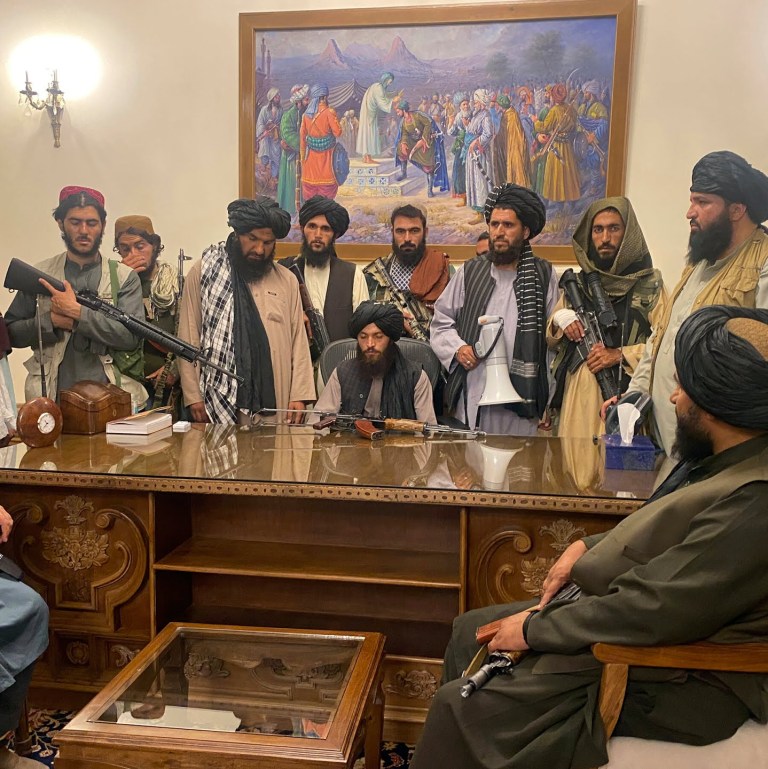
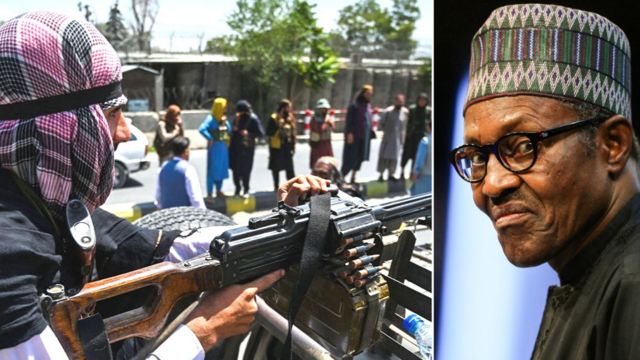
In the past week, the unfolding events in Afghanistan have dominated the media space. The seemingly unimaginable happened. The Taliban forces marched into the capital, forcing the scampering away of the president of Afghanistan and his officials, western diplomats, and a few Afghans privileged to be airlifted or unfortunate to cling on the wheels of aeroplanes in desperation to leave Afghanistan for good. Leaders in corridors of powers in western capitals are desperate to frame the failed mission in Afghanistan as a self-inflicted defeat by the Afghans, and their spin doctors are busy trying to convince the world that the West, especially, the US has played its role and left the Afghans to pilot their affairs and shape their destiny.

As Nigerians were watching the events unfold, the big question in the minds of most is how this will impact Nigeria. The imagery of Taliban bestriding like a colossus and devouring city after city as it made its way to the capital is reminiscent of Boko Haram, and Islamic State West African Province (ISWAP)’s videos littered all over the social media that Nigerians are used to, albeit on a smaller scale. These groups pillage, rape, and kill many Nigerians at the fringes of our borders and various ungoverned spaces, whilst the herders/farmers conflict is bloody and ubiquitous across the country. Boko Haram and the Taliban have similar footprints and may even be acting from the same script.

The big elephant in the room is, can Boko Haram, ISWAP or “militia-Herdsmen” become the Nigerian ‘Taliban’? Can they match to Abuja and overthrow our legitimate and constituted government? What strategic lessons should Nigeria learn from the fall of Afghanistan to avoid similar scene? These questions call for an appropriate assessment of the situation, soul searching and the answers should influence how Nigeria tackles these intractable problems from now on.

To appraise whether Boko Haram terrorists can overrun the country like the Taliban were able to do in Afghanistan, we need to take a closer look at what drives and sustains Islamic extremists. In as much as the West, through their powerful media, depict the Taliban as a group of ogres who impose medieval punishment on the citizenry and deprive women of fundamental freedom and rights, the group has a level of support within the local Afghan population. This support enabled them to maintain a considerable level of resistance to the occupying American and allied forces in the country for 20 years, which led to the death of tens of thousands of Westerners and their Afghan collaborators. It also enabled them to overrun the country immediately after the Americans pulled out.

In the Nigerian context, the Boko Haram terrorists still draw some support from large swathes of the local population. These people give overt and covert support to the insurgents, which has enabled them to mount a sustained resistance to the Nigerian military.

To address this problem, we must tackle the root causes of terrorism, including poor governance, corruption, poverty, dearth of economic opportunities and lack of social and basic amenities. The strategy of many terrorist groups in recruitment is always to target disgruntled people, people suffering from social and economic injustice, who feel left behind by the elite and the political class. It is instructive to note that the hotbeds of Islamic extremism and terrorism in Nigeria are in areas with the country’s most extraordinary incidents of perverse poverty and educational backwardness. These are areas where people lack basic amenities, areas with high unemployment rates and high illiteracy levels.

The experience of the US military in Afghanistan means that effectively tackling terrorism is not just simply about military warfare. The Americans and their allies invaded Afghanistan after 9/11, routed the Taliban and installed a government seen by many Afghans as massively corrupt and inept. This anomaly extended to the Afghan military, constituted mainly by people who were in for the financial security and opportunities presented by the American occupation. That was why the ‘highly trained’ force of 300,000 quickly fell to a ragtag army of 75,000 in just a matter of days.

Therefore, good governance and its twin – development is a must to root out terror and to cut the supply lines of terrorists. Military might, in idealogical wars, no matter how powerful, would only lead to short term victories. In an article published recently in the Financial Times, President Muhammadu Buhari alluded to this when he emphasised that US military forces on the ground in Africa is not what is most needed. He said what Africa needs most is US investment in infrastructure to help provide jobs and economic opportunities for the rapidly growing population.

Another vital point to note is that it was clear that the Taliban effectively infiltrated the Afghan military from unfolding events in Afghanistan. It means that part of the resources deployed by the US in Afghanistan was ironically used to train and sustain ‘the enemy’. The Nigerian military in 2016 launched Operation Safe Corridor, an initiative for the deradicalisation and rehabilitation of ex-Boko Haram members. The aim of the operation, the military said, was to reintegrate repentant Boko Haram members into society. Through this programme, the Nigerian authorities have recurrently pardoned and released Boko-Haram fighters under the guise of repentance, negotiation, surrender, rehabilitation and deradicalisation. More than 500 ex-Boko Haram members have already completed the programme. However, as can be gleaned from the events in Afghanistan, this measure can be counterproductive. Professor Zulum, governor of Borno state, said some time ago that the deradicalisation of repentant Boko Haram members was not working. Zulum posits that the initiative needs to be reviewed because some ex-Boko Haram members only come to spy on communities and then return to join the group.

In addition to this, some legal experts believe that the authorities discretionally setting free those who ordinarily should be facing grave charges relating to terrorism and other war crimes is illegal. For one, until those arrested are tried and convicted in a court of law, they cannot be legally branded terrorists. And the Nigerian Army is not a court of law, which has the power to determine the guilt of suspected terrorists. For the fact that every suspect is presumed innocent until proven guilty by a court of law, how can a supposed innocent person be pardoned? Aside from the fact that the Nigerian military lacks prosecutorial powers, they also cannot release suspects accused of terrorism.

There are stories that most of the terrorists ‘repenting’ are of Boko Haram and not of ISWAP terrorist sect. The latter, which has been in command of most terrorist activities in the recent past after the killing of Boko Haram leader, Abubakar Shekau, has strict punishments for fighters who engage in stealing and other nefarious activities. These ‘repentant’ Boko Haram members are alleged to be unable to cope with this directive hence their decision to ‘surrender’ to the authorities. So how could people who renounced terrorism because it hindered their opportunities to steal and plunder be good citizens of the society?

Apart from the fact that some indigent persons who were never terrorists might decide to exploit the opportunities to join the ‘repentant’ group for material gains, there is always likely to be great resentment in the local population as they are forced to live with people who killed their family and friends and who forced them out of their homes.

For now, it seems only remotely possible that Boko Haram or ISWAP can replicate the successes of the Taliban in Nigeria. But as the Nigerian military continues an extensive military offensive against the terrorists, there is a need to address issues of poverty and inequality, which would help root out terrorism in the country.

What basic lessons can Nigeria learn from events in Afghanistan in the past few weeks? The core theme in this Afghan story is that nation-building is a local project. No other nation or people can build our country for us. Their self-interest governs any external stakeholders, and if and when that interest is not adequately served, they will abandon the country to its doomed fate. The Afghan locals are the casualties and are left to face the Taliban whilst foreigners are moved to safe places. So, when people stoke the embers of violence and war, they should remember that no external Western forces may come to their aid; instead, they will quickly remove their citizens from the ensuing inferno.

The next lesson for Nigeria is that we should never forget that the idea of democracy, popular sovereignty, and the rule of law, though universal, must be rooted in local culture, values and peculiarities to have a meaningful impact. The clash between fundamentalist Islamism and democracy is real, and instead of exacerbating this ideological conflict, Nigeria should work out a model where both are assimilated and adapted to fit our local peculiarities. Aspirations of the people (not those of foreigners) must be the foundation of democracy and development. Therefore, we must adequately evaluate any attempt to import western values to ensure they fit with local values. It is the citizens that should agree on rules of social, economic, and political engagement. These should not be imposed on them.

Again, it is local political leaders and visionary leaders that build institutions and not multilateral agencies or foreign governments. If the local leaders are not involved in the building of the institutions, they will not own them. Therefore, shared vision and effective communication are critical in all nation-building efforts. The interests of locals are served better by a stable, independent, and prosperous state, and therefore, they must work together to protect it. Economic opportunities and good quality of life for all citizens are the incentives.

Fourthly, military crackdown alone against ideology (Taliban, Boko Haram, Biafra, etc.) is unsustainable. The solution must involve a battle of the hearts and minds of the people. Dialogue and negotiated compromise may be necessary rather than only a show of strength. Government should get the locals to understand the implications of supporting the Jihadist movement on Nigeria existence.

Fifth, Nigeria must immediately address all its fault lines to foster unity and cohesion to fight the common enemy of extremism. Unity is needed now, not fighting multiple wars. Restructuring and creating a sense of nationhood now is inevitable if Nigeria is to succeed. The Fulani herdsmen movement and incursion in other parts of the country and the allegations of land grabbing deserves focused attention by the leaders.

The 2023 general elections must not be allowed to divide or polarise Nigeria. It will leave Nigeria weak.

The last lesson is that a grand strategy to end insurgency in Nigeria must be developed and implemented rigorously by the government in conjunction with the private sector, regional and international collaborators. There should be a rallying call for all Nigerians to understand that Nigeria is at war and must channel resources and efforts to execute that war to the end. Instead of being reactive, government should initiate a grand offensive against all insurgents to defeat the terrorists once and for all times, whilst using the carrot and stick approach. As seen in the Taliban case, firm resolve, local knowledge and support, and material, psychological, and ideological incentives help all stakeholders work at the common goal of defeating the opponent irrespective of the supposed strength. Nigeria should adopt this.

In conclusion, we are far from seeing insurgency in Nigeria overrun the state. However, it is not impossible. We must proactively solve this problem before it gets out of hand and turn Nigeria into the next Afghanistan.

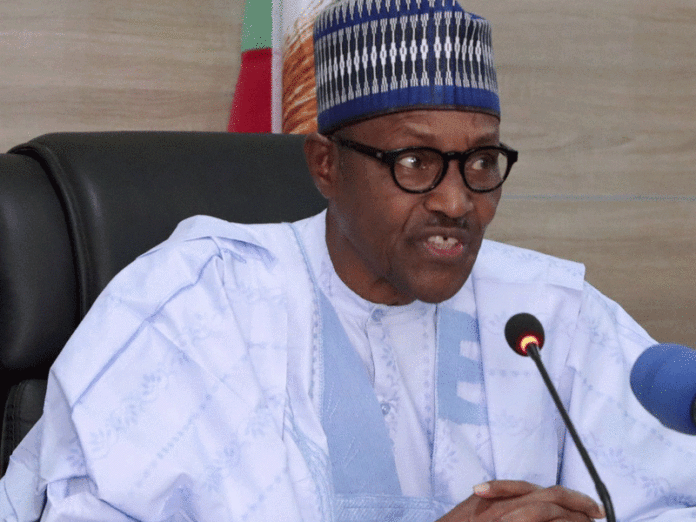
Buhari and his grazing routes

Grazing routes are out of tune. The future of cattle farming is in ranching

In a double down on his controversial pledge to revive the contentious grazing routes for herders, President Muhammadu Buhari on Thursday approved the recommendations of a committee to review “with dispatch, 368 grazing sites across 25 states in the country and to determine the levels of encroachment.” The decision pits him against sections of the country where open grazing has been banned because of the criminality and insecurity associated with it. The president is also playing into the hands of those who have always argued that he is a sectional leader with scant regards for the feelings of Nigerians outside his tiny enclave.

On this matter of grazing routes, the president has been consistent in his disregard for public sensitivities. Yet, even if the grazing routes were still valid, they can only facilitate further clashes between settler farmers and migrant herders. Besides, by allowing some people, including foreigners, to roam the length and breadth of Nigeria, often herding evacuated cattle, we violate the rights of these animals and endanger the health of citizens through exposure to the elements and a cocktail of diseases. So, at a time the conversation is about how to modernise the way we rear cattle in our country, it is curious that President Buhari is the one advocating that a primitive idea be sustained. This is aside the threat nomadism poses to national security.

Ortom, Ohanaeze, Falana kick over unknown grazing routes | The Guardian  Nigeria News - Nigeria and World News — Nigeria — The Guardian Nigeria News  – Nigeria and World News

We have made this point several times: In the history of humanity, the stage of development at which man wandered for a livelihood belongs to the stone age. It was in the bid to stem the internecine violent clashes between herdsmen and farmers, that the 17 states in the Southern part of the country as well as two states in the North (Benue and Taraba) banned open grazing by livestock. With little variations that take care of peculiarities in these states, the law prohibits movement of livestock and open grazing by them. This law is what the president intends to roll back, even when the constitution grants him no such power.

As we reminded the president much earlier on his dogged insistence on ancient cattle routes, the First Republic ended 55 years ago. In the intervening period, migrant cattle herding has ceased in almost every other country. Modern ranches have replaced roving herds while beef production has become a modern mechanised industrial undertaking. Furthermore, wherever those grazing routes of the 1960s may have been, population growth and pressure of farming and land use would have brought them under new uses. In fact, under the Land Use Act, governors remain the custodians of all lands in their states.

Perhaps it will be suitable for the president to provide the platform for a wholesale discussion on the future of animal husbandry in relations to the transition from nomadism to ranching. A package of incentives, including soft loans, liberal access to land, training, and provision of inputs to herders and others can help facilitate the transition and ameliorate the challenges associated with it. If done properly, we can then employ and re-train the herdsmen in modern settled cattle farming. The animals will be healthier; the handlers will earn decent incomes, have decent accommodation, own property, and have schools for their kids. Ancillary industries will also emerge and employment opportunities will blossom.

BUHARI AND HIS GRAZING ROUTES

To insist on some ancient cattle routes and grazing reserves is to further polarise an already badly divided country. A minimum requirement of the democratic ethos is close attention to the barometer of public opinion. Sadly, President Buhari is habitually indifferent to public opinion in his pursuit of personal and group interests. His latest order on the vexatious grazing reserves is a further step in the direction of deepening divisiveness and subverting the democratic will of Nigerians. It is also a serious threat to national security.

Worse still, at a time of rapid global modernisation of production processes in all spheres of the economy of nations, Nigeria seems encumbered with an elected leader with a permanent attachment to and fixation on archaic methods and ways. (Thisdaylive)

Why Taliban should be given a chance to govern Afghanistan: A rejoinder to the statement of Prof. Ishaq Akintola in a chat with The Punch

By Hossein Saheed

“Majority of the bandits and Boko Haram terrorizing Nigeria are Nigerians committing different acts of unlawful killings in the country and neighbouring countries on the claim that western education is haram (forbidden) and that they want to turn Nigeria to Islamic State like that of Afghanistan. [If] they are ready to take over the government of Nigeria today does that mean The MURIC Director, Prof. Isiahq Akintola will support them as he supports Taliban?”

The statement made by the MURIC Director, Prof. Isiahq Akintola on the 17th of August, 2021 to The PUNCH during an interview is a swift reaction and contribution to a situation a Muslim leader like the Prof. could have made to reduce tension and ensure peace where there seems to be chaos, tension and threat of war like in Afghanistan. I, with utmost respect, appreciate the Professor of Islamic Eschatology for the statement and pray that Allâh preserve him upon the path of goodness!

MURIC Director, Akintola receives COVID-19 vaccine | Ripples Nigeria
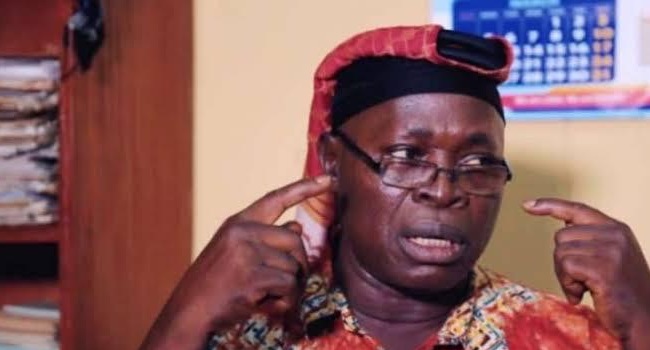
Prof Ishaq Akintola

However, I observed a particular statement made by the Prof. during the interview by The PUNCH. The PUNCH correspondent asked the Prof. whether he is in support of the takeover by Taliban in the Afghanistan and the Prof. said: “Yes, I am in support. And I will explain. The Taliban are Afghanistans; it is their country, it is not America’s. Just as Nigerians have the right to be in their own country. They were driven to the countryside by American invading forces.”

Hence, the statement, among others, made by Prof. during this interview by The PUNCH is the subject matter of this rejoinder regarding the event in Afghanistan. I agree with Prof., however, only to the extent that the Taliban are Afghans and that it is their country and that they have rights to stay in their country without fear. However, it is safe for me to state here that there are limitations to the rights of a citizen in his own country.

The rights of a citizen in a particular country may be curtailed and put to an end if he commits an offence in any other country of the world thereby giving the said country the authority/power to try him in their country. The instance of this is currently happening in Nigeria where a Nigerian committed an offence in another country and he was arrested and he is undergoing trial in the said country. It is on this, I humbly submit that despite the fact that Taliban are Afghans they can be deprived of some rights in their country upon certain conditions.

Afghanistan: Taliban sweep country's south, take Helmand province

It is to be noted that the reason the USA forces moved to Afghanistan was to avenge the attack by Al-Qaeda in USA on 11/9/2001. In the attack, Al-Qaedar hijacked four commercial planes and crashed them into different notable places in USA which include World Trade Center in New York and Pentagon in Washington, DC where about 3000 people were killed. The attack was later linked to Osama Bin Laden (the then leader of Al-Qaeda) who was hiding in Afghanistan under the shelter of Taliban.

It was as a result of this attack that the then USA President George W. Bush signed a joint resolution into law which authorize the use of force against those responsible for attacking USA on 11/9/2001 referring to as 9/11 in America. With this, if American forces on getting to Afghanistan truly derived the Taliban in their own country,  as the Prof. said, then the reason could be that Taliban took, either a direct  or an indirect, part in the 9/11 attack in USA.

The Prof. again further stated during the interview that “Now, American forces have fled, that is the way to put it because that is exactly what they did. Biden just said America did not come into Afghanistan for nation-building; it is quite insulting and irritating. You fool a whole country for 20 years”

With humility, I beg to take a different position on this. The fact is, American forces moved to Afghanistan on a mission to stop terrorists from attacking USA through Afghanistan and to get the people that partook in 9/11 attack. President Biden stated this on 17/8/2021 in his remarks on Afghanistan, the President’s speech reads: “We went to Afghanistan almost 20 years ago with clear goals: get those who attacked us on Sept. 11, 2001, and make sure Al Qaeda could not use Afghanistan as a base from which to attack us again. We did that. We severely degraded Al Qaeda and Afghanistan. We never gave up the hunt for Osama bin Laden and we got him.’’ Thus, it was after achieving this that they moved away. With respect, this has nothing in relation to the word “fool” but a mission to achieve a particular purpose.

Another statement made by the Prof. which also brought about this rejoinder is that while the Professor was talking on why he supports Taliban takeover Afghanistan stated that “While we support the return of the Taliban, we will not support extremism and terrorism in any form.” As a matter of fact, Taliban can be supported by any person, sect or country of the world but the fact far from fallacy is whoever is in support of Taliban by taking over Afghanistan government is indirectly supporting extremism if not terrorism. Taliban during their first tenure in 1996-2001 imposed ultra-extremist Islamic law in the country which banned women from working and girls form schooling.

As though that was not enough, when they took over on 16th August 2021, they went to Afghanistan bank and forced out two female bankers on the ground that they could not be working together with male counterparts and gave a condition that they can replace themselves with male relatives.

However, if Taliban are not coming with extremism what name can we call the above act? In Nigeria, majority of the bandits and Boko Haram terrorizing Nigeria are Nigerians committing different acts of unlawful killings in the country and neighbouring countries on the claim that western education is haram (forbidden) and that they want to turn Nigeria to Islamic State like that of Afghanistan. However if they are ready to take over the government of Nigeria today does that mean The MURIC Director, Prof. Isiahq Akintola will support them as he supports Taliban?

May Allâh save Nigeria, Nigerians, the people of Afghanistan and the entire Muslim of the world!

Hossein Saheed is an undergraduate at the Faculty of Law, Al-hikmah University, Ilorin. He can be reached on [email protected]

Tribute: Joy Ezeilo Extols Victoria Aguiyi Ironsi and Adanma Okpara

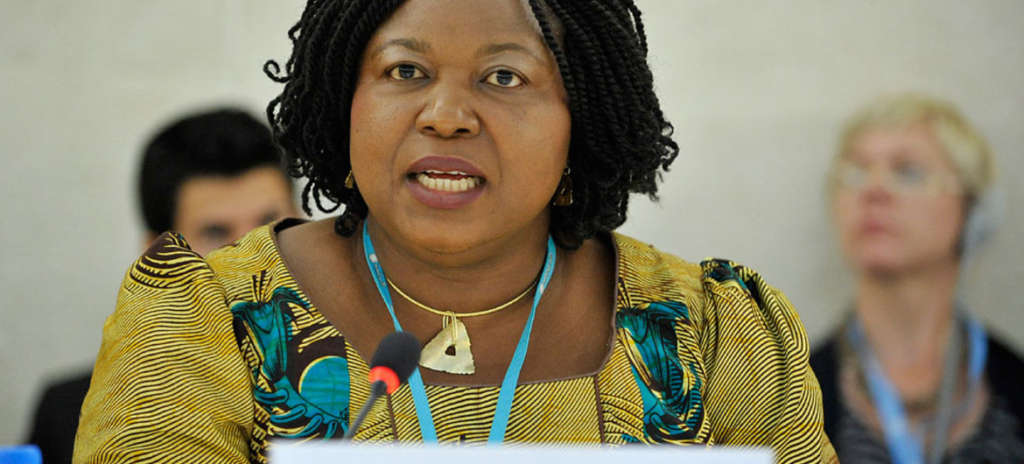
Former United Nations Special Rapporteur on Human Trafficking and Dean Emeritus, Faculty of Law, University of Nigeria( UNN), Prof. Joy Ngozi Ezeilo on Tuesday described former first lady Mrs. Victoria Aguiyi Ironsi and Madam Adanma Okpara, the widow of the Premier of the old Eastern region, Dr. Michael Okpara as ” unsung sheroes/ heroines.”

Ezeilo who is also the founding CEO, Women’s Aid Collective & WACOL Tamar SARC made the disclosure sequel to the demise of Mrs. Victoria Aguiyi Ironsi and Madam Adanma Okpara.

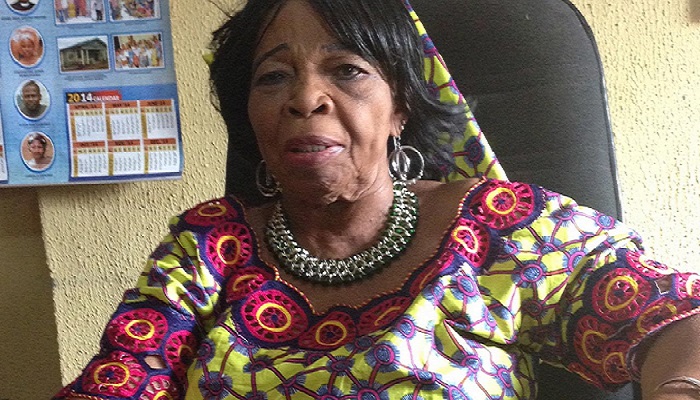
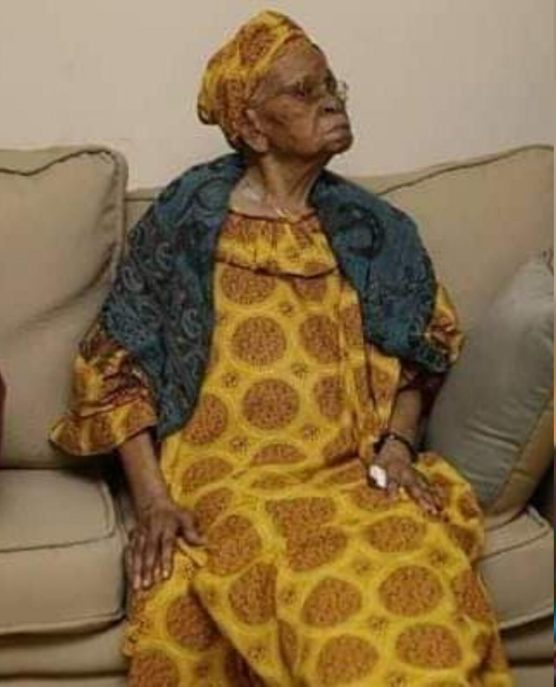
Lady Adanma Okpara

Part of Ezeilo’s statement read: “What a huge loss to Igboland and Nigeria? These were two great women — unsung sheroes/ heroines that stood by their formidable political giants’ husbands through thick and thin. Although they have been viewed largely through the prism of their husbands, the duo were women of valour and indomitable spirit.  May their souls  find eternal peace and may their memories be a source of pride and blessings for Ndi Igbo.
I hope they will be honoured by both state and federal Governments of Nigeria.

Prof. Ngozi Ezeilo

“Meanwhile, their deceased husbands remain under-recognized and celebrated despite their noble and transformational leadership qualities. Dr. M. I. Okpara was an astute leader of immeasurable value. We once had leaders of integrity worthy of emulation.  May God comfort their respective families.”

Two former first ladies, Lady Victoria Aguiyi-Ironsi, wife of the first Military Head of State, Late Gen. Thompson Umunnakwe Aguiyi-Ironsi and Lady Adanma Opara, widow of Premier of the defunct Eastern region, Dr. Michael Okpara, died within 24 hours of each other.

Both women were from Umuahia North Local Government Area of Abia State. Lady Aguiyi-Ironsi, according to a close family source, died of age-related ailment. She was 98 years old.

Born on November 21, 1923, Lady Victoria was the second First Lady from January 16, 1966 to July 29, 1966, when her husband, Aguiyi-Ironsi, was killed in a counter-coup led by late Gen. Murtala Mohammed.

Earlier on Sunday, Lady Adanma, who would have been 97 years old in December, died; a village source said she died after a protracted illness.

The nonagenarian had been sick for some years before finally succumbing to death in an undisclosed hospital.

Attempts for formal confirmation of the demise of the late Lady Okpara were however unsuccessful as her second son, Chief Uzodinma Okpara did not pick calls put across to him.

Meanwhile, since the demise of her husband, Dr. Michael Okpara in December 1984, the nonagenarian had lived a quiet life and rarely seen in public.

She was a strong pillar behind her husband in the politics of the 1950s and 1960s as Michael Okpara ruled the then Eastern Region with dedication and commitment to people’s welfare, centred on massive industrialisation of the then Eastern Nigeria with agriculture as its centerpiece.

Her late husband, Dr. Okpara was reputed for his selfless but legendary leadership which was responsible for the agricultural and infrastructure transformation recorded in the Old Eastern region comprising the present day South-East, South-South states minus Edo State.

Additional reports from Vanguard News

Zainab Ahmed: When Not to be a Finance Minister

By Bisi Daniels 

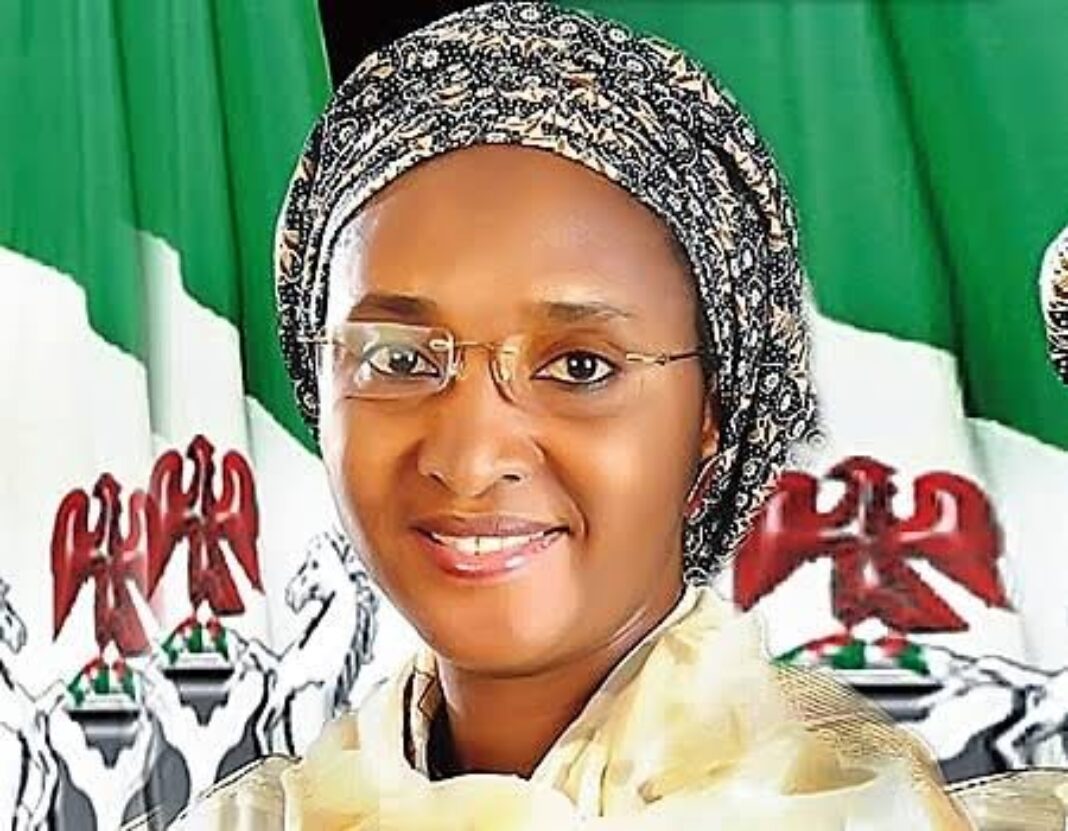
If as it has been suggested, facial expressions and body movements account for between 60 to 65 per cent of all communication, the plain public face of Mrs Zainab Ahmed offers nothing in body language about her current position as Minister of Finance, Budget and National Planning.

As prestigious as the portfolio is, it comes with delicate responsibilities and high public expectations.

The occupant of that office is the immediate recipient of blame for an economy gone wrong; and with the current economic challenges, the seat must be hot enough to leave traces on her.

Yet, at best, people gifted with the power of description can only describe Ahmed’s public face as plain, tending towards seriousness and devoid of emotions.
A lady called her “Obirin Metta” in the Yoruba language, meaning a powerful woman with a three-in-one portfolio, but even that leaves no shade of pride or fatigue on her.

“If she wears pride because of her important ministry,” one observer said, “you would have heard lawmakers, she often meets with, accuse her of arrogance or even threaten her with arrest.

Another test of her humility came when Edo State Governor, Godwin Obaseki, accused the government of “economic rascality” for allegedly printing money for the Federation Account Allocation Committee to share among the tiers of government.

Her response was measured. She said, “The issue that was raised by the Edo State Governor for me is very, very sad because it is not a fact. “What we distribute at FAAC is revenue that is generated and, in fact, distribution of the revenue is public information. We publish revenue generated by FIRS, the Customs and the NNPC, and we distribute at FAAC. It is not true to say we printed money to distribute at FAAC; it is not true.”

The weight of her portfolio, including the unceasing flow of high-level meetings she attends frequently are expected to leave stress marks of her face, but none is visible. Not even the burden of the national economy has been able to leave marks, any more than her trademark glasses has.

Confident on of her job, she looked like one who has no worries for a long time until she confessed she has them, including one that causes her sleepless nights.

Asked by Poju Oyemade, senior pastor of Covenant Christian Centre, during “The Platform,” (an annual conference organised to mark Nigeria’s Independence anniversary), to list three things that keep her awake at night, the minister replied: “Number one is revenue, number two is revenue and three – I would say, is revenue.”

Ahmed’s availability for the event also attests to the modesty and accessibility of a minister who has also granted lengthy interviews to many mainstream newspapers.

Knowledge of the complexities of her portfolio should also equip her with the understanding that Nigeria’s lean revenue base, which has been further eroded by the socio-economic impact of the COVID-19 pandemic, offers scary scenarios to anybody who understands basic economics.

However, even as one rejoices with the minister over recent increases in oil prices, the joy is quickly discounted by the burden of fuel subsidy the Federal Government has tied around its neck.

One observer was recently rejoicing for her over the affinity of oil prices with the roof at over $70 per barrel until the Group General Manager of the Nigerian National Petroleum Corporation, NNPC, Mele Kyari deflated him with the explanation that higher oil price was ironically bad news for the economy.

He described the rising price of crude oil as a “chicken and egg” situation, expressing concern that the prices had started exiting the comfort zone set by the NNPC to becoming a burden.

Kyari put the comfort zone globally at $58-$60, saying that for the NNPC, anything above $70 per barrel will create major distortions in the corporation’s projections and add more problems to it.

Clearly an embarrassing irony, but as a top member of a government that chooses socio-political stability at a high economic opportunity cost, a finance minister can only add the search for a balance to her job.

Also, although she has persistently argued that the country’s increasing debt burden is manageable, Ahmed does not fail to recognize the poor revenue match.

According to her, “The Nigerian debt is still within sustainable limit. What we need to do as I have said several times is to improve our revenue to enhance our capacity to service, not only our debt, but to service the needs of running government on day to day basis. So our debt currently at about 23% to GDP is at a very sustainable level if you look at all the reports that you see from multilateral institutions.”

Similarly, the Debt Management Office (DMO) recently reacted swiftly to recent reports that the World Bank had classified Nigeria among high–risk debtor countries.

Denying that Nigeria is a high-risk country, the DMO said that Nigeria’s IDA’s debt stock as at June 30, 2021 was $11.7 billion, explaining that IDA loans represent one of the most favourable borrowing options for countries like Nigeria and is also consistent with the Medium Term Debt Management Strategy of the Federal Government. However, the current burden of debt-serving could be intimidating.

While it may be comforting that chucks of the borrowed funds go into infrastructure financing, it can only be hoped that the next government will not be profligate or be afflicted with a poor maintenance habit. The debt will still be there.

The Director-General of the Budget Office of the Federation, Ben Akabueze, recently provided another dimension of the revenue question when he admitted that Nigeria’s federal budget, at 4.6 per cent of the gross domestic product (GDP), is “too low in terms of number and the socio-economic challenges.

According to him, the country’s revenue to GDP is currently about eight per cent, just a percentage ahead of Sudan, which sits on the bottom of the regional ranking. South Africa’s 29 per cent, and Algeria’s 33 per cent compared to a 22 per cent regional average.

Also, with an inflation rate of 17.38 percent, down for three consecutive months; 82.9 million Nigerians adjudged to be living in poverty, Gross Domestic Product of 152,32 trillion Naira in 2020, and an annual growth rate of 0.51 per cent as at March, 2021, the macro-economic indicators look promising but could be better for a country in need of fast development.

The problem boils down to the low revenue base of the country with a widening expenditure profile.

An observer said recently that anytime she hears of fresh payment approvals by the Federal Government, especially for unions that should know the state of the economy, she pities the Finance Minister, wondering if “Nigeria’s cloth is being cut according to size or the material.”

Concerned about the trickling revenue stream, Ahmed said: “We have been trying to block and also enhance the cohesion of our people, especially within the revenue ecosystem. We have invested in IT system and trying to collaborate and bring things together,” Ahmed said.

“We have a process whereby monthly, we sit down and reconcile our revenues and tally up the numbers. We are working on interfacing all the IT systems to see companies’ revenue on a real-time or near real-time basis.

“I am prioritising revenue generation as the biggest challenge,” she said. “As a result, I am steering my team to implement some revenue growth strategies aimed at boosting revenue performance, by deploying new initiatives.”

The minister also constituted Tax Appeal Tribunals across the country to accelerate the resolution of over 209 pending cases relating to tax revenues of about $18.804 billion, N205.654 billion and €0.821 million.

To improve accountability and ultimately improve the performance of Government-owned Enterprises (GOEs), the expenditure plans of the revenue generating entities were reviewed for the introduction of more proactive revenue tracking and monitoring mechanism.

Also, through improved planning and a harmonious relationship with the legislature, the country has restored its more business-friendly January-December budget year.

The 2020 winner of the Finance Minister Prize of the African Banker Awards has been commended for “pushing through a set of difficult reforms as well as successfully engaging international partners to help the country navigate an extremely challenging economic environment.”

She admitted last week that, “The year 2020 was like no other year, particularly due to the impact of the COVID-19 pandemic, Our three-year consecutive growth in the GDP was stalled at the second quarter of 2020 by the harsh economic impact of the global pandemic.

The Ministry helped to take the economy through the frightening months of COVID-19, and also helped to set it on a path to steady growth.

Under her charge, the Finance Act 2019 was passed at a record time before the 2020 budget. Counting the benefits, she said, “Through the Finance Act, we have achieved the following: Value added tax (VAT) rate increase from 5 percent to 7.5 percent, which was implemented in February 2020; introduction of a N25 million threshold for small and medium enterprises (SMEs) for eligibility for VAT collection; reduction of tax rates for SMEs (0 percent and 20 percent respectively); administering of the Finance Act 2019; automation of import duty exemption certificate (IDEC) and vehicle registration (V-REG); and automation of the collection of stamp duty.”

Other achievements include defraying inherited debts and liabilities since 2015, such as the refund of the $5.4 billion Paris Club debt over deductions; payment of the $6.8 billion Joint Venture (JV) Cash Call arrears and N1.9 trillion contractor/Export Expansion Grant as well as N488 billion refund to states for roads.

Despite her achievements, challenges persist, some of them as big as the urgency to increase revenue streams and growing the economy fast enough to effectively address poverty, as well as ensuring an all-inclusive economy.

The challenges are some of the reasons it may not be the right time for one to enjoy the leadership of the A-class ministry.
But Ahmed is showing that when not to be a finance minister, is when one is, indeed, needed.

Criticisms that she is not a core economist, like some other countries have, falls flat in her obviously high economic literacy, her ability to match the world’s brightest and the best at global fora, and more importantly, the fact that in the face of the daunting economic challenges, she has shown high managerial expertise. Her experience as Minister of State for Budget and National Planning before her promotion has also served her well.

In fact, in a recent paper published by Mark Hallerberg and Joachim Wehner, in the Washington Post, they tried to find out “why governments sometimes appoint economic policymakers with economics training but often do not.”

By studying the qualifications of more than 1,200 prime ministers, presidents, finance ministers, and central bankers in various democracies since the 1970s, they uncovered that in many older, established democracies, most prime ministers and finance ministers don’t have much training in economics.

“Central bankers, for their part, typically tend to have more expertise, but even here, there aren’t nearly as many PhDs as you’d expect.”

They also found that most governments are already staffed with thousands of trained economists and might be far more important for a leader to be a competent manager with political savvy than to have a lot of technical expertise.

Ahmed exhibits calmness and courage, doing her job effectively without drama and clatter.
With hardwork and belief in the economic prosperity of the country, even during scary times, like during the heat of the COVID-19 pandemic, slump of oil prices and the recent recession, Ahmed continues to inspire hope.

*Bisi is an author and journalist based in Lagos

Why we should fear the Nigerian Taliban

By Lasisi Olagunju

(Published in the Nigerian Tribune on Monday, 23 August, 2021)

Some years ago, an editor-friend told me that he was slapped from behind by someone during his first pilgrimage to Mecca. His offence was that he pointed at ‘something’ with his shoes in his hands. The person who slapped him was not an Arab. The man who slapped him was a Nigerian pilgrim from our north. My friend said even the Saudis there were shocked at the assault and wondered why. I remembered the story when the Taliban takeover in Afghanistan happened and subdued joy travelled across some notorious parts of our country while a huge number of other Nigerians prayed against having such a misfortune in this land. We are that divided by extremist lines. There are some Nigerians who fear that Afghanistan could happen to Nigeria very soon. There are others who would insist that it is not possible. Now, if you hold the belief that Nigeria is too cute to yield a space to homegrown Talibans, think about that man who slapped my friend in Mecca. The fundamentalist Nigerian who slapped another Nigerian inside a holy site abroad would kill at home. Think of how many thousands of that assaulter that are hatched daily in the vile incubator that birthed him.

Someone described religion as “a retreat from reason.” That is the only explanation for the rise in religious terrorism and the other similar evils troubling the world. Afghanistan is a country with a 2021 population of 39.917 million. Ninety-nine percent of that figure is Muslim. Yet, a supposedly Muslim group called the Taliban felt that their country was not Muslim enough. And when they suddenly retook that country last week, the capital city, Kabul, exploded in horror. What we saw subsequently at the Kabul airport was the irony of hundreds of Muslims desperate to escape a ‘Muslim’ regime. The Taliban’s first coming triggered that panic. Why would a group make itself terror unto its own kith and kin? That question sounds like asking why Boko Haram terrorists murder their own blood and faith relations in Borno.

Now, this is where I am going. The fanaticism that may sink Nigeria is not a monopoly enjoyed only by extremist Muslims. We have supremacist dogs who breastfeed their own and feed on others’. We have acute fanatics among Christians too. These ones may not do indiscriminate murder as Boko Haram does; they may not cry “Kill all, God will know His own” as was ordered by the crusaders at Béziers on 22 July, 1209, but they kill too with hate and scorn. Growing up, we celebrated all festivals – Muslim, Christian – as members of communities of love. We sang, danced and ate together. Now, those are old things fast receding into the dark caves of extremism. There are Yoruba Christians who avoid the Muslim Ileya and its delicious sallah meat like sin. And this is where knowledge and self-awareness should come in. When I see some Christians around me refusing to say amen to Muslim prayers because they are said in Arabic, I laugh. I recently told one of them that Arabic words are used daily in virtually all churches where Yoruba language is spoken. She looked at me somehow. And I told her when you say ‘let us pray’ in Yoruba (e je ka gb’adura), what language owns the key word there – ‘Adura’? It is from the Arabic word ‘Du’a’ (meaning: prayer). My friend and her Yoruba pastor pray daily for Alaafia (peace, good health). ‘Alaafia’ is the Yoruba form of the Arabic ‘afiya’ which also means good health, free from illness, free from grief and problems. The Lord’s Prayer is cardinal in Christian worship as taught by Jesus Christ in Matthew 6:9-13. Its translated version in Bibeli Mimo (Holy Bible) harbours a linguistically interesting line: ‘Sugbọn gbà wa lọwọ bilisi (But deliver us from evil). ‘Bilisi’ is a Yoruba word formed from the Arabic ‘Iblis’ which means Satan – the arrogant, haughty fallen angel who disobeyed his Creator once and is mentioned eleven times in the Quran.

There are many more. What about the Christian cleric – that Bishop/Pastor/Evangelist – who, with pride, calls himself ‘Alufa Ijo’ but silently prays never to have anything to do with Islam? What if he is told that ‘Alufa’ is from the Arabic word ‘Khalifa’ which means successor or representative of the Prophet of Islam? Yoruba Muslims use ‘Alfa’ probably because they know it leads them securely back to the source of their faith. The word ‘sermon’ is translated in Yoruba churches as ‘Waasu’ and it is so used at every service. But it is a word directly from the Arabic word ‘waz’ (meaning: admonition, sermon). Yoruba Muslims call it ‘waasi.’ When my Christian friend binds the devil and prays against ‘wahala’ (trouble), I hope she would agree that the root of ‘wahala’ is the Arabic word ‘wahla’ (meaning: terror; trouble). To skeptics, who may insist on more proofs and more examples, I recommend Italian linguist and scholar, Professor Sergio Baldi’s seminal paper presented at the Annual Conference on African Linguistics at Los Angeles, United States in March 1995. He headlined the paper ‘Arabic loans in Yoruba’ and gave a list of such loanwords. There are other very helpful related articles from the same author. Communication scholar and columnist, Farooq Kperogi has also done a considerable work in this area – all telling us that humanity is one.

I have given the above examples to show that no faith is autochthonous or is a finished product that came from nowhere. The more we know, the more we see no need for war. And if we are so related in faith, why then can’t I pray, you pray and we chorus Amen or Amin and share meals of love and brotherhood? Why should we live our short lives in tension and terrorism and war because of worship when, indeed, every religion is a product of symbolic and linguistic syncretism? This is even more true for Nigerian lovers and copiers of the Afghanistan rave of the moment, those who call themselves the Taliban (from the Arabic word ‘talib’ meaning student). There are several tomes and texts showing that the ancestors of the Taliban brewed their version of peaceful Islamic civilization from a cocktail of cultural items and practices. Yet, because these later ones felt they knew God more than their parents did, they unleashed a more than 20-year insurrection on the world with a human cost of hundreds of thousands including 67 journalists/media workers and over 400 humanitarian/NGO men and women. Our own local variant in the north east is even deadlier. The casualty figures keep rising while the government we have cuddles and wraps the culprits in velvets of rehabilitation and reintegration.

The person who said religion is a “retreat from reason” also described faith as a “refuge of the ignorant.” That is very debatable. But there is a special place for crass ignorance wherever fundamentalism is on the throne. Zeinab Barkhordari, Islamic philosophy scholar at the University of Tehran, Iran, in a 2018 paper describes extremism as a “cover for ignorance.” In Arabic language, according to that teacher, ignorance has two interlocking meanings. One, she says, is counter to knowledge and the other to patience. It is her submission that the self-ignorant cannot be at peace with himself and if he lacks internal peace, he would lack moderation. “One who does not reach internal moderation cannot be at peace with others,” she submitted. There are such fundamentalists in every region and in every branch of religion – even among atheists. And they are in every country – people who think and believe that it is their own duty to condemn you in order to save you. They act like the US army officer who, with messianic conviction, announced to the world that his troops had to destroy a Vietnamese village “in order to save it.” We have such in abundance in Nigeria from the coast to the desert.

Iconic American actor and Hollywood star, Clint Eastwood, has a description for extremists. He calls them idiots who need no depth of thought to take positions. Nigeria has its own Talibans. We should be scared of them because they are worse than the ones from whom terrified Afghans ran last week. So, as we debate, argue and fight over how best America ought to have handled Afghanistan, can we cast a thoughtful glance at our perilous situation? What Afghanistan represents today is more than terrorism and extremism. It represents failure of democracy and failure of religion. Both have failed too in Nigeria. Afghanistan has just re-fallen into the hands of madmen, idiots with illusion of understanding of God’s reason for humanity. I see the idiots too in Nigeria – dangerous, shallow people who inflict belief polarization on a land that is in search of peace and hope. Did you see photographs of the Talibans eating with both hands, their fatigued feet on golden presidential chairs inside the captured palace? What their hungry fingers tell us is that the bearded zealots came to power to eat using the false flags of religion. We have them here too.

The Quran enjoins the believer to “speak beautifully to humanity.” Speaking “beautifully” suggests and includes doing justice to all and speaking truth to power without discrimination. Two weeks ago, twenty-five Muslim travellers were killed in Jos. They were followers of a powerful sheikh based in Bauchi. That unfortunate incident happened and we promptly saw a storm of power-flights from Bauchi to Abuja and back to Bauchi. We heard the powerful sheikh in Bauchi directing the governor of Plateau to do what was right or he would proceed to do that which was right. It is good that the sect leader spoke out firmly for his murdered followers. Now, there is a problem when Godly people choose what good to do and what good to ignore. The sheikh and other sheikhs – Nigeria’s kingmakers, the real electors of our president – have not been heard giving such orders to the Villa over the flood of insecurity submerging the country. They’ve not been heard issuing threats of justice to ubiquitous bandits killing the poor, raping their wives – old, young, pregnant, and abducting pupils of Islamiyah and secular schools. Media reports yesterday said in two months, 77 persons were murdered and 3,631 families displaced in that same Plateau State. In the far Muslim north, the tragedy is even more tragic. Thousands of human beings there have been killed, hundreds stolen for ransom. Majority of them Muslims. Yet, the sheikhs, the ulama are quiet about these horrendous happenings. And it is forever true that the Quran enjoins them to speak out and fight in defence of the weak, the attacked and “for those oppressed men and women and children who cry out, ‘Lord, rescue us from this town whose people are oppressors! By your grace, give us a protector and a helper'”(Quran 4:75). The afflicted has no helper among men of religion. Instead, the ‘helpers’ are holding closet balls in celebration of the Taliban’s second coming in Afghanistan.

The Afghan Taliban is an army of 75,000 tribal gunmen who evolved from being students of conservative religious schools. Their parallel here are those who grew from the Almajiri system. The Nigerian Talibans are thus in millions and they procreate every day, swelling their ranks. And they are everywhere – in government, in trade unions, in the media, in the forces, in schools and in worship houses – everywhere you go. Extremists are described as idiots and we should be scared of them. Argentinian singer, songwriter and author, Facundo Cabral wrote a song, quite popular: ‘Cuidado con los boludos (meaning: Careful with idiots). The song is anchored on the wisdom of his grandfather, a Colonel. Cabral said his grandfather was a very noble man of courage who was only afraid of idiots. He sang: “One day I asked him why, and he told me – Because they are many, there’s no way to cover such a front! No matter how early you rise, where you go, it is already full of idiots, and they’re dangerous because being the majority, they even elect the president…”

Wearing Anklets: Tradition Meets Fashion

Anklets are now trending among the young and old in the Nigerian fashion scene.

They are now seen as an essential part of any dressing, casual or formal.

At most parties, women and girls are seen wearing clothes that show off their ankles, with different ornaments and chains of high quality.

Anklets are chains or Ornaments worn around the ankles.

A cross section of Nigerians expressed different views on the use of anklets.

Some told the News Agency of Nigeria (NAN) in Abuja that wearing anklets beautified women, while some others were of the view that it added no beauty to the users.

Mrs Amarachi Joseph, a Historian, said the use of anklets had become the most controversial fashion among ladies in Nigeria.

Joseph said that Nigerians from different backgrounds read meanings to the use of anklets.

She said that in some tribes, both men and women wear anklets during cultural festivals and other special ceremonies like chieftaincy title conferments or coronation.

“Anklets worn by the Igbos connote prestige, wealth, and beauty. These anklets are made with brass, beads and elephant tusk,” she said.

Joseph said that in some Yoruba communities , anklets are worn by the certain chiefs as insignia.


According to her, the votaries and worshippers of deities also wear anklets as insignia of their offices and to signify spirit children.

“Among the Hausas, some of them wear anklets to beautify their feet on their wedding day,’’ Joseph said.

She added that women of high class wore them as ornaments, as they are regarded as being prestigious.

Joseph said that in some climes, anklets signify protection or identification of certain groups.

” In some societies it is used to identify gay community or commercial sex workers, while in some parts it is used as contraceptive to prevent pregnancy.

“Generally, when I was younger, there was this perception that ladies that wear anklets were commercial sex workers.

“So we don’t associate with anyone seen with it as our parents also forbade us from being friends with them.

“In some communities in West Africa, anklets are given to brides by the groom to show that she is now married but now, almost everyone wears it.

Dr Doris Usman, an orthopaedic doctor, however, told NAN that anklets were not just for fashion they could be therapeutic too.

“They are the most beautiful piece of ornaments worn in the world,” she said.

According to Usman, it is not only worn occasionally but some also prefer wearing it daily. It comes in various sizes, styles and designs.


“It provides relief from leg pain and weakness of heels, it also regulates blood circulation, which helps in curing swollen heels,” she said.

Meanwhile, Mr Johnson Ade, a businessman, said that to him the use of anklets connotes waywardness or homosexuality.

“I hate seeing ladies wearing anklets and I don’t think I can have any relationship with ladies who wear it,” he said.

Mr Rasaki Ishola, however, said that he does not see anything wrong in women wearing anklets.

“As far as I am concerned, people can believe whatever they want to but I don’t see anything wrong with its use.

“Infact I love it when my wife uses anklets. I see it as a piece of decoration worn by women,’’ he said.

Madam Omifunke Salami, an Osun devotee, explained to NAN that all the deities in Yoruba had their specific ornaments worn either on the ankle, the neck or the arm by their devotees.

She said that specifically devotees of Osun wore yellow and white beads on the neck and ankle.

“Osun was beauty personified, she wore beautiful ornaments in her time, on her neck and ankle, that is why her devotees wear same now.

”It is worn for beauty and for identification, so we know that we are children of the same kindred spirit,” Salami said.


Gbemisola Olusayo, an undergraduate, who sells anklets and wears too, told NAN that anklets were the trend in fashion.

Olusayo said she made different anklets and waist beads to the specifications of her customers.

According to her, her client base cuts across ages, students, workers, traders and even grandmothers.

”Some want crystals, some just beads or chains, and I make for them to suit their pockets and requirements.

”I buy strands of beads, chains and other ornaments and make on demand for my customers.”

she also said she had made a lot of money from the business, on campus and outside.

.“If I invest N50,000 , i usually make between N30,000 and N50,000 profit.

”Sometimes, I need to replace the beading tools, because they break or get worn out,” Olusayo said.

She said that the trend in fashion was also a money making venture for her. (NAN)

TIPS