Home Blog Page 917

Striking the soul of the nation, By Dakuku Peterside

Omoni Oboli’s “Wives on Strike” is a blockbuster Nollywood movie where four semi-illiterate market women eagerly protest a child marriage anathema. Amina’s dad has compelled her to marry an older man against her will. Mama Amina opposes this marriage, but her hands are tied by culture, tradition, and religion. She convinced her friends to get involved. They in turn approach their husbands to talk sense into Papa Amina, but when the men refuse to get involved, the women went on a sex strike. Other women across the country join in support until little Amina is freed. The narrative of this film symbolises the new normal in Nigeria, where strike action is seen as the most effective way of getting the authorities to bend to the wishes of the workers.

According to a report obtained from the Trade Union Services and Industrial Relations Department (TUSIR) of the Federal Ministry of Labour, about 103 labour complaints and trade disputes have been recorded so far in 2021. And out of these, 14 resulted in strike actions. The total number of disputes that would have led to strikes resolved was only seven. However, about 74% of these disputes is public sector-based, while about 26% is private sector-based.

These statistics contextualise the problem and evidences the prevalence of industrial conflicts in Nigeria. A cursory look at both the traditional media and social media recently will show an avalanche of news on strike actions. It is pertinent to state that some labour unions are synonymous with strike actions. Undergraduate students and their parents quickly link ASUU to perennial strike actions that have become almost a yearly ritual. Other labour unions are quickly catching up with ASUU in this inglorious position.

The perceived unfair treatment that workers receive from their employers is one major cause of industrial disputes. Employees often demand better pay and condition of service for

members. Inflation is known to have dealt a heavy hand on workers’ compensation year in year out. Some members get mistreated by employers, and the union provides solidarity for them. These disputes are supposed to be resolved between disputing parties and must not necessarily result in strikes, and typically strike actions are supposed to be the last resort. When labour unions resort to strike as an instrument of resolving disputes, the entire system is disrupted, and lives, future opportunities and livelihoods are compromised. A lengthy strike negatively affects employment, reduces business confidence, and increases the risk of economic stagnation. In addition, such strikes have a significant setback on the growth of the economy and investment opportunities. The net loss to the economy in terms of man hours and overall economic loss dents the GDP and depresses the prospect of economic recovery.

Nigerians have suffered so much from strike actions, which have been a recurring phenomenon. Though strike action is recognised in the Nigerian legal system, its use should only be to achieve legitimate union objectives. However, the law stipulates conditions and procedures to adopt for strike actions to be legal. The union must follow the means for the peaceful settlement of the disputes as established by agreement or legislation, and these procedures must be thoroughly exhausted before any strike action is embarked on. The fact is that if the laws are strictly applied, most strike actions would be deemed illegal.

Why is there an aberration of strikes in Nigeria today? It almost seems that trade unions and their members savour the idea of strike and are willing to vote for it at the slightest provocation. If the mindset is to go on strike, trade union negotiators stubbornly refuse all reasonable negotiations and wait until strike actions before accepting those terms. With this situation in the country, most Nigerian trade unions get their members to embark on strike at the slightest provocation. Their members are usually keen on voting down tools as they see it as an opportunity to rest at home or engage in other activities, knowing fully well that they would not lose any of their remunerations. Trade unions in Nigeria usually ensure that one of the conditions that

the government must agree with before they can consider calling off a strike action is that none of their members would suffer any consequences from the strike action and that all their earnable salaries and allowances during the period they were not working are paid in full.

Elections into the leadership of most of our trade unions are now a do or die affair as these ‘comrades’, once elected to office, see an opportunity to make stupendous amounts of money. Aside from exploiting the opportunity to control check-off dues that most times runs into hundreds of millions of naira, many of them are alleged to have made money through ‘settlements’ from the employers to the detriment of their members or from government opponents intent on destabilising the system to score political points.

The second reason for incessant strike action is the lack of integrity in the system. Most labour disputes have to do with the non- implementation of agreements. This situation speaks to the issue of the integrity of political leaders and private sector leaders. When contracts and agreements are entered into between negotiating parties in a labour dispute, they must be adhered to in their entirety. When government or management, whether incumbent or successive, refuses to comply with the agreement, it creates chaos and destroys trust in the ecosystem and leads to lengthy strike actions. The problem with this wicked action is that it makes the cheated party not trust the new agreements reached given that old ones are not adhered to. If an agreement is not complied with, it is not worth the paper it is written on, and no one should blame workers for further strike actions in this instance.

The third reason is that workers are frustrated by what they see as the impunity of corrupt leaders who lack political integrity and sacrifice for the public good. While living in stupendous opulence, political and corporate leaders demand that the workers be considerate, patriotic and consider the strike’s impact on people. These leaders are not altruistic and do not lead by example, especially when the service conditions they expect workers to endure are way too low from their immoral opulent standards. They hope workers on strike consider the public interest and get public sympathy and support while not willing to bring about a genuine resolution to the conflicts.

nation with an already dysfunctional public sector cannot afford to underfund public services. Funding and review of service conditions need to be continuous in line with inflation rates and cost of living indices.

The consequences of these strike actions in Nigeria are there for all to see. To illustrate, the incessant strike actions by the Academic Staff Union of Universities (ASUU), the organised labour union of lecturers in Nigeria, has left the educational system in tatters. Since 1999, ASUU has embarked on nationwide strikes more than 20 times, and four years of academic calendar cumulatively was lost. And this does not include the avalanche of ‘local ASUU strikes’, whereby a particular vice-chancellor, University Governing Council or state government is at loggerheads with the academic staff of a specific university. The result is that the quality of education offered to Nigerian students has, at best, been mediocre. The academic performance of students is adversely affected, and the entire educational system is almost crippled. These result in half-baked, unemployable students who lack the basic skills necessary to survive a dynamic environment.

In recent times, the National Association of Resident Doctors (NARD) seems to be competing with ASUU for the trade union most associated with industrial actions in Nigeria. NARD, with 16,000 doctors in their membership, represents about 40 per cent of doctors in Nigeria. They were still on strike at the time of writing ostensibly to push the government to honour its agreement on pay arrears, hazard allowance as well as insurance benefits to families of doctors who have died of the Covid-19 virus.

Interestingly, the current strike by the doctors is their fourth since the Covid-19 pandemic reached Nigerian shores last year. And this recent strike comes as the country is battling with the third wave of the pandemic in the country propelled by the highly contagious Delta variant.

While health workers strike occurs globally, the impact appears more severe in Nigeria, challenged by poorer socio-economic circumstances, embedded infrastructural deficiencies, and lack of viable alternative means of obtaining healthcare. When doctors go on strike, they are no longer apostles of life; they compromise on the Hippocratic oath of the medical profession and fiduciary obligation to patients. I understand the challenge of doctors, and other health workers struggle as ordinary employees who are rightfully entitled to a just wage for honest work versus their moral obligations to patients and society. Recently, many Nigerian medical doctors in various fields such as anaesthesia, ICU, paediatrics and surgery, family medicine and others in their hundreds were undergoing interviews by a consultancy firm for the Saudi Arabia Ministry of Health, Meeds Consultancy, for work in Saudi Arabia. Most of the doctors interviewed complained

of ridiculous wage, and poor conditions of service, with almost all of them referring to the current strike by the resident doctors. This mass exodus of medical professionals will definitely further compromise the quality of healthcare system in Nigeria where there are already human capacity gaps .

Most of the strike actions in Nigeria have resulted from the poor application of collective bargaining provisions. Under collective bargaining, leaders of a union articulate their grievances and negotiate with the employers for an amicable settlement. But what we have in most cases are either labour leaders with selfish interests to protect or corporate leaders or government officials with a myopic mindset that sees the workers in a particular sector as too greedy or dispensable.

For industrial actions to be reduced to a minimum, all the stakeholders and parties to collective bargaining should comply with the bargaining resolution. Government officials should be abreast of government revenue projections and should never enter into agreements that they know the government may not keep in the long run. There is no need to postpone the evil day. Government is also a continuum, and an incumbent government should naturally see

that it keeps to commitments made by the predecessors and should not also create problems for its successors.

Labour leaders should also be realistic about expectations from the government. Dwindling government revenues naturally means that the government should not continue to fund all economic sectors fully. Each industry and people working in it should find creative means of raising additional funds.

The students at our public universities and those who use our public health facilities should pay reasonable fees to make up for increasingly lower government subventions. In this way, our educational and healthcare facilities would be better funded and more functional.

Ultimately it is the duty of all stakeholders to find the best means to resolve labour issues without bringing down entire systems.

Judges Have A Decision To Make…And It’s Now (1)

Apostles of true federalism have gained a lot of ground on federalists in recent years, primarily due to the emerging fascism from the centre. It is a no-brainer that Abuja has deliberately become too powerful, using the constitution as an excuse to the detriment of the state components. No doubt, the self-made Big Daddy in Abuja needs emergency gym sessions, not only to be trim-to-fit, but the constitutional gymnastics must also appropriately nourish the states, in a way that the balanced diet would be sustaining.

Yoruba will say if one stays for long in the sun, shade will meet him there, because the sun must set at a point. With the frenetic pace restructuring is catching up with even former adversaries, it appears the season of fatness is here for the governors, so much, to even take home.

A note of caution here though. While it is reasonably okay to give more to the guys with too little, and the one with too much, compelled to let go of the excesses, clogging as overload, care must be taken to ensure the one getting more has the capability to manage the new weight of the additions. The Bible speaks of peculiar situations when talents can be taken from one with little and added to the much, in care, of the responsible fellow.

As an advocate of true regionalism, I also worry about the quality in government houses across state capitals today. Much more troubling is the manifest megalomania across board. Since Olusegun Obasanjo as President, opened their eyes to how powerful their US counterparts are, always sharing the White House with Senators, and the front-row roles he allowed them, in the search for his successor, using the Ayo Fayose’s search party, to produce late Yar’Adua, governors have become oracles, determining  Nigeria’s socio-political and economic fortunes. Unfortunately, because it wasn’t impressed on them, the huge responsibilities that come with the privileges and the kind of comeuppance that recently consumed Governor Andrew Cuomo of New York and about consuming Governor Gavin Newsom of California, state governors in Nigeria have largely got away, committing sacrilege of vilest order. The few times a couple got vanquished were blatant political moments, hidden under anti-corruption drive. No governor has ever been sanctioned for criminally denying the people their constitutional rights. Illegal use of council funds gets easy pass here. Criminal diversion of money for salary and pension means nothing to the enforcers of the rule. The political class only fights itself over “sharing”.

In getting more from Abuja, state helmsmen are united. Nigerians in their majority are also united behind them. Though there are worries about what the governors would do with more constitutional powers, considering how they have (mis)managed the “little” they have now, but Abuja, particularly under the grievous circumstances the country has found itself, is now the common enemy. The restructuring sentiment bears semblance to pre-1999 when Nigerians were ready to accept whatever shade of civil rule available instead of further accommodating the excesses of the military. 22 years after, it is debatably difficult to say if it was the right sentiment to express. Recently one of the vilified military junta’s heads, Ibrahim Babangida, was using the democratic leaders of our time to catch cruise. He boasted that when it comes to filth in official circle his government considered one of the most corrupt in history is celibate, compared to the recklessness in power corridor today. You want to shout, you Gbada (shortened Gbadamosi), but everywhere is quiet.

Though governors contribute majorly to the rot around, you can’t deny a prodigal his share, once legitimate. Most of the items on the Exclusive List today were admirably administered by regions of old. Add to the fact the fact they are being poorly handled today, and the argument becomes stronger that the legacy states of the defunct regions should have back their inheritance. Since the governors haven’t proved themselves better than the prodigal son, constitutional checks should accompany the handover of the fortune to disallow squander-mania and the states becoming destitute again.

When waves are within your length, you ride high and fast. Governors recognise the momentum and are trying to sail unassailably.

In the Senate, Kaduna gadfly, Nasir el-Rufai, is leading a legislative effort aimed at giving governors absolute control over the judiciary in their states. Ideal definition of separation of powers should ordinarily make the attempt amoral. But, when placed side by side true federalism, the recrimination, may be slightly subjective. Birthed under Section 153(1), National Judicial Council is one of the federal executive bodies created by the operative 1999 Constitution. Serving as the umbrella-institution for the arm of government, the Council is constitutionally-responsible for the appointment, promotion and discipline of all judicial officers. With the president and governors as appointing authorities at federal and states respectively, what the constitution has done is to ensure that neither the executive arm nor NJC has absolute control of the Bench, whose words are laws!

That looks a fair deal, dealing in checks and balances. NJC recommends after conducting due process, governors approve. When disagreements arise both parties are to keep shifting ground until understanding is found. Ideally so.

But it has never been easy in practice as it sounds. Governors, obviously, don’t like being impeded in Abuja, since no one can dare in their states. When some of them, attempted to circumvent the constitution, they met a solid brick-wall.

The first female Chief Justice in history, as the chairperson of the Council, Aloma Mukhtar, went to war with disagreeable governors, especially on the vexed issue of appointment of Chief Judges. From Rauf  Aregbesola who wanted an outsider, Olubunmi Oyewole from Lagos Division as Osun CJ, to Rotimi Amaechi, who wanted a certain Peter Agumagu instead of most senior, Justice Daisy Okocha and a Northern governor who didn’t want a Christian female CJ from South married to a SAN from the North, Aloma stood eyeball to eyeball with them. When Amaechi would not back off, she smashed Agumagu’s head, sending him home early. Oyewole crawled back to Lagos.

(To be continued).

Agreement Establishing the African Continental Free Trade Area (AFCFTA)

by Onyekachi Umah, Esq., LL.M, ACIArb(UK)

On 1st January 2021, Africa became one single market, promoting free movement of persons and goods. The Agreement establishing the African Continental Free Trade Area (AfCFTA) is Africa’s move to harmonies its markets for economic integration, across all the 55 member States of the Africa. The entire process is running in phases and will require Member States (African countries) to amend their national laws, regulations, systems and policies to actualize the objectives of the AFCFTA (including; free movement of persons and goods, as well as affect dispute resolution, investment, competition policies, and intellectual property).

Sabi Law On BeatFm

The AFCFTA will among other things, lead to the African passport, the African Currency, the Single African Air Transport Market and other unified systems. Nigeria signed the Agreement establishing the African Continental Free Trade Area on 7 July 2019, ratified it on 11 November 2020 and deposited it on 5 December 2020.

Click to download free copy of the Agreement Establishing the African Continental Free Trade Area (AFCFTA)

 Call for Legal Awareness Articles in English or Pidgin Languages.  

Sabi Law Projects:

SabiLaw

DailyLawTips

SabiBusinessLaw

SabiElectionLaws

SabiHumanRights

SabiLawOnBeatFm

SabiLawLectureSeries

CriminalJusticeMonday

SabiLawVideoChallenge

Read more via:https://learnnigerianlaws.com/agreement-establishing-the-african-continental-free-trade-area-afcfta/

The Bank Employees, etc. (Declaration of Assets) Act, 1986

As far back as 1986, Nigeria made a federal law to mandating all owners, employees, full time workers and part-time workers in the financial sector, the Nigeria Customs Service and the Central Bank of Nigeria to declare their assets to government, upon employment, during employment and even two (2) years after employment.

The Bank Employees, etc. (Declaration of Assets) Act, (BEDA Act) came into force on 26 day of September 1986. This date falls into the military administration of General Ibrahim Babangida (Military Ruler of Nigeria between 1985 and 1993). The essence of the law as can be inferred from the long list of the law and its general provisions is for the declaration of assets by employees of banks operating in Nigeria, the Central Bank of Nigeria, the Nigeria Customs Service and any other category persons that the President orders that the law extends to. Among other things, it criminalizes failure to unjust enrichment, false declaration of assets, refusal to declare assets and allows the investigation of assets of family members, friends and associates of persons required to declare their assets.

Click to download: The Bank Employees, etc. (Declaration of Assets) Act, 1986.

Retired Commodore Kunle Olawunmi Was Denied Promotion Thrice By Navy Board

A former Deputy Defence Adviser in Paris, France, retired Navy Commodore Kunle Olawunmi, who alleged islamization of Nigeria under the current adminisation, was denied promotion to the enviable rank of Rear Admiral in the Nigerian Navy despite the fact that he was the most qualified at some point.

The Intelligence Officer who recently in a controversial television interview with Channel TV described himself as Professor of Global Security Studies, said that he was among the people that helped bring Buhari to power.

“I was among the people that brought Buhari to government because I believed in him… I worked with him after we brought him to power in 2015. We had a lot of hope in him and we were ready to do anything for him… What he has turned out to over the years is shocking.”

In the interview, Olawunmi said that some Governors, ministers and Senators are sponsors of Boko Haram and added that Bureau De Change operators are also sponsors of Boko Haram which is also known to the government.

He insisted that the government is encouraging Islamization when he said that every Friday NDA and all government institutions opened their premises for Jumat prayers. He said Muslims come on Friday for worship in military formations and later they become members of the mess who would later spy on the institution and plan their attacks.

Meanwhile, Emergency Digest gathered that the Senior Officer was recommended for promotion board interview on three different occasions during the tenure of former Chief of Naval Staff, Vice Admiral Ibok Ete-Ibas, and on the three occasions, his name was dropped by the Ibas administration.

According to investigations, Commodore Olawunmi who was commissioned into the Nigerian Navy through the Onura entry Course 4, was appointed Deputy Defence Adviser during the tenure of Vice Admiral GA Adekeye (Rtd) as Chief of the Naval Staff.

A source said that serving as a Defence Adviser or a Deputy Defence Adviser in a Foreign Country is a Special privilege for Military Officers, an appointment which only about 3% of officers enjoy in their carreer.

“In that regard, Commodore Olawunmi can be counted as one of few privileged officers in the Nigerian Navy at the period when Vice Admiral Adekeye held sway as CNS.

“Having been presented for promotion three consecutive times during the tenure of the immediate past CNS and was rejected on each occasion despite at least on one occasion where he topped the list and being the only PhD holder, can be very frustrating especially when those who eventually got the promotions were not better, considering all the criteria” a source said.

Aside the fact that he missed promotion on three occasions which eventually led to his retirement, Sources said that he thought that President Buhari was behind his nemesis and that ‘may’ have elicited some grieviances from the officer

“Many of his colleagues, both seniors and junior officers believed he deserved to be promoted before he was retired in 2016 by the former CNS having exhausted his 3 chances for promotion to rank of Rear Admiral.

”Before leaving service Commodre Olawunmi, never hid his disenchantment with the Nigerian Navy and in the CNS for denying him promotion he felt he deserved.

“However, I don’t think the former CNS, Vice Admiral Ibas should be blamed for not promoting such a brilliant officer because the buck stops on the table on Mr. President, Muhammadu Buhari. Efforts would have been made to find out why such an excellent officer was being treated shabbily”.

Another source added, “Retired Commodore Olawunmi allowed his disgruntlement with the Nigerian Navy to boil over. He may have been treated shabbily by the Navy under CNS Ibas but certainly he is not the only person to have suffered such.

“But it is unfortunate that as a retired senior military officer reduced all Nigeria’s security problems from insurgency to banditry to kidnapping, to a conspiracy theory of a plan to islamize Nigeria, introduce Sharia and taliibanize the country.

“One thing about serving in the military is that it reduces one’s biases and bigotry. Even if it doesn’t cure you of it completely, you would come out more balanced, more tolerant of others”.

“CNS Adekeye made him Deputy Defense Adviser, France and he also had foreign stints in Angola and Niger. Not all officers get such opportunities. Consequently, one can say in sum that Commodore Olawunmi saw both the good and the bad of military service. There are some like him who do not benefit from such military experience”.

▪︎ By Emergency Digest

Nigerian Lawyer, Tonye Jaja wins Leaders in Law – 2021 Global Awards

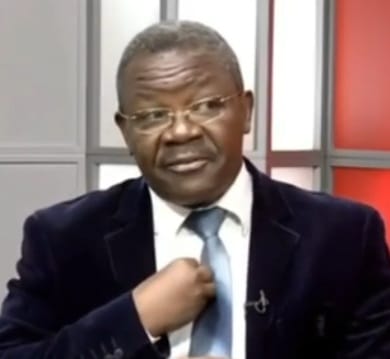
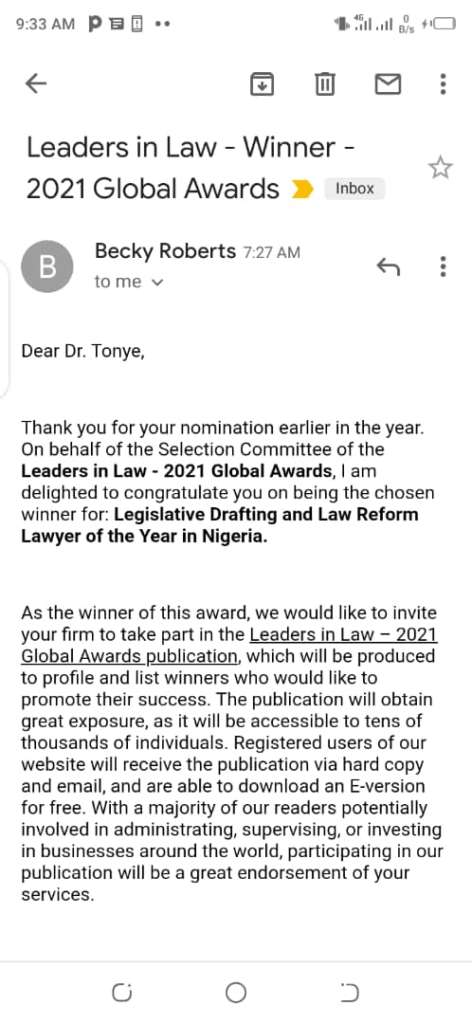
Dr. Tonye Clinton Jaja has emerged winner in the Leaders in Law – 2021 Global Awards.

At the conclusion of a rigorous selection process by a United Kingdom (UK) based law firm, Jaja was adjudged “Legislative Drafting and Law Reform Lawyer of the Year in Nigeria.”

Tonye Clinton Jaja, a law lecturer at the National Institute for Legislative Studies, Abuja, holds a PhD in law (Legislative Drafting) from the University of London. He was Chairman of the Governing Board, Nigerian Copyright Commission and currently the Acting Head of Bills and Legislative Drafting Division, National Institute for Legislative Studies.

Since 2012, Dr. Jaja has served as Editor-In-Chief of the International Journal of Legislative Drafting and Law Reform.

Video: If you don’t want to fulfill the promise to end insecurity, we pray God separates us and you – Cleric to Buhari

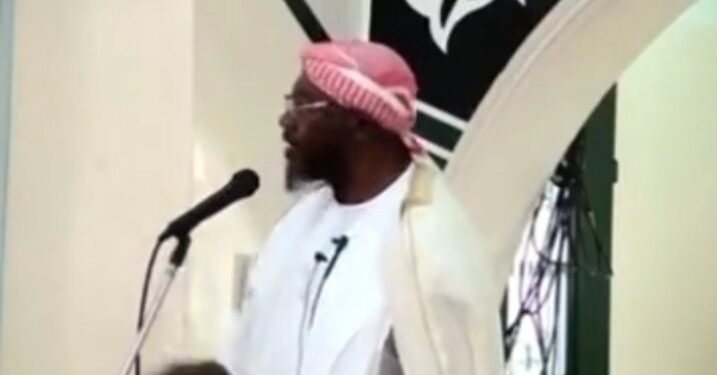
He was curt, he was bold, and he was straight to the point in telling President Muhammadu Buhari in his flawless Hausa in a Friday sermon captured on Tik-tok that he met Nigeria as one entity and should not leave it divided.

Below is a rough summary of Sheik Nuru Khalid of the Apo Legislators’ Quarters Mosque comments in a trending Hausa language video:

Go and tell the President of Nigeria that during his reign, there are people (terrorists) who told government that if they are not paid a particular sum of money they would not leave the rural parts. This happened in Zamfara State.

Tell him he should return Nigeria to one as he met it, or God will find a cure to him.

You told us that the Nigerian Forces had the wherewithal to face any challenge brought it’s way. You promised that if you became President you will give them the support to deal with any situation. Mr. President, a promise is a burden. If you don’t have people to tell you, we have risen to remind you.

We are pleading with God to help you fulfill the promise, if you want to. If it is that you don’t want to fulfill the promise, we plead with God to separate you and us.

Can Senior Advocate Of Nigeria [SAN] Appear In Upper Shari’a Court?

By Rabiu Muhammad Gama.

Sheikh Abduljabbar Sheikh Nasir Kabara is a very popular name in the North, you may not be familiar with the name if you aren’t from the North – or if you don’t understand Hausa. For those of us that are not unfamiliar with the name, the bearer of the name is, to put it mildly, a first class definition of controversy. It is his controversial teachings that have landed him in prison. The Sheikh is now being prosecuted, his students would prefer the word persecuted, for his “blasphemous teachings” before an Upper Shari’a Court sitting at Kofar Kudu, Kano. The embattled Sheikh seems to be tailed by controversy wherever he goes – even when he is behind bars. Following his arraignment before the Upper Shari’a Court, four Senior Advocates of Nigeria were spotted among the state counsel, hence the resurrection of an old and, presumably,  dead “debate” on whether SANs have right of audience in Inferior Courts.

Like every debate, this debate also has two sides; those who believe SANs  have right to appear before any court in Nigeria – including Inferior Courts (hereinafter referred to as the pro-SAN camp), and those who are of the view that SANs cannot, legally speaking, appear in Inferior Courts (hereinafter referred to as the anti-SAN camp). This article aims to discuss the august rank of Senior Advocate of Nigeria, SAN, vis-à-vis the relevant provisions of  law as regards to whether or not  SANs can appear in Upper Shari’a Court. The  writer would try to analyze the submissions of both sides of the debate before pitching his tent with the camp he thinks has the law on their side.

THE RANK OF SENIOR ADVOCATE OF NIGERIA AND THE anti-SAN’s VIEW

Senior Advocate of Nigeria (SAN) is a coveted and prestigious title that is conferred upon legal practitioners in Nigeria of not less than ten years standing at the Bar.[1] By virtue of the provision of Section 5(1) of the Legal Practitioners Act (hereinafter referred to as the Act), the Legal Practitioners Privileges Committee, which is the creation of Subsection (3) of the said Section, is empowered to confer the title on legal practitioners in Nigeria who have distinguished themselves in the profession.

Generally, the Act is the law that regulates legal practitioners in Nigeria. In addition to the Act, Senior Advocates of Nigeria are further regulated by the Senior Advocates of Nigeria  (Privileges and Functions) Rules, 2004 (hereinafter referred to as the Rules). The Rules is a subsidiary legislation made in  pursuance of the provision of Section 5(7) of the Act. Before moving ahead, it’s important to note that the Court of Appeal, per Oguntade, JCA, (as he then was) held in the case of Trade Bank Plc v. Lagos Island Local Government Council[2] that “A subsidiary legislation when validly made has effect and force as the principal or enabling Act”.

Section 5(7) of the Act empowers the Legal Practitioners Privileges Committee (hereinafter referred to as the Committee) to, among other things, “make rules…as to the functions of legal practitioner, which are not to be performed by a Senior Advocate of Nigeria…for ensuring the dignity of the rank of Senior Advocate of Nigeria (emphasis mine)”. The committee, in its effort to discharge this statutory duty, came up with the Rules. In the Rules, every SAN is conferred with some privileges and some restrictions. For example, in civil cases, whenever he (an SAN) is appearing before a Superior Court of Record he must appear with a junior or another SAN except when the appearance is in the Judge’s Chambers.[3] However, he may appear alone in criminal cases whether in open court or in the judge’schambers.[4] The penultimate rule of the Rules, i.e., rule 6, defines Superior Courts as contained in Section 6(3) of the Constitution, 1999 (as amended), that is, the courts that are listed in Subsection (5) (a-i) of the said Section.

In 1999, in the now famous case of ECWA Church v. Malam Saidu Ijesha[5], the Court of Appeal (CA) decided that by a combined effect of  rules, 2,3 and 4 of the Rules and applying the legal maxim Expressio unius est exclusion alterius, meaning, expression of things clearly stated  in a statute excludes others not clearly stated, an  SAN does not have right of audience in an Area Court or any court which is not a Superior Court of Record (Upper Shari’a Court is not a Superior Court of Record as defined in Rule 6 of the Rules), and he (the SAN) is not allowed to issue any process or make any application before that court.

In addition to the above, the anti-SAN also argue that by virtue of Section 287 of the Constitution of the Federal Republic of Nigeria, 1999 (as amended) ( hereinafter referred to as the CFRN), once the court has made a pronouncement about a matter, someone else’s opinion – no matter how well-reasoned that opinion purports to be – matters not.

THE pro-SAN’s VIEW

The pro-SAN’s argument, from what I have gathered, mostly center around two to three issues. First, they seem to find pleasure in citing the dictum of Acholono, JSC, in the case of FRN v. Osahon[6], where the learned Justice posits thus:

“I wish to state here that whenever any person is called to the Bar is enrolled to practice then he has the right of audience and unless the Constitution eloquently forbids such a person or provides a qualification for appearance in court, any Act prescribing a provision contrary to spirit of the Constitution should be regarded as otiose.”

The other argument that  the occupants of this camp, i.e., the pro-SAN, like to throw at the anti-SAN is the provision of  Section 36 (6)(c) of the CFRN that provides that:

Every person who is charged with a criminal offence shall be entitled to-

(c) defend himself in person or by legal practitioners of his own choice.

And the pro-SAN usually remind us that where a right has been conferred by the Constitution, as in the above cited Provision, that right cannot be whisked away by any other statutory provisions except the Constitution itself and any law so made is void to the extent of its inconsistency, and they would tell you that this is on the authority of Adisa v. Oyinwola.[7] Some of them ( the pro-SAN), out of sheer desperation to destroy the anti-SAN’s arguments, would even go too low to cite the controversial 2015 magistrate case of A.G Legos State v. Unknown Person. A magistrate case as an authority against the decision of the CA? You must be kidding!

ANALYSIS OF THE ARGUMENTS

It is a trite principle of law that requires no citation of cases that a decision from the CA, even when decided per incurium, is binding on all the courts below it. A decision of the CA can only be set aside if it is overruled by the Supreme Court (SC). In view of this, the decision of the CA in the ECWA Church v. Malam Saidu Ijesha(supra) stands and, since it is yet to be overruled by the SC, it  reflects the true position of the law – as it is today.

A careful reading of the Osahon’s case, which the pro-SAN are fond of citing, reveals that the case, as I see it, is not even remotely relevant to this issue. Here is why, in the Osahon’s case, the SC was faced with the question “whether a police officer (who also happened to be a lawyer) could prosecute a case in the Federal High Court”, and the SC answered this question in the affirmative. SAN’s right of audience in Inferior Courts was not one of the issues for determination that the SC had to consider in that case. The contention of SAN right of audience in Inferior Court was raised in the Ijesha’s case  – it was the sole issue for determination in that case – and the CA held that SANs cannot appear in Inferior Courts. On this note, please permit me to remind you that cases are meant to be decided on their peculiar facts; and every case is an authority for the facts which it decides. You can’t just lift a dictum from case A and apply it in case B even though it is crystal clear that the two cases are apples and oranges.

On the provision of Section 36 (6)(c) of CFRN(supra), it was submitted that the SC held in the case of Awolowo v Federal Minister of Intrernal Affaiers[8] that the provision of that Section should be read subject to the provisions of a law validly made by the National Assembly in order to regulate the right so enjoyed by the accused person. The CA took the same position in the Ijesha’s case on this particular Section of the CFRN.

I took my time to read the ruling of His Worship, M.A Etti, in the A.G Legos State v. Unknown Person (supra). One cannot but admire the eloquence and the rare display of judicial activism of his Worship in that ruling. However, one thing is quite clear, going by the doctrine of stare desis, which is one of the distinctive features of our Legal System, once there’s a decision of the CA on a matter, a magistrate, even if it were the almighty Lord Denning MR, has no option but to vow down to the hierarchical, and usually superior, wisdom of the Higher Court (the CA). I don’t expect a level 200 Law student to cite a magistrate court’s ruling while we already have a CA’s decision on a matter. That would amount to an insult to the sacred doctrine of stare decisis.

CONCLUSION

Looking at the solid arguments above, and in the light of the forgoing discussion, it is my humble submission that the law is glaringly on the side of the anti-SAN. The law is quite clear, the decision of the CA vis-à-vis the relevant provisions of the Rules is that an SAN cannot appear in any Inferior Court – and the Kofar Kudu Upper Shari’a Court is an Inferior Court. This writer finds it irresistible to pitch his tent in the beautiful camp of the anti-SAN. I, therefore, submit that the appearance of those four Senior Advocates of Nigeria on the 18th day of August, 2021, at the Kofar Kudu Upper Shari’a Court is illegal and is a contemptuous slap to the face of the CA. Until the SC overrules the CA on this issue, or the CA refuses to follow its decision in the Ijesha’s case because in its opinion the decision can no longer stand with a decision of the SC, this is the true position of the law, I so submit. The case of Young v. Bristol Aeroplane Company Limited (1944) is emphatic here.

Rabiu Muhammad Gama is a level 300 Law student from Bayero University, Kano (BUK). He can be reached on [email protected], or on 09061912994.

[1] S 5 (2) of the Legal Practitioners Act Cap. L11 LFN 2004

[2] (2003) FWLR (pt.161) @ 1734

[3] Rule 2 (1) (2)  of the Rules

[4]  Rule 3 of the Rules

[5] (1999) 13 NWLR (pt. 635) 367

[6] (2006) 1 All N.LR 374

[7] (2000) 10 NWLR (pt. 674) 116

[8] (1962) LLR 177

Reminiscence Of NBA Kano/Ungogo Branches’ Visit To Governor Ganduje To Press Home The Implementation Of Financial Autonomy For The Judiciary: Our Husband Has Ran Mad Again!

By A. S. Gidan-Wankey, Esq.

The memory verse!

“I, Abdullahi Umar Ganduje, do solemnly swear/affirm that I will be faithful and bear true allegiance to the Federal Republic of Nigeria; that as a Governor of Kano State, I will discharge my duties to the best of my ability, faithfully and in accordance with the Constitution of the Federal Republic of Nigeria and the law,…that I will strive to preserve the Fundamental Objectives and Directive Principles of State Policy contained in the Constitution of the Federal Republic of Nigeria…”

The caption above is the oath of office taken by Governor Ganduje on the 29th May, 2019 as elected Governor of Kano State which to my mind, he has failed to uphold, evident by his recent comments on judicial autonomy. Worse still, being a Muslim, Governor Ganduje took the said oath of office while holding the scripture I live my life by (the Holy Qur’an) believing that he would strictly abide by the 1999 Constitution of the Federal Republic of Nigeria (2011 altered) in the discharge of his stewardship.

Meanwhile, in a frantic pitch of compliance with the directive of the President of the Nigerian Bar Association (NBA), the leadership of the revered NBA Kano and Ungogo Branch respectively, paid a visit to Governor Ganduje on the 20th day of April, 2021 with a view to press home the demand for the financial autonomy for the judiciary. The visit was aimed at calling the attention of the   Governor to observe rule of law thereby complying with the provision of section 121 (3) of the 1999 Constitution of the Federal Republic of Nigeria. The respected Chairmen along other concerned Bar-Men cited and demonstrated to the Governor the purport of section 121 (3) of the Constitution, all in an attempt to making the lay-Governor to comprehend the message therein.

Curiously somehow, Governor Ganduje responded with a disingenuous statement that “I will accept Governors’ Forum decision.” As a rule of law campaigner, I am beholden to my conscience and to the Federal Republic of Nigeria to raise the following queries: Is Nigerian Governors Forum (NGF) known to the Constitution of the Federal Republic of Nigeria? Is NGF the Governor of Kano State? Did NGF sworn to the Oath of Office? Has any member of the so-called NGF beside Ganduje, sworn by the Quran to discharge his duties in Kano State in accordance with the Constitution? Must Ganduje advertise his ignorance of the law in the circumstance? Who has bewitched Governor Ganduje? I don’t have the answers for now. Let’s go!

My predilection to educate Governor Ganduje and his likes on their feigning ignorance of the position of the Constitution (which he sworn to preserve) regarding financial autonomy for the judiciary pitch the salt of my brain to interrogate the provision of section 121 (3) of the 1999 Constitution of the Federal Republic of Nigeria, with a view to showcasing the naked response of Ganduje as nothing but a clear tendency to remain on the path of executive recklessness and abuse of power. Thus, the Governor need to be informed that what the NBA presented to him is a matter of hard law not a choreographed political drama. Section 121 (3) provides:

“Any amount standing to the credit of the judiciary in the consolidated revenue fund of the state shall be paid directly to the heads of the courts concerned”

Judging from the clear wordings of Section 121 (3) above, it is transparently evident that, any amount of money standing to the credit of the judiciary is to be paid directly to the head of courts for onward disbursement, project execution and general maintenance of the courts etc. The executive arm of government has no power whatsoever to direct what should be done with the funds let alone controlling same. Thus, financial autonomy for the judiciary has for long been settled and provided under the constitution the same way the office of Governor established. Hence, Ganduje’s feigning ignorance of understanding the crux, that is, financial autonomy as commended by section 121 (3) of the CFRN means a one-off pay-off cum an outright payment of what is due to the judiciary from the consolidated fund.

For the umpteenth times, Governor Ganduje has made a heavy weather that, he has been spending millions of Naira as allowances for judges. What a shame! Is this not a clear vindication of subjecting the judiciary to the shadow of the executive through financial dependency and compromising the course of justice? In other words, the standpoint of the Nigerian Governors on judiciary financial autonomy explains the reason why section 121 (3) is being strangled; id est to perpetuate their reign of terror, mis-governance and impunity without any challenge.  This executive manipulation of justice system could only be referenced as a defence where unconstitutionality becomes the order of the day. Under the 1999 constitution, the independence of the judiciary is not only guaranteed, its financial autonomy remains the pillar upon which indirect control and manipulation is resisted. Therefore, the only way the judiciary can be independent is to bestow on it financial willpower.

I make bold to say that the utterances of Governor Ganduje during the visit may be interpreted to mean that he is one of the Nigeria’s State Governors whose preoccupation is to conspire and gang up against the independence of the judiciary. This should not be tolerated by all well-meaning Nigerians. It is crystal clear that the refusal to grant financial autonomy to the judiciary by states governors speak volume of the level of unconstitutionality, lawlessness and impunity”. Thus, Governor Ganduje and his likes cannot cherry-pick or pick and choose to pay millions of Naira as been claimed as substitution of the express wordings of section 121 (3) of the Constitution; neither can he subject the operation of the said section to the whims and caprices of the Nigerian Governors Forum’ decision; an association that is far below the status of Alaba Market in Lagos or Singa Market in Kano. Because, unlike the NGF, whose business is exploiting public resources, the traders in Alaba and Singa Markets pay their revenue and levies to the Government as at when due.

Worryingly, it is high time to educate the Governor that, judges are not his employees. They are his equal partners in the running the affairs of Kano State as no arm of government is better than the other. So, paying “N20million as allowance”, “N46million as overhead” and “N100million for furniture and accommodation” as being claimed by Gandje (even if it is true), cannot substitute or vary the principle of financial autonomy of the judiciary encapsulated in section 121 (3) of the Constitution. Therefore, it is incumbent on Ganduje to separate what constitutionally stand to the credit of the judiciary in the consolidated revenue fund and, let My Lords run their affairs so as to secure their independence and impartiality. It should also be made to sunk in the skull of Nigerian Governors that, the consolidated revenue fund of the state established under section 121 (3) of the constitution is not a personal property of the executive. It belongs to the Executive, Legislature and the judiciary. Suffice it to say that, keeping what rightfully belongs to other arms of government is an abuse of constitutional provisions.

To drive my point back home, a community reading of s.1, s.36, s.121 (3) and Seventh Schedule to the 1999 Constitution of the Federal Republic of Nigeria (2011 altered) begs the question: whether the act of subjecting the observance of financial autonomy for the judiciary to the decision of NGF by Governor Ganduje against the tenant of section 113 (3) plus his flagrant breach of Oath of Office enshrined in the Seventh Schedule amounts to “gross misconduct” in the performance of his functions so as to invoke the provision of section 188 (1) of the CFRN? Certainly yes. My authority is subsection (11) of s.188 of the CFRN which clearly defines “gross misconduct” to mean “a grave violation or breach of the provisions of this constitution…”  Worryingly, the lawmakers who have the power to set the wheel of section 188 (1) into action are equally financially handicapped or at best political errands of the state governors. It is very unfortunate.

#Project-2023: Great Lessons From Zambia, By Martins Oloja

As we continue with the debate on whether the scoundrels who brought down our Air-force planes, desecrated the Nigerian Defence Academy (NDA) and killed some soldiers, should be called bandits or terrorists, we need to make a quick trip to Zambia that has just been set free by the political sagacity of the youth in the southern Africa country. Let’s allow the political and military authorities to continue to probe into what happened the other day at Nigeria’s apex military institution (of learning). After all, our leader has assured us that the curious attack on the NDA, Kaduna surrounded by so many other military institutions has set the tone for working on strategy on how to end insurgency in Nigeria. But instead of lamenting on why terrorists have not been technically defeated, after all in our dear country, let’s begin to draw attention of the young ones who are not part of the Soyinka’s ‘wasted generation’ to begin to find out how to take back their, sorry our country from the power elite who have brought down our country to this despicable nadir. It is beginning to look like despite a recent promise of our leader that he would not end his tenure as a failure, there may be no redemption songs, after all. Every week, there are reasons to ask, where is our commander-in-chief? Every day, we the people continue to ask, how will barely eighteen months into the end of an eight-year tenure, lead to finding some architecture in the ruins of more than six years.

So, it is high time we began to encourage the young ones to be of good courage to regain the paradise their great grand fathers lost since 1914 when strange bedfellows were made to be unequally yoked. I mean again that we their grand fathers who ate some sour grapes since 1966 when we lost the majesty of democracy to the ‘militricians’ have made the children’s teeth to be set on edge. In 1999, the soldiers of fortune in civilian garbs were very artful. They came quietly and peaceably with their guile and gospel. They asked us to invest our hope in ‘a man we can trust’ again. We did. Regrettably, the glimmer of ‘Hope 1999’ began to turn to anxiety by 2011 and by 2015 that anxiety turn to fear Alan Paton hinted at in his classic, ‘Cry, The Beloved Country’. Where are we now that we are asking: where is our commander-in-chief they told us was the ‘New Sheriff-In-Town’ whose integrity-laced body language would automatically wipe out corruption and even produce hundred of thousands of megawatts of electricity in a twinkling of an eye?  People are now freely talking about the most populous black nation on earth as a mere ‘…walking shadow, a poor player that struts and frets his hour upon the stage and then is heard no more… People are now quoting Shakespeare’s classics that governance in our dear country can now be likened to “a tale told by an idiot, full of sound and fury, signifying nothing”. Yes, people are no longer afraid of government as 2023 approaches. People now want to rise to a plane of consciousness where they want to say, ‘enough is enough’ of docility, enough is enough of rampaging corruption that has also technically defeated war against corruption. That is why it is pertinent to tell our young ones, please, be not discouraged by arrests and harassment by state actors who don’t want to answer questions on the state of the parlous nation where money now ‘answereth all things’, where you can now acquire wealth without work.

We want our youth to make trip to Zambia where they can learn, unlearn and relearn the discipline of execution of strategic planning – to defeat wickedness in high places.

Here is the news from ‘Zambia’, their Kenneth Kaunda told them ‘shall be free’ since 1962.

This is headline from a world-class newspaper: ‘Young Zambians hope for brighter future as Hichilema wins vote’. Here is a fitting excerpt from the news of a new Zambia:

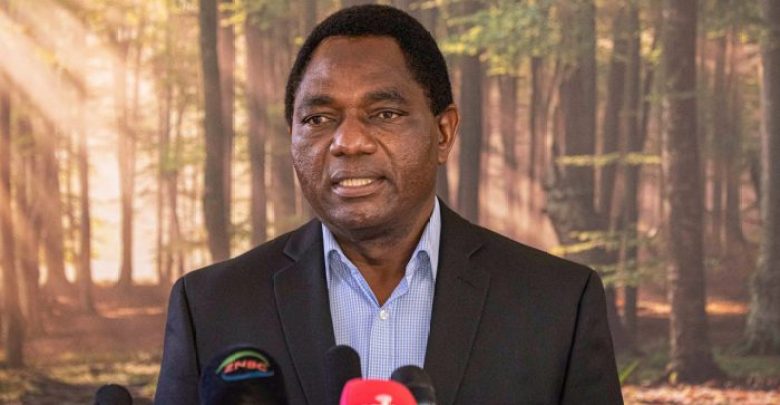
‘Zambia’s youth largely backed the new president-elect, and now they expect him to ease repression and economic crisis’. As Zambia’s opposition leader Hakainde Hichilema was proclaimed victor of the presidential elections held on August 12, 2021, the Zambian capital, Lusaka, erupted in celebrations that lasted late into the night of Sunday, August 15, as supporters sang, danced and waved his party’s flags. Hichilema, 59, of the United Party for National Development (UPND) won by a landslide 2.8 million votes, trailed by incumbent Edgar Lungu’s 1.8 million ballots.

The turnout in the August 12 general election was the highest since the 1991 ballot when Zambia held its first multiparty elections, with those below 40 years of age constituting more than half the electorate. After the celebrations, street sweeper Joseph Phiri, 28, collected rubbish at the independence roundabout and scraped away tattered posters of outgoing president Lungu from walls – on which he didn’t read any imminent defeat.

Like many younger Zambians, Phiri hopes the election of a new leader would see an end to growing authoritarianism in the country and to better economic prospects. Under Lungu, who came to power in 2015, when Nigeria’s leader too was elected, the authorities were often criticised for the suppression of freedom of expression, assembly and association.

According to the contextual reporting of the end of Lungu, Phiri remembers the running battles between the police and protesters when he became a street cleaner in the capital, two years ago.

“Whenever people came here to protest they would be quickly arrested, there was no peace. Everyone would be chased by the police even if you were working, it’s like we were being controlled by the police and there was no freedom for anyone. I hope it will be different now,” he told Al Jazeera. As the sweeper cleared away the litter of an intense presidential campaign, droves of motorists whizzed past hooting and chanting

“Forward! Forward!”, the slogan of the UPND. Many of the red-clad supporters hope Hichilema, popularly known as HH, will usher in an era of greater freedom and prosperity.

Lungu as it is typical in Africa, our Africa, has rejected the result, saying the election was not free and fair and alleging electoral violence in three provinces, which culminated in the alleged murder of a candidate for the ruling Patriotic Front.

But international election observers said the polls were transparent and peacefully organised, but criticised restrictions on freedom of assembly and movement during the election campaign. Hichilema, a businessman who contested the presidency for the sixth time, promised democratic reforms, a “zero tolerance” approach to corruption, and economic reforms including debt management. As Zambia’s youth celebrate the new president-elect, a myriad of challenges awaits Hichilema.

Under Lungu, the Public Order Act – a legacy of British colonial rule decreed in 1955 – was frequently used to limit civic freedoms under the pretext of maintaining peace. In an act that further constricted the democratic space, the Cyber Security and Cyber Crimes Act, drafted into law earlier this year, was enacted to regulate digital media and online activity. Bloggers and broadcasters were controlled by the cyber-legislation with several bloggers and media houses suspended on grounds of behaving in an “unprofessional manner”.

For Sailas Ahmed, 27, a blogger, the increasing digital surveillance has forced him to resort to using a Virtual Private Network (VPN) each time he posts online on Ancient Ink, a weekly social commentary blog that receives up to 10,000 hits a day.

“As a blogger, I was targeted just for producing content because the cyber-laws control what someone says online. The Public Order Act restricts meetings in person, but the enforcement of cyber-laws makes it feel like the Internet is invaded,” Ahmed said. “I feel like there are eyes constantly watching me and the Internet is no longer the safe space it was meant to be. I hope this will change now with Hichilema’s win,” he added.

What the young ones in Nigeria should learn from the Zambian school of politics of the youth who successfully managed change in Zambia is that if you want revolution, you should not be afraid of suppression of freedom of expression. If you want your country to develop, you should not be afraid of the power of the scoundrels and criminals in power. You don’t have to join any political party to make a change. Just study the characters and the profile of the candidates. Be discerning. Don’t follow certain media organs, which seem to be doing business as the State House Gazettes. Don’t join the business-as-usual bandwagon. If you desire a post-Buhari better Nigeria, you should read journals about Nigeria and what the aspirants are saying. It is not about oratory of those who seek to lead Nigeria. It is important to research where the contestants are coming from: are they part of the members of the old set-up Soyinka deconstructs in his Trials of Brother Jero?  The state controls all instruments of violence. They will come after the youth as they did during #ENDSARS protest in 2020. Those who want Nigeria to remain as the only centre of poverty and corruption in the world have begun their corrupt consolidation with the rejection of electronic transfer of election results in the electoral act amendment bill. But this INEC appears determined to be INEC of the people – for their redemption. The last deliverable is that the youth should stop agonising on the social media.

They should start organising as a Movement-for-Change like, their Zambian counterparts. The youth in Zambia didn’t depend on the power of miracles from heaven. They all registered to vote. They went out to vote and they defended their vote. Please, Nigerian youths, don’t pontificate. Don’t procrastinate. Go and register online. Keep your voter cards. That is your first weapon against tyranny, corruption and underdevelopment. Elections have consequences: President Barack Obama once told you.  It just happened in Zambia the youth just set free. Nigeria too can be set free in 2023 though a clean democratic process, if only the youth and those who want change can believe.

TIPS