Home Blog Page 918

A Plateau Bleeding Non-stop, By Simon Kolawole

Plateau state is back in the news again — and for the usual tragic reasons: maiming and killing in the name of God. In the last eight weeks, over 100 lives have been wasted in the state. Not by bandits or kidnappers, but by ethnic and religious warlords. On July 1, attacks left 34 people dead in Dogon Gaba. Between July 31 and August 1 in Bassa and Riyom LGAs, 17 people were killed. On August 14, travellers were attacked along Rukuba Road, Jos north, with the final death toll given as 35. Less than a fortnight later, 44 people were killed. It has become impossible to know the aggressor, so every incident has to be treated as an attack or reprisal. Whatever, the bleeding is non-stop. .

Alhaji Muhammad Sa’adu Abubakar III, the Sultan of Sokoto, made a sobering statement on Thursday but I would not be surprised if the message did not hit home. Speaking at the meeting of the intra-religious council in Abuja, Abubakar III lamented that the level of insecurity in the country has worsened such that a lot of the killings are no longer captured by the media. “In eastern Sokoto alone, there was a day we buried 76 persons who were killed in cold blood by criminals who came from nowhere. People didn’t hear about that one. There was another day we buried 48 persons in the same Sokoto, but you didn’t hear about it,” Abubakar said. For emphasis, these are human lives.

There are several messages contained in that statement if we take a critical look at the unending bloodbath in the land. One, life has become so cheap that 76 persons killed in a day may not even be considered newsworthy again, much less given a front-page or premium treatment in the media. Someone calls it the “fatigue factor”. Every day, you are reporting 40 killed, 60 killed, 100 killed. It gets to a point there needs to be an extra dimension for you to give it any serious treatment again. I was editor of THISDAY when the Boko Haram insurgency began. A bomb attack without any casualties was news back then. These days, the casualty figure needs to be high to be newsworthy.

Two, some killings are seen as more important than the other. I have studied the Nigerian media closely in the last few years and I can say our ethnic and religious divides have played a key role in the treatment of news. Things have degenerated to such a level that those killed have to be identified as Muslims or Christians, northerners or southerners before the story gets prominence, and the bias is very clear right from the headlines. When travellers were killed in Plateau state and there seemed to be a reprisal less than two weeks later, most newspapers treated the stories with regional bias. That is the state of the country we live in, the country we call our home. So it goes.

Three, where are the security agencies? What happened to intelligence gathering? The sultan asked: “How can people who do these things be unknown? Where are our intelligence agencies? Don’t we have a proactive intelligence agency that will think ahead of the bandits?” Abubakar III is a retired general, so he knows one or two things about security more than I do. He retired as a brigadier general in 2006 to ascend the throne of his forefathers. There was a time I used to defend President Goodluck Jonathan that he needed time to rebuild the security architecture to achieve results. President Muhammadu Buhari has been in office for over six years. I cannot honestly defend him.

Four — and this is linked to three — if intelligence gathering has failed us so woefully, what is the federal government doing to clear the mess? The impression I get from talking to contacts in government is that the Department of State Services (DSS) does an awful lot in gathering intelligence and feeding it into the system but action is what is always lacking. I am not in a position to confirm or deny. But something is certainly not working: either intelligence gathering is poor or action is inadequate. Maybe both are poor and inadequate. I know that a single successful attack can belie a dozen aborted plots, but I am not even sure this is the case. The attacks are too easy and frequent.

Five, the presidential media team says the attack on the Nigerian Defence Academy (NDA) — in which a major was killed — was “deliberately orchestrated” to make the government look bad. I need some help here. I thought part of the job description of bandit-terrorists is to embarrass the government? Or are they in business to make the government look good? Is presidency stylishly begging the bandits, or terrorists, or whatever they are called, to stop the embarrassment? “Please, guys, stop allowing yourselves to be used to embarrass our government.” This is so low and an assault on our intelligence. When you think some things are bad enough, they get worse.

I remember when Jonathan used to blame Boko Haram attacks on political forces who wanted to embarrass his government. My response was always a one-liner: please go after them if you have concrete evidence. I don’t know how much confidence any government can inspire in citizens by appearing to be helpless. It is Nigerians that should be sounding helpless and the government would be inspiring confidence in them, not gallantly and gleefully displaying vulnerability on the pages of newspapers. This is the kind of lack of professionalism and seriousness that the sultan was hinting at in his lamentations at the meeting. These things appear to percolate in government perennially.

The bloodbath in Nigeria today, unfortunately, is flowing from multiple directions, not just Boko Haram. While it would appear the Boko Haram threat is not what it used to be since the death of Abubakar Shekau — even though the terrorism has not been extinguished — the bandits and kidnappers are not relenting by any chance. But while we can hope to overcome banditry and kidnapping through the might of the security agencies, the same tactics cannot be effective in tackling the kind of killings in Plateau, Kaduna and Benue states, or the Modakeke crisis that almost resurfaced recently. We are dealing with crimes that are built on historical ethnic hate.

Plateau, in particular, has been a killing field for decades. In September 2001, over 1,000 people were killed in six days. In November 2008, a dispute over local government elections led to the death of at least 700 people. In January 2010, another crisis erupted, leading to 400 deaths. Two months later, 300 were hacked to death in Dogo Nahawa, Zot and Ratsat, south of Jos. In December of the same year, 80 people were killed within two days as clashes erupted in Jos yet again. The following month, more than 200 were hacked to death or burnt alive in Jos for the umpteenth time. Permit me to stop the gory list here. The common factor in all cases: deep-seated ethno-religious hate.

Why am I so worried by the resurgence of ethnic violence in Plateau state? It may end up with knock-on effects on the volatile areas in the middle belt and we may be in for a protracted bloodbath. I hope, and pray, that we are not about to enter into another season of attacks and counterattacks as we have witnessed in the past. No kind of killing is good or acceptable, but the Plateau variant is borne out of pure hate and intolerance dating back decades. I am afraid the security agencies can only do so much. We can all see that since the deadly crisis between herders and farmers started in Benue in 2015, the state has not known peace. That is how hate works.

What is the way out? I don’t have a clue. For whatever it is worth, though, we still have to beef up security as a first line of action. Like the sultan suggested, security has to be intelligence-led and proactive. After the killing of travellers along Rukuba Road on August 14, I was so sure another round of carnage was just waiting to happen. You didn’t need to be a genius to predict it. What the government needed to do was de-escalate tensions and prevent another outbreak of violence. But here we are. Also, you would expect some basic conflict-management measures to be in place all along, including alternative dispute resolution and early warning system. But here we are.

Ultimately, I would suggest that the leaders of these communities have a conversation with their consciences. How much bloodshed before enough is enough? How long will ethnic hate control our lives? What will we gain from all these killings? What have we gained from the thousands upon thousands of lives that have been hacked to death in the past? How has it made our lives better? If we truly believe we were created by the same God, why should we be shedding the blood of fellow creatures? As I have said, the security agencies can only do their best but cannot tackle this hate at its roots. The leaders have to become peace builders. Guns cannot conquer hate. Only love can.

I am aware that some people think the best way is to break up the country, but a little look at the Nigerian map shows that this is practically impossible, not with Plateau state at least. I have pointed this out a number of times: there is no neat way of breaking up Nigeria. Even if we have to do it, we still need to learn to live in love and tolerance while we work out the break-up details. The government must also be seen to be fair and just. When people no longer trust the system to protect them and administer justice, anarchy is a natural consequence. If we eventually manage to contain banditry, kidnapping and terrorism with guns, we can never defeat ethnic hate with bullets.

AND FOUR OTHER THINGS…

DOCTORS’ EXODUS
In a country where health care delivery is so pathetic, the exodus of doctors is double jeopardy. We spend so much money training these doctors, compared to what private institutions charge, home and abroad. We must try harder to keep them. I know we cannot compete with Saudi Arabia salary-wise. Someone said a professor of medicine earns N6m/month in Saudi Arabia, compared to N420,000 here. It’s like expecting Kano Pillars to compete with Man United salary-wise. But we can incentivise our doctors and make their working conditions more conducive. They save lives. Not every doctor is desperate to leave but we are not making things easy for them. Contraindication.

NDA BREACH
The attack on the Nigerian Defence Academy (NDA), Nigeria’s premier military training institution, in which an officer was killed and two others kidnapped, should rank as one of the lowest points in our history. That the bandits could be so confident to plan and execute such an attack, and do it so successfully and with precision, tells us more about the state of our security than the headlines can suggest. Come to think of it, military barracks have been bombed or overrun by Boko Haram terrorists in the past, so maybe I am the one that has been in denial over the safety of military installations. To think civilians used to run to the barracks for safety in times of trouble! Shame.

CAGING CHANNELS
The latest query from the National Broadcasting Commission (NBC) to Channels Television would tend to suggest that the regulator wants every broadcast station to be modelled after NTA, which is just an extension of government. I am not a fan of Benue Governor Samuel Ortom because I know he is playing to the gallery most of the time, but, for goodness sake, there are people on the government side who say worse things on TV and NBC pretends not to be aware. At this rate, NBC will start appointing anchors for Channels TV. If the Nigerian media survived the ruthless and murderous military regimes, this intimidation by NBC is nothing but bread for us. Resilience.

JUDICIAL JUNGLE
At what stage will the National Judicial Council (NJC) step in to stop the Nigerian judiciary from further ridiculing itself, especially as the 2023 elections draw nearer and nearer? The rate at which orders and injunctions are being procured across the federation should worry anyone who knows our jumbled way of doing things in Nigeria. The governorship primaries in Anambra state were more in the news for court injunctions than anything else, and now members of the Peoples Democratic Party (PDP) are getting an average of one court order per day over the chairmanship. This is not just a thing of shame to the judiciary, but also a big threat to the progress of our democracy. Rubbish.

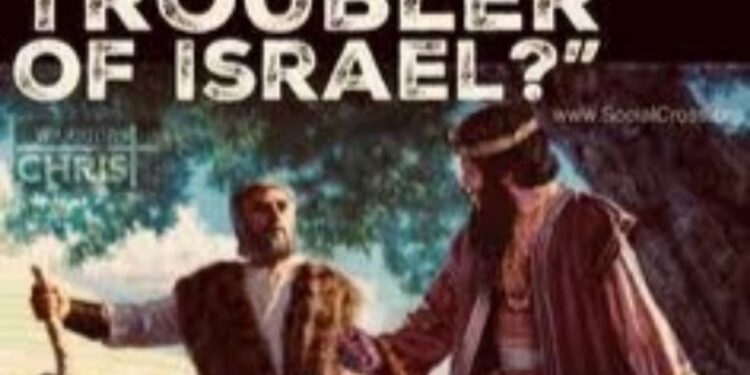
Troublers of nations

Every Nation that is troubled is either troubled by a king Ahab or a prophet Elijah.

AHAB represents everything evil and wrong with socio – political leadership and governance: wickedness, incompetence, injustice, insensitivity, oppression, corruption, nepotism and flagrant abuse of peoples rights and liberty. This is bad trouble for any nation and people.

ELIJAH, on the other hand, represents the voice of truth, hope, justice and righteous indignation against the Ahabs of our nation and time. This is good trouble for the people but bad trouble for wicked leaders.

The irony in all this is that, very often than not, it is the Elijahs who get hounded and harassed by agents of Ahab, accused of being the “trouble makers”

May The Lord grant us more troublers for righteousness in our land and checkmate all troublers for wickedness.

© Buti Sam KPUTU

Nigerian law protects right to self defence, by Chidi Anselm Odinkalu

In the face of the calculated and practiced indifference of the regime of Major-General Muhammadu Buhari (Retired) to the human carnage currently on-going in Nigeria, a debate has ensued about the legitimacy and practicability of community self defence as a counterpoise strategy. The mere fact that these questions arise is proof positive that Nigeria currently suffers a squalid anomaly. Communities should not be seeking to defend themselves if there is capable government. When, therefore, government proves incapable or unwilling to protect everyone equally, communities must exercise a duty of collective self-defence. The alternative is to suffer voluntary liquidation.

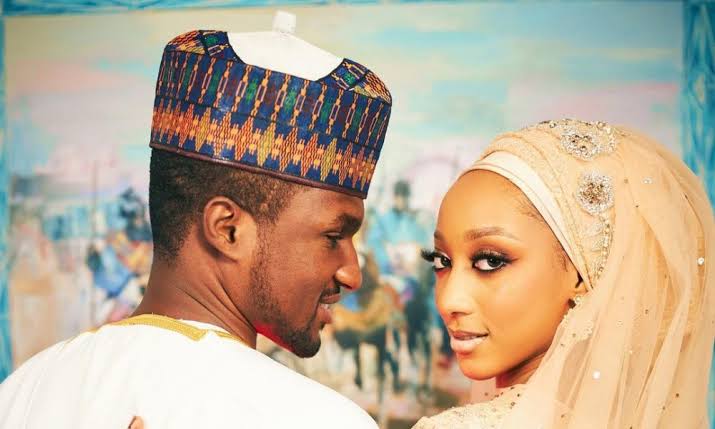
In the first six months of 2021, over 6,000 people were reported killed in atrocity violence across Nigeria. As bad as these numbers are, the Sultan of Sokoto, no less, has pointed out that the scale of the killings in Nigeria is grossly under-reported. Rather than abate, the massacres appear to be intensifying in the second half of the year. In the week after the lavish wedding of General Buhari’s son, Yusuf, in Kano the penultimate week of August, 2021, Plateau State in north-central Nigeria has been overtaken by atrocity killings to the point where hospitals and mortuaries have become overwhelmed by the scale of the human tragedy. 

The response of General Buhari to this orgy of atrocity killings has been a cynically complicit and practiced silence. 

Routinely, General Buhari’s spokesmen have sought to trifle with the scale of the tragedy or relish it. In the aftermath of the tragically humilating attack by terrorists on the Nigerian Defence Academy (NDA), which killed at least two military officers and left another seriously injured (not to mention the abducted), presidential communications hitman, Garba Shehu, flippantly sniffed that the attack may have been politically motivated. Having failed in December 2020 to persuade Nigerians to be grateful for exponential growth in insecurity in the country, presidential adviser, Femi Adesina, found in the terror attack on the NDA his moment to brand Nigerians “ungrateful” for being unwilling any longer to credit a president who never for a moment took seriously his oath to protect everyone in Nigeria equally.

Confronted with the reality of a government led by a president who cannot be bothered to show he cares about the mass cull of fellow humans and citizens, the governor of General Buhari’s home state, Katsina, Aminu Bello Masari, has emerged as an unlikely leader in the advocacy to popularize self-defence as an effective response to this Nigerian crisis of insecurity, repeatedly exhorting communities to buy guns, organize and defend themselves. In this advocacy, the Governor has high profile fellow travelers, such as Defence Minister, Bashir Magashi, himself also a retired army General; and the Plateau State House of Assembly. The Nigerian State is itself not neutral on this, having supported and invested in the Civilian Joint Task Force, CJTF, since 2013 to assist in the fight against the Boko Haram insurgency in the north-east. 

This high profile advocacy for self-defence raises questions both legal and practical. Let’s begin with the legal: does self-defence have any basis in law? The short answer to this is that in Nigeria, self-defence is indeed a constitutional right. Under section 14(2)(b) of Nigeria’s 1999 Constitution, “the security and welfare of the people shall be the primary purpose of government.” Accordingly, section 17(2)(b) of the same constitution requires that “the sanctity of the human person shall be recognized” and to reinforce these, section 33(2)(a) makes self defence lawful when undertaken in “defence of any person from unlawful violence or for the defence of property.” 

The question may be asked whether this right of self defence in Nigerian law is available to groups or communities. The short answer is yes. The basis in law for this assertion exists in Article 20 of the African Charter on Human and Peoples’ Rights, which provides that “[A]ll peoples shall have the right to existence.” “Peoples” in this context are communities smaller than a state or country. It also implies, of course, that when this right to existence is endangered, the affected communities have the right to defend themselves. Thus, the Charter equally guarantees simultaneously, “the unquestionable and inalienable right to self-determination.” Article 23(1) of the same Charter additionally creates a right to “national and international peace and security.” All these rights exist in Nigerian law under the African Charter on Human and Peoples’ Rights (Ratification and Enforcement) Act of 1983.

Even if these legal provisions did not exist, communities endangered by the kind of ongoing carnage in Nigeria would be justified in morality to exercise legitimate self defence under doctrine that the wellbeing of the people is the supreme law. In the face of this kind of breakdown in the will and capacity of the state to protect the people and their communities, law abiding citizens have a duty to organize to protect themselves until the state can restore its capacity to protect them or show that it is interested in doing so. 

This raises practical questions as to whether and how citizens can organize to defend themselves. Nigerian law, it should be pointed out, does not prohibit the bow and poisoned arrow. Also, while firearms regulation and the Nigerian Police Force and armed services fall within the exclusive legal competence of the federal government, Nigeria’s constitution does not allocate “policing” epistemically or public safety and security to the federal government. Citizens who are endangered must be trusted to make arrangements as to how to organize to procure what they need to secure their communities. It cannot be that citizens in Borno can be permitted to defend themselves while those in the Plateau or Southern Kaduna are disabled from doing so. Such locational discrimination is explicitly prohibited by section 42(1)(a) of the constitution. Whether a person or community lives or is allowed to be liquidated cannot depend on the part of the country in which they are located or how different they are from the favoured kinsmen of the president.

There is only one practical limitation to this legal and doctrinal position: it is that self-defence in national law is a shield and not a sword. It exists to protect self and community, not to attack others in order to extinguish them. The point essentially must be that when government willfully abdicates its constitutional role to protect its people, citizens have a legitimate duty in law and morality to ensure the continuity of human life. That duty can only be discharged by recognizing and defending the right to self-defence as a prerogative of Nigerian communities under attack all over the country while the president watches with approving silence.

Odinkalu, co-convenor of Nigeria Mourns, writes in his individual capacity. 

The Nigerian Medical Student: A Ticking Time Bomb

By Fatima DAMAGUM

Our elders say that when two elephants fight, it is the ground that suffers. These mighty creatures pay no heed to the ground as they push, pull and hit one another. Indeed, it is the ground beneath them, the grass that is crushed, the soil that is ruined and the poor insects that are destroyed who suffer the most. This is the parable of that of the Nigerian medical student.

Once upon a time, it was only ASUU strikes that affected medical students. Our six-year sojourn in university would be prolonged to seven, eight or even up to ten years due to the incessant ASUU strikes. Now, however, new associations in the health sector have also joined in the fight for justice and better working conditions in Nigeria. It pains my heart, when I realise that almost all strikes that involve teaching hospitals inadvertently affect medical students. First, it was JOHESU (Joint Health Sector Union) composed of all health workers apart from doctors, whose strike caused the hospital to offer only skeletal services. The wards were closed and patients were discharged as nurses who are typically in charge of the wards were on strike. Medical students suddenly woke up one morning and realised that they had no or fewer patients to practice on. Then came the NARD (National Association of Resident Doctors) strikes which also affect the students as the patients are once again discharged and there is no one else to use for demonstration.

For the benefit of those who do not understand the Nigerian Medical University system, I will explain how our undergraduate system works. Medical school is traditionally six years in Nigeria. The first three years are called pre-clinicals where students are taught the basics of Medicine: Anatomy, Physiology and Biochemistry in the university. Therefore, at the university level only ASUU strikes affect the students. In the fourth year, medical students move to the teaching hospital where they are being taught the core subjects of Medicine: Surgery, Medicine, Obstetrics and Gynaecology and Paediatrics. They are also exposed to other subspecialities like Psychiatry, ENT, Radiology etc. In the teaching hospitals they are taught by both Consultants (who belong to ASUU, MDCAN and NMA) and Resident doctors.

Now this is where it gets confusing; the consultants typically give lectures in classrooms and then teach during ward rounds on patients. However, during this ward rounds, they are expected to teach not just medical students, but residents as well. And so, the students don’t really learn much. I remember my first consultant ward round in surgery when I heard them discussing a patient and it felt like they were speaking German. Much of what they discuss is too concentrated for the medical students. It is the residents (registrars and senior registrars), who themselves are in training, who recognize the helplessness of the students, that come to their aid. These residents, sacrifice their time and energy, by organising patient bedside teaching, tutorials at night and mock exams so that medical students understand the core principle of medicine. Bear in mind that these residents also have their work to do. So, after seeing their patients, they return to the hospital in the evenings and night to teach students. Many a time, we would be relaxing in our hostels or in class reading at night, only to be told that the doctor on call asked us to come over to witness another exploratory laparotomy for typhoid perforation. Most of us learnt how to insert an IV cannular from residents during call hours. These residents, bless their heart, taught and still continue to teach medical students the fundamentals of practice. Doctors all over the world, know the struggle all too well.

Even now, while on strike, I know a few, who sneak and organise tutorials for students, just so they can help them pass their exams.

So now that they are on strike, and school is open- the mighty question everyone is ignoring is- what happens to the medical students? Residents in any hospital, outnumber their consultants. Are the consultants supposed to see all the patients and teach students as well? With which number? And on which patient? The wards of tertiary hospitals have since been closed as the consultants cannot provide both in-patient and out patient care and teach students at the same time. And because the wards are closed, there are no patients for the students to clerk and examine. How then do they practice? I watched and assisted in close to a hundred caesarean sections since medical school before I was confident enough to hold a scalpel. How can a student who spent two weeks in ENT posting, during this strike and not seen a single tracheostomy (which is a very common ENT emergency procedure) being done claim to be a doctor? How can a student be in O&G for a month claim not to have seen a Manual vaccum aspiration for miscarriage?

Did I hear someone say- You tube videos? Yes, they may be a temporary solution, but all doctors will tell you that there is nothing like observing with the naked eye and actually assisting that can compare to any video. Besides, how can a video guide you to do a lumbar puncture? You will just go and injure the patient’s spinal cord! These things need constant practice and in many cases are taught by a senior doctor guiding your hand. Each doctor’s style is unique, and so as we observe, we pick out the techniques we like and simulate them back in our hostels. We learn from consultants, residents, and nurses.

So, what is the way forward? Do we halt the semester whenever NARD or JoHESU goes on strike? That is not fair. Besides, there are other students apart from medical students. What about when ASUU goes on strike and NARD and JOHESU do not? Will students continue bedside teaching only without progressing in the university? Nope. The system is therefore designed for both ASUU, NARD, JOHESU and MDCAN (Medical and Dental Consultants association of Nigeria) to work together in harmony for a common goal- the patient and the students.

In all this, it is the Nigerian medical student that suffers. The Nigerian government has turned this strike into a media frenzy, a debating platform, an avenue to trade lies and insults. I do not have to remind you that many of these politician’s children school abroad and therefore are not subject to our dwindling educational system. But is it not penny wise, pound foolish, if these students turn out poorly? The money used to travel abroad because one doctor botched up your surgery, would it not have been better invested to teach them how to do these procedures properly?

This fight is not about ego, or teaching resident doctors a lesson. The problem in the health sector should be addressed comprehensively so that we do not wake one day and wonder how we crashed so violently. That Nigeria is exporting doctors to other countries now is because, we were taught well. I dare say that Nigerian doctors excel well outside the country because we still have high standards in our medical schools. But is that still the case? With what these young ones are going through, will that still be the case five years from now?

What the FG is doing now is a clear case of cutting one’s nose to spite the face.

The Garbage in Shehu by Nathaniel Ikyur

It is not surprising how Garba Shehu, Presidential spokesperson came out, in his vintage style against Governor Samuel Ortom of Benue State. It was however amusing reading Shehu’s feeble attempt in the ten-paragraph irritating press release. He no doubt lost his voice under the weight of the governor’s concrete issues bordering on statecraft and the oath of office of President Muhammadu Buhari.

Governor Ortom in the interview on Channels Television flagship programme, Sunrise Daily, on Tuesday, August 24, 2021 raised germane issues bordering on the President’s failure to secure Nigeria. Security was one of the pillars the Presidents hinged his campaign in 2015. Now, lifes don’t matter in Buhari’s Nigeria. From Katsina to Benue, Kaduna to Plateau, Zamfara to Niger State, the blood of Nigerians are flowing unhindered. And this is worse than what ex-President Goodluck Jonathan bequeathed to us.

In an attempt to cook up some falsehood, Shehu failed to convince the Nigerian public who are now indifferent with is warped logic. Rather than address the issues Governor Ortom raised in his interview the presidential spokesman chose to arrogate to the President the image of an emperor who should never be questioned. Shehu bragged that ‘no ex-president would have taken governor Ortom’s insult? Really? Where are the insults? Calling on the Commander in Chief to live up to his mandate by ending the killings in the country has become insulting? Shehu should be told that President Buhari did not appoint Governor Ortom to be dancing to his whims. Ortom was elected by majority of Benue peoole to uphold and defend their right to life.

Funnily, Garba Shehu is throwing up one of the most deadly conspiracy against Governor Ortom since this carefully planned killings in Benue State and Nigeria by the Fulani herdsmen. He alleges that the governor is beating drums of a genocide against the Fulani ethnic group something je claims is akin to the 1994 genocide in Rwanda. How absurd and brainless can this be? The right postulation is that the Fulani are the ones wedging a Jihad against the people of Benue State and other ethnic nationalities in Nigeria in a bid to conquer, dominate and take us as slaves. This has been their trend of invasion. They kill, maim, rape, destroy and settle on the lands.

How could Garba Shehu in his right sense accuse Ortom of inciting farmers against herders and Christians against Muslims? Let’s find out the garbage spokesman: is it Ortom that incites bandits to be abducting and killing school children and students in northern Nigeria, including Buhari’s home state of Katsina? Is it Ortom that incites bandits to kill farmers and burn down villages in Katsina and other northern states? Was it Ortom that incited Christian’s to kill Muslim rice farmers in Borno state? Is it Ortom that incites bandits to abducts Islamiyya school children in Niger state? Is Shehu Garba aware of the killing mines of Zamfara where the Governor has called for a state of emergency on security? Is Shehu knowledgeable about Kaduna state where schools have become endengeared? Is it Ortom that sponsored killer Fulani herders to be attacking and killing Benue people? The killing fields of Plateau are ongoing. Is it Ortom that also instigated this? I won’t forget the audacity by the terrorists group who invaded the nation’s premier military university, the Nigerian Defence Academy, NDA killing two officers and abducting one. Will Shehu also pin this invasion on Governor Ortom too?

It is laughable how Buhari, speaking through Garba Shehu could accuse Governor Ortom of playing on ethnic themes. Nigeria has never seen such a divisive and nepotistic leader like Buhari in its 60 years of existence. Take a look at his appointments, siting of projects, policy statements etc. We can count them. The facts are there for all to see who, between Governor Ortom and President Buhari is an ethnic leader.

The other day, one time Governor of the Central Bank and former Emir of Kano, Sanusi Lamido took a swipe at Buhari’s government, saying the economic gains of Nigeria 8n forty years has been lost in the six years of the APC’s administration.

A few days ago, retired Commodore Kunle Olawunmi, former Defence Intelligence Officer in the Nigerian Defence headquarters also corroborated the fears Governor Ortom. Olawunmi revealed that key people in the Buhari administration have hands in the ongoing terror against Nigeria and as such government is reluctant in dealing with them.

But instead of addressing the worsening insecurity foisted on Nigeria by his administration, President Buhari and his media handler is more interested in mundane, pedestrian and petty issues discussing how Governor Ortom has changed political parties. But we wish to remind the president, in case he has forgotten, that he has been a member of four different political parties in his “distinguished” political career of less than 20 years: ÀPP, ANPP, CPC and APC.

By his body language, actions and utterances, Nigerians and indeed the whole world has now known who President Buhari is. We can no longer be blindfolded into accepting a fake toga of “Mr. integrity” and “mai gaskiya.” That is over now. Under Buhari’s watch, Nigeria has become a nation of blood-human!

Governor Ortom in that Channels interview listed several instances where he personally met with the president and raised these issues. Unfortunately, given the mindset of the presidnet, Ortom’s diplomatic visits with correspondences failed to make the president accept such proposals. Instead of President Buhari bowing his head in shame for failing to live up to his oath of office of securing the lives of Nigerians, he is busy playing to the gallery claiming all is well while bandits and terrorists are overrunning the nation.

Governor Aminu Bello Masari of Katsina state, the President’s home state has given up. He has now encouraged his citizens to carry arms and defend themselves because their son has failed to protect them. The other day, members of the Katsina state legislature at plenary, broke down and wept uncontrollably over incessant killings of their constituents. What is more shameful than this? How will the presidency describe Katsina state governor and their lawmakers now?

Garba Shehu should be educated that Governor Ortom has proven to be a political strategist. Ortom’s political antecedents is far from the classification from the presidency and never in “sinking political fortunes.”

Is it not anachronistic that in the 21st century, our president is insisting on grazing routes and ordered an audit of same with dispatch when others are pursuing digital development of their nation’s? Globally, ranching has been adjudged as the best method of livestock farming. All the other 35 governors and indeed patriotic Nigerians cannot be wrong that ranching is the way to go. But for signing the anti-open grazing law, Ortom is now christened an ethnic leader who hates a particular ethnic group. Nothing could be farther from the truth.

Shehu was overwhelmed trying to pick up himself from his garbage, he forgot that between President Buhari and Governor Ortom, it is Buhari who has shown that he’s a man who should not be trusted with a public office. Under Buhari’s administration, Nigeria has divided more along religious and ethnic lines. In Buhari’s present Nigeria, the number of Nigerians killed may have surpassed the casualties in the Nigerian civil war. In this wise, keeping silent will no longer be golden but calamitous. Ortom believes that posterity won’t be just to him if he keeps quiet in the face of tyranny when he had the opportunity to do so.

Ikyur is the Principal Special Assistant on Media to the Executive Governor of Benue State

Nigeria: Our collective amnesia, our bane, by Hassan Gimba

The way things are happening at almost the speed of light in Nigeria is alarming.

Most of them trace their roots to injustice and the inability of our leaders to address it. Once you hear of something, before you chew it over, swallow and digest it, another thing comes up. Nothing gets settled, and in more cases than one, settled matters do not get foreclosed through due process, but by our collective amnesia. Circumstances have made us deliberately amnesic.

Why will you not choose to forget what you have no power over? Why should you keep in mind what you know the authorities will not see-through? If it were the authorities alone, perhaps you would keep reminding them of their duties, but even those affected forget. Perhaps to mitigate the pains, Nigerians have learnt to let go.

But are the pains mitigated? Are they banished? No. Only justice can mitigate pain. Therefore, the silence of a man denied justice should not be misconstrued as forgetfulness, let alone forgiveness. Such a man will just lie low, deceiving all that he has forgotten. But any slight opportunity for revenge he sees, he seizes. This is the nature of man. Well, most men.

The revenge, not done legally, even if justifiably, breeds another desire for revenge from the other party. It continues ad infinitum as long as authorities have not waded in and dispensed justice. One sure action some people take when authorities show reluctance to protect them from their assailants, or to punish the culprit, is for the victims to seek revenge.

Do we read a pattern in which, for instance, Boko Haram insurgents who have taken arms against the state, killed and maimed innocents in tens of thousands, displaced people in millions and destroyed private and public property, are being “forgiven” and resettled in towns? Their children from illegitimate consummations will be freely educated while other children whose schools they had burnt are in IDP camps with their parents. They are being “resettled” with vocations while they have destroyed those of others. They will get houses after they have burnt those of others. And they are getting a new lease on life while they have snuffed that of others. All courtesy of the government that should prosecute them if not for their crimes against humanity, to set an example for potential brigands. Yet we want peace in our country!

This is how non-state actors seize opportunities to manipulate disgruntled people.

Plateau State is a case in point. There was a time the state prided itself as The Home of Peace and Tourism. No more. I doubt if there is anyone who will pick offence if it is now called The Home of Strife and Terrorism.

The state has been in turmoil since the current political dispensation. Perhaps human greed is at the root of the evil that seems to have settled in that temperate location in a tropical country. Distribution of scarce resources through our representative politics of winner-takes-all is also not helping matters.

This brought to the fore new political terminologies, “indigenes” and “non-indigenes”. Suddenly, people who have been living in a place since their great grandfathers’ time were designated “settlers” and thus cannot aspire to offices or secure some basic rights. This has been causing a lot of communal conflicts that have affected not only residents but innocent passersby. From 2001, when the first major riot communal clash occurred after over thirty years, to date, thousands have lost their lives.

In 2010, Dogo Na Hauwa, an economically bubbling Hausa settlement, was attacked and people killed in their hundreds. The assailants threw many dead bodies into wells that became their graves. Riyom and Barikin Ladi also witnessed deadly attacks on Hausa settlers. These also became causes for revenge as those aggrieved carried out reprisal attacks. Thus, a cycle of revenge ensued. This war of attrition was to even cause the death of a senator. In the long run, the communities, who couldn’t sleep having murdered it, embraced peace and started sleeping with both eyes closed.


We should also not forget that the Eid-ul-Fitr day of 2011 was also one of the saddest in the history of violence in Plateau State. Ramadan Sallah day fell on Monday 29 September. Assailants attacked the Muslim faithful on the prayer grounds in the Rukuba area. They killed many, their bodies desecrated, with some assailants roasting and eating some of their body parts.

Most of these crimes were video graphed, yet no one was punished accordingly. The same fate was meted out on Major General Idris Alkali exactly three years ago at Dura-Du District, Jos South Local Government Area of Plateau State. He too was cannibalised. Those who committed that atrocity are free on bail.

To quote a social media commentator, “And with each new round of violence comes another round of a flagrant display of lack of political will to punish, which gives birth to a mutated and a more deadly generation of murderers who are wired to believe ethnic cleansing is an easy tool for resolving knotty social conflicts with a little societal irritation as a side effect, instead of the repulsive anathema it is to the rest of the saner world.”

While those were with the Birom, we are now witnessing another round between the Fulani and Irigwe. Just last week, Yelwan Shangwam was raided, apparently in a reprisal attack. We can say this started from when Muslim travellers from Bauchi were lynched a few weeks ago. No arrest was made and, perhaps, people believed that, as usual, the authorities will just sweep the hideous crime under the carpet.

And so the fight of attrition will continue in a seesaw-like manner between Muslims and Christians, as long as those concerned continue to treat the unfortunate situation with levity, punishing no aggressor.

The government must wake up and start dispensing justice in a timely fashion if our descent into bestiality must be halted and reversed. For how long will we remain watching people being killed for no other reason than that they belong to another tribe or religion? Why should we accept a situation where people will take the law into their hands and avenge themselves on one who was not a perpetrator but was unluckily passing by at the wrong time?

But it may constrain one to ask: are our leaders ready to dispense justice? Do they feel for the downtrodden? Do our elite, who are influencers in the corridors of power, love our nation?

Someone somewhere said, “It’s something to fear speaking because you could say something wrong, but it is agonising to self-censor because you fear you might say something right that is not allowed.”

We need to ask questions and we need to talk. If not for our sake, for our nation and the future of those we brought to this world.

Take the case of the Salihu Tanko Islamiya school pupils kidnapped in Tegina, 91 of whom they released last week. These pupils, aged four, five and above, spent three months in the kidnappers’ den. Six of them have already died, while some parents have also died of a heart attack.

There are also the Federal College of Forestry, Kaduna, students still in the custody of their abductors. We also have the yet to be released girls from Federal Girls College Yauri.

With the Islamiya pupils, their abductors asked for N100 million, which was negotiated down to about N70 million. The parents sold what valuables they could sell while the school’s proprietor sold off half of the Islamiya to raise funds for the ransom. The Forestry College students, too, are held captive pending the payment of ransom. Recently, some heart-wrenching video clips of the abductors torturing the students went viral. Some were being slashed with knives and others were beaten with horsewhips! Typical of us, we feign forgetfulness! Understandably, what can we do if those concerned are more engrossed in what soothes their fancies?

What soothes the fancies of our leaders is what massages their big egos. Recently, the son of our president got married and all the elite were falling over themselves to outdo one another in spending for the couple. The money spent was enough to bring out all those kidnapped in Nigeria.

Agreed, we should not pay kidnappers because it strengthens them and emboldens others to take to that ignominious trade, but the money is enough to train a vigilante army that can confront them as well as buy the gadgets to track them.

The money is also enough to take off the streets and into schools potential kidnappers and insurgents. All those out-of-school kids are the recruitment base for all criminals.

This behaviour of our elites makes one question their love for the country. Do they love the country, one may ask. But perhaps they will continue in their ways as long as those they are doing such “eye services” for do not frown at such misplaced priorities. Leaders must always be circumspect. A leader must reason where those outdoing themselves for him now were before he became the leader, or whether they will be there after he leaves office.

Where were they when, in 2014, President Muhammadu Buhari had to take a bank loan to buy his presidential nomination form of less than N30 million? Where were they when the poor folks who believed in the messianic attributes of the president – but now at the receiving end of insecurity – were buying airtime to raise funds for the president’s campaign? Why should they be merry when many parents are in mournful moods over their kidnapped children, or when schools are forced to close?

It is daily becoming clear that our elites pour their money on what ultimately may not be in the interest of the people.

Buhari Working Hard Towards Nigeria’s Janazah —Odinkalu


A frontline human rights lawyer in Africa, erstwhile chairman of Nigeria’s National Human Rights Commission (NHRC), policy advisor to global institutions and recently appointed professor of practice by an American University, Professor Chidi Odinkalu, speaks to DARE ADEKANMBI on the perceived lethargy in the activities of civil society groups, ventilates his take on the power shift controversy, assesses President Muhammadu Buhari’s human rights records, among others.

There are concerns being raised in the country that the civil society groups are not performing their duties of engaging those in government effectively. Apart from SERAP not much is being heard from others, particularly the pro-democracy ones. What is your observation? Is it the case that groups in this critical sector are on holiday? In the past, we had the Save Nigeria Group which was vocal when things went awry politically.

Holiday to where? President Muhammadu Buhari and his regime are pretty much ensuring that the sector is not on holiday. That is the kind of situation we have got at the moment. It is not the case that the civil society is on holiday. The fact of the matter is that, notionally, and I say this advisedly, we are under a regime that claims democratic legitimacy. You cannot approach a regime that claims democratic legitimacy like the one that does not. So, if we were under a military regime that had overthrown a civilian regime like Buhari did in December 1983 and took over power, we would be in a different situation because he would not be pretending to have democratic legitimacy.

We are under a regime that claims to have been elected by the people and have their mandate. Therefore, it can’t be treated like a military government because even if the head of the regime is a retired Major General who previously overthrew the constitution, he now claims to have the mandate that originates from the people through INEC. So, I think it is important to make that distinction. The skills that you bring to addressing that kind of regime will be different from the skills that you will bring to addressing a military regime. That I think is important to clarify.

You said we had groups like the Save Nigeria Group (SNG) and all of that in the past. If you go further down, we had NADECO who were making noise. NADECO flourished under a military regime. We are not there now. SNG was a front for politicians. It was not doing any pro-democracy activities. Pastor Tunde Bakare and Nasir el-Rufai who ran SNG were fronts for the Buhari project and it is so clear now. El-Rufai is a lot of things, but democrat is not one of them. He has long been interested in political power which is reflecting only his point of view, without necessarily allowing for plurality. This is why Kaduna State where he governs is what it is today and he will tell you he has no apologies for not allowing alternative points of view. This is why people can be smashed up in communities in the state, lives can be wasted and you don’t see much empathy from this lot.

So, let us be very clear that the civil society we are talking about is not a front for acquiring political power in the way the SNG project has been done. Nigeria does not even need a Messiah anymore. Make no mistake about it, if anything, the Buhari debacle, because this is an absolute utter debacle, shows us that Nigeria does not need any Messiahs anymore. What the country needs is someone who can confess to being limited and who has enough humility to want to work with other Nigerians who could create a Nigeria that works for every person in it and every part of it. Not someone who comes wearing a cape, telling you they are a superman who has all the answers to all the problems of the country and then shows up and not even recognise that the country belongs to everyone. That, I think, is the challenge.

That is why the civil society has been retooling itself and you rightly credited SERAP for the tremendous work it is doing. There are a lot of other groups that are doing serious work as well. Some of them you know, many of them you don’t. BudgIT is a good example. Media Rights Agenda and R2K in Freedom of Information, CDHR is still in existence, believe it or not. So, there are a lot of groups that work on diverse areas of public conscience, social justice and human rights as well as public policies. The Kukah Centre is also doing a lot of work. Every time Bishop Kukah sneezes now, the government catches cold and Garba Shehu is dancing makossa. It is a good thing that all these voices are flourishing and Garba Shehu is kept busy. I think it is important that we acknowledge all of that and not just think there is anybody with a monopoly of wisdom on this particular situation.

Particular reference has been made to the Nigeria Labour Congress (NLC) which, in the past, mobilised its members and Nigerians in general against obnoxious policies of government. But that is not happening now. The NLC was very vocal against increase in the pump prices of petroleum products during the Goodluck Jonathan era, but under Buhari, that has not been the case. Nigerians don’t seem to have faith in the Labour movement which is one of the civil society groups.

Again, we have got to go back to a bit of history. Entities like the NLC and, in fact, latterly, NANS, are not exactly models of independence. The NLC in particular is a statutory body created, even with the latest reform by Olusegun Obasanjo the civilian when he was president is his second term which allowed for the creation of the TUC. Between 1974 and 1976 when the NLC was created under Obasanjo the military ruler, the Labour movement in Nigeria was driven between two major leaders: Michael Imoudu and Wahab Goodluck. The dispute then threatened to boil over and Obasanjo used that as an excuse to nationalise Labour, creating the NLC. To sweeten it, the NLC could be funded through the check-off dues that were statutorily permitted. And so the NLC had money, but also relied on government to constrain what it could do. Since then, the government has made efforts to either co-opt the NLC to nullify the organised Labour. You can go back as far as during the eras of Hassan Sunmonu, Ali Ciroma, Pascal Bafyau down to the current leadership, the government has always sought to co-opt Labour. There was something that Obasanjo did. He did not just nationalise Labour, he brought labour and productivity into the Exclusive Legislative List. By doing that, he created part of our productivity crisis today. This is because we do have divergence in the cost of living in different parts of the country. Whenever you have minimum wage settlement, it is nullified by the cost of living divergence that we have. An example I would like to give is the difference in the cost of living between Akwa Ibom and Zamfara states. While the cost of living is so divergent in these two places, we legislate the same labour practices for them. That has created a sectarian hemispheric dichotomy inherent in Labour. This is why, right now, the organised Labour cannot speak with one voice. We can’t nationalise organised labour in that sense by military diktat and expect it to work, given the divergences that we have. That’s really what it is.

People will say but we have nationalised the wages of politicians and high-level people, then why are we drawing a distinction for working people? The fact of the matter is that we have not nationalised the wages of politicians. Politicians in Rivers State make more, through different means, than politicians in Edo State who make more than politicians in Kebbi State. This is the reality of the Nigerian situation and this is why Labour has not been very effective. It is also the case with many of the demonstrations that started in January 2012 which were part of a rolling political programme that unfurled in the coalition that Buhari used to accede to power in 2015. Now, having got to power, they then sought to dismantle all of those things that helped them to power whether it is social media or organised civil society. Buhari’s regime has specialised in floating its own NGOs. People speak about GONGOS, government owned NGOs and MONGOS, my own NGOs. There are fully APC-owned NGOs that exist just for the purpose of chasing real and imagined enemies of APC government. They are funded for the purpose of terrorising Amnesty International, intimidating them and getting free airtime of NTA. Whenever an NGO wakes up and denounces AI and it is carried by NTA, you can be sure that such a group is funded by the APC government.  And you saw the report written by Matthew Page recently on government owned NGOs, indicating that over 90 per cent of them came into existence since 2015 when Buhari came into power. There are groups that have retained their credibility notwithstanding and I think those are the groups that we should focus on.

You once headed the National Human Rights Commission. Give us your assessment of the human rights situation in the country under President Buhari.

I don’t know why I am still relevant talking about human rights under President Buhari. I am no longer the chairman of NHRC. I now have a successor. Maybe that question should be posed to my successor.

But you have been there and you know what the standards ought to be in terms of human rights situation…

What view I have of what human rights should be is immaterial because Buhari never pretended, whether as a soldier or a civilian, to respect human rights. In 1984/85, he was beneath abysmal, abhorrently so as a military ruler with reference to human rights. I said that much during the Oputa Panel proceedings. Since then, he has returned to power as a civilian and has not been any better. He has shown no greater regard for human rights now than he did in 1984. To be fair, I did not expect him to have changed. The people who thought Buhari could change were simply not aware of the way nature works. A man cannot at the age of 75 become what he was not when he was 40. That is just not possible, unless the person has suffered a total meltdown of his central nervous system. The fact of the matter is Buhari has never changed and he is incapable of changing. His human rights record is not better now than it was in 1984, in my view.

So, what should Nigerians do in the face of no active civil society groups mobilising them to engage the government? In other words, you can advise Nigerians on how to recharge the batteries of their civic energies.

First of all, I am not qualified to advise Nigerians. It will be arrogant and presumptuous, in my view, to so do. Citizens vote and they are adults who can decide for themselves the things that matter to them. Those things can be affected by which part of the country you come from. If I were to come from Kaduna, my priorities may be different from if I were to come from Cross River or if I came from Maiduguri of Ijebu Ode or Fiditi in the South-West. Now, depending on where you come from and where you worship, the things that drive you could change. So, I cannot presume from my limited vantage to advise people on what they should do.

That said, I think we should also accept that the business model that sees NGOs or civil society groups as gatekeepers or public conscience of protest has changed. Part of what is changing is the digital environment. In the past, we used to rely on NLC to call us out to protest. NLC has since proved itself to be unworthy of that trust. But the digital environment has also helped to change attitudes to that. These days, you can simply use Twitter or Facebook to declare a protest. I think the #EndSARS protest proved that to us, that the influence of gatekeeper entities or people who see themselves as gatekeeper entities like NGOs or NLC is in the past has waned considerably. The JUSUN strike has also showed that people are not passive. Even now, there is a national strike going on with the National Association of Resident Doctors, against the background that President Buhari has been in London until recently doing his medicals. The governor of Kaduna State has been in London. Political rulers in different places are all finding hospitals overseas while our doctors are striking domestically.

I will contest your underlying proposition that we don’t have an active civic engagement. We do have. But it may not be the way it was under NADECO. The fact that Buhari is banning Twitter and terrorizing citizens with all manner of orders, abducting Nnamdi Kanu from Kenya, trying to hound Sunday Igboho into exile all show there is a contest. I am not all that despairing of the civic energies of Nigerians, not at all.

What is your take on the view in certain quarters that the acute Northernisation of the presidency by Buhari warranted the clamour for power shift to the South by the 17 governors of southern Nigeria? People complain of key appointments being in the hands of northerners…

I hear you emphasise the word ‘key’ in saying key appointments are in the hands of northerners. My own reading is that every appointment is in the hands of northerners and mostly Muslims at that.  Things have got so interesting that if the job is open and it is the job of a toilet cleaner, the president will find somebody from the North to fill it. That makes him suitable for a local Sarki, but Nigeria does not need a Sarki because the country is nobody’s Emirate. That is part of the problems.

It is interesting that the governors who were most vociferous in the Southern Governors Forum are actually APC governors. That should tell you something that there is a serious crisis of confidence about the president and how he has chosen to run the country as defined by his narrowness of worldview, lack of belief in the viability of the Nigerian project. Fundamentally, therefore, I don’t think Buhari believes in Nigeria nor does he believe he is from Nigeria. Buhari believes he a Northern Muslim from the North-West of Nigeria and he treats Nigeria as if it comprises the 13 states of the North-West and the North-East. The North-West is where his father comes from and the North-East is where his mother comes from. We also had another president whose father came from the North-West and his mother, the North-East. That was Umaru Yar’Adua. He also came from the same local government as Buhari. When we talk about the cleavages and the fault lines that define Nigeria, I point to Yar’Adua as an example of a Nigerian who was accepted across the country. From every part of the country, Nigerians supported Yar’Adua and were determined to give him a chance, irrespective of his origin. He believed in the country. He spent his energy fixing the Niger Delta situation.

When people say those from the South hate Buhari, I point to Yar’Adua as a counterfactual. Nigerians gave Buhari opportunity to prove himself. But he has shown himself as narrow and hateful. Buhari is narrow-minded and understands only narrowness. It is a very good thing he won the election in 2015, because if he did not win and was not allowed to rule, people would have said, if and when his time comes to go the way of all mortals, that he was the best thing that never happened to Nigeria. Now, we know he is a disaster. And he wasn’t just a disaster in 1984, he is a disaster now. When he is done with the country, we will need more than ‘hail Mary’ and prayers to prevent the world from having a [salat al-] Janazah for Nigeria. That is really how bad the situation is right now.

My attitude to the clamour for power shift by the southern governor is that it is good. But ultimately it is a choice between the options you have. There is no entitlement to produce the president from any part of the country. If the North insists on producing the president in 2023, who do they have? Who are their realistic candidates? Let me run through a few. Is it Atiku Bagudu, the Kebbi State governor, who was the bagman for Sani Abacha? He laundered money for Sani Abacha and there are judicial decisions to that effect from different parts of the world. He is precluded from travelling to many parts of Europe and North America as we speak. Or is it Nasir el-Rufai who has toxified Kaduna State and made it absolutely unlivable with his toxic brand of politics that does not admit other people can co-exist? Workers can’t protest in his state; the NLC president can’t go to the state without being declared wanted.  Is it Governor Abdulahi Ganduje? Or is it former Governor Abdulaziz Yari whose people were dying of meningitis and he declared that the disease was a curse from God? Rather than spend the resources of the state to address the meningitis crisis in the Zamfara, he spent the money deploying marabouts to go and pray in Saudi Arabia. Are those the people Nigeria needs? Let the North produce its candidates if it thinks it can take over from Buhari and let us assess them. Of course, the North has got somebody like Governor Zulum who appears to be making an effort. But he is still an unproven political quantity. He is still under the influence of his predecessor who installed him and whom he worked for. This is not about where people come from. I think it is important we give everyone a chance to be assessed.

By the way, in addition to the fact that the North does not have any clearly suitable alternative for 2023, there is also the fact that the ordinary person in the North does not have anything positive to show for the Northern presidency except a metastasis of death and destruction everywhere. So, it will be difficult to persuade much of the country to look up to another in the mould of Buhari as messiah.

It is not much different in the South-East where I come from. The South-East has a political equity case to make that it has not produced a Nigerian president. You can’t just produce anybody and say you have an entitlement to the presidency. If you come and throw up Orji Uzor Kalu, I will not support you. Are you going to produce Rochas Okorocha, who is being tried over 500 pieces of property? This is not about Igbo or Yoruba or Hausa. We should tell the truth about these charlatans who are trying to say they want to be president. The South-East will forfeit any claim to produce the president if it produces any of these people. Or is it Hope Uzodinma who people refer to as Supreme Court governor? He himself told the people he got to office through the Ben Johnson way.

There is a suspicion that someone from the South-East getting the presidency might use it as an opportunity to actualise the Biafra Republic…

The suspicion of the people of the South-East with reference to Nigeria about how it is, how it is not, is not well founded. As I like to say, when you look at the bedrooms of all of these people and the genitals of the people who say this thing, you will see that they have been sleeping with Igbo women. Ibrahim Babangida married an Igbo woman who produced four children for him and he slept with her till the woman died. IBM Haruna is married to an Igbo woman. He was GOC during the civil war. Buba Marwa is married to an Igbo woman from Owerri. General Yakubu Gowon, who led Nigeria during the civil war, had a son with Edith Ike-Okongu who was Igbo. She is now late. Gowon was sleeping with her during the civil war. Odumegwu Ojukwu, who was a Brigade Commander in Kano during the war, had a daughter with a Fulani woman. As I have asked before, if Nigerians were told that Ojukwu was sleeping with a Fulani woman and Gowon was sleeping with an Igbo woman, would they have followed them into the war? A lot of leading Igbo people are married outside Igboland. Philip Asiodu is married to a Yoruba woman. Emeka Anyaoku, ex-Commonwealth Secretary General, is married to an Egba woman and he keeps a home in Abeokuta till date.  It is now time we tell ourselves the truth about some of these myths we create about ourselves. Most people don’t know that there are Igbo who are indigenous to Benue.

Do you envisage PDP and APC picking presidential candidates from the North and the South respectively?

I don’t think we should make any assumption about that. We should allow the situation to play out itself in the political parties which have got the prerogative to sort out candidates. If you go back historically, in 1979, all the five major parties in that election  had their vice-presidential candidates from the South-East, such that it appeared there was a settled position among the political elite that, that was an opportunity to bring the South-East in from the cold of post-civil war psychosis. In 1999, the major parties all had presidential candidates from the South-West. In 2019, the two major parties to which our politics had crystallised, APC and PDP, both had candidates from the North who are Muslims and Fulani. So, I don’t think it is necessarily the case that the parties are going to polarise themselves in 2023 in opposition to one another in a game of political opportunism. I do think it is only going to be settled by consideration of hemispheric origin, that is whether it is North of South. I do think we are also going to sadly have a sectarian factor deeply involved in it because of what Buhari has done to Nigeria.

In 2023, no Muslim-Muslim ticket is unlikely to be viable in Nigeria, just as a Christian-Christian ticket is unlikely to be viable too.  I also think that a southern Muslim will have a very difficult time being able to make the presidency in 2023. It is not just because the current president is a Muslim. It is also because of the way the current president has configured the country in terms of sectarian sensibilities. Basically, a southern presidential candidate who is a Muslim will have to settle for a northerner who is a Christian. This will send out a lot of wrong signals and lead to loss of votes among northern Muslims. All the people who are lining up to be president from the South and are Muslims, including Senator Bola Tinubu, Senator Ibikunle Amosun, and they are going to have difficulty overcoming the particular problem. I can say this because I am not a politician. Most politicians are not going to be able to say this, although they will hint at it. The reality is that Tinubu as a southern Muslim, whatever else the issue may be, has a challenge over this particular configuration.

You are quite versed on the problems of the country and for you, there are very few models among the political class. When should we expect eggheads like you to join partisan politics so you can make things better?

I don’t think I know all the problems. All of us are Nigerians and we are suffering together. Look, we can’t all be presidents and we can’t all be governors, senators and so on. Some people have got to be citizens; some have got to do policy; others have got to do trade and commerce. I think part of our crisis as a country is that people have converted political office not as a platform for service, but as the easiest platform for making money and making it without accountability, honour and effort. So, good people who want to work and do service are priced out of the political market because the cost of entry is too high for them to get in.

The criminals who have taken over our politics, with all due respect, have made it such that credible people cannot get in. If credible people get in, they will alter the business model away from criminality. As a result, if you are credible, the only way you can get in is by being captured because you cannot really generate the money independently. That, sadly, is the way our politics has gone. If you are looking to run for governorship on a minor party platform in any of the states, you need over N1billion and very few decent professionals have that kind of money to waste. If you are looking to run on a major party platform, you will be looking at multiples of billions of naira. And even then, that may not get you anywhere. So, what kind of responsible people will have that kind of money? It is either it is stolen money or organised crime money that propels people to that kind of power in Nigeria. And that is why ordinary citizens have opted out of the political project. You will see that if we are voting for Big Brother, Nigerians in their millions will vote for evictions in Big Brother Nigeria [reality television show]. And that has total irrelevance to the fate of the average Nigerian. But tell Nigerians to come and vote for people who will decide whether they will have roads and hospitals and infrastructure generally, they will not show up because they don’t have faith in the people who are running or those who are supervising those who are running. That is our tragedy as a country. Can we change it? That requires a partnership of not just the politicians but also of the citizens. That is why some of us must continue to be citizens. A country in which everyone sees himself as an office holder will not have enough offices to accommodate the citizens.

What do you make of the rejection of electronic transmission of results by the National Assembly?

I don’t think we have heard the final word on that issue for obvious reasons. The matter is going to end up in court. Why? Because the provisions that the National Assembly has sought to adopt on that matter bring into question the independence of INEC. You can’t call it INEC on the one hand and on the other hand make it a wholly owned subsidiary of the Executive and the National Assembly. This is really what it is when you make a decision on such a fundamental issue as electronic transmission of votes subject to the concurrence of the National Assembly and that of the NCC. It is going to end up in court and I am not going to tell you what the court is going to decide because quite a few of our courts now produce voodoo judgments. The lawmakers have not done well on this. But I can tell you that the issue is contested and the territory too is contested. All points of views are being canvassed and that is how it should be.

Governors are reportedly pressuring the president to accede to their demand to raise petroleum product prices to about N380 a litre. There are growing concerns that with the advent of Petroleum Industry Act, that might become a reality that will further push more Nigerians into extreme poverty. What’s you take on this?

Again, like the Electoral Act, I would expect that the PIA is going to end up in court in many ways. The frontier exploration fund, which is 30 per cent of NNPC’s profit, and the three (3) per cent allocated to the host communities, will come up for serious attack. It may be beneficial to those who have instituted it to have that struck out in court because the alternative is to have it addressed through violence by communities and youths who are going to feel they have been shortchanged. And that is exactly where this matter is headed if care is not taken.

There is also the question of the legality of the legislation itself. There was no concurrence in the House of Representatives. As far as we know, concurrence did fail because they could not get agreement. The speaker then announced that they were going to find a way to return to it. We then heard that the president returned from the UK and signed the bill. Nobody is saying there was a subsequent concurrence vote on the bill. So, it will be interesting to see how that is addressed as an evidential matter. There are all manner of judicial doctrines that could be squeezed up. I disagree with Senator Adamu, former governor of Nassarawa State, when he said it is only God that can change it. The last time I checked, Adamu is not God. Like me, he is going to die some day. So, we are going to have to contend with how the dispute and the disagreement on PIA will be navigated.

Former military president, Ibrahim Babangida, granted an interview recently and said so many things, including the reason for the June 12 election annulment. He also touched on the issue of age limit for the next president, emphasizing the need for a generational shift in power paradigm in the country. Do you agree with him?

I don’t know whether you know I was born on June 12. I would grant IBB his right as a citizen to say whatever he wants to say, but I will also take him on, on his arrogance, hubris and his tendency to insult our collective civic intelligence. A lot of what he said in his Arise TV interview and the pageantry attending his 80th birthday are offensive. The man clearly has no capacity for self-reflection. His hubris is intolerable. He deserves some quiet. I don’t want to tell him to shut up. But it will be in his interest to keep quiet. Right now, he is inflicting his arrogance on us, with all due respect. Most people who watched that interview would probably say ‘May God punish him.’ I am not wishing that God punishes him, but he punished the country with a lot of what he did. And if we are to punish him with a fraction of what he did, the kind of banality that he visited on the country, he would not have the mouth with which to talk to us with the kind of arrogance that he is displaying. I don’t want to waste energy responding to him.  I wish him well in his retirement.

But don’t you think he made a good point on the age factor in the choice of the next president?

When did IBB discover that? First of all, when he became military president, he was in his 40s in 1985. He had pretty much been in government since 1966. When he returned to promote the Buhari project, because he was one of those who actually promoted Buhari in 2015, Buhari was in his 70s. So, when did he realise that Nigeria needed someone in his 60s as a president? Was in 2015 when Buhari was in his 70s or was it in 1980 when he was in his 40s? That seems to me a legitimate question for him to answer.

The issue [of age] is not as Bill Clinton said in 1996, that it is not about the age of anyone, but about the age of their ideas. Yahaya Bello is one of the youngest governors in Nigeria today, if not the youngest. But also, he is one of the most controversial. Governor Ben Ayade in Cross River State is one of the younger governors in Nigeria today. He is also one of the most Napoleonic. He suffers from an extreme case of Napoleon syndrome. Pius Anyim, when he became Senate president, was 39 years. How many people remember that he was Senate president? So, that is really the problem. Mahathir Mohammad, by contrast, returned as elected Malayasian president a few years ago at 82 years. The people decided that was the only man who could stabilize their country and politics after the God-forsaken reign of Najib Razak. That is the point that we are making.

The current president of the US is about 79. Bill Clinton, George Bush and Donald Trump were all born between June and August 1946. Clinton was born in August, Trump, in July and Bush, in June. When did Clinton come to power? 1993, January. When did trump leave office? January 2021. Separated by 28 years and born within two months of one another. This is precisely the point. This is not about the age of anybody, but the age of their ideas, dynamism and vision. This is what we should focus on very seriously. If we can get an 80-year-old who has the dynamism that can drive the country, let us have him. Senegal’s penultimate president, Abdoulaye Wade, became president in his late 70s. But he modernised Senegal in ways that many could not believe. And by the time he left the presidency, he was almost 90 years.

Some will counter-argue that the examples you gave of the US are of a country with very strong institutions that will run by themselves irrespective of the age of their president…

I knew you were going to say that. But I also mentioned the president of Senegal, the example I gave about Wade.

Nigerians, I am sure, don’t want to be regaled with the story of a president who will be jetting out of the country every six months to meet with his doctors.

When you have leaders or rulers as the case may be who are allergic to building hospitals where they can go to or schools where their children and wives and mistresses can go to, what do you expect? That really is the problem here. They have a sense of entitlement to be funded by state money. Tinubu, who is in London for medical attention, has as part of his retirement benefits to go out of the country for treatment. We have really got to settle on leadership that can be accountable. If I started shouting now, you would say I am doing so because it is Buhari, that when Jonathan was there, what did I say? If you started shouting, I would say you are shouting because it is Buhari, that when Obasanjo, your countryman, was there, what did you say? We don’t have people who believe that leadership should transcend sectional agenda or origin. We are always thinking a leader is as good as where he comes from.

No matter who emerges president in 2023, what do you see as the immediate steps the person should take to address the visible fault lines and divisions in the country?

It depends on who the president is and what their will and mission is. When there is a will, there is a way.
https://tribuneonlineng.com/buhari-working-hard-towards-nigerias-janazah-odinkalu/


NDA attack and Yusuf Buhari’s lavish wedding, By Farooq Kperogi

The attack on and abduction of military officers at the Nigerian Defence Academy (NDA) are at once unprecedented, humiliating, and dispiriting, but they are not in the least shocking because they merely represent a predictable pattern of Nigeria’s tragically progressive declination into the low-water marks of extreme precariousness in the last six years.

I perfectly understand the mass sensation of powerlessness and hopelessness that a vast number of Nigerians feel about the attack. For one, it dramatises the impotence of the military in the face of domestic nihilistic and terroristic violence. For another, it removes any ounce of illusion that Nigeria’s premier military university is training a corps of officers to defend the nation.

An institution that is putatively equipped to fight and contain external aggression but which failed to repel an abduction of its members by domestic terrorists on its own premises can’t protect the nation. It’s like bearding the lion in his den and living to tell the story. That’s not a lion to dread and trust to protect the animal kingdom. That not even one kidnapper was shot and demobilised throughout their operation is indicative of the emasculation of not just the military but the whole country.

People who say the next stop for the terrorists is to invade Aso Rock fail to realised that Aso Rock has already been breached, making its non-invasion by terrorists only a question of choice, perhaps because the chief occupant of the Villa isn’t distinguishable from them.

Apart from Aisha Buhari’s claim that she’d relocated to the United Arab Emirates because of “insecurity” in the Presidential Villa, on May 10, the Peoples Gazette reported that “armed men” had “invaded” the Aso Rock residences of Ibrahim Gambari, Buhari’s Chief of Staff, and Abdullahi Maikano, an Aso Villa admin officer, and made away with “valuable assets.”

The Presidency all but confirmed the authenticity of the story (after one of its officials initially predictably called it “fake news”) but spiced it up with the mandatory official falsehood statements from the government must have by insisting that the breach was only a “foolish attempt” at burglary. In Nigeria’s more than 60 years of existence, there had never been any record of a “foolish attempt” at burglarizing the residences of key government officials in the Presidential Villa.

In my May 15, 2021 comments in the aftermath of this incident, I wrote: “If even the most fortified place in the country isn’t secure enough for Buhari’s wife to stay in—and his Chief of Staff is vulnerable to armed raids in it—where’s safe?

“It’s worse when the person who should be most concerned about this isn’t even alive enough to know what’s happening around him, much less what’s happening in the country.”

So, the invasion of the Nigerian Defence Academy is only an outgrowth of much worse security breaches in the very seat of power—and elsewhere. Even the characteristically restrained Sultan of Sokoto has said that abductions and murders of people are grossly underreported by the media. Most people know this, but it takes courage for a traditional ruler like the Sultan to voice it openly.

Of the primary duties of governments all over the world, the most fundamental, the most sacred, is the obligation to protect and preserve life and property. That was why Thomas Jefferson once said, “The care of human life and happiness, and not their destruction, is the first and only object of good government.”

This regime has spectacularly failed in “the first and only object of” its existence and has lost the moral, and even legal, justification to continue. Any government that fails to protect life and property has no reason to exist, and opposing it is a moral imperative.

Arewa Elite Weddings and Evolving Cultural Homogeneity

After every elite wedding in Hausaphone Muslim Northern Nigeria, social media chatter always obsesses over how the conduct of the weddings negate the ethos of Sharia and how the anti-poor, hypocritical moral police called Hisbah chooses to look the other way when these transgressions occur but wax all holier-than-thou and aggressively self-righteous when poor people as much as wear a hair style.

We saw how Yusuf Buhari’s profligate wedding to Zahra Bayero violated all the conventions of traditional Muslim wedding. We saw videos of children of upper-class Muslim northerners dancing to and repeating raunchy lyrics of southern musicians while the cowardly and morally bankrupt Hisbah brigade looked the other way.

The consequence-free violation of Sharia moral codes by the children of northern Nigeria’s political and cultural elites has caused people to say that the rich and the powerful are exempt from the self-denials of Sharia and that Hisbah is merely a gaggle of sickeningly sanctimonious and spineless thugs.

This is a legitimate critique, but beyond the obvious hypocrisy of differential moral codes for the rich and the poor in Muslim northern Nigeria, I’m seeing an intriguing quest for social homogeneity between the children of Northern Muslim elites (who are typically culturally insular) and Southern Nigeria. This has a lot of implications for the future of Nigeria.

The weddings of the scions of the upper crust of the northern society are becoming increasingly indistinguishable from southern weddings. The songs, the dances, the vibes, and the cultural performances, such as “spraying money,” now mirror southern Nigeria.

And because they are immunised against the sanctions of Hisbah by their wealth, social status, and symbolic capital, scions of Arewa’s highest social hierarchy are instituting a new culture that bridges the distance between the North and the South.

A new generation of Nigerians, mostly from the South, is generating a vast repertoire of national identity symbols in songs, dances, cinematic experiences, and other forms of cultural expressions that the rest of the world has to regard as uniquely Nigerian. Because of the time-honoured political and cultural tensions between the north and the south, it was always thought that the north wasn’t partaking in the emergent southern-inflected Nigerian songs, dances, and cultural practices that the world increasingly recognises as distinctively Nigerian.

In my September 26, 2020 ethnographic forecast of an evolved Nigeria titled “Nigeria Won’t Break. It’d Evolve. Here’s How,” I prognosticated that three different identities would emerge in Nigeria in the coming generations: a Hausaphone northern Nigeria (with a few holdouts), which would be riven only by religion; Yoruba-speaking western Nigeria; and “an alchemic ethnic fusion of disparate groups [in eastern and southern Nigeria] enabled largely by the enormous creolisation of Nigerian Pidgin English and the Pentecostalisation of the Christianity of the regions.”

I didn’t reckon that the relative cultural provincialism of the far North would loosen and find common grounds with the South. The surprising fluency that the children of rich northern Muslims show about modern southern culture during weddings shows that the structural integrity of the hermetically sealed cultural silos of the North is giving way.

This is particularly significant because it involves the elites of the north who can—and do—subvert the region’s appointed and unappointed moral police without consequences. In conservative societies, cultures often evolve through the osmotic pressures of elite emulation, that is, through the conscious and unconscious aping of the ways of the cultural elites who enjoy symbolic and social prestige. With time, even the moral police will give up and take on new battles.

So, for me, if there is any redeeming feature in the decadent, Sharia-defying weddings among the upper crust of northern Nigeria, it is that, in spite of itself, Nigeria is self-fashioning in ways that transcend its hitherto rigid cultural boundaries.

Anti-Open Grazing Law in Imo: Gov Uzodimma lied, findings indicate

By Emma Ogbuehi

Contrary to claims by Imo State governor, Hope Uzodinma that there is no law forbidding open grazing by herders in the state, facts available to TheNiche, indicate that he is not straight on the matter. In fact, there is an existing law against open grazing of cattle in restricted areas of the state. The law titled, “Imo State of Nigeria Law No 9, 2006”, passed by the State House of Assembly, emphatically listed areas forbidden for pastoralists from trespass and corresponding fines in the event of non-adherence.

Uzodinma caused a stir when few days to the September 1, 2021 target set by the 17 southern governors for states in the region to enact anti-open grazing legislation, he openly went against the agreement reached with his colleagues, arguing that there is no law forbidding open grazing in the state.Advertisement

The governor, who spoke with newsmen after meeting with President Muhammadu Buhari at the State House, Abuja, argued that though there is no anti-grazing law in the state, his government was trying to regulate grazing activities through collaboration between the farmers and herders.

“I don’t have any law in Imo State for anti-grazing. But what we have done is that we are regulating grazing activities in Imo State under a partnership between our farmers and herders. They have signed a Memorandum of Understanding (MOU) in my office and agreed to work together. And both parties are going about their businesses without interfering or causing any grievance or anger to each other”, he declared.

But findings by TheNiche have proved the governor wrong. According to facts, there is an existing law to that effect which may be cited as the Prohibition of Grazing of Cattle in Restricted Areas in Imo state Law, 2006. The restricted areas as envisaged by the law mean areas within the state that are cultivated, residential and commercial.

Section 3 of the law, lists Owerri capital Territory and other areas regarded as restricted as parts of the state that herders should not take their herd to. Section 4 cautions against herdsmen taking their cattle to cultivated areas. The law stipulates that any person who contravenes the prescriptions is liable to the fine not less than N50,000 and or pay compensations to owner of the destroyed farm land, as may be prescribed by a magistrate court.

Lawyers who spoke to our reporter on the issue, blamed the governor for not being at home with the facts of the matter. They accused him of deliberately twisting facts or lacking the political will to implement the extant law on the subject and advised him to stop claiming that there is no legal instrument to that effect.

The 17 governors of the southern states had in a meeting held in Lagos on July 5, 2021, urged states in the region to ensure that the legislation against open grazing of cattle was put in place on or before September 1.

Following the governors’ resolution, Delta, Osun, Ondo, Bayelsa, Akwa Ibom, Rivers, and Enugu state governments had moved to enact anti-open grazing laws. The law was already operational in Ogun, Abia, Oyo, Ekiti, and Ebonyi states, before the governors’ resolution.

The law which Uzodimma denies:

8-year-old boy allegedly kicked out by his stepmother in Akwa Ibom escapes from suspected human trafficker while roaming the streets

Child’s Right And Rehabilitation Network (CRARN) has rescued an 8-year-old boy who was allegedly thrown out of the house by his grandmother in Akwa Ibom. 

CRARN, in a statement on Friday, August 27, said that the boy identified as Sunday, from Oron Local Government Area of the state, was almost kidnapped by a woman said to be a notorious human trafficker while roaming the streets of Eket. 

8-year-old boy allegedly kicked out by his stepmother in Akwa Ibom escapes from suspected human trafficker while roaming the streets

“Sunday is 8 years old and from Oron local government area but lives with his father and stepmother in Akai, Ubium, Akwa Ibom State. His father who is a dealer in local gin left him behind with his stepmother and traveled to Cameroun for his usual business. His stepmother wasted no time than to throw him out of the house. He has been roaming the streets of Eket begging for alms for about six months,” the statement read.

“On this fateful day fateful day, a lady who has a notoriety for human trafficking was on the sprawl after Sunday. She cornered Sunday and sent him to buy her a sachet water and some snacks in James Town junction along Eket-Oron Road, Eket.

“When the little lad returned, he informed her that there was no change and the woman was keeping the money; she suddenly realized that nobody was monitoring her. She stopped a bike and wanted to mount Sunday and whisk him away but luck ran out on her as the sachet water lady came calling to give her money back

“Of course she knew Sunday has been around that area for a long time roaming the streets, so she raised an alarm and people clustered around her with Sunday.

At that moment, the CRARN team was called in and luckily, the CRARN team members were having a meeting around that vicinity. As soon as she realized this, she pretended as if she wanted to get another sachet water and disappeared in thin air

Sunday was then taken to the CRARN children’s Center, Eket where he is receiving psychosocial support.

8-year-old boy allegedly kicked out by his stepmother in Akwa Ibom escapes from suspected human trafficker while roaming the streets

Credit:Lindaikejisblog

TIPS