Home Blog Page 912

Sit-Tight Syndrome Of African Leaders And The Sealed Lips Of The International Communities: Guinea Coup D’état In Perspective.

By Akintayo Balogun Esq.

On Sunday, 5th September 2021, the world was greeted with the sensational news of a military coup d’état in the Republic of Guinea, a country on the far western side of Africa. The coup, led by Lieutenant Colonel Mamady Doumbouya, head of the Guinean Army’s Special Forces Group, overthrew the government of President Alpha Condé. The President had just recently begun a 6-year term, after completing his initial two terms of 5 years each. Just as the news filtered in, reactions from the international organizations such as the United Nations (UN), the European Union, the African Union (AU), and the Economic Community of West African States (ECOWAS), as well as some governments including the Nigerian government, condemned the military coup d’état in Guinea and threatened to impose sanctions on the country if the action is not reversed.

Notable among these reactions that necessitated this article was the statement made by ECOWAS as well as the Nigerian Government. Quoting them in parts, ECOWAS stated thus:

“ECOWAS also demands restoration of the constitutional order in Guinea in order to avoid using sanctions,”

(Underlining for emphasis)

The Nigerian government, vide its Foreign Ministry spokesperson stated thus:

“The government of Nigeria strongly condemns and rejects any unconstitutional change of government and therefore calls on those behind this coup to restore constitutional order without delay and protect all lives and property,”

(Underlining for emphasis)

The decision by uniformed men to overthrow a civilian government and the reaction of international organizations, as well as other African leaders, brings back memories of the happenings in Guinea that has allowed President Alpha Condé to still be in power at this time despite exhausting his 2 terms of 5 years each as President of Guinea, as provided for in the Guinean Constitution.

Back in the 90s, President Condé was better known as an opposition figure, who had suffered several confinements under previous administrations, due to his activism and advocacy for the entrenchment of democracy in the Republic of Guinea. However, in 2010, he became the first democratically elected President of Guinea. In 2015, President Condé was re-elected to serve his second and final term of 5 years. As his second term in office was coming to a close, President Condé began suggesting that the Constitution needed to be updated to usher in badly needed social changes, especially for women, with reforms including a ban on female genital mutilation and underage marriage. The new Constitution sort to be passed into law still limited the tenure of the President to two terms, but in actual fact, the new Constitution was enacted to reset the entire timeline to zero. That is to say, the President was now eligible to contest for another 2 terms of 6 years each in the elections that would follow the enactment of the new Constitution.

This position by the President was vehemently rejected by the opposition, but the President still proceeded with the proposal for a new Constitution. His proposal was put to a referendum in March 2020, which was boycotted by the opposition. However, according to the country’s electoral body, voters that came out to participate in the referendum overwhelmingly backed a new Constitution. The United States, European Union, and France questioned the credibility of the votes, however, they took no further or decisive action against the apparent move by the President to extend his stay in office. The result of the referendum still stood and therefore allowed the President’s time to start counting afresh. Following the new Constitution, President Condé contested and won a controversial Presidential election in October 2020. This automatically keeps him in office for another 6 years in addition to the 10 years already spent in the office and additionally another 6 years in the event that he decides to re-contest in 2026.

This constitutional review by the President of Guinea is not strange to Africa. This has been the technique used by several African leaders to perpetuate themselves in office indefinitely. It is a common practice in many African countries that the leaders would successfully amend or change the Constitution or attempt to amend or change the Constitution of the country, to suit their indefinite hold on to power. The following is a list of Presidents/Leaders in Africa that amended or changed the Constitution of their respective countries, so as to perpetuate themselves in office:

In 2002, Togo, a West African country, conducted a constitutional amendment that allowed President Gnassingbe Eyadema, who had been in power since 1967, to seek re-election without limit. When he died in 2005, his son Faure Gnassingbe took over and has since won all four contested elections.
In 2005, Uganda, an East African country, carried out a constitutional reform that scrapped limits on presidential terms. This allowed President Yoweri Museveni, who had been in power since 1986, to stand for re-election in 2021. The constitutional amendment was confirmed by the Supreme Court of Uganda in 2019.
In 2005, Chad, a North Central African country, after a disputed referendum, adopted a constitutional review, which allowed President Idriss Deby Itno, who has been in power since 1990, to remain in power, until his gruesome murder in 2020.
In 2008, Cameroon, a West Central African country, revised the Constitution, scrapping the limit on the number of presidential terms, which allowed President Paul Biya, who had been in power since 1982, to be elected to a seventh term in October 2018.
In 2010, Djibouti, an East African country, approved a constitutional amendment allowing President Ismael Omar Guelleh, who had been in power since 1999, to run for a third term.
In 2013, Zimbabwe, a South African country, adopted a new constitution, which allowed late President Robert Mugabe to stand in another election, which he won. He was forced to step down in 2017, after 37 years in power. He died in September 2019.
In 2015, Rwanda, an East Central African country, conducted a constitutional referendum which allowed President Paul Kagame to secure a new term in 2017 and to potentially rule until 2034.
In 2015, The Republic of Congo (Brazzaville), a Central African country, conducted a constitutional referendum which allowed Denis Sassou Nguesso to run for a third term. He was re-elected in 2016.
In 2015, Burundi, a Central African country was plunged into a bloody political crisis in which at least 1,200 were killed after President Pierre Nkurunziza won a highly controversial third term.
In 2018, Comoros, an East African country, conducted a constitutional referendum which allowed President Azali Assoumani to be elected a second time in 2019, at fraud-tainted polls, according to international observers.
In 2018, Algeria, a North African country, revised the Constitution to quash the limit on the number of presidential terms, which allowed President Abdelaziz Bouteflika, who has been in power since 1999, to be re-elected in 2009 and 2014. He was forced to resign in April 2019 following massive popular protests.
Apart from the above-listed countries that successfully carried out a constitutional review or change, some other African countries also attempted a constitutional review that would have perpetuated the stay of their Presidents in office. In 2006, there was an attempt to review the Constitution of the Federal Republic of Nigeria, which would have allowed the then President of the country to run for a third term, but the rejection of the proposal by the Nigerian National Assembly ended the move. In 2014, President Blaise Compaore of Burkina Faso unsuccessfully attempted to extend his rule beyond 30 years, In 2001, President Frederick Chiluba of Zambia also attempted but failed to change the Constitution in order to get a third term, and in 2002, President Bakili Muluzi of Malawi attempted but failed to change the Constitution in order to get a third term.

One striking thing in the cases listed above is the manipulation of the Constitution by these African heads, so they can remain in office for as long as they live. Now, the question that burgs the mind is this; In all these self-centered and egoistic reviews or changes of the Constitution by African heads to perpetuate themselves in office, what were the reactions of the international organizations or Presidents in other countries to these moves by their counterparts in other countries to remain in power forever? The reactions have been docile, weak, toothless, and impotent, or marked with absolute silence and indifference. The constitutions of these countries were bastardized in favor of sitting Presidents. Now, why is there an uproar over another form of bastardization of the Constitution, which is a takeover of the government by armed men? What is the difference between a man that selfishly and mischievously amends the Constitution of his country so as to perpetuate himself in office and another who decides to take over the power by force and suspends the Constitution of the country? Have they not both abused the Constitution of their country? Why are other Presidents and international bodies more concerned about this particular form of abuse of the Constitution than a mischievous amendment?

The sit-down tight syndrome of African leaders has been one of the reasons many African countries have suffered unnecessary and avoidable political unrest. The case of Guinea is not in any way different from the usual African leaders, who manipulate their Constitution. I strongly disagree with the position of the ECOWAS and even the Nigerian Government on the upholding of Guinea’s Constitution. If the supremacy of the Constitution had been upheld in the first place and not subjected to selfish and egocentric amendment or review or whatever title they give to it, then President Alpha Condé will not be sitting as the President of Guinea as at when his government was overthrown. He would have handed over to another person having exhausted his 2 terms in office.

These are the nature of reports you would never hear from first-world countries like the United States of America, the United Kingdom, France, Russia, etc. Heads of governments in this simply serve their constitutionally provided tenures and then bow out of office. There is never a manipulation in favor of any particular person to remain in office beyond the constitutionally permitted term. You will also never hear of any form of amendment or review to allow a particular person to remain in office indefinitely. This is how it ought to be. Interestingly but unfortunately, these first world countries seem to see nothing wrong in the abuse/manipulation of the Constitution by African leaders, neither have they taken any decisive or forceful action against an obvious manipulation of the Constitution by African leaders, however, they see the takeover of government by armed men as a taboo that must be punished and immediately reversed. This position to my mind is not balanced and justifiable.

I do not justify the takeover of power by uniformed men. No, not in any way. It is a bad omen that sets a country on the part of retrogression. However, I vehemently disagree with the procedure employed by international bodies, particularly the ECOWAS and the Nigerian government on upholding the sanctity of Guinea’s Constitution. Neither President Conde, nor Lieutenant Colonel Mamady Doumbouya did uphold the supremacy and sanctity of the Constitution. If they had upheld it, neither of them would be laying claim to the first office in the Republic of Guinea. In an apparent reaction to the statements made by ECOWAS and the Nigerian government, Senator Shehu Sani, a respected Nigerian Senator from Kaduna stated thus:

“African leaders have a culture or a habit of not criticizing or cautioning their counterparts whenever they breach human rights, violate the Constitution or abuse power; then when a coup happens, they condemn, impose sanctions and blockades to save their colleagues”

(Underlining for emphasis)

When President Condé and other African Presidents were re-inventing the wheels, where was the ECOWAS? Where was the AU, where was the UN? Where was the Nigerian Foreign Minister? Where were the other African Presidents that are now shouting blue murder? Why did it take the same unconstitutional seizure of power by uniformed men for the international organizations to call for sanctions? If they have not seen anything wrong in malevolently reinventing the Constitution, they should not see anything wrong in suspending the Constitution. It is the same wrongful act in different clothing.

In Conclusion

African leaders have been known to bastardize their Constitutions so as to remain in office for as long as they can breathe or hand over to their anointed successors, family members, or protégés. International organizations and other country leaders, ought to take decisive and forceful actions against such constitutional manipulations. Whatever sanctions, restrictions, embargos, and forced actions is taken out or imposed on countries where the government is forcefully overthrown by uniformed men, the same should be imposed or taken out on countries where the President conceitedly amends, reviews, or adopts a new Constitution, primarily to give himself the room to perpetually remain in office or to contest elections indefinitely. What is unconstitutional should remain unconstitutional on all fours and not selectively. What is good for the goose is good for the gander and vice versa.

Akintayo Balogun Esq., LL.B (Hons), BL, LL.M, is a legal practitioner in private practice and is based in Abuja, FCT, Nigeria. A prolific writer, public affairs analyst, and commentator on national and international issues., [email protected].

The Dictatorship In Edo

By Ebun-Olu Adegboruwa, SAN

Believe it or not, Edo State is currently under the yoke of dictatorship, for many months running. Prior to his election for his second term in office, His Excellency, Governor Godwin Obaseki had dissolved his cabinet, comprising Commissioners and Advisers. He became more of a lone ranger, trudging along with his Deputy, Comrade Philip Shuaibu, in the run up to the elections. This was after he had successfully emasculated the House of Assembly of the State, through the Courts. We all thought then that it was going to be a temporary malady, but we now know better. We have a governor who is running riot with democracy and good governance, such that over one year after his re-election, Governor Obaseki has no single Commissioner and no Advisers. He is running Edo State upon his whims and caprices, based on his body language or indeed his mood. It is unthinkable that a State blessed with abundant mineral and human resources is being held by its jugular by a single individual, who prides himself as a product of global best practices but is deeply immersed in the ugly cocoon of self rule. How did this happen and who will rescue our dear Edo State?

According to the Britannica, Edo State was created in 1991 from the northern portion of Bendel State, the southern portion becoming Delta State. Prior to this in 1963, the citizens of the territory had voted to separate from what was then the Western region, and the Mid-West region was created. Going by the 2006 National population census, Edo State has about 3, 233, 366 people. Its capital, Benin City, is the 4th largest city in Nigeria. The State has a total land area of about 17, 802 square miles, with an average GDP of about $11.89B and per capita of $3,623. The State is one of the oil-producing States in Nigeria and it is very rich in agriculture, both in subsistence and cash crops. It is equally very rich in timber, rubber and palm oil, with abundant mineral resources like limestone and lignite. It has significant federal presence and it is a transit State within the Southern States of Nigeria. In 1959, a citizen of Edo State, Pa Anthony Enahoro, moved the motion for the independence of Nigeria from colonial rule. This is the same State being ruled by a single individual, elected on the platform of the blood and sweat of the people, ably prodded by a “Comrade” as his Deputy, who should know better.

Let me first share with you the provisions of section 192 (1) of the 1999 Constitution.

“192.(1) There shall be such offices of Commissioner of the Government of a State as may be established by the Governor of the State.”

  1. (1) The Governor of a State shall hold regular meetings with the Deputy Governor and all Commissioners of the Government of the State for the purposes of:

(a) determining the general direction of the policies of the Government of the State;

(b) coordinating the activities of the Governor, the Deputy Governor and the Commissioners of the Government of the State in the discharge of their executive responsibilities; and

© advising the Governor generally in the discharge of his executive functions …”

  1. (1) The Governor of a State may appoint any person as a Special Adviser to assist him in the performance of his functions.”

In the exercise of these appointments, the Governor is to observe the principle of federal character in such a way as to ensure that all sections of the State are fairly represented in his cabinet. To all intents and purposes, the Constitution did not envisage a one-man government for any State in Nigeria. Thus, what is going on presently in Edo State is a constitutional anathema that must not be allowed to fester beyond tolerance. The situation in Edo State is made worse by the absence of a functioning legislature. Even before his election for the second term, Governor Obaseki had successfully crippled the Edo State House of Assembly, by refusing to swear in those of its members whom he considered to be disloyal to or pose a threat to his administration. At a particular point in time, cases were filed in court to declare their seats vacant. I recall vividly the very embarrassing report of the situation when sand and gravel were deposited by thugs loyal to the Governor, in front of the House of Assembly in order to prevent members from gaining access to the building to perform their constitutional duties. At another time, the roofing sheets of the building were removed in commando style.

Under normal democratic practice, the legislature is supposed to perform certain oversight functions, to conduct hearings and to review the performance of the annual budget approved for the executive. It is to take practical steps to avoid waste and to expose corruption in all spheres of government. The House of Assembly of Edo State cannot do any of these as that vital institution has been rendered comatose by Governor Obaseki. Without any doubt, Edo State does not deserve a dictator in office, one who would alone decide the fate of over three million people, one who would alone award contracts, pass his own laws in his own bedroom, make his own appointments in his parlour and execute his own projects according his mood and feelings. In the 21st century Nigeria, there is no place for such crude dictatorship and stone-age rulership.

It is amazing how the Peoples Democratic Party has been dancing openly in public without shame, claiming to play opposition politics and daily regaling us with the supposed failings of the Buhari administration when it is harbouring a dictator in its fold. Is it not proper to first remove the log in your own eyes in order to enable you to see the speck in another person’s eyes? Is the PDP content to perpetuate a one-man rule in Edo State and is in turn expecting Nigerians to take it seriously and entrust the government of Nigeria to a group of power mongering leaders who cannot even manage a single State effectively? Or has Governor Obaseki stopped attending meetings of the PDP?

The expectation of the drafters of our Constitution is that every State will have a full blown cabinet, comprising Commissioners and Special Advisers, who would develop policies around their specific ministries based on their expertise and present the same before the cabinet for debate and final approval. In this regard, intellectual debates will flourish and ideas will contend, leading to very robust engagements, for the good of the State. How can a single individual be the Commissioner for Works, Commissioner for Land, Housing, Chieftaincy Affairs, Local Government, Finance, Agriculture, etc? What is the experience of Governor Obaseki beyond the touted boardroom politics, to hold Edo State to ransom as if possessed and intoxicated by power? Why is it so difficult for His Excellency to work with people? If he was so powerful, why didn’t he undertake his campaign alone during the last election? Why did he appoint campaign coordinators and agents all over the State? Having governed the State for four years, I expected that even at the time of his campaign for his second term, Governor Obaseki should have assembled a team of technocrats to move Edo State forward.

And if the House of Assembly has been gagged and rendered useless, what is the judiciary in Edo State doing? Where are the activists and the civil society organisations? Or are they also in connivance with the Governor to rubbish the Constitution? Are they part of this sinister plot to rule Edo State from the bedroom of one man? Where are the Comrades from Edo State? What has become of the NGOs? And if all our Comrades are complicit, what about lawyers and the Nigerian Bar Association? Or is the NBA no longer promoting the rule of law in Edo State, the birth place of its dynamic President? Pray, what is the palace saying about this? Edo State parades one of the most revered traditional institutions in our land. Is the palace comfortable with this self-imposed dictatorship? What about the religious institutions? Are there no pastors and imams in Edo State again, where Archbishop Idahosa once held sway? Can they not speak from their exalted pulpits? And if all these are silent, what of the Students’ Unions?

The Edo infamy has now been exported to Osun and Imo States, where the Governors are running riot in governance without regard to democratic principles. The Constitution in its section 1 has placed itself above any individual or group, when it states that: “this Constitution is supreme and its provisions shall have binding force on all authorities and persons throughout the Federal Republic of Nigeria. The Federal Republic of Nigeria shall not be governed nor shall any person or group of persons take control of the Government of Nigeria or any part thereof except in accordance with the provisions of this Constitution.” This is so clear and unambiguous, that Governor Obaseki cannot seek to govern Edo State in any manner that is inconsistent with the provisions of the Constitution. It should not happen to a State that has produced great and noble minds and patriots.

The way in which we can move Nigeria forward is to use our individual platforms to promote reforms that we desire for the good of our people. In this regard, Governor Obaseki should retrace his steps and immediately set out to constitute a cabinet for the good people of Edo State and stop his one-man rule forthwith. No tenable excuse can be rendered by His Excellency, to explain that one year after his election, he has not found people worthy to be constituted as the State Executive Council, to hold regular meetings with them, to deliberate on policies and programmes that will move the State forward. In a State led by a trumpeted technocrat, assisted by a ‘Comrade’ as his Deputy, we do not expect anything less than transparency, accountability and team work. Democracy can never thrive in the house of one man, in the mind of one man and in the office of one man, no matter the depth of his knowledge and experience. Let us have a cabinet in Edo State now!

Issues in the VAT Legal Tango

By Onikepo Braithwaite

Last week, I read a news report in which the Gombe State Commissioner for Finance appealed to Lagos and Rivers State to be their “ brother’s keeper” as far as the VAT (Value Added Tax) sharing formula is concerned, and more or less, ‘temper justice with mercy. Unfortunately, Suit No. FHC/PH/CS/149/2020 AG Rivers State v FIRS & AGF is presently not a family matter, but a legal one! Therefore, I shall examine the highlights of this issue from a legal point of view (carefully, because it is sub judice).

Background
The Rivers State Government (RSG) by way of Originating Summons, approached the Federal High Court, Port Harcourt Division, seeking the determination of some constitutional questions, inter alia, the interpretation of Items 58 & 59 on the Exclusive Legislative List Part I Second Schedule to the Constitution, and whether the Federal Government had the power to delegate the FIRS to collect certain taxes like VAT by virtue of the said provisions of Items 58 & 59. An action is commenced via means of an Originating Summons inter alia, when a party “claiming….any legal or equitable right under…. an enactment….for the determination of any question of construction under the instrument and for a declaration of the rights of the persons interested”. The reliefs granted in an Originating Summons, are declaratory. The court declared inter alia, that the FIRS is not empowered to collect VAT.

Armed with the favourable decision of the court, the Rivers State House of Assembly went ahead to swiftly pass its Value Added Tax Law No. 4 of 2021 (VATL), to enable them commence the collection of their VAT. FIRS then applied for a stay of execution of the judgement of the Federal High Court, which the court refused to grant, on the ground that the courts are bound to obey laws that are duly enacted (VATL), and that granting a stay would amount to overruling (or is it negating) the decision that it had already handed down. See the case of Nwabueze v Nwosu 1988 4 N.W.L.R. Part 88 Page 257 on the established principle that a successful litigant should be allowed to enjoy the fruits of his success.

The FIRS immediately appealed against the decision, filing a stay of execution of the decision of the Federal High Court and a motion for interlocutory injunction, while LSG (Lagos State Government) filed an application for joinder as a Respondent in the matter, in the interest of justice. Though the Appellant has not moved its applications, nor has the LSG’s motion for joinder been heard, last Friday, the Court of Appeal sitting in Abuja, ruled that all the parties in the matter should refrain from taking any action that would give effect to the decision of the Federal High Court, pending the determination of the applications. In other words, the Court of Appeal granted a temporary stay of execution without actually hearing the application for one, citing the need to preserve the ‘res’, that is, the subject-matter of the suit. Can a declaratory judgement be stayed? judgement be stayed? What is the res in this case?

The grant of a stay of execution of a judgement is discretionary. See Igwe v Kalu 1993 4 N.W.L.R. Part 285 Page 1. But, generally, factors that are considered in the grant of such an application include special circumstances, or the fact that the res may be destroyed and would render the appeal negatory if a stay is not granted; and the Applicant must show the existence of a legal right. See Vaswani Trading Co. v Savalakh & Co. 1972 7 N.S.C.C. Page 692 at 695; Irukwu v T.M.I.B. 1997 12 N.W.L.R. Part 531 Page 113 at 127.
The matter was however, adjourned to Thursday for the determination of the pending applications. Meanwhile, the Lagos State House of Assembly also speedily passed their own Value Added Tax Law last Thursday, and it was assented to by the Governor on Friday morning as well.

The Position of the Law
Section 1(1) of Constitution declares its supremacy and bindingness on all authorities and persons throughout Nigeria, including the Federal Government, the Courts and the FIRS, while Section 1 (3) provides that any law that is inconsistent with the provisions of the Constitution, shall be void to the extent of its inconsistency. See AGF v Abubakar 2007 8 N.W.L.R. Part 1035 Page 117 at 144 on the supremacy of the Constitution, and the fact that the grundnorm is not a mere Act or law. In AG Ondo State v AGF 2002 9 N.W.L.R. Part 772 Page 222, the court held that “…once the powers, rights and the limitations under the Constitution are identified as having been created, their existence cannot be disputed in a court of law”.

Items 58 & 59 on the Exclusive Legislative List of the Constitution (that is items assigned solely to the Federal Government by the Constitution, for legislation upon by the National Assembly (NASS)) which cover taxes – while mentioning Stamp duties, taxes of incomes, profits and capital gains, do not mention VAT; nor is VAT mentioned on the Concurrent Legislative List, which both Federal and State can legislate upon. The well known principle in statutory construction, “Expressio unius est exclusio alterius’ is applicable here – that is, the rule that ‘the inclusion of the one, is the exclusion of the other’ – ‘when one or more things of a class are expressly mentioned, others of the same class are excluded’. I submit that, it is obvious from the constitutional provisions, that VAT is excluded from Items 58 & 59 of the Exclusive Legislative List and Item 7 of the Concurrent Legislative List, and therefore, does not come under the Federal Government’s control. Ergo, it is a Residual matter, falling squarely under the purview of the States alone.

Simply put, constitutionally speaking, it is ultra vires the FIRS to collect VAT, the reason being that VAT is a matter for the State Houses of Assembly to legislate upon, and consequently, the State tax collection agencies or whoever the State delegates so to gather. See SC. 340/2010 AGF v AG Lagos in which the Supreme Court held that the Federal Government lacks the constitutional powers to legislate upon matters that are on the Residual Legislative list, and are the responsibility of the States.

So, to the extent that a law like the Taxes and Levies (Approved List for Collection) Act 1998 (TLA) (already nullified by the Court of Appeal for its inconsistency with the Constitution in Uyo Local Government Council v Akwa Ibom State Government & Anor 2020 LPELR-49691 (CA)) in Section 4 Part I First Schedule to Section 1 of the Act provides that VAT should be collected by the Federal Government (the Federal Board of Inland Revenue or now, the FIRS), this provision is inconsistent with Items 58 & 59 of the Exclusive Legislative List, and is therefore, null and void and of no effect. Similarly, Section 7 of the Value Added Tax Act 1993 (VATA), which provides that VAT shall be administered by the Federal Board of Inland Revenue, suffers the same fate of nullity as the above-mentioned TLA provision, by virtue of its inconsistency with the Constitution. See the case of Imonikhe v AG Bendel State 1992 23 N.S.C.C. Part II Page 480 at 491 per Nnaemeka-Agu JSC where his Lordship stated thus: “Any act which infringes or runs contrary to those organic principles or systems (in the Constitution), is said to be unconstitutional”. See also Alhaji Nuru Bani Gaa v Alhaji Ishola Are Ogele SC.96/1998 18 N.W.L.R. Part 852 Page 251 per Pats-Acholonu JSC who held thus: “To suggest that the provision of the Constitution should be construed subject to the prescription of an inferior statute, is a legal apostasy…..Any law inconsistent with such provisions would have done violence to the spirit of the organic and primary law, and therefore, to the extent of such inconsistency, is null and void and of no effect…”.

Based on the foregoing, as the law stands today, it is difficult to fault the decision of the Federal High Court, as it is a proper interpretation and application of the Constitution with regard to VAT.

An amendment of the Constitution would therefore be required, to include VAT on the Exclusive Legislative List, for it to be lawful for the FIRS to collect VAT. It is trite law that the Constitution cannot be amended by the provisions of any law, but only by the means provided for in Section 9 thereof. In this scenario, it means that the TLA and VATA (which are existing laws by virtue of Section 315(1) of the Constitution), or any other law or Federal Government directive or practice, cannot serve as constitutional amendments that can be used to insert VAT onto the Exclusive Legislative List; and the offending sections of the said statutes which I already cited above, must be brought into conformity with the Constitution, as a result of their inconsistency.

Specifically, by virtue of Section 9(2) of the Constitution, for the purpose of amendment, there must be a proposal to include VAT on the Exclusive Legislative List in the Senate and the House of Representatives, and this proposal must be supported by votes of not less than two-thirds majority of all the members in each House of NASS, and approved by resolution of the Houses of Assembly of not less than two-thirds of all the States, that is, 24 States. The fact that the Constitution is constantly being observed in its breach by Government and its agencies with regard to many matters, does not or cannot confer constitutionality, lawfulness or correctness on such matters.

A pertinent question to ask, is what the effect of the newly enacted VAT laws of both States which empower them to collect VAT is on this controversy, since the laws are not the subject-matter of any litigation and are valid and subsisting?

Conclusion
That the decision of the Federal High Court in this matter, is one that promotes fiscal Federalism is unarguable. But, there are many who are against this decision, and argue that it may put States who depend on ‘sharing’ of the VAT of others for part of their survival, into financial jeopardy. Their concerns are not unfounded.

However, those on the other side of the divide, believe that this practice of the FIRS collecting VAT into a central pool and sharing it, is unconstitutional, unfair and inequitable to the States that generate the highest amounts of VAT, because they are deprived of their own revenue which can be used to develop their own State infrastructure, just so that other States can be propped up – ‘robbing Peter to pay Paul’, is what this practice has been described as by many. They believe that this practice should be jettisoned, and items like minerals removed from the Exclusive Legislative List and left as Residual matters, so that States can harness their own resources and dramatically increase their IGRs and VAT, instead of depending on others.

My dear Readers, kindly, share your opinion on whether this VAT controversy is a family matter, which should be resolved amicably and holistically by negotiation and love, of course, along with other thorny issues which have not been brotherly in nature, but instead, have been a source of discord amongst Nigerians. For instance, as Governor Wike of Rivers State has publicly complained – is it equitable for States who prohibit and destroy alcoholic beverages, to be allowed to enjoy the revenue generated from the sale of alcohol in other States? Are those who argue that if the Federal High Court judgement is not upheld, we will be moving further away from true Federalism, correct? Or should the law be allowed to take its course, no matter the cost? What are your views?

Is Government Taking Over Unclaimed Dividend and Shares?

By Onyekachi Umah, Esq., LL.M, ACIArb(UK)

Is Government Taking Over Unclaimed Dividend and Shares? Daily Law Tips (Tip 764) by Onyekachi Umah, Esq., LL.M, ACIArb(UK)

 Introduction: 

There has been a rumor on social media that the Federal Government of Nigeria is about to take over all unclaimed dividends and shares. There is even a purported deadline attached to the rumor. The rumor is so common and convincing that I received several calls from close family members and relative, seeking to protect their unclaimed dividends and shares in companies in Nigeria. 

The summary of the rumor is that Federal Government of Nigeria, has set a deadline for all persons having unclaimed dividends and shares to claim and recover such or forfeit them to government. The rumor became worrisome, when Federal Government of Nigeria was said to be searching for loans internally. Obviously, the distrust on government by its citizens has passed the gauge. 

Government and the Property Rights: 

The Constitution of Nigeria is the greatest of all laws, policies, regulations, religions, systems and governments in Nigeria and outside Nigeria. And, it binds all Nigerians and all persons in Nigeria. The Constitution of Nigeria created the governments in Nigeria, from Federal Government to State Governments and then to Local Governments. The Constitution also stated the specific powers, rights and duties of each government in Nigeria. So, by this arrangement, no government can act beyond its own powers without violating the Constitution of Nigeria. And, once there is a violation of the Constitution, the action or inaction of Government that lead to such violation is automatically deemed invalid, useless, unlawful and unconstitutional. 

The Constitution of Nigeria also contains the fundamental human rights of all persons in Nigeria. These are natural rights of persons in Nigeria acquired automatically for free upon birth. This includes the rights to life, right to own property and right to freedom of movement. Earlier work on the “List of Fundamental Human Rights in Nigeria” can be accessed via < https://learnnigerianlaws.com/list-of-fundamental-human-rights-in-nigeria/>. The right to own property ensures that any person in Nigeria is free to make, acquire, retain, maintain, use or dispose any property. This includes, movable property (shoes, cars, tables, shares, certificates and licenses) and immovable property (land, landed structures, boreholes and graves). 

The right to own property in Nigeria also ensures that no government, person, institution or group in Nigeria or outside Nigeria can take over the property of any person by force or fraud. It is for this single reason that the courts in Nigeria will protect any person that rushes to court to protect his/her property from any compulsory acquisition. Even on land and landed property which generally belongs to state governments, no government can compulsory acquire any land without paying compensation to its lawful occupiers. Also, it is only by an order of court that a government may seize or attempt to tamper with the property of a person. And, a court of law in Nigeria must give an opportunity to be heard to the owner of a property sought to be seized before an order can be made. This is often seen in cases where government wants to seize proceeds of crime and property connected to criminals. 

Dividends and shares are property (movable property) of their respective owners (shareholders and their representatives). As such, no government in Nigeria or outside Nigeria can takeover shares and dividends or any property of any Nigerian or any person in Nigeria. That shares or dividends are unclaimed does not make such property ownerless or the property of government. The best any government can do is to protect an unclaimed property, publicize its existence and allow its owners to make claims and recover them (even if such owners are to pay fees to government for safe keeping). To this end, there is no arrangement or order in Nigeria, that is designed to enable or allow government to takeover unclaimed shares and dividends.    

Following a new federal law (the Finance Act) signed by the President of Nigeria on 31 December 2020, there is roadmap for Federal Government of Nigeria to protect and preserve unclaimed dividends of shareholders. The federal law came into action on 1st January 2021. By that law, the Federal Government of Nigeria has created an Unclaimed Funds Trust Fund. Public Liability Companies quoted on the Nigerian Stock Exchange are mandated to transfer unclaimed dividends of their shareholders to the Unclaimed Funds Trust Fund. Public Liability Companies quoted on the Nigerian Stock Exchange are to make the transfer after 6 years that an unclaimed dividend remained unclaimed, calculating from the day the dividend was declared by the company. All unclaimed dividends in the Unclaimed Funds Trust Fund are to be managed and protected by the Federal Government and whenever any owner (shareholder) of such unclaimed dividend claims it, the Federal Government of Nigeria will release it to the owner. So, with this scheme, the government protects and preserves unclaimed dividends until their owners claim them. 

It is important to note that the Unclaimed Funds Trust Fund applies to Public Liability Companies quoted on the Nigerian Stock Exchange. So, this means that Private Liability Companies and Public Liability Companies not quoted on the Nigerian Stock Exchange are not compelled to transfer their unclaimed dividends to the Unclaimed Funds Trust Fund. Rather, the Private Liability Companies and Public Liability Companies not quoted on the Nigerian Stock Exchange are to hold on to unclaimed dividends of their shareholders. And shareholders are to claim such unclaimed dividends within 12 years from the date the dividends were declared by the company. After 12 years, an unclaimed dividend automatically becomes the profit of the company and is to be shared to all other shareholders. 

Conclusion: 

The Constitution of Nigeria protects the property of all persons in Nigeria, from all forms of acquisition by force or fraud. Forceful acquisition of private property is a violation of fundamental human right. As such, no government in Nigeria can take over any private property in Nigeria by force or fraud. 

Unclaimed dividend and shares are private property of shareholders in companies in Nigeria. The Federal Government of Nigeria as well as all other government in Nigeria, cannot take over any shares or unclaimed dividends in Nigeria. All governments in Nigeria lack the power to do such. So, before any government can take over unclaimed dividend and shares, the government must first of all make a law enabling such take over. And, since such law will be violating the constitution of Nigeria, no government can make such law. Where any insane government makes a law that permits government to take over unclaimed dividends and shares, such law violates the Constitution of Nigeria and as such is automatically unconstitutional, nullified, useless and dead on arrival.  

 Also, government can never attempt to takeover any property without an order of court and an order of court will not be given by any court of law without hearing from the owner of the property. So, let all persons relax, government is not taking over any unclaimed dividend and shares. Rather, Federal Government of Nigeria has set up an Unclaimed Funds Trust Fund to protect and persevere unclaimed dividend of shareholders of Public Liability Companies quoted on the Nigerian Stock Exchange. And all unclaimed dividends in the Unclaimed Funds Trust Fund are kept in trust by Federal Government of Nigeria and will be release to their respective owners, whenever there is a clam to them. So, no government is taking over any unclaimed dividend or shares in Nigeria. 

My authorities, are:

  1. Sections 1, 2, 3, 4, 5, 6 33, 34, 35, 36, 37, 38, 39, 40, 41, 42, 43, 44 and 45 of the Constitution of the Federal Republic of Nigeria, 1999.
  2. Sections 1, 60, 81 and 81 of the Finance Act, 2020. Click to download a free copy of the Finance Act, 2020 <https://learnnigerianlaws.com/free-copy-of-the-finance-act-2020/>.
  3. Sections 432, 868 ad 870 of the Companies and Allied Matters Act, 2020. Click to download a free copy of the Companies and Allied Matters Act, 2020 <https://learnnigerianlaws.com/new-cama-2020-companies-allied-matters-act/>
  4. The judgment of the Supreme Court of Nigeria (on meaning and nature of fundamental human rights) in the case of RANSOME-KUTI & ORS v. AG FEDERATION & ORS (1985) LPELR-2940(SC)
  5. The judgment of the Supreme Court of Nigeria (on meaning and nature of fundamental human rights) in the case of AGBAI & ORS v. OKOGBUE (1991) LPELR-225(SC)
  6. Judgment of the Supreme Court of Nigeria (on the definition of “Government”) in the case of THE GOVERNOR OF KWARA STATE & ORS v. JEROME OLADELE DADA (2011) LPELR-8132(SC)
  7. Onyekachi Umah, “Legal Remedies Can Be Sought Not Only For Breach But Fear Of Breach Of Fundamental Human Rights.” (LearnNigerianLaws.com, 9 August 2018) <https://learnnigerianlaws.com/daily-law-tips-by-onyekachi-umah-esq-tip-160-legal-remedies-can-be-sought-not-only-for-breach-but-fear-of-breach-of-fundamental-human-rights/ > accessed 14 January 2021
  8. Onyekachi Umah, “Courts That Can Hear Cases of Fundamental Human Rights In Nigeria” (LearnNigerianLaws.com, 2 May 2018) <https://learnnigerianlaws.com/daily-law-tips-by-onyekachi-umah-esq-tip-92-courts-that-can-hear-cases-of-fundamental-human-rights-in-nigeria/> accessed 14 January 2021
  9. Onyekachi Umah, “#EndPoliceBrutality: The Right To Protest Is A Human Right.” (learnNigerianLaws.com, 15 October 2020) <https://learnnigerianlaws.com/endpolicebrutality-the-right-to-protest-is-a-human-right/> accessed 14 January 2021
  10. Onyekachi Umah, “Time To Oppose Cases Of Breach Of Human Rights In Nigeria” (LearnNigerianLaws.com, 24 August 2018) <application of the hire purchase act in Nigeria> accessed 14 January 2021.
  11. Onyekachi Umah, “Requirements For Enforcement of Fundamental Human Rights” (LearnNigerianLaws.com, 3 November 2020) <https://learnnigerianlaws.com/requirements-for-enforcement-of-fundamental-human-rights/ > accessed 14 January 2021.
  12. Onyekachi Umah, “Human Rights That Can Never Be Restricted Even In War, Pandemic or State of Emergency (Daily Law Tips [Tip 539]) <https://learnnigerianlaws.com/human-rights-that-can-never-be-restricted-even-in-war-pandemic-or-state-of-emergency-daily-law-tips-tip-539-by-onyekachi-umah-esq-llm-aciarbuk/> accessed 14 January 2021.
  13. Onyekachi Umah, “Does The President/Governors Have Powers To Lockdown Any Part Of Nigeria Or Restrict Human Rights?” (Daily Law Tips [Tip 537]) <https://learnnigerianlaws.com/does-the-president-governors-have-powers-to-lockdown-any-part-of-nigeria-or-restrict-human-rights-daily-law-tips-tip-537-by-onyekachi-umah-esq-llm-aciarbuk/ > accessed 14 January 2021.
  14. Onyekachi Umah, “When and How Can Government Prohibit Protest In Nigeria” (LearnNigerianLaws.com, 19 October 2020) <https://learnnigerianlaws.com/when-and-how-can-government-prohibit-protest-in-nigeria/ > accessed 14 January 2021.
  15. Onyekachi Umah, “Human Rights That Can Never Be Restricted Even In War, Pandemic or State of Emergency (Daily Law Tips [Tip 539]) <https://learnnigerianlaws.com/human-rights-that-can-never-be-restricted-even-in-war-pandemic-or-state-of-emergency-daily-law-tips-tip-539-by-onyekachi-umah-esq-llm-aciarbuk/> accessed 14 January 2021.
  16. Pic credit: all news

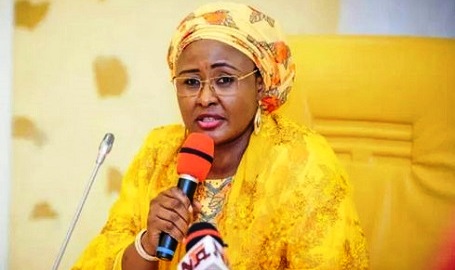
Aisha Buhari to Isa Pantami: Be courageous to do the right thing [Video]

Nigeria’s First Lady, Aisha Buhari, has asked the Minister of Communication and Digital Economy, Prof. Isa Pantami, to be courageous to do the right thing.

It will be recalled that the First Lady is known for calling out some of the appointees of her husband, President Muhammadu Buhari.

The First Lady on Sunday shared a video of Pantami crying during one of his sermons.

The Minister cried after his reciter read a verse of the Holy Quran.

The verse was from Surah Maryam and it read: “That is the Garden we shall give as their own to those of Our servants who were devout.”

Pantami, who cried after the verse was read, said: “O Allah! Make me one of them.

“O Allah! Make me one of them!”

Sharing the video, Hajia Buhari attached a caption a short Hausa caption to it.

The caption read: “A chire tsoro a yi abinda ya dace.”

Translated into English, it means: “Be courageous to do the right thing.”

The Instagram post was shared three weeks after Pantami joined Yusuf, the son of the Buharis, with Zahra Bayero, the daughter of the Emir of Bichi, at the Bichi Central mosque in Kano.

The comment section of the Instagram post by Hajia Buhari remained locked as at press time.

View this post on Instagram

A post shared by H.E Mrs Aisha Muhammadu Buhari (@aishambuhari)

Credit: Thelagostimes

Free Copy of “Edo State Local Governments Uniform and Harmonised Levies, Rates, Fees and Charges Law, 2017”.

By Onyekachi Umah, Esq., LL.M, ACIArb(UK)

Free Copy of “Edo State Local Governments Uniform and Harmonised Levies, Rates, Fees and Charges Law, 2017”.

Click to download “the Edo State Local Governments Uniform and Harmonised Levies, Rates, Fees and Charges Law, 2017”. 

In Edo State, the State House Assembly made a law enabling local governments to demand and collect specific harmonised and uniform levies, rates and fees since 28 February 2017. The law (the “Edo State Local Governments Uniform and Harmonised Levies, Rates, Fees and Charges Law, 2017”) further specifies amounts to be paid for each levy/fee to avoid outrageous demands and assessments. Most people are not aware of the specified amounts and as such they are been defrauded. For instance, Advert and Signage Rates is N150,000.00 for a year, but some corrupt Local Governments charge N900,000.00 for year and people pay or demand for reduction to N500,000.00 and then pay.

Click to download “the Edo State Local Governments Uniform and Harmonised Levies, Rates, Fees and Charges Law, 2017”. 

For reasons unknown to us, this law that was made since 2017 is not common and worse still not available on any online platform/website (at the time of this publication). Hence, the need to make it available here for free! Until laws are easily accessible, non-compliance and abuse will be inevitable. It is your right to sabi (understand) laws.

Click to download “the Edo State Local Governments Uniform and Harmonised Levies, Rates, Fees and Charges Law, 2017”. 

Igbo and Buhari’s peace speech in Imo State, By Lasisi Olagunju

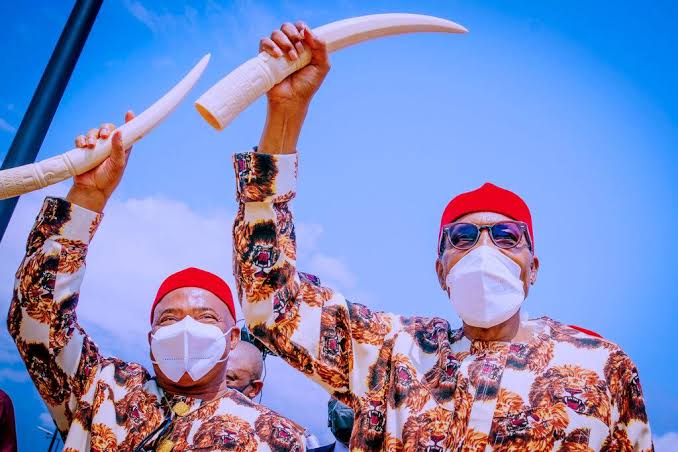
President Muhammadu Buhari, last week in Imo State, acknowledged the resourcefulness and enterprising spirit of Igbo people. He said: “The fundamental thing about the Igbo people is that there is no town you visit in Nigeria without seeing the Igbo being in charge of either infrastructure or the pharmaceutical industry. Therefore, it is unthinkable for me that any Igbo man would consider himself not to be a part of Nigeria. The evidence is there for everyone to see that Igbo are in charge of Nigeria’s economy.” Amazing.

Was it not this same president who said in June – just three months ago – that these same Igbo, because of their beloved Biafra were “just like a dot in a circle”? You remember he stressed for effects that even if the Igbo managed to exit Nigeria, “they’ll have no access to anywhere.” He suggested strongly that Nigeria would constrict them because there would be no access to the sea. Then he wondered aloud: “And the way they are spread all over the country, having businesses and properties, I don’t think IPOB know what they are talking about. In any case, we say we’ll talk to them in the language that they understand. We’ll organise the police and the military to pursue them.” That was the position of the commander-in-chief three months ago.

But Buhari in Imo State appeared to have changed his opinion of the Igbo man. His tone changed too. What is that thing that has shifted the tectonic plate of the hardliner? An expert said “leaders change their mind for one of three reasons: external forces, new knowledge or spontaneous cognitive shifts.” To which of these reasons does the president owe his new picture of (or posture on) the Igbos? We may not know – but someone told me it could be all three here. What we observe, however, is that our leader spoke as if he no longer saw his Igbo subjects as “just five percent” and as a problem-people fit only for the police and the army to pursue. They are now a prized race who should not leave Nigeria. Did he really mean it or it was just another of the old slithering tricks of the Bayajidda? He said it was “unthinkable” for him “that any Igbo man would consider himself not to be a part of Nigeria.” But the history of Igbo’s ‘hatred’ for Nigeria is an open book; it is forced on them by the same system that has ‘killed’ Nigeria’s reason for existence. My people say the goat never said the sheep was not his sibling. Rather, it is sheep that insists that his mother had no dark-complexioned child. And goats are born black.

‘Except the other parts of Nigeria live in denial and self-deceit, we should know that every Igbo man is already out of Nigeria in soul and spirit.’

The Igbo man has his failings – like any other man. Having and condoning self-serving leadership is one of his dubious blessings. And, until recently, he thought it was wisdom for his goat to follow every hyena holding palm fronds. That is despite the fact that his experience with Nigeria has been of blood and tears. Across decades, Igbo are flies in the hands of wanton street boys of the North. It started even before independence. On June 22, 1945, the Jos riots were the South’s first encounter with violent northern Nigeria. Some historians blamed the riots on the North’s simmering resistance to its amalgamation with the South. Lives and valuable assets were lost there that early in the life of Nigeria. Then there were the Kano riots of May 16, 1953. They were the North’s response to southern leaders’ call for independence for Nigeria. Fifty-two persons died and 245 injured in the riots. Valuable assets were also lost to looting and arson. From May 1966 to July 1967, there was what historians call the pogrom on the streets of northern Nigeria. Check the thousands of southerners who died in it and the percentage of the Igbo victims in the massacre. Even unborn babies were not spared. Then the civil war started in July 1967 and, for 30 months, it was death and destruction. The respite that followed the end of the war saw the Igbo babe choosing the enemy as her husband – and she enjoyed the honeymoon while it lasted. On October 14, 1991, a German Christian evangelist called Reinhard Bonnke wanted to stage a revivalist rally in Kano. There were riots; about 200 people died and people lost assets. Earlier in April of same year in Bauchi, no fewer than 500 people died in similar riots with rioters setting fire to homes and shops. When the North said it wanted sharia in January 2001, again people died. And between February and December 2002, its way of showing seriousness on the sharia question was killing of southerners, mainly Igbos. In November 2002 again, there was an attempt to host a Miss World beauty contest in Nigeria. That secular business intention birthed murderous riots in Kaduna; at least 215 persons died. The Guardian of UK described the unrest as “more about old grudges than a beauty contest.” It confirmed that the riots “left deep wounds.” Killing of southerners in the North has ever been as routine as herding of cows by the Fulani. How many people have been tried for these crimes? The murderers always live to kill tomorrow. But then, when you water the plant of a nation with the blood of the innocent, and of a section of it, it won’t grow healthy – because the soil is cursed.

Reggae legend, Bob Marley, left many songs for all oppressed peoples of the world. He titled a particularly intensely profound one ‘War.’ In that song, Marley sang of justice and injustice and of their consequences. He sang of war and rumours of war. He gave conditions for peace but he also predicted the triumph of good over evil. The lyrics:

“Until the philosophy

Which hold one race superior

And another inferior

Is finally and permanently

Discredited

And abandoned,

Everywhere is war; Me say war.

That until there are no longer

First class and second class citizens

Of any nation;

Until the colour of a man’s skin

Is of no more significance

Than the colour of his eyes

Me say war;

Until the basic human rights

Are equally guaranteed to all

Without regard to race

It is war…

That until the ignoble

And unhappy regimes

That hold our brothers…

in sub-human bondage

Have been toppled

Utterly destroyed

Well, everywhere is war,

Me say war –

War in the east

War in the west

War up north

War down south

War, war…”

The president spoke like a man of peace in Imo, last Thursday. But beyond the platitudes of shifty words of friendship, he must be seen from now on doing justice to all manner of people. That was the oath he took that made him leader of Nigeria, North and South. It was good hearing him speak to Igbos without impudent, sectional threats. He said that the Igbo were drivers of our economy who should not think of divorce or separation from the country. He said they are so precious to Nigeria and its survival. So, why does Nigeria enjoy slaughtering its golden geese? Why kill them? There is a story behind every saying that is classified wise. You have heard about killing the goose that lays the golden egg. It is a story of gluttonous stupidity. There was once a man whose only possession was a goose. It was his lifeline. One day, he visited the goose’s nest, he saw that it had laid a glittering, golden egg. He picked it and sold it and enjoyed the good money it brought. Every day from that day, he went to the nest and picked his gold, went to the market and came back a rich man. He soon became stupendously wealthy beyond the possibilities of his environment. Then, he thought of a quicker way of multiplying his riches. Enough of picking and pocketing one lonely golden egg per day. He took a long look at the goose and wondered how many millions of golden eggs would be in the belly of the bird. If he could get all the golden eggs in one day, he would be fulfilled as a truly wealthy man. The big man seized the goose and cut open its belly for a golden harvest of eggs. To his horror, there was no egg, golden or ungolden, anywhere in there. He scrambled to bring back from the dead the goose laying the golden eggs for him. It was futile; the bird of gold was gone forever.

Except the other parts of Nigeria live in denial and self-deceit, we should know that every Igbo man is already out of Nigeria in soul and spirit. That is what you saw demonstrated on the deserted streets of Owerri last Thursday, September 9, when the president of Nigeria visited. It was a very sad, loud requiem to a nation at war with them. And it happened because there are always options for the maltreated goose that lays the golden egg. Never take it for granted. In July 2016, I wrote here on trending photographs online of a monkey holding onto a distressed puppy in Rode, India. A report quoted a Facebook post as observing that the monkey “makes sure the little dog’s stomach is full before eating himself” and “protects the pup from other stray dogs.” The adorable friendship, a commentator stressed, “is a tribute to the power of animal compassion.” Should that vulnerable puppy then take the monkey for a fool for the sacrifices he made? The monkey is no fool, he has his own logic and sense of justice and care. And he serves these in the right measure at the appropriate time. That is the wisdom that still eludes power captors who think they could continue to ‘eat’ Nigeria to the exclusion of those wetting its fields. The president visited Imo State and he met completely empty streets! He should be worried – and worried.

Buhari’s outreach to the Southeast, By Dakuku Peterside

Symbolic gestures are particularly evident in Africa. Ndigbo or South easterners, more than any other group, attach importance to symbolic gestures. It is ingrained in their culture. However, for once, Igbos are divided over the significance and symbolisms of President Muhammadu Buhari’s visit last week to the Eastern heartland.

The visit of Mr President to Imo State has elicited many reactions.

Interestingly, most of the focus has been on the President’s attire. In a picture on social media, the President wore ill-fitting oversized trousers and traditional Igbo ‘ishi agu’ clothes which were ‘uncomplimented’ with non- matching shoes. There have been arguments and counter-arguments over whether the picture was accurate or photoshopped. But this is an unnecessary diversion. How did we get to the stage where after the President visited Imo State, a theatre of conflict owing to secessionist agitation and where he has few friends and supporters, we are focused more on his clothes than the essence, impact, and import of the visit?

Ordinarily, our discussion should focus on how the President’s alleged inability to harness the country’s diversity impacted his trip to the Southeast, how the secessionist agitation that is most pronounced in the Southeast reflected on the President’s visit and whether the visit moved a needle in his fractious relationship with most of the people in the south-eastern part of the country.

The plurality of the connotation of Southeast in the nascent geopolitics and the convoluted emotional experience of the political actors and ordinary citizens of the area make the visit of the President very significant. Southeast did not mainly vote for the President in the last two elections. Imo State is the epicentre of separatist agitation, theatre of multiple political wars, and ‘unknown gunmen’ hotspot.

The President’s visit juxtaposes with the alleged perception that he hates the region, still treats it in the Biafra civil war’s mindset and mode and still considers it a lesser part of the Nigerian foundational ethnic entities. Therefore, one may ask: has the President confronted this perception of hatred of the region by this visit? Is it a signpost of a new relationship with the mainstream political centre? Does this signify the President’s readiness to engage? Is this an outreach to the Southeast?

No one was in doubt that the President’s handlers and intelligence coterie considered the area ‘an enemy territory’. The conspicuous presence of a bulletproof ballistic case carried by some of the security personnel laid credence to this. Maximum protection is always offered to our country’s leaders anywhere they go.

However, the sight of this discreet close protection, rapid deployment solution that unfolds with one hand to provide a sizeable line of defence for ballistic and fragmentation threats demonstrated that the President’s handlers saw an inherent security risk to his person. In this context, the President’s visit to Imo State was an opportunity for fence-mending and peacebuilding.

The cries of marginalisation have been persistent in the Southeast since the end of the Civil War. However, the perceived hostility of President Buhari towards the region and the administration’s alleged poor handling of the country’s diversity added to rising poverty have led to the clamour of separation from Nigeria becoming more popular in the Southeast.

We should commend the President for embarking on the trip in the first place. The President silenced his doubters for someone often accused of never visiting many states in the country’s south, except during election campaigns. The opposition tries to portray him as insensitive to some people’s feelings from particular areas in the country. The President has demonstrated that he is indeed the leader of all Nigerians. This new philosophy of engagement is a core democratic ideal and must be embraced by all. Through such engagement, the government and the governed exchange ideas, understand themselves and work ‘hand in gloves’ to achieve unity and prosperity.

In the light of the above, Ndigbo were happy to hear the President’s commitment and promise to complete the second Niger bridge during his dispensation. This bridge started during the Babangida regime has outlived five previous administrations. I must point out that the Niger bridge is probably the busiest transport artery in Nigeria, linking the Southeast to the other southern parts of Nigeria. Although it is erroneously considered an Igbo project, its significance and importance are national.

Furthermore, the President acknowledged the place of Ndigbo in the economic life of Nigeria. He posits that the Igbos hold economic power in Nigeria, especially in trade and real estate and are interwoven in the fabrics of economic life in every part of the country, and as such, it should be


unthinkable for the Igbos to want to separate from Nigeria. Although it seems cogent in its face value, underneath it belies the contention by the Igbos that they are not at the commanding height of the national economy and have been systematically denied that opportunity since the civil war and the indigenisation decree of 1970. They are quick to point out the fact that they are not in charge of the oil and gas sector, agricultural, manufacturing, telecommunication sectors, customs and even banking. These are the major pillars of the economic life of the country.

A fact which cannot be challenged is that the economic growth of the Igbos is self-induced, and it is doubtful that the public sector has proactively created an enabling environment to harness the entrepreneurial dexterity inherent in the Igbos. The Igbo economic cocktail is brewed by their restlessness and spirit of enterprise, which has led to their phenomenal economic recovery post-civil war. I believe it is time for a synergy between the Nigerian State and the Igbo economic renaissance that should fuel the development of Nigeria. All psychological and physical curtains and ceilings placed on stopping the harnessing of the economic potential of people of this region must be lifted. The strength of every component part of the country should be harnessed to maximise our competitive advantage as a nation. The rhetoric that Igbos, like other component units, are an indispensable part of Nigeria is accurate. Therefore, actions and inactions that are, to the contrary, fuel the feelings of marginalisation amongst the Igbos. These should be looked at and changed if they are inimical to the new synergy propounded here.

However, beyond the visit, the President must take further steps to show that he appreciates the significance and cares a lot about Nigeria’s ethnic diversity. Government appointments and policies

should be promoting inclusiveness and managing our diversity. He should bring to justice people threatening the peace and security of the country irrespective of ethnic and religious leanings. Added to these, as the President-General of the pan-Igbo cultural organisation told President Buhari during the visit, despite all the threats of secessionism or separatism facing the country, there is no doubt that no secessionist element can succeed in Nigeria, provided there is good governance based on equity, justice, and fairness to all the citizens.

On their part, the leaders of the South-East should rise to the occasion and save their region from total anarchy. A local leadership deficit is part of the reason why non-state actors have taken control of the conversation. When the roads are bad, water and electricity are scarce, high unemployment rates, salaries and pensions are not being paid or never paid on time, people are more willing to heed the next charlatan or mob leader who promises them Utopia. When people lose complete trust in the government, they are more susceptible to the manipulations of demagogues, con artistes and wannabe saviours disguised as modern-day heroes and ethnic champions. There should be a genuine conversation amongst governors, legislators, socio-cultural organisations, and opinion leaders of the Southeast on tackling the crisis in the once peaceful area. The deafening silence of many prominent intellectuals and opinion leaders from the Southeast on the imbroglio in the region is very worrisome. Now is the time to forcefully speak out in a fruitful conversation to ameliorate an awful situation.

Governors of the South-East should establish a line of dialogue with the leadership of the proscribed IPOB. Despite their crude methods and foibles, they enjoy sympathy in the region. It may be more challenging to find a solution to the crises without their involvement. Continuous engagement is critical. Military might and solution will never be enough in tackling the problem. For the citizenry in the Southeast, the Southeast has a lot to gain from the country, remaining a united entity.

To paraphrase Prof Obiozor in his address to the President, “Ndigbo are the most federating unit among all Nigerian citizens. Anywhere in Nigeria you don’t find the Igbos, run away something is wrong there. Igbos are market people and travel adventurers.” The Igbos are the only ethnic group in Nigeria that has investments outside their land than they have in their area. Why would this group be keen on becoming foreigners in other parts of the country with attendant consequences? Why will they allow insecurity to pervade their land?

In the security circles, any society that decides to eliminate its policemen should ensure that they have made peace with their criminals. Despite the shortcomings of our security agents and prevalent unprofessionalism in their conduct, obliterating them is a straightforward recipe for anarchy. Overt and covert support for attacks on security personnel would only be counterproductive. The populace must be cautious with those who make incendiary speeches that widen the ethnic divide in the country. We as a people, irrespective of our ethnic and religious leanings, can only thrive in an atmosphere of peace and unity.

The President’s visit is highly commendable, but there are a few negatives. The first negative is that the visit should not have been branded a commissioning visit, given that the level and quality of projects to be commissioned do not warrant such a visit by the President. The visit would have been better portrayed as an engagement visit, an outreach of Mr president to Ndigbo, to start a conversation to soothe the frayed nerves of some Igbos. Significantly, the President may be visiting other states in Igbo land. There is still an opportunity for his handlers to frame his visits right. We hope that these visits may be a part of the president’s National Healing Project – an engagement with parts of the country that feel left out and on the fringes of his government. Besides, we hope these visits are extended to other parts of the nation, especially in the Southern regions, to douse the ‘Fulanisation conspiracy theory’. I will advise that he includes people of various ideological shades during these visits/engagements, especially those not known to be in same camp with Mr president.

The second negative is that the security agents ignored or under rated the IPOB sit-at-home directive, and this led to the streets of Owerri being literarily empty, almost looking embarrassing for the President. There were not many citizens coming to cheer their President. The President’s handlers should rectify this in his further visits to other states in the Southeast.

The President has a few missed opportunities in this visit. The feeling of marginalisation by the Igbos is historic and culminated in an internecine war with epic human and material losses to Nigeria. Post-civil war has seen new generation Igbos carrying the burden of the psyche of a defeated people. This psyche has seen them interpret actions and inactions and even utterances of leaders from other parts of the nation as marginalisation hence their agitations. As a veteran of that conflagration, his visit should have allowed him to speak about it and reassure the youths from the region about their being equal partners in the Nigerian project with others from various parts of the country. We do not expect Mr president to talk about the ‘Igbo presidency’ since that is a product of a democratic process involving partisan politics and electioneering.

I hope he will address proactively the angry Igbo youths who have convinced themselves that Nigeria holds no place for them, and they are better off in a utopian Biafran country that will solve all their problems. There has not been a proper high-level engagement from the top echelons of power to counter the Biafran utopia narrative. The President can use his visits to the Southeast to win the hearts and minds of the region’s youths.

Whether Mr presidents’ Ishi agu’ fits him or not; whether his pair of trousers are out of sync with his shoes; whether it was photoshopped or not; whether IPOB succeeded to embarrass Mr president with their sit-at-home order or not; Mr president has gone to Imo State with huge ramifications and potentials. It is left for Ndigbo to perpetuate the positives and improve the chances of peace, harmony, and progress in the region.

Of bigmen’s children, Boko Haram and an unholy war; By Hassan Gimba

From the beginning, the quasi-Islamic jihadist movement with the high-sounding name, Jama’atu ahlus sunnah lidda’awati wal jihad, loosely translated to mean “People committed to the propagation of the Prophet’s teachings and jihad”, was anti-West. Many believe, albeit erroneously, that Boko Haram started in Maiduguri, Borno State, in 2002 and that the founder was Mohammed Yusuf.

The group, not with its latter-day and most known name, started in the mid-‘90s in Yusufari, Yobe State. Popularly called “Taliban” or “Sahaba”, a name derived from what the prophet’s companions are called, it comprised mostly the children of the well-to-do in the society. With white as their preferred choice of colour, they were always attired in white garments and used camels for their transportation.

They were mainly idealistic youths who opted to shun worldliness, sacrifice the flesh and nourish their souls in seeking the favour of Allah. They started romanticising a Utopian world where God does for them whatever they fancied. That was what governed their thoughts, and they concluded that the best way to achieve that was by divorcing themselves from a world filled with sin.

Most of them came from Borno and Yobe states, and being from the same social class and having met at the university, that of Maiduguri precisely, they all agreed to migrate (hijrah) to a virgin land where they would worship their God undistracted by temptations that feed the flesh and starve the soul. They chose the desert of Yusufari in Yobe, bordering the Niger Republic.

Alhaji Bukar Abba Ibrahim, a three-term governor and three-term senator, was the governor of Yobe State then. Those whose children got involved were top shots in the two states. Naturally, the Yobe State Government was concerned that ‘heirs’ were derailing and abandoning the path being paved for them. What to do? Disperse them as gently as possible, causing no harm to the prodigal children. And so the government, using the security agencies, tenderly dislodged them with each bigwig advised to rein in his ward so as not to lose his scion.

The kids sired by the elite got ferreted out of the country to Europe, America and Asia to study and, in the course, got drowned in the world. Better take the path of the world than the futureless life of asceticism they were so enamoured with, their bigshot parents in government thought.

They left those sired by the nobodies stranded with nobody to give them succour. They did not in reality do anything that may warrant the government giving them ‘amnesty’ then, but a serious society would have done something about those idealistic kids whose eyes were blazing with religious fervour. But no, society left them to their devices. And so they congregated in Maiduguri and paid allegiance to Mohammed Yusuf, who started his rise to infamy.

He, it was, that popularised the ‘Boko Haram’ (western education is sinful) mantra. ‘Boko’ stands for western education and ‘haram’ is sin in Arabic.

Most of the sect’s early adherents dropped out from western education-based schools, from primary schools to tertiary institutions. Some of those who had completed such schools tore their certificates. It became an obsession for the Boko Haramites to stop western education wherever they could.

Some measures they took included but were not limited to abducting school children, killing some of them, and burning their schools. In one such gruesome campaign, they slaughtered 59 young boys in their sleep at Federal Government College, Buni Yadi, Yobe State, on February 25, 2014. They also razed 24 buildings in the school.

Similarly, later in the year, on November 10, one of their suicide bombers, disguised as a student, detonated an explosive device during a morning assembly session at Government Senior Secondary School, Potiskum, in Yobe, killing 47 students and maiming 79 others, some for life.

In between the two massacres, on April 14 they hit Government Girls’ Secondary School, Chibok, Borno State, and abducted 276 of the students, aged between 16 and 18 – a raid that forced the entire world to sit up and take note. Seven years have gone by and over a hundred of these girls are yet to be accounted for. Then, four years later, on February 19, 2018, there was another mass abduction of schoolgirls at Government Girls’ Science and Technical College, Dapchi, Yobe State, where about 110 schoolgirls were carried off in a strike reminiscent of Chibok. Weeks later they were released, but not before the death of five others, and returned to their town by their captors, except one Leah Sharibu, who would not accept being forcefully converted to their form of Islam. Authentic Islam frowns at forced conversion.

While the North East is daily getting free of the menace of Boko Haram, with life slowly but steadily returning to normal, it is not so for the North West and the North Central. Appendages of Boko Haram in the disguise of bandits, herdsmen and kidnappers are having a field day abducting people at will. Herdsmen’s nefarious activities, which started taking a turn for the worse in Zamfara State in 2011, are now more complementary to Boko Haram’s.

Mass abductions of pupils and students have become so commonplace in Zamfara, Kaduna, Katsina and Niger over the last two years that it is no longer ‘unexpected news’.

These brigands go to houses in towns and schools to take whoever they fancy, and whenever they want. Apart from turning kidnapping into a lucrative vocation where they rake in hundreds of millions by squeezing family members, they have forced state governments to do their bidding by shutting down schools. Some states have ceded roads and sizable portions of territory to them. Sad, but that is the reality – a sort of victory for those who believe there should not be western education.

Those who were left to their own devices when the bigshots took their kids abroad have now forced all of us to sleep with eyes wide open. They have unleashed an unholy war on all of us, the haves and the have-nots. In the process, they have recruited foot soldiers in almost all sectors of society. They have their sponsors, informants, associates, suppliers and apologists among politicians and the clergy. Those that minister to them can also be found in the security sector, among students, trade unions and the business class.

Insurgency and related criminal activities have taken their toll on the North. In every society, those between the ages of 15 and 40 build it up, being the most vibrant age bracket. But those in the region’s most active age group are daily joining the increasing groups of bad eggs or spending energy running away from them.

The North has long suffered this breakdown of law and order. It has crippled the economy of the people and the people’s mainstay, agriculture, has taken a back seat because of the nefarious activities of the criminals. People in many parts of the region cannot go to their farms, and where they could, they have to pay taxes to insurgents or bandits.

As a result, revenue generated by states has fallen to an all-time low. The revenue from agricultural produce, livestock production and personal income tax, except for those in government employment, has thinned out. Many businesses – big, medium and small – have closed shop, throwing more able-bodied youth into the unemployment market, further putting stress on society and fuelling more reasons for social discontent.

Things in the North East, as earlier stated, are getting better and the current successful onslaughts recorded by our security operatives in the other parts of the region are commendable. Hopefully, the government has woken up from its inertia and has taken the bull by the horns. Nigeria looks forward to having a peaceful and secure North.

To avoid regressing to the days (of course we are not yet out but hopefully soon) of fear, Northern states must aggressively pursue all means to improve their internally generated revenues. There should not be any hypocrisy in that. I truly believe Islam forbids the consumption of alcohol. Not only that, it prohibits its production, transportation, sale, or using the proceeds of the sales. Therefore, if you are a genuine believer who destroys alcohol in your town, refusing its sale and punishing those who take it, why should you gleefully accept any money, in whatever name, from the proceeds of its sale?

By the way, do bicycles and dogs have licences anymore like we used to see decades ago? There is an increase in using bicycles with the banning of motorcycles for security reasons across the states. Northern state governors must think out of the box for their states to survive. They need to build projects, not for fancy, but those that can bring more revenue to their states. They need to open up the hinterlands and invest in education and health. A healthy, educated person will feed himself and others and can generate revenue.

I believe when all states start generating reasonable amounts of revenue, the country’s unity will be cast in concrete and guaranteed. Come to think of it, each state will have what the others need and we will look at none as a parasite because each contributes a necessary portion to the general purse.

Buhari’s last words: An indictment on incompetence!?

By Okafor Elekwachi

By this time, Gov jHope Uzodimma’s political hallelujah boys are busy thinking of how to explain Mr. President’s carefully selected last words in Imo after the show of shame tagged project commissioning.

In closing his empty few minutes remark, Buhari said and I quote; “The Governor of Imo State I cannot thank you enough, however I will be careful with your future invitations.”

The above clearly is a statement of dissatisfaction and disappointment, from a man who wanted to reprove his host and at the same time appreciate him for the opportunity to once again hear the sound of Sai Baba from a rented hungry crowd.

Why was Buhari disappointed?

Presidents are known to visit States to commission SIGNATURE/LEGACY PROJECTS. Over the last administrations, we saw President’s commission projects like airports, industries, major dual carriage federal roads, power plants, etc. Governors use such projects to show the President they are working, and the President is proud to IDENTIFY with such projects as part of their vision in the center, especially when they are of same political party with the Governor.

But few days ago, a desperate Governor who would do anything to impress his paymasters in Abuja, including backing down from the recently agreed open grazing ban by Southern Governors, invited a sitting President, who is supposed to be busy addressing the prevalent insecurity in the country, to commission gutters and uncompleted single carriage internal road projects. What a shame!
All we hear from sycophantic supporters are empty praises like ‘Omwa na eti egwu’Onwa onye guy’ ‘Onwa uwa nile’
Highly pathetic.

But who do we blame for this national disgrace; a desperate Governor, or a President who is not in touch with reality, surrounded by incompetent wolves and sycophants who would do anything to portray their lifeless boss as the pseudo hero of ndi igbo with a victory parade on the graves of innocent youths of the South East massacred by the administration for seeking to leave a country where they are not wanted afterall. I certainly blame the latter!

If the President and his handlers were not desperate for the Owerri show of shame, they would have known that the SOP is to send an advance team to Owerri ahead of the visit, to survey the projects for which the commander in chief has been invited to inaugurate, to see if such projects are worthy of his high-level participation. I mean even a Governor whose senses are intact, in this 21st century cannot be talking about commissioning gutters. But once again, we saw the result of incompetence from an administration that has broken every record in the negative.

So dear Mr President, next time Governor Hope Uzodimma sends an invite for project commissioning, please send your foot soldiers to Owerri to see first hand before embarking on the journey. This is because you maybe called upon soonest to commission public toilets and motor parks since you are obviously the Governor’s lifeline in office. This is leadership 101. As a matter of fact, if you are truly in charge of your government, someone should have lost his job by now for not doing due diligence, and for dragging an exalted office of the President into the Owerri show of shame.

But don’t worry Mr President, you are not paying for my advice. I’m just a concerned citizens….. here to remind you that the seed you planted in the Douglas House Owerri is bearing the expected fruit. Welcome to our experience Mr. President, to an Imo where hope is indeed hopeless!

Iwe na ewem

Okafor Elekwachi

TIPS