Home Blog Page 913

Ending The War Over VAT

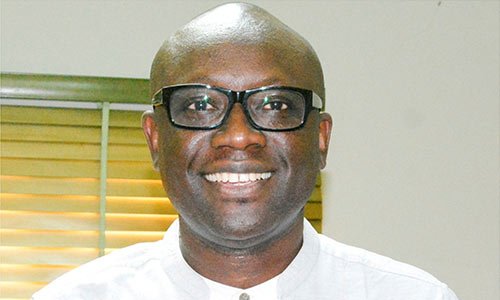
By Simon Kolawole

The evolution of Nigerian federalism has undergone major genetic variations in the last 20 years, but the war that has just broken out over the value-added tax (VAT) may become the turning point because of the potential impact on fiscal federalism and the political economy. On December 11, 2020, Justice Stephen Pam of the Federal High Court, Port Harcourt, Rivers state, had ruled — in a case brought by Mr Emmanuel Chukwuka Ukala, SAN, against the Federal Inland Revenue Service (FIRS) — that it is states, not federal government, that should collect VAT. He also held that the constitution lists the taxation powers of FG as covering only incomes, profits and capital gains.

Although I am a novice in legal matters, Pam’s judgment looks very sound to me. There is nowhere in the constitution where VAT is mentioned, and since it is linked to consumption, that appears to be in the terrain of states. The judge also held that there is no constitutional backing for the collection of VAT, withholding tax, education tax and technology levy in Rivers state, or any other state of the federation, by the FIRS. Based on the letters of the law, I do not expect any court to upturn his determinations. That is why I think the best way out of the impasse is a political, rather than legal, solution because of the likely negative impact on businesses, individuals and nation-building.

I want to draw out a few observations from what I consider to be the implications and complications of the VAT judgement. For those who may not understand much about VAT even though they pay it regularly when they make phone calls or drink Chivita, it is similar to a sales tax but is collected at the point of consumption in the value chain. Farm produce, medical services and educational materials are exempt. The FIRS, a federal agency, collects VAT and remits to a special account which is not part of the federation account. The revenue sharing formula is also different: federal government, 15%; states, 50%; and LGAs, 35%. For the states, there is a derivation payment of 20%.

Here are a few implications of the judgment, some of which many analysts have also pointed out. One, FG may be the biggest winners. In 2020, Nigeria earned N1.531tr from VAT. While local VAT was N763bn, foreign VAT — collected by FG — was N768bn. Therefore, rather than take just 15% (N230bn) from the N1.531trn, FG may now pocket the entire N768bn from foreign VAT since it does not go into federation account and may not be subject to the regular sharing formula. That would deprive the states, Rivers and Lagos inclusive, of about half of the total VAT revenue. This is HUGE. The FCT may also win as it generated N202bn in VAT last year but got only N34.6bn as its share.

Two, the general impression is that Lagos state will win massively from the judgement. I have my doubts. Yes, Lagos is the biggest beneficiary of the current arrangement: the state collected N216bn as VAT share in 2020. By comparison, Kano got N53bn and Oyo N45bn. This is quite a gap. Lagos also contributes about 60% to the VAT pool: that is why it is called “the goose that lays the golden egg”. This might have prompted the Lagos government to quickly pass a VAT law, even charging a rate of 6% — lower than the prevailing 7.5%. I hope Lagos state officials did their homework well because it looks like they are not seeing what I am seeing, except maybe some facts are not yet in the open.

You see, by the time every state enacts a VAT law, much of the derivation attributed to Lagos will reduce. Currently, all VAT incomes from telecoms and banking transactions are attributed to Lagos because the companies have their headquarters there. That means derivation on all phone calls made, bottles of Coke gulped and banking transactions done in 36 states and FCT are attributed to Lagos. That is why Lagos contributes about 60% to domestic VAT. That also explains why Lagos gets the lion’s share. Calls and transactions emanating from 35 states and FCT will no longer be attributed to Lagos — going by the judgment. That is why it looks like Lagos share of VAT may actually drop.

Three, will Rivers state win big? Again, I have my reservations, but they may not lose that much. Last year, Rivers got N40bn from VAT, but this includes their share of the N768bn revenue from foreign VAT. That also includes their share of the local VAT revenue generated in other states and FCT. Thus, if FG holds on to the foreign VAT, every state will be affected. This is contrary to the impression (even trepidation up north) that only northern states will suffer. In the meantime, states cannot make laws on import VAT as Lagos assumes it can do. The constitution is quite clear on who has the power to legislate on import: federal government. Devil is in the details but are we aware?

Four, it is argued that Sharia-compliant states cannot be breaking beer bottles and at the same time sharing the VAT revenue from alcohol. Fair point. However, beer contribution to VAT is not that much. The figures are not disaggregated by FIRS, but the NBS Living Standards Survey for 2018/2019 puts total annual spend on alcohol at N150bn. The VAT on N150bn is not heavy. Meanwhile, south-west topped consumption spending (both food and non-food) with N12trn; followed by south-south, N8.4trn; north-west, N6.8trn; north-central, N5.7trn; south-east, N4.8trn; and north-east, N2.5trn. And most are VATable expenses. The north may not lose as much as is being speculated.

Five, the biggest losers will be businesses — and that will further damage our fragile economy. There is a reason VAT collection is centralised in other countries, both unitary and federal. For practical purposes, if you produce soft drinks in Lagos and pay VAT to Lagos, you will still pay VAT to Oyo when you take your products there, and Oyo will have to calculate how may bottles you sold. Companies will now have to deal with 37 VAT regimes in 36 states and FCT, unlike now when you pay at once to FIRS. (By the way, the FIRS will be losers. That is why they are fighting day and night over the judgment. The agency gets a cool commission of 4% which I will touch on shortly.)

India used to do what we are about to do. Its 29 states had different VAT regimes. Inter-state commerce was hell. A truck carrying goods could wait for three days at a state border awaiting VAT inspection. When India finally decided to centralise VAT collection by enacting the goods and services tax (GST), it was a big relief for businesses. Brazil and Canada, which are federations like India and Nigeria, are currently trying to centralise VAT collection because of the complexity. But Nigeria is racing towards a different direction. Just imagine the nightmare of handling VAT stress all over the federation if you have to deal with 37 tax authorities, even though you are one company.

In sum, I foresee fiscal crisis in many states. Why? The redistribution of VAT has been their saving grace. Some people are gloating and screaming “restructuring”, not knowing that it is not only one part of the country that will be affected. In 2020, only six states made more from IGR than they got from VAT allocation: Rivers, Lagos, Ogun, Kaduna, Delta and Edo. Akwa Ibom had parity: IGR, N30.6bn; VAT, N30.8bn. The other 29 states got more in VAT allocations than from IGR. On the average, VAT represents 33% of gross statutory allocations and 26% of total revenue for states. It is to address the imbalance between richer and poorer states that all federations, including the US, do fiscal transfers. That is the driving principle of fiscal federalism: stabilisation through redistribution.

With the VAT judgement, what is the way forward? For one, some states believe the present sharing formula is unfair. This is a legitimate concern. But the solution should not be pursued in ways that will make life more miserable for businesses and individuals, or cause further animosity in our severely challenged nationhood. We can create a win-win for all. That would require working out a robust political situation. Luckily, this is not a constitutional matter: the VAT Act can be amended in one week as along as the political authorities can reach a consensus on what is fair and just to all. Most importantly, this is a revenue issue: the states are under pressure to meet their needs.

Here are my suggestions. First, I believe FIRS should continue to collect VAT for ease of administration. The agency has built the capacity. However, its commission of 4% is too much. Customs also takes 7% as commission on foreign VAT. Both should get 0.5% each. This will increase the distributable amount in the VAT pool. Second, why does the North East Development Commission (NEDC) collect 3% from VAT? What’s the logic? The commission got N45.9bn from VAT last year. If it was a state, it would rank third behind Lagos and Kano. That money should go to the VAT pool. It even conflicts with the VAT Act, which clearly spells out the sharing formula.

Third, many items on the VAT-exempt list deprive us of good revenue. For instance, why should air tickets be exempt while train tickets are not? Why should aircraft be VAT-exempt while buses are not? What’s the sense in that? Fourth, VAT revenue can be disaggregated per state. Every state will be able to get derivation on items consumed within their territories. That way, alcohol VAT will not be shared with Sharia-compliant states because it is haram. Alternatively, we can abolish VAT altogether and allow states to charge and collect sales tax. We can also adopt or adapt the Indian or Canadan model on goods and services tax. There are so many options we can consider.

The National Economic Council (NEC), chaired by Vice-President Yemi Osinbajo and made up of the 36 state governors, need to burn the midnight candle over this. Actually, Nigeria is not raising enough tax revenue given the size of its economy. There are too many inefficiencies and leakages in the system. We need to fix that. Our tax revenue has gone up partly because of the crude oil crisis. We can do more without increasing tax rates or instituting extra handles. I propose we study other federations and see what we can learn from them. In the end, the VAT imbroglio may turn out to be a blessing in disguise and lead to a win-win outcome for all. Everything doesn’t have to be war.

Our navy’s NNS absurdity

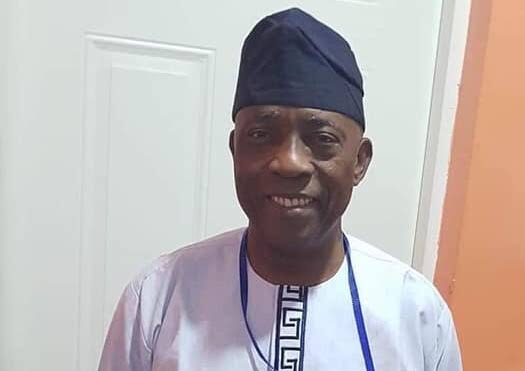
By Dare Babarinsa

One announcement that has raised more than a few eye brows and even bewilderment is the news of a naval base in Kano, the ancient entrepot of the Trans-Saharan Trade. Kano is a great city. For several centuries, it was the centre of Hausa civilization and the epicenter of Islamic scholarship. In the 19th Century, the Hausa sultan was toppled during the jihad that swept throughout Hausa land and the sultan was replaced by a Fulani emir. But despite its long history and power, no one could have predicted that one day, the city would have a naval base. Now it has come to pass. Thanks to President Muhammadu Buhari’s Chief of Naval Staff.
The Chief of Naval Chief in most dispensation is often regarded as a thorough professional man. He is a man of the sea and the vastness of that space allows the seafarer a larger outlook of life. During the Nigerian Civil War, the Nigerian Navy under the command of Admiral Akinwale Wey and Vice-Admiral N.B Soroh, were seldom celebrated. But here comes Vice-Admiral Awwal Zubairu Gambo, the Chief of Naval Staff, CNS. He is the man who brought a naval base to the Sahel-Savanah region of Kano.
The reason for this naval base is not clear. The navy’s constitutional duty, just like the army and the air force, is to defend the territorial integrity of the nation. Occasionally, members of the armed forces may be involved in internal security with the permission and directive of the Commander-in-Chief. But still, the armed forces duty is really to protect the nation from external enemies. The army deal with the enemies by land, the air force by air and the navy by the sea. There must be very few countries in the world that deploy its navy to its internal rivers. That is the job of the marine police. Nigeria has a marine police under the command of a police commissioner.

Now the unthinkable has happened. Kano now has a naval base, thanks to the first indigene of Kano State to be made the Chief of Naval Staff, Vice-Admiral Awwal Zubairu Gambo, who assumed office January this year in succession to the long serving Vice-Admiral Ibok Ekwe Ibas. Gambo is a highly educated officer. He was born in April 1966, the year of Nigeria’s first military coup and enlisted in the Navy in 1984, the year Major-General Muhammadu Buhari became Nigeria military Head of State. Gambo is an underwater war specialist as well as an intelligence officer. He holds masters and doctorate degrees from the Ladoke Akintola University, Ogbomoso, in Oyo State. He is now in power.
Governor Abdullahi Umar Ganduje recognized that immediately Gambo led a team of naval red-cap chiefs into his office last week. The naval boss has come with the gift of a new naval base in Kano. He had also led his court into the city to hold the Chief of Naval Staff Conference for 2021. Ganduje, a populist politician, knows a true gift when he sees one. He praised the CNS for his good gesture and promised that 1000 hectares of land would be allocated to the new naval base. To show that he means business the CNS announced the appointment of Captain Muhammad Abubakar Alhassan as the acting commander of the new naval base.
There is no rational argument that can sustain the need for a naval base in Kano. While fishermen have traversed the two big rivers of Kano State; Hadejia and Jama’are, for centuries, it is inconceivable that someone would think of putting a fishing trawler or a speedboat on any of these rivers. To accommodate a true passenger boat, each of the rivers would require expensive dredging. Even then, that may not justify the need for a naval presence. It would only mean that the merchant marine may have an interest.

There are very few countries in the world that position their naval forces on internal rivers. In Africa, the Egyptian Navy does not have a presence on River Nile. It has bases on the Red Sea and the Mediterranean Sea coasts. South Africa does not have bases on its river banks. The Democratic Republic of Congo does not have naval bases on the River Congo. Uganda is a landlocked country and it harbors Lake Victoria, the largest lake in the world. Yet Uganda does not have a navy. The marine corps is part of the National Defence Force.
Indeed, there was a landlocked country in Africa that created a navy. Jean-Bedel Bokassa staged a coup and seized power in the Central African Republic on January 1, 1966 from elected President David Dacko. Bokassa was a man with a gargantuan appetite for power and the absurd. In 1976, he proclaimed his country an empire and himself the Emperor Bedel Bokassa the First. It was Bokassa who also proclaimed the establishment of a national navy in a landlocked country and he made his son-in-law, who never had any military training, the first Admiral of the Navy. Till Bokassa was toppled in 1979, the Central African Empire navy never had a single boat!
How I wonder how the boats and ships would be transported to Kano for the use of this novel naval base. Would they be shipped by road or by air? Are they going by train? Or are we going to rely on the old reliable, the camels used by our forefathers for the Trans-Saharan Trade?
This Kano episode shows us what is happening to the commodity of power in our republic, especially among those in possession of it at the federal level. It shows that at the federal level, especially within the military high command, there is a lot of yes-siring and bowing instead of real debate about options and alternatives in those so-called commanders summit. How can the Naval High Command really hold a serious debate and agree that the next naval base for Nigeria has to be in Kano? This intellectual and managerial laxity at the centre of power could explain why it was so easy for federal officers like Mrs. Diezani Alison-Madueke and those former President Goodluck Jonathan military commanders to have direct access to so much money for which they were accused of embezzling.

Yes, there are security challenges in Kano which Governor Ganduje is confronting admirably, but they could not be tackled with naval power. The problems of Kano have to do with banditry and sundry crimes and these can only be confronted, in the short run with scientific policing including voice-recognition computers, data-capturing and analysis and satellite imaging. In the long run, the laws against banditry, kidnapping and other associated crimes have to be enforced rigorously. There should be nothing called forgiveness for those who knowingly wage war against the society. When those found guilty get to heaven, they can ask God for forgiveness. We know that in the long run, the solution is employment for our youths and greater access to saleable skills and shared prosperity.
If the truth must be told, Gambo’s missile has been fired in the wrong direction. The decision to establish a naval base in Kano is truly absurd. It is an indication that decisions at the highest level of the military is still taken with reckless disregard to logic. Gambo’s gift to Kano is an absurd ego trip taken at our expense. Pity.

©️ 2021 Guardian Newspapers. All Rights Reserved. 

Our navy’s NNS absurdity

By Dare Babarinsa

09 September 2021  

One announcement that has raised more than a few eye brows and even bewilderment is the news of a naval base in Kano, the ancient entrepot of the Trans-Saharan Trade. Kano is a great city. For several centuries, it was the centre of Hausa civilization and the epicenter of Islamic scholarship. In the 19th Century, the Hausa sultan was toppled during the jihad that swept throughout Hausa land and the sultan was replaced by a Fulani emir. But despite its long history and power, no one could have predicted that one day, the city would have a naval base. Now it has come to pass. Thanks to President Muhammadu Buhari’s Chief of Naval Staff.
The Chief of Naval Chief in most dispensation is often regarded as a thorough professional man. He is a man of the sea and the vastness of that space allows the seafarer a larger outlook of life. During the Nigerian Civil War, the Nigerian Navy under the command of Admiral Akinwale Wey and Vice-Admiral N.B Soroh, were seldom celebrated. But here comes Vice-Admiral Awwal Zubairu Gambo, the Chief of Naval Staff, CNS. He is the man who brought a naval base to the Sahel-Savanah region of Kano.
The reason for this naval base is not clear. The navy’s constitutional duty, just like the army and the air force, is to defend the territorial integrity of the nation. Occasionally, members of the armed forces may be involved in internal security with the permission and directive of the Commander-in-Chief. But still, the armed forces duty is really to protect the nation from external enemies. The army deal with the enemies by land, the air force by air and the navy by the sea. There must be very few countries in the world that deploy its navy to its internal rivers. That is the job of the marine police. Nigeria has a marine police under the command of a police commissioner.

Now the unthinkable has happened. Kano now has a naval base, thanks to the first indigene of Kano State to be made the Chief of Naval Staff, Vice-Admiral Awwal Zubairu Gambo, who assumed office January this year in succession to the long serving Vice-Admiral Ibok Ekwe Ibas. Gambo is a highly educated officer. He was born in April 1966, the year of Nigeria’s first military coup and enlisted in the Navy in 1984, the year Major-General Muhammadu Buhari became Nigeria military Head of State. Gambo is an underwater war specialist as well as an intelligence officer. He holds masters and doctorate degrees from the Ladoke Akintola University, Ogbomoso, in Oyo State. He is now in power.
Governor Abdullahi Umar Ganduje recognized that immediately Gambo led a team of naval red-cap chiefs into his office last week. The naval boss has come with the gift of a new naval base in Kano. He had also led his court into the city to hold the Chief of Naval Staff Conference for 2021. Ganduje, a populist politician, knows a true gift when he sees one. He praised the CNS for his good gesture and promised that 1000 hectares of land would be allocated to the new naval base. To show that he means business the CNS announced the appointment of Captain Muhammad Abubakar Alhassan as the acting commander of the new naval base.
There is no rational argument that can sustain the need for a naval base in Kano. While fishermen have traversed the two big rivers of Kano State; Hadejia and Jama’are, for centuries, it is inconceivable that someone would think of putting a fishing trawler or a speedboat on any of these rivers. To accommodate a true passenger boat, each of the rivers would require expensive dredging. Even then, that may not justify the need for a naval presence. It would only mean that the merchant marine may have an interest.

There are very few countries in the world that position their naval forces on internal rivers. In Africa, the Egyptian Navy does not have a presence on River Nile. It has bases on the Red Sea and the Mediterranean Sea coasts. South Africa does not have bases on its river banks. The Democratic Republic of Congo does not have naval bases on the River Congo. Uganda is a landlocked country and it harbors Lake Victoria, the largest lake in the world. Yet Uganda does not have a navy. The marine corps is part of the National Defence Force.
Indeed, there was a landlocked country in Africa that created a navy. Jean-Bedel Bokassa staged a coup and seized power in the Central African Republic on January 1, 1966 from elected President David Dacko. Bokassa was a man with a gargantuan appetite for power and the absurd. In 1976, he proclaimed his country an empire and himself the Emperor Bedel Bokassa the First. It was Bokassa who also proclaimed the establishment of a national navy in a landlocked country and he made his son-in-law, who never had any military training, the first Admiral of the Navy. Till Bokassa was toppled in 1979, the Central African Empire navy never had a single boat!
How I wonder how the boats and ships would be transported to Kano for the use of this novel naval base. Would they be shipped by road or by air? Are they going by train? Or are we going to rely on the old reliable, the camels used by our forefathers for the Trans-Saharan Trade?
This Kano episode shows us what is happening to the commodity of power in our republic, especially among those in possession of it at the federal level. It shows that at the federal level, especially within the military high command, there is a lot of yes-siring and bowing instead of real debate about options and alternatives in those so-called commanders summit. How can the Naval High Command really hold a serious debate and agree that the next naval base for Nigeria has to be in Kano? This intellectual and managerial laxity at the centre of power could explain why it was so easy for federal officers like Mrs. Diezani Alison-Madueke and those former President Goodluck Jonathan military commanders to have direct access to so much money for which they were accused of embezzling.

Yes, there are security challenges in Kano which Governor Ganduje is confronting admirably, but they could not be tackled with naval power. The problems of Kano have to do with banditry and sundry crimes and these can only be confronted, in the short run with scientific policing including voice-recognition computers, data-capturing and analysis and satellite imaging. In the long run, the laws against banditry, kidnapping and other associated crimes have to be enforced rigorously. There should be nothing called forgiveness for those who knowingly wage war against the society. When those found guilty get to heaven, they can ask God for forgiveness. We know that in the long run, the solution is employment for our youths and greater access to saleable skills and shared prosperity.
If the truth must be told, Gambo’s missile has been fired in the wrong direction. The decision to establish a naval base in Kano is truly absurd. It is an indication that decisions at the highest level of the military is still taken with reckless disregard to logic. Gambo’s gift to Kano is an absurd ego trip taken at our expense. Pity.

©️ 2021 Guardian Newspapers. All Rights Reserved. 

Babandede Administration At NIS Should Be Probed Says Former NIS Officer, Daniel Makolo

Well, it’s on record that Muhammad Babandede has served his statutory  two terms and illegally added almost a year more as Comptroller General of the Nigeria Immigration Service, well I would say he has done his best. His tenure means different thing to a whole lot of people, with divergent opinions.

You will recall that on assumption of duties Babandede rubbished all his predecessors, claiming that he met nothing on ground, that nothing was handed over to him, and that none of his predecessors did anything tangible, he claimed that there were so much corruption in NIS.Everybody was corrupt except Babandede. He said there was so much demoralization in the Service. These are all the things he said in his first interview with PREMIUM TIMES.

Now you and I know better concerning who is deceiving who, and the big question is:what has Babandede bequeath to the Nigeria Immigration Service as he bows out.? Nothing except corruption ridden service. How much was being paid for passport before his appointment, and how much is it now.? We all know that it has jumped up with over 100 percent. The level of corruption has risen rapidly under Babandede administration at NIS. What is the morale of officers under his watch.? Passport racketeering under Babandeded administration has taken a frightening dimension, as at the time he took over Nigeria passport was just about N15,000, but today it has jumped up to about N50,000 depending on the corrupt officer you are dealing with. Members of the public can attest to all these corrupt practices under Babandede.

Babandede has done to improve border patrol.  Meanwhile officers were being transferred indiscriminately without paying their transfer allowance.

Promotion of officers have been so lopsided under Babandede that lots of officers who had not attended promotion interview were being moved to their next rank. Take a look at the porosity of the Nigeria borders with its attendant influx of bandits from other countries especially our neighbouring countries. Has Babandede been able to do anything.? In spite of huge billions of naira said to have been expended in the procurement of border management equipment, has anything changed, it’s not the duty of soldiers to guard our borders it’s essentially the responsibility of the Nigeria Immigration Service, and this has failed under the leadership of Babandede at NIS..

Chunk of NIS revenue under Babandede were being diverted into private business accounts, and most of the jobs meant for NIS were given to private business concerns that have their interest.

75% of revenue under the leadership of Babandede at NIS went into private accounts, and I’m saying this with all sense of responsibility. Babandede administration at NIS should be probed.” Says Former NIS Officer, Daniel Makolo

Notwithstanding The Ongoing Controversy, The VAT Act 2004 Is Valid Says Okutepa SAN – A Rejoinder

By Othniel A. Ikpibako, Esq

The public and legal community woke up to the publication titled above in thenigerialawyer.com on the 10th September 2021. By the publication the Learned SAN posits that the Value Added Tax Act 2004 (as amended 2020) (hereinafter referred to as ‘VAT Act’) is validly made by the National Assembly (hereinafter referred to as ‘NASS’). Secondly, he submits that the State Houses of Assembly (hereinafter referred to as ‘SHA’) can only make laws for the Local Governments comprising them for the collection of rates and taxes. While perusing the submission of the Learned SAN, his position could not stick to my legal mind. In other words, the Learned SAN position does not seem to present the law correctly. At the conclusion of his piece, he sensed this fact when he sincerely concluded, ‘I may be wrong but strongly believe the constitution is in favour of the VAT Act.’ This rejoinder becomes necessary to present what the law is, in view of the importance of the subject to the Nigeria federation.

It is trite that there cannot be a tax without a law imposing same. This presupposes that the law must be validly made and by power duly derived to make such law. The reason for the foregoing is that tax is expropriatory in nature and a limitation to the fundamental right to property, money, in the instance. See Sections 43 and 44 Constitution of the Federal Republic of Nigeria 1999 (as amended) (hereinafter referred to as ‘The Nigeria Constitution’). Either the NASS or SHA derives their legislative powers from the Nigeria Constitution: these are composed of express powers and principles of constitutional law.

In relation to taxation, under the Exclusive Legislative List (hereinafter referred to as ‘ELL’), Part I, Second Schedule to the Nigeria Constitution, Item 58 enumerates ‘stamp duties’ while Item 59 enumerates ‘Taxation of incomes, profits and capital gains, except as otherwise prescribed by this Constitution.’ The relevant provisions under the Concurrent Legislative List (hereinafter referred to as ‘CLL’), Part II, Second Schedule to the Nigeria Constitution are as follows:

In the exercise of its powers to impose any tax or duty on –
(a) capital gains, incomes or profits of persons other than companies; and

(b) documents or transactions by way of stamp duties

  the National Assembly may, subject to such conditions as it may prescribe, provide that the collection of any such tax or duty or the administration of the law imposing it shall be carried out by the Government of a State or other authority of a State.

Where an Act of the National Assembly provides for the collection of tax or duty on capital gains, incomes or profit or the administration of any law by an authority of a State in accordance with paragraph 7 hereof, it shall regulate the liability of persons to such tax or duty in such manner as to ensure that such tax or duty is not levied on the same person by more than one State.
A House of Assembly may, subject to such conditions as it may prescribe, make provisions for the collection of any tax, fee or rate or for the administration of the Law providing for such collection by a local government council.
Where a Law of a House of Assembly provides for the collection of tax, fee or rate or for the administration of such Law by a local government council in accordance with the provisions hereof it shall regulate the liability of persons to the tax, fee or rate in such manner as to ensure that such tax, fee or rate is not levied on the same person in respect of the same liability by more than one local government council.
From the foregoing items in both ELL and CLL, certain taxes are specified such as capital gains, profits, incomes and stamp duties. What this means is that, by items 58 and 59 of ELL only the NASS can make laws on such matters and by items 7 and 8 of CLL the NASS may also make laws for the collection and administration of such enumerated taxes being capital gains, profits, incomes and stamp duties. In constitutional law, the NASS cannot go beyond those enumerated taxes in ELL and CLL and make laws on other type of taxes. The expressio unius est exclusio alterius (express mention of things of a class exclude the others) principle of statutory construction apply. Noteworthy, it is a clear constitutional rule that, in a federal structure of government, only the NASS can legislate on ELL, both the NASS and SHA can legislate concurrently on CLL subject to the principle of covering the field, while matters not enumerated in either the ELL or CLL are residual to the SHA.

VAT is tax on goods and services. Tax on goods and services are not specified in either the ELL or CLL. This clearly excludes the NASS from making laws on these taxes. Emphatically, in a federal structure of government, legislative powers not enumerated in either ELL or CLL are residual to the state. This connotes that the SHA can legislate on virtually anything within its territory except limited by the constitutional ELL and doctrine of covering the field in the event of conflict between a law of the NASS and SHA under the CLL. Furthermore, by no stretch of the imagination can the doctrine of covering the field apply to residual matters since only the state can validly make law on such matters; it only applies to matters in the CLL in the case of a conflict between a law of the NASS and SHA on any such matter.

From the foregoing brief analysis, it is clarion and crystal clear that the VAT Act is unconstitutional. Only the SHA can validly make law on any other type of taxes not enumerated in either the ELL or CLL. Hence, both the Rivers State VAT Law and Lagos State VAT Law are valid.

Moreover, the argument that VAT Decree 1993 is an existing law under Section 315 of the Nigeria Constitution does not still make the VAT Act valid, because by the said section the existing law must be such that ‘the National Assembly is empowered by this Constitution to make law.’ The Nigeria Constitution does not empower the NASS under the ELL or CLL to impose taxes on goods and services.

Finally, it is hereby submitted that A.G. Lagos State v. Eko Hotels Limited & Anor (2017) 12 SC (Part 1) 107 is decided per incuram. VAT Act must have been made by a power derived from either the ELL or CLL before the doctrine of covering the field can apply. In the instance, the VAT Act, being tax on goods and services, is ultra vires the legislative powers of the NASS. Hence, same is void and a nullity.

Othniel A. Ikpibako holds Master of Laws (Law of Taxation, Comparative Constitutional Law, Energy Law and Human Rights)

The Essence Of Introspection In Dispute Resolution

By Valentino-Buoro

When a loyal follower of this column called last week to say that he was disturbed by the analogy of mediation being as intense as a wrestling bout, I chuckled. I was satisfied that the message has been delivered, not because mediation is combative nor as intense as wrestling in the true sense of the word but that mediation is not a walk-over process. The moral of that analogy, which by the way is not original to me, is that parties in mediation need to fully engage as well as have the presence of mind to come to consensual agreements.

According to Professor Andrew Goodman of the Standing Conference of Mediation Advocates (SCMA) a key consideration to engaging in mediation is whether you want to be right or you want to be better off in the circumstances. If you merely wish to be right irrespective of the after consequences, your best bet probably should be litigation.

However, the reality is that a sizeable number of people in dispute are unable to decipher what is best for them at that moment. In the heat of dispute, emotions take the better part of them. So engulfing is their claim to being right that they forget that the opponent is also human and has his or her own pains caused by omissions or commissions on both sides. At that point too they fail to think through what consequences may await both parties subject to how best the dispute is managed.

I recall a story told about a seasoned lawyer who refused to pull through a litigation which he was almost certain he would win because of his fear for the life of his client. He told his rather disappointed client that if he won the dispute wherein some conmen had criminally erected a property on her land, the crooks would most certainly kill her. She had the option of allowing counsel to negotiate an amicable resolution or to desire to be legally right and to confront whatever consequences should any arise. The client opted for the judicial case management and got paid a juicy sum for the property.

I should not be misunderstood to be advocating for parties in dispute to give up on their rights whenever same need to be enforced. The point being made is that in the light of contemporary opportunities in the judicial space, parties should always think through how best such rights can be claimed without the avoidable pains of a prolong litigation.

Mediation as a strongly recommended form of dispute resolution will be better appreciated if parties and their counsel understand the multiple opportunities that it presents. Mediation provides an opportunity for counsel and client to evaluate whether or not the issues in dispute can be amicably resolved. It is only at mediation that parties can get to know more about the dispute without any harm or consequences of being short-changed. When parties get into a dispute, they necessarily drift apart irrespective of how close their relationship had been. When that happens, they are unable to access or understand further details of the cause of their dispute and how it has affected each other.

After listening to each other at the preliminary stages of mediation, parties get to hear all of the hitherto unknown facts and begin to understand the strengths and weaknesses of their position and that of the opponent. They are able to understand first hand, how the other party feels about the situation and why, if at all, they will not be able to resolve the dispute through mediation.

Some people worry if with the opportunity for peace that mediation offers, the process can still be regarded as being able to provide justice for those who hurt. This question was raised in one recent online meeting. A participant had wondered if a process which allows for mutual understanding and compromises can be seen to be a platform for the provision of true justice. The question elicited a lively and robust debate. Interestingly, some lawyers of the rank of Senior Advocates of Nigeria who were at the meeting agreed that mediation was a veritable way to obtain justice.

The term justice can be defined in context. Four common contexts in which justice is used are: distributive justice, procedural justice, retributive justice and restorative justice.Out of the four contexts, the most commonly used relates to procedural justice in which parties approach a court of law to determine their rights.

Unfortunately, there are too many people who restrict their notion of justice to procedural justice in which parties get a determination of their rights through a court of law. In my respectful view,while the conventional courts of law remain the bastion of justice as known from ages past, a good example of what should constitute true justice is what a party considers as fair and acceptable to him after an unfettered and exhaustive discussion of the hurt by both victim and wrongdoer in a mediation process.

Pendulum: The Mistakes Nigerians Must Not Repeat in 2023

By Dele Momodu

Fellow Nigerians, I’m back again with my epistle this week. As we inch closer to another monumental and hopefully defining election, I need to sound this note of warning in earnest. This admonition is addressed in particular to most of our young ones who love to grumble and lament like the Biblical Jeremiah about bad leadership in our country. What is the point in exchanging verbal blows on social media when you won’t take concrete steps to correct the anomalies in our body polity? It is distressing and depressing to know that those that lament the most are the ones going to sit on the fence and look the other way on election day. One may understand the disillusionment and frustration of the aged but how can you explain the lackadaisical and dangerous attitude of supposedly innocent and effervescent, dynamic youth, especially our celebrities? It makes one weep for our dear country, Nigeria.

Let me be brutally frank. The old cargoes, as you like to call them and the incompetent politicians you despise so much are already warming up for another round of election cycles that will never provide any tangible development or appreciable progress for our country. And you can’t blame them. The two leading political parties are already overloaded with career politicians. And their stock in trade is to act as seat warmers for one or two terms before passing the baton of mediocrity and hopelessness to the next set of incompetent politicians. Unless our youths who are in the majority do something concrete and meaningful about this the outcome I predict is all but assured.

If anything must change in our country, how we select and elect our leaders must be the first change we embark upon. The few good aspirants must heed my clarion call. They should climb down their high horses and accept the reality on ground. None of them is going to win any Presidential election on the platforms of weak or virtually non-existent political parties. No single personality in Nigeria is able to muster the cult followership of Obafemi Awolowo, the Sardauna of Sokoto, Sir Abubakar Bello, Nnamdi Azikiwe, Aminu Kanos, Waziri Ibrahim, Shehu Musa Yar’Adua and M K O Abiola, I believe that only Muhammadu Buhari and Bola Tinubu have been able to garner that sort of cult followership in recent times and the result is that we have a weak an ineffectual leader occupying our country’s hot seat. Whether our young guns agree or not, the only structures available today are firmly in the grip of APC and PDP. I know the standard response is “the two parties are pathologically corrupt, and I can’t join them…” But Democracy is about majority and minority and not about saints and sinners. Politics is a game of numbers, and no candidate will invite angels from heaven to vote.

And no leader will govern over saints alone. Leadership is about managing people and resources. You can never win elections if you do not know your people well and your people don’t know you well enough. To be able to do this effectively you must belong to a mainstream party and use the hugely significant structures that those parties have successfully built, even if it is at no benefit for their party or the Nigerian populace. It has always been my contention that it is an act of sheer cowardice to insist on leaving a strong party supposedly filled with charlatans and fakes to set up a weak party with no substance. If there must be change, it must come from within. That is what strong personalities are made of. It is the strength and steel that I think Vice President Yemi Osinbajo possess as he subtly fights his battles from within. This is similar to the strength of character and determination displayed by Bashorun MKO Abiola as he fought and caged the principalities and powers that had sought to dominate the Social Democratic Party (SDP) making it little different in ideology and philosophy form National Republican Convention that it was opposed to. Abiola alone made the difference and changed the narrative of the SDP convincing people that it was truly a Party that had the interest of the masses at heart and not just that of a few greedy politicians.

All those who crave change in Nigeria must first change their holier-than-thou attitudes. They must learn to be practical and ready to be reasonably tolerant and understanding. No Democrat can threaten fire and brimstone and succeed. That is the way of dictators and tyrants. Unless you are a military person and able to seize power forcefully, there are steps you will never be able to take as a thoroughbred politician. This must be part of President Muhammadu Buhari’s frustrations, the fact that he lacks the military powers that he once possessed and used to extreme effect as a maximum ruler. The more he tries to be dictatorial, the more he would be resisted by all men and women of good conscience and told pointedly that he has no such powers anymore . Buhari’s monumental failure stems largely and primarily from his military arrogance and superiority complex. It would have been nice and sustainable if he backed both up with positive results and glorious achievements. More than six years down the line, and less than two years to go, I see no victory in the horizon. I doubt there’s anything tangible the APC can achieve in the next few months.

That would be in the realm of miracles. Rather than turn water into wine, the Buhari government will easily turn wine into water.
So, what’s the way forward? Power must shift by fire by force. Those who are saying, with tongues in cheek, that it does not matter where the major candidates come from are not being fair or sensitive to the wishes of the generality of Nigerians at all. I have fervently stood for merit in the selection of who will be our President. However, there comes a time when political expediency dictates that merit alone is not enough and it should take a back seat to some extent whilst other factors including rotation take centre stage. That is the kind of period in which we find ourselves, just like in 1999. That is not to say that merit should not prevail when selecting the presidential candidates from the South.

It would be disastrous for power not to shift to the South in 2023, not because I have anything against the North but because the unfortunate spate of insecurity will persist for as long as a Northerner is in power. Have you not noticed how things were a bit calmer and less unruly whenever President Buhari was out of town and the Vice President, Professor Yemi Osinbajo was in charge? Someone from the South needs to reconcile the nation urgently. The man or woman must act speedily and teach us how to love again and how to be our Brothers’ keepers. It is evident that someone from the North is incapable of doing so right now because his people will even see him or her as a traitor to their cause, notwithstanding that it is a bloody and gory cause.

The debate of whether Nigeria should be divided or remain indivisible has been raging and ricocheting across the world. It has taken on supersonic speed under this Buhari government than at any other time. It will be very insensitive and risky if the Northern elders do not sacrifice their personal interests and reverse this blinding speed towards perdition. I won’t be surprised if they don’t. They seem not to care and are blinded by power only, while their people have gained little or nothing. It is a known fact that Southern leaders have even done more concrete projects for the North.

Let’s now move to the meat of my epistle today. I’m still willing to place a bet on PDP slugging it out with APC in the next Presidential election. As PDP stands today, the Party looks feeble and frail, but it is in its supposed weakness that I see brighter hope for Nigeria and the promise of salvation. I foresee the possibility of a Saul becoming Paul if the Party unchains itself from the debilitating manacles of the past and welcomes newcomers with open minds. I sincerely commend their online registration of new members.

Nigerians in general should proliferate the two major parties with the brightest people, otherwise the rigid politicians will continue to dominate. We must be ready to challenge the status quo. New and credible opposition leaders must emerge asap, not those who will contest and move on without as much as a whimper and only return when the next electoral cycle arrives. Political Parties should not be treated like personal property. Nigeria now urgently needs fresher and brighter minds than ever. If the opposition does not offer something and someone new, unfortunately, it should be ready to remain in opposition for much longer. Even within the ruling Party I clamour for upright, motivated and dynamic go-getters to stand up and rise to the challenge. They must be willing to fight for the soul of the ruling Party lest their Party be supplanted like the PDP and go into potential obscurity and even oblivion. The same goes for our youths. If they remain impractical and insist on repeating the same mistakes of contesting on multiple platforms, it would be good riddance to bad rubbish. My prayer is that new synergies will be formed sooner rather than later…

Season of Obituaries
In fact, I don’t even know where to start from because I have been totally overwhelmed of late. I have lost friends and family in recent weeks.
Let me start with Captain Hosa Okunbo, a former airline pilot, businessman extraordinaire, philanthropist and much more. Though we’ve known each other for about three decades, we got even closer in the last one year when we collaborated on a few projects. I knew he wasn’t feeling fine and had to travel to England, but no one ever envisaged the sudden turn of events. The news of Captain’s departure came as a rude shock to virtually most of those who knew him well. I have been in denial ever since because even while on his sick bed, we chatted from time to time. He fought so gallantly but lost the battle eventually.

Next came the news of the sudden departure of my wife’s Uncle, Senator Olabiyi Durojaiye, former banker and Director at the Central Bank of Nigeria and National Mint. He was recently the Chairman of the Nigeria Communications Council (NCC). He was a Lawyer and politician par excellence. In 1992, he was a Presidential aspirant. When the June 12 Presidential election was annulled, Chief Durojaiye fought spiritedly for its revalidation. He was arrested and detained by the Abacha junta and Amnesty International declared him “a prisoner of conscience” and campaigned vigorously for his release. His strong health plummeted and developed complications. He was a strong man who worked tirelessly on public assignments. His reputation as a man of impeccable pedigree and integrity could not be controverted.
Chief Durojaiye loved me to bits and the feeling was mutual. He showered his love on me and my wife and we reciprocated in kind. We shall surely miss him as our father figure we used to run to in the days of trials and tribulations. Even at 88, his energy was amazing. May his soul Rest In Peace.

Then came the news of Brigadier General Adetunji Olurin, a man who was close to our family, a good friend to Professor Femi Adelowo and our Sister Engineer Mrs Oyin Adelowo, my wife’s older sister. He was a great military man who served his country meritoriously on several occasions when he was assigned big responsibilities.
The news of Rear Admiral Sunday Adekoya’s departure hit me like thunderbolt. We became close when he was Governor of Ondo State and he invited me as Editor of Classique magazine to State House, Akure, about three decades ago. He never left me since then. He watched over me like his own son and he and his wife remained wonderful to me while out of office. I will miss his constant prayers.

CHIEF JONATHAN ADIO OBAFEMI OLOPADE also passed on yesterday at 95. He was a man of style till the very end. He danced so much when he celebrated his last birthday at The Metropolitan Club, on Kofo Abayomi, Victoria Island, on July 31, 2021. His close friends include former President CHIEF OLUSEGUN OBASANJO and CHIEF OYEKUNLE AREMU ALEX-DUDUYEMI in whose house I last saw him. May Papa’s soul rest in peace…

Theories Of Corporate Personality: Global View

By Okpi, Bernard Adaafu

This article examined the concept of corporate personality and identified the different approaches adopted in the application of the principle in India, Singapore, America, England, Ghana and Nigeria. It is apt and interesting.

SINGAPORE AND INDIA

In Singapore the law is clear on the concept of corporate personality. Under the Singapore Companies Act of 2006, it provides in S. 23 (1) that, ‘a company has full capacity to carry on or undertake any business or activity, do any act or enter into any transaction’. The Singapore courts have always been slow to disregard a company’s separate legal identity. In the case of  Goh Chan Peng v Beyonics Technology Ltd, the Singapore Court of Appeal reiterated that companies within the same corporate group would be treated as separate legal personalities rather than a single economic entity. See the 2018 case of Jhaveri v Salgaocar, where the High Court in Singapore rejected the request to displace company’s separate legal personality.

In India the concept of distinct personality of a corporation has been categorized into two, namely, (i) corporation aggregate and (ii) corporation sole.

Corporation Aggregate: Here a company is an association of human beings united for the purpose of forwarding their certain interest. A limited Company is the example. Such a company is formed by a number of persons who as shareholders of the company contribute or promise to contribute to the capital of the company for the furtherance of a common object.

Corporation Sole: this means that a company is an incorporated series of successive persons. It consists of a single person who is personified and regarded by law as a legal person. In consequence, the death of a corporation sole does not adversely affect the interests of the public in general.

The Companies Act of India 2013 recognized the concept of a separate legal personality even in the case of a one person company (See Ss. 3(10) 9 of the Act). The Supreme Court of India in the case of Electronics Corporation of India Ltd. v. Secretary, Revenue Department, stated that a clear distinction must be drawn between a company and its shareholders, even though that shareholder may be only one member. In the eyes of the law, a company registered under the Companies Act is a distinct legal entity other than the legal entity or entities that hold its shares.

ENGLAND

The principle of corporate separate originated from England. One of the earlier cases where the concept of corporate personality was applied is the case of Farrar v. Farrar, where the Court held that, ‘a sale by a person to a corporation of which he is a member is not, either in form or in substance, a sale by a person to himself’. This was followed by the decision in Salomon v. Salomon. Where it was state that, ‘when the memorandum is duly signed, the subscribers are body corporate, capable forthwith of exercising all the functions of an incorporated company..

The principle of separate legal personality is contained in the England Companies Act 2006. Section 16 of the Companies Act provides that, ‘a body corporate is capable of exercising all the functions of an incorporated company and has its own existence as an entity’.

UNITED STATES OF AMERICA

The principle of separate corporate personality in the USA is categorized into theories. The theories include; the fiction theory, association theory, the realism theory, etc.

The Realism Theory

This theory postulates that, a corporation is an organic social reality with existence independent of, and constituting something more than its changing shareholders. Thus, corporation is simultaneously, a legal fiction, a contractual network and a real organization.

The Association Theory

This theory states that a corporation is an association of individuals contracting with each other in organizing the corporation with its core attribute as an artificial person, supplemented by attribution of the constitutional rights of its shareholders. This principle was recognized in the RAILROAD CASE,

The Fiction Theory

This theory states that corporation is an artificial being, invisible, intangible and existing only in the contemplation of the law. Being the mere creation of the law, it possesses only those properties which the charter of its creation confers upon it, either expressly or as incidental to its existence. This theory was explained in the case of Trustees of Dartmouth College v. Woodward.

GHANA AND NIGERIA

Ghana recognizes the principle that upon incorporation a company is distinct from the members that formed it. This position is stated in the Companies Act of Ghana 2019 and affirmed by Courts in Ghana. Under the Companies Act of Ghana, S. 9 of the Act provides that; ‘From the date of incorporation mentioned in the certificate of incorporation, such subscribers to the memorandum and all other persons, as may, from time to time, become members of the company, shall be a body corporate…’ In the case of Hamelrijk V. Shenakram, the Ghana Court of Appeal rejected the argument that the director of a company is personally liable for the debt of the company. See also the Ghana Supreme Court decision in MARKOR V. KUMA.

In Nigeria, the Position is similar to that of Ghana. The English legal system has a substantial influence in the Nigerian legal system. Under the Nigerian law, a company acquires distinct legal personal from the moment of incorporation. (See S. 42 of the Nigerian Companies and Allied Matters Act 2020). The Courts in Nigeria have recognized and applied the concept of corporate personality of a company in number of cases. In Marina Nominees Ltd. V. F.B.I.R, The Supreme Court held that, ‘an incorporated company is a separate legal entity which must fulfill its own obligations under the law’.  See also, Dunlop Nigerian Industries Limited v. Forward Nigerian Enterprises Limited.

Conclusively, it is clear from the above that both the court and statutes in Ghana, Nigeria, Singapore, India, England and America recognized the concept of separate corporate personality. However, the principle of corporate personality is not absolute. Either under the Statute or Common Law a veil of incorporation may be lifted where there is fraud in order to identify the individuals behind the fraudulent dealings. Thus, the directors and shareholders can be prosecuted where they hide under a company to commit crimes or carryout illegal transactions.

Okpi, Bernard Adaafu Esq, Ll.B, B.L, Ll.M
Affiliate: Oba Attorneys Lp
Email: [email protected]

FG, Copyright Community Laud Late Prof. Egerton Uvieghara

Federal Government has hailed the Late Prof. Egerton Uvieghara as a legal icon who demonstrated exemplary sense of responsibility and rare commitment to his calling in the field of law and as a trail blazer in Nigerian Labour law and Commercial Law.

Attorney-General of the Federation and Minister of Justice, Abubakar Malami, SAN, made this commendation in his tribute during a virtual programme, “An Evening of Tributes” organised by the Nigerian Copyright Commission on 8th September 2021, in honour of Prof. Uvieghara who was the first Chairman of its Governing Board.

The Minister who was represented by his Special Assistant on Media, Dr. Jubril Gwandu, recalled that the late Professor participated actively in the drafting and eventual enactment of the Copyright Act in 1988. He described him as a thorough-bred academic who mentored other scholars and policy makers and promoted team cooperation and synergy both at the NCC where he served as pioneer Chairman of the Governing Board from 1989 to 1994 and the Nigerian Law Reform Commission (NLRC) where he also worked as Commissioner from 1993 to 2003.

Describing the late Professor Uvieghara as one of Nigeria’s finest legal minds, the Minister whose Ministry supervises the NCC and NLRC said further: “The Federal Government of Nigeria, Federal Ministry of Justice and the entire justice sector condole with his family, colleagues in the academia and the entire creative sector and pray that the Almighty will give us the fortitude to bear the loss.”

In his remarks, the Deputy Governor of Akwa Ibom State and pioneer Director-General of the NCC, Mr. Moses Ekpo, MFR, recounted that Prof. Uvieghara did so much for the creative sector to ensure that copyright owners benefited from their creativity, stressing that “the remuneration creators of works are enjoying today are the fruits of his labour”.

He commended the Commission for the opportunity given to stakeholders and colleagues to pay tributes to the man who brought so much succour to Nigerian copyright owners. “As the NCC Chairman during my tenure as the Director-General of NCC for six years, he walked the length and breadth of the country to sell the idea of copyright to both users and owners”, he stated.

In his words, “Professor Uvieghara’s hard work helped Nigeria to accede to all copyright conventions internationally which made the copyright industry in Nigeria today an international affair and not just a Nigerian affair. As the Governing Board Chairman of NCC, he was always in the forefront of every enlightenment campaign on copyright in every part of the country during his tenure. I am happy today that the copyright system has been enhanced by the fact that we had a knowledgeable man who midwifed the law and ensured its implementation to the latter.”

Mr. Ekpo remarked that Prof. Uvieghare lived a fruitful and simple life of friendship and dignity of labour. He expressed his condolences to his wife and all members of the Uvieghara family and thanked him for all he did for Nigeria.

Another member of the pioneer Board of the NCC, renowned artist, Prof. Bruce Onobrakpeya canvassed for adequate measures for the protection of practitioners in the creative sector and called for the preservation of Uvieghara’s legacies in the field of intellectual property (IP). He noted that Uvieghara worked very hard during his tenure as Chairman of NCC Board to foster access to education and public knowledge of intellectual property (IP) for sustainable development.

Vice-Chancellor, University of Lagos (UNILAG), represented by the Dean, Faculty of Law, Prof. Ige Bolodeoku remarked that Prof. Uvieghara was an exceptional scholar, a great and honest professor. “He was a pride to UNILAG and the IP world. Prof. was a happy man who mentored many achievers in the IP world”, he stressed.

In his remarks, the Director-General, NCC, Dr. John O. Asein, described the late Prof. Egerton as “a wonderful man, a teacher of teachers and an exceptional scholar who helped lay the foundation for the NCC”.

Also paying his tributes, a former Director-General of NCC, Prof. Adebambo Adewopo, SAN acknowledged Prof. Uvieghara as “a thorough bred academic, a foremost labour law teacher and author, a leading authority in the field and a quintessential scholar of his time who was unassuming, relatable, cerebral and a teacher of teachers”.

He added: “Remarkably as a law professor, he became a copyright law pioneer. His tenure at the Nigerian Law Reform Commission was the golden era of law reform in Nigeria and copyright law was a major beneficiary of that era as it manifested in the emergence of the Copyright Act in 1988.”

Highlights of the event included remarks on the life of Prof. Egerton Uvieghara delivered by his daughter, Terfe Uvieghara; a clip on his life and times presented by the NCC and a vote of thanks by Joyce Uvieghara on behalf of the family.

Other speakers who paid tributes to the late Professor included Chairman, NLRC Prof. Sotonye Jumbo; representative of the Network of IP Teachers and Scholars, Prof. Adejoke Oyewumi; Prof. Bankole Sodipo; CEO of Musical Copyright Society of Nigeria (MCSN), Mr. Mayo Ayilara; Chairman, Audio Visual Rights Society of Nigeria (AVRS), Dr. Mahmood Ali-Balogun; President, Society of Nigerian Artistes, Mr. Oliver Enwonwu and a representative of Reproduction Rights Society of Nigeria (REPRONIG), Prof. Olalere Oladitan.

FIRS & Rivers State Government: Who should now collect VAT

By Chief Mike Oxekhome., SAN

The Court of Appeal, Abuja division, has just ruled that both parties maintained the status quo in an appeal filed by the FIRS against the judgement of the FHC, Port Harcourt, validating the Rivers State law that empowered Rivers State Government to collect VAT, as against the FIRS that had hitherto collected VAT.Clearly, the status quo ante bellum was before the breakout of the hostilities. The hostilities broke out when the FIRS dragged the Rivers State Government to court, arguing that it cannot collect VAT based on its law. The said law was already duly passed and made operational by Rivers State House of Assembly that haw the constitutional competency under section 4 of the Constitution to do so.The FHC, Port Harcourt, Rivers State, had earlier held that the it was the Rivers State Government that was competent to collect VAT, not the FIRS.law was already therefore in operation before the FIRS challenged the validity of a FHC judgement, PH, that had given the Rivers State Government the power to collect the VAT. So, the status quo is that it is the Rivers State Government that has the power to collect VAT, until perhaps, the Court of Appeal rules otherwise and set aside the FHC judgment. However, the Court of Appeal ruled that all parties on the matter ( including the FIRS, Attorney General of the Federation and the Lagos State Government that sought to be joined should maintain the status quo, so as to preserve the res and prevent the FHC judgment from being negatively affected. Consequently, to avoid unnecessary bickerings and needless head-on collision between the Attorney General of the Federation, the Federal Government ( which owns the FIRS) and the Rivers State Government in a matter that is already subjudice, I will advise that both the Rivers State Government and the FIRS shoud both cease hostilities for now and maintain the status quo until the Court of Appeal finally pronounces on the matter.

Guinea needs a bitter pill. But will Africa find it? By Azu Ishiekwene

Zambia’s peaceful and orderly election in August offered a glimmer of hope that Africa’s story might be changing.

For the third time in three decades, an opposition leader defeated the sitting president sending a message to the world that the continent may not be the incumbent’s lair after all.

Opposition leader, Hakainde Hichilema, didn’t just win; the incumbent, Edgar Lungu, accepted defeat and congratulated the winner.

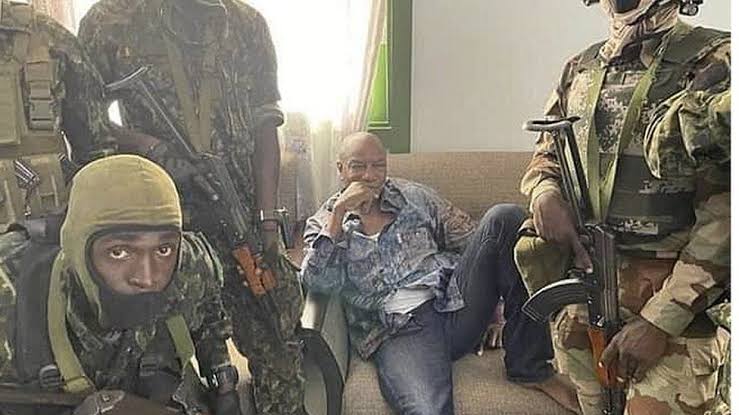
But hopes that Zambia’s election could be a turning point have since dissipated, as soldiers in the West African country of Guinea overthrew the civilian government while the continent was still savouring its Zambia moment.

Eighty-three-year-old Guinean President, Alpha Conde, who wangled himself in place for a third presidential term in 2020 was kicked out of office, sparking images of deja vu in what would be the fourth military strike – three of them successful – on the continent in six months.

Was the violent and catastrophic fall of Conde inevitable?

I’ve heard the argument that Conde didn’t have to go; that his country needed him more than he needed the country, and that the crooked referendum by which he gave himself an extra 10 years was for the good of Guinea.

In an article published last October and entitled, “Why Guinea still needs Conde”, Nigerian journalist, Aniebo Nwamu, said, with a hint of satire, “Having elections every four years is a Western tradition. It’s expensive – and it achieves little for us in Africa. Only when an incumbent underperforms should we have cause to seek their replacement.”

Well, Conde is what you get for the mistaken belief that politics can produce messiahs. The veteran leader of the opposition, who proclaimed himself Guinea’s Mandela, couldn’t overcome the temptation to match Paul Biya’s disgraceful record in self-perpetuation.

It is precisely because politics is inherently incapable of producing messiahs that term limits are needed to save the system from abuse, encourage competition and accountability and potentially inspire a new generation of leaders with new ideas.

Sure, if Conde had served out his additional two terms of 10 years bringing his total to 20 and later stepped down at 93 years of age with his juices still flowing, he would still not have outdone his predecessors, Ahmed Sekou Toure, who ruled for 26 years; or Lansana Conte, who ruled for 24.

And that is part of the reason Guinea is where it is today. That country, like its cousins across much of Africa, has had the misfortune of leaders who take their countries for a ride. They tell themselves that they are performing well, and that they are also indispensable. Why waste time and public resources to test performance by periodic ballot when even the blind ought to see the benefits of the indispensable leader?

The result, unfortunately, is what happened in Guinea on Sunday. Not that any of what the apparent coup leader, Mamadi Doumbouya, said to justify the coup makes sense.

It doesn’t. It was an insult for him to speak as if soldiers have a monopoly of patriotism, that they are the Salvation Army unspoiled by endemic elite corruption and just waiting to save the country and hand it over to long suffering citizens. Nonsense.

Africa has been here before, ruled by military strongmen with the God complex. And the continent still carries the scars of the abuse of power and millions of lives lost to instability and conflicts often rooted in violent and disorderly transfer of power caused by military dictatorships.

At the nadir of its infamy, a Nigerian military chief, General Salihu Ibrahim, regretted that the army that was supposed to be on a rescue mission had lost its way after 26 years in power and become a part of the problem.

In his words, it had also become “an army of anything goes.” At the time, civilians had been in charge for only seven out of 33 years of Nigeria’s independence. Soldiers, who were in charge for the rest of the time had become the piston of the engine elaborately documented in Tom Burgis book, “The Looting Machine.”

Guinea wasn’t different. And the claim of its new military leaders to sainthood is an insult that suggests that the coup leaders are in denial of their country’s history. From Lansana Conte to Moussa ‘Dadis’ Camara, who were both soldiers, The Looting Machine documents monumental fraud in Guinean iron ore contracts up and down the corridors of power, reaching to the innermost circles of the military elite’s family members and merrily perpetrated with their active support and connivance.

Events in Niger, Chad, Mali and now, Guinea, are particularly troubling not only because of their contiguity, but also because all four are Francophone. There are nine Francophone countries in West Africa and the four troubled ones make up 17 per cent of the region’s population of 441million.

Paris has, of course, maintained a curiously prudent silence since Sunday, letting the UN do the difficult job of calling out the new military regime in Conakry. But French silence speaks louder than words.

The stifling grip of France over the economies of these countries, which virtually sucks the life out of them, has compounded the misery and vulnerability of a number of the Francophone countries.

There are other complications, of course. The collapse of Libya, for example, has aggravated the spread of arms in the Sahel and re-energised extremist tendencies among the Tuaregs and other jihadist groups in the region.

Climate change has complicated matters for the agrarian and herder populations in these areas, and on top of that, the COVID-19 pandemic sparked predictions of Armageddon. It’s difficult to say what could be the most potent single factor in the adverse wind blowing across the Sahel.

Yet, some swear that of all the possible reasons, the potential complicity of Paris, and the pushback by a few leaders in the area fed up with being France’s puppets, could be the most significant factor.

Did Conde fall because of his country’s resistance to the incredibly lopsided CFA arrangement, a legacy of French colonial rule, which ties 50 per cent of the deposits of 14 Francophone countries to the French treasury at a fixed rate? What did the French military, which has a significant presence in the region, know about the coup in Mali? Did they look the other way during the palace coup in Chad?

It’s hard to nail the last straw. However complicit outside influence may be in the recent turn of events, African leaders must take responsibility.

It’s true that adverse conditions such as Ebola, destabilisation in the Sahel, reports of ex-servicemen joining non-state actors, and the COVID-19 pandemic affected the fortunes of Guinea and the subregion as a whole.

But the political elite, at the state and subregional levels, needs to show that it understands the nature of the threat and stop feeding the fire by its indifference, irresponsible conduct – or both. From Guinea to Mali and from Nigeria and Cameroon, the political elite has mismanaged, and even inflamed, ethnic tensions with their insensitivity.

Tolerance for press freedom is declining and opposition parties, where they are tolerated, are treated like the enemy. Even within the ruling parties, dissenting voices are sidelined and governance is often a privileged few talking to themselves.

Bad examples have become so widespread and inspirational leadership so scarce that until recently former US President Donald Trump seemed to be the new standard.

The slide must stop. And a good place to start would be for leaders in the subregion to take a hard, long look at themselves and begin to live up to the standards they promised their citizens.

After watching Chad and Mali fall without consequence, soldiers in Guinea are obviously tempted to ask themselves, why not?

Before this hubris takes root, the Economic Community of West African States (ECOWAS) and the African Union must go beyond tepid statements. They must demand the immediate and unconditional restoration of President Conde, and lay down the consequences of non-compliance.

That is the only language bullies understand – consequences. When ECOWAS took a stand in The Gambia, Yahya Jammeh didn’t need an interpreter to know there would be consequences if he refused to step down after losing the ballot. The soldiers in Guinea need a similar lesson, now before the string of coups become a cascade.

•Ishiekwene is the Editor-in-Chief of LEADERSHIP

TIPS