Landlords and Tenants relationship is regulated by tenancy agreement signed by the parties, where there is no tenancy agreement their relationship is governed by the Tenancy Law. The Tenancy Law of various states provide procedures for service of valid Notice to Quit.
In the case of Iheanacho V.. Uzochukwu (1997) 2 N.W.L.R. (PT. 487) 257 AT 268-270, H-A, the Supreme Court set out the procedure for recovery of premises as follows:
“A landlord desiring to recover possession of premises let to his tenant shall:
1)Unless the tenancy has expired, determine the tenancy by service on the tenant an appropriate notice to quit.
On the determination of the tenancy, he shall serve the tenant with the statutory 7 days notice of intention to apply to court to recover possession of the premises.
Thereafter, he shall file his action in court and may only proceed to recover possession of the premises according to law in terms of the judgment of the court in the action.” It has been stated in plethora of cases that a landlord who intends to evict a tenant from his property must follow these lay down procedures. First, the tenant is entitled to notice to quit, the length of the notice is determined by the parties agreement, where there is no agreement the landlord must comply with the provisions of the law, to wit:
The Lagos State Tenancy Law 2011 provides that parties can provide for how a notice to quit can be given in the tenancy agreement, however, when there is no such provision, Section 13 of the law provides that:-
Where there is no stipulation as to the notice by either party to
determine the tenancy, the following shall apply;
-a week notice for a tenant at will
-one (1) months notice for a monthly tenant
-three (3) months notice for a quarterly tenant
-six (6) months notice for a yearly tenant. See also section 8 of Recovery Of Premises Act. However, section 9 of Recovery of Premises Act further states that notice referred to in section 8 may be given at any time prior to the date of termination of the current terms of tenancies, but they shall not be effective if the time between the giving of the notice and the time when the tenancy is to be determined is less than the respective periods set out in section 8 of this Act. These sections show how important the Notice to Quit is, going further, for a Notice to Quit to be formally valid it must contain the following:
-It must contain the name of the landlord
-The name of the tenant
-The address of the property occupied by the tenant
-Date the notice will commence and date it will end, It must not end when a tenancy is still running and valid.
Such notice must be calculated in a way that it ends on the eve of the anniversary of a subsisting tenancy, for yearly tenancies. Where it is a monthly tenancy it must expire on day of the anniversary of a subsisting tenancy. A Notice to Quit that does not contain all the above necessary information can be vitiated by a court.
At the expiration of the Notice to Quit the Landlord is mandated to give the tenant 7 days Notice of Owner’s Intention to Recover Premises. If the tenant refuses or neglects to quit and deliver up possession of the premises the landlord or his agent may serve the written notice of the owner’s intention to recover possession on the tenant. In calculating the 7 days it must be 7 clear days, which means the day of service must be excluded but the day of expiration must be included. To show you how important this notice is, any mistake or defect renders it invalid. It is also important to note that the notice of intention cannot be issued and served before the expiration of the notice to quit or effluxion of time. A tenant cannot be thrown out of his apartment unless there is a strict compliance by his landlord with of relevant Tenancy Law.
The court has taken the service of Notice to Quit to another level in the recent case of Pillars Nigeria Limited V. William Kojo
The Respondents as Lessor, entered into a contract of lease with the Appellant for a plot of land situated at Plot B, Sabiu Ajose Street, Surulere, Lagos. The contract was a 26-year Development Lease for the erection of a building within two years, to be completed on/or before 1979 on payment of annual rent payable in advance. The suit was initiated by the Respondents as Lessors in 1993, to recover the property due to non-compliance with leasing terms of erecting a building on the land.
Both the trial court and the Court of Appeal, found that the Appellant as Lessee breached the terms of the lease. Dissatisfied with the decision of the Court of Appeal, the Appellant further appealed to the Supreme Court.
One of the issues for determination was whether the Plaintiff/Respondents waived their right to forfeiture by demanding and collecting rent up to 1995, before the purported Notice to Quit was allegedly issued in line with the averments in the Defendant/Appellant’s Statement of Defence.
The Supreme Court held; even if the initial notice to quit was irregular, the minute the Writ of Summons dated 13/5/1993 for repossession was served on the Appellant, it served as adequate notice. Equity demands that wherever and whenever there is controversy on when or how notice of forfeiture or notice to quit is disputed by the parties, or even where there is irregularity in giving notice to quit, the filing of an action by the landlord to regain possession of the property has to be sufficient notice on the tenant, that he is required to yield up possession.
Their Lordships further clarified that, while statutory notice may be given as the situation requires (whatever form the periodic tenancy is, whether weekly, monthly, quarterly, yearly etc.), immediately a Writ is filed to regain possession, the irregularity of the Notice, if any, is cured. Time to give notice, should start to run from the date the Writ is served. If for example, a yearly tenant, six months after the Writ is served and so on. All the dance drama around the issue of the irregularity of the Notice, ends thereby.
The question begging for answer is where there is agreement that notice must be served and also relying on the case of Iheanacho V Uzochukwu (Supra) can the plaintiff (Landlord) override the service of Notice to Quit with writ of summons considering the fact that these two cases are coming from the Supreme Court? It is necessary to balance the scale of justice between the case of Iheanacho V.
Uzochukwu (Supra) and the case Pillars Nigeria Limited V. William Kojo Desbodes & Anor (Supra) to avoid the confusions and irregularities. Landlords are enjoined to comply with provisions of the law in dealing with their tenants.
After my presentation at the Lagos bar’s knowledge sharing session on the 12th day of September 2021, I got many calls from seniors and colleagues for me to ‘fleshen-up’ my power point slides and it is in my respectful answer to the requests that I have penned down this article on a very important but widely neglected issue in Law Firms’ information management. To start with, my Law Firm did not even have a Clients’ data retention policy until this article, so I am as culpable as many Nigerian lawyers in this respect. Perhaps, we need to stop waiting on the regulators and start micro-managing our law practice on some professionally unregulated matters. Data protection is one of such.
I spoke on a number of data protection and information security issues but this article is particularly fixated on retention of clients’ personal data and/or files along the line of clients’ file ownership, retention period, and record deletion modalities. My intervention is advisedly opinionated especially since the Legal Practitioners Act (LPA) and Rules of Professional Conduct (RPC) are not very helpful in this regard and I am happy to have further perspectives to my position here.
Who owns the Client’s file? Neither the LPA nor RPC makes provision on ownership of (original) files generated pursuant to a client’s instruction and this has contributed to the unsettled state of our law practice especially as it appears the, with respect, outdated rules are only targeted at litigation lawyers. Many real-time questions continue to arise in this regard. For example, who owns the original documents? who owns the lawyers’ notes and records of proceedings? who owns the lawyer’s strategy notes on the client’s matter?. Even in other jurisdictions, these questions do not have clear cut answers. In the United States, although the word ‘property’ is not defined, rule 1.15 American Bar Association (ABA) Model Rules of Professional Conduct alludes to the complete records as clients’ property even though John Allen, the chairman of the Standing Committee on Professional and Judicial Ethics of the State Bar of Michigan opines that a lawyer’s note and other documents generated by the lawyer may not fall into the category of the client’s property. (See Allen, John W., “Focus on Professional Responsibility – Ownership of Lawyer’s Files About Client Representations; Who Gets the ‘Original’? Who Pays for the Copies?” Michigan Bar Journal 79 (2000): 1062–65). In the same vein, Robert Clifford categorically asserts that clients do not own lawyers notes and internal writings. (Clifford, Robert A, “Who Owns Notes and Reports?” Chicago Lawyer (August 1998): 8). Ultimately, Daniel Skupsky controversially pontificates that, ‘materials’ in a case file belongs to the lawyer but not the client. (Skupsky, Donald S., “Who Owns the File – The Attorney or the Client?” Law Office Administrator 7 (August 1998): 6–7). In the United Kingdom, the Law Society advises that, ownership of client’s file depends on the capacity in which the lawyer acted and circumstances surrounding creation of the document. For example, the Firm owns documents prepared to enable it do its job, file copies of letters written to the client, drafts and working papers, internal communications created during the retainer, communications written by the client to the firm etc. (See The Law Society, ‘Ownership of documents’ <https://www.lawsociety.org.uk/en/topics/client-care/ownership-of-documents>)
However in Nigeria although we do not have a clear cut regulatory directive on ownership of files after conclusion of instruction, rule 29(3)(a) and (b) RPC provides that where in a litigious matter, a client changes his lawyer, the former is entitled to: (i) all letters written by the lawyer to other persons at the direction of the client; (ii) copies of letters written by the lawyer to other persons at the direction of the client; (iii) drafts and copies made in the course of business, and (iv) documents prepared from such drafts; and the lawyer is entitled to: (i) all letters written by the client to the lawyer; (ii) copies of letters addressed by the lawyer to the client; (iii) lien on the papers or documents of his client in respect of unpaid fees.
From the foregoing, it is clear that what the rule covers is strictly a situation of change of counsel, what then happens where the counsel is not changed?. Regardless of the unwritten rules and customs, it is my respectful view that, even though lawyers draft and prepare court processes or other documents in a client’s file, ownership of such files prima-facie resides in the clients even where the matter is handled pro bono except an agreement exists to the contrary. I must however quickly point out that, copyright attracts a different consideration all-together.
For how long should Nigerian lawyers retain their clients file after cessation of service? Again, the LPA and RPC do not provide for retention period for client’s files except where the lawyer is exercising lien on them in respect of unpaid fees(see Rule 29(3)(b)(iii) RPC). While the ABA Model rules provide a period of five years after termination of service, the Law Society in the United Kingdom leaves it at the discretion of every Law Firm to set a reasonable retention period and in Canada, the Law Society Act prescribes 10 years and 6 years retention period for certain documents and he may even keep it indefinitely for future use subject to an agreement with the client. (https://lso.ca/lawyers/practice-supports-and-resources/topics/managing-files/file-retention-and-destruction>). However, unfortunately, the International Bar Association missed an opportunity to lead the way in this respect when it omitted to make a definitive statement on the ideal or advisable period for retention of clients’ record in its publication titled “The IBA African Regional Forum Data Protection/Privacy Guide for Lawyers in Africa” (See <https://www.ibanet.org/Africa-IBA-releases-data-protection-guide-for-African-lawyers>). From the American, English and Canadian experiences, it is the bar that ideally regulates retention period for clients’ files, hence the Nigerian Bar Association ought to rise to this occasion and provide some guidance. Nevertheless, while waiting for the bar to act in this regard, it is advised that Law Firms should draw up their clients’ record retention schedule/policies to reflect the peculiarities of each case but a period of between five to six years should be reasonable. There is also the issue of cloud storage which gives an idea of indefinite retention of clients’ data in a digital or electronic form. Here, Law Firms must be able to justify the necessity for retaining such files indefinitely, otherwise they may be in violation of data protection laws especially where they provide services to foreign residents.
Deletion considerations. Every client’s data retention policy must necessarily provide for deletion period and method. It must answer questions relating to deletion of manual and/or electronic records, how the deletion is done? by who? and when?. For some clients, they expect complete deletion of all records retained by the lawyer but others are indifferent, however the Law Firm must have its own policies on retention of files as well as the identification of the legal basis for such retention.
Conclusion. Lawyers’ clients, like very other consumers, have expectation of privacy over their dealings with the lawyer, hence the latter’s retention of the former’s record after cessation of service must either be in accordance with a relevant regulation or a data retention policy which must clearly state the legal basis and period of retention, storage mechanism and deletion modalities. Nigerian Law Firms does not have proper guidance on retention of clients record, hence, it is advisable for each Firm to draft its retention policies in consideration of the peculiarity of each client and relevant data protection laws per relevant jurisdiction especially for Law Firms with cross border transactions.
The Executive Secretarty and the Officers of the Federal Capital Territory Authority have Right of Access at all times to any land or building located within the Federal Capital Territory to ensure their is no contravention of law in any building or land.
See, Section 8(1)(a) of the Federal Capital Territory Act.
#DailyLawTips #LearnNigerianLaws #SabiLaw
To receive our Daily Law Tips for free follow our Facebook page, Twitter or Instagram via “LearnNigerianLaws”
Nigeria is dying. A dying elephant,encircled by vultures and hyenas. Waiting to feast on the carcass. A fractured, broken nation. The ghost continues to limp aimlessly in the shadows. The question is: Who will bury it?
Every nation is born with a peculiar glory. Britain isn’t the most powerful nation on earth; but its name somehow evokes a certain radiance. Same goes for Japan, Germany, France, Switzerland, Russia and Sweden, to give but a few examples. There is this aura and prestige around some nations that speaks for them more than macroeconomic indices such as GDP, per capita income and external reserves. The very essence of national greatness.
Our glory once irradiatedthe nations. Nigeria was an illustrious country. Our naira was at par with the pound sterling and was stronger than the American dollar. Our armed forces acquitted themselves with distinction in international peace-keeping operations. When we spoke, the world listened.
Today, alas, the glory has departed. We have become a by-word among the nations – notorious for grand larceny, kidnapping, violence and lawlessness. A British Prime Minister described us as a “fantastically corrupt country”. We recently overtook India as the world capital of poverty. Botswana, Rwanda, Ghana, Ethiopia, Egypt, Morocco, Kenya and South Africa enjoy more prestige and command more influence than our country in the councils of the family of nations.
UNICEF recently revealed that more than 345,000 children have died in the North East in the past 12 years. Governor Babagana Zulum has announced that more than 540,000 of Borno citizens have “disappeared”. If in the North East alone, nearly a million have been killed, what would you imagine the figure to be for the rest of the country? I would say probably a minimum of 500,000. Add to that the people that have perished over decades of ethno-religious carnage since 1970, perhaps 100,000. And if we agree that some three million died during the civil war, the total dead in our country since 1967 number nearly five million. Add to that the more than three million refugees that we have today. No country could survive such a holocaust.
Righteousness exalts a nation while sin is a reproach to any people.The Book of Samuel recounts the story ofHigh Priest Eli and his sons Hophni and Phinehas, custodians of the Ark of the Covenant. The sons were killed in war with the Philistines, who took the Ark of the Covenant into captivity. When the news reached Eli,he fell off his chair, broke his neck and died. His daughter in-law, Hophni’s wife, fell into premature labour and gave birth to a son whom she named Ichabod; meaning: “without glory”, or “where is the glory?” This calamity befell Israel because the watchmen had become gravely corrupted. We are the Ichabod generation.
British historian Arnold Toynbee has identified no less than 26 civilisations that have risen and fallen throughout the long drama of human history. High civilisations were built, according to him, by “creative elites”, through creative adaptation to changing global eco-systems. They also failed because there were no creative elites to steer them through turbulent times. From a purely systems-analytic viewpoint, our system cannot survive this destructive path-dependence of “Islamisation and Fulanisation”. The vast majority of Nigerians will never agree to live under the yoke of a brutal and rapacious theocracy that belongs to the Middle Ages.
During the procession following the coronation of a new Pope in medieval times, thepapal master of ceremonies would mournfully declare: “Pater Sancte, sic transit gloria mundi!” (“Holy Father, so passes worldly glory!”). A reminder that all the pomp and pageantry of this world is temporary. Anyone who plays God in this country will sooner or later eat the dust of his own wickedness. The prayers of the holy ones cannot be toyed with and the blood of the holy martyrs can never be in vain.
American theologian Richard Hollerman reminds us that the rich and powerful nations of today will, like the glory of Greece and the grandeur of Rome,become dead monuments. “The aspirations of modern kings, presidents and potentates, and the designs of contemporary nations and peoples will eventually be destroyed. In His own predetermined time and according to His sovereign will, the Lord God will bring all of this to its end. But the rule of God and the Kingdom of our Lord will last forever.”
In our 21st century, national power is determined by population, territory, landmass, economic prowess, technological capability and military might. National glory is an important, albeit unquantifiable, element, in that equation. National glory is about prestige, national reputation and aura. The French describe it in terms “rayonnement national”or”la gloire nationale”.
The Swiss jurist, Emmerich de Vattel, in his book, The Law of Nations or the Principles of Natural Law (1758), sees national glory as ”the favourable opinion of men of wisdom and discernment; it is acquired by the virtues or good qualities of the head and the heart, and by great actions, which are the fruits of those virtues. A nation may have a two-fold claim to it; — first, by what it does in its national character, by the conduct of those who have the administration of its affairs, and are invested with its authority and government; and, secondly, by the merit of the individuals of whom the nation is composed”.
De Vattel sees national glory as being inextricably linked to national power: “A nation whose reputation is well established – especially one whose glory is illustrious – is courted by all sovereigns; they desire its friendship, and are afraid of offending it. Its friends, and those who wish to become so, favour its enterprises; and those who envy its prosperity are afraid to show their ill-will”.
Every occupant of the high magistracy of a republic has a bounden duty to safeguard the glory of his nation: ”A prince, a sovereign of whatever kind, being bound to exert every effort for the good of the nation, is doubtless obliged to extend its glory as far as lies in his power. We have seen that his duty is to labour after the perfection of the state, and of the people who are subject to him; by that means he will make them merit a good reputation and glory….Let him, in all his actions, display justice, moderation, and greatness of soul, and he will thus acquire for himself and his people a name respected by the universe, and not less useful than glorious”.
Indeed, so important is national glory to a country that, when attacked, countries must take steps to avenge it. As de Vattel makes clear: “Since the glory of a nation is a real and substantial advantage, she has a right to defend it, as well as her other advantages. He who attacks her glory does her an injury; and she has a right to exact of him, even by force of arms, a just reparation. We cannot, then condemn those measures, sometimes taken by sovereigns to support or avenge the dignity of their crown”.
Students of power politics, from Thucydides and Machiavelli to Kautilya, Metternich and Kissinger, have defined national power from the viewpoint of military capabilities, and war-making. The Harvard political scientist Joseph Nye has, however, drawn our attention to the idea of “soft power”, which he defines as the ability to “co-opt” rather than “coerce”.
This entails ability to shape the preferences of others through influence, appeal and the power of attraction. A country would tend to have considerable soft power when its culture is considered attractive by others; when its political values are held to be morally upright and when its international policies are regarded as morally legitimate and political progressive.
Funnily enough,Nigeria has a reservoir of soft power emanating from its youth. Nollywood and Nigerian music are making waves across the world. Nigerian students have been shiny ornaments in top Ivy-League institutions. We are a land of geniuses governed by barbarians.
In line with the laws of evolutionary biology, perhaps the Old Nigeria will have to die for the New to be born. Those who saw to the wind will sooner or later reap the whirlwind. The evil men who govern us with such arrogance today belong to the dustbin of history. A New Nigeria will arise from the ashes of the old. She will fulfil her destiny as a progressive, enlightened industrial-technological state anchored on the rule of law, democracy and social justice and liberty.
And all the people shall rejoice together! We shall resume our place as the standard-bearer of African civilisation and as leader and defender of the Black Race throughout the world.
Arise and shine, Nigeria! For your light has come. And the glory of the Lord has risen upon you. For behold, darkness will cover the earth and deep darkness the peoples; but the Lord will rise upon you and His glory will appear upon you!
At a sitting on March 12, Sylvester Oriji, a judge in the Apo division of the Federal Capital Territory (FCT)High Court, Abuja, asked lawyers to remove their wigs and gowns amid sweltering heat in the courtroom.
The hearing was on a child-custody case between a former Minister of Aviation, Femi Fani-Kayode, and his estranged wife, Precious Chikwendu.
As the judge, lawyers and others, including Ms Chikwendu, were trying to adjust to the unpleasant situation, a power cut occurred, causing a wave of frustration to sweep through the courtroom.
Sweating like a marathon runner, Mr Oriji quickly heard the case and ended the day’s business.
Speaking of a similar scenario he had witnessed at another courtroom, Clement Chukwuemeka, the immediate-past chairman of the Bwari branch of the Nigerian Bar Association (NBA), said, “A judge was using his gown to wipe sweat.”
Mr Chukwuemeka said toilets and lawyers’ dressing rooms are in deplorable conditions across courts in Abuja. “If a lawyer is pressed and there is no place to ease himself, he would be forced to seek an adjournment.”
The Book cost N8,000 per copy. (Delivery cost applies for order outside Uyo) To order your copy call: 08084876049; 08055458711 or email: [email protected]
He recalled that the immediate-past Chief Judge of the FCT High Court, Ishaq Bello, who retired in January, had to inspect the court’s division at Apo following lawyers’ persistent complaints about smelly toilets and general infrastructural decay.
The situation, according to Mr Chukwumeka, improved after the inspection but has gone bad again.
Mr Chukwuemeka’s Bwari branch of the NBA had to take up the responsibility of fixing light bulbs, fans, and air-conditioning systems at a court in Kubwa, a satellite town of the FCT.
Mr Oriji, the second most senior judge of the FCT High Court, now sits over cases at the court’s headquarters in Maitama with better facilities.
But his colleagues like Angela Otaluka, whom he left behind at Apo, remain at the mercy of deplorable infrastructure.
Clouds of rain gathered in the sky as Mrs Otaluka was about delivering judgment in the bribery trial of a former federal lawmaker, Farouk Lawan, on June 12.
As judges, lawyers and litigants are accustomed to at Apo division, the lights went off again, compelling Mrs Otaluka to ask for a lamp from her police orderly.
With the lamp, the judge was able to continue the proceedings.
However, a few minutes later, came the downpour that swept through the courtroom, with lawyers switching seats to avoid water splashing from the windows and leaking roofs.
The ugly development forced the judge to stand down the case.
Thereafter, cleaners rushed into the courtroom to scoop water from the floor and mop the drenched pews. Mrs Otaluka later resumed sitting and delivered the much-awaited judgment that sent Mr Lawan to prison.
“It is appalling and annoying to have cases stood down or adjourned due to inadequate facilities in our courts,” a lawyer told our reporter.
Another lawyer, who also did not want his name mentioned due to fear of being victimised, said his client who was languishing in police custody had his case adjourned because a rain drowned the judge’s and lawyers’ voices.
“Had there been microphones and other communication gadgets in our courtrooms to amplify lawyers’ submissions as well as the judge’s questions, cases wouldn’t have been adjourned because of mere rain,” the lawyer said.
Rotten toilets, rusty taps and lack of recording devices
Daniel Bwala, a lawyer, also said the absence of a functional electronic case management system has slowed down the adjudication of suits in Nigeria.
“Apart from the Federal High Court that has recording facilities, 99 per cent of Nigerian courts do not have them,” Mr Bwala, a member of the Lincoln’s Inn, a large association of lawyers in London, said.
He attributed the menace of conflicting court orders in Nigeria to the lack of electronic filing of cases that could help detect cases with similar facts.
Another Abuja-based lawyer, Frank Tietie, said non-availability of record facilities to speed up the court’s justice delivery process is a source of concern.
Stench from toilets
Approaching the second floor courtrooms of Mr Oriji and Mrs Otaluka at Apo, one is greeted by a pungent stench from the toilet that overlooks the court lobby.
“There is no running water in the toilet, and that is why the stench has spread all over the place,” a court clerk told this reporter.
“Several efforts to draw the court’s Chief Registrar’s attention to the problem of facilities here proved abortive,” the clerk, who asked not to be named for fear of victimisation, told this reporter.
Another lawyer practising in Abuja, Michael Ejeh, said, “The absence of key court facilities portends danger for judges and court users.”
“Even at the FCT High Court headquarters, basic amenities like toilets are a problem,” Mr Ejeh said.
He queried the non-functionality of the court’s electronic filing process that has occasioned “a congested registry.”
“One of the biggest concerns is the processes unit of the FCT High Court. It is always congested,” he said.
Mr Ejeh, who is a member of the Abuja NBA COVID-19 committee, suggested that the e-filing system of the court could be improved upon like that of the Corporate Affairs Commission (CAC) to limit physical contacts.
The incumbent chairman of the NBA, Bwari branch, Abuja, Monday Adjeh, said “the twin problems of lack of functional recording devices and small sizes of courtrooms are major impediments that delay dispensation of justice.”
He also lamented that “most of the toilets within the courts are in terrible conditions.”
Apart from the lack of these basic facilities, there is also absence of facilities that give people with disabilities equal access to the Abuja courts like most of the other parts of the country.
Abuja’s poor court infrastructure
The situation at Apo is replicated at the Kwali and Zuba divisions.
During a visit to the court premises at Kwali, one of the federal capital’s remote towns, this reporter was greeted at the entrance with a sight of broken ceilings from which rainwater was dripping to the floor.
At Zuba, another FCT town that borders Suleja in the neighbouring Niger State, a heap of refuse inside the court compound signals the rotten infrastructure bedevilling the justice delivery system of the FCT High Court.
While the courtroom itself was well lit with an air-conditioning system, the toilet for lawyers and litigants was an eyesore.
With a broken tank lying by, a court official said lack of running water has stopped people from using the toilet.
“You can see for yourself that the device that carries water for the toilet to be flushed after use is broken,” the official said, pointing towards the stenchy convenience.
Poor power supply
At Gwagwalada, the courtroom suffers from inadequate power supply.
“Without public power supply, the courtroom remains dark, as you can see,” a court clerk said, adding that the court is unable to conduct proceedings under such conditions.
In Bwari, an Abuja satellite town, the court grapples with a lack of water and leaking roofs, a development that negatively impacts proceedings, an official said.
While the FCT High Court at Abaji Local Council Area that borders Kogi State appears conducive for court businesses, the road leading to the facility is in a bad shape.
At Wuse Zone 2, the two small-sized courtrooms there are poorly ventilated. The courtrooms are usually stuffy on a typical day when the judges are faced with long lists of cases to deal with.
Congested court dockets
Inadequacy of court facilities is a major contributory factor to the delay cases suffer in the FCT High Court.
Then Chief Justice of Nigeria (CJN), Aloma Mukhtar, attested to this during her commissioning of the permanent site of the Ibadan, Oyo State Division of the Court of Appeal, in May 2013, when she said well-equipped courtrooms are necessary tools for the judiciary to be effective.
“The need for courtrooms to be well equipped cannot be overemphasised. This is a necessary tool for the judiciary to enable it to perform its expected constitutional role with all sense of adequacy,” she said.
The FCT High Court, with only about 37 judges, carries over an average of 14,000 cases every year, according to a former chief judge of the court, Ishaq Bello.
“This is an indication of our ever-increasing caseload,” Mr Bello said while declaring the legal year open in 2019.
“From the statistics available, on the average, a court has about 850 cases in its docket and about 387 cases decided per judge.”
Mr Bwala said this is in sharp contrast to what obtains in the United Kingdom where he had practised as a lawyer. “A judge does not hear more than five cases in a day,” he said.
Also, Monday Adjeh, the incumbent chairman of the Bwari branch of the NBA, said the congested court dockets of the FCT High Court constitute a health risk to the judges.
Apart from contributing to the congestion of court dockets, adequacy or otherwise of court facilities goes to the root of judiciary’s importance and dignity, said, the National Centre for State Courts (NCSC), a United States (U.S.)-based organisation engaged by the Nigerian judiciary, through the National Judicial Council (NJC), for its information technology projects.
“Court facilities should reflect the independence, dignity, and importance of our judicial system in their design,” NCSC says on its courthouse planning-dedicated webpage.
Such a sense of importance and dignity is a scarce commodity at many FCT courthouses which are so under-resourced to the point of lacking in facilities as basic as toilets, running water, microphones, and recording systems.
Established in March 1971, at a national judiciary conference presided by then U.S. Chief Justice, Warren Burger, and attended by then President Richard Nixon, NCSC has been in the business of seeking judiciary reforms in the U.S. and providing consultancy services to foreign judiciaries for 50 years.
Nigerian courts remain far behind, judging by the standards the NCSC holds U.S. courts to in terms of technology, accessibility, financing, among others.
Findings from our reporter’s tour of courtrooms of the FCT showed that only about 30.2 per cent of the 53 courtrooms have the facilities to conduct smooth court operations.
A breakdown of the courtrooms in the various locations reveals that the Maitama division which is the headquarters of the court has 11 courtrooms, Wuse Zone (2) has two and Jabi has eight.
Others are Gudu with two, Apo has 11, Kwali has two, Abaji has one, Kubwa has two, Bwari has two, Zuba has one, Gwagwalada has one, Nyanya has two, Kuje has one and Lugbe has one.
The Maitama court complex paints a different picture compared to the decay in the satellite divisions. The cosy atmosphere of the complex which houses the office of the chief judge gives a first-time visitor an impression of a 21st-century court system.
Though judges there still take court proceedings in longhand, the largely comfortable office and court environment is enticing for anyone aspiring to be a lawyer.
Unlike the divisions located in the suburbs, the Maitama division has running water with relatively clean toilet facilities, although a few of them have leaking pipes.
It also has a ticketed multi-level car park, which also generates revenue.
With a functional elevator routinely running to-and-fro the basement to the fourth storey, where the chief judge’s chambers and office are located, the headquarters of the court stands in stark contrast to the rest of the FCT court buildings.
Similarly, the Nyanya courts have basic functional facilities, which are quite unusual considering its location as a remote and densely populated low-class suburb.
The two courtrooms at Kubwa division are in relatively good conditions, except for their small sizes which often lead to congestion when there are many cases to be heard in a day.
The toilets and lighting system of the court are fairly in order.
In summary, only Maitama, Nyanya and Kubwa divisions (16 courtrooms) representing 30.2 per cent of the FCT High Court’s 53 courtrooms are in considerably good condition to adjudicate on cases with a considerable level of comfort.
As highlighted earlier, other courtrooms or the buildings housing them are in a dilapidated state, and afflicted with at least one of the following: absence of basic facilities like running water, microphones, or functional toilets.
Symbolic abandonment
An abandoned sprawling building in the neighbourhood of the Peoples Democratic Party (PDP) national secretariat, at the heart of Wuse Zone 5, Abuja, is symbolic of the FCT judiciary.
An old signpost of the FCT High Court lay on the ground during our reporter’s recent visit to the site. A one-storey annexe on the premises is being used by the Administration of Criminal Justice Monitoring Committee (ACJMC).
This reporter found that the construction project at the site was conceived some years ago to be a multi-storey court building fitted with state-of-the-art information technology facilities, as well as other tools and equipment to enhance court operations.
Barely developed beyond the foundation stage, the project, at present, is the site of wrecked dreams.
The rusty rods and the darkened columns which sprout from the weathered concrete ground floor bear witness to years of abandonment.
The construction site appears not to be the only abandoned building project of the FCT High Court.
Also, our correspondent observed that the court’s location at Adzata, a suburb along the Nyanya-Jikwoyi-Karshi Road, comprising four courtrooms, has been abandoned.
Since erecting the facility, which is close to Loyola Jesuit College, the FCT management has not put it to use, thereby turning it into a home for the destitute.
While the court building remains abandoned, the tarred access road that links the property has started failing, due to the shoddy job by the contractor.
Lack of public accountability on capital project votes
The court’s management declined to respond to PREMIUM TIMES enquiries on the parlous state of the court despite receiving capital project votes every year.
The only noticeable project that the court appears to have undertaken in the last few years is the retrofitting of a Maitama courtroom as part of the pilot projects under the information technology policy of the NJC.
Even at that, its costs are never made public.
Our reporter paid numerous visits to the office of Muhammad Adamu, the court’s Chief Registrar, but could not see him. At some point, officials at his office referred our reporter to the Director of Administration of the court.
But the director was also not available for comment.
“If you are not on appointment, the director would not let you in,” an official at his office said during one of this reporter’s visits.
Our reporter filled out a form on September 2 for an appointment. But it was not honoured.
After futile efforts to speak to the management, PREMIUM TIMES sent a letter requesting details of the budgets and other financial records of the court including those related to its ongoing projects.
The letter anchored on the Freedom of Information Act was addressed to the Acting Chief Judge of the court, Hussein Baba-Yusuf.
Although unsurprisingly, instead of proving to be the bastion of accountability that the judiciary ought to be, the court management, in its reply, referred this newspaper to other bodies, including the National Judicial Council (NJC), which is as well notorious for its secretive financial records.
“You may wish to source the required information from any of the following institutions, such as the National Judicial Council, Office of the Auditor General of the Federation or the Office of the Accountant General of the Federation as more appropriate custodians of such data,” the reply dated August 30, and signed on behalf of the Chief Registrar by one Abubakar Karafi, read in part.
Year in, year out, funds are voted for the FCT High Court’s capital projects, but the impact is not seen on the deplorable state of the courthouses’ facilities.
The NJC, the body that coordinates the budgets of the entire federal judiciary, never makes the breakdown of its budgets or those of other courts and institutions like the FCT High Court public.
Meanwhile, the thick cloud of secrecy around its finances continues to fuel the belief that funds voted for repairs and expansion of court infrastructure are being drained.
For instance, Mr Tietie, a human rights lawyer and advocate for public accountability, quoted earlier, said funds had been sunk into procuring recording equipment for the FCT High Court without positive results.
“Over five years ago, so much money was spent on the purchase of recording equipment, but none of them worked,” he said.
Judiciary under obligation to declare details of its budget
However, lawyers have argued that the heads of courts are under obligation to disclose details of their expenditure.
Sam Amadi, an associate professor of law at Baze University in Abuja, said neither the Chief Justice of Nigeria (CJN) nor the Chief Judges of any court is permitted to hide their spending from the public.
“The judiciary, like any other arm of government, is under obligation of the law to disclose its expenditure,” Mr Amadi argued.
For Monday Ubani, former 1st Vice President of the NBA and the incumbent chair of the association’s Section on Public Interest and Development Law (SPIDEL), the judiciary must account for its budgets.
“We must know the budgeting process of the judicial sector; it is part of the government’s transparency requirement,” he said.
In 2003, as a lawyer in Georgia, USA, he stole $25,000 personal injury claim of his client. He took the money and ran to Nigeria to contest for election.
Wednesday turned on the loudspeakers of his mouth blaring above 55 decibels in public space. He likened IPOB and Yoruba agitators for self-determination to Boko Haram and Islamic State West Africa (ISWAP) terrorist groups.
He said: “These people, in their inclination for devastating violence against fellow citizens… are no different from Boko Haram and ISWAP. Given space and time, they will take our nation down the same path of destruction.”
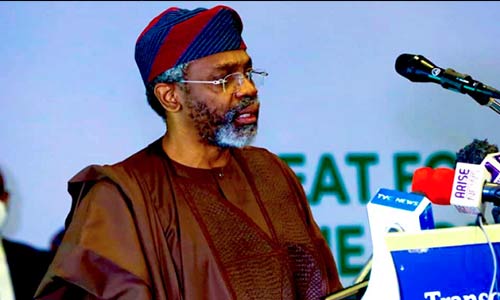
Gbajabiamila is the most despicable person ever elected as speaker of house of reps. He’s a political pinhead, a dishonorable person with no character, morals, principles, and decency. Who is Gbajabiamila? What moral right has he to liken Yoruba agitators for self-determination and IPOB to Boko Haram and ISWAP terrorists? Gbajabiamila is a rogue. He’s dirty and corrupt. He’s a fraudster. Take a look at few of his many fraudulent and corrupt life:
In 2020, he took 300 guests to Dubai for his mother’s 90th birthday on public funds. The guests stayed at Conrad Hilton Hotel on Sheikh Zayed Road, Dubai where the least room goes for $122 (N43,920) per night. The 300 guests stayed for eight days. Per night the hotel accommodation was $36,600 (N13,176,000). For the eight days the total was $292,800 (N105,408,000).
Femi Gbajabiamila
In 2021, he was bribed with $1.5 million (N617 million) to ensure the passage of the controversial Petroleum Industry Bill (PIB).
In 2003, as a lawyer in Georgia, USA, he stole $25,000 personal injury claim of his client. He took the money and ran to Nigeria to contest for election.
There’s no record that Gbajabiamila served in the NYSC.
As a lawless crook, he’s likely to break more rules and norms as long as he’s in power. He’s an unworthy creature: heartless and calculating. He lacks character or integrity. Nothing smacks of poor leadership like being a rogue speaker. As a speaker, he doesn’t understand the concept of “service above self.” Display of ego, pride, and arrogance is the most terrible trait that defines Gbajabiamila. He behaves like the goons and hoodlums of a criminal gang.
It amounts to political heresy for Gbajabiamila to say that Yoruba agitators for self-determination and IPOB are like Boko Haram and ISWAP terrorists. Yoruba agitators didn’t kill, rape, rob, anyone. They didn’t destroy anybody’s farm or property. The IPOB acted in self defense when they were being killed by federal forces. Where was Gbajabiamila when Fulani terrorists killed, raped, robbed, kidnapped the Yoruba people? The world knows the terrorists: Boko Haram, Fulani terrorists, ISWAP and Buhari, The Butcher of Aso Rock.
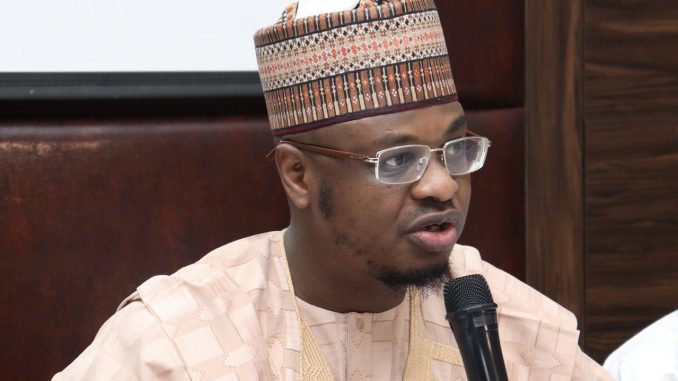
•His PhD is in Social Science, not ICT •He has 10 publications, 39 citations •His teaching experience less than 10 yrs
THERE are basically three legitimate ways to become a professor: by climbing the professional ladder in a university; by being appointed to the position from outside academia in recognition of vast and varied industry experience or artistic wizardly in a field; and through a courtesy appointment. Isa Ali Ibrahim Pantami’s record does not qualify him for any.
Let’s start with the first. Pantami’s undergraduate degree in computer science from the Abubakar Tafawa Balewa University (ATBU), Bauchi, was earned in 2003. That’s less than 20 years ago.
When he started his academic career as a Graduate Assistant at ATBU in 2004, the computer science department that awarded him his bachelor’s degree rejected him because his degree was “weak”; he was instead employed in the Information Technology section of the Faculty of Management where he also got his master’s degree in 2010/2011 and got promoted to Assistant Lecturer.
In 2011, he got the Petroleum Trust Fund Development (PTDF) scholarship to study for a PhD at the Department of Management in the Aberdeen Business School of Robert Gordon University, which he earned in August 2014.
Upon his return to ATBU, he was promoted to Lecturer 1—skipping one rank. He requested to be promoted to Senior Lecturer but was denied because he had insufficient publication record to justify his request. He resigned in protest and took up an appointment at the Salafist, male-Muslim-only Islamic University of Madinah as an Assistant Professor of Information Science.
In 2016, he accepted a government appointment as DG of NITDA and has never returned to academia since then.
Now, three criteria are used to promote academics: teaching, research, and service. Pantami’s entire university teaching record is less than 10 years—if you consider that he never taught either at ATBU or at Robert Gordon University (although he lied that he did during his senate confirmation hearing) during his three years of doctoral studies.
His research output is even more underwhelming. Although he brags about having “over 160 publications,” his actual scholarly output is really thin for someone who wants to be a professor.
When I checked SCOPUS, the well-regarded database of top-level, peer-reviewed academic journals, using his legal name, that is, Isa Ali Ibrahim (Pantami is the name of his neighbourhood in Gombe town, which he doesn’t legally bear), only three articles and one citation came up.
Of the three articles, he is the single author of one (which is actually only a 2-page country report) and a distant co-author in two. All three articles were published between 2018 and 2019 while he’s in government.
But SCOPUS can be unjustifiably exclusionary, so I looked him up on Google Scholar, a more expansive and laissez faire database of scholarly articles and books. He has exactly 10 articles and 39 citations there. Of the 10 articles, he is the first or sole author of 5 and a “tag-me-along” co-author of 5.
Sadly, at least 5 of his 10 articles are in dubious, pay-to-play, predatory journals that would destroy the academic career of any scholar in a serious country. Most of the articles were accepted and published in the same month that they were submitted!
Since peer review typically takes months, the articles were clearly not peer-reviewed.
Evidence of a lack of peer review is evident in the fact that several of the articles are riddled with avoidable proofreading and grammatical errors. Plus, many of them, such as one that was basically an unimaginative 7-page rehash of publicly available facts about NAFDAC, are flat-out scholarly scams that a serious undergraduate won’t even be caught committing.
He published only two scholarly articles—in 2013 (from his PhD thesis) and in 2015—before he came to government, which explains why ATBU refused to promote him to senior lectureship.
By 2014 when he wanted to be a Senior Lecturer, he had only one notable publication.
There is no serious university in the world that can legitimately promote a former Lecturer I (at ATBU) or an Assistant Professor (at the Islamic University of Madinah) overnight to the position of professor with only 10 substandard publications in predatory journals and 39 citations. The minimum number of publications required to be promoted to professorship in most Nigerian universities is 15. A professor should ideally have at least 100 citations.
Plus, Pantami didn’t spend up to a year as Lecturer I. Nigerian academics are required to spend at least 3 years in a rank. Three years as a Lecturer I, 3 years as a Senior Lecturer, and 3 years as a Reader would give you 9 years. That means he needs to spend at least 9 years in the university after his ministerial appointment—and publish a few more articles— to be qualified for promotion to professor. In Saudi Arabia, it would require at least 8 more years.
(Of course, if he was actually employed by FUTO that “promoted” him, his unmerited professorship wouldn’t have attracted any notice since there are several such examples of perversions of traditions all over Nigerian universities. It’s the absurdity of being promoted to a professor at and by a university he was never affiliated with while he’s a serving minister that made the fraud stick out like a sore thumb.)
Also note that Pantami’s PhD is in management, a social science discipline, not in computer science or cybersecurity. So, it’s doubly fraudulent that he has been “promoted” to the professorship of a discipline he didn’t study or publish in extensively.
His doctoral dissertation, titled “A theoretical and empirical investigation of the barriers to the adoption of state-of-the-art information systems by Nigerian indigenous oil companies,” which is freely available on the Internet, is basically a survey of employees of Nigerian oil companies on their perceptions of IT policies in their places of employment. It’s a social scientific study that any political science, sociology, or economics graduate can conduct.
Now that I have established that he can’t legitimately be a professor anywhere in the world on the basis of his scholarship and pedagogy, can he be appointed a professor on the strength of his industry experience? No! The only other job Pantami has ever done outside of government and his less than 10 years of university teaching is being the Imam of ATBU. He has never invented any cybersecurity patent and has never worked in a cybersecurity company.
The only discipline that can validly appoint him as a professor of practice is Islamic Studies. Say what you may about him, he is one of northern Nigeria’s most prodigious and consequential Islamic exegetes. His oeuvre in Islamic exegesis is unquestionably worthy of a professorial appointment in Islamic jurisprudence.
That’s the path of least resistance he should have taken since he desperately desires to be addressed as a professor.
In defence of Pantami’s professorial fraud, one Professor Tukur Sa’ad hashed over a litany of people who became professors without terminal degrees and without prior teaching experience, as if I didn’t already make that point and called it an example of what we call a “professor of practice” in American academe.
In my December 20, 2015 column titled “A Comparison of Everyday University Vocabularies in Nigeria, America, and Britain (II),” I gave an even more dramatic example than Sa’ad’s in the late Maya Angelou who was a lifetime endowed professor of American literature at Wake Forest University but who didn’t have a bachelor’s degree.
Wole Soyinka, Chinua Achebe, JP Clark, Ngugi wa Thiong’o and a host of other literary icons didn’t have—and didn’t need to have—a PhD to become professors. Apart from the fact that they didn’t climb the professorial mountain from the top (they started from lectureship), their path-breaking and prodigiously creative output was equivalent to—and in some cases exceed—a PhD.
In North American universities, it’s called “Research and Creative Activity” for a reason. Wole Soyinka, Achebe, JP Clark, etc. had vast and varied oeuvres in “creative activity” before they became professors. Plus, during their time, the possession of a PhD was not a requirement to move through the academic hierarchy.
Pantami does not come even remotely close to their record in the field FUTO awarded him a fraudulent professorship. In any case, Soyinka, Achebe, etc. taught at the universities where they were professors. Pantami is a serving minister.
How about a courtesy professorship? Pantami isn’t qualified for that, either. A courtesy professorship is a professorial appointment given to distinguished professors at other universities who need not be at the universities that appointed them.
It’s called an “honorary professor” in some UK universities, an “extraordinary professor” in South African universities, and a “professor-at-large” in others. It’s basically an honour given to people who’re already professors elsewhere, so you can’t become a courtesy professor at another university if you are not already one somewhere else.
Some people said Pantami’s “achievements” as a minister are worthy of a professorial appointment. Haha! OK, so people who imagine themselves to be successful in whatever they do should now apply to FUTO for a Pantamized fraud fessorship to aggrandise their insecure egos?
Look, I’m calling out Pantami’s professorial fraud not in spite of my being a Muslim and his friend but because I’m a Muslim and his friend. My father, who was a Hafiz like him, would disown me if I ignored or gave comfort to fraud.
“I got messages filled with trepidation from home and abroad. Please, prevail on the president to cancel the trip (visit to Imo). He should apologise to Governor Hope Uzodinma of Imo state and abort the visit. There could be a bloodbath,” Mr Adesina claimed in a Facebook piece on Thursday.
“I only laughed it all off,” the presidential aide continued.
“Who would tell a duly and popularly elected president where to go and where not to go in his own country? At the height of the Boko Haram insurgency, he had campaigned in Borno state in 2015 and 2019, respectively,” boasted the spokesman.
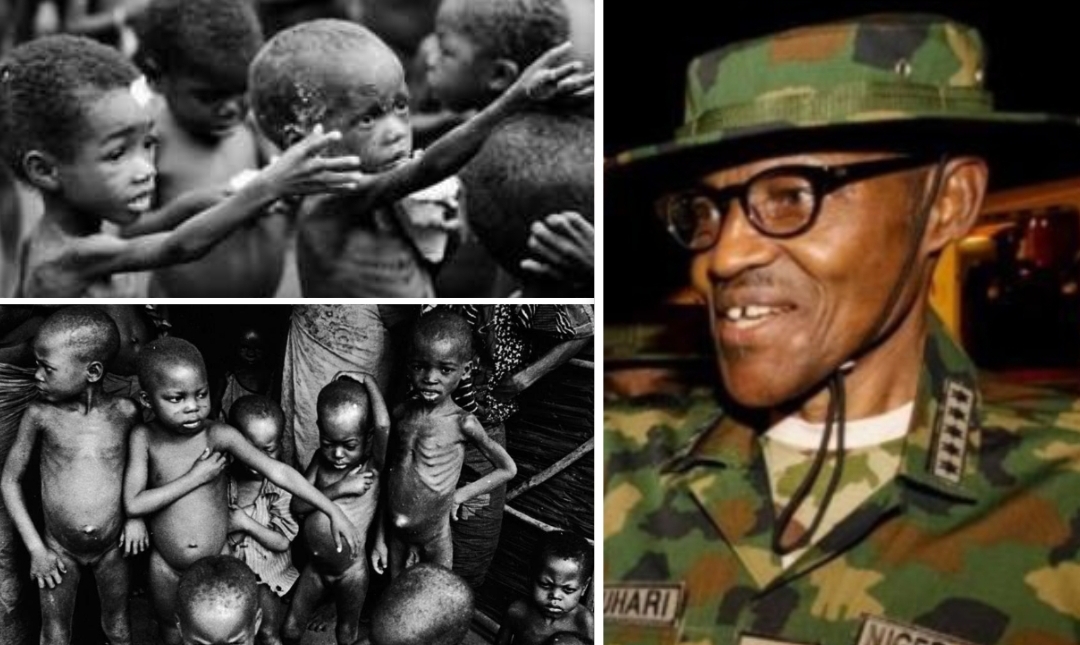
Underlining the president’s fearlessness and genocidal tendency, Mr Adesina reminded Nigerians that until the 30-month war between the federal troops and Biafran soldiers ended, Mr Buhari was restless until some three million Igbos, mostly women, and children, were massacred in a genocide.
“A man, who repeatedly tells us that for the 30 months the Nigerian Civil War lasted, he was right there at the front, not even taking one day off. Is that then the person you would scare from visiting any part of the country?” said Mr Adesina.
The genocidal war occurred between 1967 and 1970, triggered by the South-East’s secession from Nigeria and the declaration of an independent State of Biafra, recognised by some countries.
Mr Adesina further asserted that the president was not scared of visiting Imo regardless of IPOB’s violent attacks in the South-East region because he was familiar with the terrain.
The political stakes as the 2023 general election draw near are almost unimaginable – all the more so because of the overlapping and complementary vulnerabilities of the two leading political parties – accentuated by the public perception of them as essentially Siamese twins. But one is gaining ground, the other is losing.
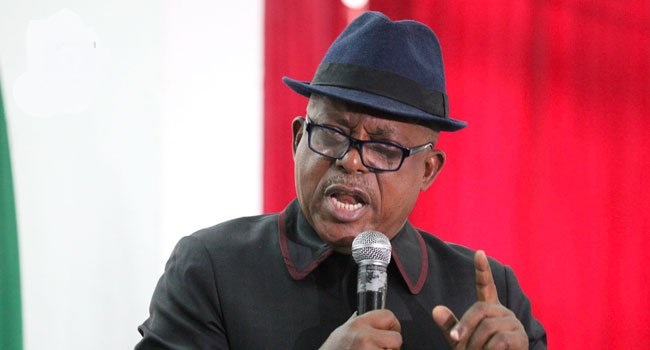
The umbrella of Prince Uche Secondus, chairman of the main opposition party, the Peoples Democratic Party (PDP) is leaking and badly. Buffeted mercilessly on all sides by disloyal and defecting members whose politics lack principle, endurance, moral direction, and sacrifice, the holes in the umbrella are getting bigger and bigger.
The beneficiary of PDP’s many troubles is the ruling All Progressives Congress (APC), which ordinarily should be in its death throes by now on account of its unimaginable mismanagement of our diversity, colossal failure of governance, unprecedented insecurity across the country, corruption on a scale never before seen in our lifetime. A party with an imprudent disdain for criticism, whose governance model is based on incompetence, economic mismanagement and nepotism, the elevation of one religion/ethnicity over others, clannishness and crony capitalism, as well as lies and propaganda. It is unfortunate that such a party is being made to feel that failure is a virtue to be emulated and rewarded.
Many well-meaning Nigerians would naturally be pleased to see the back of the APC for its many sins against the Nigerian people but is now being given some oxygen to live a day longer than necessary and pummel us further. It even boasts about its exploits with haunting arrogance. I have asked the question repeatedly, what’s the reason for the sudden desire to defect to such a party? I can’t find any rational explanation for the mad rush other than to conclude that it is pure bread-and-butter politics that is at play – aided by the APC itself whose take-no-prisoners approach to ‘winning’ any seat is legendary. And I dare say that that is what is pulling in the crowds.
It is sad that state governors, senators, members of the House of Representatives, party chieftains are jumping ship and ditching the umbrella because they know that our votes don’t count. Nigeria is on the ropes because a motley assortment of shady characters has taken up leadership positions at all levels and is now a moral hazard to the health of the body politic. Nigerian politics is heavily driven by what is in it for one, not what is in it for the country.
Reasons for the mass defections are as hazy and confounding as they come. Their explanations make no sense. They ranged from the palpably selfish, disguised as altruistic, to the pitifully ridiculous. Interestingly, none of the governors or lawmakers that defected pointed to any crisis in the PDP as a reason for jumping ship.
Now, let’s interrogate their reasons for leaving the PDP: On November 17, 2020, Governor Dave Umahi of Ebonyi State dumped the PDP for the APC. According to him, he moved to the APC because of “injustice” meted out to the southeast by the party. This was how he put it: “It is absurd that since 1999, going to 2023, the southeast will never be considered to run for the presidency under the PDP. And this is my position and will continue to be my position,” If Umahi left the PDP in protest against the “injustice” done to his people, the question to ask him is, was the southeast being treated justly under the APC-led federal government before he crossed over to the party? Has the situation improved since President Muhammadu Buhari shook his hand in the Presidential Villa to welcome him to their fold? Immediately he came to power, Buhari made it clear that he would govern on the basis of 97 percent and 5 percent and proceeded to implement every policy decision and all appointments on that basis. The southeast has got 5 percent or less of all federal appointments and projects location.
Just recently, to underscore his contempt for the southeast, he described the region as dot in a circle. Yet, Umahi left the party that he had been a member for 25 years just to associate with Buhari who clearly is not enomoured of him or his ethnicity. At every opportunity, he praises Buhari to the skies and even calls him his friend and father. But a man he calls father doesn’t see him as a son but just a dot in a circle! What further evidence does anyone want to get the message?
Governor Ben Ayade of Cross River State, another deplorable, had this to say: “Having seen and known President Buhari and his commitment to this country, his nationalistic disposition and all the efforts he has made to bring Nigeria to where we are today, it is obvious that, at this point, we need to join hands with him to build a Nigeria that we can be proud of.”
Can anything be more ridiculous and insensitive to our feelings? Why would Ayade rub salt into the wound? Why did he decide to traumatise us with claims he himself knows are false? Watching him make that statement was gut-wrenching and pathetic. To think he is a professor, who once taught in a university, was even more disturbing. What commitment to Nigeria was he really talking about? To bring Nigeria to where we are today? Nigerians should ask this verbose professor whether where Buhari has brought this country to is enviable. With the level of mismanagement of our diversity and the national economy, the insecurity pervading the entire length and breadth of the country, the governor was trying to teach us a lesson in revisionism. The world can see how well Buhari is building our national economy. In the 2020 budget implementation released by the finance ministry and BudgIT, debt servicing alone gulped 97% (N3.34 trillion) of the government’s total revenue (N3.42 trillion). Total expenditure stood at N10.01 trillion. This means nearly all federal government’s salaries, overhead and CAPEX were financed with loans and Central Bank’s support. What does this say about the government?
If Ayade was emboldened by his success in teaching his students such nonsense in the university, then he should have realised by now that he is dealing with a more informed and resilient public who will not clap for him while spewing out nonsense grammar to cover his emptiness. Is it any wonder students are turning out the way they are these days? With dishonest claims from men like Ayade, we can only pray that our nightmare ends in a miracle. I often ask myself what cause do I believe in strongly enough that I am willing to lose for it. And I believe some Nigerians have laid down a marker as boundaries they will not cross no matter what. A man should be able to stand for something in life.
Now let’s look at the case of the Zamfara State Governor, Bello Matawalle, the latest on the list of the deplorable. He had this to say: “I decided to change (political party) so that I can bring peace to my state. Now that we all belong to the ruling party, I now have the full backing of the federal government to fight insecurity.” Is this man really serious at all? Is there anything more absurd than this claim? Reading that statement, two things immediately jumped out at me. Either the federal government is not taking the insecurity in Zamfafa State, nay, the entire country seriously, or it is using it as a tool of coercion of opposition-controlled states and their lawmakers to jump ship and join its fold. Whichever it is, it does not tell well of both Matawalle and the APC-controlled federal government which up till now has not rebuffed the impression created by Matawalle. Nevertheless, it is important we interrogate the claim and see whether Matawalle’s reason holds water.
Among the nine states worst hit by insecurity in the country, namely, Kaduna, Katsina, Zamfara, Borno, Adamawa Yobe, Benue, Niger and Plateau States, only Zamfara, Adamawa and Benue were opposition-controlled states. Kaduna State, which is fast becoming the capital of kidnappings, is under the control of the APC. What has the federal government done to stop terrorists from invading schools, hospitals and private residences to kidnap scores of students, patients in hospitals, including babies as young as four months old, and individuals? Several schools have been closed down indefinitely because of the insecurity in the state.
Banditry, kidnapping of schoolchildren and killings are rife in Buhari’s home state of Katsina. So desperate is the situation that the state chapter of the PDP had to resort to stone-age tactics of buying catapults for members to fight the bandits. The situation in the APC-controlled Niger State is just as bad. The state governor, Abubakar Bello in April cried out that the state was not getting federal help to curtail the terrorists who are targeting schools for kidnappings. Just a few weeks ago, he again raised the alarm that Boko Haram terrorists had infiltrated the state and had not only hoisted their flags in captured villages, including Kaure village in the Shiroro Local Government of the state, they had also forcefully allocated displaced women to themselves as wives. The governor contended that the Sambisa Forest is several kilometres from Abuja, but Kaure is just two kilometres from the Federal Capital Territary, FCT, insisting that nobody is safe anymore, not even residents of Abuja.
So what was Matawalle talking about that joining the APC would bring more federal muscle to fight insecurity in his troubled Zamfara State? Let’s not even talk of Borno State, the epicentre of terrorist groups. Clearly, the governor’s defection was not about getting more federal help to bring the security situation under control as he claimed. The fact is that he has always wanted to join Buhari’s APC since the Supreme Court disqualified all the APC candidates who had won the election and handed PDP candidates victory in the state. From the outset, his admiration for the president was clear for the discerning. He largely shares Buhari’s ethno/religious views and has defended him on several occasions, even more than the APC governors before finally showing his true colours.
This same governor, instead of dealing with bandits frontally and decisively has been appeasing them and paying them not to kidnap. Matawalle gives out Toyota Hilux vehicles, motorcycles, money, etc, to bandits as incentives to stop their nefarious and heinous criminal activities. What has been the result? A spectacular, criminal enterprise has been berthed in his state through his incompetence and collusion. His appeasement has only served to embolden the terrorists to continue to ply their trade of killing, maiming and kidnapping people. Some of the Hilux vehicles and motorcycles he gave the bandits are actually used to ferry more kidnapped victims into the forest until ransom is paid. His poor leadership style and policy of appeasement are fuelling the security challenges facing the state.
While Matawalle has been soft on those committing mass murder and kidnappings in his state, he is ready to go to war with southerners over killings in Sasha in Ibadan and Imo. He boasts of the destructive capacity of the north to unleash violence on southerners and their businesses in the north. For those who might have missed it, here are excerpts from what Matawalle said in April: “Despite what northerners are experiencing today in many parts of the southwest and southeast in particular, all we hear is the conspiracy of silence from northern leaders and elites who are supposed to stand firm, in the manner in which other leaders of the south are doing even when they know that their people are at fault. This must not continue.
“As northern leaders, our dignified silence in the face of constant provocation and assault, because of our desire for peace, must not be taken as a sign of weakness. Indeed no community or region has the monopoly of violence. If northerners and their means of livelihood will not be protected, accommodated and be dignified anywhere they choose to stay in any part of the south, southerners should not expect protection from the north as the north has more than what it takes to respond to any kind of aggression and hatred.
“We have seen the destruction, the killings and the devastation recently at Sasha market against northerners and their economic interests. Properties worth billions of Naira were lost in addition to human lives, yet some leaders in the southwest are downplaying the atrocities committed or, worse still, justifying it. Some of them have shamefully gone to the extent of apportioning blame on the victims and casualties of their aggression. We will not take that any longer, as no human life is worthier than another. No business interest is better than another. In fact, in a crisis situation, the south has more to lose in terms of its business interests in the north and the strategic nature they established themselves in the north than northerners living in the south.
“The north is very much aware of such weaknesses and disadvantages the south is exposed to whenever there is such a crisis, but we always choose the path of peace and cherish peace beyond any act of lawlessness and hatred.” This outburst was clearly in consonance with the divisive ethno/religious views expressed by Buhari in the years preceding his ascension to the presidency. So his defection to the party of his soul mate was in furtherance of a much-desired association.
Be that as it may, you can see his foolery from his statements. Matawalle recognises that many businesses in the north are owned by southerners – businesses that by no small measure have brought development and created jobs in the north, but in the same breath, he threatened to unleash his urchins of violence on southerners and their businesses. He doesn’t care if the north remains a barren land of underdevelopment.
You see, people like Matawalle are not designed for progress. He and his terror bandit brothers are the antitheses of progress. They have held Nigeria down and aborted its dreams. The gold deposits in Zamfara, which would have brought more development to the state and given a boost to the Federation Account, is mined and ferried away by bandits and the untouchables as he looks the other way. As such, the state contributes next to nothing to the Federation Account.
Here is a governor presiding over a state with one of the lowest school enrollments in the country. A governor that appeases terrorists, one that cannot protect his own people but is threatening the south that generates the money he gets from the Federation Account to run the affairs of his state? Now that he has joined Buhari, his alter ego in the APC, one hopes that he can lend him a helping hand in his desperate search for the grazing routes’ gazette. Pliant governors Umahi, Ayade, Matawalle and the like belong to the basket of deplorables.
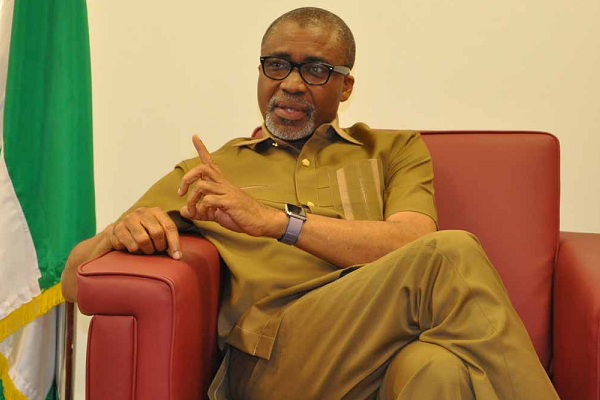
The senator repressing Abia South Senatorial District in the upper chamber of the National Assembly, Eyinaya Abaribe, is of the view that President Muhammadu Buhari’s administration has reversed gains the country made in 30 years under previous administrations.
He made this know as a guest of a programme on Arise Television this morning, while responding to several questions on socio-political and economic issues in the country.Advertisement
The Senate Minority Leader said the recent crisis in the South-East seem to have been caused by external actors, because IPOB, that is being accused by the security agencies has since called off it’s sit-at-home order and therefore, could not have been the one enforcing it.
He further stated that the violence was an attempt to introduce a culture that is alien to the Igbos, as it is not in their character to kill.
When asked to comment on resolution of the 17 southern governors on the issues of VAT, anti-open grazing, insecurity and power rotation, the former deputy governor of Abia State, opined that they were within their rights to make such resolutions.
He specifically mentioned that VAT is not on the exclusive list in the constitution and therefore does not fall within the purview of the federal government.
He advised the federal government to call a meeting of state Attorneys-General to trash out the VAT issue rather than allow it to get messy.
On the recent defection of a former PDP chieftain, Femi Fani-Kayode, to the APC, Abaribe said Fani-Kayode acted true to character.
He, however, said the defections will not adversely affect PDP’s fortunes in the 2023 general election because Nigerians know where they were before the current government assumed power and where they are six years after.
Rather than hound members of the Indigenous Peoples of Biafra (IPOB) as the government is presently doing, Abaribe said that such an organisation, proscribed or otherwise, which enjoys huge followership and sympathy in the South-East and therefore, should be handled with care.
“Any serious government should deal with IPOB cautiously, especially considering the level of diversity that exists in the country.”
He noted that while bandits, who have acquired capacity to bring down a fighter jet, are yet to be labeled terrorists and are constantly engaged in dialogue, a lesser evil such as IPOB has been designated a terrorist group, that cannot be meaningfully engaged in dialogue.
He cautioned that Buhari may go down in history as the man who led the country into disintegration if he does not handle the fragile situation in the South-East region with utmost care and stop the double standard.
Asked if he is interested in running for the presidency and the seeming lull in the clamour for a Nigerian Presidency of Igbo extraction, Abaribe said the two main political parties were still deliberating on the modalities for choosing their presidential candidates.
“It is only when that is done that Ohanaeze Ndigbo, the Igbo apex socio-cultural organization and other Igbo leaders will make their stance on the matter known.”
But asked if he was interested in the race, he said he is capable of doing a far better job than the current president.
Finally, when asked if he agreed with Senator Ali Ndume that continuous borrowing by the federal government is detrimental to the nation, he agreed.
According to him, Nigeria is presently servicing existing debt with about 98 per cent of her revenue.
“Where then are we going to get the money to service more loans?”
He concluded that borrowing more, even when we know that we don’t have the capacity to pay, defies logic.
Our site uses cookies. By clicking “Accept All Cookies”, you direct Law and Society Magazine to store cookies on your device and disclose information in accordance with our Cookie Statement: cookie policyACCEPTREJECT
Privacy & Cookies Policy
Privacy Overview
This website uses cookies to improve your experience while you navigate through the website. Out of these cookies, the cookies that are categorized as necessary are stored on your browser as they are essential for the working of basic functionalities of the website. We also use third-party cookies that help us analyze and understand how you use this website. These cookies will be stored in your browser only with your consent. You also have the option to opt-out of these cookies. But opting out of some of these cookies may have an effect on your browsing experience.
Necessary cookies are absolutely essential for the website to function properly. This category only includes cookies that ensures basic functionalities and security features of the website. These cookies do not store any personal information.
Any cookies that may not be particularly necessary for the website to function and is used specifically to collect user personal data via analytics, ads, other embedded contents are termed as non-necessary cookies. It is mandatory to procure user consent prior to running these cookies on your website.







 Femi Gbajabiamila