Home Blog Page 909

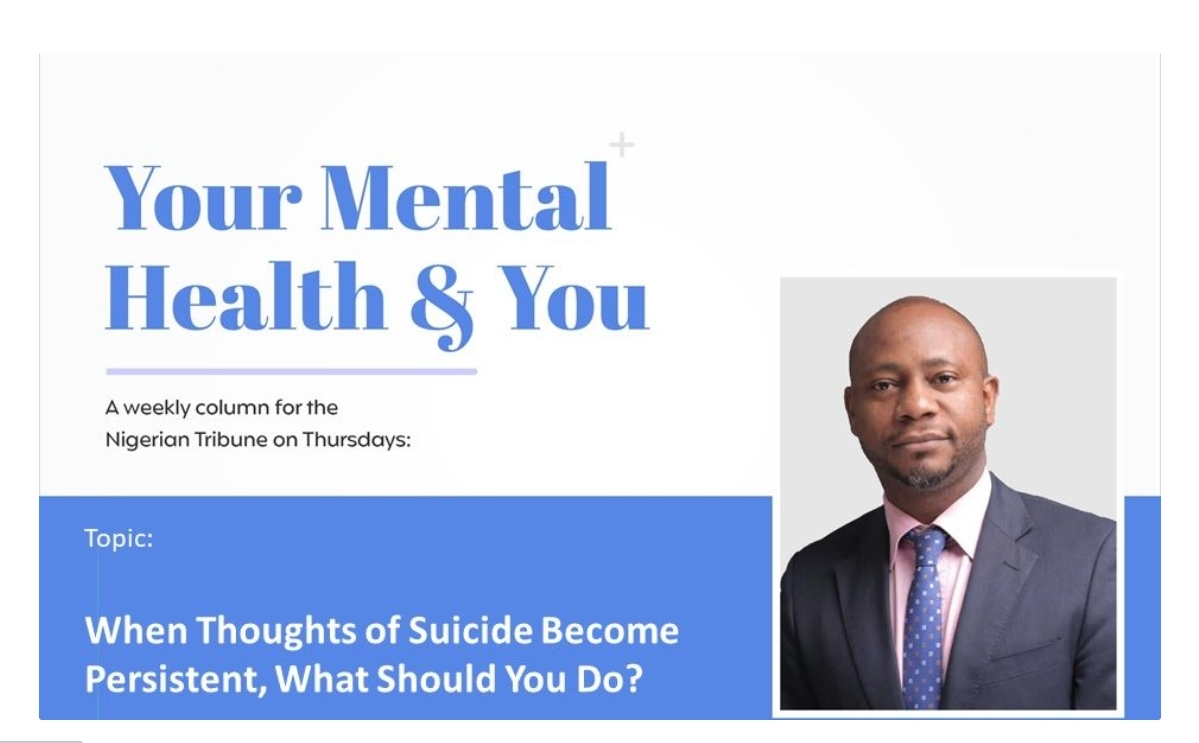
When Thoughts of Suicide Become Persistent, What Should You Do?

Sometimes, we go through such intense emotional pain and misery that we simply want to crawl into a hole and be forgotten. Or to simply sleep and not wake up again so one can escape from the emotional pain and distress. This is especially more pronounced when it appears like there is no hope and the future is bleak, and things won’t ever get better. Thus, in such situations, suicidal thoughts may begin to pop into our heads as a way out of the pain and misery. However, this is very misleading and not factual. Because things do get better and several individuals who have attempted suicide in the past, but thankfully, survived to tell their stories, are glad they failed as they have gone on to rediscover happiness again. 

The key issues we want to address today is how to deal with such thoughts when they become persistently intrusive, and one is going through emotional pain. How can one cope with such suicidal thoughts? What can you do? Who can you turn to for help in such circumstances? 

It is also important to clarify some common misconceptions. Having suicidal thoughts is not a reflection of weak faith in God, or a character defect. It does not mean that you are crazy, or weak, or flawed. It only means that you have more emotional pain than you can cope with right now. But with the passage of time and good social and professional support, you can overcome your problems and the emotional anguish and suicidal feelings will pass. No matter how much pain you are experiencing right now, you are not alone.

Why Do I Feel Suicidal?

Many kinds of emotional pain can lead to thoughts of suicide. The reasons for this pain are unique to each one of us, and the ability to cope with the pain differs from person to person. We are all different. There are, however, some common causes that may lead us to experience suicidal thoughts and feelings.The commonest of them all is depression – a medical diagnosis characterized by overwhelming feelings of sadness, fatigue, and loss of interest in previously enjoyable activities. Simple tasks like getting out of bed, taking one’s bath, picking a phone call etc become very daunting tasks that seem like too much trouble. And the good thing is that depression is TREATABLE with full recovery.

How Can I Help Myself When Having Suicidal Thoughts? 

We have previously covered how to offer support to persons with suicidal thoughts. Today, we focus on what you can do for yourself if suicidal thoughts are occurring to you.1. Please do not take any impulsive action: The intense emotional pain that you are experiencing can distort your thinking, such that it becomes harder to see possible solutions to problems— so give yourself some time to think for a while and delay sudden actions.2. Get immediate help: Do not keep the suicidal feelings to yourself; find someone you trust and share. If you are unable to think of solutions other than suicide, it is not that other solutions do not exist, but rather that you are currently unable to see them. Mental health professionals, friends, or loved ones can help you to see solutions that otherwise may not be apparent to you. Please give them a chance to help.3. Avoid drugs and alcohol as these tend to cloud your judgment and concentration4. Make your home safe by removing things that can potentially be used for self harm.5. Learn coping strategies; with the help of a professional, you can learn coping strategies that are tailored to suit you.6. Be aware of all your triggers and look beyond the thoughts of suicide.

Remember:• Suicidal thoughts can occur to anyone. But you DON’T Have to act on them.• It does not end the suffering and pain. It simply transfers the emotional pain, grief and anguish unto your loved ones – family, siblings, friends and colleagues.• Suicidal attempts may leave you injured and, in more pain, and distress than you were experiencing originally…. causing even more misery and regret.• And give it time. What if things change for the better tomorrow, next week or next month?

No matter what your situation is, there are people who need you, places where you can make a difference, and experiences that can remind you that life is worth living. It takes real courage to face death and step back from the brink. You can use that courage to learn coping skills for overcoming depression, and for finding the strength to keep going.

For professional psychological first aid in Nigeria, you can reach out to any of these numbers:• Suicide Research and Prevention Initiative (SURPIN). Hotlines: 09080217555, 09034400009, 08111909909 and 07013811143.• Asido Foundation Helpline:  09028080416.• Lagos suicide hotlines, by the Lagos State Government. Hotlines: 08058820777 and 09030000741.

JIBRIL ABDULMALIK

Tribune Article for the column “Your Mental Health & You” 

Thursday, 23rd September 2021

ASIDO FOUNDATION

www.asidofoundation.com

Mbaise Global Foundation: An exemplar in volunteerism

Ikechukwu Amaechi

By Ikechukwu Amaechi

“Penultimate Saturday, a young man was kidnapped in broad daylight at a market square in a community in Ahiazu Mbaise local government area. His people went to report it at Ahiazu police headquarters at Afor-Oru but there was no policeman. It is that bad. They had to go to Owerri, the state capital.

But that was mere formality. In the five days the young man was in captivity, no policeman showed up. It is too much of a risk for them. That is how bad things are. The people simply had to do the needful – that is, pay millions of naira in ransom to secure the release of their loved one and move on with their lives. Case closed!

Mbaise that used to be the most peaceful, violence-free part of Alaigbo has, inexplicably, become a theatre of war.

That has far-reaching consequences. Those in the diaspora, who hitherto love coming home, no longer have the urge. Diaspora remittances are drying up. Most projects in the communities are executed through communal efforts as it is the case in this instance.

Volunteerism is the mantra ensconced in the “onye aghala nwanne ya” philosophy. All that is in jeopardy.

So, the youths must be careful. Burning down police stations for whatever reason is counterproductive. Mbaise cannot afford a rule by the mob.

In the first place, the government does not care. If MGF did not intervene, the Ezinihitte Divisional Police Station would not have been rebuilt. It is a shame that the Aboh Mbaise police station was burnt down for a second time following its reconstruction by stakeholders.

Whatever cause the youths are fighting, destroying facilities made available by those who are providing their time and skills for the common good rather than for financial benefit is tantamount to cutting off one’s nose to spite one’s face.

The only way to appreciate MGF’s volunteerism is to protect these legacy projects.”

 Mbaise Global Foundation: An exemplar in volunteerism

Miyetti Allah, Governors and Justice, By Sonnie Ekwowusi

Make no mistake about it, the latest resolve of the federating units to collect VAT within their respective units and use the revenue generated therefrom solely for the development of their units as well as enact anti-open grazing laws in order to protect the lives and property of their citizens are indicative of the direction Nigeria is irreversibly, inexorably and irresistibly headed-restructuring so as to create greater regional autonomy and weak centre. The power of the Federal Government under the 1999 Constitution to keep custody and determine the terms and manner of the revenue and allocation of the funds that accrue to the Federation Account to the detriment of the federating units is, to say the least, an unconscionable socio-economic and political injustice. Considering the new self-determinist wave blowing across the different States of the Federation at the moment, I wager that in no distant future all these unproductive parasites idling away in different government offices in Abuja and waiting for monthly allocation and free money will be going hungry for lack of free money. It is a case of Monkey dey work baboon dey chop otherwise how can you rationalize the fact that idle parasites are constantly feeding fat from the revenue generated and wealth created by the federating units?. Happily, Rivers State Governor Nyesom Wike has woken up other State Governors from their slumbers to reality. This is why these State Governors are now enacting the VAT laws in their respective States in order to utilize the revenues accruing therefrom for the socio- economic and cultural development of their respective regions. Lagos State enacted theirs last penultimate week. It is not unlikely that more States will follow suit.

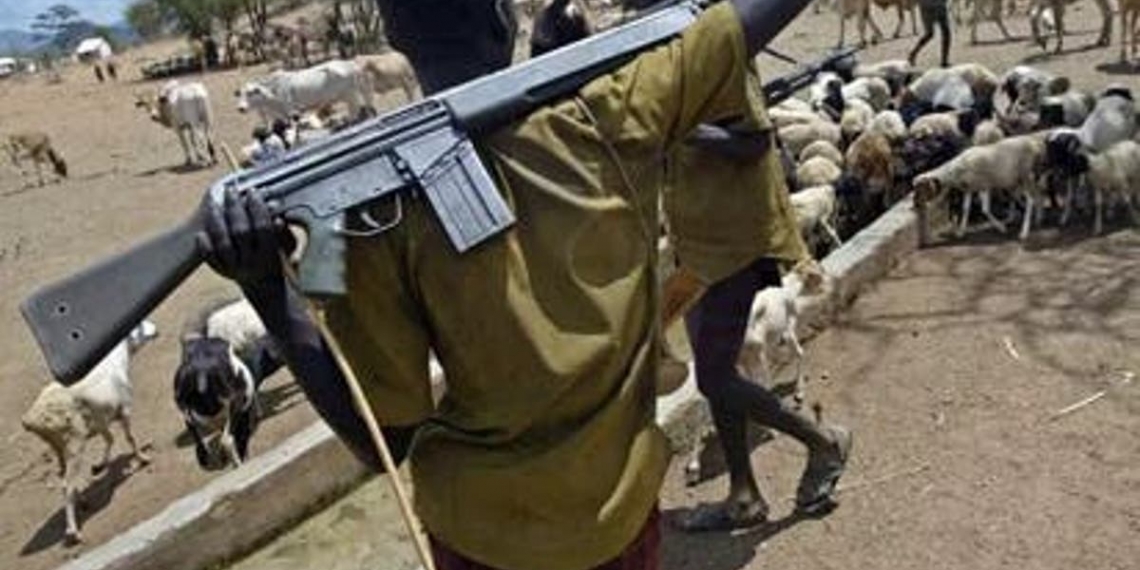
Additionally, the State governments are enacting their respective anti-open grazing laws in order to get rid of the nuisance of the Fulani herdsmen attacks and killers. Penultimate week I listened to the arguments of the Miyetti Allah chieftains on why the anti-open grazing laws are satanic and therefore should be brought out and quashed. According to the said chieftains, the anti-open grazing laws will work untold hardship and injustice on the Fulani cattle herders and Fulani pastoralists; that the State Governors should learn to accommodate their Fulani herdsmen brothers; that the anti-open grazing laws would send the Fulani herdsmen and millions of people who depend on the livestock value chain into poverty; that the anti-open grazing laws will threaten the social order and undermine the relative peace and stability enjoyed between farmers and Fulani pastoralists in local communities.

The above arguments, with the greatest respect, are bunkum. They are myopic, unintelligible and gutter arguments and therefore should be ignored by the State Governors. It is a paradox that the Miyetti Allah chieftains are complaining that untold hardship and injustice are being visited on the Fulani herdsmen when in fact it is the herdsmen who are terrorizing innocent local farmers, destroying their crops and farm lands, forcefully dispossessing them of their farmlands and occupying same, raping, maiming and murdering the citizens in their thousands?. Do these chieftains truly understand the meaning of the notion of justice? Do they think that we are fools or what?. Who or what can be adjudged as satanic, Miyetti Allah or anti-open grazing laws?. It is obvious that these chieftains are not reasoning properly otherwise they would not have glossed over the atrocities and crimes being committed by the Fulani herdsmen across Nigeria in demanding for their so-called open grazing right? Is Miyetti Allah not aware that the anti-open grazing laws are the fallout of the atrocities and crimes being committed by the Fulani herdsmen?

Anyway I don’t blame Miyetti Allah for challenging the State Governors. Why won’t they try to wrestle down the State Governors when Mr. President is solidly behind them?. The reader knows very well that the Miyetti Allah Cattle Breeders Association of Nigeria, founded in 1970 with the primary objective of promoting the welfare of Fulani pastoralists in Nigeria, has been acting as a parallel or alternative government under the Buhari government. To begin with, the Miyetti Allah is above the law of the land. It meddles in the affairs of government. In fact, the Miyetti Allah is such a powerful alternative government that it can call for the resignation of an elected public office holder. Read again the excerpt of the ultimatum issued by Miyetti Allah to the then Senate President Saraki, “We are tired of Saraki’s style of leadership at the National Assembly. Therefore, we are now warning him to honourably resign his position as President of the Senate or we will force him out.”. Similarly in the aftermath of the killing of about 200 Nigerians on the Plateau State, the Miyetti Allah quicky issued a statement accepting responsibility for the killings. The worst was that instead of regretting that they had wasted many precious human lives on the Plateau, the Miyetti Allah regretted that they had lost about 300 cows. Which means that cow lives are more valuable to Miyetti Allah than human lives. According to Chairman of the North Central zone of Miyetti Allah Danladi Ciroma, “These attacks are retaliatory…“We lost 300 cows, no one should expect peace in Plateau…” .

To date, the Miyetti Allah still thirsts for human blood. It has continued to utter statements that clearly verge on treason and treasonable felony. It rejects ranching. It has warned that no State in Nigeria has a right to enact anti-open grazing law. It issues threats and ultimatums. Yet the Miyetti Allah is neither proscribed nor prosecuted as a terrorist organization. Instead of proscribing or prosecuting the Miyetti Allah, President Buhari is openly supporting them. Despite murdering many Nigerians the Fulani herdsmen are still moving around freely in Nigeria aided and abetted by our security operatives. Instead of raising such an alarm that the Fulani herdsmen are committing crimes across Nigeria, President Buhari prefers to be raising an alarm that the Fulani herdsmen criminals are not being protected or granted “grazing right” by the State Governors. Do Mr. President and Miyetti Allah understand that right, in the words of the late Supreme Court Justice Chukwudifu Oputa, is not a one-way traffic? Right is reciprocal. Right is intertwined with and conditioned by duties. For example, the “right” of Fulani herdsmen to be freely going about and killing their fellow citizens stops where the right to life of their fellow citizens begins. Besides, what is good for the goose is equally good for the gander. If Mr. President and Miyetti Allah are raising an alarm that the Fulani herdsmen are denied open grazing right, why are they not equally raising an alarm that the same Fulani herdsmen are killing, maiming and raping Nigerian citizens? It is worrisome that Mr. President and Miyetti Allah are yet to understand that by virtue of the Land Use Act all the lands in the various Nigerian States are exclusively vested in the various State Governors (not in the Presidency or Fulani herdsmen) who are at liberty to grant or convey or assign same to any applicant for his.

Anyway, the State Governors are unyielding and unbending in their resolve to enact and enforce the anti-open grazing laws to the letter. No amount of cajole, cheap blackmail or open or veiled intimidation can deter them from this resolve. Under our presidential democracy governed by the principle of separation of power and all that, neither President Buhari nor Miyetti kingpins can dictate to our elected State Governors and State legislators the way and manner of enacting their laws. The State Governors and State legislators are primarily accountable to the citizens of their respective States not to President Buhari or Miyetti Allah. State laws are enacted in consonance with the wishes and aspirations of the peoples of the respective States not the wishes of Miyetti Allah. Therefore if the State legislators, after due and proper consultation with the stakeholders and people of their respective States, have resolved to enact the anti-open grazing laws in order to protect the lives and property of the citizens of their respective States, President Buhari and Miyetti Allah have no right to interrogate them for doing that.

Defend yourself and its possible repercussions 1 – Dele Sobowale

“Allow an intolerable situation to go on for too long; and, suddenly, there are no good options left.” Arthur Burns, 1904-1987.

Arthur Burns was the tenth Chairman of the US Federal Reserve Bank, equivalent to our Governor of Central Bank, under President Richard Nixon. He was appointed at a time the US economy was going through a recession after years of expansion. Tough decisions, destined to be unpopular, were required. The late economist made those remarks as he was stepping into office. But, Burns’ statement can be applied to several non-economic situations. Some of us have known or heard of the person who was advised by doctors to have a toe amputated; and who refused bluntly. Then, he was asked to get the foot amputated; as the condition got worse. Eventually, it was a choice between his entire leg being removed or losing his life. Tough choice; but self-induced.

Nigeria is facing one of the most difficult choices we have ever confronted with the instruction by some state governors to their citizens to “defend yourself”. At the very least; it is an invitation to anarchy. That judgment is not mine alone. In fact, it was passed on to me by US Supreme Court Justice Louis Brandeis,1856-1941, who in 1928 made the point that when government becomes openly ineffective and unjust “it breeds contempt for law; it invites everyman to become a law unto himself; it invites anarchy.” The Federal Government of Nigeria has now become perceived, even by those who should be its natural allies and supporters, as ineffective and unjust.

Until recently, Governors Darius of Taraba and Ortom of Benue states were lone voices in the wilderness when they instructed their people to “defend yourself”. The latest three – Governor Maisari of Katsina State, Matawelle of Zamfara and El-Rufai of Kaduna – would have been the last anybody would expect to join in that campaign. Now, they are leading it. Their three states already form Nigeria’s equivalent of the Bermuda triangle; everybody entering there risks being kidnapped, killed or captured for ransom. Katsina, if anybody needs reminding, is the President’s own state.

Strengthening the drift to chaos are the implicationsof the call, shared by other governors nationwide – total loss of confidence. None of them believes that Buhari’s government can protect them anymore. And, since they lack any means of securing the lives of the people and their properties, they have turned the task over to the people themselves. Increasingly, the President is becoming a leader without followers. When the matter is security, most Nigerians now despise him. That was not what people expected when they elected a tough-talking ex-General to office in 2019. There are other consequences of this letdown.

YOU CAN’T GO HOME ANYMORE SIR – WITHOUT A BATTALION.

“As you make your bed, so you will lie in it.” Old adage.

Mr Udoh, God bless him, my favourite teacher of all time, drummed that adage and others into our heads in Primary Four at St Peters School, Ajele, Lagos Island – with interpretations. I can never forget it.Your bed is frequently at your permanent home. All the others – hotel rooms, official quarters, barracks, Aso Rock – are temporary abodes. A day will come when you will have the front door slammed in your face. President Buhari is gradually getting close to that day when he will need permission to enter Aso Rock. He will probably head for Daura. Although he has not asked me, I will still offer him free advice. Despite his monumental mistakes, I wish him the best after life inside the Rock.

This, however, is not the first time I would show concern for a President nearing the end of his temporary stay in the Rock. In April 2015, after former President Jonathan had conceded defeat; he had told reporters of his plan to return home to Otuoke, Bayelsa. I was curious to find out where our out-going leader was going. I went to the place and wrote an article titled “Jonathan’s Long Trip Back To Otuoke”. I could go to Otuoke because, despite some level of insecurity, it was still safe to go there.

Unless things change drastically for the better, only someone bent on committing suicide will go to Daura — Buhari’s permanent home. But, there is a contingency plan which makes it possible for me to know the situation in Daura. My ten years of living and working in various parts of the North made it possible to build a network of friends everywhere. From those in Funtua, Dutsin Ma, Katsina, and Jibiya, I have a good idea of the situation in Daura.

When Buhari left in May 2015 to resume work as President, Katsina State was one of the most peaceful in Nigeria. Fences around properties in GRA areas were low; and one Maigadi was sufficient to secure the biggest mansion. Nobody ever heard the word BANDIT. Today, bandits share power with the Governor; who recently ordered the people to “defend yourself”. The highest fence, with barbed wire, no longer deters the bandits. This is the situation in Daura where Buhari will lay, or attempt to lay his head in peace after he departs from the Rock.

My advice to him is: Your Excellency, please don’t go; unless the National Assembly will pass a bill authorising the deployment of a battalion to guard you. If not, for everybody’s sake, please stay in Abuja. Daura, under your watch as President, has become one of the most dangerous places on earth. And, those mean sons of wagons, called bandits, can only regard kidnapping you as another great meal ticket. Ask Governor Maisari if you don’t believe me. That is the bed made by incompetence, procrastination when making necessary changes and executing badly. Millions of people in Katsina will suffer for decades on account of having their son as President of Nigeria for eight years. So will the rest of us.


THE CURE MIGHT BE WORSE THAN THE DISEASE

“A weapon is defensive or offensive depending on which end is pointing at you.”

Premier Aristide Briande, 1862-1932, VBQ p 271.

Every time I am in a group discussing the insecurity in Nigeria, somebody must eventually remind all of us that some Governors have asked Nigerians to defend themselves. I smile; because no prescription for curing a serious ailment can at the same time be more deadly if misapplied. Bandits will be killed; but, innocent people will also get murdered. When bandits are not recognisable, until they strike, it is safer to strike first and ask questions later. And, since the dead don’t talk, every corpse becomes that of a terrorist – even if an innocent person who walked into the community. Even a neighbour, with who one had a quarrel, might be murdered in the night; and the murderer would in the morning point to a “bandit” he ambushed and eliminated. Who will investigate?

The leading terrorist group against which the rest of us must defend ourselves are the ever-present herdsmen. They are visible everywhere, night and day. If all other Nigerians take the order to defend themselves at face value, then any herdsmen seen anywhere where grazing has been outlawed should be regarded as target for self-defence. The herdsmen, usually armed, will also act in self-defence, but soon there will be few herdsmen alive. One fellow announced a solution during one discussion. “If you can’t get the herder, then annihilate the herd”. Again, that is a recipe for genocide on a scale unprecedented in this country. Not even during the Civil War, 1967-1970, were so many innocents massacred as we will experience once self-defence becomes accepted as the solution. It is one calamity Buhari should pray does not occur – as the Life Patron of Mayetti Allah Cattle Breeders Association of Nigeria. His insistence on reviving imaginary grazing routes is already provoking that sort of reaction. It will amount to a civil war within a civil war if it gets underway….

To be continued

NEXT LEVEL IS PURE ANARCHY

“The Katsina State Government has cancelled all activities lined up for the inauguration ceremony of the new administration in the state.”

PUNCH, May 24, 2019, p 2.

The government gave its reasons. “The decision on a low-key celebration was taken following the unfortunate incessant attacks by bandits in some areas of the state which led to the death of many people and left several others injured or homeless.” Katsina, it needs to be repeated, is Buhari’s own state. Unless charity no longer begins at home, we have the scary scenario of a leader who cannot defend his own home assuring the rest of us of our safety. Anarchy is here. When Buhari is sworn in on May 29, 2019 for his second term (which cannot end soon enough for me) his state would have been on record for posterity as the first state to succumb to the dictates of hoodlums – now called bandits. When, a few weeks ago, the article FROM BEGGING TO BANDITRY: REVOLT OF THE ALMAJIRIS was published, a lot of things were deliberately omitted from the facts presented in order not to frighten too many Fellow Nigerians – especially those who we were told provided Buhari’s winning margin. Katsina was one of them. Close to ninety-eight per cent of the voters there voted for their “Baba”. I have bad news for them. A Baba is supposed to take good care of his kids in any society. Otherwise he is unworthy to be called “Father”. The government’s submission to the will of bandits – formerly almajiris – is the beginning of more state surrender of power to unelected governments called warlords controlling certain areas of the state. Let me cite another one.

Unknown to Nigerians and perhaps also unknown to their Baba, the criminals have already CHANGED the annual farming calendar in the state. Hitherto, farmers, mostly women, start as early as the end of harmatan to prepare the land for a new year. This year, not only in Katsina but in all the states of the North, the bandits have already driven millions of subsistent farmers off the land. A woman, stupid or crazy enough, to go to the farm alone, as in the past, would be fortunate if all she suffers is rape. She might disappear; as many have done. Thereafter, the farm lies fallow. So, the bandits of Katsina have already decreed inescapable mass starvation as the year progresses. Anarchy is here.

P.S. This article on anarchy was first published in 2019. Since then things have gone from bad to worse; the worst is yet to come when the races for election heat up the polity. Meanwhile, read what happened when a US-based Nigerian came home to bury his mother.

RETURN OF THE NATIVE SON

“Dele, this is pure anarchy you guys have here in Nigeria. If I didn’t come and see things for myself, I would have thought the media was exaggerating things.

A Nigerian-American friend came home for the burial of his mother. He has been buying and reading three newspapers a day – VANGUARD, PUNCH and DAILY INDEPENDENT – based on my recommendation.

After, three weeks in Delta State and reading our papers everyday, that was his verdict. He never plans to return.

Viable alternatives to Nigeria’s perpetual borrowings

By Jide Ojo

When the National Assembly resumed from its two months’ annual vacation last Tuesday, September 14, 2021, the lawmakers were greeted with a request by the President, Major General Muhammadu Buhari (retd.), for approval of another external borrowing. According to a media report, President Buhari is said to be seeking the approval of the National Assembly to borrow fresh sums of $4,054,476,863 and €710 million in an addendum to the 2018 – 2020 borrowing plan. The President also asked the lawmakers to approve grant components of $125 million.

Recall that in July, the National Assembly approved $8.3 billion and €490 million loans contained in the initial 2018 – 2020 borrowing plan. But in the letter, Buhari explained that owing to “emerging needs”, he requires to raise more funds for some “critical projects”. He was quoted as saying that: “I write on the above subject and submit the attached addendum to the proposed 2018 – 2020 external rolling borrowing plan for the consideration and concurrent approval of the Senate for the same to become effective.”

“The Distinguished Senate President may recall that I submitted a request on (the) 2018 -2020 borrowing plan for the approval of the Senate in May 2021. However, in view of other emerging needs and to ensure that all critical projects approved by FEC as of June 2021 are incorporated, I hereby forward an addendum to the proposed borrowing plan. The projects listed in the external borrowing plan are to be financed through sovereign loans from the World Bank, French Development Agency, EXIM Bank and IFAD in the total sum of $4,054,476,863 and €710 million and grant components of $125 million.” The President further said the loans, when obtained, will stimulate the economy and create jobs.

For sure, there is nothing wrong in borrowing. Individuals, corporate organisations and governments across the world do borrow. The United States of America has been several times cited as one of the greatest debtors in the world. However, the US is very credit worthy because of her economic fundamentals. She is an industrialised nation with high level of innovations which makes her one of the top 20 economies in the world.

On the flip side, Nigeria, though the acclaimed biggest economy in Africa, has very weak economic fundamentals. The country is neither an industrialised country nor high in innovation or technology. While our debt to Gross Domestic Product may be safe and tolerable, our revenue to GDP is nothing to write home about. We are a consumptive and not a productive economy. That’s what makes the difference between us and many of the top 20 economies. Is it not a national embarrassment that Nigeria with a population of a little over 200 million people is borrowing from China with over 1.3 billion population?

Other questions to ask with these perpetual loans put at an estimated N33 trillion are: What are the terms and conditions attached to them? Is there a moratorium? What is the interest rate? What do we lose if we fail to service or pay the debt? Are there equity, justice and fairness in the distribution of the projects that these loans will be used to fund? Are there ways we can reduce or considerably cut down this penchant for borrowing? I am of the considered view that we can actually do away with these debts if we are able to reduce the cost of governance, fight corruption and diversify the economy to make it more productive.

For instance, despite the dwindling revenue of up to 60 per cent of our national income, we have not deemed it fit to cut down considerably on our overheads or cost of governance. Our recurrent to capital ratio of our annual budget still stands at 70:30. That is, our recurrent expenditure gulps 70 per cent of our budget while only 30 per cent goes to capital. Meanwhile, about N3 trillion is spent on debt servicing! On several occasions on this platform and other media outlets, I had maintained that Nigeria can save a lot of funds if we reduce our Ministries, Departments and Agencies. This huge bureaucracy is antithetical to development. In the US, the total number of Secretaries, the equivalent of our ministers here, is just 15. The entire cabinet of President Joe Biden is less than 20 if you add the Vice President, Secretary of States, and Chief of Staff to the President. What do we have here, a cabinet of about 50 people made up of 43 ministers, Chief of Staff to the President, Secretary to the Government of the Federation, the Head of Service and Vice President.

Do we need 109 senators and 360 members of House of Representatives? Countries like Senegal, Mauritania and Italy have either scrapped their House of Senate or reduced their bicameral legislature by one-third as Italy did. I have previously canvassed in this column that while there may be merit in having a bi-cameral legislature at the centre, we do not need that huge number of representatives at both the federal and state assemblies. Each state can make do with two senators while the number of representatives from each state should not exceed five. It is incongruous to say that the number of state lawmakers should not be less than 24 and more than 40 as stated in Section 91 of the 1999 Constitution of the Federal Republic of Nigeria.


The number of airplanes in the presidential air fleet is too many. I think they are about six. A maximum of three would have been ideal. Even the number of vehicles in the presidential and state governors’ convoys is too many and not reflective of these austere times. Every year, the amount being voted for the State House and Presidency is too humongous and needs to be considerably trimmed down. I patently wait for what this will be like in the 2022 national budget.

Monies voted for travels, entertainment, welfare, medical tourism by the MDAs at the federal, state and local government levels are outrageous and do not reflect the parlous state of our economy. Since April 2020, there has been a presidential directive for the implementation of the Steve Oronsaye committee report but nothing has happened thus far in this area. Borrowing to fix ailing refineries which had previously gulped $25 billion in turnaround maintenance without anything to show for it is very wasteful.

Many of the thousands of uncompleted federal and state projects across the country should be properly evaluated and those considered to be white elephants should be sold off to interested buyers. Proceeds from this sales should then be ploughed back to complete those that will add value to the economy. If the government doesn’t want to sell them off, it can approach the private sector to take them over, use the funds to complete the projects and allow the private investors to run the projects for some years in order to recoup their investments. This is what Build, Operate and Transfer popularly called BOT entails. There are other models of public-private-partnerships that government can adapt.

I am probably one of the few Nigerians calling for the removal of petroleum subsidy which has been enmeshed in a lot of fraud. The estimated N1 trillion being used to subsidise refined petroleum products can actually be used to bridge the country’s infrastructure gap. Some of our federal and state roads can actually be tolled in order to provide funds to maintain and service those roads.

The biggest challenge facing Nigeria today is not lack of funds or resources but misappropriation of the resources. Corruption is still plaguing the country while the country’s wastefulness is second to none. This regime has continued to blame previous administrations of borrowing to line their pockets. Just last Monday, September 20, 2021, Special Adviser to the President on Media and Publicity, Femi Adesina, said that the difference between the Buhari regime and others he accused of “borrowing to steal, to pocket and to waste” is that the current regime borrows for development. When a new government comes in in 2023, will it not accuse Buhari of also having borrowed to steal? This is why the National Assembly, Civil Society Organisations and the media need to do proper oversight on these borrowings which we know the federal lawmakers will approve despite concerns raised by the Nigerian public. Eternal vigilance, as the saying goes, is the price for liberty.

The third wave – Flirting with colonial mentality – the remnant of a thinking people, By Ngozi Bell

Many nations colonised by the British, after becoming independent found themselves in a quandary. Stripped of the wealth of their natural resources and the dignity of self-representation, former colonies responded with varying modalities. Invariably some patterns have emerged.

Singapore, which became independent in 1965 has no natural resources and very little land but has managed to transform into a major manufacturing nation, in areas such as ship building and electronics and as a global financial centre backed by strong banking including private banking. Singapore has developed a very free trade environment where the ease of doing business is emulated by much larger economies. They have sustainably implemented very low tariffs, and few non-tariff barriers.

The genesis of their success can be traced to the government and Lee Kuan Yew funneling state funds into those areas. The other root behind their success is the 2.3 million migrants out of a total population of 5.3 million (now about 5.7 million total population) who as Diaspora brought great benefits in moving to Singapore and simultaneously reaped long term dividends. Many Diaspora reached the highest levels of government, business, academia and arts and helped fuel the economic dynamism of their country, Singapore as value-add returnees.

Now Singapore is not perfect by any stretch of the imagination. The high GDP per capita at about 59,400 USD (fifty nine thousand and four hundred United States dollars) simultaneously hides the inequality that exists and thankfully being tackled ferociously by their leadership. Also, a significant portion of Singapore Diaspora still feel marginally engaged, also a focus of their government.

India, another former British colony, became independent in 1947 emerged with a population awash with poverty and stripped of its representative identity. India leveraged their Diaspora expertise in management, financial, corporate, trade and banking sectors to vitalise their economy. Taking on major sectors like software development and pharmaceutical manufacturing and creating a mastery and leadership that helped transform India from a rancid third world to a global leader. India continues to improve on this, directing their Diaspora back home to engage in further revitalisation, by continually improving the operating environment for conducting business to yield what they describe as “China size” dividends without the baggage. The India Diaspora is further credited with having catalysed the demand for Indian goods and services, ranging from food to fashion to entertainment, while also attracting investments and bringing access to multinational leadership and the much needed FDI that comes from remittances of which India is at the top in repatriation of Diaspora capital to the home country of India.

Nigeria, independent since 1960 remains a paradox, an amazing nation of great potential and pockets of exuberant success. Opay raised a whopping $400m, a major milestone, not necessarily because of the $ 1/5b valuation they got, which is modest for such a big investment but for the trust bestowed on the Nigerian market they represent. All together over $1.5b has been invested by venture capitalists, private equity and other investors into startups that now have an opportunity to thrive and become the unicorns of tomorrow. What is ironic though is that Nigeria has not really figured out its Diaspora asset like Ghana and Rwanda have. There is still this barrier of engagement as Nigerians proud as peacocks straddle the native country and the rest of the world in their engagements, the government forgetting that their role of nation building, access creators and conveners for economic prosperity; require a mind reset, but instead see themselves as those to be adored, do whatever they like, largely ignoring a key base!

That brings me to the third wave! The third wave is where transformation happens because catalysts live here. Catalysts are solid factors that propel far into the horizon, any nation or person regardless of how established or sluggish. It is what propelled Singapore, India and China and is propelling Indonesia and Rwanda and Ghana. The third wave is catalysed by phenomenon that lives mostly outside the place of domicile. The phenomenon of the third wave is encapsulated in people, not theatrics. Those people are mainly outside of home base. They are the Diaspora. They bridge the gap and make the difference. They have enough of home and enough of away from home to be relevant in a much needed way. Like they have been in Singapore, India, China, and now becoming in Rwanda and Ghana. Diaspora have learned some useful habits, some ideas, they typically live in regions that have prospered and have gained and can access tools that are reasonably fail safe. They have an identity that consummates everything they are about. That identity is belonging to “Home”. They ultimately want “Home” to be the biggest beneficiary of all that they are.

The Nigerian government has largely been unable to capitalise on the Nigerian Diaspora, mostly ignoring them as a resource. So the question is why? What did India, China, and Singapore and now Rwanda and Ghana know that Nigeria does not? Or what does Nigeria see that they are perhaps blind to? The right question to ask is simple because true and tested, long standing evidence and facts exist. So without much ado, we can discard the second question because it does not make sense. This is because of all the countries named, Nigeria in all its splendor, though #14 in land mass on the African continent and still the biggest economy and largest population in Africa; is in the same tone, the most jacked up of those countries and even narrowing it to Africa, Nigeria is still one of the most jacked up African nations.

The ability for Nigeria to accelerate to where it ought to be is hampered by leadership issues, crisis of stability and security and a lack of honest will to do the right thing as a nation. Haughty leaders walk around pompously like rude birds of prey, looking down on every counterpart with an eye of superiority; many of them recounting their own accolades, making sure everyone knows that they have access to including access to every country and every finery available to the rich and famous, not for one moment considering that the resources they squander belong to a people of which many are left in abject poverty and some yet unborn already condemned to hardship, just by virtue of sharing the national identity of Nigeria. It is almost laughable to watch except it is not funny, because lives are at stake. A real case of the emperor having no clothes!

The truth is no civil servant should ever boast or be pompous because they are employed by the people and should work at the pleasure fo the people. All the money being used, spent, and appropriated is the people’s money, earned as revenue by hawking the people’s national treasure or borrowed on behalf of the people. This is a case of the representative of the people, put in place to passionately represent the interest of the people but instead, turned king, oppressing the people from which they derived their power! So in a sensible nation, the citizens would be leveraged, provided with tools and education and empowered to build the nation, the Diaspora especially is enticed to participate for the good of country with the peoples’ welfare in the fore front of everything. But not in Nigeria, why? Again this thought brings me to the tenets of the third wave.

In the third wave, nations rise up to reclaim who they are, national dignity is the currency of engagement that yields myriad of dividends in wealth, autonomy, industry, higher living standards, better national economy, jobs, happiness, greatness, security. National dignity has at its root, a regard for self – the national self, that baseline identity is placed in first place. For example, in Rwanda, in most engagements, the benefit to Rwanda and its people is the number one consideration, from those at home, to those in Diaspora, to the overwhelming beckoning and welcome to returnees to come and help build the nation, much like India and Singapore and Kenya and now Ghana and more. Yet they are not perfect, but in a much better place than Nigeria.

I saw something firsthand, something I need not describe, and concluded that what is missing in Nigeria, is not knowledge or the lack of good examples or a country too big to stir, or even an economy to complex to grasp. What is missing in Nigeria are the eyes of self-respect, that allows Nigeria self-identify all of itself, as worthy. Nigeria as a nation, discards its own, almost with a fervent unceremonious disdain and an emotionality of deceit. I have always wondered what the singular issue was. I finally recognised it! It is the key characteristic of self-loathing. Nigeria’s leadership acts like its own enemy. When Nigeria seeks great and important causes, it invariably desires to derive it from anyone other than its own people. There is a complete lack of trust in itself and people and to some extent the broader black population. It is a known fact in Nigerian commerce that if you don’t involve some white persons in any deal you bring to Nigerian government, such an engagement would be Dead On Arrival (DOA). It is a colonial mentality stronghold that still grips Nigeria. One that other African nations have broken the shackles of, but Nigeria holds on like a lifeline! A Nigerian government official in the executive branch will gladly meet with a junior ranking white person than a senior seasoned Diaspora person. It is pathetic to watch. Many white persons know this and play it up, lower-level white managers rubbing shoulders with the highest level of Nigerian government officials who simultaneously snub very high-ranking Diaspora leaders who look like them. I used to think it was ignorance on the part of the government officials, then I realised it was a tactic. They know the Nigerian Diaspora motives would be different, less self-centred and more focused on good national outcomes. The Diaspora is seeking to help not take and it would be unlikely that incompetence and sloppiness would get past them. They also know simultaneously that the white person is not interested in the country’s welfare and hence, it would be easier for the leaders to incorporate a personal agenda to profit from the transaction without a challenge.

Now that said, not every white person agrees to benefit in this way, some out of integrity walk away, but far too many understand the game and turn a blind eye. Also, not every member of Nigerian government acts like this, there are few pockets of light who really work hard to do things that are decent and proper. Also being a Nigerian Diaspora does not always translate to a desire to help and do right by Nigeria. There are corrupt and corruptible people within the Diaspora, some when given the opportunity to go “Home” and do right, have gone “Home” and done wrong!

Unfortunately, far too many in government are guilty of horrific wrong doing, far too many have no intention to do anything meaningful, those that do are sidelined and if they don’t leave, become accessories to wrong doing either by complacency or by significantly diminishing their areas of serious focus. As far as I am concerned the buck stops with the Nigerian government leaders who took the mandate of leadership, so it is them alone, I blame!

About Ngozi Bell

Inspiration, Hard Work, Innovation. These three foundational elements anchor Ngozi’s core belief that manifesting the extraordinary is always within reach. Inspired by her mother A.C.Obikwere, a scientist and author, she learned the privilege of living at the edge of important encounters and dedicating herself to robust and perpetual learning. Ngozi’s background is a combination of Physics, Engineering, Venture Capital/Private Equity, regulations, and business where she has managed over $1B in cumulative revenue. Ngozi is a speaker, storyteller, and writer on a diverse set of topics including AI, iDLT, ML, Signal Processing, iOT, women, entrepreneurship and more. She contributes regularly to VOA, has been a TEDx speaker and is published on tech and non-tech platforms. She is a champion of STEM, women, youth, art and the Africa we must engage. Ngozi is an adjunct professor of Physics and management with work experience in Asia, Europe, Africa, Middle East, and North America. She is a founder of a number of a number of enterprises and host of the podcast Stem, Stocks and Stews (https://anchor.fm/stemstocksstews-podcast).

Https://www.LinkedIn.com/in/ngozibell/

Credit: This article was originally published by Sundiata Post

Why Non-Governmental Persons And Companies Cannot Be Sued For Discrimination

Why Non-Governmental Persons And Companies Cannot Be Sued For Discrimination. Daily Law Tips (Tip 687) by Onyekachi Umah, Esq., LL.M, ACIArb(UK)

Introduction:

From the constitution of Nigeria, among the fundamental human rights in Nigeria is the right to freedom from discrimination. By this right, a citizen of Nigeria cannot be discriminated against because of the person’s sex, birth, tribe, religious or political beliefs. This right dose not apply to all persons in Nigeria, rather it applies to only citizens of Nigeria.

This work will examine whether the right to freedom from discrimination applies to private sector (non-governmental outfits) and private persons. It will focus on the nature, implication and extent of the right to freedom from discrimination, where a violator is a non-governmental (privately owned) outfit.

Extent of the Right to Freedom from Discrimination: 

Fundamental human rights of persons in Nigeria are contained in the Constitution of Nigeria. Some of the rights apply to only Nigerian citizens while some apply to Nigerians and foreigners in Nigeria. Also, some fundamental human rights apply to only human being and some apply to both human beings and corporate beings (companies and registered organizations). There is no better way to understand the right to freedom from discrimination, than to listen to the unquestionable words of the Supreme Court of Nigeria, on this issue. 

The Supreme Court of Nigeria is the highest court in Nigeria. The decision of the Supreme Court of Nigeria is final on any issue, including issues of fundamental human rights. So, to better understand the nature, implication and extent of the right to freedom from discrimination, I am relying on the words of a Justice of the Supreme Court of Nigeria (Justice OLABODE RHODES-VIVOUR). His enlightening words are below:

”Section 42 of the Constitution provides that: “42(1). A citizen of Nigeria of a particular community, ethnic group, place of origin, sex religion or political opinion shall not, by reason only that he is such a person – (a) be subjected either expressly by, or in the practical application of, any law in force in Nigeria or any executive or administrative action of the government, to disabilities or restrictions to which citizens of Nigeria of other communities, ethnic groups, place of origin, sex religions or political opinions are not made subject; or (b) be accorded either expressly by, or in the practical application of, any law in force in Nigeria or any such executive or administrative action, any privilege or advantage that is not accorded to citizens of Nigeria of other communities, ethnic groups, places of origin, sex, religions or political opinions. 2. No citizen of Nigeria shall be subjected to any disability or deprivation merely by reason of the circumstances of his birth. A liberal approach must be adopted when interpreting the Constitution and especially the fundamental rights provisions. Section 42 of the Constitution guarantees to every citizen of Nigeria freedom from discrimination on the basis of belonging to a particular community, ethnic group, place of origin, sex, religion or political opinion. The discrimination complained about must emanate from a law in force in Nigeria, or any executive or administrative action of the Government. This includes laws made by the legislative Houses and legislation made by Local Governments, and this includes policy statements. The rights are enforceable against the state, and not against individuals. See Uzoukwu v. Ezeonu 11 (1991) 6 NWLR pt. 200 p. 708.” Per, OLABODE RHODES-VIVOUR ,J.S.C ( Pp. 18-19, paras. A-C )

Conclusion: 

It is not uncommon to find private outfits; companies, groups, persons and associations, without any government affiliation, being accused of discrimination. Well, although such private outfits and their conducts may be truly discriminatory, can they be sued (dragged to court) for such? The answer to this is in the negative. A Nigerian can only sue government or a government owned outfit for discrimination but cannot a private (non-governmental) outfit for discrimination. By the way, a foreigner cannot sue government or non-governmental outfit for discrimination, because right to freedom from discrimination is exclusively for Nigerians.

The Right from freedom of discrimination is for all Nigerians but must be observed and obeyed by only government institutions/outfits and their agents. This will include any arm of government and government owned outfit and their workers, like schools, banks, companies, groups, ministries, departments, agencies or programs. On the other hand, a non-governmental (privately owned) outfit, including schools, banks, companies, groups, ministries, departments, agencies or programs, even when discriminatory, cannot be sued for violation of right to freedom from discrimination. 

In summary, any complaint on violation of right to freedom from discrimination must be based on a discriminatory law or a discriminatory policy or action of any government, whether federal, state or local government or their formations/agencies. However, there are severally other legal remedies available to persons that may suffer discrimination from any non-governmental (privately owned) outfits.  

My authorities are:

  1. Section 42 of the Constitution of Nigeria, 1999. 
  2. The judgment of the Supreme Court of Nigeria in the case LAFIA LOCAL GOVT v. EXECUTIVE GOVT NASARAWA STATE & ORS (2012) LPELR-20602(SC).
  3. Onyekachi Umah, “Human Rights That Can Never Be Restricted Even In War, Pandemic or State of Emergency (Daily Law Tips [Tip 539]) <https://learnnigerianlaws.com/human-rights-that-can-never-be-restricted-even-in-war-pandemic-or-state-of-emergency-daily-law-tips-tip-539-by-onyekachi-umah-esq-llm-aciarbuk/> accessed 18 October 2020.
  4. Onyekachi Umah, “Does The President/Governors Have Powers To Lockdown Any Part Of Nigeria Or Restrict Human Rights?” (Daily Law Tips [Tip 537]) <https://learnnigerianlaws.com/does-the-president-governors-have-powers-to-lockdown-any-part-of-nigeria-or-restrict-human-rights-daily-law-tips-tip-537-by-onyekachi-umah-esq-llm-aciarbuk/ > accessed 18 October 2020.

#SabiLaw

#DailyLawTips

#SabiBusinessLaw

#SabiElectionLaws

#SabiHumanRights

#SabiLawOnBeatFm

#SabiLawLectureSeries

#CriminalJusticeMonday

#SabiLawVideoChallenge

Speak with the writer, ask questions or make inquiries on this topic or any other via [email protected] or [email protected] or +2348037665878 (whatsapp). To receive our free Daily Law Tips, follow our Facebook Page:@LearnNigerianLaws, Instagram:  @LearnNigerianLaws and Twitter: @LearnNigeriaLaw

Please share this publication for free till it gets to those that need it most. Save a Nigerian today! NOTE: Sharing, modifying or publishing this publication without giving credit to Onyekachi Umah, Esq. and “LearnNigerianLaws.com” is a criminal breach of copyright and will be prosecuted.

This publication is the writer’s view not a legal advice and does not create any form of relationship. You may reach the writer for more information.

Powered by www.LearnNigerianLaws.com {A Free Law Awareness Program of Sabi Law Foundation, supported by the law firm of Bezaleel Chambers International (BCI).}

Femi Fani-Kayode And Eneke The Bird By Achike Chude – BY ACHIKE CHUDE

It must be the fruits of a turbulent spirit. Nigeria’s former President Olusegun Obasanjo described him more as a man ruled by the cravings of his stomach rather than the demands of mental exegesis.

But when you hear him speak, it makes you wonder. His eloquence and the structure of his verbal articulations mesmerise you into having greater respect for the English language. When he writes, you are carried away by the poetry of his prose, the elegance of his style, and the depth and spread of his knowledge. You now realise that his argumentative style flows from his training as a lawyer. But you know that he owes the totality of his literary engagements to his training and learning of the classics. He must have been a good student of the ancient study of Latin and the Greek culture and history. He shows it in his literary engagements.

But that is as good as it gets for Femi Fani-Kayode or FFK. The classics is not just about Greek philosophy and aesthetics. It is also about refined conduct, nobility, human dignity, ethics, honour, and the common good. I am not sure that Femi Fani-Kayode imbibed these fundamentals of the classics. His general conducts are oftentimes at variance with the demands of classical education.

Yesterday, he did what others had many months ago, proclaimed loudly that he was planning to do. Of course, he denied it profusely with the same level and anger that Peter denied Jesus Christ. The man who has often told us how much he loves Jesus, called on the same Jesus Christ as a witness to his inviolable and implacable resolve to remain in the Peoples Democratic Party (PDP) come what may until the Lord comes.Well, he did not wait for Christ to come. He joined the All Progressives Congress (APC) party yesterday, quoting the permission given him by heaven to join the ‘party of darkness’ in other to bring light to the country. He joined the party that he had previously rechristened the ‘Almajiri Congress Party – ‘the party of darkness,’ while heaping all manner of insults on President Muhammadu Buhari whom he accused of killing some Nigerians through retroactive law. He called him a man with a pitiful and disgraceful record who looted the Petroleum Trust Fund (PTF). Such a man, Fani-Kayode proclaimed, must never become the president of Nigeria.

The man who hates the president, met the man he hates yesterday – a president he had described as diabolic, and a bad person. He met him yesterday at Aso Rock. They were full of smiles Those who might not be surprised about Fani-Kayode’s 360 degrees about-turn, might however be confused about the president’s reception of FFK – until they remember that his party, the APC has a very forgiving spirit, having welcomed numerous alleged treasury looters to its fold. Its latest act of forgiving terrorists and bandits who have killed and raped thousands of Nigerians is another aspect of the party’s benevolence and forgiving spirit. The kingdom of the United Arab Emirates should learn a lesson about forgiving terrorists from Nigeria, instead of exposing them and successfully prosecuting them. Nigeria prefers to forgive them.

So, it is not out of character for the APC leadership to welcome Femi Fani-Kayode into its fold. Besides, he will be very useful in the build-up to the 2023 general elections. They need him to abuse certain persons of interest. Nobody can abuse better than FFK. Not even Laurel and Hardy, sorry Shehu Garba and Femi Adesina can match him in abuse.

So do not be angry with Femi Fani-Kayode. People say it is hunger. Hunger has a way of humiliating people and robbing them of their dignity.

Rather, show him some pity.

He is Eneke the bird.

Bawa, FFK, Shehu: Of Slump, Slum And Somersault By Festus Adedayo

Slumping and somersaulting into the slum are regular features in Nigeria. Whether the slump is that of taxonomy for selfish purpose by Buhari or it is a moral somersault like that of Fani-Kayode or it is even a literal slump like Bawa, or the calamitous somersault of the Naira into the abyss, values are compromised. It is as if we are a country where morality is on sabbatical.

Last Thursday, when the Chairman of the Economic and Financial Crimes Commission, (EFCC) reportedly slumped at the Presidential Villa, Abuja, the story of the late enfant terrible of Oyo State politics, Busari Adelakun, sidled into my memory. Media reports said that Bawa slumped at an occasion commemorating the National Identity Day.

Same last week, Nigeria was back to her English class session. Occasionally, some fortuitous occurrences force this country, a product of Mrs. Flora Shaw’s taxonomic ingenuity, to go learn some basic language meanings. This time, Nigeria had to contend with the difference or differences between “slump” and “somersault.” Questions that confronted Nigeria and needed answers were, in their specifics, what exactly does anyone mean when they say something/someone had slumped or somersaulted? What is a slum? Is a slum a slum because it bears stench akin to Bethlehem’s – Jesus birthplace’s manger – or it is a stench because it has the noxious smell of sewage?

While on the podium speaking on the importance of digital identification, Bawa was said to have manifested physical signs of delirium. From the video of the event in circulation, the EFCC chair momentarily contorted his face like one struck by an unseen lightning. It was not clear whether this was due to exhaustion or an emotional trauma. He had painfully recounted the death of an employee of the commission he didn’t name. Upon walking away from the stage and taking his seat, Bawa was said to have fallen. Assisted up by Minister of Communications and Digital Economy, Isa Pantami, Bawa was spirited out of the hall. In confirming the incident, EFCC, through its spokesman, Wilson Uwujaren, said the fall was a mere “incident” where Bawa “felt unwell and had to return to his seat.”

I just recently re-read Peter Morton-Williams’ anthropological study of the Ogboni, the dreaded ancient Yoruba secret cult, entitled The Yoruba Ogboni cult in Oyo. Apart from its outline of the potency of blood in sacrifices and oath, written way back in 1960, Morton-Williams’ is a study in what probably drives interests in secret societies and why the elite take unqualified voyage into it, in spite of rapacious embrace of Christianity and Islam. It also explains why the Ogboni still has controlling importance in Yoruba religious organization, centuries after it was established.

If you add this to analyses of celebrated poet, Gabriel Okara’s Piano and Drums, a poem that evocatively brings out the effects of clashes between Western and African cultures, you will realize the reason and nature of some snide comments attributed to Bawa’s slump on the social media. It is why pastors visit the Sangoma, babalawo or dibia on weekdays and speak in tongues at the pulpit on Sunday in African churches. As news of his slump trended on social media, some commentators asked if the young EFCC czar was being pursued by some traducers who were angling for his seat. As is the nature of Africans who never believed disasters, calamities, sicknesses or diseases have singularly physical, biological connotations without corresponding metaphysical underlining, many of the commentators didn’t believe that the EFCC boss slumped because he merely “felt unwell.”

Adelakun was a firebrand politician of the Second Republic, a politician who fellow politicians could ignore only at their peril. First, he enfolded traditional African Yoruba culture and symbols of rituals into modern practice of politics. He demonstrated this in his politics and never hid the fact that he was in touch with rituals. Born in the Ejioku area of Ibadan, Adelakun began peddling his political trade from the days of the Action Group of the First Republic. When the Unity Party of Nigeria (UPN) was founded, he became trapped in the turbulent politics of the era which was just a transpose of the earlier republic. He actually began his politics from the Ibadan Peoples Party (IPP) days, with the stormy petrel, Adelabu Adegoke in charge. After the republic was collapsed by a military coup which dissolved it aftermath the chaos of the Western region, Adelakun went back to farming and also joined a farmer’s union, becoming its president.

Barely educated though, in 1979, Governor Bola Ige of Oyo State appointed Adelakun commissioner for local government. He was redeployed to the health ministry two years after. Adelakun however exited the UPN under a chaotic circumstance and, with Sunday Michael Afolabi, joined a faction opposed to Ige. He later decamped to the National Party of Nigeria (NPN), swearing to dislodge Ige, which he accomplished. To achieve this, he supported and eventually achieved the enthronement of Chief Victor Omololu Olunloyo as governor to replace Ige.

While leaving the two ministries he was commissioner, Adelakun became a mythical figure due basically to how he flaunted his grips of esotericism and the deep metaphysics of traditional Africa. He was reported to have famously sworn that since any cloth worn by Ipin leaf could never be worn by any human being again on earth, no one could step into the office he was leaving. Ipin is a leaf that farmers dread in the forest like a plague. Bodily contact with it was akin to being bitten by a scorpion.

True to his boast, Adelakun’s immediate successor in the Ministry of Local Government and Chieftaincy, Lasisi Olatunbosun, died shortly after being sworn in. The trope that gained traction was even that Olatunbosun’s buttocks got irretrievably glued to the seat Adelakun used in office. Again, his successor as commissioner in the Ministry of Health also died, allegedly of stroke. In Yorubaland, until of recent, stroke was held to be a metaphysical attack that was always the handiwork of traducers. Jailed in 1984 by the Buhari military regime, Adelakun took ill in prison and died at the Lagos University Teaching Hospital. Some people believed that his death was quickened by his inability to offer propitiations to grooves and gods who gave him his mythical legend.

Aside the slump of the EFCC Bawa, not a few things have been slumping and doing acrobatics in Nigeria recently; acrobatics like the famous Atilogwu dancers’. Like the Nigerian Naira, for example. Right now, the Naira has snatched the most notorious of national infamies available. The way Almighty Naira kisses the canvass, rather than a cry, it provokes laughter and enchantment one gets while watching Atilogwu. Some hilarious economic analysts claim that the Naira’s somersault is like a kiss of death. The Naira is engaged in one of the most flip-flop numeric dances of a national currency ever in the history of a nation.

One minute, the Naira is standing ramrod on its feet (though you would be right to say Naira lost its ramrod posture since the early 2000s or so, and has shamelessly lay prostrate, especially since the coming of this government). The next minute, that ramrod posture vanishes, in a meteoric rise that makes you remember Hubert Ogunde’s famous song, Iye le o ma wo. Ogunde, in that track, sang that the person who fixes his gait on a bird will in the next minute see feathers at the bird’s talon. Never the bird again – iye le o ma wo lehin eye o, e o l’eye ri… Ogunde was probably trying to localize Greek philosopher, Heraclitus’ famous dictum. Because no two situations are exactly same, Heraclitus then surmised that you cannot step into same river twice, simply because life is woven round a tapestry called change. It is so bad that if Godwin Emefiele; sorry, the Nigerian Naira, greets you “good morning,” you have to look through the window to confirm. Naira’s duplicity could be benumbing. When you think you see an outwardly shining currency, bearing the totems of a people bound in freedom, peace and unity, all you see are feathers… a currency as light as feather or is at best a mirage, holding the values of what my people describe as a mere idandan.

Pardon my scant sense of hierarchical positioning. Long before the Naira, the Muhammadu Buhari government’s sense of taxonomy was the first to do acrobatics. With blood flowing from victims of notorious Fulani herders on the streets of the Southwest, Southeast, Northwest and some parts of the South-South, a furious Buhari couldn’t stand the bloodshed. What! He shouted. Then rockets of fire began to sound somewhere across the River Niger bridge. There was also some burning, some maiming and hoopla gone haywire. Then Buhari sat by the panes of his imperial castle in Aso Rock and decreed a label. Those who downed military fighter jets in the Northwest, who kill in their hundreds, who rape multiple of our children, are just bandits, Buhari proclaimed. Those “dots in a circle” children are terrorists, sons of Osama Bin Laden, so said the imperial taxonomist. QED.

Bothered by the success that advocates of separatism are recording, especially in getting the United Nations to listen to their plea that they are consistently being bayoneted by the Fulani-led government of Nigeria, Buhari somersaulted into what is called the fallacy of generalization. This fallacy is a pitfall in logic and reasoning that results from a faulty umbrella covering of an issue. It is an informal fallacy where an argumentator draws a conclusion about a phenomenon based on one or few instances of that phenomenon, by jumping into a wonky conclusion.

That same Thursday last week, presidential spokesman, Garba Shehu, said that Buhari was “shock(ed) to see ‘Yoruba Nation’ advocates throwing their lot in with the Indigenous People of Biafra (IPOB) and organising ‘increasingly violent rallies in Nigeria.” He said that “IPOB is a designated terrorist organization,” and “has now publicly revealed a 50,000 strong paramilitary organisation. It regularly murders security services and innocent civilians, with a significant uptick of violent attacks this year. And it is currently attempting to hold Nigerian states hostage with orders to stay at home under threat of terror. Without doubt, Nigerians and the entire world will judge Yoruba Nation by the company it keeps.”

This somersault or slump of the Buhari government is phenomenal and equal to a governmental performance of what I call a labeling gymnastics. While what unites both Yoruba nation agitators and IPOB is known to be that both want separate countries peacefully carved out of Nigeria, while Yoruba advocates have never been known to have shed even a pint of blood, IPOB dissociates itself from the maladies of the region in the name of Biafra. Even at that, none of the two has a quarter of the notoriety of bandits whom Buhari, in his taxonomic somersault, is cladding in the euphemism of banditry, to avoid western nations’ assault on it, probably.

That same week had barely ended when Femi Fani-Kayode, former Aviation Minister, literally swallowed his own vomit by joining the All Progressives Congress, (APC) a political party he had always viscerally attacked. Responding to the posting of this dispiriting news on Facebook last week by presidential media adviser, Femi Adesina, I could only borrow late Professor Pius Adesanmi’s quip on another slump by a top-rate media icon when he merely wrote “And Jesus wept” to qualify the calamitous somersault into the slum.

Slumping and somersaulting into the slum are regular features in Nigeria. Whether the slump is that of taxonomy for selfish purpose by Buhari or it is a moral somersault like that of Fani-Kayode or it is even a literal slump like Bawa, or the calamitous somersault of the Naira into the abyss, values are compromised. It is as if we are a country where morality is on sabbatical.

My Osun State story

On Friday, July 2, 2021, I had the opportunity of taking a shuttle back into my past. I had met Chief Akinwande Akinola, former Managing Director of International Breweries Limited, Ilesa at the Ibadan Recreation Club’s conferment of Merit Awards on recipients, among whom was Akinola. While the din of music was blasting the ears, I walked up to the podium ingenuously called the “high table” in Nigeria to meet Akinola, now an octogenarian. After exchanging measured pleasantries, the type you give a stranger, I asked him if he could still recollect knowing me. He cast my face a futile scan and made frantic efforts to decode who the stranger was. Losing the battle of recognition, he announced, “I can’t recognize you, sir.” Then, silently, like the whoosh of an evening wind, I announced to him: “Some 35 years ago, sir, I was your messenger at the International Breweries, Ilesa.” You can imagine the incredulity that coated the face of the old man.

Osun State, for me, holds both nostalgia and history of my growing up years. That history suffered violence a few years ago when my schools lost their names and uniforms. Thank God, we have them back. From St. Johns Primary School in Ikire where I began, to Ajangbala D.C. Primary School in Iwo which I left in 1979, Akinorun Grammar School in Ikirun where I began my secondary education, to Cherubim and Seraphim High School, Ilesa where I finished my secondary school and The Polytechnic, Esa-Oke where I began my Ordinary National Diploma, I am always ready to duel whoever chooses to call me anything but a stakeholder in Osun State matters. On Saturdays in Ikirun those days for instance, it was time to hawk plastics for my mother, walking from Ikirun to Inisa and down to Iragbiji. Last week, I was back to the Ikirun, Iragbiji road on an excursion to my past. It was like a transmogrification and transfixion. Suddenly, I was hawking plastics again.

I had cause to ply that route a couple of years ago. It bore the colour of decadence of road infrastructure that litters the whole of Nigeria today; and indistinguishable from the craters that have been the people’s lot. Last week, however, the road had received its own transformation. Like what I saw in November 2017 when I went to witness a friend’s PhD reception on the Gbongan, Osogbo road. Immediately I left the Gbongan overhead bridge, with the exception of a few kilometers that were passable, the rest was grueling. I learnt the 29 kilometer stretch of road had been awarded by the immediate past government which did its best and left the rest for the people to grapple with. It was a very loud complaint about that road that cost a high court judge her job under the last government. Last week, however, when I breezed into Osogbo, after four years, I met that road, up to Ode Omu, wearing some garment of life adorned it by the Governor Adegboyega Oyetola government.

I was in Osogbo to honour a friend and sister. But I felt I should complete the voyage into my past by touching the beacons that marked out my life trajectory: Ikirun, Iragbiji and Ilesa. From Osogbo, I was asked to take the Kelebe to Iragbiji road, home of Iragbiji Grammar School, the school that, in connivance with rivals like Ebedi Grammar School and Kiriji Memorial College, Igbajo, used to give my Akinorun Gramms a tough time in those days in inter-school football fiesta. The freshly done Osogbo-Iragbiji road is historic. It was tasting asphalt for the first time since Adam and Eve. I had earlier driven through the almost completed Flyover bridge at Olaiya in Osogbo via Alekuwodo road area. From Iragbiji, I went to Ilesha, through Oromu, Oke Iyin and to the Ilesa Roundabout Okeoye to Irojo and down to Ilesa/Akure Expressway. Those days, while Baba Adedara Ar’unra L’oja Oba, the Adamo music legend, played draft game along this St. Margaret road, we used to go look at the iconic Adamo musician. This was at a time Adedara was engaged in a huge tiff with Akanbi Aliyu and the very visceral track from Aliyu – alara jiju, yei le, yei po era – the man with skin laced with craw-craw; this is mind-boggling!

Like millions who regained their almae matres from where the last government dumped them, I have a soft spot for the incumbent governor. And I pray for him each time I think of Kerubu – students’ inflexion of our school’s name – and its Lazarus experience. So when I read the Commissioner for Works, Remi Omowaiye’s claim in a national newspaper interview last week that his principal, Governor Oyetola, would trounce the likely governorship candidate of the PDP, for next year’s governorship ticket, it occurred to me that the opposition should take Omowaye’s claim with all seriousness. Osun is no doubt retrieving itself from its recent past. One quiet man is sitting there silently rewriting Osun’s developmental history.


Note from the Underground

  • By Dr Obadia Mailafia

You never know the value of freedom until you’ve lost it. The hard-won freedoms that our fathers bravely fought for are being systematically eroded in our country today. Evil swaggers across the land like the proud harlot of Babylon. I have borrowed the title for my piece this morning from the novel by the 19th century Russian novelist, Fyodor Mikhailovich Dostoevsky. His 864-page novel recounts the story of a retired civil servant in St. Petersburg who goes underground to meditate on the existential absurdities of life in his country. My gentle readers will forgive me if my article bears some resemblance with the incoherent ramblings of Dostoevsky’s anti-hero.

Today, Monday, September 14, I am to appear for the third time before The Men in Black at their Jos Command Headquarters at 11.00 am.

The first time I received the summons, which was about a fortnight ago, I was alarmed – in fact, terrified. I have never slept in a cell ever in my life. Never had a case involving the police. I have visited nearly a hundred countries in the course of my international career and have lived in Europe, North America, West Africa and the Maghrib. I handled sensitive jobs involving billions of dollars. I have no criminal record anywhere.

Let me be transparently honest, the DSS people have treated me with firmness but with professionalism and decorum. But I went into the lions’ den with great trepidation. Images of the late Chief Moshood Kashimawo Abiola collapsing and dying after taking a cup of tea came to my imagination. Countless, nameless compatriots have disappeared in those dungeons. Others have come out maimed and damaged for life. I have been told that somewhere in Kirikiri Prisons in Lagos, there is an underground dungeon with a fence separating the prisoner from killer crocodiles. Once in a while, the fence is removed and the fate of the prisoner is sealed forever in the belly of those monstrous reptiles.

I have received serious warnings that my revelations have angered some members of the political class to the extent that they want me physically eliminated. I have been warned to beware of polonium poisoning and sharp objects concealed in chairs. I know that killer squads have been paid undisclosed sums to hunt me down and to have me despatched to Elysium. I have been told that some dark forces want me in their net so that I would be poisoned by gas administered through an air conditioner. When I am getting weak and delirious, a fake doctor would be brought in to administer an injection. That injection would be my death sentence. The other day, shadowy creatures turned up at midnight at my hide-out. I had to scale the back fence and disappear.

I am a writer, intellectual and international consultant. Every minute of my working day is committed to doing serious work. Hours spent running up and down with the security agencies constitute a painful waste of my precious time. I am obsessive about cleanliness and personal hygiene. Hell, for me, is a room full of dirt, muck, bedbugs, mosquitoes, cockroaches, rats and wall geckos; without a reading lantern and without my precious collection of books and Mozart playing in the background.

I am not normally given to fear. My wife accuses me of being her greatest security nightmare with my total indifference to the threat of death.

I love life and I cherish my family and friends dearly. But I fear no man – not even those who can take my physical life. God helping me, I shall live to be more than 100 years like my forebears before me. My grandfather and my father lived beyond 100. It’s in our DNA. My grandfather, Baba Gambo Galadima, lived to be 115. He only went to join our venerable ancestors in 1992. Until his death, he had the sharpest intellect I know. He was a very handsome man in his youth, with the unmistakable gait of the warrior that he was. He maintained a regal and dignified royal bearing all his life. The British imperialists were wise enough to co-opt him as an officer of the Colonial Constabulary. By the time of his death, all of Grandpa’s 32 teeth were firmly in their place. He had no wrinkle on his brow. And his intellect remained as sharp as a razor blade. The only downside was that his eyes were failing and his movement was slow.

I once asked him the secret of longevity. He had only four recipes: fear God; never bear false witness against anyone; watch what you eat; and never look at another man’s wife. His words of wisdom have been my guide and moral compass.

What perplexes me in my current travails is that I did not say anything that had not been said before. A prominent Sheikh recently said worse things; even pronouncing a curse on the political elite and daring them to come and arrest him. I am wondering if my persecution is not because I am a Christian or because I am from the Middle Belt. Only two former governors are currently in prison for corruption. Both are Christians from the Middle Belt. What they stole combined is less than N2bn, as contrasted with the N18bn one governor from the North was alleged to have stolen. The man is going about freely enjoying his loot. I will not stand behind anyone who has defrauded the state. But it seems clear to me that the administration of justice in Nigeria is sectional, religious and ethnic in its bias. It is contemptible.

Like Martin Luther King Jr, I am a believer in nonviolence. But I also believe that conscience is an open wound. The martyred German theologian, Dietrich Bonhoeffer, believed that whenever a madman is driving a truck heading towards little children, it should be our duty to stop him. In our Nigeria of today, thousands of defenceless children, women, elderly and youths are being killed by genocidal insurgents, murderous bandits and marauding herdsmen militias. And yet, the whole world is silent. We have all been cowed into silence. Today, the spirit of fear reigns over our country like a nuclear mushroom cloud. Bonhoeffer once declared: “Silence in the face of evil is itself evil: God will not hold us guiltless.Not to speak is to speak. Not to act is to act.”

For standing up for the oppressed, the bloodhounds are out for me. Out of The Daily Trust stable where I once served as an Editorial Board member, venomous editorials and articles have been written against me. My enemies have cast aspersions on my person, qualifications and character. I was surprised, if not dismayed. They seemed more concerned about giving a dog a bad name and hanging it rather than considering the message of the dog. They have clearly exposed themselves for what they are. They obviously do not care about the thousands that have been killed. Their only worry is that we have exposed the evil plans of the Global Jihadists who want to kill millions of defenceless Nigerians. The blood of the holy martyrs will judge them!

Throughout my ordeals, I have received a groundswell of support from Muslim and Christian youths across the country. They believe that my voice is their voice. Muslim clerics have been praying for me. Clergy and laity across the churches, the Nigerian Diaspora and throughout the world have held vigils for me. Widows and orphans have fasted and prayed for me. If I stand before the Pharaoh today with courage and strength, it is thanks to them. Without meaning to, I have become the voice of the holy martyrs of our God. If I perish, I perish!

Editor’s Note: This piece by Dr Obadiah Mailafia was first published on September 14, 2020.

Copyright PUNCH.

All rights reserved. This material, and other digital content on this website, may not be reproduced, published, broadcast, rewritten or redistributed in whole or in part without prior express written permission from PUNCH.

Contact: [email protected]

TIPS