Home Blog Page 908

Nigerians lost election in 2015 not PDP – Sule Lamido

…. Says there is no leadership in Nigeria

….Stresses that PDP is the only formidable and national party to get Nigeria out of present mess

By Chibuike Nwabuko


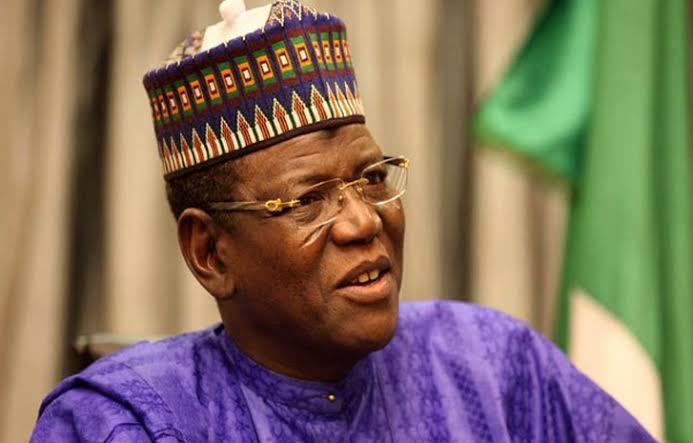
Abuja (Sundiata Post) – Former Governor of Jigawa State, Sule Lamido has said that contrary to the believe that his party, the Peoples Democratic Party (PDP) lost election in 2015, it was actually the Nigerian people that lost the election.

This he said is because it’s the Nigerian people that are bearing the brunt of the misgovernance in the country today.

“In 2014, I said whoever wins election Nigeria will loose and Buhari won Nigeria lost. The subject of campaign then by the two gladiators was sectional instead of Nigeria. Edwin Clerk was busy saying Jonathan is our son same with Buhari and his people.

“In 2019 I said that the PDP should take back the country from APC if Nigeria is to move forward because their (APC’s) commitment was for the aura of the office. Today, see the level of borrowing, economy, insecurity, etc.

Lamido stated this on Sunday when he featured on Channels Television program called “Sunday Politics” while reacting to what makes him think his party will win 2023 general election after it suffered a bloody nose in 2015 and 2019 in the hands of the All Progressives Congress.

The former governor said: “Seun, it’s you and I that suffered bleeding nose in 2015, not PDP. Since that time, what’s the state of the economy today? Nigeria exited from debt nation during the time of President Obasanjo, what is our debt profile today. There was so much respect for human life when PDP was in power but today we have lost our human sense.

Lamido said, ‘today, we have no leadership in Nigeria. The All Progressives Congress came to power with lies. How can a former petroleum minister and former Head of State say that fuel subsidy is a fraud. The other day APC said that they were ignorant of some things when they came to power. Ignorant is not an excuse.

“The APC is owned by Buhari and Tinubu and they don’t care about anybody.” So in 2023, PDP will take over power if it gets it’s acts right because it’s not just a formidable party with national outlook, it has so much respect for human life, it has the composure and exposure to better Nigeria. See the rate of killing today, even in Katsina – the president’s state. In Nigeria today you cannot travel from Kaduna to Abuja. At a point he cried but today what has happened.

Asked whether he’s worried about the situation in northern Nigeria and what it will be in few years, Lamido said that crime is now a phenomenon in all the regions of the country but that the peculiarity is the difference.

He however, blamed insecurity on the failure of leadership in the country. Adding that today we have lost our human sense, “Nigerians main brain have been turned away, he said.” Yes, almajari should be redefined.

When asked to comment on the Value Added Tax (VAT) controversy, Lamido said he will not want to talk about it so as not to be tagged one thing or the other. Something there is against Islam, some say beer is being destroyed and that it has a VAT component. He said they should leave the matter for the court to decide.

Nigeria’s search for solutions, By Hassan Gimba

“Our problems are man-made; therefore, they may be solved by man. No problem of human destiny is beyond human beings.” – John F. Kennedy

Nigerians have written millions of words in books and opinion articles in magazines, newspapers, journals, etc., about the problems of, or with, Nigeria. Appearances in celluloid regarding this issue also have consumed countless meters of celluloid.

Writers have written about Nigeria’s problems, even though some Nigerians see them as part of the problem – for not writing enough. Politicians who everyone thinks are the problem have themselves cried about the problem, with solutions seemingly beyond their grasp. Filmmakers, artists, singers and poets have all pointed at the problems. Soldiers that have retired their epaulettes have spoken and written about the problems despite some historians tagging them as the beginning of the problems. Leaders have always talked about those problems as if we sent them there to lament.

Among the retired soldiers, there are a few privileged to be many things in one. Some of them are politicians as well and leaders for sure. Retired General Ibrahim Badamasi Babangida is one from such a rare class. He recently offered a solution and his solution is to do with the type of leader we should have in the future.

And his insight is a welcome development. It is time we Nigerians shifted gear from lamentations and pointing at where we went wrong to how to right those wrongs. Till the rivers run dry and the world ceases to exist, problems shall never end. Problems became part of man the moment he took a bite of that apple and was banished to earth to come and find the solution that would take him back. And so, seeking solutions for problems must be our habit.

However, just as Albert Einstein said, “The significant problems we face cannot be solved at the same level of thinking we were at when we created them”, therefore we have to think differently and divorce ourselves from all the things that have pinned us down to where we are now. As pointed out by many who took it upon themselves to be pointers at problems, Nigeria’s problems are all condensed into one–leadership.

And maybe it is this that informed General Babangida, arguably one of Nigeria’s greatest leaders, to opine that individuals in their 60s should be the focus of Nigerians as potential presidential candidates in 2023. IBB, as he is fondly called, the apostle of the new breed, said that the person should be one with contacts across the nation and who had been traversing the geo-political zones, marketing their acceptability and capacity.

“I have visualised a good Nigerian leader”, he said. “That is a person who travels across the country and has a friend virtually everywhere he travels to and he knows at least one person who he can communicate with.

“That is a person who is very versed in economics and is also a superb politician, who should be able to talk to Nigerians and so on. I have seen one, or two or three of such persons already in their sixties.”


Well, it is better to do something than nothing and, therefore, we must commend him for starting a discussion along that line. As IBB himself often said when he held sway as our maximum ruler, “It is better to act than not to… history can forgive you for making the wrong decision, but not for not acting at all.”

But what is in a number when it comes to quality leadership and leadership qualities? History has recorded many outstanding leaders who conquered the world and left it in a blaze of glory before they were out of their 30s. God made Jesus (AS) great in his thirties. Billions of Muslims and Christians venerate him. Chaka the Zulu was a great king and leader who conquered southern Africa and placed his people, the Zulu, among the best. He founded the Zulu Empire and, for twelve years before his assassination on September 22, 1828, he moulded his people into a dominant fighting force never seen before in southern Africa. He was 29 when he became King and he died at 41. He made all his exploits when he was in his thirties as well.

Mao Zedong, known as Chairman Mao, was the founding father of The People’s Republic of China and he laid the foundation of modern China. He was not 60 when he founded the People’s Republic of China. He was 56.

Cuba’s Fidel Castro was 33 when shaping the destiny of Cubans fell on his lap. He made Cuba one of the greatest humanitarian and most educated nations in the world. Muammar Gaddafi of Libya was 27 when he started taking his country out of the woods. Dr Martin Luther King who raised the consciousness of Blacks was assassinated when he was barely 39. Dr Muhammad Mahathir, perhaps the greatest leader Malaysia ever had, became prime minister first at 56. Lee Kuan Yew, often referred to as LKY, is recognised as Singapore’s founding father. He became prime minister at 36.

Likewise, history has recorded late starters who shaped the world at the twilight of their time, between 70 and 90 years. In-between there were many more.

But do we even need to go far? General Yakubu Gowon, the apostle of “No Victor, No Vanquished”, did very well when he took over a crisis-torn nation in 1966 at 32. General Murtala Mohammed, who our nation still revers, was 38 when he took over from Gowon. IBB himself was 44 when he pushed out General Muhammadu Buhari and assumed leadership of Nigeria. He did everything and left before he attained 60. He will be the last person to say he did not do well as military president.

Therefore, it is no more about age than it is about capacity. What we should look for is capability. I quite agree that a president should not be provincial and should not be governed by any such sentiment in the pluralistic country that Nigeria is. Most leaders, unfortunately, are clannish – an attitude that has helped in accentuating our primordial divides.

Our next president does not have to be an economist to succeed, but he must be able to identify good and patriotic aides to be delegated responsibilities. And sanction those who cannot perform. He does not have to be a soldier, but he must be ready to support our armed forces to the hilt to ward off internal and external threats with ease. Such a man need not be 60 or above, but must be visionary and intensely want Nigeria to mend, and have a workable idea of how to.

He must be a man who can assuage frayed nerves, smoothen rough edges and make every Nigerian have a sense of belonging. He must be a man capable of resuscitating a dying institution and breathing into it the elixir of life. Such a person can heal the wounds of our country, cover it with the shroud of fairness and dispense justice to all.

All Nigerians must search for a leader of this description and support him irrespective of where he hails from. Henceforth, we will lay out the attributes of the leader we need and hopefully contribute to this national discourse.

Adamu Adamu, ASUU Must Not Strike Again! By Farooq Kperogi

Nigeria is once again sloppily sleepwalking into yet another avoidably stultifying and potentially long-drawn-out ASUU strike that will snap the life out of what remains of our public universities, crush the hopes of hundreds of thousands of young people, and heighten social tensions in an already volatile country.

For many months, the Academic Staff Union of Universities (ASUU) has been alerting the world to the federal government’s arbitrary, unilateral, and irresponsible abdication of the agreement it struck with it since December 2020 on the basis of which it suspended its last strike. The union warned that if the federal government continued to ignore its entreaties for a dialogue, it would go on strike by August 31.

Between the second and third weeks of this month, all ASUU zones met and resolved that should the federal government’s intransigence persist, they will be left with no option but to speak the stodgy, sterile language that the federal government understands, which is to embark on a strike that will cause the rest of the country to notice their grievances.

As most people who read me know, I am one of ASUU’s severest critics. Along with my friend Professor Moses Ochonu, I have called attention to ASUU’s unimaginative, tone-deaf, and flyblown negotiation tactics, its indifference to the pedagogical tyranny and inefficiency of its members, its noticeable absence in conversations about the decline of ethical probity among its members, and so on.

Nevertheless, it is entirely legitimate for the union to demand better conditions of service for its members particularly in the face of the ongoing stratospheric heist of the country’s resources by a determined gang of parasitic, unproductive, and know-nothing freebooters in government whose children go to school abroad.

I don’t want ASUU to go on another bootless, self-injurious strike, but ASUU isn’t the only party we should be appealing to. Pressure should also be brought to bear on the federal government to avert another strike that might stir youth revolt like it did last year.

And this brings me to Malam Adamu Adamu, the Minister of Education. Where is he? Why has he been visibly missing in the last few years? Is he well?

It would be presumptuous to call Malam Adamu my friend or even an acquaintance. He is many generations my senior both in age and in journalism. But I have had a cautious, guarded admiration for his intellect, exceptional writing skills, piety, and asceticism since I encountered his writing and heard firsthand information about him from people who know him.

In late 2015, when a relentless cornucopia of rhetorical and vituperative darts was thrown his way in the media for being appointed the minister of education even when he is neither a professor nor a PhD, I came to his defence in a December 19, 2015 column titled “Why Adamu Adamu’s Appointment as Education Minister is ‘Well-Deserved’.”

I argued that although I was “not personally known to Adamu Adamu,” had “never met him in my life,” and had no “vicarious personal familiarity with him,” his polyglotism (he has native or near-native proficiency in Fulfulde, Hausa, English, Arabic, and Persian), his graduate degree in journalism from New York’s Columbia University, his decades-long career in journalism and columnism, and the fact that he “has written more about education—and with greater depth and clarity— than any previous minister of education Nigeria ever had, except, of course, the inimitable Professor Babatunde Aliyu Fafunwa” were sufficient qualifications to be a minister of education.

Nevertheless, my conclusion acknowledged that being qualified for a position was no guarantee of competence and performance. I wrote: “Now, does this mean Adamu Adamu will dwarf other ministers of education that preceded him? I frankly don’t know. I am not vouching for him because I know there is something about being in government in Nigeria that just drains people’s brains and constricts their commonsense. Otherwise clearheaded people go into government and become total, irredeemable jerks. I don’t know if Adamu Adamu will be like that. I hope not.”

Adamu’s performance as a minister has been a terrifyingly spectacular letdown, to put it nicely. He hasn’t lived up to even the minutest expectations that I had of him. He is barely seen or heard and doesn’t seem to have any relationship with his junior minister. In fact, someone close to him told me he not only has zero synergy with the minister of state for education, but he also nurses stone-cold disdain for him.

Sadly, it is the same minister of state for education (who is effectively disaffiliated from the ministry of education) who has been responding to ASUU’s statements in the media. That’s why his statements are unsurprisingly denuded of even the vaguest pretence to substance. “No one is shunning ASUU. Ask them who they reached out to. I picked your call, didn’t I?” he told Punch on September 22. “We have already said the NUC is working on the issues with the universities. Once they are done, they will issue a statement.”

The only person who can stop ASUU from going on strike is Adamu Adamu himself. Apart from being the substantive minister of education, he is also one of the closest people to Buhari. Most importantly, though, when he was a newspaper columnist, he consistently sided with ASUU each time the union went on strike.

Mahmud Jega pointed out in his November 15, 2015 column titled “One Minister, One Banana Peel” that the great thing about Adamu Adamu’s appointment as the minister of education is that people can always “dig up” his old columns to “see if there is a match” between the ideals he espoused and his actions. “When … ASUU goes on its next strike to demand that Nigeria devotes 30% of its budget to education, the union will call the Minister of Education as witness because he wrote an article in 2013 strongly advocating that,” Jega wrote.

So, what has happened, Malam Adamu? Where is the match, to use Jega’s word, between the high-flown ideals you expounded with care and sensitivity when you supported ASUU before you became a minister and your actions since 2015? What have you discovered now that you didn’t know before? You owe your admirers and early defenders an explanation.

But, more than that, do you not feel any tinge of moral compunction when the children of poor people who can’t afford private universities are robbed of even the luxury to dream of tomorrow because of avoidable ASUU strikes?

Although you have let us down in the past few years, Malam Adamu, you have another chance to redeem yourself. Please, do everything within your power to stop ASUU from going on strike now—and for as long as you’re a minister. Children of the poor who are condemned to attend underfunded public universities as their only passports for social mobility will thank you.

Of course, ASUU must not be given a blank cheque. Improvement in their welfare must be tied to a firm commitment to show measurable improvements in instructional accountability, mentorship, scholarly productivity, and ethical renewal.

. . . Goodbye, Dr. Obadiah Mailafia

The death of Dr. Obadiah Mailafia on September 19 touched me more deeply than I thought it would. He was an exceptionally smart, conciliatory, and gracious man who, in spite of appearances to the contrary, had no space for hate and grudges in his heart.

He and I publicly clashed on at least two occasions. On both occasions, it was he, a much older person, who privately initiated reconciliation with me. Our first clash happened in 2016 at an online forum called the USAAfrica Dialogue Series where he expressed what I thought were unfair, conspiratorial, facts-free, anti-Muslim opinions. I challenged him with counter facts.

Instead of responding to me on the forum, he reached out privately and admitted that his thought-processes were probably distorted by the personal tragedies he had suffered in the hands of mass murderers who were Muslims. He shared photos of his relatives who had been murdered but assured me that he had no animus toward Muslims or any ethnic group. It was both touching and humbling.

Then in May 2018, he wrote a column that stereotyped Fulani people as inveterate aggressors whom no West African country wanted to allow into leadership positions. He made many other claims that had no basis in both historical and contemporary facts. In my June 2, 2018 column titled “El-Rufai’s Hypocritical Xenophobia and Obadiah Mailafia’s Fulaniphobia,” I corrected his inaccuracies.

The column really incensed him, so he wrote a rejoinder that dripped with rage, which caused me to rejoin his rejoinder. Then he reached out to me privately again and, instead of anger, was full of overly flattering praises for me. That took me aback. He said it was my associating him with El-Rufai that exasperated him and inspired his impassioned response.

He told me one of his younger brothers was a good friend of my friend Moses Ochonu and that he regretted that we had a public spat on the pages of a newspaper. Ever since then, he would write to me to share his thoughts on my columns. When he learned of my promotion to a full professor, he sent me one of the kindest, most delicately phrased messages of congratulations that I received from anyone. May his soul rest in peace.

DAILY LAW TIPS by Onyekachi Umah,Esq. (Tip 107) “There is No Grace Period for Renewal of Expired Drivers License, Vehicle License and Documents in Nigeria.”


by Onyekachi Umah,Esq
“There is No Grace Period for Renewal of Expired Drivers License, Vehicle License and Documents in Nigeria.”

Be not deceived, there is no grace or free period for renewal of expired drivers license, vehicle license or documents in Nigeria. Our law does not provide any grace period rather expects you to renew your drivers license one month before it expires. So, always renew them before they expire!

See sections 5, 10, 23 of Federal Road Safety Commission (Establishment) Act, 2007 and Regulations 45 and 46 of the National Road Traffic Regulations, 2012.

#DailyLawTips
#LearnNigerianLaws
#SabiLaw

To receive our Daily Law Tips for free follow our Facebook page, Twitter or Instagram via “@LearnNigerianLaws”.

Powered by www.LearnNigerianLaws.com

Complaints That The Public Complaints Commission Can Handle

Complaints That The Public Complaints Commission Can Handle. Daily Law Tips (Tip 686) by Onyekachi Umah, Esq., LL.M, ACIArb(UK)

Introduction:

In Nigeria, there is a federal agency empowered to control administrative excesses (non- adherence to procedures or abuse of law). It is a created by the Federal Government of Nigeria, to receive and treat complaints of administrative injustice from any person in Nigeria. The agency is the Public Complaints Commission (PCC), it is Nigeria’s Ombudsman. This work will expose the very restricted powers of the Public Complaints Commission (PCC) and the types of complaints that the PCC can handle.

Relevant Powers of the Public Complaints Commission:

The Public Complaints Commission (PCC) has powers to investigate any matter, where there is injustice against any person by any government office, ministry, department, agency or corporation. This includes, where an administrative decision is (i) contrary to any law or regulation; (ii) mistaken in law or arbitrary in the ascertainment of fact; (iii) unreasonable, unfair, oppressive or inconsistent with the general functions of administrative organs; (iv) improper in motivation or based on irrelevant considerations; (v) unclear or inadequately explained; or (vi) otherwise objectionable.

Complaints That Can Be Handled By the Public Complaints Commission:

Generally, the Public Complaints Commission can handle complaints against injustice, involving any government office or non-government office (private company or public company).

According to information on the website of the PCC, below is a list of types of companies that the PCC can handle. It is important to note that, the PCC will reject and refuse to handle any complaint that is outside its powers. In some cases, the PCC may transfer rejected complaints to the appropriate relevant agencies, with the needed power to handle rejected complaints.

Delay in payment of gratuity, land compensation e.t.c.
Non-payment of goods bought or service rendered to government department and corporate bodies.
Wrongful termination of appointment or dismissal
Difficulty in getting insurance companies to pay claims.
Loss of postal documents or parcel by courier companies
Non-issuance of appointment letter or non-adherence to the Labour Act by private companies
Non-refund of contributions by the National Housing Fund, and other mortgage institutions.
Unjust and indefinite suspension and interdiction.
Non- issuance of share certificate/dividend warrant or outright cheating by financial institution.
Non-issuance of result/certificate/ill-treatment by examination bodies, schools and higher institutions.
Restrictions to the Powers of the Public Complaints Commission:

However, there are numerous statutory restrictions (limitations) to the powers of the Public Complaints Commission (PCC), that made the PCC seem like a toothless lion. The federal law that set up the PCC to investigate administrative injustice, at the same time, limits the PCC from investigating administrative injustice that happens or that may concern; the Nigeria Police Force, the Armed Forces Act or the Police Act.

Also, the PCC is at liberty not to entertain any matter where the PCC believes that all available legal or administrative procedures have not been used/exhausted by a complainant. This suggests that the PCC is to work on administrative injustice after even the courts have given judgments (ie, legal procedures have been exhausted), this is practically impossible. Where there is a court judgment (even from the lowest courts, like Magistrate Courts), no administrative panel or government commission, including the PCC, can attempt to revisit the case. This obviously creates confusion on the relevance of the PCC and greatly calls for a legislative amendment of the Public Complaints Commission Act.

Recommendation and Conclusion:

The Public Complaints Commission (PCC) is a creation of a federal law made since October 1975, without obvious need for legislative amendments. There is need to remove the restrictions on the power of the PCC, to inquire and investigate complaints that concern the Nigeria Police Force, the Armed Forces Act or the Police Act, especially where it involves a non-member of the forces. The PCC has a duty to create enlightenment and this is greatly needed across Nigeria. Most Nigerians know little or nothing about the PCC and the PCC must change this narrative.

My authorities, are:

Sections 1, 2, 5, 6, 7, 11 and 12 of the Public Complaints Commission, 1975.
About Us, Public Complaints Commission (PCC) < https://pcc.gov.ng > accessed 29 October 2020.
Onyekachi Umah, ‘How To Sue the Nigeria Police Force and Police Officers’ (LearnNigerianLaws.com, 16 October 2020) accessed 29 October 2020.

In Nigeria, Lady Justice wears no blindfold, By Osmund Agbo

Friday, August 20th was unlike any regular day for the over four million residents of the Kano metro area. More than 70 private airplanes invaded the ancient city’s airspace and jostled for an already crowded packing space at the Mallam Aminu Kano International airport. It was the day politics met royalty as two kids of immense privilege took the nuptial vows. The jury is still out but thus far, Yusuf Buhari and Zahra Ado Bayero’s wedding is undeniably Nigeria’s biggest royal event of 2021. Obi Cubana can feel good all he wants with his festival of cows but the Oba event is no match to the creme de la creme assemblage at Bichi.

The presidential delegation was led by Prof. Ibrahim Gambari, the chief of staff to the President. Following were the Ministers of Defence, Bashir Magashi; Agriculture, Sabo Nanono; Aviation, Hadi Sirika, and other members of the Federal Executive Council. To make the 30 kilometer journey to Bichi upon arrival in Kano, the President was ferried in a chopper.

As expected, the ceremony was a roll call of who is who in Nigeria; from past presidents to the top echelon of the country’s ruling class; from the business community to the members of the diplomatic corps. Mamman Daura, President Buhari’s uncle, stood in for the groom, while Aminu Dantata represented the bride’s family and accepted the N500,000 dowry payment. The Minister of Communication and Digital Economy, Dr. Isah Pantami, was the officiating Imam.

Young friends of the couple, visiting from all over, many of whom were children of the rich and famous, however, did not let the religious piety that marked the ceremony observed earlier in the day, ruin the thrill of their western-styled wild party later on. After all, rules made for the the talakawas are not to be observed by these feral creatures.

A video of the wedding party showed the Nigerian singer, Mayorkun singing to the ecstatic crowd who responded in loud choruses. The music for sure was not Nasheed. Going by the look on the faces of those epicureans, one could have sworn that not all the kids in the party were cool with drinking just coca cola and orange juice. Some were seen spotting trendy Mohawk and big Afro; anything but those hairstyles approved by the Kano State Hisbah.

Hisbah, modeled after the Saudi Arabia’s Commission for the Promotion of Virtue and the Prevention of Vice, is an Islamic doctrine that seeks to enforce community morals, based on the Quranic injunction to promote good and forbid wrong. Inadequate hijab covering, consumption of alcohol, public display of affection are some of the vices frowned upon and such infractions attract punishments.

Following public criticism for staying silent over the Yusuf/Zahra’s not-so-hisbah-friendly affair, the Kano Hisbah Board responded by prohibiting the sharing of the bridal shower photographs, as if that would make the “sin” go away before Allah. It explained why it treats the rich and the poor differently while enforcing some of its rules. Aliyu Kibiya, one of the directors suggested that it is against the tenets of Islam to publicly criticise a leader. Oh really? That must be nice!

In February, Elija Ode, a barber from Benue State, was arrested by Kano Hisbah in the Sabon-gari area of the state for giving his customers haircuts considered offensive to the Islamic faith. He has since leant his lessons the hard way and two of his customers now know the type of haircut that is not approved.

Yusuf/Zahra’s wedding was a weekend of glitzy that proved unstoppable, even by the scourge of a pandemic. It did not even matter that Nigeria is on Level 2 of Covid-19 regulations and that the maximum number of people allowed to congregate is 50. A similar party by a nobody would have attracted the attention of the “ubiquitous” Nigerian police force who will not fail to remind you of the difficult time we are living in. You would happily submit to extortion just to prevent being hauled into one of our nasty and God-forbidden detention centres.

This piece is inspired in part by a video I watched recently where three young Nigerians (I refer to them as the Bobrisky boys) were stripped naked and beaten to a pulp by a mob, for having attended a party dressed as girls. The issue here is not about the morality or legality of what they had done. It is about the fact that these young people were almost killed for an offence that the one who inspired them is being idolised. It’s akin to giving millions to a terrorist in the name of amnesty while condemning to death those that protested against the government. The issue of one country but two systems of justice, one for the poor and another for the rich, is a daily encounter in Nigeria.

It is true that former president, Goodluck Jonathan, on January 7, 2014, signed the Same-Sex Marriage (Prohibition) Bill into law. The law which criminalises lesbianism, transgender and all LGBTQ behaviours, attracts jail term ranging from 10 to 14 years. But it’s not left for a mob to try, condemn and dispense justice. The same mob will probably cheer on Bobrisky and hit the like button on his Instagram posts.

Okuneye Idris Olanrewaju, nicknamed Bobrisky, is a very popular Nigerian cross dresser with a large social media following. It was a little bit of a shock to find that people in an overwhelmingly homophobic society like Nigeria are willing to pay money, in order to follow an individual who is an epitome of a lifestyle we all love to condemn. In fact, according to Google’s Communications and Public Affairs Manager for West Africa, Bobrisky was the most searched individual in Nigeria from October 26 to November 2016. But unlike the poor boys attacked by the mob, Bobrisky is rich and famous. His police escorts will likely beat to coma, anyone attempting to come even a mile close to him, let alone smell his cologne.

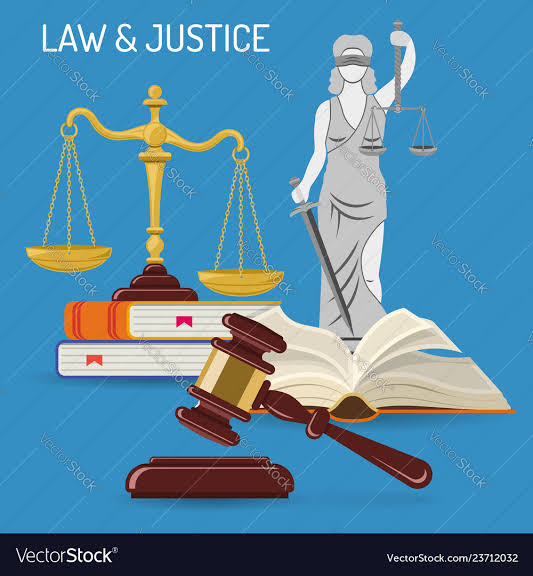
Lady Justice with her trademark blindfold is a personification of the moral force in judicial systems all over the world. Her blindfold represents the idea of impartiality in the nature of law and justice, be it rich or poor, man or woman, elder or child. She also has a scale in one hand with which to measures the strengths of a case’s support and opposition and a sword which represents authority as well as conveys the idea that justice can be swift and final. Unfortunately, our nation continues to maintain an unsafe distance with Lady Justice, letting her realise in no uncertain terms that she does not belong here.

The problem is not about rich kids or anyone for that matter having fun as long as it does not become an issue of public nuisance. The issue is criminalising certain behaviour and enforcing the rules only when it involves the poor and pretending to be deaf and dumb or even applauding when perpetuated by the rich and powerful.

Life has always been rigged against the poor in every society but in Nigeria, the odds are so heavily stacked that the idea of getting justice for our nation’s poor is a pipe dream. Little wonder why primitive accumulation of wealth has become a national obsession. We hardly look back while grabbing whatever we can in the world with no care about how such behavior impacts others.

George Orwell might have had Nigeria in mind when he wrote his critically acclaimed satirical allegory in 1945. His Animal Farm is domiciled in our country where Lady Justice has a 20/20 vision.

•Dr. Agbo, a Public Affairs analyst is the coordinator of African Center for Transparency and Convener of Save Nigeria Project. Email: [email protected]

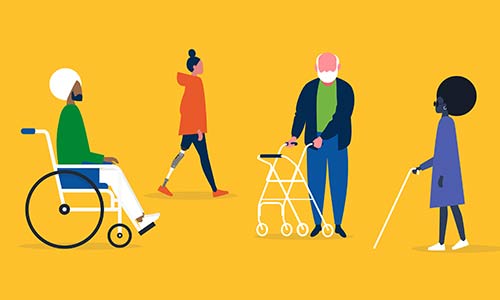
Impact Of Digital Rights And Digital Rights Violations On Persons With Disabilities

By Bizibrains Okpeh

There is no gainsaying that digitalisation has become one of the hallmarks of the 21st Century. Human interactions, commercial and social activities are increasingly being digitalised so much so that human existence is fast becoming intrinsically linked, integrated, or connected with “digital life”. This has been made possible by the advancement in Internet and Communication Technology (ICT) and the Internet of Things (IoT), which ensures the continuing development and invention of new smart technologies, applications, and software to facilitate, and in some instances anchor, human communications, interactions, and transactions, with more than 100 billion devices or applications now connected to the internet (Ford online news), sometimes creating “new and complex” rights, and dynamic perspective in human rights discourse often referred to as digital rights.

“Digital rights are those [bundle of] human rights and legal rights that allow individuals to access, use, create, and publish digital media or to access and use computers, other electronic devices, and telecommunications networks. The concept is particularly related to the protection and realization of existing rights, such as the right to privacy and freedom of expression, in the context of digital technologies, especially the Internet.” (Wikipedia) The internet has become the highway of massive data and information flow, harbouring an unprecedented volume of data and information and connecting billions of people around the world.

However, regrettably, these digital rights suffer increasing incessant violations consisting in the nefarious and fraudulent activities of cybercriminals and internet fraudsters (“Yahoo Yahoo”) and other cyber, electronic, or internet offences, including cyber terrorism, cyberbullying, cyberstalking, cybersquatting, hacking, cyber flashing, cyber invasion, cyber threats, cyber conspiracy, phishing and spamming, cyber (disability) discrimination, racism, and xenophobia, etc.

Worse still, perhaps of equal or greater threat to digital rights are the undemocratic, regressive, and repressive government policies and directives, which result in the continual clampdown on access to the internet, irregular “official” data privacy invasions, surveillance and wiretapping, arrest of e-activists/bloggers, and restriction, suspension, and bans on access to digital devices or platforms, such as social media, by governments of various countries, including Nigeria, which recently banned access to Twitter and made several attempts to arrogate somewhat sweeping powers to itself to control the broadcasting and social media space.

While digital or electronic technology devices may be one of the options available to most people to undertake their day to day activities, transactions, communication, or interactions, to persons with disabilities, especially persons who are blind, visually impaired, or otherwise print disabled, it is fast becoming (or has largely become) the most veritable alternative to print or text-based materials, ensuring the development of adapted internet applications, software, or electronic devices, and the publication of books or published works in accessible formats by use of assistive technology devices, some of which are digitalised or electronicalised. Thereby furthering the digital (disability) rights of persons with disabilities and inclusive access to information.

There is, therefore, a necessity to protect the digital rights of Nigerians, and a greater need to safeguard the digital rights of persons with disabilities who are susceptible or more likely to bear greater suffering as a result of digital rights violations.

Legal frameworks for the protection of digital rights of persons with disabilities

As a bundle of (interconnected) human rights, it cannot be overemphasised that the concept of digital rights “is particularly related to the protection and realization of existing rights, such as the right to privacy and freedom of expression [among others], in the context of digital technologies, especially the Internet.” (Wikipedia) Hence, there are many legislation that are directly or indirectly geared towards safeguarding the digital rights of Nigerians, including persons with disabilities, such as the Constitution of the Federal Republic of Nigeria, 1999 (as amended) (“the Constitution”), Cybercrimes (Prohibition, Prevention, etc.) Act, 2015, Discrimination Against Persons with Disabilities (Prohibition) Act, 2018 (“the National Disability Act”), and the Violence Against Persons (Prohibition) Act 2015 (“VAPA”), among others.

Under Section 37 of the Constitution, the privacy of citizens, including persons with disabilities, their homes, correspondence, telephone conversations, and telegraphic communications is guaranteed and protected. Also, Section 39(1) and (2) of the Constitution provides that every person shall be entitled to freedom of expression, including the freedom to hold opinions and to receive and impart ideas and information without interference and to own, establish and operate any medium for the dissemination of information, ideas and opinions, subject to the provisor thereunder.

On its part, Section 1 of the National Disability Act generally prohibits, criminalises and punishes all forms of discrimination against persons with disabilities by any person or institution in any manner or circumstance. Also, Section 17 of the Act provides to the effect that persons with disabilities shall be entitled to free education to secondary school level, have an unfettered right to education without discrimination or segregation in any form and the National Commission for Persons with Disabilities (“the Commission”) shall provide educational (informational) assistive devices.

Again, Section 18 of the Act provides for inclusiveness of education to the effect that all public schools, whether primary, secondary, or tertiary shall be run to be inclusive of and accessible to persons with disabilities. Hence, all public schools shall have special facilities for the effective education of persons with disabilities, and Braille, sign language, and other skills for communicating with persons with disabilities shall form part of the curricular of primary, secondary, and tertiary institutions.

Furthermore, in addition to one of the functions of the Commission to collaborate with the media to make information available in accessible formats for persons with disabilities as provided under Section 38(q), Section 15 of the Act provides to the effect that any general information shall be translated into the accessible format appropriate to the person with a disability, including the print disabled.

It may be submitted that the general effect of the above sections is that information, including internet, or electronic, or digital materials, should be in such formats or facilities that are accessible to persons with disabilities and the print disabled by use of adapted assistive technology devices.

Furthermore, the VAPA expressly prohibits and criminalises all forms of violence – including emotional, verbal, and psychological abuse (Section 14) and intimidation (Section 18) – against any person, including persons with disabilities, in private and public life. Section 46 of the Act defines “emotional, verbal, and psychological abuse” as a pattern of degrading or humiliating conduct towards any person [including a person with a disability], including but not limited to – (a) repeated insults, (b) ridicule or name-calling, (c) repeated threats to cause emotional pain and (d) the repeated exhibition of obsessive possessiveness, which is of such a nature as to constitute a serious invasion of such a person’s privacy, liberty, and integrity. It is submitted that “emotional and psychological abuse” is capable of being perpetrated through online media, and may also constitute cybercrimes in appropriate instances.

For instance, cyberstalking – intentionally sending or causing a message or other matter to be sent by means of computer systems or network that is grossly offensive, pornographic, indecent, obscene, or menacing character, false or causes annoyance, inconvenience, danger, obstruction, insult, injury, criminal intimidation, enmity, hatred, ill will, or needless anxiety to another, or to bully, threaten or harass another person, or put another person in fear of death, violence or bodily harm, or threat to kidnap any person or harm the person of another, or demand or request for a ransom for the release of any kidnapped person, or threat to harm the property or reputation of the addressee, etc. – could also constitute or result in emotional and psychological violence/abuse and intimidation, equally prohibited under the VAPA.

As the reader would come to see, the VAPA is equally important to ensure the protection of the digital rights of persons with disabilities. Because psychological violence or abuse consists in insult, blaming, shaming, gaslighting, name-calling, rejection, dismissiveness, bullying, manipulation, infantilisation, minimisation, withholding, destruction of property, deprivation, and other aggressing, degrading, humiliating, and intimidating treatments and/or threats, all of which could also be perpetrated through the internet or social media. And the threat to deny, withhold or deprive, or actual denial, withholding, or deprivation cut across all amenities of life, including liberty, food, shelter, education, information, and access to the internet and internet devices or platforms.

To ensure the realisation of Sections 37 and 39 of the Constitution in the context of Internet and Communication Technology (ICT) and to consolidate the digital rights of every person in Nigeria, including persons with disabilities, and ensure inclusive and unfettered access to information, including digital or electronic platforms/materials, the Cybercrimes Act criminalises and punishes several acts that constitute undue interference on or violate the digital rights of others, including cyber terrorism, child pornography and other related offences (cyber flashing), cyberstalking, cybersquatting, racist and xenophobic offences and cyber threats (cyber (disability) discrimination), cyber conspiracy, phishing and spamming, as contained under Sections 18, 23, 24, 25, 26, 27, and 32 respectively.

In particular, Section 23(3)(b)(iii) of the Act provides to the effect that it is a punishable offence for any person to intentionally propose, groom or solicit, through any computer system or network, to meet a child for the purpose of engaging in sexual activities with the child where abuse is made of a particularly vulnerable situation of the child, mental or physical disability, or a situation of dependence.

Internet restrictions, social media bans, etc. and access to information by persons with disabilities

One of the many social issues in Nigeria is the information poverty among persons who are blind, visually impaired, or otherwise print disabled, which engenders great inequality and non-inclusive access to qualitative information and learning.

Globally, there is information poverty or scarcity among more than 185 million persons who are print disabled. Available data shows that in both the developed and developing climes, 95% and 99%, respectively, of all information (books or published works) are not accessible to the print disabled. In Africa, including Nigeria, less than 1% of published works are accessible to the print disabled. In the case of Nigeria, this means that more than 30 million persons with disabilities and 4.25 million persons with print disabilities are generally and specifically at actual risk of information poverty respectively.

To reduce this global information (book) famine and ensure equal, sustainable, and inclusive access to information, in addition to the slow and steady rollout of accessible internet applications, books, or published works are now being republished or published in accessible formats using assistive technology devices, some of which are electronicalised or digitalised.

However, the continual clampdown on access to digital information, manifested in internet restrictions or bans on internet applications, contents, or platforms, such as social media, among others, does not only result in clogging access to information to the print disabled but also constitutes a grave violation of their digital (human) rights, seeing as their most accessible sources of quantitative and qualitative information are fast becoming or have become largely electronicalised and/or digitalised. There is, therefore, a greater need to protect the digital rights of persons with disabilities, especially the print disabled.

This would ensure the continuous flow of (digital/electronic) information to the print disabled, ensure meaningful engagement and online interactions of persons with disabilities who live mostly in exclusion and isolation, reduce the information scarcity/poverty among the print disabled, especially persons who are blind or visually impaired, and ensure equal, sustainable, and inclusive access to information and learning in Nigeria. This would also facilitate the attainment of most of the Sustainable Development Goals (SDGs).

Internet restrictions, social media bans, cyberbullying, etc. and mental health of persons with disabilities

Yet another social issue bedeviling persons with disabilities, including the print disabled, in Nigeria is increasing poor mental health. This is due largely to disability discrimination and social exclusion. This ensures that most persons with disabilities live in isolation, confinement, or solitude, with little or no association or interaction with their immediate and/or outside environment. This condition is further exacerbated by restrictions, or bans on, or inadequate or lack of access to the internet and/or internet applications, especially in remote areas of the country where internet services are ordinarily not available or inadequate.

Available data from the World Health Organisation shows that in Nigeria, an estimated 20 to 30 percent of people suffer from mental health illness. The implication is that Nigeria has more than 60 million persons with mental health illnesses. Needless to say that persons with disabilities make up a large proportion of this number as, according to Sobsey (1995), they are 4 to 10 times more likely to suffer from physical, social, and psychological violence (which contribute significantly to mental health deficiency) than persons without disabilities.

Continuous accessible internet services and unfettered access to digital materials or applications, including social media, therefore, offer a veritable alternative to persons with disabilities, including persons who are blind, or visually impaired, or otherwise print disabled, to keep relevant and meaningful engagement and conversation with their immediate and outside environment, thereby contributing to stabilise their mind and helping them to maintain healthy mental health.

Needless to underscore that human beings are social beings and “humans are inherently relational creatures” (Charlotte Walker). Thus, “[h]uman interaction is not only physically beneficial, but also imperative for mental health. Loneliness and social isolation are…harmful…to physical and mental health.” And at this time of the Covid19 pandemic where increasing human interactions now occur online, “Technology can offer a very anemic connection,” yet oxygenating enough to foster healthy mental health if the right conditions are made and undue interference or violations are removed. This is more so for persons with disabilities.

Moreover, persons with disabilities who are able to make use of internet services often face undue interference or violations in the form of criminal, abusive, or offensive cyber activities from others, including but not limited to, cyberstalking, cyberbullying, and online disability-based discriminations.

Thus, digital rights violations, whether by government or individuals, are not only an assault on, or violations of the human (disability) rights of persons with disabilities but also could lead to or constitute psychological violence (in themselves), which contributes significantly to the poor mental health of persons with disabilities, as such undemocratic and criminal actions, as the case may be, entrench withdrawal, and social isolation and exclusion in the 21st Century world – a world much more interconnected by the internet and social media like never before.

Which way forward?

The importance of digital rights cannot be overstated. The rapid advancements and innovations in digital, communication, or internet technologies, leading to unprecedented growth in internet applications and software, ensures that the world has become ever more globalised and interconnected.

The result is that the internet, through these applications and online materials, has increasingly become the hub for human interactions, social life, and the largest global marketplace. Thereby creating digital rights, which are human rights, and which every person is entitled to for the full realisation of their talents and potential in the 21st Century world.

This is more so for persons with disabilities, especially persons who are blind, visually impaired, or otherwise print disabled who rely on assistive technology devices or accessible formats, some of which are electronicalised or digitalised, to access information.

Worse still, most members of the public, including persons with disabilities, are not even aware of their digital rights and lack sufficient knowledge of how to identify any breach of the same and the remedies available to them.

At a time when there is a massive attack on the digital rights of Nigerians, including persons with disabilities, ranging from the activities of cybercriminals to undemocratic government actions, engendering social isolation and exclusion, shrinking the civic space, and stifling free speech and access to digital information and contents, and given it overwhelming impact on the welfare, livelihood, and mental health of persons with disabilities, there is, therefore, a greater need to create widespread awareness to forestall digital rights violations and protect the digital rights of persons with disabilities.

Okpeh is a lawyer, researcher, and disability rights advocate. Reach him at [email protected]

2023 and the Familiar Song

By Olusegun Adeniyi

Last week, Dr Doyin Salami, who chairs President Buhari’s Economic Advisory Council (EAC), lamented that the debt service-to-revenue ratio stood at 97.7 per cent (January to May 2021).

From information readily available at the Debt Management Office (DMO), we are currently indebted to several multilateral institutions.

They include International Bank for Reconstruction & Development (IBRD);
International Development Association (IDA);
International Monetary Fund (IMF);
African Development Bank (AfDB);
African Development Fund (ADF);
Africa Growing Together Fund (AGTF);
European Investment Bank (EIB);
European Development Fund (EDF);
Arab Bank for Economic Development in Africa (BADEA);
Islamic Development Bank (IDB) and International Fund for Agricultural Development (IFAD).

The Bilateral creditors are Exim Bank of China; Agence Française de Développement of France,
Japan International Cooperation Agency, Kreditanstait Fur Wiederaufbua of Germany, and Exim Bank of India.

We need a serious conversation about our debts.
As at the time President Olusegun Obasanjo took office in 1999 under the current democratic dispensation, Nigeria’s total outstanding debt was $28.04 billion comprising $20.51 billion to Paris Club, $2.04 billion to London Club, $3.93 to multilateral institutions and $1.49 in promissory notes.

By the end of 2004 when Obasanjo subscribed to the Debt-Buy-Back proposition, Nigeria had a debt portfolio of $35.94 billion, of which the Paris Club alone accounted for $30.85 billion.

Following Nigeria’s exit from the Paris Club in 2005, the Debt Portfolio became $20.48 billion.

By the time we exited the London Club in 2006, Nigeria’s total debt had plummeted to $3.54 billion.

From then there were marginal annual increases.
It was $3.65 billion in 2007,
$3.72 billion in 2008,
$3.95 in 2009,
$4.58 billion in 2010,
$5.67 billion in 2011,
$6.5 billion in 2012,
$8.8 billion in 2013,
$9.7 billion in 2014 and
$10.72 billion in 2015.

While the increase to $11.41 billion in the first year of the Buhari administration (2016) followed the same pattern, the debt portfolio jumped to $18.91 billion a year later in 2017.

By 2018, the hike was more astronomical: $25.27 billion.

It increased to $27.68 in 2019 and by December last year (2020), Nigeria had amassed a total debt of $33.35 billion!

  • Olusegun Adeniyi
    23 September 2021

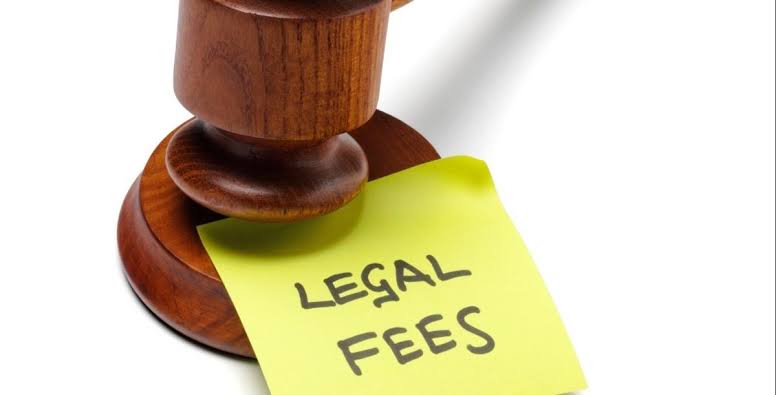
Who Should Pay Legal Fees: Is It the Tenant or the Landlord?

Who Should Pay Legal Fees: Is It the Tenant or the Landlord? Daily Law Tips (Tip 822) by Onyekachi Umah, Esq., LL.M, ACIArb (UK)

Introduction:   

Lawyers are often needed in the commencement and termination stages of tenancy relationships, for the good of landlords and tenants. While any person can draft a tenancy agreement, lawyers do it better and lawfully. Please note that it is a criminal offence for a non-lawyer to draft a tenancy agreement or any legal document for a fee (if it is for free it is no offence). Hence, lawyers play a vital role in tenancy relationships and must be paid for their services. So, in practice, I find clients, landlords, tenants and even lawyers, argue; “Who Should Pay Legal Fees of a Lawyer: Is It the Tenant or the Landlord?”. This work answers the question; Who Should Pay the Legal Fees of a Lawyer: Is It the Tenant or the Landlord?

Lawyers and Legal Fees:

Lawyers are mandated to collect legal fees (professional fees) for their services. However, lawyers are also expected to do free legal works for the public good (Pro Bono Publico). Legal fees are often directly proportional to the wealth of lawyers (except for lawyers that may have family trust or other businesses). So, wealth plays a vital role in law practice (like in anything in life). After all, to be elevated to the rank of a Senior Advocate of Nigeria, a lawyer must show that he/she is not impecunious (poor). Also, for lawyers to charge a poor or low legal fee (undercharging) is professional misconduct. This issue of undercharging as professional misconduct is explained in “Effective and Realistic Billing System For Nigerian Lawyers” and accessible for free via https://learnnigerianlaws.com/effective-and-realistic-billing-system-for-nigerian-lawyers/. Hence, a lawyer must strive to be adequately paid for his legal services, when not rendering a free legal service. Lawyers and legal fees are inseparable. 

Lawyers, Landlords and Tenants:

Lawyers, landlords and tenants are often not best of friends but they need and rely on each other. While landlords own properties and rent them out to tenants, lawyers protect the relationships between landlords and tenants. Unfortunately, many tenants argue that lawyers only protect landlords (they may be right, especially when and where the lawyers are engaged by landlords and not the tenants). Maybe the theory of “the Piper, the Payer and the Tone” is after all true. 

Apart from where the services rendered or to be rendered by a lawyer to a landlord or tenant or both is for free, the lawyer deserves and must be paid an agreed legal fee. Who pays the legal fees of a lawyer is an important part of a tenancy relationship and can spell doom for the entire tenancy relationship. 

Lawyers Fee, Landlords and Tenants: 

Tenancy relationships are better when written and signed by parties (Landlords and Tenants). Tenancy agreements are best prepared by lawyers and not any other person. Hence, landlords and tenants need lawyers for the agreements and in turn, lawyers need to be paid for their legal services. So, Who Should Pay the Legal Fees of a Lawyer: Is It the Tenant or the Landlord?

The common opinion on the street of Nigeria and social media is that tenants should pay for the legal fees of lawyers that prepare tenancy agreements. Hence, as new tenants are paying for rent, they are also compelled by landlords to pay for legal fees. There is also a minority opinion out there, that the landlord that receives rent should pay for legal fees from the rent, to avoid further stretching the tenant, financially. These opinions shape tenancy transactions and also lead to dispute avoidance or dispute eruption. 

Hear this; there is no known written law in Nigeria that specifies who should pay for legal services, between lawyers and tenants. Payment of legal fees between landlords and tenants has been an issue left for parties to agree on in their tenancy agreements. Parties (landlords and tenants) are free to agree on who pays. Such legal fees could be paid by any of the parties or shared by both parties. So, the common opinion that tenants should pay legal fees of lawyers who drafted tenancy agreements is wrong and unknown to law. 

Lawyers Fee and the Tenancy Laws: 

Tenancy relationships in Nigeria are guided by the various States Tenancy Laws across States in Nigeria. Apart from Lagos State, most of the various States Tenancy Laws across Nigeria are similar (if not the same). Hence, only the Lagos State Tenancy Laws and the Tenancy Laws for the Federal Capital Territory, Abuja will be considered. So, the Tenancy Laws for the Federal Capital Territory, Abuja represents and reflects the other States Tenancy Laws across States in Nigeria. 

Lagos State is arguably the most legislatively advanced state in Nigeria (it is even more advanced than the entire country, Nigeria). This assertion is better explained in this work; “How Lagos State Is Legislatively Ahead Of Other States” and accessible for free, via this link; https://learnnigerianlaws.com/how-lagos-state-is-legislatively-ahead-of-other-states/. Unlike any other state in Nigeria, the Lagos State has the most recently amended State Tenancy Law (the Lagos State Tenancy Law, 2011). The Lagos State Tenancy Law 2011, unlike other states, expressly frowns at and criminalizes the removal of the roof, locking of doors by landlords that are seeking to frustrate tenants. Also, it has innovative tools for handling recalcitrant tenants and their magic. You can get a free copy of the “Lagos State Tenancy Law 2011”, via this link; https://learnnigerianlaws.com/lagos-state-tenancy-law-2011/

By section 11 of the Lagos State Tenancy Law, “from the commencement of a tenancy, it is the duty of the party (whether landlord or tenant) that engaged the services of a professional in respect of the tenancy agreement to pay the fees for such professional services”. This means that the law does not specify who should pay legal fees, but ordinarily mandates the person that engages the services of a lawyer or any professional to pay the lawyer (professional). Hence, wherein a tenancy relationship the tenant does not engage a lawyer but the landlord engages a lawyer, then the landlord will pay the resultant legal fees. Also, expectedly, where both the landlord and tenant agree to engage a lawyer, then both will agree on who and how to pay the legal fees. 

A visit to the Federal Capital Territory (FCT), Abuja shows that the city has a 76 years old law that governs tenancy relationships in the city. This is also the case in many other states across Nigeria, except in Lagos State. The FCT’s Recovery Premises Act, 1945 governs the relationships between landlords and tenants in the FCT. The FCT’s Recovery Premises Act 1945 is accessible for free via this link; https://learnnigerianlaws.com/free-copy-of-the-recovery-of-premises-act-1945/. In the 20 pages of the FCT’s Recovery Premises Act, there is no provision on payment of legal fees. The law is silent on who pays the professional/legal fees of a lawyer that prepares tenancy agreements for a landlord and tenant. The FCT’s Recovery of Premises Act represents most of the State Tenancy Laws across States in Nigeria (apart from Lagos State), they are also silent on “Who Should Pay the Legal Fees of a Lawyer: Is It the Tenant or the Landlord? Hence, a Landlord and a Tenant in the FCT and other states (excluding Lagos State) have to jointly agree on “Who Should Pay the Legal Fees of a Lawyer” for the party to be bound to pay the lawyer. Where there is no agreement on who should pay a lawyer, no party (landlord/tenant) should be compelled or cajoled into paying a lawyer. 

Conclusion: 

Legal services are often expensive, but like education, dealing without legal services is more expensive. Legal fees (professional fees of a lawyer) are to be agreed on ahead of the services of the lawyer. Since, legal fees are often expensive, failing to agree on such could be life-wrecking. There is no known law in Nigeria that specifies Who Should Pay the Legal Fees of a Lawyer. The closest is the Lagos State Tenancy Law, which expressly provides that the party that engages the services of a lawyer, should pay the lawyer. 

Contrary to the public opinion in Nigeria to the question; “Who Should Pay the Legal Fees of a Lawyer: Is It the Tenant or the Landlord?”, the question is not answered by any law, convention, practise or norm, rather is answered by the individual agreements of landlords and tenants. It is the agreement between a landlord and tenant that determines who should pay for the legal fees of a lawyer.

Actionable Advice: 

  1. 1. Where landlords and tenants wish to engage the services of a lawyer, it is important to agree in writing, who will pay the legal fees of the lawyer.
  2. 2. Even, where there is no agreement on the engagement and use of a lawyer, the party objecting to such legal service should also make his/her objection in writing, to expressly show that he/she will not pay for or share in the paying for legal fees. Feel free to use SMS, WhatsApp and other media for such protests. 
  3. 3. Always speak with your lawyer (just like having a family doctor, please get a lawyer)!
  4. 4. Share this work so that we may change the defective common opinion that only tenants must pay for the legal fees of lawyers.

Authorities:

  1. 1. Section 1, 2, 3, 4, 5, 6, 318 and 319 of the Constitution of the Federal Republic of Nigeria, 1999.
  2. 2. Sections 2(1) and 24 of the Legal Practitioners Act 
  3. 3. Onyekachi Umah, “Why Law Firms Cannot Practise Law in Nigeria” (LearnNigerianLaws.com, 1 September 2021) https://learnnigerianlaws.com/why-law-firms-cannot-practise-law-in-nigeria/ accessed 21 September 2021.
  4. 4. Onyekachi Umah, “Effective and Realistic Billing System For Nigerian Lawyers” (LearnNigerianLaws.com, 23 September 2018) < https://learnnigerianlaws.com/effective-and-realistic-billing-system-for-nigerian-lawyers/ > accessed 21 September 2021.
  5. 5. Onyekachi Umah, “Law Firms/Chambers Cannot Be Engaged and Briefed To Render Legal Services or Sign Documents” (LearnNigerianLaws.com, 23 July 2018) < https://learnnigerianlaws.com/daily-law-tips-by-onyekachi-umah-esq-tip-147-law-firms-chambers-cannot-be-engaged-and-briefed-to-any-render-legal-services-or-sign-documents/> accessed 30 August 2021
  6. 6. Onyekachi Umah, “How To Make Power Of Attorney To Be Genuine And Acceptable.” (LearnNigerianLaws.com, 16 April 2019 <https://learnnigerianlaws.com/how-to-make-power-of-attorney-to-be-genuine-and-acceptable-daily-law-tips-tip-312-by-onyekachi-umah-esq-llm-aciarb-uk/> accessed 1 December 2020
  7. 7. Onyekachi Umah, “Agreements in Nigeria Do Not Require Signatures of Notaries Public or Magistrates or Court Staff to be Legal and Binding” (LearnNigerianLaws.com, 13 January 2018) <https://learnnigerianlaws.com/daily-law-tips-by-onyekachi-umah-esq-tip-121-agreements-in-nigeria-do-not-require-signatures-of-notaries-public-or-magistrates-or-court-staff-to-be-legal-and-binding/> accessed 1 December 2020
  8. 8. Onyekachi Umah, “Memorandum Of Understanding (Mou) Is Not A Binding Agreement(Contract).” (LearnNigerianLaws.com, 11 February 2020) <https://learnnigerianlaws.com/memorandum-of-understanding-mou-is-not-a-binding-agreementcontract-daily-law-tips-tip-502-by-onyekachi-umah-esq-llm-aciarbuk/> accessed 1 December 2020.
  9. 9. Onyekachi Umah, “How To Write Agreements (Contracts).” (LearnNigerianLaws.com, 11 March 2016) <https://learnnigerianlaws.com/how-to-write-agreements-contracts/> accessed 1 December 2020.
  10. 10. Onyekachi Umah, “Effect of Power of Attorney Not Executed Before a Notary Public” (LearnNigerianLaws.com, 23 March 2021) <https://learnnigerianlaws.com/effect-of-power-of-attorney-not-executed-before-a-notary-public/> accessed 14 April 2021
  11. 11. Onyekachi Umah, “You Don’t Need To Register Any Agreement In Courts or With A Notary Public” (LearnNigerianLaws.com, 2 December 2020) <https://learnnigerianlaws.com/you-dont-need-to-register-any-agreement-in-courts-or-with-a-notary-public/> accessed 14 April 2021
  12. 12. Onyekachi Umah, “Stamps and Seals of Courts and Commissioners for Oath Are Not Needed for Agreements To Be Valid.” (LearnNigerianLaws.com, 8 June 2018) <https://learnnigerianlaws.com/daily-law-tips-by-onyekachi-umah-esq-tip-118-stamps-and-seals-of-courts-and-commissioners-for-oath-are-not-needed-for-agreements-to-be-valid/> accessed 14 April 2021
  13. 13. Onyekachi Umah, “Requirements For A Lawyer To Be Appointed As A Notary Public For Nigeria” (LearnNigerianLaws.com, 3 June 2020) <https://learnnigerianlaws.com/requirements-for-a-lawyer-to-be-appointed-as-a-notary-public-for-nigeria/> accessed 14 April 2021
  14. 14. Onyekachi Umah, “It Is Not “Notary Public Of Nigeria” But  “Notary Public For Nigeria” (LearnNigerianLaws.com, 30 January 2020) <https://learnnigerianlaws.com/it-is-not-notary-public-of-nigeria-but-notary-public-for-nigeria/> accessed 14 April 2021
  15. 15. Onyekachi Umah, “Power Of Attorney Can Not Transfer Ownership/Title Of A Property” (LearnNigerianLaws.com, 19 July 2018) <https://learnnigerianlaws.com/daily-law-tips-by-onyekachi-umah-esq-tip-145-power-of-attorney-can-not-transfer-ownership-title-of-a-property/?> accessed 14 April 2021
  16. 16. Onyekachi Umah, “Contents of a Valid Affidavit of Change of Name” (LearnNigerianLaws.com,17 May 2018) <Contents of a Valid Affidavit of Change of Name> accessed 23 June 2021
  17. 17. Onyekachi Umah, “Things that Cannot Be Contained In An Affidavit” (LearnNigerianLaws.com, 15 May 2018) <https://learnnigerianlaws.com/daily-law-tips-by-onyekachi-umah-esq-tip-101-things-that-cannot-be-contained-in-an-affidavit/> accessed 23 June 2021
  18. 18. Onyekachi Umah, “Banks Should Not Refuse Affidavits/Documents Made By Notaries Public” (LearnNigerianLaws.com, 28 April 2021) <https://learnnigerianlaws.com/banks-should-not-refuse-affidavits-documents-made-by-notaries-public/> accessed 1 June 2021
  19. 19. Onyekachi Umah, “How to Certify Documents & Make Affidavits Without Courts” (LearnNigerianLaws.com, 14 April 2021) <https://learnnigerianlaws.com/how-to-certify-documents-make-affidavits-without-courts/> accessed 27 April 2021
  20. 20. Onyekachi Umah, “Effect of Power of Attorney Not Executed Before a Notary Public” (LearnNigerianLaws.com, 23 March 2021) <https://learnnigerianlaws.com/effect-of-power-of-attorney-not-executed-before-a-notary-public/> accessed 14 April 2021
  21. 21. Onyekachi Umah, “Agreements in Nigeria Do Not Require Signatures of Notaries Public or Magistrates or Court Staff to be Legal and Binding” (LearnNigerianLaws.com, 13 January 2018) <https://learnnigerianlaws.com/daily-law-tips-by-onyekachi-umah-esq-tip-121-agreements-in-nigeria-do-not-require-signatures-of-notaries-public-or-magistrates-or-court-staff-to-be-legal-and-binding/> accessed 1 June 2021
  22. 22. Onyekachi Umah, “Estate Surveyors and Valuers Cannot Prepare Tenancy/Land Documents” (LearnNigerianLaws.com, 30 November 2020) <https://learnnigerianlaws.com/estate-surveyors-and-valuers-cannot-prepare-tenancy-land-documents/> accessed 17 March 2021
  23. 23. Onyekachi Umah, “It Is An Offence For Non-Lawyer To Prepare Any Document/Agreement Relating To Rent, Buildings, Land Or Mineral Resources” (LearnNigerianLaws.com, 12 September 2019 <https://learnnigerianlaws.com/it-is-an-offence-for-none-lawyer-to-prepare-any-document-agreement-relating-to-rent-buildings-land-or-mineral-resources-daily-law-tips-tip-413-by-onyekachi-umah-esq-llm-aciarb-uk/> accessed 17 March 2021
  24. 24. Onyekachi Umah, “It Is An Offence For Non-Lawyer To Prepare Any Document/Agreement Relating To Rent, Buildings, Land Or Mineral Resources” (LearnNigerianLaws.com, 12 September 2019 <https://learnnigerianlaws.com/it-is-an-offence-for-none-lawyer-to-prepare-any-document-agreement-relating-to-rent-buildings-land-or-mineral-resources/> accessed 17 March 2021
  25. 25. Onyekachi Umah, “List Of Agreements And Transactions That Are Invalid If Handled By A None Lawyer In Nigeria” (LearnNigerianLaws.com, 3 October 2019) <https://learnnigerianlaws.com/list-of-agreements-and-transactions-that-are-invalid-if-handled-by-a-non-lawyer-in-nigeria/> accessed 17 March 2021
  26. 26. Onyekachi Umah, “Legal Practitioners Cannot Sell Land In Nigeria.” (LearnNigerianLaws.com, 31 August 2018) <https://learnnigerianlaws.com/daily-law-tips-by-onyekachi-umah-esq-tip-174-legal-practitioners-cannot-sell-land-in-nigeria/ > accessed 17 March 2021.
  27. 27. Onyekachi Umah, “Unknown-Court-Staff & the Affidavits Obtained During Court Strike” (LearnNigerianLaws.com, 2 June 2021) < https://learnnigerianlaws.com/unknown-court-staff-the-affidavits-obtained-during-court-strike/> accessed 30 August 2021
  28. 28. Onyekachi Umah, “Why Payments for Agreements not made by Lawyers are Invalid and Useless?” (LearnNigerianLaws.com, 18 March 2021) < https://learnnigerianlaws.com/why-payments-for-agreements-not-made-by-lawyers-are-invalid-and-useless/> accessed 30 August 2021

Where to wait for Buhari’s successor, By Azu Ishiekwene

There is no greater evidence that Nigeria’s political elite are cut off from citizens than the disconnected, cold portrayals in the news headlines. 

While citizens are fighting existential battles – skyrocketing prices, insecurity, striking doctors and rising unemployment – politicians are busy fighting over party chair.

They are worried about where the next president will come from, and also the size of the red carpet for Nigeria’s most cringeworthy political rolling stone, who returned to the ruling party last week with a baggage of mush. 

The two groups – the political elite and citizens – are in two different worlds, oblivious of each other’s existence, yet pretending to share a common fate, which from the headlines, you can tell is a farce.

Of course, for humour’s sake, it is important who becomes the chairman of any of the two main political parties in Nigeria, the All Progressives Congress (APC) and the opposition People’ls Democratic Party (PDP). But in the scheme of things, it is party members, and not the larger public, that get to choose their chairmen.

And even within the party, we have seen from the history of the two main parties, one of which has produced an average of 10 chairmen in the last 20 years, that it is the moneybags, the godfathers or those closest to the core of power, who determine who becomes chairman and how long.

It doesn’t matter what the party’s constitution says, the godfathers have the last say. What’s more? They can suborn the judiciary to do their bidding, if necessary. Yet, news about the internal crisis of the two parties have dominated the headlines as if our lives depended on it. 

At inception, the APC promised to be a different party. In fact, it rejected being called the “ruling party”, saying that as a token of the new politics of change, it should instead be referred to as the “governing party.” 

But after six years in power, APC is worse for all the hubris we despised in PDP. It barely convenes statutory meetings, has had no substantive chairman in one year and four months, has no functioning BOT, and is run by a cult. 

Yet, in the midst of the existential problems facing Nigerians – millions who cannot get medical care because doctors have been on five straight weeks of strike, insecurity, rising food and energy prices and hundreds of professionals lining up at embassies to migrate – we are inflicted with daily news of how the broken political parties cannot put their houses in order.

Politicians do. And since journalists think we can throw the whole bunch of them out in the next general elections less than two years from now, isn’t this a good time to be interested in who gets what party position, after which we can then decide who succeeds President Muhammadu Buhari?

I laugh. That’s a fool’s game, a bloody waste of ink no matter the acres of space the press devotes to it. Take the presumably settled matter of where the next president should come from, for example. 

I say “presumably settled” because it is not settled. Since non-party members cannot decide for the political parties who their candidates should be, it is naive to assume that the current Southern sentiment about producing the next president is a settled national question. It is not, and here is why.

Within the APC, the Action Congress of Nigeria (ACN), one of the main legacy parties, is in a very weak position. Its influence has been corroded by ambition, ego and greed. It’ll need a miracle to survive its current misery. The other faction, the Congress for Progressives Change (CPC), has the upper hand. It is almost certain that the CPC will choose APC’s next flag bearer.

And if, for example, the opposition, PDP, decides to field a Northern presidential candidate as it did in 2007 and in the last election, perhaps with a South easterner as his running-mate, the CPC wing of the APC may, in response, field a Northern candidate, with any of the numerous South-Westerners cuddling their tailcoat as running-mate. 

That may sound far-fetched since all current front-runners for the party chairman are from the North. But whoever thought that the current acting chairman and Governor of Yobe, Mai Mala Buni, would combine the offices of governor and party chairman for 16 months! And also, with the desperate ongoing recruitment of political castaways into the APC, who’s to say what the endgame is?

One of the lessons of Buhari’s election is that a candidate does not need significant votes from the so-called tripod of roughly North, South-East and South-West, to emerge as president. Twice, Buhari won the presidency in spite of slim support from the South East (less than seven percent the first time, and 19 percent the second time) and marginal victory in Lagos, the vote bank of the South-West, in the last election. 

Until the figures in the voter roll are challenged, re-vetted and approved, they’ll still form the basis for the next election.

The worsening farmer-herder clashes and the sectarian violence of the last few years have heightened tensions and resentment in the Middle Belt and Kaduna. But the impact of the clashes on the electoral map of the North, or the country as a whole, remains to be seen, especially if the National Assembly succeeds in blocking electronic transmission of results. 

So, far from being settled, the idea of where the next president would come from is still a very open question. This is not what some people like to hear, especially with the recent vitriol by Dr. Hakeem Baba-Ahmed, that heavens will not fall if a northerner succeeds Buhari. 

It’s harsh, but true. Power is not given; it is taken. And however hard done by leading Southern politicians may feel about potentially getting the short end of the power stick yet again, the truth is that the North still holds the aces. It controls the levers of power and has also maneuvered itself into a position where it has the final say, within the party, about Buhari’s successor. 

The CPC will field a Northern candidate for the APC if it chooses to. If push comes to shove, however, it would decide which Southern candidate will get the ticket. That explains the back and forth with former President Goodluck Jonathan. He remains a wild card.

How will that play? On the face of it, Jonathan is eligible to contest for a second presidential term. But having taken the oath of office twice – once after the death of President Umaru Yar’Adua and the second time in 2011 – can he take it a third time? Who benefits if the APC wins with Jonathan, but loses in a post-election legal challenge? 

Or is there a remote chance of APC Northern governors leading a Southern candidate to the edge, and just like PDP governors did to Jonathan in 2015, switching sides and paving the way for the Northern PDP presidential candidate at the last minute? We’ll wait and see.

What interests me as a non-party member is not who becomes the next chairman of any of the main political parties or how their flag bearers will emerge. There’s nothing I can do about that. My concern is the poor record of the ruling party in the last six years in almost every area where it promised change and also, why it thinks it should continue in power beyond 2023.

Its own ministers have said corruption has lurched from brazen to quiet stealing. But believe me, except you’re going about with muffled ears, corruption under this government has not been so quiet. 

A report by Matthew T. Page for the Carnegie Endowment for International Peace published in 2020, and entitled, “Dubai property: An oasis for Nigeria’s corrupt political elites”, says 800 Dubai properties linked to Nigerian politically exposed persons are estimated to be worth well over N146 billion. The report reads like the who-is-who in the corridors of power.

As for insecurity, it has been repelled from major city centres to highways and remote villages. Swathes of the Northern parts of the country remain infested with banditry, leaving governors bereft. Like a bad coin, all the previous boast about degrading insurgency, is stuck in the hands of its propagators. 

The South-East is experiencing something worse. It is besieged by government forces that are supposed to protect it, and haunted at the same time by outlaw groups that claim to protect citizens from government forces.

Sure, infrastructure has received more attention than at any time in recent memory. But we’re still counting the cost in a loan binge, shifting deadlines and tardy deals that have almost exhausted the charity of the Chinese Santa Claus.

I’m hard pressed to brush aside these concerns just for the mere entertainment of who becomes the next party chairman or how this or that party decides its flag bearer. We’ve seen this too many times before and it’s all sound and fury, meaning nothing! 

If politicians knew that they would be punished for the record they leave in office, they’ll be careful who they choose to carry their flag. And that, my friend, is the crux of the matter.

 •Ishiekwene is Editor-In-Chief of LEADERSHIP

TIPS