Home Blog Page 907

Between Shehu Sani And Hakeem Baba-Ahmed

There is a clear problem when the millipede is heard calling crocodile a multi-legged animal. This is what my people describe as ‘isokuso”. I don’t know how to translate that. When a man uses his own inadequacy as the standard, he risks losing all claims to respect. This is exactly what I feel in ex-Senator Shehu Sani’s position on the controversial comment of cerebral Dr. Hakeem Baba-Ahmed, spokesman to the Northern Elders Forum, NEF, on the entire South over the 2023 presidency. Sani on social media on Monday described the insult from Baba-Ahmed as speaking “uncomfortable and inconvenient truth to those allergic to it.” The erstwhile human rights activist added that tracing Baba-Ahmed’s roots to Mauritania is not an issue. Hear him: “He is not alone whose parents or grandparents or ancestors come from somewhere.” Let me quickly ask Shehu Sani to help Nigeria by naming all others who are one leg in one leg out of our country. It is statements like this that tell southerners that the 1914 Amalgamation of the Southern and Northern protectorates was and is, a huge mistake.

What do I mean? In my native Yoruba culture, every man has what is called “oriki orile”- family panegyrics. That is what shows every man’s descent – his history. My own family panegyric shows clearly that I am an aboriginal Yoruba- Nigerian. In Yorubaland, whoever does not have an “oriki orile”, is not regarded as one of us. Even our distant cousins in Benin Republic, Sierra Leone and other places, have their own panegyrics. But unlike Sani’s North and his friend, Baba-Ahmed, we don’t allow our distant cousins to come and appropriate Nigeria because the laws of the land do not support that. Shehu Sani saying that southerners hate the truth is like the case of the millipede calling the crocodile a multi-legged animal. The norm is trite in our Yoruba tradition that a visitor must not fart in the mouth of his host. Can Shehu Sani tell us his own roots? That Baba-Ahmed is from Mauritania, as now confirmed by Sani, goes to lend credence to our belief that the majority of the troublers of the land, Nigeria, are UFOs – ‘Unidentifiable Foreign Objects’. If Baba-Ahmed’s insults on his hosts, the South, as part of the entity called Nigeria, is what Sani labelled as “uncomfortable and inconvenient truth,” then we have a real problem in our hands.

Let us now examine the “uncomfortable truth” of Sani and Baba-Ahmed. I must confess; I write this piece with a very heavy heart because I am more than convinced that the South of Nigeria in particular, should not be where it is today. Whatever misfortune: political, economic or otherwise, we are suffering today is as a result of the burden the mistake of 1914 Amalgamation imposed on us. The inability of the south to stand up to the North politically, is the greatest burden any advanced region can impose on itself. When a Hakeem Baba-Ahmed, therefore opens his buccal cavity and emits insults on a region without deference to its cosmopolitan configuration, it becomes expedient for Southern Nigeria  to look inward and ask probing questions about how our destinies got entangled with the destinies of the race, which this Fulani hegemonist represents.

We southerners have put ourselves in a position that makes it possible for characters like Baba-Ahmed to bounce us around like a mere football and for Sani to approve such despicable act.  I must also quickly point out that, ordinarily, nobody should be moved again by whatever the NEF mouthpiece says or fails to say. We have now realised that the only thing that gives Baba-Ahmed his daily rush of adrenalin is to insult the sensibility of the South. That, in itself, is normal and very understandable, especially, when you have sophisticated people like we are down South, who are unequally yoked with not so fantastic elements like Baba-Ahmed with his daily vituperations.

In all honesty, Baba-Ahmed and the group he speaks for are not to be blamed for whatever is the lot of the South in the present political predicament; and by further extension, what will be the lot of the region when the expected year of the Lord 2023, comes to being. What is happening to us now is akin to the analogy of the man who calls his carved calabash a broken one, only for his neighbours to turn it into a dirt-packing implement.  Our cock long ago told the North’s fox that what is on its head is mere flesh and not fire that the fox, ab initio, thought it was. Today, the only delicacy the North’s fox relishes is the crown on the southern cock’s head. This is why, it is possible for a character like Baba-Ahmed to tell us that come 2023, the North will not play second fiddle, because it has the capacity to vie for the first position and win any election. And, sadly enough, they are right! I will explain.

At the beginning of the present political dispensation, the subsisting political configuration was such that if it had not been tampered with, especially in the South-West sub-region, there is no way a northerner could boast of having the presidency for keeps. We need to ask why we dismantled the defunct Alliance for Democracy, AD, which gave the zone a distinct political colony that, if maintained, would have been the envy of the entire Black Race. Yes, we have the argument of how General Olusegun Obasanjo, as the then president, needed the South-West to win a second term and had to ask AD governors to support him. Silly excuses! Half-truths! Was it Obasanjo that rendered all the leaders of the Yoruba race politically effete? Was it Obasanjo that encouraged the latter-day leaders to ride roughshod over those who had been championing the cause of the South-West right from independence? Who plotted the “political annihilation” of Afenifere leaders and almost rendered them irrelevant? Obasanjo? Tell it to the marines! When the Bola Ahmed Tinubu gang moved and dismantled AD structures across the entire South-West because they needed to make a new Obafemi Awolowo out of Tinubu, was it Obasanjo that bankrolled the enterprise?

Those who are familiar with the structures and inner workings of Afenifere will tell you that the political structures and calculations that later gave birth to the Action Congress, AC, metamorphosed into the Action Congress of Nigeria, ACN, and finally to the marriage of inconvenience that produced the current All Progressives Congress, APC, are alien to the political customs, norms and traditions of the Yoruba race. Now that the ambition of a “modern-day Awolowo” has collapsed like a badly arranged pack of cards, we have Baba-Ahmed to tell us to dare the North! And we dare not! Do you disagree? Fine. Ask yourself this: will a northerner sit down at a function and have a Nasir el-Rufai insult someone of Tinubu’s clout from that part of the country the way Ogbeni Raufu Aregbesola sat and watched while el-Rufai  cast aspersions on the Asiwaju at a birthday party in honour of Aregbesola only a while ago? But it happened! The North, to a large extent, has come to realise that if they need to finish off a Tinubu or any other Yoruba leader, completely, all they need is Tinubu’s next door neighbour. When the North wanted to kill the June 12, 1993 political victory of the late MKO Abiola, where did they find a willing horse?

Beyond the South-West, if we move to the South-East, who amongst the political players there can be pointed out as having sufficient political pedigree and clout that either Dr. Nnamdi Azikiwe or Ikemba Odumegwu Ojukwu had? Who is speaking for the South-East now? Like my people will say: a town that is not up to two does not divide itself into six. A zone of five states has Ohanaeze Ndigbo, Ohanaeze Ndigbo Worldwide, Ohanaeze Ndigbo Youth Wing, Coalition of South-East Youth Leaders, Indigenous People of Biafra, the Eastern Security Network  and what have you, speaking for it on the same issue and you call that political or ideological cohesion? Or, would you call Governor David Umahi of Ebonyi State, who asked us to begin a session of fasting and prayer to have a president like General Muhammadu Buhari in 2023 a leader in that zone? Or is it Governor Hope Uzodimma of Imo State, who told his bewildered people that the farmers in the state and the killer herders, raping their women and killing their men, are now in a romance of Memorandum of Understanding that would lead the South-East?

Check out what is happening in Abia, Anambra and Enugu states and you will be shocked at the level of confusion that will play out if there is any flicker of hope that the 2023 presidency will be zoned to that geo-political area. So, why won’t an insouciant rabble- rouser tell us: “We will lead Nigeria the way we have led Nigeria before, whether we are President or Vice President..” The cacophony is the same in the South-South. The first political injury the APC leadership in the Niger Delta inflicted on itself was to play into the hands of the north by replacing the national chairman, Chief John Odigie Oyegun, with Comrade Adams Oshiomhole, his brother from the same Edo State. By the time the injury healed, the North had the chairmanship back, in addition to the Presidency, the Senate Presidency and other “God-given” juicy positions that the region won’t let go of.

The situation is even worse in the Peoples Democratic Party, PDP, in the zone, where Governor Nyesom Wike of Rivers State calls the shots and believes that the national party chairmanship position and personnel must be changed like baby diapers. That is why it is convenient for Governor Ben Ayade to plant grasses for the north’s cows while the entire South is talking about curbing the activities of killer herdsmen through the enactment of anti-grazing laws, all in the bid to be “politically correct”. And a Baba-Ahmed is watching; knowing that when the year 2023 eventually  draws close, any bone of vice-presidency or senate presidency that is thrown at all the “Mr. Giwa is a Trader” down South, will be descended upon in the most uncivilised manner; and, of course,  with zero consideration for the Nigerian masses whose hope is already at  its nadir. But it is never too late for us down South to come together and say: if the calabash turns face downward, we open it; if it is difficult to open, we break it!

In spite of the huge investment in the water sector by the government and international organisations, water scarcity has grown to become a perennial nightmare for residents of Abeokuta, the Ogun State capital. This report x-rays the lives and experiences of residents in getting clean, potable and affordable water amidst the surge of COVID-19 cases in the state…  October 1st: FG issues security alert ahead of celebration

The Lagos-Ibadan railway was inaugurated recently for a full paid operation by the Nigerian Railway Corporation after about a year of free test-run. Our reporter joined the train to and fro Lagos from Ibadan and tells his experience in this report…  October 1st: FG issues security alert ahead of celebration

The Lagos State Judicial Panel of Inquiry probing the killings at Lekki Toll Gate, on Saturday resumed viewing of the 24hrs footage of the October 20, 2020 shooting of #EndSARS protesters by personnel of the Nigerian Army…

On Monday, October 25, 1993, in the heat of June 12 annulment agitations, four Nigerian youngsters, Richard Ajibola Ogunderu, Kabir Adenuga, Benneth Oluwadaisi and Kenny Razak-Lawal, did the unthinkable! They hijacked an Abuja-bound aircraft, the Nigerian Airways airbus A310, and diverted it to Niger Republic. How did they so it? Excerpts…

Credit:Tribune

The Use Of Preliminary Objection To Challenge An Appeal

In the Supreme Court of Nigeria Holden at Abuja On Friday, the 7th Day of May, 2021

Before Stephen Dalyop Pam, J.
Musa Dattijo Muhammad
Chima Centus Nweze
Helen Moronkeji Ogunwumiju
Abdu Aboki
Tijjani Abubakar
Justices, Supreme Court
SC.629/2017

Between

Mr. Smith Collins Appellant

And

DHL International Nig. Limited Respondent

(Lead Judgement delivered by Honourable Tijjani Abubakar, JSC)

Facts

The Respondent is a limited liability company who carries on courier services for delivery of mail, parcels and goods within and outside Nigeria. The Respondent, who was contracted by the Appellant to collect an admission letter from Canada and deliver same to him in Owerri, Imo State, failed to deliver the Appellant’s admission letter. The said letter was misdirected (the admission letter was collected and delivered in Denmark, while he received a letter meant for delivery in Denmark) despite an undertaking from the Respondent that the admission letter would be delivered to the Appellant within a particular time frame, noting that time was of the essence. Realising the mistake, the Respondent promptly notified the Appellant of the development. Admitting its mistake, the Respondent deployed all machinery to search and retrieve the parcel, which was misdirected. However, owing to the Respondent’s inadvertence resulting in failure to deliver the Appellant’s admission letter as at when due, the Appellant allegedly lost his admission. Consequently, the Appellant instituted an action against the Respondent at the High Court of Owerri, Imo State, for breach of contract.

At the trial court, pleadings were duly filed and exchanged between parties, and the matter proceeded to Pre-trial Conference. At this stage, some documents (Exhibits A-P) were admitted by the learned trial Judge with the consent of the parties, and the matter proceeded to hearing. The Appellant testified for himself in proof of his claim, while the Respondent called a sole witness in its defence. Judgement was thereafter, entered in favour of the Appellant, and the sum of N10 million was awarded in his favour as general damages.

Aggrieved by the decision of the trial court, the Respondent appealed to the Court of Appeal. Thereat, counsel for the Appellant herein (as Respondent before the Court of Appeal), challenged the two Issues for Determination formulated by the Respondent in this appeal on the ground that they did not derive from the Grounds of Appeal. This was not contained in the Respondent’s Brief at the lower court but argued orally at the hearing of the appeal. The Court of Appeal, however, rejected the argument. Subsequently, the lower court affirmed the decision of the trial court, but unilaterally amended the damages awarded to the Appellant. Dissatisfied with the interference of the lower court, the Appellant appealed to the Supreme Court.

Issues for Determination

The following issues were distilled for determination:

1. Whether the Court of Appeal was right to discountenance Appellant’s objections to issues one and two formulated and argued by the Respondent as Appellant before the Court of Appeal, and to admit Exhibit R (an agreement between parties which limits liability of the Respondent to US $100).
2. Whether the decision of the Court of Appeal interfering with the quantum of general damages awarded by the trial court, is not null and void.

Arguments

On the first issue, counsel for the Appellant argued that the law is settled, that an Issue for Determination must be rooted in a ground of appeal. He cited MADUME v OKAFOR (1996) 4 S.C.N.J 73 at 285 to further contend that when an argument on an issue is not derived from a ground of appeal, it will be rendered incompetent and liable to be struck out. He submitted that the issues formulated by the Respondent did not arise from any of the Respondent’s Grounds of Appeal, and as such, were incompetent. He submitted further that upon raising this contention at the lower court, the court wrongly rejected his arguments, as it could be seen upon perusal of the records, that he had in fact, raised this issue/argument and argued same orally during the hearing of the appeal, although he failed to reflect the details of the said argument in his brief.

In response, counsel for the Respondent submitted that the lower court was right in admitting Exhibit R based on relevancy, as the Appellant had not only made ample reference to it in his submission, but had also identified the document and acknowledged being served same. Citing OKONJI v NJOKANMA (1999) 14 NWLR (Pt. 638) 250, he contended further that admissibility of evidence is a question of law and is based on whether same is pleaded (which was the case by virtue of a cursory review of the documents frontloaded), relevant and not rendered inadmissible by any law or force. Flowing from this, counsel for the Respondent contended that in determining whether it was only the first page or both pages of the inbound shipment paper that was pleaded by the Respondent, the lower court failed to take advantage/full fact of the list of documents dated 7th May, 2021 wherein both the first and second page of the inbound shipment paper were frontloaded as a single document at the point of filing. He submitted further that, the rejection of the second page of the inbound shipment paper by the trial court (particularly the signature page of the Appellant) was erroneous and unjustified. Counsel cited EKPOISONG v STATE (2009) 1 NWLR (Pt. 122) 354, B-C.

On the second issue, it was argued on behalf of the Appellant that where an issue is not placed before a court for its determination/finding, then such court lacks the jurisdiction to deal with the said issue. He cited the case of ORJI v ZARIA IND. (1992) 1 SCNJ 29, 49-50. He submitted that the issue of the quantum of damages was not raised or challenged as seen in the Respondent’s Notice of Appeal, and that the lower court acted arbitrarily which was a clear violation of the Appellant’s right to fair hearing, as it raised and determined the issue suo motu, without giving the Appellant or even the parties an opportunity to be heard on the said issue.

Conversely, counsel for the Respondent argued that the award of damages is usually at the discretion of the court which is to be exercised judiciously and judicially, but the appellate court will interfere with such decisions if it is satisfied that the award of damages by the lower court is at both extremes. He submitted that the purpose of the award of damages is to compensate a party for factual loss actually incurred, and not to enrich such party (by exaggerated or unsubstantial claims). In further contending that the lower court was right in reviewing and reducing the amount awarded as damages, counsel likened the said award of the trial court to an award for exemplary damages which is usually awarded whenever a Defendant’s conduct is sufficiently outrageous to merit punishment (such as malice, fraud, cruelty etc), and that same was not the case in this instance. He cited ELIOCHIN NIGERIA LTD v MBADIWE (1986) 1 NWLR (Pt. 14) 47 SC.

Court’s Judgement and Rationale

In its determination of the first issue, the court relied on Order 10 of the Court of Appeal Rules, 2011 to hold that any Respondent who intends to challenge an appeal, shall do so by filing a Notice of Preliminary Objection. A Respondent intending to rely on the said Preliminary Objection to the hearing of an appeal, shall give the Appellant three clear days’ notice before the hearing, setting out the grounds of the objection. Failure of the Respondent to comply with this rule, will lead to the court refusing to entertain the objection, or may adjourn the hearing of same at the cost of the Respondent. Flowing from the above, the court held that the lower court was right to discountenance the objection, as the above provisions were not complied with. Counsel for the Appellant failed to provide the details of his argument in support of the objection, in the Brief of Argument. In reaching this decision, the court placed emphasis on the fact that the court has a duty to always construe a statute or any written law, by looking at the whole provision to ascertain the intention of the draftsman. Rules of Court must be followed to avoid ambush, and to ensure that contending parties do not spring surprises at each other.

Deciding the second issue, their Lordships held that a court is not permitted to raise an issue suo motu, and resolve it without hearing from the parties. Where a court raises an issue suo motu, the parties must be afforded the opportunity of offering arguments on it. A violation of this, is an invasion of the right of fair hearing and miscarriage of justice – ODIASE v AGHO (1972) 3 SC 71. Guided by the authority above, the Supreme Court held that it was wrong for the lower court to have suo motu substantially reduced the damages originally awarded by the trial court in favour of the Appellant without giving parties, (especially the Appellant) an opportunity to be heard on the issue. Consequently, the Supreme Court set aside judgement of the Court of Appeal, which interfered with the award of damages to the Appellant.

Appeal Allowed in Part.

Representation
Chidi B. Nworka for the Appellant.
Tobechi Ogazi for the Respondent.

Reported by Optimum Publishers Limited,Publishers of the Nigerian Monthly Law Report (NMLR)(An affiliate of Babalakin & Co.)

Negligence Of A Parent In The Death Of A Child

By Deborah Iniye Warrie Esq.

Generally, in law, Negligence connotes an omission or failure to do something which a reasonable man, under the same circumstance, would do or doing of something which a reasonable and prudent man would not do, see AGI v. ACCESS BANK PLC (2013) LPELR-22827(CA) Per OBANDE FESTUS OGBUINYA, JCA (Pp 20 – 21 Paras F – B)

Types of negligence?

GROSS NEGLIGENCE

Gross Negligence is the most serious form of negligence and is the term most often used in medical malpractice cases. These cases are highlighted by reckless behavior that a reasonable person would not commit. An example could be a home care nurse not providing a patient with food or water for several days.

CONTRIBUTORY NEGLIGENCE

Contributory negligence is when a person isn’t 100% at fault for a crime but did contribute in some way. An example is someone texting and driving that gets into an accident with another driver that made an illegal turn.

COMPARATIVE NEGLIGENCE

Comparative negligence is when a party is partially responsible for the harm they’ve experienced. In these situations, even being 1% responsible may make the person unable to receive compensation.  An example could be someone injuring themselves on a wet floor, even though there was a wet floor sign present. In this scenario, the injured person is usually deemed responsible for knowing their surroundings and isn’t due to any damages.

VICARIOUS NEGLIGENCE

Vicarious Negligence is when someone is indirectly responsible. The most common example is a dog bite. Though the person themselves did not injure someone, their dog did, and thus they are responsible to cover any injuries caused by their dog.

What amounts to negligence; what a plaintiff must prove to establish negligence:

In Donoghue v. Stevenson (1932) AC 562/(2002) 12 WRN 10, the locus classicus on negligence, the erstwhile House of Lords evolved three ingredients of negligence, which a plaintiff must establish, thus: that the defendant owed him a duty of care, that there was a breach of the duty and that the breach caused him injury or damage. These three ingredients have since been accepted and assimilated in the Nigerian jurisprudence, see MOTHERCAT (NIG) LTD & ANOR v. AKPAN (2019) LPELR-47158(CA) Per OBANDE FESTUS OGBUINYA, JCA (Pp 17 – 18 Paras A – B).

On whom lies the burden of proving negligence; effect of failure to prove same

The burden of proof of negligence falls on the plaintiff who alleges negligence. This is because negligence is a question of fact and it is the duty of the party who asserts it, to prove it. Failure to prove particulars of negligence pleaded is fatal to the case of the plaintiff. See DON & CHYKE (NIG) LTD & ANOR (2020) LPELR-52423(CA) Per ADZIRA GANA MSHELIA, JCA (Pp 47 – 47 Paras C – D)

When is negligence actionable in Nigeria. 

The basic principle of the law of negligence. It is that there can be no action in negligence unless there is damage. Negligence is only actionable if the actual damage is proved. The gist of the action is damage and there is even no right of action for nominal damages. See IYERE v. BENDEL FEED AND FLOUR MILL LTD (2008) LPELR-1578(SC) Per IBRAHIM TANKO MUHAMMAD, JSC (Pp 40 – 40 Paras B – D). For example, if a supermarket fails to clean up a wet floor for an extended period of time, they have breached the duty to a customer if he or she slips and falls as a result and fractures his/her bones as a result of the same. However, if he slips and incurs no injury or fracture the duty of care is breached but without damages, which makes the action not actionable under Nigerian jurisprudence.  Lord Reading, C.J. observed in Munday Ltd. v. L.C.C. (1916) 2 K.B. 331:  that “Negligence alone does not give a cause of action, the two must co-exist.” This statement of law received approval of the judgment of Her Majesty’s Privy Council Per Viscount. Simon, L.C. in E. Suffolk Rivers Catchment Board v. Kent (1941) AC. 76 at page 86.”

NEGLIGENT DEATH 

Negligent death, also known as wrongful death, is the death of someone due to the fault of another person or entity. The surviving family members can bring suit against the at-fault individual or entity to help compensate them for associated damages having to do with their loved one’s death.

Proving Negligence in Wrongful Death

For a case to be considered a wrongful death, there has to be a fault at play. There are specific elements for proving negligence, which includes:

Duty of Care

Duty of care is one of the most complicated aspects of negligence. The general rule is everyone owes the public at large a duty to act reasonably. Some people in society owe a special duty to someone else. This includes the special duties a parent owes their child to protect them. Certain professions owe their clients a heightened duty such as doctors and lawyers, due to the vulnerabilities and confidences that are held in that type of professional relationship. To prove a case of negligent death, you have first to show that the defendant owed the deceased at least a general duty of care.

Breach

Once you have established that there was a duty owed to the person who was killed, you have to prove that the duty was subsequently breached.

Causation

Next, you must prove that the defendant’s breach was the cause of the injury and death of your loved one. There are two types of causation: actual and proximate. Actual causation is also known as “but for” causation. Meaning, but for the defendant’s breach, there would be no injury. Simply, if the defendant never breached their duty, your loved one would be alive. Actual causation is establishing a direct link between the defendant’s action (or inaction) and the damages you and your loved ones have suffered.

Can a Parent Be Responsible for a Child’s Wrongful Death? THE ANSWER IS YES 

Both nature and law” expect parents to care for and watch after their children. Parents are expected to supervise their children and protect them from danger. But what happens when parents fail to live up to that expectation?  Can the parent be held liable for the death of a child Yes in the other jurisdictions outside Nigeria, a parent can be held liable for the death of a child. See (Estate of Goodwin v. Nw. Mich. Fair Ass’n, 325 Mich. App. 129)

In that case, 6-year-old Ezekiel Goodwin was killed in an auto accident when a truck backed up into him. He had been riding his bicycle unsupervised on the service road between the campgrounds and the fairgrounds controlled by Northwest Michigan Fair Association. The jury said the accident was 50% the fault of the truck driver who hit Ezekiel and 50% the fault of the fairground for allowing vehicles on the service road during the fair.

But the fair association said the jury should have also considered Ezekiel’s father’s duty to supervise his child. The Michigan Court of Appeals said parental immunity protected Goodwin from legal responsibility for his failure to supervise Ezekiel. But it also said the jury should have considered his role as a “nonparty at fault” when dividing its verdict among the responsible parties. Goodwin wouldn’t have had to pay his share of the damages, but the fair association and the truck driver also would not be required to pay more than their fair share because of parental immunity. Thus, sometimes parents cause their children’s personal injury or wrongful death.

In Nigeria, there is no liability on a parent for the death of their child. However, a parent has a statutory duty to care and provide for his/her child.  See SECTION 2 CHILD’S RIGHTS ACT 2003

(1) A child shall be given such protection and care as is necessary for the well-being of the child, taking into account the rights and duties of the child’s parents, legal guardians, or other individuals, institutions, services, agencies, organizations, or bodies legally responsible for the child.  

See also Section  14. Right to parental care, protection, and maintenance

(1) Every child has a right to parental care and protection, and accordingly, no child shall be separated from his parents against the wish of the child except‐   

(a) for the purpose of his education and welfare; or 

(b)   in the exercise of a judicial determination in accordance with the provisions of this Act, in the best interest of the child.

(2) Every child has the right to maintenance by his parents or guardians in accordance with the extent of their means, and the child has the right, in appropriate circumstances, to enforce this right in the Family Court.  

Where the child does not die but is injured by the parent’s negligence, can a child, or the children sue their parents for personal injury? YES See SECTION 17 CHILD’S RIGHTS ACT 2003

(1) A child may bring an action for damages against a person for harm or injury caused to the child willfully, recklessly, negligently, or through neglect before, during, or after the birth of that child.

Conclusively, even though the principle of law, like the one in Goodwin v Northwest Michigan Fair Ass’n, has not been established in Nigeria, the child’s rights act has laid down statutory duties of a parent to his/her child, and given the child the right to sue if his/her parent fails in carrying out their statutory duty.

REFERENCES

  1. https://primsol.lawpavilion.com/assets/icons/logo-with-text-svg.svg
  2. https://www.rossalbers.com/
  3. https://www.thedurhamfirm.com/
  4. https://www.findlaw.com/ Created by FindLaw’s team of legal writers and editors | Last updated November 12, 2018.
  5. https://mccreadylaw.com/
  6. https://www.macomblawgroup.com/

A Synopsis Of Some Of The Changes Made By The Petroleum Industry Act, 2021

By Sarafina Nwabueze, Esq.

The President of the Federal Republic of Nigeria, President Muhammadu Buhari, GCFR, signed the Petroleum Industry Bill into Law on the 16th day of August, 2021. The Act seeks to provide legal, governance, regulatory and fiscal framework for the Nigerian petroleum Industry and Development of Host Communities.

The Act repeals the following Acts:

Associated Gas Reinjection Act;

Hydrocarbon Oil Refineries Act;

Motor Spirit Act; NNPC (Projects) Act;

NNPC Act (when NNPC ceases to exist);

PPPRA Act;

Petroleum Equalisation Fund Act;

PPTA;

Deep Offshore and Inland Basin PSC Act.

It amends the Pre-Shipment Inspection of Oil Exports Act while the provisions of certain laws are saved until termination or expiration of the relevant oil prospecting licenses and mining leases including the Petroleum Act, PPTA, Oil Pipelines Act, Deep Offshore and Inland Basin PSC Act.

The PIA brought about series of changes in the petroleum Industry. Some of these changes include:

The new PIA has established dual regulators in the petroleum Industry. The dual regulators are the Upstream Regulatory Commission (the commission) and the Nigerian Midstream and Downstream Petroleum Regulatory Authority (the authority).

The Commission is responsible for the technical and commercial regulation of the upstream petroleum operations while the Nigerian Midstream and Downstream Petroleum Regulation Authority is charged with the technical and commercial regulation of the midstream and downstream operations in Nigeria.

The PIA imposes a 1% levy on the wholesale price of petroleum products sold in the country. 0.5% each goes to both the Authority Fund & Midstream Gas Infrastructure Fund.

10% of the proceeds from the sale of profit oil and profit gas will be remitted to NNPC Limited as management fee while 30% will be remitted to Frontier Exploration Fund for the development of frontier acreages. This will be in addition to 10% rents on petroleum prospecting licences and mining lease.

A contribution of 3-5% for an upstream company and 2% for midstream and downstream companies, of their operating expenditure in the immediate preceding calendar year will be required for any company granted an oil prospecting licence or mining lease or an operating company on behalf of joint ventures partners.

Under the new PIA, profits made from crude oil production are taxable. Tax of 15% – 30% will be paid to FIRS. CIT at the rate of 30% and Education Tax at the rate of 20% will no longer be tax deductible.

Under the new PIA, royalties are paid as follows: 15% for onshore areas, 12.5% for shallow water and 7.5% for deep offshore and frontier basins, 2.5% – 5% for natural gas. In addition, a price-based royalty ranging from 0%-10% is payable to be credited to the Nigerian Sovereign Investment Authority.

Assets, Interest and Liabilities vested in NNPC Limited will be extinguished or transferred to the Federal Government. When all such assets, interests and liabilities have been successfully extinguished or transferred, NNPC shall cease to exist. Transfer and sale of the shares are subject to approval by the government and endorsement by the National Economic Council.

The new PIA seeks to create a market void of economic distortions to further ensure a competitive market for the sale and distribution of petroleum products and natural gas in Nigeria.

Written By Sarafina Nwabueze, Esq., [email protected]

Democracy In Peril

By Ebun-Olu Adegboruwa SAN

The situation in Nigeria presently is very alarming, and this is no exaggeration at all. The grim realities facing us ahead of 2023 are daily being worsened by the boldness and audacity of criminals, terrorists, insurgents and bandits. The coming governorship election in Anambra State in November will surely be a good opportunity to assess what lies ahead for democracy in Nigeria. Let me share with you an exclusive story that I read in the media last week.

“It isn’t a list anyone would be proud of. In plain terms, it is a frightening list. But here it is in black and white: 6,319 persons arbitrarily and willfully killed; 3,672 kidnapped; N2,805,049,748 paid as ransom; 6,483 widows and 25,050 orphans left behind by slain victims; 215,241 cows, 141,404 sheep, 20,600 of other animals (such as camels and donkeys) rustled; and 3,587 houses, 1,487 motor vehicles and motor cycles burnt.

Then a footnote to the list: Bandits operated 105 camps from which they launched deadly attacks on Zamfara, killing and stealing the people’s properties at will; their leaders identified. Grim figures, no doubt.

But this is just a small segment of the chilling report of the high wire banditry raging in Zamfara, but has now spilled into several States across the country, and consequently putting national security in jeopardy. Other segments of the report include the indictment of several members of the traditional institution, top government officials and security forces.”

The report states further that some of the men who engaged in the bloodletting through the Zamfara banditry have moved further North-West and North-Central, wreaking unprecedented havoc in Katsina, Sokoto, Kaduna and Niger States. The ship of State in Nigeria seems to be sliding, steeply into the abyss, without any captain to steer it for rescue. And this should be a grave cause for concern for all lovers of democracy and the rule of law. The much touted hidden agenda is being unveiled to the people of Nigeria in stages and I can feel dictatorship in the air somehow. It is not normal that a country that claims to practice democracy should be in the state that Nigeria is presently, wherein it seems that nothing is working properly, as life has become so brutish and short, with the death rate climbing every day. The link between dictatorship and anarchy is very thin indeed, as once there is a disregard for the rule of law and due process, impunity then becomes the order of the day, leading to lawlessness. Democracy, which is a rule of choice, cannot thrive in an atmosphere where life itself has become meaningless.

In every era, democracy is threatened by dictatorship. A dictator is a political leader who rules over a country with absolute and unlimited power or one who circumvents extant rules, regulations and laws, against the common good. Countries ruled by dictators are called dictatorships. First applied to magistrates of the ancient Roman Republic who were granted extraordinary powers temporarily to deal with emergencies, modern dictators from Adolf Hitler to Kim Jong-un, are considered some of the most ruthless and dangerous rulers in history. The closest we have had in Nigeria was the period of the self-proclaimed maximum ruler, General Sani Abacha. A civilian dictator on the other hand, is one who rose to power through deceit, holding complete and absolute power over the armed forces, is in control of the legislators, has no regard for the judiciary, has gagged the media and does not tolerate any form of opposition.

Dictators typically use military force or political deceit to gain power, which they maintain through terror, coercion, and the elimination of basic civil liberties. Often charismatic by nature, dictators tend to employ techniques of bombastic mass propaganda to stir cult-like feelings of support and nationalism among the people. While dictators may hold strong political views and be supported by organized political movements, they are motivated only by personal ambition or greed to hold on to power, by all means and at all costs. They usually employ a common slogan, to gain mass appeal, creating a false sense of revolution, such as anti-corruption or the like. They crave absolute power for a limited time, allegedly to deal with social or political emergencies. In the calculation of those in power in Nigeria, the game plan was to suspend the Constitution and the rule of law, to give room for totalitarianism.

As the prevalence of monarchies declined during the 19th and 20th centuries, dictatorships and constitutional democracies became the predominant forms of government worldwide. Similarly, the role and methods of dictators changed over time. During the 19th century, various dictators came to power in Latin American countries as they became independent of Spain. These dictators, like Antonio López de Santa Anna in Mexico and Juan Manuel de Rosas in Argentina, typically raised private armies to take power from weak new national governments.

Characterized by Adolf Hitler in Nazi Germany and Joseph Stalin in the Soviet Union, the totalitarian and fascist dictators who rose to power during the first half of the 20th century were significantly different from the authoritarian rulers of postcolonial Latin America. These modern dictators tended to be charismatic individuals who rallied the people to support the ideology of a single political party like the Nazi or communist parties. Using fear and propaganda to stifle public dissent, they harnessed modern technology to direct their country’s economy to build ever-more-powerful military forces.

In 1979, General Olusegun Obasanjo handed over power to Nigeria’s first democratically elected government. The parade ending 13 years of military rule was organized by a young colonel, Abdusalam Abubakar. The elected administration was ousted in 1983, in a coup led by General Muhammadu Buhari, and the military remained in charge until 1999, when Abubakar, who by then had taken the reins, stood down in favor of Obasanjo, who had run for President as a civilian, but retained his military style of governance. Buhari himself has won election (as a civilian) after several years of contest even though he yielded power to a cabal for the better part of his tenure.

With a complacent National Assembly, which has thrown generations unborn into monumental debt through reckless approval of loans by the executive and the emergence of tin gods in various spheres of power, we are gradually settling down for maximum rule. Let us examine the current position of things in Nigeria.There is a current controversy on Value Added Tax, as the appropriate authority to receive and manage the same. The Federal Government claims legal right over it whilst the States are up in arms, with Rivers and Lagos States making laws empowering municipal agencies to take over the VAT administration. It is just one example of how the Constitution is trampled upon at will. The President has traveled out of Nigeria on several occasions without proper handing over, whereas the procedure established by the Constitution to deal with the absence of the President is for him to transmit a letter to the National Assembly, the latter being the elected representatives of the people, officially informing them of his absence. This is meant to avoid confusion and power vacuum. Other examples abound.

In the recent past, it was reported that the Inspector-General of Police embarked upon the recruitment and promotion of policemen and women, contrary to the clear provisions of the Constitution which vests such powers on the Police Service Commission. This has virtually led to the collapse of that institution, which in law should be responsible for law and order. There is a growing clamour by the executive for strict regulation of the media, for censorship and general control of media space. This usually emanates from a culture of intolerance for dissent, especially in the face of unpopular policies of the government. The ban or suspension of Twitter has lingered on beyond all expectations, with the government throwing carrots through empty promises of restoration just to douse the growing agitation against media ambush. From all indications, it would seem that the general aim is to capture the media as a tool for propagating the hidden agenda of dictatorship. Our democracy is in serious danger.

The judiciary in Nigeria is firmly under the grip of the executive, which controls its funding, appointment and even removal. With the experiences of the immediate past Chief Judge of Kebbi State, to the travails of the Chief Judge of Cross-River State, we have experienced a style of imposing fear and terror upon the judiciary, as a way of cowing judges into submitting to the whims and caprices of the executive. When the mode of the removal of the erstwhile Chief Justice of Nigeria is put to remembrance, it is a little wonder that there has now emerged a powerful executive, clothed with absolute powers beyond review by the courts. The power is real, potent and very dangerous indeed.

A people disenchanted with any style of governance can rally round and speak with the voice of rejection with their votes during the election. The conclusion of most election observers for the last (2019) general elections in Nigeria is that the electoral system was flawed and compromised virtually in all the States of the Federation. In most cases, the votes of the people could not determine the eventual winner, thus making the leader unaccountable and beyond control.

There is no gain saying that the present National Assembly and indeed the Houses of Assembly of all the States are under the control, dominion and supervision of the executive arm of government. The idea of separation of powers supported by the robust doctrine of checks and balances is meant to prevent absolutism in governance, especially on the part of the executive, which has control of funds, is in charge of law enforcement agencies and is directly responsible for the formulation and execution of government policies. It is the arm of government that deserves strict control and supervision, by the other arms, but that has not been the case.

With the media in the kitty, the judiciary under firm grip, the legislature willing and compliant, the opposition in shambles, the labour unions only existing for wages and emoluments, with civil societies and human rights groups dead and buried, and bandits and insurgents on rampage, democracy cannot be said to be real in Nigeria.

Concession Plan For Four Nigerian Airports

By Reuben Abati

Hadi Sirika, Minister of Aviation has since announced the proposed concession of four of Nigeria’s major airports: Murtala Muhammad International Airport Lagos, Abuja, Port Harcourt International Airport, Mallam Aminu Kano International Airport, Kano, and Nnamdi Azikiwe International Airport, Abuja. Despite huge investments in these airports, they have continued to operate at sub-optimal levels, and have emerged as poster units for gross inefficiency. The concession which could last for 20 to 30 years, extendable on the grounds of good performance, would involve only the non-aeronautical assets of the airports. It is essentially a public-private partnership, with the Federal Aviation Authority of Nigeria (FAAN) still in control of the aeronautical operations.

In August 2021, the Transaction Advisors for the new model issued a Request for Qualifications (RFQ), a call for interested parties to submit their bids. Sirika argued that the concession of the airports will boost the country’s revenue and grow the country’s air transport value chain. He assured industry workers that there will be no job losses on account of the concession. Private sector involvement was expected to raise the capacity and profile of the airports. Every company interested in the aviation sector PPP was expected to have a minimum net worth of N30 billion. Interested international parties were asked to partner with local companies in line with Nigeria’s local content development policy. Private investors will own, upgrade infrastructure, operate and recoup their investments – a win-win “Nigerian Airports Concession Strategy”.

Airport concession is a popular private public partnership option in the global aviation industry. In Brazil, Japan, France, and Eastern Europe investors engage in similar deals. In 2009, the London Gatwick Airport was subjected to the same process. Other airports around the world in this class include the La Guardia in New York, the Western Sydney Airport in Australia, Clark Airport in Manila, Sangster International Airport in Jamaica, and Sofia Airport in Bulgaria. Back home, Nigeria had its first experience of airport concession in 2003 when as part of the early efforts of the Nigeria Infrastructure Concession Regulatory Commission (ICRC), the Second Terminal of the Murtala Muhammad International Airport, the Domestic Wing in Lagos was handed over to Bi-Courtney Aviation Services Limited (BASL). Concession agreements require diligence, certainty, integrity and the sanctity of contracts.

But what we observe is that the current Airports Concession Strategy is about to end up like that other big project under Hadi Sirika’s watch as Nigeria’s Aviation Minister: that is, the proposed launch of a national carrier called Nigeria Air. The national carrier was unveiled in 2018 at the Fanborough International Airshow in England. The National Assembly approved money for it. We were told aircraft had been ordered. Minister Sirika continued for a while to tell us that the national carrier would be airborne before 2023. Hmm. Minister of Information, Lai Mohammed, reportedly said the project was not getting off the ground, and had to be suspended, due to “investor apathy.” We seem to be travelling the same route with the concession plan involving the aforementioned four airports. Sirika must be worried that he is fast becoming the promoter of big ideas that die and end up as a waste of state resources and everyone’s energy and time. As someone who has had significant experience in the aviation sector, he should know better, and can do better, but we have not yet seen any concrete evidence of his “expertise and experience.”

It is particularly striking that no investor of serious concern, except maybe one or two, has responded to the RFQ issued by the Federal Government in August for the four airports under concession. Last week, the Permanent Secretary, Ministry of Aviation announced an extension of the deadline by four weeks, now ending October 25, 2021. Will the investors seize this new opportunity and rush in to make their bids? No. I suspect we would end up at this same point by that same deadline. There are international investing groups that are strictly interested in airport concessions around the world. They jump at every opportunity. It is their field of play. For them to have ignored Nigeria so blatantly says something about our country’s business environment and the intelligence profiling of Nigeria’s aviation sector. It has nothing to do with the COVID-19 pandemic. What we are dealing with as in the case of the suspended Nigeria Air project, is simply investor apathy. There is Adebayo Ogunlesi, a Nigerian who bought three UK airports, including Gatwick. in six years. Has he shown interest in Nigerian airports? Why should investors snub Nigeria’s aviation sector? The evidence is in full sight.

Nigeria is an uncertain and unstable business environment. Nigerian authorities also do not respect agreements. Aviation requires humongous, long-term investment. It is not a portfolio, the-tree-branch-breaks-the-bird-flies kind of investment. In the Aviation sector with regard to concession, a major trigger of apathy among other investors would also be the maltreatment of the Bi-Courtney Aviation Services Limited (BASL), the first company to run, upgrade and sustain an airport in Nigeria under a PPP arrangement. Bi-Courtney is a Nigerian Company. It is a veritable demonstration of the workability of the Federal Government policy on local content development. But the same Government has been at war with BASL over the concession for more than ten years. Under the agreement signed with the Federal Government of Nigeria, BASL was meant to maintain the MM2 as it is known for 36 years. A new government unilaterally reduced that to 10 years without reference to the agreement. BASL was also in 2003 granted the concession to run the GAT terminal of the Murtala Muhammad Airport, the old domestic wing of the Lagos Airport. A new Nigerian administration also blocked that. Bi-Courtney went to court and won, all the way, to the Supreme Court. Nonetheless, the Federal Government of Nigeria has pointedly ignored its own Supreme Court. And on top of it all, Bi-Courtney which has “a right of first refusal” over the General Aviation Terminal (GAT) in Lagos is not even being given a chance.

I can understand the obsession with the fact that foreign investors are not forthcoming – who wants to do business in a country and a sector where no one respects agreements and things can change overnight? I also understand why the Federal Government says state governments of Nigeria should not submit any bids – those who mismanage Nigeria know and understand each other. The sub-nationals are even worse than the Federal Government. State governments should in fact also concession their own airports, and the airlines that they have set up. There is no guarantee that those investments will live beyond the particular Governor who put them in place.

Extending the deadline for the submission of bids for the concession of the four airports under reference may not change anything. The Federal Government must review its strategy and be seen to be prepared to act in good faith. It must ensure a level playing field for every interested stakeholder in the private sector. It must respect the judgements of the Supreme Court in the matter between it and Bi-Courtney and demonstrate respect for the sanctity of contracts and agreements. It must also show political wisdom. With the current tone and flavour of Nigerian politics, it would be an invitation to crisis to concession an airport in Lagos without Yoruba involvement, the Aminu Kano airport without the major or minor investor being a Northerner, or the Enugu Airport without Igbo representation, or the Port Harcourt Airport without the people of the South South being in charge one way or the other. This may not be ideal but it is nothing unusual in this context. In some other parts of the world, community-based stakeholders and their interests are prioritised. What Nigeria’s Airport Concession Strategy needs is a re-think, a re-set, transparency and a heavy dose of common sense, the lack of which has so far hobbled Minister Sirika’s plans.

The Brewing Crisis in Warri

Every step must be taken by the Governor of Delta State, Senator Ifeanyi Okowa, the DElta State Government, and the security agencies to prevent what appears to be another emerging round of crisis over the ownership of Warri. For more than 50 years, the Itsekiri and the Urhobo have fought over ownership of land in Warri municipality, and the appropriateness or otherwise of the traditional title, Olu of Warri. The battle has been fought in the law courts in Nigeria and the United Kingdom in such cases as Suit No. W/44/57, Suit No. W/121/57, Suit No. W/41/57, The Supreme Court in SC67/1971, Ometa vs. Chief Dore Numa 1934 11 N.L.R 18. Agbassa land, for example, is one of the most contested areas of Warri, namely Ejeba, Oteghele, Ogunu, Ekurede Urhobo, Igbudu and Ikpokiti. But the Itsekiri insist that they are the true owners of the land and that in fact the Agbassa are customary tenants to the Olu of Warri as determined by the Privy Council in 1941 and the Supreme Court of Nigeria in 1971 and 1972. The Itsekiri further insist that the Agbassa Urhobo will remain their tenants forever.

Beyond the law courts, this conflict over ownership of land, tenancy and customary rights has resulted in bitter feuds between both groups. There is also an Ijaw dimension to a three-way aboriginal confrontation in Warri. In 1997, the relocation of the Warri South Local Government Headquarters from Ogbeh-Ijoh (Ijaw land) to Ogidigben (Itsekiri land) resulted in absolute chaos and the death of more than 80 persons and the destruction of lives and property. The Ijaws believe that the Itsekiri always try to marginalise them. The Itsekiri, less populous than the Ijaws made early contact with European traders and gained a relative advantage in education, commerce, and even subsequently in other areas of life. This has caused over the years, great resentment against the group from their immediate neighbours: the Ijaws, Isokos, and the Urhobo. The sovereignty especially of Warri is a source of unending irritation between the Itsekiri and Urhobo. In 1997, there was war on all fronts: Itsekiti vs Urbobo, Itsekiri vs Ijaw.

In 1952, when the area now known as Delta State was part of the defunct Western Region, Chief Obafemi Awolowo’s government reversed the title of then Olu of Itsekiri to Olu of Warri, the original title of the Olu for more than 400 years. Other ethnic groups kicked. The main conflict between the Itsekiri and the Urhobo may have been over land, but there is politics involved too. And it is ironic: both groups have lived together for centuries. They inter-marry and have children together. Most Urhobos are half-Itsekiri and vice versa prompting the popular quip that the inter-ethnic conflict between them does not get to the bedroom. In 1999, a dispute over land in Ajagbodudu resulted in bloodshed between the Urhobo and the Itsekiri. The mutual distrust among the ethnic groups in Delta State and indeed, the entire South-South is not merely about land or the politics of domination, but how certain stakeholders at various times, seek to exploit these differences for their own advantage. The Niger Delta Basin accounts for about 90% of Nigeria’s oil and gas. Oil was first discovered in an Ijaw community in Oloibiri in 1957.

Whereas the people of the Niger Delta are all marginalised relative to other parts of Nigeria, which feed on oil and gas proceeds, the in-fighting among the same people is accentuated by personal and group needs for access to a per centage of the raw wealth that runs through their communities. It is trite law that whoever owns the land, owns whatever is attached to it. South South Land owners and other stakeholders are entitled to a share of the oil largesse, no matter how small, and to patronage from oil establishments. My suspicion is that the problem is the opportunistic elite in the Niger Delta. They take advantage of everything. They project personal interests as group concerns. They deploy foot-soldiers who have never heard of the Willinks Commission, or derivation, resource control, the Petroleum Industry Act (PIA) to kill and maim over primordial sentiments. They are at it again.

The trigger this time is the emergence of a newly installed Olu of Warri, Atuwatse III, Emitshola Emiko. One of the fall-outs of the Coronation has been the resurrection of an Urhobo group known as Waado. The group has been very active on all social media platforms. It is not a new group, but it has re-invented itself to throw up old and volatile issues of sovereignty in Warri. The group’s message is simply that there is no such thing as an Olu of Warri but an Olu of Itsekiri and that the way to settle the matter this time around is to change the name of Warri to Waado City. “Waddo”: is an Urhobo word, a generic term which means “gentleman.” Urhobos ordinarily great each other at a gathering: “Ürhobo Waado” or “Mimi Waado”, accompanied by a native, responsorial call. The major towns in Waado City as outlined on Facebook by one Omonire Isaac Ovwigho include Edjeba, Ogunu, Okere, Ughotor, McDermott, Igbudu, Ibo market, Main Market, Iyara, Deco Road, Esi Layout, Okumagba Layout, Enerhen, Ekpan, Jedo, Jakpa, Effurun, Osubi, Udu, Eekte, Ovwian, Aladja, Oko-Okuoko, Otokutu, Ugbomro, Agbarho, Airport Road, Ekurede Urhobo and all surrendering (sic?) areas” whatever that means. The Waado group has also posted audio messages online urging Urhobo youths to stand up to the Itsekiri. They are threatening to organise an anti-Itsekiri protest on October 1.

I have seen at least a petition against this “Waado City Group” by an Itsekiri Group – the Itsekiri Interest Group (ING) titled “RE: Promoting Inter-Communal War, A Felony: Contrary to the Provisions of Section 42 of the Criminal Code Law CAP C21 Laws of Delta State of Nigeria, 2008: A Formal Petition Against Dr Ejiro Imuere, Omonire Ovwigho and His Cohorts, Self-Styled “Wado City Group”. The Itsekiri Interest Group (ING), like the Itsekiri Renewal Movement (IRM) before it, is opposed to the request that Warri be renamed Waado City. They claim this is illegal, provocative and an attempt to breach the peace. They want Governor Okowa, in his capacity as Chief Security Officer of the State to nip what may end up as a “deadly crisis” in the bud.

Nobody needs a bloodbath in Warri. Both Governor Okowa and the relevant security agencies should wade into this matter and prevent a certain breakdown of law and order. As we have seen in Ife-Modakeke, Tiv-Junkun, Aguleri-Umuleri, Southern Kaduna, the authorities tend to act too little too late, and when pundits cite the failure of intelligence, they claim innocence. Such an excuse would be foolish in this case. The threat is well known. The dangers have been communicated in advance. Any form of leadership failure will be unreasonable.

Physician, Heal Thyself

By Abubakar D. Sani, Esq.

A seemingly isolated incident – Make that unprecedent:

Something completely unheard of –

Is fast becoming the norm

Lawyers – presumed exemplars of decorum;

Going at each other – literally;

Not intellectually or metaphorically;

But, physically – in open court

The first incident, in Kano, three years ago –

Shocked everyone to their marrows;

We thought it would be the last;

But, alas, worse was to come – just around the corner

The punishment handed down on that occasion –

A year’s suspension from legal practice –

Seems, in retrospect, to have been soft;

As, it apparently merely encouraged such infamy

This is because of news from the Jewel of the Savannah;

That is, Gombe State, to the uninitiated;

Of another (this time, more serious) flare-up between counsel;

By name, Messrs. M.K. Gurumyen and John Yuwa

In a cruel twist of fate –

Their face-off coincided with a world-title boxing match –

Between Oleksandr Usyk and Anthony Joshua;

Which, ironically, by comparison, turned out to be very tame

Because, whilst the latter went the distance

(With Joshua losing, honourably, on points) –

That of counsel was short and sharp;

It was also one-sided and bloody –

With Mr. Yuwa bearing the brunt of it;

As amply borne out by pictures making the rounds;

His wounds were so bad, they needed stitches – To his prized professional assets: his jaw and his mouth

His adversary – Mr. Gurumyen – quickly emerged as the villain;

Given his reported snubbing of the local Bar’s peace overtures;

And his apparent predisposition to physical aggression;

Vide his own Facebook post of a fictional Death Certificate

All of this points to an emerging pattern – Of unwholesome and untoward behavior –

Which is but symptomatic of a deep-rooted rot:

The presence of underserving members at the Bar

Which, in turn, calls into question;

The screening and filtration process – For determining admission to the profession

Because, as it is, the situation is all but a mess

As we are daily inundated with stories –

Of counsel involved in one malfeasance or the other;

From fabricating entire court proceedings to doctoring court orders;

While yet others seem to revel in publicly castigating judges

The latter is particularly galling;

As the victims are sworn to silence;

Forced to look on while they are torn to pieces –

By people who are supposed to protect them

Whatever happened to our once Noble Profession?

Where did we loose our way?

Is the situation beyond redemption?

Have we blown our own case?

Granted that we are but part of a larger society –

And, therefore, cannot be immune from it’s decay;

However, we certainly ought to be above the fray – And be seen to epitomize restraint, civility and decency

Not for us the ways of the hoi-polloi;

Or anything pedestrian, inappropriate or unbecoming;

No, because, given our peculiar calling –

Excellence ought to be our pride and joy

It is unfortunate that our proud banner;

Has been stained virtually beyond recognition;

But we won’t give up – no, we won’t surrender;

We shall, jointly, reclaim it for generations unborn

The solution is there for all to see;

Do we have the courage to implement it?;

What is needed are root-and-branch reforms;

A core part of which are sanctions for infractions

The will to apply the rules – without fear or favour;

No more ‘light sentences’ or ‘soft-landings’;

‘Slaps-on-the-wrists’ or ‘tempering justice with mercy’;

We should crack the whip, regardless of whose ox is gored

Specifically, henceforth, whoever engages in fisticuffs –

Should be shoved out of the profession;

Peremptorily, but fairly – targeting the aggressor;

The message should be: ‘self-control, at all costs’

So that, going forward, physically-combative counsel – Should know that it would cost them their practice license;

And, others: that it will no longer be business as usual;

The penalties should be stiffer and more severe;

So, here is calling on the Attorney-General of the Federation;

By virtue of his position under the law –

He is the Leader of the Bar;

And, therefore, its Guardian –

This should be your defining moment; Will it make or break your legacy?

Summon an Emergency NBA Conference

Or, declare a Bar-wide State of Emergency

The goal would be to save the Bar;

Sanitize, re-purpose and reposition it;

With the objective of restoring its lost glory;

The days of the B.A. Ibironkes and Kehinde Sofolas

When professional discipline and etiquette – Were strictly enforced and not just de rigueur;

When lawyers were truly learned and gentlemen

And litigation was decided on superior arguments – not physical prowess

Abubakar D. Sani, Esq.
[email protected]
26th September, 2021
08034533892

Successes abroad – A breath of fresh air, By Dakuku Peterside

In recent times, we have been bombarded with news of insecurity, corruption, and secession agitations in Nigeria that we have become so used to them. News and images of kidnapping, ethnic killings, and mayhem, like horror movies, litter our media space, which have almost become an acceptable reality of life. The problems of Nigeria have become a common conversation topic amongst many people, and funny enough, the recurring decimal in these conversations is the sheer hopelessness of the Nigerian case – a country facing a cocktail of micro and macro – economic and social challenges: tumbling naira, rising inflation, declining educational standards, extreme poverty, hunger, insurgency, and the like.

Die-hard patriots are having a hard time defending Nigeria because it is seemingly indefensible. The nation itself lately has come to be an excellent example of a country plagued by insecurity, extreme poverty, bad economics, and a miserable standard of living. The activities of fraudsters and other criminals have not helped the country’s image. The average Nigerian is often associated with fraud, corruption and sharp practices.

Contrary to the picture painted above, so many Nigerians outside the country’s shores are making the black man proud. The world marvels at our creativity, ingenuity, resourcefulness, and optimism. These positives happen despite our stifling socio-economic and political environment. In the past few months, we have made the right headline news in the right places worldwide to the extent that the international community believes that experts should study the Nigerian spirit and our ability to thrive amid chaos. These success stories emanate from men and women of Nigerian descent. Three recent incidents bring to the fore our ability as Nigerians to succeed despite mountainous odds.

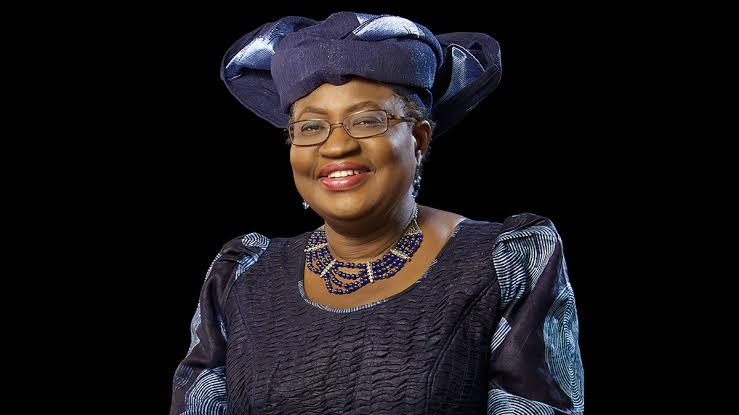
In its recent cover page, The Time magazine featured our own Dr Ngozi Okonjo Iweala, the President of the World Trade Organisation, as one of the most influential leaders in the world. She is the first African and black woman to occupy this position. She is a superstar of the international institutions where she worked to make the world a better place over the years. Having occupied many high profile positions in the World Bank and cutting her teeth in the murky waters of Nigerian public service as two time economic czar, she developed the leadership skills needed to make a difference globally in her new role.

In his remark on this great Nigerian and the role she is playing in combating the global pandemic, Prince Harry posited, “Okonjo Iweala has shown us that to end the pandemic, we must work together to equip every nation with equitable vaccine access.”

Furthermore, he asked, what will it take to vaccinate the world? And his answer is illuminating and puts our own Okonjo Iweala at the centre, “unity, cooperation – and leaders like Ngozi Okonjo Iweala.”

This great woman is Nigerian through and through. Her name is quintessential Igbo – not anglicised, her dressing is purely Nigerian and is showcasing our traditional attire to the world, and her accent is typical Nigerian for a woman who studied in Ivy League universities and lived in the US for decades. Nigerians celebrate her success of being named one of the TIME 100 Most Influential People of 2021.

The second story that was a breath of fresh air to Nigerians is that of a 22-years-old Nigerian, Ignatius Labour. This ingenious boy makes special drones from locally sourced materials. He was an internet sensation and gained national and international recognition. Redal Limited, a Finland based robotics company, employed him. Ignatius represents the raw talents in Nigeria and shows what is possible even with Nigeria’s limitations. Although lost to the West, Nigerians are proud of a boy who overcame all the inherent challenges and obstacles in Nigeria and applied his God-given talent to develop drones, a technological marvel that most Nigerians do not use or know.

Our third story comes from the success of a Nigerian and the Nigerian culinary masterpiece. The American Express One to Watch Award recognised IKOYI, a Nigerian-inspired eatery in the West End- London, as a rising star on the global scene of best restaurants in the world. IKOYI, named after the popular Ikoyi of Lagos, is among the world’s 50 Best Restaurants. Co-founded by childhood friends, Ire Hassan- Odukale and Jeremy Chan, IKOYI is unique in its drive for culinary ingenuity, gastronomic excellence, and breath-taking food innovation. It uses a panoply of flavours, combining authentic African, European, and Asian ingredients to create marvellous food presented with indefinable style. This entrepreneurial spirit by Ire is akin to the Nigerian hustles seen in every big city in the country.


Most Nigerians are not afraid to take their fate in their hands and pursue an enterprise of their dreams no matter the odds stacked against them by a harsh and deadly economic and business ecosystem that often is the graveyard of many a fantastic idea. Here is an environment where you provide everything for yourself, and in the end, you are either over-regulated or overtaxed by institutions that add little or no value to the success of your business. Ire is another example of what is possible if our business environment is fit for purpose.

The question begging for an answer is why are Nigerians so successful outside our shores and not so successful in our environment? The answer is our ecosystem – a combination of our structures, systems, and processes. It may

be a surprise that I did not lay the blame on Nigerians. The reason is two-fold: one, we are products of our environment, and as such, Nigerians are what the Nigerian ecosystem makes them; two, it is very simplistic to blame average Nigerians for the problems of Nigeria – youths are lazy, people are too religious, Nigerian workers are corrupt, people from certain ethnic groups are our problems – are some of blames people lay on Nigerians. But this blame is a symptom of the problem and not the problem itself. The significant issues are structural and systemic.

First, in Nigeria today, either there are no enabling institutions for growth, or where such exist, they are not fit- for-purpose or have collapsed completely. The lack of responsive institutions to drive development is the bane of Nigeria. Individuals are stronger than institutions, and if they have enough power, they subvert the institutions and cripple them to achieve whatever short-term goals they want. These influential individuals are not accountable to anything and anyone. They act with impunity and undermine the whole system. That is why corruption reigns

supreme. The psychological effect of the reign of powerful actors on Nigerians manifests in how many Nigerians value political power positions. Most political elite do whatever it takes to grab power. They know that in this clime, once you have political power, you can do just about anything. We live in a country where the body language of a president or governor is more critical than laid-down principles and rules that govern any activity. Institutions hardly matter. They only count when dealing with average Nigerians.

Second, weak or non-existent institutions have led to a stifling socio-economic environment. The Buhari-led government is doing its best to turn the tide of economic erosion. However, the decay is deep-rooted and proving very difficult to tackle. The economic indicators keep looking frightening – pervasive poverty is evident to all, inflation and unemployment are at an all-time high, education standards are at low ebbs, healthcare is on the brink of collapse with constant strike action by doctors, and trust in the system is eroding significantly. This situation fuels unprecedented insecurity in Nigeria as terrorism, banditry, kidnapping, and secessionist agitations have become the order of the day. The infrastructure deficit is enormous, and notwithstanding the considerable amount borrowed so far by this administration, it is still like a drop of water in the ocean compared to what is needed. This administration understands the need for adequate infrastructure for development, hence its commitment to rigorously upgrading and building infrastructure in the transport, power, water, and food sectors.

Thirdly, Nigeria has not been blessed with a critical mass of visionary and transformational leaders both in the political and corporate sectors to move the country to its rightful place in the comity of nations. This leadership deficit has created more harm in our ecosystem than any

other factor. Only a dedicated leadership will create the enabling environment that will bring about development. Examples abound in countries like Singapore, Asian Tigers, and UAE, where visionary leaders transformed their countries into first-world countries within a few decades. Nigeria has a morally bankrupt elite and political class that is only self-serving and rent seeking.

I must posit here that the future of Nigeria is in the hands of the leaders from this elite class and whatever Nigeria becomes is a result of their actions and inactions. As a matter of urgency, these leaders must institute the rule of law, equity and justice and allow all to enjoy the freedom and dividends inherent in democracy. The gap is in the dismal quality of persons who lead our public affairs. Amid the existential problems facing Nigerians, our political leaders are channeling their energies in positioning for the next elections. We should channel the energy dissipated on this political brinkmanship on solving Nigeria’s myriad of problems.

The Nigerians that succeed abroad are still Nigerians. Some have argued that “It’s in our gene because we have this inherent ability to make things happen where it may seem impossible to others, and we are extremely resourceful as a nation.” Others have argued that we have the resilience to survive and achieve anywhere we find ourselves because a “special case of lack of infrastructure in Nigeria engenders in us creativity, so where others might see chaos, Nigerians see opportunity.” A few others noticed our strong desire to “succeed in life, enabled by education and skill acquisition and this trait is a common theme in Nigerian homes.” All these factors are in most Nigerians, both home and abroad.

Nigerians are in top positions in various sectors in the West, and they are pulling their weight in gold. Nigeria benefits from them in the over $25bn they send back home every year. This amount is just a token compared to the value of their productivity in the West. The task is to make all Nigerians, especially those in Nigeria, very productive. The challenge of our national emergence is that at home we place compromise above merit. The world out there is a meritocratic space. It has no room for silly compromises and tokenism. We need to have the courage to insist on the highest standards from our citizens at home if we must compete with the rest of the world.

In conclusion, there is no gainsaying that the economic future of Nigeria and the success of Nigerians abroad are closely knit together. The lack of opportunities occasioned by a horrendous ecosystem drives many Nigerians away from home. Recently, the UK government employed over 383 medical doctors from Nigeria in just 100 days. We must control this flight of talent and skills; and take steps to close the gap between Nigerian’s success rate abroad and their success rate at home. Only by doing this will we create a Nigeria of our dreams – where echoes of succession, banditry and kidnapping will disappear.

2023: For Hakeem Baba-Ahmed

By Lasisi Olagunju

Alhaji Baba Ahmed, a Mauritanian cow seller, plied his trade from his country to the Gold Coast (now Ghana) and to Dahomey (now Benin Republic). Business was very good but at a point, his customers in Dahomey, with impunity, refused to pay for his cows. Is it not the law that every seller must collect the proceeds of his sale? This was not the case with the cow seller who was not a son-of-the-soil in Dahomey. The options before him were very limited. My people say if the landlord offends the tenant, it is the tenant who must go; again, if it is the tenant who has wronged the landlord, it is still the tenant who must go. This trader from Mauritania had to move out of Dahomey, leaving his money behind. And he moved, crossing over to Nigeria; first to Sokoto and later to Zaria. He entered Nigeria all alone but soon found Zaria a very conducive environment for his business, for his Islamic scholarship and for raising a family (See Daily Trust of Saturday, January 13, 2018). The Mauritanian finally settled in Zaria around 1920 – that was about 100 years ago – and died on November 5, 1987 in Zaria, reportedly at the age of 104 (see Facebook post of Abdulrahman M. Baba-Ahmed of 9 July, 2021).

Alhaji Baba Ahmed loved all and was much loved by all around him. He prospered in Zaria, Nigeria, had 33 children – and got all soundly educated. One of the 33 children of that Mauritanian businessman is Dr. Hakeem Baba-Ahmed, spokesman of the Northern Elders Forum (NEF) who spoke down to the entire southern Nigerian people last week. What did the south do to him? Because southern governors met in Enugu days earlier and demanded that the next president of Nigeria must come from the south, Hakeem, mouthpiece of the north, came out, emitting fire. The son of the Mauritanian immigrant shouted down the south and its 17 governors and boasted that his north had enough votes to defeat them and produce the next president. “We will lead Nigeria the way we have led Nigeria before. Whether we are president or vice-president, we will lead Nigeria. We have the majority of the votes and democracy says vote whom you want. Why should we accept a second class position when we know we can buy a form and contest for first class and we will win?,” he was heard saying so on television and in viral video clips. He said more: “If they don’t like the fact that it is a northerner who may emerge as the next president, too bad…”

I feel that was rather crude – and rude. Is it no longer the case that a guest does not break the dishes of his host? I am from the south of Nigeria and I feel hurt and insulted by what Baba-Ahmed said of my people. If you say you won’t ever play second in a game of two supposed equals then who will? Baba-Ahmed’s father was not an indigenous Nigerian but so was Joseph in the holy books. He was not an Egyptian yet he ended up as Prime Minister of Egypt. But could Joseph have achieved that lofty height and lasted in grace by spitting in the face of those who prepared the grounds for his ascendancy? If a first-generation northern Nigerian was that audacious and so condescending in talking to the south, I wonder what those whose fathers’ placentas were buried in the soil of Nigeria would do. Ethnic converts are like religious converts in zealotry. They swim in extremism. Remember Enoch, the “proud, zealous, and belligerent” Christian convert in Achebe’s Things Fall Apart. Remember, how, with his mouth, he serially provokes violent clashes with ‘the other side’ – his own south. And, remember that with his belligerence, he rips apart the mask of the sacred Egwugwu finally putting a knife on the things that hold his land together. That is the import of that insult from Baba-Ahmed.

Even if the south were his cows’ grazing ground, it should still get some measure of respect. Baba-Ahmed spoke to a south he took as his inheritance, a vast land of slaves. A carpenter thinks always of hammer and nails and there is an eternal connection between the earth and its fruits. The taproot of this talker is Mauritania, the very last country in the world to officially outlaw slavery. It did so as late as 1981 – 40 years ago. Even then, there are still castes of generational slaves in that country. The fair-skinned there are freeborn; the dark-complexioned are serfs. They are still there. The way Hakeem spoke against the south and the applause he got from his ABU, Zaria audience could only mean that he and his people thought (and think) the south is a camp of bondsmen and women; an enclave of enlightened slaves – with no useful votes; a band of hapless states whose governors are second class. The north holds the hammer of incumbency, and they will do anything with it. The people Hakeem Baba-Ahmed speaks for see the south and its loud denunciation of Nigeria’s current structure as impudent nails that must be hammered down. And they are hammering and breaking the nails one by one. I heard Baba-Ahmed say something like ‘we’ will produce the next president then let’s see what ‘they’ will do. Whenever I hear that kind of fire-rhetoric, I look at the chirping bird and the branch on which it stands. How about you produce your president, and I produce mine? Something like nail driving out nail as said by Desiderius Erasmus. But whose purpose will that anarchy serve?

If Nigeria burns, descendants of the Mauritanian have Mauritania to relocate to. They are citizens by descent under that country’s laws. Mauritania’s Nationality Code of June 12, 1961 says any child “at least one of whose parents is a citizen of Mauritania, regardless of the child’s country of birth” is a citizen by descent. Their old man died 34 years ago, yet the road to Mauritania has remained a familiar terrain for his surviving children. On Saturday April 17 this year (2021), Hakeem Baba-Ahmed with his brothers and sister and uncles had a family get-together in Nouakchott, Mauritania (see his Facebook post made on 18 April, 2021). That is the man threatening fire unless ‘his north’ has its way in Nigeria’s 2023 and at all times. When a man that has more than one home stirs trouble, the Yoruba have for him a saying: Asa o naani a nkun’gbe, igi da, eye oko fo lo (Kite does not care if the bush burns; when the tree falls, the bird flies away).

Now, let us look again at the words of the kite: “We will lead Nigeria the way we have led Nigeria before. Whether we are president or vice-president, we will lead Nigeria.” If you boast that you have led Nigeria all the time, including when all you had was Vice President, and the nation is this down and out, what does that tell you about your score? You failed; you are a failure. And do you think any sane people would put their future in care of such castes of failure? We go to his next sentence: “We have the majority of the votes and democracy says vote whom you want.” Baba-Ahmed’s north is so proud of its Almajirai population buoyed by ceaseless streams of illegal immigrants. Beyond using the overcrowded households to vote on election days, what else has been the benefit of that ‘majority’ to Nigeria? Omo beere, osi beere (many children, much misery). Every Yoruba child is taught that sense very early in primary one. If you can’t feed them, don’t birth them. Beggars give birth to beggars who also give birth to beggars on the streets of Lagos and Ibadan. They are there as I write; they procreate every minute and suffer generational misery. They are northerners without the care and empathy of northern elders. What excites their strange elders are the next elections and the veins of gold in their vaults. There should be no pride in birthing a pack of millions without skills beyond the menial and mendicancy. You hatch them in billions and load them in open trucks for your southern neighbours to house and feed and you mount the mountains now to proclaim your supremacy over that same south! Shamelessness has no better definition.

It is strange and surprising that Baba-Ahmed’s north still think southern agitation and restiveness are about posts and positions. No. That was the case years ago. The spirit roaming the streets of southern Nigeria today is not about Nigerian presidency or about who sits in there. It is about how to escape the north and its curse. They call it restructuring. The experience of recent years has told the south that having even a southern president won’t ever make any positive difference. Baba-Ahmed confirmed exactly that in his impudent statement. He said on the very few times when the north did not have the president, it was still the captain of the ship. Or what else did he mean by: “We will lead Nigeria the way we have led Nigeria before. Whether we are president or vice-president, we will lead Nigeria.” He added forcefully that a southerner would be supported only if the person would serve the north’s interest.

When a sheep says it wants to grow horns, it should be prepared to have its ears cut off. Baba-Ahmed’s Mauritanian people have some other interesting proverbs which should have guided his lips. They say: “He who begins a conversation does not foresee the end.” They also warn that “one must talk little and listen a lot.” And this one: “He who wears too fine clothes shall go about in rags.” That is rather deep! Now, apart from its production, harvest and circulation of terrorism, banditry, mass death and mass misery, what has the north achieved for itself and for Nigeria with its decades of being in power? If you spit in your partner’s face and tell him it is saliva then you are bold. But you can’t do that and forbid a reaction from the assaulted. Nigeria’s case now borders on the insane; it is the folkloric Omoye who has entered the market stark naked. When you listen again and again to Baba-Ahmed and you remember that this is a highly educated man who was even at a time the secretary of our electoral commission, you conclude that Nigeria’s ailment is truly beyond cure. But if you are right behind someone on a journey and you discover that the person does not behave normal, what do you do? You retrace your steps without letting him hear your footfall. The southern vibes and vibrations are exactly about that.

Copyright, Trademark, Industrial designs & Patent Registration; Prospects for Lawyers in Nigeria

[email protected],08037665878

Founder, LearnNigerianLaws.com

Convener, Sabi Law Lecture Series

DELIVERED ON SUNDAY, 29 JULY 2018 (7:00-9:00PM)

AT THE LAW, ETHICS AND PRACTISE (LEaP) WHATSAPP GROUP FOR LAWYERS AND LAW STUDENTS

9th SABI LAW LECTURE SERIES. 

LECTURE CONTENTS:

0. Profile of Onyekachi Umah

  1. How “Property-enough” is Intellectual Property?
  2. IP Market Stakeholders
  3. Opportunities for Lawyers In IP Market
  4. SabiLawMaster’s Interlude
  5. Ways to Strategically Position Yourself in IP Market
  6. How to Get IP Briefs
  7. Challenges in IP Market and their Solutions
  8. Conclusion

Download For FREE!

Full text of this lecture can be downloaded via the link below in PDF format.

THE LINK IS AFTER THE COMMENT BOX, BELOW.

COPYRIGHT_TRADEMARK_INDUSTRIAL_DESIGNS__PATENT_PROSPECTS_FOR_LAWYERS.pdf
COPYRIGHT_TRADEMARK_INDUSTRIAL_DESIGNS__PATENT_PROSPECTS_FOR_LAWYERS_1.pdf

TIPS