Home Blog Page 902

The Politics And Politricks Of ‘State Of Emergency’ In Anambra.

By Raymond Nkannebe

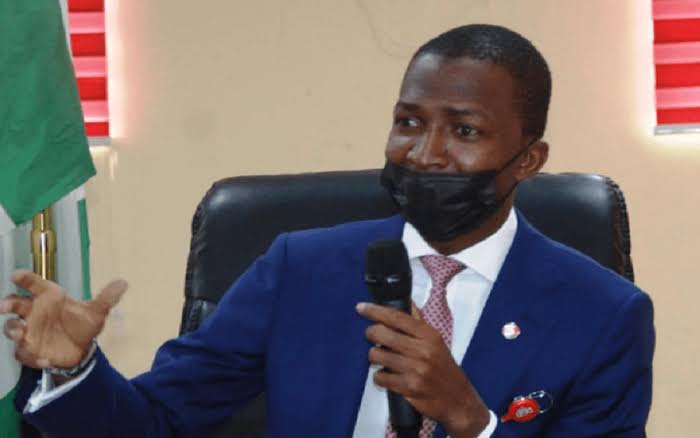
The statement credited to the Honourable Attorney General of the Federation, Abubakar Malami, SAN at a press briefing on Wednesday, 6th October, 2021 to the effect that all options will be explored to restore law and order, including a declaration of State of Emergency in Anambra State approaches what will be a keenly contested important election, has expectedly generated a furor in the polity.

The reason(s) given by the Attorney General of the Federation for this suggested extreme measure, is the seeming failure of the Anambra State Government to secure the safety of lives and properties of Anambrarians in the wave of a renewed campaign of violence by the so called unknown gunmen, but often attributed to elements in the proscribed Indigenous People of Biafra (IPOB). In his own words, “in order to forestall breakdown of law and order in the State, the Federal Government of Nigeria, may be left with no alternative to declare a state of emergency in the State so as to ensure the conduct of the November, 6th gubernatorial election”.

No doubt, in the last one month or probably more, the South East region; particularly Anambra State has seen an upsurge in violence by non-state actors. While fingers have been pointed at members of the proscribed IPOB as being responsible for the degenerating security situation, the group has always been quick to distance themselves from each particular incident citing their so called non-violent and civil approach to their ethnic nationalism agenda. Yet, the violence continues unabated.

From the enforcement of an illegal sit at home on select days of the week in the State, to the attack on various symbols of civil authority such as police stations, INEC offices, Road Safety formations including security operatives and some private citizens, the emerging consensus is that something has to give in Anambra to forestall a total breakdown of law and order, in the once peaceful state.

The forthcoming gubernatorial election in the State, has also, in a way, contributed to make the increasingly complex situation rather more convoluted. On more than one occasion, the government of Governor Willie Obiano has attributed the cascading violence in the State, as the handiwork of opposition politicians who seek to make the State ungovernable so as to achieve their nefarious electoral agenda. However, the governor’s assertions in this regard, appear to struggle for credibility against the backdrop of IPOB’s anti-election campaign in the State which has resulted in violent outcomes.

Even though a Spokesman of the secessionist group has come out to categorically declare that the group are yet to take a position on the forthcoming Anambra polls, the word on the Street is that they are averse to the holding of any election on “Biafran” soil. I, myself have seen pictures of the group’s apologists making a case in this regard via social media and of course, in and around the State. And what is more, this posturing is consistent with the group’s historical attitude to the conduct of elections in Anambra, and indeed the South East region.

Only last week, the convoy of a Federal Lawmaker was attacked by those suspected to be IPOB operatives leaving at least two people dead, in Ajali, a Town in Orumba North Local Government Area of the State. At a recent stakeholder engagement on the forthcoming election, the Chairman of the Electoral Commission, Mahmood Yakubu alluded to this anti-election agenda of the group while making a case for a more concerted security intervention in the State, to guarantee peaceful conduct of the high-stake polls. According to Mahmood, “…from the reports INEC had received, the goal of many of the attackers was that the governorship election must not hold“.

All of these, have aggregated to different contours of security concerns in the State, in a way that may justify the declaration of a state of emergency as provided under Section 305 of the 1999 Constitution. But a declaration of State of Emergency, on grounds of insecurity, has become an unduly politicized affair in our chequered political history. This, unarguably, is largely responsible for the push back that has greeted the Attorney General’s insinuation.

Leading that line of dissent is the governor of Anambra State, who shuttled to the Presidential Villa for an audience with President Muhammadu Buhari on what he described as the “assertions” of the Attorney General of the Federation. Coming out of the meeting, the Governor was quick to tell State House Correspondents that the President was not on the same page with his Attorney General, on how to address the security concerns in his State, which he would rather underestimate. The veracity of that representation on behalf of the President, who was not heard on the matter,   however remains to be seen.

Other interest groups with political leanings have also voiced their dissent to the Attorney General’s suggestion. While the People’s Democratic Party (PDP) describes it as a plot to rig the forthcoming elections in favour of the All Progressives Congress (APC) and its candidate, Senator Andy Uba; a group known as the Southern and Middle-Belt Alliance (SaMBA), queried why similar moves have not be taken by the Federal Government in States such as Kaduna, Katsina, Zamfara, Sokoto and Benue which has seen what they describe as a “festival of killings”. Yesterday, the Anambra Council of Traditional Rulers joined the fray in a Communiqué signed by Igwe Alfred Achebe—The Obi of Onitsha, after a meeting of the Council. “The Federal Government cannot by any stretch of imagination contemplate emergency rule on the strength of the 12 violent deaths in the last two or three weeks”, they said.

The fears often expressed by sitting state governors over threats of declaration of “Emergency Rule” over their State, has its roots in the erroneous, but widely held belief, that a declaration in that regard, neutralizes the democratic structures in the State such as the office of the governor, or the House of Assembly. This impression may not be unconnected to the sacking, by President Olusegun Obasanjo of the Governors of Plateau and Ekiti States respectively and appointment of Military Administrators, during the period of emergency imposed in those States while he was in Office.

However, the elaborate provisions governing declaration of Emergency in the Constitution do not, by any means, suggest that it warrants the removal of a democratically elected governor. While President Olusegun Obasanjo might have gotten away with such undemocratic acts in Plateau and Ekiti States, one is likely to attribute it to the nascence of our democracy at the time. The Constitution remains unequivocal that the permissible circumstances where a sitting governor may be removed from Office is upon resignation, health/medical incapacity of any kind, and/or impeachment by two/third majority of the House of Assembly of a State.

But one disturbing outcome of all these, is the tendency to politicize otherwise security issues which demand a patriotic and nationalistic response by the critical stakeholders, and its implications for genuine efforts at containing a crisis. For instance, despite all the documented and undocumented killings going on in Anambra, Governor Willie Obiano was quick to downplay the situation in his conference with the President. If I might paraphrase him: “we do not have any problem in Anambra. Those causing the problem are from outside the State, and we’re going to deal with them. We have identified them, and we’re going to get them“.

It must however be said that this unduly defensive posture, and whitewashing of an otherwise critical situation which doesn’t translate to the fact on ground in Anambra, serves only the parochial political interest of the Governor, who does not want any qualification or abridgment of his political authority in the State. It serves little or no gain, to the average man on the Streets of Anambra, who is at the receiving end of the growing campaign of violence.

What are the issues? They are as follows: there’s is growing secessionist campaign in the South East region; and Anambra particularly, with threats to the sovereignty of Nigeria, and the livelihoods of residents of the State; there is a forthcoming highly consequential election in the State, to decide its political future; and finally, there is a dissent by secessionist groups in the State against the holding of the election. All of these variables, present serious concerns for security in the State and the South Eastern region at large, and therefore call for extraordinary security response, particularly when the state government appears bereft of ideas to nip the snowballing crisis in the bud.

It is along this context, that one should situate the statement credited to the Attorney General of the Federation. The petty comparative security analysis embarked upon by Governor Willie Obiano and some officials of the state government in determining what State should receive an emergency declaration, misses the point. If anything, it shows that the governor is more interested in the preservation of his political authority, than the security and welfare of Ndi Anambra, which he swore to guarantee.

As Anambra inches towards the November 6th poll, the collective concern should be: how to create a safe environment for electorates to have a say, in the future of the State. Whatever method that is used to achieve that, including a declaration of emergency in the State, in my considered opinion, must take a secondary place. In any event, our recent elections have witnessed high presence of security operatives to ensure and guarantee popular participation in the polls. Anambra’s peculiar security situation, if anything, should accentuate the need at this time.

One issue remains unresolved: the allegation by APGA and PDP that the suggested declaration of emergency in the State, is to facilitate the rigging of the November 6th polls. While these are bare assertions, they nonetheless merit attention, having regard to events of our recent electoral history. Any reinforcement of security presence in the South East, including Anambra therefore, should be in the interest of restoring peace and security in the region. Security operatives have been indicted in the past for meddling in local elections, and conferring advantage on the candidate whose party calls the shot at Abuja. This, I believe, informs the fears and insinuations of APGA and PDP. Anambra however, cannot afford to be used as another platform for such electoral brigandage and it behooves on the State Governor, who is in charge, to ensure this outcome; howbeit, not in his own political interest.

Barring the execution of what we may, for now, describe as Malami’s threat, the bottom line is that there is a seething anger amongst the youth in the South East which has found potent expression via Mazi Nnamdi Kanu’s ethno-nationalistic agenda. Irrespective of how the cream of Igbo leadership may want to live in denial of the situation in the region, the extent to which these feelings are assuaged would have a positive or negative impact on the security outlook of Anambra and the South East, in general.

Raymond Nkannebe, a Legal Practitioner and Public Interest Commentator, writes from Lagos.

‘What will make Buhari’s character federal?’

Martins Oloja

It is a time to reflect on this thing called ‘character’’. John McCain, a significant Senator from Arizona, United States (1936-2018) wrote a book on character and the title is ‘Character is Destiny’ (2005). That title isn’t original to him. He borrowed some brilliance from a quote attributed to the Greek philosopher, Heraclitus who wrote on the subject we hardly talk about here in our milieu where we can no longer find any nexus between character and learning.

There are so many characters to reflect on in this place: character of our leaders, character of our ancestors and founding fathers, character of the nation, character of our dealers who sometimes parade themselves as leaders, character of our teachers, character of our business managers, character of our politicians, character of our state and non-state actors, character of our non-governmental organisations and non-governmental individuals, etc.

But today let’s ponder on the most important character today within the construct of nation building. I attended a media function recently and most of the contributors spoke angrily on so many triggers of our under-development that should be addressed by our leaders. But one of our senior colleagues stole everyone’s thunder when he said, “there are so many socio-economic problems as my colleagues have mentioned. There are so many issues ranging from debt burden to naira-to-dollar exchange rate palaver…There are issues of not-so- serious but overpaid legislators…We have the monster called corruption, fighting its fighters. We have issue of food insecurity, we have issue of what appears to be the most serious one – insecurity. But I tell you the most critical challenge we have, which we hardly talk about is our leaders’ lack of attention to the issue of ‘nation building….”

The media executive received some mild, spontaneous applause for the deep concern for Nigeria. My brother was spot-on.

The urgent task isn’t spirited preparedness for 2023 elections. It is how to rebuild this country’s broken walls. I once wrote here that we need a Nehemiah, that classic example of how to rebuild a nation with only one weapon: passion.

Our country has never been so divided. It is even on the brink. We no longer have Nigerians. We now have Nigerians of Igbo extraction, Nigerians of Yoruba nation, Nigerians of Fulani origin, Nigerians of Niger-Deltan people, etc…No one is proud to say a simple prayer, ‘God bless Nigeria’ as most people in any congregation would like to ask, Whose Nigeria?

This is why I would like to write this to those who would like to see a new Nigeria. At this time, ‘our leaders have gone mad again’ and they have put a knife on a thread that has held us together since 1914 and so things have fallen apart. But there is no need to read from a book of lamentation that our leader has publicly presented to us. I would like to say this from the ancient word that is ever true: ‘He who considers the weather will not sow…’

So, our politicians in Buhari administration should note that deft management of our federal character principles, which our leaders gave us through the 1979 Constitution, is the weapon to rebuild the broken walls of love that has kept us together. It is not permissible for our leaders to be playing to the gallery that rotational presidency isn’t in the letters of our constitution. But then it is in the spirit of the Constitution and the constitutions of the political parties. They are denying it because they know we don’t read and the political economy of legal practice here has made it difficult for our lawyers to be lawyers indeed.

There have been numerous criticisms of the president on the serial violation of the federal character provisions in the constitution but he has never listened to anyone. He thinks he is the law. The law doesn’t rule him. But the situation has become so messy and scandalous that a lawyer has again sued the President and his Attorney-General on their sensitive character that is not federal, after all. The background:

An Abuja-based lawyer, Festus Onifade, the other day sued President Buhari before a Federal High Court in Abuja over an alleged gross breach of Nigeria’s constitution in relation to recent Federal Character Commission (FCC) appointments. The President was sued alongside the Attorney General of the Federation (AGF) and Minister of Justice, Abubakar Malami, FCC, Mueeba Dankaka and Mohammed Tukur. The grouse of the plaintiff is that Mr Buhari allegedly violated some provisions of the Nigerian constitution in the manner of his political appointments.

In the suit marked FHC/ABJ/709/2021 and instituted on his behalf by his counsel, Moses Owuru, the plaintiff accused Buhari of violating sections 7 and 8 of the Constitution in the appointments of Ms Dankaka and Mr Tukur as Executive Chairman and Executive Secretary of the FCC respectively.
The plaintiff alleged that the two appointments were in clear breach of section 4 of the FCC Act having been made from the Northern part of the country. He, therefore, prayed the court to issue an order compelling Buhari to immediately dissolve the board of the commission and re-constitute it to reflect the principle and letters of the Federal Character Commission as enshrined in the 1999 constitution.

The plaintiff who claimed to have been aggrieved with the appointments also sought another order to compel Mueeba Dankaka and Mohammed Tukur to vacate their offices without any delay.

In a 21-paragraph affidavit in support of the suit, plaintiff averred that Buhari on March 18, 2020 appointed Ms Dankaka and on June 2, 2020, was confirmed by the Senate as Executive Chairman of the FCC.
He also claimed that Buhari appointed Tukur on 6 April 2017 as Executive Secretary of the FCC. He added that the appointee had continued to function in office since the expiration of his tenure on 6 April 2021. The plaintiff averred that since the two appointees being from the North, Buhari breached sections 7 and 8 of Nigeria’s constitution with their appointments. He urged the court to declare the appointments unlawful, unconstitutional, illegal, null and void. The paintiff also wants the court to declare that Buhari and other defendants in the suit are bound to abide by the provisions of the constitution as they relate to the principle of proportional sharing of all political offices.

You will recall that I drew attention to this anomaly here since June 18, 2017 in an article titled, ‘A Federal Character Commission Without Federal Character’ https://guardian.ng/opinion/a-federal-character-commission-without-federal-character/

But as usual, the president ignored the federal character bogeyman. Now it has become very embarrassing to the administration. As I was saying of the Police Force of the convoluted federation recently, for instance, the President appointed the Minister of Police Affairs, the Inspector General of Police from the North. Then there is a recent creation of our federal legislature, the Police Trust Fund whose Board has a Chairman and a Secretary. This was an opportunity for our president to right some wrong for our police force and its administration to reflect the character of the federation. But the accident-prone presidency would not get anything right. On May 6, 2020 the President appointed the Board of Trustees of the Police Trust Fund and named former Inspector General of Police, Suleiman Abba as Chairman of the Board of Trustees and Alhaji Aliyu Sokoto as Executive Secretary of the Board. The Inspector General of Police is a member of the Board representing the Police Force.

In what way is this 7-Man Board different from the absurdity at the Federal Character Commission?

In October 2018, ‘The Guardian’ editorial board drew the attention of the President to the ethnocentric tendencies inherent in his appointments when two key officers of his administration from the South were replaced with citizens from the North. Then the newspaper had noted that: ‘With each passing day, it is becoming apparent that President Muhammadu Buhari’s suspected ethnocentric and nepotistic tendencies are attaining an embarrassing proportion. The latest demonstration of this longstanding suspicion was the appointment of Mr. Yusuf Magaji Bichi as Director-General of the Department of State Services (DSS) to replace Mr. Matthew Seiyefa, who was recently appointed by then Acting President Yemi Osinbajo. Shortly after that, the President had also picked former Minister of State for Finance, Hajia Zainab Ahmed to replace Kemi Adeosun who resigned over certificate forgery scandal…’

These and other past actions have reinforced speculation about President Buhari’s prejudice and insensitivity to the principles of federal character in appointments. This is curious given the status and stature of the president as a retired army general and former military head of state.

Ordinarily, there is nothing intrinsically wrong in a president appointing persons with whom he is comfortable, or those he trusts. Working with persons with whom one has familiar fundamental and rationally grounded interests makes the job relatively easy. This is because a sense of understanding is more likely to be achieved. But since 2015, this hasn’t helped in national development and nation building.

There are cogent reasons why this action calls for concern. First, it is a violation of the principle of Federal Character. The principle of Federal Character, as contained in Act No. 34 of 1996, which established the Federal Character Commission, is an attempt to entrench fairness and equity in the distribution of public posts and socio-economic infrastructure among the various federating units of the Federal Republic of Nigeria. It has been featuring in Nigeria’ constitution since 1979. And it is in the current 1999 constitution.

Section 14 (3) of the 1999 constitution reads: ‘The composition of the Government of the Federation or any of its agencies and the conduct of its affairs shall be carried out in such a manner as to reflect the federal character of Nigeria and the need to promote national unity, and also to command national loyalty, thereby ensuring that there shall be no predominance of persons from a few States or from a few ethnic or other sectional groups in that Government or any of its agencies’.

The phrase ‘Federal Character’ was first used by the late General Murtala Ramat Muhammed in his address to the opening session of the Constitution Drafting Committee on Saturday, October 18, 1975. Federal character of Nigeria, according to the CDC’s report of 1977, refers to the distinctive desire of the peoples of Nigeria to promote national unity, foster national loyalty and give every citizen of Nigeria a sense of belonging to the nation notwithstanding the diversities of ethnic origin, culture, language or religion which may exist and which it is their desire to nourish, harness to the enrichment of the Federal Republic of Nigeria.

The Federal Character principle has its root in proneness for fairness. The 50 wise men who drafted the 1979 Constitution understood that disposition. They justified the entrenchment of the federal character principle in our constitution using the following words, ‘There had in the past been inter-ethnic rivalry to secure the domination of government by one ethnic group or combination of ethnic groups to the exclusion of others. It is therefore essential to have some provision to ensure that the predominance of persons from a few states or from a few ethnic or other sectional groups is avoided in the composition of government, in the appointment or election of persons to high offices in the state…’

Therefore, whimsical violation of the principle of federal character is not only a bad precedent, but also a potent demonstration that government does not care about nation building, after all.

#

After Northern and Southern Governors Butting of Heads: What Next? By Magnus Onyibe

Hakeem Baba Ahmed, the petulant spokesman of the Northern Elders Forum, NEF, literally threw gasoline into the fire already ignited by the southern governors Enugu declaration that the presidency must return to the south in 2023 based on the gentleman’s agreement entered into between northern and southern politicians during 1994/5 national conference.

It is not surprising that an incendiary statement that he made at an event held in Zaria, Kaduna State would literarily set the already combustible political atmosphere alight.

Hear him: “We will lead Nigeria the way we have led Nigeria before, whether we are President or Vice President, we will lead Nigeria. We have the majority of the votes and the democracy says vote whom you want.”

Baba-Ahmed was actually reacting to the demand by the southern states governors that the pendulum of the presidency of Nigeria must swing to the south in 2023 in consonance with the agreement which had been in operation since the return of multi party democracy in 1999.

Due to the fact that the political space was already charged with negative energy and the embers of hate were still flying between northerners and southerners , his speech was misinterpreted as the following critical component of it was ignored:
“… we will lead Nigeria whether we are president or Vice President…”

An unbiased reading of the statement does not imply that Baba Ahmed was suggesting that northerners are born to rule as some commentators have concluded. With emphasis on the phrase “…or Vice President”, it is clear that he admitted that the north may produce the Vice President as was the case with Namadi Sambo who was Vice President to Goodluck Jonathan (2010-2015).

But given the present toxicity of the political atmosphere, the un-curated comment by Baba-Ahmed heated up the polity. And it did not help when the northern governors in concert with their traditional rulers met and released the following statement in a communique which seemed to have endorsed Baba-Ahmed’s unguarded utterance and hell was literarily let loose.

The communique reads thus :“Some Northern States Governors had earlier expressed views for a power-shift to the three geo-political zones in the South with a view to promoting unity and peace in the nation.”

The statement read by Plateaus state governor, Simon Lalong on behalf of his colleagues rejected the demand of the southern governors with the following assertion:
“Notwithstanding their comments, the forum unanimously condemns the statement by the Southern Governors Forum that the Presidency must go to the South.

“The statement is quite contradictory with the provision of the Constitution of the Federal Republic of Nigeria (1999) as amended that the elected President shall: score the majority votes; score at least 25 per cent of the votes cast in 2/3 states of the federation. In the case of run-up, simple majority wins the election.”

Again, reading the statement without prejudice, it would be apparent that the northern governors are not against power shift per se. But their gripe is with the autocratic word “must” which is deemed to be undemocratic. Either the word “must” was unwittingly employed by the southern governors in their communique or the northern governors were nitpicking or politicking by latching onto such a democracy technicality to engage in filibustering.

Whatever the case may be , it is relieving to know that there is really no conspiracy from the northerners against presidential power shift from their zone to the south in 2023.

An aspect of the development on which most commentators have not expressed any opinion, is that while the south has continued to speak as governors , the north has been speaking as governors and elders. That is because they have been carrying their traditional rulers along by holding joint meetings with them. And that is always reflected in their communiques?

Does this suggest that the northern governors accord their traditional rulers and elders more respect and recognition than their southern counterparts who appear to be solo in their deliberations and negotiations? Another unique pattern that l have noticed is that all the northern governors seem to be in sync with their common objective and purpose. This is evidenced by the fact that they are all often fully represented at the meetings organized by the forum . Contrarily, Southern governors meetings have not had in attendance the full compliment of governors. Cross Rivers and Anambra states governors who have absented themselves the most, are the main culprits. And they appear to be rebellious and therefore represent a weak link in the group which is quite appalling as the aforementioned duo pose existential threat to the unity of southern governors.

By and large , by issuing a communique alleging that the southern governors were undemocratic in their approach, the northern governors can be said to be equally guilty of the offense that they had earlier berated their southern counterparts for committing. Applying the same standard that they have set, the ideal thing for the northern governors and elders to have done would have been to quietly engage with their southern counterparts with a view to pointing out that they were out of order by toeing the autocratic path in using the offending word “must”in their communique.

Instead , they went public and literarily threw the book , and if you like, kitchen sink at the southern governors by reprimanding them openly.

In any case, the impasse is a classical manifestation of the dictum, ‘two wrongs can not make a right’
Meanwhile , the decisions made by both sides to engage in public war of words fit into the play book of politicians. Typically , they like to raise the stakes via dramas and melodramas. Since it is a critical part of politicking, it is no surprise to most political aficionados.

In a widely publicized opinion piece entitled : “How To Become The president Of Nigeria, 2023”, where l dwelt on the face-off between the politicians on both sides of the divide about presidential power shift , l had predicted an amicable resolution. Here is how l had put it.“Ordinarily, the Southern governors could be said to be re-affirming an existing agreement. But their northern counterparts do not see it as such. Instead ,they deem the decision of the southern governors as an imposition. Apparently , the northern governors are affronted by the fact that what should have been negotiated was turned into a grandstanding affair. Hopefully, after the initial filibustering which is a major part of politics, both the southern governors who needed to show their constituents that they are not Lily-livered, but posses some spunk, and the northern governors who may be intent on getting something in return for the likely impending concession of the presidency to the south in 2023, which is typical of politicians who often get a kick from horse-trading, would settle their differences.”

A typical example of the on going political brick brats in Nigeria is the contest of political interests that is currently playing out between the progressives in the US House of Representatives and moderates in the senate. Although they are both members of the ruling Democratic Party under president Joe Biden, the passage of the party’s strategic development proposal has been held up or suspended in congress a couple of times because the law makers in both the progressive and moderate camps are yet to find common grounds or balance in their group interests.

For instance, following the grandstanding by the caucuses led by the likes of senator Joe Manchin of Virginia and representative Pramila Jayapal -of Washington , the infrastructure bill which is a defining policy of Biden’s regime, already passed in the senate is currently suspended.

But it would eventually be passed by the House of Representatives after being put through the crucible via the fiery resistance by the progressives who want their interests in the jobs support and social services proposal, accommodated.

The political wrangling which has so far resulted in stalemating the passage of $1.5 trillion and $3.5 trillion bills that would positively impact the lives of millions of Americans may be equated to passing raw gold through the furnace prior to its becoming a refined gem. The situation is not different in the United Kingdom, Uk where prime minister , Boris Johnson is facing internal resistance within his party. The rebellion stems from the fear of higher tax arising from the proposed reform that involves injection of funds into the UK health system, NHS . As expected, the echoes of the impending tax burden is threatening to overshadow events in Manchester where the Tories are holding their annual conference.

And typical of political actors , 50 members of parliament from his party broke ranks with Boris Johnson.

But after all said and done, the politicians would iron out their differences and leave the conference with the leadership of the Conservative Party being on the same page.

As to be expected , the opposition Labor Party had in the previous week in a similar conference held in Brighton accused the ruling party of wrecking the lives of Britons with Brexit and it is now saddling the working class with huge burden tax which they intend to revolt against.

Their stance is a counterpoise to the Tories proposed £500b jobs support fund and funding for the NHS reform which would be extracted as tax from the workers.

Given the above narrative of how multi party presidential and parliamentary systems of government are playing out in both the USA and the Uk, the situation in our country , which acquired its former parliamentary and present presidential systems of government from those two countries, can not be an exception. Hence , the face-off between northern and southern politicians can not just be ephemeral as evidenced by the cases in the USA and UK where after engaging in intensive dialogues, the countries always move forward stronger and better.

That simply implies that political squabbles often lead to significant positive changes in the policies of government and by extension impart the society in salutary ways.

Bearing that in mind, l regard the clash between the northern and southern governors in Nigeria as putting the gentleman agreement on rotation of presidential power through a furnace. The contest of wits would also facilitate the fine-tuning of the controversial Value Added Tax, VAT now in the front burner of political discus even as it should compel the devolution of power to the states via the movement of some functions currently captured in the Exclusive to the Concurrent list.

If those propositions can come into reality, they would make states more nimble and the federal government not as powerful as it is currently, which is also known as restructuring.

It is expected that after the envisaged intensive politicking which would hopefully whittle the power of the government in the centre and strengthen the capacity of the states, it may become easier to determine whether the rotation of presidential power between the former northern and southern protectorates of the British empire that merged in 1914 should be sustained beyond 2023.

My guess is that at the end of the anticipated joint deliberations which should be vigorous and no holds barred ,so that the presidency of Nigeria would become not as powerful and therefore equally unattractive to deserve the current ethno-religious energy and financial resources invested in acquiring it. That is one assured way that our country would be transformed into a better nation.

With a congenial political atmosphere , there would no more be reasons for the current north-south divide to fester , as the leaders that would emerge would be those with the political zeal for mutually beneficial co-operation between the multiple ethnic nationalities for the common good of all.

That is assuming for the sake of morality, it is accepted that the third member of the Nigerian triumvirate that is yet to benefit from the presidential zoning arrangement-the lgbos would be given the opportunity to take their turn in calling the shots in Aso Rock Villa , at least initially as Vice President before being elevated to the position of President on a second term so that as they say in local parlance, the equation may be balanced before discontinuing the practice. Any attempt by the PDP to ignore the current political dynamics in the country by sticking to its old ways, and the lgbo nation being inflexible, instead of thinking outside the box ,would see the party go into extinction after 2023. The assertion above is underscored by the fact that it would loose more states to the ruling party, APC and shrink like APGA got reduced to just one state in the south east due to insularity. Bola Tinubu’s ACN was conscious of the threat and expanded its scope by fixing its gaze beyond Yoruba land.

Ditto for Mohammadu Buhari’s CPC, which transited from an ethnic oriented to a national party via its merger with other like minded to form CPC.

While not denying that the informal presidential power sharing arrangement has played a critical role in sustaining Nigeria’s unity since 1999 , l am of the conviction that, it is probably responsible for the zero-sum politics that is currently hobbling the efforts of successive administrations to build up infrastructure that would engender prosperity and deepen democracy in our beloved country.

It is astonishing how events in the past 6 years have proven that the presidential zoning arrangement which had been deemed to be an efficacious political balancing mechanism between northern and southern ethnic nationalities can be susceptible to abuse. Arising from that reality , there is urgent need for a robust and sustainable solution to the issues that threw up the zoning of presidential power between the north and south which is the mutual suspicion about the dominance of a group over the others. The criticality of the matter of fixing the broken political system is such that politicians can not afford to continue to doodle over that assignment by literarily‘ kicking the can down the road ’ as Americans like to term it.

For instance, owing to the negative impact on progress and prosperity that zero-sum politics has foisted on the politics of our country since 1999, we urgently need to eliminate the tendency for successive ethnic nationalities who take over Aso Rock Villa to be obsessed with
the agenda of bringing down the castle built by their predecessors and replacing same with a monument anchored on their own kit and kin.

That is clearly the reason , that every 8 years when the presidential pendulum swings from the north to south or vice versa, our country goes back to ground zero in terms of socio-economic development.

In replacement, we can adopt a multi -sum political arrangement that is equity based , all inclusive and merit driven that would encourage the next president to build on the structure erected by his predecessor for the advancement of progress and prosperity of all Nigerians irrespective of ethnicity or religion. That would be a positive antithesis to retrogression which the zero-sum system currently in practice, has wrought on our beloved nation.

And l would argue that zero-sum politics is for instance , one of the key reasons that countries like Indonesia which was at par with Nigeria at independence in 1960 can boast of GDP of $1.1 trillion while Nigeria is posting less than $440 billion, which is less than half of Indonesia’s that should be her peer.

But whether the northern and southern political actors currently butting their heads would see the contest of wits as a refining process for public policies and programs for the greater good of all, as opposed to the fight to finish between the north and south , as Baba-Ahmed characterized it in his address to the youths in Kaduna , is another kettle of fish.

Experience, which sages recommend as the best teacher, has taught us that violence and deployment of force as solution to social issues, rarely usher peace into any society. If at all, it only engenders hollow and temporary reprieve.

And that amounts to postponing the evil day. Our founding fathers were aware of the benefits of dialogue, hence back in the days of the practice of parliamentary system of government,1960/6, it was not uncommon for the leaders of the regions to grandstand. But the points of disagreement were never allowed to fester and degenerate into intractable conflict or crisis in the manner that such are bedeviling our country.

Based on historical records, at a point in our checkered history , the leader of then eastern region, Sir Micheal Okpara wanted secession as a clause embedded in the constitution. But the northern and western leaders, Sir Ahmadu Bello and Chief Obafemi Awolowo respectively rejected it. Subsequently, in an ironic twist , both the northern and western leaders that had earlier dissented, later demanded the inclusion of a referendum proviso in Nigeria’s statute book. The table was turned literarily as , Okpara, eastern region premier opposed it.

Today, the lgbos that are pressing for referendum via Indigenous People of Biafra , IPOB, are prohibited by the authorities from doing so. That is ostensibly because there is no constitutional backing for separatism and the current Aso Rock Villa occupants have zero tolerance for such agitations.

The beauty of governance under the parliamentary system which the British practice and bequeathed to Nigeria upon independence is that whenever any party to the union was uncomfortable with any rule or condition guiding the partnership , the concerns were ironed out during conferences that were held in Ibadan , Enugu and Kaduna.

So in the good old days , the unity of Nigeria was negotiated by the leaders of the east , north and west , later mid-west and our country did not break up. That is in stark contrast with the current dispensation whereby the mantra: the unity of Nigeria is not negotiable, is oft touted by the powers that be in Aso Rock Villa. The simple rule of the thump about partnerships and marriages is that if they can not be negotiated, they would ultimately be broken.

The unfortunate civil war of 1967-70 with its horrific consequences ingrained in our memories is likely the driver for the mindset of Aso Rock Villa that the unity of Nigeria is not negotiable .
But as genuine as the desire to keep Nigeria as one indivisible entity is , it appears to me that the ineffectual and ineffective proclamation by the leaders in Aso Rock Villa that Nigeria’s unity is not negotiable may be doing more harm than good to “The labors of our heroes past…” which may end up being in vain if per adventure our country unhinges. That would be a negation of a critical stanza in Nigeria’s national anthem:”The labors of our heroes past shall not be in vain.”

It is incontestable that the alarming rate at
which separatist movements are popping up around the country is the underlying reason that Nigeria’s unity should be negotiated, so that the grievances of members of the union may be addressed for peace to reign.

Not rescinding the policy which is unsustainable is an avoidable folly on the part of the federal government which is apparently yet to come to the realization that it is it’s stiff neck attitude against negotiating the unity of Nigeria that is responsible for the rising spate of vicious agitations for secession from the east, now being joined by the west and middle belt regions of our beloved country.

If the atmosphere of fairness, equality and justice are prevalent, l don’t know any ethnic nationality that would not want to remain part of Nigeria?

Under the presidential system operationalized by the military via the 1979 constitution, national conferences to iron out differences between the multiple ethnic nationalities for harmonious co-existence before matters degenerate into serious crisis are no longer regularly held . That is signposted by the fact that in a period of over 21 years since the return of multi party democracy in our country , it is only the 2014/15, national conferences that has been held.

Before then, the military government led by Sani Abacha had organized a sovereign national conference in 1994/5.
Matters are even made worse by the fact that the recommendations on how to make the country better after the intensive conferences between the multiple nationalities , are never implemented.

A comparison between the current situation of little or no national dialogue to the period of the practice of parliamentary system of government when inter regional dialogues were regularly held by the leaders of the regions in lbadan , Enugu and Kaduna would reveal why there was consistent peace and unity in our country pre 1966 military coup detat and the present situation whereby our country is tottering on the brinks of collapse as a result of avoidable conflicts.

Today , rather than regular conferences between and amongst the 36 federating units or states, the toxic contents of communiques emanating from the 19 northern and 17 southern states governors meetings, has squeezed out all the oxygen of national unity.

It is trite to state that it is such exclusive regional meetings, which symbolize separatism, that significantly constitute the factors doing grave damage to the fabric of unity of our dear country.

Whereas it was evident to democracy enthusiasts like us that there are risks inherent in the unwholesome gatherings by governors from the north , which often amplify the pre amalgamation divisions , it was not apparent to the purveyors of the practice that it was adversarial until their southern counterparts copied the practice as a counter poise.

One of the obvious negative fallouts is the current stalemate arising from both sides issuing each other, ultimatums and rebukes.

Beyond what is in open view , are other incipient damages done since 1999 to the chord of unity before what seems like the proverbial straw that broke the camel’s back currently on display.

Of course there is nothing inherently wrong with the concept of ethnic groups or regions meeting to marshal out what is of strategic interest to them. What is harmful is a situation where the sub national groups fail to subsequently hold meetings with each other to find common grounds on identified issues of national interest.

The evolution of such inter regional meetings between southern and northern governors as well as traditional rulers is part of the underlying reason for my optimistic projection that there would soon be a sheathing of swords and engagement in negotiations by the feuding politicians.

It is fortuitous that a process of resolution of the impasse has already kicked in with Nasir El-Rufai, the governor of Kaduna state and the host of the last NEF meeting offering a clarification about the position of the north.

The Kaduna state governor pointed out that the content of the communique had been misrepresented, and thus misunderstood by the majority of Nigerians who felt the offending statement is hypocritical.

And El-Rufai took it upon himself to remind the aggrieved that power shift is actually enshrined in the All Progressives Congress (APC) and the Peoples Democratic Party (PDP) constitutions.

He further re-assured southerners that the APC committee set up and charged with chatting the way forward for the party after 2019 victory at the polls which he led had recommended power shift to the south in the interest of peace and harmony.
What can be more?

The positive attitude of the host governor of the NEF meeting that is now on the path of rapprochement has been consolidated by a rather conciliatory statement by the hitherto combative NEF spokesman, Hakeem Baba-Ahmed who admitted that “What is left is for the Northern governors to engage with their Southern colleagues on the way forward,”
In light of the above , l think our dear country is about to see the back of the intractable political crisis which had reared its ugly head via the unhelpful communiques issued by both the southern and northern governors.After Northern and Southern Governors Butting of Heads: What Next? By Magnus Onyibe

Hakeem Baba Ahmed, the petulant spokesman of the Northern Elders Forum, NEF, literally threw gasoline into the fire already ignited by the southern governors Enugu declaration that the presidency must return to the south in 2023 based on the gentleman’s agreement entered into between northern and southern politicians during 1994/5 national conference.

It is not surprising that an incendiary statement that he made at an event held in Zaria, Kaduna State would literarily set the already combustible political atmosphere alight.

Hear him: “We will lead Nigeria the way we have led Nigeria before, whether we are President or Vice President, we will lead Nigeria. We have the majority of the votes and the democracy says vote whom you want.”

Baba-Ahmed was actually reacting to the demand by the southern states governors that the pendulum of the presidency of Nigeria must swing to the south in 2023 in consonance with the agreement which had been in operation since the return of multi party democracy in 1999.

Due to the fact that the political space was already charged with negative energy and the embers of hate were still flying between northerners and southerners , his speech was misinterpreted as the following critical component of it was ignored:

“… we will lead Nigeria whether we are president or Vice President…”

An unbiased reading of the statement does not imply that Baba Ahmed was suggesting that northerners are born to rule as some commentators have concluded. With emphasis on the phrase “…or Vice President”, it is clear that he admitted that the north may produce the Vice President as was the case with Namadi Sambo who was Vice President to Goodluck Jonathan (2010-2015).

But given the present toxicity of the political atmosphere, the un-curated comment by Baba-Ahmed heated up the polity. And it did not help when the northern governors in concert with their traditional rulers met and released the following statement in a communique which seemed to have endorsed Baba-Ahmed’s unguarded utterance and hell was literarily let loose.

The communique reads thus :“Some Northern States Governors had earlier expressed views for a power-shift to the three geo-political zones in the South with a view to promoting unity and peace in the nation.”

The statement read by Plateaus state governor, Simon Lalong on behalf of his colleagues rejected the demand of the southern governors with the following assertion:

“Notwithstanding their comments, the forum unanimously condemns the statement by the Southern Governors Forum that the Presidency must go to the South.

“The statement is quite contradictory with the provision of the Constitution of the Federal Republic of Nigeria (1999) as amended that the elected President shall: score the majority votes; score at least 25 per cent of the votes cast in 2/3 states of the federation. In the case of run-up, simple majority wins the election.”

Again, reading the statement without prejudice, it would be apparent that the northern governors are not against power shift per se. But their gripe is with the autocratic word “must” which is deemed to be undemocratic. Either the word “must” was unwittingly employed by the southern governors in their communique or the northern governors were nitpicking or politicking by latching onto such a democracy technicality to engage in filibustering.

Whatever the case may be , it is relieving to know that there is really no conspiracy from the northerners against presidential power shift from their zone to the south in 2023.

An aspect of the development on which most commentators have not expressed any opinion, is that while the south has continued to speak as governors , the north has been speaking as governors and elders. That is because they have been carrying their traditional rulers along by holding joint meetings with them. And that is always reflected in their communiques?

Does this suggest that the northern governors accord their traditional rulers and elders more respect and recognition than their southern counterparts who appear to be solo in their deliberations and negotiations? Another unique pattern that l have noticed is that all the northern governors seem to be in sync with their common objective and purpose. This is evidenced by the fact that they are all often fully represented at the meetings organized by the forum . Contrarily, Southern governors meetings have not had in attendance the full compliment of governors. Cross Rivers and Anambra states governors who have absented themselves the most, are the main culprits. And they appear to be rebellious and therefore represent a weak link in the group which is quite appalling as the aforementioned duo pose existential threat to the unity of southern governors.

By and large , by issuing a communique alleging that the southern governors were undemocratic in their approach, the northern governors can be said to be equally guilty of the offense that they had earlier berated their southern counterparts for committing. Applying the same standard that they have set, the ideal thing for the northern governors and elders to have done would have been to quietly engage with their southern counterparts with a view to pointing out that they were out of order by toeing the autocratic path in using the offending word “must”in their communique.

Instead , they went public and literarily threw the book , and if you like, kitchen sink at the southern governors by reprimanding them openly.

In any case, the impasse is a classical manifestation of the dictum, ‘two wrongs can not make a right’

Meanwhile , the decisions made by both sides to engage in public war of words fit into the play book of politicians. Typically , they like to raise the stakes via dramas and melodramas. Since it is a critical part of politicking, it is no surprise to most political aficionados.

In a widely publicized opinion piece entitled : “How To Become The president Of Nigeria, 2023”, where l dwelt on the face-off between the politicians on both sides of the divide about presidential power shift , l had predicted an amicable resolution. Here is how l had put it.“Ordinarily, the Southern governors could be said to be re-affirming an existing agreement. But their northern counterparts do not see it as such. Instead ,they deem the decision of the southern governors as an imposition. Apparently , the northern governors are affronted by the fact that what should have been negotiated was turned into a grandstanding affair. Hopefully, after the initial filibustering which is a major part of politics, both the southern governors who needed to show their constituents that they are not Lily-livered, but posses some spunk, and the northern governors who may be intent on getting something in return for the likely impending concession of the presidency to the south in 2023, which is typical of politicians who often get a kick from horse-trading, would settle their differences.”

A typical example of the on going political brick brats in Nigeria is the contest of political interests that is currently playing out between the progressives in the US House of Representatives and moderates in the senate. Although they are both members of the ruling Democratic Party under president Joe Biden, the passage of the party’s strategic development proposal has been held up or suspended in congress a couple of times because the law makers in both the progressive and moderate camps are yet to find common grounds or balance in their group interests.

For instance, following the grandstanding by the caucuses led by the likes of senator Joe Manchin of Virginia and representative Pramila Jayapal -of Washington , the infrastructure bill which is a defining policy of Biden’s regime, already passed in the senate is currently suspended.

But it would eventually be passed by the House of Representatives after being put through the crucible via the fiery resistance by the progressives who want their interests in the jobs support and social services proposal, accommodated.

The political wrangling which has so far resulted in stalemating the passage of $1.5 trillion and $3.5 trillion bills that would positively impact the lives of millions of Americans may be equated to passing raw gold through the furnace prior to its becoming a refined gem. The situation is not different in the United Kingdom, Uk where prime minister , Boris Johnson is facing internal resistance within his party. The rebellion stems from the fear of higher tax arising from the proposed reform that involves injection of funds into the UK health system, NHS . As expected, the echoes of the impending tax burden is threatening to overshadow events in Manchester where the Tories are holding their annual conference.

And typical of political actors , 50 members of parliament from his party broke ranks with Boris Johnson.

But after all said and done, the politicians would iron out their differences and leave the conference with the leadership of the Conservative Party being on the same page.

As to be expected , the opposition Labor Party had in the previous week in a similar conference held in Brighton accused the ruling party of wrecking the lives of Britons with Brexit and it is now saddling the working class with huge burden tax which they intend to revolt against.

Their stance is a counterpoise to the Tories proposed £500b jobs support fund and funding for the NHS reform which would be extracted as tax from the workers.

Given the above narrative of how multi party presidential and parliamentary systems of government are playing out in both the USA and the Uk, the situation in our country , which acquired its former parliamentary and present presidential systems of government from those two countries, can not be an exception. Hence , the face-off between northern and southern politicians can not just be ephemeral as evidenced by the cases in the USA and UK where after engaging in intensive dialogues, the countries always move forward stronger and better.

That simply implies that political squabbles often lead to significant positive changes in the policies of government and by extension impart the society in salutary ways.

Bearing that in mind, l regard the clash between the northern and southern governors in Nigeria as putting the gentleman agreement on rotation of presidential power through a furnace. The contest of wits would also facilitate the fine-tuning of the controversial Value Added Tax, VAT now in the front burner of political discus even as it should compel the devolution of power to the states via the movement of some functions currently captured in the Exclusive to the Concurrent list.

If those propositions can come into reality, they would make states more nimble and the federal government not as powerful as it is currently, which is also known as restructuring.

It is expected that after the envisaged intensive politicking which would hopefully whittle the power of the government in the centre and strengthen the capacity of the states, it may become easier to determine whether the rotation of presidential power between the former northern and southern protectorates of the British empire that merged in 1914 should be sustained beyond 2023.

My guess is that at the end of the anticipated joint deliberations which should be vigorous and no holds barred ,so that the presidency of Nigeria would become not as powerful and therefore equally unattractive to deserve the current ethno-religious energy and financial resources invested in acquiring it. That is one assured way that our country would be transformed into a better nation.

With a congenial political atmosphere , there would no more be reasons for the current north-south divide to fester , as the leaders that would emerge would be those with the political zeal for mutually beneficial co-operation between the multiple ethnic nationalities for the common good of all.

That is assuming for the sake of morality, it is accepted that the third member of the Nigerian triumvirate that is yet to benefit from the presidential zoning arrangement-the lgbos would be given the opportunity to take their turn in calling the shots in Aso Rock Villa , at least initially as Vice President before being elevated to the position of President on a second term so that as they say in local parlance, the equation may be balanced before discontinuing the practice. Any attempt by the PDP to ignore the current political dynamics in the country by sticking to its old ways, and the lgbo nation being inflexible, instead of thinking outside the box ,would see the party go into extinction after 2023. The assertion above is underscored by the fact that it would loose more states to the ruling party, APC and shrink like APGA got reduced to just one state in the south east due to insularity. Bola Tinubu’s ACN was conscious of the threat and expanded its scope by fixing its gaze beyond Yoruba land.

Ditto for Mohammadu Buhari’s CPC, which transited from an ethnic oriented to a national party via its merger with other like minded to form CPC.

While not denying that the informal presidential power sharing arrangement has played a critical role in sustaining Nigeria’s unity since 1999 , l am of the conviction that, it is probably responsible for the zero-sum politics that is currently hobbling the efforts of successive administrations to build up infrastructure that would engender prosperity and deepen democracy in our beloved country.

It is astonishing how events in the past 6 years have proven that the presidential zoning arrangement which had been deemed to be an efficacious political balancing mechanism between northern and southern ethnic nationalities can be susceptible to abuse. Arising from that reality , there is urgent need for a robust and sustainable solution to the issues that threw up the zoning of presidential power between the north and south which is the mutual suspicion about the dominance of a group over the others. The criticality of the matter of fixing the broken political system is such that politicians can not afford to continue to doodle over that assignment by literarily‘ kicking the can down the road ’ as Americans like to term it.

For instance, owing to the negative impact on progress and prosperity that zero-sum politics has foisted on the politics of our country since 1999, we urgently need to eliminate the tendency for successive ethnic nationalities who take over Aso Rock Villa to be obsessed with

the agenda of bringing down the castle built by their predecessors and replacing same with a monument anchored on their own kit and kin.

That is clearly the reason , that every 8 years when the presidential pendulum swings from the north to south or vice versa, our country goes back to ground zero in terms of socio-economic development.

In replacement, we can adopt a multi -sum political arrangement that is equity based , all inclusive and merit driven that would encourage the next president to build on the structure erected by his predecessor for the advancement of progress and prosperity of all Nigerians irrespective of ethnicity or religion. That would be a positive antithesis to retrogression which the zero-sum system currently in practice, has wrought on our beloved nation.

And l would argue that zero-sum politics is for instance , one of the key reasons that countries like Indonesia which was at par with Nigeria at independence in 1960 can boast of GDP of $1.1 trillion while Nigeria is posting less than $440 billion, which is less than half of Indonesia’s that should be her peer.

But whether the northern and southern political actors currently butting their heads would see the contest of wits as a refining process for public policies and programs for the greater good of all, as opposed to the fight to finish between the north and south , as Baba-Ahmed characterized it in his address to the youths in Kaduna , is another kettle of fish.

Experience, which sages recommend as the best teacher, has taught us that violence and deployment of force as solution to social issues, rarely usher peace into any society. If at all, it only engenders hollow and temporary reprieve.

And that amounts to postponing the evil day.

Our founding fathers were aware of the benefits of dialogue, hence back in the days of the practice of parliamentary system of government,1960/6, it was not uncommon for the leaders of the regions to grandstand. But the points of disagreement were never allowed to fester and degenerate into intractable conflict or crisis in the manner that such are bedeviling our country.

Based on historical records, at a point in our checkered history , the leader of then eastern region, Sir Micheal Okpara wanted secession as a clause embedded in the constitution. But the northern and western leaders, Sir Ahmadu Bello and Chief Obafemi Awolowo respectively rejected it. Subsequently, in an ironic twist , both the northern and western leaders that had earlier dissented, later demanded the inclusion of a referendum proviso in Nigeria’s statute book. The table was turned literarily as , Okpara, eastern region premier opposed it.

Today, the lgbos that are pressing for referendum via Indigenous People of Biafra , IPOB, are prohibited by the authorities from doing so. That is ostensibly because there is no constitutional backing for separatism and the current Aso Rock Villa occupants have zero tolerance for such agitations.

The beauty of governance under the parliamentary system which the British practice and bequeathed to Nigeria upon independence is that whenever any party to the union was uncomfortable with any rule or condition guiding the partnership , the concerns were ironed out during conferences that were held in Ibadan , Enugu and Kaduna.

So in the good old days , the unity of Nigeria was negotiated by the leaders of the east , north and west , later mid-west and our country did not break up. That is in stark contrast with the current dispensation whereby the mantra: the unity of Nigeria is not negotiable, is oft touted by the powers that be in Aso Rock Villa. The simple rule of the thump about partnerships and marriages is that if they can not be negotiated, they would ultimately be broken.

The unfortunate civil war of 1967-70 with its horrific consequences ingrained in our memories is likely the driver for the mindset of Aso Rock Villa that the unity of Nigeria is not negotiable .

But as genuine as the desire to keep Nigeria as one indivisible entity is , it appears to me that the ineffectual and ineffective proclamation by the leaders in Aso Rock Villa that Nigeria’s unity is not negotiable may be doing more harm than good to “The labors of our heroes past…” which may end up being in vain if per adventure our country unhinges. That would be a negation of a critical stanza in Nigeria’s national anthem:”The labors of our heroes past shall not be in vain.”

It is incontestable that the alarming rate at

which separatist movements are popping up around the country is the underlying reason that Nigeria’s unity should be negotiated, so that the grievances of members of the union may be addressed for peace to reign.

Not rescinding the policy which is unsustainable is an avoidable folly on the part of the federal government which is apparently yet to come to the realization that it is it’s stiff neck attitude against negotiating the unity of Nigeria that is responsible for the rising spate of vicious agitations for secession from the east, now being joined by the west and middle belt regions of our beloved country.

If the atmosphere of fairness, equality and justice are prevalent, l don’t know any ethnic nationality that would not want to remain part of Nigeria?

Under the presidential system operationalized by the military via the 1979 constitution, national conferences to iron out differences between the multiple ethnic nationalities for harmonious co-existence before matters degenerate into serious crisis are no longer regularly held . That is signposted by the fact that in a period of over 21 years since the return of multi party democracy in our country , it is only the 2014/15, national conferences that has been held.

Before then, the military government led by Sani Abacha had organized a sovereign national conference in 1994/5.

Matters are even made worse by the fact that the recommendations on how to make the country better after the intensive conferences between the multiple nationalities , are never implemented.

A comparison between the current situation of little or no national dialogue to the period of the practice of parliamentary system of government when inter regional dialogues were regularly held by the leaders of the regions in lbadan , Enugu and Kaduna would reveal why there was consistent peace and unity in our country pre 1966 military coup detat and the present situation whereby our country is tottering on the brinks of collapse as a result of avoidable conflicts.

Today , rather than regular conferences between and amongst the 36 federating units or states, the toxic contents of communiques emanating from the 19 northern and 17 southern states governors meetings, has squeezed out all the oxygen of national unity.

It is trite to state that it is such exclusive regional meetings, which symbolize separatism, that significantly constitute the factors doing grave damage to the fabric of unity of our dear country.

Whereas it was evident to democracy enthusiasts like us that there are risks inherent in the unwholesome gatherings by governors from the north , which often amplify the pre amalgamation divisions , it was not apparent to the purveyors of the practice that it was adversarial until their southern counterparts copied the practice as a counter poise.

One of the obvious negative fallouts is the current stalemate arising from both sides issuing each other, ultimatums and rebukes.

Beyond what is in open view , are other incipient damages done since 1999 to the chord of unity before what seems like the proverbial straw that broke the camel’s back currently on display.

Of course there is nothing inherently wrong with the concept of ethnic groups or regions meeting to marshal out what is of strategic interest to them. What is harmful is a situation where the sub national groups fail to subsequently hold meetings with each other to find common grounds on identified issues of national interest.

The evolution of such inter regional meetings between southern and northern governors as well as traditional rulers is part of the underlying reason for my optimistic projection that there would soon be a sheathing of swords and engagement in negotiations by the feuding politicians.

It is fortuitous that a process of resolution of the impasse has already kicked in with Nasir El-Rufai, the governor of Kaduna state and the host of the last NEF meeting offering a clarification about the position of the north.

The Kaduna state governor pointed out that the content of the communique had been misrepresented, and thus misunderstood by the majority of Nigerians who felt the offending statement is hypocritical.

And El-Rufai took it upon himself to remind the aggrieved that power shift is actually enshrined in the All Progressives Congress (APC) and the Peoples Democratic Party (PDP) constitutions.

He further re-assured southerners that the APC committee set up and charged with chatting the way forward for the party after 2019 victory at the polls which he led had recommended power shift to the south in the interest of peace and harmony.

What can be more?

The positive attitude of the host governor of the NEF meeting that is now on the path of rapprochement has been consolidated by a rather conciliatory statement by the hitherto combative NEF spokesman, Hakeem Baba-Ahmed who admitted that “What is left is for the Northern governors to engage with their Southern colleagues on the way forward,”

In light of the above , l think our dear country is about to see the back of the intractable political crisis which had reared its ugly head via the unhelpful communiques issued by both the southern and northern governors.

I

And how the politicians on both sides of the divide decide to resolve their political differences in the coming days, weeks and months, would be remarkable. But the resolution of the already identified contentious issues regarding presidential power sharing , VAT collection , and open grazing should not remain unresolved beyond the occasion of the national conventions of the ruling and main opposition parties in this month of October and December respectively.

They should do whatever it may take to ensure that the stalemate does not persist beyond the current breaking point. Rather, the demagogues are enjoined to step up their horse-trading in order to build better relationships that would create bridges between the north and south . It should be robust enough that it would ultimately deliver lasting and quality solutions to the intractable challenge of balancing presidential power amongst other existential matters of contention in our beloved country.

Without a scintilla of doubt , rubbing of minds would help our country avoid conflicts with respect to the dodgy issue of presidential power sharing arrangement between the north and south by frontally addressing once and for all, what appears to be the demon of president Buhari’s administration.

At the end of the current face-off between the north and south , l’m optimistic that there would be concrete plans to do away with the contentious presidential rotation formula which is supposed to be a temporary solution to an identified challenge.

And in order for meritocracy to replace rotation of the presidency , genuine efforts should be made by president Buhari for the ideal leadership system that we all agree would result in optimum benefits for all ethnic nationalities , which is to devolve power from the centre to the states , so that true federalism would take its pride of place in our political space.

As a starter, both the northern and southern politicians should set up task forces to net-off their differences and harsh out an acceptable Standard Operating Procedure , SOP to address future conflicts which are bound to crop up in the future . It should be a standing committee just like the United Nations, UN or Africa Union, AU, dispute resolution committees. The Presidential Task , PTF that was established to tackle COVID-19 pandemic and led by Boss Mustafa, Secretary to the Federation government is also a good local example. And the commendable efforts of the committee in successfully curbing the spread of the deadly disease can be replicated with respect to the management of insecurity arising from religious insurgency and separatist movements by our disaffected compatriots.

The presidential

Power rotation and VAT controversies are good candidates for negotiation by such a committee that would always seek common grounds for amicable solutions as opposed to applying brute force as the only means for resolving conflicts.

And Aso Rock Villa should also do well to establish a constitution compliance monitoring desk to serve as a mechanism for nipping aggravations that could trigger separatist tendencies in the bud.

There is nothing that can not be negotiated.

Therefore , in the interest of peace, we can commence the process of bringing IPOB led by Nnamdi Kanu and Oduduwa republic being driven by Sunday lgboho to the negotiating table.

President Umaru Yar’adua of blessed memory resolved militancy in the Niger delta, an existential threat to crude oil/gas exploration that is the main source of income for the country, which had defied solutions by previous heads of states, ranging from Ibrahim Babangida, Sani Abacha to Olusegun Obasanjo.

I do not see why a similar panacea can not be applied in the instant case.

ABOUT THE AUTHOR

ONYIBE, an entrepreneur, public policy analyst, author, development strategist, alumnus of Fletcher School of Law and Diplomacy, Tufts university, Massachusetts, USA and a former commissioner in Delta state government, sent this piece from Lagos.

The conversation continues on: www.magnum.ng

And how the politicians on both sides of the divide decide to resolve their political differences in the coming days, weeks and months, would be remarkable. But the resolution of the already identified contentious issues regarding presidential power sharing , VAT collection , and open grazing should not remain unresolved beyond the occasion of the national conventions of the ruling and main opposition parties in this month of October and December respectively.

They should do whatever it may take to ensure that the stalemate does not persist beyond the current breaking point. Rather, the demagogues are enjoined to step up their horse-trading in order to build better relationships that would create bridges between the north and south . It should be robust enough that it would ultimately deliver lasting and quality solutions to the intractable challenge of balancing presidential power amongst other existential matters of contention in our beloved country.

Without a scintilla of doubt , rubbing of minds would help our country avoid conflicts with respect to the dodgy issue of presidential power sharing arrangement between the north and south by frontally addressing once and for all, what appears to be the demon of president Buhari’s administration.

At the end of the current face-off between the north and south , l’m optimistic that there would be concrete plans to do away with the contentious presidential rotation formula which is supposed to be a temporary solution to an identified challenge.

And in order for meritocracy to replace rotation of the presidency , genuine efforts should be made by president Buhari for the ideal leadership system that we all agree would result in optimum benefits for all ethnic nationalities , which is to devolve power from the centre to the states , so that true federalism would take its pride of place in our political space.

As a starter, both the northern and southern politicians should set up task forces to net-off their differences and harsh out an acceptable Standard Operating Procedure , SOP to address future conflicts which are bound to crop up in the future . It should be a standing committee just like the United Nations, UN or Africa Union, AU, dispute resolution committees. The Presidential Task , PTF that was established to tackle COVID-19 pandemic and led by Boss Mustafa, Secretary to the Federation government is also a good local example. And the commendable efforts of the committee in successfully curbing the spread of the deadly disease can be replicated with respect to the management of insecurity arising from religious insurgency and separatist movements by our disaffected compatriots.

The presidential Power rotation and VAT controversies are good candidates for negotiation by such a committee that would always seek common grounds for amicable solutions as opposed to applying brute force as the only means for resolving conflicts.

And Aso Rock Villa should also do well to establish a constitution compliance monitoring desk to serve as a mechanism for nipping aggravations that could trigger separatist tendencies in the bud.

There is nothing that can not be negotiated. Therefore , in the interest of peace, we can commence the process of bringing IPOB led by Nnamdi Kanu and Oduduwa republic being driven by Sunday lgboho to the negotiating table.

President Umaru Yar’adua of blessed memory resolved militancy in the Niger delta, an existential threat to crude oil/gas exploration that is the main source of income for the country, which had defied solutions by previous heads of states, ranging from Ibrahim Babangida, Sani Abacha to Olusegun Obasanjo.

I do not see why a similar panacea can not be applied in the instant case.

ABOUT THE AUTHOR
ONYIBE, an entrepreneur, public policy analyst, author, development strategist, alumnus of Fletcher School of Law and Diplomacy, Tufts university, Massachusetts, USA and a former commissioner in Delta state government, sent this piece from Lagos.
The conversation continues on: www.magnum.ng

The Time Within Which To Commence A Marine Insurance Claim

Ship sunk in the Red Sea,

OLA ALOKOLARO, JACOB FAMODIMU & LAZARUS KALU

BACKGROUND

A contract of marine insurance is a contract whereby the insurer undertakes to indemnify the assured, in the manner and to the extent thereby agreed, against marine losses, that is to say, the losses incidental to marine adventure.[1]Marine insurance refers to that branch of insurance concerned with the insurance of ships as well as their freight and cargo against maritime risks or perils of the sea. Marine insurance therefore enables shipowners and the owners and buyers of goods to operate their respective businesses while relieving themselves of the burdensome financial consequences of their properties being lost or damaged as a result of perils of the sea.

Where a dispute arises between an insurance company and a shipowner or cargo owner in respect of a marine insurance policy, the aggrieved party needs to commence an action in court within the time prescribed by law, otherwise the aggrieved party may lose the right to sue. The case under review examines the dispute as to the time within which to institute a marine insurance claim in Nigeria. It also highlights the implication of the decision for the maritime industry.

continue reading

A Discourse On The Feasibility Of An International Protection For Traditional Knowledge

Introduction

Traditional cultures and knowledge embody exquisite and distinctive creativity and are of immense cultural, historical, spiritual and economic value to indigenous peoples and traditional communities the world over[1]. The present system existing for the international protection of intellectual property was fashioned at a time when there was a surge in industrialization and technological advancement. The implication of this is that the international system for the protection of intellectual property was fashioned away from traditional knowledge, genetic resources, and traditional cultural expressions and geared, primarily, towards the preservation of technology.

According to the WIPO, Traditional Knowledge is a living body of knowledge that is developed, sustained, and passed on from generation to generation within a community, often forming part of its cultural or spiritual identity[2]. In recent times, there have been heated discussions at the international level over the protection of traditional knowledge. The reasons for this is not far-fetched: there have been evidence of increased commercial use of traditional knowledge in agriculture, the pharmaceutical industry and creative industries and in some instances to the detriment of the peoples from whom the knowledge originates[3]. The case of French Guiana is most appropriate here: the area is one notable for being constantly plagued with malaria and indigenous groups in the country developed traditional plant-based preventive and therapeutic systems for controlling the disease[4]. In 2003 however, a group of researchers associated with the Institut de Recherche pour le Développement (IRD) conducted a research in this area and found that 27 different plants were used in the traditional medicines used to treat malaria and, of these plants, quassia amara(alone or in combination with other plants) was the most effective[5]. The IRD went ahead and tried to isolate the compound within quassia amara that had proven so effective and conducted further research on the effectiveness of the plant in stages and how it was being used. Their discovery prompted the researchers to obtain patent protection for the compound; a US patent was issued in 2013, and a European patent office patent followed in 2015[6]. The researchers in their publications reported that they had relied on the findings of the ethnopharmaceutical investigation in Guiana however they made no provision for compensating the individuals they interviewed, the indigenous groups these people belonged or the government of Guiana[7]. Well known examples such as Neem, Tumeric, Hoodia, Macaamongst others exist: the knowledge from the indigenous and local communities where these plants are popularly grown was crucial in subsequent use of these plants in the pharmaceutical field and it is important to acknowledge them[8]. The Wandjina Spirit Images of the Australian Aborigines and Tibetan Rugs of the people of Central Tibet are notable cases[9].

It is at the wake of these issues that the WIPO Members established an Intergovernmental Committee on Intellectual Property and Genetic Resources, Traditional Knowledge and Folklore (IGC) in 2000; in 2009 an agreement was reached to develop an international legal instrument/instruments that would give protection to TKs, GR and TCEs[10]. Significantly international protection of TKs is imperative majorly because international laws provide the framework within which protection can be extended beyond national border and provides for international cooperation.

This article discusses issues on the areas of international law which would most appropriately protect TKs; it holds that even though Intellectual property law will be the best international protection for TKs there are still underlying issues as to the branch of IP most appropriate for this protection. Notably, the paper espouses better methods and ideas towards international protection of TKs.

Existing Protection and Objectives for Traditional Knowledge at the International Level

Fixing a system for the protection of TKs in Intellectual property system is a complex one. It has been noted by the WIPO that the nature of TKs is such that it might not necessarily fit into the sphere of intellectual property which typically grants protection for limited period to inventions and original works by named individuals or company as against a living body of knowledge developed, sustained and passed on from generation to generation within a community[11].

There are other complex issues with the international protection of TKs under IP. When community members innovate within the traditional knowledge framework, they may use the patent system to protect their innovations; however, traditional knowledge such as knowledge having ancient roots and is often informal and oral is not protected by conventional intellectual property systems. For example, traditional knowledge on the use of turmeric in an area called ‘Tumeric’ in Asia, to make medicine to prevent typhoid will not be registered under trademark, copyright or industrial designs protection for obvious reasons but could be registered under patents and also under geographical indication (GIs). This example will fall under GIs because according to Article 22 of the TRIPS, Geographical indications are “indications which identify a good as originating in the territory of a member…where a given quality, reputation or other characteristic of the good is essentially attributable to its geographical origin”. However, an example of a traditional knowledge amongst an indigenous people on how they draw and paint their ancestral spirits in an aesthetic way will not be protected under industrial design, trademark, geographical indication, and may not also be protected by patent[12]but will receive protection under copyrights protection because the domain of copyright is the protection of literary and artistic works which would necessarily include writings, music, works of fine arts such as paintings and sculptures. Traditional knowledge, unlike the conventional fixed protection which has been normalised in the international intellectual property system, presents diverse conventional issues making it impossible to fix all forms of traditional knowledge into one or few branches of IP. All these have prompted some countries to develop their own sui generis (specific, special) systems for protecting traditional knowledge. It is important to state also that the proposed protection of TKs under the IGC is within the context of intellectual property albeit a sui generis system of protection.

Regardless, TK has found protection in various intellectual property laws at the international level and other laws bothering on areas not related to intellectual property. Most notable is the Convention on Biodiversity (CBD). Article 8 (j) of the CBD requires parties, subject to national laws to respect, preserve, and maintain the knowledge, innovations and practices of indigenous and local communities, especially those that embody traditional lifestyles relevant to the conservation and sustainable use of biodiversity. Parties must promote the wider application of these standards (with the approval and involvement of knowledge-holders) and encourage equitable benefit sharing arising from utilization of such knowledge, innovation and practices[13]. Under Article 10(c), parties are required to protect and encourage customary use of biological resources and in accordance with traditional practices. Article 17(2) recognizes indigenous and traditional knowledge as one of the elements of information to be exchanged while 18(4) requires that parties encourage and develop methods of cooperation for development and use of indigenous and traditional technologies pursuant to CBD objectives.

The Nagoya Protocol addresses traditional knowledge associated with genetic resources with provisions on access, benefit sharing and compliance under Article 7. In Article 11, it addresses genetic resources where indigenous and local communities have the established right to grant access to them. Under Article 16 of the Protocol, contracting parties are to take measures to ensure these communities’ prior informed consent, and fair and equitable benefit sharing, keeping in mind community laws and procedures as well as customary use and exchange.

There is a human rights approach and protection for TKs under international law. Article 31 of the UN Declaration on the Rights of Indigenous Peoples states: Indigenous peoples have the right to maintain, control, protect and develop their cultural heritage, traditional knowledge and traditional cultural expressions, as well as the manifestations of their sciences, technologies and cultures, including human and genetic resources, seeds, medicines, knowledge of the properties of fauna and flora, oral traditions, literatures, designs, sports and traditional games and visual and performing arts.

These provisions give a blanket protection for TKs, TCEs and GRs compared to what the GCI is working to achieve: a comprehensive and specific regime of international protection for TKs under the intellectual property system.

Strengthening Protection of TKs Under International IP Laws

Literature on protection of TK shows that Intellectual Property regime offers the best protection for TKs the world over. Presently, Costa Rica, Kenya and South Africa, already have special IP laws for the protection of TKs in their jurisdiction. Also, the ARIPO Swakopmund Protocol shows the efforts at Regional level to protect TKs in the realm of IP.

It is imperative that in formulating a comprehensive law for TKs that the IGC start by identifying the points of convergence at national level and at the IGC especially in defining the subject and object of protection and what needs to be protected in relation to the mandate of the IGC. This clear-cut definition is important because of the argument as to whether or not genetic resources and TCEs (although clearly cut from TKs) has a point of convergence with traditional knowledge.

Intellectual property protection should necessarily be of two types: Defensive protection which aims to stop people outside the community from acquiring intellectual property rights over traditional knowledge and positive protection which is the granting of rights that empower communities to promote their traditional knowledge control its uses and benefit from its commercial exploitation[14].

An international IP instrument for the protection of TKs needs to take into account the diversity of realities of the existing traditional knowledge ecosystems: questions such as, what laws or systems of protection exist and who benefits from the protection should be dealt with. The international instrument should not be prescriptive due to the diverse nature of TK and the different types of protection within each country. An international regime that has a legally binding effect on the parties to the treaty is more desirable as it will provide protection beyond national borders of foreign works in countries other than countries of origin, provide a basis for harmonization of national laws and also provide linkages between national laws[15].

Conclusion

International protection for TKs will be better appreciated upon the full understanding of the numerous exploitation that has been suffered by various communities as regards their culture and knowledge. Amongst the diverse areas of international law under which actions could necessarily arise, international intellectual property sui generis system comes close to giving the desired protection to these communities as well as those yet to suffer any exploitation. An international system that provides this protection should take into account all possible loopholes and diversity of cultures and the willingness of some culture to share their TKs and the reservations by another never to share. While it is a long walk to tackling these issues in the international community, it is not an impossible task.

*LLB (Nig), BL, LLM (Illinois) IP Associate, Aluko & Oyebode. Email address – [email protected].

[1]Molly Torsen and Jane Aderson, “Intellectual Property and the Safeguarding of Traditional Cultures”, Publications from the WIPO Archives, 2010

[2]WIPO, “Traditional Knowledge and Intellectual Property – Background Brief”, (WIPO Pressroom, 2020)www.wipo.int/pressroom/en/briefs/tk_ip.html<Accessed October 2020>

[3]Marisella Ouma, “Why and How to Protect Traditional Knowledge at the International Level”, keynote address at the seminar on Intellectual Property and Traditional Knowledge, Geneva, Switzerland (2016)

[4]William Fisher, “Toward Global Protection for Traditional Knowledge” Centre for International Governance Innovation (CIGI) Papers No. 198 – November 2018

[5]Muriel Vigneran et al, “Antimalarial Remedies in French Guiana: A Knowledge Attitudes and Practices Study”(2005) 98 J Ethnopharacology 351 at 351-52

[6]“Isolation of Simalikalactone E and use thereof as a medicament, in the treatment of malaria”, US Patent No 8604220 (18 June 2009)

[7]Supra note 6

[8]Ibid footnote 1 above

[9]Ibid footnote 4 above

[10]Ibid footnote 2 above

[11]Supra

[12]The question as to whether such drawings/paintings meet the criteria of being industrially applicable or useful may prevent protection under patents law. There will also be the question whether the work is new and involved an inventive step.

[13]Ibid footnote 1

[14]Ibid footnote 2 above

[15]Ibid footnote 1 above

2022: FG budgets N104m to combat fake news, hate speech, others

The Federal Government as part of its advocacy against fake news, hate speech, and banditry has allocated the sum of N104,532,705 to its cause.

This was contained in the 2022 appropriation budget obtained on the website of the budget office of Nigeria.

The Minister of Information and Culture, Lai Mohammed had over time said that the country has constantly been in the war against perpetrators of fake news and hate speech.


The minister in an interview with the News Agency of Nigeria had also stated that Nigeria had graduated from ordinary fake news to “deep” fake news which according to him was being used to wage war against the government and its officials.

He had also said that at the beginning, purveyors of deep fake news were largely unknown online publications, adding that it was, however, unfortunate that otherwise reputable publications and some mainstream media had joined the bandwagon while adding that citizens found guilty would be sanctioned.

Recently, the Nigeria Broadcasting Commission, a Commission under the ministry of information and culture had issued a circular to Television Stations across the country to avoid glorifying activities of bandits.

In the budget which was analyzed by our correspondent, it was realized that N55,642,215 would be used for “Special enlightenment campaign on Government’s Programmes and policies, testimonial series to gauge impact of government policies on the citizenry.

“Advocacy against fake news, hate speech,Farmers- herders clashes, banditry, rape e.t.c

The budget further stated that the sum of N48,890,490 would be used for “quarterly interaction with foreign media, PR lobby”. (Sundiatapost)

Despite promising rule of law, Bawa’s EFCC sticks to crude tactics of hotel, home invasions

Abia State-based journalist, Norah Okafor, will not forget September 23 in a hurry. The broadcast journalist had been telling the stories of others. But on that day, she told her own story, and she did it, in pain.

In a series of social media posts, Ms Okafor narrated how operatives of the Economic and Financial Crimes Commission (EFCC) besieged her house at 1:36 a.m. that Thursday.

According to her, the officers, who she initially mistook for armed robbers because of the masks they wore, forced their way in through the electric fence surrounding the compound.

“I was alerted by my brother that there were armed robbers at my gate. I didn’t bother because I felt they couldn’t make their way in, due to the electric fence surrounding our compound. I was wrong. They came prepared.”

After gaining entry into the premises and later into their apartment, Ms Okafor said the officers ordered her at gunpoint to hand over her phone.

“The next thing I realised was that about seven of them were already in my room, shouting ‘lie down,’ ‘facedown,’ ‘Where is your phone?’ Seeing over 25 hefty men with different kinds of guns, I handed the phone to them with the car keys. By then, they had already taken my laptop. At this time, they had given my brother the beating of his life.

“They went out and unlocked all the cars. After searching through the phones and laptops, three of them came in and that was when we realised they were EFCC.”

In August, it was the home of a former Big Brother Naija ‘Lockdown Season’ housemate, Dorathy Bachor.

Ms Bachor, in a post on her Instagram page, said EFCC operatives broke the door to her house at about 4 a.m. on a Monday, searching for someone who ran into her estate in the Lekki area of Lagos.

The former TV reality show housemate said the operatives made their way into her living room in search of the suspect.

While condemning the officer’s invasion, Ms Bachor said the incident left her shaking and her mother in a panic state.

“At 4:45 a.m., I heard a loud sound, and voices followed after. I rushed out almost naked to see fully armed @officialefcc men in my living room,” Ms Dorathy partly stated on her Instagram story.

“One of them said, ‘Oh no, that Big Brother babe be this’; in my confused state, I am trying to understand what in the hell was going on. Why did they break down my door?”

Although EFCC later explained that its operatives executed a search warrant at Ms Bachor’s house, the agency admitted breaking into the house forcefully.

“Ms Bachor’s apartment happened to be one of the flats in the building. EFCC operatives had knocked on her entrance door, identified themselves as being from the Commission on a mission to execute a search warrant. But they were refused entry, for several minutes by Bachor’s sister. The operatives were left with no choice than to force their way in, lest suspects escape or destroy vital evidence,” the anti-corruption agency defended the action of its operatives in a statement.

In July, Biodun Stephen, a Nigerian filmmaker and screenwriter, also narrated how operatives of the commission broke into her hotel room in the middle of the night.

She said “two men dressed in black weapons” identified themselves as EFCC officials.

“That is how I slept in a hotel whilst filming last week. Next thing, I opened my eyes at a little past 3 a.m. What did I see? Two men dressed in black weapons. I thought I was dreaming. Then I heard the door to my room close,” she wrote.

These scenarios are snapshots of the experiences of many Nigerians coping with EFCC’s crude tactics in battling internet fraud.

EFCC operatives have invaded at least nine different hotels, in Lagos, Ogun and Enugu states between July and September 2021, media reports monitored by our reporter show.

In July, operatives of the commission invaded Parkitonian Hotel, Lagos, where they arrested over 30 suspected internet fraudsters.

Operatives of the commission also invaded an unnamed hotel in Ibadan, the Oyo State capital, in August and arrested an Italian.

On August 17, they arrested 10 suspected internet fraudsters at a hotel along Karji Expressway, Kaduna State.

They raided three different hotels in Abeokuta, the Ogun State capital, where they arrested suspected cybercrime offenders on September 14.

The hotels are Daktad Hostel in Quarry Road, Cecilia Suites located in the Ibara GRA, Abeokuta and a government-owned hotel, MITRO Residences Annex in Abeokuta.

Three days later, on September 17, EFCC operatives invaded three hotels in Enugu and arrested about 16 suspected internet fraudsters.

An official of Celia Suites, Abeokuta, Ogun State, described how the operatives allegedly seized hotel master access cards from the reception and opened the rooms one after the other on their own during the September 14 raid on the hotel.

The operatives were said to have barged into the rooms with some guests naked and woke others from sleep. At least 56 lodgers were arrested on the suspicion of being involved in cybercrimes during the operation.

Legal and public affair experts expressed concerns about the trend as many Nigerians now see a similarity between the tactics of the EFCC and the defunct and disbanded Special Anti-Robbery Squad (SARS), a notorious police unit whose inhuman activities triggered a nationwide #EndSARS anti-police brutality protest last year.

Unfulfilled promise
Ms Okafor’s and others’ experiences speak to loss of will by the EFCC chair, Abdulrasheed Bawa, to redirect the Nigerian foremost anti-corruption agency to the path of professionalism and rule of law.

EFCC was established in the early 2000s by the former President Olusegun Obasanjo administration to fight financial and economic crimes like advance fee fraud, money laundering, and terrorism-financing, among others.

In the past few years, the battle against cybercrimes through which EFCC earns quick convictions at a high rate, has been high on the commission’s agenda.

As the activities of Internet fraudsters appear to be on the increase with many falling victim to Nigerian scammers, EFCC appears to have thrown caution into the winds in hunting down suspects, commonly referred to as ‘Yahoo Boys’ at nightclubs, pubs, hotels and private homes.

The rights of many innocent Nigerians are often violated in the process, as it was in the cases of Ms Okafor and others.

In his first television interview after his appointment as EFCC chair in February, Mr Bawa promised Nigerians to ensure the anti-corruption agency operated with fear of God and in line with the rule of law.

“I will continue to do what is right,” he said, adding, “The commission under my watch will continue to abide by the rule of law. If anybody asks me to do anything contrary to my conscience or against the rule of law, I will resign my appointment.”

However, little has changed in the operations of the commission since the 41-year-old assumed office in February.

While the parade of suspects continues, illegal raids of homes and hotels in search of internet fraudsters have heightened on his watch.

Unjustifiable
Festus Ogun, a lawyer and human rights activist, believes that while corruption should be fought to a standstill, “EFCC gangster-like invasion of hotels and homes cannot be justified under any guise.

“The senseless and malicious attacks on hotel lodgers in the middle of the night is blatantly unlawful. While the selective fight against corruption remains a thing for the anti-graft agency, it lacks power in law to arbitrarily disturb the peace of others; not even in the dead of night.”

Mr Ogun stated that a recent judgment delivered by the Oyo State High Court in favour of Sunday Adeyemo, Yoruba nation agitator whose house was raided by Nigeria’s secret police a few months ago, should “remind all Nigerians that security agencies cannot continue to act like thugs in a constitutional democracy.”

The court also ordered the federal government to pay Mr Adeyemo N20 billion in damages.

According to Mr Ogun, continuous invasions do not only constitute a violation of human rights but an attack on the economic rights of hoteliers to means of livelihood.

“What is the essence of the right to life without means of livelihood? The despicable trend must be immediately halted or the EFCC is made to face stern legal consequences.”

Another lawyer, Eluma Aswogua, cited sections 34 and 35 of the Nigerian constitution which provide for the right to dignity of human persons and right to personal liberty respectively.

“Much as it is understood that the EFCC has the powers to proceed against anyone it reasonably suspects to have committed a financial crime, such should be conducted in a manner that preserves the dignity of suspects who are still presumed innocent until pronounced guilty by a court of competent jurisdiction. Such braggadocio, aside from the media frenzy, has never been known to produce any results in the fight against financial crimes.”

Mr Aswogua claims to be dealing with a case of a client who was arrested in that manner by the EFCC for dealing in cryptocurrency.

“The intelligence the anti-graft agency got against him was that he spends too much time on the computer and the agency immediately concluded he was an internet fraudster. EFCC should understand that there are legitimate persons who conduct 100 per cent of their businesses online.”

EFCC investigation is being carried out in a manner that suggests the commission lacks the ability of intelligence gathering, says Inibehe Effiong, a Lagos-based lawyer and human rights activist.

Mr Effiong said EFCC should be able to deploy necessary machinery to effect the arrest of suspects after doing due diligence and proper checks.

“But the situation where they would just invade people’s homes in the dead of night and ransack the place and leave, only to say they have a search warrant, is not acceptable. It is a violation of the privacy of any individual, as stipulated under section 37 of the Nigerian constitution that guarantees the privacy of home.”

“The EFCC should be circumspect and cannot continue to behave like some thugs or some untrained miscreants who are just embarking on attacks on citizens.

“Because of the way they are going, they are losing public sympathy day by day. It does not paint the commission in good light as people would continue to see them as an enemy of young people on account of their recent recklessness and irresponsibility.”

Mr Effiong said these must stop, adding that the commission could not continue to infringe on people’s right to privacy by invading hotels and targeting both suspects and innocent people in the process.

“Like the case of the former BBN lady that her home was invaded, it was later found out that she was not involved in any crime that warrants the harassment or intrusion into her home by the agents of the commission. And they can likewise not say a suspect is inside a hotel and the entire hotel has to be brought down. That doesn’t make sense. It is senseless and someone needs to tell them that.”

Are hoteliers liable?
Amid outrage against the incessant raids on hotels in July, EFCC said hoteliers would be contravening section 3 of the Advance Fee Fraud and Other Fraud Related Offences Act if they continued to allow fraudsters to check in.

The agency, in a statement, said the Act recommends five years’ imprisonment for hoteliers who are accomplices of cybercriminals.

Responding to this, Mr Aswogua countered the anti-corruption agency, saying it is preposterous for the EFCC to believe hoteliers were under obligation to know all that their guests do within the corners of their rooms.

“While hoteliers should always deploy a good KYC (Know Your Customer) strategy when admitting guests, it is a violation of the right to the privacy of guests for hotel management to be snooping around to know what a guest does inside the room he/she occupies.”

He wondered why EFCC failed to apply the same stick in dealing with top hotels “where all manner of financial crimes perpetrated by public office holders take place”.

Wilson Uwujaren, the EFCC spokesperson, could not be reached for comments as of the time of this report.

‘Drastic problem calls for drastic solution’
The problem of cybercrimes in Nigeria is very alarming and requires a drastic solution, Jide Ojo, a social commentator, said in support of EFCC’s approach to tackling the rising incidence of cybercrime.

“So many of our youths are now engaged in what they now call Yahoo Yahoo-plus and the rest.

“It is a very unfortunate development if the youths of Nigeria are now finding solace in internet fraud. Now, how do you arrest these people unless you have intelligence?”

He added, “And from what I learnt, those that were found to have not been involved in any criminal activity were usually left out at the end.”

Mr Ojo fears that the EFCC might be handicapped, considering the concerns about human rights and invasion of privacy its methods raise.

“It may so happen that EFCC may be handicapped without being able to achieve much in helping to deal with these issues of cybercrimes.”

He added, “If you go by human rights or due process the problem plaguing Nigeria may never be overcome. Because these people who are criminals are also very smart and some are lawyers and they always find loopholes within the law.”

The social commentator, who said one of his uncles once fell victim of Internet fraud in the past, suggested to the EFCC to obtain a search warrant anytime they have intelligence that a particular hotel is harbouring Internet fraudsters.

“And it won’t be on an individual, it would be on the hotel facility that would say we have intelligence that this facility is harbouring some criminal elements.”

However, he advised the EFCC to review its operation in tandem with human rights exercises.

“I do not support a breach of human rights, but a drastic problem needs a drastic solution,” Mr Ojo concluded. (Sundiatapost)

The Legality Or Otherwise Of The Jurisdiction Of The State High Court On Tax Matters

By Gobir Habeeb Bolaji

INTRODUCTION

Under the administration of justice in Nigeria, the jurisdiction of the State and Federal High Courts has remained a subject of controversy among legal practitioners. On many occasions, the jurisdiction of both courts overlaps, resulting in conflicting court judgments as counsel representing litigants in court engage in a fierce battle of legal arguments. Records have shown, however, that the uncertainty that surrounds the jurisdiction of both courts usually stems from the need to ascertain the extent and scope of their jurisdiction in civil and criminal matters, and matters relating to the payment of personal income tax is not an exception. One cannot rule out the fact that both the State and the Federal High Court had jurisdiction over both civil and criminal matters. This invariably explains why some litigants are caught in the habit of approaching both courts for redress on matters relating to the payment of tax. The court, on its own part, assumed jurisdiction on one occasion, and declined jurisdiction on another occasion, thereby resulting in conflicting decisions. This may, however, leave one to wonder why this is so, since the jurisdiction of both courts was spelt out in clear terms in the 1999 constitution. In a bid to whittle-down this controversy, this article examined the jurisdiction of both the State and Federal High Courts on tax matters in the light of the provisions of the Constitution of the Federal Republic of Nigeria, 1999 (as amended), and other enactments.

Jurisdiction of the State and Federal High Court on Tax Matters

Going by the provision of section 251 of CFRN 1999, the Federal high court has jurisdiction to entertain tax matters connected with or pertaining to the taxation of companies and other bodies, establishments or entities carrying on business in Nigeria and all other persons subject to Federal taxation. On the other hand, section 272 of CFRN vests unlimited jurisdiction in the state high court over civil and criminal matters. It is premised on this that some litigants, on many occasions, take tax matters to the state high court. However, courts in Nigeria, through plethora of cases, have laid down another basis for allowing the state high court to assume jurisdiction over tax matters. According to most of the decisions, the state high court can only assume jurisdiction over tax matters in respect of taxes payable to the state government. Personal Income Tax (PIT) is a good example. Among the plethora of cases where this position was laid down is the case of ACCESS BANK PLC v. EDO STATE BOARD OF INTERNAL REVENUE (2018) LPELR-CA/B/333/2015 where the court held thus:

The persons on whom the withholding tax on interest is directed are not shown to be subjected to federal taxation. This withholding tax interest is one of the means through which the states are generating revenue to meet the daily expenses of governance, and one of the means of enforcing their revenue drive is by approaching the relevant State High Court and not the Federal High Court, which statutorily and constitutionally has no jurisdiction to entertain any matter pertaining to or connected with the revenue of a state. The jurisdiction of the Federal High Court can only be invoked where the issue is connected with or pertaining to the revenue accruing to the federal government.”

The above decision was further given legal teeth by the Court of Appeal in the recent case of SKY BANK V. KWARA STATE INLAND REVENUE SERVICE (2021) 12 (NWLR), where the court upheld the decision of the lower court that the state high court was right to have assumed jurisdiction on the matter brought before it on the ground that personal income tax, being the subject matter of the case, accrued to the state government.

The above position represents the current position of the law on the jurisdiction of the state high court over taxes accruing to the state government. This writer is, however, of the opinion that the decisions of the court in the cases of ACCESS BANK PLC v. EDO STATE BOARD OF INTERNAL REVENUE and SKY BANK V. K.I.R.S were given with less regard to the procedure laid down by law under the Personal and Income Tax Act (PITA) and the 1999 Constitution. Therefore, the legality or otherwise of the decisions of the court in the above cases will be examined below by proffering answers to some salient questions.

Does Personal Income Tax Emanate from a State Enactment?

We answered this in the negative. PITA is an enactment of the National Assembly. By implication, taxes emanating from the operation of the Act are derived from federal tax statutes, PIT inclusive. It therefore follows that the fact that PIT is being collected by the state government does not rule out the fact that PIT remains a tax derived from a federal tax statute. Now, in the event of a dispute, which court has jurisdiction to hear cases involving the enforcement of PIT as a court of first instance?

Court of First Instance on PIT Matters

The court of first instance on payment of PIT is the Tax Appeal Tribunal (TAT). TAT was established by the Federal Inland Revenue Service (Establishment) Act (FIRSEA) in line with the provision of section 251(1)(b) of the 1999 Constitution. Section 59 of FIRSEA empowers TAT to adjudicate disputes arising from the enforcement of all federal tax statutes (Acts made by the National Assembly). In addition to the above, section 58 & 60 of PITA further empower TAT to adjudicate matters arising from the operation of the Act, PIT inclusive. The provisions of section 58 and 60 are reproduced below:

“58. Incase of Objection to Assessment

(1) If a person disputes an assessment, he may apply to the relevant tax authority by notice of objection in writing, to review and revise the assessment, and the application shall state precisely the grounds of objection to the assessment and shall be made within thirty days from the date of service of notice of the assessment.

  1. The Tax Appeal Tribunal established pursuant to section 59 of the Federal Inland Revenue Service (Establishment) Act 2007, shall have the powers to entertain all cases arising from the operations of this Act.”

It can be gleaned easily from the above sections that neither the federal high court nor the state high court can entertain PIT matters as court of first instance. The procedure, according to the Act, is that when an assessment is made and the party involved is not satisfied, such a party can serve a notice of objection with the Federal Inland Revenue Service (FIRS). After that, the party may also appeal against the assessment to the TAT. If the party is still dissatisfied with the decision of the TAT, then it can approach the Federal High court.

This procedure was better explained by the court in the case of Lagos State Board of Internal Revenue (LIRS) vs. Ecoserve Limited (2013). The Lagos State high court, while declining jurisdiction to entertain the matter before it, rightly observed that the jurisdiction to determine disputes relating to Personal Income Tax (PIT) assessments is vested in the (TAT). In reaching its decision, the Court relied on the provisions of Sections 58 – 60 of the PIT Act and held that the TAT and not the State High Court is vested with the jurisdiction to hear PIT matters at first instance.

It is therefore submitted in line with the above authorities that it is a strange practice for a state high court to entertain cases bordering on the enforcement of personal income tax. In fact, in the event of an appeal, the appropriate court to approach is the federal high court, not the state high court, because the federal high court hears appeals from the TAT. It’s the belief of this writer that the recent decision of the Court of Appeal in the case of Sky Bank v Kwara State Inland Revenue Service will be overturned when the opportunity presents itself in the future.

Gobir Habeeb Bolaji is a final year law student of Usmanu Danfodiyo University, Sokoto (UDUS). He can be reached via; Mobile Num: 08108527278/08129943848, E-mail: [email protected]

Conferment Of The Rank Of Senior Advocate Of Nigeria: 2021 Exercise – Matters Arising

By Okpanachi Enape, Esq

Undoubtedly, the Rank of Senior Advocate of Nigeria is a privilege and highly prized amongst lawyers and the general public in Nigeria and indeed in the entire commonwealth.

The equivalent of the Rank of Senior Advocate in Nigeria is the Rank of Queen’s Counsel in England and Wales; and the rest of the commonwealth.

The Rank of Senior Advocate of Nigeria was first conferred on the 3rd day of April, 1975. The beneficiaries were the legal titan and legendary Chief F.R.A Williams and Dr. Nabo Graham-Douglas, then Attorney General of the Federation.

Presently, there are 197,015 lawyers called to the Nigerian bar. Amongst this number about 120,000 are active advocates in litigation. The other lawyers called to the Nigerian Bar are not involved in active legal practice/advocacy.

Since the inception of the Rank of Senior Advocate of Nigeria, the Rank has been conferred on 636 Legal Practitioners and Academicians. So many of the revered old brigade Senior Advocates are no more. Presently, there are less than 250 active Senior Advocates of Nigeria alive and kicking.

In England and Wales where the Rank of Queen’s Counsel applies, there are about 17,000 Barristers with about 1698 Queen’s Counsel.

In the 2020 Senior Advocate of Nigeria Exercise, 72 Advocates and Academicians were conferred with the Rank of Senior Advocate of Nigeria whereas in England, 116 were conferred with the Rank of silk.

After that conferment, there was needless uproar by minority members of The Body of Senior Advocates of Nigeria (BOSAN).

In the 2021 Exercise, these minority members of BOSAN have advocated that the number should be severely cut down and/or even suspended.

ARE THESE CALLS JUSTIFIED?

Statistics don’t lie. The numbers in Nigeria and in England and Wales are available for all to see.

Without a doubt, with each passing year, the conditions for the Rank of Senior Advocate of Nigeria get stiffer and stiffer and more difficult to satisfy.

For example, it takes a minimum of 10 years to conclude a civil appeal at the Supreme Court of Nigeria. Each applicant is expected to have a minimum of 3 or 4 Supreme Court final judgments, as the case may be, on the merits of the case.

Presently, in the 2021 Exercise, after the First and Second Filtrations and the appeal process, 95 Applicants have been shortlisted.

All these 95 Applicants if they succeed in the office inspection exercise are qualified for the Rank of Senior Advocate of Nigeria.

On what basis would anyone be denied the Rank of Senior Advocate of Nigeria or preferred against the other.

The majority view amongst lawyers and even majority of Senior Advocates of Nigeria is that as many as have gone through the First and Second Filtrations, which in itself is a

herculean task, should be conferred with the Rank of Senior Advocate of Nigeria. Instead of reducing the number of conferment, the number should go up. Statistics don’t lie. The numbers in Nigeria, England and Wales speak for themselves and indeed the rest of the commonwealth.

The Honourable Chief Justice of Nigeria, the Legal Practitioners Privileges Committee and the Honourable Justices of the Supreme Court of Nigeria should harken to the voice of the people. The voice of the people is the voice of God. Anyone who harkens to the voice of God is on good standing and on the right side of history.

Written By OKPANACHI ENAPE, ESQ, THE ENAPSONS & CO, BARRISTERS, AND SOLICITORS, BOBSAR COMPLEX, MICHIKA STREET, AREA 11, ABUJA

Duty Of Court To Preserve The “Res”

By Prince Adedayo Samuel Adesheila, Esq,

Res is a thing (as a property, interest, or status) as opposed to a person that is the object of rights and especially that is the subject matter of litigation a court with jurisdiction over the res of the suit — compare in personam, in rem, quasi in rem.

Res is latin for “thing” or “matter.” In the common law, it can refer to an object, interest, or status, as opposed to a person.

Black’s Law Dictionary (ninth edition) defines Res as an object, interest, or status, as opposed to a person. The subject matter of a trust.

In view of the above, the court has a duty to preserve the Res for the purpose of ensuring where an application is brought to preserve same and also where there is application to determine jurisdiction fail, the substantial matter will not be nugatory.

Also, an action in rem has been define by the dictionary as an action determining the title to property and the rights of the parties, not merely among themselves, but also against all persons at any time claiming an interest in that property. It is usually an action brought for the protection of possession, ownership or other real rights in immovable property.

The power of the Court to preserve the Res, this power has always been inherent though in certain cases, it is statutory. From time immoral, all Courts of record be they trial or appellate possess power of preservation of the Res in their custody. ANDLER VS. DUKE (1932) 3 D. L. R. 210 Pg 220. In ZAMORA (1916) A. C. 77 Lord Parker of Waddington put it thus “The primary duty of a Court is to preserve Res for delivery to the persons who ultimately established their title.

The apex court of the land in OLATUNJI VS. OWENA BANK PLC (2002)  5 NWLR (760) 325 Per ONNOGHEN, J.C.A. at page 339, paras. B-C:

   “It is equitable that the res be preserved pending the determination of the substantive appeal so that whoever wins will collect the judgment debt plus interest. The appellant/applicant is the judgment creditor who would, under normal circumstances, have insisted on the money being paid over to him but is not doing that. It is my view that it will be inequitable to allow the respondent/judgment debtor to continue to keep the judgment debt and use same to trade for profit during the pendency of the appeal at the expense of the judgment creditor.”

All courts of record possess the power of preservation of the Res in their custody. The reason for this is to ensure that any final order the court may make in relation to the Res does not expose the court to a state of helplessness, leaving the victorious party to enjoy a mere empty victory.

The penultimate court of the land has the power under the provisions of sections 16 and 18 of the Court of Appeal Act and Order 4 rule 6 of the Court of Appeal Rules, 2016 to entertain the application for preservation of the Res. The Rules is that where an application is made or where none is even made at all, the court has the power to make an order for the preservation of the Res. See the case of Kigo Nig. Ltd. v. Holman Bros Nig. Ltd. (1980) 5- 7 SC 60.

A court of law which is a court of justice for all times has an abiding duty to ensure the preservation of the Res. Where for instance a matter is before the lower court and a ruling was delivered against a party who appeals against same, the appealing party has the right to bring an application for stay of proceedings and where the lower court refuse same, same application can be brought before the appellate court and it is my submission that both the trial court and the appellate court have the jurisdiction which is inherent to ensure that the Res in dispute is preserved so that the judgment that may be given by the appellate court is not rendered nugatory.

Where a party fails in the trial court, but is about bonafide, to prosecute an appeal to the appellate court, it is the duty of the appellate court to preserve the Res if it is the fact that unless such an order is made the success of the appeal will be useless. The principle that the court ought to possess that jurisdiction stems from the fact that the ultimately successful party is to reap the fruits of the litigation and not obtain merely a barren success.  See the case of Kigo Nig. Ltd. v. Holman Bros Nig. Ltd. (supra)

The Court has duty to hear the application of a party no matter how the prayers is couched. It does not matter how the prayer in an application for preservation of res is couched or framed-whether it is for stay of execution or stay of proceedings or injunction. The important thing is that argument be directed to the court along the true situation on the ground so that the court may be placed to appreciate what is to be done in the interest of justice. See the case of STAR PAINTS IND. LTD & ANR Vs. OGUNLELA & ORS. (2000) 2 NWLR (PART 643) 103.

The aim of preservation of the Res is that both the order of preservation of the Res and order of stay of proceedings are designed to protect the subject matter of litigation. However, an order made for the preservation of the Res is not meant to be draconian in nature, whenever it appears that if such order is granted considerable damage will be done to the defendant by the stoppage of his business which cannot be compensated, the order of injunction would be refused. Shell Petroleum Dev. Co. (Nig.) Ltd. v. Omu (1998) 9 NWLR (PT.567) 672.

PRINCE ADEDAYO SAMUEL ADESHEILA, ESQ, ACArb.

Principal Partner of Ilustris Law Firm

TIPS