Home Blog Page 903

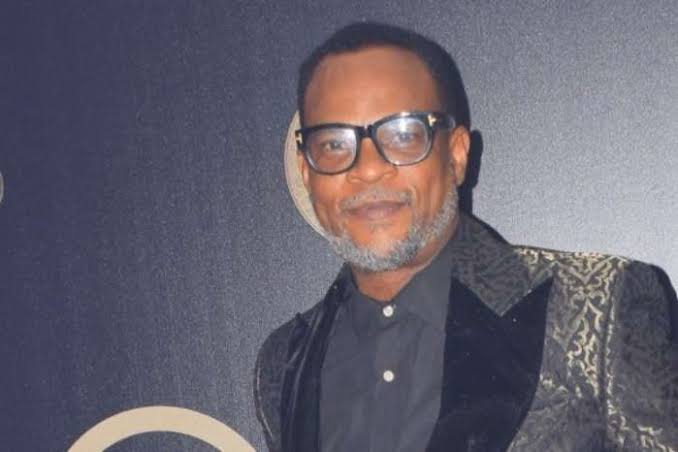
My sister marrying at 60 when we have given up -Fred Amata

Veteran actor, Fred Amata, has announced the marriage ceremony of his elder sister, Erumena, stating that the family gave up on her at 60, because she could not get married at a younger age.

In an Instagram post on Friday, the Nollywood icon stated that his sister had been ridiculed due to her inability to get married.

Sharing his “testimony of faith”, Amata wrote, “Sister Mena grew up in a strict environment of high morality. She would develop to become an example of steadfastness and commitment.

“But morality and the emerging social environment can be challenging, for soon, her peers – young maidens – one after the other, all got married.

“Sister Mena found herself approaching her 40s; single, unmarried, staked against mountains of seeming impossibilities, and ridiculed.”

According to him, his sister was mocked by people who told her that she was too old and tall, and may end up marrying a man younger or shorter than she was.

“And so it would continue year after year; from the 30s to 40s to fifties, and the ridicule became a torment. But she persevered.

“At the time she turned 60, we had all given up. But this Saturday 9th October 2021, we have the sounds of celebration, a covenant with the Almighty kept, and a manifestation of the awesomeness of the most high God.”

Borrowing helped Nigeria exit recession, says Finance Minister

The Minister of Finance, Budget and National Planning, Zainab Ahmed has again defended recent borrowings by the Federal Government, insisting they were instrumental to the country’s exit from recessions.

She said this on Friday during the Public Presentation and Breakdown of the 2022 Appropriation Bill.

“Having witnessed two consecutive recessions, we have had to spend our way out of the recession which contributed significantly to the growth of our public debts,” the minister stated in Abuja, one day after President Muhammadu Buhari presented the Appropriation Bill to the National Assembly.

“It is unlikely that our recovery from these recessions would have been as fast without the sustained government expenditure funded partly by debt.”

Before now, the minister had said Nigeria will fund its 2022 budget deficit, pegged at N6.258 trillion, through fresh borrowings.

The move was greeted with controversy across the country. Critics and members of the opposition said the development, as well as other borrowings by the Federal Government, call for concern.

“Our party holds it as an act of wickedness that individuals who know that they will be leaving office in less than two years will be accumulating debts instead of seeking ways to reduce the liability they have brought upon our nation,” the Peoples Democratic Party (PDP) said following Buhari’s request for approval to borrow $4 billion and €710 million to fund the deficit in the 2021 budget.

But Zainab has explained that borrowings have helped the government in providing infrastructure to boost the economy.

“Borrowings are essential to enable us to deploy necessary capital expenditure and invest in human capital development,” she maintained.

According to her, with the country’s rising levels of insecurity, the government had to resort to borrowing.

“To compound matters, the country has technically been at war, with the pervasive security challenges across the nation,” the minister added.

“This has necessitated massive expenditures on security equipment and operations, contributing to the fiscal deficit; Defence and Security sector accounts for 22% of the 2022 budget!”

She further allayed fears over Nigeria’s debts, insisting the “debt level of the Federal Government is still within sustainable limits”.

LASU student who couldn’t pay school fees commits suicide

A final-year student of the Lagos State University simply identified as Adeola has committed suicide.

Adeola reportedly took her life on Thursday by ingesting a popular brand of insecticide, Sniper.

According to sources at the institution, Adeola was depressed following her inability to pay her school fees which prevented her from taking her final examination.

A student said: “A final-year student of Lagos State University drank Sniper yesterday. The student committed suicide because she couldn’t afford to pay her school fee which stopped her from taking her final paper.

“Her name is Adeola, a sandwich student.”

Meanwhile, the victim had notified those on her contact list prior to the time she committed the suicide. She was said to have written on her Whatsapp status:

“If you love me, let me know because today may be the last chance for you. When I’m gone you won’t be able to tell me you love me.”

187 Kidnap Victims Feeding on Grasses Regain Freedom in Zamfara state

• 19 declared dead
About 187 kidnap victims were forced to feed on grasses to remain alive.
This was disclosed by one of the victims, Iklima Murtala, who according to Punch News report said they did so for 52 days as a result of lack of food.
This was as the Zamfara State Police Command rescued them few days ago.
Murtala said that about 19 of the victims died as a result of starvation.
According to the report, the victims were feeding on food for the first few days until the bandits lost source of supply and the kidnap victims had no other choice than to feed on eatable grasses to remain alive.

According to him, 17 of the victims died earlier while two more died as they were released and brought to Gusau.
The Secretary to the State Government, Alhaji Kabiru Balarabe, had while receiving the victims promised to continue to put pressure on the bandits to give up their crime.
The Zamfara Commissioner of Police, Ayuba Elkana, disclosed that lack of food made it difficult for the bandits to continue to operate.
He said that the Police decided to block all the ways through which food was supplied to them.

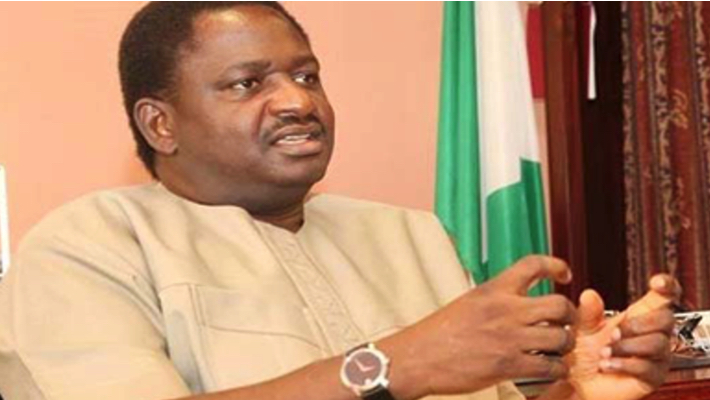
Life’s short, brutish, nasty under Buhari, Femi Adesina admits

Mr Adesina said it was now sensible to admit security challenges as precursor to tackling them after frantic pushback of citizens’ effort to highlight the challenges in the past.

Femi Adesina

Femi Adesina, spokesman to President Muhammadu Buhari, has admitted that “life has descended into the Hobbesian state of nature; nasty, brutish and short” in the last 18 months under his principal’s control.

“We have, indeed, passed through the most challenging of times in the past 18 months: security-wise, economically, socio-politically, and in many other ways,” Mr Adesina said in an article published in his Facebook page Thursday night. “Life has descended into the Hobbesian state of nature; nasty, brutish and short.” 

Mr Adesina said admitting the truth is important to tackling the problem, adding that Buhari regime cannot lie about prevailing insecurity in the country. 

“Challenges are meant to be surmounted. Accepting that they are real is the first practical step to combating them. The Buhari administration is not glossing over our issues, but is rather facing them squarely. And that is why #We Believe. Some governments lie to their people. No, not the Buhari government,” Mr Adesina said. 

Before now, Mr Adesina had said insecurity in the country is being “played up” to rubbish Mr Buhari’s achievement, accusing citizens of hating the regime. 

“Now, we are at the threshold of reaping the benefits. Yet, some people want to downplay infrastructure, and play up insecurity, all in an attempt to vitiate the achievements of the Buhari administration. Will they succeed? Never!,” Mr Adesina had said in his past treatise.

Bandits in different coordinated attacks have killed and abducted citizens in hundreds across Katsina, Kaduna, Kebbi, Niger and Zamfara. 

In July, bandits downed a Nigerian Air Force jet, on reconnaissance mission. Daredevil bandits then raided the Nigerian Defence Academy Kaduna, killing two in August. 

Mr Adesina, however, accused the media of slanting NDA attack as failure of Mr Buhari regime

“The news headlines, the slant of the stories, the analyses and discussions, all tended to paint a narrative of the humiliation of our military, the failure of government, and the fact that anarchy had been unleashed on the land,” Mr Adesina. (Gazettengr)

Sri Lankan government to deport 44 Nigerians who engage online scam in prison

—- decision taken after detained Nigerian nationals recommenced their online fraud from detention centre

—- international airlines refused government entreaties to use their aircraft for deportationPresident Gotabaya Rajapaksa of Sri Lanka has instructed the relevant authorities to immediately deport all the Nigerian nationals, who are held at the Mirihana Detention Centre on charges of online scams, informed sources said.
Accordingly, the President had directed the Controller General of Immigration and Emigration to take action to deport 44 Nigerian nationals at the detention centre, utilising state funds.These Nigerian nationals were arrested in the South Asian country during the last few months in relation to online scams.

Investigations revealed that these nationals have recommenced their criminal activities once again while being held at the detention centre.

The Controller General of Immigration and Emigration had reportedly informed  President Rajapaksa that  41 million rupees would be spent to deport these nationals while the Police Department had agreed to pay 80% of the total amount.

Sources said that since several international airlines had refused to take these individuals using their airlines, steps would be taken to use Sri Lankan Airlines to transport them back to Nigeria.

It is also reported that The Air Force Commander had agreed to provide an Air Force plane to transport those nationals if required.

Earlier, Police requested the public not to get trapped in these online scams as there was an increase of complaints about such activities in the recent past.Police said that the Nigerians sent messages to the public via electronic mail, WhatsApp or SMS, asking them to accept some amount of money.It was also revealed that the fraud had been committed by claiming that the victims had won a prize and requesting the victims to deposit money in order to receive their prize.

“Several prominent professionals including Doctors and Lawyers had paid millions of rupees to these Nigerian nationals,” the official said.

Arrest of Chiwetalu Agu is illegal and unconscionable

By Inibehe Effiong

The harassment and arrest of celebrated Nollywood actor, Mr. Chiwetalu Agu, on Thursday, 7th October, 2021 by the Nigerian Army is illegal, unconscionable and unwarranted. The actor has not committed any criminal offence known to law. The Nigerian Army should stop ridiculing itself before the international community.

Supposing without conceding that the dressing of the legendary actor amounts to “incitement” as claimed by the Army, it is the Nigeria Police Force that should have responded. There is no evidence of incitement against him. Nothing was inscribed on the said cloth to incite the public.

Is the Army suggesting that wearing clothes with certain colours or identifying with certain colours amounts to inciting people to violence or that any colour identical to the Biafran flag is inciting?. That will be a dangerous proposition. If they are convinced about such whimsical argument, the government should test it in a competent court of law. The allegation that he is recruiting for or supporting IPOB is unsupported by evidence. It is a way of calling a dog a bad name in order to hang it. Discerning Nigerians can see through the smoke screen.

The military has no power in a constitutional democracy to arrest citizens; except in very special and exceptional circumstances like during war, state of emergency, insurrection or riot. Even at that, it has to be shown that the Police has been overwhelmed. That is the purport of Section 217 of the 1999 Constitution which limits the role of the Armed Forces to defending the territorial integrity of Nigeria and acting in aid of civil authorities. Is Nigeria at war?

What did Chiwetalu Agu do that overwhelmed the Nigeria Police Force to warrant the Army stepping in to aid the police in arresting him?

We have become so used to lawlessness, impunity and flagrant disregard for the fundamental rights of citizens that we now condone whatever nonsense is thrown at us by the authorities.

Wearing a cloth with colours similar to the Biafran flag is not defined as an offence under any written law in this country. It is IPOB that was proscribed, not Biafra.

A significant portion of the Nigerian population still sees Biafra as an idea. No government can kill an idea that people are emotionally attached to by deploying the military. History has shown that the best way to defeat an idea is by propagating a superior and more persuasive idea. In the last six years, the Buhari regime has been propagating the idea that the best way to govern a diverse country like Nigeria is by pursuing a vindictive policy of exclusion, religious bias and ethnic supremacy which has further polarized the citizens and isolated different parts of this country.

By promoting nepotism and ethnic irredentism, Buhari is not qualified to propagate a Pro-Nigeria ideology that can counter the renewed agitations by a section of the South East for Biafra. Rather than heal old wounds, Buhari is ferociously opening new ones. Yet, he continues to parrot the fallacy that the unity of Nigeria is non-negotiable.

While I wholeheartedly condemn the wanton killings in the South East and the ensuing violence, there should be no tolerance for high-handedness and blatant disregard for the rights of the citizens. Rules of Engagement must be strictly followed.

By the combined effect of Section 36 (8) and (12) of the 1999 Constitution, an act or conduct is only a crime if it is so defined in a written law which must also prescribe the punishment for the offence. The Supreme Court had resolved this matter long ago in the celebrated case of AOKO V. FAGBEMI (1961) 1 NLR 400 and more recently in the case of GEORGE V. FEDERAL REPUBLIC OF NIGERIA [2014] ALL FWLR (pt. 718) 879.

The very idea of telling citizens what colour of cloth to wear is not only ludicrous but offensive. We are not in Communist China or North Korea.

It is a sad commentary that the Buhari regime is working day and night to turn Nigeria into a police state.

If the military authority has a movie role for Chiwetalu Agu, they should approach him with respect with their offer and desist from making a mockery of the security situation in the South East. The attack on Chiwetalu Agu is a painful reminder that the Buhari regime is ruling Nigeria with the mindset of the civil war.

Under this regime, peaceful young Nigerians were shot and killed by the same Nigerian Army while raising the Nigerian flag and singing the national anthem at the Lekki Toll Gate. Till date, no single soldier has been court-martialed for that abominable desecration of what is supposed to be sacred national symbols. Yet, the same Army arrested Chiwetalu Agu for wearing a cloth identical to the Biafran flag.

In other words, under the draconian Buhari regime, both ‘Biafran colours’ and Nigerian colours are symbols of “incitement” with severe punishment that includes death. That is not how to build and unify a nation.

The Army should apologize to the iconic actor and pay him adequate compensation for subjecting him to harassment and public humiliation.

INIBEHE EFFIONG, ESQ.

[email protected]

What Mark Zuckerberg’s trial says about us, By Azu Ishiekwene

The founder of Facebook, Mark Zuckerberg, is having a torrid time. One by one, his worst fears are coming true. 

According to Sheera Frenkel and Cecilia Kang, authors of An Ugly Truth, a scathing tell-all on Zuckerberg and his second-in-command, Sheryl Sandberg, the Facebook founder has been troubled for years by three deadly fears: the prospect of hackers breaching the site, his employees being harmed, and the breakup of his empire. 

He’s had them coming for the past five years, at least. But in just one week, his deadly fears have not only come to him with chairs, they have arrived at Menlo Park with their own shades as well. 

Just before the disruption of services on Facebook, Instagram and WhatsApp for six hours on October 4, an engineer and former product-manager-turned-whistleblower, Frances Haugen, dragged out Zuckerberg in a devastating interview and public testimony, accusing Facebook, the world’s largest social technology platform, of putting profits above safety. 

If Facebook was a country, Haugen’s testimony might have been treated not just as a rebellion, but a coup attempt. And Zuckerberg is not just another tyrant in a banana republic. He is a potentate with a fan base of over three billion, revenue of $85.9 billion and a market value of $800 billion. Facebook is bigger than many countries, and Zuckerberg, more influential than presidents.

Zuckerberg has rejected the whistleblower’s charges, saying they are untrue. But the crux of the matter is whether Facebook is exercising a duty of care remotely matching the brand’s monumental influence and impact. 

After the Cambridge Analytica scandal and concerns that right wing groups, especially, were using social media to stoke hate crimes and spread dangerous and misleading information about public health issues in the wake of the Coronavirus pandemic, the heat has been turned on Facebook to raise its game.

The jacket of An Ugly Truth is lined with statements of remorse by Zuckerberg and Sandberg since 2006, promising distressed subscribers a new day and pledging a new leaf. 

But it would seem that the fulfillment of those promises is hardly matched by the brutishness with which the brand seeks to impede or destroy its competitors using the massive trove of data at its disposal.

I’m not on Facebook or Instagram. Yet, I recognise that I’m caught in the predatory web of one of the behemoth’s most egregious platforms – WhatsApp. My addiction is not Zuckerberg’s fault; it’s entirely mine.

Long before Haugen laid out her charges, I had been having a deep personal conversation with myself over the potential impact that WhatsApp, which I signed up to only about four years ago, was having on me. 

I sensed that I was getting addicted to WhatsApp, but like most addicts going through a rite of passage, it took a long time to convince myself that it was happening. I was in denial.

I would pick up my phone in the morning, determined to reply just one or two messages or check the time. And then, I would find myself drifting from tray to tray, clearing message after message and leaping from one tray to the other as notifications stream in with the seducing charm of a red-light district.

Some say it’s an ecosystem, a network of family and friends connected by shared interests, experiences and banter. In a way it is. 

It’s a far more connected world today than it was in the 1980s when my aunt migrated to the UK and the whole brood that saw her off to the airport in two buses wept at the lounge as she departed. Speaking with her again from Nigeria which, at the time, had less than 800,000 telephone lines in a population of over 100 million was always going to be a misery. Her departure was like a funeral.

In a lot of ways, things have changed for good, empowering millions of young people and forcing greater transparency in government. But in some ways, too, it feels like an eco-prison. Once you’re online, everyone in your community knows you’re there. Even when you disable your “Read Receipts”, stalkers still find a way to figure you’re in the yard and pounce.

To keep my space and sanity, I find myself leaping from one message tray to another, dodging unwanted incoming calls, and at the same time, taking care not to miss important information in the swamp of things.

At first, it was an adventure. But as time went on, the cons overwhelmed the pros of my daily WhatsApp experience. I began to wonder if flitting from one message to another with hardly enough time to process and digest one before the next, was not dangerous, if not to my mental health, perhaps to my mindfulness. 

It was also difficult to remember where I got a particular information from – which chatroom, which message tray, or in fact, which platform. The whole thing would slowly blur into a fuzz, lacking in depth, context or meaning, yet bandied about by “contacts” as gospel. 

Algorithms feed on our vulnerable, curious sides as humans. Most adults can, however, begin to turn the tide once they realise that the bulk of what exists in the “chat-o-sphere” is for the benefit of the propagators and those mining the data. 

As the social media eco-prison took hold in my world with memes displacing touch and tech-speak and abbreviations replacing context and right spellings, flightiness became a real danger. I had to improvise to catch my sanity. And that meant letting necessity drive my social engagements, instead of the other way round.

Friends with whom I shared my experience told me it was a real struggle for them, too. They were also fighting their own social media demons, but of greater concern was the mental health of children of school age who appear to be spending more and more time on Facebook and other forms of social media, with all the attendant risks and dangers. 

Yet, it would be unfair to scapegoat Facebook or single out any other social media platform for all the social problems of contemporary society. Throughout history new forms of technology have elicited both excitement and fear among the populace. 

Socrates never wrote, because he said the invention of writing would worsen forgetfulness and his student, Plato, agreed with him. 

The invention of the telephone was greeted with criticism that it was soon bound to make humanity a transparent jelly heap. And when television came along, it was scorned as a useless wooden box incapable of holding the attention of any serious-minded person. 

The dramatic change in technology, especially in the late 1980s and early 1990s has spooked fears of job loss and weakened control. There are also fears related to privacy, cyber security and mental wellbeing and children’s safety. Yet, inventors and innovators have always prevailed and created opportunities for a better world.

Facebook may be in the eye of the storm now but all social media platforms have the same predatory instinct for which Zuckerberg is being called out. Haugen’s expose, coupled with political pressure on Big Tech from a number of countries around the world may lead to some soul-searching in Silicon Valley. But I doubt very much that we’re on the eve of a meltdown. 

Zuckerberg and other tech entrepreneurs who have changed our world never pretended they’re out to finish what Mother Teresa started. They are in it for profit. The only thing that keeps their genius going is to build, buy or bury. 

Shouldn’t they care about safety and people? Of course, they should. If they don’t and the market does not punish them soon enough, governments ultimately will. But until such a time, we must increasingly take responsibility for our safety and not be seduced by the prospects of a Mark Zuckerberg or Jack Dorsey nanny.

The world has been here before. Between the late 19th and early 20th century three of the most famous monopolies in the world – Andrew Carnegie’s Steel Company, John D. Rockefeller’s Standard Oil, and the American Tobacco Company were broken up. When AT&T got too big for its own good, it joined the list of fallen monopolies in 1984.

Recent events may have shaken Mark Zuckerberg, unsettling his quest for immortality. But they don’t necessarily mean that his third most deadly fear – a breakup – is imminent. Yet, it’s a good time for Facebook and its users to stop and reflect.

•Ishiekwene is the Editor-In-Chief of LEADERSHIP

Nigerian Gospel Singer, Sinach, Honoured By US Congress

By Akinwale Kasali

Popular Nigeria Gospel singer, Osinachi Joseph Egbu, known as Sinach, has written her name in the nations and United State of America history book, as she joined the league of Nigerians and Africans conferred with a certificate of recognition for her positive impact in the USA.

The Eighteenth Congressional District of Texas, United States of America  honored the Nigeria singer for using her music to propagate the gospel around the world.

Sheila Jackson Lee, a US Senator, representing the Texas constituency who penned the recognition letter, said it was in view of the artist using her music to propagate the gospel, impact lives, influence the youths, downtrodden and the world at large, and conducting a successful concert in Houston, Texas over the weekend.

“They have the freedom, through song, to discover their destiny and maximize their hidden potential through communion with the one true God. Indeed, your tireless efforts are completely deserving of the respect, administration, and commendation of the United States Congress,” Jackson Vee said.

The concert tagged ‘Sinach: Night of Worship Houston Texas’ featured international gospel artists such as Micah Stamply, Dee Jones, Da’dra Greathouse, and Todd Dulaney.

Sinach, a member of Pastor Chris Oyakhilome Christ Embassy Church, used the one-night event to draw crowds from different parts of the United States and all walks of life, as the the main hall venue was packed with worshippers and fans of the artist.

Sinach, winner of the Broadcast Music, Inc., (BMI) Song of the Year award for her song ‘Way Maker’, made history, becoming first Nigeria gospel artist to win such illustrious award.

She is also the winner of the Dove Music Song of the Year Award 2020 for the same song.

According to Jackson Lee, “Music is one of the most important and powerful things in life. It brings people together and allows us to experience the same emotions. People everywhere are the same in heart and spirit. No matter what language we speak, what color we are, the form of our politics, or the expression of our love and our faith, music proves; we are all human beings. Thank you for spreading this universal language throughout the world”. (thesourseng)

DAILY LAW TIPS by Onyekachi Umah,Esq. (Tip 58)

It is an offence for a person suffering from an infectious diseases to enter a ship or a public transport without previously informing the person in charge of such transport of his disease.

See, Section 31 of Public Health Act and other equivalent state laws.

#DailyLawTips
#LearnNigerianLaws
#SabiLaw

To receive our Daily Law Tips for free follow our Facebook page, Twitter or Instagram via “LearnNigerianLaws”

Powered by www.LearnNigerianLaws.com

TIPS