Home Blog Page 901

Did Chiwetalu Agu deny Biafra in the face of the rising sun?

By Stephen Azubuike

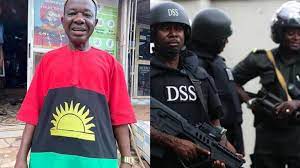
On 7 October 2021, Nollywood actor, Chiwetalu Agu, was at Upper Iweka, Onitsha, Anambra State. He was not on a movie set. According to him, he was on a charity mission, sharing bread to the hungry.

He was accosted by Nigerian soldiers. But they were not interested in the bread.

The soldiers were interested in Chiwetalu Agu’s outfit. The popular Actor was dressed in a trouser and top (sewed like a native attire). The entire dress was designed in the colours of the Biafran Flag.

The soldiers arrested him.

It was however alleged by the Army that the veteran Actor was arrested for “Inciting members of the public and soliciting support for the proscribed Indigenous People of Biafra (IPOB).” Apparently, the only available evidence for the alleged incitement was the dress put on by the Actor.

In the absence of any other evidence, the Nigerian Army cannot reasonably sustain the allegation that Chiwetalu Agu has contravened any law in Nigeria, for compelling reasons. The Nigerian Army is quite aware that the Biafran ideology had existed long before IPOB was found. Aside IPOB, there are other movements established for advancing the quest for self-determination by many people from the South East region in Nigeria – A quest which led to the Civil War known as The Biafran War. For instance, we have the Movement for the Actualization of the Sovereign State of Biafra (MASSOB), Biafra Independence Movement (BIM), etc.

IPOB was proscribed in controversial circumstances. IPOB, just like these other Movements, adopted the use of the colours of the Biafran Flag. The Biafran ideology can never be proscribed because the right to press for self-determination is a valid right, universally acclaimed. It is not criminal. Putting on clothes designed in the colours of the Biafran Flag is not criminal.

Was Chiwetalu Agu insensitive?

Chiwetalu Agu might be accused of being insensitive given the level of tension in the South East region presently. Putting on an outfit that represents Biafra may appear like a “trouble ticket.”

The main reason anyone may accuse the Actor of “asking for trouble” is that except you want to risk your life, Nigerian security forces do not particularly enjoy public trust. We have seen too many distasteful cases of police and army brutalities.

So, anyone who understand what it means to reasonably play safe is expected to stay fully out of trouble. Human rights in Nigeria is not always fully guaranteed. Getting compensation for breach of human rights by government security agencies is a wild goose chase. The compensation often ends in court pronouncements as published in the law reports.

If Chiwetalu Agu desired to publicly identify with the Biafran ideology like he seemed to have done, he ought to be more brave. He appeared to deny Biafra when he said:

What I’m wearing is a civil dress. This is not Biafran wear, it is a rising sun and not Eastern Security outfit… This sun on the dress I’m wearing is just a rising sun because I believe I must rise…

What the Army is expected to do

But the valid question remains, what is the Nigerian Army expected to do by their military presence in the region? The answer is simple. The Nigerian Army is expected to pay close attention to every individual or group of individuals parading the streets. If they come out with flags or dress in Biafran colours marching, without any weapon or threat of violence, the Army have no business arresting any one of them or harassing them.

Thus, merely sighting Chiwetalu Agu on his Biafran attire is not sufficient reason for his arrest.

Beyond that, it is equally understandable that there have been several cases of killings and destruction of lives and properties in the South East, attributed to IPOB and the Eastern Security Network (ESN) as well as reported cases of gun battles between ESN and the Nigerian Army. These remain unfortunate.

Undoubtedly, the Nigerian security forces have the mandate to quell any uprising in any part of Nigeria. This is a lawful obligation which must be lawfully executed.

Perhaps, in the heat of the tension, this may not be the most convenient moment for Chiwetalu Agu to appear in Biafran colours. The Biafran agitation is a peaceful agitation. It does not and should not call for tension. Those who truly desire the right to self-determination must demand it peacefully. Wisdom dictates that in demanding the right, any violent conduct must be shunned.

But Chiwetalu Agu was not violent. He was alone. He was not marching in protest. He appeared peaceful. The soldiers have every reason to ignore him but monitor every movement around him to ensure there is no threat of violence or riot. Instead of arresting him like a criminal, the soldiers could have addressed him when they accosted him.

From the reports, the Nigerian Army released him within 24 hours of his arrest. But the Department of Security Services (DSS) have allegedly picked him up. In a decent society, it is better to be picked up by security forces than by kidnappers, bandits, terrorists or Unknown Gun Men. We expect the security forces to be civil in handling Chiwetalu Agu.

Conclusion

The public would be interested in knowing why the Actor was allegedly rearrested. If he committed any crime in the opinion of the security agents, he should be tried. Nobody should be unlawful held. It is against the Nigerian Constitution, the supreme law of the land.

Meanwhile, the amount of energy and resources being spent by the Nigerian Government in an attempt to bury the Biafran ideology could have been directed at ensuring an end to discrimination, sectional favouritism, marginalization; respect for rule of law and human rights, even distribution of resources, economic development, peace, and progress. Upholding these values is the most potent weapon in giving the entire South East region and other regions a great sense of belonging, and Nigeria will be better. 

This article was first published on October 8, 2021 by https://stephenlegal.ng/did-chiwetalu-agu-deny-biafra-in-the-face-of-the-rising-sun/

AUTHOR: STEPHEN AZUBUIKEStephen is a lawyer with expertise in Commercial Dispute Resolution and Technology Law practice. He is a Partner at Infusion Lawyers. He has successfully argued cases from the High Courts of various jurisdictions to the Appellate Courts on behalf of financial institutions, other corporate bodies and multinationals. He has worked with a number of startup tech companies. He tweets @siazubuike.

Tainted threat of “emergency rule” in Anambra, By Ehichioya Ezomon

President Muhammadu Buhari may’ve temporarily doused the tension generated by Wednesday, October 6, 2021, threat by the government to proclaim a “state of emergency” in Anambra State.

The Attorney General and Minister of Justice, Abubakar Malami (SAN), threw the obviously discriminatory and politically-motivated proposal amid public expectation of de-escalation of tension nationwide.
According to Anambra Governor Willie Obiano, Buhari isn’t in support of the minister’s bombshell that has sent shockwaves, and elicited condemnation across the country.
The government that should lead peace initiatives appears to stoke unrest with Malami’s outburst that excuses other states in Nigeria that have more serious challenges to law and order.
The strife in the South-East, mainly from agitation for secession of the zone, is nothing compared to the carnage in the North-East, Middle Belt and North-West of Nigeria, where terrorists maraud.
And there’ve never been hints of imposition of a state of emergency in any of the states of Borno, Yobe, Adamawa, Taraba, Benue, Plateau, Katsina, Zamfara, Kaduna, Niger and Sokoto.
So, why the threat in Anambra regarded as the most peaceful in the South-East until lately? Obiano, after a quick visit to Buhari at the Presidential Villa, in Abuja, on Thursday, October 7, thumped his chest in attestation to the prior peace that existed in Anambra.
Short of berating Malami, who broached the plan after Wednesday, October 6, meeting of the Federal Executive Council (FEC), Obiano described insecurity in Anambra as “a flash in the pan” and “a little hiccup.”
He queried Malami’s turn-away from the hotspots “in Kaduna, in Jos, in Imo, in Zamfara” and said, “why is he making that kind of assertion, and we have an election by the corner?”
Likening happenings in Anambra and the North-West and North-East to a case of malaria and cancer that require “different treatments,” Obiano said, “we are not near, in terms of confusion and security challenges, compared to Zamfara and co.”
“Look at what is happening in the North; they kill dozens every day. Because less than 15 people were killed in Anambra in two weeks, is that a reason for somebody to call for a state of emergency? That’s a very unfortunate comment by Malami,” Obiano said.
“In summary, what I’m saying is what is happening in Anambra… crisis and challenges are far from being close to (the) challenges in the North-West and in the North-East, as the case may be.”
Explaining the rationale for weighing an emergency rule in Anambra, Malami focused principally on tightening of security ahead of the November 6, 2021, governorship election in the state.
“His words: “What I’m saying… is that no possibility is ruled out by government in terms of ensuring the sanctity of our democratic order, in terms of ensuring that our elections in Anambra hold.
“And you cannot rule out the possibility of (a) declaration of (a) state of emergency where it is established, in essence, that there’s a failure on the part of the state government to ensure the sanctity of security of lives, properties and democratic order.”
The scenario painted by Malami raises several questions: Absent the poll, will normal security operations suffice in Anambra, as in Abia, Ebonyi, Enugu and Imo, which’ve witnessed reported attacks by a “militia” Eastern Security Network (ESN), allied to the proscribed Indigenous People of Biafra (IPOB), and “unknown gunmen”?
What a state of emergency does the government envisage in Anambra? The brand that displaces Governors and Legislative Assemblies, and imposes Sole Administrators, as executed by Prime Minister Abubakar Tafawa Balewa in the Western Region in May 1962, and President Olusegun Obasanjo in Plateau State in May 2004 and Ekiti State in October 2006?
Or the kind that allows elected organs to remain in place, such as actioned by President Goodluck Jonathan in Borno and Plateau in 2011, and in Adamawa, Borno and Yobe in May 2013?
While the Balewa emergency flowed from the intra-party crisis in the Action Group (AG) in the Western Region, and Obasanjo’s emanated respectively from ethnic and religious violence in Plateau and Kano, and the impeachment of Governor Ayodele Fayose; the Jonathan actions, first in Borno and Plateau, and later in Adamawa, Borno and Yobe were purely to curtail insecurity in the affected states.
The conditions precedent to a proclamation of a state of emergency, which initially lasts for six months, are listed in Part II (Miscellaneous Provisions), section 305(1-6) of the amended 1999 Constitution of Nigeria, but we deal here, paraphrasingly, with subsections (1), (2), (3)(c)(d)(f)(g), (4), (5) and (6)(a)(b)(c)(d).
Section 305(1) states: “Subject to the provisions of this Constitution, the President may, by instrument published in the Official Gazette of the Government of the Federation, issue a Proclamation of a state of emergency in the Federation or any part thereof.”
(2) The President shall transmit copies of the Official Gazette to the President of the Senate and Speaker of the House of Representatives, each of whom shall convene or arrange for a meeting of the House, “to consider the situation and decide whether or not to pass a resolution approving the Proclamation.”
(3) “The President shall have power to issue a Proclamation of a state of emergency only when-
(c) there is actual breakdown of public order and public safety in the Federation or any part thereof to such extent as to require extraordinary measures to restore peace and security;
(d) there is a clear and actual breakdown of public order and public safety in the Federation or any part thereof requiring extraordinary measures to avert such danger;
(f) there is any other public danger which clearly constitutes a threat to the existence of the Federation;
(g) the President receives a request to do so in6 accordance with the provisions of subsection (4) of this section.”
Subsection (5) says the President shall not issue a proclamation of a state of emergency in any case to which the provisions of subsection (4) applies “unless the Governor fails, within a reasonable time, to make a request to the President to issue such Proclamation.” But has insecurity in Anambra reached the level that the Governor failed to request a state of emergency?
Mr Obiano says no, hence he didn’t ask for, as per subsection (4), “a resolution, supported by two-thirds majority of the House of Assembly, requesting the President to issue a Proclamation of a state of emergency in the State when there is existence within the State any of the situations specified in subsection (3)(c)(d) and (e) of this section and such a situation does not extend beyond the boundaries of the State.”
These conditions for a proclamation of a state of emergency are straight-forward, and unambiguous, harbouring no partisanship, as allegedly displayed by the Balewa and Obasanjo administrations.
Still, there’re more questions to ask, and inferences and implications to draw from government’s attempt at a back-door proclamation of a state of emergency in Anambra. They include:
Despite the atrocities of Boko Haram in the North-East and North-West, and “bandits” in the North-West and Middle Belt, government hasn’t imposed an emergency 88⅞in any or all of the states.
Why in Anambra? Is it a precursor, as critics allege, to a wider application of the rule in the South-East, or any other state or zone where agitation for secession has reared or may rear its head?
The Malami mooted proposal fits into President Buhari’s declaration to crush any separatist agitation and deal ruthlessly with those stoking and backing such divisive campaign.
The series of “Operation Python Dance” in the South-East didn’t result in the expected outcome. Will “Operation Golden Dawn” in the area or a state therein guarantee peace?
Government’s proposal may reecho the Nigerian Civil War (1967-1970), which backgrounds the alleged exclusion, marginalisation, and injustice against the South-East and Igbo in Nigeria.
* An emergency rule in Anambra is a Catch 23 situation, as government can’t deny political motive, to favour the All Progressives Congress (APC) in the November poll, while the beneficiary of such an alleged imposition would lose the mandate and legitimacy of the electorate in Anambra and the entire South-East.
Yet, it’s not late for the government to pull the breaks on Anambra, and reool its strategy of deploying power for the sword rather than the shield, to achieve peace and security in the South-East, and Nigeria.
The administration of President Umaru Musa Yar’Adua had laid the marker in the Niger Delta, when militants were engaged in dialogue, to lay down their arms in exchange for an enduring amnesty programme.
The Buhari administration should follow in the footsteps of the Yar’Adua example in the South-East, and elsewhere, and dialogue with genuine agitators for equity, inclusiveness and justice for all.

Scourging at Madrasa: For the love of religious beliefs and not really of mankind

Photo Credit: Punch Newspapers

By Stephen Azubuike

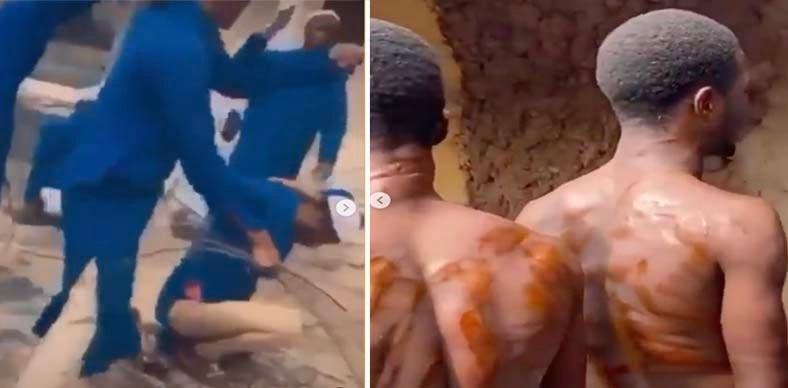
In a viral video clip, some students of a Madrasa (Madrasas are Islamic colleges), in Kwara State (Musbaudeen Islamic School, Ilorin, Kwara State), were seen being scourged like thieves by their instructors on the instruction of the school authority. 

The students were no thieves. Their alleged ‘crime’ was that they attended a birthday party and consumed alcohol. It was not clear whether attending the party was equally a crime or whether the alleged drinking of alcohol was the only issue. 

Whichever the case, we learnt from the reports that one of the heavily chastised students claimed that only one of them treated himself to some alcohol (Trophy beer) at the party while the rest of them made do with some soft and energy drinks. Little did they know that the Trophy was going to come with a severe ‘trophy’ of brutal flogging which has now made headlines. 

Alcohol is forbidden in Islam. It is however understood that the Quran did not specifically prescribe a penalty for consuming alcohol. But some Islamic scholars have long concluded that flogging some strokes of the cane would be adequate punishment. We are not sure how many strokes precisely is recommended as sufficient and the severity of the strokes.

But anyone with a great sense of humanity who watched the video of the scourging of the students of the Madrasa would be tempted to argue that the chastisement was probably for the love of religious beliefs and not really of mankind. 

Importantly, the seriousness of the allegations against the students also calls for concern. Was the punishment commiserate with the alleged ‘offence’?

Curiously, it is also doubtful whether the allegations were well investigated before the punishment was administered. The testimony of one of the students interviewed already points to the fact that there may be likely breaches of the fundamental right to fair hearing; that is if there was any hearing at all.

Government intervenes

The Kwara State Government has reportedly suspended the head of the institution and has promised to investigate the incident. This is welcome. Again, thanks to social media.

It is hoped that the matter will not be swept under the carpet or handled with kids’ gloves. Any attempt to do so will be pure injustice. 

As a matter of fact, a thorough investigation needs to be carried out because there is the high possibility that other students might have been victims of this level of brutality. Those familiar with the system may not be surprised to learn that such treatment is prevalent in other Madrasas.

Corporal punishment generally

Corporal punishment is popular mostly in public schools, as many private schools have abandoned the idea as a correctional method of instilling discipline. We have seen cases where some public school students are heavily beaten for ‘offenses’ such as late coming. 

In our homes, some parents and guardians have been seen dehumanizing their wards in the name of correcting them. The case of househelps are worse. 

Generally, Nigerian law does not prohibit corporal punishment. However, the law generally frowns at human rights abuses and any form of brutality administered in the name of punishment, especially when injuries are sustained. Nevertheless, there is a global movement to put an end to corporal punishment in favour of more positive and non-violent forms of discipline. Nigeria should fall in line. 

There is the urgent need to carry out fresh orientation in most of our institutions, especially Islamic schools, with the hope of curbing extremism and gross human rights abuses. After all, no man is God.

This article was first published on October 11, 2021 by https://stephenlegal.ng/scourging-at-madrasa-for-the-love-of-religious-beliefs-and-not-really-of-mankind/

AUTHOR: STEPHEN AZUBUIKE is a lawyer with expertise in Commercial Dispute Resolution and Technology Law practice. He is a Partner at Infusion Lawyers. He has successfully argued cases from the High Courts of various jurisdictions to the Appellate Courts on behalf of financial institutions, other corporate bodies, and multinationals. He has worked with a number of startup tech companies. He tweets @siazubuike.

Rape: Appeal Court converts convicts’ seven-year sentence to life

The Court of Appeal Kano Division on Monday converted the seven-year jail term of two rapists to life imprisonment.

Upholding the judgment of a Jigawa State High Court against the accused persons – Mesara Ayuba and Abdurrahman Musa, said to have violated an 8-year-old girl in Jigawa State, Hon. Justice Abubakar Muazu Lamido increased the 7-year sentence to life imprisonment while stressing that sentencing for the offence of rape in Jigawa State under Section 283 of the Penal Code (Miscellaneous Amendment) Law No 9, 2014 is mandatory.

The High Court in its September 24th, 2019 judgment delivered by Hon. Justice Ahmed Isah Gumel, now retired found the accused persons guilty of the offence of rape, punishable under Section 283 of the Penal Code (Miscellaneous Amendment) Law No 9, 2014, and sentenced them to 7years imprisonment with 10 strokes of cane for 10 market days.

Dissatisfied with the decision, both the Appellants and the Respondent (Jigawa State Ministry of Justice) headed for the Appeal Court. The appellants appealed against the entire judgment and the respondent cross-appealed the sentencing.

Chief Uche F. Ewule Esq. represented the Appellant, while Respondent’s Counsel was the Honourable Attorney-General of Jigawa State, Dr. Musa Adamu Aliyu.

However, the Court of Appeal in the lead judgment delivered by Hon. Justice Abubakar Muazu Lamido dismissed the main appeals and affirmed the convictions made by the trial court. Nonetheless, the Court allowed the Cross Appeals but set aside the sentencing of 7years imprisonment with 10 strokes of cane for 10 market days. Replacing the verdict with life imprisonment, the Court held that no court in Jigawa State has the power to reduce the sentencing where the victim’s age is below 14 years.

With the scourge of rape ravaging different parts of the country – female children, in particular, the judiciary appears to have risen to the occasion with stiffer penalties.  In June 2020, a Kaduna State High Court sitting at Dogarawa Sabon Gari Zaria convicted one Usman Shehu Bashir of Dogarawa area to death by hanging for raping a baby of 2 years and 9-month-old to death.

Justice Kabir Dabo said the judgment was in line with section 221 of the penal code, Kaduna state law 1999 as amended. “The convict has confessionally (sic) confirmed the occurrence of the offence, as well, his written statements also confirmed. By these two confessional statements, the Court passed the judgment,” the judge said.

According to the prosecution, the facts of the case which started on the 23 March 2015 and lasted for five years was that: “On that fateful day, the convict took late Fatima to his room and for about 40 minutes, he raped her which led to her death….after the establishment of all the evidence of committing the crime.”

After passing the judgment Justice Kabir Dabo said the convict has the right to appeal within 90 days of the judgment. In her reaction, State Counsel, Barrister Jummai Dan Azimi said the Court has done justice to the case. Father of late Fatima, Malam Zakariya Ya’u Dahiru said the judgment passed on Usman has justified what he did to his daughter.

A Critique of Hakeem Baba-Ahmed’s ‘rejoinder’

By Lasisi Olagunju

Abdulrazak Gurnah, the Tanzanian who won the Nobel Prize in Literature last week has a very interesting definition of honour. He says it means “respect yourself (so that) others will come to respect you.” That is from his ‘Paradise’ – a ‘narrative reversal’ of Joseph Conrad’s ‘Heart of Darkness.’ Every piece of writing – or speech – is a potential engenderer of reactions. I got calls and text messages throughout last week asking if I had seen the ‘rejoinder’ to my September 27, 2021 article from the spokesman of the Northern Elders Forum (NEF), Dr Hakeem Baba-Ahmed. I wished he read Gurnar’s definitions of respect and honour before writing that response. One person asked: “Will it be fire-for-fire?” I laughed. Where is the fire in what Baba-Ahmed wrote? Why should I reply an older man with fire? And, why should I bother to reply at all?

This is not a reply or rejoinder to Baba-Ahmed’s ‘rejoinder’; it is an examination of what he wrote about. I read the northern elder’s piece minutes after he clicked the ‘send’ button. We published it as he requested and on the page he wanted, unedited. I read it with a lot of interest – searching for veins of remorse. I saw none. He confirmed or avoided virtually everything I said. He confirmed that his roots belong in the soil of the Talaba Clan in Mauritania. But he didn’t like it that I said so.I thought he should be very proud of it. He confirmed the failure of the northern elite and the hunger and anger on the street of northern Nigeria. He affirmed that northerners “agonise under crushing poverty and run from marauding bandits and kidnappers and ethnic and religious militias.” Yet he boasted that “northerners keep a level head and refuse to behave like cows they (southerners) are familiar with.” What kind of elder keeps “a level head” while “crushing poverty” and raging banditry render his home desolate?

In the piece he entitled ‘a rejoinder’, Baba-Ahmed described southern leaders as “bitter elders” who pushed their young “to become criminals…” What exactly did he mean by “bitter elders”? And “bitter” over what? Baba-Ahmed said the south suffers “a bleeding exodus and alienation” of its youths. True, but is that not the fruit of the malformed tree of Nigeria and why we insistently cry for the country’s rebirth and the pruning of its toxic outgrowths? Baba-Ahmed repeated his claim of superiority of the north over the south. He said “there are a lot more northern voters” than columnists (from the south) who criticise the flawed structure. He said so much about his space and why all heads must bow before his throne. I noted his lexis and structure, his use of English – warts and all. He properly defined himself with his choice of words and expressions – and for this, I read many people online becoming his former fans. The piece shows him upping his ante as a champion of northern regional hegemony even more than he was in the outrageous viral video that inspired my engaging him. And he is a retired ‘federal’ permanent secretary. He was even in charge of our INEC and the conduct of cross-cultural elections.

Where I come from, we met our ancestors’ words that we must never be begged into slavery or be lullabied into bondage. If our hands become too heavy to swing, we were told to fold them on our heads. And you know what that means. I could see that Baba-Ahmed left the stars of my points and pursued the moon of his imagination. He introduced new issues and poured his vitriol into their false bottoms. A friend told me that the NEF spokesman simply erected “a straw man and then proceeded to demolish it.” My friend explained that the man “invented an argument that you didn’t make and proceeded to attack it to make him look smart. He conveniently avoided what you said.” I agree. What he wrote is not a rejoinder to my piece, it is a transcription of anger long-looking for expression. My piece and his are available online; check the points.

Words are eggs, they drop from a height and become a mess (eyin l’òrò; b’ó bá ba’lẹ̀, fífọ́ ní ńfọ́). And what do you do with the mess if someone drops it at your doorstep? You ‘treat’ it. Dr. Baba-Ahmed said something in his piece about our political history that interests me. It merits a ‘treatment.’ He said “the northerner has a long memory and a tendency towards informed flexibility.” That one is not my problem but he added rather darkly that “some (northerners) still hear stories of insults thrown at their leaders by people who bear uncanny resemblance to Lasisi’s progenitors when the north and south disagreed on major issues on the journey to independence…” The “progenitors” which Baba-Ahmed referred to here were the nationalists of the Action Group party and their loyalists. And you all know them. Authentic heroes; genuine patriots. And “the stories” Baba-Ahmed talked about, what are they? He didn’t tell us. Why won’t he tell us if the descendants of that incident are very proud of it? Fortunately, we all know the story. Roman statesman, Marcus Cicero said the causes of events are ever more interesting than the events themselves. I will narrate what the NEF spokesman extraordinaire described as “stories of insults” but which he couldn’t tell:

On July 22, 1953, thirty-year-old Chief Anthony Enohoro rose slowly from his seat in the chambers of Nigeria’s House of Representatives in Lagos and roused the world with the following words: “Mr. President, sir, I rise to move the motion standing in my name, that this House accept as a primary political objective the attainment of self-government for Nigeria in the year 1956.” Enahoro was from the Obafemi Awolowo-led Action Group party; his constituency was Ishan of the then Western Region. Self-government in three years’ time after almost a century of foreign rule should ordinarily excite all. But that didn’t happen on that day in Lagos. House members from the Northern Peoples Congress (NPC) kicked against Enahoro’s motion of freedom. They moved a counter-motion. They said their region was not ready for freedom from foreign rule. They said Enahoro’s motion should read “as soon as practicable” – and not “in the year 1956.” They were insistent – and to buy time, they forced an adjournment.

The south was aghast. When is freedom not desirable and practicable? There was a walk-out; the atmosphere outside the chambers was rowdy – and hostile to those who rejected freedom. The north was angry; they said they were insulted by the Lagos crowd. An “Eight Point Programme” followed from the Northern regional parliament. The eight points were portents and threats of secession. A southern delegation of the Action Group and Nnamdi Azikiwe’s NCNC was despatched to the north to speak to the people there on the benefits of freedom from colonialism. Because of this, there were riots in Kano – 46 people, from both sides, died; 200 were injured. The leaders, north and south with the colonial government, soon calmed the firestorm. Nigeria was back on its troubled track. The living buried the dead; life continued. This unfortunate (and shameful) event, a classical contest between freedom and imperialism, was what Dr Hakeem Baba-Ahmed listed as “stories of insults”, an unforgivable sin of the “progenitors” of the south and one of the sacrifices the north paid to sustain Nigeria’s unity.

Pandit Jawaharlal Nehru was the first Prime Minister of independent India. On the eve of his country’s independence, he was full of joy, life and zest. He described that moment as one of awakening to life; the moment of freedom, a step out from the old to the new when an age ends, and when the soul of a nation, long suppressed, finds utterance. What Nehru described here should be the goal of any people in bondage. It was the ideal that spurred the horse of that demand in Lagos for self-rule in 1953. It was the wind behind the sail of subsequent demands until the song of freedom rent the Nigerian air in 1960. The “progenitors” that Baba-Ahmed threw a broadside at were the real heroes of Nigeria’s freedom. He owes them gold bars of appreciation. They deserve his eternal reverence.

My people say ‘isoro ni’gbesi’- a direct translation of this is difficult but it means ‘you say it and I give you back.’ Every proposition should be an engenderer of reactions. It is a flaccid, eunuch effort if nothing flinches. And every response potentially provokes a further rejoinder. Back and forth riposte, retort or reply, is a writer’s affliction, or blessing, or both. Joseph Conrad wrote his novella, Heart of Darkness, in 1902. How many years ago was that? But it has, along that long distance, not stopped attracting critical reviews and reactions. From Albert Guerard (1958) to Chinua Achebe (1977) down to Edward W. Said (1993) and Julian Wolfreys (1998) etc, the critical discourse on Conrad has been a running water on the pebbles and rocks of his ‘racist’ themes. It is the nature of spoken words, written words and engagements. But in the rising and ebbing current of reaction and response, what matters is respect for yourself – the writer, and for the other side, the reading side. The spokesman of the northern elders needs to calm down and not agonise so much about the Mauritania story I told. All he needs to do going forward is a recommitment to the mutuality of respect across politics, people and places.

On December 19, 2019, The Washington Post published a photo of a group of 15 black medical students at a former slave plantation in Louisiana, United States. With the photo is this tweet written by one of the students: “We are our ancestors’ wildest dreams. In the background, an original slave quarter. In the foreground, original descendants of slaves” who are now medical students. Baba-Ahmed loves so much the founding fathers of northern Nigeria. But loving them is not enough. He and his cohort of supremacists should listen more to their progenitors and be their dreams in the ‘wildest’ way possible. From Uthman Dan Fodio to Ahmadu Bello and to Abubakar Tafawa Balewa, there are enough useful words that may heal the land of its affliction. For instance, shouldn’t we insist that the north be cured of what the NEF spokesman called its “crushing poverty” and its people’s “flight from marauding bandits and kidnappers and ethnic and religious militias”? It is bad and sad – and the very sad story is not anywhere near its denouement. At the core of the problem is leadership failure, elite greed and inequality. Dan Fodio warned over two hundred years ago that “one of the swiftest ways of destroying a kingdom is to give preference to one particular tribe over another or show favour to one group of people rather than another. And to draw near those who should be kept away and keep away those who should be drawn near.” Is someone listening? And Tafawa Balewa added his own voice in September 1957: “The future of this vast country of Nigeria must depend in the main on the efforts of ourselves to help ourselves.” And how will “ourselves” help “ourselves” when the system we run in 2021 is that of eight masquerades, six bean cakes and a chief priest without any commitment to equity?

I started with Abdulrazak Gurnah, today’s most beautiful news about Africa after a very long while. Gurnah writes so strongly about Africa, the “wreckage” and “crumbling houses,” its ways and its chosen ruinous path. In his ‘The Last Gift,’ the novelist, with very heavy heart, notes that “for millions of people…moving is a moment of ruin and failure, a defeat that is no longer avoidable, a desperate flight, going from bad to worse, from home to homelessness, from citizen to refugee, from living a tolerable or even contented life to vile horror.” Does that not read like a book on Nigeria and its journey to this valley of darkness? Go back to one of the paragraphs above, Baba-Ahmed’s unabashed, graphic re-tell of the Hobbesian north, its poverty and insecurity – and his snide comment on youth hopelessness in the south. One word for all these is catastrophe. Things are very bad – and may even go worse; and if they will go worse, what are we doing about them? The south where I come from is saying the current structure kills and must be killed for the field to be green again. The feudal, conservative north says no. But what exactly is the formula of that north, its elders forum and its peacock mouthpiece for the redemption of Nigeria? Will insults and claims of regional superiority educate the north’s millions on the street, feed Nigeria’s very hungry poor and save the hopelessly insecure? These are the questions I asked Baba-Ahmed. He has not answered.

A Critique of Hakeem Baba-Ahmed’s ‘rejoinder’

By Lasisi Olagunju

Abdulrazak Gurnah, the Tanzanian who won the Nobel Prize in Literature last week has a very interesting definition of honour. He says it means “respect yourself (so that) others will come to respect you.” That is from his ‘Paradise’ – a ‘narrative reversal’ of Joseph Conrad’s ‘Heart of Darkness.’ Every piece of writing – or speech – is a potential engenderer of reactions. I got calls and text messages throughout last week asking if I had seen the ‘rejoinder’ to my September 27, 2021 article from the spokesman of the Northern Elders Forum (NEF), Dr Hakeem Baba-Ahmed. I wished he read Gurnar’s definitions of respect and honour before writing that response. One person asked: “Will it be fire-for-fire?” I laughed. Where is the fire in what Baba-Ahmed wrote? Why should I reply an older man with fire? And, why should I bother to reply at all?

This is not a reply or rejoinder to Baba-Ahmed’s ‘rejoinder’; it is an examination of what he wrote about. I read the northern elder’s piece minutes after he clicked the ‘send’ button. We published it as he requested and on the page he wanted, unedited. I read it with a lot of interest – searching for veins of remorse. I saw none. He confirmed or avoided virtually everything I said. He confirmed that his roots belong in the soil of the Talaba Clan in Mauritania. But he didn’t like it that I said so.I thought he should be very proud of it. He confirmed the failure of the northern elite and the hunger and anger on the street of northern Nigeria. He affirmed that northerners “agonise under crushing poverty and run from marauding bandits and kidnappers and ethnic and religious militias.” Yet he boasted that “northerners keep a level head and refuse to behave like cows they (southerners) are familiar with.” What kind of elder keeps “a level head” while “crushing poverty” and raging banditry render his home desolate?

In the piece he entitled ‘a rejoinder’, Baba-Ahmed described southern leaders as “bitter elders” who pushed their young “to become criminals…” What exactly did he mean by “bitter elders”? And “bitter” over what? Baba-Ahmed said the south suffers “a bleeding exodus and alienation” of its youths. True, but is that not the fruit of the malformed tree of Nigeria and why we insistently cry for the country’s rebirth and the pruning of its toxic outgrowths? Baba-Ahmed repeated his claim of superiority of the north over the south. He said “there are a lot more northern voters” than columnists (from the south) who criticise the flawed structure. He said so much about his space and why all heads must bow before his throne. I noted his lexis and structure, his use of English – warts and all. He properly defined himself with his choice of words and expressions – and for this, I read many people online becoming his former fans. The piece shows him upping his ante as a champion of northern regional hegemony even more than he was in the outrageous viral video that inspired my engaging him. And he is a retired ‘federal’ permanent secretary. He was even in charge of our INEC and the conduct of cross-cultural elections.

Where I come from, we met our ancestors’ words that we must never be begged into slavery or be lullabied into bondage. If our hands become too heavy to swing, we were told to fold them on our heads. And you know what that means. I could see that Baba-Ahmed left the stars of my points and pursued the moon of his imagination. He introduced new issues and poured his vitriol into their false bottoms. A friend told me that the NEF spokesman simply erected “a straw man and then proceeded to demolish it.” My friend explained that the man “invented an argument that you didn’t make and proceeded to attack it to make him look smart. He conveniently avoided what you said.” I agree. What he wrote is not a rejoinder to my piece, it is a transcription of anger long-looking for expression. My piece and his are available online; check the points.

Words are eggs, they drop from a height and become a mess (eyin l’òrò; b’ó bá ba’lẹ̀, fífọ́ ní ńfọ́). And what do you do with the mess if someone drops it at your doorstep? You ‘treat’ it. Dr. Baba-Ahmed said something in his piece about our political history that interests me. It merits a ‘treatment.’ He said “the northerner has a long memory and a tendency towards informed flexibility.” That one is not my problem but he added rather darkly that “some (northerners) still hear stories of insults thrown at their leaders by people who bear uncanny resemblance to Lasisi’s progenitors when the north and south disagreed on major issues on the journey to independence…” The “progenitors” which Baba-Ahmed referred to here were the nationalists of the Action Group party and their loyalists. And you all know them. Authentic heroes; genuine patriots. And “the stories” Baba-Ahmed talked about, what are they? He didn’t tell us. Why won’t he tell us if the descendants of that incident are very proud of it? Fortunately, we all know the story. Roman statesman, Marcus Cicero said the causes of events are ever more interesting than the events themselves. I will narrate what the NEF spokesman extraordinaire described as “stories of insults” but which he couldn’t tell:

On July 22, 1953, thirty-year-old Chief Anthony Enohoro rose slowly from his seat in the chambers of Nigeria’s House of Representatives in Lagos and roused the world with the following words: “Mr. President, sir, I rise to move the motion standing in my name, that this House accept as a primary political objective the attainment of self-government for Nigeria in the year 1956.” Enahoro was from the Obafemi Awolowo-led Action Group party; his constituency was Ishan of the then Western Region. Self-government in three years’ time after almost a century of foreign rule should ordinarily excite all. But that didn’t happen on that day in Lagos. House members from the Northern Peoples Congress (NPC) kicked against Enahoro’s motion of freedom. They moved a counter-motion. They said their region was not ready for freedom from foreign rule. They said Enahoro’s motion should read “as soon as practicable” – and not “in the year 1956.” They were insistent – and to buy time, they forced an adjournment.

The south was aghast. When is freedom not desirable and practicable? There was a walk-out; the atmosphere outside the chambers was rowdy – and hostile to those who rejected freedom. The north was angry; they said they were insulted by the Lagos crowd. An “Eight Point Programme” followed from the Northern regional parliament. The eight points were portents and threats of secession. A southern delegation of the Action Group and Nnamdi Azikiwe’s NCNC was despatched to the north to speak to the people there on the benefits of freedom from colonialism. Because of this, there were riots in Kano – 46 people, from both sides, died; 200 were injured. The leaders, north and south with the colonial government, soon calmed the firestorm. Nigeria was back on its troubled track. The living buried the dead; life continued. This unfortunate (and shameful) event, a classical contest between freedom and imperialism, was what Dr Hakeem Baba-Ahmed listed as “stories of insults”, an unforgivable sin of the “progenitors” of the south and one of the sacrifices the north paid to sustain Nigeria’s unity.

Pandit Jawaharlal Nehru was the first Prime Minister of independent India. On the eve of his country’s independence, he was full of joy, life and zest. He described that moment as one of awakening to life; the moment of freedom, a step out from the old to the new when an age ends, and when the soul of a nation, long suppressed, finds utterance. What Nehru described here should be the goal of any people in bondage. It was the ideal that spurred the horse of that demand in Lagos for self-rule in 1953. It was the wind behind the sail of subsequent demands until the song of freedom rent the Nigerian air in 1960. The “progenitors” that Baba-Ahmed threw a broadside at were the real heroes of Nigeria’s freedom. He owes them gold bars of appreciation. They deserve his eternal reverence.

My people say ‘isoro ni’gbesi’- a direct translation of this is difficult but it means ‘you say it and I give you back.’ Every proposition should be an engenderer of reactions. It is a flaccid, eunuch effort if nothing flinches. And every response potentially provokes a further rejoinder. Back and forth riposte, retort or reply, is a writer’s affliction, or blessing, or both. Joseph Conrad wrote his novella, Heart of Darkness, in 1902. How many years ago was that? But it has, along that long distance, not stopped attracting critical reviews and reactions. From Albert Guerard (1958) to Chinua Achebe (1977) down to Edward W. Said (1993) and Julian Wolfreys (1998) etc, the critical discourse on Conrad has been a running water on the pebbles and rocks of his ‘racist’ themes. It is the nature of spoken words, written words and engagements. But in the rising and ebbing current of reaction and response, what matters is respect for yourself – the writer, and for the other side, the reading side. The spokesman of the northern elders needs to calm down and not agonise so much about the Mauritania story I told. All he needs to do going forward is a recommitment to the mutuality of respect across politics, people and places.

On December 19, 2019, The Washington Post published a photo of a group of 15 black medical students at a former slave plantation in Louisiana, United States. With the photo is this tweet written by one of the students: “We are our ancestors’ wildest dreams. In the background, an original slave quarter. In the foreground, original descendants of slaves” who are now medical students. Baba-Ahmed loves so much the founding fathers of northern Nigeria. But loving them is not enough. He and his cohort of supremacists should listen more to their progenitors and be their dreams in the ‘wildest’ way possible. From Uthman Dan Fodio to Ahmadu Bello and to Abubakar Tafawa Balewa, there are enough useful words that may heal the land of its affliction. For instance, shouldn’t we insist that the north be cured of what the NEF spokesman called its “crushing poverty” and its people’s “flight from marauding bandits and kidnappers and ethnic and religious militias”? It is bad and sad – and the very sad story is not anywhere near its denouement. At the core of the problem is leadership failure, elite greed and inequality. Dan Fodio warned over two hundred years ago that “one of the swiftest ways of destroying a kingdom is to give preference to one particular tribe over another or show favour to one group of people rather than another. And to draw near those who should be kept away and keep away those who should be drawn near.” Is someone listening? And Tafawa Balewa added his own voice in September 1957: “The future of this vast country of Nigeria must depend in the main on the efforts of ourselves to help ourselves.” And how will “ourselves” help “ourselves” when the system we run in 2021 is that of eight masquerades, six bean cakes and a chief priest without any commitment to equity?

I started with Abdulrazak Gurnah, today’s most beautiful news about Africa after a very long while. Gurnah writes so strongly about Africa, the “wreckage” and “crumbling houses,” its ways and its chosen ruinous path. In his ‘The Last Gift,’ the novelist, with very heavy heart, notes that “for millions of people…moving is a moment of ruin and failure, a defeat that is no longer avoidable, a desperate flight, going from bad to worse, from home to homelessness, from citizen to refugee, from living a tolerable or even contented life to vile horror.” Does that not read like a book on Nigeria and its journey to this valley of darkness? Go back to one of the paragraphs above, Baba-Ahmed’s unabashed, graphic re-tell of the Hobbesian north, its poverty and insecurity – and his snide comment on youth hopelessness in the south. One word for all these is catastrophe. Things are very bad – and may even go worse; and if they will go worse, what are we doing about them? The south where I come from is saying the current structure kills and must be killed for the field to be green again. The feudal, conservative north says no. But what exactly is the formula of that north, its elders forum and its peacock mouthpiece for the redemption of Nigeria? Will insults and claims of regional superiority educate the north’s millions on the street, feed Nigeria’s very hungry poor and save the hopelessly insecure? These are the questions I asked Baba-Ahmed. He has not answered.

The Trouble with Revenue Allocation, By Simon Kolawole

As we speak, the Revenue Mobilisation Allocation and Fiscal Commission (RMAFC) — set up in 1989 to, among other functions, “review, from time to time, the revenue allocation formulae and principles in operation to ensure conformity with changing realities” — is consulting round the country to do a tough job: review the revenue allocation formula. Ever since the Phillipson Commission on Revenue Allocation was set up by the colonial government in 1946, every attempt to review the formula has always been controversial, pitting one part of the country against the other. You definitely know why: revenue sharing could be a zero-sum game where “your gain” is “my loss”.

The law setting up RMAFC provides that the revenue formula can be reviewed every five years, but nobody has touched it since 1992 when the current one was put in place by the military government. In essence, we have been using the same formula for nearly three decades despite the increase in number of states from 30 to 36, councils from 589 to 774 and population from 88 million over 200 million. That is why I pity Mr Elias Mbam, the RMAFC chairman, who has entered a terrain that angels have carefully avoided. Let us remember the gentleman in our daily prayers. Anyone familiar with the history of revenue allocation in Nigeria knows that this is a tricky assignment.

There are two fundamental aspects to revenue allocation in Nigeria: (1) vertical (2) horizontal. Vertical is the sharing of federally collected revenue among the three levels of government: federal, state and local. The current formula allocates a whopping 52.68% to the federal government. (Actually, it is 48.5%. FG manages the rest on behalf of the federation: 1% for general ecological problems, 1% for the FCT, 1.68% for the development of natural resources, and 0.5% as statutory stabilisation for the “rainy day”). The 36 states put together share a total of 26.72% — about half of what the FG alone takes. The local councils — 774 of them — share the remaining 20.60%.

The more controversial formula — the one that easily excites ethnic champions because it readily inflames regional passion — is the horizonal sharing of 26.72% by the states. The formula, deeply steeped in controversy since 1946, is currently pinned on five principles: (1) equality of states, 40% (2) population, 30% (3) landmass/terrain, 10% (4) internal revenue effort, 10% (5) social development effort, 10%. This formula is different from the 13% derivation paid to mineral-rich states and is not part of the horizontal sharing of 26.72%. It is also different from VAT revenue, from which the 36 states take 50% while the federal government collects 15% and councils 35%.

The first horizontal principle says all states are equal and should equally share 40% of the 26.72%. If 26.72% comes to N100, for instance, states will share N40 equally. That is N1.11 per state, no matter the size. The second principle says population will determine the share of 30%. That is, N30 out of the N100 will be shared on population basis. By the indices used in the FAAC methodology, that means while the most populous state will take 16 kobo from the N30, the least populous will receive 3 kobo. Since the north is more populous according to census data, this principle is often criticised by southerners who think that the 19 northern states all get more than the 17 southern states.

In reality, though, Nigeria’s population is not as lopsided as it is made to appear. It is because we don’t pay attention to details. If we take the 10 most populous states using the official census figures, six are from the north and four from the south. In fact, if we take the top 20 — you won’t believe this — 10 are from the north, 10 from the south. Now, if we take the bottom 10, five are from the north and five from the south. If we take the bottom 16, you will be surprised that eight are from the north and eight from the south. With the current population ratio of 53:47, northern states will take N16 and southern states N14 of the N30. This doesn’t look like a disaster to me.

Every national census conducted by colonial, civilian and military governments since 1952/53 always concluded that the north is more populous — although southerners insist the figures were rigged, that there should be more people in the “coastal south” than the “arid north”. I can’t examine that today. However, why use population at all as a revenue-sharing principle? The logic, I think, is that if you have more people, you need more money to provide amenities. It would be more expensive to cater for a village of 1,000 compared to a village of 500. Remarkably, population has always featured in recommendations by all commissions and committees since 1946. There must be some sense in it.

Another controversial principle is the 10% shared among states on the basis of landmass. This 10% is further divided into two: landmass 50%, terrain 50%. Landmass is how big the state is in proportion to the size of the country while terrain covers the wetlands/waterbodies, plains and highlands. Like the population principle, the landmass logic is that if you have more land, you will need more money to build roads, run electric cables and lay water pipes in your towns and villages. That means a 76,000sqkm-state is expected to spend more on providing these amenities compared to a 10,000sqkm-state. It should, ordinarily, cost you more to maintain a duplex than a bungalow.

Clearly, the landmass advantages northern states, which occupy about 70% of Nigeria. The 13 biggest states by land area are all in the north. Conversely, the 15 smallest are all in the south. But those who came up with the landmass principle also tried to balance it by providing for wetlands, which are more evenly spread, as well as highlands and plains. In fact, the Niger Delta is the largest wetland in Africa and has the third largest mangrove forest in the world. They benefit more from the terrain principle than any other part of Nigeria. But on the whole, landmass/terrain favours the north, even if it can be argued that a bigger landmass comes with more challenges and more needs.

As an aside, the story behind the landmass principle is amusing. It was introduced by President Shehu Shagari in 1981 allegedly to break the ranks of the opposition alliance against his government. The Great Nigeria Peoples Party (GNPP) and the Peoples Redemption Party (PRP) had allied with the Unity Party of Nigeria (UPN) in the National Assembly. When Shagari introduced landmass into the formula, GNPP and PRP broke ranks with UPN and supported it. Why? GNPP controlled two states with large landmass — Borno (now Borno and Yobe) and Gongola (now Adamawa and Taraba). PRP also had two big states — Kaduna (now Kaduna and Katsina) and Kano (now Kano and Jigawa).

The biggest losers were the Igbo states with little landmass. Chief Sam Mbakwe, then governor of Imo (now Imo and Abia), spoke furiously against it. UPN-controlled Bendel (now Edo and Delta) eventually got the formula quashed by the Supreme Court by faulting the process — but IBB brought landmass back into the equation in 1991/92. Unfortunately, space constraint will not allow me to go into the other controversies that have surrounded revenue allocation since 1946. It is not something I can do within this little space. But, generally, people take positions based on their perceptions of who gains and who loses, although most agitators just parrot them without examining the facts.

In politics, self-interest is legitimate. That is a given. The problem is when arguments are packaged emotionally rather than scientifically. That is why the quality of public debate in Nigeria is depressing. People can legitimately ask: why share revenue in a federal system? It is not peculiar to Nigeria. We cannot unilaterally re-define federalism just to win a debate. One rationale for adopting federalism is to consolidate resources. The US, the world’s oldest federation, was founded by 13 former British colonies primarily to combine military resources to be able to withstand external aggression. Federalism, in practice, combines independence with inter-dependence.

That is why federalism scholars talk about “fiscal federalism” — a system of allocation of revenue handles to promote even development in a federation. (In Nigeria, though, “fiscal federalism” means “kill and eat alone”). Fiscal federalism robs Peter to pay Paul in order to promote a fiscally balanced federation in the interest of national development. No part should be too rich and another too poor. Without balancing, one part will inevitably retard national development. Major federations, including the US and Germany, use federal transfers to address the imbalance among the states. Federal redistribution is nothing special to Nigeria; it is, in fact, a common feature of federalism.

But this is the bottom line for me: federation allocation should be just “pocket money” for the states. It is supposed to be a minimum. The real deal is for the states to generate internal revenue that is far more than the allocation. As a rule of the thumb, I would say a state should aim to generate internal revenue that is at least double its monthly allocation. But it takes a lot of thinking, planning, commitment and discipline. Who has patience for that? Only Lagos generates more IGR than its allocation. Some states depend as much as 95% on FAAC. Federation allocation has become the be-all and end-all. We have normalised the abnormal and standardised the substandard.

Meanwhile, if Mbam can get the stakeholders to agree to a new formula, he should get a Nobel Prize for something. Revenue allocation is a very sensitive issue that is fuelling a sense of injustice and increasing agitations for balkanisation. It is important to use this review process to shed light, clear doubts and build consensus on key issues. It is not just about how to share revenue in a more equitable and agreeable manner but also raising much more revenue at federal and state levels. Chief Obafemi Awolowo, the sage, reportedly said in the 1970s: “There can never be peace in a kennel where there are three bones to four dogs.” That is precisely the real trouble.

AND FOUR OTHER THINGS…

MAIMING MALARIA
When I was a little boy, there was hardly any month that I did not come down with malaria, obviously because of my blood genotype. My grandmother — God rest her soul — was so worried over me. She did everything possible to keep me alive and healthy. I remember the “10-hour” malaria syrup that tasted exactly like poison. I also drank all kinds of herbs water. I think I “outgrew” malaria when I clocked 11. Every year, the disease kills 250,000 African children. You can imagine my excitement that there is now an effective vaccine for malaria after 30 years of research. I just hope and pray that conspiracy theorists will allow Africans accept the potentially life-saving jab. Amen.

DOUBLE TROUBLE
My condolences to the family of Chief Ladi Williams, the senior lawyer who died last week from COVID-19 complications, despite having been fully vaccinated. This is good news for the anti-vax movement. They will seize this opportunity to continue their disinformation campaign. However, statistically, the advantage still lies with vaccination. The fact that new variants are coming up means even those double-vaccinated should keep taking all possible precautions, especially if they have underlying conditions. Typically, the World Health Organization will approve a vaccine with 50% efficacy — which is way better than zero percent protection without COVID jab. Science.

TOO YOUNG TO DIAL
There has been an outcry over a section of the revised SIM registration regulation by the Nigerian Communications Commission (NCC) which excludes under-18s. Dr Ikechukwu Adinde, NCC spokesperson, has clarified that the limit is contingent on the constitutional provision which makes 18 years the age of consent in Nigeria. Actually, this is not peculiar to Nigeria. In the US, for instance, the age to enter into a phone contract is also 18. The way round it is for the parents/guardians of a child to register the phones in their own names. This is not peculiar to telecoms: you cannot open a bank account or get a driving licence until you are an adult. And 18 is the adult age in Nigeria. Legal.

WHAT’S UP?
Since I joined WhatsApp, my life has increasingly revolved around the app. It has largely replaced phone calls, text messages and even emails for me. I am a member of many WhatsApp groups. Some of those groups are worthless, with all sorts of unverified and provocative materials being posted by insensitive members. I usually exit such groups or go mute. However, I have found some groups very helpful, educative and productive — with a lot of intelligent and measured discussions on national and international issues. On Tuesday when the app went down for six hours, it was as if the world would end. I learnt something: to spread my risks and stop being dependent on one thing. Lessons.


  • Thisday

State of emergency: Why only Anambra? By Bolanle Bolawole

The Presidency or, better still, the Attorney-General of the Federal Government and Minister of Justice, Abubakar Malami, has reportedly threatened Anambra state with a state of emergency; his ostensible reason being the killing spree ongoing in the entire South-east region, Anambra inclusive. Some have attributed the killings to Independence-seeking Igbo under the umbrella of the Indigenous People of Biafra (IPOB), led by Mazi Nnamdi Kanu, currently in detention in Abuja after his reported abduction from Kenya by the Nigeria government and or its agents. Others have fingered an arm of the security agencies as having a hand in the killings. Government must investigate and speak the truth. IPOB is campaigning to quit Nigeria and have Biafra. For this same cause a 30-month civil war was fought between 1967 and 1970, as a result of which millions of lives and limbs were lost. The then Lt. Col. Chukwuemeka Odumegwu-Ojukwu, military governor of the Eastern Region, led the Igbo to war but they lost to the Nigerian side and their dream of a sovereign nation was truncated. Half a century after, however, the flame of secession again burns brightly in the South-east; no thanks to the alleged mindless marginalization of the Igbo by the retired Major-General Muhammadu Buhari administration. In his body language, in his spoken words, in his actions, and in his appointments, Buhari has left no one in doubt that he might still be at war with the Igbo. For him, the civil war might not have ended, and the three Rs by the then military Head of State, Yakubu Gowon – Reconciliation, Reconstruction, and Rehabilitation – might be sheer bunkum. Buhari defended the allegation of marginalization of the Igbo by his government by saying they gave him only 5% votes in the election that brought him to power as against his own people in the North who gave him 97% votes. He also not long ago referred to the Igbo as a dot in the midst of nowhere. Experience has shown that such volatile, intemperate, insensitive and provocative statements and ethnic profiling, apart from being unbecoming of a statesman, are also the building blocks of ethnic cleansing, sectarian strife and uncontrollable violence. Ask the Rwandans! Ask the Ogoni!

For sure, many South-easterners never let go of their Biafra dream but it is Buhari’s treatment of the Igbo that has poured petrol into the smouldering fire of Biafran irredentism. It is like there is a deliberate plot to incense and provoke the Igbo so they can be drawn out again for another kill. Witness the various “Operation Crocodile Smile” in the region! Witness the automatic alacrity with which the IPOB was branded a terrorist organisation while Boko Haram, Fulani herdsmen and bandits are cuddled, settled, protected, and treated with kid gloves at the worst by the same government that was quick to descend on IPOB with a sledge hammer. The killings and destruction of property in the South-east are senseless and horrendous – but so also are the longer-running killings in Borno, in Yobe, in Zamfara, in Kaduna, in Katsina, in Niger states and other parts of the North. Why has a state of emergency not been declared in those states? Why have the perpetrators of heinous crimes in the North not been properly branded as terrorists like the international community has done? The double standards are damn too obvious and are indefensible by any rational and sensible criterion. Within the South-east itself, why is it only Anambra, an opposition state, that is being singled out for a state of emergency? What of Imo – and what of Ebonyi? There is no state in the region that does not reel from the “volcanic” eruptions caused by the IPOB-declared sit-at-home-order every Monday. If it is because elections are due in Anambra, can’t anyone see that a state of emergency will worsen, rather than help, the situation? A state of emergency in Anambra ahead of the governorship election is tantamount to a clever-by-half tactic by the ruling APC to steal the election and capture the state sleight of hand. We may be on the march to a one-party State and creeping fascism may soon descend heavily on all of us.

But, before then, this warning: When a state of emergency was declared in the Western Region on May 29, 1962 by the Prime Minister, Abubakar Tafawa Balewa, to steal the region from the Action Group government of Chief Obafemi Awolowo and impose an unpopular government on an unwilling people, what happened? That singular action led to a spate of actions – Operation Wetie; the Wild, Wild West; military coup and, eventually, civil war. George Santayana says those who fail to learn from history are condemned to repeating its mistakes. Some mistakes are so damn costly they must not be repeated. If elections are looking improbable in Anambra because of the agitations there, then, the right thing to do is not flex muscles and exacerbate an already bad situation but to listen to wise counsel and begin the process of de-escalation of a self-inflicted problem except, like we had earlier said, this is a deliberate effort to give a dog a bad name so as to hang it. But once an action is triggered and it assumes a life of its own, who can predict its outcome? A word, as they say, is enough for the wise!

But in the event that Malami or the Presidency is hell-bent on declaring a state of emergency, there are many areas of our national life crying for one. The education sector is one. ASUU and the other unions in the education sector have cried themselves hoarse trying to draw the government’s attention. Strike after strike, negotiation after negotiation, rather than thaw, the situation hardens. Quality education has departed these shores. Yet, education is the bedrock of any nation’s development. No nation develops better than the quality of its educational sector. Let Buhari, as a matter of urgency, declare a state of emergency in the education sector and I will applaud him. Needed urgently, also, is a state of emergency in the health sector. Our hospitals are far worse today than the “consulting centres” the coup plotters said they were in those giddy days of military dictatorship. In those days there were still doctors and consultants; only there was no equipment and drugs; but, today, virtually all the consultants have relocated abroad in search of greener pastures and wholesome environments that promote their practice. Anyone that is anybody in the country these days, President Buhari himself inclusive, jets out of the country for medical attention. People die preventable deaths; yet, health is wealth and a healthy mind is to be found in a healthy body. From his own personal experience I am sure Buhari himself knows the importance of sound health; he should, therefore, be prompt in declaring a state of emergency in the health sector.

Insurgency has driven farmers off their farms and food shortage has resulted. Prices of foodstuffs have skyrocketed, hitting the roof in many instances. Yet, our people have a saying that once hunger is eliminated from a man’s problems, whatever is left becomes manageable. In many cultures and traditions, thieves are left off the hook once they can prove that hunger drove them. A hungry man, they say, is an angry man. In times past, poor Nigerians fed from the dustbins of the rich but, today, with the middle class virtually wiped out, there is nothing worthwhile in many dustbins for the desperately poor to scavenge. Productivity will drop. Crime will fester. More people will take ill and hospitals and workforce that are already inadequate and overstretched will further bust in the seams. More preventable and avoidable deaths will follow. So, Buhari should hurry up and declare a state of emergency in the food/agriculture sector. This is the time that we need all the “Operations” – Operation Feed the Nation; Operation Back to Land, Operation Food for All, etc.

According to some statistics, Nigeria has one of the largest populations of youths in the world. Yet, these youths struggle to gain admission into the institutions of higher learning. But for private schools, only God knows where we would have been! After the ordeal of going through school – no scholarships; no bursary, fleeced by poor, hungry, angry and oppressive Faculty; incessant school closures, and exorbitant school fees in many cases, they pass out to face a harsh economic environment of no jobs, no unemployment benefits, and no grants to start off on their own. When they complained @ENDSARS, they were mowed by security forces deployed by the government. Thousands in paid employment keep losing their jobs on a daily basis as a result of oppressive Naira exchange rate, epileptic power supply, corruption at every turn that makes the cost of doing business prohibitive here, low purchasing power of the people, etc. Nigeria’s unemployment rate (2021) is put at 32.5 percent while the inflation rate is over 17%. The Naira exchange rate is close to N600 to US$ while the nation’s debt stock is over N100 trillion. Eighty-eight percent and above of all government revenue goes for debt servicing (not payment of the capital) while more foreign loans are needed to keep on the semblance of governance. There is nowhere a state of emergency is needed more than in the economy. So, what is Buhari still waiting for?

We can go on and on! What of the decrepit state of infrastructure all over the country? How about epileptic power supply? And should we not talk of the state of insecurity that has enveloped the entire country? On top of them all, a state of emergency is needed in the seat of power itself! We have never been this badly governed! Yes, a state of emergency is needed like yesterday in many areas of our national life but, as is characteristic of it, a corrupt, inept, incompetent, incoherent, clueless, and nepotistic government looks in the wrong direction in pursuit of a selfish and self-serving agenda that has all but run the country aground. But, mark my word, Anambra may be, like Napoleon Bonaparte’s, their own Waterloo, or like the biblical king Ahab, their own Ramoth-gilead! Need I say more?

FEEDBACK

Thanks for sharing your lovely piece (“Succession dispute in Nigerian universities: Matters arising”). I do have two issues that I wish to correct. One is that LASU is the best-run state University. Osun State University that was built by Gov. Olagunsoye Oyinlola and pioneered by Prof. Sola Akinrinade, the Kwara State University, Malete built by Gov. Bukola Saraki and Kogi State University are state universities with better foundations and structures. Weighed against the resources of Lagos State, I am strongly of the opinion that Lagos has really not built a quality university. You can extend this argument to many other areas of life, particularly infrastructure, where Lagos is lacking in spite of the huge taxes it generates. If you go to many schools off the major roads in Lagos, you will simply weep. The second issue is about the fact that China, Singapore, the Indians and the Japanese do not seek Western validation the way Africans do. That may be a bit sweeping. Go to Harvard, Stanford and Yale or the top-rated universities in the West and see the load of Chinese, Indian and other Asian students there. – Tony Iyare

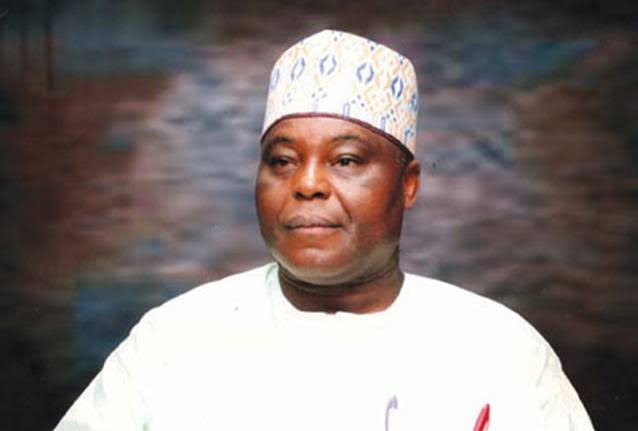
Raymond Dokpesi Laments: Polygamy One Of My Greatest Errors In Life

The Chairman Emeritus of DAAR Communications Plc, Raymond Dokpesi, on Saturday said one of the greatest errors of his life was going into polygamy.

According to him, contrary to the impression that he entered into polygamy because of his wealth, he revealed that it was due to internal family challenges.

Dokpesi stated this in an interview with journalists in Abuja on Saturday as part of the activities to mark his 70th birthday.

The media mogul also revealed how he survived poisoning as a little child even as doctors in Poland predicted that he would not last more than 35 years.

The PUNCH reported that Dokpesi’s autobiography titled: “The Handkerchief”, would soon be unveiled to mark his 70th birthday scheduled for October 25.

He said, “I am a Catholic and I definitely will tell you that one of the greatest errors of my life is polygamy. But it is not something that I desired or something that I wanted. It was a situation that developed, I just had no alternative.

“A lot of people looked at it as if it was wealth that distorted my behaviour but the truth of the matter is that there were internal family challenges that led to the polygamy. I was married to a Polish woman, I wanted to remain with the Polish woman, I still desired it in my old age but she left Nigeria for reasons that she was the only child of her parents and so she had to stay with her parents and I had to stay here and there is no leave in marriage.

“And so, I shuttled down to Poland over 16 times requesting her to come back to Nigeria and stay but as the only child, she wanted to be by them. My mother was very anxious that I should have children that are my own; kids that I don’t have to enter a plane to go and visit. That whole thing caused the instability that later affected my life.”

The DAAR Communication boss further gave insight on how Polish doctors gave him a 35-year life span.

“Well, let me say 35 years was the benchmark that was given to me because in my very early years, I was very sickly. I was fairly handicapped because I could not talk from the very beginning of my life; but very many people assumed that because I could not talk, I could not hear or I could not understand what it was.

“So, I would normally just look and see, watch things as they happened. And I vividly recall when one of my father’s very close friends came to intervene about my schooling and he condemned, outright, any effort to invest in me because I was very sickly and secondly, he had not seen any child of a northerner succeed.

“I was handicapped and that was the toughest moment in my life at that stage and at that time, I felt highly discriminated against, I felt that I was likely to be denied the opportunity to live,” Dokpesi recalled.

“By the time, I was about 12 years I was terribly sick, my mother and father took me to several places from hospitals to native doctors and churches praying, looking for an opportunity for me to survive.

“They later took me down to Agenebode, when my father had almost given up, that I was not going to survive. We went through the banks of River Niger at the time. When we got to the destination, they said I had been poisoned and the people that committed the atrocity were there present and they will be able to deliver me,” he added.

Eventually, he was cured. “But behold, here I am, 70 years old, all those challenges put behind, I am strong, I am healthy and I thank Almighty God and all Nigerians that have given me support all through to be able to reach this year,” he enthused. Punch

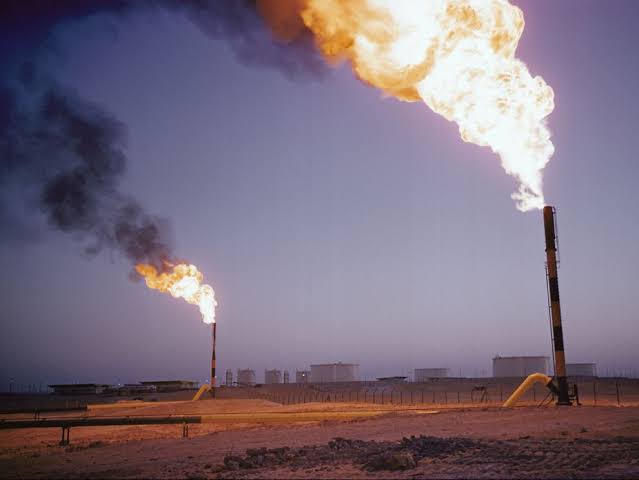
The future of gas is already here, By Alex Otti

Barely four weeks ago, we began discussing the growing impact of renewable energy and how it could affect the future of gas utilisation. This topic generated so much interest that our last column was yielded to no less a person than the man who should know more than any Nigerian alive in the area of gas, Dr. Godswill Ihetu. As former CEO of Nigerian Liquified Natural Gas Company Ltd and Nigerian Gas Company, and as veteran of the oil and gas sector, his knowledge and perspective are unparalleled. Expectedly, his authoritative contribution to the discourse helped throw much brighter light on the matter. We must thank him once more for his time and insight. 

Inevitably, we are staying on the subject of energy this week, especially gas, as new issues keep coming up every day. It is no longer news that Europe, China, the United States and many other industrialised countries, are facing an imminent and severe energy crisis. Meanwhile, gas which many parts of the advanced world had hitherto been coy about, has continued to demonstrate that it is the fuel of today and the immediate future. According to current statistics, in the last one year, price of gas has gone up 8 times. Benchmark futures trade at the oil equivalent price of $230 per barrel. All these are happening when winter has not even set in. This indicates that the likelihood of gas prices going up further is not farfetched. Crude oil prices have, for the first time since 2015, gone above $80 per barrel. Given these realities, crude oil alternatives for powering homes and offices, seem to command stronger demand. From informed research reports, the demand for crude will rise by close to 1m barrels daily by the end of the year. Analysts believe that crude oil prices could hit the $100 per barrel mark by December this year. In tandem, natural gas prices are expected to double from its present high price within the same period. All these are on the back of post-covid economic recovery and increased productivity in China, Europe and the USA.

Nevertheless, there are deserving grave concerns about global warming, reducing carbon footprints and achieving a net zero emission as quickly as possible. Most of the developed economies have set an aggressive deadline for compliance with this objective. Like Dr. Ihetu espoused in his piece, the melting of the arctic ice leading to massive flooding and the general depletion of the ozone layer, cannot be wished away. To get the world to reduce carbon emissions, the international community has taken a principled stand to stop the funding of fossil fuel projects as quickly as possible. This has posed a great threat to countries in Africa which are hydrocarbon-rich and rely on foreign capital and technology to exploit these resources to the benefit of their economies and societies. As I was putting this piece together, my attention was drawn to a paper presented recently by the Vice President of Nigeria, Prof. Yemi Osinbajo, SAN, at the Africa Regional Heads of Government Commonwealth Roundtable. In his presentation, the Vice president decried the defunding of gas projects policy of the global community, calling it an unfair and unjust energy transitional policy which violates the principles of equity and justice enshrined in global agreements.

In the very well-made argument, Prof. Osinbajo had this to say “Although all countries must play their part in the fight against climate change, a global transition away from carbon-based fuels must account for the economic differences between countries and allow for multiple pathways to net-zero emissions. For countries such as my own, Nigeria, which is rich in natural resources but still energy poor, the transition must not come at the expense of affordable and reliable energy for people, cities, and industry. To the contrary, it must be inclusive, equitable, and just-which means preserving the right to sustainable development and poverty eradication, as enshrined in global treaties such as the 2015 Paris climate accord.”

Prof. Osinbajo went further to make a case based on comparative contribution to emissions viz “Curbing natural gas investments in Africa will do little to limit carbon emissions globally but much to hurt the continent’s economic prospects. Right now, Africa is starved for energy: excluding South Africa, sub-Saharan Africa’s one billion people have the power generation capacity of just 81 gigawatts—far less than the 108-gigawatt capacity of the United Kingdom. Moreover, those one billion people have contributed less than one percent to global cumulative carbon emissions. In Nigeria, for instance, the average person emits just 0.6 metric tons of carbon per year, a fraction of the 4.6 tons per capita global average and even less than Europe’s 6.5 tons per capita and the United States’ 15.5 tons per capita. Put another way, energy use and emissions are so low in sub-Saharan Africa that even tripling electricity consumption through natural gas—which no one is proposing— would add just 0.6 percent to global emissions.

“But limiting the development of fossil fuel projects and, in particular, natural gas projects would have a profoundly negative impact on Africa. Natural gas doesn’t make sense in every African market. But in many, it is a crucial tool for lifting people out of poverty. It is used not only for power but for industry and fertilizer and for cleaner cooking. Liquified petroleum gas is already replacing huge amounts of hazardous charcoal and kerosene that were most widely used for cooking, saving millions of lives that were previously lost to indoor air pollution. The role of gas as a transition fuel for developing countries, especially in Africa, cannot be overemphasized”

We salute the Vice President for forthrightly making the above statements. All African countries must adopt this position, not because it will make the Western world change its stance, but to help African countries begin to think about alternative funding strategies to Gas. In fact, a few days ago, the U.S. Deputy Special Presidential Envoy for Climate, Jonathan Pershing, speaking in South Africa was quoted as saying that fossil fuel firms investing in Africa face the risk of regulatory and financial action. Again, a United nation’s Net Zero Banking Alliance, a group of global banks that have committed to reducing their carbon financing and investment, was formed early this year. The largest banks in the US including Citibank, Bank of America, Morgan Stanley and J.P. Morgan Chase have joined and an interim target of 2030 has been set for compliance.

It is instructive that while Nigeria and many other African countries were literally bullied away from coal as a source of energy some decades ago, statistics has it that as recently as 2017, coal contributed 50% of electricity generated in the Unites States of America. This number has just gone down to 20% as at 2020 while Natural gas stood at over 40% within the same period. As at the end of last year, about 10.6% or 22.6GW of the total power generated in Germany was accounted for by coal while Natural gas accounted for about 14% or 30GW. Germany’s coal- phase-out plan stretches to 2038. Meanwhile, we are now being told, after we have completely shut down our coal mines in Enugu and other places that clean coal technologies that help to reduce emissions are possible. It is also noteworthy that in spite of the campaign to defund fossil fuel, only 19.8% of energy generated in the US comes from renewable sources, even though the Department of Energy (DOE) is providing special funding for investment in renewables.

While the campaign was on and plans were being put in place for net zero emissions by 2030, nature seems to have struck with the impending energy shortage in many parts of the developed world as noted earlier, leading to increase in prices of fossil fuel. Russia seems to be smiling to the bank as it supplies about 40% of the gas demands of Europe and has indicated it will increase supply above its traditional numbers. In exchange, it is exerting its influence in the region and ramming through the approval process for Nord Stream 2, the 1,200Km long subsea pipeline that will transport about 110billion cubic meters of gas to Germany and other parts of Europe. This ambitious $11b project, undertaken by Russia’s Gazprom received condemnation and sanctions from the US in 2019. In spite of the opposition to the project, Russia continued and has now completed the pipeline as at early this year. Certification by Germany which has been delayed seems to be receiving serious attention now as Russia argues that it is a panacea to the energy crisis. The Nord stream 2 Project is a larger version of the 678Km long West African Gas Pipeline project which started operation in March 2011. The $900m project supports the export of gas from Nigeria to Ghana via Benin Republic and Togo. It has a capacity of 200 million standard cubic feet a day (mscfd) and can be expanded to 600 mscfd. The pipeline is owned by a consortium of private and public sector investors led by Chevron. If this project which was promoted by the World Bank was conceived today, your guess would be as good as mine as to its funding. So, what do all these mean?

In the first place, the end of natural gas is not in sight yet. In fact, with the unfolding scenario, the future of gas is even much stronger than it was a short while back. While the legitimate campaign for green energy continues and should receive the support of all, it is important to re-emphasise that the ambitious deadlines set mostly by developed countries is everything but realistic. As a country, we are virtually blameless in the emissions that are forcing everyone to think renewable energy sources as aptly demonstrated by the Vice President. We therefore must take decisions that best serve our interest and will lift our people from poverty. We had stated earlier that we are not likely to see any shift in policy in terms of funding fossil fuel projects. Since we have seen that fossil fuels would be with us for the next two to three decades, we should take our destiny in our hands and come up with alternative funding strategies for these resources that we are blessed with. In like manner, we should also fund extensive research and development initiatives as foreign technology would likely disappear with foreign funding. Our position is that the developed world pushing to starve hydrocarbon projects of funding still relies on the same hydrocarbon for most of its energy needs. We should, therefore, pay attention to actions rather than words.

We should draw some lessons from Russia who pushed ahead with its ambitious plans for gas despite what the rest of the world seemed to want it to do. Russia’s decision was anchored solely on the massive gas reserves that it has and the fact that it is the biggest supplier of gas to Europe. Europe needs Russian gas despite the geopolitics; a purely commercial transaction based on supply and demand. Clearly, Russia was convinced that the future of gas was secure and is already benefitting from that decision. We have seen how developed countries drove us out of coal while they still use that ostensibly very dangerous resource to power their plants. Given our very poor energy supply records and the fact that majority of our population has no access to electricity, we shouldn’t have phased out coal at the time we did. Currently, coal contributes 80% of South Africa’s energy needs. 

Finally, it is heart-warming that Nigeria has defined its pathway towards zero emission which does not necessarily align with what the developed world is saying. It is the position of this column that we should stick to it. As we do this, there may not be any need to continue to plead with the developed world to soften its stance on defunding fossil fuel projects. This is because, they are unlikely to change their position. We have seen International Oil Companies divest and pull out from different otherwise profitable projects in the country. All these actions are in furtherance of the global stance on funding of hydrocarbon projects. What we should continue to do is to encourage and support local investors to take up these initiatives and replace any player that pulls out. We may not have the required capacity in terms of skills and financing, but with time, we should be in a position to do so.

We started this discourse with an enquiry into whether renewables would alter the future of gas. An authoritative answer came insisting that the position of gas was secured at least in the nearest future. Just as we were on it, gas prices began to go up aggressively in the face of an imminent energy crisis. Meanwhile, controllers of Capital had taken a position to starve the sector of the much-needed development finance. We therefore conclude by encouraging concerned countries in Africa to put on their thinking caps and  pursue their interests in gas while the party lasts.

 PS: Shell has just been refused permission by UK regulators to re activate a previously shutdown gas field in the North Sea.

•Email: [email protected]

TIPS