Home Blog Page 900

The Battle of the Mind in Nigeria

Leonard Karshima Shilgba

To the casual observer, Nigeria’s present biggest battle is against “terrorism”. Even at that, such observer would likely be referring to the harassment of Nigerian residents through organized assaults by groups such as Boko Haram, “Bandits”, nomadic herders, kidnappers, IPOB, and criminal gangs.

Some may allege that the “battle” against “corruption” is the biggest battle that the Nigerian “government” is engaged in. And their understanding of “corruption” is “politicians and public officials stealing public funds or collecting bribes from government contractors and vendors.” They understand “battle against corruption” to consist of “arresting and locking up corrupt government officials.” And when they refer to “government”, they mean the Federal Government of Nigeria (FGN).

As the mind is ordered so the whole body reacts. Out of the content of the mind, words are spoken, hands are directed, and legs are mobilized.

What information is the mind of the Nigerian being fed; who controls the dissemination of this information; through what means is the information broadcast upon the mind; and how genuine is this information?

When some Nigerians from a particular region of the country rise and claim anger against the “Government of Nigeria”, they certainly are either deliberately or ignorantly oblivious of the State Governments and Local Governments within their region. Their mind has been filled with certain misinformation to believe that the single obstacle to their arrival in the Promised Land is the “obduracy of the Federal Government”, which has “marginalized” their region. What disturbs some interested observers is that this allegation depends on who is the head of the Federal Government at the time. I cannot recall any region of Nigeria that has not made the allegation of “marginalization” against the FGN at some time in Nigeria’s interesting history.

Alright, the preponderance of Nigerians are angry against perceived injustice, oppression, deprivations, and “marginalization” (one word that is next only to the word “corruption” in popularity in Nigeria’s sociopolitical vocabulary), and would like to break away from Nigeria, and form their wonderful new countries. Wait a minute; but, truly, why are they angry? Many complain that they are without jobs, or lucrative jobs, and so cannot afford the basic necessities of life. This is the root cause of this anger, it is an economic problem, which exacerbates physical insecurity because of the sense of hopelessness and feelings of anger that economic deprivations spawn.

The mind of the Nigerian tells him, “The Federal Government of Nigeria owes you economic debts, education debts, health debts and social debts. It is the biggest hindrance on your path to success.” And, like the enchanted, having accepted this false narrative, the Nigerian becomes impervious to reason, and is ready to stone those that would disagree.

Let us reason together and unravel the appropriate distribution structure of both responsibility and culpability within the matrix of our Nigerianness.

Presently, out of every 100 naira that accrues to the Federation Account (FA), the FGN gets 54.68 naira, the State Governments (SGs) get 24.72 naira, and the Local Governments (LGs) get 20.60 naira. Besides, SGs earn additional revenue as Internally Generated Revenue (IGR), which they do not and are not required to remit to the Federation Account.

Since the FGN is for all of Nigeria, from its share of 54.68 naira, it budgets for infrastructure (including “federal roads” in the 36 States and FCT) and services for each State in the Federation, which is SUPPLEMENTARY budget for the States! Let me give an analogy. It is like a family deciding that from the family income, 45.32 per cent would be given to children for their discretionary spending, while the balance of 54.68 percent would be dedicated to children school fees, food, utility bills, house rent, medical bills, and family investment. That, whatever additional personal income accruing to any of the children would not be shared, but rather would wholly belong to the child.

The minds of Nigerians must digest this fact and the implications: The State Governments take the 20.60 naira belonging to the Local Governments, and abandon them to decay. Consequently, the local government system in Nigeria has collapsed! Majority of the Nigerian very poor live in the rural areas, and many of the social services there are the responsibility of the Local Government Councils, which, in accordance with the Fourth Schedule of Nigeria’s Constitution, are required to build and maintain houses for the poor and infirm; build and fund vocational and primary schools; provide primary healthcare; build and maintain streets; provide street lighting; build and maintain markets and abattoirs; provide agricultural assistance to farmers, etc.

With the collapse of local government system, the above services are not being adequately provided, if at all. This failure worsens poverty, which in turn causes social insecurity and social group agitations. But who are responsible? The State governors in Nigeria!

The average population of Local Government Areas (LGAs) in Nigeria is about 271, 318 (approximating the population of Nigeria at 210 million). Some of these LGAs have less than 10 small Council Wards, and are given on average not less than N200 million a month from the Federation Account. Imagine the positive impact on the standard of living of the citizens if at least N10 million worth of monthly social and infrastructural investments were made in each Council Ward! The State Governors are choking the LGAs, and so, are directly responsible to a greater degree for the social upheavals in their States.

I was told in my State (Benue) by a retired Deputy Commissioner of Police that if any Local Government Council Chairman in Benue complained, he/she would become a “Former Chairman”! Last year, while visiting in my State, some youths visited me, and the situation of collapsed local government system was discussed. Furthermore, I discussed an action plan with a traditional ruler, but he was afraid. Activists and secessionists must engage with their state governors on the debts they owe the LGAs, and not only stay on “secession from Nigeria.” The unyielding robbery in their backyard is mortal, and the FGN has no constitutional power to stop it.

In 2018, I gave a speech in Lagos at the annual conference of Guild of Corporate Online Publishers (GOCOP) for the year. While smiling, I told the audience that the President of Nigeria had no powers to “restructure” Nigeria the way some of our brethren in Southern Nigeria are still advocating. I reminded them of relevant constitutional provisions on the matter and the fact that there are 51 Senators (and more than 185 members of the House of Representatives) from Southern Nigeria, and that the the issue of “restructuring” could be made a defining issue in the 2019 general elections. Fellow Nigerians, citizens from any region in Nigeria, who truly seek “restructuring” (however they understand and define it), must elect and send to the National Assembly legislators with similar passion and motivation. As I have written and published copiously on the matter, there can be no Sovereign National Conference on Nigeria without appropriate amendment of sections 8 and 9 of the Nigerian Constitution (www.leonardshilgba.com). Nigerians must not fall for any so-called “National Conference” on Nigeria without first having appropriate legislation crafted for it; nor should they believe the belligerent who think that livid words can work.

Some friends allege that members of the National Assembly do not have the mandate to negotiate a new Nigeria. I believe and have written so too. However, I also believe that except an appropriate Sovereign Conference Act is passed (This requires the National Assembly), based on relevant amendments to sections 8 and 9 (which also require legislation by the National Assembly), none of the agitators, activists, or patriots shall be able to seek and obtain the mandate of their ethnic groups to represent and negotiate a new Nigeria for them.

Nation-building requires patience, sagacity, and due process in all our engagements, so that we do right things the right way, at the right time, and for the right reasons. I have seen a wonder: An enlightened people following the unenlightened to destruction; the people at home following the man from abroad to destroy the homeland; and philosophers and the wise relying on the unwise without grasp of social dynamics for leadership.

The mind of the Nigerian must interrogate the ceaseless allegations of “underfunding of education” in Nigeria. I ask, how much is Enough? Some scholars and public commentators are quick to cite a “UNESCO benchmark of 26 per cent of national budget” for funding of education in developing countries.
By law, the national budget for Education in Nigeria is for funding federal tertiary institutions only (although the FGN funds Unity Secondary Schools, and has established an intervention agency called UBEC to partner with States in the funding of universal basic education across the country). Secondly, there is the TETFUND, which receives 2 per cent profit-after tax from certain registered companies operating in Nigeria. Finally, the Internally Generated Revenues (IGR) of the tertiary institutions are retained and used by them. All of these should be huge, shouldn’t they? Besides all these, State Governments budget every year for Education.

But, has UNESCO set a benchmark that developing nations should spend more than one-quarter of their annual national budgets on Education, irrespective of population, responsibility of tiers of government, and the peculiarities of the nations? The current Minister of Education, Mal. Adamu Adamu and a former Secretary of the National Universities Commission (NUC), Prof. Peter Okebukola, have been reported to have independently denied such UNESCO benchmark exists. In fact, Prof. Okebukola was reported to have called such benchmark a “myth.”
Nonetheless, another report indicated that the UNESCO regional office Abuja had stated that there was a UNESCO “recommendation” that “15 per cent to 20 per cent is the international benchmark.”

I think the issue of a UNESCO benchmark for national funding of education in developing countries should not be allowed to distract us. How well do leaders of public educational institutions in Nigeria manage the funds remitted to them from various funding sources and from IGR? I know from personal experience that prudent managers can accomplish a lot with little. When I hear of the billions of naira disbursed to federal universities, for instance, in addition to TETFUND interventions and IGR, I wonder how much MORE good my university could have achieved with such amounts. Yet, we have done so much with little.

No one, however diligent, can fill a basket with water. He that is faithful in little would be faithful in much. And he that is unfaithful in little will be unfaithful in much. How much of federal, state, and local government remittances for education infrastructure and services is faithfully used for the purposes?
Government can do more, but managers of education must prove their faithfulness.

Federal agencies such as the National Orientation Agency (NOA) must do more to properly feed the mind of the Nigerian to not simply believe any propaganda without verifying, and to not accept just any “international benchmarks” without questions as to the basis and relevance.
We must not be afraid to think creatively, independently, differently, and freely. This is one activity that is free.

A “Know Your Constitution” series of activities should be undertaken by the NOA across Nigeria to help Nigerians appreciate the separate and interwoven roles of the Federal, State, and Local Governments.

No leader can well afford a huge mass of the unenlightened in their nation’s constitution and workings of government. It is not enough to attend a school; you must get an education. It is your personal responsibility to educate yourself. Going to school is more expensive than getting an education. Bob Marley once gave this advise: “Emancipate yourselves from mental slavery. None but ourselves can free our minds.” Be quick to hear and read, but slow to talk and anger.

Refuse to be used. Read!

Leonard Karshima Shilgba

© Shilgba

Militarisation of Igbo land

By Sonnie Ekwowusi

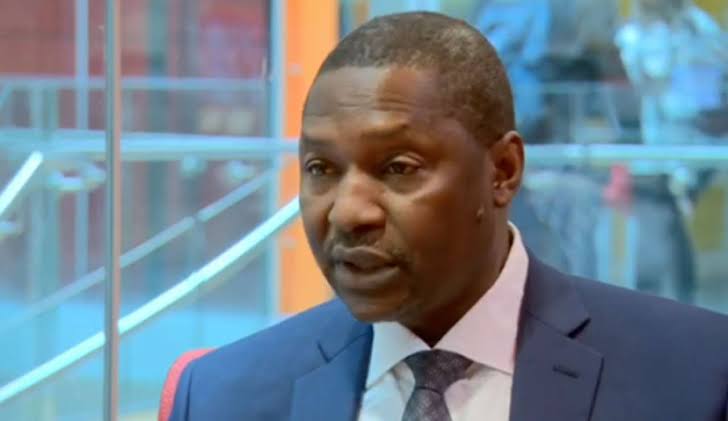
The ongoing militarization of Anambra State and the rest of Igbo land under the guise of combating insecurity is illegal and unconstitutional. Capitalizing on the messy political violence and a few political assassinations in Anambra which claimed the life of Dr. Chike Akunyili and other precious lives, the Federal Attorney-General and Justice of Minister Abubakar Malami (SAN) had announced last week that the Federal government might declare a state of emergency in Anambra State. Not unexpectedly, prominent Nigerians and institutions have been blasting Malami for harbouring and uttering such a wicked statement. Notably among them is the Anambra State governor Chief Willie Obiano. Chief Obiano has said that he had reached President Buhari on the matter who had told him to ignore Malami as the federal government does not intend to declare an emergency rule in Anambra.

Why is the Federal Attorney-General pressuring the federal government to declare a state of emergency in Anambra when a state of emergency had not been declared in different parts of North East and North West battling deadly terrorism and armed struggle resulting day after day in monumental human casualties and sacking of communities ?. When a people’s dignity, honour, pride, reputation, and existential values are constantly eroded in nauseating fatalistic Fulanization and Jihadization, there is a cause for concern. Being a senior lawyer and a Senior Advocate of Nigeria for that matter, Malami ought to have known that neither he nor President Buhari nor any other political office holder can wake up one morning and unilaterally declare a state of emergency in Anambra. Even though our democracy has been seriously corrupted and abused in recent times, government actions are still governed by the rule of law, especially the provisions of the 1999 Constitution, the supreme law of the land. By virtue of section 305 (1)(2)(3a-g)(4)(5)(6) of the Constitution, President Buhari may through an instrument published in the Official Gazette issue a Proclamation for a State of emergency in Anambra. Thereafter President Buhari shall immediately, after the said publication, transmit copies of the Official Gazette of the Government of the federation containing the Proclamation to the National Assembly which will decide whether or not to pass a resolution approving the Proclamation. Note that President Buhari shall not issue a Proclamation for a state of emergency in Anambra unless there is actual breakdown of public order and public safety or there is a clear and present danger of a breakdown of public order and public safety in Anambra. In a nutshell, President Buhari cannot declare a state of emergency in Anambra without an instrument published in the Official Gazette, and, without issuing a Proclamation to that effect, and, without the concurrence of the National Assembly.

Apart from Malami’s state of emergence threat, the federal government, under the guise of protecting lives and protecting in Anambra and the South East, has deployed soldiers to invade Anambra State and the rest of the South-East in what has been tagged as “Operation Golden Dawn” (in reminiscent of George Wallace’s Operation Golden Dawn). The latest military offensive which is no different from Operation Python Dance 1 & 11 of 2016-2017, is actually targeted at dislodging IPOB and ESN as well as create the enabling environmental for the federal-assisted Anambra politicians to steal the Anambra Gubernatorial election come November 6. Considering the atrocities committed in Igbo land by soldiers deployed to invade Igbo land under “Operation Python Dance” 1 & 11, it beats the imagination that the government has again deployed soldiers to invade the same Igbo land. You will recall that during the so-called “Operation Python Dance” 1 & 11, several innocent Igbo civilians were either murdered or badly injured or publicly flogged or harassed or hounded by the soldiers. The disturbing video clips of the aforesaid invasions are still available for all to watch.

The latest deployment of soldiers to invade Anambra State and the rest of the South-East under “Operation Golden Dawn” is illegal and unconstitutional. Section 217(2)(a) (b)(c)(d) of the 1999 Constitution has in no unmistakable terms spelt out the circumstances and conditions under which President Buhari can deploy soldiers to any State of the federation. There are: (i) for the defence of Nigeria from external aggression. (ii) for the maintenance of the territorial integrity and securing the borders of Nigeria from violation on land, sea and air, (iii) for suppressing insurrection and acting in aid of civil authorities to restore order when called upon to do so by the President; subject to such conditions as may be prescribed by an Act of the National Assembly. In other words, whilst President Buhari can freely deploy our military to defend our country against aggression and to maintain our territorial integrity, he cannot dispatch the Nigerian soldiers (acting under “Operation Golden Dawn”) to invade Anambra State and the rest of the South-East in order to combat insurrection and/or other internal armed conflicts in those place without “such conditions as may be prescribed by an Act of National Assembly, and “performing such other functions as may be prescribed by an Act of the National Assembly” as stipulated by section 217(2)(c)(d) of the 1999 Constitution. It is clear that the aforesaid Constitutional provisions were violated when President Buhari deployed the Nigeria soldiers under Operation Golden Dawn” to invade Anambra and the rest of the South East.

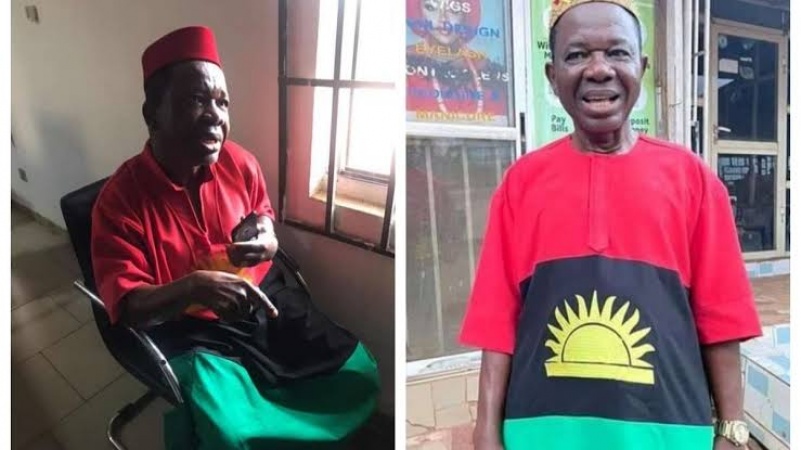
Even a plea of the doctrine of necessity by President Buhari cannot avail him or justify “Operation Golden Dawn”. The doctrine of necessity can only be pleaded upon certain conditions such as; (a) there must exist an imperative necessity arising from danger affecting Anambra State; (b) the action must be proportionate to the necessity (c) action taken to meet the exigency and must be the only available action (d) there must be incapacitation of the State security apparatus which normally maintains security. During the prosecution of “Operation Python Dance 1 & 11 in Igbo land from 2016-2017, the Nigerian soldiers did not comply with the Rules of Engagements (ROE). The soldiers went berserk intimidating, harassing innocent passengers and motorists and unlawfully incarcerating innocent citizens in Igbo land. They also went about killing suspected Biafra agitators and IPOB members and dumping their corpses in nearby bushes. Now, recent reports reaching us attest that the Nigerian soldiers operating under “Operation Golden Dawn” are committing the aforesaid crimes which they committed in Igbo land under “Operation Python Dance 1 & 11. For example, for adorning what arguably passed for a Biafran outfit depicting the Biafran rising sun, prominent actor Chiwetalu Agu was last week publicly molested and humiliated by some soldiers. Other innocent citizens in Igbo land are presently experiencing similar molestation or humiliation.

This is unacceptable. How can soldiers who are supposed to be combating crimes turn round to start committing their own crimes?. No matter the ugly situation in Igbo land, committing jungle justice in Igbo land cannot be rationalized. Two wrongs cannot make a right. Soldiers cannot do wrong in order to right another wrong. The end does not justify the means. Soldiers cannot employ illegal means to achieve a lawful end in Anambra and the rest of the South East. There should be no repeat of the ugliest atrocities of the soldiers under the previous Operation Python Dance 1 & 11 in the South-East.

Money is the lowest form of wealth, real wealth is in relationships

By Gbenga Adebambo

It is not enough to have talent and skills; you must understand the power of building valuable relationships.

Relationships matter more than money. In actual sense, people don’t lack money, it is relationship they lack. You don’t lack money, you only lack the right relationships. It is your ‘connection’ that determines your ‘collection’. What you will collect from life is dependent on the value of your connections. The number one characteristic of a poor man is lack of relevant relationships. The more you are isolated from rich relationships, the closer you are to poverty.

One great truth about relationship is that of all the resources available to man, it is the only one that is inexhaustible. Relationship is the ultimate connector. It can connect you to opportunities that your degree and certificate would not be able to achieve in your lifetime. Relationships can open doors in a moment, which your degrees won’t open in a lifetime. I have observed that there is a strong connection between the quality of your relationships and the opportunities that you will be exposed to in life. Knowing people in high places that will recommend you for the right places will always give you a significant edge in life. Networking can get you into doors that degrees cannot.

Most people are not doing well because of certain relationships that are not in place in their lives. Likewise, everyone doing well can be traced to certain right relationships in their lives. In analysing the origin of suffering and poverty, I realized that both can be traced to the presence or absence of certain relationships. Every relationship is a bridge or a wall, it will either hinder or connect you.

If your only goal in life is just to have quality relationships, that goal is worthwhile. Build a solid base for relationship, don’t wait till you need a relationship before you build it. It can be too late.
Your network is directly proportional to your net worth. Relationship is a form of currency. You are not wealthy until you have relationships that money cannot buy. The true worth of a man is found in the quality of his relationships.

There are some people that are liabilities to your future. Take conscious effort to surround yourself with people that are assets to your future. Whether poverty or wealth, they are both functions of the people with whom you spend most of your time. As it is often said, if you surround yourself with nine losers, you’ll soon be the tenth! Do not expect positive things in your life if you surround yourself with negative people.
John C. Maxwell said: “Your network determines your net worth”. Life stories are full of friends that changed the world: James Watson and Francis Crick were complementary friends who discovered the secret of life (DNA).

Steve Jobs and Steve Wozniak revolutionised the technology world with their Apple products. Bill Gates and Paul Allen were the Whiz Kids that later became software Gurus. Larry Page started Goggle with his best friend Sergey Brin. They met at Stanford University while studying for their Ph.D. in computer science and launched Google in 1998.

The story of HP started with two young kids with complementary abilities in a garage. For HP, their story is a product of the supremacy of human relationship. Williams Hewlett and David Packard were undergraduate students studying engineering at Stanford University in Palo Alto California when they first met. They both had great fascinations for electronics and later became friends. After graduating with degrees in electrical engineering from Stanford in 1934, Hewlett and Packard forged a friendship during a two-week camping and fish trip in Colorado. With the depression ripping the world apart and leaving along in its trail an unprecedented level of unemployment, they gave it a thought to establish their own company. Packard told the story: “Bill and I saw that we couldn’t get a job ourselves, we’ll just start our own company and the Great Fred encouraged us to do that”. The duo were further encouraged by Stanford professor and mentor Fredrick E. Terman to start a business of their own. The young engineers raised $538 in start-up capital, set up a shop in the one-car garage behind Packard Palo’s house, and flipped a coin to decide the order of the company’s name. Hewlett won the toss, and Hewlett-Packard was born. From a tiny garage, they built a company whose technical excellence, innovative management practices, consistent and commercial success will remain an inspiration and model for generations of high-tech entrepreneurs to come.

They formed the Hewlett-Packard Company in 1939 and their first product was the audio oscillator invented by William Hewlett in 1938. The company earned global respect for a variety of products. They introduced the world’s first handheld scientific electronic calculator in 1972 (the HP-41c), and the first symbolic and graphing calculator, the HP-28c.

The name Hewlett-Packard (HP) has become synonymous with high tech innovations from its early days in 1939 right up to the present; HP’s growth has been fueled by one technological breakthrough after another. What really set HP apart is not technology, but the visionary management style and enduring relationships created by HP founders – William Hewlett and David Packard. Their policy of showing sensitivity to their employees’ needs and giving their workers the chance to be creative in solving technical problems has made HP one of the most successful and admired companies in the history of American industry.

For Packard and Hewlett, the pursuit of excellence and friendship has always been more important than pursuit of wealth. Hewlett-Packard Company evolved from two like-minded friends trying to solve a problem in their communities. Today, HP employs thousands of employees and does business in more than 170 countries across the globe. On November 1, 2015, Hewlett-Packard Company split into HP Inc. (a printer and personal computer developer and manufacturer) and Hewlett Packard Enterprise (HPE), focused on servers, storage, networking, and business services. In 2019, the company reported a total annual revenue of around $58.76 billion.

Who will ever imagine that a mutual understanding in a garage will produce a formidable company and an I.T pacesetter with billions of dollars in revenue? HP’s story testifies to the fact that wealth has its origin in relationships. True wealth is in your relationships, not riches.

Kevin Eiken Berry said: “Look carefully at the closest association in your life, for that is the direction you are heading.” Don’t go into the future with a ‘liability’. Go into the future with people that will add value to you and increase your worth. You will need to audit your relationships and cut off people that are liabilities to your future. You are either a blessing or a burden; an asset or a liability; a problem solver or a problem. There are many people you will never realise that you are better off without until you cut them off. When their absence is not felt, then their presence is irrelevant.

Jim Rohn said: “You must constantly ask yourself these questions: Who am I around? What are they doing to me? What have they got me reading? What have they got me saying? Where do they have me going? What do they have me thinking? And most important, what do they have me becoming? Then ask yourself the big question – Is this ok?” Hang out with friends who are like-minded and who are also designing purpose-filled lives. Similarly, be that kind of a friend for your friends. You need people that believe in you, people that invest in your dreams and goals, and people that bring the best – not the stress – out of you.

“Your choice of people to associate with will have more impact on what you become than any other single factor”- Brian Tracy
It is not enough to have talent and skills; you must understand the power of building valuable relationships. Relationships matter more than money. In actual sense, people don’t lack money, it is relationship they lack.

You don’t lack money, you only lack the right relationships. It is your ‘connection’ that determines your ‘collection’. What you will collect from life is dependent on the value of your connections. The number one characteristic of a poor man is lack of relevant relationships. The more you are isolated from rich relationships, the closer you are to poverty.

Nweze JSC On the Role of Lawyers in Upholding The Rule of Law

By Nonso Anyasi

The Supreme Court of Nigeria has several opportunities to emphasize the importance of the rule of law to nationhood. The fundamental principle behind the rule of law was captured by the Noble Lord Oputa JSC in the locus case of Gov. of Lagos State v Ojukwu (1986) (pt 18) 621 where he noted thus:

“The rule of law presupposes that the state is subject to the law, that the judiciary is a necessary agency of the rule of law, that the Government should respect the right of individual citizens under the rule of law and that to the judiciary, is assigned both by the rule of law and by our constitution the determination of all actions and proceedings relating to matters in disputes between persons, Governments or authority.”

The rule of law has suffered different forms of abuse over the years in Nigeria both under military and civilian rule. Whilst the Nigerian military administration was characterized by textbook despotism, democratic rule has also seen its fair share of the abuse of the rule of law. As A.V. Dicey postulated, the rule of law in modern contemporary jurisprudence is described as “the condition in which all members of the society including the rulers and the led accept the authority of the law.”[1]

Hence, a simple disobedience to the authority of the law is a violation of the rule of law. There is no gainsaying that even the rulers and makers of the law can fall victim to the crime of disobedience to lawful authority. Such was the case in Ibrahim Umar & Ors v APC (2018) NWLR (Pt. 1650) 139 where the Supreme Court was invited to uphold the fundamental doctrine of the rule of law after a Nigerian political party had attempted to rape the blindfolded Lady Justice after stealing her impartial scales. However, the radical and Noble Lord Chima Centus Nweze JSC of the Supreme Court who was entreated with the responsibility of writing the lead decision of the Apex Court was on deck to checkmate this wanton disrespect for the rule of law and abuse of the judicial system.

In that case, the Appellants had approached the High Court of Rivers State (trial Court) as Claimants, entreating that Court to grant them reliefs declaring them entitled to participate in the APC Ward Congress in Rivers State, having satisfied the requirements to participate. They also sought, inter alia, to nullify the Ward elections earlier conducted by Respondents (APC), as well as perpetual orders restraining the Respondents from acting on the Ward elections so erroneously conducted.


The trial Court granted the Appellants’ reliefs after the Respondent vide its Counsel had revealed that it was not opposing same. On the day slated for delivery of the ruling by the trial court, sponsored hoodlums and miscreants had invaded the Court premises and engaged in a wanton spree of destruction of court properties and laid siege thereto for several hours with the aim of intimidating the machinery of the rule of law. The trial Court was still able deliver it’s Ruling on that day despite this brazen display of judicial intimidation. It issued an interlocutory order restraining the Respondents from conducting the party’s congress.

However, just barely twenty-four hours later, the Respondents (APC) in a most obstinate display of judicial impertinence, purported to conduct another congress, in acute disobedience to the pending court order. It was not until after the Respondents (who were interestingly the ruling party at the federal government at that time) had successfully completed their contumacious display of disobedience of the order of the High Court by concluding an unlawful congress, that they approached the Court of Appeal in a most impudent manner, seeking an order of stay of proceedings of the trial Court and a stay of execution of the injunctive orders which they had already flagrantly disobeyed. The Learned Justices of the Court of Appeal interestingly granted the prayers of the Respondents (Appellants at the Court of Appeal) without regards to the plethora of authorities on the need for fealty to the rule of law which was brought to their notice by the Appellants (Respondents at the lower court) wherein the Apex Court had severally held that one who is disobedience of a pending order of the court cannot be granted a stay by an appellate court. It was against this opprobrious decision of the Court of Appeal granting the stay of proceedings and execution that the Appellants approached the Supreme Court as their last resort to uphold the rule of law.

The Supreme Court in its lead judgment delivered by the Noble Lord Nweze JSC took its time to elucidate on the need for all persons and authorities to show respect for constituted authority (including the judiciary). The erudite Justice of the Supreme Court held as follows:

“From the facts of this appeal, it is not in doubt that, while the Respondent was in grave disobedience of two Orders of the trial court, it approached the lower court for the discretionary orders of stay of proceedings and stay of execution. Nothing could be more impetuous than that! The Respondent’s approach reminds me of the insightful observation of Eso JSC in Military Gov of Lagos State & Ors v Ojukwu & Ors (1986) LPELR 3186- (SC). According to his Lordship:

Justice Nweze also disparaged the invasion of the trial Court by hoodlums who were seeking to subvert the course of justice, and commended the trial judge for not succumbing to this attack on the independence of the judiciary. Justice Nweze went on to berate the learned justices at the Court of Appeal for refusing to follow the due process of the law by upholding the inveterate doctrine of stare decisis, which he termed “a doctrine of illustrious jurisprudential pedigree.” In his words:

“With respect, learned senior counsel’s (for the Respondent’s) feeble attempt to defend the lower Court’s inelegant effort to distinguish the cases of Military Governor of Lagos State v Ojukwu (supra) and Odogwu v Odogwu (supra) from the appeal before it flies in the face of the vigour and cogency of these authorities to the proceedings of that Court. Indeed, nothing could be a more sacrilegious exercise of discretion than the lower Court’s ill-advised embarkation on its ill-fated journey of self-immolation or what the Japanese call hara-kiri, that is, suicide, all in attempt to circumvent the authority of this court.”

Justice Nweze thus upheld the age-long doctrine of stare decisis as he refused to approve the Court of Appeal’s brazen attempt at judicial rascality. He laid reliance on the cases of Dalhatu v Turaki (2003) 15 NWLR (pt 843) 310, 350; Osakwe v Federal College of Education, Asaba (2010) 10 NWLR (pr.1201) 1, 35-36; and Atolagbe & Anor v Anwuni & Ors (1997) 8 NWLR (pt. 522) 536, 567.

Justice Nweze also commented on the independence of the judiciary as he quoted a paragraph from Odogwu v Odogwu (Supra) where Karibi-Whyte JSC opined as follows:

“The court guards its powers and image jealously. It should therefore be extremely wary in the manner it exposes such image, the diminution of its powers and the enforcement of its authority to public ridicule.”

My Lord then went on to further condemn the Court of Appeal for condoning the egregious, contumacious, and censorious approach of the Respondents, and stated that the courts have a duty to resist an attempt to achieve forensic victory through jiggery pokery. He then went on to allow the appeal and set aside the Ruling of the lower Court.


The distinguished Justice also used this opportunity to advice Legal Practitioners to desist from ungainly acts which can subterfuge the rule of law and the independence of the judiciary. In doing so, he imposed a direct duty on Lawyers to flee from lending any support to violations to the rule of law. He held as follows:

“My Lords, kindly bear with me. Before concluding this judgment, I want to express my reservations about the advocacy style of the Respondent’s counsel in this appeal. Counsel, even if they are partisan politicians, should learn to draw a line between the modus operandi of politicians and the attitude of the courts of law to issues verging on trickery. If politicians gain electoral victory by false pretences, a court of law, nay more, the court of equity must be spared the contempt of being employed as an instrument of advancing electoral fraud!”

Legal Practitioners should therefore be mindful of this duty in the discharge of their contractual duty to their clients. Lawyers have a duty to uphold and defend the Constitution and the rule of law at all times. The Rules of Professional Conduct for Legal Practitioners also imposes a direct duty on lawyers to withdraw their representation whenever their clients insist on charting an immoral or unjust cause in the conduct of their case.

As an aside, this writer has noticed that some lawyers are under the erroneous impression that some provisions of the RPC which imposes superior ethical standards for lawyers exists just for the purpose of passing bar finals. However, this is not so. The rules are not for fun and are not to be discarded after successfully scaling through the bar finals. They are meant to guide the conduct of counsel at all times, no matter how archaic or how much its provisions may be in need of amendment.

Hopefully, the invocations of the Supreme Court vide the Noble Lord Nweze JSC in Umar & Ors v APC (Supra) as well as the earlier decisions of the Court will not fall on deaf ears.

Nonso Anyasi can be reached via [email protected]

FN

[1] Prof A. V. Dicey: Introduction to the Study of Law of the Constitution 10th Edition Macmillan Education Ltd, 1959 @ p. 202

The Court Of Appeal Settles The Debate On Whether Data Protection Is Now Subsumed Under Right To Privacy In Nigeria

By Olumide Babalola

In my article titled “privacy versus data protection debate in Nigeria: the two schools of thought” published by most law blogs in January 2021, I refrained from taking a position because of a pending appeal on the issue where I had settled the appellant’s brief in favour of data protection as a component of right to privacy under the Nigerian 1999 Constitution.

In what appears the most significant decision on data protection in our country’s history so far, on the 24th day of September 2021, the Court of Appeal sitting in Ibadan extensively ruled on the nature of Nigeria Data Protection Regulation 2019 (NDPR) and the relationship of data protection with the right to privacy guaranteed under section 37 of the 1999 Constitution in the case of Digital Rights Lawyers Initiative (DRLI) and National Identity Management Commission (NIMC), Appeal Number CA/IB/291/2020.

In this case, we approached the High Court of Ogun State challenging NIMC’s levying of N15, 000 on persons seeking rectification of their personal data in the national data base. We contended that rectification of personal data is a data subject’s right under the NDPR and payment should not be ordinarily made to enjoy a right.

At the trial court, although the court declined jurisdiction on the ground that the challenge was against the executive and administrative decision of an agency of the federal government under section 251(1)(p) and (q) of the Constitution, My Lord Justice A.A. Akinyemi graciously admitted that:

“This right to privacy is not limited to his home but extends to anything that is private and personal to him including communication and personal data.”

On appeal, while the Court of Appeal agreed with the trial court on jurisdiction, the court, in an unprecedented manner, extensively considered the nature of data protection under section 37 of the 1999 Constitution thus:

“But the meaning and scope of ‘privacy of citizens’ as guaranteed by the section has not received clear definition/interpretation in the constitution. The trial court had, in my view, rightly heald that the right to ‘privacy of citizens’ as guaranteed under the section includes the right to protection of personal information and personal data.’

On the objective of the NDPR, the Court, per Mohammed JCA, held that:

“As rightly observed in paragraph 26 of the Appellant’s brief of argument, the preamble of the NDPR 2019 indicates that the NDPR was made as a result of concerns and contribution of stakeholders on the issue of privacy and protection of personal data.”

On the nexus between NDPR and right to privacy under the constitution, the court expressly held that:

“On the relationship between the NDPR 2019 and section 37 of the CFRN 1999, it is pertinent for me to state that the CFRN 1999 makes provision in chapter IV guaranteeing the various fundamental rights of citizens. But as I stated earlier, the nature and scope of those rights and even their limitations are in most instances, furthered by other statutes, regulations or other legal instruments. It is in this instance that the NDPR must be construed as providing one of such legal instruments that protects or safeguards the right to privacy of citizens as it relates to the protection of their personal information or data which the trial court had rightly adjudged at page 89 of the record to be part of the right to privacy guaranteed by section 37 of the CFRN.”

Conclusively, this watershed decision has momentarily ended the debate on whether data protection is contemplated under privacy and this is good for the development of the subject pending the passage of a principal data protection legislation that would address the other procedural and substantive concerns omitted in the NDPR.

Zoning in Nigeria and Swaga 2023 -By Ebun-Olu Adegboruwa, SAN

Last week, and perhaps in response to the issues raised through this column and other contributions from notable Nigerians, the Peoples Democratic Party, PDP, voted in favour of its own Constitution, by zoning the Chairmanship position of the Party to the North, which invariably means that its presidential candidate in the 2023 election will emerge from the Southern part of the country. This is how it should be, in order to reduce the tension currently stoked by the seeming unending debates on the issue. The ruling All Progressive Congress, APC, is still dancing round the issue and perhaps studying the body language of its major stakeholders, being President Muhammadu Buhari and Asiwaju Ahmed Tinubu. However it may seek to delay its decision, this is a nut that APC must crack in favour of justice, equity, cohesion and unity of Nigeria. In this regard, APC cannot afford to violate the Constitution of the Federal Republic of Nigeria and indeed its own Constitution. In essence, the presidential candidates of all political parties that hope to be part of the 2023 elections should emerge from the Southern part of Nigeria, in compliance with the dictates of our Constitution on zoning and rotation.

The matter has since gone beyond mere zoning, at least with the unfolding events of recent times. Also last week, Governor Babajide Sanwoolu led other politicians (mainly from Lagos State) to launch The South West Agenda, (SWAGA 2023) which is believed to be the campaign outfit of the former Governor of Lagos State, His Excellency, Asiwaju Bola Ahmed Tinubu. Not long thereafter, Tinubu himself flew in from London, where he had gone for medical treatment. Tongues have been wagging since then, whether Jagaban as he is fondly called, has any personal ambition for the Presidency in 2023.

First, we must all thank God for good health and His healing power over Jagaban, notwithstanding the initial denials. None of us can play God, so when anyone is reported to have any health challenge, our duty is to pray for his quick and total recovery. I join other Nigerians and his well-wishers to pray that the healing shall be permanent. But that is not even the issue but rather the full meaning, impact and consequence of zoning and rotation, on such ambition (of BAT) if any. If it is accepted that there is a legal basis to insist on rotation of the presidency to the South in 2023 in order to avoid dominance of power by any particular zone, then such principle must be pursued and implemented holistically, and to its logical conclusion, to avoid the dominance of any particular region or religion. The major factors determining the political equation in Nigeria in relation to zoning and rotation are geographical location and faith. Indeed, from experience, the latter seems more potent than the former.

President Buhari is a practicising Muslim by all accounts and this is known to all. In fact, some have gone as far as tagging him a religious fanatic or a fundamentalist, citing some of his close cabinet members that he has entrusted with key positions of power in places like Ministry of Justice, Works and Housing, Defence, Finance, Communications, Internal Affairs, FCT, Aviation, Education, Information, name it. So, if there is going to be a power shift in the true sense of the word, then the next President of Nigeria should emerge from the South and he/she should be a PRACTICING Christian. It is as simple as that or else there should be no basis for insisting on zoning or rotation. By all known parameters, Jagaban is a PRACTICING Muslim and it is very strange that anyone would seek to drag him into the political equation of 2023. Yes, he is married to a Christian, but that has nothing to do with his person and his personal faith. The religious consideration is attached to the person who is to contest the election, not his spouse or his associates.

Now the absurdity of such consideration (of Tinubu Presidency in 2023) will be better appreciated when the North (going by the same principle of zoning) would queue to produce the next President in 2031, who would by all accounts, still be a practicing Muslim. So, the illogicality of Tinubu Presidency come 2023 is that Muslims will exhaust Buhari’s Presidency for eight full years, take Tinubu’s Muslim Presidency for another eight years and thereafter the North will produce a Muslim President for another eight years, making a total of twenty-four years of unbroken Muslim leadership. Where is the equity in such an arrangement? And yet we preach justice and fairness? I cannot even imagine its consequence on our psyche as a nation that is trying so hard to achieve unity and cohesion.

Is Tinubu qualified to be President of Nigeria? By all means YES, but given the scenario painted above, it is an idea that should not even be muted at all, by anyone who is sensitive to the feelings, faith and rights of others. So, the way in which I personally see SWAGA 2023 is that Jagaban will be the major player in who becomes the President. He must be accorded his full recognition in the political equation of the present day Nigeria, he may be allowed to play a major role in the emergence of any presidential candidate of the APC. But to say that SWAGA 2023 means that BAT or any other Southern Muslim will contest the presidential election will be totally insensitive and indeed incomprehensible.

The other aspect of the incongruity of the Tinubu presidency is that of proportional representation. If we advocate for power shift to the South, this will include the South-East, the South-West and the South-South. The people of the South-East and the South-South and all their Governors without exception are Christians. Per adventure it is possible, purely for the sake of argument, that the South-West is invited to present a presidential candidate for the APC because it has the majority (five out of six States), such a candidate should still be a Christian, given the present figures in Lagos (Sanwoolu), Oyo (Makinde), Ogun (Abiodun), Ondo (Akeredolu) and Ekiti (Fayemi). This is why apart from Chief M.K.O. Abiola, no elected candidate from the South has emerged without representing the majority of the people of that religion, who without any doubt whatsoever, are predominantly Christians. These are not matters of conjecture but pure facts and logic, being the same reason there has been no elected candidate from the North who is not a Muslim. This is the way Nigeria is structured presently and all calculations and permutations for power shift must take account of these factors.

The Book cost N8,000 per copy. (Delivery cost applies for order outside Uyo) To order your copy call: 08084876049; 08055458711 or email: [email protected]

Let me now share with you the thoughts of other notable Nigerians on the issue of zoning and rotation.
Edafe Great Sakoko:

Promoting religion is a no to me. Nigeria’s problem today is caused by Muslims and Christians. Please note not everyone of us believes in Christianity and Islamic. I will prefer a traditionalist rule over us come 2023.

Ilaje Trumpet:

Edafe Great Sakoko I buy your stance oooh, bro… but maybe those Christians tried before weren’t practicing Christians as indicated above by our SAN…

Paul Isaac Ayobamidele:

I think we should really look for the best candidate for this job. The political parties we have now are so useless that they do not have the interest of this country at heart. The issue now is Nigeria is already cracked beyond redemption. Let’s clear off this country and divide it into a manageable portion and then we can start a new beginning. The social system has cracked beyond redemption. We need a new value system, which can never happen in this condition we find ourselves.

Adetola Odumuyiwa:

Well written my erudite Senior Advocate of Nigeria. You were not dashed the title of SAN, you are eminently qualified for it. You went through the gamut of the Nigerian constitution right from the second republic to the present. Your role as stated in this piece is to guide those elements that are trying to manipulate the populace that have seen reading as a difficult thing. The constitution of the Federal Republic of Nigeria is very clear on the issue of rotation, religion equity and fairness. Those who are claiming merit in choosing the President of Nigeria have forgotten that it was this issue of rotation that produced Mohammad Buhari as President from the North, not merit as the apologists of merit want us to accept. Buhari is the least person to consider on merit for the job. Again, even if the argument on merit is to be given a thought, does it mean that it is only in the North that we have the most qualified candidate for the top job? The writers of our constitution recognized two dominant religions in our country; Christianity and Islam. On the issue of population, it is not true that the north is more populated than the South, if a real and unbiased population census is carried out. Geographic location or landmass is not the same as the real human occupation. Thank you Big Sam.

Deji Falade:

I watched you last night and I was amazed by the way you spoke, with references from the constitution, quotingg Section 14 subsection 12, and 223 of 1999 constitution thereabout, on the status of power shift for equity. I was dazed at the way you eloquently present your argument sir. You’re one in a battalion. God blessed you always sir.

Ogu Ibrahim Ogelebe Kolu:

Good evening sir. You have really spoken wisely, intelligently and objective. However, I humbly crave your indulgence on certain constitutional provisions that you left untouched. I respectfully urge you to peruse through section 14 (1) of the 1999 CFRN as amended in 2011. It is clear that Nigeria is a state based on democracy. And democracy entails the wills of the masses.

Conversely sections 133 a & b of the 1999 CFRN as amended in 2011 clearly authenticated the concept of plurality of vote as a condition precedent for winning. Sir, I beseech to comply with your submissions that “all constitutional provisions should be read together in order to discover the intent and purpose of the drafters”. It is crystal clear that the combined effect of section 14 (1) and that of 133 a & b were not contemplated in as much as he passed the test of section 133 a & b of the 1999 CFRN.

Conclusively, the problem of Nigeria is far beyond Zoning, rather it is about the best and competent leaders and best attitude of Nigerians. In view of the foregoing, it is my humble submission that the combined effect of sections 14(1) and 133 a & b of the 1999 CFRN is clear hence they should be construed and interpreted in their ordinary wordings. This is premised on the fact that laws are neither made nor enacted as fancies nor decorations rather they are made to be obeyed.”

When we advocate for power shift, it should be total and holistic, to cover all its components, or else it will lose its effect and impact. And it is left to be seen how a Christian candidate will deputize for Jagaban as a representative of the North in the equation of SWAGA 2023. Clearly therefore, the 2023 presidency should represent a total power shift, both in region and religion.

Giving them liberty: A look into New England Bound and its portrayal of the history of slavery in North America; By Okezue Bell

In pursuit of religious freedoms, the Puritans entered America during the Great Migration of 1630 to 1640. They came as a large group, looking to purge the Anglican Church of its Catholic practices, resulting in their behaviour being the antipode to what they emigrated to New England for. They embraced Calvinism, which ultimately informed their non-separatist tendencies and desire to assert their beliefs on non-Puritans, as they were mandated by God to do so if they were to live a favourable afterlife. The caveat of predestination was that only a select few – who were unknown to the Puritans – were destined for such salvation. Their god-complex views led them to believe that all of those whom they interacted with that were outside of the Puritan faith were inferior, which justified taking their property, committing violent acts, and forcing them to accept Christianity. Effectively eliminating much of indigenous culture, especially in the case of Native Americans, who were forced to relinquish not only their language, but their relationship with the not indoctrinated Natives, and oftentimes leaving their settlements.

Wendy Warren’s New England Bound explores the overlooked instances of the Puritans’ abuse of outside groups, namely Natives and Africans, detailing their use of chattel slavery for the Puritans’ financial gain, connecting the Puritans’ arrival in New England and the proliferation of slave trade. European colonists of the Puritan faith used coercion/military force, constricted communication, and slavery to shape the interactions they had with major indigenous groups, particularly Africans and Native Americans, to control the narrative of freedom throughout New England in the 17th century, which benefitted their economy with regard to land, wealth, political and cultural influence.

The Puritans heavily enforced their religious beliefs through violence and excommunication to further their economic agenda and retain power over those outside of Puritanism, especially the Indians, shaping their interactions with the group to be that of a hierarchy that placed Puritans above the Natives. Puritan religious intolerance became increasingly evident in 1631, shortly after their arrival in New England. They believed that the land of the New World was destined for them due to their belief in divination, and they also believed the Native Americans to be inferior. The classical conception of land in England was that it was an individual holding, owned by a people, though the Native Americans had opposing views, seeing it as a common resource. After observing the lack of similar lifestyles and behaviours that the Native Americans had, along with their spiritual beliefs, such as animism, led the Puritans to view the Native Americans as barbaric and inferior, and therefore they were justified in usurping the land from the indigenous group; they also believed that the Native Americans could be converted to Christianity. This caused slight unrest in the Puritan community, as Roger Williams, a Puritan minister in the Massachusetts Bay Colony, attempted to voice his view that their forceful theft of the Native American land was questionable. He was promptly banished from the colony, preventing him from voicing his concerns further, and ultimately fortifying the Puritan narrative that their siege of land was justified and morally correct.

The underlying importance of William’s excommunication in 1630 for spreading ideas they deemed dangerous was that they silenced any ideas or interactions in support of the Native Americans. In 1676, Puritan minister Increase Mather prescribed that the Puritans were given the land over heathen people.

The Puritans intentionally constricted the Native’s communication and interactions, as well as their physical freedom to benefit their economy. They limited Native American communication by only conversing with them via sign language for nearly a decade, only speaking with them for the purpose of bartering the transport of their high-demand furs for metal weaponry. The Puritans also exploited the Native’s lack of exposure to foreign ailments; the diseases the Englanders brought killed nearly 90% of the Native American population by the end of the 17th century, as they viewed the natives as expendable, and likely already condemned to damnation. Trade was the focal point of the Puritans’ interactions with the Native Americans, which led to the Pequot War, a struggle for bartering/trade control, from 1636 to 1637, in which the Puritans brutally slaughtered the Native American people in the battle, which astonished the Natives, whose typical style of warfare more so involved taking hostages than mass casualties. After the start of the King Philip’s War in 1675, in which the Natives and the Puritans (as well as their solicited Native allies) clashed, the Puritans of the Massachusetts Bay Colony again attempted to stifle the Native Americans by forcefully relocating nearly 500 Nipmuc Indians to the Charles River, and then to the Boston Harbour, where they were placed in camps – primarily in Deer Island – without medical care, food, or clothing, ultimately dying. Alternatively, the Puritans sold them into slavery in the West Indies. They disregarded the fact that many of the imprisoned Natives were those who had accepted the English settlements in 1621. The Puritans still believed that their betrayal worked to their advantage, especially with the concurrent revolts. In New England Bound, Warren cites that the Puritans’s decision to sell the Indians into Caribbean slavery was not fueled solely by racism and their understanding of religious conviction, but was also a strategic play to use the Indians to expand their territory. The Puritans eventually won King Phillip’s war by killing the Narragansett Tribe’s chief around 1678; the victory solidified their capability to control the Indian’s dynamics, even despite the damages New England colonies suffered because of the war.
The de facto interactions that the Puritans shaped between themselves, and Africans was that of slave and master, using their governing powers and religious texts to propagate slavery, thereby increasing their influence and continuing the slave cycle. The Puritans codification of slavery created the facade that they did not engage in slavery, but as debunked in New England Bound, and evident in their treatment of the Natives, the Puritans were willing to indulge in these acts so long as they could control external interactions and maintain power across the trade, including indentured servitude, purchasing slaves, or legally deemed slavery.

It is important to acknowledge that in New England Bound, there is a dispute of Puritan ministers on whether to abolish the slave trade in the early 1700s, but the opportunity of slave labour appeals to the Puritans, and opposing views, both external and internal, are silenced, as shown in the case of the Indians and Roger Williams. As stated by Warren, slightly unlike the Puritans enslavement of the Natives, the capture of Africans was racially motivated, and eventually became opportune.

The West Indies became the primary location for indentured slaves to be transported to. New England Bound poignantly notes that the Puritans did not supplant the Indian slaves with the African ones, but rather expanded their slave empire. The Caribbeans whom they sold their slaves to would be responsible for growing the cash crops, such as tobacco and indigo, and this trade vitalised the New England colonies’ economy, optimising for the expansion of their land and additional profits. Warren also describes the systems that the Puritans used to retract manumission from slaves, supporting the fact that the Puritans manipulated the situation to support their economy, and therefore tried to preserve it by making freedom from indentured servitude difficult and lawfully ambiguous, oftentimes making the rules pliable enough for governmental powers to manipulate slave cases.

The use of violence in both war and relocation, the manipulative nature of slavery, and the imposition of the Puritan and Calvinist culture on the indigenous Indian and African groups exemplify the massive extent to which the Puritans were able to dictate the flow of their interactions of non-Puritan peoples. Additionally, their constant maintenance to create a unified belief system and viewpoints in their communities, alongside their brutality, made it easy for them to overwhelm indigenous groups and force them into various forms of servitude that would prove economically beneficial for the Puritans of New England. The advancement of their socioeconomic status led to them becoming a major controlling power in New England and with transatlantic trade, fortifying their position in the New World throughout the 1700s and into the 1800s.

Before you go…
My name is Okezue, a developer and researcher obsessed with learning and building things, especially when it involves technology or science. Check out my socials below or contact me: [email protected].

I write something new every day/week, so I hope to see you again soon! Make sure you comment and share this article too — especially if you liked it! I sure enjoyed writing it!

Credit: This article was originally published by Sundiata Post

Sex Tape blackmail: Tiwa Savage and her defence of her “natural act”

By stephen Azubuike

Popular Nigerian artiste, Tiwa Savage, recently revealed that she is being blackmailed over a sex tape involving her and her current partner. The blackmailer is demanding money.

Tiwa stated that the sex tape has been made available to her and she confirms the authenticity of it.

According to her, the first thing she did was to forward the video to her manager for advice (not for the manager’s viewing pleasure). But was it not enough to call the manager explaining the situation rather than forwarding the video?

Tiwa’s defence

Well, regardless of whatever else might be the intentions of the blackmailer, Tiwa has made it clear she wasn’t going to part with a dime and refuses to be ashamed.

Her reason is that she committed no crime because having sex is “doing something natural.” She also boasted that she has the nerves to release the video herself. To her, there’s no guarantee that after paying, the video won’t still find its way into the public domain. Worse still, payment might be for eternity.

Knowing the effect the release of the video (whether by herself or by the blackmailer) might have on her son, Tiwa is prepared to brace him up for possible future “attacks” by any rude fellow who may wish to upset him. Beyond this, Tiwa mustn’t forget to advise her son against premarital sex or making a video of the act while at it.

Smart move

Tiwa is smart. She made the right move by releasing the statement in an attempt to seriously play down the situation. She leaves her blackmailer feeling defeated or challenged.

If the blackmailer has the nerves to release the video, he or she may be possibly traced eventually, no matter how long it takes. Blackmail is a criminal action, as well as any unauthorized release of the sex tape without the victims’ consent.

The errors

Having said that, it is true that having sex is something natural. But making a video of it is not. By making such video, in spite of the numerous opinions against such practices, Tiwa is perhaps further confirming that she’s actually as crazy as she claims.

But the partner might not be. We were told that he is a regular guy, not famous. But he might become famous eventually if the video sneaks out.

How did the video leak?

How the video got into the hands of the third party (blackmailer) is worrisome. The “something natural” was not a threesome. Tiwa said her lover accidentally uploaded the video on Snapchat but immediately deleted it upon realising the error. Thus, the upload by her unfamous lover wasn’t an infamous conduct but a mistake.

This brings us to the second part of the unfortunate situation. Not only was the sexual activity recorded, it was uploaded. This too isn’t something natural but silly.

Tiwa has come in quick defence of her team, even when the arguably most important member of her team (her lover) deserves a knock on the head. He may still get it at least before being treated with something natural ever again.

What next?

Perhaps, Tiwa can leave it at that without involving the law enforcement agents at this stage, bearing in mind that before any investigation can be carried out, the officers must see the video first, even though ‘reluctantly.’

This article was first published on October 8, 2021, by https://stephenlegal.ng/sex-tape-blackmail-tiwa-savage-and-her-defence-of-her-natural-act/

AUTHOR: STEPHEN AZUBUIKEStephen is a lawyer with expertise in Commercial Dispute Resolution and Technology Law practice. He is a Partner at Infusion Lawyers. He has successfully argued cases from the High Courts of various jurisdictions to the Appellate Courts on behalf of financial institutions, other corporate bodies and multinationals. He has worked with a number of startup tech companies. He tweets @siazubuike.

Nollywood actor Chinwetalu Agu languishing in DSS custody

Five days after his arrest for an undisclosed offence, veteran Nollywood actor Chinwetala Agu has continued to languish in the custody of the Nigerian secret police, the Department of State Security (DSS).

Agu was arrested last Thursday at Upper-Iweka, Onitsha, Anambra State, while adorning an outfit that reflected the colours of the Biafran flag.

Military spokesperson, Onyema Nwachukwu, had said in a statement that Agu was picked up for questioning for inciting members of the public to join the Indigenous People of Biafra (IPOB) which had been proscribed by the Federal Government.

The celebrated actor, however, denied the allegation, insisting that he was sharing bread to the needy when he was arrested. He denied either being an IPOB member or promoting Biafra.

Agu was released the next day following outrage over his arrest and detention, but his freedom was shortlived as he was rearrested that same day by the DSS and taken into custody

Spokesperson of the DSS, Dr Peter Afunanya, confirmed Agu’s arrest but did not disclose his offence.

Agu’s ordeal has elicited condemnation from various group and individuals. The Coalition of South East Youth Leaders (COSEYL), an umbrella body of all the youth groups in the South East, has condemned the arrest of veteran movie actor.
The coalition in a statement on Sunday by its president-general, Goodluck Ibem, described Agu’s apprehension as illegal and unlawful, claiming that the actor did not breach any law of the federation.

COSEYL said: “We condemn in strongest terms the manhandling and torture of a professional and prolific actor of Southeast extraction, Mr. Chiwetalu Agu in Onitsha by Nigerian Army and arrest by the DSS for wearing a red, green and black clothe that has a drawing of a sun on it.

“The manhandling and torture by the Army and arrest by the Department of State Security, DSS of an elderly Igbo man like Chiwetalu Agu in broad daylight confirms to the entire world the hatred and disdain the Nigerian Army and the DSS have against Ndigbo.

“The Nigerian army and DSS are now agencies for the harassment, intimidation and killing of Ndigbo. What the army did to the Igbo actor is gross ethnic vendetta.”

The coalition said the Igbo actor wore just a clothe with a red, green, black and a sun drawn on it, which by every standard was very lawful, though because he was an Igboman.

According to the coalition, the army tortured and manhandled him and thereafter handed him over to the DSS for more torture and inhuman treatments and the DSS is now saying that justice would be done.

“This is travesty of the law and we condemn it in its entirety. We demand the unconditional and immediate release of Chinwetalu Agu by the DSS and we demand that the army and the DSS should pay compensation to him for the injury and inhuman treatments meted out to him,” COSEYL said. (News Express)

The Politics And Politricks Of ‘State Of Emergency’ In Anambra.

By Raymond Nkannebe

The statement credited to the Honourable Attorney General of the Federation, Abubakar Malami, SAN at a press briefing on Wednesday, 6th October, 2021 to the effect that all options will be explored to restore law and order, including a declaration of State of Emergency in Anambra State approaches what will be a keenly contested important election, has expectedly generated a furor in the polity.

The reason(s) given by the Attorney General of the Federation for this suggested extreme measure, is the seeming failure of the Anambra State Government to secure the safety of lives and properties of Anambrarians in the wave of a renewed campaign of violence by the so called unknown gunmen, but often attributed to elements in the proscribed Indigenous People of Biafra (IPOB). In his own words, “in order to forestall breakdown of law and order in the State, the Federal Government of Nigeria, may be left with no alternative to declare a state of emergency in the State so as to ensure the conduct of the November, 6th gubernatorial election”.

No doubt, in the last one month or probably more, the South East region; particularly Anambra State has seen an upsurge in violence by non-state actors. While fingers have been pointed at members of the proscribed IPOB as being responsible for the degenerating security situation, the group has always been quick to distance themselves from each particular incident citing their so called non-violent and civil approach to their ethnic nationalism agenda. Yet, the violence continues unabated.

From the enforcement of an illegal sit at home on select days of the week in the State, to the attack on various symbols of civil authority such as police stations, INEC offices, Road Safety formations including security operatives and some private citizens, the emerging consensus is that something has to give in Anambra to forestall a total breakdown of law and order, in the once peaceful state.

The forthcoming gubernatorial election in the State, has also, in a way, contributed to make the increasingly complex situation rather more convoluted. On more than one occasion, the government of Governor Willie Obiano has attributed the cascading violence in the State, as the handiwork of opposition politicians who seek to make the State ungovernable so as to achieve their nefarious electoral agenda. However, the governor’s assertions in this regard, appear to struggle for credibility against the backdrop of IPOB’s anti-election campaign in the State which has resulted in violent outcomes.

Even though a Spokesman of the secessionist group has come out to categorically declare that the group are yet to take a position on the forthcoming Anambra polls, the word on the Street is that they are averse to the holding of any election on “Biafran” soil. I, myself have seen pictures of the group’s apologists making a case in this regard via social media and of course, in and around the State. And what is more, this posturing is consistent with the group’s historical attitude to the conduct of elections in Anambra, and indeed the South East region.

Only last week, the convoy of a Federal Lawmaker was attacked by those suspected to be IPOB operatives leaving at least two people dead, in Ajali, a Town in Orumba North Local Government Area of the State. At a recent stakeholder engagement on the forthcoming election, the Chairman of the Electoral Commission, Mahmood Yakubu alluded to this anti-election agenda of the group while making a case for a more concerted security intervention in the State, to guarantee peaceful conduct of the high-stake polls. According to Mahmood, “…from the reports INEC had received, the goal of many of the attackers was that the governorship election must not hold“.

All of these, have aggregated to different contours of security concerns in the State, in a way that may justify the declaration of a state of emergency as provided under Section 305 of the 1999 Constitution. But a declaration of State of Emergency, on grounds of insecurity, has become an unduly politicized affair in our chequered political history. This, unarguably, is largely responsible for the push back that has greeted the Attorney General’s insinuation.

Leading that line of dissent is the governor of Anambra State, who shuttled to the Presidential Villa for an audience with President Muhammadu Buhari on what he described as the “assertions” of the Attorney General of the Federation. Coming out of the meeting, the Governor was quick to tell State House Correspondents that the President was not on the same page with his Attorney General, on how to address the security concerns in his State, which he would rather underestimate. The veracity of that representation on behalf of the President, who was not heard on the matter,   however remains to be seen.

Other interest groups with political leanings have also voiced their dissent to the Attorney General’s suggestion. While the People’s Democratic Party (PDP) describes it as a plot to rig the forthcoming elections in favour of the All Progressives Congress (APC) and its candidate, Senator Andy Uba; a group known as the Southern and Middle-Belt Alliance (SaMBA), queried why similar moves have not be taken by the Federal Government in States such as Kaduna, Katsina, Zamfara, Sokoto and Benue which has seen what they describe as a “festival of killings”. Yesterday, the Anambra Council of Traditional Rulers joined the fray in a Communiqué signed by Igwe Alfred Achebe—The Obi of Onitsha, after a meeting of the Council. “The Federal Government cannot by any stretch of imagination contemplate emergency rule on the strength of the 12 violent deaths in the last two or three weeks”, they said.

The fears often expressed by sitting state governors over threats of declaration of “Emergency Rule” over their State, has its roots in the erroneous, but widely held belief, that a declaration in that regard, neutralizes the democratic structures in the State such as the office of the governor, or the House of Assembly. This impression may not be unconnected to the sacking, by President Olusegun Obasanjo of the Governors of Plateau and Ekiti States respectively and appointment of Military Administrators, during the period of emergency imposed in those States while he was in Office.

However, the elaborate provisions governing declaration of Emergency in the Constitution do not, by any means, suggest that it warrants the removal of a democratically elected governor. While President Olusegun Obasanjo might have gotten away with such undemocratic acts in Plateau and Ekiti States, one is likely to attribute it to the nascence of our democracy at the time. The Constitution remains unequivocal that the permissible circumstances where a sitting governor may be removed from Office is upon resignation, health/medical incapacity of any kind, and/or impeachment by two/third majority of the House of Assembly of a State.

But one disturbing outcome of all these, is the tendency to politicize otherwise security issues which demand a patriotic and nationalistic response by the critical stakeholders, and its implications for genuine efforts at containing a crisis. For instance, despite all the documented and undocumented killings going on in Anambra, Governor Willie Obiano was quick to downplay the situation in his conference with the President. If I might paraphrase him: “we do not have any problem in Anambra. Those causing the problem are from outside the State, and we’re going to deal with them. We have identified them, and we’re going to get them“.

It must however be said that this unduly defensive posture, and whitewashing of an otherwise critical situation which doesn’t translate to the fact on ground in Anambra, serves only the parochial political interest of the Governor, who does not want any qualification or abridgment of his political authority in the State. It serves little or no gain, to the average man on the Streets of Anambra, who is at the receiving end of the growing campaign of violence.

What are the issues? They are as follows: there’s is growing secessionist campaign in the South East region; and Anambra particularly, with threats to the sovereignty of Nigeria, and the livelihoods of residents of the State; there is a forthcoming highly consequential election in the State, to decide its political future; and finally, there is a dissent by secessionist groups in the State against the holding of the election. All of these variables, present serious concerns for security in the State and the South Eastern region at large, and therefore call for extraordinary security response, particularly when the state government appears bereft of ideas to nip the snowballing crisis in the bud.

It is along this context, that one should situate the statement credited to the Attorney General of the Federation. The petty comparative security analysis embarked upon by Governor Willie Obiano and some officials of the state government in determining what State should receive an emergency declaration, misses the point. If anything, it shows that the governor is more interested in the preservation of his political authority, than the security and welfare of Ndi Anambra, which he swore to guarantee.

As Anambra inches towards the November 6th poll, the collective concern should be: how to create a safe environment for electorates to have a say, in the future of the State. Whatever method that is used to achieve that, including a declaration of emergency in the State, in my considered opinion, must take a secondary place. In any event, our recent elections have witnessed high presence of security operatives to ensure and guarantee popular participation in the polls. Anambra’s peculiar security situation, if anything, should accentuate the need at this time.

One issue remains unresolved: the allegation by APGA and PDP that the suggested declaration of emergency in the State, is to facilitate the rigging of the November 6th polls. While these are bare assertions, they nonetheless merit attention, having regard to events of our recent electoral history. Any reinforcement of security presence in the South East, including Anambra therefore, should be in the interest of restoring peace and security in the region. Security operatives have been indicted in the past for meddling in local elections, and conferring advantage on the candidate whose party calls the shot at Abuja. This, I believe, informs the fears and insinuations of APGA and PDP. Anambra however, cannot afford to be used as another platform for such electoral brigandage and it behooves on the State Governor, who is in charge, to ensure this outcome; howbeit, not in his own political interest.

Barring the execution of what we may, for now, describe as Malami’s threat, the bottom line is that there is a seething anger amongst the youth in the South East which has found potent expression via Mazi Nnamdi Kanu’s ethno-nationalistic agenda. Irrespective of how the cream of Igbo leadership may want to live in denial of the situation in the region, the extent to which these feelings are assuaged would have a positive or negative impact on the security outlook of Anambra and the South East, in general.

Raymond Nkannebe, a Legal Practitioner and Public Interest Commentator, writes from Lagos.

TIPS