Home Blog Page 899

Devaluation is Grossly Overrated, By Simon Kolawole

On Monday, Vice-President Yemi Osinbajo might have made his boldest pitch yet for his expected presidential bid in 2023. Speaking at the administration’s midterm retreat — with President Muhammadu Buhari and Mr Godwin Emefiele, the governor of the Central Bank of Nigeria (CBN), in the room — Osinbajo appeared to have broken ranks with the government over its forex policy, faulting the demand management strategy and declaring the exchange rate as “artificially low” and “negatively affecting” the inflow of foreign exchange into the economy. The solution, he proposed, was to move “our rates” to be “reflective of the market” to encourage an inflow of “new dollars”.

The VP also raised issues with CBN’s direct intervention programmes which, he said, make it look like there is a competition between the monetary and fiscal authorities. (Interestingly, Osinbajo is the chairman of the steering committee of the Infrastructure Corporation of Nigeria Ltd, another brainchild of the CBN). His call for synergy between monetary and fiscal authorities is definitely in order and his worries over the potential room for arbitrage with multiple exchange rates are valid. But my little concern was that these are basic housekeeping issues that the VP should not be discussing on TV. We outsiders may get the impression that this government is divided against itself.

By being publicly critical of this administration’s demand management policy — which seeks to reduce forex outflow by curtailing importation of goods not considered as essential, such as rice and private jets — Osinbajo might also have sent a strong message to certain constituencies that he is his own man. That is, “Osinbajonomics” is going to be different from “Buharinomics”. This should please the World Bank/International Monetary Fund (IMF) and some Nigerian experts who have always maintained that for the country to attract foreign capital and boost forex supply, the naira has to be floated. They argue that like water, the national currency will eventually find its level.

Osinbajo’s position was quite clear and unambiguous, despite the attempted clarification by his media team. My first response was: “Shots fired!” Buhari has spoken openly against devaluation since he came to power. Why would the VP be openly critical of a policy that clearly has the imprimatur of the president all over it? Why make such comments at a televised forum? Why shout at someone you can whisper to? Was it an error of judgment? The headlines thereafter said Osinbajo called for devaluation. No matter his intention, the ordinary interpretation on the streets would be that the vice-president was campaigning for more hardship on Nigerian masses.
Nevertheless, the clarification begged the question: is devaluation a dirty word? In my own admittedly limited knowledge of economics, there could be justifications for devaluation. Three instantly come to mind (1) to make non-commodity exports cheaper in the global markets (2) to stimulate foreign investment (3) to encourage forex inflow into the system — as the vice-president himself was trying to suggest when he said “we can’t get new dollars into the system where the exchange rate is artificially low”. That is why I still do not understand why his media team tried to take back or re-phrase his words thereafter, saying he was only talking about eliminating arbitrage.

My point of departure with the vice-president is that he committed the same error as is the wont of many Nigerian neo-liberal economists and economic analysts: preaching the gospel of “seek ye first devaluation and every other thing shall be added unto thee”. Devaluation is packaged as the ultimate solution to all forex problems. The claim is that the moment you devalue your currency, foreign investors will come rushing in with tonnes of dollars. That is rather over-optimistic. There are many things that determine forex inflow. Devaluation is just one of them. And there is a limit to what devaluation can achieve in a poorly structured economy such as ours. That is my position.

For instance, while the VP was criticising CBN’s demand management policy, he was loudly silent on the elephant in the room: fuel subsidy. It is estimated that by the end of the year, the subsidy bill will be around N2tr. This is already a very big problem for public finance, but there is another sticky dimension. Ages ago, the NNPC used to sell its share of oil to earn “new dollars” and boost our reserves. However, the corporation now operates a direct sale direct purchase (DSDP) swap system under which we give crude to foreign refineries in exchange for refined products. That means no dollar exchanges hands. And that means billions of “new dollars” will not enter CBN reserves.

To be fair to the VP, arbitrage is serious economic distortion. The difference of N160 between official and parallel rates is huge. The CBN has argued that with the stringent rules in place and the calibre of those now getting forex legitimately — such as government agencies, manufacturers and airlines, etc — the room for arbitrage has shrunk. The parallel market, the CBN insists, accounts for less than 7% of our forex transactions. Nevertheless, eradicating arbitrage is a very simple “procedure”: just devalue the naira from N412/$ to N572/$. If supply issues persist, devalue again. But be assured that if rising cost of living leads to another #EndSARS uprising, our experts will be nowhere to be found.

To what do I liken this gospel of devaluation? It is like constantly repainting a commercial bus to make it attractive to passengers, whereas the seats are tattered, the air conditioning is broken and the engine is failing. We can keep devaluing the naira hoping to attract “new dollars” but our fundamental structural problems remain. While the value of the local currency may be a factor in attracting foreign investment, it is neither the sole nor the most important determinant. Capitalists also look critically at country risks. If the value of the local currency was the magic pill, Zimbabwe and Venezuela would be the biggest recipients of “new dollars”. There are surely other factors at play.

In a country where separatists, kidnappers, herders, bandits and terrorists are having a ball, devaluation cannot be the tonic for “new dollars”. We have a country where there appears to be an official policy to muscle out some investors. The attorney-general just woke up one morning and said he dreamt that MTN evaded tax and immediately slammed a bill of $2bn on them. The information minister has been working overtime trying to chase Multichoice out of Nigeria. Potential foreign investors see all these things. They are aware of the hostile business environment, the frustrating legal system, the chaotic ports and the bureaucracy. But we somehow think devaluation is the cure.

Without a doubt, devaluation can temporarily relieve some symptoms and bring some inflow — with “temporarily” being the operative word. As a matter of fact, the CBN has been adjusting the exchange rate since 2016 while throwing even the kitchen sink to save the naira from drowning. The rate was N197/$ six years ago and is now N412/$. But, truth be told, devaluation as a tool of attracting foreign exchange is not sustainable, neither is it a sure pathway to economic development. The larger issue is: how do we attract multiple sources of forex into the economy so that we are not hopelessly tied to oil revenues and devaluation? How can we export more?
The fundamental flaws of our economy have always been there — papered over by cycles of oil boom. When oil revenues are high, we go binging. When oil revenues are low, we go begging. When oil prices crashed in the early 1980s, we faced our first major challenge in the oil era. It was a mess. Inflation went through the roof. Our reserves were so down we were no longer creditworthy to import essential commodities. We had to queue up to buy rice and tin milk. Civil servants were being owed salaries for up to seven months. Things were so bad that after the military took power, it was a major event on NTA Network News anytime workers were going to receive one-month pay cheque.

Under our current circumstances, the CBN has an option: it can actually fold his arms and watch the country go up in flames as government finances plummet and fiscal policies remain in disarray. Civil servants will be owed salaries for months and thousands will be retrenched. Forex demand will keep ballooning. The CBN governor will just be devaluing the naira every Monday to encourage “new dollars” and eliminate arbitrage. Easy-peasy! But by the time we reach N5000/$, our problems will still remain unsolved — because our economic structure is warped and the fundamentals are not solid. Panadol can never treat high blood pressure, no matter the relief it gives for a migraine.

I would love to be CBN governor if oil price is $80/barrel, production is over 2mb/d, revenues are in excess of $4bn monthly, reserves are $60bn, forex demand is $2bn, and the fiscal authorities are playing their part. I would just be sleeping and snoring. The real challenge comes when revenues are low and fiscal policies are all over the place. That is when everybody begins to see our nakedness. That is when it becomes more obvious that the foundations of our economy are fickle and feeble. There is no way devaluation can take the place of a proper restructuring of the economy. We need law and order, infrastructure and security for a conducive and productive investment climate.

We say we want to diversify exports to attract more non-oil forex inflow, but it is easier for a Nigerian entrepreneur to go to the moon than to export a bag of garlic through our shambolic ports. These are issues obstructing our progress. Osinbajo oversees the presidential committee on ease of doing business and should help tackle these hinderances. Really, devaluation is the easiest thing for any CBN governor to do. But with our structural and infrastructural deficiencies, it will not guarantee capital inflows. Instead, it can lead to more misery for an economy that relies heavily on imports, including food and intermediate goods. We cannot devalue our way to economic prosperity.

AND FOUR OTHER THINGS
TAX ATTACK
Every time, we say we want more investments in Nigeria. Every time, we do something that promotes the exact opposite. According to Order 3 Rule 6 of the Tax Appeal Tribunal (Procedure) rules approved by the ministry of finance in June 2021, if you disagree with a tax assessment by the Federal Inland Revenue Service (FIRS), you have to first pay 50% of the amount before you can dispute it. This is directly in conflict with Paragraph 15(7) of the FIRS Act which allows the appellant to pay the lower amount between 50% of tax paid the previous year and the current assessment. The new rule opens up taxpayers to blackmail and extortion and will hurt businesses. Dissonance.

CIVIL CASE
The federal government has given two options to its workers: be vaccinated against COVID-19 or come with a negative test result, otherwise, you can’t go to the office from December 1. This comes with many dangers. Some will buy vaccination cards just to obey the directive. The anti-vax propaganda will grow more wings as every new death will be blamed on the vaccine. More so, government machinery may grind to a halt if unvaccinated key officers can’t come to work. Even though I am double-vaccinated, I am not in support of the new rule. Vaccination is an emotional issue for millions of people, most of whom have been brainwashed, so I prefer persuasion to coercion. Caution.

ELECTRONIC SHOCK
There has been excitement everywhere over the decision of the senate to allow electronic transmission of election results as well as direct primaries in which every member of a party will vote to pick candidates. However, I am sorry to say this: didn’t we say PVC would finally put an end to rigging in Nigeria? Why are we still worried about rigging six years after? You see, we always think the problem is the system. I keep saying the problem is the operators of the system. The problem is Nigerians. If Nigerians don’t change, Nigeria won’t change. I must admit, though, that I am enjoying the extremely optimistic public reaction. Unfortunately, it is these expectations that kill us. Gullible.

OIL DOOM
Crude oil price hit a three-year high of $85/barrel on Friday. Bad news for Nigeria. For one, our subsidy bill just went up, yet again. So, expect more deductions for “under recovery” by the Nigerian National Petroleum Corporation (NNPC) as we continue to use our forex to import millions of petrol for the rest of West Africa. Also, we are currently producing 1.25mb/d, way below our export quota — we are short by 360,000b/d. That is a lot of money we are losing every day. Our gain from price rise will, therefore, be marginal. What’s more, businesses that depend on diesel will now pay higher costs. Don’t say I am unpatriotic but I now prefer crude oil at $50/barrel or less. Beneficial.

Can Government Takeover Lands Without Notice?

Can Government Takeover Lands Without Notice?

DAILY LAW TIPS
by Onyekachi Umah,Esq.
(Tip 61)

Although all lands in a state belong to the Governor of such state, government cannot compulsorily acquire a land for overriding public interest without first issuing a valid Notice to the holder of right of occupancy of such land. Governors hold lands in trust for their state. Where any land is needed by government for public interest, government will collect back the land from any person, but must give adequate notice and pay compensation for any development on the land. Development here includes immovable structures and cats crops. Notic to be given to such person by government must be in writing!

See, Section 28 (4) of Land Use Act.

Of pastorpreneurs, faith and ignorance; By Osmund Agbo

The founder of LoveWorld Incorporated also known as Christ Embassy, Pastor Chris Oyakhilome has never hidden his disdain for anything about Covid-19 and the science of it. The “man of God” started by telling the world that the virus was nothing but a dangerous weapon called the 5G network and that all the alarm being raised about its fatality was just another brouhaha. Along the line, however, he received his baptism and started touting hydroxychloroquine as the wonder drug that could cure a disease he believed never existed. Recall that in May last year, the megapastor’s Loveworld Television Network based in the United Kingdom, was sanctioned by the Office of Communication for spreading misinformation about the pandemic.

Well today, Chris is not just back, but with a vengeance. In a new video being shared across social media platforms, he was seen forcefully doubling down on his claim about Covid vaccine, talking about the new world order and using such fancy scientific terms like spike protein, gene therapy and everything in between to dazzle whoever cares to listen. Even fellow pastors who dared to support the use of vaccine have come on his firing line. He does not believe that such congregation leaders are worthy of being called Christians since, in his words, they neither know God nor the scripture.

People like Pastor Chris are rich, powerful and dangerous. They dress up ignorance in elegant prose and Nigeria is home to many of them. I met one sometime ago, in a flight from Houston to Atlanta.

Each time I find myself flying in an airplane, I almost, always engage total strangers. As much as I try to convince myself that such moves help to broaden my horizon, there is the motivation that comes with the offer of an escape from the inconvenience of being huddled up in a space barely enough to contain my modest frame. Of course, I envy those spoilt business class brats with their entitlement to a huge legroom and a seat that comfortably retracts. Well, this time, I too got lucky.

Good day sir! How you dey? I said, with my best attempt yet at a friendly smile.

The man cocked his head right to my side, even as he gathers the rest of his suit, making sure it’s well tucked in within his allotted space.

Not minding the balmy weather, he spotted a purple-coloured 3-piece suit, over-sized and burdened with excessive details. He came complete with a big cross festooned on this neck. Looking at the whole ensemble, you get the impression he must have insisted his designer not do away with any piece of fabric. Being a Nigerian, it didn’t take long for me to decode this paraphernalia.

Casting one more glimpse at me as if to convince himself he heard right
“Are you Nigerian“, he asked and I answered in the affirmative. Can’t you tell? I retorted.

“Omo Ibo right?” I nodded
“Ah! I no fit o” he said, smiling as he surveyed back and forth as if to make sure that no one was eavesdropping in the conversation. Two minutes in and I was still struggling to understand this fellow. A hybrid of Nigerian, American and British accents made his English almost impossible to comprehend.

Sir, it seems like you didn’t grow up in Nigeria? I asked.

“I did”,  he replied. “But why do you ask?”

Why does Canada keep inviting more immigrants when housing is already too expensive for current residents?

Well, first of all, the Canadian birth rate is too low to maintain the population, and Canada needs young and ambitious people to pay the taxes to support old and retired people like me. That is the primary reason for inviting in more immigrants.

Second, the high housing prices are confined to a few very large and congested Canadian cities, notably Toronto and Vancouver. If you look at the prices of housing in all cities over 1 million, they are:

  • Vancouver $1,175,000
  • Toronto $1,090,000
  • Ottawa $660,000
  • Montreal $515,000
  • Calgary $494,000
  • Edmonton $398,000

Once you are out of the overpopulated regions of Southern Ontario and Coastal BC, prices fall to half or less of the two top cities, and prices in Edmonton are not more than 1/3 the price of houses in Vancouver. Once you get out of the million+ cities, prices fall even farther. Winnipeg is only $369,000 and smaller cities like Regina, Saskatoon, and Halifax are even lower.

We just need immigrants to move to less congested parts of the country, of which we have lots. Most of this country is nearly completely empty — we have fewer people than California in an area larger than the entire US, and 80% of the country’s farmland is in the less populated prairies. We could pass laws forcing immigrants to go there and take housing pressure off the most highly congested cities which are attracting them now. They would just have to put up with somewhat colder weather than Vancouver or Toronto.

Maybe we could make “cold tolerance” one of the criteria of the immigration points system. Send them to Winnipeg and give them all down parkas, toques, and mukluks. They can get used to the weather and they’ll blend right in.

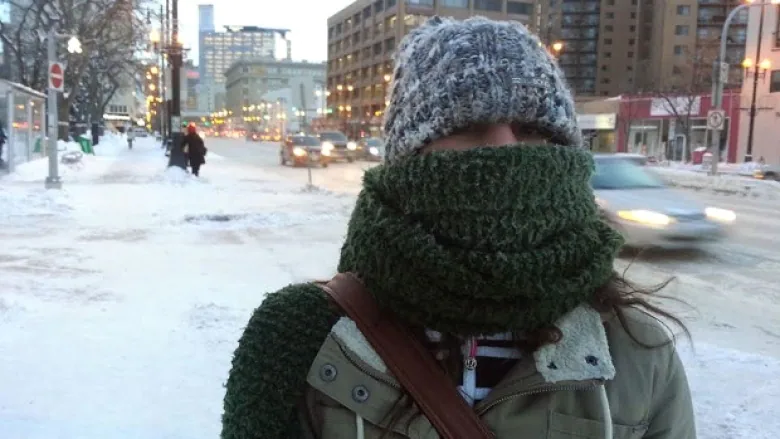
Winter in Winnipeg. Calgary and Edmonton are much warmer than this.

New cold tolerance test for immigrants

These are actually researchers acclimatizing to the cold in Antarctica, but you get the general concept. (quora)

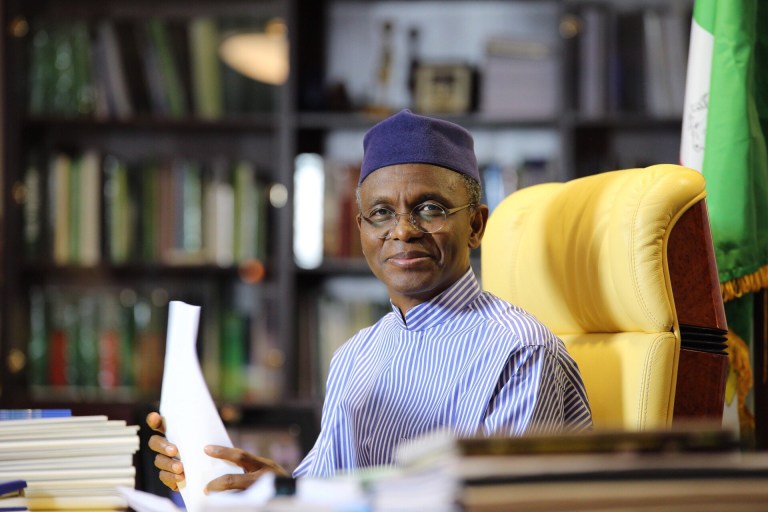
Banditry will soon move to the south, says Gov el-Rufai

GOVERNOR Nasir El-Rufai has suggested that banditry and other criminal vices in his state could soon escalate to the south if nothing is done.

The governor disclosed this at the ‘Fountain Summit’, an event organised by the Ekiti Government today.

He called for a collaborative effort between the federal, state governments, and Nigerians in combating terrorism.

According to Governor el-Rufai: “Remember once upon a time, Boko Haram was only in north-east. Now, the biggest fear we have in the north-west is that they are relocating to the north-west because they are being chased out from the north-east by ISWAP.

“When they are chased out of the north-west, where do you think they will come? Somewhere else. It is something we should all be concerned about; not only federal and state collaboration, but also across the country.

“Don’t see what is happening in Kaduna and say it is not my problem. It will be your problem one day, unless it is solved.”

The governor also admitted security challenges across the country, stressing that Nigerians should be concerned.

“We have security challenges, but our investors know where their assets are and they know that those assets are safe and we’ve never seen the headlines of security affecting our inflow of investments.

“But we must work on improving security or more than that, we must stop this ‘us versus them’ mentality and collaborate more closely,” he added.(thenigerian)

Sanusi: Former Emir of Kano’s manic megalomania in Kaduna, By Farooq Kperogi

On October 12, I received a message on WhatsApp, which the platform flagged as being “forwarded many times,” about how former Emir of Kano Sanusi Lamido Sanusi (or whatever he calls himself these days) caused Governor Nasir el-Rufai to fire his Chief of Staff for the “offence” of referring to Sanusi as the “former emir of Kano.”

Because WhatsApp has become a cesspit of false, malicious misinformation, my default inclination was to dismiss the forwarded message as yet another fetid rhetorical garbage huckstered by low-IQ philistines who are still after Sanusi even after getting him dethroned.

My response to the forwarded message was: “Why won’t these lowbrows leave this man alone? Sanusi is a deeply flawed man, but he is not so flawed that he’d be this ridiculously infantile and petty.”

The forwarder of the message apologized for not being discriminating in what he believed, but a few hours later, an elder statesman from the North forwarded to me a 35-second video that featured a pastiche of soundbites from el-Rufai’s Chief of Staff identified as Muhammad Sani “Dattijo” Abdullahi and former Kano emir Sanusi that basically confirmed the forwarded message I’d dismissed as made-up anti-Sanusi propaganda.

During the Kaduna Investment Summit in September, Abdullahi, who I learned is actually a zealous admirer of Sanusi, recognized cultural and political dignitaries at the occasion in the course of his speech. “Your Royal Highness [sic] the Emir of Zazzau and the former Emir of Kano,” he said without the dimmest clue that he had stirred up a hornet’s nest.

When it was time for Sanusi to speak, he left no one in doubt that his brittle ego had been badly bruised by the reference to him as “the former emir of Kano” and that Abdullahi would pay a price for it. “And to be honest… when I listened to the—I will call him former chief of staff and he’ll understand why later,” Sanusi said amid a nervous, subdued applause. “Next time don’t call me ‘former emir.’ There is nothing like that.”

Like Sanusi threatened, Abdullahi later did become a “former chief of staff” two weeks later; he was “demoted” to a commissioner by el-Rufai. There are so many things that are wrong with this.

First, it exemplifies the most vulgar show of what French theorist Pierre Bourdieu once referred to as symbolic violence. Symbolic violence occurs when people who wield symbolic, social, cultural, or political capital use the privilege of their capital to inferiorize people who are—or who they perceive to be— subordinate to them in order to lengthen and perpetuate the power distance between them.

Many people have referred to Sanusi as a former emir of Kano, which he is because there can be only one emir of Kano, but he chose to scapegoat an appointee of his friend who can’t fight back, who is a mere appendicular part of his friend’s administration. That’s disreputably spineless. It’s flat-out cowardly bullying of a social inferior.

Sanusi said “there’s nothing like” the “former emir of Kano,” but didn’t say how he should be addressed. Well, in the protocols of address in the English language, Abdullahi was correct to call Sanusi the former emir. “Former” is the more polite adjectival alternative to the harsher but more accurate “dethroned” or “deposed.”

It would, of course, be bad form to describe Sanusi as a “dethroned” or “deposed” emir, but it would also be disrespectful to the current Emir of Kano to not indicate that Sanusi is no longer the emir of Kano. “Former emir of Kano” is the most neutral linguistic compromise that anyone can deploy to navigate the strange cultural minefield that Sanusi’s situation has created since monarchs typically reign until their death.

Everyone knows it isn’t usual for monarchs to be dethroned. It’s even more unusual for dethroned monarchs to be gallivanting and preening all over the place after their dethronement. Anyone in Abdullahi’s position would be flustered by the unusualness of having to address a reigning monarch, that is, the Emir of Zazzau, and a deposed one, that is, Sanusi Lamido Sanusi, on the same occasion.

Sanusi’s manic megalomania and cowardly symbolic violence (he still wears his royal regalia with idle courtiers in tow wherever he goes and demands to be treated like an imperial overlord) in the aftermath of his dethronement are the clearest justifications for the practice of ostracizing and confining deposed emirs to gaunt villages for the rest of their lives, which Sanusi has escaped because of his friendship with el-Rufai.


Well, let’s examine a somewhat equivalent scenario in the case of Joseph Aloisius Ratzinger who later became Pope Benedict XVI when he was elected pope in April 2005. When he resigned in 2013 instead of ruling for life— like most other popes did and like most monarchs do—he came to be referred to as “the former pope.”

A March 1, 2021 headline in the UK Guardian, which is one of the best newspapers in the English language, reads: “Former pope Benedict says ‘fanatical’ Catholics still won’t believe he’s not the pope.” An August 3, 2020 headline from CNN reads: “Former Pope Benedict recovering from ‘painful but not serious condition,’ Vatican says.” Reuters, the world’s second biggest news agency, once called him an “ex-pope.”

Sanusi’s apologists say since Ratzinger is sometimes referred to as “emeritus pope,” Sanusi should also be dignified as an “emeritus emir.” I actually like the rhythmic quality to the title. Unfortunately, Sanusi isn’t qualified to be an “emeritus emir” by any definition of “emeritus.” Emeritus status is conferred only on people who have retired “honourably” from their positions. Being dethroned is by definition a dishonourable discharge from duty.

Others say he should have been referred to as the 14th emir of Kano. First, the fact that he is 14 and the current emir is 15 makes him a “former emir” by default. Second, most people don’t keep count of the number of emirs that Kano—or any monarchy—has had in their active memory. It’s useless knowledge. And it’s unfair to expect el-Rufai’s former chief of staff to remember that, more so that he didn’t mention the numerical position of the Emir of Zazzau along whom he introduced Sanusi.

Plus, the counting is arbitrary and contestable. Sanusi may be the 14th Fulani ruler of Kano, but he isn’t the 14th emir of Kano—if by “emir” we mean a Muslim ruler. (Emir, after all, is an English word for a Muslim ruler, which came to the language via French, ultimately from the Arabic amir, which basically means ruler.)

The first Muslim ruler of Kano was Yaji I who ruled from 1349 to 1385. He proclaimed Islam as Kano’s official religion and Kano as an Islamic emirate. The 1804-1808 jihad, which brought Sanusi’s ancestors to power in Kano, took place many centuries after Kano had had Hausa Muslim rulers.

Most importantly, though, the most revered title is no title, and only people who battle an inner hollowness try to compensate for their inferiority complex by hanging on to titles. That is why Isa Ali Ibrahim Pantami bought a needless “fraudfessorial” title from FUTO. It is why Nigerians who were once professors but who no longer teach at any university resent being addressed as “former” professors.

Many years ago, I watched a debate between the late South African Islamic scholar Ahmed Deedat and a Christian preacher. In the spirit of conversational civility, the Christian preacher wanted to address Deedat by his preferred title, so he asked Deedat if he wanted to be called “Sheikh” or “Mr.”

My recollection of this televised encounter is hazy, but I distinctly recall Deedat saying something to the effect that the best title is no title, saying he hoped he’d get to a stage in life where a title would be unnecessary to identify him.

That encounter lingers in my mind to this day because I’ve discovered that the more consequential people are, the less need they have for titles to make them consequential. Karl Marx got his PhD in his early 20s, but nobody addresses him as Dr. Karl Marx. Sigmund Freud had a doctorate in medicine, but no one calls him Dr. Sigmund Freud.

Martin Luther King, Jnr. got his PhD in his 20’s, too, but it’s increasingly becoming passé to call him Dr. Martin Luther King. (It was necessary to call him by his full titles—The Reverend Dr.—when he was alive because Black men of his time were belittled as “boys” irrespective of their accomplishments).

Nelson Mandela is now just known as Mandela. Noam Chomsky, the most cited living scholar in the world, is hardly addressed as Professor Noam Chomsky or, as is the norm in America, Dr. Noam Chomsky. And it’s just Stephen Hawking, not Professor Stephen Hawking. Toyin Falola, by far the most accomplished Nigerian scholar in the humanities and social sciences, doesn’t like the title “Professor” prefixed to his name.

If you need a title to feel respected, you clearly are still not “there” yet. Some names are so far weightier than the titles they earned that prefixing the titles to their names belittles them. Wole Soyinka, for example, is far weightier than the title “professor.” In fact, it is because of people like Soyinka, Achebe, Falola, waThiong’o, etc. that the title has weight.

Where will Buhari retire to?

By Dr Ahmadu Shehu
Sunday,12 September 2021

Since The Daily Reality has become the darling medium through which northern elites are called to task, I would instruct them to extend a short message to President Muhammad Buhari this weekend. Although Nigerians are used to the deafening silence of this administration to most of our perils and concerns, the president needs to be reminded of a few disturbing, foreseeable facts.

Let me first state that the people of this country, especially his brothers and sisters in the north, can’t wait to see the end of his rule. His ethnic group, the Hausa-Fulani, have carried his cross for too long. For over a decade, they gave their lives, wealth and resources for his candidature, and for seven years, they bore the blames, stereotypes and animosities for his presidency. What is their gain? An avoidable but seemingly inevitable genocide. If the president does not know, I will tell him that the people of this region are tired! They are no longer looking for what he can do for or to them. They are only anxious to survive the remaining days.  

I want the president to observe a few things. First, all Nigerian leaders lucky to have left the Villa alive went back to their hometowns after their tenures. For instance, Shehu Shagari, who was overthrown by then General Muhammadu Buhari, moved permanently to Shagari, securing a serene, fruitful life after that. While in retirement, Shagari remained relevant and served in various traditional positions within the Sokoto Caliphate. His love for his people, his engagements with his roots throughout his career, his pride in his people and culture and constant, persistent and proud leaning to his region endeared people to him even after his tenure. That love held him physically and psychologically intact, made him relevant and happy all through his old age. 

General Ibrahim Badamasi Babangida, who succeeded Gen. Buhari, retired to Minna, his birthplace from where he and his wife established great organizations that engendered socio-economic development. As a result, Babangida’s home became a centre of excellence in Minna metropolis, and people trooped to his doors for all kinds of support and favours.

General Abdussalami Abubakar became the Head of State after the death in office of Gen. Sani Abacha. Abdussalam followed the footsteps of his predecessors and retired in Minna, his hometown. This was possible for the two Generals only because of their good to their people and region. To date, Niger and indeed the North-Central are thankful for their service as Heads of State. They gained relevance and recorded developmental strides hitherto impossible without the emergence of their worthy sons.  

Then came Olusegun Obasanjo, who returned to power for the second time. After eight years in office, Obasanjo moved to Otta – not even Akure – to start a new life as a statesman. While Yar’adua died in office, his successor, President Goodluck Ebele Jonathan, immediately vacated Aso Rock for Otuoke, his birth village and assumed his gentle duty as the breadwinner of his people and region. Jonathan was devilishly maligned as the enemy of the north, the clueless president of the country. But he ensured that the Niger Delta amnesty program succeeded, for he was conscious of life after office in the creeks. He, therefore, begot for himself and his people a place to live in peace.

Here at home, the breadwinner of Adamawa State, former vice president, Alhaji Atiku Abubakar, ensured that the state’s economic strength is sustained. He established institutions, provided hundreds of thousands of employments, empowered businesses and established banks for entrepreneurs and start-ups. Atiku Abubakar built his retirement home in Jada and moved his business headquarters to the state. He ensured that human development services, such as education, healthcare, media and IT industries, only obtainable in the cultural West, are brought home to the doorsteps of his compatriots. Thus, he was able to stay at home and proceed with his political career gracefully. 

But with all the situations in the northwest, especially Katsina – his home state – and Kaduna – his preferred haven, where does President Buhari intend to retire and spend the rest of his life? For one, at 80, Buhari will be the oldest Nigerian president to leave office and probably the sickest at that weak point of human life. That is the moment he needs people the most and will undoubtedly go through the most painful retrospections of his administration’s actions and inactions. Then, he would face realities – poverty, inhumanity, misery, deprivation, etc. – that have become the norm on Nigerian streets. At that point, Buhari would need Nigerians, and Nigerians would not need him for anything.

The excoriating economic disaster in Buhari’s northwestern region today has not been seen in a long time. Thousands of people are homeless, hopeless and desperate for food and shelter. In Daura, for instance, hundreds of thousands of youth are unemployed. At the same time, his close relatives and families have bought over most farms and grazing lands around the emirate, extending the wicked hands of poverty to more people than ever. As it stands, hundreds of thousands of people are fleeing this region for safety, as kidnapping and banditry have overtaken citizens’ daily lives. Worse still, the president’s disposition and sheer lack of concern on anything “north” make it impossible for him to enjoy his cult-like mob that kept his military retirement years afloat.

Sadly, there is no going to be Buhari the messiah, Buhari Maigaskiya or Buhari jagoran talakawa. There will be only one Buhari in the world: the one who became president and failed to help his people. The one that has disappointed his most loyal supporters; the messiah that couldn’t save his people from hunger, deprivation and poverty. The Buhari who oversaw the worst economic period of his country. That Maigaskiya supervised the most criminal and cruellest regimes of corruption. The one that promised heaven but gave hell. How life looks for someone at that age in this condition will be very interesting to see.

Dr Ahmadu Shehu is a nomad cum herdsman, an Assistant Professor at the American University of Nigeria, Yola, and is passionate about the Nigerian project.

You can reach him at [email protected]

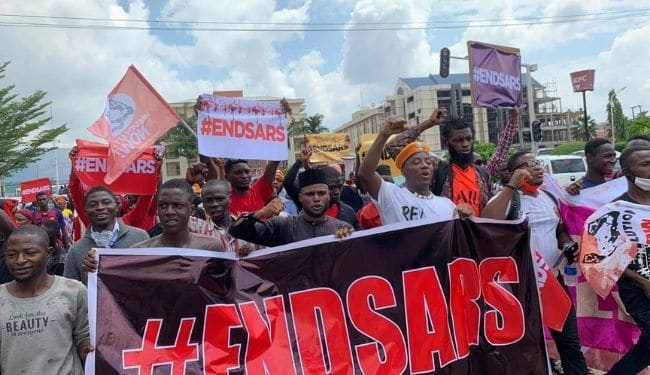
How I Remember #ENDSARS One Year After, By Azu Ishiekwene

On October 3, 2020, I watched a video of a policeman attached to the Special Anti-Robbery Squad (SARS) shooting a young man in front of Wetland Hotel, Ughelli, Delta State. Initial reports after the young man was shot said the shooter and other policemen in his company drove off in a car belonging to the victim, leaving him in a pool of his own blood.

Another version of the story emerged later that the young man was not dead, but was injured after he jumped out of a moving police van operated by the Delta State local security network.

Two days later, there was another incident of a deadly SARS shooting in Port Harcourt, Rivers State. A young man, Daniel Chibuike, 20, fondly called “Sleek”, and his friends, were sitting outside a hotel when policemen attached to SARS pulled up menacingly.

He panicked and fled. The policemen chased Sleek, shouting, “thief! thief!!” He ran for his life shouting his innocence. But it was too late. They shot him, dumped him on the floor of the police van and drove him around the city until he died.

For years, we have seen horrific scenes like these up and down the country – lives taken so brutally, so casually, and with impunity by those supposed to protect them. The perpetrators boasted that nothing will happen. And they have been right. The case of a SARS police officer in Anambra, CSP James Nwafor, who in spite of serious charges of brutality still got official protection, sums up the state of affairs.

The cop, who allegedly killed scores of young men in Enugu and Anambra States and dumped their dead bodies in Ezu River, has to date, defiantly refused to answer, even when he was summoned by a judicial panel.

It was hard to tell that that October morning one year ago would be the day of reckoning. It was unexpected. In the middle of a global pandemic that had laid bare the frailties of Nigeria’s healthcare and social welfare system, who could have expected that a mass protest movement would evolve so dramatically? The movement managed to transcend the online conversation form that it had been before, and transformed into direct action.

On the global stage, the storm had been gathering. From the resurgence of the #BlackLivesMatter movement in the United States, to the anti-Maduro protests in Venezuela and the Sudanese democracy protests, the expectation that a global pandemic and the accompanying lockdowns would hamper such events proved to be false.

In fact, according to the Carnegie Endowment for International Peace, the pandemic itself was a driver for protests. Citizens, disillusioned with political and economic systems that seemed to be creating greater inequality, poured into the streets across the world.

Social media was a rallying force. The hashtag, #ENDSARS, was launched in 2016 and had been deployed at different times in the past. But it was not until last October that matters came to a head. 

In Lagos, the epicentre of the movement, a group of young Nigerians (less than a dozen) protested first at the Lagos State police command then moved on to Alausa, at one of the entrances of the complex housing both the State House of Assembly and the Governor’s office. The group sought an audience with Governor Babajide Sanwo-Olu to discuss their concerns.

Less than 24 hours later, citizens in other states began to mobilise and voice their displeasure at their various elected representatives. Some groups protested at the palaces of traditional rulers. One of such protests resulted in the death of Jimoh Isiaq, the first victim of the protests felled by police bullets. His mother later got to know about her son’s killing in a viral video.

Protesters in Abuja marched on the police command, where they were treated with contempt and dispersed with tear-gas and water cannons. 

If there’s a recurring theme in Nigeria’s history, it is that untreated tensions are never successfully quelled by bullets. They may be suppressed momentarily but they linger on and fester only to resurface in unexpected ways, with greater force. #ENDSARS was the first in a long time an action, focused, directed and powered by young people nationally, and targeted at people in power to get a reaction. It was an action started by ordinary citizens, most of whom were disproportionately affected by the rogue police unit’s actions, seeking to bring them to account.

It was also a movement to bring elected representatives to account, and a wake up call for citizens who have become so accustomed to injustice that they make excuses for their victimisers. 

A common narrative was that the protesters did not know what they wanted. That is a ludicrous claim. The group not only repeated its demands for an end to police brutality, justice for victims and for greater accountability, these demands were acknowledged by some state governors who seemed only interested in deflecting responsibility.

Some said protests are futile and unsuccessful. This claim is an indictment not only of our political elite, but also the rank-and-file that has participated in numerous strikes against fuel hikes and protests to restore the country’s democratic mandate.

Another common criticism was that the protesters should go and vote instead. To deploy this argument when these individuals were exercising their democratic right is disingenuous. In a sense, what this claim does is to lay solely at the feet of the young people the task of rescuing a broken system. F.K. Abudu, in her interview on Arise TV, provided a strong counter argument, with her response on why voting isn’t the focus when she asked who elected the Inspector General of Police responsible for the rogue unit of the police.

#ENDSARS has fundamentally challenged our democracy. While we might have celebrated with much fanfare the transfer of power between two competing parties for the first time in the country’s history in 2015, we’re still a long way from honouring citizens’ democratic rights, including the right to protest.

The government has pushed back, claiming that it allowed peaceful protest, disbanded SARS and set up judicial panels of enquiry in a number of states.

But it has been a farce, quite frankly. For example, the Nigerian Army, a willing tool in the mayhem at the Lekki Toll Gate, the epicentre of the protests in Lagos, has been playing fast and loose with just how far it is prepared to come clean over its role in the shootings at the Toll Plaza.

And the Lagos State Government which declared three days of mourning at the beginning and made a song and dance of setting up a judicial panel has ended up dancing on the graves of the dead. At the same tribunal that it set up, the government not only suppressed evidence, it described the grief and traumatic experiences of victims as a “Nollywood movie!”

It is ironic that while governments at different levels sought to portray the protests as political, claiming they were funded by subversive elements, the same governments had no shame using thugs to infiltrate the protest in a number of places and stoking violence. It showed that our political elite who claim to have fought against military rule have imbibed their worst qualities and have themselves become a threat to the country’s stability.

#ENDSARS was not perfect. It couldn’t have been. But the fact that it happened at all means that one day, there would be recompense for the memory of those whose brutal murders at the Lekki Toll Gate and elsewhere still cry for justice.

•Ishiekwene is Editor-In-Chief of LEADERSHIP  

Buhari’s ‘nine priority areas’

Ikechukwu Amaechi

By Ikechukwu Amaechi

“As Dr. Christopher Kolade, Nigeria’s former High Commissioner to the United Kingdom, aptly noted in his October 31, 2019 interview with TheNiche, “The only person that doesn’t know we are fighting corruption is corruption itself.”

Even what could have been achieved in raising agricultural output is blunted by the unmitigated violence visited on hapless farmers by terrorists, making food security a mirage.

Not only that, as Premium Times newspaper noted recently, “Despite its professed commitment to developing the agricultural sector, and indeed investment in the sector, agriculture has grown at the weakest rate under the Buhari administration than any other government since the return of democracy in 1999.”

According to the online newspaper, while the sector grew at an average of 15 per cent in the past five years under Buhari, it grew by 133 per cent under the Obasanjo administration; 19.1 per cent under President Umaru Yar’adua and 22.2 per cent under Goodluck Jonathan’s government.

So, why is Buhari ratcheting up his success rhetoric? The answer is simple. He knows his time is up and wants to write the history by himself. How wrong. The verdict of history is inevitable. No distempering or whitewashing changes it.
And no-matter how hard leaders try to manipulate the verdict, they fall flat because history is inscrutable. It is like a sphinx.

The good thing, though, is that while Buhari wallows in self-glorification, Nigerians, who obviously know better, have moved on. For so many, his horse of failure has already bolted from the stable and people are already calculating their losses from their bad political investment in him in 2015.”

**Please subscribe to our YouTube Channel

***Please click on the link below to read the full article

Buhari’s ‘nine priority areas’

https://www.thenicheng.com/buharis-nine-priority-areas/

Good governance depends on partnerships

“As we begin to celebrate our sixty-one years as a Nation, we need to be conscious that Nigeria does not start and end with the Federal Government. This country is a great collective where Government at all arms and levels as well as the private sector, and more importantly individuals, have a role to play.”

– The President, Major General Muhammadu Buhari (retd.), in his October 1, 2021 Independence Day broadcast.

The President was spot on when he made the statement on the opening paragraph during this year’s Independence Day celebration. To many Nigerians, the President is a letdown for not doing enough to promote their welfare and protect them. To them, the bad road in their neighbourhood, their non-functioning Primary Health Care centre, their not having potable water, their dilapidated community schools, the epileptic power supply to their homes, and non-payment of their wages and salaries as and when due are all blamed on Buhari.

Indeed, many Nigerians do not comprehend how government works or how it is structured. Many do not understand what is called the principle of separation of powers and checks and balances in a democracy. In Political Science, there is David Easton’s System Theory. The theory argues that, politics, like governance, is a system of interdependent variables. In Nigeria, there are three tiers of government namely federal, state and local as well as three arms of government viz. executive, legislature and judiciary. These are interdependent variables that need to work collaboratively, vertically and horizontally.

Vertically speaking, there is separation of powers among the three levels or tiers of government. The 1999 Constitution of Nigeria, as amended, sees to that. It clearly delineates the powers or areas of influence of the federal government from those of the state and local governments. Take for instance, the Constitution in Section 153 talks about establishment of certain federal executive bodies.  It listed 14 of them including the Independent National Electoral Commission, Federal Character Commission, and Code of Conduct Bureau/Tribunal. It also espouses about their composition and powers. Section 197 of the same constitution speaks of the establishment of certain state executive bodies namely state Civil Service Commission, state Independent Electoral Commission and state Judicial Service Commission. It also listed their composition and powers.

As there are Separation of Powers, there is also Checks and Balances on the powers given to each of the commissions. For instance, the appointment by the Federal Civil Service Commission must be in accordance with the federal character principle being oversighted by the Federal Character Commission. The idea behind checks and balances is to ensure that no tier of government or arm of government has absolute powers.

Horizontally speaking, there is separation of powers among the three arms of government namely, the Executive, Legislature and the Judiciary. While the legislature makes the law, the executive implements the law while the judiciary interprets the law. In terms of checks and balances, the executive can sponsor laws (bills) for passage by the legislature. More importantly, certain categories of appointments by the President who doubles as the head of the executive arm have to be approved by the Senate. These include ministers, ambassadors and the security chiefs. The legislature also has the powers to oversight the performance of the Ministries, Departments and Agencies which constitute the executive branch. The lawmakers can also probe any of the MDAs that is found wanting.

To further buttress the constitutional power sharing among the three arms of government, there are three legislative lists. They are the Exclusive, Concurrent and Residual. Nigeria’s constitution in the Second Schedule listed 68 broad areas under the Exclusive Legislative List and 30 areas in the Concurrent Legislative List. Whatever is not found in any of these two aforementioned lists belongs to the Residual Legislative list.

It is noteworthy that, as there are three arms of government at the federal level so are they at the State and Local Government levels. While the President have his ministers, Special Advisers and Assistants, the State Governors have their Commissioners, Special Advisers and Special Assistants. Likewise, the Local Government Chairmen in the 774 LGAs have Supervisory Councilors and hordes of aides to assist them.  In terms of lawmaking, while there is National Assembly at the federal level, each of the 36 States have their respective State Houses of Assembly while LGAs have their respective local councils made up of councilors. On the other hand, there are Federal High Court, State High Court and Customary Courts. It should be noted that Marriage certificates are issued by Local Council Marriage Registries.

I have gone to this extent to underscore the complex ways government works vertically and horizontally among the three tiers and three arms of government. It bears being mentioned that the three tiers earn monthly what has been constitutionally approved for each of them. Under the current revenue sharing formula, the Federal Government takes 52.68 per cent, the states bag 26.72 per cent and the local governments, 20.60 per cent with 13 per cent derivation revenue going to the oil producing states.

While it is apt to call out the President for a lacklustre performance, it is equally important to do likewise with the state governors and local government chairmen. The three tiers and three arms get their monthly federal allocations while some even have a lot of resources coming from Internally Generated Revenue. What are they doing with these public funds?

In the Concurrent Legislative List where the federal and state governments can legislate and administer, some of the items there include roads, health care delivery, education, sports, agriculture, elections, etc. For the benefit of the reading public, there are Trunk ‘A’ roads which belong to the Federal Government, Trunk ‘B’ roads which belong to the state governments and Trunk ‘C’ roads which Local Governments are supposed to construct and maintain. How has each of the tiers of government performed in terms of road construction and management? Similarly, in the area of health care delivery, there are Primary Health Centres or dispensaries being constructed and managed by local governments and area councils, there are also general hospitals which are under the auspices of state governments while the Federal University Teaching Hospitals and Federal Medical Centres belong to the Federal Government. What is the state of these hospitals across board?

The point here is that there is a need to understand how government works and the spheres of influence of each of the tiers and arms of government. Transparency and accountability should be demanded across all the various governance structures. They all have their powers and functions as well as receive their monthly federal allocations and generate IGRs. What do they do with these huge funds? What, for instance, do the governors do with the humongous funds they receive monthly as security votes? How much of due process do we see in procurement and transparency of contract awards across the tiers and arms of government? How many states and local governments have keyed into the Federal Government’s Freedom of Information and Open Government Partnership Agreements?

If our demand for good governance is not extended to the sub-national levels, the best efforts of the Federal Government will pale into insignificance.

TIPS