Home Blog Page 898

Any Floodgate Of Senior Advocates Of Nigeria? I Don’t Think So [Part 1]

By Mike Ozekhome SAN

Introduction

Some years ago, some young Lawyers, led by a very elderly senior member of the Bar, Pa Tunji Gomez (now late; may God rest his kind soul), trenchantly called for the abolition of the title of Senior Advocate of Nigeria (SAN). Gomez, the fire-eating veteran of many struggles, who led the 1948 strike at King’s College, Lagos, and was in the team of Lawyers that defended late Chief Obafemi Awolowo in the celebrated treasonable trial of 1962, was at the forefront of the “Abolition Movement” that sought to scrap the SAN title. The major grouse of “Abolitionists” as the coalition later termed its members, was that acquiring the SAN rank had become deliberately too circumscribed and mostly restricted only to those they termed the “high and mighty” in the legal profession. Such revolt had also once taken place in England against the title of Queens Counsel
(QC) in 2003. It led to its suspension for some time, until great reforms were made before its resumption.

I was one of those who fought valiantly then for the retention of the SAN rank, through the Bar and public debates.

Majority of Lawyers, especially senior Lawyers, mobilised and were able to shoot down the obvious insurrection anchored especially by the younger ones, with Pa Gomez at the forefront. This, notwithstanding that I was not even a SAN at that time. I knew then and still know now, about the importance of this historic honour.

Mythical and Unfounded Fears

There exists this lingering fear (even if pretentiously not expressed openly and publicly), that there are, in existence, too many Senior Advocates of Nigeria (SANs). Predicated on this unproven and fallacious fear, there appears to be a deliberate and sustained pruning down, over the years, of the number of legal practitioners that are elevated to the Inner Bar, even after meeting all the statutory requirements and sundry laid down criteria for such elevation. It is this needless fixation and mindset, that has collectively kept the SANs’ docket brimming with unending applications by numerous disappointed applicants, who continue to apply year after year.

There is also this mythical fear that awarding the revered honour to too many Lawyers may water down its legendary importance, defang it, shred it of its fabled aura and myth; probably cheapen it; and ultimately subject it to charlatanism and quackery. Most respectfully, I do not agree with these views, as attractive as they appear to be on the surface of it. Nor do I entertain these unhealthy fears. Due to no fault of theirs, some legal practitioners find themselves applying, again and again, to acquire the exalted Silk, year after year; some for between five and twelve years. Taking Silk is a legitimate aspiration, as every Lawyer looks forward to wearing the much admired toga of distinction. Medical Doctors go for specialised courses to be made Consultants; whilst in the field of Engineering, practitioners within its rank, study very hard to acquire Fellowships.

My Journey to Taking Silk: Lessons in Humility

It took me eight solid years of perspiration, pains, pangs and persistent applications, before my eventual elevation to the Inner Bar in 2009. Of those eight years, I was well qualified for at least six years, having fulfilled all statutory and laid down criteria! At this critical stage, it is believed that one needed godfathers. Some others however, believe that one who has “God the Father” does not need a “godfather”. Significantly, I fell into the latter category of those who needed “God the Father”.

Yet, some young men and women whom I had lectured in my youth at the University of Ife (now O.A.U.) in the early 80s, acquired the Silk well before me. Some of them indeed, led me in some cases. I recall that one of them was late Mr Seni Okunloye, a very cerebral and brilliant young man, then of Aare Afe Babalola, SAN’s chambers (May his beautiful soul rest in perfect peace, Amen). He had led me in a murder trial of persons who had futilely attempted to assassinate late celebrated Professor Dora Akunyuli (the then Director-General of NAFDAC), on 26th December, 2003, over her sustained war against fake drug manufacturers and peddlers. The prosecution of the accused persons took place before the then trial Judge, the Hon Justice Ishaq Bello, who has now honourably retired as the Chief Judge of the FCT High Court, Abuja. The Judex had, after the announcement of appearance, used very glowing words for both Seni and I in the open court; – I, for my humility in readily agreeing to be led by, and take notes for my junior at the Bar, who was once-upon-a-time a student of mine at O.A.U; and Seni, for his great hesitation, tentativeness and reluctance to lead me. He did not “rub it in” in leading me, as some juniors who oxymoronically became seniors to their mentors, would readily and arrogantly have done with undisguised éclat and a sense of triumphalism.

As for me, on those occasions that Seni led me, with me taking notes, I had enjoyed every moment of it. This was because I verily believed then and now (like my Weppa- Wanno people would put it in our local adage), that both the hands and legs of a snake remain inside the snake; which is why they do not protrude out of the crawling reptile. The figurative interpretation of this is that a mentor should always be very proud of the success and great strides of his mentee who has surpassed him, since the prayer of every father is that his children should out-perform him.

My Thesis: My Opinion

My thesis in this humble intervention is my very Personal Opinion. And, in so doing, I am exercising my Freedom of Speech in putting forward my thoughts herein. I am aware that this thesis obviously calls for a hot debate amongst Lawyers and other stakeholders, for possible fundamental reforms in the mode of awarding and taking this revered title.
This my personal opinion is well protected by Section 38(1) of the Constitution of the Federal Republic of Nigeria, 1999 (1999 Constitution), which provides:

“Every person shall be entitled to freedom of expression, including freedom to hold opinions and to receive and impart ideas and information without interference”.

This right of mine to exercise my freedom of speech, is also recognised and protected by Article 9 of the African Charter on Human and Peoples Rights (ACHPR); Article 19 of the Universal Declaration of Human Rights (UNDHR), 1948; and, Article 19(2) of the International Covenant on Civil and Political Rights (ICCPR). See JOSEPH MANGTUP DIN v AFRICAN NEWSPAPERS NIGERIA LTD (1990) LPELR-947 (SC).
My thesis is neither a populist one; nor is it designed or intended to stir up needless controversy. It is based purely on present realities of our times which definitely call for introspection and self- evaluation.

My thesis is quite simple:

Upon all the various exerting and stringent filtration hurdles being surmounted by an Applicant, the Legal Practitioners Privileges Committee (LPPC) should go ahead and award the rank to EVERY legal practitioner who is deserving of it, after he/she has been finally adjudged to have met all statutory requirements. This includes FULFILLING all laid down criteria; surviving all public petitions; being highly recommended by the Bench and Bar; and being adjudged to be a legal practitioner of nobility and distinction. There should be no further microscopic picking and choosing from this tested and trusted pool, based on any extraneous unwritten rules and unseen criteria!

The Present Criteria for the Award of SAN

The Legal Practitioners Act, LFN, 2004, establishes in its Section 5, “Conferment, etc, of the Rank of Senior Advocate of Nigeria”. Section 5(2) of the Act provides:

“A person shall not be conferred with the rank of Senior Advocate of Nigeria unless he has been qualified to practice as a legal practitioner in Nigeria for not less than ten years and has achieved distinction in the legal profession in such manner as the Committee may, from time to time, determine”.

Section 5(3) identifies this Committee as “The Legal Practitioners’ Privileges Committee” (LPPC). Its composition, as stipulated in section 5(3) is “the Chief Justice of Nigeria, who shall be the Chairman; one Justice of the Supreme Court; the Attorney-General of the Federation; the President of the Court of Appeal; five of the Chief Judges of States; the Chief Judge of the Federal High Court; and, five legal practitioners who are Senior Advocates of Nigeria”.

Apparently aware that the qualifications for the conferment in Section 5(2) appear too bare, and that the phrase, “and has achieved distinction in the legal profession”, may be too hazy to decipher, Section 5(7) empowers the LPPC (with the approval of the Body of Benchers), to “make rules as to the privileges to be accorded Senior Advocates of Nigeria, as to the functions of a legal practitioner, which are not to be performed by a Senior Advocate of Nigeria, as to the mode of appearances before courts by a Senior Advocate of Nigeria, and generally, but without prejudice to the foregoing, for ensuring the dignity of the rank of Senior Advocate of Nigeria”.

It is by virtue of this subsection, that the LPPC has rightly made rules for the conferment of the SAN rank. These rules have always been tinkered with, serially updated, reformed and invariably usually made more stringent with each amendment, so as to prevent a floodgate of SANs. This means that, to become a SAN has figuratively become the case of a camel passing through the eye of a needle. Need this be the case? I humbly, think not. (To be Continued)

Serious and Trivial
THIS IS NIGERIA AT 61
At 61 we have sea, rivers, sunshine, gas etc, but we depend on imported generators for electricity.
At 61, with three refineries gulping billions of Naira yearly we import all our petroleum products needs.
At 61, we no longer have VON assembling Volkswagen in Lagos.
At 61, PAN that assembles Peugeot in Kaduna is dead.
At 61, ANAMCO producing Mercedes Benz cars and trucks in Anambra is no more.
At 61, we have more churches and mosques than industries that can employ our youths, and we also have more witches and wizards.
At 61, with all the sea and rivers, we import fish and several of our seafood needs.
At 61, our universities and colleges have grown from learning centres to sorting institutions.
At 61, we spend billions to support Farmers and then send cows to destroy the farms.
At 61, our leaders must go abroad for medical treatment.
At 61, our National Assembly works for three months for 35 years pay, while our civil servants work for 35years and get 3 years pay (except of course you can steal).
At 61, a college girl can have a phone worth 300k and be living in a shanty with her parents.
This list is endless.You can add yours.
Let’s celebrate our dependent Day at 61.
There was a country! INDEED!!!

THOUGHTS FOR THE WEEK

1. “It is never too late to be what you might have been.”- George Eliot
2. “Fall seven times, and stand up eight.”- Japanese Proverb
3. “When the world pushes you to your knees, you’re in the perfect position to pray.”- Rumi

Deplorable Condition Of The Nigerian Roads: Bane Of Economic Sustainability

By Afe Babalola SAN

IT is common knowledge that Nigerian roads are generally either in a state of disrepair, poorly maintained or altogether untarred. With Nigeria boasting of the largest road network in Nigeria, it is not surprising that only about 60,000km out of its estimated 195,000km or road network is paved. Majority of the nation’s road network was constructed between the 80s and 90s, with a larger portion of them currently deteriorated because of poor maintenance. Even when the existing roads are constructed or supposedly maintained, it soon falls into disrepair due to the use of low-quality materials. Despite huge budgetary allocations been committed annually to infrastructural development projects, much yet remains to be seen on how the condition of the roads justifies their fiscal allocation.

The Nigerian Road network is majorly classified into three. First is Trunk Road “A” which encompasses the framework of the national road grid and cuts across regional boundaries. The Federal Government of Nigeria, through the Federal Ministry of Works and Housing, is responsible for financing, constructing, and maintaining this class of roads. Second is the Trunk Road “B” which connects the major cities within states. They are financed, constructed, and maintained by the state governments. Third, Trunk Road “C” falls under the category of roads constructed and maintained by local government authorities in Nigeria, and they are usually untarred.

Though the Trunk Road “A” falls under the exclusive purview of the Federal Government and, by that fact alone, is well deserving of being kept in pristine condition, it will be observed that they are veritable tools for bandits and kidnappers who take due advantage of the several potholes and poor surface conditions which forces commuters to slow down. In addition, commuting on any of the trunk roads is usually characterized by unduly protracted hold-ups caused by several factors including repair works or accidents resulting from bad roads. Poor roads continue to be one of the causative factors for road accidents in Nigeria. According to the Quarter 2 2020 Road Transport Data report published by the National Bureau of Statistics in conjunction with the Federal Road Safety Corps (FRSC), 2,080 road crashes, many attributable to the bad conditions of the roads, occurred in Quarter 2 2020. While a total number of 5,353 Nigerians got injured in the road traffic accidents recorded, a total of 855 were killed. The total number of vehicles involved in accidents in Quarter 2 2020 was 3,334.

Recently, members of the Nigerian Union of Petroleum and Natural Gas Workers (NUPENG) threatened industrial action over poor roads in Nigeria which constantly causes tanker accidents and the resultant life and economic losses. The National President of the Union reportedly stated that: “We wish to urgently draw the attention of the federal government to the harrowing experiences of the owners of petroleum trucks in the country. The only means of moving petroleum products across the country is by roads, using the trucks. We can confidently tell you that this means of distribution is presently endangered and require urgent federal government stimulus intervention fund to prevent it from total collapse. We are shocked at the lackadaisical attitude of local, states and federal governments to the issues of addressing the degenerating state of Nigeria roads before the coming of the current raining season despite all our warnings for them to make necessary construction, repairs and maintenance of all our roads, which are now in a parlous state and becoming practically impassable”

Though the strike was subsequently called off due to some intervention by the Federal Government, one cannot but agree with the motive behind NUPENG’s intended strike. There is no doubt that road usage accounts for the great percentage of transportation which means that the deplorable condition of the roads which cars, trucks, buses, and motorcycles are forced to ply together is bound to engender occasional crashes.

Practically every Nigerian and every sector of the Nigerian economy relies on one form of transportation or the other, with road being the most utilized means. This therefore connotes that a good road network where commuters arrive at their destination without any delay occurring from bad roads, or where goods are safely and timeously transported from one location to the other is bound to foster economic progress. No doubt, good road infrastructure affects the flexibility and mobility of workforce from one point to the other, and it is indeed central to good governance and public welfare.

Undoubtedly, a seamless road network and infrastructure lowers production costs and raises productivity particularly especially in the agricultural sector where the transportation of crops from the farm to the consumers is a major factor in the production chain. Even in the industrial sector, a good road transportation network is required to bridge the gap between the place of production to the point of final consumption. Research has shown that there is a strong and positive relationship between road transportation and economic growth in Nigeria. It has equally been demonstrated that transportation infrastructure can improve the well-being of the citizens in Nigeria. Road transportation contributes to Gross Domestic Product in any country and impacts its economic growth when goods and services are being able to be transported to the end user. This implies that a good transportation system is a powerful tool in bolstering productivity and effective distribution of goods and services and, at the long run, increase the economic growth in country.

However, against the backdrop of the nation’s deplorable transportation network, a study by the National Planning Commission (NPC) in 2018 concluded that the Nigeria’s current transport infrastructure is not aligned with the country’s aspiration to become one of the world’s 20 largest economies. As earlier noted, Nigeria’s national road network is an estimated 195,000km. Out of this, federal roads are estimated to be about 35,000km, state roads 17,000km, and local government roads taking a whopping estimated 140,000km. Nonetheless, a greater percentage of these road networks are either unpaved or unpliable.

Having considered the fact that good road infrastructure is analogous to economic growth, improvements in transportation system will have positive ripple effect on the nation’s GDP.

Conclusion

Certainly, more needs to be done about fostering a good road network in Nigeria for the reasons already identified above. With the current level of maintenance, it is very difficult to retain good quality road infrastructure, and thus the consequent steady deterioration which is largely commonplace.

In addition to ensuring adequate maintenance, the government needs to adopt more preventive maintenance measures, including but not limited to reverting to the use of rails and waterways particularly to reduce burdens on our roads which has now become the nation’s primary channel of transportation. For instance, the use of well-secured pipelines should be exploited for the transportation of petroleum products and reduce the contact of tankers with other road users.

AARE AFE BABALOLA, OFR, CON, SAN, LLD. (Lond.)

The African Culture: A Forgotten Jewel

By Daniel Bulusson, Esq

“…a diamond lost in the mud, no matter its value cannot be seen and therefore cannot shine”

In the hay days before the coming of the colonial masters, there was an African culture that exist amongst the people, this culture originated from the family and then transcends to the community i.e school, worship centers, neighborhood, markets, etcetera, etcetera, etcetera. We had a ‘king’, ‘Igwe’, ‘Oba’, ‘Emir’ ruling the people from the palace, villagers with different skill and trade engaged in hunting, farming, palm wine tappers, and some warriors to protect the boundary. The people brought produce from their labor to pay to the king, (this was a form of tax), disputes between members of the community were brought to the palace for settlement, they had peer groups meeting to discuss issues affecting the community (the elders on the one side, the mothers on the other side and then the youths) and so many cultures alikes.

During era of the African culture, everyone knew who he/her neighbor was, training of a child was not considered a sole responsibility of the parent, the elders of the community were also responsible for ensuring the youths of the community stay away from vices that will endanger the society. Sadly, in today’s era, the children dictate to the parent what they want to do, and not the other way round, i.e majority of the parents no longer correct a child that does wrong, because they don’t want to offend the child. To make matters worse, in our schools today (which is the next stage of learning for a child after the family) a teacher cannot discipline a child in school for fear of the parent coming to complain or embarrass the school.

The African culture, a jewel now forgotten had a module that effectively protected the lives and properties of its people to the extent that if a stranger came into the community, the people will notice and try to find out the background of such stranger. Naturally there are miscreants in every society, but then the people of the community knew who they were, and how to handle them.

Back to our digital age, after the colonial masters have come and gone, our society is now bedeviled with high crime rate and insecurity than the traditional era, not because we did not have a foundation that could be used to curb these crimes, but because we have forgotten to resort back to our African culture. To my mind, for Nigeria to win the war on insecurity, we need to go back to communal form of living, neighbors ought to know the neighbors they live with, community policing should be introduced so that locals of the community fully aware of the happenings of the community, are the ones given the mantle to be in charge of security.

In the resolve to improve on the security of the nation, some state governors have pitched their tent in the school of thought of creating regional security outfit to oversee the security of lives and properties of their people. This writer, though in support of community policing, does not support the creation of regional security outfits who will replicate and duplicate the functions of the Nigerian Police, Civil Defense. I say this because, a regional outfit would only help in creating a conundrum of duplicity of functions and powers between the security agencies.

The Nigerian Police Force, a creation of statute has operated on a national level from its inception to date, meaning it already has a solid structure with different departments saddled with investigating specific areas of crime, same with the Nigerian Civil Defense Corp also responsible for internal security. Instead of creating regional security outfits to be manned by barely trained civilians to duplicate the functions of the already existing security agencies, why not decentralize the police to state levels, where each state is responsible for its own policing.

The coming of the colonial master should not make us forget our African culture, rather, we ought to use their innovations, teachings, ideas and technology to improve the African culture to shine and claim its prideful place against foreign customs and traditions.

May God Bless the Federal Republic of Nigeria!

How 16 Army Generals Were Unjustly Eased Out of Service, Despite Malami’s Interventions

▪︎Nigerian Army Refuses to Reinstate other Sacked Military Officers despite NASS’ Resolutions, Court Orders

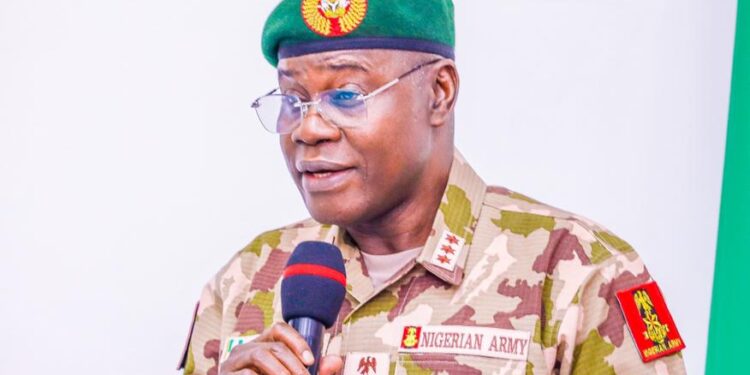
Nine Major Generals and 7 Brigadier Generals ‘arbitrarily’ sacked by the Nigerian Army in 2016 for not justifiable reasons have been technically eased out of the service, despite interventions of Attorney-General of the Federation (AGF) and Minister of Justice, Abubakar Malami.

PRNigeria gathered that the affected generals have reached their run out date this year and cannot be reinstated into the military even after the resolutions of the National Assembly (NASS) and several courts ordered their reinstatements which were flagrantly ignored by the Nigerian Army.

The affected military generals were among the 38 Army Officers that were compulsorily retired on 9 June 2016 without any cogent reason.

The after officers ‘technically’ eased out of service while waiting for justice are Major Generals F. O. Alli, E.J. Atewe, I.N. Ijioma, L.C. Ilo, T.C. Ude, L. Wiwa, S.D. Aliyu, M.Y. Ibrahim and O. Ejemai.

The Brigadier Generals arere D. M. Onoyeiveta, A.S.O. Mormoni-Bashir, A.S.H Sa’ad, L.M. Bello, K.A. Essien, B. A. Fiboinumama and I. M. Lawson.

Meanwhile, three brigadier Generals: D. Abdusalam, A. I. Onibasa and G.O. Agachi can still be reinstated as they still have active years to serve.

Several attempts by Malami, a senior advocate of Nigeria (SAN), to resolve the impasse between the Army Generals and their military authorities were also futile.

PRNigeria gathered from credible investigation that the Army Council, then presided by the trio of Mr. Mohammed Mansur Dan-Alli (then Minister for Defence), General AG Olonsakin (then Chief of Defence Staff) and Lt Gen TY Buratai (then Chief of Army Staff) sat and announced the compulsory retirement of the 38 Army officers.

The announcement of the compulsory retirement of the 38 officers was made via the media even before the affected officers were eventually informed by text messages of their retirement, sources revealed to PRNigeria.

While announcing the compulsory retirement to the media, the Nigerian Army claimed that the 38 Army officers that were compulsorily retired have been investigated and found professionally corrupt in defence procurement and/or election-related offences in the 2015 General Elections.

But one of the sources, with vast knowledge on the case, maintained that none of the 38 Army Officers that were compulsorily retired was ever investigated or court-martialled before their public compulsory retirement.

The source, a senior serving military personnel, who asked not to be named, said: “None of the affected officers was ever at any time before their public compulsory retirement queried, notified of any culpability, or subjected to any military police investigation and none was ever court-martialed – these are the mandatory disciplinary process in the military as recognized by law!

“The Army records will show that none of the 38 Army Officers that were compulsorily retired was ever charged with any infraction in accordance with expressed procedures in Armed Forces Act CAP A20 The Laws of the Federation of Nigeria 2004.”

Another source, while confiding in PRNigeria, said that after their public retirement, many of the victimized officers wrote to the Army leadership under Lieutenant General Buratai, asking to be furnished with facts that constitute any alleged offense as stated in their respective letters of compulsory retirement, but regrettably, the Army failed to respond to this simple request over 5 years now.

“Some of the affected officers also sent letters of redress to both the Senate and the House of Representatives on the victimization of the 38 Army officers. The Nigerian Congress through their respective Public Petition Committees investigated the matter and were shocked that the Army could not provide any allegation of wrongdoing against the officers whose careers were publicly cut short.

“After their respective investigations of the matter, both Houses had admonished the Nigerian Army over arbitrary disengagement of officers without any wrongdoing and due process and warned that such abuse of office would discourage serving officers and soldiers from giving their full commitment to the service of the nation. Both chambers of the National Assembly further recommended the immediate reinstatement of the affected officers.

“The resolutions were duly forwarded to the Secretary to the Government of the Federation and the Chief of Army Staff, but these resolutions of Congress have been completely ignored which indicates a deliberate pattern of abuse against these innocent officers,” he said.

Checks by PRNigeria indicates that after the refusal of the Nigerian army to reinstate the officers based on the resolutions of the National Assembly and court orders, Malami, through the Solicitor General of the Federation and Permanent Secretary, Federal Ministry of Justice, wrote letters and reminders to the military authorities in October 2019, November 2020 and even in February 2021 seeking clarification “over grave acts of injustice and unlawful compulsory retirement from service Senior Officers.”

In one of the letters, which was also sighted by PRNigeria, Malami reminded the Army Chief that he was yet to receive any response for the initial letter he had sent, in order for him to advise Mr. President appropriately.

▪︎ By PRNigeria

The Williams family feud: Till death do us part

When the death of Ladi Williams SAN became known to the public a week ago, what readily came to the mind of Nigeria’s legal public was the feud that had torn apart the Williams family, the foremost known law family in Nigeria.

Ladi was the first son of foremost Nigerian lawyer, Federick Rotimi Alade Williams QC, SAN. He died on Sunday October 3, 2021 of complications resulting from COVID-19, at the prestigious St Nicholas Hospital, Lagos. His son, Kunle said that his father was fully vaccinated before his death.

The Williams family comprises of four sons from the same father, late FRA Williams, and mother, Chief (Mrs.) Beatrice Ola Rotimi Williams. The mother died on Saturday, February 7th, 1998, while the father died on March 26, 2005. Together they had Chief Ladi Williams (SAN), Kayode Williams, Folarin Williams and Tokunbo Williams SAN.


However since the father’s death fifteen years ago, all has not been well with the family. The children had been on each other’s throat over the estate left behind by the great Timi the Law. The feud over time has become so deep to the extent that it has been passed on to the grandchildren of the great man. Also, the actions of individual members have become so diabolical to the extent of affecting the progress and welfare of individual members.

Every effort of the legal community to wade into the matter proved futile. At a point, Justice Mohammed Lawal Uwais, a former Chief Justice of Nigeria and his Supreme Court refused to hear the Williams family cases brought before the Apex Court out of sheer respect for the late legal icon. He even went to the extent of constituting a committee of retired Justices of the court, senior lawyers, and clergy to resolve the issues before the siblings. Members of that committee included the late Justice Kayode Eso, the late Justice Chukwudifu Oputa, Chief Mrs Folake Solanke, the first female Senior Advocate of Nigeria, and Bishop Ladigbolu. The committee was frustrated.

A former judge of Lagos High Court, Justice Joseph Olubunmi Oyewole had to adjourn a suit over a contest of the will of Chief Williams by the children sine die, just to allow the family to settle their differences. It did not work. Oyewole is today a Justice of the Court of Appeal. He had pleaded with the siblings to remember how they played together as kids, how they rode bicycles together, but one of the siblings had replied to the judge: “That is village thought. We are not from a village. We are Lagosians”. Justice Elfreida Oluyemisi Williams-Dawodu also handled the case where Chief Ladi Williams objected to the appearance of the lawyers that represented the Lagos High Court Probate Registry, and ensured they never participated in the case. The judge conceded just because she wanted the family feud to end. This also proved futile.

late Chief FRA Williams QC,SAN
Stakeholders close to the family revealed to Gavel International, how a petition by one of the siblings had ensured that his brother could not attain the rank of Senior Advocate for several years now. The wife of another sibling was forced into an early retirement as a judge of the High Court of Lagos due to a series of petitions written against her by a sibling. The wife, a daughter of a former Chief Judge of the State, could not be helped despite the status of his father.

As at the time he died last week, the late Ladi Williams was looking forward to arguing a suit he filed against Asset Management Corporation of Nigeria(AMCON) before a Federal High Court, Lagos, seeking to ascertain the circumstances surrounding the indebtedness of his brother, Folarin and two others in relation to the estate of their late father. The case comes up on Tuesday, October 12 before Justice Daniel Emeka Osiagor.

In the processes filed before the court,the deceased sought the order of court to direct and compel AMCON to make available to him copies of documents contained in the file of his brother, Folarin, and two others, Lambo Jumoke Oguntuga, and Kemi Sheri Williams, concerning the N2,303,470,835.43 in which they stand indebted and any other details regarding the loan. Ladi alleged that Folarin might have used part of the unconstituted estate of their late father (which he is not beneficiary to) to secure the loan to which he is now indebted.

In a 13 paragraphs affidavit personally sworn to and filed before the court, Chief Ladi Williams averred that sometime in the year 2018,AMCON published an article titled the list of top Nigerians owning total debt of N906 Billion, the content of the publication was brought to his attention, after which he wrote a letter of inquiry to AMCON dated February 25, 2020, requesting for copies of documents contained in the file of Mr Folarin Rotimi Williams, Lambo Jumoke Oguntuga and Kemi Sheri Williams with regards to the money owed and any other details regarding the loan obtained as they are indebted to the tune of N2,303,470,835.43.

After months of receiving no reply he sent a letter of reminder dated of June 26, 2020,and further reiterated the legal grounds upon which he was entitled to the said information as requested and then gave AMCON a period of seven days to provide the requested information,failure of which will result to a commencement of legal action against the organization.

Upon failure of AMCON to accede to his lawful demands,he served AMCON a pre-action notice dated July 13, 2020. The statutory period of 30 days between serving a pre-action notice has since elapsed.

Chief Ladi averred further that it is his honest fear that Mr Folarin Rotimi Williams might have used part of the unconstituted Estate of their late father Chief FRA Williams (which he is not beneficiary to),to secure the loan to which he is now indebted;and it is on this basis that be had requested for details regarding the collateral as well as other details regarding the loan obtained.

The granting of his prayers will not in any way prejudice AMCON, it will only give the parties an opportunity to let the case be determined on its merit and further preserve his right,he contended.

However, in a notice of preliminary objection filed before the court by a Lagos Lawyer, Dr. Francis Chuka Agbu SAN, on behalf of AMCON, the debt recovery Agency urged the court to dismiss or strike out the suit for lack of jurisdiction.

Justice Kazeem Alogba, Chief Judge, Lagos State
In an affidavit in support of the preliminary objection sworn to by Chief Litigation Officer in the law firm of Lexaier Partners, Barrister Ceaser Anyeabosi and filed before the court by Dr. Agbu, the deponent stated that Chief Ladi Williams failed to serve a valid 90 days pre-action notice on AMCON as mandated by AMCON Act.

The suit is also statute barred, having been commenced outside the three months stipulated by section 2(a) of the public protection Act and Order 34(4) of the Federal high court civil procedure rules 2019. The suit is incompetent having been commenced outside the 30 days period provided by section 20 of the Freedom of Information Act ,2011.

The suit as presently constituted is incompetent for, the respondent’s failure to seek the leave of the court pursuant to order 34 rule (3) of the Federal high court civil procedure rules and (2) failure to file affidavit of non- multiplicity of suits, pursuant to order 3 rule (9)2 of the Federal high court civil procedure rules 2019, before filing this suit.

What many people found shocking is the fact that siblings from the same parents, particularly of a Williams stock, who uses the law and legal process to settle disputes of other people could not settle their own. A case of a medicine man that cannot cure himself. Timi the Law was not a polygamist, nor did he father a love child outside his wedlock to his wife, whom he loved all through his life, and outlived with seven years.

What then could be behind siblings fighting to the point of death? Why would they allow the conflict to become a generational conflict, passing it down to their own children. The estate of their father as at the time of his death in 2005 is said to be worth about N26 billion, which is enough to share between them and even pass it on to generations unborn. Afterall, there are many successful lawyers who never knew their father, or mother, yet made success out of their lives. There are others that were sponsored through community efforts and are doing fine. The Williams siblings story therefore is the story of the inability of siblings to manage the success story of their father.

Shortly after FRA was buried, the brothers met at the instance of Folarin who hinted them on how their late father wanted his chambers, popularly called The Black Table, and estate to be run. The children even before the death of their father were not at peace because FRA did not hide his soft spot for Folarin. Ladi and Folarin were no longer at par with each other because of the decision of FRA to put Folarin on the board of a few bluechip companies where he had shares. Since there was no will it was discovered that FRA had allegedly instructed that the chambers be handed over to Folarin and Tokunbo along with other juicy properties. Ladi was shocked at this development knowing his father whom he had served for many years.

Even before this period, FRA had a company, United Investment Limited (UIL), which managed his vast estate, both shares, properties and bank accounts. The said company was opened up for the late chief and the children to own 9,800,000 shares of N1.00. a total share of 10 million units was shared thus: Chief FRA Williams owned 9,920,000 which is the largest; Ladi 20,000; Kayode 20,000; Folarin 20,000 and Tokunbo 20,000. Share certificates were issued to these family members according to the units they all held in the company and a reflection of the shareholding in the company’s 2000 and 2001 audited accounts be ratified and signed by the late chief and the four sons which was effected.

But less than a year after FRA’s death, his third and fourth sons, Folarin and Tokunbo reportedly filed a suit through their counsel, Mrs. Clementina Abimbola Williams (SAN) before an Ikeja High Court, seeking an order of the court to delete the name of Chief FRA Williams from the Register of Titles Land Registry, Lagos State, in respect of one of Chief Williams properties, a two block of 16 flats at Plot 299, Akin Olugbade Street, Victoria Island, Lagos and replaced it with United Investment Limited. The suit which was said to be without the consent and knowledge of the first and second sons, Ladi and Kayode, was also without a letter of administration.

The matter came up before Justice Ade Alabi, the then Lagos State Chief Judge, who may have thought that all persons interested in the said property was in agreement, granted the prayer in 2006. However, when Ladi and Kayode got wind of this move, they were enraged. They quickly filed a motion on notice asking the court to stay further proceedings and setting aside the ruling. Not only that, the two went ahead to write to the Lagos State Attorney-General and Commissioner for Justice, Prof Yemi Osinbajo SAN(now Vice President), and the Registrar of Titles, Land Registry Directorate about the suit and the ruling obtained in their absence.

Justice Kazeem Alogba, the present Chief Judge later handled the case, and in a ruling directed the Registrar of Titles in Lagos State not to honour any request for rectification of the Register of the property being contested by the children of late FRA. He also granted the application for stay of proceedings, and refused to refer the matter for arbitration. However, the attempt to rectify the register of titles may have spurred Ladi Williams to beam his searchlight into the estates of his late father where other shocking revelations were uncovered. One of which was the signing and production of a parallel resolution to the ownership of the company, UIL, the same day the original document was signed by all before the death of FRA. The resolution as to the ownership of the company’s shares did not have names of Ladi and Kayode.

It was even reported that the Corporate Affairs Commission (CAC), wrote to notify acknowledging request to transfer Chief FRA Williams UIL’s shares to Folarin and Tokunbo, this was meant to share the late FRA Williams 9,800,000 shares in UIL even though shares of such nature cannot be transferred by trust. Suspecting that the assets of his late father may have been tampered with behind him, Ladi moved to the Federal High Court in Lagos to wind up UIL before the assets were diverted, Ladi accused his younger brothers of making efforts to squander UIL’s assets worth N9.7 billion and its shares in First Bank also worth N6 billion. He alleged that his siblings committed fraud by forging their late father’s signature on some vital documents, he also alleged that after the death of Chief Williams, Tokunbo and Folarin, took control of UIL and excluded him from the management and affairs of the firm, a development contrary to the fact that he (Ladi) is still a director and a shareholder of UIL. He, however, prayed the court to wind up the firm. Justice Dan Abutu who presided over the case in 2007 barred both Folarin and Tokunbo, their agents, servants and privies from disposing, transferring, changing or operating or in any manner dealing with the funds and assets of their father in UIL. Justice Abutu also restrained the two (Folarin and Tokunbo) from tampering with assets and properties of UIL.

Meanwhile, Tokunbo and Folarin did not take the matter low as they filed a stay of proceedings and prayed the court to hold that there was an agreement reached by the four brothers as regards sharing of FRA Williams estate. Folarin stated since there was an accusation of fraud, the matter should be referred to arbitration which the judge agreed to.

What followed later was legal fireworks between the two parties. There are a myriad of cases across different courts on the conflict between the siblings. None of the conflict abated before Ladi Williams passed on last Sunday. Will the rest now be able to resolve the conflicts and heal their families? Time will tell.

THE PROPERTIES OF THE LATE CHIEF FRA WILLIAMS CAUSING ALL THE TROUBLES

IMMOVABLE PROPERTIES WITHIN LAGOS STATE

Palm Groove House, 3, Shagamu Avenue, Ilupeju, Lagos.

1, Shagamu Avenue, Ilupeju, Lagos (bungalow).

10, Shagamu Avenue, Ilupeju, Lagos (bungalow).

2 blocks of 16 flats at Plot 299, Akin Olugbade Street, Victoria Island, Lagos.

Expanse of land at Agungi/Ajiran, Lagos State and otherwise known as Ojomu chieftaincy land, about 13 hectares.

5, Campos Street, Lagos Island, Lagos.

IMMOVABLE PROPERTIES OUTSIDE LAGOS STATE

A property at 1, Rotimi Williams Avenue, Bodija Estate, Ibadan.

20, Asheen Green Cambridge, United Kingdom

Proceeds of sale of 4-bedroom flat at High Street, Kensington, England.

PERSONAL PROPERTIES

2 Rolls Royce cars

1 Daimler Limousine car

I Mercedes E Class black station wagon car

Mercedes 600 V.12

Shares standing in the name of Chief FRA Williams, SAN, CFR amounting to N26,379,7487,749.00 as at November 23, 2005.

9,920,000 shares in United Investment Limited

Books and office equipment including furniture, in Chief Rotimi Williams Chambers, Palm Groove House, Ilupeju, Lagos, acquired before March 26, 2005.

BANK ACCOUNTS

Current account and Domiciliary account in UBA, Ilupeju branch

Current account and Domiciliary account in Zenith Bank Plc

Current account and Domiciliary account in First Bank Nig. Plc

Current account and Domiciliary account in Union Bank of Nig. Plc

Current account in Westminster Bank of England

Current account in Barclays Bank of England

Current account and Domiciliary account at

Funds standing to the credit of the estate at Barclays Bank, Jersey, United Kingdom.

One million pounds sterling deposit in National West Bank, United Kingdom. (TheGavel)

Bandits Are Simple Criminals Who Believe in Nigeria’s Unity – Lai Mohammed Compares IPOB, B/Haram to Bandits

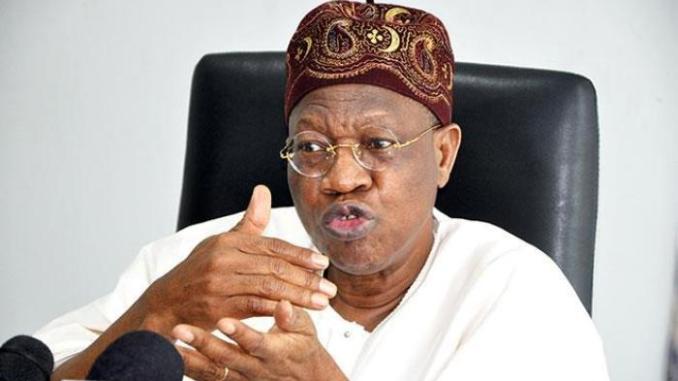
The Minister of Information and Culture, Alhaji Lai Mohammed, has said bandits killing and kidnapping innocent persons are ‘simple criminals’.

He however, compared the Indigenous People of Biafra, IPOB and Boko Haram insurgents, saying the two groups are driven by an ideology.

Mohammed said the bandits are incomparable with IPOB and Boko Haram because they cannot be attached to a religious or an ideological goal.

The minister spoke on TVC’s ‘This Morning’ on Monday.

He said, “The difference between IPOB, Boko Haram on one side and bandits is that, while IPOB and Boko Haram are driven by ideology, a belief that they don’t want to be part of Nigeria, bandits have no flags.

“Bandits have no flag. Bandits are simple criminals. There’s no difference between bandits and other criminals other than their ferocity.

“Bandits have never said they don’t believe in Nigeria, they are just pure criminals.”

Recall that Mohammeds statement is coming less than ten days after he denied that there is preferential treatment between groups advocating separation from the country and bandits, especially in the North West Zone.

Source

Pendulum : The Atiku Challenge We Must Accept

By Dele Momodu

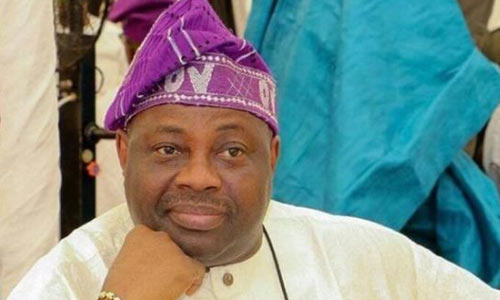
Fellow Nigerians, let me say categorically that anyone who has followed me closely would have noticed my admiration for the Wazirin Adamawa, Alhaji Atiku Abubakar. Of all the political leaders in their mid-seventies, he is my favourite, for very cogent reasons, as I shall explain briefly. From being a former high-ranking officer of the much maligned and impugned Nigerian Customs and Excise, I’m so impressed that he has since upgraded himself to an acclaimed international businessman, accomplished politician, respected educationist and benevolent philanthropist.

The second reason I admire him is the fact that despite the plethora of allegations and accusations of corruption against him, he’s never been proven to have been guilty or culpable with regard to those allegations and has never been prosecuted, much more convicted by any court of Law in respect of any of those allegations

The third reason for which I admire Atiku Abubakar is his steadfast belief in Democracy coupled with the uncommon tenacity to pursue his dreams of leading Nigeria, since 28 years ago, beginning in 1993, when he contested the SDP Primaries against Chief Moshood Abiola, Alhaji Babagana Kingibe and others. He has crisscrossed several political parties in the process and was a founding member of both the PDP and the APC, and a major supporter of Major General Muhammadu Buhari in 2015 after he lost the APC primaries to General Buhari. He returned to PDP after the 2015 elections to contest in 2019 against the same Buhari he supported heavily just four years earlier. I also supported him on that occasion because of the drift, rudderlessness and graft of the Buhari government between 2015 and 2019, but unfortunately Abubakar lost in a very controversial and highly militarized election.

I really hoped he would win as age was already counting against him even if, obviously, he looks healthier than many of the much younger ones parading themselves about today. But he didn’t and his age is becoming an albatross round his neck which he cannot ignore or do anything about. While some might readily dismiss the age factor in politics, I have since become almost paranoid after witnessing what happened to our dear beloved late President Umaru Musa Yar’Adua of blessed memory, who although was much younger, died at 58 years old, had major health challenges which of course older people like Abubakar will be susceptible to as a matter of natural wear and tear in all humans.

This unease for me became compounded when I considered the significant health scare of Buhari in 2017 and how once again government almost became paralysed until Vice President Yemi Osinbajo took over the mantle and came into his own. Health is wealth they say and in the life of a nation there cannot be any greater truism as our experiences over the past 13 to 14 years have shown. The problems of Nigeria are so gigantic that even an elephant can collapse under its sheer weight. It is for this major factor that many younger Nigerians, and indeed patriotic older ones too, are likely to resist an Atiku Presidency in 2023. We simply do not want a geriatric in power, displaying all known bad vices of geriatrics including being stubborn, obstinate and unyielding, added to others which I need not go into here. The fact that Atiku wishes to contest the next elections despite the cacophony of deafening noises advising otherwise demonstrates that he too suffers from this malaise.

There is also another major challenge. How would it sound that another Fulani man, of nearer 80 years than 70, replaces the around 80-year-old Buhari in 2023, in a country littered with countless vibrant, brilliant, intelligent, detribalised, accomplished and cosmopolitan young citizens from other ethnic groups, particularly in the southern part of the country and the Middle Belt? This becomes more acute, stark and critical when we consider the terrorist Boko Haram menace and the dastardly Fulani terrorists and bandits that have riven our country and threatened to split us into unwholesome fragments.

Clearly the time has come for someone who can be seen to be a unifier to emerge from across the Niger and heal the raw open wounds of the country. I still believe 100% in this entity and nation state called Nigeria. It has amazing prospects which we cannot let a small group of ill-informed, ignorant and malevolent persons endanger and damage. If all the constituent parts can arguably succeed on their own, then there is good reason for keeping us together. This is because the success of many, as part of a whole, can only be geometrically and exponentially greater than the success of a small individual fraction.

Personally, as a Democrat, I recognize and respect the rights of former Vice President Atiku Abubakar to contest elective positions, including the Presidency for as long as his will and health can stretch, but I believe Nigeria has been extremely kind to members of his generation. They have hugged and monopolised the political landscape of the country for many decades and deprived at least one highly potent and resourceful generation of a crack at running this country. What could have been if this were the case can only be a matter of conjecture. The sad thing is that in acting selfishly in their own interests the generation of Atiku Abubakar and President Buhari have foisted upon the younger generation, the dregs, flotsam and jetsam, of that younger generation in order to perpetuate themselves in power. That was the only way they could cling to power, or at least so they thought.

On a personal note, Atiku Abubakar has achieved what many members of his generation would not be able to accomplish in several generations. While it is his right to contest, I believe there comes a time when patriotism becomes far more important than personal interests and ambition. I know that my appeal will not be considered or heeded, but I want to thank Alhaji Atiku Abubakar for his magnanimity in challenging the youths to challenge him for the ticket of PDP. This sounds very reasonable to me. While to some of my friends and contemporaries, it may smack of over-confidence on Atiku’s part, I believe it could actually provide a David versus Goliath kind of fiasco for the great man. Considering that the Atiku behemoth in Nigerian politics may actually scare the daylight out of any would-be aspirant, I seriously believe it is doable and achievable for a resolute contender.

The truth is that those in the ilk of Atiku, who consider themselves larger than life and indispensable, are in for a Humpty Dumpty kind of collapse. They are spoiling for a demystification which will not augur well for the legacy that they had previously struggled to build and preserve. Why is it so difficult for them to exit while the ovation is loudest!

The Obama magic and miracle in American politics remain my veritable inspiration. The mood of the nation currently favours a paradigm shift. What is required mainly is the courage to take on the establishment and tear down the status quo which is now premised and founded on ageism. I’m reasonably convinced that after the 30-year penalties, suffering and injuries we’ve endured since the annulment of the June 12, 1993, Presidential election, the principal actors of that era now have almost the last chance to foreclose that tragedy. This can only be done by bringing on board an Abiola-like personage with a powerful template and recipe for a new productive and progressive Nigeria. This is a task that must be achieved.

However, what I find most worrisome is the almost incurable affliction of self-doubt and inferiority complex in many of our youths who still believe that only their aged or ageing oppressors have the chance of winning elections ad infinitum. I believe Nigeria no longer has the luxury of time for a game of musical chairs by septuagenarians and octogenarians. Nigeria has bled for far too long and is almost haemorrhaging to death because we no longer have selfless, inspired youths ready, able and willing to lead the way. This was the tradition our political fathers of yore were brought up in. I still remember vividly and with pride Papa Obafemi’s declaration after the 1983 elections that he would never contest elections in Nigeria again partly on account of the corruption of the electoral process, but mainly because of his age at the time of that declaration. Our aged political leaders will do well to learn from the great sage and muse himself.

The time has come for a complete turn-around unless we’ve signed a pact with the devil and sentenced ourselves to perpetual servitude and stress. Our youths must wake up from their self-immolating slumber and chart a new course and direction for our long-suffering country and its people. We can no longer continue to fold our arms like victims of mass hypnotism. Nigeria must be rescued by all means necessary. Whosoever is happy with the state of things in Nigeria today must truly hate our country. I believe and know that we can do much better.

Going back memory lane, unknown to many Nigerians, Chief MKO Abiola of blessed memory was quite young when he used his humongous popularity and generosity to capture the imagination of all Nigerians at home and abroad. He was born in the Gbagura quarters of Abeokuta on August 24, 1937, so he was just 56 when he contested and won the June 12, 1993, elections. Umaru Musa Yar’Adua was born on August 16, 1951, in Katsina and was just shy of 56 years when he contested and won the April 2007 Presidential elections. President Goodluck Jonathan was born on November 20, 1957, in Ogbia in what is now Bayelsa State, and was, a bit younger at, 53 years when he contested and won the Presidential elections in 2011. How can anyone now tell me that I’m too small or too young to lead Nigeria at 61 after all my hard work and global experience and exposure. I reject this type of curse on behalf of my generation. We’ve been too docile and over mesmerized for far too long and we’ve never been able to wriggle out of this fear-induced stupor from those who do not wish our country well but merely wish to continue to feather their own nest.

We should therefore at least be grateful for the Democratic propensity of Alhaji Atiku Abubakar for encouraging the youths to join the race instead of lamenting like the Biblical Jeremiah. We should stop wallowing in self-pity and, instead work assiduously to take power from members of the old brigade who have held Nigeria by the jugular for ever and ever. Those who want power must simply work and fight for it. It is not going to be handed to us on a platter.

In 1993, Chief Abiola was able to convince his Party that he had what it takes to win the Presidential election despite facing the Herculean task of wresting power from Alhaji Babagana Kingibe, who was Chairman of the Party and the favourite choice of the SDP Governors, and also Alhaji Atiku Abubakar who was the political godson of the highly influential Major General Shehu Musa Yar’Adua. Abiola won the ticket because he did not allow himself to be bullied or intimidated by the almost impossible Mount Everest ahead of him which he knew he had to climb. He simply girded his loins and set about his daunting but achievable task. That is what our young men and women of today simply have to do.

I have read elsewhere that some of our modern day Abiolas are complaining about the vast resources and financial obligations needed to execute the primaries in mainstream political party, but I wish to call this nothing but self-defeatism. While it is true that huge sums of money would be needed, your personal charms and charisma may carry you far. Your ability to show off your contacts and connections in every part of Nigeria as well as your international relevance will certainly attract massive attention and support. This was the template that catapulted Chief Moshood Abiola beyond and above his competitors. Most of the potential candidates in Nigeria are usually local champions who force themselves on the respective political parties. Very few have any real political base or structure. It is merely a matter of perception. The Godfathers should by now understand and regret the incalculable damage the incompetent candidates have caused and how they have destroyed our great country. They can salvage this now by yielding ground and supporting the right candidates.

The other myth that Chief Abiola shattered was the one that says only hardcore career politicians – Governors, Senators, Honourable Ministers, and others – can aspire to the Presidential office. Chief Abiola was ahead of Donald Trump in this regard. The time has come for non-career politicians to run Nigeria like a successful conglomerate and not like a national cake to be shared among party loyalists and lackeys. The country should be calculated by profit and loss and never written off as a bad loan.

The next leader of Nigeria must be adequately prepared for the onerous tasks of nation-building by embracing a government of national unity and a broad-based coalition across party lines in other to powerfully uplift our nation out of perfidy and poverty. Step forward our intelligent, diligent and proficient youths. Your time has come!

Ken Nnamani: The Man Who Sold His Conscience

Kenechukwu (Ken) Nnamani, trustee of the ruling All Progressives Congress (APC), and leader of the party in south-east Nigeria is about to embark on a book tour with a story about how he, as Senate President in 2006, stood between a rampant President Olusegun Obasanjo and a constitutionally impermissible Third Term. His book is impressively titled “Standing Strong”. The story would ordinarily be a best-seller if its release was not timed to coincide with the Anambra State governorship election in which Ken Nnamani leads the charge on behalf of Andy Uba, the candidate of the APC, who was coincidentally Obasanjo’s bag-man for Third Term. What Ken seeks to do is plainly grubby and disreputable and he needs to be told so in clear terms.

If democratic politics is a game of strategic patience, Ken Nnamani announced his presence on the Nigerian scene as somewhat of a master of the art. When Nigeria returned to civil rule in 1999, Ken was a largely unknown technocrat who looked all but certain to clinch the Enugu East senate seat on the platform of the then dominant party, the Peoples’ Democratic Party (PDP). After a not entirely unusual nocturnal detour, the seat ended up in the pocket of former Anambra State Governor, Jim Nwobodo, who was seen as a known quantity. Ken bided his time and, when the contest came around again in 2003, he was not to be denied.

In that dispensation, the PDP zoned the senate presidency to south-east Nigeria. The first Senate President, Evan(s) Enwerem, came from Imo State and lasted all of seven months on the job before his peers kicked him aside from the position, accusing him of burrowing too deeply into the political derriere of President Olusegun Obasanjo with no regard for their sensitivities. Next on the seat was the mercurial Dr. Chuba Okadigbo from Anambra State, but he did not much last either. In quick succession, the corpulent Anyim Pius Anyim from Ebonyi and the underwhelming Adophus Wabara from Abia followed. So, having traveled round all the states of south-east Nigeria at an annual clip, the seat in 2005 arrived at the gates of the Enugu State caucus. With a mere two years to his credit as senator, his peers elevated Ken Nnamani to lead them as the president of the Senate.

In Nigeria’s history, senate presidents have historically been colourful personalities with limited political shelf-life. Ken Nnamani, it seemed, was destined for the role. His installation as Senate President coincided with the onset of the final phase of Obasanjo’s carefully orchestrated plot to succeed himself. The backbone of this plot was a little known political fixer from Anambra State, whose notoriety was underlined by the fact that he was known only by an abbreviation of his first name “Andy”. In the Obasanjo Presidency, Andy occupied the nondescript position of “Special Assistant to the President on Domestic Matters.” It was a capacious description for a presidential odd-jobs man, arranging presidential assignations at night and pay offs in day time for an assortment of people who needed pecuniary persuasion in order to line up behind Third Term. Andy was the evil genius without whom Third Term would not have traveled far and Ken would have had nothing against which to “stand strong”.

When it was all done, by 2006, Third Term was defeated and a scorned President Obasanjo visited his fury on his then ruling party and its officers, among them Ken Nnamani. Simultaneously, as his final act of gratitude to the most loyal of domestic assistants, Obasanjo appointed to the head of the Independent Electoral Commission, INEC, Maurice Iwu, whom Andy nominated. When Andy ran to become Governor of Anambra State on the ticket of the ruling PDP in 2007 while the seat of the incumbent governor was still to lapse, Iwu declared him “winner” of an “election” in which there were more votes than voters. When this became obvious, Iwu’s INEC shaved off enough numbers from the initial result to manufacture 95% turnout, of which they allocated 80% to Andy. It was a scandal that even Nigeria’s notoriously shifty courts could not tolerate. They promptly turfed Andy out and, in 2009, successfully rebuffed his efforts to corrupt his way back into the office of Governor of Anambra State, with then Chief Justice, Idris Kutigi, describing his efforts as “a thorough abuse of the judicial process.”

Ken Nnamani knows all this and much more. When he left the senate in 2007, Ken may have been bereft of a seat but he appeared to have political capital. All he needed, it seemed, was an idea of how to spend it. Two election cycles later, Ken decided that he’d had enough of twiddling his political thumbs in PDP. In February 2016, Ken Nnamani announced he was taking an indefinite political sabbatical from the PDP. He emerged from that at the beginning of 2017, offering excuses to anyone who wanted to listen as to why he had to join the APC. He didn’t have to. Ken had emerged from the intervening decade with nothing to show for his political capital nor evidence of having done anything useful with it.

In the APC, Ken found himself in the impressive company of a peculiar gang of political hyenas, including Andy Uba. Deploying his skills in political dark arts learnt in the Obasanjo backroom, Andy got himself declared winner in the APC governorship primaries in June 2021, with a reported 230,201 votes, out of 348, 490. The problem is that, according to the INEC, there was infact no voting or balloting in the primaries. Buttressing the INEC, Dr. Chris Ngige, Minister of Labour and Productivity and the most senior public officer from Anambra State in the federal cabinet, “regretted that materials for the election were nowhere to be seen.” Not for the first time in his charmed political career, Andy had resoundingly “won” a ballot in which only ghosts voted.

As the leader of the APC in south-east Nigeria, Ken Nnamani witnessed all this in person. On the day of the primaries, Ken was the senior-most party official present in person in Anambra State. Indeed, Dr. Chris Ngige told the representative of the party’s trustees sent to organize the primaries that he had “discussed with your member, Distinguished Senator Ken Nnamani” about the failure to organize a primary and requested the members “to shift the exercise.” Ken Nnamani did not and could not challenge the disclosures by Dr. Ngige. Indeed, privately, he was said to have acknowledged that they were truthful. Yet, by the beginning of September 2021, Ken had become a clairvoyant, predicting that the APC will win all five states in south-east Nigeria, beginning with the installation of Andy Uba as Governor in Anambra State in the 2021 election. To borrow an Americanism, Ken had metamorphosed into Andy’s political Line-backer. By leaps of convenient narrative compartments, Ken had managed to delete every memory of Andy’s record of toxic political baggage in order to bring himself to the profitable point where he can now launder Andy, while selling his book, accomplishing both with aplomb to the eternal admiration of his bank managers.

As Anambra State has descended into an orgy of ungovernable violence this past quarter, Ken Nnamani has managed to discover the eloquence of silence. Owing largely to the efforts of his candidate, there are no campaigns this time around in Anambra State, a mere three weeks to the elections, nor will there be any debate in the state with perhaps the most outstanding tradition of political debate in Nigeria. Ken’s excuse? He is, presumably, moonlighting as a book-seller, with no time for such trifles. At 73, Ken seems to believe that this is a matter that can easily be disposed of with the skills of a geriatric Atilogwu dancer.

He is mistaken. Politics as the art of the possible may well be the skill of airbrushing inconvenient facts or thinking that it is possible to walk both sides of the road at the same time. Sadly, Ken Nnamani, the man who claims to have “stood strong” against the forces of Third Term has now, with a clear conscience, made his peace with the man who funded those forces. This is political hucksterism in its most rarefied form. It would have been more forgivable if Ken had the courage of his convictions to proclaim his conversion. The least we can do is to help him popularize his new vocation, so that as he sells his book, he can also profitably sell his conscience. Hopefully, someday, he will be able to say how much it was worth, if anything at all.

Born in Ihiala, Anambra State, Odinkalu, a teacher and lawyer, writes from Abuja

Congresses of gun and godfathers, By Lasisi Olagunju

Party politics and adultery have same rule of engagement: there is no commitment to fidelity and conjugal permanence. We are in this thing for a reason and it is for a season. It is not till-death-do-us-part. We respect political seminaries abroad thinking they are homes of decency; but they are also suspects in perverse acts. The difference is that they are discreet about their bad ways of doing ‘great’ things. Parties here don’t switch off the light to do evil. They go to the market square to subvert faith and faithfulness; they teach reverse meanings of law and loyalty. Here you watch in horror as upstart crows beautified with the feathers of the king of birds defecate on the palace with impunity. You watch in shock as crows flap their vaunted wings in the face of the angels who supplied them their flight. You also see moths and butterflies seeking a race with the eagle.

I am discussing here the two big political parties in Nigeria and their states of turmoil. They did their state congresses two days ago and it was all mobster battles. If they had delayed the congresses till this week, we would have said they were celebrating the anniversary of the EndSARS shootings. In some states, godsons rolled out battle tanks against godfathers – and vice versa. In some others, we saw naked test of guns between old gang mates. People may have died. And you ask: over what?

Why are the parties imploding? The election season is here. Candidates will be elected or selected. This is the time to demand and take pounds of flesh from persons who grew wings, and it is time to reward loyalty. Governors have used state powers to harvest delegates for indirect primaries. Senators have dramatically responded by using their own legislative powers to ‘sack’ the delegates. They have made the delegates useless with the recent vote for direct primaries for parties. So, the congresses and the counter-congresses you saw at the weekend were a decisive phase in the battle for the soul of Nigeria.
While politicians are taking their destiny in their hands using fair and foul tools, ordinary Nigerians are left forlorn in their own war of survival. They are alone, all alone. And if they are abandoned to their suffering, what are they supposed to do? Wait on their enslavers to free them without a fight? “Power concedes nothing without a demand. It never did and it never will,” said Frederick Douglass, American social reformer, abolitionist, orator, writer and statesman. In August 1857, he delivered his famous Emancipation Speech which should show the way to the Nigerian slave of today. The opening line of Douglass’s speech is “If there is no struggle, there is no progress.” Douglass told the slave that if he would be free, “he must strike the blow.” A man who would not fight for himself when he has the means of doing so, Douglass said, would be a moral pauper and a drag on the wheels of society.

He said more than that. Hear him: “The world in which we live is very accommodating to all sorts of people. It will cooperate with them in any measure which they propose; it will help those who earnestly help themselves, and will hinder those who hinder themselves. It is very polite, and never offers its services unasked.” It would appear that only Nigerian politicians understand Douglass’s message and are keeping to his counsel in their battles with fellow principalities of politics. The stupid street is still on the floor, stupid; it is waiting for 2023. The day the Nigerian poor reads Douglass correctly is the day Nigeria will get a life, and will be free. But that day may never come.

You saw the headlines yesterday. Gunshots at party congresses. Who fired the shots? The poor. The parties, APC and PDP, have become Nigeria; they are fractured, ragged and ugly. Parallel APC congresses in Niger, Kano, Osun, Ogun, Abia, Akwa Ibom and so on. Lagos is even said to have had three – two of the congresses belonged to rebel groups seeking to repeat David’s catapult feat with or without the anointing of the son of Jesse! There are bigger crises in the APC because it is the present janitor of favours. Remember what Igbo people say about goats following only today’s holder of palm fronds. And there is no decorum with goats. Every faction in every state is a mafia-dom where a godfather reigns and thinks himself lord and saviour. And they have just started. It will get messier and scarier going forward to the tipping year, 2023. The stakes are very high. The parties are kingdoms of power and money, they are taken and retaken and kept only by violence. That should explain why there can never be retreat or surrender in the parties. That is why we are still asking who really won on Saturday in the various state chapters.

Today’s ultimate godfather is in the Villa. He is in the lair there playing God with dubious silence. With his cardinals of death, he farms crises everywhere there is land. He sows discord in this heap and plants rebellion in that ridge. He looks at his old comrades as expended ammunition; he sees in them people who are unfit and unworthy of compensation for past favours. Rebels who undermine their bosses in the regions run to Abuja to get pats on the back. But the pope in Abuja is only being true to power in its raw form. People who make kings are always the first casualties of kingship. The blood of makers of kings is the premium canvass for royal dance steps. It is the reason history is not entirely wicked to Bashorun Gaha of old Oyo. His intrigues had a root in past ugly experiences with ungrateful kings. Like his ancestors, the Bashorun was a godfather who made and unmade kings as it pleased them.


Sometimes you think what you see in politics are too ghastly and gory to be real: the brutality of the moral brawl, the imperfect cues and miscues and the coldness of the bloodletting. The warning is always out there: if you ever consult spirit-men to spin victory your way, ensure you keep to the dos and don’ts. Jilting the Bashorun comes with a huge price and you don’t pay with the currency of omoluabi. No. It is war.

Two brothers, Jacob Karl Grimm (1785–1863) and Wilhelm Carl Grimm (1786–1859) were cultural researchers and collectors of German fairy tales. One of such tales is The Godfather. It is a story of desperation and deliverance; promise and betrayal; decay and ruin. With a little modification, I run the translated version here as published by the authors:

A poor man has twelve children and works hard to feed each of them every day. When his thirteenth and last child is born, the man decides to find a godfather for the child. He runs out into the highway and finds God walking there. God asks to be the godfather, promising the child health and happiness. The man, after finding out that the man is God, declines, saying that God condones poverty. Then the man meets the Devil on the highway. The Devil asks to be the godfather, offering the child gold and the world’s joys. The man, after finding out that the man is the Devil, declines, saying that the Devil deceives mankind.

The man, still walking down the highway, meets Death. The man decides to make Death the child’s godfather. He loves Death because it takes away the rich and the poor without discrimination. The next Sunday, Death becomes the child’s godfather.

When the boy comes of age, Death appears to him and leads him into the woods where special herbs grow. There, Death promises the boy that he will make him a famous physician. It is explained that whenever the boy visits an ill person, he sees Death appearing next to the sick person. If Death stands at the person’s head, that person is to be given the special herb found in the forest and he will be cured. But if Death appears at the person’s feet, any treatment on them would be useless as they would soon die.

The boy soon becomes famous, just as Death had foreseen, and receives plenty of gold for his amazing ability to see whether a person would live or die. Soon, the king of all the lands becomes ill and sends for the famous physician.

When the physician goes to see the king, he notices immediately that Death is standing at the foot of the bed. The physician feels pity for the king. There must be a way out. He decides to outsmart Death. The physician turns the king around in his bed so that Death now stands over the head. He then gives the king the herb to eat. This heals the king and speeds up his recovery.

Soon after, Death approaches the physician, expressing anger for the betrayal and disobedience to his rules. But because the physician is Death’s godchild, he does not punish him. Death then warns the physician that if he ever betrays him again, he will take the physician’s life.

Not much later, the king’s daughter becomes ill and the physician goes to the palace. The king promises his daughter’s hand in marriage and the inheritance of the crown if the physician cures her. When the physician visits the princess, he sees Death at her feet. But, he is captivated by the princess’s beauty and thoughts of being her husband – and king. The physician turns the princess around so that Death is at her head. He then feeds her the herb.

Just as the princess is coming around, angry Death grasps the physician by the arm and drags him to a cavern. In this cave are thousands of candles, each burnt down to different lengths. Death explains that the length of each candle shows how much longer a person has to live. Death then shows the physician his candle and it is very short, suggesting that the physician does not have much longer to live.

The physician pleads with his godfather to light him a new candle so that he may live a happy life as king and husband to the beautiful princess. Death says he will not. He tells him that in order for another candle to be lit, one has to go out…

So, how did it end? The physician’s candle soon burnt out. He lost his life; he lost the joy of having the beautiful princess as wife; he lost the prospect of being king too. He lost all to the will of Death, his godfather.

Lesson: what God has done for me, it shall be permanent. Only those who take their case to God are permitted to say Amen to that prayer. The poor man with thirteen children in the above story skipped God in his search for help. He chose Death as his child’s godfather. In politics and in everything, godfathers are certain Death. They have nothing enduring to offer unless you take rams to their shrines every day and every night. They give in units; they take in tens. Like lit candles, the godfather’s love burns out always in regrets and death. Death itself may die but the first to die is the child with his destiny.

2023: Let’s look to the North-East, By Hassan Gimba

zone, must produce the president in 2023.

Many people fight for their people, region, zone or state to produce the president for various reasons.

Reasons may range from the fact that a president attracts some goodies to his area. Ministers and other chief executives fall over themselves to site projects where the president comes from. Captains of industry, too, are not left behind in the jostle to provide for where the president hails from.

People from the president’s locality also have a false sense of being first-class citizens, oblivious to the fact that those from other areas may end up benefiting more from the administration. Those that would never have been heard of in their lifetime were it not for their association with the president’s roots can become overnight celebrities and points of reference.

For these and many other related mundane concerns of living in a competitive environment where resources are ever dwindling, people can go to any length for theirs to be there.

The concern is not for the nation, nor for the future or the wellbeing of the people. The primary push is self, then tribe. It is so unfortunate, but that is the reality. The religious card too is played, but that too is a complete game of its own. Whether Muslim or Christian, denomination comes in. Just because the other one is your tribe and religion, if he belongs to a denomination you consider hell-bound, then he can be denied anything, including the right to live.

Perhaps these reasons are why many seek political offices and the majority push others to political seats, hoping to reap where they have sowed.

This struggle to get “our share” from the national cake has seen brothers fighting one another, sometimes to the death. Our politics has become a do-or-die affair as buttressed by a one time president when he was seeking re-election. The smart alecs among our political elite have pitched us against ourselves, using our two major fault-lines – religion and region.

Many of us worship clerics and not God. Therefore, some can “remove” or “admit” others into religion as they have appropriated it. Their religion is just in the tongue but not in the hearts. Had we been worshippers of God, the true God, perhaps there would be more peace than we are witnessing. Our other god is the tribe. Some would not mind the country going to blazes as long as one from their tribe is not where they want him to be. That is on the one hand. There are also those who are hell-bent on excluding people from other tribes from the scheme of things, who think what is sauce for the goose is not sauce for the gander.

Many of the political elite, as we earlier said, thrive in deceit because if the citizenry knew the truth, their unworthiness would be glaring. They have ensnared and enslaved their people with falsehood even as they think they are thinking freely. They are those who Johann Wolfgang von Goethe (28 August 1749–22 March 1832), the German poet, playwright, novelist, scientist, statesman, theatre director, and critic talked about.

He said, “None are so hopelessly enslaved as those who falsely believe they are free. Masters who rule them with lies have kept from the depth of their minds the truth. They feed them falsehoods till something wrong looks right in their eyes.”


If not, how do you situate the recent statement by Professor Daniel Saror at his 80th birthday celebration in Makurdi to the applause of Governor Samuel Ortom and those who have always been blinded by the rogue elite? Professor Saror was the 7th vice-chancellor of Ahmadu Bello University, Zaria, when ABU Zaria was ABU Zaria. He was also a two-term senator, first in 1999 on the platform of the Peoples Democratic Party (PDP) and in 2003 under the banner of the All Nigeria Peoples Party (ANPP).

One may assume someone of his calibre – and age – will be more circumspect in his utterances, having reached a level to be regarded as an elder statesman. Unfortunately, he unashamedly said, “The insecurity we are experiencing in Benue and Nigeria today is not an accident. It is a planned programme. Boko Haram does not consist of miscreants. They are intelligent people; they are highly connected in Nigeria and other countries in the world and the mission is simple: they want to conquer and Islamise the nation. The Jihadists that you hear about in the North-West are also not miscreants. They are highly connected, highly motivated, and highly experienced in their own (sic) ideas and what they want. They want to spread the caliphate throughout Nigeria.

“The armed Fulani herdsmen and Boko Haram insurgents have contacts that extend to the Middle East, Asia, Afghanistan, and Saudi Arabia, among others. They are funded in billions of naira to execute the conquest agenda of the caliphate in the country.” Such balderdash!
This is the unfortunate reality of our country. But we can change that; by just getting a listening, considerate, fair-minded and competent leader, all these problems would fizzle out.

A just leader will ensure that each community, each Nigerian, whether or not they voted for him, regardless of whether they belong to the same area with him, whether or not they profess the same religious belief with him, gets their rightful share.

Nigeria will know peace and rapid development, the moment a citizen realises he does not have to fight or follow a shortcut to get his normal entitlements.

Above all, we need someone who can create maximum wealth out of the country’s natural endowments.

As the 2023 race gathers momentum, it becomes incumbent upon us all to scout for, and draft into the race, a man with such qualities. The consideration should not be whether the president is from the North or South, Hausa, Yoruba or Igbo, or that Nigeria now deserves a Northern or Southern president, Hausa, Yoruba or Igbo President. We do not also need a Muslim or Christian president. What Nigeria needs now is a Nigerian president – one that will put Nigeria first above lucre, region, religion and all other affiliations.

As is becoming our political culture, the president of the country is being recruited from among governors or those who were once governors. Maybe as our democracy deepens and matures, the field may expand to include those from the National Assembly, private sector, bureaucrats, etc.

If that is the case, we can safely assume that our next president may come from the current crop of governors, irrespective of whether that person has served just a term or two. There are some among the current crop of governors that have done well. While fulfilling their mandates at state levels, they are also contributing towards national peace and harmony, calming frayed nerves all over the nation, giving everyone and all parts of the country some sense of belonging and thus stabilising the government at the centre. While we have such governors in all the zones, the North East can claim to have the doyen of them all.

However, I do not want to be trapped in the sentiment of promoting a North Easterner for president in 2023 just because it is my region. Rather, I will support the North Easterner because I know he can do it, because I know he is an excellent material, because I know he is competent and can take us out of the woods, not primarily because he is a North Easterner. After all, it is fate that conspired to bring him out of there. I would still have gone for him were he from the South, East or West, Muslim or Christian.

TIPS