Home Blog Page 897

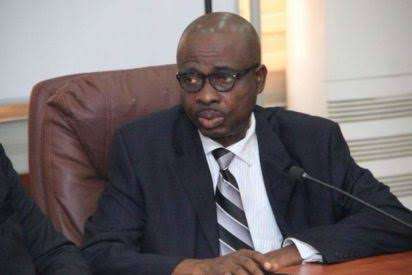
Why Nigerians Are More Attracted To Buhari Than Awolowo, Nnamdi Azikiwe — Adesina

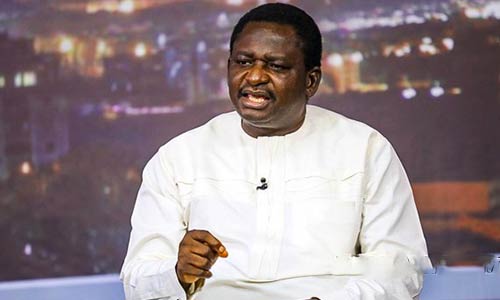
Femi Adesina, the spokesperson to President Muhammadu Buhari, has claimed that more Nigerians are attracted to his boss than former Nigerian leaders, Obafemi Awolowo, Aminu Kano, and Nnamdi Azikiwe.

This said this in an article published on his Facebook wall on Thursday, titled, ‘The essential Buhari: VP Osinbajo got it!’

The presidential aide argued that Buhari is credible, hailing Vice President Yemi Osibanjo for painting the Buhari well at an event in London.

He also quoted Osinbajo as saying that Buhari is “possibly Nigeria’s most popular politician that we have had in generations”.

Adesina said, “I am old enough to have seen our colorful and even swashbuckling politicians in action. I have seen the great Obafemi Awolowo. The charismatic Nnamdi Azikiwe (Zik of Africa). Shehu Shagari. Amino Kano. M.K.O Abiola. Bashir Tofa, and many others in action. But I have not seen anyone with the kind of attraction, magnetic pull, that Muhammadu Buhari has. And that is round the country, north, and south. People swarm round him as bees do to honey.

“I have been round the country with the President. I have also been to several countries of the world with him. I have not seen any other Nigerian leader, past or present, with his kind of allure, pull, fascination, magnetism. And that is why VP Osinbajo is right to have described him as possibly “the most popular Nigerian politician that we ever had in this generation.”

Awolowo was a Nigerian nationalist, political leader, writer and a principal participant in the country’s struggle for independence. he is famed as the president who never ruled Nigeria.

Nnamdi Benjamin Azikiwe, PC, usually referred to as “Zik”, was a Nigerian statesman and political leader who served as the first President of Nigeria from 1963 to 1966. Considered a driving force behind the nation’s independence, he came to be known as the “father of Nigerian Nationalism”.

Why Appeal Court barred VIO from demanding private vehicles’ roadworthiness certificate — Lawyer

Tobi Aworinde

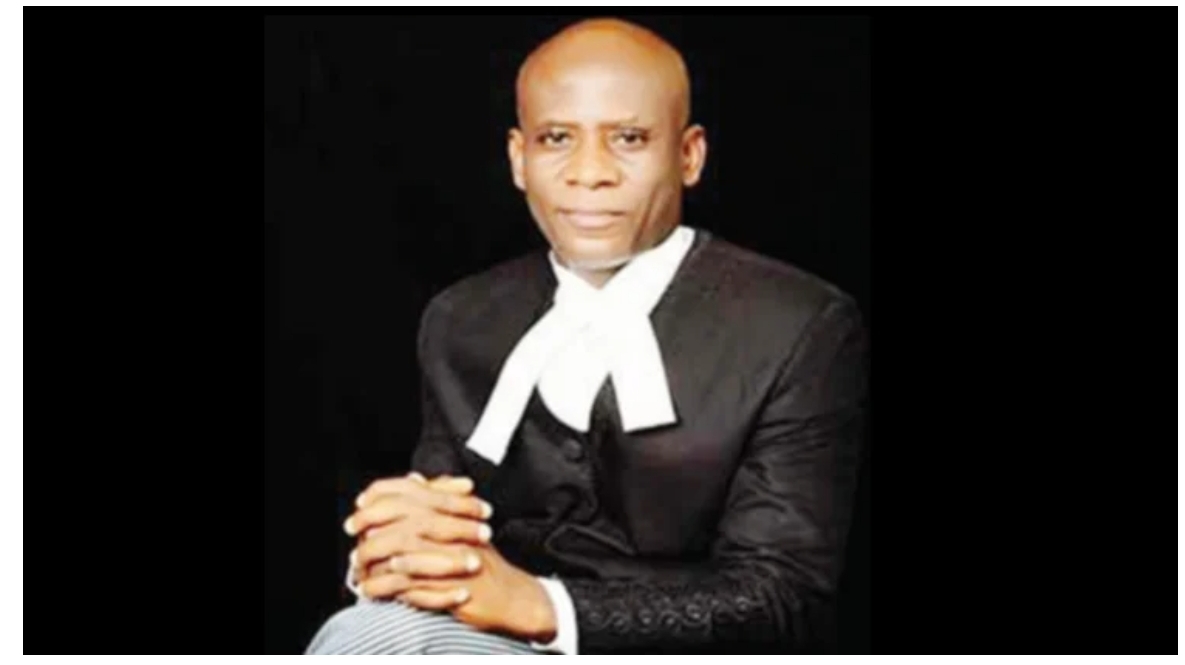
A former Publicity Secretary of the Nigerian Bar Association, Mr Kunle Edun, tells TOBI AWORINDE how he defeated the Vehicle Inspection Office up to the Court of Appeal in a suit challenging the agency’s demand for roadworthiness from private vehicle owners

You recently secured a court judgment against the Vehicle Inspection Office in respect of roadworthiness certificate. Can you tell us about it?

Sometime in 2014, I had cause to be driving along a major road in Ughelli (Delta State), where I wanted to inspect a piece of land, which a client of mine wanted to purchase. Along the road, I came across some kind of obstructions put on the road by some persons purporting to be Vehicle Inspection Officers. They stopped me and I identified myself. They demanded my vehicle’s roadworthiness certificate, and I told them, ‘Sorry, I don’t understand what you mean by that. As a matter of fact, I don’t have it, so should you clear the way for me to pass?’

They were stopping other vehicles for the same purpose, but I insisted that since what they were doing was wrong, I would not assist them to persevere in that error they were committing. So, I told them, ‘Sorry, I will not give you any of my documents; you don’t have any right to be on the road, asking for such documents from me.’ On that basis, they refused to allow me to pass through and that caused a scene. By then traffic had started to build and when they saw that the situation was becoming more chaotic, they had no other option but to allow me to pass through.

Was there any attempt by the officers to impound your vehicle?

When I insisted that ‘you guys don’t have the right to stop me on the road or ask me for my particulars,’ they delayed me for about eight to 10 minutes. But interestingly, when I started lecturing them about their duty under the law, some seemingly educated commuters were telling me, ‘Oga barrister, show them your documents nao. Find something for them nao.’ And I felt disappointed but I was not discouraged. I insisted that the right thing must be done. I know that whenever the VIOs demand such documents from private vehicle owners, they have a way of settling the matter. I wouldn’t know if money exchanges hands, but they have a way of settling it and that has emboldened them (VIOs) to continue in the act. So, that day, I said, ‘No, enough is enough.’ This country belongs to all of us. While we all shout that the government is failing, we too, as individuals, are failing society. So, I stood my ground and when they realised I wouldn’t budge, they allowed me to pass. But then I told them, ‘For daring to stop me and detain me for 10 minutes, I will take it up.’ I considered what they did a harassment and I didn’t like it.

The fact is that they have no right to even be on a public road purporting to be asking for roadworthiness certificates. As of the time of the renewal of my vehicle particulars, if they want to check whether the vehicle is actually roadworthy, that is where they should do that, rather than get on the roads to be harassing commuters, asking for documents.

How did they react to your threat to sue?

They thought I was joking. They said, ‘You can’t do anything.’ I discovered that it was a rampant practice by the VIOs in Delta State and nobody had bothered to take the matter up. At the time, I was the Vice Chairman of the NBA in Warri, and I was also the Chairman of the Human Rights Committee of the NBA in Warri. So, I had a duty to ensure that the right thing was done. That was what compelled my filing this action at the High Court, Ughelli. The Governor of Delta State was the first defendant; the second defendant was the Attorney General of the state; and the third defendant was the Vehicle Inspection Office under the Ughelli inspectorate.

They came to court and challenged the action. At the end of the day, the court delivered judgment in my favour and declared that VIOs – or whatever name they are called – have no business even being on the road, first and foremost. They have no business stopping vehicles to ask for any documents. The judge was particular that their work and duty should be done at their offices, not on the road. The judge said, ‘You don’t inspect vehicles on the road; you inspect vehicles at your workshop or office, and the best time to do that is during annual vehicle licence renewal.’ The judge also said that they had no authority to even stop any private vehicle, demanding any document whatsoever.

The law, on which they base their actions – the Road Traffic Law of Delta State, and the revisions made thereon – did not even give them that power. The power that the road traffic law of Delta State gave them was that they could ask for roadworthiness certificates in respect of commercial vehicles alone, that is, vehicles that carry goods. They can ask for hackney permits and other related documents. But private vehicles don’t carry goods; they don’t do commercial business. So, they (VIOs) don’t have any right to be asking them (private car owners) for documents like that, and they don’t have any right to stop them.

So, with regard to commercial and private vehicles, the court said they don’t have any right to stop any vehicle on the road. Now, with regard to possession of the roadworthiness certificate, the court said they don’t have any right to ask any private vehicle (user) for such a document.

The judge went further to make an order of injunction restraining them from being on the road, stopping vehicles on the road and causing obstructions. Of course, the court also awarded some damages against them.

Was the judgment appealed?

Yes, they filed an appeal and also filed a motion for stay of execution. Their appeal was pending at the Court of Appeal, Benin (Edo State). When the Court of Appeal in Asaba (Delta) was created, it was then transferred there. Sometime early this year, we were served an early notice to come and argue the appeal. I was there personally, because I took up the matter as public-interest litigation. It wasn’t about Kunle Edun; it is for the benefit of all Nigerians because we need to let these authorities know that the officers are there to serve us, and not the other way round, and they don’t have the right to abuse the power that the law has conferred on them. So, I took up the matter on behalf of members of the public. As a lawyer, I can drive. I have my licence and every other thing; I know they can’t stop me because I can handle myself. But how many Nigerians can actually stand up to fight for their rights? So, that was why I took up the matter. Good enough, the Court of Appeal recently affirmed the judgment of the High Court, Ughelli. It was a unanimous decision by the Court of Appeal and they dismissed the appeal filed by the Delta State Government.

Were you able to get the name tags of the officers before going to court?

I didn’t bother about getting their name tags. Initially, I wrote a pre-action notice, which, as usual, they didn’t respond to. I still had to go to court. But they came to court to give evidence and they revealed their identities. Essentially, the identities of those guys were revealed, so I didn’t really bother much about the name tags. I wasn’t really particular about the individual; I was particular about the Vehicle Inspection Unit of the Ministry of Transportation because it was a rampant thing being done in Warri, Ughelli, and Asaba. It was like a business. Even on Monday, a senior lawyer called me and referred somebody to me that the person’s vehicle was harassed and detained by VIOs. The person did not have a driving licence. I then asked, ‘Why didn’t you have a driving licence?’ But then I said, ‘That is not even the issue. VIOs have no business asking for a driving licence. They have no business stopping any private vehicle.’ The Court of Appeal had already settled that. I then told the person we would take the matter up and we will continue to ensure that the judgment of the Court of Appeal is obeyed and respected.

They imposed a fine of N35,000 and I said, “Even if it will take me personally paying that fine, I will do it, to make a further statement to them because all of us need to come together. It’s a collective responsibility.”

Like you highlighted, many Nigerians don’t have the means to pursue legal action like you did. What is your advice to those who find themselves in a situation like this?

We have about 125 branches of the Nigerian Bar Association. Each branch has a Human Rights Committee, and I know some branches also have Public Interest Litigation Committees. Reports can be made to each of the branches, particularly for Nigerians who do not really know their rights and are indigent. Those that are well-to-do can brief any lawyer to take up the case for them. If we have a better society, it will also help us in entrenching the rule of law. When the rule of law is upheld, I bet you, everybody will be happy that we are living in a sane society. So, the NBA is there; human rights activists are there to also help out.

Are you satisfied with the N200,000 compensation you got from the Court of Appeal?

I’m not particular about the compensation, really, because I just wanted to use the judicial process to make a statement that government institutions should adhere to the laws setting them up and try not to abuse the powers conferred on them. The high court awarded N100,000 and the Court of Appeal awarded N200,000. I’m not particular about it because even if the Delta State Government is going to pay me the money, is it not part of my tax? If they pay me, I would rather donate it to one charitable organisation to further help their cause. My wish is, let them do the right thing.

What We Need

By Abubakar D. Sani, Esq

Lord, give us men with hearts of steel;
And, minds that feel;
Men (and women, too) of faith –
For that is all it takes

Men, more beholden to a higher cause –
Than fleeting, earthly praise;
Men who choose God over Mammon;
Men ready to deliver – not minding the pain

Men who will stay the course –
No matter whose ox is gored;
Men – and women, too – of stature;
Real, authentic, fully-formed

God, give us leaders in your own image –
In terms of morality – not just capacity;
About whom we shall be able to say:
“There he is!” – not minding gender sensitivity
Men who will pull us back from the brink –
Before which we presently stand – seemingly transfixed;
Leaders who belong to all – and not just some – of us;
Leaders who recognize neither creed nor tongue

Leaders whose word is their bond –
And, are honor-bound in all things;
Leaders who, above all else, are patriots
And, value principle over expediency

Abubakar D. Sani, Esq.,
17th October, 2021

Carving A Niche In The Legal Profession In The 21st Century

By Ekemini Udim

(Being the text of a lecture presented on 15th October, 2021 to students of the Faculty of Law, University of Uyo, Nigeria on the occasion of the Annual Induction Ceremony for the 2020/2021 academic year organised by Justice Nsima Akpabio Chambers, University of Uyo)

Preamble

It gives me great joy to be invited to deliver this speech as the guest lecturer at the Annual Induction Ceremony for the 2020/2021 Academic Year organised by the Executives and Members of Justice Nsima Akpabio Chambers, Faculty of Law, University of Uyo, Akwa Ibom State, Nigeria. This gathering is significant to me in many ways. First is the fact that, Justice Nsima Akpabio Chambers is an intellectual platform in the Faculty of Law where students are given the opportunity of expressing themselves and horning their skills in preparation for their practice lives as they climb the ladder to become legal practitioners. It gladdens my heart to identify with such highly commendable idea. Second is the fact that, the existence of this Chambers keeps alive till eternity, the memory of one of the illustrious sons of Nigeria who was not just a lawyer but a successful one who rose through the ranks to occupy the Bench as a Judge of the Akwa Ibom State Judiciary where he served meritoriously till his death.

Justice Nsima Akpabio was an incorruptible Judge who kept to the tenets of law and was guided at all times with good conscience and who stopped at nothing to ensure that justice was served to all parties who appeared before him. Though he died at a time when his family members and the legal professional still needed him, it is on record that throughout his service on the Bench, there was no scandal that followed his name. This, no doubt, shall remain a cherished memory to his family, friends, associates, the legal profession and the society at large. The third significance of this gathering for me is the fact that I have the opportunity to engage in a conversation with young people – students of law – who are aspiring and doing their utmost best to become members of one of the noblest professions on earth – the legal profession. I shall do my best within the time given to me to address the above topic for your benefit and for the benefit of those you may share this lecture with.

Who was Justice Nsima Akpabio?

I have already said a little about him in the preamble but for the benefit of those who may not have known much about him, I hereby crave your indulgence for me to say a little more about him.

Justice Nsima Akpabio was a Judge of the Akwa Ibom State High Court. Family sources have it that, he attended the prestigious Regina Coeli College, Ikot Abasi in 1962 and later moved to another prestigious institution – the Holy Family College, Oku Abak where he sat for and obtained the West African School Certificate in 1969. He thereafter gained admission to study law at yet another prestigious institution, the University of Nigeria, Nsukka. He started his law studies in the said institution in 1976 and graduated in 1980. He then proceeded to the Nigerian Law School at Victoria Island, Lagos for his vocational training and on successful completion, he was called to the Nigerian Bar and licensed to practice law as Barrister and Solicitor of the Supreme Court of Nigeria. From call to bar, he proceeded to serve Nigeria as a Youth Corps Member from 1981 to 1982 at the Department of Public Prosecution, Ministry of Justice, Rivers State.

The young Nsima, on his return from national service, ventured into law practice and did exceedingly well in it. He joined Ufonowo Chambers & Co., and later moved to open his firm with the name, Akpabio Chambers & Co., which has been kept alive till date by his eldest son who is a lawyer. Barrister Nsima also served as Magistrate Grade II in the Uyo Magisterial District and later serevd as Magistrate Grade 1 at the Chief Magistrate’s Court, Akamkpa, Cross Rivers State when the area now known as Akwa Ibom State was in Cross River State.

Following the wealth of experience gained as a Magistrate and the experience gained as a practicing lawyer, Nisma Akpabio was considered worthy of appointment as a Judge of the High Court by the Akwa Ibom State Government on the recommendation of the National Judicial Council in 1995. He served the State in the said capacity meritoriously till his death.

Nsima was also interested in the politics of his community, State and country. Thus, before his eventual ascension to the High Court Bench, he had served his people as a Local Government Chairman (Essien Udim Local Government) and as a Senator representing Ikot Ekpene Senatorial District in the Nigerian Senate. The political history of Essien Udim has it that it was during his tenure that the Local Government Secretariat was build in Afaha Ikot Ebak, Essien Udim. He also embarked on other projects and programmes that touched directly on the lives of the people. It is also on record that at the Senate he was a frontline advocate for the creation of a State for the people of the Mainland part of the then Cross Rivers State, the present day Akwa Ibom State.

Honourable Justice (Senator) Nsima Peters Akpabio was thus an all-rounder who succeeded in his career as a legal practitioner, politician, Magistrate, and as a Judge of the High Court. The students’ law Chambers which you all belong is thus an intellectual platform named after one of the most illustrious sons of Nigeria who made effective use of the opportunities which the law degree offers to every one who has tarried to become a qualified legal practitioner.

How do you carve a niche for yourselves in today’s legal profession?

In the history of the legal profession in Nigeria, it is on record that Sapara Williams was the first Nigerian to the called to the Bar. He was called to the Inner Temple in England in 1879. He then returned to Nigeria and began practicing law in the then Lagos Colony in 1888. He was a much-sought-after counsel owing to his deep knowledge of the law. Sapara was from Ijesha.

Gentlemen, the legal profession of Sapara’s time is not the same with the legal profession of today. They are poles apart. A lot of things have changed. For you to succeed as a 21st Century lawyer, you must have a 21st Century mindset. Some years after Sapara Williams was called to the Bar, others were also called. A couple of years after, Nigeria still had few lawyers who were not even sufficient to take care of the legal needs of a large country like Nigeria. The available lawyers were highly sought after by companies, governments and private individuals. The briefs literally walked to them.

Today, the reality is that, Nigeria has more than 197,000 persons that have been called to the Nigerian Bar and licensed to practice law as Barristers and Solicitors. The profession is highly saturated. Every year, more people – in thousands I mean – are called to the Bar and this automatically adds to the number. There is competition. The cases are not enough to go round. Juicy briefs are hard to find and when they are found, they are shared among a few lawyers in the highbrow areas and in a few elitist law firms. Litigants no more travel long distances to secure the services of lawyers because there are lawyers everywhere. The practice of law is now the survival of the most competent and the most favoured. Yes, favour from above is a key factor in law practice. I shall discuss this anon.

How then do you carve a niche for yourself and become a successful lawyer in an environment as saturated as the picture painted above? A few points will help you in this direction:

  1. Take your studies seriously

To be a successful legal practitioner, you must be serious with your studies as students of law. What you learn in the classroom today will present themselves to you one way or the other in your practice life. When you are grounded in the theoretical aspects of law, it becomes easy for you to identify the issues of law in both simple and complicated cases whenever you are briefed by a client. A good knowledge of the theorical aspects of law will also assist you in the preparation of legal documents for clients during your practice years and will also assist you in the drafting of processes for filing in courts of law where you will be expected to advocate for your clients. There is a position out there that ‘’it doesn’t matter what you graduate with.’’ Do not follow the proponents of this theory. Strive to graduate with good grades and above all, graduate with good knowledge of the law. The foundation of successful legal practice is first rooted in your understanding of the principles of law taught to you in the classroom. Do not joke with your studies. Be serious with it.

  1. Develop the culture of reading

Reading makes the man. Reading makes the lawyer. To be a successful practicing lawyer in the 21st Century world, you must develop a culture of reading. As someone who has practiced law for many years from the trial courts up to the Supreme Court, I can rightly tell you that there is so much to read in the course of practice. There are records of appeal for instance which run into hundreds of pages and a good lawyer is expected to go through the whole pages to be able to articulate the arguments in your brief and make a good case for your client. Clients also send volumes of contract documents for the lawyer to go through and advise them as appropriate. Without a culture of reading which you must develop now, you will find it difficult and highly challenging to remain in law practice.

  1. You must be at home with ICT

To be a successful legal practitioner and carve a niche for yourself in the 21st Century, you must arm yourself with knowledge of ICT. This will make your job easy and better organised. Law practice has gone digital with several applications developed to assist the 21st Century legal practitioner. Today, you can carry a whole law library in an ICT enhanced application such as the Law Pavilion, Appy Law amongst others. You should be at home with the current happenings in the profession including current positions of the law on various areas of practice. Knowledge of ICT thus gives you an added advantage in your practice life.

  1. Identify your strength and passion and build your expertise early enough

Law as a discipline is quite vast. Identify your strength and passion for the practice arears you desire to specialise in. Develop your passion for such areas. Read up the more and attend conferences and seminars for practical knowledge and possible certifications. In Lagos State, Nigeria, for instance, there are some lawyers whose practice area is commercial law. They are the practitioners who handle briefs for financial institutions, hi-tech companies, etc. Most of these lawyers are very successful and worthy of emulation. Others specialise in mediations, maritime law, aviation law, immigration, etc. Other lawyers specialise in land law while others specialise in election petition law and practice and others on constitutional law. By picking a law specialty and using the permissible but creative business strategies, lawyers can focus their actions and stand out to clients. Clients seek out lawyers with extensive knowledge in specialised fields. Successful law firms usually scout to employ lawyers with specialised skills and as a young lawyer, you have an added advantage in the labour market. Moreover, you make a living in what you love. I admonish you to identify you areas of practice interest, develop yourself in such areas, calve a niche for yourself to have competitive advantage in the competitive profession of law.

  1. Develop and keep good practice skills

To carve a niche for yourself you need to develop and keep good practice skills such as advocacy skills, writing skills, cross-examination skills, etc. These skills will surely stand you out and many people will need your services and timely interventions in critical legal issues.

  1. Be purpose driven, focused and determined to make a difference

Law practice is like a jealous house wife. It needs your time, energy and resources. It needs your attention. It needs commitment. It needs dedication. It needs determination. It needs focus. All these must come to play if you truly desire to carve a niche for yourself in the highly competitive 21st Century practice of law. Carving a niche in law practice is a marathon not a sprint. It is a consistent endeavour and never a one-off thing. You must climb the ropes and walk the talk. It is not an impossible thing to achieve. A lot of people have achieved it and have carved a niche for themselves. You too can do it. You too can stand out in law practice.

  1. Do not engage in sharp practice

Sharp practice is the practice of law outside the permissible bounds of the ethics and regulations of the profession. Some people call it ‘’jankara practice.’’ Unfortunately, we have had members of the profession who have given a bad name to the noble profession as a result of their involvement in sharp practices. But note, that the profession has a mechanism to identify and sanction such members who choose the way of sharp practice. Such lawyers lose their licenses for life or become suspended for long periods of time. As young persons who desire to carve a niche for yourselves in the noble profession of law, do not involve yourself in sharp practices. At your level now, examination malpractice, writing of assignments for your classmates, stealing of books from the library, engaging in corrupt practices as student leaders, etc qualify as sharp practices. Avoid them like plagues.

  1. Be prayerful at all times

I did say earlier that there is the place of favour and of the divine in law practice. Make no mistakes about it. We are products of the divine and our successes in life depend to a large extent on the benevolence of the divine. Here lies the place of prayers in the lawyer’s life. Work hard and do all you need to do in your chosen profession of law but hand over your dreams, aspirations, work and your entire life to the hands of the Almighty Creator who alone is the source of success in all professions. With hard work and a touch of the divine, one’s practice can develop and grow exponentially in all angles.

Conclusion

The future of the legal profession in Nigeria, Africa and the world at large is in the hands of all of you seated here. Among you, there are Judges. Among you, there are Senior Advocates of Nigeria. Among you, there are Professors of Law. Also among you, there are Senators, Members of the House of Representatives, Members of the House of Assembly and other political office holders. There are people who will also practice law in various other ways. I therefore congratulate you for choosing to study law. I left this faculty in 2008 (13 years ago). I left with a Second Class Upper in Law. At that time, no one had ever been awarded a First Class by this Faculty. My Second Class Upper was adjudged the best in my class for which reason I received the Pro -Chancellor’s Award on convocation day as the Best Graduating Law Student of that year. Why am I bringing this story here? It is simply to tell you that you too can graduate as the best in your class. You too can obtain good grades in your courses and gain mastery in all the courses you offer. I have been in private practice since my Call to the Bar till date and I can tell you as my dear friends that it is so good to be a lawyer. Being a lawyer is like holding a master key; it unlocks a thousand doors for you. This does not mean that there are no challenges in law practice; there are thousands of them but in the midst of these challenges, there are lawyers who have carved niches for themselves and have become successful practitioners. You too can carve a niche for yourselves and stand out in the comity of lawyers.

Keep the candle burning, keep the flag flying, believe in your ability to make the difference and prepare yourselves to become successful lawyers. History is replete with successful lawyers and you too can join the league of successful lawyers. Stay resolute and never lose your focus. I wish you all the best in your endeavours and pray that in no time you have every reason to be grateful that you studied Law. Thank you and may God bless you.

Ekemini Udim is a Barrister, Solicitor, Senior Partner of Justice Chambers, Author of Law Books, Regular Commentator on Radio, TV and other media platforms, Co-Host on Legally Speaking (aired on Planet 101.1 FM every Friday from 5 – 6 pm and, Host of You & The Law (a platform hosted on YouTube for regular discussion of legal issues in the breaking news and other issues of law affecting everyday living). Ekemini is reachable on 08185001073 and via email at [email protected]

Banditry Or Terrorism? The Law And The Language Of Politics

By JERRY OBANYERO

There has been a raging debate in several fora as to the appropriate designation or labelling, so to say, for armed robbers and kidnappers who have mercilessly and with temerity been incessantly launching attacks on a number of states in Nigeria especially the north. The attacks are well organized and weapons used are dangerously sophisticated. Everyone is a target including students, women and peasant farmers. Recently, not less than 121 students of the Bethel Baptist Secondary School were kidnapped for ransom in Kaduna, there was an attack on the well-guarded Nigerian Military Academy (NDA) and some officers were killed while another adopted, a fighter jet belonging to the Nigerian Air Force was gunned down in Zamfara State. All this came on the heels of another reports of kidnapping of school children, killing of villagers and farmers, sacking of communities and attacks on government establishment in Niger, Katsina, Zamfara, Kaduna, Benue, Plateau and other states. On a daily basis we hear in the news threats of and the actual act of kidnapping and banditry with people living in fear and sometimes relocating to where they feel safe or abandoning their means of livelihood.

Curiously, the identity of this well-armed group perpetrating this evil is not unknown as certain persons in government and religious circle have either gone to the group’s hideouts or invited members of the AK-47 riffle dangling bandits to government house or opened-door meeting! Some have publicly canvassed for amnesty for the infamous group citing economic woes and government’s neglect as the reason the bandits took arms against the state and its citizens and should instead be empowered rather than condemned. The big questions are: do the activities and acts of this group quality as terrorism? could these bandits be lawfully designated as terrorists?

As a practicing lawyer and curious student of language, this writer delves into the aforementioned raging debate, albeit not to be another voice of controversy. With this in view, to advance the argument made herein, guidance is sought from the extant law, rules of legal interpretation and how political language is used for political reason and/or national interest.

First off, Nigeria is a sovereign nation with functional government. For time and space, we shall, therefore, restrict the authorities used herein to Nigerian laws. Another reason, for simplicity and in order to raise national consciousness and have us think inwards towards addressing a menace that is taking a hard bite on our national unity and progress. There are a number of laws in the country that directly or indirectly address banditry and terrorism, namely, the Criminal Code Act (Southern States) Cap C38 L.F.N 2004, Penal Code Federal Provisions Act, Cap. P3 L.F.N. 2004 (applicable in the north), Economic and Financial Crimes (Establishment) Act 2004, Robbery and Firearms (Special Provisions) Act Cap R11 L.F.N. 2004 and Terrorism (Prevention) (Amendment) Act 2013. Also, considering the glaring fact that the debate concerns whether the bandit group in the north could be designated as terrorist organization, we shall yet again be dealing in this article with Terrorism (Prevention) (Amendment) Act (supra) referred hereafter as “the Act”.

The Act, particularly Section 1(2)(a)-(h), defines a terrorist as a person or body corporate who knowingly within and outside Nigeria directly and indirectly does, attempts, threatens acts of terrorism, participates or facilitates, assists, incites or promises act of terrorism. Penalty for the offences referred to in the Act carries a maximum death sentence upon conviction. Section 1(3) of the Act further defines, explains or describes ‘acts of terrorism’, inter alia, as to unduly compel a government or international organization to do or abstain from doing an act, to seriously intimidate a population, to destabilize or destroy political, constitutional, economic or social structures of a country, an attack on person’s life which may cause serious bodily harm or death, kidnapping of a person, destruction to a Government or public facility likely to endanger life or result in major economic loss, seizure of aircraft, ship or other means of transportation, manufacture, possession, supply and use of weapons and explosives without lawful authority, and causing of fire and explosion the effect of which to endanger human life.

Thus, applying the literal interpretation rule, a community reading of Sections 1(2) and (3) of the Act above with a lens and mind cast on the actions and activities of armed bandit/kidnapping group in the past years in the north will leave no one in doubts that the group is indeed a terrorist organization and is lawful for the government to designate and declare it so.

Now, is declaration by government necessary for the group to be designated or accorded a terrorist organization status? Section 2(1) empowers the Judge in Chambers to declare any persons or organization as terrorists or terrorist organization. However, for the Judge in Chambers to make such declaration there has to be an application made by the Attorney General, or the National Security Adviser or the Inspector General of Police on the approval of the President. The order for the declaration shall thereafter be published in the official gazette and two national newspapers.  In Section 9(1), on the other hand, the President may, on the recommendation of the National Security Adviser or Inspector General of Police, declare a person suspected to be an international terrorist if the President reasonably suspects that the person participates, has link or is a member of a terrorist organization and is a risk to national security.

Why then is the Nigerian government reluctant to declaring the armed and dreaded bandit group a terrorist organization? From the government’s body language, it is obvious that the choice and use of ‘bandits’ by Nigerian government to address or describe the terror group attacking, kidnapping and killing innocent citizens is not a mistake. Politics is often referred to as the “art of the possible”. ‘Bandit’ as used by the Nigerian government to describe the terrorist organization is no other than intentional creation of semantic or vocabulary alternative for political reason and probably national interest. This is “Language of Politics” at play. Put differently, usually politicians or government all over the world deploys and uses language of politics to give subtle and inexact interpretation or euphemize words, acts, activities and events. Sometimes a language is constructed to give indirect meaning or meaning suitable to the government or politicians or party they belong as in George Orwell’s novel Nineteen Eighty-Four.  Sometimes words are used to exaggerate things, events and actions so as to give government right to employ state power to crack down on opponents or internal or external enemies either real or potential. For example, the US hinged their invasion on Iraq in 2003 on the unproven claims that Iraq had ‘weapons of mass destruction’ which the country intended to use against the US.  The claims of ‘weapon of mass destruction’ may have been well constructed to serve as a strong reason for the US army to launch attack and topple the Saddam Hussein’s government.

Similarly, for political reason, the Buhari-led government may have settled for the bandit appellation to reduce or soft pedal the gravity of effects and backlash especially from the international community that come with officially declaring another group as terrorist organization in the north. The government is still battling the Boko Haram terrorist organization in the North East and declaring another group as terrorist might have been thought unwise. Besides reputational damage on the region and risk of desertion by visitors and businesses which will further impoverish the region, the elite and heavy weight politicians from the region fear being publicly identified with or connected to the group and being placed on the terrorist watch list by the US, as unconfirmed reports have linked some past Governors and Emirs as sponsors of the group. President Buhari might have listened to the cabal in the Aso Rock which dictates most of the administration’s policy direction against declaring the bandits as terrorists.

Although, the second reason which is national interest is arguable and complicated especially since the same government has officially proscribed the Indigenous People of Biafra (IPOB) and arrested and charged its leader, Nnamdi Kano for terrorism and other related offences.  Nigeria has for years been marked as a security risk country with several advanced countries warning their citizens either against travelling to the country or some parts of the country. This has affected the inflow of foreign investments and/or capital importation and even our production sector which requires huge investment and this has dealt a heavy flow on our local currency. Also, this present government has been on borrowing spree since its inception. So far, Nigeria owes billions of dollars and the government is not stopping this debt accumulation any time soon. Declaring another group, a terrorist organization, in the thinking of Mr. President’s handlers, may not serve the interest of the nation. Note, some parts of Niger State seized by bandits is few kilometers to the Presidential Villa. By declaring the armed bandit group a terrorist organization it may seem the government is telling the world it is not in control of the security and may be toppled by armed bandits who are in its neighborhood the way the Taliban sacked the Afghanistan government. Terrorism is not treated with kid gloves on the international scene and Nigerian government may as well be careful not to further batter the image of the country and lose confidence investors and global community.

In the light of the above, can the government still charge the individual members of the bandit group for terrorism without declaring the group as terrorist organization? Any person who commits any act captured in Section 1(3) whether is attack on someone’s life, kidnapping, destruction of government’s property or possession and use of dangerous weapons etc. can be charged for terrorism under the Act either as an individual or member (s) of a group even when such group is yet to be proscribed or declared as a terrorist organization. Section 30 empowers the Attorney General of the Federation to prosecute and he may delegate such power to any agency charged with responsibility for terrorist investigation to institute criminal proceedings against any person in relation to offences mentioned in the Act.

In conclusion, we can decipher from the foregoing that there are lots of politicking and even completely absent or insufficient will power to arrest the ugly security situation in the north. Whether the reason is merely political or done for national interest, the failure or lackadaisical attitude of the government to apprehend and prosecute terrorists that are kidnapping and killing innocent citizens and destroying private and public property is a clear infraction of the constitution which saddles the responsibility of maintaining law and order on the government. There is time when the occasion may demand government to exaggerate or euphemize an act through political language, but what is being experienced currently is a case of unwarranted and senseless assault on the people, the government and nation.

The English saying ‘a stitch in time saves nine’ couldn’t be better said.

Jerry Obanyero is lawyer and wrote from Lagos. You can reach him at [email protected]

Frustrations of Landlord in the hands chief magistrate

By Anthony Isibor 

MICHAEL O. Ihemaguba, a New York based medical practitioner, is having a firsthand experience of the injustice that is prevalent in the judiciary system in Nigeria, especially at the magistrate court level. For the past four years, Ihemaguba, who hails from Imo State, has been pursuing justice at the Magistrate Court One presided over by Chijioke Nwogu, chief magistrate at Osisioma, Abia State.

The worst is that after the long drawn case was concluded and the counsels for the plaintiff and defendant closed their addresses more than one and half years ago, the chief magistrate is yet to give judgement on the case. Realnews reports that the Nigerian law states that ruling in a case lawyers have concluded addresses must be given within three months.

Worried that the magistrate has failed to give judgement on the case and also the fact that he was billed to retire soon, Ihemaguba had no choice but to petition Justice Onuoha Arisa Kalu Ogwe, chief judge of Abia State.

He chronicled his ugly experience in a petition he sent to  Ogwe, chief justice of the Abia State Judiciary in Umuahia.

In the petition dated January 13, 2021, which was made available to Realnews on September 24, Ihemaguba stated that he brought to the attention of the chief justice what he considered to be “a gross unfairness and miscarriage of justice which is going on in a lower court” under his jurisdiction.

According to the petition, Ihemaguba has a case against one Gaius Anyanwu. which is at the Osisioma Court one, Aba.

The case has to do with his property located at No.1 Shalome Street in Aba, which was rented by Anyanwu, who paid N400,000 for many years on a yearly basis. Subsequently the rent was increased to N600,000 yearly on a verbal agreement in 2013. The rent was due on the first week of January yearly. From 2013, Anyanwu began to skip payment of rent, adducing all sorts of excuses while the rent accumulated for three years without payment.

The petition stated that in 2016, after owing N1.8 million for three, Anyanwu’s stepped in and paid N1 million on behalf of his father while no further payments were made after that until now. This means that in addition to the outstanding N800,000, Anyanwu for the next five years (Cross Check).

According to the petition, in 2017, Ihemaguba spoke to his tenant who agreed to vacate the premises because he could not afford the place and he needed to move so that the landlord could rent out the apartment. The landlord also explained to Anyanwu that he needed to repair the ground floor of the storey building which was defective, adding that the building engineers advised him that in order to correct the problem, the person upstairs (Mr. Anyanwu) needed to vacate, because the upstairs will be affected in the repair work.

“I made him aware of this. He did agree to move, but said he will do so only after he clears the arrears of his rent. I urged him to move anyway, and we can sort out the rent later, but he refused. Again, he continued not to pay rent. With time, I found out, and correctly so, that while he was not paying rent, he was busy building his own house, which he finished a few months ago and moved in,” Ihemaguba stated in his petition to the chief justice.

According to him, in 2017, he sued Anyanwu in the court to make him pay the rent arrears and also to be able to renovate the house and rent it out again.

However, Ihemaguba’s experiences with the courts have been both frustrating and regrettable.

He said: “Regrettable, because I had been advised to address this issue by employing the help of local boys to go and throw his things out, but I chose to go the legal route instead. Frustrating, because this case has languished in the courts for four years. It is presently in the hands of the third Magistrate, and each one that took over the case started afresh. This case is presently at Osisioma Court 1 at Aba, in the hands of Magistrate C.A. Nwogu, who doesn’t seem to have any interest in bringing it to a conclusion. He’s been promising to render judgment for close to a year now, and that has not happened.

The petition alleged that “The defendant and his legal team have been granted all sorts of motions, adjournments, and postponements for ridiculous reasons. For instance, the court had ruled that the defendant will not be held responsible for any revenue that I lost from the ground floor apartments, because he occupied only upstairs. This is in spite of the fact that the inability to rent out the ground floor was because I could not correct the construction errors on that floor, which in turn was because he refused to move.”

Ihemaguba said: “Presentations have been completed for a very long time, and yet each court appearance sees another adjournment, instead of a judgment. In the meantime, I continue to pay legal fees while not having received a single kobo. As a result of this magistrate’s attitude to this case, rumours are now rife that tribal jingoism is at play. And this is because both the magistrate and the defendant are both Ngwa citizens.”

“So my Lord, I feel that the courts have failed me. If I had another tenancy case, my inclination would be to take the laws into my own hands, and let the chips fall where they may. I now know that I can tie up any case in court forever, given this precedence. Justice delayed is justice denied,” he said

A copy of the petition was made available to Realnews, which waded in to investigate the allegations made against the chief magistrate of Osisioma Court One.

Realnews called the magistrate’s phone number several times and decided to send a text of the allegations made against him.

On receiving the text, the magistrate called Realnews fuming and threatening to commit the journalist to contempt of court. But Realnews reminded the magistrate that it was the constitutional duty of the media to hold public officials accountable, urging him to respond to the question sent to his phone.

After trying to harass and intimidate the Realnews journalist with four phone calls during which he displayed temper tantrum, requesting for name of the reporter and the address of the office of Realnews. He was severally reminded that the information he was requesting for was in the text message sent to his phone.

After a few hours, chief magistrate Nwogu finally responded to Realnews text message stating: “How did you get my number? I do not owe you any duty of explanation and you do not have any right to interfere with a case in court to the extent of sending text messages to me, calling and abusing me. You should know that this matter is SUBJUDICE.

“If you are in need of any information from the court, you can apply for the C.T.C of the proceedings to the court Administrator of the court. They are public documents and you are entitled to be provided with same. The records are self-explanatory and speak for themselves. Remember that your conduct amounts to contempt of court. Because of your threat, I am now in apprehension of imminent danger.

“It would be highly appreciated if you could please assist the police in their investigation activities as I have acquainted the police with the development. The judgment was to be delivered on the 5-10-2021 but because of the Abia state judiciary legal year celebration which took place on that day no court sat in Abia State. The matter was then adjourned to 20-10-2021.

“Concerning the other allegations which you made and which are criminal in nature, it would be highly appreciated, if you could please come up with concrete evidence before the police for purposes of proving same. AND THE BETTER TO ENABLE THE POLICE CONDUCT THEIR INVESTIGATIONS AND DO THE NEEDFUL. I BELEIVE THIS A PLOY GEARED TOWARDS TARNISHING MY IMAGE AND DESTROYING MY HARD EARNED REPUTATION.”

Realnews states that the chief magistrate was at no time threatened. In fact, below is the text message it sent to the phone number (08065831555) of the magistrate.

“Good morning sir. 

“Hope all is well with you and family. If so, thank God.

“My name is Maureen Chigbo, publisher of Realnews Magazine based in Lagos. Our website is www.realnewsmagazine.net. We are currently doing a story on a tenancy case in your court in Law suit Suit No- Mos/530/2017. Michael Ihemaguba is the plaintiff while Gaius Anyanwu is the defendant.

“Kindly respond to the allegations against you to enable us balance our story.

 “1. It is alleged that you concluded hearing on the case since one and half years ago, but you are yet to give judgment on the case. Why?

“2. The law states that judgment in a case should be given three months after conclusion of hearing/arguments. In this instance, why have you delayed given judgment in the case?

“3. It is alleged that you were bribed by the defendant to delay the case until your retirement which is soon? Can you comment on this?

 “4. Justice delayed is justice denied. Do you see this dictum playing out in this case?

  “5. What can you do henceforth to ensure justice is done in this case? 

 “We would be grateful, if you can respond to this text message as quickly as possible to enable us meet the deadline of publishing our story on Thursday evening, October 14. Thank you in anticipation of your prompt response.”

 This notwithstanding, Realnews reached out to Anyanwu, the tenant, on the phone. At first, he said he was on the road (in a bank) and would not be able to react that we should call back by 7pm.

Contacted again, Anyanwu admitted living in the apartment for the period of time alleged in the petition, but insisted that he would not say much since the case was in court.

Prodded further, Anyanwu described his landlord as a rogue, saying: “That man is a rogue. What does he want. He took me to court. The case is in court. Let the judgment run, if I am satisfied, I will discuss payment method, and I will pay. But if I am not, then I will appeal.”

According to him, “I have been spending my money to pay my lawyer. The money I would have used to offset the debt. I agree that I am owing, and I will pay him. My argument with him is the difference in the amount.

“I only heard of the increment after he took me to court. He said he increased the rent without sending a notice through his lawyer, who does that. I have never paid him a million Naira, where will I get that from. He knows that I am a government contractor who has not been paid by the government for a very long time. I have pleaded with him to give me more time but he refused.

“My son only paid him N600,000 on my behalf in 2016/17, and that was after the issue became embarrassing to the whole family.

“After that payment, he still kept urging me to add anything I had, and I had to sell part of my property to give him an additional N200,000. A week or two after that, he took me to court.

“The documents including the date are in court, you can get them from there. I even want the court to conclude this case because I have spent a lot, but my first lawyer died and I had to get another one. This case would have been concluded in January, but the police station in front of the court was attacked and most of the buildings there were destroyed with gunshot bullets so nothing could happen until after the building was fixed.”

Anyanwu insisted that after two years of the case being in the court, his lawyer had initiated an out-of-court settlement, but Mr. Michael started talking about increments. At that point, his lawyer said that I will pay N600,000 for each year that I have stayed, including the rent for the ground floor which was uninhibited. He even said I will pay for all his expenses on this case. That was when we knew that he was out to cause trouble. He has been threatening me.”

He also insisted that the allegation that he has built a house was false, adding that “If until now I have any block or any land that I have any building, let judgment come upon me. Let me not see 2022, even one room, let me be killed.”

Realnews is also in possession of another letter dated 22 February, 2021 to Mr Gaius Anyanwu, through his counsel, Ugwuzor C. Agomuo of No 31 Okigwe Road, Aba, Abia State, alleging threat to the life of the attorney of Ihemaguba.

The letter entitled: “Notice to Your client of a Pending Police Entry” and signed by G. Ifeanyi Elenwoke, G. Ifeanyi Elenwoke & Co, Barristers & Solicitors, Onuegbu Chambers, at 46 St. Michael’s Road, Aba, alleged that Anyanwu with some strange looking person trailed Friday Okon Warrie, attorney to Ihemaguba.

The letter said: “You will recall that suit No Mos/530/2017 came up on the 16th day of February, 2021, for judgment, but unfortunately, we were informed by the court that the judgment was not ready. After the court’s sitting for that day, we noticed that Mr. Gaius Anyanwu was trailing our client’s attorney by name Friday Okon Warrie for reasons best known to him. It was also observed that your client came to court on that very day in company of strange faces while making frantic effort to trail our client’s attorney. Qui.

Elenwoke informed Anyanwu through the letter that it has “caused an entry to be made at the Abayi Police Station for the sake of any eventuality. Please advise your client accordingly.”

Nonetheless, Realnews reached some Nigerian lawyers to ascertain what the law is on a case that has lingered in the court and how it should be handled. The lawyers were unanimous in their conclusion. 

Monday O. Ubani, chairman, Nigerian Bar Association, NBA, Section of Public Interest and Development Law, SPIDEL, captured most of the legal thoughts, when he said: “It is strange that the magistrate has refused, neglected and or rejected to deliver judgment in a tenancy matter that has been concluded a year and half ago. Unless there is an interlocutory appeal with an order to stay proceedings, it sounds strange that the court has not delivered judgment after conclusion of trial for such a long period.” 

According to Ubani, who was the former chairman of the NBA, Ikeja Branch, “Under the Nigerian law, the courts have maximum period of 3 months to deliver judgment after conclusion of trial. It is a constitutional matter. However, any judgment delivered after the three months will not be invalidated on that ground except there is evidence of miscarriage of justice.

For the magistrate court not to deliver judgment after a year and half appears strange and bizarre. 

“The counsel to the Landlord should petition the Chief Judge of the State to bring to his or her attention the strange happening at the magistrate Court. If this story is true of the magistrate that he or she has refused to deliver a judgment for such length of time after conclusion of trial, it is obvious that he or she has been compromised. There should be a petition to the Chief Judge and copied to the State Judicial Service Commission. 

“The tenant can only be responsible over the accommodation he or she has rented. If she or he is occupying upstairs, it has to be paid for and if he or she is occupying downstairs, he has to pay for it, no matter the length of time. 

Ubani advised that “a petition should be written immediately to avert the calamity of his retirement without finishing this case. Bringing the matter to the public space is also not a bad idea because the public should be made aware of the kind of thing going on in the judiciary, which over time has not helped the administration of justice. However, if the internal mechanism can address the problem, then the public should be spared of the agony of the name of the magistrate being made public unless the State judiciary fails, refuses and or neglects to address the injustice. 

“Indeed justice delayed is justice denied. The length of time within which to get justice is at the root of administration of justice.

“The inordinate delay in administration of justice affects the confidence of the public on our judicial system. The courts remain the hope of the common man, however that confidence can be shaken when it takes such a long time to obtain justice in the land.

“This case that has lasted such a long period is one of those unfortunate cases that really give concern to stakeholders in the administration of justice. I am sure that the Chief Judge and the State Judicial Service Commission if notified on time, will take appropriate measures to restore justice in this case. It is my hope.”

Will Justice A.K. Ogwe, chief justice, Abia State Judiciary, Umuahia, Abia State, give succor to Ihemaguba’s search for justice and ease his frustration at the hands on chief magistrate Nwogu? Only time will tell. (Realnewsmagazine)

More Law School Campuses Or Vocational Training In Varsities

By Onyema Sylvester Ikechukwu

SIR: It is extremely difficult to fault the precision, timing and genuineness of purpose of the Bill sponsored by Senator Smart Adeyemi representing Kogi West in the 9th Senate titled: ‘’A Bill for an Act to Amend the Legal Education (Consolidation, Etc) Act by Establishing the Campuses for the Nigerian Law School and for Other Related Matters’’, presently at the Senate. The Bill seeks the establishment of six more campuses to augment the existing six bringing the total number to 12 campuses. What seems to have slipped the mind is the new Port Harcourt campus of the Nigerian Law School under construction, funded by Nyesom Wike-led River State government.

The Bill named the proposed locations for the campuses, and specifically itemized the cost of the construction, establishment and one-year overhead cost of running the campuses, which altogether sums to about N32billion. It goes further to elucidate the benefits to the nation in general and importantly the quality of legal education in Nigeria. Unequivocally, the sponsor brought to mind the impending catastrophe awaiting legal education if the Bill is not promptly passed into law and implemented. Intentions don’t get nobler than this and I agree with the sponsor absolutely.

Incidentally, this is a capital project that ought to be considered side-by-side with the strength of the nation’s treasury which is a major factor particularly the debt profile alongside imminent crises inherent in continuous proliferation of Nigerian Law School campuses in the distant future.

Arguably, the present template of legal education run by the country has a rich history, part of which was alluded to by the lawmaker, which later culminated in the implementation of the recommendations of the 1959 Unsworth Committee. The Committee then approved a faculty of law at the University of Ibadan and a Law School at Lagos for vocational training but today, there are about 70 accredited law faculties operating in Nigerian universities and six campuses of the Nigerian Law School.

While highlighting the shortfall of the six existing campuses for the teeming fresh law graduates alongside the number of candidates for re-sits, the official figures as adumbrated by the senator didn’t exactly reflect the situation. For instance, besides the re-sit candidates, several law faculties admit above the admission quotas allocated by the Nigerian Law School. These excesses automatically create backlogs. The resultant backlog when graduating sets run into others is a constant source of anguish to law graduates. Of course, the universities are culpable in this, but the law graduate bears the brunt. With sundry glitches including ASUU strikes and delay in accessing admission to the law school that also contribute negatively, after completion – call to bar for practice, most times, those delays compound, and ultimately, deprive the students’ employment opportunity by age barrier considering that most vacancies for employment come with age clause hunting for young persons.

Prudently, a good alternative to spending N32billion of the scarce resources for six new campuses is to grant approval to deserving universities to run law schools, by adding law school curriculum to faculty of law in universities, however under strict supervision of the Council of Legal Education. This will make law graduates from universities to also undergo their vocational training immediately after completing a Bachelor of Law degree. The Legal Education (Consolidation, Etc) Act L10 LFN 2004 should be amended to accommodate these adjustments. For foreign law graduates, two options can serve – either to be factored into the universities or the Abuja campus as done presently to cater for them. Then, the federal government can convert the rest of the campuses to other purposes.

With the exponential increase in the number of law graduates from universities, the need for an additional six campuses indeed confronts us, unfortunately, at a time when the economy is limping. This is 2021, about 22 years from the multi-campus concept, yet the problems are still unresolved. If the universities could effectively train doctors, pharmacists, architects and other professionals, they can also deliver on lawyers. Thus, the Bill is timely in addressing pertinent questions in legal education in Nigeria, but it should for all intents, content and purposes be titled; ‘’A Bill for an Act to Amend the Legal Education (Consolidation, Etc) Act by Empowering Universities to Operate Law Schools for Vocational Training and for Other Related Matters’’. Convincingly, this will provide reliefs to the federal government from further impecuniosity, and spontaneously, permanently solve the problems presented by the present multi-campus arrangement.

Onyema Sylvester Ikechukwu,Lagos.

Nigerian Lawyers Must Take The Lead

By Kene Obiezu

Between 22nd and 29th October 2021, Nigerian lawyers under the auspices of the Nigerian Bar Association will converge on Port Harcourt, Rivers State, for its anticipated Annual General Conference.

This year`s theme, “Taking the Lead”, is apt because more than ever, Nigeria stands in sore need of good leadership.

In 2015, no sooner had Mr. Muhammadu Buhari assumed office after victory at polls in which Nigerians resoundingly rejected the PDP than he had Nigerian lawyers in his crosshairs.

Proceeding rather sweepingly and misguidedly, he called out Nigerian lawyers for their roles in the many problems plaguing the country especially corruption. It was a harbinger of things to come. In 2016, in the dead of the night, a couple of Nigerian judges were roused from their sleep and their homes turned upside down by men of the Department of State Services. Till this day, no one from the DSS or from the executive has been able to successfully deny that the raid was nothing other than a sacrilegious attack on the Nigerian judiciary. In fact, in 2019, when Mr. Walter Onnoghen was forced out as Chief Justice of Nigeria by the kangaroo kinetics of the Code of Conduct Tribunal and the presidency, it became apparent that the attack on lawyers and the raid on judges was all part of a poorly orchestrated campaign to rein in the judiciary.

In 2015, as Mr. Buhari sought to unseat an incumbent president for the first time in the history of Nigeria, he was all over the place with his propagandists, waving an anti-corruption manifesto at Nigerians. Nigerians fell for the gimmick because under Mr. Goodluck Jonathan, corruption had become a policy of state.

Like a cancerous tumor, corruption had metastasized, infecting every part of the country and dealing a deadly blow on Nigerians, and destruction to the country`s ethics and public property. The leprous fingerprints of corruption were in the failing health care available to children, in the dilapidated classrooms and impoverished teachers in public schools and largely in the swift descent of families down the steep slopes of poverty. In the sharp corners some members of the judiciary are favoured, and the lethargy in the National Assembly, corruption had left conspicuous marks.

Corruption had caught on the fabric of the country like an indelible stain, portraying the country on the international stage as dirty and directionless. Because things were awful, Mr. Buhari was an easy sell. Today, the love story has soured into a horror story.

There is in Nigeria as in every other country a court of public opinion. There the pulse of everyday Nigerians is felt, and their views aggregated. In the court of public opinion, people freely share the experiences their expressions betray.

In Nigeria, the dominant narrative is that political office holders violate the public till and then get lawyers to extricate them from judicial proceedings when they are put on trial. In Nigeria, a lawyer to a ‘thief’ is also a ‘thief.’

To its credit, the Nigerian Bar Association, the umbrella body of lawyers in Nigeria has in keeping with its motto which is “promoting the rule of law,” remained an unwavering defender of the rule of law.

Whenever the Association has been able to put its internal wrangling aside, it has proved an unforgiving thorn on the flesh of Nigerian public officers with dictatorial inclinations. Lawyers by their training and experience most times find themselves in the trenches with the oppressed. From those trenches have come an instinct that flinches at the faintest expression of oppression.

Now, as the country stands on the brink, assailed enemies on all sides, Nigerian lawyers must more than ever assume their responsibilities as defenders of the country.

The law of which they are bastions and the temples of justice where they are ministers have always proven sure battlements against the gale injustice and oppression.

Kene Obiezu, [email protected]

Custody Of A Child In Islamic Law: Who And How?

By IMRAN, Ridwan Anuoluwapo

Introduction

This article focuses on the analytical study of child custody. In the Muslim-dominated communities today, divorce has been a factor that brings the question of who will be entitled to the custody of a child and how? Whatever form of divorce occasions separation and dissolution of marriage, Islamic law entitles the wife to custody of any young children of the marriage: female children until they are married and male children until they reach puberty. In practice, however, wives are denied custody of their children by threat or actual use of force. Some women do not pursue their rights to custody for fear that their former husbands will not provide maintenance to support the children. Often, those fears are real. However, a few women do have recourse to courts where eventually they obtain custody and order for maintenance of the children. The practice of denial of custody following divorce is widespread. Many men seek to further antagonise their former wives and use denial of custody for that purpose.

The meaning of custody

In the Arabic language custody is termed as ‘Hidhanat’.Custody means physical or material possession of the children, whereas its Arabic equivalent Hidhanat literally means ‘training’ or ‘upbringing of the child’.

According to the principles of established Muslim jurisprudence,  custody (hidhanat) is a right of the child and not of either of the parents or any other person claiming through them. The basic consideration always is to provide to the child the most natural, most considerate, and most compassionate atmosphere to grow up as a better member of society. Islam keeps the institution of family in high esteem and tries to preserve it. The rights and duties of the spouses have been prescribed in a manner to keep an ideal balance. While it is the man’s job to earn livelihood and provide sustenance to the family, the wife must give birth to the children, bring them up, and groom them. She is not required to work for her family or earn a living.

However, the practice of custody of a child in our societies today has derailed from the laydown principles or procedures of  Islamic law. What the law enjoys is the interest of the child, to enable him/her to receive the proper upbringing to exonerate the societies from abnormalities. It’s obvious that most of the children outside there are not properly upbringing which lowers their upright as a result of divorce between the two parents, the father who fails to discharge his duty to the mother and the child, Classical Muslim Scholars agree that subsistence of the child is incumbent upon the father even when he is in mother’s custody. Under Islamic law, it is not the responsibility of the mother to provide sustenance and protection of progeny.

Child Custody in Quran, Sunnah, and Fiqh

An in-depth study of Islamic law reveals that there is no verse in Quran on custody of minors but the classical Muslim jurists have referred to the verse of fosterage  (Ayat al Radha’at) which says that the mother should breastfeed their infants for two complete years. Therefore through Iqtada al Nass, it is inferred that in the years of infancy the right of upbringing and fostering the child remains with the mother. 

In the light of the hadith literature available and the decisions of Prophet Mohammad (PBUH) on the cases brought before him on child custody, three principles have been laid down while deciding the custody of a child.

1- The mother possesses the priority right of child custody so long as she does not remarry.

2- In a situation where both parents profess different religions, custody of the child should go to that parent who follows the religion of Islam.

3- When the child has gone past the years of minority (7 years) he will be given an option to choose between both parents.

According to the principles of established Muslim Jurisprudence, the father is considered to be the child’s natural and legal guardian because upon him is the responsibility of nafaqa of his child.  Mothers are the custodians till a particular age after which the custody either reverts to the father of the child is given the option by the court to choose between both parents, though no such age limit is stated in the texts.

What Islamic law says

Islamic law categorically gives custody of minor children to the mother: girls until they marry and boys until they reach the age of puberty and discretion. This ruling is based on the case that was brought before Caliph Abubakar by a grandmother challenging the attempt of Umar to take his child away from her. Caliph Abubakar decided in her favour adding that, “The hugs and kisses of that old woman to the child are more important and valuable than whatever material wealth you can offer the child”. This provision of Islamic law, besides granting rights to the wife, has the additional benefit of placing a restraint on indiscriminate divorce. In effecting a divorce the husband has to consider the unpleasant prospect of losing custody of the children. Muslim Jurists unanimously agree that custody of young children is rightly in the hands of the mother and her

relatives. In the order of priority outlined in Sharia, the father is fifth in line of eligibility to custody. So far, from all the known cases, the courts have unhesitatingly given custody to the mothers.

The custody of a child, if the mother is disqualified;

In the case where a mother is disqualified because of some other reasons, the following women will take her position accordingly:

1- Mother, whether a Muslim or a Kitab is

2- Mother’s mother how high so ever

3- Maternal aunt

4- The mother maternal aunt

5- The father’s mother

In other words, where no relations are willing and able to look after the child, the mother who has became disqualified by marrying a stranger may be appointed by the court as the guardian of her minor child. Thus, such a mother was preferred to a paternal aunt, who has married and was not in a better financial position than the mother.

Conclusion

Custody is a legal mandate because the child might die or get hurt if left alone. Therefore, he should be protected from death. The rule of law is obligatory if there is only one custodian. Therefore, women are often granted custody as a result of being closer to the child. Furthermore, they should have the ability to do what is necessary. When there is a dispute among relatives, they always refer to a judge or a ruler. When we say that women have more rights to it, it is because they are closer and more proper to look after, care, protect while awake or asleep, feed, dress, clean, calm, play with, treat and do all necessary in education. There is no doubt that these are duties for women and no man can perform them with patience, ever. Even if a man ends up winning custody of a child – a father or any of his relatives – this custody has to be represented by a woman from the side of the man, which is one of the conditions for scholars to allow men custody. Furthermore, it is mandatory if the custodian is not willing to accept the child or if there is more than one custodian and the child chose a certain one. Therefore, the custodian and the one in custody have the right to custody. In this case, it is a choice for the custodian and not a mandate. That is to say, if the custodian refrains, he cannot be forced to it because it is not forced on him. This is when we have multiple custodians. If the custodian refrains, he will not be forced, because it is a right that he can go back and assume again as long as he is still fit. It is a right that is renewed throughout time. The child’s right is honored. For example, when he accepts nobody except his mother and when the father and the child have no money, the mother is forced into custody.

Imran Ridwan Anuoluwapo, is a graduate of English literature from Usman Dan Fodio University, Sokoto. He is currently a year three student of law at the University of Maiduguri. His area of interest is Islamic personal law, constitutional law, oil and gas, commercial law, international law, corporate practice, and criminal law. His candid for mentorship and training. He is reachable vide/WhatsApp 08131077061 and [email protected]

References

1- Imam Shaukani, Nayl al Autar, Syria:Dar al Fikr, vol.  7, p.142

2- Al Bahaiqi, Sunan al Kubra (Beirut:Dar al Kotob Al- Ilmiyah) vol.8, p. 8

3-  Al-Quran 2:233

Al Bahaiqi, Sunan al Kubra, Dakkan, Vol8, p.4

Al Bahaiqi, op. cit., vol 8, p.3 ; Sunan Abu Dawood       (Karachi: Karkhana e Tijarat) vol 1, p. 305 8

4-  Ibn Qaddama, Al Mughni, Egypt: 1367, vol. 7, p.      614-16 (Hanbali scholar, 541-573 AH)

Najm ud din Jafar, Shara’i al Islam, Tehran, vol. 2, p. 1-2

5- Hadith Book, by Imam Mohammad ibn Ali Shaukani

6- Ibn Qayyam (1292-1350CE / 691 AH- 751 AH) was a Sunni Islamic jurist and commentator of Quran. His scholarship was focused on Hadith and fiqh.

Ibn Qayyam, Zad al Ma’ad, translated by Syed Rais Ahmad Jaferi (Karachi: Nafeees Academy) Vol 4, p.289

The Nature And Status Of Disability Legislation In Nigeria: Avoiding The Seeming Constitutional Uncertainty In Disability Jurisprudence

By Bizibrains Okpeh

There might be no official national data that accurately represents the number of persons with disabilities in Nigeria. This is largely due to the dearth of disability accountability, which has resulted in a somewhat considerable disability diversity data blind spot in Nigeria. Though Data from the 2006 national census puts the number at 3,253,169, that is 2.32% of the total population of 140,431,790 at the time (Wikipedia). In 2018, the National Population Commission put the number at about 19 million, that is, 9.6% of the population in that year (Umeh, N., Centre for Human Rights, Updated Country Report, 2019). It is largely believed that these numbers were grossly underreported and, in any case, do not reflect current realities. Nevertheless, according to the World Health Organisation (WHO), at least, 15 percent of the population of any given society or community has one form of disability or the other (WHO Disability World Report, 2011).

Hence, it can be said that more than 30 million Nigerians have some form of disability. These lots face peculiar attitudinal, institutional, structural, and socio-economic barriers that impede their full integration and participation in society, making them vulnerable or susceptible to the devastating effects of social inequalities, isolation, exclusion, and inequities much more than persons without disabilities. This disability-based discrimination and violence cut across all areas, amenities, or facilities of life, including inadequate or lack of access to physical structures, transportation, information, education, opportunities for work or gainful employment, and health care, among others. Hence, there is a greater need to protect the welfare and human rights of persons with disabilities if the quest for inclusive and sustainable development is to be attained.

Over the years, several attempts have been made to effectively address the disability question in Nigeria by various governments, culminating in the recent enactment of the Discrimination Against Persons with Disabilities (Prohibition) Act, 2018 (“the National Disability Act”). While progress has been made here and there, even this is yet to transform into fundamental improvements in the lives and livelihoods of persons with disabilities. While many states have not adopted the National Disability Act nor enacted their own disability laws, the seeming uncertainty respecting the enforcement and enforceability of disability rights in the Constitution remains one of the veritable factors still militating against the full realisation of the human rights and God-given talents and potentials of persons with disabilities in Nigeria.

This air of uncertainty precipitates many legal questions. Do states have the power to legislate on the welfare of persons with disabilities and disability issues or enact their own disability laws independent of and different from the National Disability Act? (Why) Should States adopt the National Disability Act? And what is the legal nature or status of disability law/legislation/jurisprudence in Nigeria?

State of Disability Welfare and Rights Before the Enactment of the National Disability Act

The National Disability Act was not enacted or did not come into force until after about 59 years of Nigeria’s independence and 12 years of Nigeria’s ratification of the United Nations Convention on the Rights of Persons with Disabilities (UNCRPD). Before the enactment of the National Disability Act, the welfare or wellbeing of vulnerable members of Nigerian society, including children, young persons, the sick, the aged, and persons with disabilities, was primarily catered to through various charities and welfare schemes under national and subnational or state welfare protection laws and/or policies.

Apart from the Constitution, which, among other things, protects the human rights of Nigerians generally, one of the major policy actions geared towards disability welfare/rights at the national or federal level was the Nigerians with Disabilities Decree of 1993. The purpose of the Decree was to provide a clear and comprehensive legal protection and security for Nigerians with disabilities as well as establish standards for enforcement and privileges guaranteed under the Decree and any other law (see Section 1(a) thereof). Besides not being far-reaching enough, perhaps one of the major drawbacks of the Decree was that it did not provide for a robust remediation mechanism and/or effective means of influencing or compelling enforcement (see Section 14 – Special Functions of the Commission – thereof). Hence, its observance or abeyance would have lied more in breaches. Nevertheless, it marked the true beginning of a snail-paced shift from “charity-qua-charity” to “charity-qua-legal rights” in the national disability rights discourse.

More recently, there were/are the National Policy and Implementation Guidelines on Albinism in Nigeria 2013, National Policy on Special Needs Education in Nigeria and Implementation Guidelines, 2015, National Policy on Education 2016, National Health Policy 2016, National Action Plan for the Promotion and Protection of Human Rights in Nigeria 2017-2021, National Policy on Disabilities in Nigeria 2017 (Revised in 2018), National Policy on Ageing, National Strategic Health Development Plan 2018-2022, and Senior Citizens Centre Act 2018 among others.

At the subnational or state level, some states had (and still have) their own disability rights and welfare protection laws. These states include Lagos, Ekiti, Plateau, Bauchi, Jigawa, Nasarawa, Kano, and Kwara, with the Lagos State Special People’s Law 2011, Rights of Persons with Disabilities Law 2013, Plateau State Disability Rights Law 2005, Bauchi State Disability Rights Law 2015, Jigawa State Persons with Disabilities Law 2017, Nasarawa State Disability Rights Commission Law, 2018, Kano State Persons Living with Disabilities Law 2018, and Kwara State People with Disabilities (Amendment) Law, 2017, respectively (see Akinmutimi, M., Human rights council resolution 37/22 concerning the rights of persons with disabilities – inputs by national human rights commission, Nigeria).

Discrimination Against Persons with Disabilities (Prohibition) Act, 2018

Generally, the National Disability Act is fashioned in the spirit of the Convention on the Rights of Persons with Disabilities (CRPD). Aimed at ensuring the full integration of persons with disabilities into Nigerian society, it prohibits and criminalises any form of discrimination against persons with disabilities by any person or institution (Section 1). It further provides for access to physical structures, transportation, healthcare, free, appropriate, equal, and inclusive education and information, and equal right to work, and opportunities for gainful employment, including that persons with disabilities shall constitute 5% of employment in all public organisations or employments (Sections 3, 5, 7, 9 – 15, 17, 18, 20, 21, 28, and 29. Also, see generally the National Disability Act).

Fundamentally, the Act established the National Commission for Persons with Disabilities (NCPWD) to ensure the enforcement of the Act (Section 31). The NCPWD has several functions under the Act, including but not limited to, disability accountability and data collection, empowerment programmes (Sections 22, 38, and the power to pursue remedies for and on behalf of persons with disabilities against any individual, organisations, institutions, or government for any breach of the provisions of the Act through the imposition of appropriate sanctions, orders, and prosecution (Sections 22, 32, 38 (m)(n)(o) & 39).

Should States Adopt the National Disability Act, Mutatis Mutandis, or Enact their Own Independent Disability Laws?

Following the enactment or passage of the National Disability Bill in 2018 and its execution and coming into force on the 23rd day of January 2019, there have been calls for states to adopt and domesticate or localise it, having recourse to local circumstances and devoid of any inconsistencies. However, these calls have been met with mixed reactions. Some believe that nothing precludes states from enacting their own disability laws independent of the National Disability Act.

Worse still, some states which had some form of disability laws before the enactment of the National Disability Act seem to have “abandoned” them even without adopting the National Disability Act. So that as of 17 March 2020, only ten states (out of 36) were reported to have “adopted” the National Disability Act and/or enacted their own disability laws, that is, Kano, Jigawa, Anambra, Kogi, Ondo, Lagos, Ekiti, Plateau, Kwara, and Bauchi (the Guardian News Online). Perhaps, this slapdash attitude towards disability rights and welfare may not be unconnected with or at least facilitated by, the somewhat air of uncertainty inherent in the Constitution in respect of disability matters.

Notwithstanding its shortcomings, the National Disability Act views disability rights primarily from the prism of human rights, ushering in a new and unprecedented paradigm in the disability rights movement in Nigeria. Hence, to some extent, some of the prior and subsisting disability laws of some states may be inadequate or wanting in juxtaposition with the National Disability Act.

Whatever the case, as our law currently stands, there could be a real likelihood that any argument as to whether disability rights/welfare is a matter under the exclusive legislative list or the concurrent legislative list could go either way. A third opinion could even be that it is a residual matter not expressly stated in both the exclusive and concurrent legislative list. It is perhaps pertinent that we attempt to unravel this considerable conundrum.

Legislative Status of Disability Law Under the Nigerian Constitution, Exclusive or Concurrent?

There seems to be some kind of “confusion” (or at least a need for some more clarity) as to whether or not disability law is (or should be) an item on the Exclusive Legislative List. This is important to determine the legislative authority in respect of disability matters. And to ascertain whether disability issues are matters under the Exclusive Legislative List, in which case, they would be matters for the federal government and subject only to the legislative authority of the National Assembly, or the Concurrent Legislative List, in which case, they would be matters for both the federal and state governments to be legislated upon by both the National Assembly and the State Houses of Assembly (see A-G Abia State v A-G Federation (2002) 6 NWLR (pt.763) 264; Adamu v FRN (2021) LPELR – 54598).

However, this is subject to the provisions of the Constitution and the power of the federal legislature to make laws to cover the field in certain matters, usually referred to as the “principle of covering the field” in constitutionalism and constitution law. The legal effect is that state legislatures have no vires, competence, or legal authority to (further) legislate on such matters  (see MPPP v INEC (2015) LPELR – 25706; Airtel Networks Ltd v A-G Kwara State (2014) LPELR – 23790).

This seeming “confusion” may not be unconnected with the “passive” or general manner in which disability rights are incorporated into the Constitution. First, there is Chapter II of the Constitution, constituting the Fundamental Objectives and Directive Principles of State Policy (FODPSP) where the phrase “welfare of the disabled” appears only once (see Section 16(2)(d) of the Constitution). Again, Chapter II of the Constitution is not justiciable. In other words, it is not enforceable, per se, without further legislative or policy action or as an appendage to fundamental right actions. This is to say that, as a general principle of law, the beneficiaries of the provisions thereunder, including persons with disabilities, cannot enforce it as of right unlike the Bill of Rights (fundamental human rights) enshrined under Chapter IV of the Constitution (see Okogie v A-G Lagos State (1981) 1 NCR 218; Kehinde v ACN (2012) LPELR – 14821).

Worse still, the fundamental human rights encapsulated under Chapter IV of the Constitution is grossly general and make no specific provisions in respect of persons with disabilities. For instance, Section 34(a) of the Constitution is to the effect that every individual is entitled to respect for the dignity of his person and no person shall be subject to torture, inhuman, or degrading treatment.

Also, Section 42 prohibits the discrimination of any person to the effect that a citizen of Nigeria of a particular community, ethnic group, place of origin, sex, religion, or political opinion shall not by reason only that he is such a person be subjected, either expressly by or in the practical application of any law in force in Nigeria or any executive or administrative action of government to disabilities or restrictions to which citizens of Nigeria of other communities, ethnic groups, places of origin, sex, religions or political opinions are not made subject or be accorded any advantage that is not accorded to other citizens of Nigeria. And no citizen of Nigeria shall be subjected to any disability or depravity merely by reason of the circumstance of his birth.

While the provisions of Chapter IV also protect persons with disabilities, they are not specific to them. Hence, it appears under the Constitution, there are no constitutionally enforceable human rights provisions that are particular or specific to persons with disabilities. This is unlike what is obtainable in some other jurisdictions where disability rights are specifically provided for under their Constitutions and thereby firmly constitutionalised as enforceable human rights.

For instance, the Constitution of South Africa prohibits discrimination, whether directly or indirectly, against anyone on any grounds, including race, gender, sex, pregnancy, marital status, ethnic or social origin, colour, sexual orientation, age, disability, religion, conscience, belief, culture, language, and birth (see Sections 9(3)(4) and (5) of the Constitution of South Africa). Likewise, the Constitution of Uganda provides to the effect that persons with disabilities have a right to respect and human dignity, and the State and society shall take appropriate measures to ensure that they realise their full mental and physical potential; and Parliament shall enact laws appropriate for the protection of persons with disabilities (see Article 35 of the Constitution of Uganda).

The Constitutions of Ghana and Rwanda are also a veritable reference in this regard (see Article 29 of the Constitution of Ghana and Article 11 of the Constitution of Rwanda, respectively). Also, see generally Imam & Mustapha, African Journal of International and Comparative Law 24.3 (2016): 439–459 for a fuller discussion on the above).

Needless to say that from the above Constitutions, especially the Constitution of Uganda, the power to legislate on disability matters is expressly and conspicuously vested on the Parliament of Uganda. This may not be said of the Nigerian Constitution, which only vests the power of further legislative action geared towards the enforcement of any of the provisions of Chapter II of the Constitution, including Section 16(2)(d), which specifically provides for the protection of the “welfare of the disabled,” on the federal legislature (see Item 60(a), Part II of the Second Schedule of the Constitution).

However, perhaps it could be quite simplistic and not very thoughtful to take the above view, simpliciter. Hence, there is a need for a more critical appraisal to ascertain all the possible combined effects of the FODPSP and Item 60(a) of the Constitution. Contrary to the argument that disability law is not an item on the Concurrent Legislative List (never mind that it could also be argued that it is not “expressly” stated in the Exclusive Legislative List), a second thought could arise thus; since there are other aspects of the FODPSP, such as education, which are equally part of the items on the Concurrent Legislative List, and which are also important aspects of disability rights/welfare, would it be correct to say that state legislatures do not have the authority to legislate on such items in respect of persons with disabilities?

If the answer to the above should be in the affirmative, it then lends credence to the argument that nothing precludes state legislatures from legislating on disability issues. It further strengthens the “human rights argument” to the effect that disability rights are inherently human rights and should be the concern of all governments and organs of the Federation, whether federal, or state, or otherwise.

In any case, assuming the true position of the law is that disability law is subject to the legislative authority of both the federal and state legislatures (this writer does not necessarily think it is), where there is an Act of the National Assembly in this regard, would it be correct to say that the federal legislature has covered the field or that disability law should be one in which the principle of covering the field should apply?

This may not necessarily be so. The doctrine of covering the field forbids the National Assembly from enacting a law in respect of a matter which there is already in existence provisions of the Constitution. It also entails that a State House of Assembly is forbidden from enacting any law in respect of a matter which there is already in existence provisions of the Constitution or an Act of the National Assembly on the same subject matter.

However, an Act of the National Assembly on a subject matter which a State House of Assembly can also make laws does not ipso facto cover the field, except there is a manifest intention on the face of the Act to do so, or that from the generality of the provisions of the Act, it can be necessarily inferred or implied that the federal legislature intended to cover the field. So that the mere fact that two laws exist on the same subject matter, one an Act of the National Assembly and the other a law of a state, does not mean that the two laws cannot co-exist if they can both be obeyed without the latter derogating from the former or manifesting any inconsistencies in relation to it, in which case it will be void to the extent of any such inconsistencies (see AG Ogun State v A-G Federation; INEC v Musa (2003) LPELR – 1515; MPPP v INEC (supra); Airtel Networks Ltd v A-G Kwara State (supra)).

The National Disability Act as an Enforcement of Chapter II of the Constitution

The Fundamental Objectives and Directive Principles of State Policy enshrined in Chapter II of the  Constitution harbours far-reaching socio-economic and human rights of Nigerians, including persons with disabilities, and unambiguously outlines the fundamental objectives and principles, forming the immovable rock upon which exists and is defined the social contract between the Nigerian State and Nigerians and the realisation of which the State must pursue.

One of such rights of the people and obligation of the State is as contained under Section 16(2)(d), which provides to the effect that the Nigerian State shall direct its policy towards ensuring that suitable and adequate shelter, suitable and adequate food, a reasonable national minimum living wage, old age care and pensions, and unemployment, sick benefits, and welfare of the disabled are provided for all citizens.  Needless to say that one of the combined effects of the FODPSP, as it affects persons with disabilities, is to enhance their welfare, and wellbeing, provide for and secure their social needs, and protect their human rights.

Regrettably, the rights enshrined under Chapter II of the Constitution are not justiciable, per se, except at the instance of the State through further legislative and/or policy action by the federal government (through) and/or the federal legislature, upon which the Constitution has bestowed the exclusive power in this respect. Hence, Item 60(a), Part I of the Second Schedule of the Constitution, provides to the effect that the exclusive powers of the federal legislature (National Assembly) shall include the establishment and regulation of authorities/commissions/agencies for the Federation or any part thereof to promote and enforce the observance of the Fundamental Objectives and Directive Principles contained in Chapter II of the Constitution.

Since disability rights and welfare are matters under Chapter II of the Constitution, especially Section 16(2)(d) thereof, one could say that any national law, in this instance the National Disability Act, enacted to enforce the FODP contained in the Constitution shall apply throughout the Federation as state legislatures do not have the vires or competence to enforce any of the provisions of Chapter II of the Constitution, including matters affecting persons with disabilities, as the same are ( “expressly” or tacitly or seemingly) under the Exclusive Legislative List and exclusive legislative jurisdiction of the federal legislature or National Assembly.

Nevertheless, there are some matters which are under Chapter II of the Constitution and also form part of the matters on the concurrent legislative list. One of such matters is education, which both the federal and state legislatures can legislate upon (see Item 27, 28, 29, & 30 of Part II of the Second Schedule of the Constitution). Could it be reasonable (in law) to argue that the state legislatures cannot legislate on the education of persons with disabilities in the various states?

The National Disability Act as an Enforcement, Domestication, or Nationalisation of the United Nations Convention on the Rights of Persons with Disabilities (CRPD), 2006

There is no gainsaying that only the Nigerian State (federal government) has the competence or authority to enter into and enforce (through the National Assembly) any international obligation, agreement, partnership, convention, treaty, protocol, etc. for and on behalf of the federation and the federating units or states. This is the import of item 31, Part I of the Second Schedule of the Constitution, which provides to the effect that the federal legislature (government) shall have exclusive powers in respect of the implementation of any treaties relating to matters on the exclusive legislative list, including disability matters, which are part of the FODPSP incorporated in the exclusive legislative list.

Further to the above, Section 12(1) of the Constitution provides to the effect that only a treaty domesticated or nationalised in Nigeria by an Act of the National Assembly shall have the force of law. A treaty or convention is a/an compact, alliance, accord, covenant, pact, agreement or contract – bilateral or multilateral – between sovereign States (two or more) whereby they establish or seek to establish a relationship between themselves governed by international law (see Abacha v Fawehinmi (2000) LPELR – 14).

Nigeria is a State party to many international treaties or conventions, including the CRPD and its Optional Protocol, which were ratified in 2007 and 2010 respectively. The CRPD is perhaps the gold or ultimate standard for the welfare and protection of the human rights of persons with disabilities. It is an embodiment of international best practices and principles on how any democratic and progressive nation should interface or relate with persons with disabilities in a humanised and sustainable manner, having regards to the protection of their human rights, especially their rights to dignity and fundamental freedoms and liberties.

The CRPD charges State parties to “promote, protect and ensure the full and equal enjoyment of all human rights and fundamental freedoms by all persons with disabilities, and to promote respect for their inherent dignity.” (Article 1, CRPD 2006). Thus, State parties must take reasonable and effective steps to raise awareness throughout society regarding persons with disabilities, combat stereotypes, prejudices and harmful practices relating to persons with disabilities, and promote awareness of the capabilities and contributions of persons with disabilities as well as access to physical environment and employment (Article 8).

The Convention further mandates State parties to collect disaggregated statistics and data respecting persons with disabilities relevant for international (and domestic) comparisons, policy-making, and implementation (Article 31) and support research on disability and related services (WHO Global Action Plan 2014-2021, p.3, para.12). Fundamentally, under the Convention persons with disabilities are not seen as “objects” of charity but as “subjects” of enforceable human rights (WHO World Report on Disability, p.10). Hence, at its core is empowerment and accountability, to ensure the full participation of persons with disabilities as active stakeholders in society (Doma-Kutugi & Anigbogu, pp.227-8).

However, under Section 12(1) of the Constitution, “No treaty between the federation and any other country shall have the force of law [in Nigeria] except to the extent to which any such treaty has been enacted into law by the National Assembly.” The question may then be asked, has the CRPD been domesticated or nationalised in Nigeria by the enactment of the National Disability Act? In other words, what does the phrase “to the extent’ in Section 12(1) of the Constitution mean?

There is the argument that the enactment of the National Disability Act does not necessarily mean the domestication of the CRPD, notwithstanding that the former incorporated many of or has similar provisions with the latter.  Because the whole provisions of the CRPD have not been domesticated or that the Act does not expressly say so. Why this argument is indeed plausible, in a sense, it may be misleading. The international flavour of international treaties does not preclude the National Assembly from interfering with them. Thus, a ratified treaty or convention, including the CRPD, may be amended, altered, or otherwise modified to suit local circumstances, or even repealed altogether by the National Assembly, and whether such modification or repeal is wise or just cannot be the subject of any judicial question (see Abacha v Fawehinmi; Chae Chin Ping v United States 130, US.181).

While the domestication of a treaty does not necessarily mean that the treaty should be enacted by the National Assembly holus-bolus, “The use of the phrase ‘to the extent’ does not connote [that] a person with interest in the provision should fish around for other enactments that contain such provisions in order to make them valid and enforceable. In essence what the legislature meant or intended is that for a treaty to be valid and enforceable, it must have the force of law behind it, albeit it shall be supported by a law enacted by the National Assembly, not bits and pieces of provisions found here and there in the other laws of the land, but not specifically so enacted to domesticate it, to make it a part of our law.” (see R.T.N.A v M.H.W.U.N (2008) LPELR-3196 at 53-54)

I do not imagine that the National Disability Act is a “bits and pieces” of the CRPD “found here and there in the other laws of the land” and not a body of provisions of law substantially and “specifically so enacted to domesticate it.” I am, therefore, of the opinion that the National Disability Act is in more sense the enforcement, domestication, or nationalisation of the CRPD than it is not. In other words, it is substantially the fulfillment of Nigeria’s obligations international treaties concerning persons with disabilities, mores so the CRPD (Onyekwere, J., the Guardian Online News, 1 May 2018). If this were so (I may be mistaken), only the federal legislature (government) has the authority to enforce the CRPD as our law currently stands, the same being an international treaty. And any such enforcement, in this instance the National Disability Act, is or should be binding throughout the federation.

Still, there could be the third leg of the argument. It may be argued that disability rights and welfare are not expressly stated both in the Exclusive Legislative List and the Concurrent Legislative List. Hence, it is a residual matter which only the state legislatures can legislate upon as the same would be outside the legislative competence or authority of the federal legislature (see AG Ogun State v Aberuagba (1985) 1 NWLR (Pt.3) 395; A-G Lagos State v A-G Federation (2003) LPELR – 620). Even if this were true, it would be grossly misleading.

This is because the Constitution appears to have given wider powers to the National assembly in matters relating to the implementation of international treaties, in this case, the CRPD which is implemented by the National Disability Act. Thus, Section 12(2) of the Constitution provides that “The National Assembly may make laws for the Federation or any part thereof with respect to matters not included in the Exclusive Legislative List for the purpose of implementing a treaty.” Provided that “A bill for an Act of the National Assembly passed pursuant to the provisions of subsection (2) shall not be presented to the President for assent, and shall not be enacted unless it is ratified by a majority of all the House of Assembly of the Federation.” (Section 12(3)).

From the generality of the foregoing, wherever this argument may preponderate, the fact remains that the oscillations and uncertainties emanating therefrom are of no good to disability jurisprudence in Nigeria. It is for this reason, to give more clarity as to the position of the Constitution in respect of the legal status of disability welfare and rights that there is now a great exigency to amend the Constitution to cure these uncertainties and further consolidate disability rights protection constitutionally.

Need for State Disability Laws to Complement the National Disability Act

It would be in the interest of justice and disability jurisprudence to, as much as possible, avoid any substantial differential or fragmentation of disability rights in Nigeria. Persons with disabilities should not be subjected to (substantially) different disability rights and disability law regimes throughout the federation. A situation where disability rights in one state, say Lagos, is at best higher (favourable) or at worse lower (unfavourable) than that in another state, say Sokoto, may not be in the best interest of persons with disabilities generally. The situation could even be direr where the rights are substantially lower, derogate from, or otherwise, inconsistent with the rights donated or granted under the National Disability Act.

Having said this, one cannot help but be mindful that Nigeria is a federal State, with each federating unit or state having its peculiar local circumstances in terms of demographic and governance challenges. And as such, and given the even greater need to ensure the protection of the welfare and human rights of persons with disabilities, while states are encouraged to adopt the National Disability Act, mutatis mutandis, states should be able to enact their own disability laws, independent of but complementary to the National Disability Act to reflect the realities of their own local circumstances.

This is in accordance with true federalism and international best practices. For instance, in America, a federal State like Nigeria, notwithstanding the Americans with Disabilities Act (ADA), which applies to the whole of the United States of America, various American states have their own unique disability laws. However, the state laws should complement or enhance the National Disability Act and not derogate from it. Otherwise, it is or should be void. And where a state disability law grants higher rights than that in the National Disability Act, persons with disabilities should reserve the right to elect to benefit from or proceed under both laws or one and not the other (Rosenbaum, S. et al, 2011).

The Way Forward – Amendment of the Constitution

It is only a step in the right direction that there is now an ongoing attempt by the House of Representatives to amend the Constitution to expressly provide that both the federal and state legislatures shall have concurrent legislative authority on any question of disability rights and welfare. This is the purport of the Constitution of the Federal Republic of Nigeria (Amendment) Bill, 2021 (HB 1375). Inter alia, the Bill, which has passed the first and second reading, seeks to amend section 16 (2) (d) of the Constitution by deleting the phrase “welfare of the disabled” and including a clear and separate item on disability matters on the  Concurrent Legislative List.

To this end, Section 7 of the Bill provides thus:

“7. Amendment of Part II: Concurrent Legislative List of the Second Schedule (Legislative Powers), is amended by including a new item 31 to read:

  1. The National Assembly may make laws with respect to the welfare of persons with disabilities and disability matters.
  2. Nothing in paragraph 31 hereof shall preclude a House of Assembly from making laws with respect to the welfare of persons with disabilities and disability matters provided it shall not be inconsistent with any law made by the National Assembly.”

Also, to further consolidate the human rights of persons with disabilities generally, the Constitution of the Federal Republic of Nigeria (Alteration) Bill, 2019 (HB 596), which has passed the first and second reading and is awaiting Committee report on the floor of the House of Representatives, seeks to make free, compulsory and basic education a fundamental right of all citizens, including persons with disabilities, under chapter IV of the Constitution.

Hence, Section 3 of the Bill provides thus;

“3. The Principal Act is amended by creating a new section 45 as follows:

SECTION 45: FREE, COMPULSORY, AND UNIVERSAL BASIC EDUCATION

  • Every citizen of Nigeria is entitled to free, compulsory, and universal basic education, and every government in Nigeria shall provide free, compulsory, and universal basic education to every child from primary to junior secondary school.
  • It shall be the duty of every parent to ensure that his child or ward attends and completes his primary and junior secondary education by endeavoring to send the child to primary and junior secondary schools.
  • Every stakeholder in education shall ensure that every parent or person who has the care and custody of a child performs the duty imposed on him under section 45 of this Constitution.”

(Bill has passed the first and second reading and is awaiting committee report)

If passed into law, this would have the effect of making the right to education constitutionally enforceable as a fundamental human right as opposed to the extant position where it is not justiciable under Chapter II of the Constitution, being one of the fundamental objectives and directive principles of state policy (see Section 18 of the Constitution).

In conclusion, the human rights era in the disability rights movement in Nigeria should be consolidated and sustained. The National Disability Act should not be the ceiling, given that it still harbours some shortcomings and does not necessarily repeal or improve upon the provisions of other laws that may be inconsistent with it. Hence, further consequential legislative and/or policy actions are required to strengthen the human rights of persons with disabilities and continue the work towards equalising the socio-economic imbalance in the current unequal scramble for scarce resources between persons with disabilities and their counterparts without disabilities.

States should, therefore, hasten to adopt the National Disability Act, mutatis mutandis, or enact their own disability laws to complement the National Disability Act. Disability rights and welfare should not be an afterthought. The protection of the human rights of persons with disabilities should be one of the primary functions of government.

In the final analysis, the exigency to constitutionally safeguard the human rights and welfare of persons with disabilities cannot be overemphasised. The seeming uncertainty bedeviling disability jurisprudence is, by all means, hindering the adequate protection of the disability rights and welfare of persons with disabilities. More efforts should be made to speed up and ensure the actualisation of the constitutional amendments in this respect. The need to specifically make disability rights enforceable rights under the Constitution, giving them constitutional flavour, protection, configuration, or structuration can’t be accentuated enough.

Okpeh is a lawyer, writer, researcher, and disability rights advocate. Reach him at [email protected].   This work was first published on the Lawpavilion blog.

TIPS