The job of a lawyer is indeed, a very highly professional one with several expectations from many quarters. When lawyers appear in courts, there are several areas in which they are not expected to faulter. Unlike footballers, the field of play for a Legal Practitioner is the court and the viewers are his clients, his client’s adversary or adversaries and his or their lawyer(s), the judge(s), other fellow lawyers (learned colleagues) that are in court, and sometimes, members of the Fourth Estate of the Realm (the Press) who may be in Court to cover the proceedings. For the purpose of this discourse, we shall highlight some of the little mistakes that lawyers make in court and how to avoid them below:
The Use of the word “You” while addressing a Judge(s)
It is very wrong for a lawyer to refer to a judge(s) as “you” while addressing same in the open court. No matter the out-of-court relationship or familiarity with a judge(s), great respect must be accorded to same while in open court. During Court proceedings, it is common to hear lawyers when addressing a Judge say things like, “You directed all the parties to file their processes as at the last adjourned date”. This is absolutely wrong as such expression belittles the position and status of the Judge(s). When addressing a Judge(s) in Court, the appropriate expressions include, “This Honourable Court”, “Your Lordship(s)”, ” My Lord(s)”, “Your Worship(s)”, “Your Honour(s)”. For example, instead of telling a judge that “You directed all the parties to file their processes as at the last adjourned date”, the appropriate thing to say is, “This Honourable Court” or “Your Lordship(s)/My Lord(s)” or “Your Worship(s)”, or “Your Honour(s)” as the case may be, “directed all the parties to file their processes as at the last adjourned date”. The point I’m labouring to make clear here is that in no circumstance should a lawyer while in court address or refer to a judge(s) as “You” even if it is an inferior court.
The use of the words “with all due respect” while announcing appearance in courts
It is very common to see lawyers even the very old ones at the Bar announce appearances in court in the following words, “With all due respect to my Lord, I am S.O. Akobe, Esq. I humbly announce my appearance for the Applicant!” Is there something wrong with this mode of announcing appearance in courts? How about, “With due respect to this Honourable Court, S.O. Akobe, appearing for the Applicant? Any problem with this? Yes! As beautiful and weighty as they may seem, the use of the words “with all due respect or with due respect” in these two highlighted examples of announcing appearance in courts, is what marred the whole thing. The expression “with all due respect or with due respect” as the case may be, is usually used when one wants to disagree with a position, assertion or argument. It can be employed in court if a lawyer intends to take a contrary view which might be opposed to that taken by his fellow Counsel or even by the judge(s) presiding over a matter in which the Counsel appears. For instance, if a lawyer on the other side has argued what you as a Counsel feel is not the correct position of the law, you can begin by saying, “With all due respect or with due respect to my learned senior/colleague, his line of submissions are highly misconceived…” Sometimes, a judge presiding over your matter may take a stand or make comments which you feel are either not correct or more importantly, appear to be prejudicial to your client(s’) case or uncomplimentary to your person or status as a lawyer. In such instances, you can express your reservations, mind or view beginning with the words “With due respect to My Lord/ Your Lordship, Your Worship, Your Honour, as the case maybe, the views just expressed are not the true position of the matter.” At this point, you can proceed to explain what you feel is the real gist of the matter. In all of these instances, with all due respect or with due respect only has to do with disagreeing with certain asserted postions, arguments or conclusions. The use of the words “with all due respect” is not only necessary in that regard but also very essential in order to ensure that your preferred position, assertion or reservations are clearly expressed or communicated to the court without throwing out humility to, and respect for both the court and your fellow Counsel, to the wind! However, it is a very big blunder to employ such expression while announcing appearance for a client in court. In order to avoid such blunder therefore, a lawyer must be conscious not to ever start announcing his or her appearance in courts with the words, “With due respect to my Lord….” or “With all due respect to this Honourable Court…” etc. The appropriate ways of announcing appearance in courts are as follows:
“May it please the Court, S. O. Akobe, for the State.”
“May it please Your Lordship(s)/My Lord(s)/Your Worship/Honour(s) (as the case may be), my name is S.O. Akobe, and I humbly appear for the Respondent.”
“Respectfully my Lord(s)/Your Worship/Your Honour(s), S.O. Akobe, for the Claimant”.
It must be stated here that there is no hard and fast rule of announcing appearance in courts. In other words, there is no special or spicific format of announcing appearance in courts. But, this cannot be overstretched to accommodate the use of the expression “With due respect” while announcing appearance in courts. Thus, while there is no specific manner of announcing appearance in courts, there are specific manners in which appearance in courts should not be announced and that include the use of the words, “with all due respect or with due respect”.
The practice of moving motions in terms It is common to see lawyers in courts apply to move their motions in terms of the motion paper. This is good and it is allowed in practice but then, it appears many lawyers don’t know when and how same is properly done. Moving a motion in terms or moving in terms of the motion paper simply means moving the motion without going through the regular formalities involved in moving a motion in court. The practice of moving motions in terms is usually employed in motions or applications that are non-contentious in nature so as not to waste the precious time of the court and the energy it saps. But, how is it done? Severally, I have seen lawyers in courts move their motions up to the level of adopting their written address as their argument in support of their motion only to end up saying, “My Lord(s)/Your Worship/Your Honour(s), I humbly apply to move in terms of the motion paper”! With all due respect, this is not correct. Just like I earlier said, the essence of moving motion in terms is to save time and energy in noncontentious applications. Thus, if you as a Counsel go as far as adopting your written address in the process of moving your application in court, what time have you saved the court and what energy have you preserved? The misconception that bedevils many lawyers in the process of moving motion in terms is the assumption that moving motion in terms connotes “moving an application in full without adumbrating same”. Adumbration is not compulsory in moving applications in courts except where a Judge(s) requests a counsel to address him/them on certain issues arising from the application. So, to hold the view that moving in terms is to move a motion without adumbrating or making further oral submissions, is clearly a very wrong position. Having said this, how then can a motion be moved in terms? It is very simple. To move in terms, a lawyer simply introduces the motion to the court, stating the date on the motion paper and the date the same was filed, and then, sits down in order for the court to hear from the Counsel on the other side as to whether he would be opposing the application or not. If the other Counsel expresses his intention not to oppose the application, the Counsel who filed the application will proceed to address the court in the following manner or words similar to that: “My Lord, this application being a noncontentious one, I humbly apply to move same in terms of the motion paper, more so as my learned friend (i.e. Counsel to the Respondent(s) is not opposing the application. We are most obliged!”. That’s all! The Counsel is not expected to further say things like, “Our application is brought pursuant to…and is supported with…paragraphs affidavit deposed to by one…with exhibits… annexed thereto…We rely on all the paragraphs of the said affidavit. In compliance with the rules of this Honourable Court, we also filed a Written Address…We adopt same as our argument in this application…” No! Once a Counsel has gone this far while moving an application in court, it will be a grave summersault to say that he wants to move in terms of the motion paper! This is because by moving in terms of the motion paper, a Counsel simply pushes the duty of getting the details of the application as contained in the motion paper to the Judge. These details include the Order and Rule (s) of the Court upon which the application is brought, reliefs sought in the application, the number of the paragraphs of the supporting affidavit and the details of the deponent thereof, including annextures thereto (if any), as well as the argument in the written address. Most times, in line with the purpose of moving motion in terms which is to save time and energy in noncontentious applications, the Court will not bother going through all these details. The court in that instance, will simply look at the prayers in the motion paper and if they are grantable, the court will simply rule, “Ordered as prayed!”.
Evicting tenants could be challenging, and being careless with it could beget huge damages against a landlord. An unlawful eviction of a tenant in Nigeria is a civil wrong, a criminal offence and a violation of fundamental human rights!
Every lawful eviction of a tenant MUST be with an order of court. Getting a tenant-eviction order from a court often starts with the issuance & service of a “7 days Notice of Owner’s Intention to Recover Possession”! So, Tuebi Egbuson has given a practical guide on how to serve a 7 days Notice.
“Firstly, what is 7 days’ notice? Simply it is the notice of Owner’s Intention to apply to Court to recover possession of the property (it follows after a notice to quit). As a Landlord in Nigeria, you need to stay on your toes in order to not be taken for granted by your tenants of your demised property. Often at times, tenants renege/default on the agreed tenancy agreement. Therefore, in order to recover premises, there are certain steps prescribed by law that one must take as a landlord to successfully recover premises. One of those steps is the service of 7 days’ notice. This excerpt shall describe the intricacies and common misconceptions on serving 7 days’ notice.”
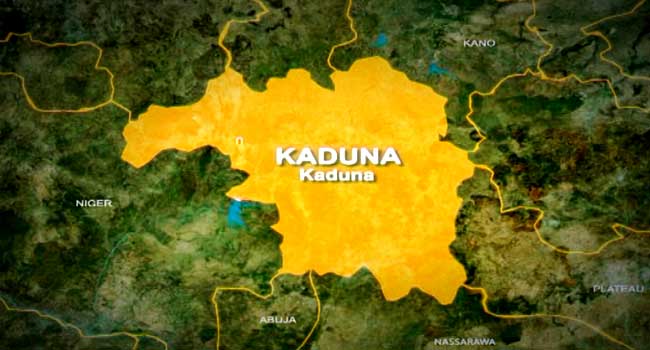
Not less than 888 people have been killed and 2,553 others kidnapped in Kaduna state since January 2021. Also, up to 720 people have been injured within the period, according to the Kaduna state security report.
The third quarter security report presented by Kaduna state Commissioner for Internal Security and Home Affairs, Mr Samuel Aruwan, on Wednesday said 220 bandits have been killed and over 12,000 cattle rustled between January and September 2021. He said 325 people were killed in the state in the first quarter, 222 killed in the second quarter, while 343 were killed in the third quarter. Aruwan also quoted that 949 people were kidnapped in the first quarter, 774 people were abducted in the second quarter, while 830 people were kidnapped in the last three months.
Speaking on the breakdown of the report for the third quarter, Aruwan said, “from July to September 2021, a total of 343 persons died due to banditry, communal clashes, violent attacks and reprisals. Of this, 50 were women, and 22 were children. Southern Kaduna district records 193 deaths in the third quarter, over 56% of the total. “This number is largely made up of victims of violent attacks and reprisals in Zango Kataf, Kaura and Nauru LGAs. These areas witnessed series of clashes early in the year, which spiralled into a succession of increasingly deadly communal and inter-ethnic attacks across the three LGAs, 114 people died in Zango Kataf LGA, and 19 in Kaura LGA in the period under review.”
He said, “130 deaths were recorded in Kaduna Central Senatorial District (38% of the total), 125 of these occurred in Birnin Gwari, Giwa, Igabi, Chikun and Kajuru LGAs. Chikun LGA recorded 37 deaths, Igabi LGA 29, Giwa LGA 27, Kajuru LGA recorded seven deaths in the third quarter. The Northern Senatorial District recorded 20 people killed in the third quarter with five deaths recorded in Lere LGA”. Details later. . . (Blueprint)
“It is the mark of an educated mind to be able to entertain a thought without accepting it” – Aristotle.
Those who profess to favour freedom and yet depreciate agitation are people who want crops without ploughing the ground; they want rain without thunder and lightning; they want the ocean without the roar of its many waters – Frederick Douglass.
Today marks the first anniversary of #ENDSARS! One prayer the Muhammadu Buhari administration must have prayed is that no one remembers the anniversary! But prayers having failed, the administration, employing a servile police force utterly lacking in professionalism, pulled the stunts they are adept at – threats, intimidation, and blackmail – but that, too, apparently failed them. At the last count, the police were quoted as telling us what we all knew too well – that protests are the legitimate, fundamental, and inalienable rights of free citizens of a free country! What they failed to add is that there is an ongoing test of will – and wits – between the masters they serve on the one hand and democratic forces on the other. While the former is intent on turning the country into a banana republic, the latter are determined to frustrate the effort and hold aloft the banner of freedom and liberty. It is fight-to-finish between the forces of retrogression and the forces of progress; it is a do-or-die between the forces of darkness and the forces of light. The forces of retrogression may win skirmishes and pitched battles here and there and now and again but, ultimately, they will lose the war. The triumph of good over evil is certain; which is why the rallying cry of revolutionary forces remain “A luta continua, vitoria e certa” O yes, the struggle continues; victory is certain, like Bob Nesta Marley crooned, we will not only relentlessly “fight because we find it necessary” but also because “we are confident of the victory of good over evil” – over the course of time. That Nigerians still retain in their consciousness the memory of our gallant youths who made a stand against the most corrupt and inept government in the annals of this country; that our people can still muster the courage and find the guts to remember the fallen people’s heroes and their sacrifices; and that we are minded, indeed determined, to erect epitaphs for them in our heart and flaunt same in the eyes of a brutal dictatorship that shot at and killed defenceless and innocent youths calmly sitting down, waving the national flag and singing the national anthem, is statement enough and victory already for our gallant youths. Our youths are the victors; Buhari and cohorts are the villains. Says Fidel Castro: The fact is, when men carry the same ideals in their hearts, nothing can isolate them – neither prison walls nor the sod of cemeteries. For a single memory, a single spirit, a single idea, a single conscience, a single dignity will sustain them all” Che Guevera concurs when he says: Whenever death may surprise us, let it be welcome if our battle cry has reached even one receptive ear and another hand reaches out to take up our arms”. In “Poem of the Dead Young Men of Europe” Walt Whitman has this warning for dictators: …Meanwhile, corpses lie in new-made graves — bloody corpses of young men; the rope of the gibbet hangs heavily, the bullets of princes are flying, the creatures of power laugh aloud…Those corpses of young men, those martyrs that hang from the gibbets, those hearts pierced by the gray lead, cold and motionless as they seem, live elsewhere with unslaughter’d vitality. They live in other young men, O kings! They live in brothers, again ready to defy you!”
Whitman, born on 31 May, 1819; died 26 March, 1892 saw tomorrow, like Nostradamus, and foretold events that would follow the 20th October, 2020 bloodbath at Nigeria’s Lekki toll gate: Those corpses of young men! Those martyrs that hang from the gibbets, those hearts pierced by the gray lead, cold and motionless as they seem; live elsewhere with unslaughter’d vitality. They live in other young men, O kings! They live in brothers, again ready to defy you! True, then, is the saying that the tree of liberty is watered by the blood of martyrs! True, also, are the words of the apostle Paul in Roman 8:35 – 39, which says: “Who shall separate us from the love of Christ? Shall tribulation, or distress, or persecution, or famine, or nakedness, or peril, or sword? As it is written, for thy sake we are killed all the day long; we are accounted as sheep for the slaughter. Nay, in all these things we are more than conquerors through him that loved us. For I am persuaded that neither death, nor life, nor angels, nor principalities, nor powers, nor things present, nor things to come, nor height, nor depth, nor any other creature, shall be able to separate us from the love of God, which is in Christ Jesus our Lord”. When I became a born-again Christian and came across this scripture, I marvelled as I placed it side-by-side Castro’s statement of “when men carry the same ideals in their heart” quoted above. So also does Castro’s famous, even deviant and yet prophetic allocutus at his 1953 treasonable felony trial (“Condemn me, it does not matter. History will absolve me!”) resonate with Paul’s “I have fought a good fight, I have finished my course, I have kept the faith…” (2 Timothy 4: 7 – 8). Six years down the line, on January 1, 1959, history did absolve Castro and his 26th of July Movement as the popular revolution they led forced the dictator, Fulgencio Batista, to flee from Cuba. Castro, an atheist; Paul, an apostle of the gospel of Jesus Christ, but both espoused the same ideals even though with different ends in sight! We can also place Paul’s 2 Timothy 4: 6: For I am now ready to be offered, and the time of my departure is at hand” side-by-side Che’s “Whenever death may surprise us” quoted above.
Vile dictators usually only hold temporary advantage; in the final analysis, they will be defeated. Says French philosopher, Jean-Jacques Rousseau: Man is born free; and everywhere he is in chains. One thinks himself the master of others, and still remains a greater slave than they… If I took into account only force, and the effects derived from it, I should say: As long as a people is compelled to obey, and obeys, it does well; as soon as it can shake off the yoke, and shakes it off, it does still better; for, regaining its liberty by the same right as took it away, either it is justified in resuming it, or there was no justification for those who took it away…The strongest is never strong enough to be always master unless he transform strength into right, and obedience into duty”
But Frederick Douglass teaches that no oppressor gives liberty on a platter: If there is no struggle, there is no progress… This struggle may be a moral one, or it may be a physical one, and it may be both moral and physical, but it must be a struggle. Power concedes nothing without a demand. It never did and it never will. Find out just what any people will quietly submit to and you have found out the exact measure of injustice and wrong which will be imposed upon them, and these will continue till they are resisted with either words or blows, or with both. The limits of tyrants are prescribed by the endurance of those whom they oppress”
This understanding of the stirring of our youths at about this time last year was what frightened the authorities, sending cold shivers down their spine. They killed many of the youths but not their idea. Ideas are spirit; they don’t die. Growing up in my Owo, Ondo State home town in the Sixties, there was a row of shops opposite my father’s at 13, Idimisasa Street; the shops were owned by Ijesa traders dealing in textile materials; the men’s aliases were boldly printed on their sign posts. I still remember that one was “Araba”; another was “Ewe Nla”; and then there was “T’eni Be’gi L’oju…” You can complete the saying! O yes, the “trees” they cut this time last year have sprouted again! But none of those with the blood of our youths on their hands will go unpunished! Not even if they wash in the Pool of Siloam or throw themselves into the other pool at Bethesda. Neither Abana nor Pharpar, and not even river Jordan, will wash away their blood guiltiness.
Says Dele Giwa: No evil deed will go unpunished. Any evil done by man to man will be redressed, if not now, then, certainly later; if not by man, then, by God, for the victory of evil over good is temporary” Concurs Andrew Marvel: The wanton troopers riding by have shot my fawn, and it will die. Ungentle men! They cannot thrive who killed them” May the blood of the martyrs #ENDSARS continue to water our tree of liberty!
Let’s play politics, because as they say, all politics is local. The absurd theatre of trying mightily to turn Anambra State into a private fiefdom by the powers-that-be did not start this Wednesday. The political desperadoes who always claim to have INEC in their back pocket and the presidency under their top hat have the modus operandi of state-sponsored terrorism, plotting state of emergency, buying political prostitutes, arranging electoral mago-mago and judicial wuru-wuru etc. Karl Marx said: “History repeats itself, the first as tragedy, then as farce.” Let’s backtrack in time to when the Peoples Democratic Party (PDP) used to be all the rage, the then President Olusegun Obasanjo made the promise of handing Anambra State to his domestic honcho, Andy Uba, as a bounty for his service. It was on Thursday, July 10, 2003 that the then governor of Anambra State, Dr. Chris Ngige, was abducted by a host of federal forces led by Police AIG Ralph Ige and the Uba brothers. Ngige’s miraculous phone call to then Vice-President Atiku Abubakar spawned a chain reaction that restored him to power. The treasonable act was dismissed as “a family affair” by Obasanjo and the PDP. The gist was that Ngige had resigned his office at gunpoint in a nondescript toilet and had sworn to an oath of loyalty to the Uba brothers at the dreaded Okija shrine. Ngige claimed he played along by going to the shrine with his Bible! According to Ngige, “I never did resign. They forged my signature and whatever they are taunting about. If I am going to sign such a letter, I will ask my party. I have not done so.” Justice Egbo-Egbo gave the ruling that Ngige actually resigned while Judge Stanley Nnaji of the Enugu High Court, claiming he had powers to oust a sitting governor from another state, gave the order ousting Ngige. Obasanjo’s federal regime promptly withdrew Governor Ngige’s security details such that Anambra Government House was denied of police guard for months on end. People’s power kept Ngige in office as thousands of Anambra men, women and children kept vigil at the Government House. At about 4 AM on November 10, 2004 some hoodlums brought into the state in 40-odd buses burnt every building of government business and the broadcasting houses while the police stood idly by, obeying “orders from above”. A prominent son of Anambra State, the novelist Chinua Achebe, author of Things Fall Apart, turned down the offer of the national award, Commander of the Federal Republic (CFR), and wrote a stinker to President Obasanjo: “For some time now, I have watched events in Nigeria with alarm and dismay. I have watched particularly the chaos in my own state of Anambra where a small clique of renegades, openly boasting its connection in high places, seems determined to turn my homeland into a bankrupt and lawless fiefdom. I am appalled by the brazenness of this clique and the silence, if not connivance, of the Presidency… Nigeria under your watch is too dangerous for silence.”
PDP chairman Audu Ogbeh, fearing that the regime may collapse over the Anambra matter like the National Party of Nigeria (NPN) in the 2nd Republic, courageously wrote to Obasanjo that it was only incumbent on him to stop the Anambra mayhem. Angered, Obasanjo made sure Audu Ogbeh got forced to resign as PDP chairman, allegedly at gunpoint! Ngige was reportedly shot at in the direct view of some visiting National Assembly investigating team, and his house was bombed to no avail. Having failed in his bid to find reasons to declare a state of emergency in Anambra State, Obasanjo had to reluctantly bow to the rule of law by letting Ngige be removed by the election tribunal, thus paving the way for the coming to power of Peter Obi. Even so, the war on Anambra continued with Governor Obi being impeached in an unholy hour by a handful of legislators holed up in the hotel room of a neighbouring state. Governor Obi’s deputy, Dame Virgy Etiaba was sworn in as governor and had to be led to Aso Villa to pledge her loyalty to Obasanjo by the domestic factotum, Andy Uba. Peter Obi went back to court to win back his mandate, but in the 2007 gubernatorial election in Anambra, Obi and Ngige were excluded from the ballot by INEC on “orders from above”, thus paving the way for Andy Uba to be declared the winner of the election with a number greater than the number of registered voters in the state! In the results declared initially by INEC, Andy Uba scored 1,930,004 votes but the number had to be changed after the announcement of the result to read 1,093,004. The “0” in the middle of the figures of the first result had to be brought forward to fix things up! When Peter Obi went back to the Supreme Court, asking for the determination of his actual tenure, poor Andy Uba was sent packing after having served only 16 days as “governor”! As his mentor Obasanjo was no longer in power, Andy Uba had to quickly flee from Government House, Awka. Remarkably, a THISDAY advertorial of January 18, 2007 entitled “There is always an honourable way”, being the text of a press statement made on January 15, 2007 by Senator Ugochukwu B. Uba, the eldest brother of Andy and Chris Uba stated inter alia: “For several months now, silence has become a defense mechanism for most Anambrarians who have been bombarded by new self-appointed overlords, for whom politics is not a collective enterprise but a private monopoly of a coercive imprimatur. In fact, you are not only prevented from winning an election, but you are equally not allowed to lose an election because, in short, you are not allowed to participate at all. This new wave of political autarky does not only rotate around the orbit of one single individual who approximates the state but is further branded with self-arrogated franchises: to cause political and social damage in the name of the highest government in the land, in the name of the biggest party, in the name of our family, all without any authorization or consent; yet bringing all three names into public odium. If, then we cannot speak on behalf of the Federal Government or the PDP, at least we can speak for the family; that it is not being done in our name.” The Senator Ugochukwu Uba statement concludes thusly: “Even if we bear our own pain, are we going to allow the whole of Anambra State to be traumatized and terrorized in our own family name? How can future generation of Ubas absolve themselves from this solo run of oppression if we are not seen to have done something concrete to combat it? We must stand with the people, irrespective of personal and family ties. For our family to exist, the State must continue to exist. That is the honourable way out.” In a crass repetition of the theatre of the absurd today, the titular roles of PDP and Obasanjo have been replaced by APC and Buhari, with Andy Uba remaining as the only constant. It smacks of farcical comedy of the absurd theatre type watching President Buhari posing with political prostitutes bearing the APC flag in Aso Villa.
A lot of putting ourselves in one’s shoes and caring about the other, or creating a platform that is different but equal, is about Grace.
One of the things I learned from my mother, is the strength that is required in Grace. The audacity of Grace so to speak. Grace has a format, Grace has a texture.
Grace is a product, and it also seeds other products. So, what that essentially means, is logged in this question – how do I ascribe to someone else what they need for their excellence, growth and next thing? Also, that encapsulated in that, is the clarity, that such a moment is really all about them; and that my singular role, lies in me harnessing the parts of me that becomes an enablement for them.
One of the things I learned from my mother is that grace had to be intentional and persistent and that investing in others was necessary but should never be accompanied by intimidation or a reduction to anyone or lack integrity. But instead, manifest as a shared experience and therefore, honourable to all.
Here is a story that brought it home for me. My mom, an excellent STEM author, educator and scientist/chemist, always had a way of sharing, grand complex knowledge in the gentlest of ways and this baffled me because a lot of people who are strong academically or possess superior knowledge tend to have superfluous expressions of complex information. Or they may come display an unhealthy dose of assertiveness. But she was different, she shepherded her brilliance with a gentleness that was almost absurd. One day, a water filtration system representative came over to our home, on the recommendation of a neighbour. The neighbour was hoping that we’d make better sense of his pitch to decipher if the product was worth the high price tag. The filtration stack was based on novel green chemistry. In trying to make the case for its superior performance, he waded into deep chemistry, visibly out of his depth, furiously fumbling in his attempt to impress and explain. As he spewed jargon after jargon on the advantages of the system, the more he confused himself, trying to detail the functionality of each term he mentioned, while simultaneously, frantically searching his computer for help. Pretty soon, red in the face and visibly disoriented, he knew he had not made a sale. We thanked him, unconvinced and relieved to be done with the tedious engagement. Secretly happy to not have to consider the expense, and almost excitedly looking forward to reporting to our neighbour on how convoluted the information was!
My mother who had been quietly listening walked up to him and commended him on the capability of the system. She then gently recapped each descriptive attribute of the filter he had named and in dialog form engaged him and us with the clearest most down-to-earth chemistry lesson. Going feature by feature using relatable examples, she dissected nano filtration, reverse osmosis, onium functionalised polymers, covalency, the role of carboxyl groups of graphene, and catalytic conversion processes. She taught us about nano fibres and biocides and phosphonium salts and polymeric filters and how covalency or ionic tethering can be used to remove microorganism and so much more. I don’t think we grasped it all, in fact I know I did not, but by the time we were done, we were all convinced about the efficacy of the system. We were fully impressed by a filtration system that leveraged some of the fabrication techniques and technology used in biotechnology and pharmaceutical processing to create ultra-pure water. It even explained the high price. We bought the system outright, and so did our neighbour, after neighbour, after neighbour, after neighbour! The salesman now empowered, gained multiple sales and a tremendous respect for chance encounters!
The magic was in the way she created this bridge of conversation between the seller and the buyer, through mutual learning and information exchange that placed everyone on the same side! Weeks later, trying to tell the same story, I wondered how to characterise what we had all experienced. How one person’s guidance had made it possible for all of us to step out of our roles and converge to one side. Then just like that, I realised that all she did that day was compassionately bestow Grace, in order that the message or truth is not distorted, and that we could all engage from our places of strength! When this happens, you put equity on display!
When Grace is applied generously to any situation, it simultaneously creates a safe and equitable space! Let me explain.
My publication of two weeks ago titled “The corporate Immigrant – The Case for a black Google, black Yahoo, black Amazon and everything big like that” dealt with creating spaces that have black people in mind from the get-go. These are spaces of equilibrium – they bring to bear the parts long neglected and rebalance the general ecosystem for good!
Legally, there is distinction between equity and equal. Suppose a person who is 5.11 and another who is 4.11 are each given equal support of 2ft elevation. Regardless, that each received equal provision, yet if the task is to reach an item 6ft high, the two people do NOT have equal opportunity for success, nor will they have equal impact. This is because their capability and reach will never be the same, so even though they got equal treatment, they needed equitable treatment. If not, you end up with disparate impact.
Under Title VII of the American Civil Rights Act of 1964 (as amended), disparate impact occurs when a facially neutral employment practice has a significantly adverse or disparate effect on a protected group. While this is specific to employment law, it has broad application in other areas.
Fairness only means equal if and only if (iff), Equal means Equity. The equation would look like this
F = E ⟺ E= Eq, F= Fairness, E= Equal, Eq= Equity
To be fair, is to be equitable. Equitable means doing things of commensurate measure. This is what underlies the idea behind creating the right spaces. It is about how we create equitable spaces so that by the time black brothers and sisters are standing on their own platforms, they are standing height wise, breadth wise, opportunity wise, capacity wise, capability wise on equitable standing with their white counterparts. Thus, creating the opportunity for cross pollination that is durable, helpful, and mutual.
Grace brings mutuality and it is beautiful
Mutuality is an end game that brings with it a freedom of choice. Every time an engagement is on mutual terms, it implies a freedom to engage or disengage. It essentially means each party came by their own free will and consent. The spaces we create or enter or leave voluntarily are situated on platforms that are equitable and mutual.
Mutuality in Integration
Mutuality is critical to real integration. By the way I like the word integration. Words like Diversity and Inclusion are beautiful words, but they have been overused. In our minds they sometimes conjure something legalistic. For many diversity and inclusion involve just bringing all the pieces together, regardless of the form and fit and then let the fittest survive. Effective mingling is not about gathering the pieces together it’s more about giving the pieces the platforms each one requires to blossom to its fullness. So, beyond the bringing together, it involves the support, infrastructure, and the ecosystem to be put in place. Just like in mutuality you have mutual benefits. Integration implies things getting into each other, in order that the whole benefits. To facilitate this, there must be equity right?
To engage mutually requires that the engaging parties are stable in their own rights, party A is confident and knows what is good for party A. Same as party B, both making a deliberate decision to engage. Those are the spaces where integration lives and thrives. Grace brings mutual appreciation and engagement that leads to healthy integration.
It was this process I saw in action in the water-filter-sale story. For those like my mother who have mastered it, it is fascinating to watch them bring it to life.
The Pedestal of Grace
Grace allows interactions that lift people up. Lifting people up typically creates a specific set of activities that need to flourish. Grace creates the pedestal that facilitates the pull up, the elevation, the equivalent access, the equal opportunities and more.
If that pedestal means more education, scholarships that allow you accelerate, access to the things you are not getting, putting the right tools around you, then that is what is provided. For a group or collective, it may mean making your schools better, providing the infrastructure to place the right ladders or even assistance in climbing the ladders etc. etc. etc. That is what the pedestal of grace means. The pedestal of Grace helps you up to your full potential.
Grace has a texture and a character that ultimately allows for mutual beneficiaries. That is why it is so important to create spaces that ultimately develop the personalities that engage in ways that are complete, whole and equitable.
A recording on this topic is also available at the links below in 2 parts
Inspiration, Hard Work, Innovation. These three foundational elements anchor Ngozi’s core belief that manifesting the extraordinary is always within reach. Inspired by her mother A.C.Obikwere, a scientist and author, she learned the privilege of living at the edge of important encounters and dedicating herself to robust and perpetual learning. Ngozi’s background is a combination of Physics, Engineering, Venture Capital/Private Equity, regulations, and business where she has managed over $1B in cumulative revenue. Ngozi is a speaker, storyteller, and writer on a diverse set of topics including AI, iDLT, ML, Signal Processing, iOT, women, entrepreneurship and more. She contributes regularly to VOA, has been a TEDx speaker and is published on tech and non-tech platforms. She is a champion of STEM, women, youth, art and the Africa we must engage. Ngozi is an adjunct professor of Physics and management with workexperience in Asia, Europe, Africa, Middle East, and North America. She is a founder of a number of a number of enterprises and host of the podcast Stem, Stocks and Stews (https://anchor.fm/stemstocksstews-podcast).Https://www.LinkedIn.com/in/ngozibell/
Credit: This article was originally published by Sundiata Post
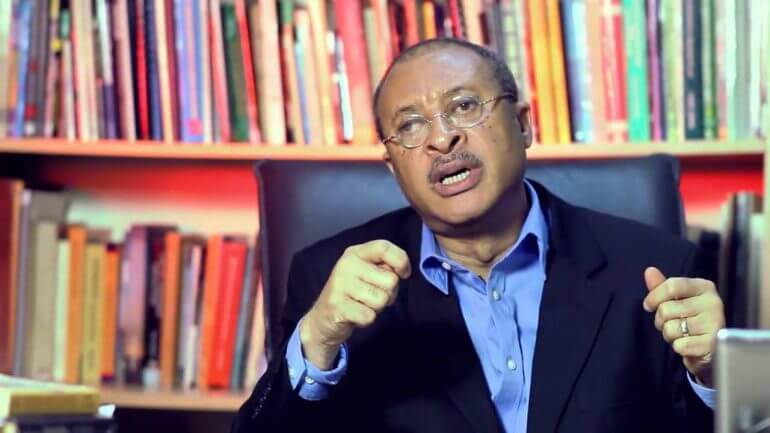
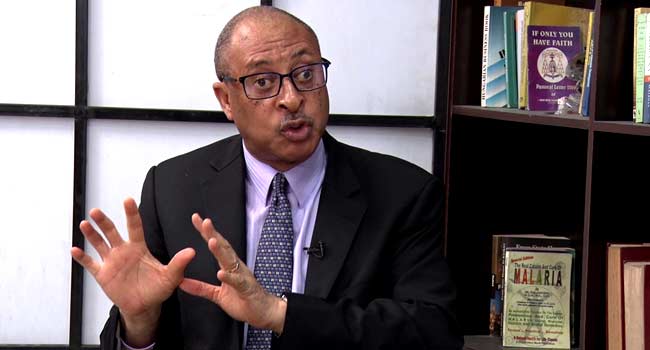
Patrick Okedinachi Utomi, popularly known as Pat Utomi, is a man of ideas. A professor of political economy and a management expert; Fellow of the Institute of Management Consultants of Nigeria; politician and a former presidential candidate; founder of Centre for Value in Leadership (CVL); founding member of the ruling All Progressives Congress (APC), Utomi is passionate about Nigeria.
But he, like many other well-meaning Nigerians, feels disappointed the way the country has turned out.
In this exclusive interview with IKECHUKWU AMAECHI and EUGENE ONYEJI, Utomi, who insists that Nigeria is not a democracy because elections have not done the job of determining what the will of the people is, gives the two main political parties – APC and PDP – a very hard knock even as he says, “I don’t know how Buhari governs Nigeria.”Advertisement
Nigeria celebrated her 61st independence anniversary on October 1. Would you say the country has met your expectations?
I guess that is a rhetorical question but I am almost confident there is no Nigerian you ask that question who will answer in the affirmative. But the degree obviously will differ in terms of how or how not it has met their expectations.
To be fair, I have been one of those very passionate about the Nigerian project all of my adult life. Nigeria is the one thing that animates me. And I don’t have apologies for being passionate about Nigeria. I was born into it, so to speak.
I was a very young person when Nigeria became independent. I had goose bumps even as a child being involved in Independence Day activities.
As a young student activist, I have been drawn into Nigerian issues because there is the famous issue of my 18th birthday. I didn’t realise it was my birthday until about 8.30 pm because we had been demonstrating around the country. All the universities except University of Nigeria Nsukka (UNN) had actually been closed at the time because of protests at the anniversary of the Kunle Adepeju killing at the University of Ibadan and of course, at Nsukka, there was certain reluctance because of the civil war and many people had lost years and so many mature students just wanted to graduate, didn’t want to bother with what was going on elsewhere when ABU, Ife, Ibadan had all been shut down because of students’ protests.
So, we founded a group called the Students Democratic Society (SDS). They protested against the students union at UNN at the time. And so, while we were protesting on February 6, 1974, the Vice Chancellor granted us alternative platform, just rally so that the students can come together and discuss the issues.
So, at the Margaret Ekpo Hall where the entire student body had, literally, gathered that night, there is this gentleman, we used to call him Chairman P, who got up to speak and he said, “Today, February 6, 1974, will be remembered as the day when people who were physically demobilised after this civil war were finally mentally demobilised ….”
And February 6 is my birthday. That day was actually my 18th birthday and I was just remembering at 8.30 p.m.
So, that speaks to the nature of the passion through which we have come. And we were very involved students. We wanted to be part of national policy. And my personal contribution as a student leader was forcing a discussion of Nigeria’s foreign policy by challenging the Foreign Affairs Minister Joseph Nanven Garba and his responding to my challenge and coming to Nsukka to debate us.
Joe Garba and I in a very dramatic turn engaged on the question of Nigeria’s role in Angola in 1975. He had agreed on a date for the debate but three days before the day the debate was supposed to take place, the Head of State, Murtala Muhammed, was killed in a coup on February 13, 1976. Nobody expected Garba to come, I was despondent, people who said I was just making mouth on campus said now I had excuse.
I didn’t know what to do. I went to Enugu, to Governor Atom Kpera’s office and everybody was just looking at me. All the telephone lines in the country had been cut off and the Garrison Commander in Enugu said to me, “Why don’t you go to the airport. If he has to come, it must be through the airport, it won’t be by road.”
So, I had no choice than to go to the airport. And a Nigerian Police jet just landed and there he was and we started heading to Nsukka. And the whole campus just went totally crazy.
So, that was the kind of commitment we had as young people. When we talk about Nigeria as great, as giant of Africa, we actually believed it and we wanted to see it happen and we worked towards it.
So, it should be understandable that many of us feel disappointed the way Nigeria has turned out.
With the picture you just painted, what do you make of today’s National Association of Nigerian Students (NANS)?
I have actually discussed this subject severally in the past and interesting enough, part of how that conversation has gone in my recent engagement with it is from when young people began to protest and say look at Europe, a 39-year-old had just become President of France, that is Emmanuel Macron at the time, look at the young men popping up in Italy, Austria; the young ladies popping up in the Scandinavia but back home, Nigerian elders have refused to give us a chance.
But for a completely different reason, I went to see General Alani Akinrinade and he raised the issue and said, “You know, young Nigerians are complaining that young people are taking over in Europe,” but he said, “You know, most of those young people taking over in Europe were formed for leadership in the students unions. They started as student leaders. Unfortunately for us in Nigeria, our young people did not have the opportunity of developing those leadership skills as students because we the military and the politicians that followed us destroyed the students’ union movement in Nigeria.” These were General Akinrinade’s words.
And so, the youths have lost the opportunity of the grooming that the students union movement should ordinarily give them. Now the characters who run around, calling themselves student leaders are neither students nor leaders.
General Akinrinnade can be an extraordinary guy when you meet him. He is very profound in his thinking. Sometimes, you just say waoh! And I share in the sentiments he expressed.
It is very sad that after our time, students’ union movement in Nigeria was destroyed by soldiers and politicians and that has denied our country the possibility of grooming leaders who are truly leaders in understanding that leadership is selfless, it involves selfless giving of oneself for the advance of the common good of all. If you are in it because you want to get a Prado Jeep, as many of them seem to be doing these days, you are not a leader.
If you cannot become passionate about your shared humanity, and are driven only by more narrow interests, you are not likely to be able to change the world because young people are in a very good stage of idealism. You know what is said about young people, when you are 18, if you are not a Marxist, something is wrong with your heart. But if you are 40 and still a Marxist, something is wrong with your head.
How did we get it wrong? Some people point at the January 15, 1966 coup, but Nigeria is not the only country to have experienced coup. Others have since moved on. Where did the rain start beating us?
It is not a one-cause thing. Several things happened but that coup was a critical part of the problem, not necessarily the event of the coup but in the military entering the political arena in Nigeria.
How do you mean?
The reason lies in what I will call the dangerous alchemy of soldiers and oil. Why is it a dangerous alchemy? You see, Nigeria was a very carefully crafted federation. In that federal arrangement, there were checks and balances of sorts from the conventions of engagement. When the military intervened, we can argue about the motives of the young officers from here till tomorrow, people playing it any way it is convenient for their own positions, but nobody who really knew those officers will doubt that they were driving some ideal, misguided or not.
The consequence was that the military entered political life and came to the realisation that, it should have been obvious but it wasn’t to the people who were intervening at the time, the nature of military rule with the hierarchy of the army was such that it was a centralising structure.
So, people can accuse Aguiyi Ironsi, for example, of moving from a federal structure to a unitary structure, but when he was shoved aside, it still continued in that direction because it was a very simple logic. The General is at the top, Colonels at the middle and the Privates are at the base and in the hierarchy of the army, a General says jump and a Colonel says, how high sir and so on down the line.
And so, the General at the centre appoints a Colonel a military governor and the Colonel is not going to question what the General asked him to do.
So, why is it a dangerous alchemy of soldiers and oil?
It was about that same time in our nation’s life that oil became a more significant revenue source. So, not only did the General at the top have all the powers to do virtually all he wanted to do and not be questioned by the Colonel who is running the state, there was now revenue coming into the state coffers that the General or the Colonel had no need to recourse to the people to pay taxes because the control the people exert on government comes from the fact that they pay taxes.
In those days in the 1960s, one of the most dramatic scenes everywhere across Nigeria was of tax collectors chasing citizens and they will be running. So, the government stopped bothering people with taxes. And the gift of oil and the hierarchy of the military distorted the way things could flow especially because there was a weak intellectual content later down the line.
Under the first phase of military rule – Gowon, the civil war and all of that – you also had another factor, the brilliant permanent secretaries of that era were significantly products of the London School of Economics – the Philip Asiodus, Allison Ayidas, etc., and the London School of Economics with Professor Harold Laski as the main driver of the ideology of governance that flowed out of LSC, and remembering the history of LSC, which came out of Fabian Socialism, members of the Fabian Society under the LSC founded the Labour Party.
So, with their mindset, there tended to be this dirigiste inclination of state control. Compound this dirigisme with the fact that oil revenue were now aplenty and the government merely driven by the ideologies of these permanent secretaries argued for government occupying the commanding height of the economy – the language of the time.
And so, the General who needed to occupy the commanding height of the economy simply altered the revenue allocation formula and nobody questioned him, he could do anything he wanted. And we went from the regions collecting say revenue like oil and sending 50 per cent to the centre to the Federal Government collecting 100 per cent and sending an increasingly diminishing amount to the sub-nationals and at a point in time, even the oil producing states were getting less than 0.05 per cent of actual revenues from oil because Kalu Idika Kalu, who was Minister of Finance at a point in time, while speaking at one Concerned Professionals event, broke it down and by the time you took out the special funds for Ajaokuta, Aladja, Alscon, Abuja – the so-called Four As – and you share what is left, what actually was getting to oil producing states was less than 0.05 per cent of revenues from crude oil at a point in time.
And there is another consequence that mindset creates. It creates a mindset of obsession with revenues. Everything in Nigeria became about revenues and how to share these revenues. Every quarrel was about who was getting more of these revenues.
Now, what the ideology of the time failed to recognise and this is the biggest bane of Nigeria’s development, is that revenues do not make you rich. What makes you rich is production. And so, the more we battled and shared, and the more revenues we got, the poorer we became.
A typical example is the argument made about who is producing, who is getting more, all the fight over should derivation be 25 per cent, 13 per cent, this or that.
Now, I will give you an illustration. In the 1960s, only two levels of government were involved in fiscal transfers – the national government and the sub-nationals – that is the regions or states as they became later. Local governments were not involved. They were the convenience of whoever wanted to create them. So, for convenience, the governments in the South ended up having about twice as many local governments as governments in the North. It was not a problem. It didn’t affect fiscal distribution. It was just for administrative purposes.
But by 1976, when the Dasuki Commission under the Obasanjo military government, borrowing from the traditions somewhere in Eastern Europe and Brazil, local governments became part of fiscal transfer system and the local governments, the third tier of government, were entitled to about 20.9 per cent of distributable funds – the so-called FAAC account. That is a huge amount of revenues.
And who were the powerful people around? They were the young Colonels in the army and each of them wanted his village to be a local government. And of course, the majority of the powerful young officers were from the North and we ended up with 774 local governments and now nearly 500 of that are in the old north
So, that is a huge revenue shift but the North has become poorer and people are wondering, what is going on? Nobody is remembering that they are getting a lot more revenue. So, why are they getting poorer and poorer? It is because we didn’t think through the logic of wealth. When the North produced in the early 60s, the quality of life was much better than when they started waiting for revenues to be allocated.
They abandoned production and became poorer and you can show it in simple terms in everyday life.
Why is it so? Why will people get poorer even when they are getting more revenue? Isn’t that a paradox?
It is called the lottery effect. Find me any poor person who won a lottery and ten years later, I will show you he is poorer than he was when he won the lottery. There is a current Nigerian case in the UK. I heard the story somewhere.
A Nigerian lady that was living in Peckham London, who won a couple of million pounds in a lottery. And the first thing, her pastor shows up and collects tithe and all the members of her church who had problems showed up also and then she went and bought a house in the St. Johns Wood and moved. But four years later, she sold the house and moved back to Peckham.
And this is not a new thing. If you go and read the economic history of the world, you will see it. Spain is a classic example. At the height of its economic glory, the elite of Spain were spending like drunkards, enjoying the good life that accrued from gold being shipped back to Spain. But the small countries around them, the Netherlands of this world, Switzerland of this world, were busy investing in their youths to be more productive.
A couple of generations down the line, these countries are far wealthier than Spain. So there is no magic. Everything that happens, if you know enough, you will know that this is where we are headed. I could tell you 30 years ago that Nigeria will be where it is today. It is not that I could tell you, I wrote it down. Go and read what I wrote 25 years ago, all this mess in Nigeria, I said it will happen, almost like a prophet, I went close to saying how it will happen, not because I am intelligent. Other people who were smarter than me thought it out and I just basically came to that understanding.
Robert Kaplan wrote the “Coming Anarchy” around the time of return to civil rule in Nigeria and I read it and said, this is what is coming. I bought copies and sent to my friend who was the DG of SSS, General Babangida got a copy, and General Aliyu Gusau got a copy. Everything Kaplan predicted has happened.
I used to host this monthly breakfast meeting at the Lagos Business School and in one of the early ones like about 20 years ago, we had among those in the house a chap called Brown with the IMF Country Office in Nigeria.
And I was making remarks about revenue allocation in Nigeria and I said look at how Botswana has cleverly saved revenues from Diamond exports into a future fund. In my view, what should make sense, because revenues from crude oil are meant for Nigerians of all times. God put it in the ground not for this generation alone but Nigerians forever. If we spend it all now, our children will curse us. Can we take a portion of this revenue, put it in our budget process, probably not more than $25 from each barrel and then everything above the $25, we put in a stabilization fund.
If oil prices were to crash to $8 as it were under Sani Abacha, the difference between that $8 and the standard level we are normally committing to the budget, we will take from the stabilisation fund and ensure that it doesn’t matter that the price of crude oil is now $8, the funding of the budget will still be the same constant $25 a barrel. So everything above $50 goes into the Sovereign Wealth Fund, the so-called future fund.
After I finished, this IMF guy came to me and said, “Why is your country a mess with people like you?”
So, these ideas have been around like forever. There is no rocket science about them. We have expressed them in the past and that is what is haunting us today.
So, why is it that when people who profess these ideas go into government, they do entirely the opposite? Is there anything in government that makes people forget what works?
I don’t think we have had enough of people who know go into government. Let us be fair and frank. We have not. And I will tell you how I raised that issue once.
I was giving a talk at a Lagos Business School programme focusing on higher education in Nigeria and I was talking about the fact that in the early 1960s, there was a commission on higher education in Nigeria set up by Prime Minister Tafawa Balewa and chaired by a British educator from Oxford called Sir Erick Ashby and Sir Ashby made the point that the quality of higher education in Nigeria that time was as good as the very best in the world. He said it was actually harder to get into University of Ibadan than it was to get into Harvard University in 1961.
One young lady in the class, one of these millennial, could have none of that. She said, “You people have come again. It was always good before in Nigeria. It is now bad. If it was so good, how come those of you who got that education have made such a mess of the country?” She thought she has scored a home run and it seemed like it.
I said to her, you are right actually that that quality of higher education should have made a difference but truly, those who got that education, have they ever run Nigeria? The truth is no. At a point in time, they got so frustrated and most of them left Nigeria. Once in a while, you get one tired one amongst them who has taken enough humiliation from the system and they say, come and be minister of this or that and all the guy is praying is to recoup enough to go into nice retirement. He forgets all his ideas, he doesn’t care. He just wants to survive in the system.
So, a body of thinking people have seldom entered government in the last 30 years and so, what you have had in Nigeria has been state capture – a group of people for whom power is about systematic goal displacement, where public goals are replaced with private goals
Nigeria has not just been able to rise to its potential because it has not had leaders in power. It has had state captors. It has had adventurers of power, entrepreneurs of power.So, truth be told, it is not that there is anything inside government that changes them. No! Many of those who get there would never have made any difference because they stopped wanting to make a difference by the time they entered government. They have groveled enough, distributed their CVs enough not to be able to speak truth to power.
And these guys who have captured Nigeria have been very clever. They have managed effectively to shut out any of the people who could question their thinking.
Pat Utomi
You worked hard to bring the All Progressives Congress (APC) and General Muhammadu Buhari to power in 2015. With the benefit of hindsight, was that a wise decision? Didn’t you know who Buhari was?
I think it is only God who can search the heart of men with effectiveness. You can guess some things from information available to you. So, first of all, I can never claim to be able to know anybody so well because I know that I am not God. I know many things that I am not and one of them is that I am not God.https://www.youtube.com/embed/9P2Jqlt53O4?feature=oembed
Secondly, you know they say politics is the art of the possible. If we are true to ourselves, how many of us were in a position to determine the outcome of what happened in 2015?
I am one of those who argue that Nigeria is not a democracy and unfortunately for us, elections have generally not done the job of determining what the will of the people is. At the time that we are talking about, certain forces – both external and internal – had determined that Buhari would be the next Nigerian leader.
All of us just had to play to some sub-script. My primary role was in arguing that we needed a different kind of political party to take on what was a very corrupt Peoples Democratic Party (PDP). I canvassed this in writings, in speeches.
One place where I canvassed it where almost all those who became the new opposition leaders were present, was the Leadership Annual Lecture in Abuja in 2012 and the subject was political parties.
It was a very profound lecture even if I say so myself. There was a very long high table with Bola Tinubu, Bisi Akande, Buhari, all the opposition leaders then, and the person who was sitting closest to the podium was Uncle Sam Amuka, publisher of Vanguard newspaper.
The lecture was based on Roberto Michels’ 1911 book, “Political Parties” – what political parties really are, how they evolved and how they make impact. The whole concept of the iron law of oligarchy. I took on all of that from the theoretical, then came to the practical and the challenge of political parties. As I finished, Uncle Sam looked up at me and said, “Hey men, you are deep.” And I said to him without thinking, did you think I was shallow?
Then Dr. Paul Unongo ran up to me and said, I wish I could lock all these doors here, let these men go nowhere until all of you sort this thing out in the way you have just pronounced it.
Anyway, I guess that became part of the beginning of what became the APC. But you cannot accuse me of anything because I could tell you that hours after the APC victory was announced, I could see signs that the one goal those who captured the party at that point had was to exclude me.
Why?
I am not sure what their motives were but it was very clear. So, I just chose to walk away and leave them alone. I was not struggling for anything. I just want a better country. But I knew that Buhari was going to fail on that very beginning note. By the time he constituted his cabinet, the so-called anti-corruption government, those who came in, I don’t have any evidence of anything but at least public perception was that these were some of the most corrupt people in public office in Nigeria. You don’t engage in a fight against corruption driven by the most corrupt people, perceived at least, so I knew the game was up from the beginning.
Of course, it has been downhill all the way. But I tried to talk. Where is the system within the party? How do we talk and tell ourselves what was going wrong? Go and ask Chief John Oyegun how many times I came to him. I said each time, things are not going as we thought it should go, can we train our people to understand what the philosophy behind this party is supposed to be?
After all, the so-called roadmap of the party was written in my house. Thankfully, Yemi Osinbajo who is the Vice President has said that publicly several times that he used to come to my house every other day for weeks as we were writing the roadmap.
Each time, Oyegun will throw his hands up in the air and say, “But you are sounding so neutral, are you not a member? You have access.”
Fortunately for me, Osita Okechukwu, the DG of Voice of Nigeria, came in when I was arguing this with Chief Oyegun on one occasion and said, “Prof Utomi is right. Where is the internal organ? You say he has access, access to who or where? How will he channel his views?”
So, it is clear what happens to machine politics. The parties are designed just as electoral capture machines, not as political parties that have ideas and plans, a sense of where the society is going. That was not what happened and we are witnesses now to the consequences.
So, our real duty as citizens is to unwind these funny contraptions called political parties and create real political parties if this country is to get anywhere through a democratic format.
What would you say is Buhari’s biggest problem in the way he governs Nigeria?
You are asking me to deal with something I don’t know. I don’t know how he governs Nigeria. So, how can I know what the fault is in it? I don’t know. I don’t see any system. Do you know how he governs Nigeria? If you know, please explain to me so that I can learn from it and then tell you.
So, what do you then make of his claim in his October 1 speech that he has actually performed better than all his predecessors since 1999?
When I was a rascal in the university, we used to say “arguementum aga aju onye.” Who do you want to ask? Just look at the numbers and the quality of life of citizens and then you can draw your own conclusions.
The President recently presented the 2022 Appropriation Bill of approximately N16.4 trillion to the National Assembly with a deficit of N6.258 trillion to be financed through borrowing. How sustainable is that?
You know, conversations about Nigeria have been going round and round – cyclical. You finance a budget from a variety of ways. Even if Nigeria used all revenues from its known sources today, it will not drive the kind of growth that we deserve. It means that there has to be creative way of driving economic expansion. The first and foremost thing as I said earlier is how do we expand production? It is production that generates jobs which gives people the income that you can tax to provide the services that the budget is supposed to be delivering.
Here is a case of shrinking production. On May 28, 2019, I believe, Forbes Magazine published an article, “Nigeria: Africa’s money losing machine,” and that article basically said if you have brains, don’t invest in Nigeria, you will lose money.
Why is that so?
Because regulatory capture is such in Nigeria that one man can wake up one day and say one thing and your entire investments are gone.
We have not been able to address those issues. So, foreigners are very reluctant to invest in Nigeria except where they have to hedge their bets and doing that means milking, literally, the system.
But it doesn’t have to be foreigners. After all, in the 1950s, a great economist out of Columbia University, Ragnar Nurkse, used to argue that capital is made at home – domestic savings. Look at Singapore, massive domestic savings and investments. You think you can manage that with the quality of elite that we have here? Politicians are trying to take as much revenue from the system as possible. Are they the investing types? No! They are buying new fancy cars. They are buying homes abroad and so capital made at home? You can’t.
In Singapore, peopled were forced to save. And it was those domestic savings – the housing fund – what became the backbone of the drive to Singapore’s ascendancy was the housing development board, the same housing fund we had here, they had. Theirs generated savings, where is our own money in the housing fund? Your big men have shared the money one way or the other.
So, it is a collapse of culture in Nigeria. The things that you can do to bring in capital from within or outside are frustrated.
The only reason the Nigerian government functions is because crude oil revenues somehow manage to come in and we are living in energy transition age in which a company like Total is reducing all of its crude oil assets in Canada to zero 18 years from now. It has changed its name to Total Energies. It doesn’t want to be remembered as an oil company anymore and this is one of the great giants of that business.
And so, we are still depending on that crude oil to finance this budget. And we are borrowing heavily against expectations that we will get some more from the crude oil and service this amortization.
How do you begin to talk about sustainability with that? You have to see expanded production for any meaningful progress.
In terms of ratios, maybe it is not the biggest problem in the world but the key is targeting.
I am not one against borrowing at all but you borrow to invest and you see the output that will come from the investment. If you are going to borrow for infrastructure, you can see the facilitation of output by the infrastructure that will generate the revenues that can amortize that borrowing.
There is this famous French economist, perhaps the leading authority on capital, his name is Thomas Piketty and Piketty in his tomes “Capital in the 21st Century,” “The Economics of Inequality” and other books, said that there is more capital available today than at any time in human history. The big problem is that that capital is in a few hands.
A couple of young men in California own more capital than the entire continent of Africa. So a Piketty who has been referred to by some as the new Marx argues for redistribution of capital and you know that is not likely to happen.
My take of things is if you prepare yourself well, you can become the bride of that capital in those few hands. And the capital will flow to you. All you have to do is to look beautiful enough for a Mark Zuckerberg to come and jog on your Ikoyi Link Bridge and use it to show the world that you are here.
But what did Nigeria do after Mark Zuckerberg came here? We then started banning things like Twitter. Is that the way to attract that capital here?
I just think that the quality of leadership we have in Nigeria is not smart enough to see through the consequences of their behaviour. They act on the emotion of the moment and they sentence their country to many years of servitude.
There is a projected GDP growth of 4.2 per cent and inflation is put at 13 per cent in the 2022 Appropriation Bill. Is that realistic given that we are not producing?
You have answered your own question. What do you want me to say again? But you see, another refrain from me is that there are lies, much bigger than lies, there are damn lies, much bigger than damn lies, there are statistics. Anybody can use statistics to say anything he wants to say. If you want to know where you are going, touch the ordinary man on the street and ask him, is your life better today than it was yesterday?
Are you still a member of APC?
Yes, I am still a member. They have to come and sweep me out. But as a citizen I am organizing the Nigerian people against ineffective political parties.
What is the nature of this mobilization? Are we about to see a new political party, the so-called third force?
There is this gentleman who was the president of the American Political Science Association when I was in the graduate school in the 1970s, James McGregor Burns. In his book, his tome on Leadership, he has a chapter in which he talks about the intellectual and moral authority – his duty. And when I think about James McGregor Burns and his writing on the subject and of transforming leadership, I think of a very important year in my life – 1978. I was a fresh graduate and as a youth corper, I became the editor of one of the biggest magazines in this country under Chris Okolie – Newbreed – and I was so passionate about change and that change began to happen far away from here.
Mao Zedong had led over one billion people in China into political power in the name of cultural revolution and China was getting poorer and poorer and the GDP per person was about half of that of Nigeria. And then God recalled Mao and there was this guy who has been played with called Deng Xiaoping who emerged leader of new China. Deng’s mantra, check almost every speech he made in 1978, was, our party should not downplay the place of the intellect as has been the case thus far. It is knowledge and people of knowledge in our party who will save this country. Thirty something years later, in just one generation, China’s GDP per person was about 30 times that of Nigeria. If people of intellect do not exercise the moral authority that James McGregor Burns puts on them to force the kind of thing that Deng did to China, then we must hold ourselves accountable through all of history for why our country lies prostrate.
So, in looking at the challenge of where Nigeria is and where Nigeria must be going, it was important to create a movement, not a party, because our parties are a complete washout. Create a movement of Nigerians, a movement of people of conscience, people of knowledge and intellect, who can create transforming systems that can change our country.
These efforts have blossomed into several groups. One of the first of the groups that broke out in all kinds of circumstances more than a year and a half ago was the NCFront.
We can discount how a certain gentleman who has been organizing some workshop then strung everybody’s idea together and announced this thing without even telling the people and created the early controversies and turned back to say I didn’t sign up to a party The guy was exuberant. He is used to doing things like that. Of course, we know him as Wale Okunniyi.
But the basic point of the fact that that kind of movement should be taking place was well founded and so, people like me chose to become active in organizing, first of all, elders. We brought together a few group of elders. At the time, one of the more prominent of the elders that we brought together to get into conversation was the now late Ahmed Joda.
So, on October 1, 2020, we had a virtual meeting of elders of Nigeria on the structure and future of Nigeria, we invited about 70 elders. Then from nowhere, we were getting calls. Why didn’t you invite me? By the time October 1 happened, we had well over 130 of them – Uma Eleazu, Shyngle Wigwe, Mbazulike Amechi, the now late Dr. Junaid Mohammed, so many of them from across the country – men, women. Among those who were calling us to say why are you not inviting us included Kema Chikwe, Kalu Idika kalu, Pa Ayo Adebanjo, etc.
Ahmed Joda made this incredible speech about structure of Nigeria, the future of Nigeria, need for restructuring and the whole thing just took off for hours. I even got into trouble because I had no clue that the whole thing will last beyond an hour or two and I had a commitment to speak somewhere in the afternoon. And these old people kept going on and on about the Nigeria that they dreamt, when they did this and that, and at a point in time, two hours after I thought that the thing should have been over, I just had to get into the car and continued the zoom meeting on a phone as I drove towards FESTAC for my other meeting.
So, that was an enormous morale booster. So, we then created committees to look at the constitution, electoral process reform, look at how political parties can be created, real political parties. And those committees have been doing their work. Their reports are ready to be put in the public domain.
There is another group generally coordinated by Dr. Usman Bugaje. Their concern has primarily been leadership – the problem of Nigeria is that the kind of people in position of political authority should not even have been allowed to run for public office at all. They want to develop criteria that will be used to judge anyone who wants to go into leadership position. And they launched out with a session a few weeks ago in Abuja that sparked the speculation of a third force.
Nobody is talking about a third force. That reduces what we are talking about. We are not getting into this mess with these funny things. We are creating a new platform for a new Nigeria. I will like to see the process result in two new political parties that will be the main parties.
We are expecting that these two – APC and PDP – will implode. These are gangs of thieves looking at how to share money. They will fight and it will implode. Invariably they will implode. So, let us create something to build a new Nigeria. That is what the process is for me.
There is another group that is focusing more on economic strategies for Nigeria. It has more people from NESG, former chief executives. Our hope and expectation is that invariably at some point in time these movements would have created a national momentum on what we want as a country. The debates on the Constitution will be in the public domain, people will decide what kind of structure they want for the country; debates on leadership, all of those will crystalize and one or two of these groups can come together and call themselves whatever they want as political parties and go to the Nigerian people.
This looks fine but considering what is on the ground, are you not being too idealistic and utopian in thinking that those who have captured the Nigerian state will allow you to just come and supplant them?
No, they are not going to allow you. This thing we are in, Nigeria is collapsed already. We are in anarchy. How many of them can travel from Abuja to Kaduna? Let them just continue this nonsense for three more years and they won’t be able to walk on the streets of Nigeria. They better submit to this thing now to save themselves because they will be lynching them on the streets of Nigeria. The way this country is going, that is what you will see happen.
They better seize this opportunity to rescue themselves. They don’t know what happened to Nicolae Ceausescu in Romania?
Who is actually to blame for Nigeria’s woes – leadership or the followership? We ask this because in other countries, including the Romania you just mentioned, people revolt against bad leadership. But in Nigeria, the reverse is the case. The followership claps for those humiliating them in the name of leadership.
Followership is a flotsam. How do you say it in biology, it is like the protoplasm, they just go where sensible leaders suggest they go. So, to try and blame followership is bunkum. Good leaders will create the context to shape those followers. The Singapore Lee Kuan Yew met was worse than Nigeria but he shaped a set of values. That is what leaders do. Leaders set the tone of culture and the culture is what the masses respond to. That is what the real issue is in Nigeria.
In my book, “Why Nations Are Poor,” I tried to track what makes for progress – policy choices, the strength of your institutions, human capital, and entrepreneurship – what strings all of these together is culture, your values.
So, who sets the tone of culture? Leaders! That is what the real issue is, where people of courage and competence who are willing to sacrifice short term gains of flying around in private jets so that their children can be proud that they are carrying green passport. When we find these kind of leaders, you know that the Nigeria of our dreams has come.
The Naira is on a free fall. Who do we blame?
This is a very simple and straightforward one. I have never worried about nominal exchange rates. It is whether it drives production and economic growth. When the Japanese Yen was three hundred and something to the dollar; I remember the year that Yen became either one hundred and ninety nine or two hundred and ninety nine to a dollar, the Japanese were upset because they didn’t want the Yen to get strong because it made their exports cheap because they were producing. But in Nigeria, it is not a conversation because you are not producing.
So, the real problem remains production and not the nominal value of the Naira. But there are institutional issues. The institution of markets which we labored so hard to build in this country, everybody calls General Ibrahim Babandida all kinds of names but you know, Babangida displayed political sagacity that allowed the foreign exchange markets to emerge. That saved the drift in the Nigerian economy. Now, that market was destroyed between 2015 and now and that is why the Naira has crashed.
What are your worst fears for Nigeria?
My worst fears for Nigeria, God forbid though, is that we accelerate the drive on the road to Somalia.
Are you ever hopeful that it could be reversed?
It is absolutely avoidable and reversible. Look at Brazil and what happened between the chaos and Cardoso becoming Finance Minister, President and a new Brazil. Look at even the turnaround in Singapore. Where there is the will and there are a few good people, everything is possible.
You know, Margaret Mead’s famous statement that never underrate what a few committed individuals can do to change the cause of history. Indeed, it is the only way history has changed. A few committed individuals and Nigeria’s history will change.
Since you are still a member of APC, are you not worried that your actions may be termed anti-party?
Is APC a party? You have to have a party before talking of anti-party activities.
First published in The Niche of 19th October, 2021.
This focuses on the Court for determination of Adequacy of Land Compensation in Nigeria. Although State High Courts have exclusive jurisdiction to entertain cases of land disputes and none payment of compensation, there is NO court in Nigeria that has power and jurisdiction to entertain any case on adequacy of compensation to be paid or paid over a compulsorily acquired land by government. However, some argue that this provision in the Land Use Act (the federal land law) is a violation of the constitution on the powers of the Courts to handles all disputes. The Land Use Act is part of the Constitution of Nigeria.
See, Section 1, 2, 3, 4, 5 and 6 of the Constitution of Nigeria and Sections 39 and 47 of Land Use Act.
The Adamawa State Police Command has arrested a man identified as Mohammed Sale for allegedly killing his 16-year-old daughter, Aisha.
The 42-year-old father of 9 was arrested after his daughter’s corpse was discovered in the bush in Mayo Belwa Local Government Area of the state. Read previous report HERE
According to report, it all began when the suspect was informed by his first wife, Zulei Mohammed, that the deceased was not his biological daughter as she was pregnant for another man when they got married.
It was gathered that since then Mohammed lost his fatherly love and affection for Aisha and subsequently divorced her mother, leaving behind the deceased with his second wife.
On Saturday, October, 9, 2021, Mohammed, from Sabon Pegi in Mayo Belwa connived with his friend (now at large) took the victim into the bush on pretence they were going to buy fish for the family.
Mohammed and his friend mercilessly descended on the girl with sticks and beat her to death. Afterwards, they stripped her naked and abandoned her dead body in the bush.
While on their way back home, Mohammed was advised by his friend to report to the police that his daughter was missing.
He went and lodged a complaint at Mayo Belwa divisional headquarters that Aisha was missing.
Police alongside family members searched nooks and crannies of the community but all efoort to find Aisha proved abortive.
It was gathered that at some point, the police began to suspect that Mohammed could be responsible for the missing girl. He was interrogated there and then but failed to convince the police.
He was later brought to the Criminal Investigation Department (CID) of the State Police headquarters for further investigation where he confessed to the crime.
In the course of investigation, the operatives of the Department were able to identify the scene of the crime where they recovered the corpse.
Spokesperson of the command, DSP Suleiman Yahaya Nguroje, who confirmed the incident said that the suspect is being investigated.
DSP Nguroje assured that the accused person will be charged to court for prosecution on completion of the investigation.
“They said 32 pages of the international passport for five years would cost me N45,000 instead of N27,000. They said 64 pages for five year would cost me N55,000 instead of N37,000, and N95,000 for 64 pages for 10 years instead of N72,000,” the acting CG said.
The Acting Comptroller General of the Nigeria Immigration Service (NIS), Isa Idris, on Monday, disguised as an applicant for an international passport at the service’s Lagos State Command, Ikoyi, after which he alleged that some officers of the service offered to engage in shady deals with him.
Mr Idris, in an exclusive interview with PREMIUM TIMES on the phone, said he decided to walk in unannounced in order to gain firsthand experience of what Nigerians are going through “in the hands of unscrupulous officers of NIS.”
The acting CG said when he assumed office in September, he had pledged to tackle three things including addressing the challenges faced by Nigerians in their efforts to procure international passports, enhance border security and improve workers’ welfare.
He said his unscheduled visit to Ikoyi on Monday was to confirm the allegations against officers of the immigration offices in Lagos State including Ikoyi, Ikeja and FESTAC town.
Ikoyi experience
He said when he approached the officers at the Ikoyi command, he was given various high prices for the different categories of passports.
“When I approached the officers, they offered me the menu without recognising me. They said 32 pages of the international passport for five years would cost me N45,000 instead of N27,000. They said 64 pages for five year would cost me N55,000 instead of N37,000, and N95,000 for 64 pages for 10 years instead of N72,000.
“I was asked where I was from and I said Niger State. They also asked me if I had a letter of indigeneship and other documents and I said I didn’t have anyone. So they said they would collect N3,500 to provide all the documents for me,” he said.
The immigration boss said as of the time of speaking to our reporter on the phone, the officers were yet to know who he was, and that the Comptroller for Lagos Command of the service, Bauchi Aliyu, was surprised when he eventually showed up in his office.
“You know he just returned to Lagos from Abuja. He didn’t know that I was coming to town. So he is still shocked as I am talking to you,” he said.
What next?
Mr Idris said the lesson will help the service to strengthen the passport issuance process, saying having an international passport of a country confers nationality on its holder and so it must have integrity.
“So with what I have experienced firsthand today, it simply means that anybody can come in from anywhere and obtain our passport. This is unacceptable. So I can assure you that the Immigration Service under our watch will strengthen the issuance process and the integrity of the document,” the official said.
Launch of appointment platform
Mr Idris said in the next two weeks, the service with the support of the interior minister, Rauf Aregbesola, will launch an appointment platform for applicants, saying the idea of anybody approaching passport offices anytime for issuance of a passport cannot continue.
He said; “The document has integrity and so the processes of issuing it must have integrity. We must verify attached relevant documents because with what I saw this morning, anybody can claim to be who he or she is not.
“So within a maximum of three weeks, passport renewal must be done, but we must also ensure relevant background checks on the applicants especially based on their letters of indigeneship and birth certificates. What they do with these documents by the syndicates is to backdate them.”
He said except in some exceptional cases, there is nowhere in the world where passports are produced in one day, saying Nigeria must adopt the global best practices in order to ensure the integrity of our documents and their sanctity.
“If you claim you are from Kano or Rivers we must find out if your claims are true or not,” he added.
The Acting Comptroller-General of the Nigerian Immigration Service in mufti with an officer during an unscheduled visit to Lagos Command, Ikoyi on Monday
Officers caught
He said the officers caught in the act during his unscheduled visit have been documented and that they would be disciplined accordingly.
“The laws are there, and so they will be made to face the law. There are about three of them but we are very sure that it is an organised crime. They are not alone but further investigations would reveal that,” he said.
The acting comptroller-general said the interior minister is working hard towards achieving his mandate of securing the nation’s border lines through the agencies under him including the immigration service and that the difficulties being experienced by Nigerians in procuring passports would soon become a thing of the past.
Mr Idris said he is committed to addressing the challenge of corruption in the service. (Premiumtimesng)
Our site uses cookies. By clicking “Accept All Cookies”, you direct Law and Society Magazine to store cookies on your device and disclose information in accordance with our Cookie Statement: cookie policyACCEPTREJECT
Privacy & Cookies Policy
Privacy Overview
This website uses cookies to improve your experience while you navigate through the website. Out of these cookies, the cookies that are categorized as necessary are stored on your browser as they are essential for the working of basic functionalities of the website. We also use third-party cookies that help us analyze and understand how you use this website. These cookies will be stored in your browser only with your consent. You also have the option to opt-out of these cookies. But opting out of some of these cookies may have an effect on your browsing experience.
Necessary cookies are absolutely essential for the website to function properly. This category only includes cookies that ensures basic functionalities and security features of the website. These cookies do not store any personal information.
Any cookies that may not be particularly necessary for the website to function and is used specifically to collect user personal data via analytics, ads, other embedded contents are termed as non-necessary cookies. It is mandatory to procure user consent prior to running these cookies on your website.