Home Blog Page 879

Chidi Odinkalu: Nigeria’s courts of unequal injustice and curious appointments

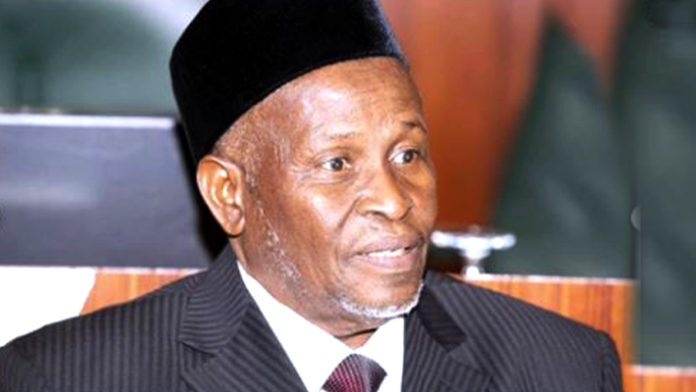
Chief Justice of Nigeria Ibrahim Tanko Muhammad (Credit: Punch Newspapers)

By assigning priority to “political cases”, the Supreme Court sustains a two-track judicial system by which it puts the interests of politicians above those of the citizens.

Nigerian courts can do unfathomable things, like install a man who was well beaten into the fourth position in an election as the winner. They are so transparent, they can even equip a (Christian) shaman to foresee this judicial eventuality as a “vision”. Some have called these courts the “lost hope of the common man”. Despite credibility deficits that afflict it, Nigeria’s judiciary continues nevertheless to be an object of considerable public fascination. Therefore, when the Supreme Court convened in a special session on December 8, 2021, to mark the formal commencement of the 2021-22 legal year, the country paid attention. 

The highlight of the special session was the speech of the Chief Justice of Nigeria, (CJN), Dr Ibrahim Tanko Muhammad, which he delivered “in compliance with our age-long tradition of assembling to give an account of our performance in the outgone year.” His report provided a troubling insight into the multiplex issues that ail Nigeria’s judiciary. There is a lot in that report that merits attention. I focus on three here. 

The first is jurimetrics or what the numbers tell us about the state of Nigeria’s judiciary. According to Chief Justice Tanko Muhammad, the Supreme Court entertained 681 motions (applications) and appeals in the 2020-21 judicial year. A motion is an application by one or more parties in a pending case seeking permission from the court to do something connected with the case or seeking its protection pending the determination of the case. 412 representing 60.5% of the 681 cases heard by the Supreme Court in 2020-21 were motions; comprising 312 motions in civil appeals; 95 in criminal appeals; and five in “political cases”. The remaining 269, representing 39.5% of the cases heard by the Supreme Court, were appeals. They included 139 civil appeals, 102 criminal appeals, and 28 “political cases”. In all, the Supreme Court delivered 216 judgments. By contrast, the Supreme Court of the United States of America heard 62 cases in 2020-21 and issued 67 opinions. In the United Kingdom over the same period, the Supreme Court heard 61 appeals, issued 54 judgments and disposed of 171 applications for permissions to appeal.

Reflecting on the record of the Nigerian Supreme Court, Chief Justice Tanko Muhammad “confidently” claimed that “this scorecard is impressive.” On the contrary, I would argue that these numbers are quite disturbing. To begin with, they indicate that the scarce resource that is the bandwidth or time of the Nigerian Supreme Court is now mostly spent on trifles. That is what it means to spend 60.5% of the time of the court during the year on motions. The Chief Justice himself very much concedes this point in his report when he calls for the relevant laws to be amended “to make most appeals to end at the Court of Appeal.”

Notably, 33 or nearly five per cent of the 681 cases considered by the court during the year were “political cases”. This is a curious category. Judicial doctrine ordinarily views political cases with reluctance. Nigerian law knows nothing of the sort. It knows of election petitions, which are contests over the outcomes of elections.

These are mostly governed by the Electoral Act, which prescribes strict time limits for their disposal. It is possible that the category of “political cases” in the usage of the CJN includes election petitions but that seems unlikely. The more likely thing is that this is a category for cases instituted by Nigeria’s politicians concerning mostly intra or inter-party squabbles over how to run the internal affairs of political parties or share the spoils in the political plunder of the country.

For example, the High Court of Rivers State ordered the removal of the former Chairman of the Peoples’ Democratic Party, (PDP), in August 2021. Two months later, in October, the Court of Appeal decided the appeal on this judgement and by December, the Supreme Court was ready to hear arguments in the case. By contrast, ordinary civil appeals easily take over a decade to get assigned for hearing in the same court. 

By assigning priority to “political cases” in this manner, the Supreme Court sustains a two-track judicial system by which it puts the interests of politicians above those of the citizens whom they are meant to serve. It also encourages the twin evils of undue judicialisation of politics and the politicization of the judiciary. If it were to insist on politicians taking their place on the queue of judicial dysfunction, they will be forced to either find a way to fix the judiciary or else fix their internal party dysfunctions and spare the judiciary from deciding “political cases”.

This leads me to the second major highlight in the report of the CJN. On October 29, 2021, persons described as “unknown security operatives” raided the residence of a Supreme Court Justice to execute a search warrant issued by an Abuja Chief Magistrate, which the same magistrate subsequently set aside.

In response to this incident, the CJN took time in his report to warn: “[W]e have had enough dosage of such embarrassments and harassments of our (judicial) officers across the country and we can no longer take any of such shenanigans. The silence of the judiciary should never be mistaken for stupidity or weakness…. The time to oppress, suppress or intimidate judicial officers is over.” 

This declamation would have counted for a lot if the judiciary was not itself the architect of its own loss of credibility and authority. It was the judiciary that contrived to allow the immediate past CJN to be sacked on the strength of a grossly irregular ex-parte order by an administrative tribunal within the executive arm, which is what the Code of Conduct Tribunal is. The creation of a supersonic track for “political case” renders the judiciary complicit in unequal justice. A significant number of judicial appointments have increasingly become tainted by tendencies of dynastification, commodification, or what someone recently described as “genitalization”, trends which assume that judicial temperament can be transferred by inheritance from parent to child, by purchase in the market of political favours, or as sexually transmitted between lovers. A judiciary that allows itself to be stiffed in this manner loses the standing to fight for its institutional independence. 

This matter of judicial independence is implicated in the third issue arising from the CJN’s report. As a result of the incident involving the controversial raid on the premises of a Justice of the Supreme Court Justice, the Chief Justice declared that the judiciary “are making efforts now to ensure that henceforth, every search warrant or arrest warrant must be issued with the knowledge and approval of the Chief Judge of the respective State/Federal High Courts as the case may be.” This is probably the most troubling line in the CJN’s 26-page long report. It was clearly made without authority. 

The powers of magistrates and Justices of the Peace to issue an arrest or search warrant are established in parts 3 and 18 of the Administration of Criminal Justice Act, 2015. They are not granted by the CJN nor does the law require that they be made subject to the pusillanimities of any Chief Judge. The prescription that the CJN seeks to introduce without lawful authority is both disproportionate to and also more dangerous than the harm that he seeks to cure. 

The exercise of these powers requires that only persons who are fit for the purpose be considered for appointment as magistrates. Sadly, this is far from the case. Instead, magisterial appointments have become another market for judicial and political insider-dealing. I am surprised that the CJN is surprised.

In the interim, across the Federal Capital Territory and much of the country, they have suspended issuing warrants because of this declaration by the CJN. A defective warrant can easily be set aside, but the harm that will be inflicted on public safety and security and on the confidence of the public in the judicial process as a result of the idea that the Chief Justice has floated will not be easily cured. When the Chief Justice of Nigeria behaves as if he is above the law, his advocacy for politicians to respect the law becomes a self-defeating circus.

Odinkalu, a lawyer & a teacher, can be reached at [email protected] 

Has democracy failed Nigerians, By Dakuku Peterside

Globally, citizens of countries with democratic profiles are beginning to question the efficacy of democracy—especially democracy’s capacity to deliver the development agenda. A survey conducted by Pew Research shows that across 34 countries, a median of 52 per cent of those interviewed is dissatisfied with democracy. The dissatisfaction cuts across citizens of matured democracies of the UK, the US, France, and Japan. 

A similar report was filed by  Afrobarometer, a pan-African independent research network in Ghana. Its recent survey of citizens of 34 African countries under democratic regimes discovered a “democratic disappointment gap”.

This increasing loss of confidence is partially responsible for the convening of a global democracy summit on December 9 -10, this year by President Joe Biden of the USA with the objective of “defending against authoritarianism, fighting corruption, and promoting human rights as well as set agenda for democratic renewal and to tackle threats faced by democracy”. 

Nigeria is one of 17 African countries and 111 countries globally invited to the summit. The Carnegie Foundation described Nigeria as one nation where democracy is backsliding in its analysis of invited participants. This development has redirected us to pertinent questions about the potency of democracy to deliver development in Nigeria: Is there a Nigerian democracy? Is it really backsliding? Has it failed Nigerians? And if it has failed, what should be done to arrest the situation?

Democracy is a universal concept that embodies fundamental principles and doctrines that make it unique as a form of government. It relies on the idea of the supremacy of the people. The first aspect of democracy is that the people have the right to choose and decide who will govern them through periodic elections and hold the office holders accountable for the power they derived from the people. It presupposes that it is the fundamental right of citizens to vote or be voted for in a free and fair election.

The second aspect of democracy is that principles govern it, without which it becomes an aberration and a folly of indescribable proportion even with the first aspect (periodic election to choose leaders). These principles include the rule of law, fundamental human rights, liberty, and accountability, and it is only the combination of these two aspects that makes democracy worthwhile.

Analysing how Nigeria fares in these two critical aspects of democracy indicate that we do not measure up to them. On the first, periodic elections, as imperfect as it has been, I believe we have made progress. The second, deepening the pillars of democracy, my verdict is negative.

Democracy, the way it is practised in Nigeria today, is a hybrid. It is a combination of civil rule, militarism, and ethnic jingoism. There is no national consensus on what democracy should be in Nigeria or should do for Nigeria. No shared national vision binds citizens and the state ,and no common aspiration. In the absence of shared national aspiration, democracy is just a word, a concept borrowed “to fulfil all righteousness”.

Recent experiences, especially economic frustration and insecurity have made some Nigerians question the western-style democracy we adopted and doubt whether it can deliver sustainable development. This “trust deficit” is exacerbated by persistent conflict, high cost of governance, corruption, poverty, indiscipline, inefficiency, insecurity, high level unemployment, and divisiveness that pervades the land.

It is the truth that the way we practise democracy in Nigeria today has failed to assist Nigerians maximise individual potentials and for the country to accomplish national development agenda. The reasons vary: from the greedy political elite that is not driven by principles or vision to expensive governance structures that are self-serving, and from indiscipline to cultural misfit. Like a rocking chair, we have moved from parliamentary democracy to an American-style presidential system searching for what works for us.

The problem is squarely that of the appropriateness of our democracy model. No serious attempt has ever been made to work out a democracy model that fits, serves, or recognises our unique cultural attributes. Worse still, our political elite has failed to adopt a management approach to democracy over time. The elementary principle of envisioning the common good, setting a strategic plan, making effective decisions, and mobilising resources to achieve a shared goal are not in consideration.

Different countries adopt various models of democracy to suit their context and cultural environment. For example, Rwanda increased women participation in governance and incorporated a cultural practice known as Imihigo, a decentralisation policy where district mayors commit to development targets. Because of its belief that a nation has only one common goal, China adopted a one-party system with bureaucratic control emphasising efficiency and economic growth.

Singapore adopted a democratic approach that emphasises equality of all and economic prosperity, and it has a unique parliament made up of single-member constituencies, group representation constituencies, and nominated members of parliament. On its part, South Korea evolved a robust free democracy that allows for freedom of speech, and its constitution provides a single tenure for the President that is non-renewable and a legislature in which seats are by a combination of persons elected via popular vote and allocation. Malaysia, on the other hand, created a Muslim democracy that is distinctively not theocratic. All these countries are a relative success because they adapted democracy to fit into their culture. To make Nigerians have faith in democracy and its ability to deliver development is not just about periodic election but addressing the structure and cultural fit of our model of democracy to make it work. It is also essential to pay attention to the cultural peculiarities of different sections that make up the country. True democracy is that form of democracy adapted to the circumstance and cultural context and delivers the greatest good to the highest number of persons measured by material prosperity.

It is pertinent to note that Nigeria adopted the US presidential system without adapting it to our cultural context – must Nigeria have a bicameral legislature? Why should Nigeria have too many cost centres at the local, state, and federal levels that deliver no value? Why should Nigeria have a bogus governance structure? Is there a need for full-time legislature rather than part-time legislature? Why should Nigeria have a 1999 constitution that many people do not accept its authority? Why should Nigeria have a federal structure that is more unitary in nature? These are fundamental questions that can help us define what we want from democracy and determine whether the model of democracy we practise can guarantee an optimal level of development.

Is democracy backsliding in Nigeria? From the context of economic prosperity and individual liberty, history answers an emphatic yes. At the inception of the newly independent nation, Nigeria, in 1960, there were high hopes both within and outside Nigeria that this young parliamentary democracy would be the beacon of hope for restoring the dignity of the black man. Although that dispensation had its challenges, it maintained some democratic manifestations that made some politicians look like angels compared to today’s political actors. There was a semblance of sanity. The government at the time guaranteed security and safety, and most people observed the rule of law. Democracy was in the ascendancy in Nigeria.

However, the military incursion into Nigerian governance upended democracy. With this went all the democratic precepts and principles in Nigerian politics and ever since democracy has been in decline and needs a radical rethink to work in Nigeria again. 

A significant consideration in assessing the appropriateness of Nigerian democracy is the influence of over four decades of military rule. The military has handed down all our constitutions since 1979; each has ended up necessitating elaborate amendments, and each one has contents bordering on impunity and reckless disregard for some marginalised groups. The judiciary and legislature are left weak by the executive despite the separation of powers.

Has democracy failed Nigerians? A series of overlapping security, political and economic crises have left Nigeria facing its worst instability since the end of the Biafran war in 1970. With

experts warning that large parts of the country are in effect becoming ungovernable, fears that the conflicts in Africa’s most populous Nation were bleeding over its borders were underpinned by claims that armed Igbo secessionists in the country’s South-East were now cooperating with militants fighting for an independent state in the anglophone region of neighbouring Cameroon.

The mounting insecurity from banditry in the North-West, jihadist groups such as Boko Haram in the North-East, violent conflict between farmers and pastoralists across large swathes of Nigeria’s “Middle Belt,” is driving a brain drain of young Nigerians. Those security issues are in addition to a series of other problems, including rising levels of poverty, violent crime, and corruption amid an increasing sense that the central government, in many places, is struggling to govern.

The most significant measure of the efficacy of democracy is its ability to raise the people’s standard of living marked by a minimum level of development. The inability of Nigerian democracy to bridge the gap between inequality and poverty has heightened the lack of faith in democracy. All vital statistics from 1998 to date have not matched our expected progress in deepening democracy, making it difficult to accept a correlation between democracy and development.

What should be done to reverse the situation? We should re- examine our democracy to make it fit for purpose. For Nigerians to evolve a democracy that works for Nigeria, the critical consideration is the match between form and cost. That match must be such that the practice of democracy leaves enough resources for the development and sustenance of services in a way that guarantees orderly and peaceful existence.

It is on record that the recurrent expenditure of the Nigerian governments (states and federal) outweighs capital expenditure at a ratio of more than 80:20. The current form of democracy and democratic institutions have too much implicit and explicit cost that it leaves no money for development, and there is absolutely no incentive to invest in sustainable development initiatives.

Nigeria’s current federal democracy is unitarist, which has hindered the adequate provision of security and safety for citizens. The ability of the state to guarantee security is central to the thriving of democracy. Unless people are free to go about their everyday life unmolested, they cannot enjoy the freedom which is the crucial

instrument of democracy. Not even the ritual of voting and elections can credibly occur in an insecure environment.

In conclusion, it is evident that we need to have a conversation about our current constitution to “culturise” it and make it workable . This is not achievable before 2023 but must be on the table if we are serious about democracy. We should be intentional in evolving a democracy that aims at the sustainable development of Nigeria. This new democratic model, no matter what it is, must speak to the aspirations and hopes of Nigerians. This model will not cherry-pick some facets of democracy and leave out its principles and spirit, and it must be wholistic and quintessentially and uniquely Nigerian – our democracy! A model that plagiarised American democracy with little or no modifications to fit our context is already structurally deficient. No matter how you practise it, you will always come out short.

Rule of law, Nigeria’s only hope of survival (2), By Hassan Gimba

This is the second part of our treatise on the rule of law that started last week. The rule of law is about the creation of laws, their enforcement so that no one – including the most highly placed citizen – is above the law.

When one looks at how organised countries have control over their affairs, one sees how the weakest as well as the strongest face the same law and get the same justice when they get caught with a misdemeanour.

In an ideal country, those who are at the helm of affairs are ever mindful of doing the right thing. But our country used to be like that. What went wrong that along the way things so deteriorated that state actors assume superiority over the state itself? Civil servants and even political appointees no longer remind, guide, or nudge their bosses to uphold the best standards.

For instance, a source said he watched an NTA Kaduna interview session with the late General Hassan Usman Katsina in July 1987. General Katsina was the governor of Northern Nigeria before General Yakubu Gowon created 12 states. The interviewer asked General Hassan how he compares the governors of nowadays and his time (1966). This was his reply…

“I am going to give you an example and you can figure out the answer yourself. When I was the Governor of Northern Nigeria, Dr Abubakar Imam was the General Manager of Kaduna Capital Territory. In that year, we decided to allocate plots for the present GRA in Kaduna. I applied. KAT conducted the exercise. All the plots were allocated, but I was not given. I did not care to find out why. After the exercise, Dr Abubakar Imam came to my office, and he came with my application. He told me they had finished the exercise. He also said that he saw my application. However, he said they did not consider me qualified because I am the governor. He said as the leader, I should be more interested in my subjects’ interests than mine. How sure was I that all citizens who wanted the plots got allocated before I applied? He said he came with my application to tear it before me so that it will not come to me as rumour and he tore the piece of paper.”

There is also the story written by a retired 75-year-old former Confidential Secretary to Audi Howeidy, the Secretary to the Government when the late Police Commissioner, Audu Bako, was the governor of Kano State in which a Permanent Secretary queried the governor.

Alhaji Sani Danbatta was the permanent secretary of the Ministry of Finance and he queried Audu Bako for receiving 25 pounds monthly as an allowance and 125 pounds entertainment allowance. His imprest then was 100 pounds monthly. The perm sec queried why he allocated to himself allowances that were not provided for in the General Order (public service rules). Danbatta further asked the governor to refund the illegal allowances he collected in the past eight months to the treasury or be surcharged by deducting from the source.

Audu Bako summoned all the Permanent Secretaries and demanded an explanation from Danbatta, saying he did not understand the content of the query. The perm sec said, “I have no explanation to give you, I passed the query through Alhaji Audi Howeidy, the Secretary to the Government, let Howeidy as an administrator say he did not understand the content, then I will explain.”

The Secretary to the Government thereafter presented a memo to the State Executive Council seeking its approval for the two allowances to be regularised to the governor and approval was accordingly granted.

Yet again the perm sec wrote a memo to Howeidy informing him that the new allowances to the governor should be taxed. The SSG referred the matter for advice to the Kano State Commissioner for Revenue, Mr OB Wise (a Briton), who said that there is no tax for allowances in our existing laws.

In those days, civil servants could confront political leaders without fear or favour to correct them whenever they violated the laid down procedures, rules and regulations; unlike what is obtainable nowadays.

Before General Katsina and Compol Bako’s example was that of Sir Ahmadu Bello, the Sardauna of Sokoto and Premier of the Northern Region. The regional government had constructed air-strips for use of the Premier in most of the provinces. They were in Mubi, Jalingo, Wukari, Sokoto, Gusau, Minna, Azare, Gombe, Bauchi, Idah, and some other places.

The premier had three small Cessna aircraft in his fleet under the supervision of an Assistant District Officer (ADO) in his office, Alhaji Suleiman Gurin, a former teacher from Adamawa Province.

In time, Sir Ahmadu Bello flew one of the aircraft to Sokoto on a private visit. When he returned to Kaduna, the administrative headquarters of the region, Alhaji Suleiman Gurin sent him a bill for his flight to Sokoto!

To him, since it was a private visit, and therefore, the premier should make the refund to the government’s treasury. However, Sir Ahmadu Bello, though amused at the request, made the payment. And he was so proud of his ADO for reminding him that everyone who served was subject to the state, and to the laws that have been made to govern that state.

But if these scenarios were about official responsibilities, they were prim and proper in the way they conduct their social responsibilities as well.

There is a story narrated by the late Alhaji Alin Kotoko (I think), a Maiduguri-based contractor who was a beneficiary of the late Sardauna’s policy of North First (empowering the region’s local business people). The narrator said the regional Ministry of Education gave a contract to them and they made a decent profit out of it.

He and a colleague put a certain percentage of their profit in a paper envelope and went to the house of the ministry’s minister, Alhaji Isa Kaita, Wazirin Katsina. They were ushered into his sitting room where they met him sitting. They thanked him and had some brief discussions, but none of them could present the envelope to him. So, they got up to go but left the envelope there (a diplomatic way of presenting gifts to big men) by his side.

According to the narration, they were about to enter their car and drive off when he came out hurriedly and told them they had forgotten their envelope. It was then that one of them gathered enough courage and told him, “Sir, we made a good profit and we brought you this token as appreciation”.

He told them what they would never forget. Calmly, he told them, “No, the premier intended to empower you people. I am his representative. If I want money, then I have to resign and start a business… it is your money; take it.”

With such exemplary behaviour and attitude, leaders then were role models positively. By subjecting themselves to the rule of law and accepting to be guided by those who know, they made the system work. Because they did not abuse the system because of their powers, their children too were not unduly favoured.

No parent then would harass a teacher because he had punished his ward, or pay for his child to get a good grade in an examination or be made a prefect in their schools.

How have our opposite actions impacted our society and brought us to our current sad state? We shall also look at that subsequently.

So, Buhari won’t make history, after all?

By Martins Oloja

‘The greatest leader is not necessarily the one who does the greatest things. He is the one that gets the people to do the greatest things’ (Ronald Reagan)

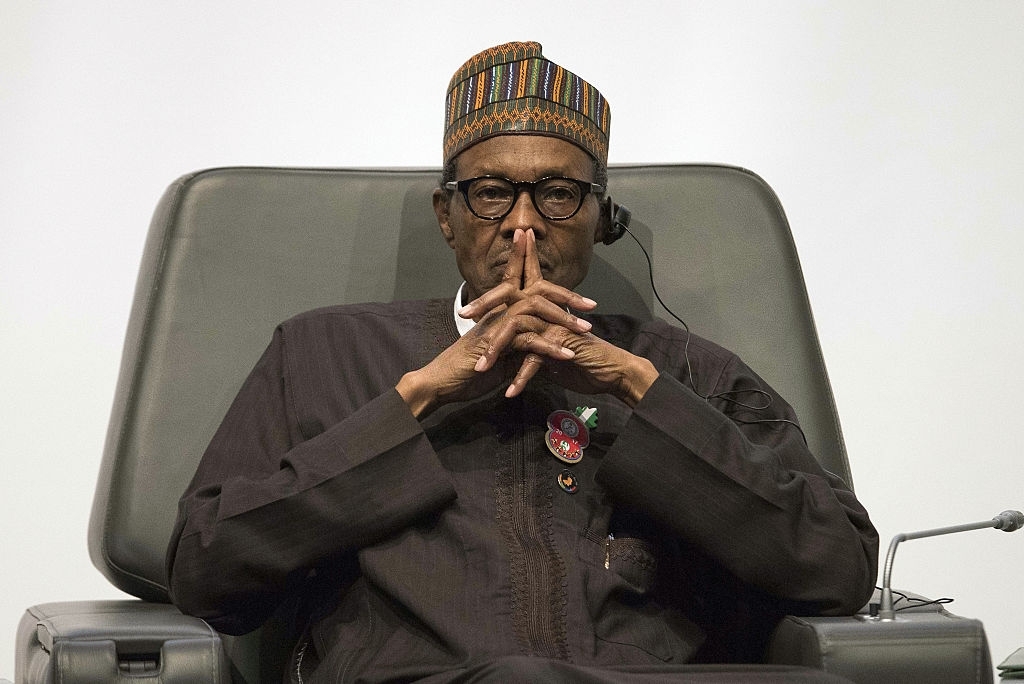
It is in the light of the above powerful words of one of America’s greatest leaders, Ronald Reagan that I am persuaded to join good people who would like to encourage our leader, President Muhammadu Buhari to make history by getting good people around him to do one of the greatest things – signing the Electoral Act Amendment Bill into law to begin a clean process of leadership recruitment in our failing country. If the President can also embrace restructuring through return to federalism we lost since 1966, he will make history despite his apparently poor performance his reputation managers are speaking in tongues about at the moment.

Behold, in the next few days, our leader needs to renew his mind, rally his governing party and citizens behind him to restructure Nigeria without dividing it. And that should begin with calling the bluff of the retrogressive forces in APC, his party and signing the Electoral Act Amendment Bill into law in the next few hours – before he slips into the dark side of history. This is possible only with a sincerity of purpose as the driving force. This is what drives me to think that at the moment, the President needs encouragement more than condemnation from any quarters: He is surrounded at the State House, Abuja by only his kinsmen most of whom would not like to tell him what he could do to leave Nigeria better than he met it.

Specifically, in the beginning, the kinsmen who helped him to make his cabinet did not assist him in making a great cabinet. It is quite obvious that the President was not told by those who helped him shape the presidential bureaucracy and the cabinet in 2015 that no leader can do well in office with a mediocre presidential bureaucracy and cabinet. After about six months of assuring the people that he was head hunting good and reliable thinkers, what he came up with was quite disappointing, after all.

No insult is meant here, please. This is without prejudice to the few good ones who have been unequally yoked with mediocrities (not mediocres, please) that abound in the place. We are just discussing simple points in nation building within the context of the new world that social and digital technologies daily disrupt. Yes, only leaders who surround themselves with very smart managers can make history in the new world of business and politics.

Besides, our president has obviously compressed his own agenda to fighting corruption and insecurity. But there are no indications yet that our taciturn leader, PMB can make history with fighting corruption and insecurity, especially in the North East Zone and North West where the evil ones are now resident. His reputation managers may not agree but truth matters, in this regard. Now the North is demonstrating against Buhari’s inability to provide security for even the North – his people and indeed the country.

What is worse, the military establishment that we used to be proud of appears to have lost its mojo. Even the presidency doesn’t believe in operational efficiency of the police force anymore. We see the spirit of errors everywhere, especially in the North East and North West where the Air Force once erroneously bombed an IDP camp? We have lost so many officers of the Nigerian armed forces to the war in the North. The other day, there was a supplementary budget of about one trillion naira to fight insecurity at the time university lecturers were gearing up for yet another industrial action. That is what happens when the illiterate of the 21st century are allowed to take charge as major state actors. That is the view of a writer on leadership and management, Alvin Toffler, who always muses on “rethinking the future”. According to him, “The illiterate of the 21st century will not be those who cannot read and write but those who cannot learn, unlearn and relearn”. This is why most modern leaders always strengthen their governments with strong men and women, who can learn, relearn and unlearn even in office.

Let’s look at the machinery for fighting corruption. There are three agencies comprising the Economic and Financial Crime Commission (EFCC), Independent Corrupt Practices and Other Related Offences Commission (ICPC) and Code of Conduct Bureau (CCB). The arrowhead here has always been the EFCC. But the President’s ruling party was once so disorganised that the first EFCC acting Chairman, Ibrahim Magu, nominated since November 2015, was not confirmed by the Senate dominated by the president’s party before he was removed in 2021. How else does one understand the politics in the presidency where the secret service chief executive twice wrote to the Senate that Magu should not be confirmed? Magu was  somehow stranded for six years and even the influential Attorney General and Minister of Justice appeared to be at war with him throughout his turbulent tenure. Curiously, Buhari’s presidency didn’t settle their rift.  How can the president make history through his war against corruption when Magu too was once quoted as saying that he was losing the war? Even the ICPC chairmanship was once in a hibernation mode: a board member once acted as Chairman from July 2017 when the tenure of the Chairman expired in December 2018. Acting Chairman of EFCC since 2015. There was once an Acting SGF from May 2015; there were once so many ‘actors’ in office in Buhari’s presidency of anything is possible.

How can the president make history with this kind of executive inertia and ad-hocism? Can there be history making in fighting official graft without reforming the NNPC according to the new Petroleum Industry Act? What has changed apart from the name as a company limited by shares?  That is why I feel we should begin to encourage the President to pay due attention to the Committee his party, the APC set up to prepare a blueprint on the hurricane called ‘restructuring’. There is some sense in that critical national assignment.

Despite the fact that some president’s men may not like Malam Nasir el-Rufai’s face and politics, the Kaduna State Governor and chairman of the APC Panel definitely has enough cognitive resources to handle the critical assignment. He gave the Party and the President a good document on restructuring since 2018. Even the resourceful Governor of Kano State, Dr. Abdullahi Ganduje, a member of the Committee, is a pan-Nigerian governor and very educated political leader in whom there is no guile. He holds a doctorate degree from the University of Ibadan. He is a quiet and wise operator who can also help the president and the party to make history from restructuring.

The only trouble with the APC Committee may be a vicious cabal around the President who might have been obsessed at that defining moment about politics of a second term without thinking about the implications of absence of major achievements in the first term. Now there is no fear of a second term. The president should restructure Nigeria and begin this by signing that electoral bill into law today.

But the president should note that if he continues to adopt I-don’t-care attitude to clamour for restructuring of the federation as most hawks around may advise, the consequences of the verdict of history may be harsh on him. He will go down in history as a military leader and politician who just wasted our time in office without any significant achievement. And so, the President should just renew his mind and begin to talk to his allies in other parts of the country about what the people feel on this town talk called restructuring and the electoral bill. Yes, you don’t have to link genuine restructuring to dismantling of the federation. It is to be done to strengthen the federation itself. It is running away from it that can dismantle the beautiful federation, after all. Verily, verily I believe that the President can make history if he can restructure Nigeria to run as a federation where the present states can leverage on the endowments in their areas to create wealth. To set the tone for that, our leader should sign the electoral bill that will assure Nigerians that we can elect our leaders peacefully without recourse to the courts that seem to be the dominant electoral factor now. Our President should listen to Dolly Parton who once noted that, “If your actions create a legacy that inspires others to dream more, learn more, do more and become more, then you are an excellent leader”.

Mr. President, be of good courage! Support restructuring after 61 years of unitary nonsense! You are on the verge of becoming a significant history maker. Do it. Yes, you can by signing that Electoral Amendment Bill into law

On June 7, 2020, I wrote here about ‘Buhari’s presidency and near-success syndrome’. Then I quoted Socrates who said, ‘The secret of change is to focus all of your energy, not on fighting the old, but on building the new’. I also quoted Abraham Lincoln who reveals to us that, ‘Discipline is choosing between what you want now and what you want most’ to encourage our leader to be decisive.

It is quite important for us to understand what this enemy called ‘Near Success Syndrome’ (NSS) is all about. If several times, you have been so close to achieving a goal, dream or desire in your life but it seems like the moment you are on the verge of breakthrough, something comes and snatches it away from your grasp, you are welcome to the roots of this deadly syndrome. When this occurs, it can really hurt. When this scenario plays out, sometimes can you question your faith. In other words, have you ever wondered why you have often failed almost at the peak of your success? This is what our leader should reflect on: near-success syndrome (NSS). That is the deadly virus that his party men are foisting on him now by asking him to withhold assent from that significant electoral bill.

That is why I would like to remind the president what the oracle noted in 2017 that he (PMB) might not go far in fighting corruption and insecurity, after all. Our president should, therefore, conquer himself, renew his mind about restructuring of the federation and signing of the electoral bill into law. He should meet with the national assembly leaders now and lobby them to fast track an executive bill on federalism after signing the electoral bill. That is the only ‘weapon of mass disruption’ of the lie that we call our constitution. That is the only way President Buhari can make history. And failing to do that sooner than later will confine him to the dark corners of history of those who under-developed Nigeria, after all.

• This is a restructured article from old relevant ones since 2017 – 2020 under titles such as: How PMB can make history; Why Buhari may not make history and Buhari’s presidency and near-success syndrome (NSS)’.

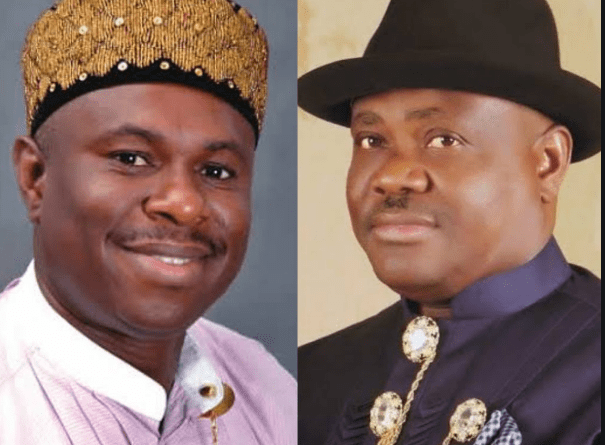
Dakuku vs Wike: Setting the records straight

By Chiwete Nwaka Eke

Reading through a disjointed piece written by one Ibim Amieyeofori, a roustabout working with Rivers State Commissioner for Information, one would readily understand why the state government information machinery lacks fitness, tact, guile and grace.
The watery attempt at having something tangible to say in response to words of wisdom from a concerned Rivers son typifies the lack of direction from their paymaster.
As he has been doing since 2015, a seasoned technocrat and turn around expert, Dr Dakuku Peterside, in a recent interview called out Governor Nyesom Wike over the rash way and manner he has been administering the state under his watch.
In the interview, Dr Peterside pointed out clearly what was not going well and even offered suggestions on the way forward for a state that is so rich but lagging behind in fundamental areas.
Not Even Governor Nyesom Wike has been able to respond, albeit with facts and figures, to the genuine concerns of Dr Dakuku Peterside on the state of affairs in Rivers State.
With N3 trillion received in the six years, he said there was nothing on ground to justify such earnings by the Wike-led government, especially with primary and secondary education having virtually collapsed under Wike’s term. As for bursary to students in higher institutions, it looked like it never happened in Rivers history.
Unfortunately for Mr Amieyeofori, Wike has never bordered himself about having to fashion out a blueprint for the development of the state, hence the penchant for the governor to award contract from his breast pocket.
Since the author lacks the comprehension to decipher issues that border on governance, he would have known that Dakuku, in conscious effort to contribute to the growth and development of the state has publicly offered suggestions to the government on how to make life meaningful for the people.
In Rivers State Newspaper Corporation, publishers of The Tide newspaper, where the author last worked before he retired, no single employment has taken place in the last six years. Even worse, the newspaper is struggling to publish and was at a time, shut down for six months.

In the education sector, Wike’s administration has achieved less than 5% using key parameters of measuring progress in education . In many schools today, there is absence of teachers in core subjects like Mathematics, English, Biology, Chemistry, Physics, Agriculture Science, Economics, among others. Teachers are not motivated , no teaching aid and no new infrastructural development.
Across virtually all local government areas, many primary schools have been shut down owing to lack of teachers, classroom blocks and teaching aids. Children who should be in primary schools are now at home, abandoned to their fate by a careless governor. The ones who were on scholarship overseas were withdrawn.
In Buguma, where Ibim Amieyeofori comes from, there is no functional primary healthcare hospital, neither are the public primary and secondary schools having full complement of teachers.
The Buguma Fish Farm, initiated, started and completed by the Amaechi’s administration to create employment and generate trade and commerce for the people of Kalabari land has been abandoned.
Rivers today is among the states in Nigeria with the highest unemployment rates largely due to an administration that lacks the creativity, policy direction and managerial acumen to engage Rivers youth.
All the feeble attempts by the Wike administration to create any form of decent employment have been shrouded in secrecy or an outright scam, a fact even acknowledged by the Information Commissioner, Paulinus Nsirim, who stated that applications were still been sorted out almost two years after Rivers youth were hoodwinked into applying for non-existing jobs.
Under former Governor Chibuike Amaechi administration, it took less than three months for over 13,000 people to be employed in a single day.
Rivers people are unanimous in their verdict of Governor Nyesom Wike’s administration so far. The balance sheet is entirely in deficit, which is not surprising to those who know him as lacking coherent vision.
Here is the score card of Wike so far: Education (P8), Agriculture (F9), Employment (F9), Primary Health Care (F9), Investment in Power Sector (F9), Employment of Teachers (F9), Workers Welfare (F9), Scholarship and Bursary (F9), Sanitation (F9), Environment (F9), Transport (F9), amongst other below par achievements.
We sympathise with the author who was invited to come and eat but it is obvious that he is not learning table manners or that he has not been given sufficient food to warrant his crying against a patriot like Dr. Dakuku Peterside, who has consistently placed Rivers State above personal interest.

Nwaka Eke is of Rivers Youth Coalition

Kid bandits in the north; child cultists in the south: Who will deliver Nigeria? By Olabisi Deji-Folutile

Now that the noise and uproar that greeted the sad and unfortunate death of 12-year-old Sylvester Oromoni, student of Dowen College, Lagos seems to have subsided, perhaps we can  now devote some time to ruminate over the tragedy that is fast unfolding before us as a nation. 

We are always apt to shout, condemn and empathise and rightly so, when ugly incidents like the cruel murder of rising stars like little Sylvester occur. Sadly, we lack the capacity to push back hence our outcries rarely generate positive actions that can avert a reoccurrence of bad situations. We are mostly emotional responders. In the case of Sylvester, suddenly every so-called celebrity, government official, politician, lawmaker, etc had one or two things to say. 

It was like there was a strong competition to be heard or seen. The noise was so much but as usual without any tangible result. What is more: it went as sudden as it came. Now, it’s business as usual. We have moved on. But for the legal action taken by Sylvester’s parents against Dowen, maybe that case could have been swept under the carpet by now. After all, we have so many of such cases in our land. For example, who still talks about the Ikoyi building collapse where over 50 people died? There are too many things competing for our attention.  Different dramas unfold everyday so we struggle to catch up with them.    Unfortunately, these emotional responses to important matters won’t take us anywhere. This is probably one of the reasons why we have gone numb and appear indifferent to all kinds  of evils going on  not only around us but in our schools – at all levels. 

For example, before Sylvester’s death, Salaudee Waliu, a 400-level student in the Microbiology department of the University of Ilorin, beat his lecturer, a female, to coma. But that didn’t merit the attention of our celebrities and politicians because no big name or brand was involved. That happened mid November. Shortly before then, precisely, October 27, 2021, a student of Itori Comprehensive High School in Ewekoro Local Government Area of Ogun State had reportedly beaten a teacher to coma for stopping him from beating a fellow student during a maths class. According to reports, the boy, an SS 3 student, just entered the class without notice and descended on the girl while the teacher was teaching. It was reported that the teacher got the beating of his life for telling the boy to stop beating a fellow student.  

And shortly after the death of Sylvester, precisely, December 6, students of Idogbo Secondary School at Upper Sakponba Road in Benin City, Edo State, went on the rampage. According to reports, the students attacked the school principal who had invited the police to restore law and order to the school. They also allegedly attacked the police, pursued the principal from the school before carrying out massive destruction of the school’s properties. After satisfying themselves, the students were seen celebrating themselves in a viral video. 

Lastly, just this Monday, the Osun State University confirmed that one of its students was set ablaze for refusing to join a cult group. The institution in a statement released by its Public Relations Officer, Ademola Adesoji, identified the victim as Victor Oke, a part-time final year Political Science student. 

According to the university authorities, Oke’s assailants had shot at him and inflicted machete cuts on him before attempting to burn him to death. Although Oke was set on fire, fortunately, he was rescued and taken to the hospital. 

Recall that Sylvester was allegedly beaten to death in the privately-owned Lagos Dowen School for refusing to join a cult. Unfortunately, while UNIOSUN was able to save Oke from an untimely death, Dowen college was too busy doing some other things  that it felt were more important than looking after the children in its care. By the way, the college’s first reaction to the death of Sylvester was to say the least very disappointing!  How can a school claim not to harbour bullies in this age and time?  Haba! That was reckless. And that is the problem. How can a school solve a problem that it doesn’t want to own?  

From all indications, the violence in Nigerian schools today is a reflection of what is happening in the larger society. We have enthroned violence, bloodletting, bullying, lying, deception-all kinds of evils to the extent that many children have lost their innocence.  These students no longer see anything wrong in violence. How can they when they see pictures and videos of politicians snatching ballot boxes; approaching elections as if they are going for a major warfare all the time. Yet, they see these violent people emerging as governors, lawmakers etc. They have wrongfully believed that intimidation and violence are required to be in charge in a lawless society as ours. 

What with the damning report of the BBC linking cultism to politics in Nigeria with names of prominent politicians identified as culprits. The BBC had in an investigative report, published a few days ago, averred that Nigeria runs a mafia politics where its politicians hire cult members to intimidate their rivals, snatch or guard ballot boxes and coerce people to vote.  These cultists, according to the report, are armed and given money during election and later rewarded with positions in government. 

 A self-confessed “cultist” in the BBC report, Tony Kabaka, said, “If you sat me down and say, ‘Can you identify Black Axe in government?’ I will identify. Most politicians, almost everybody is involved.” According to him, politicians very often mobilise cult groups to help win elections.  “If government wants to seek for election they need them. Cultism still exists because government is involved, and that is the truth,” he further said.

It is not as if any Nigerian needs a BBC report to know what is happening around them. Some of us have an idea of what our politicians are capable of doing.  However, the worrying trend for me is the rate at which Nigerian students are now being recruited into cults and the level of violence in our primary and secondary schools. We need to move fast to redress this dangerous development. When a society gets to the level where education no longer counts and one cannot tell the difference between a thug and a child, there is a big problem.

We are contending with terrorists and child bandits in the north; we think this is happening because the kids are not in school, only to find university students, secondary school students, children of the rich competing with criminals in blood -letting. This is a serious problem.  Experts are apt to tell us that Cultism and many other social vices are related to economic distress arising from corruption-induced poverty. But here we are face to face with the children of the rich being knee- deep in cultism. What are they looking for?  What took them there, how did they get there, what is their motivation?  Perhaps the BBC reports could offer some insights into these questions. If truly our so-called politicians are members of these secret cults, we should know from whom some of these children are taking their cues! 

There is nothing special about Nigeria’s problems. Anyone can predict what is likely to happen in years to come based on today’s happenings. Serious-minded nations use indices like this to plan and avert a disastrous future. But for us, we look at the problems and keep talking about them until they fester and get out of hand.  As far back as January 29, this year, I wrote an article titled, “Cultism: A bomb awaiting explosion in Nigeria’s schools.” I warned that we shouldn’t allow a situation where parents would be afraid of sending their children to school; or teachers abandoning the classroom to keep safe.  Unfortunately, as usual, no one seems to be listening. Here we are today, what was predicted in less than a year ago is now being unfolded at an alarming rate before our very eyes. Yet, we can still do something if we are serious about helping ourselves.  Government needs to wake up to its responsibility and stop outsourcing its education to the private sector, many of which are mere business outfits.  How well are the state and local governments doing in providing quality primary and secondary education in Nigeria? They can’t provide education and still can’t offer adequate supervision. Kid bandits are ravaging the north; cultists are holding sway in the south. Who will deliver Nigeria? Government should step up its oversight functions in schools and encourage more constructive activities like sports, games, debates, competitions and do more in the area of   rewarding   academic excellence. But most importantly, children will imitate what they see around them. So, the ball is still in the court of Nigerian leaders and its adults. •Olabisi Deji-Folutile (PhD) is editor-in-chief, franktalknow.com and member, Nigerian Guild of Editors. Email: [email protected]

Re-Analyzing The Election Petition Procedure In Nigeria: Is The System Rigged Against The Petitioner? Part 2

By Emmanuel Jonathan

Introduction

In the previous limb of the article, we had considered the entrenched timelines allowed for when an aggrieved entity can bring a petition in an election matter, the length of time allowed by the constitution for the conducting and conclusion of the election petition proceedings. We had also considered the available election petition tribunals and court, the grounds for an election petition, the qualifications of candidates for the various electoral offices in the country and then a conspicuous review of the election petition procedure particularly the pre-hearing procedure and the pre-hearing sessions and scheduling.

In this concluding part of the article, we will focus on the hearing procedure, the standards of proof, a review of the US jurisdiction election petition system, pertinent suggestions and recommendations which could revolutionize our election petition system. Such in-depth discussion will feature suggestions for a review of the immutability of the 180 days’ span, the need to reconsider the heavy standard of proofing allegations of crime in an election petition beyond reasonable doubt, the need to reconsider the cost implications and other pertinent recommendations.

Hearing in the petition

As seen in the previous part of this article, once the pre-hearing session has been concluded, the parties are then free to prove their respective cases within a 14 days’ span each. The conduit through which this is achieved is the hearing session in the election petition. Due to the greater percentage of meticulously settled matters at the pre-hearing stage, hearing is often seamless with witnesses merely adopting their filed Witnesses statements on oath, tendering of documents and cross-examinations.

By virtue of Paragraph 19 of the 1st Schedule to the Electoral Act, every election petition shall be heard and determined in an open Tribunal or Court. At least 5 (five) days before the hearing commences, the notice of the time, date and place of the hearing is sent to the parties and the INEC as the case may be.

Paragraph 20 (2) mandates that the place of hearing –the Tribunal or the Court shall have due regard to the proximity to and accessibility from the place where the election was held. Going further, by virtue of Paragraph 25, hearing in election petition operate from day to day. If at the hearing date or subsequently adjourned dates, the tribunal chairman or presiding Justice of the Court does not arrive, the petition shall be adjourned to the next day and so on. Hearing may be had on a Saturday or a public holiday. During the raging days of the COVID 19 lock down, a Governorship election petition tribunal was in full gear.

Once the parties have finished leading their witnesses to adopt their witness’ statement on oath, and the other side (respectively as many as they are) have cross examined where it/they intend to, the party beginning is allowed the liberty to re-examine his witness to clarify seeming contradictions but is prohibited from introducing fresh issues during re-examination.

Once all the witnesses have been heard, the Tribunal will ask parties to file their written addresses.

It is pertinent to note that where at the hearing of the petition either parties fail to appear, the tribunal is empowered by virtue of Paragraph 46 (1) to strike out the petition and same shall not be re-listed. Where the petitioner fails to appear at the hearing, the respondent is entitled to judgment striking out the petition. On the other hand, where the Petitioner appears but the Respondent does not appear, the Petitioner is allowed to prove his petition as far as the burden lies on him after which the tribunal/court shall enter a final judgement. However, where both parties or any of the parties’ failure to appear is inadvertent or due to circumstances beyond their control, the tribunal is inclined to adjourn the petition. However, where no good reasons can be shown for absence of parties, the tribunal shall strike out the matter and such striking out is final. It has to be mentioned that any serious party to a petition who will not be able to attend the hearing can send a formal letter seeking a brief adjournment. But the key point to be bore in mind is that if the Tribunal or Court as the case may be strike out the petition for failure of parties to attend, such striking out is final and the petition cannot be relisted. See Paragraph 46 (1) – (3).

By virtue of sub paragraph 5, a party is demanded to close his case once the party has finished adducing his evidence. A very interesting provision is in sub paragraph 6 which saddles the tribunal with the power to close any party who is taking too long to conclude his case. An election petition attorney, apart from having the 180 days’ benchmark in his mind must always be conscious of the 14 days’ window in all he does.

Sub paragraph 7 provides that the secretary is to take charge of every document entered as exhibits and assign each a label. However, in practice, it is the tribunal chairman who label the exhibits more or less like the regular trial judge.

Paragraph 46 (10) states that the parties after they have closed their cases respectively shall then file written addresses.

The pattern of filing and serving written addresses is as follows: Where the respondent did not file any defence, the Petitioner shall within 10 days after the close of his evidence file a written address. Upon being served with the written address, the other party (the respondent) shall within 7 days file his own written address.  By virtue of sub paragraph 11, where the other party (the Respondent) calls evidence, that party shall within 10 days of the close of evidence file a written address. Then the Petitioner shall file his own written address within 7 days of the receipt of the Respondent’s Written Address. In both scenario, the party who first filed his written address is entitled to a reply on points of law within 5 days after the service of the other party’s written address.

By virtue of paragraph 47 (2) Motions are allowed in a petition. A combined reading of 47 (3), (4) and (5) show that a party may make any application and that such application has to be via the mechanism of a motion. The motion must be supported by a written address and an affidavit. The receiving party is entitled to file and serve a counter affidavit and a written address within 7 days of the receipt of the motion where he intends to oppose the application. The Applicant is then allowed a 3 days’ window wherein he may introduce a further affidavit and a reply on points of law. However, it will be recalled that in the previous limb of this article it had been categorically stated that all motions in a petition can only be taken at the pre-trial and scheduling stage (refer to Paragraph 47 (1)).

However, the drafters of the Act in their wisdom, foreseeing instances where there may be need for further applications down the lane when the hearing may have commenced, inserted a saving provision. By virtue of Paragraph 47 (1) any other motion coming up after the pre-hearing stage must be preceded by an independent application for leave to the tribunal or court for that application. However, this application must be urgent and in “extreme circumstances.” Therefore, it is important for an election petition attorney to foresee and as much as possible settle all applications and interlocutory matters during the pre-hearing stage so as not to leave the fate of his application in the hands of the tribunal or the court.

When the parties have filed all their written addresses and corresponding reply and closed their cases completely, the platform will then be set for judgement.

It is important to note that all in all, the parties are delimited to specific timelines in proving their respective cases. By virtue of paragraph 41 (10), the Petitioner is allowed only 14 (fourteen) days at most to prove his case while the Respondent is allowed not more than 10 days. Recall that the tribunal is by virtue of Paragraph 46 (6) empowered to close any party whose case is taking too long to close. However, it will seem that this power of the tribunal cannot be exercised where a party has not exhausted his apportioned timespan.

Judgement in Election Petition

Section 285 (6) CFRN provides that an election petition tribunal/court shall (mandatorily) deliver its judgement in writing within 180 days from the filing of the petition.

The question then arises: what happens where the tribunal fails to deliver judgement within the 180 days’ timespan? Does the petition become void and nonexistent? Is there no hope for the petitioner? does he become a double loser?

The sacrosanct provision of section 285 (6) CFRN is couched in mandatory terms and admits of neither variance nor interpretation. This automatically means that where the petition tribunal is out of time, the whole petition, steps and procedures taken in the proceedings would have been a total waste of time. The CFRN did not provide for any saving grace by way of extension, equitable remediation or sanction on the tribunal panelists as way of incentive to deter any laxity.

Before the present researcher make his pertinent recommendations, it is necessary to briefly analyze the judicial body language of the highest court of the land and the Court of Appeal in this regard. Perhaps therein may be distilled a glimmer of hope or otherwise from judicial interpretations of that section 285 (6) CFRN.

The Court of Appeal in the case of Labour Party v. INEC & Ors (2012) LPELR-7901 (CA) held per John Inyang Okoro JCA that, “…the above constitutional provision, in my opinion is very clear and unambiguous. It is to the effect that from the date an election petition is filed, the tribunal shall deliver its judgment in writing within 180 days, no more, no less. This means that after 180 days, the said Tribunal no longer has jurisdiction to do anything in the petition.” (pp. 13 -14 Paras A – B).

In that same case of Labour Party v. INEC & Ors (which the present researcher highly recommends for further reading), the court went further to place reliance on the Supreme Court’s decision of ANPP v. Goni & 4 Ors (Unreported) Suit Nos: SC. 1/2021 and SC. 2/2012 delivered on February 17, 2012 where the Supreme Court had held that,

“…the above provision is very clear and unambiguous and therefore needs no construction or interpretation. The law is settled that in a situation such as this, the duty of the court is to apply the provision as it exists, that is, to give the words their plain and ordinary meaning. The above being the law, it follows that an election tribunal in an election petition matter must deliver its decision/judgement/ruling/order in writing within one hundred and eighty (180) days from the date the petition was filed. It means the judgement cannot be given a day or more, even an hour after the one hundred and eighty (180) days from the date the petition was filed. Until the National Assembly amends Section 285 (6) of the CFRN any petition which is not determined within the 180 days from the date of filing lapses and so is this one.”

From the foregoing pronouncement of the Supreme Court and the Court of Appeal, though sad in reality, the law is trite that upon the lapse of the 180 (One hundred and eighty) days from the date of the filing of the petition, the tribunal/Court will become like the Biblical Pontus Pilate whose jurisdiction terminated when he washed his hands.

This provision which quite interestingly is novel should be immediately reviewed and amended at the next possible date. The present researcher is of the suggestion that the National Assembly in amending this rather draconian and common law like provision should borrow a leaf from Section 293 (5) CFRN. That section provides as follows:

“The decision of a court shall not be set aside or treated as a nullity solely on the ground of non-compliance with the provisions of subsection (1) of this section unless the court exercising jurisdiction by way of appeal or review of that decision is satisfied that the party complaining has suffered a miscarriage of justice by reason thereof.”

Subsection 1, referred to above provides: “all judgement in a suit (for the purpose of the above section) must be delivered within 90 days of the conclusion of evidence and final addresses.”

The two points extractable and highly recommended from the above section 293 (5) CFRN which is hereby recommended for adoption to substitute Section 285 (6) CFRN above are:

First, while it should be clearly stated that an election petition tribunal/court must deliver judgement within the 180 days’ span, however, the failure to deliver within the 180 days’ span should not be a ground to vitiate the entire proceedings.

Secondly, the provision should be allowed for an appeal process to consider the rightness or wrongness or justice or otherwise of allowing an election petition tribunal to exceed the 180 days’ span especially where the complainant suffered some form of miscarriage of justice.

Where the present section 285 (6) CFRN is amended to intertwine the above mentioned recommendations, it will help greatly in not just giving the petitioner a salient peace of mind but will also give the tribunal the needed latitude of time to consider all the usually voluminous bundle of evidence without the trepidation of being helpless at the expiration of the 180 days’ mark.

Having mentioned the above with the intent that someday, the above recommendation will become a reality, the article will turn to the next thorny issue of standard of proof in an election petition.

Before discussing the various standards of proof in an election petition, it is important to mention that judgment in an election petition does not end the procedure. Usually, immediately after the ruling or judgement, the Tribunal or Court must certify the result to the Resident Electoral Commissioner (REC) or the INEC. Paragraph 28 (2) further states that if the Tribunal or court has determined that the election is invalid, then subject to section 140 of the Act, where there is an appeal and the appeal fails, a new election must be held by the commission (INEC) and such election must be conducted within three months of the date of the determination of the petition.

Therefore, it can be validly stated that an election petition tribunal’s task per se comes to an end either at the determination of the appeal at the Supreme Court (as is usually the case) or the ruling for fresh elections to be conducted and within three months there is no appeal of such ruling. Whichever way it goes, usually there is always a winner at the tribunal/court and a loser. However once the Supreme Court has pronounced on the decision of the tribunal/Court, the petition becomes a matter per rem judicata estoppel. It will be recalled that recently an attempt to resuscitate a settled petition at the Supreme Court was met with intense reproofs and costs.

Standards of proof in election petition

Ordinarily, an election petition is a predominantly civil suit. This means that the standard of proof, by virtue of Section 134 of the Evidence Act is proof on balance of probabilities. However, in an election petition, any ground of the petition alleging a criminal offence shall be proved beyond reasonable doubt. Section 135 (1) of the Evidence Act provides: “If the commission of a crime by a party to any proceeding is directly in issue in any proceedings civil or criminal, it must be proved beyond reasonable doubt.”

The courts at various instances have given life to this provision. In Ikpeazu  v. Otti & Ors (2016) LPELR-40055 (SC), the Honourable Justice Suleiman Galadima (JSC) at pp. 16 – 17 Paras A-B held,

“…the law has not changed. Where in an election petition, the petitioner makes an allegation of a crime against the Respondent, and he makes the commission of the crime the basis of his petition, Section 135 (1) of the Evidence Act 2011 imposes strict burden on the said petitioner to prove the crime beyond reasonable doubt. If he fails to discharge the burden, his petition fails.”

The Supreme Court in that case placed reliance, in arriving at the above principle on the cases of Okechukwo v. INEC (2014) 17 NWLR (pt. 1436) 255; Nwobodo v. Onoh (1984) 1 SCN at P. 29, 1984 1 SC Reprint.

Similarly, in the case of Abubakar & Ors v. Yar’Adua & Ors (2008) LPELR-51 (SC), the Honourable Justice Niki Tobi JSC (pp. 174 – 174 Pars. A –B) held that

 “…the law I know is that where a crime is alleged in an election petition, the petitioner must prove it beyond reasonable doubt.”

In Buhari & Anor v. Obasanjo & Ors (2005) LPELR -815 (SC), the Supreme Court reaffirmed the same principle and again in the 2016 petition of Emmanuel v. Umana & Ors (2016) LPELR -40037 (SC) as well as Nyesom v. Peterside & Ors (2016) LPELR -40036 (SC).

From the above, it is crystal clear that for all times material and going forward, unless a critical review of section 135 (1) of the Evidence Act is embarked upon by the National Assembly, the Supreme Court will always pursue the rock of Gibraltar approach in the interpretation of Section 135 (1) of the Evidence Act, 2011.

Having established the above requirement of standard in proofing allegations of crime in an election petition beyond reasonable doubt, the question then arises, is it really possible to proof allegations of crime in election petitions beyond reasonable doubt?

Granted that section 135 (1) of the Evidence Act contemplated civil suits generally, however, as shown earlier, while an election petition belongs to the limb of civil suits, election petitions are a special type of action, a sui generis class of litigation. Therefore, it naturally behooves a special different set of principles whose aim should be to do justice and nothing but justice. In a majority of election petitions in Nigeria, the allegations of crime are always mostly a recurring decimal.  The present researcher from research and personal participation discovered that it is often difficult for the petitioner, where he alleges crime in election petition to be able to proof same beyond reasonable doubt.

The reason is rather simple. First, a keen observer of the Nigerian electoral process will note that most Nigerian elections are often allegedly marred by rigging and much violence, gunshots, thuggery and general bedlam. In these circumstances, it is natural for potential witnesses to be scared and scamper away for dear life.  Then in the petition halls or court, it becomes difficult for these witnesses who saw such acts of violence to testify mostly out of fear. In a petition where the researcher participated in, a witness was kidnapped right in the premises of the petition hall.  Therefore, when the petitioner under the Nigerian electoral petition system is required to proof his case of criminal allegation beyond reasonable doubt, the Petitioner will become hard-pressed to have witnesses who would be daredevils to hang around during the often dangerous acts of violence. In these instance, it becomes extremely difficult to prove before the court the alleged acts of violence and other criminal allegations.  To compound issues for the petitioner, there are often no corroborative systems like the closed circuit televisions (CCTV) and law enforcement personnel.  A comprehensive review of the petitioner’s position in proofing allegations of crime in an election petition beyond reasonable doubt will almost be similar to that of erecting the pyramids of Giza, at Egypt in a day.

The truth of the matter is that from a practical angle, proving most allegations of crime (except perhaps fraud on paper and forgery), especially in instances and occasions replete with violence and voter intimidation by kidnapping and shooting of guns at the voting arena, beyond reasonable doubt is an almost impossible herculean task.

The present researcher understands the tribunal/court’s need to be objective, and to be able to assess all facts with dispassionate eyes, yet if the facts do not even scale the premium bar of being admissible due to a rather stiff and onerous standard, how then can such fact find themselves in the much coveted golden scales of Lady Justitia?

The present researcher is therefore of the view that an exemption should be made or a special provision should be imported into the Evidence Act by amending section 135 (1) for the purpose of proofing allegations of crime in a civil suit with particular reference to an election petition. The bar is too high for the petitioner who is often in most instances not in control of the state apparatus. The present researcher actively advocates for a reduction of the standard of proof in proving a criminal allegation in election petition to be on preponderance of evidence.

A practical review of factual situations and the strict interpretation of section 135 (1) of the Act will mostly always leave the petitioner unable to proof the allegations of crime in his petition. The array of cases cited above and many others were lost by the petitioners because they could not prove the criminal allegations beyond reasonable doubt. This definitely raises the concern that this standard is not apt for a complex procedure like an election petition.

Therefore, it is highly recommended that either judicial activism or legislative review should be embarked on for the purpose of interpreting or amending section 135 (1) of the Evidence Act by making special recognition and provisions for election petitions.

Foreign jurisdiction election petition system: The United States as a case study

In the United States of America, their electoral system as a whole is slightly different from the Nigerian direct votes electoral system. In the United States, the president of the country is elected on a double platform of electoral college votes (which in recent times has been canvased to be abolished) and direct popular votes. The electoral college is more or less a committee of states’ delegates who meet to elect the president of the country established by virtue of Article II, section 1 of the United States’ Constitution. There are 538 electors (members of the electoral college) of whom at least 270 must vote to elect a person and his/her running mate as president and vice president respectively. While the electoral college elect the president, the American public also have a shot at casting their votes. However, the deciding voice in who goes or returns to the White House in the case of an incumbent is dependent, not on the vote of the American public but on the votes of the 538 persons selected from the 50 States of the United States.

Sometimes it has so happened that while the electoral college will elect a particular candidate, the popular votes will elect a different candidate. This happened during the candidacy of John Quincy Adams (1824 elections), Rutherford B. Hayes (1876 election), Benjamin Harrison (1888 election), George W. Bush (2000) and quite recently in 2016, when Hillary Clinton defeated Donald Trump in the popular election with over 2.8 million votes but the electoral college in a surprising move elected Donald Trump. The United States system provides that the winner of the presidential office is the person so certified by the Electoral College and not the popular votes.

The question then arises, what happens when a person loses an election in the United States? How relevant is their own system and why should the comparative analysis be drawn?

Usually after the United States elections (which usually occurs in November of the election year), the Legislative branch of government (called Congress) in a joint session meet on the next January 6th at exactly 1 p.m. where the votes of the electoral college are ratified. It will be recalled that it was in the last similar votes ratification session that an invasion of the United States Capitol by hoodlums allegedly inspired to act at the behest of former president Donald Trump occurred.

Once the Congress in a joint session give a go ahead of satisfaction with the votes, the elected person is sworn on January 20th at noon and thereafter no challenge whatsoever shall lie to such election. So, for the American presidential election system, their electoral petition system is a bit less hostile because of the entrenched constitutional safeguards. However, this is not to suggest that there have been no instances of discontent with election outcomes.

Usually, if the discontent pertains to state governorship or legislative post, the State’s highest court are empowered to hear and determine such controverted elections/ election results as an ordinary civil suit. Each state of the United State has its own supreme Court. It is when the Supreme Court of a particular state has adjudicated over a particular election result within that state’s jurisdiction that an aggrieved candidate can proceed to the final and last court of the country, the federal Supreme Court.

So, basically, in the United States, states laws and the Constitution detect how electoral results are contested whether for federal or state offices in so far as those elections were contested in the state. Regular civil courts handle election petition matters applying states laws. Basically, all election petitions start at the State Courts via regular civil proceedings. By US electoral laws, all decisions from the states’ supreme courts are final except, as previously mentioned, where an aggrieved candidate decides to pursue his case at the Federal Supreme Court or where there is a violation of federal constitutional rights or federal electoral laws.

To get a clearer idea of how the US election petition system works, we shall briefly examine the highly contentious case of George W. Bush & Anor v. Albert Gore Jnr & Anor (531 U.S. 98 2000).

In 2000, after a fiercely contested presidential election in the United States, all the states except Florida released their results for each candidate. Florida which had conducted its own election on November 7, 2000 had a challengeable issue with some ballot sheets. About 61,000 voters had submitted irregular sheets.  Bush was set to win the state (incidentally, his brother Jeb Bush was the governor of the state) however in a ferocious legal move, the Gore team applied to the Florida Court to order an immediate recount of the 61,000 irregular sheets. The Florida Supreme Court after hearing arguments ruled in favour of Gore and ordered a recount of the 61,000 votes. The George Bush team, sensing a potential turn of the tide headed to the Federal Supreme Court where arguments were heard on December 11, 2000 and by December 12, 2000, the Court gave its ruling staying and overruling the Florida Supreme Court. With the stay and overruling decision, Florida gave the state to George Bush who together with votes obtained in other states crossed the 270 electoral college votes threshold by 1 extra vote to win the United States Presidency by 271 votes.

To fully appreciate the above suit, the legal arguments and wisdom canvassed therein as well as to understand the US system, kindly visit law.cornell.edu/supremecourt/text/531/98.

The whole point from the Bush v. Gore case is the rapidity with which the suit was heard both at the Florida supreme court and the Federal Supreme Court.  The parties went home satisfied (both the winner and loser) that justice had been done. For a full study and review of the suit at the Florida Supreme Court kindly visit floridasupremecourt.org/content/download/242155/file/GoreResponseMotionTostay.pdf.

The point therefore is that there should be a modification of our election petition system to resemble that of the United States where election related matters are instituted, heard and determined in regular courts in the country. However, since the United States’ have a specialized court hierarchy system (for example in the State of Florida, like other states, they have a Supreme Court of Florida, Five District Courts of Appeal, 20 circuit courts (More like our own High Courts) and 67 county courts (more like Magistrate Courts). Since the states’ Supreme Court have territorial jurisdiction and finality in matters related to states’ law, that will place the hierarchical angle of the Supreme Court of a state at par with a State High Court in Nigeria.

In the suggestion that High courts should be saddled with the jurisdiction to hear and entertain election petition matters, the challenge that readily comes to mind is the possibility of bias and compromise on the part of the judge. Therefore, the Federal High Court superintending that state jurisdiction can be saddled with the judicial authority to hear and determine the election petition matters like every other ordinary civil suit. Appeals can rise therefrom to the Court of Appeal and Supreme Court.

The essence of this system will be to ensure a smooth, seamless and cost effective procedure as well as a linear litigation pattern for all election related matters. To ensure an objective evaluation of evidence and minimize the possibility of bias, the number of judges siting on such election matters can be increased to 3 (three) judges or more as obtainable in the United States jurisdiction.

Conclusion and recommendation

This article has attempted to review the election petition system in Nigeria. The article succeeded in analyzing the different election petition tribunals and Court obtainable under the election petition system, the grounds upon which election petitions are brought, the various qualifications required to contest an election, a critical review of the election petition tribunal/court proceedings from filing to pre-hearing, hearing and judgment and post judgement steps to enforce the tribunal/Court’s judgment.  The article considered the 180 days’ timeline required for the dissipation and determination of all issues filed in the election petition for determination. The article also reviewed the foreign jurisdiction system with particular reference to the United States of American system with focus on the Bush v. Gore suit.

Having underscored all issues and matters arising from our discussion so far, this 2-part article will conclude with the following pertinent recommendations which have already been extensively canvassed in the body of the article.

First, as recommended in the foregoing paragraphs, our election petition system should be amended to allow election petition suits to be filed and heard in the regular courts like every other civil suit. In the case of presidential election matters, the Court of Appeal is apt as is currently obtainable, while for Governorship and Legislative election petitions, the Federal High Court should be vested with an exclusive original jurisdiction to hear, entertain and determine such petition matters. The court when sitting in its capacity as an election petition tribunal should be constituted of at least 3 (three) Judges. For the local government and area council election petitions, the states’ High Courts should have unfettered jurisdiction to hear and determine their election petition matters. Appeals from the High Court for the Local Government and Area Council election petition may then arise to the Court of Appeal where they shall be determined without further recourse to the Supreme Court.

Secondly as was suggested in the body of the article, with respects to costs and other financial implications, the normal financial requirements obtainable in ordinary civil suits should apply to the election petition matters instead of the burgeoning half a million cost required of the petitioner by way of security. It is understandable that the presence of this costs may act as some sort of barricade to sieve out the unserious litigants, to address the fear that many interlopers will abuse the cheap process, it should be bore in mind that the locus standi hallmark entrenched by way of those who are qualified to bring the petition and the defined grounds thereof will ensure that the seemingly cheap process is not abused. Besides, even in its presently costly state, an abuse can still occur. Hence, the argument cannot be sustained that when election petition fees are reduced that it will lead to abuse of the process.

Thirdly, as canvased in the body of the article, the 180 days’ timeline and the provisions of the CFRN and the obtainable judicial attitude, that once the 180 days are up, that no force on earth or above can resuscitate the petitioner’s suit (even where the petitioner is not to blame) should be holistically reviewed. As mentioned in the article, while the 180 days will serve as a safe harbor timeline to finalize and ensure a smooth transmission and continuity of government, yet like Section 293(5) CFRN, where a judgment is obtained in excess of that timeline, such judgment ought not to be void ab initio but rather should be voidable subject to a party’s application or after review by an appellate court.

Fourthly, this article also considered and reviewed the obtainable standard of proof in election petitions. It showed that the requirement of proving criminal allegations beyond reasonable doubt is too onerous and herculean a task for the petitioner. It was suggested that special provisions be made for the election petition as it was shown that under Nigerian circumstances that it is often very difficult if not impossible to prove most criminal allegations in election petitions beyond reasonable doubt. Hence an extensive review of the present obtainable standard was called for and it was suggested that the obtainable standard of proving all allegations in an election petition, whether civil or criminal, should be on balance of probabilities or preponderance of evidence.

Finally, the aim of this article as a whole is to critically underscore and consider the question whether the election petition system in Nigeria is not rigged against the petitioner? After salient discussions and review, in some quarters, it was shown and seen that the election petition system is currently rigged against the petitioner. Albeit it must be mentioned that this is not intentional on the part of the court or drafters of the relevant laws and constitution. However, overtime and in practice, the sheer enforcement and literal interpretation of some of the provisions of the various obtainable laws and judicial principles have worked to rig the system against the petitioner.

Those critical sectors and points needing urgent reforms have been canvased in this article. It is therefore the aim of this article and the prayer of the present researcher that these suggestions and recommendations highlighted above and extensively discussed in the body of the article be implemented to ensure that all parties in an election petition are given a fair and level playing ground to ventilate their grievances and go home at the end of the day with verdicts served on golden scales of equity, justice and fairness.


NJC Sanctions On Erring Judges, A Galvanizer For More.

By Maduabuchi Ofoegbu

The Holy Bible in Psalm 11:3 provide thus;

It is generally said that there is also, no smoke without fire. The judiciary as it is, is the third tier or organ of government of Nigeria. It is regarded as the last hope of the common man on the street of Sabon Bwari, Ijah Gbagyi, Minna, Mbala Isuochi and every other street in Nigeria. A man who goes to court, does that because he reasonably believes that he has a good cause of action to pursue. He also believes that in pursuing the said cause of action, he will kiss and hug justice at the end. As a result of this, such a person is willing to do everything required of him by the law of the land.

What then, becomes of the man if after satisfying the requirements of the Law as prescribed, justice is not served on him not because, his attorney was incompetent but because the pillar of Justice being the Judiciary failed in her duties to uphold the law? Your answer, is as good as mine. When next such a man has a good cause to approach the temple of Justice, do you think that the man will be willing? Definitely, such a person will develop cold feet and sort for other alternatives to remedy his case after all, ‘NO BE WHO DEM CATCH BE THIEF’?

Recently, the rate at which jungle justice is perpetrated in various communities and streets is on the increase. Many Nigerians no longer believe in the inherent powers of the court to do justice to their case and so, many have decided to take the laws into their own hands. Why is it so? Many are of the view that the Nigerian court is not different from a bazaar sale where the highest bidder takes all. Even though that ideology is totally misconceived and not apparently true, there exist some colouration of truth therein. Who then will want to approach the temple of Justice if he is sure that he will not get justice? ‘EJI AKPATA ATUFUO ABU OGARANYA’ translation, WHO GET RICH BY WASTING HIS ACQUIRED RESOURCES? Who will want to live in a building that will collapse? Even though the views of Nigerian towards the judiciary is highly misconceived and inaccurate, truth remains that the JUDAS in the judiciary are becoming more in number and the justice system is being raped by them and on daily basis.

What then is the way out? Shall we continue in Sin so that grace may abound?

It is no longer a news that some members of the Judiciary, formed as a habit to be issuing conflicting exparte orders on issues that affects same parties. It is no longer a news that some Judges especially, of the courts or records presides over matters and issue orders on cases already decided by their brother judges in same or different Jurisdictions in Nigeria. One begins to wonder where the Judiciary is headed to as they end up creating serious confusions on other government agencies especially, INEC who finds it difficult to pick from the decisions.

Conflicting exparte orders from courts of coordinate jurisdiction over same issues affecting same parties only shows that all is not well and that water flowed through the bridge. Some judges have allowed themselves to be used by mischievous politicians. They have allowed themselves to be used by fellow legal practitioners who take delight in breaching professional ethics and this has made the judiciary which is supposed to be the hope of the down trodden appear like a mere University class room of the revered Ebonyi State University Abakaliki faculty of law where students sample wonderful legal opinions on term papers with so many conflicting legal conclusions as supposed.

While many including legal Jurist complained bitterly about the conflicting orders of the court as it affects same parties on same subject matter, the National Judicial Council NJC rose up to investigate and punish the erring judicial officers who were engaged in such ungodly acts.

The above line of the NJC, brought some respite to many who patiently waited for the outcome of the investigation and sanctions as a way of restoring sanity to the system.

While hope was high, NJC upon the conclusion of her investigation, published the names of the erring judicial officers and their respective sanctions. According to NJC, all judicial officers found guilty of such misconduct are to be barred from promotion for certain number of years. No doubt, one will believe that NJC actually considered the profiles of these judges knowing that some if not all may be due for promotion in few years and then, decide to visit them with that portion. This is just an assumption which may be wrong.

The question is, to what end is these penalties? How effective will it be to these judicial officers and to others who are waiting on the queue?  To my mind, these penalties is as good as a Christmas gift. It is as good as no penalty at all. Some affected officers will not be entitled to promotion until they clock the retirement age and so, they have nothing to lose. They are still in charge of their courts. Those who would have been promoted but close to retirement, will still console themselves as they have nothing to lose instead, they will do more knowing that they are due for retirement even before their year of punishment ends. Lawyers who submitted various petition on some of the affected judges will surely have their name in black book as far as that court is concerned. Besides, this is Nigeria where anything can happen. So, who is at lost? The proper punishment would have been suspension from the bench for a reasonable number of years say, five and above. This will help in checkmating the said vice and others and especially, the newest judges will be made to adjudicate on matters with fear and trembling to the benefit of the entire system.

While I commend the NJC for rising and taking measures to restore sanity in the judicial system, I must say that the NJC as it is now, is living below statutory, judicial and human expectations. The judiciary needs an urgent total overhauling. The in ability to live up to statutory standards, is the major reason the executive and legislatory arm of government is trampling on her. The judiciary today, finds it extremely difficult to speak not to talk of taking measures, those who manage to speak through performance of their statutory duties, will have their houses waylaid by miscreant using orders obtained from inferior courts what a shame!

The judiciary must rise up and fight not only for the common man, but for herself first as charity begins at home. A man cannot give what he does not have.

Those who needs to be removed from the judiciary, should be removed. Those who got in there by error, should give way. Those who got elevated by error, should disappear for money is not everything.

In summary, while I commend members of the judiciary for performing the onerous duties of the bench and hoping that in no distant time, the judiciary will be what God and the Constitution said it should be, members of the legal profession that is, lawyers who allowed themselves to be used in procuring conflicting court orders should be seriously dealt with as a deterrent to others irrespective of their position. Suspension for at least seven years won’t be a bad idea.

No doubt, the leadership of his Excellency Olumide Akpata, has been living up to expectations, there is still much work to be done. Doing is believing. It is not enough to make a public announcement in social media without a corresponding action. Better is the man who is silent and does nothing than he who speaks and goes to bed.

The legal profession is one and one only. We can never be Americans. As we make our beds, so we lie on it.

Stanley Maduabuchi Ofoegbu Esq

Email; [email protected], 08068515340.

On The Invalidity Of Marriages Solemnized In Federal Marriage Registries: An Insight Into FHC’s Recent Judgement in Eti-Osa LG Council & 3Ors V Hon. Min. Of Interior & 2Ors; My 2 Cents.

By Ekenobi ThankGod Chinonso.

 INTRODUCTION

The media space has over the past few days been dominated with debates over the fate of marriages conducted in Federal marriage registries following a recent landmark and revolutionary Judgement of the federal high Court Lagos Judicial division, delivered on 8/12/2021, by Hon. Justice D. E. Esiagor, in the case between ETI-OSA LOCAL GOVERNMENT COUNCIL LAGOS STATE & 3 ORS V. HONOURABLE MINISTER OF INTERIOR & 2 ORS FHC/L/CS/816/2018. The controversy which followed the judgement of the Court is not unexpected, considering the premium our society places on marriage and the exalted place it occupies in our jurisprudence. Lots of views have been expressed by commentators on the legal correctness of judgement, with a popular Nigerian Celebrity Banky-W, even jokingly referring to his wife, Adesua Etomi as “Baba Mama”. Some of the commentators however, seem to have misconstrued the decision of the Court, hence, stretching it beyond the actual scope of the judgement, thereby reading into the judgement words that were never intended by the Court. Consequently, making it appear as though the Court intended to invalidate all marriages conducted by the federal government owned marriage registries and worship centres licensed by the ministry of Interior, including those conducted in Ikoyi and the Federal Capital Territory Marriage Registries. But it is clear from the Judgment of the Court that this narrative is a dubious exaggeration and misconstruction of the Court’s decision.

I have had the privilege of reading the full details of the decision of the Court released on 13/12/2021, hence, this article seeks to give the reader an insight into the judgement of the Court and the reason why the Court decided the Case the way it did.

THE FACT OF THE CASE AND THE JUDGEMENT OF THE COURT

The case was instituted vide an originating Summons, wherein the plaintiffs sought the Court’s Interpretation of certain provisions of the Marriage Act vis-a-vis the Constitution, especially as they relate to the power of the Federal Ministry of Interior to establish and maintain marriage registries in the various marriage districts ( local government councils) across the federation, having regards to an earlier decision of the Federal High Court in the earlier case of Prince L. Hasstrup & Anor v. Eti-Osa Local Government Council & 2Ors FHC/L/870/2002, Coram Hon. Justice R. Oyindamola Olowojobi, of the same Federal High Court Lagos Judicial division, delivered on 8th June 2004. The plaintiffs equally sought seven reliefs from the Court out of which five reliefs where granted, and 2 refused. The major issue before the Court was whether by the combined reading of sections 7(5) and part 1(i) 4th Schedule to the 1999 Constitution of the Federal Republic of Nigeria, and sections 6, 8, 9,10,11, 12, 13, 26, 27, 28,29 30 of the marriage Act, Cap M6 LFN 2004, and further putting into consideration the FHC’s decision in the case of Prince L. Hasstrup &Anor (Supra), the federal ministry of Internal affairs as against the the states of the federation through their various local government councils, could validly establish and maintain marriage registries to register marriages, contract marriages, issue certificates and celebrate Marriages in the marriage districts of the applicants’ local government councils.

The gravamen of the instant suit was the agreement between the ministry of internal affairs (1st defendant) and Anchor Dataware Solutions Ltd (joined as 3rd defendant), to establish additional marriage registries across the states of the federation under a public private partnership, thereby outlawing Local government marriage registries. Sequel to the project, local government marriage registrars were directed vide notices from the ministry of Internal affairs, to obtain licences from the ministry, and further writing to the Nigerian Immigration Service and Foreign Embassies to forthwith recognize marriage certificates issued by federal marriage registries. Aggrieved by the action of the defendants, the plaintiffs instituted this action before the Federal High Court praying amongst other reliefs for an order of the Court directing the 1st defendant to close down all marriage registries established and maintained by the federal government in the 1st, 2nd, 3rd and 4th plaintiffs marriage districts; Further order of the Court prohibiting the defendants from further issuing marriage certificates, conducting marriages, registering marriages and celebrating marriages within the marriage districts of the 1st to 4th plaintiffs.

In its judgement, the Court granted in part the reliefs sought but declined to grant the reliefs seeking to compel the 1st defendant to return or transmit all marriage certificates issued since the decision of the Court in the Prince L. Hasstrup & Anor’s (Supra) case in 2004 and the the other relief seeking to compell the defendant to return to the plaintiffs all monies realized from marriages solemnized and marriage certificates issued by the 1st defendant. According to the Court, whilst the 1st defendant is exclusively empowered to issue licences to religious bodies to conduct marriages, however, such power does not extend to the establishment of marriage registries in the 2nd to 4th plaintiffs’ marriage districts, as that is the province of the marriage registries of the various local government councils. Hence, the ministry of Interior can only legally maintain marriage registries in Lagos (Ikoyi Registry) as a former Federal capital territory and Abuja the the Current Federal capital territory, but can not establish or operate marriage registries in other States of the federation, as that is constitutionally within the powers of the states through their local government councils.

The Court equally held that since the Ikoyi and the Abuja marriage registries predated the 1999 Constitution and no provision in the Constitution expressly outlawed or abolished them, then they must be regarded as having been preserved by the Constitution, hence, their powers to contract marriages, issue marriage certificates and celebrate marriages within their respective domains remain constitutionally preserved and recognized.

REASONS FOR THE COURT’S DECISION.

It is trite principle of law that by virtue of the Federal system of government Nigeria operates, we have 3 tiers of government, to wit: Federal, States and Local governments, this is lucidly reinforced in of Sections 2 and 3 of the Constitution, and the functions of each tier of Government is expressly provided under the Constitution. Section 4 sub. 1-7 of the Constitution, the Exclusive Legislative list contained in part 1, 2nd Schedule to the Constitution which contains 68 items and also the Concurrent Legislative List which contains 30 items and is contained in part22nd Schedule to the Constitution; collectively delineates and defines the powers of the Federal vis-a-vis the states. For instance, Item 61 of the Exclusive list which the federal government alone is constitutionally empowered to legislate on to the exclusion of states, empowers the federal government to make laws regulating the formation, annulment and dissolution of marriages other than marriages under Islamic law and customary law, including matrimonial causes relating thereto. This may have may have been instrumental in influencing the Court’s ruling that the federal ministry of Interior alone is constitutionally empowered to issue licences to recognized religious centres and other designated places permitted to contract and celebrate marriages, this according to the Court, is to the exclusion of the other tiers of government. This may have further influenced the Court’s decision declining to invalidate marriages conducted in Ikoyi marriage registry (Lagos) as the former federal capital territory and Abuja federal marriage registries, as there is nothing in the Constitution or any statute divesting them of powers to contract, celebrate, register and issue marriage certificates, having served that purpose even before the coming into force of the current Constitution.

The Court further declined to order the closure of federal government owned marriage registries in Ikoyi (Lagos) and Abuja, but ordered the closure of federal marriage registries established in other states of the federation, giving fresh force and vigour to the subsisting judgement of the Court in the Prince L. Hasstrup’s case.

Local governments are equally constitutionally empowered to contract marriages, register marriages, celebrate marriages and issue marriage certificates within their jurisdiction, by the combined effect of sections 7(5) and paragraph 1(i) of the 4th Schedule to the Constitution and section 30(1) of the Marriage Act CAP M6 LFN 2004. The states’ directors general in charge of marriages appoints registrars whose duties are to man the marriage districts (local governments councils) and to handle issues relating to solemnization of marriages generally within their marriage districts.

The Court further noted that, albeit, there is no law in Nigeria making marriage related matters the exclusive preserve of the local governments. Howbeit, the federal government must remain on its own lane and desist from taking actions capable of prejudicing the local governments from performing their constitutionally defined functions. Also, according to the Court, marriage under the Act can be validly and lawfully contracted and celebrated by any of the following authorities or bodies:

  1. Registrars in designated offices.
  2. Recognized religious ministers in licensed religious houses.
  3. Marriage conducted under a licence granted by the minister of Internal affairs, State government director general in charge of marriages, any officer in any of aforesaid ministries, and of course, the minister of Internal affairs.

IMPLICATION OF THE JUDGEMENT

The implication of the recent judgement of the Federal High Court Lagos judicial division in the case being critiqued is that couples who contracted, celebrated, registered and obtained their marriage certificates from federal marriage registries other than the Ikoyi and Abuja registries which the Court recognized as valid, may need to proceed with all dispatch, to their marriage districts (local government) registries to register and regularize their marriages, at least, to be on the safe side.

Furthermore, intending couples should avoid federal marriage registries other than those of Ikoyi and the federal capital territory, at least for the meantime, and instead, conduct their marriage solemnization in their various local government marriage designated registries (ex abundanti coutela), as that is the safer alternative at the moment.

Though the federal government’s reaction sequel to the judgement clearly indicates an ardent determination on its part to appeal the judgement, howbeit, the judgement of the federal high Court remains the law pending when it is reversed on appeal by the appellate courts. Hence, going forward, it is expected that parties conduct their affairs in accordance with the recent judgement of the Federal High Court Lagos Judicial Division, pending when the federal government appeals the judgement and a fortiori, its determination.

This writer would be very much interested in the outcome of the appeal and how the appellate Courts would go about interpreting the Constitution, especially as it relates to the correct interpretation to Item 61 of the exclusive legislative list and paragraph 1(i) of the 4th Schedule to the Constitution. But until then, we will keep our fingers crossed.

ABOUT THE WRITER

Ekenobi ThankGod Chinonso is a 300 level student, in the faculty of law Ahmadu Bello University, Zaria.

Email: [email protected].

Phone number: 07067942565.

LinkedIn:. https://www.linkedin.com/in/ekenobi-thankgod-chinonso-a4a1821aa

Jollof rice, Ceebu Jen and the rice war, By Jibrin Ibrahim

Ghana and Nigeria have been involved, for decades, in a fratricidal war on who has the best jollof rice, but Senegal went quietly and received the international accolade.

I hold the minister of Information, Lai Mohammed, personally liable for this disaster. In April 2017, he was interviewed by CNN journalist, Richard Quest, on who has the best jollof rice in the world. He responded to the trap question without thinking and said it was Senegal… Back to UNESCO, when Nigeria’s Information minister said Senegal’s jollof rice is the best, the question was settled.

Today, I am recycling my article on jollof rice published in August 2015. The occasion is the announcement by UNESCO yesterday that they have enlisted Senegalese jollof rice, called Ceebu Jen in Wolof, on the world heritage list. Ghana and Nigeria have been involved, for decades, in a fratricidal war on who has the best jollof rice, but Senegal went quietly and received the international accolade. I hold the minister of Information, Lai Mohammed, personally liable for this disaster. In April 2017, he was interviewed by CNN journalist, Richard Quest, on who has the best jollof rice in the world. He responded to the trap question without thinking and said it was Senegal. Quest explained later that he had in mind the contest between Ghana and Nigeria, and was surprised when the minister said Senegal. Back to UNESCO, when Nigeria’s Information minister said Senegal’s jollof rice is the best, the question was settled.

Last week, the two Congos – Kinshasa and Brazzaville – won their campaign to enlist Congolese rumba on the list of UNESCO’s cultural heritage. Rumba, as is well known, has a transatlantic history: It originated in central Africa, was exported to Cuba by enslaved Africans who fused it with Spanish sounds, it came back to Congo with a Cuban touch, and Congolese icons like Le Grande Kallé, Franco, Dr Nico, Pepe Kallé, Papa Wemba and Koffi Olomide developed and gave it a distinctly African feel. Le Grande Kallé, the father of modern Congolese music, led the way with the big hit, “Indépendance Cha Cha”, which ushered in African independence.

It is Christmas and therefore a time to relish jollof rice. For my foreign readers, according to Course Outline – Jollof Rice 101, the food is a red, spiced rice dish loved in every city and town in West Africa. It is also called Djollof, Benachin in the Gambia and of course in its historic ground zero Senegal, it is called Ceebu Jen. It is cooked in a red, tomato-based sauce and its classic form must be peppery. Unfortunately, non-peppery versions have been emerging in recent years. The most important thing about jollof is that over time, it has come to denote a state of enjoyment, probably because it is a necessary part of every religious celebration, marriage or party. Jollofing has therefore entered West African English as a synonym for enjoyment.

There is a legend on the invention of Ceebu Jen by one woman from Saint Louis, Senegal. Penda Mbaye, a cook in the colonial governor’s residence, is reputed to have created the dish with fish and vegetables, first using barley. Following a barley shortage, she decided to use rice, at the time still a luxury good, having just arrived in Senegal by way of Asia in the 19th century.

The word itself has its origins in the Wolof (pronounced Jollof) Empire, which was a medieval West African state that ruled parts of Senegal and the Gambia from approximately 1350 to 1890. By the end of the 15th century, the Wolof states of Jolof, Kayor, Baol and Walo had become united in a federation, with Jolof as the metropolitan power. It was therefore not surprising to see such an important dish named after the ‘power’ – Jolof. There is a legend on the invention of Ceebu Jen by one woman from Saint Louis, Senegal. Penda Mbaye, a cook in the colonial governor’s residence, is reputed to have created the dish with fish and vegetables, first using barley. Following a barley shortage, she decided to use rice, at the time still a luxury good, having just arrived in Senegal by way of Asia in the 19th century. Eventually it became a favoured dish throughout Senegal and was elevated to a national dish status. The rest of us then copied this great dish invented by the Djollof woman. So maybe Lai Mohammed has read his history and was simply being objective.

My good friend, Mamadou Diouf, professor of African history at Columbia University has a different legend on the origins of Jollof rice. He told me that it was invented as a nutritious dish to feed the Senegalese colonial army and that is the reason why everything – rice, vegetables, oil and fish is thrown into one big pot, to meet the exigencies of barrack cooking for large groups. Through the world wars, the recipe was popularised around the region and today we West Africans are so proud of our African culinary invention – the Jollof rice.

Original jollof rice is, of course, cooked in a cast iron pot over firewood and one of its characteristics is that it must burn at the bottom of the pot to provide the right taste. It is precisely for this reason that there was an earth-shattering event in 2014, when a British celebrity chef called Jamie Oliver dared to cook Jollof rice on his television show. There was a massive torrent of online insults against poor Jamie for destroying Jollof rice in his show. After 4,500 nasty comments and insults on what came to be known as #JollofGate, Mr Oliver hastily removed his “fake” Oyibo Jollof rice recipe from his website and has since stayed away from experimenting with West African food. West Africans, especially those in the diaspora, were not only enraged by an Oyibo stealing their recipe, but even more by his innovation of adding coriander, parsley and a lemon wedge and, just imagine, even 600 grams of cherry tomatoes on the vine, as ingredients for preparing Jollof rice. For so long, different African cultures have been appropriated without any direct benefit to Africans themselves, and people are particularly sensitive to this. Shortly after the JollofGate incident, the British supermarket chain Tesco removed its Jollof rice recipe from its website after numerous complaints. Subsequently, Tesco brought it back after the anger cooled down.

With age, I have become interested in healthy foods and the wealth we have in that regard is incredible. In expensive health shops round the world, some of our foods are revered. Acha is today regarded as one of the healthiest grains for the human race. Moringa, which the Hausa call zogale, and is considered food for the poor, is recognised by health experts as a super food extremely rich in nutrients, vitamins and anti-oxidants.

Now that we know that this invention under French colonialism in Senegal is our West African contribution to the world culinary tradition, we need to reflect a bit on what it means to our underdevelopment. For people my age who grew up before the oil boom, jollof rice, or rice for that matter, was certainly not our staple food. The food you eat depended on the staple in your zone. For us in Kano, the food we knew was “tuwo da miyan kuka”. The tuwo was, of course, made of guinea corn. To my eternal shame, I can’t remember when last I ate my staple. I recently called a friend who runs the best Hausa/Fulani eatery in Abuja called the “Masa Place” to request whether they could prepare my staple as a special request. She laughed as she explained to me that Hausa people no longer eat guinea corn, as it’s reserved for horses she explained; tuwo is now made from maize or wheat. Yes indeed, the world has changed. As children, we grew up on locally grown food staples. Meanwhile, we impose on our children the culture of eating imported food such as jollof made with Thai rice, Portuguese tomato puree and poisonous Swiss maggi cubes and become angry when Oyibo try to steal “our” Jollof rice.

We are not alone in this quandary, if that is any consolation. Over the last one hundred years, 75 per cent of the world’s plant genetic diversity has disappeared, as humans have stopped eating local food. The world has 300,000 thousand known edible plant species and 200 of them were commonly eaten not so long ago. Today, the world eats mainly only four plants – rice, wheat, maize and potatoes. With age, I have become interested in healthy foods and the wealth we have in that regard is incredible. In expensive health shops round the world, some of our foods are revered. Acha is today regarded as one of the healthiest grains for the human race. Moringa, which the Hausa call zogale, and is considered food for the poor, is recognised by health experts as a super food extremely rich in nutrients, vitamins and anti-oxidants.

Finally, the famous miyan kuka of my youth, produced from leaves of the baobab tree, is also recognised today as a super food that is extremely useful in fighting malnutrition. Even more important, says the experts, the baobab fruit is even richer in vitamins and anti-oxidants. My recollection from my mother is that we must never drink “tsala”, light yoghurt from Fulani women because they cheat by substituting real yoghurt with baobab fruit, known in Hausa as “kwalba da nono”. Today I am learning that it’s much more nutritious than milk. Now that we have lost the jollof war, let’s all denounce imported foreign food, even if we spend billions of dollars importing rice, wheat, sugar and fish into Nigeria. It is time to popularise our own local super foods.

A professor of Political Science and development consultant/expert, Jibrin Ibrahim is a Senior Fellow of the Centre for Democracy and Development, and Chair of the Editorial Board of PREMIUM TIMES.

TIPS