Home Blog Page 876

Judges, lawyers, law students should possess semantic exactitude

Mind your language Photo Credit: SlideServe

By Chinua Asuzu

Judges, lawyers, and law students should possess semantic exactitude—we should appreciate subtle distinctions between words or expressions that look, seem, or sound similar.

In the following examples, all quotations are from Writing Manual: A Guide to Citations, Style, and Judicial Opinion Writing, 2nd ed., 2013, published by the Supreme Court of Ohio, USA.

• alternate versus alternative: “When used as a noun, alternate means a substitute or something that occurs or succeeds by turns. When used as an adjective, alternate means every second one or substitute. … An alternative is a choice, usually one of two choices. When used as an adjective, alternative means mutually exclusive. For example, ‘Although the defendant claimed that she did not intend to shoot the victim, she argued that counsel should have presented the alternative theory that she shot the victim in self-defence.’ Alternative can also mean affording a choice, as in ‘The committee offered several alternative plans.’”

• finding versus holding (in judicial work): Findings are of fact; holdings are of law. “A court makes findings on questions of fact and holdings (or conclusions) on questions of law.”

• historic versus historical: Historic means defining, famous, iconic, or important in history; historical is just the adjective from the noun history—it means past or in the past or of or relating to history, with no judgment on significance.

• imply versus infer: “Imply means to indicate or express indirectly. For example, ‘This language implies that a court may dismiss the claim if the conditions are met.’ Infer means to arrive at a conclusion from facts or premises. For example, ‘We can infer from the applicant’s failure to disclose three prior terminations that she intended to deceive the review board.’ Speakers and writers imply; readers infer.”

• method versus methodology: “Method means a process for attaining something. For example, ‘The Supreme Court has clarified the method we must use to assign responsibility in multi-employer situations.’ Methodology means the study of methods.” Stop saying methodology when you mean method, just to sound learned or charge higher fees.

Abortion Rights: Roe v Wade attorney dies at 76

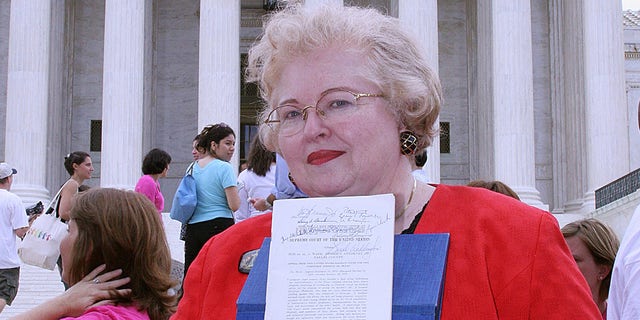
Sarah Weddington
Sarah Weddington Credit: Fox News

Roe v Wade? You guessed right. The United States Supreme Court case that established right to abortion.

Sarah Weddington, the attorney who argued and won that famous case died Sunday morning at 76.

The Democratic candidate for Texas agriculture commissioner, Susan Hays announced her obituary Sunday morning on Twitter.

“Sarah Weddington died this morning after a series of health issues,” Hays wrote. “With Linda Coffee, she filed the first case of her legal career, Roe v Wade, fresh out of law school. She was my professor … the best writing instructor I ever had, and a great mentor.

“At 27 she argued Roe to [the supreme court] (a fact that always made me feel like a gross underachiever). Ironically, she worked on the case because law firms would not hire women in the early 70s, leaving her with lots of time for good trouble.”

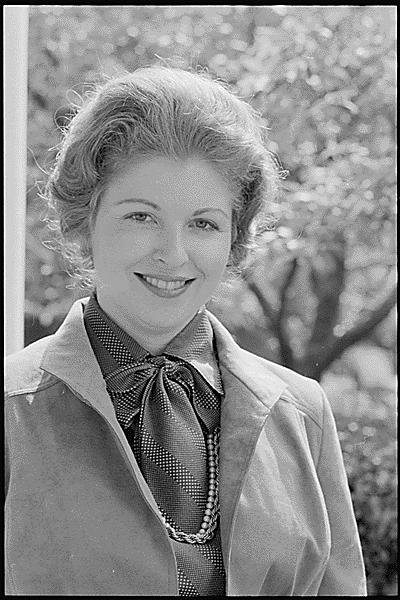
Photo Credit: BBC News

When the court ruled on Roe v Wade in 1973, Harry Blackmun, one of the nine US Supreme Court justices that heard it called the decision, “a necessary first step in the emancipation of American women.” Nearly 50 years later, under a supreme court packed with hard-line conservatives, the right Roe established is under threat in part thanks to a Texas law that drastically restricts access and offers incentives for reporting women to authorities.

In 2017, speaking to the Guardian, Weddington predicted such a turn of events. “If [Neil] Gorsuch’s nomination is approved, will abortion be illegal the next day? No. One new judge won’t necessarily make much difference. But two or three might.”

After steering Gorsuch on to the court, Donald Trump installed Brett Kavanaugh and Amy Coney Barrett. Barrett replaced the late Ruth Bader Ginsburg, a champion of women’s rights.

Weddington found her way to Roe v Wade soon after graduating from the University of Texas. Represented by Weddington and Coffee, Norma McCorvey became the plaintiff known as “Jane Roe” in Roe v Wade. McCorvey became an evangelical Christian and opponent of abortion. She died in 2017. In a posthumous confession, she said anti-abortion groups paid her to take such a stance.

In her Guardian interview, Weddington said arguing the case in federal court “was like going down a street with no street lights. But there was no other way to go and I didn’t have any preconceived notions that I would not win.”

She did win, but the case continued.

“Henry Wade, the district attorney, unwittingly helped us,” she said. “At a press conference, he said, ‘I don’t care what any court says; I am going to continue to prosecute doctors who carry out abortion.’ There was a procedural rule that said if local elected officials continue to prosecute after a federal court had declared a law unconstitutional, there would be a right to appeal to the Supreme Court.”

Sarah Weddington, Photo Credit: UPI

Before the court in Washington, Weddington said, “it was impossible to read the justices’ faces. The attorney on the other side started by saying something inappropriate about arguing a case against a beautiful woman. He thought the judges would snicker. But their faces didn’t change a bit.

“I had to argue it twice in the Supreme Court: in 1971 and again in 1972. On 22 January 1973 I was at the Texas legislature when the phone rang. It was a reporter from the New York Times. ‘Does Miss Weddington have a comment today about Roe v Wade?’ my assistant was asked. ‘Why?’ she said. ‘Should she?’

“It was beginning to be very exciting. Then we got a telegram from the supreme court saying that I had won 7-2 and that they were going to air-mail a copy of the ruling. Nowadays, of course, you’d just go online.

“I was ecstatic, and more than 44 years later we’re still talking about it.”

Weddington later revealed that she had an abortion herself, in 1967. “Just before the anaesthesia hit,” she said, “I thought: ‘I hope no one ever knows about this.’ For a lot of years, that was exactly the way I felt. Now there’s a major push to encourage women to tell their stories so people will realise that it is not a shameful thing. One out of every five women will have an abortion.”

Weddington predicted: “Whatever else I do in my life, the headline on my obituary is always going to be ‘Roe v Wade attorney dies’.”

In fact she achieved much more, as Hays detailed. Weddington was “elected as the first woman from Travis county in the [Texas legislature] in 1972 (along with four other women: Kay Bailey, Chris Miller, Betty Andujar and Senfronia Thompson).

“She was general counsel of the United States Department of Agriculture under [Jimmy] Carter and enjoyed her stint in DC. Federal judicial nominations for Texas were run by her as a high-ranking Texan in the administration.

“A Dallas lawyer she knew sought a bench. She had interviewed with him while at UT law. He’d asked her, ‘What will we tell our wives if we hire you?’ She told him he was wasting their time and hers and walked out of the interview. He did not get the judgeship.

“Ever the proper preacher’s daughter, she would never tell me who the lawyer was. People don’t know that about Sarah. She was such a proper Methodist minister’s daughter. One of the few people I couldn’t cuss in front of.”

Hays also paid tribute to Weddington as a member of a “Great Austin Matriarchy” including the former Texas governor Ann Richards and the columnist Molly Ivins.

Among other tributes, the University of Texas law professor Steve Vladeck said Weddington was “a remarkable woman [who had] a remarkable career and a remarkable life. May her memory be a blessing”.

Sherrilyn Ifill, president of the NAACP Legal Defense and Educational Fund, said simply: “Rest in power.”

Weddington indicated she was at peace with being remembered for Roe v Wade.

“I think most women of my generation can recall our feelings about the fight,” she told the Guardian. “It’s like young love. You may not feel exactly the same, but you remember it.”

Source: The Guardian

Malami: Is he Buhari’s shadow?

By SAM OMATSEYE

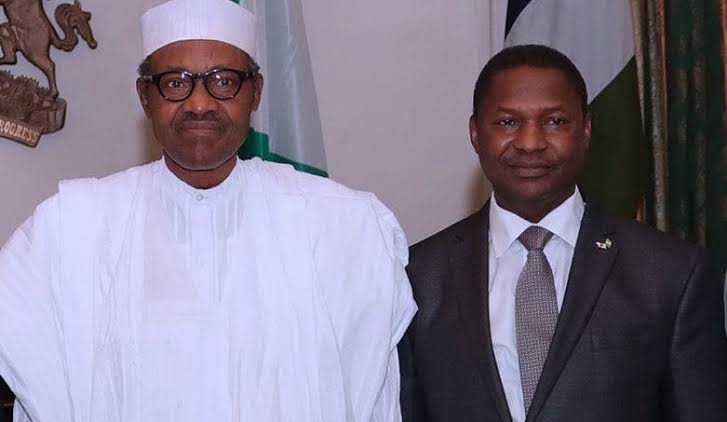
Very few who are familiar with Abubakar Malami will doubt that he is a cocky man. He is a sort ofTunde Idiagbon, a shadow of Muhammadu Buhari. He hardly smiles in public. He has a stern mien, and speaks in even tones. His eyes sometimes peep into a soulless heart. He detonates but does not emote. Unlike Idiagbon, he wears no uniforms. However, his web of power is a subtle cult. It is like a spider’s malignant design. More powerful than the Ilorin-born soldier. Malami is an attorney-general, Idiagbon a general. But the soldier had no attorney. He was a one-faced warrior. Malami is both attorney and a predator of justice. That is fatal. He speaks to the president. The president agrees. He does not need to be right. He has to bring his sophistry as an artist of persuasion. The shadow is more powerful than the man.
In a sense, he is the chief mocker of the commander-in-chief. He probably laughs to himself, “once I tell him in a certain way, and project both sides of the issue and pretend I don’t belong in either, he will fall to the side I gently nudge him to.” He tries it. It works. It happens again and again. He has done it quite a few times. Whether it is about herdsmen, or NDDC, or the debt fight with governors. He skews the law and the president acquiesces. So, why not with the electoral law? Hence, they go to him who want to win, and he calculates where to pitch his tent.

Malami, whether we admit it or not, is Nigeria’s most powerful man. He is the giant in Aso Rock, not the president. Russian writer Anton Chekhov said a giant should not use his power like a giant. The shadow is scarier than the man. Malami does not use the giant status for good. He knows how to flatter the man’s secret hopes.

It is just like English man Thomas Cromwell who made his king Henry VIII into a marionette, and he became the throne beside the throne, a skein recreated to its psychological detail in Hilary Mantel’s Wolf Hall.

Even those on Malami’s side who admire him do not like him. The governors, for example. They exchanged barbs barely a month ago over debts and deals. Now, the same governors have hidden under his many-layered skirt-like Anna Bronski, the wife of an arsonist who loved the skirts and grandmother of the anarchist Okar in what some critics believe is the best novel of the 20th century, the tragi-comic tale The Tin Drum by Gunter Grass.

So, the firestorm over direct primaries became a joy of foes. It reflects the drifts and quicksand of our political class. They embrace and race away, they hug and huff, and loyalties are as constant as the weather. The governors wanted indirect primaries. It was not a philosophical quest for them. It was a gladiatorial contest. They are desperadoes of survival. They want to pick their successors. The want to go to the senate. They want to remain puppeteers. They want to continue as monarchs of democracy. The system, though called a democracy, must continue as a ruse on their own account.
This is not the place to quibble over patches of the president’s infelicitous prose like the phrase “implications on.” But to say that the argument was specious, and insincere. The notion that direct primaries contradict freedom of choice is elitist. Who is making the choice? The party members, or the governors and a few wheel horses?

I recall the story of a former governor, now a minister, who did not like an unconscious quip by a house of representative member. He decided he would not return to the house. The fellow has not up till today. It was the whim of a man to decide who will represent a whole people. The fellow wanted a chance to beg. It never happened.

Ekiti Governor Kayode Fayemi did not speak truth to his hut when he said the governors are not afraid of direct primaries. We know the options are not that open. The other position that the people do not decide but they are influenced is correct. Democracy is a game of influences. Each side must make its case. Democracy absorbs influences in pockets around a constituency. Whoever wants to be nominated as governor must work hard across the board. He must meet the power centres who have great influence in their communities. The power centres are often trusted. They feel the pulse and project their demands and interests through these big men. That is what, for want of a better word, we call structure. Democracy is egalitarian when big men channel the fears and hopes of the common folks. It is not always perfect. The big men are not always good men. But they are the best we have and they are not always in charge. They also have to win or be defeated. The power to represent is one of the cardinal uncertainties of democracy. The fear is how do we define popular? Who is popular? How does the powerful man in a democracy become an autocrat?

That is what many theorists are debating in the wake of the rise of despots like Trump and Erdogan. Hitler was a product of democracy. It is not perfect, but it is the best means of popular persuasion known to man. So, ideas like direct primary are its own way of refining it for the people.

Is it an irony that a man who rose on the waves of Talakawas decided to pen his approval against the spirit of the Talakawa? The feudal lords who did not like Buhari’s rising will now benefit from his anti-talakawa signature. If it was so right to avoid corruption and expense, why not propose the general elections to be a platform of choices that could also occlude mass elections? After all, democracy started that way. In the United States, it started as a system of rich white men. Men like John Adams believed that majority should not vote. They are too foolish. Philosopher J.S. Mill described the majority as foolish. Former British Prime Minister Benjamin Disraeli wanted votes to be weighed like fish in the market. Some people’s votes are bigger than a thousand men. That negates the American creed that “all men are created equal.”

The president through his Malami has cancelled for a generation a chance for the people to take back their democracy. It is a stab at equality. If the president were running for another term, I doubt if he would have taken that route.

This is no system by the people. Jefferson lamented that democracy only worked on election day. Not even so yet in Nigeria. Revolutions started because the people wanted to overthrow a greedy elite. In the collapse of the French Revolution, some Bonapartists, including Abbey Sieyes, coined the phrase: “Power from above, confidence from below.” It is what some have phrased in latin, “Pars imperans, Pars subdita” (some to rule, some to obey). This is in contrast with the revolutionary in the days of the 20th century Russian ferment who proclaimed, “if the system does not change from the top to the bottom, then it must change from the bottom to the top.”

This rather is a democracy of obedience.

•Source: Facebook

Desmond Tutu, Kukah and the protests in London; By Lasisi Olagunju

Proverbs are not just the palm oil with which yam of words is eaten; they are the yam. Where I come from, there are a million proverbs for every experience of life. Some people are contagiously sick but they hate being told so. They suffer self-deception, the refusal to believe what is true about themselves. Eni ba ntan ara e, oun ni orisa oke ntan. O di’fa fun Arewa ti ese osi ndun ti nwe t’otun (the one who deceives himself is the one God deceives. It is the case with Arewa who has a sore on her left leg but is applying medicine to the right). I picked that line from my 98-year-old uncle two weeks ago during a discussion. The proverb came back to me as I watched leaders of the North, with profuse thanks, serenade the president in Maiduguri, Borno State last Thursday. He was there to inaugurate state projects, including mega schools, in the middle of an interminable war of guns and rockets.

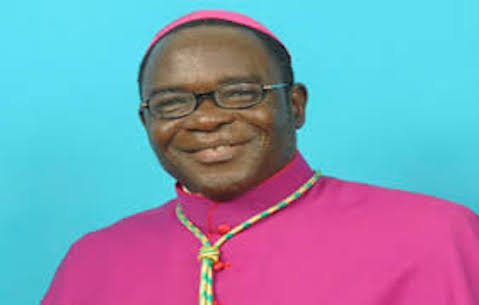
There was a protest in London a day after by some northern Nigerians resident in the United Kingdom. BBC Hausa Service streamed the protest live on Facebook. The protesters said they were tired of insecurity in the North and were frustrated by the helplessness of the Nigerian State and its bumbling government. They, therefore, thought help from outside was necessary if our North would stop bleeding. They sounded real; they did it well and some of them even wept. They held placards one of which read: “Silence is Violence.” An average southerner would read poetic justice in that inscription; he would ask when exactly the Northern protesters realis00ed that conspiratorial silence in the face of evil is evil? Bishop Mathew Kukah in his Christmas message said the North is now firmly in the grip of evil. “In their sleep, on their farmlands, in their markets, or even on the highway, innocent citizens have been mowed down and turned into burnt offerings to gods of evil. Communities have been turned into gulags of misery, death, pain and perfidy. We must move quickly before Arewa descends into Arewanistan,” Kukah said in the message entitled ‘A nation still in search of truth and vindication’.

But that statement was not Kukah’s first; the London protests were not the first either. Protests and complaints alone cannot redeem the North. Desmond Tutu, the South African iconic archbishop and theologian who died yesterday professed an ecclesiastical philosophy of redemption. It was his point that no case is totally hopeless but, “there comes a point where we need to stop just pulling people out of water. We need to go upstream and find out why they are falling in.” Why is northern Nigeria forever in the news for things ghastly? And why are the victims there hooked till eternity on sleeping pills? Political and religious bandits, and other common criminals raid them daily from farm to home; they groan and moan and blame their stars. They even fight you if you complain on their behalf. I saw it in scathing online reactions to last week’s protests in London. They did it too to Mathew Kukah for asking the president to fight those fighting the North. My people say you wake up not one pretending to be asleep. “There is nothing more difficult than waking someone who is only pretending to be asleep.” This quote from Tutu is probably taken from the Yoruba pantheon of the wise where proverbs are drones for peace and for war.

Terrorists kill more Muslims than they kill Christians in the North. Yet, it is Kukah and his people that are doing the talking. We know some sheikhs are more powerful than the president. We are told that even the bandits dare not look them in the eyes. But where are they? They are quiet and silent. They don’t care. Desmond Tutu said again: “if you are neutral in situations of injustice, you have chosen the side of the oppressor.” The London protesters who carried “silence is violence” as their banner of battle had the sheikhs, the Ulama etc in mind. Those who should care have long cast care into the deep seas. Like bangles and Soyinka’s Abiku, they think in vain are the protests from powerless boko (book) people in foreign lands.

Thirty-five days before the transition of Chief Obafemi Awolowo, he reflected on what the North was and what it could turn out to be. “I don’t believe that the North is destined to be educationally and socially backward. It is their people that make them so…,” Chief Awolowo said in an April 4, 1987 discussion with Professor Moses Makinde of the then University of Ife. He deplored the refusal of the North to embrace education for all and the consequences of what he called the ranka dede mentality of the poor majority in the North. The question has always been whether the North will ever catch up with the South in education. Awo answered that question: “How can you catch up with somebody who is running while you are crawling? See the way people in the old western region are contributing money to build one classroom or the other in the villages….But in the North, people are yet to put premium on the education of their children. …But I think sooner than later, the leaders of the North will see the repercussion of their selfishness and carelessness in their attitude towards western education. But the time will be too late, and if they don’t regret it or blame themselves for lack of foresight, the northern youths may ask their leaders some questions when they see the rate of development that goes with education in many parts of southern Nigeria. They may then wonder whether it was in their stars or in the selfishness, carelessness and lack of foresight of their past and present leaders…” (see Awo as a Philosopher by Moses Makinde (2002); page 281).

Today’s insecurity in the North is therefore a child of yesterday’s misadventures. Nobody wants to admit that fact. What the Muslim North needs but which it keeps denying is western education for the children of the poor and a reappraisal of values across the region.

Professor Suleiman Elias Bogoro is the Executive Secretary of Tertiary Education Trust Fund (TETFUND). On 31 October 2020, he delivered a lecture to mark the golden jubilee of the Arewa House, Kaduna. Access to education in northern Nigeria, Bogoro said at that lecture, was a compelling obligation of the northern elite. His lecture contained thought-provoking data. I summarise everything here: At the primary school level, enrollment rates in the North was between 35 and 47 percent compared to 75 to 85 percent in the South. Even among those registered as enrolled, attendance rate was 53 percent up North. At the tertiary level, Nigeria’s North-West had the highest number of federal universities. It had 10 while the South-West had seven, South-East five and South-South seven. But that is where it ends. The South has a way to escape Nigeria and its suffocating tendencies. Out of 79 private universities in Nigeria in 2020, the South had 63; South-West alone had 36, almost half of the total. The figures from the North remained very distressing: three private universities in the entire North-West, two in the North-East; North-Central had eleven. What does that tell us? The south is not waiting for the crawling North; southern elites are building (private) schools to create access. What are the powerful elites of the North building? Even when access is provided, will the North’s religious zealots allow the northern child to go to school?

Saudi Arabia is Islam’s world capital. But it is not allowing its religion to stand in the way of its peace and development. Two months ago, Saudi Arabia “started moving earth and tunneling through mountains” to build a futuristic, fully automated linear city covering 26,500 square kilometres. The leadership of Saudi Arabia describes what it is doing there as a “civilisational plan that puts humans first.” Reports say when completed, “the project is expected to generate 380,000 jobs and contribute US $48 billion to the kingdom’s GDP by 2030.” The project will cost a princely sum of $500 billion. If decision makers in northern Nigeria had that money, they would funnel it into promoting wrong ideology and ideas that would multiply their problems and put all of us in more trouble. My position is being guided here by history. At about the same time western Nigeria introduced free education and expanded access to learning and knowledge, northern Nigeria was pouring its resources into Khartoum, Sudan to teach its youths religion and to recruit teachers for Arabic language without corresponding action on western education. The result is today’s multitude of underdone people without skills and who see western education as sin and who kidnap and kill even their kith and kin.

The real competition of the North, therefore, is in its bedroom. It must cleanse itself of a philosophy of existence that is alien to the religion it professes. While western education is sin in northern Nigeria, Saudi Arabia is pumping billions of dollars into it for its own good. A report said that in the five years to 2018, the total number of students in higher education in Saudi Arabia grew by 8.3 percent to 1.62 million. Its Crown Prince, Mohammad bin Salman, in May this year, announced that the country had five universities ranked among the 500 best universities worldwide. He said the kingdom’s objective was “to have three universities ranked among the best 200” while working towards “having one university ranked among the best 10 universities worldwide, which is King Saud University.” He added that “even if it ranked 20 or 30 that would be extremely good.” Saudi Arabia has 60 universities; 70 percent of the varsities are public institutions.

Northern Nigeria cannot be more Muslim than Saudi Arabia and the other gulf states. From Bahrain to Oman to Qatar to the United Arab Emirates (UAE), reports the world get from there daily are edifying to sanity and commonsense. They are building schools, training and raising world-class citizens. Northern protesters at home and in London should, therefore, look beyond Buhari and his government as the problem. Everyone who kowtows to the religious tzars in the North and allows the miseducated to dictate who rules the North and Nigeria is the problem. Wise people in the south saw this a long time ago. They’ve been doing what heart surgeons do, creating bypasses away from Nigeria’s severe blockages. That is the reason the south had 63 out of 79 private universities in 2020. So, it is fruitless for the North to continue throwing power and money into competing with a south that has moved on. For the North to know peace, the gap it needs to close immediately is the one between its privileged elite and the uneducated victims of the unjust system there. What I am saying is that the North’s bleeding will remain endless unless it addresses its fundamental problems of leadership and ethical contradictions. It needs to stop deceiving itself. It should listen more to reasonable voices like Kukah’s and Bogoro’s.

Where stragglers are made leaders, everything goes wrong. Twenty years ago, how much would it have cost the North to educate today’s rampaging terrorists and how much have we spent scrambling to put out their fires in the last 12 years? We still don’t want the truth here. Monies that we should be using to build a tomorrow of values are daily poured into the bottomless pit of northern Nigeria’s self -inflicted insecurity. Now, everybody is scarred, tired and hopeless. What is the cost of human life in Nigeria this year and how much will it be worth in 2022? The country is in tears; Nigerians who were sad yesterday are sadder today; the fog is foggier and the road narrower for the down and out. ISWAP rockets may be raining in Borno and bandits slaughtering whole clans in Sokoto, Zamfara, Kaduna and Niger, but politicians are safe in their bunkers in Abuja. They are happy and are wondering why we should not be happy too. They say they are signing budgets and spending billions building this and that and investing heavily in bricks and mortar everywhere – all for us. They are happy but are the people happy? If the people are sadder now than ever, what is the way out?

This year will be over this week. The new year will be brand new in all things good and godly. We will have peace. Amen. Goodness and abundance of grace will be ours in the new year. Amen. In 2022, the present noise of battle will become sweet songs of victory. Amin.

Soot and our collective conscience (1), By Dakuku Peterside

As you read this column, there is a high probability that there is at least a 500 percent increase in number of persons who are suffering from respiratory-related ailments in Rivers and Bayelsa states compared to 2014-2016 rates. An estimated 500,000 persons have their immune system compromised and exposed to the extreme of the prevalent viral infection, and another unconfirmed number of persons suffering from severe kidney, liver, and mental problems. There is most likely a rapid increase in cancer-related cases. In addition to this sad state of health is a 30 percent spike in morbidity and mortality rates in Rivers and Bayelsa states since 2016. This are the findings of the Prof. Precious Ede-led Technical Committee empanelled by Rivers State Government which did a comparative investigation on impact of soot pollution 18 months before August 2016 and 18 months after August 2016 when the problem became noticeable.

This picture reflects what the more significant population of people resident in Rivers and parts of Bayelsa states pass through daily due to the environmental challenge of soot. The soot, also known scientifically as black carbon, is a term for ultra-fine particles, PM 2.5, produced by incomplete hydrocarbon combustion. It is the stuff that makes soot dark, an unwanted by-product of burning diesel fuel in vehicles, biomass in stoves for cooking and heating, coal in small industrial operations and agricultural waste in post-harvest fields.

The primary sources of soot in Nigeria include Illegal refineries, gas flares, petrochemical industries, and legitimate refineries, burning of fuels like diesel, petrol used in transport and electricity generators, the burning of vehicle tyres, burning of oil spills by incompetent contractors, burning of sundry wastes, and bush burning. The US Environmental Protection Agency describes it as one of the deadliest forms of air pollution.

A recent investigation, reported by The Guardian, revealed that artisanal refining, which is the prime cause of soot pollution, is occurring in 14 of the 23 council areas of Rivers State. The activities of the refiners are said to be causing incomplete combustion of crude, which now releases carbon monoxide, sulphur into the air. A few years ago, Port Harcourt was rated the worst polluted city globally with an air index of 188, followed by Beijing, China, which ranked 182, and Delhi, India at 181.

Following an outcry of citizens facing severe breathing difficulties, the Rivers State Ministry of Environment set up a scientific investigation team of 20 experts from various inter-disciplinary and relevant fields. The report revealed that illegal bunkering and gas flaring are two significant sources of soot in the state, and about 22,077 persons have suffered from respiratory-related ailments in the four years (2016- 2020). The predictions by many health professionals are that if nothing is done urgently to stop the soot, many residents might experience chronic respiratory diseases, heart problems, suffer cancerous and non-cancerous conditions and increase in mortality rate.

This is becoming real as some persons have left the city, who have found it challenging breathing while in Port Harcourt. Many people who live in Rivers State and neighbouring Bayelsa will most likely succumb to COVID-19 because of the compromised respiratory system caused by soot pollution. Studies have found a strong link between municipal soot or air pollution and Covid-19 cases.

Besides the local environmental and health issues, Black carbon (soot) fuels global warming in two ways. One, black carbon heats up when exposed to sunlight. Two, like most dark substances, it absorbs rather than reflects light. When black carbon falls to the ground, usually after a few days, the Earth’s surface is left darker, reducing the planet’s reflectivity. This traps far more heat per unit mass than carbon dioxide, making it the second-biggest contributor to global warming.

This deadly air pollution came to light in 2016 when the skyline in several parts of the PH city was covered with dark particulate matter. The state government set up a committee that produced a report with the central recommendation to set up modular refineries to solve the problem of soot. However, lack of political will by the state administration, failure by the Federal Government and relevant federal agencies, and the international health and environmental organisations to implement the report or swiftly initiate moves to tackle the air plague or put in place regulations that will reduce it has made the challenge of soot to linger.

A cursory review of the soot problems will reveal why an urgent and focused synergistic approach is needed to tackle this social, scientific, economic, health and environmental challenge that poses a significant threat. I make bold to say that the effect of soot combined with the Covid-19 pandemic poses an existential threat to all residents of Rivers State.

There is the temptation to think that this environmental pollution challenge of ‘soot’ is a problem for residents of Rivers State and neighbouring Bayelsa. Science has proven otherwise. Environmental challenges in any part of the world, as you have in Rivers State,are intertwined, and interlinked with the rest of Nigeria and the world. The problem of soot reoccurring in Rivers State in the past 4-5 years is a problem for all Nigerians and the global community. An environmental issue in one part of the globe contributes to environmental pressure in other regions. Specifically, air pollution linked to carbon processing contributes to global warming, ozone layer depletion, acid rain pollution and ocean acidification.

The problem of soot prevalent in Port Harcourt should be of interest to all Nigerians and the global community. The spate of environmental pollution nationwide, which no one takes full responsibility to tackle, is expressed in Rivers State. The neglect of Rivers State soot by the government at all levels and the international community sends a strong message that these state, national, and supranational agencies seem to no longer care about the lives of six million Nigerians who daily face the threat of extermination.

Being inundated with petitions for over five years, the relevant Federal Government agencies have failed to rise to the responsibility of discharging their statutory roles, which means our government seems to no longer prioritise citizens’ health. In every sense, the problem of soot in Rivers State and Bayelsa State is a national problem denting our collective conscience. A state and federal government that ignores the threat of extermination of 6-10million of its citizens cannot be said to have the welfare of its citizens at heart.

The Rivers State Government, which has a moral responsibility to protect the people’s lives in its jurisdiction, has done little or nothing tangible to mitigate this problem. The soot report completed in the last three years has been gathering dust at the Government House, and none of the recommendations has been adequately implemented. Even the state government’s actions are inimical to any tangible progress in protecting the environment since it neglects or jettisons environmental impact assessment for some of the projects carried out in the state to reduce pollution.

By commission or omission, the state government, the security agencies and other regulatory bodies have allowed the illegal refining activities to carry on unabated. Even citizens know where unlawful petroleum refining activities occur and where the products are bought and sold. It is an open secret, and the government at all levels have not done much to cut off the supply side of the illegal economic activity.

The state government severally touted the establishment of modular refineries in 2021 as the panacea to the soot problem. It claimed that “the modular refinery is the main thing to curb it (soot}”. As the wave of soot occurrence escalates, the air quality index in the state worsens. Amidst public outcry, the state government is aloof and indifferent even when there is a degradation of the environment and danger to the health of residents. Paying lip service to this significant problem is a folly taken too far. Lives are at stake, and the state government must do something now.

There are several federal agencies, such as the National Oil Spill Detection and Response Agency (NOSDRA), Nigeria Upstream Petroleum Regulatory Commission (NRC) as well as the National Environmental Standards and Regulations Enforcement Agency (NESRA), saddled with the responsibility of regulating the environmental aspect of petroleum value chain in Nigeria. These agencies are yet to wake up to the reality of tackling this menace of illegal mining and refining of oil in Rivers State. The abdication of responsibility of combating this menace of soot by both the respective environmental and security agencies can be equated to ecological terrorism.

I must acknowledge that Illegal mining and refining of petroleum products seem to be the mainstay of economic activities in some villages and towns, and it provides income and is a source of livelihood to many in these areas. Inadvertently, one can argue that these illegal activities have helped to stem the restiveness of the youths in these communities where these illegal activities are going on.

However, I must say that we cannot solve illegality with illegality. The government should provide enabling environment for legitimate economic activities in these communities instead of using indifference to criminal activities of illegal refining of petroleum to placate angry and unemployed youths of this area. It is counter-intuitive to do that, given that the little economic gains from these illegal activities will be far outweighed by the soot’s damaging impact and health implications.

Irked by the surging menace of soot, residents of Port Harcourt had taken specific actions to draw the government’s attention — they had mobilised themselves, staged a peaceful protest, and launched a campaign on social media platforms to raise the alarm continually. They used radio and television to mobilise and inspire actions by the government and relevant stakeholders. In a determined spirit of bringing the menace to an end, a civil society group, the Extra Step Initiative (ESI), in August 2019, sued the Federal Government for continuous pollution of the environment in the state.

The ESI carried out further studies and compiled a petition of about 300 pages, sent it to the United Nations, and copied the World Health Organisation, United Nations Environment Programme (UNEP), and all the organs concerned and leaders of the world. The British Prime Minister at the time, Theresa May, acknowledged receipt of the report, but Britain has done nothing about the soot to date.

I note with utmost dismay that a joint mission by the UN/UNEP and WHO has investigated the soot and met with affected groups in Port Harcourt. However, nothing came out of it, and neither has any meaningful actions emanated from these organisations to improve the air quality in Rivers State.

In conclusion, the skies of Rivers State are often covered with thick dark clouds, and the soot particles are seen dropping on cars, clothes, houses, and markets. This anomaly has significant health and economic implications and must be dealt with now. Countries often face dilemma promoting unfettered economic growth and the resulting public and environmental welfare. We must not play politics with this because of the enormous negative consequences that it portends.

The Court That Killed Accountability

By Chidi Anselm Odinkalu

“If everything is for sale, including the courts and the police, trust evaporates, credit vanishes and business withers.” Yuval Noah Harari, Homo Deus: A Brief History of Tomorrow, p 257 (2016)

It is no longer news that Nigeria’s courts have normalized corruption and abuse of power. They have also put the corruption of courts and judges beyond the realm of accountability. Having developed into a country incapable of generating indignation for these perversions of high judicial office, Nigerians nevertheless wonder why the country has descended into an orgy of violent self-help. What follows is a recent timeline of how.

In 2007, former Nigerian president, Olusegun Obasanjo and his hand-picked electoral umpire, Maurice Iwu, presided over the most venal elections in Nigeria’s history. 86.35% of the offices contested and called in that election ended up before the judges who ultimately decided the winners and losers. Unsurprisingly, the judges were under considerable pressure of different kinds.

One of the contests that ended up in court concerned the governorship of Osun State in South West Nigeria. Presiding over the tribunal in that contest in 2007 was a judge of the Plateau State High Court, Thomas Naron. In this capacity, Justice Naron got into intimate telephone exchanges over the case with Kunle Kalejaiye, a Senior Advocate of Nigeria (SAN), representing the then Governor of Osun State, Olagunsoye Oyinlola, in whose favour the tribunal eventually decided. These allegations eventually ended up before the National Judicial Council (NJC) in a petition against Justice Naron. In February 2013, the NJC found that Justice Naron had violated his judicial oath in his dalliance with Kunle Kalejaiye and terminated his judicial career.

Separately, the Legal Practitioners Disciplinary Committee (LPDC) took up a complaint against Kunle Kalejaiye for violation of the Rules of Professional Conduct (RPC) in the legal profession. On 21 May, 2015, the LPDC found Kalejaiye guilty of multiple violations of the RPC and disbarred him. Mr. Kalejaiye appealed against his disbarment ultimately to the Supreme Court. On 15 March, 2019the Supreme Court decided that his right to fair hearing had been violated because a member of the LPDC who had failed to sit in the proceedings of the Committee had nevertheless participated in its final decision. So, the Supreme Court voided the decision of the LPDC and gave Mr. Kalejaiye a clean bill of health without clearing him of the allegation of corrupting judges. The NJC fired the judge whom Mr. Kalejaiye corrupted but the Supreme Court saw nothing wrong with corrupting him.

This decision was a curious departure from over four decades of Supreme Court decisions. In September 1971, the Public Service Commission of Rivers State determined that Athanasius Hart, then Permanent Secretary in the state Ministry of Works, Land and Transport, was guilty of serious charges of abuse of office and official corruption. Instead of taking action against Mr. Hart, the Commission transmitted its recommendations to the then Military Governor, Alfred Diette-Spiff, who ordered that Mr. Hart be summarily retired. Mr. Hart challenged the governor’s decision. He lost in the High Court and appealed to the Supreme Court, which found that the power to discipline the Permanent Secretary belonged not to the Governor but to the Public Service Commission. As a result, the Supreme Court set aside the Governor’s decision but, rather than reinstate Mr. Hart, it ordered on 19 November, 1976, that the case be remitted to the Public Service Commission “so that the Commission can exercise its powers….as it may deem fit.”

When it decided the case of Kunle Kalejaiye, the Supreme Court did not appear to remember the case of Athanasius Hart from 43 years before. Two years after, on 16 June 2021, the Supreme Court equally forgot what it did in Mr. Kalejaiye’s case. The case this time involved three lawyers, Mamman Waziri, Olayori Muideen and Osaretin George Izegbuwa, disbarred by the LPDC for serious professional misconduct. As with Mr. Kalejaiye, the Supreme Court found that there had been a violation of fair hearing because a member who had not participated in the proceedings voted on the final decision of the LPDC. However, unlike in the case of Mr. Kalejaiye, rather than give these more junior lawyers a clean bill of health, the court ordered the retrial of the lawyers by a new panel of the LPDC. The court made no effort to justify why it decided these cases differently.

This tendency to invent law on a whim has characterized decisions of the highest courts in Nigeria on matters of judicial integrity. On 23 June, 2017, the High Court of Lagos State delivered a ruling asserting competence to try Hyeladzira Nganjiwa, a judge of the Federal High Court, for unlawful enrichment (another name for judicial graft). Nganjiwa appealed to the Court of Appeal claiming that he could not be prosecuted for such a crime without first having been disciplined by the NJC. Five months later, on 11 December, 2017, the Court of Appeal agreed with him that he could not be prosecuted except after the NJC had decided on a petition against the judge. Interestingly, when the NJC earlier this month disciplined three judges for issuing “black market” ex parte orders, it did not await nor did it receive any petitions.

Nganjiwa is back judging. Justifying itself, the Court of Appeal observed: “if a judicial officer commits theft, fraud, murder or manslaughter, arson and the likes, which are crimes committed outside the scope of the performance of his official functions, he may be arrested, interrogated and prosecuted accordingly by the State directly without recourse to the NJC.” With these words, Nigeria’s Court of Appeal says collecting bribes is within the scope of a judge’s official functions? By the way, if the Court of Appeal had bothered to read Nigeria’s Code of Conduct for Judicial Officers, it would have found that Rule 1(1) of the Code requires all judicial officers to “respect and comply with the laws of the land….” In effect, the distinction that the court seeks to draw between judicial corruption on the one hand and other crimes on the other, such as murder, manslaughter or arson, does not exist because the crimes in the latter category also violate of the Judicial Code of Conduct. On this kind of jurisprudence, Justice Donald Ikomi would not have been exonerated after trial on a charge of killing of his Police Orderly because the judicial fraternity would have invented some technicality to peclude that from happening and condemned him to a lifetime of living with indelible reputational blot as a killer.

Following the decision of the Court of Appeal in Justice Nganjiwa’s case, in January 2021, the High Court of Lagos discharged Mohammed Yinusa, another judge of the Federal High Court, on charges of having received unlawful payments from senior lawyers who were conducting cases before him. He was not acquitted. Thereafter, the NJC reinstated him as a judge. How lawyers can appear before him and call him “My Lord” knowing that he is forever tarnished is another matter. Similarly, on 21 November, 2021, the Federal High Court in Lagos discharged Rita Ofili-Ajumogobia, another judge of the Federal High Court, from charges of money laundering again on a technicality.

In an icing on this bazaar of judicial whim, the Supreme Court on 20 December, 2021 reversed the conviction of Joseph Nwobike, another SAN, on charges of perverting of the course of justice. Mr. Nwobike reportedly specialized in “inducing court registrars to ensure that his cases were assigned to his preferred judges so he could obtain favourable judgments.” Nwobike, the charges read, also offered bribes to Mohammed Yinusa and Hyeladzira Nganjiwa, both judges of the Federal High Court. In a startling perversion, if ever there was one, the Supreme Court claimed that it was not “safe to regard the offence of attempt to pervert the course of justice which [Nwobike] was convicted for, where it has not been shown that it was committed with the objective of earning wealth…. as an economic and financial crime.” With clear evidence that Nwobike went about buying up judges and court registrars, the Supreme Court still wanted proof that his name was not OXFAM?

The decision of the Supreme Court purporting to clear Joseph Nwobike and reinstating him as a senior lawyer seals its reputation as the venue where accountability meets the judicial Guillotine. Tragically, in this one decision, the court inflicts eternal injustice on Nwobike, who, like Kunle Kalejaiye, will never be able to clear his name of the stain of buying judges and suborning courts. Simultaneously, it afflicts the Nigerian legal profession with indelible reputational damage.

No one wants to invest in a country in which judges lack the capacity for indignation over credible charges of judicial corruption. This is why Nigeria bleeds investments and even those who end up investing in Nigeria don’t choose it as the place for resolving their investment disputes. They think Nigerian judges are bought and sold on the open market and the Supreme Court is unwilling to face this down. Rather, it emits high tolerance for corrupting jurisprudence and a jurisprudence of corruption which is as unfair to honest judges as it is damaging to hardworking lawyers. So, Nigeria and its professionals lose jobs and earnings to professionals from more dependable jurisdictions and even those seen as doing well are mere bag carriers for their peers or inferiors from those places. As far as judicial cuts go, it is difficult to find any more unkind or less supreme.

A lawyer & teacher, Odinkalu can be reached at [email protected]

The Angels, the Shepherds, and the Josephs

The truths about God are consistent. He made the universe and has a purpose for it which nobody can change. He arranged salvation/redemption for mankind. The earth has an Expected Date of Destruction. Thereafter, there is an eternity to spend with Him or in Hell. These facts are unchangeable. What is changeable is the estate of man: to be elevated above the level of angels or remain a mortal with certain eternal unpleasant consequences. Those who choose to be elevated and are serious about their choice seem to share some characteristics which we see in the Angels, the Shepherds and the Josephs in the nativity events of the wee hours the first Christmas day (Luke 2). Those who do not choose to be elevated can be grouped with the Demons, the Caesars and World System (Babylon) who consciously and unconsciously try to antagonize the will of God but end up in the now only as fillers and bystanders in the consummation of God’s will and as, at the end, compatriots of the Devil in the dump-site land of the universe called Hell.

The angels, eager to see the elevation process of mankind of which they had believed in God and participated in delivering the promises to the patriarchs and the prophets over millennia were now excited to participate in the annunciation, not just to Mary but to Joseph and now to the Shepherds. They not only knew that the King’s message required haste but felt privileged to participate in this historic event. And their message summarized Christmas. The Lead Angel said ‘’ Fear not, for, behold, I bring you good tidings of great joy, which shall be to all people. For unto you is born this day in the city of David a Saviour, which is Christ the Lord’’. The other angels sang the implication of what their lead herald said “Glory to God in the highest, and on earth peace, good will toward men”. The message will not bring fear to the world; it is great joy, in which everybody in the universe can partake; God’s promise of salvation to mankind is actualized in this Anointed who is also Lord. It is to God’s glory that peace has landed on earth and now God looks at men with favour and good intentions.

In their worshipful dedication, the angels showed undivided loyalty to God. They believed God and lived to anticipate the actualization of God’s plans and purposes. They conveyed His message with haste and precision. They devised to make it unforgettable by re-echoing it in a celestial chorus that will stick to memory. They directed the shepherds to confirm it in their human ways.

The shepherds, probably so chosen for having learnt diligence and the sense of responsibility, were in the field at these coldest hours of the harshest weather to protect their flocks from harm. They were intent on recognizing the slightest sound and sight of danger. They were the appropriate recipients of this news. We need to be available to hear God and also be honorable and bold enough to prove what He says. They decided to go check it out and make it known to all what they were told concerning this Child. They did not postpone it till morning despite their exhaustion, the time of night, the distance and the cold. I guess they did not wait till daybreak to tell others; no wonder those who heard it believed and marveled despite the fact that the news bearers were men of lowly estate. Then they returned with praises on their lips for God’s word proven live before their very own eyes.
For Mary, the encounters with the angel Gabriel, with Aunty Elizabeth Zachariah and now with the shepherds were things falling in line for a heart that worshipfully submits to God by the principle of ‘’behold the handmaid of the Lord; be it unto me according to thy word’’. She accepted and did her human part. The bewilderment of the angel’s visitation was clarified by the prophecies of Elizabeth and confirmed by the story of the shepherds: the events did not leave her in confusion. They were greater revelations that rendered the taunts of ignorant people (mistimed, premarital pregnancy, an abomination) insignificant. Same for Joseph, who was not conquered by cultural practice, peer pressure and religious belief to put her away. An encounter with the Lord brings conviction. So against all facts of lack of accommodation in the houses of relations and the hotels, he traveled as a law abiding citizen to the counted and taxed. And in this situation he could not carry much belongings even if he had them. He was the willing human succourer, the physical guardian of the entrance of God into humanity.

Creation and creatures, other than man, often seem not to lose their spiritual sensitivity when it comes to divine orders. So the sun and moon stood still for Joshua, the dial of Ahaz moved the opposite direction for Isaiah and the red sea carved a dry highway for Moses and the Isrealites. Gideon in his doubtful experiments got a fleece of wool wet or dry against nature to prove it was God’s messenger he heard. For the then little Joseph Junior to be christened Jesus, this has to be because without Him there is nothing made that was made. So the tetanus and other germs in cow dung showed respect; so did the cold, the darkness, the straw, the labour without a midwife, etc. that He was humble would not strip Him of His powers and rights.

Of course the demons, Caesar Augustus and the world system failed and were only fillers in the events. Demons got it wrong when they prompted the Emperor to pass the decree, thinking it was in Nazareth in Galilee that Jesus would be born because they heard that out of Nazareth He called His Son. They made sure no accommodation existed thinking that, as a king, a VIP room was necessary. Till today, those who reject the Saviour keep antagonizing His will and people but they should know that the counsel of God must stand. 

We can now outline the characteristics of those who elect to be elevated to a level higher than angels (and are serious about it) by picking from the characters of the Angel, the Shepherds and the Josephs.

The angels showed worshipful anticipation of the performance of God’s promises and plans. The word of God says that to those who show such character ‘’ the Sun of Rightoueness will arise with healings in His wings, and they will go forth as calves in the stall’’. The angels performed their actions with joy. Those elevated beyond humanhood and angels should learn to carry out God’s assignments with joy. Break this news of joy to the world with joy. Love with joy. Serve humanity with joy. Live righteously with joy. The kingdom of God is righteousness, peace and joy in the Holy Ghost. They were earnest in carrying out their assignment. The elevated must be earnest in carrying out their assignment, redeeming the time, even in these evil days. They did not add to the message. God’s word in the book of Revelations says to not add anything to God’s message.
The shepherds were united and banded together to carry out their assignment. Jesus prayed for those elevated to be united. The purpose will be clear and discussions will not go wide of them. In Psalms, the writer said in unity God commands the anointing. They made efforts to confirm the message they received and told of it without considering their convenience. They did it, so to say, out of season: did not wait for the morning, did not clean up first, did not have to take breakfast first and did not raise funds for it. They were full of joy even as they returned. The elevated must live with joy for the joy of the Lord is their strength: that joy that is their come what may because sadness will take their attention from the Lord.

The submissiveness to the will of the Lord is the major character of the Josephs. Submitting to the will of God, Jesus laid aside His majesty and gave up all for the elevated. He submitted to human birth, to a life of sorrows and grief, and to death of the most horrendous and humiliating type, the death of the cross. All to elevate mankind that are willing to accept His offer. For the elevated, submissiveness is total – self, sense of pride, possessions, ambitions, etc. that shows total loyalty. It is at the point of total submission that the gravitational pull of sin loses its power over the elevated. At the point of submission, the elevated has exited and is beyond the atmosphere of the world of sin. The Josephs knew their identity. They belonged to Bethlehem and would not be counted in Galilee. Jesus knew His identity: He was the anointed, savior and king. The elevated should know their identity as the chosen, redeemed, saved and elevated. They will not be counted with ungodly, the scornful and the sinners. They should know their boundaries and stay within them.
Let those who choose to be elevated beyond the level of humans and angels to sonship of the Most High be diligent in living out the characters of the Angels, the Shepherds and the Josephs in Yeshua’s nativity story.

Merry Christmas

▪︎ Dah, an Abuja-based medical doctor, sent this via [email protected]

Hisbah thugs should leave Shatu Garko alone! By Farooq Kperogi

THE witless and sanctimonious mob of theocratic thugs called Hisbah whose “anti-prostitution commander” was caught pants down at a Kano hotel in an adulterous amour with a married woman in February this year, whose moral antenna shuts down when the children of the elites violate Sharia codes, whose irritating primitivism is an enduring source of embarrassment for all reasonable Muslims, has chosen to bully Shato Garko, the hijab-wearing, Kano-born winner of the Miss Nigeria Beauty Pageant.

The Commandant-General of Hisbah, Harun Ibn Sina,told the Daily Trust on December 22 that Garko and her parents would be reprimanded for participating in the beauty contest. “The holy Qur’an said we should tell our families especially females to cover their bodies entirely because it’s the best thing for their spiritual, emotional and physical wellbeing,” he said, although Garko was all hijabed up before, during, and after the contest and is, in fact, a hijabi.

No matter, Ibn Sina, continued: “A female Muslim is not allowed to open any part of her body except her face and palms of her hands except for their husbands, children or siblings. It has come to our notice that our children are now coming out to contest for this immoral act which is not acceptable.”

Apparently, these sartorial codes are meant only for Muslim women who have the misfortune of being born by parents who aren’t prosperous and politically connected. When Fatima Ganduje, the daughter of Governor Abdullahi Ganduje, got married in 2018, she was barely clothed.

But no smug, self-righteous Hisbah goon told her to not “open any part of her body except her face and palms of her hands.” Even Sheikh Ahmad Abubakar Gumi was compelled to ask: “Where is the so-called Hisbah in the state?” The Hisbah know the limits of their moral overreach. There’s a method to their theocratic lunacy.

And, of course, when the daughter of the emir of Kano got married to Muhammadu Buhari’ son, Sharia protocols and Islamic sartorial norms were not only openly and wantonly breached, we also saw videos of the scions of the upper crust of northern Muslim elites loudly repeating and dancing to sexually explicit lyrics of notoriously raunchy pop songs.But the rabid, holier-than-thou Hisbah gawks who pounce on poor or politically unconnected women at the slightest opportunity looked away.

It’s obvious that the cowardly, retarded rubes that constitute Hisbah in Kano regain their moral machismo only when they confront certain kinds of people. Sadly, they have a large admiration society in northern Nigeria where the misogynistic bullying of successful, high-flying Muslim women is a favorite pastime.

For example, in October 2017, when one Mrs. Aisha Ahmad from Niger State was appointed a deputy governor of the Central Bank of Nigeria, a horde of jealous, zealous,lecherous, and treacherous yokels descended on her like a pack of wolves for not being hijabed up in her public photos.

In an October 14, 2017 column titled “CBN’s Aisha Ahmad, Misogynistic Bullying, and Religious Hypocrisy,” I came to her defense and courted the undiluted rage of fanatics—like I did that of escapist Yoruba nationalists and unthinking Christian fanatics when I called out the continuing oppression of Yoruba Muslims in southwest Nigeria. Most of what I wrote in that column is relevant toShatu Garko’s current bullying by the Hisbah and its supporters. These seven paragraphs from the column are particularly applicable:

“Religion in the Muslim north revolves around (1.) a sick, prurient obsession with the female body under the cover of religious decency, (2.) exhibitionistic preening of the rituals of religiosity without a care for ethics, truth, honesty, or kindness, and (3.) identity politics wrapped in and sanctified by religion.

“You can lie, cheat, murder, rape, steal, and generally be a monster of moral perversion and you won‘t attract the condemnation of self-appointed guardians of religious morality as long as you observe the communal rituals of religiosity and mouth off familiar, stereotyped religious idioms. That’s why 200 tons of date fruits donated by Saudi Arabia were stolen and sold (during Ramadan!) by Muslims [update: it turned out that the dates, worth millions of naira, were stolen by Sadiya Umar Farouq, who is now disaster minister] and there was not a whimper from people who get in a tizzy when they see a woman—however virtuous she may be—unclad in a hijab.

“In fact, a three-term governor and serving senator from Yobe State (who introduced Sharia in his state!) was recently caught almost literally pants down—and with irrefutable videographic corroboration, too— in a threesome with two women who are not his wives in a cheap, grubby brothel. There was no outrage from the self-anointed moral police. On the contrary, most of them defended the senator’s right to privacy, and cautioned against exposing a fellow Muslim to ridicule. Between being unclad in a hijab and engaging in adultery—and being impenitent about it when caught, as the senator was—which is worthier of moral outrage?

“On the other hand, you can be the very apotheosis of justice, truth, probity, honesty, compassion, etc., but if you don’t ‘perform’ religiosity through your sartorial choices and through your public utterances, you’re the devil himself. In other words, religion is more about form than content, more about appearance than substance, more about cold structures than essence, and more about public performance of group identity than about the internalization and performance of genuine piety.

“Every Muslim woman who falls short of the standards of sartorial modesty enshrined in Islam is invariably described as being ‘naked’ and condemned as a ‘prostitute.’ Such a woman’s moral character is irrelevant as long as she violates—or is thought to violate— this sacred sartorial code. But she can be morally debauched and be the proverb for cruelty, and she would be celebrated (or at least be allowed to live in peace) as long as she wears a hijab, knows her ‘place,’ performs the identity rituals expected of her, and doesn’t make a public show of her debauchery. In other words, a Muslim woman’s entire worth is measured by her dressing….

“The self-proclaimed male moral police who are fixated with what Muslim women wear and don’t wear won’t admit that if they, too, are judged by the standards and requirements of the religion they purport to defend they’d all come up short. All of us would. Most of them don’t lower their gaze when they encounter women (which is precisely why they pervertedly proclaim the ‘nakedness’ of clothed women and assume them to be ‘sex workers’), they patronize banks that traffic in riba, have pre- and extra-marital sexual liaisons, etc. Why do they think their own transgressions are more tolerable and more defensible than a Muslim woman’s choice to not wear a hijab?

“This is not a repudiation of the dress code prescribed for women in Islam. It’s just an admission of the fact that we’re all imperfect beings. We all have strengths in some areas and weaknesses in others. It’s unfair to estimate people’s entire worth by just one weakness.”

Nonetheless, while Muslim northern Nigeria contends with pietistic oppression of women by misogynous men, Southwest Nigerian men persecute hijabi Muslim women and still shamelessly brag about being the most religiously tolerant society on earth.

A Professor Lawal Ajibade of LAUTECH in Ogbomoso was recorded telling female Muslim nursing students never to wear the hijab. He then proceeded to physically strip a married Muslim woman of her hijab in public to show an example.

On December 6, Yoruba Muslims recorded two students of the Igboye Community Secondary School in Epe, Lagos State, being denied the right to take their exams just because they wore hijabs! Earlier, in the Community Grammar School, Papa, in the Iwo Local Government Area of Osun State, the principal instructed Hijabed students to always take off their head covering before entering the school.

A Yoruba Muslim organisation called Ta’awunu Human Rights Initiative keeps a record of the systematic oppression, harassment, and intimidation of Yoruba Muslim women and issues periodic press statements about this, which all the major Southwest media routinely black out.

For instance, it said the Federal University of Agriculture in Abeokuta officially banned the hijab and the niqab. At the Obafemi Awolowo University School of Nursing and Midwifery, female Muslim students were bludgeoned into signing an undertaking that they would never wear the hijab. The examples are legion.
So, in the North, women who choose to not wear the hijab are bullied by men. In the Southwest, women who chose to wear it are bullied by men. It amounts to the same thing: insufferable misogynistic arrogance and religious intolerance.

It’s really simple: if you want the hijab, encourage your wives and daughters to wear it, but you have no right to insist that others (whom you don’t feed) must wear it. If the consequence for not wearing it is hellfire in the hereafter, only the people who violate it should worry about that. On the other hand, if you don’t like the hijab, don’t let your daughters or wives wear it. You have no right to deprive other women who like it of their prerogative to wear it. Live and let live.

A Nation Still In Search of Truth & Vindication

2021 CHRISTMAS MESSAGE
By Bishop Matthew Hassan KUKAH

1: Good news to the World:
Hello everyone, men and women of goodwill all over the world, we to whom the news of the birth of Jesus was first announced on that cold winter night where the shepherds kept watch, that night when the first Noel was pronounced. The choice of poor shepherds living in such open, dangerous and harsh conditions as the first hearers of this good news must be seen as evidence that the birth of Jesus is a guarantee for the healing of our broken world. His choice of time, place and circumstances of entry into the world remain in sharp contrast to His Kingship, its glory and power. Let us open our doors to receive Him.

2: Jesus is the King and the Truth:
Questioned by Pilate about His claims of Kingship, Jesus said: Yes, I am a king. I was born for this; I came into the world for this: to bear witness to the truth; and all who are on the side of truth listen to my voice. (Jn. 18: 37). These words of Jesus have a deep sense of finality that force a life changing decision upon us depending on the choice we make. When we are confronted with the message of Jesus, we can either abandon everything and follow him as Peter and his brothers did (Mt. 5:1ff), come down from our tall trees of pride as Zacchaeus did (Lk. 19:5), leave our Accounting Desks as Matthew did (Mt. 9:9), or jump into the water even though we cannot swim as Peter did (Jn. 21:7). We can even get up from a sick bed and attend to Him as Peter’s mother-in-law did (Lk. 4:38ff), or feel so upset by it all that we call the message intolerable language and simply abandon Him (Jn. 6:60). We can, faced with the Truth, go into murderous rage like Herod and order the killing of all children for fear that your kingdom is under threat (Mt. 2:16ff), or like Herodias, ask for the head of a carrier of Truth like John the Baptist on a plate (Mk. 6:25). The authorities would take the extreme option of ordering His crucifixion.

Times have not changed. Everywhere and every time that people holding power without authority hear the sound of Truth, they quiver and waiver. For the believer in the message of Jesus Christ, Truth has a price, including loss of life. Sinful though we are, led by Jesus, we are also called to bear witness to the truth. Truth is never convenient. Today, truth is often caricatured to mean what the powerful want it to be. Truth is bent to suit the ideology of the party in power, the interests of the economic and bureaucratic class, those who presume they have power over life and death, masters of the universe. Often, the windmills of the powerful melt the sweat, tears and sufferings of the poor to feed the machinery of state. Secular state power imprisons, the Truth of Jesus liberates. Hence Jesus said: You shall know the truth and the truth shall set you free (Jn. 8:32). This freedom gives us the spirit to make the right moral choices. St. Paul warned us against the temptation of; being tossed to and fro and being carried away by every wind of doctrine (Eph. 4:14). Pope Emeritus Benedict XVI warned against the dictatorship of relativism.

3: What is Jesus saying to the world today?
Today, the persecution of Christians who stand for the Truth of Jesus is a worldwide phenomenon. His crucifixion was a defining moment for the history of humanity because the curtains of the temple split into two, the earth shook, the rocks split and graves broke open (Mt. 27:51). The Message of Jesus remains incomprehensible and unfathomable. His Truth has split history into two and our future is determined by side we stand on.

As long as evil still stalks the world, as long as people show that they prefer darkness to light, so long must the light of Jesus remain a threat to darkness (Jn. 3:19). When Michael Nnadi our teenage Seminarian from Sokoto Diocese stared down the nozzle of the guns of terrorists and called them to repentance, he knew he was signing his signature with the blood of martyrdom. When Mrs. Bolanle Ataga, a Kaduna based housewife of a medical doctor, defied the evil hands of the head of her captors who sought to violate her honour in exchange for freedom, she knew she was signing her signature with the blood of martyrdom. When Lawan Andimi leader of the Christian community in Michika, Adamawa State stretched out his neck and was slaughtered by his abductors because of his faith, he knew that his blood would flow into the ocean of those martyrs who have gone before him. When our dear Leah Sharibu raised her voice against the advice of her young Muslim friends who loved her dearly, and wanted her to deny being a Christian, she, like Jesus acted in defiance but she knew what awaits her in a new Jerusalem, the capital of martyrdom. Their heroic witness re-echoes the defiance of the Apostles who said: We must obey God rather than men (Acts 5:29).

4: Prophetic Anger and the Urgency of Now:
The coming of Jesus Christ into the world marked the end of prophesy because it was about His coming that the prophets of old spoke (Heb. 1:1). This is why His coming fitted perfectly into the template of earlier prophesy: He was born in Bethlehem, came from the tribe of Judah, descended from Abraham and was born of a virgin as all the prophets had foretold. So, Jesus is not a prophet. It is to Him and His coming that the prophets were anointed.

As in the days of old, those in power and those seeking power are constantly in search of made-to-measure prophets and prophesies. This is not new. The prophet Micah warned that: My people are deceived by prophets who promise peace to those who pay them (Mic. 3:5). Prophesy must rise beyond the froth of the political exigencies of the moment and offer society the lucidity and purity of the message of Jesus Christ. The Lord Himself warned that those who kill us will believe they are doing the will of God, that we should expect expulsions from the places of honour (Jn. 16:2). Still, the Apostle Paul already warned, Woe upon me if I do not preach the Gospel (1 Cor. 9:16). He also added that we must preach this gospel not based on convenience or praise but, welcome or unwelcome (2 Tim. 4:2). We who are bearers of the light of Christ must be the first to admit in all humility that we are saved by grace and faith and not our works (Eph. 2:8-9). Furthermore, that we carry these sacred messages in weak, human earthenware vessels (2 Cor. 4:7).

We preachers must learn the art of humility from the Lord Himself. He was God, yet He learnt to obey through suffering (Heb. 5:8). We must learn to take occasional rejection as part of our mission. We are often not necessarily better off than those we condemn. There is a lot in our personal and public lives that does not honour the Gospel. The very idea that today, we are measuring the efficacy of our apostolates by the size of human structures or the level of our material prosperity is in sharp contrast to the mind of Christ the one who was born in a manger (Lk. 2:7), rode on a borrowed donkey (Mt. 21:1ff), had nowhere to lay his head (Lk. 9:58), ate the last supper with his disciples in a friend’s upper room (Mt. 26:18) and was buried in a borrowed tomb (Lk. 23:55). We have heard complaints from politicians whom religious leaders love to castigate that even they cannot tell the difference between real preachers and merchants simply using the gospel for self-enrichment. The celebration of Christmas calls us not just to condemn injustice in our society, but to; act justly, love tenderly, and walk humbly with God (Mic. 6:8).

5: A Call for Environmental Justice:
For two weeks (Oct 31st – Nov 13th, 2021), world leaders met in Glasgow for the Climate change Conference (COP26). While the rest of the world struggles to preserve the future for its civilisations and citizens with a sense of urgency, Nigerians have continued to ignore the existential threats posed by the environmental disaster that we face. Nigeria established an Ecological Fund way back in 1981 while the Obasanjo administration set up the Ministry for Environment in 1999. We have heard of plans, projects, huge budgets to resolve the threats to our environment. Air and water pollution, waste management, deforestation, desertification, erosion, and flooding, continue to threaten Agriculture, Aquaculture, and the welfare of citizens despite all these grand plans. Over time, we have seen long, good promises caught in the web of bureaucratic fraud.

In his Encyclical on the Care of the Earth, Laudato Si, published on May 24th, 2015, Pope Francis warned that: We are faced not with two separate crises, one environmental and the other social, but rather, with one complex crisis which is both social and environmental. Strategies for a solution demand an integrated approach to combatting poverty, restoring dignity to the excluded and at the same time, protecting nature (139). There is an urgent need to reverse the effect of our sins against the Niger Delta and to quickly embark on local and national initiatives to ensure the future by full environmental restoration. We cannot afford to continue with the reckless pollution of our environment that is destroying aquatic, terrestrial, and human lives. The clock is ticking.

6: Still on our Children:
Although we seem to have moved on ignoring the fate of our children in the custody of evil men, this moral scar of shame on our face cannot be wished way. Tales and promises about planned rescues have since deteriorated into mere whispers. Nothing expresses the powerlessness of the families like the silence of state at the federal level. Today, after over seven years, our over one hundred Chibok Girls are still marooned in the ocean of uncertainty. Over three years after Leah Sharibu is still unaccounted for. Students of Federal Government College, Yauri, and children from Islamiyya School, Katsina, are still in captivity. This does not include hundreds of other children whose captures were less dramatic. We also have lost count of hundreds of individuals and families who have been kidnapped and live below the radar of publicity. We have before us a government totally oblivious to the cherished values of the sacredness of life.

The silence of the federal government only feeds the ugly beast of complicity in the deeds of these evil people who have suspended the future of entire generations of our children. Every day, we hear of failure of intelligence, yet those experts who provide intelligence claim that they have always done their duty diligently and efficiently. Does the President of the Federal Republic of Nigeria not believe that he owes parents and citizens answers as to where our children are and when they are coming home? Does the President of Nigeria not owe us an explanation and answers as to when the abductions, kidnappings, brutal, senseless, and endless massacres of our citizens will end? When will our refugees from Cameroon, Chad or Niger return home? We need urgent answers to these questions.

While I commend the efforts of our security men and women, I call on the President, in collaboration with the Governors who are doing their best to preserve and protect their people to develop a more honest, open, and robust strategy for ending the humiliation of our people and restoring social order to our people. We have borne enough humiliation as communities and as a country.

7: An Electoral Law, the Vote and the Hope:
Happily, we are inching closer and closer in our search for a viable and credible electoral process. We commend the Independent National Electoral Commission, INEC, and the National Assembly for falling into line with the wishes of our people and injecting technological innovation into our electoral process. The National Assembly should quickly take notice of the observations made by the President on the issues of Direct or Indirect Primaries and return the Bill to the President for assent. I believe that the President’s heart is still in the right place and we should focus on the serious issues.

Emboldened and inspired by these new developments in our Electoral laws, I wish to call on Nigerians, especially the Youth, to seize the moment by coming out to register and be ready to vote. Endsars protests and the aftermath should be a mere punctuation mark in the sentences and chapters of our struggle for a better society. There is a lot to live for in this country. There is a lot for our Youth to dream about. The spirit of Christmas should be seen as a spirit of renewal. Be courageous because we shall turn the corner together.

8: A Dialogue of real and true Brotherhood/Sisterhood:
At about this time last year when I raised the alarm about the perilous state of affairs in northern Nigeria, all kinds of accusations were levelled against me especially by my northern brethren. When the Catholic Bishops protested openly against the killings of our people in March 2020, we were accused of acting against government with religious motives being imputed to our noble intentions. Now, we are fully in the grip of evil. Today, a feeling of vindication only saddens me as I have watched the north break into a cacophony of quarrelsome blame games over our tragic situation. A catalogue of unprecedented cruelty has been unleashed on innocent citizens across the northern states. In their sleep, on their farmlands, in their markets, or even on the highway, innocent citizens have been mowed down and turned into burnt offerings to gods of evil. Communities have been turned into gulags of misery, death, pain, and perfidy. We must move quickly before Arewa, our beloved Arewa, descends into Arewanistan!

9: Bridges instead of Walls:
I saw a quote somewhere which said: We were all humans until Race disconnected us, Religion separated us, Politics divided us and Wealth classified us. True, while the politicians have used race, politics, and wealth to divide us, we religious leaders must stand firm in the face of injustice. When the politician embark on outright favouritism or nepotism, we must not be carried away by the belief that our religion is being favoured.

The challenge before us religious leaders now is to rescue religion from the clutches of those who are simply keen to use it to feed their ambitions for power. Religious leaders must stand together and condemn lack of fairness to any group because the powerful and the powerless all need to be saved. If we are to learn any lesson today from the tragedy we are in, it is the consequences of the mismanagement of our identities.

In his Letter, St. James tells us that; Pure and undefiled religion simply means coming to the aid of the poor, widows and orphans in their suffering and keeping oneself from being corrupted by the world (Jas. 1:27). We religious leaders must encourage our people to return to the values of Kindness, Love, Honesty, Trust and Civility into our private, family, and public life. This is the obligation of all those who have heard the message of Christmas and its appeal to us to become men and women of goodwill.

The greatest lesson from our collective tragedy in Nigeria is for us to move away from thinking that we can triumph as members of one faith, a clan, or a tribe. A good society has to build bridges instead of walls, use differences to build a beautiful coat of unity like that of Joseph (Gen. 37:3). This is why Jesus taught us to pray to ‘Our Father,’ and not ‘My Father’ (Lk. 11:2). Pope Francis, in his recent Encyclical, Fratelli Tutti: (We are) All Brothers (Oct. 3, 2020) of the consequences of erecting walls by warning that: When new walls are erected for self-preservation, the outside world ceases to exist and leaves only my world, to the point that others, no longer considered human beings possessed of an inalienable dignity, become only them. We encounter the temptation to build a culture of walls, to raise walls, walls in the heart, walls on the land, in order to prevent this encounter with other cultures, with other people. Those who raise the walls will end up as slaves within the very walls they have built. They are left without horizons, for they lack the will to change others (29). We need to take the Pope’s words seriously.

10: Some Good News for Us:
Finally, some good news for our Diocese. We elevated five Deacons to the sacred priesthood on September 23rd this year. By the grace of God, on December 30th, five days from now, three of our sons will be elevated to the order of the Diaconate. Please continue to pray for the Lord’s blessings upon us. We must never forget the good tidings of Christmas which assure us that: A Saviour has been born to us, God’s gift to humanity (Lk. 2:11). May God give our nation peace.

Happy Christmas to us all.

Portugal’s Right to Rest Law a New Recognized Fundamental Human Right.

By Stanley Alieke, Esq.

Portugal, a Southern European country recently passed a law called right to rest. This new law bans employers of labour and office bosses and makes it illegal for them to text message, email or call their staff or workers outside the employees working hours for work related reasons. The move is part of changes being introduced to improve work-life balance in response to an expansion of working from home in the country, give people more time to rest and have a good and peaceful family time hence why the new law was dubbed ‘right to rest’.Therefore, as of today an employer or boss in Portugal will be breaking the law if he calls a staff, texts a staff, emails a staff or sends for a staff outside working time of that staff for work related reasons and that employer will be made to face the law.The Portugal’s Minister of Labour and Social Security, Ana Mendes Godinho during a press conference in Lisbon while narrating the need for this new law ‘right to rest’ told the news men that “telework can be a game-changer” but its growth needs to be regulated.It has always been the case that bosses at work feel they own their workers’ time and by extension owns the workers’ lives  and can ring any staff or send for any staff at any time they want and that staff don’t have a say on it unless the staff wants to get punished, queried or even loose his job.This law should be introduced and adopted in all countries of the world and any country that cares about the good health, peace of mind and longevity of the lives of its citizens. Even the Christian’s holy books says in Ecclesiastes 3vs 1 that there’s time for everything; there’s time to work and time to rest and one should not take the place of the other.****************************************************************************************This project is funded by the law firm of Bezaleel Chambers International (www.BezaleelChambers.com)

TIPS