Home Blog Page 877

The E-Voting System Vis-A-Vis Nigeria’s Electoral Challenges

By Afe Babalola SAN

THE National Assembly recently passed the Electoral Act Amendment Bill 2021 wherein, among others, electronic voting and transmission of results were given a nod of approval, thereby empowering the Independent National Electoral Commission to determine the mode of conduct of elections and transmission of results. Consequent upon its passage, the Bill was then forwarded to President Muhammadu Buhari for assent. However, the 30-day statutory period for assent as provided under Section 58(4) of the Constitution of the Federal Republic of Nigeria, 1999 (as amended) has lapsed. While the President has now expressly withheld his assent to the Bill, a shadow of uncertainty has been cast over the Bill regarding whether the National Assembly will exercise its powers to override under Section 58(5) of the Constitution. The section provides that “Where the President withholds his assent and the Bill is again passed by each House by two-thirds majority, the Bill shall become law and the assent of the President shall not be required”.

Back in 2018 when the National Assembly presented a Bill for the amendment of the Electoral Act to include the electronic transmission of votes, the President reportedly noted that the time of presentation of the Bill was too close to the 2019 general elections and thereby withheld his assent. The recent withdrawal of the President to assent the Bill which was presented over a year before the 2023 general elections is highly reflective of the current administration’s stand towards electronic voting and transmission of results.

Electronic voting (e-voting) is a comprehensive system of casting, counting and transmission of votes through electronic means. It may involve both the process of casting and counting of votes or may relate only to the process of counting. E-voting technology includes punched cards, optical scanned voting systems and specialised voting cubicles or kiosks including self-contained direct recording electronic voting systems popularly referred to as DRE. The term E-voting may also refer to transmission of ballots and votes through telephones, private computers or the internet. However, the Nigerian electoral problems transcend a consideration or implementation of the e-voting system.

Corruption and what is normally referred to as money politics became manifest during the period when the Electoral College system of voting was adopted in Nigeria. Final colleges were responsible for the election of persons to the House of Assembly. Candidates and their supporters bribed the final college members to influence the pattern of voting. Nwoke, a candidate to the Eastern House of Assembly in 1953 narrated his observations at the meeting of a final electoral college as follows: “On the morning of the election, some leaders of the clan or agents would wear special large over flowing native robes with specially designed large pockets. These pockets would be filled with folded currency notes and time carrier (sic) rolled luxuriously to the polling station. He would take a stand directly opposite the voters but on the other side of the fence which was built to keep off intruders. He would greet him by shaking one of the folded notes into his hands and bidding him good by and naming the candidate, would ask him to call out the next on his bench. That process was repeated until the whole people were met and instructed.”

Corruption and money politics prompted the introduction of the direct election system which replaced the Electoral College system. This substantially reduced corruption and money politics initially but did not eliminate them. The big disadvantage of the direct election system was that it increased the financial burdens of candidates as candidates had to undertake widespread campaigns to win votes. This added expenditure has also played a role in the corruption that has bedevilled our electoral system.

It is in realisation of the importance that the electioneering process plays in the fortunes of any country that much attention is always given to the electoral process itself. In the quest for the perfect election, Nigeria has experimented with different balloting system including the secret ballot system with some modifications. In the 1993 Presidential elections, voters exercised their franchise by queuing behind the photograph of their choice. It was this system that produced the late Aare MKO Abiola as the winner of the election which is still widely regarded as the best in the history of Nigeria as a nation.

However, since that system did not guarantee the anonymity of votes resulting in voter intimidation in some instances, we have since gone back to the open secret ballot system. Under this system a registered voter presents himself at the polling station and undergoes the process of accreditation in the open. After this he is issued a ballot paper with which he exercises his franchise and drops same in a transparent ballot box. After the close of voting, the ballot box is opened, ballot papers sorted and counted, and the results of the polls announced.

As we have subsequently learnt, this system is not without flaws. There are always instances of ballot box snatching, ballot box stuffing, inflation of votes, thuggery, violence etc. The result is that the Election Petition Tribunals are usually inundated with a deluge of petitions filed by dissatisfied candidates. It is on record that some of the petitions filed after the April 2007 elections were concluded just a few months to the next general election in 2011. This informed amendments to the Constitution to set a time limit for the hearing of election petitions. It was in this context that some Nigerians called for the introduction of e-voting. Such was the clamour in some quarters for the introduction of the system of voting that it attracted an appreciable level of debate before both chambers of the National Assembly during the passage of the Electoral Act 2010 itself.

It is not certain that the implementation of the e-voting system is a cure-all for the electoral maladies in Nigeria. The advent of technology which revolutionised several sectors, including the banking sector, had not been without glitches in the past. For instance, the print and electronic media are daily awash with the complaints of bank customers whose deposits have been siphoned by some unscrupulous elements who were able to infiltrate the security system of some banks who have embraced the electronic system of banking. Are we therefore ready for a situation in which the outcome of major elections, including governorship and presidential elections, are determined not by the electorate who cast their votes at the polling station but by some computer savvy individual who in the comfort of his bedroom hacks into the system and in the process determines the fate of an entire nation?

It must be noted that challenges of the Nigerian electoral system is not entirely related to the accuracy of the process of voting and collation. It is more of an attitudinal problem on the part of the electorate and the politicians who will stop at nothing to attain political power. It also has to do with our constitutional make up which has not only made elective office too attractive but has also concentrated power at the centre to the detriment of the states which make up the federation of Nigeria. The average Nigerian politician, in his quest to attain political power, does not believe in the articulation and propagation of his programmes or manifesto to the populace prior to election. He is only interested in securing votes by any means necessary. To his end, he would earmark millions of naira to buy votes on the day of election. Where this fails, he would resort to his army of thugs who will without a thought to the consequences of their action unleash violence through acts of brigandage including snatching and stuffing of ballot boxes.

The average voter, on the other hand, has over time come to believe that his vote does not really matter in the eventual scheme of events. It is his conviction that no matter how the votes, the candidate who is prepared to spend the greatest amount of money and unleash the most violence will eventually be declared the winner of the election. So, rather than vote according to the dictates of his conscience for a candidate who might after all end up losing the election, he would rather sell that vote to the candidate who is willing to pay the most for it. The resultant effect is that the politician who is eventually elected into public office in such circumstances will not harbour any feeling of duty or responsibility to the electorate.

The way forward

Beyond the implementation of the e-voting system, the Nigerian government must demonstrate that this is a country in which Nigerians can and should place their faith. The interest of the citizenry must be of paramount consideration in the formulation and execution of any governmental policy or project. Conversely, Nigerians must realise the importance of active, massive participation in the electoral process. Whether through the e-voting system or the secret balloting system, eligible Nigerians must participate en masse in the forthcoming elections in order to express their mandate.

AARE AFE BABALOLA, OFR, CON, SAN, LLD. D.Litt.

Building Collapse In Nigeria: Matters Arising (2)

By Muiz Banire SAN

I shall dwell more on this under capacity building. In this regard, there is no doubt that building technology is dynamic. There is the need for the officials, including those in charge of processing approvals, to keep pace with the development in the real estate sector.

From time to time, training of the officials must be scheduled. How many of them are conversant with the technicalities involved in the construction of high-rise buildings with the latest technology in the sector? How many have, in the recent past, been exposed to latest equipment in the real estate arena? This equally applies to the equipment required for effective supervision, ranging from mobile equipment to other office ones. All these have no financial implication for the government as they are costs that could be absorbed by the potential developer, particularly those involved in the construction of budlings of three floors and above. Insurance of properties during and post-construction has never been taken seriously in the country, though mandated by the law.

This is another device that could be used to validate integrity of buildings. While ordinarily it would be thought that insurance bothers on post-eventuality, it is not that correct. There is no construction that is insured that will not attract additional supervision by the professionals under the auspices of the insurance company. Once it is insured, the insurance companies engage built professionals that supervise the developments on their behalf. This is another layer of monitoring and supervision that will guarantee compliance with all the essentials. This must be enforced going forward by the Safety Commission and any other relevant body. Of importance again and where no attention is paid, are areas involving the grant of provisional permits and condonation. These are terms or concepts coined by ‘smart’ town planners. Provisional approvals, albeit illegal in my view, are often granted by the agency responsible for approvals, according to the officials, pending the perfection of documentation.

The rational, I am told, is to meet the revenue target of the Agency stemming from the bottlenecks and hiccups associated with the documentation and perfection of title instruments. It is usually granted for the period of eighteen months, long enough to complete some buildings but challenging for most huge real estate developments. Due to this constraint, most commercial developments are built in a haste, overriding most of the safety issues. Compromises of the building protocols feature largely in such developments subject of provisional approvals. That explains why in a lot of situations, such buildings do not endure. Evidence of cracks and other associated integrity issues are visible on them by the time of completion. In most of the instances that such provisional approvals are even granted, recourse is never made to the development again, either by way of ultimate perfection of the approval issued or auditing of the building in terms of compliance and structural integrity. This practice continues to, therefore, constitute a danger to the society.

To. Therefore, prevent future collapse of the buildings built in this circumstance, it is suggested that all such buildings constructed under provisional approvals must be audited to verify not only the existence of valid approval but the integrity of such buildings. All other buildings under such provisional approvals and still under construction must be stopped forthwith with directive to perfect approvals or face the consequence of non-compliance.

Lastly in this regard, the practice of granting provisional approvals must be abolished immediately. Whatever be the rationale behind the introduction must be addressed. If it is title issue, let a one-stop shop be created for the processing of all approvals. This is no rocket science as it is practicable in all ramifications. All relevant agencies involved in the processing of the approvals must share common platforms where all are done speedily. It must be constantly borne in mind that life is more sacred than revenue. No amount of money can revive a lost life. The government must therefore not place premium on revenue above life. Another aberration is condonation. This is used to validate and legalize illegality.

The interesting thing is that in most instances, officials of government encourage such illegal construction with the advice that condonation be sought after. They actively promote the act. Again, this must stop forthwith. Buildings must be constructed from inception to completion in full compliance with the approvals. As a rider to the above, it is incumbent that going forward, there must be inter-agency collaboration in the initiation, processing, approval, supervision and monitoring of developments. This is the way to guarantee speed, efficiency and quality of developments. Compliance and enforcement is another critical area of interest. Compliance with approval is a must. A situation where approvals are granted for something but another thing is erected must stop. This is very rampant in the State.

Customary Courts: Preserving Fundamental Human Rights By Subjecting Traditions, Customary Laws And Native Realities To The Repugnancy And Compatibility Tests In The Protection Against Se*ual And Gender Based Violence

By Ehusani Abel Simpa

“We may not want to hear about consequences in this day and age, but the truth still stands – if we let our selfish passions have their way, it will only be a matter of time before negative consequences begin to manifest. Tears and sorrow can never wash away the consequence for wrongdoing. Crying and wishing things were different doesn’t change a person’s life. Changing one’s character changes one’s life.” – Robb Thompson[2]

INTRODUCTION

There are realities that are peculiar to the culture and tradition of people who subscribe to or are made subject to their applications by factors relevant to them. Customary laws are intrinsically unwritten which makes them only ever appropriately identifiable by their usage and when they get the recognition called ‘judicial notice’. The customary courts have unlimited jurisdiction in the resolution of disputes, protection and determination of rights and in making declarations/pronouncements over questions of customary law. The dynamic nature of human interactions brings to fore the inevitable need to constantly ensure that traditions/customs are recognized, preserve and enforced in the direction of progress not retrogression. When practices become obsolete or are rendered inapplicable by the forces of positive development, the need to consciously readjust idiosyncratic nuances become undeniable.

The FCT Customary court judges who are all, as mandated in the statute creating the court,[3] experienced legal practitioners, are consistently faced with certainties that require the appropriate interpretation of applicable laws for holistic justice delivery. This paper points in the direction of certain core dimensions.

CUSTOMARY COURT POWERS AND THE AGENDA FOR SUSTAINABLE DEVELOPMENT

To pour out a generalized description of native laws, traditions and customary law practices in Africa and/or in Nigeria as being all barbaric, patriarchal and fetish would amount to gross fallacy and total ignorance. However, it will also be absolutely void of veracity to deny the existence and practice of traditions that are, by one side of the coin, the foundations of inequality and segregation, and by the flip side of the same coin, the mechanism that keeps fanning to flame these disgusting realities.

Thankfully the shared framework for peace, prosperity and true progress for all people now and in the future, which is replete in the 17 Sustainable Development Goals (SDGs) adopted by all United Nations member states in 2015 are gradually finding expressions through the dimension of deliberate judicial pronouncements. This is especially because the lower courts as well as superior courts of record in Nigeria have become conspicuously consistent. From the striking down of the Igbo customary law which disentitles a female child from partaking in her deceased father’s estate[4] to the pulling down of the tradition that forbids a married woman without a male issue from inheriting the landed property of her late husband,[5] the regime of true protection and enforcement of fundamental rights are improving in exiting proportions.

Precisely, regarding the SDGs, Goals 5, 10 and 16 which specifically accentuate: Gender equality, reduced inequalities and the push for peace, Justice and strong institutions, are the goals that are brought to limelight and are particularly of keen considerations in the customary courts.

The Federal Capital Territory Customary Court judges in the performance of their statutory duties function with the understanding that; ending poverty and other deprivations will truly be activated when health and educational realities are improved, inequalities are constantly struck down and deliberate pronouncements are made-to be enforced, in order to spur economic growth and perpetuate true progress. This is especially because it has been decided that a custom which does not permit the economic, social and political growth of a people is contrary to the rule of natural justice, equity and good conscience and must be struck down on that ground. Also, that courts will not entertain any rule or rules of native law and custom which will sentence a person/community to perpetual penury and/or servitude. This was the decision of the in the case of AKPALAKPA V. IGBAIBO[6]

Women and Children have rights that cannot be relegated anymore. It is an undeniable reality that the proliferation of Sexual and Gender Based Violence cannot be disconnected from certain traditional, historic, native and customary law realities that must give way due to the consistent evolution of humanity and the apparent development that must be activated for true safety, equality and the preservation of human dignity. There are, certainly, proportions of Sexual and Gender Based injustice that may not be perpetrated through violence but albeit hurtful and unacceptable.[7]

When faced with the question of the applicability of certain traditions, native practices, customary law principles, adages and such, that segregate and/or discriminate, relegate, subjugate and outrightly stigmatize women, children, persons living with disabilities/special needs, the customary court functions effectively in both protecting against and in bringing justice to victims of sexual and Gender based injustice. We build on the principle of “leaving no one behind” to activate effective child protection, eliminate all forms of violence against all women and girls, end all forms of discrimination and eliminate all harmful practices.

Violence, crime and other civil forms of injustice, particularly as they affect victims and the society, do find expressions in people’s foundational ideologies and their core values which almost always dictate, regulate and influence their choices. These core values are largely formed by traditions, beliefs and customary laws. However, with the understanding of existing statutory certainties identifiable in; The Constitution of the Federal Republic of Nigeria 1999 (amended), The Federal Capital Territory Customary Court Act 2007, The Child’s Rights Act 2003, The Violence Against Persons (Prohibition) Act 2015 etc., the customary courts always ensure that nothing trumps protection and preservation of fundamental rights.

Instructively, the explanatory memorandum of the Administration of Criminal Justice Act, 2015 identifies “…protection of the society from crimes and protection of the rights and interest of…victims in Nigeria” and this keeps us better informed in understanding of true justice in its all-encompassing dimension. True restoration and restitution will ultimately find fulfilment in cultural, psychological and societal specifics where value re-orientation is key. The need to also focus on pre-emptive measures in crime prevention can also not be overemphasized or underestimated so as not to wait till “it’s too late to cry when the head is cut off”

THE WORKINGS OF THE REPUGNANCY AND COMPATIBILITY TESTS

Simply put, the repugnancy test is the close consideration of native laws and customs to ascertain whether or not they offend the principles of natural justice, equity and good conscience. If they do, then they are rendered inapplicable/unenforceable for that reason. The compatibility test checks to be sure a rule of custom or tradition is not antithetical to written laws and statutes. These tests broadly set out effective parameters with which to identify the applicability or otherwise of customs.

The customary courts are statutorily empowered to administer appropriate customary laws in so far as they are not repugnant to natural justice, equity and good conscience nor incompatible either directly or by necessary implication with any written law for the time being in force.[8] This is a fundamental basis for the effective utilization of the repugnancy and compatibility tests by the customary courts to consciously evaluate evidence and determine cases appropriately, and to preserve fundamental rights by reflecting true justice, peace, equality and development.

In 2021, the Federal Capital Territory Customary Court sitting in pyakasa, after close consideration of the entirety of the case, found, among other findings, that the ‘arekwu’ customary law practice of the ‘Igumale’ people had clear elements of inequality. The court, after finding that the practice clearly denigrates the dignity of the female gender, erodes fundamental rights and it threatens universally guaranteed freedom, declared it void and unenforceable for being repugnant to natural justice, equity and good conscience. It was also struck down for being inconsistent with the Constitution of the Federal Republic of Nigeria[9], for being incompatible with the Federal Capital Territory Customary Court Act[10] and the Child’s Rights Act.[11]  Find details of the judgment here: https://bit.ly/3pnWEtP

CONCLUSION

Progress requires consistency. Development will always be a process. The walls of segregation, hate, inequality and other unacceptable realities are known with long historic foundations because they took roots in time past by consistent use and acceptance. It will also require more consciously collective efforts to deliberately take out those roots and tear down the faulty foundations and the walls. It is often said little drops of water makes a mighty ocean. Therefore, with the global move to truly achieve peace, equal rights/opportunities and justice for all, it is right and just for everyone to take part, do the needful, play their roles and: “stand up, stand up…stand up for your rights…don’t give up the fight…”

[1] LLB, BL, Hon. Judge, Federal Capital Territory Customary Court, Pyakasa, Abuja.

[2] Thompson, R., The Elephant in the Room: What many see but most ignore, (Tulsa, OK: Harrison House 2011), P.116

[3] The Federal Capital Territory Customary Court 2007

[4] Ukeje V. Ukeje [2014] 11 NWLR Pt.1418 P.408, Paras. C-E

[5] Anekwe V. Nweke [2014] 9 NWLR [Pt.1412] P 425 Paras G-H

[6] (1996) 8 NWLR (PT. 468) 533 Pp. 550, paras. A-C;552, Paras. D-E

[7] They could be by way of: psychological trauma, stigmatization, communal conspiracies, negative tags, indoctrinations, deprivations etc.

[8] Section 16 of the Federal Capital Territory Customary Court Act 2007

[9] 1999 (amended)

[10] 2007

[11] 2003

I am ashamed.

Last week, I saw something that gave me pause.
I purposed to write about it, but I didn’t.
I was not in the mood to spar with this generation of young parents who believe in doing (and saying) whatever they please. Who treat their children like inconvenient by-products of their physical pleasure.

And there lies my shame.
I allowed my belief that there was no point to my submission and my distaste for virtual sparring colour my judgment.

I am not a person who is given to losing sleep over negative comments. I usually ignore them.
But I am passionate about children and family life. So I would not have been able to just walk by. And I had tons to do. No time to argue on social media. So I left off posting.

The heart of the matter was parenting.
I have had these discussions with many people. Parents, parents -in-waiting, parents by association and proximity, and those with no interest in being parents at all.

There seems to be a prevalent opinion that children should be allowed to grow like weeds. Unfettered, untrimmed, without boundaries and without discipline.
What a huge, demon-inspired, destiny-stealing joke.
Mighty in its ridiculousness, and flat in its humor.
There is no mirth here.

One lady once said to my sister and I with her small frame extended in pride, that she is not like us and does not “terrorize” her children. She said this because we tell ours to pick up after themselves, make their own breakfast, clean, be polite, and comport themselves properly. We also don’t always say yes to every request and teach them the value of work and money. We don’t encourage losing control, and teach them that elders are to be respected.
We didn’t even smack them in her presence, so I am left to wonder where ‘terror’ came into the conversation.

A day or so after that conversation, her children were so rude to a mutual acquaintance that the adult cried.
They found her tears funny.
Hmm.

Just Days after that incident, she was held to ransom by one of them over something they wanted.
I was flabbergasted. And offended.
But it didn’t matter. Because she was neither.

Another time, a woman brought her children to my house. One of them wrote on my wall while I was in the kitchen getting a meal ready for them. I came out to meet her mother happily watching as she did so. I calmly told her mother to stop her and the mother insisted that all children that age write on walls. And that they also misplace decorations, break items and jump on furniture.
No ma’am, they do not.
They will try it, but you stop them from doing it. Especially in someone else’s home. And it won’t even require smacking to do so.
I told her off summarily. If your children run around like penless sheep, keep them in your home petting zoo.

Should I tell of the ones who have stolen from my home? Or those who have been rude to my domestic staff? Or the ones who have used profanity in front of younger children?
What would you think if I told you about a child who traumatized a man on a plane because she wanted something he was saying no to, and she threatened to tell her mother (who had gone to the bathroom) that he had touched her inappropriately if he didn’t give her what she wanted? He had not laid a finger on her. The man was so affronted that this little child was threatening him that he stuck to his guns and didn’t give her what she was asking for.
When her mother returned to her seat, she indeed lied that the man had touched her. Thankfully, several passengers had heard her threat and witnessed the whole exchange. Can you imagine the damage she could have caused had they been alone? Who taught her such evil?

I saw a little girl smash through something that had been painstakingly constructed. She did it on purpose and with malice, cackling like a fiend after she was done. I was appalled. And terrified as to her future. She is already so mean! Her parents chalk it up to ‘childish pranks’ and being ‘little’.

I have seen children throw themselves on the floor in shops, offices, schools and everywhere, demanding some bauble or snack. I have also watched their parents try to ‘talk them down’ or worse, give into their tantrums.
Parents encourage envy in their children, rewarding their entitled outbursts with the things their friends or classmates have and that they insist on getting. They have no value for contentment or self control.
Some speak about others so disdainfully that they lead their children to look down on other people simply because they are blessed with more materially.

I flew on a plane with a very wise woman. Her son kicked our seats a few times. Even after she had warned him to stop. She got up and smacked him. She was from the United States and knowing how unpopular the practice is there, I turned to her and quietly asked why she had smacked him instead of reasoning with him.
Her answer will stay with me forever.
She said, “because the justice system will not reason with him. If he does not learn to obey and behave himself, It will incarcerate him. Or kill him.”
And this is the reality.

Quite a few times recently, I have seen parents protect their children from natural consequences of the foolishness that the Scriptures say is locked up in the heart of a child.
They refuse to discipline, balk at withdrawal of privileges and go into fits at the thought of smacking.
2021 parents.
Hogwash.
The world will not withhold consequences. So in doing so, a parent sets their child up for failure. And for being disliked as well.
A child cannot pick his consequences. Or the timing of the same.
Life, quite simply, doesn’t work that way.
People are breeding entitled, noxious, odious, insufferable, horrible people. People that are hard to be around. Awful future colleagues, neighbours, spouses, and bosses.
Nobody wakes up at 30 perfect, just knowing what to do. The process of growing up can’t be skipped. Even Jesus didn’t start life as an adult.

We are stewards of the next generations. Stewards of our nations’ futures, stewards of the world. Isn’t it sad what has gone wrong on our watch? Are we to watch things unravel further? No child is smart enough to parent himself. No matter how outstanding they may be.

Which brings me to those parents who let their children get away with murder, (and no, this is not about Dowen College… I don’t even know how to process that),simply because they are doing well in school, or talented in some area or another. Or, horror of horrors, because their child is popular, whereas they were ‘geeks’ in their time.

Walk with me some more as I talk about the mother who lectured me about not allowing having children “change my life”.
Seriously?
If you don’t want children to change your life, I recommend not having them.
It is unrealistic, selfish and downright unintelligent to think you can live life exactly as you did before you had children. And if you are able to achieve it, I humbly submit that you might be somewhat sociopathic. Perhaps get that checked?

You had/have a choice. Don’t have children if you don’t want the work they come with.They are not dolls to dress up or toys that can be put on a shelf after you’re done playing. Or if you get tired.
Yes, self care is important, but part of that is bringing your children up so that their behaviour doesn’t come back to bite you.
And no, self care is not more important than parenting. The children didn’t ask to be born. This culture of ‘self’ is so destructive. Creating fractured people everywhere. ‘I… I… I. ‘
Disgusting.
Many people pontificating about recent happenings have children that make Charles Manson look like a Barbie doll.
We must examine ourselves.

There is no perfect child, and certainly, none of us is a perfect parent.
But that doesn’t mean we should throw our hands up and let things go awry.
We have a job – a calling even. And it is hard work. Back breaking, time consuming, pray until- they’re- grown, then- pray -some -more kind of work.
Parenting has no escape clause. No blame- shifting caveat.
The time is here, and now is, when we must P.A.R.E.N.T. Intentionally, reverently, consciously, with our eyes on the ball, our ears tuned to God’s voice, our hearts inclined to His leading, and our souls bowed at the foot of the cross.

We must. For the children.

Esosa Daniel-Oniko
December 4th 2021

YES, IT IS MY BUSINESS!

We are in a time when evil is upheld, and even defended, at the expense of the good.

Have you observed that in recent times, people hate to hear the truth about their children’s abnormal behaviour?

Have you also noticed that some “accidental parents” will call you all kinds of names and even threaten to deal with you, just because you tried to correct some error in their parenting?

This happens most especially on the social media.

And before you know it, you see thorns of abuses being showered upon you, because you made a statement that did not agree with their ill- conceived ideas of parenting.

And the summary most often is, “How does it concern you? Is it your business how other people raise their children? Can’t you mind your own business?…”

I want to tell everyone here that it is my business how you raise your children.

And it should also be your business how I raise mine, if you are a parent indeed.

🔴 It is my business because, your ill-parented children will corrupt other children, including mine.

🔴 It is my business because, you may raise more hoodlums, prostitutes, drug addicts, rapists, etc., in addition to the ones we already have in the society; thereby making the environment more unconducive and unsafe for everyone.

🔴 It is my business because, you may raise bullies and send them to the same school where normal children are.

And we cannot afford to continue losing innocent children to untamed bull dogs who pretend to be students😡.

🔴 It is my business because, I am praying to be a mother-in-law tomorrow and I don’t know who my child will bring home to me.

What if fate brings them together with your ill-parented son or daughter, whom you have craftily taught the art of deceit and pretence?

Wouldn’t that mean that I may spend the rest of my life in bitterness watching my son or daughter going through pains in their marriage?

🔴 How you parent your children is my business because, every intentionally parented child is a special gift from God to humanity.

Who knows whether that child you are spoiling or neglecting today would be my destiny-helper tomorrow?

🔴 Don’t tell me to mind my business when you are raising charlatans who will waste, rather than save lives in our hospitals; traumatise, rather than teach students/pupils in our schools; profane, rather than glorify the name of God in religious organizations, and cause havoc in every sector of the society, which all of us are meant to coexist in.

🔴 Stop telling me to mind my business because, I am a stakeholder in the upbringing of every child born in this time and season.

Every intentional parent knows that we are all stakeholders in the raising of the next generation.

Posterity will judge us if we see or hear evil and keep mute.

Therefore, my fellow intentional parents, the next time anyone tells you that, how they parent their children is not your business, calmly use these points and other points your intentional-parenting instincts will give you at that instant to educate such ignorant fellows.

I am still your friend🤗🥰

Shalom!
COPIED

N50bn Judgment Debt: Why Dodgy Debtors Must Avoid Access Bank Facilities!

Analysis By Louis Achi

Significantly, a fact that many don’t know is that Access Bank Plc which acquired Diamond Bank some years ago takes no prisoners. It is a strict, law abiding, disciplined organisation and top-draw industry player that will deploy all requisite legal means to recover what is due to it.

It is highly unconscionable to borrow depositors’ money from a bank, to ostensibly enhance business growth but only to conceive strategies to evade repayment on the terms agreed. What is really in the DNA of folks or organisations which draw loans only to deliberately default in repayment? A new industry study suggests that borrowers who default on loan repayment terms may actually have no reputation to protect in the first instance.

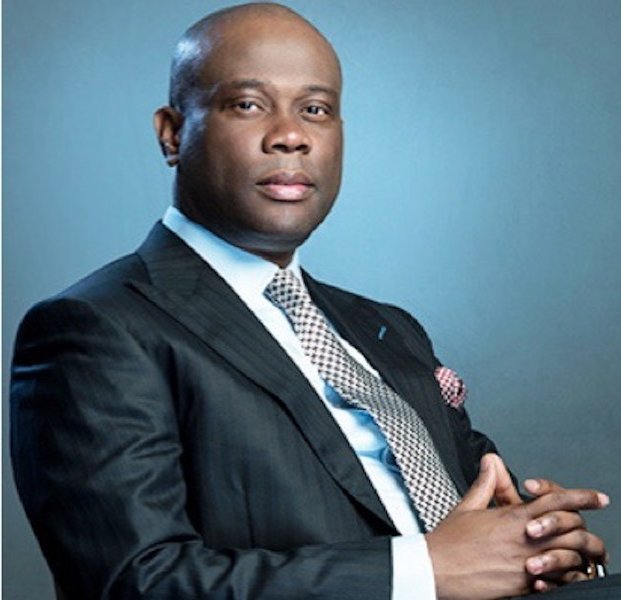
It’s then not surprising that with gloves off, the no-nonsense managers of Access Bank Plc, led by its proactive CEO/Group Managing Director Hubert Wigwe, last week, went after the properties of late Chief Sunny Odogwu, over a judgement debt of over N50 billion.

The judgment debt in the bank’s favour was against late Odogwu and two of his companies – Robert Dyson & Diket Limited and SIO Property Limited – in respect of a property situated on No. 31-35, Ikoyi Crescent, Ikoyi, Lagos State, known as Luxury Collection Hotels and Apartments (formerly Le Meridien Grand Towers).

The property owned by SIO Property Limited of which the late Odogwu was the majority shareholder, was financed with a loan from the then Diamond Bank, now acquired by Access Bank. Curiously, the Odogwu family which had apparently opted for a game of hide and seek with Access Bank has now woken to the sheer folly of that course in the face of the bank’s resolute and principled footing.

It could be recalled that Justice Saliu Saidu of the Lagos Division of the Federal High Court in suit number: FHC/L/CS/1633/14, in November 3, 2015, found the late Odogwu and his companies guilty of breach of Bank-Customer Relationship and consequently ordered the sale of the property used as collateral for the loan sum of N26,229,943,035.22.

However, with a 20 per cent interest on the N26 billion judgment debt in the last six years the judgment was delivered, the total debt has now risen to over N50 billion.

The bank had in 2014, commenced legal action against the defendants at a Federal High Court, Lagos, following the failure of the defendants to meet their loan obligations granted in the financing of the Le Meridien Grand Towers, known as Luxury Collection Hotels and Apartments.

While Access Bank was the sole plaintiff; Robert Dyson & Diket Limited, SIO Property Limited, Odogwu, the Corporate Affairs Commission (CAC) the Registrar of Title Federal Land Registry and Leadway Trustee Limited were the first to sixth defendants respectively.

Plaintiff in arguing its case had placed glut of evidence before the court on how it granted various credit facilities to the 1st and 2nd defendants to finance the construction of the Luxury Collection Hotels and Apartments.

Significantly, in sync with valued corporate tradition, the various facilities were at various times restructured to ease the repayment of the loan facility but the 1st to 3rd defendants continue to refused or failed to meet their obligations, stating that the project site located at 31-35 Ikoyi Crescent, Ikoyi, Lagos and the Personal Guarantee of the late Chief Sonny Odogwu were used as collaterals for the facility.

Among the 20 reliefs sought by Access Bank then was that whether having regards to her colossal investment/financing of the sum of N26 billion in the 1st to 3rd defendants project and by the various agreements entered between plaintiff and the 1st to 3rd defendants to create a legal mortgage in favour of the plaintiff, a beneficial owner of the property on No 31-35 Ikoyi Crescent, Ikoyi, Lagos State, and the breach of the terms of the agreement by the 1st to 3rd defendants, the plaintiff is entitled to leave of court to foreclose and sell the affected property.

Delivering judgment in the suit, Justice Saidu held that the first to third defendants were in fundamental breach of the contract for the financing of the construction of the Luxury Collection Hotels and Apartments, having admitted “Indebtedness to the plaintiff in the sum of N10, 252,315,567.28 on the project finance facility as at December 20, 2011.”

More, the judge stated that where there was an admission of indebtedness by a party, the court could make an order for the sum admitted to be paid. “The following is very clear from the totality of evidence before me; that there are facilities granted and disbursed….the facts of these facilities were admitted in paragraphs 8, 10, 11, 13, 14, 15, 16 and 17 of the counter affidavit.

“I have not seen anywhere in the pleadings of the 1st to 3rd defendants that they did not enter the contract as shown in exhibit DB3 with the agreed collateral being a third-party legal mortgage on the parcel of land located at No 31-35 Ikoyi Crescent, Ikoyi, Lagos State”, the court held.

Additionally, the learned trial judge held the first to third defendants have not produced before the court any evidence that any of the conditions for the grant of the facility was waived or demonstrated to the court how they liquidated their indebtedness.

His words: “With all the facts before me, I am satisfied that the first to third defendants who have admitted indebtedness has not shown how the indebtedness was liquidated.

“There are four probable methods of answering an allegation of indebtedness which are to admit the debt, deny the debt, to counter-claim against the debt and to set off against the debt. From all the facts before me the 1st to 3rd defendants have only admitted the debt but have not shown how the admitted indebtedness was liquidated. This court therefore has the power to grant an equitable relief of specific performance against the 1st to 3rd defendants to do what they have agreed to do by the contract.”

Flowing from these grounds laid out, Justice Saidu made the following consequential order: “Judgment is entered in the sum of N26, 229,943,035.22 jointly and severally against the 1st to 3rd defendants being the outstanding sum as at September 30, 2014 advanced by the plaintiff for the 1st to 3rd defendants project which sum has remained unpaid despite several demands.

“That leave is granted to the plaintiff to foreclose and sell the said property situated at 31-35 Ikoyi Crescent, Ikoyi, Lagos and to deposit the proceed of the sales into the 1st defendant’s account kept with the plaintiff towards the partial satisfaction of the judgment sum against the 1st to 3rd defendants.

“That leave is granted the plaintiff with the supervision of the Court’s Registrar to sell property situated at No 31-35 Ikoyi Crescent, Ikoyi, Lagos being the security for the sum of N26, 229,943,035.22 advanced by the plaintiff to the 1st to 3rd defendants for the development of the project called Luxury Collections Hotels and Apartments, the repayment of which facility, the 1st to 3rd defendants have failed, refuse otherwise neglected to make despite several demands.”

It could be regretfully recalled that defunct Diamond Bank Plc, an iconic bank comparable to Eastern Nigeria’s African Continental Bank (ACB), went under because of the recalcitrance of borrowers. After its formal merger with mid-tier rival Diamond Bank Plc., in April 2019, following due regulatory approval, Access Bank Plc. acquired all the assets and liabilities of the defunct banking entity. This positioned Access Bank to pursue recovery of all outstanding debts. It is certainly not shirking this crucial responsibility.

Recalcitrant debtors negatively impact the critical banking sector and defeat the essence of granting such facilities to aid business growth. For Access Bank, the lender in this instance, it is a costly project. The cost covers time for debt recovery and the need to make greater loan provisioning, which reduces profitability and capital resources for lending.

Clearly, banking remains a relationships business. For ages, banks have tried to leverage that relationship to grow and maximize shareholder return. Because of her emphasis on the long term, Access Bank Group, one of Africa’s largest retail banks by retail customer base with proven risk management and capital management capabilities have deployed both organisational cultural transformation to be ahead of completion.

This is why dodgy debtors must steer clear of accessing facilities from ACCESS Bank!

Keren and Sylvester: So similar, yet so different, By Zainab Suleiman Okino

As bad as abuse of minors is, the Nigerian factor which makes it almost impossible to bring offenders to account, leaves families of victims distraught and unable to find closure.  Such is the tragedy of the family of Keren Happuch Akpagher, a 14-year-old student of Premier Academy, Lugbe Abuja, who died on 22nd June 2021, after an alleged abuse that complicated her health (she was diabetic), and subsequently led to her death. Six months after the controversial death, no one has been arrested.Before the young lad died, her mother (Mrs Vivienne Akpagher), picked her from school, after she was alerted by a teacher about her daughter’s deteriorating health, and took her to hospital. The diagnosis and series of tests conducted by the hospital revealed a decayed condom and dead spermatozoa in her virginal, an indication of abuse and complication that precipitated her death. Since then, there has been back and forth between Keren’s mother who felt the school was complicit and the school authority. The school is in denial of any wrongdoing, but at the same time has not given a convincing account of what went wrong with the teenager whose parents entrusted in their care.While the parties involved in the Keren case is still dilly-dallying over who did what, elsewhere in Lagos, a near similar case happened, and genuine efforts are ongoing to unravel the facts of the case. Sylvester Oromoni, a 12-year-old boarding student of Dowen College, Lekki, Lagos died at a hospital in Lagos on November 28. Although the school authority said Sylvester got injured while playing football, a video of the boy in pain, and twitter posts with pictures, by one Perrie, who identified himself as @perrisonoromoni, Sylvester’s cousin spilled the beans further. Perrie wrote: “This is my 12-year-old cousin that was beaten to death at a school that cost over 1 million naira. They called my uncle that he got injured playing football, but it was confirmed that he was being bullied and beaten up, causing internal damages. They tried to put him in a cult, he refused, and they killed him. They literally beat him to death. The 12-year-old was battered on Friday but died on Tuesday, after a series of tests and x-rays indicated that that he sustained internal injuries…the deceased had previously complained about pressures to join a cult group, but the young Oromoni only told his parents while in the hospital. Before his death, he reportedly said the school’s cult members threatened to kill him if he reported them”.In a nutshell, the two students’ controversial and suspicious deaths are basically the same. They suffered abuses within the school where they were boarders, although Keren’s case needs further investigation to ascertain where the abuse(s) took place. They were both underaged boarding students. They were both taken from their schools sick and died two and three days apart. In this case, their schools are culpable directly or indirectly, and have questions to answer, such that only a thorough investigations can reveal the facts of the matter, especially as it appeared that they (the school authorities) abdicated their responsibilities to protect the children under their care. The two schools expectedly were in denial. Dowen College said Sylvester was injured while playing football, but Premier Academy is shifting the blame.While Sylvester was able to speak up before his demise, Keren was probably too disoriented to make useful statements in the final hours before her death, but the test results speak volume. It therefore stands to reason that Keren’s school should, even without prompting, call for a full investigation including subjecting all their staff to scrutiny. It is in the interest of Premier Academy to ensure full disclosures and cooperate with security outfits to unravel the truth, and avoid hedging, in the absence of which the full wrath of the law should be brought to bear on the whole gamut of the case.Is it not because of the possibility of denial or human errors, that government exists for the people—rich or poor; ordinary or influential; high/mighty or wretched of the earth? Within a few days of the reported death of Sylvester, Lagos state government mobilised into action—the government closed the school, the people stood together in condemnation, law enforcement agencies moved into the “crime scene” to cordon off the school premises, while investigation  commenced in earnest. Already the accused have been brought to court and granted bail. We didn’t see any of these in the case of Keren in Abuja, the nation’s capital. Nothing should have stopped the FCTA from closing the Premier Academy to avoid tampering with the evidence. That is what being proactive is all about, and not in saying so.Within one week of the news of Sylvester’s death, civil society activists, parents, media people all beamed the searchlight on Dowen College from different angles. That is how it should be. No one has been declared guilty, until the legal actions are exhausted.In the absence of any coordinated approach led by the government, the poor parents of Keren, especially her mother, is left alone to not only mourn the passing of her only daughter, but to fight alone in order to know the cause of her daughter’s death, until a member of the House of Representatives, Mark Ghillah from Benue state mentioned the case in the Chambers, and the House directed a DNA tests of all those who came in contact with Keren. It came a little late, but a DNA test will set the record straight and the poor woman will have some form of closure to sooth her pain a bit.Despite all odds, and in the face of pot shots thrown at her here and there, Keren’s mum has been speaking out.  I dare say it is within her legitimate right to do so, as one who had the last contact with her daughter.  I salute her courage for not crying in silence alone. In one of such interviews with ICIR, an investigative journalism medium, the red flags are conspicuous, as  Vivienne explained the doctor’s findings thus: “The discharge kept coming so the doctor (Amugo) removed it and told them to test it, so the doctor called me and said ‘madam, we have tested her urine, it is not discharge, it is a condom and her urine has dead spermatozoa’. At that point, Keren had become partly unconscious and was still struggling.”Continuing, she said“… also, before Keren’s death, her mother said she talked about a ‘nurse’ in her school who asked her ‘if it was her first’. The nurse was eventually identified as Lois Bong. Bong was one of the last persons that gave insulin injection to Keren while she was in school. The ICIR found out that a few weeks after Keren’s death, Bong resigned from Premier Academy”As part of the ICIR interview, Vivienne also said Keren insisted on going home with her even as she added “someone in the school told me to disregard whatever the school management said and come and pick my daughter, because Keren could not even walk to the school on Wednesday, the 16th.”All these are not by all means saying anyone is guilty yet. However, they give investigators head starts in their search for answers to the poor girl’s suspicious death. On Sylvester’s death, the case is already in court, while the school remains closed. That’s how it should be; this also explains the fact that the two cases might be alike because Sylvester and Keren are vulnerable minors, but the location of Lagos as the bedrock of citizens’ consciousness, activism, and government’s responsiveness to things like this make all the difference. No matter how long it takes, let justice be done.[email protected]

Jega’s Damning Verdict On Judges

With the accusation by a former Chairman of the Independent National Electoral Commission, Prof. Attahiru Jega, that judges adjudicating election petition matters corruptly enrich themselves by selling judgments to the highest bidders, many Nigerians have called for new ways to tackle the menace, writes Vanessa Obioha

A former Chairman of the Independent National Electoral Commission (INEC), Prof. Attahiru Jega, stirred up the hornet’s nest recently when he said some corrupt judges are usually made part of election petition tribunals in order to corruptly enrich themselves by selling judgments to the highest bidders.

Jega said some of these corrupt judges sold judgments to the highest bidders and quickly retired to avoid being sanctioned by the National Judicial Council (NJC).

The former INEC boss, who is also a former Vice Chancellor of Bayero University, Kano said this in a lecture he delivered at the Owolabi Afuye Memorial Lecture organised by the Nigerian Bar Association (NBA), Ibadan Branch as one of the events to mark its 2021 Law Week.

He said activities of these corrupt judges and lawyers were some of the factors fuelling underdevelopment and insecurity in the country. Jega said the NBA and the Body of Benchers needed to urgently address the issue to save the country from crisis.

Jega said: “Some senior lawyers have become stupendously wealthy defending corrupt public officials, or handling electoral litigation for governorship and presidential candidates. Similarly, many judges have become notorious for corrupt enrichment for ‘cash and carry’ judgments, especially in election matters generally and in election tribunals, more specifically.

“Some election tribunal appointments were in the past widely said to have been made to senior judges about to retire, who allegedly ‘sold’ judgments, most likely to the highest bidders, enriched themselves and quickly retired to avoid being sanctioned by the NJC.

“When lawyers use technicalities to subvert justice and ‘win’ cases without regard to perpetration of injustices, they basically help to undermine, rather than enhance national development, peaceful coexistence and security. They discard ethical and professional conduct, and put parochial and/or self-serving objectives in the forefront of their practices.”

Jega was not the only Nigerian who had raised the issue in recent times. Before him, many Nigerians including renowned constitutional lawyer, Professor Ben Nwabueze (SAN), eminent Chief Afe Babalola ((SAN), the late retired justice of the Supreme Court, Justice Kayode Eso, former Chairman of Transparency International (TI) in Nigeria, Major General Ishola Williams (rtd.), among many others, had shouted themselves hoarse on the corruption going on among judges handling election petitions.

It would be recalled that many Election Petition Tribunal judges had also come under severe criticisms over their incoherent and incongruous judgments from the election petition cases brought before them. Legal and political observers said many of the judgments delivered by the tribunals and Courts of Appeal were below expectations, thereby denying a lot of petitioners and appellants justice. For instance, they feel that in some cases some of the judges handed vague judgments instead of consequential orders and declarations. There were also cases where some petitioners were denied justice on technical grounds rather than on merit of the case. In many of the cases, allegations of compromise were imputed.

Some argued that one of the reasons why some judges in the previous tribunals were involved in corrupt practices were because they too wanted a piece of the “National Cake”. Some of the judges saw their inclusion in Election Petition Tribunals as an opportunity to make money.

For instance, Professor Nwabueze at a public function in Lagos had criticised some judges and justices on the quality of their pronouncements. He had accused them of allotting victories to defendants at their whims and thereby diminishing the tenets of justice cum constitutional democracy.

Before his demise some years ago, retired justice of the Supreme Court, Justice Eso, after reviewing what was happening in the Election Petition Tribunals across the country, concluded that the judiciary was full of judges and justices who ought not to have been there in the first place. He lamented the all-important arm of government stinks of corruption, adding that until the bad eggs in the institution were flushed out, the justice sector would continue to witness retrogression.

Justice Eso had lamented that the judiciary had been ridiculed courtesy of some atrocious actions of some judges, who rather than discharge their responsibilities, had resorted to playing politics with the profession.

He lamented the endemic corruption in the third arm of government, adding that if left unchecked, could sound the death knell for justice administration and delivery in the country with dire consequences for its democratic governance.

As he put it then, what was happening in the election petitions tribunals, involving judges across the country, was mind-shattering because many of the judges “are not just millionaires as we were told but billionaires.”

In his own lamentation of how corruption has dented the judiciary, eminent lawyer, Chief Afe Babalola (SAN), noted that it was regrettable that Nigerians were no longer reposing confidence in the judiciary despite the acronym that it is the last hope of the common man.

He posited that experience in the past had shown that “our bitter experience is that election petition have inflicted severe injuries and damage on both electorate, the judiciary (which has been brutalised and called all sorts of names) as well as the political class.”

According to Babalola, “time was when a lawyer could predict the likely outcome of a case because of the facts, the law and the brilliance of the lawyers that handled the case. Today, things have changed and nobody can be sure. Nowadays, politicians would text the outcome of the judgment to their party men before the judgement is delivered and prepare for their supporters ahead of time for celebration.

“Today, Nigeria’s search for justice and equity and fair play among her citizens seems to be hampered to a large extent by the unusual tardiness experienced in our courts. Today, things have changed and nobody can be sure. Nowadays, politicians would text the outcome of the judgements to their party men before the judgment is delivered and prepare uniforms (aso-ebi) for their supporters ahead of time for celebration. In some cases, there have been some text messages before the judgment day like ‘we now have four members to two, we are still working on the fifth’ (referring to members of election tribunals,” he added.

Also, former Chairman of Transparency International (TI) in Nigeria, Major-General Ishola Williams (rtd), claimed that election tribunals were becoming goldmines for Nigerian judges.

He put it this way: “All the judges are just using the election tribunals to make money. All those who had gone through election tribunals are millionaires today. I challenge any one of them to say no!”

Williams’ open challenge has not been disputed to this day, making many to conclude that the temple of justice in Nigeria is being compromised and corrupted to serve the interest of a privileged few.

This is why many legal and political analysts are calling on the President of the Court of Appeal to ensure that only judges with high level of interity are called upon to adjudicate election petition cases in the country. They also asked the President of the Court of Appeal to always allow Nigerians to assess and voch for the integrity of the judges before they are posted out.

Those who spoke to THISDAY on account of anonymity, called on the NJC to thoroughly vet the judgments delivered by the judges petitioned.

“The NJC in most case do not always vet the judgments delivered by some of the judges complained about to ascertain any miscarrige of justice. This is wrong. Since it is always difficult to investigate whether money exchanged hands, their judgments should always be thoroughly vetted,” one of the lawyers posited.

A more scathing revelation of how endemic corruption is in the judiciary came Justice Akinjide Ajakaiye of the Federal High Court, who during a valedictory session organised in his honour, described corruption in the third arm of government and the country at large as the main factor retarding nation’s progress.

He disclosed that the country was destined to be great but has been crippled by corrupt and unpatriotic people. He noted that even though the country was blessed with men of honour in the judiciary, there still some who have shamelessly wallow in the malaise.

According to him: “The constitution, which is the organic law of the land has thus empowered the judiciary to do justice to all manner of persons whether high or low.

“Then each judicial officer has taken a vow to do justice without fear or favour, ill-will or affection. It is unfortunate that a lot of judicial officers pay lip-service to the letters of that oath. It is trite that the judiciary is the hope of the common man, particularly having regard to the decadent and perilous socio-economic and political situation of this country. The judiciary is placed in a peculiar position to enforce and maintain sanity and social equilibrium. That is why judicial officers ought to brace up, be up to the occasion and be circumspect.

“Being a judicial officer is serious business and involves a lot of responsibilities and attracts a lot of expectation from God and man. It is a position of trust that should not be handled trivially or recklessly. It is a position divinely given to man to do justice to all manners of persons. It devolves from God to man and that makes it absolutely delicate. That is why those of us involved in the administration of justice must know, and always realise that we owe the position as a trust from God to whom we are accountable. We must realise that God is God of justice who expects the position entrusted to us to be handled with justice. That is why any act of injustice, intentionally occasioned, is a breach of that trust reposed by God and will one day be punished by Him,” he added.

Nigeria And The Legislative Misfortune

By Ebun-Olu Adegboruwa, SAN

Constitution of the Federal Republic of Nigeria, 1999 (as Amended), sections 4 (1) & (2):

(1) “The legislative powers of the Federal Republic of Nigeria shall be vested in a National Assembly for the Federation which shall consist of a Senate and a House of Representatives.

(2) The National Assembly shall have power to make laws for the peace, order and good government of the Federation or any part thereof with respect to any matter included in the Exclusive Legislative List set out in Part 1 of the Second Schedule to this Constitution.”

Deliberately and without mincing words, the framers of the Constitution established the Legislature as the First Arm of government, because law is needed to define all other aspects of human existence. It is thus expected that through its additional powers of approval and oversight functions, the legislature will work to curb the excesses of the executive arm of government, especially in situations where retired military men have hijacked the democratic process, having in their prime usurped power through ignoble strategy of coup d’etat.

In the build up to the 2015 general elections, it was a matter of time upon the declaration of APC as the winner of the election, for Honourable Femi Gbajabiamila and Senator Ahmad Lawan, to mount the saddle as the 8th Speaker of the House of Representatives and Senate President respectively. In fact, there was already jubilation in their camp, until the day of inauguration of the National Assembly on 9th of June, 2015. In what was a clear political masterstroke, the Bukola Saraki group played a fast one and snatched power from the anointed ones. But it turned out to be one of the best National Assemblies ever, at least in taming the monstrous executive arm.

It was not business as usual in the National Assembly under Senator Saraki, as the legislators asserted their powers to the fullest and held the executive down to follow due process, at all times. As an appointee of the President, you would have to prepare very well for your screening, and ministries and other government agencies had to sit up to defend their budgets and actions. They were very daring, courageous and they took steps to protect the people from an overbearing executive. It was little wonder then that the ruling party did all its best to ensure that most members of that collective did not return to the 9th National Assembly. But Nigeria is paying dearly for that selfish agenda presently.

Since its emergence, the 9th National Assembly has become a weeping institution, a clearing house and a reporting Chamber, where elected representatives of the people stoop to beg directors of parastatals to attend public hearings, at times issuing empty threats without any follow-up action. It was in the 9th Assembly that legislatures approved over N300B for an agency (NDDC) without a functioning Board (repeatedly since 2015), where sole administrators illegally appointed into office turned the hallowed Chambers into some Nollywood movie scene through executive epilepsy, displaying fainting spells shamelessly without scant regard for public decency. And not long thereafter, the Minister of Niger Delta openly accused the legislators of corruption whereupon they then scampered like chickens, chorusing “off the mic”, to bury the emerging scandal. It is the same National Assembly that could not accept the challenge of the Minister of State for Labour, Festus Keyamo, SAN for an open debate on allegations of corrupt practices.

Having succeeded in installing its cronies in positions of authority at the National Assembly, the executive has since then embarked upon mindless borrowings, putting our nation at the mercy of shylock imperialists, who whimsically drafted contracts that threaten even our cherished sovereignty, at times in their own language. Yes, it is a National Assembly that prides itself in ‘reporting’ errant serving ministers and heads of parastatals who defy its summons, to the President.

Without any doubt, the greatest challenge of the present National Assembly has been the Electoral Act (Amendment) Bill which has been dogged with so much controversy. At first, the legislatures wanted to own the electoral system, by illegally investing themselves with power to determine the mode of elections and transmission of results, until Nigerians put them on trial, leading to the withdrawal of the obnoxious section 52, by which the executive (through the National Communications Commission) and legislature were to determine the mode of conduct of elections. Upon the intense pressure mounted by the people of Nigeria and indeed the international community, the National Assembly eventually succumbed to allow electronic transmission of election results.

The other area of controversy is the mode of conducting the primary elections of the political parties. Whereas most Nigerians favoured the direct primary method, the political gladiators and godfathers prefer indirect primaries, citing lack of funds and poor logistics as part of their opposition. After so much drama, the Bill was eventually transmitted to the President for his assent on November 19, 2021. There is no indication yet that the President will give his assent to the Bill, confirming widespread speculations that the Governors have boxed him in. Those who desperately long to retain their feudal powers as godfathers are vehemently opposed to the new Bill, in order not to erode their political base and expose themselves as powerless leaders.

The question on everyone’s lips now is what is to be done to get the Electoral Bill become an effective and enforceable law? Given the efforts that have gone into this Bill so far, it is unthinkable that it would be thrown away just like that. As recently as December 14, 2021, the Chairman of the National Assembly, Senator Ahmad Lawan laboured assiduously to convince Nigerians that the Assembly that he presides over is not a rubber stamp institution of the executive. At the Distinguished Parliamentarians Lecture in Abuja, Senator Lawan stated that what Nigerians carry was only a perception, insisting that the three arms of government are independent but they work together for the success of government. Let us hear him:

“According to him, Nigeria has three arms of government that are constitutionally equal but the people are heavily represented at the legislature than the other arms. He said that for the peace and development of the nation, the three arms of government must work together as the failure and success of one arm of government will be attributed to all.

According to him, “the legislature, being the first arm of government constitutionally, the closest and as well the most accessible by the people, easily lends itself to public scrutiny and sometimes takes the blame even for government decisions that fall outside its legislative competence.

He explained that the “three arms of government have a responsibility to each other and an obligation to Nigerians, thus they must have a cordial relationship based on mutual respect for constitutional rights and mandate to succeed.

Though corruption in any arm of government is not acceptable and must be condemned, to, however, single out one arm of government without any hard evidence is to undermine the authority of that institution. He said the major factor that contributed to the negative perception of the legislature was political apathy, “arising from the school of thought that politics is a ‘dirty game’ and politicians are ‘dirty.’” He said the 9th Assembly “would continue to improve public perception of the legislature”.

For me and indeed many other Nigerians, there is no better time to ‘improve the public perception of the legislature’ than now, in relation to the roles that they are expected to play with the Electoral Act (Amendment) Bill. If we must say it as it is, Nigerians do not trust the present National Assembly to assert itself against the executive arm. And if they claim not to be ‘a rubber stamp institution’, then the legislators must as a matter of national urgency , pass the Bill to override the President, should he fail to give his assent to the said Bill. This is the expectation of the Constitution as stated in section 58 (4) and (5):

(4) Where a bill is presented to the President for assent, he shall within thirty days thereof signify that he assets or that he withholds his assent.

(5) Where the President withholds his assent and the bill is again passed by each House by two-thirds majority, the bill shall become law and the assent of the President shall not be required.

As elected representatives of the people, the National Assembly must assert the will of the people by invoking the above provisions of the Constitution in order to rescue Nigeria from political godfathers and electoral fraud. Nothing else will suffice; they must disappoint their detractors with a major legislative revival. We cannot afford the misfortune of parading elected representatives who are whipped along the lines of executive preferences, all the time. There has to be a balance of power and of forces, for our nation to ever dream of attaining the expected growth that our leaders have touted so often. The burden on Honourable Gbajabiamila and Senator Lawan is onerous and they have to work with their colleagues to discharge it. It is a historical assignment that has to be performed now. The time for excuses is long gone.

THE ADVOCATE: Much Ado About Ikoyi Marriage Registry

By Onikepo Braithwaite

Two incidents caught my attention last week – the fact that the President did not renominate Lauretta Onochie as INEC National Commissioner, and the judgement of the Federal High Court per Osiagor J., which held inter alia, that except in Ikoyi, Lagos and Abuja there should not be Federal Marriage Registries in the Marriage Districts, and inter alia, made an order of perpetual injunction restraining the Minister of Interior and his agents from contracting marriages and issuing certificates, except for in the two aforementioned locations.

Lauretta Onochie and the Electoral Process
I could not but follow up on the issue of the former nomination of Ms Lauretta Onochie for the position of INEC National Commissioner, which I wrote about in July. Thankfully, President Muhammadu Buhari did the right thing, by not renominating her.

I referred to her nomination as repugnant, and rightfully so too, and raised serious objections to it, on the grounds that she is not just partisan but an active member of the All Progressives Congress (APC), contrary to Section 156(1)(a) of the 1999 Constitution of the Federal Republic of Nigeria (as amended in 2018)(the Constitution), a fact she had sought to conceal during her Senate screening. Also see the Third Schedule to the Constitution Part 1 F – INEC Section 14(2)(a) & 3(b) on partisanship and unquestionable integrity. I submitted that because of this, it would be an injustice for Ms Onochie to be confirmed, because apart from the fact that her attempt to mislead the Senate about her political activities showed that she lacked the requisite credibility and integrity for such a sensitive position since she is prone to being economical with the truth, at least, when it will be of benefit to her, there was a high likelihood that she would be biased in favour of the APC. I cited the cases of Deduwa v Okorodudu & Ors 1976 1 NMLR 237 and Rafiu Womiloju & 6 Ors v Fatai Ogisanyin Anibire & 4 Ors SC.211/2002 per Ibrahim Tanko Muhammad JSC (now CJN), to support my assertion, and concluded that the objections raised against her nomination, were verified facts which amount to admissible evidence against her nomination. Furthermore, there was already an INEC National Commissioner from Delta State in the South South zone, where Ms Onochie’s hails from.

I had therefore asked that, either Ms Onochie reject her nomination, or the President withdraw it, or that the Senate should not confirm her – whichever way, she should not be given the job. The Senate rejected her, but on the basis of Federal Character because of the other Commissioner from Delta State (Section 14(3) of the Constitution), and not for the other aforementioned cogent reasons. I expressed my reservations about the Senate’s sole ground for rejecting Ms Onochie’s nomination without mention of her other impediments, and hoped that it was not a ruse to give the opportunity for her future renomination. I’m glad that the President proved me wrong.

President Buhari has undertaken, to leave our electoral process better than he found it. Aside from putting the right law in place to achieve this goal, it is crucial that the officials of INEC, especially the high level ones, are non-partisan, intelligent, innovative people with unimpeachable integrity, whose sole purpose is to conduct free and fair elections, and deliver true and accurate results. Sadly, Ms Onochie, for the reasons I espoused, cannot fit into this mould for this particular role. Nevertheless, there are other positions that she can be considered for, like APC Women’s Leader!

The Marriage Saga
For those who may be tired of the institution of matrimony, and were happy that by virtue of the decision in Suit No. FHC/L/CS/816/18 Eti-Osa Local Government Council & 3 Ors v Honourable Minister of Interior & 2 Ors per Osiagor J., (2018 case) their marriages are null and void since they were conducted at a Federal Marriage Registry and not by the Local Government, I am sorry to disappoint you; you will have to go through the proper process of obtaining a divorce from the High Court, if you want to opt out of your marriage which was contracted under the Marriage Act 1955, subsequently 2004 (MA)!

Abuse of Court Process
If there was ever any, the aforementioned suit qualifies to be high on the list of abuse of court process. Even though new litigants were added to the matter to give it a semblance of being a completely new and different case, firstly, Eti-Osa Local Government was a recurring decimal in this case, the Haastrup case, and the Federal High Court case that was dismissed. Secondly, even though Osiagor J. had tried to distinguish the 2018 case from that of the Haastrup case, some of the prayers in the 2018 case had already been adjudicated upon and decided in the earlier Suit No. FHC/L/CS/870/2002 Prince Haastrup v Eti-Osa Local Government, and should therefore, have been excluded from this matter. Thirdly, the 2018 case, a matter that is so contentious, was commenced by means of an originating summons, instead of a writ of summons. Some of the Plaintiffs’ prayers, in my opinion, sought to reverse the decision in the Haastrup case, and indeed, it was somewhat overturned! In the Haastrup case, the court upheld the Federal Government’s power, through the Ministry of Interior, to conduct marriages (anywhere in Nigeria), and held that “the Local Governments were delegated by the Federal Government to conduct marriages by virtue of Legal Notices issued pursuant to the Marriage Act”; and that the Local Governments were constitutionally empowered to register all forms of marriage.

Instead of appealing the decision in the Haastrup case, apart from the aforementioned 2018 matter, there were two other cases on same issue, one in 2016 at the Federal High Court – Suit No. FHC/L/CS/170/16 Eti Osa Local Government & Anor v Hon. Minister of Interior & 2 Ors (which was struck out as an abuse of court process), and another at the Lagos High Court, Suit No. LD/1343/GCM/2016 Olumide Babalola v Ikeja Local Government & ALGON, which inter alia, affirmed the Federal Government’s right to conduct marriages. See the cases of Allanah v Kpolokwu 2016 6 N.W.L.R. Part 1507 Page 1 at 27 per Sanusi JSC and Ogboro v Uduaghan 2013 13 N.W.L.R. Part 1370 Page 33 at 53 per Ogunbiyi JSC for the definition of abuse of court process.

Fourthly, it is trite law that, the subsequent judgement of the 2018 case at the same Federal High Court that touched upon the same subject-matter of the earlier 2002 Haastrup case, and came to a different decision, cannot purport to set aside the decision that was first in time, especially as the subsequent decision is ‘per incuriam’, as it was decided without reference to the Constitution, and a thorough examination of the MA and EA. It is perverse, that is, “one that is persistent in error….”- Ukatta v Ndinaeze 1997 4 N.W.L.R. Part 499 Page 251 at 276; “unacceptable and unreasonable” – per Galadima JSC in Emeka v State 2014 13 N.W.L.R. Part 1425 Page 614 at 632.

Can the same Federal High Court purport to interpret the judgement of its sister court, and in the process of the so-called interpretation, tamper with the previous decision as if it is the Court of Appeal? A court of coordinate jurisdiction, has no right “to sit as an appellate court in another case and review/adjudicate on a decision or order made by another court of the same hierarchy”. Does the doctrine of res judicata not apply? That is, “a final judgement rendered by a court of competent jurisdiction on the merits, is conclusive as to the rights of the parties and their privies, and as to them, constitutes an absolute bar to a subsequent action involving the same claim, demand or cause of action”. See Suit No. CA/L/1440/2017 Jonathan Uba & Anor v Bore Auta 2021 Legalpedia (CA) 10615. See also Section 241(1)(a) of the Constitution which provides inter alia that, appeals from the Federal or State High Courts shall lie to the Court of Appeal.

Item 61 of the Exclusive Legislative List of the Constitution states thus:
“The formation, annulment and dissolution of marriages other than marriages under Islamic and Customary law including matrimonial causes relating thereto”.

This clearly shows that by virtue of Section 4(1) & (2) of the Constitution, by which the National Assembly (NASS) is the body empowered to make laws for all matters included on the Exclusive Legislative List, all marriages (except those excluded from Item 61), including the contracting of marriage (formation) fall under the purview of the Federal Government – this power applies to all of Nigeria, and not Ikoyi and Abuja only.

Existing Law
Assuming that the Constitution did not place Marriage as Item 61 of the Exclusive Legislative List, and it was a Residual Item, marriages that predate the 1999 Constitution would still not have been adversely affected, because it is trite that a law cannot be retrospective or retroactive. The former law would simply qualify to be an existing law by virtue of Section 315 of the Constitution, and all marriages contracted under the MA would have shifted to one which the House of Assembly only is empowered to make laws for. The law would still have been valid. The question would then have been, whether marriages conducted under a subsisting law by the wrong government agency, are valid. I would answer in the affirmative, because Section 114(1) of the Evidence Act 2011 (EA) provides for the presumption of genuineness of every document “…..which is by law declared to be admissible as evidence of a particular fact and which purports to be duly certified by any officer in Nigeria who is duly authorised thereto, to be genuine……”. Section 114(2) of the EA further provides that: “The court shall also presume that any officer by whom any such document purports to be signed or certified, held, when he signed it, the official character which he claims in such a paper”.

This simply means that, even if marriages were not included as Item 61 on the Exclusive Legislative List, by virtue of Section 315 of the Constitution and Section 114 of the EA, marriages conducted at the Federal Registries under the MA, even after the enactment of the 1999 Constitution, remain valid, because the law which the marriages were conducted under is saved by Section 315 of the Constitution as an existing law, and Section 114 of the EA regularises the document which evidences marriage, that is, the marriage certificate if there is any anomaly, in terms of the officer who may have signed the document. Section 34 of the MA also declares that, all marriages celebrated under the MA are good and valid.

Conclusion
Possibly, Marriage should have been Item 37 and not 61 on the Exclusive Legislative List, if it was placed in alphabetical order as starting with the letter ‘M’ (whether marriage should be a Federal or State affair, is an argument for another day). A quick look at the List, may have made one overlook the presence of Marriage on that list. I did, initially. It was on my second, more careful perusal, that I saw it on the List. But, one would expect that judicial officers who are adjudicating upon an issue that is the subject-matter of a case, would not just take a second look like I did, but exhaust themselves researching the issue before handing down judgement! In Mini Lodge Ltd v Ngeri 2009 18 N.W.L.R. Part 1173 Page 254 the Supreme Court held that a finding of fact is said to be perverse, inter alia, where the trial court shuts its eyes to the obvious and the decision has occasioned a miscarriage of justice.

In the aforementioned 2018 case, Eti-Osa Local Government Council & 3 Ors v Honourable Minister of Interior, the trial Judge, Osiagor J. definitely shut his eyes to Section 241 & Item 61 of the Exclusive Legislative List of the Constitution, certain provisions of the Marriage Act and Evidence Act, and the doctrine of res judicata, thereby arriving at a somewhat faulty decision. See the Supreme Court case of Baridam v The State 1994 1 N.W.L.R. Part 320 Page 250 at 260 per Iguh JSC.

The Principal Registrar of Marriages, therefore, rightfully instructed that people should carry on with the contraction of their marriages as usual. The Haastrup judgement is subsisting, and remains so until it is overturned on appeal. The matter itself, did not go on appeal, and even if it had, given the extant constitutional and statutory provisions, the outcome would possibly not have been different.

TIPS