‘Whatever you do, do all to the glory of God.’ 1 Corinthians 10:31 NKJV
In 1643, the Houses of Parliament in England abolished the Episcopal system of government in the Church of England. An assembly of one hundred and twenty-one ministers and thirty laypeople was called to Westminster Abbey to rebuild the English church. The documents coming out of that six-year assembly are some of the most famous in church history. The first question in the Shorter Westminster Catechism reads, ‘What is the chief end of man?’ Answer: ‘To glorify God, and to enjoy him forever.’ The implications of that question and answer are profound in their simplicity. And if you’re wise, you will make them a blueprint for your life this coming year. Glorify God. Obey God. Enjoy God. When you know your life is glorifying God, you enjoy His presence, but when you know your life is not glorifying God, you tend to avoid Him. And that’s bad, because without God’s presence in your life, what are your chances of true success? Not good! As you look back on last year, are there things you regret because you know that God was not glorified in them? Well, God is giving you a new year to do things differently. And if you’re making New Year’s resolutions, base every one of them on the foundation of this Scripture: ‘Whatever you do, do all to the glory of God.’ If you follow that rule, you will stay on the right path, and you will have the peace and joy of knowing your life is pleasing to the Lord. Whatever circumstances may arise, you will face them with peace and confidence, knowing that God is with you.
“If there is not a special place in hell for politically corrupt judges, there should at least be a Magnitsky list.” Geoffrey Robertson, QC, Bad People and How to be Rid of Them: A Plan for Human Rights, p. 228 (2021)
2021 ended on a frantic note in Nigeria. Despite heated developments politics, troubling trends in the economy and a deepening security outlook, the significant incidents with long term effects took place in the judiciary, where a raft of developments in the last quarter of the year appeared designed to lock in strategic leverage for various entrenched interests in Nigeria’s ruling classes.
Across the country, politicians and judges appear to have reached accommodation on the terms for dividing up the country and allocating it among themselves. In the last quarter, senior judges and politicians were handing out judicial office to their spouses and children as end-of-year hampers.
One Senator had his young daughter sworn in as a judge. A former governor had one of his children sworn in as High Court judge in Abuja. Back in his home state, another of his children was sworn in as judge by a governor whose wife is also a judge, joining the mother, herself also a judge among the judicial figures who make the appointments. Not to be outdone, a serving governor swore in one of his serving wives as High Court judge. A presiding judge in one court had his wife sworn in as a judge in another. He was one of many judicial figures to benefit from what has become an allocation of judicial preferments among themselves. As their families celebrated, their supporters took to the airwaves and the digital media to normalize these abnormalities, telling us that in Nigeria judicial skill and temperament naturally resides mostly in the bedrooms of politicians.
Nigeria’s judiciary appears deep in the throes of being reshaped as an estate defined by filial and genital relations to facilitate transactions for political power. This is called judicial capture. As Judges now have the casting vote in Nigeria’s elections, ambitious politicians have decided they must own the judges.
Judicial Capture occurs through both decisions and omissions by and beyond the judiciary. In the week following my article on “[T]he Court that Killed Accountability”, I have been deluged with hundreds of complaints, testimonies and mail which clearly indicate that the people have taken notice but have lost hope in the capacity of Nigeria’s judiciary to salvage itself. In the shadows of this despondency, the project of judicial capture has gathered pace. If the quantity of the feedback was surprising, their variety in provenance was astonishing. Among the respondents were judges (serving and retired), senior advocates of Nigeria (SANs), law teachers, court administrators and users, ordinary citizens. If these provide any evidence, Nigeria’s judiciary is in a profoundly dispiriting death spiral and the consequences for the country are incalculable.
Just as the proverbial fish rots from the head, the place where the most serious manifestations of the problem with Nigeria’s judiciary begins is the Supreme Court. It is the most powerful court in the land. It is also presided over by the most powerful judicial figure in the country, the Chief Justice of Nigeria (CJN). The CJN is not one job. It is a totem to judicial capture. S/he heads the judiciary; the Supreme Court; the National Judicial Council (NJC); the Federal Judicial Service Commission (FJSC); the Board of the National Judicial Institute (NJI); and even the Legal Practitioners Privileges Committee (LPPC), apart from being a life member of the National Council of State. Each of these is a statutory role and each is a different job. The accretion of power and influence in the person occupying the office at any point in time is quite simply dangerous but this arrangement seems to serve well both the judges and the politicians who are best placed to change it. When it did not serve the interests of the politicians well the last time, they contrived extra-constitutional means to terminate the penultimate occupant of the position and enlisted beneficiaries in the judiciary as allies.
The Supreme Court is now the judicial Purgatory of the Nigerian legal process. Many of my respondents in the last week from the practicing Bar complained about interminable delays in getting their cases assigned for hearing. In many cases, they testified, they have to pay “facilitation” to get cases assigned a hearing date. Important cases suffer interminable delays, while senior political insiders inexplicably always get to shunt the queue of judicial dysfunction.
Take, for instance, the case of the recent national chairman of the Peoples’ Democratic Party, (PDP), Chief Uche Secondus. In August 2021, the High Court of Rivers State ordered Secondus to stop parading himself as the chairman of the party. An impressive four months later, the case had passed through the Court of Appeal and was ready for argument in the Supreme Court.
By the time of the initial decision of the Rivers State High Court in the Secondus case on 23 August 2021, the appeal of the Federal Republic of Nigeria (no less), number SC.794C/2019, had been pending for over two years before the Supreme Court against the decision of the Court of Appeal in the case concerning of Hyeladzira Nganjiwa. Nganjiwa, a judge of the Federal High Court, had been charged with several counts of corruption before the High Court of Lagos State. At his instance, the Court of Appeal stopped the High Court from conducting the trial, claiming that a judge cannot be tried for the crime of judicial corruption unless the NJC has first disciplined the judge for that. Of course, if the NJC were to so discipline a judge, you can be sure that a bright chap called SAN will argue that prosecuting the same person thereafter for the same act would be a breach of the constitutional prohibition against double jeopardy and you will a fool to bet against some equally inspired bench affirming such an argument. I digress though.
On 6 August 2019, the Federal Government filed its brief of argument in the Supreme Court. Nganjiwa’s lawyers filed their response on 14 December 2020. On 11 January 2021, seven months before Secondus’ case went to the High Court, the Federal Government filed their reply to Nganjiwa’s brief. The case was ripe to be set down for argument. Yet, the Supreme Court managed to prioritise the PDP’s party political case over a criminal prosecution for judicial corruption in which the sovereign is appellant. Nganjiwa meanwhile remains a judge and the appeal goes nowhere.
As evidence of the mutual enterprise that is judicial capture, this kind of anomaly has become so normal in Nigeria that no one complains, not even a Federal Government installed on a mandate to fight corruption and enhance the credibility of the institutions for fighting it, including the judiciary. Some of my respondents, senior lawyers who had prosecuted cases involving charges of high level corruption told me how, as they prosecuted some well-placed legal and judicial figures on serious charges of judicial corruption, judges on some of the highest courts in the land called them to encourage them to do a bad job so the prosecutions would fail. When the prosecutions failed to fail, higher courts invented incredulous excuses to set the accused free without acquitting any of them or ordering retrial. Their goal was to decapitate the Economic and Financial Crimes Commission (EFCC) because judicial Capture does not need the distraction of a capable anti-corruption agency.
It is little wonder that the Independent Corrupt Practices and other Related Offences Commission (ICPC), reported in 2020 that in the two years from 2018 to 2020, “at least N9.4bn in bribery exchanged hands in the judicial sector.” No one can be brought to account for this because the judges will not allow it. As conservative a figure as it may sound, an annual average of N4.7 billion makes judicial corruption a very lucrative industry in Nigeria, well ahead of kidnapping and banditry in its profitability where the Council on Foreign Relations estimates average annual earnings in ransom over the four years from 2016 to 2020 to be the equivalent of just under N1.5 billion. The reality, of course, is almost assuredly well north of the figures computed by the ICPC.
It is idle to believe that this state of affairs will be changed by the same Nigerian judges and politicians for whom capturing the judiciary has become a profitable mutual protection enterprise. Many of the lawyers who suffer the adverse consequences of this state of affairs sadly rely on it for their livelihoods and cannot be heard to carp too loudly against it.
For all the mutual benefit that the insiders enjoy, however, many more are excluded. Hardworking and honest judges lose preferment that they are eminently qualified for. Good lawyers will not be appointed to the judiciary because they are considered to be independent or fair-minded, exactly the qualifications that the job needs. Citizens with genuine and urgent cases will die before their cases get a look-in. The cause of setting Nigeria’s judiciary aright is too important to be abandoned to the incest of judges and their political patrons. It’s time for citizens interested to make mutual cause of fighting the crime of judicial capture in Nigeria.
‘‘God called to the man, “Where are you?”’’Genesis 3:9 NLT
When you don’t feel good about yourself, you use things like work, food, relationships, money, and mood-altering substances to build a wall and keep people from getting too close. But lasting relationships can only be built when you stop hiding and become transparent with others. Another hiding tactic we employ is keeping the focus on other people by asking, ‘How come she got a new house and I didn’t?’ Or, ‘Why did he get that job and not me?’ That kind of thinking just makes you miserable. But even worse than pretending with people is pretending with God. When God asked Adam, ‘Where are you?’ He already knew the answer. So why did He ask the question? Because He wanted Adam to acknowledge where he was and what he had become. Eric Hoffer said, ‘ We lie loudest when we lie to ourselves.’ Until you face the truth about yourself, you will find it hard to talk to God . You will feel lonely and alienated. And you will struggle to look people in the eye in case they see the ‘real you’. It’s time to come out of hiding, get down on your knees, and say: ‘Father, I know you love me. Nothing can change that or rob me of its joy except my own doubts and refusal to believe it. You loved me before I was born, you fashioned me according to your plan, you redeemed me and gave me a special purpose in the world, and you’re working day by day to make me into a person who pleases you’ (see Philippians 2:13). The good news is – you don’t have to hide anymore!
God spoke through the prophet Joel saying, ‘Your old men shall dream dreams, your young men shall see visions. And also on My menservants and…maidservants I will pour out My Spirit in those days’ (vv. 28-29 NKJV). Regardless of your age or gender, God has a vision for you to fulfil. And sometimes it won’t make sense because you don’t feel qualified. In the musical Man of La Mancha, there is a scene where Don Quixote and his servant stand gazing at a dilapidated inn. When Quixote describes his vision of turrets and magnificent gates, his servant tries hard to see the same picture, but all he can see are ruins. And when he attempts to describe them, Quixote says, ‘Stop! I will not allow your facts to interfere with my vision!’ Most great achievements begin as a vision in someone’s heart. And many times people try to convince the person it can’t be done – or that he or she can’t do it. Often this confirms the visionary’s deepest fears about his or her abilities. And that’s the crucial point! If you can disregard your critics and rise above your fears, God will enable you to fulfil the vision He has given you. But keep in mind that while your vision may come to you in an instant, it can take a lifetime to fulfil. Habakkuk writes, ‘The vision is…for an appointed time…Though it tarries, wait for it; because it will surely come’ (Habakkuk 2:3 NKJV). A God-given dream often defies the facts, so if you have a vision, look for supporters, not critics. And when someone shares his or her vision with you, become a cheerleader.
Bible in a Year: Malachi 1-4, Revelation 22
God has crowned the year with His goodness. Rejoice.
“The most difficult thing is the decision to act, the rest is merely tenacity. The fears are paper tigers. You can do anything you decide to do. You can act to change and control your life; and the procedure, the process is its own reward,” said Amelia Mary Earhart, Author, and first female aviator to fly solo across the Atlantic Ocean.
That decision to act in spite of their circumstances must have been the driving force. They defied all the odds and become success stories. Who would have believed that a bricklayer and the son of a poor widow would become heads of courts? Or that a bus conductor and a carpenter would one day become governors of states? How about the motorcycle mechanic, a truck pusher, and many more who broke the cycle of poverty? The list is legion but it goes to show how that seemingly ragged or dirt poor man or woman down the road could be the one making decisions that affect you at some point in life.
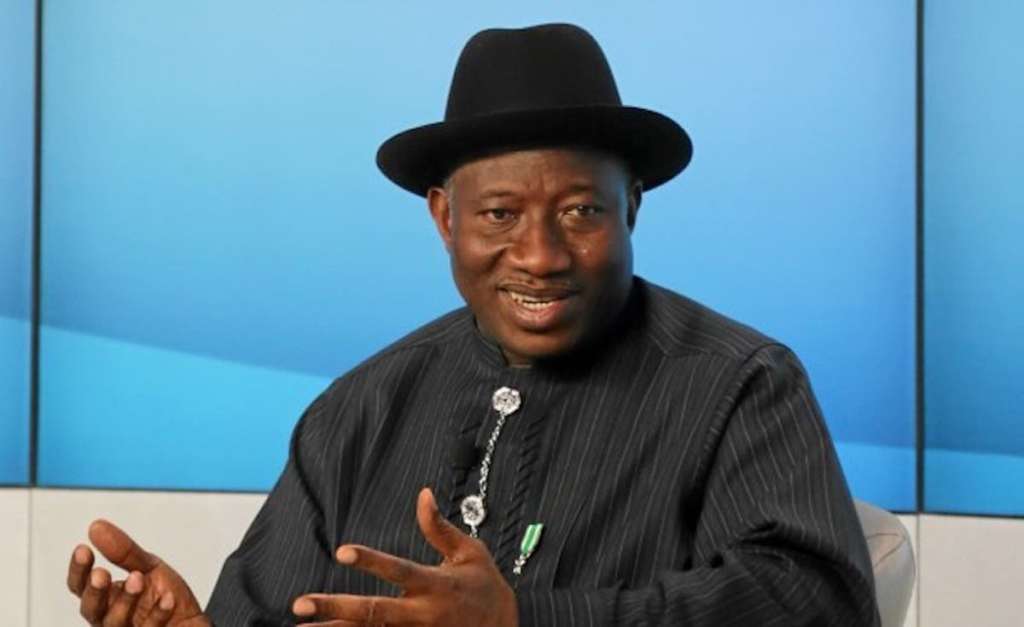
Dr. Goodluck Ebele Azikiwe Jonathan
Nigeria’s former President Goodluck Jonathan was born into a family of canoe makers in Bayelsa State. His father Lawrence was a canoe maker while his mother Eunice was a farmer in the remote district of Otuoke. Jonathan once disclosed in an interview that in his early days at school, he had no shoes and no school bags. He walked miles and crossed rivers to school every day. Some days he had only one meal.
Fmr. President Goodluck Jonathan
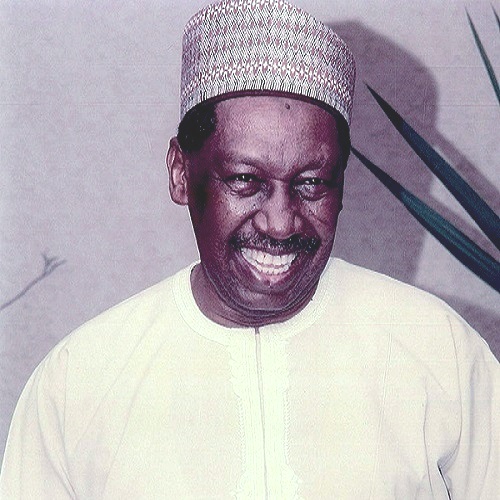
Hon. Justice Muhammadu Lawal Uwais
Orphaned at age six, Hon. Justice Muhammadu Lawal Uwais rose to become the longest-serving justice of the Supreme Court and second longest-serving Chief Justice of Nigeria (CJN). On losing his father at an early age, it was his mother’s second marriage to a headmaster that precipitated his going to school. After several hurdles he encountered before getting a scholarship to study law, he later rose through the ranks in the Civil Service of the then Northern Nigeria.
Hon. Justice M.L Uwais, CJN (Rtd.)
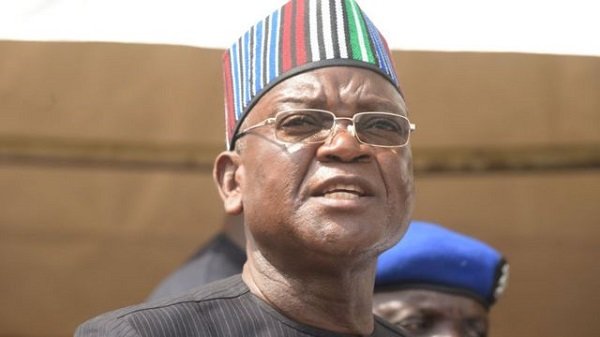
Samuel Ortom
Former bus conductor and governor of Benue state, Samuel Ioraer Ortom, celebrated Christmas at the residence of Mnenge Mtenave, his former boss, and other commercial bus drivers whom he worked with at Gboko Motor Park in the state. Ortom worked with Mtenave who was a commercial vehicle driver in the 1980s. Expressing profound appreciation, Ortom said Mtenave invited him to work as a vehicle conductor and also taught him how to drive after he dropped out of primary school.
Governor Samuel Ortom
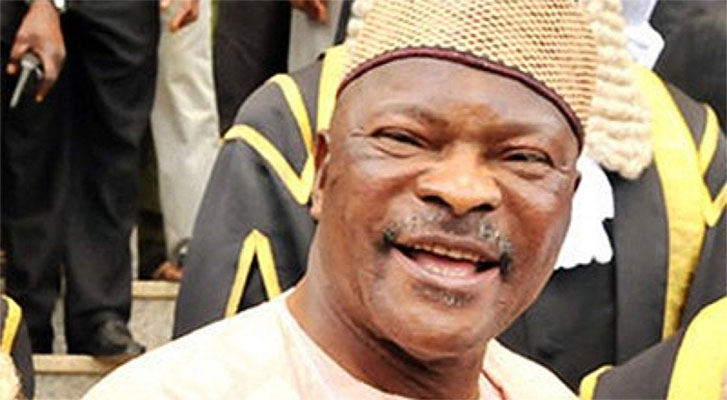
Alhai Ibrahim Idris
Former Kogi State governor Ibrahim Idris was born in the commercial town of Onitsha to Igala parents. Early in life, he went into scavenging. Young Ibrahim would walk the streets of Onitsha, visiting every refuse dump in the neighbourhood with a sack hanging over his shoulder to collect used empty bottles of different sizes. Thereafter, he would wash them in hot soapy water. Then he would take them to the Government Hospital in the town where they would be bought off him. The bottles were used for dispensing drugs to patients. He eventually learnt carpentry and later went into furniture making.
Alhaji Ibrahim Idris
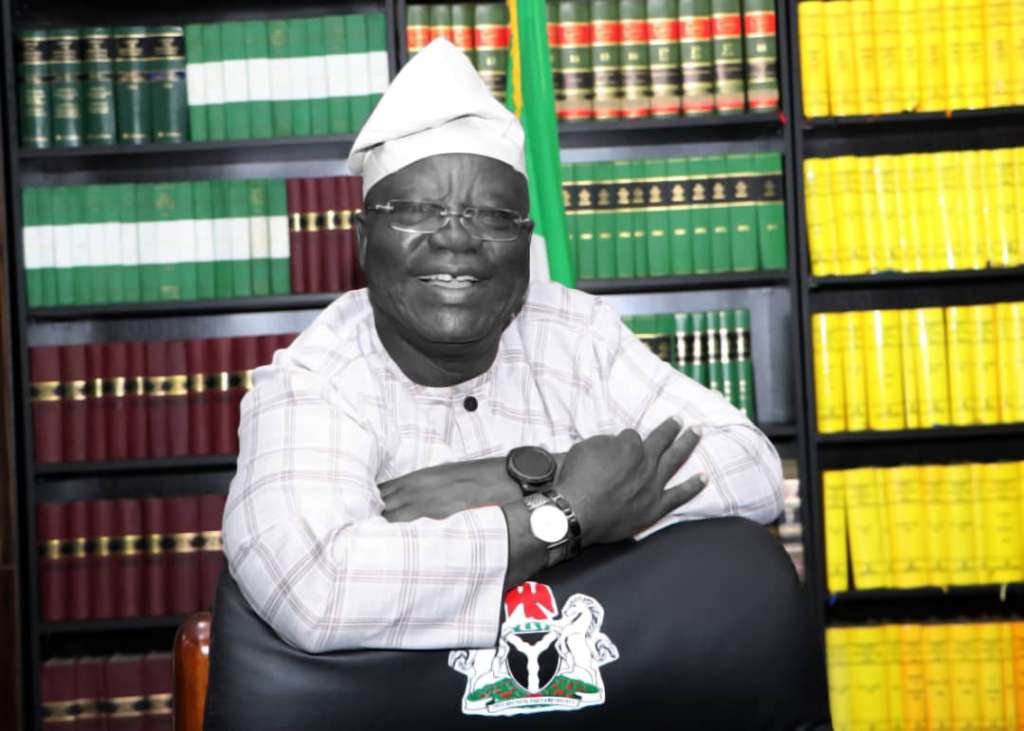
Hon. Justice Babatunde Adeniran Adejumo
As he heaved the head-pan of wet concrete on his head, climbing up and down the stairs of the new hotel under construction, little did the young labourer know that in a matter of years he would head a court adjudicating over matters concerning people like himself and more. It never crossed his mind that in 34 years with so much pomp, he would be ushered into a luxurious room in this very hotel —Federal Palace Hotel annex — where he was one of the many unknown manual hands that constructed it.
With the hopes of going to secondary school dashed, a glimmer of hope came when a cousin who lived in Lagos visited Ikaramu –Akoko, Akoko in North West Local government Area of Ondo State where he lived with his mum in 1969 and took him to Lagos. This cousin tried registering him at Government Trade Centre, Yaba but that too failed. Since education appeared not to be his lot, a relation that worked at Federal Palace Hotel in Victoria Island informed him that an annex of the hotel was under construction and that young men were earning money carrying concrete and working as bricklayers. He didn’t hesitate. Every morning this relation, who worked as a Maintenance Officer at the hotel, rode with him on his motorbike from their Mushin abode to Victoria Island for the labourer work. Adejumo is the past President of, National Industrial Court of Nigeria.
Hon. Justice B.A. Adejumo, SAN
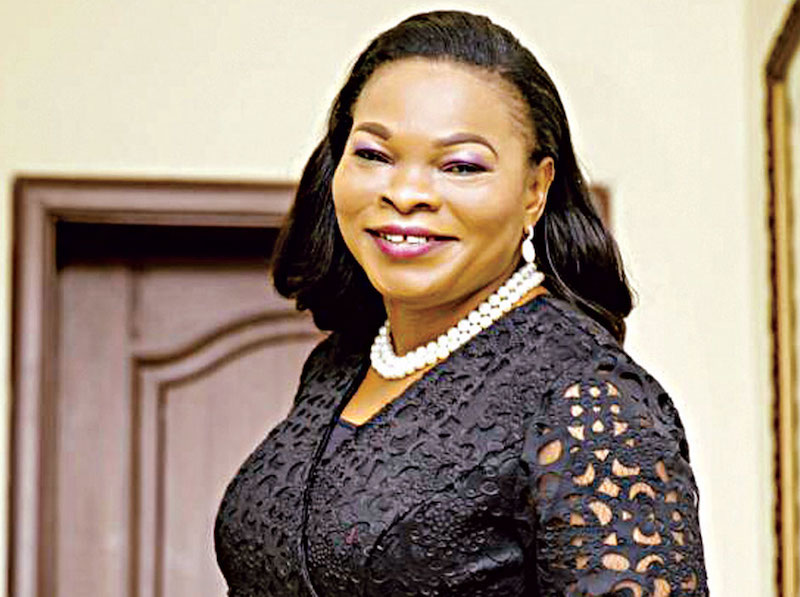
ChiefMrs. Victoria Olufunmilayo Awomolo, SAN
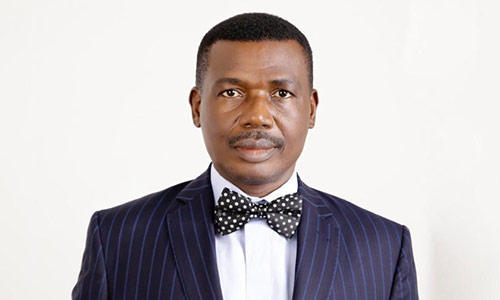
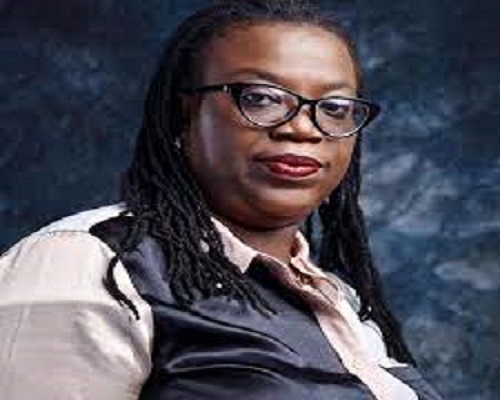
Chief Mrs. Victoria Olufunmilayo Awomolo, the 18th female Senior Advocate of Nigeria (SAN) and former Vice President of Africa North and West Region of the International Federation of Women Lawyers, (FIDA) made a spectacular switch from being a Chemistry teacher to a Legal practitioner. The Kogi state born Senior Advocate is described as very organised, friendly, patient, and meticulous. She rose from humble beginnings to the pinnacle of her career.
Chief Mrs. Victoria Awomolo, SAN
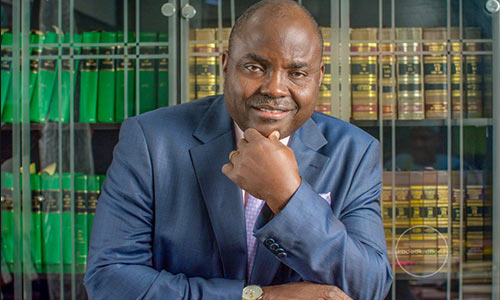
Jibrin Samuel Okutepa, SAN
Jibrin Samuel Okutepa was well over 17 years when he began primary school on 3rd September 1977. At a time most 17-year-olds were either seeking admission into higher institutions of learning or already enjoying campus life, the young man who was not ashamed to share learning space with seven years olds practically ran off from home to school. His father would rather have him on the farm. With so much hostility from his dad following his insistence to attain education, Okutepa dropped out after being promoted to primary three, he ran away from home and became a motorcycle mechanic apprentice to his elder brother in Idah.
J.S. Okutepa, SAN
Chief Ogwu James Onoja, SAN
Born 19th February 1968, in Idah, then under Kabba Province of Northern Nigeria and present-day Kogi state the very day Idah was bombed by Biafran soldiers. Onoja went through life in pain following the separation of his parents and his father’s second marriage. Life was so tough for Onoja in the early days that when he made the sum of N400, 000 from a transaction—his first major break as a young lawyer, his heavily pregnant wife she climbed 18 floors in Lagos on 12 March 1998, as there was no elevator to collect the cheque. He was in court, and could not go for the check himself. Also, that cheque was too precious to be left waiting in another person’s hands. “The baby came the following day. I went and bought a Mercedes 200 with which I brought them home. That was my first car,” he said.
Chief Ogwu James Onoja, SAN
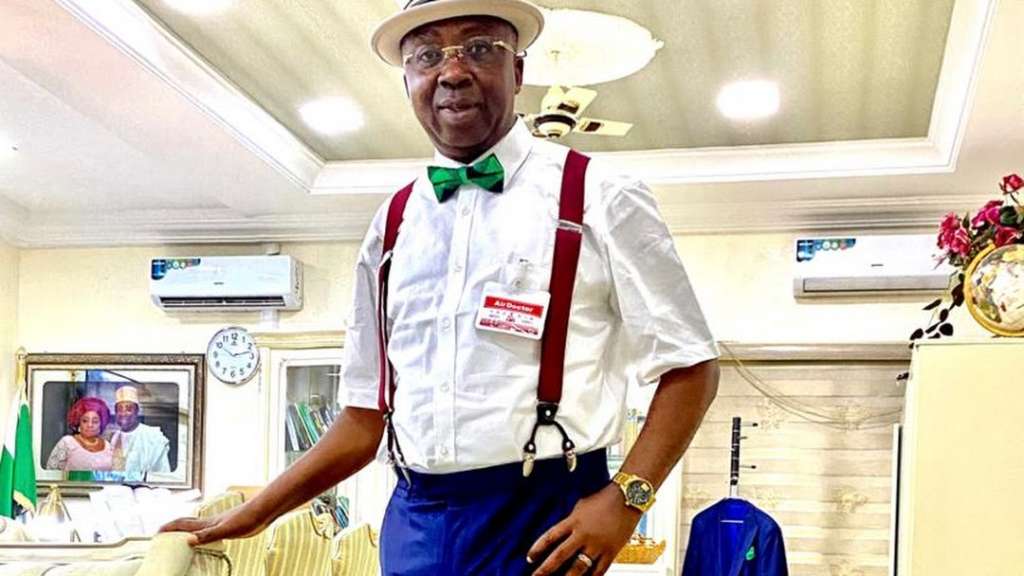
Ebun-Olu Adegboruwa, SAN
It was a harsh beginning for Ebun-Olu Adegboruwa, SAN. There was no hope for him in those days. The future seemed bleak, but an iron will to live and succeed propelled him. That never-say-die attitude ultimately marked his life. A life characterised by multiple battles and a propelling force to triumph. A cart-pushing (omolanke) company eventually gave young Ebun-Olu a job opportunity. For over one year, he loaded local gin for sale in a neighbouring village and did a good job of pushing his cart. Sympathizers who witnessed his daily travails, prevailed on his father to bring him home to conclude his secondary education.
Ebun-Olu Adegboruwa, SAN
Dr. Abiola Akiyode-Afolabi
Abiola Akiyode-Afolabi has been in the vanguard of ensuring that the Violence Against Persons Prohibition (VAPP) Bill, is passed into law in all 36 states. A Nigerian lawyer, feminist, and civil rights activist, she is the founding Director of Women Advocates Research and Documentation Center (WARDC), a non-governmental maternal and reproductive health advocacy organization. Akiyode-Afolabi who studied law at the Obafemi Awolowo University, Ile Ife, where she started her journey in human rights activism as the first female public relations officer of the institution was born in Kwara State but she grew up in Osogbo, Osun State, Nigeria.
She is the second woman to lead Transition Monitoring Group (TMG), a coalition of 400 civil society organizations after Ayo Obe of the Civil Liberties Organization (CLO) in the ’90s. She successfully represented Monica Osagie, a student at the Obafemi Awolowo University who was sexually harassed by Prof. Richard Iyiola Akindele, a lecturer at the department of accounting in 2018.
Dr. Abiola Akiyode-Afolabi
Mercy Johnson Okojie
Although she’s from Okene in Kogi state, Nigerian actress Mercy Johnson Okojie was born in Lagos. The actress in an interview disclosed how her family once moved into an uncompleted building, which they shared with lizards. The talented actress also revealed that when it rains they had to scamper for cover.
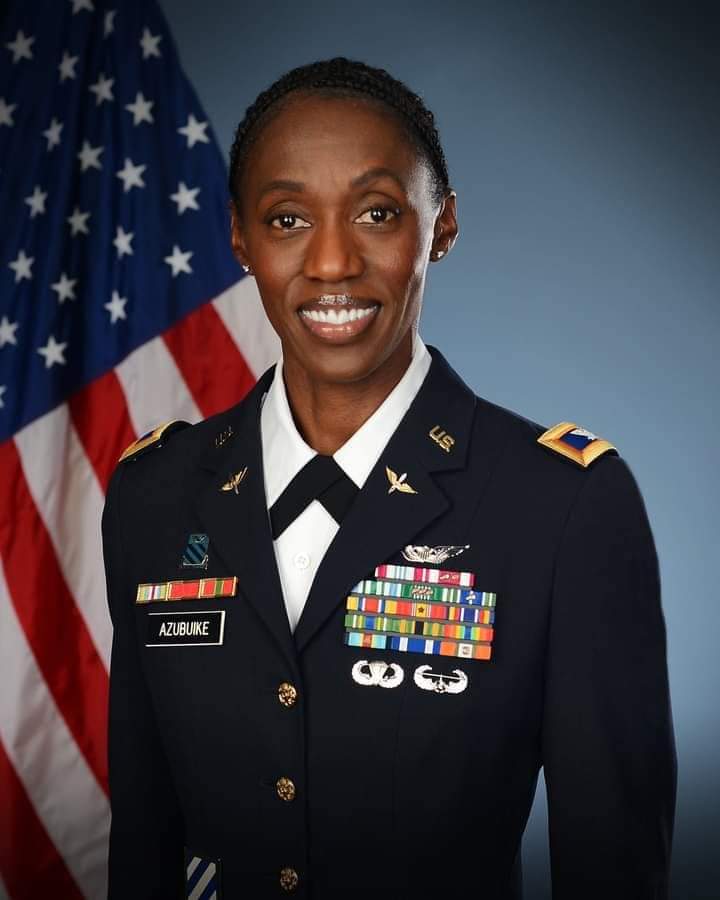
A Nigerian lady of Igbo extraction, Col. Chimamanda Azubuike has become one of the highest-ranking female officers in the US Military.
Chimamanda Azubuike currently the Chief, Public Affairs, and Spokesman for the U.S. Southern Command was rewarded for her exceptional traits of brilliance and strength in the discharge of her duties.
Meanwhile, ahead of the new year, the BBC has named her namesake and multiple award-winning author and feminist, Chimamanda Ngozi Adichie amongst its list of 100 inspiring and impactful women from around the world for 2021.
Chimamanda Adichie
Adichie is listed under the “Culture and Education” category, which consists of 31 women out of the 100 chosen. Under the post designated to the renowned writer, the BBC notes the 44-year-old’s TED Talk in 2012, We Should All Be Feminists, started a worldwide conversation about feminism and was published as a book in 2014.
Col. Azubuike who shortened her name to Amanda has served as a Public Affairs professional with more than 15 years of experience leading strategic communications planning and execution, media relations, crisis communication, internal and external stakeholder relations, and international affairs.
Currently, the Communications Director and principal public affairs advisor for an organization that oversees military operations in twenty-eight countries throughout Central America, South America, and the Caribbean, PushNews writes.
Chimamanda Azubuike
She Supports the Commander’s communications objectives and public outreach efforts through traditional and social media as she prepares and conducts media engagements, communications strategies for the command’s current and future operations. Responsible for planning, developing, monitoring, and executing public affairs outreach and communication programs to build and maintain public trust and support for U.S. Southern Command.
With Amanda’s exalted position she is also responsible for collaborating and synchronizing with communicators at all levels of DoD, the interagency, and U.S. embassies in the region. Provide guidance to subordinate commands and maintain oversight of public affairs manning, training and logistics.
In Brooklyn, New York, The Washington Post recounted, “Esther Friedman held the Book of Psalms with both hands as she peered over her glasses at the fertility lab monitor. There were eight beautiful round eggs, retrieved from a young woman earlier that day.
“‘A good number,’ Friedman said, nodding. A technician grabbed a long glass tube, filled it with sperm, and, within a few minutes, the eggs were fertilized. Eight potential new lives had just been conceived.
Friedman — an Orthodox Jewish rabbinical observer hired by the prospective parents — took a step back, lowered her eyes, and began to pray.”
Catholics Come Home.org gives reasons for the Church’s opposition to in vitro fertilization. “The Church teaches that human dignity is best respected when the beautiful sexual union of two people conceives a child. This does not happen when a human being is created in a laboratory. As the Catechism teaches: ‘Techniques involving only the married couple (homologous artificial insemination and fertilization) are perhaps less reprehensible, yet remain morally unacceptable.
“They dissociate the sexual act from the procreative act. The act which brings the child into existence is no longer an act by which two persons give themselves to one another, but one that entrusts the life and identity of the embryo into the power of doctors and biologists and establishes the domination of technology over the origin and destiny of the human person.’”
The Gospel Coalition.org puts it this way: “For many evangelicals, though, the ethics of in vitro fertilization begins and ends at the question of how many embryos are created and what happens to them. Beyond this, many evangelicals do not even think in vitro fertilization is a ‘moral issue.’ Why would it be, when it seems to be simply a medical technology that helps couples satisfy their deep desires for what God has deemed good—namely, the birth of a child made in God’s image? To say “no” to such technologies is, for many couples, equivalent to saying “no” to the satisfaction of their deepest, most heartfelt desires.
“While not every couple experiences the direct marital hardship Private Life depicts, there are serious costs to and from accepting technologies that separate the “one flesh” union of husband and wife. We think those costs are high enough that evangelical couples and pastors should say no to in vitro fertilization. It’s past time to break evangelicalism’s silence about our complicity in the unethical circumstances that arise when sex and conception are divided.”
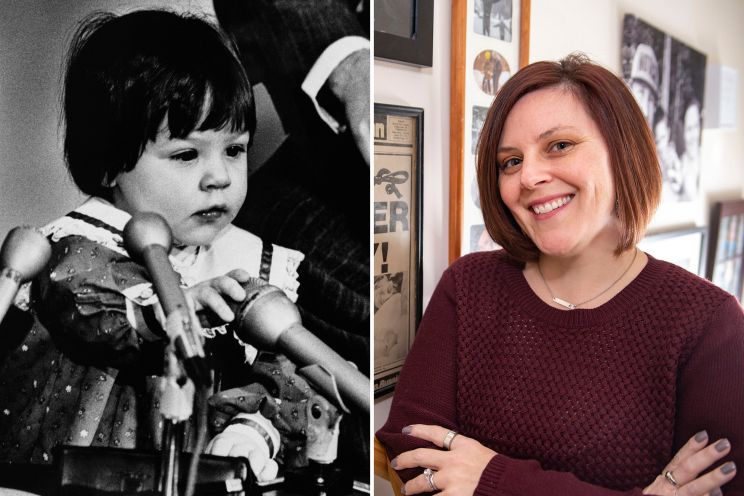
R-L:World’s first Louise Brown and America’s first Elizabeth Carr, IVF babies meet in Chicago for the first time – Chicago Tribune
That said, America’s first IVF baby turned 40 on December 28. Elizabeth Jordon Carr says she will always be an advocate for alternative fertility treatments. She was born on December 28, 1981, at Norfolk General Hospital in Virginia to Judith Carr, a 28-year-old schoolteacher whose fallopian tubes had been removed as a result of previous failed pregnancies, and her engineer husband Roger, 30.
Elizabeth was the fifteenth baby in the world to be produced through IVF but the first in the US. Louise Brown of the United Kingdom delivered in 1978 was the first IVF baby.
With all the hue and cry about IVF, Louise Brown like her US counterpart sees her birth as “a hope to all the women yearning for motherhood.”
“My birth is remembered for two reasons—a milestone in science and hope to all the women yearning for motherhood. My parents were in the spotlight after my birth. It was also a bit sensational at that time and they received criticism due to debates related to the ethics of the IVF procedure. I feel people have an opinion and they are entitled to it. Infertility is a medical condition and if medical science can overcome it, I do not see any difference in trying to solve that with the help of medical treatment. Back then, I was subjected to more than 100 tests after my birth to ensure I was a ‘normal child’.
“I was born on July 25, 1978, at Lancashire. Barring the circumstances of my birth that my parents described as “bit different”, in all other sense I was a normal child, as normal as one can be. When I was born, the doctors suggested to my parents to keep my middle name as ‘Joy’. I am blessed to be the symbol of their joy on their hard work and their success story. While my parents kept me shielded from the criticism, they continued to receive it their entire lifetime. It motivated them to go on speaking assignments around the world as advocates for IVF.”
For a lot of couples, a new relationship usually comes with a high sex drive and you cannot get enough of each other. But as people get older particularly on the part of women, the sexual drive begins to wane.
Social psychologist, Roy Baumeister said it’s expected that a man’s sexual drive is higher than a female’s. Through a study observing sexual habits between males and females, Baumeister insists that men are more sexual than women. “The majority of adult men under 60 think about sex at least once a day. Only about one-quarter of women say they think about it that frequently. As men and women age, each fantasise less, but men still fantasise about twice as often,” he says, adding, “Men want sex more often than women at the start of a relationship, in the middle of it and after many years of it.”
And so it took the world by surprise when an 80-year-old Italian man allegedly killed his 61-year-old wife in a jealous rage when she refused to have sex with him – after he already gulped down a Viagra pill.
Vito Cangini told police he fatally stabbed his Ukrainian wife, Natalia Kyrychok, between Christmas Day and Sunday in the town of Fanano di Gradara, New York Post reported.
He said he took the erectile dysfunction drug when she promised to go to bed with him, but then she changed her mind. Kyrychok’s refusal led to a major fight during which Cangini accused her of being more interested in her boss and then allegedly stabbed her, according to the news outlet.
He was accused of leaving her bloodied body on the floor and then going to sleep. The following morning, he reportedly acted as if nothing had happened — ate breakfast and walked his dog twice. In the afternoon, he finally told a neighbour what he had done and asked the man to call the cops.
Vito Cangini told police he fatally stabbed his Ukrainian wife, Natalia Kyrychok, after she refused to have sex with him.
According to police, Vito Cangini admitted to a neighbor what he had done but the neighbour thought he was joking. The neighbour who didn’t want to be involved told Cangini to call the Police by himself, Newsflash reported.
The elderly man later told a woman who called for his wife about the crime and also asked her to make the call to authorities, but she too balked, possibly because she didn’t believe him.
Photo Credit: Women’s Health
Police say that Vito Cangini flew into a rage after taking Viagra and stabbed his wife several times. Cangini finally called the restaurant where his wife had worked as a chef for two years and told the owner, “I know there was something going on between you two.”
When told he’d never see Kyrychok again, the owner called the police, who found the woman’s body. She had been stabbed at least four times, including once to the heart. Police found the murder weapon at the scene and arrested her husband of 17 years.
Earlier in the year, the family of a woman, Ugieki Asemota, urged Nigeria’s Edo State Police Command to prosecute her husband, Emmanuel, for allegedly beating her to death for refusing him sexual intercourse. An argument was said to have ensued between the couple at their residence on Abaegbe Street in the Evbotubu area of Benin on Monday, June 28, 2021.
Ugieki reportedly entered her room and locked the door to avoid issues with her husband. However, Emmanuel, who persisted in entering the room with her, allegedly tried to break the door with an axe. While Ugieki attempted to escape through the window, her husband was said to have accosted and beaten her to a coma.
The state Police Public Relations Officer, Kontongs Bello, who confirmed the incident, said the suspect would be charged to court at the end of the investigation.
He said, “The couple were married in 2002 and had two boys together before she died. The woman denied him sex and he beat her to a coma. When we finish our preliminary investigation, we will charge him to court.”
In the movie Far From Heaven, four young housewives discuss their sex lives over lunchtime daiquiris. The boldest of the group coaxes the others to reveal how often their husbands want to make love.
“Mike insists on once a week,” one woman finally blurts out. “You get off easy!” the others laugh.
“Ron is more like two or three times a week!” another woman sighs.
“A girlfriend of mine,” confides the ringleader. “Her husband — ” She dissolves into tipsy giggles. “Every night of the week, and three times on the weekend! Can you imagine?”
The movie is set in the ’50s. Today, it is a fact that many modern couples see their sex life crowded out by the relentless demands of children, work pressures, not enough time alone — and simply not enough time. Allowing your physical relationship to fall to the bottom of a frantic “to-do list,” experts say, can lead to dissatisfaction, loneliness, separation, and even divorce.
Most certainly, spouses withholding sex from one another could be an insidious problem, particularly if sex is used as a weapon to punish one another. It’s particularly toxic if an unresolved grievance from the past is offered up as the reason for the withholding of sex. Once one partner ends up sleeping on the couch instead of the marital bed, the end is probably near. Another insidious problem is using sex as a “treat” to reward the partner for good behavior — a training method that is better suited for household pets!
But before the bitterness gets to the point of killing a partner, why not excuse yourselves from the relationship? What does killing a partner who denied you sex resolve?
“The truth of it is, the shame was not mine, and for all victims in similar situations, it is not ours. The shame is reserved for every creep who has ever touched us inappropriately. The shame is on the abuser, not the victim, not the survivor. It is tragic that so many of us have to survive this kind of crap, and I’m so sorry if it has happened to you.” American Actress and activist, Rose McGowan could not have said it better in her memoir “Brave.”
But when the abuser is given a red carpet and the victim left in the lurch, it leaves the head spinning. That is the story of many Nigerian women violently raped, and carried away by terrorists as spoils of war while the federal government mulls over amnesty for their violators. With rape epidemic placing Nigeria as 10th on the list of most dangerous countries for women according to the 2018 Thomas Reuters Foundation Annual Pool, terrorism and banditry in parts of Northern Nigeria has upped the figures. It happens every few minutes. Bandits stroll into towns and villages, and have a ball. What could have happened to the military and other security operatives? What about intelligence gathering? Have they been compromised? Well…
Photo credit: icirnigeria.org
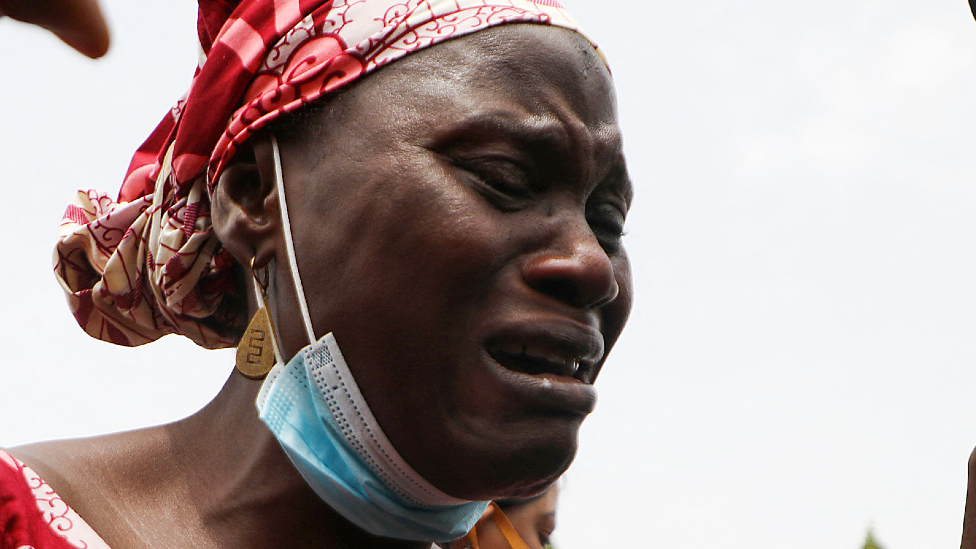
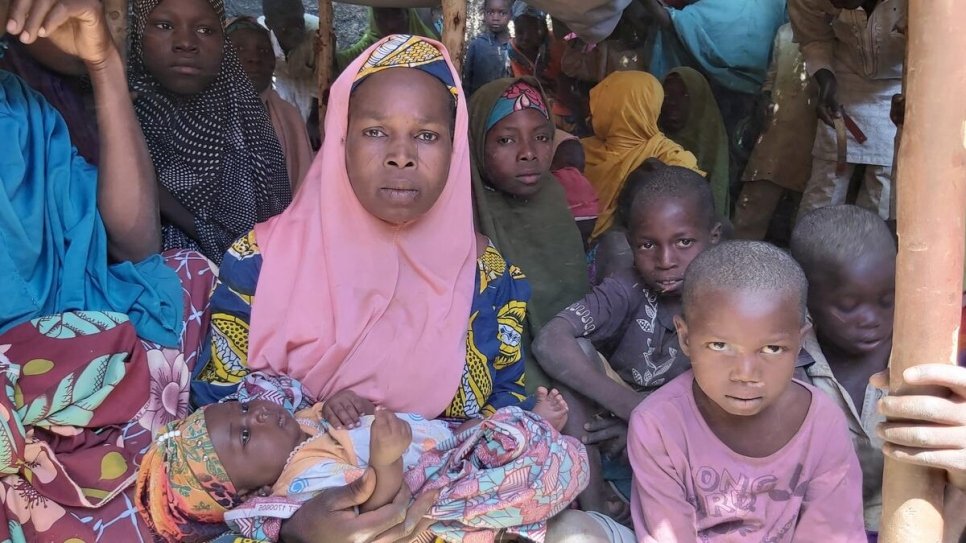
Displaced women in Tsafe Local Government Area of Zamfara State have related dreadful tales of gang rapes by bandits. Hundreds of women and children have been displaced in the last few weeks by armed men following vicious attacks on several villages in the local government.
“They are gang raping us, and if any woman or lady dares to reject their sexual advances, she would be shot dead instantly. Several women were killed for not accepting their sexual demands. “A woman was pulled out of her matrimonial home by the armed criminals. They had wanted to rape her but when she refused to go with them, they began to drag her until when one of them shot her dead despite her husband’s plea,” a displaced woman identified as Hajara told Daily Trust.
Another resident identified as Mustapha also gave a chilling narative of how his granddaughter was shot dead for not submitting herself for a gang rape in a community called Bakin Manya. “When they shot her dead, they lurked around the community and attacked those who went to the cemetery to bury her. The funeral rite wasn’t held there. Her remains were taken to Tsafe for burial,” Mustapha said.
Photo Credit: UNCHR
A woman named Amina told a reporter that her sister- in-law was hit with a gun butt after she refused to be raped by the armed criminals who struck their communities. “She was having her bath when one armed man forced his way into the room. He tried to rape her but she refused to allow him. A fight between her and the armed criminal ensued; he hit her with a gun and she had to crawl out of the room. The way these criminals are humiliating people is highly traumatising and we have no option other than to abandon our communities for our own safety. We have lost a lot to armed banditry and kidnapping over the years.”
Interestingly, the identity of the kingpin behind these attacks is not hidden. Adamu Aleiro, the notorious cattle rustler alleged to have championed most of the attacks in Tsafe and Faskari local government areas of Zamfara and Katsina state for instance is believed to have a firm grip on bandits traumatising communities in these states. In 2018 he reportedly sacked many communities in eastern Tsafe after security operatives seized about 500 cows he was suspected to have rustled from Kaduna and Niger states. The daring bandit allegedly promised to stop attacks, and cattle rustling after officials engaged him in a peace deal in 2019, but he has since resumed his odious activities.
While the federal government is fine-tuning its plans to pardon ‘repentant’ bandits, and terrorists, should the Terrorism Act not be amended with respect to sexual offences committed during war or terrorism activities? Should sexual offences committed in these instances not be properly defined as rape? The Violence Against Persons (Prohibition) (VAPP) Act 2015 pegs the minimum punishment for rape at 12 years imprisonment without fine. The maximum punishment is life imprisonment. Should persons found to have violated this law be considered for amnesty? What about justice for the victims and the society?
In an articletitled: “Boko Haram: 11 Questions Trailing Amnesty for ‘Repentant’ Terrorists,”Soonest Nathaniel in his 1st September, 2021 write-up on Channels TV website,raised some posers.
Do the people really want them back?Knowing the magnitude of damage that these terrorists have caused Nigerians over the years, there are some who ask if— ‘I am sorry’— will be enough to bring the people consolation.
How genuine is their surrender… knowing that the Boko Haram war is not just a physical conflict, but a battle of ideologies..?
What are the downsides to handing out the olive branch? …if this is a subtle way to get back into communities, are we ready for the damage they can cause? Another damage envisaged includes lasting hostilities between the communities and the penitent terrorists.
Will they be trained abroad? … the first major amnesty exercise in Nigeria was handed to the Niger Delta Militants and asides monies paid, there were programmes for a good number of militants to be trained abroad.
Perhaps the argument here is that the militants were said to be fighting for the destruction of their lands and the suffering of the region following oil explorations, while the Boko Haram’s war is purely against western education, an idea which many have described as barbaric at best…
Photo Credit: Global Upfront Newspapers
Why is amnesty a priority at this time? Senator Ali Ndume is perhaps the chief quizzer on this one. In a recent interview, the lawmaker who serves as Chairman of the Senate Committee on Army was of the opinion that it is only when the war has been won that we can begin to think about those who come out to surrender.
According to him, handing the terrorists an olive branch at this time will only encourage others to join the sect. He said having the exercise at this time is, at best, a misplacement of priority.
What about the IDPs?
As the nation begins to look critically into the rehabilitation of the ex-radicals, people are wondering if this development is not stalling the push to have displaced Nigerians returned to their homes. There are those who are of the opinion that the IDPs must at this moment remain the major focus of the government, not those who have inflicted pain on the nation. For these persons, the most important and yet to be answered question remains “when are the IDPs going home?”
Have they been yielding quality information?
For some Nigerians, one of the only bases upon which amnesty will be granted to any Boko Haram member should be based on the quality of information supplied. It is expected in some quarters of the country that the fighters who are surrendering at the moment, are giving the authorities very vital information that will see the army do major damages to any Boko Haram/ISWAP strongholds that still exists today. This way there could be a case made for them as regards helping the nation to quash the insurgency for good, maybe when this is done, then a course is charted for redemption.
Terror Group Sacks Communities In Northwest Nigeria, After Giving Eviction Notice - HumAngle Media
By Lillian Okenwa
“With all the happenings in Nigeria, if the president, his friends, and spokesmen believe that Nigeria is doing well, it’s either they do not live in Nigeria or perhaps reside in another realm.”
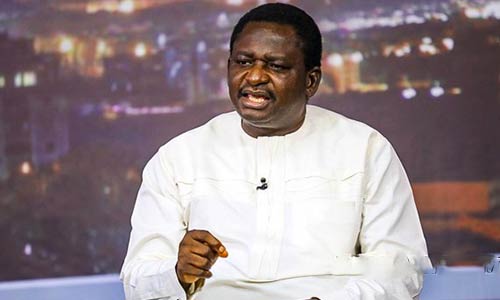
On the morning of Thursday, September 2, 2021, Special Adviser to the President on Media and Publicity, Mr. Femi Adesina said Nigerians should be grateful to President Muhammadu Buhari’s administration. The Presidential spokesman on a Channels Television morning show remarked that Buhari is on top of the security situation in the country and that things are a lot better under this government than they used to be.
Last year Adesina on the same station told Nigerians during the Sunday Politics programme to be grateful to President Buhari for his fight against insecurity in the country. He proclaimed that Buhari has done well in ensuring the security of lives and properties in Nigeria, despite evidence of widespread insecurity in the country. On account of the President’s goodness no doubt, Adesina on another occasion professed that Buhari is the most loved politician in Nigeria’s history— more popular than Chief Obafemi Awolowo, Dr. Nnamdi Azikiwe, Mallam Aminu Kano, and others.
Femi Adesina
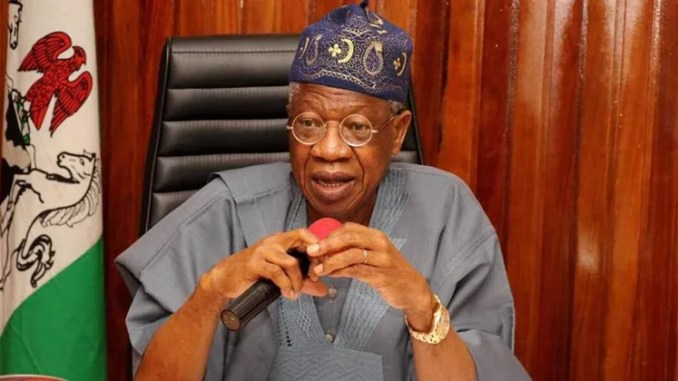
Weeks ago, Minister of Information and Culture, Alhaji Lai Mohammed announced that terrorists could have achieved their aim of declaring an Islamic State in Nigeria if President Muhammadu Buhari had not acted decisively.
Totally ignorant of the President’s accomplishments, London-based news magazine, The Economist in its October 23, 2021, issue, described Buhari’s government as inept and high-handed, stressing that he, had also failed to tackle corruption. The 178-year-old magazine made this assertion in an editorial titled, ‘The Crime Scene at the Heart of Africa.’ The Economist noted that due to Buhari’s mismanagement of the economy, food prices had soared while life had become more difficult for Nigerians.
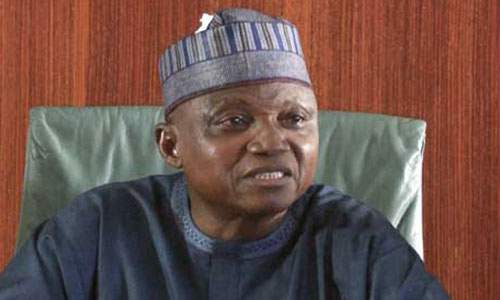
The Presidency did not hesitate to react. Senior Special Assistant to the President on Media and Publicity, Mallam Garba Shehu in the press statement declared that of all the country’s past leadership, his principal is the only one with the political will and determination to tackle all four threats of ISWAP/Boko Haram terrorism in the North-East; kidnapping and crime in the North-West; herder-farmer disputes in the central belt; and IPOB in the South-East concurrently.
Earlier, the Presidency warned the Socio-Economic Rights and Accountability Project (SERAP), to stop what it described as divisive, irresponsible, and bare-faced publicity stunts and follow through with its legal claim in a Nigerian court of law. The Presidency in a Press Release signed by Garba Shehu told SERAP to challenge the federal government publicly, legally, and transparently. Part of the statement read: “Nigeria is comfortable that its record as Africa’s leading democracy and largest economy speaks for itself. Nigeria is amongst the top five countries in Africa for quality of life, and our ranking in the Human Development Index has steadily risen for a decade. This success is testament to the rights, rule of law, and strong, independent institutions enjoyed by all Nigerian citizens and others who live there.”
Garba Shehu
SERAP stoked the government’s anger by its lawsuit of November 26, 2021, in which it asked the court to “compel President Muhammadu Buhari to take immediate steps to ensure the arrest of soldiers and police officers indicted by the Lagos #EndSARS panel report for the shooting of peaceful protesters at the Lekki tollgate, and police brutality cases.” Prior to this action, SERAP unnerved the government with a different lawsuit over “[its] failure to publish the names of those indicted in the alleged misappropriation of over N6trn in the running of the Niger Delta Development Commission (NDDC) between 2000 and 2019, as documented in the recent Forensic Audit Report on NDDC.”
Notwithstanding the Presidency’s claim on security, Bandits have continued to abduct, slaughter, and roast scores of travellers alive on various highways in northern Nigeria. Less than an hour to the arrival of President Buhari in Maiduguri, Borno state, last week, suspected Boko Haram/ISWAP terrorists fired rockets into the city. The proximity of the attack was less than five kilometres away from Maiduguri International Airport and Air Force Base. Three persons were reportedly killed and the IGPhas expressed concern over the ability of the Islamic State of West Africa Province (ISWAP) to fire rockets in communities in Borno state.
Yet, Sometime in May 2021, Alhaji Lai Mohammed in his usual ‘rousing’ speech assured that the government in the days ahead “will confront the challenges headlong and restore law and order, peace and security.”
Alhaji Lai Mohammed
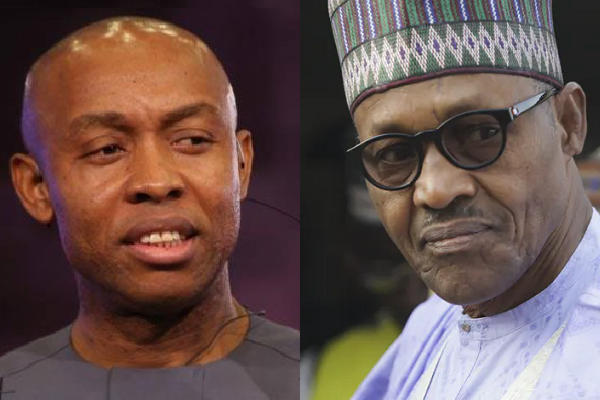
As the storm raged unabated, rights activist and a former Chairman of National Human Rights Commission (NHRC), Prof. Chidi Odinkalu on December 1, 2021, tweeted via his Twitter handle (@ChidiOdinkalu): “In the last 13 weeks, @MBuhari has bn in 9 countries outside Nigeria, including Turkey, UAE, South Africa, France, Scotland, USA, Saudi Arabia, Ethiopia. Over that period, over 1,000 #Nigerians have bn killed in #MassMurder. He is #NotAware.” But as Dele Momodu said in his article: “President Buhari and His Love of Global Stage”, President Buhari “loves the global stage and craves being under the spotlight of the klieg-lights and the flashing bulbs.” International matters are of more consequence.
Prof. Chidi Odinkalu and President Muhammadu Buhari
Days ago some protesting youths, who came out en masse in Zaria, to demand an end to insecurity in Kaduna State and the entire Northern region were arrested and detained by the police and operatives of the Department of State Services (DSS). They had joined their counterparts in other parts of the region to protest the incessant killings, abductions, and other crimes in the North. The Kaduna State chapter of a rights group, Take It Back Movement, has demanded the release of eight #NorthIsBleeding protesters arrested by the security agents.
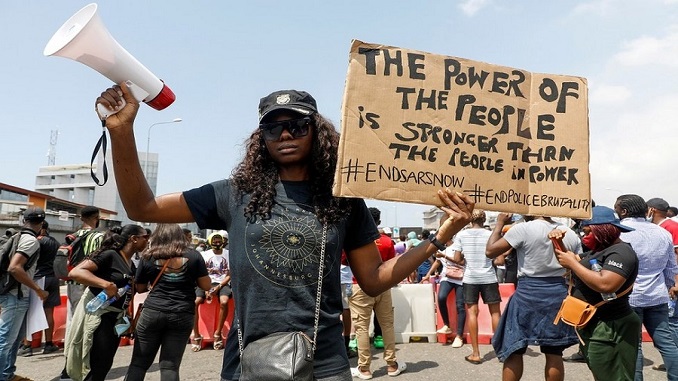
Similarly, a Civil Society Organisation (CSO), Enough is Enough (EiE) Nigeria, condemned the continued detention of #EndSARS protesters who it said were rotting in jail. A statement signed by Executive Director EiE, Yemi Adamolekun read: “To find protesters being brutalised, illegally shot at, and arrested for exercising their fundamental right is a complete breach of their human rights.
“These were some of the disturbing encounters of Nigerians who participated in the October 2020 #EndSARS protest, where citizens came out en masse to bemoan the societal ills of police brutality, indiscriminate arrests, and the excesses of rogue police officers and operatives of different police units, especially the now-renamed Special Anti-Robbery Squad (SARS). Peaceful protesters are not criminals; neither is peacefully protesting a criminal offence.”
In the meantime, Nigeria lost a whopping $1.22b in 203 days following the ban of Twitter which according to the federal government-sponsored the #EndSARS protest. Small businesses that depended on it for survival have since expired. Imagine an economy losing that much. But what does Nigeria’s government really care about these things or small people?
However, there must be something the government is not telling Nigerians. If citizens who are protesting troublesome situations in the country are arrested, shot at, killed, and detained by security operatives while criminals are running amok, then something is wrong. If with all the happenings in Nigeria the president, his friends and spokesmen believe, nay insist that Nigeria is doing well, then it’s either they do not live in Nigeria or perhaps reside in another realm.
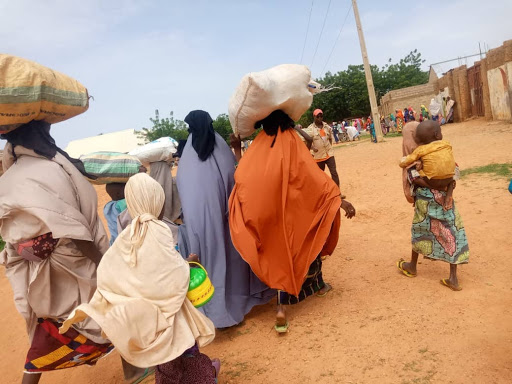
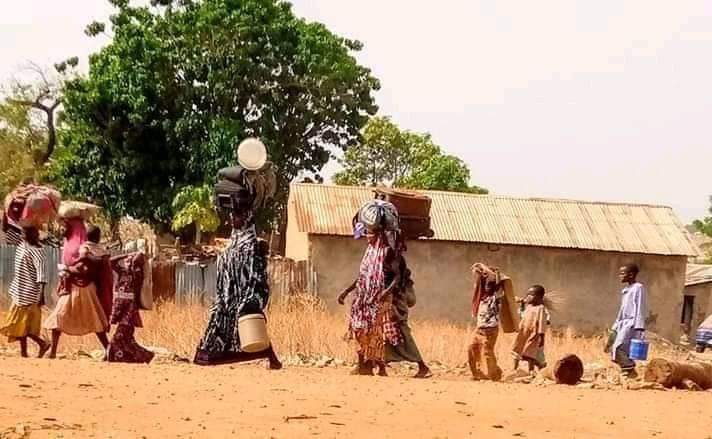
Meanwhile, farmers and communities in different Northern states including Katsina, the President’s home state are groaning under the burden of terrorists. Farmers in Niger State claim that bandits storm their farms to kill, abduct, or tax them before they could cultivate their farms. In response, the Niger state government told the grieving communities not to pay levies and taxes to the gunmen before harvesting their crops. The meaning of that directive is not clear in the absence of any protection for the villagers.
Villagers in Niger state displaced by bandits, Photo Credit: Premium Times Nigeria
Olalekan Bilesanmi shared the situation in neighbouring Zamfara State in an article in the Vanguard Newspaper ofSeptember 26, 2021. “It isn’t a list anyone would be proud of,” he said. “In plain terms, it is a frightening list. But here it is in black and white: 6,319 persons arbitrarily and wilfully killed; 3,672 kidnapped; N2,805,049,748 paid as ransom; 6,483 widows and 25,050 orphans left behind by slain victims; 215,241 cows, 141,404 sheep, 20,600 of other animals (such as camels and donkeys) rustled; and 3,587 houses, 1,487 motor vehicles and motorcycles burnt. Then a footnote to the list: Bandits operated 105 camps from which they launched deadly attacks on Zamfara, killing and stealing the people’s properties at will; their leaders identified. Grim figures, no doubt.”
The best Nigeria’s Information and Culture minister could muster about the tax collecting bandits was that bandits are like thugs known as ‘area boys’ who collect taxes in the South.
Another shocking revelation came from the coordinator of Sector 4 Command, Joint Border Patrol Team of the Nigeria Customs Service (NCS) in the northwest, Mr. Aliyu Mohammed. Mohammed told newsmen in the full glare of television cameras that he had to offer seven bags of seized rice to bandits in exchange for freedom. Narrating one of his encounters with bandits in a bush in Katsina, he said the gunmen asked for seven out of the 37 bags of rice they seized at the time if the officers wanted to be released alive and he complied. Even the Nigeria Customs Service pays homage to them.
Earlier in the year, while delivering his Easter message, Bishop of the Catholic Diocese of Sokoto, Matthew Hassan Kukah, condemned the spate of insecurity under the Buhari-led federal administration. Kukah in the message titled “Nigeria: Before our glory departs,” said: “Taunted by Boko Haram, ravaged by bandits, kidnappers, armed robbers, and other merchants of death across the nation, there is collective fear as to whether Nigeria’s glory is about to depart…” The presidency as usual launched a salvo against Kukah, tore him to shreds, and ignored his message.
Countless times bandits have decimated thousands of Nigerian soldiers, overran military bases including the Nigerian defence Academy where they took soldiers captive. Boko Haram continually routs soldiers in North-Eastern Nigeria. They’re even believed to have superior weapons and equipment. After wasting public assets and more, the government is seeking amnesty for them.
Army Chief, Yahaya Visits NDA After Bandit Terrorists Attack, Photo Credit: Naija News
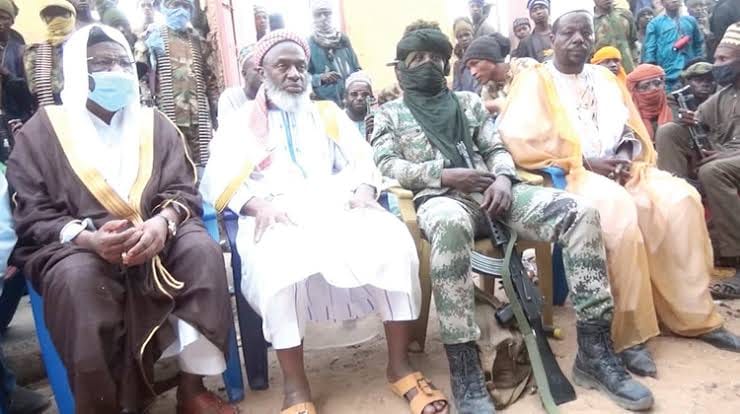
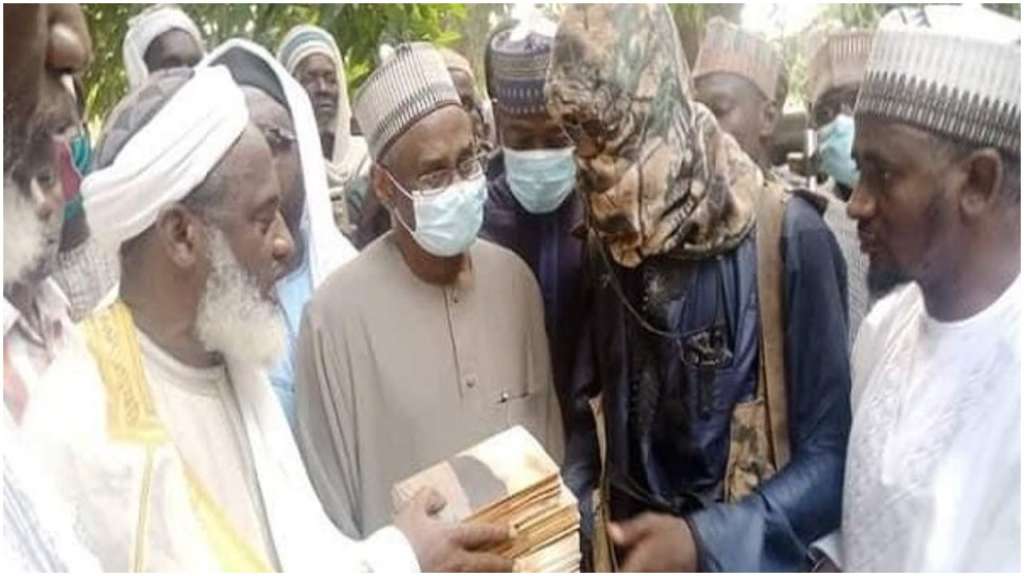
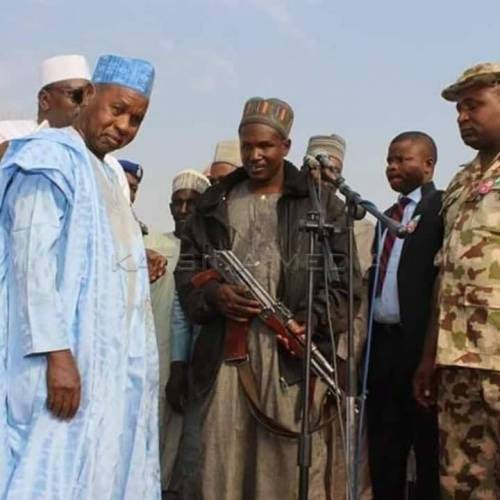
In a recent interview with Vanguard Newspapers, Alhaji Buba Galadima, a former ally of the president said: “The highest the authorities could have done is to propagate an act or law saying that anyone caught doing banditry would face public execution or firing squad…” Galadima however turned round to say: “…you can’t declare somebody without an address, without name an outlaw,” thereby suggesting bandits/terrorists are faceless. But Islamic cleric and mediator Sheik Ahmad Gumi has been openly visiting, negotiating, and speaking on their behalf. He has even advised Federal Government to not only give blanket amnesty to bandits but use security budget for their amnesty. At some point, he said banditry will not stop unless they are granted amnesty. Also, the picture of Governor Aminu Masari of Katsina state with bandits wielding AK 47 in 2019 was viral. They were given red carpet treatment in the full glare of the cameras.
Sheik Gumi, allies, and bandits
In August, the federal government announced that the reason it stopped negotiating with kidnappers of students in some parts of the north was that the bandits were using parts of the ransom to equip and re-arm themselves. At the time they considered paying ransoms, the government didn’t realise they were empowering the killers of those that brought them into office? How about re-absorbing them into the military? The government also didn’t consider the security implications? Something is off.
Conversely, the Indigenous People of Biafra (IPOB) which began their activities peacefully were hounded like criminals for demanding an independent state of Biafra in the South East of Nigeria through a referendum until they turned violent. An Amnesty International (AI) report revealed how extrajudicial execution and torture by Nigerian security forces, especially the Nigerian Army, led to the death of at least 150 pro-Biafra protesters across Nigeria’s south-east, between August 2015 and August 2016. The report titled: “Bullets Were Raining Everywhere”: Deadly Repression of Pro-Biafra Activists, relied on the analysis of 87 videos, 122 photographs, and 146 eye witness testimonies which showed soldiers of the Nigeria military firing live ammunition to disperse protesters, most of them members of the separatist group, IPOB, without warning.
Members of IPOB
Months ago following the activities of unknown gunmen purported to be IPOB members the Inspector General of Police (IGP) Usman Baba gave an order for IPOB members to be shot at sight. This was followed by the president’s threat to clamp down on individuals perpetrating violence in the southeast region of the country. Not long after, there was a massive deployment of soldiers to the region. Next was indiscriminate mass raids, arresting and shooting innocent unarmed young men. It is doubtful that the actual ‘unknown gunmen’ are unknown. Why the situation in northern Nigeria has not been declared a national emergency begs for answers.
Governor Masari and Bandit
When the public hearings of the famous Human Rights Violations Investigation Commission (HRVIC) popularly Oputa Panel wound up on Thursday, October 18, 2001, Chairman of the panel, Hon. Justice Chukwudifu Oputa in his keynote address warned that the “simmering discontent” among the nationalities must not be allowed to fester. “Each ethnic group feels marginalized. From the memoranda and evidence from these groups, it became apparent that there exists a simmering discontent which should not ever be allowed to boil over. The challenge then is to find an answer to this dreadful fiend called marginalisation. And find an answer Nigeria must…” It’s been 20 years since…and the situation has festered.
Our site uses cookies. By clicking “Accept All Cookies”, you direct Law and Society Magazine to store cookies on your device and disclose information in accordance with our Cookie Statement: cookie policyACCEPTREJECT
Privacy & Cookies Policy
Privacy Overview
This website uses cookies to improve your experience while you navigate through the website. Out of these cookies, the cookies that are categorized as necessary are stored on your browser as they are essential for the working of basic functionalities of the website. We also use third-party cookies that help us analyze and understand how you use this website. These cookies will be stored in your browser only with your consent. You also have the option to opt-out of these cookies. But opting out of some of these cookies may have an effect on your browsing experience.
Necessary cookies are absolutely essential for the website to function properly. This category only includes cookies that ensures basic functionalities and security features of the website. These cookies do not store any personal information.
Any cookies that may not be particularly necessary for the website to function and is used specifically to collect user personal data via analytics, ads, other embedded contents are termed as non-necessary cookies. It is mandatory to procure user consent prior to running these cookies on your website.