Home Blog Page 864

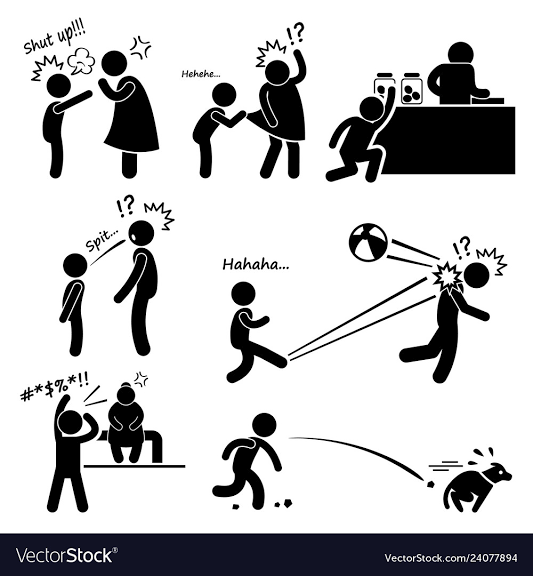
Why your ill-mannered child’s behaviour is my

Why your ill-mannered child’s behaviour is my business

I want to tell everyone here that it is my business how you raise your children.

And it should also be your business how I raise mine,  if you are a parent indeed.

🔴 It is my business because, your ill-parented children will corrupt other children, including mine.

🔴 It is my business because, you may raise more hoodlums, prostitutes, drug addicts, rapists, etc., in addition to the ones we already have in the society; thereby making the environment more unconducive and unsafe for everyone.

🔴 It is my business because, you may raise bullies and send them to the same school where normal children are.

And we cannot afford to continue losing innocent children to untamed bull dogs who pretend to be students😡.

🔴 It is my business because, I am praying to be a father-in-law tomorrow and I don’t know who my child will bring home to me.

What if fate brings them together with your ill-parented son or daughter, whom you have craftily taught the art of deceit and pretence?

Wouldn’t that mean that I may spend the rest of my life in bitterness watching my son or daughter going through pains in their marriage?

🔴 How you parent your children is my business because, every intentionally parented child is a special gift from God to humanity.

Who knows whether that child you are spoiling or neglecting today would be my destiny-helper tomorrow?

🔴 Don’t tell me to mind my business when you are raising charlatans who will waste, rather than save lives in our hospitals; traumatise, rather than teach students/pupils in our schools; profane, rather than glorify the name of God in religious organizations, and cause havoc in every sector of the society, which all of us are meant to coexist in.

🔴 Stop telling me to mind my business because, I am a stakeholder in the upbringing of every child born in this time and season.

Every intentional parent knows that we are all stakeholders in the raising of the next generation.

Posterity will judge us if we see or hear evil and keep mute.

Therefore, my fellow intentional parents, the next time anyone tells you that, how they parent their children is not your business, calmly use these points and other points your intentional-parenting instincts will give you at that instant to educate such ignorant fellows.

Credit:everyday.com

Osinbajo’s Comment On The Judiciary At The BOSAN Dinner: A Paradox Of Conviction

By Douglas Ogbankwa Esq

I read with equanimity the comments attributable to the Vice President of the Federal Republic of Nigeria , Prof. Yemi Osinbajo at the annual dinner of the Body of Senior Advocates of Nigeria (BOSAN) , over the last week end ,where he stated that the Judiciary is not for the Bar or Bench , the Nigerian Judiciary is for the People.

How people based can the Vice President not be ? I do not brood over empty rhetoric’s , I am a proponent of reality in governance .The Nigerian Judiciary is for the Bar and Bench , for the benefit of the people. The attempt to downgrade stakeholders in the Judicial System is a ploy to present an unrealistic facade , more like a fait accompli , to continue the domination of Nigerian Judiciary by the Political Class and to limit the effective oversight , that the very vibrant and virile National Bar ,led by the Nigerian Bar Association (NBA) President-Olumide Akpata , has exercised over the Judiciary at the moment. The relationship between the Judiciary and the Bar is like the one between the chick and the egg. The Bar gave birth to the Judiciary and all Judges came from among Lawyers , because with out their Call to Bar Certificate and a good recommendation from the Bar ,they would never have been Judges .

The statement of Vice President indicated above can be faulted for the following reasons :
The Nigerian Judiciary has no Jury System as is present in many countries of the world -which is a people based template of leaving the conviction or acquittal of alleged criminals to the decision of the People , who are picked intermittently to ultimately determine the guilt or other wise of alleged criminals. The Jury System gives the people a sense of belonging and a sense of ownership of the Judiciary. We do need this Jury System in Nigeria as some of the Decisions from some our Courts having Criminal Jurisdiction , have left much to be desired .Only a Judiciary that the people have a say in its activities can be said to belong to the People and not that is outside the basic understanding of the people.

Professor Osinbajo is an inside Insider ,while I am an out side insider in the trajectory of the Nigerian Judiciary. We both have insights in the issues plaguing the Nigerian Judiciary , chief of which are absence of the Independence of the Judiciary , which is predicated in the refusal of the Governors to accede to the Provisions of Section 121(3) of the Constitution of the Federal Republic of Nigeria , 1999 (As Amended) for monies standing to the credit of the Judiciary to be paid directly to Heads of Court ,the secrecy of the appointment of Judicial Officers and the lack of transparency in the process , as the process is not open to scrutiny by the people ,who wakes up and see names of Judges being announced on Television or Radio , which some times leads to imposition of out rightly incompetent Judges that are Political exposed on the Judiciary.Before the appointments of SANs , their names are put on National Dailies and Petitions are invited against them.

Why can’t we replicate this for the appointment of Judges? If the people who are now Judges go through half of the rigours SANs go through to become SANs , at least half of the Judges we have in Nigeria today would never have been Judges .It does not add up that the processes to become SANs are more rigorous than the processes to be Judges .Another problem is the poor renumeration of Judges and particularly magistrates and Presidents of the Customary Courts , who in some states do not even have official cars .Some Magistrates and Presidents in some States enter buses with litigants and Defendants in Criminal Cases , thereby exposing then to danger .The poor state of our Courts , some which are decripit and are not fit for Court Business ,some times the difficulty of the same people accessing justice :The Court of Appeal just imposed through their 2021 Rules 50,000 Naira deposit , before you can file an Appeal at the Court of Appeal , which will preclude poor people from being able to file an appeal in the Court of Appeal.Do all the challenges indicated above show our Judiciary is for the people?I leave that question for the Vice President to answer .

The Vice President has had a vantage position in Nigeria to at least advice that the Nigerian Judiciary should conform to International Best Practices.I was encouraged to study law (I actually wanted to be a Journalist) , when I saw the very powerful dictums coming from Nigerian Judges and Justices. I remember Justice Udo Udoma becoming Chief Justice of Uganda , Justice Omo Agege becoming Chief Justice of the Gambia .The cases of Ojukwu v Military Administrator of Lagos State ,Guardian Newspapers v AGF ,Gani Fawehinmin v IGP , Garba v University of Maiduguri were all determined under the Military Rule and in all these cases , the Judiciary stood with the People and Military Obeyed , not as it is in our Democratic Statement , with Prof Osinbajo there , the Federal Government has been observing the Judgments and Orders of Court in breach.Aside some courageous Judges today, a lot of Nigerian Judges churn out daily anti people judgments .You can imagine a Judge dismissing a case filed against the Federal Government on the illegal banning of Twitter on the ground the the Claimant can use other Social Media Platforms like face book and instagram , in the midst of the Provisions of freedom of speech and expression as enshrined in the Constitution .Does that look like a Judgment for the People ?

The Judiciary should open its space to accommodate the people.Let us integrate the jury system in our criminal courts .I commend the Multi Door Court House of Edo State for allowing people who are not Lawyers , but are qualified to be among their panel of neutrals .This is a people based approach to do justice . Assessment of facts can be done by any rational person .Let us truly integrate the people in our Judiciary.Currently , our Judiciary is esoteric and it exudes fear in the mind of people . Let us open it up .The Vice President can do more than sermonizing in this regard.Actions talks louder than words .

About the Author:

Douglas Ogbankwa Esq.,@ [email protected] , a Benin Based Lawyer , Writer and Policy Analyst is the Convener of the Vanguard for the Independence of the Judiciary and the President of the Benin Writers’ Society.

Atiku And The Fallacy Of Single Term Presidency

Recently, the former Vice-President of Nigeria, Alhaji Atiku Abubakar, tested the political waters through the Chairman of Daar Communications, Dr Raymond Dokpesi, concerning a supposed one-term presidency. Dr Dokpesi was reported to have advised the South-East zone to allow Atiku to run for a single term from 2023 to 2027 and that if Atiku should renege on this promise, he (Dokpesi) would walk naked on the streets. This is not the first time we have heard this from the former Vice-President. In 2018, Atiku himself swore to the people of Nigeria to serve in office for only four years if elected into office, promising to sign any document to that effect, not to pursue a second term. At that time in 2018, what prompted Atiku’s solemn declaration was the concern raised about his eligibility in respect of age and also how his presidency may disrupt the zoning arrangement in Nigerian politics.

Atiku celebrated his 75th birthday in November 2021 and if elected as President of Nigeria in 2023, he would be 81 years old at the end of his first tenure and 85 years old at the end of the second tenure. So, it became natural for people to wonder if the ‘Not Too Young To Rule’ policy would ever work. Then again, Atiku is from the North, the same political zone as the incumbent President, Muhammadu Buhari, the latter who is set to complete his second four-year tenure in 2023. By Nigeria’s unwritten political arrangement, the president should naturally come from the South in 2023, which an Atiku presidency may throw overboard, should he win election in 2023, with a new opportunity for another four years thereafter. In an attempt to address these obvious political liabilities, Atiku was reported to have expressed his readiness to abandon his second term ticket, if elected into office as president.

A fallacy is said to be a false or mistaken idea, by which people are often deluded but cannot hold when subjected to proper scrutiny. The idea of Atiku foregoing his second term option for president in 2027 is false and can thus not be taken seriously. First, it is illegal. If Atiku is qualified now to contest for president under section 131 of the 1999 Constitution, he will surely be qualified to contest again in 2027 and one million voluntary undertakings to waive that right will not hold water in law. Under and by virtue of section 137 (1) (b) of the Constitution, “a person shall not be qualified for election to the office of President if he has been elected to such office at any two previous elections.” The simple interpretation to this provision is that Atiku cannot be disqualified from vying for the office of president for a second term, under any guise whatsoever. Thus, the carrot of a supposed vow to waive this option cannot stand in the face of the Constitution.

The Constitution of Nigeria is the organic law of the land and its provisions cannot be waived, undermined or compromised in any political arrangement, as being proposed by Atiku. Section 1 (1) of the Constitution is very clear in this regard when it states: “This Constitution is supreme and its provisions shall have binding force on all authorities and persons throughout the Federal Republic of Nigeria.” Atiku as a “person”, is already captured under section 1 (1) above and he cannot undertake to sign himself out of the provisions of the Constitution. That can only be for politicians, but certainly not the law courts, when faced with the task of enforcing and upholding the Constitution. Section 1 (1) says clearly that the provisions of the Constitution “shall have binding force”! These words were carefully chosen by the framers of the Constitution. “Shall” is a word of command, “binding” connotes an imposed obligation from which one cannot be exempted or excused and “force” suggests a sense of compulsion for total surrender, even against one’s own will. So, when a law “shall have binding force”, it is not one that a politician should throw around like his party’s manifesto.

Second, the office of the president for which Atiku is contesting and promising to run for only a single tenure, is a creation of the Constitution, under section 130 thereof. That being the case, only the Constitution itself can determine what happens to and how long a person can stay or contest election into that office. It is not the office of the chairman of the Peoples’ Democratic Party or even the Managing Director of a company. You cannot seek to control what you did not create. This is why the Constitution itself has taken its time to make itself ungovernable and unimpeachable, by stating in its section 1 (3), that: “if any other law is inconsistent with the provisions of this Constitution, this Constitution shall prevail, and that other law shall to the extent of the inconsistency be void.”

Now let us for the sake of argument assume that such an agreement not to vie for a second term in office is voluntarily or compulsorily signed by Atiku, it cannot be worth more than the piece of paper upon which it is written. If Atiku is able to secure his first term in office through such an illegal agreement indeed, then you can well guess what would follow towards the end of his tenure in office. Solidarity visits upon solidarity visits, from all our so-called “well-meaning” Nigerians, who will be swearing on their heads that Nigeria will collapse if Atiku is not allowed to finish his “good works” for Nigeria. Then royal fathers will follow, with women groups, okada riders and even beggars. And you can be sure that the National Assembly will pass a motion for Atiku to seek a second term in office. The sentiments will be too much to contain. On top of it all, some portfolio Non-Governmental Organisations, the faceless Civil Society Organisations and itinerant human rights activists, will storm the courts, seeking to invalidate such illegal agreements and to secure a court order to compel Atiku to run. And I cannot ever imagine my beloved North ever agreeing to forfeit a shot at the prime spot. So, let us perish the thought of an agreement for a single-term presidency, but rather run on the merits of programmes and policies. This is not a vote against Atiku in any way at all. Far from it.

I believe that Atiku is qualified to seek election into the office of president of Nigeria on the merits, such that there is no need to resort to this worn-out method of currying votes from the electorates through phantom promises that are not rooted in law. His fate in the coming elections should be based purely on his personality, his previous record in office, his new agenda for Nigeria and the integrity of the platform upon which he is standing to secure his mandate. Atiku should address his mind to Nigerians and what matters most to us in durable infrastructure, eradicating all corrupt practices, transparency in governance and above all, restructuring and fiscal federalism. All these must be addressed in very concrete terms with supporting documents to which Atiku can be held liable. Let Atiku address the issue of the economic prosperity of Nigeria, and how he wants to turn it around better than Dubai, such that in another five years from now, no aspiring candidate would have to travel that far, to plan his campaign strategy, and be contributing to the economic prosperity of foreign nations, because of an election that is to take place in Nigeria.

In the wake up to the PDP presidential primary election, Atiku was all over Nigeria, promising restructuring, but after he won the primary election, he went dead silent on it. This is at the heart of Nigeria, whether we will embrace restructuring in its true form or continue to dance around the theatre of implosion that is staring Nigeria in the face. Yes, we have all read his policy document, full of ideals but lacking in enforcement. We read better policy documents from Buhari and the All Progressive Congress in 2015 and we listened to promises of how the Naira will beat the Dollar, how Boko Haram will become a thing of the past because a war General was going to be in charge to lead the attack against the insurgents by himself, little knowing that he would spend the better part of his tenure in various hospitals abroad. We cannot have that again, where a candidate and his party openly canvassed for votes based on policy documents circulated massively to all Nigerians and upon attaining power, he and his party would turn around to openly deny and reject the said document, even when it is still on the official website of the latter, even as of today.

There is no need for Atiku to seek to turn around the Constitution to undertake the illegality of a one-term agreement; no need at all. In 2018, the logic behind Atiku’s one term vow then was to displace Buhari in 2019 and complete the North’s eight-year tenure. Without any doubt, Buhari’s re-election in 2019 automatically nullified Atiku’s ambition, whichever way one looks at it. Or how does one preach faith in the unity of Nigeria and yet he does not believe in the capacity of other sections to lead the country? If it is true that one of the factors going for Atiku is that he is detribalized, then he should be the one at the forefront of the campaign for power shift to the South, being the reasonable expectation of the majority of our people for equity, justice and fairness. Whereas I may not doubt the ability of the former Vice-President to lead Nigeria and turn things around, there are also one million Atikus from the South-East, South-South and the South-West, who can do the same and even do it better. That is when the sermon of unity and progress will make any meaning.

Written By Obioma Ezenwobodo Esq

Leadership Recruitment And Our Constitution

By Reuben Abati

Femi Gbajabiamila, Speaker of Nigeria’s House of Representatives was the Guest Speaker at the 52nd Convocation Ceremony of the University of Lagos, his alma mater, on Monday, January 17, 2022. The theme of the lecture was: “Building Back Better: Creating a New Framework for Tertiary Education in Nigeria in the 21st Century.” The Speaker had a lot to speak about but what has caught public attention is his declaration that the time has come to increase the academic qualification for persons seeking to lead Nigeria either as President or at other levels within the political space: in other words, the President, Governors, and members of the National Assembly. He argues at page 16, of his 22-page published presentation, that just as the National Assembly reduced the minimum age of eligibility for public office, in response to the “Not Too Young To Run Campaign”, there would be a need to also review the mandatory academic qualification for persons aspiring to high offices, in order to enhance the quality of candidates who elect to lead Nigeria. I agree with the Speaker of the House of Representatives. My only concern is that in the face of a yet to be concluded amendment of Nigeria’s Electoral Act, he as Speaker of the Blue Chamber, has not yet raised it on the floor of the Assembly or cause it to be raised, in line with parliamentary procedures. He has chosen the platform of a public speech, and even more surprising is the fact that since he raised the subject, there has been very little attempt to amplify his viewpoint which I think is very relevant to current attempts to deepen Nigeria’s electoral system. My own take is that Gbajabiamila has raised a very fundamental question about Nigeria’s leadership recruitment process. Who should lead Nigeria? Who is best qualified to do so? The Speaker said that current provisions in Section 131 of the 1999 Constitution are no longer relevant in the 21st Century, and that the limits set therein are too low.

Section 131 of the 1999 Constitution simply says that “a person shall be qualified for election to the office of President if: (a) he is a citizen of Nigerian by birth; (b) he has attained the age of forty years; (c) he is a member of a political party and is sponsored by that political party; and (d) he has been educated up to at least School Certificate level or its equivalent.” Section 142 states the same provisions with regard to the office of the Vice President. The same provisions apply to other elected positions except with regard to the age of qualification as indicated in Section 65 (2(a) for candidates seeking election into the National Assembly, Section 106 (c) for the State House of Assembly and Section 187(2) for Governors and Deputy Governors. In section 137, the Constitution outlines the grounds for disqualification. But Gbajabiamila’s concern is about Section 131(d) and the insistence on “School Certificate and its equivalent” in the 21st century. What does this mean exactly, in today’s Nigeria? The answer is provided in Section 318 (1) of the 1999 Constitution, which is the Interpretation Section. Here it is expressly stated that in fact a Primary Six School Leaving Certificate is enough for anybody to aspire to any political office in Nigeria. Even the equivalent of a Primary School Leaving Certificate would be considered good enough. Section 318 defines “school certificate and its equivalent” as (a) secondary school certificate or Grade II Teacher’s Certificate, the City and Guild’s Certificate or (c)Primary School Leaving Certificate or its equivalent and -(i) service in the public or private sector in the Federation in any capacity acceptable to the Independent National Electoral Commission for a minimum of ten years, and (ii) attendance at courses and training in such institutions as may be acceptable to the Independent Electoral Commission for periods totaling up to a minimum of one year, and (iii) the ability to read v, write and understand and communicate in the English language to the satisfaction of the Independent Electoral Commission, and (d) any other qualification acceptable by the Independent National Electoral Commission.

Thus, the Nigerian Constitution has created a liberal and accommodating situation whereby anybody at all can occupy important political positions in the country, and lead a country where the youths and others are some of the most vertically and horizontally educated persons in the world. Nigeria’s educated elite has no problems with education, the problem is that the educated ones run away from politics, when they attempt to be part of it, they are labeled and stigmatized, and so we have a country where the uneducated, the ignorant who have cash in their pockets, influential Godfathers, and the courage to hire social media noisemakers, who are even doubly ignorant, are the ones dictating the country’s pace. Within the purview of the extant law, no Nigerian political aspirant is required to show proof of having passed the School Certificate Examination or its equivalent. An F9 parallel in all subjects is considered perfect, even a concocted testimonial from a primary school or a secondary can take any Nigerian to the highest levels of government. That is even going too far. Some dubious proof of attendance at one or two seminars is enough, once the Electoral Commission says it is okay. In fact a certificate is not even required as we have seen in the case law on the subject. So why should anyone be surprised that half of the people who get elected to the National Assembly simply go there to sleep or that Governor behave like tyrants and that some State Houses of Assembly rarely meet except when money is to be shared?

Gbajabiamila thinks this is not good enough. So, why has he not raised it where it matters? Why is minimum qualification for elective office not one of the issues in the ongoing debate about the Electoral Act Amendment? Going to UNILAG to run his mouth sanctimoniously is hypocritical. Indeed, as he pointed out, and let us help him deodorize the point, Nigeria cannot continue to recruit the uneducated, the ignorant, the sleepy, rambling wing of society to lead it into the future. This of course is not new. Once upon a time in this country, a matter was taken all the way to the Supreme Court over qualifications and the apex Court ruled that the Constitution recognizes something called RSM (whatever that is) as the equivalent of a School Certificate as long as it is acceptable to the Electoral Commission. In another case, when the issues of qualification came up, the Court ruled that a candidate for an election does not even need a certificate. That is how this country has been elevating persons in ishiagu, Babariga and flowing agbada to go and make laws and design policies that they know nothing about. Gbajabiamila as Speaker of the House of Representatives must have seen the danger up close. He presides over a House of Representatives where at least one member has paraded his four wives as an illustration of his male virility and has also had the effrontery of announcing the birth of his 28th child as a major contribution to national progress. Hon. Al Hassan Ado Doguwa, House Majority Leader, is threatening to produce up to 30 children before the next general elections and he wants the Nigerian Government to classify his home as a polling unit if he achieves the feat. Gbajabiamila presided over that session. He turned it all into a joke.

And that is precisely our problem. We think leadership is a Nollywood episode. When the President’s qualification became an issue in the 2019 election, the Nigerian Army showed up in court to make the claim that the Army does not keep the certificates of its recruits. In other parts of the world, former soldiers who have made sacrifice for the country are treated with respect and exemptions may be made for them, but the risk we run which the House of Representatives Speaker may be alluding to is that in the 21st Century, Nigeria may end up electing into high offices persons who may know next to nothing about climate change, global trade, artificial intelligence and the internet of things and they will go abroad and sit with better educated persons and end up disgracing all of us. It is a problem also with the country’s value system. Wealth, no matter how ill-gotten, has become more important than everything else. With the way the aforementioned sections of the Nigerian Constitution are constructed, we may one day elect into office, touts and all kinds of characters who would not be fit enough to represent the country internationally. We elect holders of “school cert or its equivalents” and yet we still worry about the poor attention that is paid to education in Nigeria, the rank anti-intellectualism that pervades the land, and the perpetual conflict between the educated and the monied elite in our land? To be a big man in Nigeria, you only need to attend a seminar and communicate in English, and the English you speak may not even be good enough for you to get an exemption for IETLS from the UK Home Office or for TOEFL from US Education Authorities.

Our argument: as 2023 approaches, is that we cannot afford to elect into positions, persons with “school certificate or its equivalent”. That has to change. Gbajabiamila, even if he has been negligent on the subject is right. We cannot afford to send to international platforms, persons who do not know the difference between foreign exchange and interest rate, or what is called diaspora remittances. The kind of avoidable leadership recruitment crisis that this country has faced so far must come to an end. I am not asking for a collection of certificates. A graduate degree would be enough. The assumption is that a Nigerian graduate would at least have enough sense to read up on what he or she may not know, and ask the relevant questions. But it is not enough to be a graduate also. That graduate must have necessary cognate experience in either the public or private sector. I recommend a minimum of 10 years. A Nigerian university graduate who has been sitting at home doing nothing significant, should not be allowed to suddenly show up to seek high office. That is not what we are talking about. This is not about paper qualification, but a kind of training that guarantees the ability to think. Mexico once insisted on educated economists, Ph. D holders running its system. The 60th President of Mexico (1988 – 1994), Carlos Sarlina de Gortari had a Ph.D from Harvard’s Kennedy School of Government. He was an economist and an apostle of free market ideas. Ernesto Zedillo was Mexican President from December 1994 to 30 November 2000. He had a Ph.D in Economics too, but the economy failed under his watch. There was also Enrique Pena Nieto (EPN), the 64th President of Mexico (2012 – 2018) who was sometime down the line accused of plagiarism in his academic thesis. It must also be noted that between 1958 and 1988, every President of Mexico was a law graduate. Their successors were similarly well educated. The eggheads of Mexico did not make much difference. In other words, strong academic qualifications may not make up for such other factors as emotional intelligence, maturity, integrity and character that may be central to the making of a political leader. That notwithstanding, it is certainly not the same when you compare the group of incompetents and strange bedfellows that occupy the policy heights of the Nigerian economy.

We need a new orientation. We need to pay attention to how we recruit leaders in Nigeria. The National Assembly must take a second look, or should have taken another look at Section 131(d) of the 1999 Constitution. Touts speak English. Yes. Thugs have access to school headmasters who can prepare testimonials and affidavits. In Nigeria – yes. The country’s Electoral Commission will accept any “equivalent”. Oh, yes. It is just too easy in Nigeria for anyone to become a major political stakeholder. The bar for legitimate political ascendancy is too low! We are already witnessing that in the traditional institutions where all sorts can wear beaded crowns. Within the larger arena, there must be due respect for minimum standards. The irony is written larger as follows: Under Nigeria’s Public Service Rules, nobody can be recruited as an Administrative Officer (AO) without a university degree or its equivalent, and yet, in the same country, the Constitution says a Primary School Certificate holder is good enough for the highest positions available in politics! Gbajabiamila failed the test when he took his opinion to the 52nd Convocation anniversary of the University of Lagos. He probably did not want to offend his colleagues in the National Assembly whose qualifications he knows cannot be vouched for, many of them don’t have the School Certificate that is the minimum. They can’t even provide the equivalent! And yet these are the same people making laws and taking decisions on behalf of the millions of well-read and capable Nigerians who stay away from Nigerians politics because they don’t want to mix and mingle with a certain Nigerian type with whom you can’t even have a simple conversation on anything. Why are we like this? Is it still possible to save Nigeria’s 2023 from the charlatans?

Is it too late? Nobody knows. The National Assembly has transmitted the re-amended Electoral Act Amendment Bill to President Muhammadu Buhari for his second consideration in accordance with Section 58 (3) of the 1999 Constitution. There are issues about mode of primaries, but there is this other big issue about a political system that recruits persons with “equivalents” in the 21st Century. The persons with “secondary school and its equivalents” are part of the problem with Nigeria.

Reuben Abati, a former presidential spokesperson, writes from Lagos.

Time to review your regulatory regime, Canadian Deputy High Commissioner tells FG

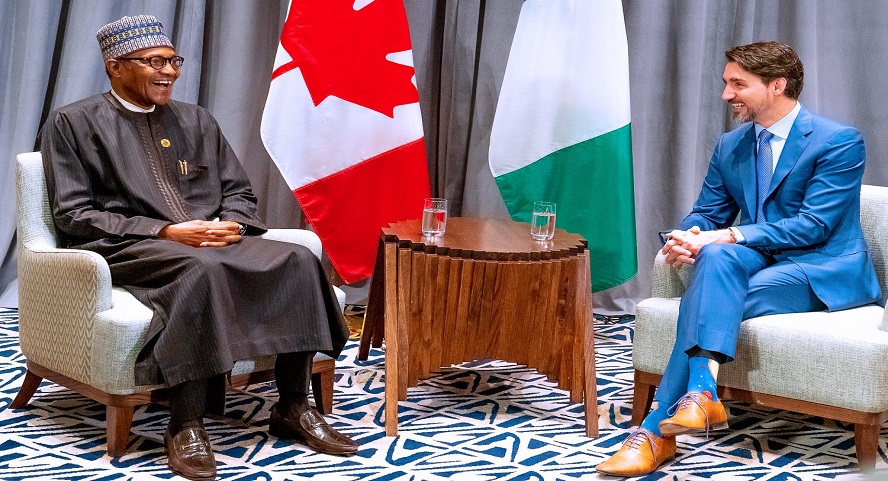
Buhari and Justin Trudeau Photo Credit: Premium Times Nigeria

By Rahila Dauda

The Deputy High Commissioner of Canada and Senior Trade Commissioner to Nigeria, Mr. Teshome Nkruma has called on the Federal Government to re-assess its regulatory regime as many start-ups are relocating to friendlier countries.

Mr. Teshome Nkruma who was a guest at a recent webinar titled Bridge Builder #8: Conversation with Global Affair Canada hosted by the Nigerian & Canadian Business Network (NCBN), said some of these companies are moving to Rawanda.

Responding to the question —“We are trying to improve the ease of doing business in Nigeria, if you want to recommend us what can we do better as a government?” — posed by Chairperson of the Nigerian Diaspora Commission, Hon Abike Dabiri,  the Deputy High Commissioner said:

“One area that excites me is the ICT start-ups. We see so much development in the start-ups. Many of these companies use their platform to expand to other countries. Nigeria has a supply chain of tech start-ups. There was one that received funding and coaching but when we speak to these start-ups they complained of the regulatory environment. Some prefer to relocate to other countries such as Rwanda. The government should look at the system of regulations, let them favour start-up companies.

“Also seed funding will go a long way. Identify a source of entrepreneurial funding.” He went further to say that his office will soon be holding panel discussions on what Nigeria can learn from other systems in term of start-ups.

Speaking about the mission of his office in Nigeria, the Deputy High Commissioner disclosed that its primary mandate is to facilitate imports from Canada to Nigeria and to also enhance partnerships and collaborations between the two countries.

According to Mr. Nkruma, any Canadian willing to do businesses in Nigeria must contact their office and they in turn will facilitate and provide useful contacts. He however stated that doing business in Nigeria can be challenging despite the tremendous potentials and opportunities in Nigeria which is the largest economy in Africa. Doing business in Nigeria he said is a platform to doing business in the continent.

Nkruma further pointed out that Nigeria is the largest source of FDI into Canada as Canadian exports to Nigeria is around $700m while exports to Canada from Nigeria is around $650m.

Canada he said is focusing on six priority sectors including:

1. Aerospace: maintenance, repair and overhaul and also Executive jet

2. Agriculture: livestock genetics, fish and sea foods

3. Clean technology

4. Education

5. ICT

6.Oil and gas

The Deputy High Commissioner said they are also working on robot programming which has become necessary due to the coming of covid-19 adding that “ if you are interested in doing business in Nigeria, you should know of:

1. The foreign exchange regime

2. Lengthy shipments delay

3. Complicated logistics

4. Funding challenges

5. High inflation

6. Slowdown in government approvals due to the forthcoming 2023 elections.”

He noted that new client attraction is also part of their priority because the large number of Nigerians in Canada is an advantage due to their knowledge and expertise. Mr. Nkrumah assured that Canada will soon be resuming bilateral negotiations and will re-establish their presence and visibility post COVID-19. Meanwhile, he added that though Canada has major competitors in Nigeria, Canadian businesses have succeeded in the country.  

On how can Nigerians can utilise his position to do more business in Canada and also get access, Teshome Nkrumah said: “It is good to understand that immigration decisions are made by the office of immigration and we have a well-established visa processes though we have a backlog of visa applications. It is due to COVID-19 and the ability to process them was restricted but we are hoping that additional resources will be brought in. One should also try and understand how the Canadian process works. Don’t just rely on educational consultants. You can navigate on your own and succeed; the consultants should also help people understand further.”

But for Covid restrictions, Nigerian immigration to Canada would have perhaps quadrupled by 2022.

In 2019, Nigeria became the fourth-leading source country of new immigrants to Canada, behind India, China, and the Philippines when a total of 12,600 Nigerians gained permanent residence. This figure represents a tripling of Nigerian immigration to Canada since 2015.

Abike Dabiri-Erewa who chaired the Webinar encouraged Nigerians to utilise the opportunities presented by the relationship between the two countries while calling for more collaborations between Nigeria and Canada. The former legislator also spoke about the newly commissioned Nigeria Diaspora Trust Fund which she said will encourage Nigerian businesses abroad and Diaspora voting in the coming years.

Nigeria’s sex industry and booming aphrodisiacs trade

Photo Caption: The Guardian Nigeria

By Lillian Okenwa

As the social media continues to buzz over the arrest and detention of intimate products seller Hauwa Saidu popularly known by many as Jaruma Empire by officers of the Nigerian Police Force (NPF) following her feud with actress Regina Daniels and her billionaire husband, Ned Nwoko, the demand for sexual enhancement potions continue to gain popularity as more people appear to be asking questions about kayan mata.

Literally interpreted as “women things’’ from Hausa language, Kayan Mata is a generic name for a range of aphrodisiacs. However, as women have Kayan Mata, men have maganin maza –“men things.’’

Late last year four communities in Gombe state made headlines when a sex-enhancing fruit called Gorontula turned them into a tourist attraction. Goro is the Hausa word for kolanut, but unlike the caffeine fruit commonly consumed in the tropical part of Nigeria, Gorontula is found in Tula communities in Kaltungo Local Government Area of Gombe State —Wange Tula, Yiri Tula, Baule Tula and Kaltin Tula, is famed for its aphrodisiac properties.

Until recently when Gorontula began to attract the attention of pleasure-seekers who now troop the communities to get hold of the fruits, the Tula communities were predominantly agricultural. Gorontula is an essential ingredient of Kayamata.

With all the appearances of social conservatism, many Nigerians are far from being prudes. The sexually suggestive photos and videos today making the rounds online, the explicit lyrics, and raunchy dance moves in the media suggest a raunchier side. What about tales of randy spiritual leaders, caregivers, and many more that have run sexually amok which now dominate the news? There is another category. The discreet pleasure seekers.

In an interview with the BBC, Iheoma Obibi who is said to be leading a mini-revolution in bedrooms in Nigeria revealed how she became the country’s first retailer of sexual health products and erotica after getting requests from friends to buy sex toys on her annual trips to London.

“They were asking me to buy vibrators, nipple suckers, lubricants, water-based lubricants which were non-flavoured, specifically with a pH balance for the female genitalia.”

Recognizing there was a niche market, the former development worker according to BBC set up her online shop a couple of years ago. Ms. Obibi who caters primarily for women, and some men, whose ages range from 20 to 70 also provides sex education and awareness sessions online under the hashtag #Sextalk.

In its 22nd January 2022 edition, The Economist gave some interesting insights about Nigeria, kaya mata and the paradox of conservatism. The article is reproduced below.

“Beside the food ¬sellers at a street market in Abuja, a man in a flowing white kaftan holds a brown leather bag in one and. In the other, well, is a baby crocodile, which he holds out to a potential customer. “Do you want to touch it?” he asks in Hausa, a language spoken in northern Nigeria and surrounding countries, before offering far more than a fondle of a ferocious reptile: medicines for a cold; for chest pain; for a sore back; and to improve sexual performance.

“A protracted haggle ensues. Details are discussed. Instructions are issued. Money changes hands, as do powdered herbs wrapped in paper. The trade in aphrodisiacs in northern Nigeria is old and pervasive. Herbs are sold in markets, shops, the grounds of mosques, and now on social media. How odd. This is a region that is seen as culturally and religiously conservative. States enforce sharia on the Muslim majority. Women here, who are often garbed in body-length hijabs, are thought of as sexually repressed. 

“In the movies and literature of the region, mostly in Hausa, physical contact between men and women is frowned upon. Two popular television shows were banned by the government of Kano, the most populous state in the north, because of a scene in which three men held a woman in an auto-rickshaw. Since they were unmarried, the scene offended the region’s “norms, culture, values and religion”, said the head of the censorship board. (That the men were trying to abduct the woman seems to have been less concerning.)

“But this seeming prudishness does not extend to the marital bed, perhaps because people believe God would like them to procreate more. Imams may preach against adultery. But when the call to prayer ends on Fridays, a voice booms out over another set of loudspeakers advertising a somewhat earthlier elevation.  “It is everywhere now,” says Muhammadu Sani, a customer. “Even practitioners of Islamic medicine now sell them.” Some draw their formula from the recommendations of Islamic texts and practices of early Muslim scholars. Their shops are often neat, with shelves stacked with bottles of herbs and decoctions.  Women are not overlooked. The trade in kayan mata (literally “women’s things” in Hausa) is an old one, though it has been engorged of late by claims that goron tula (the “snot apple” fruit) boosts libido and fertility.

“Among those promoting its powers is Hauwa Saidu Mohammed, popularly known as Jaruma, an entrepreneur and sex therapist who boasts that her clients include the wives of government ministers and state governors. By offering doorstep delivery and a suave service, she has helped turn kayan mata into a major export from the north to cities in the south such as Lagos, the commercial capital.  More than a million people follow Jaruma on social media. Many women are there for the scandals. In some posts she has shamed politicians who she claims bought her goods but did not pay up. In others she offers salacious gossip about celebrities whose marriages were consummated (or wrecked) with the help of her potions. Others just want to buy her tonics, which include: “Divorce is not my portion” (500,000 naira, or $1,200); “Love me like crazy” (250,000 naira); and Ecstacy9 (65,000 naira). In a country where many people earn no more than the minimum wage of 30,000 naira per month, such prices may arouse passion, even if the products themselves do not.”  

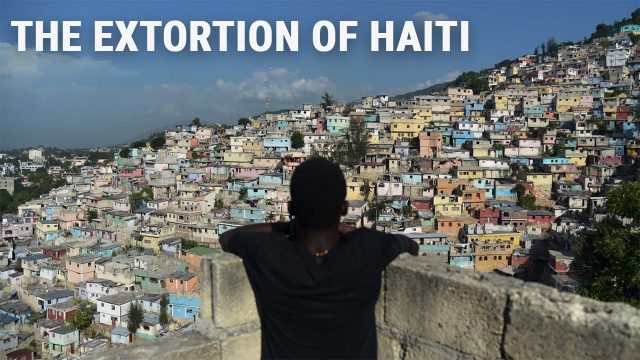
France’s extortion of Haiti is worst state-sponsored heist in history

Much of the reparations debate has revolved around whether the United States and the United Kingdom should finally compensate some of their citizens for the economic and social costs of slavery that still linger today.

But to me, there’s never been a more clear-cut case for reparations than that of Haiti.

I’m a specialist on colonialism and slavery, and what France did to the Haitian people after the Haitian Revolution is a particularly notorious example of colonial theft. France instituted slavery on the island in the 17th century, but, in the late 18th century, the enslaved population rebelled and eventually declared independence. Yet, somehow, in the 19th century, the thinking went that the former enslavers of the Haitian people needed to be compensated, rather than the other way around.

Just as the legacy of slavery in the United States has created a gross economic disparity between Black and white Americans, the tax on its freedom that France forced Haiti to pay – referred to as an “indemnity” at the time – severely damaged the newly independent country’s ability to prosper.

Robbed, wrecked, dejected

The cost of independence

Haiti officially declared its independence from France in 1804. In October 1806, the country was split into two, with Alexandre Pétion ruling in the south and Henry Christophe ruling in the north.

Despite the fact that both of Haiti’s rulers were veterans of the Haitian Revolution, the French had never quite given up on reconquering their former colony.

In 1814 King Louis XVIII, who had helped overthrow Napoléon earlier that year, sent three commissioners to Haiti to assess the willingness of the country’s rulers to surrender. Christophe, having made himself a king in 1811, remained obstinate in the face of France’s exposed plan to bring back slavery. Threatening war, the most prominent member of Christophe’s cabinet, Baron de Vastey, insisted,“ Our independence will be guaranteed by the tips of our bayonets!”

In contrast, Pétion, the ruler of the south, was willing to negotiate, hoping that the country might be able to pay France for recognition of its independence.

In 1803, Napoléon had sold Louisiana to the United States for 15 million francs. Using this number as his compass, Pétion proposed paying the same amount. Unwilling to compromise with those he viewed as “runaway slaves,” Louis XVIII rejected the offer.

Pétion died suddenly in 1818, but Jean-Pierre Boyer, his successor, kept up the negotiations. Talks, however, continued to stall due to Christophe’s stubborn opposition.

“Any indemnification of the ex-colonists,” Christophe’s government stated, was “inadmissible.”

Once Christophe died in October 1820, Boyer was able to reunify the two sides of the country. However, even with the obstacle of Christophe gone, Boyer repeatedly failed to successfully negotiate France’s recognition of independence. Determined to gain at least suzerainty over the island – which would have made Haiti a protectorate of France – Louis XVIII’s successor, Charles X, rebuked the two commissioners Boyer sent to Paris in 1824 to try to negotiate an indemnity in exchange for recognition.

On April 17, 1825, the French king suddenly changed his mind. He issued a decree stating France would recognize Haitian independence but only at the price of 150 million francs – or 10 times the amount the U.S. had paid for the Louisiana territory. The sum was meant to compensate the French colonists for their lost revenues from slavery.

Baron de Mackau, whom Charles X sent to deliver the ordinance, arrived in Haiti in July, accompanied by a squadron of 14 brigs of war carrying more than 500 cannons.

Rejection of the ordinance almost certainly meant war. This was not diplomacy. It was extortion.

With the threat of violence looming, on July 11, 1825, Boyer signed the fatal document, which stated, “The present inhabitants of the French part of St. Domingue shall pay … in five equal installments … the sum of 150,000,000 francs, destined to indemnify the former colonists.”

French prosperity built on Haitian poverty

Newspaper articles from the period reveal that the French king knew the Haitian government was hardly capable of making these payments, as the total was more than 10 times Haiti’s annual budget. The rest of the world seemed to agree that the amount was absurd. One British journalist noted that the “enormous price” constituted a “sum which few states in Europe could bear to sacrifice.”

Forced to borrow 30 million francs from French banks to make the first two payments, it was hardly a surprise to anyone when Haiti defaulted soon thereafter. Still, the new French king sent another expedition in 1838 with 12 warships to force the Haitian president’s hand. The 1838 revision, inaccurately labeled “Traité d’Amitié” – or “Treaty of Friendship” – reduced the outstanding amount owed to 60 million francs, but the Haitian government was once again ordered to take out crushing loans to pay the balance.

Macron and France talk human rights. Are Haitians not human enough to be repaid for the extortion

Although the colonists claimed that the indemnity would only cover one-twelfth the value of their lost properties, including the people they claimed as their slaves, the total amount of 90 million francs was actually five times France’s annual budget.

The Haitian people suffered the brunt of the consequences of France’s theft. Boyer levied draconian taxes in order to pay back the loans. And while Christophe had been busy developing a national school system during his reign, under Boyer, and all subsequent presidents, such projects had to be put on hold. Moreover, researchers have found that the independence debt and the resulting drain on the Haitian treasury were directly responsible not only for the underfunding of education in 20th-century Haiti, but also lack of health care and the country’s inability to develop public infrastructure.

Contemporary assessments, furthermore, reveal that with the interest from all the loans, which were not completely paid off until 1947, Haitians ended up paying more than twice the value of the colonists’ claims. Recognizing the gravity of this scandal, French economist Thomas Piketty acknowledged that France should repay at least US billion to Haiti in restitution.

A debt that’s both moral and material

Former French presidents, from Jacques Chirac, to Nicolas Sarkozy, to François Hollande, have a history of punishingskirting or downplaying Haitian demands for recompense.

In May 2015, when French President François Hollande became only France’s second head of state to visit Haiti, he admitted that his country needed to “settle the debt.” Later, realizing he had unwittingly provided fuel for the legal claims already prepared by attorney Ira Kurzban on behalf of the Haitian people – former Haitian President Jean-Bertrand Aristide had demanded formal recompense in 2002 – Hollande clarified that he meant France’s debt was merely “moral.”

To deny that the consequences of slavery were also material is to deny French history itself. France belatedly abolished slavery in 1848 in its remaining colonies of Martinique, Guadeloupe, Réunion and French Guyana, which are still territories of France today. Afterwards, the French government demonstrated once again its understanding of slavery’s relationship to economics when it took it upon itself to financially compensate the former “owners” of enslaved people.

The resulting racial wealth gap is no metaphor. In metropolitan France 14.1% of the population lives below the poverty line. In Martinique and Guadeloupe, in contrast, where more than 80% of the population is of African descent, the poverty rates are 38% and 46%, respectively. The poverty rate in Haiti is even more dire at 59%. And whereas the median annual income of a French family is ,112, it’s only 0 for a Haitian family.

These discrepancies are the concrete consequence of stolen labor from generations of Africans and their descendants. And because the indemnity Haiti paid to France is the first and only time a formerly enslaved people were forced to compensate those who had once enslaved them, Haiti should be at the center of the global movement for reparations.

This is an updated version of an article originally published on June 30, 2020.

This article is republished from The Conversation, a nonprofit news site dedicated to sharing ideas from academic experts. It was written by: Marlene DautUniversity of Virginia.

Credit:yahoo.com

Buhari, Jonathan, Obasanjo, Sanusi, Okonjo-Iweala: When Heroes Disappoint

By Tony Eluemunor

How many times have you heard it said that the right thing to do is to remove the subsidy on petroleum products?

I wonder why our leaders are not filled with shame when they betray their country by uttering that supreme insult on the people of Nigeria. President Olusegun Obasanjo, Dr Goodluck Jonathan, and now President Muhammadu Buhari have poured that insult upon injury against Nigerians. It is on record that the late President Umaru Yar’Adua remains the only national leader in recent times who refused to punish Nigerians by in­creasing the pump price of petrol, and insulting us by saying that the subsidy on petroleum products was being removed.

Could Ibrahim Babangida, Obasanjo, Jonathan and Buhari or any of their aides or Ministers explain when God enacted the 11th commandment by stipulating that Nigeria’s refineries should nev­er work and as a consequence, that impoverished Nigerians MUST buy petrol at whatever they are told is the international price of crude oil, though provision has been made for some barrels of crude oil to be made available to the local refineries, at reduced rates, to provide petrol and other products for Nigerians? And if the refineries have not worked, or have been sabotaged, whose duty was it to fix the problem?

If refineries work in other climes, and that includes govern­ment-owned refineries, why have they not functioned properly and effectively and optimally in Nige­ria? And why do the so-called cou­rageous heroes in Nigeria who blab about everything, excoriate every­one but their buddies, have refused to call a spade a spade when it comes to neglected refineries? Why have they refused to tell the truth?

The truth about the evil inherent in petrol subsidy cannot be that Ni­geria operates a system of petrol subsidy to lessen the economic burden on its citizens, but that our leaders, despite the hefty salaries they receive, have failed in their duty to get the refineries to work. Or is it not a part of the duty of those in government to get the refineries to work? This insult on the average Nigreians by those who should be apologetic for failing the masses should stop. Nigerians should shake off the stupor to which debilitating poverty has reduced them and let’s join the discourse.

For instance, please listen to one of the supreme heroes that the aver­age Nigerians glorify; Sanusi Lami­do, former Governor of the Central Bank of Nigeria (CBN), defending his incessant calls for the removal of subsidy on petroleum products. During his 60th birthday celebra­tion in Kaduna last year, he gloat­ed: “Many years ago, when I was screaming about the trillions being spent on fuel subsidy, I remember there was actually an attempt to at­tack my house in Kano. I was in the Central Bank. Where are we today? We are face to face with the reality that this (fuel subsidy) is unsustain­able.” We applaud Sanusi as “the economist and banker”, but what in the two fields have stopped him from fighting the real battle; to see that the refineries were repaired? How many times did he cry out for such?

Why have the so-called heroes always left the real fight crying to be fought on Nigeria’s behalf and to turn around to punish the same Nigerians who have been impover­ished by their incompetencies?

Also, please listen to former Fi­nance Minister, Ngozi Okonjo-Iwea­la, deny masterminding the policy to remove subsidy on fuel during Jonathan’s administration. She told the BBC that he states governors be­gan pushing for subsidy removal six months before she joined the admin­istration. “The World Bank and IMF have nothing to do with this, abso­lutely nothing! This is an internal government decision and President Jonathan has made it very clear. Re­member, six months before I came, the governors have all pushed for subsidy removal.” Finish? Is that what her incandescent brain, Har­vard and MIT-trained brain told her could distance her from the collec­tive blame? Phew! She should tell us what she did to make the refineries function optimally? She has written several books on her service to Ni­geria, but has she written about her fight to make the refineries work?

Now, petrol subsidy has returned as a hot national issue. It is incred­ible that nobody in government, no politician, no personal aide of Mr. President and not even the President himself remembered that January 2022 would mark the tenth anniversary of “Occupy Nige­ria” protests directed against then President Goodluck Jonathan’s re­moval of the subsidy on imported petroleum products. That is why they could have chosen such a time to talk about subsidy removal, yet again.

Or could it be that they remem­bered but just didn’t care a hoot? That brings up the question: why things never change, even with this administration that promised a change to the next level? See it this way, why would President Buhari embrace an idea he quarreled with when he was an ordinary citizen, pleading to be elected President? And why would some persons who marched on the streets with him, excoriating President Jonathan for increasing petrol pump price increase, sit snugly in their minis­terial offices, instead of resigning, when the Buhari administration increased petrol pump price from where Jonathan left it?

On January 1, 2012, President Goodluck Jonathan announced the removal of fuel subsidy and increased the per litre petrol price from N65 to N141. “Occupy Nige­ria” mass protests ensued in major cities. The price was later adjusted to N97 after more than a week of protests. It was further reduced to N87 in 2015. But while Jonathan faced serious backlash from the fuel prices during his tenure, Bu­hari has adjusted the pump price from N87 to N145 without any pro­test, just as subsequent adjustments were equally accepted until another price hike was proposed this Janu­ary. The gathering storm over the price hike was diffused when Bu­hari postponed the evil day and evil price increase.

Please, put your hand in mine as we walk through the memory lane. Date; March 3, 2015, when Premi­um Times published a story titled “Fuel Scarcity: Buhari lambasts Jonathan, past leaders for neglect­ing refineries”. The story: “The presidential candidate of the All Progressives Congress, APC, and former head of state, Muhamma­du Buhari, has expressed outrage at the current fuel shortage that has lingered nearly a week, criticising President Goodluck Jonathan and past Nigerian leaders who failed to fix the refineries.

“In his first response to the petrol scarcity that began Thursday, Bu­hari said past governments, and Mr. Jonathan’s, left Nigeria at the mercy of fuel imports by failing to fix the refineries.

“He recalled that two of the four refineries in the country were built while he was petroleum minister in the 1970s.

‘The countless man hours that will be spent at petrol stations today, will reduce our productivity as a na­tion. This should not be so. – GMB,’ Mr. Buhari tweeted Tuesday. (So, he once loved Twitter, too)

“In my time as NNPC chairman and Petroleum Minister in the late 70s, two of our four refineries were built, and domestic consumption catered for.

“But over the last several years our refineries have declined, and we are at the mercy of imports,” he said. Mr. Buhari criticised the government for allowing the prob­lem to persist by failing to fix the refineries, saying despite Nigeria’s oil wealth, the country has been re­duced to an importer of petrol. We must reject a system that has turned one of the world’s largest crude ex­porters into an importer of petrol. Things must change”.

And, really, Buhari got his wish and things changed. Jonathan was tossed out of Aso Rock Presiden­tial and he landed in Otueke. Bu­hari became President, ostensibly to change things. But have things changed? Or how come that in the seventh year into Buhar’s eight years in office, Nigeria’s four re­fineries are operating at about zero capacity? FACTSHEET: What you need to know about Nigeria’s ail­ing refineries and their perennial repairs, published on 14 April 2021, says:

“In 2012, an official task force ranked Nigeria’s refineries “bottom of the ladder” in Africa, saying that from 2009 to 2012 their capacity rare­ly exceeded 28%, according to the Nigeria Natural Resource Charter. Recent capacity has also fluctuated. In January 2017 it was at 36.7%, be­fore falling to a low of 5.8% later in the year. In April 2019 it fell to zero, where it has stayed since July of the same year”.

The way I read it is that the Petro­leum Minister of State in Buhari’s first tenure, Dr. Ibe Kachikwu per­formed the magic that brought our refined capacity to 36.7% in 2017, but President Buhuari sacked him in 2019. But before his final exit, Dr. Kachikwu had made it clear that he had lost even the little power he had. The only way to end the subsidy is to source our refined petroleum needs locally. Finish. If not, any time the price of crude oil appreciates, the monetary burden on Nigerians will increase. So, too, any time the Naira depreciates against the US Dollar.

So, why has Buhari, who boasted that in the less than four years he was Petroleum Minister, he (or the government he served in) built two refineries but has been unable to even keep one, yes, just one refinery working at any capacity? Or, why has the administration of the gov­erning party, the All Progressives Party (APC) not been able to be so progressive as to get just a refinery to work in seven years? And are APC members not ashamed of this terrible record?

My plea is that change could be deceptive. Or, as French writer Jean-Baptiste Alphonse Karr, wrote in 1849, “the more things change, the more they stay the same”. This has been explained to mean that turbulent changes do not affect re­ality on a deeper level other than to cement the status quo. A change of heart must accompany experience before lasting change occurs.

A change of heart? No, that has not taken place yet. There is one visible change though; those who run the show. For instance, on 24 January when the government suspended the fuel subsidy remov­al, over “the timing of the removal” those that made the decision includ­ed: The Minister of Finance, Zainab Ahmed, Senate president, Ahmad Lawan, the Minister of State for Pe­troleum Resources, Timipre Sylva, Yahaya Abdullahi, and the Deputy Whip, Aliyu Abdullahi, the Chief Executive Officer of the Nigerian Midstream and Downstream Reg­ulatory Authority, Farouk Ahmed, Managing Director of the Nigerian National Petroleum Corporation, Mele Kyari, and Commissioned Chief Executive Officer of the Ni­gerian Upstream Regulatory Com­mission, Gbenga Komolafe. Others are the Special Assistant to the President on Natural Resources, Habib Nuhu, Permanent Secretary, Federal Ministry of Finance, Aliyu Shinkafi, and Permanent Secretary, Ministry of Petroleum Resources, Nasir Sani-Gwarzo.

Do you get the point? While Ni­geria’s diversity remains, its deci­sion-making organs have shed that multiplicity of ethnic groups.

Still, I have to thank God for little mercies. We have a President who believes that it is evil for Nigeria to be importing refined petroleum products. He must remember when he said this (and I beg to repeat my­self) “But over the last several years our refineries have declined, and we are at the mercy of imports.”

Mr. Buhari criticised the gov­ernment for allowing the problem to persist by failing to fix the refin­eries, saying despite Nigeria’s oil wealth, the country has been re­duced to an importer of petrol. We must reject a system that has turned one of the world’s largest crude ex­porters into an importer of petrol. Things must change”.

Dear President Buhari, I support you totally and stoutly: Things must change. This is better than what Sa­nusi has been blabbing about. The people insist on subsidy simply be­cause Nigerian leaders have failed woefully. Or when did God also enact the 12th commandment: Ni­geria, thou shalt not export refined petroleum products? Haba!

Use Of Dead Bodies For Training Medical Students

OBSCURE LEGAL FACTS BY AROME ABU

In Nigeria, a person may in his Will or in any other written statement signed in the presence of 2 witnesses donate his/her body to be used after his/her death for training of students in health science.

See Section 55 and 56(a) of the National Health Act.

Arome Abu is the Managing Partner of TCLP.

CAVEAT: Note that this information is provided for general enlightenment purposes and is not intended to be any form of legal advice.

Obscure Legal Facts is an exclusive publication of THE COUNSEL L-P.
14, THABA TSEKA STREET, WUSE II ABUJA, FCT
abuarome@[email protected]
www.thecounsellp.com
+234 803 262 2359
+234 708 1156 539
Twitter:
@TheCounselLP
@de_legist

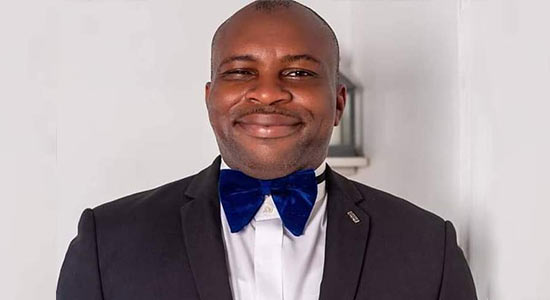
Written By Obioma Ezenwobodo Esq

Chief Akintunde And The Burden Of NBA Elections

By Abdulrasheed Ibrahim, Notary Public

With the inauguration of Electoral Commiittee of Nigerian Bar Association (ECNBA) on the 24th January 2022 by Mr. Olumide Akapata, the President of the Nigerian Bar Association, the ball seems to have been set rolling for this year election of the National Officers of the Association. The ECNBA this time around is to be Chaired by Chief Ayotunde Akintude (SAN), a man that has been tested and trusted in the affairs of conducting credible elections, the exercise which he has severally carried out in the Lagos Branch of the Nigerian Bar Association. I am happy that I have again been justified and proved right. Proved right in the sense that writers are like soothsayers, whose words or predictions often come into reality. Shortly before the inauguration of Akintunde’s ECNBA 2022, there was this poser: “ECNBA: CAN AKINTUNDE FIX NBA’S TROUBLED ELECTIONS? https://citylawyermag.com/2022/01/24/can-akintunde-fix-nbas-troubled-elections/. I promised to write a remark on this which is one of the reasons that prompted this write-up.

When Chief Akintunde was first appointed as the Chairman of the NBA Electoral Reform and Audit Commiitee by Mr. Olumide Akpata on being sworn-in as the President of the Association in 2020, I was of the view that Mr. Akpata had made the right choice picking Chief Akintunde for that great assignment. I equally submitted a memorandum to that committee suggesting the removal of those provisions that were discriminatory in the Constitution of the NBA. I had written as far back as 2019 after the conclusion of the NBA Lagos Branch election of that year conducted during the regime of Mr. Chukwuka Ikwuazom (now SAN) under the chairmanship of Chief Ayotude Akintunde (SAN) as follows:

“… The Electoral Committee headed by Chief Akintunde again did a wonderful job which it has been doing for many years now. Chief Akintunde is a person I can recommend for any electoral assignment whether nationally or internationally. We have a personality in our branch that the NBA at national level can look up to, to deliver a free and fair election in the nearest future. Chief Ayodele Akintunde (SAN) is a person that will not compromise as he is a principled man. I congratulate him and all members of his Committee for making history again.”

The NBA Lagos Branch Election of 2019 was not the first to be credibly conducted by him as he had successively conducted some of the previous ones in which the Lagos branch had keenly contested elections and at the end the candidates whether won or lose accepted the verdict of election conducted by Chief Akintunde in the spirit of sportsmanship. I have not seen any election conducted by him where the candidates that lose threaten court action to challenge the outcome of election. Since the commencement of e-voting in the NBA, the Association will be having for the first time the ECNBA that will be truly independent in the sense that the ECNBA will be allowed to do things by itself and that is to say the Committee will be free to engage the service provider of its choice. This is different from the past where the NBA presidency would have to do that on behalf of the ECNBA that would at the end of the day resulted into various kind of controversies.

With the various amendments that have been suggested and approved by the Annual General Meeting at the 2021 Conference of the Nigerian Bar Association,the Chairmen of the various branches have been stripped of being the sole giver of letter of good standing to any member wishing to contest for any National Office. The principle in George Orwell’s Animal Farm’s that “all animals are equal but some animals are more equal than the other” has also to some extent become thing of the past. I was once a victim of that unfair and unjust principle. Now unlike before a member of the NBA does not need to be a NEC member to be eligible to contest for any National Office except the offices of President, First Vice President and the Secreatary General. By the recent ammendement, the NBA politics is now becoming more democratic than what it used to be. I absolutely agree with the Mr. Akpata when inaugurating the ECNBA 2022 under the Chairmanship of Chief Akintunde that :

“Human society has always acknowledged the need for a good leadership in order to guide the affairs of mankind and direct the society to its goals and aspirations. The means by which that leadership is arrived at in a democratic setting, has always been through free, fair and credible election”

It is this burden of free, fair and credible election in the NBA that Chief Akintunde and his colleagues in the ECNBA 2022 are being called upon to carry and one hopes they will positively discharge this responsibility to justify the confidence repose in them. We have been saying it for a while that the way lawyers play politics in NBA should be a model or precedent for other associations as well as the nation at large.The entire society needs to be learning good things from lawyers in the way things are positively being done as if it is otherwise, how do we expect those who look onto us to trust or have confidence in us? The politics at all levels should be about the interest of the people and not about selfishness of those elected to be the leaders.Nigeria is what it is today because the right people are not getting to the right places. The leaders are more concerned about themselves and their relatives rather than the people that elected them.

Hitherto, many lawyers have lost interest in the NBA and its politics but with the new development in the NBA Constitution where discriminatory provisions are being removed those lawyers may change their minds.In NBA politics, it is not always difficult to identify lawyers who intend to aspire for positions in NBA even when the ban on campaign is not lifted. By the time you see a lawyer continuously sending goodwill and farewell messages and greetings to lawyers and branches, note that that is the usual rituals on the way to the NBA political offices. Despite the provision in the Constitution that says: “The publication, printing or distribution of any campaign material, gifts and any form of souvenir whatsoever by a candidiate or his supporter(s) is hereby prohibited and any candidate who contravene this provision shall be disqualified from being voted for.” This provision has become subject of debate among lawyers. Some lawyers have argued that an aspirant that goes about prior to the lifting of ban on campaign by ECNBA to seek support from lawyers to make his aspiration a reality is not campaigning but only doing consultation while another school of thought is of the view that such action amount to campaign before election. There was a dispute on this sometime last year in one of the NBA branches where an aspirant called for the disqualification of his opponent on the ground that the opponent was contravening the provision. I am of the view that this is one of the issues which Chief Ayotunde Akintunde (SAN) as the new Chairman of ECNBA 2022 needs to educate the aspirants on on the real interpretation of the above provision. This is an additional burden to the task before the committee.

It is not only getting elected to an elective positions that one can contribute significantly to the developing of an association or the nation at large.Since will live in a society that prefers mediocrity to brilliance or competence, we all now own the association and the nation at large the duty to educate the people on how to identify and elect those who mean well for the association and the country .This is the reason why I have been saying that NBA electoral system must be a good precedent.There is no doubt that the way politics had been played in NBA in the past was very deceptive when you go back into history, the time is now reaped for a positive revolution that will blow good wind to everyone. This year 2022 the NBA is going to poll to elect new National officers of the Association and the Nigeria as a nation is preparing for another General Election next year 2023. What we need most in the two elections are leaders that will be patrotic and have the interest of the people at hearts and not those leaders that will be selfish.We need to be prayerful to make the right choice this time around that will fit into the description once postulated by the late Lateef Kayode Jakande (LKJ), a former action of Governor of Lagos State that :

“We need in this country as President competent manager, a believer in the policy of full employment , an experience organiser of men and materials, and above all, a courageous man of proven integrity . With such a man at the helm of our national affairs, the darkness that now threatens our national economy will give to a new dispensation of plenty, comfort and happiness for every citizen of our blessed country.”

We have a country that is well blessed with abundant natural resources but unfortunately with the leaders that can not transform that to the advantage of the Nigerian people.We only have politicians at the helms of affairs who are only interested in power but do not know how to use it positively to make impact in the lives of the people. Lawyers’ participation in politics whether within the Association or in the nation’s politic must be exemplary.I have said somewhere else before that:

“When it comes to the issue of national development the NBA must not be found wanting. The Nigerian Bar must be pro-active and progressive. The dynamism of the Bar must not be unnecessarily compromised and its leadership must live up to expectation and the people’s yarning and aspiration as proclaimed by the first Nigerian lawyer in person of Sapara Williams that the profession must live: “For the direction of the people and the advancement of the country”. The Bar in all its activities and internal democracy or politics must be exemplary and transparent for every lawyers and non-lawyers alike to see. Aspiring for the Bar leadership must be premised on the service to humanity rather than self-seeking and opportunism.”

Since the return of democracy in 1999, the People Democratic Party (PDP) and the All Progressive Congress (APC) have been tested with the political power without much positive things happening to this country than pain and sorrow. As thing stands today, there is no credible alternative on the ground to wrestle power from the two political parties that have been ruling for the past 23 years. If the Nigerian Bar Association truly believes in the Sapara William’s philosophy of lawyers must live for the direction of the people and the advancement of the country, it ought to have been in the forefront of other professional organisations or associations to champion the formation of an alternative truly people’s political party to wrestle power from the ruling party. If this is done it will be the duty of every patriotic Nigerian in collaboration with professional groups to embark on the grassroot political education of the people on the need to ask themselves what they have benefited from those money bag politicians who have been giving them money and all sorts of foodstuff to buy their votes. They must ask the people what value have those politicians added to their lives and those of their children. Except this kind of things is done, the money bag politicians will continue to have the field day in the Nigerian politics. In the other part of the world, the likes of Bill Clinton of America, Margaret Thatcher of Britain and Nelson Mandela of South Africa to mention but few who were lawyers had at one time or the other ruled their countries and made meaningful impact in the lives of their people.

As the NBA prepares for another election for its new leadership this year, one hopes the various aspirants will display high level of maturity and sportsmanship during and after the elections. All eyes are now on the ECNBA under the chairmanship Chief Ayotunde Akintunde (SAN) to give the Association credible, free and fair elections that will stand the test of time. How the ECNBA discharges this heavy burden is now a matter of time, as one wishes the committee the best.

NOTE: Anyone is at liberty to disagree with my above submissions as I will surely appreciate a balanced, fair and objective rebuttal.08055476823, 08164683735:[email protected]

TIPS