Home Blog Page 863

Religious syncretism and Nigeria’s “money ritual” problem

Tunde is a 35-year-old Christian male from Nigeria living in the year 2022. “Bill” was a 35 year-old Christian male from Bristol, UK living in the year 1897. Bill was asked to oversee a squadron of men working for the British Army on a mission to destroy Benin City, the heart of the Benin Kingdom, which he did easily and with minimum force. Benin fell in just 5 days, and Bill lost only 8 men out of 1,500. Bill exiled the Oba of Benin to Calabar and proceeded to cart away the entirety of Benin’s cultural treasures. Today, they can be observed at the British National Museum in London.

Tunde in 2022 however, maintains a terrified reverence of the Oba of Benin in 2022 despite allegedly sharing the exact same faith as the person who disdainfully kicked it over like a child flipping a bucket 125 years before. Tunde is frightened because of the Oba’s alleged black magic powers which have never been proven to exist, and which clearly had zero effect when they were needed. What is more, despite being supposedly Christian, Tunde also firmly believes that he could become fabulously rich if he would perform the same human sacrifices that Oba Akenzua used to indulge in a century ago.

Clearly, Tunde’s Christian faith is little more than skin deep, no matter what he might tell you, but there is something more fundamental to understand about the baffling pathology of Tunde and millions of his contemporaries across Africa today.

Something for nothing: Africa’s destructive perennial obsession

I have previously argued that the deeply-held belief that it is possible to get something in exchange for nothing is central to everything that is wrong with the ancient and modern African psyche. Practically all of our problems can be traced to the fact that we genuinely do not believe in Newton’s 3rd Law of Motion, and we strongly believe that we deserve outcomes that we have done no work to create.

Take the trans-Atlantic slave trade for example- a 300-year economic decimation event that took about 12 million of the continent’s brightest and best, and used them to build the economies of the New World. Why did this monstrous phenomenon last so long? Because wealthy Africans and African leaders expressly wanted it that way, so as to maintain an inflow of consumables like umbrellas, gin, cloth, corrugated roofing sheets and cannons. It never at any point occurred to any of them that they could obtain the technology behind these items and make them for themselves. Instead, exporting cheaply captured human beings whom they did not create in exchange for these items, was the closest possible thing to magic.

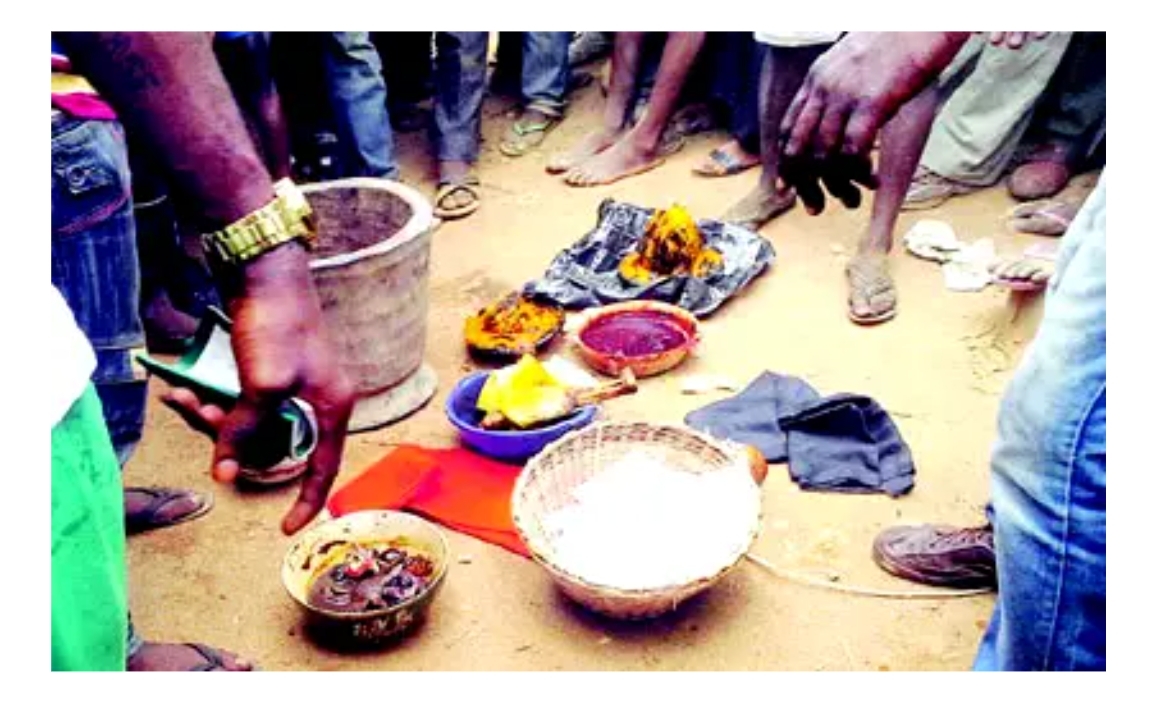
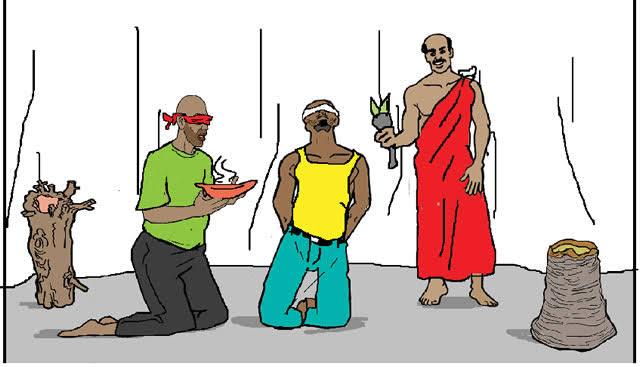
It is still in evidence today, as millions of Africans continue to believe that either by singing and dancing furiously in a modern African Traditional Religion temple euphemistically known as a church, or by offering a blood sacrifice to a native shrine, it is possible to magic financial value out of nowhere. No matter that this is a fundamentally illiterate understanding of what money is and how it works – millions of us genuinely believe these things.

This is why in 2022, Nigeria finds itself confronting headlines about 17-year-old boys murdering their girlfriends in macabre ritual human sacrifices. The problem is not that the people in question are greedy and prepared to do almost anything for money – given the right mix of desperation and societal breakdown which Nigeria offers in generous quantities, most humans can unravel to any depth of gutter behaviour. The problem is that there exists a widespread belief, borne out of the nature of our culture and native spiritual beliefs, that it is very possible and in fact probable that one can obtain wealth without creating value.

Solution? Accept and modify traditional worship

I am an atheist, and this is well known. This is often misunderstood to mean that I have no use whatsoever for the idea of God and religion. I believe in fact, that religious belief can be useful in achieving outsized societal governance effects. It can be argued that the organisation of ancient European society around Christianity is what formed the basis for the Enlightenment, which became the basis for the explosion in human technology, longevity and achievement that the whole planet benefits from today.

Similarly, it can be argued that large scale organised religion at its core, was just humanity finding a way to organise itself around higher principles than the evolutionary law of the jungle where we originate from. Human beings for the most part, are selfish and driven almost entirely by self-interest, as against altruism or group interest. The intellectual concept of “right” and “wrong” on their own are not strong enough to govern most people, which is why laws courts and prisons exist. Religion arguably was humanity’s first attempt at creating a state – a governing entity that rewards good behaviour that benefits the groups and punishes poor, selfish behaviour that is detrimental to the group.

With this in mind, I believe a solution to the age-old African obsession with trying to magic value into existence is to acknowledge the source of this obsession, to embrace it, and to modify it in a manner similar to how Christianity eventually modified itself, and Islam inevitably will too. Clearly, millions of us in Nigeria are not Christians or Muslims as we claim to be. We clearly maintain a stronger, more visceral belief in African Traditional Religion, but because we refuse to acknowledge and own this, we exist in a perpetual state of denial, self-rejection, confusion and cognitive dissonance.

What is the supposedly Islamic “Alfa” – a concept unheard of in Islam – but a syncretism of the native diviner and proto-Islamic doctrine? What is the dancing, screaming, palm frond-waving, incomprehensible-language-babbling pentecostal pastor, but a mere syncretism of the native “babalawo” with Christian layering? In fact, millions of our estranged African cousins domiciled via slavery in South and Central America today, practise Santeria – a blatant and unapologetic fusion of native West African belief systems and Christianity, where the “saints” include Yemoja and Sango from the Orişa pantheon.

I believe accepting ourselves for who we are and what we actually believe – as against what we merely claim to believe – is the first step on the journey to reversing the damage. Only after embracing African Traditional Religion in the open instead of hiding it away behind hypocritical layers of Jesus and Allah, can we get round to modifying all that is wrong with it – and by extension, fixing many of the things that are wrong with the African psyche.

This exact process of societal transformation through a religious journey took place in Europe and it is now known as the Protestant Reformation. The Reformation challenged the Catholic Church’s Dogma and strict hierarchical setup, paving the way for the growth of critical thinking, exploration, democratic ideals and the Scientific Method in Europe. This was perhaps the single biggest factor that triggered what we now know as the Enlightenment. Practically everything we now enjoy as modern humans can be traced back to the Enlightenment and its results which were exported around the world via trade and conquest.

I believe it is about time for African Traditional Religion’s Protestant Reformation movement. This, however, is only possible when Africans give up on the fool’s errand of syncretising African Traditional Religion and Christianity or Islam.

It doesn’t work, and it’s time to admit it.

Credit:businessday.ng

ALL FOR MONEY: Rampaging teenage yahoo boys take over ritual killings, girls deploy charms on rich men

By Prisca Sam-Duru

About five years ago in Oshodi, Lagos, a young man- very fair in complexion and handsome, was seen walking stark naked. It was a normal busy day and so, as he walked, people bumped into him and you could imagine the embarrassment on their faces each time that happened. 

The guy kept straight face, mute and kept walking to God knows where. Some individuals, who were conversant with such public display of acute madness, told the inquisitive ones among us, that he was carrying out a ritual for money. What a shame!

There’s a viral video on social media, showing two young men at a busy bus stop, sitting on potties and defecating. One of them wipes his anus with a piece of bread and chews. Humans turning into dogs that feed on faeces because of money; this is bizarre! They are aware that they’re being videoed, but remain unconcerned. According to the narrators, this happened in Owerri, Imo State. 

The annoying thing about the video is that rather than gather those seemingly hypnotised fellows and, giving them the beating of their miserable lives, people were taking pictures and recording them.

This same week, another video of a young man, being paraded in Delta state, surfaced online. He was apprehended by vigilante group in the area, with human faeces which he intermittently ate. He told his captors that his boss directed him to bring the faeces. Quite disgusting!

These are all incidences of rituals done by the now trending group of occultists known as ‘yahoo plus’, supposedly to make quick money. Before now, they were known as ‘yahoo yahoo’- internet fraudsters. They transformed into ‘yahoo plus’, once they began employing diabolic means to scam their victims.

For starters, do money-making rituals work? Is there any relationship between shedding of blood and making fortune? The society unfortunately, believes it works which is why due to poverty, moral decadence and lust for opulence, the youth are all turning into yahoo boys.

Vanguard Newspaper’s Arts Editor, Osa Mbonu-Amadi, holds a different and interesting view on the subject. “Our forefathers killed white rams as sacrifices to the land for bountiful harvests. Then they went ahead to plant big yam seedlings on fertile soils. During harvests, they had bountiful harvests. In their ignorance, they attributed the bountiful harvest to the blood of the ram, instead of the big yam seedlings and the fertile soil. But there is no correlation whatsoever between the blood of the ram and the bountiful harvest. It was all rooted in primitive superstition.

“This is more or less what happens in money rituals. They kill innocent people, and then go and defraud people of their hard-earned money, ignorantly believing it was the blood of the victims that brought the cash.

“Again, I say, there is no magic or ritual that turns human heads, blood, limbs, or life into money. If there were, almost everyone in this world would be rich, because majority of people in the world are immoral and therefore won’t bath an eyelid to shed blood if it will bring money to them. As Soyinka said in his poem, “Abiku”, yams do not sprout in amulets. It’s crass superstition — a practical return to primitive and barbaric life, and most tragically by our youths who are supposed to be more enlightened.

“When those who killed innocent people for money ritual find out that it does not work, they will never come back to confess that they did it but it didn’t work. We have published a story in Vanguard where a certain youth went to confront the juju man who made him to kill an innocent fellow for money ritual that didn’t work. In the process of the confrontation, the matter got leaked and police arrested both the young man and juju man”.

I guess at this juncture, people should consider the above view because Nigeria is fast losing her youth due to obsession for quick cash, material wealth and prominence. These cravings have plunged them into unreasonable, disgraceful and diabolic rituals such as narrated above. A good number of these lazy youth who believe that by debasing themselves, they’ll become rich, also engage in diverse rituals including, collecting ladies’ pants, bathing in the public places, eating human body parts, diverse blood rituals; sacrificing their reproductive organs, humans including blood relations; incest, rape, collecting ladies’ virtue through sex, spraying money in public, hosting parties where it is said that those who partake in food served during such parties, die mysteriously; and so many other weird rituals.

Regrettably, the trappings of life are already enslaving children in dastardly acts of fetishism, which used to be masterminded by unscrupulous adults.  How did these youth, even children- teenagers, become consumed by the craze for lush lifestyle which lures them into devilish acts, when they are supposed to be in school? How in God’s name did we get to this point of blatant savagery?

Again, Mbonu-Amadi, maintains that “It’s partly fuelled by societal belief. We believe it works, and we communicate that belief to our immoral youths. Another reason is socioeconomic injustice- the inequitable distribution of resources. When few people corner the commonwealth of the people and rationalize it by saying it was by their dint of hard work, this is what you get. In a society that does not care about social security, as the saying goes, when the poor is hungry they will eat the rich. But unfortunately, these ones are not killing the rich; they are killing their fellow hungry people.”Another one is our acquired culture of applauding wealth without minding its sources, the proverbial end justifying the means. When we do all that, the young people watch and learn. 

Now, people can no longer sleep with their two eyes closed, not because of terrorists, bandits or armed robbers, but because of our own children! If you have youths now as children, chances are that they may kill you or your wife for money rituals. How else do you define calamity?” 

Just as Nigerians were trying to recover from shock due to the case of the woman that escaped death in the hands of her yahoo son in Owerri, three boys were paraded by the Ogun State Police, for allegedly murdering, beheading and burning the head of their friend’s girl friend, named Rofiat, in a local pot. This is anathema! These boys were all teenagers, for crying out loud. Who thought them that such dastardly act would make them rich? Presumably, the fetish priest- a man, father, sent them on such disparaging mission. Why! What do teenagers need wealth for? This country is in deep mess!

CEO of Boyslivesmatter, Nkechi Macaulay had this to say on the case of the killers of Rofiat. “I watched the video of the decapitated girl and her head in a pot and I just felt sick. This is the price we have paid for years neglecting the boy child. During my last boys’ conference, I brought up the word “Yahoo yahoo’ and ‘yahoo plus’….the boys in the hall went into an uproar, chanting “Yahoo yahoo is correct business and it’s brain work”. I stood lost for some seconds, then I screamed loud and clear, it’s not business but cyber crime, if you are caught, you are going down. Our boys, these generational boys have a twisted mindset about money. The ones involved in ‘yahoo yahoo plus’ target girls for rituals. It’s a crisis situation if we don’t fix our boys”.

We are indeed in a crisis situation and, child rights activist and founder of CEEHOPE, Betty Abbah, agrees that the situation is out of hand. “It’s quite sickening and I think we have come full cycle with regards to ritual killings which have now been taken over by young people including teenagers!”

While Macaulay, posits that the situation is due to outright neglect of the boy child, Abbah, says its more than that.

“But the focus should not be on teenage boys alone as everyone is either a victim or at risk of the current craze for materialism. Everyone needs help not just boys and definitely boys are not the only ones left behind by the huge parenting gap and, I write as someone working with young people. Many young girls are also deeply into “kayamata” meant to hypnotise prospective male lovers in their favour. We have truly come full cycle and something has to give”.

The situation is gone beyond crisis, this is anarchy! Did you read that? Girls are using charm on rich men to get into their treasury. Sometimes they take steps further by getting pregnant for these aristos, to milk them dry. This is partly responsible for rise in divorce cases and war in most homes.

Well, its glaring that our youth’s preoccupation nowadays, is just how to make money. Jubril, a young boy in his early twenties, came home late last year with a posh car. You could notice the joy his family felt for that. 

This reporter wondered aloud, pretentiously actually, how he made the money with which he purchased the car. A neighbour close to the family quickly and quietly supplied the answer. “Ah! Ah!! Aunty, na yahoo yahoo nah! U no dey see am with laptop every day?” She explained further that Jubril bought the car because “de money wan hang”. Soon, this boy began coming home with two escorts, meanwhile, he said he is in the university. Isn’t the situation worrisome? Jubril is not the only yahoo boy on campus. According to reports, nearly all tertiary institutions in the country are infested with yahoo boys hiding under the cloak of students. Most of them are said to be students trained first as cultists, who become hardened enough to engage in money-making rituals. Naive female students are usually their targets. Little wonder, some tertiary institutions have banned students from using cars in school. 

Just last month, 20-year-old Moses Oko, was arrested by the police for allegedly killing a 300 level university of Jos student named Jenifer Anthony; removing her eyes, breasts and other body parts for ritual purposes.

Recall that in early January 2022, a video showing girls in provocative dresses, begging for mercy when they were about to be murdered during a party, trended online. Every plea by the girls fell on deaf ears of their boyfriends-turned-devils, until they were stabbed several times, slaughtered and beheaded.

To this end, the alarm must be sounded repeatedly to girls who hook up with strangers on social media and on campus. The inordinate craze for materialism has pushed these girls to abandon their studies and go frolicking with older men known as aristos- mostly businessmen and politicians, and some ‘rich students’ whose nefarious occultic activities are hidden. Sadly, death becomes the lot of these girls, most often. Sometimes, something tragic other than death, happens to them.

In his article, “Money Rituals: ‘Yahoo Boys’ on the Prowl’, published by New Telegraph, Michael West, narrated how he was told, these desperate men through sex, appropriate the virtue of their victims for fortune and money rituals. “A friend told me of an undergraduate who wanted to renew his money ritual. 

He took one of his girlfriends to the spiritualists. Upon checking, it was discovered that the girl had since been “used.” Meaning she has lost her virtue or glory through sex”. He kept bringing girls but was told they had all been used. The student, said to be a big boy with a fleet of cars in the university town, became desperate due to repercussions awaiting him, should he fail. 

He broke down in tears, when the number of “used” and rejected girls reached 100. “He was not sure if he will ever find a complete girl for the ritual before it is too late. The “used” girls are just existing and not living. Such daughters, according to those who believe in voodoo, may never amount to anything great or meaningful in life. What a pity!”

Things have gone beyond condemning parents for lack of proper parental upbringing and for celebrating their wealth of their children without bothering to find out its source. Now, parents assist their children to carry out sacrifices to make wealth. The case of the woman, who connived with his yahoo son to murder his younger son for money-making ritual, is still trending. That’s a very gory tale to tell!

The horrific reality is that if we fail to halt this ugly trend, it puts everyone at risk because so long as the yahoo plus boys comply the first time by supposedly exchanging blood or something for money, the spiritualists won’t stop demanding for more, until the boys are destroyed.

Being busy must not be an excuse for parents not to nurture their children into God-fearing human beings. Women must ensure they give birth to a sizeable number of children they can control. We must monitor our children, especially their activities on social media, and call them to order each time we notice a change in character or they’re in the company of mannerless peers. No aspect of immoral lifestyle, be it in dressing or action should be condoned. We must strive as the Holy Bible advises us, to train the child in the ways he should go, so that when he is old, he will not depart from it.

Every facet of the country fuelling youths’ involvement in illicit source of money must be dealt with. Our legislators collect fat pay and flaunt their affluence in the face of these jobless youth. This shouldn’t be so anymore. Nigerian politicians are not exonerated. Because they are eager to loot the national treasury, many commit all sorts of heinous crimes to win elections or get juicy positions. Many of them even use the youth as evil ladders to get to the top only to waste the loots on their mistresses and other frivolous gratification. 

That must end! Politics must be made unattractive so that only the best and most qualified will vie for positions of authority.  If only society including religious bodies will stop applauding individuals whose sources of wealth are questionable, things will begin to change. Banning students from using cars in school, is a good step that should be sustained. Government must urgently address issues of street children and unemployment because if many of the youth who do these ritual killings have opportunities to honest means of livelihood, they won’t be tempted to take that route. 

credit:Vanguardngr

Penalty For Singing And Laughing Beyond Two Minutes

OBSCURE LEGAL FACTS BY AROME ABU

In Nigeria, it is an offence to do the following for more than 2 minutes:

•Laugh;
•shout;
•sing;
•clap;

These acts are considered as “noise pollution”, if they cause disturbance in the Neighbourhood.

Some exceptions:
• Noise caused by an educational class;
• noise caused during sports;
• noise caused at marriage ceremonies, cultural activity and funeral rites held between 10:00am and 8:00pm;
• religious assembly;
•political debate etc

PENALTY
N50,000 fine or imprisonment for one year or both.

See Reg. 5 of the National Environmental (Noise Standards and Control Regulation).

Arome Abu is the Managing Partner of TCLP.

CAVEAT: Note that this information is provided for general enlightenment purposes and is not intended to be any form of legal advice.

Obscure Legal Facts is an exclusive publication of THE COUNSEL L-P.
14, THABA TSEKA STREET, WUSE II ABUJA, FCT
abuarome@[email protected]
www.thecounsellp.com
+234 803 262 2359
+234 708 1156 539
Twitter:
@TheCounselLP
@de_legist

Wealth through ritual: Ignorance and its consequences, By Jonas Odocha

Knowledge is the potent tool that propels mankind to confront and conquer challenges. It is that source of enlightenment that clears lingering doubt and confusion, thereby providing the enablement for arriving at good inferences and good judgment. It is therefore understandable the propagation of the age-old euphemism which ascribes power to knowledge.

Recall some stories and cultural practices which were accepted in the dark ages of human development. The early adventurers who arrived on our shores, [colonial masters, slave traders, merchants, missionaries] fully clothed and wearing shoes, were regarded as ghosts then, because they had no toes, as perceived by the locals [their shoes having concealed their toes]. Mirrors carried along by these strangers posed a big challenge to locals, as they could not understand why and how they could see themselves [reflection] or be “duplicated” by an object held by the white man. What of when a white District Officer [DO] riding a bicycle along a narrow path in a remote village was hacked down by irate villagers, his bicycle was hung on a tree as the wheels were still revolving. This was to prevent the bicycle from continuing ahead to report them for their crime. Then the cultural practice of killing of twins as it was not the place of humans to have double deliveries like goats or lower animals.

As some of these practices were eliminated through knowledge and enlightenment, some others continued till recent times like female genital mutilation, which held that a baby would die if its head made contact with that part of female genital. We understand a lot better today because of knowledge and enlightenment.

Curiously enough, since the recent past we are still confronted with some deadly consequences driven by ignorance and lack of enlightenment. Religion and religious practices are means of leading humanity to paths of salvation and love of self and neighbour. But recall what happened in Guyana 44 years ago. In 1978 a certain religious sect leader, by name Rev Jim Jones, convinced hundreds of his adherents to gulp a concoction of cyanide-laced juice, to facilitate granting them access to a better place than this world. Hundreds, who did, including children, lost their lives and some who resisted were gunned down as they tried to escape. This is misapplication of religion and its deadly consequences. It is a sure proof that ignorance knows no boundaries and must be confronted.

Today a very worrisome trend, ignited by extreme ignorance, has crept into various parts of this country and if not immediately addressed, its consequences would make a mockery of the ignorance of the dark ages. WEALTH THROUGH RITUALS AND RITUALISM is fast spreading throughout Nigeria, cutting across age grades and social groups. Human life and human parts are being sacrificed in the belief that wealth will be readily acquired. The gullible folks, who out of ignorance, believe in this falsehood, fail to ask how wealthy the ritualists or the cultists themselves are.

This is the time for education and enlightenment of the entire populace for us to save lives and encourage the gullible and the uninformed citizenry to look for legitimate ways of labour and livelihood. It is only proper that we call on the orientation agency of this country, the National Orientation Agency [NOA] to see this mushrooming scourge as a crucial challenge to be confronted immediately. We cannot allow ignorance to fester at this point in time in this country. Ministries, Departments and Agencies must begin to execute their prime roles and responsibilities to the letter, for good governance and development.

Sir Jonas writes from Abuja, Nigeria.

Hanifa Abubakar and death of the innocent

Everything about Hanifa Abubakar remains a puzzle; her life, her beauty and her tragic end. She was killed by the proprietor of her school, Nobel Kids Academy, Kwanar Dakata in Nassarawa Local Government Area of Kano State.

 By Emeka Alex Duru

(08054103327, [email protected])

Since the pathetic story of Hanifa Abubakar, the five-year-old child that was killed by the proprietor of her school in Kano broke, it has been difficult to get over the gory details.

Between the cruel manner in which she was killed and the innocence she manifested in a video clip of her interaction with relatives while alive, I do not know which evokes more tears. In the clip, she was her natural self, free and angelic. Let’s have a recap of the video interaction, rendered in her native Hausa Language.

In it, Hanifa was holding a cup which she boasted to flaunt any time she was married as a gift from her mother. A female voice followed up with a question on when she would marry. “Tomorrow, I would marry”, was her answer. Who would marry you, she was asked. “My Daddy (Baba na)!” she answered.  When people around her laughed at her naivety, she emphasised, “He (my father) is the one”. This was all I could pick from my smattering understanding of the language. Those with stronger proficiency may grasp the import of the interaction, better.

The encounter reminded me of a similar episode with my daughter when she was younger. We had dropped off my wife at Murtala Muhammad International Airport, Ikeja, Lagos, in one of her trips outside the country. While we bade her farewell, I noticed that my daughter, was not amused. On our way home, she said, “Daddy, don’t mind Mummy. If she travels again, I will be your wife”. That was innocence at its best.  I didn’t want to add to her anger with a negative answer. I simply concurred, knowing that she was speaking from a clean heart.

It can only take the purity of an angel for the free-mindedness of the answers from Hanifa and my daughter in the instances above. I recreate that encounter with my daughter, now a teenager, whenever I want to tease her. Hanifa will not have such opportunity. Her case is a closed one, a sad end of hope, a painful death of the innocent!

Everything about Hanifa remains a puzzle; her life, her beauty and her tragic end. She was killed by the proprietor of her school, Nobel Kids Academy, Kwanar Dakata in Nassarawa Local Government Area of Kano State.

The proprietor, Abdulmalik Tanko, abducted Hanifa on December 2, last year and took her to his house. He later contacted her family demanding a ransom of N6 million. Despite collecting N100, 000 as part of the ransom, he still went ahead to kill the innocent girl. The police arrested him while trying to collect the remaining part of the N6m ransom he demanded.

The manner Hanifa was kidnapped and killed looked more like scenes in horror movies. Tanko dismembered the little girl after killing her with rat poison he bought at N100 (some say, N10) and then buried her remains in a shallow grave on the school premises.

This is the extent life has lost its meaning in Nigeria. If a 34-year-old man, a supposed mentor, who was paid to teach and protect Hanifa could turn out her abductor and killer, it demonstrates the level some of us have descended in anarchy and nastiness.

While the emotion generated by the Hanifa case lingers, another girl, Zuwaira Gambo has been reportedly murdered in Kano. The disclosure was made by the Kano governor, Abdullahi Ganduje, while playing host to the National Human Rights Commission. Gambo was 12 years.

The two ugly incidents resonate in various forms in other parts of the country. The details of how Timothy Olagoke, a Master of business Administration (MBA) student of Obafemi Awolowo University, Ile-Ife, Osun State, who was killed in a hotel he lodged in Ife, while preparing for his exams, are still pouring out, with fingers pointing at those that he paid to accommodate him. Four youths were paraded the other day in Ogun State for severing the head a girl-friend to one of them and cooking it for money-making. In Imo, a beastly kid was nabbed trying to butcher his mother for rituals.    

These are indications of a society in moral decadence. The overtly religious ones would say they are signs of the end time. But in reality, they reflect the speed and tempo at which the weak and the vulnerable are becoming easy targets for demented souls who believe that the only way to acquire wealth or power is to kill others for ritual purposes.

One of the legends in explaining the fall of the Kanem Borno is the high level of immorality in the empire that attracted the wrath of the land on the people. The Bible equally makes reference to the loose life in Sodom and Gomorrah that made God destroy the city. Nigeria is making steady march on that piteous path.

There is no more a distinction between the sacred and the profane. It is all about money, no matter the source, no matter how it is acquired! The family, the society and the state are all guilty in the decay. Questions are no longer raised on sources of wealth.

On my recent visit to the village, I was assaulted with sight of loose gangs without identifiable means of livelihood cruising around in big cars. When I asked what they were doing as to own such big automobiles, I noticed the people around looking at me as one out of tune with the realities of the day. I was considered naïve – a ‘Mugu’, in street lingo!  One guy in brash riposte, simply dropped the information (in a manner of, ‘if you like, take it or leave it’) that, “Ha a pita go ihe” (loosely translated; ‘they have dialed out something’ – in apparent celebration that the boys had hit it big in internet fraud).

I found it difficult to understand how marginally literate minds who could not make it at secondary school level, would suddenly be sophisticated to outsmart the Europeans or Americans and make it that easy using computer and other hi-tech facilities. But that is where we are all guilty, one way or another.

We are in a mess, really. I don’t know where we can start to address the situation. Many things have gone wrong. When some artists who play roles of ritualists in movies actually live big in real life and flaunt their wealth, the youths look at them and want to have a piece of action. When presumed religious leaders advertise their private jets on social media, the youths take note. When parents reserve their blessings for the ‘wise kids’ that had made it, other children want to be recognised. When the society, the church, confer the highest titles on the ‘smart boys’ in the communities, you get what we are seeing. The angles are many. They are saddening and disgusting! More than these, the failed leadership at all levels of the national life has a lot in explaining the moral decay in the land. In particular, the absence of clear-cut leadership recruitment processes, shares much in the morass.

It is this laissez faire leadership selection culture that throws up the worst of us as the leaders. In the absence of defined principles in our political culture, men and women of repute, have been shoved aside by characters of questionable credentials. These, sadly, are the models the youths look up to.

Like the politicians, they want to make it at all costs. You can see why we have many of Abdulmalik Tankos prowling on the innocent.

To get out of the situation, Nigeria needs a moral rebirth in all facets. We cannot continue like this.    

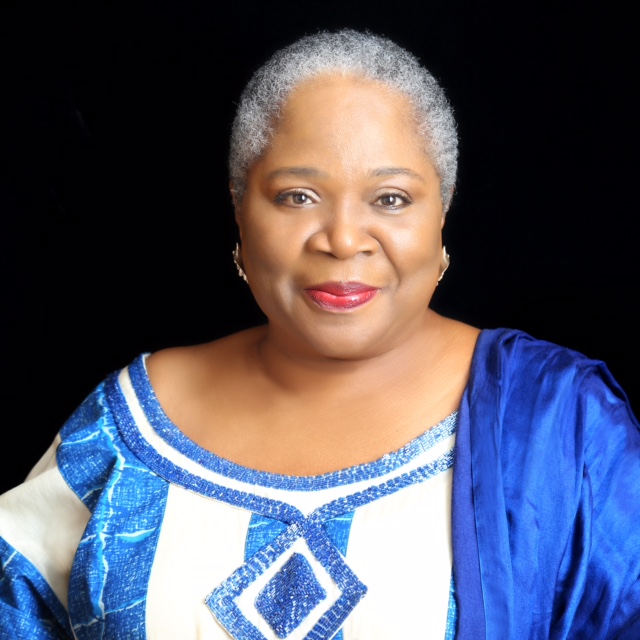
My husband didn’t pay school fees for one day- Onyeka Onwenu

Nigerian music legend, Onyeka Onwenu, who turned 70 a few days ago, has opened up on past struggles and why she left her marriage.

The elegant stallion as she is called by her fans and admirers, in an interview with media personality, Kikilomo Atanda-Owo, said although she did not want her marriage to end, it would have killed her if she stayed.

She revealed that her marriage was difficult and was not good for her and her children.

She said: “I went through my marriage, it was difficult because I really did not want my marriage to end but I could not take it anymore, it would have killed me.

“I always say this and that is the truth. It was not good for the children to live in that kind of environment where the mother is depressed, the mother is carrying the weight of the whole family.”

“I raised my children from kindergarten to Masters Degree.

“My husband didn’t pay school fees for one day, didn’t buy clothes, didn’t pay for holidays, didn’t give me housekeeping money, hard to believe.

Onyeka Onwenu, whose estranged husband had remained a mystery over the years reportedly married a Yoruba Muslim in 1984 and they were blessed with two children.

The music icon said men will have to answer to God if they neglect their families.

“That’s mean, irresponsible, wicked, even to your own children? Forget about the wife, the children.

“And I decided to write about it because women, we keep quiet for too long. We take so much and you’re dying.

“And once I opened up, I felt this relief that a lot of women who read it would say, thank you for talking about this. ‘We know now that we ought to free ourselves.”

Though she said she doesn’t support divorce, Onwenu said if it must happen, it should be done peacefully.

Toilets, Mandatory In Residential Buildings, Places Of Worship

OBSCURE LEGAL FACTS BY AROME ABU

In Nigeria, It is an offence to not provide convenience or rest rooms in residential buildings, places of worship or other public places.

PENALTY
•Fine of N100,000
•Imprisonment for 18 months or both.

See Reg 17(2)(a), 73(a) of the National Environmental (Sanitation and Waste Control) Regulation of the NESREA Act.

Arome Abu is the Managing Partner of TCLP.

CAVEAT: Note that this information is provided for general enlightenment purposes and is not intended to be any form of legal advice.

Obscure Legal Facts is an exclusive publication of THE COUNSEL L-P.
14, THABA TSEKA STREET, WUSE II ABUJA, FCT
abuarome@[email protected]
www.thecounsellp.com
+234 803 262 2359
+234 708 1156 539
Twitter:
@TheCounselLP
@de_legist

The import of Amaechi’s ‘Dan Amanar Daura’ title

Ikechukwu Amaechi

Amaechi is not only a trusted son of Daura, he is a self-sacrificing, conscientious and diligent public servant, a trusted son of Nigeria

Dan-Amanar-Daura The import of Amaechi's ‘Dan Amanar Daura’ title
Chibuike Amaechi, the Dan Amanar Daura

By Ikechukwu Amaechi

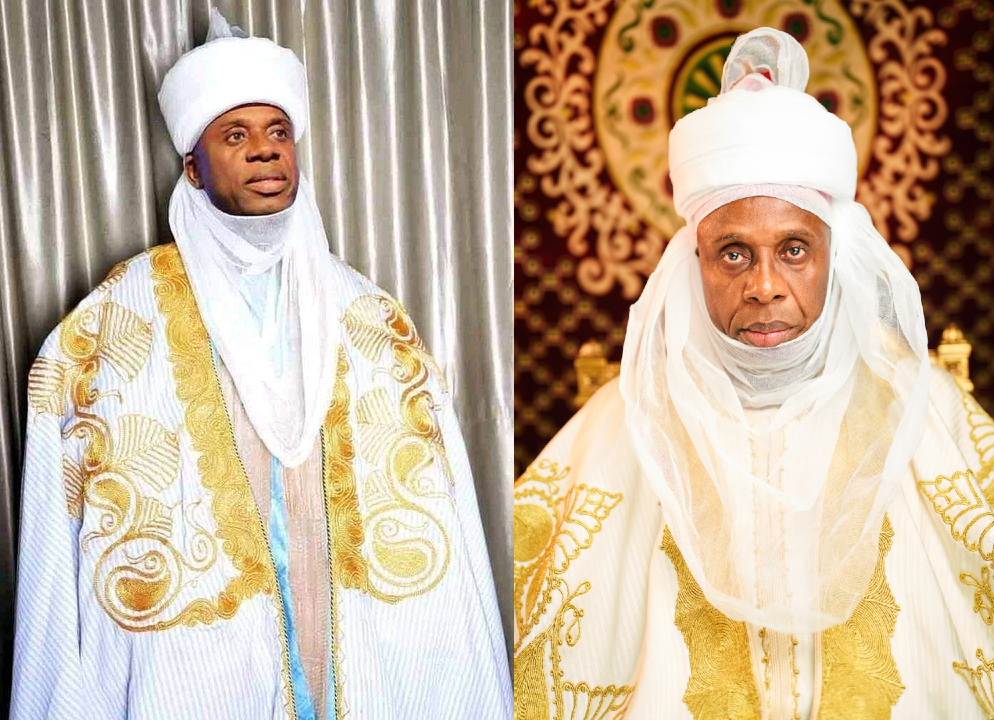
On Saturday, February 5, 2022, all roads will lead to Daura, President Muhammadu Buhari’s hometown, where the Minister of Transportation, Chibuike Amaechi, will be turbaned as the Dan Amanar Daura by the Emir, Alhaji Umar Farouk Umar.Advertisement

Coming in this political silly season, it is one turbaning ceremony that is bound to reverberate in the days, weeks and months to come.

Yet, I can say without any equivocation that this has absolutely nothing to do with politics. Although saying so will not stop conspiracy theorists from going overboard with all manner of febrile conjectures, but knowing the minister well, he will not be fazed.

Amaechi is one Nigerian political leader I can unabashedly call a friend and a brother. We don’t agree on some political issues but that does not affect anything, which makes him unique in a political environment where dissent is seen as a sacrilege.

I am particularly awed by the title, Dan Amanar, which I am told by my Hausa friend means trusted son. So, Amaechi is being honoured as a ‘trusted son of Daura’ even as he remains a proud Ikwerre man from Rivers State. In this cynical era of heightened ethnic irredentism and distrust, fueled principally by Buhari’s exclusionist politics, it is ironic and at the same time fascinating that an Igbo from the Niger Delta has been adopted not only as a son by the Daura Emirate but also adjudged trustworthy.

In a country where mistrust is a thriving industry, that is a big deal. If Amaechi has been adopted as a trusted son, it then means that the people of Daura have faith in him – his reliability and uncanny loyalty to friendship.

And that is exactly the Amaechi that I know – a reliable, good and honest Nigerian, whose integrity, strength of character, fidelity to causes and ability to deliver on promises are unparalleled.

Amaechi is loyal to friendship and he is a bridge-builder. As a politician, the only art which he has refused to master is how to be politically correct. He is not given to equivocation even when what he will say will hurt him politically.

So, being conferred with a title that robes him in the uncommon garb of trust is as deserving as it is apposite.

Amaechi has been faithful to his friendship with Buhari and the political alliance that made his presidency a reality after three failed attempts. What many people seem not to realise is the level of risk he took in a political environment that does not take prisoners. He took the greatest political risk in that gambit. Had that 2014 experiment in political engineering that gave birth to the APC failed to produce the wondrous result in 2015, the collateral political damage would have been monumental for him.

But typically, Amaechi will never talk publicly about his enormous sacrifice even when those that made lesser contributions are shouting from the rooftops and using that as a basis for laying claim to being the Khalifa – anointed successor.

Not only did he play crucial role in Buhari’s emergence as the APC presidential candidate, he was the Director General of the Buhari Campaign Organisation in 2015 and 2019.

But beyond the role he played in ushering in the Buhari Presidency, what he has been able to do in the last six and half years as minister is even more significant.

A statement from the Ministry of Transportation said he will be honoured with the traditional title in recognition of his contributions to the socio-economic development of the country, especially for his effort in bringing to life the rail sector that has been moribund for over three decades.

Amaechi is the poster boy of the Buhari administration. His dedication to duty makes all the difference. His attention to details is incomparable.

The revolution he is orchestrating in the railway sector is remarkable. Because of his achievements as Minister of Transportation, particularly with the railway projects, THISDAY newspaper honoured him with the Minister of the Decade award in 2020.

“President Muhammadu Buhari’s retention of Rotimi Amaechi as his Minister of Transportation after his re-election is a testament to his drive and commitment to give Nigerians a better travelling experience,” the newspaper wrote.

“He is superintending over the administration’s efforts to revive the railway system in the country. This has led to some projects such as the ongoing Lagos-Kano standard rail line and linking Nigeria’s eastern and northern corridors through the railway. Under his watch, the water transportation system is also receiving attention.”

Amaechi is an achiever and a man with great leadership credentials. He has the axiomatic Midas touch, an uncanny ability to excel in everything he does.

He excelled as the Speaker of the Rivers State House of Assembly and as governor. As Speaker, he led the Conference of Speakers of State Legislatures of Nigeria. As governor, he was also the Chairman of the Nigeria Governors Forum.

And at the national level, he is riding the storm, standing out, as it were, from the crowd.

Ironically, he does not perceive himself in such light. He would rather share the accolades.

All the ministers are doing well,” he told me two years ago. “Credit for achievements rightly goes to the president not only because his attention is on infrastructure but everything we have achieved is his vision.” That is how humble he is.

But despite his humility in not taking personal credit for his achievements, his creativity stands him out. Amaechi is one Nigerian leader who thinks outside the box. His ability to explore ideas that are creative and unusual, ideas that are not limited or controlled by rules or tradition sets him apart. He is a quintessential promoter of the avant-garde, an iconoclastic public servant who has no qualms pushing the boundaries with every step he takes in public office.

It is his ability to think outside the box that attracted a transportation university to Nigeria

At the groundbreaking of the Transportation University in Daura on December 2, 2019, Amaechi disclosed how he forced the Chinese construction firm, CCECC, to build the university.

“I engaged the companies. The first engagement was when they were constructing Lagos-Ibadan. They were not so keen at spending their funds to build a university for Nigeria, until I refused to sign the contract for the Lagos-Ibadan railway.”

He only agreed to sign the contract after CCECC met three conditions.

“The first thing is to take our children to China and train them by giving them a first degree in railway technology. The second is that, if we must sign the purchase of locomotives in China, they must build a factory where we can construct coaches, locomotives and wagons and today at Kajola that factory is being constructed. Finally, I insisted on the University of Transportation.”

That is ingenuity in the service of fatherland. Lesser mortals would have cornered the funds meant for thsse projects. Amaechi’s large heartedness defines his exceptionalism.

Unlike many who claim to be Buharists, he does not have his head in the clouds. He has a firm grasp of the issues and is not delusionary.

He admits that hunger has not been banished from the land. Poverty is a reality. Unemployment is also real. But he insists the Buhari government is doing its best.

“We are fixing roads, power, etc. Before we came, power was bad. We know we have not hit the actual result Nigerians are expecting but we have left where we were before,” he said.

Amaechi is unapologetically a Nigerian. In a country defined by sundry primordial sentiments, that counts for something, though it has created problems for him back home. But that is the least of his worries. Instead, he allows that worldview to define not only his person but his approach to governance and allocation of state values.

Any project in any part of Nigeria will serve Nigerians, he argues. His critics call him naïve. He demurs.

“We like breaking this country into components. Why don’t we agree first of all that ours is one nation? Whatever services we provide between Lagos and Kano rail-line for instance, is because of the quantity of cargo to be moved,” he contends.

In a country where nepotism is elevated to state craft, such disposition may be seen as too idealistic. But Nigeria needs leaders with holistic appreciation of what needs to be done to lift up the country.

That is the import of the traditional title that will be bestowed on Chibuike Amaechi in Daura on Saturday. He is not only a trusted son of Daura, he is a self-sacrificing, conscientious and diligent public servant, a trusted son of Nigeria.

Provincial leadership has dealt the country a bad cut. It is high time we changed course and Amaechi fits the bill of transcendental leadership that Nigeria sorely needs. That is the strong message the people of Daura are sending with this turbanning ceremony. Those criticising would have given an arm to be so recognised.

A visit to the prison – By Sonnie Ekwowusi

Last week I volunteered to accompany the Zarephath Aid on a prison visit. We cannot stop repeating ad nauseam that given the uncommon hellish condition under which Nigerian prisoners live and the animalistic punishment meted out to them, the Nigerian prisons cannot, by stretch of imagination, be re-baptized as correctional centres. There is nothing correctional about the Nigerian prisons let alone police detention dungeons. If anything, the Nigerian prisons are punitive centres or punishment centres. This is why people go into Nigerian prisons as normal human beings but come out as tattered, disfigured, de-moralized and depraved human beings. So, needless labeling Nigerian prisons as correctional centres.

Anyway, Zarephath Aid is a dynamic Lagos-based Non-governmental organization (NGO) committed over the last 17 years to tackling the multiple woes befalling the Awaiting Trial Inmates (ATM) in the various Nigerian prisons through a three-pronged action point namely-pro bono legal Aid aimed at securing the liberty of the unjustly detained ATM, improving their worsening living condition (including their welfare and medication) and prison rehabilitation in Nigeria. Prior to the visit last week, my learned friend Ben Abraham Esquire who is the founder and Executive Director, Zarephath Aid, had been telling me that rather than sit down and complain that Nigeria is not good or complain that one man has been misleading Nigeria in the last 7 years, he and his colleagues had erected a veritable framework under Zarephath Aid in order to chart a veritable course towards enthroning the much-vaunted criminal justice system reform in Nigeria. For example, since inception, Zarephath Aid has been instrumental in the release of over 1,000 indigent prisoners who had been languishing in the Kirikiri Maximum prison, Medium prison, Ikoyi Prison, Shagamu prison and other prisons across Nigeria. In fact Zarephath Aid had sponsored the construction of a skill Centre for the benefit of the prisoners in Shagamu prison.

Swayed by the foregoing remarkable achievements and track records of Zarephath Aid, I had no choice last week but to volunteer to accompany the NGO on a visit to the prison (name withheld). The purpose of the visit was clear to all of us. We were not visiting the prison to give food and drinks to the hungry and visibly-emaciated prisoners. Neither were we visiting the prison to cast and bind demons out of the prisoners. We visited to render pro bono legal services to the prisoners aimed at securing their freedom as well as explore the possibility of helping the sick prisoners to regain their health.

The prison warder heartily welcomed us. Having spent seven grueling years at an orthopedic hospital receiving painful medical treatment after he and his son fell off a cruising okada commercial bike, he has acquired compassion for the suffering members of our humanity. He is a good man. He went out his way to take us round the prison premises. Out of the 3,012 prisoners sheltered in the old dilapidating prison, only 163 had been convicted by a court of law, 285 have been charged to court while the rest have been languishing in prison without trial and without bail. He showed us the blocked prison soakaway oozing out with stinking human faeces. There are two churches and a mosque in the prison for religious worship. Out of curiosity, I entered into a sizable Catholic Church situate there in the prison. I saw some prisoners lying on the floor and on the benches of the church sleeping away unto the Lord. As I was leaving the church, a prisoner who introduced himself as the Catechist of the Catholic Chaplaincy, ran up to me and said, “Sir, there two prisoners here who are now spending their eight years in this prison because they don’t have N20,000 to perfect their bail granted them”. I felt sad. I turned, looked at him with pity and told him to write their names and hand them over to us.

We met two nurses on duty at the Prison Sick Bay. The head nurse confided in us that there was an outbreak of hyena ailment in the prison resulting in 27 prisoners being afflicted with hyena. N80, 000 needed to treat each prisoner-patient. The second nurse on duty raised an alarm that a prisoner was dying and needed to stay alive with the sum of N25, 000 required to purchase his essential drugs. Filled with pity for the dying prisoner, one of us instantly donated the said sum of N25, 000 to the prisoner. Before departing the Sick Bay, the nurses gave us a long list (41 on the whole) of essential drugs and medicals urgently needed by the prisoners such as Amoxicillin, cough syrup, priton, cotton wool, face mask, inhaler, chloroquine, liquid paraffin, Multivitamin (1 x 1000), Buscopan, medicated soap, Izal, sulphur ointment, vitamin C 100 mg (1×1000), septrin, Amiclox 500 mg, scalp vein and so forth.  The nurses told us that soya beans, corn and sugar are urgently needed in the prison. After leaving the Sick Bay and heading out, I looked backward and saw some sickly prisoners following us from behind and shouting; “Master, give us money to buy food”, “We are hungry”, “Give us food”.

On returning to the warder’s office located near the entrance door of the prison, we requested for ATM who had spent up to 10 years in prison without trial and without bail. First to show up was a prisoner supposedly in his late 60s who has been in prison since 2010 on alleged armed robbery. “Oga mi, I don’t suffer here. I am innocent.  The only thing sustaining me here is prayer”, he said to us. We gathered that the suit against him had since been struck out by the court yet the poor man remains dumped in prison. We saw another ATM who had spent 12 years in prison without trial and without bail. He was a victim of SARS’ lawlessness. He was dumped in prison precisely on 9th March 2012 and has been in detention from that 2012 to date without trial and without bail even after the DPP report testifies that he is innocent. He told us that they are 17 prisoners cramped together in his tiny suffocating cell. Mosquitoes feast on their bodies at night. His wife and children have abandoned him. Nobody visits him. He has no money to hire a lawyer to plead his innocence. He pities his last son (15 years) who once visited him in prison and went back home in tears. He told us that he is confident that God who created him will not allow him to die in prison. As the prisoners were talking to us two of us were busy taking down notes so that afterwards we would render them pro-bono legal services. We met other ATM. Lest I forget we met one 19-year old young man who has lost his senses in prison. He was just moping at us, unable to utter a word. We met other ATM who were arrested and dumped in prison for years without trial and without bail for wandering or for affray (fighting). Before we finally departed the prison, the prison warden complained that the prison premises are always dark at night because most of the electric bulbs had burnt out and needed urgent replacement.

We left the prison world exasperated but with a resolution to do all within our capacity to secure the liberty of the prisoners we encountered in prison. We also resolved to get some paramedical companies and individuals to donate drugs and medicals to the prisoners. Relying on a survey conducted by Travesty of Justice, an advocacy and human rights group in Nigeria, 70% (if not more) of prisoners languishing in the various Nigerian prisons are ATM. For 40 years or even more, we have been living on the empty promise of the government that it is committed to reform the prisons and revamp Nigeria’s appalling criminal justice system. Successive governments and Attorneys-General have made stronger commitments in this direction only to woefully fail to do anything afterwards. Monies being budgeted for prison reforms and welfare of prisoners sadly end up in private pockets.

How long will we continue to be in this mess? As at last week Zarephath had filed the court processes to enforce the fundamental human rights of those prisoners we met during our visit. This is the seriousness we are waiting for. Away with empty rhetoric. We need concrete action. Like Zarephath Aids, public-spirited individuals, NGOs, Corporate organizations, Churches, Mosques, Office of Public Defenders in Lagos, NBA Human Rights Committees and others should rally to the assistance of the Nigerian prisoners. Let’s stop waiting for a government that may never come. Happily, Duty Solicitors Network (DSN), an initiative of the Human Rights Committee, NBA, Lagos Branch, has recently been visiting Lagos Police Stations and Magistrates to ensure that criminal suspects do not suffer unnecessary injustices. Other branches of the NBA across the country should imbibe this sterling example of the Human Rights Committee of the NBA, Lagos Branch. All hands must now be on deck towards decongesting the Nigerian prisons and securing the freedom of ATM across Nigerian prisons.

Critical Analysis of Corporate Governance and Accountability under Companies and Allied Matters Act 2020; By Ohunene Suleiman Aishat

Corporate Governance is concerned with practices and procedures for trying to ensure that a company is run in such a way that it achieves its objectives. Its principles set out and allocate responsibility to various stakeholders in the corporate organization. Good corporate   governance   thrives   successfully   when   anchored   upon   some   guided principles.  These   principles are as follows: the   right of shareholders, the equitable treatment of shareholders, the role of stakeholders in corporate governance, the role of regulators, disclosure and transparency, the responsibilities of the board and the role of auditors and audit committee.

Specific Principles of Corporate Governance in Nigeria

The   Companies  and Allied  Matters   Act   2020  has  been   the  major   law   regulating corporate governance in Nigeria for decades. It provides some mechanisms for good corporate   governance   among   which   are   appointment   of   directors   by   the   company, removal   of   directors   by   ordinary   resolution,   duties   and   liabilities   of   directors, provisions   for   auditors   and   audit   committee,   disclosure   provisions,   mandatory

The   Companies and Allied Matters   Act   2020 has been   the major   law   regulating corporate governance in Nigeria for decades. It provides some mechanisms for good corporate   governance   among   which   are   appointment   of   directors   by   the   company, removal   of   directors   by   ordinary   resolution, duties   and   liabilities   of   directors, provisions   for   auditors   and   audit   committee, disclosure   provisions, mandatory involvement of shareholders in some corporate decisions. Simply put differently, it is noteworthy to state that the Companies and Allied Matters Act 2020, in an attempt to codify salient common law principles, explicitly provided for various duties of directors. Prominent sections on this regard provide as follows: that a director owes a fiduciary relationship towards the company;[1] should act in the best interest of the company at all times;[2] exercise his powers for the specified purpose and not collateral purpose;[3] that the duties  of  a director should not conflict with his personal interest;[4]  that a  director must discharge his  duties honestly and in good faith, with  all degree of skill  and care  which a  reasonable  and  prudent  director will exercise in comparable circumstances.[5]

The objects of these statutory admonitions form part of an intricate web whose objective is to   establish a code   of corporate governance.  From   the foregoing, it   is apparent   that   standards   of   corporate   governance   refer   to   ideal injunctions, which conformity   ensures   the   protection   of   the   corporate   interest   of   companies, their members, employees, creditors and the public while enhancing the profitability   of enterprises.  In 2003, at the instance of the Securities and Exchange Commission and the Corporate Affairs Commission, code of best practice on corporate governance in Nigeria was released with the objective set out as follows:

 A code to make provisions for the best practice to be followed by public quoted   companies   and   for   all   other   companies   with   multiples stakeholders registered in Nigeria   in   the exercise of power   over   the direction   of the enterprise, the supervision of executive actions, the transparency   and   accountability   in   government   of these companies within the regulatory framework and market  and, for   other purposes connected therewith.[1]

Subsequently, the Securities and Exchange Commission (SEC) Code 2011; the Central   Bank   of   Nigeria  (CBN)   Code  2006;   the   National   Insurance   Commission(NAICOM) Code   and the   Pension Commission   (PENCOM) Code,   were issued  and released by the   respective  regulatory institutions   to entrench  the   observance of the principles  of corporate governance   by   the  corporate entities  under   their   watch  and regulation. Other  sources   of   corporate  governance   in  Nigeria   include:   Mortgage Institutions Act; Listing Rules of the Stock Exchange; Code of Corporate Governance for Banks and Discount Houses in Nigeria and Guidelines for Whistle Blowing in the Nigerian Banking Industry; Code  of Corporate Governance  for  Public Companies in Nigeria; Code of Conduct for Capital Market Operators and their Employees; etc. However, it is noteworthy to state that the compliance with the provisions of the SEC Code is merely advisory and not obligatory, whereas the observance of the Central Bank of Nigeria (CBN) Code is mandatory on all banks and financial institutions in Nigeria.

Ensuring that one is answerable for one’s actions.

·Openness/Honesty/Transparency – acting with sincerity, clarity, uprightness and candour.

·Independence – ability to take decisions without influence.

·Responsibility- acting responsibly and taking responsibility for one’s actions.

·Integrity/ Ethical conduct- maintaining  conducts that commands  the trust and

respect of others.  Doing things  right even when  it appears one  can get away

with doing otherwise.

·Reputation/ Reputational Risk- include being perceived as being upright and of

CORPORATE GOVERNANCE UNDER COMPANIES AND ALLIED MATTERS ACT 2020
CAMA 2020, has made intentional efforts to see to the efficient, accountable and transparent management of companies in Nigeria. This can be seen in the areas of directors, secretaries, audit and auditors, meetings, corporate finance. The following sections are to be considered.

Directors: In accordance with the corporate governance code, directors of public companies are now required to disclose not only their age at appointment, but also previous directorships in other public companies before taking up new appointments. A person, cannot be a director of more than five public companies at the same time. Upon nomination as a director, such persons must disclose their existing positions on the board of other public companies before taking on new appointment and anybody who before the enactment of this act was a director in more than five companies, has two years to comply with this provision. Additionally, CAMA 2020, now requires public companies to maintain a minimum of three (3) independent directors at all times. While the foregoing is limited to public companies, small companies are now permitted to have a minimum of one director. A small company being a private company that has an annual turnover of N120, 000, 000 and net asset value of not more than N60, 000, 000, with no foreigner as its member and 51% share capital own by the directors. Also, any person, (shareholder) who nominate candidate for the board who would

comprise a majority of the members of the board shall nominate at least three persons who would be independent directors.

All companies must now keep a register of directors address residential addresses. This register shall state the usual residential address of each director of the company. If a company fails to comply with this provision, it will be on default and liable to a fine as the commission may specify.

Meetings: In keeping with contemporary realities imposed by the outbreak of the global pandemic Covid 19, CAMA 2020, now permits the use of electronic means for meeting purposes so far as such meetings are conducted in accordance with the articles of the company. This is to facilitate attendance of members in a meeting at minimal cost. However, this concession is limited to private companies, as all public companies are still required to hold meetings physically. Also, statutory and annual general must be held in Nigeria.

The ordinary business of a company’s annual general meeting (AGM) has been amended to include the remuneration of its managers. According to the new provision, a company’s ordinary business includes the following:
Examining financial statements
Dividend declaration
Director appointment and removal
Appointing and compensating auditors (optional for small businesses)
Appoint a member to the audit committee (optional for small companies)
Disclosure of the compensation paid to the company’s executives

Company Secretary: All companies were previously required under CAMA 1990 to appoint a company secretary. This position has since been amended to exempt small companies from the mandatory appointment of a company secretary. In light of the fact that the CAMA, 2020 makes it optional for small companies, it should be stated that the importance of a company secretary cannot be overstated as it ensures the company’s administrative effectiveness.

Public companies are required to appoint a secretary within six months after the commencement of this Act in a situation where there was none. Where a person is appointed secretary of a company, a letter by such person consenting to act in that capacity shall be included in the documents to be filed at CAC.

Restriction on the President/CEO Position in a Private Company: To strengthen the protection of a company’s minority shareholders, the CAMA 2020 prohibits private companies from appointing a director to the position of Chairman and Chief Executive Officer.

Significant Control and Substantial Interest: To further ensure transparency in corporate governance, CAMA 2020 has extended the requirement to notify the company in writing of significant control or divestment of shares. Previously, this obligation applied only to public companies. This is no longer the case, as shareholders with a majority stake in any type of company are now required to make such disclosures. Notably, CAMA 2020 makes no definition of what constitutes significant control.

This is critical because both private and public companies are required to disclose significant controlling interests. The term “significant shareholder” as defined in Section 120 (2) of CAMA, 2020, applies only to public companies. Regardless, it is reasonable to assume that the same should apply to private businesses. Additionally, CAMA 2020 redefines a shareholder’s percentage interest in order to qualify as a substantial shareholder if the shareholder holds at least 5% of total voting rights. This is in contrast to the 10% cap imposed by the now-defunct CAMA 2004.

Shareholders’ Pre-Emptive Rights: In the case of private companies, the transfer of shares is governed by the company’s articles of association. CAMA 2020, on the other hand, now places some restrictions on the manner in which shares may be transferred in relation to existing shareholder rights. Although the term “pre-emptive right of shareholders” is not unfamiliar in Nigeria’s corporate world, it has frequently been left to a company’s discretion.

Progressively, CAMA 2020 now codifies this right by clarifying that a company may not sell the shares without first offering them to existing members in proportion to their existing holdings. This implies that a when a public company wants to issue shares through public or private placement, it has to conduct a right issue to the existing shareholders first. As a result of the foregoing, existing shareholders are protected from undue dilution and are given preference over non-members of the company.

This safeguards shareholders against nefarious acquisitions of the company through third-party arrangements. Additionally, to the foregoing, CAMA 2020 now requires a private company to obtain the consent of all its members prior to making any sale that exceeds 50% of the total value of the company’s assets. Note that this provision may be varied by the articles of association.

Common seal: The CAMA 2020 has now made the usage of common seal optional and when a company decides to have one, the design and use of the seal shall be regulated by the articles and its name shall be engraved in legible latters. Thus, an authorized signature of a company is now sufficient to execute any contract entered into by the business.
Netting: Notably, the introduction of netting is one of the most notable additions to CAMA 2020’s financial contract provisions. The use of netting to help assess and reduce financial obligations was unknown under the repealed CAMA 2004.  Thus, this new addition represents a quantum leap in terms of corporate governance in Nigeria, as it is consistent with international best practices. Netting agreements can now be concluded and enforced against

an insolvent party, guarantor, or other person providing security under the provisions of the CAMA 2020.

Audit Obligation: Generally, each company is required to appoint an auditor or auditors to audit its financial records and statements for the preceding fiscal year at its annual general meeting. This is no longer the case, as small companies and businesses that have ceased operations since incorporation (excluding insurance companies and banks) are now exempt from this requirement.

Additionally, public companies must now make their audited financial statements available on their website. Also, debtors of a company to the amount of N500, 000, shareholder or shareholder’s spouse of a company whose employee is an officer of the company, a person who is or whose partner is an employee of a debenture holder of the company and an employee of a consultant to the company who has been engaged for more than one year in the maintenance of any of the company’s financial records or preparation of any of its financial statements are disqualified from being appointed as auditors of the company.

PROBLEMS FACING CORPORATE GOVERNANCE IN NIGERIA

Corporate Governance In Nigeria Under The CAMA 2020 And The Nigerian Code Of Corporate Governance . divorced from the scourge of corruption, greed and avarice in the Nigerian society. To this effect, Denton-West JCA, in Balonwu v Obi, asserted as follows:

We lack good leadership in our body politic. A good leader is someone who is able to lead and has the ability to influence his people positively to attain and achieve greater heights for the good of humanity. A good leader is selfless and has only the interest of the people he is leading at heart. A leader’s action always has a rippling effect on the society. The leadership’s  wrong   actions  can   destroy  the   society   and   bring   it   to naught, while the acts of good and seasoned leaders could catapult our country Nigeria to the country  we all dream   about…a   good   leader should adhere to law and observe same.

The Issue of Leadership Ethics

It is pertinent to  state that a company’s culture comprises  of years of  history, which includes   its  successes and failures, good and bad  decisions   and   its   individual   and collective   stories. Thus, the   issue of   corporate   leadership   in   Nigeria  cannot   be divorced from the scourge of corruption, greed and avarice in the Nigerian society. To this effect, Denton-West JCA, in Balonwu v Obi, asserted as follows: We lack good leadership in our body politic. A good leader is someone who is able to lead and has the ability to influence his people positively to attain and achieve greater heights for the good of humanity. A good leader is selfless and has only the interest of the people he is leading at heart. A leader’s action always has a rippling effect on the society. The leadership’s wrong   actions  can   destroy  the   society   and   bring   it   to naught, while the acts of good and seasoned leaders could catapult our country   Nigeria   to   the   country  we all dream   about…a   good   leader should adhere to law and observe same.[1]

The Issue of Separation of Ownership from Control

Corporate governance is evidently a by-product of separation of ownership and control.

Thus, Adam Smith in giving credence to the agency relationship that exist between the members and the board, stated thus:

Directors being  managers of other  people’s  money than  their  own, it cannot  well be  expected  that they should watch  over it  with the  same anxious   vigilance   with   which   the   partners   in   a   private   company, frequently  watch over their own. Negligence and profusion, therefore

The Issue Of Separation Of Ownership From Control Corporate governance is evidently a by-product of separation of ownership and control. Thus, Adam Smith in giving credence to the agency relationship that exist between the members and the board, stated thus: Directors being managers of other people’s money than their own, it cannot  well be  expected  that they should watch  over it  with the  same anxious   vigilance   with   which   the   partners   in   a   private   company, frequently  watch over their own. Negligence and profusion, therefore must always prevail more or less in the management of

the affairs of a joint stock company.[1]This has therefore given rise to a number of stakeholder approaches to corporate governance which envisage that the directors and managers have other persons to serve apart from the shareholders. These persons include the employees, suppliers and host communities   at   large. This   is   technically   referred   to   as   Corporate   Social Responsibility (CSR). Hence, a good corporate governance practice aids in reconciling the tension that exist between the shareholders and stakeholders.[2] Accordingly, CSR isa business strategy to make the  ultimate goals of a  company more achievable and as well more transparent when making long term business decisions.

Ineffective Checks On The Powers Of Directors

It is self-evident that the Companies   and Allied   Matters Act   2020 makes veritable provisions for corporate checks to curb the arbitrary actions of the board, these checks, in   most cases, are   inefficacious and   therefore   inadequate   to   serve there   genuine objectives. Illustratively,   the   residual   duties   of   the   members   against   the   actions   and inactions of the board is expressly provided for in section 87 (5) CAMA. These include the power of the members in general meeting to act if the board is disqualified or is unable to act because of a deadlock, the power to  institute legal proceedings in the name of and on behalf of the company, power to ratify or confirm any action taken by the board of directors, and the power to make recommendations to the board regarding action   to   be   taken   by   the   board.   Superficially,   the   above   provision   is   highly commendable but in practice it is difficult because the deadlock which can induce the court to exercise its jurisdiction under the just and equitable clause must be a complete deadlock, which, most times, may not exist.

Regulatory Limitations On The Rights And Powers Of The Members Furthermore, the Companies and Allied Matters Act 2020 places several limitations on the   rights   and   powers   of   the members thereby circumscribing the   efficacy of   the members   in   carrying out   their   oversight   functions of   monitoring   and curbing  the excesses of  the  board in  the discharge of  their  duties. These  limitations  include the rights of members to attend and vote in meetings[3]  which is limited to the extent that the articles may provide that a member shall not be entitled to attend and vote if he has not paid  all  calls or  sums  payable by  him in respect of the member’s  shares in  the company, the right to requisition extra ordinary general meetings[4]  which can only be exercised by the members having not less than

one-tenth of the paid up capital of the company, the right to  approve  and declare dividend,  the right to demand  voting by poll[1]  which is only   available   to   members  for the election   of   the   chairman  of the meeting and adjournment,[2] the right to appoint and remove directors/ auditors.38In a similar vein, with respect to the declaration of dividend, members cannot declare   the   dividend   until   same   is   recommended   by   the   directors.   Furthermore, members can only declare what the directors recommend to them and not more. This therefore empowers the directors to frustrate the declaration of dividends for a period of time on the excuse that the payment will not be justified by the profits of the company or that after payment the company would be unable to pay its liabilities as they become due. It is noteworthy that   the member’s right   to   appoint directors is   usually   not absolute. While they are empowered to  appoint first  directors,39  the  appointment of subsequent directors is most times exploited by the board under the façade of filling a casual vacancy in the board.40The above stated statutory limitations act as a clog in the wheel of good practice of corporate governance in Nigeria.

The Issue of Supremacy and Control

It is a general presumption that the members in general meeting are the supreme organ of a company and that the board of directors are merely agents of the company who are subject to the   control of  the   members in  general   meeting.  However,  this  position appears to have been changed by subsequent decisions, which are now to the effect that the members  in  general meeting cannot interfere with  the  decisions of  the  directors unless they are contrary to the provisions of the Act or Articles.30

The above stated common law position was adopted in sections 87 (2) to (4) of the CAMA 2020. By sub section (2), the articles of association determines the sharing of powers between the two organs except otherwise stipulated in the Act. By virtue of section 87 (3) of the CAMA 2020, once the management of a company is given to the board of  directors, it  can  exercise  the  power of   management even  if the  articles  of association is  silent   on the  matter. Simply put   differently, the  board   of directors  is saddled with the day to day operations of a company.

Nonetheless, what appears to be a sword in the hands of the members in general meeting as evidently seen in section 87(4) CAMA 2020 is akin to a toothless bull dog which merely  barks  without causing  any  harm to  its  victim. This assertion is  borne from the fact that the said section empowers the board of directors not to be bound to obey   the   directions   of   the   members   in   general   meeting   except   the   articles   says otherwise   or   if   the   board   did   not   act   in   good   faith   and   with   due   diligence. Unfortunately,   the   Act   did   not   define   the   expression   ‘good   faith’   and   ‘due diligence’. These enormous powers conferred on the directors have become a ground for the abuse of the exercise of their powers and a challenge to corporate governance in

The Issue of Supremacy and Control

It is a general presumption that the members in general meeting are the supreme organ of a company and that the board of directors are merely agents of the company who are subject to the   control of  the   members in  general   meeting.[3]  However,  this  position appears to have been changed by subsequent decisions, which are now to the effect that the members  in  general meeting cannot interfere with  the  decisions of  the  directors unless they are contrary to the provisions of the Act or Articles.[4]The above stated common law position was adopted in sections 87 (2) to (4) of the CAMA 2020. By sub section (2), the articles of association determine the sharing of powers between the two organs except otherwise stipulated in the Act. By virtue of section 87 (3) of the CAMA 2020, once the management of a company is given to the board of directors, it can exercise the power of   management even if the articles of association is silent   on the  matter. Simply put   differently, the board   of directors is saddled with the day to day operations of a company. Nonetheless, what appears to be a sword in the hands of the members in general meeting as evidently seen in section 87(4) CAMA 2020 is akin to a toothless bull dog which merely barks  without causing  any  harm to  its  victim. This assertion is  borne from the fact that the said section empowers the board of directors not to be bound to obey   the   directions   of   the   members   in   general   meeting   except   the   articles   says otherwise   or   if   the   board   did   not   act   in   good   faith   and   with   due   diligence. Unfortunately,   the   Act   did   not   define   the   expression   ‘good   faith’   and   ‘due diligence’.[5]These enormous powers conferred on the directors have become a ground for the abuse of the exercise of their powers and a challenge to corporate governance in Nigeria. This has paved way for the emergence of the board of directors as corporate monsters, while   subjecting   the   shareholders   to   a   subservient   status   in   corporate administration.

 CORPORATE ACCOUNTABILITY UNDER THE COMPANIES AND ALLIED MATTERS ACT 2020

In August 2020, President Muhammadu Buhari of Nigeria signed the Companies and Allied Matters Act (CAMA), putting in place a new registry that will enhance corporate accountability and transparency by disclosing persons with significant control of companies. According to Registrar General Alhaji Garba Abubakar, who leads the autonomous body responsible for the register, the OGP framework was the single most important platform used to achieve consensus amongst government and civil society stakeholders in support of the new law. Nigeria is also the recipient of the OGP MDTF implementation award, that will support the development of the infrastructure necessary for an effective beneficial ownership registry. This reform could mobilize domestic resources and fight corruption by making it harder for people to use anonymous companies to avoid taxation and contribute to illicit financial flows.

While the innovations to ease business have been reviewed quite exhaustively, the legislative document has not received its due credit on its key contributory role to corporate accountability and private sector governance, which it owes largely to the transparency clause requiring the disclosure of persons with significant control of companies in a register of beneficial owners. By extension, this provision which portends the efficient regulation of business entities, complements efforts towards greatly improving domestic resource revenue in its potential to address the curbing of illicit financial outflows, which costs the country around 17 billion US dollars ($17bn), annually to Nigerian and international companies operating within the Nigerian jurisdiction.

PROBLEM FACING CORPORATE ACCOUNTABILITY UNDER CAMA 2020.

Haven stated the innovations introduced under the CAMA 2020, geared towards making significant development in companies’ corporate accountability, one reoccurring challenge remains the implementation and compliance by companies to these regulations.

Below are some highlighted problems:

Non-Inclusion

There needs to be inclusion by engaging key stakeholders and emphasizing gains and by providing ease of compliance. The integration process commenced two years ago by the Open Government Partnership in Nigeria, between the Corporate Affairs Commission (CAC) and Anti-corruption Agencies (ACAs), Bureau of Public Procurement (BPP), organized private sector (OPS) and other open contract and procurement-saddled institutions, somewhat guarantees the sustenance of the commitment. Also, while a large section of the organized private sector (OPS) is in support of this transparency and accountability drive, others have raised cogent concerns over information rights for public disclosure posing security concerns. This can however be addressed in process implementation by regulators (CAC) who have guaranteed secure accessibility to certain information.

Value re-orientation

The realization that both the government and the private sector must contribute their quota towards building Nigeria’s economy and drive development is now mainstream and progressive governments globally are designing policies and roadmaps to this end. It is necessary to note that the register will provide both checks and benefits to companies and the mentality that its establishment will benefit the country to the detriment of the OPS and multi-national enterprises (MNEs) should be eschewed. A true ecosystem of open governance must include open collaborative processes and it is imperative that even without a law, private sector operators like the OPS and CSOs should impose on their corporate governance structures, the principles, processes and values that make disclosure a default action and advocacy must be sustained for the paradigm shift for self-regulation by the OPS and CSOs to this effect.

Verification

With the establishment of the register, there is a new challenge as existing rules emphasize the need for accurate, reliable and up-to-date beneficial ownership information. According to a 2018 study on how well G20 and guest countries are implementing the G20 High Level Principles on Beneficial Ownership, no governments that collect beneficial ownership information, verify it. However, a paper published by the Tax Justice Network (TJN) proposed a way of checking the validity of data provided: an information technology system combined with advanced analytics to identify red flags.

The verification process involves ensuring that people in the official register are who they say they are (authentication), that those persons have agreed to be involved in a legal entity (authorization), and that all the registered data is valid (for example, the address exists and the purpose of the company is accurate). It also involves checks after the legal entity is set up to ensure information is up-to-date and to identify potential red flags. It proposes a verification process that is fully automated information technology system with human supervision with access to relevant data, held by national and foreign authorities for cross-checking and advanced analysis.

The process could be managed by the beneficial ownership or company register, or another public body that has experience with data analytics, such as financial intelligence units or tax authorities and the responsible body needs to be adequately resourced and empowered to conduct such checks.

Recommendations

This paper hereby strongly recommends as follows:

1. There   should   be   a   strict   and total compliance with the codes of   corporate governance and corporate accountability in Nigeria. Accordingly, the codes as put in place by the CAMA, SEC and other   regulatory agencies in Nigeria, as well as the   World   Bank Corporate Governance Reports and the 1999 Organization for Economic Cooperation and Development (OECD) principles of corporate governance which was revised in2004 should not be allowed to be optional to companies but should be strictly enforced in order to achieve its desired goals;

2. Similarly, there is a dire need to ensure transparency and adequate check on the excesses of the corporate organs. Thus, the provisions of section 87(4) of the CAMA 2020, which excuses the board of directors from obeying the directions or instructions of the members in general meeting where the article does not provide otherwise should be amended. Also, the provisions of Section 280 (b) of  the CAMA 2020  which limits  the disqualification of appointment of directors for a period of ten years who commits any offence involving fraud, to include those found liable under Sections 668 to 670 of the CAMA 2020, which bothers on fraudulent acts of officers of a company detected in the course of liquidation;

3. Furthermore, the fiduciary   duty   of   directors   to   act in the   best   interest   of   the company, employees and members under Section 305 (4) CAMA 2020 should be   expanded   to   include   suppliers, customers, host   community   and   the environment.   It   is   the submission of this paper that such amendment will further serve as a statutory basis for the practice of corporate social responsibility in Nigeria, rather than its present fluid and voluntary state.

Conclusion
In conclusion, these analysis of the concepts of corporate governance and corporate accountability under the Companies and Allied Matters Act would advertently help to improve the Nigerian business landscape by increasing the availability of commercial opportunities and corporate responsibilities  both within the country and beyond international borders. However, the challenge faced in the corporate sector in Nigeria it’s the implementation and compliance of these provisions. It is hoped that the CAC’s implementation of the CAMA, 2020 will alleviate the burden of doing business in Nigeria and improve the Corporate governance in Nigeria.


[1] CAMA (repealed), s. 225 (1); CAMA 2020, s.249 (1).

[2] CAMA (repealed), s. 225 (5); CAMA 2020, s. 225(5)

[3]  Isle of Wright Railway v Tahourdin[1883] 25 Ch.D, 320.

[4]  Automatic Self- Cleansing Filter Syndicate Co v Cuninghame [1906] 2 Ch.D, 34; Shaw & Sons (Salford) Ltd v Shaw [1935] 2 KB, 113

[5] 1. M. O. Sofowora, ‘Shareholders, Directors, Corporate Managers and the Balance of Power’ [2000] 4, Law and Business Quarterly, 12

[1]  Adam Smith, An Inquiry into the Nature and Causes of the Wealth of Nations (University of Chicago Press: 1976), 264-265

[2] O. A. Onwumere, ‘The Evolving Interplay between Corporate Governance and Corporate Social Responsibility and its Legal Implications on Multinational Companies’ [2018] 10[1], Journal of Corporate Governance, 2111

[3] CAMA (repealed), ss.211-215; CAMA 2020, ss. 235-240

[4] CAMA (repealed), s.215; CAMA 2020, s.239

[1] [2007] 5 NWLR (Pt. 1028) 488, 561-562, Paras F-D

[1] J. O. Orojo, Company Law and Practice in Nigeria, (5th edn: Lexis Nexis Group, 2008) 282.

[1] CAMA (repealed), s. 279 (1) (2); CAMA 2020, s.305 (1) (2).

[2] CAMA (repealed), s. 279 (3) (4); CAMA 2020, s.305 (3) (4).

[3] CAMA (repealed), s. 279 (5); CAMA 2020, s.305 (5).

[4] CAMA (repealed), s. 280; CAMA 2020, s.306

[5]  CAMA (repealed), s. 282; CAMA 2020, s.308

Credit:diverselaw.org.ng

TIPS