Home Blog Page 862

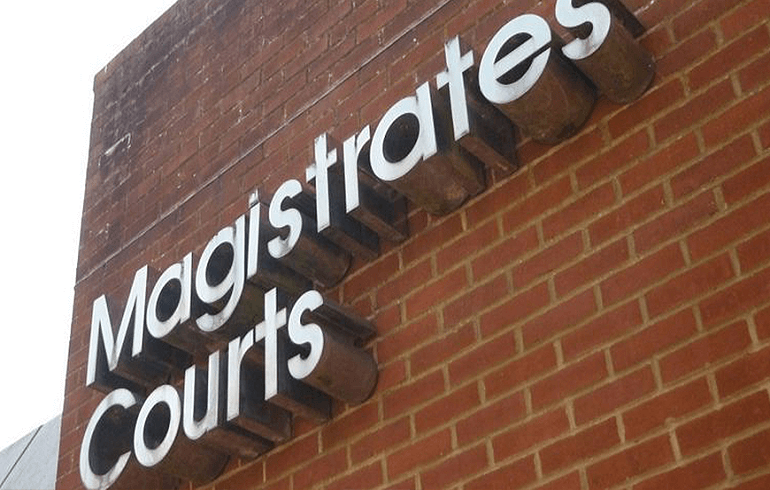
War against corruption in the judiciary, FCT Magistrates commence workshop Monday

In a January 14, 2022 article, a former Chairman of the National Human Rights Commission (NHRC) wrote: “It is no longer news that Nigeria’s courts have normalised corruption and abuse of power. They have also put the corruption of courts and judges beyond the realm of accountability. Having developed into a country incapable of generating indignation for these perversions of high judicial office, Nigerians nevertheless wonder why the country has descended into an orgy of violent self-help. What follows is a recent timeline of how.”

To check this worrisome trend, the Magistrates Association of Nigeria- FCT Branch (MAN-FCT) in collaboration with Fight Against Corruption in the Judiciary (FIACIJ) and Duty Solicitors Network (DSN) with the support of EU Sponsored British Council Rolac Programme, Juritrust Centre for Socio Legal Research & Documentation and Justice Reform Project will on Monday commence a two-day workshop for magistrates in the Federal Capital Territory (FCT).

The theme of the workshop which will run from Monday to Tuesday is — “Attaining Global Best Practices in the FCT Magistracy; Challenges and Solutions.”

The event which will take place at the ceremonial court hall of the FCT High Court from 9 am to 3 pm daily has the Chief Judge of FCT, Hon. Justice Hussaini Yusuf Baba as Chief Host and Senior Magistrate Musa Abdulrazak Eneye (Chairman MAN – FCT) as host.

So, Buhari won’t make history, after all – Part 2

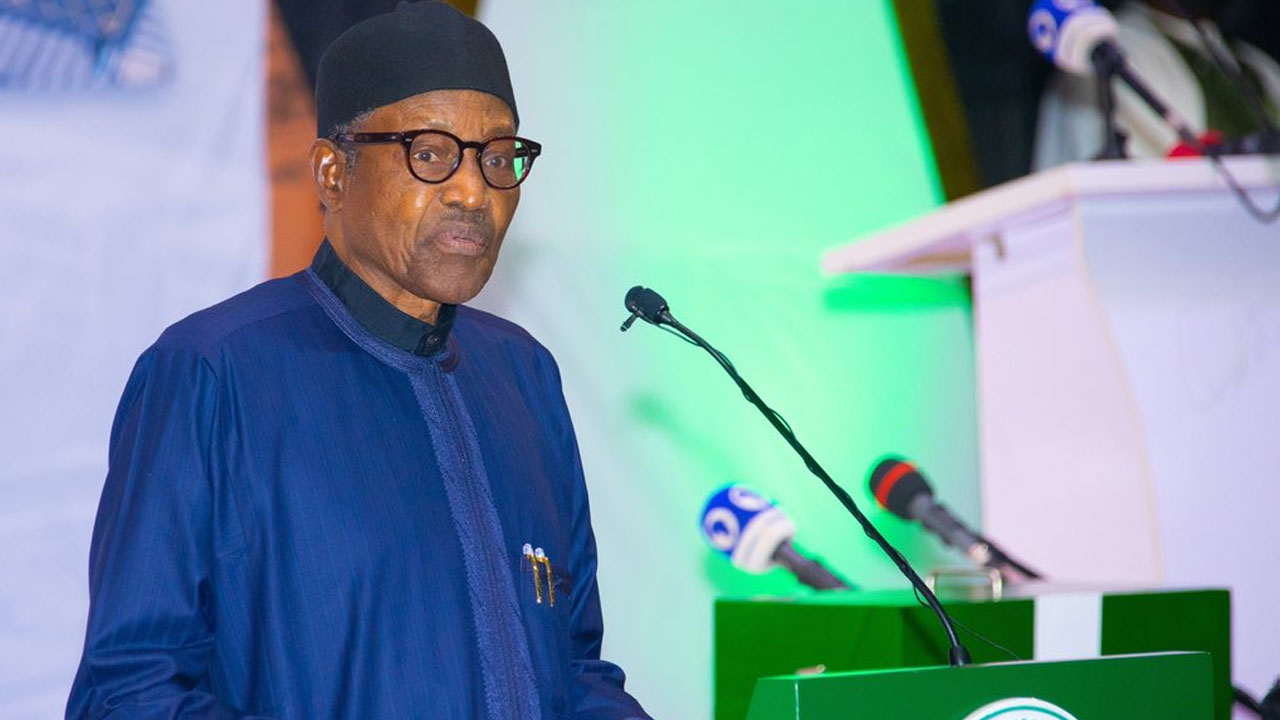
[FILES] Muhammadu Buhari
PHOTO: Twitter/BashirAhmaad

I have been writing on this same construct since 2017 under titles such as ‘How PMB can make history’, ‘Why Buhari may not make history’, ‘Buhari’s near-success syndrome’ and more recently, ‘So, Buhari won’t make history, after all?’. It is becoming clear from my crystal ball as an oracle (a spiritual man) that our leader is losing more steam as he chases history. And so he can’t make history, after all as some forces of darkness even inside the seat of power in the nation’s capital have hijacked all voices of reason and wisdom that have threatened to enable our leader Malam Garba Shehu introduced to us in a blaze of glory in 2015 as a ‘New Sheriff in Town’. Whatever happened to the New Sheriff! 
 
You will recall that I have quoted the iconic Ronald Reagan several times here on this same theme: The former U.S President one noted: ‘The greatest leader is not necessarily the one who does the greatest things. He is the one that gets the people to do the greatest things’.

 
It has been in the light of the above powerful words of Reagan that I have always joined good people who would like to encourage our leader, President Muhammadu Buhari to make history by getting good people around him to do one of the greatest things – signing the Electoral Act Amendment Bill into law to begin a clean process of leadership recruitment in our failing country. I have always added that if the President could embrace restructuring too through return to federalism we lost since 1966, he would make history despite his apparently poor performance his reputation managers have always been disputing as they do what they are paid to do for our leader. Our leader failed again to sign the electoral amendment bill last December. He blamed it on some provisions some politicians, especially most governors didn’t like, notably the direct primary, which threatened to return power to the people. Our president missed a great point in pursuit of history. The same restructured bill is again on the president’s table. It is beginning to appear that another darkness will fall on the bill again despite the warning of the election management agency that failure to sign the bill into law in time might affect preparations for 2023.

The Attorney General of the Federation and Minister of Justice whose lips we have had to read on the bill has spoken again. The Kebbi-born politician, Abubakar Malami has become an oracle on the bill: Once our Malami says, it may not be signed, that is the last word. Malam Malami has become a ‘principality and power’ that prayer warriors have to face on the significant bill forces of darkness may curiously exploit to scuttle the 2023 elections. 

So, as I have been saying, in the next few days, our leader who vaunted the other day that he would not end his tenure as a failure, needs to renew his mind, rally his governing party and citizens behind him to restructure Nigeria without dividing it. And that should begin with calling the bluff of the retrogressive forces in APC, his party and signing the Electoral Act Amendment Bill into law in the next few days before he slips into the dark side of history. This is possible only with a sincerity of purpose as the driving force. This is what drives me to think that at the moment, the President needs encouragement more than condemnation from any quarters: He is surrounded at the State House, Abuja by only his kinsmen most of whom would not like to tell him what he should do to finish well, even if he can’t finish strong.  

As I was saying, in the beginning, the kinsmen who helped him to make his cabinet did not assist him in making a great cabinet. It is quite obvious that the President was not told by those who helped him shape the presidential bureaucracy and the cabinet in 2015 that no leader can do well in office with a mediocre presidential bureaucracy and cabinet. After about six months of assuring the people that he was head hunting good and reliable thinkers, what he came up with was quite disappointing, after all. 

No insult is meant here, please. This is without prejudice to the few good ones who have been unequally yoked with mediocrities (not mediocres, please) that abound in the place. We are just discussing simple points in nation building within the context of the new world that social and digital technologies daily disrupt. Yes, only leaders who surround themselves with very smart managers can make history in the new world and even science of business and politics.  

What is more, our president has obviously compressed his own agenda to fighting corruption and insecurity. But there are no indications yet that our taciturn leader can still make history with fighting corruption and insecurity, despite his recent claims and pledges especially in the North East Zone and North West where the evil ones are still reigning. His reputation managers may not agree but truth matters, in this regard. Now the North is demonstrating against Buhari’s inability to provide security for even the North – his people and indeed the country. Even the news media organs in the North have become more radical than their southern competitors. Which confirms what I have been noting here that you can hide truth in a grave but it won’t stay there.

What is worse, the military establishment that we used to be proud of appears to have lost its mojo in Buhari’s Nigeria. Even the presidency doesn’t believe in operational efficiency of the police force anymore. We see the spirit of errors everywhere, especially in the North East and North West where the Air Force once erroneously bombed an IDP camp. We have lost so many officers of the Nigerian armed forces to the war in the North. We are beginning to lose some officers to the tentacles of the war in the South East. The other day, there was a supplementary budget of about one trillion naira to fight insecurity at the time university lecturers were gearing up for yet another industrial action. In other words, education, which is generally recognised as a weapon of country and global competitiveness has suffered some reverses in Buhari’s Nigeria. That is what happens when the illiterate of the 21st century are allowed to take charge as major state actors. That is the view of a writer on leadership and management, Alvin Toffler, who always muses on “rethinking the future”.

According to him, “The illiterate of the 21st century will not be those who cannot read and write but those who cannot learn, unlearn and relearn”. This is why most modern leaders always strengthen their governments with strong men and women, who can learn, relearn and unlearn even in office.

As I was also saying, let’s look at the machinery for fighting corruption. There are three agencies comprising the Economic and Financial Crime Commission (EFCC), Independent Corrupt Practices and Other Related Offences Commission (ICPC) and Code of Conduct Bureau (CCB). The arrowhead here has always been the EFCC. But the President’s ruling party was once so disorganised that the first EFCC acting Chairman, Ibrahim Magu, nominated since November 2015, was not confirmed by the Senate dominated by the president’s party men before he was removed in 2021. How else does one understand the politics in the presidency where the secret service chief executive twice wrote to the Senate that Magu should not be confirmed? Magu was somehow stranded for six years and even the influential Attorney General and Minister of Justice appeared to be at war with him throughout his turbulent tenure. Curiously, Buhari’s presidency didn’t settle their rift.  How can the president make history through his war against corruption when Magu too was once quoted as saying that he was losing the war? Even the ICPC chairmanship was once in a hibernation mode: a board member once acted as Chairman from July 2017 when the tenure of the Chairman expired in December 2018. Acting Chairman of EFCC since 2015. There was once an Acting SGF from May 2015; There were once so many ‘actors’ in office in Buhari’s presidency of anything is possible. 

How can the president make history with this kind of executive inertia and ad-hocism? Can there be history making in fighting official graft without reforming the NNPC according to the new Petroleum Industry Act? What has changed apart from the name as a company limited by shares?  That is why I feel we should begin to encourage the President to pay due attention to the Committee his party, the APC set up to prepare a blueprint on the hurricane called ‘restructuring’. There is some sense in that critical national assignment. 

Despite the fact that some president’s men may not like Malam Nasir el-Rufai’s face and politics, the Kaduna State Governor and chairman of the APC Panel definitely has enough cognitive resources to handle the critical assignment. He gave the Party and the President a good document on restructuring since 2018. 

The only trouble with the APC Committee may be a vicious cabal around the President who might have been obsessed at that defining moment about politics of a second term without thinking about the implications of absence of major achievements in the first term. Now there is no fear of a second term. The president should restructure Nigeria and begin this by signing that electoral bill into law today. He should call the bluff of Malam Malami and his band of ignorant patriots who do not understand that Buhari is going to end up as a failure if he doesn’t reform Nigeria’s leadership recruitment process through the electoral amendment bill now on his table.  

But the president should note that if he continues to adopt I-don’t- care attitude to clamour for restructuring of the federation as most hawks around may advise, the consequences of the verdict of history may be harsh on him. He will go down in history as a military leader and politician who just wasted our time in office without any significant achievement. 

Verily, verily I believe that the President can make history if he can restructure Nigeria to run as a federation where the present states can leverage on the endowments in their areas to create wealth. To set the tone for that, our leader should sign the electoral bill that will assure Nigerians that we can elect our leaders peacefully without recourse to the courts that seem to be the dominant electoral factor now. Our President should listen to Dolly Parton who once noted that, “If your actions create a legacy that inspires others to dream more, learn more, do more and become more, then you are an excellent leader”. 

credit:Guardian

An Expose On The Interconnections And Disconnections Of Telecommunication Networks In Nigeria.

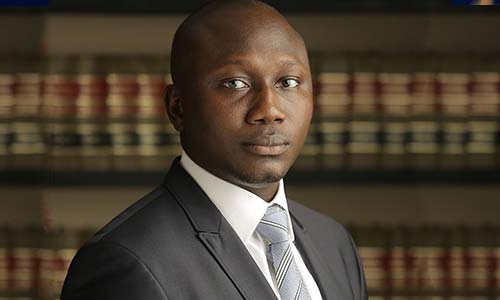
By Oyetola-Muyiwa-Atoyebi,-SAN.

Introduction

Have you ever wondered what makes it possible for calls to successfully pull through from one mobile network to another? Or, what makes a call not connect? Simply put, what allows an MTN subscriber to call a GLO subscriber and vice versa, as well as other mobile networks available? The answers to these questions is what this article seeks to do – by explaining the process of interconnection and disconnection of telecommunication networks in Nigeria as provided by the NCA 2003[1] and the Guidelines on Procedure for Granting Approval to Disconnect Telecommunications Operators 2012.

The Nigerian telecommunication sector has experienced tremendous growth within the last decade, with over 191 million[2] active Nigerian users. It is one of the fastest-growing and most profitable sectors in Nigeria.  Without a doubt, these successes influenced the passage of the Nigerian Communication Act 2003 (NCA),[3] its Guidelines, Regulations, and other subsidiary legislation, as well as the establishment of the Nigerian Communication Commission as the regulatory body to ensure best practices and fair competition among its operators and users. This Act has provided for interconnection, which is the relationship that exists between network service providers to enable successful calls and messaging services amongst their subscribers.

One of the ways in which the Nigerian Communication Commission protects the interests of network service provider subscribers is through the enactment of the Guidelines on Procedure for Granting Approval to Disconnect Telecommunications Operators (GPGADLO) 2012, which provides for the disconnection and reconnection of network service providers, amongst others.

What is Interconnection?

According to section 157 of the NCA, interconnection is “the physical and logical linking and connection of communication systems used or operated by the same or different licensees to convey a message to and from the respective systems for the provision of services.” Interconnection is the relationship that exists between network service providers to enable successful calls and messaging services amongst their subscribers.

The NCA has made interconnection compulsory amongst network service providers. Therefore, if a licensed network service provider receives a request for interconnection from another licensee, that network service provider is obligated to interconnect its communications network with the requesting licensee’s network at technically feasible locations in accordance with the principles of transparency, non-discrimination, fair competition, neutrality, universal coverage, access to information, equality of access, and equal terms and conditions[4].

The parties will draft an interconnection agreement according to the terms and conditions agreed upon by both parties in good faith. This agreement must be in writing and must be registered with the Commission within 30 days from the date of its execution, after which the parties will furnish the Commission with any additional information required with respect to the interconnection agreement[5].

However, the Commission may, upon evaluating the terms and conditions of the interconnection agreement, require such parties to revise the agreement if, in the opinion of the Commission, the agreement is inconsistent with the provisions of the NCA, the regulation, the interconnection guidelines, or the integrity of the public network.[6]

Also, the Commission may intervene and make a binding rule as to the interconnection agreement at its instance or the instance of any party to the agreement in the following circumstances:

  1. If the commission determines that the agreement or any part thereof is inconsistent with the provisions of the NCA or any subsidiary legislation;
  2. In the event of the failure of parties to reach a consensus on a specific issue or delay in reaching such consensus, or
  • If the commission considers it in the public interest to intervene in its instance without an invitation from either or both parties to the agreement.[7]

Notwithstanding the terms and conditions of any interconnection agreement, a party cannot, at any time, under any circumstances, disconnect or discontinue any interconnection with an interconnecting party without the prior consent of the Commission.[8]

Instances Where Interconnection Is Not Possible

Notwithstanding the provision of the NCA making interconnection compulsory, the following instances exist where interconnection will not be possible;

  1. Where there is no point of interconnection. That is the physical interface between the media gateways of two service providers, carriers, exchanges, or enterprises.[9]
  2. Where the party requesting interconnection is not an NCA-licensed network service provider.
  3. If the interconnection would cause harm to the requested party.

Termination of Interconnection (Disconnection)

Upon application by a connected operator, the Commission has the responsibility to grant approval to disconnect operators already connected.[10] The Guidelines on Procedure for Granting Approval to Disconnect Telecommunications Operators (2012) outlines situations in which disconnection of interconnections may be approved, as including:[11]

  1. The respondent fails to settle its interconnection debt after it has become due.
    2. An interconnection agreement has been terminated in accordance with the terms of the agreement.
    3. There is a fundamental breach of the interconnection agreement.
    4. The respondent is engaged in acts contrary to the terms of its license with regards to interconnection.
    5. For any other reason specified by the NCA or any subsidiary legislation.

Notably, before the Commission will approve a disconnection, the party requesting to disconnect must have exhausted all remedial options for resolving the dispute, interconnection rate indebtedness, and billing as provided in the interconnection agreement.[12]

The most common reason for the application for disconnection by a connected operator is the indebtedness of the interconnection rate. This occurs when one party fails to pay the interconnect rate as and when due. Application for disconnection on the grounds of failure or refusal to pay interconnection rate shall be made on the Commission’s Disconnection Form 1, completed in triplicate and forwarded under the cover later to the Commission, while the electronic copy will be filled in and sent via mail to [email protected].[13]

The Commission shall, within 3 working days of receipt of such application, forward the same to the respondent, requiring it to state why a disconnection approval should not be granted within 5 working days.[14] Failure to respond by the defendant shall be taken to mean the defendant has no response and the Commission may make its decision based on the submission of the applicant.[15] At the applicant’s discretion, the defendant may request a three-day extension to respond[16]. If the defendant responds, the Commission shall take the response into consideration in determining whether to grant the approval to disconnect or not.

In determining whether to approve the request to disconnect or not, the Commission shall take into account the following;[17]
1. The applicant has paid the Commission’s regulatory fees in full
2. The applicant had, before the request for disconnection approval, exchanged Call Data Records (CDR) with the respondent on demand.
3. That such a CDR had been reconciled, with both operators agreeing on the outstanding amount.

Furthermore, the debt must have been outstanding for sixty (60) calendar days inclusive of the period agreed by the parties in their interconnection agreement.[18] Also, the previous payment records of the defendant and the applicant and the antecedents of the respondent, likewise, payment of interconnection indebtedness to the interconnecting party, will be considered before the grant of approval to disconnect.[19]

The Commission, at any time before making its decision on a request for approval to disconnect, may opt to invite both parties to a hearing meeting on the application. If a respondent demonstrates demonstrable efforts by paying at least 50% of the debt at such a meeting, the respondent will be required to sign an undertaking on terms acceptable to the applicant. Refusal to sign an undertaking will result in the grant of approval to disconnect the respondent and the decision of the Commission will be communicated to the parties within 15 working days of the conclusion of the hearing meeting.

If the debt or any part of it remains unpaid at the expiration of the date agreed by the parties, the Commission shall publish a notice to the subscribers of the debtor operator informing them that the operator is unable to pay its debt and is likely to be disconnected from the network of the applicant. This notice shall be published in two national newspapers and sent to the subscribers of the debtor through SMS. The subscribers to this network shall be given 10 working days to, make arrangements to mitigate or port from the respondent network to another network.

The above-described notice is called a pre-disconnection notice and it is employed in any circumstance other than the settlement of interconnection indebtedness. However, this notice shall not be published unless a notice of approval of disconnection has been given to the parties and a 3-working-day period has been given to the defendant to settle the indebtedness.

Partial Disconnection

When a decision is made on the application for a grant of disconnection, the Commission reserves the right to authorize the applicant to partially disconnect the Respondent on terms to be decided by the Commission.[20] It is noteworthy that, partial disconnection is limited to the disconnection of only outbound calls from the respondent network to the applicant’s network. For instance, if GLO is indebted to Airtel and there is a subsequent partial disconnection, GLO subscribers, will not be able to reach Airtel subscribers while Airtel subscribers will be able to reach GLO subscribers.

After the grant of partial disconnection, if the Commission is dissatisfied with the remedial efforts made by the respondent, any or all of the following steps by the Commission may ensue;[21]

  1. Encouraging such operators to connect through a licensed interconnect exchange.
  2. Turning down requests for regulatory services and assistance on the terms and conditions specified by the Commission.
  3. Publication in the newspaper of the names of operators with records of indebtedness
  4. Requesting that an interconnect exchange licensee disconnect the operator

Reconnection

Where an operator has been disconnected on grounds of indebtedness, the interconnection agreement between both parties automatically terminates. Such an operator can only reconnect to the applicant on the execution of a new interconnection agreement between both parties and payment of all outstanding debt.[22] To ensure prompt payment of interconnection fees, the respondent shall be required to provide a bank guarantee to the applicant to ensure prompt payment of interconnection fees.[23]

Conclusion
Most Nigerians depend on telecommunication as their major means of communication and to run their businesses; and at one point or another, they have experienced some sort of network failure. This can be easily traced to an interconnection-related dispute between network service providers.

The procedure for the disconnection of operators, as contained in the Commission’s given Guidelines on the Approval of Disconnection is to protect the interests of network subscribers and operators. From the provisions of the guidelines, it can be seen that the disconnection of a telecommunication operator is the last resort after exhaustion of all remedial options by the Commission and parties in the event of a dispute.

AUTHOR:  Oyetola Muyiwa Atoyebi, SAN.

Mr. Oyetola Muyiwa Atoyebi, SAN is the Managing Partner of O. M. Atoyebi, S.A.N & Partners (OMAPLEX Law Firm) where he also doubles as the Team Lead of the Firm’s Emerging Areas of Law Practice.

Mr. Atoyebi has expertise in and a vast knowledge of Telecommunications, Media and Technology Law and this has seen him advise and represent his vast clientele in a myriad of high level transactions.  He holds the honour of being the youngest lawyer in Nigeria’s history to be conferred with the rank of a Senior Advocate of Nigeria.

Beyond his interests in law, the Learned Silk is an avid golfer, researcher, writer and a tech enthusiast., [email protected]

COUNTRIBUTOR: Joy Ayara

Joy is a member of the Technology Team at Omaplex Law Firm. She holds a commendable legal expertise in ICT law and privacy law.

[email protected]

[1] Section 96 – 100 NCA 2003 CAP 4 LFN 2004

[2]Subscriber Data (ncc.gov.ng) <accessed if the 18th January 2022>

[3] signed into law by Nigeria’s then-president, Chief Olusegun Obasanjo, on July 8, 2003

[4] Section 96 NCA, 2003 CAP 4 LFN 2004

[5] Section 96 NCA 2003 CAP 4 LFN 2004

[6] Section 97NCA 2003 CAP 4 LFN 2004

[7] Section 97 NCA 2003 CAP 4 LFN 2004

[8] Section 100 NCA 2003 CAP 4 LFN 2004

[9]Dialogic ‘Point of Connection’ https://www.dialogic.com/glossary/interconnection-point-poi <accessed on 14th January 2022>

[10] Paragraph 1 GPGADLO 2012

[11] Paragraph 3 (1) GPGADLO 2012

[12] Paragraph 2 (1) (c) GPGADLO 2012

[13] Paragraph 3 (2) GPGADLO 2012

[14] Paragraph 3 (4) GPGADLO 2012

[15] Paragraph 3 (6) GPGADLO 2012

[16] Paragraph 6 (7) GPGADLO 2012

[17] Paragraph 6 (1) GPGADLO 2012

[18]Paragraph 5 (1) GPGADLO 2012

[19] Paragraph 5 (4) GPGADLO 2012

[20] Paragraph 9 (1) GPGADLO 2012

[21] Paragraph 10 (1) GPGADLO 2012

[22] Paragraph 13 (1) GPGADLO 2012

[23] Paragraph 13 (3) GPGADLO 2012

Let’s Talk About APTE – A President From The East

By Chidi Anselm Odinkalu

Since a memorable birth over two millennia ago, the anticipation of men from the East has always fascinated the world. The sense of fascination remains undimmed with Nigeria’s debate over a president from the East (APTE).

Senior politicians of south-east origins have already begun auditioning to lead Nigeria in 2023. They include Anyim Pius Anyim, Orji Uzor Kalu and Rochas Okorocha. The first is a former Senate President and former Secretary to the Government of the Federation (SGF). The Second is currently Senate Minority Whip and a former state governor. The third is also a serving senator and former governor. These are not insignificant qualifications to bring to a contest for the presidency by leading contenders in prosecuting the advocacy for what has been called “Igbo Presidency”.

The International Centre for Investigative Reporting (ICIR) has named all three among “Nigerian presidential hopefuls with hanging corruption…. cases.”

In October 2021, the Economic and Financial Crimes Commission (EFCC) interrogated Anyim for 48 hours in connection with allegations of money laundering concerning over a quarter of a billion Naira. He was not charged.

Orji Uzor Kalu’s case is different. A two-term governor of Abia State, it has been said that as governor, he not only “left Abia State in a state worse than he met it” but practically “destroyed” the state.

In December 2019, the Federal High Court in Lagos convicted Kalu and his company, SLOK Nigeria Limited, of stealing N7.5 billion from the state as governor and sentenced him to 12 years in prison. In May 2020, the Supreme Court set aside the conviction on a technicality, ordering a retrial. Kalu decided thereafter to sue the EFCC, his prosecutors, before another judge of the Federal High Court. In September 2021, in a judgment that could only have been delivered by a crooked court or a manifestly unqualified judge, the Federal High Court defied the Supreme Court and restrained the EFCC from filing fresh charges against Mr. Kalu, claiming that such a step would breach the constitutional prohibition against double jeopardy.

In 2018, the Abia State University “withdrew Senator Kalu’s certificate over allegations of fraud and breach of admission regulations concerning his graduation.” At the end of November 2021, the Court of Appeal validated the withdrawal of Mr. Kalu’s certificate, upholding the university’s finding of fraud and illegality in its award.

As Governor of Imo State, Rochas Okorocha brooked no accountability. Early in his first term as governor, he cashiered the state’s Judicial Service Commission, unlawfully removing the appointed members, ostensibly to get his way with judicial appointments. When courts ruled against him, he refused to obey them. Okorocha “created bizarre ministries and portfolios. Then he went clannish, peopling them with his next of kins. (sic)” In August 2021, the High Court of Imo State ordered the forfeiture of over 500 pieces of real estate acquired by Governor Okorocha. The properties were listed in all of 46 pages from “Pages 226 to 272 of the Imo State Government White Paper report by a Judicial Commission of Enquiry on Recovery of Lands and other related matters.”

These credentials compel a debate about the meaning and mission of “Igbo Presidency”. “Igbo presidency” is a convenient short-hand for an argument for equity in power sharing, a perennial issue in Nigerian politics, dating back to the origins of federalism in the country in the Macpherson Constitution in 1951. Originally, its most vocal advocates were Nigeria’s minorities mostly from what is now known as the Middle Belt and the South-South. At the confluence of the discovery of oil and another constitutional conference in London around 1956, the colonial government eventually relented and, in 1957, constituted a Commission of Inquiry to investigate the fears of the minorities concerning subjugation in post-colonial Nigeria. It was headed by colonial administrator, Sir Henry Willink and the defining report, which he authored, came to bear his name.

The Willink Report was, however, a mis-diagnosis followed by a wrong prescription. Instead of power sharing, the Willink Commission saw a problem of human rights. Reluctant to acknowledge an African challenge of building a nation from a multiplicity of ethnicities, Sir Henry instead divined a European problem of building common citizenship, which assumed the existence of a nation. Implementing the report, the colonial government imported the European Convention on Human Rights into Nigeria by colonial order-in-council in 1959 and made it Nigeria’s constitutional Bill of Rights in 1960.

Not that it was unimportant to build common citizenship, a project in which post-colonial Nigeria has failed signally, but acknowledging that did not entail denying the problem of political equity, the reality of which promptly descended upon Independent Nigeria with viciousness. In 1963, the then ruling coalition of the Northern Peoples’ Congress (NPC) and the National Council of Nigerian Citizens (NCNC) decided to create Mid-West Region (now Edo and Delta States) out of the Western Region as a strategy to contain the influence of the Action Group (AG) of then opposition leader, Obafemi Awolowo. All three parties were identified with dominant ethnic groups.

Four years later, in the heat of a national crisis capping off a brutal decade that included two bloody coups and a pogrom before a civil war, the minorities of what is now the South-South deployed the same logics against the Igbos of the formerly dominant NCNC, resulting in the creation of Rivers (now Rivers and Bayelsa States) and South Eastern (now Akwa Ibom and Cross River) States, out of the then Eastern Region. The post-colonial geo-strategy of Nigeria was thus set on a logic of weaponizing territorial configuration for settling ethnicised political scores. Around this, the country subsequently unitarized its federalism to the point where capture of power at the centre came to be seen, perversely, as the guarantor of political progress.

This is a necessary context to the debate around Igbo Presidency. In summary, it says Nigerians should next elect a person of Igbo ethnic origins as president because the Igbo have never produced one before and it is the surest guarantor that the wounds of Nigeria’s bloody civil war have healed.

Political equity is surely a factor in the choice of who leads a country as consequential as Nigeria but this argument raises four important issues.

One is framing. “Igbo presidency” conflates ethnic origin with geo-politics. This may be convenient in Nigeria but it could also be lazy. Nearly every person from the south-east may be Igbo but not every Igbo is from the south-east. Indeed, the Igbo as an ethnic group are found in at least three geo-political zones – the south-east, south-south and in Benue and Kogi states in the north-central. Will the thirst for an Igbo president be slaked if one from Benue or Kogi gets elected? What if we called it APTE?

Second is branding. APTE will not lead the Igbo alone but calling it “Igbo President” implies precisely that. As a branding, it guarantees isolation and could reinforce inequity. Shehu Shagari was not sold as Fulani president. His appeal, on the contrary, was that he had the networks and temperament to heal the wounds from the civil war. On this, he largely delivered, becoming the president who pardoned the civil war protagonists, Yakubu Gowon and Emeka Ojukwu. Nor was Olusegun Obasanjo sold as Yoruba president. Muhammadu Buhari could only win the presidency after he learnt to sell himself as more than just an avatar for one part of Nigeria or one faith.

Third, the idea of “Igbo Presidency” evokes an unwarranted sense of ethnic entitlement, already evident in the malignant quality of the characters now parading as exhibits of the “Igbo Presidency” project. They include a man who has no defence to being called a convict, a rogue or a certificate forger and another who spent eight years as state governor grasping his way to any piece of choice real estate that he fancied and whose sojourn so far in the senate has been a study in rancid political flatulence. The implicit idea of an ethnic primary of rogues, charlatans and Nabobs at the end of which a tribe presents its preferred criminal to the country for adoption and ratification as president is neither compelling nor reassuring.

Fourth, “Igbo Presidency” still needs an affirmative proposition. Knowing where a president comes from offers no insight as to what he stands for or against. The Igbo narrative of victim-hood framed by the aftermath of the civil war should also accommodate a narrative of responsibility. The region claims it is disadvantaged by being comprised of five states and a land mass less than Kogi State or not much more than Oyo State or, indeed, of Southern Kaduna. However, ethnic homogeneity in such small territory presents inestimable opportunities which the region’s politicians have so far squandered recklessly. Should their reward be the presidency at a time when their region is manifestly overrun by home-grown criminals in high and low places, who have exiled its best and are slowly wringing enterprise and life out of it? If such a promising region cannot offer the country a good model, why should the country entrust it with over 923,000 square kilometres or over 530 ethnic and national groups?

Even the best case can be damaged by bad advocacy. Among the Igbo, a proverb counsels that a man whose house is on fire does not play footsie with rodents. That is what it means to present Orji Kalu and Rochas Okorocha as aspirants for the presidency.

A lawyer and a teacher, Odinkalu can be reached at [email protected]

Catholic priest that banned Igbo praise songs deserves pity

IKENNA EMEWU

I read about a Catholic priest in Ikorodu banning Igbo songs of praise to GOD, not man. And the Bible recorded in Psalms 136 that God understands all diverse tongues.
I thought it was a social media gossip until I saw a letter distancing itself from the action of the priest by the Lagos Catholic Archdiocese. That means it is true.
But I would not fathom what extent of deep seated hatred in the man that caused such terrible flop. It is possible the Igbo are the majority of the membership of the Church given the lopsidedness of denominational following in Igbo land towards Catholicism. Also, in Yoruba land, the Anglican denomination is far more popular than the Catholic. That means in this catholic church, majority of the members would be possibly the Igbo.
It is also possible they have raised fund in the past and did some good acts for the parish. So why this hate?
We may not know why he said what he said until we hear from him. But no matter what, since the head church has written to distance his action and suspend him, then something didn’t go right in he making such open announcement in Church. Even now, there is still room for him to correct the wrong and mend fences with his members because the announcement would have caused some bitterness even among non-Igbo members who would not see that proper.
However, regarding the ‘dominance’ of Igbo praise songs in churches, it is not abnormal because they are not lacking in the churches.
The spread of Igbo language is not even as much as it should because the Igbo doesn’t seem to be proud about speaking their language. If they were, the language would have been heard everywhere in the world because they go everywhere, and we even cry that the language is getting to extinction. Whenever I listen to Igbo people conversing or making phone calls, especially the illiterates that cannot speak English language, I lament that our language is lost.
Yet, many places in Africa still sing those Igbo language songs of praise, even among the whites in their lands as we see these days.
On the first day I met my colleague African journalist Fellows of the China Public Diplomacy Journalism Fellowship, in Beijing, I introduced myself as Ikenna and asked them if they could pronounce the name.
The response of many of them surprised me…”You ask us if we can pronounce Ikenna. Isn’t it the name we hear in Nigerian movies everyday”?
In 2019, I was with some Kenyan friends as they took me on a tour of the Nakuru region up to the Great Rift Valley. After getting information from a local on our right direction when the Google map would no more assist, they thanked the man in Kikuyu…thengio muno (thank you very much)
I also thanked the man in the same language, which made them very happy as they said I spoke it so well.
Now, a question arose…”In your Igbo language, how would you say thank you very much?
I replied, Imeela or daalu. They screamed, “we will take imeela. We prefer it because we sing the song IMEELA, IMMELA OKAKA… in our churches here.”
They didn’t know before then that the language was Igbo. One of them said they had been told that it was a Ghanaian language, which I corrected and later sent them the full lyrics on Whatsapp. They were so glad because they said they enjoy the song even though many of them never knew the meaning.
Igbo moving all over the world has gone too deep that it is very difficult to find an African who doesn’t know the Igbo ethnic group of Nigeria. Some of them can even greet you in Igbo.
There was a day in Beijing I was in the home of a Rwandan friend who invited us over for a social event. Because we lived in a diplomatic community, those in the living room of the man were from at least 7 different African countries. All of them said one thing in common…They have Igbo friends in their countries who do business there. In fact, a Guinean, as we watched the PSquare music on TV, lauded the Igbo, according to her, for loving and projecting their culture in all their musical videos.
With all sense of modesty, all Africans from other countries I ever met outside Nigeria always asked me if I were Igbo or Yoruba.
So, this cleric should be calming down about our diversities that should be celebrated and not fought.

The basic truth we have refused to accept as human beings is that God Himself loves and enthrones variety.

He created the vegetation, whether, landscape, animals, water bodies, flowers, shades or light and darkness in varieties. While we enjoy all those varieties including the various melodious songs of the birds, we fight variety when it about human races, ethnic differences, their cultures etc. Meanwhile, right in our families, we and our siblings, cousins, nephews and spouses don’t look alik and we still tolerate it. So, why do we kill ourselves over racism and ethnic trivials?
The preponderance of Igbo songs of praise he observed is normal and I would not guess if an Igbo priest would do that about another language in Igbo land because even our local towns in Igbo land, where all members of the church are Igbo, we still hear them sometime sing praises in Yoruba etc.
So, this man took the bias too far, and I wish he repents and takes a cue from most Pentecostal denominations in our urban cities that have days of worship they celebrate Nigerian ethnic diversities in costume, food, language, dances, songs etc

I must say that the cleric rather deserves our pity and prayers for such a terrible goof from an adult.

Adam Smith: An accidental economist

By Anthony Kila

Our unforgettable today is Adam Smith. He died 232 years ago in 1790 at the age of 68 in Scotland where he was born. Many agree in describing him as the father of modern economics and he is arguably the most quoted and referenced economist. Naturally he has been misquoted and misrepresented many times by both admirers and critics. I have argued elsewhere (in my “Trilogy of Economics”) that the three most important economists of all times are Adam Smith, Karl Marx and John Maynard Keynes.

Let’s have some fun here: Who is your favourite of the three? Yes, you can only choose one. Readers of this series are invited to take note and keep a table of their favourite unforgettables, let us see if unforgettable after unforgettable you will change your mind and reclassify your favourite unforgettables.

Today is about Adam Smith, so back to him. Adam Smith is one of those personalities of whom little is known and said about his private life. We know a lot about his thoughts and ideas and rather little about the man. The greatness of ideas and thoughts are enough to overshadow the story of the man, many can hence be forgiven. A closer look at his life will however reveal a lot more about his ideas, their formation and how the thinker was shaped.- Advertisement –

The concept of “the invisible hand” is perhaps the most popular concept for which Adam Smith is known. With the notion of the invisible hand, Adam Smith laid the foundations for market economy and laissez-faire economic system that advocates that amongst individuals, negotiations and affairs should be free from government interference. He explained to us that production, distribution and prices will be automatically decided, as if by an invisible hand, if customers were allowed to freely decide what they want and who to buy from and producers allowed to freely decide what to produce and how. This clarified that, with freedom and diversity, the collective good will be taken care of if individuals were allowed to pursue their own individual interests. The producer will adopt more efficient means of production in order to gain more market share and profit at lower prices and this will ultimately benefit consumers.

It is safe to say Adam Smith invented or at least introduced the concept of Gross Domestic Product (GDP) to the world. He showed us then that wealth of nations should not be measured through accumulation of balances as the leaders of the world were doing then under the influence of the mercantilists theory that prevailed for over 300 years. He proved that mercantilism was wrong and that the wealth of nations was not by stocking gold and silver or taxing imports and subsidizing exports but by boosting production and encouraging trade. The wealth of a nation, he taught us, is not to be measured by the total amount of gold and silver a nation has but by the total of its trade and production: The GDP.

General education is unfair to Adam Smith’s legacy in its teaching of the industrial revolution and industrialization in general as it ascribes all the merit to legislation and technology leaving out the thought that laid the foundations. With his ideas on labour as a factor of production in general, and the theory of division of labour in particular, Adam Smith was the first to articulate the idea that efficiency in production, productivity and indeed prosperity will increase by getting each worker to specialize in a small task or part of the whole process of production.

Before Adam Smith, thanks to the physiocrats, labour was not considered as part of the contributing factor to production and wealth creation. It was with Smith that we were first exposed to the idea that there is a key correlation between the amount of labour value put into the production of goods or services and their prices. The ideas of Adam Smith on labour were very influential in the move the world has made from wealth based on land ownership and management to wealth based on production and assembly line manufacturing.

Overall, it is easy to understand why many consider Adam Smith just as the economist behind theories of capitalism, wealth generation and how some writers have dared to term him the economist of the rich. A closer look at his life, influences and intention will however lead to scaling back if not discarding such thoughts. As said, not much is discussed of his personal life, these little considerations might help.

Adam Smith was born in 1723 into the second marriage of another Adam Smith, the father, to Margaret Douglas, the mother. His date of birth does not seem certain but he was baptised June 5,1723. The first remarkable thing that happened to our own Adam Smith was that at four years old, he was taken away by gypsies who later abandoned him when they realised that a search party was after them. In his “Life of Adam Smith” John Rae his principal biographer, noted that “He would have made, I fear, a poor gipsy”.

At the age of 14 he went to the Glasgow University to study logic, metaphysics, mathematics, physics and moral philosophy. This was in 1737 and his university was already considered an important part of what will later be known as the Scottish Enlightenment Movement. The young Smith studied under some of the leading scholars of the day and he was highly influenced and shaped above all by Francis Hutcheson, a professor of moral philosophy.

His academic brilliance at Glasgow gave him a scholarship to Oxford to study social philosophy, but his time there was not great for Smith. He complained the teachers were not interested in teaching and he did not find them inspiring. He left Oxford before the end of his tenure and was never conferred a doctorate at Oxford. Adam Smith however did not let his schooling get in the way of his education. He read and self-taught a lot and one of the influences he discovered on his own whilst at Oxford was the social philosopher David Hume, another figure we shall look at in this series. Smith was reprimanded for reading Hume.

Contrary to what many assume and imagine, Adam Smith was above all a social philosopher and an accidental economist interested in finding out the origin and process of morality; he wanted to explore and explain what lead people to do what they did. He was a naturalist and an optimist that wanted to establish the path to prosperity for many. He taught us that diversity, freedom, collaboration and merit decided by the market were the away to prosperity. Adam Smith knew and articulated why monopoly was bad for all and that privilege for the few was not good for the many and even for the privileged in the long term. Smith’s discoveries and teachings are still valid today as we face issues of corruption, unemployment, failing governments and poverty.

Join me if you can @anthonykila to continue these conversations.

  • Prof Anthony Kila is Centre Director at CIAPS Lagos

For God’s sake, control yourself!

Control Yourself neon lettering on brick wall background.

‘A person without self-control is like a city with broken-down walls.’
Proverbs 25:28 NLT

Trials, disagreeable people, and frustrating circumstances are potentially upsetting – and the bad news is, they’re not going away anytime soon. However, the good news is, they’re not your problem! The fact is, it’s not what happens to you that determines your mood; it’s what happens in you! We imagine life would immediately change for the better if we could alter people and circumstances, but there would be new people and circumstances to deal with, right? Solomon had it right; it’s not about controlling the world on the outside – it’s controlling the world on the inside. Proverbs tells us, ‘A person without self-control is like a city with broken-down walls’; in other words, a city that’s open to attack. The only way to guarantee your security is to forget about controlling people and things, and to focus on maintaining your protective walls. ‘But people and circumstances can make me feel inadequate and vulnerable,’ you say. The Bible tells us that ‘God opposes the proud, but gives grace to the humble’ (1 Peter 5:5 NRSV). In fact, recognising your own inadequacies is step one on the journey to wholeness. Step two is accepting that only God can empower you with self-control (see Philippians 2:13). Step three lies in understanding that self-control doesn’t come from teeth-gritting determination; it’s a product of the Holy Spirit – a fruit of the Spirit (see Galatians 5:22-23). When you submit to the Spirit who lives in you, He will strengthen your walls and empower you to stand strong against the enemy.

Bible in a Year:  Exodus 29-30, Matthew 21:23-46

Social media as the new political wrestling ground, By Dakuku Peterside

Society is constantly evolving, and nothing is ever constant. This constant change is a feature of human nature and endeavours. The old passes away, the new takes over, and the circle continues. For it is in this eternal change of ‘scene’ that humanity lives forever. In all facets of our existence, humans progress or retrogress to allow for change. This process is catalysed by our dynamic environment, culture, and biology. Even in our most destructive stance, war, strategy, instrumentality, and conceptualisation constantly change to fit the time’s mood, technology, and science. Change, therefore, is inevitable.

The world had a period of global peace until the interregnum of the early 1900s. Between 1914 and 1918, the world witnessed the First World War. It was fought from trenches, supported by artillery and machine guns. For the first time, aeroplanes and poisonous gas were instruments of war. Twenty years later, in 1939, following the rise of Adolf Hitler and German intransigence, the Second World War broke out, but the weapons of warfare changed to the extent that firearms that served in the First World War were almost entirely irrelevant. Nations used nuclear power and missiles, submarines, and tanks heavily. The tools of war changed.

Like in combat wars, weapons of political combat have changed drastically in recent times. Conventional media have always been the primary tool in politics and, for generations, to influence and shape public opinion and perception. Political discourse is transmitted through the media, especially, television and radio, to millions who rely on these media for political education. The newspaper was the voice and conscience of the elite and the primary source of political information for the literate in society.

The role of media in politics and power struggle earned them the status of “the fourth estate of the realm”. It is almost as if there is no politics without the media. The media disseminate political information, frames messages, and interpret political events for their audience. However, “the media does not tell people what to think but what to think about”. The traditional media mediates and gatekeeps information to the audience. This gatekeeping function makes the media so powerful that they set agenda for society.

Change has come. Social media is the new kid on the block, and it has radically democratised the public sphere. With one hundred naira data on your smartphone, you can start a political storm that will have a volcanic impact. Social media is so powerful that any political actor discountenancing them does that at his own peril. Although it has not entirely replaced traditional media as the fulcrum of political activism, it is the melting pot of political debates and the crucibles of political wrestling in recent times.

In Nigeria social media has become very potent as a weapon of politics. Statistically, there were 33 million social media users in Nigeria in January 2021. With a cell phone access figure of over 48% and internet access of 36%, Nigeria’s social media concentration is about 40% of the population, amounting to almost a 90million people. The total registered voter population is 89 million as of 2021. Therefore, most of the voter population have access to social media. That means that social and online media have almost replaced the combined mix of other media as a critical avenue of communication in social and political matters. 

Social media can be a force for democratic good and a bulwark against autocracy. It provides political actors with a platform for routine political communication between elections to provide unmediated and direct contact to connect leaders and citizenry and re-energise its political landscape. In line with the global trend, Nigerian politicians have increasingly used social media for routine political communication to link with their supporters directly. Ex-President Goodluck Jonathan, under the supervision of Labaran Maku, then Minister of information, allegedly set up the “40-labtop crew” to influence voter’s choices through the instrumentality of social media.

President Buhari had the Buhari Media Centre, once described by Farooq Kperogi as a Mind Management Centre and interactive platform set up to project the Buhari personae as well as counter the vitriolic attacks of critics of the government he leads.

As we approach 2023, political actors and political parties are jumping on the social media bandwagon, and the landscape of political communication in Nigeria has never been so heterogeneous, fragmented, energetic, chaotic, creative, and equally polarising at the same time. Through regular, humorous, and strategic engagement with audiences on social media, political actors are (re)branding themselves as serious political contenders at both state and national levels. Some of their audiences are savvy and can distinguish between political razzmatazz and genuine political engagement and enlightenment.

Social media has emerged as a pivotal battleground to mould public opinion and set an agenda. The jury is out on the role of social media in influencing political outcomes; however, the potency of social media to affect and determine voting behaviours may be limited but significant. The opposition party [APC] in the 2015 presidential elections used social media a great deal to de-market the PDP.

Exploratory studies done in Nigeria during the 2015 elections indicate that social media played a significant role in turning popular support amongst young voters against the then incumbent federal government. By the 2019 presidential election, social media had come of age, and instead of the dominance of that space by young millennials and young adults, we observed that even older people were relying on social media for political information and political debates.

News and messages quickly go viral with significant consequences. The government hardly controls the social media space, and the open space that results is a marketplace of ideas and opinions. Advocate for or against a political actor, party, and politicians, easily contend to win over people to their side.

Social media afforded activists, whistle-blowers and opposition politicians, whose voices were stifled by the government in power, an opportunity to engage with the people. It became challenging to conceal potential harmful information. As discussed widely, the APC’s massive victory in these elections, in part, lay in the complementarity of its online and offline campaign strategies and its robust grassroots support base and organisational structure.

The ethical implications of using social media in politics are clear. They stand out for new lows in public and political discourse – the pervasiveness of fake news and misinformation and a routine flouting of ethical norms relating to political communication. Social media was filled with fake news, half-truths, and malicious lies from all sides. Sometimes it was difficult to distinguish between fake news and accurate news. Character assassination and dirty language were rife. For example, one of the most prominent fake news in the 2019 election campaigns was that a certain Jibril, a Sudanese impostor, was standing in for President Buhari at public events, which he repeatedly and firmly denied.

Besides, the rise of polarising and divisive content was a defining characteristic in the run-up to the 2019 general elections, with both the APC and the PDP highlighting communal elements in their campaigning, sometimes bordering towards hate speech. Social media enabled a style of populist politics that is combative and personal, allowing hate speech to thrive in unregulated online spaces, particularly in regional languages and within private WhatsApp and Facebook group chats.

While name-calling, fake news, and other types of low-level discourse and unethical political communication have always existed, social media have undoubtedly exacerbated these problems to another level. Observers have lamented how political discourse in the country has plummeted to new lows, with misinformation, insults, and mudslinging becoming common even among seasoned and top political leaders. The routinisation of such political discourse in a social media age, where such messages are manufactured, shared, and replicated among populations with low-to-no levels of critical digital literacy, is undoubtedly problematic.

Apart from ethical dilemmas, social media posts also lend themselves to the tyranny of Artificial Intelligence. Machine learning and extensive data collection have created new opportunities for governments and private companies to mount algorithmic influence operations across states and issues. Such influence activities are increasingly subtle and powerful.

The implication is that the basis for individual judgment, opinions, perceptions, attitudes, and behaviours are influenced by non-human autonomous systems and can be subject to machine manipulation. With inadequate regulatory systems, social media and content curating companies have unlimited capabilities to control what Nigerian youths watch, read, know about, and consider essential.

The consequence is that an unmonitored and unaccountable information-opinion ecosystem forms around the most contentious or hot-button political and social issues. An ecosystem of rumours and untrustworthy information diminishes trust in factual media. When trust in objective media or democratic institutions is reduced, people become more vulnerable to manipulation from malign actors. The opportunity for consensus becomes narrower as the basis for agreement – informed, accurate, and trusted information –diminishes. The EndSARS riot resulted from the tyranny of the social media.

As we tweet, like, upvote, downvote, retweet, and post our way through our interconnected socially and technologically intertwined operating systems, we contribute to a mass trove of data on what we think, when and how we respond to ideas and arguments. Our collective social selves and digitised convictions and sentiments are collected per second, stored, analysed by commercially minded organisations, and made commercially available to anyone who wants them. This may be dangerous in the long run. This phenomenon is forcing the government to consider regulating social media, and the Twitter ban of the Nigerian government is a testament to the government appetite to exercise control over big social media platforms.

The advent of social media has changed how politics is being organised and conducted and the nature of political communication in Nigeria. And they have allowed for a diversity of viewpoints and public engagement in a social-public sphere on an unprecedented scale. On the one hand, they have permitted democratising politics and re-energising the political landscape. Conversely, several ethical dilemmas arise with the involvement of political actors in the non-ethical uses of social media, compounded by the proliferation of social media among an essentially digitally illiterate population.

Given the severe implications of unethical political communication in this 2023 election period, political actors need to introspect further and focus on bringing back ethics to the table. As routinised dishonest political communication has grave implications for politics, social cohesion, and national security, we must tackle the issue through a multi-stakeholder approach. Political parties have a crucial role of reining in their proxies and supporters and working with fact- checkers and civil society organisations to put ethical communication principles into practice in a social-media age.

Social media is a very competitive tool. Millions of political aspirants will jostle for the attention of the same audience. This poses the challenge of creative online crowdsourcing and increases the power of social media influencers. To a considerable extent, the outcome of the 2023 elections may be influenced majorly by social media.

I relished every moment of that flight, said former hawker, Ekuma Jeremiah who flew in an airplane to resume school courtesy Obi Cubana

I relished every moment of that flight, said former hawker, Ekuma Jeremiah who flew in an airplane to resume school courtesy Obi Cubana

Carol Ryrie Brink, that notable American author once said: “The most truly generous persons are those who give silently without hope of praise or reward.” And that is the story of  Ekuma Jeremiah, who gifted prisoners with his hard-earned cash from selling pure water, not knowing that somebody was watching.

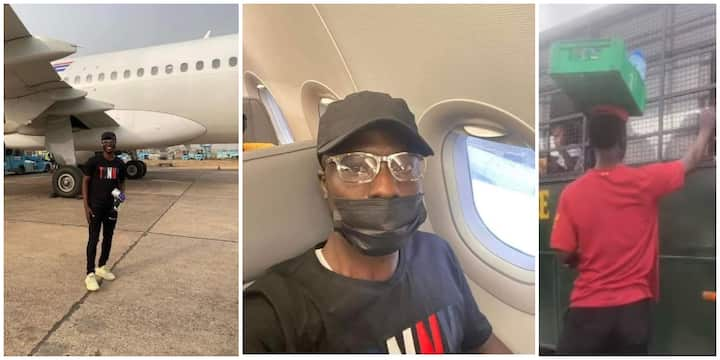
The former student of Ebonyi State University dropped out because of financial problems, relocated to Lagos, and started hawking in traffic. It became his regular routine every day. On this day, around  Ajah in Lagos, Ekuma Jeremiah gave out over 70% of the money he had made from his sales. A van conveying prisoners to a Correctional Center stopped in the traffic and he felt compassion for them. He dipped his hand into his pocket and started gifting them N100 each.

But then, like the author, Jonathan Maberry said, “Generosity could be as contagious as the zombie plague as long as enough people were willing to be carriers.” Unknown to him, someone in a moving vehicle was videoing his act of generosity. The person shared the video online and it went viral. People were amazed how a hawker can have such a heart of gold. Before you knew it, Obi Iyiegbu popularly known as Obi Cubana saw the viral video and the rest is history. Obi Iyiegbu was so amazed that a young man, who barely managed to could be that generous.

The Billionaire businessman not only placed Jeremiah on a monthly salary of N100,000 but empowered him to restart his academics.

Jeremiah has since resumed at Ebonyi State University. This time he went back in style.  For one who came to Lagos probably with a night bus, flying in an airplane was more than he could ask for but his kindness was contagious.

Photo Credit: (@jerryluck_) Source: Instagram

The excited young man shared photos on his Instagram page with the caption: “It is my first time boarding a plane. The journey to greatness.”

As it has been said, what favour cannot do does not exist! Keep giving, keep helping, keep loving.

And finally hear Ronald Reagan: “Live simply, love generously, care deeply, speak kindly, leave the rest to God.”

When will they remember Abuja’s birthday?

By Martins Oloja

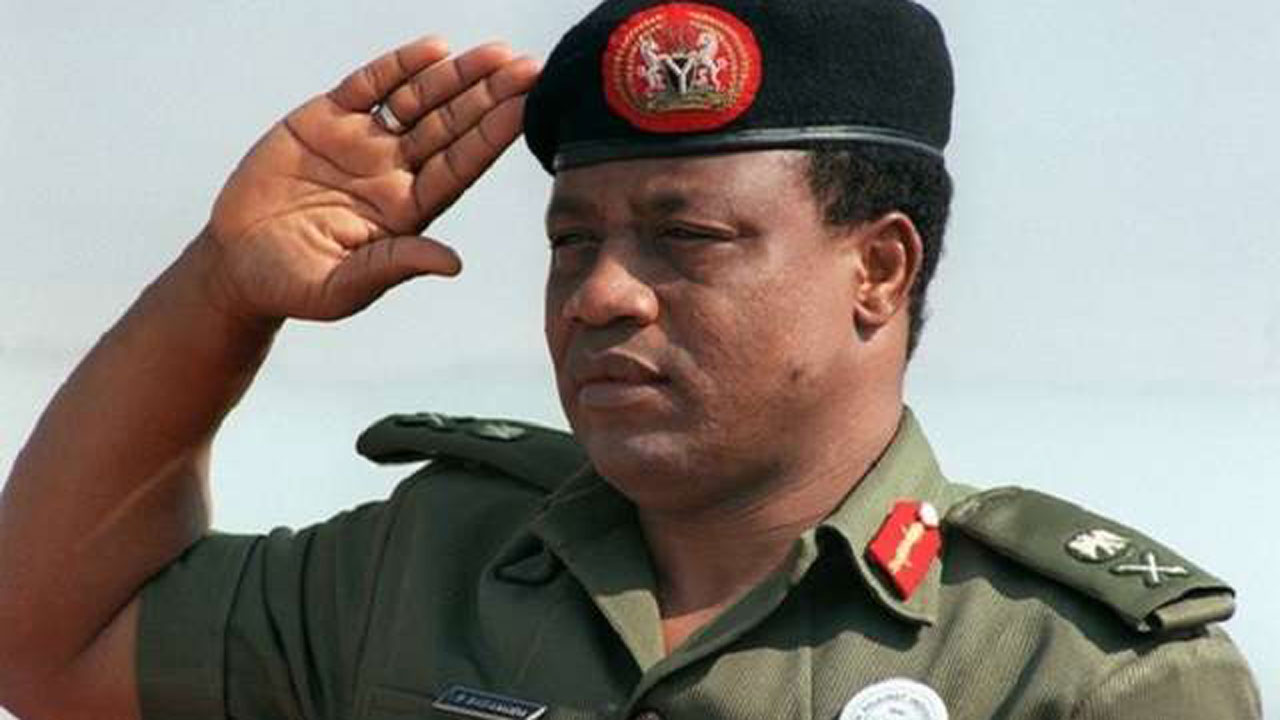
[FILES] Young General Ibrahim Babangida

Again, they forgot Abuja @ 46 last Thursday, February 3, (1976-2022). I have been complaining for ages that authorities, residents and even the original inhabitants don’t respect any sense of history – about Abuja. Why don’t we celebrate achievers and good thinkers? Why do we celebrate only mediocrities and frivolities? Why do we roll out drums for thieves as chiefs, celebrate morons as barons?

Again, they forgot February 3, as the most important birthday of the nation’s capital, Abuja. It is the Founders’ Day they always forget. The military powers that created Abuja are still wielding political power in Abuja but they too often forget their most important achievement while in unconstitutional power between 1966 and 1999. They forgot again last Thursday (February 3) that the nation’s capital clocked 46 that day. No fanfare. No one popped champagne. No colloquium. Not even a statement from the presidency and the FCT authorities including the Federal Capital Development Authority (FCDA) Abuja’s oldest physical development agency. They don’t have even emotional and social intelligence to remember that Abuja is one of Nigeria’s most remarkable achievements since independence.

Curiously, the civilian powers that have been nurturing democracy from Abuja since 1999 too forgot that last Thursday was Abuja’s birthday. The governor and deputy governor of Abuja (the president and vice president) according to the 1999 constitution as amended too forgot that their original 37th state and capital of the federation was 46 years old last week. Former military president, General Ibrahim Badamasi Babangida, who physically moved Nigeria’s capital from Lagos to Abuja exactly 30 years ago may have forgotten too how the then FCT Minister, Major-General Gado Nasko gave him the key to the capital city in an early morning impressive ceremony at the city gate on Thursday, December 12, 1991. Mr. Bisi Olatinlo, then of the FRCN (who speaks Igbo, Hausa and Yoruba fluently) was the main Master of Ceremony. Painfully enough, all the presidents and FCT ministers except former President Olusegun Obasanjo and Malam Nasir Ahmad el-Rufai, have always forgotten to mark Abuja’s birthdays. Abuja has two distinctive birthdays they always forget: February 3, 1976 when the then Head of State, General Murtala Muhammed proclaimed Abuja as Nigeria’s new capital and legalised it (with a decree, Decree. No. 6, 1976) and December 12, 1991 when the then Head of State, General IBB moved the capital physically from Lagos to Abuja.

Only President Obasanjo and Malam el-Rufai as FCT Minister marked the birthday when Abuja clocked 30 in 2006 with a month-long grand programme that was rounded off with awards to deserved contributors to the growth and development of the nation’s capital since its birth. Yours sincerely was one of the recipients of the awards.  Curiously even when the capital was to mark its 40th birthday on February 3, 2016, no one remembered except yours sincerely who lamented in a back page article titled, “Forty hearty cheers! But who is saluting Abuja @ 40?,” which appeared on Wednesday, February 3 when Dare Babarinsa lent his column for the landmark article. Yes, no one cared about the nation’s capital even when states that marked their 40th birthday then celebrating theirs. Abuja has been an orphan of some sort perhaps because of total absence of democracy in its governance processes.

Here is the unreported trouble with Abuja: All the 36 states’ governors are elected but the ‘militicians’ who gave us this constitution made Abuja just a part of the office of the president, no thanks to Section 299-302 of the 1999 constitution as amended. Even the original inhabitants, who have been agonising without organising well about unfulfilled promises since 1976, did not remember Abuja @ 40 and I said so here on February 3, 2016. Then I had noted: It should be 40 happy cheers to the people and government of Nigeria today (3rd February, 2016). Strangely, again as I read from the book of lamentation about this tragic amnesia that year, all the authorities in Abuja from the presidency through the Federal Capital Development Authority (FCDA) to the Federal Capital Territory Administration (FCTA) headed by a minister, seemed unaware of the landmark and events that should have been organised to mark the historic birthday of Nigeria’s capital.

It is somewhat inscrutable that the two birthdays of Nigeria’s political capital, generally believed to be one of the few monumental achievements of Nigeria’s ‘militicians’ (military & political leaders) have always been forgotten by the rulers of the capital city. Even the association of the original inhabitants has failed or forgotten to mark the unfortunate grabbing of their native land 46 years ago. There have been rumblings that the original inhabitants are ready to protest the alleged land grab to the United Nations. They again missed a historic opportunity to draw national attention to the resettlement and settlement the Murtala-Obasanjo administration promised them about 46 years ago.

It has always been a mystery of some sort that both the presidency and the Federal Capital Territory Administration (FCTA) have always forgotten these dates with history (every year). Even when the big men in Abuja celebrated the Centenary in 2014, nobody remembered Abuja as one of the monuments the government of Nigeria had created within the construct of the centenary.

As I have always pointed out, the 1999 Constitution as amended unequivocally makes the President the Governor of the nation’s capital (Section 301). Section 302, however, authorises the President to delegate his gubernatorial powers over Abuja to a Minister if he so wishes. So, there is a sense in which the Office of the President can celebrate Abuja’s birthday. In the same vein, he (the President) can delegate the power to celebrate Abuja to any minister that seems to be sleeping on duty whenever the bell tolls on December 12 and February 3, every year. But since 2006, neither the presidency nor the FCTA has remembered to mark Abuja’s birthdays in a befitting manner. They all always forget that there was a leader who had a dream that they can’t run with at the moment! They always forget that it is important to mark such dates with seminars and even international summits on how to cope with contemporary issues such as urban renewal and livable cities.

Gen. Murtala Muhammad

And Murtala’s unfulfilled promises to Lagos…
AS I always remind all of us too, of all the failings exhibited about Nigeria’s capital, the most telling are unfulfilled promises made to Lagos, which was proposed by General Murtala in 1976 as “Commercial Capital of the Federation.”

In his broadcast to the nation on February 3, 1976, Murtala had promised that Lagos would not only be designated a “Special Area,” it would be Nigeria’s commercial capital and the deal would be incorporated into the 1979 Constitution then in the works. His words:

‘…Lagos will, in the foreseeable future, remain the nation’s commercial capital and one of its nerve centres. But in terms of servicing the present infrastructure alone, the committed amount of money and effort required will be such that Lagos State will not be ready to cope. It will even be unfair to expect the state to bear this heavy burden on its own. It is, therefore, necessary for the Federal Government to continue to sustain the substantial investment in the area. The port facilities and other economic activities in the Lagos area have to be expanded. There is need in the circumstance for the Federal Government to maintain a special defence and security arrangement in Lagos, which will henceforth be designated a SPECIAL AREA. These arrangements will be carefully worked out and written into the constitution. Kaduna and Port-Harcourt are to be accorded similar status and designated special areas under the constitution…’

This is one remarkable promise to Lagos that no government since February 14, 1976 has fulfilled. The General made the promise on February 3 and he was assassinated on February 13, 1976.

So, Abuja, is a city founded and developed by the Generals and General Buhari should be proud of that heritage. That is why he should join the bandwagon of builders by fulfilling the Murtala’s promise to Lagos 46 years ago. After all, it was permissible to blame the PDP for neglecting the APC-controlled Lagos for 16 years before they came in 2015. But now Lagos and Abuja will no longer hate each other, as they are both controlled by the same political party, the APC. So, President Buhari should let the General turn well in his grave today by fulfilling the covenant he (Murtala) had with the people of Nigeria on Lagos 46 years ago. It is in a way gratifying that the Federal Government is just beginning to rehabilitate the Apapa-Oshodi Expressway – 46 years after the promise.

We need to continue to celebrate the Nigeria’s can-do spirit, which built Abuja, the Constitution appropriately calls the ‘Capital of the Federation and seat of the Government of the Federation’ (Section 298).

As I have always noted on Abuja, our Abuja, the nation’s capital should indeed be run as the ‘Federation Capital’, not just as ‘Federal Capital’ that may not reflect federal character. Leaders who are assigned to run the Territory as it is now should always bear that in mind. In all sincerity, it is embarrassing that Buhari’s Abuja is run as one of the core northern states. The FCT Minister, the Executive Secretary of the FCDA and more than 90 per cent of the agencies are headed by public officers of northern origin and are Muslims. That does not reflect the majesty of the federal character that the Nation’s Capital should celebrate.

As the National Assembly leadership just hinted that constitution review report will be ready at the end of this month, it will be gratifying to note that constitutional ambiguity on the status of the FCT has been removed. Besides, it will be a thing of joy to reflect democracy on the choice of leadership. This should be a gift to the nation as Abuja marks its 46th birthday. The other daunting challenge now is the imperative of integrating the original inhabitants who already had a court judgment on the legality of appointing one of them as a Minister. A Court of Appeal in January 2018 specifically ordered the President to appoint an original inhabitant as a member of the federal cabinet. That order has not been obeyed and should be obeyed in the interest of peace and stability in the Territory.

In the main, the majesty of democracy in the Territory cannot be resisted at this moment. Democracy as the pulling power of development should be allowed to flourish in the Territory, lest the Municipal Area Council Chairman who is already exercising that power as an elected CEO in the City will continue to exercise authority of a democratically elected Mayor.

So, let the fire of democracy fall in Abuja so that we can have an accountable leadership at all levels of governance in the Capital of the Federation. This is what Abuja needs at the moment. I hope President Buhari will seize the moment to make history as the man who defined the status of Abuja and democratised, sorry legalised its leadership recruitment.

TIPS