Home Blog Page 861

Nigeria: A sick country with unhinged citizenry

Ikechukwu Amaechi

By Ikechukwu Amaechi

Nigeria is a sick country, very sick. What is worse, Nigerians have increasingly become unhinged. Many of the things happening in the country right now are bizarre and it takes only an unhinged population to condone the maladies.

You are wrong if you think I am talking about the importation of adulterated fuel which has grounded, almost, the entire country and destroyed many vehicles. In any other country other than Nigeria where there are consequences for actions of state officials, heads would have rolled by now.

The petrol supply chain was disrupted last week when the Nigerian Midstream and Downstream Petroleum Regulatory Authority (NMDPRA), otherwise known as The Authority, announced that it discovered methanol quantities above Nigeria’s specifications in imported petroleum products.-

Even as the queues get longer at the petrol stations, the noise has lessened and we have all gone back to our pastime – grumbling.

Nothing will happen because the Nigerian National Petroleum Company Ltd (NNPC), the regulator and sole importer of petrol in Nigeria, which is busy pointing fingers of blame at four marketers, including its own Duke Oil, is the major culprit.

And guess what? The NNPC still remains a parastatal under the Federal Ministry of Petroleum Resources and President Muhammadu Buhari is the de facto petroleum minister, a position he has occupied since May 29, 2015.

So, if anyone should be held liable for the rot in the petroleum industry, that person should be the minister. But in the midst of all the crisis, the Minister of Petroleum Resources jetted out on Tuesday to “join European and other African leaders as well as heads of multilateral organisations at the 6th European Union-African Union Summit in Brussels, Belgium.”

A shame. I wonder what other world leaders will be thinking of him. A petroleum minister that superintends over the importation of adulterated fuel into his own country is an unmitigated disaster. But who cares? In reality, nothing shocks an unhinged mind.- Advertisement –

Sick country, unhinged population!

As I write, the Academic Staff Union of Universities (ASUU) is on a one-month warning strike and Nigerian students that lost a full academic year in 2020 are back home.

In any sane country, the Minister of Education would have tendered his letter of resignation by now. I can say without equivocation that none of those European leaders with Buhari in Belgium would dare step out of his country if the entire university system is grounded to a halt as ours is right now.

But who cares? What does it matter if the students are kept at home for another one year?

It can only happen in a sick country with an unhinged population.

When I talk about our society being sick, I don’t have in mind the debacle of the Deputy Commissioner of Police Abba Kyari, a man who only yesterday was celebrated as Nigeria’s super cop and had rapid promotion to show for the acclaim from fawning publics.

We now know the truth. Abba Kyari, Nigeria’s super cop is a super fraud, a vermin in police uniform.

I am not talking about Ibrahim Magu, former acting Chairman of the Economic and Financial Crimes Commission (EFCC), who was removed from his high perch by the presidency based on allegations of corruption levelled against him by no less a person than the all-mighty Attorney-General of the Federation and Minister of Justice, Abubakar Malami.

Magu, who served as acting chairman of the EFCC from 2015 to 2020, was rejected twice by the Senate. Yet, Buhari had no replacement for him.

Then, just like in Kyari’s case, one day in July 2020, drama ensued in Abuja. He was arrested, detained and finally hauled before a judicial panel of inquiry led by a former President of the Court of Appeal, Justice Ayo Salami, which converted Aso Rock into an emergency courtroom.

The former EFCC boss was probed for over three months and eventually suspended for allegedly mismanaging EFCC funds.

Till date, no Nigerian, except those in the hallowed chambers of Aso Rock, knows what the issues in the macabre dance that was the Magu drama were. The panel made several recommendations but the report was never made public.

Instead, Buhari in February 2021 named Abdulrasheed Bawa as the new EFCC chairman. On Tuesday, September 14, 2021, the Minister of Police Affairs, Maigari Dingyadi, confirmed that Magu, was still on the Federal Government’s payroll as a police officer despite his suspension by Buhari, the anti-corruption czar.

So, what was the drama all about? Nobody knows and nobody cares to know.

Sick country, unhinged citizenry!

I am not talking about the chairman of the Code of Conduct Tribunal (CCT), Danladi Umar, who was caught on camera assaulting Mr. Clement Sargwak, a security guard at the popular Banex Plaza, Wuse 2, Abuja, following a squabble that ensued between them over a parking space on March 29, 2021.

In the five-minute video footage that went viral, the tribunal chairman was seen slapping and kicking the 22-year-old security guard, an employee of Jul Reliable Guards Services Limited.

What was Sargwak’s crime? Nothing other than having the effrontery to direct the almighty CCT chairman where to park his car on the premises of the mall.

Till date, nothing has happened. No justice for the man who was assaulted because Danladi Umar filed a suit in court to stop the Senate from conducting an investigative hearing on the case.

Sick country!

I am not talking about the case of the Taraba kidnap kingpin, Hamisu Bala Wadume, who was arrested by the police in Taraba on August 6, 2019. Just like Kyari, who was aiding and abetting hardened criminals, soldiers of the 93 Battalion of the Nigerian Army, Takum, Taraba State, waylaid the policemen bringing Wadume back to Jalingo, killing three of them and one civilian in cold blood.

The then Police spokesman, CP Frank Mba, in a statement on August 7, 2019, narrated what happened thus: “The policemen came under sudden attack and serious shooting by soldiers of the Nigerian Army, along Ibi – Jalingo Road, Taraba State.

“Three policemen (comprising one Inspector and two Sergeants) and one civilian died as a result of gunshot injuries sustained in the attack while others sustained serious gunshot wounds. The soldiers thereafter released the handcuffed suspect, Alhaji Hamisu, who is now on the run.”

When Wadume was rearrested in Kano and brought to the Police Headquarters in Abuja, he indicted the Nigerian Army.

“I am Hamisu Bala aka Wadume, police came to Ibi and arrested me,” Wadume said in a confessional video. “On our way, soldiers followed us and opened fire on them. As a result some policemen were killed. Soldiers took me to their headquarters and removed the cuffs. I escaped and was in hiding until they rearrested me.”

Who still remembers the Wadume saga? Where is he now? Still on trial? Convicted? Or set free for lack of evidence since those that arrested him were summarily executed? What happened to Captain Tijjani Balarabe, the officer who led the soldiers attached to 93 battalion to free Wadume on August 6, 2019?

Again, Malami took over the case from the police but the soldiers were not brought to the court for trial. The Attorney-General of the Federation has his fingers in all the duplicitous pies in the land.

On July 1, 2020, Malami denied allegations that Captain Balarabe and his partners-in-crime were being shielded by the powers-that-be.

His justification? The soldiers had not been taken to a civil court because they were still being court-martialled in line with the rules of the military.

He knows Nigerians will forget. And we have forgotten. For all anyone cares, Captain Tijjani Balarabe may well be the commander of the barracks near you waiting for the next victim.

Sick country!

I am not even talking about Hanifa Abubakar, the five-year-old pupil who was kidnapped and gruesomely murdered by her school proprietor in Kano, Abdulmalik Tanko.

Nor am I talking about the 12-year-old student of Dowen College, Sylvester Oromoni, who was allegedly bullied and then tortured to death by his fellow students because he refused to join them in their cult activities.

Lest I forget. The Lagos State Police Command had since returned a no guilty verdict on the accused. Case closed.

In a sick country, justice for the weak is a mirage, in fact an anathema. When the citizens become unhinged, they begin to see the violation of their persons as normal. Normalization of the absurd becomes the norm. In an insane society, inciting hostility and murderous instincts are ways of life.

Little wonder that the fastest growing industry in the country today is ritual killing. Human parts are two for a Kobo. Fresh human head sells for as little as N20,000. And all manner of people are in the business – teenagers, housewives, name them.

But what convinced me beyond any reasonable doubt that our country, Nigeria, is sick and the citizens unhinged is the latest case in town.

I am talking about the case of a 19-month-old pre-Nursery pupil of Arise and Shine Nursery and Primary School, Asaba, Delta State, Obinna Udeze, who was tied up and flogged to death, literally, by his 24-year-old teacher, Emeka Nwogbo.

When we were growing up in the village, some 19-month old babies still suckle on their mothers’ breasts. Obinna was a baby. What crime will a year and seven-month old baby commit to earn such bestiality?

Obinna’s mother, Gift Ohanezeze, said her son was flogged to death like a goat. Three adults – the school proprietress, her son and another teacher – tied Obinna’s hands and legs with white handkerchief and gave him 31 strokes of the cane just three weeks after he was registered in the school because he committed a grievous offence. Who does that?

I still can’t wrap my head around it. This can only happen in a sick country with unhinged citizenry. This society needs help. Unfortunately, I don’t know where the help will come from.

Igbophobia runs deeper than we think

By Azuka Onwuka

y

Last week’s verbal attack on the Igbo by a Roman Catholic priest, Rev. Fr. James Anelu, from Edo State, brought the issue of Igbophobia to the fore once more in Nigeria. As if on cue, the next day, a deputy commissioner of police, Mr Ibrahim Babazango, from Adamawa State, was reported to have threatened the life of one Igbo man, Mr. Vincent Umeh, for buying the property next to his residence in Yola, the capital of Adamawa State.

For Rev. Fr. Anelu, the Priest-in-Charge of Holy Trinity Catholic Church, Enu-Owa, Ikorodu, Lagos State, the trigger was that the choir was singing “too many” Igbo choruses. It was reported that he stopped the choir midway and outlawed the singing of Igbo songs in the church. That was not all. He went into the usual ethnic tirade of how Igbo people liked to dominate everywhere, citing the example of an Igbo person being the bishop of his home diocese (Benin Diocese), and other stereotypical statements.

From his speech, captured on camera, it was obvious the singing of Igbo songs was not his main problem. The Igbo were his problem. Even though that parish was highly populated by Igbo people, for the sake of integration and inclusiveness, songs sung at such a church should reflect the ethnic diversity of Nigeria. A Roman Catholic head of a parish wields enormous power. He can sack the entire choir. If Anelu’s concern was truly the need for inclusiveness, he could have invited the leaders of the choir to a private meeting and explained to them the need to sing more songs from other ethnic groups and English. After that, if the problem persisted, he could apply punitive measures to the leadership of the choir or the lead vocalists with the sole aim of correcting the problem.

He could also take other practical measures to change the situation like encouraging more non-Igbo people to join the choir. He could also encourage non-Igbo to teach the choir more non-Igbo songs to deepen their repertoire. But the words of Fr. Anelu showed that his primary concern was not to promote inclusiveness but to express his views about the Igbo. The Archbishop of the Catholic Archdiocese of Lagos quickly intervened by suspending him.

In the case of Babazango, Sahara Reporters had reported that he was caught in an audio warning Umeh to reverse the land purchase deal or face some consequences, including no guarantee of his personal safety.

“We’re a homogeneous community, I don’t want you; you can’t be my next-door neighbour, I swear. What sort of insult is this? Can any northerner move now to the South-East, say Onitsha, and just bump into any neighbourhood to buy a property just like that?” the senior police officer had allegedly said to Umeh. Sahara Reporters reported that when it contacted Babazango, he maintained his stand on the issue.

A follow-up news story by Sahara Reporters noted that the Nigeria Police Force described the accusation as false, stating that Umeh never reported such a case to them as he claimed. However, Sahara Reporters confirmed that Umeh reported the matter to Zone 3 Police Command, Yola and also the office of the Department of State Services in December 2021.

These cases only became points of interest because of the status of those involved and because they were brought to the media space. But they are not unusual. They are only part of a bigger and deeper problem. In the recent past, some prominent Nigerians like the President, Major General Muhammadu Buhari (retd.); Oba of Lagos, Rilwan Akiolu; Senator Oluremi Tinubu; Hon. Abike Dabiri-Erewa, etc, have been caught on camera displaying Igbophobia. However, most non-Igbo, who don’t experience Igbophobia, would easily dismiss any claim that Igbophobia is systemic in Nigeria. But that should not be surprising because they are not involved. It is said that whoever feels it knows it.

There are two types of Igbophobia in Nigeria: the brazen and the subtle. The brazenness is what usually attracts national attention. Subtle Igbophobia usually goes unnoticed. It is so deep in the system that it is taken as normal. In fact, those who engage in it do not realise that they have such a problem. It manifests in different ways like giving the Igbo a different standard or condition that is not given to other ethnicities or always believing that there is “something” wrong with the Igbo.

Many nice, urbane, educated, supposedly detribalised, open-minded Nigerians don’t even know that they have Igbophobic tendencies. They will swear with conviction that they are not Igbophobes. But once you hear someone say: “Igbos are great people but…;” “I have many Igbo friends. I have nothing against Igbos but…;” “The problem with Igbos is…,” you see a subtle Igbophobe.

Whichever way the Igbo act, such people find something wrong with it. For example, if the Igbo vote for their kinsman, the accusation is: “You people are clannish.” If people from the North or South-West or South-South do the same, the music changes to: “They are politically strategic.” If the Igbo vote for non-Igbo people, the same people say: “Igbo people don’t speak with one voice. They don’t love one another.” If people from the North or South-West or South-South do the same, the narrative changes to: “They are politically sophisticated.” Then, if the Igbo vote massively for one candidate, the accusation becomes: “Igbo put their eggs in one basket.” If the Igbo spread their votes between two candidates, the accusation changes to: “Igbo scatter their votes unwisely. They are not politically sophisticated.”  Head or tail, there is something wrong with the Igbo people.

Without knowing it, these nice people who harbour unconscious Igbophobic feelings regularly set different standards for the Igbo, standards they don’t set for their own folks or other ethnic groups: “You guys must come together and present one presidential candidate with integrity.” If you ask them which ethnic group has ever done that, they bring up another blackmailing line about “you people ‘’ not liking to hear the truth and then jump to another topic.

The biggest challenge facing the Igbo is their large numbers in other parts of Nigeria. They are usually the second largest population after the indigenous people. They usually control the retail business wherever they are. Therefore, if the indigenous people want to buy a malaria drug, it is an Igbo person they go to. If they need a spare part for their motorcycle or motor vehicle, it is an Igbo person that sells it to them. If they need a shirt, an electric bulb, a tin of milk, a loaf of bread, a bowl of rice or a mobile phone, it is an Igbo person that sells it to them. Consequently, the Igbo unconsciously assume the image of an army of occupation, which attracts resentment towards them. This is compounded by the aggressiveness with which the Igbo buy parcels of land and erect houses wherever they are. It creates a convincing narrative that the Igbo have a long-term agenda of taking over the communities where they reside, which worsens the resentment towards them. Being a loud and proud people does not help the case of the Igbo. Therefore, if the economy tanks and prices of goods go up, the Igbo get the blame for that because they sell most of the goods the indigenous people use. If there is a riot, their goods and investments become easy targets.

The Igbo are not saints or angels. They have weaknesses and strengths like any other ethnic group. But the problem lies in always concentrating on their weaknesses or using the bad acts of individuals to judge the entire ethnic group or setting an impossible standard for them. Nigerians have an Igbo problem, which they do not realise, but which they need to solve, if the claim of national cohesion and unity has any sincerity in it.

Twitter: @BrandAzuka

Don’t exaggerate

‘My words are plain to anyone with understanding.’
Proverbs 8:9 NLT

King Solomon wrote: ‘Everything I say is right, for I speak the truth and detest every kind of deception. My advice is wholesome. There is nothing devious or crooked in it. My words are plain to anyone with understanding’ (vv. 6-9 NLT). We usually embellish the truth in order to get these two things: the attention and the approval of the listener. But eventually, it backfires. Over time, people discover your propensity to stretch the truth, and you lose your credibility with them. And once you lose that, it takes a long time to get it back – if ever. Sweeping statements like ‘Everybody does it,’ or ‘You never,’ or ‘You always’ cause people to discount you and eventually slot you as untrustworthy. It’s okay to say something with enthusiasm but avoid exaggeration. Stick to the facts and resist the urge to be the centre of attention by engaging in this form of lying. Joseph’s brothers resented the favour of God that was on his life. So, they threw him into a pit, dipped his coat in blood, then took it back home and showed it to their ageing father. They didn’t say a word. They simply let the old man conclude that his son had been devoured by a wild beast. And what’s more, they allowed him to live with that cruel lie for years. Revelation 22:15 says, ‘Whosoever loveth and maketh a lie’ is lumped together with ‘sorcerers…whoremongers…murderers, and idolaters’ (KJV). So, unless that’s the company you want to be identified with, tell the whole truth. Today make your prayer, ‘Deliver my soul, O Lord, from lying lips and…a deceitful tongue’ (Psalm 120:2 NKJV). Amen 🙏

Bible in a Year:  Leviticus 6-7, Matthew 25:1-30

Credit: The Word For Today

Suspicions Trail Ndlea’s Drug Allegations Against Abba Kyari: Assumptions or Fact?

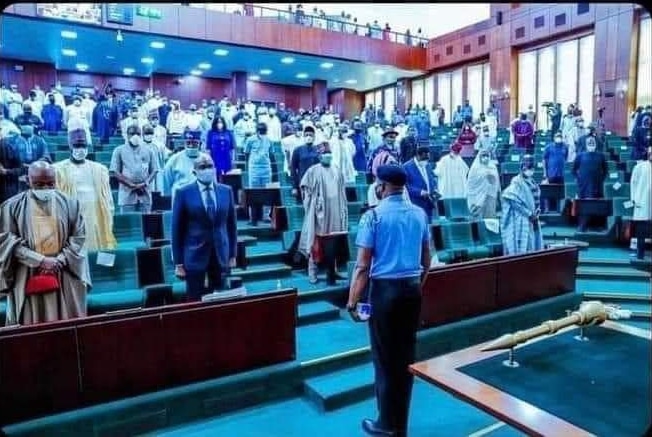
Flashback: Abba Kyari Recieves Standing Ovation At National Assembly | Naija News

By Stephen Azubuike

DCP Abba Kyari has a rich CV in crime bursting. This made many Nigerians consider him a “Supercop”.  Abba Kyari headed the Inspector General of Police’s Intelligence Response Team (IGP-IRT). Before this time, he had served as the Officer-in-Charge of the disbanded Special Anti-Robbery Squad (SARS). Kyari was a nightmare to die hard criminals—armed robbers, drug peddlers, kidnappers and others alike. The records are there.

Kyari has been accused of several extra-judicial killings and human rights abuses while in the line of duty. But most of these claims are yet to be substantiated and upheld by any credible panel or even the courts. His successes have been somewhat of a shield, neutralising whatever may be the merits of such allegations. To an average Nigerian, it may not be difficult to believe those allegations because of the level of brutality the Nigeria Police is generally known for.

While the CV of the embattled DCP Abba Kyari in crime fighting was rapidly growing, strong allegations relating to internet fraud, drug dealing, bribery scandal and other unprofessional conducts are now equally taking a substantial part of the CV as if to complete a grass-to-grace and now a grace-to-grass story.

The ravens of bad omen have been hovering around Kyari’s head lately. In July 2021, the Federal Bureau of Investigation (FBI) in the United States fingered Abba Kyari as a criminal conspirator, associating with internet fraudster, Ramon Abbas (Hushpuppi) and his gang. This was contained in an affidavit presented before the United States District Court by FBI Special Agent, Andrew John Innocenti.

The Nigerian Government through its Police formation appeared to many to have treated the matter with kids gloves especially as it pertains to the request by the US for an immediate extradition of Abba Kyari to enable him answer to the criminal allegations leveled against him. Instead of obliging the request, the Nigerian Government suspended Abba Kyari in what seemed to many observers to be an attempt to open room for a seemingly unending investigation into the allegations. As far as many Nigerians were concerned, it is in such rooms you find carpets under which many things are swept.

While on suspension, Abba Kyari has made news headlines on Valentine’s Day, 14th of February 2022. No, the headlines had nothing to do with Abba Kyari’s love for ridding die-hard criminals off the street or love for being a “supercop” to  Hushpuppi on the Day of Love. Rather, the National Drug Law Enforcement Agency (NDLEA) alleged that with the intelligence at their disposal, “the Agency believes strongly that DCP Kyari is a member of a drug cartel that operates the Brazil-Ethiopia-Nigeria illicit drug pipeline.” So on the day millions wanted love so badly, NDLEA declared Abba Kyari wanted.

Following a tip-off by the NDLEA, the Nigeria Police has confirmed the arrest of Abba Kyari and four other police officers for the purpose of being handed over to the NDLEA. The Police acknowledged that the arrest of Kyari and his team/gang was as it relates to “their involvement in an alleged case of criminal conspiracy, discreditable, unethical, and unprofessional conduct, official corruption and tampering with exhibits in a case of illicit drug trafficking involving a perpetual transnational drug cartel.”

The Suspicion

Given that Nigerians nurse reasonable distrust for the system especially when it involves high-profile individuals, there is the common suspicion that the whole drug-related story involving Abba Kyari is a “script” being projected in order to distract the US and ultimately prevent Kyari’s extradition to the US.

While the distrust isn’t totally unfounded, the “script” claim seems ridiculous. Possible conspirators within the Nigerian police formation can still hold Kyari down based on the Hushpuppi saga without needlessly faking this damning drug story. After all, he is still on suspension and the ultimate decision is still being awaited for eternity.

More so, arguments bordering on national sovereignty can still be used to wade off or delay extradition without the need for the so-called script.

Curiously, how do you possibly plan to shield Kyari from extradition by hanging on his neck a drug-related charge, one of the worst crimes on earth, which implicates a number of law enforcement agents, just like that!

Again, there is no sense in passing on mere assumptions as fact, as it is being done by many since the NDLEA’s press release.

At present, if you ask me, there is no compelling reason to inspire such comments that rather seek to discredit the commendable actions of the NDLEA. Rather, I believe that the NDLEA deserves to be praised for upholding its statutory mandate and for the role it played in rounding up Abba Kyari notwithstanding his alleged antics.

Conclusion

Abba Kyari is now a personification of all the ills associated with the Nigeria Police Force, a thing that may have hurt badly the trust that Nigerians are expected to have for the police. As suspicions now trail his arrest based on drug-related allegations, it is left for the Nigerian Government to ensure his speedy trial for all the charges standing against him.

This article — Suspicions Trail Ndlea’s Drug Allegations Against Abba Kyari: Assumptions or Fact?

—was first published on February 15, 2022, by https://stephenlegal.ng/suspicions-trail-ndleas-drug-allegations-against-abba-kyari-assumptions-or-fact/

Author:

Stephen Azubuike

Stephen is a lawyer with expertise in Commercial Dispute Resolution and Technology Law practice. He is a Partner at Infusion Lawyers. He has successfully argued cases from the High Courts of various jurisdictions to the Appellate Courts on behalf of financial institutions, other corporate bodies and multinationals. He has worked with a number of startup tech companies. He tweets @siazubuike.

Who will save Nigeria from this impending implosion?

By Lillian Okenwa

Well-known for his intellectual and legal sagacity, Hon. Justice Chukwudifu Justice Oputa is a man greatly admired. His sense of style was impeccable but near bohemian sometimes. I still remember nearly half of his face covered by a huge pair of dark designer sunglasses he wore on the day we went to locus in quo (Latin, for a place where the cause of action arose) at Zango Kataf in the Southern part of Kaduna State during the famous Oputa panel in 2001. It’s unlikely you’ve seen anything like those sunglasses. I also remember how peeved he was with my cameraman in 2005 when we went to interview him in Lagos for a video documentary I produced for the Supreme Court Nigeria. After introducing my team and exchanging pleasantries, he took a look at Leke’s skin cut and said he doesn’t understand what is wrong with young men these days. He told us how young men in his days took time to groom their hair, and truly although His lordship was already balding, his well-groomed hair stood out.

Justice Oputa’s wit and wisdom were unmistakable but what many do not know is that he was very prophetic. And because events have shown time and time again that he was a man who saw tomorrow, I find it irresistible to keep repeating his parting words at the conclusion of the Human Rights Violation Investigation Commission (HRVIC) in October 2001. That’s nearly 22 years ago. His unheeded warning is manifesting in every facet of our society; and at the risk of being called a bore, I’ll repeat some.

“Each ethnic group feels marginalized. From the memoranda and evidence from these groups, it became apparent that there exists a simmering discontent which should not ever be allowed to boil over. The challenge then is to find an answer to this dreadful fiend called marginalisation. And find an answer Nigeria must.…It is a fact that effective therapy demands the opening of a wound, the probing of that wound, before applying a salve. There is also need to break the silence, the isolation, the fear and the falsehood that shrouded past events… There is also need to establish historical clarity and to see our history interpreted in a way which names the deeds that were done and the reasons why they were done, and those who were responsible.”

Years after these statements were made Nigeria is still carrying as if all is well. People entrusted with our collective destinies, people who could make the desired change shoved his warning and similar warnings aside. Today evil is bursting at the seams — kidnapping, banditry, sacking of villages, ritual killings, cannibalism, and all sorts. Who will save Nigeria from this impending implosion? Will God come down from heaven? Is it not time to take stock, call a spade a spade and make a U-turn? Already a lot of Nigerians can no longer visit their hometowns. The city too is no longer safe. People are now dragged out of their homes and killed. There’s no place to hide anymore. What is keeping us from opening the wound and treating the injury like Oputa suggested? It will only fester when it’s covered up and no amount of covering will cure it. If it happens that what is required is an amputation to save the affected part, would that not be preferable to losing out completely? We need to be alive before pursuing personal gains. The dead don’t talk. The best relationships are the ones thoroughly negotiated. When it is forced, it, becomes a burden; a thing around your neck.

And while we’re still tinkering with how to solve our multifarious problems, I cannot help but wonder why restructuring is viewed as a problem in Nigeria. With a $3.0 trillion gross state product (GSP) as of 2020, the State of California is the largest in the United States and if it were a sovereign nation, it would rank as the world’s fifth-largest economy, ahead of the United Kingdom and India. Its economy is larger than Texas with all its oil reserves. Innovation and free enterprise took California notches higher than so many countries can ever dream of. Unlike Nigeria, California takes education seriously. Having built its economy around Stanford University, Silicon Valley developed. Silicon Valley in turn birthed — Google, Facebook, Apple, Netflix, eBay, Cisco, Lockheed, Hewlett Packard (HP), Oracle, Tesla, and many more multibillion-dollar companies. The yearly budget of these companies is bigger than that of many countries.

The difference between them and us is their thought pattern. Their leadership considered creating an enabling environment paramount. Small businesses have ceased struggling to survive in Nigeria. What with the stifling double taxation and more? How many factories and industries does Nigeria have? Why are investors moving to Ghana and Rwanda? Why are we not asking questions? Or is it that the government just doesn’t care? For how long will the country survive with begging bowls from monthly federal allocation when it can generate enough wealth for all? Why do Nigerian leaders love Dubai and Saudi Arabia but fail to emulate their leadership style which has made their countries a haven for their citizens? These two countries —Dubai from a poor fishing village and Saudi Arabia a poor desert land, moved to be among the world’s most prosperous countries. What about heathen Japan, that idol-worshipping country where honesty and integrity is a second language? Everything there works, and by our standards, they do not know God!

Today the tide has moved beyond the daily sacking of villages to ritual killings. Every day they’re paraded on TV; men, women, boys, girls, old and young but they seem undeterred. Truly, kidnapping and ritual killings have always been there. I still remember Primary Five at Holy Trinity Primary School (now Dan Waire Special Primary School) Kano. I recall how sometimes during the break period you’d suddenly hear kids shouting – Gbomogbomo de come, Gbomogbomo de come (kidnappers are coming). Whether kidnappers were really coming or not, I never found out but I do remember that once you hear that chilling chant, you forsake the agbalumo (African star apple) you were trying to buy or whatever else, and take to your heels. Thanks to God there was never a stampede. I think we all just ran into our classes. As one that had just come from Enugu, it was a new one to me. It never happened in good old Zik’s Avenue Primary school. At Enugu however, I sometimes overhear grownups talk about ndi ntori (kidnappers) and how they use victims for ogwu ego (money ritual). Actually, whenever I’m about setting off with my playmates to Osadebe Park in Ogui New Layout (which we do most Sunday afternoons), my mum would warn me to run anytime a stranger tried to speak to me. The fact is that ritual killers have always been there but today’s magnitude is phenomenal. And that is because something fundamental is wrong with us. Something needs to be addressed. Until then, we’d continue playing the ostrich while everything we’re labouring for goes up in flames. May the Lord forbid it in Jesus’ name.

Sadly, we are also confronted with a situation where we are dealing with greediots; people whose brains are ruled by avarice. How and when we’d get out of this quandary, I wonder. I just wonder…

Nigeria and the price of sovereign innumeracy

By Chidi Anselm Odinkalu

.

“Dishonesty both in thought and deed were the prime bases of the Nigerian troubles.” Robert Collis, Nigeria in Conflict, p.187 (1970)

MOST people with a sense of smell in the political economy would easily know that Nigeria is in serious trouble but many don’t know how bad it is. In the past week, two voices who should know have piped up about how bad the situation is. Penultimate Governor of the Central Bank, Sanusi Lamido Sanusi, lamented on a visit to Abeokuta, Ogun State in South-West Nigeria last week that the country is in an “even deeper hole than we were in 2015” and is living in “extra-time”. His Deputy Governor at the Central Bank, Kingsley Moghalu, in a separate assessment, said Nigeria is sitting on “a time bomb waiting to explode.”

 In the same interview, Professor Moghalu explains that “what went wrong didn’t start with the Muhammadu Buhari presidency. It only got worse in the Buhari presidency, astronomically worse.” In a country founded on short memories, the story of how Nigeria got into its current funk will be lost on especially the young people most of whom have not been afforded the capacity to cultivate a memory or sense of the history of the country.

So, a short primer on Nigeria’s long descent into sovereign insolvency is useful, not merely because it should inform choices ahead of a consequential poll in 2023 but, even more, it should remind us how a country that cannot count harms itself.

Nigeria is a crisis of a country that cannot count and because it cannot count, refuses to account. The first crises of post-colonial Nigeria arose with the 1962/63 national census, the federal elections of 1964, and the elections in the old Western Region in 1965. Successively compromised by dis-honest counting, these three events ultimately preceded the descent into military rule, mass atrocity and war between 1966 and 1970. As Robert Collis observes in his Nigeria in Conflict: “This atmosphere was….the main reason for the two coups and the civil war.”

The end of the civil war was quickly followed by post-Arab-Israeli (Yom Kippur War) Oil Boom. Many may not remember but from “December 1970 and September 1973, official oil prices jumped from $1.21 to $2.90 per barrel, while spot values topped $5.00”, representing an increase of over 413%. Following the Arab-Israeli (Yom Kippur) War of October 1973, the posted price would further rise by another 387% by the end of 1973. The country was awash with money that it did not know how to count.

In two years, from 1973 to 1975, Nigeria’s trade surplus suddenly spiked by 400% “from $1.5 billion in 1973 to a record $6 billion.” Nigeria’s military Head of State then,  Yakubu Gowon, still in his 30s and the country’s first four-star Army General, infamously boasted that “Nigeria’s problem is not money, but how to spend it.” There was a national census in 1973 which, as Karl Maier recalls, proved to be “farcical; the results were never published.”

Intoxicated with liquidity hubris, the government of General Gowon initiated an ambitious public infrastructure project that required massive importation of cement whose quantity we didn’t care to know. Led by rulers who were un-schooled in the complicated mechanics of international commercial credits, the country received an inundation of useless sand imports that it had not ordered and did not need.

The government “which needed 2.9 million metric tons for its own projects, ordered more than 16 million. The sudden demand came at a cost: Nigeria was paying about $115 for a ton of cement, nearly three times the world price at the time. The cement came from just about everywhere…. An oversupply of overpriced cement became the least of the government’s problems as half the world’s supply of the building material diverted towards Nigeria, vastly outstripping the Port of Lagos’ capacity.”

In reality, much of the import turned out to be overpriced sand. It necessitated massive commitments in demurrage, lost maritime contracts and revenues, and the leasing of port space in neighbouring countries. Nigeria lost a lot of money (no one has ever computed how much) and those that ran the country appeared to lose whatever marbles they had. In one of history’s most expensive piques of martial fit, Nigeria’s then military government repudiated its payment obligations under the original commercial arrangements. Sued before courts in several European countries (including England, Germany, Switzerland and Austria), Nigeria unsuccessfully pleaded sovereign immunity in support of its attempt to repudiate the contracts.

It failed and, in so doing, changed international law on sovereign immunities. Armed with judgement debts that became due for payment together with accrued interest payments, various international creditors easily enforced their judgement debts against Nigeria’s assets overseas. By the turn of 1980, the country became unable, strictly speaking, to finance its foreign commitments.

As the English Court of Appeal put it with characteristic understatement in the most famous of these cases in 1977, this kind of mess could only have been caused by “some mis-management somewhere.” Rather than find out and fix the source of this obvious mismanagement, Nigeria’s leaders sought new frontiers for money without adjusting the way government business was conducted.

While the full import of this debacle was unfolding, the military turned over power to a civilian administration following elections in which the counting was characteristically “tainted by the sort of vote-rigging and intimidation that have marred all post-independence Nigerian polls.”

Faced with national bankruptcy, the civilian government of President Shehu Shagari declared “Austerity” in 1980. To ameliorate the resulting difficulties for working Nigerians, his Federal Government in 1981 established a task force, headed by then Transport Minister, Umaru Dikko, to import and distribute rice at subsidised prices to Nigerians. In today’s language, it would have been called “palliative”.

The quantities were undetermined. Cement Armada was now replaced by Rice Armada and a few more millionaires were made at the expense of the public interest. Import licensing for rice was in those days what the petroleum subsidy racketeering has become today.

In four years between 1979 and 1983, the country burnt a reputed four billion dollars on the Rice Armada and another $12 billion to sundry acts of official plunder. In those days, the Naira was stronger than the US Dollar.

Under the combined assault of these various difficulties, the Nigerian economy reportedly shrank at an annual average of two percentage points or a cumulative eight percentage points in the four-year period from 1979 to 1983.

The elections of 1983 were even more flawed than those of 1979. In a familiar reprise of our incapacity to count, the ruling party, the National Party of Nigeria, NPN, manufactured what it called a “landslide” characterised, as Karl Maier tells it “by rigging, violence, bribery, and wildly inflated voter turnouts.” Promising to put the country (and then President, Shehu Shagari) out of our collective miseries of leadership and institutional ineptitude, the military overthrew and replaced the civilian regime on December 31, 1983.

After the inconclusive interregnum of the innumerate Muhammadu Buhari, Ibrahim Babangida, another General, took over power in August 1985, with a promise to initiate dialogue with the Bretton Woods institutions to assist Nigeria with a facility of $2billion to alleviate its lingering balance of payments crisis.

In return, they required economic liberalisation. The fallacy was to assume that economic liberalisation could happen without political, institutional and ethical renewal of government and how it was constituted and run. To prolong himself in power, General Babangida contrived to corrupt politics and politicise corruption. In 1991, he made another unsuccessful attempt to conduct a national census.

Meanwhile, the General was unable to count or account for the enhanced earnings – windfall – that accrued to Nigeria from the spike in international oil prices that followed the first Gulf War between 1992-1993. A subsequent investigation led by the economist, Dr. Pius Okigbo, allegedly estimated that about $12 billion of these earnings were not accounted for, but the report remains officially not published.

In June 1993, when it seemed Nigeria had for once broken the curse of a people that could not count with an election that was widely viewed as credible, General Babangida inexplicably nullified the outcome. In the ensuing crisis, he was forced to “step aside” on August 27, 1993, whereupon he left the country in the hands of the hapless Ernest Shonekan, a lawyer and former Chief Executive of the United African Company, UAC, Nigeria PLC, then the biggest conglomerate in Nigeria.

The country had come full circle from its first contact with the British colonial expedition a little over a century earlier when, in 1886, the company started in 1879 by George Taubman Goldie as United African Company, UAC, received a Royal Charter to administer the Protectorate of Southern Nigeria.

Shonekan lasted all of 84 days, overthrown in November 1993 by General Sani Abacha, who, in under five years in power contrived to appropriate to himself an estimated 3-5% of the country’s GDP. No one has ever quite managed to put a firm figure on how much he actually stole but, according to the former Attorney-General of the Federation, Bola Ige, Abacha “and his collaborators are estimated to have embezzled assets of at least $5 billion.” The story was about to take off and Nigeria is still paying the price.

DAILY LAW TIPS by Onyekachi Umah,Esq. (Tip 151) “Dud/Bounced Cheque Offences Cannot Be Tried In Magistrates Courts In Nigeria.”

DAILY LAW TIPS
by Onyekachi Umah,Esq.
(Tip 151)
“Dud/Bounced Cheque Offences Cannot Be Tried In Magistrates Courts In Nigeria.”

It is a criminal offence for one’s Cheque to be dishonoured(refused) by his bank. It is an offence punishable with 2 years imprisonment. Only High Courts of States can try and entertain cases of bounced Cheques, fake Cheques and dishonoured Cheques. Hence, such cases cannot be entertained by any Magistrate Court in Nigeria for lack of jurisdiction.

My authorities are sections 1 and 2 of the Dishonoured Cheques (Offences) Act.

Share this till it gets to those that need it most. Save a Nigerian today!

Zoning is constitutional, says Afegbua

Kassim Afegbua

A chieftain of the Proples Democratic Party, PDP, Prince Kassim Afegbua has said that zoning of political offices is a constitutional requirement in the country same as federal character expressly stated in the Nigeria Constitution.

In a statement on Sunday, the former Edo state Information Commissionner, stated that only selfish politicians would say otherwise – that there was no zoning in the constitution.

“For selfish and egocentric reasons, I have read some aspirants talking about the absence of zoning in the Nigeria Constitution.

“In order to serve their selfish end and contest the 2023 presidential election against the run of play, they have resorted to making references to the 1999 constitution to support their weak argument against zoning of political offices.

“It must be stated unequivocally that zoning means the same thing as Federal Character, which is expressly captured in the 1999 constitution. The federal character talks about political balancing of positions and appointments, which is the same thing as zoning.

“Zoning means ‘divide into or assign to zones’, positions and appointments whether by way of election or appointment,” Prince Afegbua noted.

He maintained that those who were declaring that there wss no zoning in the constitution were playing dumb, especially when there were layers of zoning in the nation’s political system.

He queried: “Why has it been the practice that each time a candidate emerges from the North, his Vice Presidential candidate comes from the South, and vice-versa?”

He continued: “The Senate President is also zoned to another geopolitical zone, ditto for the Speaker of the Federal House of Representatives, and even the Secretary of Government of the Federation. If there is no zone, these positions could have been concentrated in one geopolitical zone, but for that Federal Character provision in the constitution, which is similar to zoning, we have made it a point of duty to observe zoning. In a plural society like Nigeria, given our diversities, one cannot do without zoning and power sharing.

“No matter how nepotistic the Buhari presidency is, it has observed the principle of zoning positions to create some level of balance. I am aware that President Buhari’s style has been skewed in favour of his Northern zone.”

He tasked the media to see it as a duty to educate Nigerians on the therapeutic effect of zoning and applying the doctrine of federal character which has been in place since the independence of Nigeria.

According to him, “it is an attraction the country cannot run away from given its peculiarities and sensibilities.

“As a party, if you choose not to zone by way of balancing the algorithms, take all your candidates from a section of the country and let us watch how your political fortunes pan out. Those who are reading the constitution upside down or trying as it were, to twist the logic of zoning to suit their bulbous ego, are only trying to be clever by half.

“The facts of the matter do not support their illogic. For our diversities and heterogenous configurations, with several nation-states within the nation, the zoning principle has to be deliberately applied to create the required political stability. Anything short of the application of this doctrine will be unconstitutional, and a clear abuse of the principle of Federal Character, which is enshrined in the 1999 constitution.

“The principle of Amalgamation which was consummated in 1914 is very clear and unambiguous in rotating the leadership of the country between the North and South. Rather than continue to dwell on the impropriety of turning logic on its head by the political ambition of our brothers from the North, it will make for good judgment for them to bury their ambition and support the Southern zone to produce credible candidates for the 2023 General election. Trying to ignore this inalienable right of the South to produce the next president of Nigeria will spell political doom for the country.”

“It is only a greedy, selfish, egocentric, and desperate politician from the North that would still insist on going ahead to contest despite the obvious imbalance.

“The Governors of the Southern zones must speak with one voice in ensuring that the South gets what truly belongs to them,” he added.

Nigeria And The Price Of Sovereign Innumeracy

By Chidi Anselm Odinkalu

“Dishonesty both in thought and deed were the prime bases of the Nigerian troubles.” Robert Collis, Nigeria in Conflict, p.187 (1970)

Most people with a sense of smell in political economy would easily know that Nigeria is in serious trouble but many don’t know how bad it is. In the past week, two voices who should know have piped up about how bad the situation is. Penultimate Governor o

f the Central Bank, Sanusi Lamido Sanusi, lamented on a visit to Abeokuta, Ogun State in South-West Nigeria last week that the country is in an “even deeper hole than we were in 2015” and is living in “extra-time”. His Deputy Governor at the Central Bank, Kingsley Moghalu, in a separate assessment, said Nigeria is sitting on “a time bomb waiting to explode.”

In the same interview, Professor Moghalu explains that “what went wrong didn’t start with the Muhammadu Buhari presidency. It only got worse in the Muhammadu Buhari presidency, astronomically worse.” In a country founded on short memories, the story of how Nigeria got into its current funk will be lost on especially the young people most of whom have not been afforded the capacity to cultivate a memory or sense of history of the country. So, a short primer on Nigeria’s long descent into sovereign insolvency is useful, not merely because it should inform choices ahead of a consequential poll in 2023 but, even more, it should remind us how a country that cannot count harms itself.

Nigeria is a crisis of a country that cannot count and because it cannot count, refuses to account. The first crises of post-colonial Nigeria arose with the 1962/63 national census, the federal elections of 1964, and the elections in the old Western region in 1965. Successively compromised by dis-honest counting, these three events ultimately preceded the descent into military rule, mass atrocity and war between 1966 and 1970. As Robert Collis observes in his Nigeria in Conflict, “this atmosphere was….the main reason for the two coups and the civil war.”

The end of the civil war was quickly followed by post-Arab-Israeli (Yom Kippur War) Oil Boom. Many may not remember but from “December 1970 and September 1973, official oil prices jumped from $1,21 to $2,90 per barrel, while spot values topped $5,00”, representing an increase of over 413%. Following the Arab-Israeli (Yom Kippur) War of October 1973, the posted price would further rise by another 387% by the end of 1973. The country was awash with money that it did not know how to count. In two years, from 1973 to 1975, Nigeria’s trade surplus suddenly spiked by 400% “from $1,5‐billion in 1973 to a record $6‐billion.” Nigeria’s military Head of State then, Yakubu Gowon, still in his 30s and the country’s first four-star Army General, infamously boasted that “Nigeria’s problem is not money, but how to spend it.”

There was a national census in 1973 which, as Karl Maier recalls, proved to be “farcical. The results were never published.”

Intoxicated with liquidity hubris, the government of General Gowon initiated an ambitious public infrastructure project that required massive importation of cement whose quantity we didn’t care to know. Led by rulers who were un-schooled in the complicated mechanics of international commercial credits, the country received an inundation of useless sand imports that it had not ordered and did not need. The government “which needed 2.9 million metric tons for its own projects, ordered more than 16 million. The sudden demand came at a cost: Nigeria was paying about $115 for a ton of cement, nearly three times the world price at the time. The cement came from just about everywhere…. An oversupply of overpriced cement became the least of the government’s problems as half the world’s supply of the building material diverted towards Nigeria, vastly outstripping the Port of Lagos’ capacity.”

In reality, much of the import turned out to be overpriced sand. It necessitated massive commitments in demurrage, lost maritime contracts and revenues, and the leasing of port space in neighboring countries. Nigeria lost a lot of money (no one has ever computed how much) and those that ran the country appeared to lose whatever marbles they had.

In one of history’s most expensive piques of martial fit, Nigeria’s then military government repudiated its payment obligations under the original commercial arrangements. Sued before courts in several European countries (including England, Germany, Switzerland and Austria), Nigeria unsuccessfully pleaded sovereign immunity in support of its attempt to repudiate the contracts. It failed and, in so doing, changed international law on sovereign immunities. Armed with judgment debts that became due for payment together with accrued interest payments various international creditors easily enforced their judgment debts against Nigeria’s assets overseas. By the turn of 1980, the country became unable strictly speaking to finance its foreign commitments.

As the English Court of Appeal put it with characteristic understatement in the most famous of these cases in 1977, this kind of mess could only have been caused by “some mis-management somewhere.” Rather than find out and fix the source of this obvious mis-management, Nigeria’s leaders sought new frontiers for money without adjusting the way government business was conducted. While the full import of this debacle was unfolding, the military turned over power to a civilian administration following elections in which the counting was characteristically “tainted by the sort of vote-rigging and intimidation that have marred all post-independence Nigerian Polls.”

Faced with national bankruptcy, the civilian government of President Shagari declared “Austerity” in 1980. To ameliorate the resulting difficulties for working Nigerians, his federal government in 1981 established a taskforce, headed by then Transport Minister, Umaru Dikko,  to import and distribute rice at subsidized prices to Nigerians. In today’s language, it would have been called “palliative”The quantities were undetermined. Cement Armada was now replaced by Rice Armada and a few more millionaires were made at the expense of the public interest. Import licensing for rice was in those days what the Petroleum Subsidy racketeering has become today.

In four years between 1979 and 1983, the country burnt a reputed four billion dollars on the Rice Armada and another 12 billion to sundry acts of official plunder. In those days, the Naira was stronger than the US Dollar. Under the combined assault of these various difficulties, the Nigerian economy reportedly shrank at an annual average of two percentage points or a cumulative eight percentage points in the four-year period from 1979 to 1983.

The elections of 1983 were even more flawed than those of 1979. In a familiar reprise of our incapacity to count, the ruling party, the National Party of Nigeria (NPN), manufactured what it called a “landslide” characterized, as Karl Maier tells it “by rigging, violence, bribery, and wildly inflated voter turnouts.” Promising to put the country (and then President, Shehu Shagari) out of our collective miseries of leadership and institutional ineptitude, the military overthrew and replaced the civilian regime on 31 December 1983.

After the inconclusive interregnum of the innumerate Muhammadu Buhari, Ibrahima Babangida, another General, took over power in August 1985, with a promise to initiate dialogue with the Bretton Woods institutions to assist Nigeria with a facility of $2billion to alleviate its lingering balance of payments crisis. In return, they required economic liberalization. The fallacy was to assume that economic liberalization could happen without political, institutional and ethical renewal of government and how it was constituted and run.

To prolong himself in power, General Babangida contrived to corrupt politics and politicize corruption. In 1991, he made another unsuccessful attempt to conduct a national census. Meanwhile, the General was unable to count or account for the enhanced earnings – windfall – that accrued to Nigeria from the spike in international oil prices that followed the first Gulf War between 1992-1993. A subsequent investigation led by the economist, Dr. Pius Okigbo, allegedly estimated that about $12 Billion of these earnings were not accounted for, but the report remains officially not published.

In June 1993, when it seemed Nigeria had for once broken the curse of a people that could not count with an election that was widely viewed as credible, Ibrahim Babangida inexplicably nullified the outcome. In the ensuing crisis, he was forced to “step aside” on 27 August, 1993, whereupon he left the country in the hands of the hapless Ernest Shonekan, a lawyer and former Chief Executive of the United African Company (UAC) Nigeria PLC, then the biggest conglomerate in Nigeria. The country had come full circle from its first contact with British colonial expedition a little over a century earlier when, in 1886, the company started in 1879 by George Taubman Goldie as United African Company (UAC) received a Royal Charter to administer the Protectorate of Southern Nigeria.

Shonekan lasted all of 84 days, overthrown in November 1993 by General Sani Abacha, who, in under five years in power contrived to appropriate to himself an estimated 3-5% of the country’s GDP. No one has ever quite managed to put a firm figure on how much he actually stole but, according to former Attorney-General of the Federation, Bola Ige, Abacha “and his collaborators are estimated to have embezzled assets of at least $5 billion.” The story was about to take off and Nigeria is still paying the price.

A lawyer and a teacher, Odinkalu can be reached at [email protected]

Twitter and the Illiterate of the 21st Century by Martins Oloja

 I was reflecting at the weekend on how to expand my view that we should not push buttons on balkanisation of our great country because of the many troubles with our president, Muhammadu Buhari when the federal government announced indefinite suspension of Twitter operations in this our country of anything-is-possible.

It will be recalled that, ‘Let’s Not Break Up Nigeria Because of Buhari’ is a subtitle in my article titled, ‘Let’s keep Nigeria together for Mandela (2)’ here last week. I still believe in the substance of the argument that we should not champion a cause to break up this beautiful country because of poor leadership we are experiencing at the moment. I believe that under a good leader, the country has the dynamic capability to be the authentic leader of the black race and become part of the First World.
Part of what I wrote last week:

‘…But let’s organise to isolate all these dealers who masquerade as leaders especially since 1966. We the younger ones who have tolerated them thus far should not allow the destruction they have callously unleashed on this beautiful country to provoke us into break-up warfare. Yes, they don’t care if Nigeria comes to harm. We elected them to improve the economy. Our leaders, sorry our dealers looted the treasury and then cried foul and set up anti-graft agencies to search and try mainly petty thieves. They have ignored what a foreign policy expert and journalist, Sarah Chayes, calls “thieves of states”. We elected them to improve education standard but they destroyed the schools and set up their own schools and universities with their loot that anti-corruption agencies can’t detect. We elected them to provide good roads. They have looted road infrastructure funds to buy private jets to fly over our bad roads. Nigeria’s wicked power elite know that Nigeria can work, but not under them. The world powers too know that Nigeria can be great and become a big player on the world stage. The seven big men in suits (G-7 powers) know enough to know that Nigeria has inestimable brainpower that can be harnessed to be one of the greatest powers on earth. They all know from White House though Kremlin to Whitehall that Nigeria is Africa’s Power House. They have not forgotten that it was Nigeria that (spoke for Africa) in January, 1976 looked them in the face and told them point blank, ‘Africa has come of age…’

Yes, they know more than Mandela that Nigeria is the face of Africa and indeed the black race. That is why they can sell even deadly weapons to insurgents that can fast track Nigeria’s failure….’

The power elite would like to cause distractions from our discussion points on nation building every week: One week, one trouble, one distraction. I think most of us should continue to stay on the narrative that Buhari our leader should be encouraged to complete his term peacefully so that we can enter a new phase of national development plans in this country. We should concentrate on and work against the shenanigans and peccadillos of those who packaged him for us in 2015. Instead of lamenting on the incompetence and mediocrity that have characterised the last six years, we should encourage enough-is -enough Movements against all the enemies of the people who are masquerading as leaders now. I mean instead of agonising a great deal about the consequences of indefinite suspension of Twitter in Nigeria, we should be resourceful in organising and encouraging those who would like to run the country after the Buhari’s historic but didactic administration.

Here is the thing, we have read the beautiful reportage of global outrage over the federal government’s suspension of Twitter operations. United Kingdom, the U.S, Canada, Swedden, among other world powers have expectedly warned against rights violation. NBA, SERAP and other civil society organisations have cried foul and threatened court actions. These are positive responses to yet another tragic errors in this government. Even what Hurricane Donald Trump could not do to Twitter when it suspended his account, Nigeria’s government has done. Oh Power. Raw power! Where is thy powerlessness?

Where can I get a copy of a review of Dr. Fidelis Amatokwu’s book in those days by Prince Tony Momoh, the reviewer titled, ‘The Ignorant Tyrant’? The book by the then mass communication lecturer at the University of Lagos was torn to pieces through a quite objective review when the reviewer called the author an ‘ignorant tyrant’ as a result of too many errors of parallax and avoidable slips including ‘Nigerian Union of Journalists’ instead of ‘Nigeria Union of Journalists’. May we not be taught and led by ignorant tyrants in this perilous time!

Now that what we have feared most – attack on free press – has come upon us, we need to continue to reflect on President Barack Obama’s observation that ‘elections have consequences’. We need to note that we are still facing the dire consequences of our choice in 2015, which has become an eye opener, a testimony of some sort, after all as I noted here the other day.

We need to have some introspection on the fact that if no one from the kitchen to the legal cabinet could tap the leader of this country on Friday June 4, 2021 that indefinite suspension of Twitter, a micro-blogging platform where the old and the young meet to express themselves and even conduct their businesses, where the federal government even announced the ban was going to set Nigeria back, we should note that there is no need to sing any redemption songs for this administration.

How can the leader of Africa and the black race take that kind of rash decision in 21st century?
We, the people indeed need some introspection on the way they once were in South Africa where an iconic author Alan Paton wrote a classic, ‘Cry, the Beloved Country’ from which we need to borrow some brilliance.

Throughout the novel, (‘Cry, the Beloved Country’) one of the major themes is the contrast between hope and fear, light and darkness. The author, Paton juxtaposes these contrasting ideas by using literary devices, such as vivid imagery and rich dialogue. Personification, similes, repetition, diction, symbolism, antitheses, dramatic irony, and allusions also supply the varying moods of the novel and distinguish the “light” of hope from the “darkness” of fear. This story, set in South Africa, is about how two fathers, Jarvis and Kumalo, and how their lives intertwine. It is also about how fear and hope are inseparable parts of life. Kumalo is a black minister in a small, poor town. Jarvis is a richer, white man who lives on the hill. This novel also has many allusions to the Bible. These allusions signify both fear and hope. One allusion that signifies both fear and hope is on page 62, when Kumalo prays: “Oh God, my God, do not Thou forsake me. Yea, though I walk through the valley of the shadow of death, I shall fear no evil, if Thou art with me.” This quote is both desperate and fearful, but it is also hopeful at the end when it says: “I shall fear no evil, if Thou art with me.”

Dialogue is a compelling device used to contrast hope and fear or desperation, as on page 108: “Sorrow is better than fear. Fear is a journey, a terrible journey, but sorrow is at least an arriving.” (Father Vincent) And where have I arrived?” (Kumalo) “When the storm threatens, a man is afraid for his house. But when the house is destroyed, there is something to do. About a storm he can do nothing, but he can rebuild a house.” (Father Vincent)…

That is where we should be: about the storm that is blowing now we can do nothing but we can rebuild our fallen houses and broken walls. Let us encourage our young and old civil liberty organisers and young politicians and even young journalists not to fear evil. They should brace up to say enough-is-enough. There is nothing we can do about the present darkness in the land. We all conspired with the corrupt political class to enthrone this governing party in 2015. Even the Letter-Writer-General of the Federation and the Nobel laureate in Abeokuta failed to see through the façade in the 2015 candidates. They too were naïve and we all followed them. We need to know that the evil geniuses who artfully designed the present darkness in which no one is safe at the moment are re-organising again. They have warehoused the Project 2023 war chest, though they are men without chests. They are strategising to confuse us again with their artistry and stratagem. Let us not be carried away by some naivety that Ministers Lai Mohammed and Abubakar Malami, for instance are the problem. They are not the real problem. They are part of a system that doesn’t work. Let’s look at the larger picture of the systemic failure that has heightened insecurity and food crisis at the moment. The leadership that appointed these people should be the focal point of discussion. The way the president, the governors and even the national and state assembly leaders emerged should be discussion and planning points. The role of money in our electoral process should be discussed now. How can the country recruit its leaders without moneybags and unpatriotic godfathers? We need to get those who will like to run the country to come out now to tell the nation how they intend to confront the present darkness and rebuild the broken country. Doubtless, this requires national re-awakening, lest we will regret again and wait for Godot that won’t come, after all. Let’s create our Godot today.

Meanwhile, the Buhari administration should not celebrate the arbitrary suspension of Twitter operations, which has been interpreted to mean war on the media and the youth. It is Pyrrhic victory, (which takes a heavy toll that negates any true sense of achievement or damages long term progress). The administration’s reputation managers should advise the presidency not to allow the world to address Nigerians and their leaders as the illiterates of the 21st century who cannot learn, unlearn and relearn.

I have quoted Alvin Toffler, an American writer, futurist and former associate editor of ‘Fortune’ (magazine) several times here and this administration needs his brilliance now. To him (Toffler), ‘The illiterate of the 21st century will not be those who cannot read and write but those who cannot learn, unlearn and relearn. I am afraid, in this digital switch over (DSO) age, in this century that information and social technologies disrupt daily, a leader who authorises suspension of a popular micro-blogging platform and social networking service provider, Twitter will be regarded simply as ‘an illiterate of the 21st century’. Our leader should, therefore, swallow this pride and vanity and allow Twitter continue in Nigeria today. The journalism genre they practise isn’t a crime. It nourishes participatory democracy and has made journalism to be an enjoyable conversation. It is a significant part of progress and digital revolution Nigeria shouldn’t disrupt.

Oloja is an editor in The Guardian

TIPS