Home Blog Page 860

Great job, Marwa, but watch your back

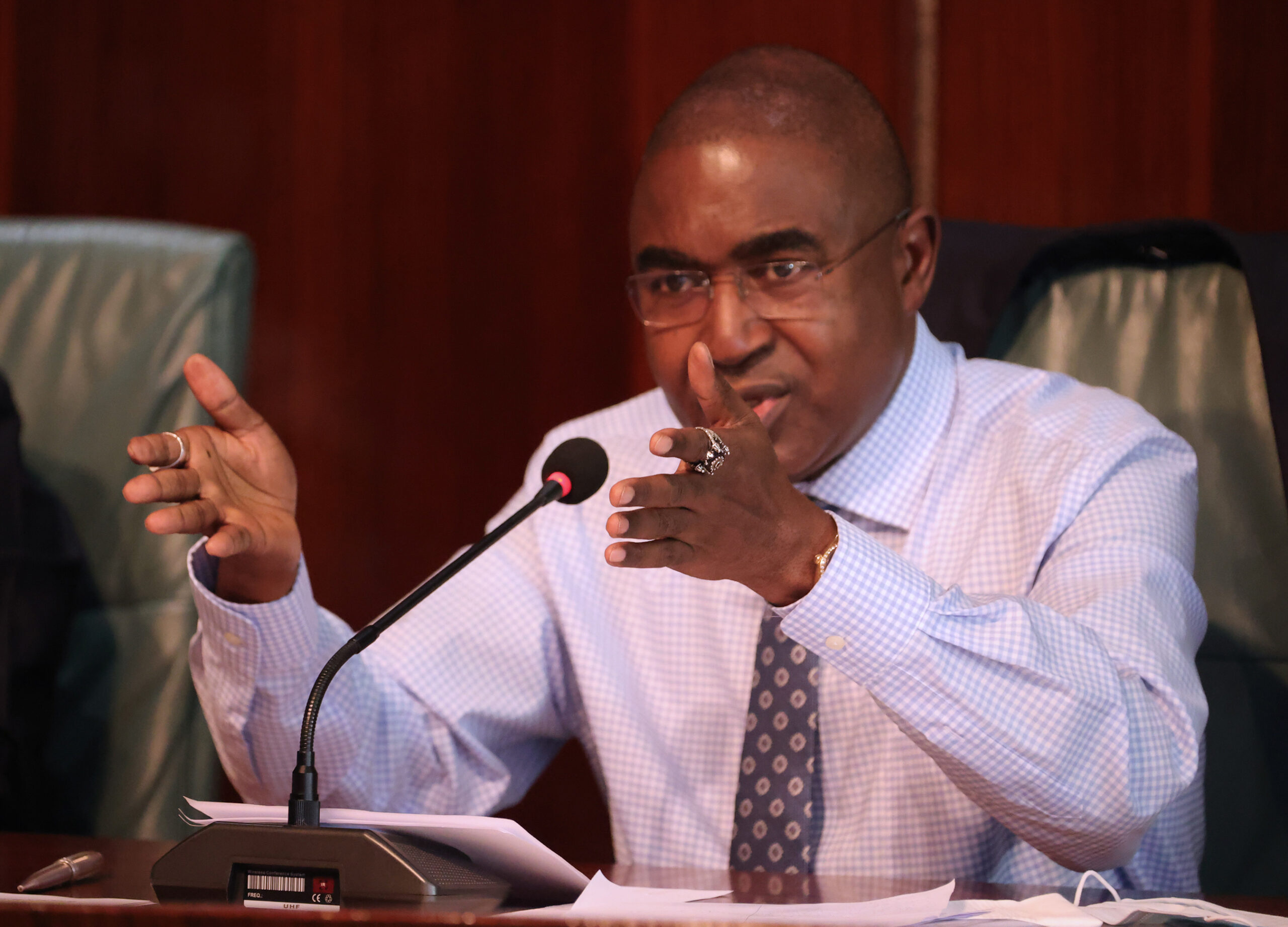
NDLEA BOSS BRIG GEN MARWA A GUEST AT THE STATE HOUSE WEEKLY BRIEFING 1A&B. The Chairman NDLEA Brig Gen Mohammad Buba Marwa during the State House Weekly Press briefing held at the State House. PHOTO; SUNDAY AGHAEZE. OCT 21ST 2021

Simon Kolawole

NDLEA BOSS BRIG GEN MARWA A GUEST AT THE STATE HOUSE WEEKLY BRIEFING 1A&B. The Chairman NDLEA Brig Gen Mohammad Buba Marwa during the State House Weekly Press briefing held at the State House. PHOTO; SUNDAY AGHAEZE. OCT 21ST 2021

When the National Drug Law Enforcement Agency (NDLEA) declared “Super Cop” Abba Kyari wanted on Monday following his alleged involvement with an international drug cartel, I was very happy. Very, very happy. But my joy had nothing to do with Kyari, the deputy commissioner of police already indicted by the US Federal Bureau of Investigation (FBI) in the case involving Ramon Abbas aka Hushpuppi, the self-confessed international fraudster. For sure, I was glad to learn that the obviously highly connected police officer was reportedly caught on video in what appears to be a sting operation by the NDLEA. That means we should at least have an interesting case in court.

My joy, rather, was how far Brig-Gen Mohamed Buba Marwa (rtd) has gone in transforming the NDLEA in just one year as chairman. Suddenly, it is as if the NDLEA is a brand-new agency, whereas it was set up 32 years ago by the government of Gen Ibrahim Babangida, with Mr Fidelis Oyakhilome, a deputy inspector general of police, serving as the pioneer chairman. It was initially named National Drug Enforcement Agency (like the US Drug Enforcement Agency) but Nigerian grammar guards argued that “you don’t enforce drug; you enforce the law against drugs”. Oyakhilome left in disgrace in 1991 after a scandal involving him, his lady friend, the late Jennifer Madike, and drug barons.

Although the agency has had ten chief executives, I am inclined to say no chairman has had as much impact within such a short period as Marwa. According to insiders, the first thing Marwa did was internal re-organisation. He also effected long-due promotions and cleared the backlog of allowances in the perennially underfunded agency. He ramped up intelligence-led operations across the country. With a motivated workforce, the result has been the unprecedented spate of arrests and drug seizures. The agency has also heightened public enlightenment campaigns on the dangers of drug use. I have no hesitation whatsoever in celebrating these wins in this season of despair.

I must at this point admit that I am by no means surprised that Marwa has raised the bar — yet again — in public service. He is kicking asses in the war against illicit drugs. I have been following his career since 1990 when he was appointed military governor of Borno state (now Borno and Yobe) by Babangida. I recall that he set up the first joint military patrol in the country, codenamed Operation Zaki, to tackle insecurity. Borno had been at the mercy of cross-boundary banditry. Chadian rebels fighting President Idriss Déby — who had just overthrown Hissène Habré — started raiding Borno villages, similar to the current situation in the north. Marwa impressively contained the bandits.AdvertisementAd

Borno residents started sleeping well, further helped by the fact that Marwa also did quite some job in education, agriculture and infrastructure. He built roads using direct labour to save costs. The good-looking young officer, barely 38, was setting standards in public administration. His governor colleagues across the country started taking their cue from him, and in no time joint military patrols to tackle insecurity and cost-saving direct labour for road rehabilitation became a trend. In 1991, also under his stewardship, El-Kanemi Warriors FC became the first team from the far north to win the FA Cup (now Fed Cup/Aiteo Cup) since 1953. Incidentally, that was the year he was born.

Marwa soon travelled abroad on military posting as defence attaché at the Nigerian permanent mission to the UN. In 1996, he resurfaced in Nigeria when he was appointed the military administrator of Lagos state by Gen Sani Abacha, then head of state. It was tricky. At the time, the south-west was still on fire as a result of the annulment of the June 12, 1993 presidential election by Babangida. Bashorun MKO Abiola, the winner, had been arrested and detained by Abacha for seeking to reclaim his mandate. Lagos was the epicentre of the uprising against military rule, with NADECO, Afenifere and other activist groups making life unbearable for the government.

Appointing a Fulani from Adamawa state as governor of Lagos state at the height of bitter anti-north sentiments did not look like a smart move on the part of Abacha, but, amazingly, Marwa became the darling of Lagosians. The state had been gripped by insecurity, with armed robbers roaming freely, audaciously knocking on the doors of residents and seizing their belongings without let or hinderance. Marwa introduced Operation Sweep, a joint military patrol, and the pervasive insecurity was quickly brought under control. Although the soldiers were also widely accused of extra-judicial execution of suspects, the consensus was that Lagos was a much safer place under Marwa.Advertisement

Not to forget how he tackled the “area boys” menace: taking them off the streets, rehabilitating them and making them undergo entrepreneurial training. Many of them became artisans and factory hands. Some went into small-scale businesses and I recall once eating what we called “area boys’ bread”. Many were engaged by the state’s direct labour agency and deployed in the reconstruction of the Mile 2-Ikorodu road, although you wouldn’t compare the quality with Julius Berger’s. Unfortunately, the rehabilitation of area boys did not endure as Nigeria transited to civil rule and the street urchins came back in full force till this day, primarily for the purpose of elections.

Lagosians celebrated Marwa for the massive reconstruction and rehabilitation of roads, coming on the heels of years of neglect blamed on lack of bitumen by the previous administrator. Marwa not only sourced for the elusive bitumen, he set up a factory to produce the hydrocarbon. Armed with two postgraduate degrees — Master of Public and International Affairs from the University of Pittsburgh (1983-85) and Master of Public Administration from the Harvard Kennedy School (1985-86) — and demonstrating a high emotional intelligence governing what was thought to be enemy’s territory, he did much in his three years to contribute a decent quota to the state’s development.

Having said all these beautiful things about Marwa’s impressive output as NDLEA chairman and his record of competence, I now need to throw in a word of caution: General, watch your back. Going after Kyari and his alleged cohorts may be desirable and commendable as Marwa seems determined to ensure that there are no sacred cows, but I hope the powers that be will not end up making a mincemeat of the NDLEA chairman. There has been an established pattern under the Buhari administration since 2019: many of those working extra time to fight the rot in the system end up in the trashcan. The evidence is too damning for any change enthusiast to ignore or downplay.

The latest victim is Ms Hadiza Bala Usman, who has just been officially removed as the MD of the Nigerian Ports Authority (NPA). While on duty, she put up a spirited fight against many enemies of Nigeria’s progress — the entrenched interests working round-the-clock to foist fraudulent agreements on Nigeria, to pillage the national treasury without remorse. She courageously refused to take the easiest way out; that is, play ball. She needed all the political backing she could get as she was being bullied and battered. Rather, she was mercilessly flung out of the window. That is her reward. But she should still be thankful that the trumped-up allegation of fraud was thrown out.

Before Hadiza, there was Ms Yewande Sadiku. She also tasted the bitter pills of pushback by the forces holding Nigeria hostage. Their parish at the Nigerian Investment Promotion Commission (NIPC) tried to wrestle her to the ground, but she gave them a bloodied nose — in the absence of political backing from a government preaching “change”. The enemies of progress fought back in equal measure, adopting the usual tactics, including frivolously petitioning three agencies and taking her to court. Yewande headbutted them all. She came out untainted but her tenure was never going to be renewed. You don’t fight corruption, waste and indiscipline in Nigeria and expect medals.

The biggest victim without competition is Mr Ibrahim Magu who, like orange, was squeezed, sucked and dumped by this administration in the most exhilarating manner. From 2015 to 2019, the biggest thing President Buhari counted as his achievement was the war against corruption and the recovery of looted funds. While I was a critic of Magu’s EFCC for the highhandedness and lop-sidedness, the truth is that he was the poster boy of this administration locally and internationally. He must now be living in regret as he vegetates after getting the boot unceremoniously. Up till today, we have not been told why he was removed. He will retire in May 2022 a sad, broken man. That is his reward.

Can you now understand why I am advising Marwa to be careful with Kyari? I love Marwa very much. He is an intelligent and result-driven public administrator with a record of service that only a few Nigerians can rival, but I am inclined to advise him to watch his back. Remember Kyari was suspended after the Hushpuppi indictment but nobody touched him thereafter. All the previous complaints against him were ignored. That says a lot about his connections. I am by no means saying Marwa should slow down or surrender, but he should know that he is now stepping on big toes. When the chips are down, he may be hung out to dry — as we just saw with Hadiza at NPA.

I am not in any sense asking courageous Nigerians in public office not to do their job. Far from it. If anything, my hope is renewed in Nigeria whenever I think of what the likes of Marwa, Hadiza, Yewande, Waziri Adio and many others have done in public service. I come across patriotic and competent Nigerians home and abroad all the time and my heart is gladdened. We have more than enough ingredients to make Nigeria great. Our biggest problem is that we are a sheepfold without a shepherd. The day we manage to have the right shepherd at the helm, our development will be so accelerated it would be hard to believe that it is the same Nigeria. Yes, a new Nigeria is possible.Advertisement

AND FOUR OTHER THINGS….

BURNING MONEY

President Buhari has sent a supplementary budget of N2.55trn to the national assembly. To fund education? No. To fund public hospitals? No. To build more roads? No. To pay for consumption of petrol? Yes. You get it. We want to “protect the poor”. The entire bill is estimated at N3trn, so the states and councils will pick the rest. This is a country that is borrowing to do virtually everything. At this rate, we will soon start borrowing to pay our debts. Ironically, the bleeding obvious is that we are subsidising the consumption of petrol in other countries as well as feeding the potbellies of those exaggerating the smuggling figures. But we say that we are protecting the poor. Damned.

FLYING SHAME

On Thursday evening, I was at the Benin Airport. Mosquitoes treated me with so much disrespect. The ACs did not work. The toilets had no tissue. At the Murtala Muhammed International Airport, Lagos, the conveyor belts are simultaneously undergoing repairs, and I suppose this is unique to Nigeria. MMIA’s ACs often struggle to work. One sign that you are approaching security checks on arrival is the stench from the nearby toilets. The state of many Nigerian airports is a crying shame. We do certain things in this country that make it look like we are deliberately trying to advertise our mediocrity and incompetence to the whole world as if there is a trophy to be won. Shameful!

PAID VACATION

And so, university teachers are set to embark on what the peerless Dr Chidi Amuta calls “paid vacation”. The routine strikes are usually framed as a struggle to “save” university education in Nigeria. Yeah, right. Certainly, there are structural and funding issues that need to be tackled creatively and decisively, but why strike is always a popular line of action is obvious: you teach, you get paid; you don’t teach, you get paid. It’s a perverse incentive. We need to study the irreparable damage strikes do to the intellectual and social progress of our youths. While government should take most of the blame, ASUU members also need to look at themselves in the mirror. Regressive.

PASSPORT TO SENSE

Solutions to some problems don’t require rocket science. Just common sense. The Nigerian embassy in Germany has visited Cologne to issue passports to Nigerian nationals, who typically had to travel to either Berlin or Munich for the service. This is not only time-consuming but could be very uncomfortable. Kudos to Hon Yusuf Tuggar, Nigeria’s ambassador to Germany, for this initiative. He said more German cities are on the cards. Nigerians in the US can testify to the pains they often endure to travel for hours or days and lodge in hotels just to process their passports. I hope our other embassies will learn from this. Application of common sense can solve big problems. Fact.

Is the Criminal Code Act Valid? (Watch it, AG!)

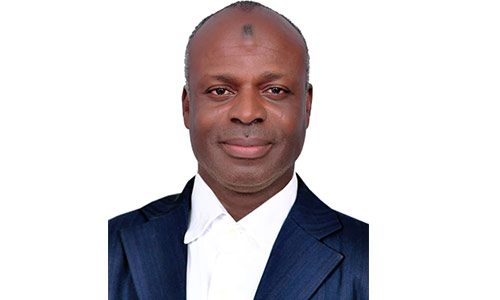
By Abubakar D. Sani Esq

This poser (and retort) is prompted by the continuing application of the Criminal Code Act as a federal law across the country, in spite of what I believe to be its clearly anomalous status vis-à-vis relevant constitutional provisions. In other words, the question is: why is the Criminal Code Act still extant? Haven’t virtually all the 17 States of Southern Nigeria (where it was originally applicable) enacted their own Criminal Code laws? Why does the original Act retain its place in current Laws of the Federation (which contain all statutes enacted by the National Assembly)?. Does the Code still possess the force/status of an Act of the National Assembly? Is it’s subject matter within the legislative competence of that Assembly?.

Beyond these, however, the question is equally pertinent because of the rising incidence of prosecuting suspects at the behest of the Attorney-General of the Federation allegedly for contravening provisions of the Act. To say that this practice is worrisome would be an under-statement, given its constitutional implications. The question of the legal status of the Criminal Code Act is of huge significance to the untold number of convictions that have been secured on the basis of the Act, especially over the course of the over 43 years of the introduction of Federal Constitutions in Nigeria. Suffice it to say that, any conviction which is based on an unconstitutional law, is ultra vires, invalid, null and void. But, first the . . .

History of the Criminal Code Act

The Criminal Code has had a long and chequered history. Its commencement date is the 1st day of June, 1916 (no less!) when Nigeria was very much a British Colony. From that time till shortly before independence (in 1959), it applied across Nigeria; on the 26th day of September, 1959, it ceased to be effective in the old Northern Region, when the Penal Code Law came into force there. Since then, the Criminal Code has survived – in its various local and State-wide iterations – as the primary criminal law applicable across Southern Nigeria. Virtually all the Southern States have their own locally-enacted Criminal Code Laws or Criminal Laws simpliciter.

The Position Under the 1999 Constitution.

Given the peculiar history of the Criminal Code Act and Laws as aforesaid, the current Constitution has made copious provisions which impinge on its validity (as well as that of similar laws). Those provisions are set out in Section 315 of the Constitution which describes statutes which ante-date the Constitution as “existing laws”. Section 315(4)(b) of the Constitution defines them as “any law and includes any rule of law or any enactment or instrument whatsoever which is in force immediately before the date when this section comes into force or which, having been passed or made before that date, comes into force after that date”.

Section 315(1) of the Constitution contains the litmus test for determining the validity of any existing law. It provides thus: “Subject to the provisions of this Constitution, an existing law shall have effect with such modifications as may be necessary to bring it into conformity with the provisions of this Constitution and shall be deemed to be:-

  • An Act of the National Assembly to the extent that it is a law with respect to any matter on which the National Assembly is empowered by this Constitution to make laws, and
  • A Law made by a House of Assembly to the extent that it is a law with respect to any matter on which a House of Assembly is empowered by this Constitution to make laws”.

The Constitution divides legislative power between the National and State Houses of Assembly – vide Section 4 thereof. The respective remits of both Legislatures are specifically expressed and defined in the Exclusive Legislative and the Concurrent Legislative Lists. Whilst the former is the sole preserve of the National Assembly, both Assemblies share legislative power in respective of the latter. There is however, a notional third list – the Residual Legislative List – in respect of which only State Houses of Assembly are competent to legislate upon: MINISTER OF JUSTICE & ATT-GEN. OF THE FED. vs. ATT-GEN. OF LAGOS (2013) All FWLR pt.704 pg.1@40. It is settled that, beyond criminal offences which might arise incidentally from a law enacted by the National Assembly pursuant to a specific subject matter contained in the Exclusive Legislative List of the Constitution, the Assembly is incompetent to enact a general criminal law applicable across Nigeria; See Item 68 and Paragraph 2(b) of Part III of the 2nd Schedule to the Constitution and BODE GEORGE vs. FRN (2014) All FWLR pt. 718, pg. 879.

The question, therefore, is: in which List is the subject matter of the Criminal Code Act contained? Is it in the Exclusive List, the Concurrent List or the Residual List of the Constitution? I humbly submit that, to the extent that the Code makes general criminal prescriptions pertaining to virtually every human malfeasance, it is clearly beyond the remit of the National Assembly under the current Constitution. In other words, the subject matter of the Criminal Code is in the Residual Legislative List of the Constitution, in respect of which only State Houses of Assembly are competent to legislate as aforesaid; See TOGUN vs. OPUTA (No.2) (2001) 16 NWLR pt. 740 pg. 597

So, what is the Status – and Fate – of the CCA?

To the extent that, under the Constitution, the Criminal Code Act cannot take effect as an Act passed by the National Assembly, but, rather, as a law made by a State House of Assembly, it has ceased to apply in any of the 36 States of the Federation. In other words, subject to the existence of any other statute which might impinge on its validity, the Criminal Code Act, in the form in which it appears in the Laws of the Federation 2004 and 2010, is only applicable in Abuja, the FCT.

This is by virtue of the provisions of Section 299 of the Constitution which invests the National Assembly with the status of the Legislature of the FCT. The aforesaid qualification is, however, all-important, because of the provisions of Section 13 and the 2nd Schedule to the Federal Capital Territory Act, 1984, which sets out the list of the Laws applicable in the FCT, Abuja. Crucially, the Criminal Code Act is missing (or omitted) from that List. Instead, the Penal Code Law is listed therein as the general criminal law applicable in Abuja and enforceable in its courts – including Federal Courts. The implication of this exclusion of the Criminal Code Act is all-too obvious: it is deliberate and thus, the Criminal Code Act is inapplicable in the FCT.

However, of even greater concern, in my view are certain provisions, such as those of Section 7(3) of the Federal High Court Act, 1973, which stipulate that the jurisdiction conferred by that Act on the Federal High Court in respect criminal causes and matters “shall include original jurisdiction in respect of the offences under the provisions of the Criminal Code Act being offences in relation to which proceedings may be initiated at the instance of the Attorney-General of the Federation”. It is obvious that, if the Criminal Code Act is ineffective as a federal law (but rather as a State law), the authority of the Attorney-General to initiate proceedings thereon, within the contemplation of this provision, cannot arise; by virtue of Section 174(1)(a) of the Constitution, that power may only be exercised in respect of offences created by an Act of the National Assembly. The Attorney-General of the Federation cannot initiate, take over or terminate criminal proceedings in respect of offences created by laws enacted by State Houses of Assembly. I submit that this includes ALL the offences contained in the Criminal Code Act or the extant Criminal Code Laws enacted by State Houses of Assembly. I believe that only Attorneys-General of the 36 States are competent to do so: Section 211(1)(a) of the Constitution.

Conclusion

The status of the Criminal Code Act is yet another instance of the varied and persistent anomalies in our laws. This one is particularly galling, in my view, because of its implications on the imperative of fair trials under our constitutional order. Needless to say, the earlier it is corrected the better, because the Attorney-General of the Federation – as the Chief Law Officer of the Federation – can ill-afford to be seen as subverting the Constitution in any way whatsoever, least of all by exercising a power which he lacks vis-à-vis criminal offences under the Criminal Code Act/Laws. That power is constitutionally conferred on the various Attorney-Generals of the 36 States of the Federation

Nigeria decides 2023: Will we take the road over-travelled?, By Ayisha Osori

We will not move ahead until we begin to want different, support different and vote different.

We need to break from our patterns in 2023 but this will only happen if we question our default settings about what leadership looks and feels like. The same model of man or woman, whether a draftee or someone expressing agency, will maintain course. To change track, we must reflect on the patterns being created by our acceptance of what authority is: Aloof and abusive; reassess what governance and public service should be; and redefine what it means to make votes count.

Long before I stumbled on Isiah Berlin’s ‘to understand is to perceive patterns’, I was fascinated by life patterns. The ones we design with our choices, doing things consciously, unconsciously and mapping out the same lines and circles that intersect repeatedly in the same places. Over and over again like moths to a flame.

By the 2015 elections, I was convinced I had hit upon a pattern for the Aso Rock occupancy: the uninterested anointed or as a friend puts it, ‘the draftee’. Straight out of the post-colonial gate, Ahmadu Bello, the head of the Northern Peoples Congress (NPC), should have been prime minister but the regions had more powers and he preferred to focus his energies there and his deputy, Tafawa Balewa, was seconded to the position. A seed was sown.

In the run up to the 1979 elections, Shagari, who served the Balewa administration in various positions, had his eye on the Senate. The godfathers of the National Party of Nigeria (NPN), successor to NPC, thought he would be a better president than the public front runners, Maitama Sule and Adamu Ciroma. And president he became.

In 1998, fresh out of prison and full of gratitude for life, considering the trail of death that Abacha superintended, being president was probably the last thing on Obasanjo’s mind. However, the men behind closed doors knew better, and anointed Obasanjo through the conservative NPN successor party, the Peoples Democratic Party (PDP), never minding Ekwueme, who was one of the founders of the party, with a presidential ambition of his own.

A persons’ life exposes their patterns, bares the tracks of choices and beliefs and reveals what they are capable of. There are many clues, small and billboard sized, that indicate what people will do with power. Why we chose to ignore what we see and know is not immediately apparent from the patterns we are invested in. Power makes people more of what they are; every vice, regardless of how benign in appearance, is magnified.

Enter 2007, post the failed attempt at a third term, and Obasanjo, still smarting, disregarded enthusiastic members of his inner circle and PDP. He settled on Yar’Adua, one of the few governors missing from the Economic and Financial Crimes Commission’s list and with no overt ambition to be president. Yar’Adua became president, and his vice president, also a surprise draftee selected in place of those who lobbied for the position, would eventually become president in 2010. If ever there was a poster man for Nigeria’s anointment predilections, it would be difficult to beat Jonathan.

That’s the problem, I thought.

We need someone who wants to be president, not a reluctant handmen of the status quo, drafted in against his will, as if Nigeria is not a prize. And who in 2015 wanted to be president more badly than Buhari? The misplaced expectation was that someone who had run four times had a plan. It turned out that wanting to be president was and is not enough.

I neglected to factor in three things. The first is another parallel pattern in our history of rulers – men with guns who took power but dressed it up as service and who have earned as much glory and shame for the trajectory and state of Nigeria, as anyone can. These men, like many across the world, have reinforced power for powers sake by any means necessary and there is little obligation to merit the role or use it accountably.

The second factor is a subset of the draftee pattern – the puppeteers’ creed: Don’t let them see the strings. It is easier to have a face on which to hang millions of feelings of fear, favour, fanaticism or feudality and manage that one person. Even better if this person has block votes to sweep unknown and uncaring characters into office, selling themselves alongside himself via posters and jingles. When the path to privilege of so many are anchored on a candidate, s/he must run, regardless of the impact to the public good.

To change track, we must reflect on the patterns being created by our acceptance of what authority is: Aloof and abusive; reassess what governance and public service should be; and redefine what it means to make votes count. This is not a call to tie ourselves up in knots, nitpicking at a candidate’s past; everyone has skeletons but we must ask ourselves how high the bodies are stacked and what put them there. The scales for a candidate should be heavier on the side of public goods…

Finally, I failed to give enough weight to character, words and deeds. A persons’ life exposes their patterns, bares the tracks of choices and beliefs and reveals what they are capable of. There are many clues, small and billboard sized, that indicate what people will do with power. Why we chose to ignore what we see and know is not immediately apparent from the patterns we are invested in. Power makes people more of what they are; every vice, regardless of how benign in appearance, is magnified.

The state of Nigeria, 12 months from the next general elections, is brutal and hard. At least 10,311 people were killed by terrorists, kidnappers and state security in 2021 and in the first three weeks of 2022, almost 500 people have been murdered; the stories are heartbreaking and difficult to retell. The sachetisation of our economy continues, while hundreds of thousands of people living in ungoverned spaces are extorted and made to choose between death and starvation. Amidst the clouds, there are pockets of light created by resistance, brilliance, evidence of shared humanity but the transmogrifying insecurity threatens the fundamentals of our survival and so does our politics.

We need to break from our patterns in 2023 but this will only happen if we question our default settings about what leadership looks and feels like. The same model of man or woman, whether a draftee or someone expressing agency, will maintain course. To change track, we must reflect on the patterns being created by our acceptance of what authority is: Aloof and abusive; reassess what governance and public service should be; and redefine what it means to make votes count. This is not a call to tie ourselves up in knots, nitpicking at a candidate’s past; everyone has skeletons but we must ask ourselves how high the bodies are stacked and what put them there. The scales for a candidate should be heavier on the side of public goods – we have an opportunity in 2023 to begin to discard our beliefs about governance and reimagine what a successful politician can be like.

Nigerians are leading with impact across sectors around the world, modelling the type of leadership required to move Nigeria in the right direction but we will not move ahead until we begin to want different, support different and vote different.

Ayisha Osori, author of Love Does Not Win Elections, will be writing for the Nigeria Decides 2023 series every 2nd and 4th Wednesday of the month.

“You Cannot Enforce A Judgement After 2 Years and 6 Years Against A Party and His Representatives Respectively.”

DAILY LAW TIPS
by Onyekachi Umah,Esq.
(Tip 154)
“You Cannot Enforce A Judgement After 2 Years and 6 Years Against A Party and His Representatives Respectively.”

Where judgement is given by a court, the judgment creditor has 2 years to enforce such judgment against the judgement debtor. Where a judgement creditor intends to enforce judgment against any representative of a judgment debtor, should be done within 6 years. Also note that were time elapses, court can grant leave.

My authorities are Order 4, Rule 8 of the Judgements (Enforcement) Rules and section 94 of the Sheriffs and Civil Process Act.

Share this till it gets to those that need it most. Save a Nigerian today!

#DailyLawTips
#SabiLaw
#LearnNigerianLaw

nternet Shut Down and The Pivotal Role of The Ecowas Court: Togo’s Case

By Mojirayo Ogunlana-Nkanga

There’s a good feeling to knowing that the case which you prosecuted till Judgement got an award for being an outstanding Judgement. The decision at the Community Court of Justice of the Economic Community of West African State (ECOWAS Court) in the case of AMNESTY INTERNATIONAL & ORS V. THE TOGOLESE REPUBLIC won the Global Freedom of Expression Prize[1] 2022 for being a Significant Legal Ruling.

I completely agree with CGFOE that this decision remains outstanding in addressing the new realities of the digital world. The Judgement clearly identified and recognised that the right to internet access is an element of expression which deserves the protection of the law.

At the time this Judgement was delivered, I remember feeling sad that the Judges have somewhat created a leeway for governments in the African region to continue to deprive citizens the right to the internet because it had stated that: “… internet access is “a right that requires protection of the law” and any interference with it “must be provided for by the law specifying the grounds for such interference.” The Court found that there was no law in Togo that provided for the shutdown and held that it violated Article 9 of the African Charter on Human and Peoples’ Rights. The question is, should there be such a law in place, would the shutdown have been upheld?

Facts

In 2018, eight Applicants approached the Court of Justice on the facts that the Republic of Togo shutdown the internet on the 5th to 10th and 19th to 21st of September, 2017. The government of Togo relied on two existing laws to do this: the Law on the Information Society and the Law of 2011. The shut-downs followed widespread protests by citizens over an attempt by the President to amend the Constitution of the republic with a view to extending his term in office. International media reported the protests.

Following the shutdowns and attendant restrictions, we filed a case on behalf of the eight Applicants, including a journalist, at the ECOWAS Court. Among other things, the Applicants claimed that the internet shutdown prevented journalists from doing their work and therefore, violated their rights to freedom of expression and to journalistic activities. Other claims related to NGOs that could not do their work on account of the disruptions to different forms of electronic communications.

The applicants resorted to the ECOWAS Court because of the pivotal role it has played since the adoption of the Supplementary Protocol A/SP.1/01/05 in January 2005 which greatly expanded the jurisdiction of the Court while at the same time granting individuals direct access to it and most especially since the Court’s protocol was revised to accept applications from individuals as well as Non-governmental organizations for the enforcement of their human rights. This and the fact that the Court often undertakes independent and neutral analysis of cases before arriving at its decision encouraged the Applicants, who were aware of the Court’s previous decisions in the landmark cases of Federation of African Journalists V. The Gambia; Deyda Hydara Jr & Others V. Republic of The Gambia and many others. In addition, it is a fact that the decisions of the Court have binding effect across the sub-region and Applicants are not required to exhaust local remedies before bringing applications before the Court.

In its defence, the Republic of Togo had argued that the action by the government was justified in this circumstance because the government realized that the protests had the potential of degenerating into a civil war and therefore it was imperative to protect the national security of the state.

The Court held in favour of the Applicants as follows: That the respondent was in violation of Article 9 of the African Charter and by shutting down the internet, it violated the applicants’ rights to freedom of expression. The Court also directed Togo (the respondent state) to take all necessary measures to guarantee non-occurrence of this situation in the future and to enact and implement laws, regulations and safeguards in order to meet its obligations with respect to the right to freedom of expression in accordance with international human rights instruments. The Court also awarded compensations and costs.

Providing some context to its conclusions, the court stated that the arguments by the respondent state that it had acted in defence of national security had “merit and has been internationally recognized as a valid defense to derogate from certain rights, the fundamental basis of the exercise of the power of derogation is that it must be done in accordance with the law” and in other words, there must exist a national legislation guaranteeing the exercise of the right whilst providing the conditions under which it derogated from.

From our analysis of the judgment, we think that the Court arrived at its decision solely on the fact that the respondent state did not have a legal framework for internet shutdowns. This decision makes one wonder what the court would have done if the respondent state had a law that provided for such derogations. It does appear the Court would have held that the internet shutdown was appropriate in the circumstance. The adverse effect of this decision is that it could encourage other states in the region to go ahead to try to or pass laws on shutdowns. It also means states that have such legal frameworks in place may feel justified and argue along that line should they find themselves in Court.

The Applicants’ Brief foresaw the dilemma described above. In response, it included sufficient resources both of international and regional jurisprudence informing the Court of those standards which backed up the arguments that internet shutdowns are disproportionate and unnecessary; that the restriction or limitation on the right to freedom of expression, in this case internet shutdown measure, can never be proportionate or necessary to achieve the purported aim of protecting national security, public interest, public health, public order, etc.

There is no doubt that the judgment is a welcome development. However, there is a need to develop the jurisprudence of the Court to arrive at a decision that will forestall and restrict future internet shutdowns within the region.

Internet Shutdowns

Internet shutdown refers to measures taken by governments to interfere with access to the internet in order to restrict or censor opinions, dialogue, debate, online organizing, and information dissemination in general. Restricting Internet access results in tremendous individual and societal harm while impairing journalistic activities. For instance, the shutting down of twitter in Nigeria was recorded for having amounted to an approximate economic loss of about N546.5 Billion[2].

In 2018, AccessNow, a non-governmental organisation with a mission to defend and extend the digital civil rights of people around the world, tracked 196 internet shutdowns worldwide. In 2019, several States within the ECOWAS Community and African region imposed Internet shutdowns and this is a phenomena that has occurred in countries such as Sierra Leone, Egypt, Lebanon, Cameroon, Guinea, Zimbabwe, China, Myanmar, Chad, Ethiopia, Bahrain, Democratic Republic of Congo and India, etc. At the time we approached the ECOWAS Court, we never thought that Nigeria would join other countries in violating this sacrosanct right. In 2021, Nigeria decided to prevent some of its citizens in the Northern region, namely, Zamfara, Sokoto, Katsina, Kaduna, Kebbi and Gombe from having access to all telecommunications services in those States. This I believe is a total violation of human rights.

There are several reasons governments shut down the internet. Some claimed the need to protect the country from chaos during elections, to preserve national security and public order, to prevent students from cheating during examinations, etc. These reasons may seem cogent but in actual fact, they offer a smokescreen for the real intention namely to repress and hinder free flow of information which requires accountability on their part. For instance, a research showed that governments shut down the internet to hide gross violations of human rights. Nonetheless, the judiciary offers some hope in that individuals and groups impacted by internet shutdowns may approach the courts for redress.

The truth is, Internet shutdowns have implications for civil and political as well as socioeconomic rights. They directly violate the rights to freedom of expression, access to information, association, peaceful assembly, political participation, mental and physical health and education. Additionally, vulnerable groups are often most likely to suffer disproportionate hardships during internet shutdowns.

International human rights instruments such as the ICCPR, ICESCR and the African Charter on Human and Peoples’ Rights recognize and protect the rights impacted by internet shut-downs. Apart from breaching rights, internet shutdowns are reported to carry a lot of economic and reputational implications for ICT companies acting at the behest of governments.

The ECOWAS Court

The ECOWAS Court has a regional influence which should not be undermined because it has the potential of being the foremost human rights promoter in the region and internationally. Its past decisions have been impactful such as in the landmark Koraou (Slavery) judgment in which the ECCJ condemned Niger for failing to protect the complainant from enslavement by a third party or a recent judgment delivered in December 2019, where it held that the policy of the Republic of Sierra Leone that banned pregnant girls from attending mainstream schools is a violation of their rights to education.

The good thing is that the Court’s decisions are binding, and by virtue of Article 22(3) of the ECOWAS Revised Treaty, Member States and Institutions of ECOWAS are required to enforce the judgment by immediately taking all necessary measures to ensure execution of the decision. Execution may be undertaken through the domestic courts in the ECOWAS member state. In addition, Rule 67 provides that any costs incurred in executing a judgment or order of the ECOWAS Court must be refunded by the opposing party.

In enforcing the Judgment of the Court, Article 24(4) of the Protocol A/P.1/7/91 relating to the ECOWAS Community Court of Justice (as amended by the Supplementary Protocol A/SP.1/01/05) requires each member State to appoint a competent National Authority for the purpose of receipt and processing of the execution of judgments of the Court. It is worthy of note that only six member states have appointed the competent National Authority for the enforcement of its decisions since 2005 as prescribed by the supplementary Protocol, Ghana being the latest addition in June 2020.

Despite this fairly elaborate infrastructure for enforcement, implementing the Court’s Judgment has been a herculean task in the region as some member States have refused to enforce judgments. This was also noted by the President of the Court, Justice Edward Asante, during the opening ceremony of the 2019/2020 legal year.

I submit that the solution to the enforcement of the Judgment is mainly for the ECOWAS Authority to invoke its sanction powers under Article 77 of the revised treaty and the 2012 Supplementary Act of Sanctions against member States that fail to honor their obligations to ECOWAS, to compel member States to comply with the Judgment.

Footnotes

[1] https://globalfreedomofexpression.columbia.edu/prizewinners2022/ —

[2]https://guardian.ng/news/fg-lifts-twitter-ban-after-222-days-n546-5b-economic-losses/

Incompetence cause of the failure of the Buhari government not over-population – By Sonnie Ekwowusi

There is nothing we will not hear in this Buhari government. Having monumentally failed in the last seven years, the Buhari government now seeks alibi in over-population. It ascribes poverty, unemployment and food starvation plaguing the country to over-population. It says that we are too many in Nigeria and therefore we should kill our babies through abortion, infanticide, sterilization of women and abortificient in order to decrease our population in order to improve the “quality of life” and “standards of living of all Nigerians”. Consequently President Buhari has recently created what has been dubbed the Revised National Policy on Population. He has equally recently inaugurated the National Council on Population Management (NCPM) principally chaired by the Vice-President of Nigeria Prof. Yemi Osinbajo (SAN) to implement the Policy.

The Buhari National Population reduction Policy is already dead on arrival. Why? Because it doesn’t make sense at all. Boko Haram, ISWAP, murderous Fulani herdsmen, bandits, abductors, unknown gunmen, kidnappers, hunger, malnutrition, poverty, illness, migration have been reducing Nigeria’s population day by day in the last 7 seven years. The government had been failing in its constitutional responsibility of protecting the lives and property of the citizenry. No day passes in Nigeria without any of the aforesaid merchants of death hacking at any least 5 Nigerians to death. Nigerian medical doctors and other Nigerian professionals are continuously fleeing Nigeria unabated resulting in decrease in the population of Nigeria’s working capital. Our borders are porous. Young men and women from Chad, Niger Republic, Sudan and other neigbouring countries are daily trooping into Nigeria and swelling up the Nigerian population. About 70% of Okada riders in Lagos, for instance, are non-Nigerians without any papers. In 2015 and 2019 many of them voted in the election. Come 2023 election they will still vote. Now, the same Buhari government which cannot protect lives and property of the citizenry and which cannot halt the constant influx of non-Nigerians into the country let alone halt the exodus of the country’s finest working human capital is asking Nigerian families to reduce the number of their children. Haba! I don’t know how many children President Buhari has. I would suggest we start with his family. Let him first reduce the number of his children and his household so that we will follow suit. Ditto for Vice-President Prof. Yemi Osinbajo (SAN). Let him also reduce the number of his children and his household so that learn from him. Also the members of the National Assembly should equally reduce the number of their children and their expansive households.

Example is better than precept. The other day the Majority Leader of the House of Representatives Alhassan Ado-Doguwa boasted on the floor of the House that he had 28 children at the moment and plans to have up to 30 children before the end of the current 9th National Assembly. He jokingly said that he was considering the allocation of a polling unit to his private home, as part of the amendments to the Electoral Act 2020. Go and tell him to reduce the number of children and you will see what he would do to you. And he is not alone in this matter. For example, Muhammadu Bello Abubarkar Masaba Bida married 120 wives and fathered 203 children before his death in 2017. Alhaji Adamu Loddo, a Jalingo-based 68-year-old man has 30 surviving children. He said he has done yet. Not to talk about the Amajiri parents and their uncountable numerous children scattered all over the place. When the last Obasanjo administration threatened to enforce the one-man-four-children population policy in Nigeria, an angry Muslim retorted: “Obasanjo has plenty of children. Who is he to tell us the number of children Allah wants us to have?”. Similarly after former President Good luck Jonathan appointed Festus Odimegwu and 22 others to reduce the population of Nigeria, some Nigerians were heard querying at that time: “Who is Festus Odimegwu to dictate to us the number of children we should have?”

The unassailable deductions from the foregoing are: If the efforts to implement the population reduction policy in Nigeria in the past were met with vehement resistance it is unlikely that the policy would be embraced in the last days of the Buhari government. If the policy cannot be implemented in one part of the country because the people there are opposed to it, why implement it in other parts of the country to the disadvantage of the people living there?

More importantly, it is only a bad carpenter who quarrels with his tools. By analogy, it is only a bad leader who quarrels with the population of his country. The vibrant young people that constitute the bulk of the population are indeed a vibrant work force that should be used to fast-track economic growth as we are currently witnessing in China, Singapore, Bangladesh, India and many Asia countries. With its enormous population China is now ruling the world. You will recall that China embraced the one-child-per-couple policy in 1978. But the policy backfired on China and consequently China had no option but to quickly scrap it. It resulted in sex imbalance and gendercide (the practice of killing unwanted Chinese females before they were born) in China. Because of this killing of unwanted females, the Chinese boys outnumbered the Chinese girls. This has created a “Wild-West” sex industry in China today, an entire generation of Chinese girls missing because they were being killed in the womb.

Today China is reaping enormous demographic dividends from its huge population. Why is the Buhari government not reaping demographic dividends from Nigeria’s population?. Having squandered the confidence and trust reposed in it and having failed to live up to its bidding, the Buhari government is now passing the buck to the population. This is dishonesty and propaganda at their peak. It is a fraud. The average Nigerian knows very well that our problem in Nigeria is not over-population: our myriads of problems in Nigeria are incompetence, corruption, wooden-headedness, incestuous narcissism, stupidity, dementia, foolishness, cluelessness and ignorance in governance. Wooden-headedness, in particular, can ruin governance. Remember the rice pyramid propaganda in Abuja last month? The amount of money spent in borrowing the bags of rice from neighbouring African countries, transporting them to and fro Abuja and erecting a pyramid with them would have been enough to fix about five major federal highways in Nigeria. Standing in front of the rice pyramid, government show-lady Lauretta Onochie was shouting: “Everyone should come and see this, this is marvellous, this is wonderful. I have been hearing about it over the last few weeks and today I am so delighted to be here.. Look at this, they are all rice. God bless Nigerian farmers, God bless Baba Buhari, sai Baba, Sai Baba Buhari. This is made in Nigeria rice, it is not foreign, it is not from China or Thailand, this is original rice from Naija with flavour and good taste”. This is what you get with the triumph of wooden-headedness in governance. .

As I keep saying, it is difficult to pinpoint one singular achievement of the Buhari government in the last seven years. The government came to power on the mantra of fighting corruption. Now, seven years on, the government itself is defined and personified as corruption writ large. Perhaps one achievement of this Buhari government is to drag Nigeria into the membership of failed States. Imagine the most populous and most richly endowed African country joining insignificant countries such as Yemen, Democratic Republic of Congo, Central African Republic, Somalia, South Sudan and Myanmar as a full-fledged failed State. But Minister for Works and Housing Babatunde Fashola (SAN) says the federal government has been brazing a trail in infrastructural development in the last six years. In fairness to Fashola, he has proved his mettle at least in railway project and road construction as evident from some of the railway projects and roads projects in the country. But the lingering face-off between the Federal Ministry of Works and the NNPC and NUPENG is worrisome. NUPENG alleges that a whopping sum of N621 billion has been misappropriated in Federal Roads rehabilitation.

Meet 17 Nigerian celebs who are lawyers

Here are 17 Nigerian celebs you never knew are lawyers in real life

By Eugene Onyeji

1. Kanayo O. Kanayo

Kanayo-O.-Kanayo Meet 17 Nigerian celebs who are lawyers
Kanayo O. Kanayo

Anayo Modestus Onyekwere, popularly known as Kanayo O. Kanayo is a Nigerian veteran actor and United Nations ambassador who became lawyer at the age of 58- Advertisement –

In 2006 he won the African Movie Academy Award for Best Actor in a leading role for his performance in the movie “Family Battle”.

On September 15, 2020 Kanayo O. Kanayo surprised fans with the very exciting news that he had been called to the bar.

The 59-year-old actor said it has been his lifetime ambition to go back to school and secure his law degree.

Today, he is a graduate of Law from the University of Abuja in the year 2018. He also finished his Law School at the Abuja Law School located at Bwari, Abuja in the year 2020.

In the announcement dawning his wig and gown, Kanayo O. Kanayo wrote:- Advertisement –

“To God be all the Glory. You can now address me as Anayo Modestus Onyekwere, Esq, MFR ( Barrister And Solicitor of the Supreme Court of Nigeria)”

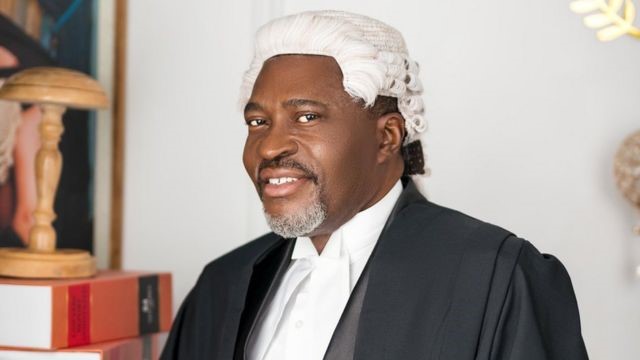
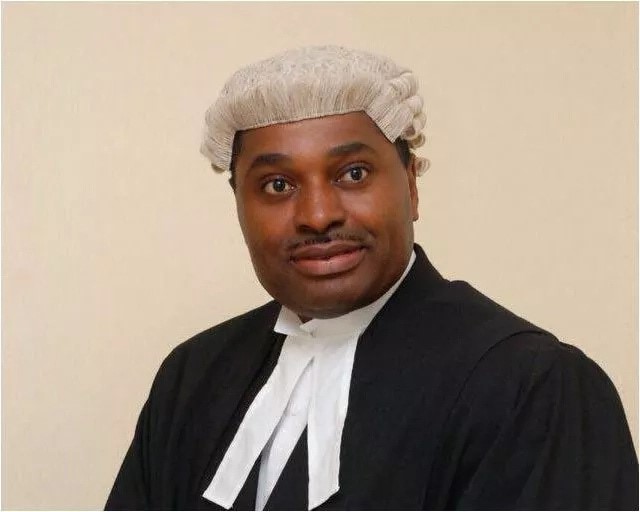
2. Kenneth Okonkwo

Kenneth-Okonkwo Meet 17 Nigerian celebs who are lawyers
Kenneth Okonkwo

Kenneth Okonkwo, popularly known for his role in the movie “Living in Bondage” as Andy Okeke, is a famous Nollywood actor, producer, politician, entrepreneur, and television personality.

Kenneth Okonkwo graduated with a degree in Business Administration from the University of Nigeria Nsukka and later graduated with an MSc in international law and diplomacy from the University of Lagos, Akoka.

He went to Law school in Abuja and was called to the bar as a legal practitioner.

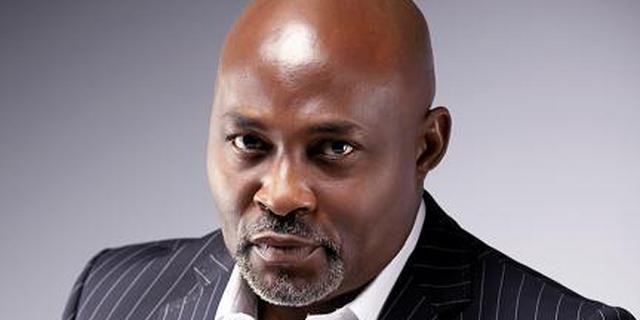
3. Richard Mofe-Damijo (RMD)

Richard-Mofe-Damijo Meet 17 Nigerian celebs who are lawyers
Richard Mofe-Damijo (RMD)

Richard Mofe Damijo popularly known as RMD is a talented Nigerian actor, writer, producer, and former commissioner of culture and tourism in Delta State.

RMD had his first degree in Theatre Arts from the University of Benin. After making an indelible impact in the make-believe industry as an actor, RMD went back to the University of Lagos in 1997 to earn a degree in Law to fulfill his mother’s lifelong wish for her son to be a Lawyer.

He was subsequently called to the Nigerian Bar.

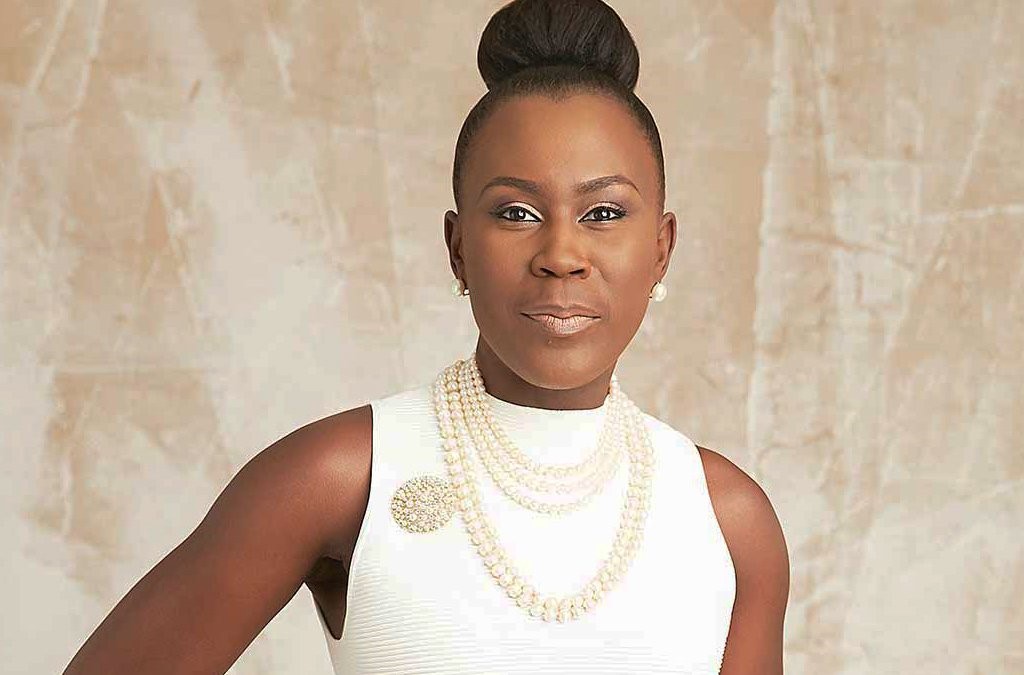
4. Tara Fela-Durotoye

Tara-Fela-Durotoye Meet 17 Nigerian celebs who are lawyers
Tara Fela-Durotoye

Tara Fela-Durotoye is a Nigerian beauty entrepreneur and a lawyer. A pioneer in the bridal makeup profession in Nigeria, she launched the first bridal directory in 1999, set up international standard makeup studios and established the first makeup school in Nigeria.

She started her education at Command High School in Lagos before proceeding to Lagos State University where she graduated with a degree in Law. She was called to the bar and she practiced briefly.

She is the founder and CEO of House of Tara International, a beauty/makeup company.

5. Femi Adebayo Salami

Femi-Adebayo-Salami Meet 17 Nigerian celebs who are lawyers
Femi Adebayo Salami

Femi Adebayo Salami is a Nigerian lawyer,  film actor, director, producer and Special Adviser to the Governor of Kwara State on Arts, Culture and Tourism. He is the son of the veteran actor, Otunba Adebayo Salami.

He is also a proprietor of a school of art located in Ibadan. He had started acting before he went to the university.

Femi Adebayo attended the University of Ilorin where he obtained a Bachelor’s degree in Law. He also earned a master’s degree in law at the University of Ibadan.

After graduation, Femi practiced law for some years specializing in estate and property law before acting got a better part of him.

Femi is a toast of movie producers in the Yoruba movie genre.

6. Funke Akindele

Funke-Akindele Meet 17 Nigerian celebs who are lawyers
Funke Akindele

Akindele-Bello Olufunke Ayotunde, popularly known, as Funke Akindele or Jenifa is a Nigerian film actress and producer.

The popular actress and film-maker first obtained an Ordinary National Diploma (OND) in Mass Communication from the former Ogun State Polytechnic, now known as Moshood Abiola Polytechnic.

She later went to the University of Lagos to study Law but before she was done in the university, entertainment has eaten deep into her.

Her first appearance on television drama was in ‘I Need to Know’ as a teenager.

7. Kelechi Amadi-Obi

Kelechi-Amadi-Obi Meet 17 Nigerian celebs who are lawyers
Kelechi Amadi-Obi

Kelechi Amadi-Obi is a Nigerian creative photographer, painter, artist and the publisher of Mania Magazine.

Kelechi Amadi-Obi was born in Owerri, Imo State to the family of Justice Sylvester Amadi-Obi, a high court judge, and Mrs Theresa Amadi-Obi, an educationist.

He obtained his law degree in 1992 from the University of Nigeria, Nsukka and was called to the Nigerian Bar in 1994.

While on campus, he floated a small company which he named De-Zulu.

8. Kemi Adetiba

Kemi-Adetiba-1024x556 Meet 17 Nigerian celebs who are lawyers
Kemi Adetiba

Kemi Adetiba  is a Nigerian filmmaker, television director and music video director. She holds a bachelor’s degree in law from the University of Lagos.

Kemi started out professionally as a radio presenter with Rhythm 93.7 FM, where she became the voice behind two nationally syndicated hit shows: Soul’d Out and Sunday at the Seaside. 

After discovering her interest in entertainment, TV host and music video director, Kemi Adetiba, went on to study Film Making in New York Film Academy.

Kemi is the brain behind several great music videos on Channel O, MTV Base, Soundcity TV, BET and Netflix.

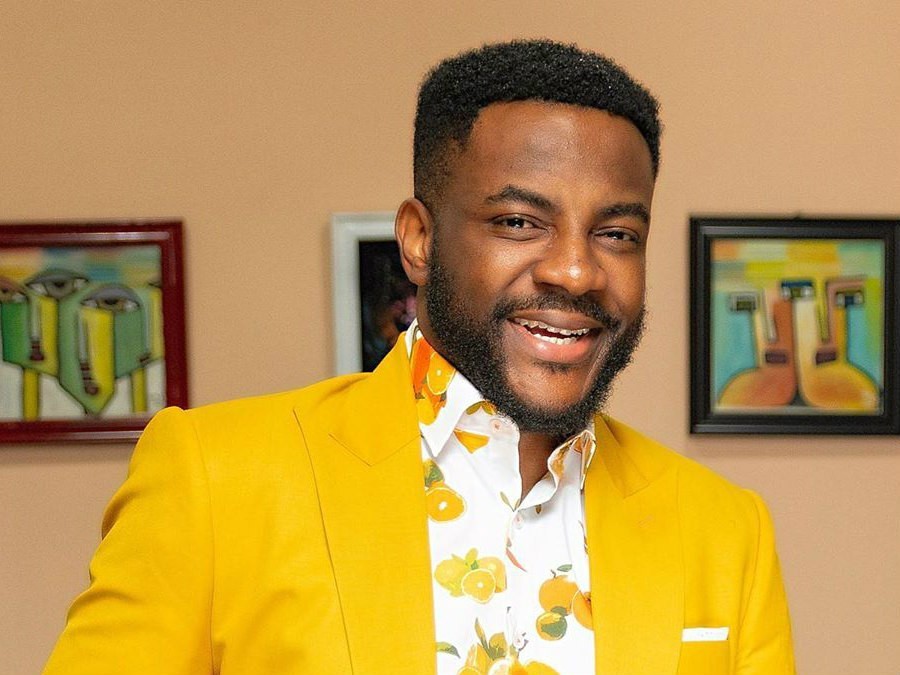
9. Ebuka Obi-Uchendu

Ebuka-Obi-Uchendu Meet 17 Nigerian celebs who are lawyers
Ebuka Obi-Uchendu

Ebuka Obi Uchendu has been a force to reckon with in the Nigeria entertainment industry. As a Tv personality, Ebuka is best known for hosting the popular reality show, Big Brother Naija, Rubbing Minds on Channels TV as well as Men’s Corner or Ebony live Tv.

He holds a bachelor’s degree in law from the University of Abuja and proceeded to the Nigerian Law School Bwari, Abuja finishing in 2005.

He then returned to school after a 5-year working gap, graduating in December 2010 from the Washington College of Law of the American University Washington DC, with Master of Law degree specializations in Intellectual Property as well as Communications law from the Law and Government program.

Ebuka came into public consciousness as contestant on the reality television show Big Brother Nigeria in 2006 and has never left the public glare since then.

10. Folake Akindele-Coker

Folake-Akindele-Coker Meet 17 Nigerian celebs who are lawyers
Folake Akindele-Coker

Folake Akindele-Coker is a Nigerian fashion designer and creative director of Tiffany Amber. She is the beautiful daughter of Ibadan billionaire, Chief Akindele.

Folake Akindele-Coker is a qualified lawyer, after her education in Switzerland and the United Kingdom, She earned a postgraduate degree in petroleum law and returned to Nigeria to pursue her fashion interests.

Folake Coker recognised her passion for fashion and traded her wig and gown for scissors and tapes establishing her luxury line Tiffany Amber as far back as 1998.

11. Omotunde Adebowale David

Lolo1 Meet 17 Nigerian celebs who are lawyers
Omotunde Adebowale David

Omotunde Adebowale David, popularly known as Lolo1, is a Nollywood actress, and a Nigerian radio presenter.

She hosted the popular Pidgin English speaking radio programme, ‘Oga Madam’ on Wazobia FM 94.1, till 2019 when she left and joined Lasgidi FM as the general manager and an on-air personality.

She is a graduate of Lagos State University, Ojo where she studied Law.

She practiced the law profession for three years before she left her wig and gown to be an on-air-personality.

12. Lisa Folawiyo

Lisa-Folawiyo-1024x637 Meet 17 Nigerian celebs who are lawyers
Lisa Folawiyo

Lisa Folawiyo is the creative Director of Jewel by Lisa and originator of embellished Ankara prints.

Lisa attended the University of Lagos where she obtained a Law degree.

She established Jewel by Lisa in 2005 and quickly became a force to reckon with as her creative style captured the attention of the international fashion world.

Jewel by Lisa has been rocked by celebrities like Solange Knowles, Kendal Jenner and Catt Sandler of E! etc.

She has showrooms in Nigeria and in New York.

13. Omawumi Megbele

Omawumi-1024x576 Meet 17 Nigerian celebs who are lawyers
Omawumi Megbele

Omawumi Megbele is a Nigerian singer-songwriter and actress.

Omawumi graduated from the Ambrose Ali University, Ekpoma, Edo state where she studied law in 2005.

She worked briefly at her brother’s law firm, O.S Megbele and Associates before she contested for the Idols West Africa in 2007.

Omawumi embraced entertainment through her participation in West African Idols where she emerged as the first runner up and ever since she has embraced music forgetting her wigs and gown.

14. Funke Bucknor-Obruthe

Funke-Bucknor-Obruthe Meet 17 Nigerian celebs who are lawyers
Funke Bucknor-Obruthe

Funke Bucknor-Obruthe is a Nigerian entrepreneur and lawyer. She is the founder and CEO of Zapphaire Events and is regarded as one of Nigeria’s pioneering event planners.

 Despite having a musician father, Funke Bucknor-Obruthe studied Law at the University of Lagos but knew her heart lay elsewhere.

Funke worked very briefly with St Matthew Daniel and Balogun law firm after her graduation before she pioneered events coordinating company, Zapphaire Events.

15. Anthonia Yetunde Alabi aka Sasha P

Sasha-P-1024x577 Meet 17 Nigerian celebs who are lawyers
Sasha P

Sasha P, also known as the First Lady of Nigerian Hip Hop, is a Nigerian rapper, musician, businesswoman, lawyer and motivational speaker.

Nigeria female rapper, Sasha P, is a graduate of Law from the University of Lagos. In 2012, Sasha P was the Olympic torchbearer for Nigeria.

She has also delved into fashion design. She is the most decorated Nigerian female rapper in history.

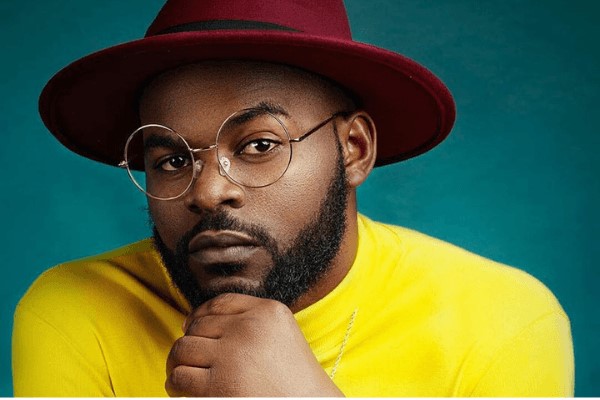
16. Falz

Falz Meet 17 Nigerian celebs who are lawyers
Falz

Folarin Falana better known by his stage name Falz, is a Nigerian rapper, songwriter and actor.

Falz’s parents are both well-known lawyers in Lagos State. He is the son of erudite lawyer and social commentator, Femi Falana.

For somebody like Falz many were taken aback when he abandoned Law for entertainment.

Falz studied law at the University of Reading, England.  Having graduated with an L.L.B Honors Degree in Law, Falz was called to bar in 2021 after graduating from Nigerian Law School in Abuja.

Falz worked in his father’s chambers for a while before following his dream as an entertainer.

Today, Falz has spread his entertainment tentacle to acting.

17. Lepacious Bose

Lepacious-Bose-1024x576 Meet 17 Nigerian celebs who are lawyers
Lepacious Bose

Bose Ogunboye popularly known as Lepacious Bose is a Nigerian Comedienne, actress, and an entertainer.

When she was young, she had always dreamed of being an actress so she studied Theatre art in the University of Ibadan against her father’s will.

Some years after graduation, she went back to study law in order to be on her father’s good book who she refers to as her hero. She was called to bar in 2010.

Bose Osayemi abandoned the sobriety of the law profession for the excitement of the entertainment industry.

Her stage name, Lepacious Bose is a contradiction of her former stature but it has really worked for her.

Credit:thenicheng.com

Sanwo-Olu and the pepper girls

By Lasisi Olagunju*

(Published in the Nigerian Tribune on Monday 7 February, 2022)

I experienced him for the first time as he was introduced as Imam Orímádégún. He was asked to preach at a Muslim burial service last Saturday in Osogbo, Osun State. He picked the microphone and announced that he was not going to preach about the dead. He said his sermon would be for the living. Then, for about 44 minutes, in very competent Yoruba as taught by his ancestors, he spoke to the future of his listeners. “You can do whatever you like with your morning,” he told them, and continued: “You can also do anything with your afternoon. But your evening has the franchise to do whatever it likes with you…” A man’s ‘evening’ is his old age, which can be pleasant or awful depending on how one spent the early stages. The Imam’s theme was education, and he developed it with the rare brilliance of a griot. “No one should write off any child,” he begged his audience. No child must be left behind is a battle cry among apostles of learning. And that exactly was what this Imam kicked off with. He begged in parables; he quoted Obafemi Awolowo; he spoke in proverbs; he sang Haruna Ishola, he sang Yusuf Olatunji and sang Ayinla Omowura. There is an epidemic of hatred for learning all around us. Nigeria has 10.5 million out-of-school children. There are more of them in the North than in the South. But the South is as sick as the other side. It is racing to beat the North on that dark journey of peril.

The Imam deplored the ascendancy of illiteracy and valorization of unexplained wealth among the Yoruba. He averred that principles, not miracles, rule the world. Immanuel Kant, the philosopher, pioneers that argument: “Everything in nature, both in the lifeless and in the living world, takes place according to rules…” Illiteracy can’t birth prosperity. You can’t reap pawpaw on an Iroko tree; there can’t be paean without pain. I also know that empty sacks can’t stand upright. The preacher added in very dark tones that because of this age’s revulsion at education and animus for learning, in less than fifteen, twenty years’ time, illiterate criminals with blood money will govern this space where great men of ideas once ruled. A pall of silence descended on the tent and its occupants.

Tying his message to the grim air of the burial event, the Imam bellowed that if anyone would die well, they would educate their children. If a nation would have peace, it would tuck its children under the duvet of quality knowledge. You can’t die well if your existence has birthed curses for the world to grapple with. I heard him and sighed. My mind drifted that moment to William Shakespeare in Henry VI: “an ill life, an ill death.” The preacher’s rendition of Haruna Ishola’s song reminded me too of how that master philosophised education. Ishola said education is “cord of success that endures forever (okùn olà tí kìí já láíláí).” Then the Imam went personal, drove his mind into a compound in that town for more on his thesis. A ravishing bride almost caused a civil war among siblings because her beauty was out of this world. But that was decades ago. The same woman is alive today – old, spent and without admirers. Shakespeare was right: “And as with age his body uglier grows, So his mind cankers…” Education is not like that lady’s beauty; its gold glitters forever. The Imam further delved into history: a hundred years ago, there were three big men in Ibadan. One spent his wealth to become Olubadan; one was a populist socialite who spent his vast wealth on the foibles and inanities of an applauding street; the third spent his wealth to educate all his children. Then the Imam asked his audience: among the three, whose àtubòtán (afterlife) is most enduring? He needed no answer. Muslims don’t clap at their religious events but this Imam finished his sermon and the audience exploded in applause.

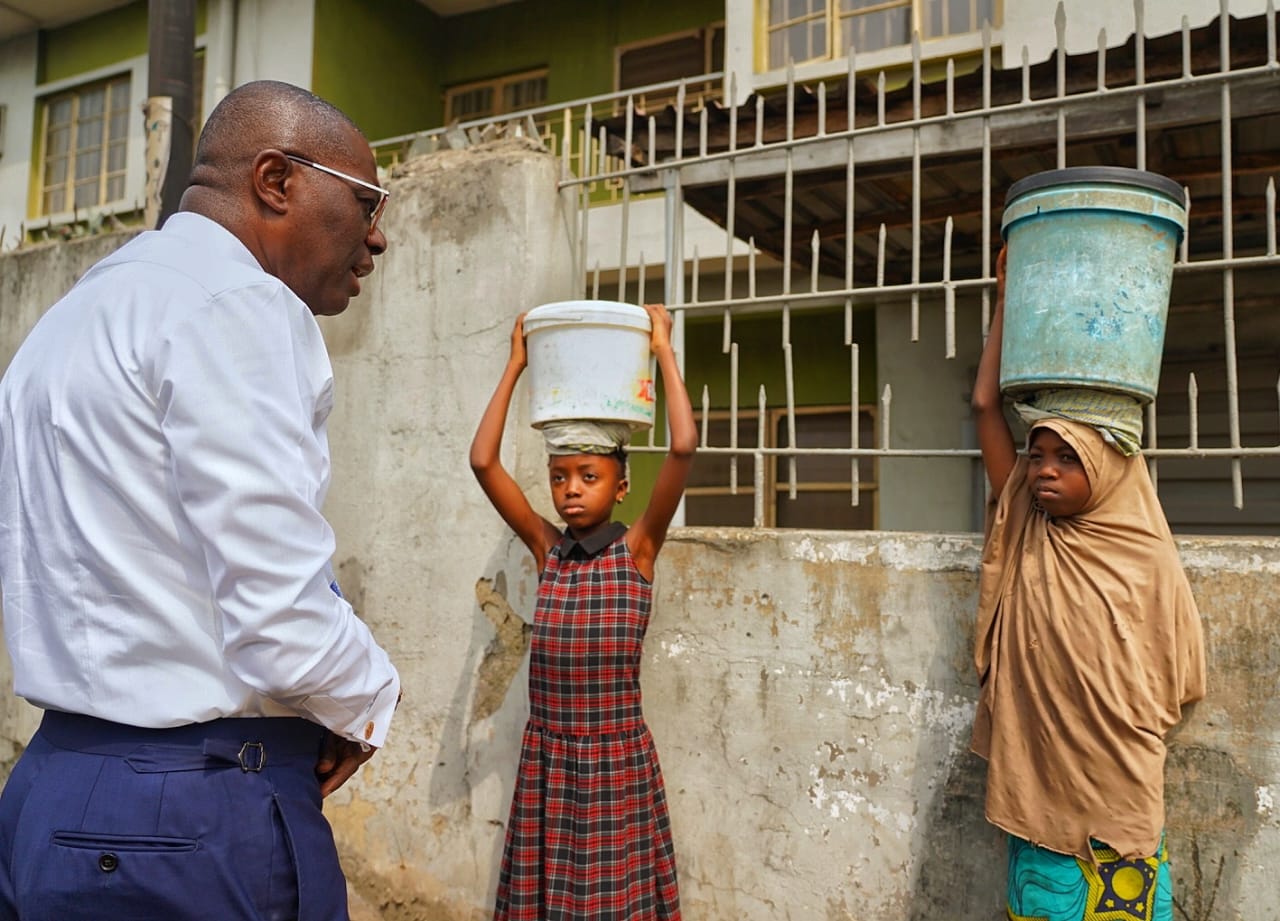
His finish was perfect. He wound down his sermon and left almost immediately. I watched him go and asked myself whether he had watched a trending video of Governor Babajide Sanwo-Olu and two out-of-school girls on a street of Lagos. Heavily laden with buckets of pepper, the kids were not in school. Why? The governor stopped and questioned them. They said their parents did not have money to pay school fees:

“Is it a private or government school?”
Adipolo

“Private.”

“So, your parents haven’t paid; is that why you are not in school?”

“They haven’t paid,” the girls nodded and chorused while the older one quickly cut in: “But I have just come to Lagos.”

“Oh. You have just come to Lagos.”

“Yes.”

“From which state?”

“Kano.”

“How old are you?”

“Twelve.”

“And you?”

“Nine.”

“So, where are you going? You are going to grind pepper for your parents?”

“Yes.”

“Where do you stay?”

“Anthony.”

“How can I get to your parents? Do you know their numbers?”

“No.”

Shakespeare says in Romeo and Juliet: “these griefs, these woes, these sorrows make me old.”

Prescient. Adversity is colour-blind; it knows no tribe and creed. The girls represent Nigeria’s unity of tragedy. The country is ugly because it has lost its soul and has no space for the underling. The nine-year-old girl is Christian and Igbo; her name is Amarachi. The second is Muslim and Hausa/Fulani. Her name is Suwebat; she is 12 years old. Her parents relocated to Lagos from the North recently. To do what work? We do not know. But they came with a 12-year-old girl and threw her into the acid rains of Lagos streets.

Where I come from, a child’s name conditions its life. But that is not the case with these girls. Amara’ is ‘Grace’ and ‘Chi’ is ‘God.’ You named your child ‘Amarachi’ – God’s Grace – and you threw her to the demonic gods of ignorance and want. The Muslim girl is Suwebat (Suwaiba in Arabic). Did her parents know the depth of that name they gave their daughter? Suwaiba means ‘Reward for Good Deeds; God’s Gift in reward for Goodness.’ What did the parents think they did to deserve her? Imagine those two names; one is God’s Grace, the other is God’s Gift, yet the bearers were being programmed to fall and fail. To whom do we post the blame? The parents or the nation or the girls? We can’t blame the girls; that would be victimizing the victims. We blame Nigeria for failing its strugglers; we blame the parents for fighting adversity with submission. Birthing those girls and nurturing them to become donkeys on alien streets could not have been the parents’ appreciation to God for the grace and the gift they have.

Nigeria may have challenges of unity, but poverty of peace and plenty unites Nigerians. The two girls were seen together, walking shoulder-to-shoulder, conjoined on a barefooted journey of destiny. That moment, they were not Igbo and Hausa; they were victims in search of hope. They were brought together by the painful woes of being Nigerian with its tragic, ironic peculiarities. Amarachi’s mum is a teacher but the girl is a home help to someone somewhere in Lagos. Suwebat from the North could speak English, but she is not in school. Her parents relocated to Lagos about a month ago. They have no plans to send her to school. The girls were met by Sanwo-Olu at 11am on a week day; they were on a peppery errand as a master’s beasts of burden. It did not matter that the girls’ age mates were in school. Their parents did not care – or could not care. But chance and luck gave them a helper of destiny that morning. The governor has promised to fund their education forever. That is what angels do.

Sanwo-Olu said there are several Amarachis and several Suwebats on the streets of Nigeria. I agree. Global records say so too. They are in every neighbourhood, helpless as life plays ludo with their destinies. They may never have the luck of meeting a governor or a governor meeting them and changing their story. The whole world knows what Sanwo-Olu spoke about and has given our country the dubious crown of global kingdom of illiteracy.

You can repair damaged classrooms but how are we going to repair 10.5 million kids mortally disfigured by ignorance and mis-education? There are all kinds of neighbours now eating all kinds of poisonous insects. Banditry; Yahoo Yahoo; money ritual – all sprouting from lack of education in its right form. The riotous throats of our bad neighbours will keep all of us awake if inaction is our policy choice. It is happening already. That is why a scared Sanwo-Olu used those girls to preach right to education in Lagos and the Imam followed it two days later in Osogbo with his own message of deliverance from willful ignorance to a Muslim audience.

Everyone should play his assigned role or we all become victims. Sanwo-Olu did well intercepting those girls; the Imam did his own with the thoughtful sermon to the right people; I am doing mine writing this. And, tomorrow in Ibadan, I am presenting a book, a 272-page compendium of 53 (out of 539) articles so far published as Monday Lines. The title is ‘Cowries of Blood.’ Distinguished Professor Toyin Falola, with uncommon grace, did two reviews of the work for reading tomorrow. As we continue to interrogate the Nigerian problem, agonizing over how we arrived at this island of shipwrecks, and how to survive it, my eyes caught a paragraph in one of the engaging reviews. It fits what I do here on this topic of a nation of refugees and of endangered kids on dusty streets. Hear Falola: “Through Cowries of Blood, we receive the confirmation of one of our biggest suspicions: that the Nigerian state is extorting its citizens. In this case, not by monetary means but through their blood — their lives, their properties. The price Nigerians pay for being Nigerians. What a conundrum! That a people have to pay dearly for being citizens of a nation. In a world where people are entitled to some benefits for being citizens of their countries, Nigerians live in constant fear, raised heartbeats and palpitations, fearful of who would be forcefully asked to give the bloodied cowry next.” Farooq Kperogi, in a chat with me last week, described Falola as “Africa’s most prolific scholar… (who) has written more books than any other African alive.” So, when an elephant like that speaks to our issues, our forest must keep quiet and listen. We were told before we were born that kola nut ripens in the mouth of elders. That is what Falola has done in the reviews, cracking the codes and de-encrypting the password to our collective safety. The time to save ourselves is now.

Where’s the coup next? By Azu Ishiekwene

There’s a severe, earth-baking drought in the Horn of Africa. About 13 million people in Ethiopia, Kenya, Somalia and Djibouti are in the grip of acute hunger. The rains have failed in three consecutive years, prompting the driest conditions experienced in the region in 41 years.

This ought to be one of the heaviest burdens on the minds of African leaders: how the continent can rally support and assistance for people in that region.  At the moment, it is not. 

It’s just another item on the news left for the World Food Programme under the United Nations and the international press to worry about. 

But seriously, what can the current class of AU do? How can a good number of them who are almost overwhelmed by domestic problems care about what is happening next door? 

The continent is struggling. Many countries are in need of food aid themselves, so how could they possibly be in a position to provide food relief for brothers and sisters on the horn? 

There was a vision of Africa envisioned by its founding fathers and pioneer leaders. That vision has, to a large extent, remained a mirage. Every projection has failed and only the trade in guns and with it, and the attendant violence, appears to be booming. 

Almost entirely, every surviving revolutionary metamorphosed into a beast or spawned a system that challenges even the moral conscience of hardened criminals.   

In January 1976, Nigeria’s head of state at the time, Gen Murtala Mohammed, delivered a famous and revolutionary speech at the extraordinary summit of the Organisation of African Unity OAU (now African Union) in Addis Ababa, Ethiopia. Aptly entitled: ‘Africa Has Come Of Age’, Murtala excoriated the neocolonial powers over their exploitative tendencies and, in effect, warned that enough was enough.

Specifically, the theme of his speech was a rebuke of the support of the United States and other western allies for the apartheid system in South Africa which was trying to suppress the popular rebel movement in Angola in favour of a puppet regime.

Barely a month after this audacious proclamation, Murtala was brutally assassinated in a bloody coup on the streets of Lagos on February 13, 1976. Not a few, including yours sincerely, were convinced that Dimka’s aimless coup was a western conspiracy to get another revolutionary African leader out of the way.

Many leaders of Murtala’s temperament fell to the bullets of assassins in Africa – Thomas Sankara, Patrice Lumumba and Samora Machel, among others. As radical as they came, so were the reactionary bullets that flew in their directions. With few exceptions and the hands of fate, many kissed the dust and were out of the way.    

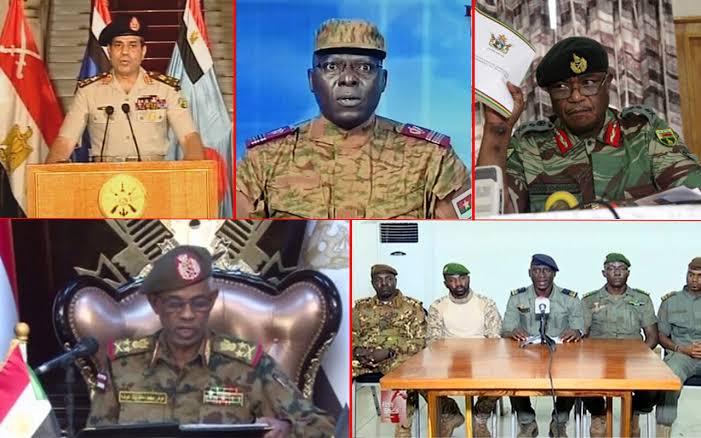
Forty-six years after Murtala, Africa has not come of age. Apart from the crises of under-development, it is returning full cycle to the era of military coups and instability. And while some adventurous soldiers are taking over seats of power and state houses, bandits and terrorists are taking over villages, throwing people into refugee camps and even collecting taxes and ransom. 

Back in the 1960s and 1970s, Africa had inspiring leaders who could stand their grounds, look some colonial chauvinists in the face and call their bluff. Countries like Nigeria became frontline states in the Non-aligned Movement challenging the evil system of apartheid in South Africa and supporting resistance movements against colonial authorities in Namibia, Zimbabwe, Kenya, Algeria among others.

The OAU and ECOWAS were rallying points of authority to exert regional and continental pressure towards defined and definite outcomes. Back in those days, there would have been a continental push to bring relief and help to the countries and people on the verge of dying in their beds from the scourge of heat, hunger, and thirst.

It was with that spirit of confidence and self-assurance that President Olusegun Obasanjo, in 2004, warned and stopped in their tracks, foreign mercenaries who attempted to take over the government of Equatorial Guinea. 

Obasanjo was even more dramatic in the case of São Tomé and Principe when the civilian government was overthrown while President Fradrique de Menezes was attending a meeting of world and African leaders in Abuja in 2003. 

Immediately after the meeting, Obasanjo escorted de Menezes back to São Tomé and asked the coup makers to return power to the president, which they did in exchange for amnesty like wayward school children.

Alas, gone are the days. It does seem all the AU and ECOWAS can muster as a response to the crises of governance or any other crises on the continent is a mere shrug. The mutual collaboration which had African states uniting for the independence of Zimbabwe, Namibia, South Africa and even the liberation of Uganda from the vice grip of Idi Amin has all but floundered.

This lack of unity and collaboration explains the half-hearted statements of both the AU and ECOWAS regarding the military takeovers in some of the countries in the West African Sahel. 

Beginning with the military overthrow in Sudan in 2020, the silence or half measures/after-thoughts from the continent’s leadership allows anyone who’s daring enough to take their chances at anything. 

And of course, international politics is too preoccupied with tensions in the global North and the fallouts of the COVID-19 pandemic to care about coups in Africa. 

France has enough internal problems of its own, and under Emmanuel Macron, it has shown an increasingly diminished appetite for its protégées in Africa. It has cut down its troops and other European allies and the US who are not prepared to weep more than the bereaved, have followed suit.

It’s quite interesting how the coups have progressed. Sudan and Chad have common borders; Mali shares borders with Burkina Faso to the south and Guinea to the south-west. Guinea in turn has common boundaries with Guinea Bissau, where the coup attempt of February 1st, 2022 failed. It is also interesting that apart from Sudan, all the countries affected by military takeovers so far, are Francophone.

In Mali, the new government has gone all out for France – severing diplomatic ties, with Prime Minister Choguel Kokala Maiga blaming France for Mali’s economic problems and security situation in an interview he granted Anadolu, the Turkish news agency. 

Reading that interview indeed leaves so much to worry about. Mali is saying, without mincing words, that France is teleguiding affairs at the African Union and ECOWAS. In the same breath, it is saying that France is responsible for all the insecurity – if not just in Mali, then across the entire Sahelian Africa. 

The sentiment among local troops, partly obvious from the post-coup speeches, is that the soldiers can defend their countries against the onslaught of the Islamists without much foreign help. And that France, rather than being a solution, has become a part of the problem. 

Whether the troubled former French colonies can stand on their own remains to be seen. But the Islamists are spreading like cancer, taking territories even beyond the French sphere of influence and increasingly infecting local populations. 

Banditry in Nigeria’s north-west region has escalated from the moment artisanal mining of gold in Zamfara State became an open affair. And the bandits, many locals have confirmed, are mostly not locals by body structure, behaviour and accent (language). 

In Southern Africa, Mozambique is fighting Islamic insurgents, while in the East, Uganda and Kenya have been locked in decades-long battle against Al-Shabab. The continent is in a fragile place, significantly worsened in the last few years by unstable commodity prices and COVID-19.

Cheap Chinese money is also drying up and the continent must now reckon with a largely corrupt elite and incompetent political leadership.

And so the coups are back! And they will fester as long as there are sit-tight rulers, bad governance, insecurity and just about anything that makes the people think any change is better than the status quo. 

Wahala dey!

Still smarting from a Valentine ruined by adulterated fuel, Nigerians have not stopped fuming

Photo Credit: Nairametrics

By Lillian Okenwa

A sour Valentine it was for many Nigerians as the adulterated fuel induced scarcity failed to take even that special day into consideration. And…the affliction is still biting harder. Vehicle owners and other users of the precious Premium Motor Spirit (PMS) continue in the seeming unending battle to procure that priceless liquid. Sadly, Petroleum marketers, hint that the Nigerian National Petroleum Corporation (NNPC) Limited is yet to evacuate the adulterated fuel from filling stations. It does not seem like good news is anywhere in sight.

To spice up the already very salacious situation, the Peoples Democratic Party (PDP) has alleged that NNPC is seeking to withdraw N201 billion from the national coffers to clean up the tainted fuel. NNPC had since admitted that four firms MRS, Oando, Duke Oil and Emadeb/Hyde/AY imported adulterated fuel into the country, leading to fuel scarcity across the country and a 10-day shortage in national fuel reserve capacity. Meanwhile, the Nigerian Union of Journalists (NUJ) has asked the Federal Government to pay compensation to Nigerians whose vehicles have been damaged on account of adulterated fuel. That is yet to be addressed.

However, the group managing director of NNPC, Mr. Mele Kyari has apologised to Nigerians over the importation of the off-spec PMS. Kyari spoke when he appeared before the House of Representatives Committee on Petroleum Downstream. Assuring that that the distribution of petrol would nomalise in the weeks ahead, Kyari said: “We regret this situation. It is completely unavoidable; we didn’t see it coming. We apologise to Nigerians. We didn’t see this coming.”  Mr. Kyari no doubt is touched by the plight of Nigerians following this undesirable situation, but Nigerians would like to know what happened to quality control when the contentious fuel was first brought into the country. If there is a body or group whose job it is to ensure the quality of petroleum product before it goes into circulation, where were they when the adulterated PMS escaped into the system? Also, what sanction is being meted out to the importers of this fuel?

This is not the first case of adulterated fuel importation in the country. At least one of the affected companies had been named in a previously polluted fuel importation. In 1996 an Italian vessel named ‘Ostention’, loaded with toxic fuel, entered the country’s territorial waters. The result was deadly. Again, prior to the Oando toxic fuel saga of 2008, Nigerians in 2003, were exposed to a similar experience.

In a July 2020 report, The Guardian UK disclosed that according to new laboratory analysis, “black market fuel made from stolen oil in rudimentary ‘bush’ refineries hidden deep in the creeks and swamps of the Niger delta is less polluting than the highly toxic diesel and petrol that Europe exports to Nigeria.”

In the article titled: “Petrol sold to Nigeria from Europe ‘dirtier’ than black market ‘bush’ fuel.” The Guardian  further disclosed that: “Shell, Exxon, Chevron and other major oil companies extract and export up to 2m barrels a day of high quality, low sulphur ‘Bonny Light’ crude from the Niger delta. But very little of this oil is refined in the country because its four state-owned refineries are dysfunctional or have closed. Instead, international dealers export to Nigeria around 900,000 tonnes a year of low-grade, “dirty” fuel, made in Dutch, Belgian and other European refineries, and hundreds of small-scale artisanal refineries produce large quantities of illegal fuel from oil stolen from the network of oil pipelines that criss-cross the Niger delta.”

Although the UK based newspaper has not made any earth shaking discovery with its findings, what beggars understanding is why the Nigerian government is playing games with setting up modular refineries. On a regular basis, troops of Operation Delta Safe, discover and immobilise illegal refining sites in the Niger Delta. Notwithstanding the layers of pollution illegal refining is adding to the region, a mix of greed and high unemployment in that area has made illegal crude refining an attractive business. Some environmental groups are even pushing for the government to fund small refineries, which are cheaper and simple to run, hoping to create jobs and ending illegal refining of oil.

According to the Director of Programmes and Administration Environmental Rights Action/Friends of the Earth Nigeria (ERA/FoEN), Mike Karikpo: “Security agencies in the Niger Delta region aid, influence and provide protection for oil thieves and artisanal oil refining activities. This is, therefore, a matter of national security and President Buhari needs to wield the big stick and cleanse the Augean stable that has become the security architecture in the Niger Delta region.”

But Elder statesman Chief Edwin Clark insists that the Government has not been transparent nor shown needed concern on the issue. To Clark: “You cannot say you don’t want illegal refinery, and at the same time you have no plans connecting to modular refinery, that’s why we are having problems in the area…  If modular refinery has been established with the local people fully participating in it, it will reduce stealing and illegal refining; it will also reduce environmental degradation. The people in the area will have something to do.”

Speaking at the virtual inauguration of the 5,000 barrels per day Waltersmith modular refinery in Ibigwe, Imo State on 24November, 2020, President Muhammadu Buhari Buhari said the deployment of modular refineries was one of the four key elements of his administration’s Refinery Roadmap rolled out in 2018. 

In 2015 during his electioneering, the retired General promised to build more refineries and fix the old ones if elected the President of Nigeria in the next four years. His government had promised to build modular refineries in the region in order to engage jobless youths, who resort to unruly operations and militancy activities to push out 1,000 barrels of refined petroleum products daily from each of the refineries to meet supply shortfall in Nigeria.

As Nigerians continue to wait, a past President of Nigerian Association of Petroleum Explorationists (NAPE), Abiodun Adesanya, admitted in an interview with The Guardian that strategically, modular refineries will slow down illegality, “but those things don’t happen in a day. The problem is that government sometimes make pronouncement without the details. The Federal Government needs to get to work with technocrats to make the plan work.”

The President has barely a year left after an 8-year tenure and the country is worse off. In the second quarter of 2021, NNPC announced that it spent a whopping sum of N101.69 billion to service three non-operational refineries in 2020. Ironically, the three refineries did not process crude in the year under review.

By August 2021 the Federal Executive Council (FEC) approved $1.5 billion (about N600 billion) for the rehabilitation of the Port Harcourt refinery and $1.484 billion for the rehabilitation of both Warri and Kaduna refineries. At this time, about N3.8 trillion has been poured into Nigeria’s four derelict petrochemical refineries without any result being recorded. In the meantime instead of following up on the promise of modular refineries, the Federal Government has thrown its weight on the refinery being constructed by Dangote Petroleum and Petrochemical Refinery. It has since acquired a 20 per cent minority stake of $2.76 billion in the project. As far as Nigeria’s federal government is concerned this is a preferable option.

Unfortunately, it is the ordinary Nigerians that are suffering. The same ones who in the grip of General Buhari’s messianic spell launched him into power.

mmm

TIPS