Home Blog Page 859

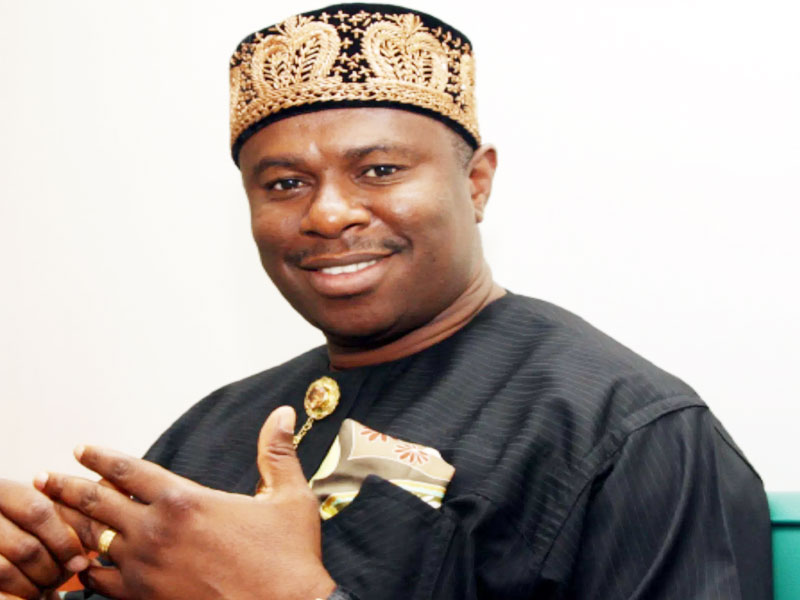
Onoja SAN marks 54th birthday in style

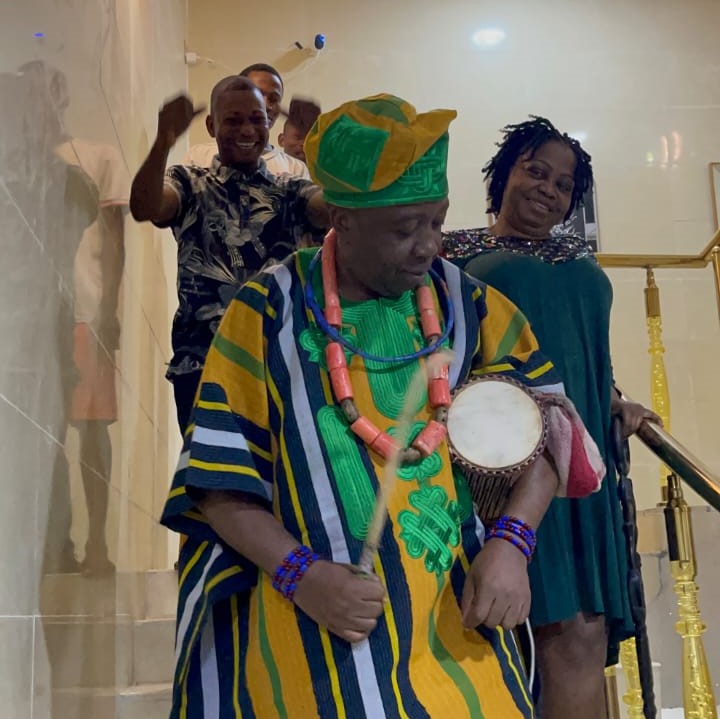
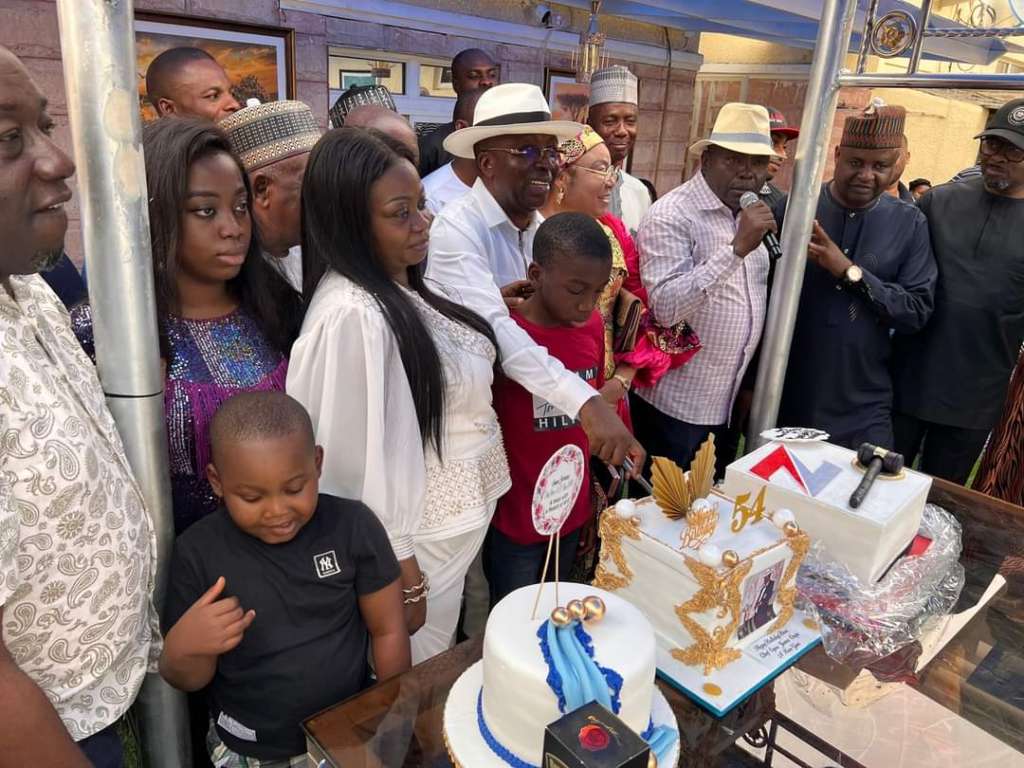
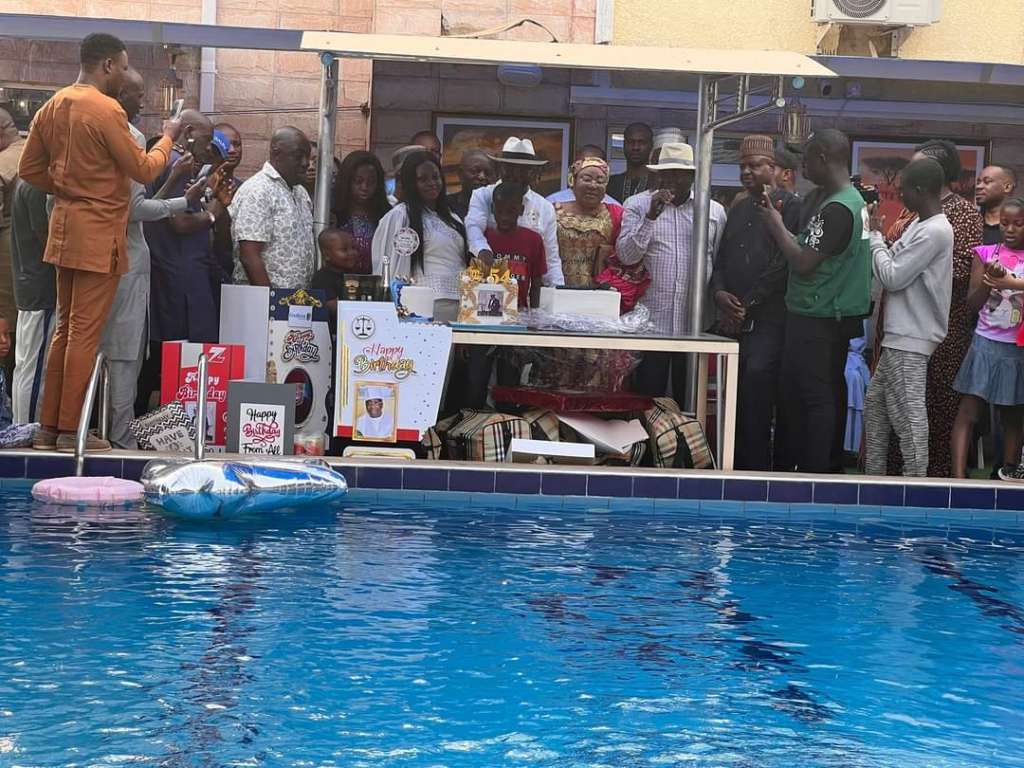
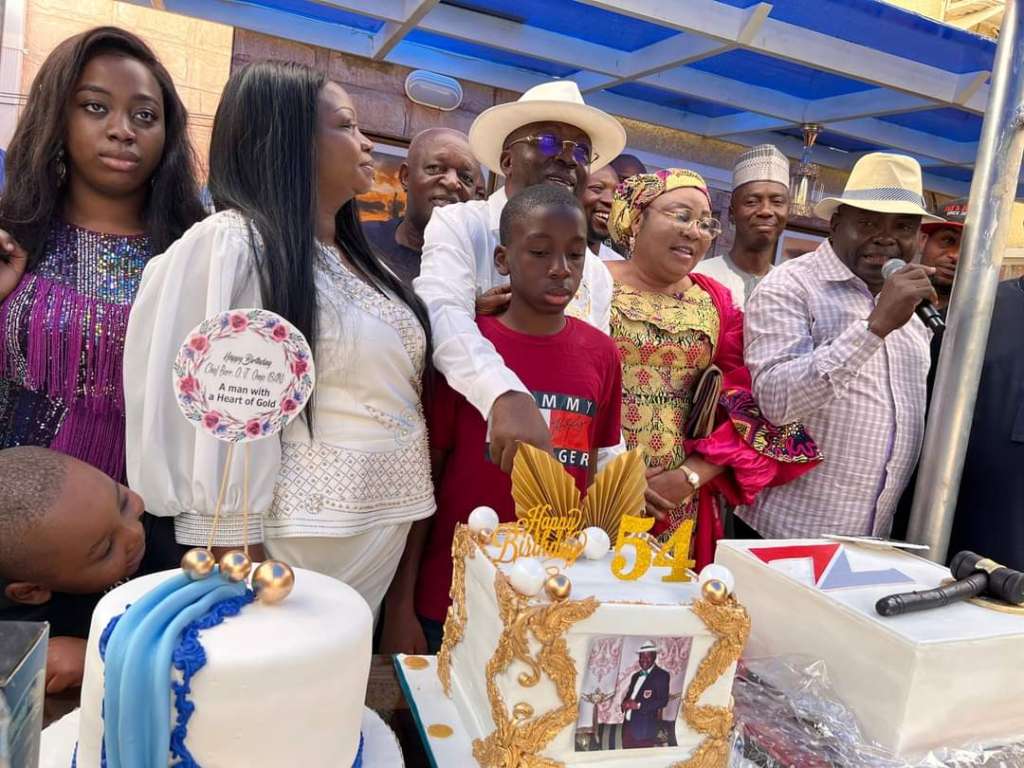
On the morning of Saturday 19 February 2022, Chief Ogwu James Onoja, SAN practically rolled the drums out to celebrate his 54th birthday. Below are photos of the three-part celebration.

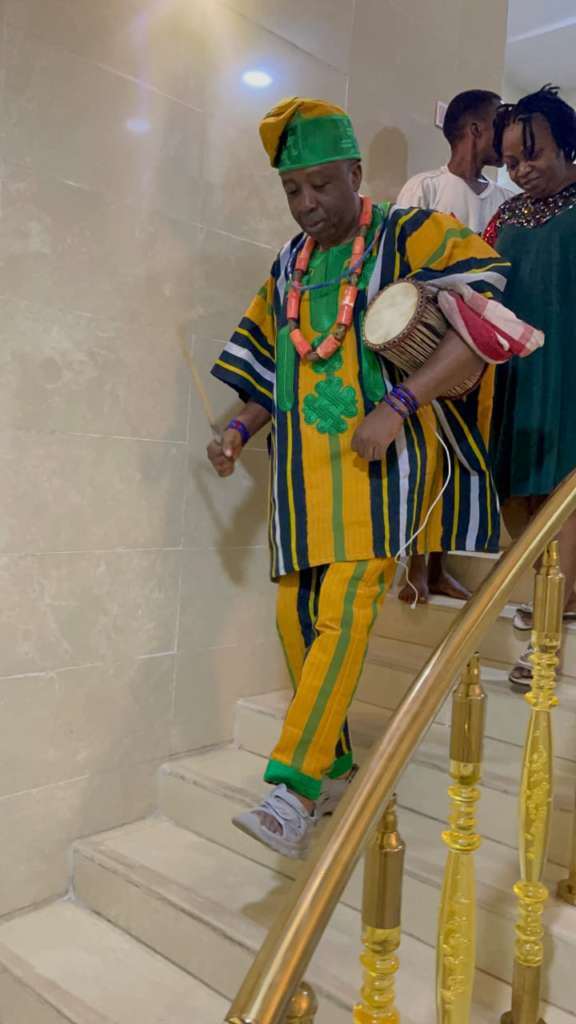
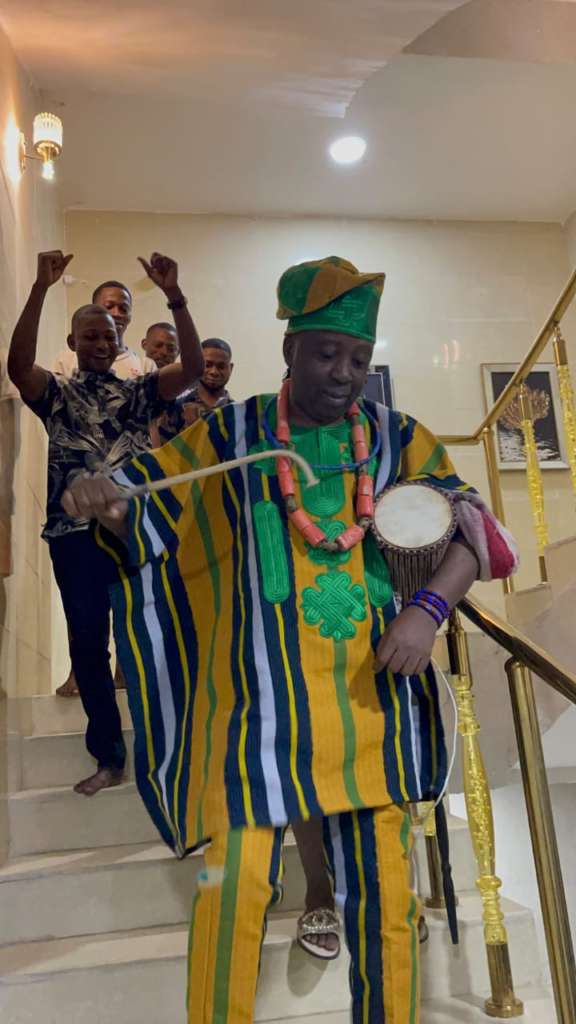
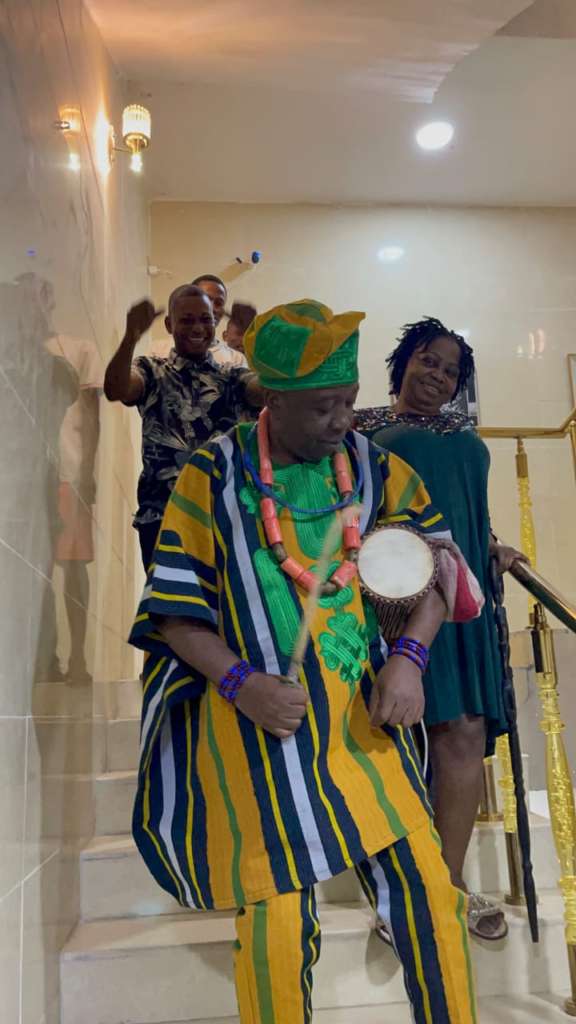
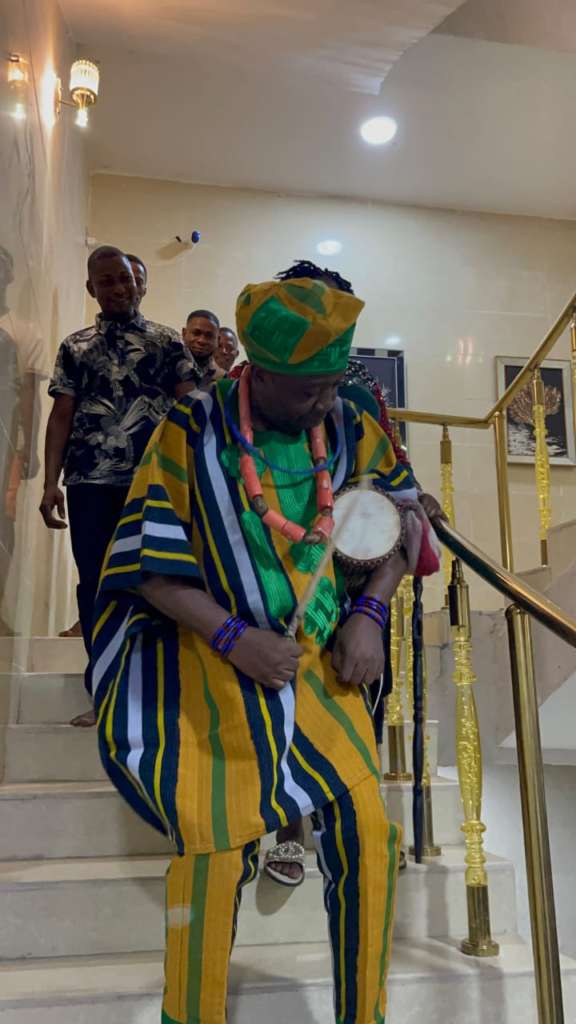
As early as 6.30 am staff members of O.J. Onoja, SAN & Associates were in his house to give him a birthday surprise but Chief surprised everyone. With his talking drum tucked under his arm, he drummed all the way downstairs to receive his guests.

Onoja working the drum with Mrs. Rosemary Onoja watching with delight
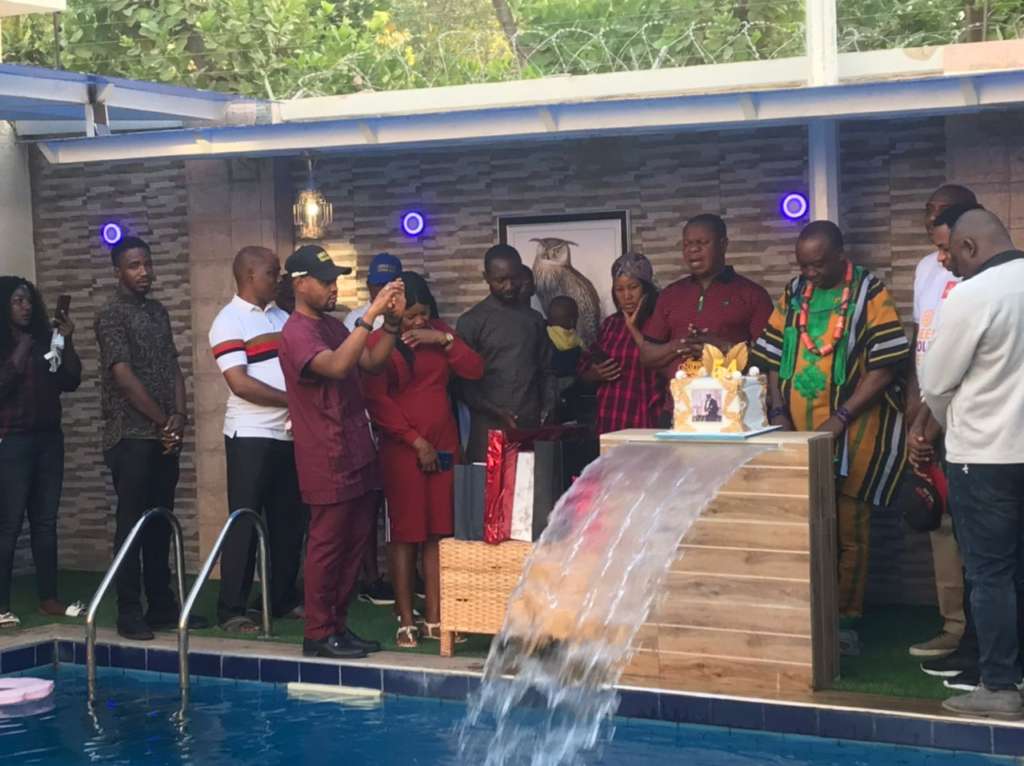
With his family members in tow, he joined his partners and associates at the poolside where Elder Peter Idenyi led prayers
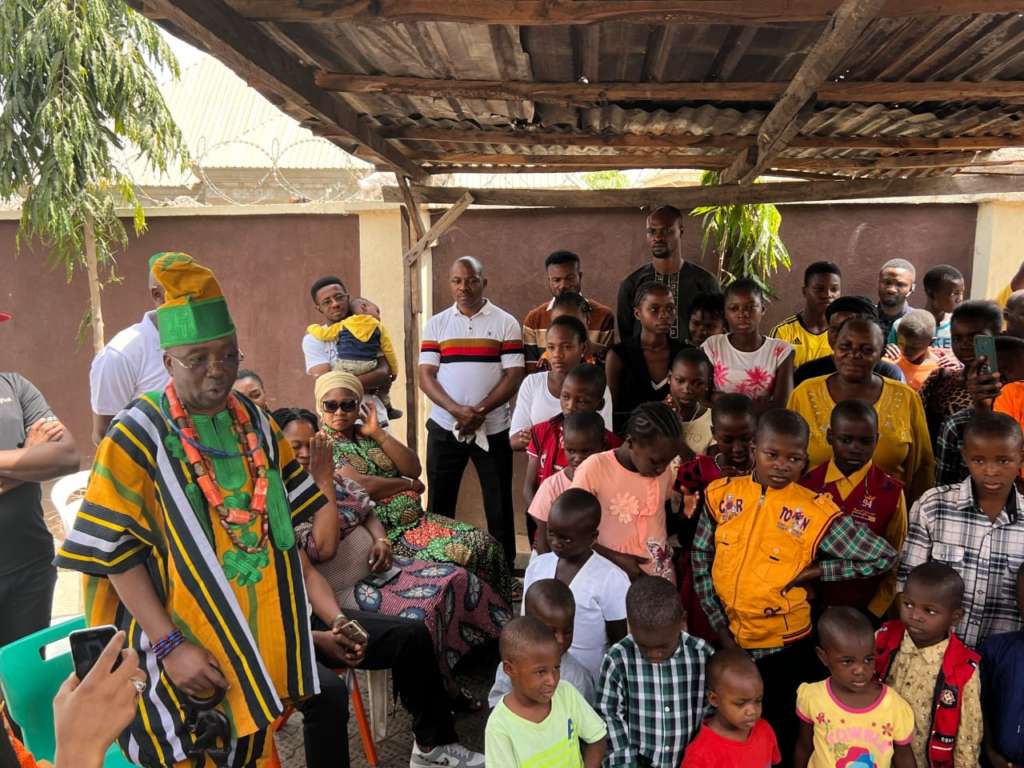
By noon, the celebration moved to Divine Wounds Jesus Christ Orphanage home at Tungamaje, Abuja FCT where the Learned Senior Advocate spent time with orphaned kids.
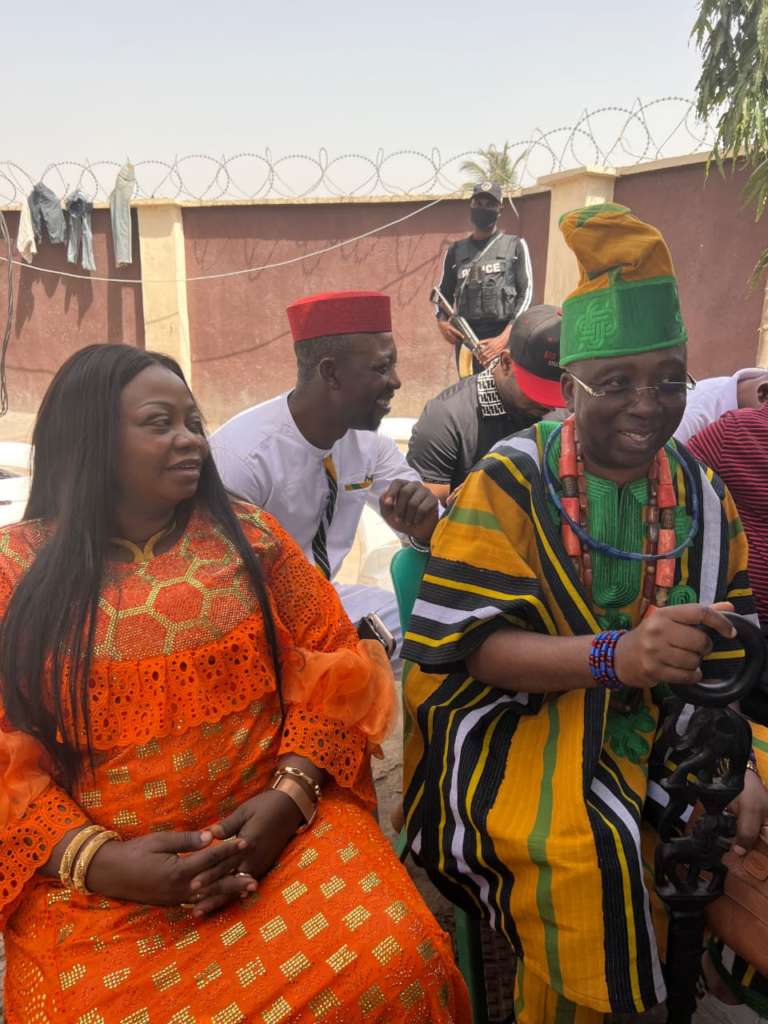
Mrs. Rosemary Onoja and Chief Ogwu James Onoja, SAN
Flanked by family members, the last part of the celebration continued in his home.
Jibrin Okutepa, SAN coordinated the cutting of the birthday cake.
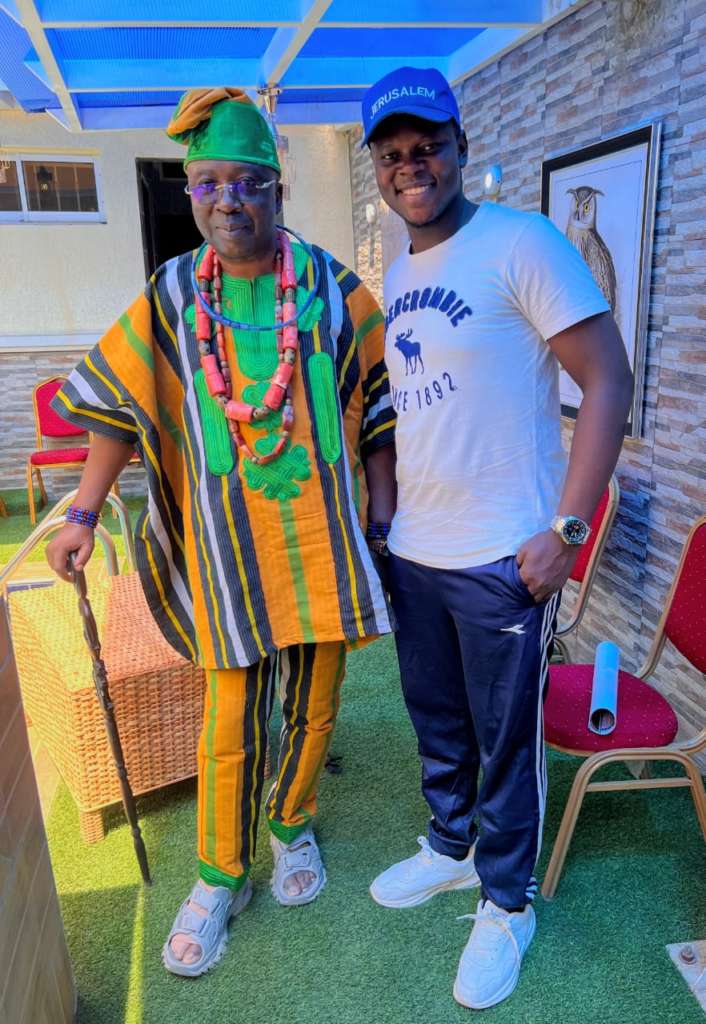
With his PA Omachoko

Memo to Bench, Bar, and Legal Academia: Let’s put citations in footnotes

 By Chinua Asuzu

Whether in academic legal writing, brief-writing, or judicial writing, let’s stop cluttering the body of our work “with jumbles of letters and numbers,” (Mark P. Painter, ‘30 Suggestions to Improve Readability, or How to Write for Judges, Not Like Judges,’ 14, judgepainter.org/publications).

Algebra like [2011] 16 NWLR (Part 1272), 62, 75 shouldn’t appear in the body of our work, but in footnotes. We went to law school, not to math school.

Name the authority in the body, but provide the citation in footnotes: “As to citations, they BELONG in footnotes. Putting goofy letters and numbers in the middle of paragraphs destroys readability.” M & M Metals International Inc v Continental Casualty Company, 870 N.E.2d 167 (Ohio Court of Appeal 2006), 167 (Painter J).

Putting citations in the body of your brief “clutters the text, slows the reader, and hampers the writer’s ability to construct a coherent paragraph. Few writing reforms would benefit the legal world more than adopting the following rules: (1) put all citations in footnotes; and (2) ban footnotes for all purposes other than providing citations.” Bryan A. Garner, Garner’s Dictionary of Legal Usage, 3rd ed., OUP, 2011, 158.

So put all citations in footnotes, and put only citations in footnotes. “[T]he system used for citing references should be designed to give minimum interruption to readers’ progress through the text. It should allow them to concentrate on primary information.” Christopher Turk & John Kirkman, Effective Writing: Improving Scientific, Technical, and Business Communication, 2d ed. 1989,  69–70.

Exporting citations to footnotes enhances readability. Before they ever think of looking up any authority you cite, judicial readers want to read through your brief, preferably at one sitting. Putting your citations in the text suggests you expect the judge to pause at each authority, go to the library, and study the authority.

Reserve footnotes for citational hieroglyphics.

But Avoid ‘Talking Footnotes.’

Citation footnotes are all right, but talking or textual footnotes are not.

Use footnotes for citations, and seldom for anything else. Do not use ‘talking footnotes’—footnotes containing amplification, further argument, or further discussion. Avoid those substantive or textual footnotes. “If your point is important, it belongs in the text; if it is not important, it does not belong in the brief.” Harvey C. Couch, ‘Writing the Appellate Brief,’ 17 Practical Lawyer, 1971, 27, 30.

Talking footnotes detract and distract from readability. They interrupt the reader’s enjoyment of your prose, a pleasure not incomparable to other, more familiar pleasures: “Encountering a footnote is like going downstairs to answer the door while making love,” laments Judge Mark Painter (op. cit.).

Chinua Asuzu, BRIEF-WRITING MASTERCLASS, Partridge, 2017, 356–358.

Drama, reality and illegal refineries

By Dakuku Peterside

The debate about politicians being among the best actors on earth is as old as humanity. What makes acting in politics so attractive is its subtle nature, emotional appeal and the interplay between human perception, real-life challenges, and human vulnerability. At the centre of all political drama is symbolic and connotative communication, where the unsavvy audience are fed, albeit subtly, messages that the subconscious assimilate, which concretises existing conceptualisations, create new meanings or re(shape) perceptions. Just as Soyinka’s seminal drama, “The Trials of Brother Jero” used an intricate web of plot, setting, and character to communicate the hypocritical nature of religious activists in Nigeria, political drama manipulate the plot and character to advance a metaphor of strength, growth, or decay.

We get a glimpse of politicians’ political drama from time to time in Nigeria. Remember Chief Festus Okotie Eboh, Gov Ayo Fayose, Senator Dino Melaye and other respected leaders who are potential Oscar award winners., Recently, politicians and political leaders have acted more political drama than addressing the issue of crude oil theft and its corollary, illegal refining. Unfortunately, this issue for which we prefer drama to making hard leadership decisions profoundly affect the economy, environment, public health, and social cohesion. Let us x-ray this political drama scene by scene and identify the symbolisms of the drama, the characterisation of the political “Jeros”, and possible solutions to the problems of crude oil theft and illegal refining.

Scene 1: This scene opens with the setting of the creeks of Niger Delta, littered with a network of pipelines and induced illegal tampering of oil pipelines from base to terminals by criminals who are bent on stealing crude oil. The protagonists are youths who blame poverty, unemployment and exclusion of their communities from tangible development initiatives as reason for their actions. These youths have collaborators and benefactors in these nefarious activities. We must confront pertinent questions whose answers have ramifications for Nigeria: What is the plot? Who are the heroes and the villains, and what is the impact of their activities on the oil sector by extension national economy? What is the actual volume of crude oil stolen every day and every month? Who are the thieves and their sponsors?-

NNPC figures for stolen crude from January to December 2021 and NUPRC (formerly DPR) figures for Jan-December 2021 differ. It ranges from 115,000 to 300,000 barrels per day(bbl/d). This estimate translates to between 42m to 110m barrels of crude oil per annum. At an estimated price of $90 per barrel, these amount to between $3.8b and $9.9b per annum. Stolen crude at its peak is more than the amount of crude oil produced in three African countries Viz Ghana, Cameroon and Chad .

This oil is stolen from the pipelines linking wells to terminals. More baffling is the fact that billions of Naira is spent annually to protect this same network of pipelines. This volume of stolen crude implies that we cannot meet our OPEC quota and are losing trillions of Naira to some smart boys in the creeks with consequential impact on the economy. We were producing 2mbbl per day in the past, but today we are doing only about 1.3mbb per day due to crude oil theft.

The unknown “thieves” have always gotten away with their loot from early 2000 to date. These raise multiple questions for which there are no answers yet. Just imagine what $9.9b, if properly managed, could do in our communities – the number of roads, hospitals, schools, and other infrastructure that it would have built. This does not even take into consideration, the environmental degradation, associated risk and their impact on our livelihoods.

Scene 2: The second scene opens with big foreign vessels/badges in the high seas carting away some of the stolen crude oil overseas to foreign refineries. It is estimated that eighty per cent of the stolen oil is exported, while the balance of 20 per cent goes into  illegal refining in “refineries” dotting the landscape of the Niger Delta creeks. The vessels and the illegal refineries are very conspicuous and visible to be noticed yet, these illegal operations have been going on without any significant challenge from Government or governmental institutions including security agencies.

It is noteworthy that all these areas this crime against Nigeria is perpetrated have naval and marine police presence, yet the thieving of crude oil has been going on in the past 20 years. It is alleged that some security personnel connive with and even protect the criminals and the gangs operating these illegal activities. The activities of these hoodlums have been known for a long time, but the political will to stop them has not been present.-

How can it be that in the past years, since these criminal activities have been in the public domain, not a significant number of criminals engaged in this have been caught, arraigned, prosecuted, and incarcerated if found guilty? Crude oil theft and illegal refining generate illicit wealth that fuels drugs consumption, arms proliferation, and criminal gangs.

Scene three: It opens with the devastating environmental pollution and deadly soot caused by these illegal refining activities within the major cities and villages in Rivers and Bayelsa states. Soot is a deep black powdery or flaky substance consisting mainly of amorphous carbon, produced by the incomplete burning of organic matter such as crude oil. This phenomenon has been on for about seven years but has gotten worse from 2016 to date.

I dealt extensively with this issue of soot in two editions of this column on 27 December 2021 and 3rd January 2022 under the title, soot and our collective conscience. Despite the enormous health implication and the damage to the economy of immediate impacted states and the country, both the federal government and the impacted state governments did little or nothing to solve the problem for over six years.

The Rivers State government, a major impacted state, through its ministry of the environment, set up a technical committee to investigate the soot issue. It produced and submitted a technical report in 2017/2018, yet nothing was done about it. Local citizens set up a pressure group and campaigned both locally and internationally to get the world’s attention to the issue, yet nothing significant happened.

The group, led by Eugene Abel sued the Federal Government of Nigeria for this monumental neglect of the lives of Rivers State residents because it has not tackled the soot problem. Local citizens and civil society organisations pushing to hold the Government responsible for solving this environmental problem are ongoing and exacerbating.

Scene 4: Enter Gov Nyesom Wike. In his ecclesiastical and messianic approach to dealing with things suddenly woke from slumber after six years of doing nothing about the soot and swept in to rescue Rivers State from the danger of Soot, a consequence of illegal refining activities. Maybe spurred by the sting of our earlier articles on soot, Wike developed a burning desire to create an imagery of a working governor solving the problems of citizens of his state.

The melodrama started. He marched into the Niger Delta creeks, like a Tarzan, with cameras rolling and journalists writing and security men brandishing AK47’s. The sudden haste to bulldoze down illegal refineries and blame the soot problem on everyone but himself as the governor responsible for the state will make one think that illegal refining and the soot problem started in 2022. Although I am happy that something is being done, at least for now, it is evident that these actions are not driven by altruistic intentions.

The symbolism of Gov. Wike’s drama is not lost to us, such that even an uncritical mind can see through it. Swearing in front of the camera that he will deal ruthlessly with the people that steal and refine crude oil illegally, crisscrossing the creeks, physically pulling down some of the illegal refinery structures is drama taken too far by Wike. It begs the question, why now? Wike’s desperation to add to the false narrative and perception of the “action governor” and the dialectics of 2023 elections are very clear in the minds of the discerning, and the people cannot be fooled all the time.

The truth is that the triumph of illegal refineries and the consequential soot plague is the product of criminal collusion between the Government, security agencies at many levels and the communities . It also has links with the collapse of our official refineries which has persisted for three decades .

A responsible governor, prioritizing environmental stewardship and public health above political patronage and electoral conquests, would have declared an emergency on illegal refining and its related effect, soot in 2016. The problem of illegal refining and soot plague became aggravated in 2016, and the perpetrators were allowed to develop this alternative economy that was lucrative to locals. This economic boom feeds into the sense of entitlement to proceeds of crude that is predominant locally.

This crime was an open secret, and everybody knew about it, including the governor. Gov Wike looked away as the boys doing this criminal business became wealthy, and he enjoyed their support. Even local people know it’s an intricate web of political interplay, economic interest and multilayer compromise by many actors.

Having established the interplay of forces at work, It is now more critical than ever that the Federal Government shows real commitment to tackling the twin evil of crude oil theft and illegal refinery. A national roadmap with explicit definitive action is needed beyond setting up task forces that will not yield any result.

A cocktail of actions is required and urgently, from awareness creation , surveillance, security, and regulatory enforcement to environmental remediation actions. Fortunately, the NIMASA Deep Blue project can be expanded and strengthened to take up the additional responsibility of tackling illegal refining,deploying technology.

The Federal Ministry of Environment has been too silent and absent in the problem of soot arising from illegal refineries . Federal Government should deal with the issue of compromise and collaboration by security personnel and restore the trust of Nigerians in our security personnel and architecture.

Affected States cannot pretend to be helpless. They have primary responsibility for the security and protection of the environment and land administration. States should enforce their environmental laws and must work in synergy with the Federal Government and local communities to tackle these evils and not play theatrics with them.

They should start with a massive enlightenment campaign on the dangers of illegal refining within the communities, enforce existing laws and assure them of providing enabling environment for an alternative economy to replace the illegal economy created by illicit stealing of crude and refining.

Impacted and affected communities need to understand that they have a role in tackling illegal refining. They should resist the temptation of allowing politicians to use their livelihood and environment as a chessboard.

Kyari: Some tears for Nigeria Police, By Lasisi Olagunju

There was a man in London 300 years ago called Jonathan Wild. He lived at a time robbery and violent crimes were rampant in the city, day and night. The people were helpless and the police were largely absent. And because nature abhors a vacuum, this man, a civilian, filled that void. He started hiring himself to government to capture thieves and get them hanged. He was very effective in catching thieves and in retrieving stolen goods back to their owners. He set up what he called ‘Lost Property Office’ which became a house of relief for traumatised victims of theft and robbery.
Jonathan Wild did everything for a fee, became wealthy and was London’s toughest guy of his time. He was so astoundingly successful in nabbing criminals that he got the media to crown him ‘Thief-Taker General of Great Britain and Ireland’ and he rejoiced in that name and fame. He had no rival. English crime and legal historians recorded him as having very uncanny ability to locate stolen goods and those who stole them. Records say Jonathan Wild, between 1721 and 1723, destroyed all criminal gangs that formed “the hardcore” of the London underworld and stabilised the city. He cleansed London and cleared it of criminals and their criminality. The people could, once again, work during the day and sleep at night. He was celebrated in the castles of the rich and in the crevices of the poor. Without being a policeman, Wild was valourised as London’s super-cop. Even the Privy Council applauded and consulted with him. And the state, by an Act of Parliament, increased the cash reward from £40 to £140 per highwayman caught – by him.

He was arrested on 15 February 1725, tried and sentenced to death for taking £10 as a reward for returning some stolen lace to the owner. It turned out that he himself was the mastermind of the lace theft. Then the press dug deeper. Then it was revealed that “far from combating the crime wave, Jonathan Wild had been the principal driving force behind it; that he himself was the virtual ‘Regulator’ of the underworld he was supposed to be suppressing; that the Lost Property Office was simply a clearing house for the huge quantities of stolen goods his own gangs (each allocated an area in London) supplied to him; and that the hundreds of criminals he had ‘brought to justice’ were casualties, or fall guys… in a dark and hidden gang-warfare waged against enemies, rivals, and rebels” (see Gerald Howson’s Thief-Taker General: Jonathan Wild and the Emergence of Crime and Corruption as a Way of Life in 18th Century England, 1985, page 6). There was no ‘super cop’ anywhere; if anything, an analyst said, he was the world’s first super-criminal whose life helped to draw a “fresh picture of the birth of modern organised crime families as part of modern organised political systems.” The Thief-Taker General was actually a Thief-Maker, “an aider, abettor, and encourager of felons” (see Alexander Smith’s Memoirs of the Life and Times of the Famous Jonathan Wild, 1726; page 16). The man had an empire of felons, recruited and trained by him to steal for him. But he was a sensible man. He had the stolen goods but never sold them, nor attempted to. He had the sense to know that selling stolen goods might fetch him greater riches, but it would burn him out too soon. So, what did he do? Jonathan Wild simply asked his men to rob for him, got the items and then informed the owner that what was lost had been found; then he was rewarded with cash which he dictated to the owners. His exploits were so phenomenal that three centuries after his execution by hanging, James Caterer (2009) says he and another sleek felon have remained “archetypal figures” who have “been repeatedly reincarnated as fictional antiheroes across literature, theatre, film and popular music.”

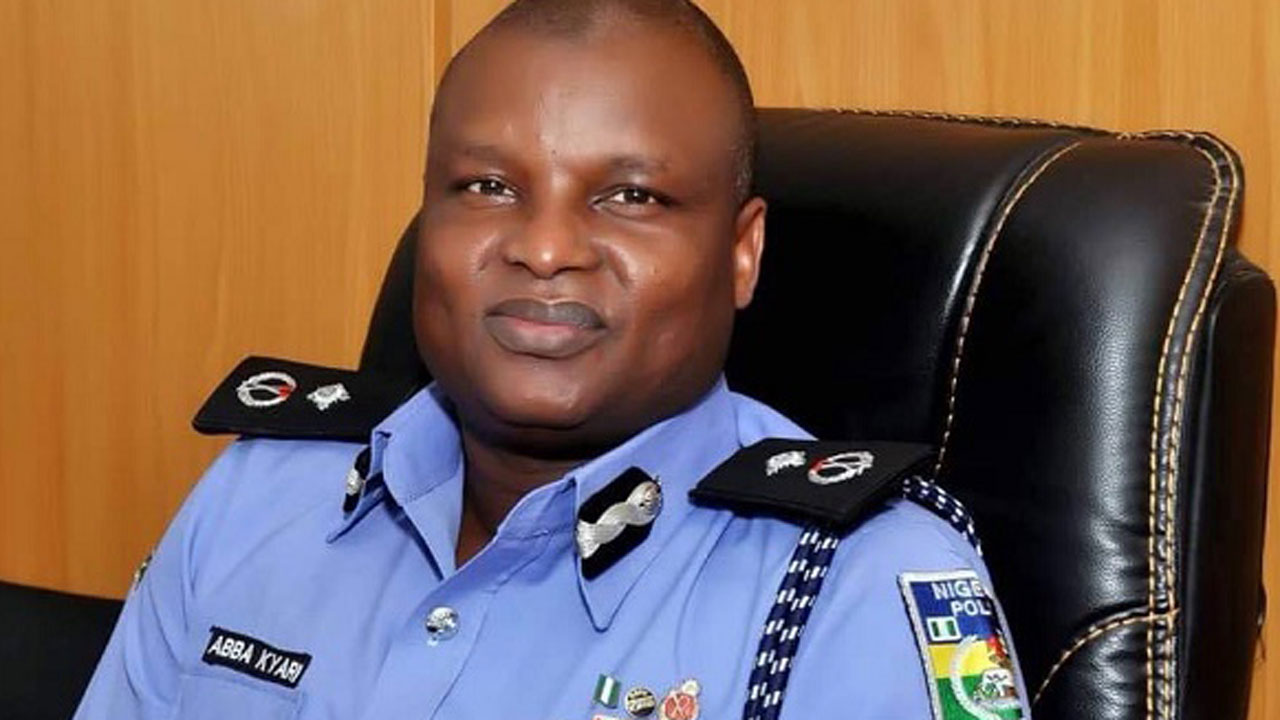
The trending story in Nigeria, outside politics, is about Nigeria’s nationally celebrated and decorated ‘Super cop’, Abba Kyari. He was in the news last year courtesy of the American FBI on a 419 case. This time, his troubles are from Nigeria’s NDLEA which last week accused the Super cop of being connected to a global hard drug ring. Before his scandals, there was no one like him. He was loud, very loud in operation and lousy in social (media) engagements. He is now in detention, still innocent until his accusers prove the contrary. When he is charged to court, we may have other details, particularly his side of the story. But whatever happens in this case, Nigeria should have learnt at least a lesson. Never create what you can’t control. Never rear a pet you cannot tame – pets do go wild. My people say if you shoot a racing antelope and you do not trace the game, it will become food for maggots. Eighteenth century London created Jonathan Wild, indulged him with adulation and discovered very late that he was an arsonist disguised as a firefighter. Here, it appears we’ve always had a succession of firemen whose expertise is in quenching fires with top grade petrol.

A character in Maria Edgeworth’s 1800 fiction, Tales of Fashionable Life asks another character: “You have all your life been evading the law and very frequently breaking the peace. Do you think this has qualified you peculiarly for being a guardian of the law?” And the other replies, “Yes, sure, set a thief to catch a thief is no bad maxim.” Is that what we’ve always done with our policing system? And will things ever change? The Wild story might have taught some lessons to 18th century London and its officials, but were those lessons strong enough to stop nursing criminals while fighting crimes? For instance, a hundred and twenty years after Wild, the state of policing in London showed that what Wild did as a private citizen, the police subsequently did using official cover.

The Puppet Show was a 19th century newspaper published in London. On Saturday 26 September 1848, it ran an editorial on the sorry state of the police in that city. If you search well, you will find that content well preserved online. I read the newspaper’s lamentation and thought it was about 2022 Nigeria. It described policemen as “the guardians of the peace of the country” who ironically had become “the only villains unpunished in it.” I reproduce part of the editorial here: “It is with shame and disgust that we have observed in the newspapers, of late, how fast the Police Force is becoming an organised brutality. Scarcely a week passes without their committing some offence which disgusts everybody but the magistrates. Boys are bruised by their ferocity, women insulted by their ruffianism; And that which brutality has done, perjury denies and magisterial stupidity suffers to go unpunished. Something must be done to check this growing nuisance, for it is utterly impossible that it can be tolerated in a civilised town.”
It is not finished. If you are a Nigerian young man whose phones and laptops are daily serially abused and violated by street-corner cops, you will connect with the next paragraph from that newspaper: “The whole body is corrupt. A policeman may be seen setting himself up as a judge in the corners of the streets, and calling on men of the lower orders for evidence. They may further be seen as executioners thrashing the boys and if any humane person interferes, he at once becomes the object of their ferocity in the street, and of their lies in the court. They are open to bribery, as is well known, and may all be bought – like so much manure – by a liberal purchaser. No night passes in London that some offence is not compromised by their venality, nor a morning that some other is not exaggerated by their falsehood. They are the natural enemies of the poor, and the festering discontent of the masses is kept at fever pitch by the provocation they administer.” That was London two centuries ago sounding very much like Nigeria of the pre-EndSARS period – and, even, of today.

How clean are special squads created in the Nigeria Police? Elite guards anywhere throughout history almost always misbehaved. I don’t know if I am permitted to say that spiraling out of control is the certain character of special people and special forces – if not closely monitored. Imperial Rome had The Praetorian Guard, which members began life as Augustus Caesar’s bodyguards. They carried out their tasks with a queer combination of panache and impunity. They employed all tools and tricks in the arts and science of “espionage, intimidation, arrests and killings to protect the interests of the Roman emperor.” But the force later evolved into a power-hungry monster responsible for the rise and bloody fall of a succession of emperors. British historian, Guy de la Bédoyère, has an interesting account of this force. He wrote in his The Rise and Fall of Rome’s Imperial Bodyguard that “The Praetorians may have been tasked with protecting the Roman Emperor, but they were also the single greatest threat to his life. The unit was a major player in the webs of deceit that characterised imperial Rome, and they were willing to slaughter and install new emperors when tempted by promises of money or power.” Special forces are special menace.
Further down history’s lane, there existed another elite military unit called The Persian Immortals of the Achaemenid empire. For almost two centuries, The Immortals called just and unjust shots while their empire sat helpless. The Nigeria Police has all kinds of Special Squads, Response Teams, Intelligence Teams. It had (or has) SARS which grew and gave the force global ignominy. It is the IRT elite unit headed by fine boy Abba Kyari that is in the news today. It has been slammed with the dubious reputation of doing Jonathan Wild with the privilege Nigeria gave it. Yet, both SARS and the IRT started well and, like Wild, they received the people’s acclaim and reward for doing great jobs.

The first sermon that confronts you on the Twitter handle of the Nigeria Police is “change begins with me” written in capital letters. How much of belief has the messenger in his message? It is less than two years after the EndSARS crisis, yet in the darkness of corner streets, you see unkempt policemen in scary vests waylaying poor drivers and plebeian commuters. They criminalise the poor. Young men and women; phones and laptops are their special delicacy. I will be shocked if good men in the force are not tired and ashamed of this shame. Can we think of life without the police? No. We cannot. The result will be catastrophic and anarchical. Yet, with the police around, there is no rest of mind. And that is because of sad things like the terrible odour that oozed out of the force last week. Nigeria is a tiring behemoth. The problem is institutional and the rot systemic. The Kyari scandal is not the first attached to the Nigeria Police; it will not be the last. We can only help ourselves, going forward, by restructuring the country and rebuilding its decrepit vital institutions for stricter monitoring and better accountability.

The impact of social media addiction on mental health of users

By Rotimi Onadipe

Social media has many positive effects on its users but excessive use of social media platforms also has many negative effects, particularly on the mental health and well-being of users irrespective of age, sex, status, or profession.

In today’s internet age, increased accessibility to the internet has increased the usage of social media tremendously. As a result of this, many users of the internet are ignorantly getting addicted to social media the same way they get addicted to other addictive substances e.g. alcohol, tobacco, and drugs.

A study published in the American Journal of Epidemiology that assessed 5,208 subjects found that overall, regular use of Facebook had a negative impact on an individual’s well-being.

What is Social Media Addiction?

Social media addiction is a psychological condition that makes a user spend so much time on social media to the extent that it affects other aspects of his/her life. It is a growing problem in the modern age that needs urgent attention because of its dangerous effects, particularly on the mental health of the users. It is as serious as other common behavioral addictions people often seek therapy to address. e.g. sex addiction, coffee addiction, food addiction, gambling addiction, video game addiction, TV addiction, etc.

As internet users, we must be aware of the impact of social media addiction on our lives, particularly the danger it poses to our mental health. This will not only save us from the danger of social media addiction but it will also help us to reduce our vulnerabilities and educate other social media addicts around the world.

Not only has social media addiction proven to cause unhappiness, but it can also lead to the development of other mental health issues when used excessively.

Here are some impacts of social media addiction on the mental health of users:

1. Eye diseases

2. Neck or back pain

3. Bad eating habits

4. Forgetfulness

5. Anxiety

6. Sleeplessness

7. Isolation

8. Fatigue

9. Depression

10. Restlessness

However, the above challenges can be avoided by adopting the following safety tips:

1. Educate yourself about internet safety.

2. Contact a therapist if you know you are addicted to social media.

3. Set a time limit on how you use the internet or social media.

4. Always ignore notifications.

5. Delete all Apps that you don’t need on your device.

6. Always switch off your device at a particular time before you go to bed.

7. Avoid taking your device to the bathroom or toilet.

Rotimi Onadipe is the CEO of Onadipe Technologies and the founder of Internet Safety Magazine. Tel: +234-8169121819

Email: [email protected]

We are to blame for Abba Kyari’s Travails. And Many More Would Follow Until We Borrow Some Sense

By Sylvester Udemezue

We are to blame for Abba Kyari’s Travails. And Many More Would Follow Until We Borrow Some Sense

By Sylvester Udemezue

I read the piece by Martins Oloja, titled “Abba Kyari and collapse of public Service”  published on 20 February 2022 in LawAndSociety Magazine. Without delving into the body of that article, below was my response to the title.

Public service collapses because clannishness sectionalism religious bigotry and ethnic jingoism are the deciding factors for who gets appointed into which public position or office in Nigeria. The result in Nigeria is this: “Corrupt government… run by corrupt politicians that run corrupt law enforcement agencies,” as said by Steve Magee.

Che Guevara put it this way: “Cruel leaders are replaced only to have new leaders turn cruel.”

Until we begin to emphasize institutions and to deemphasize the role of persons, individuals, and personalities, Nigeria would remain down and stagnant. Rigoberta Menchú said, _”Without strong institutions, impunity becomes the very foundation upon which systems of corruption are built. And if impunity is not demolished, all efforts to bring an end to corruption are in vain.

We had elevated ABBA KYARI to the status of a semi-God. WE overlooked all his failings and frailties, ignored the atrocities he perpetrated in the name of policing. This was why he began seeing himself, and behaving, as God who is all-powerful and flawless. Books were even written in his honour. A mere police officer.

Power tends to corrupt; absolute power corrupts absolutely. This is an observation that a person’s sense of morality lessens as his or her power increases. The statement itself was made by Lord Acton, a British historian of the late nineteenth and early twentieth centuries. So, if you give a man too much power, without any check, misbehavior is the inevitable result.

Obafemi Awolowo put it this way, _“power enslaves and absolute power enslaves absolutely.”

We are the reason for Abba Kyari’s fall from grace to grass. We’re to blame for his travails. Many more individuals we have elevated to the status is semi-gods, will still come down crashing. And there would be no improvement in governance in Nigeria — yes, not until we put aside clannishness sectionalism, parochialism, egoism, and pettiness, and imbibe/embrace broad-mindedness, altruism, inclusiveness, and merit as our governance creeds. And not until we focus on building strong and enduring institutions rather than on building strong leaders.

Nigeria is a struggling country of thoroughly confused, misguided, and clueless leaders. We can’t make progress because we love regression and stagnancy over and above sanity and progress. We want to be like others but we don’t want to do what others did to be where they’re.

ABBA KYARI (our socalled super cop) has been pulled down by us — by our ineptitude and parochial. We did the same to Ibrahim Magu whom we began referring to (for no justifiable reasons) as the Anti-corruption Czar

And many more will follow, until we change our ugly style in order to get out of the doldrums. 

We have corrupted, thwarted, ruined, and desecrated all known indices and conditions for good governance and progress. And as David Hume said: “the corruption of the best things gives rise to the worst”.

The beautiful ones are not yet on the saddle in Nigeria. But the Nigeria of our dream is possible!

Respectfully,

Sylvester Udemezue (Udems)

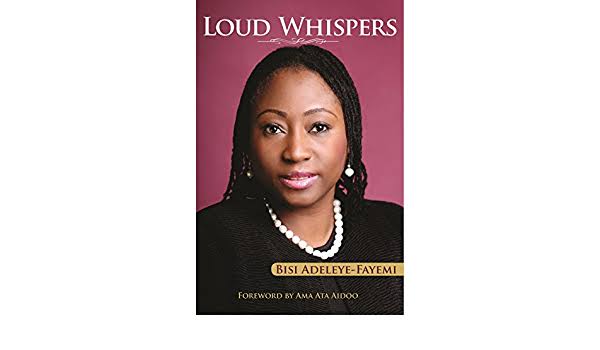
Loud Whispers: Please Stop! Bisi Adeleye-Fayemi

Please stop!

I just saw a five-year-old girl dancing at her birthday party on a thick carpet of dollars and Naira

Please stop!

That was after seeing the little boy of no more than four, wearing a ‘Billion Dollar Gang’ neck chain, swigging from what looked like a bottle of beer while his mother twerked and did her own thing
Please stop!

All those competing to spray with bundles of money at ever increasing meaningless parties, we get the message that ‘spraying note by note’ is now for people not as rich as you are

Please stop!

All the half-clad slay queen bridal trains in increasingly expensive Aso Ebi, desperately trying to outdo the bride in the hopes of being the next one, in performances that look more like a music video than an actual wedding ceremony

Please stop!

All those who God has blessed with a nice new house and have to go online to give people a ‘Pepperdem’ virtual tour

Please Stop!

Congratulations on the brand-new luxury car, we are happy for you. Yes, it is bigger than that of your frenemy

Please Stop!

It is nice to fly to London, Los Angeles, Dubai, Turkey and China, please spare us the non-stop photographs. We know you are having a great time, travel safe

Please Stop!

Well done on your latest wristwatch, the one in town diamond encrusted Rolex and the heavy pendant with your initials

Please Stop!

All the local movies showing everlasting visits to creepy, wretched fellows living in shanties
The same fellows who give you the recipe for riches which always involves the blood of the innocent

Please Stop!

The wretched fellows in the movies no longer exist in the unimaginative imaginations of the movie script writers. They are real and are dispensing horrifying instructions to truly demented young fellows who are now on the prowl for the blood of every woman in their lives, even their own mothers

Please Stop!

The songs, the dances, the displays of excess money, the beautification of all the boys and girls in the hood who make drugs, booze, random sex and illicit money sound cool

Please Stop!

All the online bullying, cursing, swearing and body shaming, even from those who should know better

Please Stop!

To the best of our knowledge, sex has never required an audience (except for the royal families of medieval Europe, to ensure the consummation of marriages) but now it seems to be the norm. Turn off the video, we don’t need to see.

Please Stop!

Life is interesting. So many things to see. So many places to go. So many people to meet. Do we need to photograph and record EVERY single thing, right down to when we fart?

Please Stop!

Tuck it away and cover up! Yuck!

Please Stop!

Let children be children. Stop putting the images of minors in public spaces, stop recording them eating, dancing, sleeping and just being kids, stop sharing their private moments with total strangers
Please Stop!
All the parents recording videos of their little girls in full make-up and hair, dancing like fiends, bumping, grinding and twisting, innocent six-year-olds acting like 26-year-olds

Please Stop!

And here we are, all shocked that a 17-year-old knows where to go for money rituals, and has the nerve to slaughter a girl like a chicken. Really? We are shocked?

Please Stop!

We normalize excess, crassness, insensitivity, stupidity, brazenness, and have created a cycle of generational foolishness. And we have the audacity to be shocked?

Please Stop!

Copied from;

Bisi Adeleye-Fayemi, who is a Gender Specialist, Social Entrepreneur and Writer. She is the Founder of Abovewhispers.com, an online community for women. She is the First Lady of Ekiti State, and she can be reached at [email protected]

http://abovewhispers.com/2022/02/14/loud-whispers-please-stop/

An Innumerate Election Register Enables Nigeria’s Crisis Of Illegitimate Government

By Chidi Anselm Odinkalu

“Democracy depends on numbers.” Theodore Porter“Democracy Counts: On Sacred & Debased Numbers” (October 22, 2020)

In twelve months, Nigeria will go to the polls for the ninth time in its history to elect a president. If anything has been established in the country’s history over the eight previous occasions since 1979, it is that the numbers that anchor democracy in Nigeria don’t bear any rational relationship to counting.

On Sunday, 4 June 2017, the Chair of the Benue State Independent Electoral Commission (BSIEC), John Tsuwa, called a press conference in Makurdi, the State capital, where he announced that the ruling All Progressives Congress (APC) had won all the positions contested in the Local elections that took place in the State the previous day. Mr. Tsuwa knew who had won the elections but not what number of votes they scored. He could not declare the votes scored by any of the candidates because, according to him, “the figures are not ready.”

This was not the first time Nigeria when an election management body had announced winners and losers in an election without counting. In the 2007 presidential election, Maurice Iwu, the Chairman of the Independent National Electoral Commission, INEC, declared a winner at a point when the results in only 12 states had been collated. As a matter of law, to declare results in a presidential election in Nigeria, you need to have collated at least 24 states.  Till date, INEC does not have any breakdown of the votes in that election.

In Nigeria, we make a mockery of election results because the number of voters is always located between magic and voodoo. Take, for instance, the story of the Oranmiyan North 1 Constituency in the then Oyo (now Osun) State. According to 1986 Report of the Bolarinwa Babalakin Judicial Commission of Inquiry into the Federal Electoral Commission (FEDECO) “the 1979 voters register for the area contained 48,216 names. In 1983 the figures jumped to 214,500!” In four years, the voting population in this federal constituency had grown by an impossible 444.87%. The FEDECO Administrative Secretary, one Mr. Stephen Ajibade, had rigged the rolls.

Nigeria’s elections may have made some progress in 2011 and 2015 but this progress stalled by 2019. One area in which the country has consistently failed to make progress is in the management of election demographics.

One major flaw in the architecture demographic management in Nigeria is that it heaps responsibilities on INEC for failures that belong to other institutions. Despite the existence of a National Population Commission (N-Pop-C) and a National Identity Management Commission (NIMC), INEC remains saddled with primary management of demographics. This is where election rigging begins.

In 1999, Nigeria had 57,938,945 million registered voters. This rose by 4.98% or 2,884,077 voters to 60,823,022 million in 2003 and then by 744,014 voters or 1.22% to 61,567,036 in 2007. By 2011, the number of registered voters had climbed by over 11,962,964 to 73.53 million or 19.43%, representing an average yearly growth rate of nearly 4.86%, where previously it had grown by 1.25% in 1999-2003 and 0.31% between 2003-2007.

By 2015, the population of registered voters had fallen to 68.83%, a deficit of 4.7 million voters or 6.83%, representing an annualized rate of reversal of 1.71%. Yet, over the same period, Nigeria’s population had grown from an estimated 162.9 million to 181.2 million, an increase of 15.174 million or 11.23%, representing an annual growth rate of 2.8%. The 2019 voters register had 84.004 million registered voters, representing a growth of 15.17 million voters, or 22.05% at an average annual rate of growth of 5.51%.

Over the 20-year period since 1999, the population of registered voters in Nigeria grew by 26,065,055 million or 44.99%. By comparison, the country’s population in 1999 was estimated at about 115,766,000, rising by current estimates to about 199,039,000 in 2019, a growth of 83,273,000 or 71%.

Over the period, the rate of growth in voter rolls has lagged behind the rate of general population growth and not all the explanations for this unevenness are kosher. Quite clearly, it is the case that the country is still grappling with lack of systems for counting or managing demographic data. A reason given for the fall in registered voters from 2011 to 2015 is that INEC had to clean up the electoral register through the Automatic Fingerprint Identification Software (AFIS). This took most of four years between the primary data collection in 2010 and finalization of the electoral register at the end of 2014. In the three years to 2018, INEC claimed to have eliminated an additional 300,000 names from the roll. Whether this was enough to have adequately controlled for contamination of the electoral roll is another matter.

In Nigeria, however, you become eligible to vote not merely because you are on the register but also through possession of a Permanent Voters Card (PVC). The issuance of PVCs began in 2015 based on data primarily collected in 2010-11. Since then, the voter register has been updated episodically in continuing voter registration (CVR) exercises. The register for 2019 consolidated data from three cycles of elections going back some nine years. In 2019, however, it appeared that for the first time, every geo-political zone in Nigeria reported PVC distribution rates above 75%, with 13 states reporting PVC collection rates of over 90%. Katsina (98.69%); Taraba (97.30); Gombe (95.76%); Kebbi (95.13%), and Bauchi (94.84%) reported the five highest rates of PVC collection. The lowest were Ogun (71.36); Ekiti (73.25); Oyo (74.17%); Imo (74.91); and Osun (75.37%). The patterns are easily discerned from the numbers.

Impressive as they are, these numbers are mostly demographic impossibilities. With an annual death rate of about 1.5%, it would be reasonable to expect natural attrition in PVC collection rates year on year, especially as death rate is higher than annualized CVR rate. Natural attrition would probably at least suggest that over 85% of PVC rates would be implausible. Then, there would be provision for a dispersal effect attributable to internal migration and displacement by different causes, including violence. Add also inertia and internal dysfunctions and it would be evident that a credible ceiling for PVC collection would probably be somewhere about 75%.

Without a baseline of serviceable population figures, however, Nigeria’s electoral register is like Hotel California – you can check out whenever you like but you can never leave. In the absence of credible national birth and death records, INEC has no credible mechanism of expunging the dead from the rolls. Nigeria is the one country in which long dead people are guaranteed a right to vote but not the diaspora.

It is clear, therefore, that the biggest issue to manage in elections surely is demographics – identifying who can vote and designating where they can do so. INEC still can’t do this. The counting of eligible citizens of voting age should not ordinarily be a problem in a country where demographic management systems exist. In Nigeria, according to UNICEF, only 43% of children under five are registered. According to the best estimates, “only 13.5% of deaths in Nigeria were registered in 2007 which regressed to 10% in 2017.”

So, Nigeria’s elections have become the opportunity for those who run the electoral rolls to ratchet up numbers in places where they think they can procure attributions of uncounted votes and diminish those whom they fear may not grant them such. Among the Luo of Kenya, “Stronghold”, is the name of a child! This is how the rigging of the electoral roll is a natural point of crisis in every Nigerian election. This is unlikely to change in 2023.

So, in over 61 years of Independence, Nigeria has struggled to manage its public accounts. For its innumeracy of public accounts, the country has used everything from coercive instruments to commissions of inquiry whose reports have never been seen. Nigeria has also yet to hold uncontroversial census. To legitimize the outcome without addressing the underlying malfeasances, the country turns to census tribunals. For its habitual failure to count voters and votes, the politicians choose to capture the judiciary for purposes of election petitions. A country that defaults to judicializing its numbers in this way to paper over incapacities in counting imperils democracy and cannot account for anything.

A lawyer and a teacher, Odinkalu can be reached at [email protected]

International Law In An Age Of Pandemics: Issues And Challenges For International Publicists

By Bola A. Akinterinwa

International law refers to both public and private international law. While public international law deals with inter-state relations and therefore often referred to as law of nations, private international law deals more with foreigners in a country who might have been victims of unfairness and injustice and thus requiring diplomatic protection, though quite distinct from the diplomatic protection provided for diplomatic agents under the 1961 Vienna Convention on Diplomatic relations.

International law in an age of pandemics is not only about codification developments in a given period, but also about how the period, in terms of its environmental conditionings, affects international law. Put differently, what is the nexus between international law and the current COVID-19 pandemic which began in 2019, especially in the management of the pandemic?

Answers to this question were provided by the Nigerian Society of International Law (NSIL) during its 43rd Annual Conference on ‘International Law in an Age of Pandemics’, held on Thursday, 17th and Friday, 18th February 2022 at the Nigerian Institute of International Affairs (NIIA). The NSIL, which was founded in 1968 by Judge Taslim O. Elias, a Nigerian by ius sanguinis and a former Judge of the International Court of Justice, has been addressing many aspects of global governance since 1968 through public lectures and conferences.

Two conferences that are a follow-up to the 43rd conference were the 27th Annual Conference held on August 14-16, 1997, and the 32nd Annual Conference held on October 12-14, 2000. The 1997 conference, the proceedings of which were edited by Professor Yinka Omorogbe, the current President of the NSIL, focused on International Law and Development: Strategies at the Threshold of the Twenty-first Century. The Challenge of Peace, Security, and Development in the Twenty-first Century was the theme of the 2000 conference. Thus, the NSIL has always been preoccupied with global developments.

It is from this perspective that the 43rd conference was quite interesting for various reasons: First, the conference enjoyed the active support of many Nigerian governors, past and incumbent. Governor Kayode Fayemi gave N2.5 million while Governor Nyesom Ezenwo Wike, CON, GSSRS, who was represented by his Attorney General, Prof. Zach Adangor, SAN pledged N10m. Governor Babajide Sanwo-Oluof Lagos similarly pledged meaningful support. The fellowship of the NSIL was also conferred on three scholars: Professors Akin Oyebode, Bola A. Akinterinwa, and Momodu Kassim-Momodu. A psychedelic evening characterised by a sumptuous dinner and rendition of old-school songs topped it all. More importantly, the discussion of the issues raised during the two-day conference was very constructive.

Critical Issues and Challenges

The conference was organised into four sessions: opening ceremony, working sessions, Annual General Meeting, and dinner/fellowship awards. The first session, the opening ceremony, was chaired by Major General Ike Omar Sanda Nwachukwu, a former governor, one of the patrons of the NSIL and a Fellow of the Nigerian Institute of International Affairs.

The foundational challenge identified by Professor Omorogbe was the issue of COVID-19 being an obstacle to international law activities. As she explained it in her address, COVID-19 in ‘the last two years has been highly unusual, and for practically all of us, a crash course in adaptation to change and new reality.’ Thus, she is saying that the NSIL 43rd conference could not take place in 2021, and therefore by implication, the pandemic is an obstacle to the mise en oeuvre of international law, but this obstacle will not be in 2022.

And perhaps more interestingly, while Professor Omorogbe was looking at the past, the Governor of Rivers State, His Excellency Nyesom Ezenwo Wike, CON, GSSRS, opted to look forward as a member of the noble profession of law and life bencher to interpret the theme of the conference to imply that ‘in an era of global health emergency such as confronts us presently, international law could provide the needed succour not only for the rich, developed and powerful nations but also the poor, developing and largely dependent nation such as ours.’

Governor Nyesom Nwike identified several issues thrown up by COVID-19 within the context of international law. They included ‘the mutual obligations that states owe to each other during a pandemic; whether there is a right to international solidarity in terms of ‘preventive solidarity, reactive solidarity, and international cooperation, that obligates States and non-state actors to offer assistance to developing and less-developed States that have lesser comparative capabilities’; the extent to which ‘the enjoyment of international human rights by individuals can be curtailed or derogated from by right-restricting measures put in place by different nation-states to manage the spread of COVID-19; and the extent of the impact of COVID-19 on the foundational obligation of nation states to protect the right to life. In the eyes of Nyesom Wike, ‘rights-restricting measures must ensure that the balance of individual and collective interests is compatible with provisions of International Covenant on Civil and Political Rights and other related International Instruments.’

Former External Affairs Minister and chief apostle of economic diplomacy, General Ike Nwachukwu, interestingly pushed Wike’s observations further by drawing the attention of what international publicists should be more concerned with in the age of pandemics. He first noted ‘the weaknesses in international law and conventions wherein the developed countries can hoard the technology (in the guise of protection of intellectual property and/or vaccine diplomacy) for producing and distributing the vaccines needed to save lives and return the world to normalcy.

Much concerned about the need to dissuade ourselves from allowing the mechanistic and mercantile view of human nature from overtaking our most valued humanity – the right to life and to live it to the full and well, even in the face of COVID-19, General Nwachukwu wants the international law practitioners to consider publishing a ‘Nigerian Yearbook of International Law, as well as a compendium of conventions, codes, values and characteristics for international diplomacy and law, sponsored or co-sponsored, authored or co-authored.’

The first working session, which focused on Global Health Security, was chaired by Professor Akin Oyebode, fniia, fnsil. Three papers were listed for presentation: human rights versus global health security under a pandemic in Third World Nations: An Appraisal by Innocent Onohomhen. This paper could not be presented for reasons of force majeure; COVID-19 and Africa: Economic Implications and Policy Responses by Dr. Chinyere Rita Agu, legal practitioner and Research Fellow at the NIIA; and COVID-19 Pandemic, International Law and Women’s Rights in Africa: An Interrogation by Dr Omotola Ilesanmi, a Research Fellow with the NIIA.

Dr. Ilesanmi explicated how the period of COVID-19 served as an opportunity for women’s rights to be infringed upon with increasing violence, regardless of the Maputo Protocol and CEDAW which obligate all States to ensure the protection of rights of women to respect her dignity. As Dr. Ilesanmi further put it, ‘access to healthcare services for women and girls have been stifled and their sexual and reproductive rights largely left to the side-lines with the prioritisation of COVID-19 prevention and treatment resulting in significant increase in stillbirth, maternal depression and maternal deaths. More importantly, she posited that African States have made considerable progress in entrenching the rights of women and girls, however, COVID 19 brought a reversal of the achievements and deepened the pre-existing gender inequalities exposing women to series of human rights violations.’

Dr. Rita Agu raised the issue of bloated numbers of COVID-19 infections and deaths expected in Africa, but which have not come to be. As she explained it, ‘as at 28th October 2021, the global COVID-19 death toll stands at an estimated 4,970,435… Africa has recorded 211,853.’ More important, she drew attention to the economic consequences of the pandemic: how GDP has been affected by national and global lockdowns. The challenge is how to explain the resilience of Africans vis-à-vis COVID-19?

The second session addressed human security and climate change and was chaired by Professor Bola A. Akinterinwa. Like in the first working session, three papers were listed for presentation, but again for reasons of force majeure, one of them could not be presented: The Age of Cyber-Pandemics: An Analysis into the Role of International Law in a Cyber-Pandemic by Temitope, whose paper could not be presented; The place of Human Security in the Progressive Development of a State by Associate Professor Rufus O. Olaoluwa; and COVID-19 Pandemic and Climate Change: The International Legal frameworks by Dr. Chinasa Ohiri.

Associate Professor Rufus Olu Olaoluwa explicated human security from a multidimensional perspective: health security, socio-economic security, cultural security, politico-religious security, and environmental security. In the eyes of Professor Olaoluwa, focus should be more directed to prevention of insecurity than focusing on prosecution and punishment of offenders. It should also be on the need to form alliances against regional security threats and create general awareness in order to ensure human security.

The third working session was on the controversial questions of Self-determination, Secession, and unconstitutional changes of government. The session was chaired by Professor Momodu Kassim-Momodu, fnsil. The first paper written by Professor Debo Olagunju and presented by Associate Professor Rufus Olaoluwa, was entitled ‘An Appraisal of the Role of Regional and International Organisations in Agitations for Self-determination and Secession.

Professor Olagunju provided clarifications on the concepts of self-determination, statehood, and secession. He explicated the extent to which regional and international bodies have been able to uphold the right of self-determination while preventing the disintegration of States. He noted that ‘self-determination is a separate and distinct concept from secession although secession may be an expression of the right to self-determination. However, self-determination doesn’t automatically translate to a right to secede.’

The second paper, on Hopes and Impediments: A Historical Survey of Taiwan’s Diplomatic Relations Across Africa by Charles Terseer Akwen, examined the trends, composition, and intensity of the Republic of China and People’s Republic of China’s bilateral relationship in Africa since independence.

The last paper by Professor Bola A. Akinterinwa addressed the issue of ‘International Law and Unconstitutional Change of Government: The Case of Francophone Africa in an era of Pandemic.’ He raised the issues of relationship between international law and how a government should emerge in a sovereign State; reconciliation of Article 2(7) with the African Union (AU) and ECOWAS’ requirement for good governance and non-constitutional change of government in Africa. He noted that AU and ECOWAS sanctions against coupists in Mali, Guinea, Burkina Faso, Sudan, etc, have been to no avail.

Challenges for the NSIL Publicists

Many challenges were identified in the various sessions but three of them were noteworthy: how to reverse the recidivist character of unconstitutional changes of government in Africa; self-determination, and secession. On unconstitutional change of government, Professor Akinterinwa noted that international law prohibits unconstitutional change of government by force and by manu militari, but silent on other non-forceful means of changing government. Article 4(p) of the 2000 Constitutive Act of the African Union (AU) requires the ‘respect for the sanctity of human life, condemnation and rejection of impunity and political assassination, acts of terrorism and subversive activities.” Unconstitutional change of government can be rightly considered as falling under subversive activities, and therefore unlawful and prohibited.

Additionally, he said, Protocol III on Peace and Security for All in Burundi requires all

Burudian institutions to ensure the ‘protection of all the ethnic communities of the population through specific mechanisms for the prevention of coups d’état, segregation and genocide.’ In other words, the prevention of coups d’état is a condition sine qua non for public protection, which, along with safety, are a desideratum for sustaining non-tolerance of coup-making.

And perhaps more significantly, the ECOWAS and the African Union, which succeeded the Organisation of African Unity (OAU), outlaw unconstitutional change of government. It is recalled here that the OAU adopted a reactive framework to unconstitutional change of government in Algiers in July 1999 (vide Decision AHG.DEC 142 (XXV). The ECOWAS Protocol on Democracy and Good governance was done in December 2001 as a Supplementary Protocol to the 1999 Protocol relating to the Mechanism for Conflict Prevention, Management, Resolution, Peacekeeping and Security. With these legal frameworks, why are they not adhered to?

More relevant here is the provision of Article 45 of Protocol A/SPI/12/01 on Democracy and Good Governance that ‘in the event that democracy is abruptly brought to an end by any means or where there is massive violation of human rights in a Member State, ECOWAS may impose sanction on the State concerned.’

The African Charter on Democracy, Elections and Governance, done by the Eight Ordinary Session of the AU Assembly in Addis Ababa on 30 January 2007, also provides in its Article 3(10) that all signatories to the Charter should implement the Charter by condemning and rejecting unconstitutional changes of government. But, all in all, will it be enough to have good governance and expect that coup-making can be nipped in the bud? But true enough, many reasons are often given for unconstitutional change of Government. The reasons are generally politico-economic and non-legal. Forceful changes of government are purportedly to put an end to poor governance, that is, non-transparency non-accountability, violations of human rights, abject poverty insecurity, social injustice, unfairness in allocation of national economic resources, etc. When will this challenge be addressed?

Regarding self-determination and the related question of uti possidetis juris, it is useful to note some developments and limitations. Self-determination as a principle for decolonisation and establishment of national sovereignty has been expanded to include possibility of secession from within an existing sovereign state. While self-determination- driven decolonisation is to stop external exploitation of dependent territories, secession is to also put an end to internal colonisation. The third category of self-determination is provided by the current Russian-Ukraine saga. Ukraine is a sovereign state and is asking that its right of self-determination to determine who it would be associated with be respected.

Ukraine is caught between East-West confrontation: the United States and its NATO allies want Ukraine to remain a member of the NATO while Russia is against. This is a situation of competing sovereignties in which a sovereign state is now insisting on its right to determine its own destiny. Thus, the defining dynamics of self-determination in international politics appears to be changing

As for uti possidetis juris, it is a Latin American principle adopted in 1810 to maintain peace and orderliness following decolonisation and which has become a principle of customary international law to maintain colonially inherited international boundaries. When the OAU Charter was done in 1963, the principle was borrowed, but the problem as of today is the extent to which the principle can be re-defined or done away with. The acceptance of the principle means acceptance of non-review of the international boundaries of an existing sovereign state. This is one important challenge publicists should also address, because the sanctity of colonial frontiers is anti-secession. Consequently, in this regard, contrary to the pretensions of President Muhammadu Buhari, there is nothing like non-divisibility of Nigerian unity or indissolubility of Nigeria. National unity, like any quest for secession, is a resultant of political interest and commitment and not coercion.https://googleads.g.doubleclick.net/pagead/ads?client=ca-pub-2023028789149162&output=html&h=121&slotname=5559997686&adk=1889285274&adf=2848664328&pi=t.ma~as.5559997686&w=484&fwrn=4&lmt=1645369840&rafmt=11&psa=1&format=484×121&url=https%3A%2F%2Fthenigerialawyer.com%2Finternational-law-in-an-age-of-pandemics-issues-and-challenges-for-international-publicists%2F&flash=0&wgl=1&adsid=ChEIgOrHkAYQlYHe3OmNtIGnARI9AEXBIYrED-wuQxJ4FAPszABrr203a2iajXXFJAcNuCofhm1ZwCoVgecghLzyzHDhWG-fJWtMQZzOAQF4jQ&uach=WyJBbmRyb2lkIiwiOC4xLjAiLCIiLCJTTS1QNTg1IiwiOTguMC40NzU4Ljg3IixbXSxudWxsLG51bGwsIiIsW1siIE5vdCBBO0JyYW5kIiwiOTkuMC4wLjAiXSxbIkNocm9taXVtIiwiOTguMC40NzU4Ljg3Il0sWyJHb29nbGUgQ2hyb21lIiwiOTguMC40NzU4Ljg3Il1dXQ..&dt=1645376443202&bpp=13&bdt=1464&idt=919&shv=r20220216&mjsv=m202202090102&ptt=9&saldr=aa&abxe=1&cookie=ID%3D06e534d7763cb08d-22db20dad4ce0099%3AT%3D1639830816%3ART%3D1639830816%3AS%3DALNI_MbNxE7x1cuf1EMgpf2CqlZ21VbZEQ&prev_fmts=800×280%2C0x0%2C800x1160%2C468x60%2C800x90%2C200x200%2C200x200&nras=3&correlator=6520845348449&frm=20&pv=1&ga_vid=1520480465.1639830751&ga_sid=1645376444&ga_hid=1374374859&ga_fc=1&rplot=4&u_tz=60&u_his=1&u_h=1280&u_w=800&u_ah=1280&u_aw=800&u_cd=24&u_sd=1.5&dmc=2&adx=30&ady=9674&biw=800&bih=1160&scr_x=0&scr_y=4659&eid=42531397%2C44750774%2C31064037%2C31063222%2C21067496%2C31062931&oid=2&psts=AGkb-H_3_Z0kWKnqaAtTZE1Xtf4AghlUHYl77EI1475_FYvLudG3tlqXvXQwpYSskL59ZhReFjUIYEn0%2CAGkb-H8CEfXgaJMoz0QTeUMXkkbabcEZm-SHuEOIqurQG9-Tldnl1qF83cOmHPl8ULAt1T8AJ6KaMcWSCvH4r9Jr%2CAGkb-H-Bpmb8At53S9LjV_d4G7kvXYKbPXi483jQQeFkqyFVHfS1fCHK-yun3PBpCG-9KDGBCAjlFZBhPrxkr0Y9%2CAGkb-H_NJvsiLqkWyK1j6DzS7N8UnqYIcW58G1stXN6gxyjSgP3w8IRoPJ-Ad4Bc-cdx-EcReHg31DCEbipJf9ueTg&pvsid=4145935433829359&pem=710&tmod=308192661&uas=1&nvt=1&eae=0&fc=896&brdim=0%2C0%2C0%2C0%2C800%2C0%2C800%2C1256%2C800%2C1256&vis=1&rsz=%7C%7CoeEbr%7C&abl=CS&pfx=0&cms=2&fu=128&bc=31&jar=2022-02-20-16&ifi=2&uci=a!2&btvi=4&fsb=1&xpc=9OEXOAyPJ8&p=https%3A//thenigerialawyer.com&dtd=90434

Grosso modo, Ike Nwachukwu’s suggestions remind one of what Jean Jacques Rousseau said in his Social Contract that ‘good laws lead to the making of better ones; bad ones bring about worse.’ In the same vein, good suggestions cannot but prompt development, tangible progress while bad suggestions only lead to self-destruction and misapplication of international law. The NSIL will therefore do well to think along the direction of Nwachukwu’s suggestions, with the ultimate objective of not simply publishing a Yearbook of International Law but a Yearbook of International Law and Relations in which commissioned articles on current developments in international law and how they impact on Nigeria, and in which annotated chronology of Nigeria’s foreign policy events will be accommodated. International relations are about interstate ties while international law regulates the relationship. They therefore go pari passu and constitute two sides of the same coin. Because this challenge requires adequate funding, a collaborative entente with the NIIA may be necessary. The NSIL should be saddled with the aspect of international law, while the NIIA should monitor the chronological aspect of Nigeria’s foreign policy.


Abba Kyari and collapse of public service

By Martins Oloja

Although politicians and our political leaders have again begun to organise themselves on how to bamboozle us the way they did in 2015 when they imposed on the nation ‘a man of integrity’ whose body language alone was capable of catapulting Nigeria instantly from Third to First to Third World, the nation is still agonising seven years after in search of a leader who would lead the world’s most populous black nation. And so I believe that those of us in public service journalism should be deconstructing the legacies that Buhari would be leaving in a year and three months. I mean here that we should be vigilant, sincere, cautious and discerning at this time to tell the politicians who imposed the present darkness upon us that we as a people would not accept their subterfuge approach again. And here is the thing, we should begin to tell them that in 2015, we were blind and they exploited our naivety nurtured by poverty even in the spirit, and they imposed darkness on the nation they wished to exploit in 2023. But we should be able to tell them now that now we can see!

The young ones who claimed the other day that they were not too young to rule should begin to organise instead of agonising – to tell the scoundrels who are jostling for power at the moment that Nigeria isn’t their property. They should begin to remind the old ‘soldiers of fortune’ in Nigeria that the wickedness of the wicked has indeed come to an end and Nigeria will rise again after Buhari. 

The conclusion of this preface this week is that Nigerians should be able to warn a section of the news media that has been exploiting the political economy of a free press to do strategic public relations for the corrupt political class to desist from mixing public relations with journalism at this time in Nigeria. Nigeria needs public service journalism at this perilous time. We need to understand the time and tell our perverted leaders what Nigeria ought to do and be at this time. That was what children of Issachar did to Israel that is now a world power in the Middle East. We (in the civil society) need to swallow our pride, poverty and vanity and rescue Nigeria at this time with public service and robust journalism and civic competence – as we did in Abacha’s dark days! 

Coming to the brass tacks this week, I would like to draw our attention to why so many bad news are coming out of the nation’s capital, Abuja every day: It is the collapse of the public service. Before the Obasanjo administration, there was a distinction between the civil service and public service. But the administration through its reform agenda integrated the service(s) mechanism by changing even the organic Civil Service Rules and Regulation and Financial Regulations to Public Service Rules and Regulations. It is just unfortunate for us here that we in the media hardly cover the public service in Abuja. Only very few journalists now navigate the labyrinthine state of public affairs in Abuja and even in the 36 states of the federation. Besides, the public service arm of the national and state assemblies are hardly covered by our digital journalists these days. Remarkably, that is where the unusual happen. That is where the documents of the system are generated. No one covers or probes the presidential bureaucracy comprising the office of the Secretary to Government of the Federation, (SGF) at the federal level, Secretary to the State Government (SSG) at the state level, Head of the Civil Service and Office of the Federal and State Civil Service anymore. That is the pillar of executive bureaucracy. If these pillars are weak, there will be a crisis of coherence in the public sector. That is what has happened to the Buhari Government, which has had a bandwagon effect all over the federation in the last seven years. I have been writing about this since 2016. 

What am I saying about the power that a strong civil or public service gives to any government? Let’s explore a conceptual clarification. A civil servant, also known as public servant, is a person employed in the public sector by a government department or agency for public sector undertakings. Civil servants work for central and state governments, and answer to the government, not a political party.

The main difference between Civil Service(s) and Public Service(s) is that Civil Service is responsible for working in people interest while Public Service tends to be something a group of people makes an official to work over them for their interest. 

Some authors have claimed that civil service is performed by a civil servant, a bureaucrat hired by the country’s government who works for the public sector; conversely, public service is performed by a public servant, a person appointed by a member of the government to serve the population and perform public duties.
 
Though there are variations from one country to another, the public sector normally includes such services as the military, police, public transit, infrastructure care, public education, health care, and of course, the government itself…

The public sector, as you would expect, provides public services to its citizenry. It delivers services that benefit all of society rather than just those who pay taxes to support the service. An example of this would be street lighting – someone who does not pay taxes can still reap the benefits of this service. And so for those who would like to run the post-Buhari era, there should be enough understanding that Nigeria’s public service seems to have collapsed. This is without prejudice to brilliant and excellent public servants who have been caught in the web of anomie despite their background and experience. There should be that understanding that in the next dispensation, the first port of call of reform should be the mainstream public service. I mean that if the public service had remained public service, an officer such as Abba Kyari would not have risen in the police service to the level he is. Should we understand this to mean that there has been no internal control mechanism in the police service to screen officers who are to be promoted, especially in sensitive operations departments? How did the police service condone Abba Kyari’s romance with notorious characters we have been seeing for a long time? From the ministry of interior through the ministry of police affairs to the police service commission, whatever happened to monitoring and control of the same officer who could even get involved in alleged criminality even while on suspension? Whatever also happened to the bureaucracy in the inter-agency control mechanism in the office of the National Security Adviser! What was the purpose of the Police Panel to probe the FBI’s report? Didn’t they know that only the Office of the Attorney General of the Federation has the power to deal with the exigency of the FBI report and extradition process? How come nobody in the presidential bureaucracy pointed out to the Chief Executive of the Federation that only the Attorney General of the Federation should have begun prosecution long ago without caring a hoot about the police probe? Whatever happened to what used to be the essence of the Political and Economic Affairs Office (headed by a Permanent Secretary) in the Office of the SGF! What happened to the Office of the Legal Counsel in the Office of the President? What of the Foreign Affairs Ministry? A report landed in Nigeria from the United States justice department, alleging criminality on the part of a senior police officer, in fact Nigeria’s most decorated officer in internal security apparatus, what has the Foreign Affairs Ministry done to do some damage control in collaboration with the Justice Ministry in Nigeria? Why did the suspension of Abba Kyari last so long to the extent that the officer has had the time to get involved in alleged drug-related crime? What happened to the inter-agency interactions between the DSS and NIA, which should have helped in advising Nigeria’s leadership in the circumstances? 

What has happened to Citizen Abba Kyari isn’t about the Nigeria Police Force? It is a reproach to all the citizens of this already failing country. This will affect the next perception index on corruption in this country. It is about the future of Nigeria’s business. It is about the economy in the context of foreign direct investment (FDI). How many foreign direct investors would be ready to invest in a jurisdiction where even law enforcement agencies cannot monitor and control their officers? Who would like to invest in a country where the law doesn’t rule? Who would like to stop over even in a large market where public serve rules and regulations mean nothing to public servants? 

The deliverable from this comment to those who would like to run the post-Buhari time is this: the bureaucracy of all the arms of government has collapsed. That is why the National Assembly of the country can wake up and announce that they now appoint their own Permanent Secretaries because they are not part of the federal public service – and there is no response from the office of the Head of the Civil Service of the Federation. It is the collapse of the public service in 2019, which allowed the powers that be to remove the Chief Justice of this country through an Administrative Tribunal without compliance with the provisions of the Constitution as it affects removal of the Chief Justice of the Federation. Whatever happened to the powers of the National Judicial Council at the time! It is the absence of a functional public service that allowed the executive to keep an officer and candidate the Senate refused to confirm for the office of Chairman of EFCC in 2017 to remain in office till 2021. A senior public officer in the presidential bureaucracy would have caused the president to remove the rejected officer quietly when there was a civil service. So, those who are jostling to succeed Buhari should note that the public service of today is not delivering any services to the citizens the way it used to when there was a country, sorry civil service. That is why the police service, for instance has failed the country in their management of the Abba Kyaris in their service. 

TIPS