The fact is that I don’t like badgering my highly esteemed readers with posts every now and then. But my sincere desire to give out credible information (against the constant lies of the mainstream media) provides me the motivation. So please get this:
For those of us who did not believe my claim in my last post (about the circumstantial evidence I provided that President Joe Biden basically deceived the Ukrainians and then threw them over to the Russians to devour), here is what just happened.
Poland (a country near Ukraine and near Russia) offered to send MiG warplanes to Ukraine. Poland is a NATO Member: and because the United States is the Big Brother in NATO, Poland required some greenlight from Joe Biden to send over these warplanes. Note that Ukrainian pilots are a whole lot more comfortable with the MiG fighter planes because it is Russian-made and Ukraine used to be part of the USSR.
But guess what happened?
Even the Secretary of State for the United States (Anthony Blinken) publicly said yesterday that it was ok for Poland to send Ukraine the MiG warplanes. Remember that the President of Ukraine has been bothered about air defense because Russia has absolute superiority in the air but not absolute dominance on the ground. It is simply not easy to fight a man in his own backyard and a balance of forces in the air (or a near balance) will help Ukraine defend itself since they are not doing too badly on the ground.
Poland is well aware of the possibility of being abandoned by Joe Biden (just like Ukraine is being abandoned) and I guess they considered the provocation of sending the MiG planes directly to Ukraine. To reduce their exposure in this dangerous military aid to Ukraine, Poland said they will deliver the MiG fighter planes to a NATO base in Germany and expect NATO (aka the United States) to deliver the planes to Ukraine. Russia cannot carelessly react to the US deploying fighter planes to Ukraine; but Poland is not the US. Except for US deterrence, Russia can severely punish Poland for aiding Ukraine. I guess that Poland considered this situation and preferred to pull the US into the matter and spread the risk.
Good idea.
At the risk of boring you, let me point out that the US is already sending arms to Poland. But these are not consequential weapons. The javelins Ukraine is using to blow up Russian tanks was supplied by Donald Trump. What Biden is basically sending are stinger missiles, which are quiet dangerous for Russian warplanes but not comparable in lethality to a Ukrainian pilot flying a MiG warplane.
The breaking news is this: Joe Biden refused to permit Poland to send the MiG fighters — the same thing that can prove consequential in the war and help Ukraine defend itself.
Biden keeps talking about sanctions.
There is a group of people his message is targeted to. I can’t be one of those because, fortunately, I know better than believe that Russia will be stopped by sanctions, especially because Germany and some other NATO countries are not in support.
Again, I repeat. I smell a set up. Ukraine is being destroyed. President Joe Biden, who eagerly offered them NATO membership and provoked Russia into this war, could have stopped the invasion by leaving Donald Trump’s economic sanctions in place (this is already too late) or by supplying Ukraine with consequential military weapons.
Last week Sunday, my husband and I decided to brave the queue at the filling station. Armed with our bottles of water, me with my novel, him with his phone, we went out in our respective cars and joined the long winding queue from the very end. The wait did not seem so long, especially as I was consumed by my book ‘The madhouse’ by T.J. Benson, but it did provide me with the opportunity to reflect on the various economic classes of Nigerians.
In his book ‘Becoming Nigerian’, Elnathan John writes about the three classes of Nigerians and their subgroups: The lower class, the middle class who are divided into the lower middle class and the higher middle class, and then, of course, the top 1%. The crème de la crème of the society.
The filling station had 24 pumps, however only 6 were dispensing fuel. Two pumps were dedicated to the tricycles, popularly called keke and motorcycles. Three pumps were designated to serve cars, depending on which side your fuel tank was situated, while the last pump was reserved for only those who had ties with the manager of the fuel station. The station also had only two entry points, only one of which was opened. The gate that was closed was occasionally opened from time to time for some state-of-the-art car to manoeuvre its way to the fuel pump reserved only for them.
From where I was sitting, I watched as the manager or whoever was in charge barked orders for the upper class to be served promptly. Never mind that it was probably their drivers, what mattered most was that those cars represented power and wealth. Therefore, no queues for them. When it was my turn to be served, I asked the attendant jokingly about the ‘special pump’. He laughed and narrated to me what had occurred the previous day.
Apparently, one rich Alhaji was told by his drivers that all the cars in his garage were low on fuel. Prior to that, the man did not even know that the queues were back at the fuel station. Alarmed at the information, he promptly placed a call to his friend who owned a popular chain of fuel stations across the country. They explained pleasantries and the Alhaji asked where he could get fuel. The owner of the station then asked ‘Where do you want to fuel your cars?’ to which the Alhaji mentioned the station closest to his house. Arrangements were then made.
Meanwhile, at the agreed station, the manager received a call from his Oga informing him of the development. Mr. Manager promptly placed a call to the nearest police station and asked for assistance. Before you could say ‘Muhammad Buhari travels again’, police had arrived and dispersed the queue at the fuel station. Everyone was told to find their square root. The attendant said he had never in his life seen such a display of power. Shortly after, the Alhaji’s cars began to arrive, all twenty-six of them. The attendants used all the pumps to serve them. When they were through, the head driver paid Mr. Manager and added an extra N200,000 for him to buy ‘sweets for his children.’ The manager pocketed 100k and shared the other 100k among the attendants. Every employee went home happy that day.
This is a true depiction of the upper class. Wealth and Power. Add corruption to the mix. Voila! Big boys club.
Then of course you have the middle class or whatever nomenclature you would like to throw at us. Here again, I noticed an obvious difference.
On the queue next to mine was a woman driving a beat-up 2002 Toyota corolla. Her fuel tank was completely empty and so good samaritans had to help push the car forward whenever it was time to move. The woman looked to be in her forties and had four children in the car. I looked from her sweat-stained face to the tired and hungry-looking children and was overwhelmed by pity. Classic lower middle-class. Rich enough to own a car, but not rich enough to maintain it. Probably a civil servant like me. The type Elnathan described in his book as living in a rented three-bedroom flat or if they are lucky, have acquired those FHA houses in Gwarinpa or Kubwa; the type of families that own a petrol generator when, before it is switched on, you will hear someone screaming ‘Una don off everything?’
This category of people who are just one government policy or catastrophe away from falling below the poverty line. The lower middle class is a dangerous class to belong to. Barely above poverty, yet not comfortable enough to be described as rich. Perpetually hustling.
Then there is the upper-middle class: Nicer cars, newer models of Toyotas, Hondas, and Hyundai’s. A sprinkle of Mercedes and Lexus. These ones live mostly in rented nice apartments or own their houses. Three square meals and the occasional trip abroad. Children in good schools, some abroad. Struggling to pay horrendous school fees and rent. Most are content, comfortable, and have a few millions stashed away in the bank somewhere. For a lot of us, this is the highest we can aspire to. The upper class is a lofty dream.
The last two pumps were reserved for the majority- the lower class. I noticed how sluggishly their line moved. These men, driving their tricycles, buses, and motorcycles all crammed together in a single file like a cruel joke. Some kekes and buses contained passengers, struggling to eke out a living, and I wondered how much more hardship Nigeria wants us to endure. Is it not enough that people are besieged by a high cost of living, why add fuel scarcity into the mix? This scarcity has translated into a hike in transport fares and so many have resorted to trekking instead. Every day, I notice an increase in the number of students and commuters on their way to work or school because they are unable to afford one form of public transportation or the other.
What struck me as funny was the way attendants who are most likely lower-class themselves, treated the motorcycle drivers. They appeared disenchanted and some were downright rude. I wanted to laugh out loud and say- ‘Are you well at all? Shebi is it not Keke you will use to go home?’
Instead, I kept my mouth shut and watched as a fuel queue clearly demonstrated the social stratification of Nigerians. I filled my car and said a prayer of gratitude. Gratitude for being able to afford a full tank. In Nigeria, we are grateful for everything.
On my way out, I muttered another prayer. Dear God, please let this fuel last me for the next two weeks. Ameen.
First published in ‘A Physician’s Diary’, Daily Trust, 5th March 2021.
‘Your Father who sees in secret will reward you openly.’ Matthew 6:18 NKJV
Have you ever been to a concert where they used the latest audio-visual equipment? Chances are, you were blown away by the multidimensional sights and sounds, and afterwards, left talking about the amazing skills of the performers. If the performance went without a hitch, you probably didn’t think about the sound and lighting techs. Usually we only notice them when the equipment fails. They’re the invisible element; the people who do their job by making the star look and sound great. The real accolades go to those in the spotlight. That’s the order of things in the kingdom of man. But the kingdom of God operates on the principle that ‘the last shall be first, and the first last’ (Matthew 20:16 KJV). Jesus said when you fast, pray, and give without looking for recognition, ‘your Father who sees [your actions] in secret will reward you openly’. On a big ship, only the captain and a handful of officers are visible on the bridge. But the crew below deck determine the ship’s progress for most of the voyage. And in God’s church, it’s the ‘engine-room crew’ who faithfully carry out much of the work: caretaking staff, nursery workers, bus drivers, car park attendants, nursing home visitors, prison outreach workers, and prayer warriors. While high-profile people tend to get most of the kudos, God reserves special recognition and rewards for the below-deck crew! And if you’re one of them, soon enough you will hear His public announcement, ‘Good servant…you have been faithful in a small matter’ (Luke 19:17 CEB). And when that happens, everything else will pale by comparison!
This case has it origin in the defection of Governor David Umahi from PDP to APC. Umahi was lured to APC in November 2020. He was actually elected on the platform of PDP in 2019. Although there have been many cases of defection by other Governors, this particular defection agitated the PDP which led to it’s law suit seeking a determination of who owns the votes between PDP and Umahi and invariably who should be in the office.
There are a number of legal issues upon which the case oscillates. One important issue worthy of mention is the question of who owns the votes cast at the election? There are two school of thought. There is a school that support the Political Party as owner of all votes cast. There are those who speak in favour of candidates. They maintained that votes are casted for a candidate and not political party. According to this thought, a candidate will therefore continue to benefit of the votes he scored at election irrespective of his subsequent decision to abandoned the platform or political party that sponsored him for the election. There are of course a number of decisions of the Court that tacitly support this view. I will refer you to just one to drive home the point. That is the famous Atiku cases. In the case of AG FEDERATION & ORS v. ABUBAKAR & ORS (2007) LPELR-3(SC) the seat of the former Vice President was declared vacant for defecting from PDP to AC, the Supreme Court reluctantly upheld his contention that his his seat is not vacant on a very narrow ground. Be mindful of the choice of words because in law, one word can make all the difference.
The issue in this case was whether Atiku’s act of leaving the sponsoring party that is PDP for another political party that is AC, coupled with public denunciation and condemnation of the sponsoring political party, the President and their Government do or do not constitute constructive resignation, withdrawal or abandonment of the office of the Vice President.
The Supreme Court however per SUNDAY AKINOLA AKINTAN, J.S.C approached the issue on the question of whether the President can declare the seat of the Vice President vacant or remove him from office for defecting to another political party. The Supreme Court made two crucial findings:
1. It stated that Atiku was wrong to defect. It held as follows:
“The Court below was therefore wrong in holding that the 1st respondent could, while the Vice President still retained his office as Vice President, openly criticize the same government; or join another political party and start to campaign for election to the office of President. The action cannot be justified by the fact that he (1st respondent) had been suspended or expelled from the ruling political party under which he was jointly elected with the President or that he was exercising his fundamental right of association guaranteed by the Constitution. What is required of him is to first resign and even after resigning from that office, he would still be precluded from dissociating himself from the collective responsibility for decisions taken by the cabinet while he was in office.
Thus, the Supreme Court finding was that in fact, he was wrong to defect. In law where there is a wrong there must be a remedy. The law cannot be helpless.
2. The second important finding by the Supreme Court was that ” In spite of the above, it is not the duty of the court to pronounce on his behaviour or actions or declare his office vacant. But that decision is that of the National Assembly. ”
Thus, the Court declined jurisdiction and push the job to National Assembly to commence removal proceedings against Atiku for his wrongful or political sin of defection.
In order words, the Court agreed that it was wrong to defect from the sponsoring political party but the decision to remove President or Governor from office should be left for the National Assembly or House of Assembly as the case may be.
This case does not answer point blank who owns the votes cast at election and what happens if there are is contention or dispute as to ownership of those votes between the party that won the election and the candidate. The position that the Court has no jurisdiction on removal or impeachment proceedings can not be useful in this case as there is a real dispute as to who owns the votes between PDP and Umahi. It is simply a dispute between a corporate individual and natural person that can be accommodated under section 6 of the Constitution.
Fast forward to the case of WADA & ORS v. BELLO & ORS (2016) LPELR-47015(SC) it was the theory that votes belong to political parties that was sustained. In this case it was decided by the Supreme court thus:
I think that the decision of this Court in Amaechi v. INEC (supra), encompasses the situation created by the death of the 2nd respondent’s candidate. The decision finds support in Section 221 of the Constitution (supra) hereunder reproduced: “S.221: No association, other than a political party, shall canvass for votes for any candidate at any election or contribute to the funds of any political party or to the election expenses of any candidate at an election.” A political party is an abstraction. It has to canvass for votes through its members as agents, in the same way it contests, wins or loses elections through a candidate it nominates who acts as its agent. There is no provision for independent candidates. The candidate nominated to contest at an election by his party acts as an agent of his party. *He is, as it were, an agent of a disclosed principal and as far as third parties are involved, benefits and liabilities accruing to the candidate (as agent) belong to his party (the disclosed principal).*
If an agent (candidate) of the party dies, or withdraws from the contest, the political party can substitute the dead candidate or the candidate who has withdrawn from the election with another candidate (agent) subject to the provisions of the Act. There is continuity as the new candidate starts and continues from where the previous candidate stopped.
Thus, the vehicle which is the political party keeps moving though different persons may be passed the steering to keep the car moving on track.
It should be noted however, that in the case of David Umahi, there is no express provision of the Constitution on what amounts to resignation or what steps should be taken in the case a Governor wishes to resign. There is therefore a lacuna in law which the court may be required to resort to doing justice according to the spirit and principles of the Constitution as against express provision that is not available. The earlier decision of the Supreme Court that defecting from sponsoring political party does not amount to resignation may not be conclusive as resignation was not the main issue considered in that case but removal. Further, there was no dispute about ownership of the votes cast. It was a case filed by Atiku Against Obasanjo contending that Obasanjo cannot remove him from office. This is different from this case where PDP is laying claim to it’s votes. There is a world of difference between removal and resignation. The constitution has elaborate provisions on removal which is the function of House of assembly in the case of Governor as provided in section 188 but merely mentioned resignation in section 180(1)(c) as mode of ceasing to be Governor without any further particulars.
Unfortunately, even the Interpretation Act does not make provision for resignation to fill in the gap in the Constitution. Thus, a resort to sound constitutional principles of our democracy may not be out of order. Therefore, a resort to resolution of the Supreme Court in Yahaya Bello’s case that votes casted belong to the political party for the purpose of taking benefit or liabilities of such votes is in order. Thus, the requirement for qualification to be Governor must remain through out the term of office. If you loose a requirement then you have lost the foundation to stand. It is for this reason that the Constitution requires a Governor who lost mental capacity to be removed. By parity of reasoning the requirement that a Governor must be a member of a political party and sponsored by that party must be met through out the period in office. You cannot divorce your wife and still enjoy her claiming conjugal rights at night. Leave her and leave the “oza room”.
In the absence of any specific legislation, the Federal High Court is in good footing to rely on previous judicial precedent to hold that the 393, 042 votes casted to the PDP in 2019 election belong to the PDP alone and cannot be transferred to APC. Incidentally in PDP v. INEC Buni Haruna of Adamawa was allowed to inherit the votes of his Party PDP when Atiku left vacant the Governor’s seat without resignation to become Vice President. The argument that Umahi has immunity and should not be sued is a big joke. The law is settled that once your seat as Governor is challenged, then your immunity is challenged and cannot be a cover for you. This is why I was able to summon a Deputy Governor a couple of years back when I was doing a Petition against him. His argument on immunity was discarded with wave of hand. It is also preposterous to suggest that this type of dispute between political party and it’s erstwhile candidate over ownership of votes be referred to House of Assembly. The House of Assembly has no jurisdiction to determine this question. It is a suitable dispute for the court to exercise jurisdiction. Thus, head or tail, the case is within jurisdiction of the Court.
What is however confusing from newspaper report of the judgment of the Federal High court is the allusion to suppose alternative orders made by the Court. With profound respect to the Court, if the report is anything to go by, it fell into grave error making alternative orders that PDP should nominate fresh Governor and Deputy Governor or INEC should conduct fresh election. This has set in confusion and rendered the judgment ambiguous without knowing which specific order to obey. It would have been neater for the Court to make one bold stand of making one specific order. As it stands, it appears the Court is submitting it orders to whims and caprices of the INEC or PDP to decide what happens as we do not know which of the alternative orders they may pick to obey. That should not have being. Least I forget this decision and the earlier decision of the Federal High Court on Zamfara State which ran contrary to this are all appealable and subject to review by the Court of Appeal. They may also end up in Supreme Court where a final decision will be made.
For now, it is enough, logical and sound to remember that in a battle between the political party and candidate as to who owns the votes cast at election, the law will favour the political party. This is also in accord with new proviso to section 136(2) of Electoral Act 2022.
I shall be reviewing the provisions of the new Electoral Act 2022 this Saturday and Sunday. Keep following for update.
“Why should Nigerian women be considered relevant only when it is time to sing and dance at campaigns or cast votes during elections? This however is a wake-up call for Nigerian women to strategize and take maximum advantage of their population and change the narrative.” – PROWIN
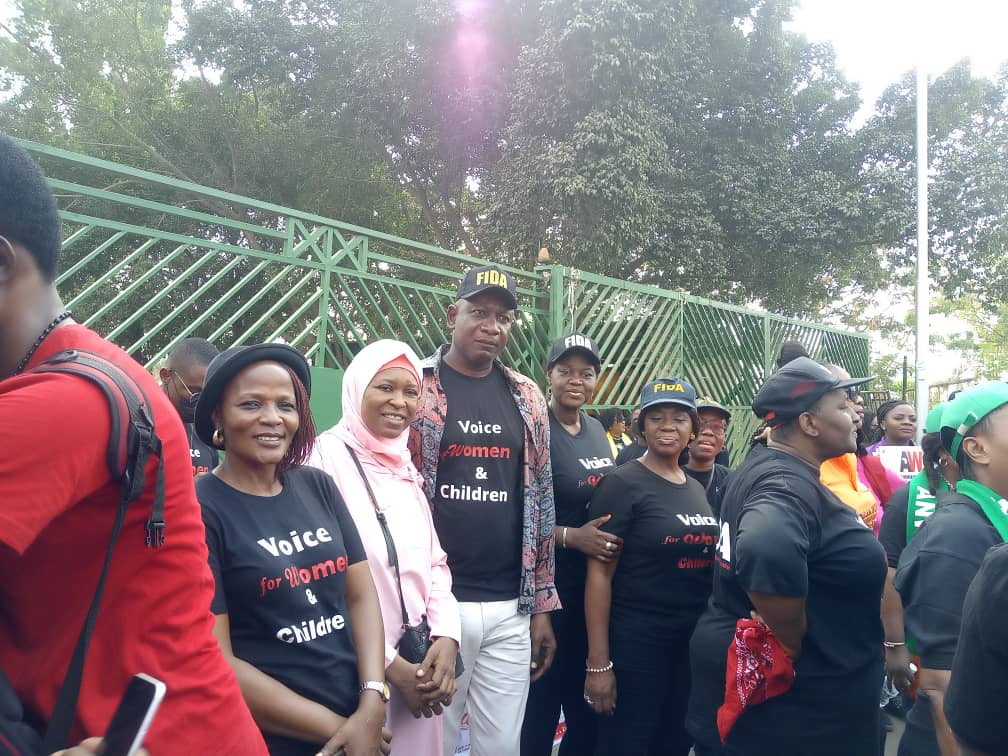
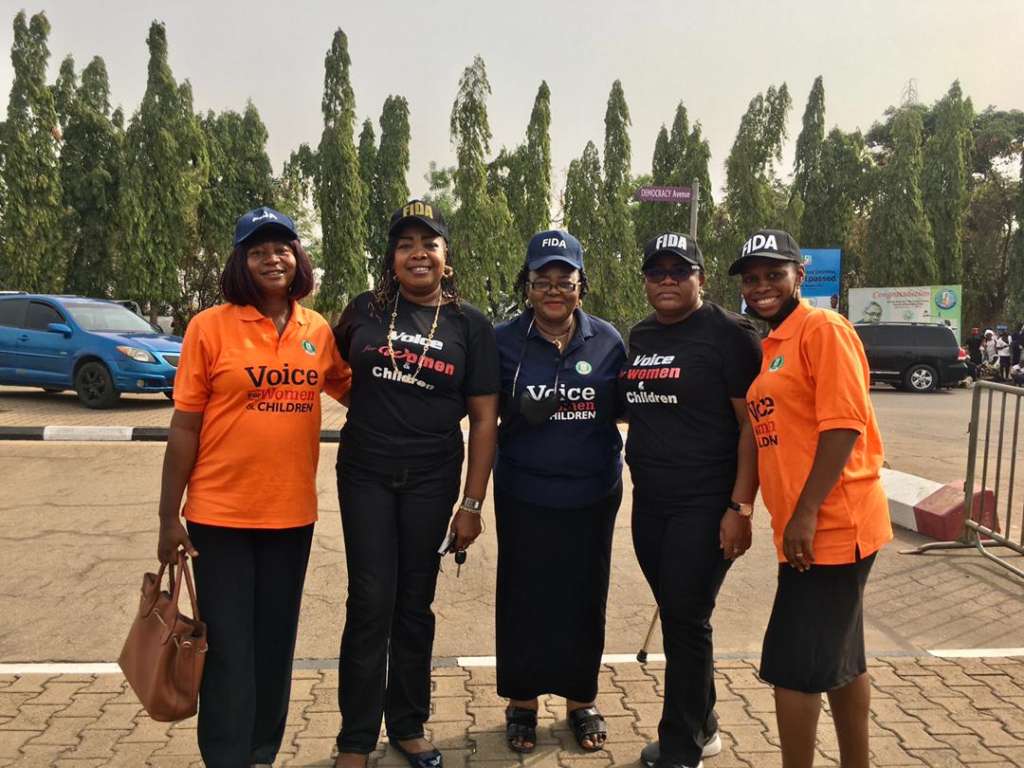
“When women are empowered as decision-makers and leaders, the people and nation benefit,” said Amina Agbaje, Country Vice President, International Federation of Women Lawyers (FIDA).
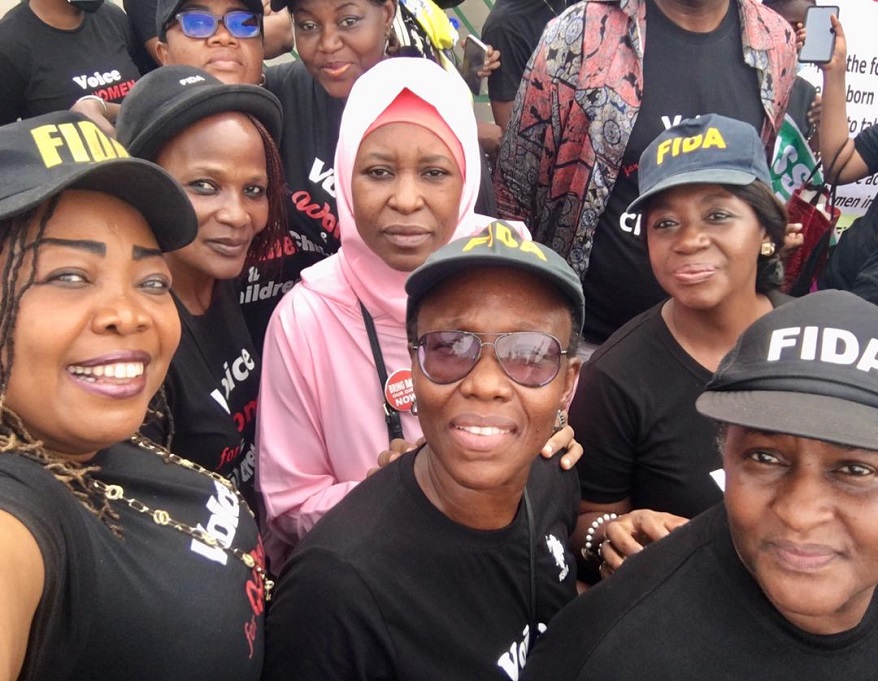
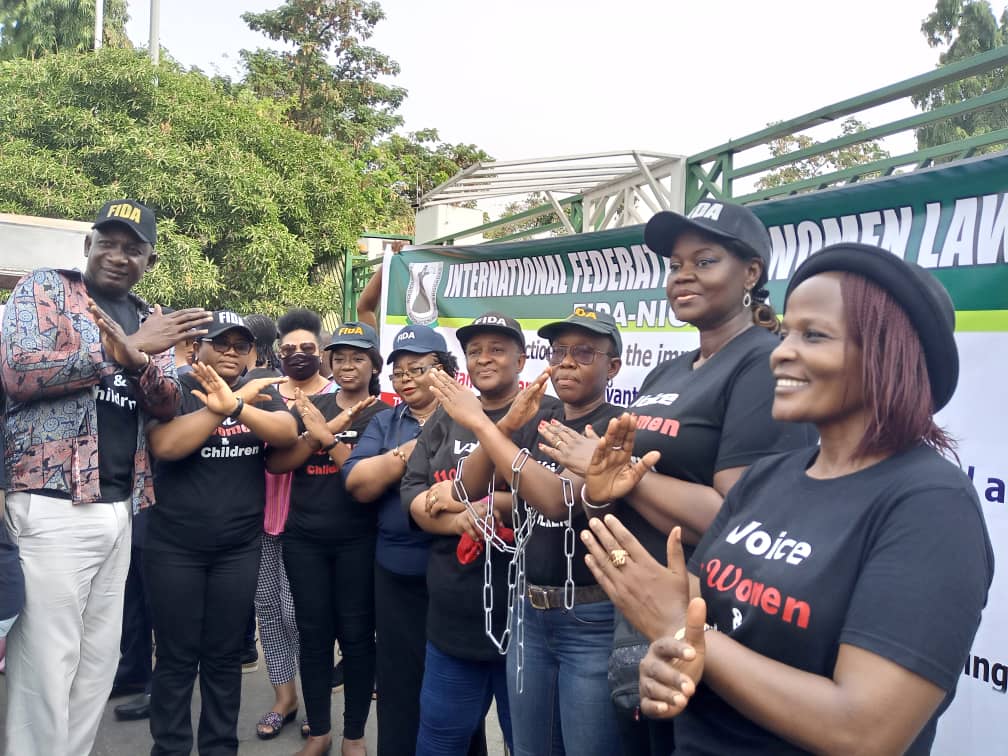
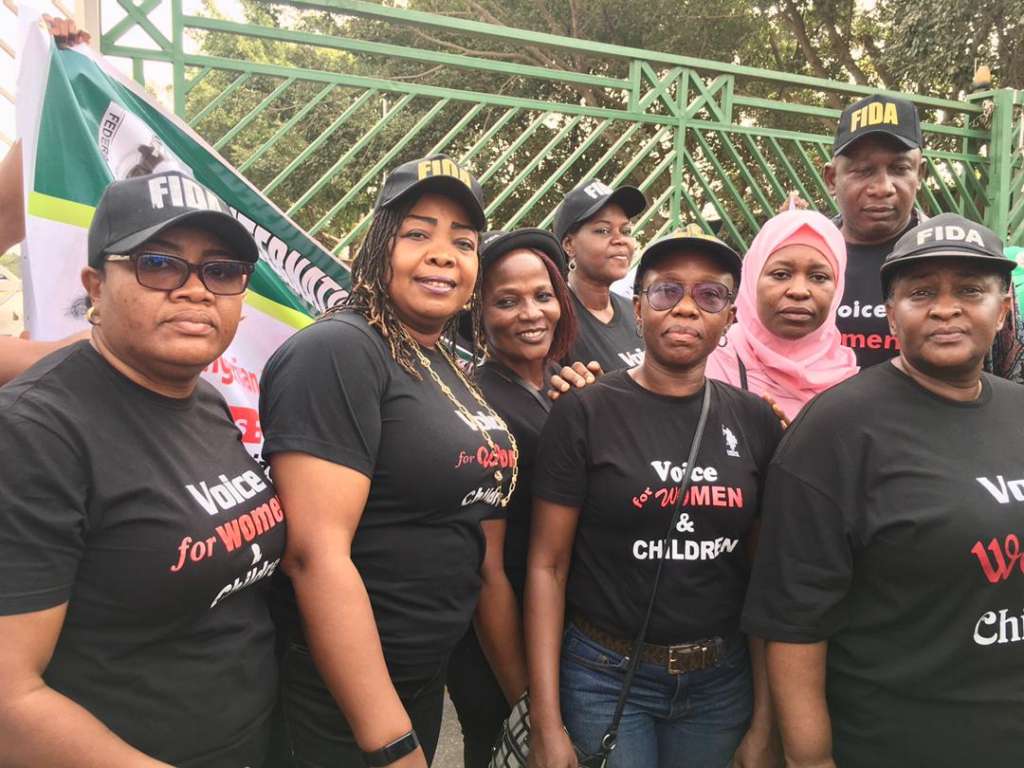
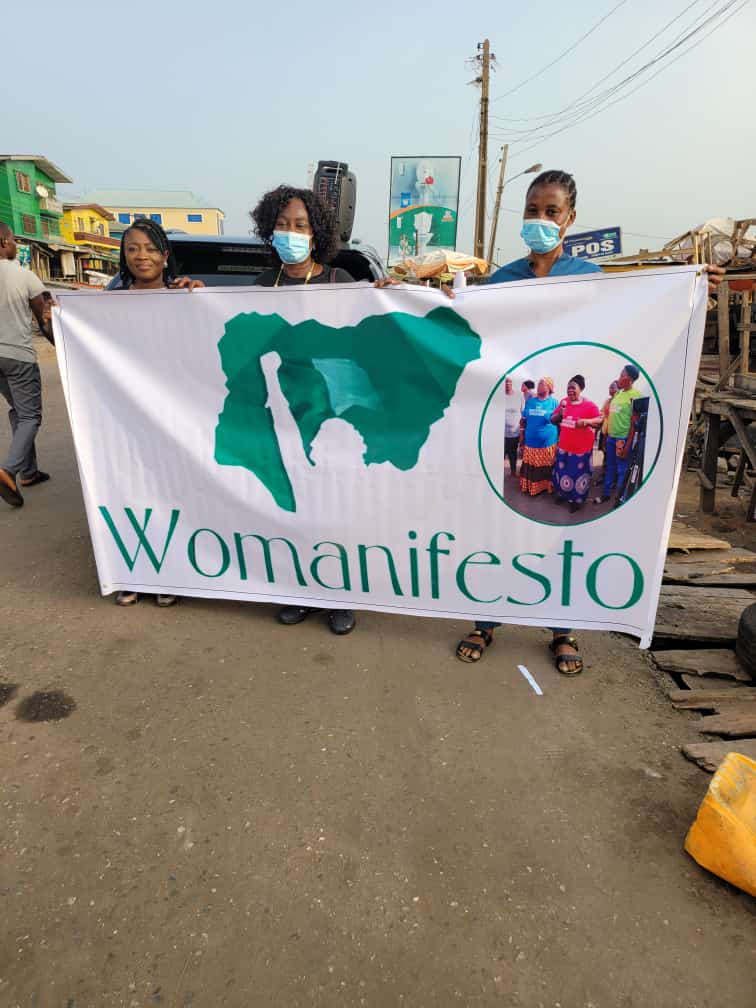
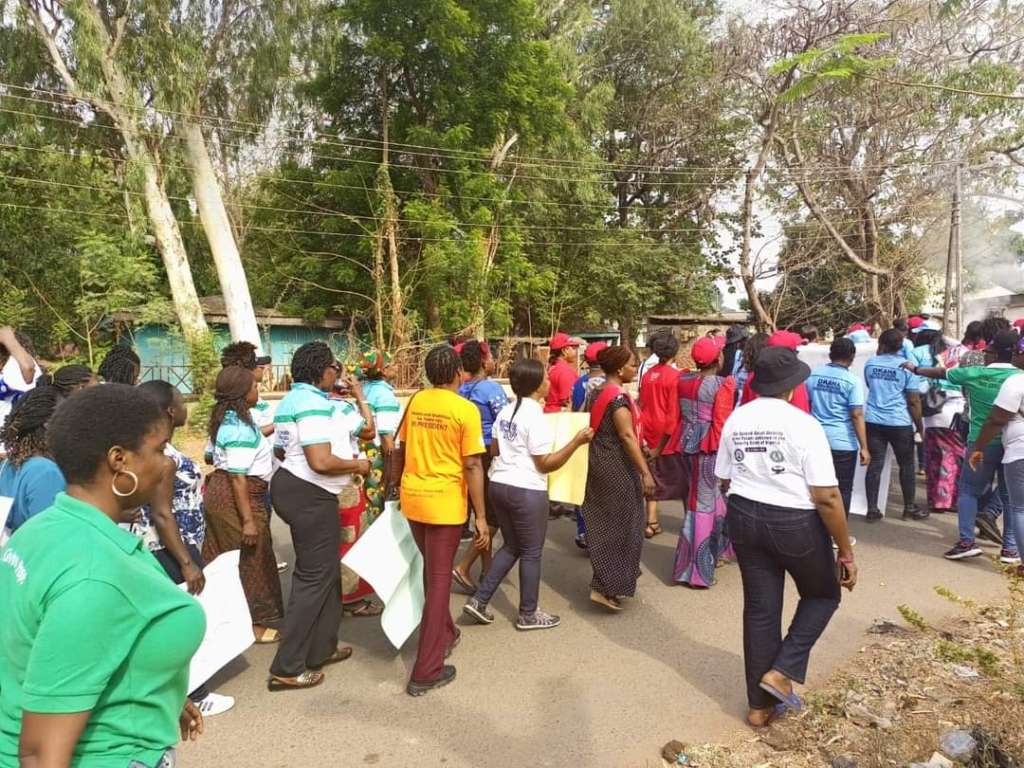
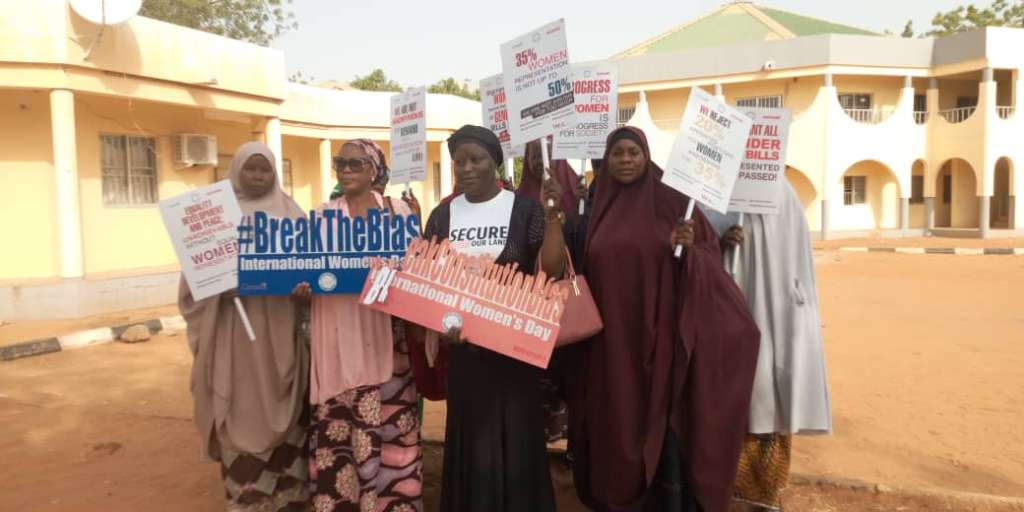
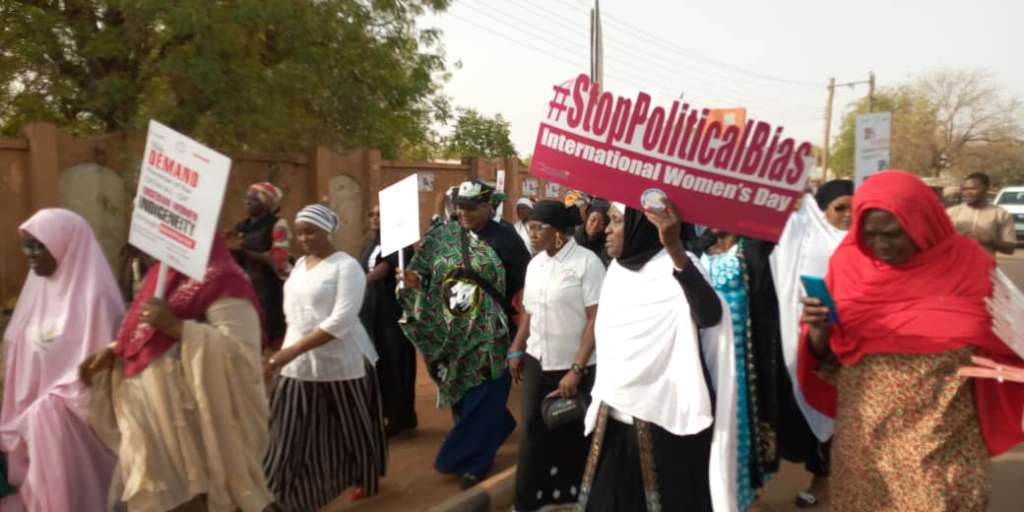
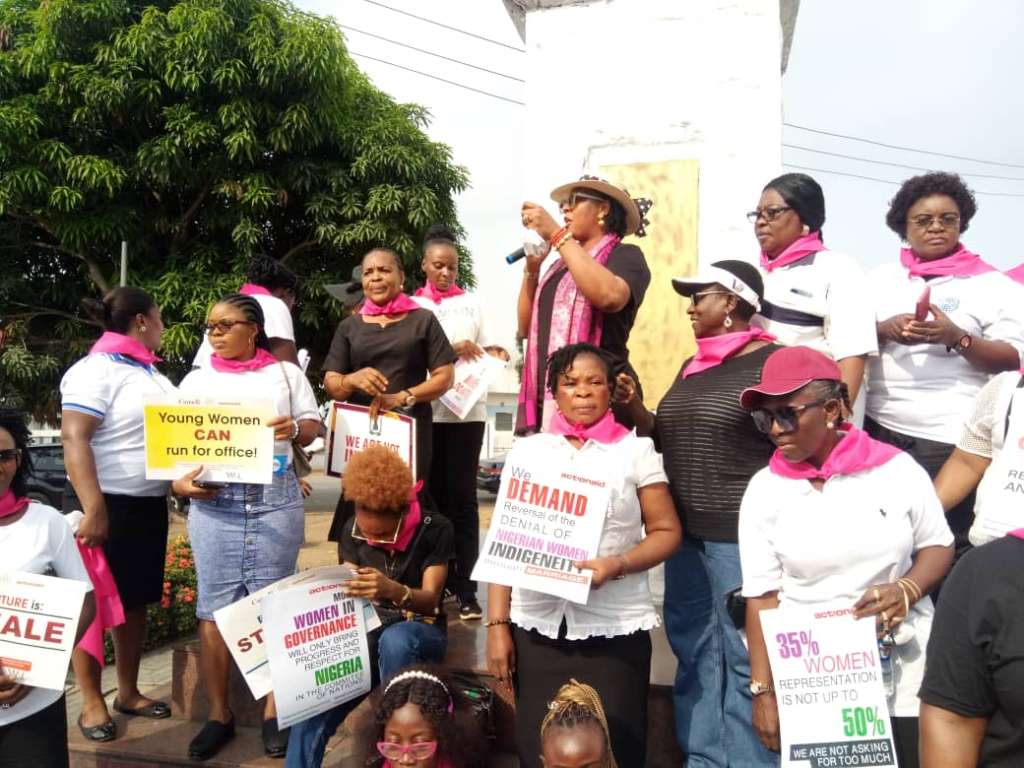
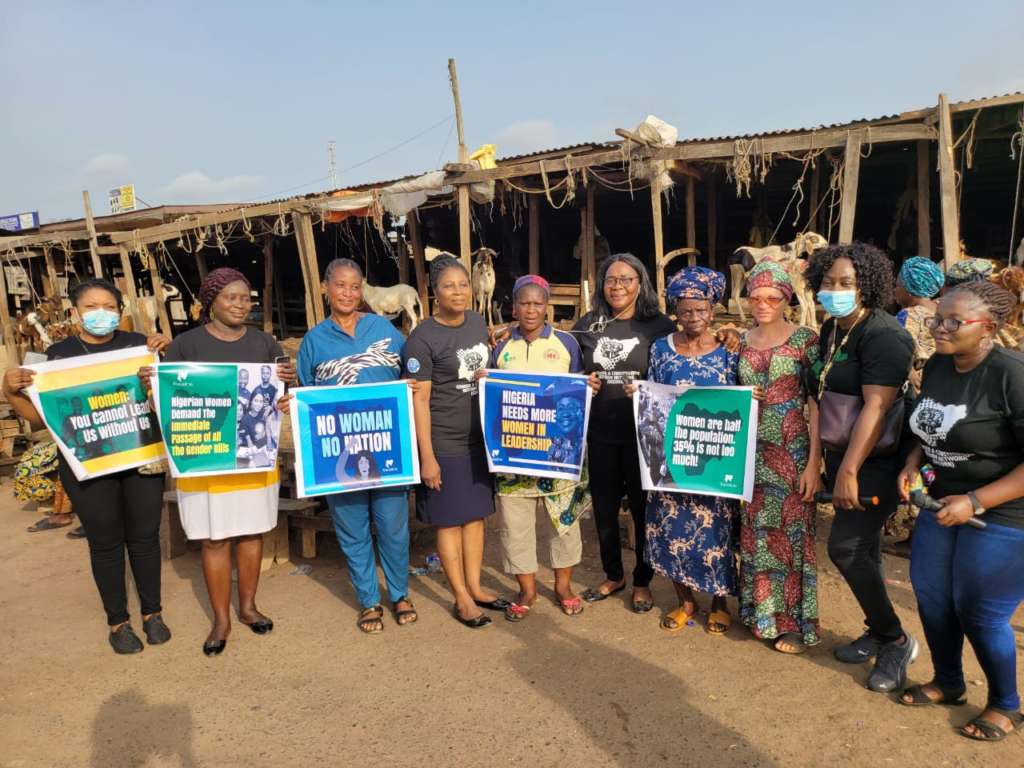
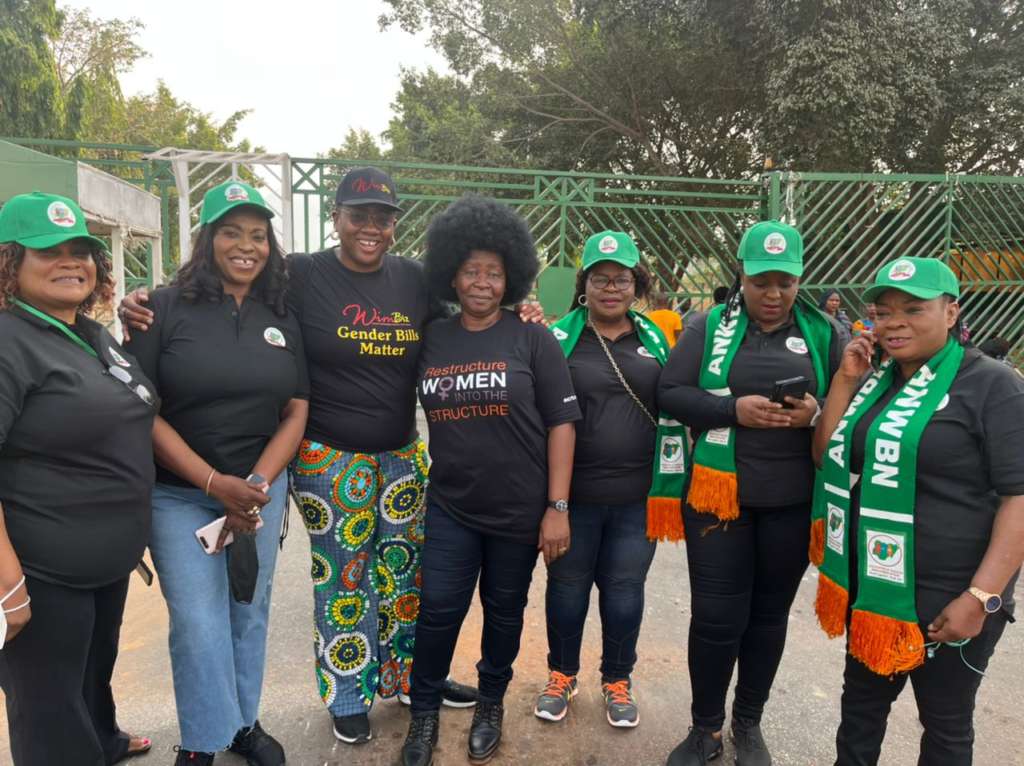
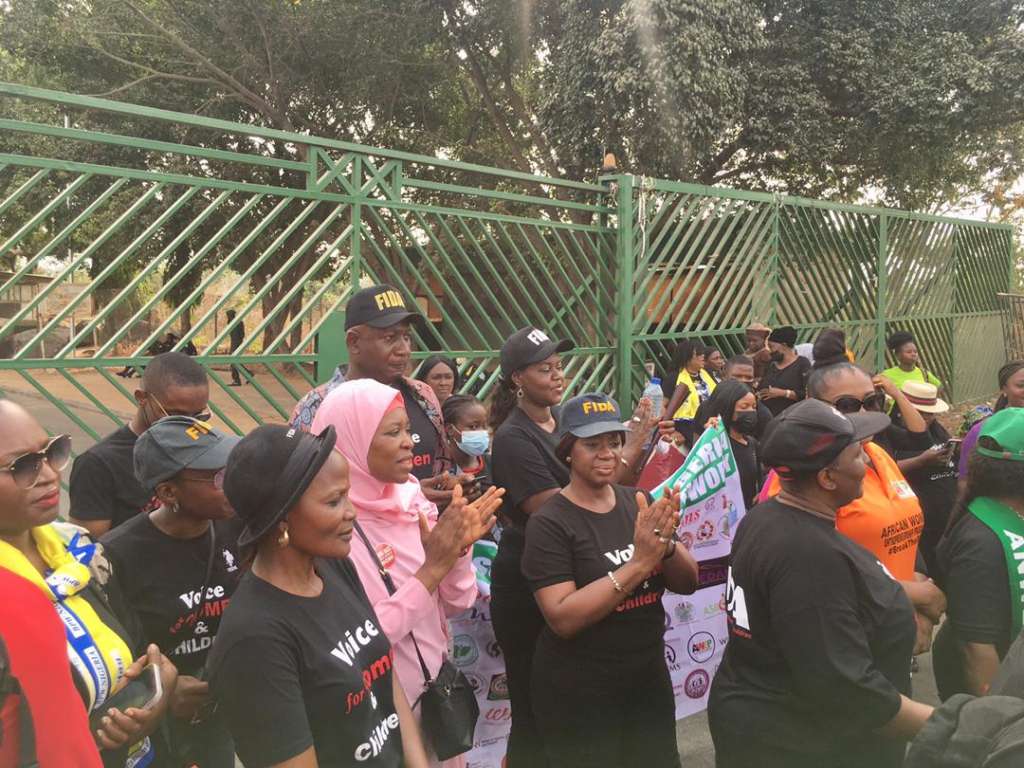
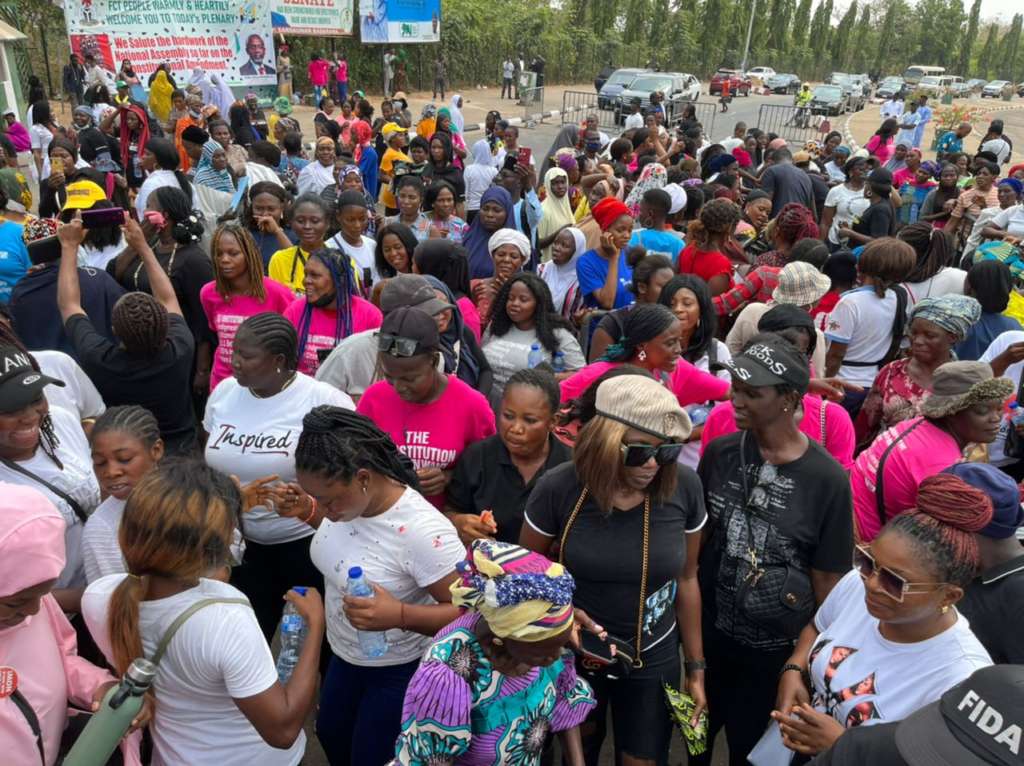
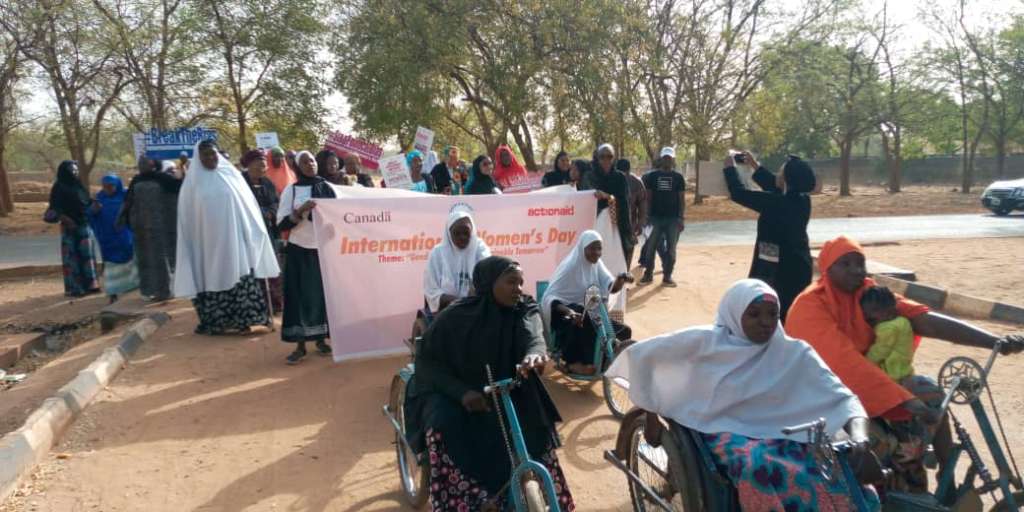
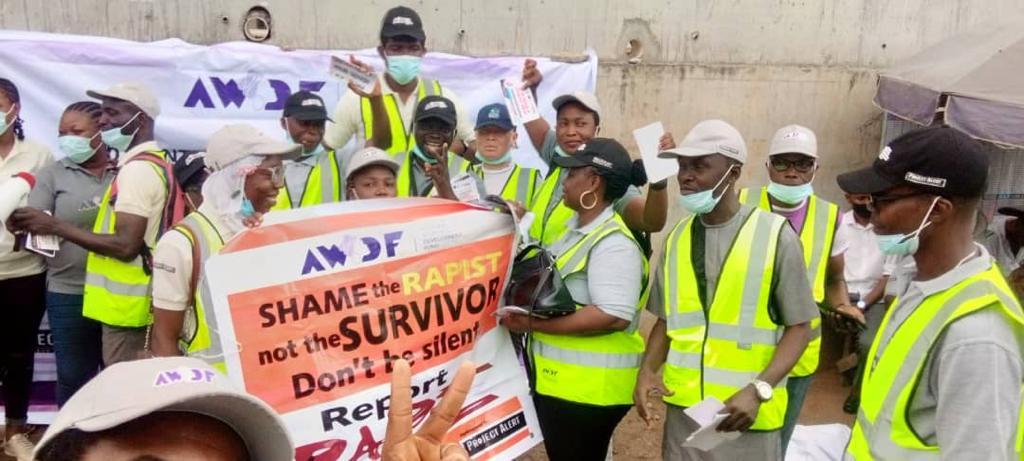
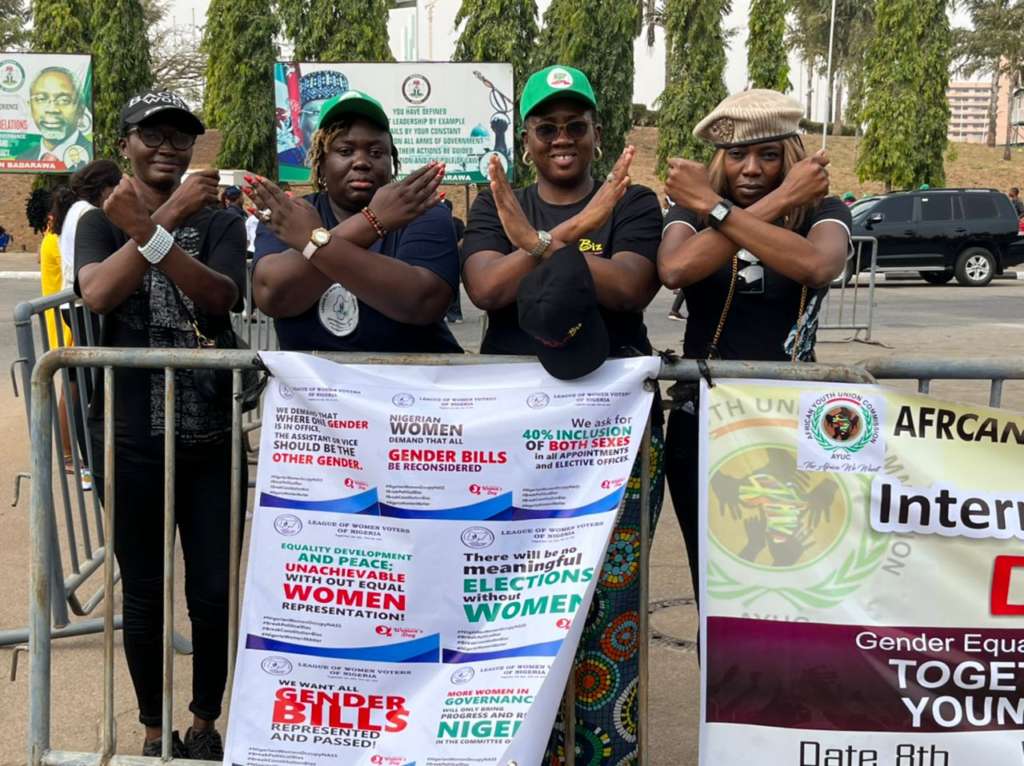
The presence of Nigerian women at the gate of the National Assembly and on the streets across the country as International Women’s Day is marked all over the world is a clear response to the legislators’ attitude towards, six key bills directed at ameliorating biases against them at the on-going constitution amendment process.
Agbaje and FIDA like other women groups insist on more “opportunities for women’s inclusion, in order to bring better attention to germaine issues that uniquely affect them.” By doing so she observed, there will be a change in negative attitudes towards gender-based issues.
This is even as the Professional Women in Nigeria (PROWIN) described the legislators’ attitude as a wake-up call for Nigerian women to take advantage of their population and change the narrative.
The statement signed by, Dr. Linda Kwon-Ndung, Associate Professor, Federal University, Lafiya, Dr. Rakiya U. Shonekan Executive Director, Women and Youth Awareness Empowerment Network (WOYAEN), Susan Serekara-Nwikhana, Chairperson Nigeria Association of Women Journalists, Rivers State Chapter, Angela Olofu-Adeoye, Senior Lecturer, Centre for Conflict Management and Peace Studies, University of Jos, Lillian Okenwa, Lawyer, Publisher of Law & Society Magazine, Dr. Njideka Kanu, Secretary, Medical Women Association of Nigeria (MWAN) FCT, Rafiu, Mistura Adenike, a Chemical Engineer and Judea Justina Adams, Amazon Ambassador reads:
Professional Women in Nigeria (PROWIN) is greatly saddened by the Nigerian National Assembly’s rejection of six key bills directed at ameliorating biases against women at the ongoing constitution amendment process.
It is disheartening that on the first day of International Women’s Month, March 1, 2022, Nigeria’s 9th National Assembly comprising of 94.6% men voted against constitutional amendments that would have greatly impacted Nigerian women. This is a huge blow that has painfully set Nigeria several steps backward.
By declining their assent to-
1. Citizenship to the foreign-born husband of a Nigerian woman while a Nigerian man’s foreign-born wife gets automatic citizenship
2. Women’s ability to take indigeneship of their husband
3. 35% appointed positions for women.
5. 35% affirmative action in party administration and leadership.
6. Specific seats for women in the National Assembly; the National Assembly has in clear terms told Nigerian women that they are irrelevant.
The calibre of legislators at the national assembly is apparent and this will only heighten the struggle for actual inclusion of women in a society that has proved to be unrelentingly patriarchal. The theme of this year’s international women’s day celebration is apt and timely for women, especially in Nigeria.
This is a wake-up call for women to take the bull by the horns as we all know that power will not be given to us on a platter of gold. Women must not relent but remain poised to ensure that the female gender is recognised and treated with as much dignity as the opposite gender.
Women proesting at Calabar
Section 17(1) of the 1999 Constitution as amended provides that: “The State social order is founded on ideals of Freedom, Equality, and Justice. Subsection (2) states that: “In furtherance of the social order- (a) every citizen shall have equality of rights, obligations, and opportunities before the law…”
Ogun state…
Again, the Fundamental Human Rights of 1948 made it clear that everyone is equal and the UNSCR 1325 states that women should be included in governance and decision-making processes in all member countries.
One day is not enough to celebrate women… Today and always, I celebrate with you! Afam Okeke, Chair, NBA Abuja (Untity Bar) Sports Committee
That is Wwhy there are 5 pillars which are Participation, Protection, Promotion, and Prosecution. All these points to the fact that No One should be left behind in the governance across all levels, and facets of life in line with the Sustainable Development Goals slogan.
It is disheartening for instance that a federal legislator sees women’s rights to vote as an achievement while advising women to patiently build on the supposed gain. This disposition is rather unfortunate in the 21st century where nations are accelerating and consolidating on the gains of democracy in terms of inclusivity, sustainable growth, and development.
The Republic of Namibia for instance has adopted a 50 percent gender quota which shall apply to all elective and appointive offices. The ruling South West Africa People’s Organisation (SWAPO) has a 50% one woman, one man (or “zebra”) quota. Today 46 of 104 (44%) seats in their National Assembly are held by women. Rwanda on its part has 65% of Women in leadership and Nigeria with top-notch female professionals is endorsing 20%? This is unacceptable.
Why should Nigerian women be considered relevant only when it is time to sing and dance at campaigns or cast votes during elections? This however is a wake-up call for Nigerian women to strategize and take maximum advantage of their population and change the narrative.
While women’s representation in political decision-making is increasing globally, Nigeria the giant of Africa has been rated low by Inter-Parliamentary Union in terms of women’s representation in parliament.
We maintain that equal participation of women and their rights to access positions of political leadership and decision-making at all levels is fundamental for achieving much-needed economic growth and a well-functioning democracy.
Nigerian women should be able to freely exercise their right to participate politically as voters, political party members, candidates, elected representatives, and appointed officials. For these reasons, we call on the National Assembly to take measures to remedy the current situation.
To the Nigerian women-
We must use what we have to get what we want as the 2023 General Elections draws closer.
We have our PVCs in our hands that can do the magic for us, since women are always more in number during campaigns and voting time.
We must restrategise to sponsor women, who are willing, well able to go into politics to go and pick up forms to contest for positions of their choice.
We must also stand by them from the beginning to the end giving them the prominence they deserved until the battle is won.
Our children too will support us when we Re-strategise to support more women to be in position of power.
Finally, we join voices with other women’s groups in endorsing the historic 1 MILLION WOMEN MARCH! across the country!
It was the United States that started flirting with Ukraine about this idea of Ukraine joining NATO — a military alliance that is the geopolitical enemy of Russia, with whom Ukraine shares a border. This flirting started in a definite way in 2009. But guess who it was that was directly responsible for dangling a NATO membership to Ukraine?
In 2009, Joe Biden (then Vice President of President Barack Obama) told then Ukrainian President:
“If you choose to be part of Euro-Atlantic integration, which I believe you have, then we strongly support that . . . We do not recognize anyone else’s right to dictate to you or any other country what alliances you seek to belong to.”
In other words, forget Russian threats and go ahead with the project of joining NATO (which he rightly referred to as a Euro-Atlantic alliance); we do not recognize Russia’s right to dictate to you which alliance you should belong to.
This was the messy situation President Donald Trump inherited — a situation where Ukraine had already been made to believe that the United States will support them in joining NATO.
Rather than try to turn back the hands of time and create a different set of problems, Trump just used American economic might to prevent Russia from invading Ukraine, and, I truly believe, he must have given Ukraine the cold shoulder about the issue of joining NATO. If Ukraine cannot join NATO and Putin cannot see a clear path towards invading Ukraine to prevent their joining NATO (because of Trump’s sanction on the Nord Stream 2 pipeline) then this dynamic situation will become the status quo. No Russian invasion and no new efforts on the part of Ukraine to join NATO. Peace.
But, like I explained in my post last week titled (Understanding the Russia-Ukraine Conflict in 5 Minutes) one of the first things Joe Biden did, as soon as he got into the White House on the 20th of January, 2021, was to waive the Trump sanctions over Nord Stream 2. In other words, he removed the economic roadblock Donald Trump had wisely placed on Putin’s path for an invasion of Ukraine. To prove that Joe Biden wanted the current war to take place, after clearing the path to a Russian invasion, he then basically deceived Ukraine into thinking that the American military will step in, were Russia to attempt an invasion. Everybody knows that American military threat alone (plus mega sanctions) can cause Russia to think twice about invading Ukraine. So the President of Ukraine had no fear, as long as he believed that the United States was committed to Ukraine’s defence. How was he deceived into this mindset?
Another thing Joe Biden did to empower Putin and Russia was to cancel the US-Canada Keystone XL pipeline, apart from blocking several drilling permits in the US, basically reducing America’s oil production capacity. This forced America to increase its oil import from Russia. Don’t ask me to explain this madness.
So, to deceive Ukraine into audacity (after empowering Russia by waiving Trump’s sanctions and increasing oil demand from Russia) Joe Biden signed up Ukraine as a so-called NATO Partner State. Not a NATO State but a NATO Partner State. That is to say, although Ukraine was not yet part of NATO, Ukraine was quiet close to that goal. Ukraine had a special relationship with NATO. As far as NATO was concerned, Ukraine was not just any other country. Of course Joe Biden knew that Russia will be quite apoplectic about this development. And yet they did it. One can only guess what they told the President of Ukraine off record. Somehow, he was made to feel that he was almost a member of NATO and NATO would not just stand idly by while Russia invaded Ukraine.
As if this deceptive status of NATO Partner State granted Ukraine was not enough, on the 10th of November last year (2021) the Joe Biden administration signed a charter with Ukraine on “Strategic Partnership” and the administration restated its support for Ukraine joining NATO. Part of this charter states that:
“The US will emphasize unwavering commitment to Ukraine’s sovereignty, independence, and territorial integrity within its internationally recognized borders, including Crimea, and extending to its territorial waters, in the face of ongoing Russian aggression which threatens regional peace and security and undermine the global rule-based order.”
I hope you noticed that the US referred to Crimea (now under Russian control) as Ukrainian territory?
This was further assurance to Ukraine and their President (Zelensky) that Joe Biden and the United States considered them special friends. Now, if you are a special friend with a superpower like the United States, you are likely to feel confident that, in case of your country being invaded, at least the superpower can provide you with a no-fly zone so you can sort things out for yourself on the ground. You are likely to feel confident of real and consequential military support that will guarantee your defense capabilities and survival.
As soon as Vladimir Putin realized that the “Strategic Partnership” charter had been signed between the US and Ukraine, he knew the chips were down. It was now or never. He had to invade Ukraine now or Russia would lose its place in the global pecking order.
Right now, Ukraine is being destroyed before our very eyes and all you get from Joe Biden and NATO are sanctions, sanctions, and more sanctions. First of all, the sanctions do not target Russia’s energy sector so Russia is not losing cash. In fact, with the price of crude oil skyrocketing, Russia is actually making more money. Russia is also selling (more expensive) gas to Europe so the sanctions noise is just noise. That is why they keep making the noise — to make you feel they are helping Ukraine.
My name sake, Joseph Okechukwu, uploaded a seemingly crazy video on his YouTube channel in January. That video claims that, for 2022, a depopulation move through World War 3 is on the agenda of the New World Order. This Russia-Ukraine conflict smells like the beginning of that war. That would mean Putin has a boss telling him what to do; Biden has a boss telling him what to do; Zelensky has a boss telling him what to do: and that the boss of these three Presidents is the same individual or group of individuals. The end game, if this is the case, will be nuclear war that will result in mass casualty in Europe and the United States.
While you consider the above “conspiracy theory” note that, just last week, Hilary Clinton said publicly that the Ukraine situation was a set up and that the US may be trying to turn Ukraine into another Afghanistan so as to “bleed Russia”. In other words, Hilary Clinton is saying that there could be a deadlock in the war (with no clear winner) and, like in Afghanistan, the West will then fund an insurgency in the same way they funded Osama Bin Laden to fight against Russia when Russia was in Afghanistan. I heard her say these words with my own ears. I am only paraphrasing for ease of understanding.
Israel’s Iron Dome (jointly developed by the United States and Israel) can effectively impose a no-fly zone in the skies of Ukraine. No wonder, Ukraine has asked for the iron dome, which is one of the best in its class in the world today. But, of course, Zelensky’s request was denied. Israel is afraid of offending Russia and that can be understood because Russia is in Syria and can create unmanageable problems for Israel. But what is stopping the US from the deployment of patriot missile systems and other options they have to protect Ukraine? My point is that, if you never intended to help Ukraine with these sort of consequential weapons, why did you make Ukraine and Zelensky feel you would? Why make Ukraine a so-called NATO Partner State and, in November — while Russia’s temper was already rising dangerously — sign a “Strategic Partnership Charter” with them? How useful has that charter proved other than to deceive Zelensky and the Ukrainians?
I smell something
I smell a set up
May God have mercy on the Ukrainians and on all of us.
Correction
The two predominantly Russian-speaking regions that broke away from Ukraine after the ouster of Viktor Yanakovich are Lugansk and Donetsk, not Lugansk and Donbass as mistakenly stated in last week’s post titled Understanding the Russia-Ukraine Conflict — In 5 Minutes
International Women’s Day is a global day for celebrating the social, economic, cultural, and political achievements of women. The day also marks a call to action for accelerating gender parity. Every year, on March 8, the world comes together to celebrate women’s achievements and reinforce a commitment to women’s equality. The campaign theme for International Women’s Day 2022 is #BreakTheBias. Whether deliberate or unconscious, bias makes it difficult for women to move ahead. Knowing that bias exists isn’t enough. Action is needed to level the playing field.
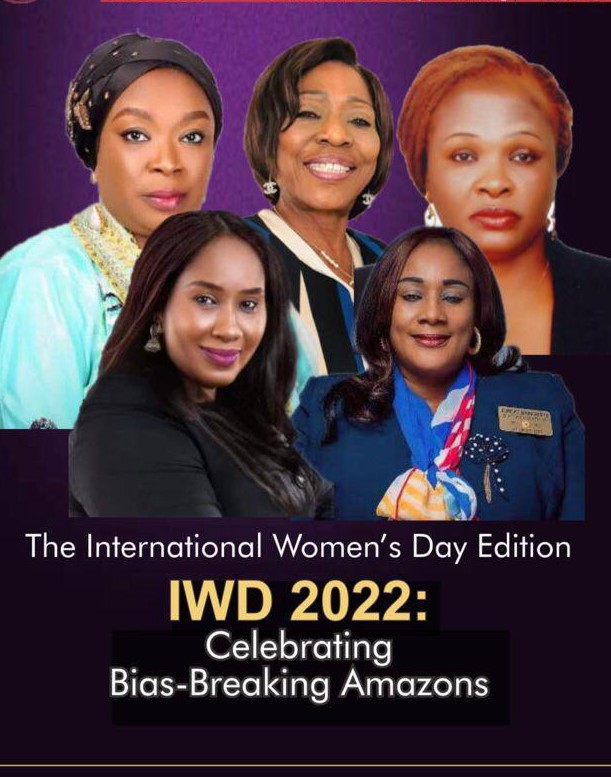
The Metro Lawyer (TML) presents, five inspiring women who are #breaking the bias daily. They share their stories and thoughts on busting stereotypes and spotlighting issues that impact women and girls.
Ozioma Izuora
Ozioma Izuora
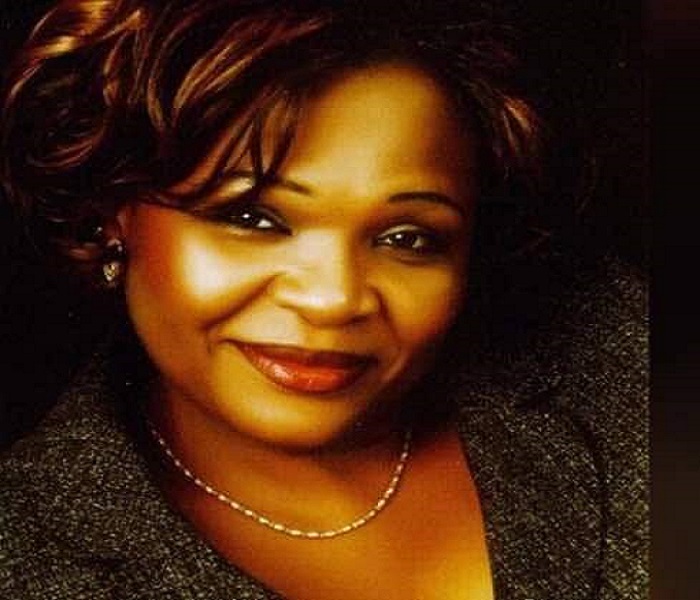
Ozioma Izuora was born to the Ezeifedi family of Imenyi Ihitenansa, Orsu LGA, Imo State, almost 59 years ago. Growing up during the Nigerian civil war, having been dragged home from Benin City where her father ran his patent medicine business during the evacuation of the town in 1966, she grew up precocious and sensitive to the intense discrimination against women. All around her, she witnessed violence and desperation, as numerous relatives who returned from wherever they eked out a living had to cram into tight corners of the family compound.
Scarcity of resources posed a major challenge. Human beings survived by feeding off fodder and protein of any sort, from rats to lizards; grasshoppers to aku (flying termites), all in a bid to avoid kwashiorkor, scabies, and other diseases brought on by malnourishment. (Her forthcoming memoir will reveal her personal journey from the early struggles of life to womanhood).
With a first degree in English Language (Drama Stress), and a Masters’s degree in Education from Exeter University, England, she obtained a degree in Law in 1999 and was called to the Nigerian Bar in January 2001. Cutting her teeth in practice in the Chambers of late Anyamene, SAN, in Enugu, she discovered that she could continue to champion the cause of women in her own rights.
As a teacher she had been engaged by NGOs to prepare students in drama, speaking, and debates on various societal issues. With the blessing of her principal, she moved to Abuja in 2003 and set about training in areas to best help her promote advocacy for women’s rights. In 2005, she co-founded Mediators & Advocates of Peace (LAMPAIX) with Chief Anyamene as the first Chairman of BOT and late Chief Segun Olusola, among others, as a patron, who also appointed her as a consultant into his African Refugee Foundation(AREF).
LAMPAIX was the platform from which Mrs. Izuora employed her skills as a writer and dramatist to explore avenues for peacebuilding, human rights, and social discourse. Her first novel, Dreams Deferred, (shortlisted for NLNG Prize in 2008; won ANA/ Ken Saro Wiwa Prize for Prose in 2009), dealt with the plight of widows, but not in the routine portrayal they receive in literature. She presented a protagonist who refused to bow to societal pressures by rising above her adversity to help others discover themselves. In 2009, her play Blood for Palm Wine was enacted at Nicon Luxury Hotel in Abuja by the Fidoko Theatre of UNN to great applause. In that play, she x-rayed the violence in society which would readily condone rape and other forms of violence against women rather than risk tarnishing family names or to maintain outdated traditions. 2012 saw her present the novel, Scavengers’ Orgy which portrayed damaged women and other typical actors that are easily evident on Nigeria’s political scene. Digging deep into the rot that backgrounds such bent-out-of-shape characters, she makes a case for cleansing the society by closer inquiry to hold individuals accountable in whatever capacity they present themselves in society.
Practicing Law in Abuja, Mrs. Izuora participated actively in various professional associations. She was the Vice-Chair of FIDA Nigeria, Abuja Branch, and in her bid to raise women to become more prominent at the main Bar, also became Vice-Chair of the Abuja Branch of the Nigerian Bar Association – the first woman to break that jinx! Thereafter, it became her project to assist women to aspire for that position at successive elections. She was the NEC Rep of the branch until 2020, where she put the interests of the branch out there with her outspoken and clear-sighted engagements. She has also participated in many general women fora and is currently the Legal Adviser of the Nigerian League of Women Voters.
Since 2009, her voice has been heard on the world stage at the annual Commission on the Status of Women Conference (CSW) at the United Nations in New York. She it was, who first suggested that men be included as partners in the fight for the cause of women, citing the support she received from her husband at every turn. By the year 2010, that became the official position of the United Nations, which set up a vanguard of men and women rights activists.
Recently, having obtained her LLM, she has made her way back to the classroom where she currently gives back to society by instructing the next generation of lawyers in Family Law, Human Rights, and Constitutional Law among others. She now has the opportunity of mentoring young minds to fight against all forms of violence against persons. In the annual review of Criminal Law in the area of Sex and Gender-Based Violence for the Rule of Law Development Foundation set up by the eminent former President of the Nigerian Bar Association, J. B. Daudu SAN, she continually places these evils in the society on the discussion table. Other associations like the African Women Lawyers Association (AWLA) and others often seek her input into discussions on the rights of the woman, especially with regards to the 16 Days of Activism to end Violence Against Women which LAMPAIX has championed annually for years.
What are the most effective ways to counteract the negative stereotypes of feminism, especially in the workplace?
The best way to correct stereotypical portrayal of any issue is through continuous engagements with those who hold those views in order to correct them. Typically, stereotypes, like all prejudices, are transmitted from person to person. They are learned behavior. They can only be corrected via unlearning of previously held views. Traditions and convictions are often too deep-rooted to be swept away through uncoordinated sanctimonious preaching.
Those working to correct stereotypes bear the burden of living true to their convictions. You become an ambassador of your convictions and must never slip up or you will be judged very harshly. This is the Achilles’ heel of all advocates everywhere. For instance, you cannot be advocating for ending violence against persons and be cited for inflicting violence on people. Even though humans are vulnerable creatures, your judges will accept nothing but perfection from you. See what happens to pastors caught in infidelity and the like! In the workplace, for instance, you must exhibit the behavior you preach. If you put your beauty out, for instance, before your capability to perform in certain roles in your office, you would be shooting yourself in the foot and setting back whatever you preach. You can’t cut corners; you can’t be unprofessional…you must set good examples, even if you must lose benefits and privileges. Above all, you must look out for those who suffer from their convictions at the workplace and provide support and good advice.
Destroying stereotypes is difficult and the advocate must prime herself to pay the price for her conviction.
The National Assembly recently rejected a number of bills that affect women. How can women restrategize in order to get positive results in the future?
Only those who are new to Nigeria’s National Assembly can say they were surprised at the outcome of the voting on the bills concerning women. Unlike the popular view on the reasons the National Assembly reacted adversely to issues of empowering women, I do not believe it was about our culture and tradition. It is, in fact, motivated by a raw scramble for power.
I’ll take you back to 1998/1999, when democracy returned to Nigeria. I reflected on this matter in the novel, Scavengers’ Orgy. Many people were not convinced that the military was really going to hand over power to civilians, and as such, preferred to mind whatever businesses or professions they were in rather than participate. Two main groups of people took the plunge to join politics: those gamblers who sought to discover a direction in life by investing in politics; and those who, having collaborated with the military, were sponsored into power by military strongmen/godfathers.
These people, mostly men, and women who have been favoured by the powers that be, have held on to power which they did not get from the popular will. They are not about to let it slip into hands they cannot control. Strong independent women will live up to their billing. And of course, politics works with numbers. So long as the number of women does not increase, the threat of their running free and away from the kitchen and bedrooms towards policy and law-making spaces is less.
We are still at the primitive level of humanity where women must answer to the superior human species: men. People argue about how women have already overrun all professions and are featured at the highest echelon of even international organisations. Indeed, wherever women have depended on their grey matters to progress, they have. But not so in politics. Why is that? Is it not mostly women that dance, campaign, and vote? The answer is simply that power is currently not available to ‘the people’. Those who seized power at the onset, if you look closely, are still very much in power, along with their military collaborators. Some in the military changed their uniform for civilian garbs but never relinquished their mentality that they call the shots on power. Women do not fit into the prevailing equation.
Finally, let me register my personal cynicism regarding the special seats being pushed for. I never supported it. 360 members of the House of Reps are already unwieldy and some have called for a change to unicameral assembly rather than bicameral because of the large size of the assembly. Why would anyone suggest they add 111 new seats with all the attendant costs? I would have suggested that we persuade the men to relinquish a few seats – like five or six seats per state to be vied for by women. At the state level, those seats can be assigned to rotate around the local governments. The parties are already used to rotating offices. If women are helped to get a foot in, some of the hills in their paths would have been levelled to enable them to stand on their own eventually after a few years.
I think this need not go into the Constitution; it is meant to be an affirmative action which has a lifespan. We should rather insert an affirmative action in Chapter Two directive principles of state policy and be available at necessary times to assist marginalised groups in any areas. It will not have to be women all the time. Time will come when even men might need affirmative action to be helped into some areas in the polity.
People may scoff at the idea now, but I teach in the university and see that more women are shining forth everywhere. It will not be long for men to need such assistance! I think going forward, women can step down insisting on having special seats inserted into the Constitution. We can approach the political parties to do this. If the party constitution states that a certain percentage of women should feature in elective positions, we would achieve more satisfying results without riling up those men who have also been short-changed by the system.
Bilkisu Magoro
Dr Bilkisu Magoro
Dr. Bilkisu Magoro is a well-versed Development Consultant and Gender/Human Rights Advocate who has thrived in the area of Advocacy for 12 years. Her engagement with international organisations, corporations, and foreign governments in four continents to develop and implement sustainable economic, political, and public policies spans over 27 years.
Equitable and sound governance is underpinned by citizen and economic relevant and efficient policies. Similarly, a representation which reflects the landscape of the country in the governing structures plays a key role in ensuring that an array of voices are heard and infused into the fibre of strategies and solutions. Dr. Magoro has responded to the cry for more women representation in the political sphere. She has contested elections in a male-dominated environment three times and was the only female contestant at the 2019 General Elections who contested for the National Assembly in the two major parties from the North West of Nigeria. She continues to advocate and support aspiring female politicians and hopes to witness the election of women from the North West in the National Assembly both in the Senate or House of Representatives.
Her membership of an array of associations such as the Institute of Commercial Management Bournemouth England, Global Shea Alliance, Northern Reawakening Forum, Women in Management and Business, NEPAD Business Group, African Business Round Table, the Centre of Values in Leadership, Institute of Corporate Executives of Nigeria, National Institute of Management, All-China Women’s Federation, National Council of Women Societies, Alumni Associations and Unity Schools Old Students Association have provided her with well-rounded hands-on experiences which she has leveraged and exhibited as a delegate in over 52 attended global summits. Dr. Bilkisu was a Member of the Gender Affirmative Action Steering Committee, Electoral and Constitution Memoranda Committee (GEM), Coalition for Change, delegate at the National Conference of Nigeria 2014, Committee Chair for the UN launch of HeForShe in Nigeria 2017, and a delegate to the 61st UN Commission on the Status of Women 2017, 62nd UN CSW62 2018 and 64th UN CSW64 2020.
Her academic qualifications include a BSc in Biological Sciences, Post Graduate Diploma in Management, Masters in International Affairs and Diplomacy, and a Doctorate of Philosophy in International Relations. All from the prestigious Universities of Warwick, Leicester, Buckingham, Commonwealth Open University, and Ahmadu Bello University. Dr. Bilkisu has acquired over 40 Academic Certifications.
Recognised for her contribution to society and community advancement, Bilkisu has received numerous awards worldwide amongst which are the merit award for Entrepreneur per Excellence, Input towards Education and the Distinguished Merit Award for Excellence in Prudence and Accountability, The Vigor Award Canada, Bilkisu was the Face of UNIFEM 2009, Award for outstanding African Woman Award for Civic Leadership and Community Development New York at UN CSW62 side event, Gender equality and Women advancement Award South Korea, Icon of Humanitarian service and Capital Development, Impact Maker Award Who is Who Award, Abuja and Icon of Societal Transformation.
Constantly aware of the major role that her community played in her development, Dr. Bilkisu views her passion for voluntary work towards empowerment and nation-building as the only path to take. The Ismor Magoro Foundation is her brainchild. The foundation, which focuses on empowering women and youth, has trained over 1,500 women in Shea butter production and craft and has catered for over 800 pregnant women.
Bilkisu opened Bilmor Technical and Vocational Centre for Special Needs children in 2016. The Centre has trained over 70 young adults with learning disabilities in Vocational Skills and has trained over 1,200 teachers in inclusive education. Her interests in sound governing structures, education, social policies, and reform have seen her journey to over 38 countries. On this passage of knowledge-seeking, she has strived to create awareness of how Nigeria and Africa’s tremendous opportunities and capabilities far outweigh the challenges faced on the continent.
Dr. Bilkisu Magoro is a mother and proudly Nigerian.
Have you faced any barriers in your career due to being a woman? If so, how have you overcome them?
Barriers are one of the most common issues faced by women politicians in Nigeria especially Northern Nigeria. Having contested elections three times, there have always been challenges which are mostly focused on my gender. I wouldn’t say I have overcome the barriers as such barriers still exist, more work towards creating awareness on the importance of women’s participation in governance is still going on. Until this awareness is achieved especially to our male citizens, the barriers against women in politics will be difficult to overcome.
What is the most important message you want to send out to young women thinking about their careers? I think one of the most important things is for the young women to first discover their life purpose, following which they must decide on the career path they want to follow. Next is for them to set S.M.A.R.T GOALS. These will be short, medium, and long-term goals. SMART as in Specific, Measurable, Achievable, Realistic and within a time frame. When that is done, they should remain focused and determined to achieve these goals. There should be no procrastination. There will be challenges along the way, but they must not be deterred. They must have mentors and be ready to learn. They should not let biases or motivation blockers get in their way. I believe with all these including being smart and working hard, there is nothing they would not succeed at. I wish them success.
lniobong Irene Pepple
lniobong Irene Pepple (Mrs.) is a Business Attorney and a Child and Women’s Rights Advocate. Her practice areas are Corporate and Commercial Law, Intellectual Property Law, Power, Oil and Gas Law, and Family Law. She is the Founding and Managing Partner of Peacemakers Legal Consultancy, a full-service law firm offering legal services to a diverse sphere of clients. She and her team provide legal advisory services to high-net-worth individuals and corporate entities. She has been in active practice for 22 years.
She advocates for female Lawyers to take up roles in Law firms that can allow them to work remotely. She is passionate about women and promotes the causes of women.
She is currently the Secretary of the International Federation of Women Lawyers (FIDA) Nigeria, Rivers State branch. where she volunteers her legal services for free to indigent women and children. She is also a Mentor and a female Lawyers coach which she achieves through a platform called the “Better Practitioners”; a platform set up to encourage female Lawyers to stay in practice while managing their families, especially during the child-raising phase by equipping them with the requisite skills to enhance their practice.
lniobong is a Chartered Secretary and Administrator, a Chartered Arbitrator, and a Certified Professional Negotiator and Mediator. She is currently the Head of the Women’s group in Bonny Chamber of Commerce and Industry, Bonny Island, Rivers State.
Before founding Peacemakers Legal. lniobong Pepple is an excellent communicator with a highly developed sense of responsibility. Many of her colleagues at work and in the several professional bodies she belongs to can readily attest to this. Some of these professional bodies are The Nigerian Bar Association, Port Harcourt Branch, Federacion Internacional De Abogadas, (FlDA) Rivers State Association of Professional Negotiators and Mediators, and the Institute of Chartered Secretaries and Administrators,
The Institute of Chartered Mediators, Nigerian Chartered Institute of Arbitrators, Women in Shipping and Trading Association
She has served on several committees of these organizations. She is a past national officer of the NBA, She is a past Welfare Secretary of the Nigerian Bar Association, Port Harcourt Branch. She is a past Publicity Secretary of the African Women Lawyers Association, Rivers State Branch, Secretary, Women in Shipping and Trading Association, Port Harcourt (WISTA), and the Financial Secretary of the Bonny Lawyers Association.
lniobong believes that she is called to impact and improve lives with her skills.
What does IWD mean to you?
International Women’s Day (March 8) is a global day celebrating the social, economic, cultural, and political achievements of women. The day also marks a call to action for accelerating women’s equality. For me, it is a day to celebrate women’s achievements. Raise awareness against bias. It is also a day to join others to advocate for gender equity. I do not just ask for equality but equity. Gender equity is the process of being fair to women and men. To ensure fairness, strategies and measures must often be available to compensate for women’s historical and social disadvantages that prevent women and men from otherwise operating on a level playing field. Equity leads to equality. I say let’s start from Equity as we move to equality.
The theme for this year 2022 is Break the Bias. Imagine a gender-equal world. A world free of bias, stereotypes, and discrimination. A world that is diverse, equitable, and inclusive. A world where difference is valued and celebrated. Together we can forge women’s equality. Collectively we can all #BreakTheBias. One of the biases is against Women’s participation in Politics.
Many pay only lip service yet turn around to discriminate against the same women. There is actually no equity, and there is even less opportunity. Those who try are labeled with all sorts of names. This makes women with Leadership skills, stay out to avoid all the negativity.
Only recently the National Assembly voted against all the gender bills. A sad day indeed. I think the 8th of March should be a day to create awareness of the need for gender equity and equality and an opportunity to break the bias.
Have you faced any barriers in your career due to being a woman? If so, how did you overcome them?
The barrier in my career as a legal practitioner became more real when it was time to gain employment as a private practitioner. I was called to the Bar in 2001 and got married in the same month.
My status as a married woman was a heavy barrier. No firm wanted a married woman. They were of the opinion that I would get pregnant in no time and would not be of much gain in the firm. That barrier is real and places female Lawyers at a disadvantage because their male colleagues would go on to be employed using the few years to gain mastery in the profession. The female counterparts were even advised to just focus on family only. Desires of excelling in practice are deferred until after the children have grown. Even when she desires to return to practice, the excuse is that they are not experienced or well versed in legal practice and so the cycle continues.
For me, I overcame it by deciding to remain in practice. It takes a mind shift. I gave in to other side hustles but knowing that law was my first love, I always came back to it. I found a practice area that gave me flexible time for my family. Solicitorship gave me the opportunity to practice with my peculiar needs. I also outsourced any brief I couldn’t handle. I never ever rejected briefs. It was either an opportunity for me to learn or earn.
Secondly, I learnt new skills. I took up training in other practice areas. I can say that hunger for knowledge kept me going. Thirdly, I kept in touch with the profession. I attended conferences. I paid my bar practice fees. Attended branch meetings etc. I made myself very visible. Fourthly, I volunteered my services pro bono for organizations to keep me at par. FIDA is an organization you can volunteer in to groom and hone your skills. It may seem difficult for some but with the right coaching and support, it is doable.
Presently I mentor female Lawyers especially those in that very sensitive stage where they make the delicate decision whether to stay and remain in practice or pack up. I want to let them know that it is possible to raise a family and grow in your career. A law career does not rise and fall with litigation. Female Lawyers can train to be Chartered Secretaries, Mediators, Arbitrators, etc as long as they provide a legal solution, clients will seek their services.
I am currently creating awareness for Law firms to employ these brains in other areas eg. Virtual Assistants, Virtual Research, websites, and Social media managers for their Websites. Dear woman, there is so much to achieve as long as we have a Can-Do attitude. Everything starts with the mindset. If you believe you can’t, you won’t but if you believe you can, you will.
Grace Zemaye Egbagbe
Grace Zemaye Egbagbe
Grace Zemaye Egbagbe is a household name, especially in the Nigerian media industry. She was a top official of the Nigerian Television Authority ( NTA) before she retired from the federal government-owned broadcast station. The Edo-born lawyer, now a retiree, obtained a degree in English from the University of Ibadan, another in Theatre Arts, Film and Television Production at the University of California, Los Angeles (UCLA), and a Law degree from the University of Buckingham, England. She had a successful career in the media spanning 27 years at the Nigerian Television Authority (NTA) and culminating in her role as Executive Director, Marketing.
What are the most effective ways to counteract the negative stereotypes of feminism, especially in the workplace?
The easiest way to counteract the negative stereotypes of feminism is for women to take up more active leadership and managerial roles in sectors that had traditionally been seen as being exclusively for men. Take the banking sector for example, who would have thought we could have a female CEO of a big bank like Fidelity or female Chairpersons of banks like Access bank, GTBank etc? They have shown that what a man can do, a woman can do better! Professional organizations like FIDA should play a more active role in advocating strongly for leadership and more significant roles for women not only in regulatory but also in the promulgation of laws . What just happened in the assembly is disgraceful and makes no sense at all! Do you know why though? I think it’s because men are afraid of us women (and they should be!) because together, we are a formidable group and capable of taking over! We work hard and we are natural-born managers. We are the wives, mothers, CEOs, etc combined, and we carry out all these duties/functions effortlessly. What we should also do, is to educate the men and let them know that we are not foes but allies. They seek our support when they want but don’t want us to sit at the table with them so they throw out bills concerning us! So it’s either that or let’s tell them: “Bring it on!” We are in this struggle for the long haul and won’t give up till we succeed, and succeed we will!
If you could have dinner with three inspirational women, dead or alive, who would they be and why?
The three women I would love to have dinner with are St. Mother Theresa. She was a world leader who impacted the world simply by her incredible giving heart and simplicity. She loved the poor (and Jesus of course!) and spent her life feeding the poor. Her actions were so widely acclaimed that to be called “ Mother Theresa” became an endearing compliment. She put her hard work and love where her heart was! No wonder she attained sainthood not too long after her death. The second is Prof Dora Akunyili. She was my dear friend, beloved and respected by all. She brought new meaning to honesty in governance, always refusing to be compromised. She did her work diligently and often worked late into the night. I remember one night when she called after midnight to tell me she’ll be arriving in Lagos the following morning and I said “then you should be sleeping!” She replied” I have work to finish before I come..”, and proceeded to tell me why she called. Her mission and passion were to eradicate fake drugs in Nigeria, and for that, she suffered many attacks on her life. Dora is reputed to have received more awards (both local and international) than any other Nigerian we know! She was that well known and appreciated for her integrity and hard work! I still miss her and yes, I would love to have dinner with Prof. Dora Akunyili. The third woman I’d love to have dinner with – and thank God she’s very much alive- is my dear “Sis Ngo” (as I call her). Dr. Ngozi Okonjo-Iweala was an outstanding Nigerian minister of finance (when many thought a woman could not be). She was an intelligent and hardworking minister but what got to me the most was her simplicity and humility (to say nothing of her willingness to interact with you as a friend when she saw you in public!). Some would pretend they don’t even know you! She’s brilliant and is a great role model. I’m not sure she got the recognition and appreciation she deserves from us but she’s proved her mettle and has been recognized by the international community. Now she’s the very first – wait for it – black woman-to head the WTO!! She has an intimidating cv which anyone interested can find on google. Yes! I would love to have dinner with Dr. Ngozi Okonjo-Iweala.
Jumoke Bamigboye
Mrs Jumoke Bamigboye
Jumoke Bamigboye is a lady of many parts, she is not only a highly committed educationist, a disciplinarian, an astute administrator, a master planner, a farmer, a valiant entrepreneur, a staunch naturalist but also a well-focused, hardworking, determined professional, great adjudicator and, an apostle of decency and humility.
She started her educational pursuits at Government Secondary School, Eket, University of Uyo- Political Science/Public Administration and ended up in Rivers State University of Science and Technology for her Bachelor of Law(LLB) Degree. Thereafter, She proceeded to Nigerian Law School Bwari for her Barrister at Law (BL). She worked briefly with Clement Akpamgbo (A.G Federation, as he then was) after her law school, Later, Rabana & Co until 2014 when she joined the Kwara State Judiciary.
She joined the Rotaract Club of the University of Uyo and transferred to the Rotaract Club of DLine Port Harcourt and became the first female President of the club. She rose to the highest office in Rotaract where she was elected the District Rotaract Representative (DRR) in the then District 9140 comprising all clubs in the south-south and southeast geo-political zones of Nigeria.
Jumoke joined the Rotary Club of Port Harcourt Central briefly before relocating to Ilorin. In Ilorin, the Rotary Club of Ilorin was her first port of call. She became the first female President of the club. As the President of RC Ilorin, she won the 2nd best Rotarian of the year and the club was the best club in the District. The club also won the 2nd best in membership in the District. In fact, she is a recipient of several District and multi District awards. She is a member of the Rotary Club of Ilorin G R A.
She served as Assistant Governor 3 consecutive times, Lieutenant Governor – 3 consecutive times, District Chair Rotaract, District Chair Rotary Community Corp, and Assistant Zonal Coordinator.
Since 2011, Jumoke has attended all Rotary International Conventions and has been instrumental in the chartering of several new clubs. She is widely travelled and a valuable resource person at various seminars and conferences. She is a member of various Rotary Action Groups, President of Rotarian Wine Appreciation Fellowship (RWAF) Nigeria, and a board member of RWAF International.
Jumoke is the immediate Past Governor of Rotary District 9125. Her performance as Governor won her several awards and recognition.
She is the Yeye Otun Jagunmolu of Ile Ife( The Source) and Yeye Jagunmolu of Omu Aran.
She is a mother of 7 and is happily married to Col. Theophilus Bamigboye (rtd), former Governor Bauchi State and Osun State and she has a social classification of 5th level grandmother.
What does IWD mean to you?
International Women’s Day is celebrated to show the importance and significance that women have in the lives of their family members and society. Every year, Women’s Day is observed around the world to honour the social, economic, and cultural achievements of women from all areas of life. The purpose of the day is to honour a woman’s accomplishments while also raising awareness about bias.
When 15,000 women marched through New York City demanding shorter hours, better pay, and voting rights, the push for reform became louder. The inaugural Women’s Day was honoured in the United States in 1909. Copenhagen hosted an international meeting of working women in 1910. People realize that International Women’s Day isn’t associated with any one country, group, or organization.
This day is dedicated to all women around the world. It is very important for us to recognize, celebrate, and raise awareness of women’s accomplishments.
To address gender bias and discrimination, there is a need for enhanced awareness through meaningful narratives, tools, and activities. To me, it is a day to acknowledge and honor women around the world for the contributions we make each day to society.
If you could have dinner with three inspirational women, dead or alive, who would they be and why?
If I were to have dinner with three inspirational women, the first one would be my mum. I grew up watching her go all out as a teacher, teaching us and all the children in the neighborhood; as a counselor, as a Nurse/Doctor when we were ill; as a farmer, a preacher, a tailor, etc. She was all in one.
Secondly, I would love to dine with Winnie Mandela, the Amazon that fought apartheid to a standstill.
Finally, I would be glad to dine with the former German Chancellor Angela Merkel who reigned and surpassed all expectations in a supposed men’s world.
Credits: This interview was published in Themetrolawyer (TML) on 8 March 2022
Political philosophers, historians and political scientists continue to assert ad nauseam that constitutional democracy cannot lead to true human development and human flourishing unless it transcends political experiment. This is because constitutional democracy is more than a political experiment: it is also a moral enterprise which largely depends on the ethics and virtues of the political leaders and citizenry for its success. Agreeing with Plato, Cicero, James Madison and Alexis De Tocqueville, Prof Rocco Buttiglione persuasively argues, and I completely agree with him, that democracy not run by highly-principled political leaders is bound to collapse. For instance, the Nigerian democracy has been stormed-tossed or shipwrecked or imperiled because it has been bringing out thieves, murderers, pant-pissing wicked men, mad men and undisciplined rabble from their hideouts and entrusting them with such a sacred duty of managing the affairs of their fellow men and women.
In the past, the traditional Nigerian society had an in-built mechanism for ejecting scoundrels, thieves and corrupt community leaders from its midst. If you had a neigbour who was a notorious thief he was naturally singled out for ejection and punishment notwithstanding the fact that he was a rich politician or a thief or “419” person donating money to the church or to the town. No longer the case today. In the absence of a national character that defines democracy and establishes the parameters and moral high ground in which democracy should operate in order to promote the wellbeing of the people, the politics and political activities of the current Nigerian political class, are, in the words of Federic Bastiat, French political economist and philosopher, legalised plunders. And this is serious. You see, when a government turns against those whom it is meant to protect then the whole country inevitably is imperiled. Our country Nigeria has always had some scoundrels in public office, but never before had such great number of scoundrels crowded our public offices as now. In fact, there is a huge national character deficit in our body politics at the moment. Our future ought to be built on the triumph of youthful potentials but unfortunately our future is ruined because our youthful potentials are ruined. Consequently we seem to be headed to a future in which, seeing themselves pitted against the old, the present young generation develops a resentment that leads to a great cultural upheaval.
Penultimate Saturday I was one of the guest speakers on the GX Show anchored by Onyinyechi Ekumankama on Nigeria Info 99.3 FM Radio Station. The theme of our discussion was: Character, Nigerian Youth and Nation-Building. It was a discussion that centred around the character deficit of the present Nigerian young culminating in the upsurge of youth ritual killing, yahoo boys eating human excreta in public, rapist-murder, barbaric and grotesque murder of girlfriends by boyfriends and so forth. Every society derives meaning and purpose from cherishing certain perennial self-evident natural truths which in fact form the superstructure for the building of societal ethos.
Unfortunately today we have lost our humanity even though many of us go about clutching our cell phones on one hand and pretending to be civilised. A new totalitarianism now looms large writ in the horizon. To begin with, the government is a never-do-well. The oldies are failing in inculcating in the youngsters those fundamental principles which will make the youngsters become mature and responsible leaders of tomorrow. Most families have become dysfunctional families. What used to be regarded as family values are now being reinvented today if not completely eroded. When families fail to function properly, Prof. Robert P George argues, the effective transmission of the virtues of honesty, civility, self-restraint, concern for others etc is jeopardised. Sadly, this is what we are witnessing in Nigeria at the moment. Most parents are no longer role models to their children. Instead of giving good examples to their children, many parents now give bad examples to their children. I am sure you watched the video clip that circulated on WhatsApp about three weeks ago. It was a video clip showing a drunk-mum with her drunk-little (probably aged 4 or 5) during a party. While the drunk-mum danced in the fashion of an irresponsible mother, her impressionable drunk-son in front of her who was clutching a bottle of beer with his two hands and sipping it intermittently was shown shaking his body sideward in response to the sound of the music. So, as it is said, like mother like son. Obviously that drunk-mum damaging the character of her drunk-son is a failed mother of a failed generation. Philip Pilkington regrets that the worst aspect of the “intergenerational rests in the fact that the “young” in the abstract will not be turning on the “old” in the abstract. Rather, it will be a family drama that disrupts our most intimate relations”. “A society”, he exults, “that cannot reproduce itself is disordered, and such a society creates powerful conflicts of interest between the generations, motivating children to turn on their parents in battles for economic resources. In such a world, the disorder is truly, unspeakably perverse”. We may be only at the beginning of adult delinquency which is now rendering the younger generation useless.
So the Nigerian crisis is also a crisis of failed parenting. The foundational pillar of society called the family has disintegrated resulting in disastrous social consequences such as youth ritual killing, yahoo boys eating human excreta in public, rapist-murder, barbaric and grotesque murder of girlfriends by boyfriends, drug overdoses, alcohol-related diseases, youth rebelliousness, breakdown in extended family system, breakdown in economic solidarity, abandonment of the elderly, inability to differentiate right and wrong, lack of sense of value of human life and so forth. A member of the House of Representatives, Abuja had moved a motion for the castration of rapists in Nigeria. I laugh, laugh and laugh. Why? Because we are just wasting our time fighting symptoms instead of the problem. Rape is not the problem: it is a symptom of deep-seated myriads of problems. Ditto for the barbarism of the yahoo boys in the streets. As I keep on suggesting, if we are really determined to remedy the problems of our time, we need to uproot the problems from their roots rather than just fighting symptoms. Therefore exerting energies fighting symptoms is sheer waste of time. We need to tackle the problems from their roots in order to uproot them. If the Nigerian families are fast disintegrating, why are we surprised that families are now producing rapists, young drug addicts, young ritual killers and yahoo boys eating human excreta in public? So, first things first. We must first of all fix the family which is the fundamental unit of society.
Sad to say, none of these politicians gallivanting about in town trying to grab political power in 2023 is concerned about the enthronement of a culture and those communally-binding ideals which make democracy thick. This affirms again that most of these people trying to grab political power in Nigeria lack proper political ideological motivation. There is no doubt that Nigeria will continue to gravitate from bad to worse until the country is re-ordered to a higher culture and a higher loyalty. The separation of culture and those communally-binding ideals from politics or from public life in Nigeria has led to a palpable moral bankruptcy that has been hindering progress in Nigeria over the years. For Nigeria to function effectively there ought to be a fine blend or a happy convergence between culture, those communally-binding ideals and politics.
The Corporate Affairs Commission, CAC, has directed its officers to henceforth not approve schools, academies, and institutions of learning as business names.
From where did CAC derive such power? Is choice of business model now at the whims and caprice of CAC?
By law there are businesses that cannot be run unless such business is incorporated as a company. Such businesses include Banking, insurance, mortgage, and partnership consisting of persons exceeding 20 in number amongst others. School is not among such businesses.
For the avoidance of doubt, the laws below refer;
By section 2(1) of the BOFIA, “no person shall carry on any banking business in Nigeria except it is a company duly incorporated in Nigeria…”
Also, section 3 of the Insurance Act provides that “No person shall commence or carry on any class of insurance business in Nigeria except – a company duly incorporated as a limited liability company under the Companies and Allied Matters Act…”
Section 1 of the Mortgage Institution Act provides that “No mortgage business shall be transacted in Nigeria except by a company which is duly incorporated in Nigeria for that purpose…”
Also, section 19(1) of the Companies and Allied Matters Act says “No association, or partnership consisting of more than 20 persons shall be formed for the purpose of carrying on any business…unless it is registered as a company under this Act…”
In the light of the foregoing, what legal basis has CAC to refuse registration of a school as a business name? Is CAC’s decision not ultravires? Which existing law prohibits registration of school as a business name?
To my mind so far as a school has complied with CAMA and all other relevant laws, CAC lacks the power to refuse registration of a school by reason only that the school seeks to register as a business name. See Lasisi V Registrar of Company {1974} 7 S.C. 73
Colonial rule in Nigeria was conducted through Indirect Rule. It was a system of “native administration” patented in Northern Nigeria, which became the model exported by the British across their colonies. For all practical purposes, this system of government gave to most Emirs and other rulers in Chiefly communities, “more power than they had in pre-colonial days.” The result, was the establishment of “native states” at the top of which sat these local potentates, many of whom enjoyed powers of life and death over their kinsfolk. The end of colonial rule did not much change this as they reached working accommodation with the post-colonial elite for self-preservation. Powered by twin failures of both leadership and nation building, the result in Nigeria, where it all began, is one country with a multiplicity of sovereigns.
The on-going dispute between the Emir of Kano, Alhaji Aminu Ado Bayero, and Air Peace, a private airline in Nigeria, dramatizes this. The claim on behalf of the Emir is that he flew Air Peace from Banjul, The Gambia to Nigeria, on 24 February, landing in Lagos about 05:45 hours. He was at the head of a ten-person traveling party who had a connecting flight to catch to his home in Kano, north-west Nigeria scheduled for 06:15 hours the same morning, a mere 30 minutes after they landed. Five out of the ten members of the Emir’s traveling party were business class passengers.
Upon landing in Lagos, the Emir’s cousin, Isa Sanusi Bayero, reportedly “personally called the Chairman of Air Peace, Allen Onyema, to inform him of the precarious situation and requested him to assist by delaying their departing flight to Kano as a mark of respect to the revered Emir of Kano.” He conveniently forgot to disclose how long it took them to clear Immigration. When Mallam Isa got no purchase, it is reported that he “personally took this as an insult and a flagrant show of disrespect to his highness and the Kano people at large”, whereupon he petitioned the Director-General of Nigeria’s Civil Aviation Authority, NCAA, Captain Isa Nuhu, ominously demanding his “kind intervention for restitution and for appropriate measures to be taken to stop this unwholesome development from happening in the future.”
It is relevant that the flight to Kano had closed checking in by the time the Emir’s flight from Banjul landed. The passengers, each of whom had a contract with the airline, were already seated. The Emir’s traveling party had luggage which was going to take some time to retrieve from the cargo hold before they could proceed to the domestic terminal from the international airport. None of this could be concluded in anything remotely approximating the time they had before the flight was scheduled to depart. The only way to comply with the request was to keep the passengers and aircraft on the tarmac for as long as it took the Emir and his traveling party to clear immigration, extract their luggage from the international airport and then transit to the domestic terminal.
Isa Bayero is better known as “Isa Pilot” because he is a trained pilot of considerable experience who had himself commanded Nigeria’s Presidential Air Fleet (PAF) and, by his own admission, flew five former Nigerian Presidents. Casting all that aside, Mallam Isa assessed that he had no need or heed for the rules of the NCAA. A unique neural short-circuit found only in Nigeria enabled him to fathom that the chairman of the airline could pull a rabbit out the bag in clear defiance of both contract and civil aviation law. Consider a passenger calling the Chairman of British Airways or Delta Airlines to ask them to hold an aircraft with passengers fully boarded on the tarmac at London Heathrow or Hartsfield-Jackson Atlanta International for an indeterminate duration beyond departure while a royal party takes its time to saunter its merry way to the departure terminal. Isa Bayero, the faux-potentate who divined this request, is incapable of shame. Rather he feels affronted.
Three days after his initial complaint to the NCAA, Isa Bayero issued an ultimatum to Air Peace demanding that they “tender an unreserved apology to the Emir of Kano, Alhaji Aminu Ado Bayero, over alleged ‘flagrant disrespect’ to the revered institution’”, darkly warning the “airline to be ready to face multiple consequences, including loss of market share in Kano, if it fails to show regret for the inconveniences metted (sic) out to the Kano Emir.” Distracted by all this, NCAA cannot find the bandwidth to address the real problem of delays and dysfunctions in civil aviation in Nigeria.
This example of a country whose rules are not good enough for its many sovereigns is not an exception. It is easily the norm. These Nigerian sovereigns, each and all of whom insist on being obeyed at the price of consequences of infinite elasticity, do not all come bedecked in turbans or royal capes. They are all citizens for whom ordinary rules are insufferable sources of inconvenience and, therefore, liable to be dispensed with at a whim. The response of government and its institutions has been habitual abdication. The consequences are incalculable. Three of them bear brief attention.
First, these many sovereigns have succeeded in retrenching the institutions that should govern Nigeria’s public commons, with adverse results for living standards across the country. A study published 20 years ago led by Daron Acemoglu of the Massachusetts Institute of Technology, MIT, concluded among other things that “improving Nigeria’s institutions to the level of Chile could, in the long run, lead to as much as a 7-fold increase in Nigeria’s income (in practice Chile is over 11 times as rich as Nigeria).” In 2020, Chile’s score in the Human Development Index (HDI), was 0.851 out of a maximum of 1.0, ranking it 43rd out of 189 countries globally. It was the highest performing country in South America. By contrast, Nigeria scored 0.539, placing it 161 on the same ranking (a whopping 114 places below Chile), a difference largely explained by institutional incapacities inflicted on the country by its many sovereigns.
Second, each and all of these sovereigns feel entitled to be allocated the best of the country as of right but owe it no responsibility to respect its norms. As a result, everything in Nigeria, including rules, courts, and jobs can be bought and sold in the open market. Nothing is beyond transaction or a quid pro quo. In a joint report issued at the end of 2019, the United Nations Office of Drugs and Crime (UNODC) and the National Bureau of Statistics (NBS), concluded that “[i]ndeed, almost half of all public sector applicants in Nigeria are still hired as a result of nepotism, bribery or both.” Those hired in this way feel no calling or impulsion to police boundaries to whose willful destruction their jobs bear witness.
Third, each of these sovereigns feels entitled to impunity, ensuring that the country is one in which there are no rules, and surely not rules that apply uniformly to everyone. This guarantees toxic inequality. As a 2017 OXFAM report on inequality in Nigeria points out, this is “a catalyst for social tensions within communities, with citizen frustrations manifesting in increased crime rates and violence in various forms, including communal, domestic, electoral, religious and inter-tribal violence.” These sovereigns decentralize despotism and underwrite violence in all its forms in Nigeria.
It is clear that Nigeria’s many sovereigns have no interest in the emergence of a country because if that were to happen, they would lose their claims to impunity and to buy and sell the country and everything in it, becoming subject to ordinary rules administered by mere mortals. For their convenience and conceit, the country is condemned to be celebrated as a monument to unrealized potential. With this many sovereigns, folks may be forgiven for wondering whether Nigeria is capable of forging a country. To preclude that question, the country’s rulers must confront a choice. The question is: do they even care what the options are?
A lawyer and a teacher, Odinkalu can be reached at [email protected]
Our site uses cookies. By clicking “Accept All Cookies”, you direct Law and Society Magazine to store cookies on your device and disclose information in accordance with our Cookie Statement: cookie policyACCEPTREJECT
Privacy & Cookies Policy
Privacy Overview
This website uses cookies to improve your experience while you navigate through the website. Out of these cookies, the cookies that are categorized as necessary are stored on your browser as they are essential for the working of basic functionalities of the website. We also use third-party cookies that help us analyze and understand how you use this website. These cookies will be stored in your browser only with your consent. You also have the option to opt-out of these cookies. But opting out of some of these cookies may have an effect on your browsing experience.
Necessary cookies are absolutely essential for the website to function properly. This category only includes cookies that ensures basic functionalities and security features of the website. These cookies do not store any personal information.
Any cookies that may not be particularly necessary for the website to function and is used specifically to collect user personal data via analytics, ads, other embedded contents are termed as non-necessary cookies. It is mandatory to procure user consent prior to running these cookies on your website.