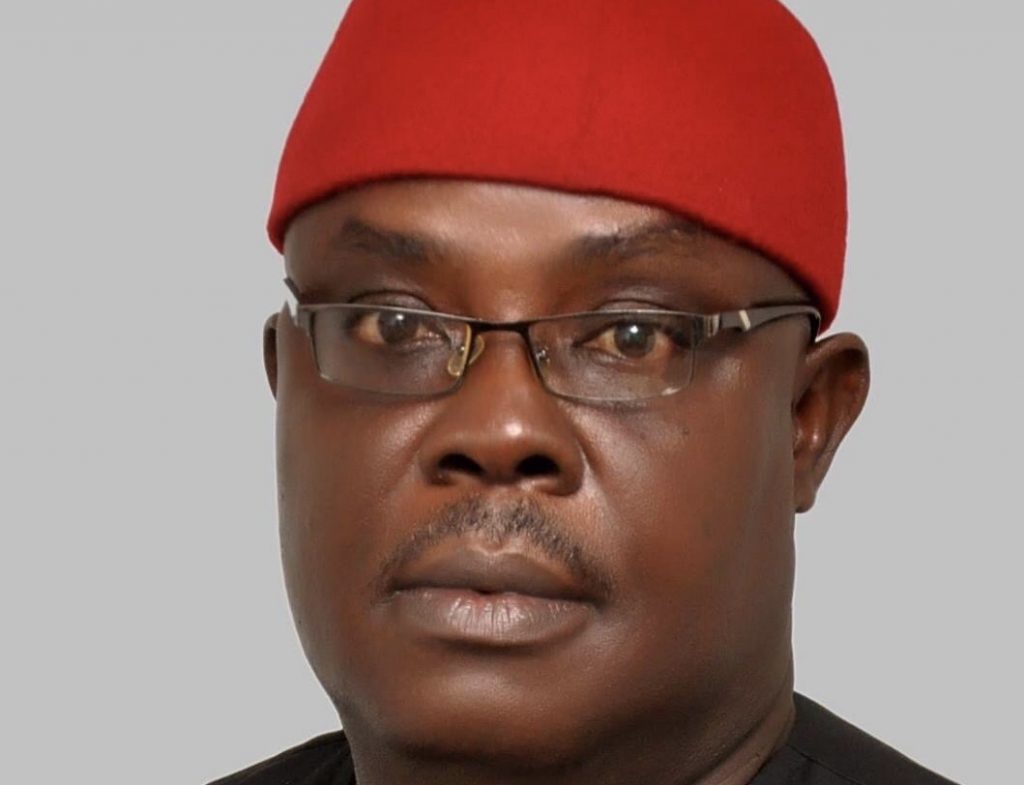
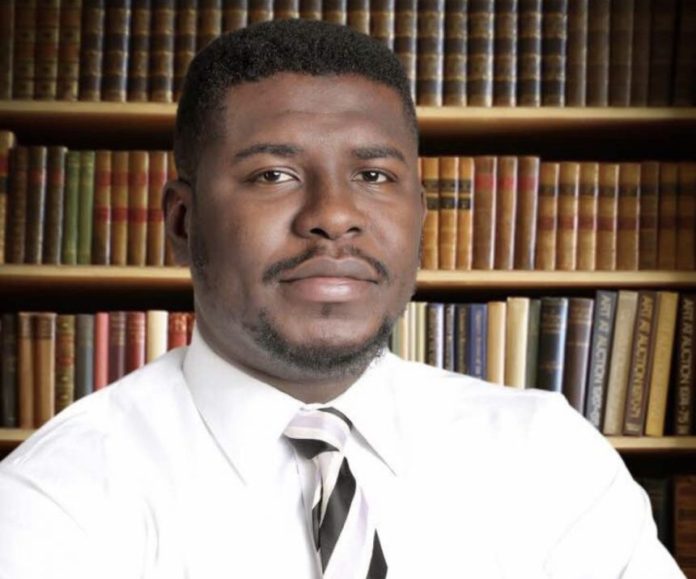
Human Rights activist, Ebun-Olu Adegboruwa, SAN, has said the New Dress Code of the Nigeria Police is Illegal, Ultra Vires and Should Be Reversed.
In a statement on Saturday, the right Activist said religion of public officers is a private affair.
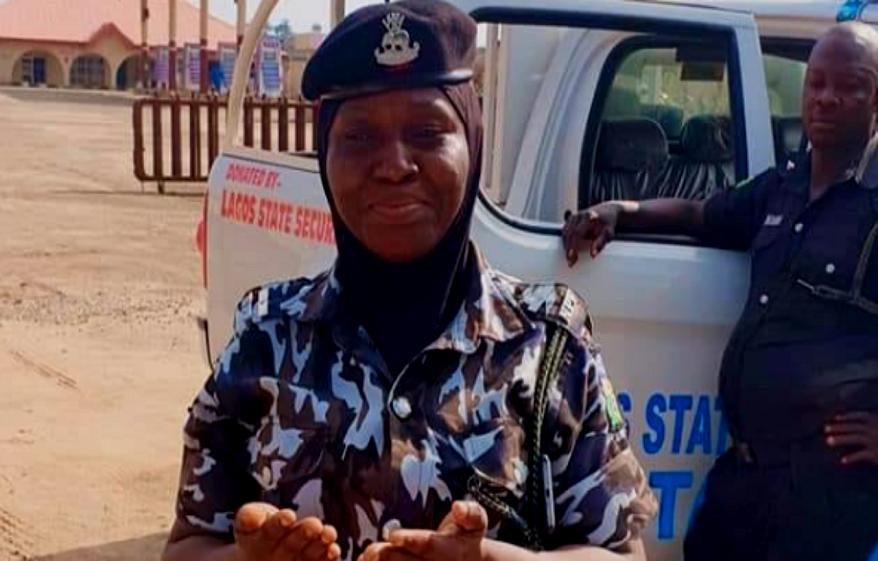
Part of the statement reads “On March 4, 2022, the Inspector-General of Police purported to unveil a new dress code for the Nigeria Police Force, especially female officers, who are to be allowed to wear coverings or hijab, etc.
“The religion of public officers, including members of the security agencies, should be a private matter to them. The Inspector-General of Police is not competent to use the platform of his office to enforce religion.
Buy the Book on Military Law, authored by a Veteran Military Lawyer, and launched personally by the then COAS. SHOP NOW CALL THIS PHONE NUMBER 07087622283 TO GET A COPY “Section 10 of the Constitution of the Federal Republic of Nigeria stipulates that government and all its agencies should be neutral in religious matters.
“Section 42 of the same Constitution prohibits discrimination in all its ramifications. In this regard, there will be no end to confusion attending the new dress code prescribed by the IGP.
“What will be the official uniform for police women who are in the Catholic Church?
“How should policemen and women who are in the Celestial Church dress up when the practice of their church is against wearing shoes at all?
“And how should traditionalists who are in the police force dress up, with charms and amulets round their uniforms?
“The Nigeria Police has existed as an institution since 1945 and it is strange that of all the issues confronting that agency, such as low morale, poor welfare, poor infrastructure, poor training, poor welfare, etc, religious adornment should be the priority of the Inspector-General of Police.
“The police should focus on combating crime, improve citizens engagement and help guaranty safety of lives and property. The religious preferences of policemen and women should be their private matters.”
Unless, as it is said, the carriage of a messenger depicts the mindset of a principal, President Muhammadu Buhari should be sufficiently ashamed of the conduct of the Minister for Education, Adamu Adamu, in his meeting with the National Association of Nigerian Students (NANS). A video clip of the meeting and the Minister’s haughty demeanor, remain a bad publicity for Nigeria and the Buhari administration.
The students who were protesting the continued face-off between the government and members of the Academic Staff Union of Universities (ASUU), which has paralysed academic activities in the nation’s universities, had taken their anger to the minister’s office, clutching placards demanding a quick resolution of the crisis.
After some remarks and few questions by the students, who were led by the NANS President, Comrade Sunday Asefon, the minister walked out on them, dismissing virtually all the issues raised by the youths with a wave of the hand.
That was arrogance and impunity taken too far by a public servant who is supposed to be answerable to the people. Adamu should have been relieved of his office by that crass indiscretion, in a saner clime. But then, you may not need to go far to locate where the minister derived his crude guts from. Recall occasions in his early days in the office when the president had made it a mantra to talk down on Nigerian youths, in some instances, describing them as being lazy. Adamu and other office holders may have read his lips at such moments and have been acting accordingly.
During the last strike by the National Association of Resident Doctors (NARD), the Labour Minister and incidentally, a medical doctor, Chris Ngige, toed the ugly path by reminding the doctors that the country had more medical personnel that it could do without them. There is this rootless entitlement mentality that the president and his aides exhibit in dealing with other Nigerians. They behave as if the country owes them by putting them in positions of authority.
40% of Nigerian youths jobless; angry, restless — Adesina
What seems to be the only medium of communication by the government and its functionaries, is command and control. When the late Afro-beat legend, Fela Anikulapo-Kuti sang in Beast of no Nation, that he had not known any other country other than Nigeria, where officials of the state ridiculed other citizens as being useless and undisciplined, many did not reason with him. Situations have eventually shown that the ebami eda, was prophetic, after all.
But the country seems to have been boxed to a corner by the sheer unresponsiveness of its leadership class. The current youth crisis, is one that may have defining consequences, if not carefully managed. It is like a time bomb that may explode on our faces.
The leader of the protesting students in Kano, Yazid Tanko Mohammed, captured the situation succinctly. “ASUU has been going on strike since 2009, and students are always the victims of the strike. We are not benefiting from the strike. Instead, we are always at the receiving end. Imagine, a programme that is supposed to last for four years will take up to six years. And the one meant for five years will take up to seven to eight years”, he said. Just as the students suffer the disruptions in the academic calendar, their parents bear the brunt of keeping them in school, endlessly. And the society loses the most.
ASUU-Strike As Nigeria toys with the youths, gambles with the future ASUU strike The current strike began on February 14 because of the failure of the Federal Government to renegotiate the agreement it signed with ASUU in 2009 including adequate funding of the system, replacement of the Integrated Personnel Payroll Information System (IPPIS), with the University Transparency and Accountability Solution (UTAS), as the payment platform in the university sector, among others.
The teachers insist that IPPIS has never worked in any university system anywhere. Among its drawbacks, they say, is that it will shut the doors against foreign scholars, contract officers and researchers needed to be poached from existing universities to stabilize new ones.
But the Federal Government insists that the payment system is for transparency and neither intended to trample upon university autonomy nor designed to subsume the university into the civil service.
These are issues that can be resolved with openness of mind and sincerity of purpose by the two parties, hence the position of the students on the parties to find a speedy resolution to the crisis. For emphasis, the students are not taking sides with any of the gladiators but rather seek a way out of the logjam. For such patriotic young men and women to be snubbed by a minister of the federation, shows the premium government officials place on service to fatherland.
Nigeria has become a classic case of where the leaders do something same way repeatedly and expect a different result. It has never worked anywhere. The logic, rather, is that one reaps what he sows. The #EndSARS protest of 2020 by the youths against the highhandedness of the police and sundry incidences of poor governance, was enough to have taught some lessons to the authorities. The impacts of the protest still resonate in areas it affected. The mismanagement of the protest by the government leading to the exercise being hijacked by hoodlums, account for the rising insecurity in many parts of the country, today. Anything nearer to that experience, may pose more challenges to the nation.
What the government is doing by appearing not bothered while the obviously frustrated Nigerian students take over the major highways in protest to the ASUU strike, is unwittingly exposing the innocent ones amongst them to what is not in them. The consequences of this exposure may be dire for the country, if care is not taken. The maxim is that the youths are the strengths of a nation. Other systems harness their youths. But Nigeria toys with is youths and gambles with her future.
Treating the youths with levity, remains the bane of Nigeria’s development. We may take it or not but when we talk of the rising insecurity in the land, occasioned by the ravaging insurgency and terrorism in the North East, banditry in the North West, intermittent clashes in the North Central, kidnapping and ethnic nationalism in the South West and South East or militancy in the South-South, all boil down to the youth unleashing their anger on the nation that has abandoned them for a long time.
Former Minister for agriculture and President of African Development Bank, AfDB, Dr. Akinwumi Adesina, came close to saying so when he observed in his recent lecture that 40 percent of Nigerian youths are jobless, adding that they are discouraged, angry and restless, as they look at a future that does not give them hope. Estimates of the country’s population put the youths at 60 percent. Take away 40 percent of this figure as being unemployed and angry, the danger ahead becomes glaring and more frightening.
“Nigerian Women married to men outside their state even or region are denied indigeneship and this affects women during appointments or election. Also, Nigerian Women married to foreigners cannot confer citizenship on their husbands by virtue of marriage, but foreign women married to Nigerian men become automatic citizens. This is highly discriminatory.” – Louisa Eikhomun-Agbonkhese
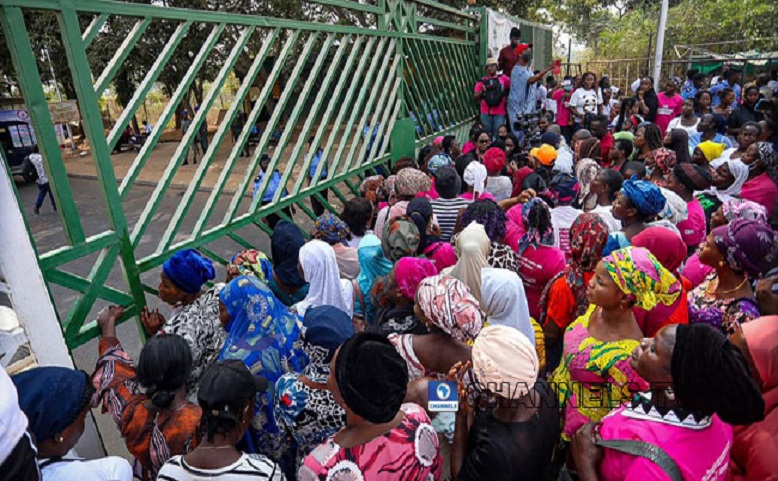
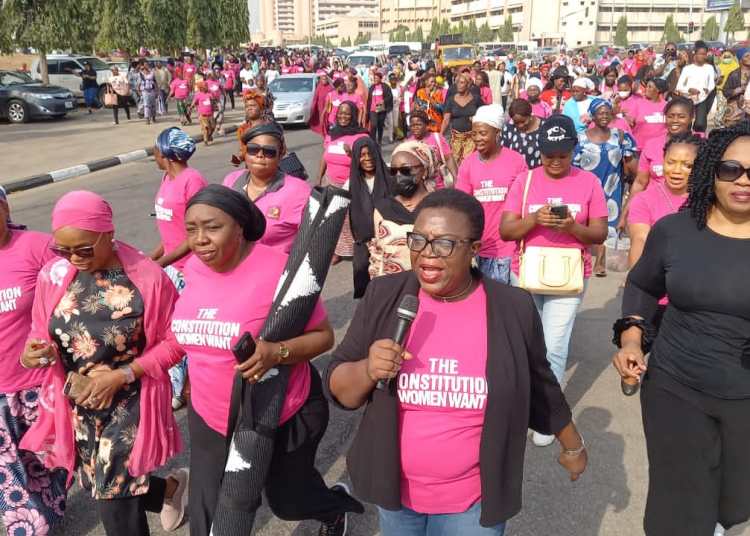
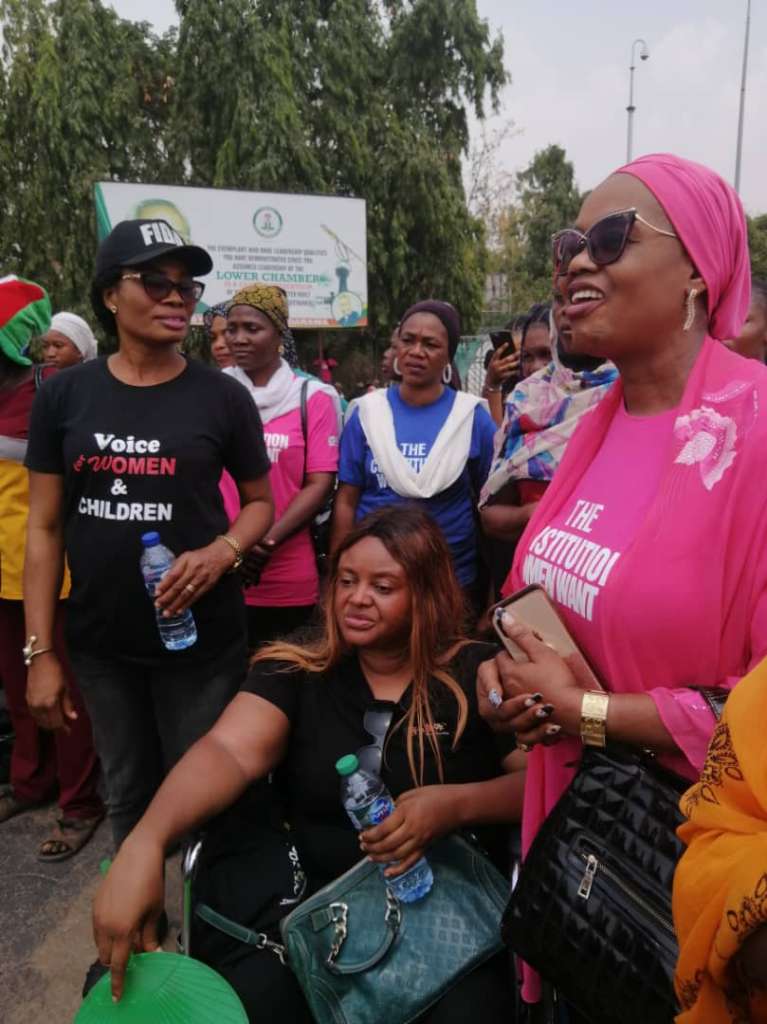
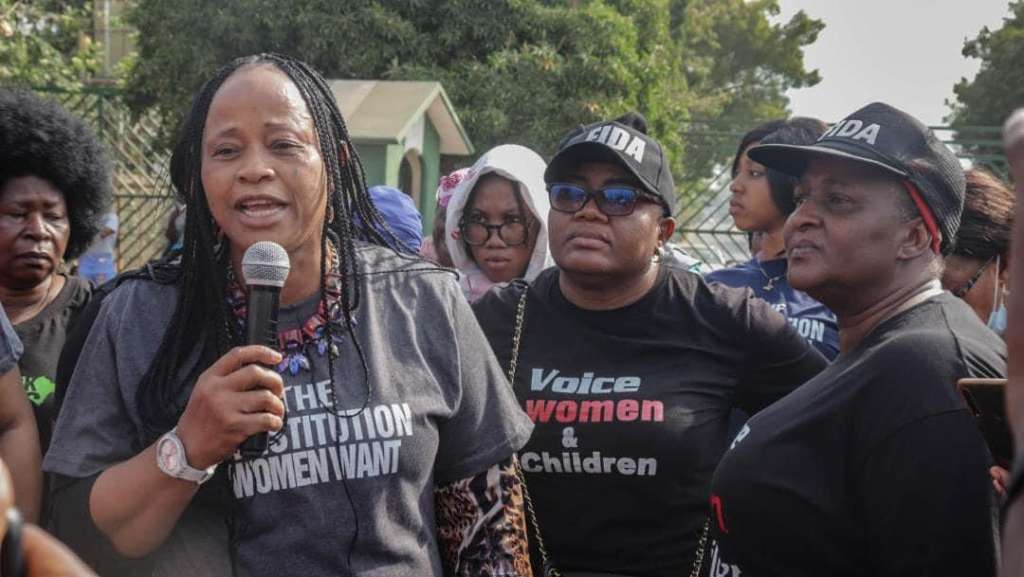
Nigerian women are still reeling over the blow dealt by Nigeria’s 9th National Assembly (NASS) on the Gender Bills requesting specific provisions for women in the Constitution. While the women are seething, and re-strategising, not a few have lent their opinion on the debacle.
Expressing his displeasure over the legislators’ refusal to confer citizenship on the foreign-born husband of a Nigerian woman, a former 1st Vice President of the Nigerian Bar association (NBA), Mr. Ikeazor Akaraiwe, SAN, said: “I don’t agree with them. What is good for the goose is good for the gander. If a foreigner who marries Nigerian wishes to become Nigerian, he should be entitled as a matter of course upon simple application. Nigeria can only gain from the human capital this cross-migration and cross-pollination brings.
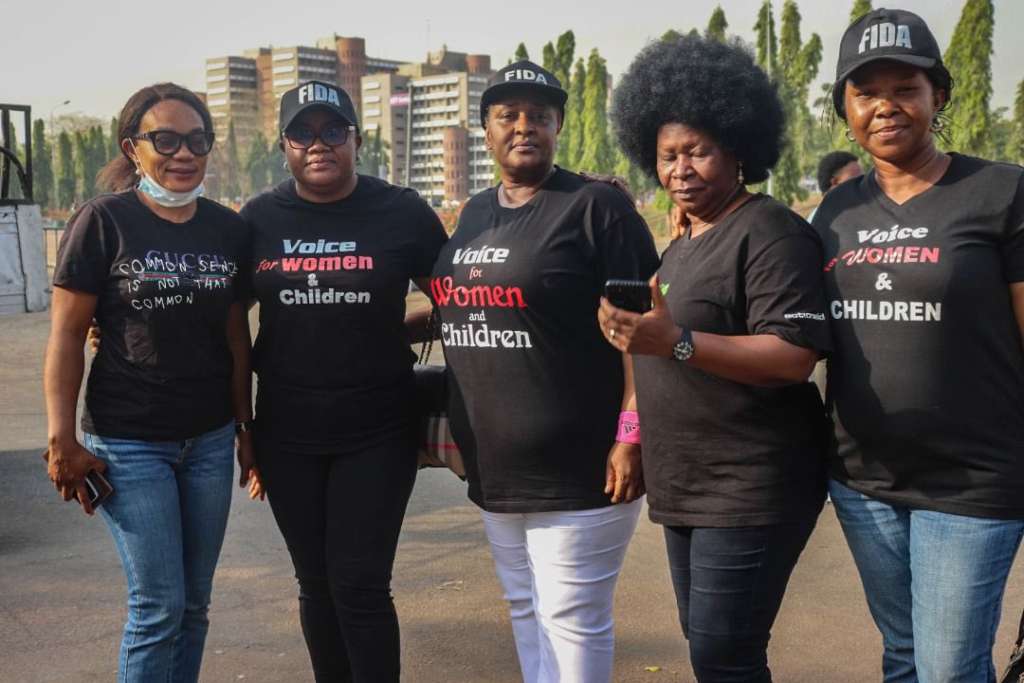
FIDA Condemns rejection of gender bills
“On the denial of 35% appointed positions for women, my position is that 35% affirmative action in the sense of appointed positions and party offices are a win-win for Nigeria. Women generally are more mature than men in our time. The irresponsibility quotient among women is far less than among the menfolk.
“Since the advent of the 4th republic, we celebrate far more women trailblazers than men – of whom Ngozi Okonji-Iweala, Dora Akunyili, and Oby Ezekwesili are only but a few.”
Jide Ojo, Public Affairs analyst said: “This does not come to me as a surprise. It has been the tradition of the National Assembly at every constitutional amendment exercise. Recently, federal lawmakers rejected the Gender and Equal Opportunity Bill. Should it not surprise you that the National Gender Policy of 2006 has been observed in breach? Even President Muhammadu Buhari’s campaign promise at the National Women Centre ahead of the 2019 presidential election where he promised 35 percent appointment for women in cabinet and leadership of MDAs was not fulfilled. All these are due to patriarchy.
“The women do not have the numbers to influence bill passage in the NASS. Even, among the few that were elected into Senate and House of Representatives, how many of them are among the principal officers? Nigeria is being held back by primordial sentiments such as religion and ethnicity against women. Unfortunately, we do not have a president that is a gender champion, a HeforShe. Remember the uncomplimentary remark President Buhari made against his wife some time ago? That’s the reflection of many Nigerian women.
“To break the glass ceiling women should put their numerical strength to good use by ensuring that many of them get the tickets of their respective political parties in the forthcoming party primaries and ensure that those who won at the primaries are nominated and supported to win at the general election. I appreciate the effort of Nigerian Women Groups who have instituted a case at the Federal High Court in Abuja seeking the court’s interpretation of Section 42 of the Constitution (Right to freedom from Discrimination) and whether some of the things being done by the president, governors, and NASS are actually not discriminatory against women.
“I must however commend few of the governors such as those of Kwara and Kogi that have chosen to be different by appointing a fair share of women to a position of authority in their states.”
Nigerian women must be carried along
Mrs. Loretta Ahuokpeme, Executive Director, World Pulse Digital Ambassador & Changemaker puts it this way. “A Woman is a complete human being that has blood and water flowing in her veins just like her male counterpart. The Fundamental Human Rights of 1948 made it clear that everyone is equal and the UNSCR 1325 made it clear that women should be included in governance and decision-making processes in all member countries.
“That is why there are 5 pillars which are Participation, Protection, Promotion, and Prosecution. All these points to the fact that No One should be left behind in the governance across all levels, and facets of life in line with the Sustainable Development Goals slogan.
“The denial or rejection of these bills shows that our legislators do not intend to open up governance as they prefer it to remain an exclusive club for males only. This is violence against women because they have played and toiled with the intelligence of women for so long. I love the idea that Nigerian Women have woken up and are ready to fight against these exclusions.
“It goes further to show how insensitive the legislature is on the issues of women – evil widowhood practices, Female Genital Mutilation, Early / forced Marriage, incessant rape and deprivation at every level. But we are ready for war to match their stubbornness and insensitivity until they start seeing the need to revisit those bills
“The Convention on the Elimination of all forms of violence against women and girls and other treaties and convention has given us the backup and backbone to go for these rights that are a privilege. So I stand strongly with the Nigerian Women to Occupy the National Assembly until we are answered. We also call on other Women groups in Africa and across the globe to support us in any way they can to ensure that our voices are not in futility”
We voted you in!
According to Abiodun Essiet, Special Adviser to Abuja Municipal Council (AMAC) Chairman on ICT/ CSOs and donor Agencies, “the men of the 9th NASS by their actions have taken us backward by voting against gender bills on the first day of March which is Women’s month.
“This has made March a black month for all women in Nigeria. Their actions undermine the importance and relevance of women’s contribution to the governance of Nigeria including the key role women play to bring victory to political parties in elections at all levels across the country.
“Their action has reconfirmed that we are truly in a patriarchal society and the urgency to demand redress. No nation can develop leaving half of its population behind.”
For Louisa Eikhomun-Agbonkhese, Initiator, Echoes of Women in Africa Initiatives, “the action of our duty bearers voted by women to oversee positive laws for women only displayed patriarchy that reinforces marginalisation of women in Nigeria.
“Discrimination against women in Nigeria has become an attitude that can be brazenly displayed even in high places to the whole world. 95.9% of men voted against women because they don’t believe in women’s development period. This is why they don’t ever feature women as candidates in political parties. They decline women’s appointments out rightly and with impunity throw out these bills.
“Nigerian Women married to men outside their state even or region are denied indigeneship and this affects women during appointments or election. Also, Nigerian Women married to foreigners cannot confer citizenship on their husbands by virtue of marriage, but foreign women married to Nigerian men become automatic citizens. This is highly discriminatory.
“The 111 special seats and 35% affirmative action for women in appointive positions were born out of the shrinking space for women in leadership. The 35% is a global agreement to ensure women are in the room for decision-making. Other progressive nations are practising 50/50. Even Rwanda that just came out of genocide is having 65% of Women in leadership and Nigeria with high flying female professionals is endorsing 20%? This is unacceptable.
“These denials negates CEDAW, SDGs goal 5 especially under review at the UN this year in the High-Level Political Forum HLPF in September. An indicator of successful implementation in goal 5 is on the number of seats occupied by women in Parliament. It has been none in Edo State in the past 5 years and one or two in many states. But at the NASS less than 5% and political leaders don’t see anything wrong in that?
“I will personally recommend that women voters should demand a gender agenda from candidates before casting their votes this will erase any excuse such legislators have to give for not much lobbying on these bills. Are they from out of space that they don’t know that majority of their voters are women and they need to improve the lives of women?”
“No administration can ever claim to have the best menu of choices. The dilemma is ever so present, especially in dealing with a multi-cultural, multi-religious, and multi-diverse society. The best approach in these matters should be to limit dress regulations to those which engender professionalism and safety.” – Ibe Ikwechegh
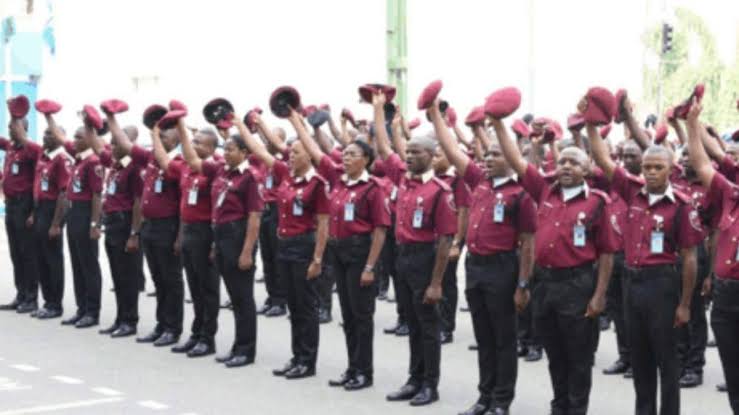
Condemnations have continued to trail the introduction of a new dress code for female personnel of the Nigeria Police Force by the Inspector General of Police (IGP), Usman Alkali Baba.
Former Chairman, Body of Benchers Chief OCJ Okocha, Senior Advocate of Nigeria (SAN, onetime President of the Nigerian Bar Association (NBA) Dr. Olisa Agbakoba, SAN, Mr. Ikeazor Akaraiwe, and others have weighed into the matter insisting that the IGP lacks powers to request female police officers to use a dress code other than that specified in police regulations.
While warning that religion is inching closer to taking over Nigeria’s public space they stressed that the Nigeria Police should be more concerned with professionalism and dealing with insecurity in the country.
In a chat with Law& Society Magazine, Chief Okocha, started off with the following questions: “What is a Dress Code if it is not to be compulsory, but optional? Will the wearing of Berets, Caps, and Helmets over scarves and other head coverings worn by women not appear awkward and comical?”
Giving more insight into the issue, the Ex- NBA President said: “My father was a Deputy Commissioner in the Nigeria Police at the time before the Nigeria/Biafra War. He told me, and I have since confirmed, that the UNIFORM is an essential aspect of the discipline of the Police, the Armed Forces; and even Primary and Secondary Schools.
“Even our Learned and Honourable Profession of Law, in which Discipline and Decorum are hallmarks, has adopted a Dress Code for its members. I personally hold the opinion that the Inspector-General of Police will need to reconsider his position. A strict dress code, as previously applied to the Police, should continue to be applied.”
Dr. Olisa Agbakoba maintains: “He absolutely has no powers to request female police officers to use a dress code other than that specified in police regulations; which is known as regulation issue dress code!!! I can’t understand the reason for this at all that the IGP will be interested in trivia when he has major challenges on his desk, especially on security.”
Ikeazor Akaraiwe, SAN said: “The police, like the military, is a uniformed service. So, I expect the police hierarchy to, from time to time, make regulations regarding a dress code as become expedient for the job of policing. However, to make a dress code based on religious lines is, but a major step in the agenda to give the religion from which that code emanates a central status above other religions. It is an evil portent.
“If the hijab is to be worn by detectives who have the assignment of investigating crimes in predominantly Muslim areas, nothing wrong with that. And it will hardly require a major dress code intervention. It will just be an operational necessity. Further to the hijab matter, as religion inches closer to taking over the public space, the imperative of restructuring the federation to enable devolution of policing and other powers becomes imperative, so that the police of State ‘A’ may dress in Hijabs while the police in State ‘B’ dress in shorts, as informed by socio-cultural necessity or choice. We should have a –
“Federal Police – handling offences of 7 years and above. State Police – handling offences of 3 years to just under 7 years, and Local Government Police – handling offences of under 3 years. We should also have Federal, State and Local Government Correctional Centres.”
Earlier another SAN, Ebun Adegboruwa in a statement said the “new dress code of the Nigerian police is illegal, ultra vires and should be reversed.” Part of the statement read: “On March 4, 2022, the Inspector-General of Police purported to unveil a new dress code for the Nigeria Police Force, especially female officers, who are to be allowed to wear coverings or hijab, etc.
“The religion of public officers, including members of the security agencies, should be a private matter to them. The Inspector-General of Police is not competent to use the platform of his office to enforce religion. Section 10 of the Constitution of the Federal Republic of Nigeria stipulates that government and all its agencies should be neutral in religious matters. Section 42 of the same Constitution prohibits discrimination in all its ramifications. In this regard, there will be no end to confusion attending the new dress code prescribed by the IGP.”
Likewise, Ibe Ikwechegh, Lawyer, writer, and training consultant with Indent holds that: “Under the new dress code for Nigerian Police Women, the lady officers can wear headscarf which must be under their berets or peak cap. It is said that this will guarantee inclusiveness, gender mainstreaming, ethnic and religious diversity in the workplace.
“Integrating gender equality perspectives at all levels of policies and projects and having such integration features in our government policies ensure that the concerns, and aspirations of all gender, especially the women, are accounted for. But all mainstreaming devices and policies have their constraints and challenges, ranging from wrong conceptualization, perfunctory approach, cultural resistance, resentment, and ill-informed gender analysis.
“We are aware that in most civilized states, female police officers must have their hair pulled back up off the shoulder and pinned down. In England, for instance, if the hair is longer than the collar, it must be secured in such a way that it is off the collar and cannot be grabbed or pulled. It is clear that these regulations are rooting for professionalism and safety. It does not seem that the regulation or Rules under reference root for safety or professionalism. It roots for culture and religion.
“It may be a benign rule aimed at addressing religious or cultural concerns. If this is a religious accommodation, and we suspect that it is, then there would have been discrimination against those whose religious disposition to dressing has not been accepted. Would there also be any accommodation for such a people who may not compromise on their hairstyle or religious and cultural fashion?
“One may argue that such somewhat liberal attitude in the dress code for lady officers will rather than promote resentment, show them as part of the society with whom they share religious and cultural preferences. It is not out of place to see Texas State troopers kitted in cowboy hats. Establishing such cultural affinity with the people you police is a good gesture for endearment. Nonetheless, as long as this principle cannot be generally applied across board, the danger of resentment would still be latent.
“No administration can ever claim to have the best menu of choices. The dilemma is ever so present, especially in dealing with a multi-cultural, multi-religious, and multi-diverse society. The best approach in these matters should be to limit dress regulations to those which engender professionalism and safety. Against this, there could scarcely be any disagreement.”
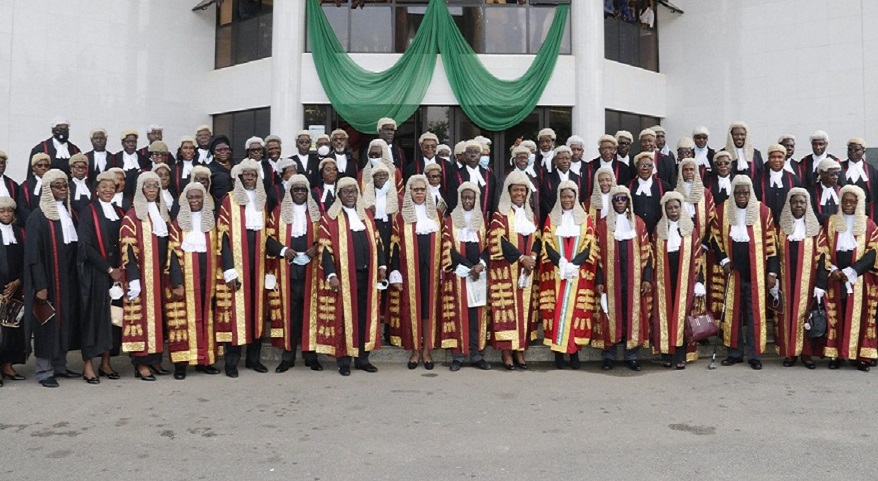
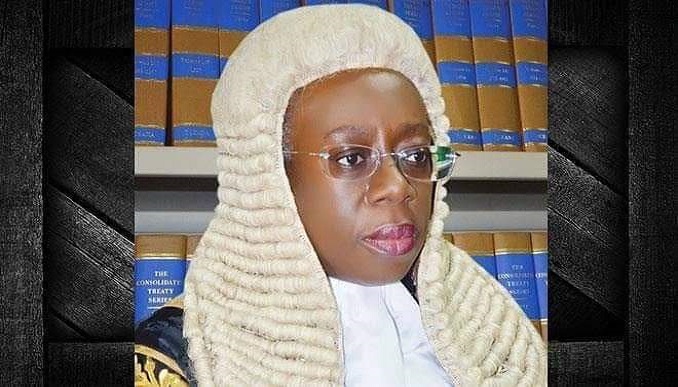
Nigerian Justices
Photo Credit: DNL Legal and Style
By Emmanuel Ogebe
The recent nomination of America’s first black woman for the US Supreme Court, Judge Ketanji Brown, serves as an opportunity to X-Ray the status of Nigeria’s own female justices, especially in light of the month of March’s dedication to women.
On the surface, it looks impressive that Nigeria has produced in 60 years of independence at least eight black female justices of the Supreme Court while the United States has not produced one black female justice in over 200 years. In fact, Nigeria has produced more female justices of the Supreme Court than the total number of female US Supreme Court justices!
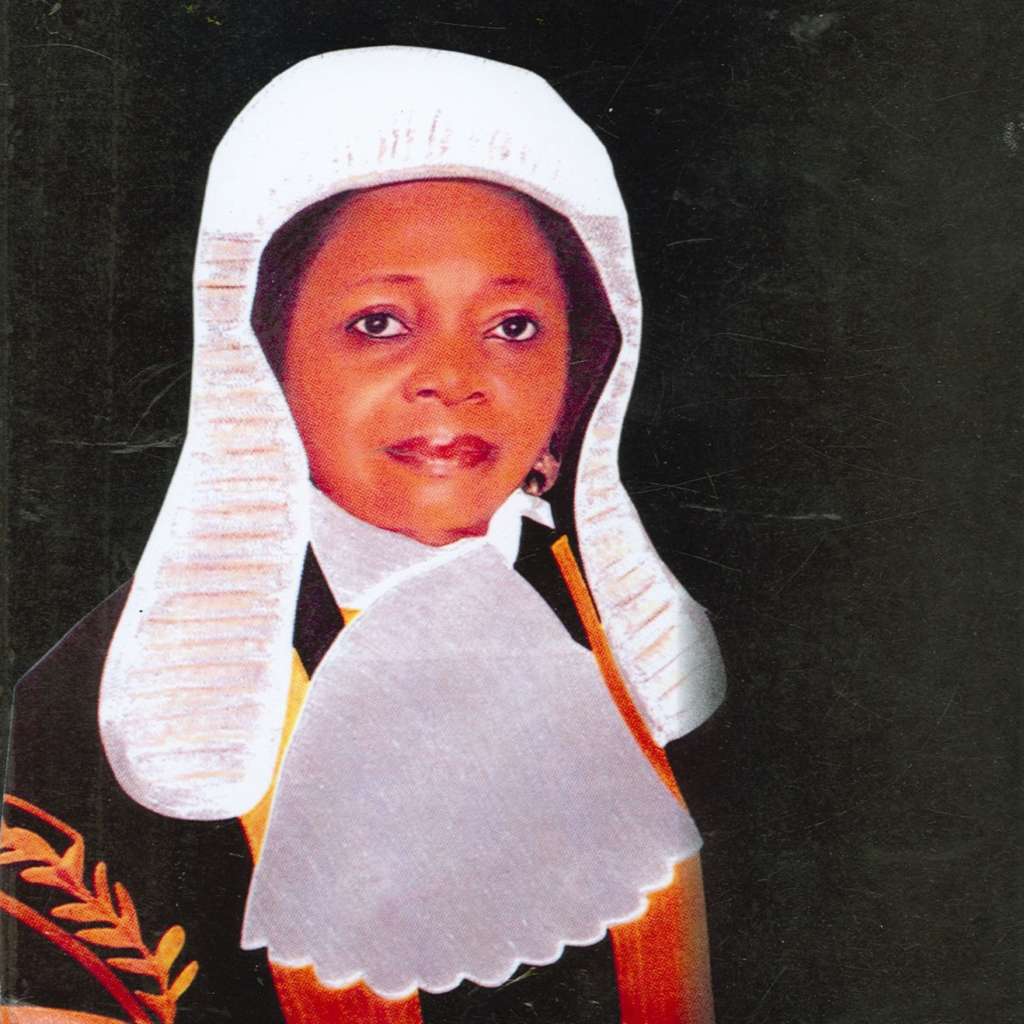
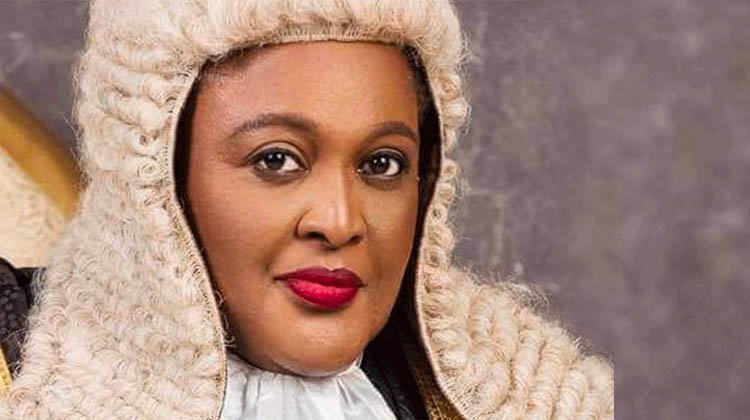
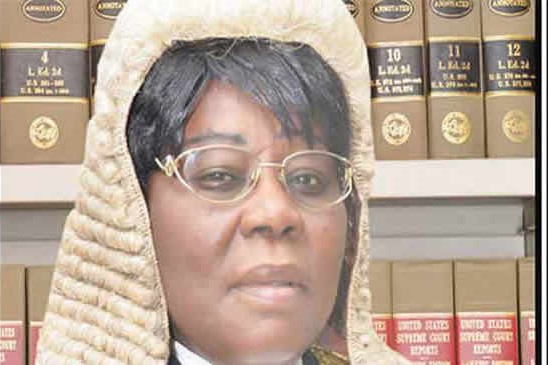
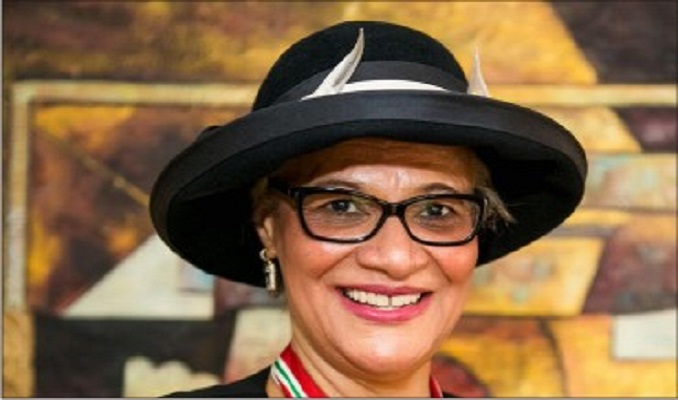
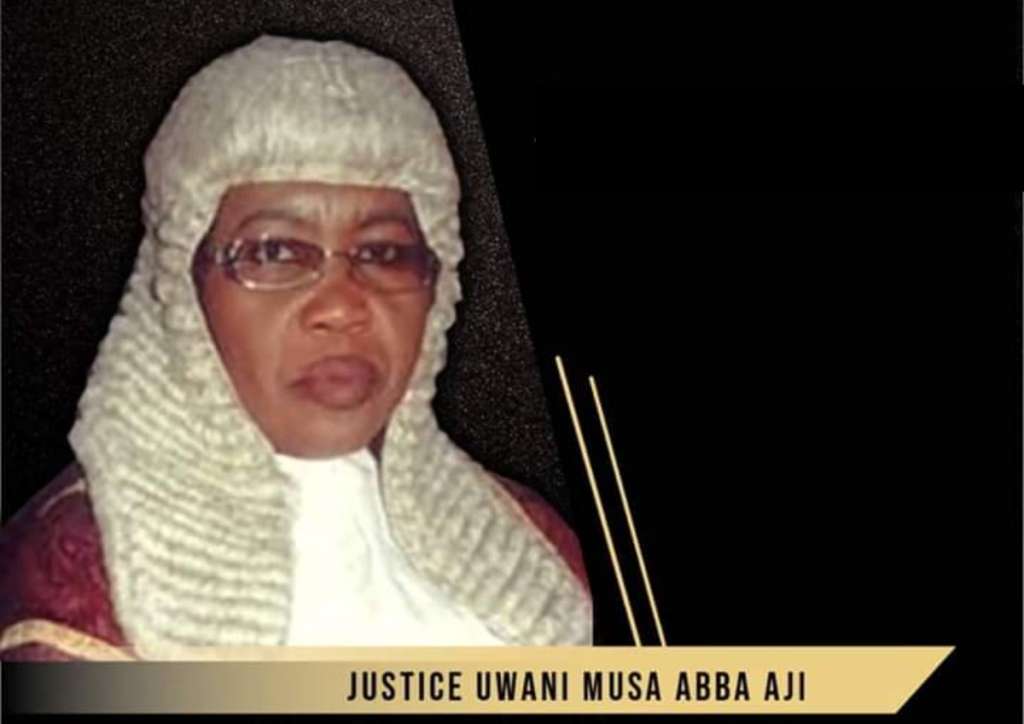
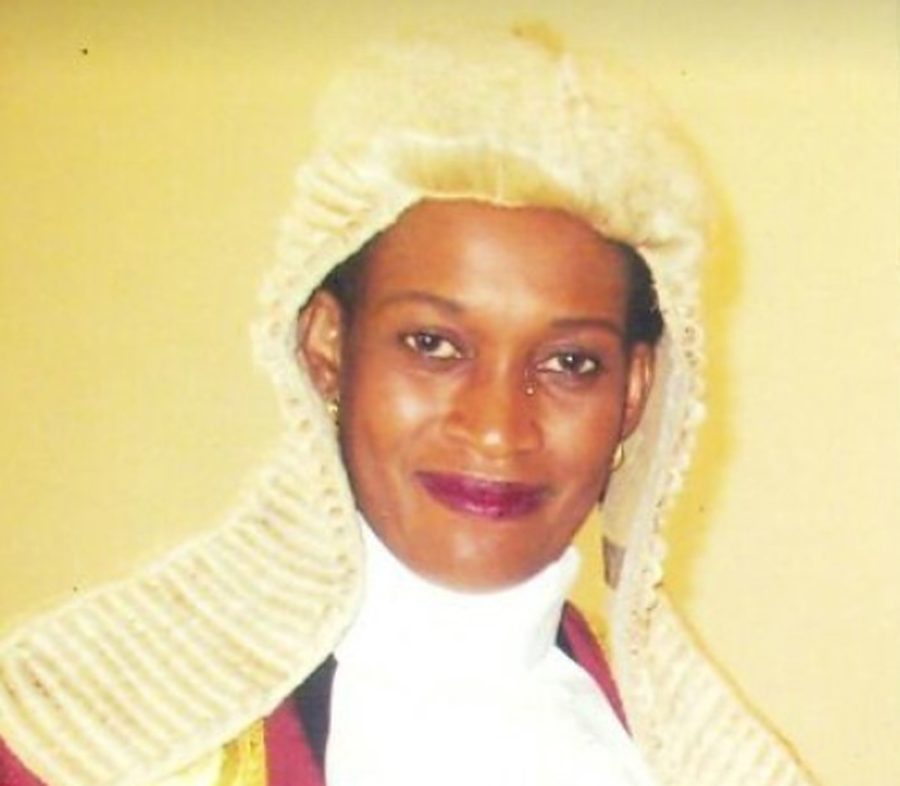
In the epic pantheon of judicial juggernauts, the eight Nigerian women ever to attain the status of Justice of the Supreme Court are:
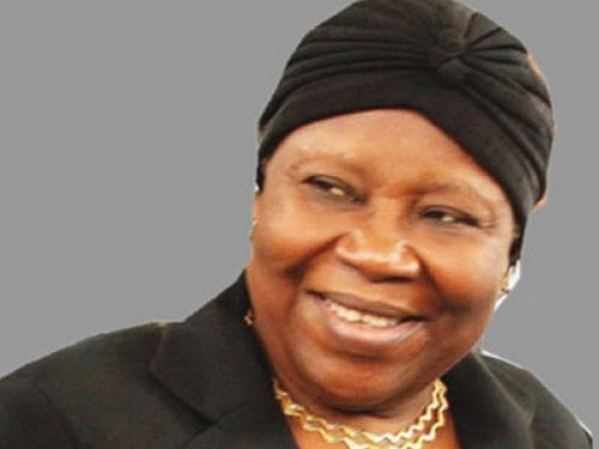
Mukhtar, Alooma Mariam CJN (Chief Justice of Nigeria)
Adekeye, Olufunlola JSC
Odili, Mary JSC
Ogunbiyi, Clara JSC
Kekere Ekun, Kudirat JSC
Augie, Amina JSC
Abba Aji, Uwani JSC
Ogunwumiju, Helen JSC
Justice Aloma Mukhtar became the first woman JSC and ultimately the first and only female Chief Justice of Nigeria ever.
Hon. Justice Mary Odili is the first female Justice from southeast Nigeria to attain this exalted JSC position, Justice Mukhtar was also the first from the north while Justice Adekeye JSC was first from the southwest of Nigeria.
Out of the top seven most senior JJSC today, three are women. This means in any constitutional matter or case warranting a seven-judge panel, almost half would be women if empaneled by order of seniority.
This gives women an over 40% representation in the judicial hearing of constitutional matters affecting all Nigerians and this is way above the 35% gender quota requested by Nigerian women into appointive political positions.
Of greater note is that this judicial gender representation is purely on professional merit and not simply affirmative action. Indeed as research by the Kudirat Institute for Nigerian Democracy reveals, of the three arms of government, the judiciary which is merit-based has a higher percentage of women than the executive or legislature which are politically based.
In effect, KIND implies that but for political factors, left to professional performance, Nigerian women are capable of achieving equal or comparable representation.
Against this backdrop, the recent abandonment of gender parity bills agitated this strong reaction, from the Women In Politics Group, Makurdi in a March 1 statement, “It is particularly sad that in a month globally dedicated to celebrating women worldwide, our NASS has chosen to deny women basic human rights.
The proposed gender bills in the 5th Constitution Alteration Bills that were all rejected are Bills targeted at addressing the current gender imbalance across the legislative arm of governments across the country whilst reducing the under-representation of women in political office.
The men of the 9th NASS have reinforced the discrimination and political bias against women as enshrined in the 1999 constitution by:
Denying citizenship to a foreign-born husband of a Nigerian woman. (While it allows Nigerian men’s foreign-born wives to be awarded automatic citizenship).
Denying Nigerian women indigeneity through marriage.
Denying 35% appointed positions for women and settling for 20%.”
Incidentally, Justice Mary Odili now the most senior JSC after the Chief Justice doubles as the first woman representing both southeast and south -south by nuptials – two-thirds of the south of Nigeria.
Technically speaking, although there are now two female justices of the Supreme Court of Igbo extraction in the land today or ever, neither of them is there representing their state or the southeast region.
Justice Mary Odili who is only the second female justice in the history of Nigeria to rise to number two in the Apex Court is from Imo state but married into Rivers State where she served in that state’s judiciary until she rose through the ranks to the Apex court.
Similarly, Justice Amina Augie from Delta state (the Igbo Speaking part) married into Kebbi state and served in the Sokoto judiciary before rising to the Supreme Court.
Therefore NO female judge has risen to the Supreme Court from the judiciaries of southeast Nigeria or by virtue of federal character representing the southeast on the court. Both female Igbo justices arose by their adoptive marital states.
This is a sorry state of affairs largely due to trenchant internal self-discrimination within southeastern states. An accomplished female lawyer who qualified in the ‘80s with a distinguished educational profile that included postgraduate studies in The Hague – the world capital of international jurisprudence – was denied appointment to the Imo State judiciary on the grounds that she was married to a man from neighboring Abia state.
The travesty in this scenario was that at the time of her marriage, the lawyer and her engineer husband were both from Imo state. However, the state creation exercise created a split wherein he fell on the Abia side while she fell on the Imo side.
Secondly, she lived and worked in Imo State government and never for one day lived or worked in Abia state. Nevertheless, her judicial appointment was rejected for over 25 years until she was finally appointed a high court judge in 2021.
The tragedy of this gross injustice is that had she been appointed as at when due, she would by now have been on the Supreme Court of Nigeria representing the southeast in its own right and not by proxy. Even northeast Nigeria has produced two female JJSC but not the southeast.
It is therefore ironic that south- south, and northwest helped appoint the first Igbo women to the Supreme Court while Imo state was persecuting an Imo-born lawyer from appointment to Imo state high court even while working in Imo state civil service! In this case, indigeniety by marriage was helpful to the Igbo Justices while actual indigeniety was unhelpful to the Imo-born female lawyer.
Incidentally, this is an unfortunate pattern seen in other locations as well.
In Kano state decades ago, Justice Alooma Mukhtar was denied Chief Judgeship of the state judiciary because she was female, though Muslim and an indigene, then went on to become first female Chief Justice of Nigeria.
Similarly, Justice Patricia Mahmoud was recently denied Chief Judgeship of Kano State for being a Christian female while her husband was the President of the Nigerian Bar Association despite having served in the Kano judiciary her entire career. Rather she was appointed to the Court of Appeal through her home state of Benue whose judiciary she had never worked in.
While marriage State failed Justice Patricia Mahmoud and indigeneship state rescued her judicial career, Justices Elizabeth Karatu and Beatrice Iliya of Kebbi and Gombe states were not so lucky. Despite being indigenes, and the most senior judges in their respective state judiciaries, they were denied appointments as state Chief Judges in violation of the constitution. They were supplanted by junior Muslim males. Both female judges were Christian.
Despite these unfortunate and atavistic political manipulations at state levels, women judicial officers have continued to fare fairer on the federal bench.
For the first time in Nigeria’s history, its two federal appellate courts were headed by women – Justice Mukhtar, CJN, and Justice Zainab Bulkachuwa, PCA (President of the Court of Appeal.)
Thereafter the historic succession from woman justice to woman justice occurred when Bulkachuwa handed over to Justice Monica Dongban-Mensem who is now the current PCA.
As The Nation editorial said, “This brazen injustice that is gaining grounds in most states against female judges, who have worked hard and diligently to deserve an elevation, is not in the interest of justice, and it’s tarnishing the reputation of the judiciary.”
We join FIDA to condemn this patriarchal anomaly. Indeed, the female gender suffers a double whammy, because, apart from discriminating against her based on gender, she is also discriminated against based on state of origin, after marriage. We saw that in Cross River and Rivers states, not long ago. By a narrow definition of state of origin, a woman is denied the highest accolade, after giving her services to a state, sometimes both in her state of birth and state of marriage.”
In addition, religious discrimination also factors in. Justice Patricia Mahmoud from north-central was denied Chief Judge of Kano in the northwest the same year that Justice Amina Augie from south-south was appointed a JSC representing the northwest. Though both married into northwestern states, Justice Patricia Mahmoud maintained her Christian name while Justice Amina Augie adopted a Muslim name (nee Anne Eva Graham.)
Justices Elizabeth Karatu and Beatrice Illiya were northeast and northwest indigenes denied for gender and religion thus creating the bizarre situation that a south southern or South-eastern woman who marries in the northwest and adopts Islam is more acceptable than an indigenous Christian female judge.
East or west, women judges are stressed and the time has come for them and other females to be treated fairly.
Only one woman has headed another federal arm of govt – Hon Patricia Etteh was Speaker of the House of Representatives though technically that is a lower chamber of a bicameral legislature and therefore debatable as a partial arm of govt. Across the country, the same applies as more women have headed the judicial arm of state governments than any of the other arms. Women have made strides where chauvinist barriers are not in place.
A society cannot progress beyond the progress of its women.
Emmanuel Ogebe, Esq, an expert on the Nigerian judiciary and head of the US Nigeria Law Group writes from Washington USA
A. Trying to stop Putin from rebuilding the Soviet Union, which was almost an equal rival with the United States in the past.
Q. Is NATO right to do this?
A. No. Because of an old agreement in which the West agreed not to move any closer to Russia, which is eastwards.
Q. Did Russia agree (in the Budapest memorandum) to guarantee Ukraine’s independence and never to invade them?
A. Yes.
Q. Is America the strongest nation in NATO?
A. America is not just the strongest nation in NATO but synonymous to NATO.
Q. What happened in 2014 that may explain the current conflict?
A. A Ukrainian President loyal to Russia (Viktor Yanukovych) was toppled in a Yellow-Vest-type of revolution. Russia believes that this revolution was instigated and sponsored by the West.
Q. What was the immediate fallout of the ouster of Yanakovich?
A. Two predominantly Russian-speaking regions of Ukraine broke away and became semi-autonomous. These regions are Donbass and Lugansk.
Q. Is Ukraine a stakeholder in Russia’s economy?
A. Russia’s natural gas pipeline to Europe passes through Ukraine.
Q. What is this pipeline called?
A. Nord Stream 1.
Q. Who owns the Nord Stream pipelines?
A. The Swiss-based company called Nord Stream AG.
Q. Who owns Nord Stream AG?
A. A Russian company called Gazprom, which is one of the largest energy companies in the world.
Q. Why did Putin not invade Ukraine immediately after the 2014 issue?
A. He feared sabotage of Nord Stream 1 by Ukraine in case of an attack. Nevertheless, he took Crimea.
Q. What plans did Putin put in place to ensure that he will be able to invade Ukraine and reinstall a President loyal to Russia?
A. He began building an alternative to Nord Stream 1 aptly called Nord Stream 2. As expected, Nord Stream 2 bypasses Ukraine to Europe straight from Russia.
Q. Did the military establishment understand that Nord Stream 2 held the key to a Russian invasion of Ukraine?
A. Not just the military establishment but analysts and politicians knew that, as soon as Nord Stream 2 was completed, a countdown to a Ukrainian invasion has begun.
Q. Although not the cause of this difficult situation, how did President Donald Trump prevent Russia from launching an invasion of Ukraine?
A. First of all, in 2018, Trump annihilated a Russian force trying to cross the Euphrates to the Eastern side of Syria, where the oil wells are located. 300 ex Russian soldiers of the Wagner Group were killed. This aggressive response by Trump put Putin on notice that Trump was willing to use the overwhelming force of the US military to achieve his foreign policy goals. Secondly, Senator Ted Cruz (a Republican Senator) authored a bill requiring the sanctioning of Nord Stream 2. This bill was passed and President Donald Trump not only signed it to become American Law, but enforced it. Thus, Trump prevented a war without firing a single shot: he just used America’s economic might to cage Putin. Whether or not Trump thought it was unfair for NATO to want to admit Ukraine is hard to know. But it is important to note that Trump was at such logger heads with NATO that the current French President (Emmanuel Macron) lamented that NATO was about to die under a hostile US President. It is safe to guess that Trump (whose America First Policy is well known) did not fully support the shenanigans of NATO with regards to Ukraine.
Q. How did the sanctioning of Nord Stream 2 affect Putin’s plan to invade Ukraine?
A. It affected Putin’s plan because it meant he had to wait until Donald Trump left office before the project could continue. But as long as Donald Trump was in office and Nord Stream 2 could not be completed (giving Russia an alternative means of selling gas to Europe) he suspended his plans. This is proof that, in spite of what the media keeps repeating, Trump is no friend of Putin.
Q. If action speaks louder than words, who is really a good friend of Putin?
A. Joe Biden. As soon as Joe Biden took over the White House from Donald Trump, he waived the Nord Stream 2 sanctions, giving Putin the singular most important factor he needed to carry on with his Ukraine invasion plans.
Q. Contrary to what Joe Biden did for Russia, how did he “help” America to remain energy independent?
A. Although Trump had worked hard to ensure that the US became the largest oil producer in the world, Joe Biden “helped” the United States energy industry by cancelling several oil-related projects. The most popular of these was the Keystone XL pipeline, which had already gulped the equivalent of N10 billion. After deliberately destroying America’s energy independence and helping Russia, guess what Joe Biden is now doing? America now buys oil from Russia. And the quantity keeps increasing, which is why Russia cannot completely be banned from the SWIFT global financial platform.
Q. Can sanctions stop Putin from sacking Zelensky and installing a puppet loyal to Russia?
A. Time shall tell.
Q. Is Putin’s desire to install a puppet in Ukraine understandable in view of the security disadvantages of having a NATO country so close to Russia’s border?
A. Of course it is.
Q. What should Joe Biden (who emboldened Russia by waiving the Trump sanctions) had told Ukraine if he wanted to avoid war?
A. He should have advised Ukraine to tread softly and even remain neutral, knowing that Putin (with the second most lethal military in the world) cannot be stopped by Ukraine; knowing that only the United States can take on Russia; knowing that the US (under him, Joe Biden) will not send troops to fight for Ukraine.
But what did Joe Biden do?
Who then is responsible for the current conflict?
Did Joe Biden set up Ukraine to be destroyed as part of the campaign to humiliate the United States? The humiliation of the US has already been ordered by the World Economic Forum. Remember Afghanistan! That debacle that saw America humiliated was planned. Remember point Number 2 of the 8 predictions of the World Economic Forum, which is that America will no longer be a superpower but that a group of nations will call the stakes in world affairs?
Or are the globalists (as some believe) trying to start a world war that will shake things up really well to prepare the ground for the New World Order?
DAILY LAW TIPS by Onyekachi Umah,Esq. (Tip 171) “It Is an Offence To Obstruct/Assault an Officer of the Federal Road Safety Commission .”
It is a crime to obstruct or assault an officer of the Federal Road Safety Commission. It is an offence punishable with fine of #100 and and or imprisonment for 6 months.
My authority is section 17(12) of the Federal Road Safety Commission Act.
Please share this till it gets to those that need it most. Save a Nigerian today!
DAILY LAW TIPS by Onyekachi Umah,Esq. (Tip 170) “Suspects Need Not Be Handcuffed or Restrained By Police In Nigeria”
A suspect of a crime is deemed innocence and should not be handcuffed, bound or restrained by police. Suspect can only be handcuffed where there is violence or attempt to escape or it is necessary for safety of suspect or a court ordered a suspect to be handcuffed.
My authority is section 5 of the Administration of Criminal Justice Act.
Please share this till it gets to those that need it most. Save a Nigerian today!
Mesne in mesne profits is pronounced “mean.” Look 👀up this phrase in Black’s Law Dictionary.
There’s no such thing as “court marriage.” Courts don’t conduct marriages. Marriages are not celebrated in courtrooms. Perhaps you meant to say statutory marriage?
Why do some say “incidence” when they mean “incident”? “Incident” means” occurrence.” “Incidence” means” rate of occurrence.”
Awkward as it may sound, the plural of summons is summonses.
When you look 👀 up a word in the dictionary, study all nuances and senses, as well as examples. Don’t quit after finding the meaning or sense you want. Also, check the several parts of speech to which the word could belong. Check an audio dictionary for the pronunciation. If it’s a verb, check whether it’s an intransitive, linking, or transitive verb. Please open your dictionary every day. Then you can fire me!
The correct expression is “As I said,” NOT “Like I said.”
In legal terms, the noun chambers is always pluralized. It’s a law chambers or a judge’s chambers, never “chamber”, even if it’s just one room.
Ask and axe are pronounced differently, as “ask” and “aks” respectively. Doesn’t this sound splitting and precise?
It’s poor trial practice, approximating malpractice, to address a witness as “Witness.” Address witnesses by name.
Ewe and you are pronounced alike. Check your audio dictionary. Of course, you all know what a ewe is. The correct article is “a”, because though the spelling begins with a vowel, the pronunciation begins with a consonant. In the choice between the two indefinite articles, it’s the pronunciation that counts.
Seneca the Younger said, ‘Luck is what happens when preparation meets opportunity.’ As you read in Scripture about the people God used to accomplish great things, you discover that much of their time was spent preparing for what seems like a relatively brief assignment. The ego in each of us craves two things – limelight and longevity! But with God only one thing matters: doing His will. When you can say like Paul, ‘I have finished the race,’ you have lived successfully. So, who does God use? Those who are prepared! Whether you’re called to business, art, education, politics, medicine, or ministry, this principle is immutable: opportunity comes to the prepared. That means every experience in life has potential value.
Disraeli said, ‘ One secret of success in life is for a man to be ready for his time when it comes.’ And it’s not enough to simply get prepared; you must stay prepared. Solomon writes, ‘Hold on to instruction…guard it well, for it is your life’ (Proverbs 4:13 NIV). Knowledge in most fields doubles about every five years, and unless you keep growing, you will end up with outdated skills that don’t match the challenges of the world you live in. And here is another thing: preparation doesn’t start with what you do; it starts with what you believe. When you believe that tomorrow’s success depends on today’s preparation, you see today differently.
Queen Elizabeth I reputedly offered the royal physicians up to half her estate if they could extend her lifespan. But, of course, they couldn’t. That’s why the Bible says it’s important to recognise ‘how short our lives really are so that we may be wise’ (Psalm 90:12 NCV).
Our site uses cookies. By clicking “Accept All Cookies”, you direct Law and Society Magazine to store cookies on your device and disclose information in accordance with our Cookie Statement: cookie policyACCEPTREJECT
Privacy & Cookies Policy
Privacy Overview
This website uses cookies to improve your experience while you navigate through the website. Out of these cookies, the cookies that are categorized as necessary are stored on your browser as they are essential for the working of basic functionalities of the website. We also use third-party cookies that help us analyze and understand how you use this website. These cookies will be stored in your browser only with your consent. You also have the option to opt-out of these cookies. But opting out of some of these cookies may have an effect on your browsing experience.
Necessary cookies are absolutely essential for the website to function properly. This category only includes cookies that ensures basic functionalities and security features of the website. These cookies do not store any personal information.
Any cookies that may not be particularly necessary for the website to function and is used specifically to collect user personal data via analytics, ads, other embedded contents are termed as non-necessary cookies. It is mandatory to procure user consent prior to running these cookies on your website.