Home Blog Page 853

“Section 84(12) Electoral (Amendment) Act: A Call for Professionalism of Legislative Drafting in Nigeria”

By Dr. Tonye Clinton Jaja.

The views expressed in this short article are my personal opinion, not those of my employer.

I write in my capacity as the Secretary of the Association of Legislative Drafting and Advocacy Practitioners-ALDRAP. This is a professional Association of lawyers and other professionals dedicated to promoting professionalism and improving the quality of legislation in the fields of legislative drafting through continuing education and training. We aim to become the “ICAN” of the legislative discipline within the legal profession.

The President of the Federal Republic of Nigeria has written to the National Assembly to request an amendment of section 84(12) of the Electoral (Amendment) Act, 2022. According to Mr. President the said section violates the relevant section of the 1999 Constitution of the Federal Republic of Nigeria (CFRN) (as altered).

Assuming (without conceding) that the claims of Mr. President were true and correct, the question arises: “who were the officials that were responsible for the drafting of the initial Electoral (Amendment) Bill, 2021?”. Considering that it was an Executive Bill (an Executive Bill is a Bill that originates from the Executive Branch of government as opposed to a Private Member Bill which originates from members of the Legislature), it is assumed that it is the responsibility of the Legal Drafting Department of the Federal Ministry of Justice.

If that is the case, then in accordance with one of the principles of Legislative Drafting, checking for compliance of any Bill with the provisions of the 1999 CFRN is the responsibility of the said Department.

Ideally, every Bill ought to undergo scrutiny before it is submitted to the legislature for enactment. One of the items on the checklist, is the check for compliance with the 1999 CFRN.

Furthermore, considering that Nigeria follows the Common law drafting tradition that we inherited from the United Kingdom, another principle of Legislative Drafting is that ideally, every Bill ought to be drafted by a team of four drafters. Two of the the team members are drafters, while two of the drafters are the “checkers” to ensure that there is a thorough scrutiny.

However, we do not live in an “ideal” world especially in Nigeria, where more often than not, the pressure on Legislative Drafters is to produce Bills within timelines that often compromise quality.

My personal opinion is that there is a need to professional legislative drafting services in Nigeria to prevent or minimise this situation.

In otherwords, the responsibility for drafting Bills and legislation ought to be specifically assigned to professionals. In the year 1869, the United Kingdom established the Office of Parliamentary Counsel, these are the lawyers and professionals that draft all the Bills and legislation enacted by the Parliament of the United Kingdom. In the year 1971, the United States of America also established the Office of Legislative Counsel of the Senate (and another Office of Legislative Counsel of the House of Representatives) of the Congress. These are the officials responsible for drafting all the Bills and legislation enacted by the Congress of the United States of America. In both the UK and the USA, in addition to these government lawyers, agencies/offices, Private legal practitioners and law firms are permitted to draft Private Member Bills for legislators. However, they must be registered with the Office of the Speaker of the UK Parliament before they can operate this is to ensure that these private legal practitioners adhere to good practice and standards of Legislative Drafting.

In Nigeria, Hon. Nicolas Ossai (House of Repy, National Assembly) sponsored a Bill entitled “Offices of the Legislative Counsel of the Federal Republic of Nigeria, 2019. It is HB. 451. It seeks to establish Offices of Legislative Drafting for the Executive branch and the National Assembly. This is a welcome development.

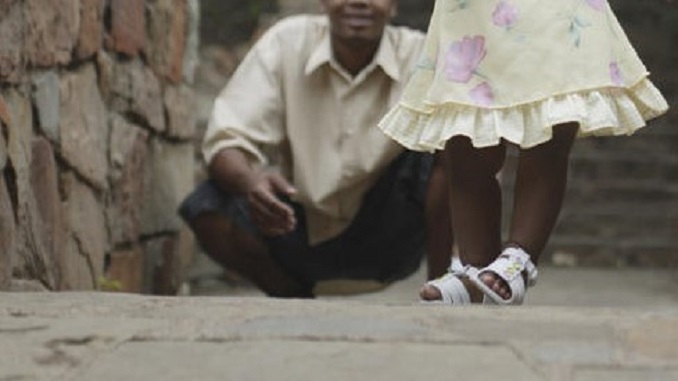
The father and the 15months old, Lunacy or downright wickedness?

It was David Brooks New York Times Op-Ed columnist who said: “To explain the unknown by the known is a logical procedure; to explain the known by the unknown is a form of theological lunacy.”

Otherwise, how does one explain Yahaya Oisamaiye strange attraction to his 15 months old baby?

Well, Yahaya Oisamaiye, has been remanded at Oko Correctional Centre in Edo State, by Justice Geraldine Imadegbelo to await the advice of the Director of Public Prosecution (DPP) following an allegation that he defiled his 15-month old baby, Belta Oisamaiye.  

After listening to a motion exparte filed by I. E Ekibade for the Applicant (Nigeria Police) and the response of Dan Osei Okoh (SAN), Musa Bello, Uwa Okoh and C.O. Omozugbonwen who appeared for the suspect, Justice Imadegbelo in her enrolment order said: “The suspect is to be remanded at Oko Correctional Centre for an initial period of 14 days pending the advice of the Director of Public Prosecution (DPP). Return date is on the 23rd day of March 2022.”

The charge sheet number B/CD/470M/2022 between Commissioner of Police v. Yahaya Oisamaye reads: “That you Yahaya Oisamaiye ‘m’ on or about the 7th day of February 2022, between 0500hrs – 0630hrs, at Brisbourne Iyamu Street, GRA, Benin City in the Benin Judicial Division, did have unlawful carnal knowledge of one Belta Oisamaiye ‘f’ aged 15 months and thereby committed an offence contrary to Section 4 and punishable under Section 5 (1) of the Edo State Violence Against Persons (Prohibition) Law 2021.”

The police argued that their reason for the request for remand is based on the Administration of Criminal Justice Law of Edo State 2016 in Section 293(1) which provided that “when a suspect is arrested for an offence which a magistrate court has no jurisdiction to try shall within a reasonable time of arrest be brought before a high court for remand.”

The Holy Book however sums it up: “The heart is deceitful above all things, And desperately wicked; Who can know it?”

Persons Suffering From Diarrhea, Running Nose Prohibited From Handling Food

OBSCURE LEGAL FACTS BY AROME ABU

In Nigeria, persons engaged in the handling of food meant for human consumption are prohibited from handling food when ill, especially when the ailment is diarrhea,running nose, open wound boils, eye discharge etc.

See Schedule 1 to the National Environmental (Sanitation & waste) Regulation

Arome Abu is the Managing Partner of TCLP.

CAVEAT: Note that this information is provided for general enlightenment purposes and is not intended to be any form of legal advice.

Obscure Legal Facts is an exclusive publication of THE COUNSEL L-P.

Every Work That Is Eligible For Copyright In Nigeria Is Conferred Copyright Even Without A Registration

DAILY LAW TIPS
by Onyekachi Umah,Esq.
(Tip 178)
“Every Work That Is Eligible For Copyright In Nigeria Is Conferred Copyright Even Without A Registration”.

Every work of art that is eligible for copyright in Nigeria whose author is a Nigerian or foreigner domiciled in Nigeria or is a company registered in Nigeria is naturally conferred copyright. Same applies to every work first published or recorded in Nigeria or made by government of Nigeria or a state in Nigeria. Such work does not need to be registered with the National Copyright Commission for it to have a copyright and be protected.

My authority is section 2, 3 and 4 of Copyright Act.

Africans and the Russia-Ukraine War By Chidi Anselm Odinkalu

On February 2, 2022, the United Nations General Assembly convened in an emergency session, the first in a quarter of a century, to consider the Russian invasion of Ukraine. At the end of the debate, the states in the General Assembly voted to adopt a resolution condemning Russia’s conduct as an unlawful act of aggression “in violation of Article 2 (4) of the (United Nations) Charter” and demanded Russia to “immediately, completely and unconditionally withdraw all of its military forces from the territory of Ukraine within its internationally recognized borders.” At the end of which 141 countries voted in favour of the resolution, five voted against and another 35 abstained.

Twenty seven African countries voted in favour of the resolution, including Gabon, Ghana, Kenya, and Nigeria while 17 of the 35 abstentions were African countries – that’s nearly one-third of the membership of the African Union and about half of the abstentions. They include Algeria, Angola, Burundi, Central African Republic, Congo, Equatorial Guinea, Madagascar, Mali, Mozambique, Namibia, Senegal, South Africa, South Sudan, Sudan, Tanzania, and Zimbabwe.

Four countries joined Russia in voting against the resolution. One of them, Eritrea, is African.

The breakdown of the African vote has naturally set tongues wagging about Africa’s position in this Russia-Ukraine war. Governments in many of the African countries that abstained have been severely criticised by their citizens for doing so. Surprisingly, much of this criticism takes place without any clear articulation of how the conflict impacts Africa. That, surely, should be where the conversation should begin.

Addressing the Security Council one week earlier on the same conflict, Kenya’s Permanent Representative to the United Nations, Martin Kimani, took the philosophical path in an impressive takedown of colonialism and its aftermath in Africa but failed to say much else to define an African interest in the war.

This appeared to have emerged two days before the vote at the General Assembly, when the Chairperson of the Assembly of Heads of State and Government of the African Union and Senegal’s President, Macky Sall, issued a joint statement with the Chairperson of the African Union Commission, Moussa Faki Mahamat, in which they both confessed to being “particularly disturbed by reports that African citizens on the Ukrainian side of the border are being refused the right to cross the border to safety.

They failed, however, to take this any further and the statement petered out into a whimper, merely urging “all countries to respect international law and show the same empathy and support to all people fleeing war notwithstanding their racial identity.” They could not even utter a minimal offer of assistance or strong advocacy to alleviate the crime of racist exceptionalism, which has emerged as a dimension to the war specifically targeting Africans and persons of African descent.

The full extent of the racialised dehumanisation unleashed by this war will take some time to unravel but the snippets that have emerged are shocking in their horror. A report by the Brookings Institution published the day after the General Assembly vote spoke about “Black people who, even during a life-and-death situation, have found themselves running into racist barriers to their safety and freedom.” It reported that black people were being “refused at border crossings in favour of white Ukrainians, leaving them stuck at the borders for days in brutal conditions. Ukraine stated they would first allow women and children on trains and transport out of the country to flee the Russian invasion. However, it seems they meant Ukrainian and European women and children. Videos show Black people being pushed off trains and Black drivers being reprimanded and stalled by Ukrainians as they try to flee. There are even reports of animals being allowed on trains before Africans.”

The following day, the BBC reported that “[t]he Russian invasion of Ukraine has caused a mass exodus of civilians, including thousands of international students from Africa, Asia and the Middle East. Ukraine was home to over 76,000 foreign students, according to government data from 2020. Nearly a quarter of the students were from Africa, with the largest numbers coming from Nigeria, Morocco and Egypt.” University World News validated “disturbing tales… of African students and their families being denied access to transportation afforded to native Ukrainians.” The Irish Times explains that ‘[r]oughly 20 per cent of Ukraine’s foreign students are African, including 4,000 Nigerians.” London’s Daily Mail, an unlikely lover of Africans, described the treatment of Africans in this war as “shockingly racist.”

Many will wonder how African students ended up in Ukraine, a country whose annual GDP is worth less than one-third of Nigeria’s, for instance. A major theatre of the battle for the hearts and minds of the world during the Cold War was in human development and skills because “as Asian and African countries made the transition to independence after the Second World War, the development of education and the training of their elites were widely recognised as indispensable preconditions for building prosperous nation-states.”

In January 1960, the Central Committee of the Communist Party in the Soviet Union established the Peoples’ Friendship University “to educate a Soviet-friendly intelligentsia and foster a Soviet–Third World alliance.” In February 1961, they renamed the university the Patrice Lumumba Friendship University, after the martyred first Prime Minister of the Democratic Republic of the Congo.

The leader of the Soviet Union at this time was Nikita Kruschev, who built his early life in Yuzhovka, Ukraine, a country he governed under Josef Stalin, later becoming the head of its Communist Party. When he was overthrown in 1964, Kruschev was replaced by Leonid Brezhnev who came from Kamianske, also in Ukraine. Between them, these two sons of Ukraine who ruled the Soviet Union for nearly 30 years from 1953 to 1982, laid the foundation for the African educational exchange with the former Soviet bloc, including Russia and Ukraine. The destruction of education in Africa by the continent’s own rulers turned what should have been an educational exchange into an educational export.

The relationships with Africa, of course, pre-dates this recent dimension. Arguably the best-known Russian playwright, Alexander Pushkin, great-grandson of Abram Gannibal, was of African descent. Isabel dos Santos, reputed to be Africa’s richest woman, is the daughter of Tatiana Kukanova with former Angolan president, Eduardo dos Santos. One of the many blacks who have had to flee Russia because of this war is Joel Bolomboy, the Congolese-Ukrainian-American basketball star who was on the roaster of CSKA Moscow.

The response of African governments must be assessed in the light of these racialised atrocities targeted against Africans and persons of African origin. While all of this goes on, South Africa’s government, which abstained on the General Assembly resolution, “told its science agencies not to make public comments about the conflict between Russia and Ukraine.” The Nigerian government took the Pentecostal route, essaying that “as a nation, we are proud of those educated in Kyiv and Kharkiv and other cities and centres of learning who have returned to Nigeria to perform great service for our nation and our people. Without the generosity of spirit of the Ukrainian people that would never have been possible. We pray for those directly affected by this conflict.”

Between the Pentecostal prayerfulness of Nigeria, the pusillanimity of South Africa, and the manifest Pilatism of the African Union, the continent’s leadership offers neither ideas on geo-strategic impact of the war on the continent nor succour to the Africans caught up in it. This is far from surprising.

South Africa, with a long history of metastasised Melanin-phobia, lacks the standing anymore to condemn what is happening to blacks in Ukraine without being reminded of the log in its sovereign eyes. Nigeria, which endures an epidemic of massacres of its own citizens unacknowledged by its government, can hardly muster a voice abroad against what it tolerates at home. My colleague, Alex de Waal, accuses African governments of double standards in relation to the crisis in Ukraine. He could even more easily have accused them of consistent indifference towards their own people.

African citizens on the continent, taking a cue from their own governments, fixate on events in Ukraine and Russia when a majority of the major humanitarian crises in the world unfold in Africa or against Africans.

Following the lead of the African governments, the world is happy to tolerate the dehumanisation of the Africans caught up in the war in Ukraine. They don’t need me to remind them that Article 3 of the 1951 United Nations Refugee Convention guarantees access to the humanitarian facility of refugee protection “without discrimination as to race, religion or country of origin.” Under Article 2(1)(a) of the International Convention on the Elimination of All Forms of Racial Discrimination, ICERD, “[e]ach State Party undertakes not to sponsor, defend or support racial discrimination by any persons or organisations.”

Since African governments have decided not to endow their own people with love, the rest of the world has chosen that Africans will not get the benefit of international law. That just about sums up the lot of Africans in this war.

Prof Odinkalu, a lawyer and teacher, can be reached at [email protected]

Bias Against Nigerian Women: A Constitution To Guarantee Equality And Freedom

By Cynthia Mbamalu

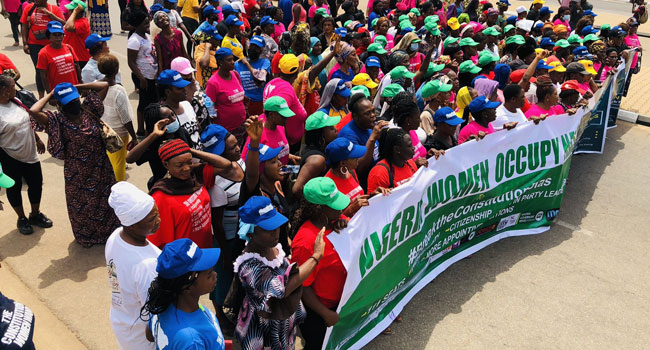
The past week has been a battle and a period of protests for Nigerian women who watched with dismay as the National Assembly failed to pass the five gender bills for constitutional amendment. March 1, 2022, will be remembered for a long time as the day the 9th National Assembly voted against freedom, equality and rights which are intrinsic features of democracy. For Nigerian women who watched the voting on the constitutional bills, the screams of ‘NO’ and laughter by the lawmakers over basic rights Bills was a psychological abuse to break the resilient spirit of Nigerian women.  It was a clear disregard of the hard work of Nigerian women who fought side-by-side with Nigerian men for our independence, democracy and freedom.

The struggles of women like Chief Margaret Ekpo, Chief. Olufunmilayo Ransome Kuti, Wuraole Esan, Hajia Gambo Sawaba, Chief Elizabeth Adekogbe, Tanomowo Ogunlesi, Chief Kudirat Abiola and the host of other great women cannot be forgotten and must not be in vain. They fought hard for freedom! The likes of Hajia Gambo faced many tortures just for the right of women to vote in the North, Fumilayo Ransom Kuti faced violence that led to her death and Kudirat Abiola died in the fight for our democracy. These women and many more paid the price. Nigeria they fought for is still failing them and failing the generation of women and girls who fought and still fight for the rights of women. Today we have a system of government dominated by men, a projection of Nigeria as a country of only men. A falsehood that the patriarchal culture of the ‘power-bearers’ in Nigeria has maintained through the almost 23 years of democracy.

Nigeria deserves to be a nation of truth. These truths remain that; Nigeria’s democracy will remain stagnant without women. Nigeria cannot achieve meaningful growth and sustainable development if women are excluded from government and if gender inequality persists. Hence the importance of these gender Bills. On a positive note, the House of Representatives on March 8, 2022, reversed its decision on three of the five Bills to vote again after the protests by Nigerian women. Each bill requires two-thirds majority votes in both the Senate (at least 73 senators) and House of Representatives (240 of members) to pass at the national level and two-thirds of the State Assemblies (at least 24 of the 36 state Assemblies) to pass them before Presidential assent. It is important to note that there are five gender bills and each of the five is as important as the other.

The Bill on citizenship seeks to confer citizenship by registration for foreign spouses of Nigerian women to correct the injustice in Section 26(2a) recognizing only Nigerian men. An injustice carried on from both the 1963 and 1979 constitutions and was retained under the 1999 constitution. The concept of citizenship presupposes a sense of belonging within a political entity, a legal bond with the state, with corresponding rights. A vast number of countries in Africa had discriminated against women by limiting the rights of women to transfer citizenship. However, signs of progress have been made with more countries adopting gender-neutral laws to ensure equality of all citizens. Countries like Senegal, Sierra Leone, Gambia, Mali, Burkina Faso, Rwanda, Uganda, Ethiopia Botswana, Mauritius, Algeria, Egypt, Tunisia, Morocco, and others reformed their laws to ensure equality with respect to citizenship rights. The year 2022 was supposed to be the year for Nigeria to correct this injustice to Nigerian women. This bill affirms the principle of Equality in the Constitution.

The Indigeneship Bill seeks to expand indigeneship to; Nigerians resident in other states and; to women who marry from states other than their state of origin. The bill defines an indigene as a Nigerian born in a state or has lived in a state for a continuous period of 10 years, has evidence of tax payment in the state, or a woman married to an indigene of a state for at least 5 years. The idea is to ensure that women who marry into other states benefit from employment, appointment and election into a political/public office. Denying Nigerian women indigeneity through marriage is leaving many women “stateless” in a country where they are full citizens. This Bill promotes national integration and unity.

On Special Seats for Women Bill; late Senator Wuraole Esan, the first woman in the Nigerian Senate in 1960 must be staring down at Nigeria wondering how 62 years later there are only 8 women Senators out of 109. A difference of 6 from 1960. Only 13 of the 360 members of the House of Representatives and 44 of the 991 state legislators are women. 15 of the 36 State Assemblies have no woman. This calls for a national emergency on women’s political inclusion. The Bill seeks to create 74 seats in the House of Representatives, 37 in the Senate and 3 in each State Assembly that only women can contest for. It is a positive measure to address historic discrimination/exclusion that impedes women’s emergence in political office. The reserved seats will be operational for 4 electoral cycles and do not preclude women from contesting for the other seats. The idea is to ensure that every state has a woman in the National Assembly and that every State Assembly has at least 3 women.

The Bills on Affirmative Action proposes affirmative action for women in the appointment of Ministers and Commissioners at the federal and state levels respectively and in Party administration. Failure to pass the 35% affirmative action bills denies women the opportunity of having at least 35% representation in public leadership and in party leadership. Currently, there are only 7 female ministers of the 43 ministers in Nigeria, some states have only male Commissioners. While in party leadership except for the office of the national woman leader, there is almost no other position occupied by women.
Nigeria is a rich, diverse nation that has the potential to wield the power to control the waves of democratic expansion and development in Africa.

Sadly, Nigeria has remained the most-timid in taking bold steps to guarantee the freedom and equality of all people in its democracy. We should not forget that our 62 years of independence and 23 years of democracy is a product of the collective efforts of men and women. When the legislators, played in the gallery of ego than reason and danced around the issues of freedom and equality they set Nigeria on a backward trend. However, there is still an opportunity to redeem our democracy.

The House of Representatives will be voting again on three of the Gender Bills; Citizenship, Indigeneship and 35% Affirmative Action in party administration. Nigeria needs both the Senate and the House of Representatives to vote and pass all 5 Gender Bills. We need the National Assembly to pass the gender bills for generations of women and girls in Nigeria today and in the future.

Cynthia Mbamalu is the Director of Programs in Yiaga Africa with 15 years of experience, working to support sustainable democracies, promote political inclusion, electoral integrity and human rights. She has an LLM in Comparative Constitutional Law from the Central European University (CEU). She tweets @DCynthiaM, please send your feedback to [email protected].

DOWNLOAD]: Full Judgement Of Federal High Court, Abuja Sacking Gov. Umahi And Deputy

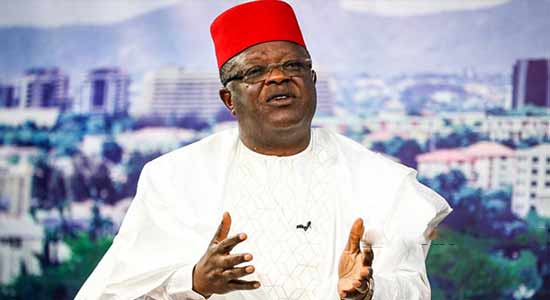
On Tuesday, 8 March 2022, the Federal High Court Abuja presided over by Honourable Justice Inyang Ekwo while delivering judgment in Suit Number FHC/ABJ/CS/920/2022 instituted by the Peoples Democratic Party ordered the sack of the Engineer David Nweze Umahi and Dr. Eric Kelechi Igwe, Governor and Deputy Governor of Ebonyi State respectively.

In the judgement, the Court sacked the Governor of Ebonyi State, Engr Dave Umahi and his Deputy, Dr. Eric Kelechi Igwe for defecting from the PDP to the APC in June, 2021.

The reason for the court’s decision is premised on the court’s understanding that votes garnered during elections belong to the Political Party that sponsored the candidate citing section 221 of the Constitution of the Federal Republic of Nigeria 1999 (as amended). In the court’s view, since the Governor and his Deputy had defected from the Political Party through which they came into office, they cannot lawfully transfer the votes obtained under the platform of the PDP to the APC, their new political abode.

Click here to download in PDF FORMAT

ENOUGH is ENOUGH! It’s Women’s Hour!!

By Funmi Para-Mallam

Our 10-Point Call to Break the Bias

  1. Enough of using culture to denigrate and debase us!
  2. Enough of using religion to dehumanise and divide us!
  3. Enough of using customary laws to deny our fundamental human rights and freedoms!
  4. Enough of using politics, policies and public office to disenfranchise and exclude us!
  5. Enough of using marriage to blackmail and bereave us of full citizenship!
  6. Enough of using physical strength to batter and bruise us!
  7. Enough of using male privilege to violate and victimise us!
  8. Enough of using fragile egos to browbeat and bully us!
  9. Enough of using patriarchal ideologies to confine, constrain and hold us captive!
  10. Enough of using misogynistic language as hate speech to define and devalue us!

Nigerian women have had enough!!!

breakthebias

noWoman_noNation

womenunite4justice

femaledignity&rightsNOW

Prof Funmi Para-Mallam, mni
Chair, AWLN (Nigeria Chapter)
National Coordinator (CWEENS)

Bámiṣé…

By Tami komolafe

My gaits were sure and precise as I walked towards Chevron, my phone was ringing again, that would be Maami, I had already told her I would be spending the night with Boda Tayo ìn Ikotun, but trust Maami to always call.
This time, I reached into my bag blindly for my Android phone.

It was indeed Maami.

“Hello mummy” I answered sharply and added a smiling emoji in my head after I noticed my voice had been too sharp.

She wanted to know where I was, if I had left my ‘office’, well, not really office, I had gone to deliver an outfit to a client on the Island. Maami also reminded me to use a BRT. I assured her I would as I ended the call.

I didn’t blame Maami, Lagos had become a war zone, a risk, a fear, a phobia…so much that we all feared for our lives. I was one of the very careful ones, I, Bámiṣé, BRT to the rescue on broke days, Bolt rides on the “Bambam” days.

It was dark when I walked to the terminal, not so dark, but dark in the books of Maami. I was lucky, a bus was available, I quickly searched my bag again for my card, the bus would take me to Oshodi and I’d join another that would take me to Boda Tayo’s area.

My card was hiding in the Always sanitary pad I had thrown in my bag that morning in case I got a visit from my monthly visitor, I quickly scampered into the bus and headed to a seat at the back, hoping the bus would fill up quickly so the journey would commence.

I bowed my head and got busy with Instagram… “Gistlover” was still not available, so I settled on “Instablog” to catch up on all the gists I missed in the morning… I noticed the bus had moved, surprised, I looked up.

That was fast. Bus filled already? I looked around to see if I was lucky to be sitting beside a fine young man, who knows, love could happen on a moving bus!
I looked, but there was no fine man sitting beside me, neither was any behind me or in the seat before me. No, there was no fine woman either! I was a lone passenger!

I looked up, and I could spot the bald scalp of the driver far away in front.

“Sir!” I called out….
I heard a grunt that sounded like a response.
“Sir, ẹ gbé èrò ni?”
I wanted to know why he didn’t wait for more passengers, all these government officials who cared only for their own salaries!
The typical “Oga ta, Oga o ta…”

“In front” he replied.
That would delay me, but fine… I dropped my head back to my phone, reading scary tales, praying they wouldn’t happen to me, happy tales, dropping my “God When” comment, I saw a love tale on BellaNaija that moved me to tears and I prayed silently that my love story would make news on Bellanaija one day. I had to make the news, well, if not love, maybe one of my designs someday!

My driver had still not picked any passenger… I was thinking about it when Amina buzzed me, asking where I was, I told her, I also told her that I was alone in the bus… I even made a video which I sent to her. I playfully told her not to tell anyone except something happened to me. We laughed about it…
Even when Aminat told me to alight at the nearest stop, I laughed again.

Of course nothing would happen to me, I serve a living God, I prayed that morning, and this was a BRT sef!
Begone oh Paranoia!
This is a BRT.

I noticed a stop, the door opened to admit three men and a woman… They looked straight in my direction, two of them started walking towards me. I dropped my phone in my bag sharply and held the bag to my chest.

We were on a bridge but my head suddenly stopped working, I didn’t even remember the name of the bridge, I still don’t…
An indescribable fear gripped me, my period, the reason I threw that Always sanitary pad in my bag suddenly flowed, the two men came straight for me.

“O wa o!”
I screamed, telling him I had reached my destination even though I knew I didn’t live on a bridge, I gripped my bag tightly and jumped to my feet as these men reached me, I can’t describe their faces… I can’t… my fear had blinded me.

I looked over their heads at the driver whose scalp I could still see, I also noticed the other man, but I couldn’t register what he was doing… I knew a woman got on the bus too but before I could look in her direction, one of the men had grabbed me!

In that moment I felt my life, not my heart, jump into my mouth, the fear could have killed me…but “I shall not die, but live and…”

I was thrown to the floor of the bus and I screamed! They would rape me! oh no!
“Take my phone!” I screamed before a hand landed on my mouth shutting me up. I tasted pepper, and salt and death.

I tried again but no sounds came…
Until I felt it, my skirt was torn off me, I tried to scream again but the hand; of pepper, salt and death!
My pant came off next, maybe he’d stop, when he sees the blood…
“Yes, the blood, the sign that I must not be touched, the blood…the blood, the sign of the blood”

Then I felt a pain.
I can’t describe it.

Try. Describe it.

No, I can’t.
It was not physical, even though it pierced my body, still it was not physical, it was more. It was HELL. I had landed in hell, even though my destination was Heaven.

I felt him slice my womanhood off, with no surgical precision or finesse!
I wasn’t screaming anymore, the fires of hell had embraced me!
The knife moved again, and he sliced more, deeper, cutting into my soul!

And with every slice, I was pushed deeper into the flames…
I raised my voice in silence as I screamed with a voiceless sound…
“Eloi Eloi Lama Sabach Tani…”

Did you hear?
For in that moment, cut open, half empty, I was kicked off the bus… to continue my journey to heaven.

And there, on that cold slab.
Naked.
With Half of me gone.
I waited till you came to take me home.

I am Bámiṣé.
The one who passed through Hell on her way to Heaven.
BRT ni mo wọ̀

La’bos

Written by Tami komolafe

Write your name right, by Chinua Asuzu

Unless a form, medium, or platform constrains you otherwise, state your name in this order: first name–[middle name or initials]–surname/last name.

Place your first name first and your last name last.

You’ve heard of Nelson Mandela, right? But you’ve never heard of Mandela Nelson.

You’ve heard of Muhammadu Buhari, right? But you’ve never heard of Buhari Muhammadu.

You’ve heard of Obafemi Awolowo, right? But you’ve never heard of Awolowo Obafemi.

You’ve heard of Nnamdi Azikiwe, right? But you’ve never heard of Azikiwe Nnamdi.

You’ve heard of Wole Soyinka, right? But you’ve never heard of Soyinka Wole.

You’ve heard of Aminu Kano, right? But you’ve never heard of Kano Aminu.

Just because some forms, especially at school, require you to state your last name first doesn’t make it the typical or correct style.

Your name says in essence “[YOU] child of [YOUR FATHER or ANCESTOR].” It can’t be the other way around.

So restore your ancestors to their pride of place, lest you receive a visitation of the gods!

TIPS