Home Blog Page 850

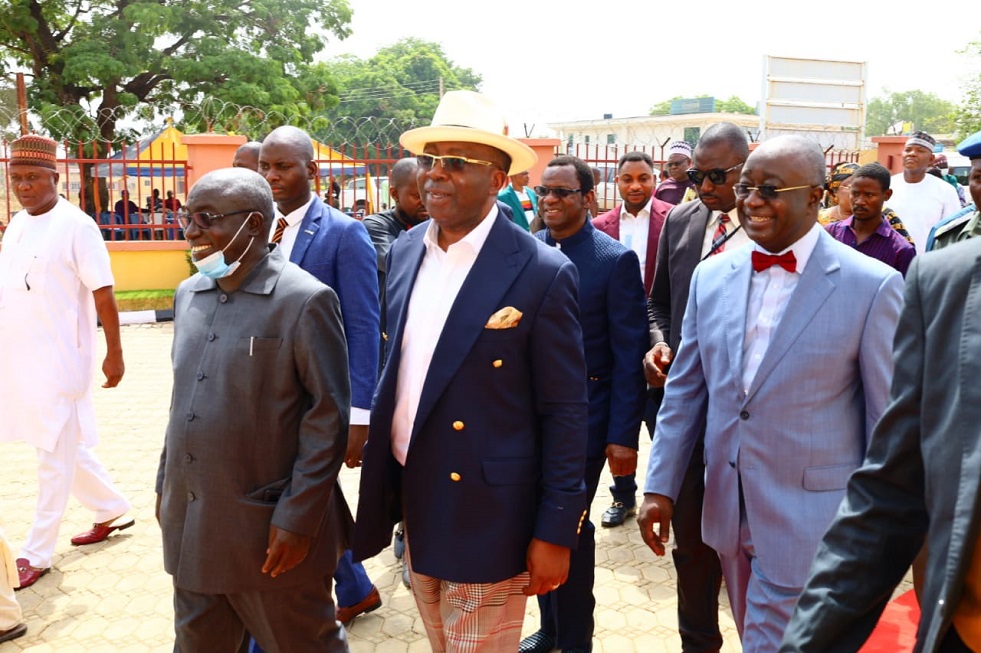
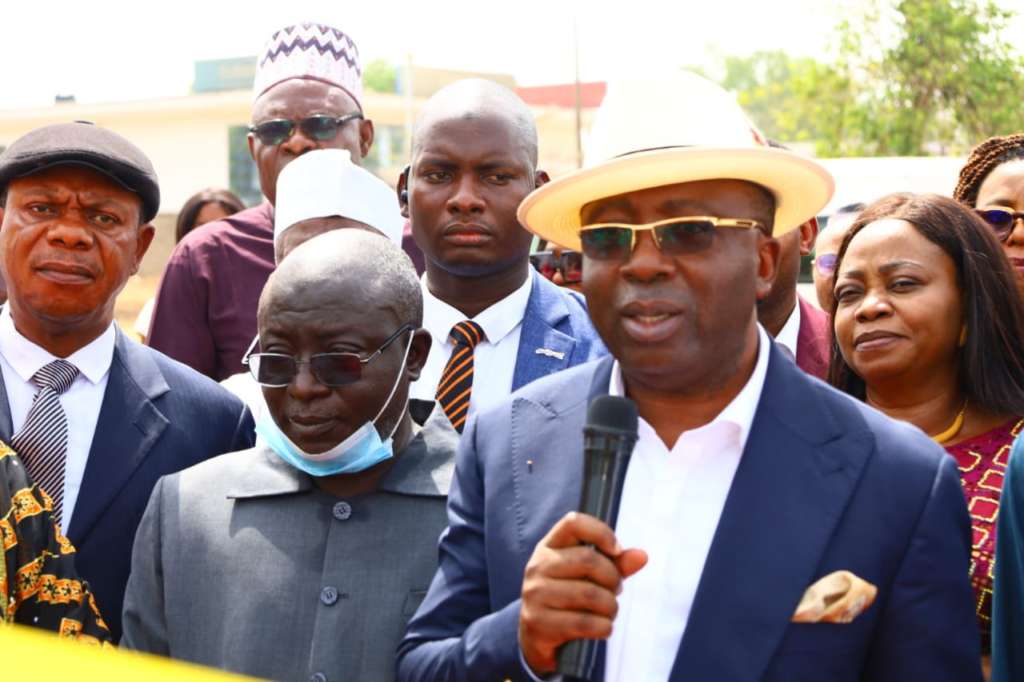
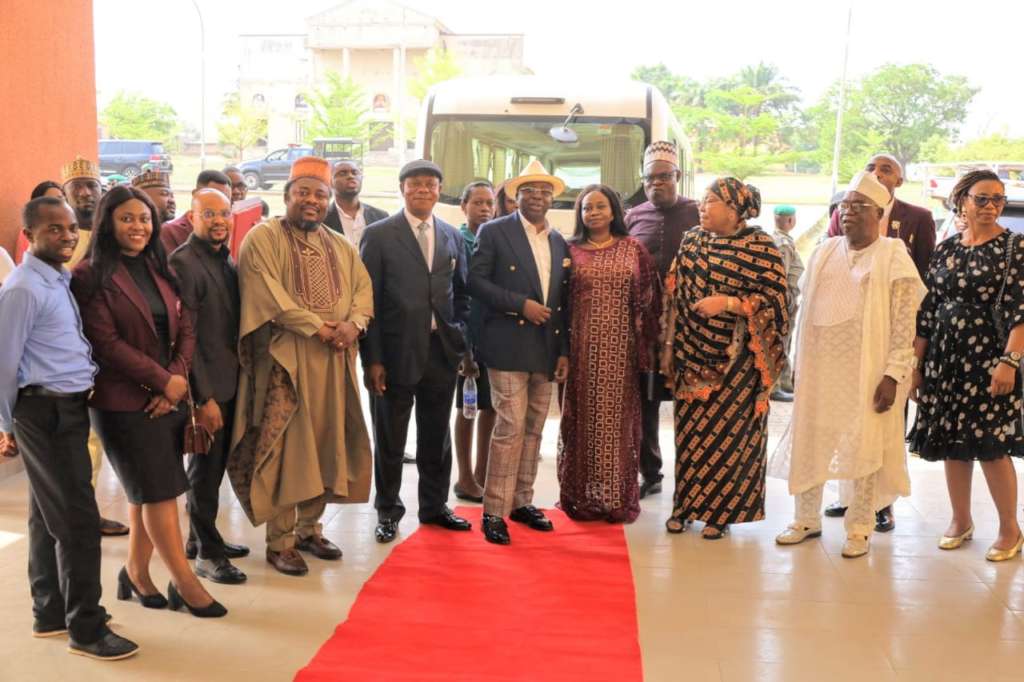
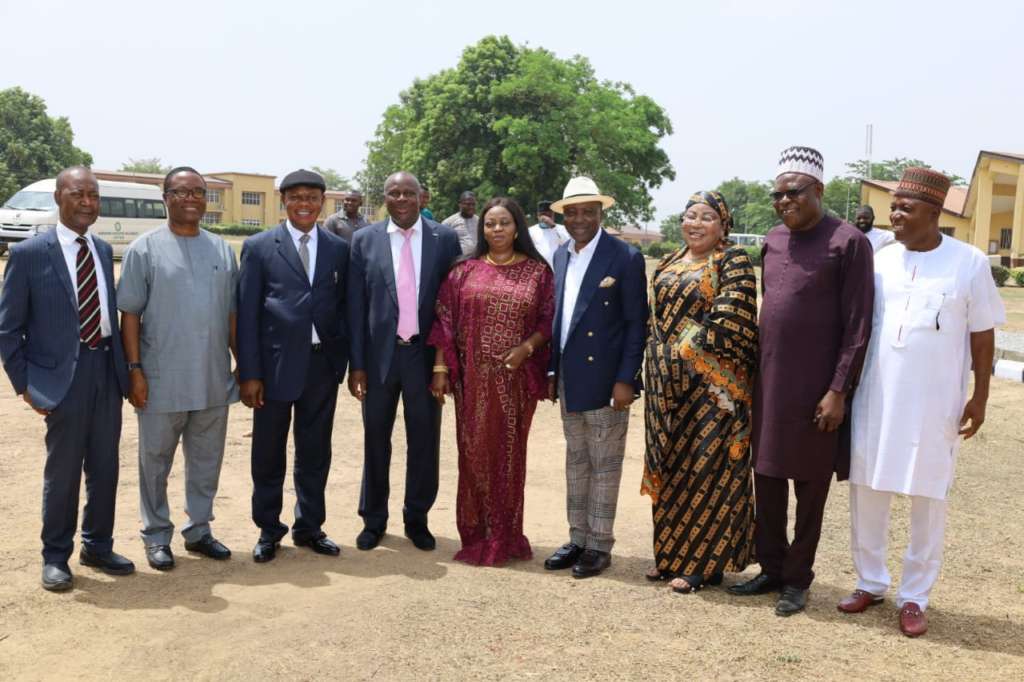
Nasarawa State Governor, Onoja SAN unveil Multi-million naira university printing press

Nasarawa State University's VC.-Onoja-and-Deputy-Governor

“This huge investment is a dividend of peace in Nasarawa State University which needs to be sustained.”– Governor Abdullahi Sule

It was John F. Kennedy  made the notable statement: “And so it is to the printing press—to the recorder of man’s deeds, the keeper of his conscience, the courier of his news—that we look for strength and assistance, confident that with your help man will be what he was born to be: free and independent.”
Cutting the tape

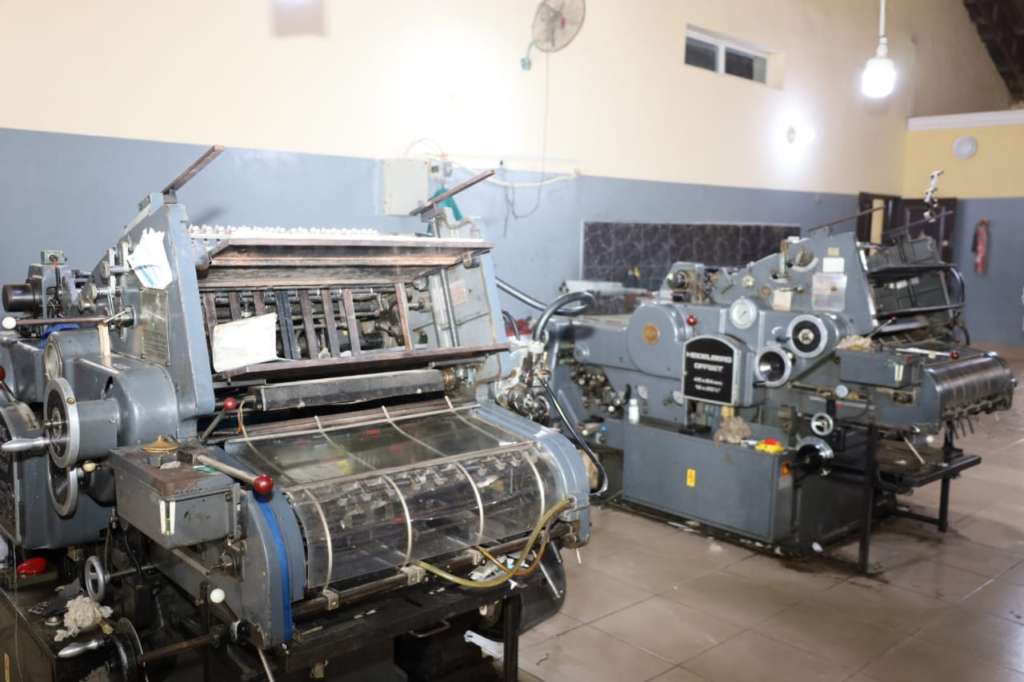
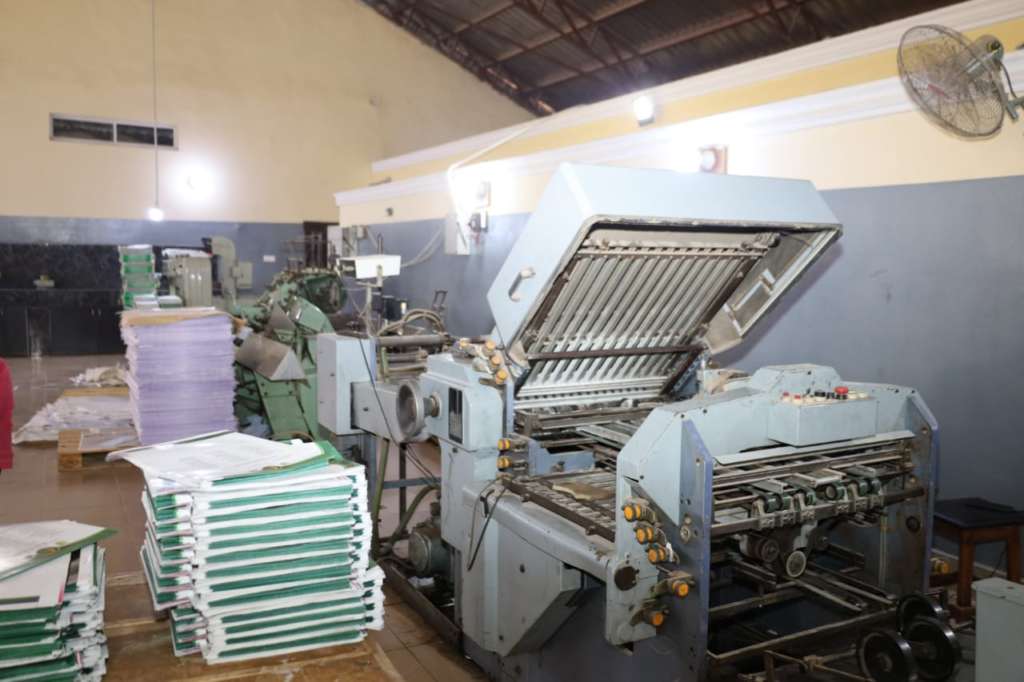
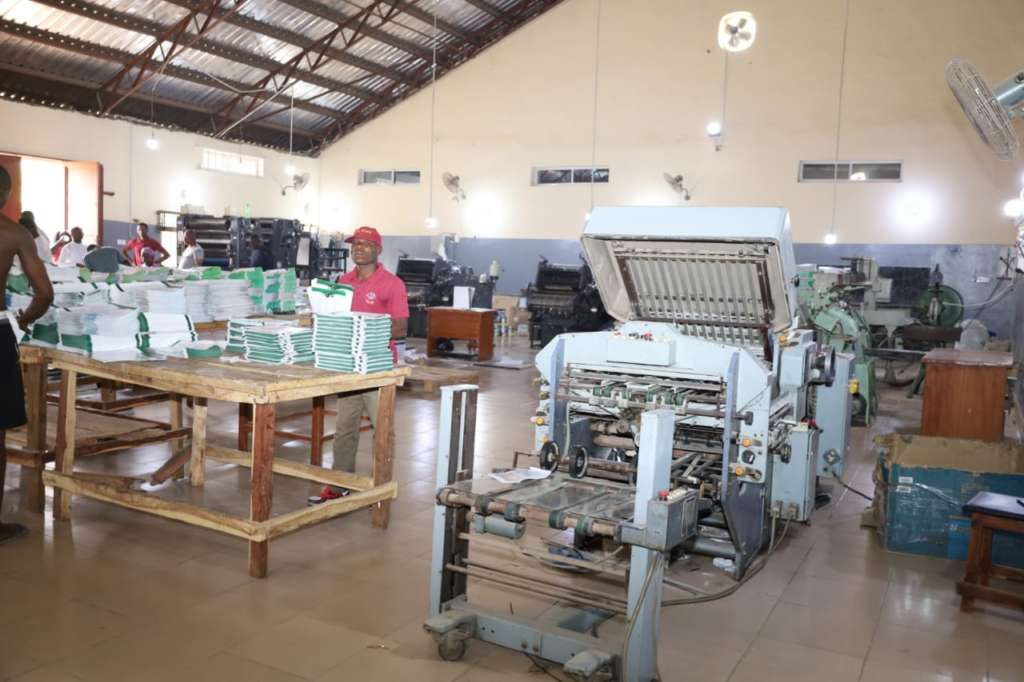
It was in keeping with this axiom that Chief Ogwu James Onoja, Senior Advocate of Nigeria launched into a multi-million naira venture to meet the printing needs of Nasarawa State University, Keffi, and its environs. Onoja who sank a whooping N450,000,000 (Four Hundred and fifty million naira) into the purchase of machines and construction of the building housing the printing press said it was his part of his contribution to boosting the university community’s fortunes.

Onoja, SAN, making his address

By providing a quality printing press that was acknowledged to be the best in Nasarawa State, Onoja said the time has finally come for the institution to cease outsourcing printing works to commercial printers that delay and provide shoddy jobs.

Assuring Chief Onoja that his investment is secure during the project’s commissioning, the Governor of Nasarawa State, Engineer Abdullahi Sule, represented by his Deputy, Dr. Emmanuel Agbadu Akabe commended him for elevating the University’s business community while urging other entrepreneurs to take advantage of the abundant investment opportunities in the school.

The Governor also explained that the project will be handed over to the university after 10 years and added: “This huge investment is a dividend of peace in Nasarawa State University which needs to be sustained.”

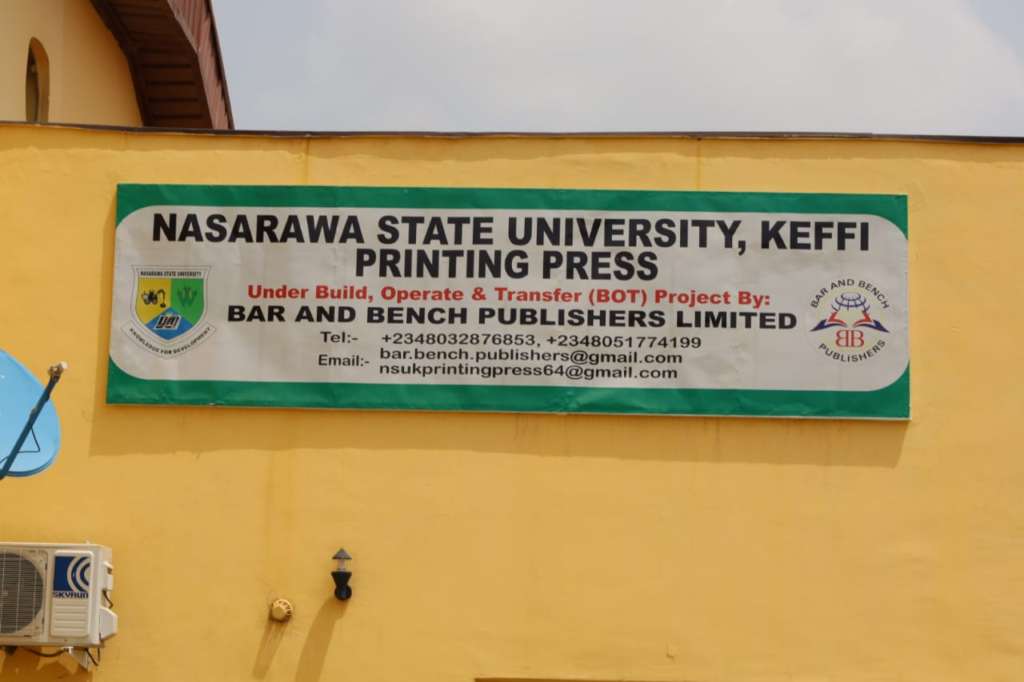
The Nasarawa State University Printing Press, Keffi, a Built, Operate, and Transfer (BOT) project undertaken by Chief Onoja’s Bar and Bench Publishers Ltd.,  has been in operation since 2019.

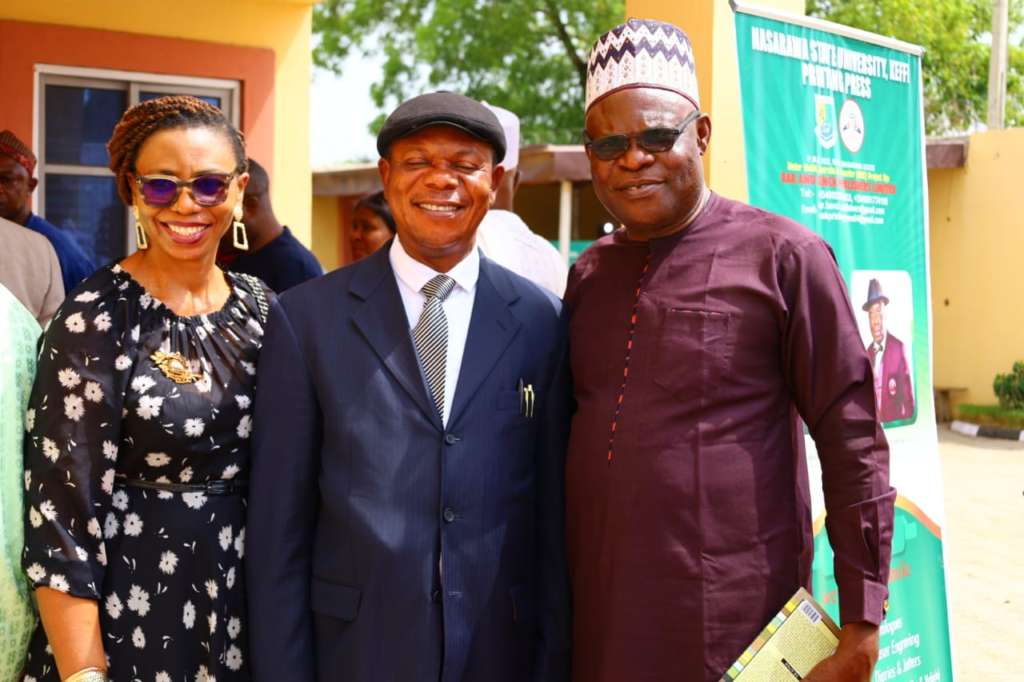
Family, friends and associates of Bar and Bench Publishers

Chief Ogwu Onoja SAN at the official commissioning ceremony today said the printing press will assist the school and the state meet its printing needs, thus, ending the era of outsourcing its printing works to commercial printers who often delay the work.

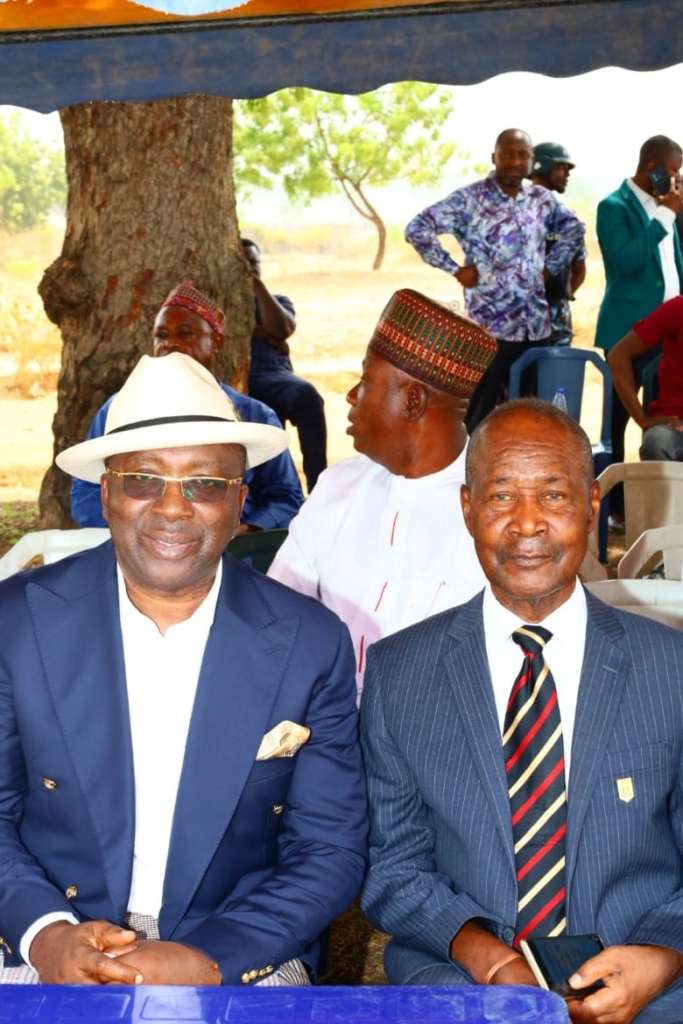
Chief Onoja and his foster father, Engr. Joseph Makoju

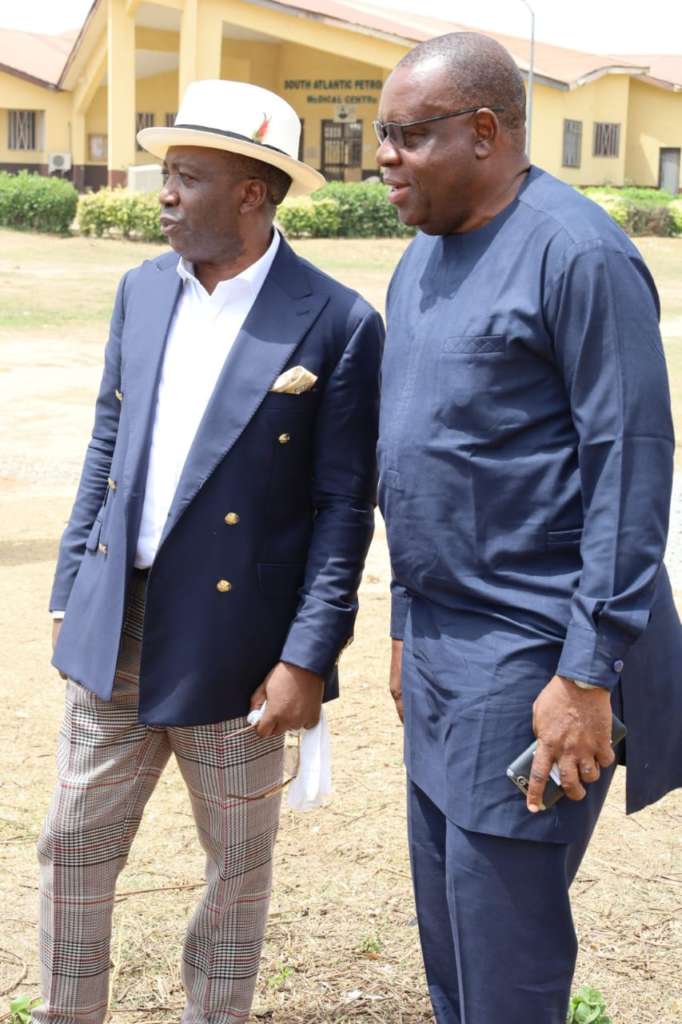
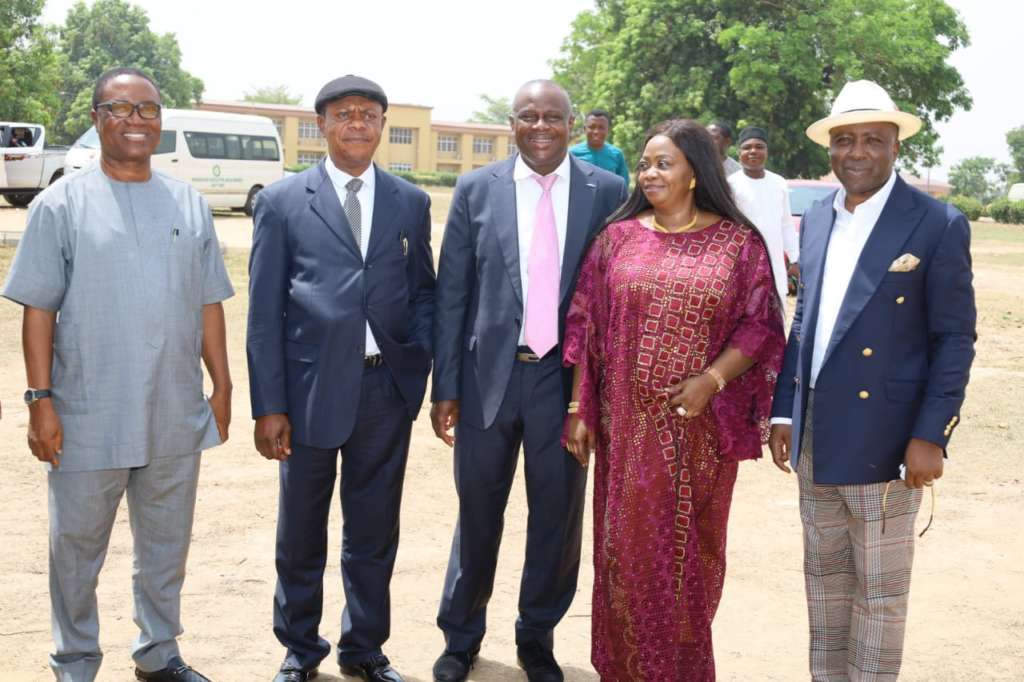
At the event which was graced by: Engr. Joseph Makoju, onetime CEO of the erstwhile National Electric Power Authority (NEPA)/Power Holding Company of Nigeria (PHCN) and former Managing Director, Dangote Group, Moses Alfred Ebute, SAN, Chairman, Nigeria Bar Association, Abuja Branch, Hajia (Dr.) Alima Kebiru Geya, Chairperson Senator’s Wives Association, Prof. Bissallah Ahmed Ekele, Chief Medical Director (CMD) of the University of Abuja Teaching Hospital (UATH), Gwagwalada, Pastor Abel Uloko, Dr. Ameh Onoja, National Program Coordinator, International Fund for Agricultural Development (IFAD) Value Chain Development Programme and other dignitaries, the ecstatic Vice-Chancellor of the University, Prof. Suleiman Bala Mohammed extoled Onoja SAN. “Thank you for the laudable project that has further reduced unemployment in our society and we are expecting more of this as time goes on Sir.”

Lillian Okenwa, Editor-in-Chief, Law & Society Magazine, Elder Peter Idenyi, and a friend
Onoja and Dr. Jeremiah Ekele. Dr. Ekele, who retired from the NNPC was Onoja’s Math teacher during his secondary school days.

Nigeria: Between Nostalgia and Nirvana, By Chidi Anselm Odinkalu

It is fitting that this conversation takes place in the week of Nigeria’s 53rd Independence Anniversary and in the week that the Federal Government has announced steps towards the convening of a “National Dialogue”.

Congratulations are due to Tayo Oyetibo, SAN, for investing in institutionalizing law practice in this way and using the formal opening for this dialogue and convening on the social contract and Nigeria. The learned Senior Advocate continues a tradition of passionate forensic application and mentoring pioneered by our late and dearly mourned mentor, Chief Gani Fawehinmi, SAN.

53years after Independence, Nigerians are caught in an uncertain land between nostalgia and Nirvana. For the young people who comprise the overwhelming majority in the country, nostalgia is not even an option and Nirvana is not on the horizon: we have abolished our history and they are the leaders of a tomorrow that is perpetually postponed.

As evidence of this, the Advisory Committee on the National Dialogue (the Senator Femi Okorounmu Committee) does not include any Nigerian below the age of 50. For a country whose median age is 23 and where life expectancy is just about 48 years, this is worrying.

Across the country, meanwhile, it’s raining invectives, shrapnel, cudgels, and bits and pieces of the kitchen sink. While all this happens, many politicians are intent on plunder. Government is the biggest business in town and being in it is the surest avenue to inexplicable wealth.

Was this how the Founding Leaders envisioned it? In 53 years as an Independent country, we have never quite managed to count our votes, count our people or count our money credibly, the three basic functions on which government is based. It is not because we cannot count. Rather, it is because counting properly comes with obligations of honesty, fairness and accountability that a succession of managers of the Nigerian State since Independence, with the active connivance and complicity of communities and citizens, have declined to subscribe to.

In its 2011 report, the Federal Government Investigation Panel on the 2011 Election Violence and Civil Disturbances, better known as the Sheikh Lemu Panel, narrated that “elections held even before Independence in 1960 were generally fraught with violence arising from intimidation of voters, burning of ballot boxes and papers, snatching of ballot boxes, diversion of electoral materials, outright rigging…”

For about 29 out of 53 years as an Independent country we were ruled by soldiers. They messed with our heads, our country and our institutions. If Sheikh Lemu is to be believed, the civilians who have ruled the country for the remaining quarter century have learnt a lot from the soldiers but mostly the wrong lessons.

14 years ago, we finally returned to government with electoral legitimacy. To many Nigerians, notwithstanding the improvements in 2011, however, democracy – government in which citizens are counted and their votes count – has not yet arrived.

De-Centralising Despotism

Today, Nigerians have no expectations of those in power, our country struggles to compete in the world and our institutions are ill-equipped apply our rules properly or call to order those who do not wish us well.

In theory, we were supposed to achieve better governance through de-centralisation. So, in 1967, we began creating of states. The problem was that the impetus for state creation was not de-centralisation or better governance but narrow reasons of regime security with little consideration for governance.

The three regions of Nigeria at Independence were each considered too powerful. We wanted to ensure that no sub-unit would be strong enough again ever to challenge the country to a wrestling match like Biafra attempted in 1967-1970. The last act of State creation by General Abacha in 1996, therefore, essentially dismembered the last significant sub-unit in Nigeria – the Sokoto Emirate – into three States (Kebbi, Sokoto and Zamfara).

Meanwhile, in 1976, local government reform brought an additional level of government. Today, we have one Federal Capital Territory, 36 States, and 774 Local Governments, each with its own machinery of administration. For electoral administration, we have an additional 8,100 wards.

State creation has created a growth industry in navel-gazing public officers whose preoccupation seems to be leeching on the State. Members of Parliament, Cabinet officers, permanent secretaries, advisers, their wives, husbands, spouses, and sundry hangers on all deserve and desire their own perks, perquisites, and retinues to be paid for, of course, by public appropriations.

Each also desires to bring to their own networks, the benefits of propinquity to power. More cars are bought so that each can employ a driver or nanny from their village. And openings must be created in the public service so that they can ensure the next State employee is from the same place too.

If teachers are to be hired, it can only be by allocation to the god-father of those in power and its bedrooms. So too with hiring nurses and doctors. Surely, why should we start applying any rules only when it comes to our own turn to chop?

With about 71% of the public appropriations at the federal level currently devoted to servicing recurrent expenditure, the cost of running the public sector has bloated by nearly 25 percentage points in the less than one and a half decades. Unsurprisingly, therefore, the public service is not public and hardly renders service. The only reason it exists is to provide the needs of those who work in it and alleviate poverty among their kinsfolk.

An increasingly incapacitated state suffers under the weight of its natural responsibilities. The result is frightening growth in different forms of retail, wholesale and spectacular violence across the country: domestic violence is on the increase; commercial kidnapping is booming; electoral violence is a given; inter-community and ethnic violence seems to be the default for settling disputes across communities; improvised explosive devices (IEDs) are in the hands of extremists who kill en masse the name of hate; and vigilantism seems to be the preferred law enforcement method with support of a vast majority of Nigeria’s communities. We have de-centralised despotism.

Sheikh Lemu had also foretold in 2011 that “the past decade has seen an unprecedented escalation of communal violence in various parts of the federation, especially in the northern part, which is virtually becoming the epicenter of the gravest form….Something must be done to stem this trend otherwise it will breed a balance of terror between groups hiding under different togas….It is fast becoming one of sustaining a mutual balance of terror between different groups in Nigeria.”

Regressing into impunity

For this epidemic of violence, we seem to have developed no antidote. On the contrary, most involved in it seem assured of impunity while those politicians who plunder us enjoy immunity. The criminal justice system and legal process cannot be trusted to bring to account those who do this. Rather, the legal process often facilitates these crimes against collective patrimony. This guarantees that new fronts of violence are opened with each new day.

As the country prepares for potentially explosive elections in 2015, victory seems assured to any party that will beat the rest in the competition to frighten the country the most or unleash the most violence.

National co-existence is deeply frayed. Two years ago, the Sheikh Lemu Panel summarized the state of the country in an anguished three-word lamentation: “Nigeria has regressed”!

Around the country, true Nigerians are an endangered minority. The only places that you are likely to find any Nigerians anymore are in the immigration terminals of foreign airports. Back here, everyone seeks to be anything – ethnic merchant, sectarian bigot, militant, bomber, online irredentist, and a chief-with-a-cap – everything other than a Nigerian. We cannot be Nigerian, we are told, without being one of these.

Yet, we can and, to overcome our present difficulties as a people, we must. For we can come from one part of Nigeria and recognize that no one part of the country has a monopoly of good or bad. We can seek development in one part without any need to feel that it must come at the expense of impoverishing other parts; we can worship God the way we choose without the need to believe that God needs any of us to protect Him; and we can wish the country well without any need to claim a monopoly of patriotism.

The founding leaders of our country had mutual respect for one another and for the diverse peoples of this land. They were not thieves. They undertook public service without amassing wealth or making grand larceny a directive principle of state policy. Indeed, many of them died without homes of their own. Such was their abiding faith in the goodness of this land.

On most of these scores, many of the people who occupy position of public trust today mostly seem to take a contrary view. Competitive narrowness is the name of the game and the public purse exists to service private whims. Development is no longer the priority or business of governance. In every sector – education to health; security to environment – we struggle to assemble credible indices of betterment.

Civilian government must work for the people

Yet, with munificent new sources of energy now emerging around the world, the assumption that underpinned Nigeria’s political economy – that we could always binge or rely on free money from the sale of hydrocarbons – is about to be unscrambled.

But this is not such a bad thing. On the contrary, the possible death of assured oil money is the reason I remain optimistic about Nigeria. It could not come soon enough.

The death of oil will free us up to discover the capabilities and innate wealth of different parts of Nigeria and compel us to exploit and develop them. It will also mean the death of the political economy of allocation and contractocracy. It will compel leaders to invest in the skills of their youths and to see their people as assets. It will also enable us to return to harnessing the fertility in our lands and processing them to feed our people.

If fat and failed politicians do not have to converge in Abuja every month to share money whose provenance they are not interested in, they will have little option than to stay home among their people and raise the revenues they need to justify their existence.

Despite the difficulties, therefore, we cannot give up hope or walk out on the country. Despite the challenges, civilian government is here to stay. It is our place to make it work better for the people.

For the politicians who seek to lead this country over the next half century, the question is whether they will see these challenges as opportunities to be seized or whether they will continue to do business as usual. Those who choose the latter may find that they force a premature sun-set upon the country and may have the misfortune of paying a supreme sacrifice for this kind of avoidable folly.

For those who recognize the new opportunities, this dangerous new world is an exciting one too and offers a brave path to a new Nigerian century. On the occasion of the 53rd Independence anniversary, my only prayer is for leaders willing to seize it and for citizens able to see it.

Chidi Odinkalu, Ph.D, Chairman of the nation’s Human Rights Commission, made these remarks to the Opening of the new Law Offices of Tayo Oyetibo & Co, Block 113, Lekki Expressway, Lagos, 3 October, 2013. With respect to these remarks, Dr. Odinkalu says, “The views and opinions expressed here are the author’s and do not represent the official policies or positions of any entities or institutions with which he is or has previously been associated.”


The legality or otherwise of keeping a large sum of cash (money) at home

By O. G. Chukkol

Let us first ask ourselves few questions as a necessary prelude to this discourse.
Is there limit to the amount of money, whether local or foreign currency, that one can keep at home or move around with? Must one keep his money in the bank? Is it a criminal offence to keep large sum of cash in a house or move around with same? What if I am found with millions or even billions at home, am I bound to give explanation to anyone? This article seeks to address these questions.

In the case of EFCC V Thomas (2018) LPELR-45547(CA), Thomas sent someone with millions of dollars cash to Abuja from Lagos. At the airport, EFCC seized the money and arrested the person sent with the money. When Thomas claimed his money from the EFCC, he was arrested. Thomas filed an action for the enforcement of his right to own property. High Court gave judgement in his favour and the said judgement was affirmed on appeal. The Court of Appeal while delivering judgement held thus:

“The act of keeping money at home or other places of choice is not a named offence in any law in this country. The Anti Money Laundering Act does not have such provision and the E.F.C.C. Act also has nothing in that direction. Furthermore, there is also no known offence for travelling with money legitimately earned within the country. The requirement of declaring sums beyond a threshold is only when you are travelling outside the country. Travelling from Lagos to Abuja is still within the territorial jurisdiction of the country known as Nigeria.”

Based on the above decision of the Court of Appeal, it means under our corpus juris (body of laws), a Nigerian has the unfettered right to keep any amount he has in his house or move around with it. He can keep it under his pillow, bed, inside his car etc. No one is bound to keep his money in the bank and no one shall be arrested or prosecuted for keeping a large sum of cash at home.

However, let me quickly state that the right to keep ones money at home is to be exercised within certain limits. Because:

•••Making or accepting cash payment exceeding 5million is a criminal offence if it is not done through a financial institution. See section 1 of the Money Laundering Act and the case of ATOYEBI v. FRN (2017) LPELR-43831(SC)

•••spraying money, dancing, marching or writing on or squeezing it is a criminal offence. See section 21 (2)&(3) of CBN Act, 2007.

•••converting or transferring resources or property derived directly or indirectly from drugs related offences or any other crimes or illegal acts with aim of concealing or disguising the illicit origin of the resources or Property is a crime. see section 15 of the Money Laundering Act and UDEOGU v. FRN & ORS (2016) LPELR-40102(SC).

••• Etc

This leads us to the next but vexed point:

WHAT IF THE MONEY FOUND IN POSSESSION OF A PERSON IS SUSPECTED TO BE ILLEGITIMATE OR BEYOND THE PERSON’S EARNING?

Our administration of criminal justice system in Nigeria is adversarial in nature. This is rooted in the operation of section 36(5) of the constitution which is to the effect that a person is presumed innocent until proven guilty. By that provision, the duty is always on the prosecution to prove the guilt of an accused person. Is not for an accused person to prove his innocence.

It should be noted that generally there are two types of burden of proof. Viz:
•••Legal burden of proof and
•••Evidential burden of proof.

Legal burden of proof does not shift at all. It rests squarely on the prosecution throughout a trial whereas evidential burden of proof does shift.

Legal burden of proof refers to the duty on the prosecution to prove the guilt of an accused person beyond reasonable doubt. Evidential burden on the other hand refers to the duty of adducing evidence in support of one’s case. Here once the prosecution establishes a prima facie case that can sustain a charge, the burden of adducing evidences shifts to the accused person to disprove the case of the prosecution.

Some few days ago the case of DAUDU v. F.R.N. (2018) LPELR-43637 (SC) was everywhere in the media with diverse captions but all pointing to a single direction to the effect that in Money Laundering and corruption cases, the Defendant has to establish the legitimacy of a money found in his possession. Of course this is very true. But People stretched the words and intention of the noble justices of the Supreme Court to a bizarre extent. They went as far as suggesting that the Supreme Court meant the state has no duty to prove the guilt of the accused once found in possession of pecuniary resources or property beyond his means.

With the greatest respect, this is a height of misconception informed by the failure to read the judgement of the court as a whole. Besides; the court merely gave life to an existing law, to wit, section 20(2) of the Money Laundering Act. We have similar provisions in other legislations like section 19(5) of the EFCC Act, section 319A of the Penal Code, sections 132 and 136 of the Evidence Act, 2011 etc. These provisions are strictly limited only to evidential burden as explained earlier.

The Supreme in Daudu V FRN (supra) never intended to turn law to its head nor intended to repeal or nullify the presumption of innocence entrenched in section 36(5) of the constitution. Furthermore, it was not the intention of the Court to introduce an inquisitorial system of administration of justice which requires a person to prove his innocence. Besides, it does not have power to do so. What the Court did was to restate the law as it relates to evidential burden of proof in money laundering cases. Evidential burden is based on public policy and the need for an accused person to at least say something in respect of the charge against him. In fact by section 137 of the Evidence Act, 2011, such explanation is to be on balance of probability. That is to say, once his explanation is the most probable, the case of the prosecution shall fail.

The position as it is today is that, when a person is found with money far beyond his legitimate income, the prosecution must still have to charge him to court, open its case, call witnesses, tender documents and establish a prima facie case before the accused person enters his defence; else the accused can be discharged and or even be acquitted if he files a no case submission. A person cannot be guilty simply because he is in possession of pecuniary resources or property beyond his legitimate income. Presumption of innocence is constitutional and same has not been amended by the National assembly

Strictly Legal Precedents

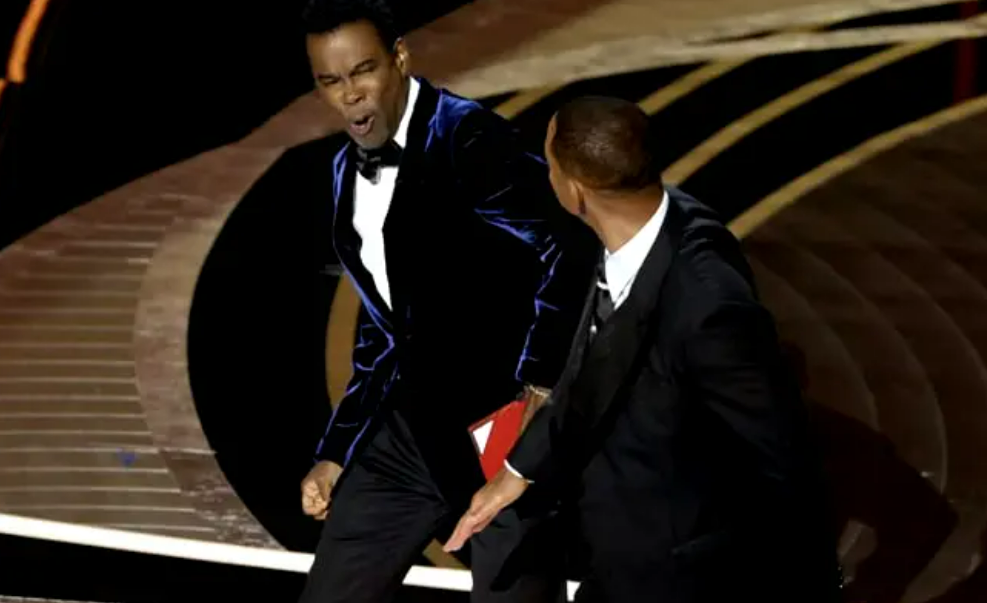
Turning the other cheek for Will Smith

Rock’s joke was disagreeable and deeply offensive. But in taking the law into his own hands and responding in a violent way, Will Smith modelled the worst excesses of modern pop culture – broken, out-of-control and narcissistic.

By Azu Ishiekwene

One week before Hollywood, Nigeria hosted a different kind of Oscar moment. At the swearing-in ceremony of Charles Soludo, former Governor of the Central Bank and new governor of the most commercially significant southeast state, the wife of the outgoing governor, Ebele Obiano, staged an unusual drama.

Ebele, Nigeria’s modest answer to Kenya’s tempestuous Lucy Kibaki, floated across the dais to where Bianca Ojukwu, Nigeria’s former ambassador to Spain, was sitting to mockingly question what she was doing at the ceremony after years of being a thorn in the government’s side. What followed wasn’t as pretty as Ebele’s butterfly-sleeved pink dress.

Right there before hundreds of guests and hundreds more watching on TV and following on social media, Bianca, a former beauty Queen and ambassador, landed the outgoing governor’s wife a slap and ripped her wig. Nollywood may have called it, Fury of The Fish Wives. But this wasn’t a movie; it was real.

The solemn handover ceremony instantly became a footnote. It was supplanted by an excited public that obviously judged Bianca’s assault excusable recompense for a provincial First Lady whose contempt for the state apart from purchasing a pair of Gucci glasses worth $2,755, also included shopping for personal designer Covid-19 vaccines when the state could not afford a single jab for its citizens.

Bianca’s slap rocked social media. Even though she responded by claiming she had acted in self-defence, questions are still being asked about what kind of example she had set, whether she did not go too far and whether, in fact, the public had not been unfair in judging Ebele‘s record.

We had barely recovered from the Ebele-Bianca face off when Will Smith happened thousands of miles away, momentarily giving the impression that Hollywood had taken a leaf from Nollywood, except that even Woody Allen might have been hard pressed to script this. What was Will Smith thinking when he leapt to the stage and decked Chris Rock in reaction to the latter’s joke about Jada Pinkett Smith’s hair loss?

Some might say this question puts the cart before the horse. That the joke should not be on Will Smith but on Rock, who chose the Smiths’ day of joy to crack a poor, tasteless joke with no regard whatsoever for the misery that Jada’s hair loss (a medical condition), must be causing the family.

Unfortunately, comedians, like most creative people, get paid to trade not only in others’ foibles, quirks or pet peeves, but in their misery as well. In his final days, Saddam Hussein served an Iraqi cabaret a death sentence for making him the butt of their jokes. For years, South Africa’s President Jacob Zuma was the subject of scathing jokes, and was in fact crowned with a “shower head”, a cartoon caricature from the president’s testimony during his rape trial.

Five years ago, American comedian, Katty Griffin, thought it was funny when she posed for a photo with the replica of Donald Trump’s tomato-splattered head. But the backlash was more than she bargained for. In spite of her apology that it was in the nature of her business to constantly “move the line” and then “cross it” and that she didn’t mean any harm, she lost her tour dates and endorsements apart from being fired by CNN.

And a tasteless joke by popular Nigerian comedian, Basketmouth, in 2014 comparing dating experiences between “white girls” and “African girls”, with a primer on which variety required “a bit of rape” to straighten out, was filed away until 2019 when he was chosen as an influencer for an EU-sponsored campaign against gender-based violence. The joke came back to haunt him. In spite of his apology, it cost him his EU endorsement as well.

I don’t think there’s too much disagreement about whether Rock’s joke on Jada crossed the line. Alopecia, a general term used for any form of hair loss, is not a laughing matter. While the disease is not medically serious, sufferers endure different levels of psychological discomfort, which like talking about periodontal disease or tooth loss in the presence of the elderly, can only compound their misery.

Some have said that a balding man would have taken the joke on his chin and that, in fact, Will Smith laughed momentarily before he caught the joke. But Jada is not a balding man and didn’t need to be. She is an actress who has struggled with a medical condition. She has not been shy to acknowledge her condition and it was maliciously cynical of Rock to exploit it for a laugh.

The relationship between the Smiths and Rock is also fraught. After Rock’s 2016 swipe at the Smiths that “Jada boycotting the Oscars is like me boycotting Rihanna’s panties,” and his comment that the Smiths “went mad” that there were no Black nominees that year, you would expect Rock to make his mickey elsewhere. But not only did it have to be the Smiths again, it had to be Jada’s hair this time.

Unfortunately, however mildly the Academy may have responded to this embarrassing moment of one Black man striking another on stage, it just feeds the prejudice of a few who would use the incident to justify sleepwalking on demands for a more diverse, inclusive Oscars.

There have, in fact, been insinuations that the Academy’s reluctance to press charges, which is possible under California laws, is not necessarily for Smith’s sake but more for its own enlightened self-interest. How does going from #OscarsSowhite to #OscarsBlackfights help the Academy, for example? And would Will Smith have responded the same way if Rock was a Caucasian comedian? Or did the joke only suddenly become insensitive and bad because he was at the receiving end? 

Medieval literature is replete with fighting for love or chivalry, which not only ended in personal tragedies but sometimes in ghastly blood feuds like the Spanish succession wars. But the world has come a long way since. Jada didn’t need Will Smith to take us back to Lancelot or Shakespeare’s Romeo and Juliet.

Rock’s joke was disagreeable and deeply offensive. But in taking the law into his own hands and responding in a violent way, Will Smith modelled the worst excesses of modern pop culture – broken, out-of-control and narcissistic. It’s part of the reason why we do our best to keep our children as far away from that space as we can. To watch, on live TV, one celebrity decking the other suggests that it’s OK to smash the next fellow if you don’t like his or her joke.

Will Smith didn’t help Jada either. His action, like the unintended consequence of all chivalry, is to portray women as weak, defenceless and incomplete without male approval and protection, even when it is as foolish and needless as it was in this instance. In restraining himself after he was slapped, Rock looked the more admirable of the pair in the disgusting spectacle, somehow redeeming himself even in his moment of insane ribaldry.

Will Smith would have better served himself, Jada and millions around the world watching, by taking the stage not twice, but once, to express his displeasure and demand an apology for Rock’s rotten joke. And even if Will Smith didn’t step up, Jada’s extraordinary career and sterling social work are legacies that cannot be diminished by the unguarded moment of a chatterbox.

We see from the crime scenes – whether at the slapping drama at the Nigerian handover ceremony or at the Oscars in California – that politicians and celebrities are human and like most humans would in a moment of insanity say or do the wrong things in total disregard of their social status or the values we hold dear.

Will Smith’s assault on Chris Rock won’t be the last unscripted highlight of the Oscar and other Hollywood big nights. Even if the world turns the other cheek, celebrities would deck it because they assume that their status entitles them to do so.

Ishiekwene is the Editor-In-Chief of LEADERSHIP

Kaduna train attack: Can it get any worse than this?

In President Buhari’s Nigeria, just when you think it can’t get any worse, it can. That is what the terrorist attack on the Kaduna train on Monday proved most conclusively.

By Ikechukwu Amaechi

Those who want to be politically correct may continue to play the ostrich, pretending that all is well. But the country is in such a precarious situation that any honest, dispassionate appraisal will come to an inevitable conclusion: it can’t get any worse. It is both a wish and a prayer, which explains why many can’t wait for 2023 to come.

The bad news is that May 29, 2023 is a pretty long time. For a country that has lost its soul, where the attitudes and feelings of love and respect for human beings have been completely eroded as it is in Nigeria today, things can get much worse in the one year that is left of the Muhammadu Buhari presidency and even long after he dismounts the high horse.- Advertisement –

Anyone who thinks this is a harsh verdict needs to reflect on how animalistic we have become. Even wild animals in the jungle have better rules of engagement. They don’t kill their own for fun as we, who claim to be humans, do.

If we reflect on the carnage in Kaduna State and the reaction of not only Nigerian leaders but also citizens, it will be self-evident that we have lost our humanity.

The All Progressives Congress (APC) finally held its National Convention in Abuja on Saturday, March 26. All the leaders of the ruling party converged at the Eagle Square to coronate Senator Abdullahi Adamu, former governor of Nasarawa State, as the national chairman without a single ballot cast by the over 7,000 delegates that swooped on the Capital City from all the nooks and crannies of the country.

Yes, some pseudo-democrats are ululating that democracy triumphed, but can there be democracy without freedom of choice?

The outcome of the APC Convention and the fact that the Peoples Democratic Party (PDP) that allegedly ruined Nigeria has completely taken over the reins of power therein, literally, reminds me of what former Senate President, Pius Anyim, said recently on the so-called “16 ruinous years” of the opposition party.- Advertisement –

“I am sure they (APC) are no longer saying so. They are rather wooing PDP members to join them. And whenever they succeed in getting any PDP member to join their party, they celebrate it. So, they have reversed themselves and I don’t have anything to add,” Anyim said cryptically.

Truth be told, APC apparatchiks have perfected the inelegant art of living a lie and believing that nobody notices their mendacities, which explains why under their watch, the country is plumbing cataclysmic depths and yet, the party claims that the country has turned the corner under Buhari’s watch.

On Friday, March 25 – eve of the APC Convention – terrorists invaded Giwa local government in Kaduna State and murdered over 50 innocent citizens. Five days earlier – Sunday, March 20 – they killed at least 34 people in Kaura local government.

On the Convention day, over 200 terrorists invaded Kaduna International Airport, shot dead a Nigerian Airspace Management Agency (NAMA) security staff and prevented a Lagos-bound AZMAN aircraft from taking off.

That attack occurred at about 12.30 pm. The APC Convention didn’t start until about 8.23 pm when President Buhari arrived Eagle Square. I stayed awake all night on Saturday watching the Convention. I saw politicians prancing like peacocks in their overflowing agbada and I listened to all the speeches. I wept for my country.

The ruling party did not deem it fit to observe a one-minute silence in honour of the more than 50 people that were slaughtered in Kaduna the previous day. No prayers were said for the repose of their souls.

No APC leader mentioned the Kaduna killings in their vacuous speeches. They were busy eulogising the president. It was hero-worshipping at its worst. Buhari was deified as the best thing that has happened not only to Nigeria. They fawned over him, claiming he was wearing the finest apparels even when it was obvious the king was wearing no clothes. The adulation was as stomach-churning as it was insalubrious.

Where is our humanity? In which other country will 50 citizens be killed overnight and everyone – leaders and followers – will carry on as if nothing happened?

Then on Monday, March 28, Minister of Information and Culture, Alhaji Lai Mohammed, did what he knows how best to do – fib – when he claimed that Nigeria was becoming safer every day.

As he was making that odious claim, AZMAN Air was announcing the suspension of flights to Kaduna. A couple of hours later, Air Peace, Nigeria’s largest flight carrier, followed suit, suspending operations to Kaduna International Airport.

And while Mohammed was busy fibbing in Abuja, terrorists, some as young as 18 years, most, if not all of them, Fulani according to eyewitnesses, with turban on their heads and chanting Allahu Akbar staged a most dramatic and audacious attack on a Kaduna-bound train that had just left Abuja.

All hell has been let lose ever since. Now, it is neither safe to travel to Kaduna by air, road nor rail. Rail transport was, until Monday’s attack, the safest option after bandits took over the highways. With this dastardly attack, I wonder how many people will henceforth hop into a train going from Abuja to Kaduna.

Three things struck me in this attack. First, most of the passengers were delegates who attended the APC Convention on Saturday and who refused to use the platform which the Convention afforded them to speak out against the massacre of fellow citizens in Southern Kaduna on Friday night.

Second, it was obvious that the terrorists had information. They knew who and who were on that train and they went for them. After they brought the train to a halt, they went straight to the VIP cabin and abducted many of them with very high kidnap value. Eyewitness accounts said they were looking for lawmakers. The average Nigerian elite has failed to appreciate the truism in the saying that the death of even the lowliest among us diminishes all.  

Third, the terrorists struck at a point where there was hardly internet service. It was in the middle of nowhere and they knew how long it will take for security reinforcement to come from Kaduna. The passengers were at their mercy for a very long time.

Understandably, Nigerians are outraged. A young lady, Megafu Chinelo Nwando, a medical doctor, was killed. A University of Port Harcourt-trained Dental Surgeon, she worked at St Gerald’s Hospital in Kaduna from where she resigned in February. Had she lived, she would have relocated abroad this Friday.

In a terse tweet she managed to send out while the attack was ongoing, Chinelo said: “I’m in the train. I have been shot please pray for me.” Some Nigerians who claim to love Buhari and APC trolled her in the social media. They accused her of wanting to rubbish their god, Buhari, whose leadership adroitness, they claim, has made Nigeria heaven on earth. That is how badly Buhari has complicated matters for Nigeria and Nigerians. Now, she is gone, failed by a country whose leaders do not place any premium on human lives except their own.

Chinelo is a victim of the insufferable idiocy of the Nigerian system that has endured over the years but most especially in the last seven years of Buhari’s presidency. She is not alone. In fact, while the Nigerian Medical Association (NMA) is mourning her, the Nigerian Bar Association (NBA) is mourning three of its members – Barrister Musa-Lawal Ozigi, Trade Union Congress (TUC) Secretary-General, Tibilere Mosugu and Farida Sulaiman. A nursing mother who had her baby on her laps had her head blown off even as she pleaded for mercy. There was no reason for her murder other than that the terrorists killed for fun. Sadly, they have all died in vain.

Former Deputy Governor of Zamfara State, Mallam Ibrahim Wakkala, as well as Muhammad Amin Mahmood, an aspirant at the APC Convention are luckier. They are still alive but with bullet wounds.

Alwan Ali Hassan, Managing Director of the Bank of the Agriculture (BoA), and his niece, are still missing. The tales of woe are endless.

But the story of the Kaduna train victims is the story of thousands of Nigerians without a voice who are raped, kidnapped, brutalised and butchered everyday by terrorists while the rest of us go about our businesses unconcerned.

A colleague of mine, Ishaya Ibrahim, just told me a very pathetic story of a young woman who was kidnapped in Kaduna with her three children aged 11, 9 and 6 years about two months ago. The terrorists demanded N10 million ransom and two motorbikes from the family.

They didn’t have the capacity to raise such money. Two weeks ago, the terrorists asked them to bring N2 million and N100,000 worth of recharge cards. Everybody, including extended family members, rallied round to raise the money.

The terrorists took the N2 million and recharge cards, set free the woman but held the three children until the initial N10 million ransom was paid.

Now, the only option left for the family is to sell their house, their most valuable earthly possession. The property is in the market but the highest they could get is a N5 million offer. And because the poor folks could not raise N10 million, their three innocent children are still with the hoodlums two months after they were abducted. Their only crime is that they are Nigerians, citizens of a country that places absolutely no value on human life.

If we continue on this trajectory, sooner than later, even the airspace will no longer be safe. It will be déjà vu the day terrorists decide not only to invade an airport runway but actually shoot down an aircraft, the same way they bombed the Kaduna train last Monday. That will be a deserving ode to our collective hypocrisy.

In President Buhari’s Nigeria, just when you think it can’t get any worse, it can. That is what the terrorist attack on the Kaduna train on Monday proved most conclusively.

Ebele’s diary and other unforgettable First Ladies

By Azu Ishiekwene

Ebele is unforgettable. How can anyone forget her pair of crystal-studded Gucci glasses estimated by some to be worth only $2,755 or the equivalent at current prices, of three years’ minimum wage in the country?

I thought there was a mistake. The headline said Nigeria’s former ambassador to Spain and wife of Dim Odumegwu Ojukwu, Bianca, slapped the outgoing First Lady of Anambra State, Ebele Obiano. In my head, however, the news read differently. This was not the sort of thing you would associate with Bianca, a former ambassador and beauty queen.

In spite of what I was reading as the news broke, I told myself that the reality was the other way round: Ebele Obiano must have slapped Bianca Ojukwu. If you know Ebele, you will know why in spite of the news, it is easy to be mistaken about what really happened at the swearing-in of Charles Soludo as governor of Anambra State last week.

Willie Obiano may have been governor for eight years, Ebele ruled. She called the shots in respect of appointments, especially those related to internally generated revenue. Onitsha Market, a state cash cow, for example, reported to her through her protégée/manager. Members of the state universal basic education board took their brief from her, too. And inside Government House, her office was so strategically located, you could not mistake that it was the altar at this official shrine.

She was also a major political force whose influence people vying for political positions coveted. Her displeasure was avoided at all costs. She had weight and she knew how to flaunt it.

During the All Progressives Grand Alliance (APGA) governorship primaries last year, for example, Ebele told her husband – the governor – that she had a different candidate. She reportedly told him that Soludo was a risk; they would be unable to control him if he took power.

But the governor wanted Soludo. His wife, on the other hand, made it clear that her preferred candidate was Chukwuma Ume Umeorji, currently representing Aguata federal constituency at the National Assembly. It took the combined intervention of some traditional rulers, along with members of the clergy, to appease Ebele and save the family divided against itself on the eve of an important election.

It would appear that as part of the “terms of settlement”, the governor would later announce that whereas he had no desire to continue in active politics after leaving office, he would secure a senatorial seat for his wife, Ebele, for her labours.-

Such is the strength of Ebele’s clout and the fear of her majesty that you can imagine my confusion at the breaking of the news that she was at the receiving end of Bianca’s ambassadorial slap. It turned out that that was indeed the case, and to make matters worse, Ebele was alone in her moment of distress.

She was painfully ignored by her husband at the crime scene and left to be set upon by an ecstatic public that seemed so pleased by the incident it was prepared to forgive the indiscretion of an ambassador who ignored the provisions of the Geneva convention, supposedly in self defence. All is fair in love and war, I guess.

But this may well be an incident that Anambrarians, even the whole world, will look back on with deep regret. Had Ebele been permitted to take the dignified exit that she had hoped for and for which she had made elaborate preparations including a dance rehearsal the night before only matched by her extraordinary butterfly-sleeves pink dress on the D-Day, she might have considered sharing her First Lady diary with us.

The diary of her last days in office was nothing, if not extraordinary, worthier in my view than the famous memoirs of Harriette Wilson, the concubine of the Duke of Wellington who, in defiance of the threat of the Duke to publish and be damned, still went ahead to leak her salacious notes to a blackmailer.

I’m told, for example, that two weeks before the handover, the governor had taken journalists in the state on a final tour of his legacy projects. Later when they returned for lunch in the Government House, Obiano hosted them alone; Ebele was not available. As they finished and were departing, however, she returned.

The governor quickly recalled as many journalists as he could find and asked them to take their seats again. As they were wondering why, he announced that he recalled them to pay their respects to Her Excellency, the First Lady. Now that they had paid their courtesies and she had bestowed her benevolent smile on them, they could depart in peace.

People familiar with Anambra protocol in the last eight years said preferments have been amended to ensure that at all public functions, Ebele was duly acknowledged and applauded before the deputy governor. And, in fact, even on the handover day, Ebele’s diary would show that she was her own woman. She chose her own time to arrive at the venue which, by the way, was inside Government House. She arrived, not before the event started, but in line with her disdain for all deputies, including deputy governors, she came in after the new deputy governor had been sworn in.

Ebele has amassed such a rich collection of experiences in the last eight years, the world, especially the office of first ladyship, would be the poorer for the recent public humiliation which I strongly suspect might force her into her shell. Who wouldn’t want to find out what exactly was her beef with Bianca, for example?

I’m told that she was unhappy that Bianca took the Ojukwu political talisman too far. That just because she’s Ojukwu’s wife, Bianca regarded herself as the goddess of APGA, the sun around which everything revolved.

The cold war continued for years. When Bianca made a bid for the Senate in 2019, however, Ebele thought that was the moment to settle the matter of supremacy once and for all. She opposed Bianca’s candidacy and instead, backed E.N. Ukachukwu, the perennial aspirant for Anambra governorship and veteran Abuja politician.

Of course, Bianca “lost” the APGA party primaries to Ebele’s candidate, but another party, the YPP, exploited the divided house and won the bigger electoral war for Anambra South senatorial district. In the end, both Bianca and Ebele lost. That defeat widened the gap and festered the wound. By handover day, matters had reached boiling point.

Ebele is unforgettable. How can anyone forget her pair of crystal-studded Gucci glasses estimated by some to be worth only $2,755 or the equivalent at current prices, of three years’ minimum wage in the country? I think, if she had been treated nicely, she might even have decided to leave the exotic “bones” behind in the state museum. But sadly, that chance has been missed.

And also gone with the Gucci glasses is the inside story of the designer Covid-19 vaccine which Ebele travelled thousands of miles to Houston to receive at a time folks in her home state were wondering when the first jabs would arrive and if they would be alive to be vaccinated.

I’m sure that entries from Ebele’s 2014 diary would also have included the now leaked encounter in Poland where it took Nigeria’s former First Lady, Patience Jonathan, to save Ebele from what might have degenerated into a brawl, on foreign soil, with a Federal lawmaker, Uche Ekwunife. Mrs. Jonathan’s prompt and decisive intervention at that moment of great peril, it would seem, was one of the reasons insiders will forever remember the erstwhile First Lady as “Mama Peace”.

Ebele has given her side of the handover-day story; she explained that on that fateful day, she went over to admire the gloss on Bianca’s lips and to greet her only to be molested and struck in the face by the latter. I honestly think Bianca’s act of aggression constitutes a contravention of the Geneva convention. It was unprovoked (just like Putin’s war in Ukraine), and should be condemned in its entirety. Her supporters, whether they are oligarchs or puny-garchs, should also have their assets frozen as a deterrent.

Yet, Ebele is in good company of a long list of forebears who, though in a higher league, would have been proud of her performance. Former Kenyan First Lady, Lucy Kibaki, once slapped a government official during an Independence Day ceremony for mistakenly introducing her in the name of a woman widely believed to be President Mwai Kibaki’s second wife. That was apart from besieging a newspaper house, slapping a cameraman and seizing a reporter’s notebook on charges that the newspaper had been unfair in its reporting.

Simone Gbagbo, wife of former Côte d’Ivoire Président Laurent Gbagbo, seemed to share Lucy’s aggressive genes; while Patience Jonathan was perhaps a softer, more dramatic and hilarious version of Lucy and Simone.

Grace Mugabe (fondly called Gucci Grace) had a cerebral approach. She pulled the strings behind the scenes and like the breeze, you knew she was there but you couldn’t hold her. She topped off her performance by procuring a postgraduate degree which became a subject of litigation only after her husband’s death. Her fury only came to the fore after her bereavement. Understandably.

Let no one diminish Ebele’s record. She will be greatly missed. In my humble view, our misery can only be assuaged if she could find it in her heart to let bygones be bygones, followed by the publication of her much-expected Government House diary.

It would be a bestseller, the envy of her cohorts, her ultimate revenge against Bianca, and for good measure, the launchpad for her senatorial ambition.

  • Ishiekwene is Editor-In-Chief of LEADERSHIP

Clinging to power in 2023 will break up Nigeria: Open letter to Baba-Ahmed

‘Tope Oriola

We have met only once — via Zoom in August 2020 during a high-level roundtable organized by our mutual friend, Brigadier General Saleh Bala (Rtd), president of Whiteink Institute for Strategy Education and Research (WISER). It was interesting to listen to your perspective and those of former defence minister, Alhaji Yayale Ahmed, military generals and a few others. I was pleased to share my thoughts on the theme (“The Bureaucracy in Security Sector Governance) of the roundtable as a co-panelist. You had begun to make major headlines for your sober assessment of the Buhari presidency, the devastation of the North, and insecurity all over Nigeria. Many in the south placed you on the same pedestal as former Sarkin Kano, Sanusi Lamido Sanusi, the barometer of northern Nigeria. The willingness to tell uncomfortable truths to Nigeria, particularly Northern Nigeria and its elites distinguished both of you. Your presentation did not disappoint.

I was intrigued to learn from Sahara Reporters your comments at the Maitama Sule Leadership Lecture Series. You were reported to have argued ‘We will surprise them in 2023 because we will vote for who we want, including the northerners, and nothing will happen. If we choose to vote for a northerner, the heavens will not fall. We will choose who we want in this country… A northerner is a respectable Nigerian. We can live with our poverty, but we cannot live with a sense of disrespect and anybody who toys with our respect. We will fight them to the end’. You also noted ‘We inherited the North that determined where Nigeria went.’

This is the same mindset that has brought Nigeria to its knees. Individuals who should not have risen beyond the rank of Staff Sergeant became Generals and utterly mismanaged the country by bringing it to their level. There was of course method in their chaos as they skewed what was intended as a federal system of government. I totally agree that the heavens will not fall if a northerner emerges president in 2023. The heavens have been around for a while. Nigeria has not. We do not know if Nigeria will survive it. The heavens are naturally (some would say preternaturally) occurring phenomena; Nigeria is a human invention. It is no longer serving its purpose—security of lives and property and promotion of the public good.

You also noted during your speech that the North had ‘the numerical strength to decide who becomes the next president’. This was a welcome part of your speech. Perhaps you can speak with the commissioner of finance in Gombe state who asked the governments of Rivers and Lagos to be “our brothers’ keepers” regarding VAT collection. Any part of Nigeria that can unilaterally determine who emerges president should be able to contribute to the national purse. That is not disrespect; it is called federalism.

I was alarmed by one part of your speech — “We can live with our poverty”. No, you cannot. We all assumed there was happy poverty in the North until the chickens began to come home to roost. Maitatsine and other millenarian movements troubled Nigeria for decades but were sporadic. Suddenly, the al-majiri phenomenon mingled with other social problems to produce fresh candidates for what would become Boko Haram, ISWAP, herdsmen, bandits and miscellaneous criminals. We respectfully ask you to not live with your poverty (to the extent anyone can lay claims to poverty) because you are our fellow citizens. We believe in human dignity and do not wish to continue to suffer the consequences of spillover social problems. We no longer want rural livelihood destruction, rape, kidnappings, killings and brigandage that have made life unbearable for many Nigerians from Benue to Abia and Ekiti. Anyone who goes to bed when a neighbour’s house is on fire is probably foolish. The North’s problem is Nigeria’s problem. Do not allow pride get in the way of solving our collective failure as a country.

I have always taken enormous pride in being detribalized. I have enjoyed the friendship and kindness of Nigerians of all backgrounds. For example, a Muslim Fulani university official came to my rescue many years ago during my national youth service when a fellow Christian played bureaucratic football with my posting. An Igbo woman played a bigger role than most members of my family when I left Nigeria on a scholarship nearly two decades ago. My point is that I see value in people. That is what my life’s journey has taught me. Ethno-religious affiliation or any other social divide does not define people’s worth.

I do not think your current approach solves the problem. I cringe at the rhetoric emerging from you. Dialogue is the way out. But that means we need to tell ourselves some home truths. The Nigerian system had been systematically rendered weak and ineffective long before the current administration. People with incredibly low scores in JAMB and other performance metrics were selected. That’s not a problem if properly managed. Affirmative action can be a force for good. However, somehow the same persons were the super majority (sometimes over 90%) of “competent” and trusted people found for serious positions. They dumbed down the system clinically and methodically. They hired only their kind and frustrated anyone who seemed bright, including fellow northerners. The nepotism of the core North—taken to its extreme by its current high priest—has destroyed the country in which we should all have joint ownership.

We do not understand why core Northern elites (with few exceptions, such as Kaduna’s Nasir el-Rufai) have refused to educate the children of the masses. We are flabbergasted that some core Northern elite, including sadly some of my colleagues in academia, think roaming around West Africa with cattle is reasonable in the 21st century. Attorney General Abubakar Malami debased the discourse by comparing Igbo spare part trading to open grazing. Some northern elites like Colonel Abubakar Umar have been unequivocal about Nigeria becoming“ dangerously polarized”. However, many simply consider this business as usual and another opportunity to “chop”. How does that help build or secure a multiethnic society?

Perhaps one thing that may come out of the Buhari administration (besides the recent elaborate Shariah non-compliant wedding thanks to Kano Hisbah’s annual vacation) is the realization that Nigeria cannot continue in its current structure. It is a criminal structure. You are probably aware of this but it is worth reiterating. The feeling that people are being held back from development is fueling secessionist agitations. The core North is politically astute. You know the oil of unearned privilege is about to dry up. The core North’s elite has had a good run. It is time for equity.

Many people believe the core North’s’ “one Nigeria” mantra is just an attempt to hang on to the federal feeding bottle as long as possible. Real belief in the unity of the country means making selfless sacrifices. You cannot take a stunning majority of valuable resources and available positions in practically all influential government agencies, run them to the ground and wonder why some groups want to secede. Sanusi said it best when he argued “If the North does not change, the North will destroy itself. The country is moving on. Quota system that everybody talks about must have a sunset clause.” That sunset has arrived.

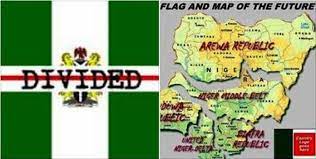
There is nothing those agitating for Nigeria’s breakup want more than the core North clinging to power in 2023. That northerner would likely govern Arewa Republic. Those of us demanding restructuring are your best friends. Of course, there are those who think we are foolish to assume Nigeria can still be fixed.

Finally, the Yoruba people have a proverb suggesting that when siblings leave a room laughing they have lied to themselves but when they exit with frowns, they have told themselves some truths. I hope you consider this open letter in the spirit with which it was written — a quest for an objective, frank but respectful dialogue to save Nigeria, if we all agree it is worth saving for the good of all.

Sincerely,

‘Tope Oriola.

A Crooked Legal System Is A Problem Without A Name

By Chidi Anselm Odinkalu

“The assumption that respect for the judiciary can be won by shielding judges from published criticism wrongly appraises the character of…. public opinion. It is a prized…. privilege to speak one’s mind, although not always with perfect good taste, on all public institutions.” Hugo Black, Bridges v. California 314 US 252 at p.270 (1941)

In a little-noticed release issued on at the end of its meeting on 16 March, 2022, Nigeria’s National Judicial Council, (NJC), announced that it had disciplined two judges, placing one of them on a “’Watch List’ for a period of one year” and issuing a “warning letter” to both.

According to the NJC, Muawiyah Baba Idris, the judge of the High Court of the Federal Capital Territory placed on the “Watch List’, had signed a “writ of possession for execution on the same day he delivered judgement (sic) in Suit No. FCT/HC/CV/FT/36/19 between Sicons Nigeria Ltd V Nile Place Restaurant and Catering Services Ltd. The Suit was for recovery of demised property.” In the second case, the NJC “found merit” in the complaint that Mohammed Ladan, a judge of the High Court of Kaduna State in north-west Nigeria, had in Suit No. KDH/KAD/1321/2018 between VTLS Inc. Vs Ahmadu Bello University “signed the writ of attachment while the Garnishee Order Nisi was pending.”

To explain, if, for instance, a bank holds money on behalf of a person who is owing on a judgment, a garnishee order can issue to compel payment of the money to the person to whom the judgment is owed. It is issued in two stages: an order nisi is incomplete and only affords the court an opportunity to hear all sides so as to determine whether or not to make it final (absolute). Until the court makes the order final, it is not ripe for enforcement. These are very basic in legal process.

In both cases, the misconduct by the judges was willful. These were not mistakes. Almost assuredly, they acted in collusion with the lawyers on whose application they issued the orders. The NJC decision should have put the Nigerian Bar Association (NBA) on notice to invoke disciplinary procedures against the lawyers. The NBA has so far failed to do so. The damage caused by the mis-conduct to both the tangible interests of the parties affected and to the intangible public interest in the reputational asset of the judiciary is incalculable. In its eminent wisdom, the NJC determined the appropriate sanction as worth less than the inconvenience of a slap on the wrist announced by press release.

On 8 March, 2022 Nduka Edede initiated the case in a filing in which he described himself as a “constitutional lawyer”, politician and citizen who has “continually exercised his civil duties and franchise since return to democratic rule in 1990 till date.” This is false. For the record, in 1990, Nigeria was under military rule.

On the same day, before another Federal High Court in Ibadan, south-west Nigeria, another lawyer, Chief Oyewole Bolanle, filed a separate suit, number FHC/IB/CS/32/2022 absolutely identical to that in Umuahia, claiming exactly the same reliefs. In both suits, the Attorney-General of the Federation was the sole defendant. It appears that on the same date, different other persons filed similar suits in several other courts strewn across the country. That is not very relevant to this story though.

Unconnected with these suits but very relevant to them, on or around 7 March, Inyang Ekwo, another judge of the same Federal High Court, issued a temporary order restraining the National Assembly, the President and the Attorney General of the Federation from amending or deleting the same section 84(2) from the Electoral Act. This order appears to have inspired the flurry of speculative suits that followed, all bear the hallmarks of grand collusion. The case is still pending, and this order was too when the court in Umuahia gave its judgment 11 days later.

In Ibadan, Uche Agomoh, the presiding judge, asked the plaintiff’s lawyer to address her and justify his standing to institute the claim. In a ruling delivered on 17 March, she held that Chief Bolanle, not being a public servant or political office holder, did not have sufficient interest to sustain the proceedings and ordered the suit discontinued and struck out.

By the time the Umuahia case came up on 18 March, the Attorney-General was subject to two orders, one from the Federal High Court Ibadan from the previous day, indicating that the kind of claim before the court was unsustainable on grounds of lack of personal jurisdiction. A separate order from the same Federal High Court in Abuja from 10 days earlier restrained him from doing the kind of thing this suit asked for. He was under a professional, ethical, and legal obligation to bring these to the attention of the court. He failed to do so in circumstances which reek of a willful and fundamental ethical violation.

Here is what transpired in Umuahia in the words of the judgment delivered on 18 March by Evelyn Anyadike, judge of the Federal High Court, on page four of the judgment: “[t]he defendant filed a 7-paragraph affidavit of facts (sic) and a written address dated 10th day of March 2022 on 14th day of March 2022. In response to the defendant’s affidavit of facts (sic), the plaintiff filed a 5-paragraph further affidavit on 11th day of March 2022.” In this rendition, the further affidavit was filed three days before the counter-affidavit to which it supposedly responded.

On the same day that she gave the judgment, the court certified it for release; the order of the court was also enrolled, and the Attorney-General against whom it was issued exultantly announced that he would execute it immediately. If all this has more than a whiff of a plaintiff and defendant essentially involved in a joint enterprise to bring the judicial process into disrepute with more than active tolerance from the court, it is because they probably were. That much is pretty evident on the face of the judgment. It is a rape of the implicit bargain that underpins respect for judicial authority.

To put all this in context, at the end of the 2021 legal year, there were pending before the Federal High Court 40,822 civil cases; 30,197 criminal cases; 35,563 motions and 20,258 fundamental rights enforcement applications.

On 21 March, the NBA weighed in on these developments, calling for citizens to be temperate in their response and warning that there are “legal and constitutional avenues” to challenge unfavorable judgments. This profoundly misses the point. It is not as if citizens don’t understand the need to protect or defend the courts nor is it that most don’t know the avenues for challenging unfavorable decisions. The point is the NBA’s legal Paracetamol is not a prescription for Nigeria’s cancer of vocational and judicial malefaction. There are undoubtedly many hardworking judges of integrity in Nigeria. For their sakes, courts of law must remain subject to accountability before courts of public opinion and before the court of posterity. This requires vigorous civic vigilance.

The NJC is the custodian of the judicial Code of Conduct, which requires judges to maintain “a high standard of conduct that will ensure and preserve transparently, the integrity and respect for the independence of the Judiciary.” The same code declares that “[a]n independent, strong, respected and respectable judiciary is indispensable for the impartial administration of Justice in a democratic State.”

In other words, there is an implicit bargain here: judicial integrity is the underlying guarantor of respect for the judiciary. The United Nations Office of Drug and Crime (UNODC) has published the view that “Judicial misconduct breaks down the very fibre of what is necessary for a functional judiciary – citizens who believe their judges are fair and impartial. The judiciary cannot exist without the trust and confidence of the people.” When the public does not trust the NJC as the custodian of judicial integrity to adequately protect it with appropriate sanctions, citizens may relocate the site of judicial accountability from courts and institutions of law to the court of public opinion. To preclude this, the NBA must be clinical in rooting out the Cowboys among its members.

In this enterprise of guaranteeing the integrity of the courts, perception trumps reality. Judicial integrity rests on the idea well stated nearly 100 years ago by the courts in England that “[n]othing is to be done which creates even a suspicion that there has been an improper interference with the course of justice.” Nigerian judges and lawyers glory very much in their origins in colonial England. Not enough appear, however, to remember these lines or live by them.

A lawyer and a teacher, Odinkalu can be reached at [email protected]

The Lunacy of English Language

English-language, Photo credit: Businessday NG

By Ben Nedde

A retired teacher of English wrote, There is no egg in eggplants, nor ham in hamburger; neither apple nor pine in pineapple. English muffins weren’t invented in England or French fries in France. Sweetmeats are candies while sweetbreads, which aren’t sweet, are meat. We take English for granted. But if we explore its paradoxes, we find that quicksand can work slowly, boxing rings are square and a guinea pig is neither from Guinea nor is it a pig. And why is it that writers write but fingers don’t fing; grocers don’t groce and hammers don’t ham?

If the plural of tooth is teeth, why isn’t the plural of booth beeth?

One goose, two geese. So one moose, two meese?. Doesn’t it seem crazy that you can make amends but not one amend? If teachers taught, why don’t preachers praught?

If a vegetarian eats vegetables, what does a humanitarian eat?

 Sometimes I think all English speakers should be committed to an asylum for the verbally insane. You have to marvel at the unique lunacy of a language in which your house can burn up as it burns down, in which you fill in a form by filling it out and in which, an alarm goes off by going on.

If the plural of mouse is mice why not the plural of house be hice since both are Noun?

Why are we referring to ‘Building’ when it’s already built? What is the real name of Flies (insects)? When I say, I want to fly does it imply that I want to become an insect? Too many contradictions

When the stars are out, they are visible, but when the lights are out, they are invisible. And why, when I wind up my watch, I start it, but when I wind up this essay, I end it?’

Amazing right?

English was invented by people, not computers, and it reflects the creativity of the human race, which, of course, is not a race at all.’

More Amazing English…

Many parts of the body can be used as verbs in either a physical or a metaphorical sense.

You can head a company, but if things go wrong you’ll have to shoulder the blame or face your investors.

A good leader will back his employees, but if you don’t toe the line the management can skin you.

Did you muscle your way into that job?

You might eye someone suspiciously, or wait for the police to finger a suspect. But if you need to get out of town, you can thumb a ride or you can ride with me if you can stomach the thought.

Use strong-arm tactic if you want to elbow out someone.

I don’t always sing along with the radio, but I sometimes do mouth the words.

(To all English-Language Lovers)

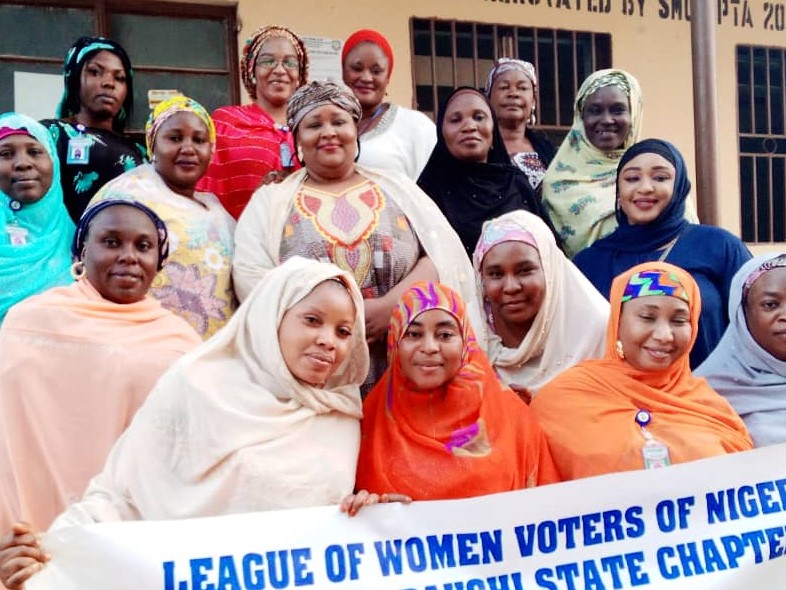
Rejection of 5 gender bills is legislative gender-based violence-  League of Women Voters Nigeria to NASS

Women voters, AFP PHOTO/STRINGER

As women in Nigeria continue to protest the rejection of five key bills that addressed biases against women at the ongoing constitution amendment process by the Nigerian National Assembly, the legislators have been further urged to stop paying lip service to women empowerment and act positively on improving the lives of girls and women.

Charging the lawmakers to open up the space for more women participation and representation for  meaningful and constructive Nation-building, Dr. Rakiya Shonekan, State Chairperson, League Of Women Voters Nigeria, Kaduna State Chapter expressed concern that the “9th Assembly chose the month of women’s celebration to humiliate women and womanhood.”

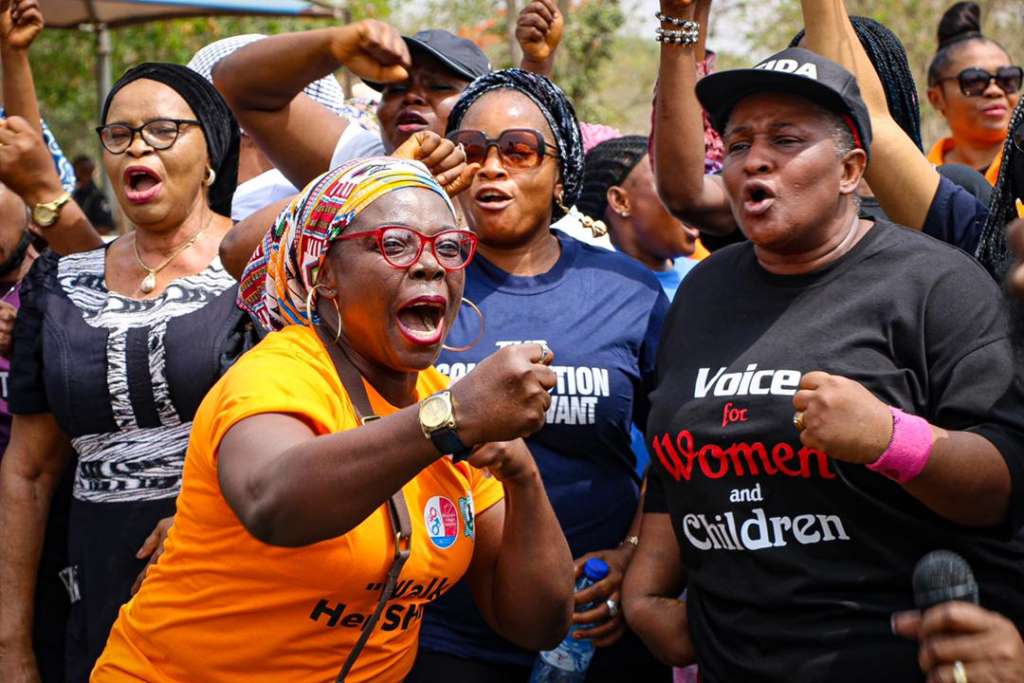
It is noteworthy that for 10 days, a coalition of women’s groups occupied the National Assembly’s gate to protest the rejection of 5 gender bills.

At a recent ceremony marking the International Women’s Day (IWD) at the Abantu Committee Room in Kaduna, Dr. Shonekan said: “We commit to continue to PUSH until we are fully accepted and integrated as co-partners in the Nigerian project.”

Part of her speech read:

Today, we congratulate women all over the world especially Nigerian Women for their achievements, roles, sacrifices, and resilience in keeping families, communities, and the country going. I especially give a resounding power clap to the everyday Nigerian woman mostly found at the grassroots, whose votes, strength, and sweat contribute in no small measure to the existence and development of our nation.

“Gender equality today for a sustainable tomorrow”:  This theme is very apt. For years Nigerian Women have desired and sought Equality and Equity. This has become more intentional and intense since 1995 (Post Beijing).

Nigerian girls and women have always had to contend with stereotypes, bias, barriers, and even violence in a bid to attain their potentials.

Today, we commit to continue to PUSH until we are fully accepted and integrated as co-partners in the Nigerian project. To validate our stand, I refer to the statement of that great human rights defender and statesman, the late Bishop Desmond Tutu who stated inter alia “If we are going to see real development in the world, then our best investment is WOMEN”!!!

National Assembly (NASS) and the Gender Bills

We recall that Nigerian Women proposed five alterations in the fifth Constitution alteration bills.

It is however no longer news that the alteration areas were rejected by an overwhelming 95.5% of the legislators, of course, proposed mostly by men. These proposed alterations are:-

  1. Reserved quota (35% affirmative action for women in political positions (appointed).
  2. Additional seats for women in federal and state legislatures.
  3. Citizenship by registration for Non-Nigerian men married to Nigerian Women.
  4. 35% affirmative action for women in political party administration and leadership.
  5. Indigeneship through marriage for Nigerian women married to Nigerian men.

It saddens our hearts to know that the 9th Assembly chose the month of women’s celebration to humiliate women and womanhood. More painful is the fact that these very lawmakers were conceived, carried for nine months, birthed ( in some cases died as they brought forth life), nurtured, campaigned for, and given the mandate to govern by the very women they choose to despise and disregard-this is indeed nothing more than legislative gender-based violence (LGBV).

It is also a clear indication that 95.5% of our lawmakers are guided by gender bias, negative cultural, traditional, and religious norms and beliefs.

They must stop paying lip service to women empowerment but rather act positively on improving the lives of girls and women by opening up the space for participation and representation for meaningful and constructive Nation building.

We, therefore, demand that NASS reconsiders the Gender Bills.

On our part as women, we refuse to give up or be cowered. We resolve not to drop our batons, we are determined, to collaborate with all-female gender-friendly He-for-she to #stop the bias, #stop the barriers and #break the ceilings.

Congratulations Nigerian women!

Congratulations the He for shes!!

Thank you.

The League of Women Voters is a global network originally founded in the U.S.A. about 100 years ago, as the ‘League of Women voters of America.’ The Nigerian chapter which came into existence in 1996, 26 years ago, was founded by Rt. Hon. Dr. Dame Esther Uduehi. NILOWV, Nigeria League of Women Voters has chapters in the 36 states of Nigeria and the FCT with over 30 affiliate organizations. Kaduna State chapter was born four years ago.

The League is a civic organization formed to attract and mobilize all females of voting age 18years and above, sensitizing them on the power of their votes and their place in the Nigerian economy. They seek to improve governance and impact policy through advocacy and research. Their membership is all-inclusive and embracing in terms of political affiliation, religion, ethnicity, race, social status, and ability. Very important to them is the fact that they have some supportive male champions (husbands, sons, and others) who believe in their cause.

Meanwhile, a coalition of over 200 women groups said they will hold members of the House of Representatives accountable to their promises to reconsider three of the gender bills earlier voted against. The groups, under the auspices of #NigerianWomenOccupyNass, had, in the last 10 days, held a peaceful protest at the National Assembly (NASS) to press home their demands. Co-covener of the groups, Dr. Abiola Akiyode-Afolabi, during a recent news conference in Abuja, said the women recognised the recommittal of the three of the gender bills by the House of Representatives.

She said the briefing was organised to provide information and updates on the next steps by the women groups after the suspension of the daily protest at NASS on the five gender bills.
Akiyode-Afolabi said the promise by the lower house gave them hope for a better future.
“We also recognise their respect and honour for Nigerian Women by sending a delegation to us yesterday, the 22nd of March, led by the principal officer, Alhassan Doguwa, Majority Leader.
We are determined to hold them accountable for their promises to ensure that within seven legislative days, the gender bills are recommitted and positively voted for the inclusive growth and development of Nigeria.

“We have the commitment of women groups across Nigeria to support lobbying and advocacy to ensure that we reach as many NASS members as possible. We can categorically say that the events in the last few weeks have played an important role in spotlighting these demands and demonstrated women’s optimism, motivation, and resilience in leading positive changes through their dogged insistence,” she said. Akiyode-Afolabi recalled that the group identified and engaged allies to ensure the smooth sail of the five bills before they were killed by the National Assembly.” The First Lady and Governors’ wives are firmly in support of our struggle,” she said.

TIPS