Home Blog Page 847

President Buhari and the APC are corrupting democracy

By Chief Mike Ozekhome, SAN, OFR, FCIArb, LL.M, Ph.D., LL.D

The staggering sum of #100 million fixed by the APC NEC for its presidential nomination form has rightly sent shock waves of righteous indignation across the country. The APC had fixed #30 million for the “expression of interest form” and #70 million for the “nomination form”, making a total of #100 million. The party hopes to rake in #1.5 billion from the 15 aspirants that have so far declared interest in the presidential race. By this singular act, the APC has shown a shocking insatiable bacchanalian propensity to corrupt democracy, democratic ethoes, and also scam the entire country.
The vulgarity of this exercise lies not just in the abominable fee prescribed, but more in the party’s pretentious mantra of fighting corruption, using a well orchestrated and carefully oiled Hitler’s Goebel’s propagandist machinery of dubious pedigree. It is the more abhorrent when we realize that this is miles apart from (indeed more than double) the price fixed by the party’s whipping child, the opposition PDP, which has fixed its at #40million (#5 million) for the nomination of interest; and #35 million for the nomination form. The #100m is also over 100% of the #40 million fixed by the same APC for the 2018, presidential nomination form.
President Muhammed Buhari and the APC have, by this singular act, exhibited a very odious and unpleasant example of how not to fight corruption. They have managed to convince Nigerians that politics is indeed the art of grand deception, double-dealing, duplicity, beguilement, sham and self contradiction. They have justified the cliché that diplomacy is the clever art of telling a person to go to hell in such a way that he actually eagerly looks forward to the journey.
Nigerians should recall that in the prelude to the 2015 the presidential elections, president Buhari had trenchantly criticized the #27.5 million levy imposed on his party aspirants for presidential nomination form. He had pooh pooed it as exorbitant. He has now supported #100 million for the same exercise.
With the new amended Electoral Act of 2022 fixing #5 billion limit for presidential campaign as against the earlier #1billion under the 2010 Electoral Act, as amended, Nigeria’s politics and democracy have been completely moneticised with a swing towards anti-people capitalist merchantalism. It has been turned into a marketplace bazaar of bare-faced monetary banditry reserved only for state captors, who have cunningly cornered our collective commonwealth. It is so shameful and so disorientating that Nigeria can ever find herself in this despicable state of nadir.
Under the Buhari government, Nigeria has since become the poverty capital of the world, outstripping India. Nigeria ranks the number 149 most corrupt country in the world out of 180 countries surveyed, as adjudged by Transparency International, under its Anti-Corruption Perception Index. The machroeconomic environment has been badly fouled, leading to a free-for-all fall of the exchange rate of the naira which now exchanges between 580 naira to #700 to the dollar, as against #180-190- Buhari met it in 2015. Nigeria daily experiences an uncontrollable inflation rate that defies any economic sense, analysis and solutions.
To aspire to be a Governor under Buhari’s “puritanic” APC, an aspirant must cough out #50 million; while aspirants to the Senate, House of Representatives and House of Assembly must vomit #20 million, #10 million and #2 million, respectively.
With this circus of Baba Sallah’s Alawada Kerikeri histrionics and sheer theatrics, President Buhari and the APC successfully completed their disdain for, mockery and demigration of Nigerians and our hard-earned democracy.
Buhari and the APC must tell us where they hope that Vice President Yemi Osibanjo, whose present annual salary is #12.126 million as recommended by the Revenue Mobilization, Allocation and Fiscal Commission set up under section 32(d) of part 1 of the third schedule to the 1999 Constitution, will Obtain 100 million from, when he would require 99 months (eight years and three months) to earn the 100 million price for the nomination form. It will take President Buhari himself whose salary is #14.05m 84 months (7 years) to get #100m. They must explain to Nigerians where aspirants like Dr Chris Ngige and Rotimi Amaechi who are ministers with an annual salary of #2, 026, 400 (#168,867 per month) will get 100 million for a presidential form, when it will take them nearly 50 years to earn 100 million. Let Buhari and the APC explain to Nigerians how Kayode Fayemi (Ondo State Governor), Yahaya Bello (Kogi State Governor), David Umahi (Ebonyi State Governor) and Rochas Okorocha (ex Imo State Governor), whose salary per annum is #2, 223, 705, will cough out 100 million when it will take each of them 45 years to earn 100 million. Where will non-wealthy members of the APC, like Gbenga Hashim Olawepo get such money from?
This APC party and president Buhari must tell Nigerians where Senator Orji Uzor Kalu and former Senate president Dr Ken Nnamani would fetch #100m from, when their salary as Senators was and is #750,000 per month (aside humongous allowances). It would take Kalu and Nnamani 135 years to earn 100 million. In the final analysis, APC is probably zeroing in on Orji Uzor only few presidential candidates in the persons of billionaires like Kalu and Bola Tinubu. The Director-General of Tinubu’s Support Organizatioin (TSO), Kebbi-born Aminu Suleiman, has already signed a cheque for the #100 million. To them, it is “chicken change”. Nigeria is hemorrhaging badly. It is just like the case when Rome was on fire while Nero fiddled away.
The price tag of 100 million has obviously conscripted the political space, marginalized, emasculated, and excluded the youths and women from the APC political space. Yet, this is the critical segment of the society that ought to enjoy inclusiveness and a libralised political space to ensure their full participation in politics and engage in the national conversation.
Where is the place of the “Not-too-young-to-run” policy signed into an Act of Parliament by Buhari on May 31, 2018? The APC’s mockery of democracy has certainly thrown up nothing but money-baggism, godfatherism and crass opportunitism by those who have captured the State and our commonwealth.
I now frontally challenge any of the aspirants who will purchase these forms, to show us the source of the fund and also publicly display his tax returns in the last three years.
The APC’s Shylock’s “pound of flesh” extortionist #100 million levy is politically insensitive to the already vanquished Nigerians, having regard to the present grinding poverty, unending insecurity, unabated corruption, melancholy, disorientation, hunger, thirst, pains, pangs, blood, hopelessness and haplessness, with which the party has afflicted Nigeria and Nigerians in the last 7 years. Nigeria has never found herself in such battered and tattered doldrums since Lord Lugard forcefully amalgated the disparate enclaves of Northern and Southern protectorates on January 1, 1914, to found the contraption called Nigeria.
The exorbitant sum of #100 million is a direct invitation to bare-faced thievery and political brigandage when these aspirants eventually win elections and emerge leaders. The price tag constitutes direct and brazen discrimination against other pauperized Nigerian members of the APC party, especially the youths and women, contrary to section 14(2)(b) of the 1999 Constitution, which provides that “participation by the people in their government shall be ensured in accordance with the provisions of this Constitution”. It is also provided that “the Federal Republic of Nigeria shall be a State based on the principles of democracy and social justice” (section 14(1) of the Constitution).
While “the state social order is founded on ideals of freedom, equality and justice” (section 17(1) of the Constitution); section 42(1) prohibits a citizen of Nigeria being discriminated against on the basis of sex, community, ethnic group, place of origin, religion or opinion. This is precisely what the APC has done to the youths, women and disabled members of the party. This is more so because the Constitution does not permit independent candidacy. Members of the APC, except the select deep pockets, money bags and nouveau rich, are automatically cut off from the party’s various elective offices.
The problem with the tune, tone and template now set by the APC is that politics has become the exclusive preserve of the high, mighty and wealthy members of the society; and not for the poor. This has devalued democracy and institutional morals. The APC is now rabidly promoting plutocracy (government of the wealthy); gerontocracy (government of the oldest members of the society); and oligarchy (government of a select few).
If president Buhari and the APC are genuinely interested in widening and deepening the political space, they should immediately call for a NEC and NWC meeting of the APC to rescind and cancel this obnoxious policy of deliberate exclusion of critical segments of their ruling party. It is a policy that is only fit for the national museum of monuments and artefacts.

Black, Nigerian, she rose to the zenith in a foreign land— back home, the women struggle

By Lillian Okenwa

“Out of 704 SANs since inception, only 29 are women. Three out of these women are dead so that leaves us with only 26 women SANs!  Chief Mrs. Folake Solanke was the 1st female lawyer/practitioner elevated to the prestigious rank of SAN. That was in 1981. No woman made it until 1989 when Mrs. P.C. Ajayi-Obe, SAN of blessed memory made it.” – Chief Mrs. Victoria Awomolo, SAN

Every year in Nigeria, the jostle to apply and qualify for the rank of Senior Advocate of Nigeria gets to feverish points.

From two persons — Chief F.R.A. Williams, SAN, and Dr. Nabo Graham-Douglas, SAN who were conferred on 3 April 1975 when the title was instituted, the number rose to 72 recipients in 2021. What with the perks attached to the prestigious title, the quest to become a Senior Advocate Nigeria (SAN) has become a lifelong project for some Nigerian lawyers.

At the beginning of the 2018/2019 Legal Year for the Supreme Court of Nigeria, the Chief Justice of Nigeria at that time, Hon. Justice Walter S. Nkanu Onnoghen, revealed that some legal practitioners who applied for the rank submitted forged judgments to the Legal Practitioners and Privileges Committee (LPPC) to meet up with the requirements for qualification. “I have to point out the fact that…some applicants were found to have engaged in dishonourable conducts such as the forgery of judgments, resulting in their being reported to the police for investigation and possible prosecution.”

Privileges attached to the rank include being highly respected by judges, sitting on the front row of the courtroom called the inner bar, having their cases called before that of other lawyers, and being preferred to represent affluent members of the society as well as top-notch companies. Remarkable however is that since its commencement in 1975, male lawyers have earned the honour, far more than the women.

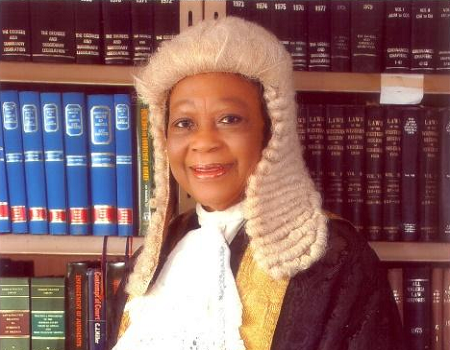
Chief Mrs. Folake Solanke, SAN

As Chief Mrs. Victoria Awomolo, SAN observed: “Out of 704 SANs since 1975 when the rank was instituted, only 29 are women. Three out of these women are dead so that leaves us with only 26 women SANs!  Chief Mrs. Folake Solanke was the 1st female lawyer/practitioner elevated to the prestigious rank of SAN. That was in 1981. No woman made it until 1989 when Mrs. P.C. Ajayi-Obe, SAN of blessed memory made it. At the last swearing-in, in December 2021, only two women were on the list of 72 conferred with the rank! The question to ask is what is responsible for this dismal disparity?” It took eight years after the first lady who took silk for another woman to make it.

‘I am UK’s sixth black female QC’

But in the faraway United Kingdom, one who had been written off and by Nigerian standards adjudged a failure was given a chance to alter the course of her destiny to become the UK’s sixth black female Queens Counsel (Q) an equivalent of SAN in Nigeria.

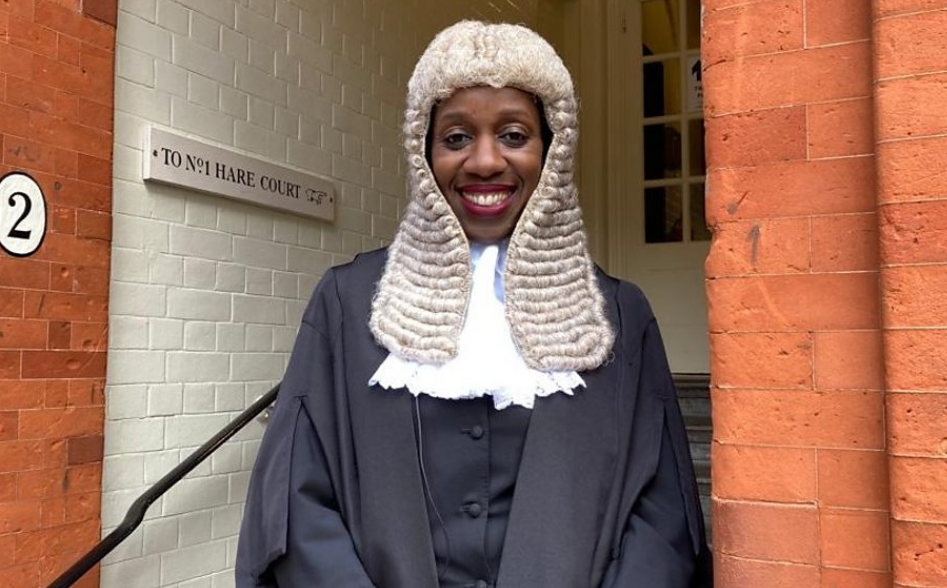
Nneka Akudolu left school with no A-levels and got pregnant after a holiday romance. At the age of 21 while a single mum, Nneka Akudolu QC, without an A level took the Access to Legal Studies Course, got into law school, and was called to the UK Bar in 2002.  With 19 years of experience in Criminal law, the highly respected 46-year-old criminal law barrister whose practice encompasses all areas of serious crime was recently appointed Queen’s Counsel at a ceremony in Westminster Hall, presided over by the Lord Chancellor, Dominic Raab.

Akudolu who was among the newly appointed 101 QCs became one of 45 women who silk that day. She and Laurie-Anne Power were the sixth and seventh black women ever to be awarded the quality mark in England and Wales.

One of six siblings and born in London in 1975 to Nigerian parents, Akudolu says: “They expect you to become a doctor, lawyer, engineer or a failure … I was “definitely careering towards the latter.”

She is reported to have acquired expertise working with vulnerable defendants, witnesses, and those charged with historic allegations of a sexual nature.

Below is a list of Nigeria’s 29 female SANs since 1975.

  1. Chief Mrs. Folake Solanke, SAN – 1981
  2. Chief Mrs. P.Ajayi Obe, SAN (deceased) – 1989
  3. Otunba Bisi Christiana Ajayi-Okunuga, SAN (deceased) – 1995
  4. Mrs. Abimbola Williams, SAN – 1998
  5. Mrs. Olufunke Adekoya, SAN – 2001
  6. Chief Mrs. Justina offiah, SAN – 2003
  7. Mrs. Miannaya Essien, SAN – 2007
  8. Mrs. Olabisi Soyebo SAN – 2008
  9. Mrs. Nella Andem-Ewa Rabana, SAN – 2009
  10. Mrs. Sylvia Shinaba, SAN (deceased)– 2009
  11. Dorothy Udeme Ufot, SAN – 2009
  12. Agatha O. Mbamali, SAN – 2010
  13. Mrs. Anthonia Titilola Akinlawon, SAN – 2010
  14. Mrs. Joy O. Adesina, SAN – 2012
  15. Chief Mrs. Connie–Jean Aremu, SAN – 2012
  16. Ms. Funke Aboyade, SAN – 2013
  17. Chief Mrs. Awomolo, SAN – 2013
  18. Mrs. Abimbola Akeredolu, SAN – 2015
  19. Dr. Mrs. Valerie Azinge, SAN – 2016
  20. Mrs. Olufunke Agbor, SAN – 2016
  21. Prof Yemisi Bamgbose, SAN – 2018
  22. Mrs. Toyin Bashorun, SAN – 2018
  23. Mrs. Doyin Rhodes- Vivour, SAN – 2019
  24. Mrs. Safiya Umar Badamasi, SAN – 2019. Currently a judge of the High Court of Katsina State.
  25. Mrs. Boma Alabi, SAN – 2020
  26. Ms. Jean Chiazor Anishere, SAN – 2020
  27. Ms. Funmilayo Adunni Quadri – 2020
  28. Prof Oluyinka Osayame  Omorogbe, SAN – 2021
  29. Prof Josephine Aladi Achor Agbonika, SAN – 2021

The video and some parts of this article were first published by the BBC.

A holy land inhabited by evil spirits

By Lillian Okenwa

“For a number of Nigerians”, David Hundeyin wrote in BusinessDay of 31 January 2022: “[The] Christian faith is little more than skin deep, no matter what he might tell you…”

Hundeyin in his article Religious syncretism and Nigeria’s “money ritual” problem said: “…Take the trans-Atlantic slave trade for example- a 300-year economic decimation event that took about 12 million of the continent’s brightest and best and used them to build the economies of the New World. Why did this monstrous phenomenon last so long? Because wealthy Africans and African leaders expressly wanted it that way, so as to maintain an inflow of consumables like umbrellas, gin, cloth, corrugated roofing sheets, and cannons. It never at any point occurred to any of them that they could obtain the technology behind these items and make them for themselves…

“It is still in evidence today, as millions of Africans continue to believe that either by singing and dancing furiously in a modern African Traditional Religion temple euphemistically known as a church or by offering a blood sacrifice to a native shrine, it is possible to magic financial value out of nowhere… This is why in 2022, Nigeria finds itself confronting headlines about 17-year-old boys murdering their girlfriends in macabre ritual human sacrifices. The problem is not that the people in question are greedy and prepared to do almost anything for money. Given the right mix of desperation and societal breakdown which Nigeria offers in generous quantities, most humans can unravel to any depth of gutter behaviour…”

Today multiple churches and mosques compete for space on nearly every street yet morality, justice, and basic decency are on the decline. Developed countries in Europe, others like the United States, Japan, South Korea, China, the United Arab Emirates, and many more trace their successes to discipline, hard work, integrity, and a commitment to keep making their society better for citizens, settlers and visitors. The reverse is the case in Nigeria. Despite having some of the world’s largest religious congregations, fantastic preachers as well as citizens who pray at the beginning and closing of every function they’re often scant in doing right.

Many Nigerian states are grossly underdeveloped. The story of Nigeria’s power and oil sector remains an intractable puzzle; so chances of setting up industries or maintaining the handful of existing ones continue to dim. Meanwhile, unscrupulous leaders brazenly pilfer the national coffers, live lavishly, stash away billions of dollars in foreign bank accounts; send their kids to the best schools abroad while the Nigerian public schools have collapsed from underfunding and poor management. The Academic Staff Union of Universities (ASUU) has been on strike for over two months following the government’s refusal to follow through on its promises. “A country that fails in the education sector has woefully failed in everything,” said Rev. Oladimeji Michael Olalekan. Public officials including President Muhammadu Buhari barefacedly travel abroad for medical treatment when hospitals in Nigeria are decaying. Nigerian leaders enjoy the use of excellent infrastructure put in place by leaders like themselves in faraway countries but elect not to replicate the same at home where both the rich and poor could have access.

In August 2021 when President Buhari returned to the country after two weeks of attending an ‘education summit’ and tending to his medical needs in the United Kingdom, literary critic, and columnist, Obi Nwakanma expressed reservations noting that “before he became President, in the heat of the campaigns in 2015, Muhammadu Buhari, then APC presidential candidate, was taken on a round-robin tour of the UK, ostensibly to kiss the rings of the British political establishment who apparently had grown weary of Goodluck Jonathan, and apparently wary of the independent path he was slowly, but increasingly toeing…”

Nwakanma added that: “At the core of Nigeria’s underdevelopment is this ‘capture’ of Nigeria’s political leadership by foreign powers to whom they seem to genuflect, and to whom they pledge fealty before they seek to govern a sovereign nation like Nigeria. In its own rights, and by its self-definition Nigeria claimed absolute freedom from all these since the Act of the republic in 1963.” 

But ex-Chairman, National Human Rights Commission Prof. Chidi Anselm Odinkalu, puts it this way: “The easiest thing to do is to externalise responsibility. I worked in Sierra Leone and Liberia in the heart of the wars in both countries. I met several times with Foday Sankoy and Hinga Norman in Freetown. Both of them were in Pandemba prison, held for crimes in the war committed by different sides. Chief Norman held Sankoh responsible. Sankoh held Norman responsible. Sierra Leoneans never believed they did anything against themselves. They held Charles Taylor responsible… No one had a capacity for self-reflection. In Nigeria, it is the same thing: ‘They’ are afraid of a big, black, successful Nigeria. But who are ‘they’ is up in the sky. They are white people. Orji Kalu is a white man when he steals Abia dry. Rochas is a white man when he destroys Imo. Maurice Iwu is a white man when he rigs elections. Abba Kyari is a white man when he topples the Chief Justice and then creates a court that can make 4th 1st. Let’s continue deceiving ourselves. Truth is hard to handle usually.”

The trouble is— in Nigeria, we blame the devil, the white men, the military, the government, and everything but ourselves for our errors rather than deal with the matters squarely. Our problems are multifaceted but we claim to be prayer warriors who would rather pray than act. God, however, is a God of justice.

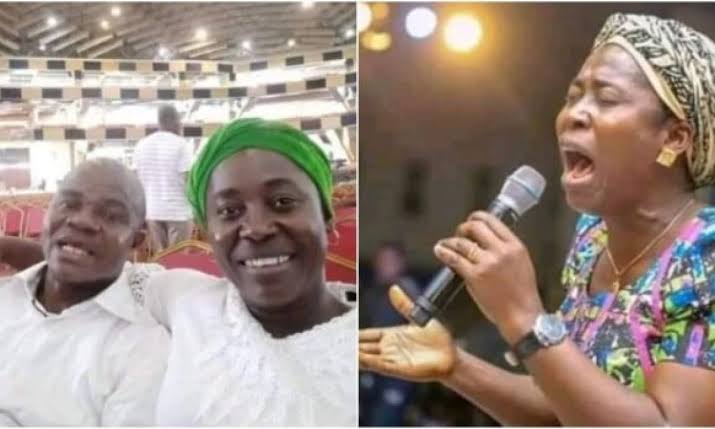
The sudden death of gospel singer Osinachi Nwachukwu is still sending shock waves. She was killed by her husband who is a Deacon in a Church. Apparently, she had been covering up life-consuming domestic violence meted out on her by her husband. There are still many Osinachis masking up battery with prayers and smiles in the public instead of fleeing. Don’t forget that, that husband to people who do not know their story is a ‘godly’ man; even holy, maybe. Not long ago 43 years old Abdulsalam Salaudeen, an Islamic Cleric was remanded by an Ikeja Sexual Offences and Domestic Violence Court for allegedly raping a five-year-old girl inside a mosque. She was meant to be under his tutelage. If he had not been caught he’d still be leading prayers and wearing all the appearances of a pious man. Sadly, Nigeria is big on religiosity. Perhaps it’s an African thing but it’s time we stop looking elsewhere for the cause of our troubles and resolve them by ourselves.

A claim once shared on social media purports that an adult content website Pornhub named Nigeria as one of the topmost consumers of pornographic content in the world. Though the claim is under contention, the vast access people have to pornographic materials today is mindboggling. Aside from those who might intentionally seek them out, they pop up when you’re on regular websites, and show up as ads on news blogs. It’s everywhere. One has to make a conscious effort to remove them. Little wonder why underage students of Chrisland School filmed themselves having sex. While the act is condemnable and chilling, deeper questions on how these minors became adepts in adult matters should be asked. Days ago, a teacher and business coach, Mahmud Isma’il made a statement on his Twitter handle: “A society that celebrates programs like Big Brother Naija is suddenly surprised about Chrisland School Video. You can’t sow orange and reap pineapple…” Is he right? Is he wrong? You decide. And while we all have different opinions on the issue my question is, who did this great evil to the Chrisland girl?

How long has she been involved in sexual activity? Who introduced her to it? A huge gender-based violence (GBV) was meted out on that girl at the age only the abuser and the ‘god’ he or she calls upon know. What is now evident is the aftermath of an abused mind and body at work and someone is responsible. Beyond being exposed to pornographic sites on social media and posting over 500 videos, there was a beginning to all these and that is what needs to be found out. Something violent happened to that girl at a very delicate age and someone close to her is responsible. Who is that person? How many other kids have fallen prey to this predator?

Again, how was this child able to post over 500 erotic videos online and even maintain her own site yet her parents never knew? This ten-year-old had access to a smartphone and so much data and her parents never looked into her phone? What time does she have for school work since she has such a busy schedule making and posting videos? If she posted once a day for one year, that’ll be 365 or 366 videos if it’s a leap year. With over 500 videos online, one can only imagine how long she has been at it. Please what is her academic work like? If she’s doing well at school then she must be a genius. Otherwise, I wonder if there were no tell-tale signs. All said, beyond looking at the symptoms which everyone is outraged about, it’s important to find out what really happened to that girl and who did it. A predator might be on the loose and we’re busy tearing down his or her creation. That girl needs deep and urgent help but the person who introduced and did this to her must be brought to book.

Ultimately, the evil spirits causing problems in Nigeria must be captured and exorcised since we’re not culpable.

Chief Onoja, SAN pens poignant tribute to Engr. Joseph Makoju

“To say that he was a great man is an understatement. I’m unable to frame the words that could best describe this man and our journey of nearly three decades.”- Onoja, SAN

American Author Sherrilyn Woodward is attributed with saying: “The point is to savour and treasure every moment, every breath. They are precious because they are limited. Nothing in abundance is ever held dear. It’s cast off without any thought whatsoever. But happiness, victory, and life are sacred because they are fleeting and stingily measured.”

Barely three weeks ago, Engr. Joseph Makoju, onetime CEO of the erstwhile National Electric Power Authority (NEPA)/Power Holding Company of Nigeria (PHCN) and former Managing Director, Dangote Group, stood by his foster son Chief Ogwu James Onoja, SAN as the Senior Advocate unveiled a multi-million naira printing press at Nasarawa State University. By 11th of April, 2022, the man described by former President Olusegun Obasanjo as being crucial to his vision and mission for the nation while he was president between 1999 and 2007 had transited to another realm. Below is Onoja’s story and tribute to the man he calls father.

Makoju and Hajiya Alima Kebiru (Left) at Nasarawa State University Vice Chancellor’s lounge waiting for the unveiling to commence

When I was in a partnership with a Lagos Law firm, they wanted me to do something that was against my conscience. A client was going to be cheated but I advised her not to agree to the terms and she listened. She later thanked me and even gave me a property to manage.

Thereafter, I was introduced to a lady who told me somebody whose name she wouldn’t disclose wanted to buy a property. The property she was looking for fit the same property which the first woman handed over to me for sale. It was an estate property. After the transaction was concluded, both the woman and the person who bought the property disappeared leaving all the original documents of the property with me.

People said it was a settlement from God but I disagreed and sought ways to find them. I remember they told me the person the property was bought for was the Managing Director of a company, so, I wore my suit and went to the place, but I couldn’t enter. I sent in a note but there was no reply. Then I put the property up for rent. The first rent yielded N1, 000. I then wrote a cheque, put the name and address of the Managing Director in question, and sent the cheque to him. But he sent it back to me saying he didn’t know what I was talking about. From the reply he wrote to me, I noticed that the telephone number on the letterhead was a Multilinks the landline, and we had a Multilinks line in my office. I called and his personal assistant (PA) picked. I introduced myself and briefly narrated the transaction which was now four years.

Onoja and Makoju at the event

I was in my office one day when the man called our Multilinks line and requested to see me. On entering his office that day, his opening statement was— “People like you are no longer available, sit down.” I immediately stretched my hand forward to give him the property documents, but he asked me to sit down. I told him that I couldn’t find the link woman but that I have been collecting the rent and the cheque I sent him earlier was with me.

He asked me to hold the documents; that after all the papers had been with me for four years. He now instructed the PA to give me two new properties to manage for him. That was a big break for me. That was how the relationship started with the man who became a father to me. There and then Engr. Joseph Makoju then the Managing Director of Elephant Cement decided that we should work together. And so, by 1999, I that had been struggling with life was already a millionaire. It’s about integrity.

He took me under his wings and that was why until he took his last breath on 11th April 2022 he remained my godfather. At the time I started with him 27 years ago, many said: “you are a mumu (fool), but God used him greatly to open so many doors for me.

Engr. Makoju and Hajia (Dr.) Alima Kebiru Geya, Chairperson Senator’s Wives Association

Engr. Joseph Makoju was more than a father to me. The loss is indescribable. He was my children’s grandfather. My entire family is devastated. I’m still unable to come to terms with it but God knows best. To say that he was a great man is an understatement. I’m unable to frame the words that could best describe this man and our journey of nearly three decades.

One Good Friday

By Gloria Mabeiam Ballason

I hurried my steps to catch up with mom as we made our way to the Church which is a few blocks away from our home for the 2022 Good Friday service. Mom was wearing very comfortable shoes.

“Looks like it’s going to be a long day today as you accompany Mother Mary to Golgotha”, I said.

“Oh certainly! We the committee of friends will be with Mary through the day. It will be a long walk and our shoes need to be comfortable,” my mom keyed into the joke.

As we got to the door of the Church, I told mom I needed to put my phone in silence mode as I was getting into Pilate’s court and I didn’t want to be cited for contempt if my phone rang while proceedings were ongoing.

Seated in church, I had an epiphany. What did a day like this mean for Mary the mother of Jesus? Her son had been picked up by a state mob. It would have been difficult to get him but Judas Iscariot, Jesus’ friend and inner caucus member of the Salvation movement, had not only received a whooping thirty pieces of silver to give Jesus up but had served as the pointer choosing to identify the wanted Man with a kiss.

Peter’s adrenaline shot into self-defence mode as he pulled his sword and cut off the ear of a gang member.

‘Put back your sword Peter! We don’t do it that way. We will follow due process.’ Jesus picked up the fallen ear and placed it back on its owner.

There were chief priests, captains of the Temple, and elders. This was no mean mob. Mobs were often youth-led but here, leaders of note in the country, many of whom had sat under His teachings and witnessed his miracles, had come to arrest him with dangerous swords and staves.

“Why have you come at me as though against a robber? I often sat with you in the Temple and you said nothing against me nor arrested me; why today and what have I done?” They gave no answers but seized the Teacher and took him to the high priest.

Seeing how dangerous things had become and how his limp Katana sword was no match for the Rapiers he saw in the room, Peter followed from afar.

But Peter was too famous to be lost in the crowd. As he warmed himself by the fireside, a vocal young lady picked him out:
‘I know you. You were also with the accused;’ she said.

“You must be hallucinating. Many from our side of town share features but you see that man? I have never seen him, meet him nor spoken to him. I don’t know him at all,” Peter said, traversing effectively with an alibi.

Shortly afterward, another man pointed at Peter:

“Guy, no be you be strongman fo d waka wen d Jisos-pipo dem dey do? Why you con dey yan patra fo hia?”

“My friend! E b lyk dis fire don dey kolo una fo head” Peter hissed and walked away. Less than an hour later, a third person stared Peter in the face:

“Guy-man, dis ya deny wen you dey do so, no augur. No be fo Galilee den born you? I bin don know you tey-tey. You follow join fo dis Jisos mata abeg!”

“God! How una dey tek reason dis mata abeg? I get plenty look alike. See my bag, na today b my first tym to efun enta dis una area. My crib no dey Galilee, na from Timbuktu I waka lyk dis show fo area! Abeg free me !!”

With Peter’s third and unequivocal denial, it brought to two the inner circle members of Jesus’s Movement who, better than most, should be credible deponents but who had now become hostile witnesses. The remaining ten were nowhere to be found. Peter especially was the closest and had the inner scoop of things but with the third denial, the dice was cast.

Jungle justice set in as those who seized Jesus began to make a spot of him and whip him furiously.

Throughout Thursday, the accelerated hearing continued. The procedural rules were suspended as the prosecution and Court worked from end to process.

Early on Friday morning, elders, chief priests, and scribes converged again and led Jesus into the council room to ask him if he was the Christ. In response he told them whatever he said will not be believed as they would also not let him go. What they wanted was for Jesus to incriminate himself on the records. They rephrased their question again:
‘Are you not the Son of God?’ they asked.
‘You say that of me.’ Jesus replied making them answer their own question.
“What further evidence do we need? This is enough to take him to Pilate!” They yelled as they reached a consensus.

           ***

Pilate emerged from the door. After the accolades and ululation had simmered, the registrar mentioned the matter, and the prosecution announced appearance but there was no defence counsel. Although the charges were heinous and it would have made for justice for the accused to be represented, Pilate proceeded to hear the case on the records without the defence counsel.

The charges on the first information report sheet were that Jesus was perverting the nation, forbidding citizens from paying taxes, and claiming He was Christ and King.

Pilate found the entire allegations bunkum and laughable. He delivered a bench ruling: “… having considered the charges, evidence, and depositions, I find that no case has been made against the accused;” he ruled.

The prosecution broke into an uproar spewing extraneous charges: ‘He stirs up the people from Galilee to this place!’

Learning that Jesus was a Galilean, Pilate divested himself of territorial jurisdiction. He referred the case to his sworn enemy, Herod, who presided over the Galilee area and had subject matter jurisdiction.

Herod was glad to have Jesus in court. He had heard about him and had been curious to verify his miraculous claims. Herod veered off the subject matter and went on his own frolic. Jesus made no effort to answer to his banters so Herod descended into joining the mockery. He got his courtiers to wear a gorgeous robe on Jesus then sent the accused back to Pilate. That day, Herod and Pilate became friends over musings and banters on an interesting case with the most ridiculous charges.

Pilate’s court re-convened and Jesus was arraigned a second time on the same charges. Pilate violated the autre fois acquit rule in presiding a second time over a matter he had heard and decided. Nonetheless, he found at the second trial that the evidence did not support the allegations in consonance with Herod’s findings which made his the third trial. He, therefore, thought to have Jesus, the innocent accused, whipped and then released since going by tradition, a convict must be pardoned during the period.

“Death to Jesus! Release Barabbas!!”

What?! Barabbas was a convicted and hardened murderer who had also been convicted of sedition. How the people would want a seditious murderer released while an innocent young teacher in his early thirties who had no scintilla of incriminating evidence against him, takes on the charges and conviction of the convicted criminal was incomprehensible.

But Pilate was no longer in control of his court. The mob and prosecution will not be assuaged. It had to be death and nothing less. Pilate set aside all the rules of justice and opted for social expediency and political relevance. A ‘morally bankrupt Pilate’ sentenced the innocent and rewarded the guilty.
While Pilate was referred to as ‘My lord’ and his court, a ‘Court of Justice’, he desecrated the hallowed chambers and became the biggest justice contemptnor of the day.

Following the sentencing, a distraught Mary followed along as her son was led away to Golgotha. She had carried Jesus in her womb for nine months but had been inseminated by no one. Her claims of Spirit insemination had endured as a village gossip. And here, the myriad of spurious allegations against her son staggered her already weary body and exhausted mind.

Over her shoulders, she could hear the constructs of ungwa whispers: ‘we knew this man whose father is unknown will amount to no good!’ , ‘all his miracles were fake’, ‘even his movement was disbanded hours after he was arrested, what a waste!’ The whispers reverberated in Mary’s ears. She didn’t know which was worse- the brutality of the spurious allegations or the excruciating pain and nadir of suffering her son was experiencing.

There are few agonies like parents burying their child the pain and suffering are without borders. However, when an innocent child is convicted to the cruelest form of execution while he is mocked as blood flows from his brows, feet, and hands and each agonizing breath ebbs, you know humanity has been kicked off the door.

Such was Mary’s horrifying predicament and yet she witnessed her son’s equanimity and dignity at his lowest point: ‘like a sheep led to the slaughter he opened not his mouth…’

Jesus died. No thanks to Pilate. I must let you know that the description of Pilate as ‘morally bankrupt’ is not mine. That was the vehement description of my church pastor. Who would have known that more than two thousand years after, Pilate will be described in those terms in a Kaduna church? Were Pilate to learn of these ignoble adjectives ascribed to him when he presided, he would have cited the person for contempt. Today, Pilate no longer possesses the power to cite anyone for contempt. He had a golden opportunity to write his name in gold but he failed woefully at it. Note that at no time was it said that he received the money in exchange for that perverse judgment. He simply wanted public acclaim and to gain political mileage. His court did incalculable harm when it reached its decision per incuriam and failed to reverse its perverse decision. Pilate’s name which could have made the Hall of Fame ended in the Hall of Shame.

To the Pilates in Nigeria’s judiciary and jurisdictions across the world, the admonition in 1Chronicles19: 5-7 is rife: “Consider what you are doing for you do not judge for man but for God and God has nothing to do with unrighteousness, partiality or bribe.”

Turning back to the agony of Mary, the question must be asked: what is good about a Friday in which an innocent man was sentenced to the cruelest death right before his mother and a watching world? Isaiah answers it splendidly: “He was wounded for our transgressions, the chastisement of our peace was upon Him and by His stripes, we are healed.” We are forgiven because He was forsaken. His condemnation is our acquittal. He paid the ultimate price so we can have for free, what we cannot earn.

Whenever we think about trivializing the free gift of salvation, we must remember what we have gratis cost Jesus everything! This is the story of Good Friday. Have a good one!

Ballason is a legal practitioner and a writer. She may be reached on [email protected]

Senior Advocates of Whatever

By Chidi Anselm Odinkalu

The office of the Attorney-General of the Federation is the only ministerial office or department created directly by Nigeria’s 1999 Constitution. Described in section 150(1) as “the Chief Law Officer of the Federation”, the Attorney-General is also supposed to be the repository and defender of the country’s highest constitutional and civic values.

The acronym, HAGF, for “Honorable Attorney-General of the Federation”, assumes that the occupant of the position embodies the trinity of honour, integrity, and professionalism. Reflecting the challenging nature of the role, the office used to be occupied by persons (so far, all men) of some stature.

Taslim Elias, the longest-serving HAGF in Nigeria’s history, was a distinguished academic who took his Ph.D. in law from the University of London in 1949, served as Dean of Law at the University of Lagos, and went on to become both Chief Justice of Nigeria and President of the International Court of Justice (ICJ) in The Hague. Gabriel Onyiuke, who succeeded him, went on to serve as a senior judge in Tanzania before returning to a stellar career at the cutting edge of legal practice. Augustine Nnamani, who served in that same role, began life as a qualified pharmacist, before, like Elias, receiving a Ph.D. in law from the University of London. He was also destined for the office of the Chief Justice before being cut down in his prime by an untimely death.

            Occupants of the office of the Attorney-General at both federal and state levels have sometimes paid a terrible price for taking their brief seriously. Olu Onagoruwa, who served as Attorney-General to General Sani Abacha before departing the regime for irreconcilable differences with his employer, had his son, Toyin, assassinated by regime agents on 18 December 1996. On 23 December 2001, HAGF, Bola Ige, a Senior Advocate of Nigeria (SAN), was assassinated in his residence in Ibadan, Oyo State, where he had served as Governor two decades earlier. In September 2012, Boko Haram terrorists similarly shot and killed the Attorney-General of Borno State, Zanna Malam Gana, in his home in Bama.

Recently, however, the office at both federal and state levels appears to have become the exclusive preserve of Cowboys imported from Lilliput. A 2020 study on misconduct in the Nigerian legal profession accused “senior lawyers and, more surprisingly, SANs” of responsibility for the most serious ethical violations at the Nigerian Bar. Some Attorneys-General head the list.

Alhaji Ibrahim Dan-Soho, a recent Attorney-General of Katsina State, for instance, was reluctant to prosecute rape because he believed rape victims invited their fate upon themselves by how they dressed. Cyprian Akaolisa, Attorney-General to Imo State Governor, Hope Uzodinma, was suspended by the Legal Practitioners Disciplinary Committee (LPDC) from the practice of law for five years.

            Before them, there was Michael Kaase Aondoakaa. Few people had heard of this University of Maiduguri-trained lawyer before 2007 when President Umaru Musa Yar’Adua plucked him from obscurity and appointed him HAGF. Eminently equipped with no evident credentials for the role, Aondoakaa took the office of the Attorney-General to unfathomable depths of infamy.

One of the first acts of Goodluck Jonathan as acting president on 10 February 2010 was to relieve Aondoakaa of his office as Attorney-General. Eight months later, in October, the Legal Practitioners Privileges Committee (LPPC) suspended him from the rank of SAN because of ethical violations.

Again on 10 December 2021, the Supreme Court of Nigeria determined that Mr. Aondoakaa “had, by his conduct, undermined and subverted the administration of justice and the independence, authority and integrity of the judiciary” and “ought not to be entrusted with any other public office at all.” In effect, the Supreme Court barred Mr. Aondoakaa from public office again in Nigeria. The antecedents and implications of this decision should detain us a little.

Ahead of Nigeria’s 2007 general elections, political parties organized processes in 2006 to select their candidates for various offices to be contested across the country. In Uyo Federal Constituency of Akwa Ibom State, the then ruling party, the Peoples’ Democratic Party, PDP, in primaries conducted in December 2006, selected Bassey Obot as their candidate to fly their flag in the contest for a seat in the House of Representatives. In a country where the most consequential things are accomplished by the unknown, some unknown persons contrived to remove Mr. Obot’s name from the records of the Independent National Electoral Commission, INEC, substituting him with one Mr. Bassey Etim as the PDP candidate.

In December 2007, the Court of Appeal in Calabar, Cross-River State, ordered the President of the Court of Appeal to constitute a new tribunal in Uyo to hear Mr. Obot’s case. Mr. Aondoakaa, newly installed as the HAGF, wrote to the President of the Court of Appeal (PCA) instructing him not to comply with the order of the Court of Appeal, citing as his reason the fact that he was considering a petition from Mr. Etim. Evidently unable to disobey the order of a court over which he presided, however, the PCA disregarded the opinion of the HAGF and obeyed the Court of Appeal.

In April 2008, the Tribunal decided in favour of Mr. Obot, ordering INEC to certify him as the winner, so he could be sworn in as such. The Court of Appeal, itself the final arbiter in disputes over elections to the parliament, affirmed the judgment of the tribunal. In separate letters thereafter to the INEC Chairman and to the Speaker of the House of Representatives, Mr. Aondoakaa, as HAGF, required them to disobey and disregard the final orders of the Court of Appeal. They complied. There were allegations at the time, unverified, that Mr. Aondoakaa issued these letters in exchange for value.

On 15 May 2009, Mr. Obot, whose judicial victory had been frustrated by the HAGF, returned to the Federal High Court asking it to declare that Mr. Aondoakaa had abused the office of HAGF and desecrated the independence and authority of the judiciary. On 1 June 2010, the Federal High Court in Calabar decided in his favour, lamenting that “the hallowed office of the HAGF has been gradually desecrated and put into disrepute with the likes of [Mr. Aondoakaa] being appointed and occupying it. It is meant for learned eminent members of the Bar and not for political charlatans, jobbers, or latter-day praise singers/converts….”

On 3 September 2015, the Court of Appeal affirmed that judgment of the High Court with the hope that “that office [of HAGF] should never again be occupied by individuals of such poor quality as [Mr. Aondoakaa].” The Court of Appeal went further and invited the Nigerian Bar Association, NBA, “to subject [Mr. Aondoakaa] to its appropriate disciplinary processes.”

In his appeal to the Supreme Court, Mr. Aondoakaa did not deny what he did but claimed that he only acted as an adviser in the letters he wrote and that the recipients were at liberty to disregard his opinion. The Supreme Court made short shrift of Aondoakaa’s chicanery. Describing his conduct as “reprehensible”, “reckless” and “unbecoming of the occupant of such an exalted office,” the Court accused him of violating Rule 30 of the Rules of Professional Conduct (RPC) in the Legal Profession which requires every lawyer to refrain from doing “any act or conduct….in any manner that may obstruct, delay or adversely affect the administration of justice.”

Mr. Aondoakaa is the latest in a squalid list of Senior Advocates of Nigeria (SANs), whose mission appears to be to bring the supposed quality mark of Nigeria’s legal profession into inspired disrepute. Other SANs whose misconduct has recently received high judicial attention include Dr. Joseph Nwobike and Mr. Kunle Kalejaiye.

If the Supreme Court has decided that Mr. Aondoakaa is unfit for public office, then, that order strips him of the rank of SAN. The LPPC which awards the rank is a statutory body and those who attain it are sworn in at the Supreme Court, a public institution. So, SAN is a public office.

The Body of Senior Advocates, (BOSAN), as the self-regarding coven of SANs is called, has proved itself to be unwilling and unable to or uninterested in bringing to account those among its members whom the Federal High Court colorfully described as “charlatans and jobbers”.

The rest of the Nigerian Bar watches with wonderment and young lawyers particularly now aspire with an overwhelming sense of desperation to join this coven, safe in the assurance that it will sanctify them as witches and wizards of professional impunity. To fully reflect its current evolution, it may be time for the Body to upgrade its name to Body of Senior Advocates of Whatever (BOSAW).

A lawyer and a teacher, Odinkalu can be reached at [email protected]

The Artist and her Art

By Dike Chukwumerije

In the song ‘Ekwueme’, Osinachi calls The Almighty by many names. In truth, they are all deeply moving. But the one that struck me the first time I listened was the name, ‘Ga Ga N’Ogwu’. He who tramples on thorns. Ga Ga N’Ogwu. It struck me because, up till that moment, I had only ever heard that phrase in my hometown, Isuochi. You see? When I was a child, there was a masquerade by that name. Yes. In the masquerade culture of the time, Ga Ga N’Ogwu was one, and a powerful praise name too. But I thought it a coincidence. Till I learned, after her death, that Osinachi – like me – was from Isuochi.

Because, in truth, it is impossible to separate the artist from her art. I tell you. It is not possible to examine a person’s art and not find traces of them. Always, we leave clues. Of who we are, where we come from, what we are going through, how we cope. But if you don’t know our story you will not see the clues. Yes. Now we know, that when a powerful gospel singer from a broken and battered home clutches the microphone, and, with an unnerving tremor in her voice, refers to God as, ‘Anya n’elete onye emejoro n’uwa’ – He who watches over those this world is treating badly – it is a cry for help.

I wish she knew she could have reached out, not just up, for help. You can reach out, not just up, for help. I know that many times ‘How are you?’ is said in mindless courtesy. But sometimes, in answer to your prayer, God sends someone to you who will ask ‘How are you?’ in true love. For not all miracles are preceded by lightning. Some miracles come with the soft beeping of your phone. A friend, a brother, a sister, a mother, reaching out in the middle of the night to ask, ‘Nne, o di kwo mma?’ Will it not be sad to die and get to Heaven, to see God and begin to quarrel Him for not coming through for you, only for Him to pull up that memory, to show you that text – Nne, o di kwo mma? – and say, very sadly, ‘That was me’…Would this not be sad?

Still, in her worship – in those fleeting minutes when she lost herself in worship – I believe Osinachi knew peace. For her sister tells the painful story of how, after one of the many episodes of abuse, Osinachi clutched her chest in her husband’s presence and cried out, ‘Peter, i na gbawa mu obi!’ Peter, you are breaking my heart… And there on stage, in the presence of the thousands watching her live, and the millions who have watched her since, she cried out, at the tail end of her iconic song, she said, ‘I medawo mu obi, Chukwu oma…’ Dear Lord, you have brought comfort to my aching heart… Before descending back into the waiting arms of her trauma. Yes. This is how personal performance can be. I tell you. If the art moves you deeply it is only because it has moved its maker…deeply.

True. Osinachi, the thorn-bush you spent your marital life trudging through tore your skin to pieces. You bled, and bled, and bled to death. For Ga Ga N’Ogwu is not the spirit for abusive marriages. No. For no matter how much anointing you return with from the presence of God, to shield and protect you, the abuser’s slap will pierce straight to the bone. Yes. It is that other name you called the Lord – Agu batara ohia mgbada awara oso – that is the one for abusive marriages. That at the sight of the leopard, the deer flees for dear life. I know. We all fancy ourselves the lion, forgetting Jesus was half-lamb. I tell you, at the manifestation of abuse, children of God, be the deer and get out of there. For there will be no couples standing before God on Judgement Day. No. On that day, we stand alone.

Yes. Osinachi, nwanne m, you? You will live on in that voice that moved multitudes to tears. This is the immortality the creator of enduring art will always enjoy. That in the grip of trouble bigger than us we will remember you called God ‘Oloro ihe loro ihe loro enyi’ – the One who swallowed that which swallowed that which swallowed an elephant. And when things happen that confound us, we will remember you called God ‘Amama masiri amasi’ – the all-wise One who cannot be confounded. And when we are confronted with situations that require tough choices, like to stay in an abusive relationship – for fear of what people will say, of what we will lose, of how we will start over – to stay in such a relationship, or to walk away, we will remember you called God, ‘Oke mmanwu n’eti onwe ya’… Yes. The Great Masquerade who is not afraid to walk alone… This is the truth.

Osinachi, nwanyi oma, nwelete, la l’udo.

Will there ever be light?  Shall we ever be nourished by oil?

Photo Credit: Premium Times Nigeria

By Lillian Okenwa

“The story of Nigeria’s power and oil sector, those weird Siamese twins has proved to be an intractable puzzle. Any hope of ever straightening them out keeps dimming by the day.”

As countries around the world, particularly in Africa, jostle to attract Foreign Direct Investment (FDI) from the global marketplace, providing a conducive investments climate, and attractive business opportunities, Nigeria the African giant totters.

Recently, the Deputy High Commissioner of Canada and Senior Trade Commissioner to Nigeria, Mr. Teshome Nkruma called on the Federal Government to re-assess its regulatory regime as many start-ups are relocating to friendlier countries. Teshome Nkruma who was a guest at a webinar titled Bridge Builder #8: Conversation with Global Affair Canada hosted by the Nigerian & Canadian Business Network (NCBN), said some of these companies are moving to Rwanda. Neighbouring Ghana has also become another destination.

“We see so much development in the start-ups. Many of these companies use their platform to expand to other countries. Nigeria has a supply chain of tech start-ups. There was one that received funding and coaching but when we speak to these start-ups they complained about the regulatory environment. Some prefer to relocate to other countries such as Rwanda. The government should look at the system of regulations, let them favour start-up companies,” he said.

A World Bank report on the ease of doing business for instance ranked Ghana 118th while Nigeria ranked 131st out of 190 countries under consideration. But why is Nigeria losing its place as Africa’s FDI hub? Could the core be at the country’s perennial energy challenge? Yet, in the face of the country’s unhealthy business climate including a huge debt profile, poor power generation, rotting infrastructure, rising inflation, and near-collapse of the economy, the Minister of Humanitarian Affairs, Disaster Management and Social Development, Sadiya Umar-Farouq recently announced Federal government’s approval of over N14 billion to train 50,000 non-graduates of N-power for a period of nine months. The trainees she said will be groomed on different skills. But should skills acquisition training precede the creation of a healthy business environment? How will the new businesses thrive? Are existing businesses in Nigeria thriving?  

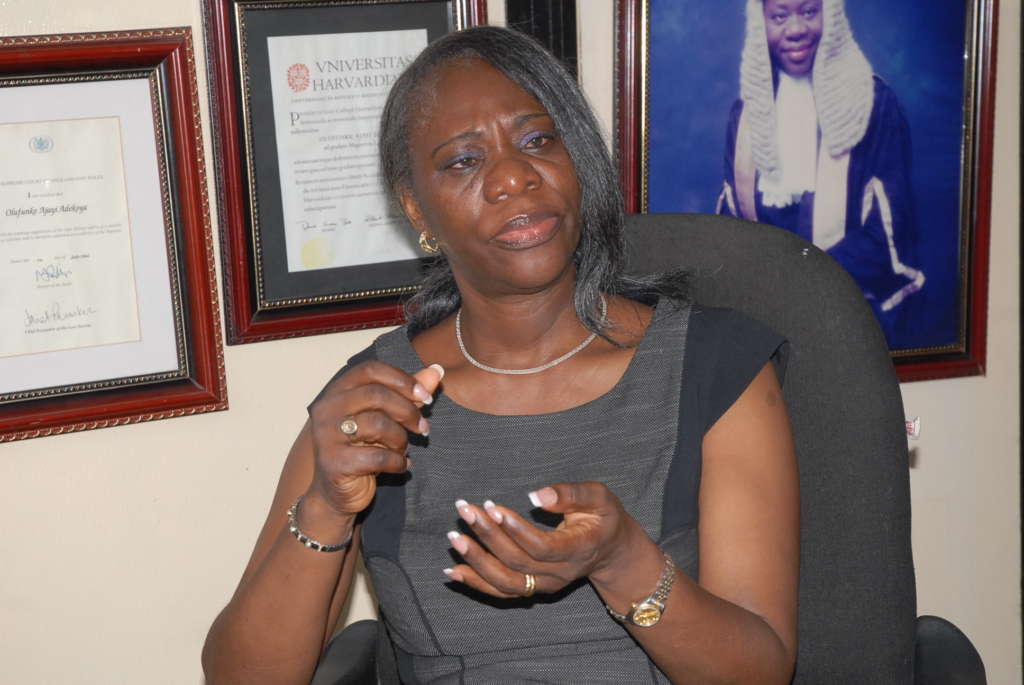
Funke Adekoya, SAN

Senior Advocate of Nigeria Funke Adekoya SAN shared her view. “While the decision is commendable, I think Government priorities will be misplaced unless the training is linked to opportunities where the skills taught will result in employment for those trained. By way of example, training in digital technologies should be linked with employment vacancies in the production of smart cards for buses and trains. Training as welders should result in employment by companies laying girders for the 2nd Niger Bridge and the 4th Mainland Bridge. If the government trains in areas where there is no prospect of employment, it will be breeding bandits.

“The proposed training and starter packs to set up their own businesses will be difficult at a time when all input costs into any business venture are on the increase. Electricity, diesel, transport costs, etc. are part of such start-up costs. And 50,000 is a drop in the bucket when millions require such training. Although the concept is commendable, I am not encouraged by thoughts of its success.”

On Friday 8 April, 2022, the national electricity grid suffered another system collapse. It was the third in less than a month and the fifth in 2022.In the last nine years, the national electricity grid has collapsed over 200 times. Each occurrence leads to prolonged hours of power outage across the country and although the Minister of Power, Mr. Abubakar Aliyu, blamed the constant collapse on poor maintenance and shortage of gas, Nigerians over the years have witnessed inadequate electricity supply.

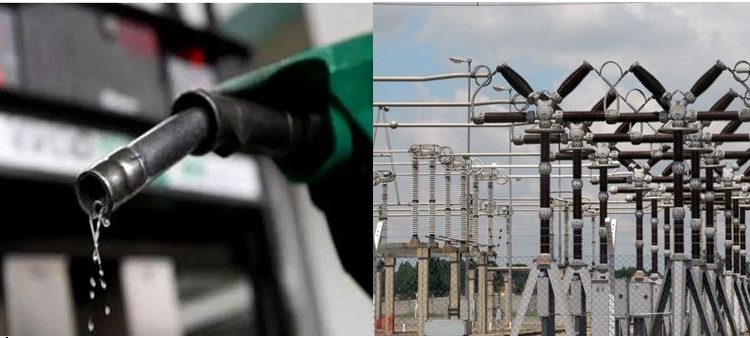
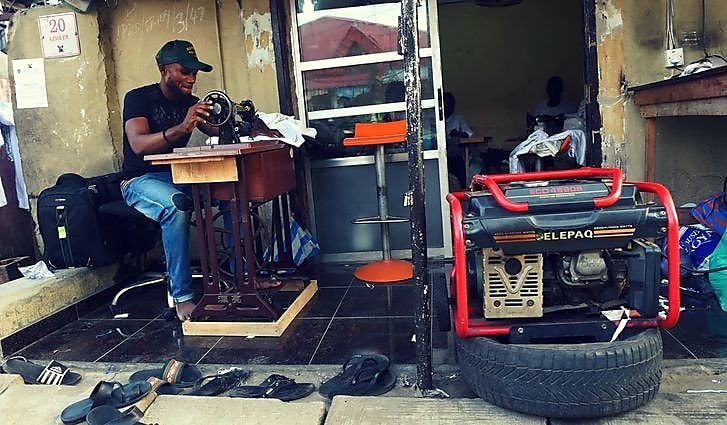
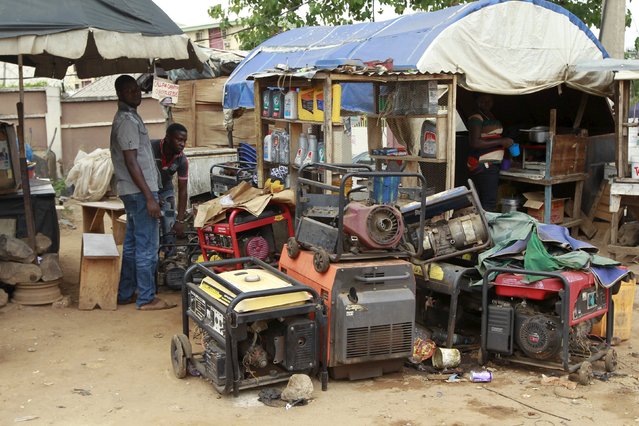
While this is ongoing, fuel crises persist with people paying prohibitively to procure petrol or diesel to power automobiles and generators. It is worth noting that a large number of Nigerians are unable to afford the high cost of fuel. A larger number do not even own power-generating plants. Notable among the wide spectrum of power generating plant owners are small business operators who desperately depend on power to eke a living.

The Guardian Editorial of 27 March 2022 threw a challenge to the Federal Government, but whether it will be heeded is a different matter. “Clearly, the power sector is a cesspit of corruption and administrative inefficiency. It is incumbent on a proactive administration to demand a thorough investigation of the sector and begin to explore alternatives to energy sources. The world is scandalised that Nigeria, one of the leading producers and exporters of crude oil and gas dwells in darkness. Government should put its house in order and provide a security and business-friendly environment to attract the private sector, without which the sector stagnates. The power industry is too technical and financially inclusive to be undertaken solely by the government. But the present private-sector arrangement is grossly defective and has only presented Nigerians with suffering and exploitation.”

To the CEO of New Hampshire Capital Ltd, Odion Omonfoman, an enormous financing challenge weighs down the power sector and impedes its viability. According to Omonfoman, the problem is partly due to the non-implementation of cost-reflective tariffs by the Nigerian Electricity Regulatory Commission (NERC), high technical and commercial losses exacerbated by energy theft, and consumers’ apathy to payments because of unfair estimated billing practices by DisCos, and poor metering implementation by DisCos.

“There is also the issue of sub-optimal management arising from a lack of proper corporate governance structures in some DisCos. As long as the existing DisCos have an unwritten monopoly to supply electricity to Nigerians without any competition from other market providers, it is doubtful if the power sector will ever be efficient, no matter how much the CBN injects into the sector. In the alternative, state governments should make laws that will allow for state governments to license and regulate private investors to generate and distribute electricity to their citizens as well.”

Proffering further solutions, energy experts, Nnaemeka Vincent Emodi andOgheneruona E. Diemuodeke in their article: The grid collapse conundrum in Nigeria – ensuring consistent energy, published in ESI Africa posited that: “To achieve this, the Transmission Company of Nigeria can upgrade and increase transformer capacity… Second, a better revenue collection method is needed and there needs to be a wider distribution of prepaid meters.

“Third, the Nigerian lawmakers recently supported the constitutional amendment bill to allow state governments to generate and transmit their own electricity. This presents an opportunity for investors and industries to participate in the Nigerian energy market. Also, the states or businesses can transmit excess supply to the national grid. Micro-grid projects could also expand to send excess power to the national grid.

“Fourth, a modern smart grid would enable data to flow between consumers and electricity retailers. This will enable grid operators to match electricity supply with demand, understand consumer behaviour, and plan grid expansion. Finally, the Nigerian government should speed up efforts to decentralise the national grid. This can be through mini-grids driven by renewable energy sources like solar photovoltaic and wind turbines. The effect would be increased local reliability of electric power supply, especially in the rural and peri-urban communities.”

In his article titled: When Will our National Greed Collapse? veteran journalist and Managing Director/Editor-in-Chief of The Guardian Newspaper, Martins Oloja said: “Ordinarily, this should engage the attention of all our local, sub-national and national leaders, especially in the executive and legislative arms. But this is not the case because of this malaise called ‘national greed’ that we are not linking to the national grid collapse.” 

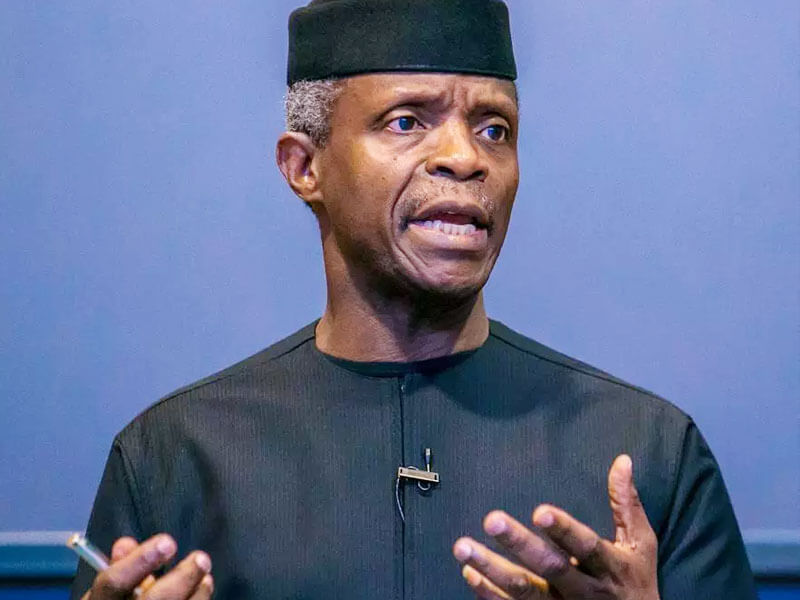
The story of Nigeria’s power and oil sector, those weird Siamese twins has proved to be an intractable puzzle. Any hope of ever straightening them out keeps dimming by the day. To put a stop to the unending fuel challenge in the country, Vice President Yemi Osinbajo, SAN announced last year that the integration of artisanal and modular refinery operators into the mainstream oil and gas sector would boost local content in the industry. The Vice President who spoke virtually at the National Summit on the Integration of Artisanal and Modular Refinery Operations in Nigeria said the integration would advance the use of home-grown technology in the refining of petroleum products.

“We are confident that the integration of artisanal and modular refinery operations into the oil and gas sector will not only promote the inclusion of more local content in the industry; it will advance the use of home-grown technology in the refining of petroleum products. It will also curtail illegal oil activities in the Niger Delta regions,’’ Prof. Osibajo said.

The Senior Advocate had in 2016, under President Muhammadu Buhari’s directive, embarked on a tour of oil-producing communities in the Niger Delta, in a bid to address lingering issues in the region. This was preceded by the President’s meeting with Niger Delta leaders under the aegis of the Pan-Niger Delta Forum, (PANDEF). The meeting led to PANDEF’s 16-point demand to the Federal Government and was subsequently captured in the Federal Government’s 20-point agenda to develop the region.

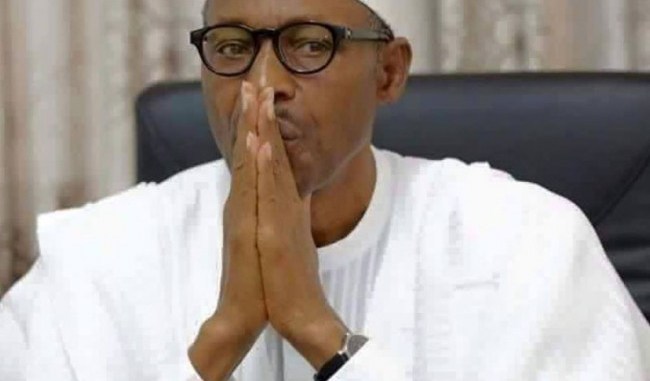
President Buhari

“One of the nagging issues we were confronted with during my tour”, the Vice President recounted, “was how to deal with the proliferation of artisanal refinery and its attendant negative environmental impact. Our solution was to promote the establishment of modular refineries. These artisanal refiners will be seen as investors and considered for strategic equity partnerships with technical and financial partners. This vision is hinged on the commitment of this present administration to develop the region and ensure that the people of the region benefit maximally from the wealth of their land. Indeed, the New Vision speaks to a progressive partnership between the federal government, state government, private sector, and the local communities.”

Osinbajo said the framework envisaged a private sector-led partnership with equity participation from the state government or its agencies, registered local cooperative societies, and the integration of regional refinery stakeholders, with the private investor having majority equity.

“We are confident that the integration of artisanal and modular refinery operations into the oil and gas sector will curtail illegal oil activities in the Niger Delta regions. It will also promote the availability of petroleum products, stabilize prices, eliminate shipping costs and provide employment opportunities for the youths in the region and Nigeria in general. We recognise that with enough artisanal and modular refineries in the country, we should be able to conserve foreign exchange now utilized for the importation of petroleum products and promote socio-economic development.

“The resultant proliferation of employment opportunities will also have the effect of curbing youth restiveness which is largely driven by a dearth of socioeconomic opportunity. With most of the youth engaged in productive endeavours, the region will be able to turn a new page in its history,” he said.

It’s been a year since that summit. Artisanal and modular refinery operations are still being awaited. Within that period remarkably, the Federal Executive Council (FEC) approved $1.5 billion (about N600 billion) for rehabilitation of the Port Harcourt refinery. Approval had earlier been given for the rehabilitation of both Warri and Kaduna refineries to the tune of $1.484 billion. The only snag is that about N3.8 trillion had been poured into Nigeria’s four derelict petrochemical refineries without any result being recorded. This is in spite of the federal government having spent about N1.47trn between 2015 and 2020, on maintaining, revamping, and running the four broken-down refineries to no avail. Meanwhile, a 20 percent minority stake in Dangote Petroleum and Petrochemical Refinery was acquired at the sum of $2.76 billion by the Federal Government. Many Nigerians view this move as an indication that the government is neither interested in making national assets functional nor liberalising the oil sector.

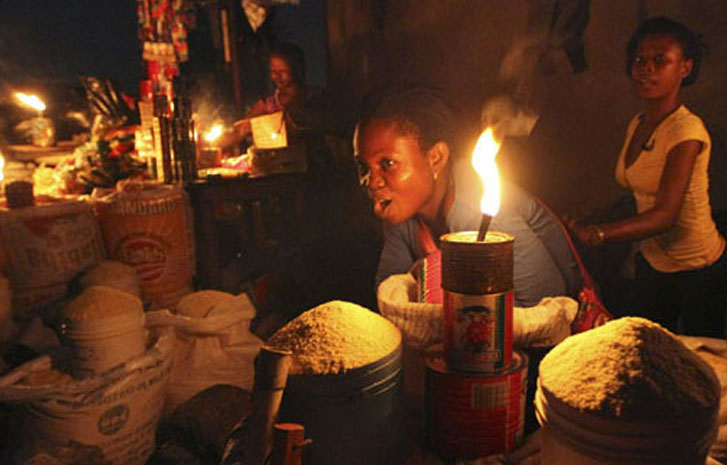
With the combined fiasco of power outage, fuel scarcity, and fuel importation by an oil-producing country not to mention the curious intoxication of the Federal Government with borrowing, Nigeria is bursting at the seams. A group, Warri Advocacy Network (WAN), recently drew the public’s attention to how Hon. Justice Abang Effreti, the presiding Judge of the Federal High Court, Warri works with candlelight on account of poor electricity supply to the court.

The group, in a statement, said: “Justice Effreti most times worked beyond 4:00 pm and sometimes till 8:00 pm with candlelight due to the epileptic power situation in the area… No doubt, Warri is the only city in Nigeria with a Federal High Court outside any state capital and yet the only one with a single judge assigned to tackle the very litigations-thick city.”

Our competence comes from God. He has made us competent.’ 2 Corinthians 3:5-6 NIV

Leadership responsibility (2)

David was ‘on a roll’. He kept winning battle after battle. He had the Midas touch; everything he touched turned to gold! But success can go to your head, and David wasn’t exempt. He started wondering, ‘Just how strong are we?’ At that point, he conducted a census and discovered he had ‘one million one hundred thousand [fighting] men’ (1 Chronicles 21:5 NIV).

That could tempt any of us to think, ‘With an army this size, and given our track record of success, who needs to pray for God’s help or ask Him for a plan?’ That was the point at which God stepped in and judged David, and seventy thousand Israelites died needlessly (see v. 14 NIV).

So here is another aspect of leadership you need to be aware of: your mistakes have the potential to hurt others . You’re not just accountable to those who are over you; you’re responsible for those under you .

After all, if your good decisions have the ability to bless and guide people, your bad decisions have the potential to harm them. ‘David said to God, “Was it not I who ordered the fighting men to be counted? I, the shepherd, have sinned and done wrong…let your hand fall on me and my family, but do not let this plague remain on your people”’ (v. 17 NIV). God graciously answered David’s prayer, and judgment was lifted from Israel.

So, you need God’s guidance for your own sake, the sake of the people around you, and to give you the grace to accept responsibility when you fail. Don’t try to hide your failures, blame others, or run from God. Acknowledge them, grow through them, and go on to become wiser.

Bible in a Year:  Judges 7-8, John 6:1-21

Credit: The Word For Today

FOR OSINACHI

By Dike Chukwumerije

3 or 4 years ago, my mother-in-law sent me a video. It was of ‘Nara ekele’. That was the first time I heard Osinachi. She raised goose-bumps, and had my spirit beating against the prison bars of my own ribcage, asking to be let out. Ah! Then I listened to ‘Ekwueme’, and thought – Wow, what a voice. No, not the voice. The…tremor beneath the voice. As if, at a certain point, a door within her opens, and something deep – cannot quite be cloaked in words – emerges. I tell you, it is hard to listen unmoved. Yes. I wonder now. Was it the Holy Spirit that moved me so? Or was it the pain within her own spirit? Yes. For deep calls to deep. And divine essence and human trauma, I carry both within me too…

So, as an artist, I know. That we can bleed on stage – and weep on stage, and cry on stage, for help, for love, for understanding – and those watching us will only applaud. But this is not what I am here to say. What I am here to say is this. You see this marriage thing? Yes. It is a contract, yes, but not a contract for sale. No. You do not own me. To do with me what you will. No. See, you will never have that power. For I am a human spirt. And my first obligation is to find and fulfil the purpose for which I exist. Not to love you, or cook for you, or care for you, or sleep with you. It is to become, to the fullest extent possible, what God made me to be. My sister, that is your first obligation too. And a marriage that no longer respects this has become bondage.

For to love is to serve. It is to ask – how can I help you become? And to be loved is to be served. It is to be asked – how can I help you become? Yes. It is this exchange of service, between two people of equal value, that is marriage. Not blows, and self-centered demands. Not abuse, and a desire to control so strong you lash out violently every time I deviate from what you wish. Come, na who you be sef? See, I will not tolerate it, this abuse. To be slapped, or pushed, or punched, or kicked, or spoken to with words that strip me of my dignity, self-belief and sense of purpose. I tell you. For nothing – nothing! – the abuser offers pays back for what they take. Get out of there!

For divorce is not a dirty word. No. It is an acknowledgment that, at 25 (or whenever it was you entered into an abusive relationship), your eyes were not as clear as they are today. It is to know that ‘for better, for worse’ anticipates change, yes, but the sorts of changes we cannot anticipate, you know? Like cancer or dementia or the loss of a limb. Not intentional ones, like your spouse waking up one morning and deciding to maim, murder or de-humanize you. No. Divorce is recognizing that marriage – which does not exist in Heaven – cannot be a condition for making Heaven. That if it is truly two becoming one, then the one who reaches across to strangle the other has physically ripped that curtain in two. Which marriage again? That the same Jesus who asked you not to cast stones at a woman they said they caught in adultery, will not stand there glaring at you – as you run out of an abusive home – with a deep frown on his face. You see? That theology is contradictory. And the confusion is not in God. It is in the minds of those who teach this. That a godly woman is one who can take a punch in silence.

God forbid! It is the smuggling of culture – a culture in which marriage is seen as a sales agreement by which man purchases wife – into faith. You see? That the Word is used, not to set free, but to reinforce the bondage of women. I tell you, many things are worth dying for. Our faith, after all, is rooted in redemptive suffering. But an abusive marriage is not one of them. No. It is never faith that keeps the abused with the abuser. It is the fear of what we would all say if a famous gospel singer abandons (for that is how we will report it) her husband and children. You see? It is never faith that keeps the abused with the abuser. It is the false hope we peddle, in the guise of counselling, that enduring – without actively resisting – abuse will somehow lead to change. You see? It is never faith that keeps the abused with the abuser. It is the knowledge, at the back of her mind, that if she leaves, we will allow her to stay with us, maybe a few months, but after he comes begging, with some pastors in tow, we will gently coax her back…

Yes. For Osinachi Madu who put her trauma in her voice, and in her brokenness gave faith to so many. For her who could not defend herself. For her! Let us draw these lines in the sand and say it, as Christians, with our full chest – domestic violence is grounds for divorce. Full stop.

TIPS