Home Blog Page 844

Fighting drug abuse requires a holistic approach – Former DG NDLEA

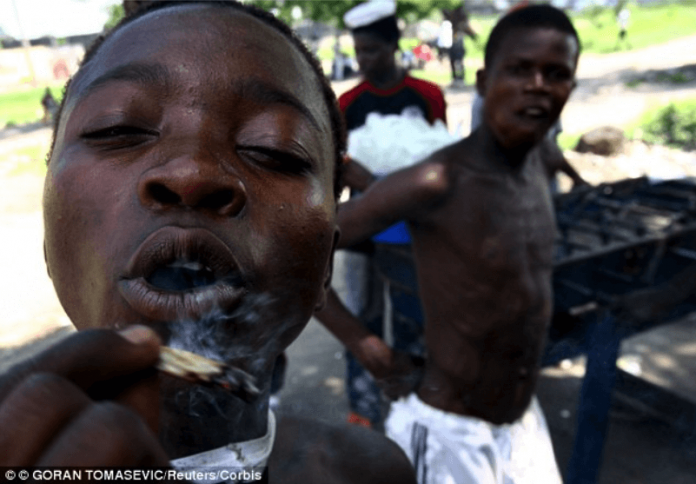
The United Nations Office on Drug and Crimes (UNODC) has said that 14.4 percent of Nigerians are presently engaged in drug abuse.

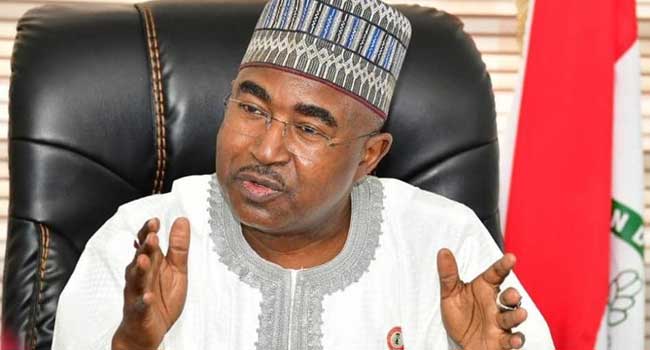
Chairman/Chief Executive of the National Drug Law Enforcement Agency, NDLEA, Brig. Gen. Mohamed Buba Marwa (Rtd)

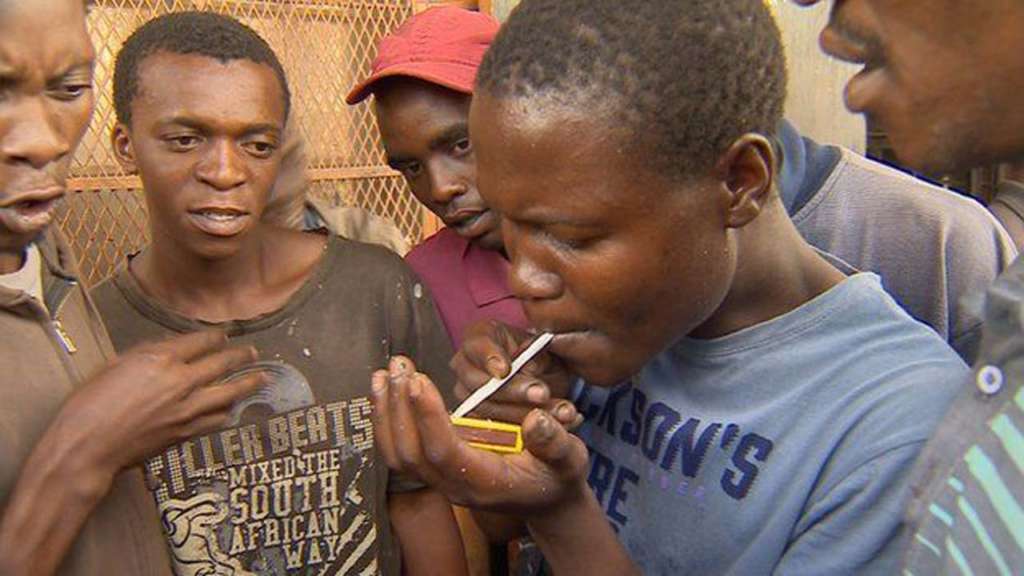
For the most part of 2021, communities in South Eastern Nigeria faced the dangerous effect of Methamphetamine nicknamed by the youths as Nkpuru Mmiri which translates to seed of water. And worried by the fact that substance abuse is a major problem facing the North, the Coalition of 52 Northern Groups, CNG, announced its partnership with relevant stakeholders to unveil a community-based initiative aimed at rehabilitating youths struggling with drug abuse and addiction in the region. CNG’s Director of Strategic Communication, Samaila Musa, the programme would also provide empowerment schemes for drug addicts, thereby driving the economic recovery of the Northern region and the country. Presently, it is estimated that 75 percent of hard drug users in our society are adversely affected.

Recently, Chairman/Chief Executive Officer of the National Drug Law Enforcement Agency, NDLEA, Brig General Buba Marwa warned that the nation faces a grim future over the rate of drugs prevalence among youths wondering, “what will become of Nigeria with about 70% youth population if the future of its youths is ravaged by drugs.

Photo credit: The Guardian Nigeria

Speaking while launching the War Against Drugs Abuse (WADA) Club at the University of Abuja, Marwa said, “Part of the measures to reduce drug use in universities is the proposed introduction of the Drug Integrity Test for both new and returning students.” This drug integrity test according to him is anticipated to metamorphose into an anti-drug policy for all higher institutions of learning in Nigeria.

Likewise, an NDLEA Director-General, Otunba Lanre Ipinmisho shared his experiences with Law & Society about youths struggling with substance abuse and proffered suggestions on the way forward.

“If you open my office bathroom door, you would see that it’s been broken several times by some boys that were brought here for counselling. So, I’m not talking of theory. I’m talking about something that I see and do all the time. One sat here, and said to me, ‘oh, you are a Sheik. Okay. But I’m God whom the Sheik prays to.’ The boy’s father was here crying. I insist on serious advocacy because there are many alternatives to the popularly known drugs and substances. During an advocacy campaign a parent once said, ‘ah, you have not mentioned Maggi yet (food seasoning). She said: ‘I caught my security guard with six cubes of Maggi from my kitchen and insisted he must tell me what he was going to do with them. He said they put it inside malt drink and it makes them get high.’ 

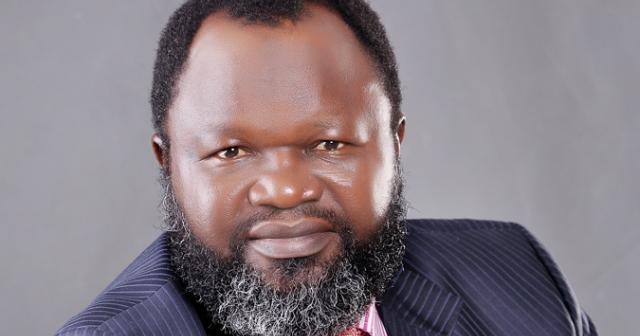
Otunba Lanre Ipinmisho, Ex-DG NDLEA

“Have I told you about old newspapers? From a stack or pile, just pick the ones underneath, light and smoke; it will get you high. What about, solution, petrol, smells emanating from the soak-away pit in the north? They actually crack open soak-away pits to inhale the odour. Zakami and lizard dung? This issue requires a more holistic approach. And what is the approach? What is it that will appeal to these children to listen to counselling on drug abuse? 

Now, on my own, I have been to all these universities around here; because I have seen prevalence, and what you see that confronts you is that almost every student carries a bottle and more than 70 percent of those bottles are not water. They contain mixtures of all sorts of things even if it appears clear like water.  Hence, it is not something we give ceremonial attention to and expect that we are solving problems. No. It requires more serious attention than that. 

“There is an inter-governmental agency on drug abuse which hardly meets now because they are not funded, it should be resuscitated so that if the Ministry of Health’s representative is talking from the angle of health other representatives will speak from the peculiarity of their own sector. Actually, it’s a health issue. It’s not a criminal matter. That is why people accuse law enforcement agents that they arrest people with cough syrup and fail to lock them up. No, they can’t lock him up because it’s not a criminal offence. The addict is someone who needs help. So, you need to take him to a rehab centre.”

Does the NDLEA have a rehab centre? 

No. They do not have. What they have are cells where they lock up people and say addicts have stopped using drugs and that they have started reading the Quran and the Bible. That is not how rehabilitation is done. A rehab centre is more comprehensive than we think in Nigeria. It is a more comprehensive thing than just locking someone up.

The first thing you do in rehab after the administrative step of registering the person is, he goes for a test and then for the talks.  When you finish with the talks, you put him in another place where he gradually tries to live without drugs. It’s a very difficult period. After that, you take him to the next step where he can look back because, during the talks, he really can’t look back. All that he is concerned about is where will he get the next drugs from. So, after 90 days, depending on each case on its own merit, you now release him and you still don’t leave him like that because this is someone who has been on drugs for years. 

How do you then cut the demand in the instant situation?

Parents have serious roles to play. When we were growing up as children, there were children that smoked the native mat. It has holes inside like cigarettes. You light it with matches and hide to smoke. Why were we hiding in those days? Because we knew that we must not be seen.  Parents’ availability for the upbringing of their children is very key to fighting drugs. As we speak now, there are children that will never touch alcohol because they see that in their home, it is an abomination. They have never even bothered to ask why, but they know that it is a no-go-area. Whereas there are homes where each of these boys have cartons of cough syrup and codeine and no parent has entered the room, and he knows that no one is going to enter and therefore needs not to be careful. Even the type of cars these children ride has all the equipment for smoking marijuana. It is just for you to look in one day and see what your son is doing. 

How many of these children have dropped out of school for several years and they keep lying. There was a couple that went to see their child in the UK. They didn’t prepare for the shock that they got. They went with a colleague from their office to check on the boy. The school authorities said they had no student by that name. Meanwhile, he had called the preceding week telling them how well he was doing at school. Eventually, they got a Nigerian who had finished from the school about three years earlier. He said, ‘yes, this boy was with us.

He didn’t finish and he has been rusticated, though I can get somebody who knows where they smoke.’ By the time the father got there, of course, he didn’t even recognise the father.  That was all they got for all the thousands of pounds sterling they have been sending to England.  Parents need to pay more attention to their children. They think that they could use money and material things to buy off the children. The moment they see the child is unhappy, they pump in more money, and his friends are already aware that he is the supplier of money. And one thing with drugs is that the more, the merrier.

You can’t stay in your room and be making the wild dances alone. It won’t make sense unless they are people who are looking at you.  We used to have about 168 porous borders when I was at NDLEA. I don’t know but it must be more now. On these 168 porous routes, nobody would ask you, ‘where are you going or coming from?’ 

What is the way forward out of this problem?

We still require the Federal Government and private individuals to invest in rehabilitation centres. 

What is the role of religious and traditional institutions in the battle against drugs? 

In the north which I am more familiar with, the north has a terrible culture of silence. That has affected the religious organisations that are northern-based. When they have a problem, people in the north that constitute membership of those organisations, don’t discuss it. There is a culture of silence. In the north, they would rather gossip about a problem. And this they need to stop! You bring up children collectively so that everybody in the neighbourhood can have their peace. So, I believe the religious organisations are beginning to wake up to their own responsibilities with regard to drugs.

I have been going from one mosque to the other as well as from one traditional ruler to the other, trying to awaken them to the dangers of this problem. Luckily, the people I have spoken to have also been going through hard times with their children and wards on the issue.  You would see an Emir that is afraid of entering his own house because of the havoc drug is doing in the house. So, I believe a more holistic approach is for non-governmental agencies to wake up and for relevant government agencies to wake up to their responsibility. But how would they wake up to their responsibilities when the government is not treating it as a matter of priority? Admission into universities now should include tests for drugs.  University authorities should insist that students, who test positive to drugs, should go and clean up, and then come back. 

Why did you say earlier that drug addicts are not criminals? 

No. They are not criminals; because the law says that there must be action backed by intention. How would you convince a law court that somebody who is a drug addict has an intention to commit a crime? He cannot form an intention. Secondly, the United Nations had long come to the conclusion that it is a medical issue. Though it may be behavioural, it’s a medical challenge.

When Minors are Criminals in Nigeria.

When Minors are Criminals in Nigeria.

By Onyekachi Umah, Esq., LL.M, ACIArb (UK)

1. Introduction: 

With the growing rate of sexual abuse, domestic violence, online pornography, poor parenting and weak school administrators, it is common to find minors engaging in bullying, sexual activities, stealing, secret cults and other crimes. This work (When Minors are Criminals in Nigeria) examines the position of the law where the alleged offenders are minors (children). 

This work answers the questions: “are all minors free from criminal responsibility”; “Who is a Minor (Child)’; “Minors as Criminal Offenders”; “the Culpability of Minors in Nigeria”; “the Culpability of Minors in States in Southern Nigeria”; “the Culpability of Minors in States in Northern Nigeria”; and “the Culpability of Minors in Lagos State, South of Nigeria”.

The recent Chrisland Sex Scandal involving 2 minors have woken many arguments on the culpability of minors. On this legal issue, Onyekachi Umah gave insights at the ChannelsTV program, Law Weekly on 23 April 2022. He has followed it up with this work; “When Minors are Criminals in Nigeria” also published on ThisDay Newspaper on 3 May 2022. This work was published on ThisDay Newspaper (online and hardcopy versions) on 3 May 2022 under collection of works titled; “Chrisland Sex Scandal: Abdication of Duty by Parents and Schools”.

2. Who is a Minor (Child)? 

The English language is the official language of Nigeria and the Nigerian legislatures, courts and lawyers in Nigeria. However, the ordinary meaning of English words may not explain words when used in legal documents and laws. The Cambridge English Dictionary defines a “minor” as “someone who is too young to have the legal responsibilities of an adult”. While the dictionary definition is correct, in law, “minor” will be better understood if age is attached to the description.   

According to the Child Rights Act, a child means “… a person under the age of eighteen years”. This same meaning is adopted by all the Child Rights Laws enacted by states across Nigeria. Some states in the Northern part of Nigeria have refused to pass a Child Rights Law; this issue is discussed in the work; “11 States That Do Not Protect Children In Nigeria”. Hence, in States in Nigeria where there is no Child Rights Law, there may be no clear basis to argue that 18 years is the age of maturity. 

While the Criminal Code did not use the word “minor”, it referred to a “child and young person” in several contexts as a living person from birth to about sixteen (16) years old. 

The Penal Code Laws provide that a child is a living person at birth and less than eighteen (18) years old and also made reference to the “Children and Young Persons Act”. 

In the Children and Young Persons Act, a person less than fourteen (14) years old is a child and a person that is fourteen (14) years old but less than eighteen (18) years old is a young person. 

The Criminal Law of Lagos State defines a child as a child under the Child’s Rights Law of Lagos State. And the Child’s Rights Law of Lagos State defines a child to be a person below 18 years old. This pattern is common among the states that have Child Rights Laws and that amended their state criminal laws. The concerned states and their laws are discussed below. 

3. Minors as Criminal Offenders:

Rape, violence, and all other forms of sexual offences are criminal offences. So, this section focuses on rape and all other criminal offences where the offenders (suspected offenders) are minors (persons less than 18 years old). 

Prior to the amalgamation of the Southern Protectorate and the Northern Protectorate in 1914 to birth Nigeria, the nations on the two sides had their unique systems and traditions. To date, this is clear in the two different criminal laws that operate in the Sothern part of Nigeria and the Northern part of Nigeria. 

The Criminal Code is the criminal law operational in the Southern part of Nigeria, while the Penal Code operates in the Northern part of Nigeria. The two (2) criminal laws have their points of similarities and differences. Popular among them is the fact that adultery is an offence in the Northern part of Nigeria but not an offence in the Southern part of Nigeria. Read more on this issue via this link; “Adultery Is Not An Offence In All States In Nigeria”. 

It is important to mention that both federal and non-federal (state) offences in the South of Nigeria are contained in the Criminal Code Act, although some states in the south of Nigeria have presently enacted State Criminal laws that merely focus on the states offences already provided in the Criminal Code Act. Only a few states in the Southern part of Nigeria have repealed their State Criminal Code Laws and enacted radically different State Criminal Laws. In the north of Nigeria, the federal offences are contained in the Penal Code (Northern States) Federal Provisions Act (No. 25 of 1960). Federal offences include treason, sedition, and customs offences. The non-Federal offences are contained in the various Penal Code Laws operating in States in the north of Nigeria. 

In both Southern Nigeria and Northern Nigeria, there are special provisions for minors. The laws believe that there are specific ages for human beings to acquire the ability to understand good and bad and differentiate evil from good. Yes, the laws could not close their eyes to human psychology. This is also the point where many Nigerians erroneously conclude that minors cannot be held responsible for crimes. This common belief may be wrong, as the succeeding paragraphs will reveal. 

4. The Culpability of Minors in Nigeria:

Across many states in Nigeria, minors are persons below 18 years. Contrary to popular belief, not all minors are free from paying for their (crimes) sins. There are special minors of certain ages and capacities that are free like air and will always get away with any crime. Also, their location (States) in Nigeria may matter. Hence, we will expose the minors that cannot be held responsible for their crimes according to the relevant locations (states) in Nigeria.

4.1: The Culpability of Minors in States in Southern Nigeria: 

In the states in the Southern part of Nigeria, where the Criminal Code is operational, the Criminal Code provides that a person that is less than seven (7) years old cannot be held responsible for any offence. This means that children from ages zero (0) to less than seven (7) years cannot be held responsible for any crime they commit. Such minors are free to do anything they wish, and they will get away with it. They are saints by law and not necessarily by conduct; statutory saints. 

It also provides that a person that is below 12 years old cannot be held responsible for a crime unless it is proven that the person at the time of the crime had the capacity to know that he/she should not have committed such an offence. This means that children from age seven (7) to eleven (11) cannot be held responsible for any crime they committed, so far as they had no understanding that they should not commit such an offence. 

The focus on the ages below twelve (12) in the Southern part of Nigeria means that although minors are from ages zero (0) to less than eighteen (18), any minor that is 12 years or above will be fully responsible for his/her criminal actions. 

For clarity, the section 30 of the Criminal Code is reproduced below:  

“A person under the age of seven years is not criminally responsible for any act or omission. 

A person under the age of twelve years is not criminally responsible for an act or omission, unless it is proved that at the time of doing the act or making the omission, he had capacity to know that he ought not to do the act or make the omission. 

A male person under the age of twelve years is presumed to be incapable of having carnal knowledge.” 

So, where a child that is less than 12 years old is alleged to have committed an offence in a state in the southern part of Nigeria, the defence team can easily get justice for the child by proving the age of the child and that the child lacked the capacity to understand the crime at the time of the crime. This may be a downside for smart and intelligent minors that are less than 12 years.  It is important to note that few states (Like Lagos State) have dumped the Criminal Code and enacted their own unique state criminal laws. Some of the states and their laws will be discussed below. 

4.2: The Culpability of Minors in States in Northern Nigeria: 

For states in the Northern part of Nigeria, ages seven (7) and twelve (12) are important in proving that a minor is guilty of a crime. The Penal Code Laws provide that a person that is less than 7 years old cannot be held responsible for any offence. Whether the less than 7 years old minor has the capacity to know that he/she should not commit the offence is immaterial. 

Furthermore, the Penal Code Laws also provide that a person that is 7 years old but less than 12 years old cannot be held responsible for any offence unless it can be proven that the person has the maturity to understand the nature and consequences of the offence. 

The focus on the ages below twelve (12) in the states in the Northern part of Nigeria means that although minors are from ages zero (0) to less than eighteen (18), any minor that is 12 years or above will be fully responsible for his/her criminal actions. 

Section 50 of the Penal Code Laws states; 

“No act is an offence which is done- Act of child. 

(a) by a child under seven years of age; or

(b) by a child above seven years of age but under twelve years of age who has not attained sufficient maturity of understanding to judge the nature and consequence of that act.”

4.3: The Culpability of Minors in Lagos State, South of Nigeria: 

Lagos State is legislatively ahead of all states in Nigeria. Lagos State often enacts innovative laws that other states in Nigeria and the Federal Government of Nigeria emulate after some years. Here are links to works on this issue; “How Lagos State Is Legislatively Ahead Of Other States” and “Why Lagos State Needs A VAPP/SGBV Law”. 

Ahead of many (if not all) states in the southern part of Nigeria, Lagos State was the first state to enact its own state criminal law that departed from the Criminal Code that operated across the Southern part of Nigeria. The Criminal Law of Lagos State introduced several innovative tools and processes. 

On 8 August 2011, Lagos State enacted the Criminal Law of Lagos State, 2011 and repealed the Criminal Code Law that was earlier in operation in Lagos State. A free copy of the Criminal Law of Lagos State is accessible here.

In Lagos State, a minor/child is a person that is less than 18 years old. However, only children that are less than ten (10) years old in Lagos State have zero criminal responsibility for their criminal actions and inactions. Hence, a child that is less than 10 years old in Lagos State cannot be held responsible for any crime. The Criminal Law of Lagos State, unlike many other criminal laws in Nigeria, does not provide that the child should have or not have the capacity to understand the crime. It simply says that a person below 10 years old has no criminal responsibility in Lagos State. 

Section 30 of the Criminal Law of Lagos State, provides; 

“A person under the age of ten (10) years is not criminally responsible for any act or omission.” 

The focus on the ages below ten (10) years in Lagos State means that although minors are from ages zero (0) to less than eighteen (18), any minor that is ten (10) years or above will be fully responsible for his/her criminal actions. 

5. Conclusion:  

While minors are persons below 18 years old, not all minors are free from criminal responsibilities in Nigeria. This work has traced the definition of minors through federal and state laws. The location of a minor affects the criminal responsibilities of the minor. Some states have placed the age of zero criminal responsibility at 7 years and 10 years. Many states have also chosen 12 years as the possible age of zero criminal responsibility, with the condition that it must be proven that the child has no capacity to understand his/her crime at the time of the crime. 

References:

  1. Sections 1, 2, 3, 4, 5, 6, 7, 318 and 319 as well as Schedule 4 to the Constitution of the Federal Republic of Nigeria, 1999.
  2. Section 30 of the Criminal Code Act
  3. Section 50 of the Penal Code Laws
  4. Section 30 of the Criminal Code Law of Lagos State
  5. Penal Code (Northern States) Federal Provisions Act (No. 25 of 1960
  6. Sections 1(4) and 44 of the Violence Against Persons Prohibition Act, 2015 and similar laws across the states in Nigeria.
  7. Section 277 of the Child Rights Act, 2003
  8. Cambridge University, “Minor” (Cambridge, 22 April 2022) < https://dictionary.cambridge.org/dictionary/english/minor> accessed 22 April 2022. 
  9. Onyekachi Umah, “An Access To Criminal Laws In Nigeria” (SabiLaw.org, 4 December 2020) <https://SabiLaw.org/an-access-to-criminal-laws-in-nigeria/ > accessed 20 April 2021
  10. Onyekachi Umah, “11 States That Do Not Protect Children In Nigeria” (SabiLaw, 31 May 2021) https://sabilaw.org/11-states-that-do-not-protect-children-in-nigeria/ accessed 24 April 2022. 
  11. Onyekachi Umah, “Stripping Suspects Naked is Torture and it’s a Crime” (SabiLaw.org, 16 February 2021) <https://SabiLaw.org/stripping-suspects-naked-is-torture-and-its-a-crime/> accessed 23 May 2021
  12. Onyekachi Umah, “Twitter vs. Nigeria; The Human Rights of Twitter Inc. and the Twitter Users” (SabiLaw.org, 8 June 2021) <https://SabiLaw.org/twitter-vs-nigeria-the-human-rights-of-twitter-inc-and-the-twitter-users/> accessed 9 June 2021.
  13. Onyekachi Umah, “Scarcity of Passport and the Government’s Violation of the Right of Movement” (SabiLaw.org, 1 June 2021) <https://SabiLaw.org/scarcity-of-passport-and-the-governments-violation-of-the-right-of-movement/> accessed 8 June 2021
  14. Onyekachi Umah, “An Alternative to Courts for Human Rights Cases” (SabiLaw.org, 14 May 2021) <https://SabiLaw.org/an-alternative-to-courts-for-human-rights-cases/> accessed 23 May 2021.
  15. Onyekachi Umah, “Details of State Offices of National Human Rights Commission” (SabiLaw.org, 27 October 2020) <https://SabiLaw.org/details-of-state-offices-of-national-human-rights-commission/> accessed 14 May 2021
  16. Onyekachi Umah, “Human Rights That Can Never Be Restricted Even In War, Pandemic or State of Emergency” (SabiLaw.org, 2 April 2020) <https://SabiLaw.org/human-rights-that-can-never-be-restricted-even-in-war-pandemic-or-state-of-emergency-daily-law-tips-tip-539-by-onyekachi-umah-esq-llm-aciarbuk/> accessed 23 May 2021
  17. Onyekachi Umah, “Does The President/Governors Have Powers To Lockdown Any Part Of Nigeria Or Restrict Human Rights?” (SabiLaw.org, 1 October 2020) <https://SabiLaw.org/does-the-president-governors-have-powers-to-lockdown-any-part-of-nigeria-or-restrict-human-rights-daily-law-tips-tip-537-by-onyekachi-umah-esq-llm-aciarbuk/> accessed 14 May 2021
  18. Onyekachi Umah, “How to Report and Discipline Police Officers” (SabiLaw.org, 25 May 2021) <https://SabiLaw.org/how-to-report-and-discipline-police-officers/> accessed 27 May 2021
  19. Onyekachi Umah, “Warrant of Arrest: Contents and Issuance” (SabiLaw.org, 19 April 2021) <https://SabiLaw.org/warrant-of-arrest-contents-and-issuance/> accessed 25 May 2021.
  20. Onyekachi Umah, “12 Situations Where Police Officers Can Arrest Without Warrant” (SabiLaw.org, 18 June 2019) <https://SabiLaw.org/12-situations-where-police-officers-can-arrest-without-warrant/> accessed 25 May 2021.
  21. Onyekachi Umah, “Abandonment Of Wife/Husband, Children Or Dependants Is A Crime” (SabiLaw.org, 3 December 2019) <https://SabiLaw.org/abandonment-of-wife-husband-children-or-dependants-is-a-crime-daily-law-tips-tip-470-by-onyekachi-umah-esq-llm-aciarb-uk/> accessed 20 April 2021
  22. Onyekachi Umah, “How Lagos State Is Legislatively Ahead Of Other States” (SabiLaw.org, 30 September 2020 <https://SabiLaw.org/how-lagos-state-is-legislatively-ahead-of-other-states/ > accessed 20 April  2021
  23. Onyekachi Umah, “The First Virtual Court Hearing Was In Borno State And Not In Lagos State.” (SabiLaw.org, 1 June 2020) <https://SabiLaw.org/the-first-virtual-court-hearing-was-in-borno-state-and-not-in-lagos-state-daily-law-tips-tip-579-by-onyekachi-umah-esq-llm-aciarbuk/ > accessed 20 April 2021
  24. Onyekachi Umah, “Emotional, Verbal And Psychological Abuse Is Now Criminal Offences” (SabiLaw.org, 3 September 2019) <https://SabiLaw.org/emotional-verbal-and-psychological-abuse-is-now-criminal-offence/> accessed 28 April 2021
  25. Onyekachi Umah, “Forcing Wife to Stop Work is Now A Crime” (SabiLaw.org, 21 April 2021) <https://SabiLaw.org/forcing-wife-to-stop-work-is-now-a-crime/https://SabiLaw.org/forcing-wife-to-stop-work-is-now-a-crime/> accessed 26 April 2021
  26. Onyekachi Umah, “It Is Now An Offence To Force Wife/Husband To Stop Working” (SabiLaw.org, 28 May 2019) <https://SabiLaw.org/it-is-now-an-offence-to-force-wife-husband-to-stop-working-daily-law-tips-tip-340-by-onyekachi-umah-esq-llm-aciarb-uk/> accessed 20 April 2021
  27. Onyekachi Umah, “Seizing or Destroying the Property of a Spouse is a Crime” (SabiLaw.org, 2 March 2021) <https://SabiLaw.org/seizing-or-destroying-the-property-of-a-spouse-is-a-crime/> accessed 20 April 2021
  28. Onyekachi Umah, “Hiding/Concealing Domestic Violence Is A Crime” (SabiLaw.org, 11 December 2020) <https://SabiLaw.org/hiding-concealing-domestic-violence-is-a-crime/> accessed 20 April 2021
  29. Onyekachi Umah, “Domestic Violence Is A Crime Not A Family Dispute” (SabiLaw.org, 10 December 2020) <https://SabiLaw.org/domestic-violence-is-a-crime-not-a-family-dispute/ > accessed 20 April 2021
  30. Onyekachi Umah, “Why Lagos State Needs A VAPP/SGBV Law” (SabiLaw.org, 26 January 2021) <https://SabiLaw.org/why-lagos-state-needs-a-vapp-sgbv-law/> accessed 20 April 2021
  31. Onyekachi Umah, “Lagos State Has No VAPP/SGBV Law !” (SabiLaw.org, 8 December 2020) <https://SabiLaw.org/lagos-state-has-no-vapp-sgbv-law/> accessed 20 April 2021
  32. Onyekachi Umah, “8 New Things About Rape Laws In Nigeria” (SabiLaw.org, 3 December 2020) <https://SabiLaw.org/8-new-things-about-rape-laws-in-nigeria/ > accessed 20 April 2021
  33. Onyekachi Umah, “ChannelsTv Interviews Onyekachi Umah on Rape and the Laws.” (SabiLaw.org, 20 November 2020) <https://SabiLaw.org/channelstv-interviews-onyekachi-umah-on-rape-and-the-laws/ > accessed 20 April 2021
  34. Onyekachi Umah, “Can A Woman Be Charged With Rape” (SabiLaw.org, 24 June 2020) <https://SabiLaw.org/can-a-woman-be-charged-with-rape-daily-law-tips-tip-595-by-onyekachi-umah-esq-ll-m-aciarbuk/ > accessed 20 April 2021
  35. Onyekachi Umah, “Can A Husband Rape His Wife” (SabiLaw.org, 19 June 2020) <https://SabiLaw.org/can-a-husband-rape-his-wife-daily-law-tips-tip-592-by-onyekachi-umah-esq-llm-aciarbuk/ > accessed 20 April 2021
  36. Onyekachi Umah, “When Is Seduction Or Indecent Dressing A Justification For Rape In Nigeria?” (SabiLaw.org, 18 June 2020) <https://SabiLaw.org/when-is-seduction-or-indecent-dressing-a-justification-for-rape-in-nigeria-daily-law-tips-tip-591-by-onyekachi-umah-esq-llm-aciarbuk/ > accessed 20 April 2021
  37. Onyekachi Umah, “New Punishment For Rape In Nigeria” (SabiLaw.org, 23 June 2020) <https://SabiLaw.org/new-punishment-for-rape-in-nigeria-daily-law-tips-tip-594-by-onyekachi-umah-esq-llm-aciarbuk/ > accessed 20 April 2021
  38. Onyekachi Umah, “Rape Cannot Be Settled Out Of Court (No Room For Pay-Off/Forgiveness/Withdrawal Of Complaints” (SabiLaw.org,26 June 2020) <https://SabiLaw.org/rape-cannot-be-settled-out-of-court-no-room-for-pay-off-forgiveness-withdrawal-of-complaints-daily-law-tips-tip-596-by-onyekachi-umah-esq-llm-aciarbuk/ > accessed 20 April 2021
  39. Onyekachi Umah, “A Female Too, Can BE Guilty Of Rape” (SabiLaw.org, 13 December 2018) <https://SabiLaw.org/daily-law-tips-by-onyekachi-umah-esq-tip-248-a-female-too-can-be-guilty-of-rape-in-nigeria/ > accessed 20 April 2021
  40. Onyekachi Umah, “Ages At Which Sexual Intercourse With Consent Will Amount To Rape” (SabiLaw.org, 20 February 2020) <https://SabiLaw.org/ages-at-which-sexual-intercourse-with-consent-will-amount-to-rape-daily-law-tips-tip-509-by-onyekachi-umah-esq-llm-aciarbuk/ > accessed 20 April 2021
  41. Onyekachi Umah, “How To Prove Rape In Nigeria).” (SabiLaw.org, 2 July 2019) <https://SabiLaw.org/how-to-prove-rape-in-nigeria-daily-law-tips-tip-363-by-onyekachi-umah-esq-llm-aciarb-uk/ > accessed 20 April 2021
  42. Onyekachi Umah, “Child Marriage/Abuse Is A Crime (Rape): An Exposé On Laws Prohibiting Child Marriage” (SabiLaw.org, 22 June 2020) <https://SabiLaw.org/child-marriage-abuse-is-a-crime-rape-an-expose-on-laws-prohibiting-child-marriage-daily-law-tips-tip-593-by-onyekachi-umah-esq-llm-aciarbuk/ > accessed 20 April 2021
  43. Onyekachi Umah, “Forced Marriage Is An Offence In Nigeria.” (SabiLaw.org, 21 October 2020) <https://SabiLaw.org/forced-marriage-is-an-offence-in-nigeria/ > accessed 20 April 2021 
  44. Onyekachi Umah, “Can a Married Woman Inherit Her Parents’ Property?”, (SabiLaw.org, 27 March 2020) <https://SabiLaw.org/can-a-married-woman-inherit-her-parents-property-daily-law-tips-tip-535-by-onyekachi-umah-esq-llm-aciarbuk/ > accessed 20 April 2021
  45. Onyekachi Umah, “Female Genital Mutilation/Cutting/Elongation, Breasts Ironing And Forced Marriage Are Now Criminal Offences In Nigeria” (Daily Law Tips [443]) <https://SabiLaw.org/female-genital-mutilation-cutting-elongation-breasts-ironing-and-forced-marriage-are-now-criminal-offences-in-nigeria-daily-law-tips-tip-443-by-onyekachi-umah-esq-llm-aciarb-uk/ > accessed 20 April 2021
  46. Onyekachi Umah, “Harmful Widowhood Practices (Traditions) Are Illegal In Nigeria” (Daily Law Tips [Tip 589]) <https://SabiLaw.org/harmful-widowhood-practices-traditions-are-illegal-in-nigeria-daily-law-tips-tip-589-by-onyekachi-umah-esq-llm-aciarbuk/ > accessed 20 April 2021
  47. Onyekachi Umah, “Forceful Isolation/Separation Of Family Members/Friends Is Now An Offence In Nigeria” (Daily Law Tips [356]) <https://SabiLaw.org/forceful-isolation-separation-of-family-members-friends-is-now-an-offence-in-nigeria-daily-law-tips-tip-356-by-onyekachi-umah-esq-llm-aciarb-uk/ > accessed 120 April 2021
  48. Onyekachi Umah, “Abolished Anti-Women Custom of Onitsha People of Anambra State, Nigeria” (LearnNigerianLaws, 10 March 2020) <https://SabiLaw.org/abolished-anti-women-custom-of-onitsha-people-of-anambra-state-nigeria-daily-law-tips-tip-522-by-onyekachi-umah-esq-llm-aciarbuk/ > accessed 20 April 2021
  49. Onyekachi Umah, “Citizen By Marriage Is Discriminatory and Against Nigerian Women”, (SabiLaw.org, 14 September 2020) <https://SabiLaw.org/citizen-by-marriage-is-discriminatory-and-against-nigerian-women/ > accessed 20 April 2021
  50. Onyekachi Umah, “Abolished Anti-Women Custom of Yoruba People of Nigeria”, (SabiLaw.org, 11 March 2020) <https://SabiLaw.org/abolished-anti-women-custom-of-yoruba-people-of-nigeria-daily-law-tips-tip-523-by-onyekachi-umah-esq-llm-aciarbuk/ > accessed 20 April 2021
  51. Onyekachi Umah, “Can a Married Woman Inherit Her Parents Property?” (SabiLaw.org, 27 March 2020) <https://SabiLaw.org/can-a-married-woman-inherit-her-parents-property-daily-law-tips-tip-535-by-onyekachi-umah-esq-llm-aciarbuk/ > accessed 20 April 2021
  52. Onyekachi Umah, “Approval For Marriage Of Female Officers/Staff Is Unconstitutional and Discriminatory”, (SabiLaw.org, 23 September 2020) <https://SabiLaw.org/approval-for-marriage-of-female-officers-staff-is-unconstitutional-and-discriminatory/ > accessed 20 April 2021
  53. Onyekachi Umah, “It Is An Offence To Chase Out Wife/Husband From A Home Or Even Attempt To Do So” (SabiLaw.org, 17 May 2019) <https://SabiLaw.org/it-is-an-offence-to-chase-out-wife-husband-from-a-home-or-even-attempt-to-do-so-daily-law-tips-tip-333-by-onyekachi-umah-esq-llm-aciarb-uk/> accessed 20 April 2021
  54. Onyekachi Umah, “Examining Brutalization of House Helps in Nigeria. (An Exposé on Anti-Cruel Labour Laws in Nigeria)” (SabiLaw.org, 3 August 2020) <https://SabiLaw.org/examining-brutalization-of-house-helps-in-nigeria-an-expose-on-anti-cruel-labour-laws-in-nigeria-daily-law-tips-tip-623-by-onyekachi-umah-esq-ll-m-aciarbuk/> accessed 27 April 2021
  55. Onyekachi Umah, “Can Police Punish Unlawful Protesters?” (SabiLaw.org, 15 February 2021) <https://SabiLaw.org/can-police-punish-unlawful-protesters/> accessed 16 February 2021.
  56. Onyekachi Umah, “When Can A Protest Become A Riot?” (SabiLaw.org, 6 November 2020) <https://SabiLaw.org/when-can-a-protest-become-a-riot/> 15 February 2021.
  57. Onyekachi Umah, “#EndSarsNow: Punishment For Police (SARS) Torture” (SabiLaw.org, 6 October 2020) <https://SabiLaw.org/endsarsnow-punishment-for-police-sars-torture/> accessed 15 February 2021.
  58. Onyekachi Umah, “#EndSarsNow: Nigeria Police Lacks the Power To Punish” (SabiLaw.org, 7 October 2020) <https://SabiLaw.org/endsarsnow-nigeria-police-lacks-power-to-punish/> accessed 15 February 2021.
  59. Onyekachi Umah, “#EndPoliceBrutality: How To Sue the Nigeria Police Force and Police Officers” (SabiLaw.org, 14 October 2020) <https://SabiLaw.org/endpolicebrutality-how-to-sue-the-nigeria-police-force-and-police-officers/> accessed 15 February 2021.
  60. “Demand justice for Police Brutality in Nigeria” (Amnesty International) <https://www.amnesty.org/en/get-involved/take-action/nigeria-end-impunity-for-police-brutality-end-sars/> accessed 15 February 2021.
  61. Onyekachi Umah, “Who Can Be Lawfully Killed In Nigeria?” (SabiLaw.org, 26 October 2020) <https://SabiLaw.org/who-can-be-lawfully-killed-in-nigeria/ > accessed 3 November 2020.
  62. Onyekachi Umah, “Can A Person With A Nigerian Flag Be Shot Or Killed?” (SabiLaw.org,23 October 2020) <https://SabiLaw.org/can-a-person-with-a-nigerian-flag-be-shot-or-killed/ > accessed 3 November 2020
  63. Onyekachi Umah, “#EndPoliceBrutality: When & How Can Government Prohibit Protest In Nigeria?” (SabiLaw.org, 19 October 2020) <https://SabiLaw.org/when-and-how-can-government-prohibit-protest-in-nigeria/ > accessed 3 November 2020.
  64. Onyekachi Umah, “#EndPoliceBrutality: The Right To Protest Is A Human Right.” (SabiLaw.org, 15 October 2020) <https://SabiLaw.org/endpolicebrutality-the-right-to-protest-is-a-human-right/ > accessed 3 November 2020.
  65. Onyekachi Umah, “#EndPoliceBrutality: Do You Need A Police Permit To Protest?” (SabiLaw.org, 16 October 2020) <https://SabiLaw.org/endpolicebrutality-do-you-need-a-police-permit-to-protest/> accessed 3 November 2020.
  66. October 2020. 1 Onyekachi Umah, “Does The President/Governors Have Powers To Lockdown Any Part Of Nigeria Or Restrict Human Rights?” (Daily Law Tips [Tip 537]) <https://SabiLaw.org/does-the-president-governors-have-powers-to-lockdown-any-part-of-nigeria-or-restrict-human-rights-daily-law-tips-tip-537-by-onyekachi-umah-esq-llm-aciarbuk/ > accessed 18 October 2020.
  67. Onyekachi Umah, “Human Rights That Can Never Be Restricted Even In War, Pandemic or State of Emergency (Daily Law Tips [Tip 539]) <https://SabiLaw.org/human-rights-that-can-never-be-restricted-even-in-war-pandemic-or-state-of-emergency-daily-law-tips-tip-539-by-onyekachi-umah-esq-llm-aciarbuk/> accessed 18 October 2020
  68. Onyekachi Umah, “Duty of Government to Pay Compensation for Damages Caused By Riot.” (SabiLaw.org, 4 November 2020) <https://SabiLaw.org/duty-of-government-to-pay-compensation-for-damages-caused-by-riot/> accessed 15 February 2021.
  69. Onyekachi Umah, “Who Pays For Properties Damaged or Lost In A Riot In Nigeria” (SabiLaw.org, 6 August 2018) <https://SabiLaw.org/daily-law-tips-by-onyekachi-umah-esq-tip-157-who-pays-for-properties-damaged-or-lost-in-a-riot-in-nigeria/> accessed 3 November 2020.
  70. Onyekachi Umah, “List of Fundamental Human Rights In Nigeria.” (SabiLaw.org, 22 October 2020) <https://SabiLaw.org/list-of-fundamental-human-rights-in-nigeria/> accessed 15 February 2021.
  71. Onyekachi Umah, “Does The President/Governors Have Powers To Lockdown Any Part Of Nigeria Or Restrict Human Rights?” (Daily Law Tips [Tip 537]) <https://SabiLaw.org/does-the-president-governors-have-powers-to-lockdown-any-part-of-nigeria-or-restrict-human-rights-daily-law-tips-tip-537-by-onyekachi-umah-esq-llm-aciarbuk/ > accessed 18 October 2020.
  72. Chris Admin, “Onyekachi Umah Speaks To ChannelsTv On SARS & The New Police Act” (SabiLaw.org, 9 November 2020) <https://SabiLaw.org/onyekachi-umah-speaks-to-channelstv-on-sars-the-new-police-act/> accessed 15 February 2021.
  73. Onyekachi Umah, “What Is The Punishment For Any Person Including Police Officers That Tortures Another Person” (SabiLaw.org, 18 December 2018) <https://SabiLaw.org/daily-law-tips-by-onyekachi-umah-esq-tip-251-what-is-the-punishment-for-any-person-including-police-officers-that-tortures-another-person/> accessed 15 February 2021.
  74. Onyekachi Umah, “Is Obeying “Orders From Above” a Defence for Torture in Nigeria” (SabiLaw.org, 7 September 2019) <

Matter Arising from the decision of the Supreme court MICHAEL AONDOAKAA (SAN) V. EMMANUEL BASSEY OBOT (2022) 5NWLR (PT. 1824) PG. 523


The Appellant, Michael Aondoakaa SAN was the Attorney General of the Federation and in his capacity as the HAGF wrote a letter Exh A to the president of court of Appeal urging his Lordship not comply with the judgment ordering the constitution of the new panel in view of a petition he has received from one BassEy Etim, the person who has been substituted for the 1st Respondent for the Uyo Federal Constituency of Akwa Ibom State. The President of Court of Appeal however went ahead and comply with the Order of Court and set up the new Panel. The new panel delivered its judgment on 18th April, 2008 in favour of the 1st Respondent and ordered that the 1st Respondent be sworn into the House of Representative as a member representing Uyo Federal Constituency. An Appeal to the Court of Appeal by the 1st Respondent’s opponent was dismissed on 12th February 2009 and the Court of Appeal ordered INEC to issue certificate of return to the 1st Respondent. By another letter dated 16th February 2009 (Exh. C), Aondoakaa SAN wrote to the Chairmen INEC urging him not to obey the judgement of the Court of Appeal. He equally wrote to the Speaker of House of Representative (Exh. D) urging him not to obey the judgment and maintain status quo until the last and final word is heard by the Supreme Court on the issue notwithstanding the fact that by section 246(2) of the 1999 CFRN as amended, the decision of the Court of Appeal in respect of appeals arising from the National and State Houses of Assembly elections are final.
As a result of (Exh C&D), the 1st Respondent was not issued certificate of return by INEC and was not sworn in as a member of House of Representative and the 1st Respondent instituted an action against the HAGF, both in his private and official capacity. Judgment was entered in favour of the 1st Respondent from High Court to the Supreme Court and the following orders were made and affirmed by the three layers of court:
That Michael Aondoakaa SAN, undermined and subverted the rule of law, the due administration of justice and the independence authorities and the integrity of the judiciary in the letter of 8th January, 2008 and 16th February 2009 written by him in his capacity as the HAGF.

That Michael Aondoaka is not a competent, fit and proper person to hold or continue hold public office in Nigeria, having regards to the oath of allegiance and office he took to uphold the provisions of the Constitution.

Damages of One Hundred Million against the defendants jointly and severally.

Perpetual injunction retraining Michael Aondoakaa SAN from further or continue occupation of the office HAGF or any other public office in Nigeria.

That Michael Aondoakaa be referred to the Nigeria Bar Association for appropriate Disciplinary action.

The Supreme Court in upholding the above order came strongly against the former HAGF when the following pronouncements were made

Kekere Ekun (JSC) at pgs. 256 to 257 of the report held

“His Lordship Oyewole JCA, captioned the mood of the learned trial judge when it observed at pages 299-300 of the record, the facts leading to this appeal, captured a most sordid low in the administration of justice in this country. It is unthinkable that the occupier of the exalted office of Attorney General would subvert the ends of justice, as was crudely done in this case by the Appellant. When an Attorney General acts imperiously, placing himself above the law of the land, impunity and anarchy are enthroned. Public office is a sacred trust and an Attorney General should epitomize all that is good and noble in the legal profession. That office should never again be occupied by individual of such poor quality as the Appellant. It is ironical that the appellant should approach the same temple is so bracingly desecrated for succor against the consequences appalling conduct.

To restore the dignity to the legal profession and reinforce the confidence of the administration of justice, the Nigeria Bar Association is invited to the fact of this case and the judicial reaction thereto and subject the Appellant to his appropriate disciplinary processes.”

Kekere Ekun JSC also quoted with approval the opinion of the trial judge at pg. 583 thus:

“The hallowed office of the Attorney General of the Federation and Minister of Justice in Nigeria has been gradually desecrated and put into disrepute over the years with the likes of the 2nd Defendant being appointed and occupying it… it is meant for learned eminent members of the Bar and not for political charlatans, jobbers or later day praise singers/ converts, which this country has been experiencing.

Gone are the days when this exalted office was occupied by distinguished and reputable gentlemen of the Bar with pedigree like Dr. T.O Elias Q.C., who later became the second Chief Justice of Nigeria (CJN) after the right Honorable Chief GCM, Onyiuke SAN, Mr Kehinde Sofola SAN, Chief Bola Ige, to mention a few”

Agim JSC in his own contribution at pages 605-606 of the report held that:
“In his desperation to frustrate the enforcement of the orders of the Court of Appeal, the Appellant turned his office into a court to review the decision of the Court of Appeal and determine that the judgment was “a desecration of the institution of the judiciary” the office of Attorney General is not a Court and has no power to assume that role. By virtue of section 246(2) and (3) of 1999 CFRN the Court of Appeal is the final Court of Appeal on post-election litigations concerning National and House of Assembly elections. No Authority or person, not even Supreme Court of Nigeria can review the decision of the Court Appeal on such post-election matters concerning National and House of Assembly election. It is clear from the foregoing that the Appellant committed unlawful acts in his official capacity as Attorney General of the Federation for the purpose of giving an illegal advantage or benefit to one Elder Bassey Etim. This is a clear case of criminal abuse of office to the detriment of the 1st Respondent, the adjudged winner of the election. The detriment is that he is prevented from enjoying the fruits of his electoral victory as he has not been allowed to occupy the seat he won in the election, this is personal injury inflicted by the Appellant.”

The decision of the Supreme Court is highly commendable, however, the Nigeria Bar Association and its members should not allow the epochal judgment of the Apex Court to be swept under the carpet. In view of the pronouncement of the Apex Court against Mr. Michael Aondoakaa SAN, the following germane issues may arise:

Can he continue to wear the rank of the Senior Advocate of Nigeria having regards to the finding of facts made by three tiers of our Court and in view of the decision of our Apex Court that he is not fit and proper to hold public office?

Is Nigeria Bar Association taking any legal step on the directive of the Apex Court that Mr. Michael Aondoakaa be subjected to the appropriate disciplinary process?

Can Mr. Michael Aondoakaa SAN be restrained from holding any public office, particularly that of the President, Governor, Membership of Senate or House of Representative in view of the constitutional requirements or qualifications to those offices?

By sections 137 and 182 of CFRN, he is not disqualified from holding the office of the President or the Governor of a State. Mere indictment by an administrative tribunal or even court cannot disqualify him from contesting and holding such public offices.

By section 66, he is not disqualified from being a member of Senate or House of Representative. Mere indictment by an administrative tribunal or even court cannot disqualify him from contesting and holding such public offices.

It is only a person who is charged for a criminal offence and convicted for relevant offences or person that is adjudged to be a lunatic or person of unsound mind that can be so disqualified. As the Constitution stands today, Michael Aondoakaa SAN, notwithstanding the indictment by the Apex Court in this case, can still aspire to hold public office. I think this is a mis-normal and which should call for constitutional amendment.

An indictment by Administrative body such as Legal Practitioner Disciplinary Committee for any gross misconduct should be sufficient to disqualify a person from holding public offices such as the office of the president and the office of the Governor.

The Constitution seems to be less concerned about the integrity, character, ethic and private life of person who is aspiring to hold public office provided he has not been convicted for fraud or dishonesty by a court of law. This lacuna permits person with questionable character to assume exalted public office in our country.

Gentlemen what do you think?

Rotimi Jacobs SAN.

Cybercrimes And Other Press Related Infractions: The Legal Implications

By Ekemini Udim

(Being the text of a paper presented by Barr. Ekemini Udim as Keynote Speaker at a symposium organised for Journalists and Bloggers by the Ministry of Information & Strategy, Akwa Ibom State)

Preamble

It gives me great pleasure to be invited to address this gathering as the Keynote Speaker on this highly important subject. When the invitation was extended to me, I accepted it without hesitation. It was Edmund Burke who, during a parliamentary debate in the House of Commons in the Great Britain, described the press as the ‘’fourth estate of the realm.’’ He did not give this description for the fun of it, but he did so in recognition of the critical role played by journalists in maintaining balance in society and in the process, keeping society constantly informed. Journalists are the watchdogs and sentinels of society and one can only imagine how society would have been without journalists. The journalist educates and also entertains. The person who educates and entertains others must himself be fully armed, not only with the fine principles of journalism but also with the applicable provisions of the law. Here lies the importance of this gathering which is aimed at highlighting critical issues of law for the benefit of the journalist to assist the journalist in going about his legitimate work without falling on the wrong side of the law.

A few definitions

Cybercrime – means the use of computer as an instrument to further an unlawful end.[1] The Press – defined as those who work in the news media especially reporters and photographers.[2] Legal implications – means the consequences of one’s actions or inactions.

To the topic

Let us return to the topic of today’s discussion – Cybercrimes & Other Press Related Infractions: The Legal Implications. This takes us directly to the Cybercrimes (Prohibition, Prevention, Etc) Act, Laws of the Federation of Nigeria, 2015. This is an Act of the National Assembly of Nigeria. It was passed into law by both Chambers of the National Assembly. In compliance with law making procedure, the bill was assented into law on May 15, 2015 by the President and Commander-in-Chief of the Armed Forces of Nigeria, President Goodluck Ebele Jonathan.

The preamble to the Act describes it as: ‘’An Act to provide for the prohibition, detection, response, investigation and prosecution of cybercrimes in Nigeria; and for Related Offences.’’

Ladies and gentlemen, this preamble does not in any way suggest that the work of the journalist will be affected by the provisions of this Act. It is so harmless that the journalist may be tempted to look away from the law and not bother to peruse its content. This will be a dangerous decision to take. The reality is that the Cybercrimes Act, Laws of the Federation of Nigeria, has in its belly, provisions which every media practitioner must be mindful of. I shall highlight these sections in this paper in no particular order.

Section 24 – This section provides as follows: ‘’Any person who knowingly or intentionally sends a message or other matter by means of computer systems or network that he knows to be false, for the purpose of causing annoyance, inconvenience, danger, obstruction, insult, injury, criminal intimidation, enmity, hatred, ill-will or needless anxiety to another or causes such a message to be sent: commits an offence under this Act and shall be liable on conviction to a fine of not more than N7,000,000.00 or imprisonment for a term of not more than three years or to both such fine and imprisonment.’’[3]

Some words and phrases naturally stand out from this provision. They include ‘’grossly offensive’’ ‘’for the purpose of causing annoyance’’ ‘’obstruction’’ ‘’insult’’ ‘’injury’’ ‘’enmity’’ ‘’inconvenience’’ ‘’ill-will’’ and ‘’needless anxiety to another.’’ These words and phrases are capable of more than one interpretation. This is where the journalist must be deeply concerned and worried. In most cases, the words are subjective and can thus be interpreted differently or variously based on the standpoint of the individual. When words are capable of causing confusion or posing challenges of interpretation, what the law maker does is to include an Interpretation Section to the law. Such section clarifies every ambiguity that may arise in the course of the implementation of the law. In the Cybercrimes Act, there is an Interpretation Section; namely, section 58. Intriguingly, the words and phrases used in the now highly criticised Section 24 of the Act have not been defined in the interpretation section. This therefore leaves the journalist and the blogger at the mercy of the policeman or the secret service officer whose personal interpretation of the content of an article (mostly activated by a petition from a complainant) can lead to the arrest and detention of the journalist. Yes, the court will be the final interpreter of the law, but you know as much as I do that, the court is mostly invited after the journalist would have been arrested, harassed and detained for days and in some cases, for weeks if not months.

What the politician sees as being insulting, inconveniencing and annoying might not be seen in the same light by the journalist or by any other person. In any case, when the truth is told by the journalist, the guilty naturally becomes uncomfortable and finds the publication ‘’inconveniencing’’ ‘’insulting’’ ‘’injurious to his character’’ ‘’grossly offensive’’ and ‘’annoying.’’ I honestly do know why these adjectives were employed by the legislature in the drafting of a legislation as serious as the Cybercrimes Act. But as it stands today, this is the law and same can be activated against anybody.

It must be stated that this provision – section 24 of the Cybercrimes Act – is the first of its kind in the history of law making in Nigeria and being an Act of the National Assembly, its applicability is nationwide. The section is like a dragnet that can accommodate a lot of items and can send many people to jail. Today, every serious publishing house, has an online presence via the internet and via the social media handles, and the Cybercrimes Act is principally targeted at online publications (the cyberspace).

Thus, the writer of an article for a publishing house, the editor who must have edited and authorized the publication and, the publishing house as a corporate entity can each be made liable for an online publication adjudged to be insulting, inconveniencing, grossly offensive, annoying, obstructing, motivated by ill-will, injurious to character, and vexatious and contrary to section 24 of the Cybercrimes Act. Ladies and Gentlemen, you will agree with me, that anything – even the truth – can annoy a typical Nigerian Politician, depending on his mood at the time of the publication of the news item. The provision of Section 24 of the Cybercrimes Act thus makes the Nigerian journalist and blogger a highly endangered species.

The coming into force of section 24 of the Act has elicited mixed reactions from several quarters since 2015 till date and several journalists have been arrested, detained and taken to court pursuant to the law. Jonathan Rozen, a Senior Researcher, African Programme at the Committee to Protect Journalists (CPJ) recently called on online publishers in Nigeria to rise against the Cybercrimes Act of Nigeria, while observing that Section 24 of the Act is frequently being used to gag the Nigerian press, leading to the arrest of many journalists by security agents while denying them access to their lawyers and families.[4] Recent studies have also shown that cybercrime legislation is posing a threat to press freedom.[5] Without press freedom, the world is at the precipice of returning to the dark days of old when human rights and freedoms were disregarded at will at the whims and caprices of the leaders.

As noted earlier, many online publishers have been arrested, detained and some charged to court as a result of this law. Some of them are: Abba Jalingo (reason: publication of defamatory article against Gov. Ben Ayade of Cross River State). Abba was detained for several months. On August 8, 2015 a blogger by name Abubakar Sidiq Usman was arrested by armed operatives of the Economic and Financial Crimes Commission (EFCC) for criticising the commission in his blog. He was detained and later released. In September, 2015, another blogger, Emmanuel Ojo was forced into exile following threats to his life after he published a story about money laundering involving the then first lady of Ogun State. In October, 2015, Desmond Ike Chima, a blogger, was arrested and detained for publishing an article considered as ‘’damaging’’ about the Managing Director of one of the leading banks in Nigeria. Desmond spent 6 months in detention. He was later charged to court but the charge was dropped.

In August, 2015, one Seun Oloketuyi, a blogger was arraigned before the Federal High Court for publishing a story about the secret affairs of the Chief Executive of a bank. In September, 2015, Chris Nwandu, the then President of the Guild of Professional Bloggers of Nigeria was arrested and remanded in prison for 13 days after he expressed his personal opinion about the arrest and prosecution of Seun Oloketuyi. In August, 2015 one Musa Babale Azare was arrested in Abuja by officers of the Nigeria Police Force from Bauchi State for criticizing the policies and actions of Bauchi State Government on social media platforms. In March, 2017 two bloggers – Kemi Olunoyo and Samuel Walson were arrested and detained for one week for publishing an article online about a popular pastor in Rivers State. All these persons were accused of cyberstalking.

In Akwa Ibom State, bloggers like Utitofon Morgan and others have been arrested, detained and arraigned in court for making one publication or the other against persons who considered the publications offensive. Very recently, a Facebook user in Akwa Ibom State by name Soundcraft was arrested and charged to court for making a publication considered to be offensive to the person of the Governor of Akwa Ibom State. In the heat of the pandemic, a Facebook user going by the name, Deafpen was arrested and charged to court for cyberstalking following the publication he made wherein he accused some very important persons in the State of having amorous affairs with married women in some named hotels. The list indeed is endless.

Distinguished Ladies and Gentlemen, one of the things that stand out in the above examples is the fact that, section 24 of the Cybercrimes Act is not only available for activation by persons in Government, but also available to private citizens who can equally make complaints to the police or DSS for investigation and prosecution of anybody who writes falsehood against us on the internet. This therefore calls for caution in the use of the cyberspace by everybody.

But is the law entirely bad?

While in most quarters the law is seen as an attempt to cage or gag the press and unduly intimidate journalists and bloggers from playing their sacred role to society, it is viewed differently in other quarters. Thus, a man against whom a fabricated story was published by an internet user, which publication has caused him serious embarrassment and reputational damage, will surely hail the lawmakers for the inclusion of section 24 in the Cybercrimes Act. It is wickedness and clearly inhuman for a person to hide behind his computer and fabricated false and non-existing stories against a fellow human. No journalist, no blogger worth his name and integrity should engage in such ignoble practice. It is wrong. It is unconscionable. It is despicable. It is cowardice. It should never be contemplated let alone carried out.

From most fabricated stories, families have crumbled, business opportunities have been lost, people have been stigmatized in society, jobs and appointive positions have been lost and lost forever. People have gone into depression. Others have died.

Fake news is indeed a serious menace to society. The purveyors of this brand of ‘’journalism’’ are the ‘’emergency journalists’’ or ‘’the accidental journalists’’ most of whom do not have the patience to go through formal or even semi-formal training in the fine art of journalism which detests fabrication of news and defamation of character of persons. These are the ones that give a bad name to the glorious pen profession. These are defamers without borders. They can pick on anybody and on everybody. Their newsroom operates nonstop and does not go on vacation or holidays. They pick their targets randomly. The non-politician is not spared so also is the politician. Some of you seated here – professional journalists – have also been victims of this defamers. In all these, society suffers the brunt while the emergency journalist disappears to thin air.

This brand of ‘journalism’ came with the wave of the internet and was not available at the time of the enactment of the Criminal Code Act (applicable in the Southern part of Nigeria) and the Penal Code Act (applicable in the Northern part of Nigeria). Thus, something needed to be done to check the menace of fake news and deliberate defamation of people’s character on the internet.

This perhaps is where the idea of the cybercrime law was conceived by the National Assembly of Nigeria. Ladies and Gentlemen, a law which seeks to prevent mischief makers from doing damage to families and doing damage to society at large will find support in the court of law if such law is presented for judicial scrutiny and interpretation. The law is interested and deeply concerned about societal cohesion and will not allow a handful of people to wreak havoc to society.

Laws in most cases, are made to check mischief in society. Thus, since every decent person in society is now at the danger of being defamed through the internet under the guise of freedom of expression, a law which sets out to curb this menace – such as the Cybercrimes Act – if properly directed at mischief makers, carriers of fake news and destroyers of societal fabrics will also receive the approval of the courts in this country.

Afterall, the real journalists are not the ones who carry fake news.  The real journalists are the ones who report stories based of facts, based on thorough investigation and based on truth, devoid of fabrications. For the professional journalist, fabrication of stories is an anathema.

While I agree with many that some provisions of the Cybercrimes Act are a bit nebulous and capable of affecting several persons, I also posit that something needed to be done to insulate society from the audacious wave of fake news and mindless defamation of people’s character. It was too rampant and the legislature could not have been rightly expected to shy away from the reality. Fake accounts were created for the sole purpose of maligning people. The worst periods were the political seasons when perceived opponents of some persons needed to be brought down by all means. No decent society could have folded its arms in the midst of such menacing wave.

But what do you do at this point as journalists and bloggers?

In legal circles, there is what is called ‘’the law as it is’’ and, ‘’the law as it ought to be.’’ One deals with the present state of the law and the other deals with yearnings, aspirations and expectations of what should be. While there may be need to revisit the provisions of the Cybercrimes Act as they affect or are likely to affect the journalism profession, the reality as at today is that, there is a law (the Cybercrimes Act) which prohibits the abuse of the cyberspace by anybody, including journalists and bloggers. The consequences are serious and should therefore be avoided.

Journalists have played key roles in society and have risen to prominence and have clinched elective offices in several States of the Federation of Nigeria. Olosegun Osoba was the man who first discovered that an abandoned corpse that was just by the roadside in the outskirt of Lagos was the corpse of the first Prime Minster of Nigeria, Sir Abubakar Tafawa, six days after the first military coup of January, 1966. He was a journalist with Daily Times then. Osoba was a journalist for many years and came to prominence through the pen profession. He later contested election and became the Governor of Ogun State. Smart Adeyemi is in the Senate today because he came to prominence through the journalism profession.

One of your elders in the pen profession, Eats of the Niger is Mr. Moses Ekpo (the current Deputy Governor of Akwa Ibom State) who came to prominence through the pen profession. There are many possibilities and you too can rise to prominence through this same profession. But all these possibilities available to you as a journalist could be dashed, should you be unfortunately convicted for actions contrary to the Cybercrimes Act. Who knows, you may not be lucky to have a Presidential pardon. This then calls circumspection and constant re-examination of the tenets of journalism which you all learnt in schools or which you have learnt in the course of your practice of the noble pen profession. Ask yourself questions before you publish. True journalism must be anchored on truth and accuracy. It must have the attributes of independence, fairness and impartiality, accountability and humanity.

Other relevant sections of the Cybercrimes Act

Section 23 of the Cybercrimes Act prohibits the publication of child pornography on the internet or any social media space. It also prohibits distribution or transmission of child pornography.  At an unfortunate time like now in the history of our country when children of a certain school in a certain highbrow part of the country were caught on camera doing the unthinkable at their ages, there is always the temptation for the blogger to draw traffic to his page by publishing the so-called trending item. Be careful because, legal consequence of such publication or distribution is ‘’a fine of not more than 20 Million Naira or 10 years imprisonment or both.’’ (see section 23 (1) (i).

Section 25 – There is now the tendency for some bloggers to make use of a name registered by another person. Such bloggers use the registered name to commit infractions. By section 25 of the Act, this action is described as ‘’cybersquatting.’’ The section provides that any person who intentionally takes or makes us of a name, business name, trademark, domain name or other words or phrases registered, owned or in use by another person or belonging to Government without authority or right and uses the name for the purpose of interfering with the use by the lawful owner, commits an offence under the Act and shall be liable on conviction to 2 years imprisonment or a fine of 5 Million Naira or both fine and imprisonment. Journalists and bloggers should be mindful of this.

Section 26 – This section prohibits the publication and distribution of racist or xenophobic materials to the public. The internet is a public space. The legal consequence is 5 years imprisonment or fine of 10 Million Naira or both. The journalist and the blogger should please take note of this.

Note also that offences under this Act can only be tried at the Federal High Court (see Section 50).

Other related infractions

Aside from the Cybercrimes Act, there are other laws bordering on press infractions. A typical example is Section 382 of the Criminal Code, Laws of Akwa Ibom State, 2000 which provides for criminal defamation of character and prohibits the publication of ‘’any material which is likely to injure the reputation of any person by exposing him to hatred, contempt or ridicule or likely to damage any person in his profession or trade by injuring his reputation.’’ This section can be activated against anybody. By Section 384 of the Law, ‘’any person who publishes any defamatory matter knowing it to be false is liable to imprisonment for two years.’’

But note that by Section 386 of the same Law ‘’the publication of defamatory matter is not an offence if the publication is, at the time it is made, for public benefit, and if the defamatory matter is true.’’ In law, truth is a complete defence against a charge of defamation. As a journalist, if your story is true then the law has you covered. It does not matter how the person against whom the story is made feels. What matters to the law is the fact that the story is true, factual and verifiable.

There is also the Defamation Law of Lagos State which prohibits the publication of slanderous materials against persons and institutions. By Section 8 of the Law, any publication which causes or is likely to cause serious harm to the reputation of another shall constitute an offence.

Defamation has been defined as: ‘’Any written or printed article published of, and concerning a person without lawful justification or excuse and tending to expose him to public contempt, scorn, obloquy, ridicule, shame or disgrace or intending to induce an evil opinion of him in the minds of right-thinking persons, or injure him in his profession, occupation or trade. The words used need not necessarily impute actual disgraceful conduct on the person; it is sufficient if they render him contemptible and ridiculous.’’[6]

But note that as stated earlier, the journalist is protected by law if his publication is anchored on truth or honest opinion. Note also that a person can be charged to court for criminal defamation or civil defamation of character or for both. If the criminal option is taken, the consequence in the event of conviction is that the person will be sent to prison to serve terms of imprisonment. If the civil option is taken, the person will be made to pay damages to the victim of his publication and in most cases, he will be asked to make a retraction of the story or publish an apology.

The journalist and blogger can indeed be guilty of the crime and tort of defamation and should thus be careful.

Recommendations /Way Forward

  1. Let me start by thanking the Ministry of Information and Strategy, Akwa Ibom State under the leadership of Comrade Ini Ememobong (himself a lawyer and linguist) for deeming it necessary to organise this seminar with a view to blending journalism with law. I recommend that more of this should be organised even in the nearest future.
  2. The Nigerian Union of Journalists (NUJ) as the umbrella body for journalists in Nigeria should deem it necessary to discuss with the leadership of the Nigerian Bar Association for synergy and regular interaction on issues of law.
  1. Moreover, NUJ should do more to defend the interest of its members and should also do more to disassociate itself from persons who attempt to give the noble profession a bad name. NUJ should identify with its members who run into trouble waters in the course of the practice of their profession. When Mamman Vatsa was implicated in the alleged coup of 1985 against the Government of Ibrahim Babangida, he was tried and sentenced to death by a panel that was constituted by Domkat Bali, then Chief of Army Staff. Nigerians were afraid and confused whether Babangida would indeed allow the execution of his bosom friend. In the midst of that fear, three writers – Wole Soyinka, Chinua Achebe and John Pepper Clark – braved the odds and paid a visit to Babangida at Dodan Barracks. They met with him and pleaded that their fellow writer, Mamman Vatsa should not be killed. Babangida listened to them and assured them that he would do his best in the circumstance. When these gentlemen left the barracks, Mamman was nonetheless killed along with others. Why do I bring this story here? Mamman was killed but the show of comradeship from the trio of Achebe, Soyinka and Clark for a colleague at such inauspicious time, is something that everyone should learn from. Your job is one with hazards. There is need for your association to identify with anyone of you who runs into stormy waters. Above all, members should be reminded of the ethos of the profession.
  2. No profession can keep a good if it has no mechanism for the sanctioning of erring members. NUJ should make a critical assessment of its disciplinary measures and properly apply them to keep the image of the profession clean.
  3. There should be training and re-training of journalists.
  4. Journalists in government should not forget their colleagues who are not in government. They should call for meetings for cross-fertilization of ideas and should also sponsor seminars and conferences to serve as refresher courses for members of the profession.
  5. Journalists should be alive to their responsibilities in society. I have the feeling that section 24 and other worrisome laws which have negatively impacted the work of journalists or which have put fear in the minds of journalists and bloggers, where not thoroughly analysed and exposed by the press while the bill was still in the laboratory of the National Assembly. I must commend the press for the level of awareness it created in the just concluded debates for an amendment of the Electoral Act. You need to continue in this beautiful work. If you had done so on the Cybercrimes Act, some provisions would perhaps not have made their way to the last stage of the legislative process.
  6. Before you publish online, I suggest that you apply this formula: assuming I was working for an established and reputable media house with an editorial board, would the board have approved my article for publication? If you are convinced that your article would have been approved, go ahead and publish it. If you are not so convinced, then apply caution and possibly edit your work or re-do the story all over again before you launch out to the public space.
  7. By Section 39 of the Constitution of the Federal Republic of Nigeria, 1999 (as amended), the right to freedom of expression and the press is guaranteed and no one can take this away without an affront to the law. By sub section 2 of section 39, it has been provided that ‘’every person shall be entitled to own, establish and operate any medium for the dissemination of information, ideas and opinions.’’ It therefore goes without argument that the fundamental law of the land has got you covered (journalists and bloggers) and no one can stop you from practicing your chosen profession without falling into trouble with the Constitution. However, in the same Constitution (section 45) it has been stated that fundamental rights can be restricted or abridged ‘’in the interest of defence, security, public safety, public order, public morality or public health or for the purpose of protecting the rights and freedoms of other persons.’’ This is where the Cybercrimes Act can rightly take legitimacy.

10. I admonish you to stick to the tenets of the journalism profession, keep the streams of journalism pure, and anchor your reportage on truth and veracity at all times.

Conclusion:

When President Richard Nixon was sworn in as the 37th President of the United States of America in 1969 he never knew that he will leave office before the expiration of his tenure. The Watergate Scandal pushed him out of office. This monumental scandal was investigated and brought to international limelight by two journalists from the New York Times. The report was factual and showed clearly that the burgling of the office of the opposition party at the Watergate Plaza was authorised by the President. America could not accept that a sitting President would authorize such a thing on the American soil. On August 9, 1974, President Nixon resigned for fear of being impeached and handed over to Vice President Gerald Ford. This unprecedented occurrence was exposed by members of the pen profession.

The pen profession has maintained its nobility for hundreds of years. It is the fourth estate of the realm. It is the nightmare of dictators. It is the watchdog of society. But your work must at all times be done professionally and in true fidelity to the tenets of journalism. The journalist and the blogger must be ready to be regulated by laws but you must also be ready to challenge and expose all such bills which have the propensity of unduly restricting free speech in society and free journalism. While the journalist truly desires to operate in the freest of spaces available, society also expects that the practice of journalism must be done with the best interest of society at heart. The age long stream of pure journalism should never be allowed to be adulterated by persons who have no business being in this noble profession.

Thank you and God bless.

Ekemini Udim is a Barrister, Solicitor, Senior Partner of Justice Chambers. He is the author of Practice Guide on No Case Submission, Principles of Garnishee Proceedings in Nigeria, Trial Within Trial in Criminal Proceedings, Principles of Bail in Nigeria and, Practical Approach to Effective Cross-Examination. He is a regular Commentator on Radio, TV and other media platforms. He is a Co-Host on Legally Speaking (aired on Planet 101.1 FM every Friday from 5 – 6 pm) and, Host of You & The Law (a platform hosted on YouTube for regular discussion on legal issues in the breaking news and other issues of law affecting everyday living). Ekemini is reachable on 08185001073 and via email at [email protected]

[1] Joseph Aghatise ‘’Cybercrime Definition’’ https://www.researchgate.net/publication/265350281_cybercrime_definition  (accessed on April 28, 2022). See also: https://dictionary.cambridge.org which defines cybercrime as ‘’an illegal activity that is carried out with the use of the internet.’’ The common denominator in most definitions of cybercrime is the making of reference to the internet and computer. We all know that the computer and the internet are like inseparable twins in today’s world. By the Evidence Act, 2011, computer includes phones and allied devices.

[2] www.collinsdictionary.com/dictionary/english/the-press (accessed on April 28, 2022).

[3] See in particular Section 24 (b) of the Act.

[4] See Premium Times of October 16, 2020 ‘’Reject Cybercrime Law, CPJ Tells Nigerian Online News Organisations.’’

[5] See: https://www.dw.com/en/cybercrime-legislation-is-posing-a-threat-to-press-freedom/a-19292740 (accessed on May 1, 2022)

[6] William F. Swindler, Problems of Law in Journalism (Westport, Conn., Greenwood Press, 1955) 112.

Justice for the street fighter

By Sonnie Ekwowusi

Last week the Federal High Court, Abuja, per Justice Inyang Ekwo, ordered the Chairman of the Code of Conduct Tribunal (CCT) Danladi Umar to appear before the Senate in a probe on the petition that he was caught fighting in public. Justice Ekwo issued the aforesaid order while delivering judgment in a suit filed by Umar challenging the powers of the Senate to investigate him for fighting a security guard in public.

In his suit against the Senate Committee on Ethics, Privileges and Public Petitions and the Attorney-General of the Federation, the CCT chair had prayed the court that pursuant to sections 88 and 89 of the 1999 Constitution the Senate of the Federal Republic of Nigeria lacks the jurisdiction to investigate him. But while delivering his judgment last week, Justice Ekwo stated that Umar had no cogent reason to stop the Senate from carrying out its constitutional functions. The judge further said that Section 2 of the Code of Conduct Bureau Act exposed Umar to an investigation by the National Assembly. The judge held that as a public officer administering a law relating to the conduct of public officers, Umar’s disgraceful conduct should be investigated by the Senate. The Judge also said that Umar had no reason to institute the suit to stop the Senate from probing a public petition seeking justice. Holding that Umar is not above the law of the land, the Judge further stated: “As such, it will be illogical for him (Umar) to seek to stop the Senate probe as doing so will give an impression that he is above the law”.

It is surprising that Umar was shamelessly praying to the court to stop the Senate from investigating him. You will recall that on March 29 2021, the CCT Chair Umar threw decency, dignity and decorum overboard and engaged a security guard in an open street brawl in broad daylight at the Banex Plaza, Wuse Abuja, to the astonishment of the bemused onlookers who could be heard admonishing Umar, “Go away, go away, Oga go inside your car, respect yourself. You are not the most powerful person here, they will beat you here”. The video which captured the fight made the rounds at that time. During the affray, Umar gave the security guard an upper cut which landed in his face and consequently sending the poor man landing and sprawling on the ground. Seeing the man sprawling on the ground, a visibly-angry Umar was not done with him yet. Just as the man was regaining his composure and was about getting up from the ground, Umar, the street fighter, further sprang to his feet in the fashion of a native wrestler, swiftly ran to his car, brought out a lethal weapon and stretched his hand to use it to smash the head of the security guard but thanks to Umar’s two police escorts, driver and some good Samaritans who swiftly used their hands to block Umar from committing what would have been a murder or a homicide. At the end of the fight the security guard was rushed to the hospital for treatment. I don’t know whether Umar was also rushed to the hospital for treatment.

Following the unequivocal condemnation of Umar’s disgraceful conduct at that time by the general public, all have been expecting the National Judicial Council (NJC) to wield the big stick and fire Umar or at least suspend him from office pending the allegation against him. But unfortunately that hasn’t happened. Meanwhile Umar, in his arrogance, has not deemed it fit to apologize for his scandalous conduct. Instead of apologizing to the Bar, the Bench and the public for his disgraceful behaviour, Umar proceeded to institute a suit at the Federal High Court to pervert the course of justice. It is obvious that Umar believes that he is above the law of the land. He sees himself as an untouchable lawless leviathan. He is god. He is superior to everybody. He can do whatever he likes. For example, during the trial of former Chief Justice of Nigeria (CJN) Walter Onnoghen, Umar announced in open court that he would not grant an ex-parte order. Strangely enough, the same Umar secretly went behind Onnoghen’s lawyers and concocted a black-market ex-parte order which President Buhari relied on in illegally removing Onnoghen as the CJN. Umar actually threatened journalists covering judicial proceedings in his court at that time that he would imprison them and they would remain in incarceration until he (Umar) retires from service after about 28 years. An ethnic profiler, Umar threatened to deal with those whom he contemptuously labels “Biafra boys”. Shocked by the ethnic profiling, a visibly-angry co-convener of Bring Back Our Girls movement Aisha Yesufu released a video in April 2021 demanding for the immediate dismissal of Umar as CCT Chair.

I cannot agree less. By fighting in public, Umar has brought the Bar and Bench into public ridicule, public odium and opprobrium. Consequently Umar should have been removed as Chair of the CCT. It is characters such as Danladi Umar that gives the judiciary a bad name. There have been insinuations on social media to the effect that Umar must have been provoked by the security guard or that the security guard was the first aggressor and assaulter of Umar. No matter the high level provocation or aggression, a Chairman of the CCT cannot descend to the low level of fighting in public contrary to the Code of Conduct of Judicial officers and the Judicial Oath which he swore to uphold and in fact made other judges to uphold as well. As a lawyer, Umar should have known that aggrieved persons are enjoined by the Constitution to seek remedy in a law court. Therefore if Umar had felt that the security man had wronged him he could have set the law in motion against him instead of resorting to violence. Resort to violence is a recipe for anarchy. The rule of law in contrast to the rule of force ought to reign always.

The legal profession is a conservative profession that extols decency, public decorum, social comportment as the hallmark of excellence and success in the profession. By their special vocation as unbiased empire in the dispensation of justice, judges ought to be the most disciplined officers in the temple of justice. Like Caesar’s wife, judges should not only live and behave above board but manifestly be seen to live and behave above board. Judges are honoured and revered because of their impeccable character. This is why judges could refrain from joining issues with their critics in the media and public space. This is why judges religiously season their public utterances in public places with the ingredient of mortification. For example, Master of Rolls, Rt. Hon. A. T Denning was distinguished by both his exceptional lucidity of thought and his character. If Umar can fight in the street, what is the difference between him and the motor touts and political thugs who are always fighting in public?. If Umar can descend from his Olympian height to the low level of fighting in public, what advice will he be giving to his children and probably grandchildren? Or, what impressions will Umar’s children or grand-children have watching their father or grandfather fighting in public?

The late eminent Justice Akinola Aguda tirelessly advocated that only worthy persons should be appointed to the Bench. Aguda believed that a single error in appointing unworthy persons to the Bench could ruin the whole administration of justice. Justice Aguda was right. In most countries, only the best and the brightest are appointed judges. Not so in Nigeria. In Nigeria the most important factor that plays out in the appointment of judges is Prof. Joseph Richard’s prebendalism. This was why a Supreme Court nominee was nevertheless appointed as a Supreme Court justice despite the fact that the man did not know the meaning of the notion “technicality in law” during the Senate screening/clearing exercise.

I agree with Aguda that only men of character should be appointed to the Bench. For descending to the low level of fighting in the street, Danladi Umar is unworthy to be the Chairman of the CCT. If Umar is the Chairman of the CCT investigating the conduct of public officers it stands to reason that he should be fired when his conduct gives us reason to believe that he is unworthy to be the Chair of the CCT. On March 15 2010 Hon. Justice Idris Habib Shall of the Bauchi State High Court was suspended by the National Judicial Council (NJC) for fighting in public. So, why hasn’t the NJC fired Umar or at least suspended him pending the investigation of the serious allegation against him? The function of the judiciary as a dispenser of justice or as sustainer of good governance is endangered when a Chair of the CCT who ought to conduct himself responsibly in public throws decency overboard to engage in an open street brawl.

Northern Nigeria Colonial Economy and the Niger Delta Oil

By Farooq A. Kperogi, Ph.D.

In my May 6, 2017 column titled “Top 8 Popular National Lies that Won’t Die in Nigeria,” I called attention to out-and-out historical lies that vast swathes of Nigerians treasure and reproduce intergenerationally, and that are, I said, almost “impossible to uproot.”

One of such lies, I pointed out, is the idea, popular among northern Nigerians, that the Northern Region’s resources financed oil exploration in the Niger Delta. I wrote: “Professor Ango Abdullahi actually repeated this lie recently. He said this, ironically, while exhorting Emir Sanusi II to ‘go and read history.’ The truth is that not a dime of northern Nigeria’s money contributed to oil exploration in the Niger Delta.

“When oil was discovered in commercial quantities in Oloibiri in 1956, Shell bore the financial burden for the exploration. Other Euro-American oil companies later joined in oil exploration. It wasn’t until 1973 that the Nigerian federal government acquired 30 percent shares in oil companies. By 1973, Northern Nigeria had ceased to exist….

“In any case, colonial records show that the biggest motivation for amalgamating northern and southern Nigeria was because northern Nigeria wasn’t financially self-sustaining and the British Imperial Government said it would never subsidize colonial administration anywhere in Africa. So Lord Lugard amalgamated the two regions and used the surplus from the south to sustain the north. It’s illogical to say that a region that wasn’t financially self-sustaining financed oil exploration in the Niger Delta.”

Of the eight historical lies I pointed out, this was the stickiest among historically challenged northerners. I use the term “historically challenged” advisedly because several northern Nigerian professional historians called or emailed me to confirm that what I wrote was a basic fact that every beginning undergraduate in Nigerian economic history knows. They wondered why someone of the stature of Professor Ango Abdullahi would ridicule himself by repeating discredited and falsifiable lies. I told one of them to write a guest column to educate our people on the economic history of the region. “I am not as brave as you are,” he said. But when did educating people with the facts become bravery?

I am a northerner with as much stake in the region as anybody else, but I am also a truth-seeking academic who isn’t held back from telling the truth by maudlin sentimentality or fear of emotive pushback from the vulgar herd. I go where the truth leads me, even if it is to facts that cause me personal discomfort. That’s how my dad raised me, and no amount of emotional blackmail will stop that.

Several of the readers who continue to angrily react to my column say I didn’t provide any proof for my assertions. So, here we go. In an 89-page report for the British Parliament titled, “Amalgamation of Northern and Southern Nigeria, and Administration, 1912-1919,” Frederick D. Lugard clearly said two reasons informed his proposal to amalgamate the North and the South: finance and railways. On finance, he wrote:

“In 1906 a further step in amalgamation was effected in the South. Southern Nigeria and Lagos became one Administration under the title of the Colony and Protectorate of Southern Nigeria. From this date the material prosperity of the South increase with astonishing rapidity. The liquor duties—increased from 3s. in 1901 to 3s. 6d. in 1905—stood at 5s. 6d. a gallon in 1912, and afforded an ever-increasing revenue, without any diminution in the quantity imported. They yielded a sum of £1,138,000 in 1913.

“The North, largely dependent on the annual grant from the Imperial Government, was barely able to balance its budget with the most parsimonious economy, and was starved of the necessary staff, and unable to find funds to house its officers properly. Its energies were concentrated upon the development of the Native Administration and the revenue resulting from direct taxation. Its distance from the coast (250 miles) rendered the expansion of trade difficult. Thus the anomaly was presented of a country with an aggregate revenue practically equal to its needs, but divided into two by an arbitrary line of latitude. One portion was dependent on a grant paid by the British taxpayer, which in the year before Amalgamation stood at £136,000, and had averaged £314,500 for the 11 years ending March, 1912” (p. 7; view the PDF of the entire report here).

Again, a 1935 report by colonial government statistician S.M. Jacob, titled The Taxation and Economics of Nigeria, gives a vivid account of the immense disparities in the revenues between the North and the South. It shows, for instance, that one of the reasons the North was financially disadvantaged was that agricultural produce from the region had less economic value in the international market than agricultural produce from the South.

There is also a 202-page record of the correspondence between colonial administrators in Nigeria and their home government in Britain on the necessity of amalgamating the North and the South. Copious references were made to the North’s economic disadvantage and to the economic lifeline the region needed from the South to survive. The record of the correspondence, which took place between May 15, 1913 and January 27, 1914, is held in the British National Archives, and can be accessed with the following reference number: CO 879/113/3.

But two things need to be made clear. First, the North’s economic disadvantage relative to the South wasn’t a consequence of the South’s superior work ethic—or the North’s laziness. It was because, being close to the coast, the South had (still has) ports, which brought foreign goods that attracted hefty tax revenue. It was, in fact, Lagos that almost singlehandedly gave the South its economic advantage. Lagos still accounts for more than half of Nigeria’s IGR.

Second, it also so happened that the cash crops that the colonialists introduced to the South—cocoa, palm oil, kernels, rubber—had more economic value in the international market than Northern Nigeria’s cash crops such as groundnuts and cotton. In terms of quantity, the North produced substantially more agricultural produce than the South but, by a twist of circumstances, the North’s crops didn’t have as much economic value as the South’s.

This isn’t something to be proud or ashamed of. We are talking here of naked colonial exploitation of our people for the benefit of Britain. It means, in effect, that the colonial conquerors exploited the South more thoroughly than they did the North. That’s neither a cause for pride nor a reason to be ashamed. In my undergraduate days, I recall getting a kick out of Lord Salisbury’s angry description of my part of northern Nigeria, that is, Borgu, as “a malarious African desert…not worth a war.” As a starry-eyed Marxist then, I took delight in the knowledge that imperialists didn’t find my place worthy of economic exploitation.

Anyway, if the North wasn’t economically self-sustaining, how could it possibly finance oil exploration in the Niger Delta? That’s a wild leap of logic. Plus, it’s a well-known fact that it was Shell, not the Nigerian government, that bore full financial responsibility for oil exploration in the Niger Delta.

As George G. Frynas points out in his Oil in Nigeria: Conflict and Litigation between Oil Companies and Village Communities, Shell spent more than 6 million pounds of its own money between 1937 and 1953 before striking oil in Akata, near Eket, in non-commercial quantities. After spending some more millions, it found oil in commercial quantities in Oloibiri in 1956. Neither the Nigerian government nor the northern Nigerian government made any financial contribution to Shell’s exploration activities.
Farooq A. Kperogi

Nigeria’s Party-Political Season of “Philanthropy” Primaries

By Chidi Anselm Odinkalu

In the pantheon of current politicians in Nigeria, the most successful of them all seem to come from generous families with deep pockets and family trust funds. Or do they?

Ahead of the country’s 2023 general elections, both of Nigeria’s leading parties – the ruling All Progressive’s Congress (APC) and opposition Peoples’ Democratic Party (PDP) – have placed the country at the disposal of these generously monied political specimens, who are ready to go bidding for the rights to bring the country under the control of their non-existent family trusts of unknown provenance.

To advance their case for the rights to run Nigeria as part of these wholly-owned family charities, these scions of unknown money are spending the generosity of their apocryphal family trusts with the enthusiasms of the mythical drunken sailor. That apparently is the new dialect of political entitlement.

            One of them, for example,the sole owner of piece of political real estate that also doubles as a federating unit, has been spraying money around the country. By some coincidence, he happens unashamedly to covet the presidency of Nigeria as his “lifelong ambition.”

In Katsina, President Buhari’s home state,last month, he sprayed N50 million Naira from his family trust funds for the benefit, it was said, of victims of a market fire disaster. Impressively, all this money was given not to a representative of the victims of the fire or of the market union but to the State Governor who happensto determine most of the delegates of the ruling party in the contest for its presidential ticket.

            Two weeks later, the same man was in Kaduna, where, as in Katsina, he also gave N50 million Naira from his generous family trust funds to the State Governor for the victims of the terrorist attack on the train that took place on 28 March. It did not matter that, this act of uncommon generosity took place while most of the victims were still in captivity nor did he much show any interest in or ask how they could be freed. None of that was going to stand in the way of dispensing the generosity authorized by the family trust.

In Kano, the most populous state in northern Nigeria, this past week, this family trust has distributed lorry-loads of branded bags of stomach infrastructure with instructions for these to be shared to party delegates ahead of the forthcoming Eid.

On the day of the presidential election in February 2019, by the way, the same family trust released funds in bullion vans in Lagos which financed unknown operations on election day.

Contemporaneously in the opposition party, another family trust from the Niger Delta has unlocked its vaults for its favorite son, who just happens by accident to have designs on the presidency in 2023.

He goes around the country in a private jet the family’s generosity to dispense. When fire gutted the Sokoto central market in January 2021, he flew into the state with N500 million for the state government to rebuild the market.

When he visited Kaduna State in the third week of April, he made the state government richer by N200 million from the family trust for the care of victims of the same train attack who are still captives of their abductors. That sum, by the way, was four times more than the Governors’ Forum gave.

For his visit to Anambra State in south-east Nigeria, the family trust unlocked access to its domiciliary account and, by the time he left the state, the party delegates were enthusiastically back-slapping one another as they danced in a dollar rain.

Thesepeople traversing the country with truckloads of Ghana-Must-Go bags full of mint-fresh notes from non-existent but generous family trusts do not pretend to be interested in ensuring that their rain of supposedly charitable money achieves any public good. In comparison, when he raised 250 million Naira for orphanages in Nigeria in the last quarter of 2021, award-winning singer, David Adeleke, constituted a process to ensure the selection of beneficiaries and effective administration of the resources. He even provided a full report to the public when all that was done.

The amount of money being dispensed in the name of these unknown family trusts endowed by unknown parents with unknowable wealth is stupefying. Their unconcealed interest is in hoovering up delegates for the presidential primaries. Meanwhile, the Code of Conduct Bureau (CCB), Economic and Financial Crimes Commission (EFCC), Independent Corrupt Practices Commission (ICPC), the Federal Inland Revenue Service (FIRS) and other sundry institutions of financial integrity and anti-corruption all appear to be happy clappers, enjoying thesescenes of financial crime with unadulterated admiration, occasionally distracted by the whiff of ladies’ intimate fabrics.

Despite the less-than-sanguine reputation ofits politics, Nigeria’s elected leaders until now have not exactly been famous for the depth of their pockets or their contrived political philanthropy. Today, by contrast, Nigeria appears to produce only unknown family trusts and to consume their politics that neither feeds the stomach nor nourishes the country.

Political parties are supposed tochaperone competition for access to the mandate to superintend the public good. In Nigeria instead right now, they to conductauctions to buy and sell the country.

How we got here is a story for another time and the story of how the country corrupted politics and politicized corruption is too well known to bear undue repetition here. What is clear is that by the time he left office in 2007, President Obasanjo who was, reportedly,barely saved from bankruptcy when he returned from prison in 1998 before running for the presidency in 1999, had become a billionaire. Since then,party politics has established itself as an assured path to quick and stupendous wealth.

It was not always so. In the First Republic, there was clear water between money and power. Nigeria’s richest, like Sanusi Dantata, Louis Odumegwu-Ojukwu and Adeola Odutola were businessmen who were not much invested as such in controlling party politics or running for office, even if they had their own sympathies. Abubakar Tafawa-Balewa, the country’s Prime Minister at Independence, barely could afford a house. Ahmadu Bello, Obafemi Awolowo, and Nnamdi Azikiwe were interested in power, made a lot of name and did not appear to much care about making a lot of money for themselves.

Shehu Shagari, who was elected Nigeria’s president in 1979, was not exactly anyone’s idea of a rich man. Dissolute as his administration was in parts, no one seriously accused Shagari of personal corruption or money making.

When, 40 years ago, billionaire businessman, Moshood Abiola, went about dispensing his money with the aim of unsettling the political fortunes of the ruling National Party of Nigeria, (NPN) of President Shagari, Umaru Dikko, the Transport Minister and unofficial party enforcer, infamously advised him with dry brutality that “the presidency is not for sale.” In a huff, Abiola stormed off the ruling party, his presidential ambitions in ruins and, ultimately, deferred until after eternity. It was immaterial that at the time the Chairman of the NPN was, like Abiola, another Yoruba man, Augustus Meredith Akinloye.

In 1965, Time Magazine celebrated the industry of Nigeria’s millionaires, writing that they “made their money by competing with the white man for his trade.” In their place, Nigeria’s trillionaires today occupy the inner sanctums of power or parade their corridors, perpetrating state plunder and spoliation in a shameless state capture enterprise with official imprimatur.

The same Time Magazine story from 58 years ago quotes Adeola Odutola as having proudly boasted that “[t]he time is comingwhen we will produce more than we can consume and we will have to look outside Nigeria for markets.” Today, Nigeria produces politicians who in turn make nothing. The citizens consume stomach infrastructure, and the money goes to the auctioneers who are happy to knock the country down to the highest bidder.

We may pretend about it, but we know their money is criminal and their “donations” are low grade racketeering. They are too lazy to do politics and have taken to plunder in order to pay their way at the auction of Nigeria. That is the new normal and the real crime is that these crimes are committed under cover of impunity and immunity from those who should bring them to an end.

A lawyer and a teacher, Odinkalu can be reached at [email protected]

Fatal attraction, lunacy, or downright wickedness?

It was David Brooks New York Times Op-Ed columnist who said: “To explain the unknown by the known is a logical procedure; to explain the known by the unknown is a form of theological lunacy.”

Otherwise, how would one explain Sunday Udoh strange attraction to his 15-year-old daughter? Anyway, the 38-year-old father has been detained for allegedly raping his 15-year-old daughter in Ondo State. Udoh, was arrested by policemen attached to the Ile-Oluji Division after he made moves to abort the pregnancy resulting from his sexual relationship with his daughter.

The suspect was said to have taken his 15-year-old daughter to a health care centre in Ile-Oluji, headquarters of Ile-Oluji/Oke-Igbo Local Government Area of the state to terminate the pregnancy. However, health workers at the facility became suspicious and alerted security agents.

Confirming the incident, the Police Public Relations Officer in the State, SP Funmilayo Odunlami, disclosed that: “On 26th of April, 2022, Policemen attached to Ile-Oluji Division received a complaint of an attempt to procure an abortion by one Sunday Udoh ‘m’, Aged 38, at a health care centre in Ile-Oluji.

“During the investigation, it was revealed that the suspect was attempting to procure abortion for his daughter (Name withheld) of about 15 years old whom he has been having sexual intercourse with.”

Disclosing that the case has been transferred to the Gender Office of the State Criminal Investigation Department, SCID, at the Police headquarters in the state, SP Odunlami, stated that the suspect will be charged to court after the conclusion of an investigation.

What about Yahaya Oisamaiye’s bizarre desire for his 15 months old baby?

Well, Yahaya Oisamaiye, has been remanded at Oko Correctional Centre in Edo State, by Justice Geraldine Imadegbelo to await the advice of the Director of Public Prosecution (DPP) following an allegation that he defiled his 15-month old baby, Belta Oisamaiye.  

After listening to a motion exparte filed by I. E Ekibade for the Applicant (Nigeria Police) and the response of Dan Osei Okoh (SAN), Musa Bello, Uwa Okoh and C.O. Omozugbonwen who appeared for the suspect, Justice Imadegbelo in her enrolment order said: “The suspect is to be remanded at Oko Correctional Centre for an initial period of 14 days pending the advice of the Director of Public Prosecution (DPP).”

The charge sheet number B/CD/470M/2022 between Commissioner of Police v. Yahaya Oisamaye reads: “That you Yahaya Oisamaiye ‘m’ on or about the 7th day of February 2022, between 0500hrs – 0630hrs, at Brisbourne Iyamu Street, GRA, Benin City in the Benin Judicial Division, did have unlawful carnal knowledge of one Belta Oisamaiye ‘f’ aged 15 months and thereby committed an offence contrary to Section 4 and punishable under Section 5 (1) of the Edo State Violence Against Persons (Prohibition) Law 2021.”

The police argued that their reason for the request for remand is based on the Administration of Criminal Justice Law of Edo State 2016 in Section 293(1) which provided that “when a suspect is arrested for an offence which a magistrate court has no jurisdiction to try shall within a reasonable time of arrest be brought before a high court for remand.”

The Holy Book however sums it up: “The heart is deceitful above all things, And desperately wicked; Who can know it?”

LAMATA: Stealing from Citizens

By Bayo Akinlade

The Lagos Metropolitan Area Transport Authority (LAMATA) is the Lagos State Government agency created to coordinate transport planning, policies, and public transport infrastructure implementation in the Lagos Metropolitan Area, Nigeria.

The organisation oversees wide range of transport planning and implementation of transport strategies and plans in Lagos, as well as the Lagos Rail Mass Transit and the Lagos Bus Rapid Transit System. THIS IS A BIG LIE AND THE SCAM OF THE CENTURY, this is why.

  1. LAMATA is the Regulator of only ONE Transport Company

The Blue BRT Buses are the only Buses allowed on the BRT Corridor in Lagos State. The Buses that operate on the corridor are owned by ONE company called Primero Transport Services. Primero is a Private Company owned by Mr. Fola TINUBU and your guess is as good as mine on who that is.

If one company alone has exclusive access to one whole lane on most of Lagos highways; then I am very bothered especially with the scarcity of roads in Lagos and the fact that most roads are damaged and under construction.

Despites it’s laudable initiative, the Lagos State government shows great indignation and hatred for its citizens when it allows us to spend hours on the roads while a whole lane is reserved for one bus company.

The fact that citizens have no competitive alternative is also a big disservice. Many users of the BRT are extorted daily by the bus company when monies are taken out of their bus cards illegally, they stand in queues for hours while the buses just stand there empty, they are forced to enter direct route buses and pay the maximum fare even though they are stopping on the way, there are mostly no refunds for wrongful deductions and the complaint process is set up to frustrate you.

Ordinary citizens have no respite? Can even the Federal Competition and Consumer Protection Commission stop this evil?

  1. BRT LANES AND ENFORCEMENT

To secure the income of this one company that runs the BRT corridor, LAMATA has an enforcement team that engages the services of the Nigerian Police, LASTMA, FRSC and other law enforcement agencies.

These enforcers don’t know the traffic laws and instead of helping to ensure free flow of traffic as its the object of LAMATA, they are interested in entrapping motorist and extorting monies from them. Is LAMATA concerned about this? Sadly NO.

I am aware that the MD of LAMATA has some foreign experience but I regret to observe that the MD is not competent enough to manage these situations that we find ourselves in Lagos State.

Should a state with so few road networks be busy impounding cars and arresting motorist for traffic offences that are created just to oppress people?..

If people are taking one way, why don’t you just redesign the road and temporary designate one ways as ways that can flow both ways at certain times of the day, why can’t enforcers redirect traffic instead of ambushing motorist, why can’t they be more understanding and explain to motorist why they should not do certain things rather than forcefully jump into their cars, tow their cars away, or illegally remove their licence plates?

It’s quite unfortunate that we may have experienced and educated people at the helm of affairs but ignorant, uneducated and violent persons as enforcers on the streets.

  1. LAMATA and the COURTS

This one is closer to home. The government has held the Mobile Courts and some magistrates courts by the jugular. The judiciary is not independent to determine traffic offence cases. The system is so unjust that it is the traffic violator that has to prove his innocence. Most principles of Law don’t have a place in the adjudication of traffic laws in Lagos State.

I am so dissapointed that our Judiciary has condescended to the Executive arm of government and allowed itself to be manipulated and intimidated….It has been rumored that the Judiciary now generates income for the Lagos State government in a clandestine manner….I am sure we can now see how. But the courts are helpless and they need the citizens to speak up for their rights.

Isn’t it ridiculous that when you are arrested for a traffic offence, those who arrest you don’t have tickets they can issue? Why should you commit an offence in Lagos Island and be forced to drive to Ketu to get a referral to appear in Court? Why should you go from court at Oshodi to Ketu to pay your fine? In this Lagos where it takes an average of 2 to 3 hours to get to any particular destination

Let me appeal to both our Judiciary and the Legislators to reconsider the Traffic Laws, look at it’s implementation, management, enforcement and prosecution. The fines are absurd and inhuman, the process of prosecution and adjudication is skewed and illegal mostly violating all known principles of law and the constitution.

WE ARE THE PEOPLE, The government is there to serve us and not to lord it over us

If you are arrested for a traffic offence, make sure you take pictures or make videos of the area.

Do not resist arrest but insist on driving your own vehicle or to be taken to court immediately.

Get in touch with the office of the public defender, the OPD is available at the mobile courts as well.

You may also contact the legal aid council of Nigeria or any Nigerian Bar Association Branch in Lagos State.

Bayo Akinlade, Esq. Practices in Lagos.

Who is sexualizing our children?

By Sonnie Ekwowusi

The sex scandal involving a 10-year old girl and a boy, both students of Chrisland Schools, Victoria Garden, Lekki, Lagos during the recently-concluded World School Games in Dubai, has once again brought to the fore the vexed issue of sexualization of Nigerian pre-teens, teens, teenagers and young school pupils especially pupils in primary and secondary schools. The striking lamentable aspect of the Chrisland Schools sex scandal is that while the 10-year old girl and the boy were busy engaging in immoral sex, the onlookers who happened to be their school mates where busy videoing the sexual perversity and posting it on social media. You see, we now live in an age in which public shame and sense of guilt have completely evaporated from the being of so many people including pre-teens and teens.

It is important to note however that sexual perversity is not the exclusive preserve of Chrisland Schools: it also occurs in other secondary schools in Nigeria. Other Nigerian secondary school students are also implicated in sexual perversity. So, no need making Chrisland schools an escape goat. You will recall that in 2017 some senior students of Ireti Grammar School, Falomo, South-West Ikoyi, Lagos, who had finished their exams decided that the best to celebrate it was to gang rape the girls from a nearby school called Falomo Senior High School, Ikoyi, Lagos. One of the eye-witnesses stated that after chasing the girls and successfully catching up with them, the Ireti Grammar School boys forcefully used scissors to rip off the girls’ skirts before commencing their gang-rape. What further shocked the eye-witness was that as the different gang-rapes were simultaneously going on in broad day light of course, the passers-by and onlookers who had gathered and besieged the rapists and their girl-victims did not deem it fit to rescue the girl-victims from the rapists. Instead they were busy laughing and applauding the rapists and videoing the rape incident.

In the past, the friendly relationship between boyfriends and girlfriends could attain maturity with the exchange of love letters. A boyfriend or a girlfriend engaging in sexual promiscuity hid away from their parents, the public and the law. Today things have fallen apart. All the sexual mores’ boundaries have been obliterated to the extent that sexual promiscuity is now glamourized even in front of the camera as the animals in the TV Reality Show called BBNaija do. In today’s Nigeria, adults including governments and parents bombard Nigerian pre-teens, teenagers and young adults with “safe-sex” or “condom-safe-sex” adverts with the tragically misguided belief that sexual promiscuity make them good and that the resultant pregnancy could be aborted. The ample evidence of sexualization of our children could be gathered on TV, in music videos, in movies, on mobile phones and on the internet. At every turn — TV, music, movies, mobile phones, internet, public education — young people are encouraged to indulge in sexual perversity, in all of its barbaric forms, with no fear of pregnancy because if a pregnancy does occur, abortion is sold as a safe, easy and painless way to rid them of the unwanted “product of conception.” You see, every one gets morality right when it concerns stealing of government money, the official corruption reigning supreme in Buhari government, fighting insecurity by arresting and prosecution of terrorists, bandits and kidnappers and so forth, but when it comes to sexual matters or watching of BBNaija porn where our human flesh is weak, we tend to remove our moral thinking cap and replace it with our immoral thinking cap in order to give free rein to the demands of our sinful bodies. Lest I forget, the lawsuit instituted by some NGOs against the Federal government, National Broadcasting Commission (NBC), Multi-Choice and others in order to stop the airing of BBNaija porn came up for hearing at the Federal High Court, Lagos recently. What was astonishing during the hearing, with due respect, was the inability of the counsel representing the Federal government and Multi-Choice to properly articulate and argue their respective defences to the suit. At a time in the course of the hearing, the presiding judge turned and addressed the counsel to Multi-Choice, “Are you not a lawyer. So, you don’t know how to adopt your brief of argument”.

It is not surprising that some of us try to rationalize BBNaija porn and sexualization of our children. Man is weak. Sex sells. Since the Fall, man has been inclined to sexual promiscuity. Besides, we live in a perverse world that lays claim to the soul of our children. We live in a sexual State. The State which ought to be the guardian of the morals of children now sexualizes our children. Why? Because the State argues that pre-marital sex or casual sex makes children feel good and consequently any parent or anybody depriving children of casual sex is infringing on their “right” to have casual sex. In order to facilitate the quick sexualisation of our children and school pupils, the State has introduced into the school curricula textbooks and Literature in English books containing lewd subject-matters to give the unsuspecting young school pupils the wrong impression that self-control is unnecessary, repressive and an impossibility; that casual sex makes them feel good; that they should engage in casual sex before marriage; that ‘safe sex’ is what to aim for in life provided that they don’t get pregnant. And if they do get pregnant they should procure abortion as soon as possible.

Acting on a tip off two years ago, the Police raided the Marie Stopes abortion Clinic situate at 105 Itire Road, Lawanson, Surulere, Lagos for aborting under-aged Nigerian girls (aged between 13-18) and injecting them with dangerous abortificients without the consent of their parents. During the raid, the police arrested and handcuffed Dr. Bernard who was the medical doctor on duty at the material time. The police also arrested and quizzed one Miss Jadesola who was on duty as well. The police recovered some injections and medical equipment used in aborting girls which included Manual Vacuum Aspirator. Unfortunately today, Marie Stopes has bribed its way and has reopened to continue to abort Nigerian under-aged girls.

The United Nations Population Funds (UNFPA) needs no introduction in Nigeria. For decades, the UNFPA has been sexualizing Nigeria girls and women. Specifically, in 2014, the UNFPA organized what it dubbed the third Family Planning Pre-Conference which was held at the Reiz Continental Hotel, Abuja. At that Conference, the UNFPA launched a condom-safe-sex campaign entitled, “No Hoodie No Honey”. This campaign was widely reported in the Nigerian media. The campaign was also posted on Twitter, Facebook and on other social media. The campaign was targeted at young Nigerian girls in the age bracket of 14-18. The campaign was aimed at supplying condoms and contraceptives to these young Nigerian girls and convincing them that “safe-sex” is their right and therefore they shouldn’t be ashamed to practice “safe sex” even if the different Nigerian cultures and religions teach otherwise. For example, one of the inscriptions on the No Hoodie No Honey roll-up stand posted on Twitter read: “Lets push for easy access to the female condom and that a woman may buy condoms without being shamed” First: the campaign was tainted by fraud and deception. While scientific evidence consistently shows that the condoms, which contain naturally-occurring holes, do not protect its user against infections and against HIV and rarely protect against unwanted pregnancy, the UNFPA fraudulently masquerades about the cities of Nigeria and giving the Nigerian youths the false hope that condoms protect from any misdeed. This is very irresponsible of the UNFPA. At the same time, the Pfizer Pharmaceutical Inc., Bill & Melinda Gates Foundation and the Children’s Investment Fund Foundation (CIFF) rolled out in Nigeria and other African countries one-dollar injectable contraceptives called Sayana press injectable. Sayana press is self-injectable abortifacient. They give it to Nigerian school girls so that they can inject themselves with it and indulge in “safe-sex” anyway they like without getting pregnant.

.About 16 years ago, an NGO called the ,Concerned Mothers Association, Lagos, took the Lagos State government to the Federal High Court, Lagos over the sexualization of the Integrated Science curriculum to include the techniques of kissing, masturbation, breast enlargement, abortion etc. I was one of the lawyers who appeared for the Concerned Mothers in that suit. The lead counsel in the suit was Mrs. Sylvia Sinaba SAN (of blessed memory). I remember that when the suit came up for hearing before the judge who happened to be a female, she was completely stunned by the sexualization pleaded on the writ and Statement of Claim. In her shock, she first took up the writ, held it up momentarily in her right hand and queried, “What is this?”. Silence enveloped the courtroom. Anyway, to cut the long judicial story short, the matter was amicably resolved out of court. In the spirit of amicable settlement, the Lagos State government at that time yanked off the offensive portion of the Integrated Science curriculum although I suspect that by now it has been brought back into the curriculum.

Between March 27 to 29 2017, I attended a Conference which took place at the Nigerian Institute of International Affairs, Victoria Island, Lagos,. One of the Speakers at that Conference was Ahmed Akanbi, a Muslim parent and a Lagos-based legal practitioner. Midway in his presentation, Ahmed did something which shocked most of the Conference attendees. He carefully dipped his hands into his handbag and brought out two English literature books containing some lewd subject-matters and showed them to the audience. He told us that the two books were recommended books for primary six pupils in the primary school attended by his daughter. The title of the first book authored by Oyekunle Oyedeji is: Tears of a bride, while the second book written by Queen O. Okweshine bears the title: Precious Child. According to Ahmed, his 9-year old daughter in Primary 6 came back home from school one day and engaged him in a conversation that bothered on some sex experiences. At first, Ahmed was utterly stunned that his 9 year old daughter was conversant with sex matters. But after he had regained his composure he asked his daughter where she learned about those sex experiences. It was then that his daughter opened her mouth and narrated to him how their school teacher has been using the aforesaid two books to teach them how to practice “safe sex” and how to gain sexual pleasure. Ahmed read to the hearing of the participants some sexy portions of the two books. The participants rose to their feet in utter shock.

The most tragic is the introduction of the so-called Comprehensive Sexuality Education (CSE) otherwise called sex education or Adolescent Sexual Reproductive Right or Family Life Education or teen-sex education in Nigerian schools without the consent of parents and stakeholders in education. As I scribble this, I have in front of me the CSE syllabus being used in teaching our secondary school students the techniques of masturbation, dating, putting on the condoms, sexual communications and negotiations, how to do abortion in secret, how to practice “safe-sex” in secret without getting pregnant by using contraceptives such as IUCD injectables, vaginal foams and jellies, diaphragm, hormonal implants, oral contraceptive pills, touching and examination of male and female reproductive organs, naked body images, erection, ejaculation, kissing, caressing, sterilization procedure for male by making of incision in the scrotum and by cutting and tying the vas deferens; sterilization procedure for female by cutting and tying the Fallopian tube, infertility and other immoral topics. The NGO back rolling this immoral CSE curriculum in Nigeria is called Action Health Incorporated (AHI), situate in Yaba, Lagos. The immoral CSE is being sponsored in Nigeria by a well-known international pro-abortion organization called John D. and Catherine T. MarArthur Foundation of Chicago, U.S.A. The CSE curriculum is copied verbatim from the Sexuality Information and Education Council of the United States (SIECUS)

Under the so-called CSE, school pupils in open classrooms are required to touch each other’s genital saying: “I like you”. The pupils are also expected to touch each other’s private parts and find out the differences in their respective private parts. As I write this, I have in front of me the youth peer sexuality education Training Guide/Toolkit, funded by the United Nations Population Funds (UNFPA) in collaboration with other United Nations agencies. This Guide contains suggested lessons for youth to teach their peers about sexuality. (Please, visit this site to see for yourself: http://www.unfpa.org/sites/default/files/jahia). I gather that the Guide is already being used in some Nigerian secondary schools. On page 59 of the Guide, students are required to give to their peers a list of sexual terms, including words like “vagina,” “breasts,” “orgasm,” “pleasure,” and “masturbation.” On page 61, the youth facilitators are told to share with other youths with whom they feel more comfortable things like “Your sexual fantasies (fantasies), “Your feelings about oral sex (oral)”, “Whether you enjoy erotic material (X), “Whether you have fantasized about a homosexual relationship (gay-fan),” “Whether you have had a homosexual relationship (gay-exp)”. On page 75 there is a condom relay race activity involving boys and girls. It instructs the peer leader to “Ask two volunteers (participants or co-facilitators) to hold the two penis models” and then to invite two teams to race to put the condoms on the models. Let me add another fact that may shock you. A couple of years ago, some secondary teachers where hired and paid N20,000 each to be demonstrating in open classroom to secondary school boys and girls, with the aid of rubber penis and rubber vagina, the different technique of wearing the condoms before/during sexual intercourse. One of these teachers was traced to Government College, Eric More, Surulere, Lagos.

A couple of years ago, a Lagos-based NGO took the Federal government, Federal Ministry of Education and others to the Federal High Court, Lagos. I was the counsel for the NGO in the suit. Why did the NGO go to court? Because the following textbooks: New School Chemistry for Senior Secondary Schools By: Osei Yaw Ababio; Revised by: L. E.S Akpanisi Herbert Igwe ; Modern Biology for Senior Secondary School By: Sarojini T. Ramalingam, revised by Lucy I Akunwa and J.BC Obidiwe and the New School Physics for Senior Secondary By: M. W Anyakoha PhD, used in many secondary schools in Nigeria were smeared with the following watermark inscriptions: “I know that My Mother is a harlot and that my Father is a Kidnapper”,“I am a son/daughter of a Harlot and kidnapper”, “I confess that my Family is bad, Evil, and a Disgrace to the Nation”, “My Parents Taught me how to love and smoke Indian Hemp, to kill and practice illegal things”. At first, I could not understand why the publishers of the aforesaid textbooks smeared the pages of the books with the aforesaid watermark inscriptions. But after we had invited the publishers of the books to our law firm and interrogated them on their mission, it dawned on me that the water mark inscriptions were part of the efforts to sexualize school pupils as well as portray the family institution as something bad.

As we speak, the Honorable Minister of Health, Dr. Osagie Ehanire (Oredo Local Council, Edo State) and the Federal Ministry of Health, in conspiracy with the World Health Organization (WHO), are distributing (free of charge, of course) dangerous abortificients, substances and sex pills such as long-acting irreversible contraceptives (LACs), long-acting reversible contraceptives (LARCs) contraceptives such as Depo-Provera, (DMPA), Sayana Press, Norplant, Norethisterone Enanthate, IUCD, postinor 2, Lo-femenal, Norplant, suction tubes, Vasectomy (male sterilization), tubal ligation (female sterilization), among others, to the Nigerian public and Nigerian children. You will recall that in August 2012 Federal government spent a whopping sum of $11.3 million to purchase condoms for ‘safe-sex among Nigerian children. In April 2011, the then Health Minister Prof. Chukwu flagged off an aggressive free distribution of contraceptives (including hormone and injectable contraceptives) in all public health centres and institutions in Nigeria. In 2017, the Federal Government spent another gargantum sum of N915m on procurement of contraceptive commodities for ‘safe-sex’. In July 2017 the then Health Minister Professor Isaac Adewole announced that in collaboration with its partners and the private sector, Nigeria would be spending additional $4.3 million for procurement of contraceptives in order to achieve a modern contraceptive distribution rate of 27% among all girls and all women in Nigeria by 2020. He also said that Nigeria was committed to increasing its annual allocation for contraceptives to $4 million in each of the States. At the behest of Prof Adewole, the Federal government announced in January 2018 that it was released $1m for free distribution of contraceptives for the enhancement of quality of ‘safe-sex’ among Nigeria adults and teenagers.

It beats the imagination that in a country like Nigeria where malnutrition and kwashiorkor are taking their highest toll on the citizenry; a country in which medical statistics reveals that 2,300 under-five children and 145 pregnant women are dying day owing to lack of access to basic primary health, the Federal Ministry of Health, which was established to develop health policies and programs that will, inter alia, strengthen the country’s health system and our successive Ministers of Health , have chosen the path of infamy by conspiring with foreign organizations be supplying to the Nigerian populace the aforesaid dangerous drugs which are harmful to them.

More importantly, the Nigerian crisis is also a crisis of improper parenting. Sexualization of our children is self-inflicted. It is the outcome of irresponsible parenting. We now live in the so-called post-truth age or so-called global human rights age that permits all sorts of choices. Juvenile delinquency is no longer the only known vice holding us captive today: adult delinquency equally wrecks our society. The causes of most societal vices are traceable to poor parenting and dysfunctional families. Most young parents are not good role models for their children. Many modern women, for instance, now argue (although irrationally and illogically) that they are the owners of their bodies and therefore nobody should dictate to them how they should use their bodies or dress their bodies. Some married women, with the greatest respect, dress like street prostitutes. Nowadays it is not difficult to see married women in their 60s or 70s, who ordinarily should have been an exemplary grandmother, gallivanting around town in their respective revealing mini-skirts. Not to talk of married men who go about bare-chested and in ordinary pant that exposes their protruding beer stomachs. Where are those dignity, respectability and candour that are synonymous with proper parenting? What has happened to the age-old wisdom of parents admired in those days when men were men and women were won by those who deserved them? Where are those cherished family tradition and family values which bring honour and respect to the family? We have lost everything. And that is why some children can have the effrontery to summon their parents to a meeting to scold them, sorry, to advise them on why they should be good role models for their children and for society.

So, we must begin to parent the parents. Parenting is an art. Only parents who have learned the art of parenting can become successful parents. It is not enough to bring children into the world. Even animals bring their offspring into the world too. If most young parents do not have proper parental upbringing they cannot properly parent their own children to be responsible citizens. How do lawyers say it again in Latin? Nemo dat quod non habet (Nobody can give what he or she doesn’t have). By analogy, irresponsible parents cannot bring up responsible children. Once upon a time someone I know attended the graduating ceremony of a certain co-educational school. The obscenity he saw at the school almost killed him. Amid the obscene music, some girls of the school bent down and opened their buttocks for some boys of the school to be violently sexing them or fucking them from behind (sorry for the language) to the cheering of their visiting mothers. Time was 3.30 pm. Traumatized by what was going on, he quickly left the school and went home. In the past, the family provided the bridge that allowed the youngsters to graduate from childhood to adulthood with a certain sense of security. In the past, motherhood was revered. Decency and modesty were synonymous with motherhood. Unfortunately today, many youngsters cannot rely on the formation they are getting from their parents because their parents were not properly brought up. Our values are warped. In some homes, the parents shamelessly watch internet pornography with their children. Therefore to reinvigorate the family, parents, especially young parents, should be parented to enable them to parent their own children to be responsible citizens.

Solution: I have carefully studied the various Nigerian laws and international laws and there is nothing therein guaranteeing sexualization of children or teen sexual right or condom teen “safe-sex”. Instead the various sexual perversities and sexual assaults are punishable under the Nigerian law with or without the option of a fine. Therefore the Federal government should stop implementing the adolescent sexual reproductive which sexualizes Nigerian children. Hon. Minister of Health Ehanire and the Federal Ministry of Health should be stopped forthwith from promoting sexual promiscuity among Nigerian children by distributing to them (free of charge, of course) dangerous abortificients, substance and contraceptives. The family institution, unarguably, is indeed the fundamental unit of society. Therefore destruction of the family may lead to economic failure. Therefore the family institution should be reinvigorated. As I earlier said, we must begin to parent the parents. How? By organizing family orientation courses for parents to enable them to become capable of parenting their own children to be responsible citizens. Another way is by organizing marriage courses for would-be parents and for young people who are about to get married. Comprehensive Sexuality Education (CSE) otherwise called sex education or Adolescent Sexual Reproductive Right or Family Life Education or teen-sex education should be banned in Nigerian schools. Any school teacher caught luring school kids into sexual immorality should be arrested and prosecuted. The Federal Ministry of Health should be revamped. Staffers of the Federal conspiring with the WHO to sexualize our children should be fired. Sex-related textbooks such as Tears of a bride, Precious Child should be banned for use in our schools. The UNFPA should be expelled from Nigeria. Ditto for Marie Stopes UK abortion international. If the Marie Stopes abortion clinics have been shut down in some African countries, why not also shut them down in Nigeria? Moral instruction should be a compulsory subject in our secondary schools.

Our future is built on the triumph of the potential of our children. Therefore if those potentials are ruined in sexual immorality our future is invariably ruined. To destroy the character of school children is an unpardonable crime. School children constitute the real treasure of Nigeria. And the greatest crime anybody can commit is to destroy the treasure of the country.

TIPS