Home Blog Page 843

2023 Presidency: Fear of Amaechi’s imminent electoral victory behind sneaky insertion of Section 84(12) into new Electoral Act, says Chukwuemeka Eze

 …Commends Court of Appeal, Abuja Division For Declaring the Section a Blatant Violation of Constitutional Provisions and thus, Null and Void

Chieftain of the All Progressives Congress and erstwhile National Publicity Secretary of the defunct New People’s Democratic Party, (nPDP), Chief Eze Chukwuemeka Eze has restated that the palpable gloom of apprehension which engulfed the camps of the opposition People’s Democratic Party and other individuals and groups opposed to the Presidential project of the Minister of Transportation, Chibuike Rotimi Amaechi, led to the inclusion of the controversial section 84(12) during the amendment process of the Electoral Act.

Chief Eze stated this in reaction to the ruling of the Court of Appeal sitting in Abuja, which described the

section of the new Electoral Law as unconstitutional, null and void and of no effect.

The said section 84(12) provides thus: “No political appointee at any level shall be a voting delegate or be voted for at the convention or congress of any political party for the purpose of the nomination of candidates for any election.”

In a statement made available to media houses in Abuja, Chief Eze said though the Court in its wisdom struck out the suit marked: FHC/UM/CS/26/2022, which was filed before the Umuahia court, It is however gladdening to note that the Three Man Panel of the Court of Appeal in Abuja on 11th May while delivering judgment on the appeal marked: CA/OW/87/2022 filed by the PDP, accepted the fact that Section 84(12) as being pushed by the party is illegal and inconsistent with provisions of the constitution.

The three-man panel of Justices led by Justice Hamma Akawu Barka, held that the high court, from whence the suit emanated acted without jurisdiction in the first place.

The Court, while determining the appeal on the merit, held that Section 84(12) is grossly unconstitutional and inconsistent with Section 42 (1)(a) of the Constitution and denied a class of Nigerian citizens their right to participate in election.

The appeal followed the judgement of the High Court in Umuahia, which in March, struck down section 84(12) of the Electoral Act, 2022 and ordered that it should be deleted by the Attorney-General of the Federation for being inconsistent with the Constitution.

Eze highlighted that the blunt refusal of the National Assembly to amend the offensive section of the new law, even after the President and other enlightened Nigerians pointed out to them that the section is an attempt to deny a group of Nigerians from participating in the 2023 general elections, could be construed to mean a scheme to achieving some mischievous ends which amongst others is to fight the Nigerian project viz the Presidential aspiration of the Transportation Minister, Chibuike Amaechi.

“It is unfortunate that the National Assembly, against history, went ahead to refuse to heed to the appeal of Mr. President and some patriotic Nigerians that the section is illegal and must be amended accordingly, just because the National Assembly and those urging them on this evil mission are afraid of the candidature of Rt. Hon. Chibuike Rotimi Amaechi and a few others”, Eze stated.

It would be recalled that President Muhammadu Buhari had before assenting to the Electoral Act Amendment Bill 2022, expressed his reservations with that portion of the electoral law, which he described as discriminatory.

The party Chief however commended the red chambers for the amendment of Section 84(8) of the Amended Electoral Act 2022 failed to provide for the participation of statutory delegates in conventions, congresses or meetings of political parties held to nominate candidates for general elections.

The move was sequel to a bill sponsored by the Deputy President of the Senate, Senator Ovie Omo-Agege (APC, Delta Central), as the upper chamber said the unintended error committed by the omission must be corrected before the start of party primaries next week.

Eze said it would have been more beneficial if the speed the Lawmakers are exhibiting to amend section 84(8) was also deployed to ratify the error in (12) but commended the Court for doing the needful.

Statutory delegates to congresses and conventions of political parties are elected councillors in all the over 8,000 wards across the country, elected chairmen and vice chairmen of the 774 local councils, elected members of state Houses of Assembly, elected federal lawmakers in the National Assembly, and governors of the 36 states and their deputies.

Others include the President and Vice President of the country and executives of political parties at the state and federal levels as well as chairmen of parties at the local government level.

Eze appealed to Nigerians particularly those in dire need of a visionary and result oriented leader like Amaechi to win the 2023 general elections to continue to pray for good to prevail over evil in Nigeria.

VAPP Act: FIDA Abuja takes awareness campaign to Karu community

The International Federation of Women Lawyers, FIDA Nigeria has taken its know your rights awareness campaign to the Karu community, a suburb in the Federal Capital Territory (FCT).

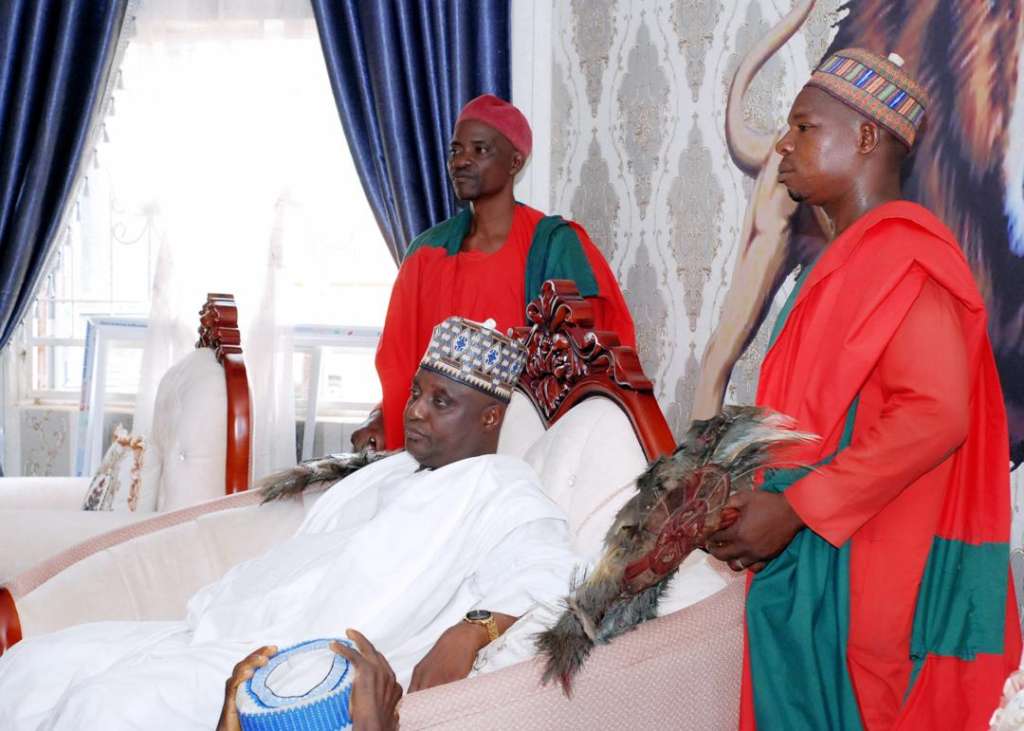
The Chief of Karu, Dr. Emmanuel Kyauta Yepwi JP the Saka Ruyi of Karu FCT, Abuja

A fortnight ago, FIDA Abuja led by its Chairperson, Chibuzor Maureen Nwosu sensitized the community on the provisions of the Violence Against Persons (Prohibition) (VAPP) Act 2015.

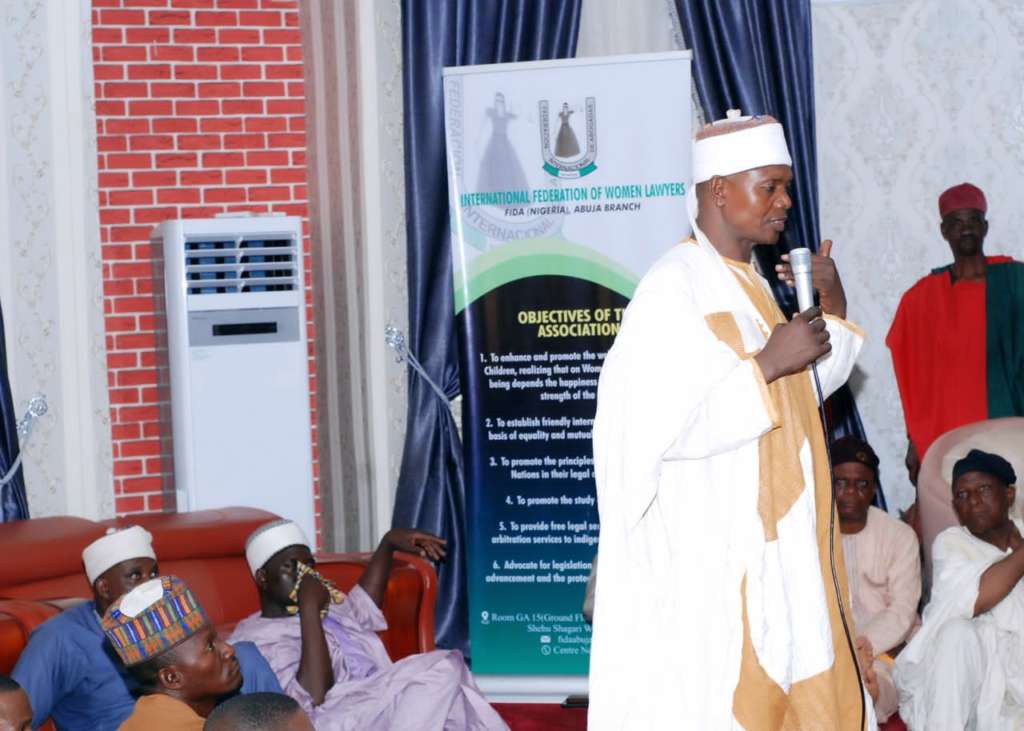
The ESU of Jikwoyi Dr. Bawa S. Jetta making his address
FIDA Abuja Chair, Maureen Chibuzor Nwosu presenting a copy of the VAPP Act to The Chief of Karu, Dr. Emmanuel Kyauta Yepwi

A statement signed by the PRO of FIDA Abuja, Olosen Victoria Ibiezugbe disclosed that the advocacy outreach took place at the palace of the Chief of Karu Dr. Emmanuel Kyauta Yepwim, the Saka Ruyi of Karu FCT.

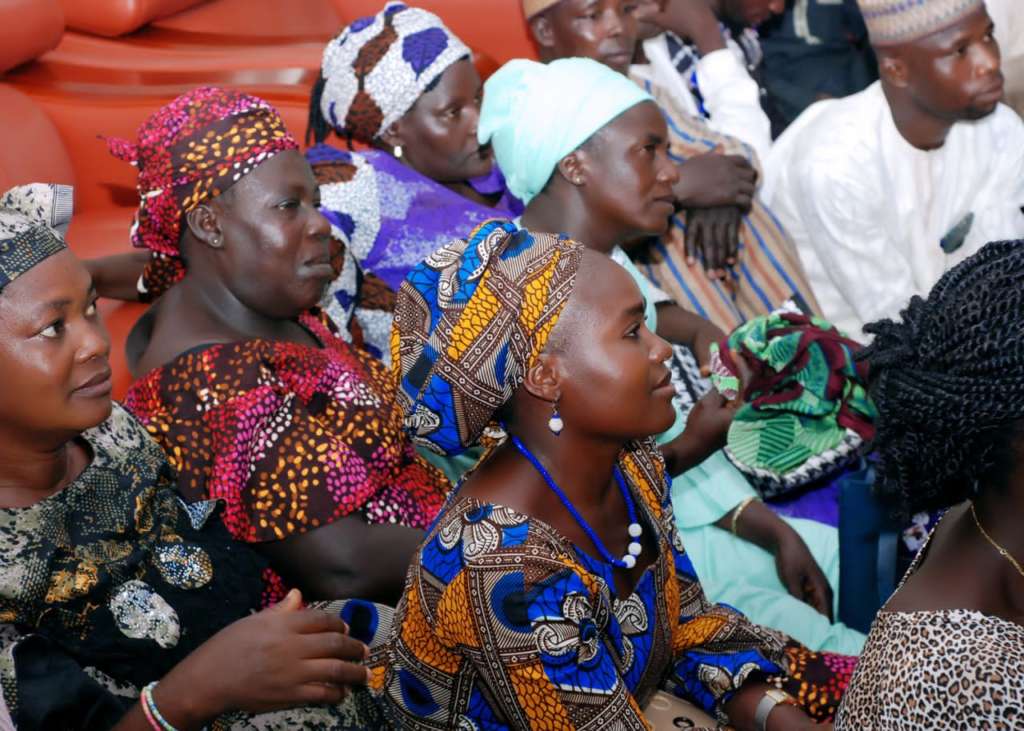
Some of the event’s attendees
FIDA Abuja members in attendance

According to Ms. Ibiezugbe, the outreach was attended by the ESU of Jikwoyi, Dr. Bawa S. Jetta, and the Chief’s cabinet members including the Village Head Zakwoyi amongst others aside from members of the community.

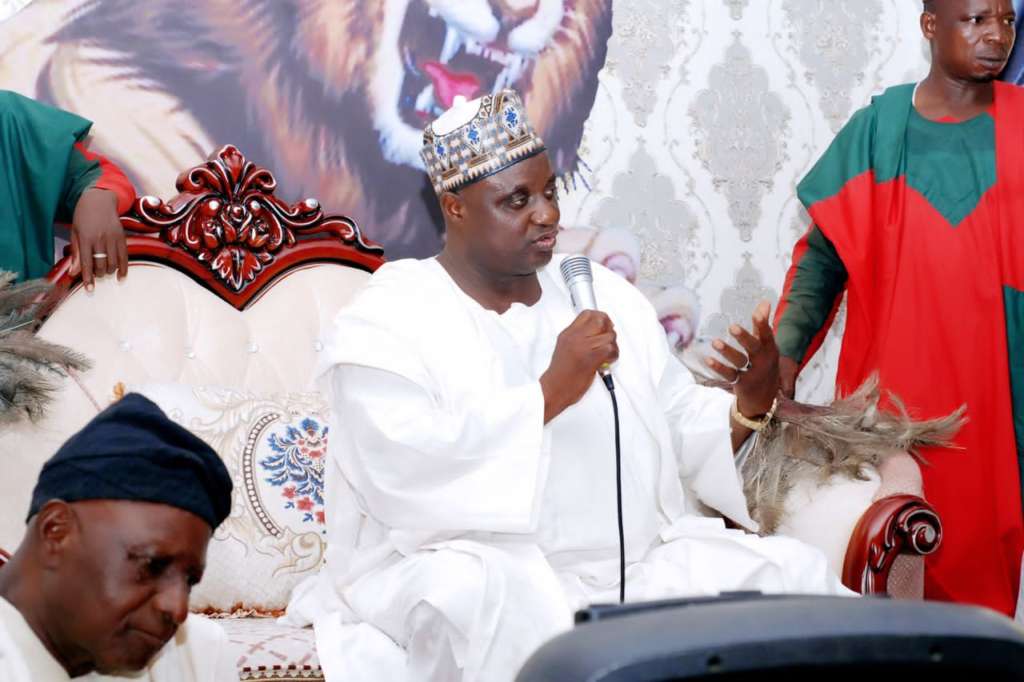
The Chief of Karu, Dr. Emmanuel Kyauta Yepwi, the Chief of Karo making an address

Ms. Nwosu at the event introduced FIDA’s mandate and proceeded to enlighten members of the community extensively on the provisions of the VAPP Act. Questions centred around these provisions were asked by the attendees.

Applauding FIDA for its achievements at the end of the address, the Chief of Karu noted that it was the first of its kind in his Community. He further requested that more such events should be organized pointing out that more awareness needs to be created of the provisions of the VAPP Act.

[DOWNLOAD JUDGMENT] Appeal Court Sets Aside Judgement On Section 84(12) Of Electoral Act

The Court of Appeal Abuja Division has set aside the judgment of the Federal High Court in Umuahia which voided the provision of Section 84(12) of the Electoral Act 2022.

While delivering judgment on Wednesday, the three-member panel headed by Justice Hamma Barka held that the Federal High Court, Umuahia, had no jurisdiction to have entertained the case as the plaintiff, Nduka Edede, lacked the locus standi to have filed the suit in the first instance

The court added that Mister Edede did not establish any cause of action to have warranted him approaching the court on the issue because he did not establish that he was directly affected by the provision.

The Court of Appeal then struck out the suit filed by Edede, but referred the appeal against the Federal High Court judgement to the Supreme Court for interpretation.

According to it, the case is a constitutional matter which only the apex court can resolve.

Determining the appeal the appellate court, however, held that the provision is unconstitutional because it violates Section 42 (1a) of the Constitution and denied a class of Nigerian citizens their right to participate in an election.

In March, Justice Evelyn Anyadike of the Federal High Court sitting in Umuahia ordered the Attorney-General of the Federation to immediately delete Section 84 (12) of the amended Electoral Act.

She held that the section was unconstitutional, invalid, illegal, null, void, and of no effect whatsoever and cannot stand. According to her, it is in violation of the clear provisions of the Constitution.

In the suit marked FHC/UM/CS/26/2022, Justice Anyadike said that Sections 66(1)(f), 107(1)(f), 137(1)(f), and 182(1)(f) of the 1999 Constitution already stipulated that government appointees vying for elective positions were only to resign at least 30 days to the date of the poll.

Justice Anyadike said that any law that mandated such appointees to resign or leave office at any time before that was unconstitutional, invalid, illegal null, and void to the extent of its inconsistency with the clear provisions of the Constitution.

Click below to download judgment

PDP -V- CHIEF NDUKA EDEDE JUDGMENT

Mary Odili: The judge and mother of two judges

By Lillian Okenwa

Her last days at the Supreme Court were nearly marred by the attempted invasion of her Abuja residence on the night of Friday, October 29, 2021, by security operatives comprising soldiers, officers of the State Security Services (SSS), policemen, and others.

It was a move the Supreme Court management, in a statement by its Director, Press, and Information, Festus Akande, described as a mission to kill or maim her.

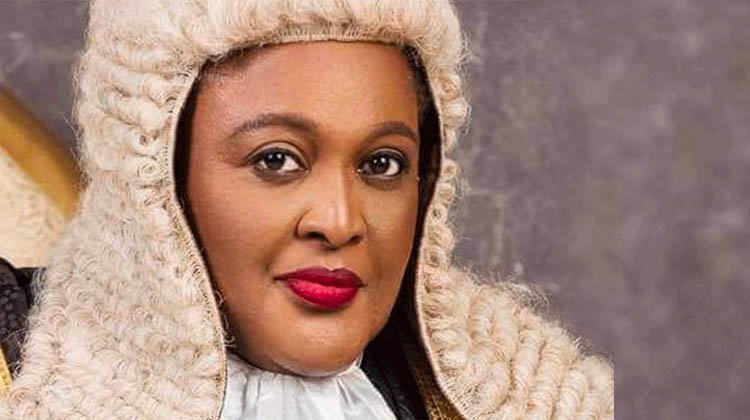
Justice Mary Odili

Born 12 May 1952 in Amudi Obizi, Ezinihitte-Mbaise Local Government Area of Imo State to Eze Bernard Nzenwa, a distinguished pre-independence legal practitioner, and Ugoeze Bernadette Nzenwa, Hon Justice Mary Ukaego Odili commenced her career in the judiciary as a Magistrate Grade III in November 1978. She served as Chief Magistrate Grade I, between 1980 and 1988 and became a High Court Judge in 1992.

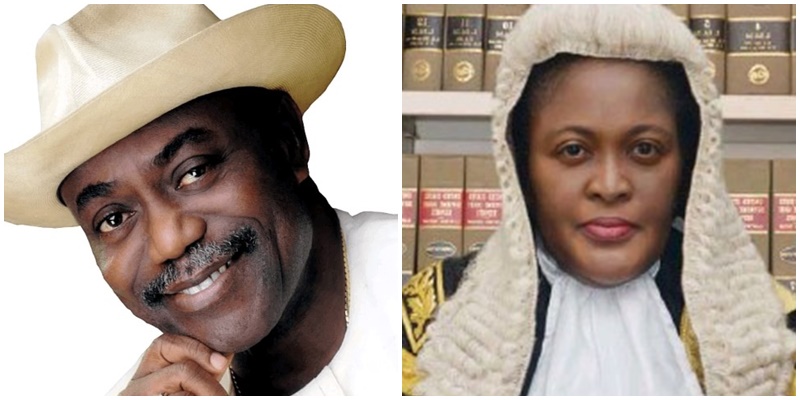
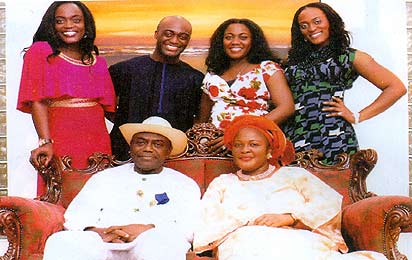
Dr. Peter and Justice Mary Odili

This former First Lady of River State and Inaugural Chairperson of the International Federal of Women Lawyers (FIDA) Rivers State rose to the Court of Appeal in 2004 and in 2011 became the third woman to be appointed to the Supreme Court of Nigeria. 

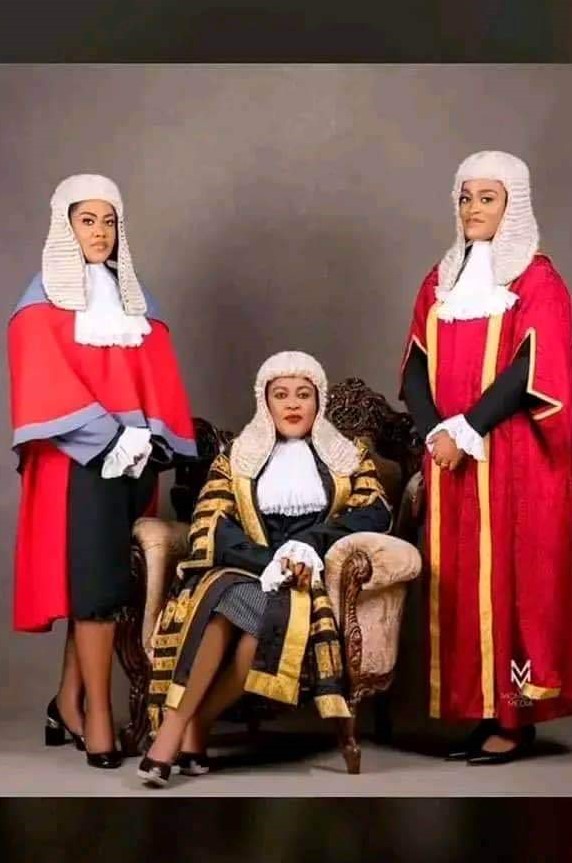
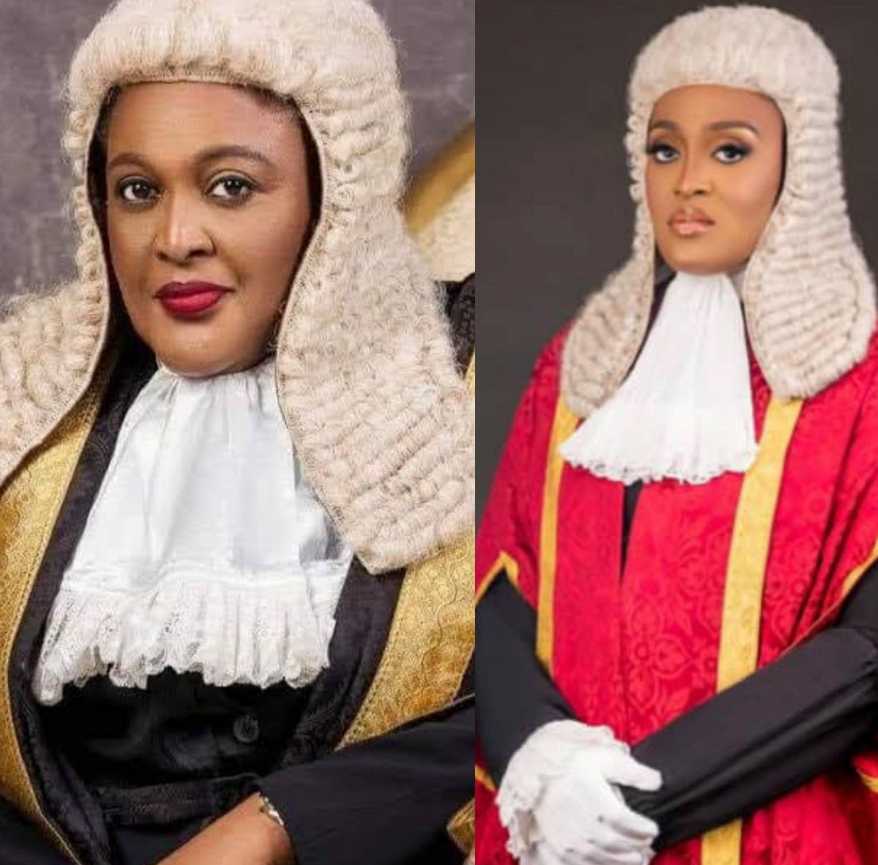
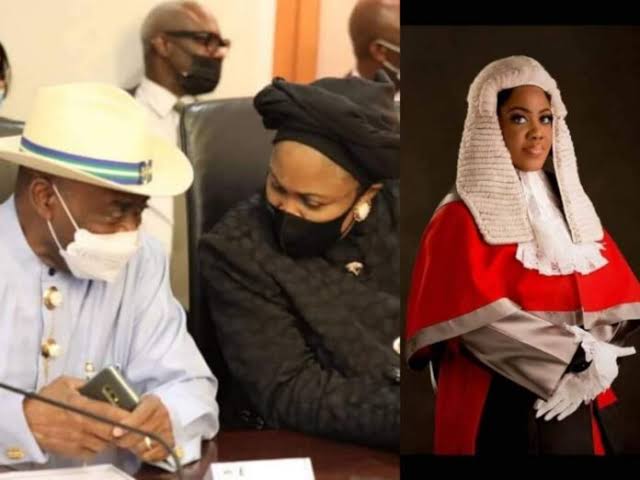
Justice Odili’s two daughters were sworn in last year as High Court judges, thereby following their mother’s footsteps. On the 23rd of December 2021, her daughter Njideka Iheme, was sworn in as a judge of the High Court of the Federal Capital Territory (FCT), Abuja. Justice Iheme was sworn in by the Chief Justice of Nigeria, Hon. Justice Ibrahim Tanko Muhammad, alongside 20 others.

Justices Mary Odili, JSC and Njideka Iheme

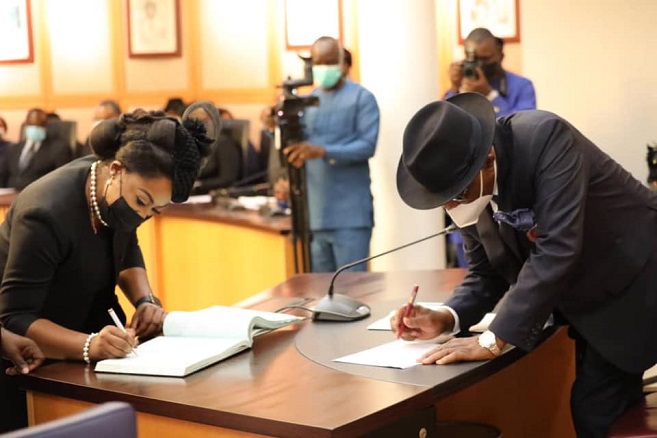
She is married to Uzoma Nwosu Iheme, the son of Court of Appeal’s Justice Chioma Nwosu-Iheme. A month later — on 24th December 2021, her sister Chinelo Chidubem Odili was sworn in as a Judge of the Rivers State Judiciary by Governor Nyesom Wike of Rivers State.

Hon. Justice Chinelo Chidubem Odili during her swearing-in at Port Harcourt
This image has an empty alt attribute; its file name is Peter-and-Mary-at-second-daughters-event.jpeg
The Odilis at their daughter—Chinelo Chidubem Odili’s swearing-in ceremony at Port Harcourt in December 2021

Among Mary Peter Odili’s last judicial duties was the judgment which saved a convicted woman from the hangman’s noose. Investigators arrested Mrs. Enobong Isonguyo and their family pastor, Udoka Ukachukwu for the alleged murder of her husband. They were eventually convicted and sentenced to death by hanging. Her later husband, a former senior NNPC staff was said to have been killed and burnt inside his Toyota Corolla car. An appellate court upheld the trial court’s decision, confirming the death penalty for the duo.

Justice Njideka Iheme and baby

However Justice Mary Odili in a landmark judgement delivered days ago at the Supreme Court held that the ruling from the lower court was based on speculation and imagination, which are not part of the criminal code. She described the death sentence as a miscarriage of justice and ordered Isonguyo to be released unconditionally.

#Meffy2023: A Joke Taken Too Far

By Chidi Anselm Odinkalu

In November 2017, it emerged that the Governor of Nigeria’s Central Bank, Godwin Emefiele, had significant interests in an off-shore company registered in Bermuda, which held an account with UBS in London. UBS is a multinational investment bank and financial services company with its headquarters in Basel and Zurich in Switzerland.

Disclosures released by the International Consortium of Investigative Journalists (ICIJ) in the Paradise Papers revealed that Mr. Emefiele owned 49% of Oviation Asset Management since 2009 and was a director in the company since January 2013.

According to The Guardian newspaper in London, “Oviation was part of a structure that imported two jets via the Isle of Man. The latest purchase, a $50m Gulfstream G550, arrived in November 2015. It replaced a $33m Gulfstream G450, imported in 2013.”

15 months before the import of the second Gulfstream, in June 2014, Mr. Emefiele became the Governor of Central Bank of Nigeria (CBN). In this capacity, he also leads The Mint, which prints Nigeria’s currency.

Section 9 of the CBN Act of 2007 requires of both the Governor of the Central Bank and his deputies that they “shall devote the whole of their time to the service of the Bank and, while holding office, shall not engage in any full or part-time employment or vocation, whether remunerated or not, except such charitable causes as may be determined by the Board and which do not conflict with or conflict with their full-time duties.”

This prohibition places three constraints on the CBN Governor: one substantive, another procedural, and a third ethical. Substantively, it bars him from moonlighting in any other job or vocation, whether or not remunerated. Procedurally, he needs the approval of the Board of the CBN before taking on any role outside the bank. Implied in this is an obligation of full and honest disclosure on the part of the CBN Governor. As an (additional) ethical standard, the Act precludes the CBN Governor from putting himself in a position that conflicts with his full-time duties.

As the head of a “public corporation” (which the CBN is), Mr. Emefiele, as CBN Governor, is also subject to the Code of Conduct for senior public officers contained in the 5th Schedule to the Nigerian constitution, which imposes on him standards of conduct with reference to asset disclosures, acceptance of gifts and donations, and holding of overseas interests.

For Mr. Emefiele, it seems these standards were ornaments of convenience. Three years into his office as the CBN Governor, his interests in Oviation were still intact. Contacted by The Guardian for an explanation in November 2017, Mr. Emefiele claimed that he “gave instructions for his shares to be handed back” to his former employers, a Nigerian bank, in 2014. For a central banker, this claim shows either a tendency for the cavalier or habit of casuistry. The former puts his professionalism in question and the latter is a question of character.

On or about 4 May, 2022, Mr. Emefiele was a guest of President Muhammadu Buhari in the presidency. The following day, some characters claiming to be armed Niger Delta militants endorsed Mr. Emefiele for the presidential ticket of the ruling All Progressives Congress (APC), promising to lay down their arms if the party were to hand the ticket to him. It is too soon to say whether or not these two developments which appear unrelated have anything to do with what happened next.

Putting months of speculation and hide-and-seek to rest, it emerged on 6 May 2022 that one Rice Farmers Association of Nigeria (RIFAN) and two other shadowy organisations had purchased for Mr. Emefiele forms to run for the presidency on the ticket of APC. His political organization goes by the brand “#Meffy2023”. The following day, 7 May, Mr. Emefiele claimed that he awaits “God’s Divine intervention” which he hoped to receive “in the next few days”.

Mr. Emefiele has been nothing if not consistent in his convenient attitude to rules. As CBN Governor, he has maintained a ruinous regime of multiple exchange rates, sustaining a deliberate scheme of profitable arbitrage which is conducive to cronyism at his discretion and insider abuse. The result is this his version of “Farmers Earnestly Yearn for Emefiele”, (FEYE).

He has got the CBN involved in schemes and scams that almost assuredly violate Section 34 of the CBN Act; from taking over the management of the National Theatre (despite pending litigation) to making himself a willing instrument for the persecution of #EndSARS protesters. Premium Times in a February 21, 2021 editorial fears that his tenure at the CBN will be remembered for having wilfully “shredded” the guardrails in the CBN Act.

In a country where consequences follow malfeasance, Mr. Emefiele will already be in prison. In Nigeria, he longs for the presidency.

The question whether Mr. Emefiele can run for the presidential ticket of a political party while also continuing to serve as the CBN Governor is both moral and legal. Premium Times addressed the former, pointing out that “the operational and administrative autonomy granted the central bank by its enabling statute was precisely to protect the governor from political influence.”

The governor of Ondo State, himself a Senior Advocate of Nigeria (SAN) and former president of the Nigerian Bar Association (NBA), Rotimi Akeredolu, puts it even more pointedly in a release issued on the same day that Mr. Emefiele collected the form to actualize his aspiration: “it is difficult to imagine that a person who occupies the exalted and sensitive office of the Governor of the CBN will be this brazen in actualizing his ambition.”

A partisan politician grubbing for votes while hanging on as CBN Governor messes with more than the statutory independence of the Bank. It is inconceivable that he can retain independence while seeking the presidency. On the same 6 May on which he collected his presidential forms, “news of Emefiele’s presidential bid sent the Naira close to a record low”, confirming that his is no ordinary ambition.

But this is, even more, a legal issue. To be sure, Mr. Emefiele, as an adult citizen of Nigeria, is entitled to run for any office he desires. Two of his predecessors have preceded him into elective politics. Clement Isong, the second Governor of the CBN from 1967 to 1975 became the first elected governor of old Cross-River State in October 1979. Chukwuma Soludo, who was CBN Governor from 2004 to 2009, is currently serving as the governor of Anambra State, having been elected on 6 November, 2021. Both Dr. Isong and Professor Soludo ran for office after the expiration of their terms.

Section 9 of the CBN Act makes it quite clear that the CBN Governor just cannot choose to run for elective office while still holding on to office. In any case, he has to first secure the approval of the CBN Board, which is not the case here. He could, of course, choose to resign in order to pursue his ambition. For this, section 11(3) of the CBN Act requires him to give “at least three months’ notice in writing to the president of his intention to do so.”

So, section 9 of the CBN Act precludes Mr. Emefiele from political activities and section 11(3) requires him to give three months’ notice of resignation. As a matter of law, he should have resigned at least three months before the primaries in which he is to be a contestant. The possibility that such a notice from the CBN Governor can be concealed for this long in political season would require terminal skills in political self-immolation.

But, as with his holding in an offshore company despite being prohibited from doing so, Mr. Emefiele would wish this away as yet another inconsequential encounter with an inconvenient guardrail. The presidency, however, is ultimately about guardrails. As Lincoln is reported to have said and many more since then have shown, it is a test of character.

In pursuit of his audacious project, Mr. Emefiele has not encountered any guardrails which he has not been willing to destroy. For those who wish to turn over to him the keys to the presidency at this time and in this manner, Governor Akeredolu’s words bear repeating: this is a joke taken too far.

In the end, it would appear that Mr. Emefiele is relaxed about having the fate of his ambition decided by a college of Nigerian judges. He carries on with the cockiness of a man who has assured himself that, as the boss of The Mint, he can issue enough notes to buy any number of judges on his march to whatever he fancies. If he ultimately suffers a bloody nose, it’ll be just desserts for a man who clearly believes everything can be bought and sold.

A lawyer and a teacher, Odinkalu can be reached at [email protected]

Godiya Vs Danladi: Grudge Primaries With National Echo

By Lanre Adewole

There are 109 senate races across the country and nomination contests are on-going across party lines. But unlike elsewhere, where such an exercise is voter-driven, back home, is at the whim of governors. When they are not retiring to the senate, they are sending equerries to hold in trust. Occasionally, when a different outcome is recorded, it becomes a shock win, particularly at party level. It is also not certain that the winner would end up being the party’s candidate, especially now that the Supreme Court has incredibly held that the deeds of a political party can’t be queried. We will pay, soon, for turning party’s state chapters to governors’ merchandise. I digress.

Despite the gun-point nomination process we have adopted, what is playing out in Nasarawa North Senatorial District and its end-game effects on the local politics of the state and the nuances of the governing All Progressives Congress at the national level should ordinarily push the nomination contest between Senator Godiya Akwashiki and his challenger, Judiciary Encyclopedia, Danladi Halilu, to the centre of political discourse. Between the duo, there is a recent history.

In the early days of March 2019, Godiya, fresh from his election as a Distinguished, was stripped and beaten in Abuja by family members of Danladi for allegedly seducing the wife of the former Secretary of the National Judicial Council (NJC). The senator-elect, was allegedly caught in the act. Lavishly reported in the media, police had to step him, with both Godiya and Danladi, who was a benefactor to the senator-elect when the seduction scandal broke out, being invited and questioned by the police authorities in the federal capital.

Solomon, the great Biblical King should know. He said three things are too wonderful for him in Proverbs 30:18. One, the way of a snake on a rock. Two, the way of a ship at sea and the third, is the way of a man with a maiden. Even in the western world where they practice coated infidelity, as open marriage, men still rage when they sight other men, chosen by their wives as the agreed sexual partners outside marriage. Ejo nbe lorun awi sokun. (Armaggedon is finally here). Imagine Will Smith, slapping Chris Rock, over Jada Pinkett, the same woman with whom he is practising open marriage, simply because the comedian “dragged” her at Oscars. The same woman you signed on other men sleeping with? What exactly is wrong with men?

If Smith could go wild because of a woman like Jada (no disrespect meant), Danladi’s response to Godiya’s obvious indecorous communication with his wife, would be deemed appropriate, only that as an icon of the Judiciary who served eight Chief Justices of Nigeria as the Secretary of the NJC, he should have restrained his own, from taking the laws into their own hands on his behalf. His wife, however, deserves a gold epaulette. Sensing that Godiya, the godson, was beginning to manifest the saying “onibara nbole bo” ( the beggar manifesting kleptomania tendency), she quickly activated the red alert button, but the family agreed to play along, to nab the alleged debaucher on the wrist. She signposts the optimism that marital fidelity isn’t completely lost to the dogs, running the ultra-liberal movement. All can still be well.

Well, Nasarawa elders and APC leaders, sensing a catastrophe if any of the two, is arraigned for assault or enticing a married woman, waded in and the matter was resolved in the manner of a family affair, with Godiya writing to withdraw the assault complaint and Danladi’s clan, letting go, the enticement charge. Everyone went home somehow happy, until police came early in the year, doing their thing, their way.

On January 19, celebrated online medium, Premium Times went to town with a police report clearing Godiya and indicting Danladi and his own. The report said the police probe clearing the senator, was inconclusive, thereby putting the benefit of the doubt in his favour. How do you declare a winner in an inconclusive election? But that is the Nigerian police, which couldn’t obtain call logs to establish the veracity of the recorded conversation between Danladi’s wife and Godiya, but still went ahead to clear a party and indict the other, in a case, both parties, agreed to settle as brothers.

Danladi was enraged when the report hit the airwaves. He promised to fight the injustice. When practically everyone was expecting him to institute cases against Godiya, police and the publishing house, he played a fast one, making a play for Godiya’s seat, which was in the safe column, until the big fish dived in.

What a way to teach “thou shall not ogle.”

Danladi’s entry into the nomination battle simply changed all permutations. The three A-lister leaders of the party in the state are now involved. APC national chair and former governor of the state, Abdullahi Adamu has no scruple showcasing his affection for Danladi. With uncharacteristic wide-mouth smile, the always glowering Adamu almost cuddled Danladi at the unveiling of his nomination form. Adamu’s arch-rival and former governor, Senator Tanko Al-Makura is likely, still smarting from the drubbing he got in his (Adamu) hand, well, with presidential support. While Al-Makura’s ticket for Nasarawa South is almost assured, the Danladi/Godiya contest, is an opportunity for him, to test strength again, with his conqueror for the national chair seat. This time, without the mighty presidency, Al-Makura will try to deliver for Godiya, to even score with Adamu. If Al-Makura succeeds, he may be opening a floodgate of eyeball-to-eyeball against the chairman, from other places, especially in the presidential contest where aspirants are already being compelled to sign undated undertaking, withdrawing from the race that has barely started. APC wonderment, you say.

To prove his community value, Adamu must-win for Danladi. Then, there is the state governor, Abdullahi Sule, who, by APC’s arrangement, is the leader of the party in the state. He has been hoisting Danladi’s poster, dancing to funny local beats by his side. But the music that politics dances to, isn’t the everyday R&B. But if Sule has truly joined the Danladi train, then Godiya is likely stranded. Just because he couldn’t look elsewhere?

Credit:tribuneonlineng.com

‘2023: Lets’s hail #Bring back Jonathan’s patriots

Inside Stuff With MARTINS OLOJA

When I read the other day that some powerful patriots in the governing party, the APC had concluded plans to return former president Good-luck Azikiwe Jonathan to power, my soul magnified the Lord that at long last, the most populous black nation on earth would fulfil destiny sooner than later. I hope most right-thinking members of the public would recall part of the last words of the iconic Nelson Mandela on how the destiny of the black race and indeed the future of Africa could be tied to Nigeria’s ecosystem, sorry development. The respected old man, Madiba had noted to a Nigerian diplomat who visited him before he joined his ancestors that: ‘The world will not respect Africa until Nigeria earns that respect. The black people of the world need Nigeria to be great as a source of pride and confidence…’

It is even on record that Madiba granted the interview in which this quotable quote emerged to Dr. Hakeem Baba Ahmed, then permanent secretary, foreign affairs ministry when Dr. Jonathan was in power. It was again unfortunate that some artful dodgers and powerful campaigners in APC outwitted the then ruling party, the PDP and plotted the defeat of President Jonathan who sources said had in April 2015 prepared a blueprint on how to fulfil the vision of Madiba for Nigeria.

I understand that the man of destiny from Otuoke, Jonathan took those Mandela’s words on marble seriously because the leader whose tenure prepared South Africa to be a member of both the G-20 and BRICS did not predict his country to lead Africa and the black race. He saw Nigeria as the authentic Giant of Africa. Again, the APC moneybags we didn’t see as ‘enemies of Nigeria’ truncated Nigeria’s dream of becoming the undisputed leader of the black race when they plotted the strange defeat of Jonathan in 2015. Meanwhile, top sources in Abuja have said that a few oracles in the ruling party have seen that some angry patriots are prepared to sue the party and indeed those who packaged the presidential candidate then for truncating Nigeria’s destiny through the 2015 presidential election.

I understand that those who are in the vanguard of revamping the party’s rickety structure before restructuring the country within the construct of the much-needed federalism everyone is clamouring for are behind the risk, sorry expediency of bringing back Jonathan. They want to bring back the good man, the first president who came to office with a doctoral degree. They want to return him with a mandate to take Nigeria from a Third-World, debtor nation to a First World. It is understood that the arrowheads of the right-the-2015-wrong strategic campaign for Jonathan’s return have bought hundreds of copies of Lee Kuan Yew’s auto-biography, ‘From Third World to First: The Singapore Story: 1965-2000’, which details how the legend, Yew led Singapore from Third to First World. The copies of the book are said to have been distributed to members of a shadowy implementation committee of the #Bring-back-Jonathan campaign.

There is therefore a sense in which we can understand the born-again patriots who have specialised in choosing our leaders that have taken us to where Madiba recognised us, to bring back Jonathan for a strategic rebound from the brink Ambassador John Campbell, a former American envoy has written about several times. That member of the United States Council on Foreign Relations, Campbell is a ‘prophet of doom’. We should not allow him to weep more than the bereaved anymore about the most populous black nation on earth. Campbell has been part of the people who were looking askance and standing akimbo when Jonathan’s government was being pilloried by the then opposition party, APC, which asked Jonathan to resign because of the level of insecurity confined to the North East then. The then opposition party pointed out through the then national publicity secretary (today’s minister of information and culture) that Jonathan’s administration’s attempt to tag the Boko Haram insurgents as terrorists, was clearly illegal.

What was worse, the Obama administration then citing our anti-gay marriage law, failed to sell arms to Nigeria. And when the same Jonathan’s government went to a black market in South Africa, to procure arms to defeat Boko Haram, the same opposition elements tipped the Jacob Zuma-led government off and the money for the black market deal and the aircraft chartered for the operation were seized. Who understands till the present that the man of God whose Mission owns the chartered airplane hasn’t recovered from the trauma of demonisation of the dark time for Jonathan and the Word of Life Ministry of Pastor Ayo Oritsejafor. That is why I feel that critics of the bring-back-Jonathan campaign should deepen their understanding about the ingenuity of the masterminds behind the deal. It is good for their remorseful moment especially now that they too are beginning to note that people can now understand the artful packaging they did in 2015, which has led to the present darkness. They need to rehabilitate, sorry return Jonathan who recruited foreign mercenaries that once squared up with the insurgents the present administration rejected. They want to bring back Jonathan who constituted a remarkable cabinet comprising some of the brightest including a Princess, an architect and oil-industry aficionado who turned around the oil and gas industry and institutionalised fuel subsidy as sweeteners and slush funds for party and election management. Now that the fuel subsidy has gone haywire on the watch of the 2015 packaged candidate whose integrity they now know has been grossly overrated, they can bring back Jonathan who can also bring back Diezani Alison Madueke who though is still facing trials on massive corruption charges and has quietly exploited plea bargaining mechanism to return some dollars to the EFCC treasury being investigated. They can bring back our Jonathan whose wife, a famous wordsmith, an impresario can excite the nation again with some quotable quotes that can make a way for millions of dollars worth of gifts she once confessed to the court she got from executive admirers of her artistry and effervescence.

Don’t we need that kind of First Lady again who would not need to disturb, sorry court the apex bank for forex to make wealth? Would you recall the thesis of that wizard called Chinweizu (Ibekwe)? In a remarkable book, ‘The Anatomy of Female Power’ during the IBB wonderful regime, he notes after a reality check, that we should live with a ‘thesis’ that although men rule the world, women actually rule the men that rule the world. It thus appears that the ruling party’s masterminds have just studied Chinweizu’s un-putdown-able book and come to terms with its reality.

Don’t get it twisted please, the bring-back-Jonathan campaigners are post- #EndSARS protest patriots who would like the country to fulfil its destiny. Can’t we all see that what the iconic Chinua Achebe noted in 1983 in his classic, ‘The Trouble With Nigeria’? Achebe the prophet, had in that pocketsize book noted that, “the trouble with Nigeria is simply and squarely a failure of leadership”. The ruling party’s restructuring committee may have just realised that the trouble with the Nigeria they now govern is simply and squarely a failure of leadership.

Yes, failure of leadership that has lost control over insecurity they promised to deal with in 2015. We need to understand their dilemma: they may have just realised that though they promised to deal with corruption as a bad ulcer that thrives on the medications applied to it over the years, their regime has woefully failed to deal with it. What is worse, for them, even the (unconfirmed-by-the-senate since 2015) head of the anti-corruption agency, EFCC they have relied on to deal with the public enemy called corruption has been dealing with only few enemies of state actors. And behold, the then anti-graft acting chief executive even curiously faced corruption charges. Anyway, he has been promoted (AIG). Why won’t they look for Jonathan’s return, after all, as they may have realised that, in the main, corruption index in his (Jonathan’s) administration was more favourable. Or so it seems.

Some gossips and fake news carriers in the country have been spreading some incredible items around why Jonathan has to return to Aso presidential villa to rebuild the country’s ruined walls. Some have said that it is a masterstroke by some northern elements who want to bow to the clamour for a southern president in 2023 and Jonathan fits in as he can spend only one term having spent one legal term from 2011-2015. The ordinary analysts are saying that in this plot, there will be a strong vice presidential candidate from the North who will eventually succeed Jonathan and spend another eight years. Other mere risk analysts (not oracles) in this regard who claim to be close to the power house in Abuja and the north are saying at different pepper-soup joints that Jonathan’s name has cropped up at this time for a strategic reason: that president Buhari has come across so many documents of some corrupt transactions (in Jonathan’s government) that the former president might not be aware of while in office. So, they want to blackmail him to accept some terms that are still hazy on the 2023 presidential election. I don’t believe in these conspiracy theories at this time. What should be discernible to all is that a game is on. Those who have been playing their beautiful game with Nigeria are at work again. They have seen some good in the man of destiny from Otuoke. They have suddenly remembered the magic wand and statecraft he used to confine insurgency to only Borno, Yobe and Adamawa states in the North East. In Nigeria, their Nigeria today, banditry competes with insurgency and kidnapping everywhere we go in the 36 states. We can’t go home for Christmas and New Year because even the government is saying it is hazardous to travel again. Even the years the locusts ate in Jonathan’s time were not as perilous as we have now. Why won’t they campaign for the man they demonised in 2015 while repackaging a man whose body language they told us could produce electricity megawatts? Since that is the limit of their understanding and knowledge of where they think we should be, let’s doze off again as the artful fixers continue with their sophistry that will lead us to where Mandela would want us to be on behalf of the black race.

  • The original texts of this relevant article appeared here (Inside Stuff) on Sunday December 6, 2020

2023 General Election: Lie Telling By Politicians

By Afe Babalola SAN

THE Nigerian political space is gradually getting saturated with the gradual dawning of the 2023 General Elections. Unsurprisingly, the news media have be filled with the political campaigns and interviews of Presidential, Governorship and Legislative Houses hopefuls who have tried to curry the support of the electorate. These efforts are, of course, backed by party delegates, political godfathers, and influential people. Ahead of the elections, politicians will have no qualms promising absurdities and outright impossibilities to a populace that, while tired of politicians’ poor performance, has yet to demonstrate a genuine willingness to hold them accountable for failing to deliver on previous electoral promises. It is expected that these campaign promises will be centred around the yet-to-be-resolved issue of security, infrastructural development, health, employment, electricity generation, agriculture, and education. Politicians will promise millions of jobs, the construction of schools, the rehabilitation of roads, the revitalisation of the educational sector, and the revamping of the medical sector, all of which appear to be doable and indeed expedient on the surface except for the lack of any intention to carry them out.

False assurances

Regarding education, promises will be made to build new schools, free schools, and provide free food while current schools continue to be deprived of funding for salary payments and facility repairs. Many roads in Nigeria are now in appalling condition. Nonetheless, cases have been documented in the past in which a road that is completely inaccessible to any type of motorised vehicle is reported in the government’s archives as having been restored or reconstructed time and time again. Many politicians will forge paperwork pertaining to their eligibility to run in the elections even before winning their party’s primary. To be certain, the phenomenon of lie telling by Politician is not peculiar to Nigeria alone. It pervades the whole planet so much so that academic studies have been dedicated to study just why Politicians lie.

In his article entitled “Six Reasons why Politicians lie”, Jim Taylor Ph.D. stated as follows: “I’m constantly amazed by how often politicians lie and then, of course, their unwillingness to admit that they lied. The euphemisms that politicians use for what is, in many cases, bold-faced lies are legend. Politicians misspoke. The biased media misinterpreted what they meant. Politicians’ words were distorted, misrepresented, twisted, exaggerated, or taken out of context. They overstated, understated, or misstated. But, of course, politicians never lie, at least that’s what they say. Yet, the unvarnished truth is that politicians do lie about things substantive…The $64,000 question that is constantly asked is: Why do politicians believe they can lie and not get caught?”

He then identified the six reasons why Politicians lie as:

Many Politicians are narcissists.

Narcissists are arrogant, self-important, see themselves as special, require excessive admiration, have a sense of entitlement, and are exploitative. 2. Politicians know their followers will believe them, even in the face of irrefutable evidence to the contrary. 3. People don’t want to hear the truth. 4. The Internet never forgets. 5. Cognitive biases. 6. If a lie is told enough times, people will assume it is true. Another school of thought contends that politicians must lie in order to maneuver within the political and leadership environments in which they find themselves. Arguing this view in his article titled “Why Politicians lie”, Dr. Ichak Adizes stated that: “The theme of lying politicians is not exclusive to the USA. In the fifty-two countries in which I have worked, I hear the same complaint: “We cannot trust our leaders. They are evasive. They hold back from telling us the truth, etc.” So why is it a global phenomenon that politicians lie? Because they have to.

I got this insight from working with prime ministers and presidents of various countries, while at the same time working with CEOs of very large companies. Leaders of major conglomerates and of countries exhibit very similar leadership styles: They are evasive, play their cards very close to the vest and do not share information if they can help it. They use big words to obscure their real intentions. They often “lie,” skirt the truth, too.

Why? The higher you ascend up the hierarchy, the more political the environment becomes. Those you are interrelating with have their own interests—be they personal, or of the unit they manage—and there is a struggle between all these interests. As a leader you have to manoeuvre between all these pressure groups and powerful individuals and survive the manoeuvring. If you are truthful about your intentions and make them known, you are giving information to those who want to unseat you, who want you to lose so they can gain. You lose the capability to manoeuvre politically. It would be like a military leader making his battle plans known to the enemy during a war. And folks, up there in the organizational hierarchy, whether of a country or a corporation, it is a war.”

There are times when lying is not a crime and when it is essential. However, the reality is that in this region of the globe, politicians’ lying has grown so common that care is required. When a falsehood is repeated, people come to believe it is true, according to Dr. Taylor. Furthermore, as he pointed out, it is quite simple for a falsehood to persist on the internet in this day and age, to the point where many people would regard its existence on the internet as conclusive confirmation of its validity.

Links between lies and lack of trust

The argument must also be underscored that deceiving the electorate into voting based solely on lies is fundamentally immoral. Such actions invariably result in a loss of trust between the government and the people it governs. It explains why many Nigerians have always believed, even before independence, that the government cannot be trusted and that everyone in government is entitled to a piece of the “national cake.”

Explaining this, Martin Meredith in his book, “The State of Africa”, stated as follows: “The misuse of public funds in Nigeria had deep roots. During the colonial era, many Nigerians regarded government institutions as olu oyibo – whiteman’s business, an alien system that could be plundered when necessary. Government’s business is no man’s business, ran a popular Nigerian saying.” Explaining the practice, Eghosa Osaghe, a Nigerian academic commented: ‘there was thus nothing seriously wrong with stealing state funds, especially if they are used to benefit not only individual but also members of his community.

Use the power and resources

Those who had the opportunity to be in government were expected to use the power and resources at their disposal to advance private and communal interests.’ The attitude prevailed with the coming of independence. The state was regarded as a foreign institution that could be used for personal and community gain without any sense of shame or need for accountability. Plunderers of the government treasury were often excused on the grounds that they had only ‘taken their share.’ What added to the problem was the notion that the government was in effect, a reservoir of ‘free money.”

As elections approach, I encourage politicians to examine the consequences of their deception. While it may earn them political office, it will cause them to lose the faith and trust of people they rule, and the country will suffer as a result. I can only hope that the country’s fortunes and the urgency to protect it will one day completely resonate with our policymakers.

AARE AFE BABALOLA, OFR, CON, SAN, LLD. D.Litt.

7 Common Vaginal Odours

By Dr. Njideka Kalu

Here is another life-saving and interesting episode with Dr. Njideka.

Seven common vaginal odours explained —and how to treat them!

7 Common Vaginal Odours explained- And how to treat them.

Whether a Class Action in Alleged Breach Of Fundamental Rights is Feasible: An Analysis of Abuja Electricity Distribution Company Plc & Ors v. Akaliro & Ors

By Ikeazor ‘Kizor’ Akaraiwe, SAN

“No amount of availability of the decisions of other divisions will make any difference to a justice who does not like reading. This oxymoronic expression about Justices who do not like reading seems like an aberration which indeed it is but for the current realities of Nigeria. But this is a call to the appointing authorities to remove such aberration, otherwise, no amount of technological provisions of decisions made available within 24 hours will make any difference.” – Akaraiwe, SAN

1.1 FACTS OF THE CASE UNDER ANALYSIS

The Appellants as Applicants at the High Court of Nasarawa State instituted an action against the Respondents for the enforcement of their Fundamental Human Rights allegedly breached by the Respondents. The Appellants claimed that the Nigerian Army formation at 177 Guards Battalion incurred outstanding electricity bills to the sum of N604,701,853.60 (Six hundred and four million, seven hundred and one thousand, eight hundred and fifty-three naira, sixty kobo). They contended that despite several demand letters, the Respondents refused/neglected to pay their outstanding electricity bills. The Appellants finally issued a disconnection notice to the Respondents and eventually disconnected the Nigerian Army formation at 177 Guards battalion, Keffi, Nasarawa State from electricity supply when they still refused/neglected to pay the outstanding electricity bills.

Subsequently, military personnel from 177 Guards Brigade Battalion invaded and raided the 1st Appellant’s office, infringed on the fundamental rights of the Appellants, and thereafter forced the Appellants to reconnect electricity supply to the Barracks. The Respondents filed counter-affidavits denying the allegations of the Appellants and also challenged the jurisdiction of the trial court to entertain the Appellants’ suit. The trial court heard the objections together with the substantive application, over-ruled the objections of the Respondents, and dismissed the Appellants’ application for enforcement of their fundamental rights.

Dissatisfied with the judgment, the Appellants appealed. On appeal, the Court of Appeal raised a preliminary issue on jurisdiction based on the competence of the joint application filed by the Appellants at the trial court.

1.2 PRELIMINARY ISSUE FOR DETERMINATION RAISED BY THE COURT:

Whether a joint application can be filed by more than one person (in the same application) to enforce a right under the Fundamental Rights (Enforcement Procedure) Rules?

1.3 DECISION:

On the preliminary issue, the court held that the joint application filed by the Appellants was incompetent and liable to be struck out. The appeal was therefore dismissed and the suit struck out for gross incompetence.

The substantive appeal was held to lack merit and accordingly dismissed by the Court of Appeal, Makurdi Division, the ruling of the trial court being thereby affirmed.

In arriving at that decision, the Court of Appeal per Igwe Ignatius Agube JCA and Nimpar JCA respectively reasoned as follows:

Per Agube JCA,

 “…I am however not unmindful of the preamble to the extant Rules which encourages and welcome public interest litigations in the human rights field which in effect provides that no human rights case may be dismissed or struck out for want of locus standi. The contention here is not on the rights of the applicants to institute the action but rather on the propriety of bringing joint action.”

Per Nimpar JCA,

“… Section 46 of the 1999 Constitution, specifically states that any person who alleges that his fundamental right has been or is likely to be breached can approach a High Court in that State for redress. The right can be enforced on individual basis and not by collective action. It is faulty for the appellants to file a single affidavit, the alleged breach was not equally or evenly violated…”

2.1 Basis for disagreeing with the decision:

Firstly, in establishing the basis for the author’s respectful disagreement with this decision the following questions are hereby set out;

One. What is the philosophical premise for fundamental rights enforcement? Is it not that the rights of citizens should not be derogated from?

Two. How then can the court refuse to enforce citizens’ rights based on the definition of the phrase “any person” as used in S. 46 (1) of the 1999 Constitution of the Federal Republic of Nigeria, because more than one citizen brought a joint application?

Three. Could the honourable court not have, in the interest of substantial justice, ordered the applications separated (if at all necessary) and then proceed to deliver substantial justice on the merits?

Four. Should Substantial Justice be sacrificed on the altar of Technicality, especially in matters to do with Enforcement of the Basic Rights of Citizens as covered by Chapter 4 of the Constitution?

Five. Should a court of law and justice decline from enforcing citizens’ Fundamental Rights for the principal reason that the application pursuant thereto was joint and not several applications by individual applicants, pursuant to the phrase “any person” as used in Section 46(1) of the 1999 Constitution of the Federal Republic of Nigeria, which the court held as implying singularity and not plurality?

2.2 “Any Person”-A decision from the Court of Appeal, Kaduna   Division

In disagreeing with the decision under analysis, I adopt as mine in entirety, the reasoning of the Court of Appeal Kaduna Division per Affen JCA[2] which held a diametrically opposing view with respect to the phrase “ANY PERSON” as used in Section 46(1) of the 1999 Constitution on the subject. And for clarity, I have used numbered paragraphs to reproduce the court’s reasoning:

A. “Bearing in mind that the word ‘any’ in its ordinary sense does not always import the singular, I reckon that the phrase “any person” (as employed in s. 46(1) CFRN and the Order 2 Rule 1 of the FREP Rules) is not antithetical to the filing of a joint action for enforcement of fundamental rights.

B. “The Constitution provides in s. 318(4) that the “Interpretation Act shall apply for the purpose of interpreting the provisions of this Constitution”; and s. 14(b) of the Interpretation Act, Cap. I23 Laws of the Federation 2004 makes it clear beyond peradventure that “words in the singular include the plural and words in the plural include the singular”.

C. “Thus, s. 46(1) CFRN can conveniently be interpreted as — ‘Any persons who allege that any of the provisions of this Chapter has been, is being or likely to be contravened in any State in relation to them may apply to a High Court in that State for redress’ — without doing violence to the intendment of the Constitution.

LEGAL POLICY SEEKS TO DISCOURAGE MULTIPLICITY OF ACTIONS, AND A FUNDAMENTAL RIGHT ENFORCEMENT ACTION OUGHT NOT TO BE DEFEATED SOLELY ON THE BASIS THAT TWO OR MORE APPLICANTS JOINED FORCES TO INITIATE THE ACTION JOINTLY. Notably, Order XV Rule 4 of the FREP Rules provide that

“[w]here in the course of any Human Rights proceedings, any situation arises for which there is or appears to be no adequate provision in these Rules, the Civil Procedure Rules of the Court for the time being in force shall apply”.

D. “Thus, what should engage the court’s attention are the normal considerations that render it expedient to file a joint action, such as

(i) whether the right to relief is in respect of or arises out of the same transaction or series of transactions; and

(ii) a common question of law or fact would arise if separate actions were brought by such persons.” (Caps added for emphasis).

2.3 A decision from the Court of Appeal Enugu Division

Interestingly, the Court of Appeal, Enugu Division per Ita Mbaba JCA reasoned along the same lines as the Kaduna Division thus:

GOVT. OF ENUGU STATE OF NIG. & ORS v. ONYIA & ORS[3]

On whether a joint application can be filed by more than one person to enforce a right under the Fundamental Rights (Enforcement Procedure) Rules

“…I also think Appellants were in error, to say that the 34 Applicants were wrong to bring this suit, together, alleging misjoinder of parties. Parties are rather always encouraged to come together, either as individuals or as a group and/or in representative capacity, when they have a common interest or grievance, seeking redress in Court. It would even amount to multiplicity of actions and abuse of the Court process, in my view, if the parties (like the 34 Applicants) who have identified their common interest and grievance in the suit, were to have filed separate actions – 34 Applications, in the same Court, seeking the same reliefs, thereby overwhelming and overburdening the Court, and increasing the cost of litigation and the judicial cost/time!…” Per Ita George Mbaba, JCA[4]

E. A decision from the Court of Appeal, Lagos Division

Also, the Lagos Division of the Court of Appeal per Anthony Ugochukwu Ogakwu JCA specifically compares and contrasts the judgments of Makurdi division (under analysis) and Enugu division just cited above, and comes to the following unimpeachable conclusion in INCORPORATED TRUSTEES OF DIGITAL RIGHTS LAWYERS INITIATIVE & ORS v. NIMC[5]:

“… There has been a good number of conflicting decisions of this Court on the point, the most recent decisions which I was able to find being GOVERNMENT OF ENUGU STATE v. ONYA [6] delivered by the Enugu Division on 28th January 2021, which held that joint applicants can bring an application to enforce fundamental rights. Au contraire, in AEDC (ABUJA ELECTRICITY DISTRIBUTION COMPANY) v. AKALIRO [7] which was delivered by the Makurdi Division on 31st March 2021, it was held that an application by joint applicants was incompetent. The right to seek redress for evisceration of fundamental rights is by Section 46 (1) of the 1999 Constitution vested in any person. The said stipulation reads: “Any person who alleges that any of the provisions of this chapter has been, is being or likely to be contravened in any State in relation to him may apply to a High Court in that State for redress.” See also Order 2 Rule 1 of the Fundamental Rights (Enforcement Procedure) Rules, 2009, which is similarly worded for any person to seek redress.

The critical question is whether the phrase any person as used in the provision can be construed to include more than one person or whether it is limited to only one person. Where it is wide enough to include more than one person, then it necessarily follows that joint applicants can bring an application but where it cannot be so construed then an application by the joint applicants will be incompetent. Let me hasten to state that even if the phrase any person denotes singular, by Section 14 of the Interpretation Act, in construing enactments, words in the singular include the plural, and words in the plural include the singular. See COKER v. ADETAYO[8], UDEH v. THE STATE[9] and APGA v. OHAZULUIKE.[10] Per Ugochukwu Anthony Ogakwu, JCA[11]

FURTHER SUBMISSIONS

On the preponderance of authorities cited above, in particular the reasoning of Affen, Mbaba, and Ogakwu, JJCA, it is crystal clear that the decision in ABUJA ELECTRICITY DISTRIBUTION COMPANY PLC & ORS v. AKALIRO & ORS[12] in particular, the construing of the phrase “Any Person” as occurring in s.46 (1) of the Constitution of the Federal Republic of Nigeria, 1999 as being capable only of singular and NOT plural application was, with the greatest respect, delivered per incuriam, in the light, especially of the constitutional provision in s. 318 (4)[13] that the “Interpretation Act shall apply for the purpose of interpreting the provisions of this Constitution”; and s. 14(b) of the Interpretation Act[14] which makes it clear beyond peradventure that

“words in the singular include the plural and words in the plural include the singular.”

Besides, as noted by the Court of Appeal, Kaduna division per Affen JCA[15],

 “Thus, what should engage the court’s attention are the normal considerations that render it expedient to file a joint action, such as;

(i)whether the right to relief is in respect of or arises out of the same transaction or series of transactions; and

(ii) a common question of law or fact would arise if separate actions were brought by such persons.”

CONCLUSION

4.1 The Larger Question – Conflicting Decisions of the Court of Appeal

As already noted by the Court of Appeal, Lagos division per Ogakwu JCA

“There has been a good number of conflicting decisions of this Court on the point,…”

Not just on this point, my lord.

Conflicting decisions tend to demystify the honourable court. By the way, those who are clamoring for the constitution of the Supreme Court of Nigeria to be increased from the present 20 to 40 Justices should take note of this point. But the solution to the problem of conflicting decisions is not rocket science.

4.3 The solution is a functional website with immediate uploading of all decisions of each of the 20 divisions of the Court of Appeal within 24 hours of delivery, so that justices, legal practitioners, and indeed, the general public will have immediate access to what the divisions have said on this or that subject. You can actually read online on their websites, the decisions of equivalent courts in the United Kingdom within 24 hours of delivery.

4.4 But while holding unto technology with one hand, a second and equally important solution is the appointment of qualified personnel to man the courts, starting with the learned justices. No amount of availability of the decisions of other divisions will make any difference to a justice who does not like reading. This oxymoronic expression about Justices who do not like reading seems like an aberration which indeed it is but for the current realities of Nigeria. But this is a call to the appointing authorities to remove such aberration, otherwise, no amount of technological provisions of decisions made available within 24 hours will make any difference.

4.5 Perhaps, this is a good place to also remind the Court of Appeal in Nigeria of express guidelines for disagreeing with judgments of its concurrent divisions.

The rule in USMAN v UMARU [16] (also known as The Rule in Young v. Bristol Aeroplane Co. Ltd [17] is this:

“It is now well settled that under the doctrine of stare decisis, the court below as an intermediate Court of Appeal between it and the Supreme Court is bound by its own decisions except in circumstances specified in Young v. Bristol Aeroplane Co. Ltd[18], that is:

(a) the Court of Appeal is entitled to decide which of two conflicting decisions of its own it will follow;

(b) it will refuse to follow its own decision which, though not expressly overruled, cannot stand with a decision of this Court, and

(c) it is not bound to follow a decision of its own if it is satisfied that the decision was given per incuriam.

See OSUMANU V AMADU[19]; DAVIS V. JOHNSON[20].

4.6 And as stated by Prof. RACE Achara[21] in an academic discussion online:

“My worry with well-intentioned disregard of established precedent is its unintended capacity to cause chaos in the long run. If a judge wishes to change existing case law or principle, can that court not clearly follow the law to do so? The law since I think Young v. Bristol Aeroplane is that the CA is bound by her previous judgment and is not permitted to depart from it without expressly considering that past decision and holding it to be per incuriam, contrary to a (House of Lords) Supreme Court decision, etc.”

4.7 It is unfortunate that the law has become so uncertain on account of the conflicting decisions of the main appellate courts in Nigeria, and this brings us to the question asked by the Roman poet, Decimus Junius Juvenalis who in one of his poems of satires asked, “Quis custodiet ipsos custodies?”[22]

Ikeazor Akaraiwe, is a Senior Advocate of Nigeria, and in law practice in Nigeria since 1985. He is also inter alia an author and editor of several law books and law reports. He once served as 1stVice-President of the Nigerian Bar Association and Chairman of its Human Rights Institute (2008-2010).


[1] (2021) LPELR-54212(CA)

[2] CA/K/601/2018

[3] (2021) LPELR-52688 (CA)

[4] (Pp 33 – 38 Paras E – D)

[5] 2021) LPELR-55623(CA)

[6] 2021) LPELR – 52688 (CA)

[7] (2021) LPELR – 54212 (CA)

[8] (1996) 6 NWLR (PT 454) 258 at 266

[9] 1999) LPELR (3292) 1 at 16-17

[10] (2011) LPELR (9175) 1 at 24-25

[11] (Pp 67 – 70 Paras E – D)

[12] (2021) LPELR-54212 (CA)

[13] Constitution of the Federal Republic of Nigeria, (1999)(as amended)

[14]Cap. I23 Laws of the Federation 2004

[15] CA/K/601/2018

[16] [1992] NWLR (PT 254) 377, (1992) 2 LPELR-3432 (SC) 1 at 21

[17] (1944) 2 ALL E.R. 293 @ 300

[18] Supra

[19] (1949) 12 WACA 437

[20] (1978) 1 All E.R. 1132

[21] Online academic discussions

[22] who will guard the guards themselves?

TIPS