Home Blog Page 842

Cause of action under FOI Act can only be commenced by method stated in Section 20 – Tunde Osinubi

gavel

An Abuja legal practitioner, Mr. Tunde Osinubi has asked the Chief Judge of the Federal High Court, to issue Practice Directions in respect of Judicial Review cases arising from the Freedom of Information Act.

Osinubi in a letter to the Chief Judge said this is “due to the misconception in the minds of some Judges and Legal Practitioners that Applicants for Judicial Review under the Freedom of Information Act are to approach the court by way of Order 34.”

Part of the letter reads: “It is hereby humbly requested that My noble Lord should exercise his inherent powers, especially as contained in Order 1, Rule 3 (4) of the Federal High Court (Civil Procedure) Rules 2019, to issue Practice Directions in respect of Judicial Review cases arising from the Freedom of Information Act…”

According to Osinubi, the said Order 1, Rule 3 (4) states thus “The Chief Judge may give practice directions, generally or in respect of a particular case, for carrying out any of the rules in these Rules.”

Also, Order 1, Rule 4 of the Rules on Fundamental Objective states thus “The fundamental objective of these Rules is, just and expeditious disposition of cases” which the drafters of the Freedom of Information Act seek to achieve by creating its own mode of commencement of action under Section 20 of the Act thereby making Order 34 of the Rules not to be relevant.

We are now being compelled to implore your Lordship to use your good offices to issue Practice Directions, in view of the special nature of the Freedom of Information Act even if it means just repeating that Section 20 of the Act which states thus “20. Any applicant who has been denied access to information, or a part thereof, may apply to the Court for a review of the matter within 30 days after the public institution denies or is deemed to have denied the application, or within such further time as the Court may either before or after the expiration of the 30 days fix or allow”.

However, Order 34 of the Rules on APPLICATION FOR JUDICIAL REVIEW stated Cases appropriate for application for Judicial Review are: 

 (1) An application for (a) an order of mandamus, prohibition or certiorari, or

 (b) an injunction restraining a person from acting in any office in which he is not entitled to act shall be made by way of an application for judicial review in accordance with the provisions of this order. 

(2) An application for a declaration or an injunction (not being an injunction in rule (1) (b) of this rule) may be made by way of an application for judicial review, and the Court may grant the declaration or injunction if it deems it just and convenient to grant it by way of judicial review, having regard to:

 (a) the nature of the matters in respect of which relief may be granted by way of an order of mandamus, prohibition, or certiorari,

(b) the nature of the persons and bodies against whom relief may be granted by way of such an order, and

 (c) all the circumstances of the case.

Furthermore, there must be a grant of leave to apply for Judicial Review as stated in Order 34, Rule 3 thus: “No application for judicial review shall be made unless the leave of the Court has been obtained in accordance with this rule, etc.”   

Time within which to bring application under the Act and the Order

May we humbly, once again, draw the attention of my noble Lord to Section 20 of the Freedom of Information Act which requires an Applicant to apply to the Court for a review of the matter within 30 days after the denial whereas “An application for judicial review under Order 34 shall be brought within three months of the date of occurrence of the subject of the application”.

Sufficient interest in the matter under Order 34 and no specific interest under the Act     

Order 34 Rule 3 (4) states that “The Judge shall not grant leave unless he considers that the applicant has a sufficient interest in the matter to which the application relates” whereas Section 1 (2) of the Act states thus “An applicant under this Act needs not demonstrate any specific interest in the information being applied for.”                  

Also, Section 1 (1)  of the Act states thus “Notwithstanding anything contained in any other Act, law or regulation, the right of any person to access or request information, whether or not contained in any written form, which is in the custody or possession of any public official, agency or institution howsoever described, is established.” 

Even the Illiterate or disabled applicants who by virtue of their illiteracy or disability are unable to make an application for access to information or record in accordance with the provisions of Section 3, sub-section (1) of this section, may make that application through a third party and as such category have been considered by the Lawmakers.

Finally, the right to initiate proceedings in Court is guaranteed by Section 1 (3) of the Freedom of Information Act thus “Any person entitled to the right to information under this Act, shall have the right to institute proceedings in the Court to compel any public institution to comply with the provisions of this act.” But this right is being continually denied some Applicants due to the insistence of some Courts to hold on to Order 34 of the Rules of this Honourable Court as being relevant to an application for judicial review under the Freedom of Information Act and NOT Section 20 of the Act itself.  

My noble lord, on ‘whether Order 34 of the Rules of this Honourable Court is relevant to Freedom of Information Application’, may we humbly submit that the Freedom of Information Act, 2011 is not only superior to Orders of Courts in the hierarchy of Laws but it is sui generis and, therefore, a complete Act that requires no external aid as “An applicant under this Act needs not demonstrate any specific interest in the information being applied for” while Order 34 of the Rules of this Honourable Court makes sufficient interest in the matter to which the application relates a MUST.

Finally, on ‘whether where a law prescribes that proceedings in respect of a particular cause of action should be commenced by a method, such an action cannot be commenced by any other method’, may I refer My Lord to Ratio 2 in the case of KANKARA v. COP, KATSINA STATE & ORS (2002) LPELR – 10967 (CA), where the Court of Appeal held thus:- “The law is now well settled that if a law or a rule of practice prescribes that proceedings in respect of a particular cause of action shall be commenced by one method, a litigant would be wrong to commence the proceedings in respect of that particular cause of action by any other method. ….” Per MOHAMMED, J.C.A. (P. 21, paras. A-C)  (Underlining for emphasis)

In the light of the foregoing submissions, we humbly urge My noble Lord to hold that any cause of action under the Freedom of Information Act can only be commenced by the method stated in Section 20 of the Act which confers jurisdiction on this noble Court and NOT by Order 34 of the Rules of this Honourable Court as some might erroneously believe or want to mislead the Court.

Does Employee Reference Form Amount to a Guarantee Or Indemnity?

Photo Credit: Slater and Gordon Lawyers

By Stephen Azubuike

Introduction

You might have been approached by someone to stand as a referee for the purpose of his or her employment. In this regard, you may be contacted to fill and sign a reference form.

What happens when such a person defrauds or commits a crime against the employer? Are you liable in your capacity as referee? What is the legal status of such reference form?

The Court recently answered these questions in the interesting story below involving Heritage Bank and Mrs. Adebomi Motunrayo Orogun.

The Story

Sometime in the year 2014, Mrs. Orogun was approached by one Chukwunenye Esther Nkechi (Nee Arinze), a staff of Heritage Bank, who informed her that she needed a reference to be submitted to the Bank for the purpose of her confirmation as an employee of the Bank.

Mrs. Orogun had known Esther Nkechi since 2010, the year she met her upon joining RCCG Christ Chapel Parish. At the material time, Nkechi was the Leader of the Good Women’s Fellowship in the Church. Mrs. Orogun and Nkechi were not particularly close but they related quite cordially as Church members and fellows of the Good Women’s Fellowship.

In view of the above background, Mrs. Orogun filled the Bank’s Employee Reference Form for Nkechi without any hesitation. In filling the Form, Mrs. Orogun clearly stated that Nkechi was known to her as a “friend and church member” for the said period of four (4) years (2010-2014).

Nkechi was later alleged to have fraudulently diverted the sum of about N33.4 Million belonging to a customer of the Bank sometime in 2018 and disappeared into thin air.

Aggrieved, the Bank turned to Mrs. Orogun in order to recover the alleged stolen funds. Sometime in 2019, Mrs. Orogun was invited by the Nigeria Police Force, Area “A” Command (Lion Building), Lagos Island, Lagos for interrogation based on a report said to have been lodged by the Bank against her.

Mrs. Orogun made it clear that she knew absolutely nothing about the alleged fraudulent diversion of funds by Nkechi and also, that she only signed the reference form (to the best of her knowledge and belief) and that she did not give any guarantee or indemnity, and never intended to give any. Unfortunately, the Bank and the Police insisted on harassing her.

As a result, Mrs. Orogun instructed her lawyers to sue the Bank and the Police. Suit No. NICN/LA/502/2019 – Mrs. Adebomi M. Orogun v. Heritage Bank & IGP was instituted at the National Industrial Court, Lagos Division, against the Bank and the Police. She contended that the Bank’s Reference Form (Exhibit A) which she filed on behalf of Nkechi does not amount to a guarantee and/or indemnity and as a result, she was not liable to repay the money allegedly stolen by Nkechi. She also argued that she did not commit any criminal offence as to warrant the harassment by the Police.

The Reference Form in question was never meant to work as a Guarantee Form, as there was absolutely nothing in the body of the Form suggesting that the Form was anything more than a mere reference form.

Mrs. Orogun contended that a reference form is not the same as a surety form usually signed by persons standing as sureties for an accused person facing a criminal investigation. While such surety would be undertaken to produce the accused person whenever called upon (or forfeit the surety bond), a referee who signed a reference form, without more, is not under such obligation to produce the employee being referenced. Mrs. Orogun concluded that the threats by the Bank and the Police that she should produce Nkechi or be charged to Court were rather too unfortunate, as same was nothing but an arbitrary show of power.

In a Judgment delivered in April 2022, Hon. Justice (Prof) Elizabeth Oji agreed with Mrs. Orogun’s contentions and rightly held that an Employee Reference Form is not the same as a guarantee and that she was not liable to refund the Bank the money allegedly stolen by Nkechi.

Conclusion

The Judgment is welcome. The Employee Form does not amount to a guarantee or indemnity. Nkechi remains primarily responsible to answer to any allegation, whether civil or criminal, that may be leveled by the Bank or any other person against her based on her employment in the Bank.

This article was first published on May 2, 2022, as “Does Employee Reference Form Amount to a Guarantee Or Indemnity?” by https://stephenlegal.ng/does-employee-reference-form-amount-to-a-guarantee-or-imdemnity/

Stephen Azubuike is a lawyer with expertise in Commercial Dispute Resolution and Technology Law practice. He is a Partner at Infusion Lawyers. He has successfully argued cases from the High Courts of various jurisdictions to the Appellate Courts on behalf of financial institutions, other corporate bodies, and multinationals. He has worked with a number of startup tech companies. He tweets @siazubuike.

Education sector crisis: A future that is ruined, By Dakuku Peterside

Nigeria is at a tipping point regarding security, human capacity development and economic growth. However, the biggest challenge we face as a country is not about the challenges of today but a bleak future starring Africa’s biggest economy and the most populous black nation in the face. Looking beyond the 2023 general elections, one sees our leaders’ deliberate insensitivity and indifference at various levels to the destruction of one sector that offers us hope to safeguard and recover the future. That sector is the educational sector.

In the last month, Nigeria’s education sector crisis has become more evident – ASUU, which has been on strike since 14 February 2022, has extended the same by three months. ASUP, the Union of Polytechnic lecturers, has commenced strike action. There is zero public school registration for WAEC in Sokoto and Zamfara states, and some candidates in some South-East states cannot participate in UMTE examinations due to IPOB sit-at-home orders. There are other horrendous developments in the education sector. What is freighting is the inability of our policymakers to connect the monumental rot and negligence of the education sector today to our bleak future.

Nigeria seems to be retrogressing in all aspects of education and skill acquisition. The net quantity and quality of education in Nigeria compared with past decades, given our population and economy, is negative. The products of our education system cannot measure against their opposite numbers in India, China  or the EU.

The education sector crisis has been made worse by the intractable insecurity in various parts of Nigeria, the girl-child education inequity, and poverty that has made quality education unaffordable to many Nigerians. There is total loss of confidence by stakeholders in our education system. 

Loss of confidence in Nigeria’s education is led by the political and other elite class . Over 95% of the elite leaders in government, business and technocratic professions are educating their children in tertiary institutions in Europe and the US. Consequently , there is hardly any serious policy discussion about education in Nigeria. 

Despite notable interventions of the UNICEF and the Nigerian government, we still have 18.5 million children out of school in the country, the second-largest number in the world.

Neglecting the education of the present generation of Nigerians would, in many ways, endanger the prosperity of the future. But does anybody care? Educating young people today will determine how much progress we make as a country. It is evident that with the neglect or near-total collapse of education, the future of our society is uncertain or may be gloomy.

Our education sector needs quantum overhaul that targets educational outcomes. We need improvement starting from primary education, where we see many children out of school. Secondary education needs a total overhaul, where we see declining  standards and low attainment in national exams like NECO and WAEC. The complete collapse of the higher education sector, where workers have incessant strike actions, leading to half-baked graduates who are grossly untrainable and unemployable, needs immediate attention.

Education has suffered from insecurity at the basic primary and secondary levels in most parts of the country. The “unknown gunmen” and IPOB agitators have terrorised the southeast and forced a Monday sit-at-home. This problem has affected schools in the five southeast states where 20% of education is not provided each week . Students in southeast states missed examinations scheduled for Mondays nationally during necessary national examinations like WAEC, NECO and UMTE.

As if this is not shocking enough, in Sokoto and Zamfara states, students in public schools did not register for the WAEC examination this year either because the government did not pay, or they are not writing the examination because of various mitigating factors. This anomaly indicates retrogression in teaching, learning and examination for certification.

In other parts of the North, the uptake of the WAEC examination is minimal, even with some state governments paying for the students. Students in IDP camps are worrying more about survival than getting an education. Government poorly funds most government schools, and they owe teachers’ salaries.Loading…

Most government schools in the south of Nigeria are overcrowded and always attended by children from poor backgrounds who could not afford the prohibitive cost of private primary and secondary education for their children.

As the crisis in the education sector deepens, the attention of our political leaders swings between elections and politics. Elections and politics are essential and must receive due attention, but that must not detract attention from the education sector, which is undergoing decay and needs urgent and immediate attention.

It is disturbing to note that the generation that had good government-funded basic education in the ‘80s and ’90s is struggling to function productively nowadays; how much more will the children of this generation with poor education or no education in some cases, become productive at all. The irony is on all of us.

The rich and middle class have insulated themselves from this problem. Children of people in these classes go to private schools abroad or private schools at home, which continues to widen the gap between the poor and the rich and invariably creates inequality . 

The children of the poor are hard done. In the past, education was the greatest leveller. Children of the poor often meet and outcompete children from affluent backgrounds in schools. They learn the confidence that comes with knowing that they are as good as anybody with hard work and intelligence, no matter their family background.

Our tertiary education sector is comatose with ASUU, and ASUP strikes. The students are unproductive at home or sometimes a nuisance to their communities. Imagine the impact on the quality of education of these students.

Governments at all levels have an indifferent attitude towards the educational crisis in the country. They have not articulated better ways of managing education to provide needed quality education for our children. Education policies are either not fit for purpose or not yielding the desired results, and education monitoring institutions are moribund at best where they exist.

It is disheartening that private education providers buy and sell quality education in many states. In some middle class and working-class families, tuition fees and other school-related charges take a chunk of their income. 

The recommended average percentage of GDP on total government and private expenditure on education is 5% of the GDP. Most countries in the developed world spend even more than this average on education. For example, “among the 34 OECD countries reporting data in 2015, 17 countries spent more than the average percentage (5%) of GDP on total government and private expenditures on education institutions for OECD countries. Norway spent the most on education as a percentage of GDP at 6.4%, followed by New Zealand at 6.3%, the United Kingdom at 6.2%, and the United States at 6.1 percent,” according to UNESCO. However, data from UNESCO also shows that education expenditure (% of GDP) in Nigeria was 0.85% as of 2017. This statistic shows the crass negligence our education sector is facing from all sections of the government. This must change!

Two futures are possible with our political leaders’ indifference to education issues. The first is where we continue to relegate education to the rear of our development agenda; our youthful population, which ought to be a demographic advantage, becomes a burden. We will entrench and reinforce generational inequality and possibly poverty, insecurity, and most importantly, dismantle the building block of the future. Conversely, we are setting our country up for endless, perennial crises because of the collapse of essential building blocks of a functional society. Either way, we cannot win.

We know that the growth of the human mind and the broadening of the human intellect reflect his immediate environment’s physical development. Therefore, the development’s physicality is just a reflection and reification of the extent of our mental and intellectual development. This idea underscores the importance of training and education as a key to societal growth.

We see this in what happens to a developed environment when undeveloped minds are allowed to inhabit them, and they trash them and reduce the place to the extent of the level of development of their minds and converse is the case too. This fact underscores the importance of education to the development of Nigeria.

The children we do not educate today will pose a danger in the future, and they may fuel insecurity, criminality, and total dependency on the state for survival, not to mention the lost opportunity cost in productivity they would have given were they educated. Now is the time to pay attention and call for a “state of emergency” in our education sector.

We must bring all ideas, talents, skills, and resources to the table to resolve some of these crises threatening to  mar the future of the next generation of Nigerians. It is not just a policy and monetary issue. We need to focus on teacher education to improve the quality of teachers and periodic testing and retraining. Teachers’ promotion will be tied quality of their teaching, personal development, and impact of teaching on students. We need to provide them with the teaching resources and incentives they need to do a good job. Individual states should set independent standards for teachers’ accreditation in their jurisdictions.  

We must provide all forms of financial and psychological incentives to teachers. We must ringfence their benefits and emoluments in both federal and state budgets and never allow a situation where the government owe them salaries. Teachers’ reward must be here “on earth and not in heaven.” We should pay them wages when due and pay them a living wage. We must review teachers’ pay based on current economic realities and attract the best to the teaching profession.  

The future we want to build for our children will be worse than what we have now if we do not prioritise education. A stitch in time, they say, saves nine. We must focus and refocus all our physical and intellectual energies to rescue our education from total shambles and, that way, safeguard the future we desire.

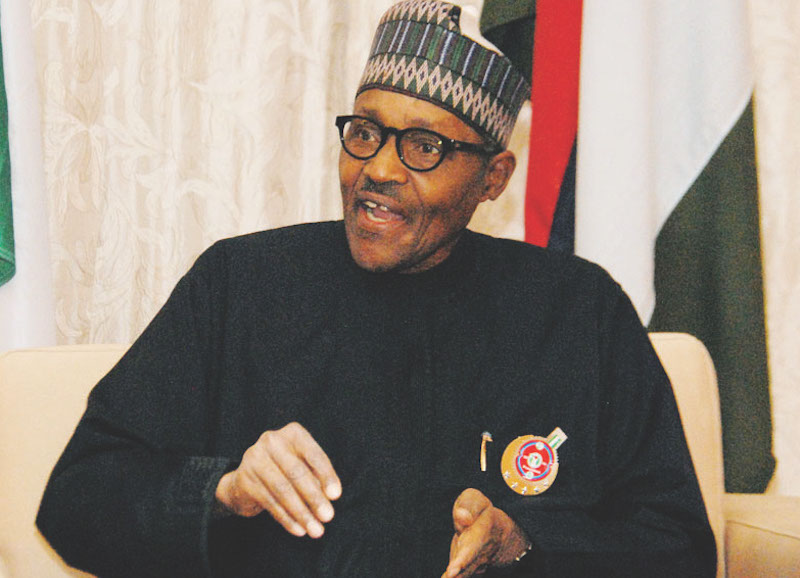
Why Buhari Is ‘Man of The Century’

By Martins Oloja

This may not be a time of the year to choose ‘Persons of the Year’, but there is a weightier matter of urgent national importance that should be deconstructed now that our resourceful leader and his team are rounding off political actions to (s)elect a successor and other leaders of our complex federation. I had in 2019 written a serial on ‘Why Buhari Is Man Of The Decade’ (1&2) (The Guardian, Sunday September 15 &22, 2019). Today, I have more reasons to raise the bar of my argument that our leader deserves to be enrolled in a Hall of Fame as ‘Man Of The Century’, yeah, not a mere ‘Man of the Decade’ anymore.
As I would like to claim again, this is the credit I think most of us have denied President Muhammadu Buhari. I mean that the taciturn, lanky General and President of the most populous black nation on earth at this time deserves some respect even as some of us wailers keep saying he didn’t go to school. Buhari just like Winston Churchill, who was to be later recognised as an incomparable, world-class orator, didn’t go far in acquiring many higher certificates of knowledge. But I think our leader should be respected as an oracle at this juncture. Churchill was an orator while Buhari should be crowned as an oracle. As I was saying, orators speak the minds of the people while oracles speak the minds of the gods and when they (oracles) say to even the orators, ‘do this’, it is done.
There have been different arguments on the nexus that doesn’t exist between knowledge and understanding. It has been written here that ‘knowledge’ is something that you accumulate through learning while ‘understanding’ is something that you know because you have lived through it. So, learning and gaining knowledge can be very useful, but the really important experiences are when you actually understand the experience for yourself by living through it.
So, it can be inferred that some knowledgeable and educated people may not have enough understanding of some subjects because they have not lived through them. In the same vein, if you ask clerics to speak to this context they will ask: what is the place of ‘Wisdom’ in the same context? This is also the way men of God have consistently explained it: Wisdom is the ability to discern and judge which aspects of that knowledge are true, right and lasting, and applicable to your life…In a nutshell, if knowledge is information, wisdom is the understanding and application of that knowledge…
It seems to me here that most of all educated people, especially in the southern parts of the country assume they are very educated as professors and members of the power and business elite. We are orators. We are wealthy and loquacious professionals. We are senior advocates, veteran journalists, erudite analysts, world-class scholars and diplomats. But it now seems to me that we actually lack understanding of the times and seasons. It appears to me that despite our scholarship, we lack wisdom to frame winning strategy (I didn’t say development strategy). You have to win first to do that.
In our crass ignorance, we once went to town and court to proclaim everywhere that ‘Buhari is clueless. Buhari is uneducated. Buhari has fake school certificates. Buhari is brain-dead. Buhari can’t speak good English clearly….’ But when we began to talk about certificates and elections, did I not ask here if we had read our constitution? Did our law professors and constitutional lawyers tell us that the 1999 constitution does not specify that aspirants to the office of even the president should have been to school? Read my article titled, ‘Have you read our constitution?’ on this.
As I make progress in my pilgrimage (apology to John Bunyan) to meet with my creator someday, I have been making inquiries on how to finish well and strong. So, I am beginning to understand that the best (spiritual) gift a man can get from the God of all grace is discernment. And that is why it has been revealed to mankind that ‘where there is no vision, the people perish’. And this background has shaped my conviction that most of us have perished in our expectations for lack of understanding of the man Buhari who can vaunt today that: ‘I came to Nigeria’s political beat, saw and conquered while most educated citizens dozed off’. Are we awake yet?
But more important, as we glide towards #Project 2023, we need some introspection too on where the rains began to beat us in the country. First, where did we go when the ‘clueless Buhari’ began to prepare election strategy in 2015 and 2019? Where did we hibernate when the ‘uneducated Buhari’ surrounded himself with some of the brightest and the best in the North? Where did we go when the presidency began to deal ruthlessly with the leadership of the last (8th) National Assembly? When the president appointed the security, intelligence chiefs, service chiefs, the IGP, the national security adviser (NSA), defence and interior ministers, three critical paramilitary chiefs (customs, immigration and prisons), etc from his zone where did we go to challenge the constitutional provisions on federal character? As I had asked here before, did we need to ask for the resurrection of Gani Fawehinmi before filing any cases against the president in court? Didn’t we think the man was clueless and uneducated when the first intelligence chief, (DSS, DG then) went for the jugular of even some Supreme Court justices in a night raid? Was the raid that brought down some strong house doors of the affected justices not hailed as a well-coordinated strategy to fight corruption in the judiciary? Did we ask questions when suddenly Justice Walter Onnoghen was appointed Acting Chief Justice of Nigeria in 2017? Did even our senior lawyers know that Section 231: Subsection 5 of the 1999 Constitution was curiously inserted there by some ‘uneducated seers’ in 1999 for such a time like that? That section targets any Onnoghens that bold leaders would not want to be confirmed. After three months in an acting capacity, the name (of Acting CJN) can’t be submitted to the Senate. Anyway, where were the educated bureaucrats and law professors from the South when the constitution was being drafted and ‘Interpretation Sections’ (of the constitution) where ‘school leaving certificate’ interpretation the (Court of Appeal) Presidential Election Tribunal relied on, on Wednesday, 11 September judgment?
Decent sources confirmed to me long ago that while the Justice Niki Tobi’s review committee was working on the draft constitution then, political leaders and ‘monitoring spirits’ we call ‘clueless and uneducated’ today were vigilant then with the drafters of the constitution. They had looked into the seeds of time then and inserted some not-so-visible but significant wordings in the drafts before General Abdusalami Abubakar transition regime promulgated the draft into the 1999 constitution. Some of the redrafted sections have today become weapons in the hands of people we say are uneducated but have enough understanding of the power of vigilance during ‘constitution drafting’. This sensitive job (drafting) was going on when a president-elect (from a very educated region) Chief Olusegun Obasanjo was flying around the world then to inform world leaders he would be returning to power and office on May 29, 1999. Had the letter-writer-general of the federation had some power of discernment, he would have commissioned some experts to scan the draft constitution we now claim is the trouble with us.
Let’s also examine this less travelled road by the widely educated. When the president bluntly refused to sign the 2010 Electoral Act Amendment Bill before the 2019 election, and we in the civil society including the media shrugged our shoulders in complacency, should that masterstroke on the part of president and his men be classified as cluelessness?
Lest we forget, the Buhari’s ‘clueless presidency’ met the Chairman of Code of Conduct Tribunal as Alhaji Danladi Umar, from Bauchi State, in office; they got in Professor Isa Mohammed from Jigawa state as Chairman of the Code of Conduct Bureau. They were aware the Attorney General of the Federation, Abubakar Malami hails from Kebbi State. They were aware that the Head of the Executive Arm of Government, the President hails from Katsina State (North West). They were aware that the Head of the Legislature then, Senator Bukola Saraki hails from Kwara State (North Central) and the Head of the Judiciary then hails from Cross River State (South South). The powers in Abuja could have thought that removing the only southerner and Christian heading an arm of government, Justice Onnoghen could trigger trouble for the federation. But they were ‘courageously clueless’ enough to go for him (Onnoghen) on the eve of presidential election, to teach us some lessons on the difference between knowledge of power and resource sharing and understanding of how to remain in power to control resource and their landlords.
Today, the same unhealthy, clueless leader as we claim didn’t have time to read and acquire many certificates of education has taken control of the three arms of government with his men from his region and religion. He has surrounded himself in the presidential bureaucracy with some of the brightest men he can trust from his region. Yet we say he is clueless because he doesn’t have certificates. Where is the testimony of the knowledgeable ones? The one we the very educated ones tag as ‘clueless’ has captured the ruling party and he has been artfully running it as a leader we feel doesn’t know what he is doing. One day at a party meeting, he announced the sack of an elected chairman, dissolution of all organs of the body and appointed a caretaker committee headed by a Governor from his mother’s zone and the chairman was there at his pleasure for more than a year. The same clueless leader just installed a Chairman of the governing party – after his own heart. All the braggadocio of the 22 governors meant nothing to the uneducated ‘weak leader’ whose cluelessness has also infected even the opposition party now mesmerizing members to field a presidential candidate from the North. The same ignorant leader, an artful dodger who has managed his party secretariat into jettisoning zonal nonsense that brought him to power by encouraging all his loved ones including a restless central bank governor to obtain expression-of-interest forms of meretricious 100 million naira. That same ‘lame duck’ just displayed another cluelessness indeed when he asked the same loved ones to resign to pursue their interest from home, sorry without their office perquisites.
In the next few days, the original meaning of cluelessness will be clear to the very educated ones from the South the when the candidates of the two major political parties will emerge from the same North that has produced my ‘Man of The Century’. Let’s debate the difference between knowledge and understanding. Let’s debate why I think Buhari has been grossly underrated and should be ‘Man of the Century’, notably as never in the history of mankind has a leader, sorry a king been so successful in sending a whole kingdom into a deep slumber while affliction is rising up against it even a third time.

#

Deborah: The Rule of Law Must Triumph

By Sonnie Ekwowusi

 The rule of law must be allowed to triumph in the matter of the barbaric murder of Deborah Samuel no matter whose ox is gored. Therefore the Sokoto State police, State security agents and the authorities must not succumb to the cheap blackmail and intimidation of some Islamic fanatics and extremists who are now sponsoring orgy of arson and circles of violence in demand for the release of the suspected killers of Deborah. Deborah was a 200-level female Christian student of Shehu Shagari College of Education (SSCOE), Sokoto State. Last week she was astonishingly stoned to death and set ablaze in the most barbaric, horrifying and animalistic manner by some fanatical Muslim students of the same SSCOE for allegedly insulting Prophet Mohammed (Peace be on him). Instead of listening to the voice of the Sultan of Sokoto Alhaji Muhammadu Sa’ad Abubakar 111 and other voices of reason who have been condemning the murder and calling for justice for Deborah, the Sokoto State Chief Imam Dr. Sheikh Mansour and some Islamic fanatics and extremists are putting pressure on the police and the authorities to release the suspected killers of Deborah. The police and the security agents should not only ignore them but should move quickly to arrest them and charge them to court for sabotaging and obstructing the course of criminal justice.

 On its part, the Sokoto State Ministry of Justice must ensure that all the suspected killers of Deborah are swiftly charged to court for murder and executed upon conviction as stipulated in the law. I repeat: Deborah’s murderers should be rounded up, charged to court for murder and executed upon conviction. And if it is established that Professor Ibrahim Magari, the Chief Imam of the National Mosque, Abuja and others had in any way aided and abetted the murder of Deborah they too should be arrested, charged to court for murder and killed if found guilty of murder. Nobody is above the law of the land.

The Sokoto State Chief Imam Dr. Sheikh Mansour and Professor Magari argue that jungle justice meted out against Deborah was aimed at defending Prophet Mohammed (peace be on him) and Islam. Hear Professor Magari “It should be known to everyone that we the Muslims have some redlines beyond which must not be crossed. The dignity of the Prophet (PBUH) is at the forefront of the redlines. If our grievances are not properly addressed, then we should not be criticized for addressing them ourselves.” Contrary to the assertions of Dr. Sheikh Mansour and Professor Magari, jungle justice is unacceptable in Islam. In any case, Deborah did not cross any Islamic redline warranting her murder. She neither insulted Prophet Mohammed (peace be on him) nor blasphemed against Islam before she was stoned to death. Like the conscience of the nation Leah Sharibu, Deborah, merely publicly exercised her right to religious freedom before she was murdered. What was her “offence”? She ascribed her success in an examination which she sat for to Jesus Christ. And when violently ordered by the fanatical Muslim students around her to retract the name Jesus Christ, she refused to do so. That was all before they stoned her to death and set her body ablaze. She never insulted Prophet Mohammed (peace be upon him). She did not desecrate the Holy Qur’an either. She merely exercised her right to religious freedom as enshrined in our 1999 Constitution. By virtue of section 10 of the 1999 Nigerian Constitution, Nigeria is a secular State. Islam is not a State religion either in Sokoto State or anywhere in Nigeria. The import of this is that Deborah, like Leah Sharibu, was free to publicly reject Islam and embrace Christianity. She did so without insulting Prophet Mohammed (peace be on him). She merely publicly professed her Christian faith before they brutally murdered her.

 You see, you cannot force anyone to subscribe to your religion. God has created all of us and given us human freedom and expects us to freely exercise our freedom in one way or another. It is disappointing that clerics whose calling is to shepherd their flock to conduct themselves in edifying manner are busy inciting them to take to violence-to maiming, killing and destruction of property of the so-called infidels. By their fruits we shall know them. Violence has never been used to ultimately  solve any human problem. So, why unleash violence against others for refusing to profess your religion?. Although Muslims are enjoined to proselytize non-believers to embrace Islam and spread Islamic teachings, they are not enjoined to do so by force or through terrorism or through abduction or killing of human beings or arson. It is the obligation and duty of the Muslim community to enjoin its members to shun wickedness and evil (Holy Quran 3:110).

Dr. Sheikh Mansour and Professor Magari cannot claim to know the Holy Qur’an  more than the Sultan of Sokoto Alhaji Muhammadu Sa’ad Abubakar 111 who has since condemned the murder of Deborah. It is fanatics like Dr. Mansour and  Professor Magari who bring bad name to Islam. Islam is a religion of peace. Islam abhors jungle justice. I am surrounded by many fervent Muslim friends and I have never heard any of them threatening to kill any Christian for any reason. Like in Christianity, human life is inviolable in Islam. Human life cannot be taken away in Islam except for a just cause. What is this just cause? Three of these causes are embodied in the Qur’an while the two additional causes have been stated by the Prophet Mohammed (peace be on him). The causes stipulated in the Qur’an are: First, when a person is convicted of deliberate homicide and thus the claim of retaliation is established against him. Second: when someone resists the establishment of the true faith so that fighting against him might become necessary. Third: when someone is guilty of spreading disorder in the domain of Islam and strives to overthrow the Islamic order of government. The two causes stipulated by Prophet Mohammed (peace be on him) are: First: when a person commits illegitimate sexual intercourse even after marriage. Second: when a Muslim is guilty of apostasy and rebellion against the Muslim body-politic. Except for aforesaid five reasons, murdering a human being is not permissible in Islam, regardless of whether the victim is a believer, a protected non-Muslim (dhimmi) or an ordinary unbeliever. (Read Surah Al-Anam Ayat 151(6;151-154)

Despite the foregoing Islamic teaching, some Nigerian murderers under the pretext of defending Allah, seem to have perfected the crime of killing their fellow brothers and sisters in Nigeria. For years, they have been getting away with such killings. For example, in 1995, Gideon Akaluka, a Christian, was beheaded in Kano prison for no reason other than the fact that he was a Christian. Till date, the killers of Akaluka have not been brought to justice. In 1999 major Islamic violent riots erupted in Bauchi, Kaduna, Kano, Minna and Jos claiming human lives. In the year 2000, we witnessed the Sharia riots. Other violent riots seized Jos in 2001 and 2004. From 2005 to 2011, major religious and ethnic riots and killings had engulfed some major cities in the North.  On December 18 1980 the “Maitatsine guerrilla war” engulfed the North claiming officially about the lives of 2,800 people even though the army was invited to stop the war. In 1982 or so, the Maitatsine “war” was again ignited in Bulunkutu, Borno State, Jimeta and Gongola, leaving in its aftermath the death of about 900 people. In 1984 some Muslim students of Bayero University started a religious riot which spread to Bauchi and Kano claiming uncountable heavy human lives. In 1985 a violet religious riot erupted simultaneously in about seven Northern States. While the Organization of Islamic Conference (OIC) debate raged in the country in 1986, a religious violence was averted in the North. By 6th or 7th of March 7 1987, the Kafanchan religious conflagration swallowed up Kaduna, Zaria and Kano. About 50 churches were set ablaze. The 90s were not safe either. Following the Crusade organized in Kano in 1991 by a German evangelist Reinhard Bonke, another round of religious riots overtook Katsina, Kafanchan, Zaria, Funtua, Kankum, Tafawa Balewa, Bauchi and other  Northern cities claiming many human lives and leaving many people injured.

On June 2 2016, a 70-year old citizen of Imo State called lady Mrs. Bridget Agbahime, and a member of the Redeemed Christian Church of God (RCCG) was murdered in Kano for alleged blasphemy of the Koran. And barely 10 days later, Francis Emmanuel, a 41-year old Christian, was almost stabbed to death in Kaduna for allegedly eating meat during the Ramadan. As if that was not enough, on the 9th of July 2016, Mrs. Eunic Olawale, a mother of seven who was also the wife of a Redeemed Christian Church of God (RCCG) pastor was murdered in cold blood in Abuja by Muslim fanatics while she was preaching the Gospel of Jesus Christ. Between 2016 and 2020 thousands upon thousands of Southern Kaduna Christians have been killed in several renewed genocidal attacks carried out against the Southern Kaduna Christians. Between 2016 and 2022 thousands upon thousands of Southern Kaduna Christians have been killed in several renewed genocidal attacks carried out against the Southern Kaduna Christians.  In fact, over 15,500 Christians have reportedly been murdered in Nigeria since June 2015.   On August 25 2016, eight students of Talat Mafara Polytechnic, Zamfara State were killed set ablaze by fanatical Muslim students of the institution following a fight between two students of the institution. One of the two students alleged that the other student had committed blasphemy against Prophet Mohammed (peace be on him) and that eventually led to the killing and setting ablaze of the eight persons.

On January 8 2020 Rev. Timothy Lawan Andimi, the then Chairman of Christian Association of Nigeria (CAN) in the Michika area, and, an ordained Christian minister at Ekklesiyar Yan’uwa a Nigeria (EYN), the Church of the Brethren in Nigeria., was shamefully beheaded. On or around the same time On around the same time, Michael Nnadi, a Seminarian of the Good Shepherd, Seminary, and Kaduna was abducted from the Seminary and was brutally murdered. An eye-witness in the Seminary and a friend of Michael recounted that on Wednesday January 8 2020 at 10.27 p.m., he went to the room of Michael and suddenly there were gun shots all over the Seminary which were followed intermittently by the following command in Hausa language: “Ja su waje, Alsaabiun…Kafirai, Ja su wa je! Alsaabiun…Kafirai !! (Drag them out…infidels!, Drag them out…infidels!!). Thereafter two heavily-armed men in military uniform entered the room where he and Michael were lying flat on the floor in great trepidation and seized their respective laptops and other personal belongings. Thereafter, the two men whisked them away to a waiting vehicle where Michael was later killed.

You can now see why it is imperative that the suspected killers of Deborah should be charged to court and be executed if found guilty. Apart from satisfying the demand of our criminal justice system, such punishment would serve as a deterrent to would-be killers of their fellow men and women. Reacting to the murder of Deborah, the Muslim Media Practitioners of Nigeria (MMPN) has stated that it is a criminal offence in Islam for any Muslim or group of Muslims to kill anybody through jungle justice. I completely agree with them. The universal fundamental right for humanity which Islam upholds and which must be observed and respected in all circumstances and at all times is the sacredness of human life. “Do not take a ˹human˺ life—made sacred by Allah—except with ˹legal˺ right. This is what He has commanded you, so perhaps you will understand” (Holy Quran; 17:33). In Islam, human blood is sacred and cannot be spilled anyhow. The first and foremost basic right in the Holy Quran is the right to life. “Whoever kills a human being without justification like manslaughter or corruption on earth, it is though he had killed all mankind” (Holy Quran; 5:32). “Do not kill a soul which Allah has made scared except through the due process of law” (Holy Quran; 6:151). Islam forbids slavery and adduction. In the words of the Prophet (blessings of Allah and peace be upon him), “There are three categories of people against whom I shall myself be a plaintiff on the Day of Judgment. Of these three, one is he who enslaves a free man, then sells him and eats this money”.  The life, property and honour of non-Muslims (dhimmis) are to be respected and protected in exactly the same manner as those of Muslims. According to the Prophet (blessings of Allah and peace be upon him) Muslims who kill non-Muslims (dhimmis) will not even smell the fragrance of paradise. The Holy Quran stipulates that, “there should be no coercion in the matter of Faith” (Holy Quran 2:256).

 Islam recognizes that all human beings are brothers and sisters. That they are descendant from one father and mother and therefore should not be killed. According to Holy Quran 5:3, “Do not let your hatred of a people incite you to aggression”.  Islam teaches that no harm should be done to the civilian population during a war or conflict. The instruction of the Prophet (blessings of Allah and peace be upon him) on this is this, “Do not kill any old person, any child or any woman”, “Do not kill the monks in monasteries” and “Do not kill the people who are sitting in places of worship”. Once upon a time during a certain war, the Prophet (blessings of Allah and peace be upon him) saw a corpse of a woman lying on the ground and he said, “She is not fighting. How then came she to be killed?”.

All said, it is crystal clear that human life is sacred in Islam. It is clear that  wanton killing of non-Muslims by fanatical Muslims is against the teaching of the Prophet and Allah. And he who fights against Allah will incur the wrath of Allah the Almighty. We must understand that the spilling of the blood of our fellow men and women diminishes our own existence. The use of force in place of the rule of law is a recipe for anarchy.  Any religion ungoverned by the rule of law is dangerous to human society . Under the rule of law the judiciary occupies a unique place in safeguarding the rights of the citizenry. Such rights and regard for the rule of law are the bedrock upon which the society lays its claim to civilization.

Will Nigeria’s Federal Government flout court orders on award of $60m cargo tracking contract?

Whether the Federal Government will spurn an order of a Federal High Court restraining parties from taking further steps with regards to the award of the disputed 60million dollars International Cargo Tracking Note (ICTN) contract initiated by the immediate past Minister of Transportation, Rotimi Amaechi is one question that will unravel in a matter of days.

This $60 million question is sequel to the leakage of a memorandum to be presented before the Federal Executive Council (FEC) in two days’ time.

A Federal High Court in Abuja had issued an order restraining the former Minister from taking any further step on the contract award pending the resolution of a suit instituted against him and some others in respect of the contract.

However, a memo prepared by the Federal Ministry of Transportation indicated that the issue of the contract will be tabled before the weekly Federal Executive Council FEC meeting slated for this Wednesday for possible approval and award.

The memo marked: EC(2022) was signed by Amaechi on April 12, 2022, but received at the office of the Permanent Secretary,  Cabinet Affairs Office on April 20, 2022.

The memo is titled: “Memorandum for approval for the implementation of International Cargo Tracking Note in Nigeria through public-private partnership arrangement.”

It reads in part: “The purpose of this memorandum is to seek the consideration and approval of the Federal Executive Council (FEC) for the implementation of International Cargo Tracking Note In Nigeria by Messrs MTS Cargo & Logistics Limited through Build Operate and Transfer (BOT) Public-Private Partnership arrangement at an initial capital Investment currently modelled at the sum sixty million dollars (US$60,000,000) to be funded 100% through equity by the company for a concession period of 15 years.”

It added that the arrangement provides for “a revenue sharing ratio of 92.5per cent: 7per cent in favour of the Federal Government represented by the Nigerian Shippers Council and Private Consortium respectively: after deduction of processing cost as well as the Full Business Case (FBC) for the project. ”

The plaintiff in the suit before the Federal High Court, the Citizens Advocacy for Social and Economic Rights (CASER) is concerned that Amaechi may still be working behind the scene to have the contract process concluded while their suit is pending.

CASER had, in the suit marked: FHC/ABJ/CS/1587/2021, accused Amaechi of among others, of manipulating the contract award process in favour of two local and inexperienced firms – Medtech Scientific Limited and Rozi International Nigeria Limited, who are also defendants in the case.

Other defendants in the suit wherein the plaintiff is praying the court to void the selection of Medtech and Rozi, are the Bureau of Public Procurement (BPP) and the Attorney General of the Federation (AGF).

During a recent hearing in the case, counsel to the plaintiff, Abdulhakeem Mustapha (SAN) accused Amaechi of being in contempt,  noting that he has taken some fundamental steps in respect of the contract award despite a pending order for maintenance of status quo issued on January 22, 2022.

In view of Mustapha’s complaint, Justice Donatus Okorowo decided to first tackle the issue of alleged contempt and ordered parties to file necessary processes.

Though the case was transferred to another judge, Justice Ahmed Mohammed for hearing during the court’s last Easter holiday on Amaechi’s request, it has now been returned to Justice Okorowo who has scheduled hearing for later this month.

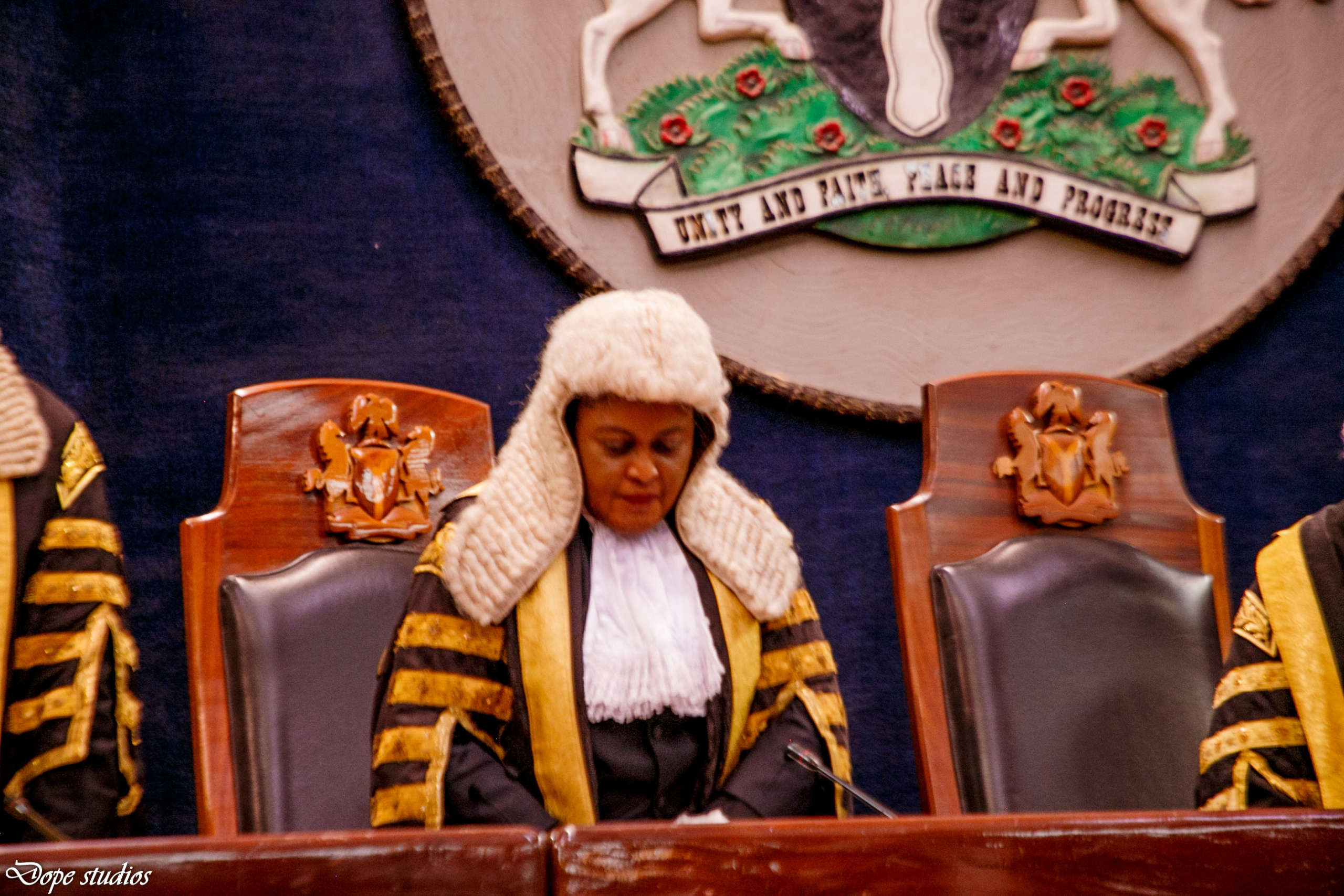
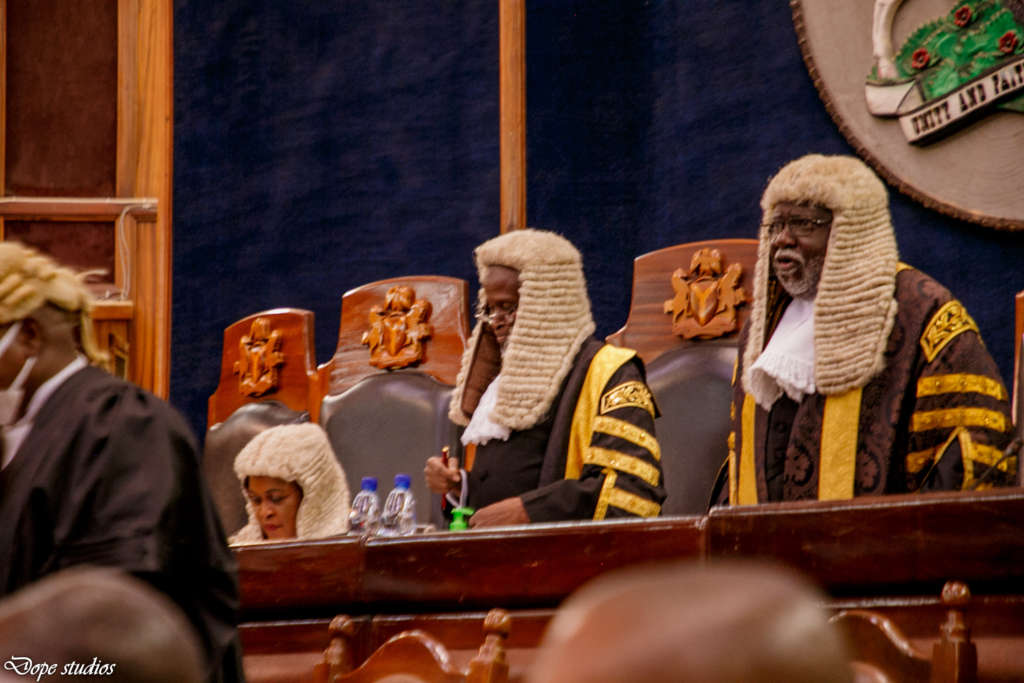
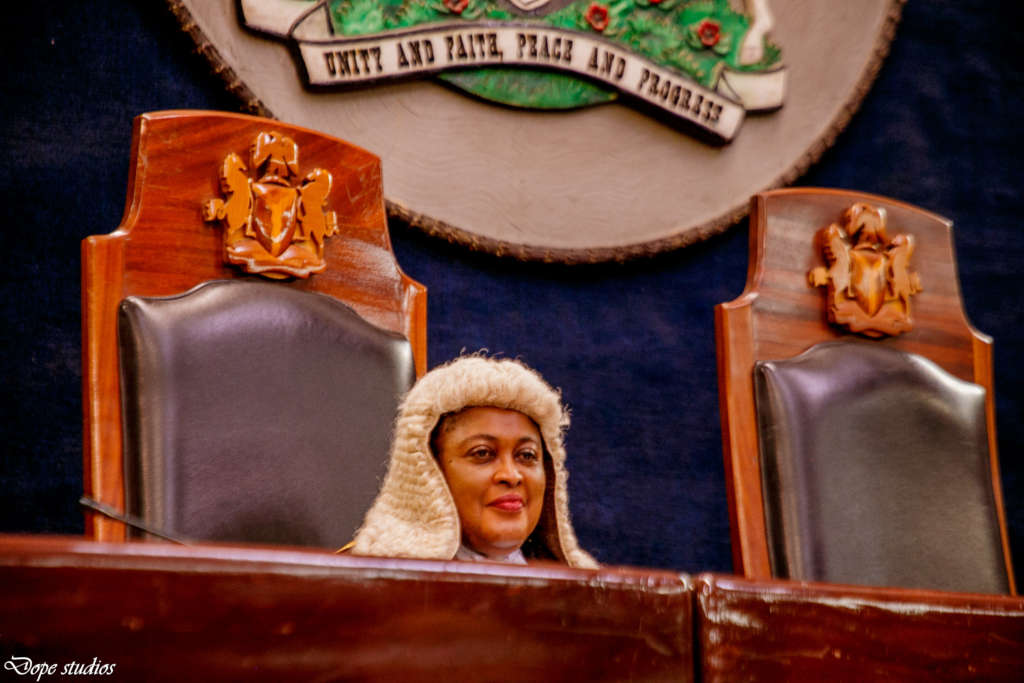
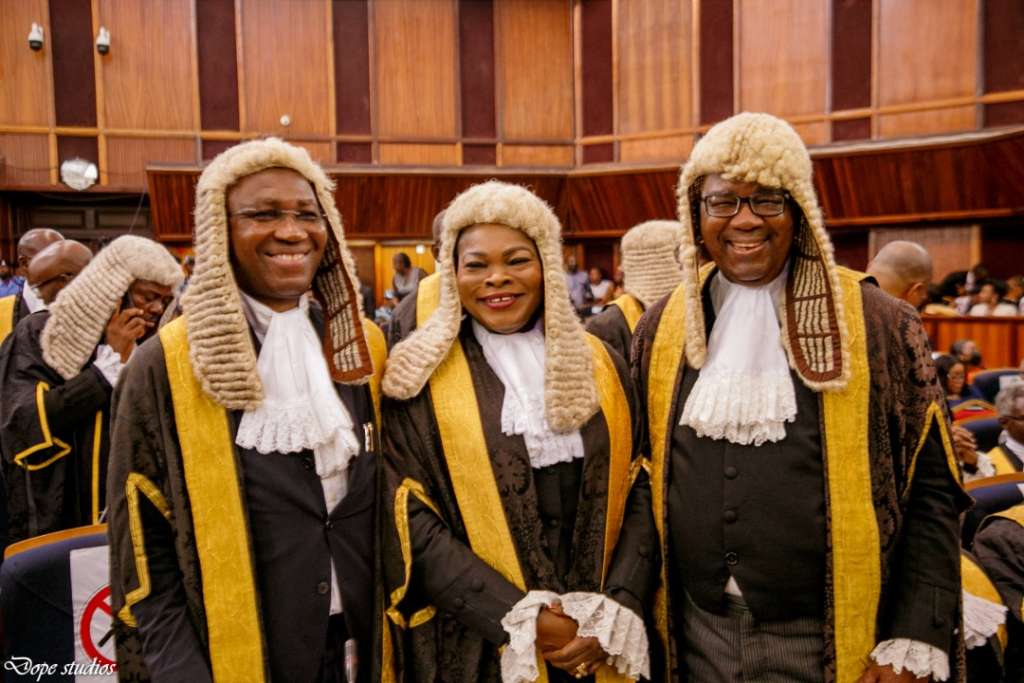
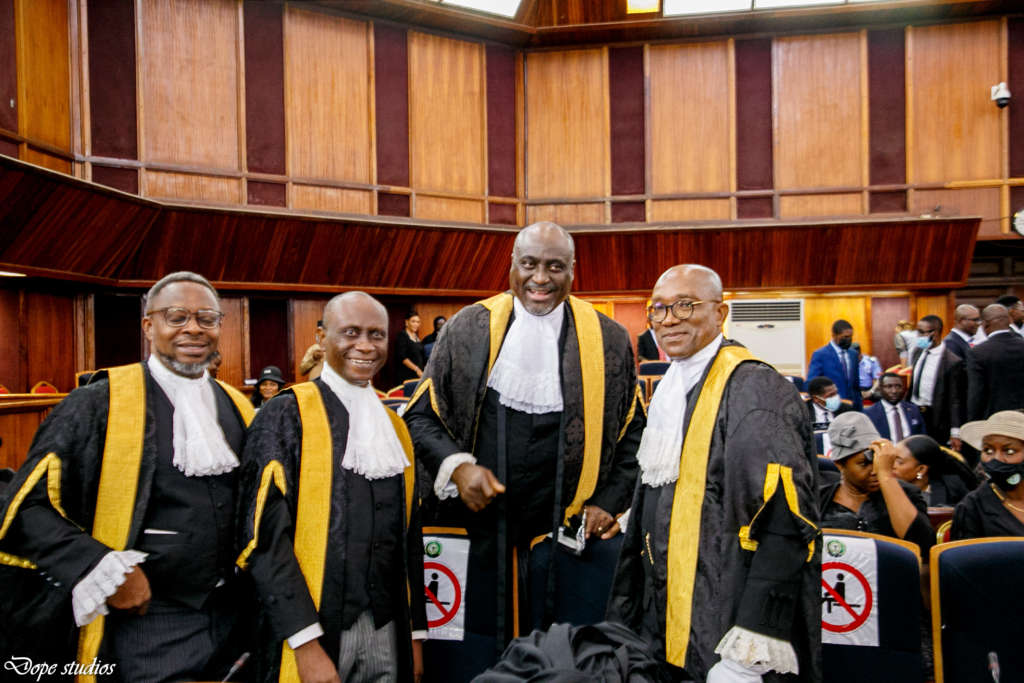
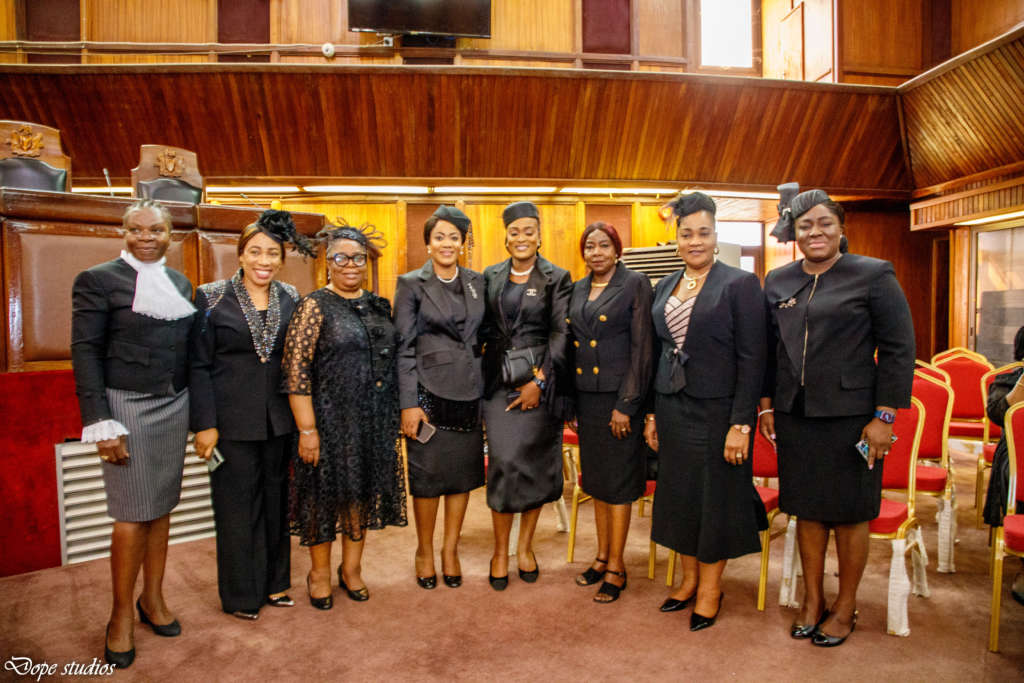
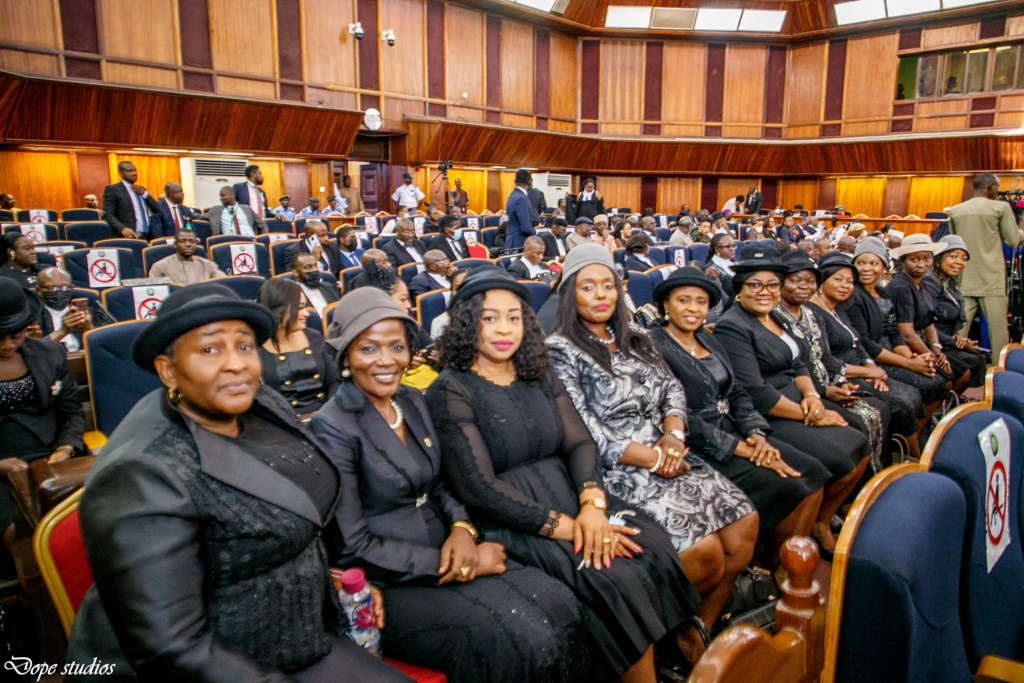
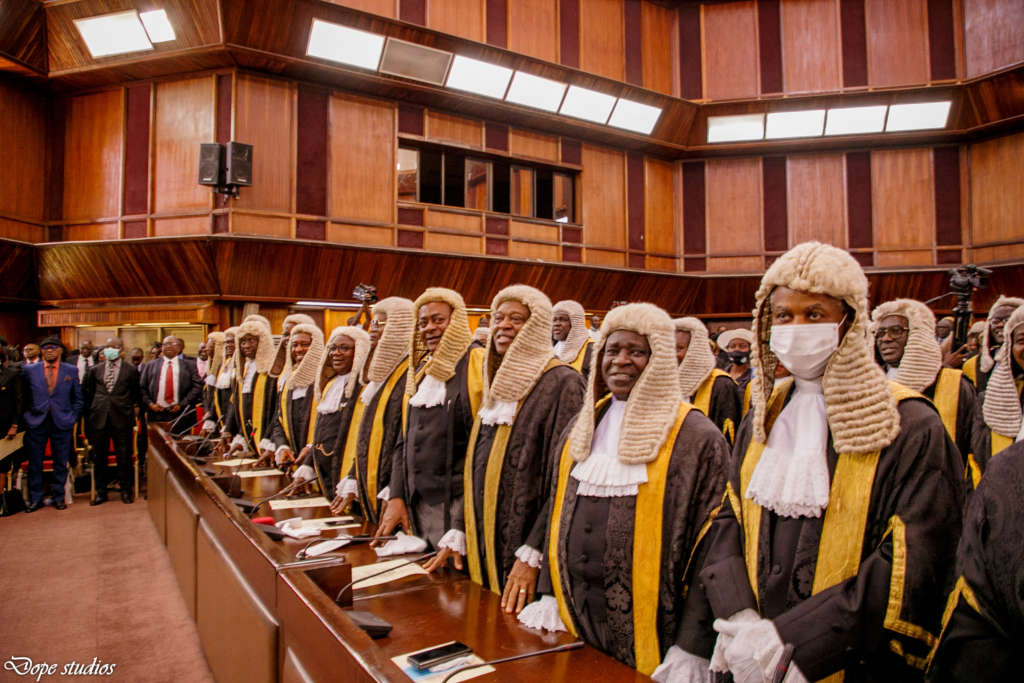
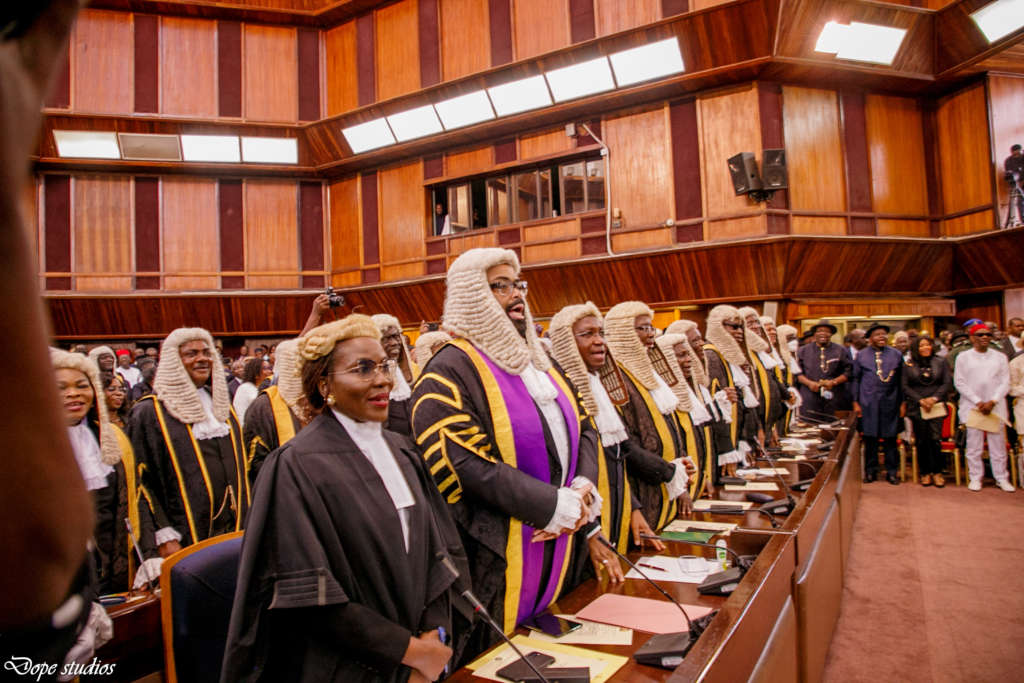
Valediction Photos: FIDA celebrates with Justice Mary Peter Odili

Hon. Justice Mary Peter Odili taking her final bow
Hon. Justice Mary Peter Odili taking her final bow at the Supreme Court of Nigeria

By Lillian Okenwa

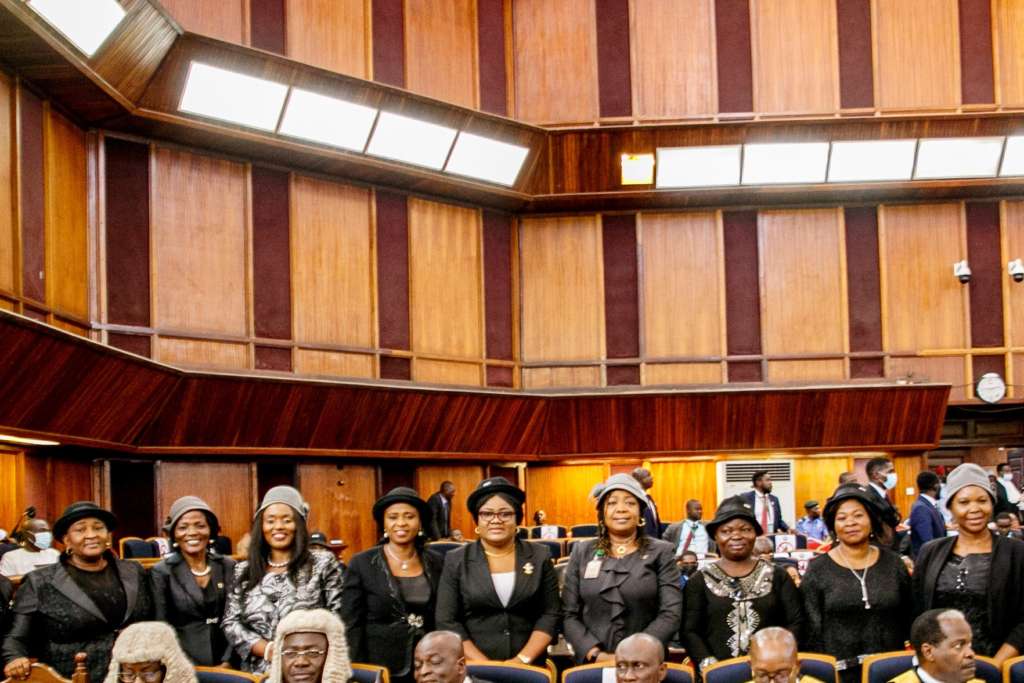
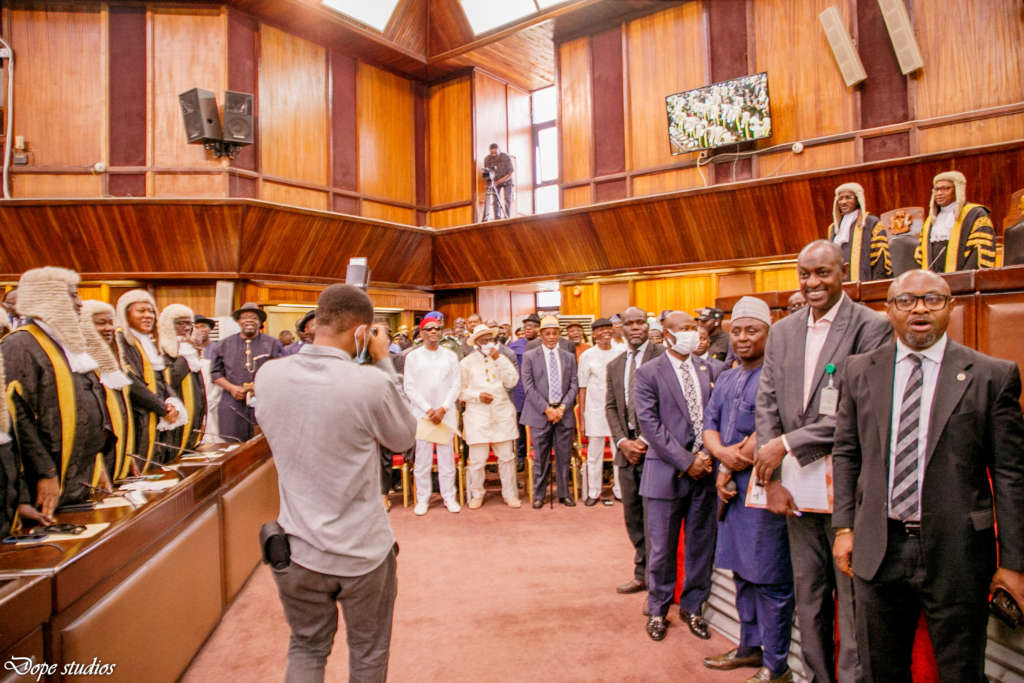
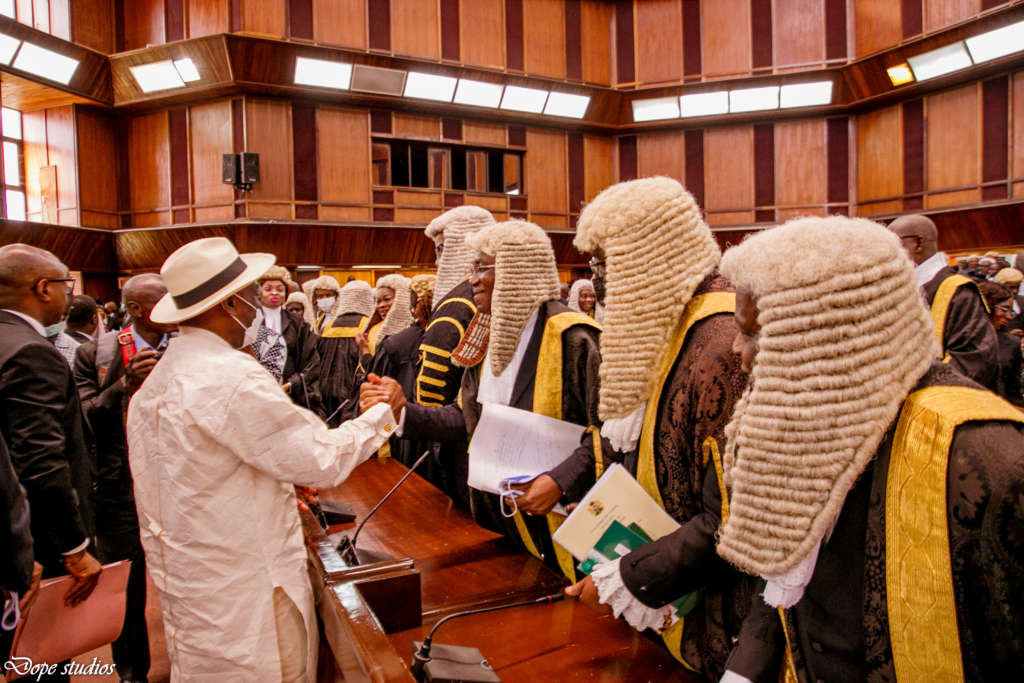
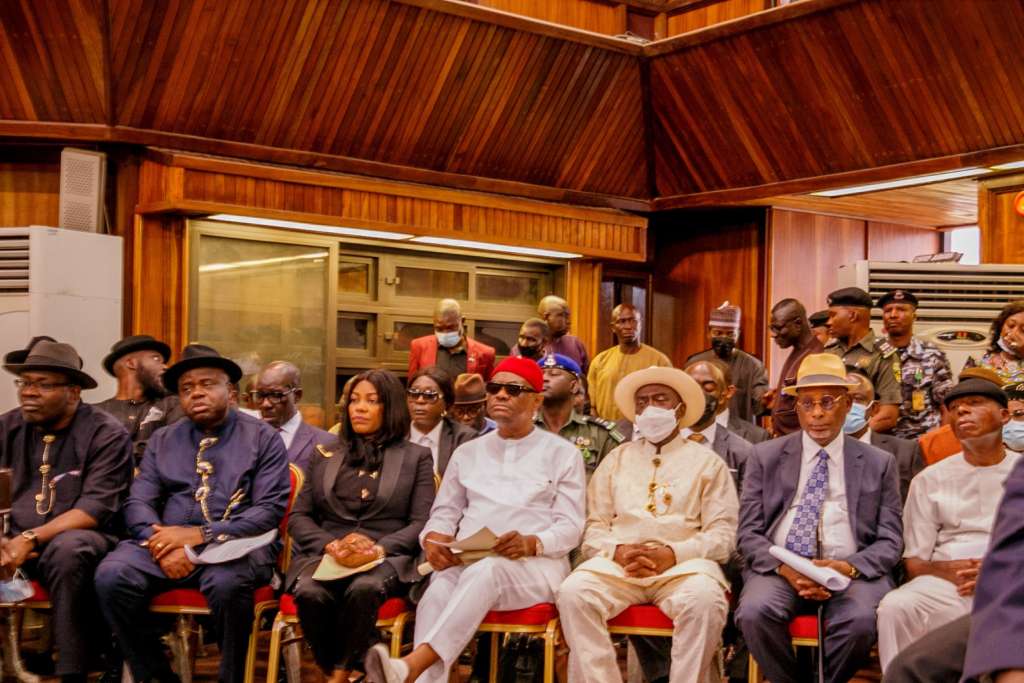
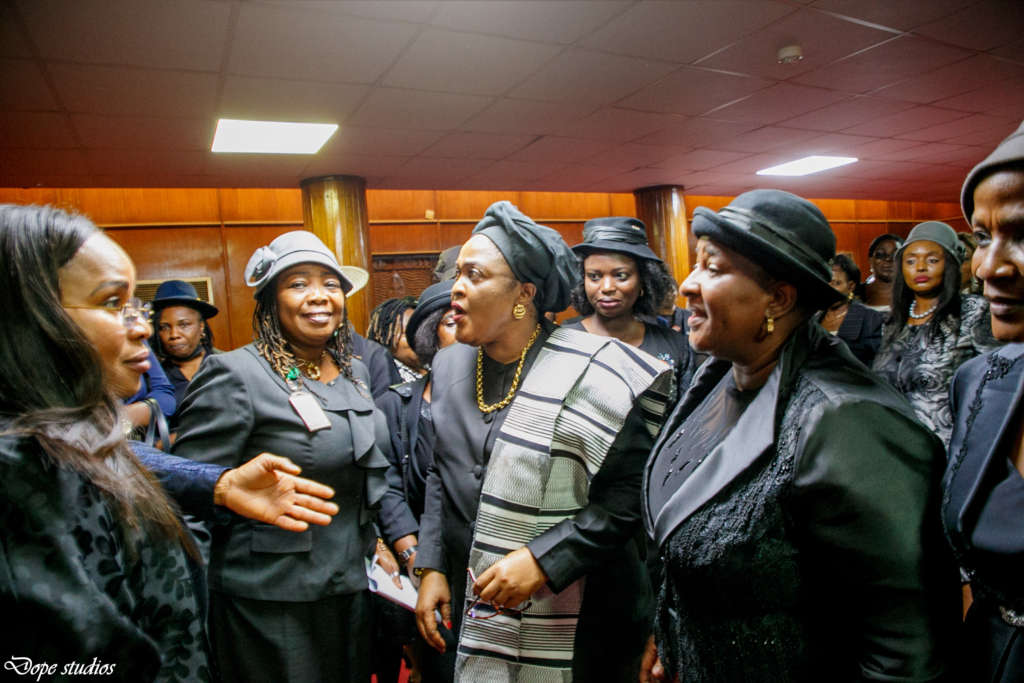
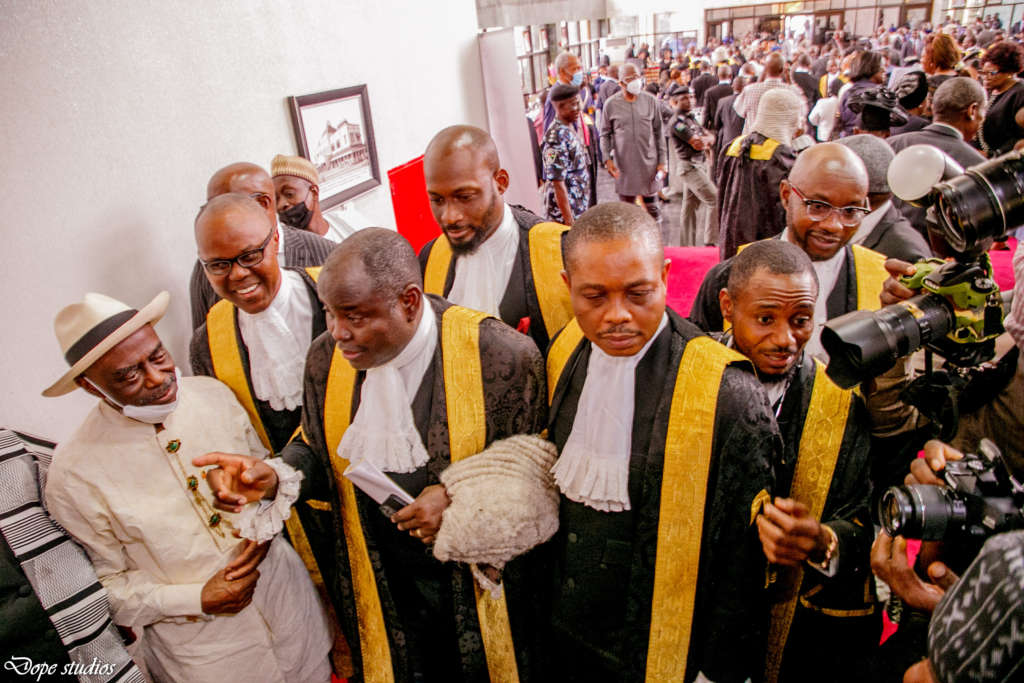
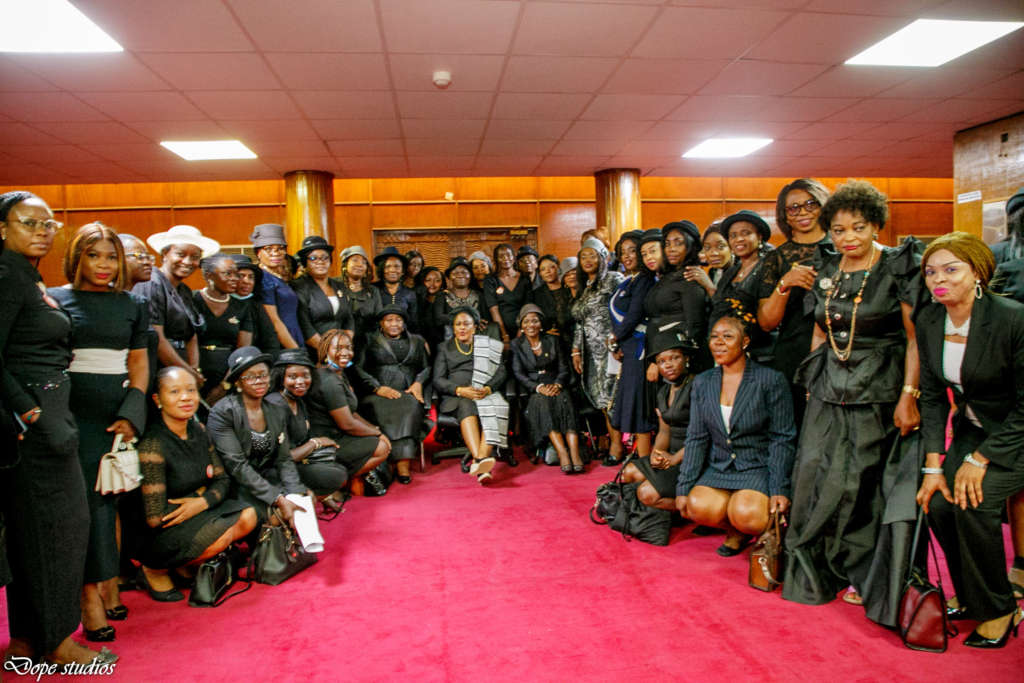
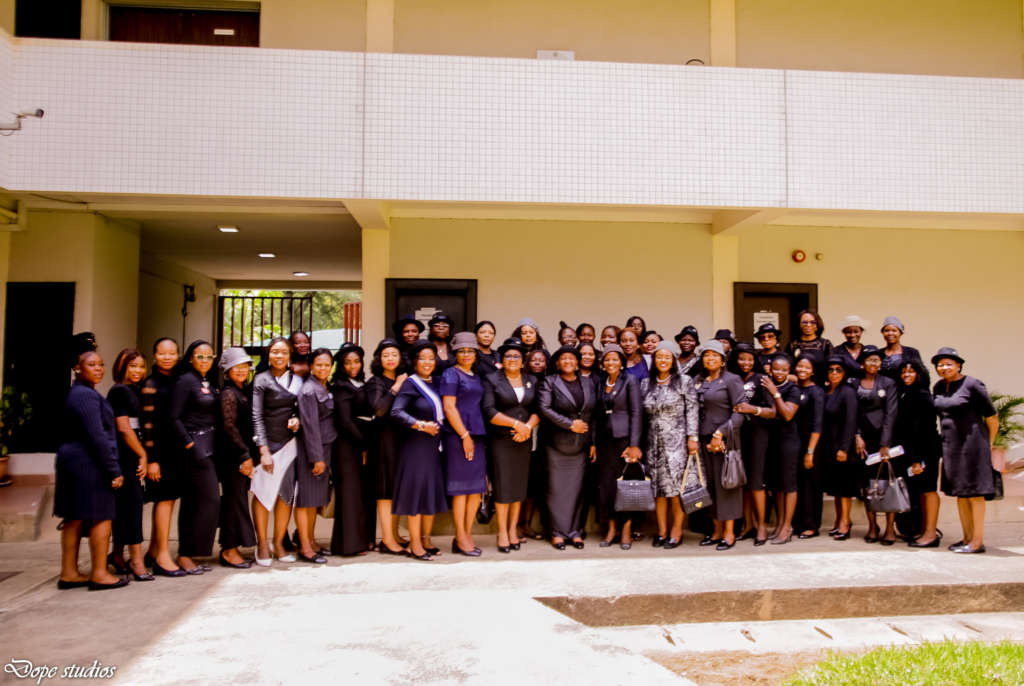
Along with dignitaries from all walks of life, members of the International Federation of Women Lawyers (FIDA) Nigeria turned out in their numbers to grace the valedictory session of Hon. Justice Mary Peter Odili who bowed out of the Supreme Court of Nigeria on Thursday, May 12, 2022.

Mary Ukaego Peter Odili, the third woman to ascend the Supreme Court bench in Nigeria is the pioneer Chairperson of FIDA Nigeria Rivers state.

From a lowly Magistrate Grade 3 in 1978, Justice Odili, daughter of a former Chairman, Nigerian Bar Association (NBA) Owerri Branch, Eze Bernard Nzenwa, rose to the highest court in the land — the Supreme Court of Nigeria — in 2011.

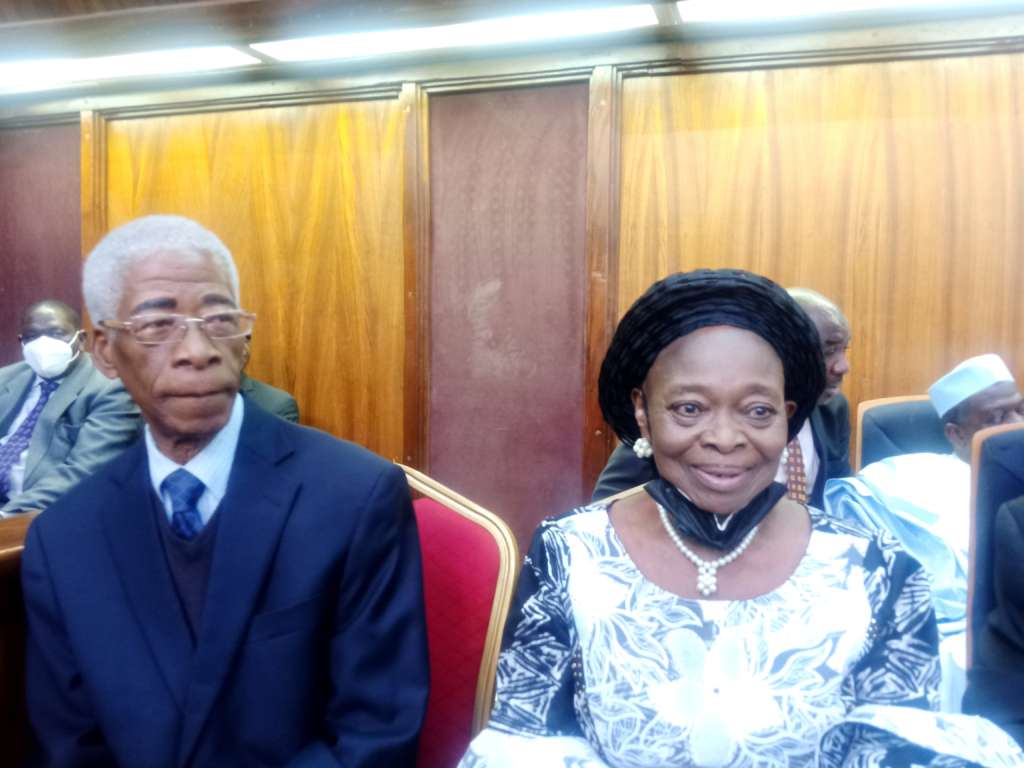
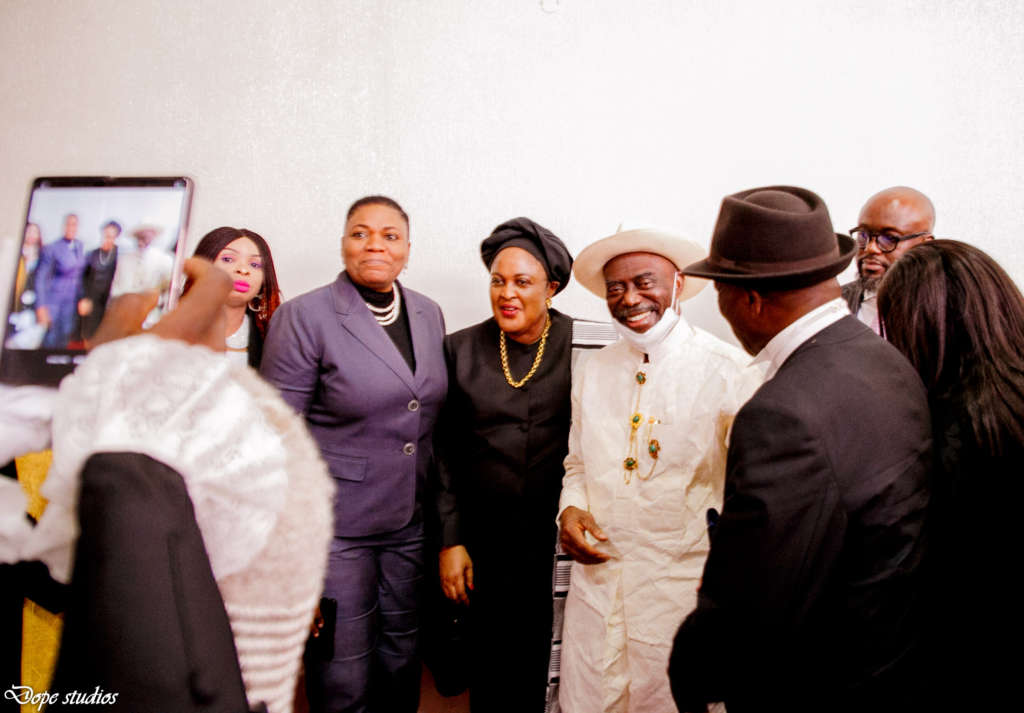
Below are photos of the event.

Hon. Justice Mary Odili seated as the court led by CJN Tanko Muhammad sang ‘For She’s a jolly good fellow, for her
An emotional Justice Odili as the court sang for her.
The Court led by the CJN singing “For She’s a jolly good fellow.”
Hon. Justice John Afolabi Fabiyi, JSC (Rtd.) and Hon. Justice Olufunlola Adekeye, JSC (Rtd.), the second woman at the Supreme Court of Nigeria
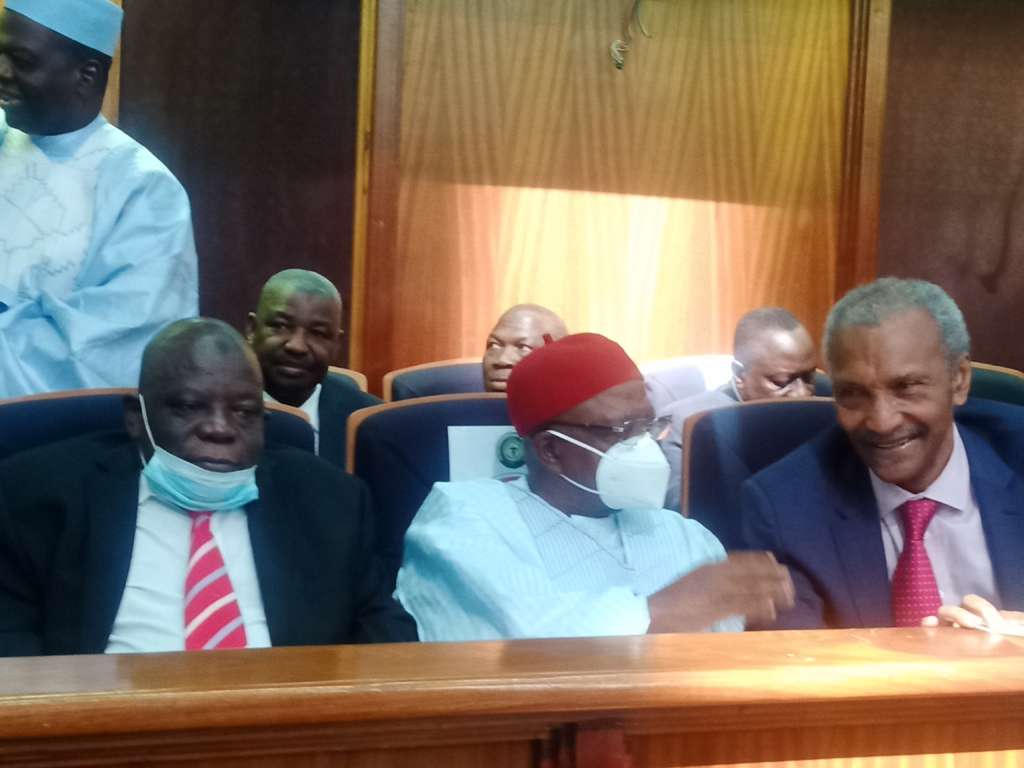
Former Presidents of the Court of Appeal, Hon. Justice Isa Ayo Salami and Hon, Justice Umaru Farouk Abdullahi
Extreme left, Hon. Justice Amiru Sanusi, JSC (Rtd.) and Hon. Justice Olabode Rhodes-Vivour, JSC (Rtd.) on the left
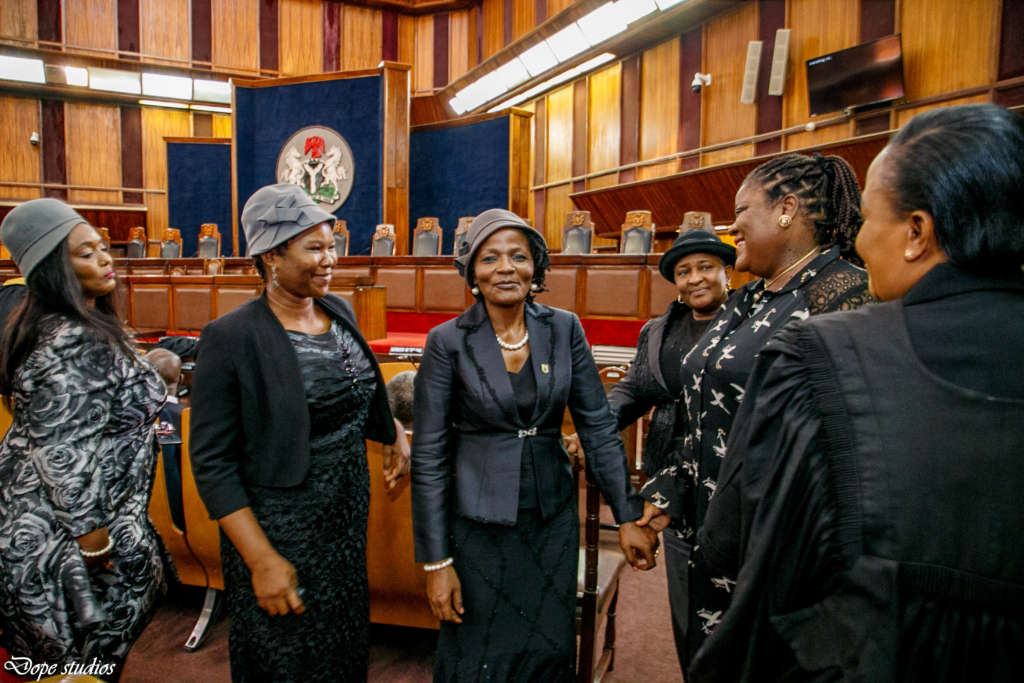
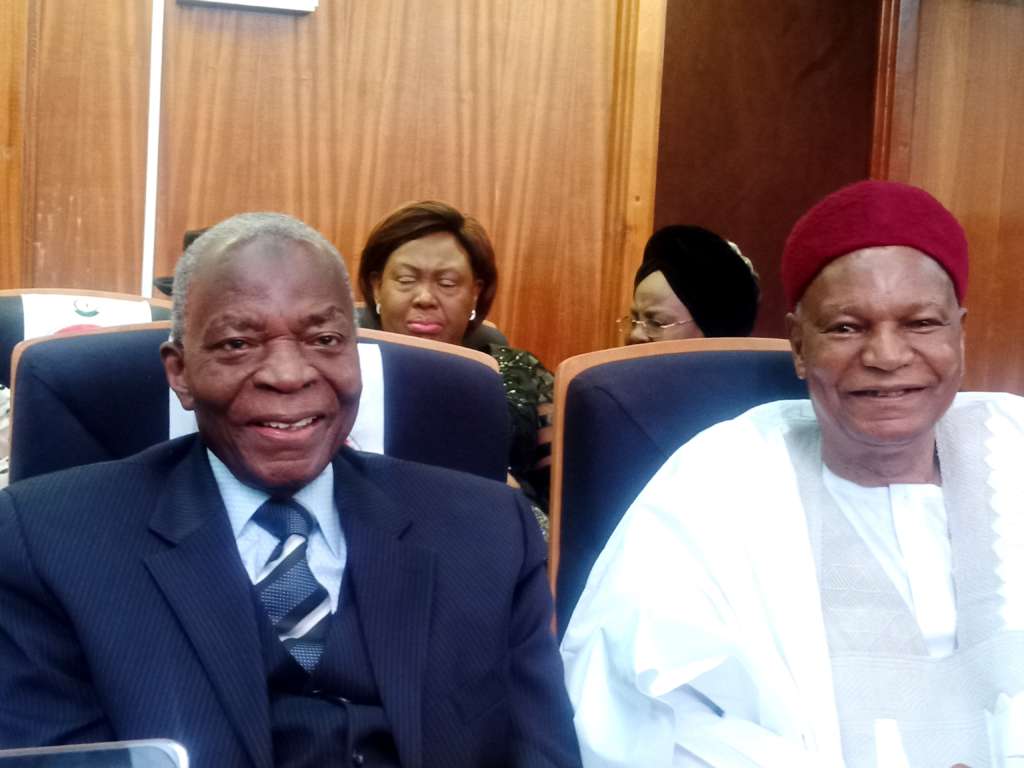
Dr. Peter Odili exchanging pleasantries with guests before the commencement of the valedictory session
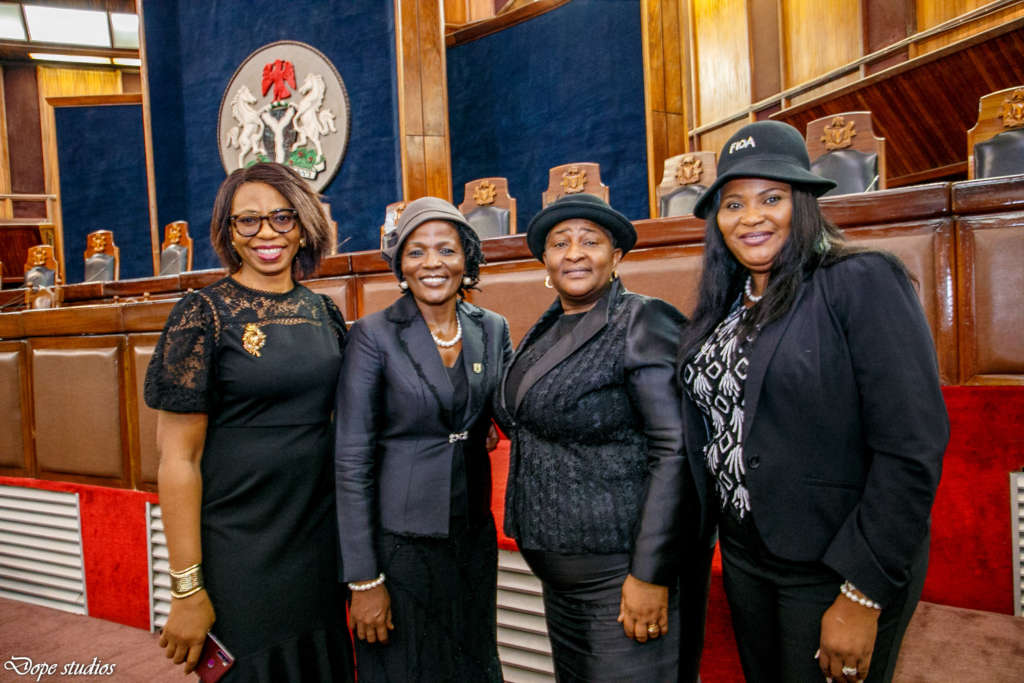
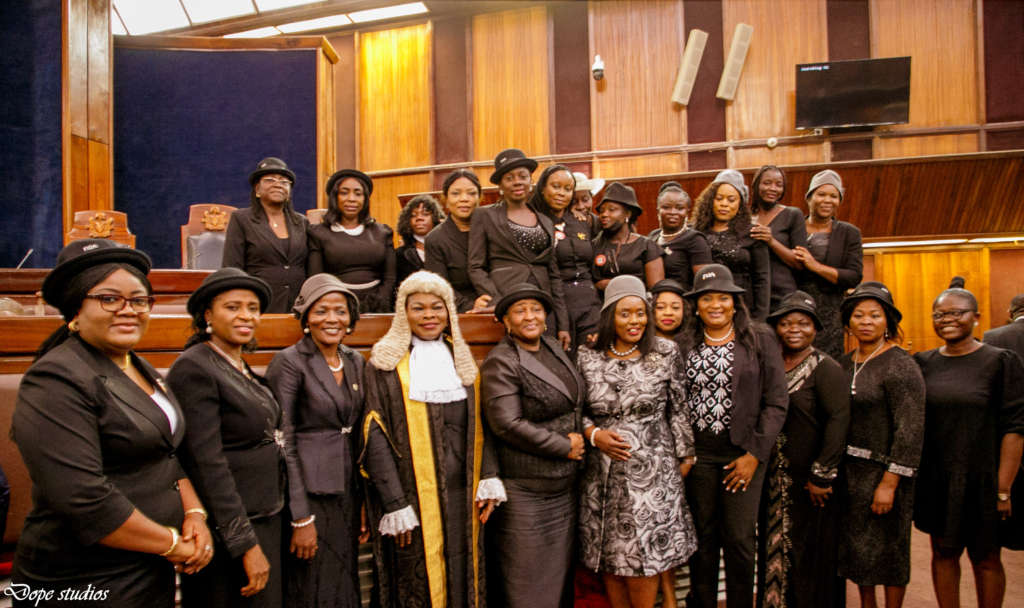
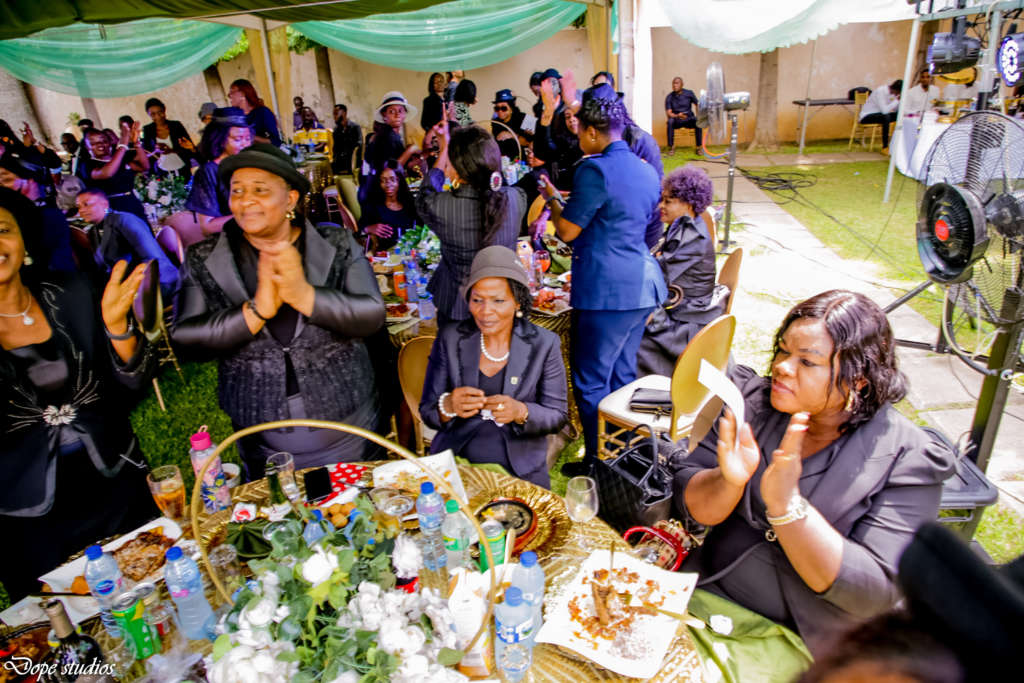
The celebrant and her exuberant guests from FIDA Nigeria
Members of FIDA Nigeria
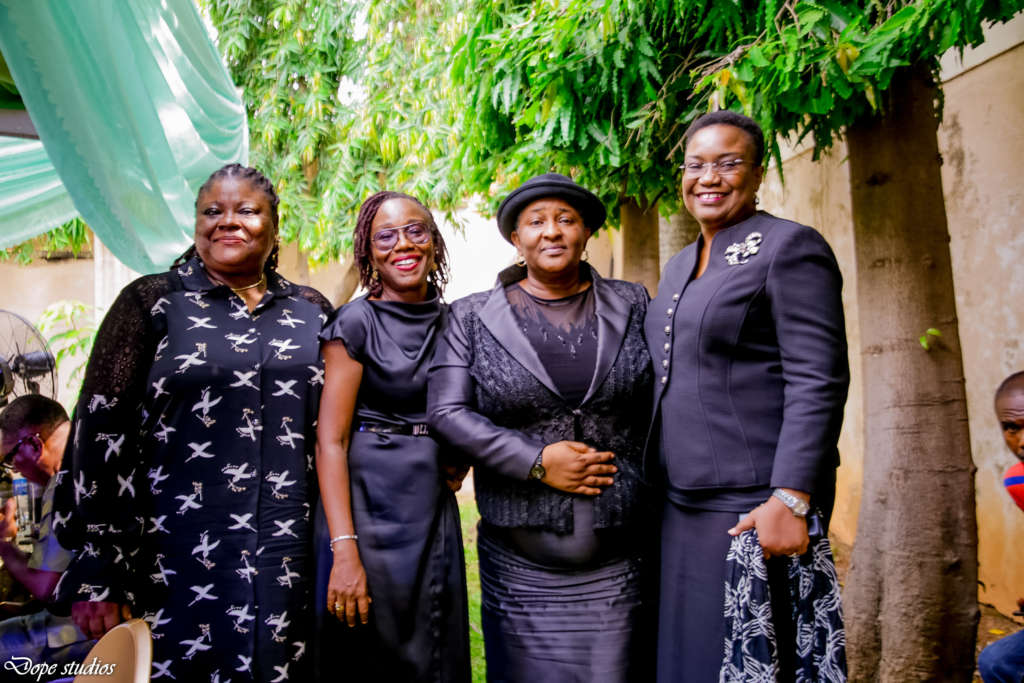
Amina Agbaje, CVP FIDA Nigeria, standing in the middle, her predecessor Rhoda Prevail Tyoden seated. Next is Amauche Onyedum-Anya of FIDA Abuja
L-R: Inime Aguma, Former Country Vice President(CVP) FIDA Nigeria, Ogechi Abu, Former PRO FIDA Nigeria, Amina Agbaje, CVP FIDA Nigeria and Ezinwa Okoroafor, Director, FIDA International
CVP FIDA Nigeria Mrs. Agbaje and her delegation dancing away at the celebrant’s residence
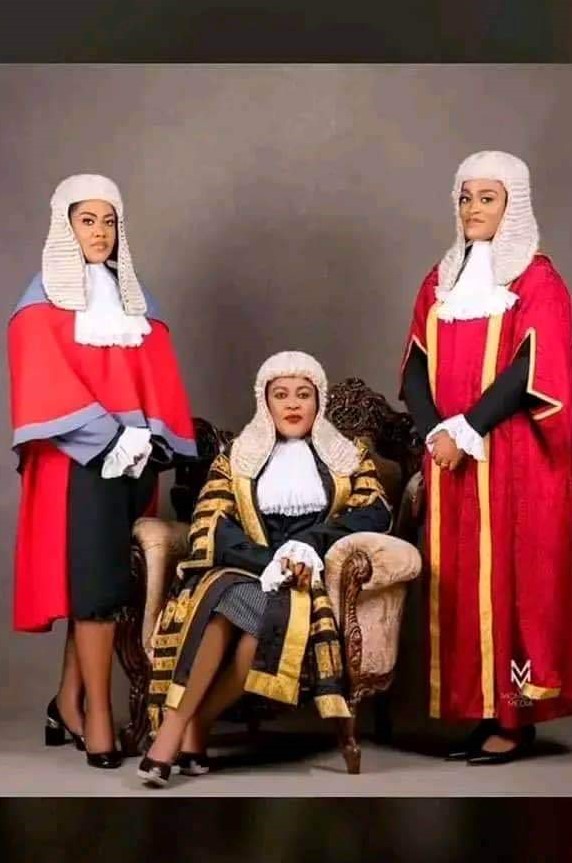
L-R: Hon Justice Chinelo Chidubem Odili, mum Hon. Justice Mary Peter Odili, JSC, and sister Hon. Justice Njideka Iheme

Whether section 8(8) of the NBA Constitution is self-executing on loss Of NBA-NEC membership (Part 1)

By Sylvester Udemezue

INTRODUCTION

The present commentary represents my humble, personal opinion on whether or not provisions of section 8(8) of the Constitution of the Nigerian Bar Association (NBA), 2015 are self-executing.

MEANING OF “SELF-EXECUTING”

According to Cornel University’s Legal Information Institute, self-executing is used to refer to something or a provision that goes into effect or can be enforced after being created without anything else required. In an article titled, “Concept of Self-Executing Provisions”, published by projectjurisprudence, it is stated that a self-executing provision of a law is “a provision which is complete in itself and becomes operative without the aid of supplementary or enabling legislation, or that which supplies sufficient rule by means of which the right it grants may be enjoyed or protected”. Finally, a thing or provision of a law is said to be when it becomes “effective immediately without the need of intervening court action, ancillary legislation, or other type of implementing action” (see: https://law.jrank.org/pages/10130/Self-Executing.html#ixzz7TIgHIUFR)

MEETINGS OF NBA-NEC

Section 8 of the NBA Constitution, 2015 makes provisions for meetings of the National Executive council of the NBA (NBA-NEC). According to section 8 (2) and(4), “The National Executive Council shall meet at least once in a quarter…(4) The President may direct the General Secretary to convene an emergency meeting of the National Executive Council where the situation so demands”.Section 8(6) provides for powers of the NBA-NEC. Meanwhile, membership of the NBA-NEC for a certain period is mandatory for qualification for election into certain national offices of the NBA. Example, section 9(3) dealing with “Qualifications to hold a National Office”, provides:

“A member of the Association shall be qualified to hold a National Office if he/she: a. is a full member of the Association and has paid, as at the date of his/her nomination, his/her Practicing Fees and Branch Dues, as and when due, for three (3) consecutive years inclusive of the year of election; 10 b. with respect to the office of the President, 1st Vice President and General Secretary, is in private legal practice; c. has at any time prior to his/her nomination been a member of the National Executive Council or the Executive Committee of a Branch or Section or Forum as indicated hereunder: i. for contestants for the offices of President, Vice Presidents, and General Secretary – he/she shall have been a member of the National Executive Council for not less than two (2) years at the time of nomination…” (emphasis mine)

AIM OF STATUTORY INTERPRETATION

The main purpose of the statutory interpretation is to discover the intentions of the makers of the law. A basic guide towards this end is to assume that the legislature has said in the statute, exactly what it means, and also that it means exactly what it has said therein. Thus, to find the real intentions of the drafters of a statute, regard must be had to the context, subject-matter and object of the statutory provision in question. This is easily achieved “by carefully analyzing the whole scope and provisions of the statute or section relating to the word or phrase under consideration….all approaches to statutory interpretation start (if not necessarily end) with the language and structure of the statute itself. This is because the language and provisions of a statute are the most reliable indicator of the intent of the makers of the statute”. (Udemezue S.C., “Place of Internal and External Aids to Statutory Interpretation in the Light of Legitimateness of Jurisdictive Discretion” (2021) 5 IMSU Journal of International Law and Jurisprudence (IJILJ) 48 (Imo State University). https://www.semanticscholar.org/paper/Role-of-Internal-and-External-Aids-in-Statutory-A-Udemezue/2a1cb4f1f872da82140420cc0a308d65f5900d57)

INTERPRETATION AND IMPLICATIONS OF S. 8(8) OF THE NBA CONSTITUTION.

Section 8(8) (formerly Section 7(7)) of the NBA Constitution, 2015 provides that “Any member who is absent from three (3) consecutive meetings of the National Executive Committee shall cease to be a member of the National Executive Committee unless he/she shows reasonable cause for such absence to the satisfaction of the National Executive Council.” In my opinion, the necessary implications of section 8(8) of the NBA Constitution is as follows:

1) A Lawyer who is appointed a NEC member and who is absent at NEC meetings on three consecutive occasions, loses his membership of NEC unless there exists a “reasonable cause” for such an absence to the satisfaction of the NEC. I doubt there is any provision for the NEC to institute any hearing at which the said lawyer is expected to make representations for the purposes of determining whether or not the absence is with or without a reasonable cause. I think it is the obligation of the lawyer who knows he’d not be present at a NEC meeting, or who has failed to attend a NEC meeting, to write the NEC and explain why he was going to away or why he stayed away from the meeting. This is in the nature of an application to have his absence excused. Accordingly, if there any evidence that a Lawyer now being accused of having stated away on three consecutive occasions, had written a letter to NEC on any (or all) of such occasions of his absence, either to ask the NEC to excuse his absence or thereafter, to explain his absence, and NEC had then accepted his explanation as satisfactory or a “reasonable cause” for his absence, then the NEC membership of the affected lawyer is saved. Thus, where the lawyer had written the NEC to explain his absence at any NEC meeting or meetings and the NEC had considered such application satisfactory, the implication is that the affected meeting or meetings cannot be relied upon, considered or counted for the purpose of considering whether the NEC membership seat of the affected lawyer had/has become vacant.

2) I respectfully submit that there is no condition requiring that the NEC must (by a resolution or other independent decision) declare such NEC member’s seat vacant before the provisions of section 8(8) would apply. Assuming there exists (although I am yet to see such anywhere) a requirement for the NEC to sit and pass a resolution declaring the seat of such a member vacant, failure of the NEC to sit and so declare does not adversely affect the vacancy of the seat of a member who has absented himself from three consecutive NEC meetings without a satisfactory reasonable cause shown to the NEC. In other words, in my humble opinion, his seat becoming vacant is self-executing, automatic provided the following three CONDITIONS are present:

a) He absented himself from NEC meeting on at least three consecutive occasions;

b) He either didn’t write the NEC to give “reasonable cause” for his absence at such proposed or past meeting(s) or he had actually written to the NEC, but the NEC had considered such explanation unsatisfactory.

3) It is further submitted that it’s unreasonable to argue or expect that NEC had any obligation (after each meeting or after three meetings at which a member was absent) to write to inquire of the affected member on why he failed to attend a NEC meeting or meetings. NEC’s obligation starts and ends with inviting its qualified members to every NEC meeting. An invitation to a NEC meeting is a letter. A member who receives a Letter of Invitation to a NEC meeting has three options: (a) Attend the the meeting; or (b) If you can’t attend, send your apologies giving reasonable cause (this is a reply to NEC’s Letter of Invitation); or (c) After the affected NEC meeting to write the NEC, to explain (I) why he couldn’t come and (ii) why he couldn’t/didn’t reply (i.e., send his apologies) before the NEC Meeting. This is akin to an applicant for an extension of time in usual civil court proceedings, by a party who apart from apologizing for late filing, has an ADDED responsibility to adduce credible reasons (reasonable cause) why he ailed to file within time.

4) Note, it is my further submission that it’s after NEC’s receipt or a letter (REPLY to notice of meeting) from the absentee-member, that NEC’s obligation arises to now write the affected NEC member to either say (I) we accept your explanation as satisfactory or (II) we reject your explanation as unsatisfactory. Where the NEC declares such an explanation unsatisfactory, the affected meeting becomes eligible to count or be counted as one meeting not attended by the affected NEC member and in respect of which his absence is not excused — not excused because (a) he sent no apologies or (b) sent one which was considered unsatisfactory.

5) It is respectfully submitted that the argument that NEC has an obligation to institute some form of hearing for a member who is absent at the NEC meeting on any occasion or on three consecutive occasions, has two grave implications:

a) May set a very poor precedent; may encourage some NEC members to stay away from NEC meetings, expecting that the NEC must write them after the meeting to ask “why were you absent”:

b) With due respect, it is not only disrespectful to expect the NEC to go about writing a member to inquire why the member was absent at a NEC meeting (for which he was duly invited) or at three consecutive meetings of the NEC. For God’s sake, how can one reasonably argue that a NEC member who (I) absents himself from a NEC meeting and also (II) failed/neglected/refused to send to the NEC (either before or after the meeting) an apology letter to explain his absence or to ask that his absence be excused, is still entitled to a second letter from the NEC asking him to explain why the disciplinary action of declaring his seat vacant, should not apply (or be applied)? Such a line of argument is perplexing, for three reasons:

i. It negates the universal practice and procedure of meetings, which places a responsibility on a member on whom a Notice of Meeting has been served, to either be present or send his apologies;

ii. Where the rule of the meeting of an organisation provides for sanctions to be imposed against a any member of the organisation for failure (without reasonable cause) to attend a meeting of the organisation, such sanctions usually apply against any member once two conditions are met — (a) the member failed to attend and (b) the member failed/neglected/refused to send satisfactory apologies/explanation.

iii. It may be, or not, disrespectful for a member for stay away from the meeting of an organisation; but is (more) disrespectful for such a member staying away to do so without any letter/notice of apologies sent to the organisation to explain his absence; and outright insulting for the affected member (or, indeed anyone else) to now turn around and expect the organisation (the organisation whose Notice he had ignored by its member) to still come writing the member to demand an explanation (reasonable cause) for the member’s failure to attend and for the member’s failure to extend some courtesy to the organisation by replying the Notice of Meeting earlier served on the member by the organisation. Note that failure to reply the Notice of Meeting when the member knew the member would not attend means the member has ignored the Notice of Meeting which is tantamount to also ignoring and treating the organisation with contempt.

6) In my humble opinion, section 8(8) of the NBA Constitution appears to impose a Volenti Non Fit Injuria Rule which operates automatically without any (further) action required on the part of anyone, once the necessary preconditions (as I have explained above) are present. The section is a warning to NEC members that, “Beware, if you stay absent at the NEC meeting on three consecutive occasions (without giving to the NEC, a satisfactory explanation of your absence), you automatically lose your NEC membership and thenceforth ceases to be a NEC member”. The implication of this, it is respectfully submitted, is that, where credible evidence is presented to establish that a particular lawyer has lost his NEC membership/seat by virtue of the provisions of section 8(8) of the NBA Constitution following his absence, without satisfactory explanation, at three consecutive meetings of the NEC, the burden automatically shifts on the affected lawyer to, by way of defence, present evidence to show either that (contrary to the allegation) he did not absent himself from the NEC meeting on three consecutive occasions or that even though he absented himself on three occasions as alleged, he cannot be said to have lost his NEC membership because he had, in a letter to the NEC (either before or after the/each meeting, in response to the Notice of meeting) satisfactorily explained his said absence. Satisfactory explanation, or “reasonable cause”, in my views, based on the aforesaid, means explanation which the NEC had (upon receipt of such explanation, considered acceptable or reasonable enough to justify excusing the absence of the affected lawyer). With due respect, it could be viewed as laughable for the affected lawyer to offer such ridiculous defence as, “See guys, I could not be said to have lost my seat because, although I was not present at three consecutive meetings, the NEC never invited me for a hearing to know why I did not attend neither did the NEC ever send me a letter asking that I should explain (giver reasonable cause for) my absence. If the NEC had asked me to explain, I would have explained satisfactorily. Since the NEC did not write me to explain, my membership of the NEC remains intact”. It is submitted that this sort of argument attracts three big questions unsatisfactory answers to any of which could push the argument to fall like a pack of cards:

a) Did the NEC not give you a Notice of meeting?

b) If yes, why did you not reply to notify the NEC of your absence?

c) Has the service of the Notice of Meeting on you not given you sufficient opportunity to to respond to it, asking the NEC to excuse your absence, since you would not attend?

7) If the seat of a NEC member becomes vacant by virtue of a provision of the NBA Constitution, the mere fact that the NEC, unaware that his office has become vacant, continues to send him Notice of subsequent NEC meetings, does not reverse, mitigate or displace the effect of the constitutional provision rendering his seat vacant upon the happening of the mandatory contingencies. Thus, where a member of the NEC fails (without reasonable cause shown by him, previously or subsequently) to attend the NEC meeting on three consecutive occasions, the said NEC member, according to the Constitution, loses his NEC seat. Any subsequent notice of meeting sent to such a person (who in the eyes of the Constitution has already lost his NEC seat) is as good as a Notice sent to a non-member of the NEC. Giving Notice to a non member of the organisation does not transform such a non member into a member of the organisation. It is submitted that a non member remains a non-member even if the organisation gives him/her a Notice of its meeting. Further, the NBA Constitution stipulates the conditions precedent to becoming a member of the NBA NEC, and the circumstances that may lead to a member losing his NEC membership/seat. When once any of such circumstances happens, the said member loses his membership. Such lost membership is not retrieved nor revived by the NEC innocently/mistakenly/inadvertently sending subsequent Notices of meeting to such a former member. Besides, there appears to be no provision in the NBA Constitution that a lawyer who has lost his membership of the NEC following his failure to attend the NEC meeting on three consecutive occasions, would have his membership revived if the NEC serves Notices of subsequent NEC meetings on him or if he attends any such subsequent NEC meetings or even continues to attend NEC meetings coming after the operation of the Constitution. The NBA Constitution has said what it means and meant what it has said.

8) What is the purpose of a Notice of meetings? According to section 245(1) of Companies and Allied matters Act (CAMA), 2020, failure to give notice of any company meeting to a person entitled to receive it, invalidates the meeting unless such failure is an accidental omission on the part of the person giving the notice. Section 242(1) CAMA, 2020 then provides that “The notice of a meeting shall specify the place, date and time of the meeting, and the general nature of the business to be transacted in sufficient detail to enable those to whom it is given to decide whether to attend or not…”. (emphasis mine). One crucial purpose or function of a Notice of Meeting is given in section 242(1) above: “to enable those to whom [the Notice] is given to decide whether to attend or not”. Where they decide to attend, a further decision is whether to attend personally or by proxy (see section 242(4) CAMA, 2020). Where on the other hand the member on whom the Notice is served/given decides to not attend or knows he would be unable to attend, he is under an obligation to notify the organisation of his (planned) absence and the reasons therefor. Where he sends a letter (of apology) to the organisation, it is now left for the organisation to consider his apologies and decide whether it is satisfactory or unsatisfactory. Where the Company considers his explanation satisfactory, the affected member may no longer suffer the punishment set aside for such non attendance.

9) Further, it may be relevant to also consider the effect of the portion of the usual Minutes of Meeting known as “Apologies”. This segment of the Minutes is meant to accommodate (letters of) apologies sent by members who, upon receipt of the Notice of the meeting, and aware they would not attend (for whatever reasons) have written to the Secretariat of the meeting (1) to notify the secretariat of their absence at the meeting, (b) to offer cogent reasons for such absence, (c) to offer an apology for their inability to be present, as expected, and (d) to plead that their said absence be excused based on the reasons offered, which they believe are cogent (ie, satisfactory). Note that the meeting could reject the reasons offered by such a member who failed to attend. Where the reasons offered are rejected, the implication is that the reasons are considered “not satisfactory”. If accepted, the effect is that the organisation has considered the reasons “satisfactory”, a reasonable cause. All in all, two things are clear: (I) A member of an organisation who is invited for a meeting of the organisation, but who knows (s)he would not or could not attend the meeting, has an obligation to notify the organisation, either before or after the meeting, to apologize and ask that his absence be excused. In my opinion, it sounds absurd for a member invited for a meeting to sit back at home and expect that after the meeting, the meeting should send him a second letter requesting him to explain, or give “reasonable cause” for, his absence at the meeting, before any set consequences of his failure to attend the meeting would apply. Generally, it is my submission that the rules applicable to absenteeism, will apply to all who after due receipt of the notice of the affected meeting, stayed away without any (satisfactory) apology letters sent to the organisation concerned. Accordingly, it is submitted that the provision of section 8(8) of the NBA Constitution has toed this line when is provides that a member of the NEC who fails to attend the NEC meeting on three consecutive occasions, loses his/her NEC membership unless he has offered a satisfactory explanation for his absenteeism. The provisions therefore appear more self-executing than otherwise. Writing under the title, “How to Apologize for Missing a Meeting”, Wood et all (the Editors of UpCountry) have given the following tips on what to do in such a situation. They state:

You should write a letter or email and begin with an honesty apology and use phrases like “I apologize for missing the meeting” or “I express regret over not being able to attend.” Do not make excuses or give an insincere explanation and ensure you communicate that you genuinely feel sorry (read more at: https://upjourney.com/how-to-apologize-for-missing-a-meeting)

Similarly, while listing the “Apologies” column as an essential component of a standard minutes of meeting, The Resource Centre explain that the column should contain: “a record of people who haven’t been able to come to the meeting, but have let the meeting know that they won’t be there”. (See: “Quick and easy guide to taking minutes” https://www.resourcecentre.org.uk/information/taking-minutes/). On the its part, in a release titled “Governance: How to take and write minutes”, the University of Western Australia suggests that a “standard format for the preparation of minutes template” provides the correct layout of attendances and apologies in the minutes of a meeting, as follows:

“Record any apologies received in advance of the meeting, and advise the Chair of these before the meeting starts. Record attendees either by ticking them off against the list of members on your agenda, or on an attendance list. Be careful about this relatively easy task – members can be very sensitive about being left off the list of attendees, and about their titles and names being absolutely right! Record the names of any invitees to the meeting and indicate which item/s they attended for”. ( See: https://www.governance.uwa.edu.au/committees/principles/meetings/preparation/minutes)

Finally on this part, an organisation that goes by the name “What Makes a Good Leader” appears to have recognized that making/sending a letter of apologies when you know you would not be able to attend the meeting of an organization of which you are a member, is an important quality of a good leader and good leadership. The organization explains that “Apologies are notifications from meeting participants indicating that they are unable to attend the meeting”. (see: Effective Meetings: Recording Meeting Minutes” by Ian Pratt (http://www.whatmakesagoodleader.com/meeting-minutes.html#:~:text=Apologies%20are%20notifications%20from%20meeting,unable%20to%20attend%20the%20meeting.). In recognition of the duty of a participant to apologize for not being able to attend a meeting or for missing a meeting, so many organisations and platforms now provide lecture notes, and organize training exercises, and tutorials and specimen letters bothering on how to apologize for missing or being late to a meeting. Some examples of such organisations/platforms include the Harvard Business Review, English Live, Career Ride, Letters Pro, and Up Journey. The point I have tried to make here is that a member of an organisation who, after having received a Notice of a meeting of the organisation, failed to attend same and failed to send his/her apology letter to the orgnanisation should be prepared to accept in good faith the necessary consequences of his deliberate actions. Aristotle made this clear when he posited that that “we are responsible for our voluntary actions… whereas for our involuntary actions we may be liable to either pardon or pity”. Thus, by virtue of section 8(8) of the NBA Constitution, 2015, an NBA-NEC member’s omission (1) to attend the NEC meeting, if such omission continues for three consecutive meetings and is accompanied by (2) the member’s omission to give reasonable cause for the omission to attend, are omissions which both combine to render the affected member’s NBA-NEC seat terminated/vacant. I so submit with due respect.
Long live the NBA!
Respectfully,
Sylvester Udemezue (udems)
08109024556, [email protected].
(14 May 2022)

Deborah’s Immolation: All Religion and No Faith

By Chidi Anselm Odinkalu


Cordelia Ego Ejiofor died like no one should, clobbered to death by her employer. Her dead body was never found. Around 3 December 1972, Alhaji Rauph Gaji, a senior lawyer in Kaduna beat Cordelia to death in his own house. He drove her remains to the outskirts of the city and disposed of it on a location along Kachia Road, where, months later, scanty human remains were located after Alhaji Rauph led Police to where he said he disposed of her body.
Mamman Nasir, like Alhaji Rauph, a Muslim, prosecuted the case to conclusion, securing a conviction for manslaughter, which the Supreme Court affirmed on Friday, 23 May, 1975.


If this case happened today, Cordelia’s killer would never have been brought to account. Her scanty remains would not have drawn any attention. Cordelia’s killing would hardly have merited the attentions of the justice system and Mamman Nasir would have come under unbearable pressure not to prosecute a fellow Muslim for this killing.
For a country whose coat of arms has “Unity and Faith….” as its motto, this is some distance travelled.
In one of fate’s more unfair ironies, Shehu Shagari College of Education in Sokoto, the school named after a pioneering Nigerian teacher who rose to become president of the country and one of its most emollient public figures, could be fated to become etched in public imagination as the funeral pyre to Nigeria’s coat of arms. It is the location where, in daylight on 12 May 2022, a mob of male students set upon one of their colleagues, stoned her to death and burnt her remains.


This school was the site of Deborah Yakubu’s public immolation.


Deborah’s life ended at the un-ripe age of 22. She did not die nor was she merely killed. Deborah suffered a fate reserved for savages in an age that exists largely in pre-civilisational apocrypha.
Nigeria’s leading newspaper, The Guardian, reports that “Deborah allegedly had argument with fellow students online and the Muslims among them claimed that she blasphemed….The interaction reportedly took place during the Muslim moon of Ramadan when the College was on break. When they sighted her at the school today, all available Muslim male students surrounded her and started stoning her. They continued until she fell. They made sure she died and subsequently set her body ablaze.”
Spokesperson of the Nigeria Police Force in the state, Sanusi Abubakar, is reported to have claimed that “Students forcefully removed the victim from the security room where she was hidden by the school authorities, killed her and burnt the building.”
Explaining why the police failed to show up until it was way beyond too late, Mr. Abubakar added that the students ‘banded together with miscreants’ to block the road leading to the school. This would suggest that there was pre-meditation to this savagery. It fails as a plea of mitigation by the police.


Deborah was a 200 level student of Home Economics education at the Shehu Shagari College of Education, where she was also known as the Sisters’ Co-ordinator for the Fellowship of Christian Students. Shecame from Tugan Magajia in Rijau Local Government Area of Niger State in Nigeria’s north-central region and worshipped as a member of the Evangelical Church Winning All (ECWA), a leading Christian denomination in the region.
There were credible reports, not exactly denied at the time of writing, that “she had rejected the advances of a Muslim student, who later made the allegation.”
Deborah is the latest to suffer this gruesome fate in Nigeria. In three decades of such lynchings in Northern Nigeria, no one has been brought to account. There is no reason to believe that Deborah’s case will prove to be different. Indeed, the Police conveniently claim the leader of the mob that killed her is not of Nigeria nor within it.


About 2 June 2016, a mob lynched 74-year old Bridget Agbahime in front of her shop in Kofar Wambai Market in Kano, north-west Nigeria. She had reportedly asked a male Muslim adherent not to conduct his ablution in front of her shop, an otherwise sensible request even if only for health and sanitation reasons. That was her last earthly request. Affronted, the man accused her of blasphemy, summoned a mob and they clobbered her to death.
President Muhammadu Buhari issued a statement then describing Bridget’s lynching as “sad and regrettable”, promising that justice would be done. The Sultan of Sokoto and the Supreme Council for Islamic Affairs in Nigeria equally did the same. The government of Kano State quickly announced the arrest and arraignment of five men in connection with Bridget’s lynching: Dauda Ahmed, Abdullahi Mustapha, Zubairu Abubakar, Abdullahi Abubakar and Musa Abdullahi. A mere five months after Bridget’s murder, the Kano State government itself withdrew the charges against the five suspects. Like Bridget, this case died, never to be resurrected.


45 days after the Bridget’s lynching, Eunice Elisha, a pastor with the Redeemed Christian Church of God was hacked to death in Kubwa on the outskirts of Abuja, Nigeria’s Federal Capital, after the leaders in a nearby Mosque had warned her to stop her open-air preaching. Her killers were never apprehended nor was anyone brought to account.


In August 1995, a young Christian trader from south-east Nigeria, Gideon Akaluka, was beheaded in Kano again on unverified allegations of blasphemy. Some high profile arrests followed but, as with the case of Bridget Agbahime more than two decades later, the suspects were never brought to account.
Moments after Deborah’s immolation, the Sultan of Sokoto, as he did in the case of Bridget Agbahime, promptly issued a statement describing it as “unfortunate”.
President Buhari followed the next day, describing “the news of the killing of the young lady by fellow students was a matter of concern.” It would have been much better if he had persisted in the eloquence of his complicit silence. If his words are to be believed, the president was not worried by the killing but by the news about it. One reading of this unfortunate sentence, crafted with the benefit of more than 36 hours of contemplation, is that it would have been better if the perpetrators had just quietly wasted Deborah.


The president could not even pretend to find any sense of indignation in this affair. It was a mere matter of concern. Forgetting that he is the guarantor of human safety and security under Nigeria’s constitution, President Buhari merely “demanded an impartial, extensive probe into all that happened before and during the incident.” Curiously, he directed this demand to no one in particular, probably because he does not think anyone should act on it.
In the same statement, however, the same president “also directed the Ministries of Information and Culture, Police Affairs and that of Communications and Digital Economy to work with GSM providers and Tech companies to help contain the spread of false and inflammatory information through social media.”The man is consistent: his worry is not the killing but rather than the cameras captured it for social media. He lost his voice on the question of accountability but found it in time to direct social media censorship, even when social media had nothing to do with this immolation.


Following the example of the president, other leading politicians around the country lost their voices and their moral compass. Former Vice-President, Atiku Abubakar, having issued a statement initially condemningDeborah’s tragic fate, proceeded to delete the statement from his social media handles before explaining that he did not have anything to do with the statements to begin with. Self-acclaimed leader of the ruling All Progressives Congress (APC) and one of its leading presidential aspirants, Bola Ahmed Tinubu, vanished.
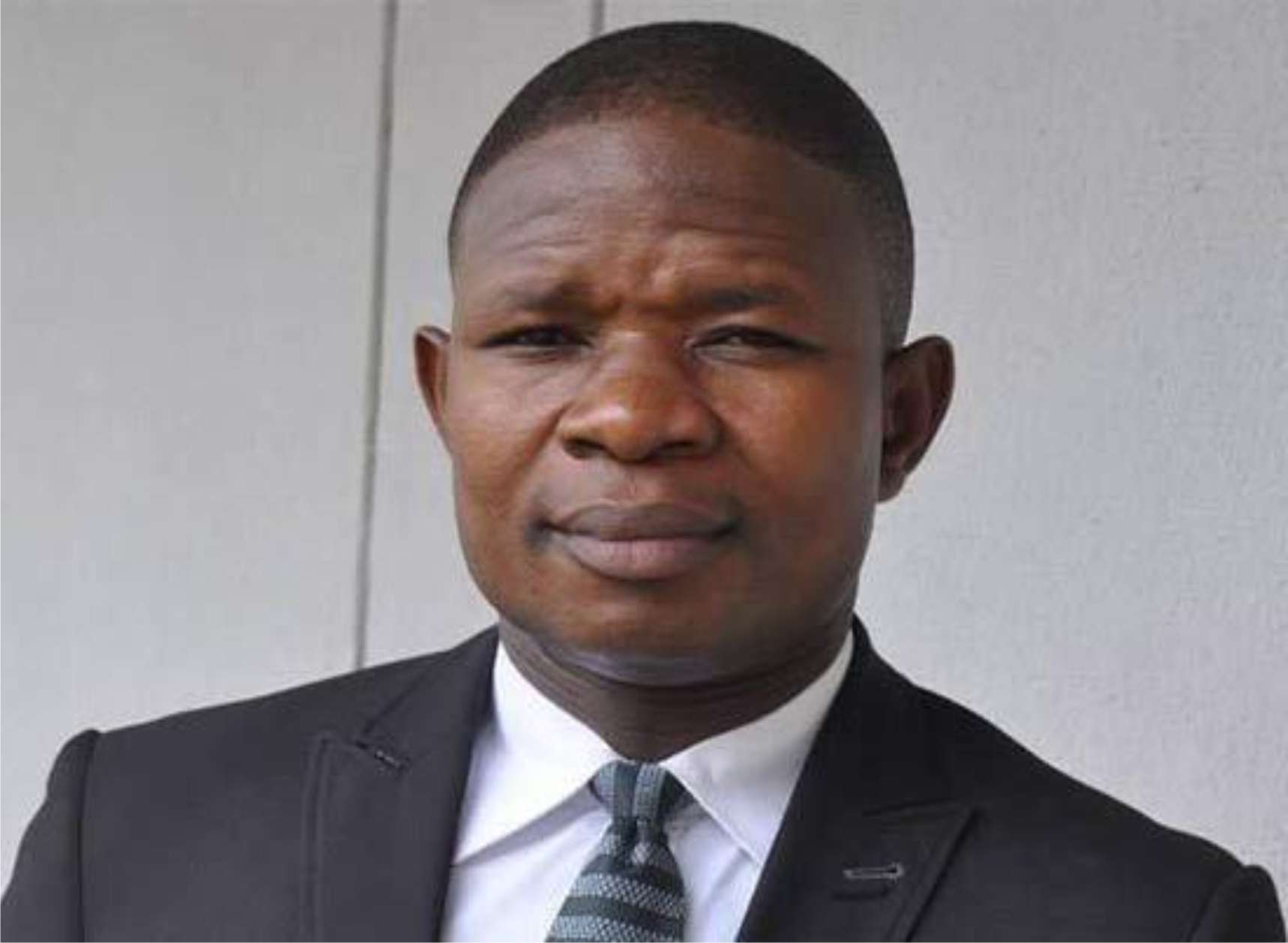

Deborah Yakubu was killed exactly 10 days before the Practice Section on Public Interest and Development Law, SPIDEL, of the Nigerian Bar Association, NBA, was to hold a widely advertised conference in Sokoto, the site of Deborah’s last earthly moments. The morning after her gruesome fate, while the smoke still smouldered from her funeral pyre, Monday Ubani, the Chairperson of SPIDEL, issued a statement denouncing those who called on him to re-consider holding the conference as scheduled as “without locus.”
Mr. Ubani’s statement is as gratuitous an insult to everyone as the line that the stoning to death of Deborah “is not a religious problem.” If blasphemy is not about religion, can someone, anyone, please explain what it is about? Determined to give lie to this, on 14 May, mobs set upon some Christian places of worship in Sokoto, forcing the state government to declare a curfew.


The issue clearly is not whether the stoning to death of Deborah Yakubu is a religious matter but whether the rulers of Nigeria both in and out of government have it in them to give Nigerians reason to have faith in the country. On the current evidence, there is only one answer.
A lawyer and a teacher, Odinkalu can be reached at [email protected]

FIDA pledges support for NDLEA in fight against drug abuse

The International Federation of Women Lawyers (FIDA) Nigeria has pledged support to the National Drug Law Enforcement Agency (NDLEA) in its war against drug abuse particularly among women and young people in Nigeria.

CVP Mrs. Amina Suzana Agbaje giving her speech

Led by the Country Vice President (CVP), Mrs. Amina Suzana Agbaje, FIDA Nigeria during a courtesy visit to the Chairman/Chief Executive of NDLEA, Brig. Gen. Mohammed Buba Marwa (Rtd.) expressed concern over the rise in crime which is majorly influenced by drug abuse.

Chairman Chief Executive of the NDLEA, Brig Gen. Mohamed Buba Marwa Rtd, OFR
FIDA Delegation

In her address, Mrs. Agbaje who was accompanied by delegates from Abuja and Gwagwalada branches including Ms. Chibuzo Nwosu (Chair Abuja branch) and Prof. Josephine Agbonika, SAN (Chair Gwagwalada branch)  noted that “trafficking in illicit drugs and its abuse are the major causes of most social challenges in our country today. The young and the old, the boys and the girls, the men and the Women are involved in it.”

Brig Gen. Mohamed Buba Marwa delivering his address

She further observed: “Cases of domestic violence, rape, murder, kidnapping, terrorism, activities of bandits and yahoo plus boys, in most cases can be traced to drug abuse. The security of the land is also in great danger because of activities that can be traced to drug trafficking and abuse. I dare say that this is destroying the fabric of our society.”

Asserting that “most of the victims of these heinous crimes who are women and children are equally within our mandate,” she disclosed that the purpose of the visit is “to appreciate and encourage you and to seek for partnership and collaboration in the areas of training, sensitisation and awareness campaigns on the provisions of the law establishing your mandate. We also shall be seeking for partnership in the area of rehabilitation and reintegration.”

Chairman Chief Executive of the NDLEA, Brig Gen. Mohamed Buba Marwa Rtd, OFR presenting NDLEA Magazine to FIDA Nigeria CVP, Amina Agbaje

FIDA Nigeria’s CVP also commended the management and staff of NDLEA for the successes recorded, particularly its recent wins in the fight against illicit drugs and trafficking in Nigeria.

L-R: Treasurer FIDA Abuja, Wendy Kuku, Vice-Chair FIDA Abuja Francesca Akaniro Opara, Financial Secretary FIDA Abuja, Mrs. Rose Obiakor, and former Chair Parliamentary Committee FIDA Abuja, Lillian Okenwa

In his response, Gen. Marwa in turn commended FIDA for its achievements while stressing the importance of such partnership in tackling the proliferation and menace of addictive drugs including the stigma faced by women who need rehabilitation from the wrong use of drugs. He further assured FIDA of the support of the Agency’s resource persons for future advocacy campaigns.

TIPS