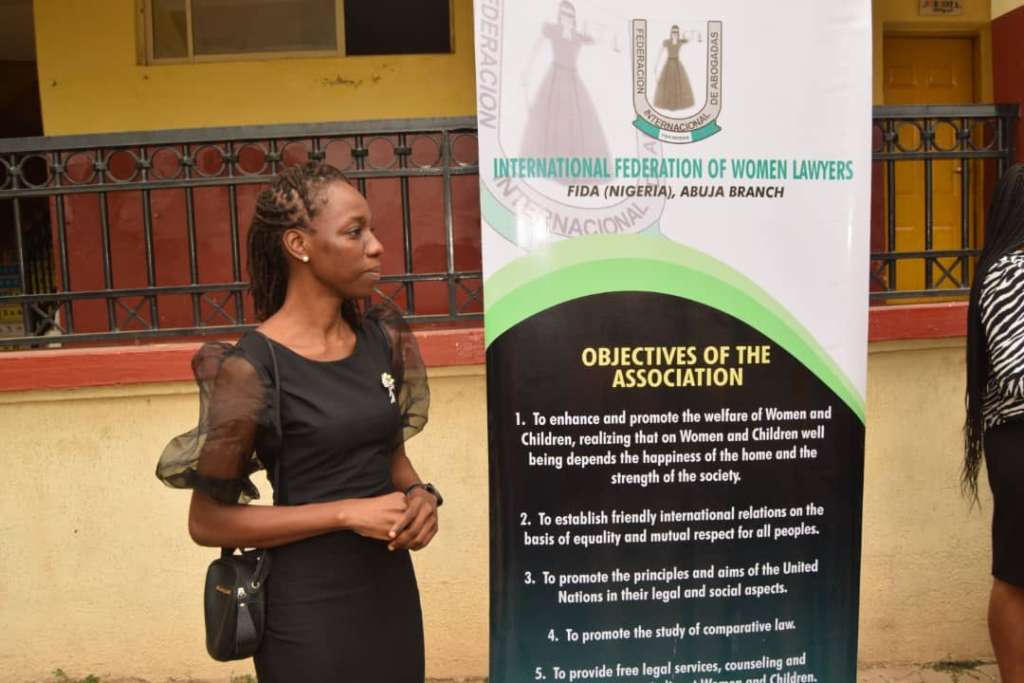
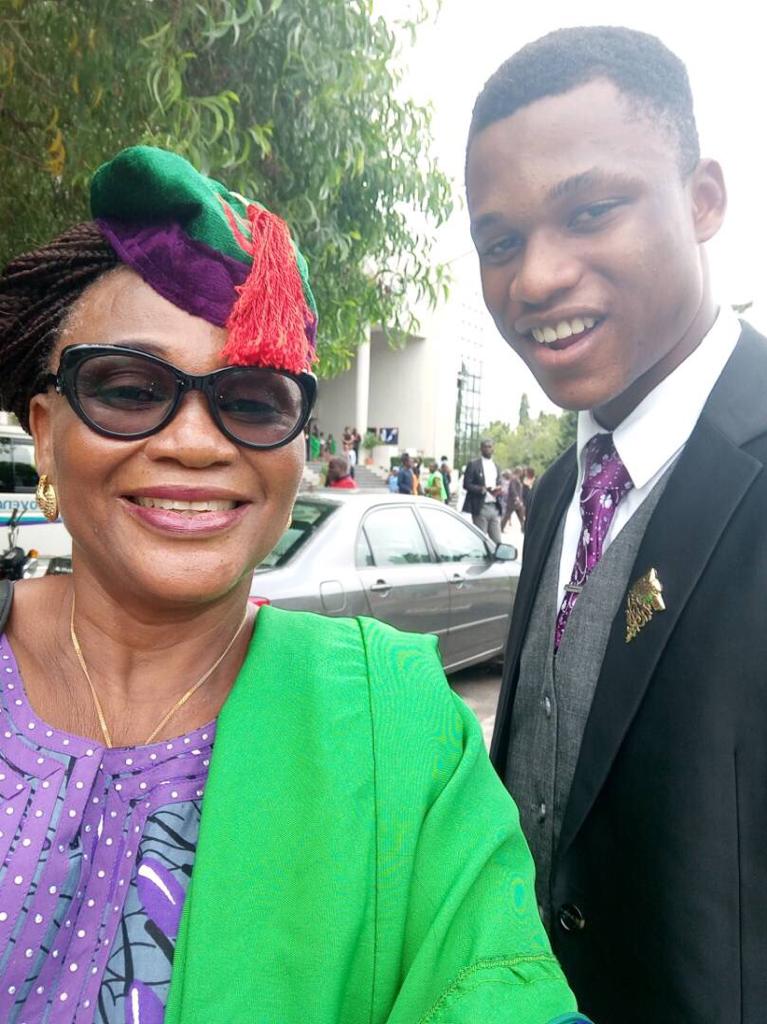
In commemoration of the forthcoming Children’s Day celebration, FIDA (Nigeria) Abuja branch led by the Chairperson, Ms. Maureen Chibuzor Nwosu took an Advocacy visit to a secondary in Abuja.
Addressing students of Life Gate Academy Wuye, Abuja, Ms. Nwosu enlightened the children on key provisions of the VAPP ACT as it affects their rights and wellbeing.
A statement signed by FIDA Abuja Publicity Secretary, Ms. Olosen Victoria Ibiezugbe said some of the issues highlighted by the Chairperson include: Rape, Female Genital Mutilation, and Injury to Persons with particular emphasis on the adverse effects of bullying.
To cap the visit, the children asked pertinent questions and the Chairperson and FIDA members answered them accordingly. Copies of the VAPP Act were gifted to the school for the use of the children.
Below are some photos of the event.
Flanked by FIDAns, Ms. Nwosu responds to a questionThe StudentsQuestion timeOlise Judith Adaeze and Chinelo AudreyAdamma IsamadeFIDANs with the students of Life Gate Academy Wuye
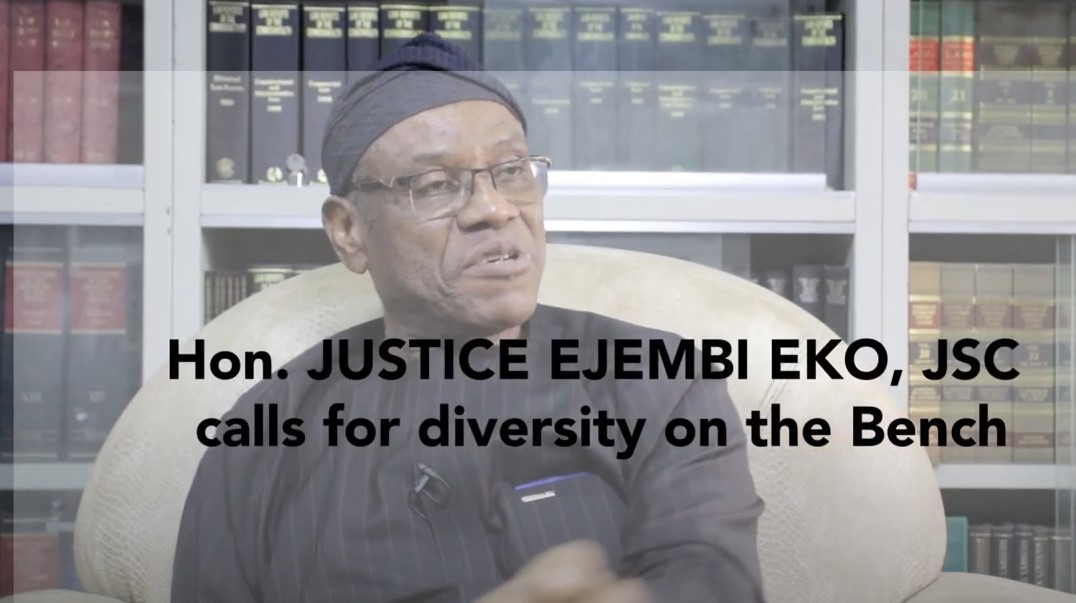
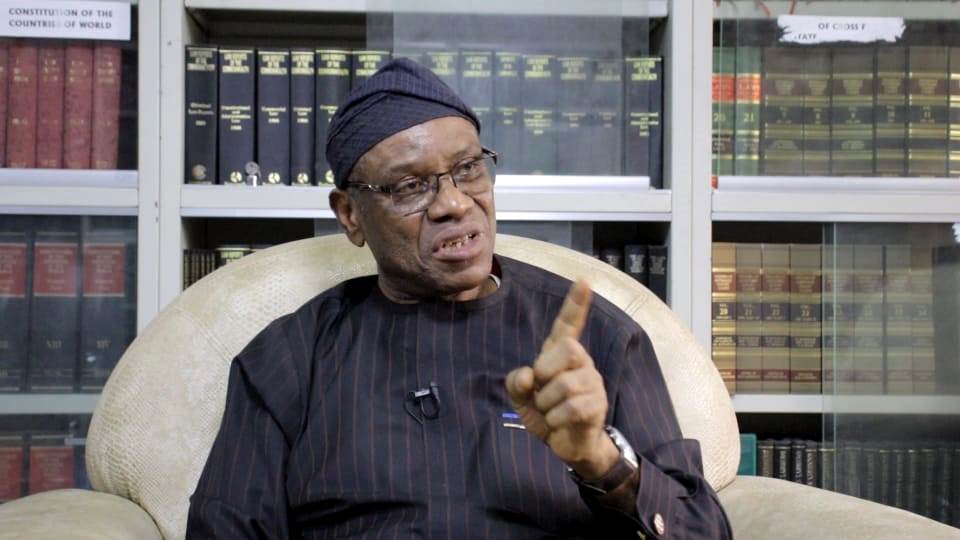
Hon. Justice Ejembi Eko, JSC will be remembered for his many dissenting judgments at the Supreme Court of Nigeria, the famous Onu Obekpa case where he convinced a High Court of Benue State that there’s no provision under the Criminal Procedure Code of Benue State which required
Says stringent bail conditions amount to no bail at all.
“The manner of recruitment is important too. That is where the problem is. Are you bringing a judge because he’s a hand-clapping alleluia Christian, because he’s a fanatic Muslim or because he’s an animist? That shouldn’t be the concern. Is he jurisprudentially equipped? Does he have enough intellectual warehouse? We have politicised everything.” – Ejembi Eko, JSC
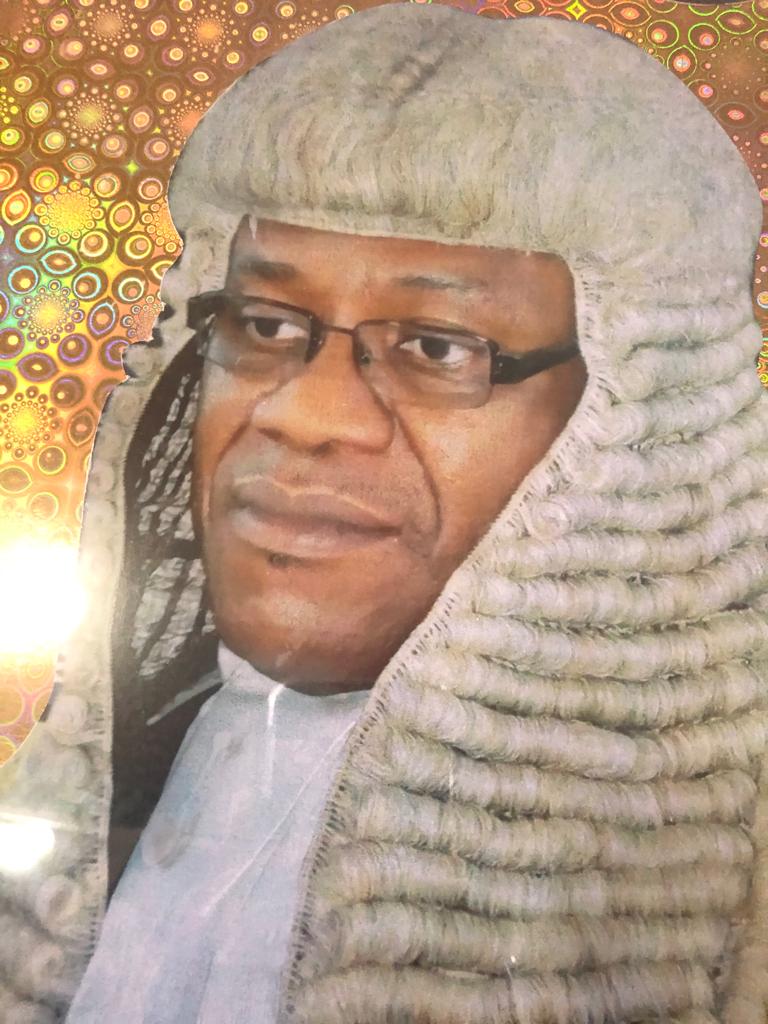
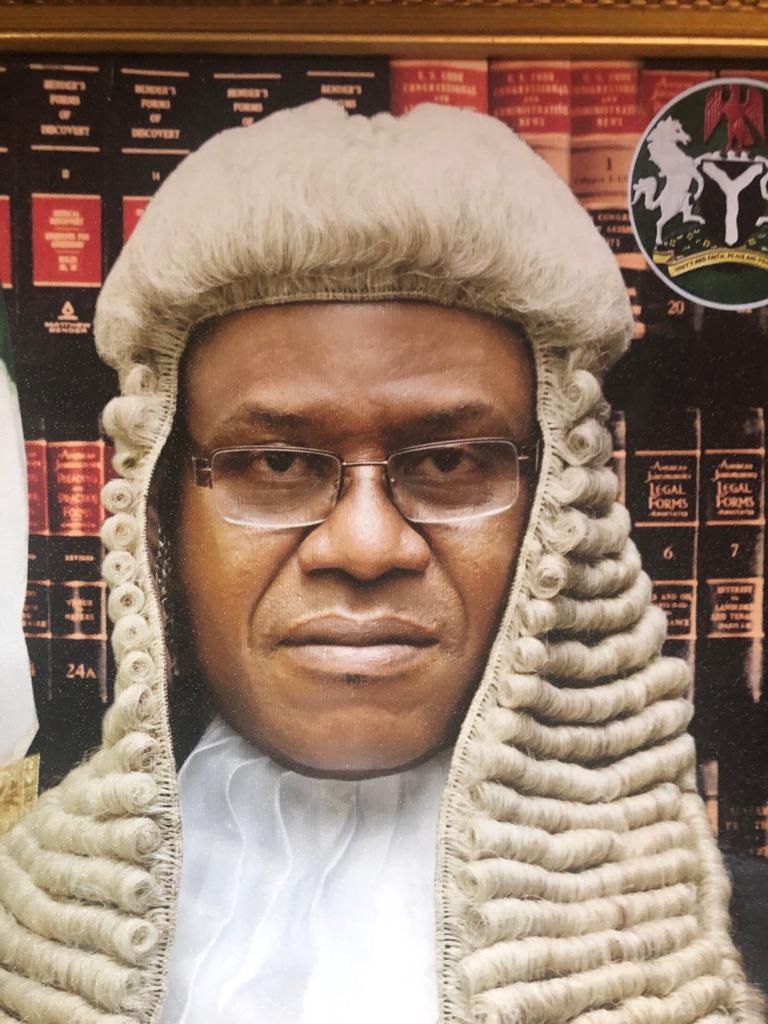
After 35 years in judicial service, six of which he spent at the Supreme Court of Nigeria, Hon. Justice Ejembi Eko, JSC will be remembered for his many dissenting judgments at the apex court. He will also be remembered for other notables including upholding the judgment of a Rivers State High Court at the Court of Appeal which had ordered Shell Petroleum Development Company of Nigeria Limited, SPDC, to forfeit the land on which its oil tank farm —the biggest oil terminal in Africa, Bonny Terminal—is situated, to the owners (the Bonny people). Not only did Shell obtain a Certificate of Occupancy (C of O) behind the community, a clause was inserted in the C of O abrogating the authority of the community meaning that the community had become their tenant. The court at the lower court which His Lordship upheld reads:
“This action of Shell not only smacks of malice but greed and therefore not worthy of any form of sympathetic consideration. Accordingly, I feel no hesitation whatsoever in setting aside the said Certificate of Occupancy for being unconstitutional, null, void, and of no effect. The law remains that a right of occupancy whether statutory or customary creates priority of estate so as to render null and void any subsequent Certificate of Occupancy issued in respect of the same parcel of land unless the right of occupancy is validly revoked by the appropriate authority before the issuance of a Certificate of Occupancy in respect of that same parcel of land to another person.”
Elevation to the Supreme Court on 7th November 2016
The famous 1980 Onu Obekpa case where he convinced a High Court of Benue State that there’s no provision under the Criminal Procedure Code of Benue State which required formality in applying for bail is still a locus classicus.
His Lordship shared his thoughts with Lillian Okenwa.
Emphasise merit instead of seniority in appellate court appointments
If you emphasise seniority alone in the recruitment to the appellate courts, you’d get it wrong. There’s a lot of emphasis on seniority. In 2011, I couldn’t come to the Supreme Court because the person I was shortlisted with was a senior; a Presiding Justice. The Americans and the Indians seem to be getting their acts right. John Glover Roberts was nominated by George Bush to succeed Sandra Day O’Connor at the US Supreme court. Before the senate could consider that request, he withdrew it and re-nominated him to replace Chief Justice William Rehnquist who had died. That can’t happen here in Nigeria. Here your right to the headship of the court is largely gerontocracy – rulership by age. It is your age at the bench that is considered and the heads of court are likely to tell you to wait for your time. That tendency can give room for autocracy. The bad ones do not see themselves as primus interferes.
7th November 2016
Recently I read the dialogue between Justice N. V. Ramana the Chief Justice of India and the retiring Justice Stephen Breyer of the United States from the Supreme Court during a webinar in April on the diversification of the bench. The Chief Justice of India said it’s good because when you bring all shades of opinion to the bench it makes the bench richer and assures the people that it is the people’s court. If you bring someone who has a background in commercial law practice or other areas of law, it enriches the bench. I agree with him. We need to embrace that instead of concentrating on seniority alone.
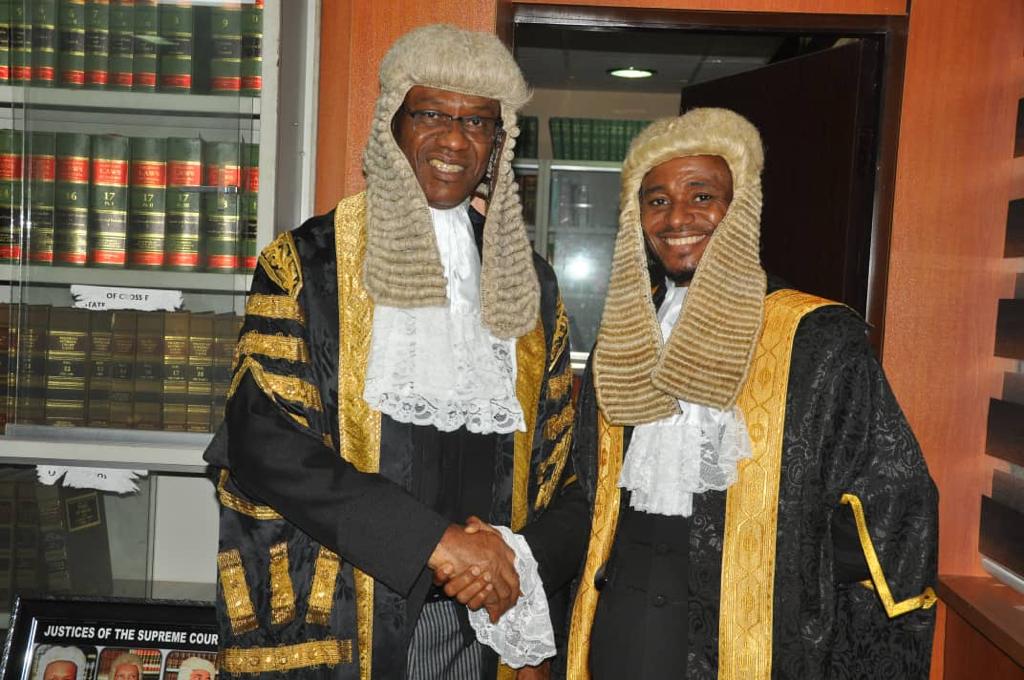
With former CJN Mahhud Mohammed and Hon, Justice Amina Augie on their elevation to the Supreme Court Bench, 7th November 2016
There’s another argument here. In the recent circular by the CJN for the appointment of justices, he invited the private bar which I think is right. Those of them in commercial, maritime, and other areas of practice should come and enrich the bench. Elias, a professor of Law and Attorney General of the Federation was made Chief Justice of Nigeria. Nnamani another Attorney-General of the Federation had a Ph.D. in Pharmacy before studying law. He was appointed straight from the Bar and his records are there. Justice Aguda was a Mechanical Engineer. He was at Yaba College of Technology before reading law. Obaseki first had a degree in Agricultural Science. Meanwhile, I disagree with JAMB which says you must have studied and passed literature in English before you can read law. Lord Denning had his first degree in Mathematics. Justice Iheme Nwosu of the Court of Appeal was in the science class all through secondary school. I was in the science class too. Studying literature in English does not necessarily make one an exceptional lawyer.
L&S: So you feel it’s in order for SANs to be appointed to the appellate court?
It doesn’t have to be Senior Advocates. The prerequisite should be anybody knowledgeable in law. All that’s needed is your jurisprudence; good knowledge of the law; someone that has good morals. I might be offending some of my colleagues who are expecting to be elevated but being a lawyer on the bench, the way you perceive certain things is different from the way the lawyer in the private bar sees things. The way a defence counsel sees things may be different from a prosecuting counsel, and the two of them at the bar will likely see things differently from the adjudicator. Why then don’t we bring from the private bar, official bar, magistracy even some with sound practice in commercial law? There are so many appeals for instance from the capital market and from maritime. We need experts from these fields on the bench. I’m speaking for myself. I’ve heard arguments that we’ve made sacrifices for the nation but we need variety on the bench.
About to sit 2019
L&S: But there’s an argument that lawyers in the private bar have chances of becoming SANs, so why deprive judges of their chances of elevation?
Did the constitution do that exclusivity? We need diversity on the bench. My orientation is human rights jurisprudence.
With Justice Augie on their swearing-in day
L&S: How in your opinion will this issue of conflicting judgments ever be resolved?
At a point when the Court of Appeal had five divisions, the incident was not as bad, but now its 20 divisions. Then the manner of recruitment is important too. That is where the problem is. Are you bringing a judge because he’s a hand-clapping alleluia Christian, because he’s a fanatic Muslim or because he’s an animist? That shouldn’t be the concern. Is he jurisprudentially equipped? Does he have enough intellectual warehouse? We have politicised everything. If it’s not my brother, he’ll not be there. I spent 19 years on the High court bench.
With Hon Justice Sunday Akintan, JSC (Rtd.)
In some zones, five was enough to go to the Court of Appeal. When you go to the south it is muscle. These are the subjective elements causing conflicting judgments. Some judges are not bothered to read and distinguish. So at the end of the day when they just hand it out, it is in conflict. Even the previous judgments handed over to you, by the time you go through it you can make some distinctions
With Hon. Justice B.A. Adejumo, fmr. President of the National Industrial Court and Augie
L&S: There is now a perception that one can no longer go to the Supreme Court and get justice. That it’s a place where somebody who was number four in an election can become number one.
It’s a human institution and there are certain errors in human institutions. Some may be deliberate, some may be innocent. The one that no society would tolerate is a deliberate error; a deliberate decision to do something wrong. Apart from that, I wouldn’t comment further on this. I was supposed to be on that panel and later was no longer there. I was on the panel that declared Nwosu as the authentic candidate of APC and Hope Uzodimma was a respondent in that appeal. I was also on the panel which declared that Nwosu having agreed to be sponsored by AA at the time when he was being sponsored by APC was disqualified from contesting. The two judgments recognised Nwosu as the APC candidate. That’s the much I know. Since I wasn’t on the panel I don’t know what happened.
At Shiroro Dam in Niger State with other Justices of the Supreme Court
On Stringent Bail conditions
We’ve been telling judges at conferences. It’s not there in the statute books. Stringent bail conditions amount to no bail at all and for a judge to say you have to bring somebody who is a director, how many people in my community are directors in the Federal service? These are very outrageous bail terms and when bail terms are outrageous, it’s tantamount to denial. Why they are still doing it I don’t know. In spite of the battles we fought in the 1980s, it’s still on in 2022. It amazes me. Baffles me.
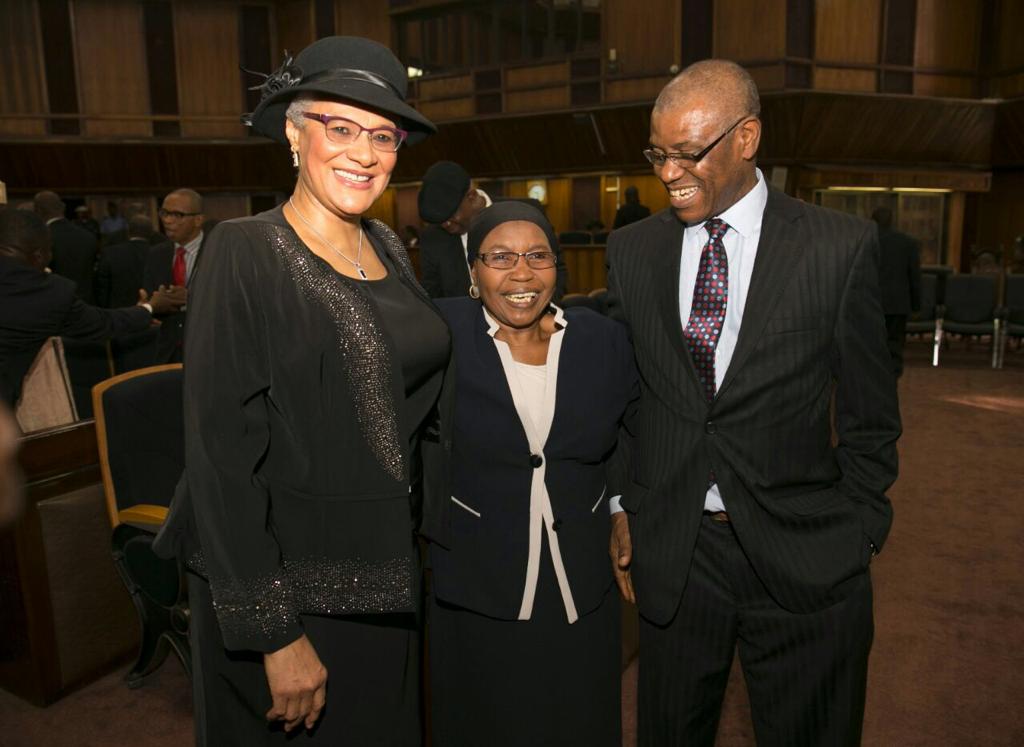
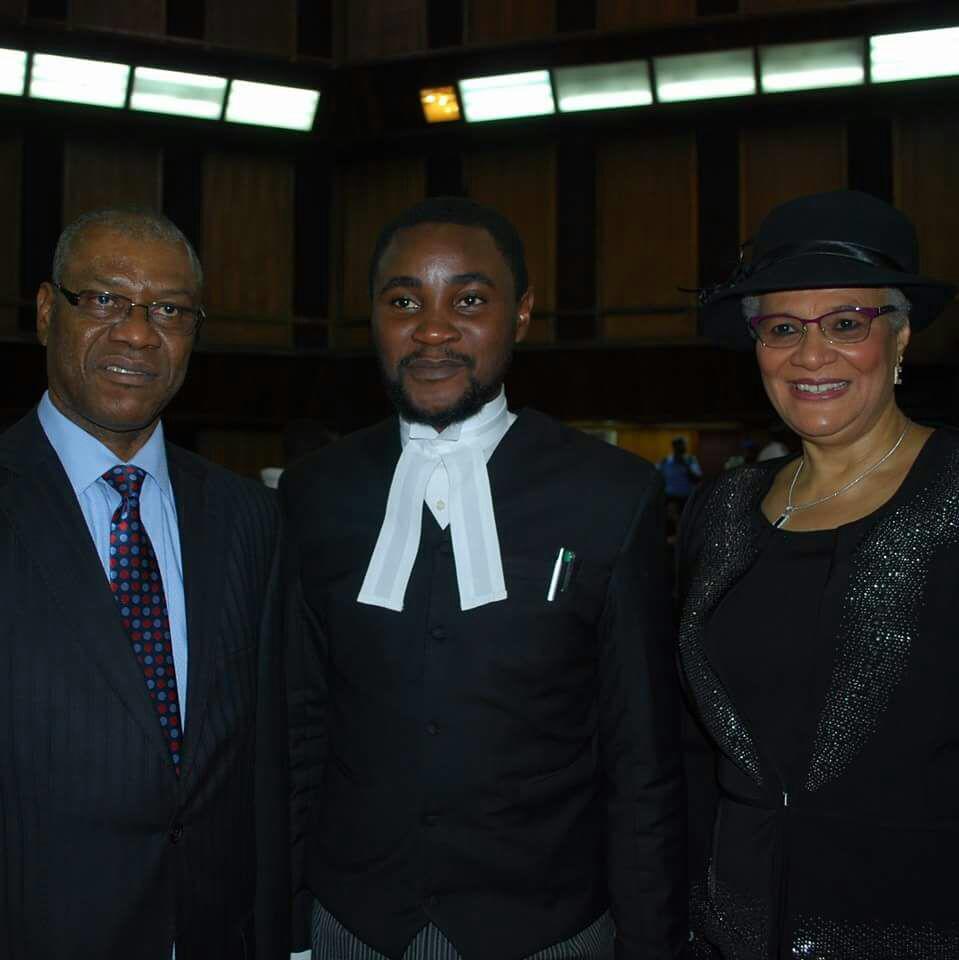
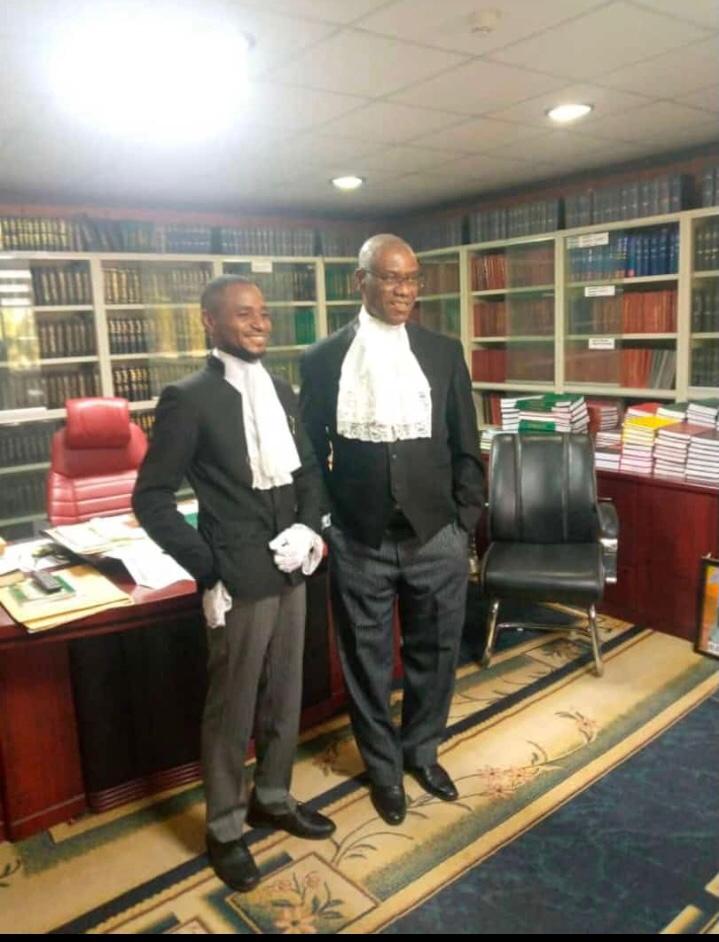
Hon . Justice Uwani Musa Abba Aji, JSC (middle)Barr Omakwu Ikongbeh congratulating new JJSC Amina Augie and Ejembi EkoWith son, Ejembi Eko Ejembi, SAN
Nigeria is a country of pious people and sacred cows. On Fridays, its mosques are filled with prayer and Tafsir. On Sundays, the churches take over with song offerings and evocative homilies. The illegitimate child of the ménage à trois between George Taubman Goldie, his employee, Frederick Lugard and their shared mistress, Flora Shaw, it was almost a matter of fate that the country would live in perpetual search of a prayer.
Composed in 1959 by Lillian Jane Williams, Nigeria’s first national anthem was ultimately a failed effort at inventing a civic prayer to cover for the original sin of illegitimacy that afflicted the country’s birth. Its third stanza ended in an invocation to the “God of all creation” to “grant this our one request” and “help us to build a nation where no man is oppressed.” Crafted only for the men, this prayer forgot that the country also had women and children too.
Under the prayerful invocation of this anthem, the country went through, a pogrom, a civil war, and four coups (including one unsuccessful one) in its first 20 years of Independence, accounting for the killing of three of its first four Heads of State and three of its first four heads of government. As a prayer, it did not hold God’s attention.
But rather than find out why God did not listen, the country went for replacement therapy. So, in 1978, that anthem was retired in favour of another national prayer as an anthem. Invented by committee and arranged as a tune by the Police Band, this second anthem ends again in a prayer to the “God of creation” to help us “to build a nation where peace and justice shall reign.” This anthem was launched into a transition, and bridled under austerity. It became a totem to treason; the song offering by a succession of military usurpers whose primary vocation was to sow constitutional instability and sunder the nation.
Two decades into the life of this second anthem, it seemed again that it did not cut much ice with the Heavens as the country’s problems multiplied in direct proportion to the frequency of its rendition. For army of prayer warriors in the churches and in the mosques, this was cause for worry. The response was a multiplicity of prayer projects to save Nigeria. Indeed, Nigeria’s second military ruler and its first four-star army General no less, Yakubu Gowon, retired to a fulltime ministry known as “Nigeria Prays”.
It was, however, Nigeria’s largest Christian denomination, the Catholic Church, which gave full vent to the enterprise of praying for Nigeria. On 27 June 1993, five days after the military annulled the outcome of the June 12, 1993 elections, and while the country laboured under existential uncertainty as to what was to follow, the Catholic Bishops Conference of Nigeria (CBCN) launched the “Prayer for Nigeria in Distress” as their unique contribution to the search for a sovereign safe harbour for the country.
In its terms this “prayer” confesses on behalf of Nigerians that “[W]e are sorry for all the sins We have committed and for the good deeds We failed to do”, but pleads with the Almighty to “keep us safe from the punishments we deserve”, without giving any compelling reasons why He should. It admits that “we are weighed down not only by uncertainties, but also by moral, economic and political problems”, begs that God may “be merciful to us your people”, and, with a telling sense of self-awareness asks Him to “spare this Nation Nigeria from chaos, anarchy and doom.”
This prayer is at once an honest confession on the Nigerian condition and a brutal piece of self-assessment. Its authors clearly understand the natural logic of the Nigeria’s trajectory is “chaos, anarchy and doom”. What is not clear is why they thought or believed that the way to spare the country these consequences was through the offering of gratuitous weekly prayer recitations.
As it turns out, this prayer has been recited during every Sunday Mass in every Catholic church in Nigeria in the 29 years since then. During that same period, lots of Catholic priests and bishops have offered thanksgiving for people who rigged elections and collected car gifts and cathedrals built with stolen public funds, knowing those to have been the case. Nigeria’s sacred cows continue to receive their benedictions from the pious men who offer prayers to save the country from the doom to which their acts logically condemn it.
Unbeknown to most Nigerians the real prayer for the country was written four years before the Amalgamation thousands of kilometres from Nigeria. It is in a collection of patriotic chants written in 1910 by Bengali mystic and polymath, Rabindranath Tagore, and published under the title “Gitanjali”, for which he won the Nobel Prize for Literature in 1913 the only Indian to have done so.
The tale of Tagore, India and Nigeria make for the most unlikely of narrative coincidence. Tagore was born in 1861, the same year in which the British possessed Lagos (three years after the formal onset of the British colonial project in India). He died in 1941, just six years before the British project in India ended in that most bloody Partition, the same year in which the Nigerian Regiment helped to restore the Emperor in Ethiopia. From Tagore’s India, the British exported many things to Nigeria, including the Criminal Code, the Verandah, and Frederick Lugard.
It is, therefore, not at all un-natural that Tagore’s prayer for Nigeria was also made in India. Among his collection in Gitanjali, Tagore pens a trilogy of patriotic songs: Gitanjali 106 calls attention to the perils of social exclusion; 107 acknowledges India’s vast under-class of social exclusion in the caste system; and 108 predicts a terrible reckoning if this is not redressed. About this, Tagore wrote in the second stanza of Gitanjali 108:
Day after day, you have avoided human touch
Showing your contempt for the deity that dwells in man.
One day, the Creator’s ruthless fury
will make you sit by famine’s doorway
and share with others what there is to eat and drink.
With all of them you’ll have to be equalized by sharing the same affront.
These excluded were the people whom another of India’s celebrated figures, Mohandas Gandhi, called the “Harijans” or “God’s people.” It is no accident that Nigeria’s encounter with its reckoning appears to be happening “in God’s name”.
In the north-east, a Jihadist onslaught proclaims a Caliphate in God’s name.
In the north-west, the killers of Deborah claim they did it in God’s name.
In the south-east, adherents of the Indigenous People of Biafra, IPoB, claim to be the children of “Chukwu Okike Abiama”, which translates into the “God of all Creation” in Nigeria’s anthems, both former and current.
All this grasping for the Almighty reflects the reality that the Nigerian State does not exist and has never existed for its underclass. It has only ever treated them as sub-human and expendable.
As the country prepares to select yet another Capone for its project of sovereign organized crime in 2023, these excluded and expended have decided to ask for what is duly theirs. In their methods and numbers, they present Nigeria’s elite for the first time with a proposition for which there are not enough bullets.
For Nigeria, they are Tagore’s prayer in the fourth stanza of Gitanjali 108 answered:
Whoever you fling to a lower level will bind you to that level.
Whoever you keep behind your back is only dragging you backwards.
Whoever you keep occluded,
Hidden in ignorance-darkness,
is shaping a chasm between you and your welfare.
You must be equalized with all of them by sharing the same affront.
A lawyer and a teacher, Odinkalu can be reached at [email protected]
“He even owed me over six months’ salary, so I gave notice that effective from 31st January 1980, I would leave the office. He thought hunger or the fear of hunger would drive me to beg him by owing me for six months but I didn’t. On 1st February 1980, I opened my law firm— Ejembi Eko, Attorney at Law.”
His destiny in the legal profession was predetermined long before his birth on 23rd May 1952.
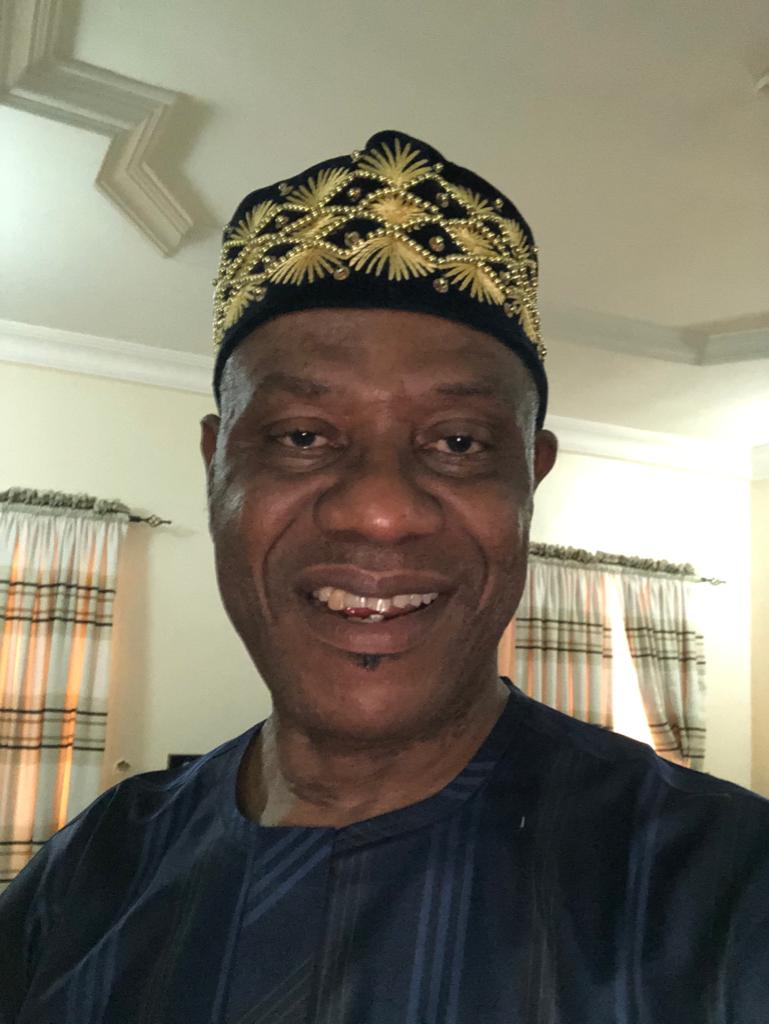
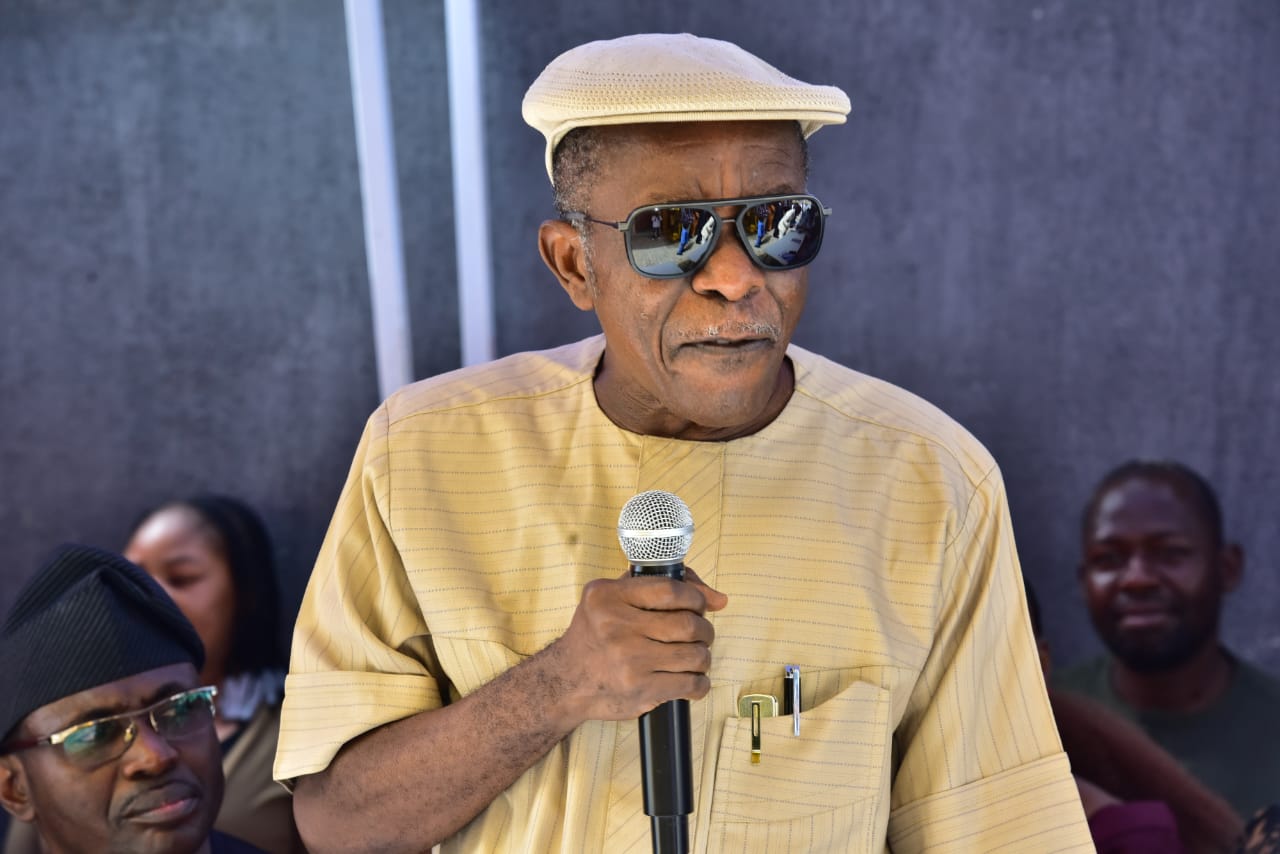
Hon. Justice Ejembi Eko, JSC
His father Mr. Eko Abutu a native authority police officer was manning the station on a busy market day when his colleagues attended the burial of a fallen police officer. About 200 meters away from the police station, some yams were stolen. They were not anywhere near the police station but the District Council Scribe and the Native Court Scribe —registrars in today’s parlance— raised a charge of negligence against him. Prior to the incident, he had rebuked the young men for trying to seduce a relation’s wife and they hadn’t forgiven him. When the report of missing yams came, they proceeded to report the matter to Native Court Grade B in Oturkpo, 33 miles from the scene of the incident.
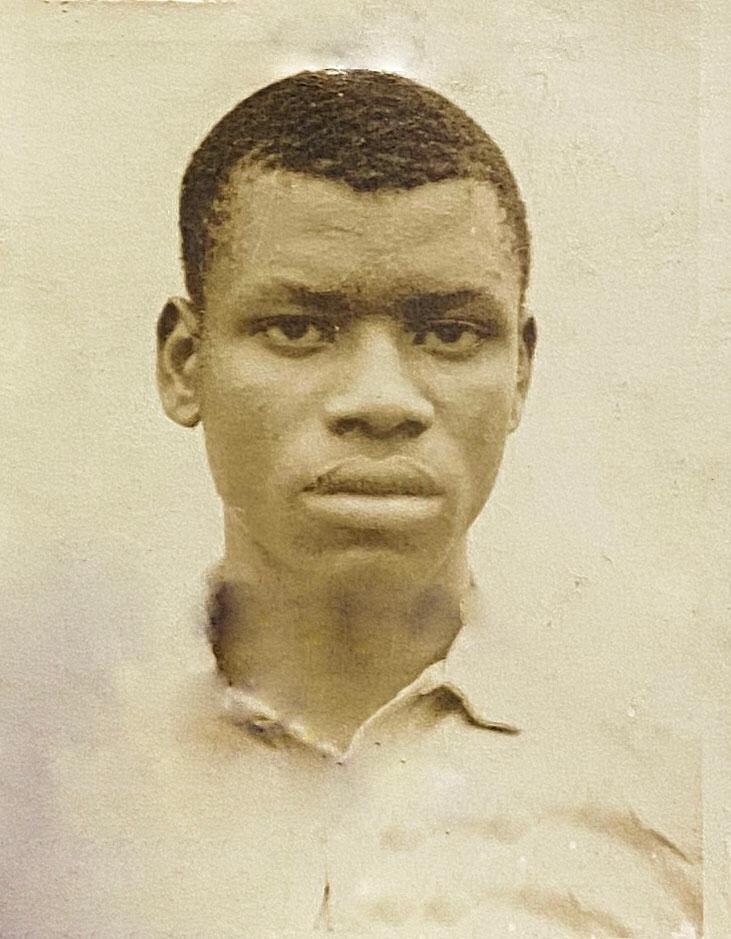
Eko JSC in 1970
Determined to clear his name, Eko Abutu boarded a train at Otukpo to Enugu and got a lawyer named Balonwu. Because a lawyer cannot appear in the native court, Balonwu met the District Officer and got the matter transferred to the lay magistrate. After examining the witnesses, to establish if a prima face case had been made, it turned out to be a trumped-up charge and the matter summarily was terminated. Impressed with the manner Mr. Abutu conducted himself throughout the proceedings, Balonwu refused the balance of his professional fees. After he returned to Enugu however, old Abutu who was happy to have cleared his name but not wanting to be indebted to anyone proceeded to Enugu to give Balonwu his balance.
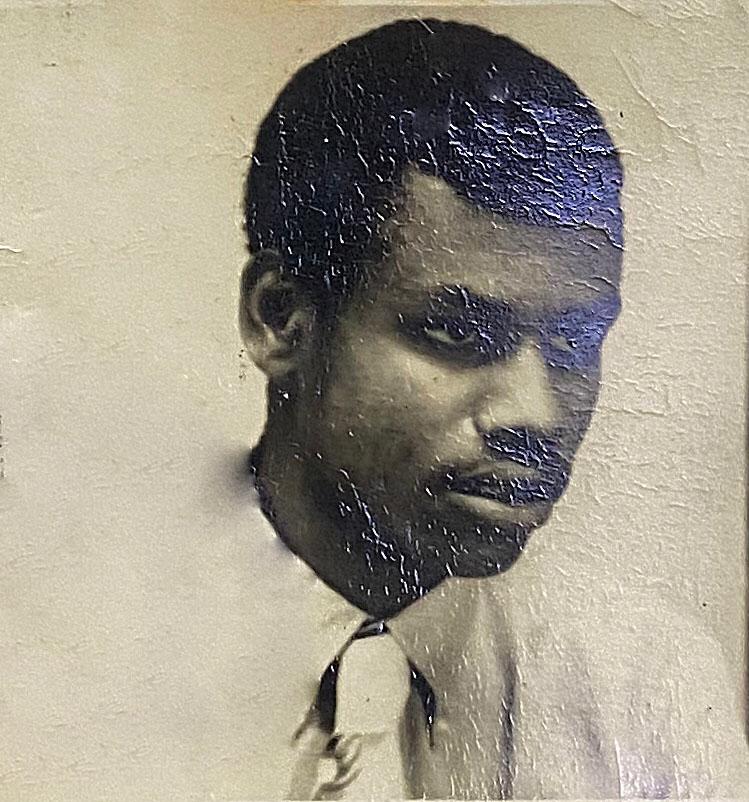
Ejembi Eko, JSC in 1972
Immediately after he came back, he surrendered his identity card, and uniform and resigned. When asked why he did that, he declared that a good name was better than gold. Then he already made up his mind that one of his 20 children —15 girls, and 6 boys — would be a lawyer. His 16th child and last of his boys fulfilled that wish although he never lived to see it. The respected community leader, Eko Abutu passed on the day Hon. Justice Ejembi Eko wrote his final LLB exams at the University of Ife, now Obafemi Awolowo University Ile- Ife.
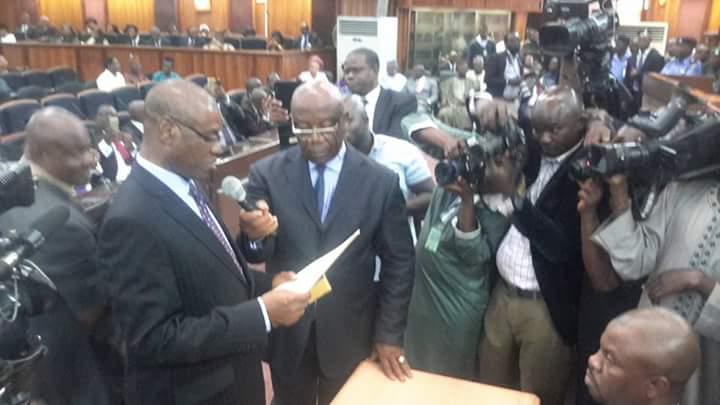
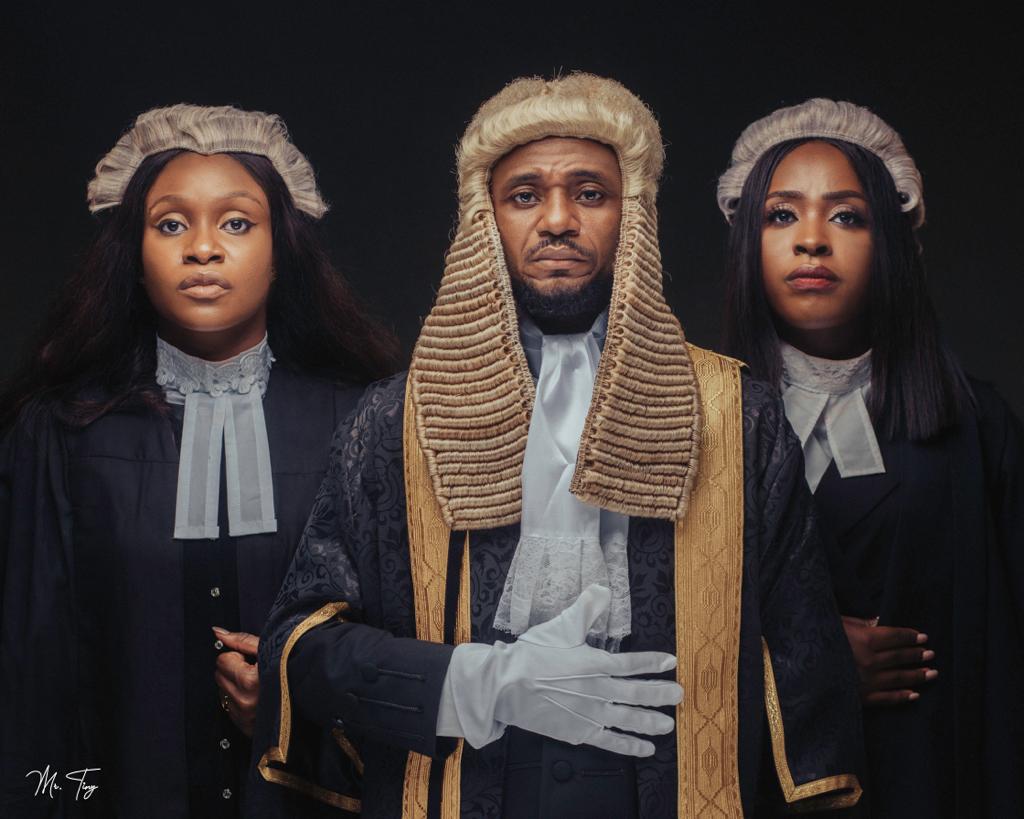
Being sworn in as a Justice of the Supreme Court on 7th November 2016
Father of seven — three men and four women, Justice Eko is the 4th child and 3rd son of his mother, Mrs. Onyabakpa Eko (nee Idoko). His son Eko Ejembi Eko is a Senior Advocate of Nigeria, his daughter-in-law and wife of Eko, SAN — Diana Agbenu Eko — is a lawyer and so is his second daughter — Emelda Ene Eko.
Eko JSC and his son Eko Ejembi Eko, SAN on his preferment as a Senior Advocate of Nigeria in 2021L-R: Emelda Ene Eko, Eko, SAN and Diana Agbenu Eko
In 1988 Hon. Justice Mustapha Akanbi then the Presiding Justice of the Court of Appeal, Jos Division offered Eko and his friend Aboyi John Ikongbeh (later Ikongbeh, JCA) an opportunity to become SANs but “we felt the responsibility was rather too big. We felt that it was not for young lawyers like us. I was about 36. It was offered on a platter of gold. He bought the forms for us.”
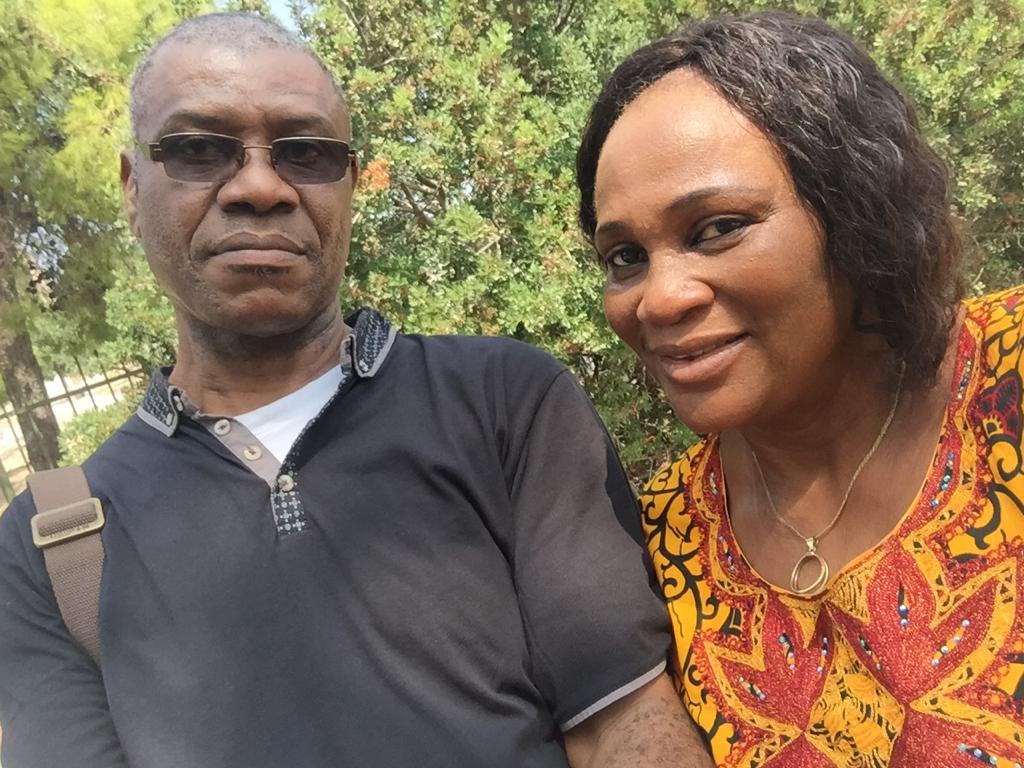
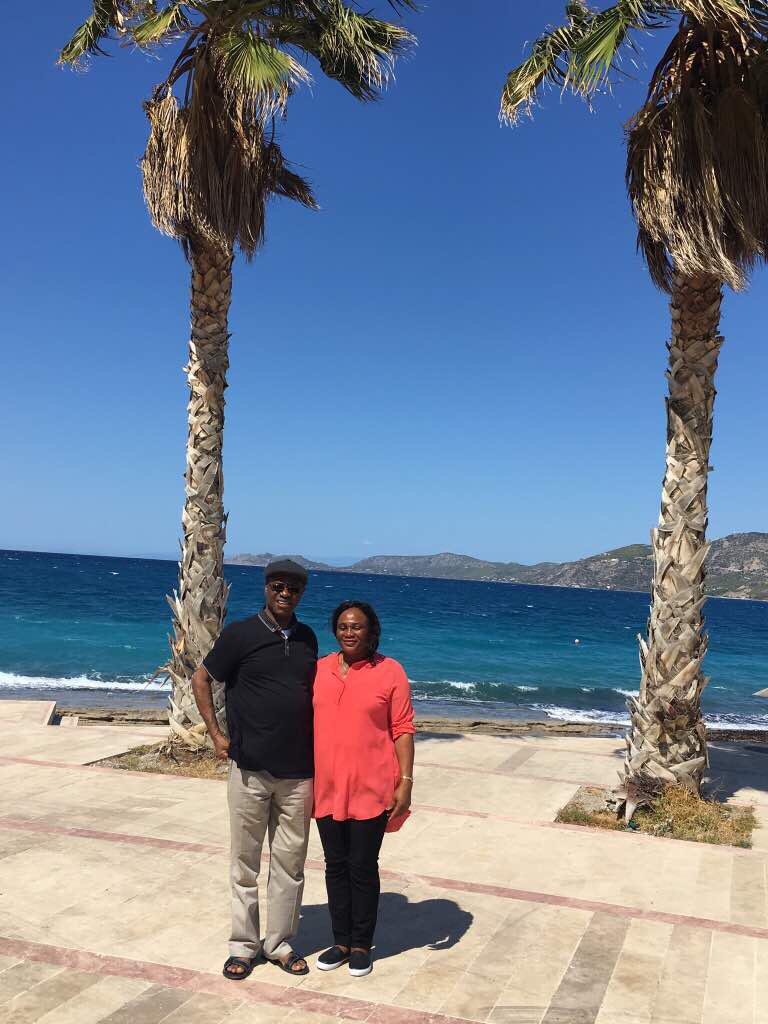
Eko, JSC and wife Mrs. kate Eko at Athens
I was called to the Bar on 1st July 1977 and proceeded straight to Kaduna for NYSC. At the Ministry of Justice where I was posted, the person I worked under, K.B Akaahs who also retired from this court took me to court. I was very excited when he announced my appearance. In just about five days after the Call to Bar, I appeared at the High court before the late Justice Shehu Mohammed. That same week I was given a file to take judgment on behalf of the Attorney General of Kwara State at the Court of Appeal sitting at Lugard Hall in Kaduna. I was so excited. Just under one week after the call I was already at the Court of Appeal. These experiences informed my passion for litigation practice. After Youth Service, I had no less than six job offers from various chambers.
Early days
Mind you I’ve never applied for any job in my life. There has never been a reason for anyone to ask for my certificates. It was only to the Supreme Court that the SSS demanded sighting my documents. That was when I went to Wesley High School Otukpo to pick up my WASC. That was also when I went to Government College Keffi to pick my HSC result and they were satisfied with the testimonial I got from Ife. My certificate is still at Ife. I haven’t collected it. For the high Court and the Court of Appeal at the time, you’re simply spotted, identified, and screened that’s all. Your work would have spoken for you so they come looking for you.
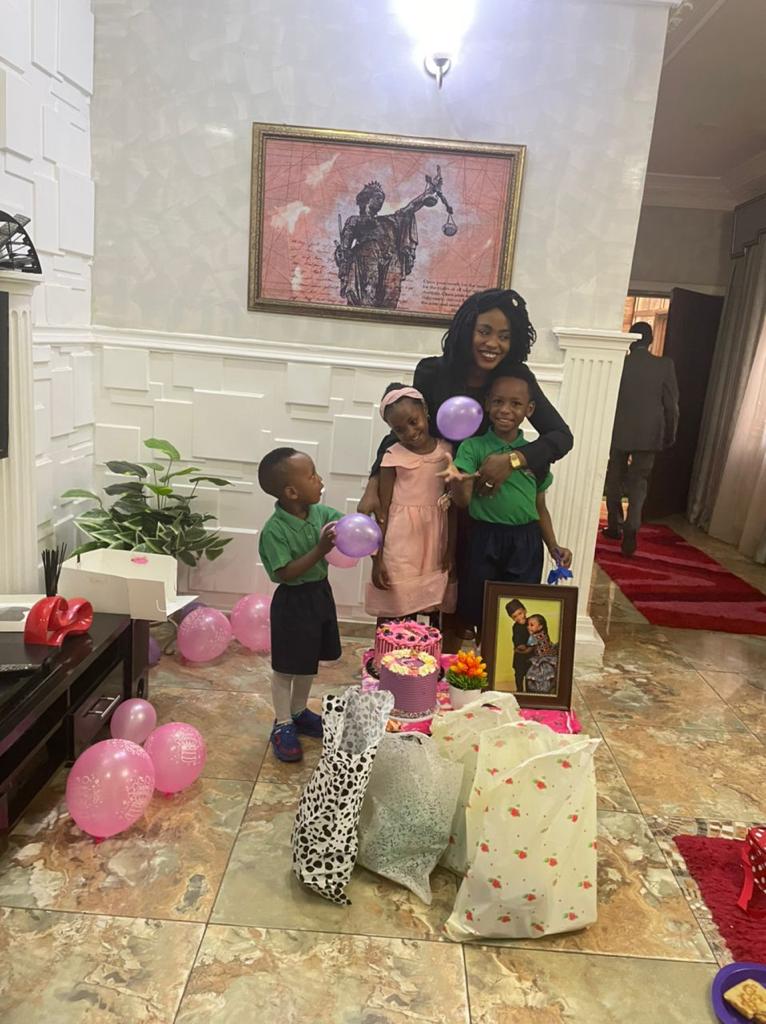
Eko, SAN, and kids
I left youth service in 1978 and began private practice with J. A. Omakwu & Co at Otukpo in 1979. We had an understanding that after one year if my capabilities were good enough, we’d become partners. One year passed and he wouldn’t discuss it. He even owed me over six months’ salary so I gave notice that effective from 31st January 1980, I would leave the office. He thought hunger or the fear of hunger would drive me to beg him by owing me for six months but I didn’t. On 1st February 1980, I opened my law firm— Ejembi Eko, Attorney at Law.
At the time I left my principal, I had only five hundred naira and I had nieces and my late brother’s children living with me. Thankfully I had developed a habit of buying food in bulk so I had enough to take us even for two months.
First brief
Within that period a particular chieftaincy matter was brewing and one of the parties wanted to hire me. They sent emissaries with three thousand naira for me but the emissary gave me only one thousand. I was only too happy to collect it considering my financial situation. The other side went for my principal who was bragging all over that he taught me law. It was an appeal matter and within one week of leaving, I was arguing against my principal. My client was the respondent. That was my first brief. It became a blessing in disguise because the Ochi Idoma, the head of the Idoma traditional council was also a respondent in that appeal. The Idoma traditional council had waded into the dispute and resolved it in favour of my client. Without quashing the decision of the traditional council, the appellant went to the Upper Area Court and filed a completely new suit. The Upper Area Court resolved against him. The Appeal claiming that the Upper Area court was wrong was what brought me in. It was an opportunity to test my administrative law skill, having read administrative law as a major at the University. My principal spoke for so long. I didn’t spend up to thirty minutes in reply.
With former CJN Mahmoud Mohammed
Section 148 (d) of the Local Government Edict then in operation in 1976, vested the Idoma Traditional Council with the power to determine chieftaincy questions. That power was also quasi-judicial. Since it was quasi-judicial and they had done their part, what the appellant could have done was to proceed to the High Court to quash that decision instead of setting up a parallel suit. I said it was an abuse of process and the court presided by the late Justice S.C Onu and Idoko agreed with me. Both are now deceased. Idoko became the Chief Judge of Benue State and Onu retired from the Supreme Court.
Mrs Kate Eko and Oche Moses Eko
Perhaps to ridicule me, my principal got up and said a new lawyer is saying that if Ochi Idoma offends you, you cannot challenge him. The news got to Ochi Idoma and before I could get to the office, Ochi Idoma had sent some gifts. The chief I was representing suspected his emissaries and asked how much they gave me. When I said one thousand naira, he put his hands on his head and gave me additional three thousand. Under one week I that had just five hundred naira had made four thousand naira! From that week it became a big harvest of clientele.
On bail
I argued the 1980 case for bail in the famous Onu Obekpa. I’d argued that it’s a basic constitutional right and that it is for whoever arrested you to show you’re not entitled to bail not the otherwise. The procedure then was that if you apply for bail the magistrates would tell you to apply formally. I felt there was no such provision in the law and wanted to test it.
23 April 2017 Abuja: With grand daughter, Ek’OnduGrand children: Adam & Ek’ondu
Onu Obekpa was a tipper driver. He had a quarrel with his boss and handed over the vehicle and the keys. Three days later, the tipper was stolen. Out of suspicion, the boss called the police to arrest him. Obekpa at the time the bus was stolen was in his village about 40 miles from Otukpo but his boss was influential. When was arraigned, his plea was taken. After pleading not guilty, I applied to the magistrate to put him in the witness box. As I examined him, he said if granted bail he will not interfere with the investigation; he’ll comply with all the terms; anytime they want him he’ll be there. That he’s married; he had this much; showed the C of O for his two properties, and disclosed that his brothers and sisters were present and ready to take him on bail. I finished with him. The magistrate asked the prosecutor if he had any questions and he said no question. Then I made an oral application for bail that we have satisfied all the conditions and that my client is entitled to bail. But the magistrate said we should come formally.
Mrs Kate Eko, Julie Eko & MOche Moses Eko
I took it to the high court. The high court agreed with me that there’s no provision under the Criminal Procedure Code of Benue State then that required the formality of applying for bail. To date it is still a locus classicus among law students for bail on noncapital offence. I was interested in the procedure. Thereafter so many other judgments started following. I argued that area courts have no jurisdiction over a piece of land in an urban area. In another, I argued that a widow who is a Christian had no obligation to observe all the traditional rites of burial for the husband. That it was a violation of religious rights.
His Lordship’s daughter-in-law, Diana Agbenu Eko preparing her children for school
Morgan Ogu also cost me personal money just to establish a principle in bail. It was again another trumped-up charge. Morgan Ogu broke away from the Deputy Speaker’s camp. Then after the Shagari rally in Gboko, called Gboko ‘83 where a lot of money exchanged hands armed robbers waited for those who were leaving Gboko to get their own. Very close to Otukpo there was a robbery and the Deputy Speakers team felt it was Morgan. There was no evidence linking him but they insisted. We fought it all the way. One aspect went to the Court of Appeal Jos and back. I was interested in having that principle established. Between 1980/86 was my glorious period in private practice. I was young. I was making waves.
Grandsons: Oche & Adam
Poor Remuneration for lawyers
They pay them slightly above starvation level. But, you can’t say there should be a legislative intervention. NBA on its part can’t supervise every chamber. If you ask them to intervene that means all agreements should be subjected to them. It’s bad. In my time, I was the one collecting money and banking. I was the head of chambers and administration but I never wanted to pay myself. I didn’t want to run into trouble. When my father got out of his travails, he warned us never to allow money to strain our relationship with anybody. Up till today, I try to avoid it. If you can take it take. Let me be the coward.
Frst daughter, Fatu, her husband Awodi Amali and their children
I never refused to go to court because a client refused to pay me
Throughout my practice, I never sued a client for owing me. Throughout my practice, I never refused to go to court because a client refused to pay me. I never asked for adjournments if my briefs were not perfected. The reason is if I got adjournment that my briefs are not perfected, I’ve lost one day. One business day. I’d rather finish the matter and rest. I do not abandon cases and that’s what I’ve told my children and everyone that passed through my chambers — never shut your doors to anybody because of money. It didn’t make me any poorer. I left J. Omakwu on 31st January 1980 and by 1984 I had built a four-bedroom house. Yet people owed me. Some of them I still maintain friendships with.
Dr Anthony A Eko (son) & Sylvia Fatu Amali (daughter)Grandchildren with their uncle-in-law, John Dania
Solicitor/ General Permanent Secretary
The NBA Benue wanted to establish a directorate of civil litigation at the Benue State Ministry of Justice. Then I was making moves to go to a bigger city. When the opportunity came I took six months’ leave of absence from practice to be employed on contract for six months. Not long after, I led the Benue legal team at the Obudu/Vandekiya boundary dispute; Justice Ikomi Panel. I appeared before him with Kanu Agabi— representing the Obudu community, Paul Belabor and Edward Ashieaka representing the Vandekiya community; while I represented the Benue state government team. Given the industry with which I was working, it became obvious that the State government could not retain me beyond six months. The Attorney General then arranged with the governor and sent me to Enugu on a nondescript assignment. As I just checked into my hotel, I got a radio message to come back to Makurdi immediately. I got back only to hear that I had been appointed Solicitor/ General Permanent Secretary.
The heart of man is evil
The Etsu Karu in the FCT, Bulus Chitob was a land surveyor in Otukpo throughout the period of the civil war and had a lot of friends in Benue. We were then in Benue Plateau state. His father had a land matter involving over a hundred hectares of farmland in New Karu. The matter had gone to an Area Court where judgment was in favour of his father but the other side appealed. Then he wrote a letter requesting any Idoma lawyer in Otukpo to represent him in the matter.
Hon. Justice Eko, JSC
My office at 14 Federal Road was the first after the rail crossing. The letter bearers saw the signboard —Ejembi Eko Attorney at Law — and stopped to deliver the letter. Meanwhile, he gave them what he called fuel money but they didn’t deliver the envelope. In another letter, the little envelope attached to the record of proceedings, he said accommodation would be reserved for me at Tate Hotel in Jos; so I took my brown Volkswagen Beetle to Jos. As if the missing fuel money was not bad enough, there was no reservation for me at Tate hotel. Again they had embezzled the money, so I went to a classmate who arranged accommodation for me at the university guest house. Meanwhile, in their fraud, they went away with the notice of appeal. This was either in 1985 or ’86 and I hadn’t met this client in person.
Mrs Kate Eko at Mauritius
Very early in the morning, I went to the Customary Court of Appeal. Unfortunately, the correspondent file had no extra copy of the notice of appeal. I was in a quandary but determined not to ask for an adjournment. I’d read the record of appeal and anticipated what ground they could use. The lawyer on the other side announced his appearance and asked the court to call his case out of turn. The presiding judge, Justice Yakubu who was my call mate at the Law school said “are you sure? There’s a visiting counsel, don’t you think by practice the visiting counsel had priority?” Meanwhile, I was about 10 at the bar while he was about three but still didn’t get the message. Eventually, I asked him to call the case as I was also interested in it. When he did, I requested to have a look at the notice of appeal and he became very rude saying that lawyers should always be prepared. Grudgingly he gave me the notice of appeal. I asked for a stand down, walked across to SIM bookshop and made about six copies, gave him extra, and left some for the court.
Grand daughter, Ochanya Amali
Going through it there was only one ground that you could say was competent and if I struck out everything I’ll come back. Mind you I used my money to come so I applied that the other ground should be struck out for being incompetent and left only one. Mind you the lawyer had made so much noise. Then I said to him, let’s make an undertaking that once we started none of us will ask for an adjournment. He agreed and I asked the court to record it against both of us. When he moved his appeal and I raised this objection that all his eight grounds had been struck out he wanted to ask for an adjournment and I said no. I permitted him to orally amend the last ground I did not knock off. Eventually, I got judgment. It was then the relations of the Etsu Karu appeared. Apparently, they were in court but hiding because of the money. When they saw that I won the appeal, they came hugging me saying the chief wanted to see me at Karu. I refused and drove straight to Makurdi. The Chief kept phoning me in Otukpo. One day he sent his first son a police officer who became ADC to Shonekan to fetch me so I went over. We eventually became very close. Knowing him was an asset. He gave me choice plots of land at New Karu. When he died the family didn’t even have the courtesy to invite me to his funeral. They took over the plots the Etsu gave me and sold all. The guest house I was developing there I sold off. I didn’t want to have any problem with them. We have a saying in Idoma that it’s not in every sprinting that the dog kills a game. Money has never been my problem with anybody. These two accounts demonstrate it. The emissaries who short-changed me by two thousand and this.
Mrs Diana Agbenu Eko & children
Why leave a thriving law practice for the bench?
The Etsu had convinced me that Abuja was fast growing so I wanted to leave the Ministry of Justice. My chambers’ accommodation near old Central Bank in Garki, another property of his had been fixed. He was waiting for me to run my six months contract and move to Abuja only for me to be made Solicitor General in 1987. I remained there till 9th February 1989 when I was appointed to the High Court.
14 September 2017: At a beach with wife in Greece
The interventions of the late Justice Akanbi, James Ogebe, Idoko, and so many forces convinced me to come to the bench. I didn’t apply. As solicitor general, I was in court Monday to Friday except I had meetings. It had never happened. There was no fortnight I wasn’t at the Court of Appeal Jos. The rate at which we were appearing at the Court of Appeal impressed Justice Akanbi who was the PJ of Jos Division. Aloma Mukhtar, Abdullahi, Jack, and others were with him there. That impressed them. Then I nudged my Attorney General, Bernard Hon to be appearing so they became convinced that Benue had many cases at that time. Akanbi as a young lawyer had practiced around Benue. During the Tiv riots, he was in Makurdi prosecuting. He has some passion for Makurdi and here we were always appearing, so when we invited him to hold some sessions at Makurdi he obliged. In a year they held two-three sessions. If the leadership of the Ministry of Justice was not coming frequently to the court, they may not have seen the need to hold special sessions to clear the backlog of cases or create a division of the Court of Appeal there years later.
I was at the Benue High Court from 1987 to 89. 19 years. After eight years at the Court of Appeal, I came to the Supreme Court. The moment my appointment to the Supreme Court was announced, the first call I got was from Akanbi.
“Justices of [the Supreme] Court are human beings, capable of erring. It will certainly be short-sighted arrogance not to accept this obvious truth. It is also true that this Court can do inestimable good through its wise decisions. Similarly, the Court can do incalculable harm through its mistakes. When therefore it appears to learned counsel that any decision of this Court has been given per incuriam, such counsel should have the boldness and courage to ask that such a decision be overruled. This Court has the power to overrule itself (and has done so in the past) for it gladly accepts that it is far better to admit an error than to persevere in error.” Wrote the quintessential Hon. Justice Chukwudifu Oputa, JSC in Adegoke Motors v Adesanya [1989] 3 NWLR (Part 109) 250 (SC), 274G–275A .
And so when the apex court reversed its earlier dismissal of an appeal by GTBank against a N2.4 billion judgement given in favour of Innoson Motors Nigeria Limited by the Court of Appeal in Ibadan, Oyo State, veteran journalist Ikechukwu Amechi wrote:
“On January 14, 2020, a seven-member panel of the Supreme Court led by Chief Justice Tanko Muhammad unanimously annulled the election of Governor Emeka Ihedioha in the March 9, 2019 governorship election and handed Hope Uzodimma victory on a platter of controversy. It was a judgement that confounded the entire nation. Uzodimma, candidate of the All Progressives Congress, APC, polled a paltry 96,458 votes in an election 70 candidates representing various political parties took part, to come a distant fourth. Ihedioha polled 273,404 in the same election and was dutifully declared winner by the Independent National Electoral Commission, INEC.
“Two years after, many are still scratching their heads, trying to come to terms with the verdict. Nigerians agreed that the Justices are human, after all, and, therefore, fallible. That being the case, it was agreed that if their error was pointed out to them, they would retrace their steps and mitigate what had already become an open sore on the country’s jurisprudence. So, going back to seek a reversal of the befuddling judgement was an attempt to save the Supreme Court from ridicule…”
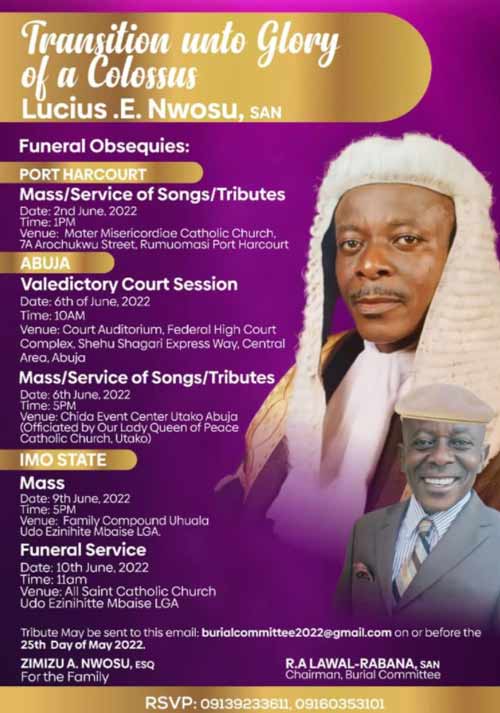
“Nwosu was bold; he was fearless; he was a force to be reckoned with. I don’t know of any other person that could muster the kind of courage he exhibited in fighting oil companies. He was something else. For a man so full of life, I still find his death hard to believe,” Chief Ogwu James Onoja, SAN mused about the passing of Eze Lucius E. Nwosu, SAN.
Nwosu making a speech at the commissioning of Rosemary Onoja Consulting at Abuja
Corroborating Chief Onoja’s musings about the late fiery Senior Advocate, author, poet, and Columnist, Obi Nwakanma said that “[Life] itself is unpredictable. Time, fragile. His quiet and peaceful exit was uncharacteristic of Lucius. He was not a man who did things quietly. Nor even peacefully. Built like a dagger – short, taut, and precise – when Lucius entered a place, you took notice. He brought into it the sharp edginess of a knife. He filled a room with brilliant and recondite energy.”
L-R: Nwosu, SAN, Mrs. Rosemary Onoja, and Engr. Sumaila Abdul-Akaba, Sole Administrator, Ajaokuta Steel Company Limited who represented the now late Engr. Joseph Makoju, Fmr former group managing director and chief executive officer of Dangote Cement
It was with that electrifying energy that Lucius Ezeakamadu Nwosu lit up the 25th wedding anniversary of Chief Onoja SAN and his wife Rosemary Onoja on 3 April 2022. The day before — 2 April 2022 — he was his gregarious self at the opening of Rosemary Onoja Consulting, a Multi-Million Naira Accounting & Auditing Firm sitting in an ultra-modern office complex named Rosemary Onoja House at Abuja. Onoja built the complex for his wife to mark their 25th wedding anniversary.
L-R: Chief Onoja, Mrs. Onoja. Barr. Noah Abdul and Engr. Abdul-Akaba
He was no less in his extroverted elements at the reception venue on Sunday 3 April 2022.
Nwosu (right) at the anniversary reception on 3 April 2022
Alas! By Tuesday morning — 5 April —he was gone forever! He will be laid to rest on 10 June 2022.
Nwosu addressing the Silver Jubillee celebrants Nwosu and Onoja at the reception
A leading oil and gas lawyer and native of Ezinihitte, Mbaise, Imo State, Nwosu in his lifetime was a terror to Oil companies.
He represented Ogoni, Rivers State, in its case with Shell over an oil spill wherein Ogoni was awarded N45.9 billion in compensation. He also got compensation to the tune of N37.6 billion for the Odi people against the Federal Government for the invasion of the Community during the President Olusegun Obasanjo Government.
Likewise, Nwosu secured an N81billion compensation for some communities in Akwa Ibom State in a suit against NNPC and Mobil Oil.
Moreover, he was Counsel to the former Chief Justice Aloysius Katsina-Ala, when the CJN was sued by the then President of the Court of Appeal, Hon. Justice Ayo Salami (Rtd.) over his suspension by the National Judicial Council (NJC).
On 6 June 2022 however, a valedictory session will be held in his honour at the Federal Court in Abuja.
In a letter dated 6 May 2022, Chief Judge of the Federal High Court, Hon Justice John Terhemba Tsoho acknowledged receipt of a request from Nwosu’s family and friends to host a valedictory court session by the Court in honour of the fallen Silk.
In the letter of approval, the Chief Judge said: “I appreciate the committed, sustained, and outstanding law practice of the late Learned Senior Advocate of Nigeria, Mr. Lucius Ezeaka Nwosu, SAN in the Federal High Court during his lifetime.
I am by this letter, conveying approval of your request that the Court should organize a Valedictory Court Session in honour of the deceased on Monday, 6th June 2022.
While we pray for the repose of his soul, please accept our heartfelt condolences for this irreparable loss.”
“Tantamount” has only one grammatical function: that of an adjective. Indeed, it’s not any kind of adjective; it’s a predicate adjective.
A predicate adjective is one that follows a linking verb (typically a be-verb like “becomes” or “is”) but modifies the subject.
An attributive adjective, on the other hand, typically precedes the noun element it modifies.
One adjective can be both attributive and predicate, depending on the context. “Tantamount” is always predicate, never attributive. So you can’t say “tantamount behavior”; you say, “that behavior is tantamount to …”
“Tantamount” means “equivalent to” or “virtually the same as” or “as grievous or serious as.”
“Tantamount” is never a verb. So you can’t say one thing “tantamounts to” another. You say one thing “is tantamount to” another.
“Tantamounts” is a nonword.
Also
If your uppercase abbreviations or initials take internal periods, end with a period. So it’s J. K. Rowling, not J. K Rowling. And it’s W.H.O., not W.H.O
Don’t forget that:
The noun “clothes” has no singular form.
“Clothe” is always a verb, never a noun.
“Cloth” refers to the fabric, and its plural is “cloths,” not “clothes.”
Lastly:
The noun “alms” is both singular and plural. “Alm” is a nonword and an illicit back-formation.
The murder of Deborah on May 12, 2022, by a mob in Sokoto state, can neither be excused nor justified under any guise
As with many religiously motivated acts of violence, the perpetrators and their supporters will try to make the point that Deborah committed the crime of blasphemy and so she deserved to die. They will tell you that the punishment for blasphemy in Islam is death, and so they did the right thing by killing her.
However, everything we do as a people within the walls of this country called Nigeria must be done as stipulated by the 1999 Constitution of the Federal Republic of Nigeria. There are no exceptions. It is through the Constitution that Sharia courts derive their legitimacy by virtue of sections 4(7), 6(4)(a), and 6(5)(k).
Therefore, Sharia law which Sharia Courts use cannot operate outside the confines of the same Constitution through which they derive their legitimacy. In essence, Sharia law does not exist in a sphere that is independent of the Nigerian Constitution.
It is because section 6(5)(k) of the Constitution empowers a House of Assembly to create courts with respect to which a House of Assembly has the power to make laws, that State Houses of Assemblies in the Northern parts of Nigeria enacted their various Sharia Penal Code Laws.
Crime is a matter with respect to which the House of Assembly of a State may make laws.
That Sharia law does not exist in a sphere that is independent of the Nigerian Constitution is evident in the preamble to the Sharia Penal Code Laws of those states. Looking at the preamble to the Sharia Courts Law of Kaduna State 2001, the steps taken by the Kaduna State House of Assembly in enacting the law to establish Sharia Courts in Kaduna State are clearly stated. The preamble reads:
“WHEREAS the 1999 Constitution of Nigeria provides for a Federal system of government in a Federation consisting of States and Federation consisting of States and the Federal Capital Territory based on the principles of democracy and social justice and guaranteed under chapter 1 thereof;
“AND WHEREAS every person in the State is entitled to respect for the dignity of his person and is guaranteed the rights to fair hearing, freedom of thought, conscience and religion amongst other fundamental Human Rights enshrined under Chapter IV of the Constitution.
“AND WHEREAS by the provisions of S. 4(7) of the Constitution, the House of Assembly of the State is vested with legislative powers to make laws for the peace, order, and good government of the State or any part thereof:
“AND WHEREAS by the provisions of S. 6(4)(a) of the Constitution the House of Assembly of the State is not precluded from establishing courts with subordinate jurisdiction to the High Courts (other than superior courts of record) as provided in S. 6(5)(a)-(j) of the Constitution;
“AND WHEREAS by the provisions of S. 6(5)(k) of the Constitution such other courts may be established and authorised by Law to exercise jurisdiction at first instance or on appeal on the matter with respect to which the house of Assembly of the State may make laws.
“AND WHEREAS the State desires to establish Sharia Courts in the State to exercise all civil and criminal jurisdiction.
From the Preamble, it is apparent that in the process of enacting the law, the Kaduna State House of Assembly was not oblivious of the core values of Federalism, Democracy, and Social Justice as guaranteed under Chapter 1 of the Constitution.
The preamble also recognises and acknowledges that every person in the State is entitled to respect for the dignity of his person and is guaranteed the rights of fair hearing, freedom of thought, conscience and religion amongst other fundamental Human Rights enshrined under Chapter IV of the Constitution.
Essentially therefore, SPCLs cannot go contrary to the provisions of the same Constitution from which they derive their validity. Crucially, and many who are for or against Sharia miss this particular point, SPCLs are not intended, by their very nature, to work contrary to the provisions of the Nigerian Constitution.
The issue gets even more interesting. The same Constitution in section 33 guarantees that every person has a right to life, and that “no one shall be deprived intentionally of his life, save in execution of the sentence of a court in respect of a criminal offence of which he has been found guilty in Nigeria”.
Does Sharia law provide anything contrary to section 33 of the Constitution? No. Was Deborah Samuel found guilty of any criminal offence? Was she killed in the execution of a sentence of court? The answer is no.
The argument that she committed an offence for which she was apparently or obviously guilty of under Sharia law is not a valid argument. Only a court of competent jurisdiction can decide whether someone who has been accused of committing a crime is guilty or not.
This is so even under Sharia law. Deborah Samuel was never charged before any court. Deborah Samuel was never tried for any offence by any court. Deborah Samuel was never convicted of any offence. Deborah Samuel was never sentenced to death for any offence.
Furthermore, section 36(5) of the Constitution guarantees the presumption of innocence; “every person who is charged with a criminal offence shall be presumed to be innocent until he is proved guilty”. That presumption can only be taken away by a court of competent jurisdiction upon a finding of guilt by the same court.
Was there a trial by a court of competent jurisdiction where Deborah Samuel was found guilty of the offence of blasphemy? No.
But let’s even pretend for a moment that she was not killed. Let’s pretend she’s still alive. Let’s pretend she is charged before a Sharia Court in Sokoto State for the offence of blasphemy. What does every Sharia Court Law say about a person who isn’t a Muslim? Again, using the SPCL of Kaduna State as a case study, section 20 of the law provides that “persons subject to the jurisdiction of Sharia Courts are persons of the Islamic Faith or any other person in a cause or matter in which he consents in writing to the exercise of the jurisdiction of the Sharia Court”.
The wisdom behind making Sharia law apply only to Muslims is to preserve the freedom of thought conscience and religion as guaranteed by the Constitution. Muslims believe, voluntarily, in Sharia, so they can be bound by it. Those who are not Muslims and do not believe in Sharia law cannot be bound by it. Making Sharia law apply to only Muslims is also in consideration of the fact that Nigeria is a multi-religious and multi-cultural society.
Was Deborah of the Islamic faith? No. She therefore could not have been subject to Sharia law.
This is not to say that in Nigeria, blasphemy is legal. It isn’t. In every state in Nigeria, there are laws that prohibit blasphemy, one way or another. Section 124 of the Lagos State Criminal Law generally criminalises insult to religion and provides a punishment of imprisonment for two years or a fine of Fifty Thousand Naira.
Under the Lagos law, it doesn’t even necessarily have to be blasphemy. The law provides that “any person who does an act which any class of persons consider as a public insult on their religion, with the intent that they should consider the act an insult, and the person who does the unlawful act with the knowledge that any class of persons will consider it an insult, is guilty of a misdemeanor and is liable to imprisonment for two years or a fine of Fifty Thousand Naira (N50,000)”.
There is a similar provision under section 210 of the Penal Code Act of the FCT. I am sure The Penal Code Law of Sokoto State has similar provisions under which Deborah Samuel could have been charged in view of the fact that she was not a Muslim, and tried fairly.
The most important thing, perhaps the only important thing at the moment, is that the murderers are arrested and prosecuted. Let them, together with their supporters, present the argument in court that she blasphemed and that was why they killed her.
Then they will learn that her blasphemy does not excuse their murder. That jungle justice, or in this case jungle injustice, is not permissible under our laws. That only a court of competent jurisdiction has the power to decide whether a person is guilty of a crime.
Every other thing at this point in time is secondary. Every other thing at this point in time is a distraction.
When it is Boko Haram, armed bandits, armed secessionists, or other purveyors of violence in Nigeria, we say they hide in bushes, therefore they are difficult to defeat. In this case, there are no excuses. This act was carried out supposedly by students of a government institution, or at least by people who reside or carry on business around that area, and it was recorded.
I cannot picture a scenario in which at least the core conspirators are not arrested and prosecuted. Anything short of that would signal complicity on the part of the Police and the Sokoto State Government. More dangerously, it would legitimise the action of the mob.
Saidu Muhammad Lawal is a legal practitioner in Nigeria. He can be reached on Twitter @SaiduML
This article was originally published by icirnigeria.org
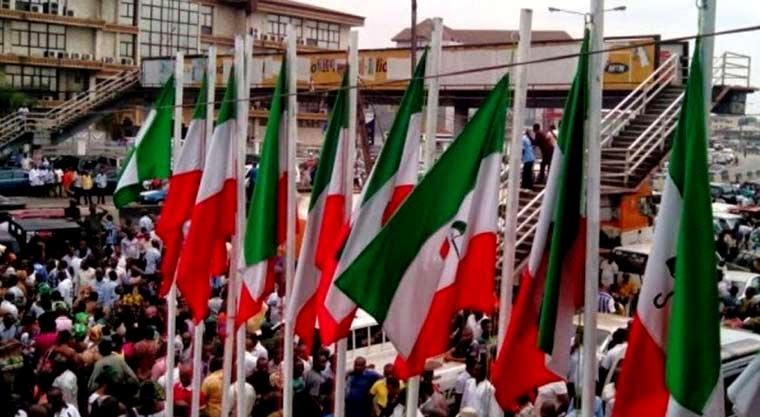
As the number of Presidential aspirants continues to burgeon ahead of the 2023 elections, a contender for the top office and legal practitioner, Okey Uzoho has asked the High Court of the Federal Capital Territory Abuja to hold that it was a violation of provisions of Section 84 (3) of the Electoral Act 2022 for the Peoples Democratic Party (PDP)to demand the sum of N5,000,000 (Five Million Naira) for Expression of Interest Form and another sum of N 35,000,000 (Thirty-Five Million Naira) for Presidential Nomination Form.
Uzoho in an Originating Summons against the PDP and the Independent National Electoral Commission (INEC) averred that charges attached to the Expression of Interest and Presidential Nomination Forms are not only “arbitrary, unconscionable, excessive callous, insensitive” but a flagrant violation of his fundamental right enshrined in the Nigerian Constitution and in the African Charter on Human Peoples Right, in a country where the Minimum Wage is a mere N 30,000 (Thirty Thousand Naira).
He is also asking for an order of perpetual injunction restraining the PDP and INEC from, howsoever, excluding him from participating as an aspirant in the Presidential Primary Election as a prelude to his participation in the 2023 Presidential Elections, on account of alleged non-payment of the sum of N40,000,000 (Forty Million Naira) to the party.
Some of the reliefs sought are:
A Declaration that the plaintiff having met the constitutional requirement/ qualifications for election to the office of President of the Federal Republic of Nigeria as set down in Section 131 of the 1999 Constitution of the Federal Republic of Nigeria (as amended), it is illegal, unlawful and unconstitutional for the 1st defendant to interpose or impose additional monetary/ pecuniary qualification as an impediment to the exercise of the plaintiff’s constitutional and fundamental right to contest election to the office of President of Nigeria in the 2023 Presidential elections.
A Declaration that the attempt by the 1st defendant to stifle the plaintiff’s lawful and legitimate aspiration to seek to alter the prevalent negative political and economic narratives of Nigeria by erecting monetary and pecuniary impediments on his path in the guise of demanding from him, payment of N 40,000,000,00 as a condition precedent to his participation in the 1st defendant’s primary election for the 2023 Nigeria’s Presidential Elections is illegal, punitive, discriminatory and undemocratic.
A Declaration that the 2nd defendant has the power an indeed duty under the 1999 Constitution (as amended) and the Electoral Act 2022 to ensure compliance by the 1st defendant with Section 131 of the 1999 Nigerian Constitution ( as amended ) and section 84 (1), (2) and (3) of the Electoral Act 2022.
An Order of Mandatory Injunction compelling the 1st defendant to provide the plaintiff with all the necessary facilities to ensure his participation in the Peoples Democratic Party Presidential Primary Election for the office of President of the Federal Republic of Nigeria 2023.
The sum ofN50,000,000 as compensation for the anxiety, inconvenience, loss of valuable campaign time that the illegal monetary demand by the 1st defendant has occasioned.
Our site uses cookies. By clicking “Accept All Cookies”, you direct Law and Society Magazine to store cookies on your device and disclose information in accordance with our Cookie Statement: cookie policyACCEPTREJECT
Privacy & Cookies Policy
Privacy Overview
This website uses cookies to improve your experience while you navigate through the website. Out of these cookies, the cookies that are categorized as necessary are stored on your browser as they are essential for the working of basic functionalities of the website. We also use third-party cookies that help us analyze and understand how you use this website. These cookies will be stored in your browser only with your consent. You also have the option to opt-out of these cookies. But opting out of some of these cookies may have an effect on your browsing experience.
Necessary cookies are absolutely essential for the website to function properly. This category only includes cookies that ensures basic functionalities and security features of the website. These cookies do not store any personal information.
Any cookies that may not be particularly necessary for the website to function and is used specifically to collect user personal data via analytics, ads, other embedded contents are termed as non-necessary cookies. It is mandatory to procure user consent prior to running these cookies on your website.